Systematic Review

Eco-Efficiency Indicators: A Literature Review and Analysis

by
Isger Glauninger
* and
Christian van Husen
Institute of Product and Service Engineering (IPSE), Furtwangen University, Robert-Gerwig-Platz 1, 78120 Furtwangen, Germany
*
Author to whom correspondence should be addressed.
Sustainability 2026, 18(1), 75; https://doi.org/10.3390/su18010075 (registering DOI)
Submission received: 16 October 2025 / Revised: 11 December 2025 / Accepted: 15 December 2025 / Published: 20 December 2025

Abstract

As sustainability was declared a priority goal of modern society, the basis for the assessment of Service- or Product-Service Systems is fundamental. The objective of this article is to identify and systematically categorize environmental and economic indicators, which are frequently highly cited in articles and proceedings. As eco-efficiency relates to both environmental impact and economic value, the indicators for each dimension have to be identified and selected in advance. In the case of Service- and Product-Service Systems, there is no overview of possible eco-efficiency indicators for the assessment. Therefore, this research aims to identify environmental and economic eco-efficiency indicators for the evaluation of Service- and Product-Service Systems. We searched Web of Science and Dimensions (1999–30 September 2025) and included 54 studies after screening. A systematic literature review was conducted, which resulted in the collection of 49 environmental and 25 economic indicators. These indicators were then grouped into twelve indicator groups and evaluated descriptively. Furthermore, the study reveals that eco-efficiency indicators for Services or Product-Service Systems are implemented to a limited extent. The co-occurrence analysis reveals a core-periphery-like structure. Environmental indicators form a dense core, while economic indicators are barely connected and weakly linked to the environmental dimension, indicating a fragmented and only partially integrated eco-efficiency assessment practice.

1. Introduction

Since the late 1990s, eco-efficiency is regarded as a key guiding principle for the assessment of ecological performance and economic value [1,2,3]. A broad but heterogeneous field of indicators has emerged in research and practice, ranging from energy- and emissions-related key figures to water and material flows and cost and productivity measures [4]. This diversity is valuable, but it complicates comparison, orientation, and reuse. The terms are used inconsistently, system boundaries vary, and there is an absence of a consistent regulatory framework that bundles frequently used indicators and relates them to each other. This phenomenon becomes particularly evident when eco-efficiency is applied to contexts beyond traditional production, such as in services and product-service systems (PSS) [5]. In this context, intangible output variables, distributed responsibilities, and data gaps converge with indicator logics that traditionally originate from product- or industry-related settings. This study aims to identify and classify environmental and economic indicators used for eco-efficiency assessment into consistent groups. Particular attention is given to their application in service and product-service system contexts, to provide a structured basis for future assessments. Indeed, the service sector’s share of the global economy continuously grows [6] as well as its share of employees [7], has shown consistent and sustained growth in the past. The potential of service systems to improve sustainability remains unexamined. Moreover, there is an absence of indicators for this field that were established to date. The SLR signifies the initial phase in this process, wherein indicators are first identified and subsequently evaluated in terms of their relevance to services.
This paper addresses this situation by systematically and descriptively mapping the indicator landscape since 1999. The aim is not to aggregate effect sizes in the sense of a meta-analysis, but rather to map recurring eco-efficiency indicators, bundle them into comprehensible groups in a structured manner, and explore their actual application in service and PSS contexts. On the one hand, the approach provides a reliable overview of the de facto standards in the literature, and, on the other hand, it supports a neutral assessment of where the evidence for services/PSS actually stands today, including clearly identifiable gaps. To facilitate orientation, the indicators identified in the literature are classified into two distinct groups: Environmental Indicator Group (ENIG) and Economic Indicator Group (ECIG). This grouping is pragmatic and practice-oriented, forming a bridge between the multitude of individual metrics and the recurring evaluation needs in research and application. Concurrently, a methodical examination is undertaken to ascertain the frequency and application of these indicators within services and PSS to date. The historical focus of literature is product- and industry-centered.
The gain in knowledge thus lies less in the demand for new indicators than in the overview and classification of existing indicators. The systematic literature review (SLR) is used as a methodical approach to identify environmental and economic indicators for this purpose. It serves to analyze those publications that have a direct link to industrial or business applications and can be analyzed or transferred to Service- or PSS. The publications that are suitable according to the full-text analysis are analyzed, and the mentioned environmental and economic indicators are captured, systematized into groups, and evaluated. In addition, the analysis contains relationships between the identified indicators and indicator groups in relation to product, service, or PSS, as well as the methods used, the geographical context, the data sets, and further information for a descriptive analysis. The analysis will be conducted in relation to the applied methods, the geographical context, the objective of the publication, the data source for the analysis, and other categories. Therefore, the study enables the identification of possible environmental and economic indicator groups as well as specific indicators for an eco-efficiency assessment for a specific service or PSS.

2. Eco-Efficiency—State of the Art

The UN Conference on the Human Environment in 1972 was the catalyst for concerns about the sustainability of the Earth [8]. Established by the report of the World Commission on Environment and Development of 1987, sustainability is defined as the ability to fulfill the requirements of the present without undermining the ability of future generations to fulfill their needs [9]. Kates et al. define sustainable development as the setting of limits in accordance with the capacity of the environment to absorb negative impacts [10]. Saling (2016) describes sustainable development as the balancing of economic success in regard to social responsibility and the protection of the environment [11]. Companies can either measure or quantify sustainability in each area to manage sustainable development [11]. In a business context, corporate sustainability is the permanent or long-term assurance of economic existence, whilst improving the ecological balance and social justice [12,13,14,15]. Eco-efficiency is the most widely discussed topic in the field of corporate environmental management and responsibility, in academia as well as in practice [16]. The concept of eco-efficiency is understood and defined in different ways [1,17,18,19,20].
Two strategies for improving sustainability are available: the efficiency strategy and the consistency strategy [21]. Eco-effectiveness (consistency strategy) focuses on the reuse of resources. In addition to technical progress, this is achieved primarily through changes in production, design, distribution, and organization. The focus is on the analysis of material, energy, and substance cycles [22]. According to the idea of eco-effectiveness, products or processes can be designed proactively to minimize waste emissions. Mechel states that the barrier to entry for implementing eco-efficiency is lower than for eco-effectiveness [23]. However, it should be noted that although eco-efficiency represents the lower hurdle for companies, eco-effectiveness, when considering all three dimensions of sustainability, is conceptually more closely aligned with the broader sustainability goal, particularly in the social dimension.
The need to assess or measure efficiency in industry, especially productive efficiency, was emphasized by Farrell. If two systems can be compared, as in the case of relative efficiency, potential performance improvements can be predicted [24]. The definition of efficiency varies by engineering discipline, Charnes et al. state that the efficiency range is broadly defined by the numerical range between 0 and 1 [25]. The World Business Council of Sustainable Development gave the term great promotion in the early 1990s [26]. However, the concept was developed in science in the 1970s [27,28]. For companies, the approach of increasing efficiency is a logical consequence and is particularly attractive and appreciated in the area of decision-making and strategizing [16]. Eco-efficiency was increasingly framed as a practical instrument for managing sustainable development. It is described as an established tool and analytical approach for dealing with and assessing sustainability and sustainable development [29,30,31], and is widely understood in organizations as a central criterion for performance assessment and sustainability benchmarking that jointly considers economic and environmental performance [32,33,34]. Following the relative efficiency approach, efficiency is measured as the ratio of weighted outputs to weighted inputs within a range between 0 and 1, as formalized in the Data-Envelopment-Analysis framework [25,35]. In eco-efficiency applications, the useful output takes place in relation to the useful input and can be operationalized as the monetary value generated by a process in relation to resource use, environmental damage, environmental improvements, and associated costs [11,30,36]. According to Schaltegger et al. (2003), eco-efficiency reduces the need for resources [37]. The same input produces more output, or the same output requires less input [37]. Appropriate implementation methods using the eco-efficiency model are regarded as a starting point and an important step in supporting decision-making in the field of sustainable development and in tracking process progress through comparisons of economic and environmental performance [11,38,39]. Charnes et al. (1978) present the concept of relative efficiency as a basis for decision-making, an alternative to the empirical economic approach when data are missing or insufficient [25]. Therefore, appropriate rankings are one approach to present results in the case of relative efficiency for decision-making. In addition, Charnes et al. state that there are concepts in the engineering sciences that indicate maximum efficiency based on data. In the case of relative efficiency, such data can be used if available [25]. The relationship between environmental value and environmental impact, and the economic dimension of eco-efficiency, was empirically indicated by Huppes and Ishikawa [38]. Thus, eco-efficiency is considered [39,40,41,42,43] as the ratio of product system value to environmental impact. Product system value comprises monetary, functional, and other value contributions, such as value added, the quantity or quality of products or services delivered, and performance-related aspects (e.g., safety or reliability). In this article, we align with prevailing conventions in the extant literature on eco-efficiency, designating this value aspect of the relationship as the economic dimension of eco-efficiency and employing the term economic indicators to refer to it. In line with established definitions of eco-efficiency [43], the social dimension is not considered in this context [44]. Consequently, indicators related to social aspects are deliberately excluded from the scope of this study. This leads to Equation (1):
E c o E f f i c i e n c y = P r o d u c t   S y s t e m   V a l u e E n v i r o n m e n t a l   I m p a c t
Sector-independent concepts and procedures for sustainability and environmental management systems are too generalized to be of practical use for companies. Mechel points out that the concepts lose their comparative accuracy due to the heterogeneity of companies. Indicators such as energy consumption per unit therefore have a limited comparability between companies. As reported by Mechel, holistic standard software, such as that developed for facility management, is disproportionate to the effort involved and does not consider the specifics of the industry, or does so only to a limited extent [23]. This heterogeneity affects the practical choice and interpretation of eco-efficiency indicators.
The current state of the art conceptualises eco-efficiency as a management-oriented performance concept that links economic value creation to environmental impacts. It is operationalised primarily through relative efficiency measures and indicator-based ratios of economic value to resource use and emissions. However, there is still no generally accepted, transferable framework for indicator selection, particularly in the context of services and product–service systems. Indicators and frameworks for measuring resource efficiency and sustainability performance are becoming increasingly diverse [45]. Eco-efficiency indicators were applied to decision-making, financial and environmental performance, and comparative studies [31,46], and are often used without explicit weighting of input and output indicators [47]. Furthermore, Dong et al. recognize no need to weight input or output indicators in the case of efficiency evaluation [47]. As noted by Mechel, the strategy of eco-efficiency is pursued and achieved primarily through new, more efficient technologies [23]. Burritt and Saka conclude that there is a lack of precision and that dimensions should be identified and defined. Due to the significant influence of the dimensions on the results of environmental management accounting, they outline a need for a comprehensible system [48]. Eco-efficiency indicators were developed by focusing on enterprises as well as sectoral or national levels. The needs are different because the system requirements vary widely [30,40]. For this reason, it appears that it is not possible to transfer indicators from one system to another without further investigation. Caiado et al. identified a research gap in the literature regarding a holistic framework for assessing the eco-efficiency of products and services [31]. Especially, EN ISO 14045 focuses on the assessment of the eco-efficiency of product systems [43], and EN ISO 14040 merely names services but does not specify or categorize them in comparison to products [49]. Finally, neither the literature nor the standards show how suitable indicators can be selected for the environmental or economic assessment of services or PSS, nor which indicators can be considered.

3. Eco-Efficiency of Service- and Product-Service Systems Results

Eco-efficiency builds a basis for decision-making in a broad range of applications. This concerns internal company decisions, such as service engineering, service development, or service design, as well as decisions linked directly to stakeholders, i.e., suppliers in B2B, customers or end customers in B2B or B2C, and, increasingly, to other areas such as investors and governments. Caiado et al. identify different areas of application for measuring eco-efficiency, which include the comparison of different sectors in a country or the same sectors in different countries, as well as identifying possible areas of improvement [31]. For product systems in particular, eco-efficiency was recognized as the leading strategic approach to improve sustainability [16,50,51,52,53]. Klein states that, to date, despite the widespread use of the service term, no standardized definition of the term were established [54]. Thus, a definition was formulated to carry out the analysis. Services, according to this SLR, are defined through their intangibility. Service systems therefore differ from product systems in that the essential elements for the direct fulfillment of the value proposition are characterized by immateriality. A focus is on the intangible nature and the human factor as part of the service system to provide the solution. Therefore, such articles that do not fully fulfill the provided definition are marked in the analysis as “indirect” relation to service systems (see Section 5.1). However, intangibility as well as human interaction are key elements of service systems in the sense of the given definition. The emergence of “servitization” [55] is challenging traditional product-based business models [56]. The combination of intangible services and tangible products is often discussed as a potential option for decoupling economic activity from resource consumption [57]. However, there is no implicit guarantee that servitisation will actually decouple economic growth from resource use in practice. Kjær et al. even point to the risk that PSS is too readily assumed to have this potential in all cases [58]. Nevertheless, there are indications that well-designed servitisation and PSS concepts can support restorative and regenerative systems that decouple economic growth from environmental impact, and the dematerialization of physical objects [59]. Furthermore, the shift in residual values opens new revenue streams. Companies are increasingly recognizing the benefits of combining services or products into PSS to improve value creation throughout the lifecycle [56]. PSS can increase eco-efficiency, as PSS often achieves higher or equal value added with less environmental impact in comparison to a pure product use [57]. Glauninger et al. provide a framework for the identification of the improvement of eco-efficiency due to the influence of a digital application [60] and a framework for the selection of proper environmental indicators for service systems [5,61].

4. Research Methodology

A systematic literature review (SLR) was carried out in line with PRISMA reporting guidelines [62] to identify and analyze the articles. This review was not registered in advance. Nevertheless, the methods were predefined and followed PRISMA recommendations to maintain methodological transparency. For further information, please refer to the Supplementary Materials provided. Systematic reviews of the literature will identify areas where further research is needed. They facilitate the development of theory. In this way, areas of relevant research can be recognized [63]. The SLR is considered as a method to ensure a precise, clear, and transparent approach to guarantee the transparency of the literature review process. The SLR followed five phases as described in [64,65,66]. First, we defined the research questions and then carried out a comprehensive and systematic literature search. The collected publications were subsequently screened and synthesised to analyse eco-efficiency indicators in Service and PSS contexts. The systematic review required a clear, explicit definition of the questions and the reproducibility of the screening process. The extraction of data was executed in an explicit and reproducible manner. Subsequently, analysis and finally reporting of results were performed: question formulation, locating studies, study selection and evaluations, analysis and synthesis, and reporting and use of the results [67].
For reasons of transparency and reproducibility, it is essential to describe the SLR procedure in sufficient detail, including the specification of search terms and databases, as emphasised by Saunders et al. [67,68]. In this study, we therefore report the search string, the databases used, and the subsequent screening steps in detail. At the same time, it must be noted that the bibliographic coupling (BC) threshold applied in the analysis may lead to an underrepresentation of very recent publications that have not yet accumulated enough citations to reach this threshold. This decision was made to identify robust indicators that are recurrent in the literature.
This leads to the following Research Questions (RQ):
  • RQ1: Which eco-efficiency indicators were predominantly used/published in the literature since 1999?
  • RQ2: How can these indicators be clustered into consistent environmental and economic groups?
  • RQ3: Which indicator groups were documented in service/PSS contexts to date, and how are the indicators interconnected based on their co-occurrence patterns?

4.1. Databases and Search Strings

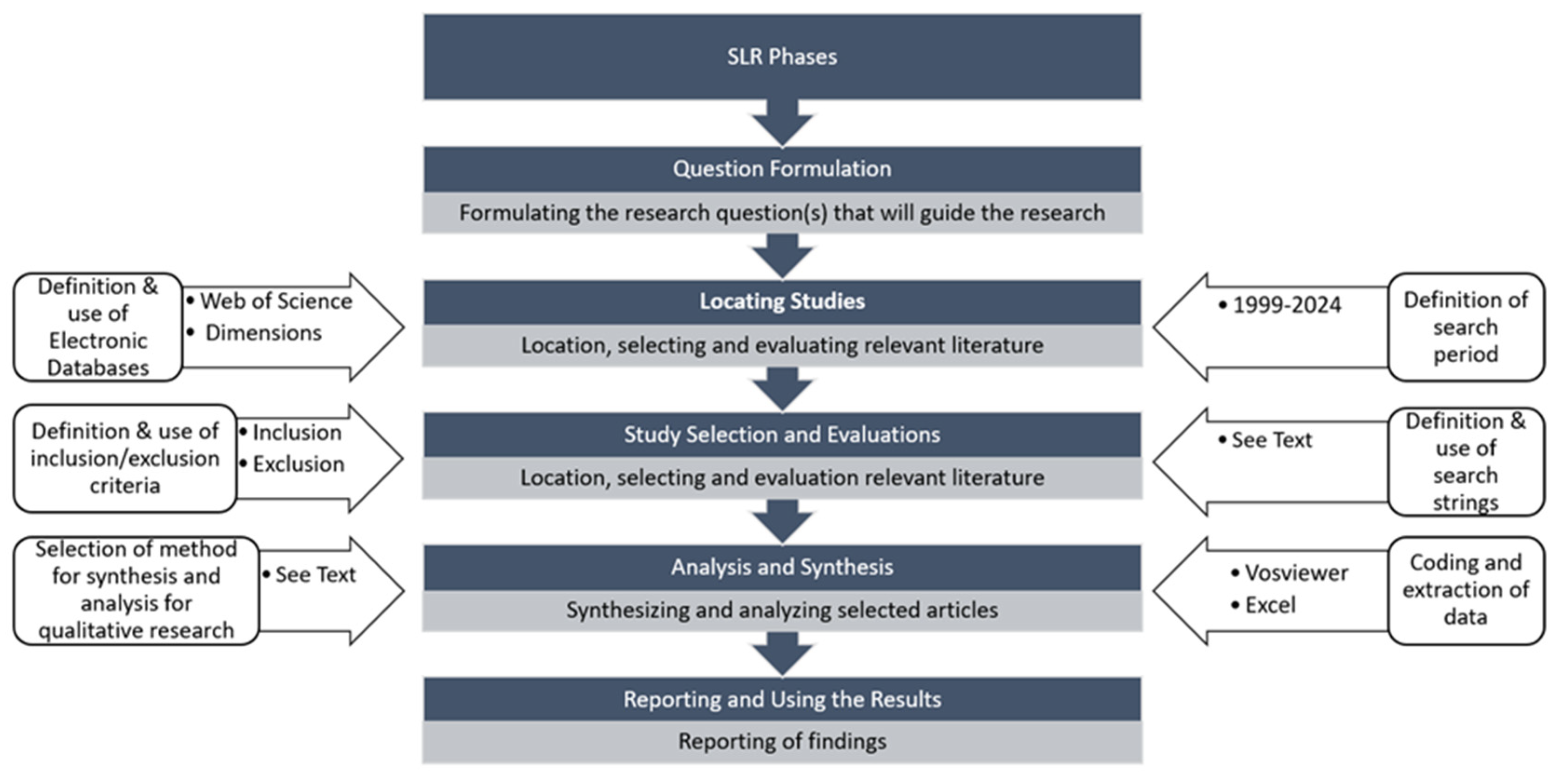
The context and theme for research must be developed to receive relevant articles. According to the research questions, the indicators related to eco-efficiency have to be identified. The keywords were elaborated with the help of the C-I-M-O (context–intervention–mechanism–outcome) framework to determine the criteria for the search string [66,69]. Accordingly, the search strings included eco-efficiency, eco-efficiency indicator, eco-efficient indicator, eco-efficiency measurement, and indicator. To include all possible and potential variations, the keywords mentioned were combined to deliver the broadest and most adequate result possible. This enables the definition of a specific search focus and excludes articles that are not relevant. Some of the keywords lead to the same articles, but this ensures that all relevant articles can be included in the literature review. Manual checks were carried out to filter out literature that does not fall within the subject area. This means that papers that do not name any indicators for eco-efficiency were excluded. The search terms mentioned above were carried out in two common electronic databases (ED) of publishers to obtain relevant publications in line with the target of the review. Electronic databases include Web of Science (www.webofscience.com) and Dimensions (www.dimensions.ai), which were last updated on 30 September 2025. Each term was searched in the title, abstract, keyword plus, and author keywords of the databases. As the aim was to create a database for a broad analysis of eco-efficiency indicators in practice, a period from 1999 to 2025 was chosen to cover 26 years of literature. The year 1999 was selected as the starting point because a systematic database search indicated that eco-efficiency was applied more broadly and in a more methodologically consistent manner from this year onwards. Furthermore, the bibliographic coupling was selected for the SLR. The publications that comprise a single reference, shared by two documents, with a limit of 35 Citations, were included in the detailed analysis. Furthermore, proceedings and articles were included in the search. Figure 1 presents the five phases of the SLR and the objective, method, and tools that were applied.
The SLR phases are illustrated, along with the objective for each phase beneath it. The methods and the tools are outlined on the side of the SLR phases. The definition and use of the search string were based on a clearly delineated set of eco-efficiency terms to identify publications that explicitly address eco-efficiency indicators. The search string was defined using the word terms “Eco-Efficiency”, “Eco-Efficient”, “Eco-Efficiency Measurement”, “Eco-efficiency Indicator”, and “Indicator”. By centring the search on explicit eco-efficiency terminology, we aimed to construct a conceptually coherent corpus of studies that engage directly with the eco-efficiency concept rather than with broader sustainability notions. Introducing additional specialised terms already at the database search stage could have prematurely narrowed the corpus to a smaller subset of publications. It might have led to the omission of studies that discuss eco-efficiency in service-like settings without using these specific labels. In a subsequent screening step, the resulting records were restricted to service and Product-Service System (PSS) contexts based on predefined inclusion and exclusion criteria. Only terms related to eco-efficiency and indicators, as well as peer-reviewed articles published in Proceedings of International Conferences or Journals, were included. Publications unrelated to economic businesses or social aspects were filtered out. Furthermore, if eco-efficiency indicators are defined but addressed, for example, to policy or government use cases, these publications were excluded as well. Indicators that are based on a different definition and understanding of the concept of eco-efficiency were also disregarded, because such indicators refer to areas of application that are not part of eco-efficiency according to the given definition. In this way, papers that did not address the topic were sorted out.

4.2. Raw Database Filtering

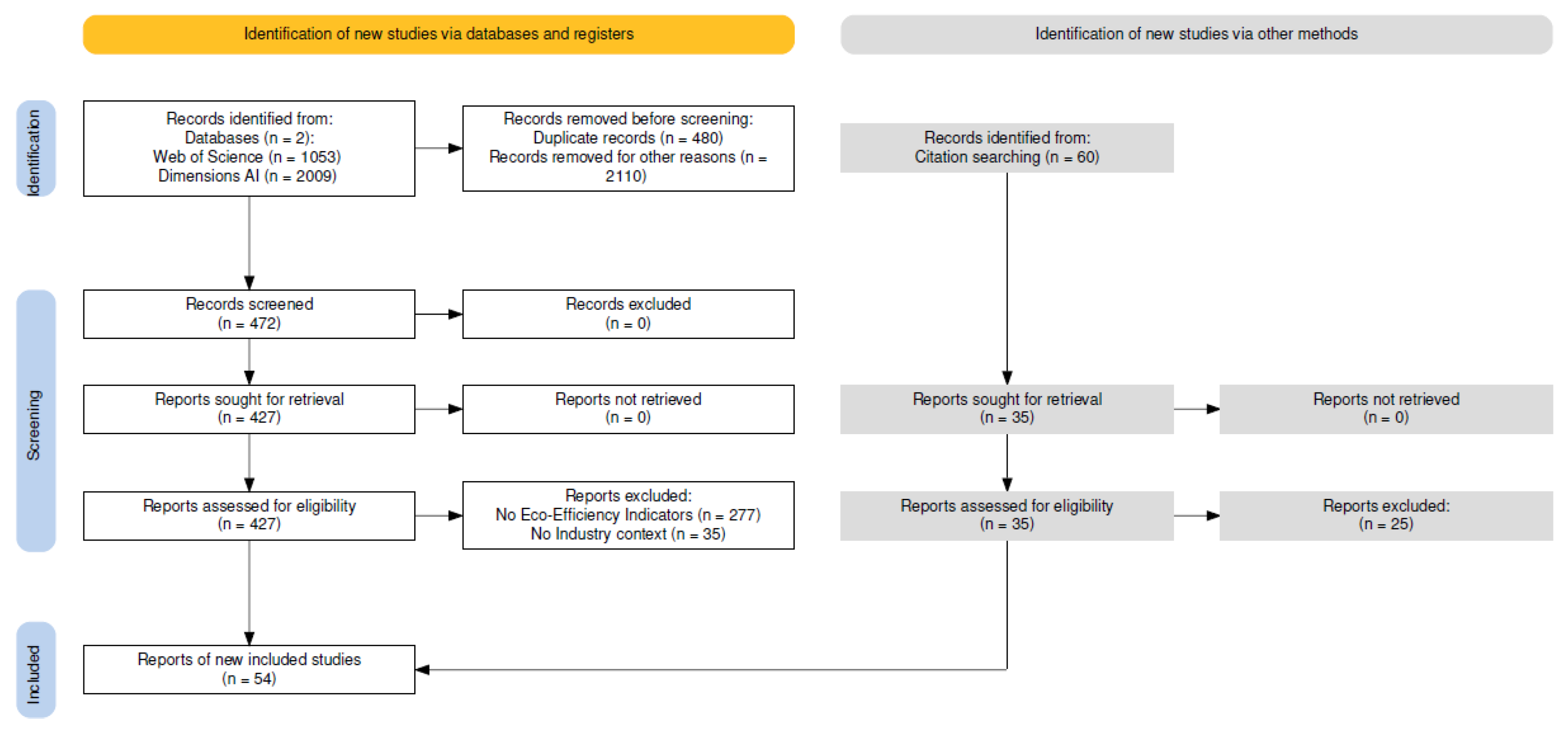
In total, 3062 articles were identified through the electronic databases. As a first step of database filtering, articles that were not related to the research focus were removed. Following Viegas [70], the filtering included (i) eliminating redundant articles, checking whether the titles matched the topic, (iii) screening abstracts for relevance, and (iv) verifying the availability of full-text articles in the databases. Due to duplications, 480 articles were excluded as presented in Figure 2. Of the remaining articles, 2110 articles were sorted out due to the limit of citations of the bibliographic coupling. The resulting 472 articles were then screened for titles and abstracts. This leads to 160 articles being analyzed in detail by a full-text analysis. During the full-text analysis, additional relevant publications were identified via cross-references. In total, 44 articles from the database and 10 further articles from cross-references were included in the final literature corpus. This yields 54 articles. In the next step, the eco-efficiency indicators reported were systematically extracted, considering both economic and environmental indicators.
Table A1 in the Appendix A provides an overview of the 54 articles and the identified environmental and economic indicator groups in this study. For this purpose, each source was analyzed with regard to its use of eco-efficiency indicators. The indicators used were systematically recorded. Table A2 and Table A3 in the Appendix A show in detail which indicators were assigned which number and in which sources these indicators were mentioned, as well as in which group they were categorized. Environmental Indicators were assigned a number (Env. Indicator No.), and the same was applied to the Economic Indicators (Ec. Indicator No.). Table A1 also lists the Environmental (ENIG) and Economic Indicator Group (ECIG) to which each indicator was assigned for operationalization. In both, the number indicates the specific indicator group to which the indicators belong. For each study, we extracted all indicators that were explicitly named or numerically reported in connection with eco-efficiency. Indicators were then classified along the two core dimensions of eco-efficiency: environmental performance and product system value, which we operationalise as the economic dimension. Where studies reported composite measures that mathematically combine environmental and value-related quantities, these were decomposed into their underlying components and recorded as separate environmental (ENIG) and economic (ECIG) indicators. The creation of additional hybrid indicator entries for every possible ratio or composite score was not undertaken, with the aim of avoiding the multiplication of indicators built from the same basic quantities. Furthermore, the objective was to maintain a transparent mapping of the indicator landscape along the environmental and economic dimensions. In the subsequent analysis, the joint use of environmental and economic components is therefore captured through their co-occurrence within the same study rather than through a separate catalogue of integrated eco-efficiency indicator names.

4.3. Co-Occurrence Analysis of Indicators

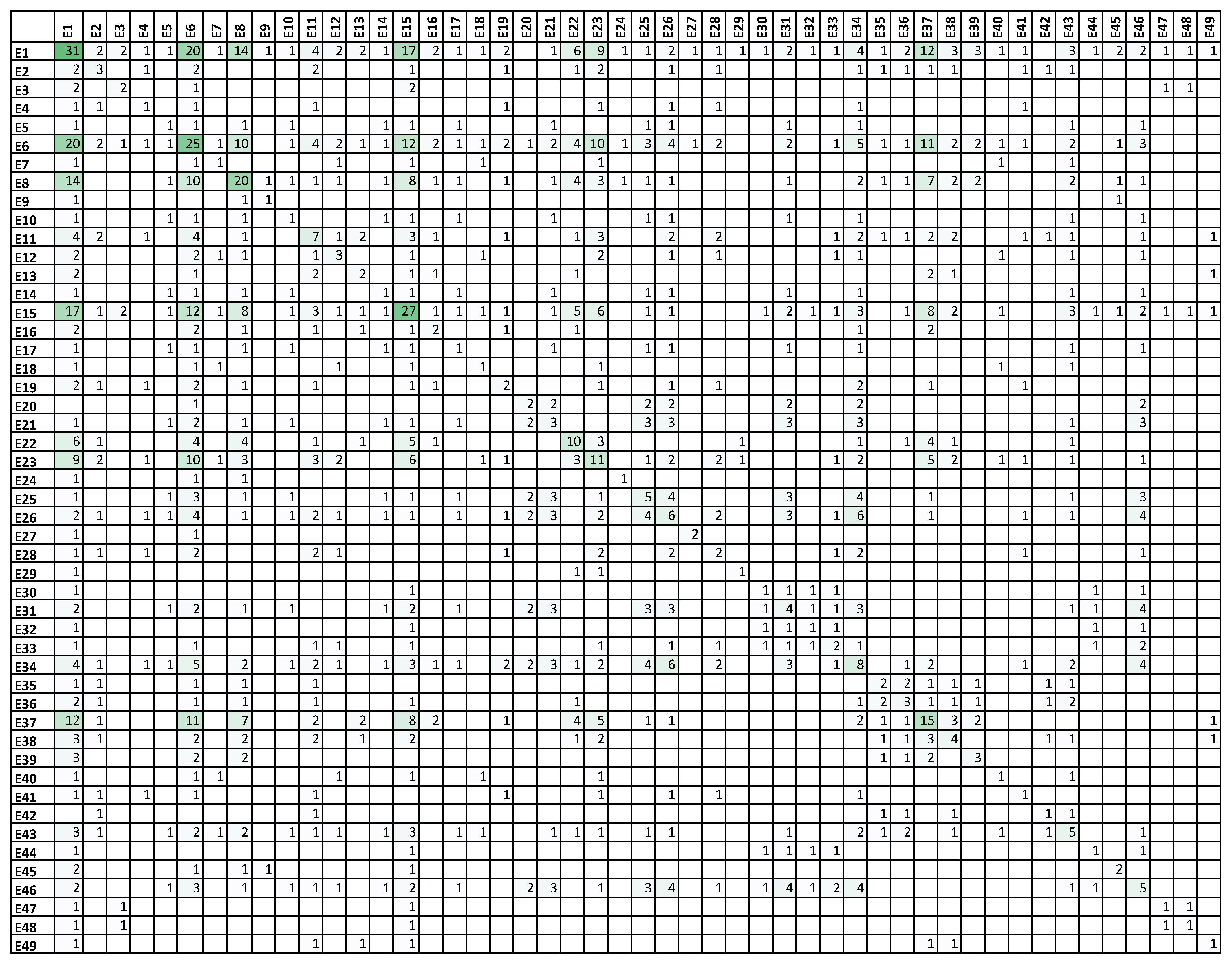
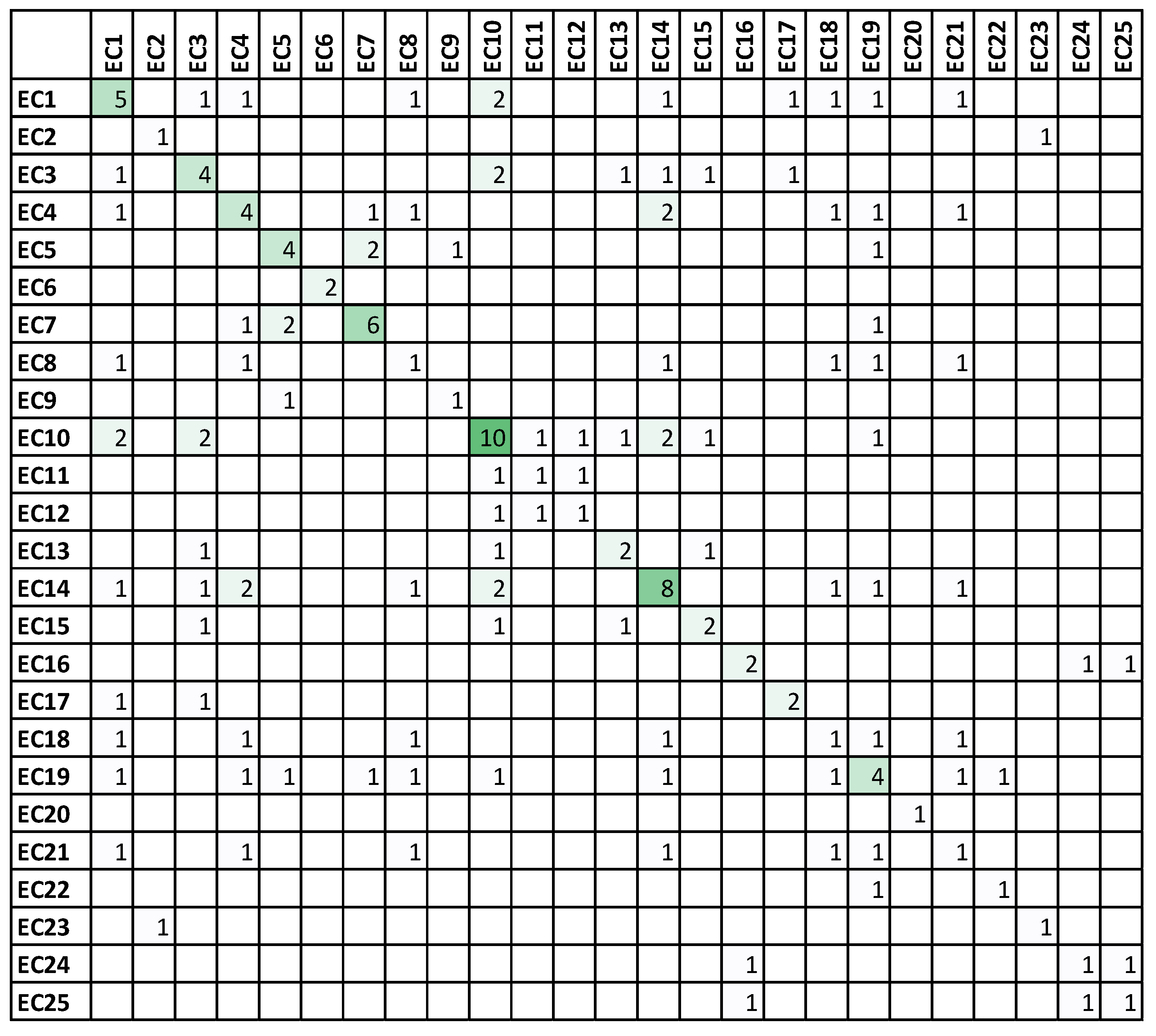
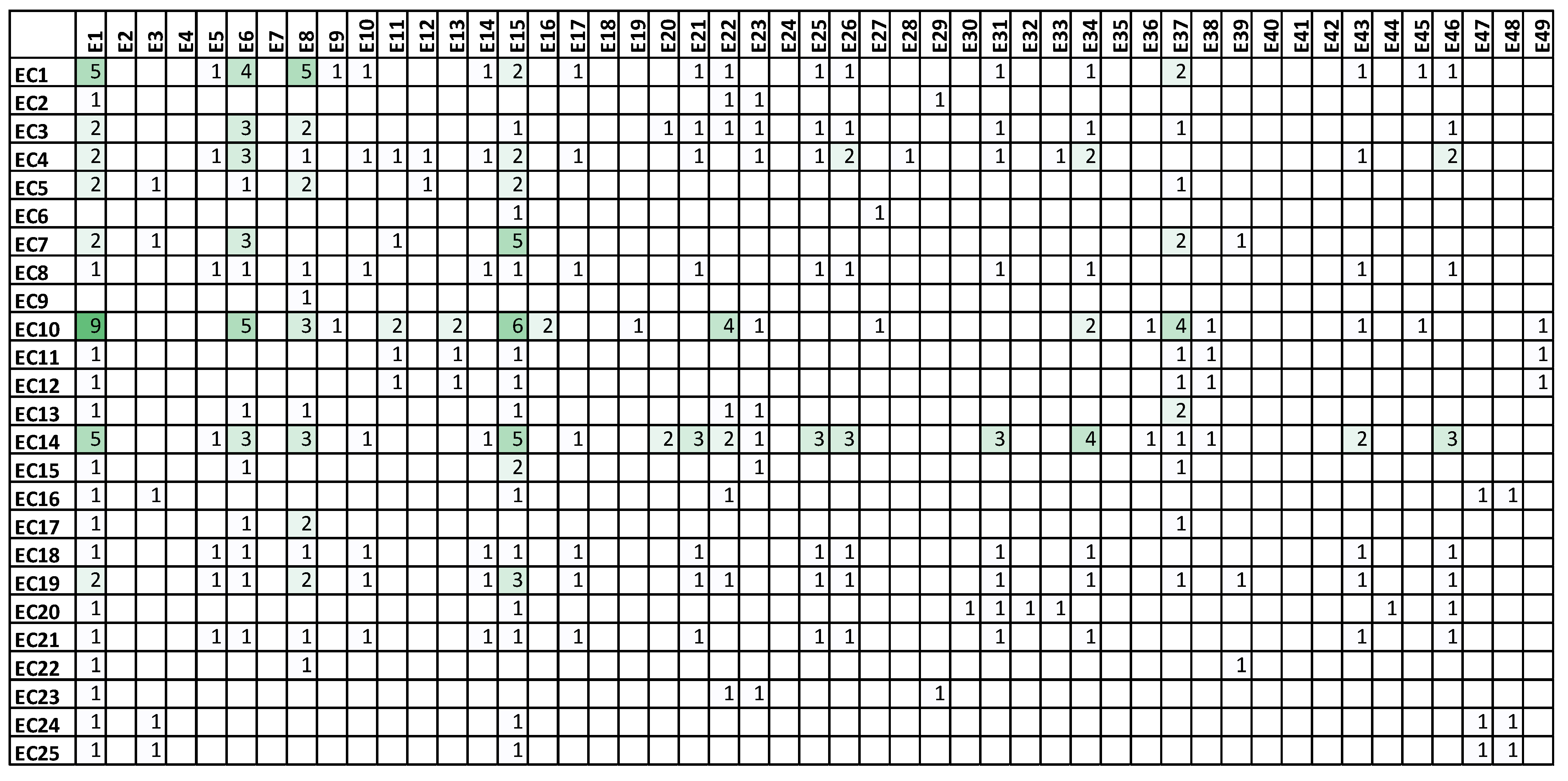
The identification of thematic relationships among eco-efficiency indicators was facilitated by conducting a co-occurrence analysis. Three networks were constructed: one for environmental indicators (ENIG), one for economic indicators (ECIG), and one combined network (ENIG + ECIG). Co-occurrence was defined as the simultaneous appearance of two indicators within the same publication. For each pair of indicators, the number of joint occurrences across all papers was summed, resulting in a co-occurrence matrix that quantifies how frequently two indicators were reported together in the literature. These co-occurrence frequencies served as weighted edges in the network models (Section 8). Each cell in the matrix represents the number of joint occurrences between two indicators across all reviewed studies, higher values (highlighted) indicate stronger thematic association and, consequently, greater connectivity within the network. This quantitative representation provides the empirical basis for identifying clusters of connected indicators and for determining the structural characteristics of the environmental (ENIG) and economic (ECIG) networks.

5. Descriptive Analysis of Findings

A total number of 54 articles (n = 54) complied with the selected criteria. Accordingly, these were the articles that mentioned environmental or economic indicators in the context of eco-efficiency. Furthermore, these indicators relate to industrial applications and are therefore suitable for analysis within the scope of the article.

5.1. Year of Publication

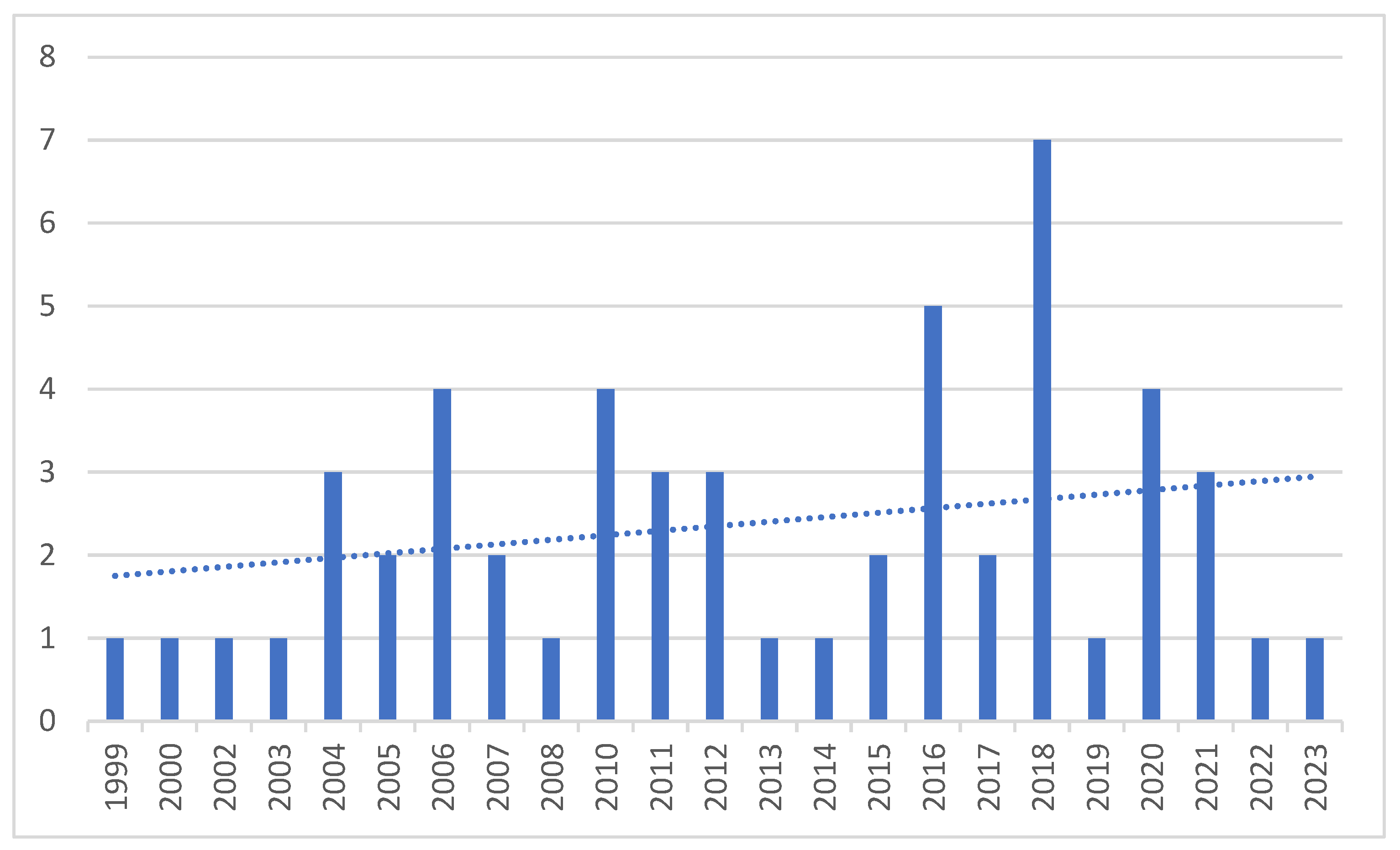
Figure 3 shows the number of articles selected for the database by year of publication. No publications after 2023 are included in the analysis due to the limitation of Bibliographic Coupling. In particular, many articles published in 2018 and 2016 were included in the sample. The trend line (dotted straight line) shows that the number of articles has increased continuously. The decline from 2020 onwards can be interpreted using the bibliographic coupling method, as very young articles would only be included if they were referenced and cited very frequently in a short period of time.

5.2. Journals of Publication

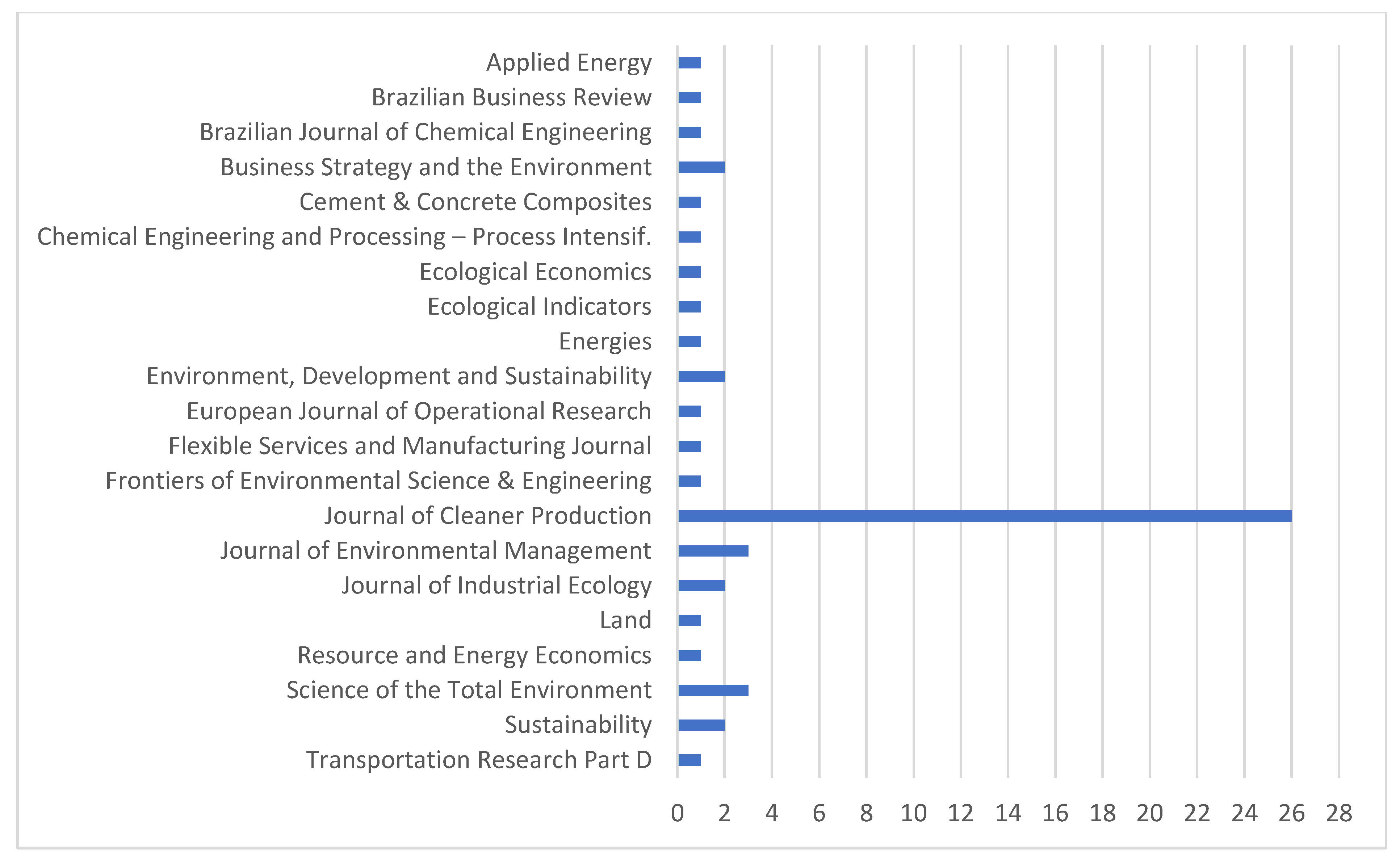
The journals or proceedings in which the articles were published were also analyzed and displayed in Figure 4. It was noticeable that no proceedings were included in the database based on the criteria. In particular, the Journal of Cleaner Production is represented with 26 articles.

5.3. Geographical Context of Analysis

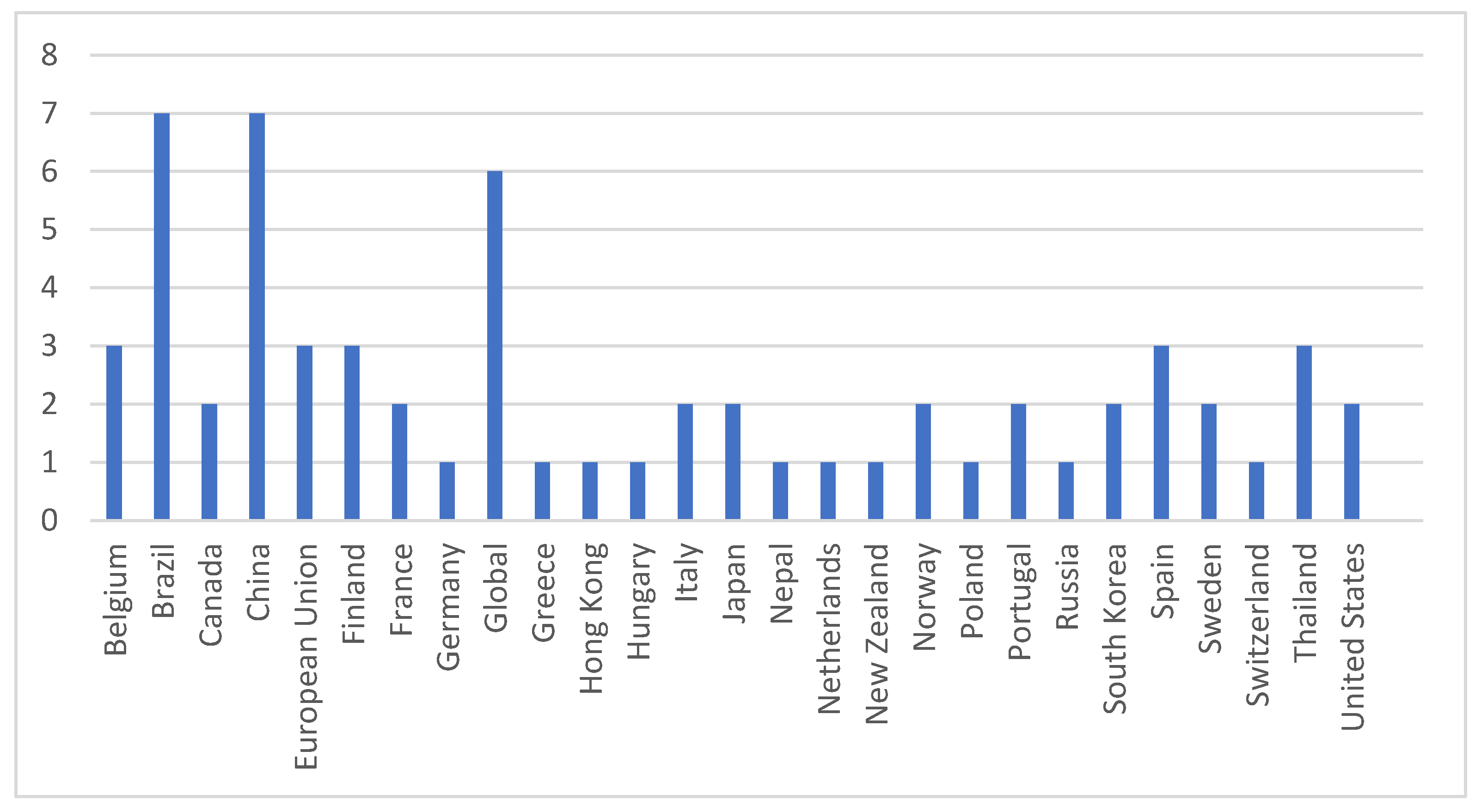
In terms of geographical context, a distinction was made between the context of the analysis and the context of the contributing author. Second, third, and other authors were not included in the analysis. Figure 5 shows the geographical context of the analysis or the application of the indicators. There is a range from one to a combination of several countries (EU29, Latin America, and Global) or even individual special administrative regions, such as Hong Kong. Brazil and China are the most common, followed by European countries and Thailand. Especially, Europe is well represented with at least 25 articles relating to the European continent.

5.4. Geographical Context of Authors

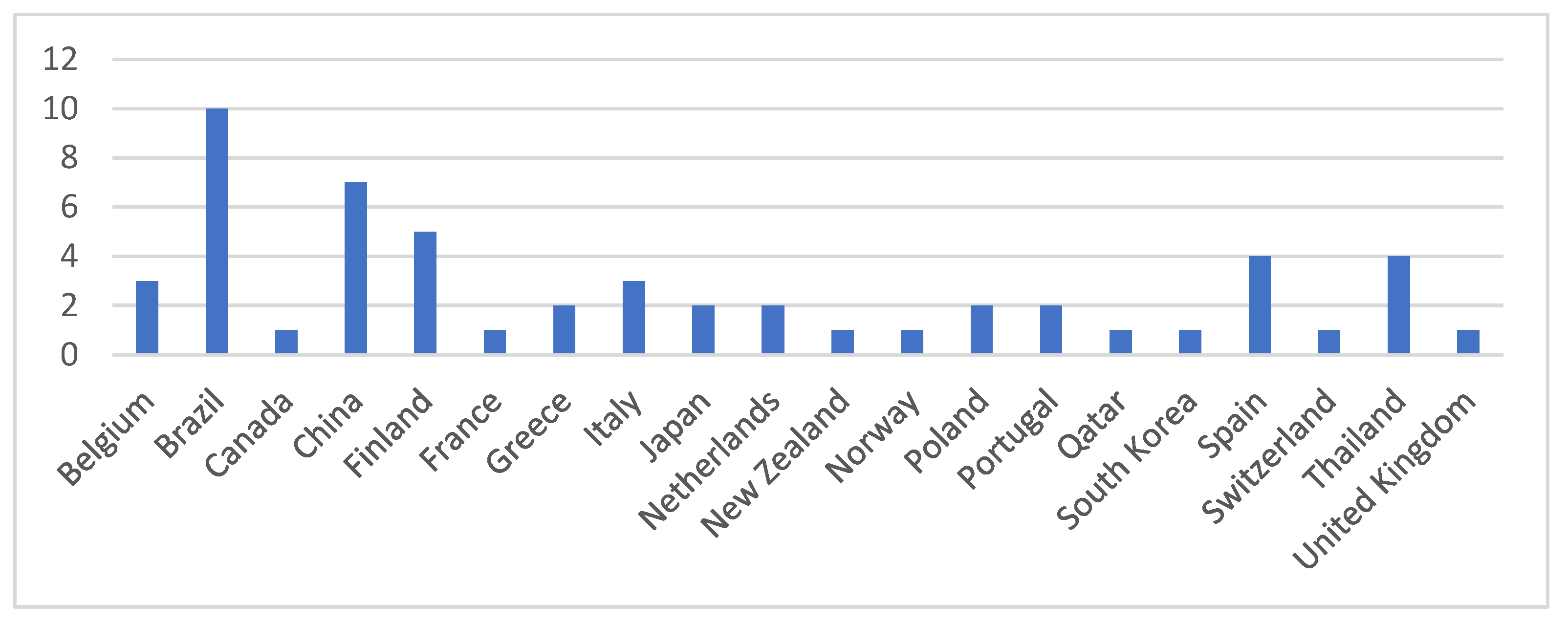
In the analysis of the geographical context of contributing authors, Brazil is again particularly important, as Figure 6 shows. Figure 5 and Figure 6 differ from each other; nevertheless, there are a few direct overlaps between the geographical context of the contributing author and the geographical context of the analysis in the case of Brazil, China, Thailand, Spain, Belgium, Portugal, and Japan. China and Finland are also strongly represented with a total of 10 authors. Plus, there are a total of 21 contributing authors from continental Europe.

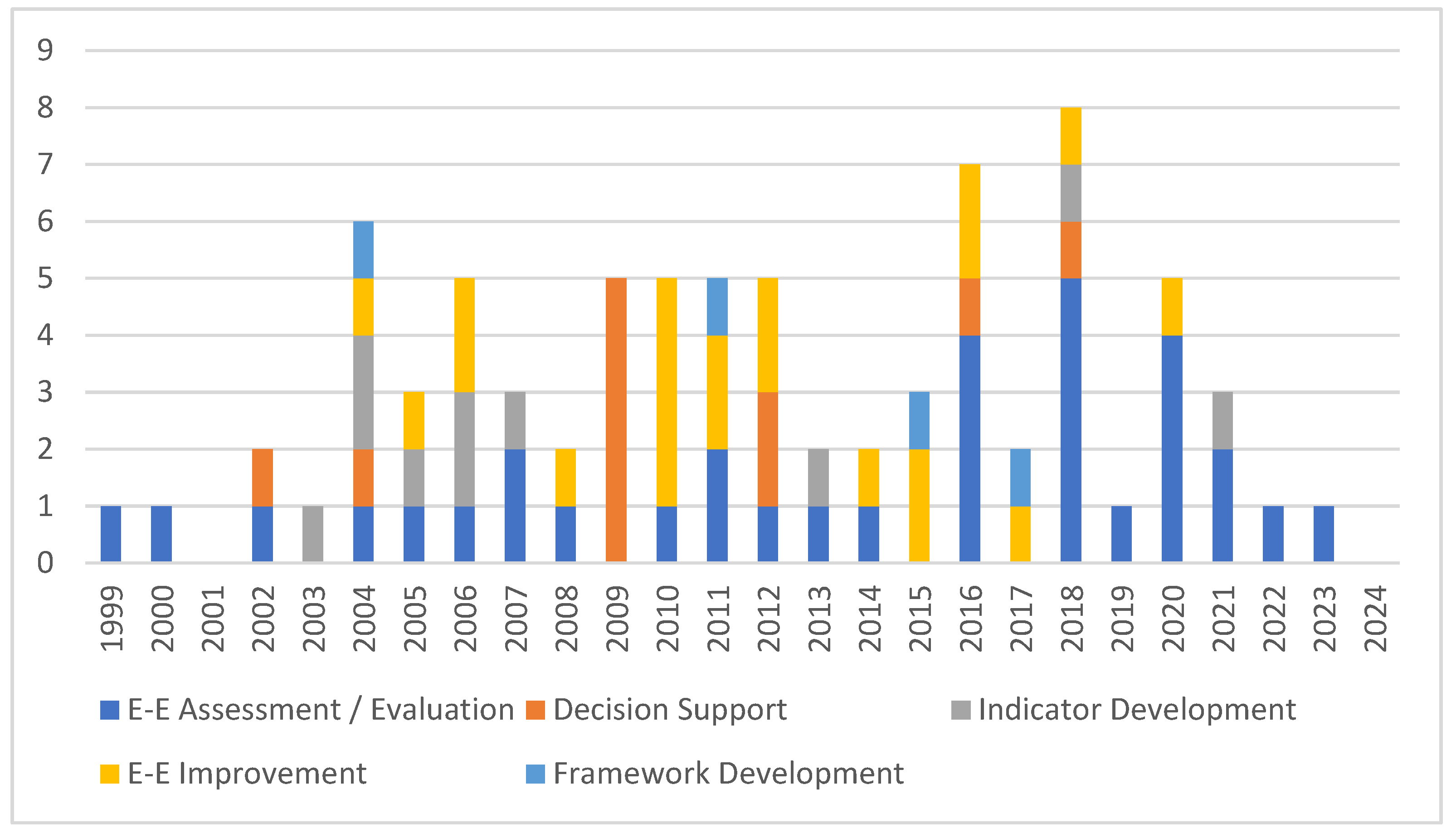
5.5. Goal of Articles

The aim of the articles was very different in detail. Therefore, categories were created to summarize the articles’ overall objectives. In particular, the assessment and evaluation of eco-efficiency was very common. Other reasons or objectives of the articles were to support decision-making, to develop specific indicators, to improve eco-efficiency, and to develop a framework. Each article was assigned at least one objective or, if appropriate, several objectives per article. Figure 7 also shows the years in which each objective was achieved. This allows individual trends or frequencies to be derived. For example, in the area of evaluation or assessment of eco-efficiency, it is noticeable that this was not only the most frequent objective (n = 33) but was also present in most years from 1999 to 2024. Decision support was mentioned 11 times as an objective, with a marked spike in 2009 (n = 5) and otherwise only sporadically. Improving eco-efficiency (n = 21) was the second most frequent goal, with peaks in 2010 (n = 4) and further activity in 2011–2012 and 2016 (n = 2 each). Developing indicators (n = 10) occurred intermittently, most notably in 2004 and 2006 (n = 2 each). Developing a framework (n = 4) was least frequent, appearing in 2004, 2011, 2015, and 2017 (n = 1 each).

5.6. Data Sources Applied per Year

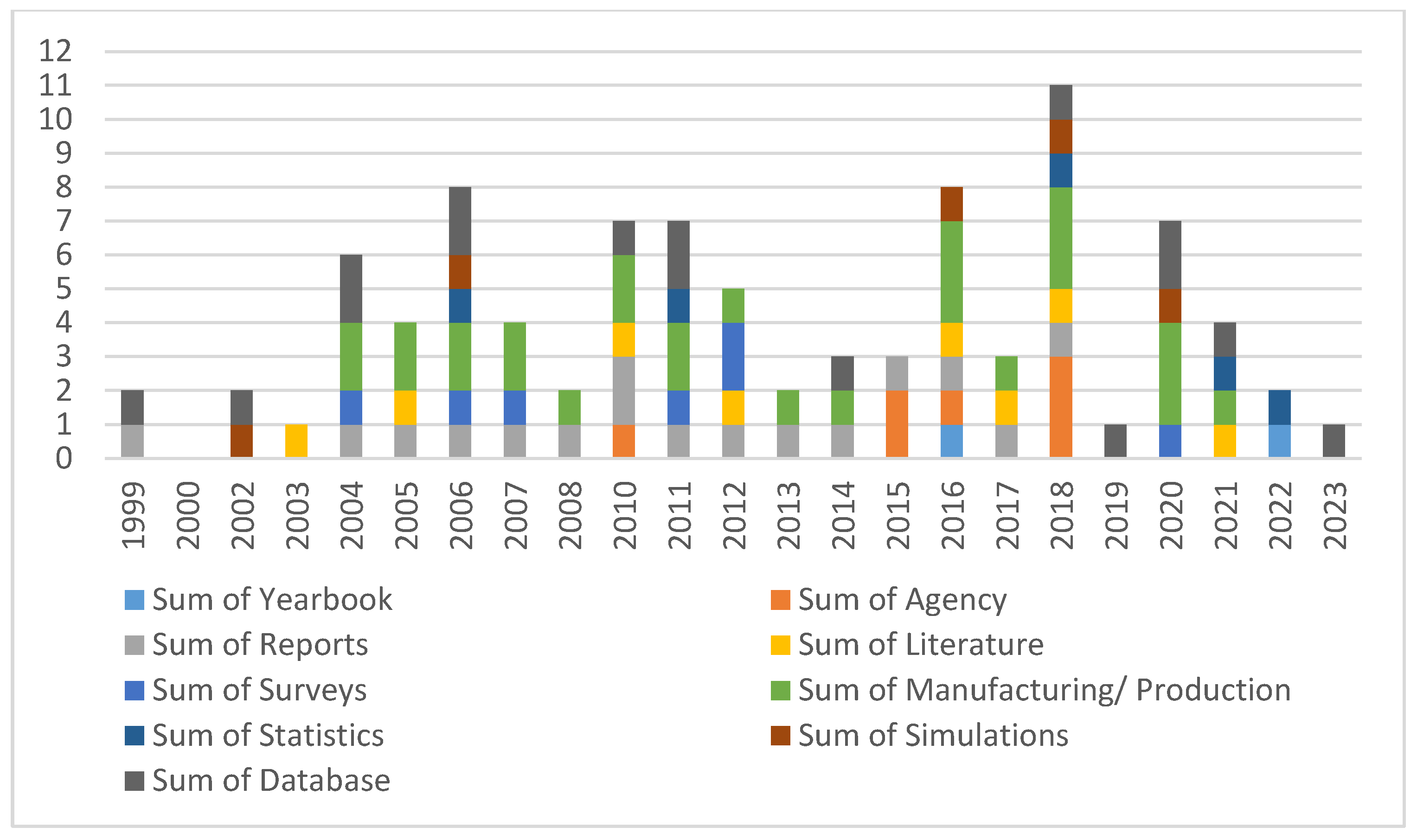
An evaluation of the annual totals displayed in Figure 8 reveals a clear change in data usage over time. Manufacturing/production data predominate, accounting for 29% of the observations. Both reports and databases account for 17% of the total. Literature sources accounted for 9% of cases, while agencies and surveys accounted for 8% each. The role of simulations and official statistics is negligible, with each accounting for 5% of the total, while yearbooks play the smallest role with 2% (total n = 93). Temporal analysis reveals four distinct phases. In the early phase (1999–2008), the number of contributions per year is relatively low. Mainly, traditional secondary sources such as reports are used, while yearbooks are rare and simulations are used only sporadically. Between 2009 and 2014, there was an increase in the integration of databases and literature sources, with agency data added selectively. From approximately 2015, there was a substantial increase in the utilization of practical production data, which served to shape the overall picture. This phenomenon might be interpreted as an indication of enhanced digital recording processes within companies. These patterns permit the drawing of several conclusions regarding content. Firstly, the ongoing increase in the significance of production data signifies a shift in research focus from model-based approximations to a greater emphasis on observable process and operational realities. Consequently, simulations and official statistics primarily function as supplementary tools. Secondly, the constant proportions of reports and databases demonstrate a reliable basic supply of structured secondary data, which is particularly viable for longer time series and replication studies.
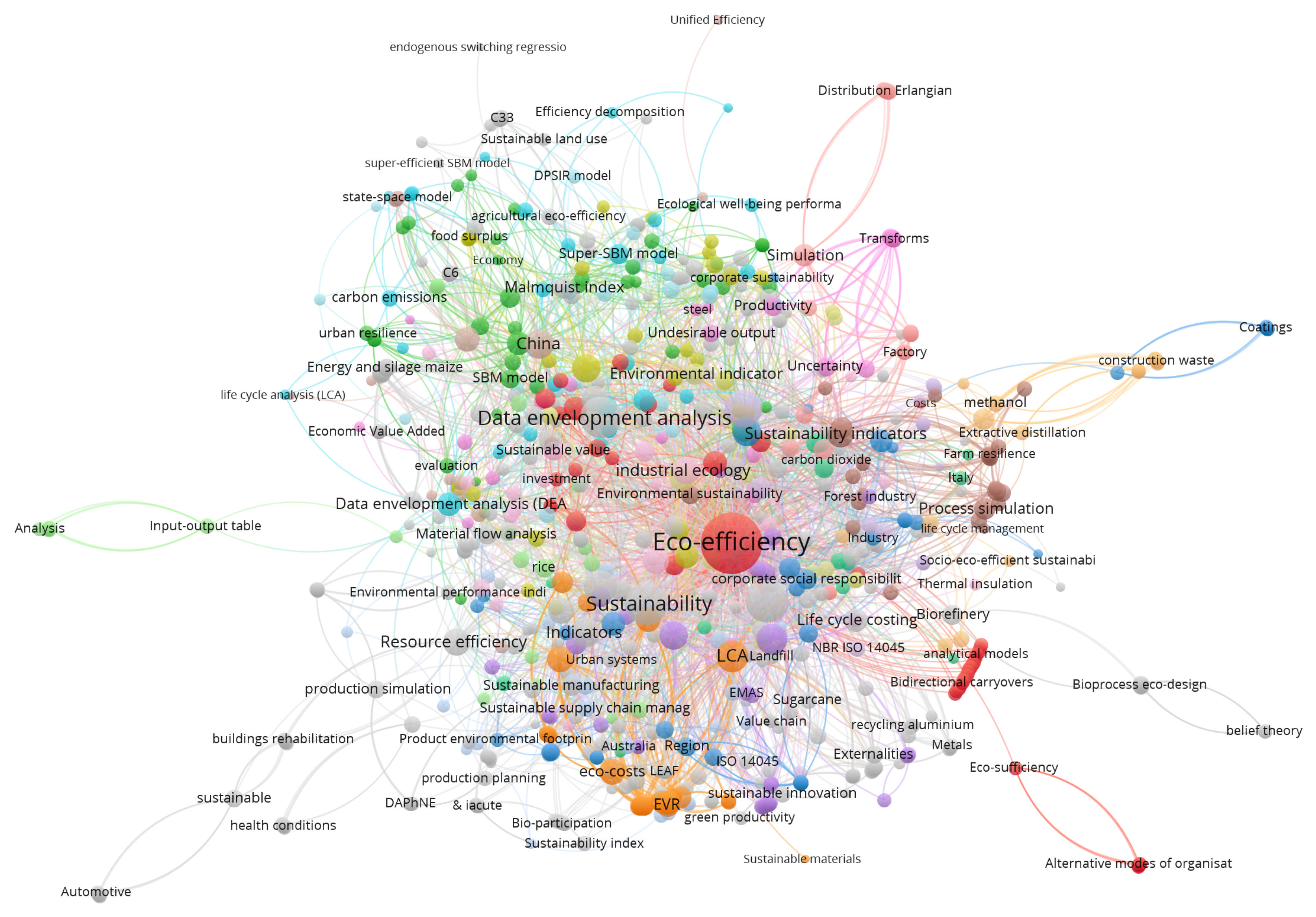
Figure 9 presents a bibliometric co-occurrence map of keywords from the full corpus, thereby visualizing the keywords with a minimum total link strength of 6 for an item. The nodes in the network represent the keywords, with the size of each node corresponding to its frequency. The edges in the network represent common mentions of keywords, and the colors assigned to these edges indicate the content clusters to which they belong. The colours correspond to clusters identified by the VOSviewer 1.6.20 clustering algorithm and indicate groups of keywords that tend to appear together and thus form coherent thematic areas. The concept of eco-efficiency is situated at the centre of the map, closely connected to sustainability and sustainability indicators or environmental indicators. Around this conceptual core, a strongly method-oriented cluster can be observed, combining terms such as data envelopment analysis (DEA), SBM model, Malmquist index, and undesirable output, as well as a neighbouring cluster that gathers life-cycle-based approaches. A more application-oriented complex brings together resource efficiency, material flow analysis, and recycling. At the periphery, several smaller islands mark specialised application fields. Overall, the structure of the literature revealed by the keyword network is clearly method-driven, with DEA- and LCA approaches acting as hubs that link eco-efficiency and sustainability concepts to a wide range of sectors. Service- and PSS-related terms appear mainly at the margins of the network and do not form a distinct, densely connected cluster. This underscores that the eco-efficiency literature is still dominated by product- and production-oriented studies and that service and PSS contexts remain only weakly represented at the level of reported keywords.
Building on this descriptive analysis, the following two sections provide a detailed examination of the environmental (Section 6) and economic (Section 7) indicators. The analysis encompasses, among other aspects, how these indicators are applied in service and Product-Service Systems (PSS) as well as a chronological examination of their emergence in the literature.

6. Environmental Indicators

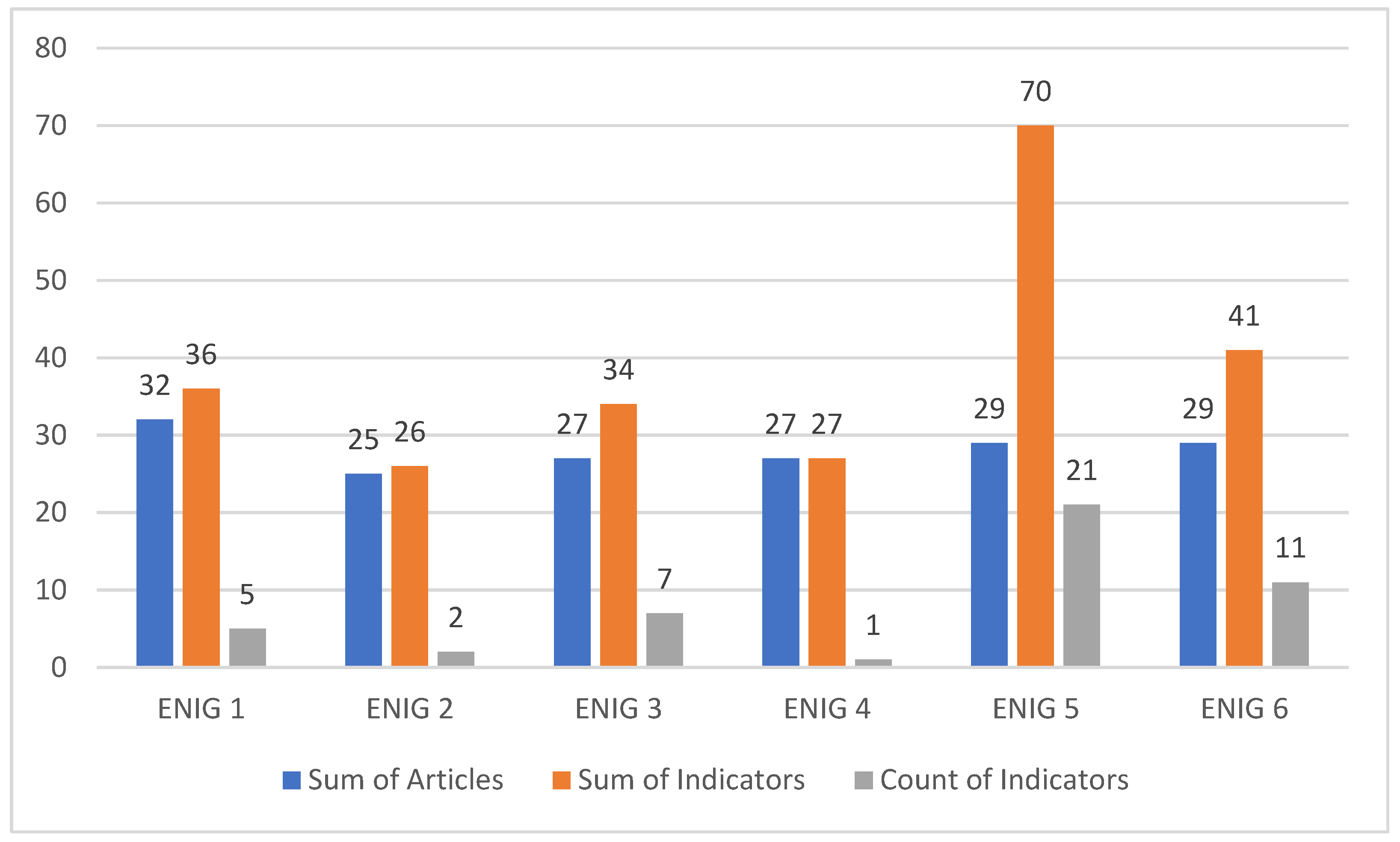
A total of 49 different indicators related to the environmental impact were identified. Those were mentioned 237 times. This results in 6 distinct groups, as shown in Figure 10. For each group, the sum of articles per group, the sum, and the count of indicators are presented. To do this, an overview of all the indicators was drawn up, and the indicators were then grouped. In this way, the indicators were successively and methodically assigned to groups using an affinity diagram. The groups were formed and numbered into six ENIGs from ENIG1 to ENIG6. The indicator group Energy (ENIG1) contains 5 indicators, two of which are related to Water (ENIG2). However, no emissions or pollution into the water were counted. In the case of clearly harmful emissions, these indicators were included in the indicator group Environment Damaging Substances. If the emission into the water does not seem to be harmful to the environment, they were included in the “other” indicator group. Any kind of material or raw consumption is summarized in the indicator group Material or Resources (ENIG3). Greenhouse Gases, as well as specific greenhouse gases, were summed up to the indicator group Greenhouse Gases (ENIG4). The Environment Damaging Substances (ENIG5) group is the most strongly represented, with 21 indicators, 29 references, and 70 mentions. Finally, the remaining 11 indicators were categorised in the indicator group Others (ENIG6).

6.1. Environmental Indicators—Relation to PSS or Service Systems

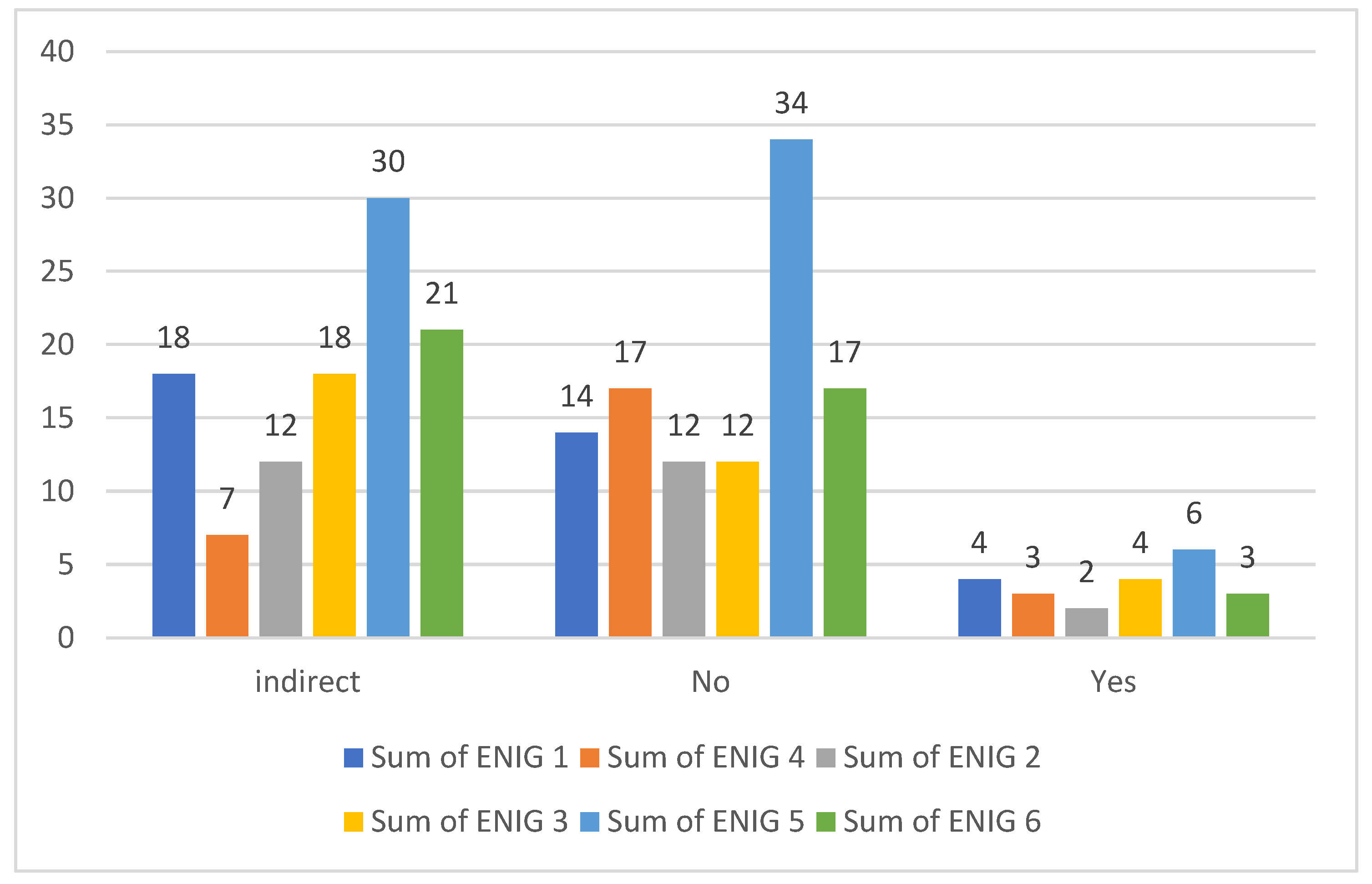
First, the extent to which the indicators relate to service or PSS was examined. From this, the categories Indirect, Yes, and No were formed as presented in Figure 11. These are intended to indicate whether the literature mentions an indirect relationship (Indirect), a direct relationship (Yes), or no relationship (No) to Services or Service Systems. Indirect links are those articles that refer to services in terms of the indicators and the literature, but which do not correspond to the given definition of service systems. For example, although water treatment plants are referred to in the literature as public services, these forms of service are categorised as ‘indirect’ because they do not fit the given definition. This means that only those indicator groups categorised as “Yes” are clearly related to intangible services. 13 environmental indicators with a direct link to intangible services were identified and mentioned 22 times by 7 articles. Although the indicators of ENIG5 were mentioned 6 times, these indicators were only mentioned in 3 articles. The indicators of ENIG3, on the other hand, were mentioned only 4 times and cited in 4 sources. The analysis shows that a significantly larger proportion of the environmental indicators do not relate to intangible service systems. 25 articles refer to services but could not be clearly linked to intangible services (e.g., wastewater service). Further 22 articles do not refer to services at all. Finally, only one publication referred to PSS. For this reason, the indicators relating to PSS were not presented due to an insufficient database. A more differentiated picture emerges when looking at the reference of the articles to services or service systems.

6.2. Environmental Indicators—Relation to Data Sources

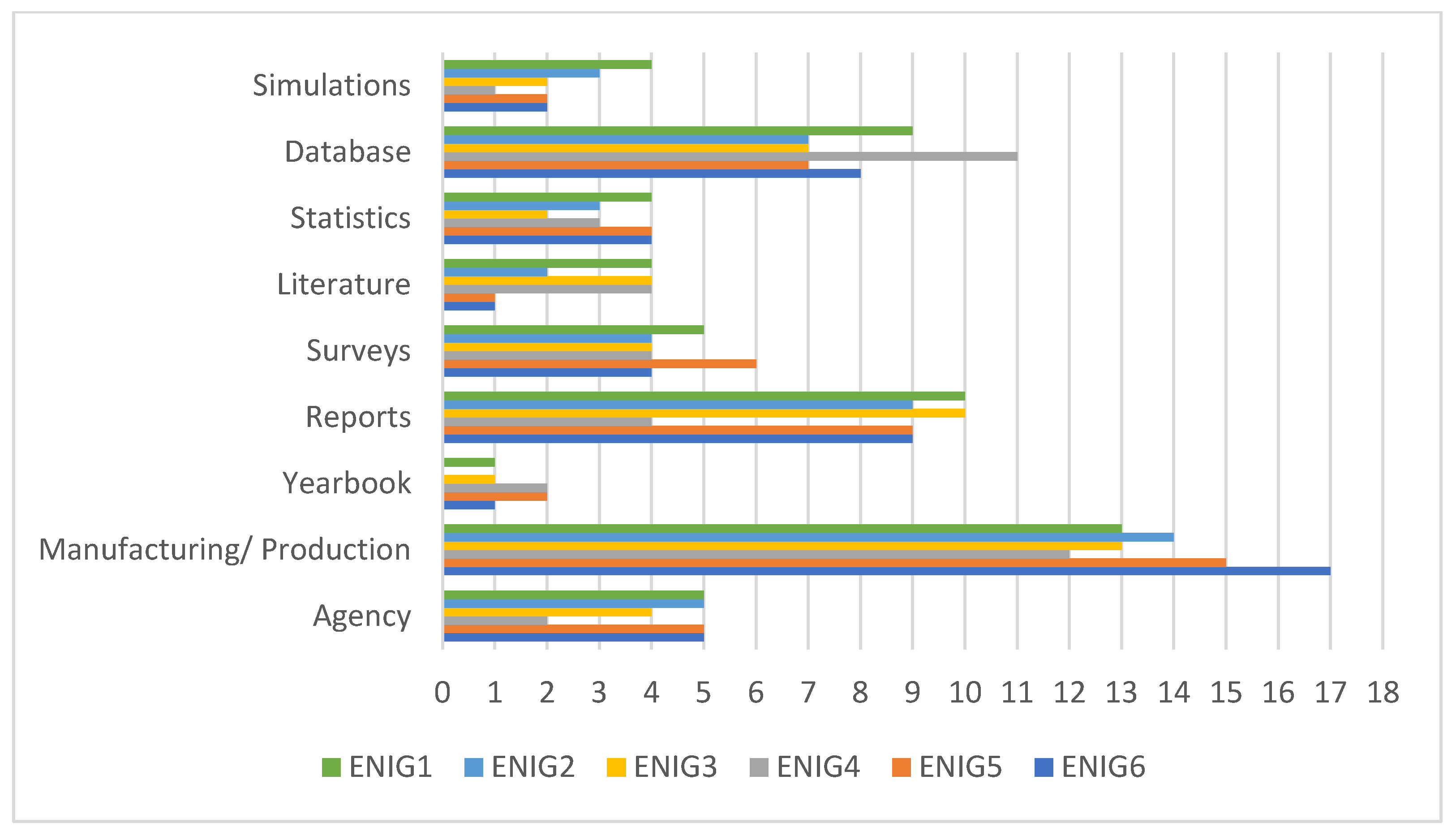
This question facilitates the determination of the frequency with which a data source is applied to the indicators of a group, as illustrated in Figure 12. To achieve this objective, it is imperative to verify not only whether the data source was applied to an indicator group, but also the number of indicators applied. This enables the identification of the indicator groups to which the data sources were most frequently applied. Apart from yearbooks, all data sources appear in all ENIGs. Yearbooks are absent only in ENIG2 and occur at low levels (n = 1–2). Databases are most frequent in ENIG4 (n = 11) and otherwise moderate (n = 7–9). Statistics remain low and narrowly distributed (n = 2–4), with the minimum in ENIG3 (n = 2) and the maximum in ENIG1, ENIG5, and ENIG6 (n = 4). Simulations are quite common in ENIG1 and rare in ENIG4 (n = 1–4). The range of literature is n = 1–4, lowest in ENIG5 and ENIG6 (n = 1) and most frequent in ENIG1, ENIG3, and ENIG4 (n = 4). A spread is observed in case of surveys (n = 4–6), with ENIG5 highest (n = 6), ENIG1 next (n = 5), and the remaining groups at n = 4. Reports are comparatively frequent in ENIG1 and ENIG3 (both n = 10) and least common in ENIG4 (n = 4), while ENIG2, ENIG5, and ENIG6 each show n = 9. For agencies, ENIG1, ENIG2, ENIG5, and ENIG6 are the most widespread (n = 5) and ENIG4 the least (n = 2). Manufacturing and production data are the most prevalent overall (n = 12–17), with ENIG6 highest (n = 17), ENIG5 next (n = 15), and the others ranging from n = 12 to 14.

6.3. Environmental Indicators—Relation to the Unit of Analysis

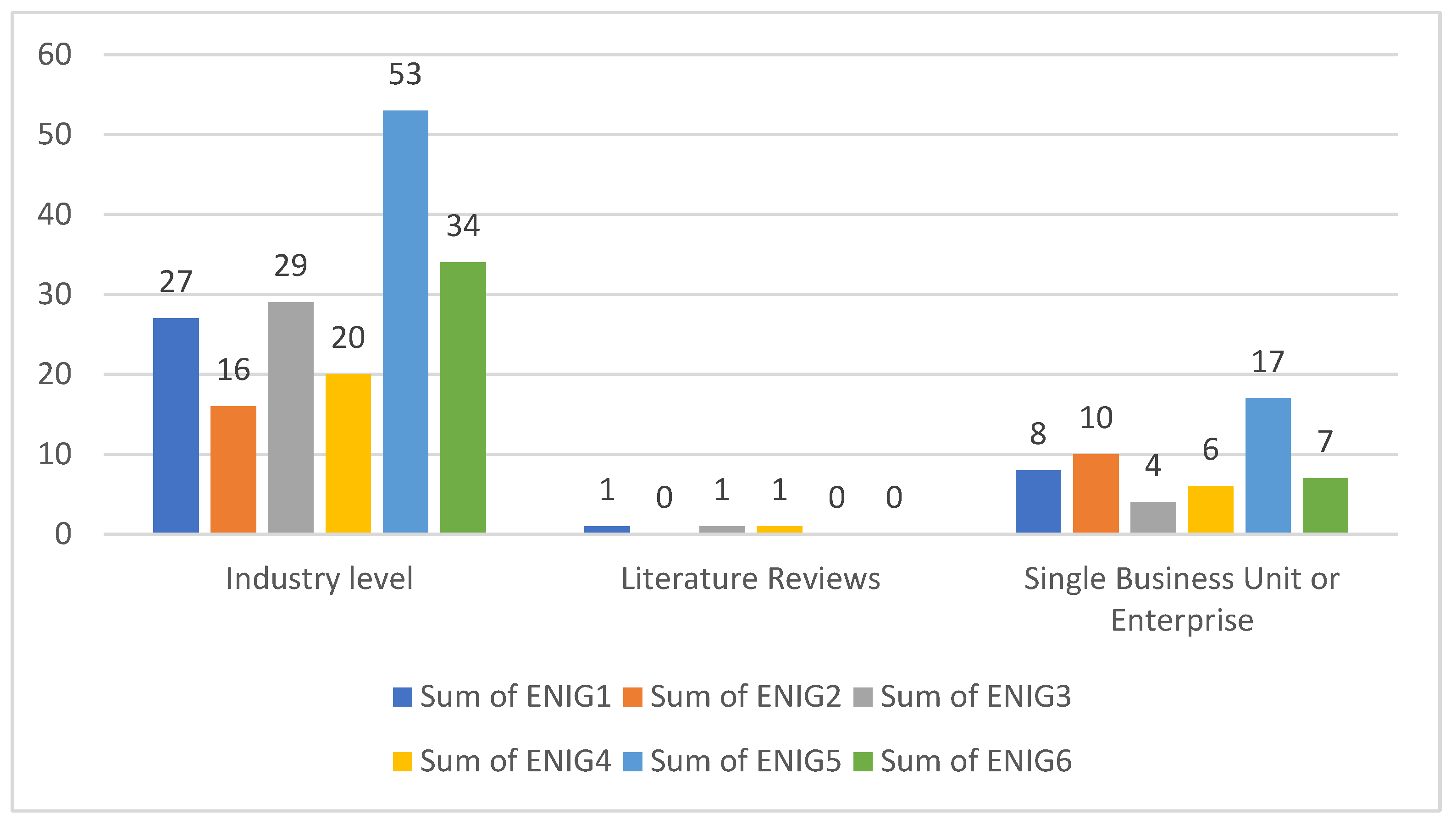
Figure 13 shows the unit of analysis (Industry Level, Literature Reviews, Single Business Unit, or Enterprise) for ENIG1 to 6. The most frequently analyzed unit was the industry level, with several companies in one analysis or application of the eco-efficiency indicators. In second place is the single business unit or company, where only one unit or company was analyzed. A single mention is recorded for ENIG1, ENIG3, and ENIG4 in the literature reviews. At the industry level, ENIG5 (n = 53) is clearly dominant, followed by ENIG6 (n = 34), ENIG3 (n = 29), and ENIG1 (n = 27). The groups ENIG4 (n = 20) and ENIG2 (n = 16) are below that. At the level of the individual business unit or company, ENIG5 is also the most strongly represented (n = 17), followed by ENIG2 (n = 10), ENIG1 (n = 8), ENIG6 (n = 7), and ENIG4 (n = 6), ENIG3 occurs least frequently here (n = 4). This distribution demonstrates that indicator groups pertaining to pollutants and emissions (ENIG5) are of paramount significance at both the industry and company levels. Conversely, indicators relating to materials and resources (ENIG3) are predominantly emphasized at the industry level and are only sporadically observed in reviews.

6.4. Environmental Indicators—Relation to Journals

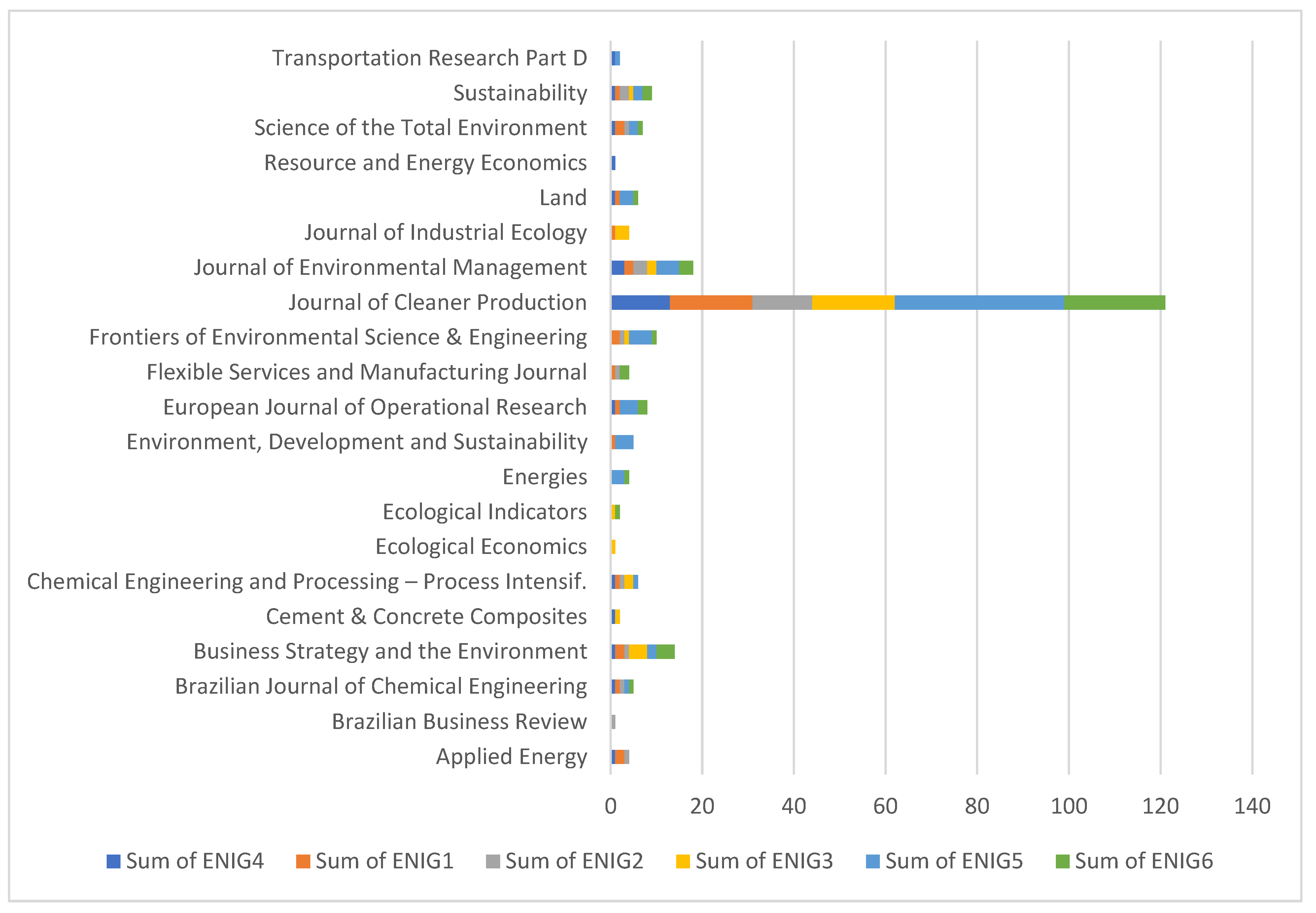
Figure 14 illustrates how the ENIGs were mentioned across journals or proceedings. A total of 237 mentions were recorded across 21 journals (ENIG 1 (n = 38); ENIG 2 (n = 26); ENIG 3 (n = 35); ENIG 4 (n = 27); ENIG 5 (n = 70); and ENIG 6 (n = 41). The strong concentration on the Journal of Cleaner Production (JCP) is notable: this journal accounts for 51.7% of mentions (121 out of 234). Its share is similarly high across all six groups (ENIG 1 = 50%; ENIG 2 = 50%; ENIG 3 = 52.9%; ENIG 4 = 48.1%; ENIG 5 = 52.9%; ENIG 6 = 53.7%). This means that a single medium dominates the publication landscape across all indicator groups. Several other journals also contribute to the distribution, but with significantly lower shares and thematic focuses. Some titles are represented exclusively in certain groups (e.g., Transportation Research Part D entails ENIG5 only), suggesting domain-specific communities and thematic focuses. Overall, the figure documents a heterogeneous, evidence-based center. The variety of journals indicates an interdisciplinary approach to the topics, but the strong concentration on a few outlets can lead to biases in publication and discoverability.

6.5. Environmental Indicators—Descriptive Analysis of Environmental Indicator Groups

The 6 ENIGs contain an average of 8.2 indicators and an average of 28.2 articles per indicator group. Figure 14 shows the number of articles in which the indicators in relation to the indicator groups 1 to 6 were mentioned. 10.2% of the indicators and 59.3% of the articles belong to ENIG1. It is noticeable that only two indicators take the form of energy generation into account, and only one indicator considers renewable energy consumption. However, this does not exclude the possibility that the other indicators are also concerned with the source and kind of energy origin. Energy or energy consumption is noted in 26 publications, electricity consumption 3 times, and renewable energy consumption, energy recovery, and total energy intensity once. ENIG2 was declared 25 times as a relevant indicator for environmental considerations. The indicator “water” is the most frequently mentioned (46.3% of the publications). Only one author noted water discharge. This results in 4.1% of the indicators in the area of water. ENIG3 was mentioned 27 times, containing 7 different indicators. This corresponds to 14.3% of the indicators and 50.0% of the publications, in which “materials” are mentioned 20 times. Total material extracted, or resource depletion, and total material intensity were referred to in one publication. Fossil fuel or fuel consumption was noted 7 times, minerals and mineral depletion 3 times, and wood consumption 2 times. Further, the ENIG4 “greenhouse gases” were summarized as a separate indicator group number 4. In this case, the individual substances were not listed, as there is broad agreement on the substances that belong to this indicator group. A total of 27 publications were recorded that explicitly mention this indicator group and its substances, which accounts for 50.0% of the 54 articles and 2.0% of the count of indicators. ENIG5 built the largest indicator group containing 21 indicators, which were mentioned 70 times. This leads to 42.9% of the indicators and 53.7% of the publications. The indicators shown in Figure 10 are often closely related to the other categories, so “greenhouse gases” could also be categorized as environment damaging substances. However, as the indicator group of “greenhouse gases” plays a prominent role in sustainability considerations, especially carbon dioxide, this indicator group is retained as an independent group in accordance with the comprehensive consensus in the literature. Finally, the categories and indicator formations and analyses are intended to show the diversity, while also adhering to common procedures and standards, such as ISO 14045 [43]. In this way, the complexity of the analysis should not be reduced, but still comply with existing views and standards. Finally, the indicator group “others” (ENIG6) contains all the other indicators that could not be integrated into the previous categories and includes 11 different indicators that were mentioned 41 times. This leads to 53.7% of the number of publications and 22.4% of the total number of environmental indicators. It is evident that several other journals contribute to the distribution with lower counts and clear thematic profiles. These include Business Strategy and the Environment (notably ENIG 3 and ENIG 6), Frontiers of Environmental Science & Engineering (ENIG 5), Journal of Environmental Management (broad coverage across ENIG 1–6), European Journal of Operational Research (mainly ENIG 5 and ENIG 6), Science of the Total Environment (balanced contributions), and Energies (ENIG 5).
The following environmental indicators, as seen in Table 1, were only applied to services according to the provided definition.
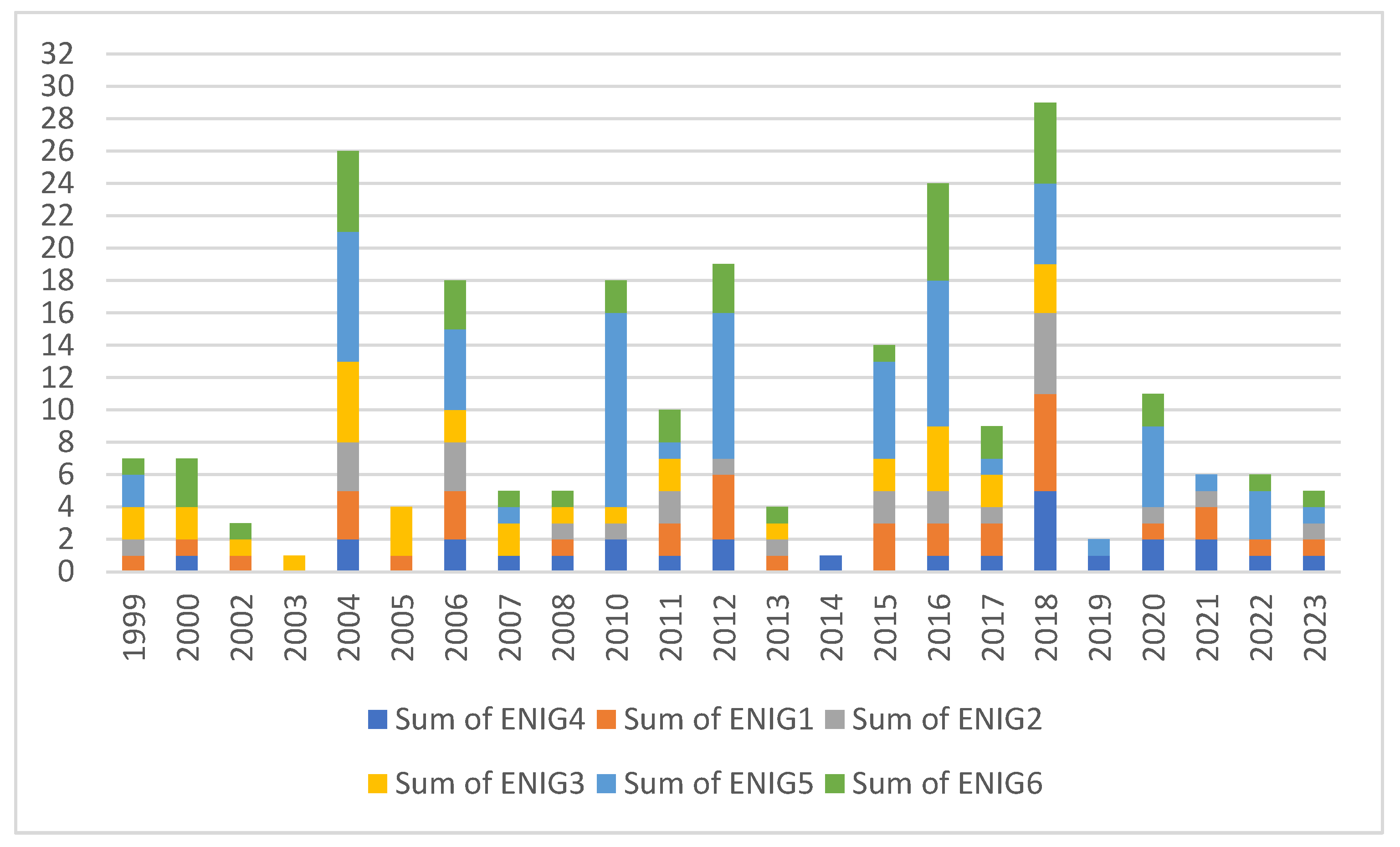
As demonstrated in Figure 15, there is a substantial variation in the annual frequency of the ENIG1–6 indicator groups between 1999 and 2023. A period of intense activity occurred between 2004 and 2018, during which all groups were regularly represented. Subsequent to this, there was a slight decrease in frequency, without the indicators fully disappearing. ENIG5 manifests the highest overall frequency, with clear peaks evident in 2010 (n = 12) and 2012 and 2016 (n = 9 each). These values indicate phases of increased scientific attention. Despite the temporal limitations imposed by the year 2018, ENIG5 continues to be referenced in select instances, as evidenced by its mentions in 2020 and 2022. ENIG6 follows with n = 41 and shows increased values, particularly between 2013 and 2017. ENIG2 (n = 36) and ENIG4 (n = 34) form the middle range, while ENIG1 (n = 27) and ENIG3 (n = 26) have the lowest frequencies but also stand out significantly at times (e.g., 2004–2012). It is imperative to direct particular attention towards ENIG4, the group of greenhouse gases. As outlined, this was not disaggregated into subordinate indicators, resulting in a lower reported frequency than would be predicted. Given the extensive and well-established research that has already been conducted on greenhouse gases, the present analysis merely documented the utilisation of at least one greenhouse gas as an indicator. It is important to note that the values thus reflect the use as an indicator, rather than the number or specific gases. The prevailing trend indicates a persistent yet progressively specialised utilisation of ENIG groups. While the peak period from 2004 to 2018 indicates broad application, the years from 2019 onwards reflect a thematic focus without any decrease in the relevance of the indicators.
In the following Section 7, the economic indicators are analysed using the same analytical framework as the environmental indicators. This parallel structure enables a direct comparison of the indicator groups and supports more integrated conclusions.

7. Economic Indicators

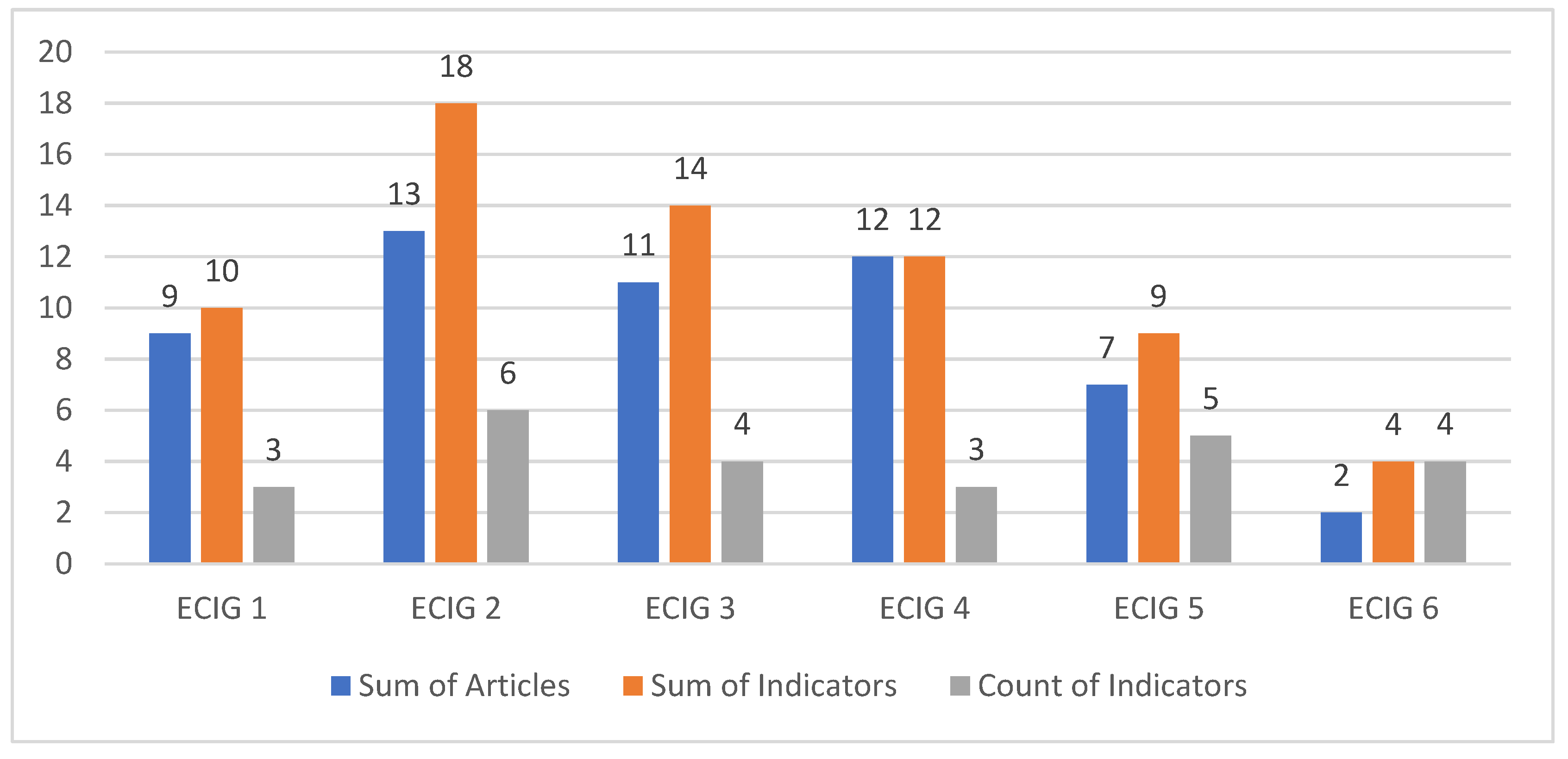
Regarding economic indicators, 25 indicators were mentioned 65 times across 37 of the 54 relevant articles. Indicator groups were created to provide a better overview and summarize the various indicators, as demonstrated in Figure 16. Again, all indicators were collected first and then categorised into appropriate groups using the affinity diagram method. After a detailed analysis, the categories “Turnover and Sales Figures” (ECIG1), “Costs and Price” (ECIG2), “Value Added” (ECIG3), “Productivity and Production” (ECIG4), “Profit and Profitability” (ECIG5), and “Others” (ECIG6) were formed. This allows the analysis of how many indicators each indicator group contains. In addition, the number of papers per indicator group can be presented.
ISO 14045 [43] defines eco-efficiency as the ratio of a product system’s value to its environmental impact. In the present classification, the product system value is regarded as the economic dimension of eco-efficiency in a broad sense. This dimension encompasses not only purely monetary measures (e.g., revenues, costs, profits) but also value-related and functional aspects that contribute to the performance of the product or service system. For instance, the Group Value Added (ECIG3; incorporating value added, gross value added, net value added, and economic value of the product) and the Group Others (ECIG6; incorporating labour stock and safety) capture elements that can be interpreted as manifestations of functional or other value contributions to the product system.

7.1. Economic Indicators—Relation to PSS or Service Systems

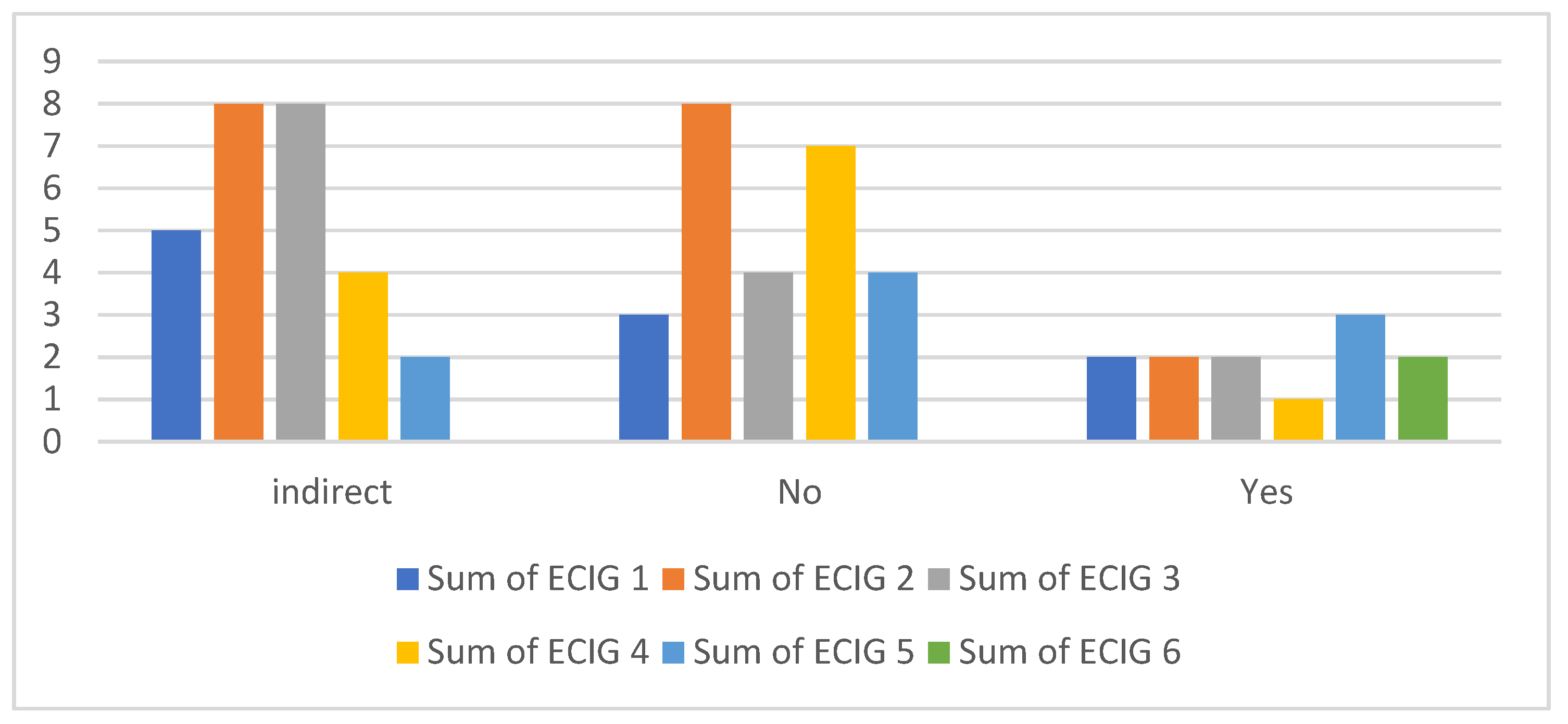
As in the case of environmental indicators, the economic indicators are analysed regarding their application to intangible services (see Section 6.1). Figure 17 illustrates the relation of ECIG to service systems. For those indicator groups relating to intangible services, there is a picture of n = 1–3 indicators per group. 10 economic indicators with a direct link to intangible services were identified and mentioned 12 times by the 6 articles. The analysis reveals that economic indicators are rarely applied to intangible service systems.
This hypothesis is supported by the findings presented in Table 2, which demonstrate that only 10 out of the 25 identified economic indicators were implemented in service systems as defined. Conventional indicators typically associated with service operations, such as time spent on the service [71], are not explicitly reported in this context. This suggests that, although established economic indicators are used, those indicators that are frequently employed in the economic calculation of service systems remain largely absent from documented eco-efficiency assessments. One plausible explanation is that classic service indicators are aggregated into measures of added value or directly into cost figures. While this may be convenient from a managerial perspective, it reduces informational transparency, as it becomes difficult to determine whether a given measure primarily reduces total service time, total costs, or both.

7.2. Economic Indicators—Relation to Data Sources

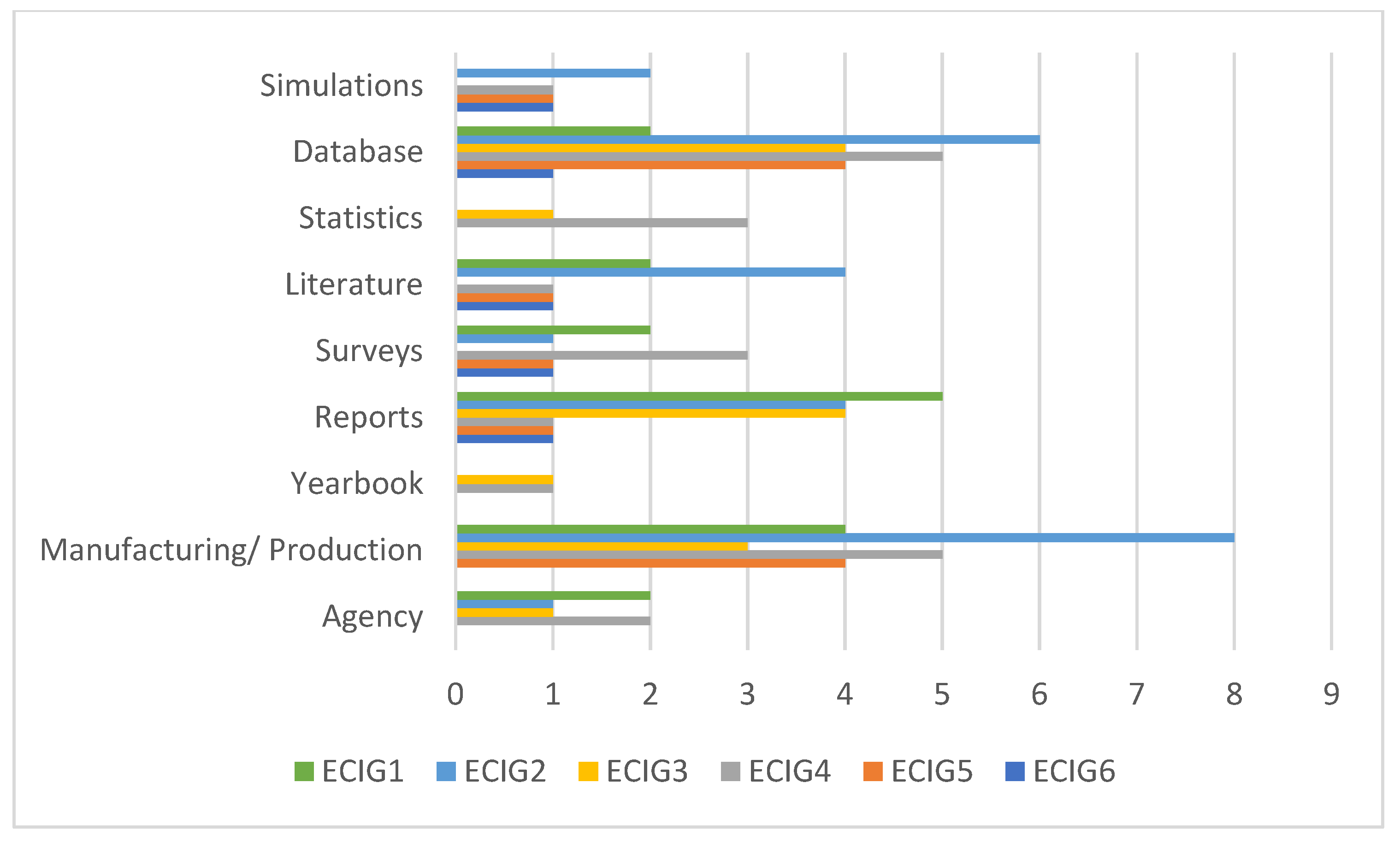
This approach facilitates the determination of the frequency with which a data source is applied to the indicators of a group. This analysis enables the identification of the indicator groups to which the data sources were applied most frequently, as demonstrated in Figure 18. The database (n = 22) was used particularly often by ECIG2 (n = 6) and ECIG4 (n = 5). Statistics (n = 4) were applied only in ECIG4 (n = 3) and ECIG3 (n = 1). Simulations were applied 5 times, most frequently in ECIG2 (n = 2), present in ECIG4/ECIG5/ECIG6 (n = 1 each), and absent in ECIG1 and ECIG3. Yearbooks appeared only in ECIG3 and ECIG4 (n = 1 each). Literature (n = 9) was used mainly in ECIG2 (n = 4). Surveys (n = 8) ranged from n = 0–3, peaking in ECIG4 (n = 3). In total, reports were used 16 times: ECIG1 (n = 5) most frequently, followed by ECIG3 and ECIG2 (n = 4 each). Agencies (n = 6) were not used by ECIG5 and ECIG6 and were mentioned most in ECIG1 and ECIG4 (n = 2 each). Production data are again the most common data source (n = 24; range n = 0–8), with ECIG2 (n = 8) the highest, followed by ECIG4 (n = 5).

7.3. Economic Indicators—Relation to the Unit of Analysis

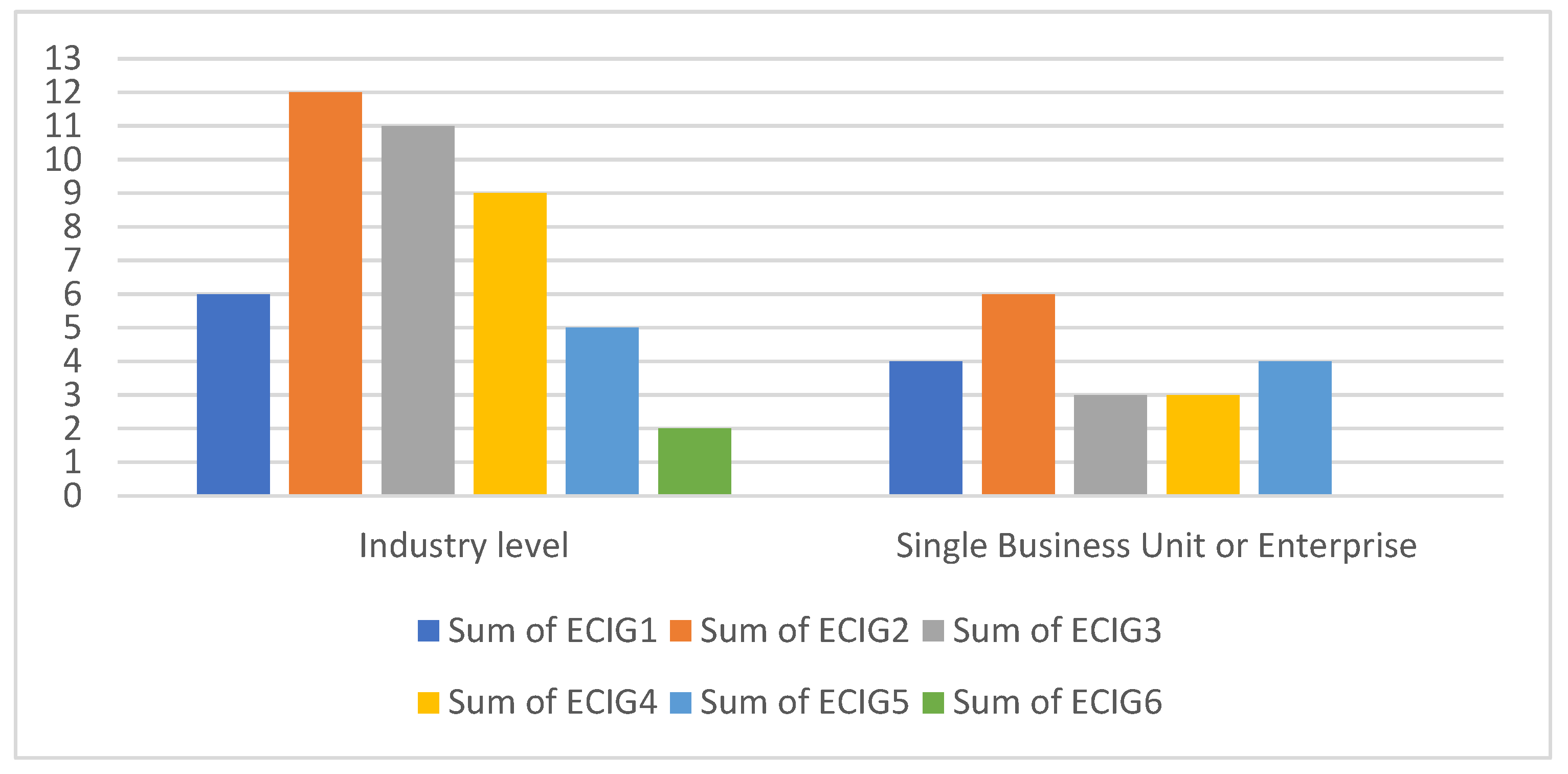
Figure 19 shows the relationship between the unit of analysis and the respective indicator groups. While all groups are represented at the industry level, ECIG3 does not appear in the single business unit or enterprise.

7.4. Economic Indicators—Relation to Journals

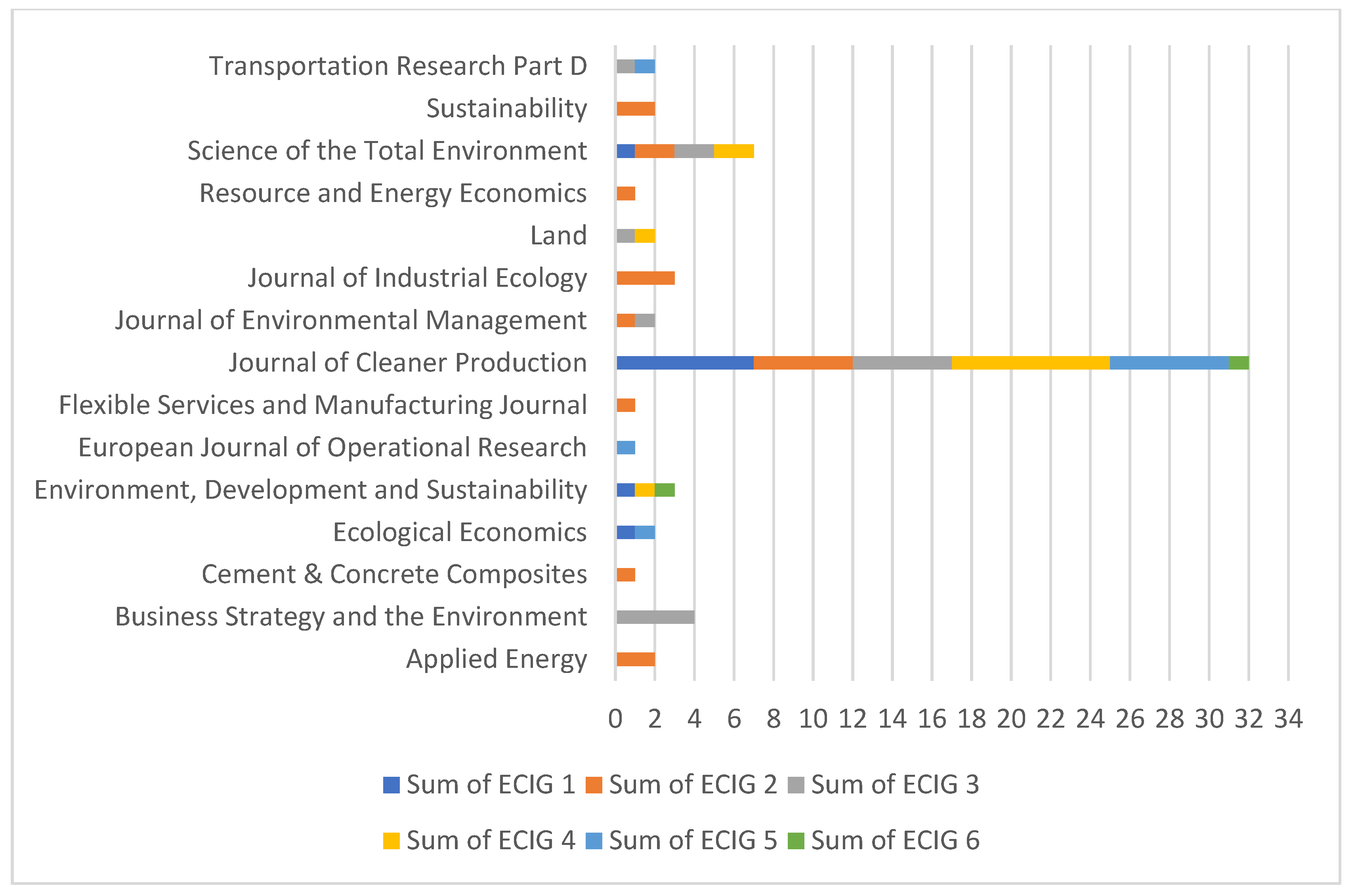
A total of 65 mentions were recorded across 15 journals (ECIG1 (n = 10); ECIG2 (n = 18); ECIG3 (n = 14); ECIG4 (n = 12); ECIG5 (n = 9); ECIG6 (n = 2)). Notably, there is a strong concentration on the Journal of Cleaner Production (JCP), which accounts for 49.2% of mentions (32 out of 65). The JCP’s share of mentions varies between groups but remains high in several groups (ECIG1 = 70%; ECIG2 = 27.8%; ECIG3 = 35.7%; ECIG4 = 66.7%; ECIG5 = 66.7%; ECIG6 = 50%). This means that a single outlet can have a significant impact on the publication landscape at the ECIG level. In addition to the JCP, other journals contribute to the distribution, albeit with significantly lower shares. Overall, Figure 20 shows a heterogeneous, JCP-centred evidence base for economic indicators.

7.5. Economic Indicators—Descriptive Analysis of Economic Indicator Groups

The indicator group of ECIG1 relates to about 17% of publications and approximately 12% of indicators. In the case of ECIG2, the ratio of price to cost was mentioned most frequently. This results in about 24% of the indicators and approx. 24% of the publications related to this indicator group. The indicator group ECIG3 includes 4 indicators. Thus, approx. 16% of the indicators and about 20% of the publications referred to ECIG3. The indicators amount of production, total production time, and GDP per capita were transferred together to ECIG4. Accordingly, approx. 12% of the indicators and about 22% of the publications are represented in this group. In the case of ECIG5, 20% of the indicators and 13% of the publications in the literature analysed are represented in this indicator group. ECIG6 contains 16% of the indicators and 4% of the publications. The amount of production (n = 6) and total recorded sales, as well as value added (n = 5), were the only ones with more than 5 articles per indicator. As in the case of the environmental indicators, the overview is not intended to misinterpret the frequency of occurrence in the selected literature database with the relevance or suitability for a specific service or PSS. Nevertheless, they provide a basis for identifying and selecting suitable indicators in the case of a specific service or PSS. Table 2 provides an overview of the Indicators linked to services according to the provided definition.
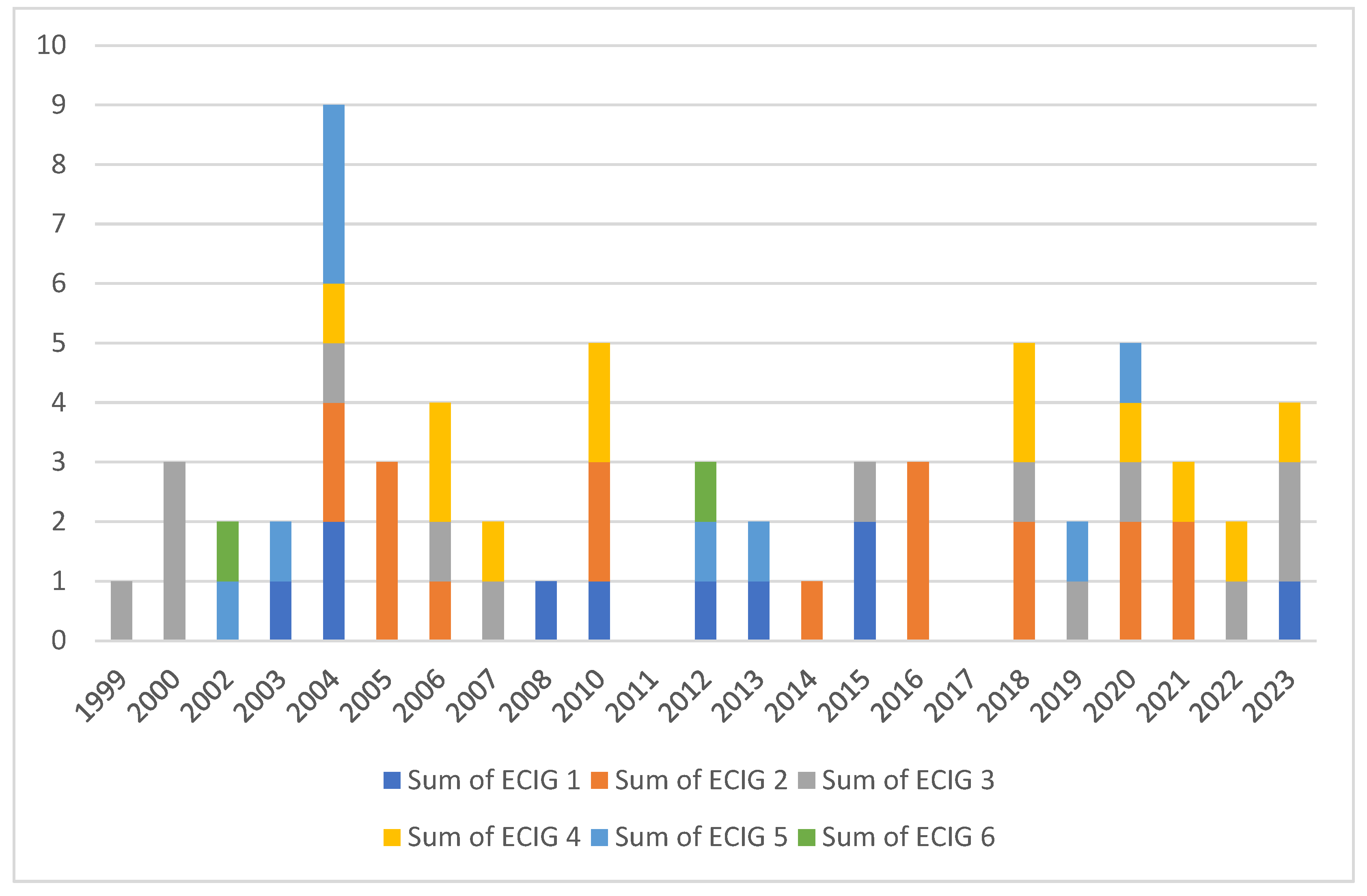
A more limited body of contributions was identified in the domain of economic indicators (ECIG), a total of 37 articles were referenced to ECIG1-6, published across 15 journals (see Figure 20. The distribution of publications is clearly concentrated in the Journal of Cleaner Production (JCP): The JCP accounts for 32 of 65 ECIG mentions (49.2%) across all groups. It is notable that numerous other academic publications also make significant contributions to the extant evidence on this topic, with some journals contributing to a greater extent than others. As demonstrated in Figure 21, the frequency of the ECIG1–6 groups displays an overall stable but differentiated development over the period from 1999 to 2023. The total number of mentions is 65. ECIG2 has the highest overall frequency with n = 18 and was present for many years, indicating the continued relevance of this indicator group. ECIG3 follows with n = 14 and shows a regular, even if not uniform, distribution. The occurrence of ECIG4 (n = 12) and ECIG5 (n = 9) is moderate and frequently observed in the context of active research phases. ECIG1 (n = 10) is less frequent but is represented throughout the entire period. It is noteworthy that 2004 was a year of particularly extensive activity, with five of the six ECIG groups referenced. Furthermore, increased use was observed in the years 2010, 2016–2018, and 2020, indicating phases of increased conceptual or empirical integration of the ECIG indicators. ECIG6 is represented in only two instances (2016 and 2020), indicative of its exclusive utilization within this group. The data demonstrate that the utilization of ECIG indicators persists beyond 2018, extending to 2023. This finding indicates a sustained, yet more focused, integration of the ECIG groups within the relevant research literature, thereby deviating from the previously observed pattern of decline after 2018.

8. In-Depth Analysis

8.1. Methodological Approach for Co-Occurrence Analysis

While Section 6 and Section 7 provide separate descriptive mappings of environmental (ENIG) and economic (ECIG) indicators, the purpose of the in-depth analysis is to examine how these indicators are combined in practice from an eco-efficiency perspective. To this end, we construct three co-occurrence networks: one for environmental indicators (ENIG), one for economic indicators (ECIG), and one combined network (ENIG + ECIG). The separate ENIG and ECIG networks characterise the internal structure and density of each dimension. The combined ENIG + ECIG network, which forms the core of this section, focuses on the joint use of environmental and economic indicators and thus reflects the degree to which eco-efficiency is operationalised as an integrated assessment in the literature. Composite measures were systematically decomposed into their environmental and value-related components during data extraction; the co-occurrence networks are based on these underlying indicator building blocks. As a result, the combined ENIG + ECIG network reflects integrated eco-efficiency assessments in terms of which environmental and economic indicators are used together within the same studies, even when any composite ratios or scores derived from them are not reported as separate, named indicators. Co-occurrence is defined as the occurrence of two Indicators appearing together. The weighted degree (the sum of all co-occurrences of a node across all partners) was utilized for the node ranking. In the following Section 8.2, Section 8.3, Section 8.4 and Section 8.5, the pairs are presented as the result of sorting according to these metrics. The values reported here are the sum of all pairings of a given indicator with all other indicators and their percentages of the total sum. This metric is employed to gauge the extent of networking presence within the corpus. The values reported here are co-occurrence sums per node (excluding self-pairs on the diagonal).

8.2. Patterns Among Environmental Indicators

The values reported here are co-occurrence sums per ENIG-node and their shares of the total sum (1274). The ENIG analysis demonstrates that the networked field is considerably more extensive in the ENIG segment than in the ECIG segment. The top 10 ENIG nodes account for 755 of 1274 co-occurrences, representing 59.3% of the total E coupling mass illustrated in Figure 22. The ranking is led by E1 with 141 co-occurrences (11.1%), followed by E6 (9.7%) and E15 (7.6%). The upper midfield is constituted of E8 (5.7%), E37 (5.3%), and E23 (4.9%). The E1/E6/E15 form the core axis of the ENIG network, accounting for a combined 28.4% of all ENIG-couplings. It is evident that the elements E8, E37, E23, and E34 are instrumental in establishing a substantial middle field, thereby significantly contributing to the cohesion of the whole. E26, E46, and E11 are less dominant, yet structurally relevant.

8.3. Patterns Among Economic Indicators

The values reported here are co-occurrence sums per node (sums of the pairings of this ECIG with all other ECIGs) and their percentages of the total sum (104). This metric is employed to gauge the extent of networking presence within the ECIG segment of the corpus.
The co-occurrence analysis within the ECIG segment reveals a pronounced core-periphery structure. The top 10 nodes, as displayed in Figure 23, account for 78 of 104 co-occurrences, i.e., 75.0% of the total ECIG coupling mass. The EC10 model demonstrates a leading performance with 11 co-occurrences, representing a proportion of 10.6%. In close succession are three indicators of equal prominence: As shown in Figure 21, EC1, EC14, and EC19 represent 9.6% each. The central area of the field is composed of EC4 (7.7%) and EC3 (6.7%). The peripheral area is characterised by EC21, EC8, EC18 (5.8%), and EC7 (3.8%), indicating a diverse range of ECIG numbers in this region.
The four nodes EC10/EC1/EC14/EC19 function as the backbone of the ECIG network (together accounting for 39.4% of all EC couplings). These elements function as anchors in a variety of pairing contexts. EC4 and EC3 constitute a stable middle ground, regularly contributing to network cohesion without achieving the dominance of the top nodes. The EC21/EC8/EC18/EC7 are located in the peripheral area and are thematically relevant yet exert a lesser influence on the overall structure.

8.4. Cross-Dimensional Insights (ENIG × ECIG)

It should be noted that all figures refer to co-occurrence sums per node in the combined network and their percentage shares of the total sum (2052). The combined network displays a marked prevalence of ENIG nodes, accompanied by individual ECIG bridge nodes. The top 10 co-occurrences account for 978 of the 2052 instances identified, representing 47.7% of the total coupling mass. The ranking is led by E1 with 185 (9.0%), followed by E6 (7.5%) and E15 (6.6%). The upper midfield is constituted by E8 (4.8%) and E37 (4.1%). The E1–E6–E15 axis continues to function as the primary structural element, even when the EC nodes are considered (accounting for 23.1% of the total). It is evident that EC14 and EC10 function as prominent EC docking points, thereby demarcating the interfaces between ECIG and ENIG. The top 10, in its entirety, contributes approximately 47.7% of the total network, as demonstrated in Figure 24, signifying a modular yet not remarkably concentrated configuration. A substantial proportion of connections, amounting to nearly 50%, is dispersed among a multitude of medium-sized and peripheral nodes outside the top 10.

8.5. Top Weighted Economic and Environmental Indicators Pairs

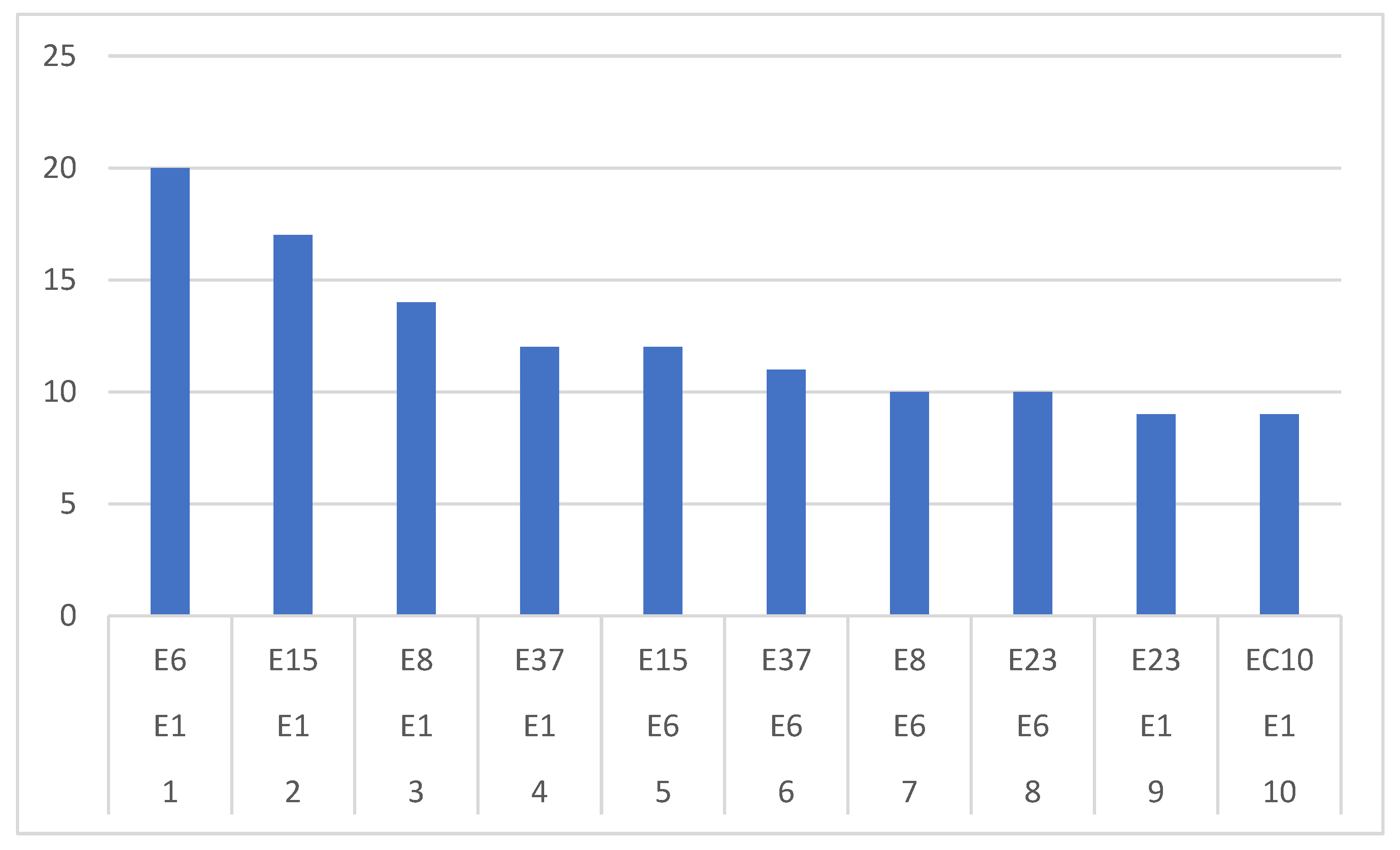
In this context, “weight” is the raw number of joint occurrences of two indicators in the same row, calculated on a sector-specific basis. The Top 10 are demonstrated in Figure 25. Within the ENIG area, pair analysis confirms the presence of a prominent core after removing self-pairs. Across the 694 observed pairs, the weights range from 1 to 20 (mean = 1.84). A small set of highly frequent links dominates the structure, while most pairings occur at a low frequency. At the upper end of the spectrum, the leading connections include: E6–E1 (20), E1–E15 (17), E1–E8 (14), E6–E15 (12), and E1–E37 (12). Once self-pairs were excluded from the analysis, it is evident that the ECIG structure remains markedly thinner. In total, 94 EC-EC pairs exhibited positive weight, ranging from 1 to 2 (mean 1.30). The presence of recurring couplings is observed, though their strength is found to be negligible. The only pairs with strength equal to two are those of the form EC4–EC14 (2), EC3–EC10 (2), EC1–EC10 (2), and EC10–EC14 (2). ECIG displays a sparse pattern, characterized by an absence of high-weight couplings. The calculation was performed for the combined ENIG + ECIG network. The analysis reveals 238 EC–E pairs with positive weight, ranging from 1 to 9 (average 1.42). A limited set of strong bridges is key to forming the backbone of the joint structure. At the upper end, the following connections are worthy of particular note: The following EC codes are to be considered: EC10–E1 (9), EC10–E15 (6), EC1–E1 (5), EC7–E15 (5), EC14–E1 (5), EC10–E6 (5), EC14–E15 (5), EC1–E8 (5), EC14–E34 (4), EC10–E22 (4). These pairings delineate the principal ENIG–ECIG bridges and internal linkages, lower-weight pairs contribute mainly to peripheral connectivity.

8.6. Co-Occurrence Analysis of Eco-Efficiency Indicators

The co-occurrence networks (Figure 22, Figure 23 and Figure 24) reveal distinct patterns in how eco-efficiency indicators are combined in studies. In the economic network (ECIG), overall connectivity is comparatively low, whereas the environmental network (ENIG) is characterised by a much higher connection density. Cross-links between environmental and economic indicators in the combined network (ENIG + ECIG) are sparse and concentrated around a limited set of indicator pairs. This pattern indicates that current eco-efficiency assessments tend to combine a relatively stable set of environmental indicators with only a narrow subset of economic indicators, leaving other potentially relevant combinations underexplored. From an eco-efficiency perspective, the combined ENIG + ECIG network can be interpreted as a structural representation of how environmental and economic dimensions are brought together in existing studies. The sparse and highly concentrated cross-links indicate that, in most cases, eco-efficiency is operationalised by reporting environmental and economic indicators side by side, rather than by constructing integrated indicator formulas that jointly encode both dimensions in a single metric. Within the overall ranking of co-occurrence pairs, the highest-ranking eco-efficiency pair linking an environmental (ENIG) with an economic (ECIG) indicator appears only in tenth place. The corresponding environmental–economic combinations are as follows: Energy (Consumption) (E1)—Value Added (EC10) (n = 9); Greenhouse Gases (E15)—Value Added (EC10) (n = 6); and, each occurring five times, Water (Consumption) (E6)—Value Added (EC10), Raw Materials (Consumption)/Material/Resources (E8)—Net Sales (Recognized Revenue) (EC1), Greenhouse Gases (E15)—Total Costs (EC7), Energy (Consumption) (E1)—Amount of Production (EC14) and Greenhouse Gases (E15)—Amount of Production (EC14). These environmental–economic pairs can often be interpreted as the building blocks of integrated eco-efficiency indicators. For example, combinations such as Energy (Consumption) (E1)—Value Added (EC10) or Greenhouse Gases (E15)—Amount of Production (EC14) typically underpin ratios of the form “energy consumption per unit of value added” or “greenhouse gas emissions per unit of production”. Likewise, pairs such as Water (Consumption) (E6)—Value Added (EC10) and Raw Materials/Resources (E8)—Net Sales (EC1) correspond to expressions such as “water use per unit of economic output” or “resource use per unit of sales”. Therefore, although these ratios are not coded as separate named indicators, the ranking of ENIG–ECIG co-occurrence pairs highlights precisely those combinations that are most frequently used to jointly express environmental performance and product system value in the reviewed eco-efficiency literature. In the ENIG network, the co-occurrence sums are strongly concentrated. The top ten environmental indicators account for 755 of 1274 ENIG co-occurrences. This distribution establishes a pronounced core–periphery structure with a core axis E1–E6–E15 that shapes the ENIG segment. A stable midfield (E8, E37, E23, E34) contributes substantially to network cohesion, while indicators such as E26, E46, and E11 are structurally relevant but less dominant. The pair analysis further confirms the density of the core zone: the strongest duos are E6–E1, E1–E15, E1–E8, and, slightly less pronounced, E6–E15, E6–E37, E6–E23, and E6–E8. In the ECIG segment, the coupling level is significantly lower. The co-occurrence sums of the ECIG nodes are highly concentrated, with the top ten economic indicators accounting for 78 of 104 ECIG co-occurrences. This gradation identifies EC10, EC1, EC14, and EC19 as the backbone of the ECIG network, while EC4 and EC3 stabilise the midfield. The ECIG structure is characterised by the recurrence of specific pairs with a co-occurrence weight of 2 each (e.g., EC4–EC14, EC3–EC10, EC1–EC10, EC10–EC14), whereas numerous other ECIG pairs manifest only once, remaining at the periphery.
In the combined network, the dominance of ENIG is confirmed, with individual economic indicators docking onto the environmental core. The E1–E6–E15 axis remains the primary structural element and continues to concentrate a considerable share of the total coupling. At the same time, selected ECIG indicators, particularly EC10, act as docking points on ENIG, thereby delineating the ENIG–ECIG interface. The pair analysis confirms the presence of only a few ENIG–ECIG bridges, among these, the link between E1 and EC10 stands out as a particularly relevant connection. Although limited in number, such bridges serve as important load-bearing connections in an otherwise modular network.

8.7. Co-Occurrence of Economic and Environmental Indicators in Service Systems

An examination of the occurrence of economic and environmental indicators assigned directly to service systems reveals a paucity of clusters. This is attributable to the limited number of publications (n = 7) that could be directly associated with service systems. In the environmental indicator matrix (ExE), E1 appears in four studies, E8 and E15 in three each, and E22 and E23 in two studies. The remaining indicators appear at most once. Accordingly, the thematic links are also limited in scope: only the pairs E1–E15 and E1–E23 appear together twice, all other pairs appear at most once, and there are only 90 different pairs with any common mention. In the economic indicator matrix (ECxEC), the use is even more concentrated. Of the economic indicators, EC10 and EC19 appear in two studies each, while several others (EC2, EC3, EC5, EC9, EC14, EC17, EC22, EC23) appear only once. A total of 12 distinct pairs of economic indicators is mentioned, with no pair occurring more than once. The economic and environmental matrix (ECxE) shows how environmental and economic indicators are combined. Of the 1225 theoretically possible combinations, merely 25 are observed. The strongest correlation is observed between E15–EC10, with two joint occurrences. An examination of the number of different partners (i.e., not the sum of co-occurrences, but the number of different counter-indicators) on the environmental side reveals that E1 and E8 in particular are linked to six different EC indicators each (E1 with EC2, EC10, EC14, EC19, EC22, EC23; E8 with EC3, EC5, EC9, EC17, EC19, EC22), followed by E22 with four (EC2, EC10, EC19, EC23) and E15 with three different partners (EC10, EC14, EC19). From an economic perspective, EC19 demonstrates the highest level of networking across five environmental indicators (E1, E8, E15, E22, E39). EC2 and EC23 are each linked to four environmental indicators, and EC22 and EC10 are linked to three each. The integration of environmental and economic indicators in the service sector is concentrated on a few strongly linked nodes, while the majority of potential combinations remain unused in the literature to date. This pattern suggests that, in service-related eco-efficiency studies, integration between environmental and economic dimensions is currently achieved mainly through the co-occurrence of separate indicators rather than through explicitly defined combined eco-efficiency metrics.

9. Limitations

As mentioned by Verfaillie and Bidwell [40], as well as Charmondusit and Keartpakpraek [30], it is not possible to directly transfer individual indicators from one system to another without further verification. Different indicators can be relevant for product and service systems. Conversely, the increasing integration of products and services into PSS is gradually converging the perspectives. As in the case of products, services can also be influenced by a variety of indicators. Due to the diversity and variety of services provided by definition, it is not feasible to create a selection of indicators for the sum of all applications in advance. Consequently, it appears suitable as an initial step to identify the most extensive range of indicators, thereby ensuring their feasibility for future applications. Consequently, the exclusion of indicators with no association with the service systems examined in this study would not be a viable approach. In this way, it remains an individual decision in a specific case whether indicators could be relevant or irrelevant. Therefore, the articles provide an overview of all indicators, including them in the analysis. With increasing use, industry-specific indicators can be identified and built upon.
In addition, the selected method included a particularly large number of articles from the Journal of Cleaner Production. Providing about 54% of the data in the field of the data sources, it is the only journal that addresses all systems, those with no, indirect, or direct link to services according to the definition. Only 5 out of 18 journals deal with services in the sense of the definition. The method applied contained comparatively few articles relating to services according to the given definition. For this reason, a cross-check is advisable for articles that were not included in the analysis of this SLR. Our objective was to map and group indicators rather than estimate aggregate effects. Consequently, sensitivity analyses designed for meta-analytic contexts were not pursued. We mitigated bias risk through explicit inclusion/exclusion criteria, dual source searching, and complete reporting, in line with journal and PRISMA reporting guidance.
A limitation of this study relates to the co-occurrence analysis. In this review, co-occurrence is defined as the joint appearance of two indicators within the same publication. This operationalisation provides a structured and reproducible way of identifying how environmental and economic indicators are currently combined in service/PSS studies, but it also implies that the resulting networks are descriptive in nature. The analysis does not capture causal relationships or the relative importance of individual indicators, nor does it allow us to compute more advanced quantitative indices that would formally quantify the magnitude of existing gaps between environmental and economic assessment practices. In addition, the observed co-occurrence patterns are constrained by the way indicators are reported in the underlying studies. Incomplete, heterogeneous, or ambiguous reporting may lead to underestimation or overestimation of certain indicator combinations, and semantic relationships that are not reflected in joint reporting within the same publication may remain undetected. Furthermore, the coupling volume differs substantially between the environmental indicator network (1274 joint occurrences) and the economic indicator network (104 joint occurrences). As a result, key metrics and percentages across these segments are only comparable to a limited extent. In particular, the thin structure of the ECIG network (top 10 share 75.0%) is more sensitive to individual events due to its smaller base. These aspects should be taken into account when interpreting the network structures and the gaps identified in this review.
A limitation of this review is that functional value in the sense of ISO 14045 [43] is rarely reported as a standalone, non-monetary indicator in the underlying studies. In practice, functional contributions are usually embedded in the economic dimension, for example, through value-added, labour-related indicators, or safety-related metrics. In this review, we classify all value-related indicators under the economic dimension and group them as Economic Indicator Groups (ECIG), which means that our mapping of product system value reflects only those functional and other value components that are documented in the SLR.
Furthermore, to exclude a bias due to the method of BC, a co-citation analysis was performed to compare both methods. For this case, a minimum number of citations of a cited reference of 8 was selected, which leads to 419 articles and therefore a corpus, which is comparable to the corpus of the BC. By comparing the final corpus of 54 articles, more than of those 63% occur in the co-citation corpus. This suggests that the BC method did not introduce a bias that would have led to fundamentally different results than those obtained using the co-citation method. On top of that, we repeated the analysis with 25 citations with consistent results. The keyword strategy was deliberately centred on eco-efficiency terminology, which may have led to the omission of studies that discuss conceptually similar approaches without using this wording. It is recommended that future reviews combine eco-efficiency terms with service- and PSS-related keywords to broaden the scope. Social indicators were not considered, as eco-efficiency is conceptualised here as a relation between environmental and economic performance rather than a full sustainability assessment.

10. Discussion

The relatively low number of articles and indicators applied to services according to the definition, as well as to services that do not fulfil the definition, leads to the conclusion that, to date, the field of services is underrepresented in the use of eco-efficiency indicators. This is consistent with recent work on Green Services, which notes that the evaluation of the sustainability of services is still at a very early stage and that suitable concepts and tools first need to be identified, understood, and correctly implemented in practice [61]. The share of the BIP and employment [72], services is seen as a driving force. However, their share of the emission impact is not fully encountered even if their share of the GHG emissions is about 17–24% (Australia, Germany, Italy, the UK, and the USA) [73]. This mismatch between economic relevance and measurement practice is also visible at the company level. Recent survey evidence on Green Services in German service firms and SMEs shows that, although many companies implement environmental measures, the use of systematic tools and procedures for measuring and evaluating ecological sustainability is still limited. 66% of the surveyed firms report that they do not use any formal tools for measuring, assessing, or designing ecological sustainability, and only a minority defined their own sustainability-related KPIs [74]. The frequency of their appearance does not allow conclusions to be drawn as to whether the indicator is more or less suitable for analysing service- or PSS. The indicators were selected according to a specific method to enable a summary and to be able to derive trends, such as the appearance of indicator groups per year or the analysis of indicators applied to service systems with regard to the definition. During the research, it was already apparent that indicators from the product or production area are significantly more represented in the literature. Although articles have indirectly addressed services, these were not in line with the given definition of services. In addition, the range of intangible services is very broad and can vary significantly even within a single industry. For example, indicators related to production or products may well play a role in specialised services or PSS. If, for instance environmentally harmful substances are not at once obvious in the case of intangible services, they can certainly play a significant role, e.g., in the case of car washes or repair shops. For other services, however, they may not be relevant at all. The range of different indicators found also only represents the 54 publications analysed. It is therefore difficult to determine how many indicators were identified relative to the total number in the literature. At the same time, empirical evidence suggests that, even where a variety of tools and frameworks is available, companies rarely make systematic use of them in the context of services and Green Services [74]. The considerable number of indicators and citations, especially for the environmental indicators, suggests that a large number of indicators were already covered by the review. The number of economic indicators is rather moderate compared to the number of environmental indicators. This may be related to the fact that the economic indicators already found reflect the economic dimension very well. On the other hand, it is possible that some indicators are less common or absent in eco-efficiency assessments than in other areas of economic evaluation. After all, one criterion is sufficient to evaluate two systems. For example, EN ISO 14045 [43] mentions “Value Added” as an economic dimension [43], which can be interpreted in different ways. Furthermore, economic aspects related to intangible services, such as the duration of the entire service process or unit, are not part of the articles analysed. Therefore, as a starting point, the SLR serves as a basis for indicators, without claiming to provide a holistic overview.
The indicator groups were formed after systematisation, enabling the integration of additional indicators in the future. Based on EN ISO 14045 [43], the defined groups (e.g., energy, resources, emissions) were expanded to enable intuitive selection of indicators. In this way, the groups and indicators can be imported into a selection list. This is in line with the eco-efficiency indicator selection analysis for service- and PSS [5]. The systematic collection of indicators and their categorisation into groups simplifies the identification of appropriate criteria. In line with recent work on sustainable services, which emphasises the need to structure sustainability considerations for services into systematic topics and criteria (e.g., in checklists based on DIN SPEC 35201 and ISO 26000 [72,75,76], the indicator groups provide a service- and PSS-oriented structuring of eco-efficiency indicators. To check which indicators are applicable to a service or PSS, the 12 environmental and economic indicator groups can be checked first, instead of checking 49 environmental and 25 economic indicators individually. This kind of structured guidance is particularly relevant in light of recent empirical findings that many service firms, and especially SMEs, currently lack clearly defined KPIs and established procedures for measuring ecological performance in their service offerings [74].
More recent works are underrepresented due to the chosen BC threshold; this decision was made deliberately to identify robust indicators that recur often in the literature.

11. Conclusions and Outlook

A total of 54 publications were analysed for the critical review. Altogether, 74 different indicators were identified, i.e., 49 environmental and 25 economic indicators. The indicators were systematised into groups for operationalization by the use of an affinity diagram. The study identified and classified 12 streams of indicator groups, 6 categories for each environmental and economic indicator. This review set out to provide a structured overview of eco-efficiency indicators used in service and PSS contexts and to explore how environmental and economic indicators are actually combined in existing studies. Based on a systematic literature review and a co-occurrence analysis, the paper synthesises the current state of practice and identifies gaps that need to be addressed if eco-efficiency is to be assessed more consistently in service-dominant offerings. The analysis shows that a broad range of environmental and economic indicators were proposed in the literature, but that only a subset of these indicators is regularly applied in documented service and PSS studies. Environmental indicators clearly dominate the current practice of eco-efficiency assessment. They are frequently and repeatedly used, often in similar combinations, and thus form the core of what is currently measured. Economic indicators, by contrast, play a more peripheral role. Only a limited number of economic indicators appear regularly, and many others that are common in managerial or accounting practice are scarcely visible in eco-efficiency studies on services and PSS. The co-occurrence analysis provides additional insight into how these indicators are combined. The environmental indicator network exhibits a dense and clearly recognisable core. A small group of indicators tends to be used together across many studies and thus shapes the structure of the environmental assessment. The economic network, in comparison, is thinner and more fragmented, with few indicators taking on central functions and many occurring only sporadically. When environmental and economic indicators are considered jointly, the environmental core remains dominant. The links between the two dimensions are concentrated around a small number of bridges, where particular economic indicators are repeatedly connected to specific environmental ones. These bridges are crucial because they represent the points at which environmental and economic perspectives are explicitly integrated. At the same time, their limited number indicates that many potentially meaningful combinations of environmental and economic indicators were not yet explored in service and PSS applications. These findings suggest that eco-efficiency assessment in service-dominant contexts is still only partially integrated. Environmental performance is captured in a relatively robust and consistent way, whereas the economic dimension is represented in a more selective and sometimes implicit manner. It is indicated that classic service-related measures appear to be translated directly into cost or value figures, which may be useful for managerial decision-making but reduces transparency. When underlying service indicators are aggregated too early into monetary terms, it becomes difficult to see whether a given change primarily affects the intensity of resource use, the time structure of the service, the cost of provision, or a combination of these aspects. These patterns have the potential to facilitate a range of future research projects. First, existing indicator groups and recurrent combinations can be used as a starting point for developing more coherent, service-oriented eco-efficiency frameworks. Such frameworks should explicitly articulate how environmental and economic indicators are linked and under which conditions particular combinations are appropriate for different types of services and PSS. Second, there is a need for more empirical studies in real service and PSS applications that document the advantages and limitations of different indicator sets in a transparent way. Third, the ongoing digitalisation of services provides opportunities to access more granular operational data, which could support more differentiated eco-efficiency assessments and help to retain the informational value of service-related indicators instead of collapsing them prematurely into aggregated cost figures. While the present review provides a structured and empirically grounded picture of current practice, it also has limitations. The co-occurrence analysis is based on reported indicator use in published studies and thus offers a descriptive map rather than a causal explanation of indicator relationships. In addition, the observed patterns depend on the level of detail and consistency with which indicators are documented in the underlying publications. Nevertheless, by combining a systematic review with a co-occurrence perspective, this study highlights both what is already well established in eco-efficiency assessment of services and PSS and where substantial room for improvement remains. The results can therefore serve as a reference point for researchers and practitioners who seek to design more integrated and transparent indicator frameworks for eco-efficiency in service-dominant systems.
Hotspots of the geographical context of analysis and contributing authors were identified. A wide range of methods used was analysed, and the 6 most important types were identified. Trends in publication frequency show a peak in 2018, ending in 2023, which included 24 years of publications. Other areas were the unit of analysis of the articles, which demonstrates a focus of the articles to the industry level with fewer applications to specific units or enterprises. Further, the data source analysis reveals a strong focus on manufacturing or production data. The application to the service or PSS was about 31% of the indicators identified. This answers RQ3 by showing which indicators were applied in service and PSS contexts and how they are combined in practice. Particularly, a comparison could be made between the environmental and economic indicator groups (ENIG and ECIG). The analysis of the groups per journal drew a relatively homogeneous picture, most of the groups were represented in the journals, even with a small number of articles per journal. This indicates that the formed environmental and economic groups are able to represent the variety of indicators. Especially the “Others” group enables the inclusion of a wide range of indicators that may not have a direct negative impact on the environment but can still be relevant in terms of eco-efficiency. This can, for example, relate to waste that has no direct negative impact, but whose reduction can nevertheless be important (e.g., resource conservation). However, the Journal of Cleaner Production was a strong area of concentration, so that a large part of the analysis refers to articles from this journal.
When analysing PSS, it is essential that these two perspectives are integrated; however, as only one publication was identified with reference to PSS, this integration was not yet achieved in the present analysis. Whether the indicators with no or indirect link to services are also specifically suitable for service systems cannot be deduced here. As the goal of the SLR was to identify eco-efficiency indicators and then to analyse their application, further research should deal with the applicability of those indicators. Therefore, further research is necessary to prove the suitability of these indicators for the application to service systems. Moreover, it can be assumed that the indicators selected for these areas are created from the perspective of plants or products and are therefore only suitable for transfer to a limited extent.
In particular, the application of the identified eco-efficiency indicators to different service systems in different sectors could reveal a quantification of the appearance of specific environmental or economic indicators according to these sectors. In this way, iterative improvement can lead to an application that allows a low-threshold assessment and improvement of the eco-efficiency of services or PSS. Especially in the case of services, as the analysis revealed, there is a research gap that could be filled in this way. In this context, the indicators, and particularly the groups of indicators, might provide a blueprint for the identification of appropriate indicators for products, services, and PSS. On this basis, procedures, concepts, and frameworks can be created that enable and facilitate the selection of specific indicators for certain services or PSS, although these cannot be considered comprehensive and finalised. They can therefore be used for establishing a framework for identifying and selecting appropriate indicator groups and indicators. Methods such as input-output analysis, as defined in EN ISO 14040 [49], can be a suitable approach for the selection of indicators. This could involve analysing which data sources are rather relevant for services or PSS. This, in turn, provides support for practitioners, as such a framework would provide the basis and procedure for defining the target system and the objective, determining relevant indicators on the basis of such data, and selecting them. Ideally, such a framework could be developed into a prototype for testing and re-evaluation in practice. First applications of AI-based tools for Green Services show that digital technologies can support service firms in identifying sustainability potentials and deriving measures for improving ecological performance, for example, by structuring services along actors, artefacts, setting, and process dimensions, and linking them to specific environmental aspects [61]. Recent work on digital training and sustainable services illustrates how digital technologies (e.g., AR/VR, remote training, and digital twins) can be used to improve the ecological performance of service processes and product–service systems [72]. The indicator groups and co-occurrence patterns identified in this review could serve as a conceptual basis for such tools by informing which environmental and economic indicators should be monitored when designing and evaluating digital or training-based interventions for greener services.
Further analyses should focus on the suitability of the 74 identified indicators, particularly for service systems. In addition, the empirical application of these indicators in concrete Service and Product-Service System (PSS) contexts represents an essential direction for future research. Building on the aggregated patterns identified in this review, future case studies could examine how indicators are selected, implemented, and interpreted in specific service settings, thereby validating their applicability and revealing contextual influences. Such work would also help to develop pragmatic procedures for the systematic identification and tailoring of indicator sets for different types of services and PSS. Furthermore, methodologies must empower the establishment of a pragmatic approach for the systematic identification of suitable indicators.

Supplementary Materials

The following supporting information can be downloaded at: https://www.mdpi.com/article/10.3390/su18010075/s1, Reporting checklist for systematic review.

Author Contributions

Conceptualization, I.G.; methodology, I.G.; software, I.G.; validation, I.G.; formal analysis, I.G.; investigation, I.G.; resources, I.G.; data curation, I.G.; writing—original draft preparation, I.G.; writing—review and editing, I.G. and C.v.H.; visualization, I.G.; supervision, C.v.H.; project administration, I.G. All authors have read and agreed to the published version of the manuscript.

Funding

This research received no external funding.

Institutional Review Board Statement

Not applicable.

Informed Consent Statement

Not applicable.

Data Availability Statement

No new data were created or analyzed in this study.

Conflicts of Interest

The authors declare no conflicts of interest.

Abbreviations

The following abbreviations are used in this manuscript:
BCBibliographic Coupling
ECIGEconomic Indicator Group
ENIGEnvironmental Indicator Group
PSSProduct-Service Systems
SLRSystematic Literature Review

Appendix A

Appendix A.1

Table A1. List of 54 Articles.
ReferenceJournalENIGECIGEnv. Indicator NoEc. Indicator No
[16]J. Environ. Manage.42E15EC7
[31]J. Clean. Prod1, 3, 4 E1, E8, E15
[30]J. Clean. Prod1, 2, 3, 4, 5 E1, E6, E8, E24
[33]J. Clean. Prod4 E15
[36]J. Clean. Prod1, 2, 3, 4, 51, 3E1, E6, E8, E22EC1, EC3, EC10
[77]J. Clean. Prod1, 3, 4, 61, 3E1, E8, E9, E45EC1, EC10
[78]Flex. Serv. Manuf. J.1, 2, 4, 62E1, E6, E37, E39EC7
[79]Sustainability2, 42E6, E15EC4, EC7
[44]J. Clean. Prod1, 2, 3, 4, 61, 5E1, E6, E8, E37EC1, EC17
[80]Land1, 4, 5, 63, 4E1, E15, E22, E34, E36, E43EC10, EC14
[81]Cem. Concr. Compos3, 42E11, E15EC7
[82]J. Ind. Ecol.1, 3, 42E1, E8, E12EC5
[83]Bus. Strategy Environ.1, 2, 3, 4, 5, 63E1, E6, E11, E13, E16, E22, E37EC10
[84]Bus. Strategy Environ.1, 3, 4, 63E1, E11, E13, E15, E37, E38, E49EC10, EC11, EC12
[85]J. Clean. Prod1, 2, 3, 4, 5, 6 E1, E6, E8, E23, E37, E38
[86]Ecological Economics3, 41, 5E8EC3, EC17
[87]J. Clean. Prod1, 2, 3, 4, 5, 61, 2, 4, 5E1, E5, E6, E8, E10, E14, E15, E17, E21, E25, E26, E31, E34, E43, E46EC1, EC4, EC8, EC14, EC18, EC19, EC21
[88]J. Environ. Manage.1, 2, 3, 4, 5, 6 E1, E6, E7, E12, E15, E18, E23, E40, E43
[89]Chem. Eng. Process.: Process Intensif.1, 2, 3, 4, 5 E1, E6, E8, E11, E15, E23
[90]J. Clean. Prod1, 2, 3, 4, 61E1, E6, E8, E15, E37EC1
[91]Environ. Dev. Sustain.4, 54E22EC16
[92]Environ. Dev. Sustain.1, 4, 51, 6E1, E22, E23, E29EC2, EC23
[93]J. Clean. Prod44E15EC15
[94]Ecological Indicators3, 4, 6 E8, E43
[95]Applied Energy1, 2, 42E1, E3, E6, E15EC5, EC7
[96]Sci. Total Environ.4, 52E27EC6
[97]J. Clean. Prod2, 3, 4, 5, 62E6, E11, E12, E23, E26, E28, E33, E34, E46EC4
[98]Energies4, 5, 6 E25, E26, E34, E37
[99]J. Clean. Prod1, 3, 4, 5, 6 E2, E11, E35, E36, E38, E42, E43
[100]J. Clean. Prod1, 2, 3, 4, 5, 64E1, E6, E8, E15, E22, E23, E37, E38EC14
[101]J. Environ. Manage.1, 2, 3, 4, 5, 63E1, E6, E8, E15, E16, E19, E34, E37EC10, EC24, EC25
[102]Resour. Energy Econ.42E15EC6
[103]J. Ind. Ecol.3, 42E8EC5, EC9
[104]J. Clean. Prod1, 4, 64E1, E3, E15, E47, E48EC16
[105]J. Clean. Prod4, 62, 5E15, E37EC5, EC7, EC19
[106]Braz. J. Chem. Eng.1, 2, 4, 5, 6 E1, E6, E15, E23, E37
[107]Eur. J. Oper. Res.1, 4, 5, 65E1, E15, E30, E31, E32, E33, E44, E46EC20
[108]J. Clean. Prod1, 43, 4E1, E15EC10, EC14
[109]J. Clean. Prod2, 4, 5 E6, E23, E25
[110]Sci. Total Environ.1, 2, 4, 5, 61, 3, 4E1, E6, E15, E23, E37EC3, EC10, EC13, EC15
[111]Sustainability1, 2, 3, 4, 5, 6 E1, E6, E8, E35, E36, E37, E39
[112]J. Clean. Prod3, 44E8, E15EC14
[113]Sci. Total Environ.1, 42, 4E1EC4, EC14
[114]Braz. Bus. Rev.2, 4 E6
[115]J. Clean. Prod1, 2, 4, 53E1, E6, E27EC10
[116]ransp. Res. Part D4, 53, 5E15, E22EC10, EC19
[117]J. Clean. Prod4, 5, 64E20, E21, E25, E26, E31, E34, E46EC14
[118]J. Clean. Prod2, 4, 5, 61,4E6, E20, E21, E25, E26, E31, E34, E46EC3, EC14
[119]J. Clean. Prod3, 4, 5, 63E8, E22, E37EC13
[120]J. Clean. Prod1, 3, 4, 65, 6E1, E8, E39EC19, EC22
[121]J. Clean. Prod1, 2, 4, 6 E1, E6, E15, E45
[122]J. Clean. Prod3, 4, 5 E8, E15, E22
[123]J. Clean. Prod1, 2, 4, 5, 6 E1, E2, E6, E15, E22, E23, E37
[124]Front. Environ. Sci. Eng.1, 2, 3, 4, 5, 6 E1, E2, E4, E6, E11, E19, E23, E26, E28, E34, E41

Appendix A.2

Table A2. List of 49 Environmental Indicators.
Indicator Indicator Number
Energy (Consumption)EnergyE1
Electricity ConsumptionE2
Renewable Energy ConsumptionE3
Energy RecoveryE4
Total Energy IntensityE5
Water (Consumption)WaterE6
Water DischargeE7
Raw Materials (Consumption)Material/ResourcesE8
Total Material ExtractedE9
Resource DepletionE10
(Fossil) Fuel ConsumptionE11
Minerals (Depletion)E12
Wood ConsumptionE13
Total Material IntensityE14
Greenhouse GasesGreenhouse GasesE15
Ozone Depletion PotentialEnvironmental Damaging SubstancesE16
Ozone-depleting SubstancesE17
Water PollutantE18
Photochemical Ozone SynthesisE19
Acidifying EmissionsE20
Photo-oxidant FormationE21
Air PollutantsE22
Waste Water (Generation/Toxicity)E23
Hazardous WasteE24
Global WarmingE25
EutrophicationE26
Global Warming PotentialE27
Climate ChangeE28
Soil PollutionE29
Pesticide RiskE30
Ecological ToxicityE31
Risk PotentialE32
Terrestrial Ecotoxicity PotentialE33
AcidificationE34
Consumption of FertilizersE35
Consumption of PesticidesE36
WasteOthersE37
Atmospheric EmissionsE38
Emissions (Air, Water, Waste)E39
Energy-related Air EmissionsE40
Waste GasE41
NitrogenE42
Land (Use)E43
ErosionE44
Environmental ImpactE45
Human ToxicityE46
Population DensityE47
Labor
Productivity
E48
Solid or Liquid WasteE49

Appendix A.3

Table A3. List of 25 Economic Indicators.
Indicator Indicator Number
Net Sales (Recognized Revenue)Turnover and Sales FiguresEC1
Transportation RevenueEC2
Revenue (Turnover)EC3
Unit Price/Unit CostCost and PriceEC4
Additional Cost EC5
Cost per m3EC6
Total CostsEC7
Life-cycle Cost (LCC)EC8
Total Value Added of Products Avoided Cost with RecyclingEC9
Value AddedValue AddedEC10
Gross Value Added (GVA)EC11
Net Value Added (NVA)EC12
Economic Value of ProductEC13
Amount of ProductionProductivity and Production EC14
Total Production TimeEC15
GDP per CapitaEC16
Net Sales Minus Costs of Goods and Services SoldProfit and ProfitabilityEC17
Operating Profit (EBIT)EC18
Profit-to-cost RatioEC19
Net IncomeEC20
Annual ROIEC21
Labour StockOthersEC22
Safety MetricEC23
Population DensityEC24
Labor ProductivityEC25

References

  1. WBCSD. Achieving Eco-Efficiency in Business: Report of the World Business Council for Sustainable Development; Second Antwerp Eco-efficiency Workshop; WBCSD: Geneva, Switzerland, 1995. [Google Scholar]
  2. Lehni, M.; Schmidheiny, S.; Stigson, B.; Pepper, J. World Business Council for Sustainable Development. In Eco-Efficiency: Creating More Value with Less Impact; WBCSD: Geneva, Switzerland, 2000; ISBN 9782940240173. [Google Scholar]
  3. Saling, P.; Kicherer, A.; Dittrich-Krämer, B.; Wittlinger, R.; Zombik, W.; Schmidt, I.; Schrott, W.; Schmidt, S. Eco-efficiency analysis by basf: The method. Int. J. Life Cycle Assess. 2002, 7, 203–218. [Google Scholar] [CrossRef]
  4. Nikolaou, I.E.; Tsalis, T.A.; Evangelinos, K.I. A framework to measure corporate sustainability performance: A strong sustainability-based view of firm. Sustain. Prod. Consum. 2019, 18, 1–18. [Google Scholar] [CrossRef]
  5. Glauninger, I.; van Husen, C. Eco-Efficiency Environmental Indicators for Service Systems. Procedia CIRP 2025, 136, 117–122. [Google Scholar] [CrossRef]
  6. World Bank. Share of Economic Sectors in the Global Gross Domestic Product (GDP) from 2014 to 2024. Available online: https://www.statista.com/statistics/256563/share-of-economic-sectors-in-the-global-gross-domestic-product/ (accessed on 15 October 2025).
  7. World Bank. Share of Employment in Agriculture, Industry, and Services. Available online: https://ourworldindata.org/grapher/share-employment-agriculture-industry-services (accessed on 15 October 2025).
  8. Park, Y.S.; Egilmez, G.; Kucukvar, M. A Novel Life Cycle-based Principal Component Analysis Framework for Eco-efficiency Analysis: Case of the United States Manufacturing and Transportation Nexus. J. Clean. Prod. 2015, 92, 327–342. [Google Scholar] [CrossRef]
  9. Brundtland, G.H.; Khalid, M.; Agnelli, S.; Al-Athel, S.; Chidzero, B.J.N.Y. Our Common Future: Report of the World Commission on Environment and Development; UN-Dokument A/42/427; United Nations: Geneva, Switzerland, 1987. [Google Scholar]
  10. Kates, R.W.; Clark, W.C.; Corell, R.; Hall, J.M.; Jaeger, C.C.; Lowe, I.; McCarthy, J.J.; Schellnhuber, H.J.; Bolin, B.; Dickson, N.M.; et al. Environment and development. Sustainability science. Science 2001, 292, 641–642. [Google Scholar] [CrossRef]
  11. Saling, P. Eco-efficiency Assessment. In Special Types of Life Cycle Assessment; Finkbeiner, M., Ed.; Springer: Dordrecht, The Netherlands, 2016; pp. 115–178. ISBN 978-94-017-7608-0. [Google Scholar]
  12. Dyllick, T.; Hockerts, K. Beyond the business case for corporate sustainability. Bus. Strategy Environ. 2002, 11, 130–141. [Google Scholar] [CrossRef]
  13. Schaltegger, S.; Beckmann, M.; Hansen, E.G. Transdisciplinarity in Corporate Sustainability: Mapping the Field. Bus. Strategy Environ. 2013, 22, 219–229. [Google Scholar] [CrossRef]
  14. Montiel, I.; Delgado-Ceballos, J. Defining and Measuring Corporate Sustainability. Organ. Environ. 2014, 27, 113–139. [Google Scholar] [CrossRef]
  15. Zimmermann, S.; Fließ, S. Nachhaltigkeit als Gegenstand der Dienstleistungsforschung—Ergebnisse einer Zitationsanalyse. In Beiträge zur Dienstleistungsforschung 2016; Büttgen, M., Ed.; Springer Gabler: Wiesbaden, Germany, 2017; pp. 139–163. ISBN 978-3-658-16463-8. [Google Scholar]
  16. Hahn, T.; Figge, F.; Liesen, A.; Barkemeyer, R. Opportunity cost based analysis of corporate eco-efficiency: A methodology and its application to the CO2-efficiency of German companies. J. Environ. Manag. 2010, 91, 1997–2007. [Google Scholar] [CrossRef] [PubMed]
  17. Schaltegger, S.; Sturm, A. Ökologieorientierte Entscheidungen in Unternehmen. Ökologisches Rechnungswesen Statt Ökobilanzierung: Notwendigkeit, Kriterien, Konzepte; Haupt Verlag AG: Berne, Switzerland, 1992. [Google Scholar]
  18. Michel, J. Development Cooperation Report, 1997: Efforts and Policies of the Members of the Development Assistance Committee, 1998 Edition; Organization for Economic Cooperation & Development: Paris, France, 1998; ISBN 9789264160194. [Google Scholar]
  19. DeSimone, L.D.; Popoff, F. Eco-Efficiency: The Business Link to Sustainable Development, 1st ed.; MIT: Cambridge, MA, USA, 2000; ISBN 0262541092. [Google Scholar]
  20. UNCTAD. A Manual for the Preparers and Users of Eco-Efficiency Indicators; United Nations Conference on Trade and Development: New York, NY, USA; Geneva, Switzerland, 2004. [Google Scholar]
  21. Fritz, P.; Huber, J.; Levi, H.W. Nachhaltigkeit in Naturwissenschaftlicher und Sozialwissenschaftlicher Perspektive; Hirzel: Stuttgart, Germany, 1995; ISBN 3-8047-1393-9. [Google Scholar]
  22. Mcdonough, W.; Braungart, M. Cradle to Cradle: Remaking the Way We Make Things; North Point Press: New York, NY, USA, 2002; ISBN 0-86547-587-3. [Google Scholar]
  23. Mechel, C. Entwicklung Eines Multikriteriellen Bewertungssystems zur Messung der Ökoeffizienz—Dargestellt am Beispiel der Wäschereibranche. Doctoral Dissertation, Universität Koblenz-Landau, Landau, Germany, 2016. [Google Scholar]
  24. Farrell, M.J. The Measurement of Productive Efficiency. J. R. Stat. Soc. Ser. A Stat. Soc. 1957, 120, 253. [Google Scholar] [CrossRef]
  25. Charnes, A.; Cooper, W.W.; Rhodes, E. Measuring the efficiency of decision making units. Eur. J. Oper. Res. 1978, 2, 429–444. [Google Scholar] [CrossRef]
  26. Schmidheiny, S. Changing Course: A Global Business Perspective on Development and the Environment, 5th ed.; MIT Press: Cambridge, MA, USA, 1998; ISBN 0262691531. [Google Scholar]
  27. McIntyre, R.J.; Thornton, J.R. On the environmental efficiency of economic systems. Sov. Stud. 1978, 30, 173–192. [Google Scholar] [CrossRef]
  28. Freeman, A.M.; Haveman, R.H.; Kneese, A.V. The Economics of Environmental Policy; Wiley: New York, NU, USA, 1973; ISBN 047127786X. [Google Scholar]
  29. Zhang, B.; Bi, J.; Fan, Z.; Yuan, Z.; Ge, J. Eco-efficiency analysis of industrial system in China: A data envelopment analysis approach. Ecol. Econ. 2008, 68, 306–316. [Google Scholar] [CrossRef]
  30. Charmondusit, K.; Keartpakpraek, K. Eco-efficiency evaluation of the petroleum and petrochemical group in the map Ta Phut Industrial Estate, Thailand. J. Clean. Prod. 2011, 19, 241–252. [Google Scholar] [CrossRef]
  31. Caiado, R.G.G.; de Freitas Dias, R.; Mattos, L.V.; Quelhas, O.L.G.; Leal Filho, W. Towards sustainable development through the perspective of eco-efficiency—A systematic literature review. J. Clean. Prod. 2017, 165, 890–904. [Google Scholar] [CrossRef]
  32. Rashidi, K.; Farzipoor, S. Measuring eco-efficiency based on green indicators and potentials in energy saving and undesirable output abatement. Energy Econ. 2015, 50, 18–26. [Google Scholar] [CrossRef]
  33. Abdella, G.M.; Kucukvar, M.; Kutty, A.A.; Abdelsalam, A.G.; Sen, B.; Bulak, M.E.; Onat, N.C. A novel approach for developing composite eco-efficiency indicators: The case for US food consumption. J. Clean. Prod. 2021, 299, 126931. [Google Scholar] [CrossRef]
  34. Müller, K.; Holmes, A.; Deurer, M.; Clothier, B.E. Eco-efficiency as a sustainability measure for kiwifruit production in New Zealand. J. Clean. Prod. 2015, 106, 333–342. [Google Scholar] [CrossRef]
  35. Banker, R.D.; Charnes, A.; Cooper, W.W. Some Models for Estimating Technical and Scale Inefficiencies in Data Envelopment Analysis. Manag. Sci. 1984, 30, 1078–1092. [Google Scholar] [CrossRef]
  36. Koskela, M. Measuring eco-efficiency in the Finnish forest industry using public data. J. Clean. Prod. 2015, 98, 316–327. [Google Scholar] [CrossRef]
  37. Schaltegger, S.; Burritt, R.; Petersen, H. An Introduction to Corporate Environmental Management; Greenleaf: Sheffield, UK, 2003; ISBN 9781351281447. [Google Scholar]
  38. Huppes, G.; Ishikawa, M. A Framework for Quantified Eco-efficiency Analysis. J. Ind. Ecol. 2005, 9, 25–41. [Google Scholar] [CrossRef]
  39. Wolff, S. Eco-Efficiency Assessment of Zero-Emission Heavy-Duty Vehicle Concepts. Doctoral Dissertation, Technische Universität München, Munich, Germany, 2023. [Google Scholar]
  40. Verfaillie, H.; Bidwell, R. Measuring Eco-Efficiency: A Guide to Reporting Company Performance; World Business Council for Sustainable Development: Geneva, Switzerland, 2000; ISBN 978-2-9402-4014-2. [Google Scholar]
  41. Tukker, A.; Charter, M.; Ehrenfeld, J.; Huppes, G.; Lifset, R.; de Bruijn, T.; Ishikawa, M. Quantified Eco-Efficiency; Springer: Dordrecht, The Netherlands, 2007; ISBN 978-1-4020-5398-6. [Google Scholar]
  42. Kleine, A.; von Hauff, M. Nachhaltige Entwicklung: Grundlagen und Umsetzung; Oldenbourg Wissenschaftsverlag GmbH: München, Germany, 2009; ISBN 978-3486590715. [Google Scholar]
  43. DIN EN ISO 14045:2012-10; Environmental Management—Eco-Efficiency Assessment of Product Systems—Principles, Requirements and Guidelines (ISO 14045:2012). Beuth Verlag GmbH: Berlin, Germany, 2012.
  44. Charmondusit, K.; Phatarachaisakul, S.; Prasertpong, P. The quantitative eco-efficiency measurement for small and medium enterprise: A case study of wooden toy industry. Clean Technol. Environ. Policy 2014, 16, 935–945. [Google Scholar] [CrossRef]
  45. Pauliuk, S. Critical appraisal of the circular economy standard BS 8001:2017 and a dashboard of quantitative system indicators for its implementation in organizations. Resour. Conserv. Recycl. 2018, 129, 81–92. [Google Scholar] [CrossRef]
  46. Grosskopf, S.; Fare, R. Intertemporal Production Frontiers: With Dynamic DEA; Kluwer Academic Publishers: Boston, MA, USA, 1996. [Google Scholar]
  47. Dong, F.; Zhang, Y.; Zhang, X. Applying a data envelopment analysis game cross-efficiency model to examining regional ecological efficiency: Evidence from China. J. Clean. Prod. 2020, 267, 122031. [Google Scholar] [CrossRef]
  48. Burritt, R.L.; Saka, C. Environmental management accounting applications and eco-efficiency: Case studies from Japan. J. Clean. Prod. 2006, 14, 1262–1275. [Google Scholar] [CrossRef]
  49. DIN EN ISO 14040:2021-02; Environmental Management—Life Cycle Assessment—Principles and Framework (ISO 14040:2006 + Amd 1:2020). DIN: Berlin, Germany, 2021.
  50. Álvarez Gil, M.J.; Burgos Jiménez, J.; Céspedes Lorente, J.J. An analysis of environmental management, organizational context and performance of Spanish hotels. Omega 2001, 29, 457–471. [Google Scholar] [CrossRef]
  51. Kleindorfer, P.R.; Singhal, K.; Van Wassenhove, L.N. Sustainable Operations Management. Prod. Oper. Manag. 2005, 14, 482–492. [Google Scholar] [CrossRef]
  52. Orsato, R.J. Competitive Environmental Strategies: When Does it Pay to Be Green? Calif. Manag. Rev. 2006, 48, 127–143. [Google Scholar] [CrossRef]
  53. Sarkis, J. Manufacturing’s role in corporate environmental sustainability—Concerns for the new millennium. Int. J. Oper. Prod. Manag. 2001, 21, 666–686. [Google Scholar] [CrossRef]
  54. Klein, R. Modellgestütztes Service Systems Engineering: Theorie und Technik Einer Systemischen Entwicklung von Dienstleistungen; Deutscher Universitäts-Verlag: Wiesbaden, Germany, 2007; ISBN 978-3-8350-9629-5. [Google Scholar]
  55. Vandermerwe, S.; Rada, J. Servitization of business: Adding value by adding services. Eur. Manag. J. 1988, 6, 314–324. [Google Scholar] [CrossRef]
  56. Wall, J.; Bertoni, M.; Larsson, T. The Model-Driven Decision Arena: Augmented Decision-Making for Product-Service Systems Design. Systems 2020, 8, 22. [Google Scholar] [CrossRef]
  57. Froböse, K. Steigert das Product-Service System Cloud-Computing Die Ökoeffizienz; CSM, Centre for Sustainability Management: Lüneburg, Germany, 2012; ISBN 978-3-942638-32-6. [Google Scholar]
  58. Kjaer, L.L.; Pigosso, D.C.A.; Niero, M.; Bech, N.M.; McAloone, T.C. Product/Service-Systems for a Circular Economy: The Route to Decoupling Economic Growth from Resource Consumption? J. Ind. Ecol. 2019, 23, 22–35. [Google Scholar] [CrossRef]
  59. Katholieke University. Towards a Closed Loop Economy: LCE 2006, Proceedings of the 13th CIRP International Conference on Life Cycle Engineering, Leuven, Belgium, 31 May–2 June 2006; Duflou, J.R., Ed.; Katholieke University: Leuven, Belgium, 2006; ISBN 905682712X. [Google Scholar]
  60. Glauninger, I.; Tugarin, N.; van Husen, C. Concept for a Potential Assessment of Smart Green Service Applications. Procedia CIRP 2024, 128, 882–887. [Google Scholar] [CrossRef]
  61. Glauninger, I. Mit KI zur Nachhaltigkeit: Nachhaltigkeitspotenziale mithilfe Künstlicher Intelligenz leichter identi!zieren und heben. In Green Services Nachhaltige Dienstleistungen als Chance für Kleine und Mittlere Unternehmen Kompetenzzentrum Smart Services; CoPa Verlag c/o Content Partners GmbH: München, Germany, 2024; pp. 41–55. ISBN 9783982098982. [Google Scholar]
  62. Page, M.J.; McKenzie, J.E.; Bossuyt, P.M.; Boutron, I.; Hoffmann, T.C.; Mulrow, C.D.; Shamseer, L.; Tetzlaff, J.M.; Akl, E.A.; Brennan, S.E.; et al. The PRISMA 2020 statement: An updated guideline for reporting systematic reviews. BMJ 2021, 372, n71. [Google Scholar] [CrossRef]
  63. Webster, J.; Watson, R.T. Analyzing the past to prepare for the future: Writing a literature review. MIS Q. 2002, 26, 8–13. [Google Scholar]
  64. Tranfield, D.; Denyer, D.; Smart, P. Towards a Methodology for Developing Evidence-Informed Management Knowledge by Means of Systematic Review. Br. J. Manag. 2003, 14, 207–222. [Google Scholar] [CrossRef]
  65. Kitchenham, B.; Charters, S. Guidelines for Performing Systematic Literature Reviews in Software Engineering; Keele University and Durham University Joint Report; Keele University: Staffordshire, UK; Durham University: Durham, UK, 2009. [Google Scholar]
  66. Briner, R.B.; Denyer, D. Systematic Review and Evidence Synthesis as a Practice and Scholarship Tool. In The Oxford Handbook of Evidence-Based Management; Rousseau, D.M., Ed.; Oxford University Press: Oxford, UK, 2012; pp. 112–129. ISBN 0199763984. [Google Scholar]
  67. Ravindran, V.; Shankar, S. Systematic reviews and meta-analysis demystified. Indian J. Rheumatol. 2015, 10, 89–94. [Google Scholar] [CrossRef]
  68. Saunders, M.; Lewis, P.; Thornhill, A. Research Methods for Business Students, 6th ed.; Pearson: Harlow, UK, 2012; ISBN 9780273750802. [Google Scholar]
  69. Garza-Reyes, J.A. Lean and green—A systematic review of the state of the art literature. J. Clean. Prod. 2015, 102, 18–29. [Google Scholar] [CrossRef]
  70. Viegas, C.V.; Bond, A.J.; Vaz, C.R.; Borchardt, M.; Pereira, G.M.; Selig, P.M.; Varvakis, G. Critical attributes of Sustainability in Higher Education: A categorisation from literature review. J. Clean. Prod. 2016, 126, 260–276. [Google Scholar] [CrossRef]
  71. Grönroos, C.; Ojasalo, K. Service productivity. J. Bus. Res. 2004, 57, 414–423. [Google Scholar] [CrossRef]
  72. Glauninger, I.; Fehrenbach, D.; Metzger, R.; van Husen, C. Digitales Training zur Unterstützung nachhaltiger Services. In Sustainable Service Management; Bruhn, M., Hadwich, K., Eds.; Springer: Wiesbaden, Germany, 2024; pp. 559–584. ISBN 978-3-658-45145-5. [Google Scholar]
  73. Roberts, S.H.; Foran, B.D.; Axon, C.J.; Stamp, A.V. Is the service industry really low-carbon? Energy, jobs and realistic country GHG emissions reductions. Appl. Energy 2021, 292, 116878. [Google Scholar] [CrossRef]
  74. Friedrich, M.; Schiller, C.; Said, C.; Stern, E.; Glauninger, I.; Guhl, J.; Fulde, T. Green Services: Welchen Stellenwert Hat ökologische Nachhaltigkeit in Unternehmen? Study. Fraunhofer IAO: Stuttgart, Germany, 2025. 81p. Available online: https://publica.fraunhofer.de/entities/publication/f78039f6-b1ee-4b0a-a706-1de67daa56b8 (accessed on 14 December 2025). [CrossRef]
  75. DIN SPEC 35201:2015-04; Reference Model for the Development of Sustainable Services. DIN: Berlin, Germany, 2015.
  76. ISO 26000:2010; Guidance on Social Responsibility. International Organization for Standardization (ISO): Geneva, Switzerland, 2010.
  77. Azapagic, A. Developing a framework for sustainable development indicators for the mining and minerals industry. J. Clean. Prod. 2004, 12, 639–662. [Google Scholar] [CrossRef]
  78. Banasik, A.; Bloemhof-Ruwaard, J.M.; Kanellopoulos, A.; Claassen, G.D.H.; van der Vorst, J.G.A.J. Multi-criteria decision making approaches for green supply chains: A review. Flex. Serv. Manuf. J. 2018, 30, 366–396. [Google Scholar] [CrossRef]
  79. Changwichan, K.; Silalertruksa, T.; Gheewala, S. Eco-Efficiency Assessment of Bioplastics Production Systems and End-of-Life Options. Sustainability 2018, 10, 952. [Google Scholar] [CrossRef]
  80. Chi, M.; Guo, Q.; Mi, L.; Wang, G.; Song, W. Spatial Distribution of Agricultural Eco-Efficiency and Agriculture High-Quality Development in China. Land 2022, 11, 722. [Google Scholar] [CrossRef]
  81. Damineli, B.L.; Kemeid, F.M.; Aguiar, P.S.; John, V.M. Measuring the eco-efficiency of cement use. Cem. Concr. Compos. 2010, 32, 555–562. [Google Scholar] [CrossRef]
  82. Hellweg, S.; Doka, G.; Finnveden, G.; Hungerbühler, K. Assessing the Eco-efficiency of End-of-Pipe Technologies with the Environmental Cost Efficiency Indicator. J. Ind. Ecol. 2005, 9, 189–203. [Google Scholar] [CrossRef]
  83. Helminen, R.-R. Eco-Efficiency in the Finnish and Swedish Pulp and Paper Industry; Finnish Academy of Technology: Espoo, Finland, 1998; ISBN 952-5148-50-5. [Google Scholar]
  84. Helminen, R.-R. Developing tangible measures for eco-efficiency: The case of the Finnish and Swedish pulp and paper industry. Bus. Strategy Environ. 2000, 9, 196–210. [Google Scholar] [CrossRef]
  85. Henriques, J.; Catarino, J. Sustainable value—An energy efficiency indicator in wastewater treatment plants. J. Clean. Prod. 2017, 142, 323–330. [Google Scholar] [CrossRef]
  86. Hukkinen, J. From groundless universalism to grounded generalism: Improving ecological economic indicators of human–environmental interaction. Ecol. Econ. 2003, 44, 11–27. [Google Scholar] [CrossRef]
  87. Hur, T.; Kim, I.; Yamamoto, R. Measurement of green productivity and its improvement. J. Clean. Prod. 2004, 12, 673–683. [Google Scholar] [CrossRef]
  88. Jollands, N.; Lermit, J.; Patterson, M. Aggregate eco-efficiency indices for New Zealand—A principal components analysis. J. Environ. Manag. 2004, 73, 293–305. [Google Scholar] [CrossRef]
  89. Junqueira, P.G.; Mangili, P.V.; Santos, R.O.; Santos, L.S.; Prata, D.M. Economic and environmental analysis of the cumene production process using computational simulation. Chem. Eng. Process. Process Intensif. 2018, 130, 309–325. [Google Scholar] [CrossRef]
  90. Kharel, G.P.; Charmondusit, K. Eco-efficiency evaluation of iron rod industry in Nepal. J. Clean. Prod. 2008, 16, 1379–1387. [Google Scholar] [CrossRef]
  91. Kounetas, K.E.; Polemis, M.L.; Tzeremes, N.G. Measurement of eco-efficiency and convergence: Evidence from a non-parametric frontier analysis. Eur. J. Oper. Res. 2021, 291, 365–378. [Google Scholar] [CrossRef]
  92. Leal, I.C.; de Almada Garcia, P.A.; de Almeida D’Agosto, M. A data envelopment analysis approach to choose transport modes based on eco-efficiency. Environ. Dev. Sustain. 2012, 14, 767–781. [Google Scholar] [CrossRef]
  93. Leme, R.D.; Nunes, A.O.; Message Costa, L.B.; Silva, D.A.L. Creating value with less impact: Lean, green and eco-efficiency in a metalworking industry towards a cleaner production. J. Clean. Prod. 2018, 196, 517–534. [Google Scholar] [CrossRef]
  94. Li, D.; Zhu, J.; Hui, E.C.; Leung, B.Y.; Li, Q. An emergy analysis-based methodology for eco-efficiency evaluation of building manufacturing. Ecol. Indic. 2011, 11, 1419–1425. [Google Scholar] [CrossRef]
  95. Liu, R.; Huang, R.; Shen, Z.; Wang, H.; Xu, J. Optimizing the recovery pathway of a net-zero energy wastewater treatment model by balancing energy recovery and eco-efficiency. Appl. Energy 2021, 298, 117157. [Google Scholar] [CrossRef]
  96. Lorenzo-Toja, Y.; Vázquez-Rowe, I.; Amores, M.J.; Termes-Rifé, M.; Marín-Navarro, D.; Moreira, M.T.; Feijoo, G. Benchmarking wastewater treatment plants under an eco-efficiency perspective. Sci. Total Environ. 2016, 566–567, 468–479. [Google Scholar] [CrossRef]
  97. Maia, R.; Silva, C.; Costa, E. Eco-efficiency assessment in the agricultural sector: The Monte Novo irrigation perimeter, Portugal. J. Clean. Prod. 2016, 138, 217–228. [Google Scholar] [CrossRef]
  98. Majewski, E.; Komerska, A.; Kwiatkowski, J.; Malak-Rawlikowska, A.; Wąs, A.; Sulewski, P.; Gołaś, M.; Pogodzińska, K.; Lecoeur, J.-L.; Tocco, B.; et al. Are Short Food Supply Chains More Environmentally Sustainable than Long Chains? A Life Cycle Assessment (LCA) of the Eco-Efficiency of Food Chains in Selected EU Countries. Energies 2020, 13, 4853. [Google Scholar] [CrossRef]
  99. Masuda, K. Measuring eco-efficiency of wheat production in Japan: A combined application of life cycle assessment and data envelopment analysis. J. Clean. Prod. 2016, 126, 373–381. [Google Scholar] [CrossRef]
  100. Maxime, D.; Marcotte, M.; Arcand, Y. Development of eco-efficiency indicators for the Canadian food and beverage industry. J. Clean. Prod. 2006, 14, 636–648. [Google Scholar] [CrossRef]
  101. Michelsen, G.; Overwien, B. Nachhaltige Entwicklung. In Grundbegriffe Ganztagsbildung; Coelen, T., Otto, H.-U., Eds.; VS Verlag für Sozialwissenschaften: Wiesbaden, Germany, 2008; pp. 299–307. ISBN 978-3-531-15367-4. [Google Scholar]
  102. Molinos-Senante, M.; Hernández-Sancho, F.; Mocholí-Arce, M.; Sala-Garrido, R. Economic and environmental performance of wastewater treatment plants: Potential reductions in greenhouse gases emissions. Resour. Energy Econ. 2014, 38, 125–140. [Google Scholar] [CrossRef]
  103. Morioka, T.; Tsunemi, K.; Yamamoto, Y.; Yabar, H.; Yoshida, N. Eco-efficiency of Advanced Loop-closing Systems for Vehicles and Household Appliances in Hyogo Eco-town. J. Ind. Ecol. 2005, 9, 205–221. [Google Scholar] [CrossRef]
  104. Moutinho, V.; Fuinhas, J.A.; Marques, A.C.; Santiago, R. Assessing eco-efficiency through the DEA analysis and decoupling index in the Latin America countries. J. Clean. Prod. 2018, 205, 512–524. [Google Scholar] [CrossRef]
  105. Paes, M.X.; de Medeiros, G.A.; Mancini, S.D.; Gasol, C.; Pons, J.R.; Durany, X.G. Transition towards eco-efficiency in municipal solid waste management to reduce GHG emissions: The case of Brazil. J. Clean. Prod. 2020, 263, 121370. [Google Scholar] [CrossRef]
  106. Pereira, C.P.; Prata, D.M.; Santos, L.d.S.; Monteiro, L.P.C. Development of eco-efficiency comparison index through eco-indicators for industrial applications. Braz. J. Chem. Eng. 2018, 35, 69–90. [Google Scholar] [CrossRef]
  107. Picazo-Tadeo, A.J.; Beltrán-Esteve, M.; Gómez-Limón, J.A. Assessing eco-efficiency with directional distance functions. Eur. J. Oper. Res. 2012, 220, 798–809. [Google Scholar] [CrossRef]
  108. Quintano, C.; Mazzocchi, P.; Rocca, A. Examining eco-efficiency in the port sector via non-radial data envelopment analysis and the response based procedure for detecting unit segments. J. Clean. Prod. 2020, 259, 120979. [Google Scholar] [CrossRef]
  109. Ronquim, F.M.; Sakamoto, H.M.; Mierzwa, J.C.; Kulay, L.; Seckler, M.M. Eco-efficiency analysis of desalination by precipitation integrated with reverse osmosis for zero liquid discharge in oil refineries. J. Clean. Prod. 2020, 250, 119547. [Google Scholar] [CrossRef]
  110. Ruberti, M. The chip manufacturing industry: Environmental impacts and eco-efficiency analysis. Sci. Total Environ. 2023, 858, 159873. [Google Scholar] [CrossRef]
  111. Rybaczewska-Błażejowska, M.; Gierulski, W. Eco-Efficiency Evaluation of Agricultural Production in the EU-28. Sustainability 2018, 10, 4544. [Google Scholar] [CrossRef]
  112. Salmi, O. Eco-efficiency and industrial symbiosis—A counterfactual analysis of a mining community. J. Clean. Prod. 2007, 15, 1696–1705. [Google Scholar] [CrossRef]
  113. Syrrakou, E.; Papaefthimiou, S.; Yianoulis, P. Eco-efficiency evaluation of a smart window prototype. Sci. Total Environ. 2006, 359, 267–282. [Google Scholar] [CrossRef]
  114. Teixeira, A.; Gomes, L.L.; de Aquino, A.C.B.; Pagliarussi, M.S. Disclosing the Consumption of Natural Resources by the Companies through the Eco-efficiency Indicators. Braz. Bus. Rev. 2006, 3, 153–166. [Google Scholar] [CrossRef]
  115. Todorović, M.; Mehmeti, A.; Cantore, V. Impact of different water and nitrogen inputs on the eco-efficiency of durum wheat cultivation in Mediterranean environments. J. Clean. Prod. 2018, 183, 1276–1288. [Google Scholar] [CrossRef]
  116. Tovar, B.; Tichavska, M. Environmental cost and eco-efficiency from vessel emissions under diverse SOx regulatory frameworks: A special focus on passenger port hubs. Transp. Res. Part D Transp. Environ. 2019, 69, 1–12. [Google Scholar] [CrossRef]
  117. van Caneghem, J.; Block, C.; Cramm, P.; Mortier, R.; Vandecasteele, C. Improving eco-efficiency in the steel industry: The ArcelorMittal Gent case. J. Clean. Prod. 2010, 18, 807–814. [Google Scholar] [CrossRef]
  118. van Caneghem, J.; Block, C.; van Hooste, H.; Vandecasteele, C. Eco-efficiency trends of the Flemish industry: Decoupling of environmental impact from economic growth. J. Clean. Prod. 2010, 18, 1349–1357. [Google Scholar] [CrossRef]
  119. van Gerven, T.; Block, C.; Geens, J.; Cornelis, G.; Vandecasteele, C. Environmental response indicators for the industrial and energy sector in Flanders. J. Clean. Prod. 2007, 15, 886–894. [Google Scholar] [CrossRef]
  120. Vogtländer, J.G.; Bijma, A.; Brezet, H.C. Communicating the eco-efficiency of products and services by means of the eco-costs/value model. J. Clean. Prod. 2002, 10, 57–67. [Google Scholar] [CrossRef]
  121. Wang, Y.; Liu, J.; Hansson, L.; Zhang, K.; Wang, R. Implementing stricter environmental regulation to enhance eco-efficiency and sustainability: A case study of Shandong Province’s pulp and paper industry, China. J. Clean. Prod. 2011, 19, 303–310. [Google Scholar] [CrossRef]
  122. Wang, W.; Di, J.; Chen, D.; Chen, Z.; Zhou, W.; Zhu, B. A Material Flow Analysis (MFA)-based potential analysis of eco-efficiency indicators of China’s cement and cement-based materials industry. J. Clean. Prod. 2016, 112, 787–796. [Google Scholar] [CrossRef]
  123. Yang, W.; Jin, F.; Wang, C.; Lv, C. Industrial eco-efficiency and its spatial-temporal differentiation in China. Front. Environ. Sci. Eng. 2012, 6, 559–568. [Google Scholar] [CrossRef]
  124. Yang, Z.; Zhou, X.; Xu, L. Eco-efficiency optimization for municipal solid waste management. J. Clean. Prod. 2015, 104, 242–249. [Google Scholar] [CrossRef]
Figure 1. SLR-Phases and Corresponding Methods and Tools.
Sustainability 18 00075 g001
Figure 2. Database Generation and Filtering.
Sustainability 18 00075 g002
Figure 3. Evolution of Papers. Number of Papers Plotted Against Years of Publication. Dashed line displays the trend.
Sustainability 18 00075 g003
Figure 4. Journal Plotted Against Number of Publications.
Sustainability 18 00075 g004
Figure 5. Geographical Context of Analysis. Number of Publications Plotted Against Country.
Sustainability 18 00075 g005
Figure 6. Geographical Origin of Author Contribution. Number of Publications Plotted Against Country.
Sustainability 18 00075 g006
Figure 7. Goal of Articles. Number of Papers Plotted Against Year of Publication.
Sustainability 18 00075 g007
Figure 8. Data Sources Applied per Year. Number of Publications Plotted Against Year of Publication.
Sustainability 18 00075 g008
Figure 9. Co-occurrence’s Network of Keywords.
Sustainability 18 00075 g009
Figure 10. Environmental Indicator Groups (ENIG1-6). Number of Papers Plotted Against ENIG1-6.
Sustainability 18 00075 g010
Figure 11. Number of Articles per ENIG1-6 Plotted Against Relation to Service Systems.
Sustainability 18 00075 g011
Figure 12. Data Sources Plotted Against Count of Publications per ENIG1-6.
Sustainability 18 00075 g012
Figure 13. Unit of Analysis per ENIG1-6. Number of Papers Plotted against Industry Level, Literature Reviews, and Single Business Unit or Enterprise.
Sustainability 18 00075 g013
Figure 14. Journal Plotted Against Number of Papers per ENIG1-6.
Sustainability 18 00075 g014
Figure 15. Environmental Indicator Groups per Year. Number of Articles Plotted Against Year of Publication.
Sustainability 18 00075 g015
Figure 16. Economic Indicator Groups (ECIG1-6). Number of Papers Plotted Against ECIG1-6.
Sustainability 18 00075 g016
Figure 17. Number of Articles per ECIG1-6 Plotted Against Relation to Services.
Sustainability 18 00075 g017
Figure 18. Data Sources Plotted Against Count of Publications per ECIG1-6.
Sustainability 18 00075 g018
Figure 19. Unit of Analysis per ECIG1-6. Number of Papers Plotted against Industry Level, Literature Reviews, and Single Business Unit or Enterprise.
Sustainability 18 00075 g019
Figure 20. Journal Plotted Against Number of Papers per ECIG1-6.
Sustainability 18 00075 g020
Figure 21. Economic Indicator Groups per Year. Number of Articles Plotted Against Year of Publication.
Sustainability 18 00075 g021
Figure 22. Co-Occurrence Matrix of Environmental Indicators. Colours indicate the magnitude of the values, with lighter green representing lower values (starting at 1) and darker green representing higher values.
Sustainability 18 00075 g022
Figure 23. Co-Occurrence Matrix of Economic Indicators. Colours indicate the magnitude of the values, with lighter green representing lower values (starting at 1) and darker green representing higher values.
Sustainability 18 00075 g023
Figure 24. Co-Occurrence Matrix of Environmental and Economic Indicators. Colours indicate the magnitude of the values, with lighter green representing lower values (starting at 1) and darker green representing higher values.
Sustainability 18 00075 g024
Figure 25. TOP 10 Pairs of Environmental and Economic Indicators.
Sustainability 18 00075 g025
Table 1. Environmental Indicators Related to Intangible Services.
Indicator NumberIndicator GroupIndicatorSum of Articles
E1ENIG1Energy4
E6ENIG2Water (Consumption)1
E7ENIG2Water (Discharge)1
E8ENIG3Raw Materials (Consumption)3
E12ENIG4Minerals (Depletion)1
E15ENIG5Greenhouse Gases3
E18ENIG5Water Pollutants1
E22ENIG5Air Pollutants2
E23ENIG5Waste Water (Toxic)2
E29ENIG6Soil pollution1
E39ENIG6Emissions (Air, Water, Waste)1
E40ENIG6Energy-Related Air Emissions1
E43ENIG6Land (Use)1
Table 2. Economic Indicators Related to Intangible Services.
Indicator NumberIndicator GroupIndicatorSum of Articles
EC2ECIG1Transport revenue1
EC3ECIG1Turnover1
EC5ECIG2Additional cost (with material input)1
EC9ECIG2Total value added of products avoided cost with recycling1
EC10ECIG3Value added2
EC14ECIG4Amount of production
EC17ECIG5Gross margin: Net sales minus costs of goods and services sold1
EC19ECIG5Profit/Cost ratio2
EC22ECIG6Labor Stock1
EC23ECIG6Safety1
Disclaimer/Publisher’s Note: The statements, opinions and data contained in all publications are solely those of the individual author(s) and contributor(s) and not of MDPI and/or the editor(s). MDPI and/or the editor(s) disclaim responsibility for any injury to people or property resulting from any ideas, methods, instructions or products referred to in the content.