
Article

Corporeity and Ecological Awareness: An Experiential Study with Children and Adolescents
by
Marcos Vinícius G. De Paula
1,
Pedro H. C. Schimmelpfeng
2,
Luiz Gonzaga Lapa, Jr.
1 and
Claudia Marcia Lyra Pato
1,3,*
1
Programa de Pós-Graduação em Educação, Faculdade de Educação, Universidade de Brasília, Brasília 70910-900, Brazil
2
Programa de Pós-Graduação em Educação, Universidade Católica de Brasília, Brasília 71966-700, Brazil
3
Programa de Pós-Graduação em Psicologia Social do Trabalho e das Organizações, Instituto de Psicologia, Universidade de Brasília, Brasília 70910-900, Brazil
*
Author to whom correspondence should be addressed.
Sustainability 2026, 18(1), 521; https://doi.org/10.3390/su18010521
Submission received: 1 October 2025 / Revised: 28 November 2025 / Accepted: 29 November 2025 / Published: 5 January 2026
(This article belongs to the Special Issue Motivating Pro-Environmental Behavior in Youth Populations)

Abstract

Environmental Education (EE) is increasingly relevant in the current context of environmental crises, requiring approaches that integrate Human Ecology (HE) and Environmental Psychology (EP) due to understanding the interdependent relationship between ecological and human systems. This study emphasizes corporeity as a fundamental dimension for reconnecting humans with nature and fostering ecological awareness. The study aimed to develop and evaluate a transdisciplinary intervention project based on bodily experiences with children and adolescents in a Brazilian public school, aiming to improve their connectedness with nature and ecological values. A diagnostic survey was conducted with 103 students aged 10–13 years, including open questions, and two instruments: the Inclusion of Nature in Self (INS) and the Values for Pre-adolescents scale (EVP). The results indicated that one 5th-grade class, which presented the lowest self-transcendence mean (4.07), was selected for pedagogical interventions. In the second stage, 20 students participated in workshops held in public parks and a school green area, combining sensory awareness and playful activities. The findings suggest that these experiences stimulated pro-environmental attitudes, including group care for nature, protective behaviors, and positive emotions such as peace, happiness, and freedom. Despite the small sample size, the results highlight the importance of strengthening embodied experiences in natural environments, increasing frequency and intensity to support the development of ecological values and deeper connectedness with nature.

1. Introduction

When Environmental Education (EE) was initially conceived, a practical perspective was proposed where knowledge would suffice to promote Pro-Environmental Behaviors (PEBs) (i.e., behaviors which favor environmental conservation and sustainability). However, various studies over time have shown that knowledge alone is insufficient to change people’s behavior [1,2]. This change of perspective has led to a more active role of the learner through critical learning, political literacy, and collective action, among others [3,4].
Nowadays, a modern angle on Environmental Education (EE) not only establishes the individual’s action towards the environment but also how it connects to it and how environmental concern is presented [5,6]. Behavior manifestation is not as straightforward as initially imagined, and individuals may respond differently to the environmental challenges we face, depending on their profile of values and beliefs that may lead to a positive or negative attitude towards a specific behavior. This new perspective has been benefited by Environmental Psychology which contributes to better understanding of how to invite people to adopt a positive attitude towards manifesting PEBs and other aspects of Human Ecology [7,8]. This complexity is often accompanied by a multitude of methods and audiences [9], ranging from qualitative [10], quantitative, and mixed methods research.
Thus, while EE focuses on pedagogical strategies that promote awareness, critical reflection, and pro-environmental behavior, ecological values and nature connectedness refer to the internalized psychological orientations which guide how individuals perceive and relate to the natural world. Distinguishing between these dimensions is essential to understand how educational interventions can effectively foster deeper and longer-lasting ecological awareness.
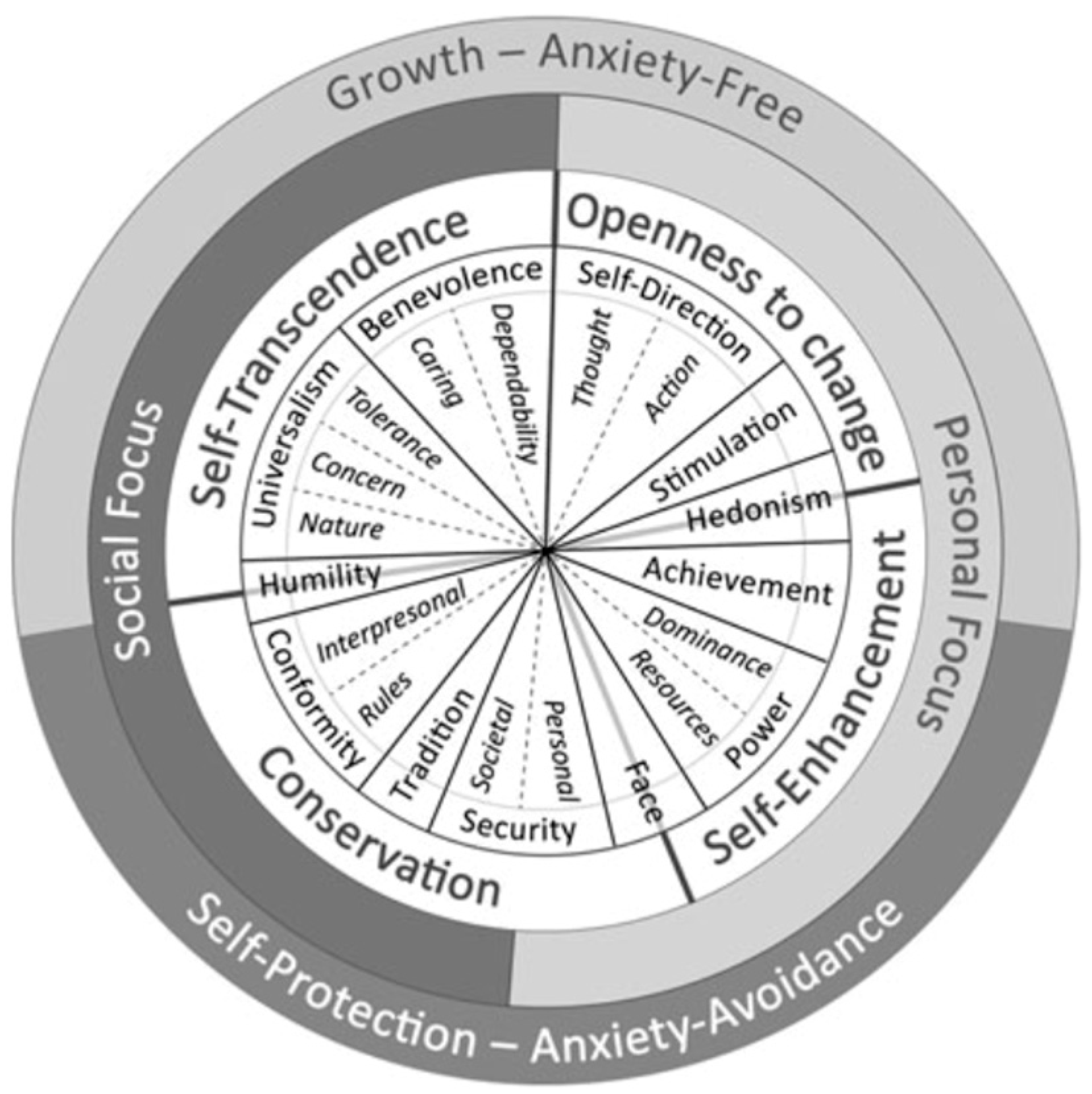
Schwartz’s refined theory of basic human values explains how universal motivational goals guide human behavior across cultures. In its most recent formulation, the model identifies 19 values arranged in a circular motivational continuum that reflects compatibilities and conflicts among different value orientations [11,12] (Figure 1). Within this continuum, the self-transcendence dimension (i.e., comprising values such as universalism and benevolence) represents a concern for the welfare of others and the natural environment. This orientation has particular relevance to ecological awareness, as individuals who prioritize self-transcendence tend to exhibit stronger pro-environmental attitudes and sustainable behaviors. In the refined structure, universalism is divided into Nature, Concern, and Tolerance, while benevolence is divided into Caring and Dependability, capturing nuances that help explain cross-cultural and age-related variations in environmental concern. Studies conducted in Brazil and other Western countries have confirmed positive correlations between self-transcendence values and ecological or sustainable behaviors [13,14,15,16,17,18]. From this perspective, we call these values ecological values.
The perception one individual has on to which he or she is included within nature is something directly related to the person’s care for and commitment towards it. Thus, the Inclusion of Nature in Self Scale (INS) was created and tested in multiple scenarios to assess this connection [20,21,22].
This multitude of perspectives invites researchers to a transdisciplinary approach when considering sustainability and EE. A transdisciplinary approach aims to connect humans to a wide variety of perspectives, and not only the ones embedded in a traditional scientific point of view [23]. It encompasses the social being, knowledge connections, openness, uncertainties, interconnections, and others [24]. The research focus rests on the object (i.e., the human condition), which is analyzed by different perspectives [25].
On that aspect, considering that the human body is a social and cultural reflection of its lived experiences [26], the corporeality is intrinsically linked to subjectivity and to the essence of being, recognizing the body’s symbolic dimension and its role as a condition for inhabiting the world. It highlights the connection between sensory experience and intellectual apprehension, situating knowledge construction within the sensitive experiences derived from perceptual and sensorimotor engagement. In this perspective, cultivating bodily sensitivity becomes fundamental to educational practices aimed at fostering environmental awareness. Incorporating bodily and aesthetic activities into the formation of children and adolescents is therefore pertinent, as emotions are experienced through the body, which is understood as an element of space capable of relating to the environmental dimension. Such embodied, sensitive experiences can enhance individuals’ connection with nature and activate ecological values, thereby contributing to potential behavioral change [27,28]. In this way, it promotes the development and strengthening of environmental awareness in children and young people during their formative years.
The connection between corporeity and EE is a new field of study, and recent results show an optimistic perspective on how the environment may impact playfulness and positively contribute towards sustainable aspects [29,30]. While some projects in Brazil have been made to link corporeity and EE, none have done so while considering the setting of environmental psychology, as ecological values, connection with nature, or pro-environmental behavior [31].
Despite the positive links between EE and corporeity in children, there is a lack of evidence in the recent literature when considering the context of values and inclusion with nature regarding this theoretical framework. Thus, the objective of this article is to develop and validate a transdisciplinary interventional project based on corporal experiences which promotes an increase in environmental sensitivity in children. It is hypothesized that this type of intervention may promote developing values associated with sustainability and a more positive attitude towards the environment.
Therefore, this article consists of a transdisciplinary study divided into three parts (1–3) which combine quantitative and qualitative methods to assess students’ profiles towards sustainability and the effect of corporeity on natural environments towards the manifestation of values from the self-transcendence dimension. Study 01 initially focused on identifying the class of students from a Brazilian public middle school that presented the lowest values for the self-transcendence dimension and INS. The subset of students was then invited to participate in study 02, where five encounters in different natural environments (i.e., public parks and the school garden) aimed to link corporeity, playfulness, and the connection to the environment. After these encounters, study 03 focused on repeating the quantitative analysis from Study 01 with the same group of students from study 02 after the intervention in order to validate the qualitative results previously collected.

2. Study 01—Assessing Self-Transcendence and Nature Connectedness to Select Participants for an Ecological Intervention

2.1. Methods

A quantitative analysis was initially proposed to select a class of students that presented the lowest values for the self-transcendence dimension.

2.1.1. Participants

Middle school students from a public school in the city of Anápolis, Goiás, Brazil were invited to participate (n = 103, ages between 10 and 13 years old, 48.5% were male and 51.5% were female). These students were already divided into four groups of classes (i.e., 1–4) before the experiment started. The selected group of students was chosen based on the lack of literature on the subject, and on the perception that children and adolescents are still in the process of building their own profile of values [32].

2.1.2. Instruments

At this stage, a survey containing sociodemographic questions, the Inclusion of Nature in Self (INS) scale, and a version of the revised Schwartz’s Portrait Values Questionnaire for teenagers (PVQ-Rt) was used to assess the students’ profile. Both instruments have been previously validated for the Brazilian context among children and adolescents [14,33].
The Inclusion of Nature in Self (INS) scale consists of a series of seven Venn-like diagrams representing different degrees of overlap between the self and nature, where students select the image which best reflects their perceived relationship with the natural environment (i.e., “Which picture best shows how connected you feel to nature?”).
The Portrait Values Questionnaire for Teenagers (PVQ-Rt) includes short verbal portraits describing people’s goals and aspirations. Participants rate how similar they are to the described person on a five-point scale. Examples include: “Thinking up new ideas and being creative is important to her/him” (Self-Direction), and “She/He strongly believes that people should care for nature” (Universalism–Nature).

2.1.3. Analysis

The Statistical Package for the Social Sciences (SPSS v. 23) was used for all quantitative statistical analyses. Descriptive and inferential analyses were conducted using mean (M), standard deviation (SD), correlation, Multi-Dimensional Scaling (MDS), and confirmatory factor analysis (CFA) to examine the structure of children’s values in relation to Schwartz’s theoretical model and their level of connectedness with nature.

2.2. Results

There was a total of 103 students (average of age: 10.57, 50 were male and 53 were female) from four middle school classes. No missing data or outliers were identified, and normal distribution was not validated by Kolmogorov–Smirnov and Shapiro–Wilk tests. The class which presented the lowest M for the Self-transcendence dimension was selected to participate in part 02. No difference was observed between classes for the INS considering the standard deviation (Table 1).
The confirmatory factor analysis (CFA) results indicate that the model demonstrates several acceptable fit characteristics. The chi-squared to degrees of freedom ratio showed an adequate adjustment (χ2/df = 1.83 < 2.50), and the GFI value was satisfactory (GFI = 0.92 > 0.90). The RMSEA was slightly above the conventional cut-off (RMSEA = 0.09), which, although higher than the ideal value, remains within the range that some authors consider indicative of a reasonable approximation [34].
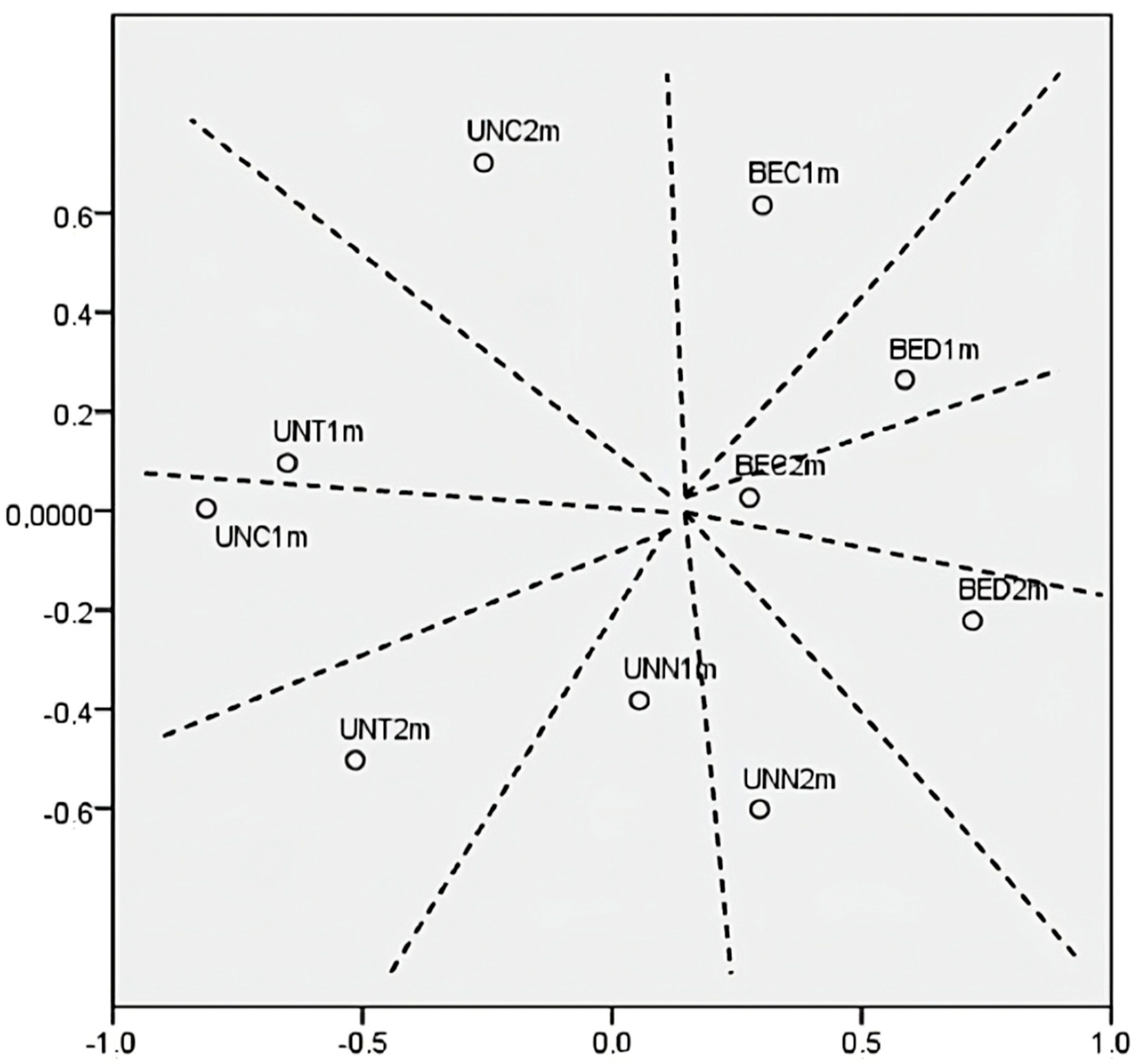
MDS validated the model’s structure to the hypothetical model of self-transcendence values by presenting its items grouped within the Cartesian plan (Figure 2).
Alongside it, Spearman’s correlation between INS and self-transcendence values presented a significant, positive, and weak correlation for four of five values, with values ranging from 0.208 to 0.251 (Table 2).

2.3. Discussion

The CFA results indicated several acceptable fit characteristics. However, it is well established that sample size may negatively influence some of the analyzed variables [35], such as RMSEA [36], CFI, and TLI [37]. Another important factor that may influence adjustment indices is the group’s age. Although the PVQ-Rt was previously validated with teenagers for the Brazilian context, it has also been reported that small variations for this age group (i.e., minor geographical, cultural, and linguistic differences) may negatively affect CFI and TLI [38,39,40]. Thus, although the incremental fit indices (CFI = 0.85; TLI = 0.73) did not reach the recommended thresholds, the overall pattern of results suggests that the model captures important aspects of the theoretical structure, while also pointing to opportunities for refinement in future analyses.
The multidimensional scaling (MDS) analysis successfully grouped self-transcendence items, similar to previous findings [41,42,43], which observed that children tend to understand value categories but not their motivational continuum. This partial organization supports the notion that value hierarchies continue to consolidate throughout adolescence.
A correlation between the self-transcendence dimension and INS was expected. Furthermore, heterogeneity is introduced depending on sample and analytic choices. Recent reviews of nature connectedness and relational environmental values explicitly note that correlation may increase or decrease depending on those variables [44,45,46]. Different studies [17,45] found that relational environmental values develop gradually and are more sensitive to experiential than cognitive factors. Our findings reinforce this trajectory, suggesting that while children may perceive themselves as part of nature, their prosocial and biospheric motivations are still forming.
These observations justify adopting qualitative and experiential methods in subsequent phases of the research. Given the developmental and contextual variability in early value formation, Study 02 was designed to explore how embodied experiences in natural environments could complement cognitive approaches and facilitate the emergence of ecological values.

3. Study 02—Exploring Children’s Ecological Awareness Through Corporeal and Sensory Activities

Next, a qualitative approach was implemented in study 02 consisting of five encounters in different natural environments (i.e., public parks and the school garden) with selected students from the previous study (n = 20). The study aimed to explore how corporeal and sensory experiences could influence ecological awareness and strengthen values from the self-transcendence dimension among children.

3.1. Methods

The following strategies were used in this study: (i) a sensory awareness workshop, (ii) a discussion circle, and (iii) participant’s observations. A field journal was used to assess students’ aspects related to their attitudes, behaviors, sayings, and feelings. The students were then invited at the end of each encounter to establish the most relevant activities, perceived sensations and what was learnt from it. Participants were also asked to draw their experience, which was later used to engage them in the discussion circle.

3.1.1. Participants

A total of five meetings was conducted, each lasting one hour and a half, with three of them located at a city park (Ipiranga’s park and Parque das Águas) and the other two at the school premises (Table 3).

3.1.2. Instruments

Data was collected using two instruments: (i) a field journal, and (ii) a survey questionnaire containing open questions (Appendix A) answered by the participants at the end of the five encounters. The field journal included descriptive notes and reflective entries about students’ actions, verbal expressions, and emotional reactions during each encounter.

3.1.3. Analysis

A field journal was used in this study which included notes made on each encounter by a reflexive analysis [47,48]. The IRAMUTEQ software “www.iramuteq.org (accessed on 17 June 2024)” was used to refine the analysis by conducting a lexicographic analysis, numbering word frequency, and hierarchical classification of the survey questionnaire [49].

3.2. Results

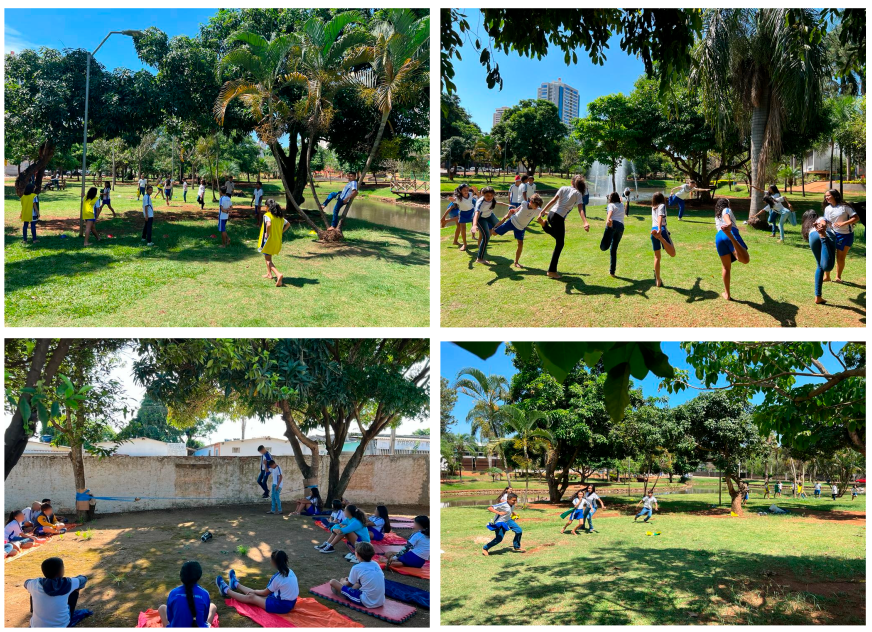
A specific theme, guiding questions, and objectives were proposed for each of the five encounters (Table 3 and Figure 3).
Although different activities were proposed in each of the five encounters to match its guiding questions and objectives, all of them included breathing exercises, meditation, and physical activities, provoking different ways to interact with the natural environment.
Throughout the students’ experiences, some comments were recorded, which summarize the experience of having different activities in the natural environment. Most notably, during the fifth encounter which occurred inside the school in areas containing trees, grass, and natural life, some students mentioned the following:
Student #1: This is the best place in school because there is nature. There is fresh air, birds singing (…). The teacher (other teachers) could bring us here too.
Student #2: We could read here, it is so much better than doing it in the classroom, because it is cooler, peaceful, it gives a good feeling, you can hear the birds.
Student #3: You could read, do your homework, painting, it is so much better. You could make a camp.
After the fifth encounter, students were invited to answer a questionnaire containing open questions about the: (i) activities that they enjoyed the most, (ii) the sensations they had experienced, and (iii) what they had learned in the encounters. These answers were then analyzed by the IRAMUTEQ software.
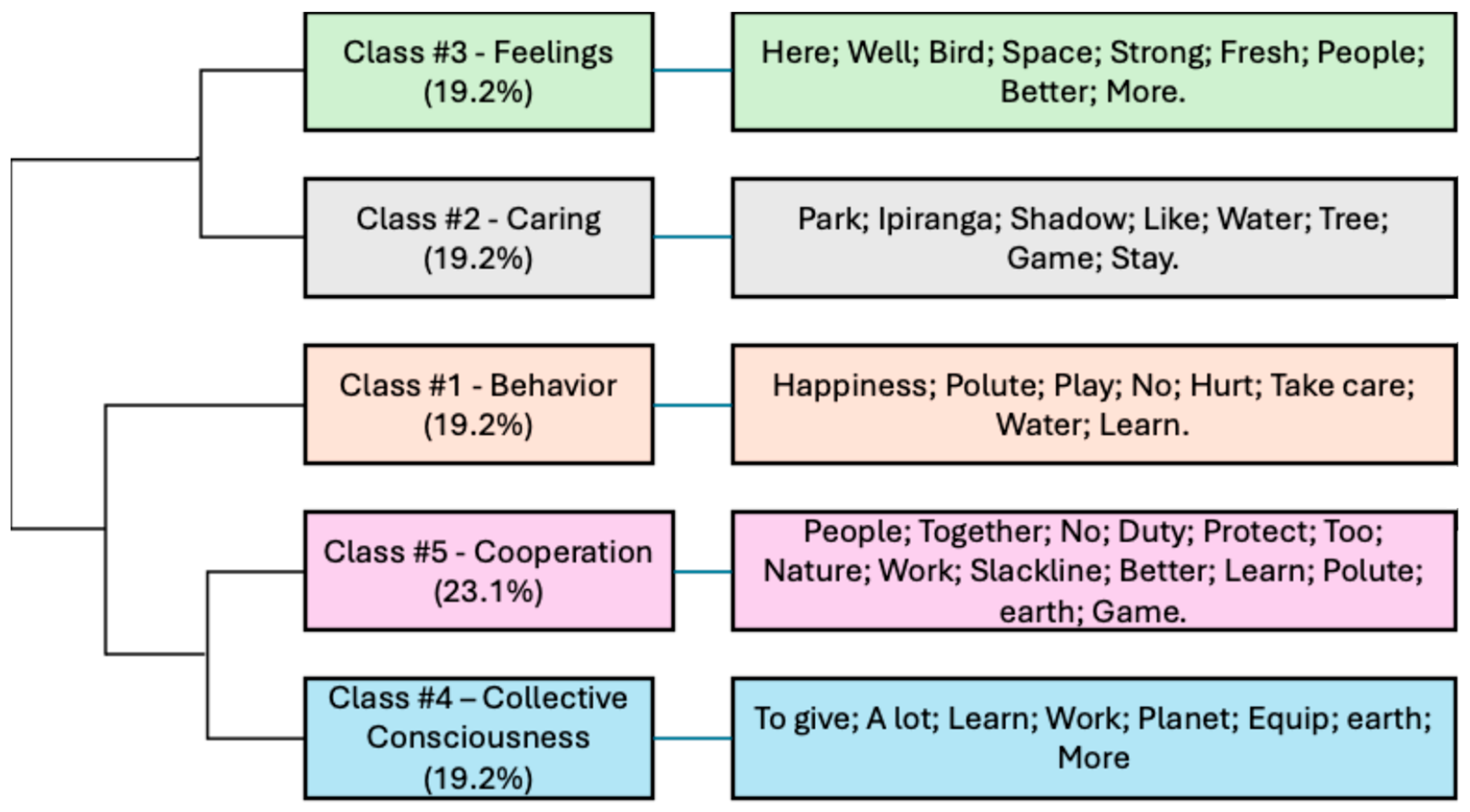
In turn, a Descending Hierarchical Classification (DHC) was created considering this analysis. Based on the lexical classes (i.e., groups of words which share similar meaning and grammatical function), this analysis produces a dendrogram that presents different Units of Elementary Context (UEC) that are hierarchically divided. Results have shown five different classes (i.e., Behaviors, Caring, Feelings, Collective Consciousness, and Cooperation), indicating a bond between corporeity and building nature’s identity and ecological values (Figure 4).
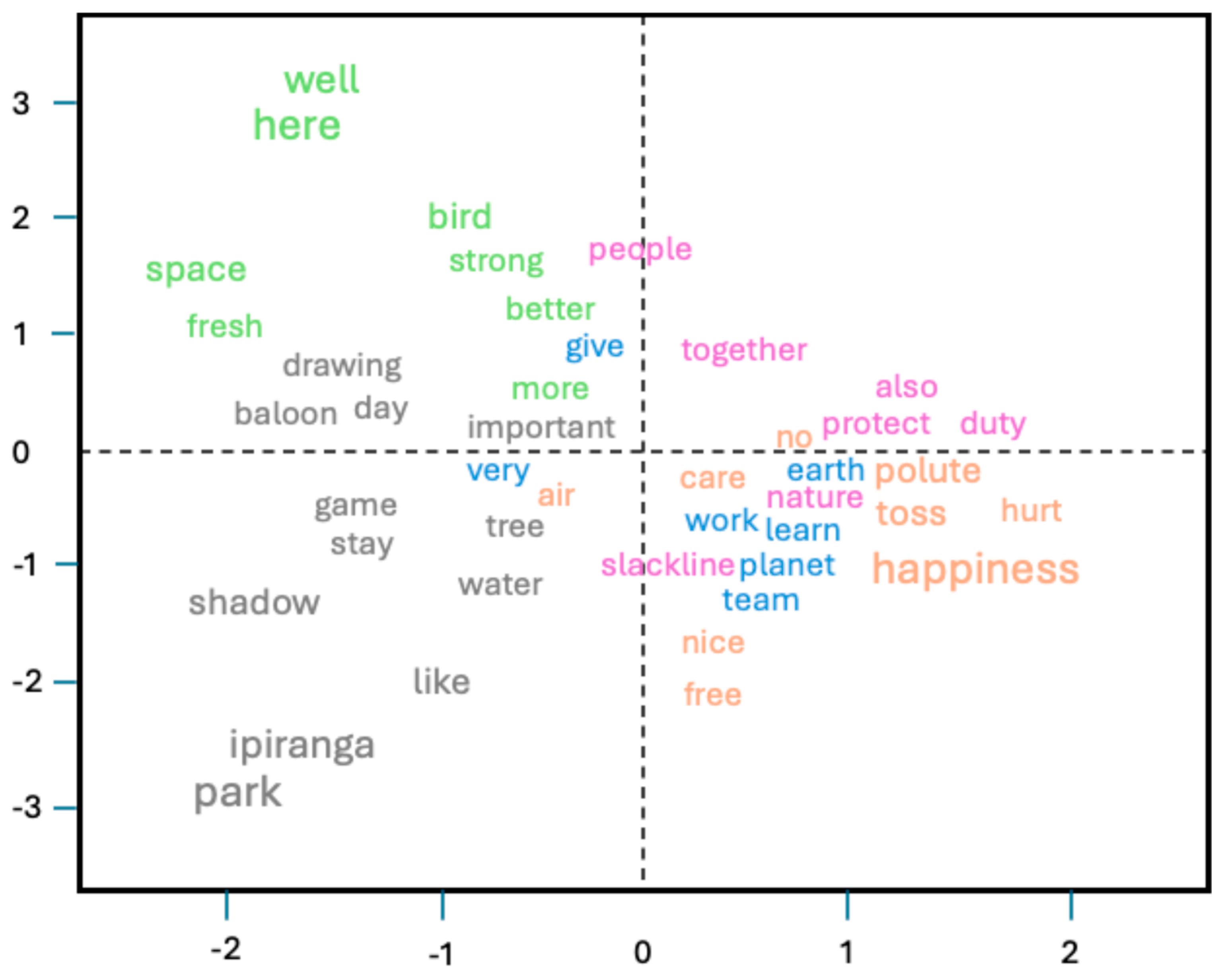
Factorial Correspondence Analysis (FCA) proposes a graphical representation on a Cartesian plane in which the distance between classes can be observed. Thus, proximity between classes 1 (red), 4 (blue), and 5 (purple) is observed for the collected results, indicating a correlation (Figure 5).
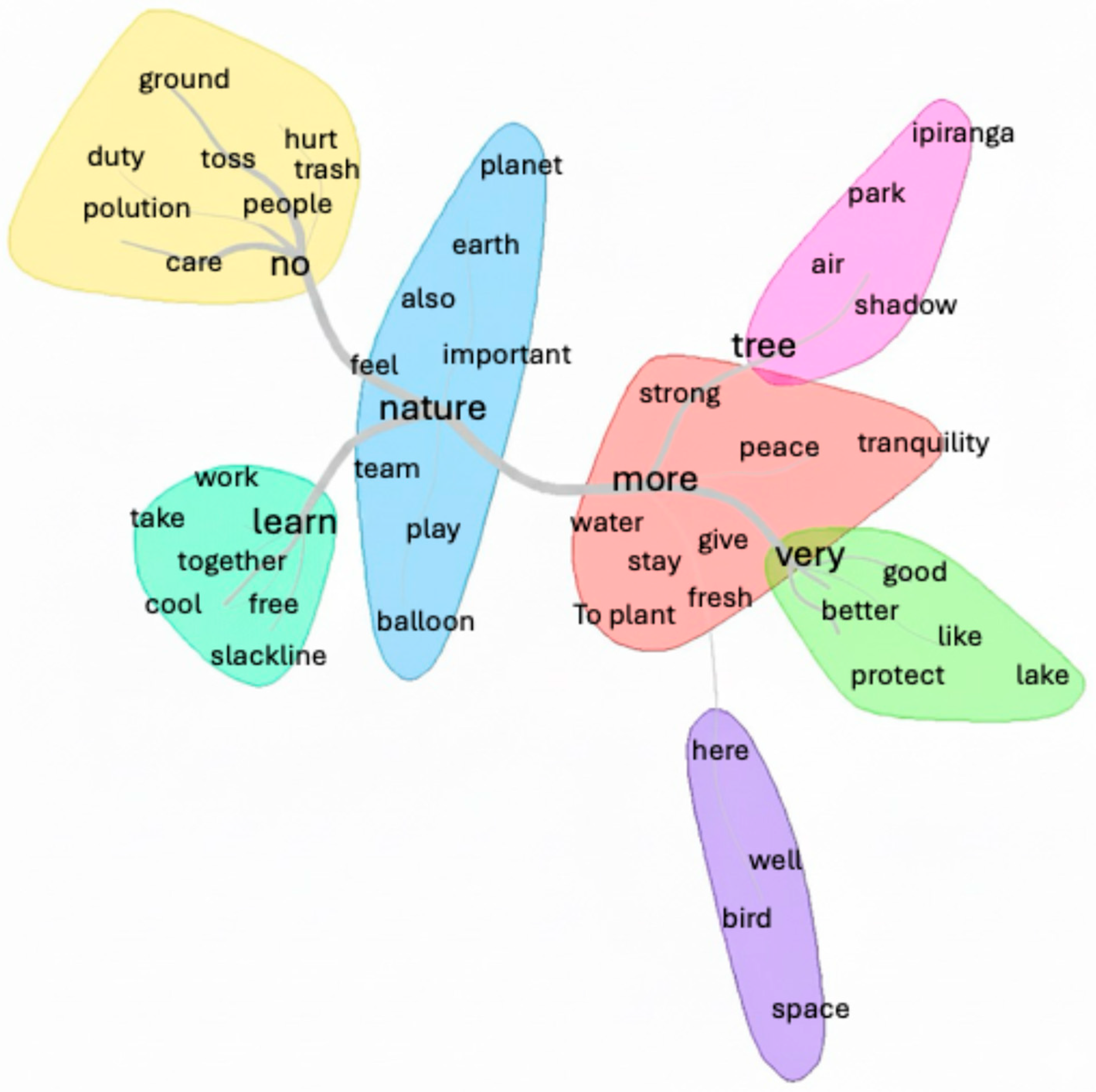
A similitude analysis pointed out nature as a central aspect of students’ answers, where positive aspects of its presence were identified (red, purple, green, and pink), while specific behaviors associated with how to interact with the natural environment were manifested (yellow). Meanwhile, the role of learning was also related to one of the many aspects identified for the natural environment (Figure 6).

3.3. Discussion

The students’ statements about the activities proposed within the school’s natural environment reveal green spaces as a treasure to be discovered by teachers and the school community. This has been reported in previous studies [50,51]. Based on what was said by the students, it is pointed out that the children’s need to experience the natural world in playful ways [52]. These observations reinforce the central role of corporeity in Environmental Education from previous studies [29,30], which highlight playfulness and sensory engagement as promoters for sustainability learning. The link between physical experience activities and emotions has been theorized, but a validated correlational pathway, integrated with EE and Environmental Psychology has not yet been established, reinforcing the novelty of this topic.
The indication of PEBs based on what was said during the encounters suggests that self-transcendence values may have been activated. It is important to point out that people with these values are more likely to manifest positive attitudes towards the environment [53]. Furthermore, according to Environmental Psychology, the caring and feelings towards nature found in what students said may indicate a tendency towards ecological commitment [54].
It is hypothesized that corporal experiences in natural environments contribute to increasing the connection between students and nature, and to stimulate the affection towards it, increasing their commitment to preserve and care for it, mainly by stimulating sustainable and responsible behaviors [5,55,56,57,58,59].
Considering the FCA and how classes 1, 4, and 5 were grouped, it is suggested that students pondered their interpersonal relations, empathy, and respect for the planet. These categories suggest that students associated nature with positive emotions and sensory experiences when engaging with the school’s natural environment, with similar findings having been reported in the literature [60,61,62].
The alignment between these experiential findings and Environmental Psychology literature suggests that contact with natural settings can activate relational environmental values [44,45]. This process appears to bridge affective and cognitive dimensions of learning, supporting the hypothesis that corporeal and emotional engagement can precede the consolidation of abstract ecological values.
Overall, Study 02 positively contributes to the theoretical link between corporeity and value formation, demonstrating that bodily, sensory, and playful encounters with nature contribute to developing empathy, cooperation, and ecological identity among children.

4. Study 03—Evaluating Changes in Ecological Values Using Post-Intervention INS and PVQ-Rt Measures

Finally, a quantitative analysis of the same group of students from study 02 to validate the qualitative results previously collected was conducted in study 03.

4.1. Methods

Analogous to study 01, another quantitative analysis was performed to validate the results from the previous study. This strategy is often used as a complementary approach, so that multiple perspectives are considered, aiming to better understand the implications of the proposed strategy [63,64].

4.1.1. Participants

All students from the previous study participated (n = 20). The informatics lab was used so that students could fill the instruments and verify a possible activation of ecological values.

4.1.2. Instruments

Both PVQ-Rt and INS instruments were applied alongside a survey containing open and closed questions after the completion of study 02.

4.1.3. Analysis

The Statistical Package for the Social Sciences (SPSS v. 23) was used for all quantitative statistical analyses. Descriptive and inferential analyses were conducted using mean (M), standard deviation (SD), correlation, comparison test (Wilcoxon test), and multidimensional scaling. CFA was not done in this step due to the sample size.

4.2. Results

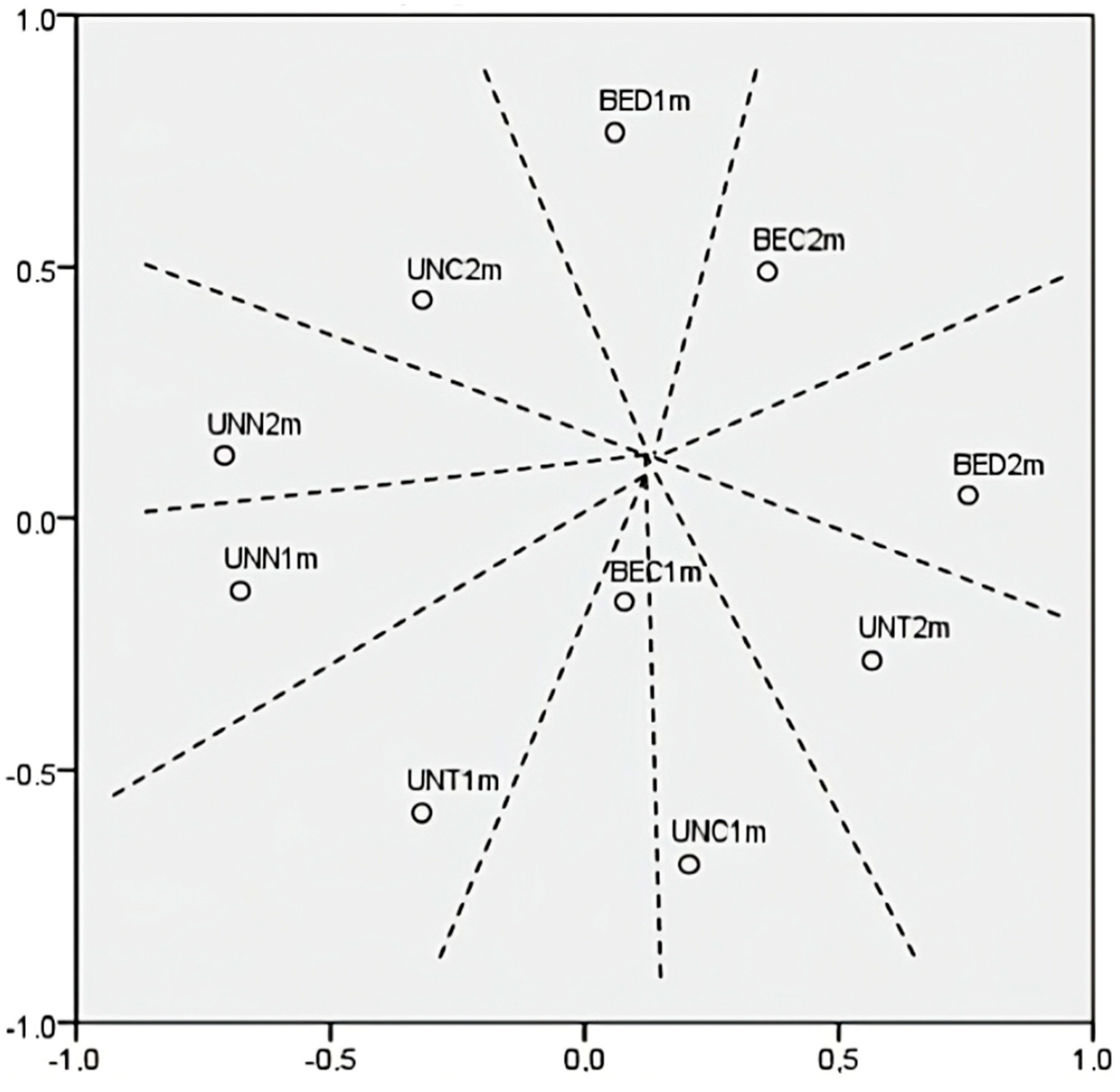
Considering INS, students presented a 17% increase when compared to the results obtained in study 01 (study 01: 4.7 and study 03: 5.5). MDS was repeated and presented a different configuration when compared to study 01, despite Universalism-Nature value still being closely grouped when compared to others (Figure 7).
Spearman’s correlation between INS and self-transcendence values presented a significant, positive, and moderate correlation for Universalism-Nature (UNN) value, which was not described in study 01 (Table 4).
When considering the self-transcendence dimension, no significant difference was observed by comparing the results from studies 01 and 03. No significant difference was observed when comparing this dimension and the results from INS.

4.3. Discussion

It has been previously reported how experiencing the natural environment and playing in green areas, even for short periods of time, is able to foster values associated with nature’s preservation and sustainability [50,51]. This connection was made clear in study 03 by comparing Universalism-Nature value to INS, thereby presenting a moderate positive correlation. It is hypothesized that the encounters in this study allowed children to explore and experience the natural environment more intensively, developing the consciousness that the human species is part of nature [65]. Similar trends have been reported by previous work [56,57], who demonstrated that affective connectedness is often the first indicator of change following direct contact with natural environments. Moreover, other findings [50,51] have demonstrated that even brief exposure to green environments can influence emotional well-being, cooperation, and sustainable attitudes in school contexts.
Although some adjustment indices presented less satisfactory values, it is important to consider that children and adolescents are still in the process of constructing and consolidating their value profiles, which naturally introduces variability into measurement models. Research on measurement invariance has demonstrated that instruments often show instability across childhood and adolescence, reflecting the developmental complexity of this stage [66]. This reinforces the importance of interventions that take place in meaningful contexts, such as school green spaces, which not only develops cognitive skills, but also empathy, cooperation, and ecological responsibility. Recent studies show that nature-based experiences significantly contribute to well-being and development of pro-environmental attitudes in younger populations [67,68]. Furthermore, it is known that teachers play an important role in shaping the values of children and young people [69]. Thus, it is desirable that educational activities promote the activation of more ecological values to contribute to forming citizens who are more connected with nature and mobilized to act more sustainably.
In this sense, a mixed-methods approach is crucial, as it captures internalized concepts and subtle changes in attitudes that purely quantitative strategies may fail to detect, especially with samples characterized by developmental heterogeneity. Evidence from longitudinal and school-based interventions confirms that combining quantitative models with qualitative narratives provides a more comprehensive understanding of how students negotiate values, relationships, and ecological awareness over time [70]. Thus, acknowledging both methodological and developmental challenges, interventions of this nature remain essential for supporting value formation and socio-environmental consciousness among children and adolescents.
The observed trends reinforce the pedagogical value of corporeal and transdisciplinary interventions for strengthening both emotional engagement and environmental ethics. Finally, future work should investigate the effect of strategies like the ones presented herein for longer periods of time in order to validate their effect during the individual’s transition to adult life.

5. Limitations

The present group of studies was able to suggest several activities that elicited an increase in pro-environmental attitudes of students. An increased number of workshops and experiences could validate a significant statistical difference between studies 01 and 03. Ecological values and connection towards nature are profound cognitive structures, which tend to be more stable and thus require more experience for a significant change [20,71,72].
Although study 02 used a smaller group, working in pairs had its efficiency reported previously [73]. However, it is important to point out that these encounters should be merged with school planning, so that other activities are not negatively influenced by it. Parks and the natural environment are often neglected in school planning. This present study shows the relevance of these places to promote self-transcendence values and the rights of children and adolescents to a healthy environment.
Small schools pose a limitation towards sampling, where even though most students from the invited classes participated in the proposed activities, the number of participants is still not enough for generalizations. It is suggested that future studies repeat the proposed methods on a broader scale, preferably in medium- and large-sized schools with an increased number of encounters and activities.

6. Conclusions

This study highlights the contributions of a transdisciplinary intervention project based on outdoor bodily experiences to promote environmental awareness in children. The results are promising and align with studies which demonstrate the importance of outdoor activities, especially those that allow children to fully experience nature, exploring their senses and perception, for their integrated development with nature [74,75,76]. To conclude, our study suggests that experiential environmental education, which provides experiences playfully and dynamically integrated with nature based on the principles of human ecology and integrated with environmental psychology, has the potential to foster children’s connection with nature and enhance their ecological values and beliefs, which can contribute to environmental protection [25].
It is considered important to continue studies that broaden and diversify the samples to further this integration between experiential environmental education based on corporeality, human ecology, and environmental psychology, as well as follow children throughout a formative process to highlight the contributions of this process in forming value and belief systems, connectivity with nature, and the manifestation of more ecological behaviors by children.

Author Contributions

Conceptualization, M.V.G.D.P. and C.M.L.P.; methodology, M.V.G.D.P.; software, L.G.L.J.; formal analysis, M.V.G.D.P. and L.G.L.J.; investigation, M.V.G.D.P. and L.G.L.J.; resources, M.V.G.D.P.; data curation, L.G.L.J.; writing—original draft preparation, P.H.C.S.; writing—review and editing, P.H.C.S.; visualization, P.H.C.S.; supervision, C.M.L.P.; project administration, C.M.L.P. All authors have read and agreed to the published version of the manuscript.

Funding

This study was funded by the Graduate Program in Social, Work, and Organizational Psychology (SWOP) at the University of Brasília, which covered all publication costs.

Institutional Review Board Statement

The study was conducted in accordance with the Declaration of Helsinki, and the protocol was approved by the Research Ethics Committee for the Humanities and Social Sciences of the University of Brasília, Brazil. n: 6.206.45, 28 July 2023.

Informed Consent Statement

Informed consent was obtained from all subjects involved in the study. Written informed consent was obtained from the participants to publish this paper.

Data Availability Statement

The original contributions presented in this study are included in the article. Further inquiries can be directed to the corresponding author.

Conflicts of Interest

The authors declare no conflicts of interest.

Abbreviations

The following abbreviations are used in this manuscript:
PEBPro-Environmental Behavior
FCAFactorial Correspondence Analysis
CFAConfirmatory Factor Analysis
INSInclusion of Nature in Self
PVQ-RtPortrait Values Questionnaire for teenagers
DHCDescending Hierarchical Classification

Appendix A

Post encounter questionnaire
Question 01: What activities have you enjoyed the most and felt more connected with nature?
Question 02: What sensations have you felt while participating in the encounters?
Question 03: Did you learn anything new in the encounters? Please mention what you have learnt and what you can take to your life.

References

  1. Pooley, J.A.; O’Connor, M. Environmental Education and Attitudes: Emotions and Beliefs are What is Needed. Environ. Behav. 2000, 32, 711–723. [Google Scholar] [CrossRef]
  2. Gifford, R. The dragons of inaction: Psychological barriers that limit climate change mitigation and adaptation. Am. Psychol. 2011, 66, 290–302. [Google Scholar] [CrossRef] [PubMed]
  3. Tilbury, D. Environmental Education for Sustainability: Defining the new focus of environmental education in the 1990s. Environ. Educ. Res. 1995, 1, 195–212. [Google Scholar] [CrossRef]
  4. Jorgenson, S.N.; Stephens, J.C.; White, B. Environmental education in transition: A critical review of recent research on climate change and energy education. J. Environ. Educ. 2019, 50, 160–171. [Google Scholar] [CrossRef]
  5. Schultz, P.W. The structure of environmental concern: Concern for self, other people, and the biosphere. J. Environ. Psychol. 2001, 21, 327–339. [Google Scholar] [CrossRef]
  6. Whitley, C.T.; Takahashi, B.; Zwickle, A.; Besley, J.C.; Lertpratchya, A.P. Sustainability behaviors among college students: An application of the VBN theory. Environ. Educ. Res. 2018, 24, 245–262. [Google Scholar] [CrossRef]
  7. Gifford, R.; Steg, L.; Reser, J.P. Environmental psychology. In IAAP Handbook of Applied Psychology; Wiley Blackwell: Hoboken, NJ, USA, 2011; pp. 440–470. [Google Scholar]
  8. Walker-Springett, K.; Jefferson, R.; Böck, K.; Breckwoldt, A.; Comby, E.; Cottet, M.; Hübner, G.; Le Lay, Y.-F.; Shaw, S.; Wyles, K. Ways forward for aquatic conservation: Applications of environmental psychology to support management objectives. J. Environ. Manag. 2016, 166, 525–536. [Google Scholar] [CrossRef]
  9. Schultz, P.W. Strategies for Promoting Proenvironmental Behavior. Eur. Psychol. 2014, 19, 107–117. [Google Scholar] [CrossRef]
  10. Peruzzo, M.P.; Junior, L.G.L.; Silva, F.M.M.; do Vale, N.M.C.; Lima, R.M.F.; de Morais Rezende, D.C.d.M.; dos Santos, V.M.S.; Barbosa, T.R.; Soares, D.C.; de Machado, R.O.A. Educação ambiental em ação: Projeto educativo com plantas repelentes em espaços escolares. ARACÊ 2025, 7, 25331–25343. [Google Scholar] [CrossRef]
  11. Schwartz, S.H. An Overview of the Schwartz Theory of Basic Values. Online Read. Psychol. Cult. 2012, 2, 1. [Google Scholar] [CrossRef]
  12. Schwartz, S.H. The Refined Theory of Basic Values. In Values and Behavior: Taking a Cross Cultural Perspective; Roccas, S., Sagiv, L., Eds.; Springer International Publishing: Cham, Switzerland, 2017; pp. 51–72. [Google Scholar] [CrossRef]
  13. Torres, C.V.; Schwartz, S.H.; Nascimento, T.G. A Teoria de Valores Refinada: Associações com comportamento e evidências de validade discriminante e preditiva. Psicol. USP 2016, 27, 341–356. [Google Scholar] [CrossRef]
  14. Lapa, L.G. Mapeamento de Valores e Compreensão do Jeitinho Brasileiro em Estudantes do Ensino Fundamental do Distrito Federal; Universidade de Brasília: Brasília, Brazil, 2019; Available online: https://repositorio.unb.br/handle/10482/35768 (accessed on 30 October 2023).
  15. Schultz, P.W.; Zelezny, L.C. Values and Proenvironmental Behavior: A Five-Country Survey. J. Cross-Cult. Psychol. 1998, 29, 540–558. [Google Scholar] [CrossRef]
  16. Aoyagi-Usui, M.; Vinken, H.; Kuribayashi, A. Pro-Environmental Attitudes and Behaviors: An International Comparison. Hum. Ecol. Rev. 2003, 10, 23–31. [Google Scholar]
  17. Schultz, P.W.; Gouveia, V.V.; Cameron, L.D.; Tankha, G.; Schmuck, P.; Franěk, M. Values and their Relationship to Environmental Concern and Conservation Behavior. J. Cross-Cult. Psychol. 2005, 36, 457–475. [Google Scholar] [CrossRef]
  18. Schultz, P.W.; Zelezny, L. Values as predictors of environmental attitudes: Evidence for consistency across 14 countries. J. Environ. Psychol. 1999, 19, 255–265. [Google Scholar] [CrossRef]
  19. Cieciuch, J.; Davidov, E.; Vecchione, M.; Schwartz, S.H. A hierarchical structure of basic human values in a third-order confirmatory factor analysis. Swiss J. Psychol. 2014, 73, 177–182. [Google Scholar] [CrossRef]
  20. Schultz, P.W. Inclusion with Nature: The Psychology of Human-Nature Relations. In Psychology of Sustainable Development; Schmuck, P., Schultz, W.P., Eds.; Springer: Boston, MA, USA, 2002; pp. 61–78. [Google Scholar] [CrossRef]
  21. Liefländer, A.K.; Fröhlich, G.; Bogner, F.X.; Schultz, P.W. Promoting connectedness with nature through environmental education. Environ. Educ. Res. 2013, 19, 370–384. [Google Scholar] [CrossRef]
  22. Fränkel, S.; Sellmann-Risse, D.; Basten, M. Fourth graders’ connectedness to nature—Does cultural background matter? J. Environ. Psychol. 2019, 66, 101347. [Google Scholar] [CrossRef]
  23. Nicolescu, B. Manifesto Da Transdisciplinaridade; Triom: São Paulo, Brazil, 2005. [Google Scholar]
  24. De Sá, R.A. Como pesquisar em educação a partir da complexidade e da transdisciplinaridade? Rev. Diálogo Educ. 2011, 11, 249–253. [Google Scholar] [CrossRef]
  25. Pato, C.; Delabrida, Z.N. Psicologia Ambiental em Contextos Urbanos; Ufsc/Cfh/Nuppe: Florianópolis, Brazil, 2019. [Google Scholar]
  26. Merleau-Ponty, M.; Moura, C.A.R.d. Fenomenologia da Percepção; WMF Martins Fontes: São Paulo, Brazil, 1999. [Google Scholar]
  27. Csordas, T.J. Corpo. Significado. Cura; UFRGS: Porto Alegre, Brasil, 2022. [Google Scholar]
  28. Geertz, C. A Interpretação das Culturas; LTC: Rio de janeiro, Brazil, 2008. [Google Scholar]
  29. Payne, P. Embodiment and Environmental Education. Environ. Educ. Res. 1997, 3, 133–153. [Google Scholar] [CrossRef]
  30. Vartiainen, J.; Sormunen, K.; Kangas, J. Relationality of play and playfulness in early childhood sustainability education. Learn. Instr. 2024, 93, 101963. [Google Scholar] [CrossRef]
  31. Paula, M.V.G.d.; Pato, C. Corporeidade e sensibilização ecológica: Uma revisão sistemática no contexto da Educação Ambiental. Momento Diálogos Em Educ. 2024, 33, 251–273. [Google Scholar] [CrossRef]
  32. Pato, C. Conectividade com a natureza, mitigação e adaptação à mudança climática. Ambiente Comport. Soc. 2019, 3, 8–15. [Google Scholar] [CrossRef]
  33. Pato, C.M.L.; Junior, L.G.L.; Junior, L.N.d.R.; Peruzzo, M.P.; Fonseca, J.A.G.S.; Oliveira, L.N.d.; Monteiro, M.E. Conexão com a natureza de crianças do Distrito Federal, Brasil. Cuad. Educ. Desarro. 2024, 16, e7046. [Google Scholar] [CrossRef]
  34. Marsh, H.W.; Hau, K.-T.; Wen, Z. In Search of Golden Rules: Comment on Hypothesis-Testing Approaches to Setting Cutoff Values for Fit Indexes and Dangers in Overgeneralizing Hu and Bentler’s (1999) Findings. Struct. Equ. Model. Multidiscip. J. 2004, 11, 320–341. [Google Scholar] [CrossRef]
  35. Kyriazos, T.A. Applied Psychometrics: Sample Size and Sample Power Considerations in Factor Analysis (EFA, CFA) and SEM in General. Psychology 2018, 9, 2207–2230. [Google Scholar] [CrossRef]
  36. Chen, F.; Curran, P.J.; Bollen, K.A.; Kirby, J.; Paxton, P. An Empirical Evaluation of the Use of Fixed Cutoff Points in RMSEA Test Statistic in Structural Equation Models. Sociol. Methods Res. 2008, 36, 462–494. [Google Scholar] [CrossRef]
  37. Sathyanarayana, S.; Thangamuthu, M. Fit Indices in Structural Equation Modeling and Confirmatory Factor Analysis: Reporting Guidelines. Asian J. Econ. Bus. Account. 2024, 24, 561–577. [Google Scholar] [CrossRef]
  38. Putnick, D.L.; Bornstein, M.H. Measurement Invariance Conventions and Reporting: The State of the Art and Future Directions for Psychological Research. Dev. Rev. DR 2016, 41, 71–90. [Google Scholar] [CrossRef]
  39. Hadianfard, H.; Kiani, B.; Azizzadeh Herozi, M.; Mohajelin, F.; Mitchell, J.T. Health-related quality of life in Iranian adolescents: A psychometric evaluation of the self-report form of the PedsQL 4.0 and an investigation of gender and age differences. Health Qual. Life Outcomes 2021, 19, 108. [Google Scholar] [CrossRef]
  40. Sheel, H.; Suárez, L.; Marsh, N.V. The Factor Structure of the Strengths and Difficulties Questionnaire (SDQ) in India. J. Psychoeduc. Assess. 2025, 43, 296–309. [Google Scholar] [CrossRef]
  41. Bubeck, M.; Bilsky, W. Value structure at an early age. Swiss J. Psychol. Schweiz. Z. Für Psychol. Rev. Suisse Psychol. 2004, 63, 31–41. [Google Scholar] [CrossRef]
  42. Bilsky, W.; Niemann, F.; Schmitz, J.; Rose, I. Value Structure at an Early Age: Cross-Cultural Replications. In Facet Theory: Design, Analysis and Applications; Agentura Action M: Prague, Czech Republic, 2005; pp. 241–248. [Google Scholar]
  43. Schimmelpfeng, P.; Lapa, L.G.; Lyra Pato, C.M. Psychological barriers in children: An exploratory study on Dengue transmission using an adapted DIPB scale. Front. Psychol. 2024, 15, 1412856. [Google Scholar] [CrossRef]
  44. Tam, K.-P. Concepts and measures related to connection to nature: Similarities and differences. J. Environ. Psychol. 2013, 34, 64–78. [Google Scholar] [CrossRef]
  45. Martin, C.; Czellar, S. Where do biospheric values come from? A connectedness to nature perspective. J. Environ. Psychol. 2017, 52, 56–68. [Google Scholar] [CrossRef]
  46. Lengieza, M.L.; Aviste, R. Relationships between people and nature: Nature connectedness and relational environmental values. Curr. Opin. Psychol. 2025, 62, 101984. [Google Scholar] [CrossRef]
  47. Patton, M.Q. Qualitative Research and Evaluation Methods, 3rd ed.; Sage Publications: Thousand Oaks, CA, USA, 2002. [Google Scholar]
  48. Lüdke, M.; Andre, M. Pesquisa em Educacao Abordagens Qualitativas. 1986. Available online: https://www.udesc.br/arquivos/cead/id_cpmenu/4191/M_todos_de_coleta_de_dados__observa__o__entrevista_e_an_lise_documental_1668975327614_4191.pdf (accessed on 11 September 2025).
  49. Camargo, B.V.; Justo, A.M. IRAMUTEQ: Um software gratuito para análisede dados textuais. Temas Em Psicol. 2013, 21, 513–518. [Google Scholar] [CrossRef]
  50. Liu, W.; Chen, J. Green Spaces in Chinese Schools Enhance Children’s Environmental Attitudes and Pro-Environmental Behavior. Child. Youth Environ. 2021, 31, 55–87. [Google Scholar] [CrossRef]
  51. Mason, L.; Manzione, L.; Ronconi, A.; Pazzaglia, F. Lessons in a Green School Environment and in the Classroom: Effects on Students’ Cognitive Functioning and Affect. Int. J. Environ. Res. Public. Health 2022, 19, 16823. [Google Scholar] [CrossRef]
  52. Tiriba, L.; Profice, C.C. Desemparedar infâncias: Contracolonialidades para reencontrar a vida. O Social em Questão 2023, 26, 89–112. [Google Scholar]
  53. Pereira, D.A.; Pato, C. Valores e comportamento ecológico: Dimensões para Educação Ambiental em Parques Urbanos. Ambiente Educ. Rev. Educ. Ambient. 2015, 20, 81–101. [Google Scholar]
  54. Higuchi, M.I.G.; Kuhnen, A.; Bomfim, Z.Á.C.; Cavalcante, S.; Elali, G.A. Temas básicos em psicologia ambiental. Vozes. 2011. Available online: https://ria.ufrn.br/jspui/handle/123456789/3125 (accessed on 11 September 2025).
  55. Verdugo, V.C. Comportamiento Proambiental: Una Introducción al Estudio de las Conductas Protectoras del Ambiente; Editorial Resma; Universidad De Sonora: Sonora, Mexico, 2001. [Google Scholar]
  56. Frantz, C.M.; Mayer, F.S. The importance of connection to nature in assessing environmental education programs. Stud. Educ. Eval. 2014, 41, 85–89. [Google Scholar] [CrossRef]
  57. Mayer, F.S.; Frantz, C.M. The connectedness to nature scale: A measure of individuals’ feeling in community with nature. J. Environ. Psychol. 2004, 24, 503–515. [Google Scholar] [CrossRef]
  58. Pato, C.; Tamayo, A. Valores, Creencias Ambientales y Comportamiento Ecológico de Activismo. Medio Ambiente Comport Hum Rev. Int. Psicol Ambient. 2006, 7, 51–56, ISSN:1576-6462. [Google Scholar]
  59. Olivos-Jara, P.; Aragonés, J.-I.; Navarro-Carrascal, O. Educación ambiental: Itinerario en la naturaleza y su relación con conectividad, preocupaciones ambientales y conducta. Rev. Latinoam. Psicol. 2014, 45, 503–513. [Google Scholar] [CrossRef]
  60. Klinkosz, W.; Iskra, J.; Artymiak, M. Interpersonal competences of students, their interpersonal relations, and emotional intelligence. Curr. Issues Personal. Psychol. 2021, 9, 125–134. [Google Scholar] [CrossRef]
  61. Talgorn, E.; Ullerup, H. Invoking ‘Empathy for the Planet’ through Participatory Ecological Storytelling: From Human-Centered to Planet-Centered Design. Sustainability 2023, 15, 7794. [Google Scholar] [CrossRef]
  62. Bertella, G. Empathy and sustainability education beyond business as usual. J. Educ. Bus. 2025, 100, 149–156. [Google Scholar] [CrossRef]
  63. Souza, K.R.; Kerbauy, M.T.M. Abordagem quanti-qualitativa: Superação da dicotomia quantitativa-qualitativa na pesquisa em educação. Educ. Filos. 2017, 31, 21–44. [Google Scholar] [CrossRef]
  64. Flick, U.; Costa, J.E.; Caregnato, S.E. Introdução à Pesquisa Qualitativa; Penso: Sofia, Bulgaria, 2021. [Google Scholar]
  65. Becker Vergutz, N.; Paula Rannov Dos Santos, A.; Puhl Dalberto, J.; Bianchi, V.; Maria Leidemer Bruxel, C. A criança e o meio natural: A acuidade deste contato para a potencialização do desenvolvimento infantil. Salão Conhecimento. 2021, 7. Available online: https://www.publicacoeseventos.unijui.edu.br/index.php/salaoconhecimento/article/view/20651 (accessed on 11 September 2025).
  66. Luquine, C., Jr.; Astolfi, R.; Clarissa, J.; Eggenberger, L.; Trajtenberg, N.; Eisner, M.; Shanahan, L.; Ribeaud, D.; Peres, M.F. Comparing school experience across Brazilian, Swiss, and Uruguayan adolescents: A measurement invariance study. Res. Sq 2025. [Google Scholar] [CrossRef]
  67. Arola, T.; Aulake, M.; Ott, A.; Lindholm, M.; Kouvonen, P.; Virtanen, P.; Paloniemi, R. The impacts of nature connectedness on children’s well-being: Systematic literature review. J. Environ. Psychol. 2023, 85, 101913. [Google Scholar] [CrossRef]
  68. Chou, D.T.; Abelama Neto, E.; Thomas, I.; Martin, A.; Benoit, L. Climate awareness, anxiety, and actions among youth: A qualitative study in a middle-income country. Rev. Bras. Psiquiatr. Sao Paulo Braz. 1999 2023, 45, 258–267. [Google Scholar] [CrossRef] [PubMed]
  69. Makarova, E.; Döring, A.K.; Daniel, E.; Benish-Weisman, M. Editorial: Research on value development in the school context: New directions and approaches from an international perspective. Eur. J. Psychol. Educ. 2025, 40, 116. [Google Scholar] [CrossRef] [PubMed]
  70. Bagnall, C.L.; Stevenson, E.; Cookson, D.; Jones, F.; Garnett, N.J. A mixed-methods evaluation of a longitudinal primary–secondary school transitions support intervention. Front. Psychol. 2024, 15, 1252851. [Google Scholar] [CrossRef]
  71. Rohan, M.J. A Rose by Any Name? The Values Construct. Personal. Soc. Psychol. Rev. 2000, 4, 255–277. [Google Scholar] [CrossRef]
  72. Bruni, C.M.; Schultz, P.W.; Woodcock, A. The Balanced Structure of Environmental Identity. Sustainability 2021, 13, 8168. [Google Scholar] [CrossRef]
  73. De Vreede, C.; Warner, A.; Pitter, R. Facilitating Youth to Take Sustainability Actions: The Potential of Peer Education. J. Environ. Educ. 2014, 45, 37–56. [Google Scholar] [CrossRef]
  74. Ulset, V.; Vitaro, F.; Brendgen, M.; Bekkhus, M.; Borge, A.I.H. Time spent outdoors during preschool: Links with children’s cognitive and behavioral development. J. Environ. Psychol. 2017, 52, 69–80. [Google Scholar] [CrossRef]
  75. Fuegen, K.; Breitenbecher, K.H. Walking and Being Outdoors in Nature Increase Positive Affect and Energy. Ecopsychology 2018, 10, 14–25. [Google Scholar] [CrossRef]
  76. Trott, C.D. Youth-Led Climate Change Action: Multi-Level Effects on Children, Families, and Communities. Sustainability 2021, 13, 12355. [Google Scholar] [CrossRef]
Figure 1. Circular motivation continuum of 19 values in the refined value theory [12,19].
Sustainability 18 00521 g001
Figure 2. Multidimensional scaling of all values from the self-transcendence dimension. UNT—Universalism-Tolerance; UNN—Universalism-Nature; UNC—Universalism-Concern; BED—Benevolence-Dependability; and BEC—Benevolence-Caring. Item 1—1m, and Item 2—2m.
Sustainability 18 00521 g002
Figure 3. Pictures taken to illustrate the activities in the encounter. (Top): Students are at Ipiranga Park; (Bottom): Students in the school’s garden.
Sustainability 18 00521 g003
Figure 4. A dendrogram shows five classes of the most frequently used words grouped by categories, representing the investigated central theme.
Sustainability 18 00521 g004
Figure 5. Factorial Correspondence Analysis (FCA) in which the five identified classes of most frequently used words are grouped by similarity.
Sustainability 18 00521 g005
Figure 6. Similitude analysis shows nature as a central topic amidst PEBs, conservation, and benefits from the natural environment.
Sustainability 18 00521 g006
Figure 7. Multidimensional scaling of values from the self-transcendence dimension after the intervention in study 02. UNT—Universalism-Tolerance; UNN—Universalism-Nature; UNC—Universalism-Concern; BED—Benevolence-Dependability; and BEC—Benevolence-Caring. Item 1—1m, and Item 2—2m.
Sustainability 18 00521 g007
Table 1. Mean (M) and Standard Deviation (SD) for the Self-Transcendence dimension and Inclusion with Nature Scale (INS).
ClassSelf-Transcendence (U + B)INS
M SDMSD
14.250.334.791.65
24.250.504.401.93
34.280.444.761.59
44.070.554.702.00
Table 2. Correlation between INS and self-transcendence values. UNT—Universalism-Tolerance; UNN—Universalism-Nature; UNC—Universalism-Concern; BED—Benevolence-Dependability; and BEC—Benevolence-Caring.
ValueUNTUNNUNCBEDBEC
Spearman’s correlation0.234 *0.208 *0.251 *0.1680.244 *
* p < 0.05.
Table 3. Basic information (i.e., Theme, Guiding Questions, and Objectives) on each of the five encounters with students.
WorkshopThemeQuestionsObjective
#1
Naturellection
Nature and IDo I enjoy being in a natural environment?
Does nature make me feel good?
What sensations do I perceive when I am in natural environments?
To reflect on the relationship between human beings and nature.
#2
Bio-Fun
Mother natureWho are our mothers?
How do we treat our mothers?
Can nature be considered one of our mothers?
How should we treat nature?
To think about the affections related to nature.
#3
Usnature
Me, the other, and natureWhat are the smells and sounds of nature?
What sensations can nature bring us?
To stimulate perceptions of the sensations and feelings that come from nature.
#4
Eco-Sports
The playful body in natureWhat values are important for social harmony?
What values can we adopt and spread to help in environmental preservation?
Feel the freedom to play and have fun together in natural environments.
#5
Bio-connected
Cooperation with natureHow many homes do we have?
Can the Earth be considered our home?
Does our body help us establish a relationship with nature?
What can I do in my daily life to help take care of the planet we live on?
To analyze the importance of collective work to care for and protect nature.
Table 4. Correlation between INS and self-transcendence values after the intervention in study 02. UNT—Universalism-Tolerance; UNN—Universalism-Nature; UNC—Universalism-Concern; BED—Benevolence-Dependability; and BEC—Benevolence-Caring.
ValueUNTUNNUNCBEDBEC
Spearman’s correlation0.3030.519 *0.370−0.0290.352
* p < 0.05.
Disclaimer/Publisher’s Note: The statements, opinions and data contained in all publications are solely those of the individual author(s) and contributor(s) and not of MDPI and/or the editor(s). MDPI and/or the editor(s) disclaim responsibility for any injury to people or property resulting from any ideas, methods, instructions or products referred to in the content.