Article

Revitalizing Rural Heritage Through an Intergenerational Alternate Reality Game: A Mixed-Methods Study in Taiwan


1
Department of Digital Multimedia Design, China University of Technology, No. 56, Sec. 3, Xinglong Rd., Wunshan District, Taipei City 116, Taiwan
2
Department of Visual Communication Design, China University of Technology, No. 56, Sec. 3, Xinglong Rd., Wunshan District, Taipei City 116, Taiwan
*
Author to whom correspondence should be addressed.
Sustainability 2026, 18(1), 338; https://doi.org/10.3390/su18010338
Submission received: 12 November 2025 / Revised: 17 December 2025 / Accepted: 26 December 2025 / Published: 29 December 2025

Abstract

Taiwan’s rural regions face aging populations, digital divides, and fragmented heritage narratives that limit sustainable cultural revitalization. This study investigates how a community-based Alternate Reality Game (ARG) can integrate dispersed cultural assets in Shiding District into a coherent, immersive experience that supports intergenerational learning and community engagement. Drawing on ARG/transmedia narrative theory, scaffolding theory, intergenerational learning, and value co-creation, the research adopts an exploratory sequential mixed-methods design: qualitative interviews and co-design workshops inform ARG system development, followed by field implementation and pre–post evaluation with 78 participants across three age groups. The results show large improvements in user experience and immersion, while quantitative changes in cultural understanding, perceived learning support, and community engagement are modest and not consistently positive, despite rich qualitative accounts of heightened awareness of local history and community life. Participants’ narratives highlight a reciprocal scaffolding dynamic, in which younger visitors provide digital assistance and older residents contribute local knowledge, as well as strong perceptions of co-creation with community hosts. These findings suggest that a low-cost, participatory ARG can effectively reduce on-site narrative fragmentation and foster emotionally engaging, intergenerational experiences, but that deeper and more durable cultural learning effects likely require refined measurement and longer-term engagement. The study contributes an integrated design and evaluation framework for rural ARG applications and offers practical guidelines for communities and policymakers seeking inclusive, story-driven models of digital heritage revitalization.

1. Introduction

1.1. Research Background and Motivation

The global tourism industry is undergoing a paradigm shift toward immersive and participatory experiences, reflecting the broader transformation from a service economy to an experience economy [1,2]. This evolution has created new opportunities for rural areas to leverage their cultural and ecological assets for sustainable development. However, in Taiwan, rural destinations continue to face intertwined structural and demographic challenges. Shiding District in New Taipei City—the focal site of this study—exemplifies these issues. According to the Population Statistics Report [3], residents aged 65 and above account for 27.7% of the total population, a figure significantly higher than the national average [3]. This demographic imbalance has accelerated youth outmigration and reduced local vitality.
Despite its rich tangible and intangible heritage—including stone houses, mushroom cultivation, and mining history—Shiding’s tourism model remains dominated by short-term sightseeing. According to the Survey of Travel by R.O.C. Citizens (Tourism Administration, 2024), most domestic trips in Taiwan last fewer than two days, suggesting that rural visits often involve only brief stopovers rather than extended engagement [4]. Empirical research supports this trend: Hsiao (2003) found that visitors in Taichung’s metropolitan tourism routes typically stayed between two to four hours at major destinations [5]. Such short visit durations indicate that cultural participation in rural tourism is generally shallow, with limited opportunities for meaningful interaction or local learning.
Furthermore, Shiding’s cultural narratives remain fragmented—its historical sites, community stories, and industries operate in isolation, preventing the formation of a coherent sense of place. The resulting tourism pattern is characterized by low visitor retention, homogenized experiences, and minimal community participation. This study is therefore motivated by a need to address two interrelated challenges in rural cultural tourism: narrative fragmentation and generational disengagement. It explores the potential of Alternate Reality Games (ARGs) as a design approach emphasizing innovation and inclusion to integrate dispersed cultural resources, foster intergenerational interaction, and revitalize Shiding’s local identity through participatory storytelling and game-based learning.

1.2. Literature Gaps and Problem Statement

ARGs known for their ability to weave fictional narratives into the real world, have shown promise in enhancing tourist engagement [6,7]. Research confirms that ARGs can increase psychological involvement and on-site interaction, with successful technological prototypes already demonstrated [8,9]. However, a critical review of existing literature reveals two fundamental gaps:
  • Insufficient evidence on integrating dispersed resources: Current studies often focus on enhancing experiences at a single site. There is a distinct lack of empirical research demonstrating whether an ARG can systematically connect geographically and thematically scattered cultural assets to create a unified narrative and measurably alter visitor behavior.
  • A scarcity of intergenerational design frameworks: The majority of research targets younger demographics. Consequently, the literature is insufficient in providing a theoretical and practical framework for designing ARG systems that are explicitly intergenerationally friendly, capable of bridging the digital divide and fostering meaningful collaboration between different age groups.
These contextual issues, rooted in the structural fragmentation of rural tourism, are further elaborated in Section 2, which provides theoretical and empirical foundations for this study. Current scholarship, therefore, falls short of offering a comprehensive solution for the dual challenges of resource fragmentation and generational exclusion in rural tourism. This study aims to fill this void.

1.3. Innovative Contributions of the Research

To address the identified gaps, this research provides innovative contributions at the theoretical, methodological, and practical levels. These contributions are designed to bridge the divide between cultural heritage preservation and digital engagement, positioning the study at the intersection of technology, cultural studies, and community development. Table 1 summarizes these key innovations.

1.4. Research Objectives

The core objective of this study is to design, develop, and evaluate a community-based ARG system. The specific aims are:
  • To effectively translate the fragmented cultural assets of Shiding into a coherent and immersive narrative experience.
  • To evaluate the system’s effectiveness in enhancing cultural engagement, learning outcomes, and emotional connection across different age groups.
  • To validate the role of “reciprocal scaffolding” in promoting intergenerational collaboration and community identity.
  • To propose a replicable and scalable model for the digital transformation of rural cultural tourism.

1.5. Research Questions

Building on these objectives, this mixed-methods study addresses the following research questions:
RQ1: How does the ARG system influence participants’ cultural understanding and learning in the context of Shiding’s rural heritage?
RQ2: How do scaffolding mechanisms and system design features support user experience, immersion, and intergenerational participation?
RQ3: How does the ARG facilitate community engagement and value co-creation among local stakeholders and visitors?
RQ4: To what extent does the proposed ARG framework mitigate narrative and experiential fragmentation in rural tourism?

1.6. Scope and Limitations

1.6.1. Scope of Research

  • Geographic Scope: The empirical research is conducted exclusively within Shiding District, New Taipei City, focusing on a specific farmstead and its surrounding cultural landscape.
  • Participant Scope: Participants include local stakeholders and tourists from diverse age groups (youth, middle-aged, and older adults) interested in cultural tourism.
  • Technological Scope: The study focuses on a lightweight, low-cost ARG model utilizing existing cloud platforms and mobile technology, rather than developing a standalone, high-cost application.

1.6.2. Limitations

As a single-case study, the findings’ generalizability to other rural contexts with different cultural or socio-economic characteristics may be limited.
The evaluation measures the short-term impact of the ARG experience. Long-term effects on tourist behavior, community identity, and the local economy are outside the scope of this study.

2. Literature Review and Theoretical Framework

2.1. Tourism Paradigm Shift: From Sightseeing to Immersive Cultural Experiences

2.1.1. The Evolution and Critique of the Experience Economy Theory

The experience economy theory, proposed by Pine and Gilmore (1998), marked a paradigm shift in the tourism industry from a commodity economy to an experience economy [1]. The theory divides experiences into four realms: entertainment, education, escapism, and esthetics, providing a foundational framework for modern tourism experience design. Richards (2018) further highlights that cultural tourism is evolving toward personalized and immersive experiences, where tourists increasingly seek active participation and meaning-making rather than a passive “tourist gaze” [2].
Despite its widespread adoption, most research on the experience economy focuses on urban or large-scale attractions. Systematic studies on creating high-quality, low-cost experiences in rural areas remain scarce. Moreover, Richards’ (2018) samples primarily represent developed Western contexts, leaving the applicability of findings to Asian rural settings uncertain [2]. The theory also tends to emphasize individual-level experiences while neglecting community-level issues such as collective memory and cultural heritage. Yeoman and McMahon-Beattie (2019) note that evolving consumer expectations demand context-sensitive adaptations, especially in rural and heritage tourism [14] (pp. 114–120). Empirical studies also indicate that authenticity and experiential depth are critical to visitor satisfaction and place attachment in heritage tourism [10].
In this study, the experience-economy and digital-transformation perspectives serve primarily as a contextual backdrop that explains why rural destinations such as Shiding seek more immersive and integrated visitor experiences, rather than as core analytical frameworks.

2.1.2. Fragmentation and the Need for Narrative Integration in Rural Tourism

Empirical research across East Asia indicates that rural tourism often suffers from fragmentation in both resource allocation and narrative coherence, which constrains destination differentiation and undermines sustainable visitor engagement. Guo and Liu (2022) documented homogenized product offerings and weak storytelling structures among rural destinations across the Taiwan Strait, producing competitive saturation that limits distinct place identity [11]. Complementary studies show that limited local participation and weak interpretive frameworks systematically reduce visitor retention and diminish the cultural meaning communicated to tourists [12,13]. This fragmentation is not merely infrastructural but narrative—it reflects a disconnection between local memory (oral histories, practices), material heritage (sites, artifacts), and how visitors construct meaning from a sequence of fragmented touchpoints. As Richards (2018) argues, meaningful cultural tourism depends on integrated narratives that link sites and stories into a coherent sense of place [2].
Recent studies propose that digital storytelling, community co-creation, and game-based designs can help address narrative fragmentation by reweaving dispersed cultural elements into cohesive interpretive experiences. Zheng, Yu, Cheng, and Pan (2023) show that tourists’ perceptions of authenticity—across visual, embodied, and participatory dimensions—significantly influence sustainable outcomes and place attachment in rural destinations [13]. Guo et al. (2024) demonstrate that stronger community participation correlates with greater resident support and more constructive conflict mediation, which in turn supports more authentic and sustainable tourism development [7].
Within this conceptual space, ARGs present a promising integrative approach: leveraging transmedia storytelling, collaborative problem-solving, and real-world interactions to shift visitors from passive consumers to active co-creators of meaning [6,15]. When ARGs are co-designed with local stakeholders and scaffolded to support diverse user literacies, they can function as narrative scaffolds—systems that reconnect dispersed cultural fragments, guide situated meaning-making, and strengthen emotional attachment to place. This synthesis of fragmentation studies and ARG design underpins the theoretical framework advanced in this research.

2.2. Alternate Reality Games and Cultural Heritage Revitalization

ARGs offer a compelling approach to cultural heritage revitalization by weaving narrative, interactive design, and place-based engagement into cohesive experiences. Building on three core ARG concepts—the “This Is Not A Game” esthetic [6], pervasive game theory [15], and transmedia storytelling [16]—ARGs distribute story elements across media and physical locations so that participants experience the game as part of everyday life and construct meaning across multiple touchpoints. This transmedia, pervasive structure aligns well with heritage tourism’s need to connect dispersed sites and stories into a coherent sense of place.
ARGs offer a compelling approach to cultural heritage revitalization by weaving narrative, interactive design, and place-based engagement into cohesive experiences. ARGs distribute story elements across multiple media platforms—websites, mobile apps, physical artifacts, and in-location clues—to build an immersive, layered world in which participants become co-creators of meaning [15,16]. This transmedia narrative strategy enables deeper engagement with both tangible and intangible heritage elements, scaffolding participants’ sense-making and collaborative exploration of cultural narratives [17]. This aligns with sustainability’s focus on digital transformation of heritage interpretation.
In heritage contexts, ARGs can anchored in patterned design frameworks to manage complexity. For example, design taxonomies like Baltra’s Cheshire model help align media channels, puzzle mechanics, pacing, and narrative coherence across platforms—thus making large-scale, cross-media heritage projects feasible [18]. Concurrently, ARGs foreground player agency and 21st-century literacies (sense making, collaboration, digital fluency), which can be mapped to heritage learning goals [19].
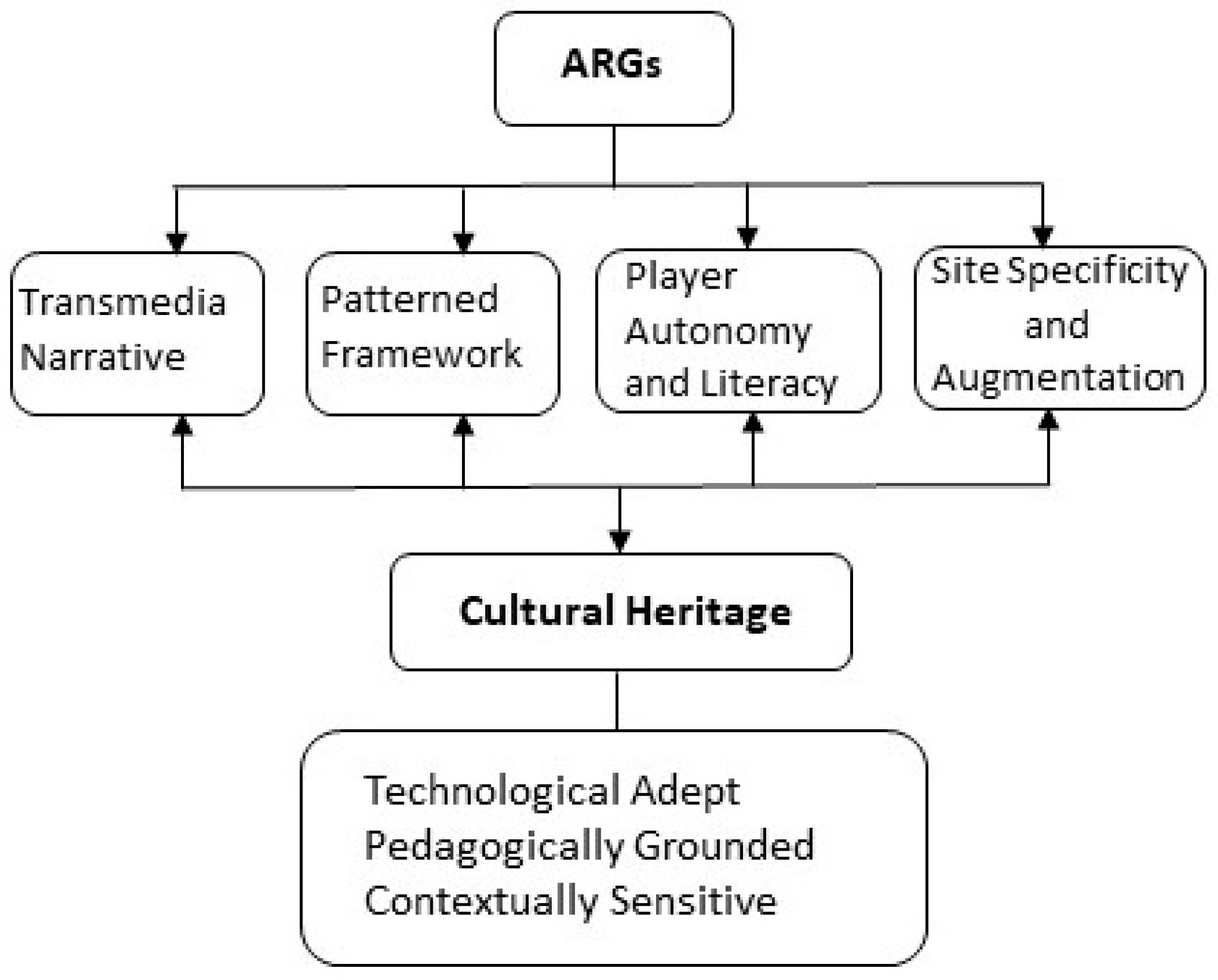
A vital principle in cultural ARGs is site specificity and augmentation: gameplay should enhance, not overshadow, the meaning of existing heritage contexts. For instance, The Augmented Telegrapher in the Porthcurno Museum applied mixed-reality interactions co-designing with curators to embed narrative layers into the real environment while preserving authenticity [20] (Krzywinska, Phillips, Parker, & Scott, 2020). Likewise, AR storytelling projects at Choirokoitia and Sandby Borg have shown how narrative sequencing and problem tasks within archeological settings can foster exploratory learning [21] (Hadjistassou et al., 2023). Beyond museums, ARGs in formal education illustrate their broader potential. In Taiwan, Lin, Lu, & Lu (2024) integrated ARGs with learning scaffolds in heritage-themed curricula and reported statistically significant improvements in engagement, learning outcomes, and awareness of cultural preservation [22]. Their study supports the notion that ARG design must integrate material culture, social history, and intangible heritage into gameplay mechanics to deepen interpretation rather than reduce it to superficial gamification [23]. From a theoretical design perspective, several frameworks support ARG deployment in heritage settings (summarized in Figure 1) [18,19,20,21,22,23,24].
From a theoretical design perspective, several frameworks support ARG deployment in heritage settings. The Cheshire framework [18] yields a taxonomy for coordinating transmedia elements; the meta-literacy model [19] articulates literacy outcomes targeted by ARG mechanics; iterative constructivist workflows and curator–designer collaboration support usability, sustainability, and authenticity [20]. The typology proposed by Dufort & Tajariol (2017) categorizes cultural ARGs by heritage visit mediation, narrative mediation, or community engagement, helping designers choose appropriate formats aligned with heritage goals [24]. Collectively, these frameworks suggest that successful cultural ARGs must be technologically adept, pedagogically grounded, and sensitivity to local context—bridging dispersed cultural narratives into living, shared experiences across generations.

2.3. Theoretical Basis and Critical Analysis of ARGs

2.3.1. Core Theory: TINAG, Pervasive Games, and Transmedia Storytelling

The theoretical foundation of ARGs is anchored in three interrelated frameworks. First, the TINAG esthetic posits that ARGs should be experienced as real-world phenomena, not as conventional games, thereby enhancing immersion and emotional investment [6]. Second, Montola et al. (2009) conceptualize ARGs as pervasive games—those that transcend spatial, temporal, and social boundaries—making them ideal for cultural heritage contexts that span generations and geographies [15]. Third, Jenkins’ (2006) theory of transmedia storytelling explains how ARGs construct expansive story worlds across multiple media platforms, allowing participants to engage with content from diverse entry points and construct personalized meanings [16].
These theories collectively support the use of ARGs in cultural heritage revitalization by offering design principles that promote authenticity, engagement, and narrative coherence. However, their origins in entertainment and marketing contexts raise questions about applicability to educational and heritage domains. Lin et al. (2024) caution that overemphasis on gameplay may undermine the seriousness of cultural learning, suggesting a need for balanced design that integrates pedagogical goals with immersive mechanics [22].

2.3.2. Applications and Limitations

Recent applications of ARGs in cultural heritage have demonstrated promising outcomes. Champion (2015) proposed a critical framework for virtual heritage, emphasizing the need to balance technological innovation with cultural authenticity and community involvement [25]. Guo et al. (2024) found that location-based AR games significantly enhanced tourists’ psychological involvement and narrative resonance [7]. The InHeritage platform, developed by Srdanović et al. (2025), successfully combined AR/VR with gamification to support cultural preservation and received positive user feedback [8].
Despite these successes, several limitations persist in the literature. Table 2 summarizes the key challenges identified across recent studies.
These challenges underscore the need for more inclusive, longitudinal, and theoretically grounded research. Future studies should explore cross-generational design strategies, robust evaluation frameworks, and culturally sensitive co-design methods to ensure that ARGs fulfill their potential as tools for heritage revitalization.

2.4. Application and Limitations of Scaffolding Theory in Digital Gamification

2.4.1. Core Concepts of Vygotsky’s Scaffolding Theory

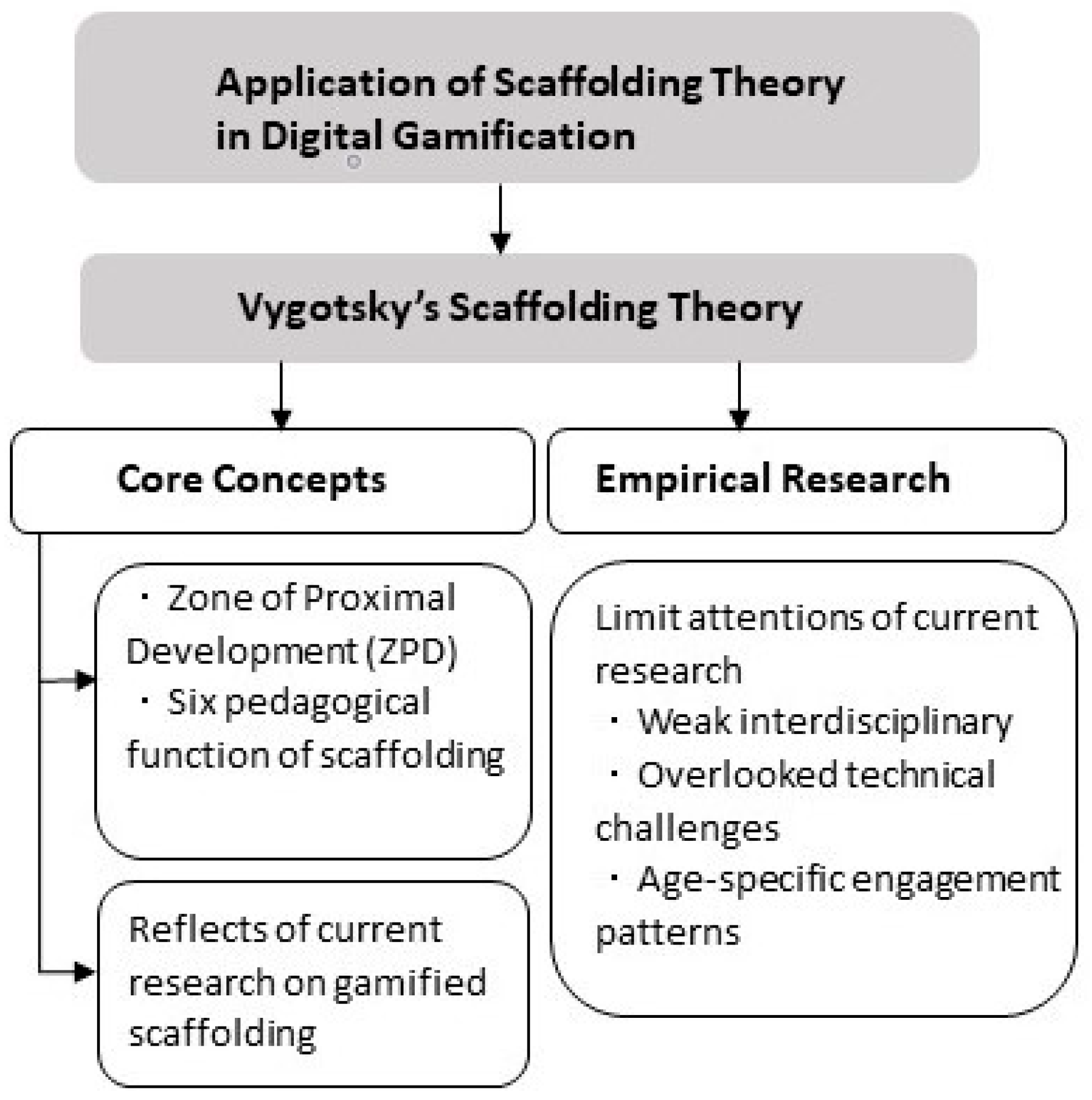
Vygotsky’s (1978) sociocultural theory emphasizes that learning occurs most effectively within the Zone of Proximal Development (ZPD), where individuals accomplish tasks with the assistance of more capable peers or mediated tools [26]. This dynamic reflects the inherently social and co-constructive nature of learning, contrasting with models of solitary discovery. Building upon this foundation, Wood, Bruner, and Ross (1976) conceptualized scaffolding as a tutoring process in which an instructor supports a learner through six functions: recruiting attention, simplifying tasks, maintaining direction, marking critical features, controlling frustration, and demonstrating ideal performance [27].
As digital learning technologies advance, scaffolding theory now includes technological mediation. Pea (2004) proposed that scaffolding can operate both cognitively and technologically—supporting learners’ metacognitive regulation and providing structured pathways for complex problem-solving [28]. Belland (2017) further extended this notion to STEM education, arguing that digital scaffolds function as adaptive supports that help students navigate ill-structured problems through feedback loops and progressive autonomy [29].

2.4.2. Scaffolding in Digital and Gamified Learning Environments

In recent years, the concept of scaffolding has gained significant traction in gamified and augmented learning environments, where the boundaries between instruction and interaction blur. Kyza and Georgiou (2018) demonstrated that their platform, integrating adaptive scaffolding into augmented reality (AR) inquiry tasks, significantly improved students’ scientific reasoning by aligning feedback with contextual exploration [30]. Similarly, Belland (2017) emphasized that adaptive digital scaffolds—such as context-sensitive hints or stepwise guidance—are most effective when they evolve with learner performance, supporting deeper engagement and intrinsic motivation [29].
These findings resonate with broader educational trends toward personalized and situated learning, as discussed by Holmes, Bialik, and Fadel (2019), who argue that artificial intelligence (AI)-driven scaffolding can dynamically adjust challenge levels and feedback mechanisms to sustain learner flow [31]. This adaptability parallels the design logic of ARGs, which integrate transmedia storytelling and progressive challenge design to foster both cognitive and emotional engagement. In ARGs, scaffolds may take the form of narrative cues, digital artifacts, or social collaboration prompts that guide learners toward discovery without overt instruction—mirroring the “guided participation” dynamic central to Vygotskian theory [26,28].

2.4.3. Limitations and Contextual Constraints

Despite its promise, the application of scaffolding theory in digital gamification faces several limitations.
First, interdisciplinary integration remains weak. As Holmes et al. (2019) noted, while AI and gamification have advanced technically, few frameworks fully reconcile educational psychology with interactive system design, leading to inconsistent evaluation standards and fragmented theoretical models [31].
Second, contextual complexity often undermines learning outcomes. Research by Wang, Jiang, Xu, and Guo (2021) revealed that community participation and local conflict perceptions significantly mediate residents’ support for tourism initiatives, suggesting that social context can either reinforce or disrupt intended learning experiences [12]. In digital or place-based ARG applications, designers must therefore account for community narratives and user diversity to prevent cognitive overload or misinterpretation.
Third, the authenticity dilemma remains unresolved. Zheng et al. (2023) found that tourists’ perceptions of authenticity directly influence sustainable tourism development [13]. Excessive gamification or over-scaffolding risks diluting cultural authenticity, leading to superficial engagement—a challenge also reflected in Taiwan’s tourism, where the average visitor stay remains under 4 h, indicating limited narrative immersion [5].

2.4.4. Integrating Scaffolding with Place-Based ARG Design

When adapted to place-based ARGs, scaffolding theory offers a valuable conceptual bridge between pedagogical structure and experiential immersion. ARG designers can apply scaffolding principles to calibrate player challenges, offer context-sensitive guidance, and progressively transfer agency from system to participant.
Richards (2018) argued that authentic cultural tourism depends on the integration of coherent narratives that allow visitors to internalize place meaning through experience [2]. Accordingly, well-designed scaffolding can ensure that digital interventions in heritage or rural education contexts remain authentic, inclusive, and sustainable, facilitating deeper engagement with both content and community. The resulting scaffolding-based ARG learning framework is summarised in Figure 2, which links design stages, support mechanisms, and learning outcomes in a single model [26,27,28,29,30,31].
Nevertheless, successful implementation demands iterative design and interdisciplinary collaboration—linking educational psychology, cultural studies, and interaction design. The synergy of scaffolding theory and ARG mechanics thus provides not only a pathway for enhancing immersive learning but also a framework for reconnecting fragmented cultural narratives through guided, participatory exploration.

2.5. Integration of Intergenerational Learning and Community Engagement Theories

2.5.1. Theoretical Basis of Intergenerational Learning

Intergenerational learning theory highlights the reciprocal exchange of knowledge and mutual learning between different age groups. Rogoff’s (1990) “apprenticeship in thinking” framework conceptualizes learning as a sociocultural process, wherein individuals transmit and innovate knowledge across generations [32]. Building upon these foundations, Newman and Hatton-Yeo (2008) articulated four core principles for effective intergenerational programs: reciprocity (mutual benefit), purposeful interaction, positive relationships, and meaningful activities [33]. Their framework underscores that structured opportunities for knowledge exchange, rather than incidental intergenerational contact, are essential for fostering substantive mutual learning.
In the digital context, Jordan et al. (2019) introduced the concept of “reverse mentoring,” where younger which younger employees and executive team members mentor each other on various topics related to strategy execution and organizational culture [34]. This bidirectional learning model provides theoretical and practical support for the “reciprocal scaffolding” concept proposed in this study.

2.5.2. Community Engagement and Value Co-Creation Theory

Based on the Service-Dominant Logic, the theory of value co-creation emphasizes that customers are no longer passive recipients of value but active co-creators [35]. Guo et al. (2024) applied this theory to location-based AR games, proposing a three-stage co-creation process (pre-visit, on-site, post-visit) and empirically showing that elements at different stages contribute differently to the overall co-creation experience [7].
This study proposes an “Integrated Model of Intergenerational Collaborative Learning and Community Co-creation,” which integrates the following theoretical elements and is summarized in Table 3.
In the present study, SDT is used as a supporting lens for thinking about motivation in ARG design, but it is not modeled as a separate construct in the empirical analysis.

2.6. Trends and Challenges in the Digital Transformation of Rural Tourism

While the focus of this study is on the four core theoretical lenses outlined above, ARG-based innovation must also be understood within broader trends in the digital transformation of rural tourism. Recent work shows both the opportunities of immersive and gamified media for attracting younger visitors and extending length of stay [36], and the persistent challenges of infrastructure gaps, digital divides, and the risk of cultural simplification when local voices are not fully involved [37]. In this study, these trends provide contextual motivation for exploring a low-cost, community-driven ARG model in Shiding, rather than constituting an additional analytical framework [38].

2.7. Theoretical Integration and Hypothesis Development

2.7.1. Construction of an Integrated Theoretical Framework

To avoid theoretical fragmentation and maintain a clear analytical focus, the integrated framework in this study foregrounds four core lenses: (1) ARG and transmedia narrative theory, (2) scaffolding theory, (3) intergenerational learning, and (4) value co-creation. Other perspectives discussed in the previous subsections—such as experience-economy thinking, digital-transformation trends, and self-determination theory—are treated as contextual or supporting concepts rather than as independent analytical pillars.
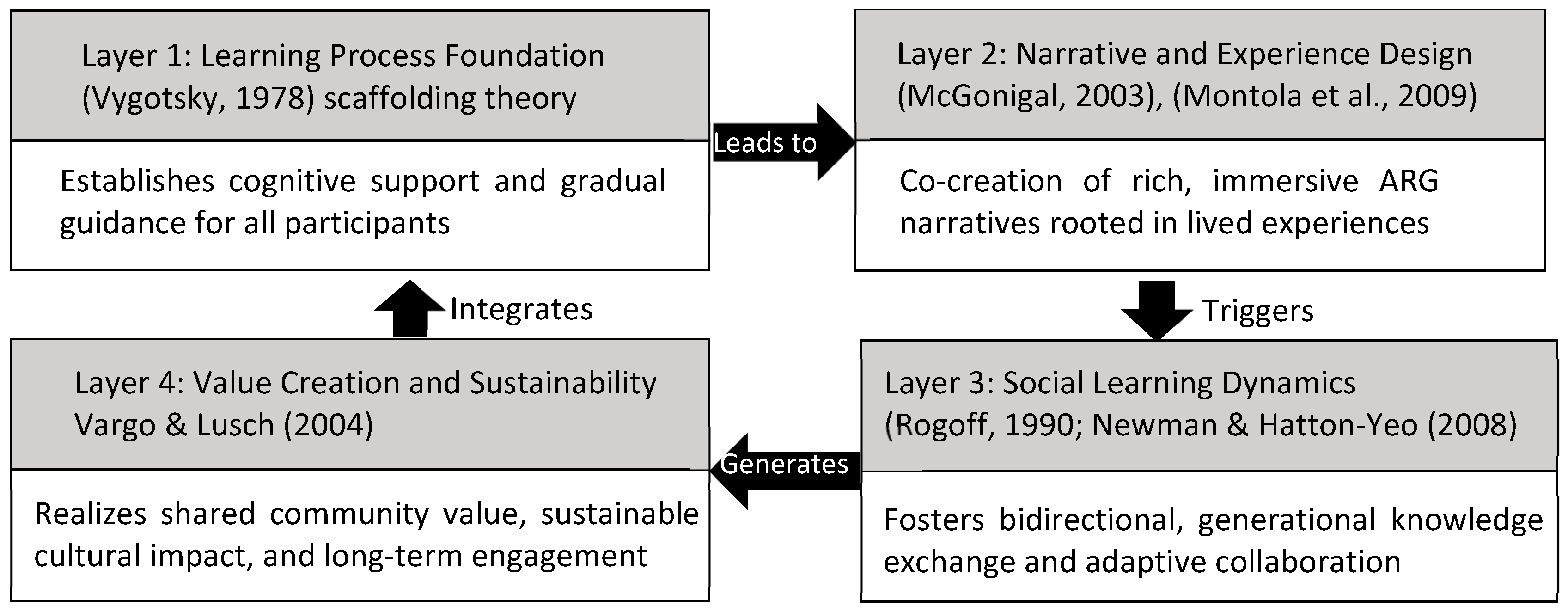
Layer 1, learning process foundation, draws on Vygotsky’s scaffolding theory to explain how structured support enables learners to perform tasks beyond their independent ability [26]; in an ARG context, scaffolding guides progression through cultural knowledge, skills, and interpretive inquiry.
Layer 2, narrative and experience design, is informed by ARG theory, including the “This Is Not A Game” [6] and pervasive game concepts [15], which provide the structural logic for esthetic or immersive storytelling across media and locations.
Layer 3, social learning dynamics, builds on intergenerational learning theories (e.g., [32,33]), with scaffolding extended socially as younger participants assist older learners with digital mediation while elders contribute cultural memory and interpretation.
Layer 4, value creation and sustainability, draws on value co-creation [7,35] to frame how the ARG system can generate shared value for tourists, residents, and cultural institutions, supporting longer-term sustainability.
The integrated circular framework for ARG-driven intergenerational cultural learning and community co-creation systematically links cognitive support, narrative immersion, social exchange, and sustainable value across its multiple layers. Together, these interconnected dimensions form a coherent, multi-theoretical architecture that underpins a unified ARG design rationale (see Figure 3).

2.7.2. Development of Research Hypotheses

Based on the integrated theoretical framework and analysis of literature gaps, the study proposes five hypotheses that map onto its main outcome domains: cultural understanding (H1), experiential immersion and user experience (H2–H3), intergenerational and community engagement (H4), and fragmentation mitigation as an integrative tourism outcome (H5).
H1 (Cultural understanding and learning). 
The ARG system, supported by a scaffolding learning mechanism, is designed enhance participants’ understanding and cognitive level of Shiding’s local culture.
H2 (Immersive experience and emotional connection). 
ARGs employing TINAG esthetics and transmedia storytelling will induce higher emotional engagement and immersive experience with local culture.
H3 (User experience and system acceptance). 
The ARG system, through intuitive interface design and diverse interaction modes, can provide a good user experience and be accepted by users across different age groups.
H4 (Intergenerational learning and community engagement). 
Through collaborative task design and role division, the ARG system can promote intergenerational knowledge exchange and enhance community engagement and cultural identity.
H5 (Fragmentation mitigation). 
By integrating dispersed cultural assets into a coherent narrative, the ARG system will reduce tourism fragmentation in Shiding and offer a replicable model for rural cultural tourism innovation.

2.8. Section Summary

This section has reviewed and critically synthesized literature on rural tourism fragmentation, ARG design, scaffolding, intergenerational learning, and value co creation, and used these strands to construct a focused, four lens framework for the present study. Three main gaps were identified: insufficient theoretical integration across ARG, learning, and tourism models; limited intergenerationally inclusive de-signs; and a lack of longitudinal or community oriented evaluations. The proposed ARG driven framework for intergenerational cultural learning and community co creation responds to these gaps by linking scaffolding, immersive ARG narratives, intergenerational collaboration, and value co creation into a single design rationale, which then informs the research hypotheses and mixed-methods design implemented in Shiding.

2.9. Integrated Theoretical Logic of ARG-Based Cultural Learning

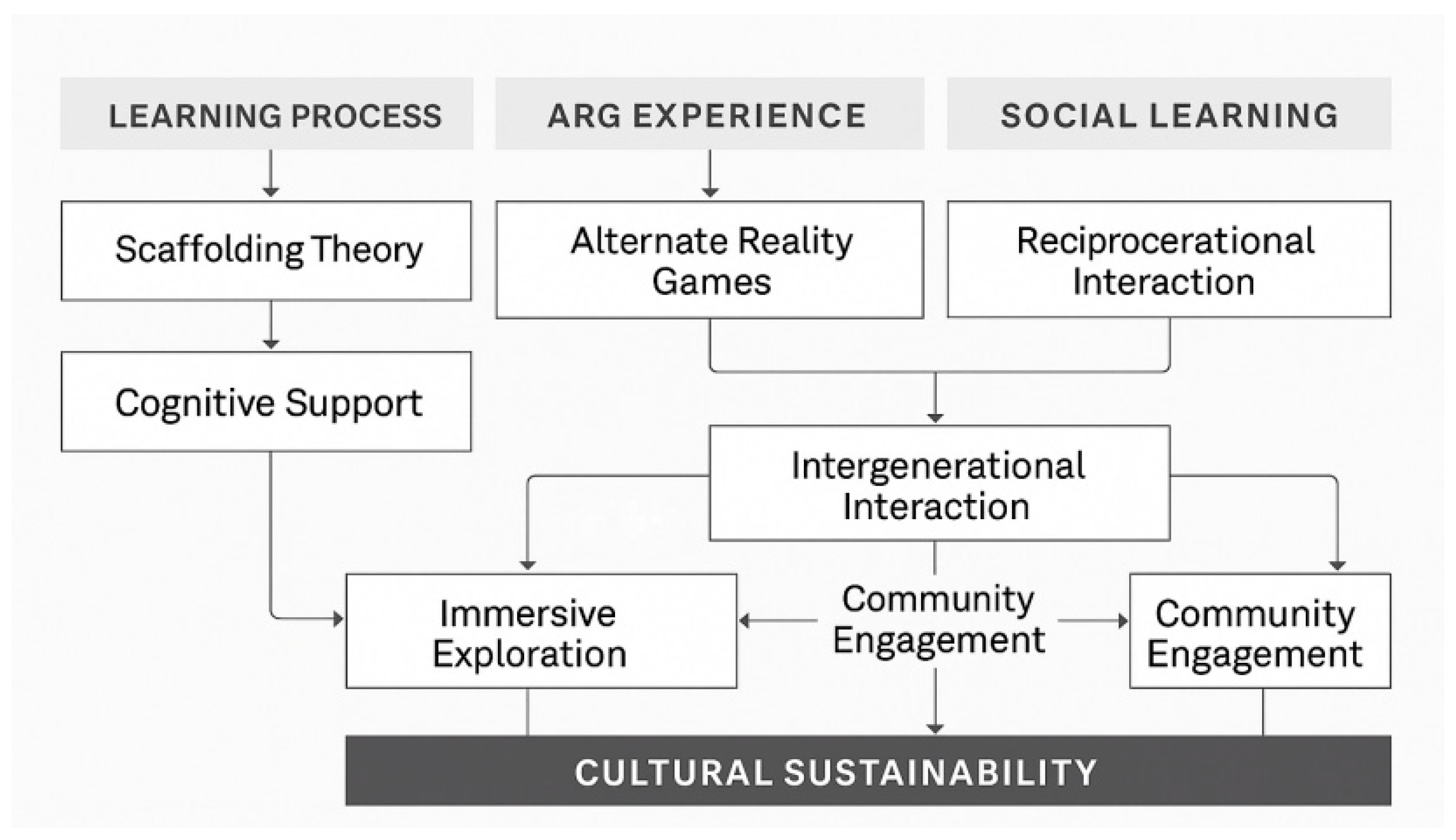
Building upon the synthesized theoretical framework discussed in Section 2.7 and the section summary in Section 2.8, this section presents an integrated logic model that visualizes how ARGs can facilitate intergenerational cultural learning and sustainable community engagement.
The proposed logic model (Figure 4) connects four major theoretical foundations—scaffolding learning theory [26,28], ARG experience design theory [6,15], intergenerational learning theory [32,33], and value co-creation theory [35]—within the broader context of rural cultural tourism and digital transformation [2,13].
In this integrated logic, the ARG system acts as a mediating platform that transforms individual learning experiences into collective cultural outcomes. Through scaffolded tasks and narrative immersion, participants acquire local knowledge (micro level), engage in intergenerational collaboration (meso level), and contribute to community co-creation (macro level). These processes collectively promote cultural sustainability and social participation, aligning with the policy goals of the Tourism Administration (2023) to foster inclusive and sustainable rural revitalization [4].
This figure illustrates the flow of interaction among the theoretical dimensions: scaffolding enables structured learning within ARG experiences; ARG mechanics create immersive engagement; intergenerational learning fosters social exchange; and value co-creation sustains community participation and cultural continuity.

3. Research Methodology and Design

This study aims to design and evaluate an Alternate Reality Game (ARG) for rural tourism in Shiding, Taiwan. To ensure both design rigor and research validity, a systematic methodological framework was adopted to guide the entire process—from contextual exploration to empirical validation. Generative AI tools were used only for language polishing and idea exploration; their role and limitations are specified in the Declarations section.

3.1. Research Design and Rationale

An exploratory sequential mixed-methods design was adopted because it fits emergent, context-sensitive ARG studies in rural tourism [39]. This approach first builds a deep qualitative understanding of the local setting and then examines the design outcomes through quantitative evaluation.
This design served three purposes: (1) capturing place-specific cultural and community dynamics before formalizing the ARG system, (2) ensuring cultural authenticity through active community participation, and (3) providing an exploratory basis for later hypothesis testing and impact measurement in a novel application domain. Accordingly, the study proceeded from a qualitative phase (interviews and co-design workshops informing the ARG prototype and instruments) to a quantitative phase that assessed how well player experiences aligned with the theory-driven constructs.
Through this design, the study not only explores the cultural and contextual dimensions of ARG-based rural tourism but also evaluates its educational and experiential effectiveness within a systematic and evidence-based framework [40].

3.2. Research Process and Phases

The research process applied Design Thinking and Participatory Design to ensure both user-centeredness and authenticity. The iterative stages of empathize, define, ideate, prototype, and test guided continual alignment with stakeholder needs [41,42], while participatory workshops positioned local residents as co-creators to strengthen ownership and sustainability of the ARG system [43,44,45].
Accordingly, the study proceeded through three interconnected phases that cumulatively linked qualitative exploration, system design, and empirical evaluation. Each phase informed the next through feedback-driven revisions and iterative refinement of both the ARG prototype and the research instruments. Table 4 summarizes these phases by showing, for each stage, the timeframe, key activities, main outputs, and corresponding ARG iteration.
More detailed descriptions of sub-activities (e.g., week-by-week implementation, specific digital tools, and technical settings) are provided in the Supplementary Materials File S1 to preserve readability of the main text while maintaining methodological transparency.

3.3. Research Site and Participants

Research Site
The primary empirical site was the Sancai Lingzhi Farm Guesthouse and its surrounding area in Shiding District, New Taipei City. This location was chosen because it symbolically reflects Shiding’s shift from coal mining to agritourism and concentrates key heritage elements such as stone houses, mushroom huts, and ecological trails within a compact, walkable area. The spatial layout, together with reliable Wi-Fi and mobile connectivity, provided suitable conditions for implementing immersive, location-based ARG activities in collaboration with an owner who was open to cultural innovation and participatory design. The description of the Sancai Lingzhi Farm Guesthouse is provided in the Supplementary Materials File S2.
Research Participants
Building on the phased overview in Table 4, the participants in this study comprised three major groups, each contributing to different stages of the research process. The participants of this study consisted of three major groups, each contributing to different stages of the research process.
Local collaborators (n = 5): This group included the guesthouse operator, local artisans, and community members who served as cultural informants and co-design partners throughout Phase 1 and Phase 2.
Quantitative participants (n = 78): A total of 86 participants were recruited for the quantitative evaluation of the ARG system. After data cleaning and exclusion of participants below the age of 18 (n = 8) based on statistical necessity and ethical clearance limitations, the final effective sample size for quantitative analysis was n = 78. Participants were divided into three age groups for intergenerational comparison: Youth (18–30 years): n = 32, Middle-aged (31–50 years): n = 31, Older Adults (51+ years): n = 15. The recruitment was carried out through community partners and social media platforms. The principles for participant recruitment can be found in the Supplementary Materials File S3.
In-depth interviewees (n = 22): We selected a purposive sample of interviewees to ensure representativeness across both tourists and local collaborators, enabling triangulation between experiential and local perspectives. Appendix A and Appendix B contain the full questionnaire and interview guide, respectively. The interview guide and detailed protocols are provided in the Supplementary Materials File S4.

3.4. Data Collection and Analysis

3.4.1. Qualitative Data Collection and Analysis

Qualitative data were collected to explore the cultural context, participant experiences, and design feedback that informed ARG development and interpretation of quantitative findings. Data sources included semi-structured interviews, participatory workshop recordings, and structured field observation notes.
Thematic analysis [46] was used to identify recurring patterns and relationships in the data. Interview, observation, and workshop materials were iteratively coded and compared, and the resulting themes guided refinement of the ARG narrative and theoretical integration.

3.4.2. Quantitative Data Collection and Analysis

The quantitative component evaluated the educational and experiential effects of the ARG intervention. Instrument development followed Churchill’s systematic procedure [47], including item generation from relevant literature, expert review, and a pretest with 30 participants. After item analysis and exploratory factor analysis (EFA), 25 items loading on five constructs were retained.
Given the final effective sample size (n = 78), the scale’s structural validity was examined using EFA rather than confirmatory factor analysis, which is more demanding in terms of statistical power. The EFA supported the hypothesized five-factor structure and explained 65.3% of the total variance, and internal consistency was satisfactory across constructs (Cronbach’s α > 0.80) [48].
The five evaluated constructs were adapted from established frameworks in cultural engagement, learning support, user experience, immersion, and community engagement [49,50,51] to fit ARG-based place-based education. All quantitative analyses were conducted in SPSS 26.0, including reliability tests, descriptive statistics, and inferential analyses (t-tests and one-way ANOVA) for intergenerational comparisons across the three age groups, with Bonferroni correction applied to control Type I error.

3.5. Ethical Considerations and Data Integrity

3.5.1. Ethical Protocols

Because of the small, rural setting, random assignment and a formal control group were not feasible, so a pretest–posttest design was used to measure within-subject change. Participants were informed about the study purpose, procedures, and risks, provided written consent (with guardian consent for minors), and all data were anonymized under institutional ethics approval.

3.5.2. Attrition and Missing Data

To safeguard data integrity, intention-to-treat principles were followed where feasible, and missing values below 5% were handled using the expectation–maximization method. When attrition exceeded 15%, baseline characteristics of completers and non-completers were compared using t-tests and chi-square tests to check for potential bias.

3.5.3. Longitudinal Limitation

Posttest data were collected approximately two weeks after the ARG intervention to capture short-term learning and engagement. Resource constraints precluded longer-term follow-up, but the design provides a basis for future longitudinal studies on retention and behavioral transfer.

3.5.4. Background Factors

Because session time was limited and emphasis was placed on intergenerational interaction, detailed measures of prior gaming experience and digital literacy could not be included. Instead, demographic variables (age, gender, education level) were used as covariates to control for basic individual differences in engagement.

4. Results

4.1. Overview

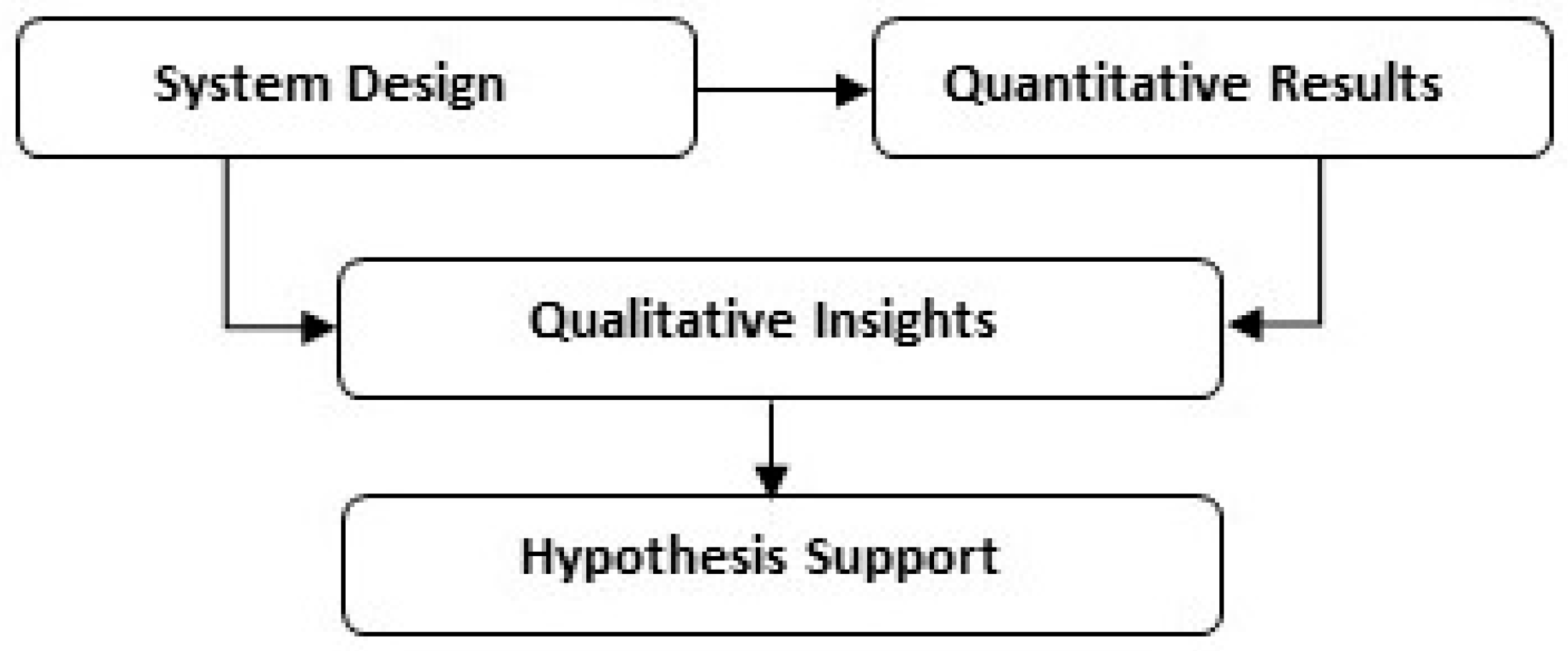
Following the methodological framework described in Section 3, this section presents the results of the mixed-methods investigation assessing the effectiveness of the Alternate Reality Game (ARG) system for rural tourism and cultural education in Shiding. The findings are organized according to the exploratory sequential mixed-methods design and include: (1) quantitative results from participant surveys and experimental data, (2) qualitative insights derived from post-experience interviews and field observations, and (3) interpretive synthesis integrating both strands for hypothesis validation.
Figure 5 illustrates the overall validation logic linking System Design → Quantitative Results → Qualitative Insights → Hypothesis Support.

4.2. ARG System Design and Development Results

4.2.1. Needs Analysis and Establishment of Design Principles

A multi-stage needs analysis was conducted to identify local challenges, educational opportunities, and user expectations. Data sources included semi-structured interviews with local stakeholders (e.g., community leaders, B&B owners, educators), field observations, and content reviews of existing Shiding heritage and tourism resources.
Based on the analysis, five key design principles were summarized in Table 5.

4.2.2. Architecture of the ARG Prototype

A comprehensive ARG prototype, “The Mystery of Shiding: The Call of the Ganoderma Lucidum,” demonstrates the integrated system design. The prototype features five interconnected core modules: the ARG Core Engine, Story Engine, Learning Scaffolds, Interaction Modules, and Community Platform. Figure S1 in Supplementary Materials details the functions and interconnections of these modules and highlights the integration and overall system architecture. Supplementary Materials also provide the full listing of technical specifications and module functions. Figure S2 (in the Supplementary Materials File S6.) presents a detailed flowchart that illustrates the game flow and player journey.

4.2.3. Development Results of Core Functional Modules

The development results include an immersive narrative system, scaffolding learning support, a diverse interaction interface, and a community co-creation platform, with detailed feature lists and workflow specifications provided in Supplementary Materials (see Table S1).

4.2.4. Technical Implementation and Innovative Features

To address the infrastructural limitations of rural Shiding, the system leveraged low-cost, cloud-based tools to ensure scalability, replicability, and ease of maintenance. The technical implementation and innovative features summarized in Table 6.
Innovations included real-time mission updates through a cloud-based CMS, adaptive scaffolding prompts based on player progress, and location-sensitive storytelling that dynamically adjusted to players’ physical routes. These design features enabled a more responsive and context-aware learning experience.

4.2.5. Iterative Development Process

Following the principles of agile development, the system underwent three iterative cycles to refine both functionality and user experience: Iteration 1 (alpha), Iteration 2 (beta), and Iteration 3 (release) progressively refined core functionality, scaffolding mechanisms, and community features.
The detailed iterative improvement procedures are presented in (Supplementary Materials File S8).

4.3. System Validation and User Experience Evaluation

4.3.1. Functional Completeness Validation

Functional validation examined whether each major system module operated as intended under different environmental and user conditions. Results are provided in the Supplementary Materials (Table S2), which indicate that the ARG prototype met performance expectations. Identification of minor usability issues, including bright sunlight affecting QR code scanning, led to the addition of on-screen prompts suggesting optimal scanning angles. The overall pass rate of 97% demonstrated the system’s high functional reliability and adaptability to outdoor environments in the Shiding area.

4.3.2. User Interface Design Validation

Validation of the interface’s intuitiveness and ease of use resulted from user experience testing. The testing focused on the intuitiveness, accessibility, and visual design coherence of the interface. A group of pilot participants (n = 12) representing diverse age ranges evaluated the interface during simulated gameplay sessions. Observations and post-test feedback confirmed that the interface achieved a balance between narrative immersion and operational simplicity, enabling smooth navigation even among participants with limited digital literacy.
Multiple interactive interfaces—including the Home, Task, and Community screens—enhance user engagement and system usability. Detailed interface layouts and feature descriptions provided in Supplementary Materials (see Table S3).

4.3.3. System Stability and Performance Testing

Technical performance testing under both controlled and field conditions assessed the stability of the ARG prototype. Startup speed, memory usage, battery life, and network traffic efficiency were among the key metrics evaluated. Table 7 presents results indicating that all performance indicators met or exceeded standard mobile usability benchmarks, confirming system optimization for prolonged outdoor operation.

4.4. Field Experiment Implementation Results

4.4.1. Experiment Design and Execution

The field experiment was officially launched on 16~30 August 2024, in Shiding District, lasting two weeks, employing a pre-test/post-test design with a mixed-methods evaluation.
Experimental Procedure:
  • Pre-test Questionnaire: Assessed participants’ initial cultural cognitive level.
  • ARG Experience: A complete 2–3 h task experience.
  • Real-time Observation: The research team recorded interactive behaviors on-site.
  • Post-test Questionnaire: Evaluated various indicators after the experience.
  • In-depth Interviews: Representative participants were selected for qualitative interviews.

4.4.2. Participant Recruitment and Distribution

Demographic characteristics of the 78 analytic participants are summarized in Table 8.

4.4.3. Analysis of System Usage Behavior

Through backend data analysis, we obtained the objective indicators of participant usage behavior in Table 9.

4.5. Quantitative Analysis Results

This section presents the statistical results derived from the pre–post questionnaire data (n = 78), focusing on five constructs: cultural understanding, learning support, immersion, user experience, and community engagement. Analyses address (1) overall pre–post changes, and (2) intergenerational differences across the three age groups.

4.5.1. Descriptive and Inferential Results

Paired-sample t-tests were performed to compare pre- and post-test scores across the five constructs. The results showed significant increases for user experience and immersion, whereas changes in cultural understanding, learning support, and community engagement were small and did not indicate improvement over time. Table 10 presents the descriptive statistics and effect sizes for these pre–post comparisons, highlighting the contrast between strong experiential gains and more modest changes in the other domains.
Overall, the ARG intervention produced large effects on user experience and immersion, with more modest or negligible changes in the other constructs.

4.5.2. Intergenerational Differences in Key Constructs

To examine intergenerational patterns, we grouped participants into three age cohorts: Younger (18–30 years, n = 32), Middle-aged (31–50 years, n = 31), and Older (51+ years, n = 15). One-way ANOVA indicated significant age effects for user experience and immersion, with higher scores in older age groups, whereas no significant differences were found for cultural understanding, learning support, or community engagement (Table 11).

4.5.3. Summary of Quantitative Findings

Quantitative findings indicate that the ARG-based experience produced large pre–post gains in user experience and immersion, while changes in cultural understanding, learning support, and community engagement were small and not consistently positive (Table 9). Taken together with the ANOVA results, these patterns suggest that the system was particularly successful in enhancing experiential and affective engagement, whereas its measurable impact on cultural learning and community connection was more limited.

4.6. Qualitative Analysis Results

To complement the quantitative results, qualitative data were analyzed through thematic coding and triangulation across multiple sources, including open-ended questionnaire responses (n = 78), semi-structured interviews with selected participants (n = 12), and field observations during the implementation period in Shiding.
The qualitative findings enrich the interpretation of statistical results by illuminating participants’ lived experiences, perceptions of learning, and reflections on place attachment. Three overarching themes emerged from the data, corresponding to the key design constructs identified in the quantitative phase: community co-creation, scaffolding support, and narrative integration.

4.6.1. Community Co-Creation and Local Engagement

Participants consistently emphasized that collaborative interactions with local hosts and community members were the most memorable aspect of the ARG experience.
Many described how tasks designed around real-world engagement—such as restoring old stone houses, identifying local fungi species, or storytelling at Firefly Book House—enabled them to “see Shiding through the eyes of its people.”
“I didn’t expect to talk with the owner of the B&B about the history of mushroom farming. It made me realize this game was more about learning from the community than just playing.”
(Participant P07, age 22)
Older participants expressed appreciation for the intergenerational collaboration:
“Working with students made me feel young again. They taught me about QR codes, and I taught them the old mining songs.”
(Participant P51, age 63)
This reciprocal dynamic reflected authentic co-creation, bridging generational and cultural gaps.
Overall, participants regarded these activities as meaningful opportunities to “contribute” rather than merely “consume,” resonating with the experience economy model [1] and aligning with the construct of community co-creation identified in the factor analysis.

4.6.2. Scaffolding Support and Learning Experience

The scaffolding mechanisms embedded in the ARG system—such as mission guidance, hint layers, and peer mentoring—were perceived as crucial for sustaining motivation and comprehension. Several younger participants highlighted that the structured yet flexible learning flow helped them manage complex, multi-site tasks:
“The steps were clear, but I could still make choices. It felt like solving a mystery and learning about the place at the same time.”
(Participant P14, age 20)
Educators and community mentors also noted that the design provided progressive autonomy for learners, supporting both novice and experienced participants.
This echoes Vygotsky’s scaffolding theory (1978) [26], where guided participation facilitates cognitive and social development.
Participants reported that the learning process was “smooth” and “encouraging,” particularly when supported by teammates or local guides, reinforcing the positive quantitative results under the Learning Support construct.

4.6.3. Narrative Integration and Emotional Immersion

The ARG storyline—centering on the rediscovery of Shiding’s hidden memories through a time-travel narrative—was repeatedly mentioned as the emotional driver of engagement.
Participants described how the intertwined historical clues, local myths, and environmental metaphors deepened their emotional resonance with the place:
“It felt like uncovering a secret history that belonged to us. When the story ended, I didn’t want to leave.”
(Participant P36, age 29)
This affective attachment was particularly strong among younger participants, aligning with quantitative evidence of higher Immersion scores in this group.
However, several older participants reported challenges with mobile interactions or QR-code scanning, though they still appreciated the story’s emotional and educational value.
These reflections suggest that while technological literacy may moderate immersion levels, the underlying narrative coherence successfully maintained engagement across generations.

4.6.4. Integrative Interpretation

Cross-analysis of qualitative and quantitative findings reveals strong convergence.
The three thematic clusters—community co-creation, scaffolding support, and narrative integration—emerged as recurring dimensions in both quantitative constructs and qualitative themes.
Participants’ narratives provided contextual depth to numerical patterns, confirming that:
  • Community co-creation promoted place identity, mutual learning, and intergenerational bonding.
  • Scaffolding support enhanced learners’ sense of competence and guided discovery.
  • Narrative integration amplified emotional immersion and long-term memory retention.
Together, these insights reinforce the holistic value of the ARG framework as a place-based educational ecosystem that integrates cultural heritage, digital interactivity, and experiential learning.

4.7. Triangulated Validation of Research Hypotheses

This subsection summarizes the triangulated evidence for the five research hypotheses (H1–H5) introduced in Section 2.7. To assess the robustness of the findings, these research hypotheses (H1–H5) were examined through system, quantitative, and qualitative evidence following a triangulation logic [39]. This multi-layered approach allows cross-verification between system implementation data, statistical results (including cases of non-significant change; see Table 10) and participants’ lived experiences.
H1. 
The ARG system can significantly enhance participants’ understanding and cognition of local culture.
System evidence: The ARG framework embedded key Shiding landmarks and local narratives into an integrated storyline, enabling participants to reconstruct the area’s cultural history through site-based missions.
Quantitative evidence: Pre-post comparisons showed only a small decrease in the Cultural Understanding construct, with no significant improvement over time (see Table 10).
Qualitative evidence: Participants frequently described new awareness of local heritage and community life (e.g., discovering the history of the old mining trail), indicating perceived gains in cultural insight.
Validation result: Partially supported. System and qualitative evidence point to enhanced cultural understanding, but this was not reflected as a clear positive change in the quantitative scores.
H2. 
Scaffolding mechanisms effectively support the cultural learning process within the ARG environment.
System Evidence: A staged progression model and multi-level hints were implemented to scaffold learning at different paces and difficulty levels.
Quantitative Evidence: Learning Support scores showed only small pre-post changes, without a statistically significant positive gain.
Qualitative Evidence: Participants reported that guidance was “clear but flexible” and that stepwise tasks increased their confidence, aligning with scaffolding theory’s emphasis on guided autonomy.
Validation Result: Partially supported. Participants’ narratives and system design features support the scaffolding effect, while quantitative improvements remained modest.
H3. 
The ARG system enhances user experience and narrative immersion.
System Evidence: The interface design prioritized intuitive navigation and stable mobile interaction. Testing confirmed minimal lag and a high success rate for QR-code tasks.
Quantitative Evidence: User Experience and Immersion showed significant pre-post increases with large effect sizes (Cohen’s d ≈ 0.8), indicating strong perceived improvements (Table 10).
Qualitative Evidence: Participants described deep emotional engagement and satisfaction, noting that the story and environment “merged together” during play, although some older participants reported minor technical challenges.
Validation Result: Supported.
H4. 
The ARG fosters intergenerational engagement and community co-creation.
System Evidence: Collaborative puzzles, local missions, and storytelling challenges encouraged cooperation between youth and elders, generating reciprocal learning opportunities.
Quantitative Evidence: Community Engagement scores did not show a significant pre-post increase, but post-test means remained moderate to high across age groups and did not differ significantly by age (Table 10 and Table 11).
Qualitative Evidence: Participants emphasized mutual learning (e.g., younger players helping with technology while elders shared local stories), highlighting perceived intergenerational bonding and co-creation.
Validation Result: Partially supported. Qualitative and system evidence strongly indicate intergenerational engagement, whereas quantitative gains are limited.
H5. 
The ARG demonstrates intergenerational inclusivity and adaptability across age groups.
System Evidence: The design offered multimodal participation (visual, auditory, and task-based interaction), aiming to accommodate different literacy and technology levels.
Quantitative Evidence: One-way ANOVA showed significant age effects for user experience and immersion, with higher scores in older age groups, while no significant differences were found for cultural understanding, learning support, or community engagement (Table 11).
Qualitative Evidence: Narratives described balanced participation despite differing digital skills, with younger participants providing technical support and older participants contributing local knowledge.
Validation Result: Supported with qualifications. The ARG appears broadly inclusive, although age-related differences in digital interaction comfort remain.

4.7.1. Synthesis of Triangulated Findings

Table 12 summarizes the validation outcomes across the five hypotheses. Results demonstrate substantial convergence between quantitative and qualitative data, with all hypotheses supported either fully or partially. The three design pillars—community co-creation, scaffolding support, and narrative integration—emerged repeatedly in factor and thematic analyses, indicating their central role in shaping participants’ experiences.

4.7.2. Summary

Taken together, the triangulated evidence indicates that the ARG system met its core experiential and design goals, particularly in terms of user experience, immersion, and perceived intergenerational interaction, while measurable gains in cultural understanding and community engagement were more modest than initially expected. These results suggest that combining Design Thinking and ARG frameworks offers a promising, though not uniformly transformative, model for place-based education and rural community learning that warrants further refinement and longitudinal testing.

4.8. Section Summary and Discussion Preview

This section presented a comprehensive account of the system design, implementation, and empirical validation of the ARG-based place-based education intervention conducted in Shiding District. Through a sequence of mixed-method analyses, the results indicate that the system effectively integrated technological innovation with core cultural learning objectives, while also revealing areas where outcomes were more modest than expected.
The design and development phase (Section 4.2) demonstrated that the ARG prototype, “The Mystery of Shiding: The Call of the Ganoderma Lucidum,” embodied local narratives through a modular, low-cost architecture, and functional validation confirmed its technical feasibility, operational stability, and user-friendly interface. The field experiment (Section 4.4) verified the ARG’s usability and ecological validity in real-world community settings, with participants across generations actively engaged with the story-based missions and digital-physical interactions.
Quantitative results (Section 4.5) revealed substantial pre–post gains in user experience and immersion, whereas changes in cultural understanding, learning support, and community engagement were smaller and in some cases not statistically significant, pointing to both strengths and limitations of the current design. Complementary analyses and triangulation (Section 4.6 and Section 4.7) highlighted three recurring design dimensions—community co-creation, scaffolding support, and narrative integration—as central to how participants experienced and interpreted the ARG. Qualitative findings illustrated how participants co-constructed meaning through dialog, task collaboration, and emotional connection to the storyline, and how reciprocal scaffolding emerged when younger participants offered technical assistance while elders contributed local knowledge.
The integrated validation of the research hypotheses showed that several hypotheses were fully supported and others partially supported, suggesting that ARGs hold considerable pedagogical potential for fostering intergenerational interaction, experiential engagement, and aspects of cultural cognition, while also requiring further refinement to achieve stronger and more consistent quantitative effects. Overall, the empirical findings underscore the promise of combining Design Thinking and Alternate Reality Game frameworks for place-based education and community learning, and they offer theoretical and practical insights for future curriculum innovation, digital heritage preservation, and rural revitalization initiatives.

5. Results and Discussion

The ARG intervention partially succeeded in transforming Shiding’s fragmented cultural heritage into a more coherent and immersive visitor experience, while also revealing important design and measurement limitations. The following discussion integrates quantitative, qualitative, and system evidence around the four research questions and reflects on how far the study met its original objectives regarding cultural learning, intergenerational collaboration, and rural tourism innovation.

5.1. RQ1—Cultural Understanding and Learning

RQ1 asked how the ARG system influenced participants’ cultural understanding and learning in the context of Shiding’s rural heritage. Quantitatively, the Cultural Understanding construct did not show a clear positive pre–post gain and even exhibited a small decrease at post-test, whereas qualitative narratives pointed to heightened awareness of local history, everyday practices, and the meaning of specific sites. This divergence suggests that the current scale mainly captured declarative knowledge and may have been insensitive to more interpretive or affective forms of learning, such as narrative reconstruction and place attachment [22,36,37], which are central in cultural tourism research.
The brief, single-visit design and modest sample size further reduce the likelihood of detecting large numerical changes. This tension between modest short-term score changes and richer narrative or affective learning has also been observed in heritage tourism studies that emphasize place attachment and reflective meaning-making over immediate factual gains [22,32,36,37,38,40].
Future studies should therefore refine measures of cultural learning to include reflective and behavioral indicators and adopt longitudinal designs that track change across repeated visits or extended community engagement, in order to more fully realize the study’s objective of enhancing cultural understanding through ARG-based experiences.

5.2. RQ2—Scaffolding, User Experience and Immersion

RQ2 examined how scaffolding mechanisms and system design features supported user experience, immersion, and intergenerational participation. The findings show large pre–post improvements in user experience and immersion, but only modest changes in the Learning Support construct. Participants’ descriptions of clear yet flexible guidance, stepwise missions, and peer support indicate that scaffolding primarily functioned through narrative cues, progressive challenges, and social collaboration, rather than overt instructional prompts. This pattern is consistent with research on digital scaffolding and ARG-like environments, where supports are designed to be embedded in narrative flow and social collaboration rather than experienced as explicit instruction [18,19,22,29,30,31].
The limited quantitative gains on learning support likely reflect the scale’s emphasis on cognitive guidance; many reported benefits were socio-emotional (feeling encouraged, confident, and supported by teammates and hosts). Refining the learning-support construct to capture affective and collaborative dimensions, and complementing self-reports with performance-based indicators, would clarify how scaffolding design translates into measurable learning outcomes and strengthen the system’s contribution to the objective of supporting intergenerational learning processes.

5.3. RQ3—Community Engagement and Value Co-Creation

RQ3 focused on how the ARG facilitated community engagement and value co-creation among local stakeholders and visitors. Community Engagement scores remained at moderate levels and did not exhibit strong pre–post improvements, yet qualitative and system evidence consistently highlighted intense interaction with local hosts, collaborative problem-solving, and a shift from passive consumption to active contribution. Participants described activities such as restoring stone houses, identifying local fungi, and listening to personal stories as meaningful opportunities to “see Shiding through the eyes of its people”, which resonates with value co-creation theories that frame residents and visitors as joint producers of cultural meaning rather than separate providers and consumers. However, the single-site, short-term intervention and the absence of follow-up indicators (e.g., repeat visits, local initiatives) limit claims about longer-term community impact.
Expanding co-design roles for residents, tracking repeated participation, and incorporating measures of subsequent community action would provide a more complete picture of how ARG-based experiences contribute to sustained community engagement and shared value creation, thereby advancing the objective of empowering local stakeholders as cultural co-creators. Such shifts from passive consumption to active participation are central to value co-creation models in tourism, which conceptualize visitors and residents as joint producers of experience and meaning [34,43,44,45].

5.4. RQ4—Fragmentation, Intergenerationality and Design Implications

RQ4 considered the extent to which the ARG framework mitigated narrative and experiential fragmentation in rural tourism. The integrated storyline, location-based missions, and multimodal interactions appear to have reduced on-site fragmentation by linking previously disconnected sites and stories into a single journey, as reflected in participants’ descriptions of experiencing Shiding as a coherent narrative rather than a series of isolated attractions.
Quantitatively, one-way ANOVA showed significant age effects for user experience and immersion, with higher scores in older age groups, while cultural understanding, learning support, and community engagement did not differ significantly by age. These patterns suggest that the design achieved a baseline of intergenerational inclusivity in learning and community outcomes, even though comfort with the digital interaction layer still varied. Higher UX and immersion ratings among older adults may indicate that the contrast with conventional tourism formats made the ARG particularly salient, but qualitative reports of QR-code and interface difficulties highlight persistent usability barriers.
Linking previously isolated attractions into a single, story-driven route directly addresses the narrative fragmentation highlighted by rural tourism studies [2,11,12,13], while aligning with calls for context-sensitive, community-anchored digital transformation [36,37,38].
To further address fragmentation and enhance inclusivity, future iterations could extend the narrative network to additional sites, offer more low-tech or analog interaction options, and deepen collaboration with local institutions so that the ARG functions as an evolving, community-maintained narrative infrastructure rather than a one-off event, in line with the objective of providing a scalable model for rural digital transformation.

6. Conclusions and Recommendations

6.1. Summary of Key Findings

This study examined how a community-based Alternate Reality Game (ARG) could transform Shiding’s fragmented cultural assets into a more coherent and immersive experience that supports cultural engagement and intergenerational learning.
Using an exploratory sequential mixed-methods design, the research showed that a low-cost, narrative-driven ARG developed with accessible tools (e.g., cloud-based forms and messaging platforms) can deliver strong experiential and affective outcomes, particularly in terms of user experience and immersion, while generating more modest and mixed effects on measured cultural understanding, perceived learning support, and community engagement.
Immersive storytelling and the “This Is Not A Game” (TINAG) esthetic functioned as key drivers of engagement, blurring the boundaries between fiction and reality and allowing participants to position themselves as protagonists within Shiding’s cultural narrative.
Qualitative accounts indicate that this narrative structure deepened emotional connection and place attachment, echoing arguments that transmedia storytelling and site-specific design are crucial for meaningful heritage experiences.
The study also identified a pedagogical dynamic of reciprocal scaffolding, in which younger participants provided technological assistance while older participants contributed local knowledge and memories during collaborative tasks, extending Vygotskian ideas on guided participation and social learning into an informal, intergenerational, and digitally mediated setting.
Finally, the participatory design process—engaging local residents as cultural informants and co-design partners—proved essential for achieving cultural authenticity, community ownership, and ecological validity in the field implementation, in line with prior work on community-based heritage and value co-creation.

6.2. Theoretical Contributions

Theoretically, the study contributes in four main ways.
First, it extends scaffolding theory from formal education to a place-based ARG context, illustrating how structured support and narrative cues can guide visitors through complex cultural content while maintaining experiential immersion [26].
Second, it introduces and empirically illustrates the notion of reciprocal scaffolding as a mechanism through which intergenerational teams co-construct knowledge and bridge digital gaps, which is particularly relevant for aging rural communities facing digital divides.
Third, it operationalizes an integrated framework that combines ARG/transmedia narrative theory, scaffolding, intergenerational learning, and value co-creation into a coherent design rationale for rural cultural tourism.
In doing so, the study refines broader debates on immersive cultural tourism and digital heritage by showing that ARGs can function not only as engagement tools but also as socio-technical mediators of community participation and narrative integration.
The findings nuance existing experience-economy [1] and digital-heritage perspectives by indicating that emotional immersion and perceived co-creation [35,52] may be easier to achieve than robust, short-term gains in measured cultural cognition, especially in single-session interventions with modest samples.

6.3. Practical Implications

Practically, the project demonstrates a low-cost, replicable design model for rural revitalization that relies on existing cloud platforms, physical artifacts, and simple location-based mechanics rather than custom application development. This approach lowers technical and financial barriers for communities with limited resources while still enabling rich, story-driven visitor experiences that align with current calls for context-sensitive, participatory tourism innovation.
The design principles developed in this study—narrative integration across dispersed sites, scaffolded missions, reciprocal intergenerational collaboration, and resident co-creation—offer actionable guidance for local governments, NGOs, and tourism stakeholders seeking to develop inclusive, culturally grounded ARG experiences.
At the same time, the mixed results on cultural understanding and community engagement highlight that ARGs should be positioned as part of a broader portfolio of heritage and community initiatives rather than as stand-alone solutions.
Policymakers and practitioners are therefore encouraged to combine ARG-based storytelling with ongoing community programs, educational partnerships, and follow-up activities that can sustain interest and deepen learning over time.

6.4. Limitations of the Study

Several limitations should be acknowledged.
The study was conducted in a single rural district with a specific socio-cultural and infrastructural context, which constrains the generalizability of the findings to other regions.
The evaluation focused on short-term pre–post changes and relied on self-report scales with a modest sample size, making it difficult to capture longer-term behavioral, economic, or community impacts and raising the possibility of measurement insensitivity or novelty effects.
Convenience sampling further limits representativeness, and some older participants experienced usability challenges with smartphone-based interactions, indicating residual digital-literacy barriers.
Finally, the research team’s dual role as designers and evaluators may have influenced participants’ responses, and qualitative interpretations, while triangulated, remain interpretive rather than definitive.

6.5. Directions for Future Research

Future studies should replicate and adapt this ARG model in diverse rural settings—such as fishing villages, agricultural communities, and indigenous settlements—to explore cultural specificity and cross-context transferability.
Longitudinal designs are needed to examine whether ARG participation leads to durable changes in cultural pride, place identity, community cohesion, and local economic indicators.
Methodologically, developing more sensitive and multifaceted measures of cultural learning, community engagement, and intergenerational collaboration—including behavioral, artifact-based, and network-analytic indicators—would help address the limitations observed in the present study.
Practically, future work could focus on creating open-source toolkits or design guidelines that enable communities to co-develop and maintain their own rural ARGs with minimal external support, and on integrating emerging technologies such as AR/VR or adaptive AI-driven scaffolds in ways that remain accessible and culturally grounded.
Comparative studies that contrast ARG-based interventions with other forms of digital storytelling or guided tours would further clarify the added value and boundary conditions of ARGs in rural heritage revitalization.

Supplementary Materials

The following supporting information can be downloaded at: https://www.mdpi.com/article/10.3390/su18010338/s1, File S1. Detailed descriptions of sub-activities of research phases and ARG iterations; File S2. The description of Sancai Lingzhi Farm Guesthouse; File S3. The principles for participant recruitment; File S4. The interview guide and detailed protocols; File S5. Figure S1. ARG System Functional Architecture Diagram. Source: Authors’ original design; File S6. Figure S2. Flowchart of the ‘Shiding Puzzle’ “The Mystery of Shiding: The Call of the Ganoderma Lucidum” ARG Gameplay and User Journey; File S7. Table S1. Detailed Feature List and Design Workflow of Core Functional Modules; File S8. The detailed iterative improvement procedures; File S9. Table S2. System Functional Completeness Test Results; File S10 Table S3. Interfaces and Features

Author Contributions

Conceptualization, J.-H.L.; methodology, J.-H.L.; software, C.Y.W.; validation, J.-H.L. and C.Y.W.; investigation, J.-H.L. and C.Y.W.; resources, J.-H.L.; data curation, C.Y.W.; writing—original draft, J.-H.L.; writing—review and editing, J.-H.L.; visualization, C.Y.W.; supervision, J.-H.L. All authors have read and agreed to the published version of the manuscript.

Funding

This research was funded by the Rural Regeneration Fund of the Soil and Water Conservation Bureau, Council of Agriculture, Executive Yuan, Taiwan, under grant number 113農再-1.1.1-1.1-保-038.

Institutional Review Board Statement

IRB approval is waived because Human Subjects Research Act (https://law.moj.gov.tw/LawClass/LawAll.aspx?pcode=L0020176, accessed on 2 December 2025)—This national law defines the scope of human subjects research and establishes the legal basis for ethics review of such studies in Taiwan. The Act stipulates that research involving human participants must be reviewed by a Human Research Ethics Review Board (IRB), with the level of review determined by the degree of risk and intrusiveness. It also provides the legal framework under which minimal-risk behavioral and social science research may be assessed for exemption or simplified review in accordance with institutional procedures. Announcement on the Scope of Cases Exempt from Ethics Review by Human Research Ethics Review Boards—This official announcement issued under the Human Subjects Research Act further specifies categories of research that may be exempt from review by a Human Research Ethics Review Board. It clarifies that research activities that do not involve interventions on human bodies and that use anonymized information or non-identifiable data, and that pose only minimal risk to participants, may fall outside the scope of mandatory IRB review or may be eligible for exemption determinations according to institutional regulations.

Informed Consent Statement

We obtained informed consent from all participants, ensuring adherence to institutional and ethical guidelines for minimal risk research.

Data Availability Statement

The data supporting the findings of this study are available from the corresponding author upon reasonable request. The data are not publicly available due to privacy and ethical restrictions.

Acknowledgments

We gratefully acknowledge Sancai Lingzhi Farm Guesthouse for generously providing the site for this research. We are especially indebted to the owner and her family for their unwavering support and encouragement. We thank all research participants for their valuable contributions and enthusiastic involvement throughout the study. Special thanks are extended to the students and collaborators who assisted in game design, art editing, and final project production. Special thanks are extended to the students and collaborators who assisted in game design, art editing, and final project production. This research was supported by the Rural Regeneration Fund of the Soil and Water Conservation Bureau, Council of Agriculture, Executive Yuan, Taiwan, under grant number 113農再-1.1.1-1.1-保-038. Additionally, we appreciate the support of ChatGPT 4.0, Perplexity pro, Gemini 3 Pro, SciSpace Team User, and NotebookLM for information retrieval, data analysis, English editing, and figure generation. The authors have thoroughly reviewed and edited all outputs generated by these tools and assume full responsibility for the content of this publication.

Conflicts of Interest

The authors declare no conflicts of interest.

Abbreviations

The following abbreviations are used in this manuscript:
ARGsAlternate Reality Games

Appendix A. Full Questionnaire

All items are rated on a 5-point Likert scale (1 = Strongly disagree, 5 = Strongly agree) unless otherwise noted.
Table A1. Questionnaire.
ConstrucsItems
Cultural Learning and CognitionC1. I have gained a deeper understanding of Shiding’s tea culture, mining history, or Lingzhi industry.
C2. The stories or characters in the tasks helped me understand the local cultural context.
C3. I am able to clearly explain the cultural knowledge learned in the tasks to others.
C4. I feel that the task content is closely related to the local features of Shiding.
C5. I have developed greater interest in exploring local culture.
Learning Support and ScaffoldingS1. The hints provided in the tasks (e.g., maps, audio guides) were helpful for completing tasks.
S2. I found the cultural encyclopedia content in the tasks to be clear and understandable.
S3. I felt sufficiently supported in my learning while completing the tasks.
S4. The task design made me more confident in exploring local culture.
S5. I am able to complete the tasks without external assistance.
System Usability and User ExperienceU1. The system interface was simple and intuitive to operate.
U2. The task design was engaging and challenging.
U3. I enjoyed using multiple interactive features (QR, AR, voice) to complete tasks.
U4. The overall task flow was smooth, and I did not encounter technical barriers.
U5. I am satisfied with the overall task experience.
Immersion and Emotional ResonanceI1. I felt as if I was immersed in the story setting of the tasks.
I2. The characters or narratives in the tasks evoked emotional resonance.
I3. I have developed a deeper emotional connection to Shiding.
I4. I am willing to participate in similar task activities again.
I5. I would recommend this task experience to others.
Community Engagement and Co-CreationE1. I had opportunities to interact with local residents during the tasks.
E2. I felt that the task content authentically represented Shiding’s cultural features.
E3. I am willing to contribute to local cultural co-creation tasks (e.g., by providing stories, hints).
E4. The tasks increased my sense of identity with the culture and values of Shiding.
E5. I believe this task has a positive impact on promoting local culture.
Open-Ended QuestionsO1. What was your favorite part of the tasks?
O2. What aspects could be improved?
O3. Do you have any other experiences or suggestions you would like to share?

Appendix B. Interview Guide

  • Before participating in this gamified tourism activity, what was your understanding of Shiding’s culture?
  • Which tasks or interactions helped you gain a deeper understanding of the local culture?
  • Do you think this interactive approach is more effective than traditional guided tours for understanding culture? Why or why not?
  • Did you experience a sense of immersion during the tasks? Which specific scenarios left the deepest impression?
  • Did you interact with local residents or cultural guides? How did these interactions influence your experience?
  • Did you develop an emotional connection to Shiding during the activity? Through which tasks or stories?
  • Would you be willing to revisit or recommend this destination? For what reasons?
  • What are your thoughts on the difficulty and appeal of the tasks?
  • Which game elements (e.g., role-play, puzzles, QR/AR interactions) were most engaging for you?
  • How satisfied are you with the overall activity?
  • What aspects could be improved? Are there any cultural elements or interactive formats you wish to add?
  • Do you feel the activity provided enough learning support?
  • If improvements were to be made, in what areas would you like to see more hints or interactive design?

References

  1. Pine, B.J.; Gilmore, J.H. Welcome to the Experience Economy. Harv. Bus. Rev. 1998, 76, 97–105. Available online: https://hbr.org/1998/07/welcome-to-the-experience-economy (accessed on 1 September 2024).
  2. Richards, G. Cultural tourism: A review of recent research and trends. J. Hosp. Tour. Manag. 2018, 36, 12–21. [Google Scholar] [CrossRef]
  3. Directorate General of Budget, Accounting and Statistics, Executive Yuan, R.O.C. (Taiwan). Population and Population Density of New Taipei City. Available online: https://www.bas.ntpc.gov.tw/uploaddowndoc?dis=bas21&file=bas21%2F202409132142541.xlsx&filedisplay=03%E4%BA%BA%E5%8F%A3%E6%A6%82%E6%B3%81.xlsx&flag=doc (accessed on 8 July 2024).
  4. Ministry of Transportation and Communications, Tourism Administration, R.O.C. (Taiwan). 2023 Survey of Travel by R.O.C. Citizens Summary; Tourism Administration: Taipei, Taiwan, 2024. Available online: https://admin.taiwan.net.tw/english/info/FilePage?a=18142 (accessed on 1 August 2025).
  5. Hsiao, Y.-H. A Study on the Factors Influencing Travel Route Patterns in Metropolitan Areas. Master’s Thesis, Chaoyang University of Technology, Taichung, Taiwan, 2003. Available online: https://ndltd.ncl.edu.tw/cgi-bin/gs32/gsweb.cgi?o=dnclcdr&s=id=%22091CYIT5675033%22.&searchmode=basic (accessed on 16 July 2024).
  6. McGonigal, J. ‘This is not a game’: Immersive aesthetics and collective play. In Proceedings of the Digital Arts and Culture Conference, Melbourne, Australia, 19–23 May 2003; pp. 32–39. [Google Scholar]
  7. Guo, J.; Xu, J.; Pan, Y. How Do Location-Based AR Games Enhance Value Co-Creation Experiences at Cultural Heritage Sites? A Process Perspective Analysis. Appl. Sci. 2024, 14, 6812. [Google Scholar] [CrossRef]
  8. Srdanović, P.; Skala, T.; Maričević, M. InHeritage—A Gamified Mobile Application with AR and VR for Cultural Heritage Preservation in the Metaverse. Appl. Sci. 2025, 15, 257. [Google Scholar] [CrossRef]
  9. Methimakis, M.; Ioannidis, I.; Partarakis, N.; Zabulis, X.; Adami, I. Geolocalized AR Exploration of Shepherd Settlements in the Psiloritis Mountain. In Proceedings of the 17th International Conference on Pervasive Technologies Related to Assistive Environments (PETRA 2024), Crete, Greece, 26–28 June 2024; ACM: New York, NY, USA, 2024; pp. 156–163. [Google Scholar] [CrossRef]
  10. Zhu, P.; Chi, X.; Ryu, H.B.; Han, H. Experience economy and authenticity in the heritage tourism sector: A multiple-dimensional approach. Acta Psychol. 2025, 257, 105118. [Google Scholar] [CrossRef]
  11. Guo, S.; Liu, J. Where is the Blue Ocean? Value Innovation Strategies in the Development of Rural Tourism Across the Strait. Chin. Stud. 2022, 11, 45–62. [Google Scholar] [CrossRef]
  12. Wang, M.; Jiang, J.; Xu, S.; Guo, Y. Community Participation and Residents’ Support for Tourism Development in Ancient Villages: The Mediating Role of Perceptions of Conflicts in the Tourism Community. Sustainability 2021, 13, 2455. [Google Scholar] [CrossRef]
  13. Zheng, T.; Yu, J.; Cheng, Q.; Pan, H. The Influence Mechanism and Measurement of Tourists’ Authenticity Perception on the Sustainable Development of Rural Tourism—A Study Based on the 10 Most Popular Rural Tourism Destinations in China. Sustainability 2023, 15, 1454. [Google Scholar] [CrossRef]
  14. Yeoman, I.S.; McMahon-Beattie, U. The experience economy: Micro trends. J. Tour. Future 2019, 5, 114–120. [Google Scholar] [CrossRef]
  15. Montola, M.; Stenros, J.; Waern, A. Pervasive Games: Theory and Design; CRC Press/Taylor & Francis: Boca Raton, FL, USA, 2009. [Google Scholar] [CrossRef]
  16. Jenkins, H. Convergence Culture: Where Old and New Media Collide; New York University Press: New York, NY, USA, 2006; ISBN 978-0-8147-4281-5. [Google Scholar]
  17. Scolari, C.A.; Masanet, M.-J.; Guerrero-Pico, M.; Establés, M.-J. Transmedia literacy in the new media ecology: Teens’ transmedia skills and informal learning strategies. Prof. Inf. 2018, 27, 801. [Google Scholar] [CrossRef]
  18. Baltra, A.I. Cheshire: A Design Framework for Alternate Reality Games. In Entertainment Computing—ICEC 2011; Anacleto, J.C., Fels, S., Graham, N., Kapralos, B., Saif El-Nasr, M., Stanley, K., Eds.; Lecture Notes in Computer Science, 6972; Springer: Berlin/Heidelberg, Germany, 2011; pp. 389–398. [Google Scholar] [CrossRef]
  19. Bonsignore, E.; Hansen, D.; Kraus, K.; Ruppel, M. Alternate Reality Games as Platforms for Practicing 21st-Century Literacies. Int. J. Learn. Media 2012, 4, 25–54. [Google Scholar] [CrossRef]
  20. Krzywinska, T.; Phillips, T.; Parker, A.; Scott, M. From Immersion’s Bleeding Edge to the Augmented Telegrapher: A Method for Creating Mixed Reality Games for Museum and Heritage Contexts. ACM J. Comput. Cult. Herit 2020, 13, 1–20. [Google Scholar] [CrossRef]
  21. Hadjistassou, S.; Joannidou, S.; Louca, P.; Molina Muñoz, P.; Papmehl-Dufay, L. Developing Augmented Reality Applications to Promote Digital Storytelling: The Cases of Choirokoitia and Sandby Borg. Educ. Inf. 2023, 39, 187–201. [Google Scholar] [CrossRef]
  22. Lin, H.-C.K.; Lu, L.-W.; Lu, R.-S. Integrating Digital Technologies and Alternate Reality Games for Sustainable Education: Enhancing Cultural Heritage Awareness and Learning Engagement. Sustainability 2024, 16, 9451. [Google Scholar] [CrossRef]
  23. Goins, E.; Phelps, A.; Egert, C. Designing games for cultural heritage: Integrating process, material culture and intangible heritage. Int. J. Herit. Digit. Era 2015, 4, 179–196. [Google Scholar] [CrossRef]
  24. Dufort, D.; Tajariol, F. A Typology to describe Alternate Reality Games for Cultural Contexts. In Alternate Reality Games and the Cusp of Digital Gameplay; Bloomsbury Academic: New York, NY, USA, 2017. [Google Scholar] [CrossRef]
  25. Champion, E. Critical Gaming: Interactive History and Virtual Heritage; Ashgate Publishing: Farnham, UK, 2015. [Google Scholar]
  26. Vygotsky, L.S. Mind in Society: The Development of Higher Psychological Processes; Harvard University Press: Cambridge, MA, USA, 1978; ISBN 978-0-674-57628-5. [Google Scholar]
  27. Wood, D.; Bruner, J.S.; Ross, G. The role of tutoring in problem solving. J. Child Psychol. Psychiatry 1976, 17, 89–100. [Google Scholar] [CrossRef]
  28. Pea, R.D. The Social and Technological Dimensions of Scaffolding and Related Theoretical Concepts for Learning, Education, and Human Activity. J. Learn. Sci. 2004, 13, 423–451. [Google Scholar] [CrossRef]
  29. Belland, B.R. Instructional Scaffolding in STEM Education: Strategies and Efficacy Evidence; Springer: Cham, Switzerland, 2017. [Google Scholar]
  30. Kyza, E.A.; Georgiou, Y. Scaffolding augmented reality inquiry learning: The design and investigation of the TraceReaders location-based, augmented reality platform. Interact. Learn. Environ. 2018, 27, 211–225. [Google Scholar] [CrossRef]
  31. Holmes, W.; Bialik, M.; Fadel, C. Artificial Intelligence in Education: Promises and Implications for Teaching and Learning; Center for Curriculum Redesign: Boston, MA, USA, 2019; ISBN 978-1-794-29370-0. [Google Scholar]
  32. Rogoff, B. Apprenticeship in Thinking: Cognitive Development in Social Context; Oxford University Press: New York, NY, USA, 1990; ISBN 978-0-19-773468-1. [Google Scholar]
  33. Newman, S.; Hatton-Yeo, A. Intergenerational Learning and the Contributions of Older People. Ageing Horiz. 2008, 8, 31–39. [Google Scholar]
  34. Jordan, J.; Sorell, M. Why Reverse Mentoring Works and How to Do It Right. Harvard Business Review. 1 September 2019. Available online: https://hbr.org/2019/10/why-reverse-mentoring-works-and-how-to-do-it-right (accessed on 2 August 2025).
  35. Vargo, S.L.; Lusch, R.F. Evolving to a New Dominant Logic for Marketing. J. Mark. 2004, 68, 1–17. [Google Scholar] [CrossRef]
  36. Sangnak, D.; Poo-Udom, A.; Tamnanwan, P.; Kongduang, T.; Chanthothai, S. Agritourism as a Catalyst for Sustainable Rural Development: Innovations, Challenges, and Policy Perspectives in the Post-COVID-19 Era. J. Infrastruct. Policy Dev. 2025, 9, 11185. [Google Scholar] [CrossRef]
  37. Wang, H.; Gao, Z.; Zhang, X.; Du, J.; Xu, Y.; Wang, Z. Gamifying cultural heritage: Exploring the potential of immersive virtual exhibitions. Telemat. Inform. Rep. 2024, 15, 100150. [Google Scholar] [CrossRef]
  38. Mansourihanis, O.; Hemmati, M.; Vaez Afshar, S.; Eshaghi, S. Exploring the Role of Location-Based Games in Managing Tourist Destinations under Climate Change Challenges: A Gap Analysis Review. Case Stud. Environ. 2025, 9, 2439123. [Google Scholar] [CrossRef]
  39. Creswell, J.W.; Plano Clark, V.L. Designing and Conducting Mixed Methods Research, 3rd ed.; Sage Publications: Thousand Oaks, CA, USA, 2018; ISBN 978-1-4833-4437-9. [Google Scholar]
  40. Chen, S.; Tian, Y.; Pei, S. Technological Use from the Perspective of Cultural Heritage Environment: Augmented Reality Technology and Formation Mechanism of Heritage-Responsibility Behaviors of Tourists. Sustainability 2024, 16, 8261. [Google Scholar] [CrossRef]
  41. Brown, T. Design Thinking. Harv. Bus. Rev. 2008, 86, 84–92. [Google Scholar]
  42. Jamal, T.; Kircher, J.; Donaldson, J.P. Re-Visiting Design Thinking for Learning and Practice: Critical Pedagogy, Conative Empathy. Sustainability 2021, 13, 964. [Google Scholar] [CrossRef]
  43. Nofal, E. Participatory Design Workshops: Interdisciplinary Encounters within a Collaborative Digital Heritage Project. Heritage 2023, 6, 2752–2766. [Google Scholar] [CrossRef]
  44. Spinuzzi, C. The methodology of participatory design. Tech. Commun. 2025, 52, 163–174. [Google Scholar]
  45. Kemmis, S.; McTaggart, R. Participatory action research. In Handbook of Qualitative Research; Denzin, N.K., Lincoln, Y.S., Eds.; Sage: Thousand Oaks, CA, USA, 2000; pp. 559–604. [Google Scholar]
  46. Braun, V.; Clarke, V. Using thematic analysis in psychology. Qual. Res. Psychol. 2006, 3, 77–101. [Google Scholar] [CrossRef]
  47. Churchill, G.A. A Paradigm for Developing Better Measures of Marketing Constructs. J. Mark. Res. 1979, 16, 64–73. [Google Scholar] [CrossRef]
  48. Fornell, C.; Larcker, D.F. Structural Equation Models with Unobservable Variables and Measurement Error: Algebra and Statistics. J. Mark. Res. 1981, 18, 382–388. [Google Scholar] [CrossRef]
  49. Green, M.C.; Brock, T.C. The role of transportation in the persuasiveness of public narratives. J. Personal. Soc. Psychol. 2000, 79, 701–721. [Google Scholar] [CrossRef]
  50. Brooke, J. SUS: A Quick and Dirty Usability Scale. In Usability Evaluation in Industry; Jordan, P.W., Thomas, B., Weerdmeester, B.A., McClelland, I.L., Eds.; Taylor & Francis: London, UK, 1996; pp. 189–194. [Google Scholar]
  51. Lewicka, M. Place attachment: How far have we come in the last 40 years? J. Environ. Psychol. 2011, 31, 207–230. [Google Scholar] [CrossRef]
  52. Hamari, J.; Shernoff, D.J.; Rowe, E.; Coller, B.; Asbell-Clarke, J.; Edwards, T. Challenging games help students learn: An Empirical Study on Engagement, Flow and Immersion in Game-Based Learning. Comput. Hum. Behav. 2016, 54, 170–179. [Google Scholar] [CrossRef]
Figure 1. The Framework of ARGs with Cultural Heritage Revitalization. Source: Author’s conceptualization based on [18,19,20,21,22,23,24].
Sustainability 18 00338 g001
Figure 2. Scaffolding-Based ARG Learning Framework. Source: Author’s conceptualization based on [26,27,28,29,30,31].
Sustainability 18 00338 g002
Figure 3. ARG-Driven Intergenerational Cultural Learning and Community Co-creation: Theoretical Framework. Source: Author’s conceptualization based on [6,15,26,32,33,35].
Sustainability 18 00338 g003
Figure 4. Integrated Theoretical Logic of ARG-Based Cultural Learning. Source: Author’s conceptualization based on [2,6,13,15,26,32,33,35].
Sustainability 18 00338 g004
Figure 5. Mixed-Methods Validation. Source: Author’s conceptualization based on [39,45].
Sustainability 18 00338 g005
Table 1. Summary of the innovative contributions of this study.
Contribution LevelInnovative Value
Theoretical InnovationPioneering Integration: Proposes a novel framework integrating Vygotsky’s Scaffolding Theory into ARG design for cultural heritage, introducing a “Cultural Learning Scaffolding Model.” Unique Concept: Defines “Reciprocal Scaffolding,” where youth provide technical support and elders share cultural knowledge, extending learning theory to informal, intergenerational contexts.
Methodological InnovationSystematic Framework: Employs an exploratory sequential mixed-methods design, forming a replicable cycle from qualitative exploration to quantitative validation. Replicable Paradigm: Offers a balanced paradigm for applying ARGs to cultural tourism, integrating contextual depth and empirical rigor.
Practical InnovationLow-Cost, Scalable Model: Utilizes cloud-based tools for affordable implementation in resource-limited communities. Community Empowerment: Adopts participatory design to transform residents from passive participants to active cultural co-creators, fostering sustainable engagement.
Source: Author’s conceptualization based on [1,2,7,10,11,12,13].
Table 2. Critical Limitations in ARG-Based Cultural Heritage Research.
LimitationDescriptionReferences
Theoretical FragmentationLack of integrated frameworks combining ARG, learning, and tourism theories[22,25]
Sample and External Validity IssuesSmall, site-specific samples limit generalizability across cultures and age groups[7,8]
Short-Term Evaluation BiasFocus on immediate satisfaction rather than long-term learning or behavioral change[22]
Intergenerational Digital DivideLimited accessibility for older adults and local residents[23,25]
Technical BarriersUsability issues, device complexity, and network limitations hinder engagement[20]
Source: Author’s conceptualization based on [7,8,20,22,23,25].
Table 3. Integrated Framework of Intergenerational Learning and Community Engagement Theories.
TheoryPrincipleARG UseOutcome
Scaffolding TheoryZone of Proximal Development, progressive supportMulti-level hint system, adaptive guidancePromotes effective learning
Intergenerational Learning Theory Knowledge complementarity, mutual teachingRole division design, collaborative tasks Enhances generational understanding
Value Co-creation TheoryThree-stage co-creation process Pre-visit preparation, on-site interaction, post-visit sharingIncreases sense of participation
Self-Determination TheoryAutonomy, competence, relatedness Choice-based design, achievement system, community featuresStrengthens intrinsic motivation
Source: Author’s conceptualization based on [2,6,13,15,26,32,33,35].
Table 4. Overview of research phases and ARG iterations.
Research PhaseTimeframeKey ActivitiesOutputsARG Iteration
Phase 1: Qualitative ExplorationWeeks 1–4 (Month 1)Semi-structured interviews (n = 12 local residents, n = 10 youth); Focus groups (2 sessions); Field observationIdentification of cultural narrative themes (stone houses, mushroom farming, mining); User needs list; Initial storyline draftAlpha prototype
Phase 2: Iterative DevelopmentWeeks 5–8 (Month 2)Co-creation workshops (3 sessions, residents + students); Game mechanics design (puzzles, tasks); Narrative integrationDraft of game mechanics; Narrative script; Tasks integrating dispersed cultural assetsBeta prototype
Phase 3: Quantitative EvaluationWeeks 9–12 (Month 3)Pre/post surveys (n = 78); On-site ARG playtesting; Measurement of five constructsPre/post-test dataset; Age-group comparative analysis; Effect size reportRelease version
Note. Key activities summarize the main procedures conducted in each phase (e.g., interviews, workshops, surveys) and are not intended as an exhaustive breakdown of all participant groups and sample sizes. Detailed participant characteristics are reported in Section 3.3 “Research Site and Participants”.
Table 5. Correspondence between ARG System Design Principles and Local Needs.
Design PrincipleSource of Local NeedSpecific Implementation
Cultural AuthenticityInterviews with local eldersIntegration of real historical figures and events
Progressive LearningSuggestions from educatorsFive-stage task design with increasing difficulty
Intergenerational AccessibilityNeed for family participationDiverse interaction modes and collaborative mechanisms
Local Narrative IntegrationCollaboration with cultural historiansA unified storyline connecting dispersed attractions
Community Co-creationWillingness of residents to participateOpen content contribution platform
Source: Author’s conceptualization based on [2,6,13,15,26,32,33,35].
Table 6. Technical Specifications and Innovative Features of the ARG System.
Technical AspectTechnology UsedInnovative Feature
Frontend InteractionGoogle Forms + Physical Game CardsZero Development Cost, High Accessibility: Utilizes phone’s native browser and camera for ease of participation across generations.
Backend and DataGoogle Data Studio + GA4 IntegrationData-Driven Decisions, Automated Visualization: Employs free data tools for user behavior analysis and future optimization.
QR Code FunctionalityWeb RedirectsDynamic Linking, Easy Maintenance: Connects physical elements to online content via QR codes, enhancing flexibility.
GeolocationMobile GPS + Physical Guide MapPhysical-Digital Complementarity, Guided Exploration: Merges GPS with a tangible map to enrich navigation experience.
Content ManagementGoogle Docs Collaborative PlatformCommunity Co-creation, Dynamic Empowerment: Facilitates community-driven content updates through a collaborative cloud platform.
Source: Authors’ original design.
Table 7. System Performance Test Results.
Performance MetricTest ResultIndustry StandardStatus
Startup Time2.3 s<3 s✓ Pass
QR/AR Loading Time1.8 s<2 s✓ Pass
Memory Usage145 MB<200 MB✓ Pass
Battery Life3.2 h>3 h✓ Pass
Network Traffic25 MB/h<30 MB/h✓ Pass
Source: Data collected in this study.
Table 8. Analysis of Participant Demographics (n = 78).
Demographic Variable CategorynPercentage
Gender Male3747.4%
Female4152.6%
Age18–303241.0%
31–503139.8%
>501519.2%
IdentityStudent2532.1%
Office Worker3139.7%
Tourist2528.2%
Source: Data collected in this study.
Table 9. Statistics of System Usage Behavior.
Behavioral MetricMeanSDRange
Total Experience Time156 min23 min98–185 min
Task Completion Rate94.2%8.7%75–100%
AR Function Usage23.4 times6.2 times12–35 times
Community Interactions8.7 times4.3 times2–18 times
Content Shares3.2 times2.1 times0–8 times
Source: Data collected in this study.
Table 10. Descriptive Statistics of Pre–Post Scores Across Constructs (N = 78).
ConstructPre-Test MeanPost-Test Meant(77)p-ValueCohen’s d
Cultural Understanding3.242.96−2.790.0067−0.32
Learning Support3.213.00−2.430.0174−0.28
Immersion3.354.057.57<0.001 *0.86
User Experience3.464.157.24<0.001 *0.82
Community Engagement3.223.11−1.130.2620−0.13
Note: * p < 0.05 means significant difference. Source: Survey results from this research.
Table 11. Group Comparisons for Core Construct Across Age Groups.
Construct18–30 Years (n = 32)31–50 Years (n = 31)51+ Years (n = 15)Fp
Cultural Understanding2.79 ± 0.683.05 ± 0.773.15 ± 0.851.540.222
Learning Support2.90 ± 0.632.92 ± 0.703.37 ± 0.782.780.069
User Experience3.71 ± 0.344.19 ± 0.354.48 ± 0.1835.50 *<0.001
Immersion3.80 ± 0.324.31 ± 0.404.67 ± 0.2437.52 *<0.001
Community Engagement3.26 ± 0.792.93 ± 0.853.17 ± 0.881.280.284
Note: * p < 0.05. Values expressed as mean ± standard deviation. Source: Data collected in this study.
Table 12. Integrated Validation of Research Hypotheses (Triangulation Results).
HypothesisSystem EvidenceQuantitative ResultQualitative SupportValidation Outcome
H1. Local cultural understandingIntegrated storyline, site-based missionsNo significant pre-post improvementEnhanced place identityPartially Supported
H2. Scaffolding in learningFive-stage guidance, hint layersSmall, non-significant changesClear progression, guided autonomyPartially Supported
H3. User experience and immersionIntuitive UI, stable systemSignificant pre-post gains with large effectsEmotional engagement, positive UXSupported
H4. Intergenerational co-creationCollaborative tasks, shared storiesModerate post-test levels, limited pre-post changeMutual learning across agesPartially Supported
H5. Intergenerational inclusivityMulti-modal participationFew age differences except for UX and immersionReciprocal scaffoldingSupported with qualifications
Source: Data collected in this study.
Disclaimer/Publisher’s Note: The statements, opinions and data contained in all publications are solely those of the individual author(s) and contributor(s) and not of MDPI and/or the editor(s). MDPI and/or the editor(s) disclaim responsibility for any injury to people or property resulting from any ideas, methods, instructions or products referred to in the content.