Article

Grain Transhipment Drives Extremely High Winter Waterbird Concentrations in the Port of Gdynia, Southern Baltic


by
Włodzimierz Meissner
Department of Vertebrate Ecology and Zoology, Faculty of Biology, University of Gdańsk, Wita Stwosza 59, 80-308 Gdańsk, Poland
Sustainability 2026, 18(1), 335; https://doi.org/10.3390/su18010335 (registering DOI)
Submission received: 5 December 2025 / Revised: 23 December 2025 / Accepted: 25 December 2025 / Published: 29 December 2025
(This article belongs to the Section Sustainability, Biodiversity and Conservation)

Abstract

The Port of Gdynia is the largest Baltic Sea port handling agricultural products and has adopted green port policies focused on sustainable development. Despite these measures, minor, unavoidable losses occur at transhipment points. With monthly grain transhipments ranging from 62,000 to 96,000 tonnes, accidental losses provide a significant supplementary food source for birds. Four species benefit most: the mallard, herring gull, common gull, and black-headed gull. These birds congregate primarily at transhipment sites, forming one of the largest winter concentrations in Poland. Together, they account for 93–96% of all waterbirds present in the port during winter, with maximum counts of 6232 mallards, 5815 herring gulls, 4482 common gulls, and 1624 black-headed gulls. The abundance of the first three species even exceeds the average winter counts of the nearby Natura 2000 site “Puck Bay,” established for its significance for wintering waterbirds. The energy content of spilled grain is sufficient to meet the daily energy requirements of these species, supporting their high numbers. These findings suggest that, despite intensive shipping and human activity along the port’s quays, unintentional food availability at port transhipment sites can support high waterbird abundances during winter, highlighting the potential conservation value of managing incidental food resources in industrial port environments.

1. Introduction

The creation and expansion of urban areas cause drastic changes in the species composition and abundance of birds and significantly affect many aspects of their biology and behaviour [1,2,3]. Abundant anthropogenic food resources seem to be one of the most important factors attracting birds to urban areas, especially in winter [1,4,5,6]. Birds here not only benefit from intentional feeding, which is very popular in large urban agglomerations [7], but also utilise food waste from municipal bins and large rubbish dumps [8,9].
Seaports with specialised infrastructure ensuring their efficient operation constitute a specific form of urbanised area [10,11]. They are among the most important centres of economic activity and play a significant role in global supply chains, facilitating trade between port regions and countries. This is reflected in terms of value by the fact that around 50% of global trade is carried out by sea, and in the case of the mining and extraction sector, this percentage reaches as high as 76% [12]. While research on seaport bird communities is growing [13,14,15], winter waterbird assemblages at transhipment sites remain poorly documented. Seaport areas are also often overlooked during large-scale, regular counts of wintering waterbirds [16,17], although in some countries, such as Poland, these areas are included in monitoring programmes [15]. Birds wintering there encounter specific conditions. Basins and breakwaters provide shelter from wind and waves, while the vast, flat surfaces of port warehouses and the rarely visited breakwaters further encourage flocks of birds to gather and rest [15,18]. Moreover, in seaport basins, diving benthivores and piscivores can find abundant food resources [19,20,21]. On the other hand, seaport environments are highly disturbed under substantial anthropogenic impact. Intense shipping activities, shipyard operations, and cargo-handling activities are typical features of this heavily exploited marine habitat [22,23]. The threats from intense shipping activities include accidental spillage of pollution and hazardous materials, such as petroleum products, mineral oils, anti-fouling paints and other chemicals [24,25,26,27].
Therefore, ports are under growing pressure to reduce emissions and optimise resource use, where an important aspect is to find a balance between environmental impact and economic interests [28,29]. This led to the development of the Green Port concept, which involves a long-term strategy focused on the sustainable, climate-friendly development of port infrastructure. It reflects responsible, environmentally aware behaviour at all levels of port operations by integrating eco-friendly technologies, practices, and management methods into daily activities to reduce environmental impact and support sustainable growth [30,31]. The authorities of one of the largest seaports in Poland, the Port of Gdynia, have adopted a pro-ecological approach and a sustainable development policy, directing their actions toward effective environmental management and compliance with legal requirements and environmental protection regulations. This strategy supports maintaining the port’s universal character, modern capabilities, transport accessibility, and its environmentally friendly relationship with the surrounding area [32]. However, little attention has been given to the flora and fauna inhabiting this port [33], even though the presence of some animal groups has already been documented there [17,19].
One factor that may contribute to the increased presence of birds in port areas is the transhipment of grain and grain products [17]. These operations usually take place directly on the quays, with products being transferred either from ships or from warehouses onto ships. Such transhipment is inevitably accompanied by losses in the form of spilled grain and grain products, creating an abundant and easily accessible food source for birds. The scale of grain and grain-product transhipment in seaports worldwide is enormous. Annual transhipment is estimated at approximately 385 million tonnes in 2024, maintaining the track record of the previous two years [34], which aligns with earlier forecasts predicting around 350 million tonnes by 2025 [35]. At such a scale, the volume of grain and grain products spilled on port quays must also be substantial. Previous occasional reports have documented large bird aggregations at grain handling sites [17,36], but systematic quantification across multiple seasons and comparison with nearby natural sites have not been conducted.
During regular observations of waterbirds in the port of Gdynia outside the breeding season, flocks numbering in the thousands were recorded. They occurred in particularly high numbers in areas where grain and grain products were being transhipped. Birds concentrated both on the quays where transhipment took place and in the adjacent harbour basins [17]. The aim of this study is to highlight the importance of the Port of Gdynia for wintering waterbirds and to present changes in the abundance of species feeding on spilled grain and grain products. These numbers will be related to the volume of transhipment, because even with sustainable improvements in port infrastructure and handling techniques, some losses during the transhipment of general cargo are inevitable.

2. Study Area

The Port of Gdynia is located on the western coast of the Gulf of Gdańsk, near the large urban agglomeration formed by Gdańsk, Gdynia, and Sopot (known collectively as the Tri-City). The total length of the port’s quays is 15,484 m, including 11,488 m of transhipment quays. The Port of Gdynia is the third-largest port on the Polish Baltic coast, after Gdańsk and Szczecin [37]. In 2023, total transhipment in the Port of Gdynia amounted to 25.8 million tonnes, placing it second in Poland after the Port of Gdańsk [37]. The Port of Gdynia is a universal port specialising in general cargo and ro-ro transhipment. It is a key hub in the European north–south transport network within the Baltic-Adriatic corridor [38,39]. Between 2019 and 2023, annual transhipment here ranged from 23.96 million to 29.40 million tonnes, which puts the Port of Gdynia in third place in Poland and ninth in the Baltic Sea in this respect. For many years, the Port of Gdynia has been the largest port for the transhipment of agricultural products in the Baltic Sea, such as cereals, soya beans and their products, with an annual transhipment volume of between 4159 and 6668 thousand tonnes in 2020–2024 [37,40]. Inevitable losses occur during the transhipment of grain and grain products in seaports. The acceptable level of these losses is determined either individually or according to national regulations and varies widely in different parts of the world [41].
The Port of Gdynia neighbours Puck Bay, one of the most important wintering areas for waterbirds not only in Poland but also in the southern Baltic Sea [42,43,44]. The very high number of waterbirds in this area has led to its inclusion in the international Natura 2000 network of protected areas (PLB 220005 “Puck Bay”). The number of waterbirds wintering here fluctuates significantly from year to year, partly due to the partial freezing of its shallowest parts [45,46]. Long-term monitoring of waterbird numbers is carried out here, and since autumn 2019 it has also included the neighbouring Port of Gdynia.

3. Materials and Methods

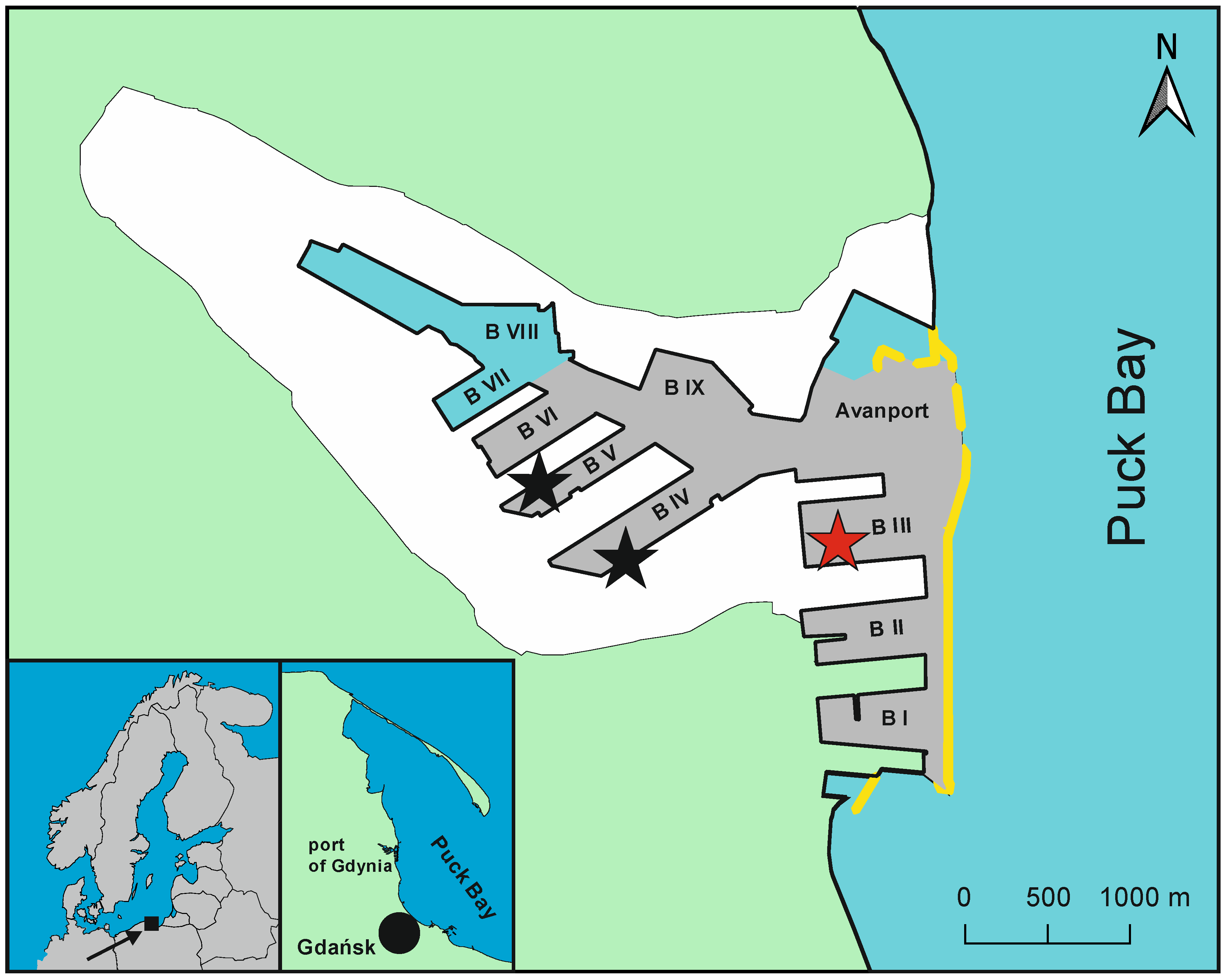
Waterbirds were counted once a month from September to April during the 2019/20–2024/25 seasons in harbour basins of the Port of Gdynia (Figure 1). A total of 48 counts were conducted between morning and noon, and birds present in individual pools, as well as those in the surrounding areas (on piers, breakwaters, or buildings), were recorded separately. Counts were performed in accordance with standard methodology [47] using both binoculars and telescopes, depending on the distance. No notable bird movements were observed during surveys. The counts were conducted by ornithologists experienced in surveying large bird concentrations, and 30 of the 48 counts were performed by the author of this publication. This study omits basin B VII, which serves as a shipyard, a small, inaccessible naval port basin, and basin B VIII, which is a container terminal. Waterbirds, mainly gulls, gathered there in very small numbers. Due to partial inaccessibility and difficulty in determining the boundaries between the basins, the birds observed within basins B V, B VI and B IX were treated collectively. The total area of the water body covered by the counts was 9.64 km2 (Figure 1). The birds were counted along a standardised route on the quays, exclusively on days without rain, fog, or strong winds. Particular attention was given to estimating the sizes of flocks numbering in the thousands of individuals by accurately counting successive tens or hundreds of birds in flocks occupying large areas. Within the same weekend, waterbirds were also counted in the Natura 2000 “Puck Bay” area. The maximum lag between the two counts was one day. These counts were conducted by walking along the shore using binoculars and telescopes and covered only the coastal zone up to about 1 km from the approximately 98 km long shoreline, following the standard International Waterbird Census methodology [47].
Data on the transhipment of grain and grain products were obtained from the Port of Gdynia Authorities. OT Port Gdynia sp. z o.o. (Gdynia, Poland) provided information on the permissible amount of losses during these transhipments, which has been set at 0.2% on the quays they operate. This value was used to estimate the possible daily losses of grain and grain products during transhipment. The abundance of the most numerous species in the Port of Gdynia was compared to their abundance observed in the Natura 2000 Puck Bay area using the Wilcoxon signed-rank test. Whereas differences in the number of the four most numerous waterbird species in the Port of Gdynia in successive months were tested by the Kruskal–Wallis test [48].

4. Results

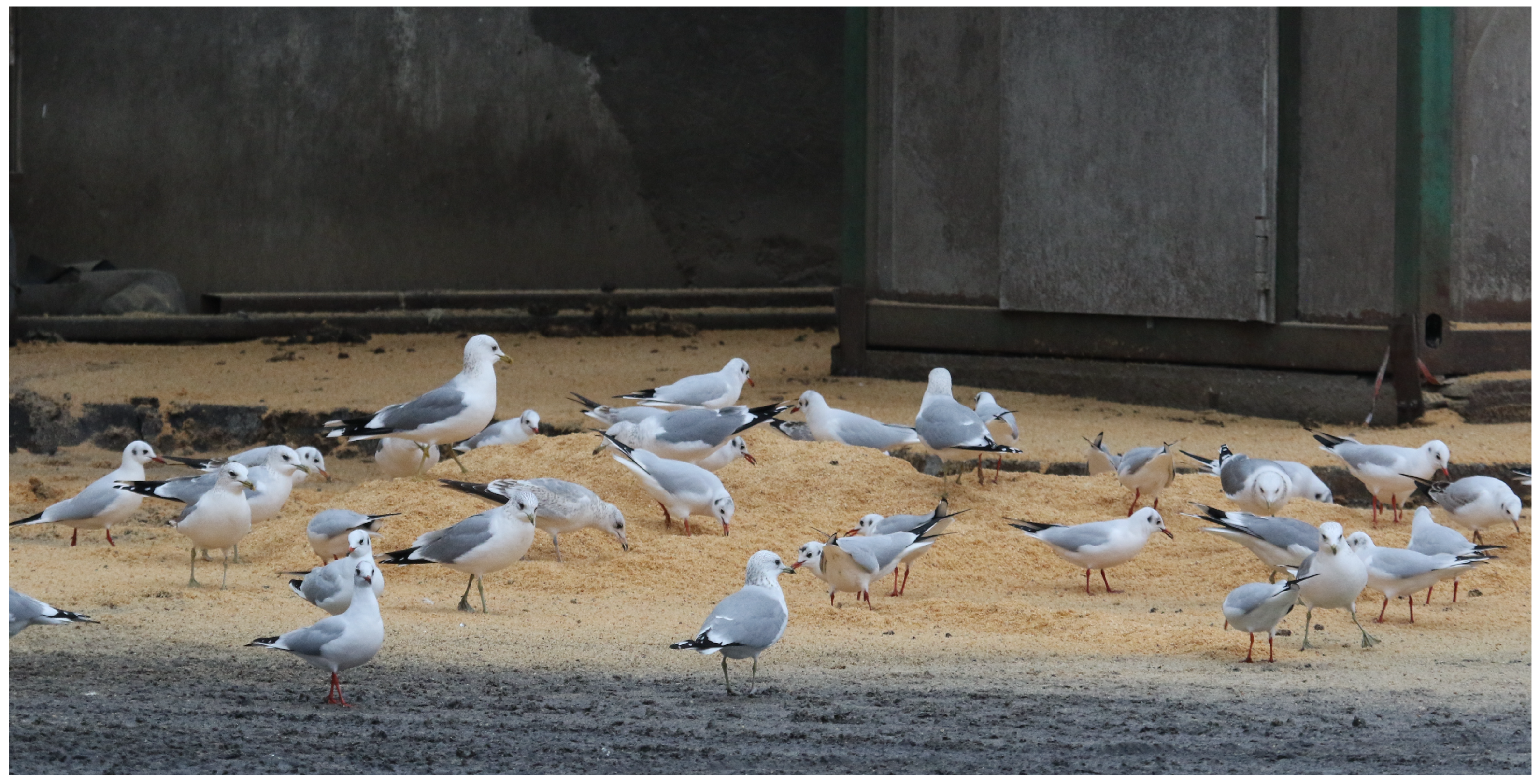
During 48 surveys conducted between September and April, 27 species of waterbirds were recorded, whereas in winter months this number was lower—20 (Table A1). The numbers of these species varied greatly; for 12 of them, the mean count per survey across the study period did not exceed one individual, and in winter this was the case for five species. The most numerous species were the mallard (Anas platyrhynchos), the herring gull (Larus argentatus), the common gull (Larus canus), and the black-headed gull (Chroicocephalus ridibundus). Between December and February, these four species together accounted for 93–96% of all waterbirds present in the Port of Gdynia. Among waterbirds, only these four species were observed feeding in large numbers on grain and grain products at the transhipment sites (Figure 2).
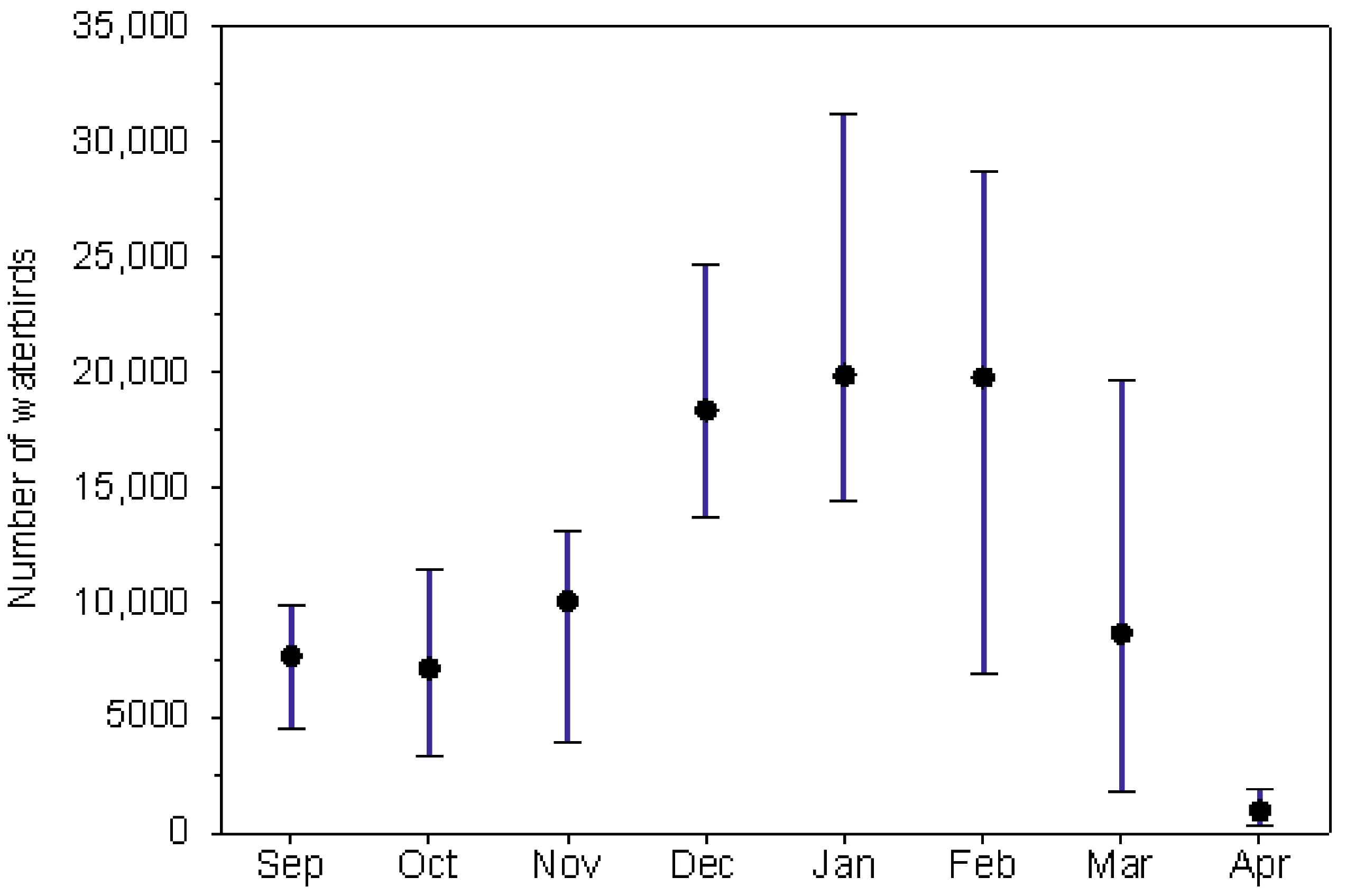
From September to November, the total number of waterbirds staying in the Port of Gdynia ranged from 3209 to 13,122 individuals, and their average number did not exceed 12,000 (Figure 2). In December, numbers increased sharply, with an average of 18,393 and a maximum of 24,619 individuals. The highest numbers, however, were observed in January and February, when average numbers reached 19,885 and 19,805 individuals, and maximum numbers were 31,251 and 28,645 birds, respectively (Figure 3), dropping to an average of 8682 individuals and a maximum of 19,611 individuals in March. Therefore, only the three winter months (December, January, and February), when waterbird numbers in the Port of Gdynia were highest, were included in further analyses.
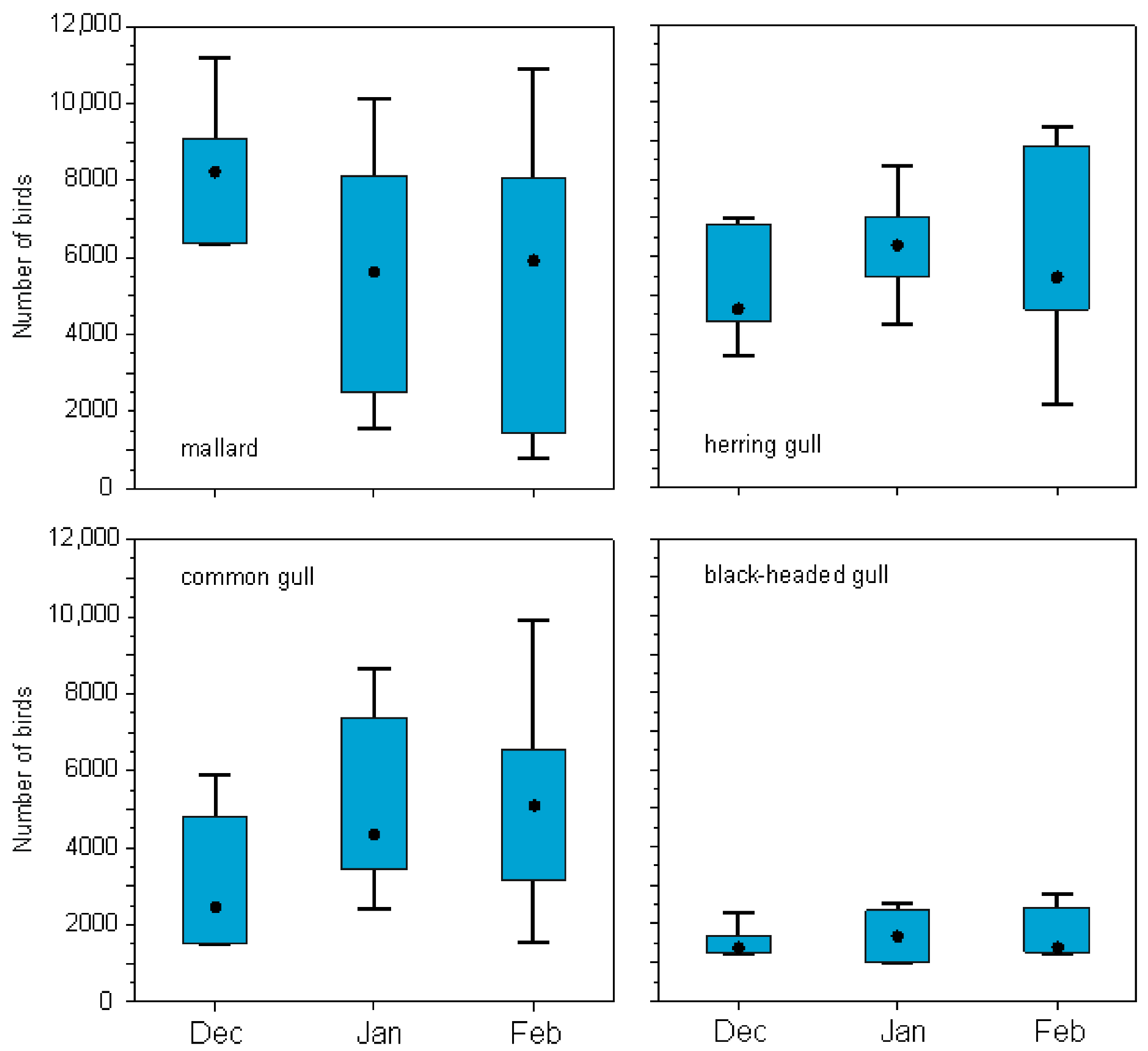
The numbers of the four most numerous species varied both within and among the winter months. The greatest variation was observed in the mallard, the most abundant species, whereas the smallest variation occurred in the black-headed gull, the least abundant species (Figure 4). However, the number of individuals of each species across the three winter months did not differ statistically significantly (Kruskal–Wallis test, p > 0.236 in all cases).
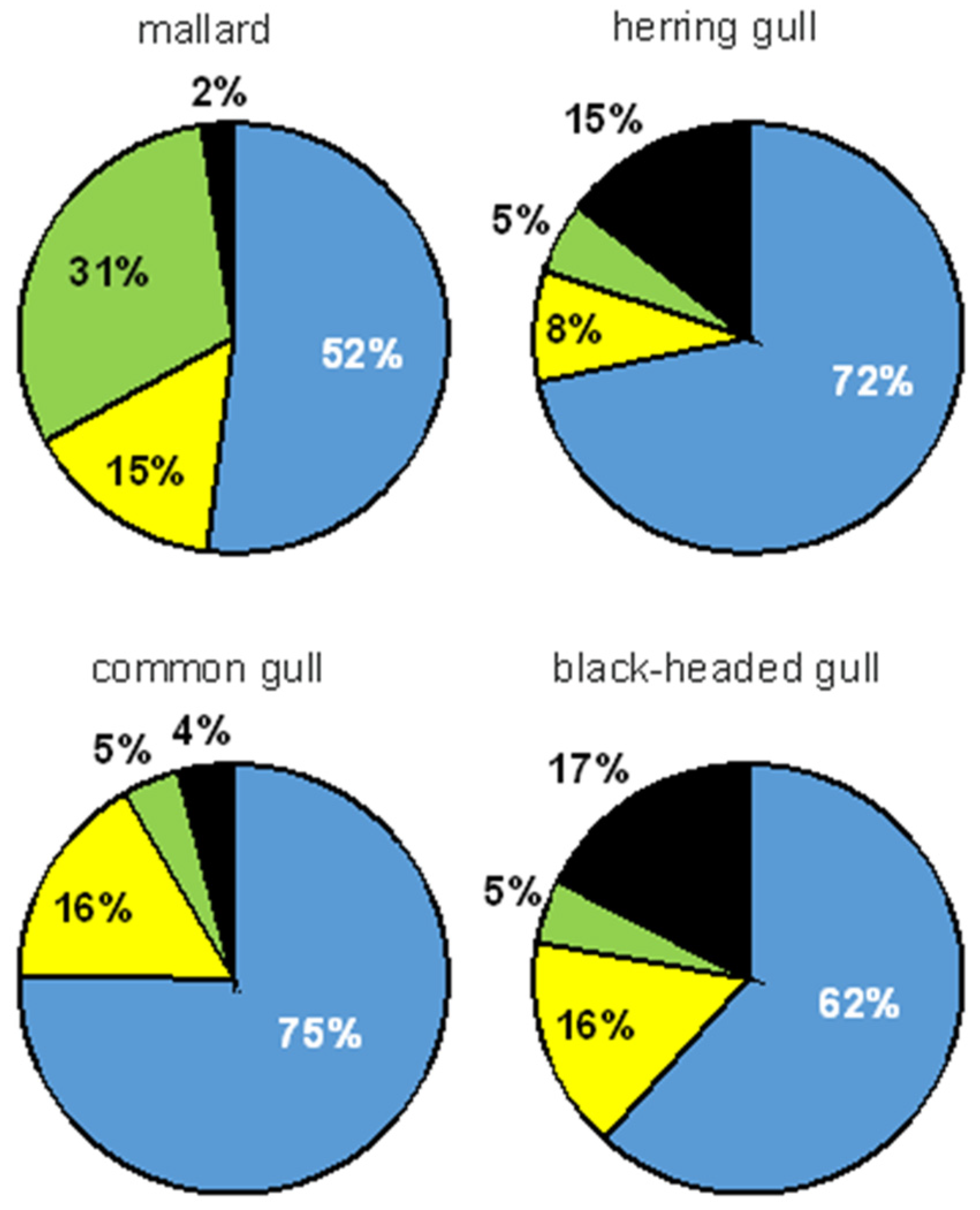
Within the studied port area, over 95% of the observed mallards and common gulls were recorded in port basins where grain was transhipped. For herring gulls and black-headed gulls, this share was lower, at 85% and 83%, respectively (Figure 5). The highest numbers of individuals of all four species were noted in basin B III, the area with the greatest volume of grain and grain-product transhipment. Secondary transhipment sites attracted considerably fewer birds, and only in the case of mallards did the proportion of birds in two secondary basins exceed 25%, reaching 46% (Figure 5).
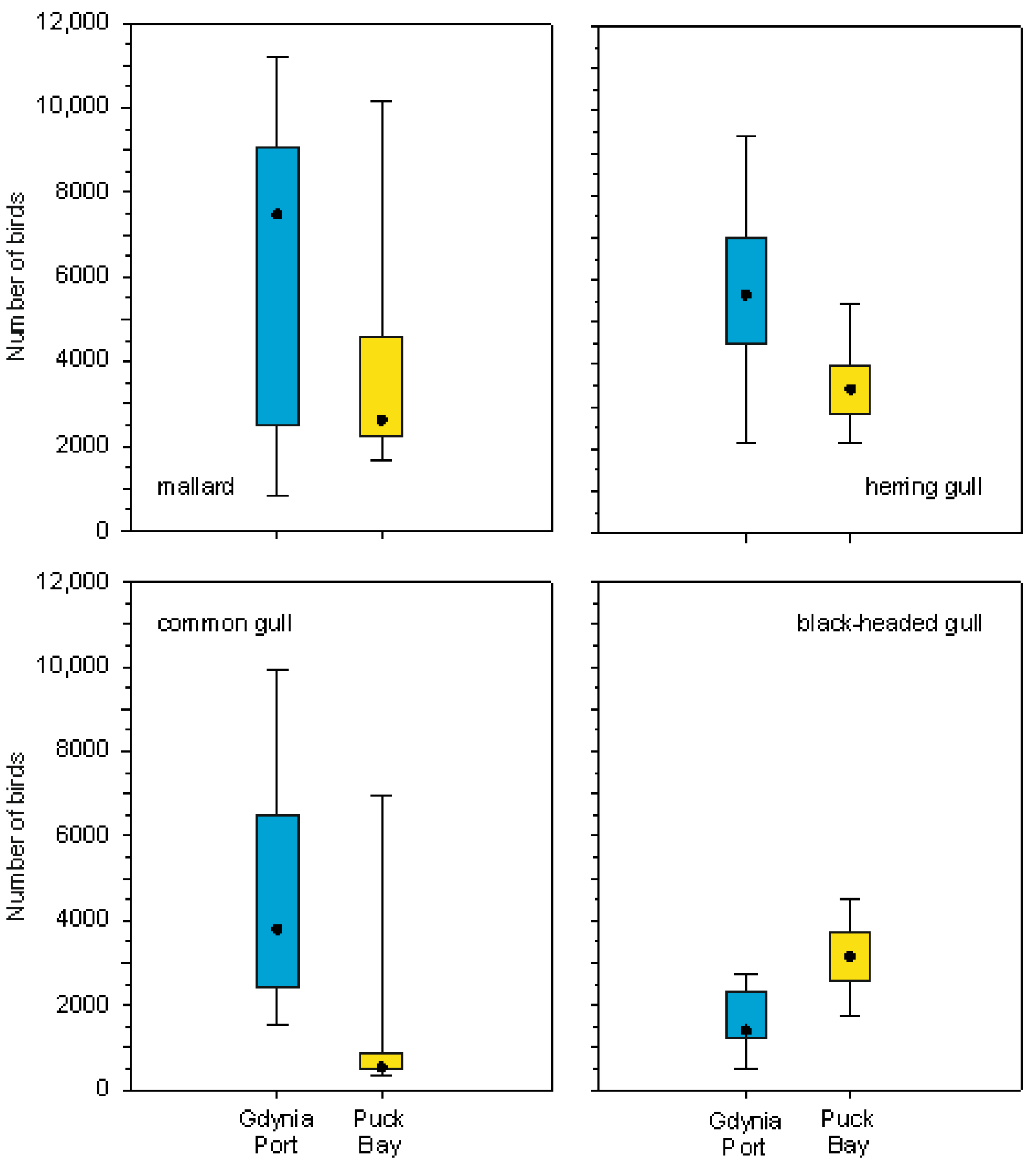
In winter months, three species—mallard, herring gull and common gull—showed higher mean and maximum numbers in the Port of Gdynia compared to the coastal part of the neighbouring Natura 2000 “Puck Bay” area (Table 1, Figure 6). Only in the case of the black-headed gull is the situation reversed, with more birds of this species observed in the Puck Bay. The difference in the numbers of these species between the two areas is statistically significant (Wilcoxon test, p < 0.022 in all cases) (Figure 6). The coastal part of Puck Bay is many times larger than the Port of Gdynia, so the abundance of other waterbird species is much higher than in port basins (Table 1).
The amount of grain and grain products transhipped at the Port of Gdynia varied between the studied winter seasons, ranging from approximately 937 to 1142 thousand tonnes (Table 2). Taking into account the permissible loss during grain transhipment (0.2%), daily losses can be roughly estimated at 21–32 tonnes, with an average of about 26 tonnes per day during the three winter months. The mean and maximum number of birds from four species feeding on scattered grain are 18,153 and 33,256 individuals, respectively (Table 1). This amounts to approximately 1.4 kg per bird per day with respect to the mean number of birds in the Port of Gdynia and approximately 0.8 kg per bird per day for the maximum number of birds in the same area. With the approximate caloric value of grain products between 669 and 932 kJ per 1 kg [49]. The mallard, with a body weight not exceeding 1.5 kg, is the heaviest species and has the highest daily energy expenditure among those foraging on grain in the study area. A bird weighing 1.5 kg requires approximately 1090 kJ per day [50,51,52], which corresponds to 1.2–1.6 kg of grain or grain products. The body mass of the herring gull usually does not exceed 1 kg, and that of the common gull and the black-headed gull is typically below 0.4 kg. It therefore appears that the unavoidable losses, which are minor in relation to the volume of transhipment, are sufficient to meet the energy needs of such a large number of birds, even if some of the scattered grain is removed from the quays after transhipment is complete.

5. Discussion

The highest numbers of waterbirds in the Port of Gdynia were observed in winter, when temperatures are lowest and the birds’ energy requirements are greatest [52,53]. Unavoidable, unintentional losses in grain and grain product transhipment create an abundant food source for them. With very high daily transhipment volumes in the winter months studied, ranging from approximately 937,000 to 1,142,000 tonnes, the permissible losses amount to an average of about 260 tonnes. The calorific value of this quantity of spilled grain exceeds the energy requirements of the thousands of birds gathering at transhipment sites during winter. Therefore, even when scattered grain is removed from the quays after transhipment, sufficient grain and grain products remain to meet the birds’ daily energy needs.
The numbers of the four species that feed intensively on grain and grain products did not differ significantly between winter months, so it can be assumed that, despite sometimes substantial fluctuations, this abundant food source attracts a similarly large number of birds throughout the winter. Among these species, the number of black-headed gulls was the lowest, likely because strong competition within large foraging gull flocks leads to smaller species, such as black-headed gulls, being displaced by larger gull species [54,55].
Differences in the size of the studied port basins were minor (Figure 1) and are therefore unlikely to have significantly influenced bird numbers. These four mentioned species were most numerous in grain transhipment areas. Most of them remained there after foraging and rested in large flocks on the water or, in the case of gulls, on nearby breakwaters and port warehouse roofs. Without additional research, it is difficult to determine why mallards used secondary transhipment sites to a greater extent than gulls. This may reflect possible differences in the types of products present at these sites. The structure of a bird’s bill is strongly adapted to the food it consumes [56]. While the bills of the three gull species share a similar laterally flattened shape, the mallard’s bill is broad and equipped with rows of horny plates that facilitate the intake of small food items [56].
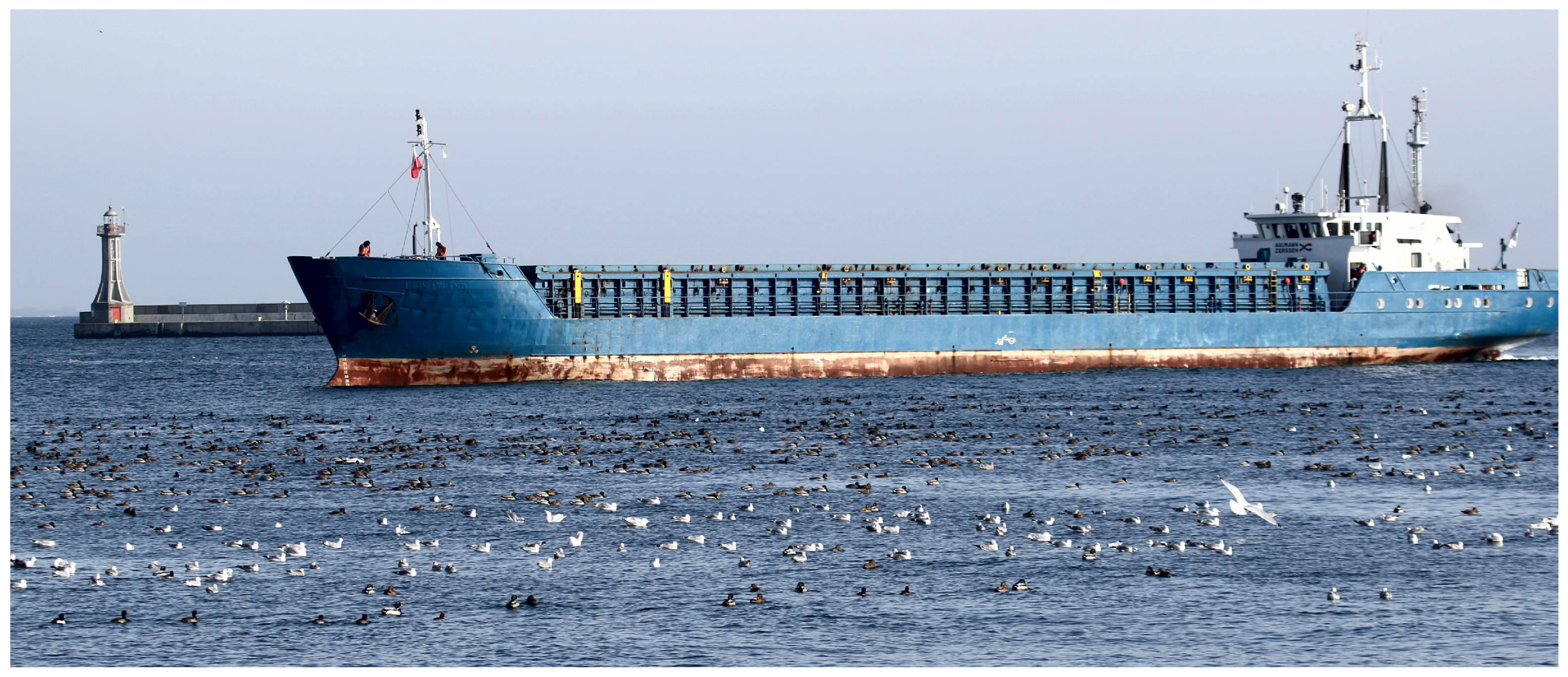
Intense ship traffic deters birds, and the deterrent effect increases with vessel size and speed [57,58]. As a result, bird densities along waterways are significantly lower [58,59]. In seaports, including the harbour basins of the Port of Gdynia studied, ship traffic is very heavy, and many of the vessels are large bulk carriers. However, no negative impact of this increased ship traffic on birds has been observed. Ships in the port move very slowly, and during observations, flocks of thousands of birds resting on the water simply drift sideways as a vessel approaches (Figure 7). Moreover, anthropogenic pressure in port areas appears to be greatly limited due to restricted access for unauthorised persons. Human activity is strictly focused on cargo-handling functions and is concentrated in specific locations, leaving large areas free from regular and numerous human presence. It can therefore be concluded that the impact of vessels and quay-side operations on birds in ports is negligible and does not reduce their presence at transhipment sites within the port.
Total cargo throughput at Baltic seaports reached 460.4 million tonnes in the first half of 2025 [60]. More than 80% of global trade in grains and oilseeds occurs by maritime transport [61]. The actual losses incurred during the transhipment of grain and grain products are unknown, but our findings suggest that grain transhipment sites in other ports may similarly support significant waterbird populations and warrant systematic surveys. To estimate the full scale of this phenomenon, it is necessary to conduct bird counts in other seaports, not only those in the Baltic Sea. Given the enormous volume of grain and grain products transhipped worldwide, any unintentional scattering can create an extremely abundant food source for birds and lead to very large aggregations in port areas. Because access to port quays is highly restricted, our knowledge of the importance of these sites for waterbirds remains limited. Such large concentrations may significantly influence our understanding of waterbird abundance and distribution, not only at the local scale. Therefore, there is a strong need to conduct similar studies in a greater number of ports where grain and grain products are transhipped.

6. Conclusions

There are always minor, unavoidable losses in the transported mass at transhipment sites. In the Port of Gdynia, with monthly grain transhipments ranging from 62,000 to 96,000 tonnes, unintentional losses create an abundant food source for birds in the form of various grain products lost during handling. The Port of Gdynia therefore offers very favourable conditions for birds during the non-breeding season, primarily due to the availability of this abundant food source. Four bird species benefit from this: the mallard, the herring gull, the common gull and the black-headed gull, all of which are present here in large numbers, forming one of the largest winter concentrations in Poland. The slow movement of ships in the harbour basins and the limited anthropogenic pressure in the port area do not deter birds, which quickly become accustomed to these disturbances through habituation [62,63]. In addition, the presence of breakwaters and the roofs of large port buildings provide places for gulls and other waterbirds to gather and rest in large flocks, free from direct human pressure. Minimal wave action and partial shelter from the wind also favour the aggregation of waterbirds in port basins. The phenomenon described here, in which thousands of waterbirds gather at quays where grain is transhipped, may occur in many seaports, not only those in the Baltic Sea. To determine the extent of this phenomenon on a maritime or continental scale, further research is needed in seaports where grain and grain products are handled.

Funding

This research received no external funding.

Institutional Review Board Statement

Not applicable.

Informed Consent Statement

Not applicable.

Data Availability Statement

The data presented in this study are available on request from the corresponding author.

Acknowledgments

I would like to thank Szymon Bzoma, Adam Janczyszyn, Helena Trzeciak and Grzegorz Zaniewicz for performing part of the counts. Special thanks go to Hanna Leyk, Daria Mróz and Edyta Białowąs from the Department of Environmental Protection of the Port of Gdynia Authority S.A. for their invaluable help in organising the bird counts and their assistance in obtaining data on general cargo transhipment. I am grateful to Karolina Wojciechowska from OT Port Gdynia sp. z o.o. for providing information on the permissible amount of losses during grain transhipment. I would also like to thank Dawid Strzelecki for his help in creating the map. This is Waterbird Research Group KULING contribution no. 182.

Conflicts of Interest

The author declares no conflicts of interest.

Appendix A

Table A1. Number of waterbirds observed in the Port of Gdynia between September and April in all years during which waterbird counts were conducted. The mean numbers for the winter months (December–February) are also provided. +—mean number lower than 1.
SpeciesMean NumberMean Number in Winter MonthsMaximum Number
Adrea cinerea+ 1
Cygnus olor4214
Anser serrirostris+ 1
Anser albifrons++2
Mareca strepera+ 2
Mareca penelope+ 8
Anas platyrhynchos322962328200
Anas acuta2+3
Aythya ferina1347
Aythya fuligula2726771662
Aythya marila2480
Clangula hyemalis1120110
Bucephala clangula++1
Mergellus albellus1215
Mergus serrator+ 7
Mergus merganser1224
Gavia arctica+ +
Tachybaptus ruficollis+++
Podiceps cristatus51226
Podiceps auritus+ 3
Phalacrocorax carbo5522693300
Fulica atra95209350
Chroicocephalus ridibundus128816242611
Larus canus2109448210,751
Larus marinus8820
Larus argentatus400558157500
Alca torda++1

References

  1. Marzluff, J.M. Worldwide urbanization and its effects on birds. In Avian Ecology and Conservation in an Urbanizing World; Marzluff, J.M., Bowman, R., Donnelly, R., Eds.; Kluwer Academic Press: Norwell, MA, USA, 2001; pp. 19–46. [Google Scholar]
  2. Chace, J.F.; Walsh, J.J. Urban effects on native avifauna: A review. Landsc. Urban Plann. 2006, 74, 46–69. [Google Scholar] [CrossRef]
  3. Kurucz, K.; Purger, J.J.; Batáry, P. Urbanization shapes bird communities and nest survival, but not their food quantity. Glob. Ecol. Conserv. 2021, 26, e01475. [Google Scholar] [CrossRef]
  4. Avilova, K.V.; Eremkin, G.S. Waterfowl wintering in Moscow (1985–1999): Dependence on air temperatures and the prosperity of the human population. Acta Ornithol. 2001, 36, 65–71. [Google Scholar] [CrossRef]
  5. Meissner, W.; Witkowska, M. The effect of the temperature on local differences in the sex ratio of Mallards Anas platyrhynchos wintering in an urban habitat. Acta Oecol. 2023, 119, 103900. [Google Scholar] [CrossRef]
  6. Witkowska, M.; Wesołowski, W.; Markiewicz, M.; Pakizer, J.; Neumann, J.; Ożarowska, A.; Meissner, W. The intensity of supplementary feeding in an urban environment impacts overwintering Mallards (Anas platyrhynchos) as wintering conditions get harsher. Avian Res. 2024, 15, 100205. [Google Scholar] [CrossRef]
  7. Reynolds, S.J.; Galbraith, J.A.; Smith, J.A.; Jones, D.N. Garden bird feeding: Insights and prospects from a north-south comparison of this global urban phenomenon. Front. Ecol. Evol. 2017, 5, 24. [Google Scholar] [CrossRef]
  8. Belant, J.L.; Seamans, T.W.; Gabrey, S.W.; Dolbeer, R.A. Abundance of gulls and other birds at landfills in Northern Ohio. Amer. Midl. Nat. 1995, 134, 30–40. [Google Scholar] [CrossRef]
  9. García-Arroyo, M.; Gómez-Martínez, M.A.; MacGregor-Fors, I. Litter buffet: On the use of trash bins by birds in six boreal urban settlements. Avian Res. 2023, 14, 100094. [Google Scholar] [CrossRef]
  10. Dahal, K.P.; Galloway, S.; Burt, G.; Mcdonald, J.; Hopkins, I. A port system simulation facility with an optimization capability. Int. J. Comput. Intell. 2003, 3, 395–410. [Google Scholar] [CrossRef]
  11. Alderton, P.M. Port Management and Operations; Informa: London, UK, 2008. [Google Scholar]
  12. Verschuur, J.; Koks, E.E.; Hall, J.W. Ports’ criticality in international trade and global supply-chains. Nat. Commun. 2022, 13, 4351. [Google Scholar] [CrossRef]
  13. Schippers, P.; Snep, R.P.H.; Schotman, A.G.M.; Jochem, R.; Stienen, E.W.M.; Slim, P.A. Seabird metapopulations: Searching for alternative breeding habitats. Popul. Ecol. 2009, 51, 459–470. [Google Scholar] [CrossRef]
  14. Meissner, W.; Bzoma, S.; Zięcik, P.; Wybraniec, M. Nesting of the Sandwich Tern Sterna sandvicensis in Poland in 2006–2013. Ornis Pol. 2014, 55, 96–104, (In Polish with English summary). [Google Scholar] [CrossRef]
  15. Meissner, W.; Kośmicki, A.; Rydzkowski, P. Abundance and distribution of waterbird community in the Port of Gdynia during the non-breeding season. Ornis Pol. 2024, 65, 324–336, (In Polish with English summary). [Google Scholar] [CrossRef]
  16. Struve, B.; Nehls, H.W. Ergebnisse der Internationalen Wasservogelzählung im Januar 1990 an der Deutschen Ostseeküste. Seevögel 1992, 13, 17–27. [Google Scholar]
  17. Gaudard, C.; Quaintenne, G.; Ward, A.; Dronneau, C.; Dalloyau, S.; Dupuy, J. Synthèse des Dénombrements d’Anatidés, de Foulques et de Limicoles Hivernant en France à la Mi-Janvier 2017; LPO: Rochefort, France, 2018. [Google Scholar]
  18. Jakubas, D. Factors affecting different spatial distribution of wintering Tufted Duck Aythya fuligula and Goldeneye Bucephala clangula in the western part of the Gulf of Gdańsk (Poland). Ornis Svec. 2003, 13, 75–84. [Google Scholar] [CrossRef]
  19. Witalis, B.; Iglikowska, A.; Ronowicz, M.; Kukliński, P. Biodiversity of epifauna in the ports of Southern Baltic Sea revealed by study of recruitment and succession on artificial panels. Est. Coast. Shelf Sci. 2021, 249, 107107. [Google Scholar] [CrossRef]
  20. Manel, S.; Mathon, L.; Mouillot, D.; Bruno, M.; Valentini, A.; Lecaillon, G.; Gudefin, A.; Deter, J.; Boissery, P.; Dalongeville, A. Benchmarking fish biodiversity of seaports with eDNA and nearby marine reserves. Conserv. Lett. 2024, 2024, e13001. [Google Scholar] [CrossRef]
  21. Madon, B.; Haderle, R.; Arotcharen, E.; David, R.; Fontaine, Q.; Marengo, M.; Thomasz, H.; Torralba, A.; Valentini, A.; Jung, J.-L. eDNA and citizen science reveal hidden fish biodiversity in climate-stressed urban ports of the Mediterranean Sea. Environ. DNA 2025, 7, e70142. [Google Scholar] [CrossRef]
  22. Agarwala, N.; Saengsupavanich, C. Oceanic environmental impact in seaports. Oceans 2023, 4, 360–380. [Google Scholar] [CrossRef]
  23. Li, X.; Zhao, Y.; Cariou, P.; Sun, Z. The impact of port congestion on shipping emissions in Chinese ports. Transp. Res. Part D Transp. Environ. 2024, 128, 104091. [Google Scholar] [CrossRef]
  24. Neira, C.; Mendoza, G.; Levin, L.A.; Zirino, A.; Delgadillo-Hinojosa, F.; Porrachia, M.; Deheyn, D.D. Macrobenthic community response to copper in Shelter Island Yacht Basin, San Diego Bay, California. Mar. Pollut. Bull. 2011, 62, 701–717. [Google Scholar] [CrossRef] [PubMed]
  25. Szumiło, E.; Szubska, M.; Meissner, W.; Bełdowska, M.; Falkowska, L. Mercury in immature and adults Herring Gulls (Larus argentatus) wintering on the Gulf of Gdańsk area. Oceanol. Hydrobiol. Stud. 2013, 42, 260–267. [Google Scholar] [CrossRef]
  26. Bodziach, K.; Staniszewska, M.; Falkowska, L.; Nehring, I.; Ożarowska, A.; Zaniewicz, G.; Meissner, W. Gastrointestinal and respiratory exposure of water birds to endocrine disrupting phenolic compounds. Sci. Total Environ. 2021, 754, 142435. [Google Scholar] [CrossRef]
  27. Meissner, W. Significant reduction in the impact of oil spills and chronic oil pollution on seabirds: A long-term case study from the Gulf of Gdańsk, southern Baltic Sea. Sustainability 2025, 17, 8037. [Google Scholar] [CrossRef]
  28. Tang, M.; Walsh, G.; Lerner, D.; Fitza, M.A.; Li, Q. Green innovation, managerial concern and firm performance: An empirical study. Bus. Strategy Environ. 2018, 27, 39–51. [Google Scholar] [CrossRef]
  29. Liu, Y.; Chao, Y.; Xie, S.; Wang, G.; Wang, L.; Xue, C. Green innovation in ports: Drivers, domains, and challenges. Front. Mar. Sci. 2025, 12, 1664611. [Google Scholar] [CrossRef]
  30. Moon, D.S.H.; Woo, J.K.; Kim, T.G. Green Ports and Economic Opportunities. In Corporate Social Responsibility in the Maritime Industry; Froholdt, L.L., Ed.; Springer International Publishing AG: Cham, Switzerland, 2018; pp. 167–184. [Google Scholar] [CrossRef]
  31. Trozzi, C.; Vaccaro, R. Environmental impact of port activities. In Maritime Engineering and Ports II; Brebbia, C.A., Olivella, J., Eds.; WIT Press: Southampton, UK, 2000; pp. 151–161. [Google Scholar]
  32. Żukowska, S. Concept of green seaports. Case study of the seaport in Gdynia. Pr. Kom. Geogr. Komun. PTG 2020, 23, 61–68. [Google Scholar] [CrossRef]
  33. Madon, B.; David, R.; Torralba, A.; Jung, A.; Marengo, M.; Thomas, H. A review of biodiversity research in ports: Let’s not overlook everyday nature! Ocean Coast. Manag. 2023, 242, 106623. [Google Scholar] [CrossRef]
  34. Signal Maritime. Grain Seaborne Trade Impact on the Dry Bulk Freight Market. 2025. Available online: https://www.thesignalgroup.com/newsroom/grain-seaborne-trade-impact-on-the-dry-bulk-freight-market (accessed on 22 December 2025).
  35. Wilson, W.W.; Koo, W.W.; Taylor, R.; Dahl, B. Long-term forecasting of world grain trade and U.S. Gulf exports. Transp. Res. Rec. 2005, 1909, 22–30. [Google Scholar] [CrossRef]
  36. Meissner, W.; Stępniewska, K.; Bzoma, S.; Kośmicki, A. Numbers of waterbirds on the Bay of Gdańsk between May 2019 and April 2020. Ornis Pol. 2020, 60, 245–252, (In Polish with English summary). [Google Scholar] [CrossRef]
  37. GUS. Statistical Yearbook of Maritime Economy; Statistics Poland and Statistical Office in Szczecin: Warsaw, Poland; Szczecin, Poland, 2024. [Google Scholar]
  38. Palmowski, T.; Wendt, J.A. The impact of new developments and modernisation at the Polish ports of Gdańsk and Gdynia on changes in port transshipments. Prz. Geogr. 2021, 93, 269–290, (In Polish with English summary). [Google Scholar] [CrossRef]
  39. Żukowska, S.; Palmowski, T.; Połom, M. Spatial development of the seaport on the example of Gdynia. Pr. Kom. Geogr. Komun. PTG 2021, 24, 94–105, (In Polish with English summary). [Google Scholar] [CrossRef]
  40. Synak-Miłosz, E.; Rozmarynowska-Mrozek, M. Polish Seaports in 2024. Summary and Future Outlook; Actia Forum: Gdynia, Poland, 2024. [Google Scholar]
  41. Caixeta-Filho, J.V.; Péra, T.G. Post-harvest losses during the transportation of grains from farms to aggregation points. Int. J. Logist. Econ. Glob. 2018, 7, 209–247. [Google Scholar] [CrossRef] [PubMed]
  42. Durinck, J.; Skov, H.; Jensen, F.P.; Pihl, S. Important Marine Areas for Wintering Birds in the Baltic Sea; Ornis Consult: Copenhagen, Denmark, 1994. [Google Scholar]
  43. Skov, H.; Heinänen, S.; Žydelis, R.; Bellebaum, J.; Bzoma, S.; Dagys, M.; Durinck, J.; Garthe, S.; Grishanov, G.; Hario, M.; et al. Waterbird Populations and Pressures in the Baltic Sea; Nordic Council of Ministers: Copenhagen, Denmark, 2011. [Google Scholar]
  44. Wardecki, Ł.; Chodkiewicz, T.; Beuch, S.; Smyk, B.; Sikora, A.; Neubauer, G.; Meissner, W.; Marchowski, D.; Wylegała, P.; Chylarecki, P. Monitoring Birds of Poland in 2018–2021. Biul. Monit. Przyr. 2021, 22, 1–80. (In Polish) [Google Scholar]
  45. Meissner, W.; Wójcik, C. Wintering of waterfowl on the Bay of Gdańsk in the season 2003/2004. Not. Orn. 2004, 45, 203–213, (In Polish with English summary). [Google Scholar]
  46. Meissner, W.; Janczyszyn, A.; Kośmicki, A.; Trzeciak, H. Waterbird abundance in the Gulf of Gdańsk in the period September 2024–April 2025. Ornis Pol. 2024, 65, 161–170, (In Polish with English summary). [Google Scholar] [CrossRef]
  47. Wetlands International. Waterbird Population Estimates. 2025. Available online: http://wpe.wetlands.org/ (accessed on 26 November 2025).
  48. Zar, J.H. Biostatistical Analysis; Prentice Hall: Upper Saddle River, NJ, USA, 1999. [Google Scholar]
  49. FAO. Food Balance Sheets. A Handbook; Food And Agriculture Organization of the United Nations: Rome, Italy, 2001. [Google Scholar]
  50. Bryant, D.M. Energy expenditure in wild birds. Proc. Nutr. Soc. 1997, 56, 1025–1039. [Google Scholar] [CrossRef]
  51. Goldstein, D.L. Estimates of daily energy expenditure in birds: The time-energy budget as an integrator of laboratory and field studies. Amer. Zool. 1988, 28, 829–844. [Google Scholar] [CrossRef]
  52. Warkentin, I.G.; West, N. Ecological energetics of wintering Merlins Falco columbarius. Physiol. Zool. 1990, 62, 308–333. [Google Scholar] [CrossRef]
  53. McNamara, J.M.; Barta, Z.; Wikelski, M.; Houston, A.I. A theoretical investigation of the effect of latitude on avian life histories. Am. Nat. 2008, 172, 331–345. [Google Scholar] [CrossRef]
  54. Bellebaum, J. Between the Herring Gull Larus argentatus and the bulldozer: Black-headed Gull Larus ridibundus feeding sites on a refuse dump. Ornis Fenn. 2005, 82, 166–171. [Google Scholar]
  55. Meissner, W.; Betleja, J. Species composition, numbers and age structure of gulls Laridae wintering at rubbish dumps in Poland. Not. Orn. 2007, 48, 11–27, (In Polish with English summary). [Google Scholar]
  56. Gill, F.B. Ornithology; W.H. Freeman Company: New York, NY, USA, 1995. [Google Scholar]
  57. Larsen, J.K.; Laubek, B. Disturbance effects of high-speed ferries on wintering sea ducks. Wildfowl 2005, 55, 101–118. [Google Scholar]
  58. Schwemmer, P.; Mendel, B.; Sonntag, N.; Dierschke, V.; Garthe, S. Effects of ship traffic on seabirds in offshore waters: Implications for marine conservation and spatial planning. Ecol. Appl. 2011, 21, 1851–1860. [Google Scholar] [CrossRef] [PubMed]
  59. Kaiser, M.J.; Galanidi, M.; Showler, D.A.; Elliott, A.J.; Caldow, R.W.G.; Rees, E.I.S.; Stillman, R.A.; Sutherland, W.J. Distribution and behaviour of common scoter Melanitta nigra relative to prey resources and environmental parameters. Ibis 2006, 148, 110–128. [Google Scholar] [CrossRef]
  60. Polish Forwarding Company. Baltic Sea Port Transhipments Slightly Up in the First Half of 2025. PFC24. 2025. Available online: https://pfc24.pl/en/baltic-sea-port-transhipments-slightly-up-in-the-first-half-of-2025/ (accessed on 27 November 2025).
  61. OECD. Maritime Transportation Costs in the Grains and Oilseeds Sector: Trends, Determinants and Network Analysis; OECD Publishing: Paris, France, 2022. [Google Scholar] [CrossRef]
  62. Keller, V. Variations in the response of Great Crested Grebes Podiceps cristatus to human disturbance—A sign of adaptation? Biol. Conserv. 1989, 49, 31–45. [Google Scholar] [CrossRef]
  63. Minias, P.; Jedlikowski, J.; Włodarczyk, R. Development of urban behaviour is associated with time since urbanization in a reed-nesting waterbird. Urban Ecosyst. 2018, 21, 1021–1028. [Google Scholar] [CrossRef]
Figure 1. Basins of the Port of Gdynia included in the count (grey). Breakwaters are shown as thick yellow lines. White areas indicate land within the Port of Gdynia. The main grain transhipment basin (red star) and secondary transhipment basins (black stars) are also marked.
Sustainability 18 00335 g001
Figure 2. Black-headed and common gulls foraging on scattered grain products on the quay of the Port of Gdynia (photo: W. Meissner).
Sustainability 18 00335 g002
Figure 3. Changes in the number of the waterbirds in the Port of Gdynia in successive months. Dot—mean, vertical line—range.
Sustainability 18 00335 g003
Figure 4. Changes in the number of the four most numerous waterbird species in the Port of Gdynia in successive months. Dot—median, rectangle—interquartile range, vertical line—range.
Sustainability 18 00335 g004
Figure 5. Proportions of the four most numerous waterbird species in the main grain transhipment basin (B III—blue), the secondary grain transhipment basins (B IV—yellow; B V and B VI—green), and other port basins of the Port of Gdynia (B I, B II, B IX, Avanport—black).
Sustainability 18 00335 g005
Figure 6. Comparison of median numbers (dot) of the four most numerous waterbird species in the Port of Gdynia and Puck Bay Natura 2000 area in winter (December–February). Rectangle—interquartile range, vertical line—range.
Sustainability 18 00335 g006
Figure 7. A flock of gulls and mallards drifting sideways before approaching a vessel (photo: W. Meissner).
Sustainability 18 00335 g007
Table 1. Mean and maximum numbers of four waterbird species foraging on grain in transhipment sites and other waterbird species staying in the Port of Gdynia and Natura 2000 Puck Bay in winter months (December–February) in winter seasons between 2019/2020 and 2024/2025.
SpeciesMean NumberMaximum Number
Port of GdyniaPuck BayPort of GdyniaPuck Bay
Mallard6232345311,20810,156
Herring gull5815345993725416
Common gull4482101999276952
Black-headed gull1624314627494487
other species120853,661278178,225
Table 2. Estimated daily losses of grain and grain products during transhipment at the Port of Gdynia in winter (December–February) per bird, based on the average and maximum number of the four most common species. All values are in tonnes, except those recalculated per bird.
Winter SeasonTotal Transhipment of Grains and Grain Products (t)Mean Daily Transhipment of Grains and Grain Products (t)Mean Daily Acceptable Losses of Grains and Grain Products During Transhipment (t)Mean Loss of Grain and Grain Products Per Bird (Based on Mean Bird Number) (kg)Mean Loss of Grain and Grain Products Per Bird (Based on Maximum Bird Number) (kg)
2019/201,213,38913,482271.50.8
2020/211,343,07514,923301.60.9
2021/22937,36810,415211.10.6
2022/231,137,84912,643251.40.8
2023/241,441,67216,019321.81.0
2024/25981,85210,909221.20.7
Average1,175,86813,065261.40.8
Disclaimer/Publisher’s Note: The statements, opinions and data contained in all publications are solely those of the individual author(s) and contributor(s) and not of MDPI and/or the editor(s). MDPI and/or the editor(s) disclaim responsibility for any injury to people or property resulting from any ideas, methods, instructions or products referred to in the content.