Article

Exploring the Synergistic Development Level and Benefits of Intangible Cultural Heritage Transmission and Green Governance in China

1
Business School, Huaiyin Normal University, Huaian 223200, China
2
Institute of Communication Studies, Zhejiang University, Hangzhou 310058, China
3
School of Business, Nanjing University, Nanjing 210093, China
4
School of Fine Arts, Huaiyin Normal University, Huaian 223300, China
*
Authors to whom correspondence should be addressed.
Sustainability 2026, 18(1), 309; https://doi.org/10.3390/su18010309 (registering DOI)
Submission received: 23 October 2025 / Revised: 20 December 2025 / Accepted: 26 December 2025 / Published: 28 December 2025

Abstract

In the current context, where global ecological governance overly relies on technological intervention while neglecting the role of social and cultural resources, intangible cultural heritage (ICH), as a carrier of traditional ecological wisdom, is facing a crisis of inheritance disruption in the process of modernization. The ecological governance value it contains has not been effectively explored and integrated, resulting in a dual predicament of ecological protection and cultural inheritance. This study employs quantitative empirical methods to explore the characteristics of the synergistic development of Chinese ICH transmission and green governance, empirically test the benefits and regional differences of the synergy, and evaluate the promoting role of the digitalization process. The core conclusions are that (1) the synchronized evolution of the ICH transmission and green governance manifests itself as slowly but unequally gradual, with path dependency, club convergence across top performers, and spatially radiating demonstration effects; (2) the synergistic effects of the ICH transmission and green governance give rise to social, environment, and market benefits, but synergistic effects are culturally and regionally heterogeneous; and (3) the digital-intelligent transformation plays a multiplier effect in the process of generating multiple benefits through the synergy of ICH transmission and green governance.

1. Introduction

With the worsening of global climate and the sharp decline in biodiversity, environmental issues have become increasingly severe. Under the industrial civilization model, ecological governance emphasizes technological intervention and efficiency improvement, while neglecting the potential of the social and cultural networks and local cultural resources that underpin the ecological environment system [1,2]. Meanwhile, as carriers of traditional ecological knowledge, intangible cultural heritage (ICH) is facing the predicament of a transmission gap in the process of modernization, and their potential to provide reference value for modern governance has not been fully exploited [3]. Much traditional ecological knowledge, such as sustainable resource management methods, production and lifestyle in harmony with natural rhythms, and biodiversity conservation practices based on beliefs and customs, is rapidly disappearing due to the breakage of the transmission chain, changes in community structure, and the impact of globalized culture. Moreover, if cultural heritage protection projects fail to fully integrate local social structures and cultural contexts, they are prone to encounter implementation resistance and lack of sustainability [4]. Currently, the protection of ICH mainly focuses on the documentation and performance of cultural expressions themselves, and it has not been systematically integrated into the ecological governance framework, resulting in the neglect of the ecological wisdom contained in ICH in contemporary environmental decision-making. To address these two predicaments, it is necessary to combine ICH with ecological management, which not only compensates for the lack of cultural support in environmental governance but also bridges the gap between ICH and current needs.
This study focuses on the connection and benefits between ICH transmission and green governance. First, it is necessary to clarify the core concepts. Referring to the definition of the United Nations Educational, Scientific and Cultural Organization (UNESCO) [5], this paper holds that ICH refers to various practices, expressions, knowledge, skills, and related objects and spaces regarded by communities, groups, or individuals as part of their cultural heritage. It is passed down from generation to generation and constantly recreated in interaction with the environment and history. Based on this broad definition, this study further focuses on the dynamic process of transmission. The effectiveness of transmission not only stems from community practices but is also deeply influenced by external policies and social choices. UNESCO also emphasizes that ICH must meet the requirements of mutual respect and sustainable development, which reveals that transmission itself has dynamic selectivity and development orientation. Therefore, this study specifically defines the transmission of ICH as: an institutionalized and practical process aimed at ensuring the intergenerational continuation, dynamic adaptation, and coordination with sustainable development goals of intangible cultural heritage under the joint influence of policy guidance and social choices. This definition distinguishes the research on ICH transmission from studies that only focus on the essence of ICH, and places more emphasis on the era selectivity and policy orientation of the transmission process. This definition is reflected in the ICH transmission level evaluation index system constructed in the empirical research part of this paper, which not only covers ICH itself but also includes dimensions such as policy support and social participation that reflect external intervention and choices.
Based on existing research [6,7], this study defines green governance as a systematic governance model centered on achieving sustainable development, which coordinates and integrates environmental values with socioeconomic objectives through multi-level, multi-stakeholder institutional processes and policy instruments. This definition goes beyond the traditional concept of environmental governance centered on pollutant control, elevating the discussion from “problem-solving” to the level of “systemic transformation”, and emphasizes that green governance is an inclusive and comprehensive governance process. This definition is also reflected in the green governance level assessment index system constructed in the empirical research part of this paper. This index system not only includes green momentum as the core driving force of governance but also covers dimensions such as governance intensity, internal and external supervision, and policy support, which reflect diversified participation and institutional guarantees.
The broad definition of ICH by UNESCO, the specific definition of ICH transmission in this study, and the definition of green governance mentioned earlier all take sustainable development as the core goal and emphasize the importance of the institutionalization process. This indicates that there is a high degree of consistency in the development orientation and internal logic between ICH transmission and green governance. Exploring the connection and interaction between ICH transmission and green governance is essentially to examine whether the cultural protection institutional system and the ecological governance institutional system can promote each other, thereby generating multiple benefits such as social, ecological, and economic benefits in a coordinated manner. This provides a new analytical framework for understanding the symbiotic relationship between culture and nature. Empirical research on ICH transmission and green governance in China is precisely the examination of the synergy between culture and nature and whether they can jointly generate comprehensive sustainable development benefits. Moreover, digital and intelligent technologies may further enhance such benefits [8].
This study aims to systematically investigate the synergistic relationship between the preservation of China’s ICH transmission and green governance, addressing the following core research questions: What are the current levels and evolutionary characteristics of such synergies? What synergistic benefits may arise from this interplay? And to what extent can digital and intelligent technologies exert enabling effects on this synergy? Methodologically, this research employs a quantitative empirical approach. First, it established an indicator system for ICH transmission and green governance and uses appropriate models to assess their levels and degrees of synergy, respectively. Second, traditional and spatial Markov analyses are utilized to examine their dynamic evolution and spatial dependence. Finally, by constructing an econometric model, an empirical analysis is conducted on the benefits generated by synergy and the cultural regional heterogeneity, and digital-intelligence indicators are introduced to evaluate their enabling role. Subsequent sections of this paper will proceed as follows: building upon the theoretical framework, the research materials and methodological design will be elaborated, followed by an analysis of empirical results. This study concludes with an in-depth discussion of the research results.

2. Theoretical Framework

2.1. Symbiotic Integration Logic Between ICH Transmission and Green Governance

The interactive relationship between ICH transmission and green governance can be based on the interdisciplinary theories of cultural heritage studies, cultural ecology, deep ecology, and sustainable development studies, explaining—from the perspectives of cultural resources and ecology—how human social practice ecosystems shape each other.

2.1.1. Cultural Heritage Research: Dynamic and Adaptive Transmission

In recent years, the theory of cultural heritage research has gradually shifted from static preservation to dynamic transmission, emphasizing the process of continuation and value reconstruction of cultural heritage in contemporary society. Cultural heritage is not an inherent entity but a social and political construction process, whose meaning is constantly endowed and updated through transmission practices [9]. The “vitality” of intangible cultural heritage depends on its ability to be recreated and passed on in the community [10]. Under the influence of ecological research directions, cultural heritage research has further intertwined with sustainable development issues. The critical heritage studies proposed by the European heritage academic circle advocate that heritage transmission should go beyond the maintenance of cultural entities and be integrated into the holistic governance of social ecosystems [11]. Some studies also point out that cultural resources and heritage are not only objects to be protected in global climate actions but also the main driving forces for enhancing social adaptability, resilience, and achieving sustainable transformation [12]. These theoretical advancements indicate that the transmission of ICH is a continuous process of social learning and value adjustment, and its symbiotic logic with green governance is based on the dynamic nature of ICH transmission.

2.1.2. Cultural Ecology and Deep Ecology: Adaptive Practices and Value Reconstruction

The theory of cultural ecology further emphasizes that cultural practices are adaptive responses to specific environmental conditions. The co-evolutionary relationship between ICH and ecosystems validates this theory [13]. For instance, the terraced field systems in Globally Important Agricultural Heritage Systems (GIAHS) integrate soil, water, and biodiversity management, transforming agricultural cultural practices into sustainable ecological maintenance mechanisms [14]. This demonstrates that traditional knowledge is a dynamic system for addressing soil erosion and maintaining productivity rather than a static historical relic [15]. This adaptive logic is elevated in value within deep ecology. This theory critiques anthropocentrism and asserts that all life has intrinsic value, thereby infusing green governance with cultural and spiritual connotations [16]. In practice, it is manifested as the deep integration of the “processuality” of ICH with ecological value. For example, the Netherlands reinterprets historical windmills as symbols of sustainable water resource management, elevating heritage conservation to a process of fostering community ecological identity and reshaping the human-land relationship [17,18,19]. Research by the United Nations Environment Programme (UNEP) further confirms that indigenous cultural heritage such as the traditional land management systems of the Gullah Geechee community can significantly enhance ecosystem resilience [20]. These cases collectively indicate that from the adaptive practices of cultural ecology to the value reconstruction of deep ecology, a dynamic and continuous research system for cultural heritage promoting ecological governance is formed.

2.1.3. Integration into Sustainable Development Goals (SDGs): Policy Framework and Governance Pathways

The international policy framework, particularly the Sustainable Development Goals (SDGs), provides an important and referential operational path and evaluation standard for integrating cultural heritage with green governance [21]. This framework promotes the management of cultural and natural heritage as an inseparable whole. For instance, practices related to biological and cultural heritage show that recognizing and integrating the traditional ecological knowledge of indigenous peoples can combine biodiversity conservation with the protection of community rights [22]. In specific implementation, the SDGs serve as a bridge to translate concepts into actions. Italy has localized and specified the goals of SDG11 (Sustainable Cities) and SDG12 (Responsible Consumption) by introducing multi-dimensional assessment standards for adaptive reuse projects of heritage [23]. Similarly, research on the Yellow River Basin in China reveals that by analyzing the spatio-temporal correlation between cultural heritage and nature conservation policies, cultural transmission and ecological restoration can be strategically promoted in a coordinated manner within the common framework of the SDGs [24]. These cases illustrate that through multi-party collaborative governance and policy tool innovation, the potential of cultural heritage can be deeply integrated into a broader sustainable development agenda, achieving a leap from value advocacy to systematic governance.

2.2. Benefit Mechanism of the Synergistic Development Between ICH Transmission and Green Governance

2.2.1. Social Income Enhancement: Sustainable Tourism and Cultural Entrepreneurship

ICH transmission and green governance mutually enhance the socio-income of the local residents by supporting socio-cultural tourism and socio-cultural (culturebased) entrepreneurship. Tourism related to ICH is based on the quality of the products rather than on quantity; there is the effort to maintain both the tourist revenue and the sustainability of the natural environment. A case in point is the renaissance of long forgotten activities or traditions, like olive oil production and pasta-making, in rural settings in the Italian region Puglia, which have made these places become eco-cultural attractions. Culinary heritage conservation, in conjunction with organic agriculture certification standards, allows local people to develop niche tourism businesses addressing wealthier, experiential tourists, facilitating sustainable socio-economic improvement through livelihoods. The combination serves not only the purpose of protecting the cultural legacy but also the sustainable development internationally by converting intangible heritage traditions into quantitative economic returns and environmental protection [25]. Vietnamese My Son Sanctuary also designs the different entry tickets combining both concrete financial resources (entrance fees) and indirect economic value (cultural branding) [26]. Moreover, in this way it is possible to employ local people and provide financial resources to restore the heritage, thereby creating a virtuous circle.
To achieve maximum gains, actions of policy intervention could play an important part, for instance in the creation of green governance such as eco-certification schemes for historical goods and tourist services on the part of communities where income is distributed in a way that preserves local traditions [27,28], e.g., ‘Marche Food and Wine Memories’ in Italy, where a monetary income is provided to small producers to support environmentally friendly practices to identify them with a higher value market [29]. These policies can not only increase income, they also support intergenerational transmission of ICH and thus foster socioeconomic sustainability in the long run. The following Hypothesis 1 can be derived by reasoning on the review of the related literature discussed above:
Hypothesis 1 (H1):
The symbiotic integration of ICH transmission and green governance has a positive effect on increasing regional residents’ income.

2.2.2. Ecological Restoration: Traditional Knowledge as a Catalyst for Environmental Stewardship

When discussing the symbiotic relationship between intangible cultural heritage and ecological governance, it is necessary to confront a reality: traditional production methods are not always environmentally friendly. Historically, due to population pressure, limited resource understanding, or survival needs in specific periods, some traditional practices may have had negative impacts on the ecology. There are also many reflections in the literature on how certain traditional land-use methods have exacerbated ecological decline or lost their ecological sustainability under the pressure of modernization [30,31]. Therefore, blindly replicating traditional production methods in their entirety clearly does not meet the requirements of modern ecological protection. However, the core direction of the ICH discussed in this article is transmission. The transmission of ICH is not a mechanical replication of past practices, but a dynamic, critical, and adaptive cultural process. Through intergenerational transmission within and outside the community, social selection, and policy guidance, those intangible cultural heritage that truly have vitality often undergo an “ecological screening” and a process of “modern adaptation and recreation” [10]. Therefore, the intangible cultural heritage that has survived to this day and are widely recognized usually have incorporated sustainable wisdom formed through long-term co-evolution with the local environment in their practice processes.
In the Yellow River Basin of China, by restricting industrial activities, reducing pollution, and promoting traditional land-use methods for stabilizing riverbanks, intangible cultural heritage protection policies have inadvertently safeguarded the riverbank ecosystems [24]. Global indigenous communities offer valuable examples: the Maori of New Zealand have successfully incorporated guardianship principles into national conservation laws [32]. Similarly, the Yolngu people of northern Australia have formally integrated their fire management practices into wildfire prevention strategies [33]. In the Mediterranean region, climate-adaptive renovations of historical stone structures through bioclimatic design principles have turned local architectural strategies into low-carbon cultural centers [34]. Similar practices have emerged in North Africa: heritage restoration projects in Algeria that utilize local earth construction techniques have significantly reduced operational energy consumption and combined handloom production with the recycling of ecological materials, creating a platform for social and ecological rejuvenation [35]. From the abovementioned literature survey, H2 is formulated as follows:
Hypothesis 2 (H2):
The symbiotic integration of ICH transmission and green governance has a positive effect on improving the regional ecological environment.

2.2.3. Market Vitality: Innovation and Demand for Sustainable Cultural Products

Both the transfer and green governmental governance promotes market vitality through innovation entrepreneurship of green industries and the consumption market for green products. The scenario described here is also about related products to the intangible cultural heritage of a traditional circular economy, such as traditional handcrafts that are transformed into contemporary green manufacturing [36]. The natural environment of Wuyi Mountain World Heritage Tea Cultural Landscape under the background of ICH enables people to produce a circle of cognition, sharing, and believing to support self-sustainable tea industry [37]. It cultivates a consciousness in ecological enlightenment, helping attract tourists to actively participate in tea culture activities, enabling circles of cognition, sharing, and believing toward nature, realizing the self-sustainable tea industry while bridging ancestors’ wisdom with sustainable thinking, which helps rural communities to gather consensus, invoke collective memory, and update wisdom. Likewise, Portugal’s Tavira project uses the notion of a digital story to globalize gastronomic culture, where a creative production enables an ethical consumer network, including the preservation of material culture, fostering a transnational value chain, representing an interdependence of culture-ecological systems in markets [38].
Financial incentives are critical to sustaining this momentum. Tax breaks for heritage-based circular economy ventures and grants for digital ICH platforms catalyze market diversification [15,38]. Adaptive reuse framework offers reduced VAT rates for businesses operating in repurposed heritage buildings, incentivizing green entrepreneurship [15]. These innovations not only enhance market competitiveness but also align consumer behavior with sustainability goals, creating a virtuous cycle of cultural and economic value creation. Through a hybrid financing framework integrating multi-scale capital such as public subsidies, institutional investments, and community equity, structural efficacy has been demonstrated in the urbanization of heritage cities driven by the circular economy. By combining fiscal mechanisms with the principles of circular economy urban metabolism, the regeneration outcomes have been optimized and the restoration costs offset [39,40]. Based on the aforementioned literature analysis, the following hypothesis 3 is proposed:
Hypothesis 3 (H3):
The symbiotic integration of ICH transmission and green governance has a positive effect on enhancing market vitality.

2.3. Digital and Intelligence Empowering Mechanisms

Digital-intelligence transformation can be defined as the integration of digital technologies and intelligent algorithms to optimize business processes, enhance decision-making efficiency, and drive organizational innovation toward a more intelligent, efficient, and agile direction [41]. The digital and intelligent transformation studied in this paper refers to an overall and systematic integration of digitalization and intelligence, ranging from basic technical infrastructure and policy systems to the formation of innovative applications and digital and intelligent environments. The measurement index system of digital and intelligent integration level in the Section 3 can reflect this meaning.
Under the digital economy, the technological integration of digitalization and intelligent transformation with ICH transmission and green governance cooperation leads ecological environment governance, residents’ income rise and market vitality governance. The digital technologies offer real-time environmental information, facilitating localized monitoring and governance of natural resources critical to the conservation of cultural heritage in the face of the environmental issues [42]. In particular, with intelligent algorithms, opportunities are further opened to make better decisions by mining large-scale data for predictive environmental modeling and the targeting of needed interventions [43]. Digital media helps the worldwide marketing and sales of ICH products, increasing locals’ income through online sales, which is also known as e-commerce, by linking the manufacturers to the wider market [44]. Intelligent product production optimization decreases expenses and enhances the quality of ICH, enhancing the productiveness [41].
Digital marketing strategies, including social media, virtual reality and augmented reality experiences, have attracted a large number of tourists and culture enthusiasts, driving the demand for products and services related to intangible cultural heritage protection [38]. Smart technologies, through AI chatbots and personalized recommendation systems, provide customers with customized experiences, effectively enhancing user loyalty and repurchase rates [45]. Additionally, the use of 3D technology to digitally record endangered heritage sites minimizes physical intervention in fragile environments, demonstrating how technology can bridge the gap between cultural heritage protection and ecological conservation [46,47]. Therefore, integrating digital intelligent technologies with cultural heritage protection and green governance not only significantly improves ecological governance effectiveness and income growth, but also activates market vitality and promotes sustainable and inclusive development. Considering the discussion above, we assume the following hypothesis 4 as below:
Hypothesis 4 (H4):
In the process of generating ecological, social and market benefits through the synergy of intangible cultural heritage inheritance and green governance, digital-intelligent transformation plays a significant role in enhancing efficiency.
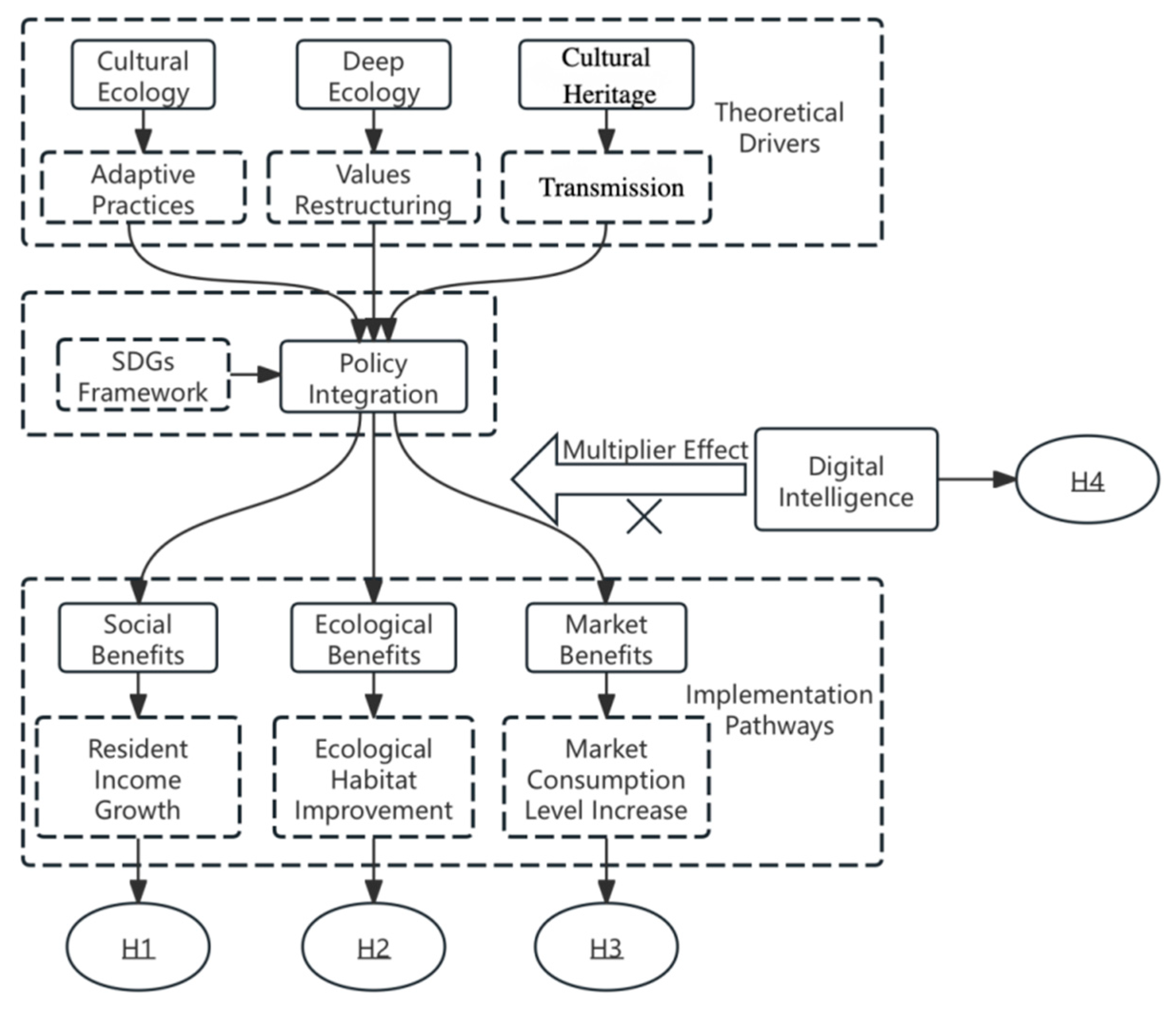
Figure 1 delineates the logical framework and benefit mechanisms of synergistic development between ICH transmission and green governance.

3. Materials and Methods

3.1. Construction of a Comprehensive Evaluation Index System for ICH Transmission, Green Governance, and Digital-Intelligence Transformation

Sample, Indicators, and Data

The analysis utilizes panel data from 31 administrative provinces in China (2011–2023), a period chosen to correspond with the institutionalization of ICH governance under the 2011 Intangible Cultural Heritage Law [48].
Selecting provincial units as the empirical research sample objects is a common practice in macro-level research on China. Provincial units have a unified policy framework and relatively complete data systems, which provide a foundation for macro-level research. The main reasons are as follows: (1) Consistency of administrative and policy units: Intangible cultural heritage protection and green development policies in China are mainly planned and managed at the provincial administrative level; (2) Coverage of regional diversity: The 31 samples can comprehensively reflect the different types of intangible cultural heritage in various geographical environments, economic levels, and cultural groups in China, which is conducive to comparative studies; (3) Accessibility and comparability of data: Official data such as national and provincial statistical yearbooks and intangible cultural heritage census reports are usually released at the provincial level, providing a basis for panel data analysis and quantitative research.
However, it is necessary to pay attention to the challenges that may arise from the scale differences among provincial administrative regions. The following measures can be taken to address this issue: (1) A series of studies can be conducted: After determining the macro trends at the provincial level, subsequent studies can select typical cities and intangible cultural heritage projects for in-depth case studies, forming a multi-level research system of “macro trends-meso mechanisms-micro cases”; (2) Control internal heterogeneity: Introduce internal difference variables such as economy, industry, population, finance, and resources at the provincial level into the model and control individual effects; (3) Conduct cluster analysis based on cultural and ecological regions.
To highlight the research focus on transmission as the core of ICH, this study has designed an assessment framework for the transmission level of Chinese ICH, which includes four dimensions: ICH resources, transmission vitality, attention level and policy support. Furthermore, as shown in Table 1, a detailed assessment system with nine specific indicators has been constructed.
The determination of the dimensions is based on the following: (1) ICH resources, as a fundamental dimension, reflect the intrinsic value of ICH as cultural capital. Its stock and structure determine the basic orientation of transmission work. It is evaluated by the number and diversity of national-level ICH projects, with data from the “National List of Intangible Cultural Heritage Representative Items” of the Ministry of Culture and Tourism, manually counted by the application location; (2) Transmission vitality focuses on the dynamic transmission attribute of ICH as a living practice, and measures its internal vitality through intergenerational continuation and digital transformation capabilities. It is measured by the number of officially certified inheritors and the digital construction indicators of provincial ICH portal websites, with data from the “National List of Intangible Cultural Heritage Representative Items” of the Ministry of Culture and Tourism and provincial ICH websites, manually searched and counted by region; (3) Attention level reflects the degree of attention and recognition of ICH at the societal level, and indicates the participation of the government and the public in the cultural ecosystem. It is measured by indicators of attention at the government and public levels, with data from provincial government work reports and Baidu search index; (4) Policy support considers the support for ICH protection from the national and local systems from the perspective of the institutional environment. It is measured by the situation of special infrastructure construction such as ICH or cultural protection bases, protected areas and protection centers, with data from the official website of the National Ministry of Culture and Tourism, the official websites of provincial cultural and tourism departments and provincial ICH protection centers, manually searched and counted by region.
Existing empirical studies mainly focus on the outcome-oriented measurement of environmental pollutant emissions to assess the level of green or low-carbon development. This study, however, focuses on the process, input and means of governance. As shown in Table 2, the green governance performance assessment framework consists of four sub-dimensions: green momentum, governance intensity, internal and external supervision, and policy support. A detailed assessment system with nine specific indicators has been further constructed.
The determination of the dimensions is based on the following: (1) The green momentum dimension focuses on the core driving force of green development, with “innovation-driven” and “financial empowerment” as the key engines. The indicator data for measuring green innovation activities are sourced from the China Statistics Yearbook, while the indicator data for measuring the development of green finance are sourced from the Green Finance Development Index of the Institute of International Green Finance at Central University of Finance and Economics; (2) The governance intensity dimension reflects the input and constraints of the governance subjects, which is a direct manifestation of green governance actions. The indicator data for measuring the intensity of environmental penalties and pollution control funds are sourced from judicial databases and the China Statistics Yearbook; (3) The internal and external supervision dimension recognizes that the improvement of governance effectiveness not only depends on the government’s own supervision but also requires the checks and participation of social forces. It is measured through government environmental supervision and public environmental concern, with data sourced from annual government work reports and Baidu search index; (4) The policy support dimension provides the institutional basis and strategic direction for the green governance system. It is measured through the situation of ecological civilization and low-carbon environmental protection construction, with indicator data sourced from the documents of the Ministry of Ecology and Environment and the National Development and Reform Commission of China. In addition, the specific indicator data also can be obtained from the China Social and Economic Statistical Database (CSYD).
The core of digital and intelligent transformation lies in the deep integration of digital and intelligent technologies [41]. As shown in Table 3, the digital-intelligent integration assessment framework constructed in this study consists of four dimensions: digital-intelligent foundation, digital-intelligent focus, digital-intelligent innovation, and digital-intelligent environment, which are quantified through 12 assessment indicators.
The determination of the dimensions is based on the following: (1) the digital-intelligent foundation corresponds to the hardware and capital conditions for the integrated development of digital and intelligent technologies, measured by the scale of infrastructure construction, the size of the technology market, and financial support. The data for digital infrastructure and technology development indicators are sourced from the China Statistical Yearbook, while the financial support indicator data are from the Digital Inclusive Finance Index compiled by the Digital Finance Research Center of Peking University; (2) the digital-intelligent focus reflects the recognition and emphasis placed on integrated development by governance entities and the general public, measured by the government’s digital-intelligent focus and public intelligent focus. The data for the government focus indicator are from government work reports, and the data for the public focus indicator are from the Baidu Index tool; (3) digital-intelligent innovation represents the self-renewal and technological breakthroughs of the system, measured by the development of digital-intelligent government and digital-intelligent technology. The data for the digital-intelligent government indicator are collected manually from provincial government websites (the establishment of provincial data bureaus), and the data for digital and intelligent patent indicators are from the National Intellectual Property Administration; (4) the digital-intelligent environment serves as the carrier and application scenarios for the integrated development of digital and intelligent technologies, measured by the number of intelligent enterprises and digital and smart cities. The data for the enterprise indicator are from the Tianyancha platform, and the data for the city indicator are from the Ministry of Housing and Urban-Rural Development and the Ministry of Science and Technology of China. In addition, the specific indicator data also can be obtained from the CSYD.

3.2. Calculation Models

3.2.1. RAGA-PP Model

This study employs the real-coded accelerated genetic algorithm (RAGA-PP) to evaluate all index systems. The core of this approach lies in optimizing the projection direction of the projection pursuit model (PP) through genetic algorithms, ensuring that the projected data presents the optimal structural features in the low-dimensional space [49]. This model reduces the high-dimensional index data to a lower dimension, aiming to maximize the objective function. By simulating the natural selection process through genetic algorithms, the MATLAB 7.0 software automatically searches for the optimal projection direction that maximizes the feature discrimination of high-dimensional data and determine the index weights. This method avoids the low computational efficiency problem of traditional projection pursuit methods and can handle high-dimensional nonlinear data. The specific operation process is as follows:
Step 1: Provide the sample data of high-dimension:
X = { x 1 , x 2 , , x n } , x i R m
where x indicates sample, i indicates provinces, and m indicates the number of features in each sample.
Step 2: Set the direction of the projection:
a R m ,   a = 1
where a indicates direction.
Step 3: Make positive indicators normal:
x n o r m = X X m i n X m a x X m i n
Step 4: Project high-dimensional data to get projection values:
z i = a T x i = i = 1 m a j x i j
where j indicates indicators, z indicates the projection value of sample x along direction a.
Step 5: To verify the quality of the projection direction a, construct projection index function:
Q ( a ) = S d ( a ) D e ( a )
where Sd(a) indicates the standard deviation of projected values (measuring local point density), De(a) indicates the local density of projected values (quantifying global dispersion).
Step 6: Find the optimal projection direction a* to maximize the projection index function Q(a):
a * = a r g   max a ( a )
Finally, the population is updated using accelerated cyclic genetic computation, which is based on the process described above, to further improve the PP projection direction. The population size began at 600 and went through 50 iterations in this study. With a crossover probability of 0.8 and a mutation probability of 0.1, two offspring were produced each generation, and the mutation direction parameter M is 10.

3.2.2. Coupling Coordination Degree Model

This study employs the coupling coordination degree model to assess the synergy level between the transmission of intangible cultural heritage and green governance. This model is widely adopted in academic research, although it has been pointed out that it has limitations, which mainly lie in its non-application in the assessment of multiple systems’ coordination. When this model is applied to the complex coupling assessment of three or more systems, its calculation logic and result interpretation will face multiple challenges such as weight distribution and definition of interaction relationships [50,51]. However, this study only involves two core systems: the ICH transmission system and the green governance system. This model simplifies the calculation structure and interpretation logic of the model, enabling a clearer and more intuitive revelation of whether there exists a mutually reinforcing and coordinated development relationship between these two specific systems, thereby avoiding the complex mutual interference in multi-system scenarios.

3.2.3. Markov Models

Markov models are suitable for analyzing the complex and unbalanced process of the co-evolution of ICH transmission and green governance in various regions of China, which has both strong historical inertia and geographical correlation, because they can simultaneously capture the temporal sequence and spatial correlation of system evolution. The traditional Markov model can effectively demonstrate the dynamic path and state transition trend of co-evolution by calculating the state transition probability across periods. The spatial Markov model, which takes into account geographical spatial factors, can analyze the correlation between the state of regional development and the conditions of neighboring areas, and use the geographically weighted transition matrix to handle the differences in resource endowment and institutional capacity among different regions, thereby demonstrating the spatial dependence of the co-evolution level.

3.3. Empirical Variables and Models

Table 4 presents a complete list of all the variables and provides detailed explanations of the calculation methods for each variable. This study takes per capita disposable income level, green space area and retail sales of consumer goods as the main indicators, and respectively assesses the social, ecological, and market benefits of the combination of cultural heritage transmission and green governance system from the three dimensions of residents’ well-being, environmental physical stock, and economic vitality. In addition, this study selects control variables that are of great significance to social, ecological and market benefits from the perspectives of economic and financial development level and basic characteristics of society and population resources. The China Statistical Yearbook is the source of the data for the variables and indicators above.
Building upon the theoretical framework and variable selection established in preceding sections, we formulate the following econometric specification to empirically test the hypothesized relationships through regression analysis:
S o c i t / E c o i t / M a r i t = β 0 + β 1 H G S i t + β 2 C o n t r o l s i t + μ i + τ t + ε i t
In Equation (7), i represents province, t represents time; β0 is the constant term; β1 and β2 are regression coefficients; μi denotes province fixed effects; τi denotes time fixed effects; ε i t denotes the random error term; Socit, Ecoit, and Marit indicate dependent variables; HGSit indicates the independent variable; ΣControlsit represents all control variables.

4. Results

4.1. Preliminary Analysis

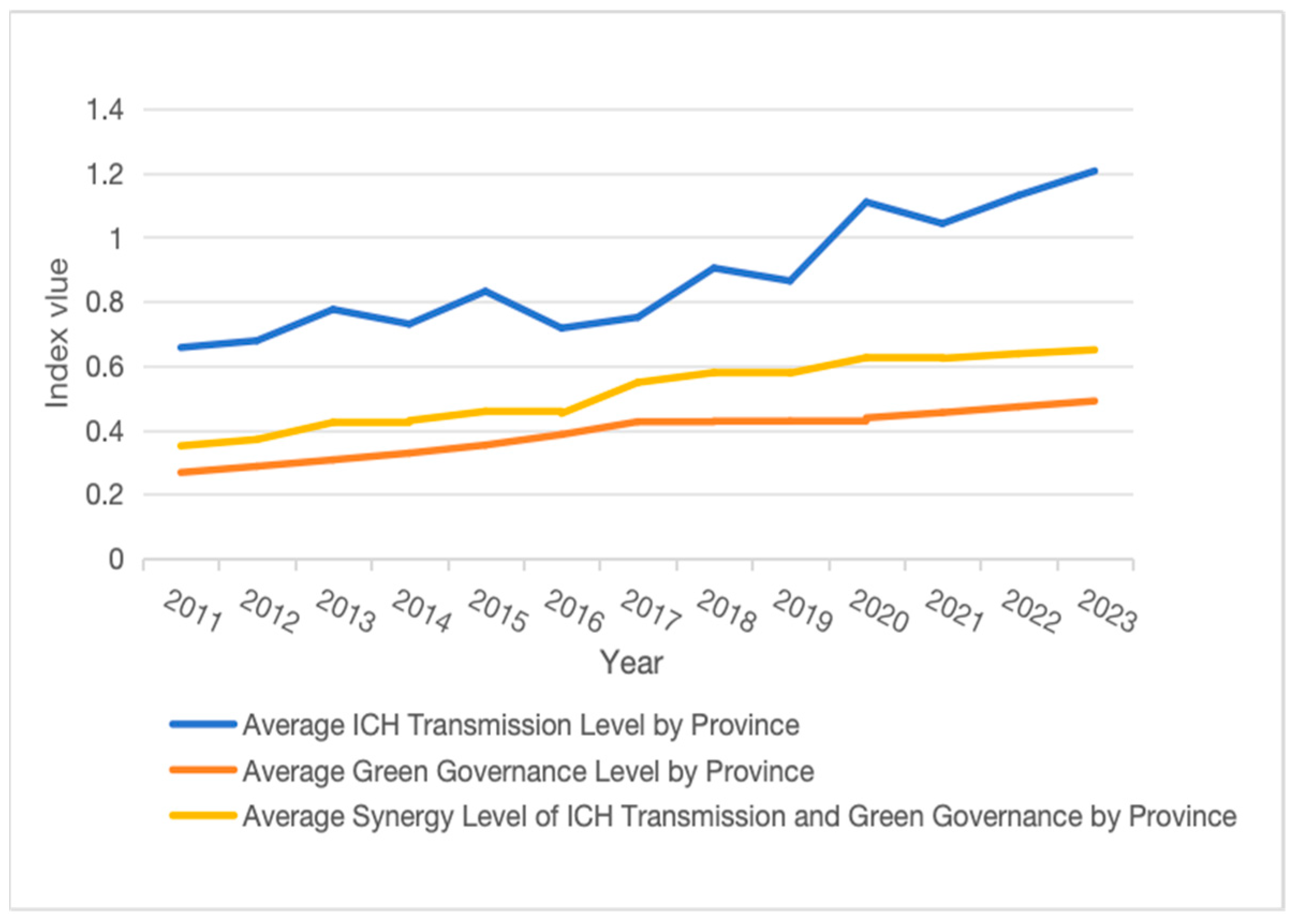
Figure 2 shows the average annual values of the national-level ICH transmission level, green governance, and their coordinated development level from 2011 to 2023. These data values are calculated based on the indicator system and model mentioned above. The data indicates that over the past decade, the level of ICH transmission has shown a fluctuating growth trend. Particularly in 2013, 2015, 2018, and 2020, there were small peaks in the level of ICH transmission. These growth peaks may be closely related to the strong policy promotion by the state.
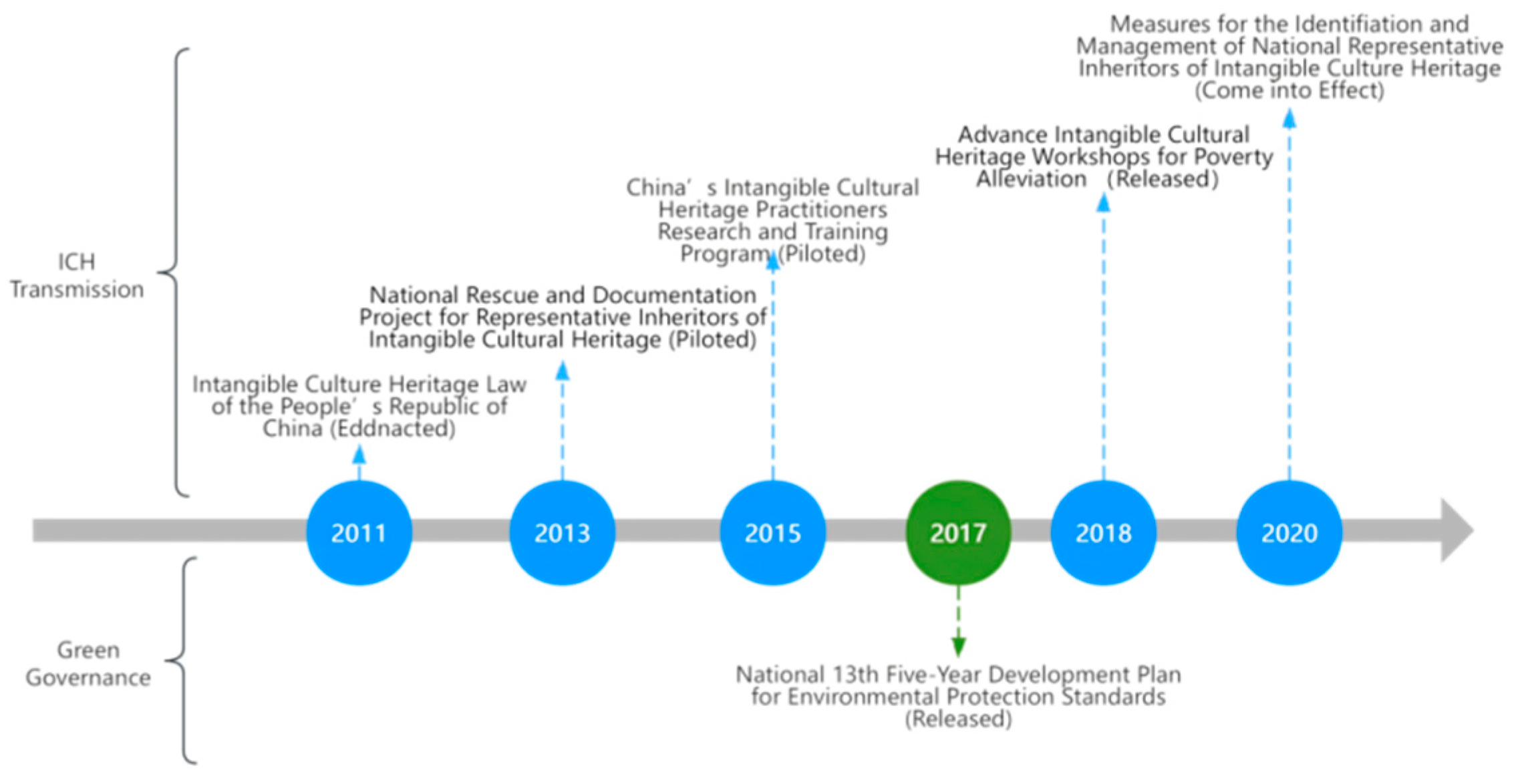
Figure 3 specifically lists the possible reasons for these changes, which may stem from the strong policy adjustments implemented by the Chinese government in the relevant years. Following the enactment of the “Intangible Cultural Heritage Law of the People’s Republic of China” in 2011 [48], related work has been continuously promoted: the pilot project of “Rescue and Documentation Project for Representative Inheritors of Intangible Cultural Heritage” was carried out in 2013 [52]; the pilot project of “China Intangible Cultural Heritage Practitioners Research and Training Program” was launched in 2015 [53]; the “Advance Intangible Cultural Heritage Workshops for Poverty Alleviation” was released in 2018 [54]; the “Measures for the Recognition and Management of National Representative Inheritors of Intangible Cultural Heritage” was officially implemented in 2020 [55].
It is worth noting that the level of green governance reached a small peak in 2017, which may be related to the national environmental protection standards and the “13th Five-Year Plan” for development in 2017 [56]. The coordination level between ICH transmission and green governance has remained relatively stable, with minor fluctuations, close to the average of the trends in the changes of the ICH transmission level and the green governance level.
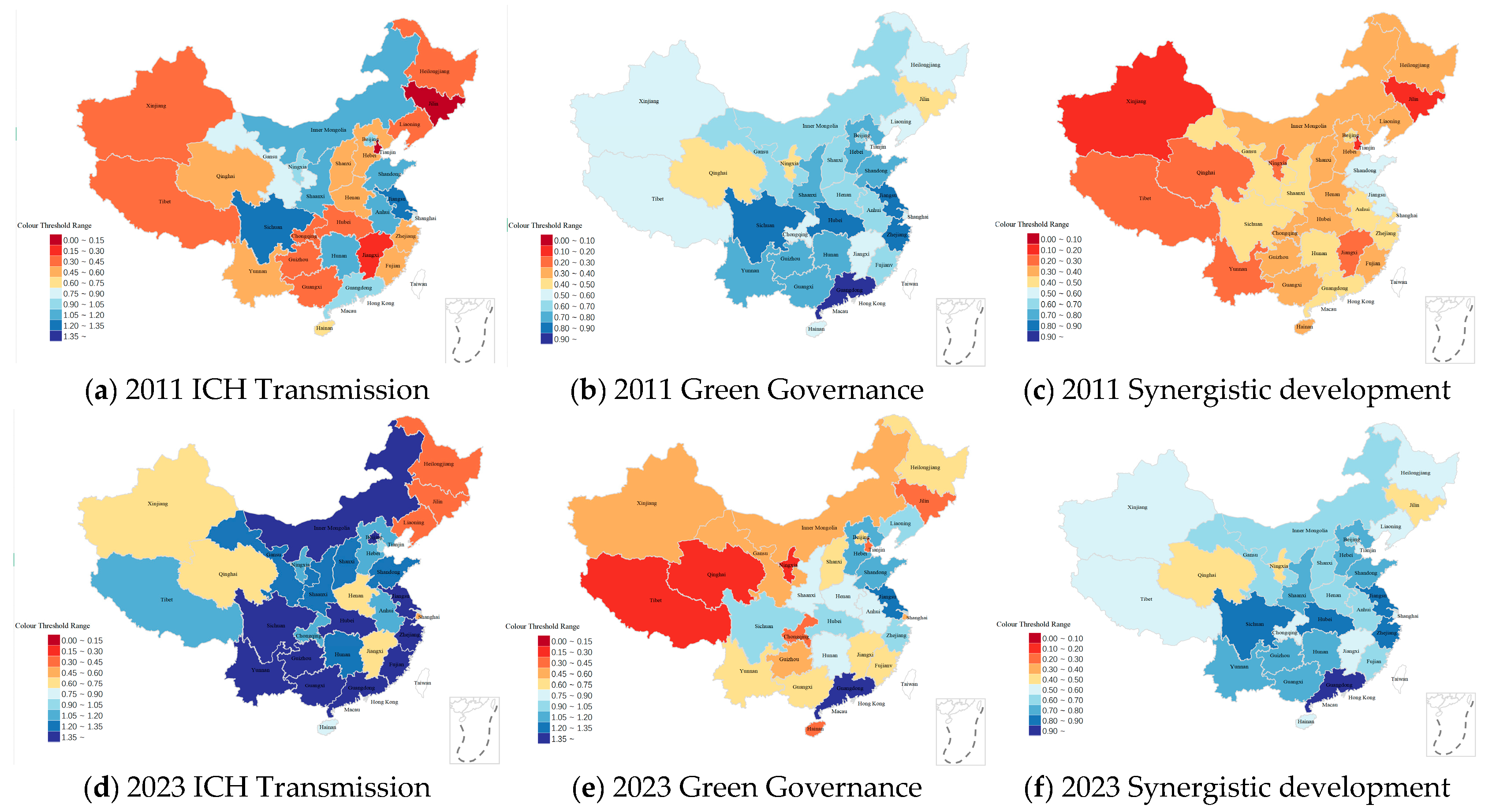
Figure 4 shows that China’s ICH transmission, green governance, and their coordinated development have all improved a lot across the country between 2011 and 2023. All three indicators were higher than their 2011 levels by 2023, which shows that policies were more effective and that regions worked better together. The data here is based on the calculation of the index system and model mentioned in the previous text.
In 2011, ICH transmission levels showed clear differences between regions. The eastern region was in the lead because of its strong economy and new ways of governing. The Yangtze River Delta (YRD) and Pearl River Delta (PRD) became centers of cultural life. The central region, which abounded cultural resources, followed. The western and northeastern regions lagged behind, being physically isolated and lacking a well-developed economy. The eastern region remained the dominant one in 2023, but the central region narrowed the gap with specific cultural policies and investment in infrastructure. The west and northeast, though lagging, did contain significant room for development attributable to the national heritage preservation schemes and tourism-oriented restoration initiatives.
Green governance also highlighted regional disparities in 2011. The eastern region pioneered with strict green laws and advanced technical skills, the central region faced structural problems, and the western and northeastern regions had fragile ecosystems and weak government capacity. The eastern area is still developing vigorously, with green innovation co-constructing for the conservation of culture in 2023. The central area is still developing, reducing pollution and consuming renewable energy, protecting the environment, and retrieving cultural tradition. The western and northeastern areas, with the support of national policies, clean energy, and ecological tourism, are realizing both economic and environmental values. This is represented by the Three Gorges eco-corridor and northeastern forest conservation projects.
The eastern and YRD areas were better at synergy between ICH transmission and green governance because both had the advantages of strong environmental values and a more intensive economy growth in 2011. However, the central region had potential but required institutional optimization for better joint operation. The weak development and large environmental burden had been the largest obstacle in coordination indices in the west, northeast, and other areas in 2011. All areas had advanced to a large extent since the institutional adjustments in 2023. The eastern and YRD regions enhanced leadership by innovating new strategies, such as low-carbon tourism and digitalizing cultural heritage; the central region enhanced coordination by incorporating urban–rural planning and community-based ICH conservation; the western and northeastern regions used adaptation strategies, such as cultural tourism of ethnic groups and carbon-free industrial parks, in their efforts toward balanced development.

4.2. Analysis of Markov Model Results

Table 5 reveals that the traditional and spatial Markov chain models have exposed the dynamic evolution and spatial dependency characteristics of the coordinated growth of ICH transmission and green governance in different regions. States I, II, III, and IV are four levels of coordination based on the level of the coordinated development of intangible cultural heritage transmission and green governance, corresponding to low, medium-low, medium-high, and high levels of coordination respectively.

4.2.1. Traditional Markov Analysis

The traditional Markov model is mainly used to reveal the internal dynamic laws of the evolution of the collaborative level between intangible cultural heritage transmission and green governance over time. Under the condition of not considering spatial lag, the collaborative development of intangible cultural heritage transmission and green governance shows the following characteristics: (1) The probability values on all matrix diagonals are greater than those off the diagonals, indicating that each state type tends to maintain its original state, which reflects the “path dependence” characteristics of the collaborative development of intangible cultural heritage transmission and green governance [57]; (2) There is a possibility of transfer to a higher level among different state types, but this transfer mainly occurs between adjacent types, and the probability of leapfrog transfer is extremely low; (3) The high-level state IV shows a clear “club convergence” phenomenon [58], with a significant difference between its self-maintenance probability and the probability of downward transfer, indicating that high-level regions have a strong ability to maintain a leading position in ICH transmission and green governance. The traditional Markov chain explains why regional collaborative differences persist for a long time, indicating that it is difficult to break the existing collaborative pattern solely through the internal evolution of the region, and external intervention is needed.

4.2.2. Spatial Markov Analysis

By incorporating spatial lag factors, the spatial Markov model, on the basis of traditional analysis, introduces geographical spatial lag factors to reveal how the neighborhood environment influences the transformation probability of a region. Compared with the traditional Markov transition probability matrix, the spatial Markov transition probability matrix exhibits the following characteristics: (1) There is a significant spatial correlation in the level of regional synergy, and the ICH transmission-green governance synergy level of adjacent regions has a significant impact on the development level of the region; (2) Being adjacent to high-level regions can significantly increase the probability of upward transition of the region; (3) The influence of different lag levels on various development levels varies, and the influence of the same lag level on different levels also shows a nonlinear feature. The spatial Markov chain confirms that the coordinated development of intangible cultural heritage transmission and green governance is not only influenced by its own historical trajectory but also by the spatial network of mutual influence.

4.3. Empirical Results

4.3.1. Descriptive Statistics Results

Table 6 shows that all variables have outliers in their sample distributions. The resource endowment metric (Re) has the most extreme outliers, which stems from the inherent and structural regional resource differences. This study employs a 1% bilateral winsorization on all variables to reduce the potential distortion from extreme values before performing empirical regression analyses.

4.3.2. Baseline Regression Results

According to the regression results in Table 7, after considering the covariates and using time and individual fixed effects, the impact of HGS on society, ecology, and the market remains significantly positive at the 1% level. This shows that the synergy of ICH transmission and green governance has a positive effect on the environment, social income, and the economy. These findings validate Hypotheses 1, 2, and 3 in the theoretical analysis above.

4.3.3. Robustness Test Results

The independent variable HGS_c was re-evaluated using the objective weighting CRITIC-entropy weight method, and the independent variable L2.HGS lagged by two periods was used to re-estimate the model. The robustness test results still showed similar statistically significant effects to the baseline regression, confirming the reliability of the research results and enhancing confidence in the inference of the synergy effect between ICH transmission and green governance (Table 8).

4.3.4. Endogenous Treatment Results

This study employs the regional density of museums as an instrument (IV) exploit its proxies of past institutional legacies to rule out modern policies endogeneity. Heritage institutions are related to long-run investment accumulation in the cultural capital that facilitate ICH passing-on and ecological sustainable operation, but do not directly impact on recent period’s socioeconomic performance, hence meet the IV criteria of exogeneity, relevance, and exclusion restriction.
The DWH test results for endogeneity testing show that the p-values of the Durbin values are all less than 0.01, thus it can be concluded that HGS is an endogenous explanatory variable. The first-stage regression (correlation test) results indicate that the p-values of the instrumental variable coefficients are less than 0.01, and the instrumental variables are significantly correlated with the endogenous explanatory variables. The weak instrumental variable test (Kleibergen–Paap rk Wald F test) results show that the Kleibergen–Paap rk Wald F statistic is greater than the 10% Stock-Yogo weak ID statistic (the benchmark value of the statistic for determining whether an instrumental variable is a “weak instrumental variable”), thus the null hypothesis of the existence of weak instrumental variables is rejected. The over-identification test (Kleibergen–Paap rk LM test) results show that the p-values of the Kleibergen–Paap rk LM statistics are less than 0.01, thus the null hypothesis of the unidentifiability of the instrumental variables is rejected. Additionally, the second-stage regression (core effect estimation) results show that the p-values of the endogenous explanatory variable coefficients are less than 0.01, and the endogenous variables are significantly correlated with the explained variables. (A p-value less than 0.01 indicates that the research results have a high degree of statistical significance and provide strong evidence for rejecting the null hypothesis.)
Table 9 demonstrates that, after correcting for endogeneity bias, HGS exhibits stable coefficient signs and significance (1% significance level) across all outcome variables in comparison to baseline regressions. The strength of these results shows that the instrumental variable strategy is valid. This strengthens the assertion that the synergy of ICH transmission and green governance produces beneficial and causal effects on multidimensional sustainability outcomes.

4.3.5. Heterogeneity Test Results of Cultural Region Division

The research divided the 31 provincial-level administrative regions into four unique cultural zones: the Yellow River–Yangtze River Basin, the Snowy Mountains–Highland Plateau, the Grassland–Oasis Corridor, and the Coastal–Metropolitan Belt. This system of regional classification was created by looking at the geographic, economic, and social and cultural traits that are unique to each zone [59].
Table 10, Table 11 and Table 12 show that the impact of the synergy between ICH transmission and green governance on social, ecological, and market benefits varies significantly across different cultural regions. Overall, regional resource endowments and cultural characteristics have shaped differentiated development paths, a finding that confirms the locality and path dependence of the “culture–ecology” system. Empirical results show that (1) social benefits are only significantly positive in the marine-urban cultural region; (2) ecological benefits are significantly positive in both the Yellow River–Yangtze River and the snow mountain–mountainous cultural regions; (3) market benefits are significantly positive in the Yellow River–Yangtze River and marine-urban cultural regions.
This difference in benefits is not random but rather a manifestation of the comparative advantages shaped by regional resource endowments, cultural genes, and development stages. The Yellow River–Yangtze River cultural region, with its dual advantages of ecological knowledge and market size, achieves dual benefits in ecology and the market; the snow mountain-mountainous cultural region, relying on its irreplaceable ecological regulation function and cultural uniqueness, highlights the value of ecological conservation; while the marine-urban cultural region, leveraging its advanced social and economic capital, leads in promoting cultural innovation transformation and modernization of social governance. This result indicates that for promoting the synergistic development of ICH transmission and green governance, precise and differentiated strategies must be adopted in different types of cultural regions.

4.3.6. Empirical Results of Digital-Intelligence Multiplier Effects

The interplay between digital and intelligent technologies frequently produces multiplicative effects. Table 13 shows that the interaction term (DI × HGS) of digital-intelligence integration (DI) and ICH-green synergy has positive effects on social welfare (Soc), the ecological environment (Eco), and market vitality (Mar). Results indicate that the effect of integration of digital intelligence has a multiplicative effect on the synergetic advantage of ICH transmission and green governance in terms of improving income fairness, strengthening environmental quality, and increasing income vitality. The above result serves to underscore the multiplier role of “digital enablers” to achieve complementary outcomes between cultural heritage protection and sustainable development; these confirm the key role of the “digital enabling” mechanism as a focal point in trying to synchronize cultural heritage protection and social and environmental development. This empirical result validates Hypothesis 4.

5. Discussion

The preliminary findings of this study on the volatility and development imbalance between ICH transmission and green governance are in line with the existing research phenomena such as “the relative neglect of the cultural dimension activation mechanism in macro policies” [60], “the incoordination between governance policies and local culture” [61], and even “environmental policies may erode traditional cultural resources” [62]. The research results show that the synergy between ICH transmission and green governance not only exhibits the characteristic of “path dependence”, confirming that the regional evolutionary development trajectory is constrained by its historical conditions and specific environment [63], but also exhibits the characteristic of “club convergence”, verifying the research finding that China’s regional green development is concentrated in high-level regions [64]. The result also finds that the level of synergy has spatial correlation features and high-level regions have a demonstration effect, which supports and deepens the general conclusion of positive spatial spillover and is consistent with the discovery that traditional culture has a spatial radiation effect on green innovation [65]. However, the spatial spillover effect shows asymmetry and nonlinearity, that is, the spillover effect highly depends on the specific state combination of the local and neighboring areas. This deepens the understanding of the spatial spillover mechanism, indicating that spatial spillover is context-dependent and regionally unbalanced [66,67], which has key implications for formulating precise and differentiated synergy policies.
The core empirical result of this study, which indicates that the synergy between ICH transmission and green governance generates significant social, ecological, and market benefits. This finding supports and promotes relevant practices and research in the fields of cultural ecology and sustainable development. It not only validates hypotheses 1, 2, and 3 in the theoretical part, but also aligns with the leading framework and practical path of international organizations such as UNESCO and the United Nations Development Programme (UNDP) regarding the simultaneous promotion of the environment, economy, and social inclusiveness through ICH [68,69], but also confirms the findings in academic research that ICH is a key asset for promoting social cohesion, environmental management, and economic growth, and that its integration into governance frameworks such as climate adaptation and circular economy can generate multiple benefits [70,71].
More importantly, this study further explores the uneven cultural geographical pattern of the benefits generated by the synergy between ICH transmission and green governance, which complements the research orientation of “cultural typology” that pursues the identification of macro and static cultural clusters [72]. The empirical results show that the strength and bias of the benefits generated by the synergy between ICH transmission and green governance are deeply dependent on the local cultural and geographical system. This reinforces the research assertion that traditional ecological knowledge is at the core of “adaptive management”, that is, effective synergy is essentially an adaptive process based on local context [73]. Furthermore, the empirical results confirm that digitalization is an important variable for increasing benefits, which not only validates Hypothesis 4, but also provides empirical verification evidence in the cross-field of culture and environment for the argument that technology can profoundly transform the logic of urban and social governance [74].

6. Conclusions

Current research on green governance in the region mostly focuses on empirical analyses of the ecological impacts of economic or environmental policies, such as assessing the correlation between regional economic efficiency and environmental efficiency [75], or examining the pollution improvement effects of ecological policies [76]. However, studies on cultural resource factors are relatively scarce. Research on the ecological characteristics of intangible cultural heritage generally adopts field investigations or case data analysis, such as field investigations revealing the long-term impact of traditional lifestyles on forest ecology [77], or applying spatial theory to conduct case studies of specific handicraft villages [78]. There are few empirical studies that systematically examine their development context from a macro perspective. Moreover, such field investigations or case studies are mostly confined to intangible cultural heritage itself, failing to fully consider the era selectivity and institutional adaptability of its dissemination process [79]. This study takes this gap as a starting point, based on a comprehensive analysis of cultural heritage, cultural ecology, deep ecology, and sustainable development theories. Through empirical testing methods, it confirms that the coordinated development of intangible cultural heritage dissemination and green governance in the Chinese context can generate positive ecological, social, and economic benefits, as well as the enabling role of digitalization in this process, thereby providing empirical support and theoretical supplementation to the existing policy system and academic research framework.
This study mainly relies on macro-metric analysis of provincial panel data, which can reveal large-scale patterns and statistical correlations. However, it still has limitations. On the one hand, macro data masks the micro-mechanisms at the community and individual levels. On the other hand, the official statistical indicator data relied on by macro research cannot fully cover some qualitative dimensions that are difficult to quantify in ICH transmission and green governance. Future research can, on the basis of verifying the macro patterns in this study, select specific ICH projects in typical cultural regions to conduct in-depth case studies and field investigations. Through interviews, participatory observation and other means, it can reveal the micro-motivations, behavioral logic and interaction obstacles of multiple subjects such as communities, inheritors and enterprises in the collaborative process, thereby providing more refined case-based evidence for differentiated development policies in ICH transmission and green governance.
The empirical research on the synergistic development of ICH transmission and green governance in China not only validates the universal laws of the world but also contributes a unique Chinese sample: under the guidance of powerful national strategies (such as the ecological civilization, rural revitalization, and digital China strategies), it attempts to systematically reconcile the two global challenges in rapid modernization—cultural transmission and ecological protection—through multi-level policy experiments and regional pilot projects. The imbalance in the development of ICH transmission and green governance reflects the complexity of practice. The positive social, ecological, and economic output benefits of this practice result confirm the positive role and significance of the synergistic development of ICH transmission and green governance. The Chinese experience shows that achieving a positive interaction between culture and ecology requires not only policy and institutional guidance but also the stimulation of adaptive wisdom in cultural regions and the full utilization of the potential of digital intelligence, so as to balance the sustainable development of culture and ecology in the process of intense global transformation.

Author Contributions

Conceptualization, Y.H. and P.S.; methodology, Y.H.; software, H.D.; validation, Y.H., P.S. and H.D.; formal analysis, J.X.; investigation, H.D.; resources, Y.H.; data curation, Y.H.; writing—original draft preparation, Y.H.; writing—review and editing, P.S.; visualization, J.X.; supervision, P.S.; project administration, J.X. All authors have read and agreed to the published version of the manuscript.

Funding

This research received no external funding.

Institutional Review Board Statement

Not applicable.

Informed Consent Statement

Not applicable.

Data Availability Statement

The original data presented in the study are openly available in [China Statistical Yearbook] at [https://www.stats.gov.cn/sj/ndsj/] (accessed on 5 April 2025), [China Intangible Cultural Heritage Network] at [https://www.ihchina.cn/] (accessed on 5 April 2025), [Baidu Search Index] at [https://index.baidu.com/v2/index.html#/] (accessed on 15 April 2025), [the Ministry of Culture and Tourism] at [https://www.mct.gov.cn/] (accessed on 18 April 2025), [Tianyancha platform] at [https://www.tianyancha.com] (accessed on 25 April 2025), and [China Social and Economic Statistical Database (CSYD)] at [http://data.cnki.net/] (accessed on 25 April 2025), covering the period from 2011 to 2023. In addition, the original contributions presented in this study are included in the article. Further inquiries can be directed to the corresponding author.

Conflicts of Interest

The authors declare no conflicts of interest.

References

  1. Rip, A.; Kemp, R. Technological change. In Human Choice and Climate Change: Vol. II, Resources and Technology; Battelle Press: Columbus, OH, USA, 1998; pp. 327–399. [Google Scholar] [CrossRef]
  2. Farhat, L. Transforming the industrial revolution: A vision for tech-based solutions for climate crisis. Reg. Stud. 2023, 41, 81–103. [Google Scholar]
  3. Giglitto, D.; Ciolfi, L.; Bosswick, W. Building a bridge: Opportunities and challenges for intangible cultural heritage at the intersection of institutions, civic society, and migrant communities. Int. J. Herit. Stud. 2022, 28, 74–91. [Google Scholar] [CrossRef]
  4. Dvorak, J.; Burkšienė, V.; Sadauskaitė, L. Issues in the implementation of cultural heritage projects in Lithuania: The case of the Klaipeda region. Cult. Manag. Sci. Educ. 2019, 3, 23–37. [Google Scholar] [CrossRef]
  5. United Nations Educational, Scientific and Cultural Organization. Text of the Convention for the Safeguarding of the Intangible Cultural Heritage; UNESCO: Paris, France, 2003; Available online: https://ich.unesco.org/en/convention (accessed on 25 August 2025).
  6. Debbarma, J.; Choi, Y. A taxonomy of green governance: A qualitative and quantitative analysis towards sustainable development. Sustain. Cities Soc. 2022, 79, 103693. [Google Scholar] [CrossRef]
  7. Usman, B.M.; Johl, S.K.; Khan, P.A. Fusion of green governance for sustainable development and world ecology: A tempting systematic review and bibliometric analysis. J. Open Innov. Technol. Mark. Complex. 2024, 10, 100309. [Google Scholar] [CrossRef]
  8. Vinuesa, R.; Azizpour, H.; Leite, I.; Balaam, M.; Dignum, V.; Domisch, S.; Felländer, A.; Langhans, S.D.; Tegmark, M.; Fuso Nerini, F. The role of artificial intelligence in achieving the Sustainable Development Goals. Nat. Commun. 2020, 11, 233. [Google Scholar] [CrossRef] [PubMed]
  9. Smith, L. Uses of Heritage; Routledge: New York, NY, USA, 2006. [Google Scholar] [CrossRef]
  10. Aikawa, N. An historical overview of the preparation of the UNESCO International Convention for the Safeguarding of the Intangible Cultural Heritage. Mus. Int. 2004, 56, 137–149. [Google Scholar] [CrossRef]
  11. Winter, T. Clarifying the critical in critical heritage studies. Int. J. Herit. Stud. 2013, 19, 532–545. [Google Scholar] [CrossRef]
  12. Paloma, G.; Cathy, D. Integrating cultural resources and heritage in climate action: A review of nine climate plans. Environ. Sci. Policy 2025, 171, 104127. [Google Scholar] [CrossRef]
  13. Steward, J.H. Theory of Culture Change: The Methodology of Multilinear Evolution; University of Illinois Press: Champaign, IL, USA, 1972. [Google Scholar] [CrossRef]
  14. Reyes, S.R.C.; Miyazaki, A.; Yiu, E.; Saito, O. Enhancing sustainability in traditional agriculture: Indicators for monitoring the conservation of globally important agricultural heritage systems (GIAHS) in Japan. Sustainability 2020, 12, 5656. [Google Scholar] [CrossRef]
  15. Foster, G. Circular economy strategies for adaptive reuse of cultural heritage buildings to reduce environmental impacts. Resour. Conserv. Recycl. 2020, 152, 104507. [Google Scholar] [CrossRef]
  16. Sessions, G. Deep Ecology for the Twenty-First Century; Shambhala Press: Boston, MA, USA, 1995. [Google Scholar]
  17. Fatorić, S.; Egberts, L. Realising the potential of cultural heritage to achieve climate change actions in the Netherlands. J. Environ. Manag. 2020, 274, 111107. [Google Scholar] [CrossRef] [PubMed]
  18. Fatorić, S.; Biesbroek, R. Adapting cultural heritage to climate change impacts in the Netherlands: Barriers, interdependencies, and strategies for overcoming them. Clim. Change 2020, 162, 301–320. [Google Scholar] [CrossRef]
  19. De Masi, F.; Larosa, F.; Porrini, D.; Mysiak, J. Cultural heritage and disasters risk: A machine-human coupled analysis. Int. J. Disaster Risk Reduct. 2021, 59, 102251. [Google Scholar] [CrossRef]
  20. Ghahramani, L.; McArdle, K.; Fatorić, S. Minority community resilience and cultural heritage preservation: A case study of the gullah geechee community. Sustainability 2020, 12, 2266. [Google Scholar] [CrossRef]
  21. Labadi, S.; Giliberto, F.; Rosetti, I.; Shetabi, L.; Yildirim, E. Heritage and the Sustainable Development Goals: Policy Guidance for Heritage and Development Actors; ICOMOS: Paris, France, 2021; Available online: https://kar.kent.ac.uk/89231/1/ICOMOS_SDGs_Policy_Guidance_2021.pdf (accessed on 25 August 2025).
  22. Bhati, H.V.; Epstein, Y. Protection of biocultural heritage in the anthropocene: Towards reconciling natural, cultural, tangible and intangible heritage. J. Environ. Law 2023, 35, 353–375. [Google Scholar] [CrossRef]
  23. Cucco, P.; Maselli, G.; Nesticò, A.; Ribera, F. An evaluation model for adaptive reuse of cultural heritage in accordance with 2030 SDGs and European Quality Principles. J. Cult. Herit. 2023, 59, 202–216. [Google Scholar] [CrossRef]
  24. Zhang, Z.; Li, Q.; Hu, S. Intangible cultural heritage in the Yellow River basin: Its spatial–temporal distribution characteristics and differentiation causes. Sustainability 2022, 14, 11073. [Google Scholar] [CrossRef]
  25. De Lucia, C.; Pazienza, P.; Balena, P.; Caporale, D. Exploring local knowledge and socio-economic factors for touristic attractiveness and sustainability. Int. J. Tour. Res. 2020, 22, 81–99. [Google Scholar] [CrossRef]
  26. Tuan, T.H.; Navrud, S. Capturing the benefits of preserving cultural heritage. J. Cult. Herit. 2008, 9, 326–337. [Google Scholar] [CrossRef]
  27. Dias, F.; Lavaredas, A.M.; Esteves, P. What Is the Value of an Environmental Certification Label in Tourism Industry? Is It Worth the Effort? Sustainability 2024, 16, 8587. [Google Scholar] [CrossRef]
  28. Turčinović, M.; Vujko, A.; Stanišić, N. Community-led sustainable tourism in rural areas: Enhancing wine tourism destination competitiveness and local empowerment. Sustainability 2025, 17, 2878. [Google Scholar] [CrossRef]
  29. Cerquetti, M.; Ferrara, C.; Romagnoli, A.; Vagnarelli, G. Enhancing intangible cultural heritage for sustainable tourism development in rural areas: The case of the “Marche food and wine memories” project (Italy). Sustainability 2022, 14, 16893. [Google Scholar] [CrossRef]
  30. Lambin, E.F.; Meyfroidt, P. Global land use change, economic globalization, and the looming land scarcity. Proc. Natl. Acad. Sci. USA 2011, 108, 3465–3472. [Google Scholar] [CrossRef]
  31. Murdjoko, A.; Brearley, F.Q.; Ungirwalu, A.; Djitmau, D.A.; Benu, N.M. Secondary succession after slash-and-burn cultivation in Papuan lowland forest, Indonesia. Forests 2022, 13, 434. [Google Scholar] [CrossRef]
  32. Harmsworth, G.R.; Awatere, S. Indigenous Māori knowledge and perspectives of ecosystems. In Ecosystem Services in New Zealand—Conditions and Trends; Manaaki Whenua Press: Lincoln, New Zealand, 2013; pp. 274–286. [Google Scholar]
  33. Preuss, K.; Dixon, M. ‘Looking after country two-ways’: Insights into Indigenous community-based conservation from the Southern Tanami. Ecol. Manag. Restor. 2012, 13, 2–15. [Google Scholar] [CrossRef]
  34. Lucchi, E.; Turati, F.; Colombo, B.; Schito, E. Climate-responsive design practices: A transdisciplinary methodology for achieving sustainable development goals in cultural and natural heritage. J. Clean. Prod. 2024, 457, 142431. [Google Scholar] [CrossRef]
  35. Kaihoul, A.; Sriti, L.; Amraoui, K.; Di Turi, S.; Ruggiero, F. The effect of climate-responsive design on thermal and energy performance: A simulation based study in the hot-dry Algerian South region. J. Build. Eng. 2021, 43, 103023. [Google Scholar] [CrossRef]
  36. Girard, L.F. Implementing the circular economy: The role of cultural heritage as the entry point. Which evaluation approaches? BDC Boll. Del. Cent. Calza Bini 2019, 19, 245–277. [Google Scholar] [CrossRef]
  37. Zhang, S.; Liu, C.; Chen, Y.; Liang, J.; Ma, Y. Research on the Impact of Climate Change Perceptions on the Carbon Offset Behavior of Visitors to Wuyi Mountain Forestry Heritage Site. Forests 2025, 16, 693. [Google Scholar] [CrossRef]
  38. Gonçalves, A.R.; Dorsch, L.L.P.; Figueiredo, M. Digital tourism: An alternative view on cultural intangible heritage and sustainability in Tavira, Portugal. Sustainability 2022, 14, 2912. [Google Scholar] [CrossRef]
  39. Burnham, B. A blended finance framework for heritage-led urban regeneration. Land 2022, 11, 1154. [Google Scholar] [CrossRef]
  40. Saleh, R.; Ost, C. Circular Business Model for Cultural Heritage Adaptive Reuse: An Iterative Journey. In Adaptive Reuse of Cultural Heritage; Springer Nature: Berlin/Heidelberg, Germany, 2024; p. 433. [Google Scholar] [CrossRef]
  41. Mithas, S.; McFarlan, F.W. What is digital intelligence? It Prof. 2017, 19, 3–6. [Google Scholar] [CrossRef]
  42. Sesana, E.; Gagnon, A.S.; Ciantelli, C.; Cassar, J.; Hughes, J.J. Climate change impacts on cultural heritage: A literature review. Wiley Interdiscip. Rev. Clim. Change 2021, 12, e710. [Google Scholar] [CrossRef]
  43. Van Noorden, R.; Perkel, J.M. AI and science: What 1,600 researchers think. Nature 2023, 621, 672–675. [Google Scholar] [CrossRef]
  44. Qureshi, S.; Najjar, L. Information and communications technology use and income growth: Evidence of the multiplier effect in very small island states. Inf. Technol. Dev. 2017, 23, 212–234. [Google Scholar] [CrossRef]
  45. Wang, F.; Wang, H.; Xiong, L. Does the digital economy exhibit multiplier effects? A case study on the optimization of agricultural production structure in rural digital economy. Int. J. Agric. Sustain. 2024, 22, 2386821. [Google Scholar] [CrossRef]
  46. Acke, L.; De Vis, K.; Verwulgen, S.; Verlinden, J. Survey and literature study to provide insights on the application of 3D technologies in objects conservation and restoration. J. Cult. Herit. 2021, 49, 272–288. [Google Scholar] [CrossRef]
  47. Hajirasouli, A.; Banihashemi, S.; Kumarasuriyar, A.; Talebi, S.; Tabadkani, A. Virtual reality-based digitisation for endangered heritage sites: Theoretical framework and application. J. Cult. Herit. 2021, 49, 140–151. [Google Scholar] [CrossRef]
  48. Standing Committee of the National People’s Congress. Intangible Cultural Heritage Law of the People’s Republic of China. Central People’s Government of the People’s Republic of China. 2011. Available online: http://english.www.gov.cn/archive/laws_regulations/2014/08/23/content_281474982987416.htm (accessed on 25 August 2025).
  49. Niu, H.; Liu, Z. Measurement on carbon lock-in of China based on RAGA-PP model. Carbon. Manag. 2021, 12, 451–463. [Google Scholar] [CrossRef]
  50. Feng, C.; Liu, C. Prediction and dynamic coupling coordination evaluation of China’s inter-provincial water-energy-food security system. Environ. Sci. Pollut. Res. 2025, 32, 1653–1667. [Google Scholar] [CrossRef] [PubMed]
  51. Bai, S.; Abulizi, A.; Mamitimin, Y.; Wang, J.; Yuan, L.; Zhang, X.; Yu, T.; Akbar, A.; Shen, F. Coordination analysis and evaluation of population, water resources, economy, and ecosystem coupling in the Tuha region of China. Sci. Rep. 2024, 14, 17517. [Google Scholar] [CrossRef] [PubMed]
  52. Ministry of Culture and Tourism of the People’s Republic of China. Operational Guidelines for the Rescue Documentation Project of National Representative Inheritors of Intangible Cultural Heritage; Operational guidelines; Ministry of Culture and Tourism of the People’s Republic of China: Beijing, China, 2017. Available online: https://www.ccgp-neimenggu.gov.cn/gpx-bid-file/150001/gpx-tender/2023/2/16/402881dd85c7dfa801865949bc084fa6.pdf (accessed on 2 September 2025).
  53. Ministry of Culture of the People’s Republic of China. Notice on Launching the Pilot Program for the Research and Training Initiative of Intangible Cultural Heritage Practitioners in China; Government notice; Ministry of Culture of the People’s Republic of China: Beijing, China, 2015. Available online: https://www.mct.gov.cn/preview/special/7344/7345/201507/t20150724_457028.html (accessed on 12 September 2025).
  54. Ministry of Culture and Tourism of the People’s Republic of China; State Council Leading Group Office of Poverty Alleviation and Development. Notice on Supporting the Establishment of Intangible Cultural Heritage Poverty Alleviation Employment Workshops; Government notice; Central People’s Government of the People’s Republic of China: Beijing, China, 2018. Available online: https://www.gov.cn/zhengce/zhengceku/2018-12/31/content_5433118.htm (accessed on 12 September 2025).
  55. Ministry of Culture and Tourism of the People’s Republic of China. Measures for the Identification and Administration of National Representative Inheritors of Intangible Cultural Heritage; Administrative measures; Ministry of Culture and Tourism of the People’s Republic of China: Beijing, China, 2020. Available online: https://zwgk.mct.gov.cn/zfxxgkml/zcfg/bmgz/202012/t20201214_919516.html (accessed on 15 September 2025).
  56. Ministry of Environmental Protection of the People’s Republic of China. National 13th Five-Year Plan for Standards for the Environmental Protection; Government plan; Ministry of Environmental Ministry of Environmental Protection of the People’s Republic of China: Beijing, China, 2017. Available online: https://www.mee.gov.cn/gkml/hbb/bwj/201704/W020220718355235681071.pdf (accessed on 20 September 2025).
  57. North, D.C. Institutions, Institutional Change and Economic Performance; Cambridge University Press: Cambridge, UK, 1990. [Google Scholar]
  58. Azariadis, C.; Drazen, A. Threshold externalities in economic development. Q. J. Econ. 1990, 105, 501–526. [Google Scholar] [CrossRef]
  59. Zhao, X.; Li, H.; Sun, C. The regional cultural map in China: Is it “the great unification” or “the diversification”. Manag. World 2015, 2, 101–119. [Google Scholar] [CrossRef]
  60. Song, M.; Hu, C.; Yuan, J.; Zhang, A.; Liu, X. Toward an ecological civilization: Exploring changes in China’s land use policy over the past 35 years using text mining. J. Clean. Prod. 2023, 427, 139265. [Google Scholar] [CrossRef]
  61. Nebasifu, A.A.; Atong, N.M. Paradoxical gaps in resilient environmental governance. Environ. Rev. 2020, 28, 109–114. [Google Scholar] [CrossRef]
  62. Zhang, H.; Shen, S.; Zheng, L.; Zhai, L. Unpacking the “cultural costs” of social license to operate on environmental governance among ethnic minorities in China. Humanit. Soc. Sci. Commun. 2025, 12, 641. [Google Scholar] [CrossRef]
  63. Essletzbichler, J.; Scholz-Wäckerle, M.; Gerdes, L.; Wieland, H.P.; Dorninger, C. Geographical evolutionary political economy: Linking local evolution with uneven and combined development. Camb. J. Reg. Econ. Soc. 2023, 16, 543–560. [Google Scholar] [CrossRef]
  64. Chen, S.; Peng, C.; Zhang, M.; Chen, P. Club convergence and spatial effect on green development of the Yangtze river economic belt in China with markov chains approach. Land 2022, 11, 143. [Google Scholar] [CrossRef]
  65. You, J.; Zhang, B. The impact and spatial spillover effect of traditional culture on urban green innovation: Empirical evidence from China. J. Environ. Manag. 2024, 369, 122303. [Google Scholar] [CrossRef]
  66. Wang, J.; Guo, D. Siphon and radiation effects of ICT agglomeration on green total factor productivity: Evidence from a spatial Durbin model. Energy Econ. 2023, 126, 106953. [Google Scholar] [CrossRef]
  67. Khotiawan, M.R.; Sakti, R.K.; Wahyudi, S.T. An Analysis of the Effects of Spatial Dependence on Economic Growth Among Regencies and Cities in Java. J. Ekon. Pembang. Kaji. Masal. Ekon. Dan Pembang. 2023, 24, 202–220. [Google Scholar] [CrossRef]
  68. Duedahl, P. (Ed.) A History of UNESCO: Global Actions and Impacts; Springer: Cham, Switzerland, 2016. [Google Scholar]
  69. United Nations Development Programme. UNDP Strengthens Value Chains of Traditional Crafts to Boost Tourism and Export Potential in Kyrgyzstan; UNDP: New York, NY, USA, 2025; Available online: https://www.undp.org/kyrgyzstan/press-releases/undp-strengthens-value-chains-traditional-crafts-boost-tourism-and-export-potential-kyrgyzstan-0 (accessed on 2 November 2025).
  70. Zain El Shandidy, M. The power of intangible heritage in sustainable development. Int. J. Adv. Stud. World Archaeol. 2023, 6, 92–97. [Google Scholar] [CrossRef]
  71. Ricci, L. Integrated approaches to ecosystem services: Linking culture, circular economy and environment through the re-use of open spaces and buildings in Europe. Land 2022, 11, 1161. [Google Scholar] [CrossRef]
  72. Ronen, S.; Shenkar, O. Mapping world cultures: Cluster formation, sources and implications. J. Int. Bus. Stud. 2013, 44, 867–897. [Google Scholar] [CrossRef]
  73. Berkes, F.; Colding, J.; Folke, C. Rediscovery of traditional ecological knowledge as adaptive management. Ecol. Appl. 2000, 10, 1251–1262. [Google Scholar] [CrossRef]
  74. Ooms, W.; Caniëls, M.C.; Roijakkers, N.; Cobben, D. Ecosystems for smart cities: Tracing the evolution of governance structures in a dutch smart city initiative. Int. Entrep. Manag. J. 2020, 16, 1225–1258. [Google Scholar] [CrossRef]
  75. Fazio, G.; Maioli, S.; Rujimora, N. Building back greener, levelling-up or both? An assessment of the economic and environmental efficiency transition of UK regions. Pap. Reg. Sci. 2024, 103, 100053. [Google Scholar] [CrossRef]
  76. Chen, S.; Hou, M.; Ding, Z.; Yao, S. Does green location-oriented policy enhance ecological resources and reduce air pollution? Empirical analysis from counties in China. J. Environ. Manag. 2024, 349, 119437. [Google Scholar] [CrossRef]
  77. Davis, D.S.; Tucker, B.; Tsiazonera; Justome, R.; Chrisostome, Z.M.; Pierre, B.V.; Domic, A.I.; Phelps, L.N.; Ibirogba, A.; Mangut, C.; et al. Archaeology, ethnography, and geosciences reveal central role of traditional lifeways in shaping Madagascar’s dry forests. J. Soc. Archaeol. 2024, 24, 221–245. [Google Scholar] [CrossRef]
  78. Wei, K.; Wang, Z.; He, Y.; Wang, Z. Deciphering and Preserving the Landscape Genes of Handicraft Villages from the Perspective of Production–Living–Ecology Spaces (PLESs): A Case Study of YaoTou Village, Shaanxi Province. Sustainability 2024, 16, 10742. [Google Scholar] [CrossRef]
  79. Rusman, R.; Junaidi, M.; Hidayat, R.; Badollahi, M.Z.; Hapsa, H. Cultural Heritage and Social Adaptation: The Internalization of Paddisengeng Values by the Bugis-Bone Ethnicity in Masamba Village. SIGn J. Soc. Sci. 2023, 4, 52–68. [Google Scholar] [CrossRef]
Figure 1. Logic–mechanism framework.
Sustainability 18 00309 g001
Figure 2. Time Variation Trend.
Sustainability 18 00309 g002
Figure 3. Policies in Pivotal Years.
Sustainability 18 00309 g003
Figure 4. Spatial variation comparison. The data in Figures (af) are derived from the assessment index system of ICH transmission level and green governance level, and are calculated through the RAGA-PP model and the coupling coordination degree model.
Sustainability 18 00309 g004
Table 1. Evaluation index system of intangible cultural heritage transmission level.
Indicator TypeCriterion LayerSpecific Indicators
ICH ResourceICH QuantityNumber of nationally approved ICH items (count)
ICH DiversityNumber of nationally approved ICH item categories (count)
Transmission VitalityICH InheritorsNumber of nationally approved ICH inheritors (count)
Digitalization of ICHPresence of an official ICH website (Yes = 1/No = 0)
Attention LevelGovernment AttentionFrequency ratio of “ICH”-related terms in Government Work Reports (%)
Public AttentionICH Search Index
Policy SupportBase DevelopmentNumber of ICH productive protection demonstration bases (count)
Protected Zone DevelopmentNumber of cultural ecological protection experimental zones (count)
Protection Center DevelopmentYears since establishment of ICH protection centers (years)
Table 2. Evaluation index system of green governance level.
Indicator TypeCriterion LayerSpecific Indicators
Green Momentum Green innovation activityNumber of green patent applications (count)
Green innovation competitivenessNumber of green patents granted (count)
Green finance developmentGreen finance development index
Governance IntensityPollution control investmentCompleted investment in industrial pollution control (10,000 yuan)
Environmental penalty intensityNumber of environmental penalty cases (count)
Internal–External SupervisionGovernment environmental regulationFrequency ratio of “green governance”-related terms in Government Work Reports (%)
Public environmental attentionEnvironmental Pollution Search Index
Policy SupportEcological civilization constructionNumber of ecological civilization demonstration zones (count)
Low-carbon environmental constructionNumber of low-carbon/carbon peaking pilot projects (count)
Table 3. Evaluation index system for digital-intelligence level.
Indicator TypeCriterion LayerSpecific Indicators
Digital-Intelligent FoundationDigital InfrastructureEmployed Personnel in Information Transmission, Software, and Information Technology Services Sector (10,000 persons)
Technological DevelopmentTechnology market transaction volume (100 million yuan)
Financial SupportDigital Finance Development Index
Digital-Intelligent FocusGovernment Digital FocusFrequency ratio of “digital”-related terms in Government Work Reports (%)
Government AI FocusFrequency ratio of “AI”-related terms in Government Work Reports (%)
Public AI Attention“AI” Search Index
Digital-Intelligent InnovationDigital GovernmentImplementation of big data management agency reforms (Yes = 1/No = 0)
Digital InnovationNumber of patents models related to the digital economy (count)
AI InnovationNumber of AI patent applications (count)
Digital-Intelligent EnvironmentAI EnterprisesNumber of AI enterprises (count)
Digital CitiesNumber of “Broadband China” demonstration cities (count)
Smart CitiesNumber of AI innovation pilot zones(count)
Table 4. Variable explanations.
TypeNameSymbolIndicator Description
Dependent VariablesSocial BenefitSocPer capita disposable income (10,000 yuan/person)
Ecological BenefitEcoGreen space area (10,000 hectares)
Market BenefitsMarLogarithm of total retail sales of consumer goods
Independent VariableICH transmission–Green governance SynergyHGSComposite index calculated via RAGA-PP model and Coupling Coordination Degree model
Control VariablesEconomic FoundationEfPer capita GDP (10,000 yuan/person)
Industrial StructureIsTertiary industry value-added/GDP (%)
Fiscal SupportFsFiscal expenditure/GDP (%)
Financial FoundationFfSum of deposits and loans of financial institutions/GDP (%)
Population GrowthPgNatural population growth rate (%)
Resource EndowmentReWater resources per 1000 people (liters/person)
Table 5. Markov transition matrix.
Spatial Lag Typet/(t + 1)IIIIIIIVObserved Value
TraditionNo lagI0.620 0.270 0.110 0.000 100
II0.135 0.542 0.240 0.083 96
III0.032 0.140 0.527 0.301 93
IV0.000 0.036 0.181 0.783 83
SpaceII0.717 0.217 0.067 0.000 60
II0.167 0.625 0.208 0.000 24
III0.111 0.333 0.444 0.111 9
IV0.000 0.000 0.000 1.000 1
III0.429 0.381 0.190 0.000 21
II0.188 0.500 0.188 0.125 32
III0.000 0.217 0.435 0.348 23
IV0.000 0.000 0.667 0.333 6
IIII0.571 0.286 0.143 0.000 14
II0.097 0.548 0.290 0.065 31
III0.038 0.077 0.462 0.423 26
IV0.000 0.061 0.212 0.727 33
IVI0.400 0.400 0.200 0.000 5
II0.000 0.444 0.333 0.222 9
III0.029 0.086 0.657 0.229 35
IV0.000 0.023 0.093 0.884 43
Table 6. Descriptive statistics results.
VariablesSample SizeMeanStd. Dev.MinMedianMax
Soc4032.2201.9520.071.73311.25
Eco4034.9451.9332.234.71911.88
Mar4031.0880.9450.040.8284.30
HGS4030.5170.1540.170.5110.90
Ef4036.0263.1552.075.20218.05
Is40349.9369.02234.5049.51083.10
Fs4030.2890.2020.120.2321.27
Ff4033.5401.1281.913.2907.48
Pg4033.8123.674−4.964.12011.05
Re4036.27622.865−0.051.695140.20
Table 7. Baseline regression results.
VariablesSocEcoMar
HGS1.486 ***0.449 ***0.887 ***
(5.203)(2.982)(4.619)
Ef0.148 ***0.477 ***0.195 ***
(5.680)(34.872)(11.182)
Is0.036 ***0.013 ***0.033 ***
(4.073)(2.803)(5.469)
Fs2.701 ***0.0570.979 *
(3.093)(0.125)(1.667)
Ff−0.0460.216 ***−0.076
(−0.628)(5.616)(−1.556)
Pg0.043 **0.021 **0.011
(2.236)(2.074)(0.864)
Re0.012−0.030 ***0.005
(1.426)(−6.526)(0.918)
Constant −2.002 ***−0.214−1.985 ***
(−4.850)(−0.982)(−7.155)
Individual FEYESYESYES
Time FEYESYESYES
Obs403403403
adj. R20.6230.9830.648
Note: *, **, and *** denote significance at the 10%, 5%, and 1% levels, respectively; t-statistics are reported in parentheses.
Table 8. Results of robustness test.
VariablesSocEcoMar
HGS_ c2.151 *** 0.459 ** 1.345 ***
(5.692) (2.281) (5.308)
L2.HGS 1.357 *** 0.445 *** 0.581 ***
(5.136) (3.034) (3.230)
ControlsYESYESYESYESYESYES
Individual FEYESYESYESYESYESYES
Time FEYESYESYESYESYESYES
Obs403341403341403341
adj. R20.6280.6300.9830.9820.6550.621
Note: **, and *** denote significance at the 5%, and 1% levels, respectively; t-statistics are reported in parentheses.
Table 9. Endogenous treatment results (instrumental variable: the number of museum institutions).
VariablesSocEcoMar
HGS23.511 ***5.870 ***12.654 ***
(3.307)(2.827)(3.483)
ControlsYESYESYES
Individual FEYESYESYES
Time FEYESYESYES
Obs403403403
adj. R20.4540.9600.313
Note: *** denote significance at the 1% level; t-statistics are reported in parentheses.
Table 10. Results of heterogeneity tests on social benefits across cultural typologies.
Yellow River
–Yangtze River
Snow Mountain
–Highland
Grassland
–Oasis
Ocean
–Metropolitan
VariablesSocSocSocSoc
HGS0.5300.678−0.0011.615 ***
(1.321)(1.434)(−0.004)(2.722)
ControlsYESYESYESYES
Individual FEYESYESYESYES
Time FEYESYESYESYES
Obs156787891
adj. R20.8400.7760.7730.653
Note: *** denote significance at the 1% level; t-statistics are reported in parentheses.
Table 11. Results of heterogeneity tests on ecological benefits across cultural typologies.
Yellow River
–Yangtze River
Snow Mountain
–Highland
Grassland
–Oasis
Ocean
–Metropolitan
VariablesEcoEcoEcoEco
HGS0.811 **0.693 ***−0.052−0.054
(2.387)(3.235)(−0.292)(−0.208)
ControlsYESYESYESYES
Individual FEYESYESYESYES
Time FEYESYESYESYES
Obs156787891
adj. R20.9750.9940.9970.990
Note: **, and *** denote significance at the 5%, and 1% levels, respectively; t-statistics are reported in parentheses.
Table 12. Results of heterogeneity tests on market benefits across cultural typologies.
Yellow River
–Yangtze River
Snow Mountain
–Highland
Grassland
–Oasis
Ocean
–Metropolitan
VariablesMarMarMarMar
HGS0.472 *0.3140.0940.902 **
(1.952)(1.500)(0.702)(2.480)
ControlsYESYESYESYES
Individual FEYESYESYESYES
Time FEYESYESYESYES
Obs156787891
adj. R20.9000.9100.5160.644
Note: * and ** denote significance at the 10% and 5% levels, respectively; t-statistics are reported in parentheses.
Table 13. Interactive effect regression results of digital intelligence and intangible cultural heritage-green synergy.
VariablesSocEcoMar
DI × HGS0.158 ***0.015 ***0.120 ***
(19.929)(2.620)(27.681)
ControlsYESYESYES
Individual FEYESYESYES
Time FEYESYESYES
Obs403403403
adj. R20.8090.9830.882
Note: *** denote significance at the 1% level; t-statistics are reported in parentheses.
Disclaimer/Publisher’s Note: The statements, opinions and data contained in all publications are solely those of the individual author(s) and contributor(s) and not of MDPI and/or the editor(s). MDPI and/or the editor(s) disclaim responsibility for any injury to people or property resulting from any ideas, methods, instructions or products referred to in the content.