Review

Applications and Uses of Moringa Oleifera Seeds for Water Treatment, Agricultural Fertilization, and Nutraceuticals


by
Diana J. Moreno
1,*,
Consuelo C. Romero
1 and
Daniel F. Lovera
2
1
Programa de Doctorado en Ingeniería y Ciencias Ambientales, Universidad Nacional Agraria La Molina, Lima 15024, Peru
2
Instituto de Investigación IIGEO, Universidad Nacional Mayor de San Marcos, Lima 15081, Peru
*
Author to whom correspondence should be addressed.
Sustainability 2026, 18(1), 3; https://doi.org/10.3390/su18010003
Submission received: 29 September 2025 / Revised: 6 November 2025 / Accepted: 18 November 2025 / Published: 19 December 2025

Abstract

Moringa oleifera has been recognized for its adaptability, nutritional richness, and multipurpose potential, particularly in resource-limited regions. While most research has focused on its leaves, moringa seeds remain underutilized despite their broad applicability in the environmental, agricultural, and food sectors. This review systematically and critically examines recent scientific literature on the use of M. oleifera seeds across these fields, emphasizing their functional value, applications, and challenges for sustainable use. The review follows the SALSA methodology (Search, Appraisal, Synthesis, and Analysis), a structured and iterative framework designed to identify, evaluate, and integrate scientific evidence from diverse sources. The analysis encompasses three main areas: (i) water treatment, where moringa seed extracts have achieved turbidity removal efficiencies above 90% and effective adsorption of dyes and potentially toxic elements; (ii) agriculture, where seed-derived fertilizers improve soil fertility, nutrient availability, and crop yield compared to conventional inputs; and (iii) the food industry, where moringa seed derivatives enhance the nutritional, functional, and antioxidant properties of bakery, beverage, and oil-based products. Overall, M. oleifera seeds emerge as a versatile and sustainable resource with proven potential as a natural coagulant, biofertilizer, and nutraceutical ingredient. By integrating findings from both English and Spanish language studies, this work highlights their contribution to sustainable water management, agricultural productivity, and food innovation, while emphasizing the need for further safety evaluation and process optimization to support large-scale application.

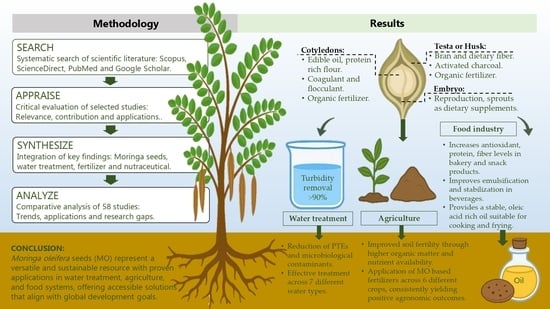
Graphical Abstract

1. Introduction

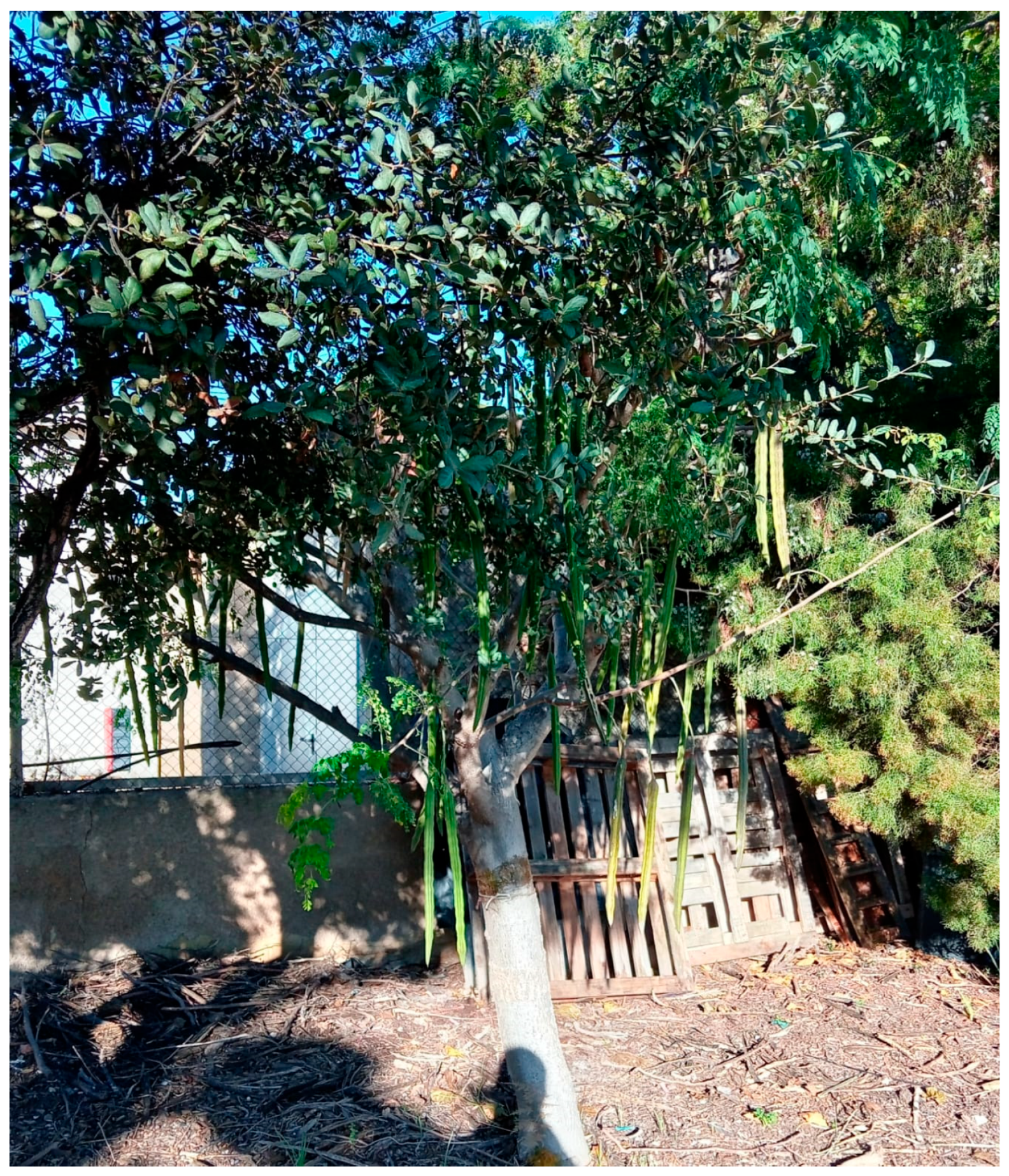
The species Moringa oleifera Lam. (family Moringaceae), native to the foothills of northern India (Figure 1), is increasingly recognized as a valuable resource for improving the well-being of low-income and rural communities across Asia, North Africa and Latin America due to its remarkable ability to adapt to harsh climatic conditions, low-fertility soils and drought-prone environments [1]. For smallholder farmers in developing countries, the tree supports diversified production systems, provides nutrient-rich foliage and seeds, and enhances household food security, nutrition and income generation [2,3]. In particular, the leaves and seeds contain high concentrations of proteins, vitamins and minerals that address chronic micronutrient deficiencies, making moringa a promising tool for nutrition-sensitive agriculture and sustainable rural development [4].
La Moringa oleifera (MO) has been extensively researched for its leaves but far less so for its seeds. Although the vegetative parts of the tree have been widely promoted for nutrition and health in low-income regions, the seeds remain an under-employed resource despite their rich compositional profile and functional potential [5,6]. Current literature highlights the emerging potential of MO seeds as nutraceutical ingredients, natural coagulants for water purification, and organic fertilizers that enhance soil quality and crop productivity. These applications align closely with global sustainable development goals, particularly in regions facing resource limitations [7]. This research gap in seed-specific investigation justifies the focus of the present review on the multifunctional value of MO seeds, with particular emphasis on their environmental, agricultural and food-industry applications.
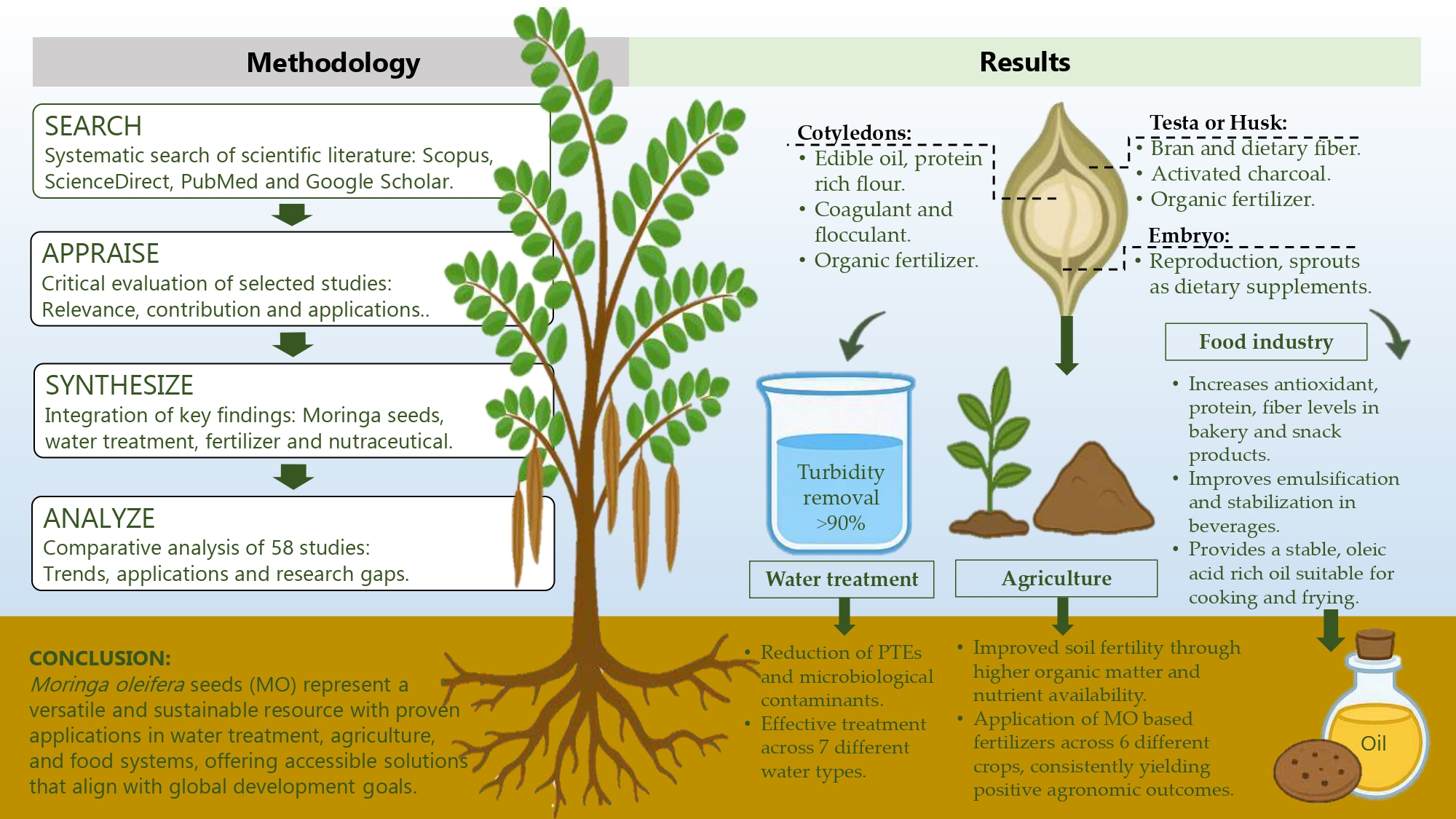
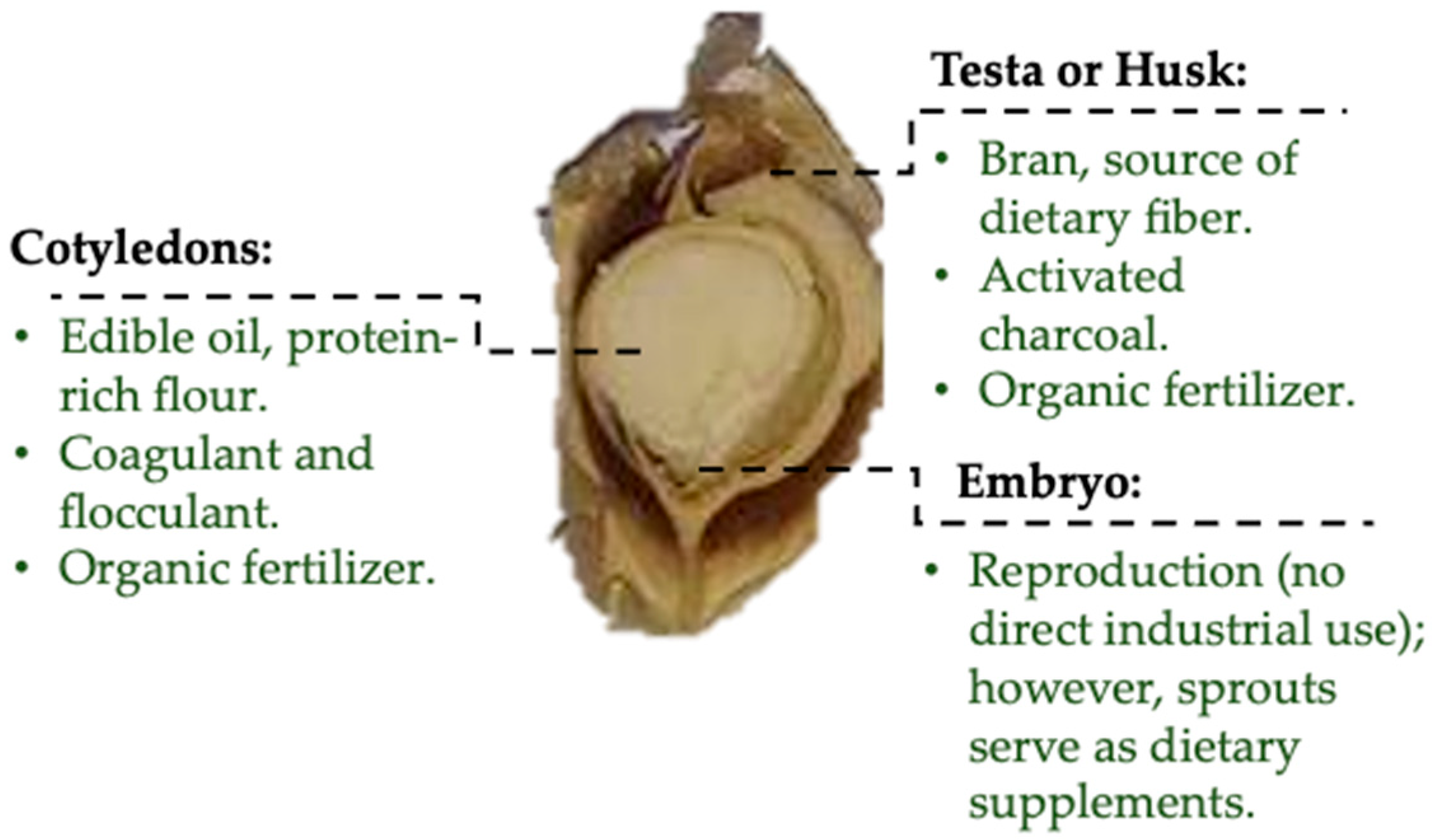
Recent comprehensive analyses reveal that MO seeds contain a rich repertoire of proteins, lipids, minerals, and bioactive phytochemicals, supporting their use across fields ranging from human nutrition to environmental remediation. As illustrated in Figure 2, the internal structure of the seed comprises three key components: cotyledons, testa (husk), and embryo, each with distinct biochemical and functional roles. The cotyledons, rich in edible oil and proteins, serve as natural coagulants and organic fertilizers; the testa provides dietary fiber and can be converted into activated carbon or compost; and the embryo, though mainly reproductive, contributes to the production of nutrient-dense sprouts used as dietary supplements [6].
Based on the identified knowledge gaps, this review aims to provide a comprehensive and structured synthesis of the scientific evidence on MO seeds, emphasizing their emerging relevance in sustainable food systems and environmental management. The main objectives are to (i) compile and critically evaluate recent research on the functional, agricultural, and environmental uses of moringa seeds; (ii) identify technological advances and limitations associated with their large-scale application; and (iii) highlight future research opportunities that may contribute to the transition toward more sustainable and circular bioeconomies. By addressing these aspects, the review seeks to clarify the current state of knowledge and demonstrate the importance of MO seeds as a versatile, eco-efficient, and socio-economically valuable resource.

2. Methodology

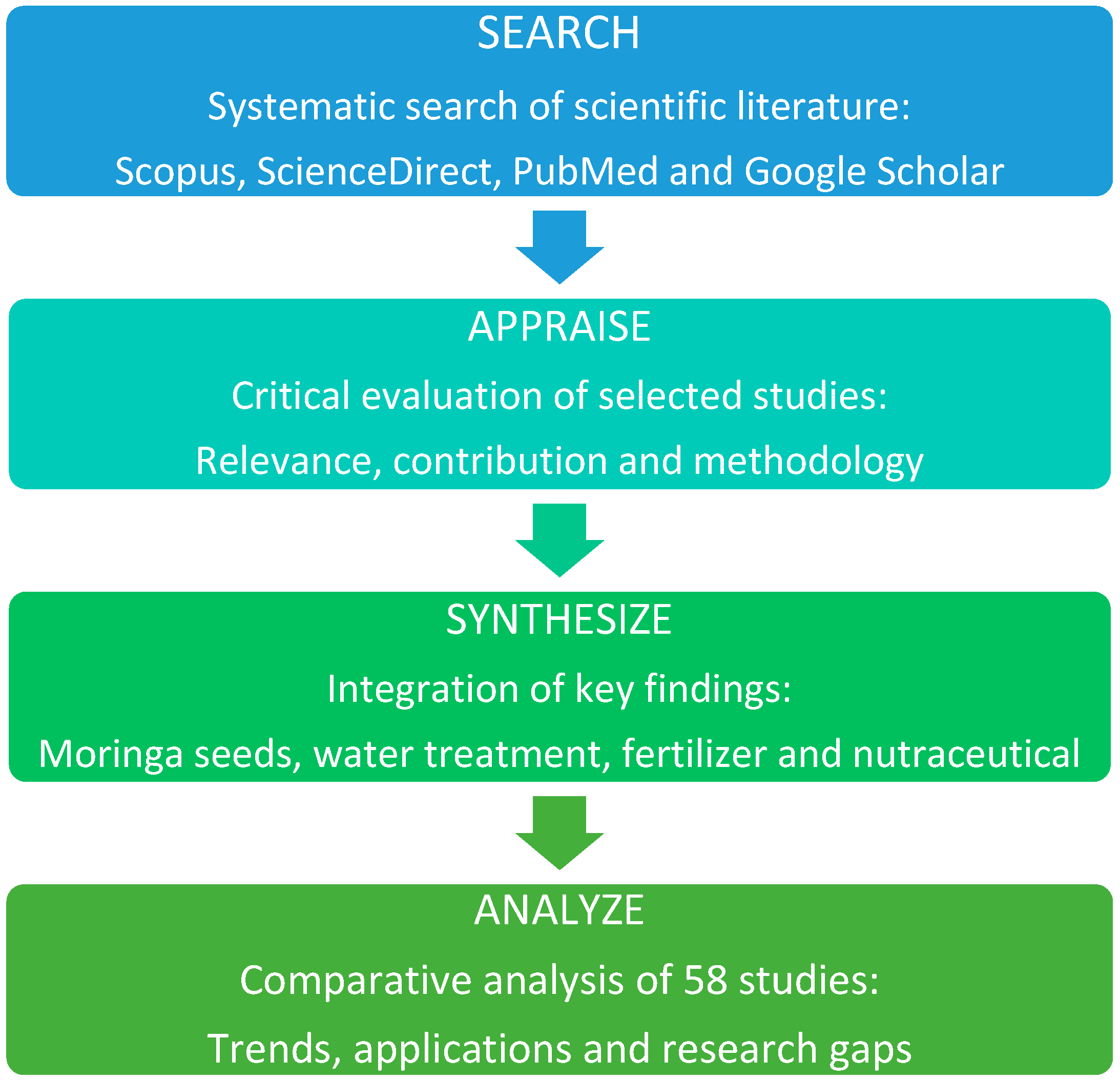
The review was conducted following the SALSA (Search, Appraise, Synthesize, Analyze) framework proposed by Booth [8], which is particularly suitable for qualitative and integrative reviews that aim to map and critically interpret evidence rather than quantify it. Unlike PRISMA, which requires rigid inclusion protocols and is designed for meta-analytical or clinical studies, SALSA allows greater flexibility and depth of interpretation, which is essential for interdisciplinary topics such as the multiple uses of Moringa oleifera seeds across water treatment, agriculture, and food science (Figure 3). SALSA was selected for its flexibility in interdisciplinary synthesis.
Based on inclusion and exclusion criteria, only peer-reviewed scientific articles published between 2011 and 2025, written in English or Spanish, and indexed primarily in Scopus, Web of Science, ScienceDirect, PubMed and Google Scholar were considered. Both original research papers and review articles were included if they provided empirical or analytical data on the use of MO seeds in at least one of the three target domains: (i) water purification, (ii) organic fertilization and soil productivity, and (iii) applications in food industry. Publications were excluded if they (a) focused exclusively on leaves, roots, or bark; (b) discussed pharmacological or toxicological aspects unrelated to applied uses; or (c) lacked methodological transparency or peer review.
During the Search phase, approximately 80 documents were initially retrieved using combinations of keywords such as “Moringa oleifera seeds,” “water treatment,” “coagulant,” “organic fertilizer,” “nutraceutical,” and “functional food.” In the Appraise phase, each document was screened for methodological quality, thematic relevance, and citation impact, leading to the selection of 58 references that met all inclusion criteria and demonstrated clear scientific validity. In the Synthesize phase, findings were categorized into three thematic sections reflecting the main applications of MO seeds: (1) as a bio-coagulant for water treatment, (2) as a component of organic fertilizers and soil amendments, and (3) as a nutraceutical and functional food ingredient. Finally, during the Analyze phase, the selected studies were compared to identify convergences, limitations, and emerging trends, providing an integrated perspective on current knowledge and future research needs.
This structured yet flexible approach ensured a comprehensive, critical, and up-to-date synthesis of the literature, consolidating evidence on MO seeds as a responsible and multifunctional resource with potential contributions to the United Nations Sustainable Development Goals.

3. Applications and Uses of Moringa oleifera Seeds for Water Treatment

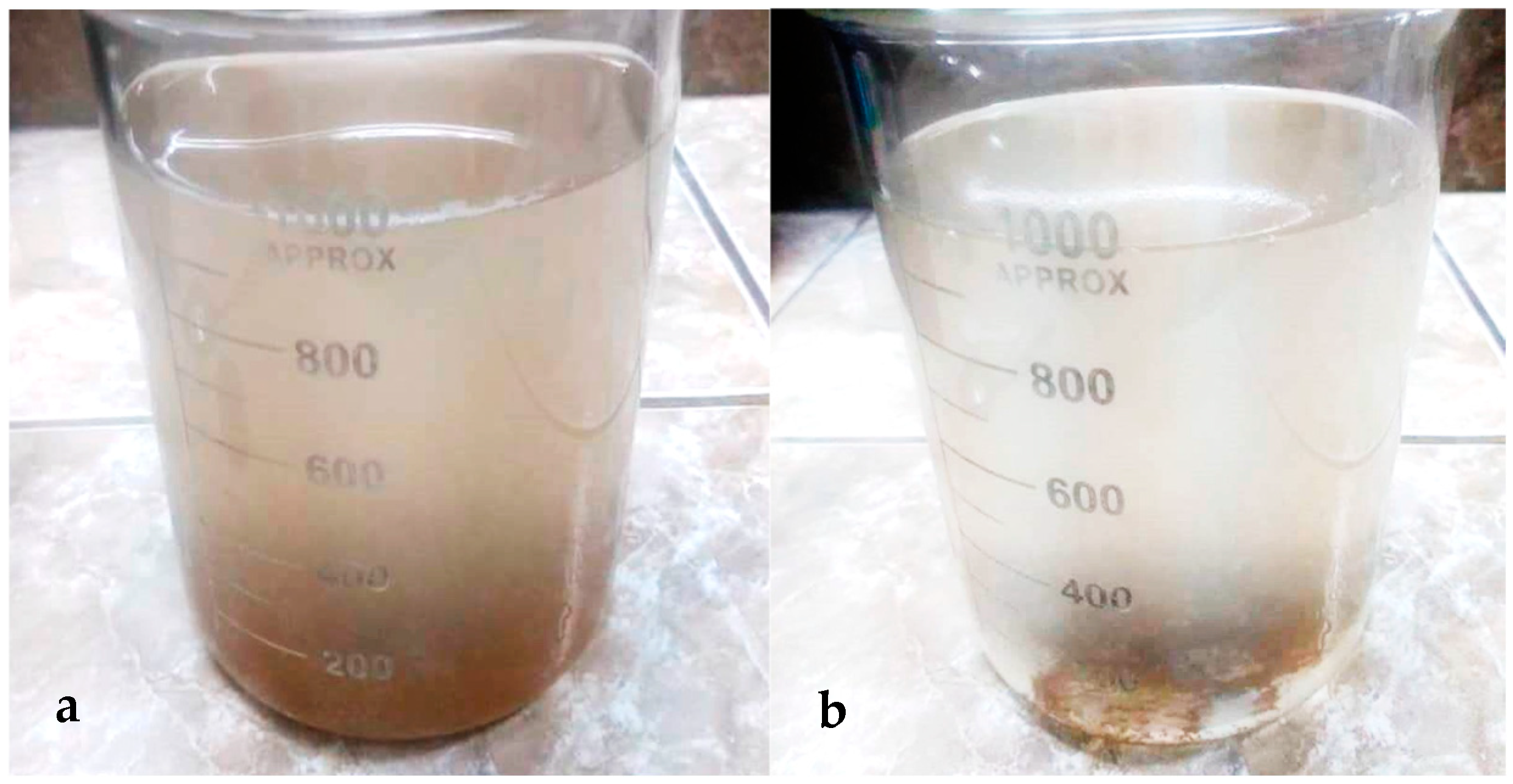
Moringa oleifera has emerged as one of the most promising sustainable alternatives for water treatment due to its high coagulation–flocculation efficiency, renewable availability, and biodegradability [9]. Experimental studies have identified in MO seeds a set of low-molecular-weight cationic proteins, natural polyelectrolytes, and phenolic compounds that act as the main coagulating agents by neutralizing the negative charges of colloidal particles suspended in water. This electrostatic mechanism promotes the aggregation and sedimentation of suspended solids, resulting in substantial reductions in turbidity (Figure 4), suspended matter, and organic contaminants across a wide range of water matrices—including surface water, graywater, wastewater and synthetic waters used in laboratory simulations [10,11].
Most reported applications have been carried out in developing regions of Africa, Asia, and Latin America, where access to conventional water treatment systems remains limited. The seeds are commonly used in two forms: as powdered coagulants derived from crushed and defatted kernels, or as aqueous extracts prepared by maceration or agitation. Both formulations have demonstrated high clarification efficiency and minimal environmental impact. These findings reinforce the potential of this species as viable and locally available alternative for water purification, particularly in rural or resource-constrained settings [9,12].
Table 1 summarizes key studies that have explored the application of moringa seeds in the treatment of different water types. Taken together, these investigations highlight their broad applicability in diverse environmental contexts.
In a controlled laboratory study, MO seeds sourced from Herbyzone Farms (Lahore, Pakistan) were evaluated for drinking water treatment using synthetic kaolin-based turbid water (80 NTU) and compared with aluminum sulfate as a conventional coagulant. The seeds, sun-dried and milled into different particle sizes (<0.25 to 2.0 mm), were tested at doses of 100–350 mg L−1 using both tap and distilled water under controlled physicochemical conditions. Optimal coagulation–flocculation performance was achieved with particles between 0.25 and 0.8 mm, reducing turbidity to approximately 5 NTU and completely removing Escherichia coli K12 within three hours of sedimentation. The results meet WHO drinking water standards [13].
A field-based experimental investigation assessed the effectiveness of powdered moringa seeds as a natural coagulant for turbidity removal in water from the Río Caplina (Tacna, Peru). The seeds underwent manual pulverization and were applied within a 2 × 3 factorial design testing coagulant dose, NaOH concentration and mixing time under actual river water physicochemical conditions. Remarkably, the treatment achieved turbidity removal efficiencies of up to 97.77%, while all other measured parameters complied with Peruvian potable-water quality standards [14].
In another study, surface water samples were collected from three sites along the Dong Nai River in Vietnam, with average initial concentrations of pH 7.1, turbidity 148 NTU, chemical oxygen demand (COD) 49 mg/L, and total Kjeldahl nitrogen (TKN) 4.6 mg/L. Powdered MO seeds were used as bio-coagulants at varying dosages and mixing conditions to evaluate their coagulation–flocculation efficiency. The results demonstrated significant improvement in water clarity, achieving turbidity reductions between 88% and 95% under optimal conditions [15].
In a field-scale study using water stored in rustic ponds, MO seeds were evaluated, both alone and in combination with aluminum sulfate (alum), as primary coagulants for turbidity removal. Four treatments were tested: MO extract alone, alum alone, and two extract–alum mixtures, with sedimentation intervals of 60, 120, and 180 min. The combined treatment at a 70:30 (w/w) ratio of seed extract to alum achieved the highest performance, removing over 95% of turbidity within the first 60 min, while the pure MO extract reached a maximum of 90% only after 180 min. Notably, treatments using alum alone caused a pH decrease, which was less pronounced when the biological coagulant was incorporated [16].
On the other hand, synthetic graywater was treated using three natural coagulants derived from MO seed: seed husk, ground seed, and degreased seed. The seeds were unsheathed and sun-dried for 24 h, then the coagulants were prepared via 1 M NaCl extraction. The synthetic water simulated domestic graywater (including personal-care products). Turbidity, pH, alkalinity, and dissolved oxygen were monitored across seven time-points and coagulant types. The degreased seed extract achieved the highest removal efficiency (85%), while the husk coagulant showed 75% removal. Parameters such as pH and dissolved oxygen were influenced by coagulant type, whereas conductivity and alkalinity remained largely unaffected by time or coagulant type [17].
The literature also highlights the application of MO in the treatment of arsenic-contaminated wastewater. In this context, defatted and powdered moringa seeds were employed as a biosorbent, characterized by a high surface area and abundant hydroxyl and carboxyl functional groups responsible for metal ion binding. Batch adsorption experiments were conducted under controlled conditions of pH (4–8), dosage, and contact time. The biosorbent exhibited excellent performance, achieving up to 99% removal of arsenic (As(V)) under optimal conditions (pH 4, 2 g/200 mL dosage, and 30 min of contact time). Kinetic analysis followed a pseudo-second-order model, while equilibrium data fitted the Langmuir isotherm, indicating a monolayer adsorption mechanism [18].
Another investigation explored the dual potential of MO in wastewater treatment and sustainable agriculture. The study focused on industrial and municipal wastewater samples collected in Colombia, assessing both powdered seeds and aqueous extracts as eco-friendly coagulants. Their coagulation–flocculation performance was compared against aluminum sulfate under laboratory-controlled conditions. Results demonstrated that moringa-based coagulants achieved turbidity removal efficiencies of 85–95%, along with substantial reductions in chemical oxygen demand (COD) and total suspended solids (TSS). Furthermore, the moringa seed residue generated after treatment was successfully reused as a soil amendment, enhancing organic matter and nutrient content [19].
In laboratory trials, powdered seed cake derived from MO was employed as a natural coagulant for treatment of river and industrial wastewater containing potentially toxic elements (PTEs). The water samples, collected from industrial and river sites in Malaysia, exhibited elevated concentrations of Fe, Cu, Cd and Pb. Application of just 1% (w/v) seed cake yielded near-complete removal of iron, up to 98% removal of copper and cadmium, and a reduction of lead by approximately 78% under optimized conditions. Importantly, changes in pH, conductivity and total dissolved solids were minimal, indicating that the process did not adversely affect general water quality parameters [20].
On the other hand, industrial wastewater generated from mining activities represents one of the most challenging scenarios for coagulation–flocculation processes due to its high concentrations of suspended solids and PTEs. In this context, a study evaluated the effectiveness of MO seed paste as a natural coagulant for reducing turbidity in mining wastewater from Ecuador. The performance of moringa was compared with that of aluminum sulfate (Al2(SO4)3), a conventional chemical coagulant, under varying dosages and settling times. The moringa-based treatment achieved a turbidity reduction of over 90%, performing comparably to aluminum sulfate while preventing the formation of chemical sludge [21].
Another study evaluated the effectiveness of MO seed extract as a natural coagulant for industrial wastewater treatment using Response Surface Methodology to optimize process parameters. Synthetic wastewater was prepared with controlled levels of suspended solids, COD, and turbidity to simulate industrial effluents. The optimization considered pH, coagulant dosage, and settling time, identifying the best performance at pH 7, a dosage of 150 mg/L, and a settling time of 60 min. Under these conditions, turbidity and COD removal efficiencies reached approximately 95% and 93%, respectively [22].
Regarding the treatment of dye-contaminated waters, MO seeds (sourced from Kuala Lumpur, Malaysia) have demonstrated strong potential as a natural coagulant for industrial effluents. In laboratory-scale experiments, synthetic Congo Red dye wastewater was prepared by dissolving the dye in distilled water (1000 ppm stock solution) and adjusting the pH with NaOH or HCl. Dried and powdered moringa seeds were applied in jar tests under varying drying and extraction conditions to evaluate coagulation performance. The air-dried and saline-extracted seed powder achieved up to 94% turbidity and 70% COD removal, indicating that drying and extraction parameters play a crucial role in preserving the cationic proteins responsible for dye and particle removal [23].
Similarly, synthetic-dye-contaminated solutions were treated using extracts from MO seeds in comparison with conventional alum coagulant. In this study, a stock solution of the anionic azo dye Mordant Black 11 (MB11) was prepared and parameters such as coagulant dose (100–600 mg/L), pH (3–11), initial dye concentration (100–350 mg/L), saline concentration (NaCl 0.2–2 M) and sedimentation time (15–90 min) were varied. Maximal removal efficiencies recorded were 98.65% for alum, 80.12% for the aqueous seed extract and 95.02% for the saline seed extract at around pH 6.5 and doses of 400–500 mg/L. The proposed mechanism of removal combined adsorption and charge neutralization, with the seed extracts showing greater pH-versatility and faster sedimentation than alum [24].
Another study employed MO seed extract as both a reducing and stabilizing agent in the green synthesis of silver nanoparticles (AgNPs) for water detoxification. The synthesis was conducted under sunlight irradiation, producing stable nanoparticles with average sizes between 20 and 40 nm. These moringa-derived AgNPs exhibited strong antibacterial activity against E. coli and S. aureus, as well as remarkable photocatalytic degradation efficiency for methylene blue dye under visible light exposure, achieving up to 96% removal within 60 min. The study highlighted the dual functionality of moringa seed extract, as a natural bioreductant and as a source of capping biomolecules [25].
Regarding wastewater generated by the poultry industry, MO seed extract has demonstrated strong potential as a natural treatment agent. In experimental applications at concentrations of 10, 15, and 20 mg/L to wastewater samples collected from poultry processing ponds, significant reductions were achieved in key parameters such as turbidity, BOD5, COD, total suspended solids, coliforms, ammonia, oils, and fats. The treated effluent met improved water quality standards, making it suitable for multiple non-potable reuse purposes [26].
Similarly, experiments using synthetic dairy wastewater demonstrated that powdered MO seeds possess a high adsorption capacity, attributed to their porous structure and the presence of active functional groups such as hydroxyl and carboxyl moieties. Under optimized pH and dosage conditions, removal efficiencies reached up to 95% for turbidity and 94% for color, confirming their strong effectiveness in eliminating organic and suspended contaminants. These findings emphasize the potential of MO seed powder as a sustainable and biodegradable adsorbent suitable for treating effluents with high organic loads [27].
Another study evaluated the use of moringa seed extract together with chitosan as natural coagulants in fish-farm wastewater. A central composite design of Response Surface Methodology (RSM) was employed to optimize parameters such as pH, coagulant dosage, mixing time and settling time. Results showed that chitosan achieved up to 84% turbidity removal at an optimal condition of 100 mg/L dosage, pH 6, 15 min mixing, 10 min settling, whereas the moringa seed extract reached 47% turbidity removal at 400 mg/L dosage, pH 10, 15 min mixing and 10 min settling. These findings suggest that while chitosan performs better under the tested conditions, moringa seed extract remains a viable biodegradable option for aquaculture wastewater treatment [28].
On the other hand, MO residues such as seed husks and mature pods have also been employed in water treatment applications. A notable example is the use of activated carbon derived from moringa seed husks, chemically activated with phosphoric acid (H3PO4), for the adsorption of methylene blue dye from aqueous solutions. The process was optimized using RSM to evaluate the effects of pH, contact time, and adsorbent dosage. The resulting activated carbon exhibited a high surface area and porosity, achieving up to 99.4% removal of methylene blue and a maximum adsorption capacity of 436.68 mg/g [29]. Similarly, activated carbon derived from moringa seed husks has been chemically activated and used for the adsorption of Reactive Black and Basic Blue dyes from textile wastewater. The material showed high porosity, large surface area, and active-oxygen-containing groups, achieving high dye removal efficiencies under varying pH, dosage, and contact time [30].
In addition to dye adsorption, MO seed residues have been valorized for the removal of toxic metals from contaminated water. In this study, defatted moringa seed waste was modified with activated carbon to enhance its surface area and adsorption performance. The composite adsorbent was evaluated for the removal of PTEs such as arsenic (As), cadmium (Cd), and lead (Pb) under batch conditions simulating conventional water treatment processes. The modified material exhibited significant adsorption efficiency, achieving over 90% removal for all tested metals even after several reuse cycles, maintaining its structural integrity and reusability [31]. Finally, cellulose derived from moringa seeds has been characterized for application in filtration systems, demonstrating the broad valorization potential of this plant resource [32].
Taken together, these studies validate the availability, ecological value, and multipurpose potential of MO for water purification, particularly in rural communities or regions with limited infrastructure. Nonetheless, challenges remain regarding process standardization, product scalability, and health safety due to the presence of secondary metabolites [33].

4. Applications and Uses of M. oleifera Seeds for Agricultural Fertilization

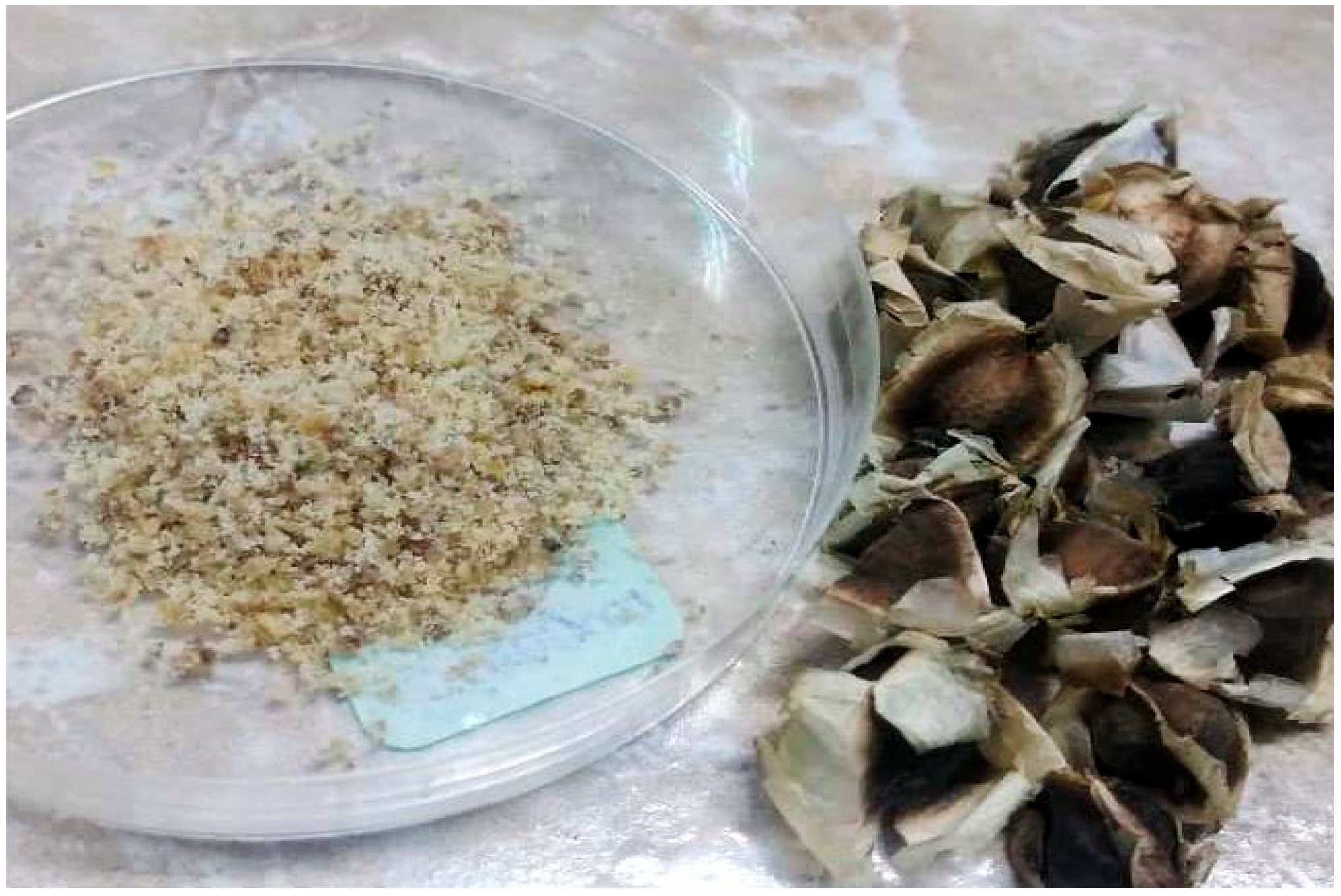
The application of Moringa oleifera-based products as eco-friendly fertilizers represents a promising and viable alternative to the use of conventional chemical fertilizers in agriculture. Recent research has demonstrated the plant’s ability to improve soil fertility, yielding favorable results in crop productivity and offering the potential for a more adapted and resilient organic farming system (Figure 5).
Two complementary studies have evaluated the effects of MO seed cake on Citrus sinensis (Valencia orange) orchards, focusing on soil fertility and fruit quality. The first investigation assessed the combined application of moringa seed cake and compost, reporting notable improvements in postharvest fruit quality and shelf life compared to conventional fertilization methods, likely due to enhanced plant physiology and the accumulation of protective compounds [34]. In another study, MO seed cake was applied both individually and in combination with compost, demonstrating significant enhancement of soil physicochemical properties, such as organic carbon, total nitrogen, and cation exchange capacity, as well as increased nutrient uptake, fruit yield, and postharvest quality [35]. Together, these findings confirm the potential of moringa seed residues as sustainable biofertilizers that simultaneously improve soil health and the productivity of citrus orchards.
Field trials conducted in Egypt during the 2020–2022 seasons evaluated the use of MO seed cake as an organic fertilizer for lettuce (‘Balady’) cultivated in sandy soil. Its performance was compared with vermicompost, ammonium sulfate, and foliar applications of moringa leaf extract at 5 and 10 g/L. The seed cake significantly improved plant growth and nutrient content, achieving yields similar to ammonium sulfate. The best results in overall growth and chlorophyll content, with reduced nitrate levels, were obtained by combining seed cake with 10 g/L foliar extract [36].
A recent field study assessed the combined application of MO seed cake and vermicompost on soil fertility, microbial activity, and productivity of “Anna” apple (Malus domestica) orchards. Treatments consisted of individual and mixed applications of both organic amendments at different ratios, compared with traditional farmyard manure. Results revealed that the integration of moringa seed cake and vermicompost significantly enhanced soil enzymatic and microbial activity, increased the concentration of essential nutrients (N, P, K, Ca, Mg), and improved fruit set, yield, and quality parameters such as firmness and total soluble solids. These findings indicate that moringa seed cake, particularly when combined with vermicompost, represents a promising organic fertilizer strategy for sustainable orchard management and long-term soil health improvement [37].
On the other hand, recent research has explored the potential of MO seed extract as a biostimulant for mitigating nitrogen-related soil pollution. Field experiments conducted on the Loess Plateau demonstrated that moringa seed extract effectively reduced nitrate accumulation and nitrous oxide (N2O) emissions by enhancing soil microbial nitrification–denitrification balance. The treatment also improved nitrogen use efficiency and maintained crop yield performance [38].
A greenhouse study (2020–2022) assessed the use of moringa seed cake (MSC), alone or combined with a microbial biostimulant, on Antirrhinum majus grown in nutrient-poor sandy soil. The best vegetative and floral performance was obtained with 30 g MSC + 5 mL biostimulant per pot, while lower doses mainly enhanced root and shoot growth. Treatments also improved pigments, proteins, sugars, and mineral content, confirming MSC, especially with microbial stimulation, as an effective organic fertilizer for ornamental plants in low-fertility soils [39].
Similarly, field experiments demonstrated that the application of both hexane-extracted and aqueous moringa seed cake improved soil mineral content, including potassium, magnesium, calcium, phosphorus, and nitrogen. Maize yield increased notably from about 1.3 kg in the control plots to between 4.7 kg and 5.6 kg in treated plots. Enhanced soil microbial activity was also observed, facilitating nutrient mineralization and availability. These results position moringa seed cake as a viable and competitive alternative to synthetic fertilizers that enhances soil fertility and supports modern organic farming systems [40].
Finally, MO seeds have also demonstrated great potential in agriculture, particularly through the reuse of treatment by-products as soil amendments. While their powdered or aqueous extracts are commonly applied as natural coagulants for removing turbidity and organic pollutants from municipal and industrial wastewater, the resulting moringa sludge can be repurposed to improve soil quality. When incorporated into agricultural soils, this residue enhances organic matter content, increases the availability of essential nutrients such as nitrogen, phosphorus, and potassium, and stimulates beneficial microbial activity. This integrated approach not only reduces waste from the treatment process but also contributes to sustainable soil management and nutrient cycling, aligning with circular bioeconomy principles [19].
The agricultural potential of MO seed derivatives has been extensively investigated across a variety of crop systems, highlighting their role as sustainable biofertilizers and soil amendments. As summarized in Table 2, these studies demonstrated consistent improvements in soil fertility, nutrient cycling, and crop performance when moringa seed cake, extracts, or sludge residues are incorporated into cultivation practices. Positive outcomes have been reported for diverse crops, including lettuce, maize, citrus, apple, and ornamental plants, showing enhanced plant growth, fruit quality, and soil physicochemical properties. Furthermore, moringa-based amendments contribute to reducing nitrate accumulation and greenhouse gas emissions, reinforcing their relevance through eco-friendly farming methods.

5. Applications and Uses of Moringa Oleifera Seeds as a Nutraceutical in the Food Industry

Moringa oleifera seeds possess a nutritional profile comparable to that of high-value legumes, being rich in high-quality proteins, unsaturated fatty acids (particularly oleic acid) and a diverse range of bioactive compounds such as tocopherols and sterols [5,41]. In addition, the seeds display a complete amino acid profile, significant concentrations of essential minerals such as calcium, potassium, magnesium, and iron, and an abundance of bioactive phytochemicals including isothiocyanates and phenolic compounds. These constituents contribute to antioxidant, hypocholesterolemic, and antihyperglycemic effects [6].
Moreover, regular consumption of moringa-enriched foods has been associated with enhanced immune regulation and reduced oxidative stress, reinforcing their functional relevance in human nutrition. The bioactive compounds present in MO seeds contribute to immunomodulatory effects by regulating cytokine expression, stimulating macrophage activity, and enhancing antioxidant enzyme defenses. These mechanisms collectively support immune homeostasis and protect against chronic inflammation and oxidative damage. Such findings highlight the potential of MO seeds as a natural source for the formulation of functional and nutraceutical foods [42].
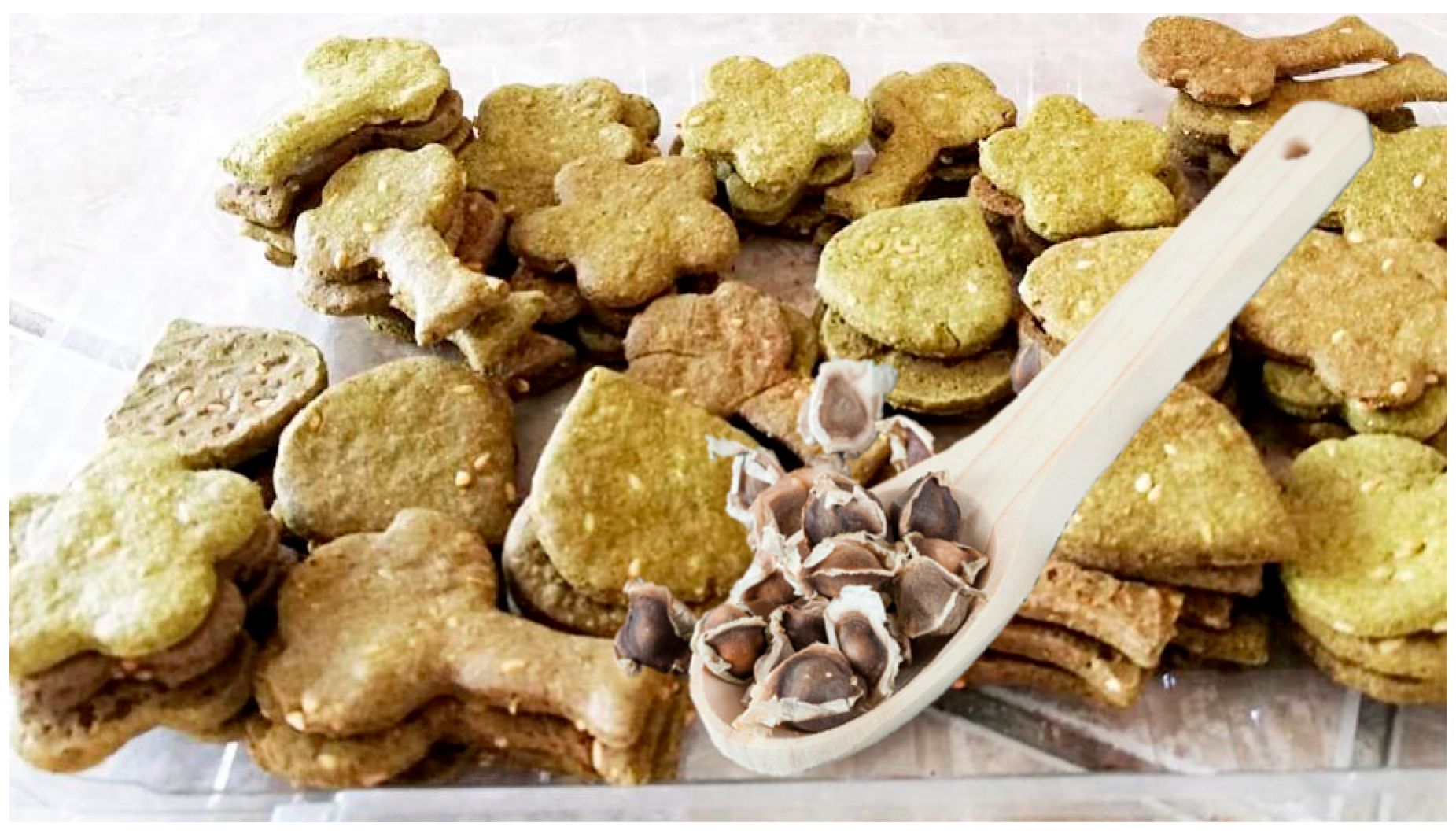
The incorporation of MO seed derivatives in bakery products has been extensively investigated for its nutritional and functional advantages. Moringa seed powder and extracts enhance protein, fiber, and antioxidant levels in bread, cookies (Figure 6), and cakes while maintaining favorable sensory properties and consumer acceptance [43]. The use of seed flour in cookie formulations improves protein digestibility, antioxidant capacity, and the proportion of unsaturated fatty acids, with moderate inclusion levels preserving desirable texture and color [44]. Similarly, seed husk flour used as bran in fortified mini muffins significantly increased dietary fiber and antioxidant content without compromising overall quality [45].
The application of MO seed derivatives has extended to the formulation of beverages, dairy products, and other liquid formulations, driven by their excellent techno-functional and bioactive properties. Seed protein isolates and hydrolysates exhibit high solubility, emulsifying, and foaming capacities, making them suitable for functional drinks and dairy-based beverages while improving nutritional and antioxidant profiles [46,47]. Moreover, moringa seed residue proteins can form stable Pickering emulsions influenced by pH and ionic strength, and their interaction with tannic acid enhances stability and antioxidant capacity [48,49].
On the other hand, MO seed oil has gained attention as a nutritious edible oil rich in monounsaturated fatty acids, particularly oleic acid (>70%), which confer excellent oxidative stability and a favorable lipid profile compared with conventional vegetable oils [7]. Supercritical CO2 extraction yields high-quality oil with preserved antioxidants and minimal degradation of bioactive compounds, supporting its classification as a functional edible oil with antioxidant and anti-inflammatory potential [50,51,52].
Beyond its compositional advantages, MO seed oil has demonstrated remarkable thermal and oxidative stability in frying applications. Comparative studies have shown that it produces fewer polar compounds and trans-fatty acids than conventional oils such as sunflower, canola, palm or soybean, while maintaining its antioxidant capacity and desirable sensory properties throughout multiple frying cycles. Moreover, its performance is comparable to or even superior to olive oil under high-temperature conditions, confirming its suitability as a nutritious and stable option for culinary use [53,54,55].
With respect to germination, MO seeds have been identified as a promising strategy to enhance their nutritional and functional quality. Germinated seeds exhibit higher levels of proteins, lipids, glucosinolates, and phenolic compounds, resulting in a marked increase in antioxidant capacity compared with raw seeds [56]. This bioprocessing approach not only improves nutrient bioavailability but also reduces potential antinutritional factors, making moringa sprouts an attractive ingredient for fortified foods.
Regarding nutritional factors, despite their numerous advantages, MO seeds also contain certain antinutritional components such as phytates, tannins, and saponins, which may reduce the bioavailability of essential minerals like iron, zinc, and calcium if not properly processed. Likewise, the presence of lectins, trypsin inhibitors, and oxalates can negatively influence protein digestibility when appropriate processing techniques are not applied [5,57]. In addition to these antinutrients, other studies have reported the presence of secondary metabolites such as isothiocyanates and glucosinolates, which may exert dual effects. On the one hand, they contribute antioxidant and antimicrobial properties; on the other, they can act as antinutritional factors when consumed in high concentrations [41]. Applying appropriate technological treatments is essential to reduce antinutritional and secondary metabolites in MO seeds. Fermentation and soaking enhance mineral bioavailability and reduce tannins, phytates, and saponins, while roasting denatures lectins and protease inhibitors. Aqueous extraction and mild solvent defatting further remove bitter compounds and lipids [5,46,57,58]. Moderate thermal processing also deactivates enzymes producing unstable isothiocyanates and decreases glucosinolate concentrations [6,41].
Finally, Moringa oleifera seeds emerge as a versatile and responsible ingredient for functional food development. Their rich composition in proteins, bioactive compounds, and healthy lipids enables multiple applications in bakery products, beverages, and edible oils [59]. Table 3 summarizes the main functional ingredients, applications, and technological aspects reported in recent studies.

6. Conclusions

The species Moringa oleifera Lam. represents a multifunctional resource of high scientific and practical relevance due to the wide applicability of its seeds across different sectors. In the environmental field, their use as natural coagulants, adsorbents, and biosorbents has proven effective for removing turbidity, dyes, and potentially toxic elements from various water matrices, including surface, industrial, mining, and domestic effluents, offering a biodegradable and accessible alternative to conventional chemical treatments.
In agriculture, moringa seed derivatives have shown significant potential as organic fertilizers and soil amendments, improving nutrient availability, crop productivity, and soil biological activity while reducing dependence on synthetic inputs.
In the food industry, MO seeds have been successfully incorporated into bakery products, beverages, dairy preparations, and emulsified systems, enhancing nutritional value while maintaining sensory quality. Moringa oil, mainly obtained through supercritical CO2 extraction, stands out for its oxidative stability, high oleic acid content, and suitability for cooking and frying. In addition, moringa sprouts derived from seed germination provide a nutrient-rich and antioxidant alternative for food fortification.
Overall, these findings consolidate MO seeds as a sustainable and versatile resource for water treatment, agriculture, and food production, in alignment with global development goals.

Author Contributions

D.J.M.; methodology, D.J.M.; formal analysis, D.J.M.; investigation, D.J.M. and C.C.R.; data curation, D.J.M.; writing-original draft preparation, D.J.M., C.C.R. and D.F.L.; writing-review and editing, D.J.M., C.C.R. and D.F.L.; supervision, C.C.R. and D.F.L. All authors have read and agreed to the published version of the manuscript.

Funding

This research was funded by the National Council for Science, Technology and Technological Innovation (CONCYTEC) and the National Program for Scientific Research and Advanced Studies (PROCIENCIA) within the framework of Call E0772023-01-BM-V2 “Inter-institutional Alliances for Doctoral Programs,” grant number PE501094216-2024.

Institutional Review Board Statement

Not applicable.

Informed Consent Statement

Not applicable.

Data Availability Statement

Data are contained within the article.

Acknowledgments

To Ronald Gutierrez-Llantoy, adjunct researcher at Pontifical Catholic University of Peru, for supporting the writing and review process and providing some figure and table formatting suggestions.

Conflicts of Interest

The authors declare no conflicts of interest.

References

  1. Bania, J.K.; Deka, J.R.; Hazarika, A.; Das, A.K.; Nath, A.J.; Sileshi, G.W. Modelling habitat suitability for Moringa oleifera and Moringa stenopetala under current and future climate change scenarios. Nat. Sci. Rep. 2023, 13, 20221. [Google Scholar] [CrossRef] [PubMed]
  2. Oduro, I.; Ellis, W.O.; Owusu, D. Nutritional potential of two leafy vegetables: Moringa oleifera and Ipomoea batatas leaves. Sci. Res. Essays 2008, 3, 57–60. [Google Scholar]
  3. El Bilali, H.; Guimbo, I.D.; Nanema, R.K.; Falalou, H.; Kiebre, Z.; Rokka, V.-M.; Tietiambou, S.R.F.; Nanema, J.; Dambo, L.; Grazioli, F.; et al. Research on Moringa (Moringa oleifera Lam.) in Africa. Plants 2024, 13, 1613. [Google Scholar] [CrossRef]
  4. Sundaram, D.; Babu, N.K. Moringa oleifera: A review on nutritive significance and its medicinal application for children. Int. J. Community Med. Public Health 2024, 12, 610–615. [Google Scholar] [CrossRef]
  5. Leone, A.; Spada, A.; Battezzati, A.; Schiraldi, A.; Aristil, J.; Bertoli, S. Moringa oleifera Seeds and Oil: Characteristics and Uses for Human Health. Int. J. Mol. Sci. 2016, 17, 2141. [Google Scholar] [CrossRef]
  6. Gautier, A.; Duarte, C.M.; Sousa, I. Moringa oleifera Seeds Characterization and Potential Uses as Food. Foods 2022, 11, 1629. [Google Scholar] [CrossRef]
  7. Dzuvor, C.K.O.; Pan, S.; Amanze, C.; Amuzu, P.; Asakiya, C.; Kubi, F. Bioactive components from Moringa oleifera seeds: Production, functionalities and applications—A critical review. Crit. Rev. Biotechnol. 2021, 42, 271–293. [Google Scholar] [CrossRef]
  8. Booth, A.; Martyn-St James, M.; Clowes, M.; Sutton, A. Systematic Approaches to a Successful Literature Review; SAGE Publications: London, UK, 2021. [Google Scholar]
  9. Yamaguchi, N.U.; Cusioli, L.F.; Quesada, H.B.; Ferreira, M.E.C.; Fagundes-Klen, M.R.; Vieira, A.M.S.; Gomes, R.G.; Vieira, M.F.; Bergamasco, R. A review of Moringa oleifera seeds in water treatment: Trends and future challenges. Process. Saf. Environ. Prot. 2021, 147, 405–420. [Google Scholar] [CrossRef]
  10. Chales, G.G.; Tihameri, B.S.; Milhan, N.V.M.; Koga-Ito, C.Y.; Antunes, M.L.P.; dos Reis, A.G. Impact of Moringa oleifera Seed-Derived Coagulants Processing Steps on Physicochemical, Residual Organic, and Cytotoxicity Properties of Treated Water. Water 2022, 14, 2058. [Google Scholar] [CrossRef]
  11. Al-Jadabi, N.; Laaouan, M.; El Hajjaji, S.; Mabrouki, J.; Benbouzid, M.; Dhiba, D. The Dual Performance of Moringa Oleifera Seeds as Eco-Friendly Natural Coagulant and as an Antimicrobial for Wastewater Treatment: A Review. Sustainability 2023, 15, 4280. [Google Scholar] [CrossRef]
  12. Cedillo-Portillo, J.J.; Ponce-González, A.; González-Coronel, V.J.; Vega-Sánchez, M.; Zayas-Pérez, M.T.; Soriano-Moro, G. Utilización de Moringa oleífera como un coagulante-floculante natural para la descontaminación de agua. RD-ICUAP 2024, 10, 224–235. [Google Scholar] [CrossRef]
  13. Shah, A.; Manning, G.; Zakharova, J.; Arjunan, A.; Batool, M.; Hawkins, A.J. Particle size effect of Moringa oleifera Lam. seeds on the turbidity removal and antibacterial activity for drinking water treatment. Environ. Chem. Ecotoxicol. 2024, 6, 370–379. [Google Scholar] [CrossRef]
  14. Díaz Pilco, G.; Estrada Cárdenas, F. Efecto de la semilla de la Moringa oleífera en polvo como coagulante natural para la remoción de la turbidez del agua del río Caplina, Perú. Rev. Soc. Quím. Perú 2024, 90, 55–64. [Google Scholar] [CrossRef]
  15. Nhut, H.T.; Hung, N.T.Q.; Lap, B.Q.; Han, L.T.N.; Tri, T.Q.; Bang, N.H.K.; Hiep, N.T.; Ky, N.M. Use of Moringa oleifera seeds powder as bio-coagulants for the surface water treatment. Int. J. Environ. Sci. Technol. 2020, 18, 2173–2180. [Google Scholar] [CrossRef]
  16. Moreno-Cabrera, G.A.; Alvarez-Arteaga, G.; Orozco-Hernández, M.E.; Reyes-Zuazo, M.A. Tratamiento primario de aguas almacenadas en estanques rústicos mediante la aplicación de coagulantes químicos y biológicos. Ecosist. Recur. Agropec. 2021, 8, 18. [Google Scholar] [CrossRef]
  17. Peña-Guzmán, C.; Ortiz-Gutierrez, B.E. Evaluation of Three Natural Coagulant from Moringa Oleifera Seed for the Treatment of Synthetic Greywater. Civ. Eng. J. 2022, 8, 3842–3853. [Google Scholar] [CrossRef]
  18. Agunwamba, J.C.; Amu, A.M.; Nwonu, D.C. An efficient biosorbent for the removal of arsenic from a typical urban-generated wastewater. Environ. Monit. Assess. 2022, 194, 911. [Google Scholar] [CrossRef]
  19. Herrera, J.C.G.; Ovallos, C.A.M.; Agudelo-Castañeda, D.M.; Paternina-Arboleda, C.D. Exploring Moringa oleifera: Green Solutions for Sustainable Wastewater Treatment and Agricultural Advancement. Sustainability 2024, 16, 9433. [Google Scholar] [CrossRef]
  20. Shan, T.C.; Al Matar, M.; Makky, E.A.; Ali, E.N. The use of Moringa oleifera seed as a natural coagulant for wastewater treatment and heavy metals removal. Appl. Water Sci. 2016, 7, 1369–1376. [Google Scholar] [CrossRef]
  21. Cobos, A.G.Z.; Gutiérrez, J.; Caballero, P. Use of Moringa Oleifera as a Natural Coagulant in the Reduction of Water Turbidity in Mining Activities. Water 2024, 16, 2315. [Google Scholar] [CrossRef]
  22. Desta, W.M.; Bote, M.E. Wastewater treatment using a natural coagulant (Moringa oleifera seeds): Optimization through response surface methodology. Heliyon 2021, 7, e08451. [Google Scholar] [CrossRef]
  23. Ibrahim, M.; Ismail, N.; Chua, B.L.; Adnan, A.S.M. Drying and extraction of Moringa oleifera and its application in wastewater treatment. J. Phys. Conf. Ser. 2021, 2120, 012002. [Google Scholar] [CrossRef]
  24. Hadadi, A.; Imessaoudene, A.; Bollinger, J.-C.; Cheikh, S.; Assadi, A.A.; Amrane, A.; Kebir, M.; Mouni, L. Parametrical Study for the Effective Removal of Mordant Black 11 from Synthetic Solutions: Moringa oleifera Seeds’ Extracts Versus Alum. Water 2022, 14, 4109. [Google Scholar] [CrossRef]
  25. Mehwish, H.M.; Rajoka, M.S.R.; Xiong, Y.; Cai, H.; Aadil, R.M.; Mahmood, Q.; He, Z.; Zhu, Q. Green synthesis of a silver nanoparticle using Moringa oleifera seed and its applications for antimicrobial and sun-light mediated photocatalytic water detoxification. J. Environ. Chem. Eng. 2021, 9, 105290. [Google Scholar] [CrossRef]
  26. Moreno, D.; Lovera, D.; Villaca, J. Tratamiento de aguas residuales de un centro de beneficio avícola usando Moringa oleifera. Rev. Inst. Investig. Fac. Minas Metal. Cienc. Geogr. 2023, 26, 1. [Google Scholar]
  27. Wagh, M.P.; Aher, Y.; Mandalik, A. Potential of Moringa oleifera seed as a natural adsorbent for wastewater treatment. Trends Sci. 2022, 19, 2019. [Google Scholar] [CrossRef]
  28. Tong, C.; Yusuf, F.H.B.C.; Derek, C. Optimization of Moringa oleifera seed extract and chitosan as natural coagulant in treatment of fish farm wastewater. Desalination Water Treat. 2022, 256, 99–113. [Google Scholar] [CrossRef]
  29. Ofgea, N.M.; Tura, A.M.; Fanta, G.M. Activated carbon from H3PO4-activated Moringa stenopetale Seed Husk for removal of methylene blue: Optimization using the response surface method (RSM). Environ. Sustain. Indic. 2022, 16, 100214. [Google Scholar]
  30. Donyanavard, P.; Tavakoli, A.; Rout, P.R.; Yuan, Q. Valorization of agricultural by-product Moringa stenopetala seed husks into activated carbon for Reactive Black and Basic Blue dye removal from textile wastewater. Biomass Convers. Biorefin. 2024, 15, 24259–24277. [Google Scholar] [CrossRef]
  31. Sera, P.R.; Diagboya, P.N.; Akpotu, S.O.; Mtunzi, F.M.; Chokwe, T.B. Potential of valourized Moringa oleifera seed waste modified with activated carbon for toxic metals decontamination in conventional water treatment. Bioresour. Technol. Rep. 2021, 16, 100881. [Google Scholar] [CrossRef]
  32. Afolabi, A.F.; Oluyamo, S.S.; Fuwape, I.A. Synthetic Characterization of Cellulose from Moringa oleifera seeds and Potential Application in Water Purification. J. Niger. Soc. Phys. Sci. 2021, 3, 140–143. [Google Scholar] [CrossRef]
  33. Noor, M.H.M.; Ngadi, N. Ecotoxicological risk assessment on coagulation-flocculation in water/wastewater treatment: A systematic review. Environ. Sci. Pollut. Res. 2024, 31, 52631–52657. [Google Scholar] [CrossRef] [PubMed]
  34. Mahmoud, T.S.; El-Hadidy, G.A.E.-M.; Shaaban, F.K.M.; Hemdan, N.A. Effect of organic fertilization with Moringa oleifera seeds cake and compost on storability of Valencia orange fruits. Egypt. J. Chem. 2021, 65, 659–667. [Google Scholar] [CrossRef]
  35. Hemdan, N.A.; Mahmoud, T.S.M.; Abdalla, A.M.; Man-Sour, H.A. Using Moringa oleifera seed cake and compost as organic soil amendments for sustainable agriculture in Valencia orange orchard. Food Agric. Soc. 2021, 9, 1–22. [Google Scholar]
  36. Mohamed, A.S.; Saleh, S.A.; Sulman, A. An attempt to use Moringa products as a natural nutrients source for Lettuce organically production. Egypt. J. Chem. 2022, 65, 1055–1063. [Google Scholar] [CrossRef]
  37. Rohim, F.M.; Mahmoud, T.S.M.; Tong, Y.; Saleh, S.A. Influence of Moringa Seed Cake and Vermicompost on Soil Microbial Activity, Growth, and Productivity of ‘Anna’ Apple Trees. Appl. Fruit Sci. 2023, 66, 1–11. [Google Scholar] [CrossRef]
  38. Yang, M.; Ban, C.; Zhao, T.; Zhao, J.; Zhou, N.; Ma, L.; Zhou, J.; Deng, X. Harnessing moringa seed extract for control of soil nitrate accumulation and nitrous oxide emissions on the Loess Plateau. Appl. Soil Ecol. 2025, 206, 105862. [Google Scholar] [CrossRef]
  39. El-Sayed, S.M.; Mohamed, A.S.; Mazhar, A.A.-H.; Thabet, R.S. Effect of Moringa oleifera Seed Cake as an Eco-friendly Fertilization Source on the Performance of Snapdragon (Antirrhinum majus L.) Plant Grown in Sandy Soil. Egypt. J. Hortic. 2024, 51, 1–16. [Google Scholar] [CrossRef]
  40. Emmanuel, S.A.; Zaku, S.G.; Adedirin, S.O.; Tafida, M.; Thomas, S.A. Moringa oleifera seed-cake, alternative biodegradable and biocompatibility organic fertilizer for modern farming. Agric. Biol. J. N. Am. 2011, 2, 1289–1292. [Google Scholar] [CrossRef]
  41. Grosshagauer, S.; Pirkwieser, P.; Kraemer, K.; Somoza, V. The Future of Moringa Foods: A Food Chemistry Perspective. Front. Nutr. 2021, 8, 751076. [Google Scholar] [CrossRef]
  42. Mehwish, H.M.; Rajoka, M.S.R.; Xiong, Y.; Zheng, K.; Xiao, H.; Anjin, T.; Liu, Z.; Zhu, Q.; He, Z. Moringa oleifera—A Functional Food and Its Potential Immunomodulatory Effects. Food Rev. Int. 2020, 38, 1533–1552. [Google Scholar] [CrossRef]
  43. Milla, P.G.; Peñalver, R.; Nieto, G. Health Benefits of Uses and Applications of Moringa oleifera in Bakery Products. Plants 2021, 10, 318. [Google Scholar] [CrossRef]
  44. Agrawal, J.; Kumar, K.A.; Indrani, D.; Radha, C. Effect of Moringa oleifera seed flour on the rheological, physico-sensory, protein digestibility and fatty acid profile of cookies. J. Food Sci. Technol. 2022, 59, 4731–4739. [Google Scholar] [CrossRef]
  45. Lago-Abascal, V.; Duarte-Ginorio, M.; Martínez-Azcarraga, M.; Almora-Hernández, E.; Figueredo-Moreno, N.; Rodríguez-Jiménez, E. Caracterización y uso de la cáscara de semillas de Moringa oleífera como salvado en la fortificación de mini panqués. Centro Azúcar. 2022, 49, 100–111. [Google Scholar]
  46. Kumar, M.; Selvasekaran, P.; Kapoor, S.; Barbhai, M.D.; Lorenzo, J.M.; Saurabh, V.; Potkule, J.; Changan, S.; ElKelish, A.; Selim, S.; et al. Moringa oleifera Lam. seed proteins: Extraction, preparation of protein hydrolysates, bioactivities, functional food properties, and industrial application. Food Hydrocoll. 2022, 131, 107791. [Google Scholar] [CrossRef]
  47. Trigo, C.; Castelló, M.L.; Ortolá, M.D. Potentiality of Moringa oleifera as a nutritive ingredient in different food matrices. Plant Foods Hum. Nutr. 2023, 78, 25–37. [Google Scholar] [CrossRef] [PubMed]
  48. Huang, Z.; Huang, X.; Zhou, W.; Zhang, L.; Liu, F.; Li, J.; Peng, S.; Cao, Y.; Li, Y.; Li, R.; et al. Fabrication and stability of Pickering emulsions using moringa seed residue protein: Effect of pH and ionic strength. Int. J. Food Sci. Technol. 2021, 56, 3484–3494. [Google Scholar] [CrossRef]
  49. Huang, Z.; Liao, L.; McClements, D.J.; Li, J.; Li, R.; Zou, Y.; Li, M.; Zhou, W. Utilizing protein-polyphenol molecular interactions to prepare moringa seed residue protein/tannic acid Pickering stabilizers. LWT 2022, 154, 112814. [Google Scholar] [CrossRef]
  50. Smith, S.; Chen, X.; Li, Z.; Chen, M.; Liu, H.; Wu, X. Optimization of Supercritical CO2 Extraction of Moringa oleifera Seed Oil Using Response Surface Methodological Approach and Its Antioxidant Activity. Curr. Dev. Nutr. 2022, 6, 535. [Google Scholar] [CrossRef]
  51. Shahbaz, M.; Naeem, H.; Batool, M.; Imran, M.; Hussain, M.; Mujtaba, A.; Alsagaby, S.A.; Al Abdulmonem, W.; El-Ghorab, A.H.; Ghoneim, M.M.; et al. Antioxidant, anticancer, and anti-inflammatory potential of Moringa seed and Moringa seed oil: A comprehensive approach. Food Sci. Nutr. 2024, 12, 6157–6173. [Google Scholar] [CrossRef]
  52. Lago-Abascal, V.; León-Sánchez, G.; Rodríguez-Jiménez, E. Evaluación de la actividad biológica del aceite de semillas de Moringa oleífera. Rev. Cuba. Plantas Med. 2023, 27, e1382. [Google Scholar]
  53. Iranloye, Y.M.; Omololu, F.O.; Olaniran, A.F.; Abioye, V.F. Assessment of potentials of Moringa oleifera seed oil in enhancing the frying quality of soybean oil. Open Agric. 2021, 6, 771–778. [Google Scholar] [CrossRef]
  54. Abdulkarim, S.; Long, K.; Lai, O.; Muhammad, S.; Ghazali, H. Frying quality and stability of high-oleic Moringa oleifera seed oil in comparison with other vegetable oils. Food Chem. 2007, 105, 1382–1389. [Google Scholar] [CrossRef]
  55. Boukandoul, S.; Zaidi, F.; Santos, C.S.P.; Casal, S. Moringa oleifera Oil Nutritional and Safety Impact on Deep-Fried Potatoes. Foods 2023, 12, 4416. [Google Scholar] [CrossRef] [PubMed]
  56. Núñez-Gastélum, J.A.; Arguijo-Sustaita, A.A.; López-Díaz, J.A.; Díaz-Sánchez, Á.G.; Hernández-Peña, C.C.; Cota-Ruiz, K. Seed germination and sprouts production of Moringa oleifera: A potential functional food? J. Saudi Soc. Agric. Sci. 2023, 22, 223–230. [Google Scholar] [CrossRef]
  57. Hodas, F.; Zorzenon, M.R.T.; Milani, P.G. Moringa oleifera potential as a functional food and a natural food additive: A biochemical approach. An. Acad. Bras. Cienc. 2021, 93, e20210571. [Google Scholar] [CrossRef]
  58. Saa, R.W.; Fombang, E.N.; Ndjantou, E.B.; Njintang, N.Y. Treatments and uses of Moringa oleifera seeds in human nutrition: A review. Food Sci. Nutr. 2019, 7, 1911–1919. [Google Scholar] [CrossRef]
  59. Ferrer-Serrano, C.M.; Zumalacárregui-de-Cárdenas, B.; Mazorra-Mestre, M. Potencialidad de la semilla de moringa como ingrediente alimenticio beneficioso para la salud. Rev. Cuba. Quím. 2024, 36, 62–70. [Google Scholar]
Figure 1. Tree of Moringa oleifera. Source: Own elaboration.
Sustainability 18 00003 g001
Figure 2. Anatomical diagram of the moringa seed with its potential uses. Source: Own elaboration.
Sustainability 18 00003 g002
Figure 3. Methodological framework of the systematic review on the uses and applications of Moringa oleifera seeds, based on the SALSA strategy. Source: Own elaboration.
Sustainability 18 00003 g003
Figure 4. Comparison of the effectiveness of moringa seeds in treating water collected from the Chillon River (Peru): (a) Untreated sample; (b) Treated sample. Source: Own elaboration.
Sustainability 18 00003 g004
Figure 5. Moringa seed meal used as organic fertilizer. Source: Own elaboration.
Sustainability 18 00003 g005
Figure 6. Moringa cookies enriched with moringa seed flour. Source: Own elaboration.
Sustainability 18 00003 g006
Table 1. Applications of Moringa Seeds in the Treatment of Different Water Types.
Type of Treated WaterSeed FormMain Results
Surface and Drinking WatersSynthetic (kaolin-based turbid water)Sun-dried and milled seeds (0.25–0.8 mm)Turbidity reduced from 80 NTU to 5 NTU; total E. coli removal; met WHO standards.
Surface water (Río Caplina, Peru)Manually powdered seedsTurbidity removal up to 97%; met Peruvian potable water standards.
Surface water from VietnamPowdered seedsTurbidity reduction between 88 and 95% under optimal conditions.
Pond-stored waterAqueous extract alone and mixed with alum (70/30 w/w)Over 95% turbidity removal in 60 min (mix); 90% with extract alone in 180 min.
Domestic and Municipal WastewatersSynthetic graywaterSeed husk, ground seed, and defatted seed extractsDefatted extract: 85% removal; husk: 75%; pH and DO affect by coagulant type.
Municipal wastewater (Colombia)Powdered seeds and aqueous extractTurbidity 85–95%; COD and TSS reduction; residues reused as soil amendment.
Waste
water
Potentially toxic elements
(PTEs)
ArsenicDefatted powdered seeds (biosorbent)As(V) removal up to 99% at pH 4; pseudo-second-order kinetics; Langmuir isotherm.
Malaysian industrial effluentSeed cake (1% w/v)Fe 99%, Cu & Cd 98%, Pb 78%; minimal pH/TDS changes.
Ecuadorian mining effluentSeed paste>90% turbidity reduction; comparable to alum without chemical sludge formation.
As, Cd, PbDefatted seed waste modified with activated carbon>90% removal; reusable and stable adsorbent.
Dye wastewaterCongo RedAir-dried and saline seed extract94% turbidity and 70% COD removal.
Mordant Black 11Aqueous and saline seed extracts80% aqueous and 95% saline removal.
Methylene blueSeed extract (reductant and stabilizer) and AgNPs 96% methylene blue removal; strong antibacterial activity.
Industrial dye waterActivated carbon from seed husks99.4% methylene blue removal; adsorption capacity 436.7 mg/g.
Textile industry dyesActivated carbon from seed husksHigh color removal; surface area and oxygenated functional groups.
Agro industrial effluentsPoultry wastewaterAqueous seed extractReduction in turbidity, BOD5, COD, TSS, coliforms, oils, and fats.
Synthetic dairy wastewaterPowdered seed95% turbidity and 94% color removal.
Fish-farm wastewaterSeed extract and chitosanMoringa: 47% turbidity; chitosan: 84%; confirms biodegradability.
Note. Data compiled from multiple experimental studies (Refs. [13,14,15,16,17,18,19,20,21,22,23,24,25,26,27,28,29,30,31]) highlighting the efficiency of moringa seeds in diverse water matrices.
Table 2. Summary of agricultural studies using M. oleifera seed derivatives as organic fertilizers.
Crop SystemMethodologyMain ResultsKey Benefits
Valencia orange
(Citrus sinensis)
Application of MO seed cake + compost compared to conventional fertilization.Improved fruit quality and extended postharvest shelf life.Enhances fruit preservation and physiological quality.
Application of moringa seed cake alone and combined with compost.Enhanced organic carbon, nitrogen, and cation exchange capacity; improved nutrient uptake and fruit productivity.Promotes long-term soil fertility.
Lettuce (‘Balady’ variety)Comparison among moringa seed cake, vermicompost, ammonium sulfate, and foliar leaf extract (5–10 g/L).Increased plant growth, chlorophyll, and nutrient content; reduced nitrate accumulation.Boosts yield quality while lowering nitrate levels and supporting organic farming.
‘Anna’ apple orchard (Malus domestica)Combined application of moringa seed cake and vermicompost vs. farmyard manure.Higher microbial activity, improved soil fertility, and better fruit yield and quality.Acts as both nutrient source and soil biostimulant.
Ornamental plant (Antirrhinum majus)Greenhouse trial (2020–2022) using moringa seed cake (15–30 g) + microbial biostimulant.Enhanced vegetative and floral development, pigment and nutrient content.Effective biofertilizer for low-fertility ornamental crops.
Maize (Zea mays)Application of hexane-extracted and aqueous moringa seed cake.Increased soil minerals (K, Mg, Ca, P, N), microbial activity, and yield (1 to 5 kg).Eco-friendly, low-cost alternative to chemical fertilizers.
Loess Plateau agricultural soilsApplication of moringa seed extract as a biostimulant.Reduced nitrate accumulation and N2O emissions; improved nitrogen efficiency.Mitigates nitrogen pollution and supports climate-smart soil management.
Municipal and industrial wastewater sludge reuseReuse of moringa sludge from coagulation treatment as a soil amendment.Improved organic matter, N, P, K, and microbial activity in soils.Supports circular bioeconomy through waste valorization.
Note: This table compiles key data from studies that evaluated the use of MO seeds as organic fertilizers across different cropping systems (Refs. [19,34,35,36,37,38,39,40]).
Table 3. Main applications and functional potential of Moringa oleifera seeds in the food industry.
Application AreaFunctional IngredientsFunctional PropertiesFood ApplicationsKey Considerations
General compositionHigh-quality proteins, oleic acid, minerals (Ca, K, Mg, Fe), bioactive compounds (isothiocyanates, phenolics, tocopherols, sterols).Antioxidant, hypocholesterolemic, antihyperglycemic, immunomodulatory.Ingredient for functional and nutraceutical formulations.Complete amino acid profile; similar to high-value legumes.
Bakery productsSeed flour and extracts, husk powderIncrease protein, fiber, and antioxidant content; improve digestibility.Fortified breads, cookies, muffinsModerate inclusion levels maintain texture, color, and acceptability.
Functional beverages and dairyProtein isolates, hydrolysates, Pickering emulsions.High solubility, emulsifying and foaming capacity; antioxidant activity.Functional drinks, fortified dairy beveragesStable emulsions; improved antioxidant properties with tannic acid.
Edible oilOleic acid (>70%), tocopherols, phenolics.Oxidative stability, antioxidant and anti-inflammatory potential.Culinary oil, frying, dressingsCO2 extraction preserves bioactives, yields low trans fats
Germinated seedsProteins, lipids, glucosinolates, phenolics.Enhanced antioxidant capacity and nutrient bioavailability.Fortified foods, dietary supplementsGermination reduces antinutrients and improves functionality.
Processing and safetyFermentation, soaking, roasting, aqueous extraction.Reduces phytates, tannins, saponins, lectins, trypsin inhibitors.Pre-treatment in food formulationsThermal processing deactivates glucosinolates.
Note: This summary considers studies referenced from [5,6,7] to [41,42,43,44,45,46,47,48,49,50,51,52,53,54,55,56,57,58,59] in the review.
Disclaimer/Publisher’s Note: The statements, opinions and data contained in all publications are solely those of the individual author(s) and contributor(s) and not of MDPI and/or the editor(s). MDPI and/or the editor(s) disclaim responsibility for any injury to people or property resulting from any ideas, methods, instructions or products referred to in the content.