Article

Co-Planning of Electrolytic Aluminum Industrial Parks with Renewables, Waste Heat Recovery, and Wind Power Subscription


1
School of Electrical Engineering, Northeast Electric Power University, Jilin 132000, China
2
Beijing Institute of Smart Energy, Beijing 102209, China
3
College of Control Engineering, Xinjiang Institute of Engineering, Urumqi 830023, China
*
Authors to whom correspondence should be addressed.
Sustainability 2026, 18(1), 297; https://doi.org/10.3390/su18010297 (registering DOI)
Submission received: 23 October 2025 / Revised: 28 November 2025 / Accepted: 25 December 2025 / Published: 27 December 2025

Abstract

Electrolytic aluminum is one of the most energy-intensive industrial processes and offers strong potential for demand-side flexibility and renewable energy integration. However, existing studies mainly focus on operational scheduling, while comprehensive planning frameworks at the industrial-park scale remain limited. This study proposes an optimal planning framework for electrolytic aluminum that co-optimizes renewable energy investments, waste heat recovery, and green power trading while capturing the temperature safety constraints of electrolytic cells. The electrolytic aluminum process is explicitly modeled with heat exchangers to enable combined cooling–heating–power supply for nearby users. A wind power priority subscription mechanism and green certificate compliance are incorporated to enhance practical applicability and support future decarbonization requirements. Moreover, a two-stage particle swarm-deterministic optimization scheme is developed to provide a tractable solution to the inherently nonconvex mixed-integer nonlinear model. Case studies based on a real plant in Xinjiang, China, demonstrate that the proposed framework can raise the green electricity aluminum share to 60.4%, reduce annual carbon emissions by 52.0%, and significantly increase total system profit compared with the benchmark configuration, highlighting its economic and sustainability benefits for industrial park development.

1. Introduction

The fossil fuel crisis and mounting carbon emissions call for urgent decarbonization and the large-scale deployment of renewables. In 2024, global renewable additions surged by an estimated 25% to around 700 GW [1], while in China, wind and solar are projected to account for more than 35% of the total installed capacity by 2025 [2]. However, the structural imbalance between the rapid growth of renewable generation and the limited integration capability has become increasingly pronounced [3], leading to persistent curtailment in certain regions [4]. To address these challenges and ensure a sustainable energy future [5], it is crucial to realistically evaluate the flexibility of renewable power systems and identify effective strategies to enhance their integration capacity [6].
The aluminum industry is one of the most energy-intensive sectors worldwide. According to the World Economic Forum (WEF), the global aluminum industry consumes approximately 3.5–4% of total global electricity each year and accounts for around 2% of global carbon emissions, with the electrolysis stage being the dominant contributor [7]. As of 2024, global primary aluminum production is approximately 72.76 million tons, with China accounting for 43 million tons, or 60% of the global output. India follows with an annual production of 4.2 million tons, representing 6% of global production. Russia and Canada produce 3.8 million tons and 3.3 million tons annually, respectively, each making up 5% of the global total. As aluminum demand is projected to rise due to its applications in construction, transportation, energy, and electronics, the aluminum industry holds the greatest potential in driving the green, low-carbon, safe, and efficient transformation of the industrial chain. This includes energy saving and carbon reduction as well as fostering the deep integration of green energy and advanced green manufacturing industries. Therefore, replacing coal-based power with green electricity is the most effective measure for carbon reduction and achieving sustainable development in the aluminum electrolysis industry at this stage.
EA has attracted increasing attention for its potential role in demand response and flexibility provision [8]. In Europe, for instance, Norsk Hydro has engaged in demand response programs by temporarily reducing electrolytic cell currents during periods of high electricity prices or grid stress, thereby supporting power system stability [9]. In China, policy frameworks similarly encourage EA enterprises to participate in demand-side response via load regulation and virtual power plants, supported by pricing incentives, subsidies, and market-based trading mechanisms [10]. In parallel, green electricity has been gradually enforced, pushing EA enterprises to increase the share of renewable power consumption in their total electricity mix. This regulatory pressure makes the integration of renewable power and participation in green power trading not only an economic option but also a compliance requirement for EA producers.
Existing studies have explored EA’s role in demand response and renewable integration. For example, unit commitment models incorporating EA under renewable uncertainty have been developed [11], and models integrating EA with carbon trading mechanisms have been proposed to enhance system coordination [12]. EA’s potential participation in frequency regulation has been further investigated in [8,13,14]. More detailed formulations have accounted for multiple operational states [15,16], thermal dynamics [17], temperature-based load boundaries [18], and even full process modeling of aluminum production [19].
Meanwhile, efforts have been made to integrate EA with renewables. Industrial parks are typical hubs where energy-intensive enterprises, renewable generation, and supporting infrastructure coexist. For example, a bi-level EA–renewable electricity optimization model was developed in [20]. In [21], EA operation was analyzed within an industrial park framework to coordinate self-owned renewables with multiple energy demands (electricity and heat). Reference [22] proposed a cointegration-based optimal dispatch method with flexible electro-thermal balance, while Reference [23] introduced a combined green certificate–tiered carbon trading mechanism. Both approaches aim to enhance renewable energy integration and reduce carbon emission costs for electrolytic aluminum enterprises. On the other hand, while industrial waste heat utilization has been studied in sectors such as steel [24], cement [25], and other chemical industries [26,27], very limited work has focused on EA-specific waste heat recovery and its integration into a park-level operation planning model. This leaves a gap in connecting EA’s electro-thermal characteristics with combined heat–power–cooling supply for nearby users, which is particularly promising in northern and northwestern China, where heating demand is high and waste heat recovery offers additional economic and environmental benefits.
Moreover, existing EA models are often designed for operational scheduling while lacking long-term planning models that jointly consider investment, waste heat utilization, and renewable electricity trading mechanisms. In addition, the complex thermal–electrical coupling of EA processes presents inherent challenges for developing tractable planning models. Against this backdrop, it is necessary to develop industrial park planning models that explicitly incorporate EA, renewable integration, waste heat utilization, and green electricity trading. Such models can unlock the sector’s flexibility potential while accelerating large-scale decarbonization.
To bridge these gaps, this paper develops a planning framework for EA-integrated industrial parks that co-designs investments and operations across electricity–heat–cooling, renewables, and green electricity market mechanisms. The main contributions of this paper can be summarized as follows:
(1)
It establishes an optimal planning framework for EA-based industrial parks, jointly determining the capacities of self-owned PV/wind generation, external wind subscription contracts, and adjustable heat exchangers.
(2)
It explicitly models EA electro-thermal coupling and temperature safety constraints while incorporating waste heat recovery pathways and combined cooling–heating–power (CCHP) supply, thereby enabling EA-process heat to be valorized for nearby thermal users.
(3)
It incorporates wind power priority subscription and green certificate compliance requirements, thereby aligning enterprise-level planning with renewable integration and “green electricity aluminum” production targets.
(4)
It develops a two-stage PSO–deterministic optimization (TPDO) scheme. At the upper stage, a particle swarm metaheuristic explores investment decisions; at the lower stage, a deterministic dispatch model solves hourly operations with EA thermal constraints. This approach ensures tractable solutions for a nonconvex mixed-integer nonlinear programming (MINLP) problem.
This paper is organized as follows. Section 2 introduces the system architecture and main components. Section 3 presents the detailed thermal dynamic model of EA with heat exchangers. Section 4 describes the regional curtailed wind capacity subscription mechanism. Section 5 formulates the integrated optimal planning problem. Section 6 details the proposed TPDO solution framework. Section 7 reports case studies and scenario analysis. Section 8 draws conclusions. The research framework is schematically shown in Figure 1.

2. Conceptual Framework

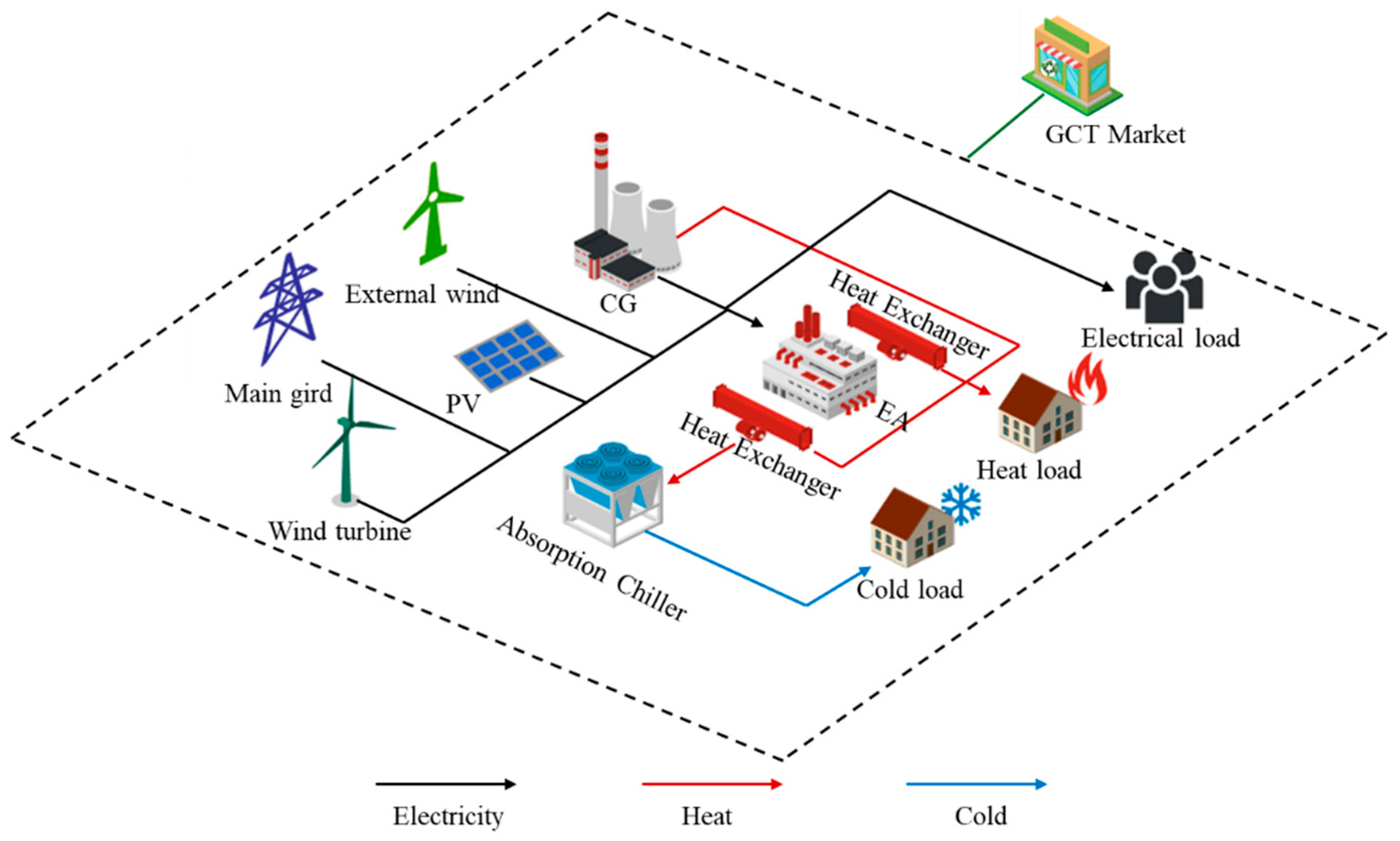
The EA industry is undergoing a transition toward green and low-carbon development. As shown in Figure 2, the EA industrial park studied in this work integrates multiple energy flows, including electricity, heat, and cooling. It combines a conventional on-site thermal plant (CG) with wind turbines and photovoltaic (PV) generation, supplemented by purchased external wind and grid power, which jointly supply electricity to aluminum electrolyzers and other electrical loads. In winter, waste heat from the aluminum electrolytic process is recovered via heat exchangers, and together with gas boilers, provides heating for nearby residents. In summer, the recovered waste heat drives an absorption chiller to supply cooling to meet residential cooling demands. Furthermore, the system incorporates green certificate trading mechanisms, which aim to maximize renewable energy integration and reduce carbon emissions, thereby enhancing both the economic and environmental performance of the system.

3. Modeling the Thermal Dynamics of EA with Heat Exchangers

Precise control of the electrolyte temperature is crucial in the aluminum electrolysis process, in which the temperature typically needs to be maintained within the range of 950–970 °C. When the temperature falls below the critical value, the electrolyte solidifies along the sidewalls and bottom of the cell, and cryolite in the center crystallizes on the anode surface, reducing thermal stability. Conversely, excessive temperature causes the molten electrolyte to erode cell materials, shortening service life.
To establish a heat dynamic model for electrolytic aluminum, it is first necessary to understand its thermal balance process. It should be noted that heat dissipation from an electrolytic cell is mainly through the top and side surfaces. The thermal balance equation of EA is expressed as per Equation (1):
P AL = h side A side + h top A top ( T e T env ) + C e m e d T e d t + m AL M AL η Δ H reac
where PAL denotes the total power input to the electrolyzer; hside and htop are the convection heat transfer coefficients at the side and top surfaces of the electrolyzer, respectively; Aside and Atop are the contact areas of the electrolyzer’s side and top surfaces; TAL and Tenv represent the electrolyzer environment temperature; Ce and me are the specific heat capacity and mass of the molten electrolyte, respectively; η is the current efficiency; ΔHreac is the enthalpy change of the electrolytic reaction (per mole of aluminum); and mAL and MAL represent the production rate and molar weight of liquid aluminum.
However, given the relatively low temperature and limited recovery potential of the top flue gas, heat exchangers are usually installed on the sides of the electrolyzer, and the EA temperature can be regulated by adjusting their heat transfer coefficient. Therefore, the thermal balance of EA after incorporating the heat exchanger is given as per Equations (2)–(5). The carbon emissions from EA production comprise two components: indirect CO2 emissions from electricity consumption, as per Equation (6), and direct CO2 emissions from anode combustion, as per Equation (7). The corresponding emission factors are 0.83 tCO2/ton-Al for the anode, 0.85 tCO2/MWh for grid electricity, and 0.58 tCO2/MWh for the thermal plant power generation.
P AL h he S he A he T LM = K 1 ( T e T env ) + K 2 d T e d t + K 3 m AL
K 1 = h side A side S he A he + h top A top
K 2 = C e m e
K 3 = η AL Δ H reac M AL
E i n d i r e c t = ( α i P i Δ t ) ( i g i r d ; C G )
E d i r e c t = α a n o d e P a l Δ t C a l / t
where She is the number of heat exchangers, and hhe, Ahe, and TLM denote the convection coefficient, the contact area, and the logarithmic mean temperature difference of the heat exchanger. By modifying Equation (2) to a discrete form, a multi-period thermal dynamic of EA can be obtained as per Equation (8), and its temperature operation range and heat exchange adjustment limits are constrained as per Equations (9) and (10):
P AL , t h he , t S he A he T LM = K 1 ( T e , t T env ) + K 2 T e , t T e , t 1 Δ t + K 3 m AL , t
T e min T e , t T e max
h he min h he , t h he max

4. Regional Curtailed Wind Capacity Subscription Mechanism

In this work, the priority subscription right for external wind power is applied to the EA enterprise. EA production is highly energy-intensive and operates under continuous, relatively stable load conditions, making it an effective sink for integrating large amounts of otherwise curtailed renewable electricity. In addition, national policies encourage such industries to directly consume renewable power, thereby supporting national decarbonization targets. Within this policy framework, EA enterprises are permitted to participate in curtailed wind power trading under a priority subscription mechanism, whereby they can submit bids after observing other participants’ offers, thus securing the capacity required for stable production.
To be specific, a bidding model is established in which multiple buyers submit a bid price (bj) and a desired capacity (qj), as in Equation (11). Then, all bids are sorted in ascending order of price, and the cumulative capacity demand is obtained as in Equations (12) and (13). The clearing price is determined as the bid price of the last buyer whose capacity demand can be fully satisfied, as in Equations (14) and (15):
B j = ( b j , q j )
b 1 b 2 b N J
Q l = j = 1 l q j l = 1 , 2 N J
Q l * Q ¯
p w * = b l * 1
where NJ is the total number of enterprises involved; Q l is the cumulative requested capacity; Q ¯ is the total available capacity; and p w * is the clearing price.
Then, the awarded capacity to each buyer is
S w , j = q j j < l * Q ¯ Q l * 1 j = l * 0 j > l *
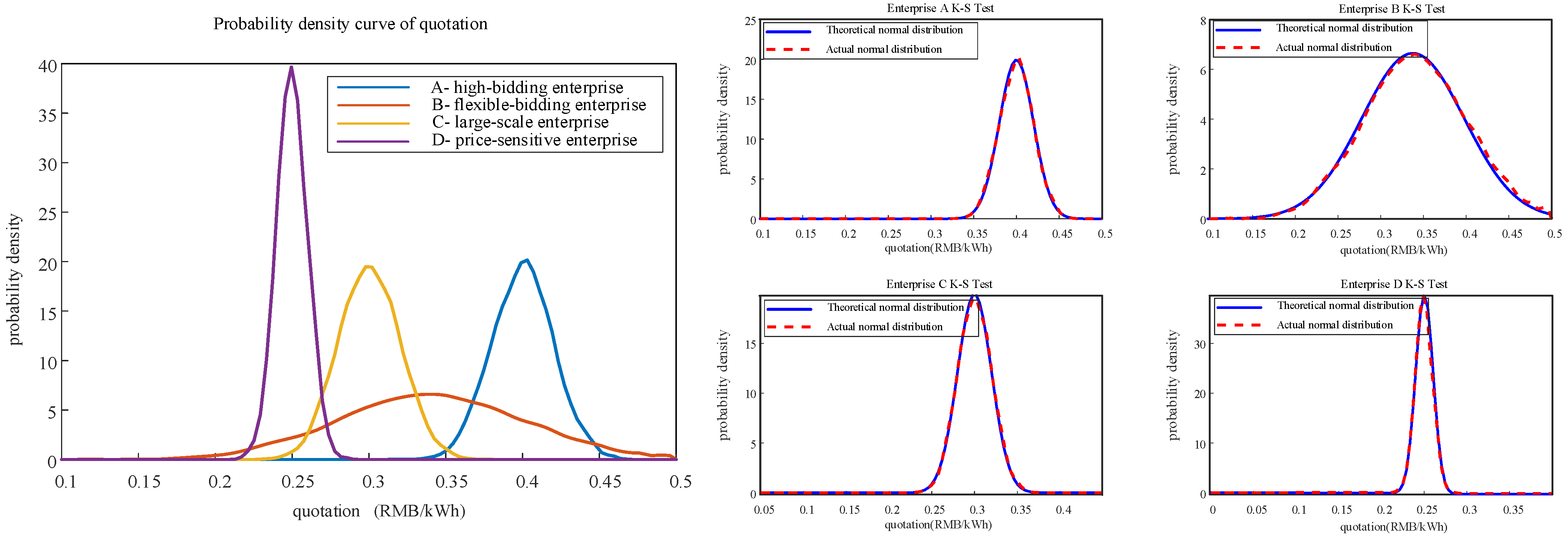
In this work, four participating enterprises are considered in addition to EA. The characteristics of these enterprises are as follows:
Enterprise A—high-bidding enterprise, offering a premium price to secure capacity;
Enterprise B—flexible-bidding enterprise, adjusting its price according to market conditions;
Enterprise C—large-scale enterprise, demanding high capacity regardless of price;
Enterprise D—price-sensitive enterprise, bidding low to minimize procurement costs.
The electrolytic aluminum (EA) plant sets its expected bidding capacity at 1000 MW to ensure operational reliability under extreme scenarios—specifically, when neither its wind power nor PV systems are generating power and no electricity is purchased from the grid. Under such conditions, even at the moment of highest normalized curtailed wind output, the plant can fully meet its operational power demand by combining the 200 MW output from its captive thermal power plant with the entire available curtailed wind power of 400–450 MW acquired through the 1000 MW bidding capacity. Hence, the 1000 MW bidding capacity is strategically determined to cover such critical operational contingencies. In contrast, enterprises A, B, C, and D formulate their distinct bidding strategies and capacity requirements based on their individual operational scales, price sensitivity, and other specific factors. The bidding parameters of these enterprises are summarized in Table 1.
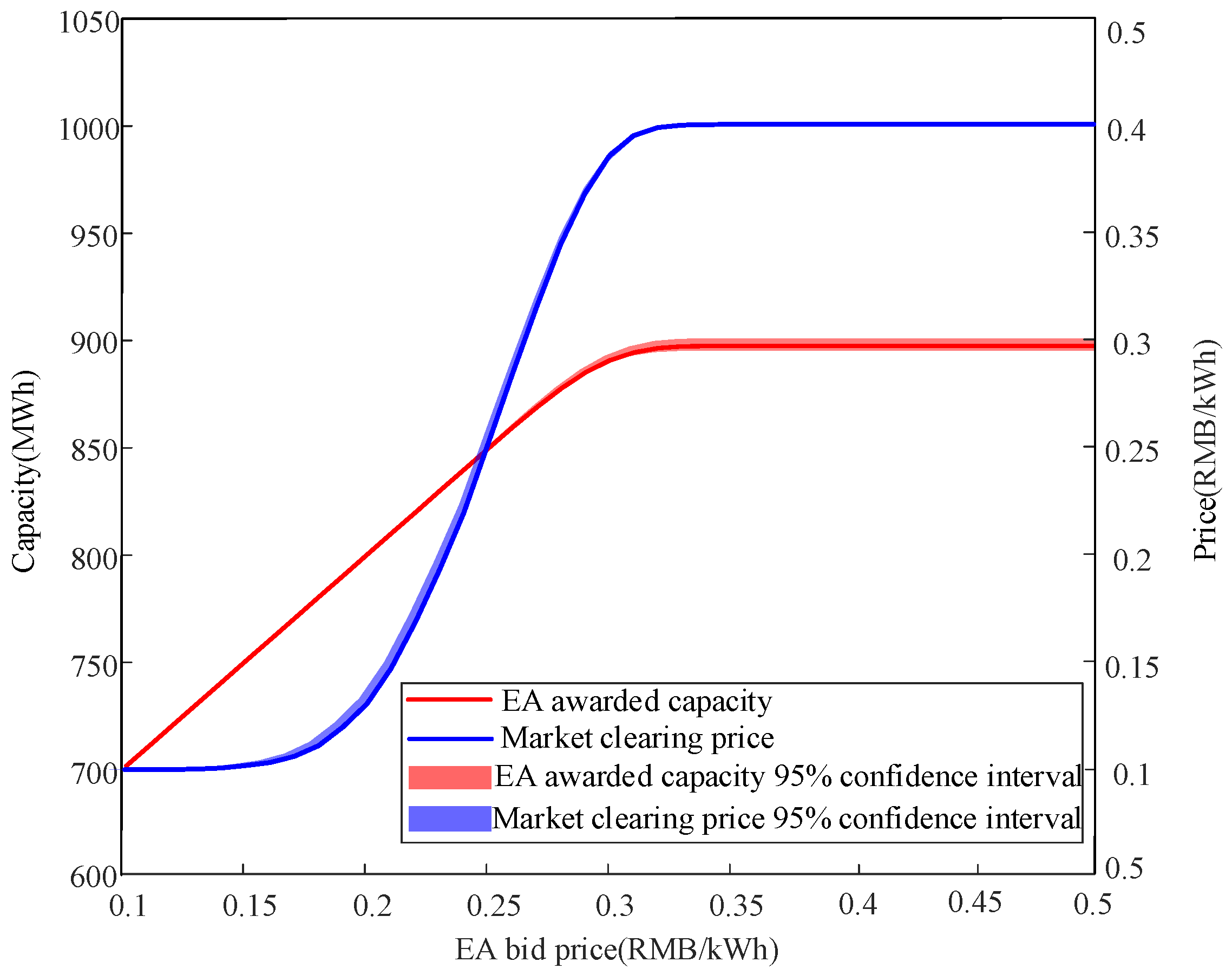
A Monte Carlo simulation with 5000 runs is then conducted to analyze the relationship between the EA bid price, the final clearing price, and EA’s awarded capacity. The seed for the Monte Carlo simulation was set to 2025. The resulting probability density curves of enterprise bidding prices and K-S test curves for each enterprise’s bidding, along with the relationship between the EA bid price, the market clearing price, and its awarded capacity, are shown in Figure 3 and Figure 4.

5. Optimal Plan Framework of an EA Industrial Park

5.1. Time Resolution

In this work, representative days are introduced to reduce the computational burden while preserving the temporal and statistical characteristics of multi-energy system operation. Six representative days are selected to characterize the variability of renewable generation and energy demand throughout the year, with a time step of 1 h, resulting in a total of 24 × 6 time steps.

5.2. Objective Function

The objective function is to maximize the annual system profit, accounting for annual revenue, capital investment, maintenance, and operating costs, as expressed in Equation (17):
max F = F rev F inv F om F op
where Frev, Finv, Fom, and Fop denote annual revenue, annualized investment, maintenance, and operational costs, respectively, which can be further expressed by Equations (18)–(21):
F rev = d N d Δ t λ AL t m AL , d , t + λ Heat t H Load , d , t + λ Cold t C Load , d , t
F inv = i I c i S i ( 1 + r i ) Y i r i ( 1 + r i ) Y i 1 + p w * S w , EA
F om = i I ϕ i S i
F op = F raw + F supply + F cur + F GCT
where d and t denote representative days and time; Δt is the modeling time step; Nd is the occurrence (weight) of the representative day; λ AL , λ Heat , λ Cold are the selling prices of aluminum, heat, and cooling, respectively; HLoad,d,t and CLoad,d,t are the heat and cooling loads; i represents the invested devices (i.e., self-owned PV, wind farm, and heat exchangers); ci is the unit capital costs; Si is installed capacity (or the number of units for heat exchangers); Yi is the device lifetime; ri is the interest rate; Sw,EA is the purchased external wind generation capacity; p w * is the clearing price (as highlighted in Section 3); and Φi is the unit maintenance cost. Note that the operational cost includes the costs of the raw materials for producing aluminum ( F raw ), the energy supply ( F supply ), renewable curtailment ( F cur ), and green certificate trading ( F GCT ), which are detailed in Equations (22)–(25):
F raw = φ AL d N d t m AL , d , t Δ t
F supply = d N d Δ t λ grid t P grid , d , t + λ w t P w , d , t + λ GB t H GB , d , t + λ CG t P CG , d , t
F cur = d N d g re t λ g re cur P g re , d , t cur Δ t
F GCT = d N d λ GCT , buy P green , d in λ GCT , sell P green , d out
where φAL is the unit cost of raw materials (alumina and carbon electrodes) per unit of aluminum; λgrid, λw, λGB, and λCG are the prices of the imported grid electricity, external wind power, and costs of the gas boiler’s and self-owned thermal plant generation, respectively; Pgrid,d,t and Pw,d,t are the purchased powers from the grid and external wind; HGB,d,t is the gas boiler’s heat output; PCG,d,t is the thermal plant power generation; λ g r e c u r is the curtailment cost for renewable electricity, with gre representing self-owned renewable generators (i.e., PV and wind turbine); λGCT,buy and λGCT,sell are green certificate purchase and selling prices; and P g r e e n , d i n and P g r e e n , d i n denote green electricity integration shortage and surplus, respectively.

5.3. Green Certificate Trading Mechanism

In this work, the green certificate trading mechanism is introduced. Green certificates are issued by the government to non-hydropower renewable energy producers, with the number of certificates proportional to their renewable power output. These certificates verify that the electricity is generated from renewable sources, emphasizing its environmental value. The renewable energy quota specifies the required share of renewable electricity in a company’s generation or consumption. Producers with certificates exceeding their quota can sell the surplus for profit, while those below the quota must purchase additional certificates. The green certificate cost has been modeled in Equation (25), while the shortage and surplus of green electricity integration are represented in Equations (26) and (27):
P green , d in P green , d out = g re t P g re , d , t + P w , d , t P q d
P green , d in ,   P green , d out 0
where P g r e , d , t denotes renewable power output and Pq represents the renewable integration quota.

5.4. Energy Balances

Electricity, heat, and cooling are balanced according to Equations (28)–(30). Specifically, the electricity consumption of the EA and other electrical loads is met by the purchased grid power, external wind power, self-owned renewable generation ( P g r e , d , t ), and thermal generation, as expressed in Equation (28). The heat supplied by the EA and the boiler must meet or exceed the sum of the heat demand and the absorption chiller’s heat consumption, as in Equation (29), with the heating spillage permitted. The cooling demand is satisfied by the combined output of the absorption chiller, as in Equation (30):
P AL , d , t + P Load , d , t = P grid , d , t + P w , d , t + g re P g re , d , t + P CG , d , t d , t
H Load , d , t H AL , d , t + H GB , d , t H AC , d , t d , t
C Load , d , t = C AC , d , t d , t

5.5. DER Models

The DER model considers a variety of different multi-energy generators, including PVs, wind turbines, and purchased curtailed wind, as illustrated in Figure 1. Their formulations are given in Equations (31)–(35). The EA model incorporates the expressions previously defined in Equations (2)–(10).
P pv , d , t + P pv , d , t cur = κ p v , d , t S pv
P wt , d , t + P wt , d , t cur = κ wt , d , t S wt
0 P w , d , t κ w , d , t S w
C AC , t = η AC H AC , t
H AL , t = h he , d , t η he S he A he T LM
where κ p v , d , t , κ w t , d , t , and κ w , d , t are the normalized power generation curve of the self-owned PV, self-owned wind turbine, and external wind, respectively, and η A C is the efficiency of the absorption chiller.

6. Two-Stage PSO–Deterministic Optimization (TPDO) Algorithm

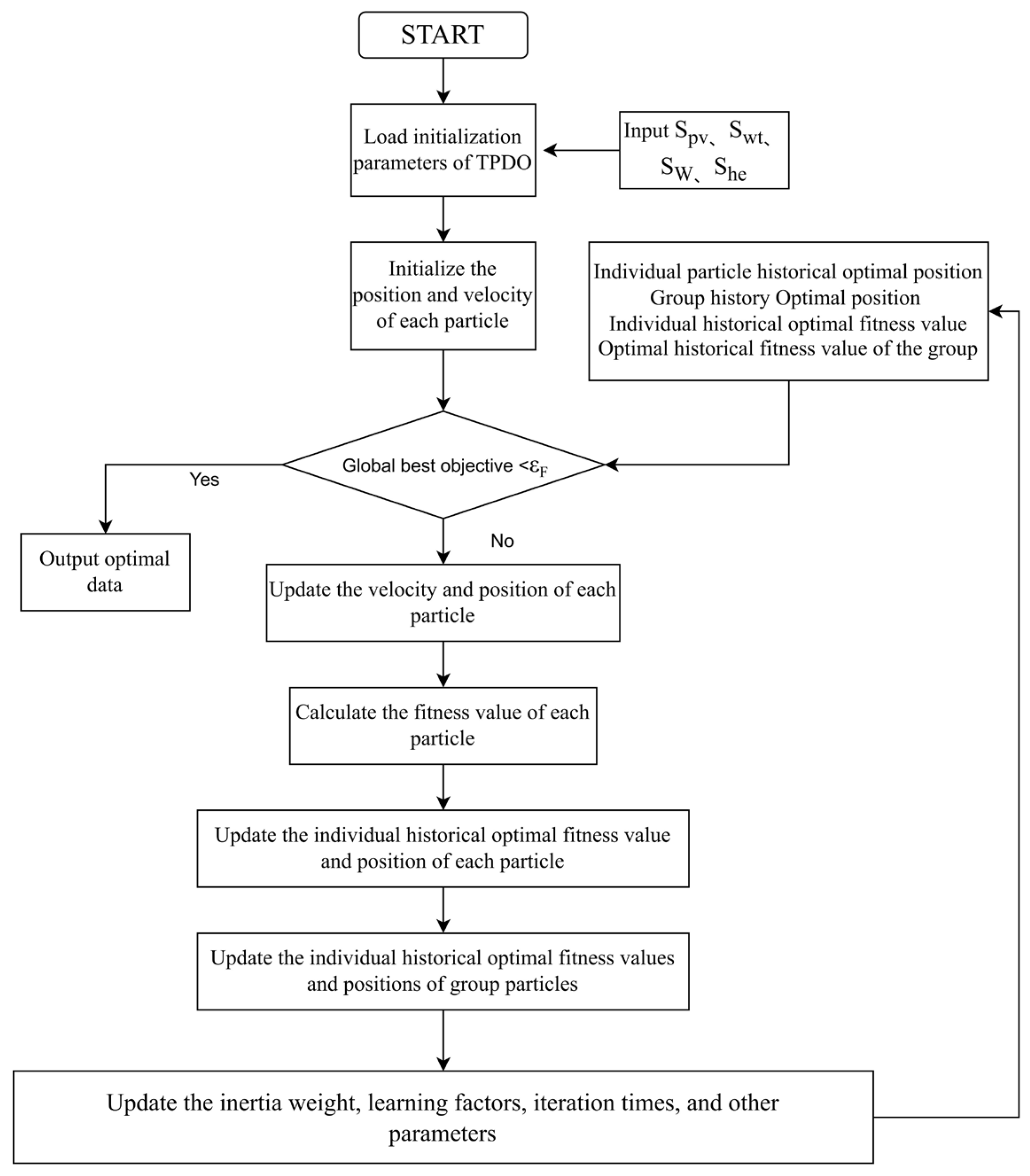
Owing to the coupling between the planning and operational constraints, the original formulation is classified as a mixed-integer nonlinear programming (MINLP) problem, which is difficult to solve directly. In this work, the overall optimization framework adopts a bi-level metaheuristic PSO–deterministic optimization (TPDO) structure, in which the upper level employs the PSO technique to generate candidate device capacities, including external wind, while the lower level applies a deterministic optimization method to determine the optimal operation. TPDO was chosen over other metaheuristics like GA, DE, and NSGA-II due to its efficiency and suitability for the problem at hand. While GA and DE can struggle with slow convergence and high computational costs in high-dimensional spaces, and NSGA-II is better suited for multi-objective problems, TPDO provides a good balance between exploration and exploitation. It converges quickly, requires fewer parameters, and handles constraints effectively, making it ideal for our optimization task. The following are the detailed steps of the solving process (Figure 5). Specifically, each particle represents a device capacity vector:
  S = [ S pv , S wt , S w , S he ]
In the initialization phase, the particle population is randomly generated within the specified capacity ranges.
Given a particle S, the optimization model Equation (17) is executed to obtain the optimal annual objective value F(S). After evaluating all particles, their positions are updated as follows:
v ( k + 1 ) = w v ( k ) + c 1 r 1 P best S ( k ) + c 2 r 2 G best S ( k ) ,
where w is the inertia weight, c1 and c2 are learning factors, and r1, r2∼U(0, 1) are random numbers; Pbest and Gbest are the personal best position and global best position, respectively.
The updated particles are re-evaluated to compute F(S(k + 1)); if the new value is better, the corresponding Pbest and Gbest are updated accordingly.
The algorithm terminates when the improvement in the global best objective falls below a predefined threshold, as follows:
F best ( k + 1 ) F best ( k ) < ε F ,

7. Case Study

The optimization problem was solved using the CPLEX solver integrated with MATLAB 2024a, running on an AMD 9600x CPU with Windows 10 as the operating system. The case study is conducted on an EA plant in the Xinjiang Uygur Autonomous Region, China. The plant has a rated power of 650 MW and comprises 400 electrolytic cells. Its specific electricity consumption for aluminum production is 13,250 MWh/ton-Al, and the operating temperature range of the cells is 950–970 °C. The remaining cell parameters are listed in Table 2. The aluminum price is set to 16,634 CNY/ton. In addition, the system includes a thermal power plant with a rated output of 200 MW, which is operated as a must-on unit. For heat exchangers, each heat exchanger has a heat transfer area of 16 m2 and an adjustable heat transfer coefficient of between 10 and 120 W/m2/°C.
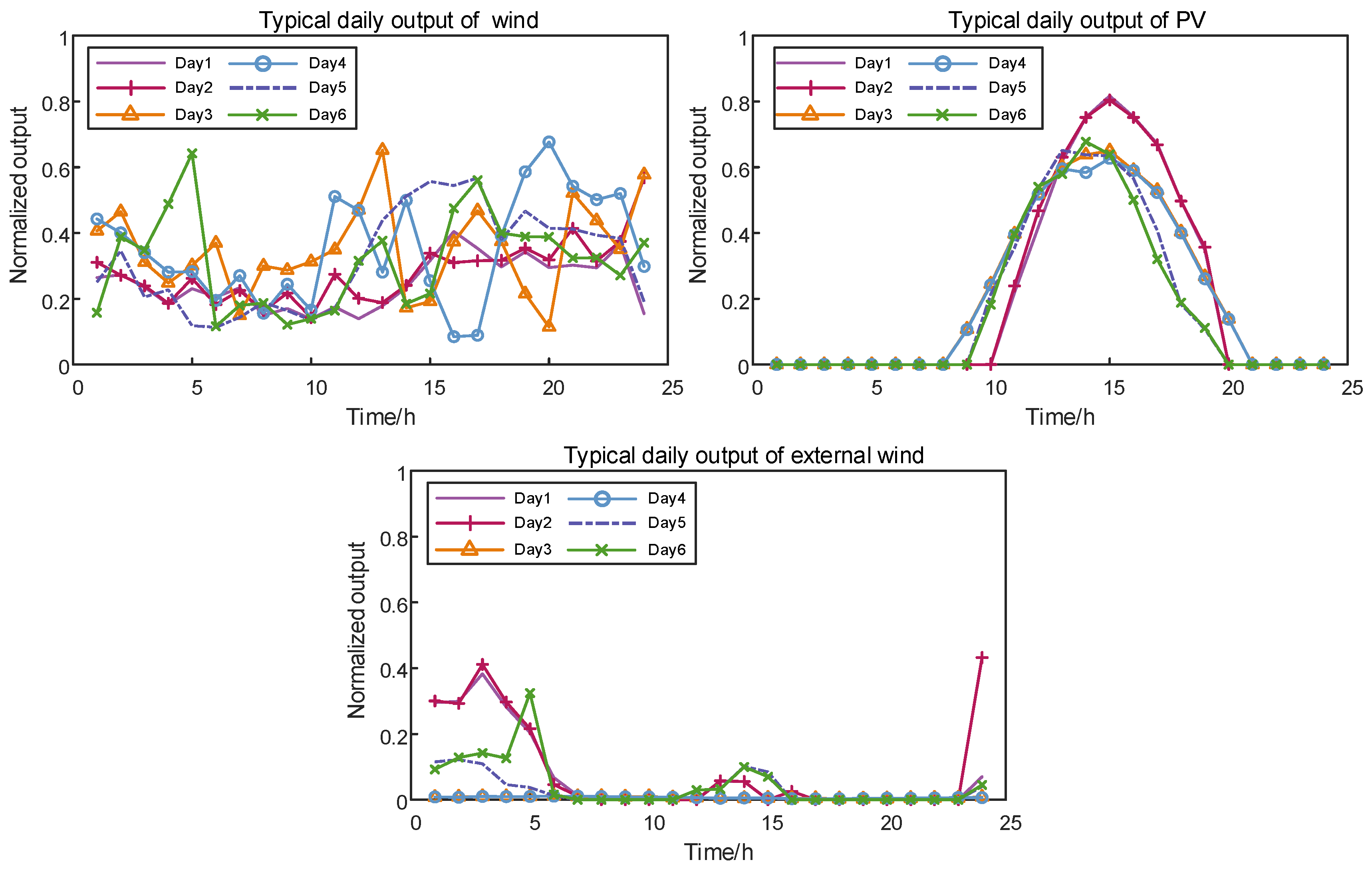
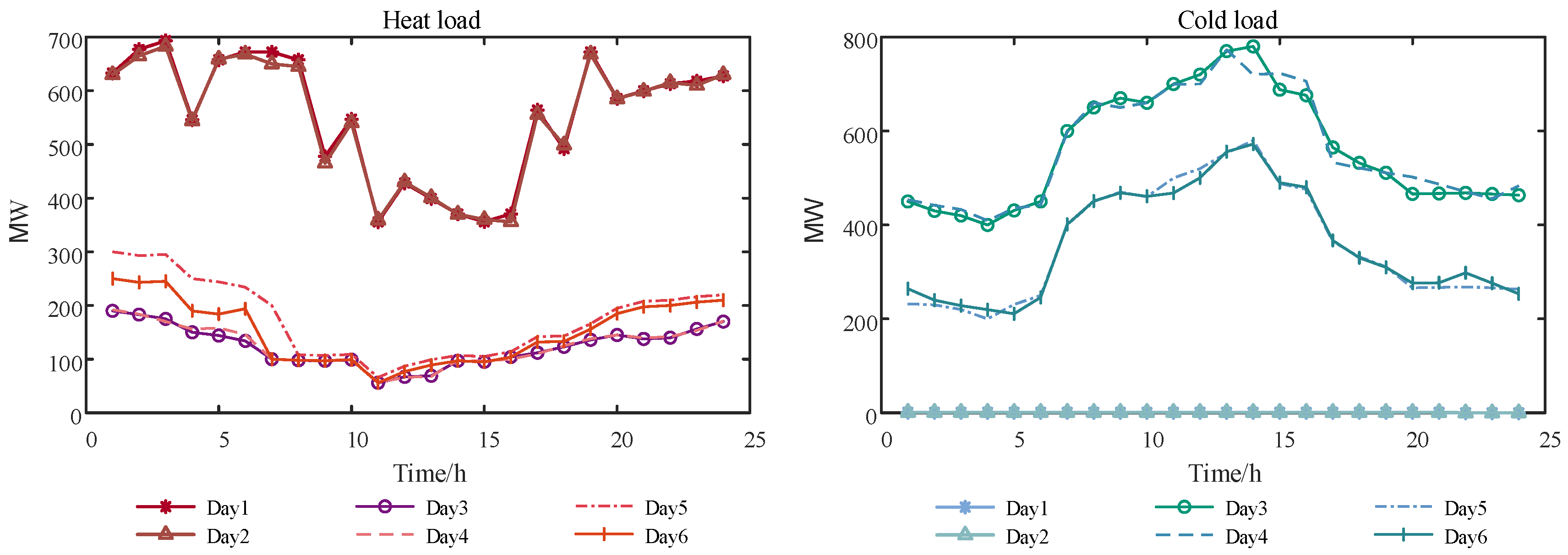
The investment cost parameters for the heat exchangers, self-owned wind power, and PV are given in Table 3, and the interest rate is set at 6%. The bidding mechanism and detailed parameters for external wind capacity are described in Section 4, and the purchase price of the external wind power is 100–400 CNY/MWh. The normalized output profiles of the self-owned wind, PV, and external wind are shown in Figure 6, and the system’s heat and cooling demands are shown in Figure 7. The normalized output profiles of the self-owned wind, PV, and external wind are generated through analysis and sampling of 365 days of wind, solar, and curtailment data from the Xinjiang Uygur Autonomous Region (8760 h). Based on the normalized output, typical days 1 and 2 represent winter, days 3 and 4 represent summer, and days 5 and 6 correspond to the transitional season. For simplicity in the subsequent presentation, only one typical day from each season (days 1, 3, and 5) is selected to display the results.
The renewable integration quota is 1000 MWh, which accounts for 30% of the electricity consumption rate of EA. The buying and selling prices of the green certificate are 400 and 240 CNY/MWh, respectively.
The TPDO algorithm parameters are configured with a swarm population size of 10 and a maximum iteration number of 100. The inertia weight is dynamically adjusted using the formula 0.9 − 0.5 × (current iteration count/maximum iteration count), with values ranging from 0.5 to 0.9. A larger inertia weight in the early stages of the algorithm facilitates global exploration, while a smaller inertia weight in the later stages slows down particle velocity, promoting local exploitation. The learning factors c1 and c2 are defined as 1.5 − 1.0 × (current iteration count/maximum iteration count) and 0.9 − 0.5 × (current iteration count/maximum iteration count), respectively. The gradual decrease in c1 and increase in c2 help avoid premature convergence to suboptimal solutions in the early stages and accelerate convergence toward the known optimal region in the later stages, improving both the convergence speed and solution quality, and the convergency tolerance εF is set at 1 × 10⁻⁴.
To illustrate the advantages of the proposed system framework, six representative scenarios (see in Table 4) are studied by considering the presence of heat exchangers, self-owned renewables, external wind bidding, and green-certificate trading mechanisms. Scenario 1 represents the traditional system without heat exchangers, self-owned renewables, external wind bidding, or green certificate trading, serving as the benchmark. Scenario 2 builds upon this by introducing heat exchangers, aiming to evaluate the impact of their installation in the absence of fluctuating renewable energy sources and to assess the benefits provided by the heat exchangers. Scenario 3 further expands on scenario 2 by incorporating self-owned wind and solar power, aiming to explore the relationship between the number of heat exchangers and the installed capacity of wind and solar power, as well as the economic improvements that arise, without considering external policies. Scenario 4 adds the green certificate trading policy to scenario 3 in order to evaluate whether such green energy policies can incentivize EA enterprises to increase their absorption of renewable energy. Scenario 5, which is based on the same configuration as scenario 6 but without the installation of heat exchangers, is designed to further illustrate the specific role and benefits provided by heat exchangers. Scenario 6 corresponds to the proposed system that integrates all mechanisms, highlighting its comprehensive advantages. Scenario 7 also includes all mechanisms but replaces the bidding mechanism with average electricity prices, serving as a simplified trading benchmark. The comparison between scenarios 6 and 7 is intended to highlight the advantages of the regional curtailed wind capacity subscription mechanism.
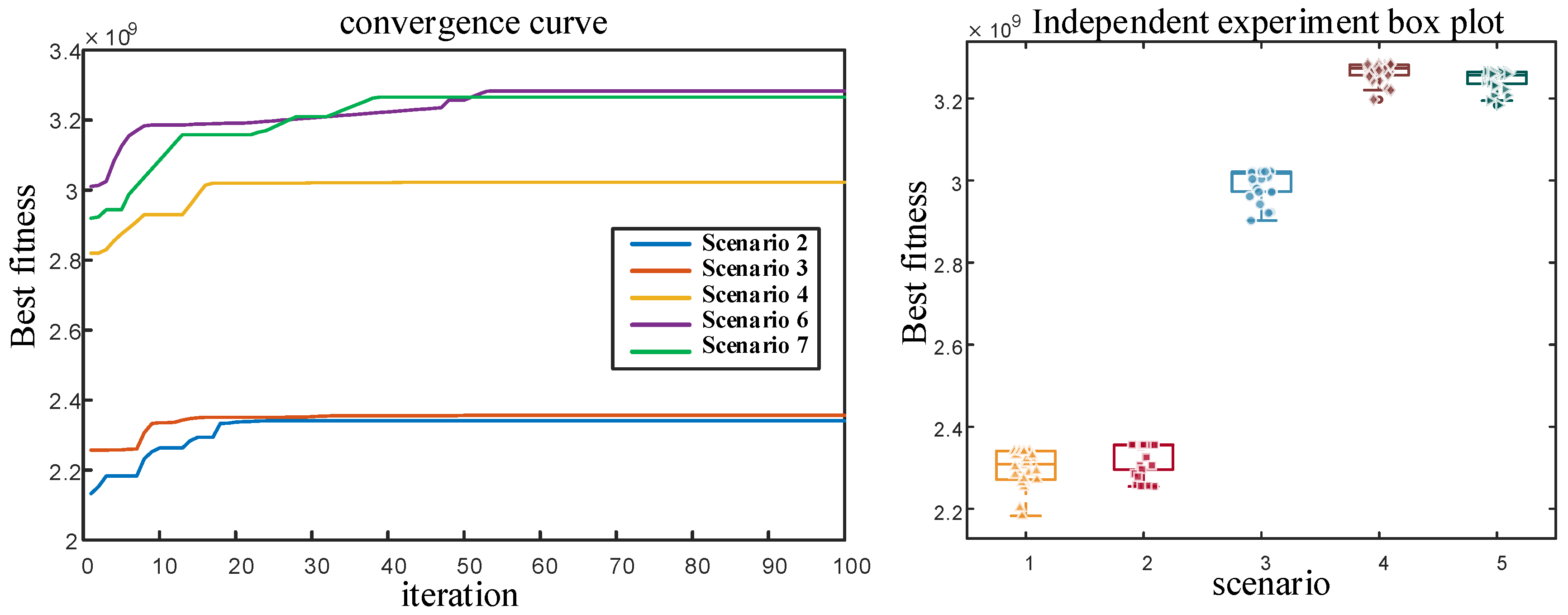
Figure 8 shows the convergence curves of each scheme that requires iteration as well as the results of the box plots of the optimal fitness values for each scheme running independently 30 times.

7.1. Effect of Heat Exchangers on Operational Flexibility

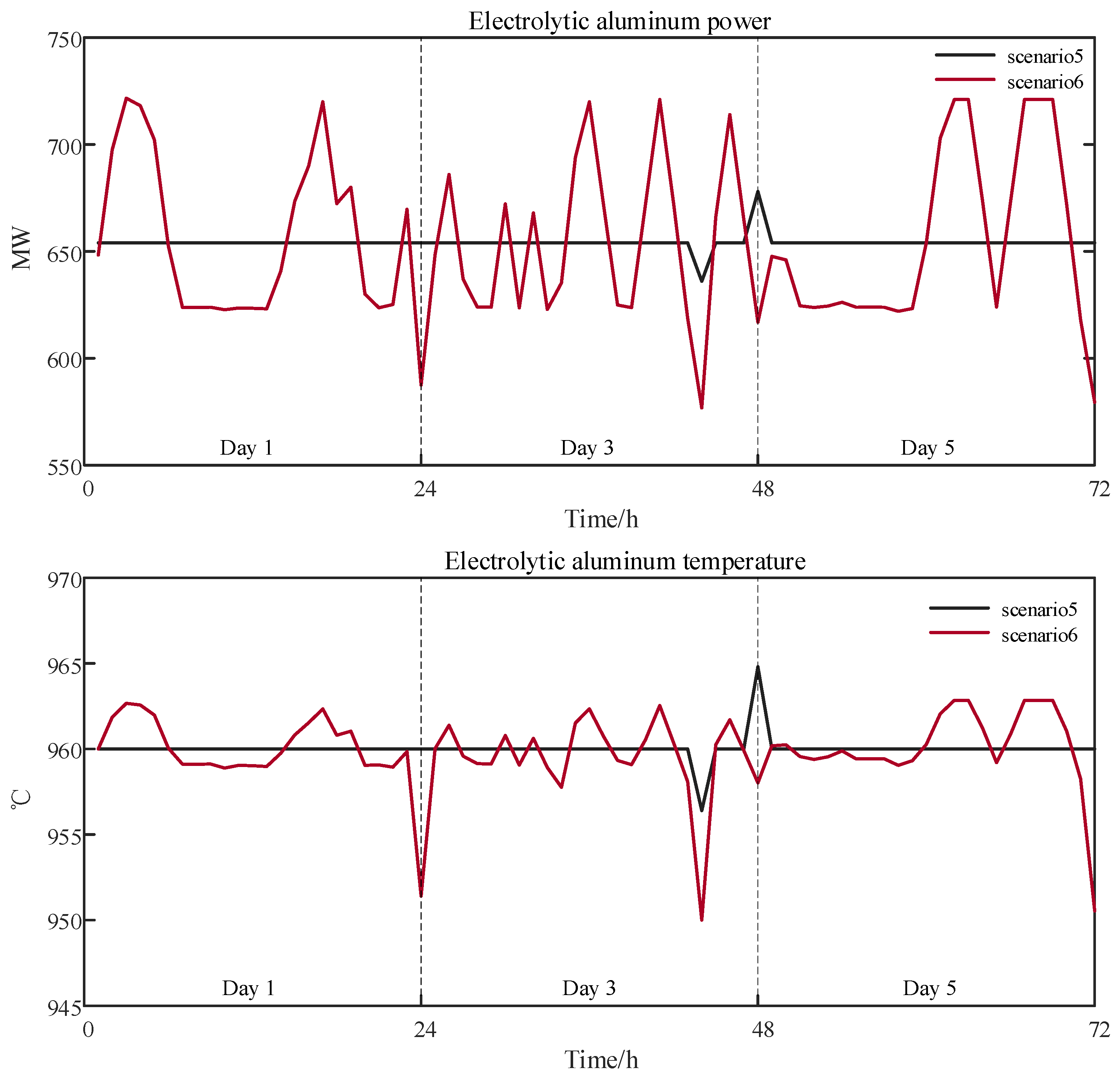
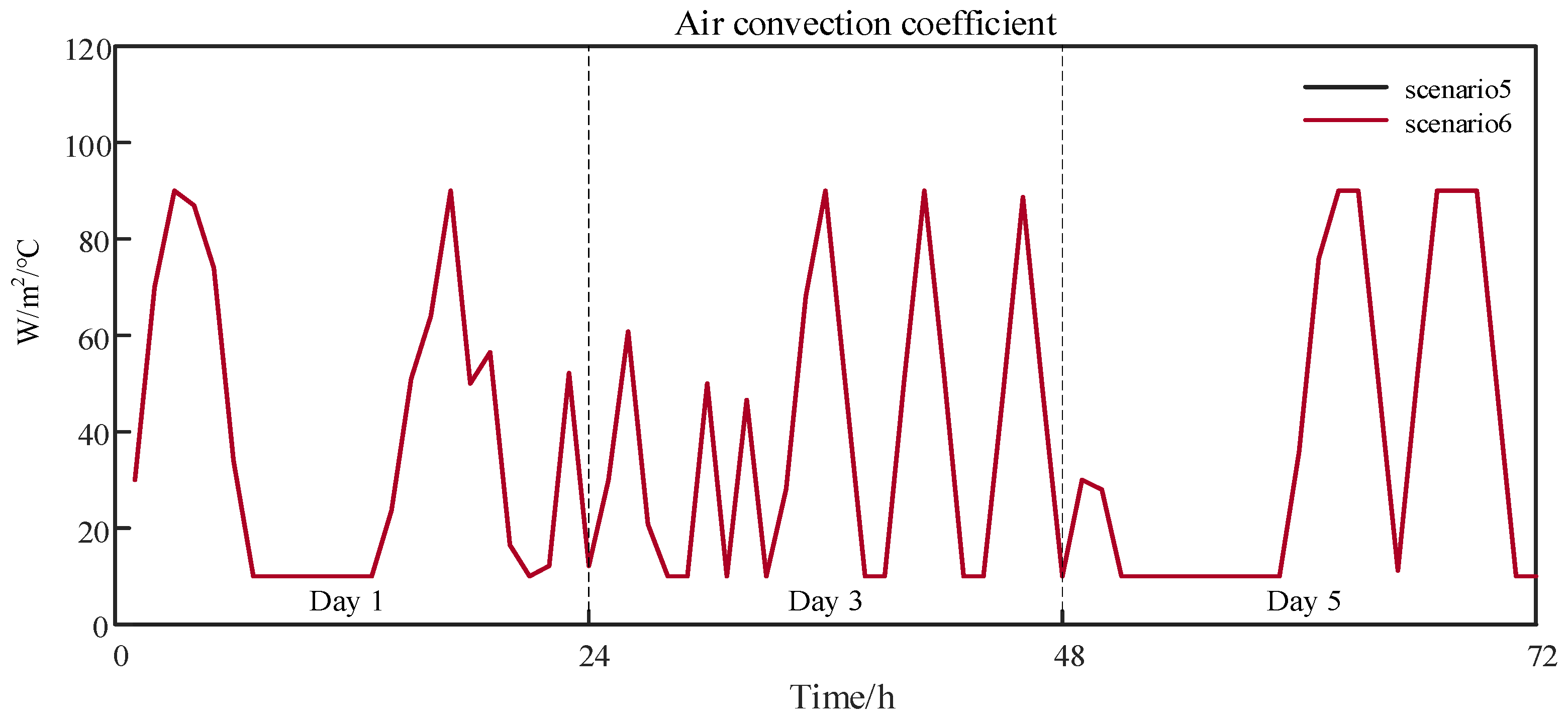
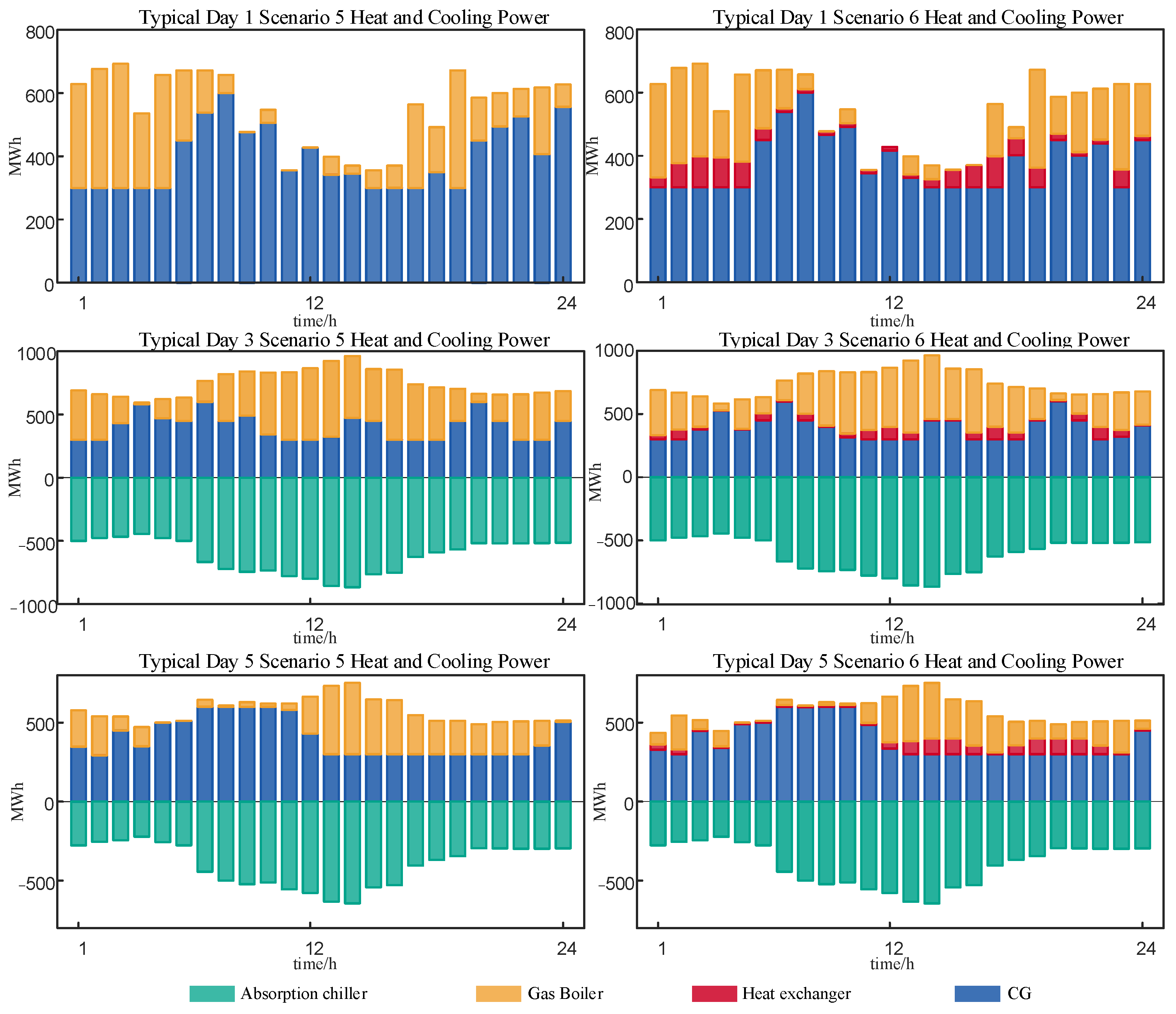
To demonstrate the advantages of introducing heat exchangers, scenarios 5 and 6 are compared, as illustrated in Figure 9, Figure 10 and Figure 11. In scenario 5, where no heat exchanger is installed, the electrolyte temperature can only be passively regulated through natural dissipation. This limited controllability constrains the operational flexibility of the electrolytic cells, leading to less responsive power profiles and slower thermal recovery. By contrast, scenario 6 integrates controllable heat exchangers, enabling active thermal management through dynamic adjustment of the heat transfer coefficient. As shown in Figure 9, this allows larger power fluctuations and faster ramping while maintaining the electrolyte temperature within a safe range. The dynamic adjustment of the heat transfer coefficient (Figure 10) reflects a proactive strategy: increasing heat removal during high power or heating periods and lowering it during cooling periods to retain heat. Figure 11 further indicates that the recovered heat in scenario 6 effectively substitutes for the boiler output. Overall, compared with the conventional system in scenario 5, the proposed configuration in scenario 6 achieves wider dispatch flexibility, improved temperature stability, and reduced boiler dependence, leading to significant economic and operational benefits.

7.2. System Flexibility Enhancement Along with Renewable Integration

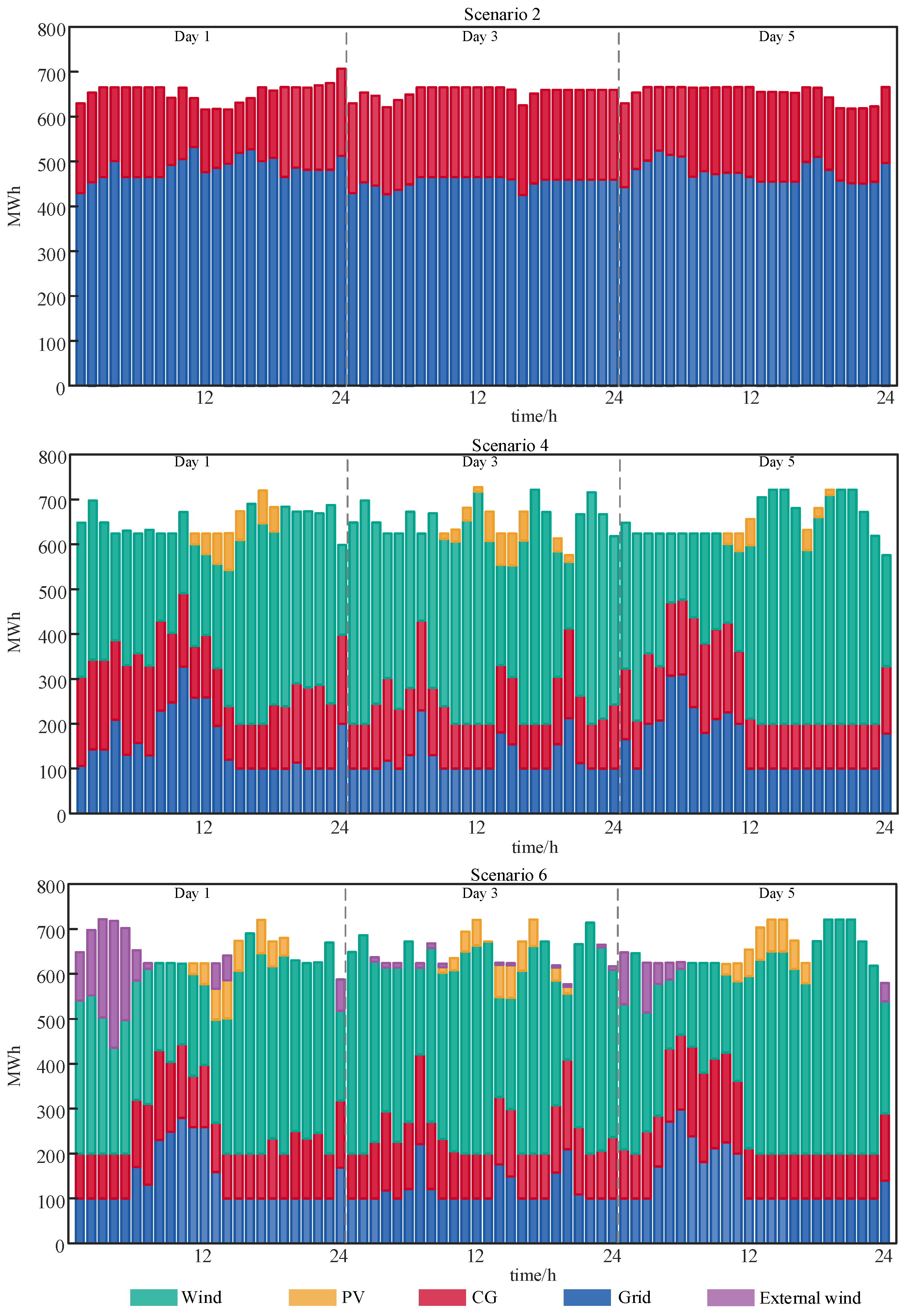
Figure 12 compares the system power mix under scenarios 2, 4, and 6, focusing on the presence of self-owned renewables and external wind bidding. Scenario 2 only introduces heat exchangers (166 units) without self-owned renewables and external wind. In this case, heat exchangers mainly provide basic thermal stabilization, and flexibility requirements remain limited. Scenario 4 introduces both self-owned PV and wind turbines, which significantly increase variability in the power balance. To accommodate this additional renewable output, the system deploys more heat exchangers (332 units), which enhances the thermal regulation of the EA cells and thus improves the system’s operational flexibility, with the green electricity aluminum ratio rising to 46.1%. Scenario 6 integrates all mechanisms, including external wind bidding, and configures the largest number of heat exchangers (340 units). With the highest level of thermal regulation capacity, the system demonstrates greater flexibility to respond to additional renewable integrations and ultimately achieves the highest green aluminum proportion (60.4%) while lowering annual carbon emissions to 1.98 × 10⁶ t.
Overall, the comparison highlights that as renewable penetration increases, the required number of heat exchangers also rises: when no renewable is introduced, only a small number is sufficient, whereas under large-scale PV and wind integration, additional exchangers become indispensable for enhancing system flexibility and maximizing the utilization of clean energy in green electricity aluminum production.

7.3. Cost–Benefit Analysis

From the perspective of cost–benefit analysis (CBA), the results in Table 5 (CBA analysis for scenarios 1 to 4) highlight clear trade-offs among these scenarios. Scenario 1 represents the traditional system, with no additional investment but also no renewable integration, resulting in zero green electricity aluminum production and the highest annual carbon emissions (4.12 × 10⁶ t). Scenario 2 introduces heat exchangers (166 units) with minimal investment, which slightly increases operational flexibility and thereby reduces operating costs. When self-owned PV and wind are introduced in scenario 3, the investment cost rises, but the system gains substantial benefits in both lower carbon emissions (down to 3.21 × 10⁶ t) and a meaningful share of green electricity aluminum (27.0%). Scenario 4, which further introduces the green certificate mechanism, shows a larger investment but achieves a much higher green electricity aluminum ratio (56.1%) together with improved economic returns.
Table 6 provides a comparison between scenarios 5 and 6. While scenario 5 operates without heat exchangers, scenario 6 additionally deploys 340 units of heat exchangers, which slightly increases the cost but significantly strengthens thermal flexibility. As a result, scenario 6 achieves a higher renewable integration rate (88.3% vs. 84.3%), greater revenue, less curtailed renewable energy (4.41 × 10⁶ MWh vs. 5.81 × 10⁶ MWh), and a higher green electricity aluminum share (60.4% vs. 57.1%) while also reducing carbon emissions to the lowest level (1.98 × 10⁶ t). By contrast, scenario 7 applies an average-pricing strategy (i.e., the EA enterprise bids the average price of the remaining enterprises). Scenario 6 bids 41.89 USD/MW for 1000 MW of external wind, whereas scenario 7 bids 45.13 USD/MW for 324 MW. Due to the smaller amount of external wind procured, scenario 7 incurs higher costs but yields lower revenue, leading to reduced aluminum production and confirming that dynamic bidding mechanisms provide additional value for both system operation and green electricity aluminum competitiveness.
Furthermore, to address the variability in wind and photovoltaic capital expenditures (CAPEX) across different national and policy contexts, we conducted a comprehensive sensitivity analysis. Using the optimal system configuration from scenario 6, we evaluated its economic performance under various investment costs, including our benchmark values, the 2024 China average prices, and a ±20% deviation from our benchmark. As summarized in Table 7, across all scenarios, the proposed integrated park achieves a net present value (NPV) higher than that of scenario 1 (3.2843 × 10⁸ USD) and a levelized cost of energy (LCOE) lower than the grid price of 0.0635 USD/kWh. These results confirm that the co-planning scheme maintains sound economic viability across a wide range of wind and photovoltaic CAPEX fluctuations.
Overall, the CBA demonstrates that while higher investments in heat exchangers and renewable installations inevitably raise investment costs, the resulting improvements in system flexibility, renewable integration, green electricity aluminum share, and emission reductions substantially enhance net profits, underscoring the economic and environmental value of the proposed framework.

8. Conclusions

This study proposes an integrated optimal planning framework for electrolytic aluminum industrial parks that unifies renewable energy investment, electro-thermal operation, waste heat recovery, and green power trading. By explicitly modeling the temperature safety constraints of electrolytic cells and incorporating adjustable heat exchangers, the framework enables coordinated use of processed waste heat for combined cooling–heating–power supply. The introduction of a priority wind power subscription mechanism and green certificate compliance further strengthens the link between industrial park decision-making and long-term decarbonization objectives. To address the nonconvex mixed-integer nonlinear characteristics of the problem, a two-stage particle swarm-deterministic optimization scheme was designed, ensuring computational tractability while capturing detailed thermal and operational interactions.
The case studies based on a real electrolytic aluminum plant in Xinjiang demonstrate the significant benefits of the proposed framework. Compared with the benchmark configuration, the optimized planning scheme raises the green electricity aluminum production share to 60.4%, reduces annual carbon emissions by 52.0%, and significantly increases total system profit. These results highlight the ability of integrated planning to substantially improve both economic performance and environmental sustainability. The findings underscore the important role of electrolytic aluminum industrial parks in supporting regional decarbonization targets.
Future research will extend the framework to uncertainty-aware planning, multi-park coordination, the participation of energy storage systems, and integration with ancillary service markets.

Author Contributions

Conceptualization, Y.Y.; Methodology, Y.Y.; Software, W.L.; Investigation, R.Z.; Data curation, Z.Y.; Writing—original draft, W.L.; Writing—review & editing, Z.Z.; Supervision, Z.Z.; Project administration, Y.Y. All authors have read and agreed to the published version of the manuscript.

Funding

This research was funded by [The Key Research and Development Program Project of Xinjiang Uyghur Autonomous Region] grant number [2022B01020-1].

Institutional Review Board Statement

Not applicable.

Informed Consent Statement

Not applicable.

Data Availability Statement

The original contributions presented in this study are included in the article. Further inquiries can be directed to the corresponding author.

Conflicts of Interest

The authors declare no conflict of interest.

References

  1. IEA. Global Energy Review 2025. 2025. Available online: https://www.iea.org/reports/global-energy-review-2025 (accessed on 22 October 2025).
  2. National Development and Reform Commission of China. Guiding Opinions on Vigorously Implementing the Renewable Energy Substitution Action; National Development and Reform Commission of China: Beijing, China, 2024.
  3. Paul, S.; Dey, T.; Saha, P.; Dey, S.; Sen, R. Review on the development scenario of renewable energy in different country. In Proceedings of the 2021, Innovations in Energy Management and Renewable Resources(52042), Kolkata, India, 5–7 February 2021; pp. 1–2. [Google Scholar] [CrossRef]
  4. Lu, R.; Chen, D.; Zhang, J.; Zhang, S.; Zhang, L.; Wang, X.; Sun, Y. Supply-Demand Balance Assessment Method for Power Systems Considering Extreme Scenarios. In Proceedings of the 2025 IEEE 3rd International Conference on Power Science and Technology (ICPST), Kunming, China, 16–18 May 2025. [Google Scholar]
  5. Khan, S.A.; Tao, Z.; Agyekum, E.B.; Fahad, S.; Tahir, M.; Salman, M. Sustainable rural electrification: Energy-economic feasibility analysis of autonomous hydrogen-based hybrid energy system. Int. J. Hydrogen Energy 2025, 141, 460–473. [Google Scholar] [CrossRef]
  6. Caminiti, C.M.; Brigatti, L.G.; Spiller, M.; Rancilio, G.; Merlo, M. Unlocking Grid Flexibility: Leveraging Mobility Patterns for Electric Vehicle Integration in Ancillary Services. World Electr. Veh. J. 2024, 15, 413. [Google Scholar] [CrossRef]
  7. Forum, W.E. Net-Zero Industry Tracker. 2023. Available online: https://cn.weforum.org/publications/net-zero-industry-tracker-2023/ (accessed on 22 October 2025).
  8. Liu, J.; Zeng, K.; Wang, C.; Le, L.; Zhang, M.; Ai, X. Unit Commitment Considering Electrolytic Aluminum Load for Ancillary Service. In Proceedings of the 2019 4th International Conference on Intelligent Green Building and Smart Grid (IGBSG), Yichang, China, 6–9 September 2019; pp. 608–611. [Google Scholar] [CrossRef]
  9. SAFE. Global Insights: Energy and Environmental Aluminum Solutions. 2023. Available online: https://secureenergy.org/wp-content/uploads/2023/08/SAF-_CSIM_Aug23_v04.1_singles.pdf (accessed on 22 October 2025).
  10. National Development and Reform Commission (China). Power Demand Side Management Measures (2023 Edition); National Development and Reform Commission: Beijing, China, 2023. [Google Scholar]
  11. Liu, J.; Wang, K.; Su, Z.; Feng, Y.; Wang, C.; Ai, X. Source-load coordinated optimal scheduling in stochastic unit commitment considered electrolytic aluminum load and wind power uncertainty. In Proceedings of the 2022 IEEE 5th International Electrical and Energy Conference (CIEEC), Nanjing, China, 27–29 May 2022; pp. 2175–2179. [Google Scholar] [CrossRef]
  12. Zhou, B.; Li, J.; Liu, Q.; Li, G.; Gu, P.; Ning, L.; Wang, Z. Optimal operation of energy-intensive load considering electricity carbon market. Heliyon 2024, 10, e34796. [Google Scholar] [CrossRef]
  13. Li, L.F.; Chen, Y.; Zhu, X.; Yu, Q.; Jiang, X.; Liao, S. Electrolytic aluminum load participating in power grid frequency modulation method based on active adjustable capacity coordination. In Proceedings of the 2021 3rd Asia Energy and Electrical Engineering Symposium (AEEES), Chengdu, China, 25–28 March 2021; pp. 552–557. [Google Scholar] [CrossRef]
  14. Chen, S.; Gong, F.; Sun, T.; Yuan, J.; Yang, S.; Liu, Z. Research on the method of electrolytic aluminum load participating in the frequency control of power grid. In Proceedings of the 2021 IEEE 2nd International Conference on Big Data, Artificial Intelligence and Internet of Things Engineering (ICBAIE), Nanchang, China, 26–28 March 2021; pp. 798–801. [Google Scholar] [CrossRef]
  15. Wang, Y.; Fu, B.; Ding, K.; Sun, Y. Day-ahead economic dispatch of power systems considering the demand response of electrolytic aluminum loads. In Proceedings of the 2024 IEEE 2nd International Conference on Power Science and Technology (ICPST), Dali, China, 9–11 May 2024; pp. 2207–2212. [Google Scholar] [CrossRef]
  16. Zheng, W.; Yu, P.; Xu, Z.; Fan, T.; Liu, H.; Yu, M.; Zhang, J.; Li, J. Day-ahead intra-day economic dispatch methodology accounting for the participation of electrolytic aluminum loads and energy storage in power system peaking. In Proceedings of the 2024 IEEE 2nd International Conference on Power Science and Technology (ICPST), Dali, China, 9–11 May 2024; pp. 2201–2206. [Google Scholar] [CrossRef]
  17. Li, L.; Chen, Y.; Sun, P.; He, C.; Pi, S.; Liao, S. Real-Time Regulation Boundary Solution Method for Electrolytic Aluminum Industrial Park. In Proceedings of the 2024 3rd International Conference on Power Systems and Electrical Technology (PSET), Tokyo, Japan, 5–8 August 2024; pp. 689–694. [Google Scholar] [CrossRef]
  18. Zeng, K.; Wang, H.; Liu, J.; Dong, C.; Lan, X.; Wang, C.; Le, L.; Ai, X. A Bi-level Programming Guiding Electrolytic Aluminum Load for Demand Response. In Proceedings of the 2020 IEEE/IAS Industrial and Commercial Power System Asia (I&CPS Asia), Weihai, China, 13–15 July 2020; pp. 426–430. [Google Scholar] [CrossRef]
  19. Yang, Y.; Yan, H.; Wang, J.; Liu, W.; Yan, Z. System Optimization Scheduling Considering the Full Process of Electrolytic Aluminum Production and the Integration of Thermal Power and Energy Storage. Energies 2025, 18, 598. Available online: https://www.mdpi.com/1996-1073/18/3/598 (accessed on 22 October 2025). [CrossRef]
  20. Shen, X.; Shu, H.; Fang, Z.; Mo, X. A Grid-Generator-Electrolytic Aluminum Multi-Agent Cooperative Game Model Based on Nash Negotiation Theory. IEEE Access 2021, 9, 140619–140627. [Google Scholar] [CrossRef]
  21. Zeng, Y.; Chen, Z.; Huang, Y.; Chen, C. Coordinated optimization of IES in electrolytic aluminum industrial park considering hybrid CSP-CCHP system, demand response, and CCER-carbon trading. Int. J. Electr. Power Energy Syst. 2025, 171, 110943. [Google Scholar] [CrossRef]
  22. Yuan, L.; Song, X.; Huang, J.; Liu, R.; Xiong, W.; Zhou, R. Cointegration Optimization Scheduling of Integrated Energy Systems for Aluminum Electrolysis Parks Considering Flexible Electric-Thermal Power Balance. 2025. Available online: https://link.cnki.net/urlid/11.2107.tm.20251107.1124.010 (accessed on 24 December 2025).
  23. Jia, H.J.; Xu, C.; Jin, X.L.; Mu, Y.; Yu, X.; Yang, J.; Tang, W. Decision-making for electrolytic aluminum enterprises in electricity-carbon market with GC-CER joint trading. Power Syst. Technol. 2025, 49, 4174–4183. [Google Scholar] [CrossRef]
  24. Zhao, J.; Ma, L.; Zayed, M.E.; Elsheikh, A.H.; Li, W.; Yan, Q.; Wang, J. Industrial reheating furnaces: A review of energy efficiency assessments, waste heat recovery potentials, heating process characteristics and perspectives for steel industry. Process Saf. Environ. Prot. 2021, 147, 1209–1228. [Google Scholar] [CrossRef]
  25. Dashtizadeh, E.; Houshfar, E. Comparative thermoeconomic analysis of integrated hybrid multigeneration systems with hydrogen production for waste heat recovery in cement plants. Int. J. Hydrogen Energy 2024, 89, 868–882. [Google Scholar] [CrossRef]
  26. Han, Y.; Gao, W.; Qin, Y. Integration of direct ammonia protonic ceramic fuel cell with thermoacoustic cycle for waste heat recovery: Performance assessment, influential mechanism and multi-objective optimization. Int. J. Hydrogen Energy 2025, 118, 356–372. [Google Scholar] [CrossRef]
  27. Zhang, C.; Su, C.; Hu, S.; Li, L.; Li, X. Environmental and life cycle assessment of organic Rankine cycle technology for industrial waste heat recovery. J. Environ. Chem. Eng. 2025, 13, 117758. [Google Scholar] [CrossRef]
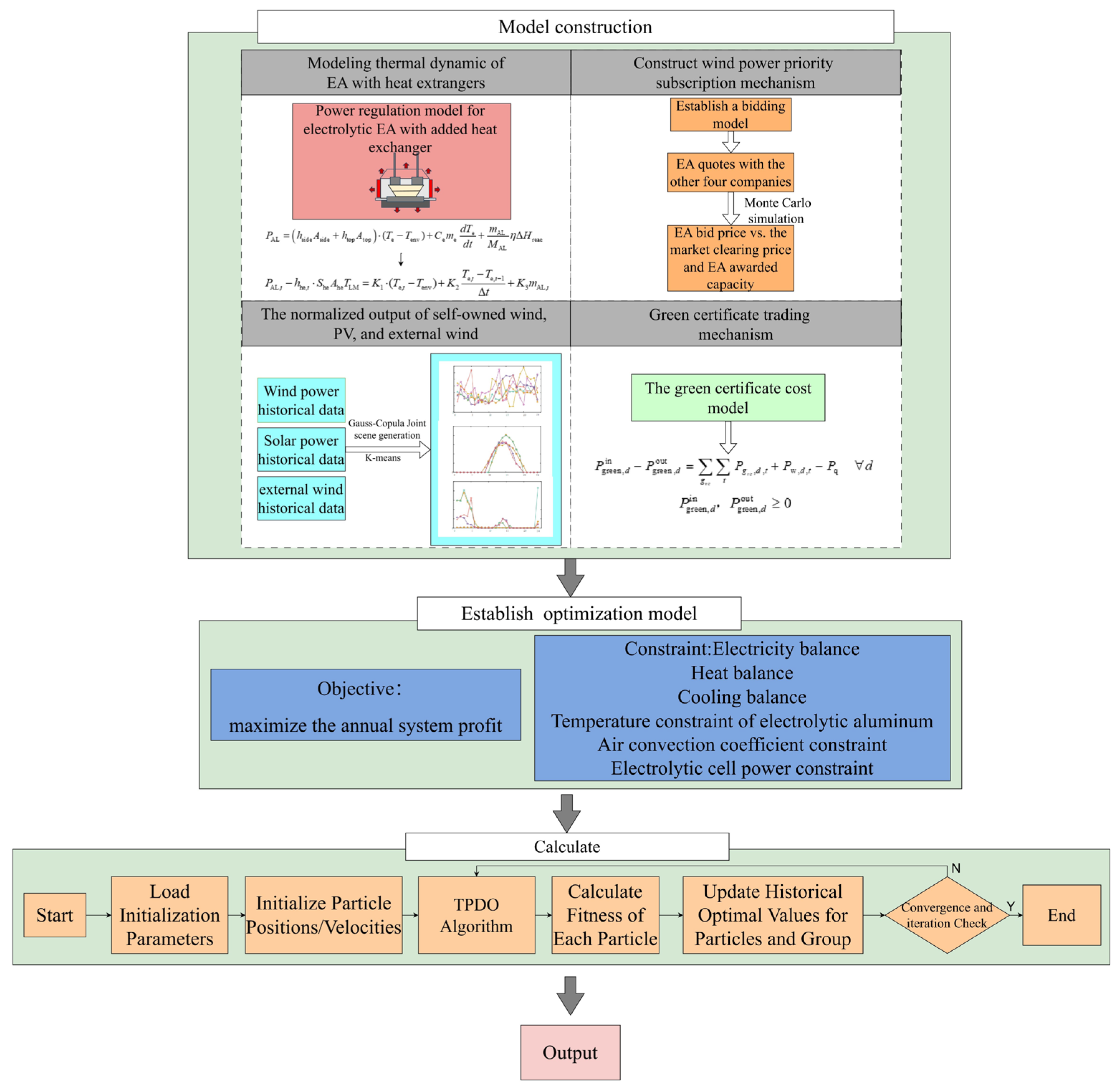
Figure 1. Flowchart of the system operation.
Sustainability 18 00297 g001
Figure 2. System diagram of EA industrial park.
Sustainability 18 00297 g002
Figure 3. Probability density curves of bidding prices and K-S test.
Sustainability 18 00297 g003
Figure 4. EA bid price vs. the market clearing price and EA awarded capacity with 95%CI.
Sustainability 18 00297 g004
Figure 5. Logic diagram of the TPDO algorithm.
Sustainability 18 00297 g005
Figure 6. Normalized generation curves of self-owned PV, wind, and external wind.
Sustainability 18 00297 g006
Figure 7. Heating and cooling load.
Sustainability 18 00297 g007
Figure 8. Iteration convergence curves and box plot with 30 independent runs.
Sustainability 18 00297 g008
Figure 9. Power and electrolyte temperature of EA cells under scenarios 5 and 6.
Sustainability 18 00297 g009
Figure 10. Resulting heat transfer coefficient of heat exchangers in scenario 6.
Sustainability 18 00297 g010
Figure 11. Heating and cooling power mix of scenarios 5 and 6.
Sustainability 18 00297 g011
Figure 12. System power mix under scenarios 2, 4, and 6.
Sustainability 18 00297 g012
Table 1. Desired capacity and bidding model of enterprises.
EnterpriseDesired CapacityBidding Model
A350N(0.40, 0.022)
B250N(0.34, 0.062)
C400N(0.30, 0.022)
D300N(0.25, 0.012)
EA1000-
Table 2. Thermal parameters of EA.
ParametersValue
Aside18 m2
Atop10 m2
hside10–120 W/m2/°C
htop30 W/m2/°C
Ce1800 J/kg/°C
me600 kg
ηAL0.75
Table 3. Investment parameters.
DeviceUnitCapital Investment (USD)Lifetime (Years)
Self-owned PVMW507.3820
Self-owned wind turbineMW1128.3420
Heat exchangerunit70,521.8620
Table 4. Different scenarios studied in this work.
ScenarioHeat ExchangerSelf-Owned PV and WindGreen Certificate TradingExternal Wind Bidding
1××××
2×××
3××
4×
5×
6
7average price
×: configuration is not applied, √: configuration is applied.
Table 5. CBA analysis for scenarios 1 to 4.
ScenarioConfiguration
(HX/Wind/PV/EW)
Cost
(108 USD)
Revenue
(108 USD)
Emission
(106 t)
Green Al
(%)
RES Integration
(%)
1–/–/–0.00003.28434.12070.00.0
2166/0/0/00.03373.33494.12070.00.0
3176/310/244.5/00.95984.28293.211127.0100.0
4332/887.9/137.6/01.64626.58482.162156.193.2
HX: heat exchangers, EW: external wind, RES: renewable energy sources.
Table 6. CBA analysis for scenarios 5 to 7.
ScenarioConfiguration
(HX/Wind/PV/EW)
Cost
(108 USD)
Revenue
(108 USD)
Emission
(106 t)
Green Al
(%)
RES Integration
(%)
50/928.9/110.5/02.12046.20452.083057.184.3
6340/928.9/110.5/10002.18496.81611.980260.488.3
7340/930.1/111.5/3242.18806.79392.057457.391.7
HX: heat exchangers, EW: external wind, RES: renewable energy sources.
Table 7. Sensitivity analysis of financial indicators for different installation costs.
ScenarioPV Installation Cost (USD/kW)WT Installation Cost (USD/kW)Net Present Value (108 USD)Levelized Cost of Energy (USD/kWh)
Benchmark case prices507.381128.344.62980.0496
2024 China average prices652.891331.454.29730.0587
Benchmark case prices +20%609.311354.024.35560.0594
Benchmark case prices −20%406.21902.684.95490.0398
Disclaimer/Publisher’s Note: The statements, opinions and data contained in all publications are solely those of the individual author(s) and contributor(s) and not of MDPI and/or the editor(s). MDPI and/or the editor(s) disclaim responsibility for any injury to people or property resulting from any ideas, methods, instructions or products referred to in the content.