Article

Tropical Island Visual Strategies for Sustainable Tourism: Contrasting Real Photographs and AI-Generated Images


1
International Design School for Advanced Studies, Hongik University, Seoul 04068, Republic of Korea
2
School of Design, Jiangnan University, Wuxi 214122, China
*
Author to whom correspondence should be addressed.
Sustainability 2026, 18(1), 285; https://doi.org/10.3390/su18010285 (registering DOI)
Submission received: 2 December 2025 / Revised: 22 December 2025 / Accepted: 23 December 2025 / Published: 26 December 2025

Abstract

This study examines how real photographs and AI-generated photographs shape sustainable engagement and travel intention in tropical island tourism. We used a one-factor between subjects survey experiment with two independent conditions, real images and AI images, with 357 participants in each group. Guided by the SOR framework, we measured perceived authenticity, cognitive destination image, emotional comfort, and perceived information diagnosticity, together with sustainable engagement and travel intention. Structural equation modeling shows that under both visual conditions the four perceptual factors are positively associated with travel intention. In the real photo condition, sustainable engagement partially mediates the effects of all four factors on travel intention. In the AI photo condition, sustainable engagement mediates the effects of cognitive destination image, emotional comfort, and perceived information diagnosticity on travel intention, while the indirect pathway from perceived authenticity to travel intention through sustainable engagement is not significant. These findings support an actionable dual-track visual strategy. Use AI images to expand reach at low ecological cost, then use real images with verifiable cues to strengthen credibility and encourage responsible choices.

1. Introduction

Since 2023–2024, multiple reports from UN Tourism have indicated that the number of tourists in many tropical islands at home and abroad has exceeded pre-pandemic levels [1], and tourism has increasingly become a crucial economic driver for coastal and offshore islands [2,3]. For instance, in island settings such as the Maldives and Hainan Island, tourism is not marginal. It is a primary driver of income, jobs, and investment. As visitation increases, the way destinations communicate matters for ecosystems. We examine whether real photographs and AI-generated photographs shape perceptions in ways that support sustainable engagement and responsible travel choices [4,5]. However, rapid growth also creates sustainability pressures on carrying capacity and cultural protection [6,7]. Prior work notes a shift from attraction to guiding responsible choices through visual communication [8,9,10], but it rarely compares real photographs with AI-generated photographs or identifies which perceptions they most effectively shape. Evidence is limited on how authenticity, destination cognition, emotional comfort, and information diagnosticity translate into sustainable engagement and travel intention. We address this gap by directly comparing the two image types and testing which perceptions better support responsible, low-impact choices [11].
Visual communication has a significant impact on tourists’ destination image perception, emotional response, and behavioral intention, which is directly related to the likelihood of tourist destinations achieving the Sustainable Development Goals (SDGs) [12,13,14]. For instance, Palau converts quantifiable sustainable efforts into visual communication and systematically conveys relevant information to tourists before and during their travels. These visual elements can not only guide tourists to make environmentally friendly decisions but also strengthen their willingness to engage in sustainable behaviors during their trips [15]. Mayu Island in Shantou, China likewise utilizes strategic visual infrastructure (such as signs and interpretive images) to guide both tourists and local residents to co-create sustainable behaviors [16]. In other words, these cases disclose that visual communication is not merely confined to esthetic attraction or information dissemination; rather, it is a strategic medium through which destinations can embed sustainable values, thereby guiding tourists to enhance their environmental awareness.
As can be seen from the above, visual images play a positive role in tourism marketing and can also promote sustainable communication. The effectiveness of visual elements has spurred diversity of image-based promotion [17]. With the rapid development of AIGC, in addition to real photographs, tourism destinations are increasingly adopting AI-generated images to expand content production capacity and enable customized information delivery [18], such as self-annotating species information, sensitive habitat zones, and carrying-capacity indicators within visual prompts, thus allowing the presentation of fragile habitats or endangered wildlife without physical disturbance [19,20]. AI-generated imagery also facilitates more efficient visual composition and accelerates promotional production. Compared with full reliance on on-site photography, AI images expand audience reach and diversify visual styles while overcoming constraints related to weather and field conditions, thereby reducing the ecological pressure associated with tourism marketing communication [21]. For instance, the National Gallery of the Faroe Islands collaborated with destination communicators to launch an online “AI Gallery” using tools such as Midjourney, presenting local nature and culture to spread destination culture and enhance visitors’ interest in visiting. Responsible tourism stresses minimizing environmental and socio-cultural harm while enhancing local community benefits and participation. Ecological-carrying capacity specifies the ecological, spatial and social thresholds of visitor use beyond which degradation occurs. Together, these concepts set the normative basis for our study. Visual communication should do more than attract visitors. It should steer responsible choices by clearly conveying low-carbon transport, eco-friendly lodging and community-benefit practices so that engagement and visitation increase without exceeding carrying limits.
To fill this research gap, this study conducts a comparative evaluation of the persuasive efficacy of Real-Photos and AI-synthesized photos as visual communication tools, with a particular focus on the context of island ecotourism. Existing research indicates that images from different sources place audiences in different information contexts, thus influencing their judgments [22]. Moreover, virtual natural landscapes can induce travel and conservation behaviors to an extent comparable to that of real photos [23]. Consequently, we constructed a Stimulus–Organism–Response (SOR) model centered around four core constructs: perceived authenticity (PA), cognitive destination image (CDI), emotional comfort (EC), and perceived information diagnosticity (PID), to explore how perceptual and information cues in different visual environments drive sustainable engagement and travel intentions [24,25].
The tropical travel intention explored in this study refers to the perception of sustainable engagement within the research of visual imagery. It guides pro-environmental behavior and promotes the sustainable development of tropical islands from a visual perspective. This study demonstrates that cues in visual imagery can more effectively calibrate tourists’ expectations and path choices. By setting authenticity thresholds for images, the risks of overstatement and greenwashing can be reduced [26,27]. Moreover, in the context of tropical tourism marketing, clear and well-composed promotional images have a positive effect on attracting tourists and generating word-of-mouth. When these images convey carefully planned information, they are more capable of attracting tourist groups of different age groups and with diverse needs, thus enhancing marketing returns [28]. Crucially, this study aims to transform “visual appeal” into “responsible choices,” ensuring that improvement measures are measurable, traceable, and sustainable through quantifiable indicators.
Existing work shows that images influence tourist decisions, yet it rarely compares real photographs with AI-generated photographs in terms of how they shape sustainable tourist behavior, nor does it identify which perceptual pathways are most effective for fostering sustainable engagement and travel intention. Evidence is also limited on whether the same perceptions operate similarly across the two image sources and whether sustainable engagement mediates these effects in different ways. To address these gaps, this study adopts the SOR framework to examine how image perception affects tourists’ travel decisions [29]. Treating images as an interactive medium between visual engagement and behavioral intention, we use a quantitative design [30] and conduct a comparative test with real-life photos and AI-synthesized photos to evaluate their differential impacts on visual perception and sustainable tourism behaviors. Figure 1 links the research context, model, and objectives into one process line. The middle part shows how four perceptual stimuli influence travel intention through sustainable engagement. The right part presents the application focus of Real-photos and AI-photos in sustainable engagement and destination communication, and it outlines the dual-track strategy that combines the two [31,32].

2. Literature Review

2.1. SOR Model in Tourism and Sustainability

The Stimulus–Organism–Response (S–O–R) model was first put forward by Mehrabian and Russell (1974) [33]. This model suggests that external stimuli shape internal cognitive and emotional states, which then drive behavioral responses. In the tourism industry, cognitive and affective images together form the overall destination image and are related to tourists’ intention to visit [22]. Subsequent research has extended the S–O–R model to fields such as marketing [34], environmental settings [35], and digital environments [36].
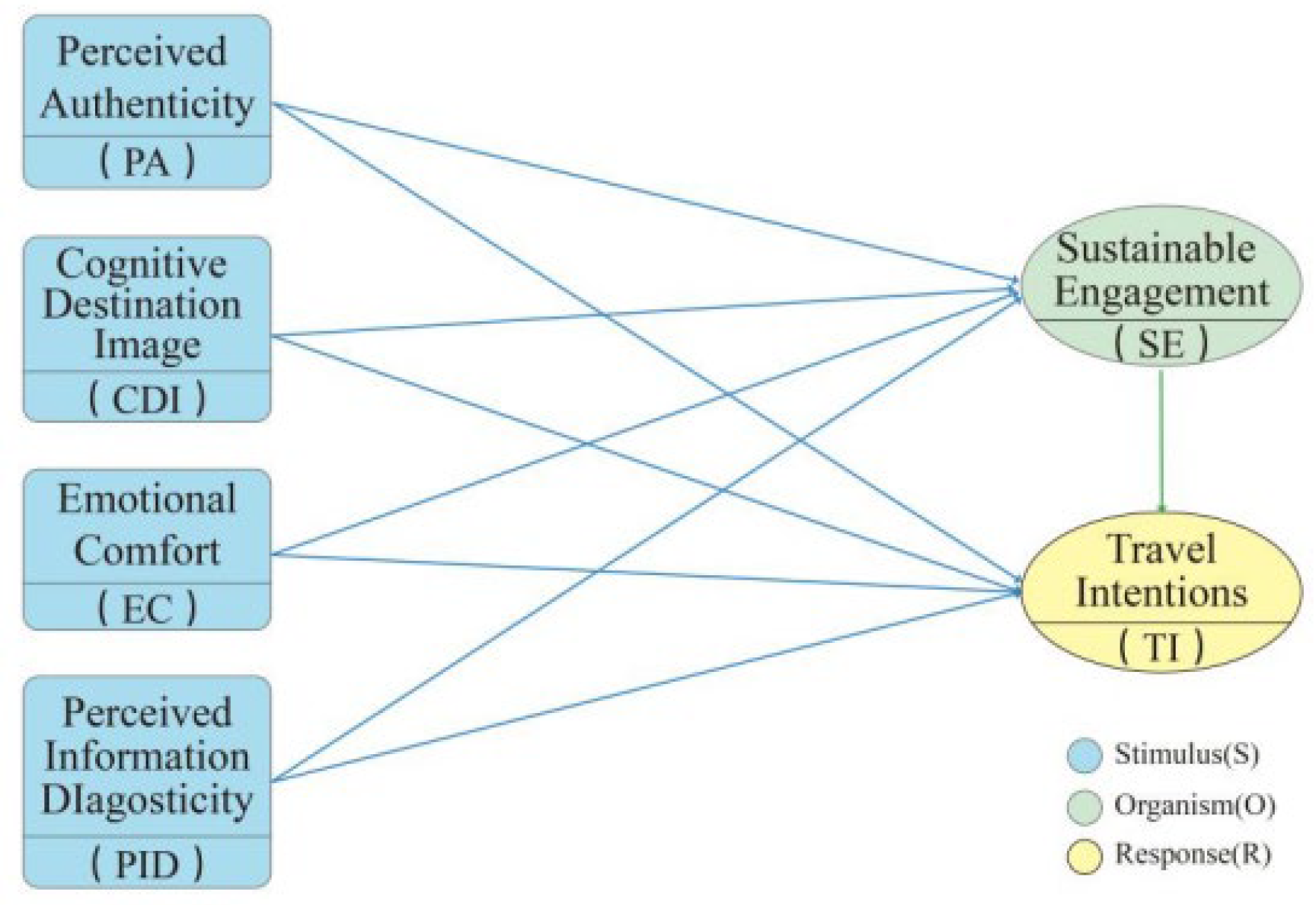
In this study, based on the SOR framework, the Stimulus (S) refers to the perceptions that tourists have when they view destination images on different marketing channels [37]. We describe these perceptions in terms of four dimensions: perceived authenticity (PA), cognitive destination image (CDI), emotional comfort (EC), and perceived information diagnosticity (PID). These four dimensions systematically characterize the primary perceptual channels of tourism visual stimuli, covering the key mechanisms from image input to judgment and intention formation from the perspectives of credibility, cognitive construction, emotional response, and information diagnosticity (Table 1). The Organism (O) represents sustainable engagement (SE), which is tourists’ willingness to adopt low-impact, environmentally friendly behaviors. The Response (R) represents travel intention (TI). Previous research indicates that emotions can either promote or inhibit environmentally friendly behaviors [38,39]. This is in line with the S-O-R framework’s perspective that stimuli affect cognition and emotion, and these internal states can shape behavioral inclinations [40].
The tourism industry and the field of sustainable development are entering a stage that places more emphasis on digitalization and quality. On social media, both Real-Photos and AI-generated photos are used for promotion. However, existing research on interactive images often remains at a descriptive level or is limited to the theory of artificial intelligence acceptance, leaving room for exploration from different perspectives. Previous studies have shown that visual cues jointly shape the destination image, which in turn affects behavioral intention [45]. Therefore, we adopt the SOR framework to explore how the four dimensions of perceptual stimuli, PA, CDI, EC, and PID, in the contexts of Real-Photos and AI-generated photos, directly and indirectly influence tourists’ interactions through destination information (SE). The resulting conceptual model is shown in Figure 2.

2.2. Key Structures of Stimulus

In the SOR framework, stimulus refers to the information that prompts people to perceive something and experience an emotion [22,46,47]. In the tourism context, images are used as stimuli to induce tourists to rationally evaluate a destination and develop specific emotions, thus influencing their behavioral tendencies. This study employs Real-photos and AI-synthesized photos as the two experimental conditions. Since the independent variable in the research design is the psychological state of tourists after their exposure to images, the independent variables in this study are defined as PA, CDI, EC, and PID, as detailed below.
Perceived authenticity (PA) refers to tourists’ overall perception of the authenticity and credibility of the destination or the promotional information from the media. It is a key stimulus in tourism and marketing research [48]. According to the SOR framework, PA is the starting point for tourists’ psychological reactions triggered by visual information. The presentation of information authenticity can enhance tourists’ perception of the credibility and applicability of visual information, thus prompting tourists to form more positive behavioral intentions [49]. In AI generated content, perceived authenticity depends on realism, transparent source disclosure, and verifiable cues within the image, and when these elements are present credibility is preserved and positive intentions are more likely. In the context of sustainable tourism, authenticity can evoke tourists’ sense of responsibility and guide them to choose sustainable and environmentally friendly tourism methods [48,50]. Drawing on this theoretical foundation, we formulate the following hypotheses.
H1. 
Perceived authenticity positively influences travel intention.
H2. 
Sustainable engagement mediates the positive relationship between perceived authenticity and travel intention.
Cognitive destination image (CDI) refers to the belief structure that tourists hold about destination attributes. It covers natural landscapes, built facilities, and cultural resources as an integrated understanding. It describes what the place is as a whole and focuses on the features and attractions of the destination rather than the way information is presented [51]. In AI-generated content, CDI can be shaped by controllable scene composition and prototypical viewpoints that clearly depict natural features, built facilities, and cultural settings, enabling a stable, integrated belief about the destination’s attributes without on-site disturbance. Beerli and Martín report that objective attributes such as transport accessibility, accommodation quality, and attractions can strengthen CDI and then support visitation intention [42]. In sustainable settings, when a destination is perceived to embody environmental and cultural protection, CDI aligns more readily with a sense of responsibility and encourages pro-environmental choices [52,53]. On this basis, we propose the subsequent hypotheses.
H3. 
Cognitive destination image positively influences travel intention.
H4. 
Sustainable engagement mediates the positive relationship between cognitive destination image and travel intention.
Emotional comfort (EC) is a low-intensity positive state such as tranquility, calmness, or ease [54]. In image-based tourism marketing, emotional comfort is elicited by specific visual cues, for example, soft color palettes, low spatial complexity, coherent composition, and restorative nature scenes, and these cues convert external visual stimuli into internal affective responses that shape behavior [22,51]. Prior studies show that positive emotions are linked with stronger travel intention and pro-environmental inclination [55,56]. For example, Stylidis et al. report that emotional bonds with the place increase support for sustainable policies [57]. In sustainable tourism, Batool shows that emotional connection strengthens environmental attitudes, and related work indicates that such connection fosters a sense of responsibility and belonging to the destination [58,59]. Based on this literature, we expect that visual stimuli that induce emotional comfort will promote sustainable engagement and increase travel intention. In AIGC settings, low-arousal positive affect can be deliberately evoked by controlling features such as lighting softness, atmospheric haze, viewing distance, and scene tranquility, which enables reproducible images that gently elicit calm while avoiding on-site disturbance. Drawing on this theoretical foundation, we formulate the following hypotheses.
H5. 
Emotional comfort positively influences travel intention.
H6. 
Sustainable engagement mediates the positive relationship between emotional comfort and travel intention.
Perceived Information Diagnosticity (PID) refers to the extent to which visual cues provide useful, clear, and decision-relevant information that enables more rational judgements [60]. Research shows that richer informational layers and clearer presentation formats improve decision quality [61]. When images embed labels, icons, micro-maps, data annotations, or layered explanations, viewers can verify claims and translate cues into actionable choices. Building on this view, Purohit and Srivastava [62] find that when visual cues are perceived as informative and evaluative signals, consumers make more reasoned quality assessments and select more appropriate options. Interactive or guided visuals can further raise PID, deepen understanding, and facilitate intention formation [63]. From this rationale, we derive the following hypotheses. In AIGC applications, PID can be strengthened by generating images with built-in verifiable overlays and step-by-step prompts that make sustainable actions clear and checkable while avoiding on-site disturbance. From the preceding theoretical rationale, the following hypotheses are derived.
H7. 
Perceived information diagnosticity positively influences travel intention.
H8. 
Sustainable engagement mediates the positive relationship between perceived information diagnosticity and travel intention.

2.3. Key Structures of Organism (Mediating Variables)

Sustainable Engagement (SE) refers to tourists’ cognitive and behavioral commitment to sustainable concepts and principles, encompassing a sense of environmental responsibility and the willingness to practice green behaviors. It differs from traditional tourism interest research, which is reflected in four observable orientations, namely choosing low-impact transport and lodging, complying with environmental rules, supporting community and ecological programs, and actively seeking environmental information. SE goes beyond responsibility and attitudes by stressing whether these states translate into implementable choices and actions [64]. In the SOR model, SE functions at the Organism (O) stage between external stimuli and behavioral responses. Existing studies indicate that environmental responsibility often serves as an important mediating variable. When tourists perceive that a destination is conducting environmentally friendly operations, an increased sense of responsibility boosts their willingness to engage in sustainable behaviors.
Therefore, in this study, Sustainable Engagement (SE) is defined as a mediating variable. Thus, exposure to Real-Photos or AI-Photos may trigger cognitive and emotional responses, yet these responses lead to only transient environmental engagement attitudes [65,66]. However, through the mediating mechanism of SE, these responses can be transformed into enduring environmental commitment and actions. This finding supports the social cognitive path theory and addresses the core issue in sustainable tourism: converting psychological responses into responsible behaviors [67]. In light of the prior theory, we set out the following hypotheses.
H9. 
Sustainable engagement positively influences travel intention.

2.4. Structures of Response and Behavior

Travel intention (TI) is tourists’ subjective anticipation of whether they will visit a destination in the future [68]. This anticipation is based on the psychological assessment of destination information, encompassing evaluative judgments, emotional responses, and the degree of fit between the destination and tourists’ goals. As a crucial variable in tourism behavior, TI serves the psychological function of connecting the perception of the destination image with subsequent behaviors. The influence of travel intention is significantly enhanced when tourists form positive evaluations and emotional responses [69,70]. In the context of sustainable tourism, TI also reflects tourists’ willingness to choose environmentally friendly travel modes, green transportation, and environmentally sustainable destinations [71]. When tourists’ perception of a destination can strengthen their sense of environmental responsibility and prompt them to establish an enduring engagement and commitment to the destination, tourists are more likely to develop green travel intentions [72].
Based on the above-explored theoretical foundation, this study delves into the empirical findings and theoretical explorations regarding how to shape tourists’ behavior.

3. Methods

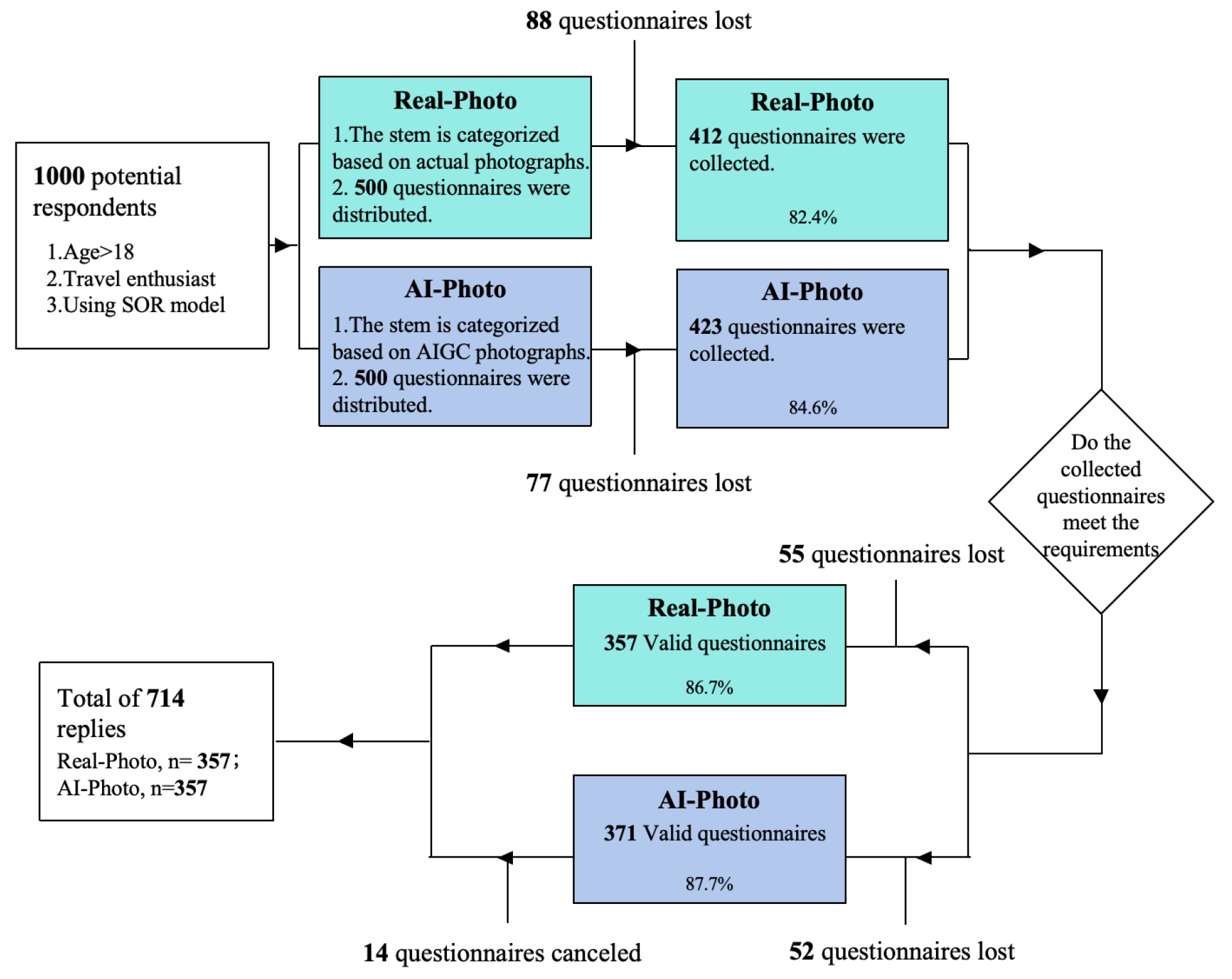
This study established a procedure to answer the research questions: First, the measurement scales were defined according to the findings of previous studies. Second, hypotheses were proposed and the theoretical model was constructed. The visual stimuli were then prepared. Real photographs were taken on Jiajing Island in summer using a standard single-lens camera under natural light, with only basic exposure and white balance adjustments and no compositing or content edits. AI images were produced with a diffusion model with a fixed seed and core settings, using reference control to match composition and subject layout. Prompts followed the shooting records of the real photos with explicit control of lighting, color temperature, and camera distance. Each AI image matched a paired real photograph in color and composition, differing only in source. Third, the survey moved from distribution and returns through quality screening and stratified matching, with 714 responses collected in total (Real-Photo = 357, AI-Photo = 357) from the two independent samples across image sources. Finally, the analytical methods were outlined (Figure 3), and analytical tools were described. The questionnaire was administered and collected from July to August 2025, and the overall study was conducted in August 2025.

3.1. Measuring Instruments

This study attempts to explore the direct and indirect ways that image sources (AI-Photo vs. Real-Photo) affect sustainable tourism in tropical island destinations. To measure the latent changes, this study constructed and employed 30 measurement items for each scenario. All the variables and user experience factors were measured by the items listed in Table 2. These items were adopted and adapted from established scales in tourism studies, user experience research and sustainability literature and were adjusted according to the context of this study, which ensured the reliability and validity of these items.

3.2. Questionnaire Design

This study adopted a single-factor between-subjects quantitative survey method to empirically test the research model [81]. This design treats visual source as the sole factor, uses concurrent administration, and identical instruments, and therefore allows differences to be cleanly attributed to source while reflecting real communication settings. It directly answers our comparison question, improves internal comparability, and supports mediation tests within the SOR framework.
In the literature review of eco-tourism in tropical islands and field investigations, we found that Jiajing Island in Hainan is confronted with overly rapid development compared with its carrying capacity, and the lack of infrastructure caused beach waste management problems and trampling damage to coral reefs. In addition, the existing images cannot effectively promote the eco-tourism awareness. Therefore, at the beginning of the questionnaire, this study adopted images of Jiajing Island produced by different methods as the visual stimulus examples. The rest of the questionnaire was designed with three parts. The first part was the informed consent procedure. The second part collected participants’ basic information including their age, gender and education level. The third part measured respondents’ sustainable engagement and travel willingness after being exposed to different visual stimuli. All items in this part adopted a 5-point Likert scale. 1 represented Strongly Disagree and 5 represented Strongly Agree.
The questionnaire was adapted through a structured translation procedure to ensure linguistic and conceptual equivalence. First, two bilingual researchers with training in tourism and marketing independently translated the English items into Chinese. Second, a third bilingual researcher reconciled the two Chinese versions into a single draft after resolving wording differences and checking conceptual consistency. Third, an independent bilingual translator who had not seen the original instrument translated the reconciled Chinese draft back into English. Fourth, a small review panel compared the back-translated English with the source version line by line and discussed discrepancies until semantic, idiomatic, experiential, and conceptual meanings were aligned. Fifth, minor wording refinements were made to improve clarity and cultural appropriateness while retaining the original construct intent. Sixth, we formatted the English and Chinese versions in the same layout and used consistent terminology and examples to support cross-group comparability. Finally, we conducted a pretest with 30 prospective tropical-island tourists and used brief cognitive probing to confirm that items were clear and interpreted as intended. No pretest responses were included in the final analyses.

3.3. Personal Basic Information Analysis

Based on China as one of the main source markets in the world tourism [82], and most of Chinese tourists have similar environmental preferences [83] and most of them know Hainan province where Jiajing Island located, participants were recruited from tourism forums and social media groups about traveling to island. Screening questions were added in the questionnaire to ensure participants were willing to travel to tropical island before and over 18 years old. This screening mechanism reduces the possibility of familiarity bias so that travel intentions can be examined more reasonably.
To reduce social desirability bias and common method variance, this study adopted questionnaire survey method [84]. Same measurement items were used in all scenarios and each question stem was clearly labeled to indicate its corresponding visual source [85,86]. In the implementation of the survey, 1000 questionnaires were distributed in total (500 to Real-Photo group and 500 to AI-Photo group). In total, 412 valid questionnaires were returned by the Real-Photo group (return rate: 82.4%). A total of 423 valid questionnaires were returned by the AI-Photo group (return rate: 84.6%). Finally, questionnaires with extremely short completion time or abnormal responses and other invalid questionnaires were excluded. Finally, 357 valid questionnaires were obtained from Real-Photo (validity rate: 86.7%), and 371 valid questionnaires were obtained from AI-Photo (validity rate: 87.7%). To make group comparable, the final sample size of two groups were balanced at 357 each (Real-Photo: 357, AI-Photo: 357), so two equal-sized samples were obtained.
To achieve balanced multi-group comparisons, this study implemented stratified random downsampling [87] on the quality-screened AI-Photo group (n = 371) to make marginal distribution of gender, age, education level and income similar to the ones in the Real-Photo group (n = 357) [88]. Then, the rest of the AI-Photo data in each stratum were randomly excluded without using any outcome variables. Robustness checks showed that the models estimated on full AI-Photo sample data (n = 371) and downsampled version (n = 357) gave similar results in terms of significance testing and effect direction, which implied that the conclusions were insensitive to the downsampling procedure.
Respondents’ demographic characteristics are presented in Appendix A. Males and females occupied 68.35% and 31.65% of the sample, respectively. The survey participants were mainly divided into two groups, namely, 36–45 years old (30.25%) and 46–60 years old (27.45%). In terms of education, 71.99% of the sample had obtained a bachelor’s degree, and 19.05% had obtained postgraduate degree(s) or above. In addition, combined annual household income ranged from RMB 100,000 to 200,000 and more than RMB 200,000 occupied 63.86% of the sample. In general, the cohort was found to have high education level and mid-to-high income level. Generally, such demographics would be expected to possess relatively stronger ability of information acquisition and decision-making [89], more purchasing power and decision-making autonomy [90], and would be more likely to exhibit eco-friendly travel behavior, including using sustainable transportation and choosing environment-friendly destinations. Therefore, such sample composition offers a realistic basis for studying the acceptance of sustainable tourism and its promotion routes.

3.4. Analytical Method

This study adopted the SEM method because it allows for estimation of multiple causal pathways and mediation effects in a single framework while considering latent variables and measurement errors. In addition, SEM allows for comprehensive assessment of model fit between theoretical constructs and empirical data—thereby reducing estimation bias and erroneous inference [91,92,93]. Furthermore, different from other approaches, SEM not only provides explanatory path estimates but also provides prediction-oriented metrics, which allow us to assess the model’s prediction for sustainable engagement and test the multi-path mechanisms in the research framework simultaneously.
Then, confirmatory factor analysis (CFA) was run in SPSS 27.0 to test the convergent and discriminant validity of the scales for latent variables as well as the overall fit indices. Fornell–Larcker criterion was applied to verify reliability and validity of measurement model [94]. In addition, this study tested the proposed SOR theoretical model against the empirical data in AMOS 24.0 and SPSS 27.0 Path coefficients were estimated via bias-corrected bootstrapping to calculate indirect effects confidence intervals. Comparisons were made on path coefficients between Real-Photo and AI-Photo conditions. This workflow showed close alignment with the theoretical model and could serve as an adequate methodological basis for subsequent hypothesis testing and empirical exploration.

4. Results

This study employs a two-stage analytical approach [95]. Based on the methodology and hypotheses developed in the previous sections, this chapter, under the guidance of the SOR framework and paired data from same participants under different visual conditions, examines how different source images affect tourists’ psychological transformation process and behavioral outcomes. The data from two conditions are examined separately. To achieve an optimal model fit, minor modifications were implemented based on Modification Indices (MI). Specifically, we allowed residual covariances between certain redundant measurement items within the same latent construct that shared similar semantic framing. These adjustments significantly improved the overall fit indices without altering the fundamental structural relationships of the model.

4.1. Analysis Measurement Model

Before testing structural paths, the reliability and validity of the measurement model based on the reflective measurement paradigm proposed by Ledgerwood & Shrout (2011) [96] are examined to ensure the suitability of scales. Considering that data are collected via questionnaires, Harman’s single-factor test is further conducted to examine common method bias (CMB) and ensure the reliability of data. Following the approach proposed by Podsakoff et al. (2003) [84], principal component analysis (PCA) was conducted on all measurement items for both samples. Finally, 6 factors were extracted from each data sample. The results displayed that, in the Real-Photo group, the variance explained by all factors was 70.728%, and the variance explained by the first principal factor was 31.399%. In the AI-Photo group, the variance explained by all factors was 71.334%, and the variance explained by the first principal factor was 39.961%. The results demonstrated that the variance explained by all factors was relatively strong. That is, no single factor explained most of the variance, which implied that the common method bias did not greatly affect the conclusions of this study [97,98].
Appendix B summarizes the reliability and validity results of these scales under Real-Photo and AI-Photo conditions. Specially, all the latent variables meet acceptable thresholds under Real-Photo and AI-Photo conditions: Cronbach’s α is between 0.852–0.918 and composite reliability (CR) is between 0.852–0.920, thereby exceeding the threshold of 0.7 and showing high internal consistency. Standardized factor loadings are between 0.634 and 0.822 under Real-Photo conditions and between 0.678 and 0.797 under AI-Photo conditions, thereby exceeding the threshold of 0.3 and showing good item reliability. The average variance extracted (AVE) values are between 0.627 and 0.697 and 0.604 and 0.678 under Real-Photo and AI-Photo conditions, thereby exceeding the threshold of 0.50 and showing convergent validity. In total, the results show that the scale is reliable and valid under both experimental conditions, which provides strong support for subsequent path analysis and mediation effect testing.
The correlation analysis between structural variables are shown in Appendix C. Under both Real-Photo and AI-Photo conditions, all pairwise relationships between PA, CDI, EC, PID, SE, and TI are positive and moderately strong. No correlation coefficients exceed the high correlation threshold (>0.85). Therefore, multicollinearity is controlled well and the model is suitable for hypothesis testing [99]. In addition, this study meets the Fornell–Larcker criterion. Under both visual conditions, the average variance extracted (AVE) values and their square roots on the diagonal exceed the corresponding inter-construct correlations, thereby showing discriminant validity.
Subsequently, the whole model is tested. As shown in Table 3, the confirmatory factor analysis (CFA) under two conditions shows excellent model fit. Specifically, the chi-square degrees of freedom ratio (CMIN/DF) are 1.164 and 1.202 (<3), respectively. The root mean square residuals (RMR) are 0.057 and 0.024, indicating that there is little deviation between theoretical model and observed data. Additionally, the model shows a robust Comparative Fit Index (CFI) of 0.990 and 0.988 (>0.95), both exceeding the widely accepted threshold of 0.95. The root mean square error of approximation (RMSEA) values are 0.021 and 0.024, which fall within acceptable ranges. As evidenced from the above results, all fit indices meet recommended thresholds and show excellent overall model fit. This provides a statistically sound basis for subsequent analyses.

4.2. SEM and Direct and Mediated Path Tests

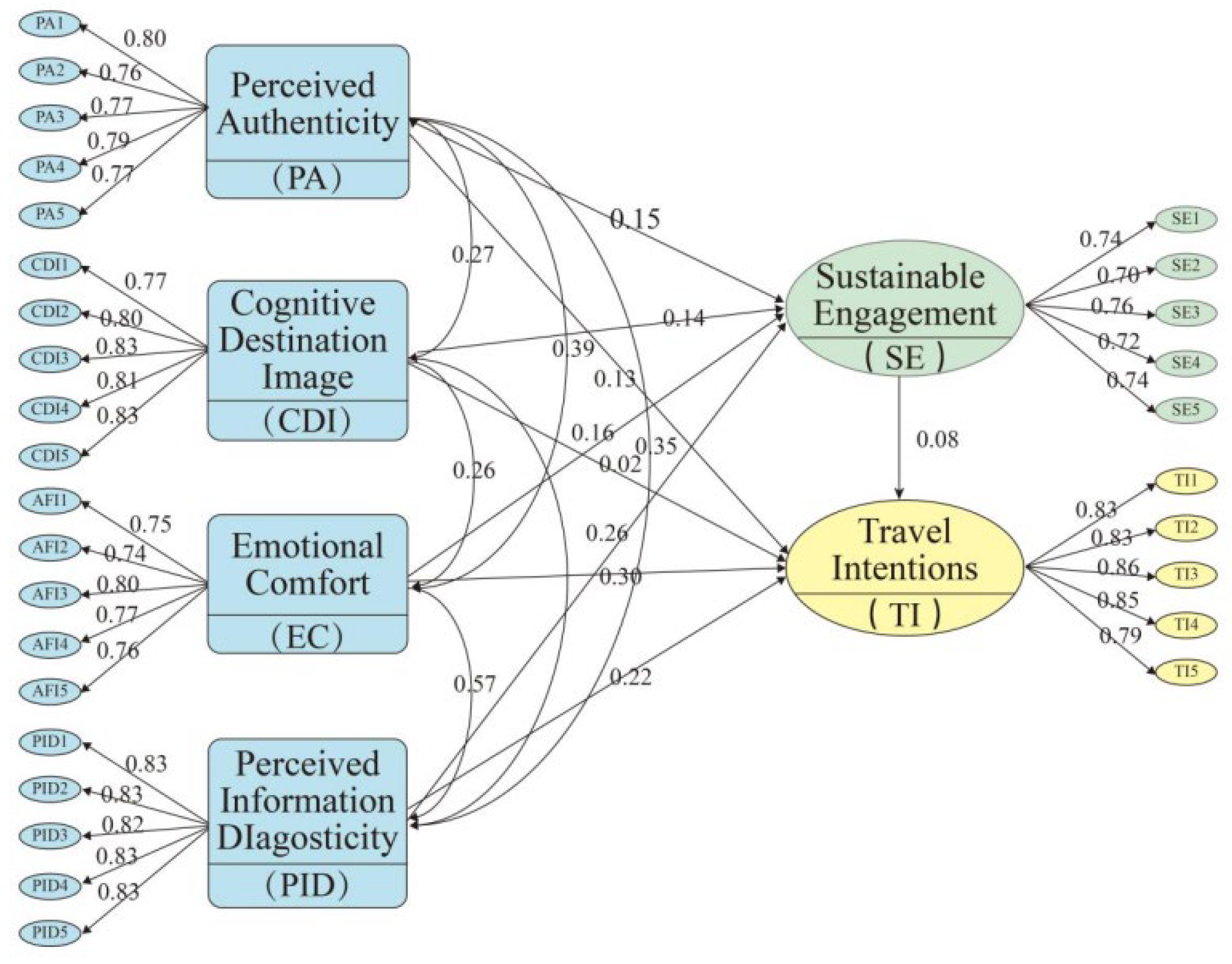
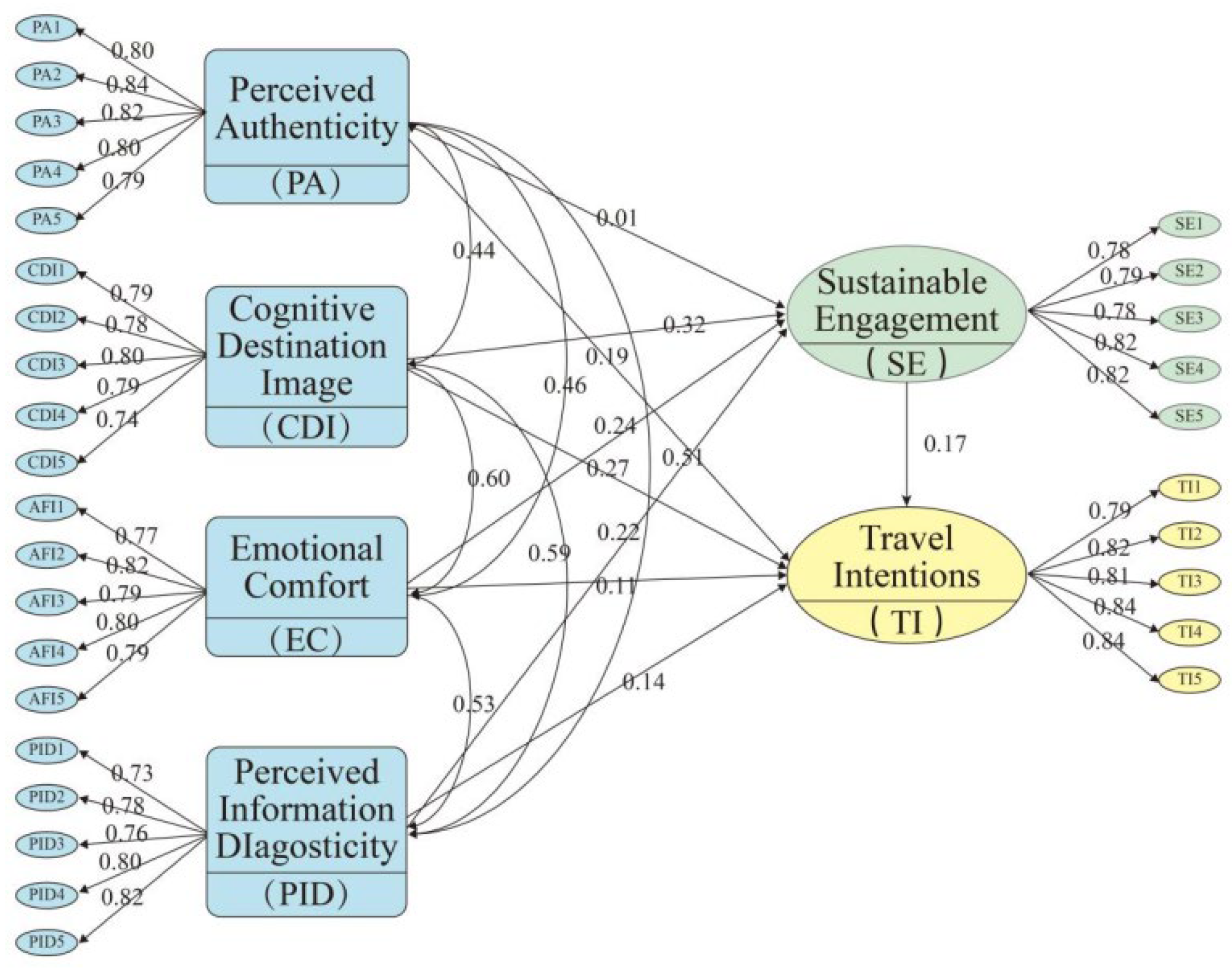
This study used structural equation modeling (SEM) to test hypothesized relationships among variables, evaluating both measurement model and structural model in the proposed theoretical model simultaneously to reflect complicated paths and indirect effects [91]. Then, compared with the influence of Real-Photo and AI-Photo on tourists’ perceptions, emotional experiences on SE and TI were further compared in this study to find out effective strategies to promote eco-tourism [100]. Figure 4 and Figure 5 reflect the relationships between measured variables, according to the above modeling guidelines, some modifications were conducted to make the model achieved acceptable fit indices. In total, 30 measurement items were used for each condition in the final structural model. The following section reports the results of direct effects and mediation pathway testing based on SEM.
The evaluation of the full structural model across both Real-Photo and AI-Photo conditions demonstrates a high degree of consistency between the theoretical framework and the observed data. After minor refinements to optimize the model fit, all key metrics in both groups reached or exceeded the recommended thresholds (Table 4). Specifically, the CMIN/DF values of 1.161 and 1.198 stayed well below the required value of 3, while the RMSEA (0.021 and 0.024) remained significantly lower than the 0.08 limit, indicating a high level of precision and minimal fit error. Furthermore, all incremental fit indices, including CFI (0.990 and 0.989), TLI (0.989 and 0.987), and NFI (0.933 and 0.935), far surpassed the 0.90 benchmark, confirming the structural robustness and cross-condition comparability of the model. These results provide a statistically sound and reliable empirical foundation for the subsequent hypothesis testing and path analysis.
Next, the relationships in the structural model were tested by estimating the path coefficients and significance levels (bootstrapping method with 5000 resamples) and effect sizes. Direct effects were firstly checked (Table 5). Then, the mediation analysis was used to test the indirect effects (Table 6).
The results of direct effects (Table 6). Under both visual scenarios, PA, CDI, EC, and PID significantly positively influenced travel intention statistically. Specifically, under the Real-Photo condition, path coefficients were statistically significant: PA-TI (β = 0.127, p = 0.027), CDI-TI (β = 0.140, p = 0.046), EC-TI (β = 0.299, p < 0.001), PID-TI (β = 0.224, p < 0.001). Under the AI-photo condition, CDI (CDI-TI: β = 0.273, p < 0.001), PA (PA-TI: β = 0.188, p < 0.001), EC (EC-TI: β = 0.111, p = 0.035), PID (PID-TI: β = 0.144, p = 0.029). These findings provide robust empirical support for hypotheses H1, H3, H5, and H7 across both experimental groups. Therefore, the image production source per se does not affect TI. Instead, what matters is that the visual content can significantly present perception-enhancing information and diagnostic destination attributes to enhance TI.
Finally, the mediation analysis (Table 6) illustrates the distinct role of SE across both image sources. Under Real-Photo conditions, SE shows significant partial mediation effects across all pathways, supporting hypotheses H2, H4, H6, and H8. Specifically, the indirect effects are statistically significant for the paths originating from PA (β = 0.026, p = 0.023), CDI (β = 0.077, p < 0.001), EC (β = 0.032, p = 0.034), and PID (β = 0.061, p = 0.006). Conversely, in the AI-photo condition, SE effectively mediates TI via CDI (β = 0.046, p = 0.011), EC (β = 0.038, p = 0.016), and PID (β = 0.034, p = 0.016), supporting H7, H8, and H9. However, the PA-SE pathway in the AI condition remains inactive (p = 0.535), leaving H2 unsupported. This suggests that, while AI images can convert cognition and affect into sustainable behaviors, a perceived lack of visual authenticity may disrupt the trust mechanism necessary to shape green behavioral intentions through the authenticity-engagement route.
Finally, Table 7 presents a comparative analysis of the dominant path differences across the two image-source conditions. The mediating role of SE is overall stronger in the Real-Photo condition than in the AI-Photo condition, indicating that the novelty effect and uncertainty surrounding perceived authenticity in AI-generated images may attenuate the transmission of effects through SE. Specifically, EC exerts its strongest influence on TI in the Real-Photo condition and its weakest influence in the AI-Photo condition, suggesting that real photographs are more capable of directly eliciting EC, which, together with cognition derived from image perception, further promotes SE and ultimately enhances TI. The differential impact of SE is also pronounced: AI-generated images tend to operate through a pattern of “engagement first, conversion later,” whereas real photographs rely more on factual credibility to directly persuade potential tourists.
Moreover, PID demonstrates a stronger overall effect in the Real-Photo condition, where tourists are better able to extract actionable evaluative cues from authentic visual information, while AI-generated images provide fewer reliable diagnostic signals for judgment. PA does not occupy a dominant position in driving either SE or TI across both contexts. Notably in the AI-Photo condition, deficits in PA further weaken the indirect transmission through SE. In contrast, CDI shows a consistently significant mediated effect on TI via SE in both conditions, and this effect is particularly pronounced under the AI-Photo scenario. This indicates that AI-generated imagery relies more heavily on the combined influence of holistic destination cognition and SE to facilitate the conversion from initial visual attention to TI.

5. Discussion

This study examined how destination cognition and sustainable engagement jointly influence travel intention under Real-Photo versus AI-Photo visual stimuli. Consistent with prior research, the results indicated that visual imagery-induced affect and judgment positively influence TI, and sustainable engagement plays a partially mediating role. The proposed model was empirically tested using the collected sample data, and the subsequent discussion will focus on how the examined factors influence sustainable engagement and travel intention.
Perceived authenticity (PA) exerted a positive direct influence on Travel Intention (TI) across both visual conditions. This underscores that authenticity remains a pivotal stimulus for travel motivation, regardless of the image source. This finding aligns with He and Timothy (2024) [55], suggesting that high-authenticity cues effectively convert into behavioral intentions. However, a significant divergence emerged in the mediating role of Sustainable Engagement (SE). While SE partially mediated the PA–TI relationship in the Real-photo condition, this indirect pathway was absent in the AI-photo condition [101].
This inconsistency can be interpreted through the lens of “algorithmic skepticism” and “visual realism thresholds.” In the AI condition, although the images may surpass a certain visual realism threshold to attract initial interest, they often trigger a higher cognitive load for source verification. Unlike real photographs that provide factual credibility to support long-term environmental commitment, AI-generated visuals may be perceived as “overly idealized,” leading to a decoupling of perceived esthetic authenticity from actual sustainable engagement. Consequently, while tourists might find AI images appealing enough to visit, the inherent uncertainty regarding the “truthfulness” of the ecological cues prevents these perceptions from maturing into a sense of shared environmental responsibility or engagement. Thus, in the AIGC context, the lack of verifiable evidence inhibits the transformation of authenticity into sustainable action, rendering the SE mediation pathway inactive [102].
The positive correlation between Cognitive Destination Image (CDI) and TI was verified for both Real-Photos and AI-Photos. This is consistent with previous research findings, indicating that CDI not only serves as an external stimulus influencing cognition but also has a subsequent impact on TI through SE [103]. SE also has an indirect effect on the CDI-TI path. That is, the destination cognition formed through image exposure enables tourists to acquire basic information about the environmental conditions and service facilities of tropical islands, thus promoting travel intention. This finding is in line with previous CDI research, which concludes that well-developed supporting services and safety guarantees are the key factors attracting tourists to island destinations [104].
Emotional comfort (EC) enhanced tourists’ positive emotions and shortened the psychological distance between tourists and island destinations under both conditions, ultimately increasing the likelihood of including the destination in their actual travel plans. This finding supports the conclusion of Han et al. (2022) [105] that enhancing tourists’ emotional experiences can significantly boost the intention to visit. Additionally, as a partial mediating variable, sustainable consciousness prompts tourists to engage in pre-sustainable-tourism behaviors, such as retrieving environmental information and participating in ecological initiatives, thus significantly strengthening the EC→TI path [106]. These results corroborate the findings of Shen et al. (2024) [107] that improving emotional management and deepening cultural cognition can effectively promote environmentally friendly travel behaviors.
Perceived information diagnosticity (PID) demonstrates its evaluative advantage by consistently increasing the inclusion rate of actual visitation behaviors in both scenarios. Existing studies support this conclusion, indicating that when visual images present well-defined informational layers and diverse modes of expression, consumers are able to rapidly assess destination quality through visual cues and are therefore more inclined to make positive travel decisions [108,109]. PID can promote environmental awareness via SE. When tourists perceive visual information as clear, actionable, and specific, they are more likely to take it as the basis for green travel decisions. The findings of Herédia-Colaço (2023) [110] corroborate this view: images that effectively convey sustainable practices can influence travelers with weak sustainability awareness. This result indicates that the mediating effect of shared environmental responsibility impacts travelers’ determination to engage in sustainable behaviors.
Overall, under the two visual conditions, PA, CDI, EC, and PID all have a positive impact on tourists’ travel intentions. However, in AI-generated photos, sustainable engagement partially disrupts the mediating process between authenticity and travel intention. This means that, when images convey authenticity, clear information, actionable guidance, and positive emotional arousal simultaneously—whether these images are generated by AI or captured by real cameras—it is evident that tourists will not engage in environmentally friendly behavior during their travels. This result can be explained from two aspects. First, advances in AIGC now produce highly photo-realistic images, narrowing the visual gap with real photography. Second, many “real” photographs are post-processed through edits such as color correction and retouching, which further reduces the perceivable difference between the two sources. Consequently, both types of images reduce the difference in visual sources.
Therefore, from the perspectives of both environmental protection and marketing, we propose an approach that combines the two methods. This approach can reduce interference with the ecological environment while enhancing visual trust. AI-generated images of coral reefs can expand outreach without on-site disruption, leveraging novelty and visual fluency to capture attention. Clear image labeling helps visitors identify endangered species, eliciting low-arousal positive emotions that facilitate initial engagement. Meanwhile, AI-generated images trigger authenticity assessment, source-credibility verification, and a sense of uncertainty. Without credible cues, these assessments may weaken the transition from perceived authenticity to sustainable engagement and travel intention. Hence, high-quality real photos should be prioritized for large-scale promotional materials. These photos can provide verifiable cues, enhance the diagnosability and credibility of information, and at the same time, stimulate positive emotions to strengthen persuasiveness. In practice, AI-generated images should be disclosed transparently and combined with specific diagnostic information (e.g., carrying-capacity limits, eco-odging options, community-benefit projects) to reduce uncertainty and enhance trust. It is expected that this arrangement will increase environmental awareness, promote compliant tourism behavior, and translate the concept of sustainable development into low-impact choices without causing additional on-site interference.

6. Conclusions

Based on the background of tropical tourism development towards sustainability, this study explores how the perceptual characteristics of Real-Photo and AI-Photo influence tourists’ behavioral intentions from the perspective of sustainability theory and visual communication. Through a quantitative research design, this study clarifies how the visual experience influences tourists’ behavioral intentions and highlights the important role of visual perception in promoting sustainable development of tourism industry.

6.1. Dual-Track Marketing Strategy and Sustainable Conversion

This study proposes a differentiated dual-track framework for sustainable tourism marketing. AI-generated content (AIGC) serves as an efficient tool for high-volume, low-impact content production, addressing practical constraints like weather and minimizing physical disturbance to sensitive habitats or wildlife. However, to mitigate the “algorithmic trust crisis” associated with the perceived lack of authenticity in AI images, this study advocates for the strategic integration of high-fidelity real photography during the behavioral conversion stage. Real images provide the necessary verifiable cues—such as eco-lodging and low-carbon transport—to reinforce decision-making confidence. By balancing the broad reach of AIGC with the factual credibility of real photos, this dual-track approach transforms sustainable concepts into actionable choices, ultimately fostering long-term environmentally friendly travel behaviors while alleviating ecological pressures on destinations.

6.2. Limitations

Despite the reliability of the findings, this study has several limitations that warrant depth of analysis. Firstly, the reliance on a cross-sectional design means all variables were captured at a single time point, which precludes the establishment of a definitive longitudinal time sequence or rigorous causal relationships. While mediation analysis suggests certain paths, these results reflect statistical correlations rather than the dynamic evolution of traveler psychology over time. Furthermore, the experimental design lacked a “no-image” baseline and a formal manipulation check to assess whether participants consciously distinguished between AI and real photography. Without such checks, it is difficult to fully isolate the internal validity of “perceived authenticity” as a psychological mechanism, as the effects may vary depending on the participants’ technological literacy or their detection of AI-generated cues.
Secondly, the study’s focus on prospective visitors to a specific tropical island (Jiajing Island) introduces a significant “intention-behavior gap.” The self-reported measures of sustainable engagement and travel intentions may be influenced by social desirability bias, where participants overstate their pro-environmental commitment in a survey setting. This gap suggests that intentions formed during digital engagement may not directly translate into on-site responsible behaviors under real-world constraints like budget or time. Moreover, the sample was limited to Chinese tourists, which restricts the generalizability of the findings to broader cultural contexts where the acceptance of AI-generated content and the prioritization of sustainable tourism attributes might differ significantly.

6.3. Future Research

To advance the understanding of AI’s role in sustainable tourism marketing, future studies should move beyond cross-sectional designs toward longitudinal frameworks that track the long-term evolution of traveler attitudes and the actual persistence of pro-environmental behaviors. Methodologically, subsequent research should incorporate rigorous manipulation checks to evaluate how varying levels of AI-disclosure and consumer AI-literacy moderate the perception of authenticity and trust. Experimental designs could also be expanded by including a broader range of visual stimuli and “no-image” control groups to more precisely isolate the incremental impact of different media types. Furthermore, to address the current geographic and cultural limitations, future investigations should employ cross-cultural sampling strategies to compare how tourists from diverse backgrounds perceive and react to AI-generated versus real visuals. Such comparative studies, combined with field experiments that measure objective on-site behaviors rather than just self-reported intentions, would provide a more robust and generalizable foundation for global sustainable tourism management.

Author Contributions

Conceptualization, W.C., J.Y., J.G. and W.Y.; methodology, W.C.; software, W.C. and S.W.; validation, W.C., J.Y. and W.Y.; formal analysis, W.C.; investigation, W.C., J.G. and J.Y.; resources, W.C. and K.N.; data curation, W.C.; writing—original draft preparation, W.C.; writing—review and editing, W.C. and S.W.; visualization, W.C., J.Y. and W.Y.; supervision, S.W. and K.N.; project administration, S.W. and K.N.; funding acquisition, W.C., J.G. and J.Y. All authors have read and agreed to the published version of the manuscript.

Funding

This research received no external funding.

Institutional Review Board Statement

This study was conducted in accordance with the Declaration of Helsinki. Following Chapter III Ethical Review—Article 32 of the Implementation of Ethical Review Measures for Human-Related Life Science and Medical Research issued by Chinese government, this study was exempt from ethical review and approval because it used anonymized information data for research purposes, which do not pose any harm to human subjects and do not involve the use of sensitive personal information or commercial interests.

Informed Consent Statement

Written informed consent has been obtained from the questionnaire participants to publish this manuscript.

Data Availability Statement

The raw data supporting the conclusions of this article will be made available by the authors upon request.

Conflicts of Interest

The authors declare no conflicts of interest.

Appendix A. Personal Basic Information

Personal Basic Information
ItemsOptionsFrequency (N=)Percentage (%)
GenderMale48868.35%
Female22631.65%
AgeUnder 18628.68%
18–25689.52%
26–3514420.17%
36–4521630.25%
46–6019627.45%
60 years and over283.92%
Educational backgroundHigh school and below648.96%
Junior college/Undergraduate51471.99%
Master’s degree or above13619.05%
Employment statusStudent19427.17%
Civil servant22431.37%
Staff14620.45%
Freelancer9212.89%
Retiree405.60%
Other182.52%
Income50,000 and below9413.17%
50,000–100,00010014.01%
100,000–200,00026036.41%
200,000 and over19627.45%
Not willing to disclose648.96%
Total 714

Appendix B. Reliability and Validity of Questionnaire

Real-PhotoAI-Photo
VariableItemsFactor LoadingCRAVECronbach’s AlphaItemsFactor LoadingCRAVECronbach’s Alpha
Perceived AuthenticityPA10.7390.8850.6270.885PA10.7550.9050.6560.905
PA20.705PA20.791
PA30.718PA30.765
PA40.741PA40.752
PA50.71PA50.745
Cognitive Destination ImageCDI10.7250.9050.6550.901CDI10.7340.8860.6050.886
CDI20.752CDI20.729
CDI30.782CDI30.732
CDI40.765CDI40.74
CDI50.781CDI50.685
Emotional ComfortEC10.6930.8740.6820.875EC10.7150.8950.6320.895
EC20.683EC20.772
EC30.725EC30.738
EC40.715EC40.749
EC50.694EC50.737
Perceived Information DiagnosticityPID10.7790.9160.6860.916PID10.6780.8840.6040.882
PID20.791PID20.722
PID30.779PID30.709
PID40.783PID40.742
PID50.79PID50.752
Sustainable EngagementSE10.6660.8520.6360.852SE10.7240.8960.6340.895
SE20.634SE20.734
SE30.692SE30.732
SE40.655SE40.763
SE50.671SE50.766
Travel IntensionsTI10.7960.920.6970.918TI10.750.9130.6780.913
TI20.789TI20.779
TI30.822TI30.771
TI40.806TI40.797
TI50.753TI50.796

Appendix C. Correlation Analysis Between Structural Variables

VariableMeanSD123456
Real-photo1. Perceived authenticity3.7480.950.779
2. Cognitive destination image3.2311.0000.240 **0.809
3. Emotional comfort3.4171.1030.342 **0.236 **0.763
4. Perceived information diagnosticity3.2481.1250.320 **0.245 **0.508 **0.828
5. Sustainable engagement3.611.0000.299 **0.259 **0.348 **0.392 **0.732
6. Travel intensions3.6151.0660.322 **0.199 **0.457 **0.440 **0.310 **0.835
AI-photo1. Perceived authenticity3.7131.0380.810
2. Cognitive destination image3.4251.1170.391 **0.780
3. Emotional comfort3.5381.0680.419 **0.536 **0.795
4. Perceived information diagnosticity3.5111.0310.454 **0.527 **0.474 **0.778
5. Sustainable engagement3.3761.0110.338 **0.538 **0.499 **0.483 **0.796
6. Travel intensions3.0971.0350.449 **0.548 **0.483 **0.497 **0.493 **0.823
Note: ** indicates p < 0.01.

References

  1. UN Tourism. World Tourism Barometer and Statistical Annex: 2024 Year-End Update; UN Tourism: Madrid, Spain, 2024. [Google Scholar]
  2. Butler, R.W.; Dodds, R. Island tourism: Vulnerable or resistant to overtourism. Highlights Sustain. 2022, 1, 54–64. [Google Scholar] [CrossRef]
  3. Liu, Y.; Wen, L.; Liu, H.; Song, H. Predicting tourism recovery from COVID-19: A time-varying perspective. Econ. Model. 2024, 135, 106706. [Google Scholar] [CrossRef]
  4. World Travel&Tourism Council (WTTC). Travel & Tourism Economic Impact 2024: Maldives; WTTC: Madrid, Spain, 2024. [Google Scholar]
  5. Hainan Pushes Full Throttle to Become an International Tourism Destination. China Daily. 20 January 2025. Available online: https://www.chinadaily.com.cn (accessed on 18 July 2025).
  6. Long, C.; Lu, S.; Chang, J.; Zhu, J.; Chen, L. Tourism environmental carrying capacity review, hotspot, issue, and prospect. Int. J. Environ. Res. Public Health 2022, 19, 16663. [Google Scholar] [CrossRef]
  7. Lukman, K.M.; Uchiyama, Y.; Quevedo, J.M.D.; Kohsaka, R. Tourism impacts on small island ecosystems: Public perceptions from Karimunjawa Island, Indonesia. J. Coast. Conserv. 2022, 26, 14. [Google Scholar] [CrossRef]
  8. Hall, C.M. Tourism and the implementation of the Convention on Biological Diversity. J. Herit. Tour. 2010, 5, 267–284. [Google Scholar] [CrossRef]
  9. Liu, Z.; Lan, J.; Chien, F.; Sadiq, M.; Nawaz, M.A. Role of tourism development in environmental degradation: A step towards emission reduction. J. Environ. Manag. 2022, 303, 114078. [Google Scholar] [CrossRef] [PubMed]
  10. Scott, D.; Gössling, S.; Hall, C.M. International tourism and climate change. Wiley Interdiscip. Rev. Clim. Change 2012, 3, 213–232. [Google Scholar] [CrossRef]
  11. Albrecht, J.N.; Raymond, E. National destination pledges: Visitor management through emotional engagement, commitment and interpretation. Tour. Manag. Perspect. 2021, 40, 100894. [Google Scholar] [CrossRef]
  12. Bulchand-Gidumal, J. Impact of artificial intelligence in travel, tourism, and hospitality. In Handbook of e-Tourism; Springer International Publishing: Cham, Switzerland, 2022; pp. 1943–1962. [Google Scholar]
  13. Wang, Y.; Fesenmaier, D.R. Collaborative destination marketing: A case study of Elkhart county, Indiana. Tour. Manag. 2007, 28, 863–875. [Google Scholar] [CrossRef]
  14. Marine-Roig, E.; Clavé, S.A. Tourism analytics with massive user-generated content: A case study of Barcelona. J. Destin. Mark. Manag. 2015, 4, 162–172. [Google Scholar] [CrossRef]
  15. Medel, I.L. The Palau legacy pledge: A case study of advertising, tourism, and the protection of the environment. Westminst. Pap. Commun. Cult. 2020, 15, 178–190. [Google Scholar] [CrossRef]
  16. Wu, Y.; Yao, R. Supporting Sustainable Island Tourism Through Infrastructuring Co-Design: A Case Study from Mayu Island. Isl. Stud. J. 2025. Early access. [Google Scholar] [CrossRef]
  17. Kummitha, H.R. Digitalization and sustainable branding in tourism destinations from a systematic review perspective. Discov. Sustain. 2025, 6, 1167. [Google Scholar] [CrossRef]
  18. Deringer, S.A.; Hanley, A. Virtual reality of nature can be as effective as actual nature in promoting ecological behavior. Ecopsychology 2021, 13, 219–226. [Google Scholar] [CrossRef]
  19. Yang, J.; Li, C.; Lo, L.S.H.; Zhang, X.; Chen, Z.; Gao, J.; Clara, U.; Dai, Z.; Nakaoka, M.; Yang, H.; et al. Artificial intelligence-assisted environmental DNA metabarcoding and high-resolution underwater optical imaging for noninvasive and innovative marine environmental monitoring. J. Mar. Sci. Eng. 2024, 12, 1729. [Google Scholar] [CrossRef]
  20. Talwar, S.; Kaur, P.; Escobar, O.; Lan, S. Virtual reality tourism to satisfy wanderlust without wandering: An unconventional innovation to promote sustainability. J. Bus. Res. 2022, 152, 128–143. [Google Scholar] [CrossRef]
  21. Yu, J.; Meng, T. Image Generative AI in Tourism: Trends, Impacts, and Future Research Directions. J. Hosp. Tour. Res. 2025, 10963480251324676. [Google Scholar] [CrossRef]
  22. Baloglu, S.; McCleary, K.W. A model of destination image formation. Ann. Tour. Res. 1999, 26, 868–897. [Google Scholar] [CrossRef]
  23. Hofman, K.; Walters, G.; Hughes, K. The effectiveness of virtual vs. real-life marine tourism experiences in encouraging conservation behaviour. J. Sustain. Tour. 2022, 30, 742–766. [Google Scholar] [CrossRef]
  24. Martynova, E.; West, S.G.; Liu, Y. Review of principles and practice of structural equation modeling. Struct. Equ. Model. A Multidiscip. J. 2018, 25, 325–329. [Google Scholar] [CrossRef]
  25. Kline, R.B. Principles and Practice of Structural Equation Modeling; Guilford Publications: New York, NY, USA, 2023. [Google Scholar]
  26. Fang, Z. Greenwashing versus green authenticity: How green social media influences consumer perceptions and green purchase decisions. Sustainability 2024, 16, 10723. [Google Scholar] [CrossRef]
  27. Sneideriene, A.; Legenzova, R. Greenwashing prevention in environmental, social, and governance (ESG) disclosures: A bibliometric analysis. Res. Int. Bus. Financ. 2025, 74, 102720. [Google Scholar] [CrossRef]
  28. Yang, W.; Chen, Q.; Huang, X.; Xie, J.; Xie, M.; Shi, J. Image and text presentation forms in destination marketing: An eye-tracking analysis and a laboratory experiment. Front. Psychol. 2022, 13, 1024991. [Google Scholar] [CrossRef]
  29. Zhu, N.; Xu, H.; Zhang, X.; Chen, L. A study on the influence of rural tourism’s perceived destination restorative qualities on loyalty based on SOR model. Front. Psychol. 2025, 16, 1529686. [Google Scholar] [CrossRef] [PubMed]
  30. Stockemer, D.; Stockemer, G.; Glaeser, J. Quantitative Methods for the Social Sciences; Springer International Publishing: Cham, Switzerland, 2019; Volume 50, p. 185. [Google Scholar]
  31. Pahor Zvanut, A.; Zabukovec Baruca, P. Social Media Marketing Strategy in the Tourism Industry: A Systematic Literature Review. Tour. Plan. Dev. 2025, 1–34. [Google Scholar] [CrossRef]
  32. Zheng, S.; Han, J.; Gandolfi, F.; Alturise, F.; Alkhalaf, S. Fostering eco-conscious tourists: How sustainable marketing drives green consumption behaviors. Acta Psychol. 2025, 255, 104900. [Google Scholar] [CrossRef] [PubMed]
  33. Mehrabian, A.; Russell, J.A. An Approach to Environmental Psychology; The MIT Press: Cambridge, MA, USA, 1974. [Google Scholar]
  34. Vieira, V.A. Stimuli–organism-response framework: A meta-analytic review in the store environment. J. Bus. Res. 2013, 66, 1420–1426. [Google Scholar] [CrossRef]
  35. Aytekin, A.; Keles, H.; Uslu, F.; Keles, A.; Yayla, O.; Tarinc, A.; Ergun, G.S. The effect of responsible tourism perception on place attachment and support for sustainable tourism development: The moderator role of environmental awareness. Sustainability 2023, 15, 5865. [Google Scholar] [CrossRef]
  36. Wang, S.; Ahn, S. Exploring user behavior based on metaverse: A modeling study of user experience factors. In International Conference on Human-Computer Interaction; Springer Nature: Cham, Switzerland, 2024; pp. 99–118. [Google Scholar]
  37. Kim, H.; Stepchenkova, S. Effect of tourist photographs on attitudes towards destination: Manifest and latent content. Tour. Manag. 2015, 49, 29–41. [Google Scholar] [CrossRef]
  38. Zhang, T.; Wei, C.; Nie, L. Experiencing authenticity to environmentally responsible behavior: Assessing the effects of perceived value, tourist emotion, and recollection on industrial heritage tourism. Front. Psychol. 2022, 13, 1081464. [Google Scholar] [CrossRef]
  39. Kim, J.H.; Guo, J.; Wang, Y. Tourists’ negative emotions: Antecedents and consequences. Curr. Issues Tour. 2022, 25, 1987–2005. [Google Scholar] [CrossRef]
  40. Prayag, G.; Hosany, S.; Odeh, K. The role of tourists’ emotional experiences and satisfaction in understanding behavioral intentions. J. Destin. Mark. Manag. 2013, 2, 118–127. [Google Scholar] [CrossRef]
  41. Ning, W. Rethinking authenticity in tourism experience. In The Political Nature of Cultural Heritage and Tourism; Routledge: London, UK, 2017; pp. 469–490. [Google Scholar]
  42. Beerli, A.; Martin, J.D. Factors influencing destination image. Ann. Tour. Res. 2004, 31, 657–681. [Google Scholar] [CrossRef]
  43. Russell, J.A.; Pratt, G. A description of the affective quality attributed to environments. J. Personal. Soc. Psychol. 1980, 38, 311. [Google Scholar] [CrossRef]
  44. Jiang, Z.; Benbasat, I. Virtual product experience: Effects of visual and functional control of products on perceived diagnosticity and flow in electronic shopping. J. Manag. Inf. Syst. 2004, 21, 111–147. [Google Scholar] [CrossRef]
  45. Santana, L.D.; Sevilha Gosling, M.D. Dimensions of image: A model of destination image formation. Tour. Anal. 2018, 23, 303–322. [Google Scholar] [CrossRef]
  46. Kim, M.J.; Lee, C.K.; Jung, T. Exploring consumer behavior in virtual reality tourism using an extended stimulus-organism-response model. J. Travel Res. 2020, 59, 69–89. [Google Scholar] [CrossRef]
  47. Wang, S.; Yu, J.; Yang, W.; Yan, W.; Nah, K. The Impact of Role-Playing Game Experience on the Sustainable Development of Ancient Architectural Cultural Heritage Tourism: A Mediation Modeling Study Based on SOR Theory. Buildings 2025, 15, 2032. [Google Scholar] [CrossRef]
  48. Kim, H.; Jamal, T. Touristic quest for existential authenticity. Ann. Tour. Res. 2007, 34, 181–201. [Google Scholar] [CrossRef]
  49. Chhabra, D. Back to the past: A sub-segment of Generation Y’s perceptions of authenticity. J. Sustain. Tour. 2010, 18, 793–809. [Google Scholar] [CrossRef]
  50. Ram, Y.; Björk, P.; Weidenfeld, A. Authenticity and place attachment of major visitor attractions. Tour. Manag. 2016, 52, 110–122. [Google Scholar] [CrossRef]
  51. Gartner, W.C. Image formation process. J. Travel Tour. Mark. 1994, 2, 191–216. [Google Scholar] [CrossRef]
  52. Chiu, Y.T.H.; Lee, W.I.; Chen, T.H. Environmentally responsible behavior in ecotourism: Exploring the role of destination image and value perception. Asia Pac. J. Tour. Res. 2014, 19, 876–889. [Google Scholar] [CrossRef]
  53. Yu, H.; Ye, N.; Zhang, X. The influence of environmental cognition on pro-environmental behavior: The mediating effect of psychological distance. In Proceedings of the 2018 3rd International Conference on Modern Management, Education Technology, and Social Science (MMETSS 2018), Zhuhai, China, 28–30 September 2018; Atlantis Press: Dordrecht, The Netherlands, 2018; pp. 21–25. [Google Scholar]
  54. Russell, J.A. A circumplex model of affect. J. Personal. Soc. Psychol. 1980, 39, 1161. [Google Scholar] [CrossRef]
  55. He, L.; Timothy, D.J. Authentic or comfortable? What tourists want in the destination. Front. Sustain. Tour. 2024, 3, 1437014. [Google Scholar] [CrossRef]
  56. Wang, J.; Wang, Y.; Liu, Y.; Yue, T.; Wang, C.; Yang, W.; Hansen, P.; You, F. Experimental study on abstract expression of human-robot emotional communication. Symmetry 2021, 13, 1693. [Google Scholar] [CrossRef]
  57. Stylidis, D.; Shani, A.; Belhassen, Y. Testing an integrated destination image model across residents and tourists. Tour. Manag. 2017, 58, 184–195. [Google Scholar] [CrossRef]
  58. Batool, N.; Dada, Z.A.; Shah, S.A. Developing tourist typology based on environmental concern: An application of the latent class analysis model. SN Soc. Sci. 2022, 2, 95. [Google Scholar] [CrossRef]
  59. Han, S.L.; Kim, J.; An, M. The role of VR shopping in digitalization of SCM for sustainable management: Application of SOR model and experience economy. Sustainability 2023, 15, 1277. [Google Scholar] [CrossRef]
  60. Filieri, R.; Hofacker, C.F.; Alguezaui, S. What makes information in online consumer reviews diagnostic over time? The role of review relevancy, factuality, currency, source credibility and ranking score. Comput. Hum. Behav. 2018, 80, 122–131. [Google Scholar] [CrossRef]
  61. Keller, K.L.; Staelin, R. Effects of quality and quantity of information on decision effectiveness. J. Consum. Res. 1987, 14, 200–213. [Google Scholar] [CrossRef]
  62. Purohit, D.; Srivastava, J. Effect of manufacturer reputation, retailer reputation, and product warranty on consumer judgments of product quality: A cue diagnosticity framework. J. Consum. Psychol. 2001, 10, 123–134. [Google Scholar] [CrossRef]
  63. Han, H.; Hsu, L.T.J.; Sheu, C. Application of the theory of planned behavior to green hotel choice: Testing the effect of environmental friendly activities. Tour. Manag. 2010, 31, 325–334. [Google Scholar] [CrossRef]
  64. Su, L.; Swanson, S.R. The effect of destination social responsibility on tourist environmentally responsible behavior: Compared analysis of first-time and repeat tourists. Tour. Manag. 2017, 60, 308–321. [Google Scholar] [CrossRef]
  65. Lee, W.; Chung, N. Does virtual reality (VR) affect visitors’ experience? Understanding the role of sensory imagery and visitor behavior. Inf. Technol. Tour. 2015, 15, 99–114. [Google Scholar]
  66. Li, Q.; Wu, M. Tourists’ pro-environmental behaviour in travel destinations: Benchmarking the power of social interaction and individual attitude. J. Sustain. Tour. 2020, 28, 1371–1389. [Google Scholar] [CrossRef]
  67. Munar, A.M.; Jacobsen, J.K.S. Motivations for sharing tourism experiences through social media. Tour. Manag. 2014, 43, 46–54. [Google Scholar] [CrossRef]
  68. Ajzen, I. The theory of planned behavior. Organ. Behav. Hum. Decis. Process. 1991, 50, 179–211. [Google Scholar] [CrossRef]
  69. Bigne, J.E.; Sanchez, M.I.; Sánchez, J. Tourism image, evaluation variables and after purchase behaviour: Inter-relationship. Tour. Manag. 2001, 22, 607–616. [Google Scholar] [CrossRef]
  70. Chi, C.G.Q.; Qu, H. Examining the structural relationships of destination image, tourist satisfaction and destination loyalty: An integrated approach. Tour. Manag. 2008, 29, 624–636. [Google Scholar] [CrossRef]
  71. Liao, C.; Huang, Y.; Zheng, Z.; Xu, Y. Investigating the factors influencing urban residents’ low-carbon travel intention: A comprehensive analysis based on the TPB model. Transp. Res. Interdiscip. Perspect. 2023, 22, 100948. [Google Scholar] [CrossRef]
  72. Stylidis, D.; Belhassen, Y.; Shani, A. Destination image, on-site experience and behavioural intentions: Path analytic validation of a marketing model on domestic tourists. Curr. Issues Tour. 2017, 20, 1653–1670. [Google Scholar] [CrossRef]
  73. Kolar, T.; Zabkar, V. A consumer-based model of authenticity: An oxymoron or the foundation of cultural heritage marketing? Tour. Manag. 2010, 31, 652–664. [Google Scholar] [CrossRef]
  74. Morhart, F.; Malär, L. Authenticity in luxury branding. In Research Handbook on Luxury Branding; Edward Elgar Publishing: Cheltenham, UK, 2020; pp. 190–207. [Google Scholar]
  75. Williams, A.M.; Lester, L.; Bulsara, C.; ECtterson, A.; Bennett, K.; Allen, E.; Joske, D. Patient Evaluation of Emotional Comfort ExECrienced (ECECE): Developing and testing a measurement instrument. BMJ Open 2017, 7, e012999. [Google Scholar] [CrossRef] [PubMed]
  76. Parker, J.R.; Lehmann, D.R.; Xie, Y. Decision comfort. J. Consum. Res. 2016, 43, 113–133. [Google Scholar] [CrossRef]
  77. Filieri, R. What makes online reviews helpful? A diagnosticity-adoption framework to explain informational and normative influences in e-WOM. J. Bus. Res. 2015, 68, 1261–1270. [Google Scholar] [CrossRef]
  78. Han, H. Travelers’ pro-environmental behavior in a green lodging context: Converging value-belief-norm theory and the theory of planned behavior. Tour. Manag. 2015, 47, 164–177. [Google Scholar] [CrossRef]
  79. Yu, J.; Yan, W.; Gong, J.; Wang, S.; Nah, K.; Cheng, W. Motivation of University Students to Use LLMs to Assist with Online Consumption of Sustainable Products: An Analysis Based on a Hybrid SEM–ANN Approach. Appl. Sci. 2025, 15, 8088. [Google Scholar] [CrossRef]
  80. Lam, T.; Hsu, C.H. Predicting behavioral intention of choosing a travel destination. Tour. Manag. 2006, 27, 589–599. [Google Scholar] [CrossRef]
  81. Field, A.; Hole, G.J. How to Design and Report Experiments; Sage Publications: Thousand Oaks, CA, USA, 2002. [Google Scholar]
  82. Jin, X.; Wang, Y. Chinese outbound tourism research: A review. J. Travel Res. 2016, 55, 440–453. [Google Scholar] [CrossRef]
  83. Yang, J.; Reza, M.N.H.; Al Mamun, A.; Masud, M.M.; Rahman, M.R.C.A. Predicting guest satisfaction and willingness to pay premium prices for green hotels. Humanit. Soc. Sci. Commun. 2024, 11, 1487. [Google Scholar] [CrossRef]
  84. Podsakoff, P.M.; MacKenzie, S.B.; Lee, J.Y.; Podsakoff, N.P. Common method biases in behavioral research: A critical review of the literature and recommended remedies. J. Appl. Psychol. 2003, 88, 879. [Google Scholar] [CrossRef]
  85. Alyahya, M.; McLean, G. Examining tourism consumers’ attitudes and the role of sensory information in virtual reality experiences of a tourist destination. J. Travel Res. 2022, 61, 1666–1681. [Google Scholar] [CrossRef]
  86. Shen, C.; Kasra, M.; O’Brien, J. This photograph has been altered: Testing the effectiveness of image forensic labeling on news image credibility. arXiv 2021, arXiv:2101.07951. [Google Scholar] [CrossRef]
  87. Cochran, W.G. Sampling Techniques; John Wiley & Sons: Hoboken, NJ, USA, 1977. [Google Scholar]
  88. Mansournia, M.A.; Jewell, N.P.; Greenland, S. Case–control matching: Effects, misconceptions, and recommendations. Eur. J. Epidemiol. 2018, 33, 5–14. [Google Scholar] [CrossRef]
  89. Gursoy, D.; McCleary, K.W. An Integrative Model of Tourists’Information Search Behavior. Ann. Tour. Res. 2004, 31, 353–373. [Google Scholar] [CrossRef]
  90. Hämäläinen, R.; De Wever, B.; Nissinen, K.; Cincinnato, S. What makes the difference–PIAAC as a resource for understanding the problem-solving skills of EuroEC’s higher-education adults. Comput. Educ. 2019, 129, 27–36. [Google Scholar] [CrossRef]
  91. Hair, J.F. A Primer on Partial Least Squares Structural Equation Modeling (PLS-SEM); Sage: Thousand Oaks, CA, USA, 2014. [Google Scholar]
  92. Hair, J.F.; Hult, G.T.M.; Ringle, C.M.; Sarstedt, M.; Thiele, K.O. Mirror, mirror on the wall: A comparative evaluation of composite-based structural equation modeling methods. J. Acad. Mark. Sci. 2017, 45, 616–632. [Google Scholar] [CrossRef]
  93. Raykov, T.; Marcoulides, G.A. A method for comparing completely standardized solutions in multiple groups. Struct. Equ. Model. 2000, 7, 292–308. [Google Scholar] [CrossRef]
  94. Byrne, B.M. Structural Equation Modeling with Mplus: Basic Concepts, Applications, and Programming; Routledge: London, UK, 2013. [Google Scholar]
  95. Anderson, J.C.; Gerbing, D.W. Structural equation modeling in practice: A review and recommended two-step approach. Psychol. Bull. 1988, 103, 411. [Google Scholar] [CrossRef]
  96. Ledgerwood, A.; Shrout, P.E. The trade-off between accuracy and precision in latent variable models of mediation processes. J. Personal. Soc. Psychol. 2011, 101, 1174. [Google Scholar] [CrossRef]
  97. Kaiser, H.F. The application of electronic computers to factor analysis. Educ. Psychol. Meas. 1960, 20, 141–151. [Google Scholar] [CrossRef]
  98. Harman, H.H. Modern Factor Analysis; University of Chicago Press: Chicago, IL, USA, 1976. [Google Scholar]
  99. Cohen, J. Statistical Power Analysis for the Behavioral Sciences (Revised Ed.); Routledge: London, UK, 1977. [Google Scholar]
  100. Abd-El-Fattah, S.M. Structural equation modeling with AMOS: Basic concepts, applications and programming. J. Appl. Quant. Methods 2010, 5, 365–368. [Google Scholar]
  101. Yeh, S.S.; Leong, A.M.W.; Hung, C.W.; Huan, T.C. Destination authenticity influence on tourists’ behavioral intentions, involvement and nostalgic sentiments. Tour. Rev. 2025, 80, 456–471. [Google Scholar] [CrossRef]
  102. Bui, H.T.; Filimonau, V.; Sezerel, H. AI-thenticity: Exploring the effect of perceived authenticity of AI-generated visual content on tourist patronage intentions. J. Destin. Mark. Manag. 2024, 34, 100956. [Google Scholar] [CrossRef]
  103. Duan, Y.; Wu, J. Sport tourist perceptions of destination image and revisit intentions: An adaption of Mehrabian-Russell’s environmental psychology model. Heliyon 2024, 10, e31810. [Google Scholar] [CrossRef] [PubMed]
  104. Chan, W.C.; Lo, M.C.; Ibrahim, W.H.W.; Mohamad, A.A.; bin Suaidi, M.K. The effect of hard infrastructure on perceived destination competitiveness: The moderating impact of mobile technology. Tour. Manag. Perspect. 2022, 43, 100998. [Google Scholar] [CrossRef]
  105. Han, J.; Zhang, G.; Xu, S.; Law, R.; Zhang, M. Seeing destinations through short-form videos: Implications for leveraging audience involvement to increase travel intention. Front. Psychol. 2022, 13, 1024286. [Google Scholar] [CrossRef]
  106. Lin, M.T.; Zhu, D.; Liu, C.; Kim, P.B. A systematic review of empirical studies of pro-environmental behavior in hospitality and tourism contexts. Int. J. Contemp. Hosp. Manag. 2022, 34, 3982–4006. [Google Scholar] [CrossRef]
  107. Shen, S.; Yang, F.; Sotiriadis, M.D. Experiential consumption dimensions and pro-environment behaviour by Gen Z in nature-based tourism: A Chinese perspective. Tour. Rev. 2024, 79, 877–902. [Google Scholar] [CrossRef]
  108. Filieri, R.; McLeay, F.; Tsui, B.; Lin, Z. Consumer perceptions of information helpfulness and determinants of purchase intention in online consumer reviews of services. Inf. Manag. 2018, 55, 956–970. [Google Scholar] [CrossRef]
  109. Salleh, S.; Hashim, N.H. The Mediating Effect of Perceived Diagnosticity on eWOM Elements and Restaurant Selection Intention. Int. J. Acad. Res. Bus. Soc. Sci. 2022, 12, 533–552. [Google Scholar] [CrossRef] [PubMed]
  110. Herédia-Colaço, V. Pro-environmental messages have more effect when they come from less familiar brands. J. Prod. Brand Manag. 2023, 32, 436–453. [Google Scholar] [CrossRef]
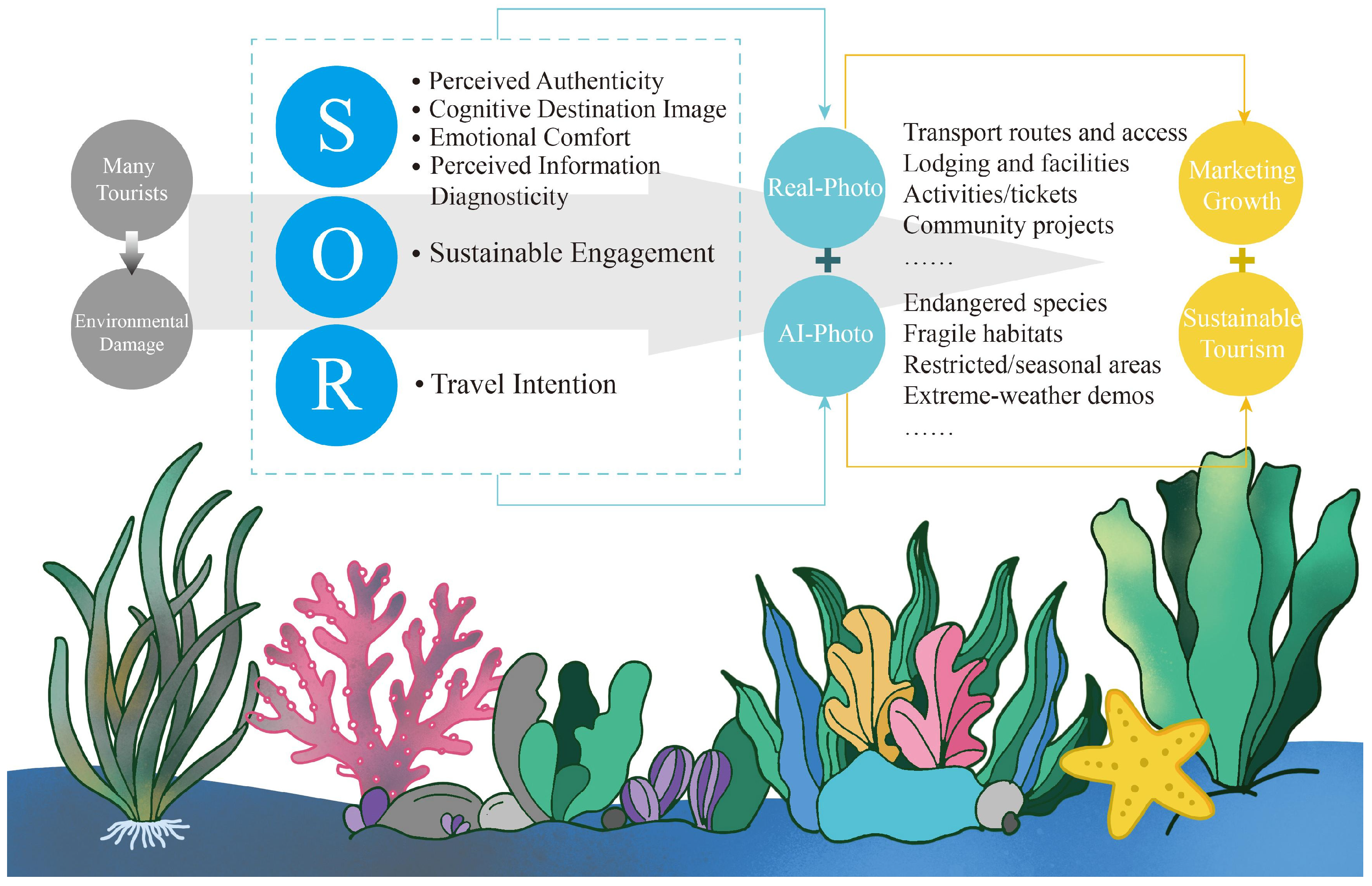
Figure 1. Research process.
Sustainability 18 00285 g001
Figure 2. Research model.
Sustainability 18 00285 g002
Figure 3. Data collection.
Sustainability 18 00285 g003
Figure 4. Structural equation modeling (Real-Photo).
Sustainability 18 00285 g004
Figure 5. Structural equation modeling (AI-Photo).
Sustainability 18 00285 g005
Table 1. Variation resource.
VariationItems
Perceived Authenticity (PA)Based on research in the fields of tourism studies and marketing communication concerning destinations and media (Ning, 2017) [41].
Cognitive Destination Image (CDI)It originates from the classic cognitive and affective dual-dimension framework of destination imagery (Baloglu & McCleary, 1999; Beerli & Martín, 2004) [22,42].
Emotional Comfort (EC)Based on the research on low-impact positive emotions and designed emotions within the circumplex model of emotion (Russell, 1980) [43].
Perceived Information Diagnosticity (PID)It stems from the “information diagnosticity framework” in information systems and marketing (Jiang & Benbasat, 2004) [44].
Table 2. Scale items.
MeasureReference ScaleScale Items
Perceived
Authenticity
(PA)
Kolar and Zabkar (2010) [73]
Ning (2017) [41]
Morhart and Malär (2020) [74]
PA1I believed this picture depicted a real island rather than a fictional one.
PA2I regarded the depiction as authentic overall.
PA3I felt the elements in the scene fit together
PA4I did not detect any exaggeration or unrealistic embellishment in the photo.
PA5I regarded the depiction as true to life.
Cognitive Destination Image
(CDI)
Baloglu and McCleary (1999) [22]
Stylidis et al. (2017) [57]
CDI1I thought the destination’s infrastructure is well-developed.
CDI2I felt the place was well-managed.
CDI3I perceived a distinctive local culture (e.g., arts, crafts, performances).
CDI4I saw the surroundings as clean and orderly.
CDI5I found it easy to get around within the destination, with clear routes.
Emotional
Comfort
(EC)
Williams et al. (2017) [75]
Parker et al. (2016) [76]
EC1I felt relaxed after viewing the image.
EC2When I saw this picture, I felt calm
EC3When I saw this picture I felt composed.
EC4I felt reassured rather than agitated when I saw this picture
EC5After viewing this image, I felt at ease.
Perceived Information Diagnosticity
(PID)
Jiang and Benbasat (2004) [44]
Filieri (2015) [77]
PID1I found this image useful for judging the destination’s overall quality.
PID2When I saw this picture, I had a clear understanding of the specific situation of this island.
PID3I can used this image to reach an overall judgment about the destination.
PID4When I saw this picture, I felt less uncertain about the destination.
PID5I can compare this location to other options thanks to this picture.
Sustainable Engagement
(SE)
Munar and Jacobsen (2014) [67]
Han (2015) [78]
Yu et al. (2025) [79]
SE1When I travel, I would rather use low-impact and ecologically friendly techniques.
SE2I’ll abide by destination policies that preserve the environment.
SE3I’m prepared to take part in activities that support the destination’s sustainable growth.
SE4I perceived the destination’s efforts toward sustainability.
SE5I’ll abide by destination policies that uphold and preserve cultural traditions.
Travel
Intention
(TI)
Han et al. (2010) [63]
Lam and Hsu (2006) [80]
TI1I intend to visit this destination within the next year.
TI2I am likely to book a trip to this destination.
TI3I am inclined to add this destination to my shortlist for upcoming trips.
TI4Given comparable options, I would prioritize this destination.
TI5I am willing to allocate time and budget to visit this destination.
Table 3. Results of validated factor analysis.
CMINDFCMIN/DFRMRGFITLICFIRMSEA
Measured Value--<3<0.08>0.9>0.9<0.08-
Real-photo453.9753901.1640.0570.9230.9890.9900.021
AI-photo486.6553901.2020.0240.9190.9870.9880.024
Table 4. Measurement model fit indices.
MeasurementCMIN/DFGFIAGFIRMSEANFIIFITLICFIPNFIPCFI
Value<3>0.8>0.8<0.08>0.8>0.8>0.8>0.8>0.5>0.5
Real-Photo1.1610.9230.9090.0210.9330.9900.9890.9900.8360.888
AI-Photo1.1980.9190.9030.0240.9350.9890.9870.9890.8380.886
Table 5. Testing for direct effects.
HypothesisPathSTD. EstimateNon.Std.S.E.C.R.pResults
Estimate
Real-
photo
-PA → SE0.1540.1610.0642.4660.014Supported
-CDI → SE0.1400.1230.0512.4270.015Supported
-EC → SE0.1600.1460.0672.2000.028Supported
-PID → SE0.2580.2260.0623.658***Supported
H1PA → TI0.1270.1520.0692.2080.027Supported
H3CDI → TI0.1400.1230.0512.4270.046Supported
H5EC → TI0.2990.3130.0724.343***Supported
H7PID → TI0.2240.2240.0663.383***Supported
-SE → TI0.0770.0880.0701.2570.039Supported
AI-photo-PA → SE0.0090.0090.0580.1630.871Not Supported
-CDI → SE0.3220.3260.0734.471***Supported
-EC → SE0.2360.2320.0663.530***Supported
-PID → SE0.2250.1970.0603.294***Supported
H1PA → TI0.1880.1750.0525.352***Supported
H3CDI → TI0.2730.2570.0673.826***Supported
H5EC → TI0.1110.1020.0591.7240.035Supported
H7PID → TI0.1440.1180.0542.1870.029Supported
-SE → TI0.2150.260.0773.396***Supported
Note: *** indicates p < 0.001.
Table 6. Testing for mediated effects.
Real-PhotoAI-Photo
PathHypothesisEffect95% CISEz/tpEffect95% CISEz/tpResult
LowerUpper LowerUpper
PA → SE → TIH20.0260.0050.0490.0112.2740.0230.006−0.0110.0270.0090.6200.535Supported (Real-Photo)
Not Supported (AI-Photo)
CDI → SE → TIH40.0770.0380.1130.0193.971***0.0460.0190.0910.0182.5350.011Supported
EC → SE → TIH60.0320.0080.0660.0152.1260.0340.0380.0140.0740.0162.4180.016Supported
PID → SE → TIH80.0610.0230.1110.0222.7330.0060.0340.0100.0650.0142.4180.016Supported
Note: *** indicates p < 0.001.
Table 7. Comparison between AI-photo and real-photo.
Real-PhotoAI-Photo
VariationDirect Effects (to TI)RankMediated Effects (Via SE to TI)RankDirect Effects (to TI)RankMediated Effects (Via SE to TI)Rank
EC0.299 ***10.032 *30.111 *50.038 *2
PID0.224 ***20.061 **20.144 *40.034 *3
CDI0.14 *30.077 ***10.273 ***10.046 *1
PA0.127 *40.026 *40.188 ***30.006Not Supported
SE0.077 *5--0.215 ***2--
Note: * indicates p < 0.5, ** indicates p < 0.01, *** indicates p < 0.001.
Disclaimer/Publisher’s Note: The statements, opinions and data contained in all publications are solely those of the individual author(s) and contributor(s) and not of MDPI and/or the editor(s). MDPI and/or the editor(s) disclaim responsibility for any injury to people or property resulting from any ideas, methods, instructions or products referred to in the content.