


Abstract
The matter of aligning universities’ curricula with the actual demands of a constantly changing labor market has become an important issue nowadays, due to the prevailing mismatches between acquired skills and competences during education years and the necessities of current jobs. Disequilibria and inequalities in the labor market often generate general disappointment with education degrees. With the pressure of technological advancements and AI integration in many areas of work, future employees’ career paths are challenged even more, and the adaptability of higher education institutions to the real needs of the labor market is questioned. Artificial intelligence (AI) is the technology that allows computer systems and machines to simulate human learning, problem-solving, and decision-making. This paper aims to explore if universities in Romania foster sustainable human capital development through enhancing their educational programs to fit the changes produced by artificial intelligence and how the reskilling of graduates will play a hugely significant role in staying resilient during such disruptions. A quantitative survey was conducted among recent Romanian university graduates to outline their perceptions of curriculum relevance and their level of preparedness for the AI-driven job market. The results highlight gaps between formal education and labor market demands in terms of limited exposure to AI-related skills and a growing need for reskilling to secure suitable jobs for graduates in the long term, while also emphasizing the importance of aligning educational policies with sustainable labor market integration.
1. Introduction
Nowadays, artificial intelligence (AI) is the catalyst for change, adaptation, and innovation in many sectors, with education being one of the most highly impacted, as well. AI is no longer just a set of tools for automation, but rather a driving force that orchestrates the direction of the labor market and society as a whole. While at the dawn of its appearance, discussions were about ways in which people could better learn how to use AI, right now, the debate revolves around solutions for “a smooth human–AI collaboration” [1]. Since the labor market is strongly tied to human capital development, the role of education will have to transition to focusing on finding sustainable methods that allow the reskilling of future graduates and foster their ability to remain resilient in such turbulent times. In 2022, in Romania, there was an average of 12.3% employees whose jobs faced automation risk, which means that more than 25% of abilities and skills can be easily automatable [2]. While automation was first a concern for routine and manual jobs, AI focuses more on creativity, cognitive skills, and problem-solving [3,4]. This means that the 12.3% mentioned above represents only the tip of the iceberg, because AI could actually have an impact on a wider set of professions. When it comes to digital skills, only 27.7% of Romania’s population has basic digital skills, while the EU average is 55.6%, according to the Digital Decade Country Report 2024 [5]. With such a low percentage of digital skills acquisition, how can the so-called “human–AI collaboration” take shape in Romania? The country’s initiative from 2020 is called “The Strategic Initiative for Digitization of Education in Romania SMART-Edu 2021–2027”, and it aims to achieve a reduction in the digital gap in order to promote socio-economic integration for the general public and disadvantaged groups [6]. The directives of this strategy focus on developing digital competencies for all levels of cross-curricular education, encouraging digital training of teaching staff, enhancing digital infrastructure, stimulating educational institutions to create programs for digital specializations fit for the jobs of the future, creating digital education instruments for innovative, creative, interactive and student-centered educational solutions, developing and increasing public–private partnerships, and developing a strategic framework for a green economy [6]. The program’s agenda also proposes an alignment with European initiatives that foster the role of digital technologies in education.
The concept of sustainable human capital development is anchored in the idea of resilient long-term adaptation to societal and environmental changes while ensuring workers’ well-being and their contributions to organizational success [7]. The objectives of this approach are to invest in skills, capabilities, competencies, and knowledge for “a healthy, productive, and resilient workforce” that finds motivation to make ends meet in an ultra-technological world by aiming to contribute positively to a sustainable future at the same time [8]. Higher education institutions should adapt their curricula so that graduates, i.e., potential future employees, can meet the requirements of the dynamic labor market. Thus, universities can massively contribute to the quality of sustainable human capital by creating lifelong learning and reskilling opportunities for students. The next section, containing insights from the current literature, offers more details about higher education in the age of AI and the importance of reskilling and resilience. The research questions of this study are the following: RQ1: To what extent do graduates perceive their university curricula as aligned with current labor market demands and technological change? RQ2: How do graduates perceive the influence of AI on their current or future careers? RQ3: What is the perceived need for continuous reskilling among graduates? RQ4: How do graduates evaluate institutional support from universities in promoting adaptability, lifelong learning, and sustainable human capital development? RQ5: How do employment status and job experience influence graduates’ confidence in AI preparedness and their perceived need for reskilling? These are elaborated in the Results and Discussion Sections, which are followed by the Conclusions, Limitations, and Future Recommendations Sections.
2. Literature Review: Theoretical Background
2.1. Artificial Intelligence in the Higher Education System
Intelligence, in all of its forms, is the sole capacity to solve complex objectives [9]. In its wider definition, artificial intelligence, or, shortly, AI, acts like an extension of human intelligence, which uses technological tools that gather enormous amounts of data that can be processed with the help of algorithms in order to automate tasks to reach end goals [10]. Even though the rise in artificial intelligence usage comes with breakthrough technologies and digital solutions, it imposes challenges at the same time. The education field faces some of them because the implementation of AI technologies in this area must ensure a beneficial approach for both students and professors. This means that education needs to experience change and, besides establishing the right amount of online and offline learning, it is essential to fully understand “the drivers of change” [11]. But what exactly does the usage of AI imply in the higher education system? To the best of our knowledge, for the moment, in Romania, one study mentions tools such as Turnitin, Copyscape, Grammarly, DeepL Write, Mendeley, Duolingo, ChatGPT, Bloomai, Merlin AI, Tutor AI, Cohere, My AI on Snapchat, or Anthropic [12]. All of these should aim to enhance lifelong academic learning and create cross-disciplinary competencies and skills. Because students accept and use ChatGPT 4, they are believed to be comfortable with adopting GenAI technology and developing a habit of using it in their academic activities, as another study suggests [13].
The labor market is, and will be for the long term, deeply affected by AI, and higher education institutions must adapt curricula and encourage professors to change teaching styles so as to prepare students to be resilient, capable of keeping up with digital transformations, and flourish [14]. “Self-regulated learning skills” should be one goal for universities if they want to prepare students to be “on-the-job learners” who adapt smoothly to the fast-changing job market [15]. A study in Romania and Serbia extracted the ways in which AI can improve the performance and engagement of students. The referred to how the learning act can be personalized by discovering the most suitable teaching materials, how the content of lectures can become easier with AI, how students could make fewer mistakes, how professors could better assess their students’ performance, how students could improve learning in subjects where they underperform, and how risky behaviors can be identified before they occur [14]. The roles of AI in higher education can be extended to other tasks, such as automating the evaluation process; improving the mismatches in educational programs, with Coursera being one of the e-learning platform examples that could be used in this direction; adapting educational platforms according to the individual needs of students and inserting “edutainment” tools, such as music, films, blogs, videogames, and virtual museum exhibitions to enhance learning; using “virtual tutors”; providing access to better research software technologies; finding new methods of training “through intelligent data collection”; and enhancing motivation to learn through practice due to AI tools that offer visible results of the theoretical approach [16]. Effective curriculum adaptation towards AI can also be achieved by training educators in this sphere, so that students can be successfully equipped with knowledge on the digital tools that are crucial in the current AI-driven world [17].
However, integrating AI systems in universities implies, at the same time, ethical concerns among users, and students need a deeper understanding of how these technologies reach some results and demand transparency regarding AI governance, especially because such changes often take place too rapidly and may create confusion. A sustainable introduction of AI necessitates creating a special framework for shaping “clear social and institutional purposes” so that users in universities can have free access to knowledge and discussion [18]. The integration of AI tools should be a priority for all educational institutions, mainly for higher institutions. This process must be accompanied by training sessions for students and faculty staff and by easy access to a broad range of tools by offering licenses and subscriptions to mitigate the socio-economic disparities between students from higher-income and lower-income backgrounds [19].
2.2. Reskilling for Resilience—Sustainable Human Capital Development
Reskilling for resilience is important for avoiding job mismatches. Beyond the technological innovations in AI that impact universities, the beneficiaries, i.e., the students, are also subject to important changes. While university programs and curricula need to adapt to the pace of labor markets, the skills and competencies of students must not be overlooked. Thus, lifelong learning is a catalyst for sustainable human capital development. Member countries in OECD adopted “personalized learning opportunities” by integrating AI technologies in education systems to prepare individuals to be resilient in order to be capable of participating in the workforce at all times, no matter the changes it experiences [20]. Education through AI can offer “flexible, interactive, and personalized learning opportunities”, mainly because it unburdens professors from grading large numbers of assignments, and thus, it allows them to focus on “empathic human teaching” [21,22]. The Sustainable Development Goals (SDGs) represent a set of 17 global goals that aim to create a better and more sustainable future for the planet and all people around the world by 2030 [23]. As Romania became a candidate for joining OECD in 2022, more effort should be put into aligning all levels of the education system with the requirements of the organization in order to achieve the United Nations’ SDGs for high-quality education and decent work for all citizens [24]. This way, individuals can be properly equipped with the skills and knowledge needed for actual societal changes. Lifelong learning and AI should go hand in hand and be integrated not only in education systems but also in “communities, workplaces, and other societal structures” so that SDG4—quality education, SDG8—economic growth, and SDG 10—reduced inequalities may successfully be achieved for sustainability [25]. SDG 4 (quality education) aims to ensure “inclusive and equitable quality education and promote lifelong learning opportunities for all” to foster skills for employment and entrepreneurship, as well as affordable access to vocational training and higher education in order to build a “more prosperous and equitable world” [23]. SDG 8 (economic growth) aims for sustainable, full, and productive employment and decent work for all by protecting labor rights and safe workplaces, so as to enhance living standards while also protecting the environment [23]. Lastly, SDG 10 (reduced inequalities) aims to reduce “income inequality, social and political exclusion, and unequal access to essential services such as health and education” [23].
AI-driven environments put pressure on people to reskill, including both hard and soft skills, as many already existing skills can be replaced by AI technologies. Because AI impacts human interactions, it is vital to improve soft skills, such as “collaboration, communication, resilience, and socio-emotional” skills, as countries like Ireland, Cyprus, and New Zealand state, whereas skills like problem-solving, creativity, and critical thinking should become a top priority for education systems [26]. Because human-related skills are irreplaceable in the AI era, a study on Czech companies highlighted how organizations prioritize training, reskilling, and upskilling to improve communication, strategic thinking, and team management instead of eliminating jobs that can be automated by artificial intelligence [27]. Otherwise, it would practically become impossible for future graduates to survive in such turbulent workforce dynamics. For a sustainable and adaptive reaction to AI implementation to exist, it is crucial for reskilling and upskilling processes to take people’s well-being into consideration in order to also minimize the risk of skill mismatch in the workplace after graduation [28].
Resilience does not only mean adaptation; rather, it reflects upon the ability to engage in lifelong learning because a separation between working and learning no longer exists—they will continue to merge in this ultra-digital and technological world, and both reskilling and upskilling will remain significant aspects of sustainable human capital development [29]. Teacher intervention in the student learning process, combined with the use of generative AI, gives better results in terms of soft skills development, as one study concerning the use of ChatGPT showed, than solely using generative AI platforms [30]. Another study based on interviews with higher education representatives outlined differing opinions on the use of generative AI, including ChatGPT, in educational programs. While some believed that the use of it contributes to the “de-humanization” of higher education, most respondents agreed on the fact that university curriculum and teaching methods could be upgraded in order to develop skills like critical thinking, creativity, and collaborative work among students [31]. This means that human intervention cannot be removed from the formation of skills in higher education institutions. A study by [32] proposed a platform where students, human teachers, and AI teachers interact in a personalized learning process, enabling each individual to gain skills and competencies and develop in various contexts and settings, with the help of “personalization, evidence-based practices, flexibility, and accessibility of education”.
Resilience also fosters “self-regulation, learning motivation, and autonomy in cognitive engagement”, meaning that students are successful in the actual AI-driven workforce if they are proactive in directing their learning path by thinking actively, analyzing, questioning, and connecting AI outcomes in a multi-disciplinary and metacognitive environment [32]. After all, students should be able to identify the most suitable cognitive strategies in any given context on their own, and this should finally be the standard measurement of a sustainable higher education’s success—students’ abilities to learn how to think and how to recognize those situations in which they need to reskill and adapt [33].
As previously stated, AI does not generate only positive outcomes in tertiary education. Due to an expansion in the number of enrolled students in higher education, the pressure on the sustainability of human capital persists, resulting in the issue of overproducing graduates who experience job mismatches [34]. To find sustainable solutions to this problem, the Romanian and any other higher education system could shape a clearer, realistic vision for its mission and create “a financial mechanism” that is transparent and accountable in using funds efficiently and dynamically to keep up with technological changes [35]. On a different note, AI implementation is somewhat perceived in the wrong way, with great focus on students who use ChatGPT to cheat and how to limit access to AI, instead of investigating strategies for an ethical approach to it. For example, the respondents in a study from Romania assessed the “socio-psychological effects” and the fear of forgetting what it actually means to be human, together with inequalities in education, as potential threats [36].
AI benefits can create personalized educational plans, improve performance, and reduce learning time. However, another study focusing on business students in Romania [37] outlined students’ limited awareness of the positive aspects of AI, despite using such tools quite often. Nonetheless, it is generally agreed upon that AI implementation in tertiary education can contribute positively to the formation of sustainable human capital due to the fact that professors can allocate more time to actually teaching and preparing for classes, rather than losing time on administrative tasks, while evaluation, feedback, and communication processes can be improved with artificial intelligence [38].
2.3. Hypotheses Development
Based on the proposed research questions mentioned in the Introduction Section, corresponding hypotheses were developed, as follows:
RQ1: To what extent do graduates perceive their university curricula as aligned with current labor market demands and technological change?
H1.
Graduates report a moderate to low level of curriculum alignment with labor market and technological needs.
Reasoning: Skills mismatch is widely spread across countries and derives from insufficient practical experience, outdated courses, and sometimes limited interaction between academia and industry [39]. Curriculum misalignment has a negative impact on graduate employment; outdated curricula do not reflect current job market needs, focusing more on theoretical knowledge at the expense of practical skills [39,40,41]. Skills gaps rooted in curriculum misalignment end up as difficulties for companies across industries that aim to recruit employees for AI roles [42]. In Romania, the alignment of higher education curriculum with the fast-changing labor market still faces challenges when it comes to digital skills and STEM fields, and there is a strong need for a better university–industry collaboration in order to enhance graduates’ employability chances through better educational programs [43,44]. Cooperation between universities and the business environment, so as to reach curriculum alignment with labor market demands, still needs improvement in Romania [45].
RQ2: How do graduates perceive the influence of AI on their current or future careers?
H2.
Graduates feel underprepared by their university education to adapt to AI-driven changes in their professional fields.
Reasoning: Recent surveys conducted by the Cengage Group suggested that emerging graduates worldwide do not feel prepared for the changes generated by the introduction of AI in the workplace [46]. Another survey suggested that graduates think that AI tools should be integrated into college courses, as most programs do not prepare them to use AI technologies on the job [47]. Integrating courses on AI into universities can help students improve their critical thinking, problem-solving, and adaptability to new career opportunities [48]. In Romania, AI’s existence in higher education institutions is largely “still in its infancy”, as there are no clear strategies for implementing it among academics, which is in line with the low levels of digitalization in the country at the moment [36]. Implementing AI in the Romanian higher education system could be seen as a “future process rather than a reality” because exposure to AI in this environment is minimal, despite the “competitive access to the internet” in the country [36].
RQ3: What is the perceived need for continuous reskilling among graduates?
H3.
Graduates recognize a strong need for reskilling after graduation to remain competitive.
Reasoning: Disruptions in technological development outline the importance of lifelong learning and continuous reskilling. A World Economic Forum report projected that by 2025, approximately 50% of employees would need reskilling or upskilling to meet the labor market demands due to automation and AI adoption [49]. This trend was still valid in 2023, when the upgraded report stated that by 2027, 44% of workers’ skills will change, emphasizing an even greater need for continuous skill development [50]. Graduates need to engage in continuous learning to remain competitive, while stakeholders should invest in such retraining initiatives to enhance job performance in the AI era [50,51]. Early-career workers are also interested in developing nontechnical skills, apart from AI ones, which can enable them to master human capabilities like collaboration, emotional intelligence, and creative thinking [52]. Based on OECD reports, there is a significant mismatch between the skills gained in the education system and those generated by the labor market in Romania, which makes reskilling a vital factor in avoiding unemployment after graduation [44].
RQ4: How do graduates evaluate institutional support from universities in promoting adaptability, lifelong learning, and sustainable human capital development?
H4.
Graduates perceive limited institutional support for sustainable human capital development and reskilling initiatives.
Reasoning: Higher educational institutions should help future graduates adapt to the skill requirements imposed by AI-driven markets. Since the AI breakthrough has started to gain importance recently, universities have started to pivot their strategies to support lifelong learning, though gaps still remain [53]. For instance, not many institutions prioritize more vulnerable groups, like unemployed graduates, by offering continuous education opportunities [54]. One other study emphasized low levels of student participation in activities targeting employability skills development and suggested that higher education institutions should work harder on their strategies to find proper “discipline-based and developmental approaches” for linking curricula with students’ AI awareness and confidence [55].
RQ5: How do employment status and job experience influence graduates’ confidence in AI preparedness and their perceived need for reskilling?
H5.
Graduates whose current jobs involve a high degree of AI will report significantly higher confidence in their ability to adapt to AI-related changes in their field.
Reasoning: Theoretically, graduates who directly work with AI can be more confident in adapting to changes generated by AI due to their technical literacy and a better understanding of the tools [56]. Employees who consistently work with AI were found to be more agile in adapting to changes since they can cope better with resources in the workplace [57]. Since AI tools are also used for educational purposes, one study highlighted the diversity in future graduates’ opinions on adapting to technological changes in their careers. While some of them were optimistic, others were more cautious [58]. Work performance and productivity are influenced not only by AI and technology exposure but also by overall work experience, comfort of the work environment, and the personality traits of employees [59].
3. Methodology
This quantitative research is based on the collection of primary data through an online survey addressed to graduates with different levels of higher education in Romania. Data were collected during August 2025, which resulted in a random sample of 365 respondents. This study was anonymously conducted online, using non-probabilistic snowball and self-selection sampling methods, as it was disseminated through LinkedIn and social media groups for graduates. As we gathered a non-probability sample of the graduate population in Romania, the full national population size was not used in this study, and the sample reflects the segment of the graduate population that is digitally connected and willing to participate in voluntary online surveys. The online questionnaire contained 6 sections, consisting of 5-point Likert scale and closed-ended questions, related to demographic questions (Q1–Q5), curriculum relevance and higher education preparedness (Q6–Q10), the awareness and impact of AI in the labor market (Q11–Q15), perception of skills gaps and need for reskilling (Q16–Q19), institutional support and sustainability (Q20–Q24), and employment status and experience (Q25–Q29). The survey’s questions are presented in detail in Table A1, Appendix A.
With regards to H1 (Q6 to Q10), H2 (Q11 to Q15), H3 (Q16 to Q19), and H4 (Q20 to Q24), the variables of interest, i.e., the mentioned grouped questions in brackets, which form scales in the survey, were firstly tested for internal consistency using the Cronbach’s Alpha test. Then, composite scores were calculated to measure similar underlying constructs like “curriculum relevance”, “AI awareness”, “skills gaps and reskilling”, and “institutional support”. This reliability analysis ensured a more robust and meaningful interpretation of the results [60]. The next statistical approaches for the first four hypotheses were descriptive statistics processed in MS Office Excel, including the central tendency measures of the scales, and inferential statistics processed in the Python 3.11 programming language, including comparisons between groups based on t-tests, ANOVA, post hoc Tukey tests, and Spearman correlation and relationship analyses. The four hypotheses measure perceptions, and descriptive statistics are the most suitable type of analysis for such hypotheses. However, after computing the composite scores for the scales that passed the reliability test, the questions were actually grouped as dependent variables, such as curriculum relevance (Q6–Q10), continuous reskilling (Q16–Q19), and institutional support (Q20–Q24), in order to link them to independent variables, like discipline (Q4) and gender (Q1), for a more in-depth analysis. While ANOVA testing identifies the existence of differences between group means, the post hoc Tukey test, or Tukey’s Honestly Significant Difference test, is a multiple comparison procedure that investigates which groups actually differ [61]. Because the survey explored several areas of study, including Economics and Business, IT, Technology and Engineering, Social Sciences other than Economics or Business, Medicine and Pharmacy, and Humanities, this type of testing enabled a clear picture of differences across curriculum alignment, the need for reskilling, institutional support, and disciplines.
Regarding H5, relationships between employment and experience (Q27 and Q29) and AI readiness and skills gap items (Q12, Q13, Q16–Q19) were explored using Spearman’s Rho correlation analysis, group comparisons, and ordinal logistic regression. The choice of this regression model was derived from the fact that the dependent variable, confidence in adapting to AI-related changes represented by Q13, was measured by a 5-point Likert scale. Since Likert items are ordinal and expose an ordered ranking from “strongly disagree” to “strongly agree”, an ordinal logistic regression model would be more appropriate for ordinal outcomes, as it predicts the odds of being in a higher or lower response category without assuming equal spacing between categories [62]. Thus, more accurate estimates and interpretations could be made, and the risk of biased results was eliminated, given the fact that Q13 was analyzed as a single ordinal outcome, not as a composite scale. The results were reported in terms of odds ratios that illustrate how predictor variables impact the probability that respondents report higher levels of AI confidence. Besides the preregistered hypotheses, an exploratory analysis was conducted to investigate if job satisfaction (Q29) was a significant predictor of confidence in adapting to AI changes (Q13), given the regression results in the first place, using an ordinal logistic regression as well.
4. Results
The demographics of the sample show that 69% of the respondents were female and 31% were male. The 21–25 years old age segment (66.6%) was overrepresented, in contrast with the other age segments, such as 26–30 years old (16.2%), 31–35 years old (3.8%), and over 35 years old (13.4%). Regarding the last educational level attained, the results showed that 48.8% of the respondents held a Master’s degree, 47.1% held a Bachelor’s degree, and only 4.1% graduated with a PhD. Overall, 89.3% of the respondents were from an urban place of residence, while 10.7% were from a rural area. The margin of error for the sample of n = 365 is approximately +/−5.1% at the 95% confidence level.
4.1. Hypotheses H1, H3, and H4
4.1.1. Descriptive Statistics
The first step in the analysis of the survey was data cleaning and pre-processing in order to ensure that all variables were defined as ordinal. For the four sections exploring “curriculum relevance”, “AI awareness”, “skills gaps and reskilling”, and “institutional support”, the Cronbach’s alpha test results (Table 1) show how well the questions in the respective sections fit together, as each section in the survey is based on the Likert scale. As internal consistency is shown by a generally accepted threshold of α 0.7, only three sections were fit for computing composite scores, allowing us to treat the questions in those sections as variables on their own. Curriculum relevance has a good level of internal consistency (α = 0.867), as well as skills gaps (α = 0.713) and institutional support (α = 0.725). The low alpha value for the section on AI awareness (α = 0.546) suggests that questions from Q11 to Q15 do not cohere well to test a single variable, so they were treated individually, and a composite score was not calculated for them. This does not invalidate the items in the section, because each question actually gives insightful information about each respondent’s awareness, confidence, education, perceived risk, and opportunities regarding AI.
Table 1.
Cronbach’s alpha test.
After calculating the composite scores in Python for curriculum relevance (H1), skills gaps (H3) and reskilling, and institutional support (H4), descriptive statistics for each construct were used to predict the outcome for the hypotheses (Table 2).
Table 2.
Descriptive statistics.
Curriculum Relevance (Q6–Q10)
The students’ perceptions of curriculum alignment are mixed, slightly leaning positive, with noticeable diversity in opinions. The mean of 3.16 indicates that the respondents are moderately positive but not strongly, the standard deviation of 0.93 shows a fair amount of variability, meaning that the students differ in how relevant they find the curriculum, and the data are almost perfectly symmetric, with a low skew of approximately −0.05, highlighting a few extreme responses (kurtosis = −0.38).
Skills Gaps and Reskilling (Q16–Q19)
The respondents perceive reskilling as very important, with a strong consensus. The mean of 4.07 indicates high agreement on the importance and need for reskilling, the skewness of −0.36 shows that more respondents lean towards higher values, like 4 and 5 on the scale, and the standard deviation of 0.67 suggests lower variability in answers in comparison with “curriculum relevance”.
Institutional Support (Q20–Q24)
In this case, some students in the survey feel supported while others do not. The mean of 3.4 suggests a moderate agreement, but not very strong, on higher educational institutions being somewhat supportive, and the median (3.4) and mode (4) illustrate answers centered around agreement. However, the standard deviation (0.78) suggests moderate variability, as opinions differ across the respondents, and the kurtosis (−0.48) points out a flatter distribution of responses being spread out.
Therefore, reskilling turns out to be the strongest area, as students clearly recognize its importance. Institutional support is moderate, as it exists partially, but it is not strong or consistent, while curriculum relevance indicates that the respondents are moderately satisfied with how the curriculum matches labor market needs. At this point, H1, H3, and H4 are validated. Further analyses were conducted for nuanced reasons, such as testing group differences and correlations among variables.
4.1.2. t-Tests, ANOVA, and Post Hoc Tukey Tests
When running t-tests by gender, it was concluded that the sample does not have enough male or female participants in one or both groups. This means that gender differences cannot be linked to perceptions of curriculum alignment, skills gaps and reskilling needs, and institutional support in our sample.
Therefore, ANOVA and post hoc Tukey testing were applied further to identify differences across disciplines in curriculum relevance, continuous reskilling, and institutional support. The post hoc Tukey results are displayed in Table 3.
Table 3.
Multiple comparison of means—Tukey HSD, FWER = 0.05.
Curriculum Relevance
Statistically significant differences in curriculum relevance ratings across disciplines are shown by the F-statistic = 2.79, F (5, 358), with 5 degrees of freedom, and p = 0.017 < 0.05. The post hoc Tukey test shows that there is only one significant pair in the sample: Humanities students and IT/Technology/Engineering students (p = 0.0066). The other differences are not significant, meaning that students in Humanities rate curriculum relevance significantly lower than IT/Engineering students.
Skills Gaps and Reskilling
F-statistic = 3.41 and p = 0.005 show that the perceptions of skills gaps and reskilling needs differ significantly across disciplines. The outstanding pair is again represented by Humanities and IT/Technology/Engineering, with p = 0.0074, meaning that larger skills gaps and the need for reskilling are perceived by students in Humanities more than students in Technology and IT.
Institutional Support
Students from different disciplines also have divergent opinions when it comes to institutional support (F = 4.52, p < 0.001). Significant differences are shaped by pairs like Economics/Business and IT/Engineering (p = 0.009), Economics/Business and Medical Pharmacy (p = 0.011), Humanities and IT/Engineering (p = 0.030), and Humanities and Medical/Pharmacy (p = 0.018). In other words, IT/Engineering and Medical/Pharmacy students perceive higher levels of institutional support from their universities than students of Economics/Business and Humanities. The strongest gap is between Humanities (lowest institutional support) and IT/Engineering (highest support).
4.1.3. Correlation and Relationship Analysis
To identify the relationships between the composite constructs, Spearman correlation coefficients, denoted with the letter “ρ”, were computed, as our survey composites are Likert-based (Figure 1). There is a small to moderate negative correlation between curriculum relevance and skills gaps and reskilling (ρ = −0.258, p < 0.001). This means that students who think the curriculum is much more relevant are less likely to experience skills gaps or a stronger need for reskilling. There is a strong positive correlation between curriculum relevance and institutional support (ρ = 0.679, p < 0.001), suggesting that students who feel that their universities’ curricula are relevant to their topics of study also have the tendency to report higher institutional support. Although statistically significant, the small effect suggests that the weakest negative correlation occurs between skills gaps/reskilling and institutional support (ρ = −0.143, p = 0.006). In summary, higher institutional support is slightly linked to lower perceived skills gaps. The asterisks in Figure 1 denote statistical significance levels of Spearman’s correlation coefficients (p < 0.05, p < 0.01, p < 0.001). This clarification has also been added to the figure note.
Figure 1.
Correlation analysis. Source: Calculations by the authors based on survey results in Python. Note: Values represent Spearman’s rho correlation coefficients: p < 0.01 **, p < 0.001 ***.
4.2. Hypothesis 2
The internal consistency for the Awareness and Impact in the Labor Market section (Q11–Q15) was not acceptable because α = 0.546. Therefore, the items were statistically analyzed separately (Table 4).
Table 4.
Descriptive statistics for H2.
The participants moderately agree with the statement that they are highly aware of how AI is changing requirements in their field (for Q11, mean = 4.02, standard deviation = 1.01). However, the graduates indicate that AI and automation were not sufficiently addressed during their university education (for Q12, mean = 2.55, standard deviation = 1.29). Confidence in adapting to AI-related changes (Q13, mean = 3.86, standard deviation = 0.94) and views on jobs being affected by AI (Q14, mean = 3.56, standard deviation = 1.12) are moderately high. Regarding the creation of more opportunities than risks by AI in their professional domains, the respondents have more divided opinions (Q15, mean = 3.36, standard deviation = 1.09). These results support hypothesis H2. This result is supported by a study from PwC Romania, which stated that more than 70% of Romanian employees are optimistic that generative AI will create opportunities for learning new skills to improve their work productivity [63].
4.3. Hypothesis 5
In order to test whether graduates whose current jobs involve a high degree of AI would report significantly higher confidence in their ability to adapt to AI-related changes in their field, correlations, group comparisons, and ordinal logistic regression were applied.
4.3.1. Correlations
The correlation analysis was conducted using Spearman’s Rho coefficient (Figure 2), which explores the relationships between employment status, experience (Q27, Q29), and AI preparedness and skills gaps items (Q12, Q13, Q16–Q19). The strongest positive correlations are between the need for retraining after graduation (Q17) and continuous reskilling (Q18), with a coefficient of 0.55, perceived skills gaps (Q16) and the need for reskilling (Q17), with a coefficient of 0.45, and continuous reskilling (Q18) and active reskilling (Q19), with a coefficient of 0.49. These variables form a cluster, as they measure related aspects such as job experience and reskilling; therefore, there is a relatively strong positive correlation among them. There is a negative correlation between AI preparedness (Q12) and the need for reskilling (Q17), with a coefficient of −0.23, as well as between AI preparedness and skills gaps (Q16), with a coefficient of −0.19, suggesting that higher preparedness might be linked to fewer skills gaps. The other items are independent factors, as there is a near-zero relationship, with a coefficient of −0.0077, between the confidence to adapt to AI changes in the field of work (Q13) and skills gaps (Q16).
Figure 2.
Spearman correlations. Source: Calculations by the authors based on survey results in Python.
4.3.2. Group Comparisons
The relationships among AI preparedness (Q12) and confidence to adapt to AI changes (Q13), skills gaps and reskilling (Q16–Q19), and job experience (Q27–Q29) are highlighted by a matrix of Spearman correlation coefficients.
Moderate positive links between skills and reskilling factors illustrate that perceiving a skills gap (Q16) is strongly tied to feeling the need for reskilling (Q17-Q19), due to the coefficients for Q16–Q17 (ρ = 0.45), Q17-Q18 (ρ = 0.42), and Q18–Q19 (ρ = 0.49). Confidence to adapt to AI changes (Q13) is weakly related to job factors such as AI involvement in the job (Q27)—ρ = 0.12 and job satisfaction (Q29)—ρ = 0.15. The variable covered by Q12, AI preparedness, measures how AI was addressed in universities, and it is negatively correlated with skills gap items Q12–Q16 (ρ = −0.19) and Q12–Q17 (ρ = −0.23). This suggests that when graduates in the sample felt that AI was addressed well during their studies, they reported fewer skills gaps and reskilling needs. When testing whether additional training pursued after graduation (Q28) impacts confidence in adapting to AI changes (Q13), the t-test (t = 0.092, p = 0.926) and Mann–Whitney U (U = 15121.000, p = 0.689) results explain that there is no significant difference between those who pursued training (Q28 = Yes) and those who did not (Q28 = No), at least in the current sample. At the same time, the employment status groups represented by Q25 did not differ significantly in AI confidence.
4.3.3. Ordinal Logistic Regression
The ordered model for H5 (Table 5) uses the confidence in adapting to AI changes (Q13) as the dependent variable and AI job involvement (Q27), employment status (Q25, dummy-coded), jobs related to the field (Q26_bin), additional training pursued after graduation (Q28_bin), and job satisfaction (Q29) as independent variables. Because the ordinal logistic regression model (Table 6 and Table 7) estimates the log odds of being at or below category j of the outcome, the general formula is represented as follows:
where
- Y = outcome (Q13—AI confidence);
- θj = threshold (cut-point) for category j;
- βi = coefficient for predictor Xi.
Table 5.
Ordered model results.
Table 6.
Regression results (H5).
Table 7.
Odds ratios (H5).
Based on the Python output, the regression equation can be rewritten as:
where
- j = 1, 2, 3, 4—the thresholds between confidence levels (Likert 1–5);
- eβ = the odds ratio for each predictor.
Because “employed full time” was chosen as the reference category, it was omitted in the model so as not to risk encountering multicollinearity.
Although graduates who work in jobs that involve AI or automation tools may be expected to be more confident in adapting to technological disruptions, this turned out not to be exactly the case in our sample. For each one-point increase in job AI involvement on the five-point Likert scale, the odds of reporting higher confidence increase by approximately 17%, as the odds ratio (OR) is 1.17 for a 95% confidence level. As p = 0.0938 > 0.05, the trend is positive but weak, meaning the result is not statistically significant, which primarily invalidates H5. Neither employment status (Q25 categories), job-relatedness to studies (Q26), nor additional training after graduation (Q28) has any significant effect on AI confidence. This conclusion also agrees with the earlier t-test results, which showed that training was not really a significant predictor, as the correlations suggested weak links. However, after further investigating the other predictors in the model, the data showed that job satisfaction (Q29) is actually significantly associated with higher AI confidence, based on OR = 1.26 and p = 0.034 < 0.05.
Summing up, the results illustrate that while the graduates perceive skills gaps and reskilling needs as interconnected, their confidence in adapting to AI changes is not actually strongly shaped by AI involvement in the job, employment status, or additional training. Instead, job satisfaction turned out to be the most meaningful predictor of AI confidence, which opened the door for an alternative, exploratory hypothesis (EH5): “Graduates who report higher job satisfaction (Q29) will also report significantly higher confidence in their ability to adapt to AI-related changes in their field (Q13)”.
4.3.4. Exploratory Hypothesis EH5
To explore the additional hypothesis EH5, the ordinal logistic model was used, with the general model:
where
- Y = Q13 (AI confidence);
- j = 1, 2, 3, 4 (thresholds between categories);
- θj = threshold (cut-point) for category j;
- η = β ∙ X (linear predictor);
- X = Q29 (job satisfaction);
- β = regression coefficient for Q29.
In this model, the coefficient is 0.2404, p = 0.017 (significant), with an odds ratio of 1.27 for a 95% confidence level. This means that for each one-point increase in job satisfaction for Q29 on the five-point Likert scale, the odds of reporting higher AI confidence increase by 27%. Going back to the correlation matrix (Figure 2), there is a positive, weak but consistent relationship between Q29 and Q13 (ρ = 0.15), which matches the regression, suggesting a small but significant effect. As pursuing additional training after graduation (Q28) does not affect AI confidence (Q13), this result suggests that satisfaction matters more than training exposure. These findings (Table 8 and Table 9) support and validate EH5, suggesting that higher job satisfaction in a current job makes graduates feel more confident to adapt to AI-driven changes in their fields.
Table 8.
Ordered model results (EH5).
Table 9.
Regression results (EH5).
5. Discussion
5.1. Hypotheses H1, H2, H3, and H4
Based on the descriptive statistics, with a strong consensus in the sample, respondents perceive reskilling opportunities to be extremely important (mean = 4.07, standard deviation = 0.67). This correlates with a study by Rahiman and Kodikal (2024), which indicated that students who are optimistic about enhancing their skills also have the ability to collaborate more effectively and improve their educational outcomes [64]. On the other hand, institutional support (mean = 3.4, standard deviation = 0.78) and curriculum relevance (mean = 3.16, standard deviation = 0.93) are rated moderately, showing a greater variety in perceptions and indicating potential areas for improvement in aligning education with labor market demands, as shown by UNESCO’s report [54]. As the latter two variables are strongly intertwined and negatively correlated with perceived skills gaps, it seems that when universities provide support and relevant curricula in the AI era, graduates report less need for reskilling; this is also supported by [53]. Curriculum alignment and institutional support are strongly positively correlated, implying that when graduates perceive their universities’ curricula as being adapted to the actual needs of the market, they also tend to believe that their universities contribute to sustainable human capital development. The symbiosis between the two variables can occur with effective strategies of training teaching staff [17]. When it comes to Romanian universities, a survey of 856 Bachelor’s graduates showed that there is an excess of theoretical knowledge in comparison with practical or digital skills, suggesting that these skills do not sufficiently align studies with job requirements so as to improve graduates’ job satisfaction [65]. At the same time, a World Economic Report suggested that in Romania, less than 30% of companies consider university degrees as an important employment factor [50]. These discoveries unravel the interplay between curriculum design, universities’ support, and graduates’ perceptions of skills adequacy. Continuous reskilling will remain an imperative in the AI era, as some statistics reveal. For example, the World Economic Forum’s Future of Jobs 2023 report predicted that 6 in 10 workers will need retraining before 2027, mostly in the area of analytical thinking [50]. The same report highlighted how 52% of the reskilling focus should be placed on “AI and big data” in Romania and that providing effective reskilling and upskilling opportunities is considered a good business practice to improve human capital availability in the country [50]. One study on students from Zagreb, conducted by Dužević et al. (2025) [66], identified four key dimensions that shape students’ experiences with artificial intelligence chatbots (AICBs) in higher education: quality, usability, mistrust, and adoption. Although students in the research reported moderate to high overall experiences with AICBs, the findings highlighted that trust in AI has not fully developed, and institutional guidance is still needed to support responsible integration. The idea that generative chatbots have a supportive rather than substitutive role in university education was found in a study on Bulgarian undergraduate and graduate students in majors like Economics, Public Sector Management, and Business Management [67]. These chatbots may enhance blended learning by improving engagement, personalization, and efficiency, but only when used under the guidance of instructors, within clear ethical boundaries, and with awareness of their limitations [67].
The correlation insights focus on the role of retraining among graduates. Being strongly correlated, questions Q16 to Q19 reveal that when reskilling is prioritized, other factors, such as skills readiness and job experience, are improved at the same time. This finding corresponds with the literature [15]. Thus, it is crucial for universities to design integrated programs that relate to practical job experience by offering opportunities for internships and applied projects, to provide reskilling opportunities by coming up with bootcamps and short courses, and to bridge the skills gap by offering opportunities for targeted upskilling and mentorship. Romania’s low digital literacy rate of 27.7%, as reported in 2023, compared with the EU average of 55%, raises crucial debates on whether the Romanian educational system is prepared to adjust curricula to equip students with essential AI and digital skills [68]. However, the EU Digital Decade 2025 report stated that digital skill levels correlate with educational attainment in Romania, meaning that while the percentage of digital skills level rises to 63.93% among those with higher education, it is still less than the 79.83% EU average [69]. These misalignments were acknowledged by policymakers, and Romania’s 2023 higher education law explicitly emphasized aligning academic programs with labor market requirements regarding emerging digital professions [70]. For higher education institutions to successfully address AI in their curricula, as the level of preparedness in Q12 is negatively correlated with reskilling and skills gaps, specific learning paths should be built based on skills assessments and personalized recommendations for students. Moreover, formal and non-formal activities can support the continuous digital training of teaching staff and students. Therefore, improving the digital infrastructure in universities, stimulating educational units and institutions for educational offers with specializations and digital qualifications, creating digital educational tools, finding interactive student-centered educational solutions, creating “attractive Open Educational Resources”, and developing public–private partnerships by participating in digital networks may be some of the answers to the issue of effectively integrating AI into higher education institutions [71]. A study on Hungarian university professors conducted by Dringó-Horváth et al. (2023) found that there is a stronger correlation between digital competence and AI literacy among male teachers in the information technology field than among female teachers in fields like “humanities, social sciences, and health sciences” [72]. Higher education institutions should ensure that their AI adoption plans are fully aligned with educational goals and that higher education providers support the development of AI literacy and digital skills among both professors and students [73]. The more prepared employees feel, the less they feel they lack the necessary skills to adapt to technological challenges. Reskilling programs should simulate actual job tasks.
One other finding in our analysis is that support from universities for students’ AI preparedness is only partial, moderate, and uneven across institutions. This is also supported by a 2023 qualitative study of Romanian academics, which mentioned that there is a lack of a clear strategic vision for implementing AI in Romanian higher education, as digitalization in Romanian universities “is still in its infancy” [36]. Because there is no consistent, coordinated national approach, support for AI skills or AI integration has the tendency to depend on individual projects of faculties [70]. A lack of a shared vision for AI infrastructure in universities was also discovered in a study from 2024 on 18 Bulgarian universities, which were responsible for digitalization, as well as financial resources and administrative capacity scarcity and resistance from the administrative and academic staff [74]. Although the National AI Strategy (2024–2027) recognizes education and skills development as priorities, it only provides guidelines rather than concrete implementation plans, and the responsibility to design specific measures is left to universities and ministries, illustrating a moderate commitment level [46,47,65]. While AI readiness programs exist, they are not uniformly and strongly spread across all Romanian higher education institutions. In Bulgaria, as a study by Simeonov et al. (2024) revealed, AI education is starting to take over dedicated subjects and programs in BSc and MSc degrees in Information Technologies and Computer Sciences, while other adjacent academic fields, like Electrical Engineering, Electronics, and Automation, lack the necessary AI training for students, even though they too face rapid technological shifts [75]. This fact suggests that new professionals in these fields and other non-IT ones will need “longer onboarding periods or additional training” when transitioning from university to industry [75].
The survey’s results validate Hypothesis 1 (H1), Hypothesis 2 (H2), Hypothesis 3 (H3), and Hypothesis 4 (H4).
5.2. Hypotheses H5 and EH5
The findings indicate that respondents’ perceptions of AI preparedness and reskilling are influenced less by current job AI exposure and influenced more by workplace satisfaction and the adequacy of prior university training. In contrast with the literature that suggests a relationship between AI preparedness and exposure to AI at work [56,57,58], our results illustrate that the Romanian graduates in the survey do not feel more prepared to work with AI tools, even though they may encounter them in their jobs. Further studies should be conducted on Romanian graduates regarding the correlation between the two variables based on more niche professions and the corresponding university affiliations of respondents. Although Hypothesis 5 (H5) was not validated in the first place, a secondary hypothesis was tested. The secondary exploratory hypothesis elaborates on the idea of the overall work experience and collective impact on AI resilience, as stated in the study by Majrashi K (2025) [59]. Our findings demonstrate that job satisfaction predicted AI confidence more accurately in the sample. This means that broader work experiences play a more important role in the level of preparedness than direct technological exposure, suggesting that the more nuanced Hypothesis EH5 is accepted. One other study identified the same ideology that job satisfaction significantly and positively affects employees’ readiness for organizational change [76]. Although more training after graduation does not impact AI confidence, graduates who feel happier with their current employment context are also more confident in adapting to AI. So, exposure to advanced technologies alone does not automatically translate into confidence, which is the case in our sample—the respondents in AI-intensive jobs did not report markedly higher adaptability confidence unless they also reported high job satisfaction. A survey conducted by Gallup and Amazon discovered that 71% of workers who upskilled saw an increase in their overall job satisfaction [77]. This further means that a supportive work environment and personal fulfillment have the capacity to foster a mindset open to change, arguably more so than just having access to and working with AI tools on a daily basis. The risk imposed by AI job substitution lowers the level of employees’ work satisfaction [78]. Job satisfaction, in contrast with technical exposure, represents a more holistic and long-term motivator due to recognition, work–life balance, relationships, and its ability to ensure that employees remain committed to their work performance [79]. While digital solutions integrated at the company level offer opportunities for employees, areas like “communication, collaboration, flexibility, feedback, and recognition, as well as personal and professional development” are as essential [80]. Furthermore, work satisfaction results in promotions, which can be achieved through coaching, mentoring, or training sessions so that employees acquire the necessary additional skills [81]. Long-term effective AI adoption and integration in organizations is derived from employees’ satisfaction, as concluded by another study [82]. Consequently, psychological and professional alignment of graduates’ jobs may be just as essential as AI exposure at work in fostering AI preparedness. Confidence in adapting to AI-related changes may be achieved through training programs and supportive management. Future research could focus on how job autonomy, satisfaction, and perceived skill use act together in adopting AI for adaptability in the labor market.
5.3. Limitations and Future Recommendations
Although the sample size of 365 is adequate for an exploratory analysis, the sample is not fully representative of the national level. The distribution of respondents is uneven across subgroups, as women (69%) and young graduates aged 21–25 (66.6%) are overrepresented. These aspects may limit the external validity of our findings and the extent to which the results can be generalized to the wider population of graduates.
The data were collected at one point in time and the ability to infer causal relationships is limited. This could mean that higher job satisfaction can lead to higher AI confidence; however, it could also mean that more confident graduates feel more satisfied with their current jobs. This is one of the shortcomings of perception analyses. Moreover, respondents may not be very objective when rating their skill levels and actual AI exposure and knowledge. The self-selection bias should be taken into consideration because respondents who were more active online, more motivated to respond to surveys, or more engaged with academic networks in general may be overrepresented in the sample.
In the case of H5, the hypothesized predictor, namely, job AI involvement (Q27), revealed only weak effects on AI confidence, implying that some unmeasured variables, such as workplace learning opportunities, personality traits, or organizational culture, could actually be impactful.
Future research recommendations include using panel data to track the evolution between graduates’ confidence and job changes, additional training, and AI adoption. Potential experimental studies could test causal impacts on confidence and preparedness. Instead of self-report measures, some other external indicators could be used, such as company-level AI adoption or occupational exposure indices. Also, factors like personality traits, training opportunities, or organizational support could be tested so as to better shape the relationship between job factors and AI confidence. International comparisons, cultural, and sectoral differences could be integrated in future research as well.
Other research implications could focus on cross-country or cross-sector analyses in order to compare the present findings across different national, cultural, and industry contexts. Such cross-analyses could reveal whether curriculum gaps and institutional support issues are common elsewhere or specific to the Romanian higher education system.
To strengthen generalizability, future potential studies should aim to collect nationally representative samples and consider stratified sampling to balance key demographics, such as gender, age, or region. Longitudinal or comparative studies could further validate the current findings across different cohorts of graduates.
6. Conclusions
Our research examined the extent to which sustainable human capital development is fostered in the age of artificial intelligence in some Romanian universities with regard to aligning curricula with labor market needs, support for reskilling, and the level of graduates’ preparedness for technological disruptions. The findings indicate that while reskilling is widely perceived as essential by graduates, curriculum alignment and institutional support remain only moderate, reflecting persistent gaps between higher education and labor market requirements. These results validate the first four hypotheses, emphasizing the strong link between curriculum relevance and perceived institutional support, as well as the negative association between curriculum alignment and reported skills gaps.
Concerning AI preparedness, graduates acknowledge the transformative role of AI but suggest that their university education has not sufficiently addressed these technologies, leading to limited confidence in adapting to AI-driven changes. Hypothesis 5, which predicted a strong relationship between job AI involvement and adaptability confidence, was not fully supported. Instead, the exploratory analysis revealed that job satisfaction is a stronger predictor of confidence in adapting to AI changes, suggesting that psychological well-being and positive workplace experiences may be just as important as technological exposure in shaping graduates’ adaptabilities.
The practical implications of this research suggest that Romanian universities need to revise and modernize curricula to bridge the gap between formal education and the AI-driven labor market, as the survey identified “limited exposure to AI-related skills” during university studies. Higher education institutions should integrate up-to-date AI concepts, data literacy, and the use of digital tools into courses across disciplines. Along with updating curricula, universities’ main role should revolve around enhancing continuous learning opportunities by expanding practical training programs. Universities should collaborate with the business sector and offer more internships, industry projects, or AI tools workshops, for instance. Collaboration and knowledge sharing among scholars, educators, edtech developers, policymakers, and industry can contribute to improving the process of integrating AI into education and can spur innovation [83]. The moderate level of institutional support perceived by the graduates who completed the survey signals room for improvement in how universities guide and support students’ adaptation to AI changes. Thus, academic institutions may improve and develop career services and mentorship programs that focus on AI-era career development. Offering counseling on skills gaps, organizing reskilling initiatives for recent graduates, or facilitating connections to tech training resources would help most graduates manage technological disruptions. There should be a consistent support system across universities, as our survey indicates that students in nontechnical fields, such as Humanities, feel significantly less supported and less prepared than those in IT/Engineering.
Lifelong learning and reskilling initiatives should also be supported at the national level through subsidizing reskilling programs for recent graduates and unemployed youth. Policymakers, such as the Ministry of Education and the Ministry of Labor, should strengthen the policies that embed AI literacy, digital competencies, and inter-disciplinary tech skills into national higher education standards and accreditation criteria, using the strategies from Romania’s “SMART-Edu 2021–2027” program as a reference point. Financial incentives from the government could help innovate universities’ infrastructure in terms of laboratories, high-speed internet, or educational software. As Humanities graduates who participated in the survey reported larger skills gaps than their IT/Engineering peers, governmental grants may encourage Social Science and Humanities to introduce data science or AI ethics components into their curricula.
Summing up, the presented evidence underscores the urgent need for Romanian higher education institutions to pursue more systematic curriculum reform, strengthen university and industry collaboration, and integrate AI-related competencies across disciplines. Universities should prioritize flexible, lifelong learning opportunities and reskilling initiatives that simulate real-world tasks, thereby equipping graduates with both technical and transversal skills required in an AI-driven economy. At the same time, fostering sustainable human capital requires not only technical preparedness but also attention to workplace satisfaction, adaptability, and resilience, which are essential factors in navigating ongoing technological change.
Author Contributions
Conceptualization, D.E.V. and V.D.S.; Methodology, V.D.S.; Data curation, D.E.V. and V.D.S.; Writing—original draft, D.E.V.; Writing—review & editing, M.F.-I.; Visualization, R.M.; Supervision, M.F.-I. and M.C.P.; Project administration, M.F.-I. and M.C.P. All authors have read and agreed to the published version of the manuscript.
Funding
This research was partially supported by The Bucharest University of Economic Studies through the PhD programs of two of the five authors (D.E.V. and V.D.S.), and through the Research and Innovation Management Directorate (DMCI) for other two of the five authors (M.F.-I. and M.C.P).
Institutional Review Board Statement
The study was conducted in accordance with the Declaration of Helsinki, and approved by the University Ethics Commission of The Bucharest University of Economic Studies (Project identification code 366/2.12.2025).
Informed Consent Statement
Informed consent was obtained from all subjects involved in the study.
Data Availability Statement
The raw data supporting the conclusions of this article will be made available by the authors on request.
Conflicts of Interest
The authors declare no conflict of interest.
Appendix A
Table A1.
Survey questions.
References
- Stave, J.; Kurt, R.; Winsor, J. Agentic AI Is Already Changing the Workforce. Harvard Business Review, 22 May 2025. Available online: https://hbr.org/2025/05/agentic-ai-is-already-changing-the-workforce (accessed on 25 June 2025).
- OECD. Job Creation and Local Economic Development 2024: The Geography of Generative AI; Country notes: Romania; OECD Publishing: Paris, France, 2024. [Google Scholar] [CrossRef]
- Broady, K.E.; Booth-Bell, D.; Barr, A.; Meeks, A. Automation, artificial intelligence, and job displacement in the U.S., 2019–2022. Labor Hist. 2025, 1–17. [Google Scholar] [CrossRef]
- Stryker, C.; Kavlakoglu, E. IBM-What Is Artificial Intelligence (AI)? 2025. Available online: https://www.ibm.com/think/topics/artificial-intelligence#:~:text=Artificial%20intelligence%20(AI)%20is%20technology%20that%20enables,can%20understand%20and%20respond%20to%20human%20language (accessed on 22 November 2025).
- Kralj, L. Romania: A Snapshot of Digital Skills, EU Digital Skills and Jobs Platform, 2024. Available online: https://digital-skills-jobs.europa.eu/en/latest/briefs/romania-snapshot-digital-skills (accessed on 25 June 2025).
- SMART-Edu. The Strategic Initiative for Digitization of Education in Romania SMART-Edu 2021–2027, 2020. Available online: https://www.smart.edu.ro/home (accessed on 25 June 2025).
- Abubakar, A.A.; Al-Mamary, Y.H.; Singh, H.P.; Singh, A.; Alam, F.; Agrawal, V. Exploring factors influencing sustainable human capital development: Insights from Saudi Arabia. Heliyon 2024, 10, e35676. [Google Scholar] [CrossRef] [PubMed]
- Serafimova, V.; Vasilev, V.; Dissanayake, H. The Sustainable Development and Effective Management of Human Capital in the Organization-From Theoretical Challenges to Practically Measurable Solutions. In Proceedings of the Conference: Economics, Management, Security, Sofia, Bulgaria, 18–19 April 2024; New Bulgarian University: Sofia, Bulgaria, 2024. [Google Scholar]
- Tegmark, M. Chapter2: Matter Becomes Intelligent. In Life 3.0: Being Human in the Age of Artificial Intelligence; Paper Print: Braila, Romania, 2017; pp. 60–66. ISBN 978-973-50-6402-0. [Google Scholar]
- Collins, C.; Dennehy, D.; Conboy, K.; Mikalef, P. Artificial intelligence in information systems research: A systematic literature review and research agenda. Int. J. Inf. Manag. 2021, 60, 102383. [Google Scholar] [CrossRef]
- Năsulea, C.; Suciu, M.-C.; Spinu, D.F.; Năsulea, A.; Moroianu, M. Shifting Towards a New Model of Efficiency and Effectiveness in Modern Education. In Proceedings of the Conference: 10th International Conference of Education, Research and Innovation, Seville, Spain, 16–18 November 2017; pp. 7924–7929. [Google Scholar] [CrossRef]
- Sirghi, N.; Voicu, M.C.; Noja, G.G.; Socoliuc, O.R. Challenges of Artificial Intelligence on the Learning Process in Higher Education. Amfiteatru Econ. 2024, 26, 53–70. [Google Scholar] [CrossRef]
- Strzelecki, A. To use or not to use ChatGPT in higher education? A study of students’ acceptance and use of technology. Interact. Learn. Environ. 2023, 32, 5142–5155. [Google Scholar] [CrossRef]
- Bucea-Manea-Tonis, R.; Kuleto, V.; Gudei, S.C.; Lianu, C.; Lianu, C.; Ilic, M.P.; Paun, D. Artificial Intelligence Potential in Higher Education Institutions Enhanced Learning Environment in Romania and Serbia. Sustainability 2022, 14, 5842. [Google Scholar] [CrossRef]
- Marian, M.; Borcosi, C.-A.; Ganea, E.; Enescu, N.; Cerbulescu, C. A Survey on the Perception of Digitalization within Two Romanian Universities. In Proceedings of the 28th International Conference on System Theory, Control and Computing (ICSTCC), Sinaia, Romania, 10–12 October 2024; pp. 374–378. [Google Scholar] [CrossRef]
- Ryzheva, N.; Nefodov, D.; Romanyuk, S.; Marynchenko, H.; Kudla, M. Artificial Intelligence in higher education: Opportunities and challenges. Amazon. Investig. 2024, 13, 284–296. [Google Scholar] [CrossRef]
- Iskandarova, S.; Yusif-zada, K.; Mukhtarova, S. Integrating AI Into Higher Education Curriculum in Developing Countries. In Proceedings of the 2024 IEEE Frontiers in Education Conference (FIE), Washington, DC, USA, 13–16 October 2024; pp. 1–9. [Google Scholar] [CrossRef]
- Oncioiu, I.; Bularca, A.R. Artificial Intelligence Governance in Higher Education: The Role of Knowledge-Based Strategies in Fostering Legal Awareness and Ethical Artificial Intelligence Literacy. Societies 2025, 15, 144. [Google Scholar] [CrossRef]
- Sova, R.; Tudor, C.; Tartavulea, C.V.; Dieaconescu, R.I. Artificial Intelligence Tool Adoption in Higher Education: A Structural Equation Modeling Approach to Understanding Impact Factors among Economics Students. Electronics 2024, 13, 3632. [Google Scholar] [CrossRef]
- English, L.M.; Carlsen, A. Lifelong learning and the Sustainable Development Goals (SDGs): Probing the implications and the effects. Int. Rev. Educ. 2019, 65, 205–211. [Google Scholar] [CrossRef]
- Zawacki-Richter, O.; Marin, V.I.; Bond, M.; Gouverneur, F. Systematic review of research on artificial intelligence applications in higher education–where are the educators? Int. J. Educ. Technol. High. Educ. 2019, 16, 39. [Google Scholar] [CrossRef]
- Triberti, S.; Di Fuccio, R.; Scuotto, C.; Marsico, E.; Limone, P. “Better than my professor?” How to develop artificial intelligence tools for higher education. Front. Artif. Intell. 2024, 7, 1329605. [Google Scholar] [CrossRef] [PubMed]
- United Nations, The 17 Goals, 2015. Available online: https://sdgs.un.org/goals (accessed on 22 November 2025).
- OECD. Accession, Romania, 2022. Available online: https://www.oecd.org/en/countries/romania.html#:~:text=Romania%20and%20the%20OECD,and%20research%20to%20learn%20more (accessed on 23 July 2025).
- Akpinar, B.; Barut, M.; Akpinar, E.N.; Balıkçı, H.C. Lifelong Learning Supported by Artificial Intelligence and Technology for Sustainable Development Goals: An OECD Perspective. Sustain. Dev. 2025, 33, 7826–7843. [Google Scholar] [CrossRef]
- Shi, L. Global Perspectives on AI Competence Development: Analyzing National AI Strategies in Education and Workforce Policies. Hum. Resour. Dev. Rev. 2025, 24, 447–476. [Google Scholar] [CrossRef]
- Depoo, L.; Hajerová-Mullerová, L.; Kronberger, Z.; Rihová, G.; Strítesky, M.; Horáková, M.; Legnerová, K.; Palísková, M.; Nemec, O.; Smid, D.; et al. The Impact of AI Implementation on Job Transformation and Competency Requirements: Prioritising Reskilling and Soft Skills Development. Qual. Innov. Prosper.-Kval. Inovacia Prosper. 2025, 29, 71–89. [Google Scholar] [CrossRef]
- Cramarenco, R.E.; Burcă-Voicu, M.I.; Dabija, D.C. The impact of artificial intelligence (AI) on employees’ skills and well-being in global labor markets: A systematic review. Oeconomia Copernic. 2023, 14, 731–767. [Google Scholar] [CrossRef]
- Lyndgaard, S.F.; Storey, R.; Kanfer, R. Technological support for lifelong learning: The application of a multilevel, person-centric framework. J. Vocat. Behav. 2024, 153, 104027. [Google Scholar] [CrossRef]
- González-Rico, P.; Sintes, M.L. Empowering Soft Skills through Artificial Intelligence and Personalised Mentoring. Educ. Sci. 2024, 14, 699. [Google Scholar] [CrossRef]
- Korseberg, L.; Elken, M. Waiting for the revolution: How higher education institutions initially responded to ChatGPT. High. Educ. 2025, 89, 953–968. [Google Scholar] [CrossRef]
- Airaj, M. Ethical artificial intelligence for teaching-learning in higher education. Educ. Inf. Technol. 2024, 29, 17145–17167. [Google Scholar] [CrossRef]
- Huo, X.; Siau, K.L. Generative Artificial Intelligence in Business Higher Education: A Focus Group Study. J. Glob. Inf. Manag. 2024, 32, 1–21. [Google Scholar] [CrossRef]
- Alexander, W.R.; Belloni, R. Artificial Intelligence and the Sustainability of the Signaling and Human Capital Roles of Higher Education. Sustainability 2024, 16, 8802. [Google Scholar] [CrossRef]
- Nicolae, M.; Nicolae, E.E. Leadership in Higher Education-coping with AI and the turbulence of our times. In Proceedings of the 12th International Conference on Business Excellence, Bucharest, Romania, 22–23 March 2018; Volume 12, pp. 683–694. [Google Scholar] [CrossRef]
- Pisica, A.I.; Edu, T.; Zaharia, R.M.; Zaharia, R. Implementing Artificial Intelligence in Higher Education: Pros and Cons from the Perspectives of Academics. Societies 2023, 13, 118. [Google Scholar] [CrossRef]
- Surugiu, C.; Gradinaru, C.; Surugiu, M.R. Artificial Intelligence in Business Education: Benefits and Tools. Amfiteatru Econ. 2024, 26, 241–258. [Google Scholar] [CrossRef]
- Mihai, L.; Manescu, L.-G.; Vasilescu, L.; Bandoi, A.; Sitnikov, C. A systematic analysis of new approaches to digital economic education based on the use of AI technologies. Amfiteatru Econ. 2024, 26, 201–219. [Google Scholar] [CrossRef]
- Jackson, D.; Bridgstock, R. Evidencing student success and career outcomes among business and creative industries graduates. J. High. Educ. Policy Manag. 2019, 41, 451–467. [Google Scholar] [CrossRef]
- Tran, T.T. Graduate Employability: Critical Perspectives. In Reforming Vietnamese Higher Education; Springer Nature Link: Singapore, 2019; pp. 93–111. [Google Scholar] [CrossRef]
- Mseleku, Z. Transitioning from higher education to the labour market: The role of graduate internship on youth graduate employability. Cogent Educ. 2024, 11, 2428069. [Google Scholar] [CrossRef]
- Rigley, E.; Bentley, C.; Krook, J.; Ramchurn, S.D. Evaluating international AI skills policy: A systematic review of AI skills policy in seven countries. Glob. Policy 2024, 15, 204–217. [Google Scholar] [CrossRef]
- European Commission. Education and Training Monitor; Directorate-General for Education, Youth, Sport and Culture; European Union: Luxembourg, 2019; Available online: https://education.ec.europa.eu/sites/default/files/document-library-docs/et-monitor-report-2019-romania_en.pdf (accessed on 25 July 2025).
- OECD. OECD Reviews of Labour Market and Social Policies: Romania; OECD Publishing: Paris, France, 2025. [Google Scholar] [CrossRef]
- Anastasiu, L.; Anastasiu, A.; Dumitran, M.; Crizboi, C.; Holmaghi, A.; Roman, M.N. How to Align the University Curricula with the Market Demands by Developing Employability Skills in the Civil Engineering Sector. Educ. Sci. 2017, 7, 74. [Google Scholar] [CrossRef]
- Cengage Group. Artificial Intelligence Enters the Workforce: Cengage Group’s 2023 Employability Report Exposes New Hiring Trends, Shaky Graduate Confidence; Cengage Group: Boston, MA, USA, 2023; Available online: https://www.cengagegroup.com/news/press-releases/2023/cengage-group-employability-report/#:~:text=growth%20of%20emerging%20technologies%2C%20like,they%20are%20for%20the%20workforce (accessed on 20 July 2025).
- Coffey, L. Majority of Grads Wish They’d Been Taught AI in College; Inside Higher Ed: Washington, DC, USA, 2024; Available online: https://www.insidehighered.com/news/tech-innovation/artificial-intelligence/2024/07/23/new-report-finds-recent-grads-want-ai-be#:~:text=survey%20cengage,technology%20company (accessed on 20 July 2025).
- Parveen, M.; Alkudsi, Y.M. Graduates’ Perspectives on AI Integration: Implications for Skill Development and Career Readiness. Int. J. Educ. Res. Innov. 2024, 22, 1–17. [Google Scholar] [CrossRef]
- World Economic Forum. The Future of Jobs Report; World Economic Forum: Geneva, Switzerland, 2020; Available online: https://www.weforum.org/publications/the-future-of-jobs-report-2020/ (accessed on 21 July 2025).
- World Economic Forum. The Future of Jobs Report; World Economic Forum: Geneva, Switzerland, 2023; Available online: https://www.weforum.org/publications/the-future-of-jobs-report-2023/ (accessed on 21 July 2025).
- International Monetary Fund. The Jobs of Tomorrow. Finance & Development Magazine; International Monetary Fund: Washington, DC, USA, 2020; Available online: https://www.imf.org/en/Publications/fandd/issues/2020/12/WEF-future-of-jobs-report-2020-zahidi#:~:text=4,of%20education%20and%20training%20systems (accessed on 11 August 2025).
- Lascaze, E.; Corduneanu, R.; Kreit, B.; Cantrell, S.; Kulkarni, A.; Rifkin, D. AI Is Likely to Impact Careers. How Can Organizations Help Build a Resilient Early Career Workforce? Deloitte Center for Integrated Research: San Jose, CA, USA, 2024; Available online: https://www.deloitte.com/us/en/insights/topics/talent/ai-in-the-workplace.html (accessed on 12 August 2025).
- Khan, A.; Sethi, S.; Mustafa, S.N.; Bibi, M. Bridging the Skills in the Age of AI Gap: Strategies for Upskilling and Reskilling in Higher Education. Dialogue Soc. Sci. Rev. 2025, 3, 894–909. Available online: https://dialoguessr.com/index.php/2/article/view/327/382 (accessed on 12 August 2025).
- UNESCO. International Trends of Lifelong Learning in Higher Education: Research Report; UNESCO Institute for Lifelong Learning: Hamburg, Germany; Shanghai Open University: Shanghai, China, 2023. [Google Scholar] [CrossRef]
- Jackson, D.; Lambert, C.; Sibson, R.; Bridgstock, R.; Tofa, M. Student employability-building activities: Participation and contribution to graduate outcomes. High. Educ. Res. Dev. 2024, 43, 1308–1324. [Google Scholar] [CrossRef]
- Senz, K. Is AI Coming for your Job? Harvard Business Review, 26 April 2023. Available online: https://www.library.hbs.edu/working-knowledge/is-ai-coming-for-your-job (accessed on 12 August 2025).
- Ma, L.; Yu, P.; Zhang, X.; Wang, G.; Hao, F. How AI use in organizations contributes to employee competitive advantage: The moderating role of perceived organization support. Technol. Forecast. Soc. Change 2024, 209, 123801. [Google Scholar] [CrossRef]
- Thomson, S.R.; Pickard-Jones, B.A.; Baines, S.; Otermans, P.C. The impact of AI on education and careers: What do students think? Front. Artif. Intell. 2024, 7, 1457299. [Google Scholar] [CrossRef] [PubMed]
- Majrashi, K. Employees’ perceptions of the fairness of AI-based performance prediction features. Cogent Bus. Manag. 2025, 12, 2456111. [Google Scholar] [CrossRef]
- Taber, K.S. The Use of Cronbach’s Alpha When Developing and Reporting Research Instruments in Science Education. Res. Sci. Educ. 2018, 48, 1273–1296. [Google Scholar] [CrossRef]
- Juarros-Basterretxea, J.; Aonso-Diego, G.; Postigo, A.; Montes-Alvarez, P.M.; Garcia-Cueto, E. Post-hoc tests in one-way ANOVA: The case for normal distribution. Methodol. Eur. J. Res. Methods Behav. Soc. Sci. 2024, 20, 84–99. [Google Scholar] [CrossRef]
- Olsson, U. Power Properties of Ordinal Regression Models for Likert Type Data. Pract. Assess. Res. Eval. 2022, 27, 6. [Google Scholar] [CrossRef]
- PwC Romania. PWC Report: The Majority of Romanian Employees Want to Use Artificial Intelligence (AI) and Learn New Skills, Against the Background of Increasing Workload and Accelerated Changes in Companies, 2024. Available online: https://www.pwc.ro/en/press-room/press-releases-2024/pwc-report--the-majority-of-romanian-employees-want-to-use-artif.html (accessed on 26 August 2025).
- Rahiman, H.U.; Kodikal, R. Revolutionizing education: Artificial intelligence empowered learning in higher education. Cogent Educ. 2024, 11, 2293431. [Google Scholar] [CrossRef]
- Negoita, G. Congruence Of Educational Outcomes With Labour Market Demand From Higher Education Graduates’ Perspective. Res. Educ. 2022, 27–45. [Google Scholar] [CrossRef]
- Dužević, I.; Baković, T.; Surman, V. Understanding artificial intelligence chatbot quality and experience: A higher education student perspective. Serv. Ind. J. 2023, 43, 1055–1082. [Google Scholar] [CrossRef]
- Ilieva, G.; Yankova, T.; Klisarova-Belcheva, S.; Dimitrov, A.; Braktov, M.; Angelov, D. Effects of Generative Chatbots in Higher Education. Information 2023, 14, 492. [Google Scholar] [CrossRef]
- Issue Monitoring. Romania’s Digital Environment: Navigating the Path to a Tech-Driven Future, 2024. Available online: https://issuemonitoring.eu/en/romanias-digital-environment-navigating-the-path-to-a-tech-driven-future/#:~:text=Digital%20Literacy (accessed on 26 August 2025).
- European Commission. Digital Decade 2025: Country Reports–Romania; European Commission: Bucharest, Romania, 2025; Available online: https://digital-strategy.ec.europa.eu/en/library/digital-decade-2025-country-reports (accessed on 11 September 2025).
- OECD. Education and Skills in Romania; OECD: Paris, France, 2025. [Google Scholar] [CrossRef]
- Krasavina, A. Romania-Strategic Initiative for Digitization of Education SMART-Edu 2021-2027. EU Digital Skills & Jobs Platform, 2022. Available online: https://digital-skills-jobs.europa.eu/en/actions/national-initiatives/national-strategies/romania-strategic-initiative-digitization#:~:text=to%20the%20Internet%2C%20creating%20internal,with%20European%20and%20international%20bodies (accessed on 13 September 2025).
- Dringó-Horváth, I.; Rajki, Z.; Nagy, J.T. University Teachers’ Digital Competence and AI Literacy: Moderating Role of Gender, Age, Experience, and Discipline. Educ. Sci. 2025, 15, 868. [Google Scholar] [CrossRef]
- Ilieva, G.; Yankova, T.; Ruseva, M.; Kabaivanov, S. A Framework for Generative AI-Driven Assessment in Higher Education. Information 2025, 16, 472. [Google Scholar] [CrossRef]
- Stoyanova, T.; Angelova, M. Good Practices of Using Artificial Intelligence in the Digitalization of Higher Education. Entrep. Sustain. Issues 2024, 11, 44–62. [Google Scholar] [CrossRef]
- Simeonov, S.; Feradov, F.; Marinov, A.; Abu-Alam, T. Integration of AI Training in the Field of Higher Education in the Republic of Bulgaria: An Overview. Educ. Sci. 2024, 14, 1063. [Google Scholar] [CrossRef]
- Moric Milovanovic, B.; Bubas, Z.; Cvjetkovic, M. Employee Readiness for Organizational Change in the SME Internalization Process: The Case of a Medium-Sized Construction Company. Soc. Sci. 2022, 11, 131. [Google Scholar] [CrossRef]
- Kent, J.A. How to Keep Up with AI Through Reskilling, Professional & Executive Development; Harvard Devision of Continuing Education: Cambridge, MA, USA, 2025; Available online: https://professional.dce.harvard.edu/blog/how-to-keep-up-with-ai-through-reskilling/#Why-Reskilling-is-Essential-for-Career-Longevity (accessed on 27 August 2025).
- Yuan, B.; Li, J.; Zhao, H. Education pathways to mitigate automation anxiety: Skill development as key for job satisfaction in the age of machines replacing human. Int. J. Manpow. 2025, 46, 1676–1698. [Google Scholar] [CrossRef]
- Ramos, R.F.; Moro, S.; Rita, P. What drives job satisfaction in IT companies? Int. J. Product. Perform. Manag. 2020, 70, 391–407. [Google Scholar] [CrossRef]
- Barbu, A.; Ichimov, M.A.A.; Costea-Marcu, I.C.; Militaru, G.; Deselnicu, D.C.; Moiceanu, G. Exploring Employee Perspectives on Workplace Technology: Usage, Roles, and Implications for Satisfaction and Performance. Behav. Sci. 2025, 15, 45. [Google Scholar] [CrossRef]
- Andrade, M.S.; Westover, J.H. Global comparisons of job satisfaction across occupational categories. Evid.-Based HRM Glob. Forum Empir. Scholarsh. 2020, 8, 38–59. [Google Scholar] [CrossRef]
- Rulandari, N.; Silalahi, A.D.K. Human-AI collaboration for efficiency and employee job satisfaction in public administration: Insights from a resource-based perspective. Transform. Gov. People Process Policy 2025, 19, 264–287. [Google Scholar] [CrossRef]
- Sandu, R.; Gide, E.; Karim, S.; Singh, P. A Framework for GenAI-Empowered Curriculum and Learning Resources: A Case Study from an Australian Higher Education. In Proceedings of the 21st International Conference on Information Technology Based Higher Education and Training, ITHET, Paris, France, 6–8 November 2024. [Google Scholar] [CrossRef]
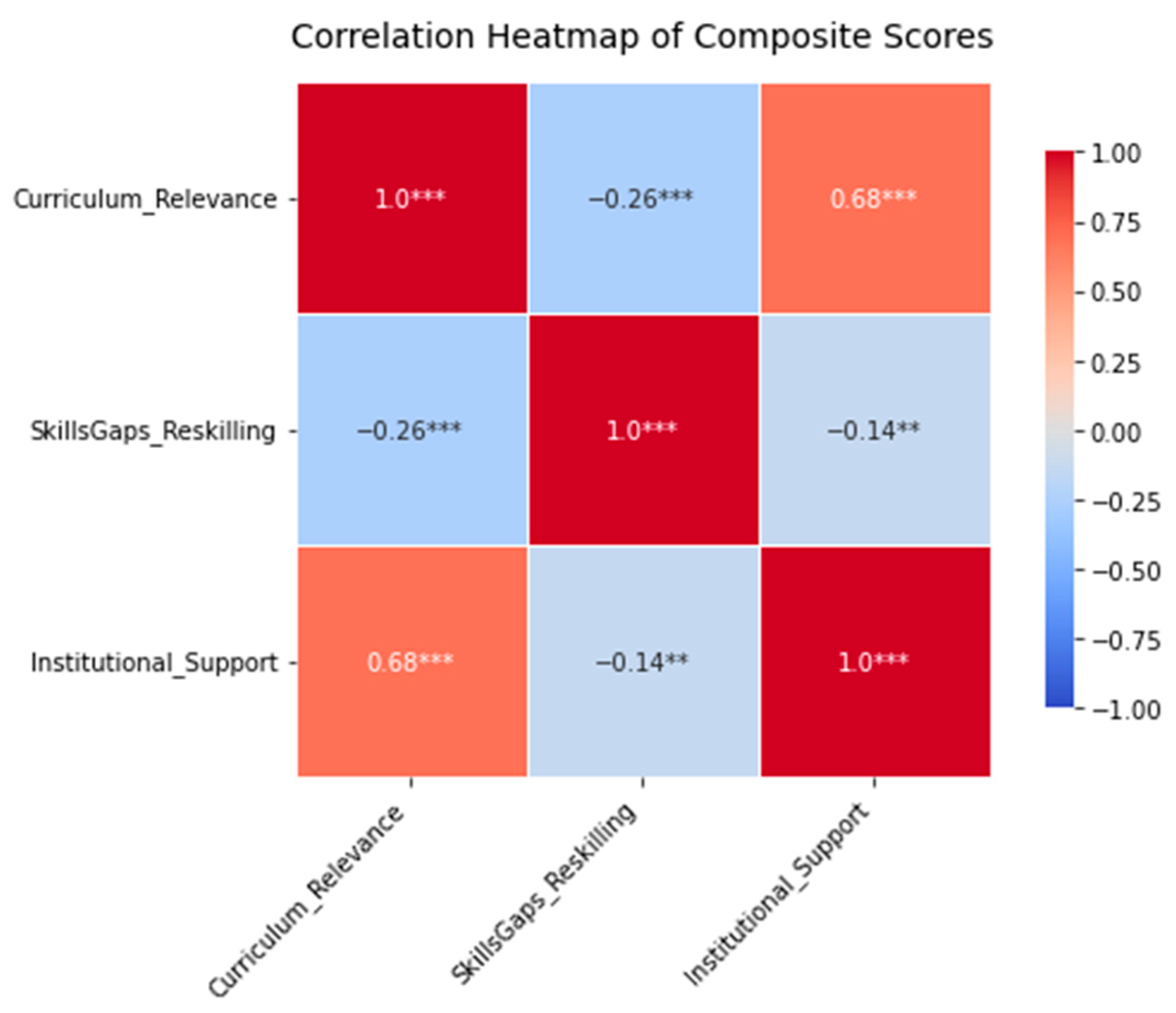
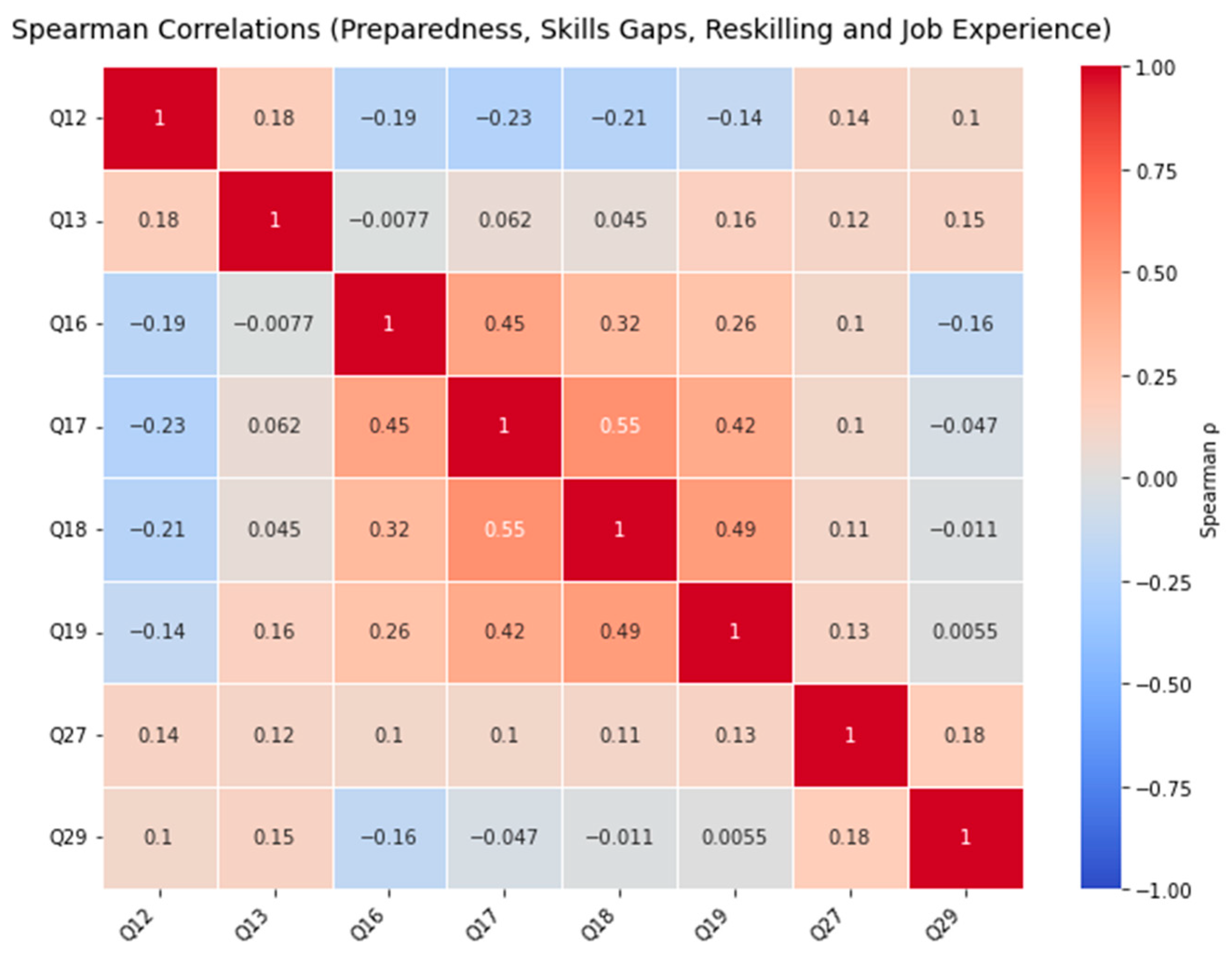

Disclaimer/Publisher’s Note: The statements, opinions and data contained in all publications are solely those of the individual author(s) and contributor(s) and not of MDPI and/or the editor(s). MDPI and/or the editor(s) disclaim responsibility for any injury to people or property resulting from any ideas, methods, instructions or products referred to in the content. |
© 2025 by the authors. Licensee MDPI, Basel, Switzerland. This article is an open access article distributed under the terms and conditions of the Creative Commons Attribution (CC BY) license.