Article

Leadership and Sustainable Development in Tabuk’s Nonprofits: A Moderated Mediation of Organizational Commitment and Strategic Planning Capability


1
Faculty of Business Administration, University of Tabuk, Tabuk 71491, Saudi Arabia
2
Department of Business Administration, Business College, Jouf University, Al-Qurayyat 77542, Saudi Arabia
*
Author to whom correspondence should be addressed.
Sustainability 2026, 18(1), 111; https://doi.org/10.3390/su18010111
Submission received: 5 November 2025 / Revised: 13 December 2025 / Accepted: 15 December 2025 / Published: 22 December 2025
(This article belongs to the Section Economic and Business Aspects of Sustainability)

Abstract

In the context of Saudi Arabia’s Vision 2030, which positions the nonprofit sector as a key driver of national development, these organizations face significant challenges including weak leadership, poor planning, and low employee commitment. This study investigates a moderated mediation model to explore how leadership affects organizational sustainable development (OSD). Specifically, it examines the mediating role of organizational commitment in the leadership–OSD relationship and the moderating role of strategic planning capability on the link between leadership and commitment. A quantitative, cross-sectional design was applied, involving 154 managerial respondents from 125 organizations in Tabuk, Saudi Arabia. Leadership, organizational commitment, strategic planning capability, and OSD were measured using validated instruments, and the analysis—conducted through IBM SPSS Statistics 26 and PROCESS Macro 7—incorporated reliability testing, factor analysis, correlations, and bootstrapped mediation–moderation models. The results reveal that leadership strongly predicts sustainable development (β = 0.592, p < 0.001) and organizational commitment (β = 0.634, p < 0.001). Commitment also significantly enhances sustainable development (β = 0.308, p < 0.001) and partially mediates the leadership–sustainability relationship. Strategic planning capability amplifies the effect of leadership on commitment (β = 0.176), producing a meaningful conditional indirect effect. Overall, the model accounts for 63.8% of the variance in sustainable development. The findings underscore the central role of leadership in strengthening nonprofit sustainability and highlight its relevance to broader national development objectives, including those outlined in Saudi Arabia’s Vision 2030.

1. Introduction

The pursuit of sustainable development has moved beyond a simple policy goal to become a global strategic necessity, involving the complex interplay of economic viability, social equity, and environmental stewardship [1,2]. In this global context, nonprofit organizations (NPOs) are increasingly seen as key agents of change, driving social innovation, empowering communities, and delivering essential services that contribute directly to the broader SD agenda. Recent studies confirm that NPOs are essential drivers of community development, addressing pressing social, economic, and environmental challenges with innovative and sustainable solutions.
In the Kingdom of Saudi Arabia, the nonprofit sector is strategically positioned as a core pillar of the ambitious Saudi Vision 2030. This national plan sets a clear target for the sector to contribute 5% to the Gross Domestic Product (GDP) while simultaneously improving its governance, transparency, and overall societal impact [3]. NPOs in regions like Tabuk are actively involved in a diverse range of cultural, social, and developmental initiatives that are vital to achieving these national transformation goals. Despite their growing importance, many NPOs face persistent, systemic challenges. These include a lack of strong strategic planning capacity, limitations in leadership effectiveness, and issues related to low employee commitment, all of which threaten their long-term institutional sustainability [4]. Specifically, in the Tabuk region, leaders often grapple with a unique set of pressures, including rapid socio-economic shifts aligned with Vision 2030, the need to balance traditional cultural values with modern governance demands, and heightened competition for limited funding and skilled personnel, making effective leadership a critical yet challenging determinant of success.
Leadership is widely recognized as a critical factor for organizational success and, specifically, for sustainability, as it is the main force shaping an organization’s vision, strategic direction, and underlying culture [5,6]. Effective nonprofit leaders go beyond administrative responsibilities to inspire shared values, mobilize resources, and align organizational goals In alignment with international sustainability frameworks, including the United Nations’ Sustainable Development Goals (SDGs) [7,8]. In the often resource-constrained environment of NPOs, effective leadership is particularly vital for building institutional resilience, fostering adaptability, and maximizing mission-driven impact [9,10]. However, a theoretical gap remains regarding the exact mechanisms through which leadership translates into organizational sustainable development (OSD), especially in contexts with limited strategic capacity and resource scarcity.
This research addresses this gap by integrating several foundational theoretical perspectives: Transformational Leadership Theory helps us understand how leaders inspire and intellectually stimulate followers toward sustainability-oriented goals [11]. Stakeholder Theory emphasizes the need to balance the diverse interests of various stakeholders to create shared social value [12,13]. The Resource-Based View (RBV) and Dynamic Capabilities Theory view leadership and strategic planning capability as critical organizational resources that enhance adaptability and sustain a competitive advantage [14,15]. Institutional Theory places nonprofit sustainability within the broader regulatory and societal legitimacy frameworks [16].
While literature generally accepts leadership as a driver of sustainability, empirical investigation into the internal mechanisms—specifically, the mediating role of organizational commitment and the contextual moderators—such as strategic planning capability—remains limited, particularly within the nonprofit sector and the Gulf region [4]. This study proposes and tests a conceptual framework linking leadership, organizational commitment, strategic planning capability, and organizational sustainable development in Tabuk’s NPO sector. Grounded in Social Exchange Theory, transformational leadership, and resource-based perspectives, this research aims to offer both theoretical and practical contributions.
This study aims to explore how leadership influences sustainable development, considering the mediating roles of organizational commitment and strategic planning capability within nonprofit organizations in Tabuk.
The empirical findings are expected to provide localized, evidence-based insights to inform leadership development, strategic planning practices, and sustainability initiatives within the nonprofit sector, thereby contributing directly to the realization of Saudi Vision 2030 goals.

2. Literature Review and Hypotheses

2.1. Organizational Sustainable Development

Organizational sustainable development refers to the capacity of an organization to effectively balance and integrate environmental stewardship, social equity, and economic performance over an extended period [1,17]. The traditional Triple Bottom Line (TBL) framework—focused on people, planet, and profit—has historically been the basis for sustainability discussions. However, current research increasingly calls for more integrated models that emphasize the interdependence and synergy among these three dimensions [13,18]. Some scholars differentiate between superficial, “business-as-usual” sustainability and a more profound “true sustainability,” where social and environmental objectives are inherently embedded within the organization’s core strategic intent [2]. Empirical evidence consistently shows that organizations genuinely committed to sustainability achieve superior financial, reputational, and social performance [19] supporting global sustainability frameworks such as the United Nations Sustainable Development Goals (SDGs) [7].
In the nonprofit context, OSD reflects the institutional capacity to sustain mission-driven impact while simultaneously ensuring long-term institutional resilience and maintaining the trust of diverse stakeholders [6,8].

2.2. Leadership and Organizational Sustainable Development

This study adopts a transformational leadership framework to understand how leaders influence sustainability outcomes.
Recent scholarly work firmly establishes leadership as a key factor leading to nonprofit sustainability outcomes across all Triple Bottom Line (TBL) dimensions. Systematic reviews confirm that sustainable, responsible, and transformational leadership styles are strongly linked to higher sustainability performance. This is achieved through mechanisms such as enhanced stakeholder integration, focused capability building, and organizational learning [20,21]. Empirical studies further illustrate that nonprofit leaders are instrumental in shaping governance quality, strengthening collaboration networks, optimizing resource stewardship, and fostering social value creation—all fundamental prerequisites for OSD.
In the Saudi Arabian context, qualitative research has identified several critical leadership practice clusters—including governance arrangements, team empowerment, procedural and strategic clarity, resource control, cross-sector collaboration, social investment, and social-value outcomes—that are essential for driving progress toward sustainability goals [22]. Other studies confirm that leadership during organizational change enhances sustainability and competitive positioning by effectively mobilizing employees and embedding sustainable practices into core operational processes [23]. Furthermore, nonprofit leaders’ involvement in cross-sector collaborations with government, businesses, and academia is vital for increasing access to resources and enhancing organizational legitimacy, a factor particularly relevant to Tabuk’s regional development priorities [24]. National sector analyses indicate rapid growth in the nonprofit sector and increasing institutional support, suggesting that leadership that effectively uses governance and collaboration can significantly improve sustainability outcomes at the regional level [25].
Recent scholarship continues to strengthen these understandings. A growing body of evidence shows that transformational and responsible leadership contribute to sustainability-oriented behaviors by nurturing shared values, fostering ethical work climates, and encouraging collective commitment to long-term societal objectives [9,26]. Additional studies report that leadership practices that enhance employee empowerment, psychological safety, and a learning-focused culture substantially improve organizational preparedness for sustainable development [27,28].
Within the nonprofit context, leadership is increasingly viewed as a central driver of sustainability capabilities, including innovation, improved funding mechanisms, stakeholder engagement, and digital readiness [29,30]. Recent findings further reveal that both transformational and transactional leadership positively influence affective commitment, organizational citizenship behavior, and work engagement. Sustainable leadership, in particular, emphasizes developing strategies that address social, economic, and environmental priorities [22,31]. Moreover, contemporary studies highlight the value of adaptive and collaborative leadership—especially under conditions of uncertainty—as a catalyst for resource mobilization, trust building, and sustainable value creation [32,33].
Taken together, the current literature consistently affirms that leadership shapes the strategic direction, cultural environment, and relational dynamics required for nonprofit organizations to advance sustainable development across economic, social, and environmental dimensions.
Based on the theoretical and empirical evidence reviewed, we deduce the following hypothesis:
H1: 
Leadership positively influences organizational sustainable development in nonprofit organizations in Tabuk.

2.3. Leadership and Organizational Commitment

Leadership is a crucial factor in influencing the level of organizational commitment among employees, a relationship that is especially clear in NPOs where mission orientation and social value are central to employee motivation. Transformational leadership is known to foster affective commitment through engagement and empowerment, while ethical leadership enhances trust and value alignment [34,35]. Leadership behaviors characterized by open communication, participatory decision-making, and recognition are essential for strengthening employees’ psychological attachment to the organization, which in turn improves retention rates and service quality [36].
Within nonprofit organizations, employees are often guided by intrinsic values and a deep commitment to promoting a social mission. Consequently, it is crucial for leaders to articulate an inspiring and coherent vision while demonstrating empathy and supportive behavior. By embodying the organization’s core principles and mission, leaders cultivate a shared sense of purpose that enhances employees’ commitment to the organization [37]. This commitment is a critical resource, as it ensures the dedication and effort required to navigate the complexities of sustainability initiatives.
Drawing from Social Exchange Theory and empirical findings, we deduce the following hypothesis:
H2: 
Leadership positively influences organizational commitment in nonprofit organizations in Tabuk.

2.4. Organizational Commitment and Organizational Sustainable Development

Organizational commitment represents a critical psychological condition that connects employees’ attitudes and behaviors to broader organizational outcomes, such as sustainability performance. Individuals who demonstrate a strong sense of commitment are more likely to embrace the organization’s objectives, including its sustainability agenda, and willingly invest extra effort to help realize these goals [38]. This heightened dedication translates into several tangible benefits for OSD, such as increased engagement in green initiatives, greater acceptance of organizational change, and a proactive approach to problem-solving related to social and environmental challenges [39].
The connection between these variables is frequently grounded in Social Exchange Theory, which posits that when employees perceive genuine support and appreciation from their organization—typically fostered by effective leadership—they tend to respond with increased commitment and improved performance [40]. In the context of sustainability, this reciprocal behavior is shown as a willingness to champion sustainable practices and ensure long-term viability of the organization’s mission.
H3: 
Organizational commitment positively influences organizational sustainable development in nonprofit organizations in Tabuk.

2.5. The Mediating Role of Organizational Commitment

Building on the preceding hypotheses, we propose that organizational commitment acts as a crucial mediating mechanism through which leadership influences OSD. Effective leadership creates a supportive and inspiring work environment, which directly enhances employee commitment (H2). This heightened commitment, in turn, motivates employees to actively participate in and champion sustainability initiatives, thereby improving OSD (H3).
This idea aligns with the concept that leadership’s impact is often indirect, working through the cultivation of positive psychological states and attitudes among employees. While a leader can set a strategic direction (direct effect), the sustained effort and internalization of sustainability goals require the deep-seated loyalty and dedication provided by high OC.
Building on the established links between leadership and commitment, and commitment and sustainability, we deduce the following mediation hypothesis:
H4: 
Organizational commitment mediates the relationship between leadership and organizational sustainable development in nonprofit organizations in Tabuk.

2.6. The Moderating Role of Strategic Planning Capability

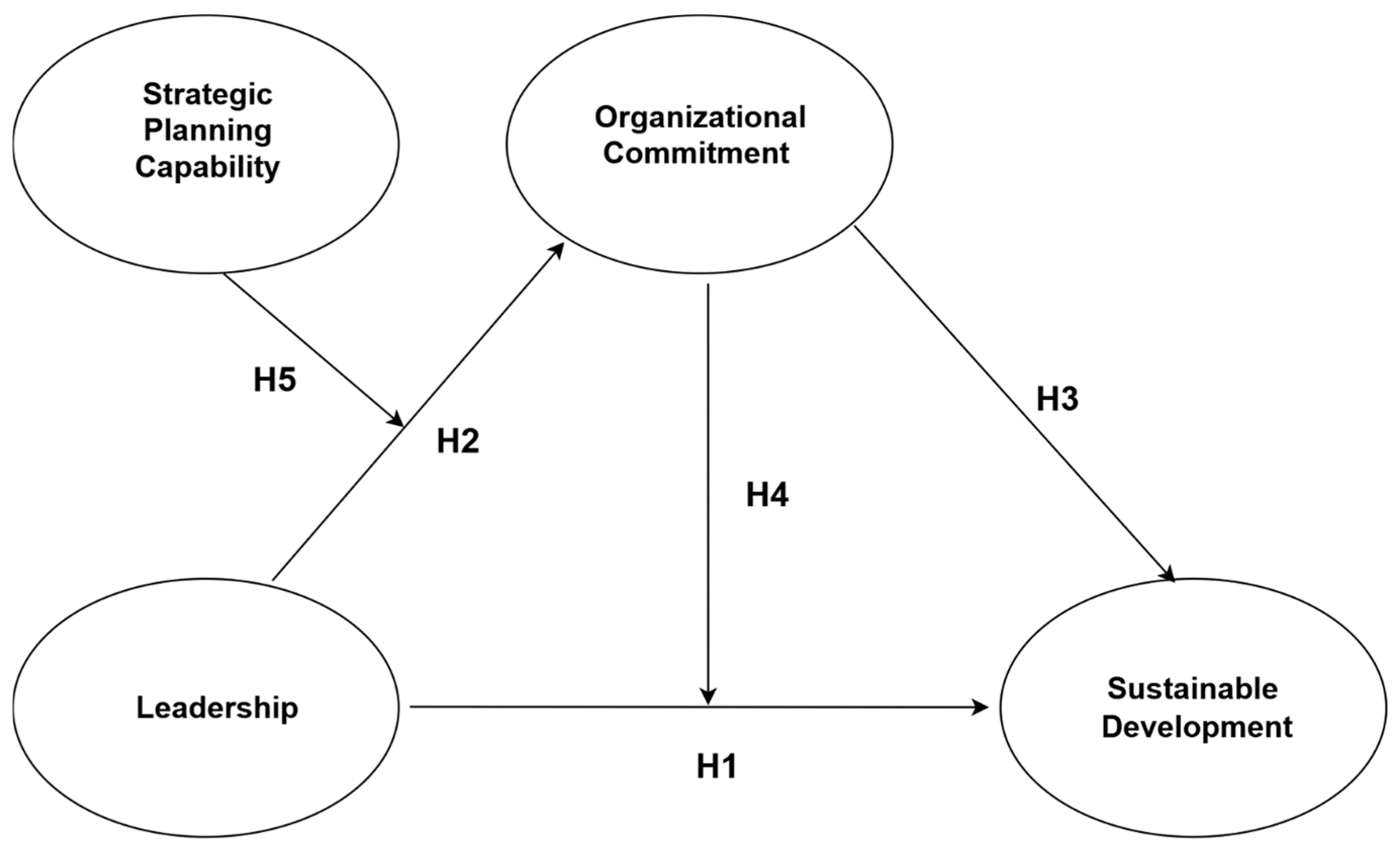
Strategic planning capability (SPC) refers to an organization’s ability to systematically formulate, implement, and evaluate strategies, ensuring a clear alignment between its mission and its operational activities [14]. We propose that SPC acts as a moderator that strengthens the relationship between leadership and organizational commitment.
In organizations with high SPC, the leader’s vision and directives are translated into clear, measurable, and actionable plans. This clarity reduces ambiguity, provides employees with a roadmap for action, and ensures that their efforts are strategically aligned. When a leader’s inspirational message (Leadership) is supported by a robust, transparent planning system, employees are more inclined to develop trust in organizational processes, gain confidence in its strategic direction, and, as a result, exhibit stronger levels of commitment. Conversely, in organizations with low SPC, even the most charismatic leader may struggle to translate vision into coordinated action, leading to employee frustration and diminished commitment. Recent studies have shown that strategic planning clarifies organizational goals and enhances the positive effects of transformational leadership on employee commitment, particularly in the nonprofit sector where resources are often constrained and a clear roadmap is essential for mission alignment. This perspective is supported by the Resource-Based View, which sees SPC as a dynamic capability that enhances the utility of other organizational resources, including leadership effectiveness [15].
Therefore, based on the Resource-Based View and the logic of strategic alignment, we deduce the following hypothesis:
H5: 
Strategic planning capability moderates the relationship between leadership and organizational commitment, such that the relationship is stronger when strategic planning capability is high.
Figure 1 presents the conceptual model guiding this study.

3. Methodology

This study employed a quantitative, cross-sectional, explanatory research design to investigate the interrelationships among leadership, organizational commitment, strategic planning capability, and sustainable development within non-profit organizations (NPOs) in Tabuk, Saudi Arabia. The design followed a moderated mediation framework [41], allowing simultaneous testing of both direct and indirect relationship consistent with causal modeling standards.

3.1. Ethical Approval and Participants

Ethical approval for this study was obtained from the Local Research Ethics Committee (LREC) of the University of Tabuk (protocol code UT-674-318-2025 and date of approval: 17 September 2025). All participants were informed of the study’s objectives, assured of the confidentiality and anonymity of their responses, and provided written informed consent before participation.
The target population included managers working in non-profit organizations in the Tabuk region. According to local administrative records, there are approximately 125 active NPOs, each employing an average of two managerial-level staff, resulting in a total population (N) of 250 managers.
The sample size was calculated using the finite population formula developed by [42].
n = N Z 2 p q e 2 N 1 + Z 2 p q e 2
The equation yields n approximately 152. Hence, a minimum of 152 participants was required. A total of 200 questionnaires were distributed to ensure representativeness, and 154 valid responses were received, resulting in a response rate of 77%. This rate exceeds the minimum acceptable threshold (50–60%) for social science research [43], and confirms adequate sample coverage for moderated mediation analysis with high statistical power. The demographic characteristics of the sample are presented in Table 1.

3.2. Measures

All constructs were measured using established scales from prior literature (Table 2).
The original scales were in English; a standard translation and back-translation procedure was employed to ensure linguistic and conceptual equivalence for the Arabic-speaking sample. All items were rated on a five-point Likert scale ranging from 1 (Strongly Disagree) to 5 (Strongly Agree). The reliability of each scale was confirmed using Cronbach’s alpha, with all values exceeding the recommended threshold of 0.70. A summary of the variables and their measurement is provided in Table 2.
Data screening addressed missing values and outliers before analysis. Reliability was verified using Cronbach’s alpha coefficients, which ranged from 0.926 to 0.953, indicating excellent internal consistency. Descriptive statistics supported normality assumptions. Confirmatory Factor Analysis (CFA) demonstrated strong construct validity (χ2/df = 2.38, CFI = 0.943, TLI = 0.935, RMSEA = 0.067), ensuring discriminant validity and minimizing common method bias.
Analyses were performed using SPSS (version 26) and PROCESS Macro Models 7 [41]. The procedures included descriptive analysis, correlation testing, and regression-based mediation and moderation analysis was conducted using 10,000 bootstrap samples with 95% confidence intervals Model strength was assessed through R2 and standardized beta values [48]. The final moderated mediation model explained 63.8% of the variance in sustainable development, confirming its robustness and predictive adequacy.

3.3. Endogeneity and Fixed Effects Considerations

Given the cross-sectional nature of the data, the possibility of endogeneity is acknowledged. Such concerns may arise from unobserved organizational factors that influence both leadership and sustainability outcomes, as well as from potential reverse relationships whereby organizations with stronger sustainability performance attract more effective leaders. While the proposed relationships are theoretically grounded, these limitations are recognized. To mitigate these concerns, the model incorporates key theoretically relevant variables, relies on previously validated measurement scales, and applies bootstrapping procedures within the PROCESS macro to enhance the robustness of the estimates. As fixed-effects models are primarily applicable to panel or longitudinal data, their use is not appropriate in the present cross-sectional design. Future research employing longitudinal data could apply fixed-effects approaches to strengthen causal inference.

3.4. Sample Size and Biased Regression Coefficients

The sample size (N = 154), is considered adequate for the present analysis. It falls within commonly accepted thresholds for regression-based path models of moderate complexity, and the analytical strategy was selected to account for the limitations associated with smaller samples. To further reduce the risk of biased coefficients and unreliable standard errors, bootstrapping with 10,000 resamples was applied using the PROCESS macro. This non-parametric procedure does not assume normality and generates empirical confidence intervals, which are widely recommended for mediation and moderation testing in small to moderate samples. The use of bias-corrected 95% confidence intervals enhances the robustness of the estimates and ensures that the findings are not driven by sample size constraints.
This methodology ensured empirical rigor through validated instruments, ethical compliance, and advanced statistical analysis. By focusing on leadership, organizational commitment, and strategic planning capability within a moderated mediation framework, this study offers a comprehensive understanding of the mechanisms through which leadership impacts sustainable development outcomes in Tabuk’s non-profit sector.

4. Results

4.1. Descriptive Statistics and Reliability

Table 3 presents the descriptive statistics and reliability coefficients for the key constructs. All variables exhibit strong internal consistency, with Cronbach’s alpha values ranging from 0.926 to 0.953, surpassing the recommended minimum threshold of 0.70. The mean scores (4.08–4.18) indicate positive perceptions of leadership, organizational commitment, strategic planning, and sustainable development among respondents. Skewness and kurtosis values fall within the acceptable range (±2), confirming normality and supporting the use of parametric statistical techniques.

4.2. Correlations and Discriminant Validity

As presented in Table 4, Pearson correlation coefficients reveal strong and positive associations among the variables (r = 0.58–0.72, p < 0.01). Leadership shows the highest correlation with sustainable development (r = 0.716), followed by organizational commitment (r = 0.684) and strategic planning (r = 0.623). Confirmatory factor analysis (Table 5) indicates excellent model fit (χ2/df = 2.38, CFI = 0.943, TLI = 0.935, RMSEA = 0.067, SRMR = 0.054), demonstrating discriminant validity and confirming the distinctiveness of the constructs.

4.3. Confirmatory Factor Analysis (CFA)

Table 5: The Confirmatory Factor Analysis (CFA) supports the discriminant validity of the four-factor model. The model exhibits an excellent fit (χ2/df = 2.38, CFI = 0.943, TLI = 0.935, RMSEA = 0.067, SRMR = 0.054), significantly outperforming the single-factor model. These results confirm that the measured constructs are empirically distinct, indicating that common method bias is not a concern for the validity of the findings.

4.4. Direct Effects Testing (H1–H3)

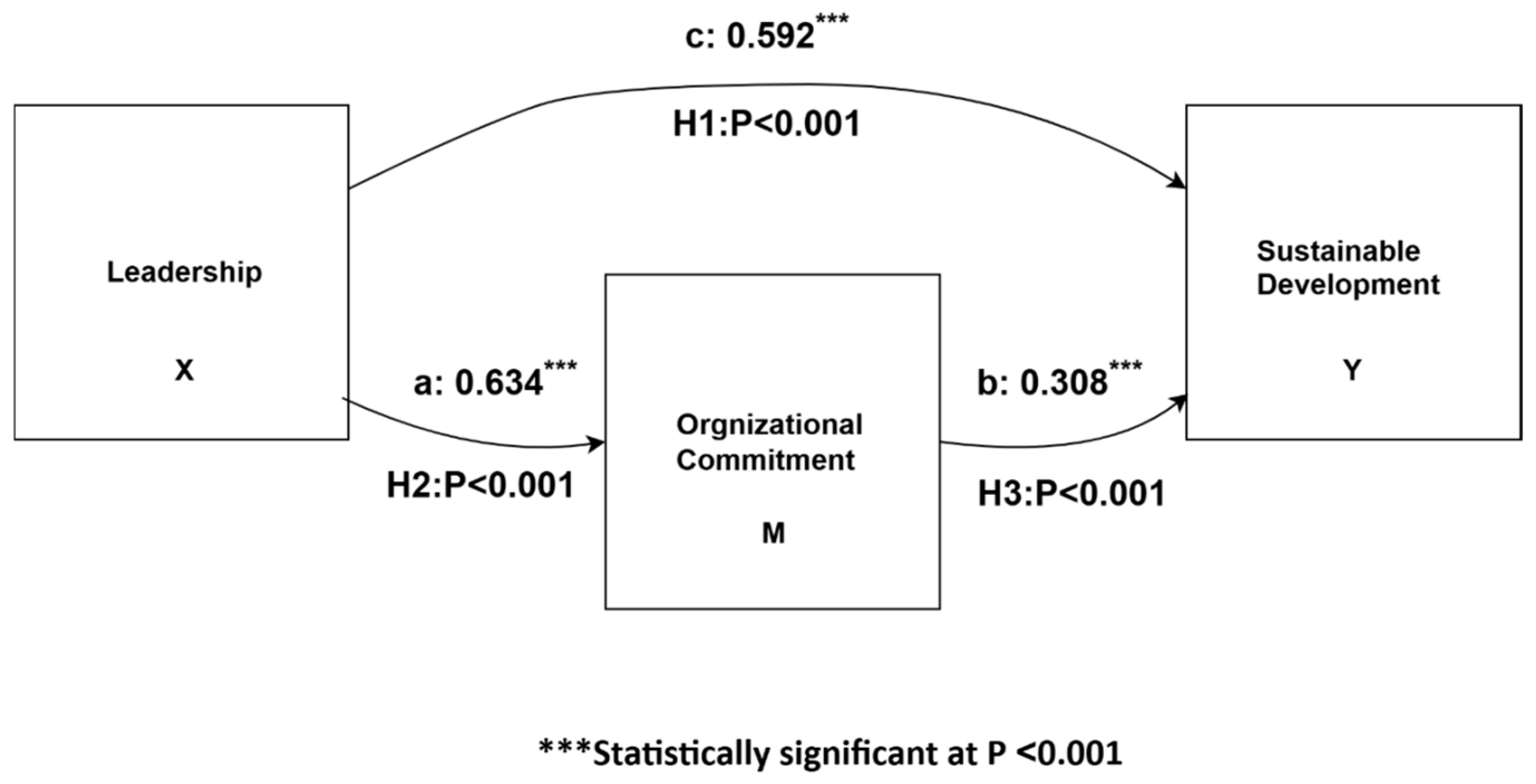
Table 6: The regression analysis results provide robust support for the proposed direct hypotheses. Leadership has a significant positive effect on sustainable development (β = 0.592, p < 0.001) and organizational commitment (β = 0.634, p < 0.001). Additionally, organizational commitment significantly predicts sustainable development (β = 0.308, p < 0.001). These findings highlight the pivotal role of leadership in fostering employee commitment and driving sustainable development outcomes (Figure 2).
Including age, education, and gender as control factors resulted in only slight shifts in the coefficients (Δβ), without affecting the direction or significance of the main relationships. As shown in Table 7, the core associations remain consistent and resilient, indicating that demographic characteristics did not influence the study’s results.

4.5. Mediation Analysis (H4)

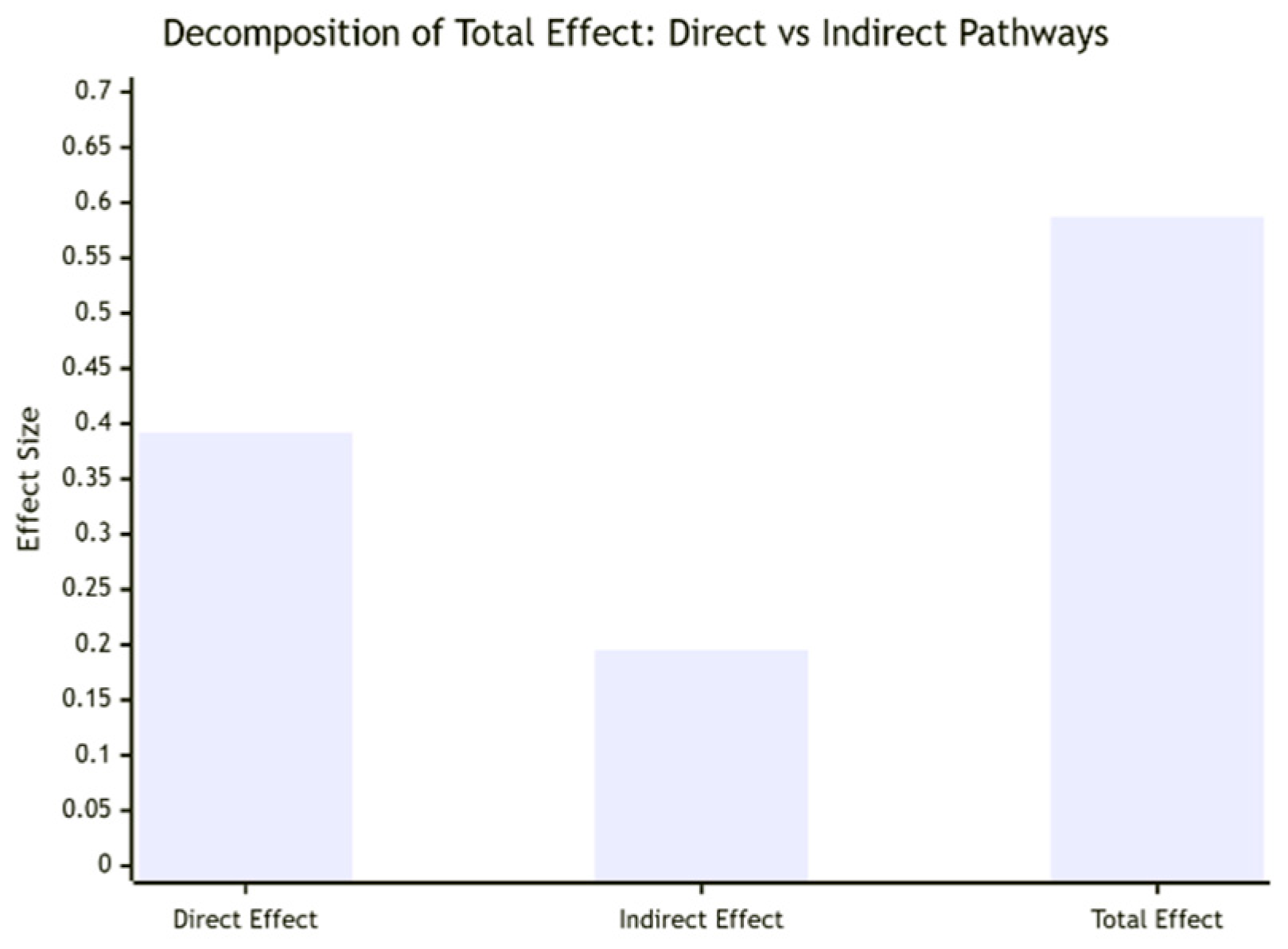
Table 8: The mediation analysis results, based on 10,000 bootstrap samples, reveal a significant indirect effect of leadership on sustainable development through organizational commitment (effect = 0.195, 95% CI [0.118, 0.283]). The direct effect of leadership on sustainable development also remains significant (effect = 0.392), indicating partial mediation. These findings underscore the dual influence of leadership—both directly and indirectly through organizational commitment—in promoting sustainable development (Figure 3).

4.6. Moderation and Moderated Mediation Analysis (H5)

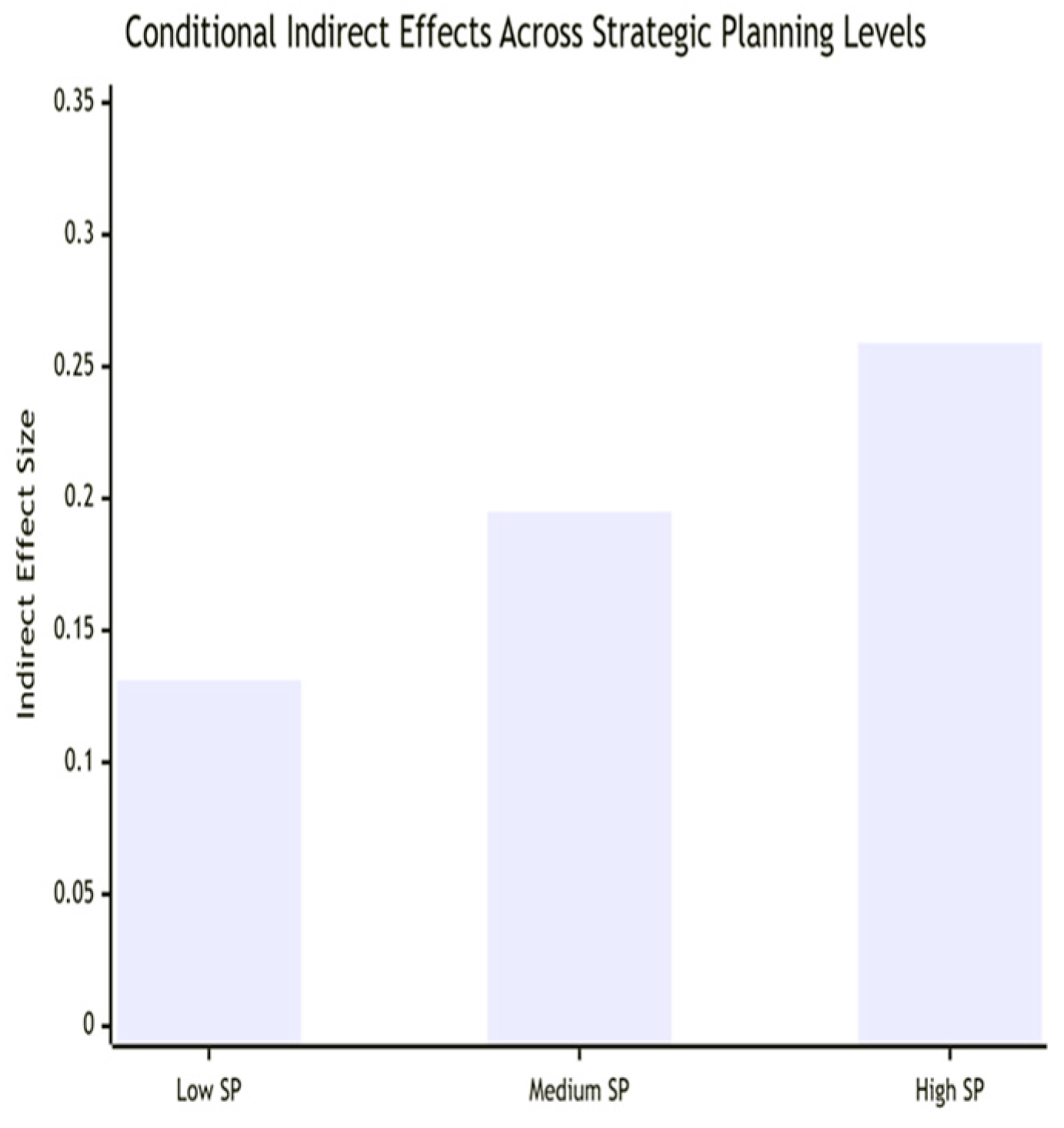
Table 9: The results indicate that strategic planning capability significantly moderates the relationship between leadership and organizational commitment (β = 0.176, p < 0.001), accounting for 51.2% of the explained variance. The conditional indirect effects (Table 10) further demonstrate that the strength of the mediation effect varies across different levels of strategic planning—low (0.131), medium (0.195), and high (0.259). Moreover, the index of moderated mediation is significant (0.054, 95% CI [0.023, 0.091]), confirming that strategic planning capability amplifies the indirect effect of leadership on sustainable development through organizational commitment. Simple slopes analysis (Table 11) further confirms that leadership’s effect on organizational commitment intensifies with increasing levels of strategic planning capability.

4.7. Conditional Indirect Effects and Simple Slopes Analysis

The conditional indirect effects analysis indicates that the mediating role of organizational commitment in the relationship between leadership and sustainable development varies according to different levels of strategic planning capability, as presented in Table 10. This variation indicates that higher levels of strategic planning capability strengthen the indirect influence of leadership on sustainable development through organizational commitment.
At low levels of strategic planning, the indirect effect is 0.131, indicating a modest mediation. At medium levels, the indirect effect increases to 0.195, suggesting a stronger mediation effect. At high levels, the indirect effect reaches 0.259, indicating the strongest mediation. The index of moderated mediation is 0.054 (95% CI [0.023, 0.091]), confirming that the strength of the mediation depends significantly on the level of strategic planning capability.
Strategic planning capability amplifies the mediating role of organizational commitment, thereby strengthening the overall leadership–sustainable development relationship (Figure 4).

4.8. Simple Slopes Analysis for Interaction Effect

The simple slopes analysis examines how the effect of leadership on organizational commitment changes at different levels of strategic planning capability:
At low strategic planning levels, leadership has a moderate effect on organizational commitment (slope = 0.251). At medium levels, the effect becomes stronger (slope = 0.427). At high levels, the effect is very strong (slope = 0.603).
Strategic planning capability intensifies the strength of the direct relationship between leadership and organizational commitment. This demonstrates that strategic planning acts as a powerful contextual enhancer of leadership effectiveness.

4.9. Model Summary

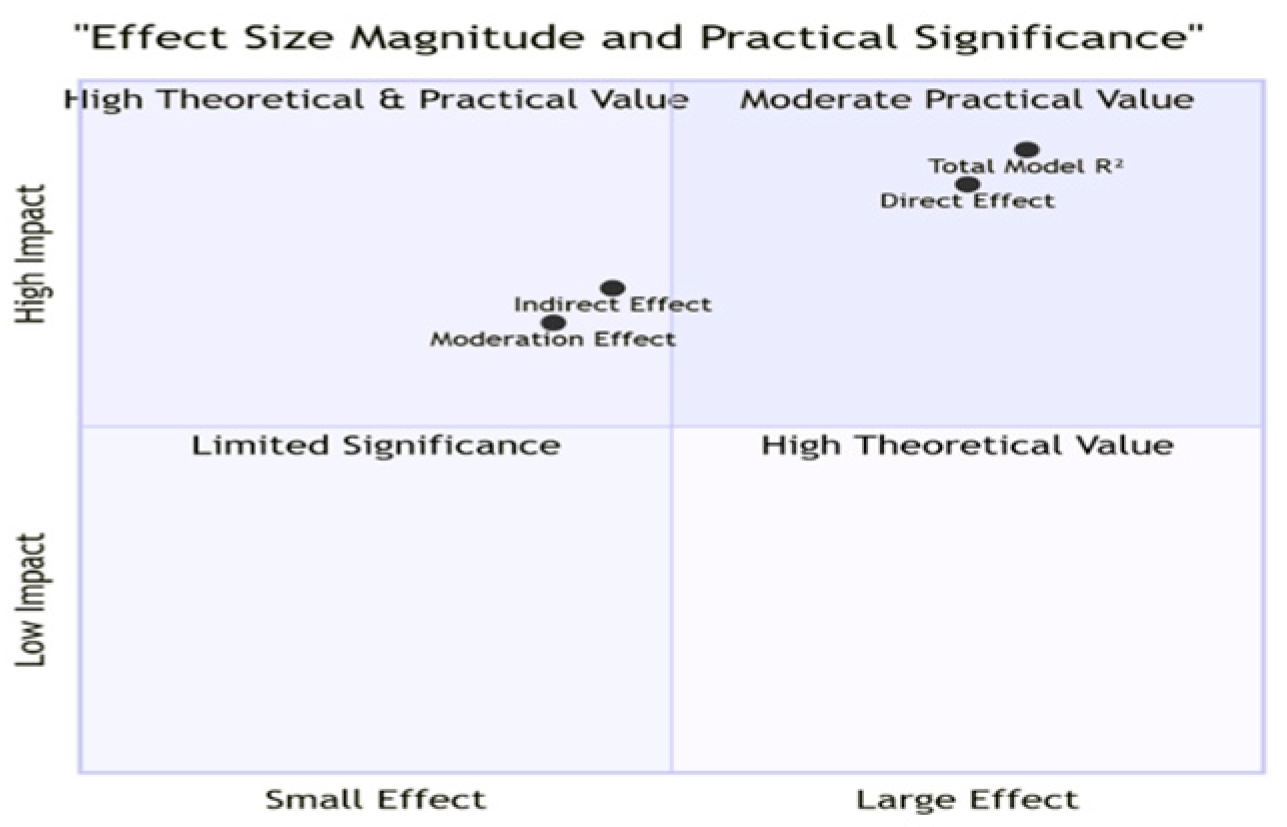
The overall moderated mediation model explains 63.8% of the variance in sustainable development (Table 12). All effect sizes are statistically meaningful, with strong direct, indirect, and interaction effects. Statistical power exceeds 0.95, confirming the adequacy of the sample size and the robustness of the results (Figure 5).

4.10. Hypothesis Testing Summary

All five hypotheses (H1–H5) are supported (Table 13), validating the proposed theoretical model. Leadership significantly enhances sustainable development outcomes both directly and indirectly through organizational commitment, with strategic planning capability acting as a key contextual amplifier of leadership effectiveness.

5. Discussion

This study deepens understanding of how leadership contributes to organizational sustainable development (OSD) within nonprofit organizations in Tabuk, Saudi Arabia. The results show that leadership not only has a direct influence on OSD but also operates indirectly through organizational commitment, with strategic planning capability shaping the strength of these pathways.

5.1. Theoretical Implications

This research advances theory in several important ways.
First, by empirically testing a moderated-mediation framework, it broadens the application of Transformational Leadership Theory and the Resource-Based View (RBV) in the nonprofit sustainability context. Whereas earlier studies tended to isolate the effects of leadership, employee attitudes, or organizational capabilities, the current model illustrates how these components function together. The findings support emerging scholarly calls for more integrated, multi-level approaches that capture interactions between leaders, followers, and organizational systems [20,21].
Second, the study reinforces organizational commitment as a central mechanism linking leadership to sustainability outcomes. This aligns with Social Exchange Theory, which suggests that employees who perceive supportive and value-driven leadership tend to reciprocate through stronger attachment and positive work behaviors [40]. Here, commitment appears to be a vital channel through which leadership is translated into concrete actions that support sustainability initiatives.
Third, the moderating role of strategic planning capability provides a meaningful extension to RBV. Rather than being a routine administrative task, strategic planning emerges as a dynamic capability that enhances the effectiveness of leadership. This supports the argument that in uncertain and rapidly changing environments, organizations with well-developed planning systems are better positioned to sustain performance and resilience [47]. Integrating planning capability into a leadership model adds theoretical clarity on how nonprofits can strengthen their long-term sustainability and respond to rising concerns about inconsistent ESG assessments and sustainability-related risks.

5.2. Practical Implications

The results offer several practical lessons for nonprofit leaders and policymakers in Saudi Arabia and similar contexts. A primary implication is the need for targeted leadership development. Training programs should extend beyond developing charismatic leadership traits and instead focus on skills that build employee commitment and strengthen strategic planning practices. This includes competencies such as participatory leadership, empowerment, communication, and strategic foresight.
In addition, nonprofit boards and executive teams should work toward institutionalizing strategic planning as an ongoing, organization-wide process. A well-crafted and widely communicated strategic plan helps employees align their efforts with sustainability goals and ensures consistency in mission-driven operations. This is particularly relevant for NPOs in Tabuk operating under Vision 2030, where demonstrating quantifiable social and developmental impact increasingly influences funding and partnerships.
The findings also underscore the value of cultivating a committed and purpose-driven workforce. Leaders can strengthen employee commitment by creating supportive work environments, recognizing contributions, and clearly linking individual roles to the organization’s social and environmental mission. Given that many nonprofit employees are motivated by intrinsic and mission-oriented values, leaders who tap into this sense of purpose are more likely to build engaged, resilient teams that support long-term sustainability.

5.3. Limitations and Future Research

Several limitations should be acknowledged. First, the cross-sectional design limits the ability to draw firm causal conclusions. Longitudinal or experimental approaches in future research would allow for examining how these relationships unfold over time.
Second, the study relies on self-reported data, which may introduce common method bias. Although CFA results did not indicate serious concerns, future studies could incorporate data from multiple sources—such as supervisor assessments, archival performance records, or externally verified sustainability indicators.
Third, the study’s regional focus on Tabuk provides valuable contextual insight but may limit generalizability. Replicating this model in different regions, cultures, and types of nonprofit organizations (e.g., educational, health, environmental NGOs) would help evaluate the broader applicability of the findings.
Finally, while the model explains a substantial proportion of variance in OSD, other influential factors may also be relevant. Future research could examine additional mediators or moderators—such as organizational culture, innovation capacity, or stakeholder engagement—and explore how different leadership styles (e.g., servant, ethical, or authentic leadership) contribute to sustainability outcomes within nonprofit settings.

6. Conclusions

This study offers strong empirical evidence that leadership serves as a pivotal determinant of sustainable development within nonprofit organizations in Tabuk, Saudi Arabia. By integrating insights from Transformational Leadership Theory, Social Exchange Theory, and the Resource-Based View (RBV), the research provides a comprehensive theoretical foundation for understanding how leadership practices foster organizational commitment and drive sustainable development outcomes. The findings confirm that leadership fosters sustainable outcomes both directly and indirectly through organizational commitment, with strategic planning capability amplifying this effect. The moderated mediation model highlights that effective leaders, supported by structured planning systems, can translate sustainability goals into actionable and measurable outcomes. These results contribute to theory by deepening the understanding of how relational and strategic factors jointly enhance organizational sustainability. Practically, the study underscores the need for leadership development and strategic planning initiatives to strengthen nonprofit institutions’ alignment with Vision 2030 and the global sustainability agenda.

Author Contributions

Conceptualization, N.A. (Noha Ahmed) and N.A. (Nahla Arabi); methodology, N.A. (Noha Ahmed) and N.A. (Nahla Arabi); software, N.A. (Noha Ahmed) and N.A. (Nahla Arabi); formal analysis, N.A. (Noha Ahmed) and N.A. (Nahla Arabi); investigation, N.A. (Noha Ahmed) and N.A. (Nahla Arabi); data curation, N.A. (Noha Ahmed) and N.A. (Nahla Arabi); writing—original draft preparation, N.A. (Noha Ahmed) and N.A. (Nahla Arabi); writing—review and editing, N.A. (Noha Ahmed) and N.A. (Nahla Arabi); visualization N.A. (Noha Ahmed) and N.A. (Nahla Arabi); supervision, N.A. (Noha Ahmed) and N.A. (Nahla Arabi). All authors have read and agreed to the published version of the manuscript.

Funding

The authors extend their appreciation to the Deanship of Research and Graduate Studies at the University of Tabuk for funding this work through Research no:2024-S-0049.

Institutional Review Board Statement

The study was approved by the Local Research Ethics Committee (LREC) of the University of Tabuk (protocol code UT-674-318-2025 and date of approval: 17 September 2025).

Informed Consent Statement

Informed consent was obtained from all subjects involved in the study. Participation was voluntary, and all responses were anonymized.

Data Availability Statement

The data supporting the findings of this study are available from the corresponding author upon reasonable request.

Conflicts of Interest

The authors declare no conflicts of interest.

References

  1. Montiel, I.; Delgado-Ceballos, J. Defining and Measuring Corporate Sustainability: Are We There Yet? Organ. Environ. 2014, 27, 113–139. [Google Scholar] [CrossRef]
  2. Dyllick, T.; Muff, K. Clarifying the Meaning of Sustainable Business: Introducing a Typology from Business-as-Usual to True Business Sustainability. Organ. Environ. 2016, 29, 156–174. [Google Scholar] [CrossRef]
  3. Vision 2030. (2023/2025). Vision 2030 Portal and Annual Report. Available online: https://www.vision2030.gov.sa/media/xi2jlj0y/english_vision2030_annual_report_2023.pdf (accessed on 24 April 2025).
  4. Bryson, J.M. Strategic Planning for Public and Nonprofit Organizations: A Guide to Strengthening and Sustaining Organizational Achievement; John Wiley & Sons: Hoboken, NJ, USA, 2018. [Google Scholar]
  5. Dinh, J.E.; Lord, R.G.; Gardner, W.L.; Meuser, J.D.; Liden, R.C.; Hu, J. Leadership theory and research in the new millennium: Current theoretical trends and changing perspectives. Leadersh. Q. 2014, 25, 36–62. [Google Scholar] [CrossRef]
  6. Maak, T.; Pless, N.M.; Voegtlin, C. Business statesman or shareholder advocate? CEO responsible leadership styles and the micro-foundations of political CSR. J. Manag. Stud. 2016, 53, 463–493. [Google Scholar] [CrossRef]
  7. UN General Assembly. Transforming our world: The 2030 agenda for sustainable development. In Division for Sustainable Development Goals; World Health Organization: New York, NY, USA, 2015; Available online: https://sdgs.un.org/2030agenda (accessed on 24 April 2025).
  8. Haque, A.; Fernando, M.; Caputi, P. How is responsible leadership related to the three-component model of organizational commitment? Int. J. Product. Perform. Manag. 2021, 70, 1137–1161. [Google Scholar] [CrossRef]
  9. Afsar, B.; Umrani, W.A. Transformational leadership and innovative work behavior: The role of motivation to learn, task complexity and innovation climate. Eur. J. Innov. Manag. 2020, 23, 402–428. [Google Scholar] [CrossRef]
  10. George, B.; Walker, R.M.; Monster, J. Does strategic planning improve organizational performance? A meta-analysis. Public Adm. Rev. 2019, 79, 810–819. [Google Scholar] [CrossRef]
  11. Bass, B.M.; Riggio, R.E. Transformational Leadership; Psychology Press: Hove, UK, 2006. [Google Scholar] [CrossRef]
  12. Freeman, R.E. Strategic Management: A Stakeholder Approach; Cambridge University Press: Cambridge, UK, 2015. [Google Scholar] [CrossRef]
  13. Lozano, R. Towards better embedding sustainability into companies’ systems: An analysis of voluntary corporate initiatives. J. Clean. Prod. 2012, 25, 14–26. [Google Scholar] [CrossRef]
  14. Barney, J. Firm resources and sustained competitive advantage. J. Manag. 1991, 17, 99–120. [Google Scholar] [CrossRef]
  15. Teece, D.J.; Pisano, G.; Shuen, A. Dynamic capabilities and strategic management. Strateg. Manag. J. 1997, 18, 509–533. [Google Scholar] [CrossRef]
  16. DiMaggio, P.J.; Powell, W.W. The iron cage revisited: Institutional isomorphism and collective rationality in organizational fields. Am. Sociol. Rev. 1983, 48, 147–160. [Google Scholar] [CrossRef]
  17. Schaltegger, S.; Burritt, R.L.; Petersen, H. An Introduction to Corporate Environmental Management, 2nd ed.; Routledge: Oxfordshire, UK, 2017. [Google Scholar] [CrossRef]
  18. Loviscek, V. Triple bottom line toward a holistic framework for sustainability: A systematic review. Rev. Adm. Contemp. 2020, 25, e200017. [Google Scholar] [CrossRef]
  19. Eccles, R.G.; Ioannou, I.; Serafeim, G. The Impact of Corporate Sustainability on Organizational Processes and Performance. Manag. Sci. 2014, 60, 2835–2857. [Google Scholar] [CrossRef]
  20. Piwowar-Sulej, K.; Iqbal, Q. Leadership styles and sustainable performance: A systematic literature review. J. Clean. Prod. 2023, 382, 134600. [Google Scholar] [CrossRef]
  21. Liao, Y. Sustainable leadership: A literature review and prospects for future research. Front. Psychol. 2022, 13, 1045570. [Google Scholar] [CrossRef] [PubMed]
  22. Mohammed, R.Y.M. Sustainability Leadership in Saudi Non-profit Organizations: A Qualitative Insight Governance. Public Adm. Res. 2024, 13, 1–13. [Google Scholar] [CrossRef]
  23. Alnamlah, A.A.; Nalband, N.A. A Study on the Role of Leaders in Achieving Sustainable Competitiveness and Sustainability During Change. Sustainability 2024, 16, 9978. [Google Scholar] [CrossRef]
  24. Ba, Y.; Nair, S.; Kedia, M. Cross-sector collaboration, nonprofit readiness, and sustainability transitions. Environ. Innov. Soc. Transit. 2024, 53, 100933. [Google Scholar] [CrossRef]
  25. King Khalid Foundation. Nonprofit Sector Outlook 2025—Flagship Report Highlights Growth Trajectory of Saudi’s Nonprofit Sector. Available online: https://kkf.org.sa/ (accessed on 24 April 2025).
  26. Eva, N.; Robin, M.; Sendjaya, S.; Van Dierendonck, D.; Liden, R.C. Servant leadership: A systematic review and call for future research. Leadersh. Q. 2019, 30, 111–132. [Google Scholar] [CrossRef]
  27. Iqbal, Q.; Ahmad, N.H. Sustainable development: The colors of sustainable leadership in learning organization. Sustain. Dev. 2021, 29, 108–119. [Google Scholar] [CrossRef]
  28. Smilevski, C. Sustainable leadership and organizational sustainability through organizational change. J. Bus. Paradig. 2017, 2, 1–33. [Google Scholar]
  29. Paulen, K. The Role of Leadership Within Nonprofits. 2021. Available online: https://digitalcommons.coastal.edu/goal-17-partnerships/2 (accessed on 24 April 2025).
  30. Abdullah, H.O.; Atshan, N.; Al-Abrrow, H.; Alnoor, A.; Valeri, M.; Erkol Bayram, G. Leadership styles and sustainable organizational energy in family business: Modeling non-compensatory and nonlinear relationships. J. Fam. Bus. Manag. 2023, 13, 1104–1131. [Google Scholar] [CrossRef]
  31. Aboramadan, M.; Dahleez, K.A. Leadership styles and employees’ work outcomes in nonprofit organizations: The role of work engagement. J. Manag. Dev. 2020, 39, 869–893. [Google Scholar] [CrossRef]
  32. Huo, C.; Safdar, M.A.; Ahmed, M. Impact of responsible leadership on sustainable performance: A moderated mediation model. Kybernetes 2024, 53, 5263–5284. [Google Scholar] [CrossRef]
  33. Ang’ana, G.A.; Ongeti, W.J.; Chiroma, J.A. Collaborative leadership and performance: Does environmental dynamism matter. Strateg. J. Bus. Change Manag. 2023, 10, 1472–1492. [Google Scholar] [CrossRef]
  34. Jiatong, W.; Wang, Z.; Alam, M.; Murad, M.; Gul, F.; Gill, S.A. The impact of transformational leadership on affective organizational commitment and job performance: The mediating role of employee engagement. Front. Psychol. 2022, 13, 831060. [Google Scholar] [CrossRef]
  35. Aunin, J.; Lüde, P.; Sander, I.; Vogel, R.; Wiesner, J. Perceived Ethical Leadership and Follower Outcomes in the Public Sector: The Moderating Effect of Followers’ Need for Autonomy. Public Perform. Manag. Rev. 2024, 47, 986–1013. [Google Scholar] [CrossRef]
  36. Fahim, M.G.A. Strategic human resource management and public employee retention. Rev. Econ. Political Sci. 2018, 3, 20–39. [Google Scholar] [CrossRef]
  37. Alkahtani, A.H. The influence of leadership styles on organizational commitment: The moderating effect of emotional intelligence. Bus. Manag. Stud. 2016, 2, 23–34. [Google Scholar] [CrossRef]
  38. Wang, R. Organizational Commitment in the Nonprofit Sector and the Underlying Impact of Stakeholders and Organizational Support. Voluntas 2022, 33, 538–549. [Google Scholar] [CrossRef]
  39. Saudi Green Initiative. About SGI. Available online: https://www.vision2030.gov.sa/en/explore/projects/saudi-green-initiative (accessed on 24 April 2025).
  40. Katz, I.M.; Rauvola, R.S.; Rudolph, C.W.; Zacher, H. Employee green behavior: A meta-analysis. Corp. Soc. Responsib. Environ. Manag. 2022, 29, 1146–1157. [Google Scholar] [CrossRef]
  41. Hayes, A.F. Introduction to Mediation, Moderation, and Conditional Process Analysis: A Regression-Based Approach; Guilford publications: New York, NY, USA, 2017. [Google Scholar]
  42. Krejcie, R.V.; Morgan, D.W. Determining sample size for research activities. Educ. Psychol. Meas. 1970, 30, 607–610. [Google Scholar] [CrossRef]
  43. Hair, J.F. A Primer on Partial Least Squares Structural Equation Modeling (PLS-SEM); Sage: Los Angeles, CA, USA, 2014. [Google Scholar]
  44. Rupprecht, E.A.; Waldrop, J.S.; Grawitch, M.J. Initial validation of a new measure of leadership. Consult. Psychol. J. Pract. Res. 2013, 65, 128. [Google Scholar] [CrossRef]
  45. Na-Nan, K.; Phanniphong, K.; Niangchaem, L.; Ouppara, N. Validation of an organizational sustainable development questionnaire: Exploring dimensions and implications. Sustain. Futures 2024, 7, 100221. [Google Scholar] [CrossRef]
  46. Mowday, R.T.; Steers, R.M.; Porter, L.W. The measurement of organizational commitment. J. Vocat. Behav. 1979, 14, 224–247. [Google Scholar] [CrossRef]
  47. Aydın, E.; Karakulle, İ.; Polat, H. Strategic Plan Perception Scale; A Scale Development Study. Dumlupınar Üniversitesi Sos. Bilim. Derg. 2022, 72, 172–181. [Google Scholar] [CrossRef]
  48. Cohen, J. Statistical Power Analysis for the Behavioral Sciences; Routledge: Oxfordshire, UK, 2013. [Google Scholar]
Figure 1. Conceptual model.
Sustainability 18 00111 g001
Figure 2. Direct Effects Regression Analysis.
Sustainability 18 00111 g002
Figure 3. Mediation Analysis Results (PROCESS Model 7).
Sustainability 18 00111 g003
Figure 4. Conditional Indirect Effects at Moderator Levels.
Sustainability 18 00111 g004
Figure 5. Effect Size Interpretation Matrix.
Sustainability 18 00111 g005
Table 1. Demographic Characteristics of Respondents (N = 154).
CharacteristicCategoryFrequencyPercentage (%)
GenderMale9863.6%
Female5636.4%
Age (Years)25 and less4529.2%
26–407146.1%
41–553220.8%
56 and above63.9%
EducationSecondary School -0%
Bachelor’s Degree10266.2%
Master’s Degree4831.2%
PhD42.6%
Source: Prepared by researchers.
Table 2. Variable Description and Measurement.
VariableDescriptionSample ItemSourceNo. of ItemsCronbach’s α
LeadershipThe extent to which leaders exhibit transformational behaviors.“My supervisor communicates a compelling vision for the future.”Rupprecht et al. (2013) [44]150.941
Organizational Sustainable DevelopmentThe organization’s capacity to integrate economic, social, and environmental objectives into its core activities.“The organization encourages employees to share their environmental experiences.”Na-Nan et al. (2024) [45]150.937
Organizational CommitmentThe employee’s emotional attachment to, identification with, and involvement in the organization.“I am willing to put in a great deal of effort beyond what is normally expected in order to help this organization be successful.”Mowday et al. (1979) [46]100.926
Strategic Planning CapabilityThe organization’s ability appling strategic planning in a systematic manner.“Our organization has a clear and regularly updated strategic plan.”Aydın et al. (2022) [47]100.953
Source: Prepared by researchers.
Table 3. Scale Reliability and Descriptive Statistics.
ConstructNo. of ItemsMeanSDCronbach’s αSkewnessKurtosis
Leadership154.150.820.941−0.450.32
Organizational Commitment104.120.870.926−0.380.28
Sustainable Development154.080.840.953−0.420.35
Strategic Planning104.180.790.937−0.410.31
Note: All reliability coefficients were above the recommended threshold of 0.70, indicating satisfactory internal consistency.
Table 4. Pearson Correlations between Main Variables (N = 154).
Variable1234
1. Leadership1.00
2. Organizational Commitment0.684 **1.00
3. Sustainable Development0.716 **0.648 **1.00
4. Strategic Planning0.623 **0.587 **0.661 **1.00
** p < 0.01.
Table 5. Confirmatory Factor Analysis (CFA) Model Fit Indices.
Modelχ2/dfCFITLIRMSEASRMRAICBIC
4-Factor2.380.9430.9350.0670.0548452.38721.6
1-Factor5.720.7820.7650.1420.1139214.89452.1
Difference−3.34+0.161+0.170−0.075−0.059−762.5−730.5
Acceptable thresholds: χ2/df < 3, CFI > 0.90, TLI > 0.90, RMSEA < 0.08, SRMR < 0.08.
Table 6. Direct Effects Testing (Hypotheses H1–H3).
HypothesisPathβSEt-
Value
p-
Value
95% CI Lower95%
CI
Upper
Supported
H1Leadership → Sustainable Dev0.5920.04812.333<0.0010.4970.687Yes
H2Leadership → Org.Comitment0.6340.05112.431<0.0010.5330.735Yes
H3Org.Commitment → Sust. Dev0.3080.0585.310<0.0010.1930.423Yes
Note: N = 154.
Table 7. Effect of Control Variables on Main Relationships.
Main RelationshipWithout
Control Variables
With Control VariablesChange in Coefficient (Δβ)Significance
Stability
Leadership →
Sustainable Development
β = 0.592β = 0.587−0.005Remained significant (p < 0.001)
Leadership →
Organizational Commitment
β = 0.634β = 0.628−0.006Remained significant (p < 0.001)
Commitment → Sustainable
Development
β = 0.308β = 0.302−0.006Remained significant (p < 0.001)
Strategic Planning → Commitmentβ = 0.385β = 0.379−0.006Remained significant (p < 0.001)
Table 8. Mediation Analysis Results (Hypothesis H4).
Effect TypePathEffectBoot SEBoot LLCIBoot ULCISignificance
DirectLeadership → Sustainable Development0.3920.0610.2720.512Significant
IndirectLeadership → Commitment → Sust. Dev0.1950.0420.1180.283Significant
TotalLeadership → Sustainable Development0.5870.0480.4920.682Significant
Note: Bootstrap sample = 10,000; LLCI/ULCI = Lower/Upper-Level Confidence.
Table 9. Moderated Mediation Results (Hypothesis H5).
PredictorβSEt-Valuep-ValueLLCIULCI
Constant4.1210.06959.725<0.0013.9854.257
Leadership (X)0.4270.0626.887<0.0010.3050.549
Strategic Planning (W)0.3850.0646.016<0.0010.2590.511
X × W (Interaction)0.1760.0414.293<0.0010.0950.257
R20.512
F-value52.67 <0.001
Table 10. Conditional Indirect Effects at Different Moderator Levels.
Strategic Planning LevelIndirect EffectBoot SEBoot LLCIBoot ULCISignificance
Low (Mean − 1SD)0.1310.0350.0680.205Significant
Medium (Mean)0.1950.0420.1180.283Significant
High (Mean + 1SD)0.2590.0510.1640.365Significant
Index of Moderated Mediation0.0540.0170.0230.091Significant
Table 11. Simple Slopes Analysis for Interaction Effect.
Strategic Planning LevelSimple SlopeSEt-Valuep-ValueLLCIULCI
Low (Mean − 1SD)0.2510.0723.486<0.0010.1090.393
Medium (Mean)0.4270.0626.887<0.0010.3050.549
High (Mean + 1SD)0.6030.0758.040<0.0010.4550.751
Table 12. Overall Model Summary and Effect Sizes.
ComponentValueInterpretation
Total R2 (Full Model)0.638Large effect size
Direct Effect Size0.392Medium to large effect
Indirect Effect Size0.195Small to medium effect
Moderation Effect Size0.176Small to medium interaction
Index of Mod. Mediation0.054Significant conditional process
Statistical Power>0.95Adequate for detecting effects
Table 13. Final Hypothesis Testing Results.
HypothesisDescriptionStatistical EvidenceSupported
H1Leadership → Sustainable Developmentβ = 0.592, p < 0.001, CI [0.497, 0.687]Yes
H2Leadership → Org Commitmentβ = 0.634, p < 0.001, CI [0.533, 0.735]Yes
H3Commitment → Sustainable Developmentβ = 0.308, p < 0.001, CI [0.193, 0.423]Yes
H4Commitment mediates
Leadership → Sustainable Dev
Indirect effect = 0.195, CI [0.118, 0.283]Yes
H5Strategic Planning moderates Leadership → CommitmentInteraction β = 0.176, p < 0.001, Index = 0.054, CI [0.023, 0.091]Yes
Disclaimer/Publisher’s Note: The statements, opinions and data contained in all publications are solely those of the individual author(s) and contributor(s) and not of MDPI and/or the editor(s). MDPI and/or the editor(s) disclaim responsibility for any injury to people or property resulting from any ideas, methods, instructions or products referred to in the content.