Article

Perception of Ecosystem Services Use Across Vegetation Types and Land Use Zones in Vhembe Biosphere Reserve, South Africa


by
Paxie Wanangwa Chirwa
1,
Ratsodo Phillip Tshidzumba
1,2,*,
Lucky Makhubele
1,2,
Mulugheta Ghebreslassie Araia
1,
Martin A. Honold
3,4,
Torben Hilmers
3 and
Hans Pretzsch
3,5
1
Forest Science Postgraduate Programme, Department of Plant and Soil Sciences, Faculty of Natural and Agricultural Sciences, University of Pretoria, 5-15 Plant Sciences Complex, Corner of Lynwood Rd and Roper St, Hatfield, Pretoria 0028, South Africa
2
School of Agricultural Sciences, Faculty of Agriculture and Natural Sciences, University of Mpumalanga, Building 6, Cnr R40 and D725 Rd, Riverside, Mbombela 1200, South Africa
3
Tree Growth and Wood Physiology, TUM School of Life Sciences, Technical University of Munich, Hans-Carl-von-Carlowitz-Platz 2, 85354 Freising, Germany
4
Institute of Forest Management, TUM School of Life Sciences, Technical University of Munich, Hans-Carl-von-Carlowitz-Platz 2, 85354 Freising, Germany
5
Sustainable Forest Management Research Institute iuFOR, University Valladolid, 47002 Valladolid, Spain
*
Author to whom correspondence should be addressed.
Sustainability 2026, 18(1), 101; https://doi.org/10.3390/su18010101
Submission received: 3 November 2025 / Revised: 5 December 2025 / Accepted: 10 December 2025 / Published: 22 December 2025

Abstract

Sustainable management of ecosystem services (ESs) is critical for balancing human well-being with conservation goals in biosphere reserves. This study examined the spatial and socio-demographic variation in the use and perceived importance of provisioning, regulating, supporting, and cultural ESs across different vegetation types and land use zones in the Vhembe Biosphere Reserve (VBR), South Africa. Household surveys were administered to 447 randomly selected households in six rural communities. Descriptive statistics, Chi-square tests, Kruskal–Wallis tests, and Friedman mean ranking analysis were employed. Results revealed significant differences (p < 0.05) in ES distribution and value across vegetation types, land use categories, and household characteristics, including income, education, age, and gender. Provisioning services, particularly fuelwood, wild fruits, and wild vegetables, were most intensively utilized in Mountain Woodland Moist and Ironwood Forest areas due to accessibility and limited livelihood alternatives. Regulating and supporting services, including water purification, erosion control, and habitat provision, were associated with forested and traditionally protected areas. Cultural services reflected strong socio-cultural ties, especially in sacred and tourism-associated landscapes. Overall, the study highlights the multifunctional importance of forested and agroforestry systems in rural livelihoods, emphasizing the need for integrated, culturally informed, and ecologically sound land use planning to support sustainable development in the VBR.

1. Introduction

Having reached 8 billion by 2022, the rapid growth of the world’s population leads to an increased demand for ecosystem services (ESs), especially in rural regions. This, however, raises the following important questions: Can the products and services continue supporting human well-being, or will there be a severe shortage over the next decades? What will the near future look like? The international initiative known as the Millennium Ecosystem Assessment (MEA) has acknowledged the role of ecosystem services (ESs) in human livelihoods. This assessment provides insight into the interaction between human beings and ecosystem services [1]. Additionally, it raises awareness globally about the interaction between people and ecosystem services and attempts to address the issues resulting from these interactions. The MEA requires the world to make a serious effort to sustainably balance the demand and supply of ecosystem services (ESs) to ensure a good quality of life and a healthy environment. Worldwide, ecosystem services (ESs) provide products and services to human beings [2]. ESs are critical natural resources for people’s well-being in developing and developed countries [1,3]. The ESs are categorized into four groups: provisioning ecosystem services (e.g., medicine, wild food, fuelwood, fodder, building and construction materials), supporting ecosystem services (e.g., soil conservation, nutrients cycling), regulating ESs (e.g., climate regulation and water purification), and cultural services (e.g., spiritual and esthetic) [4,5]. However, quantifying these ESs in the field is very difficult and time-consuming, just as the related processes (e.g., soil formation, nutrient cycling, air purification) are very complex and time-consuming. Therefore, ESs in this study are quantified using a participatory approach, benefiting from the local communities’ local knowledge and daily experiences [6,7].
Addressing the interaction between human beings and ecosystem services is very important as they have been agreed upon at the international level through MEA (Dunkley et al., 2018, Díaz et al., 2015) [1,8]. The international agreement, known as the Intergovernmental Platform on Biodiversity and Ecosystem Services (IPBES), emphasizes the importance of positive interactions between human beings and ecosystem services to enhance biodiversity and natural protection [9]. The demand and supply of ESs are critical focal areas in ensuring the sustainable use and management of ecosystem services. The IPBES aims to address the drivers of change in ESs and biodiversity worldwide (Díaz et al., 2015) [8]. The conceptual framework outlines the interaction of different drivers of change in ESs, interaction and provides possible solutions [1]. Further detail how nature and human interaction help sustain and protect ESs and biodiversity [3]. In South Africa, there is a total of 10 biosphere reserves which provide vital ecosystem services, including the Garden Route, Kruger to Canyons, Vhembe, Cape Winelands, Waterberg, Marico, Cape West Coast, Kogelberg, Gouritz Cluster and Magaliesberg [10].
The Vhembe Biosphere Reserve (VBR) of South Africa consists of a variety of vegetation types, such as Mopane shrubland, Musina mopane bushveld, Cathedral Mopane Bushveld, Gabbaro grassy bushveld, Ironwood Forest, Limpopo riverine forest, Makhado sweet bushveld, Mountain Woodland Dry, Northern mistbelt forest, Mountain Woodland Moist, etc. [11]. However, the vegetation classification adopted in this study includes Mountain Woodland Moist, miombo forests, lowveld woodland, Mountain Woodland Dry, and ironwood forest [12]. These vegetation types offer various ESs essential to the lives of the indigenous community of Vhembe Biosphere Reserve. Protecting and conserving these vegetation types in VBR communities is critical because of a strong interconnection between the local people and nature. Moreover, the ESs form the foundation of the entire culture and traditions of the VBR people. Additionally, the traditions and culture of VBR communities play a significant role in managing natural resources and production sustainability. However, because of unresolved land disputes and social, economic, and environmental issues, ESs are significantly affected and subsequently declining. As shown by a recent study in the VRB [13], climate change, in combination with ongoing species and biome shifts in southern Africa [14,15], is likely to reduce the ability of local forests to supply ESs for rural populations.
The ecosystems in VBR are heavily damaged and most of the local people live in ecologically harmed areas. Degradation mostly harms the native communities, as their lives depend on natural resources [16]. A larger part of the people in the VBR often live in rural areas and struggle with poverty. As a result, they use various strategies to support themselves. People earn their livelihoods by gathering natural resources for household consumption or commercial purposes [17]. Even though the different vegetation types in VBR are crucial for providing ecosystem services and supporting a variety of species, they still face challenges. The challenges arise from anthropogenic disturbances such as harvesting natural resources, including wild food, medicine, fuel, building, and construction materials. In order to address unsustainable use of ESs and to come up with more sustainable suggestions, it is essential to understand how people utilize the ESs and their connection to their natural resources. The sustainable use of ESs will enable the ecosystems to continue to serve multiple functions. People’s actions are key in keeping the connection between ESs and the local people.

2. Materials and Methods

2.1. Description of the Study Area

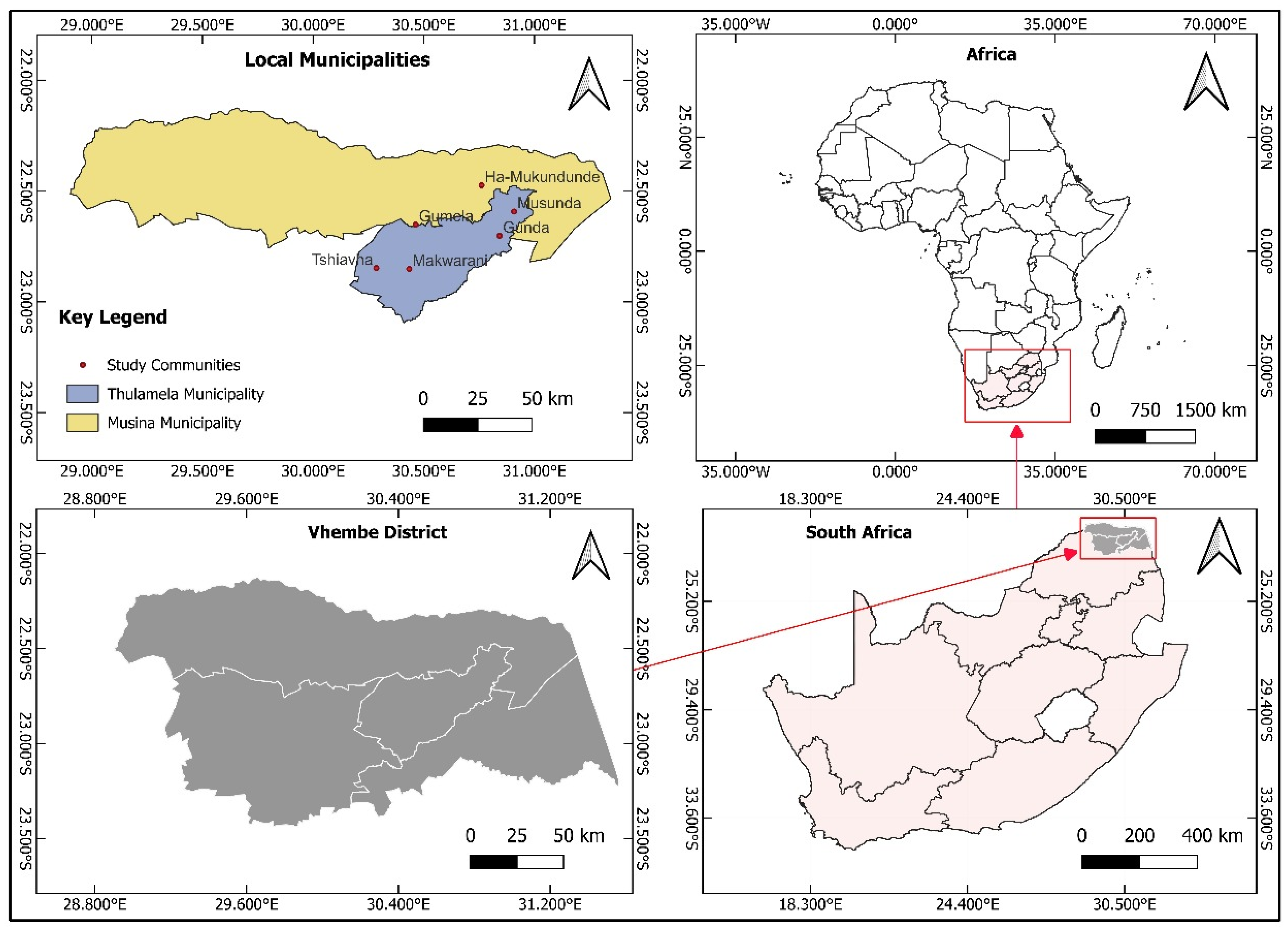
The study was conducted in six rural communities spread across the two local municipalities of Thulamela and Musina in the Vhembe District, Limpopo Province, South Africa (Figure 1). All six communities are located within the VBR, which is a biodiversity hotspot of Limpopo Province. Of these communities, two, including Ha-Mukununde village (22°28′26.3″ S 30°45′39.2″ E) and Gumela village (22°39′5.7″ S 30°27′47.6″ E), were located under the jurisdiction of Musina Municipality, while the other four, including Musunda (22°35′34.0″ S 30°54′29.7″ E), Gunda (22°42′7.4″ S 30°50′31.6″ E), Tshiavha (22°50′51.5″ S 30°17′0.8″ E), and Makwarani (22°51′5.8″ S 30°26′0.3″ E), were located in the Thulamela municipality (Figure 1). Most importantly, the VBR is among the world’s biosphere reserves, as recognized by the United Nations Educational, Scientific and Cultural Organization (UNESCO) [18]. Notably, the VBR consists of the three ecological zones, including the nine (9) core and fourteen buffer zones, as well as transitional zones [19], accounting for 15.2%, 14.8% and 70% of the land cover of core and buffer zones, respectively [20].

2.2. Methods

A quantitative research approach was used in this study. The six study communities were purposively sampled on the premise that they all had similar land use types [21], including state forests (SF), homestead agroforestry (HSAF), common resource use zones (CRUZ), traditional-protected areas (TPA) and trees in settlement areas (TSA). A similar tree-based land use classification, with slight modifications, was employed by [22], except that the term Traditional Protected Area was used synonymously with Culturally Protected Area. Additionally, these land use types occurred in the core zones, buffer zones and transition zones in the VBR [19,20]. The traditional authorities supplied the total household number information in each study community, and the sample sizes were determined at 10% sampling intensity and 95% confidence interval with a margin error of 5%. Consequently, the sample sizes for Tshiavha (47), Gumela (67), Makwarani (103), Gunda (99), Ha-Mukununde (81), and Musanda (50) were determined using the Raosoft online sampling size calculator software [23], respectively. Furthermore, the household list was processed using an online random number table generator software to select the households to be interviewed. The simple random selection of households in this study was used, as it ensures that every household stands an equal chance of being selected for an interview [24].
The household survey using a structured questionnaire was conducted in September 2023 to gather information on different ecosystem services that households collected and accrued from various land use types in their locality. To ensure the reliability and validity of the data collection process, the research assistants in each community were trained to comprehend the study questionnaire clearly to make meaning of each question in the local language of Tshivenda [25]. To do this, the questions and predetermined responses in the questionnaire were explained to the research assistants to ensure consistency in their comprehension of the context. Furthermore, the research assistants were also given the opportunity to ask clarity-seeking questions, which made the training process interactive and reliable. Most importantly, the academic level and achievement were considered critical in selecting the research assistants, targeting those who had acquired grade 12 (matric) and/or were studying in tertiary or had completed tertiary studies. In line with [17], heads of randomly selected households were interviewed using a semi-structured questionnaire, and questions concerning the ecosystem services accrued from various land use types, including the provisioning, regulating, cultural, and supporting, were posed. Although seasonality strongly influences the availability of forest resources, our questionnaire focused on capturing the use of all products throughout the year, rather than collecting season-specific information. Notably, the questionnaire included a detailed list of ecosystem services, allowing heads of household to indicate the land use types from which they obtained these services. To ensure the feasibility and reliability of the data collection tool, a pilot study was conducted, which helped improve the quality and appropriateness of the questionnaire [26]. Importantly, ethical clearance for the study was granted by the ethics committee (NAS329/2022).
The data were entered into an Excel spreadsheet data entry template and later transferred to the Statistical Package of Social Sciences (SPSS) version 20 software [27] for further coding and statistical analysis. The descriptive and inferential statistical tests were performed to process the quantitative data on the ecosystem services accrued to households in the study communities. To explore the association between household use of ecosystem services and the different vegetation types and land use zones in which they reside, we performed a cross-tabulation followed by a Chi-square test of independence. In line with [28], the Kruskal–Wallis test analysis was used to determine the statistically significant differences between the mean ranks of ecosystem services across the vegetation types, respectively. We employed this non-parametric statistical analysis test due to its ability to compare more than two independent groups [29]. To facilitate the analysis, we pooled all ecosystem services into four categories: provisioning ecosystem services (PES), regulating ecosystem services (RES), supporting ecosystem services (SES), and cultural ecosystem services (CES). This was achieved by transforming the primary ecosystem service data into mean values representing each of the four pooled variables. Additionally, to identify the top three provisioning, regulating, and cultural ecosystem services—and the top two supporting services—utilized by households across the different land use types (SF, CRUZ, HA, TSA, and TPA), we applied the Friedman mean ranking test. We also used this test to assess statistically significant differences in the drivers influencing the household use of provisioning ecosystem services [29].

3. Results

3.1. Demographic Characteristics

The demographic characteristics of households varied notably across the five vegetation types: Mountain Woodland Dry (MWD), Cathedral Mopane Bushveld (CMB), Mopane Woodland (MW), Ironwood Forest (IF), and Mountain Woodland Moist (MWM) (Table 1). Age distribution was diverse, with MWM showing a higher proportion of older residents (61+), while IF had a relatively younger population dominated by adults aged 18–35. Gender was relatively balanced across all areas, though CMB reported a slightly lower proportion of female respondents. Household income sources revealed spatial disparities. MWM and MW had higher reliance on pensions and social grants, whereas self-employment was prominent in MWD and CMB. IF exhibited the highest rate of formal employment. Educational attainment mirrored income patterns; CMB had a greater proportion of tertiary-educated individuals, while MWD and MW reported higher rates of no formal education. Settlement duration also varied. Long-term residency (over 20 years) was most common in MWD and MWM, reflecting stable, established communities. In contrast, MW had a significant number of recent settlers (less than 10 years).

3.2. Provisioning Ecosystem Services Received from Multiple Land Use Types Within Various Vegetation Types

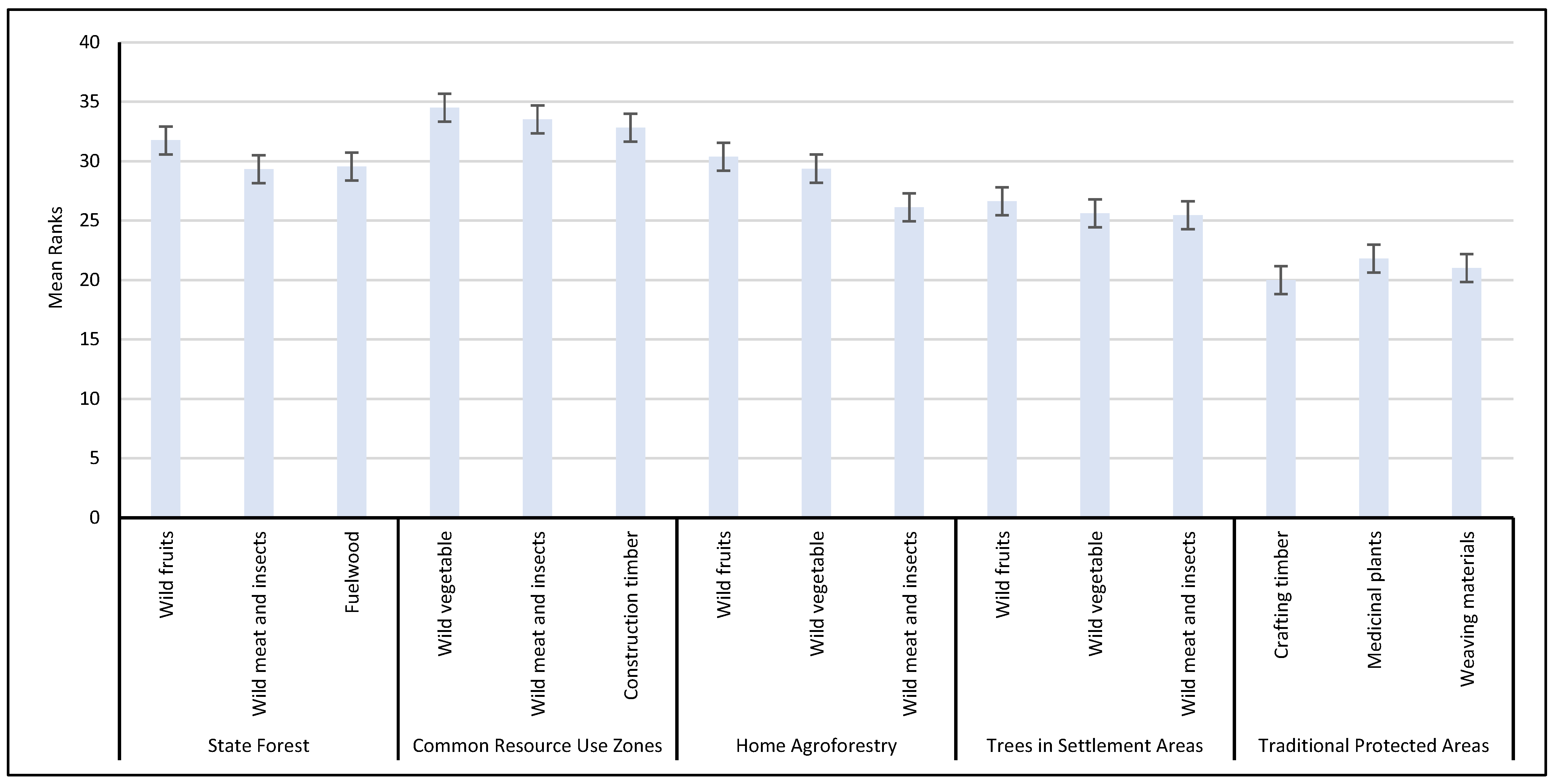
Table 2 shows that provisioning ecosystem services (PESs) in State Forest land are significantly associated with different vegetation types (p < 0.05). Key PESs include wild meat and insects (20%) in MWD, weaving materials in CMB (23%) and MW (31%), crafting timber in IF (31%), and wild fruits in MWM (31%). In the common resource use zones, PESs also vary significantly by vegetation type (p < 0.05). Thatch grass is prominent in MWD (32%) and MW (19%), craft timber in CMB (11%), and wild fruits in IF (16%) and MWM (45%). Homestead agroforestry showed significant associations between PESs and vegetation types (p < 0.05). Common services include wild meat and insects in MWD (21%) and MW (28%), fuelwood in MWM (45%), and medicinal plants in CMB (17%) and IF (23%). For trees in settlement areas, PESs are also significantly tied to vegetation types (p < 0.05). Notable services include fodder in MWD (7%), weaving materials in MW (32%), wild meat and insects in MWM (59%), and wild fruits in CMB (12%) and IF (22%). Traditional protected areas follow the same pattern of significant associations (p < 0.05), with dominant PESs including thatch grass in MW (46%), medicinal plants in IF (45%), wild fruits in MWM (43%), and construction timber in CMB (17%) and MWD (33%). As illustrated in Figure 1, wild fruits and fuelwood are the most highly used PESs in state forests. In common resource use zones, wild vegetables and wild meat/insects are most used. Homestead agroforestry is dominated by wild fruits and vegetables, while trees in settlements primarily contribute medicinal plants and weaving materials. In traditional protected areas, medicinal plants and weaving materials are the leading services.

3.3. Regulatory Ecosystem Services Across Multiple Land Uses and Vegetation Types

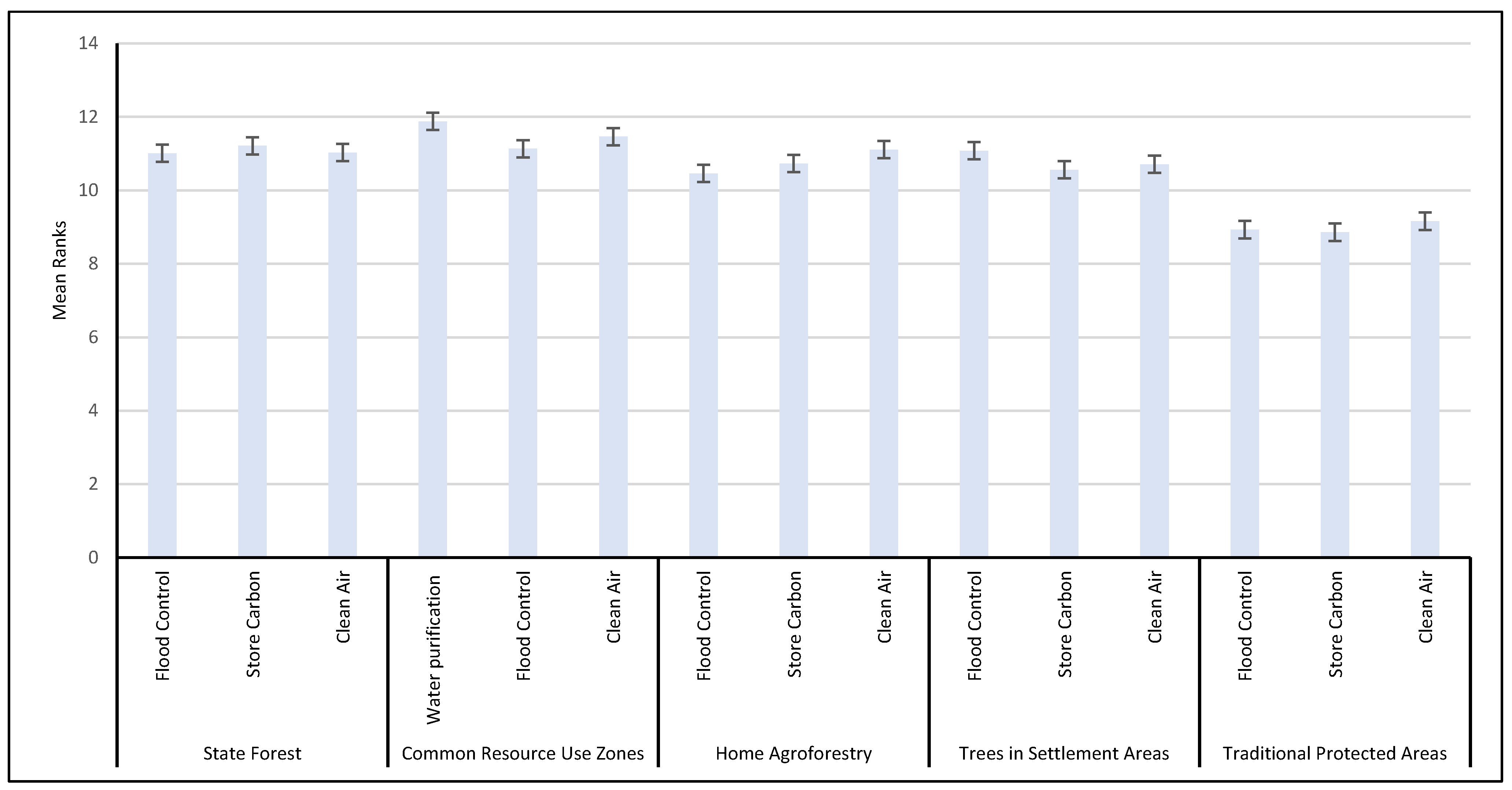
Table 3 shows that regulatory ecosystem services (RESs) in State Forest land are significantly associated with different vegetation types (p < 0.05). Key services include flood control (21%) in MW, carbon storage (17%) in CMB, and water purification in MWD (11%), IF (29%), and MWM (28%). In the common resource use zones, RESs also show significant variation by vegetation type (p < 0.05). Notable services include flood control (4%) in CMB, carbon storage (25%) in IF, clean air (42%) in MWM, and water purification in MWD (26%) and MW (22%). Homestead agroforestry is similarly influenced by vegetation type (p < 0.05). Prominent RESs include both flood control and water purification (30% each) in MWD, water purification in CMB (18%), flood control in MWM (34%), and clean air in IF (22%) and MW (28%). Regulatory services from trees in settlement areas also vary significantly with vegetation type (p < 0.05). These include clean air in MWM (42%), water purification in MW (21%) and IF (32%), and carbon storage in CMB (13%) and MWD (29%). In traditional protected areas, RESs are significantly associated with vegetation types (p < 0.05) as well. Key services include flood control (31%) in MW and water purification in CMB (9%), MWM (14%), MWD (24%), and IF (43%). According to the mean ranking (Figure 2), carbon storage and clean air are the most valued regulatory services from state forests and homestead agroforestry. In common resource use zones, water purification and clean air are the leading benefits. Meanwhile, flood control and clean air are most valued in trees in settlement areas and traditional protected areas.

3.4. Perceived Support Ecosystem Services Across Multiple Land Uses and Vegetation Types

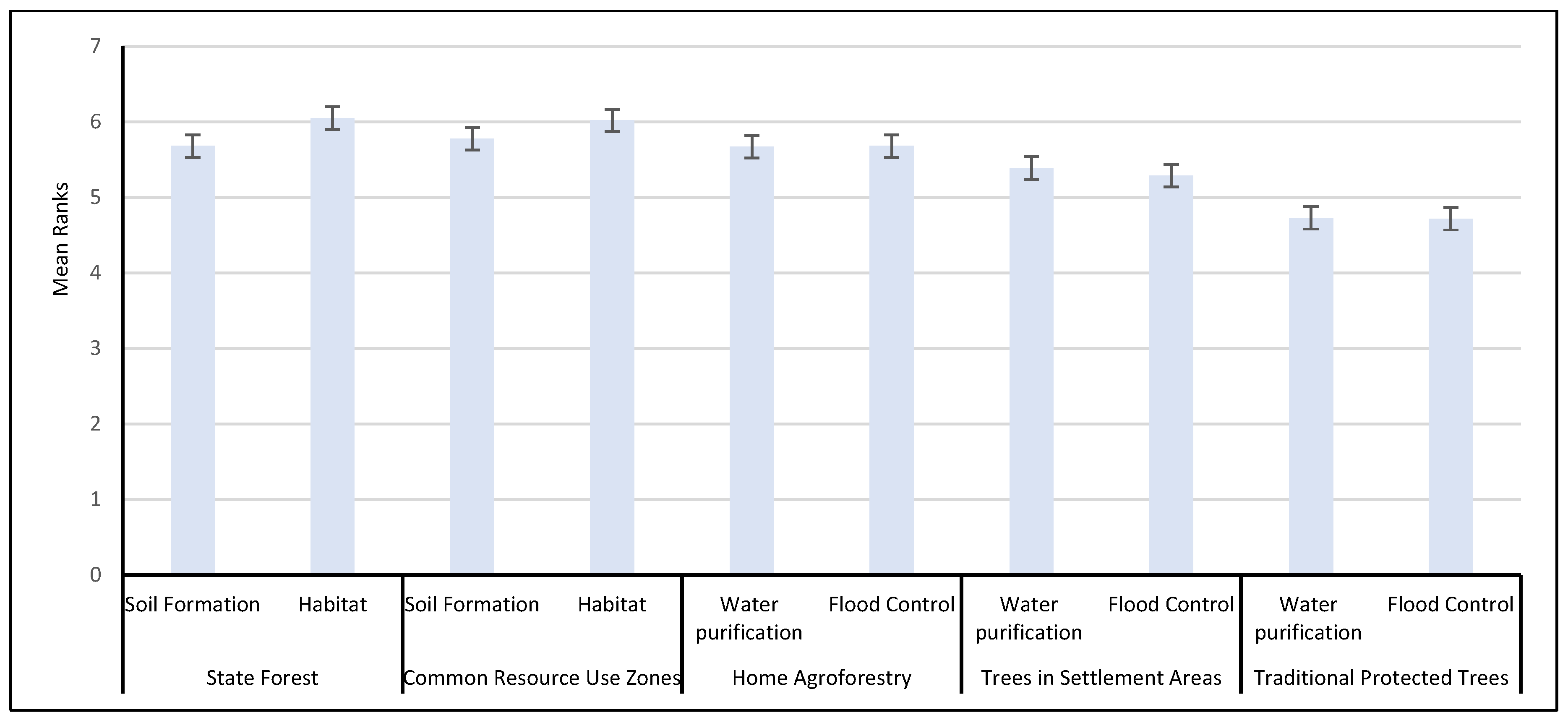
Table 4 shows that support ecosystem services (SESs) in state forest land are significantly associated with different vegetation types (p < 0.05). Key SESs include animal habitat provision in CMB (15%) and MWM (25%), as well as soil formation in MWD (13%), MW (27%), and IF (28%). In the common resource use zones, SESs also vary significantly by vegetation type (p < 0.05). Common services include animal habitat in CMB (4%) and MWM (39%), and soil formation in MW (15%), MWD (23%), and IF (24%). Homestead agroforestry SESs are similarly influenced by vegetation types (p < 0.05). Notable services include animal habitat in MW (26%) and soil formation in IF (10%), CMB (17%), MWD (31%), and MWM (31%). Support services from trees in settlement areas also show significant associations with vegetation type (p < 0.05). These include soil formation in MWD (10%) and MWM (39%), and animal habitat in CMB (6%), MW (23%), and IF (32%). In traditional protected areas, SESs are significantly tied to vegetation type (p < 0.05). The most common services include animal habitat in MWM (29%) and soil formation in CMB (11%), MW (18%), MWD (23%), and IF (41%). According to the mean ranking (Figure 3), the leading support ecosystem services across all land use types are habitat for wild animals and soil formation.

3.5. Perceived Cultural Ecosystem Services Across Multiple Land Uses and Vegetation Types

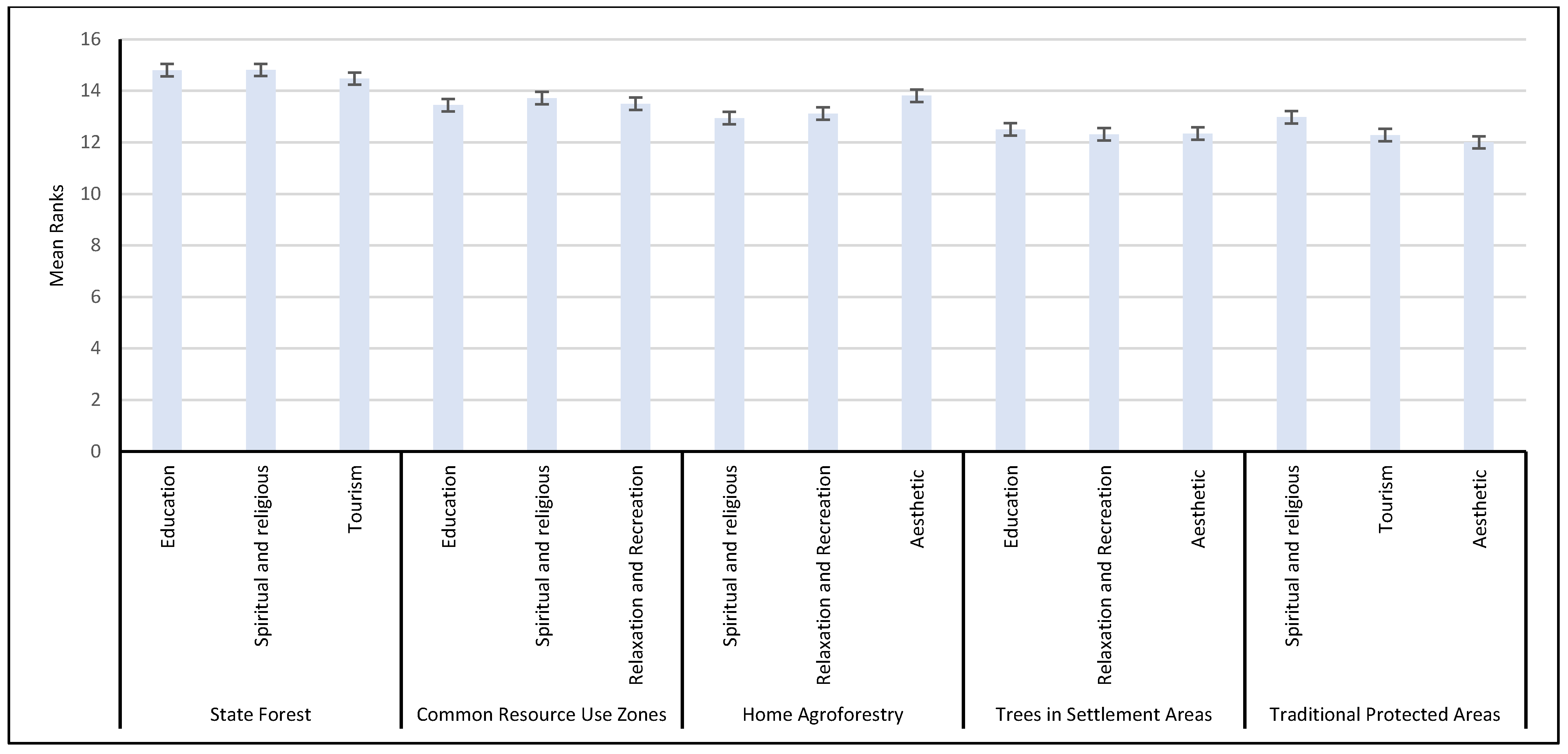
Table 5 shows that cultural ecosystem services (CESs) in state forest land are significantly associated with different vegetation types (p < 0.05). The most common CESs include spiritual and religious values in IF (16%), relaxation and recreation in CMB (25%) and MW (41%), esthetic appreciation in MWD (28%), and tourism in MWM (38%). In the common resource use zones, CESs also vary significantly with vegetation type (p < 0.05). Key services include educational benefits in IF (11%), spiritual and religious values in MWD (36%), esthetic appreciation in CMB (8%), and tourism in MW (18%) and MWM (52%). Homestead agroforestry CESs are likewise significantly associated with vegetation types (p < 0.05). Notable services include educational benefits in MW (37%), spiritual and religious values in IF (16%), relaxation and recreation in CMB (15%) and MWD (29%), and esthetic appreciation in MWM (55%). Trees in settlement areas also provide CESs that significantly differ by vegetation type (p < 0.05). These include spiritual and religious values in CMB (11%) and IF (18%), relaxation and recreation in MWM (60%), tourism in MW (41%), and esthetic value in MWD (20%). In traditional protected areas, CESs are significantly associated with vegetation type (p < 0.05). Common services include educational benefits in MWD (18%), spiritual and religious values in CMB (25%), esthetic appreciation in MW (76%), and tourism in IF (3%) and MWM (52%). According to the mean ranking (Figure 4), the leading CESs in state forests are spiritual and religious values and educational benefits. In common resource use zones, spiritual and religious values and relaxation/recreation are most prominent. Homestead agroforestry is dominated by esthetic, relaxation, and recreation values. In settlement areas, educational and esthetic services are most valued, while in traditional protected areas, spiritual and religious values and tourism are the leading CESs (Figure 5).

3.6. Comparison of Ecosystem Services Across Various Vegetation Types

The contribution of various vegetation types to ecosystem services were compared in the study area. Provisioning ecosystem services were the most highly ranked in the MWM vegetation type (mean rank ± 283.55), followed by MW (±206.00), while MWD received the lowest ranking (±130.41). Regulatory ecosystem services differed significantly across vegetation types in the VBR (p < 0.05), with IF ranking the highest (±243.64), followed closely by MWM (±238.59), and MWD ranking the lowest (±151.62). Similarly, supporting ecosystem services showed significant variation (p < 0.05), with IF again ranking the highest (±225.49), followed by MWM (±224.27), and CMB receiving the lowest score (±164.33). For cultural ecosystem services, which also varied significantly by vegetation type (p < 0.05), MW was the top-ranked (±260.38), followed by MWM (±239.67), while IF ranked the lowest (±106.68) (Table 6).

3.7. Drivers for Household Use of Provisioning Ecosystem Services

The drivers of provisioning ecosystem services utilization were significantly different (p < 0.05) across the different vegetation types in VBR. The easy accessibility to forest resources (±5.59), lack of alternatives to forest resources (±5.78), and abundance of forest resources (±5.68) are recorded as the main drivers of utilization of provisioning ecosystem services. The least influential driver of utilization of provisioning ecosystem services was the utilization of forest resources to augment the household’s income (±4.93) (Table 7).

4. Discussion

The study reveals significant spatial and socio-demographic variation in the use and perceived benefits of ecosystem services across vegetation types and land use zones in the VBR. These differences are shaped not only by ecological attributes but also by factors such as income, education, gender, and tenure.

4.1. Socio-Demographic Characteristics and Resource Use

Demographic data (Table 1) show that the 26–60 age group dominates, likely driving resource collection activities [30]. The 61+ age group was more prominent in MWM, correlating with higher reliance on pensions and traditional practices. Gender patterns highlight women’s central role in resource use, particularly in MWD and MWM, where they are involved in collecting fuelwood, wild vegetables, and medicinal plants [31,32]. Income sources and education levels vary by vegetation type. MW and IF show greater reliance on pensions and employment, while MWM records the highest share of households without income, which is likely to increase the dependence on provisioning services. Low education levels in MW and MWM further reflect higher vulnerability to resource scarcity and degradation. This aligns with findings from other studies linking low education and income with greater reliance on natural resources [33].

4.2. Provisioning Ecosystem Services (PESs)

Provisioning services, such as wild fruits, fuelwood, vegetables, and wild meat, are widely used, though availability differs by vegetation type (Table 1). Wild fruits were the most accessible in MWM and IF within state forests, likely due to their partial protection status [34]. As alluded to by [35], the accessibility of the provisioning services may be hampered by many factors, including the distance and/or the terrain in which they are located. This finding suggests that managing forests to maintain their natural conditions may broaden the diversity of species, while potentially enhancing the availability of provisioning services. Ref. [17] shared contrasting views, highlighting the significant role that distance plays in influencing local people’s access to the provisioning ecosystem in various land use types in VBR. On the same note, ref. [36] found that the distance from the communal areas to the protected areas is a contributory factor in the sustainability of the provisioning ecosystem services. Crafting and weaving materials were mainly harvested in MW and CMB, especially from state and traditionally protected forests. The special wood quality of species like Colophospermum mopane also influences preferences for firewood, construction, and craft production [37]. MWM consistently emerged as a hotspot for multiple provisioning services, likely due to its high biodiversity. Research shows a positive correlation between species richness and ecosystem service delivery [38]. Meanwhile, state forests and protected areas provide better timber resources, suggesting ecological conditions and forest management play critical roles [39].

4.3. Regulatory Ecosystem Services (RESs)

Regulatory services such as air purification, water regulation, and flood control were especially valued in MWM and IF (Table 2). These services are closely tied to vegetation structure and land cover. This agrees with [40], who stated that a decrease in the tree cover has a direct and relative negative effect on the provision of ecosystem services such as climate regulation, air and noise pollution. This notion was also supported by the findings in [41], pointing out that areas with incremental vegetation cover have ecological benefits to people. Agroforestry and settlement trees also contributed significantly, especially for clean air and carbon storage [42], highlighting their relevance in climate resilience and adaptation [41,43,44]. State forests and traditional protected areas were particularly important for water purification and flood control. This finding aligns with the assertion by [45]. In addition, the study by [39] highlighted that managed mountain forests have water regulation service capacity. The strong perception of regulatory services in mountainous and densely vegetated zones like MWM and IF likely reflects observable outcomes like erosion control and microclimate regulation. This is consistent with an argument by [39] that suggests the regulation of climate and erosion is often higher in unmanaged mountainous forests.

4.4. Supporting Ecosystem Services (SESs)

Supporting services, including soil formation and habitat provision, were valued across all land uses, with IF and MWM again standing out (Table 3). These areas, mostly under protection, maintain essential ecological functions. Agroforestry and trees in settlement areas also contributed notably, especially in soil fertility improvement through organic matter inputs [45,46]. This finding is also supported by [47], who reported that the practice of integrating trees and agricultural crops is key to improving soil fertility. MWM’s consistently high ratings for habitat provision across land uses confirm its ecological richness and importance in biodiversity conservation.

4.5. Cultural Ecosystem Services (CESs)

Cultural services showed strong variation by vegetation type and land use. In state forests, spiritual and religious values were dominant in IF, tourism in MWM, and relaxation in MW and CMB. In common resource zones, tourism was highest in MWM, spiritual values in MWD, and educational benefits in IF. Homestead agroforestry was associated with esthetic and relaxation services, particularly in MWM, MWD, and CMB. This could be due to the prevalence of exotic ornamental species in agroforestry [17]. However, ref. [48] further touted the need to conserve and enhance the abundance of trees in homestead agroforestry for the local people to continue accessing multiple uses at a closer distance to their household. Settlement areas were valued for esthetic and relaxation benefits, especially in MWM and MW. Traditional protected areas were associated with esthetic values (particularly in MW) and tourism (in MWM and IF), along with spiritual and educational benefits. These findings stress the dual ecological and cultural value of protected landscapes. Similarly, ref. [49] argued that protected landscapes provide people with essential benefits, especially to interact with nature, including education, recreation, and cultural heritage. These findings support the case for integrated, multifunctional land use planning that accounts for both ecological and cultural priorities [50,51].

4.6. Drivers of Provisioning Service Use

Household reliance on provisioning ecosystem services is primarily driven by the lack of alternatives (±5.78), resource abundance (±5.68), and accessibility (±5.95), all of which vary significantly across vegetation types (p < 0.05). This highlights forests’ role as safety nets, particularly in economically marginalized communities [52,53]. Augmenting income was the least cited driver (±4.93), suggesting subsistence rather than commercial use. Limited market access and low value addition may explain this trend [54]. However, ref. [55] argued that creating markets for ecosystem services could profoundly increase private investment. Similarly, ref. [56] argued that households may opt to sell firewood for income generation. On the other hand, ref. [57] pointed out that despite value addition to the non-timber products, poor marketing of the products substantially affects the potential sales. Nonetheless, these results underline the importance of promoting sustainable resource use while enhancing alternative livelihoods and market linkages to reduce forest dependency [58,59].

5. Conclusions

This study highlights the complex interplay between vegetation types, land use zones, and socio-demographic factors in shaping the use and perceived value of ecosystem services within the Vhembe Biosphere Reserve. Key findings show that provisioning, regulatory, supporting, and cultural ESs vary significantly across vegetation/forest types studied, with mountainous and forest-rich areas such as MWM and IF consistently emerging as critical service providers. Household reliance on provisioning services is largely driven by accessibility, resource abundance, and the lack of alternatives, highlighting the importance of forests in meeting basic subsistence needs. Cultural services, in particular, reflect strong connections between ecological settings and community traditions, spirituality, and recreation. The results underscore the urgent need for integrated land use planning and multifunctional landscape management that considers both ecological and socio-cultural values within the Vhembe Biosphere Reserve. Enhancing livelihood alternatives, improving market access, and promoting sustainable resource use are essential steps to reduce overdependence on forest ecosystems while safeguarding their long-term ecological integrity. For instance, to reduce the substantial provisioning ecosystem services demand from various vegetation types in the VBR, it would be crucial for households to prioritize the planting and sustainable management of retained indigenous tree species within their homesteads, thereby enhancing biodiversity conservation and improving the livelihoods of local people. We also recommend that future research focus on natural resources assessment.

Author Contributions

Conceptualization, P.W.C., R.P.T., L.M. and M.G.A.; Methodology, R.P.T., L.M. and P.W.C.; Software, R.P.T. and L.M.; Validation, P.W.C., M.G.A., H.P., R.P.T. and L.M.; Formal analysis, R.P.T., L.M. and M.G.A.; Investigation, R.P.T. and L.M.; Resources, H.P.; Data curation, R.P.T. and L.M.; Writing—original draft, P.W.C., R.P.T., L.M. and M.G.A.; Writing—review and editing, P.W.C., R.P.T., L.M., M.G.A., M.A.H., T.H. and H.P.; Visualization, P.W.C., R.P.T., L.M. and M.G.A.; Supervision, P.W.C.; Project administration, P.W.C. and H.P.; Funding acquisition, H.P. All authors have read and agreed to the published version of the manuscript.

Funding

This research was funded by the German Federal Ministry of Food and Agriculture (BMEL) for funding the Forests4People grant number 28I05301, and The APC was funded by the German Federal Ministry of Food and Agriculture (BMEL).

Institutional Review Board Statement

The study was conducted in accordance with the Declaration of University of Pretoria and approved by the Faculty of Natural and Agricultural Sciences Ethics Committee of the University of Pretoria (protocol code NAS329/2022, approval date 5 July 2023).

Informed Consent Statement

Informed consent was obtained from all subjects involved in the study.

Data Availability Statement

The datasets presented in this article are not readily available because the data are part of an ongoing study. Requests to access the datasets should be directed to Principal Investigator.

Acknowledgments

We would like to thank the German Federal Ministry of Food and Agriculture (BMEL) for funding the Forests4People project (project code: 28I05301), which made this research possible, as part of the BMEL program International Research Cooperation for Sustainable Forest Management. We also want to thank the traditional leadership for granting us permission to conduct the study in their communities and all the household participants from Ha-Mukununde, Musunda, Gumela, Gunda, and Makwarani.

Conflicts of Interest

The authors declare no conflicts of interest. The funders had no role in the design of the study; in the collection, analyses, or interpretation of data; in the writing of the manuscript; or in the decision to publish the results.

Abbreviations

The following abbreviations are used in this manuscript:
IFIronwood forest
MWMopane woodland
CMBCathedral mopane bushveld
MWDMountain woodland dry
MWMMountain woodland moist
RESRegulatory ecosystem services
PESProvisioning ecosystem services
CESCultural ecosystem services
SESSupporting ecosystem services
VBRVhembe Biosphere Reserve
BMELGerman Federal Ministry of Food and Agriculture

References

  1. Dunkley, R.; Baker, S.; Constant, N.; Sanderson-Bellamy, A. Enabling the IPBES Conceptual Framework to Work across Knowledge Boundaries. Int. Environ. Agreem. 2018, 18, 779–799. [Google Scholar] [CrossRef]
  2. Mensah, S.; Veldtman, R.; Assogbadjo, A.E.; Ham, C.; Glèlè Kakaï, R.; Seifert, T. Ecosystem Service Importance and Use Vary with Socio-Environmental Factors: A Study from Household-Surveys in Local Communities of South Africa. Ecosyst. Serv. 2017, 23, 1–8. [Google Scholar] [CrossRef]
  3. Díaz, S.; Demissew, S.; Carabias, J.; Joly, C.; Lonsdale, M.; Ash, N.; Larigauderie, A.; Adhikari, J.R.; Arico, S.; Báldi, A.; et al. The IPBES Conceptual Framework—Connecting Nature and People. Curr. Opin. Environ. Sustain. 2015, 14, 1–16. [Google Scholar] [CrossRef]
  4. Xu, S.; Wang, K.; Wang, F. Monitoring Changes and Multi-Scenario Simulations of Land Use and Ecosystem Service Values in Coastal Cities: A Case Study of Qingdao, China. Environ. Monit. Assess. 2025, 197, 173. [Google Scholar] [CrossRef]
  5. Zhou, B.; Chen, G.; Zhao, J.; Yin, Y. Spatiotemporal Simulation of Sustainable Development Based on Ecosystem Services under Climate Change. PLoS ONE 2025, 20, e0316605. [Google Scholar] [CrossRef]
  6. Senganimalunje, T.C.; Chirwa, P.W.; Babalola, F.D.; Graham, M.A. Does Participatory Forest Management Program Lead to Efficient Forest Resource Use and Improved Rural Livelihoods? Experiences from Mua-Livulezi Forest Reserve, Malawi. Agrofor. Syst. 2016, 90, 691–710. [Google Scholar] [CrossRef]
  7. Gosling, E.; Reith, E. Capturing Farmers’ Knowledge: Testing the Analytic Hierarchy Process and a Ranking and Scoring Method. Soc. Nat. Resour. 2020, 33, 700–708. [Google Scholar] [CrossRef]
  8. Díaz, S.; Demissew, S.; Joly, C.; Lonsdale, W.M.; Larigauderie, A. A Rosetta Stone for Nature’s Benefits to People. PLoS Biol. 2015, 13, e1002040. [Google Scholar] [CrossRef] [PubMed]
  9. Ruckelshaus, M.H.; Jackson, S.T.; Mooney, H.A.; Jacobs, K.L.; Kassam, K.A.S.; Arroyo, M.T.K.; Báldi, A.; Bartuska, A.M.; Boyd, J.; Joppa, L.N.; et al. The IPBES Global Assessment: Pathways to Action. Trends Ecol. Evol. 2020, 35, 407–414. [Google Scholar] [CrossRef]
  10. Pool-Stanvliet, R.; Stoll-Kleemann, S.; Giliomee, J.H. Criteria for Selection and Evaluation of Biosphere Reserves in Support of the UNESCO MAB Programme in South Africa. Land Use Policy 2018, 76, 654–663. [Google Scholar] [CrossRef]
  11. Ntshane, B.C.; Gambiza, J. Habitat Assessment for Ecosystem Services in South Africa. Int. J. Biodivers. Sci. Ecosyst. Serv. Manag. 2016, 12, 242–254. [Google Scholar] [CrossRef]
  12. Mucina, L.; Rutherford, M.C.; Powrie, L.W.; Van Niekerk, A.; Van der Merwe, J.H. Vegetation Field Atlas of Continental South Africa, Lesotho and Swaziland; South African National Biodiversity Institute: Pretoria, South Africa, 2014; ISBN 9781919976976. [Google Scholar]
  13. Honold, M.A.; Hilmers, T.; Geldenhuys, C.J.; Makhubele, L.; van Tol, J.J.; Ahmed, S.; Buys, A.; Kotze, E.; Tshidzumba, R.P.; Chirwa, P.W.; et al. Drivers of Forest Structure and Biomass along a Climatic Gradient in the Soutpansberg, South Africa. Trees For. People 2025, 21, 100945. [Google Scholar] [CrossRef]
  14. Mtsetfwa, F.P.; Kruger, L.; McCleery, R.A. Climate Change Decouples Dominant Tree Species in African Savannas. Sci. Rep. 2023, 13, 7619. [Google Scholar] [CrossRef] [PubMed]
  15. Guo, D.; Desmet, P.G.; Powrie, L.W. Impact of the Future Changing Climate on the Southern Africa Biomes, and the Importance of Geology. J. Geosci. Environ. Prot. 2017, 5, 1–9. [Google Scholar] [CrossRef]
  16. Liu, Y.; Wang, C.; Liu, Y.; Feng, T.; Wang, E.; Yang, L.; Niu, Q.; Mao, X. Integrating Forest Ecosystem Services into Health Strategies to Improve Human Well-Being. Forests 2024, 15, 1872. [Google Scholar] [CrossRef]
  17. Makhubele, L.; Chirwa, P.W.; Sheppard, J.P.; Tshidzumba, R.P.; Araia, M.G.; Kahle, H.P. Conservation of Tree Species Richness in a Traditional Agroforestry Landscape in the Vhembe Biosphere Reserve, South Africa. Forests 2022, 13, 1766. [Google Scholar] [CrossRef]
  18. Evans, S.W. An Assessment of Land Cover Change as a Source of Information for Conservation Planning in the Vhembe Biosphere Reserve. Appl. Geogr. 2017, 82, 35–47. [Google Scholar] [CrossRef]
  19. Schoeman, C.S.; Foord, S.H. Buffer Zones Maximize Invertebrate Conservation in a Biosphere Reserve. J. Insect Conserv. 2021, 25, 597–609. [Google Scholar] [CrossRef]
  20. Jauro, T.I.; Tesfamichael, S.G.; Rampedi, I.T. Tracking Conservation Effectiveness in the Vhembe Biosphere Reserve in South Africa Using Landsat Imagery. Environ. Monit. Assess. 2020, 192, 469. [Google Scholar] [CrossRef]
  21. Campbell, S.; Greenwood, M.; Prior, S.; Shearer, T.; Walkem, K.; Young, S.; Bywaters, D.; Walker, K. Purposive Sampling: Complex or Simple? Research Case Examples. J. Res. Nurs. 2020, 25, 652–661. [Google Scholar] [CrossRef]
  22. Mulatu, K.; Hundera, K.; Senbeta, F. Analysis of Land Use/ Land Cover Changes and Landscape Fragmentation in the Baro-Akobo Basin, Southwestern Ethiopia. Heliyon 2024, 10, e28378. [Google Scholar] [CrossRef]
  23. Metiso, H.; Tsvakirai, C.Z. Factors Affecting Small-Scale Sugarcane Production in Nkomazi Local Municipality in Mpumalanga Province, South Africa. S. Afr. J. Agric. Ext. 2019, 47, 1–8. [Google Scholar] [CrossRef]
  24. Noor, S.; Tajik, O.; Golzar, J. Simple Random Sampling. Int. J. Educ. Lang. Stud. 2022, 1, 78–82. [Google Scholar]
  25. Gezahegn, B.; Girma, Z.; Debele, M. Local Community Attitude towards Forest-Based Ecotourism Development in Arbegona and Nensebo Woredas, Southern Ethiopia. Int. J. For. Res. 2024, 2024, 4617793. [Google Scholar] [CrossRef]
  26. Koo, M.; Yang, S.-W. Questionnaire Use and Development in Health Research. Encyclopedia 2025, 5, 65. [Google Scholar] [CrossRef]
  27. Arkkelin, D. Using SPSS to Understand Research and Data Analysis; Valparaiso University: Valparaiso, IN, USA, 2014. [Google Scholar]
  28. MacFarland, T.W.; Yates, J.M. Kruskal–Wallis H-Test for Oneway Analysis of Variance (ANOVA) by Ranks. In Introduction to Nonparametric Statistics for the Biological Sciences Using R; Springer International Publishing: Berlin/Heidelberg, Germany, 2016; pp. 177–211. [Google Scholar]
  29. Ostertagová, E.; Ostertag, O.; Kováč, J. Methodology and Application of the Kruskal-Wallis Test. Appl. Mech. Mater. 2014, 611, 115–120. [Google Scholar] [CrossRef]
  30. Tee, T.; Edet, D.; Osang, H. Gender Analysis of Non-Timber Forest Products Utilization by Neighborhood Communities of Cross-River National Park. J. Agric. For. Soc. Sci. 2015, 12, 195. [Google Scholar] [CrossRef]
  31. Zaman, M.; Jabeen, A.; Waheed, M.; Haq, S.M.; Hashem, A.; Almutairi, K.F.; Abd_Allah, E.F.; Bussmann, R.W. Gendered Ethnobotanical Practices and Their Influence on Livelihoods: Non-Timber Forest Product Collection around Ayubia National Park. Trees For. People 2025, 19, 100752. [Google Scholar] [CrossRef]
  32. FAO. Gender Mainstreaming in Forestry in Africa; FAO: Rome, Italy, 2007. [Google Scholar]
  33. Sun, H.P.; Sun, W.F.; Geng, Y.; Yang, X.; Edziah, B.K. How Does Natural Resource Dependence Affect Public Education Spending? Environ. Sci. Pollut. Res. 2019, 26, 3666–3674. [Google Scholar] [CrossRef]
  34. Kalaba, F.K.; Chirwa, P.W.; Prozesky, H. The Contribution of Indigenous Fruit Trees in Sustaining Rural Livelihoods and Conservation of Natural Resources. J. Hortic. For. 2009, 1, 1–6. [Google Scholar]
  35. Shackleton, C.M. Ecosystem Provisioning Services in Global South Cities. In Cities and Nature; Springer Nature: Berlin/Heidelberg, Germany, 2021; pp. 203–226. [Google Scholar]
  36. Guerbois, C.; Fritz, H. Patterns and Perceived Sustainability of Provisioning Ecosystem Services on the Edge of a Protected Area in Times of Crisis. Ecosyst. Serv. 2017, 28, 196–206. [Google Scholar] [CrossRef]
  37. Makhado, R.; Potgieter, M.; Timberlake, J.; Gumbo, D. A Review of the Significance of Mopane Products to Rural People’s Livelihoods in Southern Africa. Trans. R. Soc. S. Afr. 2014, 69, 117–122. [Google Scholar] [CrossRef]
  38. García, D.; Martínez, D. Species Richness Matters for the Quality of Ecosystem Services: A Test Using Seed Dispersal by Frugivorous Birds. Proc. R. Soc. B Biol. Sci. 2012, 279, 3106–3113. [Google Scholar] [CrossRef] [PubMed]
  39. Seidl, R.; Albrich, K.; Erb, K.; Formayer, H.; Leidinger, D.; Leitinger, G.; Tappeiner, U.; Tasser, E.; Rammer, W. What Drives the Future Supply of Regulating Ecosystem Services in a Mountain Forest Landscape? For. Ecol. Manag. 2019, 445, 37–47. [Google Scholar] [CrossRef]
  40. De Carvalho, R.M.; Szlafsztein, C.F. Urban Vegetation Loss and Ecosystem Services: The Influence on Climate Regulation and Noise and Air Pollution. Environ. Pollut. 2019, 245, 844–852. [Google Scholar] [CrossRef]
  41. de la Barrera, F.; Rubio, P.; Banzhaf, E. The Value of Vegetation Cover for Ecosystem Services in the Suburban Context. Urban. For. Urban. Green. 2016, 16, 110–122. [Google Scholar] [CrossRef]
  42. Ali, S.; Khan, S.M.; Abdullah, A.; Rana, M.; Ahmad, Z. Dryland Agroforestry: Mitigating Role in Reducing Air Pollution and Climate Change Impacts. In Agroforestry for Carbon and Ecosystem Management; Elsevier: Amsterdam, The Netherlands, 2023; pp. 271–282. ISBN 9780323953931. [Google Scholar]
  43. IPCC. Climate Change 2023: Synthesis Report. Contribution of Working Groups I, II and III to the Sixth Assessment Report of the Intergovernmental Panel on Climate Change; Core Writing Team, Lee, H., Romero, J., Arias, P., Bustamante, M., Elgizouli, I., Flato, G., Howden, M., Méndez-Vallejo, C., Pereira, J.J., et al., Eds.; IPCC: Geneva, Switzerland, 2023. [Google Scholar]
  44. Keprate, A.; Bhardwaj, D.R.; Sharma, P.; Verma, K.; Abbas, G.; Sharma, V.; Sharma, K.; Janju, S. Climate Resilient Agroforestry Systems for Sustainable Land Use and Livelihood. In Transforming Agricultural Management for a Sustainable Future: Climate Change and Machine Learning Perspective; Springer Nature: Berlin/Heidelberg, Germany, 2024; pp. 141–161. [Google Scholar]
  45. Pancholi, R.; Yadav, R.; Gupta, H.; Vasure, N.; Choudhary, S.; Singh, M.N.; Rastogi, M. The Role of Agroforestry Systems in Enhancing Climate Resilience and Sustainability—A Review. Int. J. Environ. Clim. Change 2023, 13, 4342–4353. [Google Scholar] [CrossRef]
  46. Singh, N.K.; Sachan, K.; Ranjitha, G.; Chandana, S.; Manoj, B.P.; Panotra, N.; Katiyar, D. Building Soil Health and Fertility through Organic Amendments and Practices: A Review. Asian J. Soil Sci. Plant Nutr. 2024, 10, 175–197. [Google Scholar] [CrossRef]
  47. Fahad, S.; Chavan, S.B.; Chichaghare, A.R.; Uthappa, A.R.; Kumar, M.; Kakade, V.; Pradhan, A.; Jinger, D.; Rawale, G.; Yadav, D.K.; et al. Agroforestry Systems for Soil Health Improvement and Maintenance. Sustainability 2022, 14, 14877. [Google Scholar] [CrossRef]
  48. Chauhan, S.; Guleria, V.; Prakash, P.; Chauhan, S.; Bhatia, A.K.; Gupta, H.; Kumar, S.; Chauhan, A. Optimizing Tree Spacing and Nutrient Management for Marigold Cultivation under Mangifera indica-Based Agroforestry System in Submontane Low Hill Zone of the North-Western Himalaya. Agrofor. Syst. 2025, 99, 197. [Google Scholar] [CrossRef]
  49. Daněk, J.; Blättler, L.; Leventon, J.; Vačkářová, D. Beyond Nature Conservation? Perceived Benefits and Role of the Ecosystem Services Framework in Protected Landscape Areas in the Czech Republic. Ecosyst. Serv. 2023, 59, 101504. [Google Scholar] [CrossRef]
  50. Xie, J.; Luo, S.; Furuya, K.; Wang, H.; Zhang, J.; Wang, Q.; Li, H.; Chen, J. The Restorative Potential of Green Cultural Heritage: Exploring Cultural Ecosystem Services’ Impact on Stress Reduction and Attention Restoration. Forests 2023, 14, 2191. [Google Scholar] [CrossRef]
  51. Chirwa, P.W.; Araia, M.; Avana-Tientcheu, M.L.; Muledi, J.I.; Syampungani, S.; Akinnifesi, F.K.; Assogbadjo, A.E.; Chia, E.L. Trees in Multifunctional Landscapes: Definition, Classification, Systems, Structure, Functionality, Examples in Africa. In Trees in a Sub-Saharan Multi-functional Landscape: Research, Management, and Policy; Springer Nature: Berlin/Heidelberg, Germany, 2024; pp. 9–40. ISBN 9783031698125. [Google Scholar]
  52. Wunder, S.; Börner, J.; Shively, G.; Wyman, M. Safety Nets, Gap Filling and Forests: A Global-Comparative Perspective. World Dev. 2014, 64, S29–S42. [Google Scholar] [CrossRef]
  53. Pandey, A.K.; Tripathi, Y.C.; Kumar, A. Non Timber Forest Products (NTFPs) for Sustained Livelihood: Challenges and Strategies. Res. J. For. 2016, 10, 1–7. [Google Scholar] [CrossRef]
  54. Awodoyin, R.O.; Olubode, O.S.; Ogbu, J.U.; Balogun, R.B.; Nwawuisi, J.U.; Orji, K.O. Indigenous Fruit Trees of Tropical Africa: Status, Opportunity for Development and Biodiversity Management. Agric. Sci. 2015, 6, 31–41. [Google Scholar] [CrossRef]
  55. Ribaudo, M.; Greene, C.; Hansen, L.R.; Hellerstein, D. Ecosystem Services from Agriculture: Steps for Expanding Markets. Ecol. Econ. 2010, 69, 2085–2092. [Google Scholar] [CrossRef]
  56. Garekae, H.; Lepetu, J.; Thakadu, O.T. Forest Resource Utilisation and Rural Livelihoods: Insights from Chobe Enclave, Botswana. S. Afr. Geogr. J. 2020, 102, 22–40. [Google Scholar] [CrossRef]
  57. Melendres, M.M.; Wal-An, J.M.; Lozano, E.C. Forest Fibers for Traditional and Contemporary Weaving Practices. J. Environ. Clim. Ecol. 2024, 1, 17–26. [Google Scholar] [CrossRef]
  58. Melaku, A.; Ebrahim, M.A. Critical Review on Wild-Edible Fruit Species in Ethiopia. Int. J. For. Res. 2021, 2021, 8538188. [Google Scholar] [CrossRef]
  59. Jakhwal, P.; Rawat, K.; Sahu, H.; Srivastava, A.; Mishra, A.P.; Kumar, A.; Sarkar, M.S.; Sharma, S.; Rathnayake, U. Examining Resource Dependency and Socioeconomic Disparities: A Case Study of Sustaining Rural Livelihoods in India. J. Environ. Earth Sci. 2025, 7, 23–45. [Google Scholar] [CrossRef]
Figure 1. The map depicting the study communities.
Sustainability 18 00101 g001
Figure 2. Top three provisioning ecosystem services under different land use types.
Sustainability 18 00101 g002
Figure 3. Regulatory ecosystem services under different land use systems.
Sustainability 18 00101 g003
Figure 4. Supporting ecosystem services under different land use types.
Sustainability 18 00101 g004
Figure 5. Cultural ecosystem services under different land use types.
Sustainability 18 00101 g005
Table 1. Household demographic profile.
CharacteristicsResponsesVegetation Types
Mountain Woodland Dry (MWD)Cathedral Mopane Bushveld (CMB)Mopane Woodland (MW)Ironwood Forest (IF)Mountain Woodland Moist (MWM)
Age18–2521.921.918.818.818.8
26–3528.820.018.810.022.5
36–6022.912.322.317.325.1
61 and above26.24.718.718.731.8
GenderMale19.616.022.116.625.8
Female28.310.119.016.925.7
Source of IncomeNo income13.412.419.622.732.0
Employed13.616.927.122.020.3
Self-employed26.231.021.47.114.3
Pensioner12.93.232.316.135.5
Social grant36.88.215.814.025.1
Educational levelNo education21.27.728.815.426.9
Primary27.79.213.826.223.1
Secondary23.815.020.411.729.1
Tertiary27.311.719.523.418.2
Length of stay<10 years20.713.851.73.410.3
11–20 years24.422.224.413.315.6
>20 years25.211.116.618.528.6
Table 2. Provisioning ecosystem services across multiple land uses and vegetation types.
Land Use TypesPESsVegetation Typesp-Value
Mountain Woodland Dry (MWD)Cathedral Mopane Bushveld (CMB)Mopane Woodland (MW)Ironwood Forest (IF)Mountain Woodland Moist (MWM)
State ForestWild fruits18.09.713.428.130.90.000
Wild vegetable17.414.116.127.524.80.000
Wild meat and insects20.211.814.027.526.40.000
Fuelwood19.08.418.434.120.10.000
Thatch grass14.216.822.130.116.80.000
Construction timber17.19.418.229.425.90.001
Crafting timber19.816.022.930.510.70.000
Medicinal plants13.417.418.830.220.10.000
Weaving materials3.122.931.326.016.80.000
Fodder9.222.125.226.017.60.000
Common Resource Use ZonesWild fruits25.79.33.716.444.90.000
Wild vegetable22.67.718.414.936.40.000
Wild meat and insects28.27.818.410.635.10.000
Fuelwood28.810.615.28.636.90.000
Thatch grass32.010.219.312.226.40.005
Construction timber24.89.817.914.133.30.000
Crafting timber31.111.117.813.926.10.076
Medicinal plants31.05.918.79.634.80.000
Weaving materials29.96.416.611.535.70.000
Fodder30.95.319.77.936.20.000
Homestead AgroforestryWild fruits19.58.721.017.433.30.002
Wild vegetable20.110.618.419.031.80.042
Wild meat and insects20.57.128.311.832.30.002
Fuelwood20.211.710.612.844.70.000
Thatch grass17.610.319.114.738.20.125
Construction timber10.716.016.016.041.30.000
Crafting timber11.111.127.815.334.70.017
Medicinal plants10.717.314.722.734.70.004
Weaving materials14.58.721.715.939.10.034
Fodder23.123.116.711.525.60.027
Trees in Settlement AreasWild fruits5.911.92.222.257.80.000
Wild vegetable2.58.421.015.152.90.000
Wild meat and insects5.26.917.212.158.60.000
Fuelwood1.110.119.113.556.20.000
Thatch grass2.511.230.016.240.00.000
Construction timber4.26.322.112.654.70.000
Crafting timber1.310.129.116.543.00.000
Medicinal plants0.02.327.618.451.70.000
Weaving materials6.79.031.514.638.20.000
Fodder7.42.527.216.046.90.000
Traditional Protected AreasWild fruits21.40.00.035.742.90.048
Wild vegetable8.34.245.825.016.70.006
Wild meat and insects16.016.024.08.036.00.466
Fuelwood23.814.328.64.828.60.593
Thatch grass15.47.746.27.723.10.209
Construction timber33.316.733.35.611.10.249
Crafting timber17.210.334.524.113.80.152
Medicinal plants13.86.917.244.817.20.000
Weaving materials0.02.273.315.68.90.000
Fodder11.111.159.311.17.40.000
Table 3. Regulatory ecosystem services’ perceived benefits received from multiple land use types within various vegetation types.
Land Use TypesRESsVegetation Typesp-Value
Mountain Woodland Dry (MWD)Cathedral Mopane Bushveld (CMB)Mopane Woodland (MW)Ironwood Forest (IF)Mountain Woodland Moist (MWM)
State ForestWater purification10.914.317.729.327.90.000
Flood control9.716.121.326.526.50.000
Clean air11.512.818.629.527.60.000
Store carbon10.417.221.528.822.10.000
Common Resource Use ZonesWater purification26.33.721.620.527.90.000
Flood control18.83.812.524.440.60.000
Clean air22.02.911.022.541.60.000
Store carbon20.31.915.225.337.30.000
Homestead AgroforestryWater purification29.718.016.210.825.20.045
Flood control29.712.715.88.233.50.004
Clean air22.88.728.222.417.80.000
Store carbon29.212.518.18.331.90.000
Trees in Settlement AreasWater purification10.34.821.431.731.70.000
Flood control11.32.315.829.341.40.000
Clean air10.53.516.128.042.00.000
Store carbon29.212.518.18.331.90.000
Traditional Protected AreasWater purification24.18.610.343.113.80.000
Flood control18.15.630.637.58.30.000
Clean air19.83.718.537.021.00.000
Store carbon21.71.427.540.68.70.000
Table 4. Support ecosystem services’ perceived benefits received from multiple land use types within various vegetation types.
Land Use TypesSESsVegetation Typesp-Value
Mountain Woodland Dry (MWD)Cathedral Mopane Bushveld (CMB)Mopane Woodland (MW)Ironwood Forest (IF)Mountain Woodland Moist (MWM)
State ForestSoil formation12.714.126.828.218.30.000
Habitat12.215.120.926.725.00.000
Common Resource Use ZonesSoil formation23.32.014.724.036.00.000
Habitat22.54.114.220.738.50.000
Homestead AgroforestrySoil formation30.517.012.19.930.50.000
Habitat26.112.026.17.728.20.005
Trees in Settlement AreasSoil formation10.12.518.531.137.80.000
Habitat9.96.323.432.427.90.000
Traditional Protected AreasSoil formation22.710.618.240.97.60.000
Habitat15.43.112.340.029.20.000
Table 5. Cultural ecosystem services’ perceived benefits received from multiple land use types within various vegetation types.
Land Use TypesCESsVegetation Typesp-Value
Mountain Woodland Dry (MWD)Cathedral Mopane Bushveld (CMB)Mopane Woodland (MW)Ironwood Forest (IF)Mountain Woodland Moist (MWM)
State ForestEducation17.220.029.712.420.70.000
Spiritual and religious23.013.530.416.216.90.001
Relaxation and Recreation6.624.840.54.124.00.000
Tourism5.121.227.78.038.00.000
Esthetic 28.124.024.06.617.40.000
Common Resource Use ZonesEducation31.73.811.510.642.30.000
Spiritual and religious36.33.515.08.037.20.000
Relaxation and Recreation24.55.715.15.749.10.000
Tourism17.95.317.97.451.60.000
Esthetic 27.87.811.12.251.10.000
Homestead AgroforestryEducation11.511.536.810.329.90.000
Spiritual and religious13.69.127.315.934.10.014
Relaxation and Recreation28.714.914.93.238.30.000
Tourism21.911.027.42.737.00.008
Esthetic 20.710.310.33.455.20.000
Trees in Settlement AreasEducation2.78.132.412.244.60.000
Spiritual and religious5.410.730.417.935.70.003
Relaxation and Recreation2.95.926.54.460.30.000
Tourism4.08.034.08.046.00.000
Esthetic 20.310.114.51.453.60.000
Traditional Protected AreasEducation18.221.227.33.030.30.091
Spiritual and religious15.724.725.81.132.60.000
Relaxation and Recreation2.313.668.22.313.60.000
Tourism7.511.925.43.052.20.000
Esthetic 5.219.075.90.00.00.000
Table 6. Household ranking of ecosystem services received from various vegetation types.
Ecosystem ServicesVegetation TypeMean RankChi-Squaredfp-Value
Provisioning ecosystem servicesMWD130.41 598.61940.000
CMB154.48 4
MW206.00 2
IF204.08 3
MWM283.55 1
Regulation ecosystem servicesMWD151.62 543.77140.000
CMB166.36 4
MW197.20 3
IF243.64 1
MWM238.59 2
Supporting ecosystem servicesMWD169.56 420.97240.000
CMB164.33 5
MW209.76 3
IF225.49 1
MWM224.27 2
Cultural ecosystem servicesMWD160.08 494.42840.000
CMB228.56 3
MW260.38 1
IF106.68 5
MWM239.67 2
Superscripts 1–5 depict the mean ranking.
Table 7. Drivers for household use of provisioning ecosystem services.
ReasonMean RankChi-Squaredfp-Value
Easy accessibility of forest resources 5.95 1144.42890.000
Inability to spend on alternatives, e.g., gas, electricity 5.78 2
Abundance of forest resources 5.68 3
Relatively low cost of forest resources 5.66 4
To survive household temporary shocks during periods of failure, e.g., crop failure, fire outbreaks, theft, and loss of a job 5.59 5
Unemployment 5.43 6
Lack of job opportunities 5.40 7
Increase household consumption 5.35 8
Safety nets (temporary while searching for a job) 5.23 9
To augment household income 4.93 10
Superscript 1–10 depicts the mean ranking.
Disclaimer/Publisher’s Note: The statements, opinions and data contained in all publications are solely those of the individual author(s) and contributor(s) and not of MDPI and/or the editor(s). MDPI and/or the editor(s) disclaim responsibility for any injury to people or property resulting from any ideas, methods, instructions or products referred to in the content.