Article

Optimization of a Passive Solar Heating System for Rural Household Toilets in Cold Regions Using TRNSYS

1
Academy of Agricultural Planning and Engineering, Ministry of Agriculture and Rural Affairs (MARA), Beijing 100125, China
2
Key Laboratory of Rural Toilet and Sewage Treatment Technology, Ministry of Agriculture and Rural Affairs, Beijing 100125, China
3
College of Engineering, Heilongjiang Bayi Agricultural University, Daqing 163319, China
*
Authors to whom correspondence should be addressed.
Sustainability 2025, 17(24), 11269; https://doi.org/10.3390/su172411269
Submission received: 21 September 2025 / Revised: 9 December 2025 / Accepted: 10 December 2025 / Published: 16 December 2025

Abstract

To address the poor thermal insulation and freeze resistance of rural outdoor toilets in cold regions—key obstacles to achieving the UN Sustainable Development Goal (SDG) 6.2 and popularizing rural sanitary toilets—this study fills the literature gap of insufficient research on passive solar heating systems tailored for rural toilets in cold climates. Using TRNSYS simulation, Plackett–Burman key factor screening, single-factor experiments, and Box–Behnken response surface methodology, we optimized the system with building envelope thermal parameters and Beijing’s typical meteorological year data as inputs, taking January’s average indoor temperature as the core evaluation index. Results indicated six parameters (solar wall area, air cavity thickness, vent area ratio, vent spacing, exterior wall insulation thickness, and heat-gain window-to-wall ratio) significantly influence indoor temperature (p < 0.05). The optimal configuration was as follows: solar wall area 3.45 m2, window-to-wall ratio 30%, exterior wall insulation thickness 200 mm, vent spacing 1800 mm, air cavity thickness 43 mm, and vent area ratio 5.7%. Post-optimization, the average temperature during the heating season reached 10.81 °C (79.5% higher than baseline), with January’s average, maximum, and minimum temperatures at 7.95 °C, 20.47 °C, and −1.42 °C, respectively. This solution effectively prevents freezing of flushing fixtures due to prolonged low temperatures, providing scientific support for the application of passive rural toilets in China’s cold regions.

1. Introduction

To advance UN SDG 6.2 (universal sanitation by 2030), China has vigorously promoted rural sanitary toilet renovation [1,2]. However, cold-region low temperatures cause persistent issues (e.g., pipe/fixture freezing), leaving rural sanitary toilet penetration below the national 75% average—creating a gap with SDG 6.2 targets [3,4]. Existing frost-proof measures (insulated pipes, deep septic tanks, bonded insulation) fail to ensure usability under subzero conditions [5,6,7,8], prompting scholars to propose coupling solar thermal systems with buildings to enhance cold-season heat retention.
Passive solar solutions—predominantly Trombe walls (thermosyphon heat-storage walls) enhanced by louvered absorbers, hybrid window-wall collectors, or bifacial thermal walls—have been validated to improve building thermal conditions [9,10,11,12]. Prior studies optimized key parameters for residential or general buildings: Zhang Yaya et al. [13] quantified passive solar energy distribution (insulation efficiency > window heat gain > collector efficiency); Qing Li et al. [14] screened insulation materials and glazing proportions for solar spaces; Jiang Wei refined roof insulation for modular houses via EnergyPlus [15]; Zhang Chao and Liang Xiao’s teams used TRNSYS to link thermal wall systems/insulation depth to indoor temperatures [16]; and Qi Qinghua et al. [17] identified 30–40% as Beijing’s ideal window-to-wall ratio for direct-gain solar buildings. TRNSYS further excels among thermal simulation tools for modeling solar heating systems in built environments [18].
Notably, while these studies confirm passive solar systems’ efficacy for dwellings, they focus exclusively on residential or large-scale buildings, with no targeted research on rural household toilets in cold regions. Rural toilets differ fundamentally from residences: their ultra-small volume (typically < 3 m2) creates a high surface-area-to-volume ratio that amplifies heat loss; their simple structure limits space for solar collectors; and their rural application requires low-cost, low-maintenance designs. These unique characteristics mean parameters optimized for residences (e.g., 120 mm air cavity thickness for Qinghai rural toilets) cannot be directly applied. Consequently, the critical problem of subzero temperatures and operational failures in cold-region rural household toilets remains unresolved—a gap that this study aims to address.
To fill this gap, this study integrates passive solar collectors with rural toilet cabins—tailoring the system to the toilet’s small volume and rural practicality. Using TRNSYS simulation, Plackett–Burman key factor screening, single-factor tests, and Box–Behnken parameter combination evaluation, we identify critical parameters and their optimal configuration for cold-region rural toilets. The goal is to resolve winter freezing issues and provide technical support for advancing SDG 6.2 in China’s cold rural areas.

2. Research Objects and Methodology

2.1. Research Objects

2.1.1. Passive Toilet Cabin

This study constructs a 3D model of passive toilet cabins using CAD: AutoCAD 2024 (24.3.100) based on actual rural-toilet dimensions in cold regions, with parameters of the collector system defined in accordance with passive building design standards. The structural configuration appears in Figure 1. Key parameters were as follows: 2.25 m2 floor area, 1500 mm length × 1500 mm width × 2300 mm height; ventilation window: 90 mm × 900 mm × 560 mm; door: 1800 mm height × 1000 mm width; thermal wall: 2 m2 surface area, 0.08 m2 total vent area, 40 mm air cavity thickness; passive solar skylight: argon-filled double glazing with high transmittance; 20% roof window-to-wall ratio; 50 mm of cabin insulation thickness.

2.1.2. Passive Solar Heating System

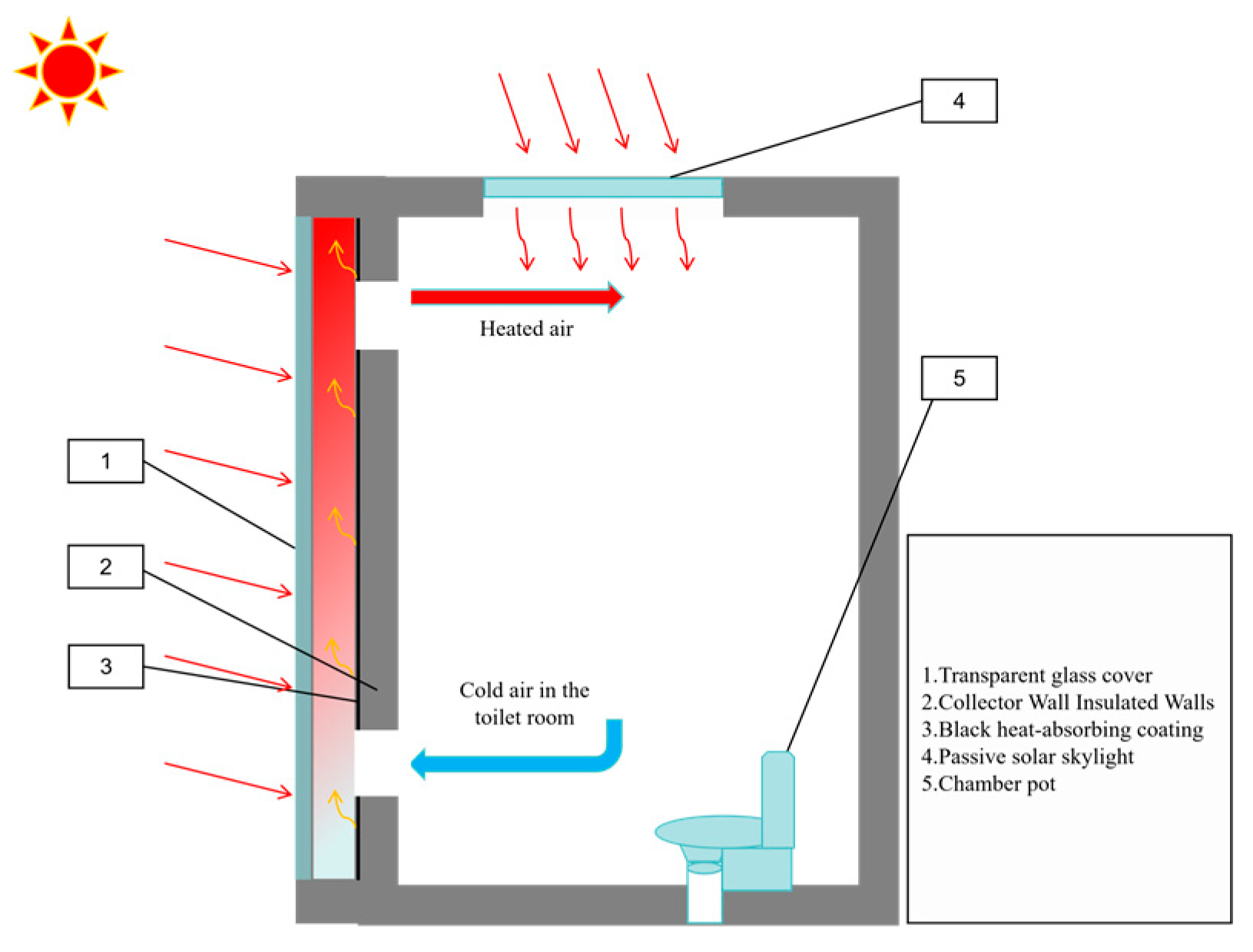
The passive system primarily consists of a collector wall and a heat-gain window. Operating principles are illustrated in Figure 2. Incident solar radiation passes through the glazing layers. The absorber surface converts this light into thermal energy, which warms the air in the cavity. Cold air enters through the lower ventilation ports of the collector wall; as the air heats up, it rises and exits through the upper ports via density-driven convection. This achieves hot-air circulation to increase the toilet cabin temperature [19].

2.2. Experimental Methodology

2.2.1. TRNSYS Simulation Modeling

(1)
Model Development
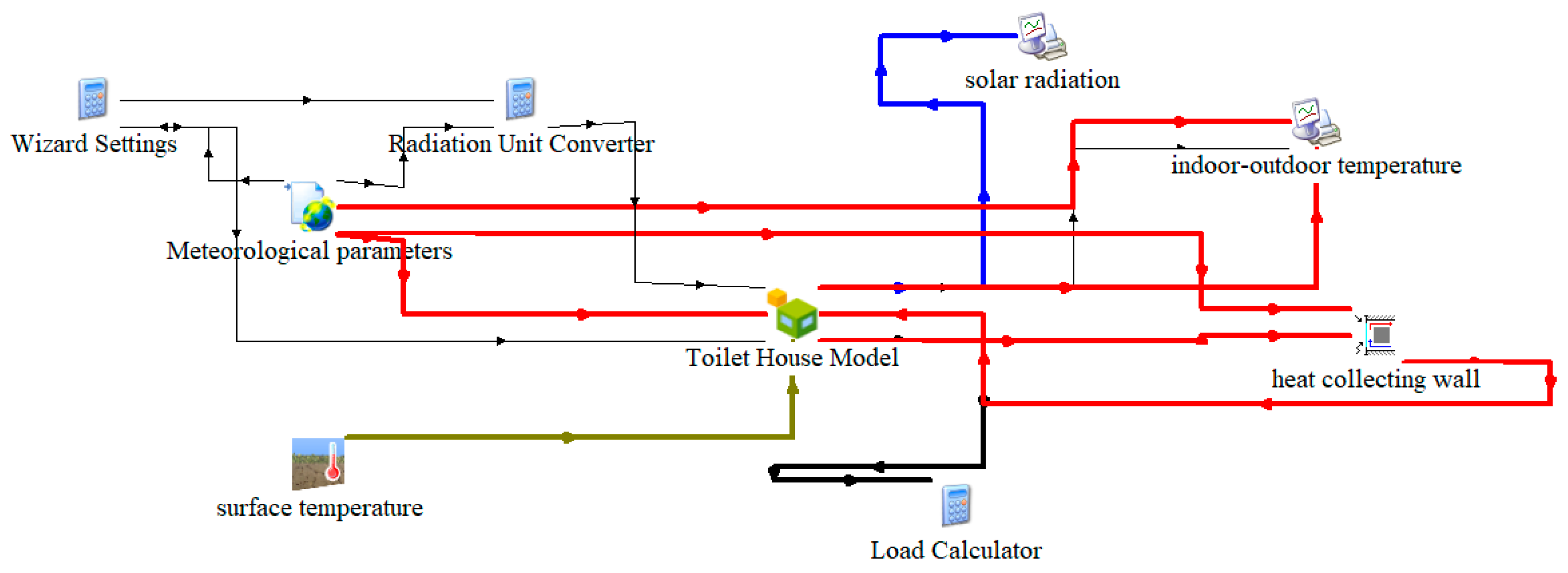
This study developed a 3D model of the toilet cabin using SketchUP, which was then imported into TRNSYS to generate the simulation model. Thermal properties of the passive building envelope (Table 1) and meteorological data for Beijing—sourced from Meteonorm 8 (Version 8.1)—were input into the model. The TRNSYS simulation flowchart for the solar-integrated toilet system was established (Figure 3). The hourly average temperature inside the toilet cabin during the coldest month (January) was simulated.
(2)
Thermodynamic Simulation Framework
The core computational engine utilized TRNSYS’s TRNBuild module for thermal load analysis. This module discretized structures into thermal zones, each represented by lumped air nodes. Convective heat transfer at air nodes was governed by Equation (1):
Q e = Q s u r f , e + Q i n f , e + Q v e n t , e + Q g , c , e + Q c p l g , e
In the formula, Q e is the convective heat transfer of the air node in W; Q i n f , e is the convective heat transfer between the air and each internal surface of the building in W; Q v e n t , e is the convective heat transfer due to the infiltration ventilation of the building in W; Q g , c , e is the convective heat transfer brought by the heat source in W; and Q c p l g , e is the convective heat transfer brought by the ventilation from the adjacent area in W.
Q r , w e = Q g , r , e , w e + Q s o l , w e + Q l o n g , w e + Q w a l l g a i n
In the formula, Q r , w e is the radiant heat gain for the temperature node on the wall surface in W; Q g , r , e , w e is the radiant heat exchange between the internal heat source and the wall in W; Q s o l , w e is the heat absorbed by the wall from solar radiation through the window in W; Q l o n g , w e is the long-wave radiation between the building envelopes in W; and Q l o n g , w e is the internal heat source of the wall in W.

2.2.2. Key Factor Screening Experiment

Screening experiments involving 7 factors at 2 levels were conducted using Design-Expert® Software, Version 13 (13.0.7), totaling 12 runs. Screened factors were as follows: A—exterior wall insulation thickness, B—roof insulation thickness, C—window—to—wall ratio, D—collector wall area, E—vent spacing (inlet/outlet), F—air cavity thickness, and G—vent area ratio. The experimental design appears in Table 2.

2.2.3. Optimal Parameterization Experiment

Based on screening results, single-factor experiments were used to determine optimal parameters for A, D, and C, with mean cabin temperature and material cost as dependent variables. The test matrix was as follows: exterior wall insulation thickness (A) increased from 100 mm to 300 mm in 50 mm increments; D (collector wall area) ranged from 2 m2 to 3.45 m2 in 0.725 m2 increments; and C (window-to-wall ratio) increased from 20% to 60% in 10% increments, totaling 13 experimental groups.
Following initial optimization, single-factor tests were used to investigate vent spacing (E), air cavity thickness (F), and vent area ratio (G), with mean, maximum, and minimum cabin temperatures as dependent variables to define feasible ranges for Box–Behnken RSM implementation. The experimental design was set as follows: the vent spacing (E) was gradually increased from 1000 mm to 1800 mm at a 200 mm increment; the air cavity thickness (F) was gradually increased from 20 mm to 100 mm at a 20 mm increment; and the vent area ratio (G) was gradually increased from 2% to 6% at a 1% increment. A total of 15 experimental groups were conducted.
Final optimization employed Box–Behnken RSM to determine the global optima of E, F, and G. The 3-factor, 3-level design with 17 runs is detailed in Table 3.

3. Results and Analysis

3.1. Key Factor Screening

The significance ranking of factors is presented in Table 4. Statistical hierarchy of thermal impact is as follows: D (p < 0.01) > C (p < 0.01) > A (p < 0.01) > G (p < 0.01) > F (p < 0.05) > E (p < 0.01) > B (NS). Six parameters demonstrated statistically significant impacts (p < 0.05), with B being non-significant (p > 0.05). Parameters A, D, C, and E exhibited highly significant influences (p < 0.01). These findings align with Zhang Chao et al.’s research [16]. Conversely, Jiang Wei’s study identified roof insulation as critical for temperature regulation in modular buildings [15]. The divergence stems from spatial constraints: miniature cabin volumes (2.25 m2) attenuate roof insulation efficacy.

3.2. Optimal Parameters of Key Factors

3.2.1. Optimal Parameter Determination of Exterior Wall Insulation Thickness (A), Collector Wall Area (D), and Window-to-Wall Ratio (C) of the Toilet House

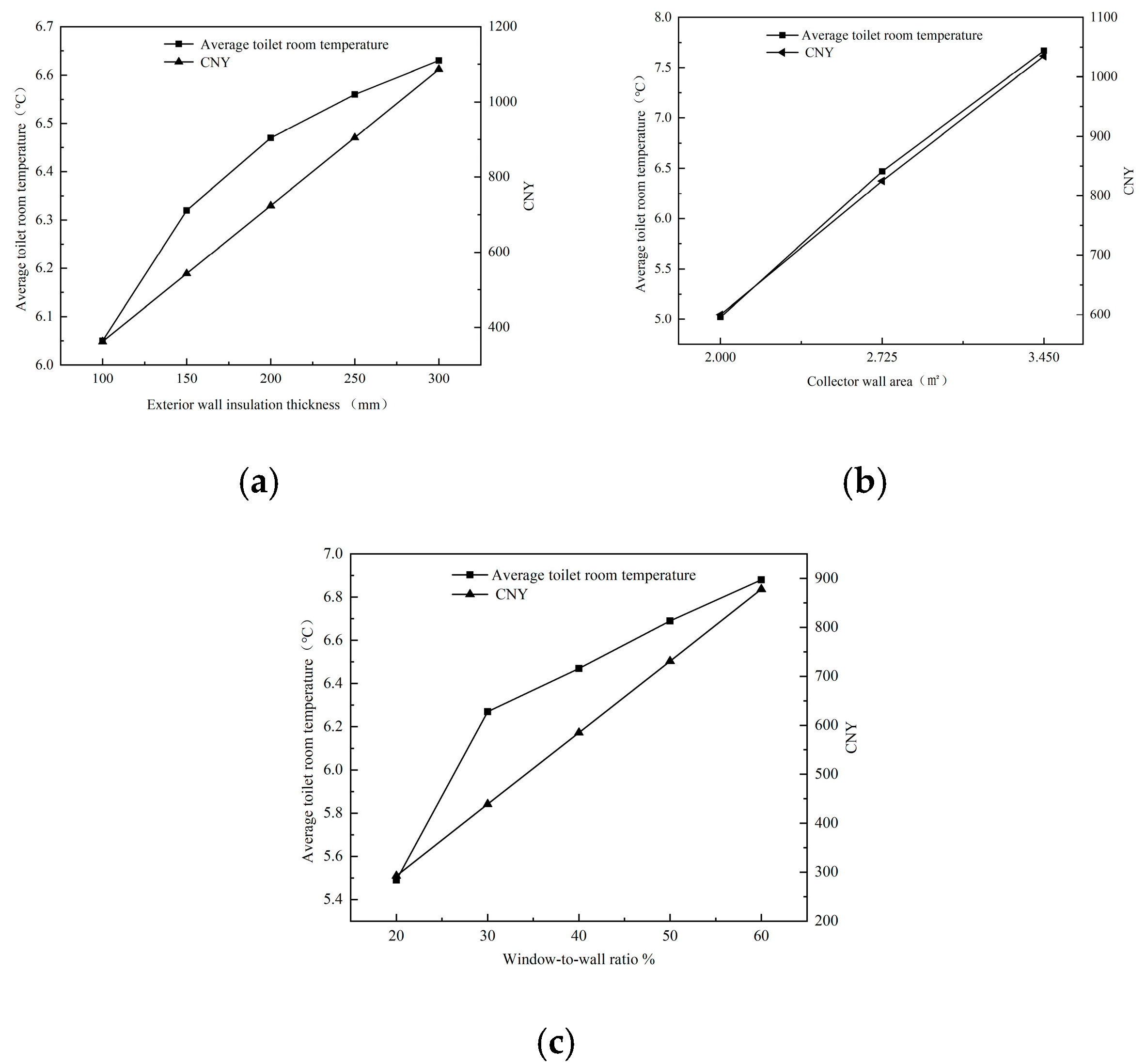
Figure 4 illustrates single-factor analysis. Exterior wall insulation thickness (A): Temperature rises linearly at 100–200 mm (key inflection point), with diminishing returns beyond 200 mm (Figure 4a). This aligns with XPS insulation’s thermal conductivity (0.032 W/(m·K)), as 200 mm thickness reduces the envelope heat transfer coefficient to ≤0.3 W/(m2·K) (Table 1) while avoiding high cost [15,20]. Window-to-wall ratio (C): A sharp temperature surge occurs at 20–30% (Figure 4b); beyond 30%, nighttime heat loss through glazing (heat transfer coefficient = 1.3 W/(m2·K)) offsets daytime solar gains, making 30% the cost–benefit optimal ratio. Collector wall area (D): Temperature and cost increase linearly with D, and 3.45 m2 (maximum available south-facing wall area) is selected to balance radiation absorption and usable toilet space (Figure 4c). The cost–benefit-optimized configuration from single-factor analysis was A = 200 mm, C = 30%, and D = 3.45 m2.

3.2.2. Optimal Parameter Determination of Vent Spacing (E), Air Cavity Thickness (F), and Vent Area Ratio (G) of the Solar Collector Wall

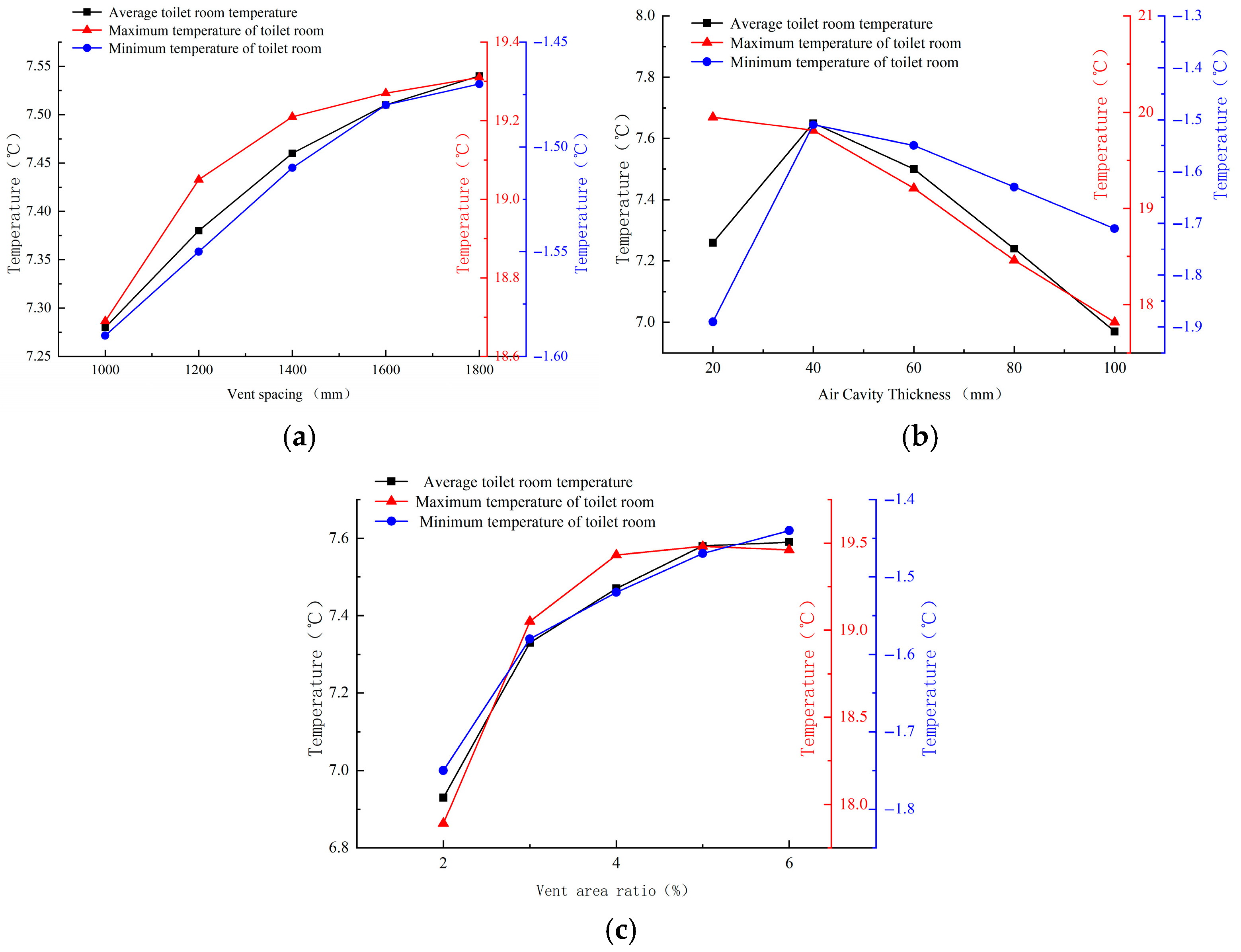
Figure 5 identifies feasible ranges for vent spacing (E), air cavity thickness (F), and vent area ratio (G) for subsequent Box–Behnken response surface analysis. Vent spacing (E): 1000–1800 mm was determined as the feasible range, with 1400 mm as the midpoint; temperature growth slows significantly beyond 1400 mm, indicating limited gains from wider spacing (Figure 5a). Air cavity thickness (F): 20–60 mm was selected (midpoint = 40 mm), as temperatures peak at 40 mm and decline sharply with thicker cavities (due to airflow stratification in small toilet spaces, Figure 5b). Vent area ratio (G): 2–6% was set as the range (midpoint = 4%), as 2–4% brings substantial temperature gains while 4–6% shows diminishing returns (Figure 5c).
Response surface outcomes for vent spacing, cavity thickness, and vent area ratio appear in Table 5. Using Design-Expert 10, quadratic regression models were developed for three significant responses: mean toilet temperature (WD), maximum temperature (HWD), and minimum temperature (LWD). These models are expressed in Equations (3)–(5).
W D = 7.63 + 0.1675 E + 0.0338 F + 0.3175 G 0.0450 E F + 0.0775 F G 0.2393 F 2 0.1492 G 2
H W D = 19.79 + 0.3825 E 0.3762 F + 0.6188 G 0.0950 E F + 0.1925 F G 0.0693 E 2 0.3637 F 2 0.3688 G 2
D W D = 0.155 + 0.0762 E + 0.1662 F + 0.1275 G 0.1582 F 2 0.0508 G 2
In the formula, E is the spacing of ventilation openings in mm; F is the thickness of the air cavity in mm; and G is the area ratio of ventilation holes in %.
Statistical analysis (Table 6) verifies E/F/G parameters exert extremely significant influences on mean thermal performance (p < 0.0001). For the mean temperature model (WD), p < 0.0001, indicating extreme significance between predictors and response. Lack-of-fit p = 0.2249 (NS) validates model adequacy. R2 = 0.9951 and adj-R2 = 0.9889 approach unity, with adequate precision of 42.5689. HWD model: p < 0.0001, lack-of-fit p = 0.0742 (NS), R2 = 0.9967, adj-R2 = 0.9926, precision 57.3795. LWD model: p < 0.0001, lack-of-fit p = 0.9334, R2 = 0.9784, adj-R2 = 0.9507, precision 19.6220. These metrics confirm the exceptional predictive accuracy across all regression models.
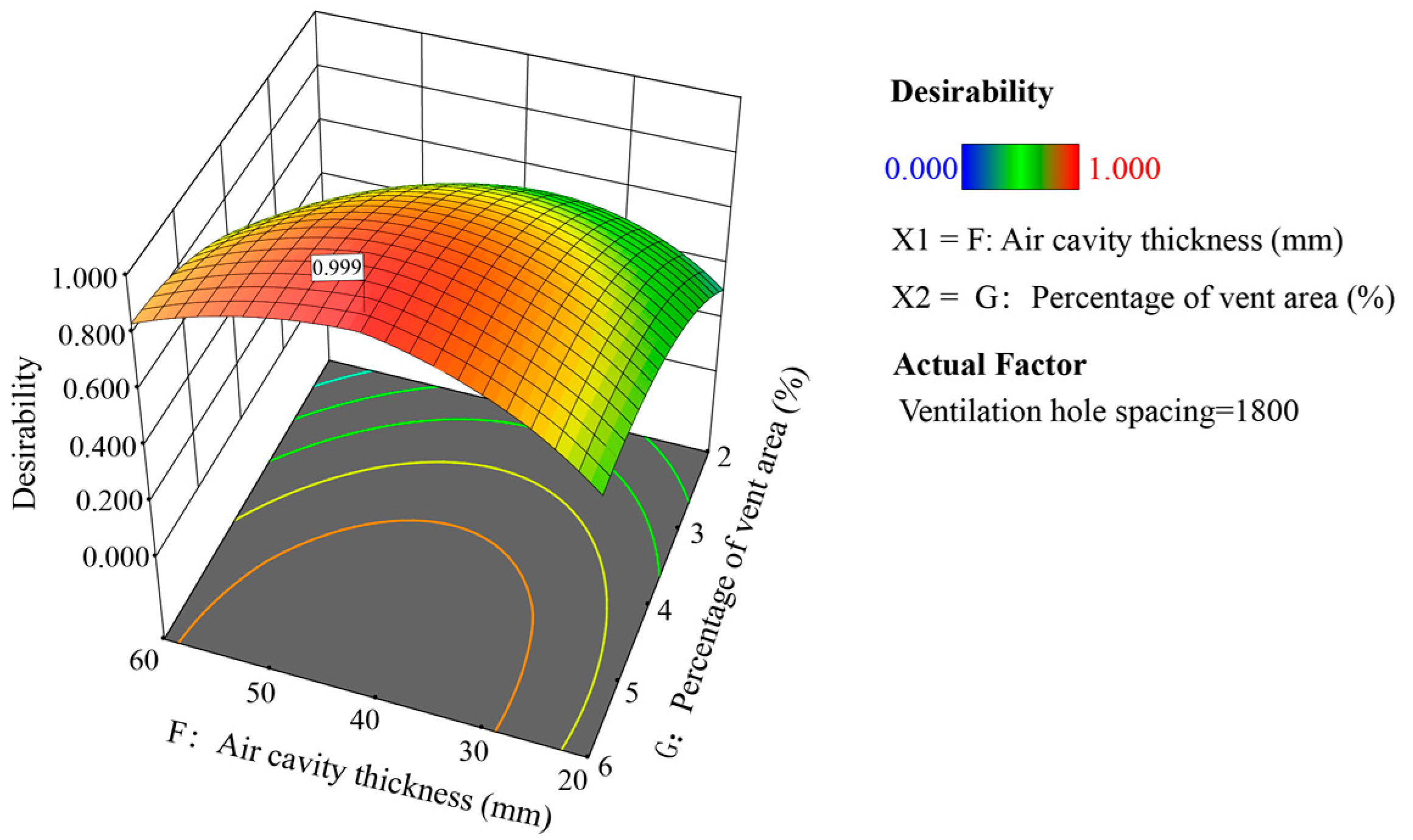
In the coldest month of January, aiming at the comprehensive maximum value of the average temperature, the highest temperature, and the lowest temperature inside the toilet house, the regression equation was solved to find the optimal solution. As shown in Figure 6, the optimal combination of the three significant parameters is a ventilation hole spacing of 1800 mm, an air cavity thickness of 43 mm, and a ventilation hole area ratio of 5.7%.

3.3. Comprehensive Performance of Optimized Passive Solar Toilet System

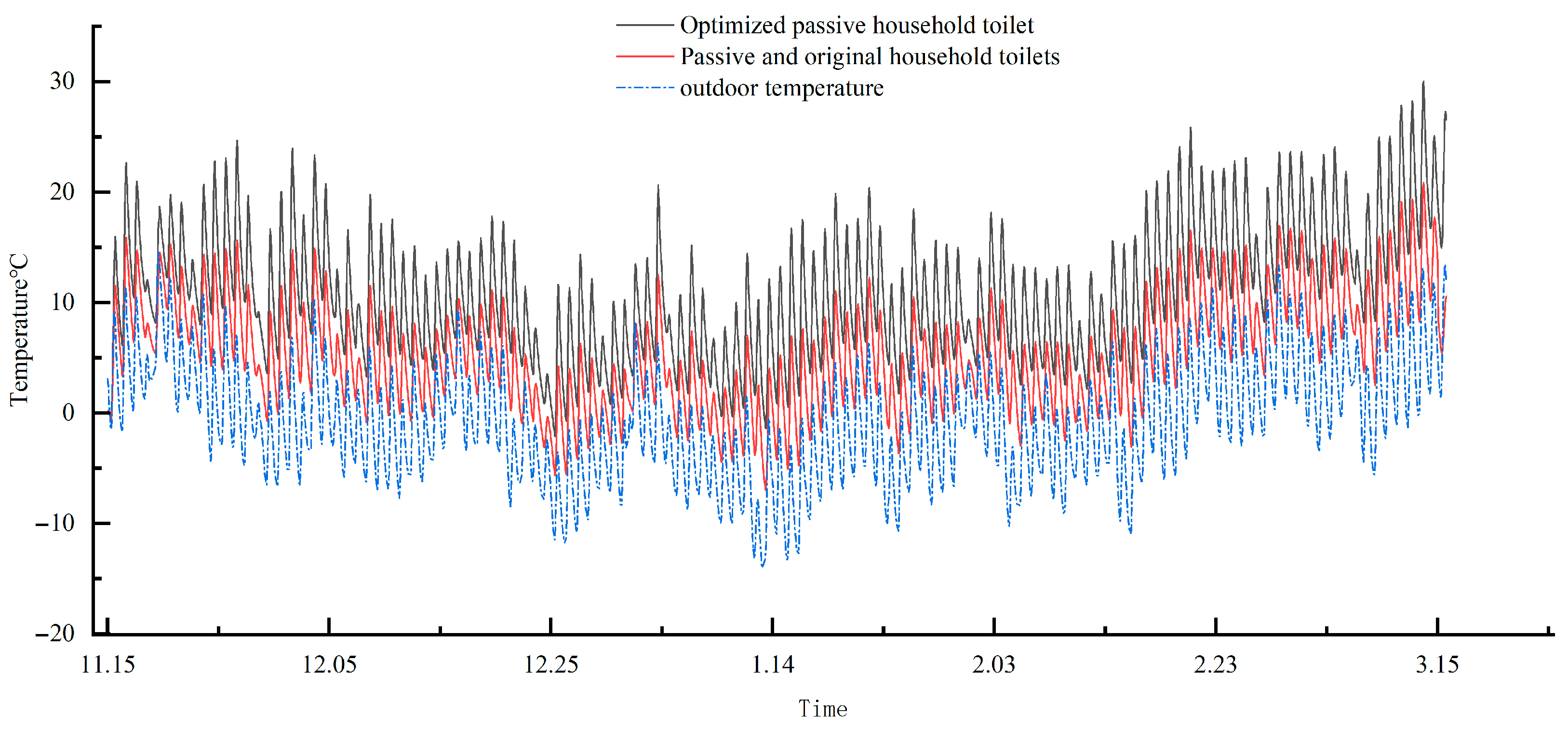
The TRNSYS simulation platform was used to simulate the hourly variations in indoor temperature between the original passive rural household toilet and the optimized rural household toilet during the heating season, as shown in Figure 7.
The optimized toilet cabin has an average temperature of 10.81 °C during the heating season—79.5% higher than the baseline. In January (the coldest month), the optimized cabin’s average temperature is 7.95 °C, maximum is 20.47 °C, and minimum is −1.42 °C; these values are 4.74 °C, 6.87 °C, and 4.95 °C higher than the baseline, respectively. Subzero hours: 22h (3% total) for optimized vs. 167 h (22.4%) for baseline. The solution effectively eliminates flushing system freeze-ups from sustained hypothermia, guaranteeing functional sanitation in harsh winters.

4. Discussion

4.1. Influence Mechanism of Key Parameters on the Thermal Environment of Toilet Houses

Based on the experimental results, the solar collector wall area, exterior wall insulation thickness, and window-to-wall ratio of the heat-gain window are the core parameters influencing the toilet cabin temperature (p < 0.01), and their mechanism of action is highly consistent with the heat transfer laws of passive buildings. As the “heat source core” of the system, when the area of the solar collector wall increases from 2 m2 to 3.45 m2, the average temperature of the toilet house shows a linear increase (Figure 4c). This is because a larger heat-collecting area can absorb more solar radiation, heat the airflow in the air cavity through the black heat-absorbing coating, and then raise the indoor temperature via convective heat transfer through ventilation holes [16,21]. However, limited by the small space characteristics of rural household toilets (only 2.25 m2), the area of the solar collector wall cannot be expanded infinitely. The optimal value of 3.45 m2 not only ensures radiation absorption efficiency but also avoids the compression of toilet space caused by an excessively high wall proportion while balancing material costs (as reflected by the matching between cost growth rate and temperature increase in Figure 4c).
The influence of exterior wall insulation thickness shows the characteristic of diminishing marginal returns: the temperature rises linearly when the thickness ranges from 100 mm to 200 mm, and the growth rate slows down after exceeding 200 mm (Figure 4a). This is attributed to the low thermal conductivity of the XPS insulation board (0.032 W/(m2·K)). When the thickness increases to 200 mm, the heat transfer coefficient of the toilet house envelope structure drops below 0.3 W/(m2·K) (Table 1). Further increases in thickness make a limited contribution to reducing heat loss but significantly increase material costs. This pattern indicates that excessive pursuit of high insulation thickness in rural toilet renovation may result in resource waste [15,20]. The optimized thickness of 200 mm not only meets thermal requirements but also aligns with the economic affordability of rural areas.
The optimal window-to-wall ratio of the heat-gaining window is 30%, which is consistent with the research conclusion (30–40%) of Qi Qinghua et al. [17] on direct-gain solar buildings in Beijing. However, it differs significantly from the 60% proposed by Luo Wei et al. [22] for Lhasa. The core reason lies in regional climate differences: Beijing has a temperate monsoon climate with a low solar altitude angle and an annual solar radiation (approximately 5000 MJ/m2) much lower than that of Lhasa (approximately 7000 MJ/m2). If the proportion of heat-gaining windows is too high (e.g., 60%), substantial heat dissipation will occur at night due to the high thermal conductivity of glass (1.3 W/(m2·K), Table 1), which instead reduces the average temperature [23]. In contrast, a 30% proportion enables efficient solar radiation intake during the day and minimizes heat loss at night through the thermal insulation performance of double-layer argon-filled glass, achieving a balance between “heat collection and heat preservation.”

4.2. Multi-Parameter Synergistic Effect of the Passive Solar Heating System

The interaction between ventilation hole spacing, air cavity thickness, and ventilation hole area ratio (Table 6) reveals the “synergistic optimization logic” of the passive solar heating system. The temperature reaches its optimal value when the ventilation hole spacing is 1800 mm. This is because if the spacing is too small (e.g., 1000 mm), the airflow in the air cavity tends to form a “short-circuit circulation,” preventing hot air from fully spreading to the entire toilet house. In contrast, a spacing of 1800 mm allows airflow to rise evenly along the solar collector wall and cover the entire toilet house space through the upper ventilation holes [16].
The optimized air cavity thickness of 43 mm differs from the 120 mm reported in the study by Zhang Chao et al. on rural toilets in Qinghai, and the reason lies in the toilet house volume. The toilet house space in this study is only 2.25 m2, and a 43 mm air cavity can form a stable “thermal convection layer.” An excessively thick cavity (e.g., 60 mm) will cause airflow stratification, with hot air stagnating in the upper part of the cavity and failing to effectively exchange with the cold indoor air. In contrast, the toilet houses in the Qinghai study have larger spaces, requiring a thicker air cavity to ensure airflow dynamics [23].
The optimal ventilation hole area ratio of 5.7% reflects the balance between “ventilation efficiency and heat loss control”: when the ratio is too low (e.g., 2%), the air convection rate is slow, and heat in the heat-collecting cavity cannot be transmitted to the indoor space in a timely manner; when the ratio is too high (e.g., 6%), hot air inside the toilet house is prone to leakage through the ventilation holes at night, leading to a decrease in the minimum temperature (Figure 5c) [21]. This result indicates that the passive solar heating system does not rely on single-parameter optimization. Instead, it requires multi-parameter synergy to form a closed loop in the three links of “heat collection–convection–heat preservation” to maximize the improvement of the thermal environment effect.

4.3. Long-Term Feasibility of the Optimized Passive Solar Heating System

The long-term feasibility of the system is critical for its practical promotion in rural toilet renovation in cold regions. The optimized passive solar heating system exhibits strong long-term viability: its core components—XPS insulation boards (closed-cell structure, 25–30-year service life per GB/T 10801.2-2021 [24]), anti-corrosion absorber plates, thermally broken frame double glazing, and PVC vents with adjustable shutters—are resistant to freezing-thawing cycles and extreme temperatures (−30 °C to 60 °C), ensuring reliable operation for over 20 years. Operating on natural solar radiation and convection, it requires zero operational energy and minimal maintenance (annual glass cleaning and vent inspection, <2 h/year, manageable by rural households). Economically, the additional 800–1200 CNY per toilet cost is fully covered by national subsidies (1000–3000 CNY/household in cold regions), and it eliminates annual anti-freezing expenses (100–200 CNY) of conventional toilets, delivering cumulative savings over 20+ years. Additionally, multi-parameter synergy (insulation + solar collection + ventilation) prevents complete system failure from minor component issues, further enhancing long-term stability supporting sustainable promotion in rural cold regions.

5. Conclusions

This study optimizes passive solar heating systems for cold-region rural toilets, addressing the gap of toilet-specific solutions. Key findings: six parameters (solar wall area, etc., p < 0.05) significantly affect temperature; the optimal configuration (collector wall area 3.45 m2, window-to-wall ratio 30%, etc.) lifts heating season average temp to 10.81 °C (79.5% higher than baseline), with January’s mean 7.95 °C, eliminating fixture freezing.
(1)
Practical implications: The extra cost per toilet of CNY 800–1200 fits national subsidies (CNY 1000–3000 per household); widely available components (XPS insulation, aluminum absorber plates) and simple installation suit rural construction capacity. It can be scaled to other cold regions (e.g., 10–15% larger solar walls in Heilongjiang), supporting China’s rural sanitation plans and carbon goals.
(2)
Future research: Integrate passive heating with low-cost thermal storage (e.g., PCMs in air cavities) to cut subzero hours; use CMIP6 data to optimize for climate change; and conduct rural field trials to refine user-centric designs (e.g., detachable collector walls), boosting adoption.

Author Contributions

S.F. conceived and designed the research, supervised the project, and wrote the manuscript. Z.W. performed the experiments and collected the data. H.W. analyzed the experimental data. Y.S. contributed to the development of the experimental methods. J.D. conducted the simulation calculations. S.S. participated in the verification of results. Y.J. carried out the literature review. B.S. prepared the figures and tables. All authors have read and agreed to the published version of the manuscript.

Funding

This research was funded by the Institute of Agricultural Planning and Engineering, Ministry of Agriculture and Rural Affairs, through the “Institute-Independent R&D Project: Design and Experimental Research on Solar Hot Air Systems for Sanitary Dry Latrines (Grant No.: QX202424) and Carbon Emission Assessment of Typical Sanitation Systems in Rural China (Grant No.: QD202419)”; Corps Agricultural CG Project (Grant No.: NYHXGG-2023AA605-02).

Institutional Review Board Statement

Not applicable.

Informed Consent Statement

Not applicable.

Data Availability Statement

The original contributions presented in this study are included in the article. Further inquiries can be directed to the corresponding authors.

Conflicts of Interest

The authors declare no conflicts of interest.

References

  1. United Nations Statistics Division. Goal 6: Clean Water and Sanitation. Available online: https://unstats.un.org/sdgs/report/2025/Goal-06/ (accessed on 1 December 2025).
  2. United Nations. Ensure Safe and Hygienic Sanitation for All, UN Urges, Marking World Toilet Day. Available online: https://news.un.org/en/story/2020/11/1078032 (accessed on 1 December 2025).
  3. World Bank; Global Water Security & Sanitation Partnership (GWSP). 2025 Global Sanitation Crisis: Emergency Action Pathways. Available online: https://m.sohu.com/a/942605847_121833998 (accessed on 1 December 2025).
  4. United Nations Development Programme (UNDP); Jomoo Group. Technology Innovation Empowers Toilet Revolution: Contributing to Global Sustainable Development. Available online: https://m.toutiao.com/group/7339821371268203047/ (accessed on 1 December 2025).
  5. Hu, J.; Zhang, H.; Li, H.; Ma, K.; Zhang, X.; Zhou, T. Current situation and technical progress of rural latrine reform in the cold and arid region of northwest China:a case study of Gansu Province. J. Agric. Resour. Environ. 2025, 42, 1072–1080. [Google Scholar] [CrossRef]
  6. Wang, J.; Wei, X.; Chen, P.; Gao, Y.; Tan, L.; Peng, H.; Zhang, C.; Zhao, W.; Wang, Q.; Zheng, X. Reference for technology models and management mechanisms of toilets in dry and cold regions abroad. J. Agric. Resour. Environ. 2023, 40, 927–939. [Google Scholar] [CrossRef]
  7. Li, J.; Li, J. Investigation and Solutions to Winter Anti-Freezing Problems in Rural Dry Toilet Renovation. Sci. Technol. Inf. 2018, 16, 92–93+95. [Google Scholar] [CrossRef]
  8. Gao, C.; Hua, W.; Wu, Z.; Chen, Z.; Zheng, X.; Luo, L. Establishment of an index system for evaluating technical models adapted for rural toilet renovation in cold and arid regions. J. Agric. Resour. Environ. 2023, 40, 1265–1274. [Google Scholar] [CrossRef]
  9. Ibrahim, R.A.; Imghoure, O.; Tittelein, P.; Belouaggadia, N.; Chehade, F.H.; Sebaibi, N.; Lassue, S.; Zalewski, L. Application of Ventilated Solar Façades to enhance the energy efficiency of buildings: A comprehensive review. Energy Rep. 2025, 13, 1266–1292. [Google Scholar] [CrossRef]
  10. Lazaro, S.A.M.; Li, X. Evaluating the feasibility and challenges of using passive solar systems for achieving thermal comfort in African countries: A review. Int. J. Build. Pathol. Adapt. 2025, in press. [Google Scholar] [CrossRef]
  11. Zhang, S. Current Status of Passive Solar Heating Buildings. Agric. Technol. 2021, 41, 102–104. [Google Scholar] [CrossRef]
  12. Hei, S.; Jiang, S.; Yang, J.; Zhang, J. Simulation of the thermal performance of a Trombe wall in winter using computational fluid dynamics. Sichuan Build. Sci. 2018, 44, 116–121. [Google Scholar] [CrossRef]
  13. Zhang, Y.; Liu, Y.; Chen, Y.; Che, R.; Zhou, L. Optimization design of active and passive solar combined heating in Lhasa based on zero energy consumption constraint. J. Xi’an Univ. Archit. Technol. Nat. Sci. Ed. 2021, 53, 811–818, +834. [Google Scholar] [CrossRef]
  14. Li, Q.; Hu, H.; Ma, L.; Wang, Z.; Arici, M.; Li, D.; Luo, D.; Jia, J.; Jiang, W.; Qi, H. Evaluation of energy-saving retrofits for sunspace of rural residential buildings based on orthogonal experiment and entropy weight method. Energy Sustain. Dev. 2022, 70, 569–580. [Google Scholar] [CrossRef]
  15. Jiang, W.; Zhang, K.; Ma, L.; Liu, B.; Li, Q.; Li, D.; Qi, H.; Liu, Y. Energy-Saving Retrofits of Prefabricated House Roof in Severe Cold Area. SSRN Electron. J. 2022, 254, 124455. [Google Scholar] [CrossRef]
  16. Chao, Z. Study on Improving Effect of Solar Heating on Rural Toilet Thermal Environment in Qinghai Area. Master’s Thesis, Yanshan University, Qinhuangdao, China, 2022. [Google Scholar] [CrossRef]
  17. Qi, Q.; Feng, Y.; Gu, J.; Gao, Q. Dynamic analysis on the thermal parameters of direct gain solar building. Renew. Energy Resour. 2010, 28, 6–10. [Google Scholar] [CrossRef]
  18. Lei, Y.; Yongheng, D.; Guohua, W.; Xucan, S.; Junchao, Z.; Zhongtao, Z. Research on Multi-Energy Sequential Complementary Heating System Based on TRNSYS Simulation. Acta Energiae Solaris Sin. 2024, 45, 87–94. [Google Scholar] [CrossRef]
  19. Deng, W.; Yan, L.; Yi, W.; Jia, L. Measurement and Evaluation of Indoor Thermal Environment of Residential Buildings in Lhasa in Winter. Build. Sci. 2011, 27, 20–24. [Google Scholar] [CrossRef]
  20. Jiang, W.; Ju, Z.; Tian, H.; Liu, Y.; Arici, M.; Tang, X.; Li, Q.; Li, D.; Qi, H. Net-zero energy retrofit of rural house in severe cold region based on passive insulation and BAPV technology. J. Clean. Prod. 2022, 360, 132198. [Google Scholar] [CrossRef]
  21. Wang, J.; Ren, Y.; Liu, Y.; Liu, J. Study on Thermal Efficiency of Large-Scale Flat Plate Solar Collectors. Acta Energiae Solaris Sin. 2021, 42, 214–219. [Google Scholar] [CrossRef]
  22. Luo, W.; Wang, L. Collaborative Optimization Design of Building Thermal Insulation and Solar Heat Collection Area of Residential Buildings in Lhasa. J. BEE 2023, 51, 36–41+61. [Google Scholar] [CrossRef]
  23. Xiao, L. Research on Thermal Environment Improvement and Energy Conservation of Rural Toilets with Active and Passive Solar Energy in Qinghai. Master’s Thesis, North China University of Technology, Beijing, China, 2023. Available online: https://cdmd.cnki.com.cn/Article/CDMD-10009-1023683781.htm (accessed on 9 December 2025).
  24. GB/T 10801.1-2021; Moulded Polystyrene Foam Board for Thermal Insulation (EPS). State Administration for Market Regulation: Beijing, China, 2021. Available online: http://c.gb688.cn/bzgk/gb/showGb?type=online&hcno=09AF800545D952238FCD2EA8CB71EBCE (accessed on 1 December 2025).
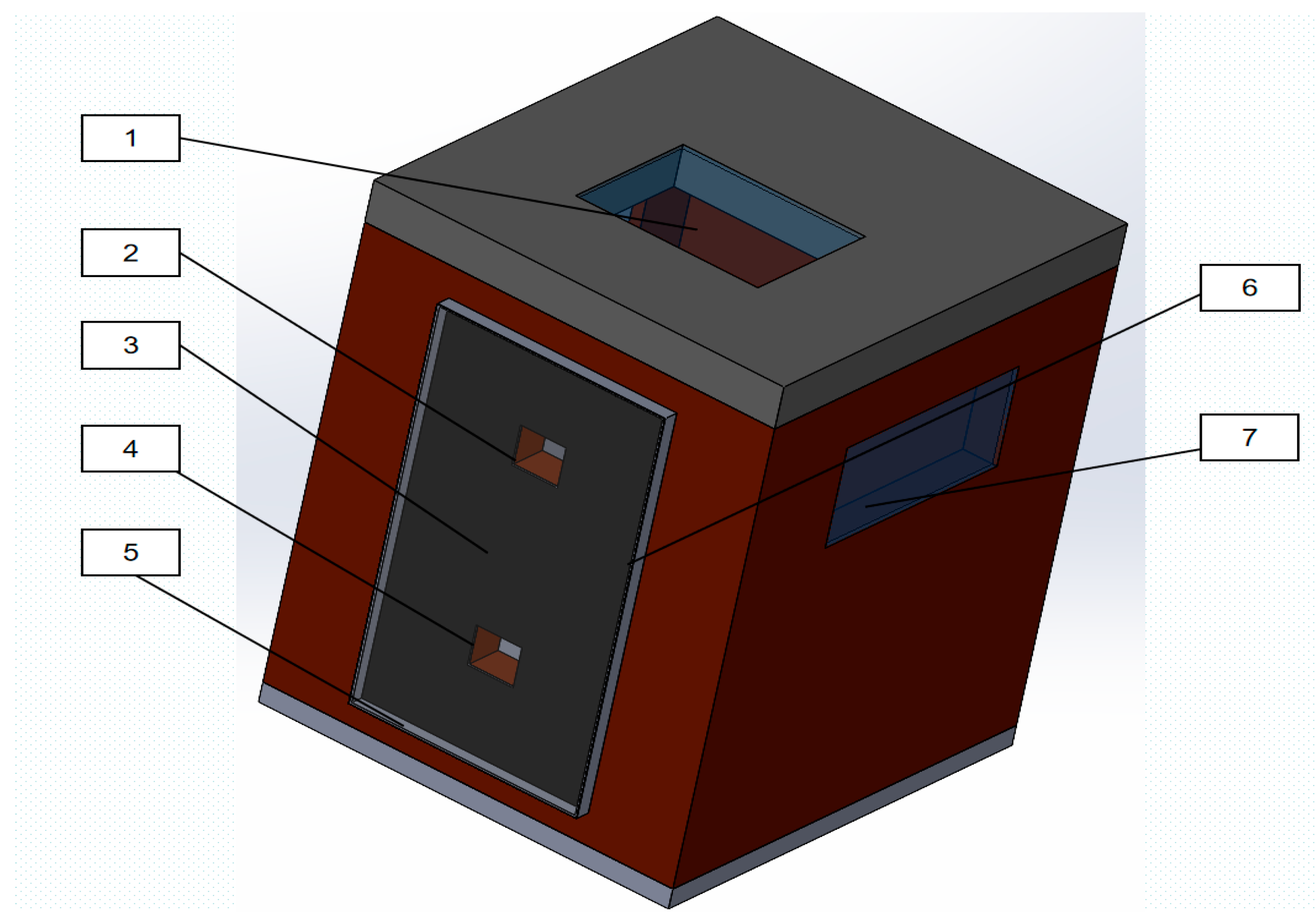
Figure 1. Schematic diagram of the overall structure of the toilet house. 1—Passive solar skylight; 2—Air outlet; 3—Black heat-absorbing coating; 4—Air inlet; 5—Air chamber; 6—Transparent glass cover; 7—Ventilation window.
Sustainability 17 11269 g001
Figure 2. Schematic diagram of the working principle of a passive heat collection system.
Sustainability 17 11269 g002
Figure 3. Simulation flowchart of a passive heat collection system.
Sustainability 17 11269 g003
Figure 4. Effects of external wall insulation thickness, collector wall area, and window-to-wall ratio on the average temperature and material cost of the toilet cabin. (a) Exterior wall insulation thickness; (b) collector wall area; and (c) window-to-wall ratio.
Sustainability 17 11269 g004
Figure 5. Influence of vent spacing, air cavity thickness, and vent area ratio on the temperature inside a toilet room. (a) Hourly indoor temperature variation on a typical sunny day; (b) daily average temperature fluctuation during the heating season; and (c) temperature difference between optimized system and baseline system.
Sustainability 17 11269 g005
Figure 6. Optimal parameter configuration for passive heat collection systems in a toilet house.
Sustainability 17 11269 g006
Figure 7. Hourly temperature comparison between passive and conventional toilet house systems.
Sustainability 17 11269 g007
Table 1. Thermal parameters of the enclosure.
NameMaterialHeat Transfer Coefficient
[W/(m2·K)]
Thermal Conductivity
[W/(m·K)]
Specific Heat Capacity
[kJ/(kg·K)]·
Envelope structure of the toilet houseRoof assembly: 20 mm fiberboard + 50 mm XPS insulation + 20 mm corrugated sheet0.30--
Roof glazing: Thermally broken aluminum frame window1.30
Wall assembly: 20 mm fiberboard + 50 mm XPS insulation + 20 mm embossed metal cladding0.40--
Windows: Thermally broken aluminum windows2.70--
Door: 80 mm standard aluminum panel2.70--
Floor assembly: 20 mm ceramic tile + 50 mm cement fiberboard + 50 mm XPS insulation0.30--
The collector wall of the toilet10 mm black aluminum absorber plate-2030.92
50 mm XPS insulation-0.0321.38
200 mm high-density fiberboard-0.3302.51
Table 2. Plackett–Burman design for critical factors.
TreatmentA
Exterior Wall Insulation Thickness (mm)
B
Roof Insulation Thickness (mm)
C
Window-to-Wall Ratio
(%)
D
Collector Wall Area
(m2)
E
Vent Spacing (Inlet/Outlet)
(mm)
F
Air Cavity Thickness
(mm)
G
Vent Area Ratio
(%)
1100100203.4510001006
2100300603.451000202
33003006021000206
4100300203.451800206
51001002021000202
6300100603.451800202
7300300203.4518001002
810030060218001006
9300100603.4510001006
1030030020210001002
1110010060218001002
123001002021800206
Table 3. B-BD for vent spacing, air cavity thickness, and vent area ratio.
TreatmentE
(mm)
F
(mm)
G
(%)
11800406
21400404
31400404
41400206
51800604
61400602
71400404
81800402
91400606
101400202
111000604
121800204
131400404
141000204
151000406
161000402
171400404
Table 4. Analysis of variance (ANOVA) for key factor screening tests.
Source of VarianceSum of SquaresMean SquareF-Valuep-ValueSignificance Ranking
A1.331.3352.300.00193
B0.04810.04811.890.24147
C6.426.42252.01<0.00012
D19.3519.35759.26<0.00011
E0.25230.25239.900.03466
F0.45630.456317.900.01345
G0.69120.691227.110.00654
total regression28.564.08160.050.0001significant
Note: The term is significant when p < 0.05, and p < 0.01 is highly significant.
Table 5. The effects of vent spacing, air cavity thickness, and vent area ratio on toilet room temperature.
TreatmentE
(mm)
F
(mm)
G
(%)
Average Temperature of Toilet Room
(°C)
Maximum Temperature of Toilet Room
(°C)
Minimum Temperature of Toilet Room
(°C)
118004067.8720.36−1.40
214004047.6519.81−1.51
314004047.6119.76−1.58
414002067.3919.89−1.83
518006047.5419.31−1.47
614006026.9317.89−1.75
714004047.6519.81−1.51
818004027.3519.13−1.65
914006067.5819.46−1.44
1014002027.0519.09−2.00
1110006047.2818.69−1.59
1218002047.5320.19−1.77
1314004047.6019.81−1.51
1410002047.0919.19−1.98
1510004067.5719.70−1.52
1610004027.0118.35−1.81
1714004047.6219.74−1.62
Table 6. Model ANOVA for vent spacing, air cavity thickness, and vent area ratio.
Source of VarianceAverage Temperature of Toilet Room
(°C)
Maximum Temperature of Toilet Room
(°C)
Minimum Temperature of Toilet Room
(°C)
Sum of SquaresF-Valuep-ValueSum of SquaresF-Valuep-ValueSum of SquaresF-Valuep-Value
E0.2245275.88<0.00011.17374.20<0.00010.046528.080.0011
F0.009111.200.01231.13362.07<0.00010.2211133.49<0.0001
G0.5356658.35<0.00013.06979.20<0.00010.130078.51<0.0001
EF0.00819.960.01600.036111.540.01150.00201.220.3054
EG0.00040.49170.50580.00361.150.31890.00040.24150.6382
FG0.024029.530.00100.148247.390.00020.00492.960.1291
E20.00303.700.09570.02026.460.03860.00000.00780.9322
F20.2410296.24<0.00010.5819186.03<0.00010.105463.66<0.0001
G20.0938115.28<0.00010.4634148.15<0.00010.01086.550.0376
residual0.0057 0.0219 0.0116
lack of fit (LOF)0.00362.250.22490.01745.130.07420.00110.13620.9334
pure error0.0021 0.0045 0.0105
aggregate1.17 6.73 0.5372
Disclaimer/Publisher’s Note: The statements, opinions and data contained in all publications are solely those of the individual author(s) and contributor(s) and not of MDPI and/or the editor(s). MDPI and/or the editor(s) disclaim responsibility for any injury to people or property resulting from any ideas, methods, instructions or products referred to in the content.