Article

A Multi-Layered Framework for Circular Modular Timber Construction: Case Studies on Module Design and Reuse


1
School of Architecture and Planning, Hunan University, Changsha 410082, China
2
Department of Energy, Systems, Territory, and Constructions Engineering, University of Pisa, 56122 Pisa, Italy
*
Author to whom correspondence should be addressed.
Sustainability 2025, 17(24), 10983; https://doi.org/10.3390/su172410983
Submission received: 25 October 2025 / Revised: 19 November 2025 / Accepted: 2 December 2025 / Published: 8 December 2025

Abstract

Timber, as a renewable material, could reduce reliance on conventional construction materials such as reinforced concrete, thereby lowering carbon emissions. Its light weight, structural reliability, and efficiency in on-site assembly make it well suited to modular systems, which benefit from standardized components in both smaller- and larger-scale projects. However, existing research related to timber construction often emphasizes specific technical or performance issues, while systematic investigation of the timber module as a core building unit remains limited. This study adopts a multi-layered framework for circular modular timber construction, integrating design, structural, prefabrication and reuse perspectives to investigate timber modules, where each layer builds upon and interacts with the others. Through selected cases, the analysis characterizes how modules of different scales and forms are generated to meet spatial and functional needs, and highlights how prefabricated units support more optimized manufacturing. Furthermore, circular design principles are reinforced through reversible joints and design-for-disassembly techniques. The main findings highlight the proposed framework that positions modular units as central to design and construction, contributing to adaptable configurations and the reuse of timber components. Potential future research directions are highlighted, including the incorporation of quantitative evaluation indicators to support the assessment and implementation of circular design strategies.

1. Introduction

As sustainability becomes a central concern in the built environment, the construction sector is under increasing pressure to reduce carbon emissions and adopt environmentally responsible practices. Timber, as a primary material, has shaped vernacular construction traditions from ancient times [1] and building with timber involves planning and designing with a natural resource that has been successfully employed in residential construction for decades [2]. Before industrialization, timber enabled localized self-build practices because it was flexible, easy to manually process, and adaptable. In forested regions, the ready availability of timber supported modular, repairable, and expandable building systems that could evolve over time without specialized labor [3]. The early 12th-century Chinese building manual Yingzao Fashi codified a proportional system in which standardized timber components, such as dougong brackets, could be combined and scaled according to dimensional rules [4,5]. Similarly, the Japanese kiwari system defined joinery-based proportional modules [6], and in Europe, traditional barns and rural structures employed repeatable joinery that allowed partial disassembly and component reuse [7,8]. With industrialization, modular timber construction evolved from conventional building practices to prefabrication-oriented methods. The 1851 Crystal Palace applied standardized prefabricated elements at architectural scale, and later, Gropius and Wachsmann introduced precision panelized timber systems based on dimensional coordination [9]. The Metabolist movement further transformed modularity into design theory by proposing expandable and replaceable “capsule” units [10]. These precedents suggest an association between modularity, including aspects of repeatability, adaptability and replaceability, and the material logic of timber. However, the development of timber building was once restricted by the allocation of forest resources. With the booming transport industry, the improvement of global forest certification systems and the development of fast-growing forests, this restriction has been lifted [11]. Timber construction has gained increasing attention [12] as a way to reduce the carbon footprint of the built environment and to meet material demand in high-density urban settings [13]. Unlike mineral-based materials, timber comes from a renewable cycle and is able to retain the carbon absorbed during tree growth for as long as it remains in use [14,15]. This storage effect, along with its comparatively low embodied impacts, has led timber to be viewed as a sustainable option when responsibly sourced [16]. Additionally, Timber has excellent thermal insulation properties contributing to reduce energy consumption and enhance occupant comfort [17]. The rise of Engineered Wood Products (EWPs), such as Cross-Laminated Timber (CLT) and Glued Laminated Timber (Glulam), has further expanded the applicability of wood in contemporary construction [18]. Simultaneously, global construction trends are shifting toward industrialized building technologies, driven by the demand for fast, resource-efficient, and low-emission housing solutions, and modular construction aligns well with these goals [19]. One of the key aspects is the ease of systems integration in prefabricated timber components and the possibility of disassembly at the end of lifecycle. In addition, prefabrication enables the production of components such as walls, floors, and volumetric modules in a controlled factory environment, which saves labor resources and improves the speed of construction [20]. Modular building systems, composed of individual elements or hierarchical units that can be assembled into a complete structure, rely heavily on prefabrication and are especially compatible with off-site construction methods [21]. With sides that can be either open or closed, the modules are built under unified standards. Such uniform elements enhance compatibility and lead to an integrated construction method [22]. Current applications adopt a modular mindset in design theory, enabling use in both low- and high-rise buildings, with regional validation and specific examples supporting this approach [23,24]. Foundational works contribute to establishing the conceptual and industrial basis for modular construction and clarifying its general principles and implications for off-site fabrication [25]. With the broader adoption of timber construction, modular thinking is increasingly recognized as a methodological foundation for guiding both design and structural decision-making [26].
Timber construction research is rapidly advancing toward sustainability, diversification, and high-performance structural solutions, while demonstrating an increasingly interdisciplinary influence on a global scale [27]. Moreover, modular structures are increasingly recognized as an effective solution for temporary and rapidly deployable housing [28,29]. The mechanical behavior of CLT assemblies largely depends on connection design, as evidenced by cyclic tests on metal connectors [30]. Beyond structural aspects, studies on lightweight timber buildings examine sound-insulation strategies [31] and identify regulatory and technical challenges as key factors influencing the fire safety of tall timber structures [32]. In terms of reversibility and circularity, Yan et al. [33] evaluated the performance of reversible timber connections used in panelized light-timber-frame construction to support disassembly and component reuse. Meanwhile, case-based research proposes design-for- and design-from-disassembly strategies to enable circular timber flows, including a scoring system that evaluates components [34]. A comparative life-cycle assessment conducted by Liang et al. [35] indicated that mass-timber buildings reduce embodied carbon but require slightly higher primary energy compared with similar concrete building due to additional material and production energy demands. These studies have offered valuable insights into structural optimization, building performance, and environmental assessment. However, the systemic role of the module itself remains underexplored. Although modularity is often regarded as a design or construction method, its dimensional logic, generative principles and influence on structural adaptability and circular reuse have not been systematically addressed. This research adopts a multi-layered framework to investigate interrelated layers. Based on representative case studies, it examines module generation, structural system, prefabricated unit and component reuse with a focus on dry, demountable connections that enable reversible. The aim is to deepen the integrative understanding of modular timber construction and provide practical references for module configuration and adaptable application in future applications, contributing to sustainability.
This study is guided by the following research questions (RQs):
  • “What principles and design logics inform timber modularity across different scales, from discrete components to integrated units?”;
  • “How do structural characteristics influence system selection in modular timber construction?”;
  • “How do prefabrication levels and integrated modular units support efficient timber construction?”;
  • “How can modular components be designed for reuse to enhance adaptability in construction?”
Accordingly, the specific objectives of this study are:
  • “To identify the underlying design logics and modular principles that govern the generation of timber modules at different scales.”;
  • “To determine how structural conditions influence the selection and configuration of modular systems.”;
  • “To clarify how prefabrication levels and integrated modular units relate to systemization and construction efficiency.”;
  • “To explore reuse-oriented design factors that influence the adaptability of modular systems.”

2. Methods

2.1. Case Selection Criteria

The selection criteria include module scale, building typology, and construction approach. These criteria were established to capture the diversity of modular applications and to ensure a systematic understanding of how scale and typology influence the design and construction logic of timber modules. The study focuses on projects in Europe and Asia, where timber modular construction has undergone significant experimentation and practical implementation. Module scale is divided into smaller-scale and larger-scale applications, highlighting differences in spatial, structural, and assembly strategies. Small-scale modules, which are abundant and diverse in form, are interpreted through the concept of the particulate condition, where discrete elements are distributed to create flexible and open-ended configurations [36]. Larger-scale modules, such as room-sized units, function simultaneously as spatial and structural components and are typically prefabricated for on-site assembly. Building typology, including commercial, pavilions, installations, residential housing, and student accommodation, reflects a range of programmatic requirements and enables comparison of how different uses inform module formation and application. Construction approach, ranging from joinery-based systems to industrialized prefabrication, illustrates different assembly logics within modular timber construction. Whereas joinery-based systems often prioritize disassembly and potential reuse, industrial prefabrication emphasizes efficiency, standardization, and scalable production. These criteria guided the identification of representative cases for comparative analysis, ensuring both typological diversity and methodological consistency.

2.2. Case Studies Overview

To establish the empirical foundation for the comparative analysis in Section 2.3, Table 1 summarizes the basic information of nine representative modular timber projects, which were selected based on the criteria outlined above. The following descriptions summarize the architectural and structural characteristics of each project, serving as the empirical dataset for the analytical framework.
(a)
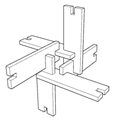
SunnyHills utilizes a modular approach in which individual timber components are assembled to form a cohesive structure and create a unique esthetic architectural form. The structure is primarily composed of linear timber elements, which are repeatable, resulting in a modular construction process. Based on the decision to design at a small scale to create a forest-like environment within the city, timber with a cross-section of 6 cm by 6 cm is joined using the traditional jigoku-gumi technique [37], enabling the construction of a three-story building without requiring large columns. The modularity in this case expresses the precision of manufacturing, and the joint connections resemble a type of mortise-and-tenon.
(b)
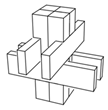
Cidori, meaning “one thousand birds [38],” is composed of numerous slender wooden elements vertically interwoven to form an inverted nest-like framework. The pieces are precisely notched to interlock with one an-other, Stability is achieved through the combination of compressive forces and friction generated at the carefully crafted joints.
(c)
Kodama employs a connection system based on vertical slot joints, whereby six identical notched wooden components interlock through precisely aligned grooves to form a basic unit [39]. This jointing method not only ensures structural stability without the need for additional fasteners, but also creates a distinctive esthetic language. The intermeshing slots allow the structure to grow into irregular and non-repetitive patterns, supporting architectural diversity while reflecting the craftsmanship and artistry of the construction process.
(d)
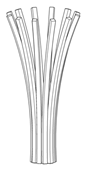
Nine Bridges Golf Resort integrates small-scale components modules into architectural design, with an emphasis on curved elements. The tree-shaped structural units consist of slender timber columns that bundle together in a ring configuration to support the roof [40]. The ends of these columns gradually curve and spread out near the roof plane. The pattern adapts to the shape of the canopy, undergoing a form transformation to align with its organic structure. These components are further broken down into modular sub-units to enable mass production and assembly.
(e)
Nest We Grow was realized as a design-build project responding to a competition that promoted the use of renewable materials. The structural system relies on assembling small timber components into larger composite columns, thereby enlarging the cross-section, and enhancing load-bearing capacity [41]. These columns are integrated with horizontal members to form a timber frame structure, in which metal connectors are incorporated at the joints to improve stability and ensure structural reliability. The resulting open framework not only provides support but also defines spaces for food storage and communal activities, exemplifying a timber construction approach that combines structural strength, spatial versatility, and the principles of sustainable practice.
(f)
In addition to linear elements, panelized components are commonly used as modular units for quickly building the envelope. A typical example is Jyubako [42], a trailer house whose exterior consists of different combinations of prefabricated panels. This panel-based strategy highlights mobility, speed, and ease of assembly, allowing the structure to be built in a short period. The case illustrates how panelized modular construction supports a lightweight, temporary system while retaining flexibility in spatial arrangement.
(g)
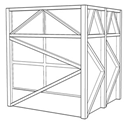
Treet uses a combination of room modules and a structural framework, starting with four modules stacked vertically on a concrete foundation. The fifth-floor functions as a power deck, with smaller modules inserted. The composition of modules is formed in a stacked manner, displaying an ordered arrangement, with a glulam frame built around them to resist horizontal and vertical forces [43]. The entire building was completed by alternating between the load-bearing frame and the box modules. These room modules primarily serve to amplify functionality and are manufactured as integrated units in a factory. The prefabricated modules are then assembled on-site, improving construction speed and efficiency.
(h)
The Modular School provides flexible, temporary educational spaces through a prefabricated timber system. Two classrooms per floor are linked by a central corridor, forming a structure of up to three stories. Prefabricated façades, acoustic ceilings, and plasterboard-clad timber frames enhance comfort and construction efficiency, while individual foundations and large, square modules allow rapid on-site assembly [9].
(i)
Woodie Student Hostel comprises 371 prefabricated timber room modules measuring approximately 6.30 m by 3.30 m arranged in a comb-like structure with E-shaped floor plans. The production line manufactured four modules per day, with modules transported from Austria and delivered on demand to the site. Installation progressed at a rate of up to twelve modules per day, and the modular timber façade was added after module assembly. The entire on-site construction was completed within ten months, with timber structures dimensioned for fire resistance [9].

2.3. Analytical Framework

To develop a framework for comparative analysis, the four interrelated analytical dimensions were defined, as illustrated in Figure 1 to examine modular timber construction throughout its process from generation to circular reuse, presenting a methodological link between each layer.
(a)
Design logic of modules
This dimension examines modules of different scales from distinct design perspectives, emphasizing dimensional and formal characteristics, considering geometric configuration, component articulation, and connection logic. It investigates how variations in geometry, proportion, and composition contribute to spatial adaptability, flexibility, and modular arrangement.
(b)
Structure system selection
The structural system is a primary determinant of modular organization and architectural expression. This dimension analyzes how different structural configurations influence stability, integration, and adaptability through system typologies, load transfer mechanisms, and the correspondence between structural logic and spatial configuration.
(c)
Prefabrication and assembly efficiency
A systematic exploration of modular construction principles discusses the integration of modular logic into timber construction through standardized units and layered structures. Components are analyzed across levels of prefabrication, and an integrated wall unit representing the consolidation of materials and functional performance is considered in terms of constructability, functional performance, and assembly sustainability.
(d)
Component reuse
This dimension presents a strategic response to the issue of component circularity. Three reuse strategies, including full reuse, length reduced reuse, and length preserving flexible reuse, are proposed to explore modular adaptability from the perspective of component length. Joint design, particularly at beam–column connections, is identified as essential for enabling reversibility and supporting circular mechanisms. Further, a modular structural system is conceived as a reflection on circular construction, incorporating standardized modules, detachable joints, and reconfigurable units to enhance adaptability and reuse potential.

3. Results and Discussion

3.1. Analysis of Design and Formation Logic

3.1.1. Design with Flexibility

In timber architecture, smaller components not only define structural logic but also convey material qualities through visible detailing, which reflects fabrication precision. Flexibility is commonly defined as the ability of a building to accommodate a variety of different users and uses [44], and in the modular context, this extends to the reconfiguration of components to suit diverse spatial and functional requirements. With parametric tools, understood as computational modeling software that enables geometry to be driven by adjustable parameter, and with computer numerical control (CNC) milling, the elements are prefabricated with high geometric accuracy, allowing for consistent quality, tight tolerances, and streamlined on-site construction [45]. Table 2 summarizes the component typologies, which serve as references for understanding how geometric configuration contributes to flexibility, while indicating the constraints. In SunnyHills and Cidori, inclined and orthogonal interlocking define distinct spatial arrangements; Kodama employs vertical slot joints to generate unique configurations responsive to environmental context; Nest We Grow uses composite sections to enhance structural capacity; Jyubako demonstrates rapid deployment through panelized prefabrication; and curved components, as applied in Nine Bridges Golf Resort, enable expressive formal variation. The examples show that flexibility is not a property of the final form, but a consequence of component-scale generative logic shaped by geometry and connection design.

3.1.2. Emphasis on Construction Speed

Unlike smaller-scale components, larger volumetric modules operate under a different logic of assembly. These room-scale timber units integrate walls, floors, and ceilings into an integrated unit produced off-site with high precision. Rather than focusing on joinery or expressive detailing, this approach prioritizes spatial completeness and construction efficiency. As shown in Table 3, each volumetric module functions as a prefabricated room, enabling rapid on-site assembly. In both the Modular School and the Woodie Student Hostel, prefabrication is primarily focused on the interior, while the exterior envelope is assembled after installation. The modules are therefore delivered with pre-cut façade openings reserved for the later installation of the exterior envelope. In high-rise applications, the system is extended through the combination of stacked modules with a stabilizing structural frame, as in the Treet. The integration of modules is central to this process, after which logistical coordination, dimensional control, standardization, and transportability become key determinants within limits. These examples show that rapid assembly results not from simplification of architecture, but from relocating complexity from the construction site to the fabrication stage.

3.1.3. Module Adaptability

The adaptive potential of modules is influenced by multiple interrelated factors. In particular, the overall scale of a building plays a determining role in module dimensions, as different functional and spatial requirements dictate specific size needs. Modules are subsequently combined and assembled to constitute the architectural system, with the selection of connection strategies representing a critical determinant of the overall compositional logic. Connection approaches not only ensure structural stability but also shape the spatial flexibility and potential for reconfiguration within the modular framework. Moreover, Different assembly patterns further enhance adaptability, while the generative logic of module design ensures coherent and efficient integration.

3.2. Joints Typology

3.2.1. Timber Joinery

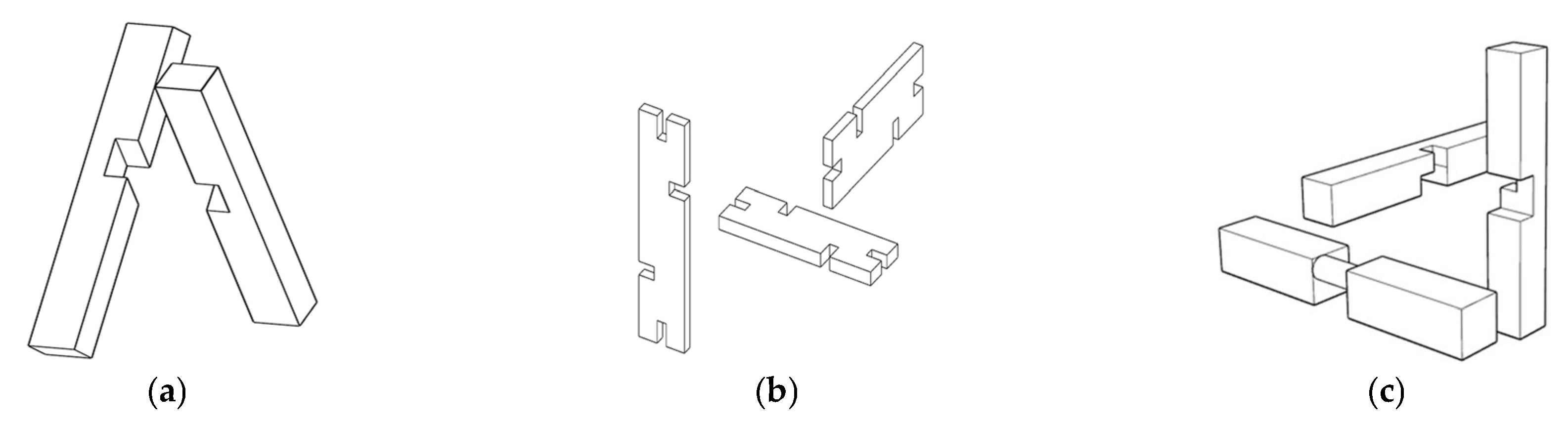
A range of connection techniques offers solutions to address the diverse design requirements of wooden buildings. For modular systems, non-metallic joints such as mortise and tenon, dovetail, dowels, and interlocking notches are commonly used. These traditional joinery methods are applied in component assembly without the need for metal fasteners. Figure 2 presents connection types derived from selected cases of traditional wooden construction, highlighting the intricate craftsmanship and articulation involved in execution. In craft-based construction with smaller components, such joints enable dispersed load distribution, resulting in a more redundant and flexible structural system. Moreover, the joints design significantly influences the morphological expression of the architecture. However, material withdrawal in interlocking joints weakens structural capacity, requiring careful dimensional consideration. At the same time, advancements in digital fabrication and robotic milling technologies could help optimize these geometrically complex joints and improve precision and consistency in production [46]. This combination of traditional techniques and advanced technology supports the creation of adaptable and visually expressive timber modular system.

3.2.2. Metallic Connection

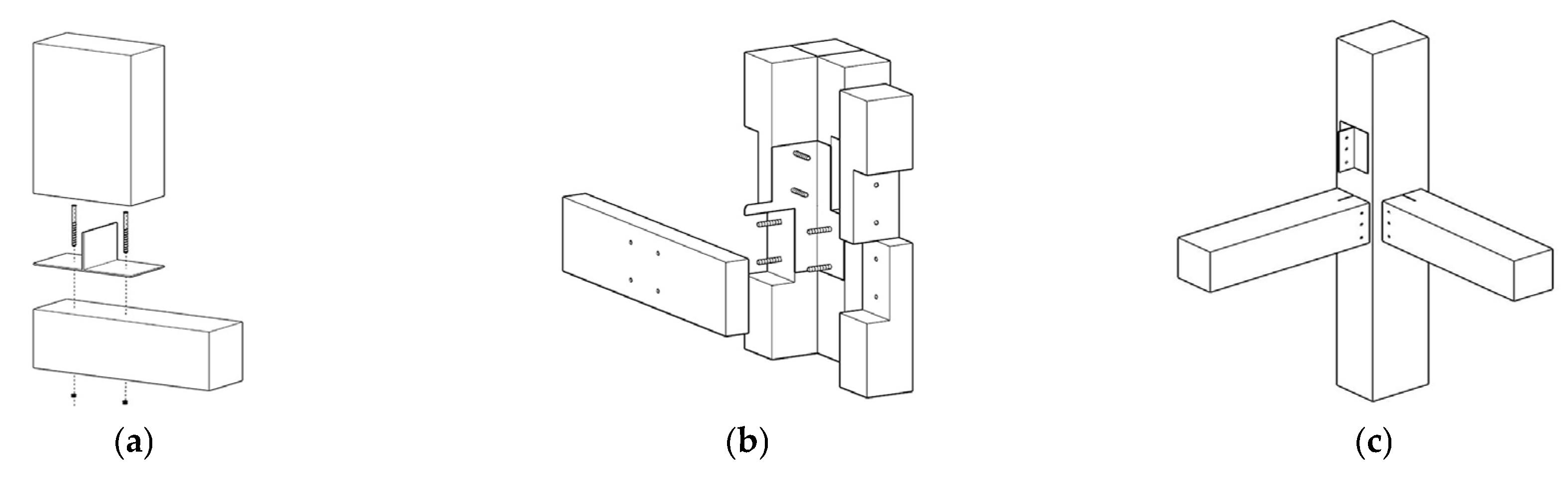
Metallic joints such as bolts, screws, steel brackets, and trusses are widely used in modular construction varying size, especially in where higher structural performance is essential. By mitigating the anisotropic behavior of wood, these connectors enhance adaptability to environmental influences while simultaneously improving strength and reliability, thereby offering an effective solution for modular assembly. In modular practice, metallic connectors are typically positioned at load-bearing points or along continuous load paths to resist greater forces and safeguard overall structural integrity. Figure 3 shows representative examples of mechanical fasteners employed in timber components.

3.2.3. Room-Sized Module Connection

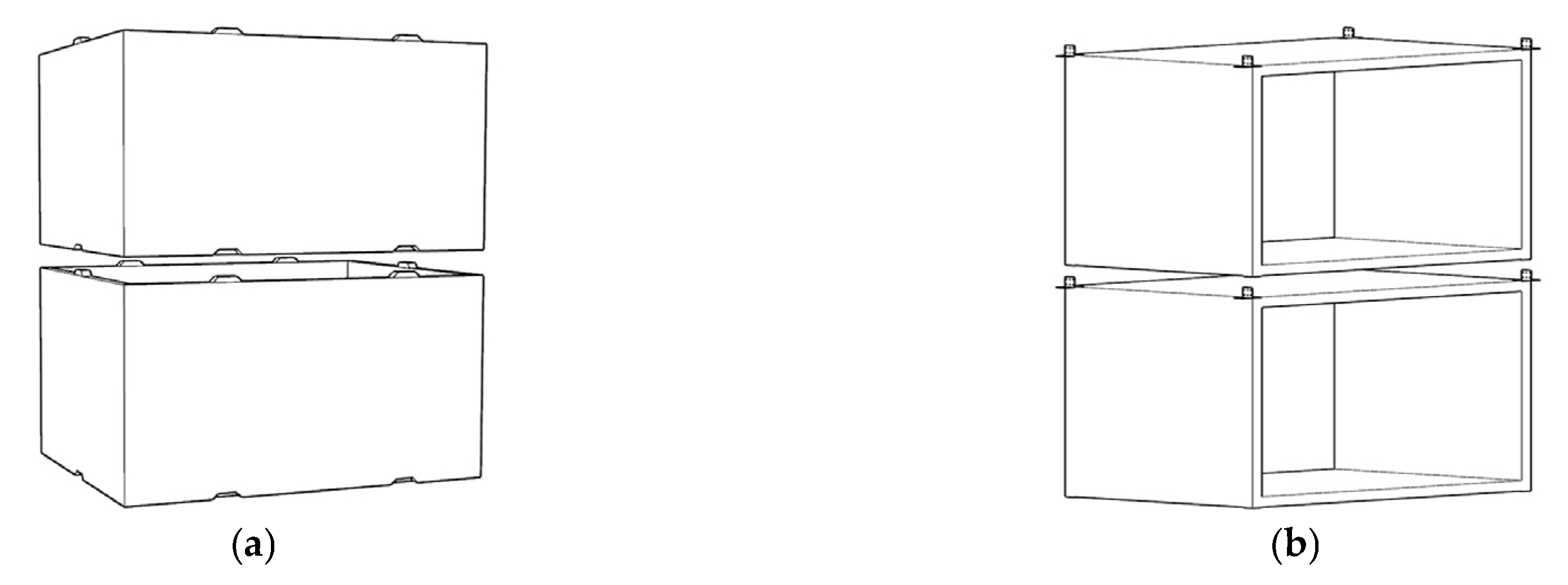
This joint type is primarily used at the interfaces of full-scale volumetric modules, such as room-sized prefabricated units (Figure 4). Joints are typically located at the boundary surfaces of modules, such as ceilings or partition walls, marking the transitions between different modules or functional zones. By designing geometrically interlocking features like grooves, a precise physical fit is achieved, improving alignment and generating frictional resistance to enhance shear capacity. Elastic materials can also be introduced as intermediate layers to avoid rigid connections. These act as buffers that absorb movement and reduce stress concentrations.

3.3. Structural System Selection

Timber structural systems commonly employ point-supported or line-supported configurations [2]. In line-supported systems, loads are distributed along linear elements such as walls, which transfer the loads from roofs and suspended floors down to the foundation. The advantage of this structural system lies in its ability to distribute loads more evenly across components, rather than concentrating them at specific points. This type of system helps to diffuse structural stress and allows the form to reflect its function. The point-supported system concentrates load at specific nodes, typically using a grid of columns and beams. In this system, loads are transferred from the floor elements to the beams, then to the columns, and finally down to the foundation. Connection details must be carefully considered during the design process to ensure structural stability and efficient load transfer. One of the key advantages of this system is its spatial flexibility, as non-loadbearing walls can be freely positioned within the structural grid. With advancements in timber construction technologies and the growing emphasis on sustainability, an increasing number of wooden buildings adopt hybrid structural systems that combine point-supported and line-supported approaches.
The selection of structural systems in modular timber construction is closely related to the scale of the module, its functional use, and the distribution of structural loads. Table 4 presents a comparative overview of various case studies, highlighting the structural support types clarifying how different modular strategies respond to structural and architectural requirements. For examples, SunnyHills adopts a grid-like interlocking timber system, where loads are distributed through closely spaced linear elements, reflecting a line-supported approach enhanced by traditional joinery. The Cidori acts within a self-supporting framework, interlocking the components seamlessly. In the case of room-sized volumetric modules, the Treet exemplifies a hybrid structural approach, where prefabricated modules adopt a point-supported system for vertical load transfer, while an external glulam frame provides lateral stability. Similarly, the Modular School in Switzerland employs prefabricated room-sized units to achieve rapid on-site assembly, significantly reducing the overall construction period. Considering structural limitations, systems relying on geometric interlocking tend to provide relatively weaker tensile capacity and reduced lateral stiffness. For volumetric modular systems, while vertical load transfer is enhanced, challenges in achieving consistent horizontal stability may arise from the discontinuity at inter-module connections, which can reduce overall lateral performance. In hybrid systems, the external frame ensures lateral resistance, while overall performance depends on effective load transfer with the modules.

3.4. Prefabrication and Assembly

3.4.1. Standardized Prefabricated Units

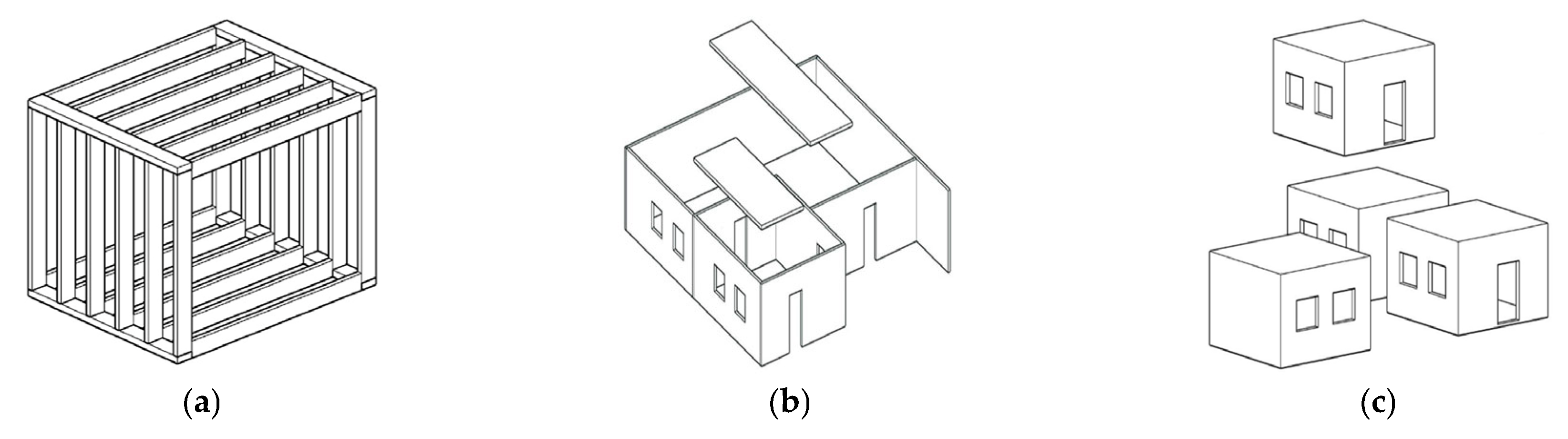
Standardization is a fundamental aspect of modular construction, ensuring that modules can be efficiently produced and assembled. Modular construction organizes these standardized components into repeatable units, which are then assembled into a complete structure [25]. Within this system, the modulus functions as a framework for dimensional coordination. It regulates both spatial units and building elements to ensure compatibility and functional adaptability. The application of a unified modulus reduces the variety of prefabricated elements, supporting efficient mass production. Prefabrication encompasses different levels of integration, including component assemblies, panelized elements, and fully volumetric room-sized modules, which can be manufactured and delivered as integrated units (Figure 5). In Figure 5a, the standardized linear-element frame typically requires additional measures to ensure lateral stability, which in practical applications can be achieved through mechanical or interlocking joints between elements, combined with stabilizing or bracing components when necessary, whereas in Figure 5b,c, this function is inherently provided by rigid panels. Meanwhile, the fastening strategy affects assembly reversibility. Compared with metal fasteners, which are likely to introduce renewed fiber damage during dismantling, wood dowels offer a more reusable alternative. Additionally, transportation plays a critical role in shaping the size and configuration of modules, particularly for larger units. Regulatory constraints on height, width, and weight limit the transportable dimensions, often requiring design adaptations. Consequently, transportation considerations should be incorporated into the early planning of modular system.

3.4.2. Muti-Layered Structure

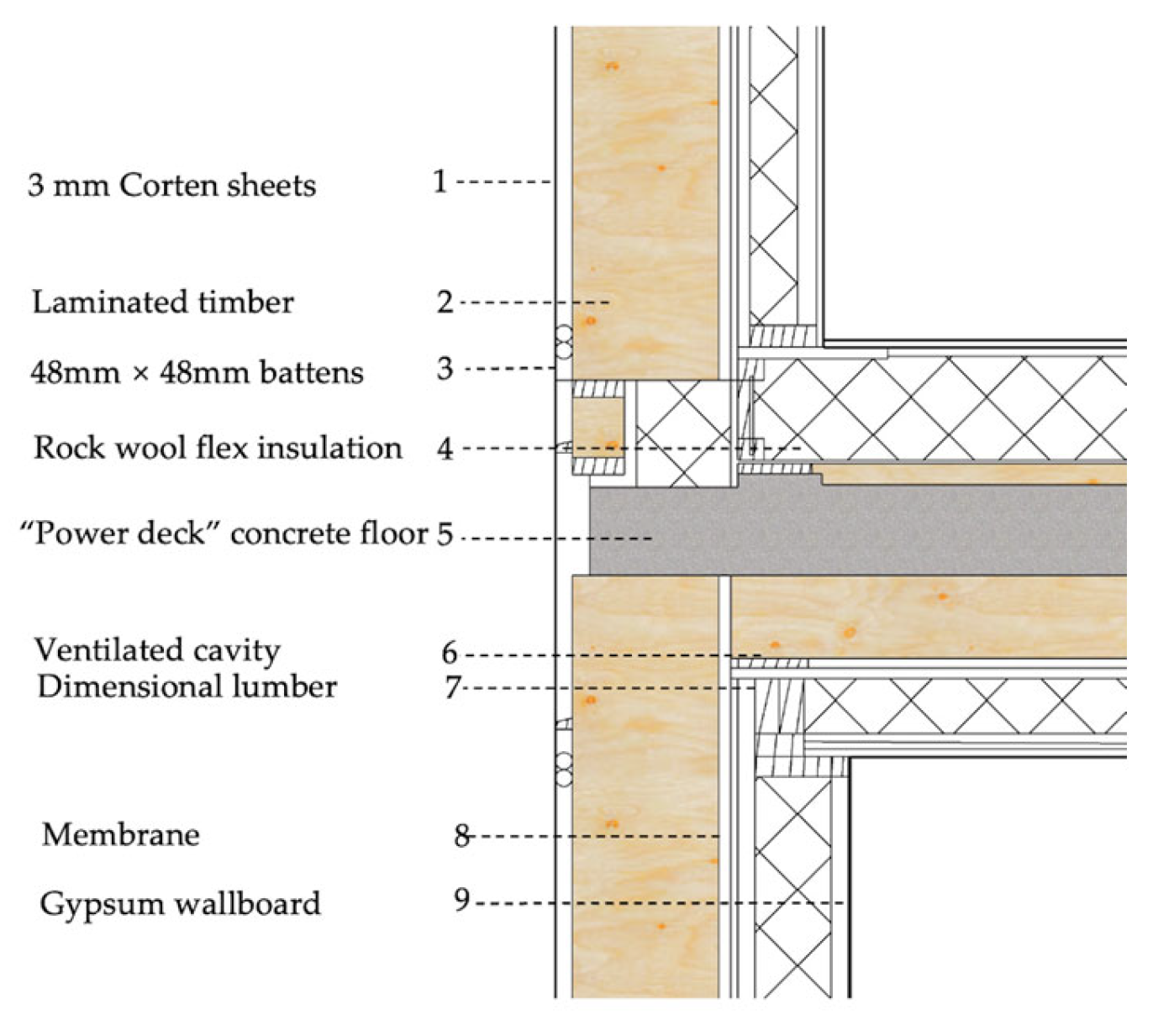
In modern timber modular construction, the adoption of multilayer structures exemplifies an efficient and sustainable design philosophy. These multilayered assemblies, particularly in walls, ceilings, and floors, combine diverse materials and functional layers to achieve superior performance [47]. Figure 6 illustrates the wall system of the Treet, detailing how functional layers are combined to create an integrated and efficient unit. The wall system is composed of multiple layers, each serving a specific function that collectively ensures the overall structural integrity, durability, and performance of the modular unit. The outer Corten steel sheets provide weather resistance and a distinctive appearance, while the laminated timber and battens form a robust structural framework. Rock wool insulation significantly enhances thermal efficiency by minimizing heat loss. Additional elements such as the ventilated cavity and moisture membrane protect the assembly from moisture-related damage. Interior finishes, like gypsum wallboard, contribute to occupant comfort and esthetics. Moreover, the interaction among these layers guarantees a well-integrated system that balances functionality and visual appeal. The multilayered approach offers flexibility in design, allowing adaptations to diverse environmental conditions and user needs. By optimizing the thickness, arrangement, and material properties of each layer, modular units can be customized to meet specific performance requirements. To enhance structural performance and minimize deformation during prefabrication and assembly, timber used in panel production is recommended to undergo appropriate grading and quality selection, as natural imperfections including knots, fiber deviations, and variations in wood maturity can interrupt fiber continuity, affect stiffness, and reduce dimensional stability [48,49].

3.5. Component Reuse

3.5.1. Dimensional Reuse Approaches

Based on the case studies, timber construction is well suited to modular systems, which in turn are conducive to circular construction practice. Three typical strategies for component reuse, centered on preserving or adapting component length, serve as general models for reuse-oriented design, and drawn from established approaches in material optimization [50], as illustrated in Figure 7. Full circular reuse involves preserving the original geometric form of components throughout the recycling process. Components such as timber beams can be disassembled from one building and reused in another while maintaining their initial dimensions and characteristics. This method could promote material efficiency, ease of reassembly, and extended service life. However, it offers limited flexibility for redesign once components are dimensionally fixed. In contrast, length-reduced reuse trims damaged sections such as beam or column ends, resulting in shorter components that can still be reused in new configurations. This approach enhances reuse flexibility, but the gradual shortening over multiple cycles may eventually render the material unsuitable for further use. Lastly, length-preserving flexible reuse seeks to retain the original length while enabling adaptability. For instance, a beam originally spanning a length of 2 s may later be cut into two equal parts of length s for reuse, which maximizes length retention and minimizes material waste. However, this strategy requires careful joint design to avoid compromising structural integrity, particularly in vertical elements such as columns.

3.5.2. Design of Reusable Joints

Building on the previous analysis of length-based reuse strategies, the design of joints plays a critical role in enabling effective disassembly and reuse of modular timber components. The ease with which joints can be dismantled directly affects the potential for minimizing damage to components, thereby increasing the likelihood of being reused in subsequent construction cycles.
In cases where metal connectors are avoided, particularly when the components are joined at a slant and the construction emphasizes esthetic expression, traditional interlocking strategies based on mortise-and-tenon logic offer an ideal solution. These connections, often achieved through precise bilateral or multi-directional grooves, enable self-locking assemblies that provide both clear structural articulation and reliable load-bearing capacity. From the perspective of circular construction, prefabricated joint types such as grooved connections, lap joints, and angled insertions play a critical role (Figure 8). The precision in fabrication and efficiency in assembly facilitate not only streamlined construction processes but also the potential for reuse. For reuse, the presence of metal fasteners would require a preliminary step for removal and recovery prior to the component being returned to use within a circular pathway [51]. Following separation, the components could be considered for direct reuse if structural integrity is generally preserved. In situations where minor local damage is identified, additional treatments such as resizing, surface repair, or localized reinforcement, when appropriate, help restore functionality and extend service life. These connection techniques exemplify the principle of construction as logic, striking a balance between structural performance, expressive form, and sustainability. In this context, groove-based interlocking joints are particularly well-suited for modular timber systems aimed at reversibility.
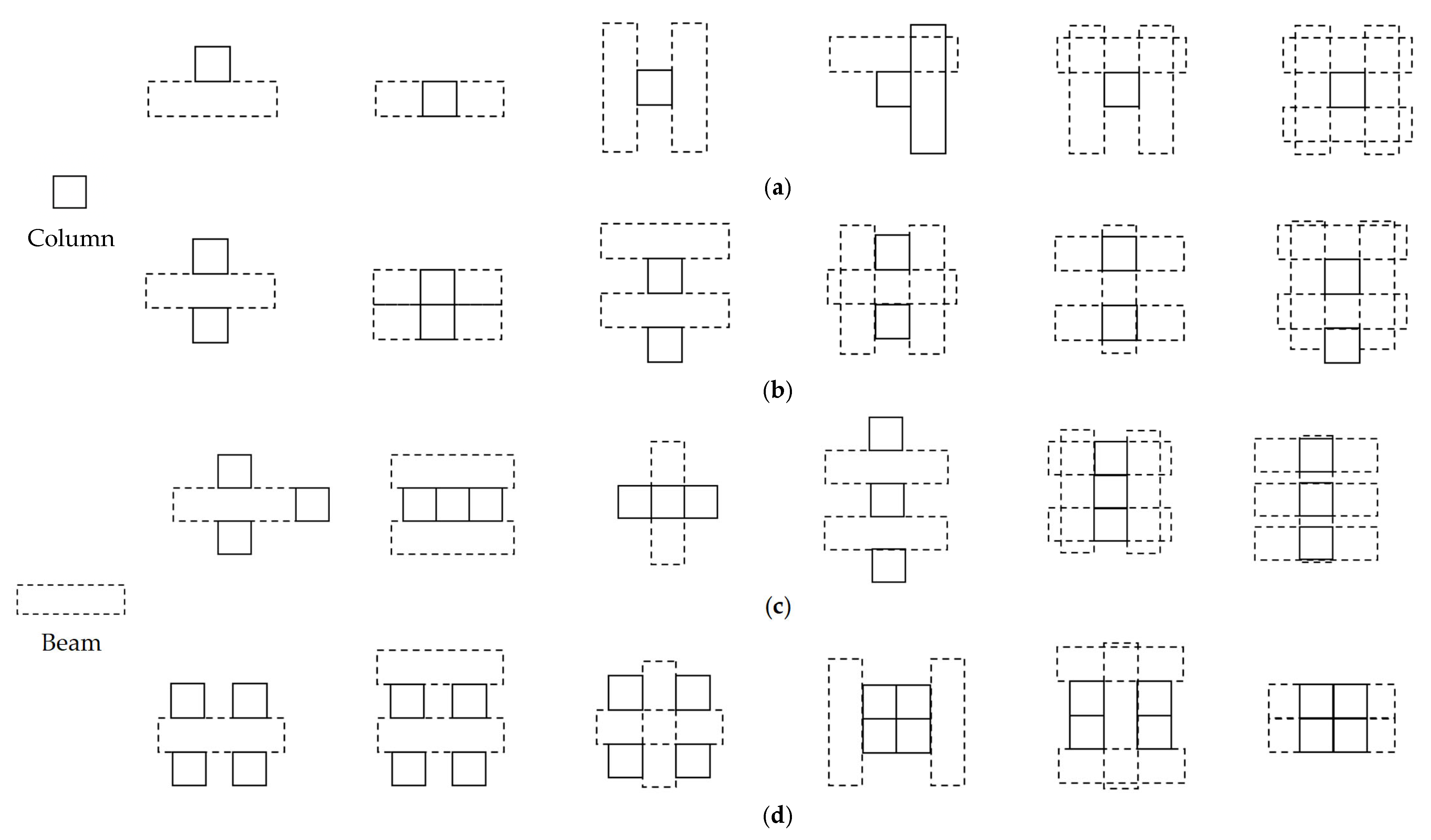
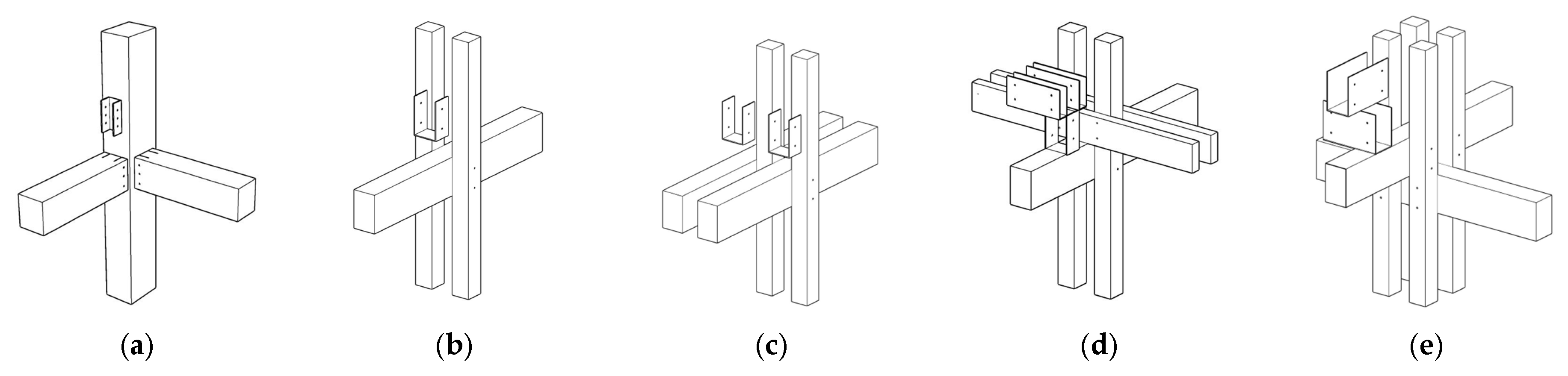
In cases where metal fasteners are used, the key design challenge lies in ensuring that the connectors are properly integrated with timber elements to allow for efficient disassembly without compromising structural integrity. When exploring design possibilities for beam–column joints, factors such as the orientation and number of beams and columns play a critical role in determining both the structural behavior and the visual order of the system. As the number of connected members increases, the potential configurations also become more diverse, giving rise to various compositional arrangements applicable to different spatial scenarios, the number of beams is left unspecified to allow multiple layouts, as illustrated in Figure 9. In this type of beam–column system, components are generally connected through metallic joints. Figure 10 displays a series of joint variations, starting with a single-column double-beam connection and progressing through increasingly complex arrangements, including single-beam double-column, double-beam double-column, and multi-column multi-beam configurations. These variations demonstrate different forms of metal connectors, reflecting design considerations for modularity and reversible assembly. As dismantling performance becomes a critical factor in modular design, wood-to-metal connections cause localized fiber crushing and hole enlargement during dismantling, which reduce opportunities for reuse. Conversely, configurations in which metal components of adjacent members engage with one another can mitigate such degradation and, in certain cases, improve dismantling efficiency, thereby supporting circular utilization.

3.5.3. Reuse in Timber Structure

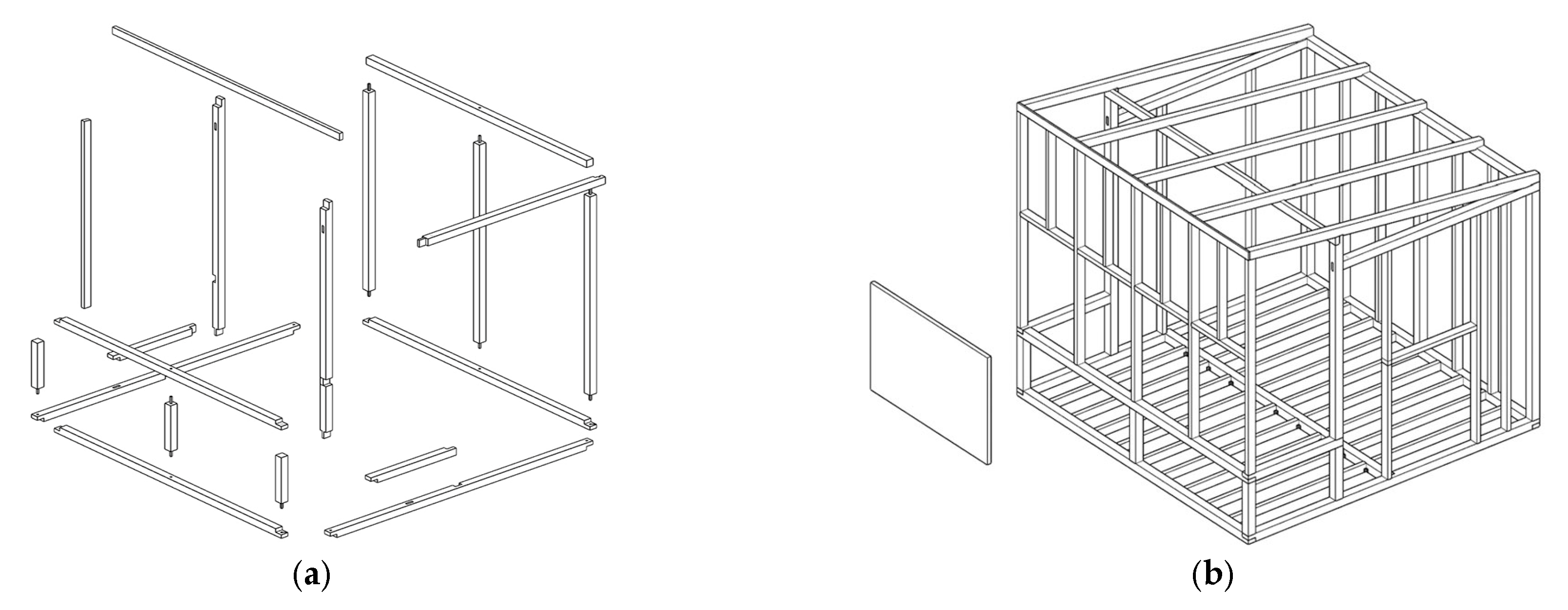
Circularity in modular timber construction is achieved through the integration of component reuse strategies and joint design within the overall structural system. Length-oriented approaches, whether preserving full dimensions, trimming damaged sections, or enabling adaptive subdivision, provide a material basis for redistribution across modules. When combined with disassemble joints, these methods allow both primary and secondary elements to be relocated and reused in different functional zones. Building on the modular character of timber and the tradition of self-built wooden structures, the proposed system adopts a point-supported timber frame system. Non-metallic joints based on joinery techniques enable assembly, disassembly, and reconfiguration, while accommodating circulation of elements through length adjustment and additional connections. This structure presents how these strategies enhance adaptability, while noting that structural stability can be improved by sheathing that contributes to lateral resistance, and that wood dowels used in its attachment are beneficial in reducing damage during future reuse (Figure 11).

4. Conclusions

This study offers an integrated analysis of modular timber buildings, exploring variations in component scale, structural systems, prefabrication methods, and circular design principles. Cases are synthesized to reveal how component articulation shapes both structural organization and architectural expression in modular timber construction. Smaller elements provide greater adaptability to diverse geometries, while room-sized modules enhance construction speed and efficiency. Modularity emerges not only as a construction method but also as a means of shaping spatial identity and architectural expression. Structural typologies and load-bearing strategies are outlined, forming a basis for classifying modular timber systems. In addressing circularity, the study examines reuse-oriented design to facilitate disassembly and material recovery, underscoring the importance of reversibility and adaptability. By leveraging prefabrication, it offers a flexible, efficient, and sustainable alternative to conventional building methods, since less waste and the possibility of reuse may contribute to reducing the environmental impacts over time. However, some practical considerations remain, as smaller-scale components often require high fabrication precision and careful control during assembly, increasing complexity and cost, and volumetric room-sized modules are typically defined by fixed dimensions that limit architectural flexibility and present logistical challenges requiring coordinated planning. Considering these aspects supports more informed decision-making, ensuring that modular timber systems are selected and applied with appropriate technological constraints and project-specific conditions. The findings contribute a technical foundation for advancing customized modular timber solutions in architectural practice through a multi-layered analytical framework. It is important to note that using quantitative indicators holds significant potential, and future direction could integrate the component circularity and integrate lifecycle assessment methods with the BIM model to evaluate the environmental performance and circular design strategies of modular timber buildings more comprehensively.

Author Contributions

Conceptualization, S.Z., G.D. and G.S.; methodology, S.Z. and G.M.; writing—original draft preparation, S.Z.; writing—review and editing, G.D., G.S., G.M. and Z.L.; visualization, S.Z.; supervision, G.D. and G.S.; project administration, G.D. All authors have read and agreed to the published version of the manuscript.

Funding

This research was funded by Research and Application of Modular Housing Design Integrated with Smart Home System (grant No. CX20250590).

Institutional Review Board Statement

Not applicable.

Informed Consent Statement

Not applicable.

Data Availability Statement

The original contributions presented in this study are included in the article. Further inquiries can be directed to the corresponding author.

Conflicts of Interest

The authors declare no conflicts of interest.

References

  1. Zwerger, K. Wood and Wood Joints: Building Traditions of Europe, Japan and China; Birkhäuser: Berlin, Germany; München, Germany; Boston, MA, USA, 2015. [Google Scholar] [CrossRef]
  2. Kolb, J. Systems in Timber Engineering: Loadbearing Structures and Component Layers; Birkhäuser: Berlin, Germany; Boston, MA, USA, 2008. [Google Scholar] [CrossRef]
  3. Hermann, M.; Kaufmann, J.; Krötsch, S.; Winter, S. Manual of Multistorey Timber Construction; Detail: München, Germany, 2018. [Google Scholar] [CrossRef]
  4. Fu, X. Traditional Chinese Architecture: Twelve Essays; Princeton University Press: Princeton, NJ, USA, 2017. [Google Scholar] [CrossRef]
  5. Steinhardt, N.S. Chinese Architecture: A History; Princeton University Press: Princeton, NJ, USA, 2019. [Google Scholar] [CrossRef]
  6. Coaldrake, W.H. Architecture and Authority in Japan; Routledge: London, UK, 1996. [Google Scholar] [CrossRef]
  7. Macchioni, N.; Degl’Innocenti, M.; Mannucci, F.; Stefani, I.; Lazzeri, S.; Caciagli, S. Timber structures of Florence cathedral: Wood species identification, technological implications and their forest origin. Forests 2023, 14, 1733. [Google Scholar] [CrossRef]
  8. Cieraad, I. Bringing nostalgia home: Switzerland and the Swiss chalet. Archit. Cult. 2018, 6, 265–288. [Google Scholar] [CrossRef]
  9. Huß, W.; Kaufmann, M.; Merz, K. Building in Timber-Room Modules; Detail: München, Germany, 2019. [Google Scholar] [CrossRef]
  10. Kurokawa, K. Metabolism in architecture. In Metabolism in Architecture; Studio Vista: London, UK, 1977. [Google Scholar]
  11. Hong, J.; Shen, G.Q.; Mao, C.; Li, Z.; Li, K. Life-cycle energy analysis of prefabricated building components: An input-output-based hybrid model. J. Clean. Prod. 2016, 112, 2198–2207. [Google Scholar] [CrossRef]
  12. Jensen, A.V.; Craig, N. Wood in Construction—25 Cases of Nordic Good Practice; Nordic Council of Ministers: Copenhagen, Denmark, 2019. [Google Scholar] [CrossRef]
  13. Foster, R.M.; Reynolds, T.P.S. Lightweighting with Timber: An opportunity for more sustainable urban densification. J. Archit. Eng. 2018, 24, 02518001. [Google Scholar] [CrossRef]
  14. Prentice, I.C.; Farquhar, G.D.; Fasham, M.J.R.; Goulden, M.L.; Heimann, M.; Jaramillo, V.J.; Kheshgi, H.S.; Le Quere, C.; Scholes, R.J.; Wallace, D.W.R.; et al. The carbon cycle and atmospheric carbon dioxide. In Climate Change 2001: The Scientific Basis; Contribution of Working Group I to the Third Assessment Report of the Intergovernmental Panel on Climate Change; Cambridge University Press: Cambridge, UK; New York, NY, USA, 2001. [Google Scholar]
  15. Hoxha, E.; Passer, A.; Saade, M.R.M.; Trigaux, D.; Shuttleworth, A.; Pittau, F.; Allacker, K.; Habert, G. Biogenic carbon in buildings: A critical overview of LCA methods. Build. Cities 2020, 1, 504–524. [Google Scholar] [CrossRef]
  16. Robertson, A.B.; Lam, F.C.F.; Cole, R.J. A comparative cradle-to-gate life cycle assessment of mid-rise office building construction alternatives: Laminated timber or reinforced concrete. Buildings 2012, 2, 245–270. [Google Scholar] [CrossRef]
  17. Peñaloza, D.; Erlandsson, M.; Falk, A. Exploring the climate impact effects of increased use of bio-based materials in buildings. Constr. Build. Mater. 2016, 125, 219–226. [Google Scholar] [CrossRef]
  18. Jeska, S.; Pascha, K.S. Emergent Timber Technologies: Materials, Structures, Engineering, Projects; Birkhäuser: Berlin, Germany; München, Germany; Boston, MA, USA, 2014. [Google Scholar] [CrossRef]
  19. Staib, G.; Dörrhöfer, A.; Rosenthal, M. Components and Systems: Modular Construction–Design, Structure, New Technologies; Birkhäuser: München, Germany, 2008. [Google Scholar] [CrossRef]
  20. Chung-Klatte, S.; Hasselbach, R.; Knaack, U. Prefabricated Systems: Principles of Construction; Birkhäuser: Berlin, Germany; Boston, MA, USA, 2012. [Google Scholar] [CrossRef]
  21. Duncheva, T.; Bradley, F. Multifaceted productivity comparison of off-site timber manufacturing strategies in mainland Europe and the United Kingdom. J. Constr. Eng. Manag. 2019, 145, 04019043. [Google Scholar] [CrossRef]
  22. Lawson, M.; Ogden, R.; Goodier, C. Design in Modular Construction; CRC Press: Boca Raton, FL, USA, 2014. [Google Scholar] [CrossRef]
  23. Generalova, E.M.; Generalov, V.P.; Kuznetsova, A.A. Modular buildings in modern construction. Procedia Eng. 2016, 153, 167–172. [Google Scholar] [CrossRef]
  24. Kharrazi, M.; Eldeib, S.; Prion, H. Experimental evaluation of an orthotropic, monolithic, modular wooden-dome structural system. Can. J. Civ. Eng. 2008, 35, 1163–1176. [Google Scholar] [CrossRef]
  25. Smith, R.E. Prefab Architecture: A Guide to Modular Design and Construction; John Wiley and Sons: Hoboken, NJ, USA, 2011. [Google Scholar]
  26. Li, J.; Andersen, L.V.; Hudert, M.M. The potential contribution of modular volumetric timber buildings to circular construction: A state-of-the-art review based on literature and 60 case studies. Sustainability 2023, 15, 16203. [Google Scholar] [CrossRef]
  27. Huang, H.; Su, S.; Li, L. Advancing timber construction: Historical growth, research frontiers, and time series forecasting. J. Asian Archit. Build. Eng. 2024, 24, 2479–2508. [Google Scholar] [CrossRef]
  28. Bhandari, S.; Riggio, M.; Jahedi, S.; Fischer, E.C.; Muszynski, L.; Luo, Z. A Review of Modular Cross Laminated Timber Construction: Implications for Temporary Housing in Seismic Areas. J. Build. Eng. 2023, 63, 105485. [Google Scholar] [CrossRef]
  29. Montalbano, G.; Santi, G. Sustainability of temporary housing in post-disaster scenarios: A requirement-based design strategy. Buildings 2023, 13, 2952. [Google Scholar] [CrossRef]
  30. Gavric, I.; Fragiacomo, M.; Ceccotti, A. Cyclic behaviour of typical metal connectors for cross-laminated (CLT) structures. Mater. Struct. 2015, 48, 1841–1857. [Google Scholar] [CrossRef]
  31. Caniato, M.; Bettarello, F.; Ferluga, A.; Marsich, L.; Schmid, C.; Fausti, P. Acoustic of lightweight timber buildings: A review. Renew. Sustain. Energy Rev. 2017, 80, 585–596. [Google Scholar] [CrossRef]
  32. Gerard, R.; Barber, D.; Wolski, A. Fire Safety Challenges of Tall Wood Buildings; National Fire Protection Research Foundation: Quincy, MA, USA, 2013. [Google Scholar]
  33. Yan, Z.; Ottenhaus, L.-M.; Leardini, P.; Jockwer, R. Performance of reversible timber connections in Australian light timber framed panelised construction. J. Build. Eng. 2022, 61, 105244. [Google Scholar] [CrossRef]
  34. Grüter, C.; Gordon, M.; Muster, M.; Kastner, F.; Grönquist, P.; Frangi, A.; Langenberg, S.; De Wolf, C. Design for and from disassembly with timber elements: Strategies based on two case studies from Switzerland. Front. Built Environ. 2023, 9, 1307632. [Google Scholar] [CrossRef]
  35. Liang, S.; Gu, H.; Bergman, R.; Kelley, S.S. Comparative life-cycle assessment of a mass timber building and concrete alternative. Wood Fiber Sci. 2020, 52, 217–229. [Google Scholar] [CrossRef]
  36. Kuma, K. The relativity of materials. JA Jpn. Archit. 2000, 38, 86–87. [Google Scholar]
  37. Kuma, K. Kengo Kuma: My Life as an Architect in Tokyo; Thames & Hudson: London, UK, 2021. [Google Scholar]
  38. Bognar, B.; Kuma, K. Material Immaterial: The New Work of Kengo Kuma; Princeton Architectural Press: New York, NY, USA, 2009. [Google Scholar]
  39. Imperadori, M.; Clozza, M.; Vanossi, A.; Brunone, F. Digital design and wooden architecture for arte sella land art park. In Digital Transformation of the Design, Construction and Management Processes of the Built Environment; Daniotti, B., Gianinetto, M., Della Torre, S., Eds.; Springer: Cham, Switzerland, 2020. [Google Scholar] [CrossRef]
  40. Glasner, B.; Ott, S. Wonder Wood: A Favorite Material for Design, Architecture and Art; Birkhäuser: Berlin, Germany; Boston, MA, USA, 2013. [Google Scholar] [CrossRef]
  41. Kengo Kuma & Associates; College of Environmental Design UC Berkeley. Nest We Grow. ArchDaily. 29 January 2015. Available online: https://www.archdaily.com/592660/nest-we-grow-college-of-environmental-design-uc-berkeley-kengo-kuma-and-associates (accessed on 10 May 2025).
  42. Kengo Kuma & Associates. Jyubako. Available online: https://kkaa.co.jp/en/project/jyubako/ (accessed on 10 May 2025).
  43. Malo, K.A.; Abrahamsen, R.B.; Bjertnæs, M.A. Some structural design issues of the 14-storey timber-framed building “Treet” in Norway. Eur. J. Wood Prod. 2016, 74, 407–424. [Google Scholar] [CrossRef]
  44. Durmisevic, E. Design for Disassembly as a Way to Introduce Sustainable Engineering to Building Design & Construction; Delft University of Technology: Delft, The Netherlands, 2006; Available online: http://resolver.tudelft.nl/uuid:9d2406e5-0cce-4788-8ee0-c19cbf38ea9a (accessed on 17 October 2025).
  45. Fioravanti, A.; Cursi, S.; Piqué, T.; De Luca, F. (Eds.) Digital Wood Design: Innovative Techniques of Representation in Architectural Design; Springer: Cham, Switzerland, 2019. [Google Scholar] [CrossRef]
  46. Pantscharowitsch, M.; Kromoser, B. Robotic timber milling: Accuracy assessment for construction applications and comparison to a CNC machine. Wood Mater. Sci. Eng. 2025, 20, 580–596. [Google Scholar] [CrossRef]
  47. Green, M.; Taggart, J. Tall Wood Buildings: Design, Construction and Performance; Birkhäuser: Berlin, Germany; Boston, MA, USA, 2020. [Google Scholar] [CrossRef]
  48. Lukacević, M.; Füssl, J.; Eberhardsteiner, J. A 3D model for knots and related fiber deviations in sawn timber for prediction of mechanical properties of boards. Mater. Des. 2019, 166, 107617. [Google Scholar] [CrossRef]
  49. Bayramoğlu, M.M.; Yıldırım, M.; Dündar, T. Effect of lumber quality grade on the mechanical properties and product costs of cross-laminated timber panels. BioResources 2025, 20, 3519–3533. [Google Scholar] [CrossRef]
  50. De Gregorio, S. Reuse process for timber elements to optimise residual performances in subsequent life cycles. VITRUVIO—Int. J. Archit. Technol. Sustain. 2022, 7, 88–99. [Google Scholar] [CrossRef]
  51. Knowledge Transfer Network. Design Innovation for the Circular Economy: The Materials and Design Exchange Project for End-of-Life Building Façades. Available online: https://www.arup.com/globalassets/downloads/insights/facade-design-for-the-circular-economy.pdf (accessed on 12 October 2025).
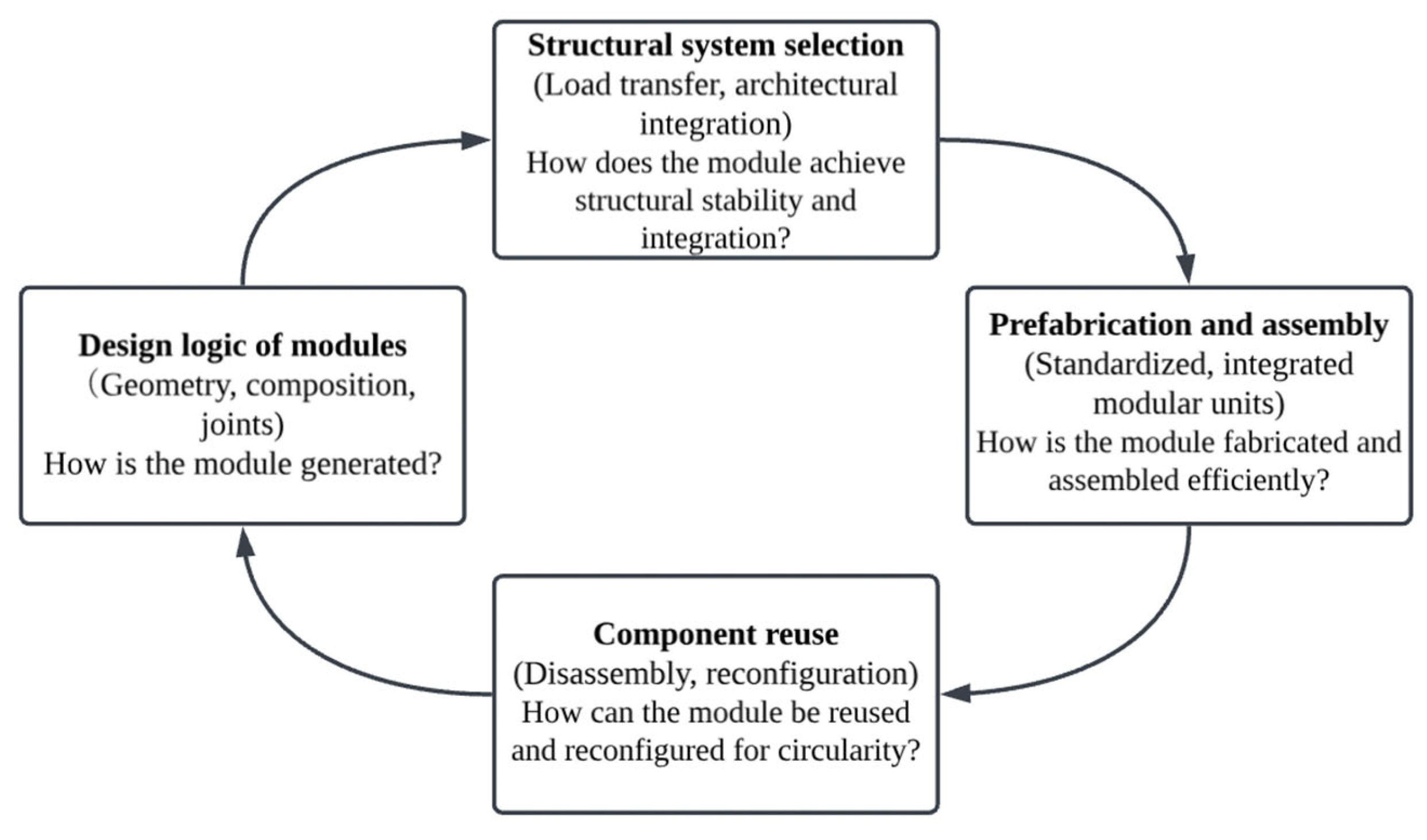
Figure 1. Analytical framework of modular timber construction.
Sustainability 17 10983 g001
Figure 2. Timber Joinery; (a) Oblique-angle insertion; (b) Vertical slot connection; (c) Hybrid slot connection.
Sustainability 17 10983 g002
Figure 3. Metallic connection in timber components: (a) Beam-column connection; (b) Column splicing connection; (c) Beam-column connection.
Sustainability 17 10983 g003
Figure 4. Room-sized volumetric module connection: (a) Groove-based interlocking; (b) Metal fastener connection.
Sustainability 17 10983 g004
Figure 5. Levels of prefabrication: (a) Component assemblies; (b) Panelized elements; (c) Volumetric modules.
Sustainability 17 10983 g005
Figure 6. The details of wall system.
Sustainability 17 10983 g006
Figure 7. Dimensional reuse approaches for timber components: (a) Full circular reuse; (b) Length-reduced reuse; (c) Length-preserving reuse.
Sustainability 17 10983 g007
Figure 8. Typical non-metallic timber joints: (a) Dado joint; (b) Lap joint; (c) Mortise and tenon joint; (d) Tongue and groove joint; (e) Bridle joint.
Sustainability 17 10983 g008
Figure 9. Layout variations in beam–column joints: (a) Single-column; (b) Double-column; (c) Triple-column; (d) Four-column.
Sustainability 17 10983 g009
Figure 10. Variations in timber joint configurations with metal fasteners: (a) Single-column to double-beam; (b) Single-beam to double-column; (c) Double-beam to double-column; (d) Multi-column to multi-beam; (e) Multi-column to multi-beam.
Sustainability 17 10983 g010
Figure 11. Modular timber construction: (a) Component assembly; (b) Modular timber structure.
Sustainability 17 10983 g011
Table 1. Overview of selected modular timber projects.
CaseCountryYearArchitectBuilding TypologyModule ScaleConstruction System
SunnyHillsJapan2013Kengo Kuma & AssociatesCommercialComponent-scale Joinery-based
CidoriItaly2007Kengo Kuma & AssociatesPavilion/ExhibitionComponent-scale Joinery-based
KodamaItaly2018Kengo Kuma & AssociatesPavilion/ExhibitionComponent-scale Joinery-based
Nine Bridges Golf ResortSouth Korea2010Shigeru Ban ArchitectsClubhouseComponent-scale Hybrid
Nest We GrowJapan2014Kengo Kuma & Associates (with UC Berkeley CED)Pavilion/ResidentialComponent-scale Hybrid
JyubakoJapan2016Kengo Kuma & AssociatesPavilion/ResidentialComponent-scale Industrial prefabrication
TreetNorway2015Artec ASResidentialRoom-scaleIndustrial prefabrication
Modular SchoolSwitzerland2012Bauart Architekten und Planer AGEducationalRoom-scale Industrial prefabrication
Woodie Student HostelGermany2017Sauerbruch HuttonResidentialRoom-scale Industrial prefabrication
Table 2. Typological features of modular components.
Component TypesIllustrationDesigning FeaturesAdvantagesLimitationsCases
Diagonal interlocking componentsSustainability 17 10983 i001Inclined intersections creating complex timber jointsEnhanced structural stability and improved esthetic dynamic appearanceSmall span capacity, high fabrication precision requiredSunnyHills
Orthogonal interlocking componentsSustainability 17 10983 i002Right-angle timber connections forming an organized frameworkEasy to manufacture and standardizeSmall span capacity, high fabrication precision requiredCidori
Vertical-slot componentsSustainability 17 10983 i003Vertical slots or notches allow components to interlock perpendicularlyEnables fast assembly and allows disassembly and reuseWeakened sections, precise slot alignment neededKodama
Composite componentsSustainability 17 10983 i004Multiple timber elements joined to form larger cross-sectional unitsLarger cross-sections improve the performanceComposite columns with complex joints, low recyclabilityNest We Grow
Panel componentsSustainability 17 10983 i005Prefabricated timber panels of modular dimensionsSimple installation and quick for enclosing spaces and facadesPoor geometric adaptabilityJyubako
Curved componentsSustainability 17 10983 i006Shaped or bent timber elements producing curved or arched geometryExpressive architectural formsCostly curved components, complex assemblyNine Bridges Golf Resort
Table 3. Typological features of volumetric modules.
Component TypesIllustrationDesigning FeaturesAdvantagesLimitationsCases
Room-scale timber modulesSustainability 17 10983 i007Stabilized high-rise timber system using stacked prefabricated modulesFast assembly while ensuring seismic and wind stabilityChallenging frame–module coordination, demanding site accuracyTreet
Room-scale timber modulesSustainability 17 10983 i008Square-plan volumetric timber modules with pre-designed openingsFlexible temporary use with rapid assemblyHigh transport demandModular School
Room-scale timber modulesSustainability 17 10983 i009Room modules with an E-shaped layout and pre-cut façade openings for on-site exterior installationFlexible module combinations for varied room types and efficient assembly High transport demandWoodie Student Hostel
Table 4. Comparative analysis of modular structural systems.
Structural System TypeLoad Transfer MechanismIntegration with
Architecture
LimitationsCases
Line-supportedLoads distributed along linear componentsEnables continuous lattice or grid-like estheticsCompression-based multidirectional interlocks are less effective in resisting tensile and lateral forcesSunnyHills
Point-supportedEnvelope itself acts as load-bearing structureSeamless integration of structure and envelopePress-fit joints tend to provide lower tensile performanceCidori
Point-supportedEnvelope itself acts as load-bearing structureInterlocking timber components form both skin and structureSlot-interlocking relies on bearing and frictional contact, and may show reduced tensile and lateral stability due to potential joint separationKodama
Point-supportedMultiple slender timber columns grouped to act as a structural unitOrganic forms for nature-inspired and complex roof geometriesCurved slender columns mainly carry vertical load, while lateral stability relies on the overall frameNine Bridges Golf Resort
Point-supportedComposite timber columns reinforced with steel connectors and combined with framingDefines spatial organization and structural frameworkComposite columns rely on joints and the overall frame for lateral stabilityNest We Grow
Line-supportedPrefabricated panels as load bearing or envelope elementsFacilitates lightweight, flexible, and temporary constructionPanelized modules provide limited structural stiffness, with stability depending on connectors and modular assemblyJyubako
HybridModules stacked within a glulam frame which handles lateral and vertical loadsFrame defines building shape and resists forces and modules amplify functionStructural performance relies on the proper interaction between modules and the frameTreet
Line-supportedLoads transferred through wall panels and floors to foundationsClear spatial zoning and functional modular unitsHorizontal resistance relies on module wall action with modest continuity across jointsModular School
Point-supportedPrefabricated volumetric room modules supported at key pointsModular units establish a clear order on the façadeLateral load transfer mainly relies on limited inter-module jointsWoodie Student Hostel
Disclaimer/Publisher’s Note: The statements, opinions and data contained in all publications are solely those of the individual author(s) and contributor(s) and not of MDPI and/or the editor(s). MDPI and/or the editor(s) disclaim responsibility for any injury to people or property resulting from any ideas, methods, instructions or products referred to in the content.