Article

Emotional Intelligence and Employees’ Commitment: Analyzing the Role of Brand Image and Corporate Social Responsibility Among Lebanese SMEs

School of Business, Lebanese International University, Beirut 146404, Lebanon
Sustainability 2025, 17(21), 9602; https://doi.org/10.3390/su17219602
Submission received: 30 July 2025 / Revised: 17 October 2025 / Accepted: 19 October 2025 / Published: 29 October 2025

Abstract

The importance of emotional intelligence cannot be neglected when it comes to employees’ behavioral outcomes in the workplace. When organizations deploy Corporate Social Responsibility initiatives that improve their image, they can foster an atmosphere where employees develop loyalty and commitment towards their roles and organizations. This can be more vivid for the case of Small and Medium Enterprises (SMEs) where modern and sustainable strategies are embedded in the strategy to improve the social, economic, and environmental domains of the society they serve to. The current research examines how emotionally intelligent employees can leverage brand image and Corporate Social Responsibility as dynamics that improve their commitment to their roles and their organizations. This leads to better service provision, ultimately improving the company’s reputation, performance, and competitive longevity. Using Smart PLS software and Partial Least Squares–Structural Equation Modeling (PLS-SEM), a total of 184 SME employees were surveyed across forty-two firms operating in Lebanon. The findings suggest that SMEs can establish mechanisms which, under the lens of emotional intelligence, attachment, and sustainability-oriented theories, yield positive work outcomes among employees while facilitating a sustainable competitive edge and improved image both internally and externally.

1. Introduction

The dynamic business and industrial setting of the world requires a high level of intelligence from employees that is backed by the corporate mechanisms for improving performance, brand image, and sustainable outcomes. In this sense, emotional intelligence is essential for ensuring employees can exhibit positive work behaviors that can aid the firm in gaining and/or maintaining competitiveness in their market. For the case of Small and Medium Enterprises (SMEs), this becomes pivotal as institutional dynamics should be optimized to achieve success [1]. The current study focuses on the link between the emotional intelligence of SME employees and their commitment to their roles in the workplace. In the Lebanese context, SMEs face various social, political, and economic restraints, which increases the need for new solutions, innovative means, and sustainable initiatives that can solidify the brand in the market [2]. Employees who possess emotional intelligence (EI) are characterized by their visible ability to perceive and manage their emotions, which enables them to better prepare for challenges in the workplace while establishing an affective bond with their organization [3]. In a similar vein, Corporate Social Responsibility (CSR) practices are designed to contribute to the image of a brand to build trust with external stakeholders while improving the morale of internal assets (i.e., employees’ commitment). The current study focuses on the dynamics in Lebanese SMEs that lead to higher commitment levels among employees. This can shed light on strategic initiatives that can aid SMEs in Lebanon in their endeavors towards sustainable competitive advantages and enhanced reputation.
SMEs face a rapidly growing business atmosphere that highlights the importance of psychological and emotional dimensions of employees on the performance outcomes of their firm [2]. EI encompasses self-awareness, self-regulation, motivation, empathy, and social skills [4], which is found to be vital for behavioral and commitment outcomes in institutional settings [2,3]. Considering the resources available or lack thereof for the context of Lebanon, SMEs should shift their focus on improving the capabilities of their employees via initiatives such as CSR as strategic tools. Also, the previously noted limitations facing the country calls for SMEs to adopt modern practices that ensure effective resource usage, which are the employees [2]. While EI and its effects under CSR have been assessed in the literature, the SMEs across the Middle East and especially Lebanon remain underexplored, which drives the conduct of this study [1]. With the growing number of sensitive individuals towards recent topics, brand activities, and sustainability measures, SMEs can use CSR practices to significantly improve the perception of their employees towards the brand, leading to positive behavioral work outcomes [5]. Arguably, this becomes more vivid when the staff perceive socially responsible values in the organization. As the number of employees in SMEs are small by nature, such initiatives can become tools for driving positive workplace outcomes built upon responsible actions. Stronger commitment can be expected as high-EI employees are more likely to reciprocate as their values are attached to the firm, which aids them internalizing signals more effectively.
In addition, the current study explores the indirect role of employees’ brand image regarding their perception and actions towards their jobs (i.e., commitment). While previous studies have addressed this linkage in similar contextual settings (e.g., [6,7]), the current research embeds brand image as a bridge between EI and employees’ commitment to their roles in SMEs, where solution-finding, creativity, quick action, and quality of service are vital for business performance [1]. Brand image can be described as a perception towards a certain firm derived from individuals’ memory association with the said brand [8]. Based on these associations, individuals shape feelings and behaviors towards brands which are compared to other alternatives available in the memory [9]. Individuals also evaluate the brand based on their attributes, social cues, and other elements (e.g., symbolism) [5]. Arguably, for SMEs to improve the internal brand image metric among their employees, the employees should possess certain characteristics (i.e., EI) and have a workplace that strategically improves their image of the brand by initiating in ethical, sustainable (economic, social and environmental), and personal/professional training courses which can be integrated into CSR practices. As EI equips staff to perceive, interpret, and regulate their emotions within the workplace, at the employee level this mechanism is fit to address commitment, especially in CSR- and brand-centric contexts where employees can decode authenticity, value alignment more accurately, and enable them to exhibit affective commitment. Furthermore, the emotionally charged organizational initiatives trigger attitudes and affective appraisal which strengthens the acceptance and appraisal of prosocial activities of the firm, which can enhance commitment as an outcome.
Based on what was noted, a gap in the literature is noted, where SMEs in the Lebanese market as a context is underexplored and thus calls for further empirical research (e.g., [1,9]). This gap is further observed regarding the included variables in the model to address and build upon recent findings and suggestions in the literature to improve the performance outcomes among SMEs among developing economies (i.e., Lebanon) [3,9,10]. Furthermore, by incorporating the socio-economic environment of Lebanon with various restraints and challenges, where SMEs are vital for employment and economic development, the current research seeks to contribute to the understanding of this subject by addressing these gaps [11]. Notably, the mediating role of brand image in this context remains underexplored especially when it comes to the internal perspective of employees, who become more important in the case of SMEs as the small number of staff will form the overall image [12]. Through establishing sustainable measures and CSR, SME managers can align company values with that of their members. Considering the small number of staff in each SME (approximately five), internal branding becomes a tool for improving commitment and gaining competitive advantages. The majority of studies also focus on work-related mediators (e.g., satisfaction, engagement), which renders the notion of CSR underexamined. This yields a multilevel empirical context which requires further evidence. Furthermore, this research distinguishes CSR and brand image to address the response of employees to substantive social initiatives along with reputational aspects. Application of this context in the SME sector further adds to the gaps addressed in this study.
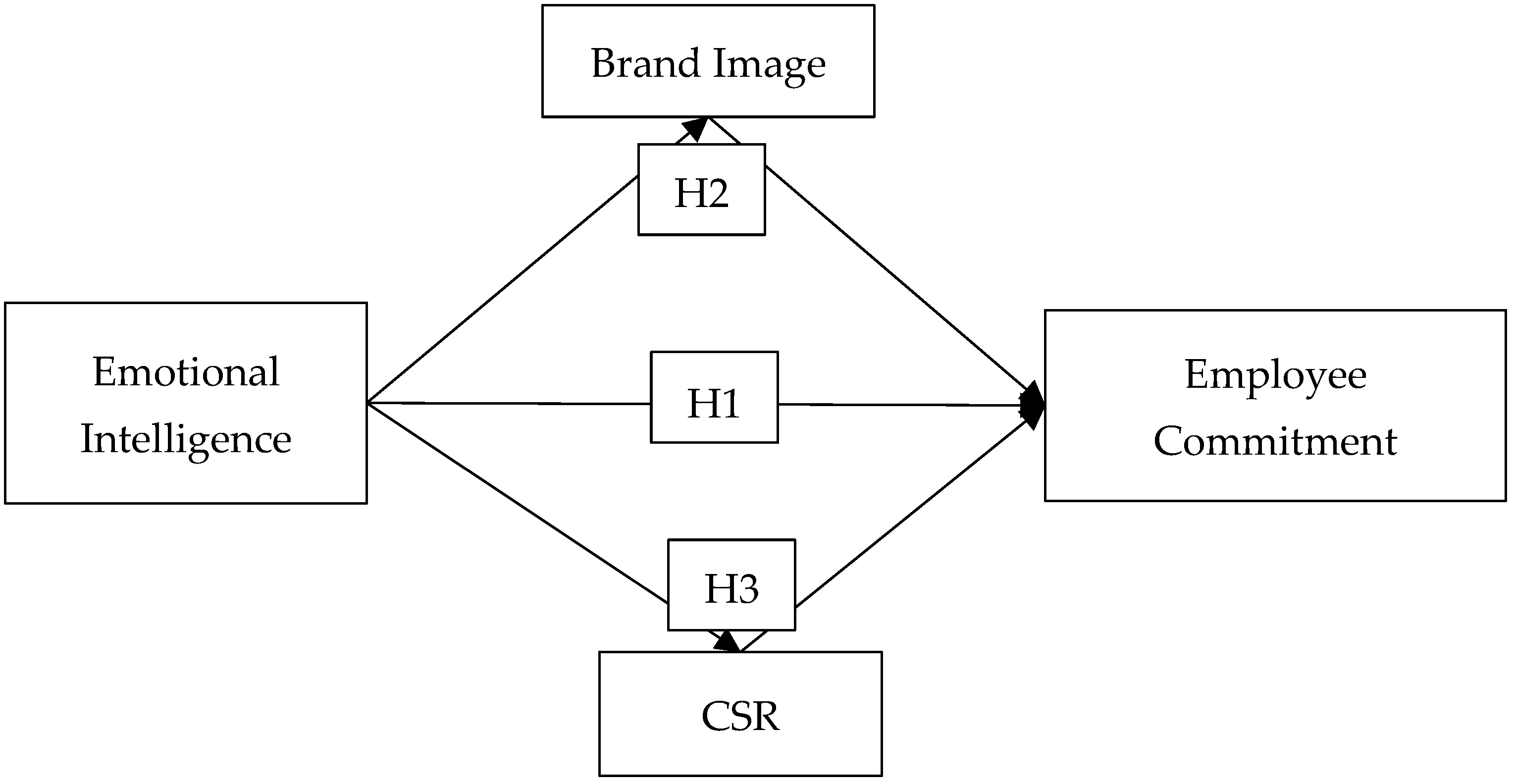
Addressing these gaps enables this research to form hypotheses that can contribute to both theoretical and practical domains regarding SMEs in Lebanon as a developing economy in the Middle East and Northern African region (MENA). To achieve this, the emotional intelligence theory, attachment, theory, and sustainability-oriented theory of the firm are embedded in the development of the current causal model (see Figure 1). This theoretical framework enables the research to develop hypotheses that are solid and can contribute to the discourse regarding both theoretical and practical strategies for SMEs in smaller economies (e.g., Lebanon). Long-term benefits for employers, employees, and society can be obtained through strategies that focus on employees’ mental state while providing a positive workplace that encourages commitment. Accordingly, the research aims to answer the following questions:
  • Is there a direct influence on SME employees’ EI and their commitment level?
  • Can CSR initiatives of SMEs in Lebanon mediate the EI–Commitment relationship for their staff? And
  • Does brand image mediate the relationship between EI and commitment in this context?
The following sections provide a detailed outlook, covering theories, hypotheses, methods and procedures, analysis and results, and the conclusions obtained in this research. The final sections entail theoretical and practical implications that can benefit both scholars and SME managers in Lebanon and perhaps neighboring countries. Limitations and recommendations for future studies are also highlighted.

2. Literature Review

2.1. Theoretical Foundation

The current study embeds three theoretical frameworks that are distinct but have complementary parameters that support the foundation of our proposed hypotheses. These are namely, emotional intelligence theory [13], attachment theory [14], and the Sustainability Oriented Theory of the Firm [15]. Attachment theory can be categorized as a dependency on identity and a bond which is an individuals’ understanding of being connected to a certain brand [14,16]. This attachment manifests as individuals conveying their commitment or loyalty to the said brand through emotional and recognition links [16,17]. Studies have also shown that attachment theory can be applied for understanding the contextual setting of organizations and the psychological dimensions of employees (e.g., [18,19,20]). However, most studies focus on other regions while calling for the need of empirical studies to advance the discourse [3,17]. This further drives the current research and highlights its potential contributions.
Emotional intelligence theory [13] suggests that a collection of abilities to perceive, understand, and regulate one’s emotions when interacting with others describes emotional intelligence (EI). Numerous studies have shown the relevance and adequacy of this theory for understanding the mechanisms that shape behavioral outcomes of individuals when considering EI (e.g., [18,21]). The literature implies that EI renders individuals more adept at managing conflicts, stress, anxiety, and using available resources to improve their job satisfaction and commitment towards the organization [19]. For the case of SMEs, it has been observed that EI is an essential determinant of various outcomes, both organizational- and individual-related, such as job satisfaction in Korea [21], organizational commitment, and firm performance [18]. This further demonstrates the need for empirical research addressing psychological mechanisms that are linked to sustainable outcomes for SMEs (i.e., commitment), especially for the Lebanese context.
The Sustainability Oriented Theory of the Firm is regarded as an integral part for organizational strategic vision that entails sustainable practices including environmental, social, and economic dimensions [15]. This strategic approach creates resilient firms that can develop competitive advantages in high extents of rivalry (i.e., SMEs) [3]. SMEs can adopt such strategies to not only improve their reputation with customers but also have value-driven frameworks for the employees to encourage positive performance outcomes such as commitment. SMEs in Vietnam showed enhanced performance and competitiveness when sustainability and innovative measures were embedded in their strategies [22]. This is while such orientations were shown to be influential on the performance of SME employees in emerging markets [23]. This premise is directly applied in this research to the case of SMEs and the selection of enterprises with sustainability-oriented frameworks.
CSR is not merely compliance, but a strategic tool that can transform the image of a brand when deployed correctly [24]. It has been noted in the literature that CSR can improve perceptions of employees and customers alike [25]. As ethical conduct, environmentally friendly, socially appropriate, and economically viable enterprises have become more vital, CSR initiatives can nurture both external reputation and internal loyalty [1]. Under the sustainability-oriented theoretical setting, CSR can be highly beneficial for driving positive work outcomes among SME employees [3]. Employees can establish bonds with their organizations through the lens of attachment theory as it pertains to the internal conceptualization similar to consumers [16]. The strategic approach can trigger attachment and positive emotional responses towards the organization, leading to a better image among employees and driving loyalty, commitment, trust, and job satisfaction [23]. The combined premises of these theories provide a sufficient foundation for developing a set of hypotheses that address the research questions. This theoretical framework explains the mechanisms within which SMEs can leverage their internal capabilities and external practices to improve their performance, sustainability, and workplace outcomes. This is due to the notion that highly committed employees are prone to outstanding performance and exemplary outcomes particularly when equipped with high EI [26].
It is also important to note that the current research excluded the direct link between the two mediators (i.e., CSR → BI path) as CSR is a distal and firm-level signal with influences on intentions that are transmitted via proximal appraisals by the customers (e.g., attitude, brand image, perceived value). Referring to the premises of the Theory of Planned Behavior [27] and appraisal-intention logic [28], CSR can have an indirect effect on BI through evaluation and rational judgment. The literature supports the notion that the CSR–BI link is mediated by trust, image, and value perceptions, which are negligible in the proposed model of this study (e.g., [29,30]). Hence, including the CSR → BI path would pose misspecification risks, a reduction in parsimony, and blurred construct boundaries [31].

2.2. Hypotheses Development

2.2.1. Emotional Intelligence and Employee Commitment

Emotional intelligence (EI) is considered a pivotal element that can determine organizational outcomes, especially regarding interpersonal behavior, motivation, and decision-making efficiency [13]. Built upon this early description, Ref. [32] characterized EI as self-awareness, self-regulation, motivation, empathy, and social skills [33,34]. According to the scale derived from [4], these dimensions are operationalized as follows: (1) self-awareness is the recognition and understanding of one’s emotions, moods, and their drivers and influences on others through a realistic assessment of sense; (2) self-regulation is the ability to redirect or control disruptive impulses and mood swings to facilitate rather than interference of emotions with goals (e.g., trustworthiness, adaptability to change and control over outbursts); (3) motivation described as an internal drive to achieve goals with persistence regardless of challenges and setbacks, and a desire to achieve and commit to specific targets; (4) empathy addresses one’s understanding of other people’s emotions and ability to attune feelings and perspective of others by actively concerning for their needs; and (5) social skills encompass various abilities that enable an individual to build networks and manage relationships and interactions while being proficient in inducing positive responses (e.g., conflict management, influence, leadership, communication prowess) [3,8].
When employees have a high sense of awareness, are empathetic, and adept at managing their emotions as well as others in social interactions (e.g., within the workplace), they are more likely to be aligned with organizational goals by exhibiting commitment [35]. Organizational commitment is described as the psychological bond connecting an employee to their firm through an emotional attachment and sense of identification and involvement [8]. Employees who are highly committed are highly likely to exhibit exemplary performance, resilience, quality and consistent service, and a visible contribution to company success [19]. Self-awareness enables employees to understand their values and align their sense of belonging and commitment. With strong self-regulation, employees are equipped with effective emotional management, supporting them when facing workplace situations with resilience and no negative emotions. This intrinsic drive leads to a higher level of commitment as an aspiration linked to success [1,36]. Empathic staff in the context of SMEs where formalities of HR systems are lower can respond to colleagues and managers’ emotions effectively, fostering a supportive workplace while increasing their attachment and subsequently, organizational commitment [16], linked to emotional intelligence theoretical premise. Employees possessing strong social skills are successful in building networks within the workplace through collaboration and resolution. This contributes to fostering a positive work atmosphere, encouraging a sense of connection and harmony [4]. Notably, the Sustainability Oriented Theory of the Firm as a strategic tool can be a pathway for SMEs to enhance employee outcomes due to the overall shift towards social, economic, and environmental benefits in the company approach [3]. Accordingly, the current study proposes the following hypothesis:
Hypothesis 1.
Emotional Intelligence among SME employees can directly influence their organizational commitment.

2.2.2. Mediating Role of Brand Image

Brand image entails both consumer and employee orientations entailing their perceptions and behaviors [37]. Employees develop perceptions towards their firm incorporating reputation, innovation, ethics, social responsibility, and sustainability measures, leading to a sense of identity, commitment, and confidence [7]. Through empathy, social skills, awareness, and regulation of self, employees with high EI can internalize the values of their organization more easily and actively contribute to its promotion [38]. Under the lens of attachment theory, this relationship can be explained as individuals with stronger psychological bonds having a more consistent sense of identity with the firm [14,39]. As brand image is derived from associations in memory [40] and comparison with alternatives, individuals develop positive image when the values, messages, actions, and activities of the brand are perceived as superior to others [41]. This shows the influential role of brand image in shaping positive mindsets and behavioral outcomes (i.e., commitment) [5]. Employees with high EI are better equipped to detect alignment of personal and corporate values and vice versa, which furthers the bridge between their personal abilities and the organizational aspects that drive commitment. This research argues that by leveraging this dynamic, SMEs can strategically generate commitment by incorporating sustainability measures and focusing on harnessing EI.
This can also be linked to the premises of emotional intelligence theory [13], which explains how individuals with efficient perception, understanding, management, and utilization of emotions can better maneuver complex scenarios that occur commonly in SME context [5] where direct and frequent interactions are routine. In the same vein, the premises of the sustainability-oriented theory of firm explain that green strategic measures can have a positive influence on perceptions of internal and external stakeholders (employees and customers). The current research focuses on employee-level perceptions consistent with this theory, operationalizing BI functions as a mediator for the EI–EC relationship. A value-driven internal strategy that focuses on social, economic, and environmental efficiency can yield positive results such as enhanced perception of brand image among employees [3]. When EI is high, the implication is the possession of superior abilities to perceive, interpret, and internalize organizational initiatives (i.e., CSR) [13]. Such individuals possess higher empathy and social awareness, which enables them to more accurately identify authenticity and value alignment of the firm’s social and green actions. Through this heightened perception, a stronger sense of identity and confidence can be formed that strengthens affective attachment and commitment to the organization. The organizational structure is saturated with identity-centric signals such as CSR. Employees with high EI are better equipped to decode social, symbolic, and emotional cues and integrate them into a coherent appraisal to the firm [42]. Higher EI enables employees to discern and distinguish substantive and symbolic efforts that reduce skepticism, attributes to fit within the organization, and amplifies pride and identification [13,41]. This research focuses on brand image as perceived by employees within the SME context.
Such competencies can merge with the employees’ perception of their brand and yield strong organizational bonds [4,42]. In the specific context of the Lebanese SME with its socio-political instabilities [2], having EI among staff and ensuring a positive strategic approach to improve brand image can result in a highly engaged and committed workforce. These psychological elements are rooted in the SMEs’ context through attachment theory, which links affective attachment to consistent and emotionally positive interactions with the organization [16,39]. In smaller firms, personal identification and alignment of values become highly crucial, which further implies the importance of affective bonds, emotional investment, a sense of belonging, and organizational commitment [43]. Following this logic, the current research posits the following hypothesis:
Hypothesis 2.
Brand image mediates the relationship between EI and SME employees’ commitment in Lebanon.

2.2.3. Mediating Role of Corporate Social Responsibility

Corporate Social Responsibility (CSR) in this research is contextualized under the premises of the sustainability-oriented theory of firm [15], which entails social, economic, and environmental dimensions [24]. CSR is pivotal for obtaining legitimacy among customers and employees alike. For the case of employees as internal stakeholders, commitment can be achieved through contributions to societal wellbeing. This also can be complemented by ethical standards and compliance of the firm to ethics [25,44]. The predisposition of employees with high EI towards the value of CSR practices is significant due to their empathy, social skills, and understanding of emotional cues to interpret organizational activities as a reflection of their moral code of conduct [45]. Under the premises of the sustainability-oriented concept of [15], sustainable practices of a firm can ensure long-term benefits through cohesion, legitimacy, and internalized values among staff. For SMEs, such strategic approaches can exhibit resilience, and stewardship which are essential for sustainability pillars (i.e., economic, social, and environmental) [3].
CSR in the context of SMEs is operationalized through the lens of sustainability pillars, namely, economic, social, and environmental aspects [24], with the support of attachment theory that links self-awareness and empathy to perception and the internalization of CSR as authentic expressions of business strategy and organizational values [46]. This sustainable orientation emphasizes the integration of growing concerns among societies regarding business strategies and value creation while considering resource usage and efficiency. This will further attachment and deepen their commitment to their organizations [47,48]. Within the context of SMEs, having established CSR within the strategy can be a leverage for the staff to perceive alignment with the brand and form positive responses in return. When employees are engaged with CSR activities, they perceive an organizational support system that cares for the wellbeing of society, which increases their affective commitment by satisfying meaning, justice, and a sense of identity for employees [49,50]. It can be interpreted that EI enables SME employees to emotionally connect with CSR initiatives, leading to a stronger sense of commitment [51]. Accordingly, the current research poses the following hypothesis:
Hypothesis 3.
CSR initiatives mediate the EI–Employee Commitment link in the Lebanese SME sector.

3. Sampling Procedures

The research employs a quantitative approach and through a cross-sectional survey that measures the parameters included in the research model (see Figure 1). This deductive approach allows researchers to use the theoretical setting to test the hypotheses [52]. A purposive sampling technique was used for the SMEs in Beirut and Tripoli, where the management confirmed their focus on recruiting emotionally intelligent employees (e.g., having EQ assessments) and having CSR activities in place that are entirely or partially sustainable. Upon this stage and having the necessary permissions granted, the employees of forty-two (42) different SMEs were deemed to be qualified under this selection criteria (approximately five employees per organization). A convenience sampling method was used to collect data from employees based on their willingness to participate, and availability. SMEs were contacted through the personal contacts and network of the researcher and permissions to survey employees were obtained from managers. The survey was conducted in English (with additional information regarding the purpose, factors under examination, and scope in Arabic) and were provided to managers of each SME, which then were shared with the researcher after removing company and/or employee identifiers. Each SME was asked to share the survey with their staff on a two-week return date. Using G*Power software Version 3.1 (statistical power = 90%; effect size = 0.15; α = 0.05) and the recommendations of [53], the required sample size was calculated 157. A total of 195 questionnaires were distributed from which 184 qualified for final analysis (after removing incomplete responses). Participants were given information regarding the purpose of the study, data confidentiality and anonymity, and a written consent form approved by the university.

4. Measurements

To design the survey, several measurement scales from the existing literature were employed. In this sense, emotional intelligence and its dimensions (i.e., self-awareness, self-regulation, motivation, empathy, and social skills) are derived from the works of [4] and [2] (e.g., “I am aware of my emotions as I experience them” and “I listen carefully to understand others’ points of view”). Each dimension is addressed by three questions, reflecting EI as the independent variable. Corporate Social Responsibility and its sustainability-centered dimensions (social, economic, and environmental) are addressed by nine questions (three for each dimension) [24] (e.g., “Profit-making is aligned with ethical business operations”). The questions about brand image were based on the work of [37] and derived from several sources [54,55,56] with five questions (e.g., “The company is known for its reliability and trustworthiness”). Lastly, employees’ commitment was measured by five questions [24] (e.g., “I feel a strong sense of belonging to this organization”). All questions were designed on a five-item Likert scale of 1 = strongly disagree; 2 = disagree; 3 = neutral; 4 = agree; and 5 = strongly agree. It is also important to note that age, gender, education level, and marital status were included in the survey as demographic questions that are regarded as control variables due to their potential impact on the dependent variable (employees’ commitment) [3]. The demographic characteristics of respondents are shown in Table 1 below:

5. Analysis and Results

The research employs the Partial Least Square–Structural Equation Modeling (PLS-SEM) technique—using Smart PLS software version 4—as the model includes latent effects that disregard normality of distribution while dealing with a relatively small sample size [57]. Table 2 shows the results of reliability and validity of the parameters and items of the survey through measurement model assessment. The values of outer loadings are between 0.7 and 0.9 [53]; Rho A, alpha, and composite reliability (CR) show satisfactory calculated values [57,58,59,60]. This is also supported by the values of average variance extracted (AVE) which are above 0.5 [53], stating a satisfactory convergent validity for the measurement model.
In addition to what is reported in Table 2, the Heterotrait–Monotrait ratio (HTMT) values in Table 3 show that the parameters are adequate in terms of their validity and reliability measures as values are below 0.85 [61].
The Variance Inflation Factor (VIF) is examined as the research includes reflective-formative variables. The values of VIF remain below 3, stating that there are no concerns regarding multicollinearity as shown in Table 4 [62]. Similarly, convergent validity is established as all reflective indicators are found to be acceptable and correspond with outer loadings, CR, and AVE across constructs [63].
The results in Table 5 show support for the hypotheses of the study as the structural model assessment shows satisfactory value. In this sense, both model fit indices are within the acceptable values for a good model fit as the Standardized Root Mean Square Residual (SRMR) is below 0.08 (0.033) and Normal Fit Index (NFI) is above 0.90 (0.925) [63,64]. The PLS-SEM results also show that both predictive power (R2) and predictive relevance (Q2) are evaluated, where employees’ commitment (EC) shows the highest explanatory power (R2 = 0.729) implying a high level of prediction power regarding variance accounted for in the model. This is followed by CSR with R2 = 0.577 and brand image (BI) with R2 = 0.565. Similarly, the predictive relevance of the constructs is ranked by EC (Q2 = 0.563), CSR (Q2 = 0.558), and BI (Q2 = 0.533) [57,65] from highest to lowest. For error metrics, both Root Mean Squared Error (RMSE) and Mean Absolute Error (MAE) are acceptable for the constructs as values remain close to 0 [66,67], stating a robust prediction of the current model.

6. Discussions

6.1. General Discussions

The findings in Table 5 show that the first hypothesis is supported, which implies that EI positively affects the commitment level of SME employees (β = 0.343, t = 3.433). This aligns with the foundation of emotional intelligence theory [13] as employees who possess EI in high levels can better manage their emotions as well as those of others, which paves the path towards developing a positive mindset towards the organization, manifesting as commitment and engagement. This is in line with the existing body of knowledge (e.g., [33,34]), showing consensus with the literature. SMEs’ organizational climate comprises direct interactions and relationships due to the small number of individuals, which further highlights the vitality of having emotionally intelligent employees who can navigate their behaviors (e.g., self-awareness and self-regulation) while aligning others’ emotions (e.g., empathy, social skills, and motivation). Such traits lead to trust-building, attachment, and emotional bonds with colleagues, managers, and the organization as a unit [14]. When employees have high EI levels, managing work-related stress becomes easier [3,8] and they can better perceive support from their organization [18,68] and develop psychological bonds with lowered turnover intentions [69,70]. Therefore, SMEs in Lebanon can focus on attracting, recruiting, and training employees’ emotional intelligence to achieve greater performance and sustainable economic outcomes.
The second hypothesis of the research is also supported in Table 5 (β = 0.307, t = 2.877), suggesting that brand image poses a mediating influence, bridging EI and employee commitment. This result underscores the link between perceptions of organization among employees as an internal matter that can have implications for their external branding. In other words, when employees have a good image of their organization, they can show positive behaviors at work, which can improve the performance of the firm, leading to lasting benefits. Under the premises of the sustainability-oriented theory of firm [15], a strong brand image can create a sense of pride and identification [5,39]. To extend, this can also create a sense of psychological security for employees, linking the premises of attachment theory as a strong bond is established between the individual and their organization when social values are integrated in the strategic approach [14,17]. As emotionally intelligent employees are better equipped to perceive and interpret company attributes, their internalization process is rendered more effective and efficient when the brand is sustainable and shares core values that are designed to benefit society, economy, and the environment, leading to higher commitment levels. While the direct context remains the contribution of this study, similar reports have been seen across the literature, suggesting that there is a consensus in this regard (e.g., [7,71]). Recent studies similarly recommend that adequate communication and a positive image can improve branding both internally and externally [2,43], especially for employees through triggering their pride and belonging [71]. The current findings show that when employees possess EI, they can have a better internalization process regarding brand image, which contributes to their sense of identification and attachment, leading to higher commitment levels. This is a vital aspect for SMEs in developing countries such as Lebanon as it establishes long-term stability and performance outcomes. It can also be stated that internal branding is a critical component for improving the mechanisms through which the workplace can foster positive employee behaviors (i.e., organizational commitment).
Lastly, the third hypothesis of the research was supported, as can be observed in Table 5 (β = 0.312, t = 2.985), which implies that CSR can act as a mediator for the EI–EC link. The results highlight the profound importance of ethical and sustainable practices (social, economic, and environmental) on employees’ work outcomes, which is in line with the premises of the sustainability-oriented theory of firm and attachment theory [24,46]. This is due to the vast benefits of CSR practices that can link and translate the efforts of the organization regarding the wellbeing of society, which fosters ethical conduct, sense of purpose, green initiatives, and genuine care for employees, people, and the environment. This is in consensus with the existing literature that supports the notion of CSR being a bridge for SMEs to create and share value, build rapport with local communities, and improve reputation [6,25]. CSR practices, when deployed effectively, can meet the psychological needs for safety, attachment, and identification, which drives the employees towards positive work outcomes as a response to their attachment, particularly when their EI is high [45,72]. The nature of CSR activities is designed to engage employees and involves internal communication aspects that further provide meaning and information while encouraging confidence, creativity, and involvement [3,5]. It can be implied that as a tangible action of care and value, CSR initiatives can be a leverage for emotionally intelligent employees to internalize and align with sustainable development goals and values of the organization. Commitment is the manifestation of internalization process in this context. Participation of employees with high EI in CSR activities can contribute to the effectiveness of these programs while promoting engagement, active involvement, and commitment.
The current findings highlight the critical importance of effect patterns that can draw commitment. The mediating effect of CSR and BI imply that EI has both socio-cognitive and direct attitudinal paths to commitment. This is achieved via emotion regulation and relational quality, which can predict commitment among employees with high EI levels beyond attitudinal intermediaries. The affective commitment versus continuance pathway is strong for both mediators, which further cultivates a sense of identification, pride, confidence, and goal-orientation among employees. It is also important to note that EI, CSR, and BI can be considered adjacent in terms of conceptuality in the social signaling contexts. The content of prosocial actions such as CSR and the reputational outcome (BI) are maintained distinctively to amplify their cruciality as they do not substitute one another. Within the context-specific Lebanese SME environment, commitment incorporates moral, legitimacy, community impact, trust, and institutional vision. As the number of employees is low in SMEs, having committed members can significantly benefit the firm as a result. This becomes more prevalent when employees have higher EI, which enables them to leverage company-established mechanisms to further develop positive organizational behaviors such as commitment.

6.2. Theoretical Implications

The current research affirms the adequacy and relevance of emotional intelligence theory [13] by showing both the direct and mediated impacts on employees’ commitment in the Lebanese SME context. The ability to understand and manage one’s emotion in a small workplace can yield strong bonds in the firm due to its cultural and economic context [73,74]. As this theory is commonly applied in Western and corporate settings, the current research extends this aspect to contribute to its current understanding in the Middle Eastern region. Furthermore, the research applies attachment theory [14], which is empirically supported by the results showing the robustness of how brand image and CSR practices can trigger psychological and emotional components that drive commitment. Robust CSR activities can shift the firm into a secure base for employees, which brings emotional safety and stable workplace atmosphere as they meet innate needs for belonging [17,18]. Importantly, this study focused on sustainable SMEs where sustainability-oriented theory of the firm demonstrates how non-monetary activities and strategies (brand image and CSR) can yield enhanced human capital and organizational competitiveness [1,15,23]. As this theory is relatively new [3], this research contributes to its application in context-specific Lebanese SME setting. The sustainable orientation of SMEs in the developing economy of Lebanon can be a significant benchmark that addresses long-term benefits to the society, economy, and environment of the country that face various challenges and instability. Thus, sustainability-oriented SMEs can have a major impact on the wellbeing of Lebanon if branding and CSR activities are effectively implemented.

6.3. Practical Implications

In addition to what was noted, there are several practical implications derived from the current findings that can be used by SME managers across Lebanon, and to an extent, neighboring countries due to cultural and institutional similarities. Firstly, it is essential to recognize the importance of having emotionally intelligent employees, which should be considered in the recruitment process. Specific assessments and evaluations can be implemented to ensure this matter. Secondly, training and development programs should be employed to further improve the attributes of employees and the internal branding of the firm. These programs should focus on emotional regulation, empathy, and social skills. This will empower employees’ dispositions towards sustainability through higher commitment. Thirdly, managers should consider employees as viable internal marketing targets and a source of branding by building identification, pride, connection, and social, economic, and environmental values. Having modern and technological communication channels (e.g., project management systems) can further improve the perception of employees in this context. Fourthly, CSR activities that focus on engagement between the firm and social and environmental causes can highly benefit the image and reputation of the organization both internally and externally. Social, economic, and environmental causes and values can be leveraged by employees to act as stewards of the brand, extending its effectiveness through retention and commitment. Authentic and genuine CSR investments can have long lasting benefits for SMEs in the Lebanese context. Lastly, by incorporating sustainability pillars, SMEs can ensure competitive advantages in the market as emotionally intelligent staff are more resilient, aware, and regulated to build upon their competencies. Such initiatives can extend the application of sustainable programs to the Middle Eastern region.

7. Conclusions

The current research contributes to the extant literature by highlighting several key aspects for SME context. Firstly, emotional intelligence should be regarded as an operating system for SMEs due to small size (five per company). This amplifies the importance of hiring employees with high EI levels to ensure the culture, service, and relationships in the firm are adequately capitalized. This focus enables a continuous coaching opportunity that can yield higher capacities, volatility, and agility while being low cost as it is an internal process. Secondly, building brands for SMEs is crucial, which suggests a move from sporadic promotions to a more stewardship and sustainability-centric approach. This implies that a coherent and aligned internal norm, value, and behavior should be established that resonates with the external messaging of the company. Improving the credibility, legitimacy, and responsibilities of the firm (under CSR) can be leverages for reducing coordination and operational costs of marketing and functionality. Managers of SMEs can benefit from leveraging such functions to compound reputation and improve brand image. Lastly, CSR initiatives should be an integral part of the enterprise signaling strategy as an anchor for addressing and linking with social, economic, and environmental needs of the local community. Waste management, youth development programs, transparent operations, and social activities can be among such programs as trust can increase demand as well as retention and improvements in performance measures of the firm itself. Thus, this study proposes a capabilities (EI); coherence (BI); and community-centric (CSR) strategy as a pragmatic approach for Lebanese SMEs, and by extension, others in the MENA region to gain competitive advantages in their respective industries.

Limitations and Recommendations

Despite the previously noted contributions of this research, there are a number of limitations which should be noted: (1) The research employed a quantitative, deductive, and cross-sectional approach, which limits the representativeness, depth, and tracing effects through time. (2) While 42 SMEs were included in the survey, a larger sample and a broader area is required for generalization of the current findings. Similarly, the methodological limitation of sampling procedures adds to the generalizability concern. This can also be applied to the control variables of the research where a more cohesive age group can be addressed for representativeness concerns. (3) The Lebanese SME context is scarce in the extant literature (i.e., socio-economic environment, strategic implementation, and CSR settings), which limits the specificity of observed measures. The contextual limitation is combined with the limited number of cities in this research which further raises the concerns for representativeness. (4) Self-reported data can have potential common method biases that limit the accuracy of observations. (5) The current model does not assess the causal effect of managers’ practices in this context. (6) While the current theoretical setting is robust (attachment theory, EI theory, Sustainability-Oriented Theory of the Firm), other variables (e.g., cultural elements) or theories (e.g., leader–member exchange) can be integrated in this context to improve the interpretations of the measurements. (7) Cultural and social elements were not included in the research, limiting the comparativeness of the results.
In accordance with the previously noted limitations, there are several paths for future studies that are enlisted below:
  • Qualitative studies can be designed to obtain in-depth information about employees’ EI and commitment to the organization.
  • Longitudinal studies can address the effectiveness of CSR and branding initiatives among SMEs, enabling observation of changes through time.
  • Corporate organizations and SMEs in the Middle East can be addressed with larger sample sizes to include cross-cultural results and build upon the current findings.
  • Internal and external CSR activities can be compared along with different leadership styles, organizational cultures, or industry-specific settings to further build upon the current understanding of the subject.
  • Multilevel and multi-source designs can address the impact of managers in such contextual settings.
  • Analyzing this context in neighboring nations and within the MENA region can provide cross-cultural understanding, furthering the findings of the current research.

Funding

This research received no external funding.

Institutional Review Board Statement

The study was approved by the Institutional Review Board of Lebanese International University (LIUIRB-250610-ST-417, date of approval 2 April 2025).

Informed Consent Statement

Informed consent was obtained from all subjects involved in the study.

Data Availability Statement

The data used in this study can be made available upon request from the corresponding author due to confidentiality reasons.

Conflicts of Interest

The authors declare no conflict of interest.

References

  1. Al Maalouf, N.J.; Daouk, A.; Elia, J.; Ramadan, M.; Sawaya, C.; Baydoun, H.; Zakhem, N.B. The impact of emotional intelligence on the performance of employees in the Lebanese banking sector during crisis. J. Law Sustain. Dev. 2023, 11, e1030. [Google Scholar] [CrossRef]
  2. Alhamad, A.M.; Akyürek, M.; Baadhem, A.M.S.; Jaafar, Z.M. Examining the influence of emotional intelligence on decision-making among students: The mediating effect of Branding loyalty. Int. J. Cent. Bank. 2024, 20, 537–562. [Google Scholar]
  3. Farmanesh, P.; Saliba, C.; Athari, S.A.; Naaman, D.; Al Geitany, S.H.; Abualrob, J.O. Bridging Sustainable Development: The Nexus of Business Safety, Health Management, and Corporate Social Sustainability—Do Affective Commitment and Emotional Intelligence Mediate? Sustainability 2025, 17, 3080. [Google Scholar] [CrossRef]
  4. Singh, S. Development of a measure of emotional intelligence. Psychol. Stud.-Univ. Calicut 2004, 49, 136–141. [Google Scholar]
  5. Khan, I.; Fatma, M. Understanding the Influence of CPE on brand image and brand commitment: The mediating role of brand identification. Sustainability 2023, 15, 2291. [Google Scholar] [CrossRef]
  6. De Silva, K.M.; De Silva Lokuwaduge, C.S. Impact of corporate social responsibility practices on employee commitment. Soc. Responsib. J. 2021, 17, 1–14. [Google Scholar] [CrossRef]
  7. Schwaiger, K.; Zehrer, A. The relationship between employer image and employee commitment in family-run hospitality firms. Int. J. Cult. Tour. Hosp. Res. 2021, 16, 352–369. [Google Scholar] [CrossRef]
  8. Afolashade, I.S.; Jimoh, A.M.; Raji, N.A.; Fowowe-Ogunmilugba, B.J.; Oduola, O.Z.; Adewuyi, H.O. Emotional intelligence, job satisfaction, reward system and organizational commitment among workers. ASEAN J. Econ. Econ. Educ. 2024, 3, 45–60. [Google Scholar]
  9. Osta, A.M. The impact of employee engagement on intention to leave in SMEs in Lebanon: The moderating role of normative commitment. Cogent Bus. Manag. 2025, 12, 2501208. [Google Scholar] [CrossRef]
  10. Vrontis, D.; Chaarani, H.E.; Nemar, S.E.; Dib, H. The relationship between managers’ emotional intelligence and employees’ performance. J. Int. Bus. Entrep. Dev. 2021, 13, 177–196. [Google Scholar] [CrossRef]
  11. Makdissi, R.; Attal, L.; Mekdessi, S. Resilience and adaptation: Navigating economic crisis in Lebanon-transformation of commercial company into industrial entity during uncertainty. IOSR J. Bus. Manag. (IOSR-JBM) 2023, 25, 62–76. [Google Scholar]
  12. Kankam, G.; Charnor, I.T. Emotional intelligence and consumer decision-making styles: The mediating role of brand trust and brand loyalty. Futur. Bus. J. 2023, 9, 57. [Google Scholar] [CrossRef]
  13. Salovey, P.; Mayer, J.D. Emotional intelligence. Imagin. Cogn. Personal. 1990, 9, 185–211. [Google Scholar] [CrossRef]
  14. Stokburger-Sauer, N.; Ratneshwar, S.; Sen, S. Drivers of consumer–brand identification. Int. J. Res. Mark. 2012, 29, 406–418. [Google Scholar] [CrossRef]
  15. Lozano, R.; Carpenter, A.; Huisingh, D. A review of ‘theories of the firm’ and their contributions to Corporate Sustainability. J. Clean. Prod. 2015, 106, 430–442. [Google Scholar] [CrossRef]
  16. Hinson, R.; Boateng, H.; Renner, A.; Kosiba, J.P.B. Antecedents and consequences of customer engagement on Facebook: An attachment theory perspective. J. Res. Interact. Mark. 2019, 13, 204–226. [Google Scholar] [CrossRef]
  17. Elliott, R.; Simsarian, C.; Bongar, B. Attachment Theory/Style: Emotional Commitment. In Encyclopedia of Sexual Psychology and Behavior; Springer International Publishing: Cham, Switzerland, 2024; pp. 1–8. [Google Scholar]
  18. Deb, S.K.; Nafi, S.M.; Mallik, N.; Valeri, M. Mediating effect of emotional intelligence on the relationship between employee job satisfaction and firm performance of small business. Eur. Bus. Rev. 2023, 35, 624–651. [Google Scholar] [CrossRef]
  19. Mura, L.; Zsigmond, T.; Machová, R. The effects of emotional intelligence and ethics of SME employees on knowledge sharing in Central-European countries. Oeconomia Copernic. 2021, 12, 907–934. [Google Scholar] [CrossRef]
  20. Trofimov, A.; Drobot, O.; Kоkаrieva, A.; Maksymova, N.; Lovochkina, A.; Kozytska, I. The influence of management style and emotional intelligence on the formation of employees’ commitment and loyalty. Humanit. Soc. Sci. Rev. 2019, 7, 393–404. [Google Scholar] [CrossRef]
  21. Kim, D.K.; Kim, B.Y. The effect of emotional intelligence on job satisfaction: A case study of SME Management Consultants in Korea. J. Asian Financ. Econ. Bus. 2021, 8, 1129–1138. [Google Scholar]
  22. Le, T.T.; Ikram, M. Do sustainability innovation and firm competitiveness help improve firm performance? Evidence from the SME sector in Vietnam. Sustain. Prod. Consum. 2022, 29, 588–599. [Google Scholar] [CrossRef]
  23. Akomea, S.Y.; Agyapong, A.; Ampah, G.; Osei, H.V. Entrepreneurial orientation, sustainability practices and performance of small and medium enterprises: Evidence from an emerging economy. Int. J. Prod. Perform. Manag. 2023, 72, 2629–2653. [Google Scholar] [CrossRef]
  24. Tan, Z.C.; Tan, C.E.; Choong, Y.O. Occupational Safety & Health Management and Corporate Sustainability: The Mediating Role of Affective Commitment. Saf. Health Work. 2023, 14, 415–424. [Google Scholar] [CrossRef]
  25. Loor-Zambrano, H.Y.; Santos-Roldán, L.; Palacios-Florencio, B. Relationship CSR and employee commitment: Mediating effects of internal motivation and trust. Eur. Res. Manag. Bus. Econ. 2022, 28, 100185. [Google Scholar] [CrossRef]
  26. Valeri, M. Guest editorial: Managerial practices supporting the growth of small business. Eur. Bus. Rev. 2023, 35, 565–572. [Google Scholar] [CrossRef]
  27. Ajzen, I. The theory of planned behavior. Organ. Behav. Hum. Decis. Process. 1991, 50, 179–211. [Google Scholar] [CrossRef]
  28. Bagozzi, R.P. Attitudes, intentions, and behavior: A test of some key hypotheses. J. Personal. Soc. Psychol. 1981, 41, 607. [Google Scholar] [CrossRef]
  29. Chen, Y.-S. The drivers of green brand equity: Green brand image, green satisfaction, and green trust. J. Bus. Ethic. 2010, 93, 307–319. [Google Scholar] [CrossRef]
  30. Martínez, P.; del Bosque, I.R. CSR and customer loyalty: The roles of trust, customer identification with the company and satisfaction. Int. J. Hosp. Manag. 2013, 35, 89–99. [Google Scholar] [CrossRef]
  31. Kline, R.B. Principles and Practice of Structural Equation Modeling; Guilford Publications: New York, NY, USA, 2023. [Google Scholar]
  32. Goleman, D. Emotional Intelligence: Issues in Paradigm Building. In The Emotionally Intelligent Workplace; Jossey-Bass: San Francisco, CA, USA, 2001; Volume 13, p. 26. [Google Scholar]
  33. Dimitrova, B.; Tomova, T. A Wellness lifestyle, emotional intelligence, workplace and leadership success. Int. Sci. J. Smart Innov. Recreat. Wellness Ind. Niche Tour. 2025, 6, 51–56. [Google Scholar]
  34. Herut, A.H.; Muleta, H.D.; Lebeta, M.F. Emotional intelligence as a predictor for academic achievement of children: Evidence from primary schools of southern Ethiopia. Soc. Sci. Humanit. Open 2024, 9, 100779. [Google Scholar] [CrossRef]
  35. Johar, S.S.H.; Shah, I.M. The impact of emotional intelligence on organizational commitment through self-esteem of employee in public sector. Bus. Manag. Rev. 2014, 4, 3. [Google Scholar]
  36. Mekdessi, S.; El-Hawli, S.; Makdissi, R. The impact of current crises on employment-empirical study on food sector SMEs in north Lebanon. J. Econ. Financ. 2021, 12, 28–47. [Google Scholar]
  37. Low, G.S.; Lamb, C.W., Jr. The measurement and dimensionality of brand associations. J. Prod. Brand Manag. 2000, 9, 350–370. [Google Scholar] [CrossRef]
  38. Barros-Arrieta, D.; García-Cali, E. Internal branding: Conceptualization from a literature review and opportunities for future research. J. Brand Manag. 2021, 28, 133–151. [Google Scholar] [CrossRef]
  39. Wei, W.K.; Nasruddin, E. Strategic Brand Equity Management for SMEs: Insights from a Comprehensive Literature Review. Int. J. Bus. Technol. Manag. 2024, 6, 264–280. [Google Scholar]
  40. Ramesh, K.; Saha, R.; Goswami, S.; Sekar; Dahiya, R. Consumer’s response to CSR activities: Mediating role of brand image and brand attitude. Corp. Soc. Responsib. Environ. Manag. 2019, 26, 377–387. [Google Scholar] [CrossRef]
  41. Khan, I.; Fatma, M. Online destination brand experience and authenticity: Does individualism-collectivism orientation matter? J. Destin. Mark. Manag. 2021, 20, 100597. [Google Scholar] [CrossRef]
  42. Ghorbanzadeh, D.; Rahehagh, A. Emotional brand attachment and brand love: The emotional bridges in the process of transition from satisfaction to loyalty. Rajagiri Manag. J. 2020, 15, 16–38. [Google Scholar] [CrossRef]
  43. Haris, M.; Nasir, N.; Cheema, S. The impact of social media activities on emotional attachment with the mediating role of brand image and brand commitment of retail sector. Rev. Educ. Adm. LAW 2022, 5, 173–188. [Google Scholar] [CrossRef]
  44. Raza, S.A.; Khan, K.A.; Hakim, F. Whether organizational citizenship behavior is triggered by employee CSR perception and spiritual values: The moderating role of Islamic work ethics. Manag. Res. Rev. 2024, 47, 353–373. [Google Scholar] [CrossRef]
  45. Alhumoudi, H.; Alfarhan, K. The Role of Corporate Social Responsibility and Emotional Intelligence Towards Effective Management: Empirical Evidence from Saudi Arabia. J. Manag. Sustain. 2024, 14, 47. [Google Scholar] [CrossRef]
  46. Theron, M.; Cant, M.; Wiid, J. CSR communication and internal stakeholders: The overlooked market. Int. J. Res. Bus. Soc. Sci. 2024, 13, 290. [Google Scholar] [CrossRef]
  47. dos Santos, C.M.F.; Coelho, A.; da Ascensão Marques, A.M. Are Organizational Citizenship Behaviors for Environment (OCBEs) affected by Greenwashing? The Mediating Role of Job Satisfaction and Affective Commitment. In Proceedings of the EnANPAD 2022, Online, 21–23 December 2022. [Google Scholar]
  48. Situmorang, S.A. Investigating the Influence of Emotional Intelligence and Organizational Commitment on Organizational Citizenship Behavior: An Examination of the Workforce at PT XYZ. Bus. Econ. Commun. Soc. Sci. J. (BECOSS) 2024, 6, 189–200. [Google Scholar] [CrossRef]
  49. Jha, A. Relevance of CSR for building effective commitment of employees: A multilevel approach. J. Glob. Responsib. 2023, 14, 135–154. [Google Scholar] [CrossRef]
  50. Ahsan, M.J.; Khalid, M.H. Linking corporate social responsibility to organizational commitment: The role of employee job satisfaction. J. Glob. Responsib. 2025, 16, 407–430. [Google Scholar] [CrossRef]
  51. Orazalin, N.; Baydauletov, M. Corporate social responsibility strategy and corporate environmental and social performance: The moderating role of board gender diversity. Corp. Soc. Responsib. Environ. Manag. 2020, 27, 1664–1676. [Google Scholar] [CrossRef]
  52. Casula, M.; Rangarajan, N.; Shields, P. The potential of working hypotheses for deductive exploratory re-search. Qual. Quant. 2021, 55, 1703–1725. [Google Scholar] [CrossRef] [PubMed]
  53. Hair, J.F., Jr.; Sarstedt, M.; Ringle, C.M.; Gudergan, S.P. Advanced Issues in Partial Least Squares Structural Equation Modeling; Sage Publications: Thousand Oaks, CA, USA, 2017. [Google Scholar]
  54. Bravo, R.; Buil, I.; de Chernatony, L.; Martínez, E. Managing brand identity: Effects on the employees. Int. J. Bank Mark. 2017, 35, 2–23. [Google Scholar] [CrossRef]
  55. Martinez, E.; De Chernatony, L. The effect of brand extension strategies upon brand image. J. Consum. Mark. 2004, 21, 39–50. [Google Scholar] [CrossRef]
  56. Nguyen, N.; Leblanc, G. Corporate image and corporate reputation in customers’ retention decisions in services. J. Retail. Consum. Serv. 2001, 8, 227–236. [Google Scholar] [CrossRef]
  57. Hair, J.F.; Risher, J.J.; Sarstedt, M.; Ringle, C.M. When to use and how to report the results of PLS-SEM. Eur. Bus. Rev. 2019, 31, 2–24. [Google Scholar] [CrossRef]
  58. Diamantopoulos, A.; Sarstedt, M.; Fuchs, C.; Wilczynski, P.; Kaiser, S. Guidelines for choosing between multi-item and single-item scales for construct measurement: A predictive validity perspective. J. Acad. Mark. Sci. 2012, 40, 434–449. [Google Scholar] [CrossRef]
  59. Dijkstra, T.K.; Henseler, J. Consistent partial least squares path modeling. MIS Q. 2015, 39, 297–316. [Google Scholar] [CrossRef]
  60. Jöreskog, K.G. Simultaneous factor analysis in several populations. Psychometrika 1971, 36, 409–426. [Google Scholar] [CrossRef]
  61. Henseler, J.; Ringle, C.M.; Sarstedt, M. A new criterion for assessing discriminant validity in variance-based structural equation modeling. J. Acad. Mark. Sci. 2015, 43, 115–135. [Google Scholar] [CrossRef]
  62. Henseler, J.; Ringle, C.M.; Sinkovics, R.R. The use of partial least squares path modeling in international marketing. In New Challenges to International Marketing; Emerald Group Publishing Limited: Bingley, UK, 2009. [Google Scholar]
  63. Hair, J.F., Jr.; Hult, G.T.M.; Ringle, C.M.; Sarstedt, M.; Danks, N.P.; Ray, S. Evaluation of reflective measurement models. In Partial Least Squares Structural Equation Modeling (PLS-SEM) Using R: A Workbook; Springer International Publishing: Cham, Switzerland, 2021; pp. 75–90. [Google Scholar]
  64. Henseler, J.; Dijkstra, T.K.; Sarstedt, M.; Ringle, C.M.; Diamantopoulos, A.; Straub, D.W.; Ketchen, D.J., Jr.; Hair, J.F.; Hult, G.T.M.; Calantone, R.J. Common beliefs and reality about PLS: Comments on Rönkkö and Evermann (2013). Organ. Res. Methods 2014, 17, 182–209. [Google Scholar] [CrossRef]
  65. Shmueli, G.; Ray, S.; Estrada, J.M.V.; Chatla, S.B. The Elephant in the Room: Predictive Performance of PLS Models. J. Bus. Res. 2016, 69, 4552–4564. [Google Scholar] [CrossRef]
  66. Nasution, M.I.; Fahmi, M.; Prayogi, M.A. The quality of small and medium enterprises performance using the structural equation model-part least square (SEM-PLS). J. Phys. Conf. Ser. 2020, 1477, 052052. [Google Scholar] [CrossRef]
  67. Purwanto, A.; Sudargini, Y. Partial least squares structural squation modeling (PLS-SEM) analysis for social and management research: A literature review. J. Ind. Eng. Manag. Res. 2021, 2, 114–123. [Google Scholar]
  68. Ramos, H.M.; Mustafa, M.; Caspersz, D.; Raveentheran, A. Organizational support and pro-organizational behaviors in hotel family-SMEs: The role of emotional intelligence. J. Hum. Resour. Hosp. Tour. 2021, 20, 542–564. [Google Scholar] [CrossRef]
  69. Ouerdian, E.G.B.; Mansour, N.; Gaha, K.; Gattoussi, M. Linking emotional intelligence to turnover intention: LMX and affective organizational commitment as serial mediators. Leadersh. Organ. Dev. J. 2021, 42, 1206–1221. [Google Scholar] [CrossRef]
  70. Zeidan, S. Empirical investigation of the relationship between emotional intelligence, organisational commitment and turnover intentions. J. Inf. Knowl. Manag. 2020, 19, 2050012. [Google Scholar] [CrossRef]
  71. Purwanto, A.; Wafa, A.; Sanjani, M.A.F. Interpersonal Communication Strategies in Building an Image of Contigency Perspective of Accommodation. Manag. Indones. J. Educ. Manag. 2023, 5, 267–279. [Google Scholar] [CrossRef]
  72. Shafait, Z.; Huang, J. Exploring the nexus of emotional intelligence and university performance: An investigation through perceived organizational support and innovative work behavior. Psychol. Res. Behav. Manag. 2023, 16, 4295–4313. [Google Scholar] [CrossRef]
  73. Alsughayir, A. The effect of emotional intelligence on organizational commitment: Understanding the mediating role of job satisfaction. Manag. Sci. Lett. 2021, 11, 1309–1316. [Google Scholar] [CrossRef]
  74. Pellitteri, J. Emotional Intelligence and Leadership Styles in Education. Psychol. Its Contexts/Psychol. Její Kontexty 2021, 12, 39–52. [Google Scholar] [CrossRef]
Figure 1. Research model.
Sustainability 17 09602 g001
Table 1. Respondent’s demographics.
AgeFrequencyPercentage
20–303116.85
31–356535.32
36–407239.13
+40168.70
Gender
Male10355.98
Female8144.02
Education
Diploma/Bachelor12366.85
Masters/PhD6133.15
Marital Status
Married13171.20
Single5328.80
Table 2. Measurement model assessment.
FactorsDimensionsIndicatorsOuter LoadingsAlphaRho ACRAVE
Brand Image-BI10.7410.8110.7880.8460.711
BI20.734
BI30.752
BI40.762
BI50.733
Employee Commitment-EC10.7210.8330.8100.8290.701
EC20.725
EC30.744
EC40.759
EC50.753
CSRSocialCSS10.7620.8160.8010.8180.674
CSS20.753
CSS30.733
EconomicCSE40.7310.8140.7740.8050.688
CSE50.744
CSE60.735
EnvironmentalCSG70.7280.8070.7880.8060.693
CSG80.736
CSG90.741
Emotional IntelligenceSelf-AwarenessSA10.7440.8110.8170.8070.671
SA20.759
SA30.747
Self-RegulationSR10.7310.8130.8160.7860.706
SR20.766
SR30.712
EmpathyEP10.7590.7940.7730.7710.677
EP20.763
EP30.731
MotivationMT10.7410.7880.7620.7820.703
MT20.744
MT30.755
Social SkillsSS10.7610.8050.7880.8110.710
SS20.770
SS30.748
Table 3. Heterotrait–Monotrait (HTMT).
SASREPMTSSCSSCSECSGBI
SR0.684-
EP0.5630.572-
MT0.6110.6230.637-
SS0.6120.6440.6510.667-
CSS0.6220.6140.6500.6610.677-
CSE0.5490.5630.6130.6110.5940.619-
CSG0.5770.5440.6100.5790.5880.5790.596-
BI0.5720.5490.5890.5860.6030.5940.5470.610-
EC0.5930.5880.5790.6010.5890.6020.6130.6080.610
SA = Self-Awareness; SR = Self-Regulation; EP = Empathy; MT = Motivation; SS = Social Skills; CSS = Social-CSR; CSE = Economic-CSR; CSG = Environmental-CSR; BI = Brand Image; EC = Employee Commitment.
Table 4. Reflective-formative assessment.
ConstructItemsConvergent ValidityWeightsVIFt-Statistics
EISelf-Awareness0.7150.3421.9233.011
Self-Regulation0.3331.8803.024
Empathy0.3411.8653.029
Motivation0.3381.8443.022
Social Skills0.3401.8293.018
CSRSocial0.7190.3371.9442.814
Economic0.3441.9382.822
Environmental0.3361.9332.819
Table 5. Structural model assessment.
EffectsRelationsβt-Statisticsp-ValueHypothesis
Direct
H1EI → EC0.3433.433 **0.001Supported
Mediation
H2EI → BI → EC0.3072.877 *0.009Supported
H3EI → CSR → EC0.3122.985 *0.009Supported
Control Variables
Gender → EC0.1222.114 *
Age → EC0.1162.133 *
Education → EC0.1192.096 *
Marital Status → EC0.1212.122 *
R2EC = 0.729/Q2EC = 0.563/RMSE = 0.663/MAE = 0.512
R2CSR = 0.577/Q2CSR = 0.558/RMSE = 0.664/MAE = 0.538
R2BI = 0.565/Q2BI = 0.533/RMSE = 0.661/MAE = 0.564
SRMR: 0.033; NFI: 0.925; CFI: 0.981
* 0.05, ** 0.01.
Disclaimer/Publisher’s Note: The statements, opinions and data contained in all publications are solely those of the individual author(s) and contributor(s) and not of MDPI and/or the editor(s). MDPI and/or the editor(s) disclaim responsibility for any injury to people or property resulting from any ideas, methods, instructions or products referred to in the content.