1. Introduction
In recent years, the emission of volatile organic compounds (VOCs) accounts for 7% of the total atmospheric emissions [
1]. The massive emission of VOCs has posed an irreversible threat to the environment and human beings, which has attracted the attention of the government, enterprises and society [
2,
3]. Effective treatment of pollution plays an important role in achieving environmental sustainability and moving towards a circular economy [
4].
Styrene (the vapor pressure at 20 °C is 0.6 kPa) is an important volatile and polymerizable hydrophobic organic compound, which belongs to aromatic compounds. It is often used as an organic chemical raw material and has a wide range of applications in plastics, petroleum, synthetic rubber, insulating materials, pharmaceuticals and other industries [
5]. With the increasing use of styrene in industry, a large amount of styrene waste gas will be discharged during production, use and storage. A large amount of styrene waste gas will not only pollute the environment [
6], but also cause harm to human health, with “three carcinogenic” effects—carcinogenicity, mutagenicity and teratogenicity [
7]. At the same time, styrene is also a typical VOC odor pollutant, which has been listed as one of 189 harmful air pollutants by the United States Environmental Protection Agency. Therefore, the removal of styrene waste gas is of great significance to human life and the environment [
8,
9].
The traditional treatment methods of VOCs degradation include adsorption [
10], catalytic combustion [
11] and condensation, and the emerging treatment technologies include photo-oxidation decomposition [
12], low-temperature plasma [
13] and photocatalysis [
14]. These methods have their own advantages, but there are some disadvantages such as secondary pollution, large investment, high cost and complex operation process, and the treatment technology of styrene waste gas has attracted extensive attention by many foreign and local scholars [
15,
16,
17,
18,
19]. The biological method is widely used because of its high degradation efficiency [
20], wide application range [
21], no secondary pollution [
22], low investment and energy consumption [
23], and simple operation. Biological methods include biofiltration, bio-trickling filtration and biological washing, among which bio-trickling filtration is the most widely used method in the degradation of hydrophobic VOCs [
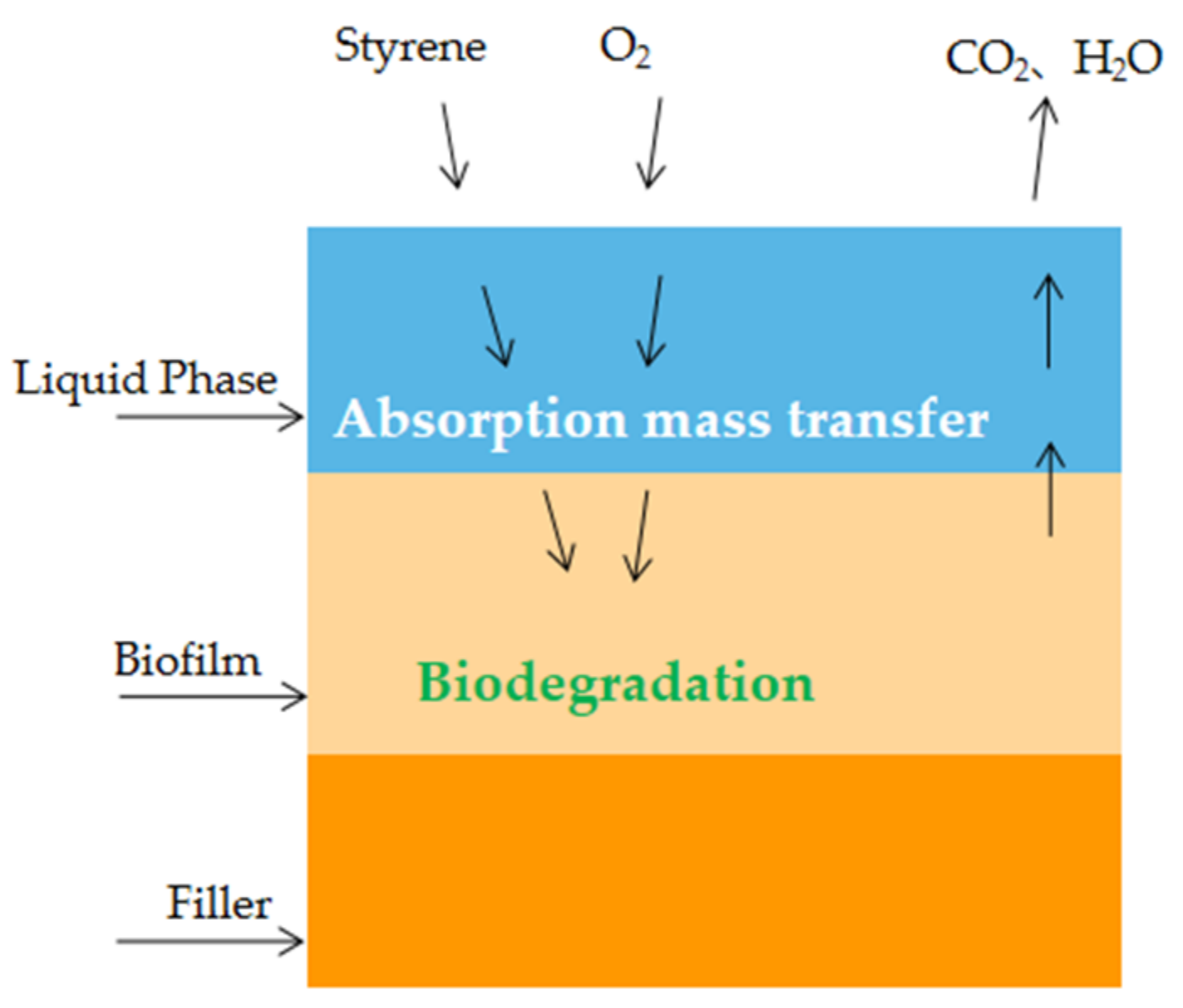
24]. During BTF operation, the nutrient solution is evenly sprayed into the BTF by the nozzle, which can not only provide nutrients for microorganisms, but also keep the BTF moist. After entering BTF, the gaseous pollutants are first transferred to the liquid phase, and then diffused to the biofilm from the liquid phase, so that they can be degraded into CO
2, H
2O and other small molecule inorganic substances by microorganisms (
Figure 1), so as to achieve the goal of degrading pollutants [
25]. The pollutant RE of BTF depends on the gas–liquid mass-transfer efficiency, and also has an important relationship with the activity of microorganisms [
26].
At present, there have been some studies on the degradation of styrene by BTF. For example, in Pau et al. [
27], when the EBRT is 31 s, the maximum EC during stable operation can reach 23 g/m
3/h; in Zamir et al. [
28], when EBRT is 60 s and 5% silicon oil is added, if styrene waste gas less than 2500 mg/m
3 is degraded, the RE can reach 95%; Zilli et al. [
29] used 4:1 mud carbon and glass beads as mixed fillers to inoculate the culture solution of the styrene oxidizing strain Rhodococcus roseus to form a biofilm. The results showed that when the concentration of styrene was 800 mg/m
3 and the air velocity was 245 m
3/h, the elimination capacity of styrene was 63 g/m
3/h; in Alvarez et al. [
30], the filling volume of filler is 0.6 m3, and after 300 days of operation, the best performance is obtained. At EBRT of 31 s, the RE is 75.6%, and the EC is 18.8 g/m
3/h. At present, the degradation of styrene by BTF still has some problems, such as too long residence time and low removal load [
25]. It is usually studied to improve the RE by domesticating microbial inoculum, replacing filler [
31], adding surfactant [
32,
33], etc. In this study, a multi-layer independent spray bio-trickling filter was designed by optimizing the BTF structure, and the degradation performance of the NBTF was investigated.
In addition, understanding the characteristics of microorganisms is crucial to the analysis of biological treatment. Extracellular polymers (EPS) play an important role in the survival of microorganisms and the formation of biofilms [
34,
35]. EPS mainly includes protein (PN) and polysaccharide (PS) [
36]. The change of PN and PS will affect the hydrophobicity of the biofilm, thereby affecting the mass-transfer efficiency of pollutants, thus affecting the degradation efficiency of pollutants [
37].
This study adopts the self-designed NBTF. First, the startup time of NBTF was investigated. The comparison between the start-up time of NBTF and traditional BTF can also reflect the performance of the NBTF device. Then, during the stable operation of NBTF, the operating conditions of NBTF are optimized through experiments, and the effects of styrene inlet concentration and EBRT on styrene RE were investigated. Subsequently, the NBTF recovery performance test after starvation was carried out to explore the impact resistance of NBTF. The degradation performance of NBTF was analyzed by measuring the content of PN and PS in the extracellular polymer from the aspect of microbial characteristics.
2. Materials and Methods
2.1. Target Pollutant
Styrene with a purity of 99%, purchased from Shanghai Macklin Biochemical Technology Co., Ltd. (Shanghai, China), was selected as the target VOC in this study.
2.2. Microorganism and Cultivation Medium
The activated sludge from the secondary sedimentation tank of Xiamen Xinglin Sewage Plant was selected as the initial microbial source. Step 1: after the activated sludge was retrieved, it was placed in a 15 L container and left for 24 h. The supernatant of the sludge was discarded and 10 L mineral salt medium (MSM) was added. The MSM composition is (g/L): 0.8 glucose, 1.0 K2HPO4, 1.0 KH2PO4, 0.4 NH4Cl, 0.4 NaHCO3, 0.2 MgCl2·6H2O, 0.2 CaCl2. Step 2: after each aeration culture for 22 h, it stood still for 2 h and the culture medium was replaced with the same composition. Step 3: after continuous cultivation for 5 d, the filler was poured into the activated sludge for film hanging, and after soaking for 48 h, the filler was taken out and loaded into NBTF. Step 4: the low concentration styrene waste gas was introduced into NBTF. According to the set conditions, the daily circulating drip was used to supplement the nutrients for the biofilm. The 0.1 g/L glucose was reduced in the MSM per 2 d. After 16 d, the circulating MSM used began to contain no glucose.
2.3. Experimental Device
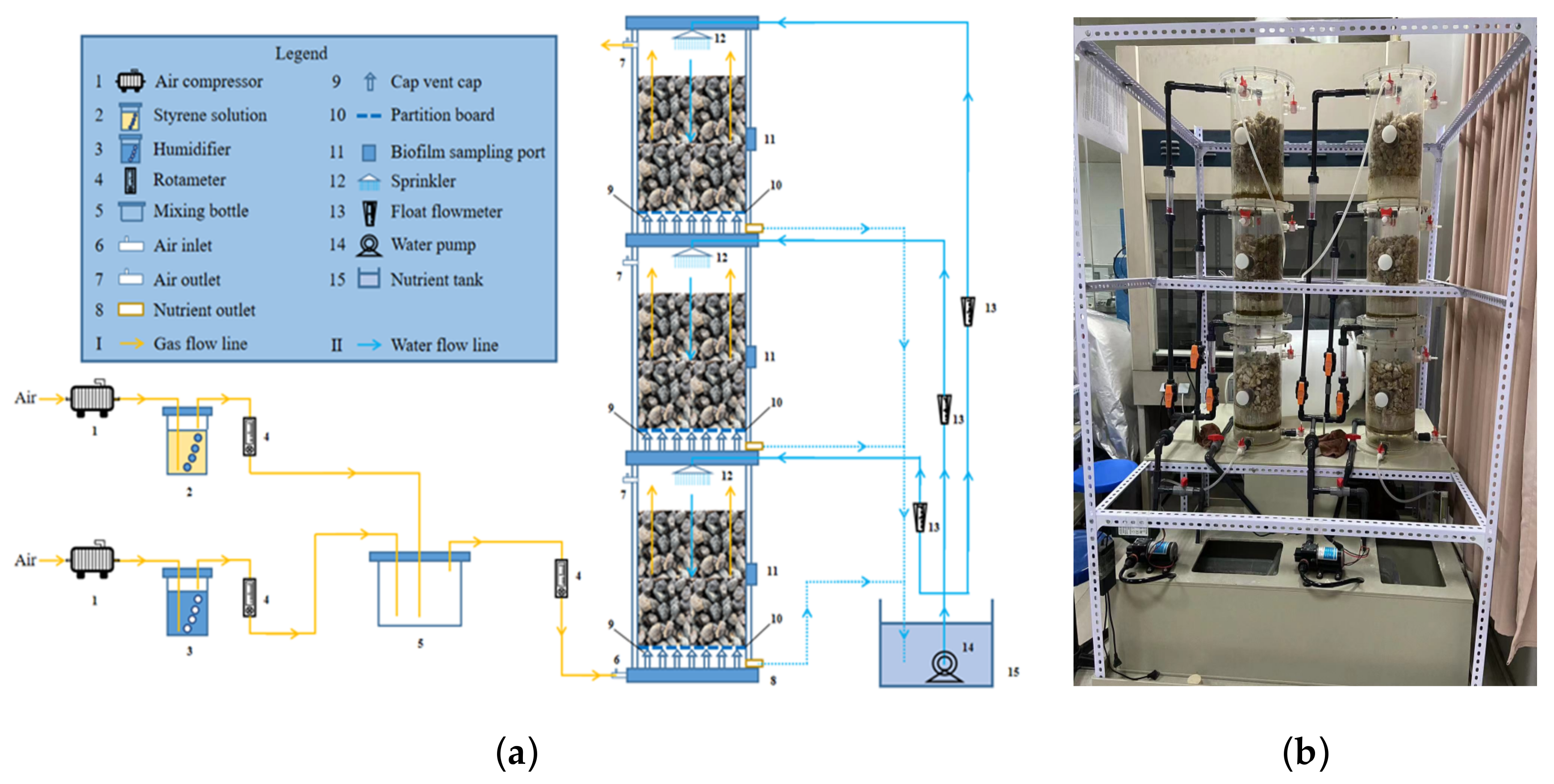
A NBTF device designed independently was built in this experiment, as shown in
Figure 2. The device was composed of a NBTF, an air compressor, a blow off bottle, a rotameter, a mixing bottle, a water pump, a float flowmeter, etc. The NBTF was made of 5 mm thick transparent acrylic plate, which was divided into three layers; each layer’s height is 400 mm and inner diameter is 200 mm. The filler plays an important role in NBTF degradation waste gas, because the volcanic rock surface has many pores and large mechanical strength; porosity is 80%, specific surface area is 21.3 m
3/g, which is conducive to NBTF film hanging and long-term operation, and the volcanic rock with particle size of 15–25 mm was selected as the filler. Each layer was filled with 190 mm filler, and the total filler volume is 17.90 L.
Styrene waste gas was prepared by dynamic stripping method and was composed of two gas paths. Step 1: the fresh air was introduced into the styrene stripping bottle through the air compressor, and the generated styrene gas was introduced into the gas mixing bottle through the flow adjustment of the rotameter. Step 2: the fresh air was introduced into the pure water blow off bottle through the air compressor, and the generated wet gas was introduced into the gas mixing bottle through the flow regulation of the rotameter. Step 3: in the gas mixing bottle, styrene gas and moist air were fully mixed, and different concentrations of styrene waste gas were generated in the mixing bottle by adjusting the gas flow of the two gas paths. The mixed styrene waste gas flowed into NBTF from the bottom of the tower after flow adjustment through the rotameter, and was discharged from the top outlet after microbial degradation.
NBTF adopts the gas–liquid countercurrent operation mode, each layer adopts an independent spraying system, and the nutrient solution can be evenly distributed in the filler. The MSM was sprayed from the top of NBTF regularly for 15 min every day. Nutrient outlet was set at the bottom of each layer; it was connected to the nutrient tank, and MSM was replaced per 7 d. In addition, 80 mm high cap vent pipe was set at the bottom of each layer, and perforated partition plate was set at the top of cap vent pipe to place filler to prevent filler from falling. A biofilm sampling port was set at the middle height of each filter bed, and the filler can be taken out from the sampling port to observe and analyze the biofilm.
2.4. Experimental Process
The specific experimental process and operating conditions of the NBTF are shown in
Table 1. The whole experimental process was divided into four stages: 1–17 d was the start-up stage, the startup performance of NBTF at the concentration of 300 mg/m
3 at the inlet of styrene was explored; Stage I was to explore the influence of different styrene inlet concentration (500–2000 mg/m
3) on NBTF degradation performance (18–66 d); Stage II was to explore the influence of different EBRT (29.02–48.81 s) on NBTF degradation performance (67–96 d); Stage III was to explore the effect of starvation (2–15 d) on the impact resistance and recovery performance of NBTF (97–124 d).
2.5. Analysis Method
The concentration of styrene gas was determined by using a gas chromatograph (GC-2010 chromatograph), equipped with RTX-1 non-polar chromatographic column (30 m × 0.025 mm × 0.25 μm), FID detector and sample 10 μL air-tight injector injection. The detection conditions are: the temperature at the injection port is 250 °C, the column temperature is 130 °C, the detector is 300 °C and N
2 was used as the carrier gas. Scanning electron microscopy (SEM, Zeiss Sigma 500, Oberkochen, Germany) was used to observe the morphology of volcanic rocks and microbial morphology. EPS was extracted from the biofilm by heat treatment, and the concentration of polysaccharide in the biofilm was determined by anthrone–sulfuric acid colorimetry [
38], and the concentration of protein was determined by Coomassie brilliant blue staining [
39].
2.6. Performance Evaluation
During the stable operation of NBTF, the removal performance of NBTF is shown as RE and EC. The EBRT (s), RE (%), Inlet Load (IL) (g/m
3/h) and EC (g/m
3/h) of NBTF are calculated as follows:
where C
in is the gas concentration of the inlet (mg/m
3); C
out is the gas concentration of the outlet (mg/m
3); Q is the gas flow(L/min); V is the volume of packing materials (m
3) [
2].
3. Results
3.1. Abiotic Test
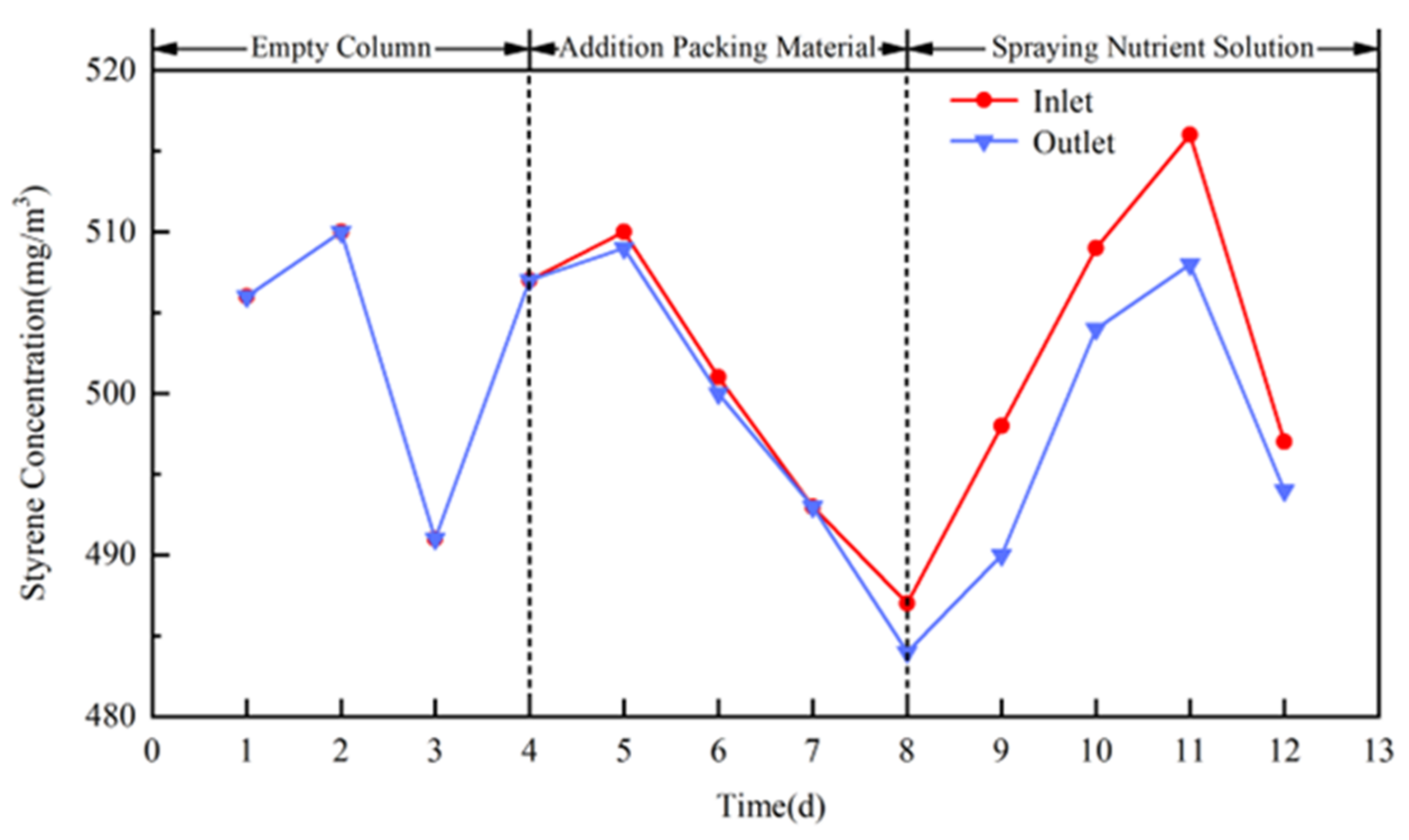
During the abiotic test of 12 days (
Figure 3), the experiment was divided into three stages. In the first stage, no change in styrene concentration was observed under the condition of empty column. In the second stage, no significant change in styrene concentration was observed with addition of packing material. In the third stage, when the NBTF sprayed nutrient solution, the styrene outlet concentration decreased slightly. This removal was related to the partial absorption of styrene by nutrient solution. This experiment proved that microorganisms played a major role in the degradation of styrene in bio-trickling filter.
3.2. Start-Up Performance of the NBTF
During the 17 days before NBTF operation, mainly the period of biofilm growth and accumulation, also known as the start-up stage of NBTF, the smooth start-up of NBTF will lay a good foundation for the subsequent stable operation of NBTF. In the NBTF startup stage, the inlet concentration of styrene in the whole stage was 300 mg/m
3, and the EBRT was 59.66 s. The RE of NBTF increases steadily until it reaches a continuous maximum.
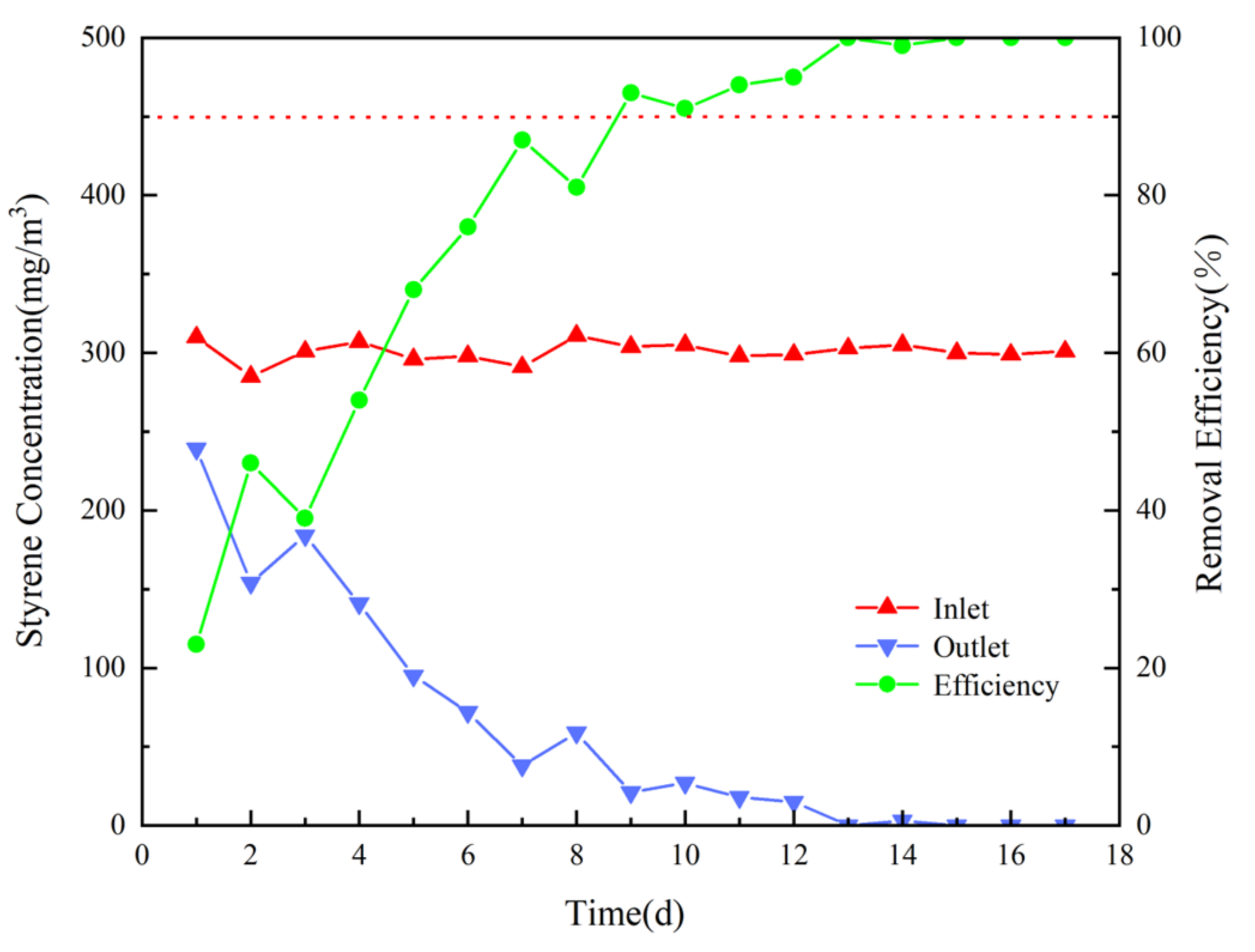
Figure 4 shows the styrene inlet concentration, outlet concentration and RE in the start-up phase. On the first day, the inlet concentration of styrene was 310 mg/m
3, but the RE was very low, only 23%. In the following days, the RE of NBTF began to increase gradually. On the one hand, as biofilm began to accumulate, it could be observed that the yellow-brown sludge increased rapidly on the filler, and more microorganisms were involved in the degradation of styrene. On the other hand, because styrene was biotoxic, microorganisms experienced a short-term directional acclimation process, and the dominant population of microorganisms was enriched; these two reasons together make RE of styrene treated by NBTF increase. After the 9th day, the RE of NBTF was stabilized at more than 90%. From 13–17 d, NBTF can completely degrade styrene waste gas, and the RE was stabilized at 100%. This shows that NBTF can be successfully started within 17 days of operation, which is faster than Jae’s research [
40], and also proves that the NBTF has better starting performance.
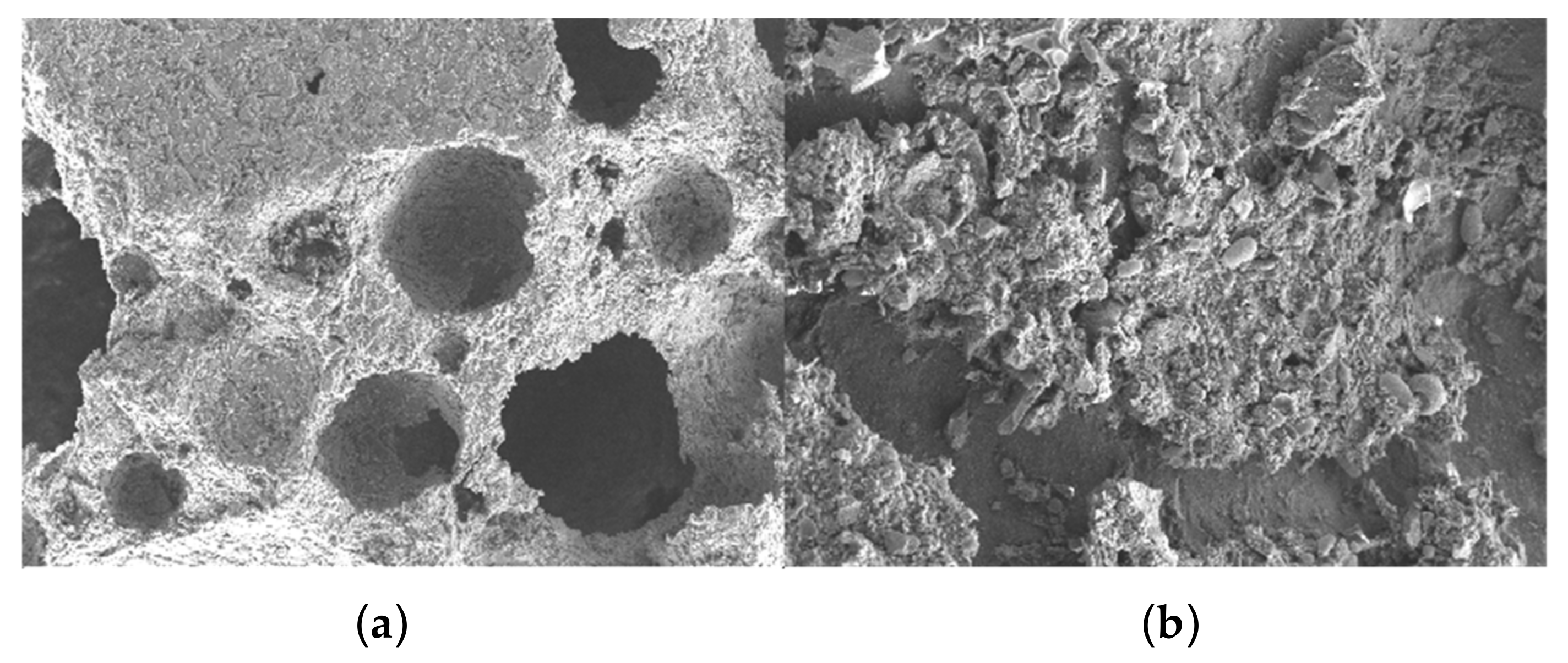
In addition, in order to obtain the key qualitative information of biofilm in the start-up phase, the morphology of volcanic rocks without biofilm and after successful start-up were characterized by SEM. As shown in
Figure 5a, there are many pores on the surface of non-filmed volcanic rock particles, which was conducive to the growth of microorganisms [
41]. On the 17 days, a large number of rod-shaped-like and pie- shaped-like microorganisms attached to the volcanic rock surface (
Figure 5b), and microbial accumulation also provided favorable support for the rapid startup of NBTF.
3.3. Effect of Styrene Inlet Concentration
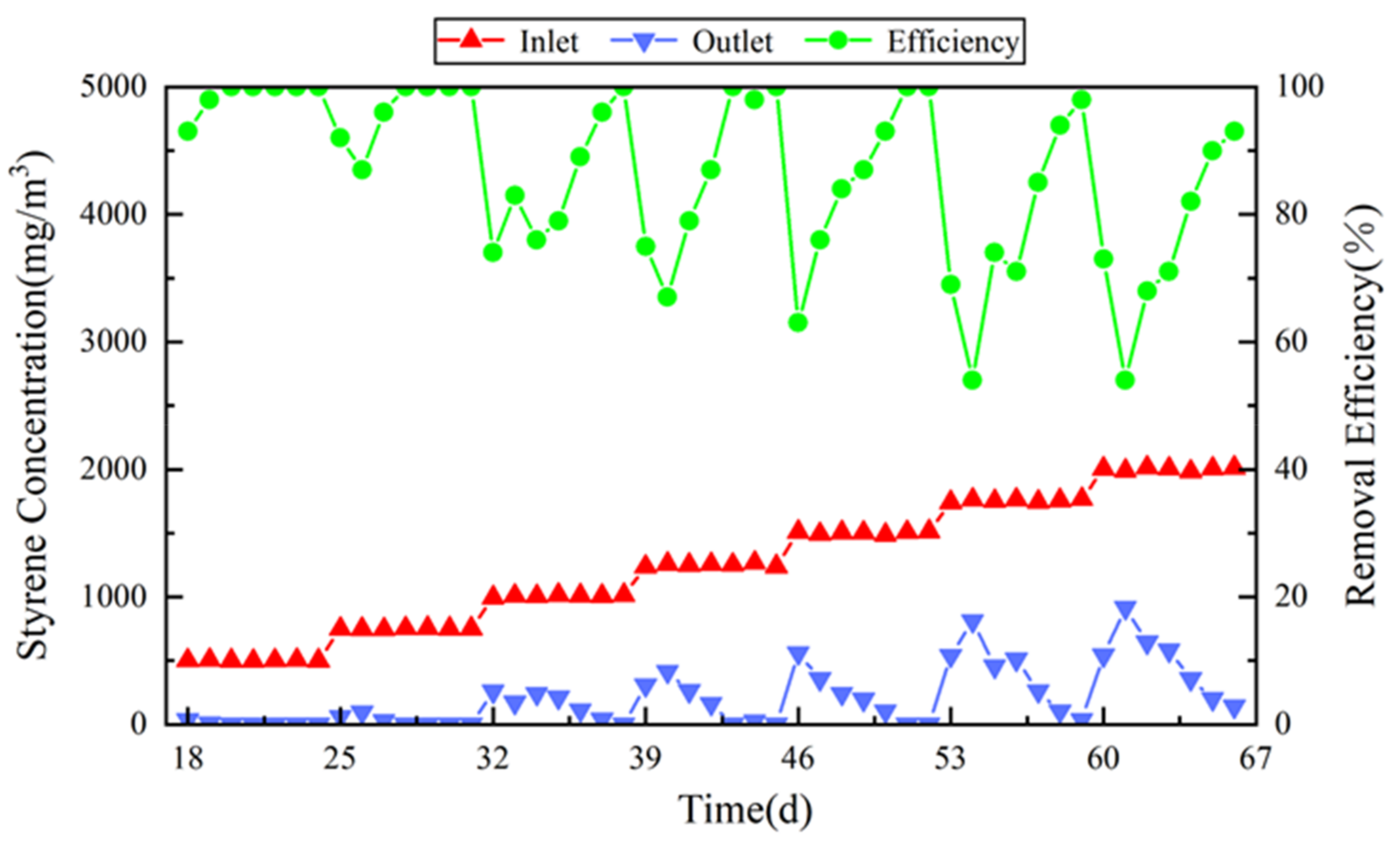
The inlet concentration of styrene is an important factor affecting the NBTF degradation performance. When the intake air flow is constant, the load borne by microorganisms increases with the increase of inlet concentration, and the amount of styrene degraded by microorganisms in unit time will also increase. When the concentration reaches a certain value, the degradation capacity of NBTF system will be limited, so that styrene cannot be completely degraded, and the purification efficiency will also be reduced. Therefore, the maximum EC of NBTF can be achieved by maintaining proper inlet concentration. After the successful startup of NBTF, NBTF entered a stable operation stage. When the EBRT was 59.66 s, the inlet concentration of styrene was controlled by gradient to explore the influence of different inlet concentrations of styrene on the degradation performance of the NBTF. This phase has been running for 49 days. The experimental results are shown in
Figure 6.
On the 18th day, by adjusting the inlet styrene concentration to about 500 mg/m
3, the intake air volume to 18 L/min, and the corresponding styrene IL to about 30.23 g/m
3/h, the RE of NBTF on the 18th day was as high as 93%, and the styrene can be stably and completely removed after 20 days. This was because in the startup phase, due to the low concentration of styrene flowing into NBTF and multi-layer spraying of nutrient solution, compared with inoculation, the number of microorganisms has been greatly increased. When the inlet styrene concentration increases from 300 mg/m
3 to 500 mg/m
3, the microorganisms in NBTF can bear the change of lower styrene. Inlet concentration of styrene was controlled by gradient to explore the influence of different inlet concentrations of styrene on the degradation performance of the NBTF, so that NBTF can maintain a higher RE when the inlet styrene concentration was 500 mg/m
3. When the inlet concentration of styrene was about 750 mg/m
3 and the IL was about 45.32 g/m
3/h, NBTF also maintained a high and stable RE. As shown in
Figure 6, when the inlet concentration of styrene was less than 1000 mg/m
3, the RE of NBTF can reach 1000% quickly with small fluctuation.
When the inlet concentration of styrene was 1000–1500 mg/m3, the IL of styrene increased to 60.04–91.36 g/m3/h, and the RE fluctuated, which can eventually be stabilized at more than 90%. The maximum EC can reach 91.36 g/m3/h, which can completely degrade styrene waste gas. This is because styrene is a hydrophobic organic waste gas, so increasing the IL of styrene is also conducive to improving the gas–liquid mass-transfer efficiency of styrene in NBTF, which is conducive to improving the elimination capacity. In addition, NBTF has a better degradation performance of styrene at this stage, which proves that microorganisms have a strong impact resistance when subjected to the increase of inlet concentration.
When the inlet concentration of styrene increases to 1750–2000 mg/m3, the IL of styrene also increases to 105.06–121.47 g/m3/h. Higher inlet concentration has a greater impact on microorganisms. On the 54th day, the RE decreases to 54%. When the inlet concentration of styrene was 1750–2000 mg/m3, the fluctuation of the RE reflected the impact effect on microorganisms in NBTF. Although the inlet concentration of styrene was higher, however, after a period of operation, the RE of NBTF can still be stabilized at more than 80%, and the maximum EC also reached 112.96 g/m3/h, which proves that the NBTF can still play an excellent role in treating high-concentration styrene waste gas, but when the inlet concentration was 1750–2000 mg/m3, the lowest outlet concentration still reached 54 mg/m3, which was higher than the styrene emission standard. It shows that when the concentration was greater than 1750 mg/m3, the degradation capacity of the NBTF for styrene cannot meet the emission standard. The subsequent optimization experiment can be continued from the aspects of microbial inoculum, filler, etc., for the treatment of high-concentration styrene waste gas by the NBTF.
3.4. Effect of Empty Bed Retention Time
EBRT is an important factor to determine the RE. In practical industrial applications, we need to consider the economic cost [
42]. The shorter the EBRT, the less the cost will be consumed, thus the higher the economic benefit, but the shorter the contact time between pollutants and microorganisms will be, which will make the microorganisms unable to capture pollutants completely, leading to the reduction of RE. On the contrary, the longer the EBRT is, the better the RE will be, but it will increase the operating cost, thus the lower the economic benefit will be. Therefore, it is the most desirable effect in industrial application to ensure high RE while reducing EBRT.
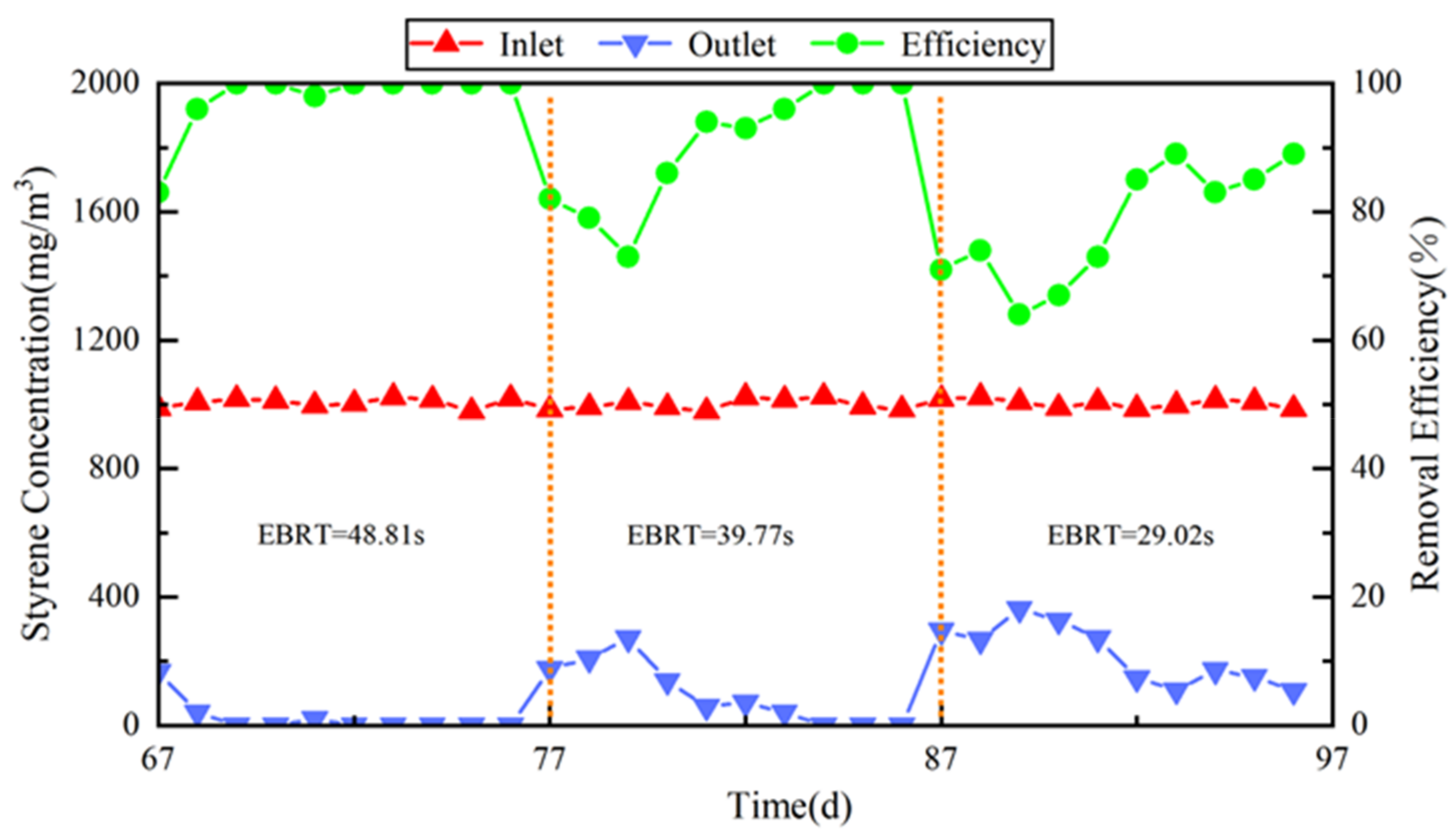
In the second stage, the inlet concentration of styrene was maintained at about 1000 mg/m
3, and the EBRT was set at 48.81 s, 39.77 s and 29.02 s, respectively, when other operating factors remained unchanged, so as to explore the influence of EBRT on the degradation performance of NBTF. This stage runs for 30 days in total, and the experimental results are shown in
Figure 7.
When the inlet concentration was maintained at about 1000 mg/m3 and the EBRT was shortened to 48.81 s, the IL at this time was about 73.75 g/m3/h, and the RE is reduced to 83% on the 67th day, but it quickly recovers to 100% on the 70th day, which indicates that after the start-up stage and the first stage, the microorganisms in NBTF show better tolerance and degradation performance to styrene. Therefore, under the change of EBRT, it can also maintain good removal performance. When the EBRT was set to 39.77 s, the IL at this stage was about 90.51 g/m3/h. On the 77th day, the RE is reduced to 82%, and on the 79th day, the RE is reduced to the lowest 73%. Then on the 80–86 days, the RE of styrene fluctuates and increases, and finally the RE is stabilized at 100%. This is because the EBRT continues to shorten, resulting in shorter time for styrene waste gas to pass through NBTF. It is difficult for microorganisms to effectively capture pollutants for degradation, so the RE fluctuates to a certain extent. However, as the NBTF system gradually adapts to the shorter EBRT, the RE also recovers to the best state. Finally, the EBRT was adjusted to 29.02 s. At this time, the IL reached the maximum value of the entire experimental stage, about 124.04 g/m3/h. The degradation performance of NBTF at this stage was not very stable. On the 89th day, the IL was 125.03 g/m3/h, EC was 80.00 g/m3/h, and the RE was only 64%. Finally, the RE of NBTF remained between 80–90%, and the maximum EC was 110.14 g/m3/h. The whole system failed to completely degrade styrene waste gas. This is because styrene will produce certain biological toxicity to microorganisms, and excessive IL will inhibit the activity of microorganisms in NBTF, making it difficult for microorganisms to exert maximum degradation performance in the process of degrading styrene. Therefore, in practical applications, appropriate EBRT should be set to avoid excessive IL, so that styrene waste gas can reach the emission standard of styrene waste gas after NBTF treatment.
3.5. Effects of Contaminant Starvation Times on the Performance
The NBTF in the laboratory usually operates under ideal conditions [
43]. However, in the actual industrial waste gas treatment process, there are shutdown maintenance, factory shutdown, weekend rest, etc. Therefore, the starvation period is a key factor that must be considered during NBTF operation [
44]. Studying the performance recovery experiment of NBTF after a certain starvation period is of great guiding significance to the actual working conditions. The starvation period simulates the actual working condition by stopping spraying MSM and introducing styrene waste gas.
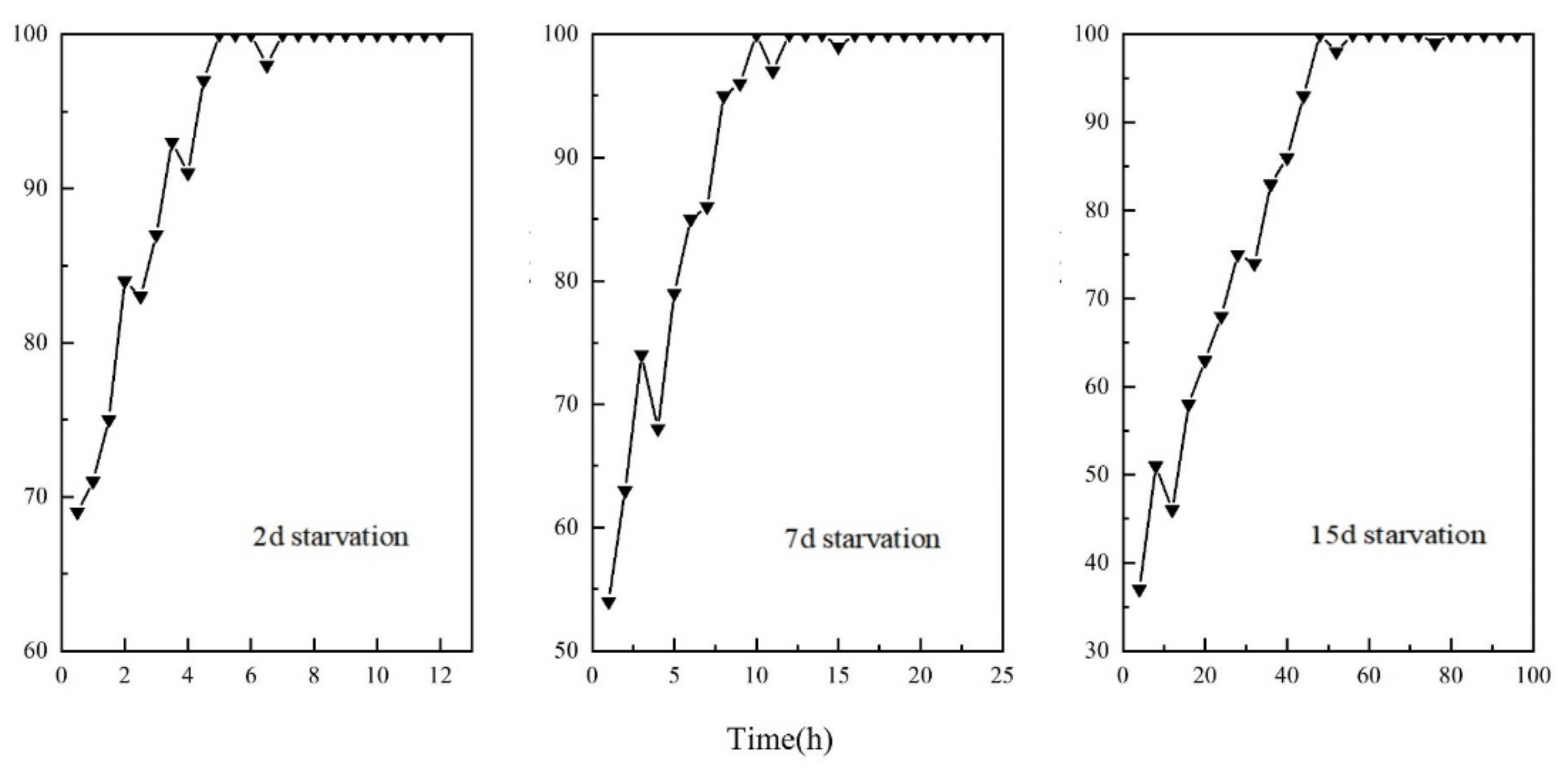
Figure 8 shows that after 2, 7 and 15 days of starvation, when the inlet concentration of styrene waste gas is 500 mg/m
3 and the EBRT is 59.66 s, the influence of starvation period on the operating performance of NBTF is explored by comparing the recoverability of RE in different starvation periods.
By restarting NBTF after 2 days of starvation, it can be seen that the RE of NBTF for styrene can reach about 70% at the lowest, and the RE can reach 100% within 5 h. After 7 days of starvation, the RE of NBTF can also recover to 100% within 10 h. It can be seen that NBTF can quickly recover to a higher treatment level within 7 days of starvation, which will not have a significant impact on the process of waste gas treatment under actual working conditions. The reason is that in a short starvation period, the activity and number of microorganisms will not be significantly reduced, thus ensuring that NBTF can recover high degradation performance in a short time after restart. This result shows that the NBTF constructed in this study can withstand a short starvation period and recover to a higher RE within a few hours. The longest starvation period in this study is 15 days. When NBTF is restarted after 15 days of starvation, the RE of NBTF for styrene is reduced to 37%. The reason is that during the long starvation period, the microbial population may be significantly reduced due to the interruption of carbon sources and nutrients, resulting in the low RE of NBTF after restart. However, NBTF also completely recovered its degradation performance within 2 days. The reason is that in the absence of external carbon sources, the death and decomposition of some microorganisms can release nutrients, forming endogenous phase transfer of cells, and temporarily providing nutrients for the remaining microorganisms [
45]. After NBTF restart, some microorganisms can quickly recover their activity. With the restoration of carbon sources and nutrient solutions, the number of microorganisms in NBTF increases again, so as to achieve full recovery performance within two days. In sum, the NBTF built in this research can quickly recover the processing efficiency after starvation, which proves that the NBTF has good robustness.
3.6. EPS Contents of the Biofilm
When styrene waste gas enters NBTF, the organic components in the waste gas are transferred from the gas phase to the liquid phase, and the organic components in the liquid phase are further diffused to the biofilm under the promotion of the concentration difference, and then captured by microorganisms as carbon source for use, so as to achieve the goal of degrading styrene. Therefore, biofilm plays an important role in the process of microbial degradation of styrene. EPS is produced by microorganisms and distributed on the cell surface. It is an important component of biofilm. Changes in its composition and content will affect the characteristics of biofilm, and play an important role in the stability of microbial structure and hydrophobicity. EPS is mainly composed of PS, PN nucleic acids and other organic substances, of which PN and PS account for about 70–80%. PS in EPS is a hydrophilic component, while PN is a hydrophobic component [
46]. Therefore, changes in the content of PN and PS will affect the hydrophobicity of the biofilm. Measuring the content of PN and PS is helpful to understand the performance of NBTF in removing styrene.
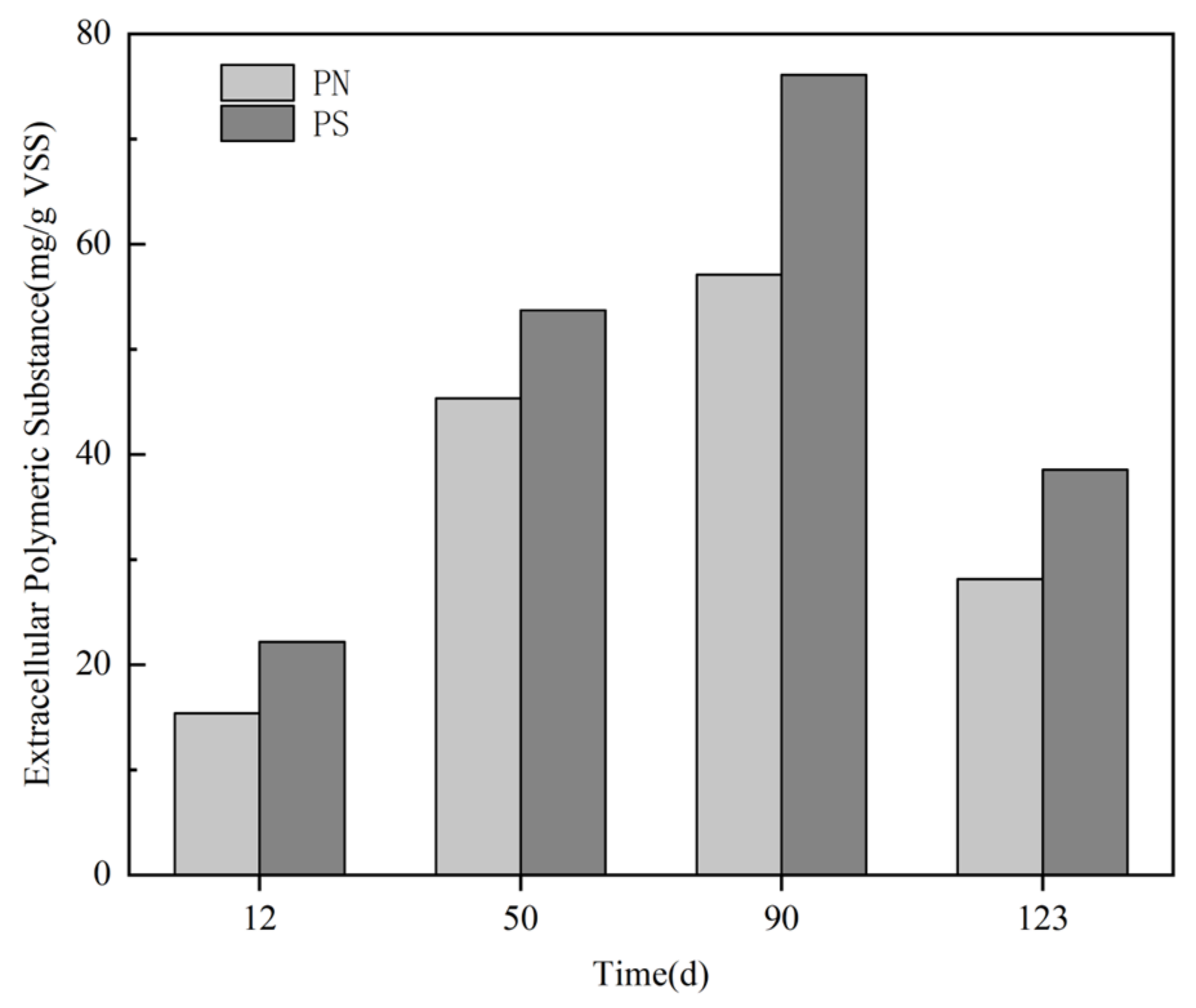
The content change of PN and PS in the four stages was measured, as shown in
Figure 9. On the 12th day (startup stage), the contents of PN and PS were 15.36 mg/g and 22.17 mg/g, respectively. In the following two stages, the contents of PN, PS and PS were significantly increased. On the 50th day, when the IL was 89.73 g/m
3/h, the contents of PN and PS were 45.34 mg/g and 53.68 mg/g, respectively; while on the 90th day, when the IL was 124.04 g/m
3/h, the contents of PN and PS were increased to 57.10 mg/g and 76.08 mg/g, respectively. Consistent with the findings of Xu [
47], high load pollutants promoted the production of microbial extracellular polymers. When the styrene intake load increases continuously, it provides sufficient carbon source for the growth of microorganisms. The increase of carbon source promotes the growth of biofilm, which leads to the increase of PN and PS content. The increase of PN and PS content improves the hydrophobicity of the biofilm and enhances the gas–liquid mass-transfer efficiency of styrene, thus improving the styrene removal ability of NBTF, which plays an important role in the efficient removal of NBTF.
On the 123rd day, due to the starvation period, NBTF stopped the introduction of styrene and the spraying of nutrient solution, which greatly affected the activity of microorganisms, resulting in the reduction of the content of PN and PS to 28.12 mg/g and 38.54 mg/g, respectively. However, compared with the start stage, the content of PN and PS was higher, which is also an important reason why NBTF can restart quickly after the starvation period.
4. Conclusions
The NBTF built in this study, which uses activated sludge as inoculum and volcanic rock as filler, operates under the condition of gas–liquid countercurrent. After inoculation, when the EBRT of the NBTF is 59.66 s, the styrene exhaust gas with a concentration of 300 mg/m3 is introduced into the NBTF, which can enable the NBTF to complete the start-up within 17 days, and the start-up time is fast.
During the stable operation of NBTF, the removal efficiency is higher than 80% under different operating conditions; the maximum EC is 112.96 g/m3/h, which is achieved when the inlet concentration of styrene is 2013 mg/m3 and the EBRT is 59.66 s, proving the excellent performance of the NBTF in styrene waste gas treatment. After 2–15 days of starvation, the styrene waste gas was re-introduced, and NBTF can be successfully restarted within 2 days. It is proved that NBTF has good impact resistance.
EPS plays an important role in the microbial degradation of styrene waste gas, and the increase of EPS content also enhances the robustness of NBTF. The content of PN and PS increased from 15.36 mg/g and 22.17 mg/g on the 12th day to 57.10 mg/g and 76.08 mg/g on the 90th day. It plays an important role in maintaining efficient operation performance of NBTF.
5. Recommendations and Future Implications
In this study, the basic operating conditions of the NBTF were explored to lay a foundation for the subsequent research work on the NBTF. Because the NBTF has an independent spray system, it can continue to optimize the operating conditions in terms of MSM spray frequency and spray flow in the future, and give full play to the advantages of the independent spray system; moreover, because the NBTF is a multi-layer structure, it can also explore the combination method of different layers filled with different fillers, which can reduce the economic cost of the NBTF in terms of filler material selection and can stably play its degradation performance for a long time.
In the application of BTF to degrade industrial waste gas in the future, the bio-enhancement of specific strains and the preparation of new fillers are still the core work. For a certain industrial waste gas, inoculation with specific bacteria can greatly improve the degradation performance of BTF. Filler plays an important role in BTF. The preparation of a new type of filler with small volume and conducive to the growth and attachment of microorganisms can not only effectively reduce the volume of BTF, but also facilitate the better growth and reproduction of microorganisms on the filler.
In addition, due to the low gas–liquid mass-transfer efficiency of hydrophobic VOC in BTF, the degradation of hydrophobic VOC in BTF is limited. At present, the ways to improve the degradation performance of hydrophobic VOC at home and abroad are mainly in three aspects: fungal biocatalysis, adding surfactants or metal ions, and designing new biological trickling filtration devices. Under the experimental conditions, the above three methods can improve the degradation of hydrophobic VOC to a certain extent. In the future, we will also focus on these three aspects.
In today’s intelligent society, there are few studies about online monitoring of BTF performance. Therefore, in order to further improve the stability and efficiency of the degradation process, even in the laboratory-scale research, we should also develop automatic process control and build intelligent BTF, which can monitor the operation performance of BTF in real time and is also conducive to the promotion and application of BTF in the field of industrial waste gas treatment.