Article

Dry and Wet Deposition Fluxes and Source of Atmospheric Mercury in the Forest in Southeast China


1
School of Atmospheric Sciences, Sun Yat-sen University, Zhuhai 519082, China
2
Institute for Environment and Climate Research, Jinan University, Guangzhou 511443, China
3
Foshan Ecological and Environmental Monitoring Station of Guangdong Province, Foshan 528000, China
*
Author to whom correspondence should be addressed.
These authors contributed equally to this work.
Sustainability 2023, 15(4), 3213; https://doi.org/10.3390/su15043213
Submission received: 3 December 2022 / Revised: 21 January 2023 / Accepted: 7 February 2023 / Published: 9 February 2023
(This article belongs to the Special Issue Advances in Land-Atmosphere Interactions)

Abstract

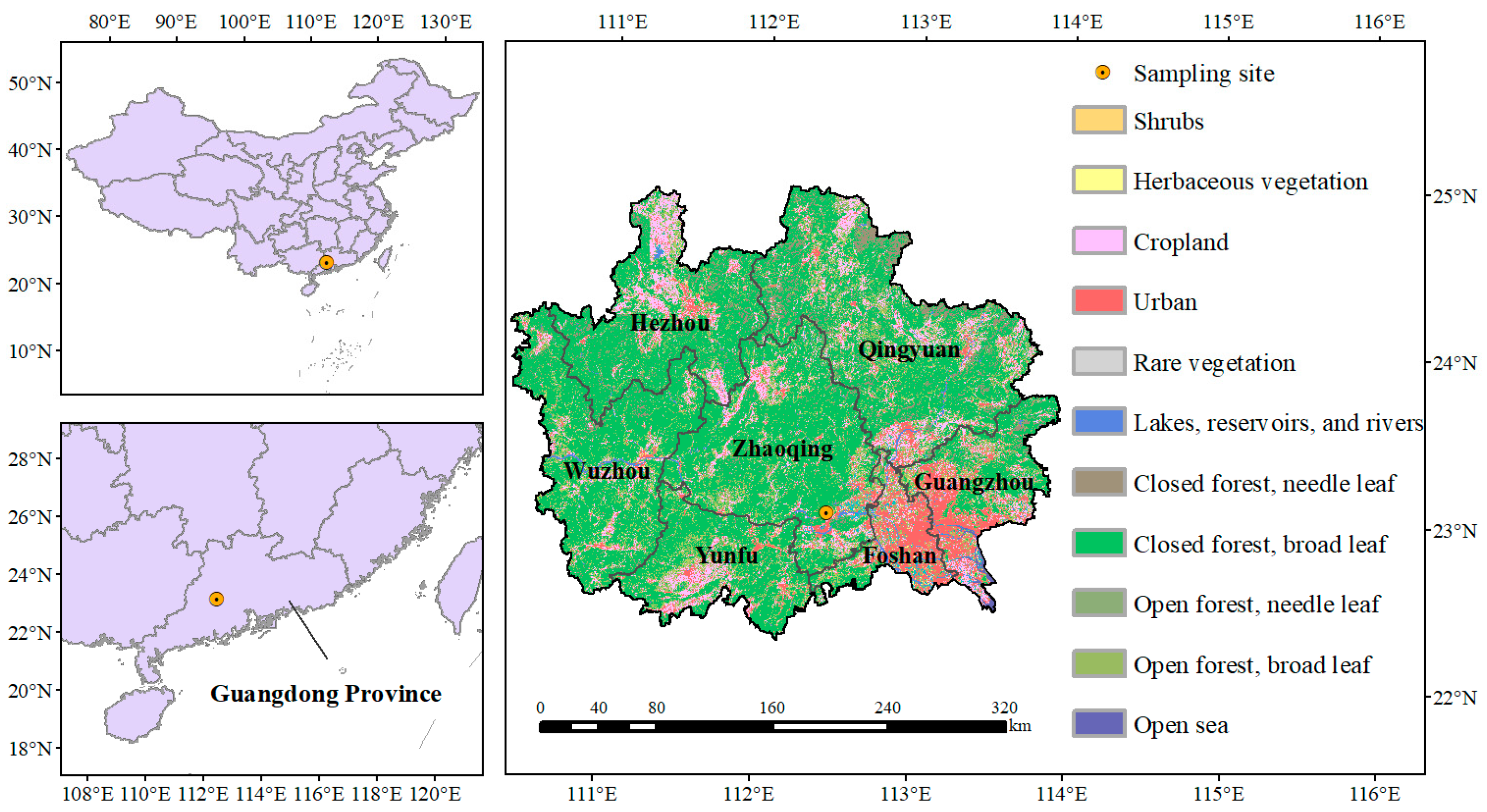
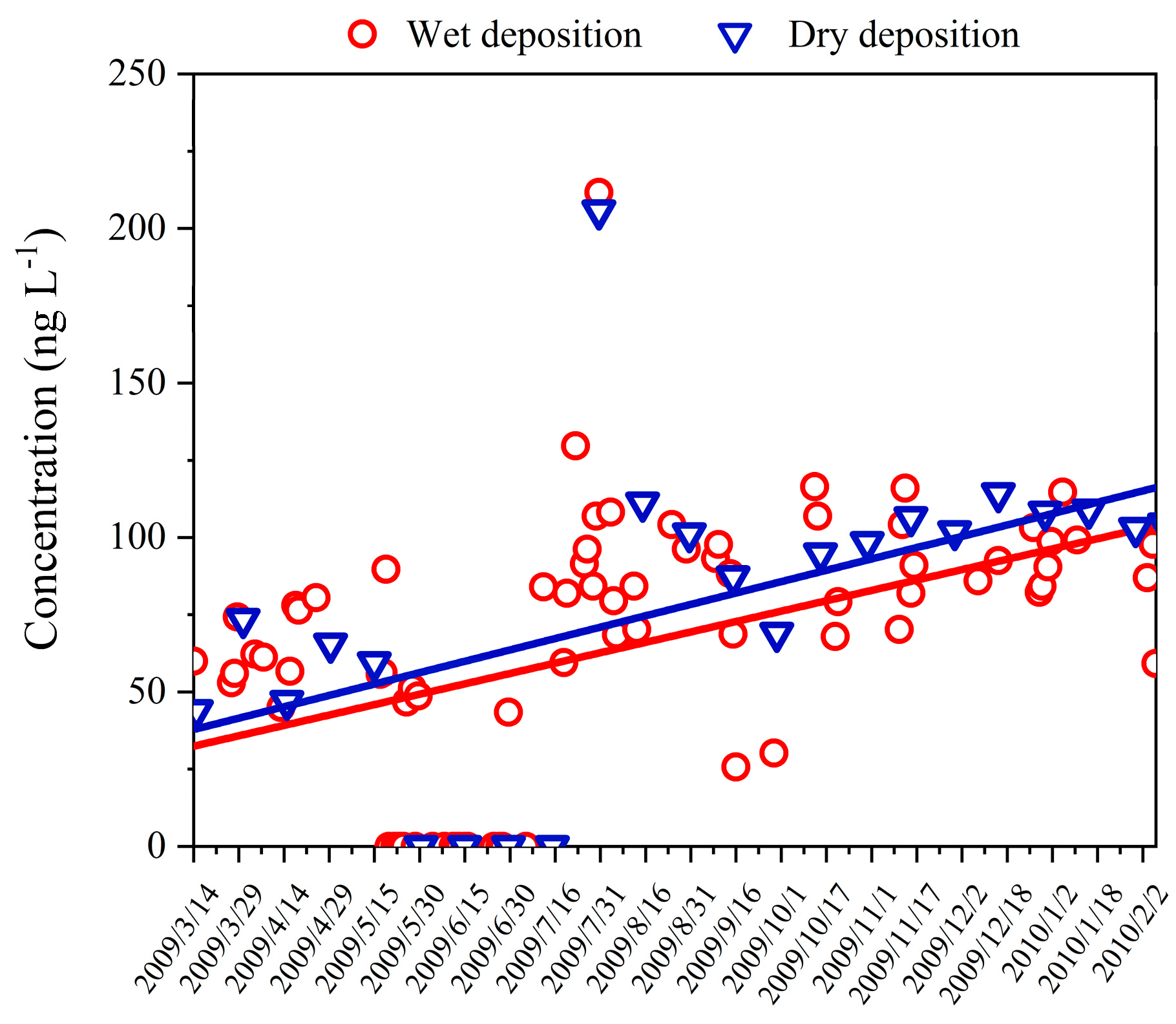
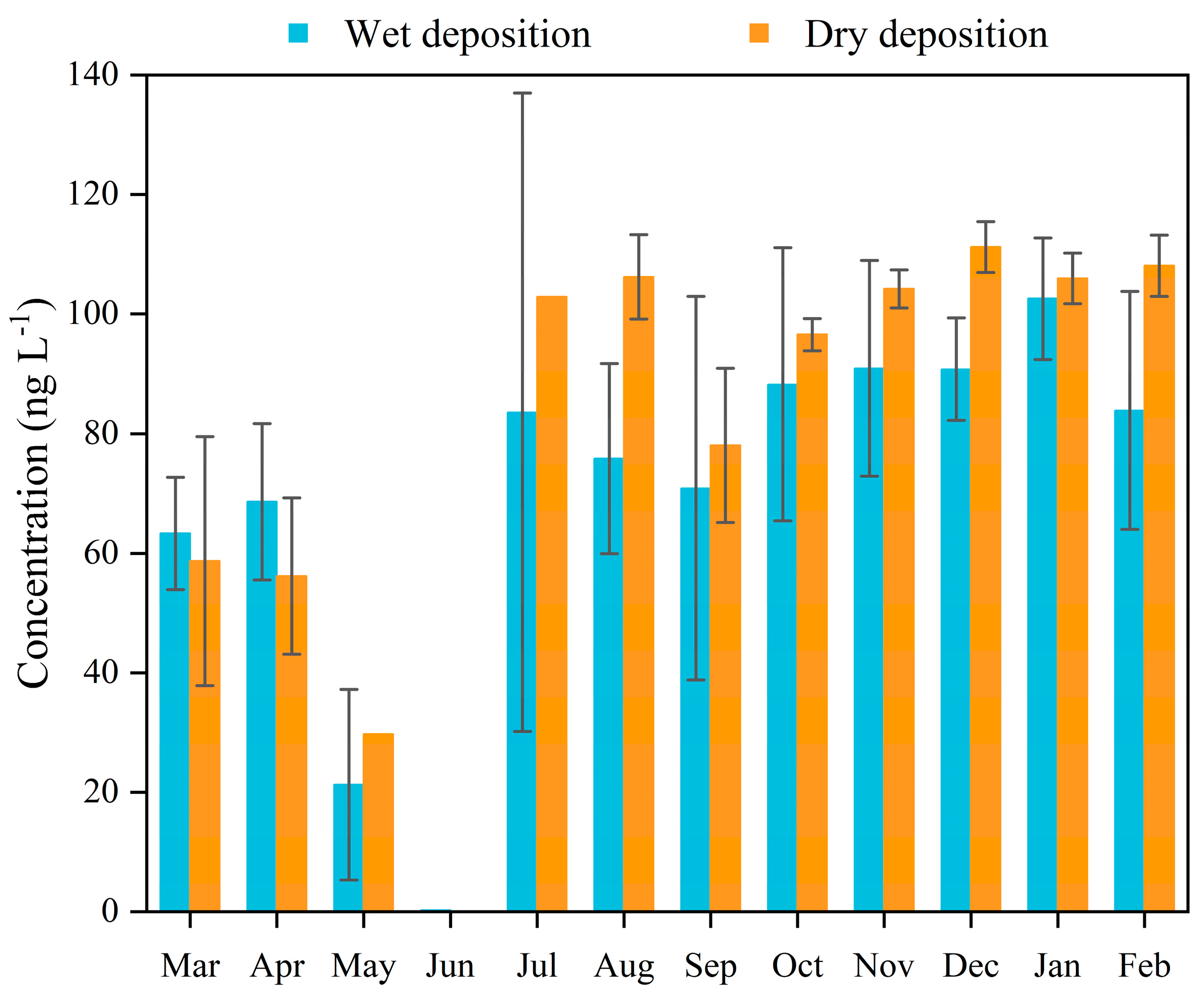
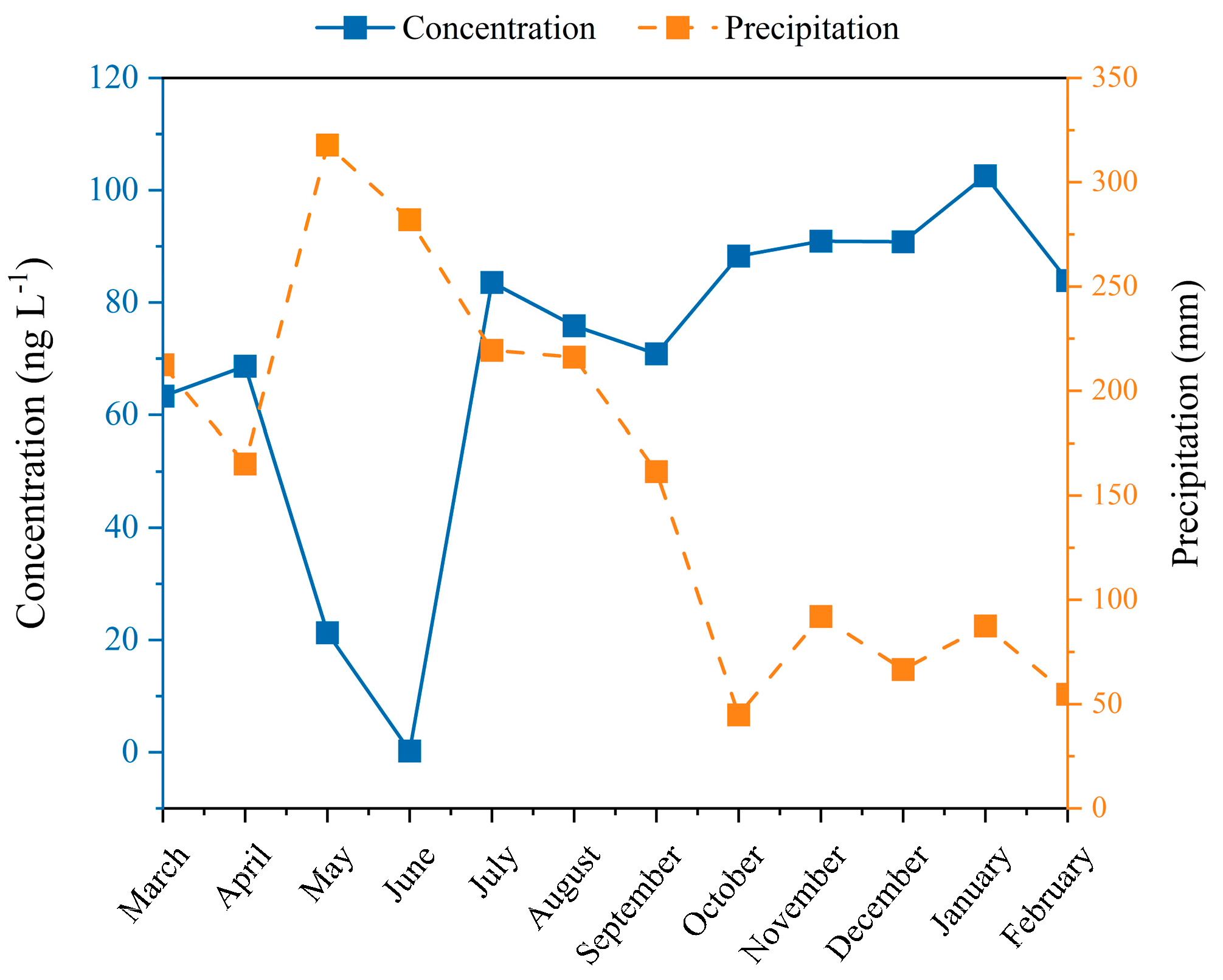
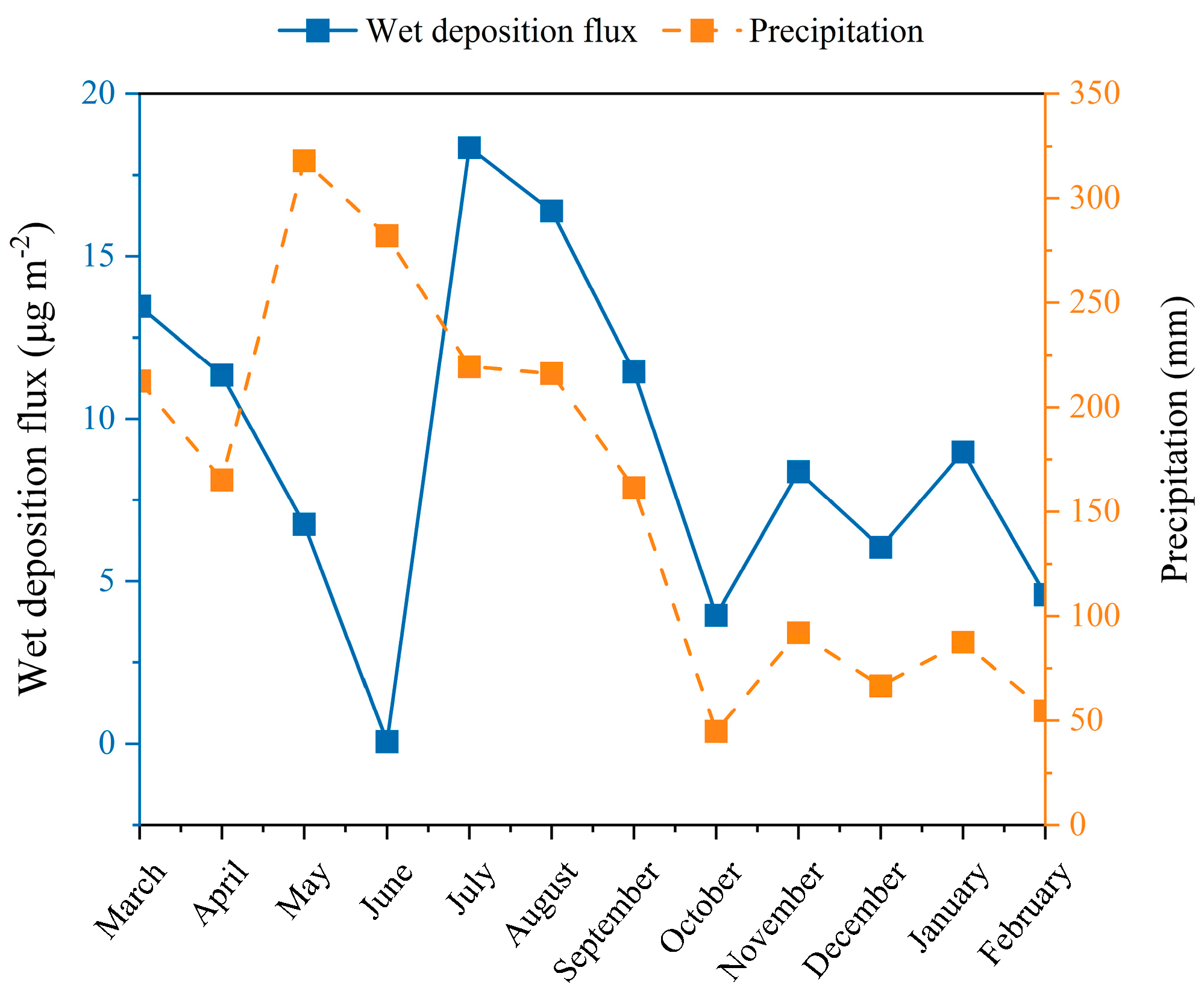
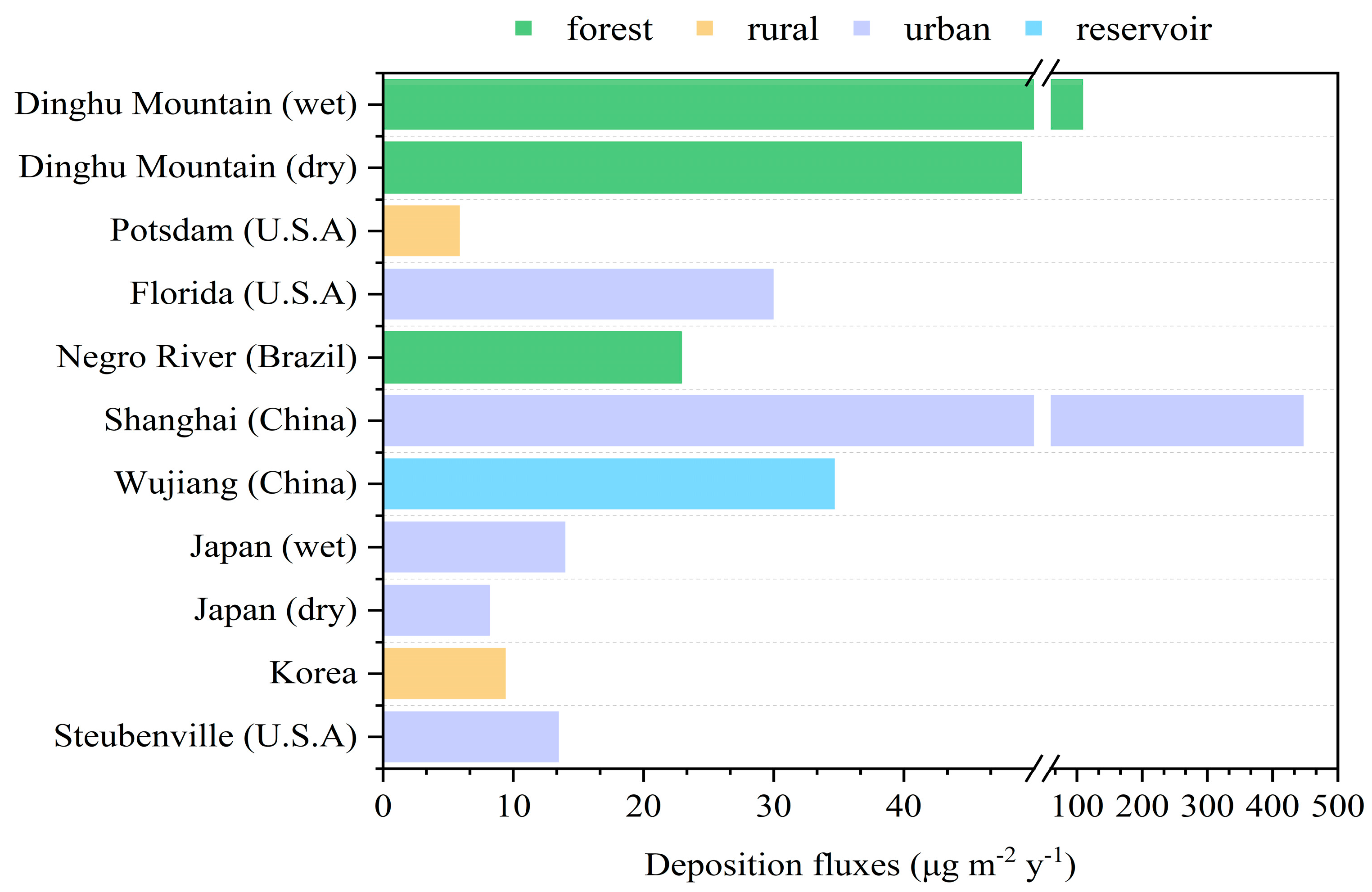
Studying atmospheric mercury (Hg) deposition in a forest system is a key step to understanding Hg biogeochemical cycles. However, observations based on Hg deposition fluxes in worldwide stations under forest ecosystems tend to differ considerably. In this work, a sampling station was set up in Dinghu Mountain to study the atmospheric Hg’s dry and wet deposition in typical forest ecosystems in Southeast China. One hundred and two atmospheric dry and wet deposition samples were collected with an automatic sampler from March 2009 to February 2010, and concentrations of Hg, magnesium (Mg), calcium (Ca), cadmium (Cd), copper (Cu), zinc (Zn), lead (Pb), and chromium (Cr) were detected. The results showed that the annual rainfall weighted average Hg concentration was 56.8 ng L−1, and 79.8 ng L−1 in the dry deposition. The mean total deposition flux was 158.8 μg m−2, and the wet deposition was predominant. The highest and lowest concentrations were detected in the high-temperature rainy season. Generally, the wet deposition flux was notably positively correlated with the rainfall. The source of atmospheric Hg deposition in Dinghu Mountain was analyzed using principal component analysis (PCA). The main source of Hg in precipitation was soil dust, followed by coal and fuel (automobile exhaust). The primary source of Hg in dry deposition was fuel (automobile exhaust), followed by soil dust, which indicates that Dinghu Mountain has been polluted by the anthropogenic sources of Hg.
Keywords: Hg; atmospheric deposition; deposition flux; principal component analysis Hg; atmospheric deposition; deposition flux; principal component analysis