1. Introduction
Global urbanization has been booming since the 21st century, and more than half of the population now resides in the city. Urbanization has contributed significantly to economic development and improved the quality of life of the population, but it has also led to several issues, including deteriorating environmental conditions, overstretched cultivated land supplies, and diminished ecosystem functions [
1,
2,
3,
4]. This process puts a lot of strain on the Earth’s ecological system and poses several challenges. Therefore, it has become a hot topic of growing concern across the globe to figure out ways to lessen the adverse effects of rapid urbanization on ecosystems and encourage the coordinated development of urbanization and ecosystems. The 2030 Agenda for Sustainable Development, Future Earth, and the World Urban Forum all stress that the urbanization process should progress in harmony with the ecological environment and be compatible with the carrying capacity of resources and the environment [
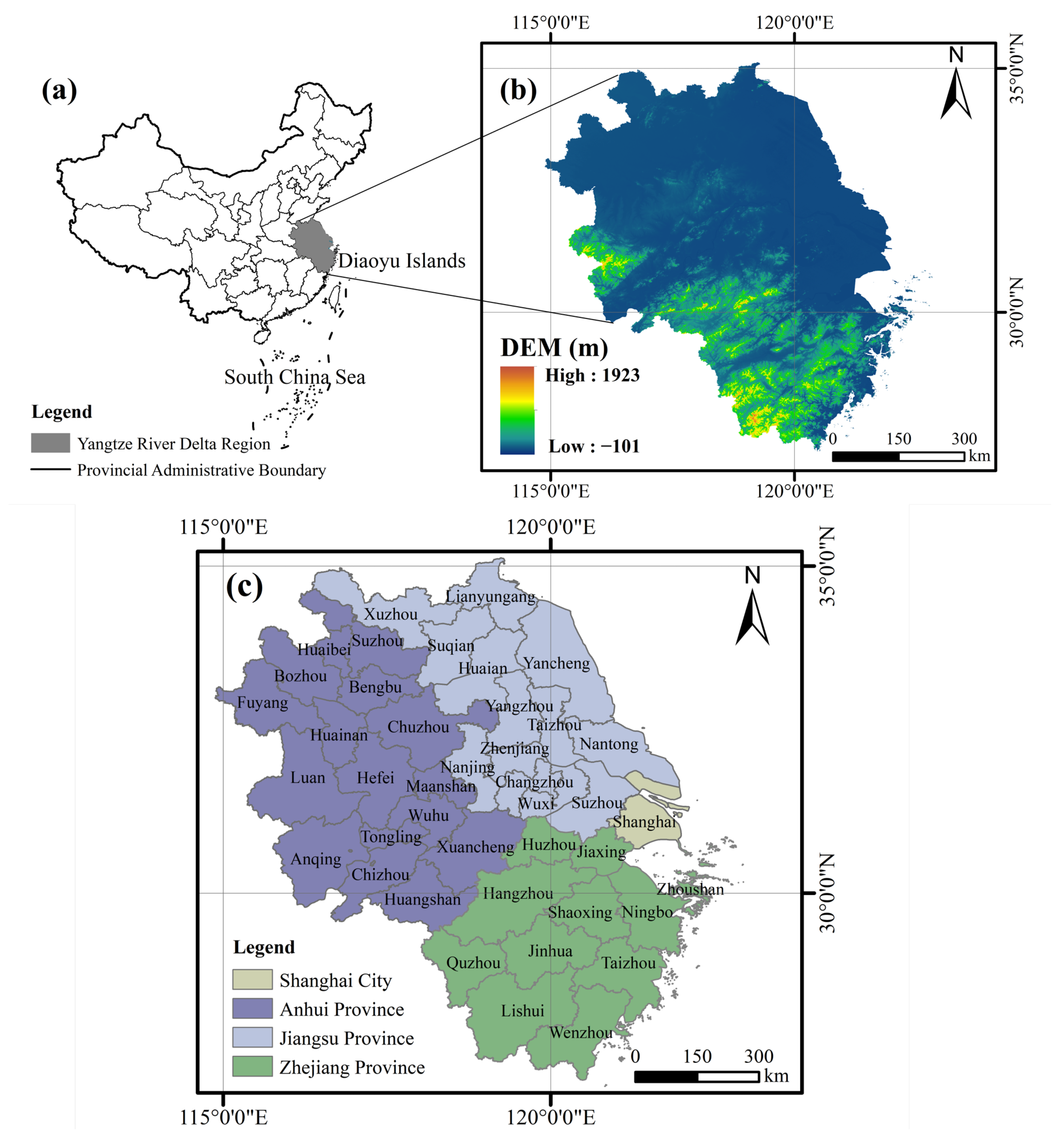
5]. China is the biggest developing nation in the world, and it is distinguished by a huge population, a high population density, imbalanced development, rapid urbanization, a sizable economy, and significant strain on the environment and resources. Hence, with the theme of “Production-Living-Ecological Space”, we conduct a quantitative study in the Yangtze Delta Region.
Since the reform and opening up in 1978, China’s industrialization and urbanization have developed quickly, leading to fast economic and social development. After the 1990s, China continued to promote urbanization and sped up the development of urban built-up areas, but at the same time, causing drastic changes in land use and serious ecological and environmental problems, like a rapid rise in the urban population and a rapid expansion on the urban scale. As a result, the interaction between humans and the land is marked by extreme disharmony, which is exemplified by the competition that is intensifying among the uses of production, living, and ecological space [
6]. China is currently undergoing a rapid urbanization process and aiming toward a sustainable development vision. However, in this sense, there are primarily two problems:
- (1)
How to promote high-quality development of urbanization and ecological protection of the environment.
- (2)
How to build high-quality development of urbanization on the basis of the regional resource and environmental carrying capacity according to local conditions [
7].
The Chinese government actively responds to international calls and takes the initiative to participate in environmental governance. For instance, the Chinese Ministry of Environmental Protection officially launched the TEEB (The Economics of Ecosystems and Biodiversity) national process in 2013 and jointly prepared the China–TEEB Action Plan with the Chinese Academy of Sciences in 2014. The Chinese government recently proposed building “an intensive and efficient production space, a livable and moderate living space, and a beautiful ecological space”, and this method of spatial division is in line with the widely acknowledged “Production-Living-Ecological Space” concept for sustainable development [
8,
9], a new instrument for carrying out spatial planning. In actuality, areas should always be split into three different categories of spaces: “production space, living space, and ecological space” [
10]. A land use type often serves one or more functions, including production, living, and ecology [
11]. Production space mainly has a production function, including the provision of industrial, agricultural, and service products, requiring cultivated land, industrial land, and commercial land. Living space is dominated by living function, where people carry out daily activities to meet their needs for living, consumption, and recreation, requiring residential land, public service land, and square land. Ecological space is a space dominated by ecological function, mainly providing forested land, grassland, water, and other ecological products and services [
12].
Currently, researchers from various disciplines have conducted comprehensive studies on the topic of PLES, examining it from multiple angles. Regarding the broader theoretical aspects of PLES, the works of Liu and Wang et al. offer a thorough examination of its essence and structure [
13,
14]. Liao et al. have delved into its issues of spatial conflict [
15]. In-depth investigations into the classification and assessment of PLES spaces have been conducted by Dang et al., Liu et al., and Fang et al. [
16,
17,
18]. Detailed discussions on PLES site categorization have been presented by Zhang et al. and Chen et al. [
19,
20], while Fang et al. and Zhang et al. have focused on its carrying capacity [
21,
22]. Li et al. tackled the challenge of functionally identifying PLES [
23], and extensive research into the reorganization of PLES has been carried out by Zhu et al., Lv et al., Pan et al., Xu et al., Xi et al., and Long et al. [
24,
25,
26,
27,
28,
29]. On the aspect of functional measurement, Liu et al. developed a framework for the classification and evaluation of PLES, analyzing the spatial and temporal dynamics of these functions in China from 1990 to 2010 [
17]. Huang et al. thoroughly explored the concept and significance of PLES [
30], and Stanley et al. examined the effects of global change on the ecological spatial functions of urban areas [
31]. Bian et al. effectively answered the question of how PLES functions can be kept in balance [
32]. Lorenzen et al. studied the socio-economic transformation of living and ecological spatial functions in Mexico’s Mixteca Alta region in terms of socio-economic transformation in living and ecological spatial functions [
33]. Leblond studied the problem of conflict among ecological, living, and production functions in the farming area of the Phetchabun region [
34]. Paracchini et al. explored the ecological transformation of forests, and the multifunctionality of PLES land use [
35]. Kovács-Hostyánszki studied PLES land and functional changes caused by pollination [
36], and Liu and Sun explored the spatial distribution of its functional quality [
37]. From a regional viewpoint, Tomlinson et al. studied Great Britain’s land use change of PLES using integrated administration and control system data [
38]. Wei et al. investigated the coupling coordination measure and pattern evolution of PLES in the Jiangsu Province rural [
39]. Gao et al. investigated the alteration of land use function and its ecological implications in Xiong’an New Area [
40]. Wang and Tang examined the orderly and adaptive evaluation of the PLES subsystem in rural Chongqing using the entropy value method and the coupling coordination degree model, and they also looked at the spatial and temporal characteristics and patterns of overall functional coupling and coordination in the area [
41]. For the purpose of analyzing the evolutionary traits and influencing factors of PLES systems in Chinese resource-based cities using the coupling coordination degree, Dou et al. used the entropy weighting method to determine index weights and construct an evaluation index system of the coupled and coordinated development of PLES [
42]. On the whole, relatively few studies by scholars from outside China are fully consistent with the PLES theme, and most of their studies focus on how to deal with the spatial conflict among ecological space and production and living space [
33,
34], the impacts of climate change on PLES as well as its functions [
31,
36], and how to better utilize PLES land use data to study social issues [
35,
38]. There are two main types of research methods used by Chinese scholars on PLES topics, one is a functional study based on land use data [
17,
43], and the other is a study using the PLES functional system evaluation index system [
39,
41]. In terms of spatial scale, most of the studies on spatial functions by Chinese scholars have focused on the macroscopic scale of provincial units and the microscopic scale of county units, and less on the mesoscopic scale of municipal administrative units [
17,
40]. Meanwhile, in terms of research regions, Chinese scholars tend to concentrate on small- and medium-sized urban clusters or individual cities, rarely conducting research on mega-city clusters [
15,
43]. In terms of research content, although Chinese scholars have viewed the coupling relationships of various functional spaces, there have been relatively few studies on the internal triple spatial coupling relationships of mega-city clusters, and there has not yet been a thorough investigation of the two–two coupling relationships in triple spatial clusters [
41]. Additionally, there are few findings yet in the research on the role of PLES based on land use due to the relatively large data needs.
Therefore, due to the availability of data, this study chooses to conduct an in-depth analysis of PLES evolution in the Yangtze Delta Region over three periods since the 21st century, and to reveal the problems among the spaces through coupled coordination tools. Specifically, this study attempts to answer the following questions:
- (1)
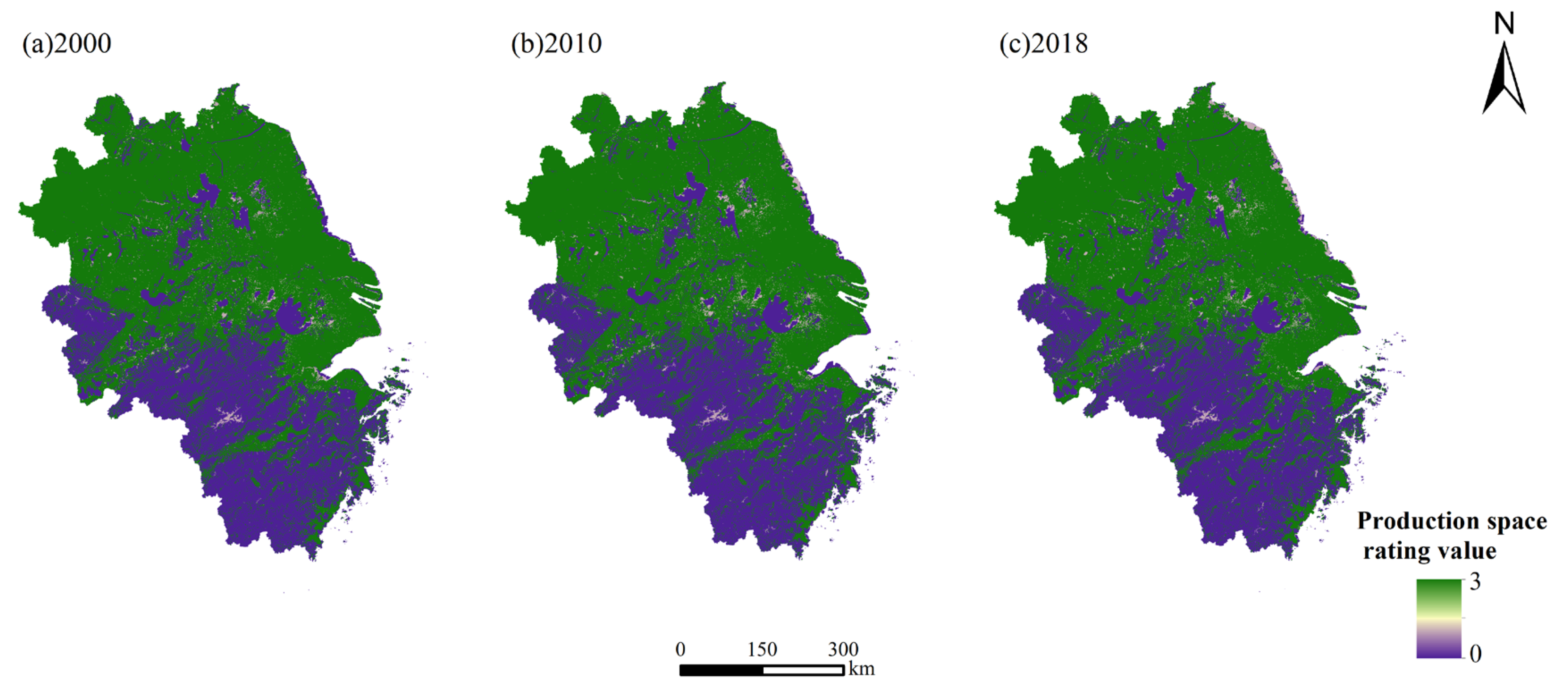
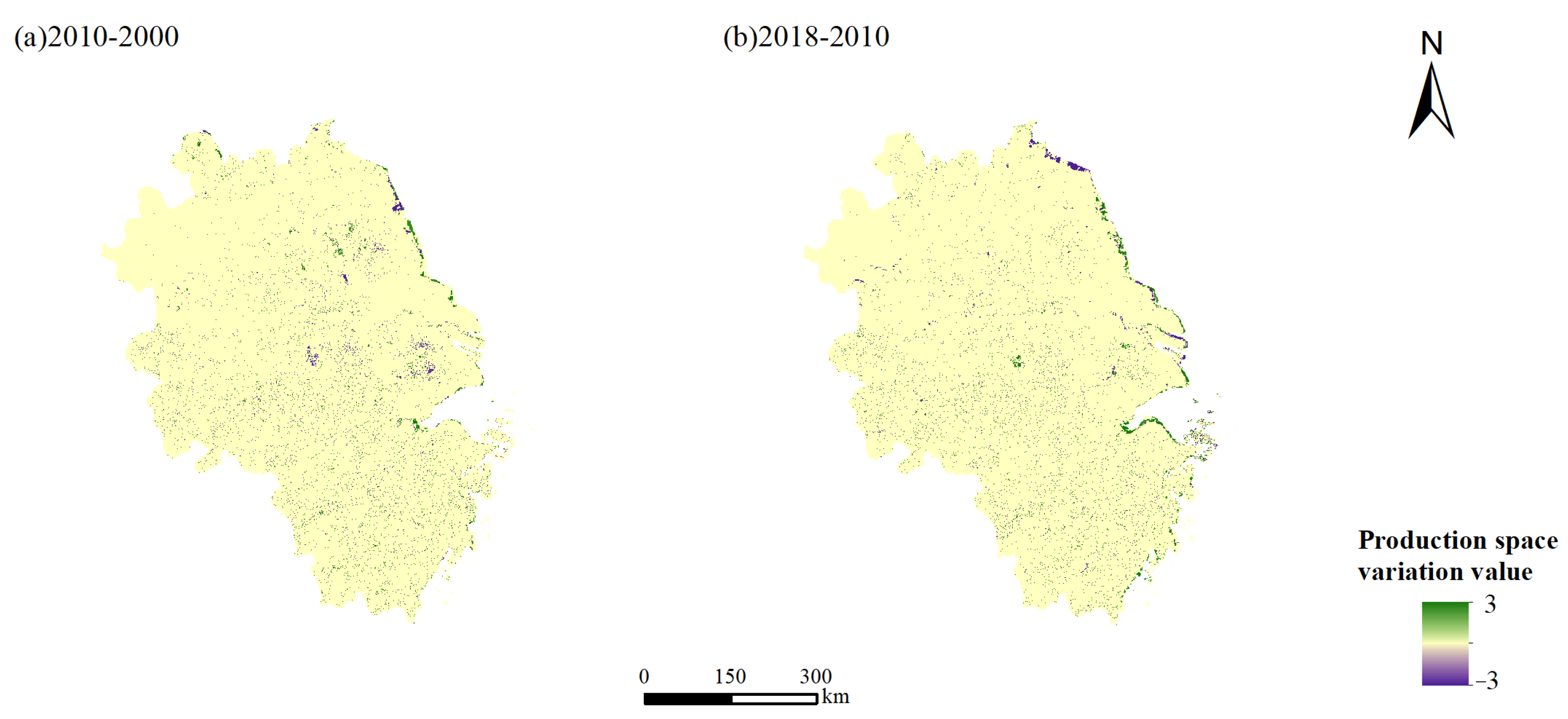
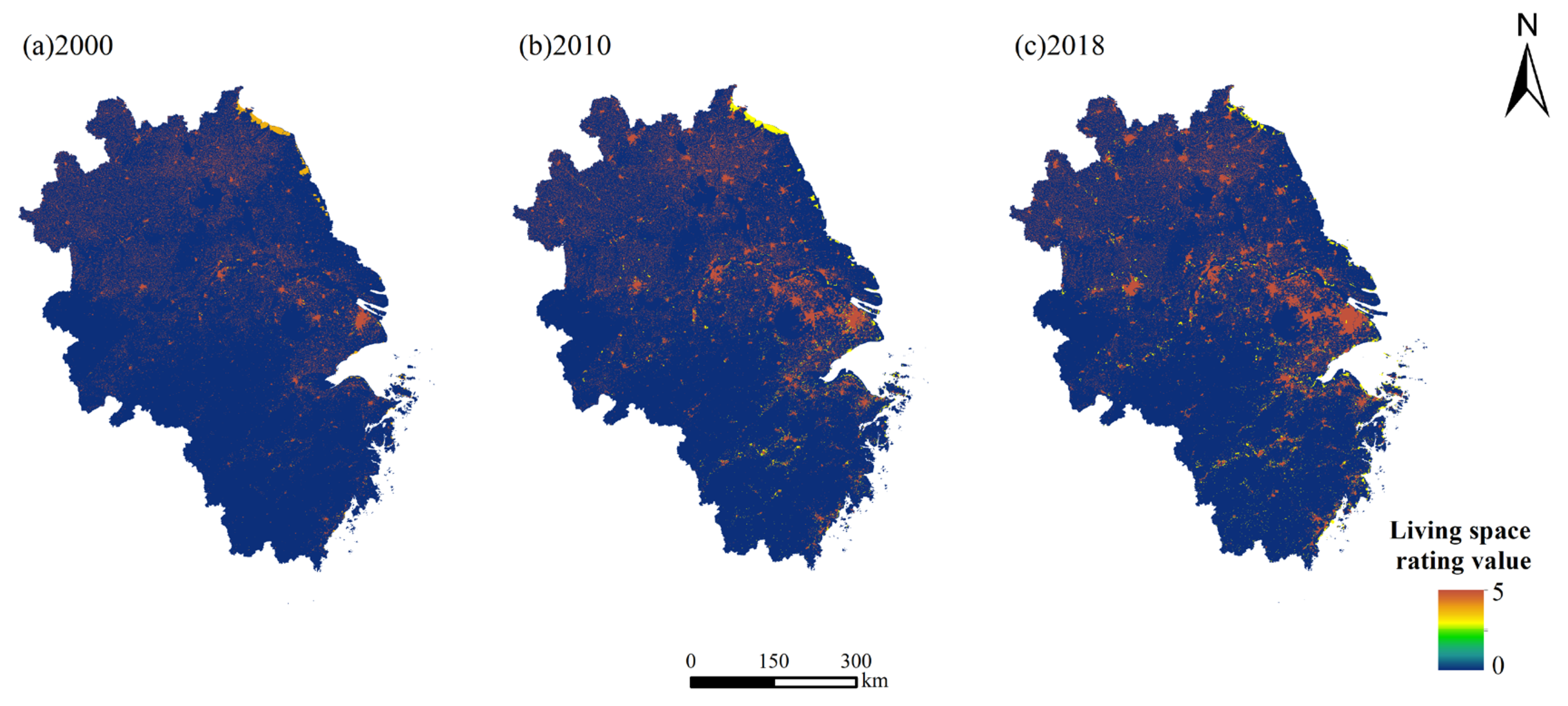
What are the characteristics of the spatial distribution of PLES in the Yangtze Delta Region, and how has PLES in the Yangtze Delta Region changed in extent since the 21st century?
- (2)
What are the distributional characteristics of the functional coordination of PLES in the Yangtze Delta Region, and how has PLES in the Yangtze Delta Region changed in terms of overall functional coherence since the 21st century?
- (3)
What patterns exist in the coupling coordination of PLES in the Yangtze Delta Region, and how has the level of coupling and coordination among these spaces evolved since the 21st century?
The study also attempts to make the following contributions to the existing PLES spatial studies:
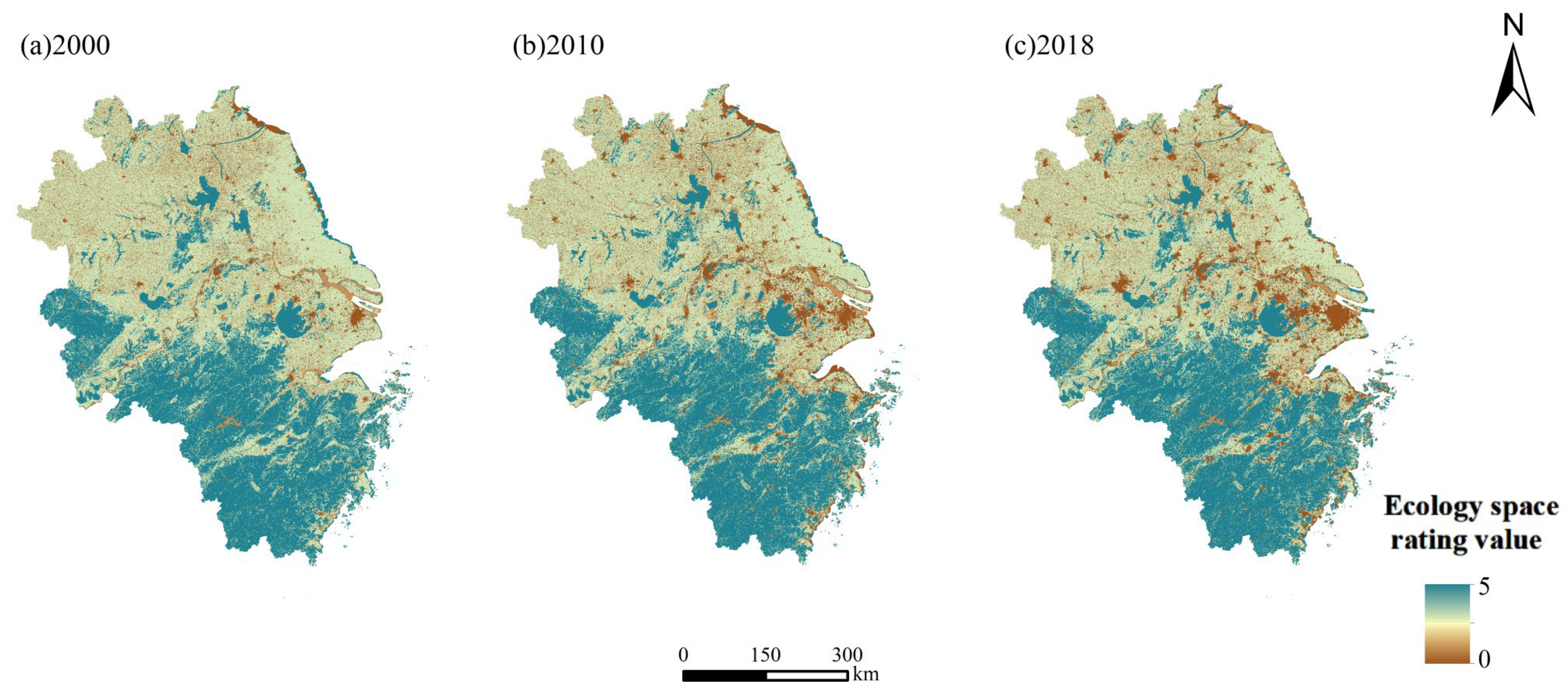
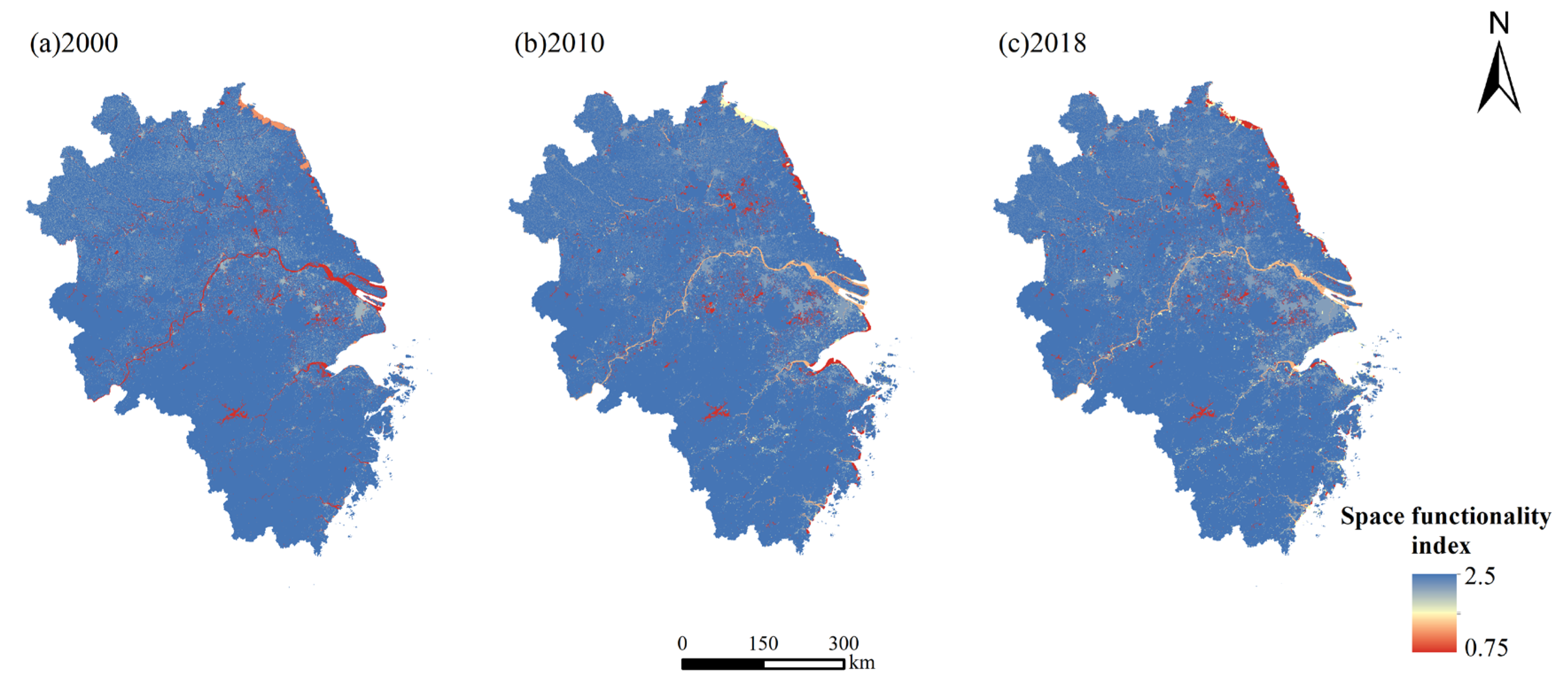
Firstly, this study explores spatial and temporal pattern evolution of the Yangtze Delta Region and analyzes the underlying causes for significant local changes using remote sensing images from three time periods, 2000, 2010, and 2018, with land use data and visualizes the changes in functional spatial areas based on GIS (Geographic Information System) spatial analysis methods.
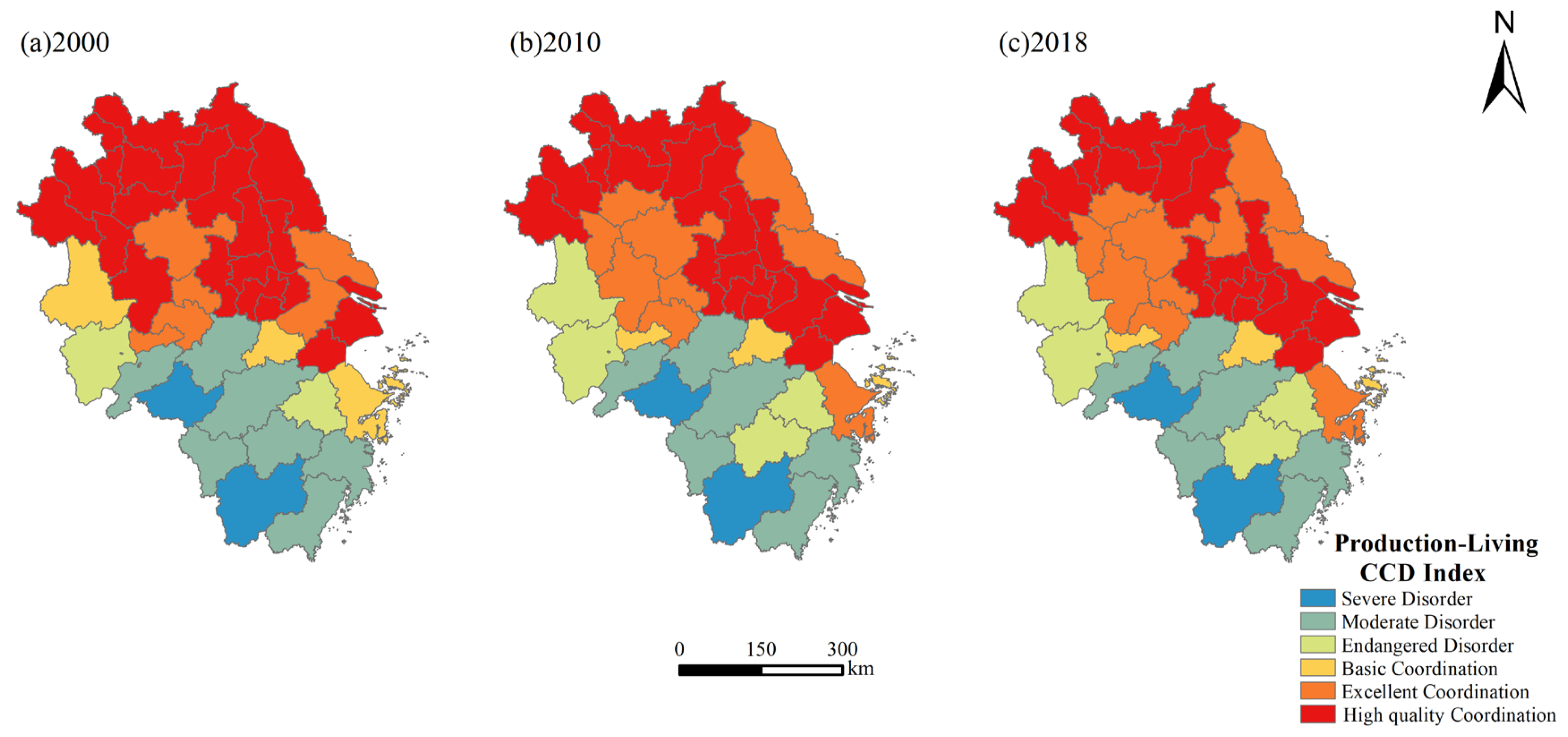
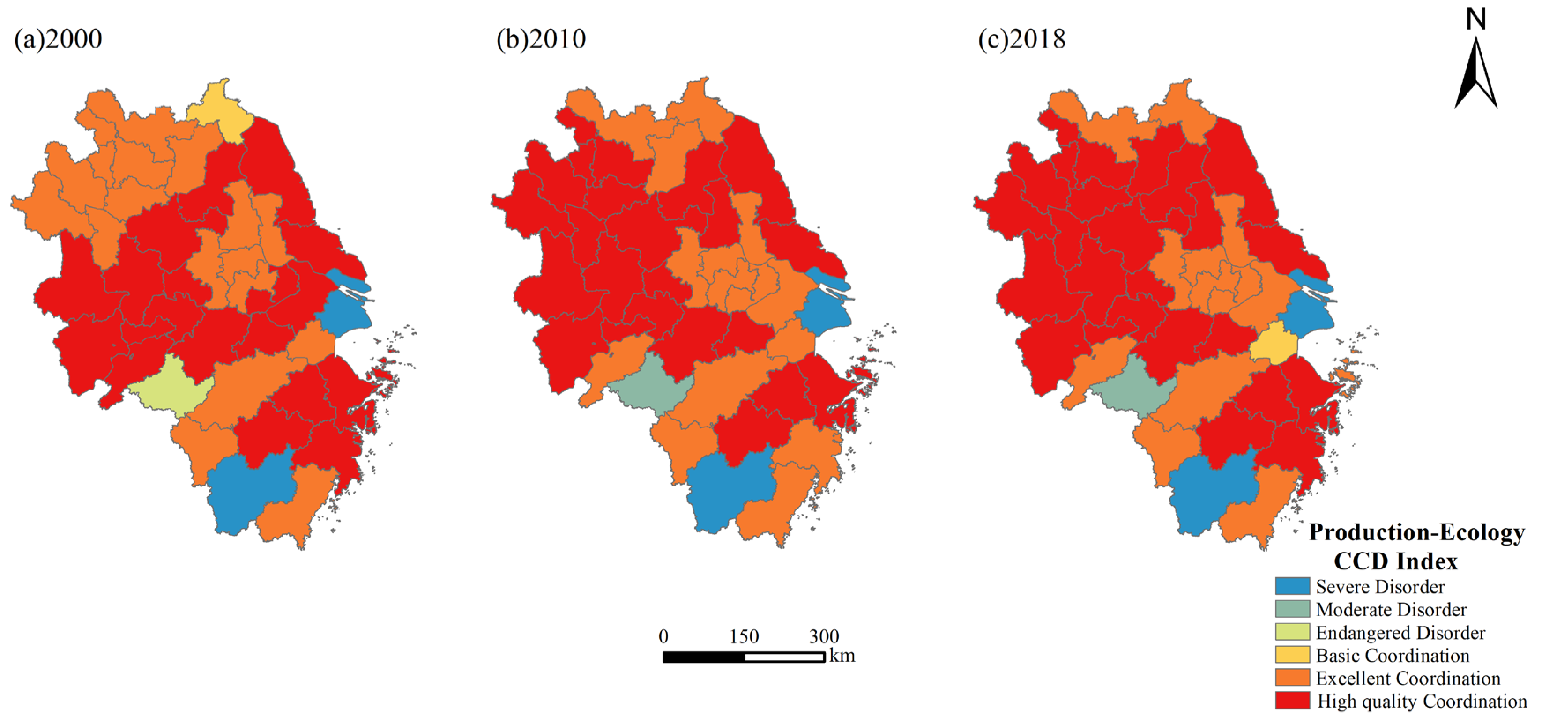
Secondly, based on the logical structure of PLES, we analyze the spatial differentiation of the functionality of “Production-Living-Ecological Space” and other heterogeneous pattern characteristics and summarize the causes of differentiation of the functionality of PLES. It is crucial to investigate the spatial relationships within PLES in order to plan regional territorial space and promote regional sustainability [
44]. Some scholars have previously determined a coupling coordination index by an entropy method to measure the coupling coordination relationship among production space, living space, and ecological space in a study area. In this research, we construct a model to measure the coupling and coordination of PLES functions in the study area based on the classification and evaluation system of PLES from the perspective of land use, and explore the “production-living”, “production-ecology”, and “production-living” functions. The model will explore the spatial interactions between “production-living”, “production-ecology”, and “living-ecology” in the PLES in the region, so as to make constructive suggestions for the coordinated development of PLES in the Yangtze Delta Region and the sustainable development planning of urban clusters in developing countries. The results of this study will offer helpful recommendations for the coordinated growth of the Yangtze Delta Region and the planning of urban clusters in other developing nations.
Thirdly, this study chooses the Yangtze Delta Region as the research object in response to the paucity of studies on mega-city clusters of municipal administrative units in the field of PLES. In the meantime, this region is distinguished by a high population density, numerous cities, favorable socioeconomic conditions, rapid development, and significant regional integration. In order to better understand the conflict between land supply and demand and the potential for sustainable development within the city cluster, it is useful to examine the spatio-temporal pattern evolution, functional differentiation, and coupling coordination characteristics of the Yangtze Delta Region. On this basis, this study can provide a reference for decision making on the optimal layout of the Yangtze Delta Region’s PLES and also serve as a guide and construction plan for the land use and spatial planning of city clusters in other developing countries around the world.
4. Discussion
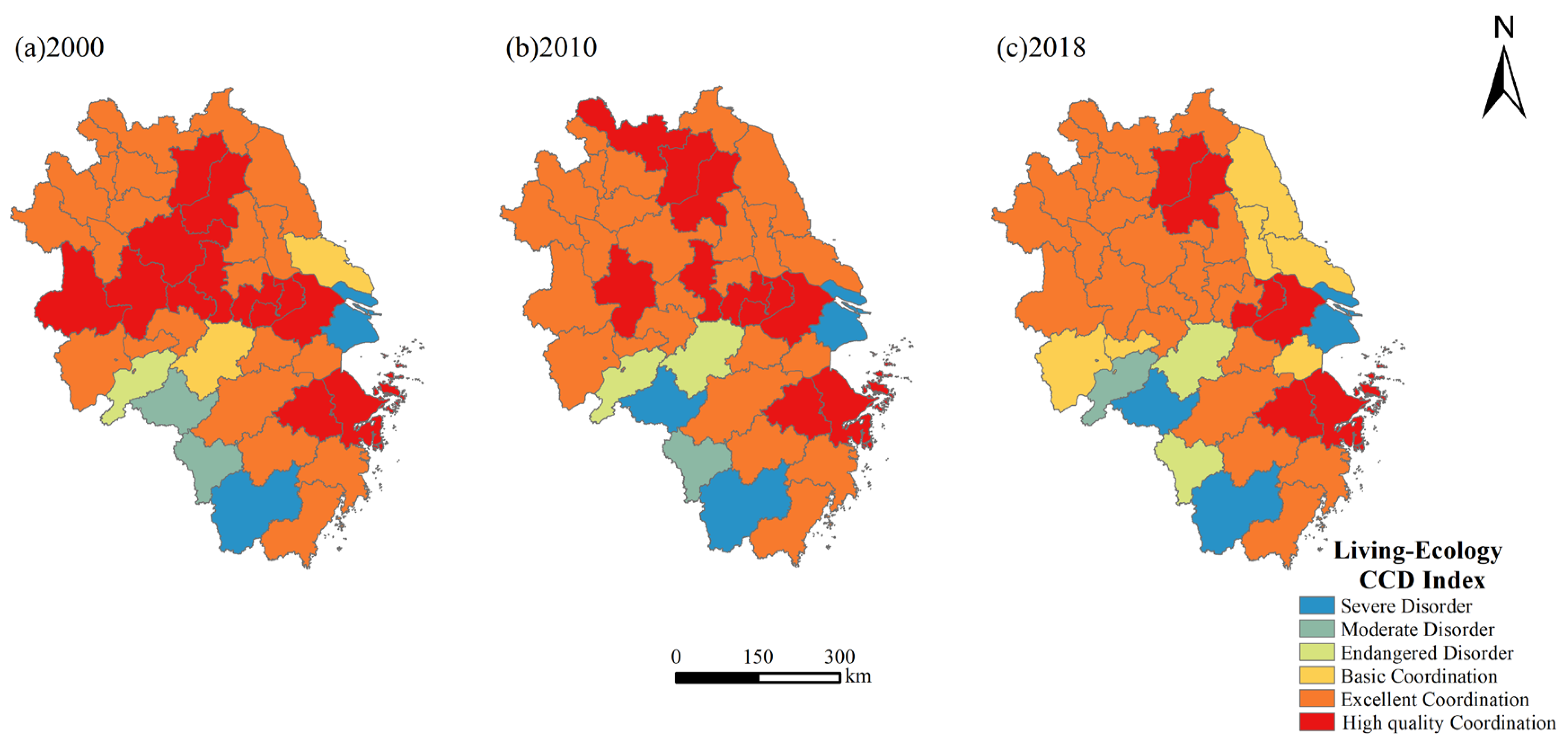
The study of the functions and spatiotemporal evolution of PLES is a fundamental task in the preparation of territorial spatial planning. Studying PLES’ functional measurement, pattern evolution, and coupling properties can serve to clarify the optimal coordination of PLES’ direction, broaden the theory of its optimal allocation, and give useful references. This study investigates the factors influencing regions with significant area changes and visualizes the spatiotemporal pattern evolution of the Yangtze Delta Region city cluster based on land use data. Based on the PLES functional index, we examine the pattern and course of its evolution in the Chinese mega-city cluster, investigate the degree of coupling coordination between the two geographical areas, and then determine how PLES interacts with its surroundings. The Yangtze Delta Region has excellent natural circumstances, a high population quality and urbanization level, and a high level of regional integration, but its internal growth is still unequal to some extent. In the Yangtze Delta Region city cluster, for instance, the ecological space exhibits a similar center-edge pattern with production and living spaces, but they also form a distinct “misalignment” relationship, with the ecological space of the central cities with larger production and living spaces being smaller and less coupled with the ecological space. With smaller manufacturing and housing areas, the ecological spaces in outlying cities have larger areas and are generally more integrated with adjacent spaces. This negative link suggests that the scope of urban expansion and the intensity of development is unlikely to be proactively managed during the new wave of urbanization building. Future ecological space in the Yangtze Delta Region’s key cities is projected to shrink, and the struggle with available land for production and habitation will intensify. Therefore, each city in the region should be evaluated according to the PLES function, pattern evolution, and type of coupling coordination in order to achieve sustainable and coordinated development of the PLES within the Yangtze Delta mega-city cluster and to provide development experience for other large city clusters in developing countries. According to the result, we further put forward three suggestions to form a better PLES patter and achieve sustainable development goals:
- (1)
For areas with large production–living space (PLS), but poor ecological function and dysfunction between PLS and ecological space (like Shanghai), the rational planning of production land is crucial to prevent a reduction in ecological space caused by over-development, thereby safeguarding arable land from encroachment. To achieve this, it is essential to transform the economic development model and phase out high-polluting and high-emission industries while simultaneously enhancing the environmental carrying capacity. Furthermore, the region should promote coordinated and synergistic growth with the Yangtze Delta Region, leveraging its scientific, technological, and human resource advantages. Additionally, financial and technological support should be extended to peripheral cities to foster their development. Furthermore, the region must maintain a beneficial synergy between industrial reform and industry transfer to outlying cities. The total urban population should be kept under control, and there should be restrictions on the development of transitional real estate [
5]. Three Zones and Three Lines planning should be expedited in terms of ecological space, and the region should also establish and improve the targeted ecological compensation mechanism in the wetland ecological demonstration areas, such as Qingpu and Chongming District in Shanghai, and expedite the ecological protection and restoration projects of mountains, water, forest areas, and restoration initiatives to assure the steady expansion in ecological space, leading in the region’s PLES development in a coordinated manner.
- (2)
For areas with small PLS, large ecological space, high functional value, but dis-coordination between living space and production space (like Hangzhou and Jinhua), the development of unused land in this region should be supported by strict adherence to environmental preservation, and efforts should be made to embrace eco-friendly land development and use practices. Reduced development should be carried out on arable land [
57]. To encourage urbanization at a county level, the region should rationally develop residential areas and expedite the building of transportation and other facilities. In terms of ecology, this area should keep up its current ecological infrastructure without overusing it. Such regions have a significant potential for overall sustainable development, and the coupling coordination within the PLES tends to move up to a greater level of coordination.
- (3)
For areas with small PLS, large ecological space, high functional value, but dis-coordination in PLES (like Lishui and Huangshan), the “ecological-economic gap” makes it challenging to coordinate the development of ecological functions and economic development, which results in poor overall coupling coordination among the PLES sectors. Therefore, in the future, it is important to choose the development strategy that will work best for these locations given the local conditions, avoiding both over-development, which will drastically diminish the amount of ecological space left in the area, and slow development, which will only cause population reduction and a low rate of urbanization. Regarding production space, given the limited plains and arable land in the area, there is a pressing need to enhance farmland infrastructure and expedite the development of high-standard special agriculture. This will facilitate the creation of a core area that ensures food security and an efficient supply of vital agricultural products within the Yangtze Delta Region. Moreover, the region should proactively welcome the transfer of industries from central cities in the Yangtze Delta Region and accelerate the development of industrial parks to optimize production space. In terms of living space, the area should prioritize infrastructure building while actively pursuing livelihood initiatives to support local residents’ employment, ensure farmers’ financial returns, further enhance public service systems like the social economy and housing security, strengthen county-level classification guidance for urbanization, and encourage urbanization in the immediate vicinity [
58]. Within the parameters of the ecological red line, green and ecological sectors like tourism and ecological agriculture should be moderately expanded. Only reasonable development based on the principle of “moderate” can overcome a situation of being constrained by natural conditions and achieve sustainable and coordinated development of PLES [
59].
However, this research is not without shortcomings. Firstly, this study selected raw data with a 30 m resolution due to limitations in data access and funding constraints. However, it is anticipated that as conditions permit, future research will employ higher resolution data to achieve greater accuracy. We extend our gratitude for the insightful feedback that has significantly improved the manuscript’s quality and readability. Secondly, the research is concentrated exclusively on examining the developmental status and limitations of each city within the Yangtze Delta Region, specifically in relation to land use classification and the evaluation system of Production, Living, and Ecological Spaces (PLES). This approach is inadequate as the regional space is a complex and integrated system comprising natural resources, ecological environment, economy, and society [
60]. While this study sheds light on the current situation of the three spatial areas and their interaction within each city, it is not comprehensive. For instance, the land use classification data only offer a rough analysis of surface buildings’ spatial categories and fail to differentiate between various properties, such as office buildings and residential construction land belonging to the tertiary industry. To mitigate errors and delve deeper into the interaction and coupling coordination mechanisms of the three spatial functions in a region, as well as to design an optimized pathway for their harmonious development, our future research will integrate methodologies used by other scholars in studying the Yangtze Delta Region’s Production, Living, and Ecological Spaces (PLES). This includes employing tools like the Geographic Detector to unearth deeper intrinsic relationships between spatial functions [
61]. Additionally, we will use the entropy weighting method and the Analytic Hierarchy Process (AHP) to construct a more precise functional evaluation model, analyzing specific socio-economic development aspects [
41]. Learning from international research methods on similar subjects [
62,
63], we plan to use multiple models to assess these functions in other major cities in China and globally [
64]. This approach aims to offer more constructive development recommendations for their future growth.