
Abstract
Organizational culture (OC) is one of the key factors that enables the development of innovation. A great deal of research has analyzed the characteristics that make up an innovation-focused OC; however, none have unified them. This article analyzes and integrates the literature on the characteristics of an innovation OC. Its objective was to test whether there is a specific set of distinctive characteristics of an innovation-focused OC that, once identified, can be implemented and developed by firms. To this end, this study proposed and tested a model for measuring the innovation orientation of an OC. This study collected samples from small- and medium-sized companies from the oil-producing states of Mexico, obtaining information from 176 companies. To determine the group of characteristics that make up an organizational culture of innovation (OCI), the authors applied non-experimental, descriptive, transactional research with a quantitative approach. Results were obtained through the application of the following statistical techniques: Bonnet test, KMO index, Bartlett’s sphericity, Chi-square, confirmatory factor analysis, Cronbach’s alpha, principal component analysis and structural equations, which made it possible to measure the level of innovation of the OCI of these companies and to determine the characteristics that comprise it. The proposed model allowed us to identify the existence of a specific group of behavioral characteristics that emanate from a company’s personnel and another group of characteristics that arise from the company itself. Both integrated groups determine whether the OC is focused on innovation. The results also confirmed that the level of innovation of a company depends greatly on its personnel. The authors found no previous work that analyzed these characteristics from the joint perspectives of employees, middle managers and managers. This research considered the opinions of these agents, which confers greater veracity to the findings obtained. The limitations and implications are listed at the end of the study.
1. Introduction
Due to the current trend of globalization, organizations are immersed in a changing environment, where competitive advantages are difficult to maintain. Therefore, it is important to identify, renew and combine resources and capabilities so that companies can consider alternatives that guarantee their survival and success [1], as well as the integration of permanent innovation as a strategy to face this unstable environment [2,3]. Therefore, the analysis and management of the development of innovation within companies are essential. In this sense, Schumpeter [4] emphasized the importance of organizations focusing on innovation, stating that a country without innovative organizations is condemned to technological and economic backwardness and, therefore, to poverty.
Research carried out in recent decades to determine the factors that focus a company on innovation have all assigned a prominent role to OC (organizational culture) [5,6]. Along these lines, Souto [7] affirmed that by focusing OC on innovation, companies can achieve success and, at the same time, surpass the competition in the development of opportunities.
A review of the literature shows that since the formal study of OCI (organizational culture of innovation) began in 1978 with the work of Roger Harrison [8], many researchers have focused on analyzing the behavioral characteristics that make it up [5,9]. However, there is still no epistemology regarding them [10].
Innovation is increasingly important in growth processes, in facing the economic crisis derived from market globalization and, even more so, in the process leading to economic development and social welfare. According to the National Survey on Productivity and Competitiveness of Micro, Small and Medium-Sized Enterprises [11], 97.6% of the approximately 4 million enterprises in Mexico are microenterprises, which account for 75.4% of the economically active population, followed by small enterprises, which account for 2.0% and 0.4% of workers, while medium-sized enterprises account for 13.5% and have 11.1% of the total number of current workers. Of all of them, only 35% invest less than 2% of their revenue into innovation initiatives, 32% between 2% and 5%, and 21% between 6% and 10% of the company’s revenues [12].
Thirty-seven percent of Mexico’s economic development depends on the state-owned oil company Petróleos Mexicanos (PEMEX) [11]. In 2013, the Mexican government enacted an energy reform to increase oil production while maintaining the nation’s ownership of hydrocarbons. Since then, it has opened the door to the entry of large transnational companies that compete with national companies. In this context, it is crucial for local companies to develop innovative strategies through their OC, which allows them to survive and operate efficiently in an increasingly competitive market.
The purpose of this research was to verify the distinctive characteristics of an OCI and to provide a measurement model. This model will make it possible to measure the level of innovation orientation of an OCI and to identify those characteristics that a company will need to implement, develop, maintain or suppress on its way to innovation.
The main contribution of this research is a measurement instrument (questionnaire) that epistemologically integrates the characteristics of the OCI as a strategy for achieving sustainable competitive advantages.
This research focused on the perspective of the dynamics of daily work life, and integrated the agents involved in the development of OC (employees, middle and top management) with the purpose of orienting it towards innovation. For this reason, the type of research applied was non-experimental, descriptive and transactional, with a quantitative approach. The results allow us to have more conscious knowledge about the way in which each company should seek to form its OC, bearing innovation in mind as a means of survival.
2. Literature Review
Next, we analyzed the background of the concepts that are the subject of this research: innovation, OC and, finally, OCI.
2.1. Background of the Innovation Concept
The concept of innovation has been the subject of multiple definitions, perspectives and theoretical contributions, as it is a dynamic construct that has evolved over time. In this section, we analyze them longitudinally.
In everyday language, “to innovate is to introduce a change, which brings novelties with it” [5]. The term “innovation” emerged at the beginning of the 20th century when Schumpeter [13] defined it as the introduction of a new product to the market, the use of a new source of raw materials or a new production method not previously attempted in a given sector. In the 1960s and 1970s, it was taken as something practical, such as a process or object, which was perceived as new in a specific situation by a group of organizations with similar objectives, as well as novel changes for the company and society.
Later, in the 1980s, innovation was seen as the development of a process, product, technique or service based on a need by applying an idea [14] to achieve the fundamental objectives that would allow a transformation of the established ways of doing something determined, accepted and/or adopted by society by using new knowledge [15]. At this time, the use of the words “idea” and “development” increased in discussions of the concept.
In the 1990s, innovation continued to be thought of as the “successful introduction of a new idea” [16]. Such ideas had to generate a change in relation to the status quo by reaching the market.
During the first decade of the 21st century, the term “newness” was mainly used in the development of the concept of innovation. Currently, innovation is closely related to the creation of value and the generation of wealth through success [17,18,19].
In accordance with the above and for the purposes of this research, we will define innovation as: “The novelty of change based on an idea that generates the development of a new product, process or service, adopted by society, giving the company a sustainable competitive advantage”.
2.2. Background to the Concept of OC
Among researchers, an interest in “culture” increased in the second half of the 20th century. Research at this time sought the best way to organize and manage a company, so the development of the concept of OC began to focus on human relations. In the 1960s, it focused on the development of organizational structure; in the 1970s, it focused on business strategy. At this time, due to the way in which employees related to each other, to customers and to external agents, the term OC was used as a synonym for organizational climate [20].
As such, the concept of OC appeared in the 1980s in the scientific publications of Ouchi [21], who related the success of Japanese companies to their ethnographic culture. It was also used in the work of Deal and Kennedy [22], who emphasized the virtues of the types of culture and strategies followed by American companies to achieve success.
- Next, we grouped scientific research according to how the authors understood OC. Thus, we identified research that understands OC as:
- The set of ways of conducting oneself and learned behaviors which guide the interpretation and action in organizations through patterns of appropriate behavior in different situations, which are considered important to transmit them to the next generation to establish an organized way of life [5,23].
- Learning that promotes stability and order within the company [20,24].
- The dominant values, beliefs and principles accepted and shared by the staff of a company, and the control these have over the way they interact with each other and with the environment [22].
- The knowledge originating from and shared by the social interactions of its members, enriching it for the benefit of the organization [25].
- The internal environment generated by the physical layout that promotes social relationships among its members, and between them and their customers, promoting a series of interpretations, assumptions, beliefs and shared values that guide the operation of the company [21].
- Change and dynamic configuration, which are transformed by employees during the process of decoding organizational events over time, which are neither uniform nor static [25].
- Transmission of a sense of identity and unity among the members of an organization, materialized in the creation of a specific way of acting, which differentiates the organization from others [26].
- A system that brings together expressive and affective aspects, influenced by the surrounding society, which share the same history and symbolic meanings, such as myths, rites, customs, ideologies, and organizational values [20,21].
- A system of processes that increase the company’s profits through effectiveness and efficiency [27].
In accordance with the above, and for the purposes of this research work, we define OC as “A system of knowledge, beliefs and shared values developed within the company, which give rise to norms and routines of collective behavior that evolve over time, thus establishing an organized way of life”.
2.3. Concept of OCI
A review of the literature allowed us to confirm that the OCI is shaped by the implementation of ideas arising from the interactions among the company’s personnel, and between them and external agents; likewise, the members are focused on continuous improvement and the creation of value [9,28].
In this type of culture, mistakes made by workers are seen as a source of experience, which, in turn, generates knowledge [29], so that the trust placed in the workers is of utmost importance as it commits them to change [2,30,31,32], in turn encouraging healthy competition and teamwork [33,34]. Likewise, the responsibility of the company’s management is crucial for the development of this type of culture [24,35,36].
Consequently, OCI is dynamic and creates unique organizational values, thus helping to reduce resistance to change [23]. At the same time, among members, it generates a unique way of dealing with conflicts, resolving them and analyzing the results obtained.
It is also important to emphasize that the development of innovation is an expression of the members of the company, their past, their beliefs, ideas and behaviors, so one of the strategies for the development of OCI is to place workers in the work areas of their interest to increase proposals for improvement and favorable results [9,37].
Brooke [9] defined OCI as a multidimensional context that includes innovative behavior, which is important for influencing the market. In addition, it has been stated that a company that drives innovation promotes behaviors that give prime importance to value generation and the market [3,38]. This analysis leads to the conclusion that OCI, in recent decades, has increased its importance because it guarantees differentiation and increases the competitiveness of organizations.
After reviewing the literature and analyzing the concepts of different authors, for the purposes of this research work, we considered OCI as: “the culture that promotes innovation through the development of shared values and methods to generate the development of new ideas, experiences and knowledge as part of the company’s strategy to achieve competitiveness and permanent innovation”.
3. Materials and Methods
The literature review focused on an analysis of the descriptions provided by authors who specifically investigated the OCI. This allowed us to identify and group the characteristics that make up the OCI. These characteristics were used in the design of the instrument for measuring an OC’s innovation orientation.
3.1. Characterization of the OCI
As indicated in the introduction, innovation has been considered one of the key factors in the development of sustainable competitiveness by enterprises. However, to date, it has not yet been possible to determine a generalized and practical process for its implementation [10].
In this regard, the literature review suggested that the set of characteristics that make up an OC can be divided into external and internal factors. The external ones are the macro-variables of the environment surrounding the company that affect the development of the internal behavioral characteristics in some way [19]. The internal variables are those that are developed at the micro-level within the company, helping it to develop innovative products through which it achieves competitiveness in the market [39].
From the analysis of the concepts proposed by various authors, the most important characteristics of the OCI have been extracted. Although we did not yet have conclusive results at this stage of the research, their analysis enabled us to identify two major groups of characteristics that explain organizational innovation [40]:
- The behavioral characteristics of company personnel with OCI.
- The structural characteristics of the company with OCI.
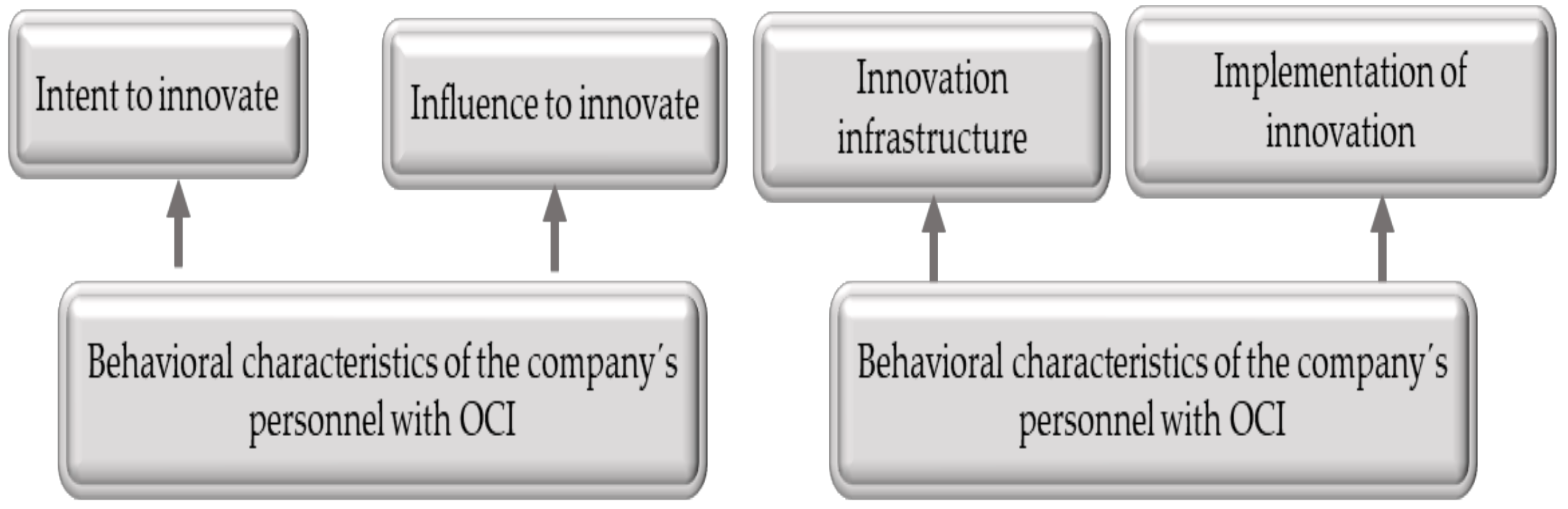
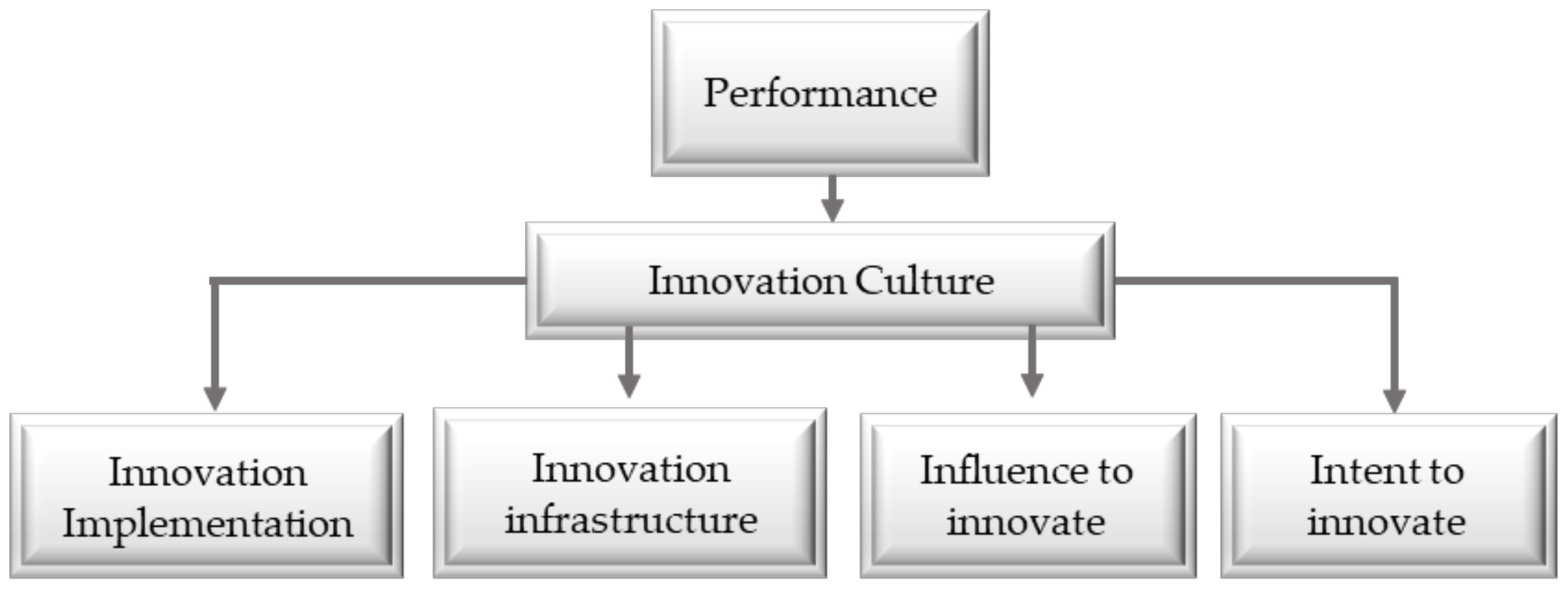
On the other hand, we followed the work of Brooke [9], for whom an OCI is multidimensionally made up of (Figure 1):
Figure 1.
Dimensions of the innovation development model. Reprinted from Ref. [9].
- The intention to innovate;
- An infrastructure that supports the development of innovation;
- The operational level of behavior necessary to influence the market, along with value orientation;
- The right environment for the implementation of innovation.
These dimensions were taken as the basis for the classification of the two groups of characteristics mentioned above. As a result, the division of characteristics by areas and dimensions is shown in Table 1.
Table 1.
Division of the areas by dimensions. Reprinted from Ref. [9].
The literature review allowed us to subdivide Brooke’s dimensions [9] (Table 1) into factors, which, in turn, are defined by specific characteristics. This analysis is presented below.
3.2. Characteristics of the Personnel of a Company with OCI
The cultural and behavioral characteristics of the personnel of a company with an OCI (Table 1) are divided into two dimensions: the intention to innovate and the motivation to innovate [9].
3.2.1. Intention to Innovate
The intention to innovate has been considered as a specific dimension, present to a greater or lesser extent in all individuals, but linked to a series of social conditioning factors [9,35]. The intention to innovate is the will to conceive or imagine realities different from the current ones, with the purpose of making them effective [31]. It measures the degree of formalized stability within the company [24] and the level of employees’ commitment to it [23]. The factors that make up this dimension are communication, values and quality orientation.
3.2.2. Motivation to Innovate
The motivation to innovate is the power exercised by a person (leader) to persuade or motivate another or others in the development of innovative ideas [41]. It measures the sensitivity and behavior of employees in orienting the company’s development towards the market [18,23,42]. This dimension is made up of the factors of identity, teamwork, knowledge management, symbolic activities and language.
3.3. Structural Characteristics of a Company with OCI
The structural characteristics of a company OCI (Table 1) are divided into the following dimensions: innovation infrastructure and innovation implementation [9].
3.3.1. Innovation Infrastructure
The term “infrastructure”, according to the RAE (2020), derives from Latin roots, with lexical components including the prefix “infra”, meaning “under”, and “structure” referring to the internal skeleton that supports a building, which comes from the Latin word “structūra”. In general terms, it can be defined as the base that supports or sustains an organization.
Therefore, the RAE (2014) defined the term as the group of elements or services necessary for the invention, production and operation of an organization. Therefore, we can confirm that the innovation infrastructure is made up of the necessary characteristics considered to be the fundamental basis for the development of the OCI. This dimension is made up of the following factors: mission, vision, objectives and goals, and normativity.
3.3.2. Innovation Implementation
The word “implement” means to put into operation or apply methods, measures, etc., to carry out something or to realize some activity, plan or mission (RAE, 2020).
The implementation of innovation involves the activities by which an established action plan is put into action, where all the elements of the innovation project are involved to determine the positive and improvable aspects. The results obtained are those that serve as a guide in the total implementation of the innovative project, accompanied by a continuous measurement process, as well as follow-up activities for continuous improvement [43]. This dimension is composed of the factors of change orientation, decision making, customer orientation and market orientation.
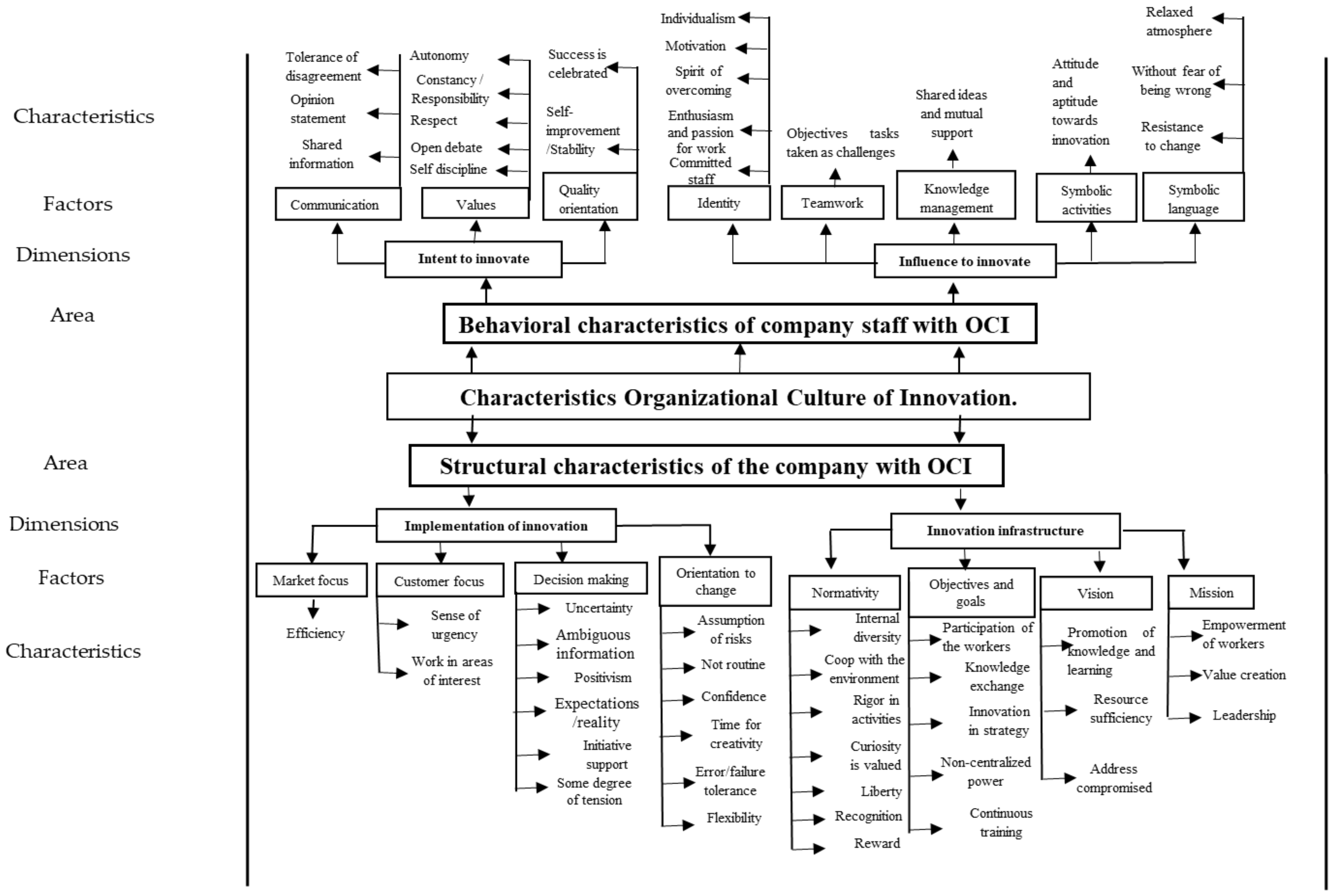
Figure 2 shows the characteristics of the OCI, grouped by areas, dimensions and factors resulting from the analysis of the literature in this section.
Figure 2.
Framework of OCI features.
4. Hypotheses, Research Model and Methodology
Based on the literature review, we proposed four research hypotheses.
Hypotheses 1 (H1).
The level of innovation orientation of an OC can be measured on the basis of the characteristics that comprise it, and the agents active in its development, contrasted with the theoretical characteristics of the OCI.
However, it is important to consider whether both the behavioral characteristics of the personnel and the structural characteristics of the company have the same level of impact on the development of the OCI, so we proposed Hypothesis 2.
Hypotheses 2 (H2).
The behavioral characteristics of the personnel and the structural characteristics of the company have the same level of impact on the development of OCI.
On the other hand, it is important to know what level of impact each of the dimensions, factors and characteristics of the OC that comprise the behavioral areas of the personnel and the company’s own structural areas have on the development of the OCI, which is why Hypothesis 3 has been developed.
Hypotheses 3 (H3).
Not all dimensions, factors and characteristics of OC contribute to the same extent to orient the OC towards innovation.
Finally, it is important to know which are the most important characteristics that make up an OCI, which is why Hypothesis 4 has been formulated.
Hypotheses 4 (H4).
There is a small group of characteristics without which the existence of an OCI cannot be determined.
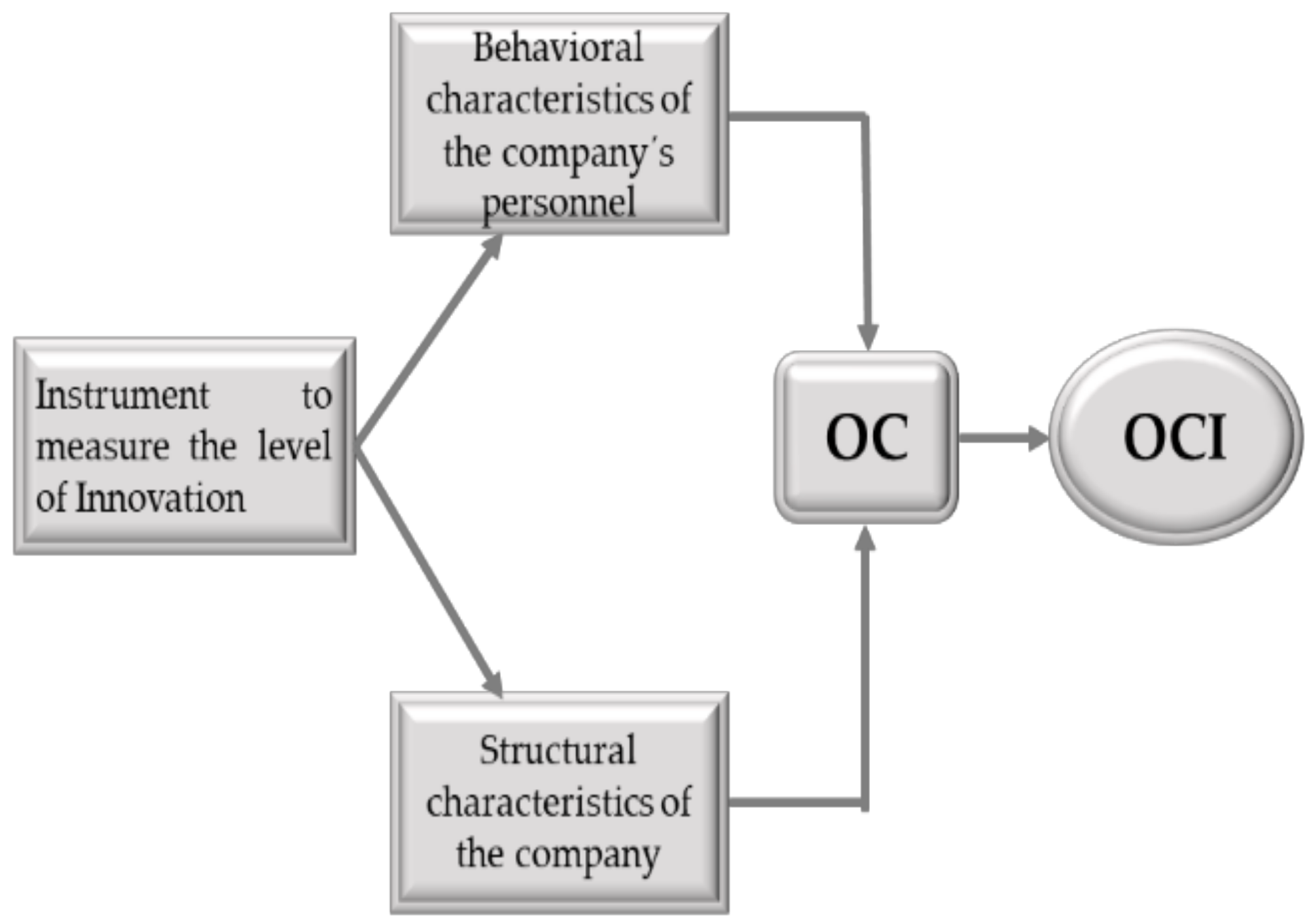
The analysis of the literature revealed the key role of innovation in the development of sustainable competitive advantages. This focused our research on an analysis of the concepts of innovation, OC and OCI, and an analysis of the characteristics of the latter. None of the research conducted to date has been able to identify a set of characteristics of an OCI. This study attempted to fill this gap. The proposed model for measuring the level of an OC’s orientation towards innovation is shown in Figure 3, based on the grouping of the characteristics of this culture resulting from the literature review (Figure 2).
Figure 3.
Model for measuring the OC’s level of innovation orientation.
The independent variables are the characteristics of the OC (the behavioral characteristics of the company’s personnel and the structural characteristics of the company). The dependent variable is the OC’s level of innovation orientation.
Methodology of the Empirical Study
In order to examine the hypotheses and test the proposed model, we developed a measurement instrument consisting of a questionnaire based on the characteristics shown in Figure 2. Specifically, the study investigated companies established in the southeast of Mexico, specifically in the states of Veracruz, Tabasco and Campeche. As we indicated in the introduction, their weight in the economy and in employment, and the entry of new competitors require local companies to be more oriented towards innovation as a strategy to be more competitive.
To conduct the survey, we first obtained the list of companies that make up the study population, with a total of 321. When calculating the corresponding sample size, we used a confidence level of 95%, which generated a sample of 174 companies, which were selected by applying simple stratified sampling. The survey was applied via the internet and, in order to obtain a holistic understanding of the real situation of each company, the survey was applied to operatives, middle management and executives. This information was subsequently analyzed separately and as a whole. Table 2 shows the technical data of the selected sample.
Table 2.
Technical data sheet of the study.
Initially, we developed the first questionnaire composed of 91 items that was subjected to an expert test and applied to the quality area coordinators of 30 companies within the study population, selected by the simple random method.
The results obtained from this expert test were subjected to Pearson’s correlation analysis and Cronbach’s alpha. Based on these results, we refined the initial questionnaire and subjected this new version to a pilot test applied to 17% of the study population (30 companies). These companies were chosen by the stratified simple random method for each of the states included in this research. We re-subjected the results of this pilot test to Pearson’s correlation analysis and Cronbach’s alpha, after which we developed the final version of the questionnaire, which comprised 84 items. The structure of the content of this questionnaire is shown in Figure 4.
Figure 4.
Structure of the questionnaire.
The analysis of the results was carried out using various statistical techniques, such as Bonnet’s test, KMO index, Bartlett’s sphericity, Chi-square, confirmatory factor analysis, Cronbach’s alpha, principal component analysis and structural equations, which made it possible to measure the level of innovation of the OC of these companies and to determine the characteristics that comprise it. The version of the SPSS program used was 17.0.
5. Results
5.1. Level of Innovation in the OC
The method proposed by Bonnet [44] was used to study the level of innovation of the service providers of the state-owned company PEMEX in the southeast of Mexico. This method consists of weighting the answers obtained from the set of questions in the questionnaire and, according to the results of the study, the level of innovation of the OC of the companies in the sample can be shown.
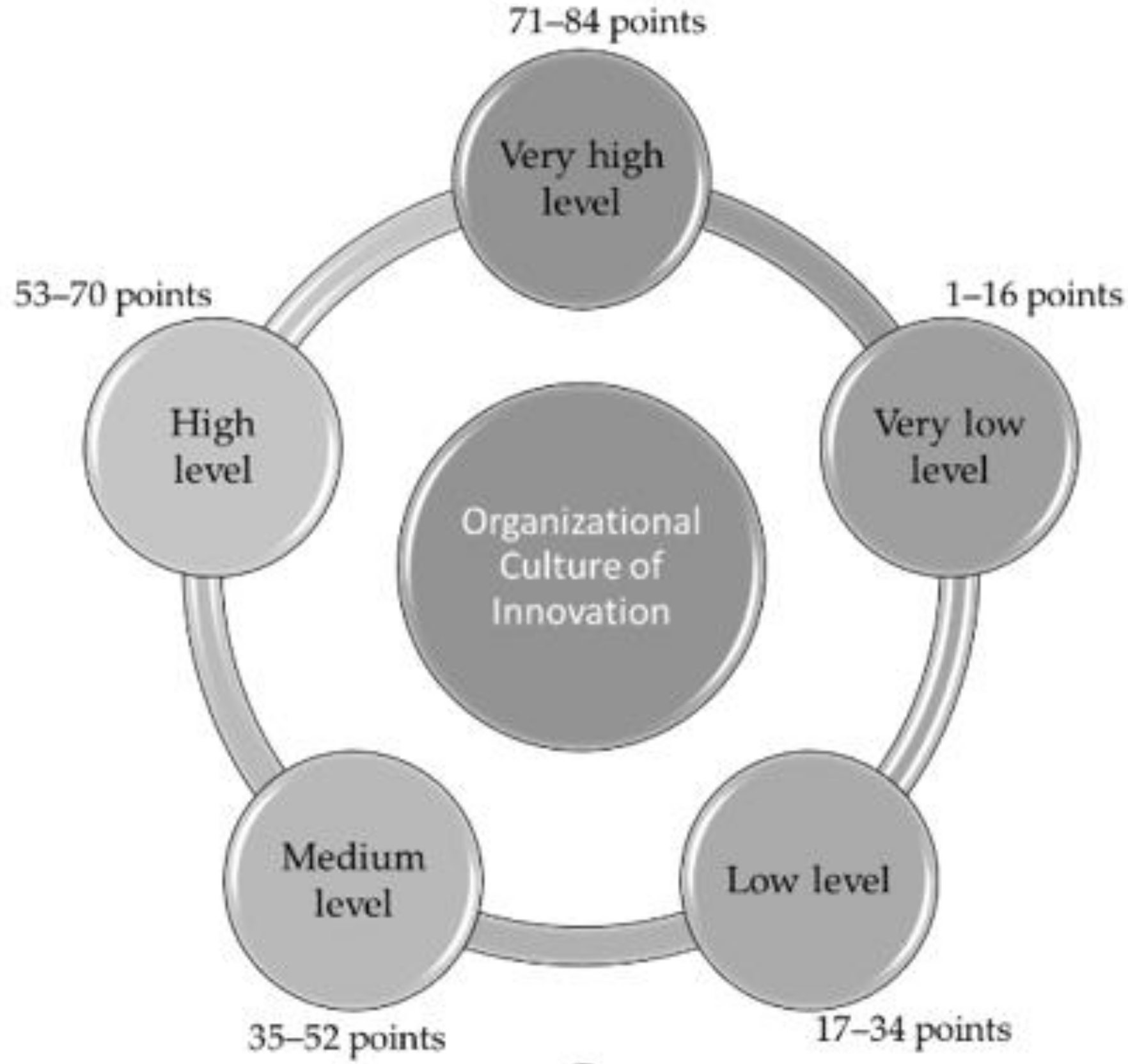
Based on these considerations, with respect to the proposed measures, the level of OCI was determined on the basis of the set of characteristics that make up the OCI, which were measured using a five-point Likert scale. The scores for the different levels are shown in Figure 5.
Figure 5.
OC innovation level of PEMEXs service provider companies according to the scores obtained via a five-point Likert scale. Reprinted from Ref. [44].
The scores of the level of innovation orientation of the OCs of the companies providing services to the parastatal PEMEX in the southeast of Mexico are shown in Table 3.
Table 3.
Level of innovation of the OCs of the service provider companies of the parastatal PEMEX in the southeast of Mexico.
The score obtained for the OC’s innovation orientation level, with respect to the managers of the companies that made up our target population, gave a total of 69.80 points. This means that they consider that they have a high level of focus on innovation.
On the other hand, the assessment of middle management was that they consider the OC to have a medium level of focus on innovation, with 51.08%. On the other hand, the operatives consider the company’s level of focus on innovation to be medium. As we can see, each agent involved in the development of the OC has a different perspective, which is why it is important to analyze the companies in an integrated way in order to know the real situation prevailing in them. By means of the analysis above, we can be confirm the first hypothesis:
Hypotheses 1 (H1).
The level of innovation orientation of an OC can be measured on the basis of the characteristics that comprise it, and the agents active in its development, contrasted with the theoretical characteristics of the OCI.
After analyzing the results of the field study, we can accept that it is possible to determine which characteristics make up the OC of the companies under study.
Continuing with the study results, we proceeded to the application of principal component analysis (PCA), Cronbach’s alpha and confirmatory factor analysis to verify the reliability and convergent validity, which were carried out separately for each of the dimensions that make up the measurement instrument.
5.2. Individualized Analysis of Each Dimension of The Measurement Instrument

To determine the relevance of the exploratory factor analysis, the KMO index test was performed, which examines whether the partial correlations between the variables are small and range between 0 and 1.
On the other hand, the matrix of integer correlations was examined by means of Bartlett’s test of sphericity. This test provides us with the statistical probability that the correlation matrix of the variables is an identity matrix, which means that the inter-correlations between the variables are zero. If this were the case, there would be no significant correlations between the variables, and the factorial model would not be appropriate; on the contrary, when the results present a high Chi-square and a significance of less than 0.05, the factorial model is adequate for explaining the data. As we can see in Table 4, the results obtained for each of the dimensions showed that the KMO is adequate for explaining the results obtained.
Table 4.
KMO and Bartlett’s test of the dimensions.
The validity of the scale was examined by means of confirmatory factor analysis. Through convergent validity, the standardized loadings (SL) of the model were observed, by means of which the statistical significance was verified. Some factors did not comply with the minimum recommended significance level of 0.05.
Consequently, some indicators presented levels of individual reliability (IR) lower than the recommended levels, which corroborated the inadequacy of some of the variables observed. Therefore, the reliability analysis of the indicators facilitated the elimination of the items that did not achieve adequate results.
After debugging, Cronbach’s alpha was applied again to the components that met the minimum level of validity. A summary of this analysis is presented in Table 5 and Table 6 for the dimension of intention to innovate, in Table 7 and Table 8 for the dimension of motivation to innovate, in Table 9 and Table 10 for innovation infrastructure, and in Table 11 and Table 12 for innovation implementation.
Characteristics of the personnel of a company with OCI:
Table 5.
Intention to innovate.
Table 5.
Intention to innovate.
| Item | Communication | SL | IR | Opinion |
|---|---|---|---|---|
| OCI01 | The company promotes free discussion forums where workers freely express ideas, opinions, problems, achievements and news. | 0.848 | 0.7191 | |
| OCI02 | The employee is free to respectfully express what he/she likes or dislikes about the company without fear of reprisal. | 0.820 | 0.5867 | |
| OCI03 | The opinions of all workers are considered. | 0.848 | 0.7191 | |
| OCI04 | The communication that exists in the company is open and honest. | 0.613 | 0.3757 | Deleted |
| OCI05 | Communication in the company takes place in person when circumstances warrant it. | 0.575 | 0.3306 | Deleted |
| Values | ||||
| OCI06 | The company allows the independent development of new projects. | 0.817 | 0.6674 | |
| OCI07 | There is mutual trust and respect between the management and employees. | 0.653 | 0.4264 | Deleted |
| OCI08 | I have never had an administrative sanction. | 0.560 | 0.3136 | Deleted |
| OCI09 | I always comply in a timely manner with my work activities. | 0.751 | 0.5640 | |
| OCI10 | Employees are responsible for product quality and can make decisions independently. | 0.746 | 0.5550 | |
| Quality Orientation | ||||
| OCI11 | The company generates continuous strategic initiatives to maintain a competitive advantage. | 0.559 | 0.2116 | Deleted |
| OCI12 | The worker is motivated to generate new ideas to solve problems or to improve their work activities. | 0.766 | 0.6724 | |
| OCI13 | Quality is the responsibility of the worker; therefore, he/she is made aware of the objectives, mission, and vision of the company. | 0.685 | 0.4692 | Deleted |
Table 6.
Reliability of the refined scale for the intention to innovate.
Table 6.
Reliability of the refined scale for the intention to innovate.
| Factors | Items | Cronbach’s Alpha |
|---|---|---|
| Innovation-generating communication | OCI03, OCI01, OCI12, OCI06 OCI02 | 0.899 |
| Responsibility for continuous improvement | OCI09, OCI10 | 0.623 |
Table 7.
Motivation to innovate.
Table 7.
Motivation to innovate.
| Item | Identity | CE | FI | Opinion |
|---|---|---|---|---|
| OCI14 | Managers anticipate the needs for change and pinpoint the factors necessary for change. | 0.494 | 0.2440 | Deleted |
| OCI15 | High performance in each job is rewarded. | 0.748 | 0.5595 | |
| OCI16 | Competence at work increases the spirit of self-improvement. | 0.550 | 0.3025 | Deleted |
| OCI17 | I am satisfied with my work. | 0.518 | 0.2683 | Deleted |
| OCI18 | The worker is motivated by new programs or work processes. | 0.655 | 0.4290 | Deleted |
| OCI19 | Managers listen to and support the employee and motivate him/her to be part of the total quality solutions and management, as well as the company’s plans and policies. | 0.594 | 0.3528 | Deleted |
| OCI20 | A friendly working environment is the fundamental source of motivation among employees. | 0.573 | 0.3283 | Deleted |
| OCI21 | Achieving personal goals is the greatest motivation for people. | 0.676 | 0.4569 | Deleted |
| OCI22 | Having the option to work individually allows innovation to develop in the company. | 0.606 | 0.3672 | Deleted |
| OCI23 | I feel committed to the growth and development of the company. | 0.686 | 0.4705 | |
| Teamwork | ||||
| OCI24 | The company’s activities are carried out in teams. | 0.699 | 0.4886 | |
| OCI25 | In this company, the most important thing is the achievement of objectives and results. | 0.731 | 0.5343 | |
| OCI26 | I see this company as innovative, with a willingness to take on new challenges and risks. | 0.607 | 0.3684 | Deleted |
| Knowledge Management | ||||
| OCI27 | My proposals are valued by my co-workers. | 0.523 | 0.2735 | Deleted |
| OCI28 | I am prepared to generate ideas in my area of work. | 0.649 | 0.4212 | Deleted |
| Symbolic Activities | ||||
| OCI29 | I know how to contribute to the development of innovation within the company. | 0.581 | 0.3375 | Deleted |
| OCI30 | In the company, we are encouraged to think and behave in original and new ways. | 0.754 | 0.5685 | |
| OCI31 | The company has increased its activities aimed at developing innovation. | 0.686 | 0.4705 | Deleted |
| Symbolic Language | ||||
| OCI32 | The company provides the right environment for workers to interact, support each other, form work teams and actively participate in the development of the company’s innovation. | 0.811 | 0.6577 | |
| OCI33 | Risk-taking departments are incentivized; mistakes are not personalized. | 0.785 | 0.6162 | |
| OCI34 | When there are new technologies and ways of doing things, we are the first to adopt them. | 0.712 | 0.5069 | |
| OCI35 | We workers are open to change. | 0.673 | 0.4529 | Deleted |
Table 8.
Reliability of the refined scale of the motivation to innovate.
Table 8.
Reliability of the refined scale of the motivation to innovate.
| Factors | Items | Cronbach’s Alpha |
|---|---|---|
| Adaptation to change through incentives. | OCI33, OCI15, OCI30, OCI31, OCI34 | 0.882 |
| Success generated through the cooperation and commitment of the workers. | OCI25, OCI24, OCI23 | 0.783 |
Characteristics of a company with OCI:
Table 9.
Innovation infrastructure.
Table 9.
Innovation infrastructure.
| Items | Mission | CE | FI | Opinion |
|---|---|---|---|---|
| OCI36 | The activities of the employees are oriented towards the mission and vision of the company. | 0.609 | 0.3708 | Deleted |
| OCI37 | Productivity has improved compared with 2 years ago. | 0.477 | 0.2275 | Deleted |
| OCI38 | Managers have the right leadership to maintain innovation in the company. | 0.640 | 0.4096 | Deleted |
| OCI39 | Company leaders encourage employee initiative, risk-taking and innovation. | 0.589 | 0.3469 | Deleted |
| OCI40 | Workers have a sense of belonging and empowerment in the work processes. | 0.661 | 0.4369 | Deleted |
| OCI41 | The employee has the power to propose changes in the company’s decisions and actions if he/she considers that he/she can improve it. | 0.709 | 0.5026 | |
| OCI42 | Team supervisors provide opportunities for employees to demonstrate their leadership skills. | 0.695 | 0.4830 | |
| Vision | ||||
| OCI43 | I have the necessary knowledge to support and give value to my ideas and proposals. | 0.461 | 0.2125 | Deleted |
| OCI44 | Continuous learning is encouraged within the organization, and we have the necessary time to improve our skills and abilities. | 0.642 | 0.4121 | Deleted |
| OCI45 | Managers provide a suitable environment for the development of employees. | 0.791 | 0.6256 | |
| OCI46 | Managers are clear about the company’s ultimate objectives. | 0.739 | 0.5461 | |
| OCI47 | We have the financial and human resources necessary to develop innovation in the company. | 0.580 | 0.3364 | Deleted |
| OCI48 | This company tries to reduce administrative and production costs. | 0.556 | 0.3091 | Deleted |
| Objectives and Goals | ||||
| OCI49 | In our company, there is an area focused on the development of innovation (ID, quality or other) as part of its strategy. | 0.509 | 0.2590 | Deleted |
| OCI50 | The new knowledge acquired in the company is disseminated in the areas related to it. | 0.686 | 0.4705 | |
| OCI51 | The project manager can accelerate, delay, modify or cancel the project if he/she thinks it is in the best interest of the company. | 0.598 | 0.3576 | Deleted |
| OCI52 | We are free to set and implement strategies. | 0.686 | 0.4705 | |
| OCI53 | Employees are treated fairly, and this is reflected in their levels of participation in the company. | 0.691 | 0.4774 | |
| OCI54 | The training is sufficient and focused on the development of new skills, capabilities and knowledge to maintain innovation in the company. | 0.558 | 0.3113 | Deleted |
| Regulations | ||||
| OCI55 | We are willing to do things differently and look for new solutions. | 0.578 | 0.3340 | Deleted |
| OCI56 | The company develops activities to provide value to the community and protect the environment. | 0.536 | 0.2872 | Deleted |
| OCI57 | The company is made up of people from different cultures, customs, and regions of the country. | 0.495 | 0.2450 | Deleted |
| OCI58 | Workers have the freedom to organize their work in the most convenient way. | 0.615 | 0.3782 | Deleted |
| OCI59 | Workers must carry out their work activities according to strict rules, and penalties are applied in the event of a fault. | 0.776 | 0.6021 | |
| OCI60 | In this company, a very detailed and precise strategic planning is carried out and the actions marked in it are not modified. | 0.798 | 0.6368 | |
| OCI61 | The company has rules governing the personal appearance of employees. | 0.793 | 0.6288 | |
| OCI62 | We have a good working environment that allows us to collaborate with each other and with other departments. | 0.757 | 0.5730 | |
| OCI63 | Creativity and innovation are rewarded. | 0.753 | 0.5670 | |
| OCI64 | Non-monetary incentives are the most important. | 0.695 | 0.4830 |
Table 10.
Reliability of the refined scale of innovation infrastructure.
Table 10.
Reliability of the refined scale of innovation infrastructure.
| Factors | Items | Cronbach’s Alpha |
|---|---|---|
| Managers promoting Knowledge management | OCI42, OCI41, OCI63, OCI53, OCI64, OCI52 | 0.862 |
| Leadership and equity as a basis for innovation | OCI45, OCI62, OCI46, OCI50 | 0.841 |
| Standardization as a basis for innovation | OCI60, OCI61, OCI59 | 0.750 |
Table 11.
Implementation of innovation.
Table 11.
Implementation of innovation.
| Items | Change Orientation | CE | FI | Opinion |
|---|---|---|---|---|
| OCI65 | Our employees trust the people who make the company’s strategic decisions. | 0.757 | 0.573 | |
| OCI66 | Flexible production systems are focused on environmental changes. | 0.78 | 0.608 | |
| OCI67 | The company has some flexibility in the interpretation of rules and values that are not specified. | 0.785 | 0.616 | |
| OCI68 | The worker is given the training and support to do different things when there is an opportunity to do them. | 0.608 | 0.369 | Deleted |
| OCI69 | The worker performs different tasks without having a very specialized and routine job. | 0.715 | 0.511 | |
| OCI70 | The worker has the time and opportunity to develop their creative potential. | 0.671 | 0.450 | Deleted |
| OCI71 | Managers are willing to take risks to seize and explore growth opportunities. | 0.649 | 0.421 | Deleted |
| OCI72 | We are aware that mistakes can happen and can be learned from. | 0.642 | 0.412 | Deleted |
| OCI73 | Risk-taking is encouraged without fear of punishment for mistakes. | 0.657 | 0.431 | Deleted |
| Decision Making | ||||
| OCI74 | Information on the results is made public so that everyone can improve their work. | 0.703 | 0.494 | Deleted |
| OCI75 | Regardless of the productivity results of the work areas, workers are always motivated to improve the results. | 0.693 | 0.480 | Deleted |
| OCI76 | Within the company, uncertainty is taken as an opportunity and not as a risk. | 0.634 | 0.401 | Deleted |
| OCI77 | The company can modify processes and systems quickly to stay competitive in the marketplace. | 0.735 | 0.540 | |
| Customer Orientation | ||||
| OCI78 | When customers are not satisfied with our products and/or services, we quickly adjust to their needs. | 0.688 | 0.473 | Deleted |
| OCI79 | The jobs and tasks assigned are short-term oriented. | 0.575 | 0.330 | Deleted |
| OCI80 | Employees decide what they want to learn within the company. | 0.749 | 0.561 | |
| OCI81 | The company promotes the rotation of workers as a strategy for them to acquire experience and knowledge of other areas. | 0.599 | 0.358 | Deleted |
| Market Orientation | ||||
| OCI82 | Workers carry out their work activities with a minimum of supervision. | 0.721 | 0.519 | |
| OCI83 | The company is oriented towards efficiency, since the work is done with the fewest possible staff, maximizing the results. | 0.729 | 0.531 | |
| OCI84 | The company is constantly improving its business processes. | 0.664 | 0.440 | Deleted |
Table 12.
Reliability of the refined scale of innovation infrastructure.
Table 12.
Reliability of the refined scale of innovation infrastructure.
| Factors | Items | Cronbach’s Alpha |
|---|---|---|
| Competitiveness in innovation development | OCI67, OCI66, OCI65, OCI77, OCI83 | 0.875 |
| Development of creativity | OCI80, OCI82, OCI69 | 0.733 |
Analyzing the results, we can affirm that innovation infrastructure is the dimension that most influences the innovation orientation of an OC. Therefore, Hypothesis 2 (H2: The level of innovation orientation of the OC depends equally on the behavioral characteristics of the firm’s personnel and on the structural characteristics of the firm.) is not accepted, since the level of OC innovation orientation depends to a greater extent on the behavioral characteristics of the company’s personnel, as can be seen in Table 13.
Table 13.
Regression coefficients for the model of OC’s approach to innovation.
On the other hand, the results of the standardized beta coefficients show the degree to which the level of innovation depends on each of the dimensions. Thus, the level of innovation of the OC depends 26.7% on the intention to innovate, 28.4% on the motivation to innovate, 24.2% on the infrastructure and 26.3% on the implementation of innovation, and, thus, Hypothesis 3 (Not all dimensions, factors and characteristics of OC contribute to the same extent to orient the OC towards innovation) is accepted (Table 13).
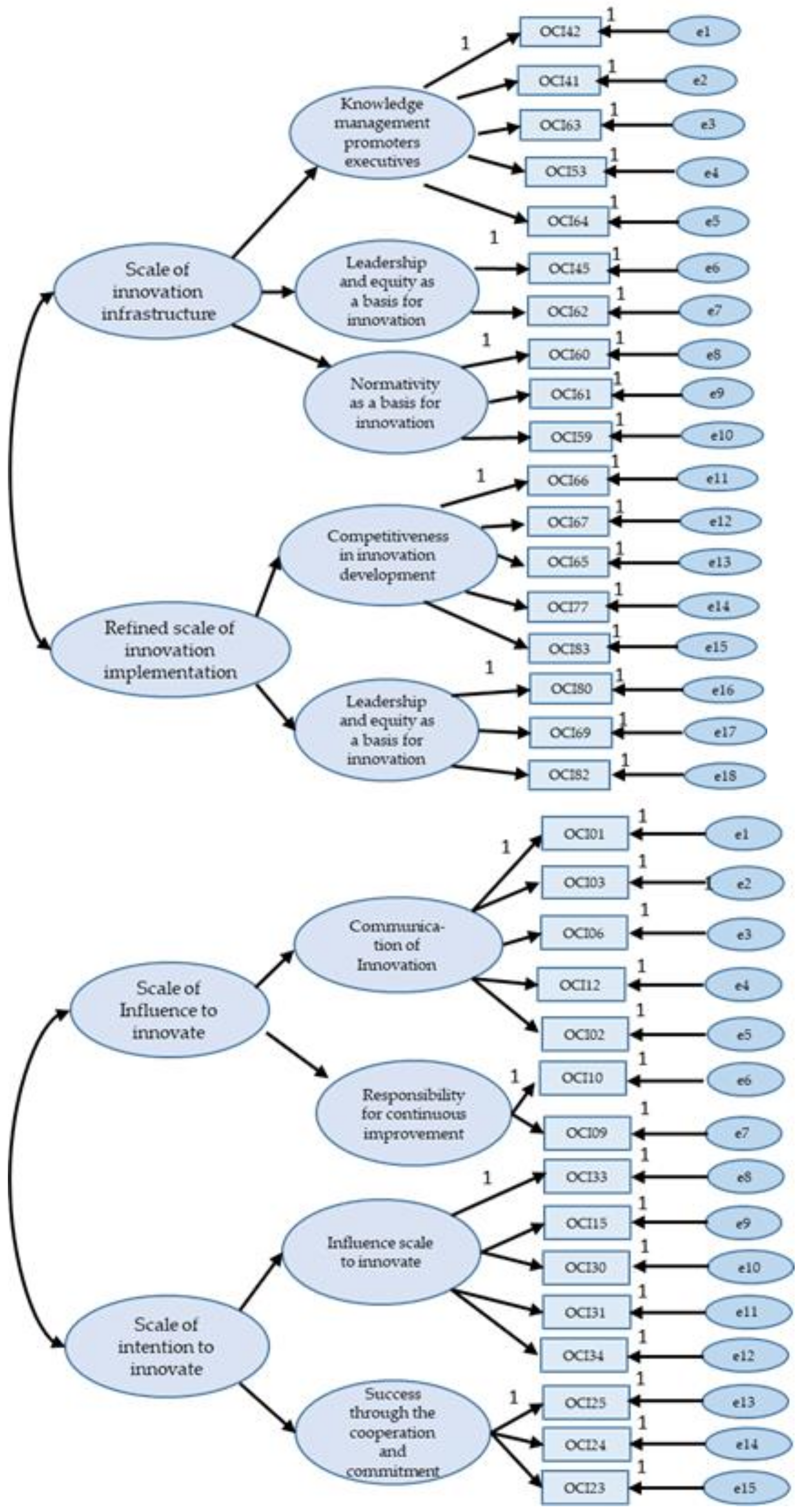
A summary of the entire analysis is presented in Figure 6. In Table 14, we can observe the most important characteristics that make up the OCI.
Figure 6.
Summary of principal component analysis.
Table 14.
Most important OCI characteristics.
As shown in Figure 6, the most important characteristics that determine an OC as innovative are as shown in Table 14.
Based on the results of the analysis presented in Table 14, it can be concluded that the fourth hypothesis (H4: There is a group of characteristics without which it is not possible to determine the existence of OCI) is accepted.
5.3. Test of the Measurement Model
Next, the model of the OC approach to innovation was tested. To this end, an analysis of compliance with the initial assumptions was carried out and then the multiple linear regression was calculated, with the variables corresponding to each of the hypotheses to be tested.
Table 15 shows the coefficient of determination (R2), which indicates that the dependent variable explains 95.4% of the variation in the dependent variable. This allows us to confirm that the level of innovation of the OC, as a dependent variable, depends on both behavioral and structural characteristics, but to a greater degree on the attitudes and behaviors of the workers than on the structural characteristics of the company.
Table 15.
Summary of the model of the OC’s approach to innovation.
The normality and independence of the residuals were also tested by means of the Durbin–Watson test.
6. Conclusions
The conclusions of the research relate to the hypotheses and objectives proposed, both at the theoretical level, through an extensive review of the literature, and at the empirical level, through the study of the level of innovation of the OCs of the service provider companies of the parastatal PEMEX in the southeast of Mexico, the main results of which are presented below.
The present research sought to measure the degree to which the OC is oriented towards innovation, based on the characteristics that make up the OC in order to identify those that should be implemented, developed, maintained or suppressed to achieve a sustainable competitive advantage. In this regard, the theoretical analysis of the concept of OCI allowed the collection of the characteristics that, according to various researchers, are present in this type of culture. Based on these characteristics, a proposal was made for organization in terms of the areas, dimensions and factors.
The set of extracted characteristics established the basis for the design of the instrument to measure the OC’s level of innovation. With this instrument, an empirical analysis was applied to the service provider companies of the state-owned PEMEX in the southeast of Mexico, which allowed us to measure the level of OC innovation of these companies.
In order to fulfill the general objective, a literary analysis of the concepts of innovation, OC and OCI was carried out. This helped us to understand the chronological development and the different perspectives on these topics. The absence of an epistemology of the characteristics of OCI and a clear framework for them was also noted.
The extensive review of the literature revealed the absence of a measurement instrument that epistemologically integrated the characteristics of an OCI; likewise, no research was found in this review that integrated primary data from the agents involved in its development (managers, middle management and operatives).
The collection of OCI characteristics, obtained as a result of the literature review, allowed us to propose a classification of the areas, dimensions and factors, which helped us to clearly see the characteristics that should be present in this type of culture (Figure 2).
The proposed model for measuring the OC’s level of orientation towards innovation allows us to visualize the importance of integrating both the behavioral characteristics of the personnel and the company’s own structural characteristics (Figure 3), in order to maintain constant innovation.
With respect to the empirical objectives, the instrument for measuring the level of OC innovation was validated. This instrument integrated the characteristics extracted from the literature review. An empirical analysis of the service provider companies of the parastatal PEMEX in the southeast of Mexico was carried out, in which it was observed that each of the agents involved in the development of OC have completely different perspectives on the level of innovation of their OC. However, through the application of principal component analysis, it was concluded that there is a group of characteristics that should always be present in an OC focused on innovation.
The original contributions include an epistemology regarding the characteristics that make up an OCI, which is proposed for classifying the characteristics by means of areas (behavioral characteristics of the personnel and structural characteristics of the company), dimensions (intention and motivation to innovate, infrastructure and implementation of innovation) and factors (communication, values, quality orientation, identity, teamwork, knowledge management, symbolic activities, symbolic language, mission, vision, objectives and goals, normativity, change orientation, decision making, customer orientation and market orientation).
The proposed model for measuring an OC’s level of orientation towards innovation allows for a broad awareness of both the behavioral and structural characteristics of the company. With this instrument designed for measuring the OC’s level of innovation, the gap in primary data obtained from the active agents in the development of the OC (executives, middle management and operatives) and in the epistemological integration of the characteristics that make up the OCI has been filled.
7. Limitations of the Proposal
Although a thorough review of the literature was carried out to extract the epistemology of the characteristics that make up the OCI, the fact that some of them have not been included in this study cannot be ruled out. Moreover, the empirical analysis was cross-sectional, which did not allow us to verify the possible results in the future achieved after knowing the level of innovation present in the OC of the companies, as well as the actions to be carried out to improve the result. The results obtained from our application of the survey to the agents involved in the development of OC could be due to the present situation within the company.
8. Future Lines of Research
The study of OC is very broad and encompasses various scientific disciplines, so we cannot consider this research to be conclusive. In the future, this line of research will continue with the development of a study based on longitudinal data that will allow us to analyze the increase in OC innovation of the service provider companies of the state-owned oil company PEMEX in the southeast of Mexico, enrich the primary data through group interviews with the agents involved in the development of OC, empirically evaluate each of the variables of the proposed model, and to analyze each of the characteristics that make up the OCI empirically and separately to determine the dependence that exists between them.
Author Contributions
Conceptualization, methodology, validation, investigation, formal analysis, L.P.-C.; writing—original draft preparation, writing—review, editing and supervision, M.-P.A.-R.; supervision, M.G.-P. All authors have read and agreed to the published version of the manuscript.
Funding
This research received no external funding.
Institutional Review Board Statement
Not applicable.
Informed Consent Statement
Not applicable.
Data Availability Statement
Not applicable.
Conflicts of Interest
The authors declare no conflict of interest.
References
- Shahnaei, S.; Long, C.S. The review of improving innovation performance through human resource practices in organization performance. Asian Soc. Sci. 2015, 11, 52. [Google Scholar] [CrossRef]
- Riivari, E.; Lämsä, A.; Kujala, J.; Heiskanen, E. The ethical culture of organisations and organisational innovativeness. Eur. J. Innov. Manag. 2012, 15, 310–331. [Google Scholar] [CrossRef]
- Bendak, S.; Shikhli, A.M.; Abdel-Razek, R.H. How changing organizational culture can enhance innovation: Development of the innovative culture enhancement framework. Cogent Bus. Manag. 2020, 7, 1712125. [Google Scholar] [CrossRef]
- Schumpeter, J.A. Teoría del Desenvolvimiento Económico. Available online: http://www.proglocode.unam.mx/sites/proglocode.unam.mx/files/docencia/Schumpeter.-Capitulo-6.-El-ciclo-econ%C3%B3mico.pdf (accessed on 17 May 2020).
- Naranjo-Valencia, J.C.; Jiménez, D.J.; Sanz-Valle, R. Is organizational culture an antecedent of firm’s innovation? Cuad. De Econ. Y Dir. De La Empresa 2012, 15, 63–72. [Google Scholar] [CrossRef]
- Taghizadeh, S.K.; Rahman, S.A.; Hossain, M.; Haque, M. Characteristics of organizational culture in stimulating service innovation and performance. Mark. Intell. Plan. 2019, 38, 224–238. [Google Scholar] [CrossRef]
- Souto, J.E. Gestión de una Cultura de Innovación Basada en las Personas. J. Technol. Manag. Innov. 2015, 10, 60–65. [Google Scholar] [CrossRef][Green Version]
- Harrison, R. How to Design and Conduct Self-Directed Learning Experiences. Group Organ. Stud. 1978, 3, 149–167. [Google Scholar] [CrossRef]
- Dobni, C.B. Measuring innovation culture in organizations. Eur. J. Innov. Manag. 2008, 11, 539–559. [Google Scholar] [CrossRef]
- Donate, M.J.; Guadamillas, F. Organizational factors to support knowledge management and innovation. J. Knowl. Manag. 2011, 15, 890–914. [Google Scholar] [CrossRef]
- Encuesta Nacional sobre Productividad y Competitividad de las Micro, Pequeñas y Medianas Empresas (ENAPROCE) 2018. Available online: https://www.inegi.org.mx/programas/ccpv/2020/ (accessed on 15 May 2021).
- Innovación: Más relevante por COVID-19 según 8 de cada 10 empresas en México y Centroamérica. Available online: https://home.kpmg/mx/es/home/sala-de-prensa/press-releases/2021/04/innovacion-mas-relevante-por-covid-19-segun-8-de-cada-10-empresas-en-mexico-y-centroamerica.html (accessed on 17 May 2021).
- Schumpeter, J.A. Business Cycles: A Theoretical, Historical and Statistical of the Capitalist Process. Available online: https://discoversocialsciences.com/wp-content/uploads/2018/03/schumpeter_businesscycles_fels.pdf (accessed on 17 May 2021).
- Van De Ven, A.H. Central Problems in the Management of Innovation. Manag. Sci. 1986, 32, 590–607. [Google Scholar] [CrossRef]
- Porter, M. Competitive Strategy: Techniques for Analyzing Industries and Competitors, 2nd ed.; The Free Press: New York, NY, USA, 1980; pp. 238–249. [Google Scholar]
- Amabile, T.M.; Conti, R.; Coon, H.; Lazenby, J.; Herron, M. Assessing the work environment for creativity. Acad. Manag. J. 1996, 39, 1154–1184. [Google Scholar] [CrossRef]
- Naranjo, J.; Jiménez-Jiménez, D.; Sanz-Valle, R. Studying the links between organizational culture, innovation, and performance in Spanish companies. Rev. Latinoam. Psicol. 2016, 48, 30–41. [Google Scholar] [CrossRef]
- Piansoongnern, O. Chinese leadership and its impacts on innovative work behavior of the Thai employees. Glob. J. Flex. Syst. Manag. 2016, 17, 15–27. [Google Scholar] [CrossRef]
- Ghasemzadeh, P.; Nazari, J.A.; Farzaneh, M.; Mehralian, G. Moderating role of innovation culture in the relationship between organizational learning and innovation performance. Learn. Organ. 2019, 26, 289–303. [Google Scholar] [CrossRef]
- Pettigrew, A.M. On Studying Organizational Cultures. Adm. Sci. Q. 1979, 24, 570. [Google Scholar] [CrossRef]
- Ouchi, W. Theory Z: How American business can meet the Japanese challenge. Bus. Horiz. 1981, 24, 82–83. [Google Scholar] [CrossRef]
- Deal, T.E.; Kennedy, A.A. Corporate cultures: The rites and rituals of corporate life: Addison-Wesley, 1982. Bus. Horiz. 1983, 26, 82–85. [Google Scholar] [CrossRef]
- Senbeto, D.L.; Hon, A.H.Y.; Law, R. Organizational Cultures Determine Employee Innovation in Response to Seasonality: Regulatory Processes of Openness and Resistance. J. Hosp. Tour. Res. 2021, 16, 74–94. [Google Scholar] [CrossRef]
- Janka, M.; Heinicke, X.; Guenther, T.W. Beyond the “good” and “evil” of stability values in organizational culture for managerial innovation: The crucial role of management controls. Rev. Manag. Sci. 2019, 14, 1363–1404. [Google Scholar] [CrossRef]
- Sánchez, I. Desarrollo de un instrumento de medida de la cultura organizativa: Un modelo confirmatorio en los hoteles españoles. Rev. Eur. De Dir. Y Econ. De La Empresa. 2010, 19, 107–126. [Google Scholar]
- Mazaira, A.; Dopico, A.; Vázquez, E.G. Incidencia en el grado de orientación al mercado de las organizaciones empresariales en el desarrollo de las capacidades estratégicas de marketing. Rev. Eur. De Dir. Y Econ. De La Empresa 2005, 14, 181–208. [Google Scholar]
- Hofstede, G. Attitudes, Values and Organizational Culture: Disentangling the Concepts. Organ. Stud. 1998, 19, 477–493. [Google Scholar] [CrossRef]
- Pallas, F.; Böckermann, F.; Götz, O. Tecklenburg, K. Innovativeness: Developing a multidimensional formative measure. Int. J. Innov. Manag. 2013, 17, 1350009. [Google Scholar] [CrossRef]
- Jarmooka, Q.; Fulford, R.G.; Morris, R.; Barratt-Pugh, L. The mapping of information and communication technologies, and knowledge management processes, with company innovation. J. Knowl. Manag. 2020, 25, 313–335. [Google Scholar] [CrossRef]
- Ghanem, A.; Mokhtar, S. The influence of organizational culture and leadership behavior on innovation performance. Int. J. Bus. Res. 2015, 15, 47–56. [Google Scholar] [CrossRef]
- Moreno, I.P.; Real, J.C.; De-La-Rosa-Navarro, D. La incidencia del capital humano y la cultura emprendedora en la innovación. Cuad. De Econ. Y Dir. De La Empresa 2011, 14, 139–150. [Google Scholar] [CrossRef]
- Berraies, S.; Hamza, K.A.; Chtioui, R. Distributed leadership and exploratory and exploitative innovations: Mediating roles of tacit and explicit knowledge sharing and organizational trust. J. Knowl. Manag. 2020, 25, 1287–1318. [Google Scholar] [CrossRef]
- Linke, A.; Zerfass, A. Internal communication and innovation culture: Developing a change framework. J. Commun. Manag. 2011, 15, 332–348. [Google Scholar] [CrossRef]
- Dobni, C.B. The relationship between an innovation orientation and competitive strategy. Int. J. Innov. Manag. 2010, 14, 331–357. [Google Scholar] [CrossRef]
- Santos-Vijande, M.L.; López-Sánchez, J.; González-Mieres, C. Organizational learning, innovation, and performance in KIBS. J. Manag. Organ. 2012, 18, 870–904. [Google Scholar] [CrossRef]
- Morcillo, P. Siempre nos quedará la innovación. Rev. Eur. De Dir. Y Econ. De La Empresa 2012, 21, 215–218. [Google Scholar] [CrossRef][Green Version]
- Azar, G.; Drogendijk, R. Cultural distance, innovation and export performance: An examination of perceived and objective cultural distance. Eur. Bus. Rev. 2016, 28, 176–207. [Google Scholar] [CrossRef]
- Hussain, S.; Terziovski, M. Intellectual property appropriation strategy and its impact on innovation performance. Int. J. Innov. Manag. 2016, 20, 1650016. [Google Scholar] [CrossRef]
- Anning-Dorson, T. Innovation and competitive advantage creation. Int. Mark. Rev. 2018, 35, 580–600. [Google Scholar] [CrossRef]
- Stock, R.M.; Schnarr, N.L. Exploring the product innovation outcomes of corporate culture and executive leadership. Int. J. Innov. Manag. 2016, 20, 1650009. [Google Scholar] [CrossRef]
- Nguyen, V.T.; Siengthai, S.; Swierczek, F.; Bamel, U.K. The effects of organizational culture and commitment on employee innovation: Evidence from Vietnam’s IT industry. J. Asia Bus. Stud. 2019, 13, 719–742. [Google Scholar] [CrossRef]
- Zhang, S.; Liu, X.; Du, Y. When and how authoritarian leadership influences employee innovation behavior in the context of Chinese culture. Leadersh. Organ. Dev. J. 2021, 42, 722–734. [Google Scholar] [CrossRef]
- Carvaja, S.A.; Pérez, M.D.; Cabello, R.V.; Espinosa, C.C. Identifying Key Factors Affecting Culture of Innovation: A Case Study of Chilean Medium Mining Sector. J. Technol. Manag. Innov. 2015, 10, 132–145. [Google Scholar] [CrossRef][Green Version]
- Bonnet, D.; Deora, A.; Buvat, J.; Subrahmanyam, K.; Khadikar, A. Organizing for Digital: Why Digital Dexterity Matters. MIT Center for Digital Business and Capgemini Consulting. 2015. Available online: https://www.capgemini.com/consulting/wp-content/uploads/sites/30/2017/07/digital_orgns_cover_08-12.pdf (accessed on 17 May 2020).
Publisher’s Note: MDPI stays neutral with regard to jurisdictional claims in published maps and institutional affiliations. |
© 2022 by the authors. Licensee MDPI, Basel, Switzerland. This article is an open access article distributed under the terms and conditions of the Creative Commons Attribution (CC BY) license (https://creativecommons.org/licenses/by/4.0/).