Abstract
The purpose of this research is to evaluate the process of community empowerment in the use of biogas, as well as to determine the effect of community empowerment on the long-term viability of biogas as a sustainable source of energy. The quantitative descriptive research method was used to evaluate the empowerment program using the logic model approach. Multiple linear regression tests are used to analyze survey data collection techniques and data. In the study, 140 people participated as biogas users of livestock dung who have used biogas for at least one year. The findings revealed an evaluation of community empowerment in the good category input process (3.8), very good category planning (4.08), very good category implementation (4.11), monitoring and medium category assistance (3.49), and output in the good category (3,8). The multiple linear regression test results obtained the value of the equation Y = 3.690 + 0.200X1 + 0.42X2 – 0.38X3 + e. The results of the F test showed the value of Fcount > Ftable (3.061 > 2.67). This study concludes that community empowerment in the use of biogas has been successful and it has an impact on the community’s long-term use of biogas.
1. Introduction
The world’s population expansion has prompted individuals to consider how to best utilize the resources that are now available. Now that we are conscious of finite resources, the quest for new production routes is becoming increasingly vital and sustainability is gaining prominence in a variety of sectors of life, whether environmental, economic, or social [1]. The United Nations (UN) Sustainable Development Goals (SDGs), also known as environmentally sustainable development, are a framework of action carried out by the UN as an important step in achieving global development [2]. The Sustainable Development Goals (SDGs) are developments that ensure a continuous improvement in economic well-being, the sustainability of community social life, the quality of the environment, and justice through the implementation of governance that can ensure the quality of life from one generation to the next. As a result, the SDGs have become a point of reference in national and regional development, beginning with the planning, implementation, monitoring, evaluation, and reporting stages. Sustainable development is not only necessary to meet people’s ever-growing needs for a better life and solve prominent social problems but is also an inevitable choice for sustained, sound, and high-quality economic development [3]. In addition, the SDGS are interrelated and can be described in terms of human development and environmental sustainability [4].
One of the 2020–2024 National Medium-Term Development Plans that is in line with SDGs is the development of net energy and affordable housing [5]. The usage of new renewable energy sources is compatible with the notion of sustainability (EBT). Renewable energy must be used in ways that promote sustainability, regional growth, and environmental friendliness. Sustainability is described as energy that may be utilized indefinitely without a regard for time, hence avoiding the problem of energy shortage, whereas regional development is defined as regional development that strives to develop independence based on the presence of each region. The idea of energy independence is completed by the ecologically friendly component, which aims to be in harmony with the environment, has no adverse long-term effects, and is not exploited [6].
The livestock sector is one of the leading business sectors in Indonesia, but livestock contributes to increasing global warming that comes from dirt and animal extraction. The livestock sector contributes to methane gas (CH4), dinitrogen oxide (N2O), carbon dioxide (CO2), and ammonia, which can cause acid rain [7]. Ruminant beef cattle generated the most CH4 gas from waste products of feed enteric fermentation activities (76.42%), followed by N2O produced by goat manure management (108.428 (Gg CO2e,) or 17.12%). The factors that impact, among other things, the population of ruminant livestock are greater than for the population of other livestock [7]. Because the heat capture power of CH4 gas is 25 times that of CO2 [8], it has a bigger impact on global warming than CO2 gas. While N2O gas emits 298 times more heat per unit weight than CO2, it contributes to greenhouse gas emissions (CHG emissions) [9]. CHG is a state in which the earth’s temperature rises due to changes in the composition of the gases in the atmosphere that surround it (known as greenhouse gases such as H2O, CO2, and CH4), causing the heat of the sun to be trapped in the earth’s atmosphere [10]. The utilization of biogas plays an important role in livestock waste management because methane is a more dangerous greenhouse gas in global warming when compared to carbon dioxide. The utilization of alternative energy sources from livestock waste provides many advantages, namely it is a quality fuel, is odorless, produces slurry, reduces environmental contamination, and is a more economical re-cycle of the process. Even though lowering GHG emissions is urgent, the transition process is anticipated to need time, good economic conditions, technical advancements, and access to resources [11,12]. However, the energy transition must be quick enough to avoid increasing environmental problems, potential shortages, and economic decay [13]. Biogas technology may be identified as a key element in the use of Mixed Crop and Animal (MCL) Farming Systems for managing livestock manure and so minimizing environmental issues from nitrate contamination in the ground, ammonia gas pollution, and stool pollution in water [14]. Dealing with waste is the main issue in the specific area of concern that is waste. We can process at least some of the waste materials and use them for our benefit by recycling them. A new facet of the circular economy is emerging in this regard [15].
The Indonesian government has enacted numerous efforts to develop biogas, beginning with access to funding, direct use, technology, coordination, sustainable development, governance, investment, and policies, all of which are viewed as challenges as well as opportunities for the Indonesian government in implementing biogas development. Education and technical assistance for biogas recipients (in terms of digester maintenance, raw material sustainability, and the socioeconomic impact of biogas) are also considered strategic efforts in biogas development [16]. According to data collected by the Directorate General of EBTKE (Energi Baru Terbarukan dan Konservasi Energi) on the implementation of direct biogas development as of 29 May 2020, household biogas installations have reached 47,505 units throughout Indonesia, producing biogas of 75,044.2 m3/day or around 26.72 million m3/day per year. Biogas constructed with state funds (APBN Ministry of Energy and Mineral Resources, Ministry of Environment, Ministry of Agriculture), donors (Hivos), Special Allocation Funds, other ministries/agencies, private parties, and non-governmental organizations comprise the entire biogas.
The fundamental purpose of development is human development. The goal of stable economic growth and sustainable social development is for the better development of people; human development is the most direct embodiment of social and economic development [3]. The key to the development of household biogas is raising awareness about the use and benefits of biogas. Public trust in investing in and using biogas must be increased, and public awareness of the benefits of domestic biogas, both technical and economic, must be increased. Although almost all of the users in this program are already aware of how to use and maintain the biogas digester, they are less aware of how to keep the biogas digester active and functioning properly. Thus, increasing public awareness through training and education linked to participatory community empowerment programs is critical for increasing biogas technology adoption [17].
Community empowerment programs carried out in various fields by various parties, both government and non-government, have good intentions and apply the concepts of community empowerment, but these noble programs are often trapped in the logic of “projects” that emphasize administrative accountability, namely how much the budget provided and how many activities or programs are implemented, rather than social responsibility, namely how much significant positive change occurs [18]. The purpose of this study is to evaluate the process of community empowerment in the use of biogas, as well as to determine the effect of community empowerment on the sustainability of the use of biogas as a sustainable energy source.

2. Materials and Methods
2.1. Research Design and Site
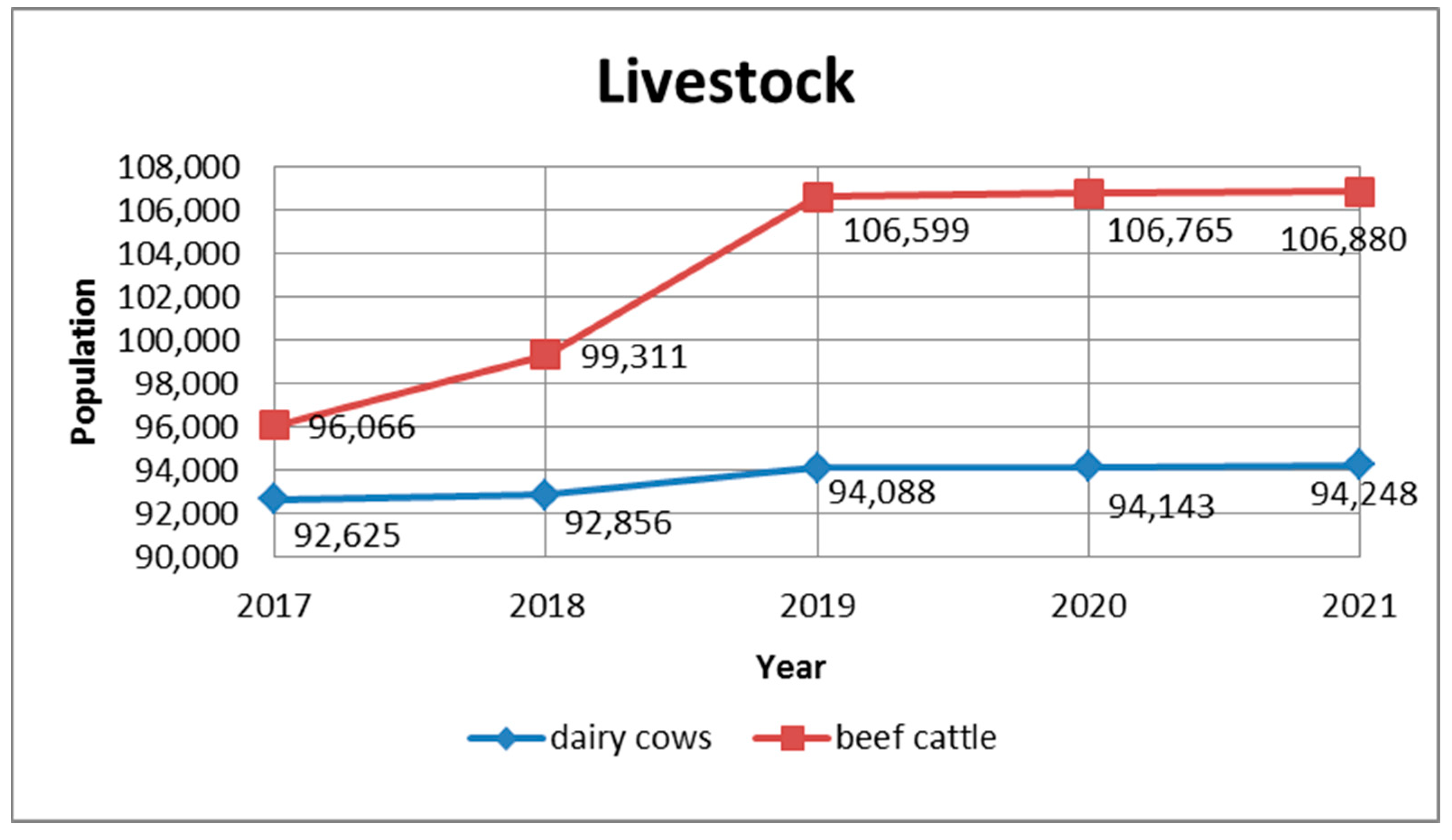
Purposive sampling was used to identify the study’s site and the research was conducted in the Boyolali Regency in the Central Java Province of Indonesia. Since there will be 94,248 dairy cows and 106,880 beef cattle in this region in 2021, there is a strong potential for biogas raw materials [19].
The quantitative descriptive research method was used in this study to explain the evaluation of the process of empowering the utilization of biogas from livestock manure and its effect on the sustainability of biogas utilization. In order to test predetermined hypotheses, quantitative descriptive research is defined as a research technique based on the positivist school of thought. It is used to examine particular populations or samples, collect data using research instruments, and analyze those data quantitatively and statistically [20]. This study’s data collection method employed survey techniques, including direct observations and interviews, as well as the use of a questionnaire as a data collection tool.
2.2. Population and Research Sample
In this study, the population was cattle breeders in Boyolali Regency who used livestock dung biogas as an energy source for 471 families [19,21]. The sample is a subset of the population in terms of size and characteristics [22]. The Purposive Sampling approach was utilized to choose 140 persons for this study, which included requirements for livestock biogas users who had used active biogas for at least one year.
2.3. Data Analysis
Multiple linear regression analysis and descriptive analysis were both employed in this study. Descriptive analysis, which is a technique to inform the program and help with the implementation of the evaluation, is combined with a logic model approach to assess and evaluate the process of community empowerment in the use of biogas. The relationship of input-activity–output-outcome parts is the logic model, to put it simply [23]. The model is developed in a left-to-right fashion, with inputs identified, processes (planning, implementation, mentoring), and outputs evaluated.
The empowerment process that has been carried out in the utilization of biogas from livestock manure was measured in this study by responding to statement items with 5 alternative answers and scores according to the Likert scale, as shown in Table 1. To determine the value of empowerment evaluation, the responses are multiplied by the weight score and averaged across all respondents (Table 1).
Table 1.
Likert scale and evaluation category.
The impact of the community empowerment process on the long-term viability of biogas utilization was studied using multiple linear regression statistical analysis, with the following regression model [20]:
Description:
Y: Sustainability of farmers in the use of biogas
a: Constant
X1: Planning
X2: Implementation
X3: Monitoring and Mentoring
The f-test and t-test are conducted after the regression test to identify the variables that influence or have no influence, either concurrently or partially.
3. Results and Discussion
3.1. The General Condition of the Research Location
One of the 35 regencies of Indonesia’s Central Java Province, Boyolali is situated around 60 km from the provincial capital and 500 km from the state capital, Jakarta (Semarang). The vast population of cattle in the Boyolali Regency is proof of the region’s tremendous potential in the area of animal husbandry, particularly with regard to cattle. As shown in Figure 1, there are 94,248 dairy cows and 106,880 beef cattle, so the potential for biogas raw materials is high and has increased over the last 5 years [19].
Figure 1.
Cattle Population in Boyolali (2017–2021) [19].
The Boyolali Regency is well suited to be utilized for the development of biogas technology since it has a temperature range of 23–32 °C, a humidity of 70–95%, and is supported by a reasonably large cow population; ensuring the supply of biogas raw materials, according to [24] a good temperature for the biogas formation process ranged between 20–40 °C and the optimum temperature between 28–30 °C. Based on data, the number of biogas digester installations installed in Boyolali Regency until 2020 is 1038 units consisting of 1013 livestock biogas installation units and 25 tofu industrial biogas installation units [18]. Some Boyolali people have biogas with a permanent structure in the form of a fixdome that ranges in size from 9 m3 to 30 m3 and is used independently or in groups.
The potential for biogas development is enormous, particularly in rural areas where the majority of people work in animal husbandry and agriculture. There are 70,191 cattle and dairy farmers in the Boyolali Regency [19]. Livestock waste is one of the sources of materials that can be used to produce biogas; however, livestock waste causes environmental problems due to the accumulation of it. Pollutants emitted by livestock manure decomposition include BOD (Biological Oxygen Demand) and COD (Chemical Oxygen Demand), pathogenic bacteria, water pollution, and odor pollution. This is a cause for concern because methane and carbon dioxide emissions contribute to the greenhouse effect, which affects global climate change. Biogas fuel, which does not emit smoke, is a better substitute for oil or natural gas [25]. The majority of Boyolali people use biogas as a source of cooking energy; while some have used it as a source of lighting, its use is still limited. The government of the Republic of Indonesia’s campaign for energy independence is crucial to the diversification of biogas utilization [26]. Meanwhile, the use of biogas for household purposes in Indonesia is still very limited, particularly as a fuel for stoves [27,28].
3.2. Community Empowerment Evaluation
The notion of community empowerment is one of the developments that has several facets. This idea embodies a fresh approach to development known as postdevelopmentalism, which is sustainable, participative, and centered on the needs of individuals [29]. This concept represents a paradigm. The community has the potential and strength of its natural and socio-cultural resources. This potential needs to be explored and processed through strategies that are following the needs of the community. According to its potential, the Boyolali Regency, which is also known as the “City of Milk”, has a high livestock population, whose dung can be used as a biogas energy source. Renewable energy as an alternative energy source must constantly be developed in line with each region’s potential [30]. Various empowerment programs have been implemented, either by the central government, local governments, or other institutions or agencies in the development of biogas, but the results are still not optimal. Many biogas installations are currently inactive because they are damaged, intentionally not used, or because they no longer have livestock as biogas raw materials. Moreover, in Indonesia since May, there has been an outbreak of the FMD (foot and mouth disease) virus that has threatened cattle, including in the Boyolali Regency, and resulted in the death of several livestock and many being infected and then sold or slaughtered. Thus, it is necessary to evaluate the empowerment process that affects the sustainability of biogas utilization.
3.2.1. Input
Inputs are related to the availability of human resources, funds, materials, and tools that support community empowerment activities. In this study, the inputs were evaluated well by the respondents with an average score. The empowering actors (government and non-government) are considered to have provided some tools and materials for making digesters, human resources as experts and facilitators, and guidebooks/brochures on how to manufacture and use biogas and have ensured the ownership of livestock as a source of biogas raw materials as well as empowered some actors by providing financial subsidies for biogas production.
Assistance in providing input from various empowering parties becomes something very important considering the cost of making a fix dome type biogas digester is quite large, at around Rp. 1,000,000 per m3 [31]. For household-scale biogas in the Boyolali Regency with a fix dome type and a size ranging from 13–30 m3 [32]. The provision of human resources as experts and facilitators also plays an important role in community empowerment in the biogas sector because the manufacture of biogas digesters requires special skills so that the digester is strong and does not leak easily. Table 2 explains that some of the input variable from evaluation items and the results from their categories are from community empowerment.
Table 2.
Community Empowerment Input Variable.
3.2.2. Planning
Good community empowerment planning is performed by understanding the problems that occur in a comprehensive and contextual community. This plan is the initial stage of the empowerment activity process. Two things need to be done in this stage, namely the preparation of empowerment staff by community workers and field preparation [33]. This preparation is performed so that community empowerment can continue smoothly. The results showed that the planning stages in empowering biogas utilization were evaluated both by the public with an average value of 4.08. Planning begins with the identification of problems and the needs of empowerment targets, the socialization of empowerment programs on biogas and its benefits, community involvement in determining the location to build the biogas, preparing infrastructure facilities, and the involvement of the target community in planning to finance biogas. The involvement and participation of the community in planning the empowerment program are very important because the community is the main source of information in identifying problems and needs [34]. Thus, it is expected that the empowerment program will be carried out on target. Table 3 explains that some of the variables of empowerment planning and the results from their categories are from community empowerment.
Table 3.
Variables of community empowerment planning.
3.2.3. Implementation
In the implementation stage, the target community must understand the purposeand objectives of the program to avoid obstacles in the implementation of the empowerment program. The results showed that the implementation stage was evaluated by the public with an average score of 4.11. The implementation stage begins by providing information from the empowerment to make the community aware of the benefits of biogas as an environmentally friendly energy source. Awareness means that society as a whole becomes aware that they have goals and problems. The people who are aware also begin to find opportunities and use them. Awareness efforts provide an understanding of the right to be able and motivating [35]. The new and renewable energy program for rural areas serves as a means to raise awareness of rural communities, particularly in terms of environmental protection and economic development [30]. The evaluation of the implementation stages also assesses the involvement or participation of the community in the manufacture and installation of biogas digesters in power, funding, and provision of infrastructure/equipment. Following [32], at the implementation stage, community involvement may be achieved by involvement in the construction of the biogas digester, the use of biogas as an energy source (filling and maintaining the digester), and the use of sludge as fertilizer. Table 4 explains that some of the variables of implementing and the results from their categories are from community empowerment.
Table 4.
Variables of implementing community empowerment.
3.2.4. Monitoring and Assistance
Importantly, assistance and monitoring evaluation in the implementation of community empowerment must be carried out because it is the stage of supervision from residents and empowerment program officers. This program should involve citizens to build a more independent community of internal monitoring and community communication [33]. According to [36], mentoring is an activity that is believed to be able to encourage community empowerment. The need for assistance is motivated by the existence of a gap in understanding between the parties providing assistance and the target beneficiaries.
Monitoring is directed at knowing/recording the progress and realization of the program as well as the problems faced by non-governmental groups based on the plans that have been prepared and the condition of the group’s infrastructure in carrying out activities. The evaluation is directed at knowing/recording/assessing the effectiveness and impact of activities.
The results showed that at the stage of monitoring and assisting the empowerment of biogas utilization, the community was considered to be in the moderate category with an average score of 3.49. The evaluation items assessed include providing maintenance assistance, checking, regular biogas installations, and providing handling assistance when there are technical problems. According to respondents, the implementation of mentoring and evaluation monitoring by various empowering parties is mostly done at the beginning of biogas utilization only (<3 years), after that it is rarely done. This has resulted in many biogas utilization being stopped or inactive because, when they encounter obstacles, the community does not know how to overcome them and does not know who to contact. Table 5 explains that some of the variables of empowerment monitoring and assistance and the results from their categories are from community empowerment
Table 5.
Variables of community empowerment monitoring and assistance.
3.2.5. Output
The output indicators include community access to resources and facilities for empowerment, community participation, control, and equality. The development process and its impact need to involve all participatory and collaborative parties between the community and the Community Development government, namely as agents of change, stakeholders, actors, facilitators, mediators, sources of information, counsellors, and partners for the community and the village government to develop institutions, improve economic welfare, and achieve independence [37]. Empowerment output in the use of biogas is evaluated both by the public with an average score of 3.80. The evaluation items are in the form of continuous household energy availability, the use of livestock manure so that it does not cause environmental pollution, the availability of slurry organic fertilizer, which is biogas waste, as well as a sense of calm because it is not affected by the ups and downs of LPG prices and other energy sources. The biogas digester also produces bio-slurry, which can be used as plant fertilizer [38,39]. The activity of rural communities employing new and renewable energy has consequences for two actions that can empower the community, namely improving family income levels, particularly for the poor, and contributing to the drafting of village development plans [30]. Efforts to use innovative and renewable energy have been inextricably linked to the notion of sustainable development and have become a driving force for community independence [40]. Table 6 explains that some of the Community empowerment output variables and the results from their categories are from community empowerment
Table 6.
Community empowerment output variables.
3.3. Multiple Linear Regression Results
When the owner no longer uses the biogas system, it is declared a failure. A biogas system’s failure causes include process failure issues, physical component failures, and human factors [41]. The study found that 116 biogas units, or 36.83%, of a sample of 315 biogas units from livestock waste scattered over 10 sub-districts in the Boyolali Regency were no longer being used by their owners. This inactivity is caused by process failure, including the biogas digester’s inability to produce gas (leakage or dome model failure), biogas filling discontinuity, and slurry processing failures. The failure of physical pipe system components, damage to the stove, damage to the digester (leakage), and poor digester installation owing to the height of the inlet or the distance between the inlet and the cage. Human mistakes occur as a result of a lack of desire and collaboration when filling biogas, as well as a lack of recognized benefits from biogas. Various parties must provide intensive assistance to users in order to reduce the failure of the biogas system and make its use sustainable [40]. A community empowerment approach, which includes education, counseling, and mentoring, can be used to increase community power. Multiple linear regression was used to determine whether the planning (X1), implementation (X2), and monitoring and mentoring stages (X3) of community empowerment (independent variables) affected the sustainability of livestock biogas utilization (dependent variable/Y).
Based on the results of the linear regression analysis in Table 7, the following equation model was developed:
Y = 3.690 + 0.200X1 + 0.42X2 − 0.38X3 + e.
Table 7.
Regression Result.
The regression equation model above shows a constant value of 3.690, indicating that the planning variable (X1), implementation variable (X2), monitoring variable (X3), and mentoring variable (X3) are all equal to zero, increasing the sustainability of biogas utilization (Y) by 3.690. The regression coefficient value of the planning variable (X1) is 0.200, which means that increasing the planning variable (X1) by one unit increases the sustainability of biogas utilization by 0.200. The regression coefficient value of the implementation variable (X2) is 0.042, which means that increasing the implementation variable (X2) by one unit will increase the sustainability of utilization. The biogas value is 0.042. This also implies that as the community’s evaluation of the planning and implementation stages improves, so will the sustainability of biogas utilization. The monitoring and mentoring variable (X3) has a regression coefficient of −0.038, which means that increasing this variable by one unit reduces the sustainability of biogas utilization by 0.038.
The coefficient of determination (R2 test) aims to measure the degree to which the dependent variable’s fluctuation can be explained by the model. A low R2 number means that there is very little room for independent variables to account for variations in the dependent variable [37]. The R2 test results show that the coefficient of determination contained in the R square value is 0.630. This means that the variables of planning, implementation, monitoring and evaluation, and assistance have a 63.0% influence on the sustainability of biogas utilization, with the remaining 27.0% influenced by variables not included in this study.
The F statistical test assesses whether every independent variable in the model has an impact on the dependent variable at the same time [42]. The F-test results show that the Fcount value is 3.901, indicating that the Fcount > Ftable with the Ftable value of 2.67 and the significant value of 0.030, indicating that the significant value is 0.05. This means that the variables of planning, implementation, monitoring, and mentoring all have an impact on the sustainability of biogas utilization at the same time.
The t-statistic test is used to determine how much each independent variable contributes to the variation of the dependent variable. Table 8 explain the t-test result.
Table 8.
t-test Result.
The t-test results show that the planning variable has a tcount value of 2.541, which is greater than ttable 1.977 and a significant value of 0.05, while the implementation variable has a tcount value of 0.586, while the monitoring and mentoring variables are less than ttable 1.977 and have a significant value of 0.05 tcount 0.414. This demonstrates that the planning variable influences the community’s use of biogas, whereas the implementation, monitoring, and mentoring variables have no effect on the community’s use of biogas. This is due to a lack of community participation in the construction of biogas installations during the implementation stage. Building contractors appointed by the empowering actor are frequently used to build biogas digesters without involving the community. The program for the use of new and renewable energy has been stated to be good in terms of socialization, as it has an influence on the ability of the village community to prepare development plans, but it is still missing in terms of growing/involving the poor, particularly women [30]. Mentoring and evaluation monitoring by various empowering actor are mostly carried out at the beginning of biogas utilization (three years), after which it is rarely carried out, despite the fact that the technical age of biogas use with good maintenance is expected to be more than 25 years. It is predicted that with ongoing help and monitoring, a program for the sustainable use of new and renewable energy based on local potential would be developed.
4. Conclusions
Community empowerment programs in the field of new and renewable livestock biogas carried out by various parties have good intentions and apply community empowerment concepts, but are frequently not sustainable in the target community, necessitating an evaluation. According to the findings and discussions, the evaluation of biogas utilization in the input process is in the good category (3.8), planning is in the very good category (4.08), implementation is in the very good category (4.11), monitoring and assistance are in the moderate category (3,49), and output is in the good category (3,8). The multiple linear regression test yielded the equation Y = 3.690 + 0.200X1 + 0.42X2 − 0.38X3 + e. The stages of community empowerment implementation (planning, implementation, monitoring, and mentoring) affect the sustainability of the community’s use of biogas jointly, while the planning stage influences the sustainability of the community’s use of biogas partially.
Author Contributions
Conceptualization, A.I.S., S.S. (Suwarto Suwarto), S.S. (Suminah Suminah), and S.H.P.; methodology, A.I.S. and S.S. (Suwarto Suwarto), formal analysis A.I.S. and S.H.P.; investigation, A.I.S.; resources, data curation, A.I.S. and S.S. (Suminah Suminah); writing—original draft preparation, A.I.S. and S.S. (Suwarto Suwarto); writing—review and editing, A.I.S. and S.H.P., supervision, S.S. (Suwarto Suwarto), S.S. (Suminah Suminah), and S.H.P.; project administration, A.I.S. All authors have read and agreed to the published version of the manuscript.
Funding
This study was fully funded by the Universitas Sebelas Maret, Indonesia through the Doctoral Dissertation Research scheme with contract No. 254/UN27.22/PT.01.03/2022.
Institutional Review Board Statement
Not applicable.
Informed Consent Statement
Not applicable.
Data Availability Statement
Not applicable.
Acknowledgments
The authors thank the financial organization (Universitas Sebelas Maret), respondents of this study, Dinas Peternakan Kabupaten Boyolali, Dinas Lingkungan Hidup Kabupaten Boyolali, KTT Sambi Mulyo, KTT Aqni Mandiri, KTT Pangudi Raharjo, KTT Ngudiraharjo, KTT Tani Makmur, KTT Ngudi Rejeki, KTT Ngudi Utomo, and all parties involved in this study.
Conflicts of Interest
The authors declare no conflict of interest.
References
- Diaz-Sarachaga, J.M.; Ariza-Montes, A. The role of social entrepreneurship in the attainment of the sustainable development goals. J. Bus. Res. 2022, 152, 242–250. [Google Scholar] [CrossRef]
- French, D.; Kotzé, L.J. (Eds.) Sustainable Development Goals: Law, Theory and Implementation; Edward Elgar Publishing: Northampton, MA, USA, 2018. [Google Scholar]
- Song, Z.; Peishan, T. The Impact of Environmental Regulation on Human Sustainable Development: Evidence from China. Sustainability 2022, 14, 11992. [Google Scholar] [CrossRef]
- Opoku, E.E.O.; Dogah, K.E.; Aluko, O.A. The contribution of human development towards environmental sustainability. Energy Econ. 2022, 106, 105782. [Google Scholar] [CrossRef]
- National Development Planning Agency. Technical Guidelines for the Preparation of Action Plans for Sustainable Development Goals (TPB)/Sustainable Development Goals (SDGs); Deputy for Maritime Affairs and Natural Resources, Ministry of National Development Planning/National Development Planning Agency: Jakarta, Indonesia, 2020.
- Ariae, A.R.; Jahangiri, M.; Fakhr, M.H.; Shamsabadi, A.A. Simulation of biogas utilization effect on the economic efficiency and greenhouse gas emission: A case study in Isfahan, Iran. Int. J. Renew. Energy Dev. 2019, 8, 149–160. [Google Scholar] [CrossRef]
- Ishak, A.B.L.; Takdir, M.; Wardi, W. The Contribution of Livestock Sector for Greenhouse Gas Emission (GHG) on 2016 at Central Sulawesi Province. J. Peternak. Indones. 2019. [Google Scholar] [CrossRef]
- Widiawati, Y. Current and future mitigation activities on methane emission from ruminant in Indonesia. In Data Inventory and Mitigation on Carbon Emission and Nitrogen Recycling from Livestock in Indonesial; Tiesnamurti, B., Ginting, S.P., Las, I., Apriastuti, D., Eds.; IAARD Press: Jakarta, Indonesia, 2013; pp. 33–44. [Google Scholar]
- Samiaji, T. Karakteristik gas N2O (nitrogen oksida) di atmaosfer Indonesia. Ber. Dirgant. 2012, 13, 144–154. [Google Scholar]
- Pratama, R. Efek Rumah Kaca Terhadap Bumi. Bul. Utama Tek. 2019, 14, 120–126. [Google Scholar]
- Gielen, D.; Boshell, F.; Saygin, D.; Bazilian, M.D.; Wagner, N.; Gorini, R. The role of renewable energy in the global energy transformation. Energy Strateg. Rev. 2019, 24, 38–50. [Google Scholar] [CrossRef]
- Sovacool, B.K. How long will it take? Conceptualizing the temporal dynamics of energy transitions. Energy Res. Soc. Sci. 2016, 13, 202–215. [Google Scholar] [CrossRef]
- Delannoy, L.; Longaretti, P.Y.; Murphy, D.J.; Prados, E. Peak oil and the low-carbon energy transition: A net-energy perspective. Appl. Energy 2021, 304, 117843. [Google Scholar] [CrossRef]
- Putra, A.R.S.; Padersen, S.M.; Liu, Z. Biogas difusion among small scale farmers in Indonesia: An application of duration analysis. Land Use Policy 2019, 86, 399405. [Google Scholar] [CrossRef]
- Širá, E.; Kravčáková Vozárová, I.; Kotulič, R.; Dubravská, M. EU27 Countries’ Sustainable Agricultural Development toward the 2030 Agenda: The Circular Economy and Waste Management. Agronomy 2022, 12, 2270. [Google Scholar] [CrossRef]
- Kementerian ESDM. Neraca Energi Nasional 2020. Jakarta, Indonesia. 2020. Available online: https://den.go.id/index.php/publikasi (accessed on 22 September 2022).
- Rumah Energi. Indonesia Domestic Biogas Program. Annual Report: A Renewable Energy for a Better Life. Jakarta, Indonesia. 2020. Available online: https://www.rumahenergi.org/wp-content/uploads/2021/12/YRE-Annual-Report-2020.pdf (accessed on 22 September 2022).
- Chowdhury, T.; Chowdhury, H.; Hossain, N.; Ahmed, A.; Hossen, M.S.; Chowdhury, P.; Thirugnanasambandam, M.; Saidur, R. Latest advancements on livestock waste management and biogas production: Bangladesh’s perspective. J. Clean. Prod. 2020, 272, 122818. [Google Scholar] [CrossRef]
- Dinas Peternakan Kabupaten Boyolali. Populasi Ternak Sapi di Kabupaten Boyolali Tahun 2017–2021. BPS Kabupaten Boyolali. 2021. Available online: https://boyolalikab.bps.go.id/indicator/24/92/1/populasi-ternak-menurut-kecamatan-dan-jenis-ternak-di-kabupaten-boyolali.html (accessed on 22 September 2022).
- Sugiyono. Metode Penelitian Kuantitatif, Kualitatif, R & D; Alfabeta: Bandung, Indonesia, 2017. [Google Scholar]
- Dinas Lingkungan Hidup Kabupaten Boyolali. Rekapitulasi Instalasi Biogas Kabupaten Boyolali Tahun 2016–2020; Dinas Lingkungan Hidup Kabupaten Boyolali: Jawa Tengah, Indonesia, 2020. [Google Scholar]
- Sugiyono. Metode Penelitian Kombinasi (Mixed Methods); Alfabeta: Bandung, Indonesia, 2018. [Google Scholar]
- Shalahuddin, M.I.; Rohmatulloh, R. Model Logika Evaluasi Program Pengembangan Sdm Responsif Gender Bidang ESDM. J. Tek. Ind. 2014, 15, 145–153. [Google Scholar] [CrossRef]
- Saputra, L. Pengaruh Limbah Peternakan Sapi Terhadap Kualitas Air Tanah untuk Kebutuhan Air Minum (Studi Kasus di Desa Singosari Kecamatan Mojosongo Kabupaten Boyolali Tahun 2017). Ph.D. Thesis, Fakultas Geografi, Universitas Muhammadiyah Surakarta, Surakarta, Indonesia, 2017. [Google Scholar]
- Usman, U.; Hasan, H.; Kaharm, M.A.; Elihami, E. Pemanfaatan Kotoran Ternak Sebagai Bahan Pembuatan Biogas. Maspul J. Community Empower. 2021, 3, 13–20. [Google Scholar]
- Waluyo, B.; Pujiarto, B.; Murniningsih, R.; Kurniawan, S.; Fatoni, H.R.; Romadhon, D.R. Utilization of biogas as a source of electrical energy to support energy independent cages for dairy Cattle Farmers Group Sumber Sari, Ngablak, Magelang. Community Empower. 2022, 7, 562–569. [Google Scholar] [CrossRef]
- Andhina, P.; Purwanto, P. Evaluation of Livestock Waste Management to Energy Biogas (Case Study: Jetak Village, Getasan Sub District). In E3S Web of Conferences; EDP Sciences: Les Ulis, France, 2018; Volume 73. [Google Scholar] [CrossRef]
- Arifan, F.; Abdullah, A.; Sumardiono, S. Effect of Organic Waste Addition into Animal Manure on Biogas Production Using Anaerobic Digestion Method. Int. J. Renew. Energy Dev. 2021, 10, 623–633. [Google Scholar] [CrossRef]
- Chambers, R. Poverty and Livelihood: Whose Reality Counts, Discussion Paper 347; Institute of Development Studies: Brighton, UK, 1995. [Google Scholar]
- Magalhaes, L.; Hartanto, A.D. Model Pemberdayaan Berbasis Pemanfaatan Sumberdaya Alam Berkelanjutan: Studi pada Program Energi Terbarukan di Kabupaten Jombang. J. Din. Ekon. Pembang. 2020, 3, 39–51. [Google Scholar] [CrossRef]
- Purnomo, S.H.; Sari, A.I.; Rahayu, E.T.; Emawati, S. The contribution of livestock business and utilization of biogas on the income of farmer’s family in Boyolali Regency. Livest. Anim. Res. 2022, 20, 177–184. [Google Scholar] [CrossRef]
- Sari, A.I.; Suwarto; Suminah; Purnomo, S.H. Community Participation in Utilizing Livestock Waste Biogas to Support Sustainable Energy Development. Int. J. Sustain. Dev. Plan. 2022, 17, 841–848. [Google Scholar] [CrossRef]
- Maryani, D.; Nainggolan; Ruth, R.E. Pemberdayaan Masyarakat; Deepublish, CV, Budi Utama: Yogyakarta, Indonesia, 2019. [Google Scholar]
- Molle, F.; Sondakh, T.; Laloma, A. Partsisipasi Masyarakat Dalam Perencanaan Program Nasional Pemberdayaan Masyarakat Mandiri Pedesaan (PNPM-MP) (Suatu Studi Di Desa Tawa Bacan Tengah Kabupaten Halmahera Selatan). J. Adm. Publik 2015, 4, 1–9. [Google Scholar]
- Anggraini, F.F.; Djumiarti, T. Proses Pemberdayaan Masyarakat Dalam Pengelolaan Sampah Terpadu Di Kelurahan Pedurungan Kidul Kota Semarang. J. Public Policy Manag. Rev. 2020. [Google Scholar] [CrossRef]
- Sumodiningrat, G. Pembangunan Daerah dan Pemberdayaan Masyarakat, PT; Bina Rena Pariwara: Jakarta, Indonesia, 2009. [Google Scholar]
- Suswanto, B.; Windiasih, R.; Sulaiman, A.I.; Weningsih, S. Peran Pendamping Desa Dalam Model Pemberdayaan Masyarakat Berkelanjutan. 2019. Available online: http://jos.unsoed.ac.id/index.php/juss/article/view/1528/1074 (accessed on 20 August 2022).
- Kusmiyati, F.; Herwibawa, B.; Yafizham, Y. Program Kemitraan Masyarakat Melalui Pemanfaatan Bioslurry Plus di Desa Montongsari Kabupaten Kendal Provinsi Jawa Tengah; Seminar Nasional Lahan Suboptimal: Palembang, Indonesia, 2018; pp. 138–145. [Google Scholar]
- Shitophyta, L.; Budiyono, M.; Fuadi, A.M. Biogas production from rice straw by solid-state anaerobic digestion. In AIP Conference Proceedings 1699; AIP Publishing: Melwille, NY, USA, 2015. [Google Scholar] [CrossRef]
- Hernanda, D.W.; Mindarti, L.I. Community empowerment based on good tourism governance in the development of tourism destination (case study of kawah ijen tourism buffer zone kampung kopi Gombengsari village, Kalipuro district, banyuwangi regency). J. Indones. Toursim Dev. Stud. 2018, 6, 126–135. [Google Scholar] [CrossRef]
- Lestari, N.P.; Syamsiah, S.; Sarto, S.; Budhijanto, W. Evaluasi Kehandalan Reaktor Biogas Skala Rumah Tangga di Daerah Istimewa Yogyakarta dengan Metode Analisis Fault Tree. J. Rekayasa Proses 2016, 10, 1–9. [Google Scholar] [CrossRef]
- Ghozali, I. Aplikasi Analisis Multivariate dengan Program IBM SPSS 25; Badan Penerbit Universitas Diponegoro: Semarang, Indonesia, 2018. [Google Scholar]
Publisher’s Note: MDPI stays neutral with regard to jurisdictional claims in published maps and institutional affiliations. |
© 2022 by the authors. Licensee MDPI, Basel, Switzerland. This article is an open access article distributed under the terms and conditions of the Creative Commons Attribution (CC BY) license (https://creativecommons.org/licenses/by/4.0/).