Abstract
Business to consumer e-commerce (B2C) has increased sharply in recent years driven by a growing online population and changes in consumer behavior. In metropolitan areas, the “Amazon effect” (online retailers’ vast selection, fast shipping, free returns, and low prices) has led to an increased use of light goods vehicles. This is affecting the rational functioning of the transport system, including a high degree of fragmentation, low load optimization, and, among other externalities, higher traffic congestion. This paper investigates the potential of a metro system, in a big city like Madrid, to provide delivery services by leveraging its existing carrying capacity and using the metro stations to collect parcels in lockers. It would be a new mixed distribution model for last-mile deliveries associated with e-commerce. To that end, the paper evaluates the cost and impacts of two alternative scenarios for managing the unused space in rolling stock (shared trains) or specific full train services (dedicated trains) on existing lines. The external costs of the proposed scenarios are compared with current e-commerce delivery scenario (parcel delivery by road). The results show that underground transport of parcels could significantly reduce congestion costs, accidents, noise, GHG emissions, and air pollution.
1. Introduction
Cities are cornerstones of human life. According to the UN (2018), 55% of the world’s population is currently living in cities and the percentage of urbanization will increase up to two-thirds of the global population by 2030 [1]. In parallel, the past decade has seen a notable increase in Internet usage, as it has gradually become one of the key instruments for societal and urban change. In the case of the EU-28, in 2018 the level of urbanization reached 74% of the population and the proportion of homes with Internet access rose to 89%, about 29 percentage points more than in 2008 [2]. In this regard, urban logistics presents a dichotomy. On the one hand, it plays a key role in the economic development of cities and it is essential for providing services to their citizens, contributing to wealth-generating activities and the competitiveness of industry. However, on the other hand, urban freight transport also generates negative social and environmental impacts [3] in cities. At present, the transport sector is responsible for 32% of CO2 emissions in the European Union [4]. Of these, 44% were from passenger cars, 9% from light commercial vehicles, and 19% from heavy-duty vehicles [5]. The freight share is rather unbalanced due most goods being transported by road. In the 28 countries of the European Union, 76.7% of the internal Ton-km was transported by road [2]. In the case of Spain, this percentage reached 95.1% in 2017. Moreover, urban distribution of goods is responsible for approximately one-fourth of road traffic in a typical city [6] and, in addition, involves other activities requiring the use of urban spaces: Loading–unloading, storage, etc. The European Union, through its European Green Deal, has presented an ambitious set of measures culminating in a proposal for a climate-neutral EU by 2050. With regards to urban goods transport, ALICE (Alliance for Logistics Innovation through Collaboration in Europe) has defined a roadmap to mitigate the environmental impact of urban freight, focused on reducing emissions through specific action plans [7]. Urban railway logistics is considered difficult to implement for several reasons: (i) The distances travelled by urban transport rail services are short and do not appear viable without considerable financial and organizational support during the project’s development phase [8]; (ii) the volume transported by each individual logistics operator is not sufficiently large, thus requiring the aggregate demand of several operators in order to reach the necessary volume to achieve financial viability [9], and (iii) there is a significant operational limitation on door-to-door delivery, as this requires other complementary modes of transport in order to have the goods reach customers’ homes.
This research specifically addresses new options for e-commerce goods delivery in cities, by using the metro underground public transport system. In particular, the research has the following goals:
- What level of parcel demand would justify the use of a metro network as an urban logistics operator?
- How would the infrastructure and trains have to be adapted to implement this model?
- What are the economic, social and environmental benefits derived from using metro to distribute parcels in the city center?
To that end, a daily e-commerce demand model is built based on the chain-ratio method. A new urban last-mile delivery mixed system (truck + metro) is defined. The operating and external costs of this distribution system are calculated and compared with the current costs of e-commerce delivery by Light Duty Vehicles (LDV).
The remainder of this document is structured as follows: Section 2 describes the literature review and Section 3 shows the materials and methods used in the design of parcels distribution system using the metro network. Section 4 presents the study case, Section 5 shows the results, and, lastly, Section 6 and Section 7 present the discussion, the conclusions, and possible areas for further research.
2. Literature Review
2.1. E-Commerce and the Key Role of Delivery
Massive Internet adoption in recent years has boosted the role of e-commerce as a distribution channel, providing consumers the opportunity to choose among a large selection of products, compare prices, select retailers, communicate with sellers, and personalize necessary products through their connected devices. This continued growth of e-commerce throughout the world has accelerated in 2021, as Covid-19 has re-written the rules of the retail sector. Between January 2019 and June 2020, retail platforms experienced an extraordinary increase in global traffic. The websites of retail businesses received nearly 22 billion visits in June 2020, a 35.5% increase year-on-year [10]. Amidst this unstoppable rise of in e-commerce, while electronic transactions travel through digital networks, the physical products being acquired must still be transported and delivered to end consumers. More people living in cities and simpler transactions for consumers require a higher frequency of deliveries [11,12]. The inefficiency of the urban distribution is due to several factors: Smaller volumes, more delivery addresses, higher replenishment frequencies, tight delivery schedules, lower inventory levels, low load factors of delivery vehicles, and just-in-time deliveries [13]. In addition, home delivery includes other options such as same-day delivery, creating additional problems due to failed deliveries and returned orders. Road dependence and the impact of deliveries on cities are becoming important.
E-shoppers and retailers are currently concerned about delivery problems and costs. Therefore, delivery plays a critical role in improving e-commerce. Current e-commerce delivery services must have a convincing value proposition because consumers have developed a “multitude of new demands.” According to various studies, there are multiple critical factors associated with the successful delivery of e-commerce goods. The main ones are cost, choice alternatives, speed, convenience, and returns [14,15,16,17,18]. With regard to the choice alternatives of e-commerce deliveries for end consumers (B2C), Table 1 compares the characteristics of various existing alternatives. Two new delivery options are added to the classification established by the BESTUFS project [19]: On-Demand Delivery and BOPIS (Buy Online, Pickup In Store).
Table 1.
Delivery alternatives in B2C (adapted from [19]).
2.2. Rail-Based Experiences: E-Commerce Goods Distribution through Tram and Metro
In urban logistics, increasing the use of other modes of transport than road is better for the environment and reduces the use of urban space. CO2 emissions per ton-kilometer of railways and inland waterways are approximately 3.5 and 5.0 times lower than those of road freight transport [20]. Four European cities: Dresden, Germany (CarGoTram, 2001), Zurich, Switzerland (Zürich Cargo-Tram, 2003), Vienna, Austria (GüterBim, 2005), and Amsterdam, The Netherlands (City Cargo, 2007) have run pilot tests using trams to transport goods. Out of these four, only one is still in operation. CarGoTram started running in 2001 in Dresden and have delivered replacement parts to the Volskwagen plant until January 2021. After this date, the end of production of the VW e-Golf and the design of a new logistics concept has resulted that trams were no longer necessary. Zurich Cargo-Tram is used for garbage collection and runs several times a month, each time from a different pick-up point. The barriers identified in both Amsterdam and Vienna were linked to the initial investment required, lack of support from Public Administrations, involvement and collaboration of different stakeholders, and operational difficulties [21,22,23]. Although the use of existing underground public transport systems to deliver goods is considered a promising and sustainable solution, there are few research studies that address urban distribution through the metro network [22,24,25,26,27,28,29,30]. These scientific papers consider the potential use of metro as a cargo carrier from organization and optimization perspectives, requiring tailored studies, investment to transform metro network facilities, and public commitment. In order for an urban transport system, such as metro, to become a real alternative for the distribution of e-commerce goods in metropolitan areas, research studies require a more in-depth analysis of the economic and technical feasibility and a more precise quantification of the social and environmental costs of the proposed solution. Within large cities, the potential use of underground transport systems (metro) for the urban distribution of e-commerce goods and the use of its excess capacity will depend on three main aspects: (i) Reducing operating costs, (ii) meeting delivery deadlines and improving customer service for urban demand [31], and (iii) reducing current externalities.
3. Materials and Methods
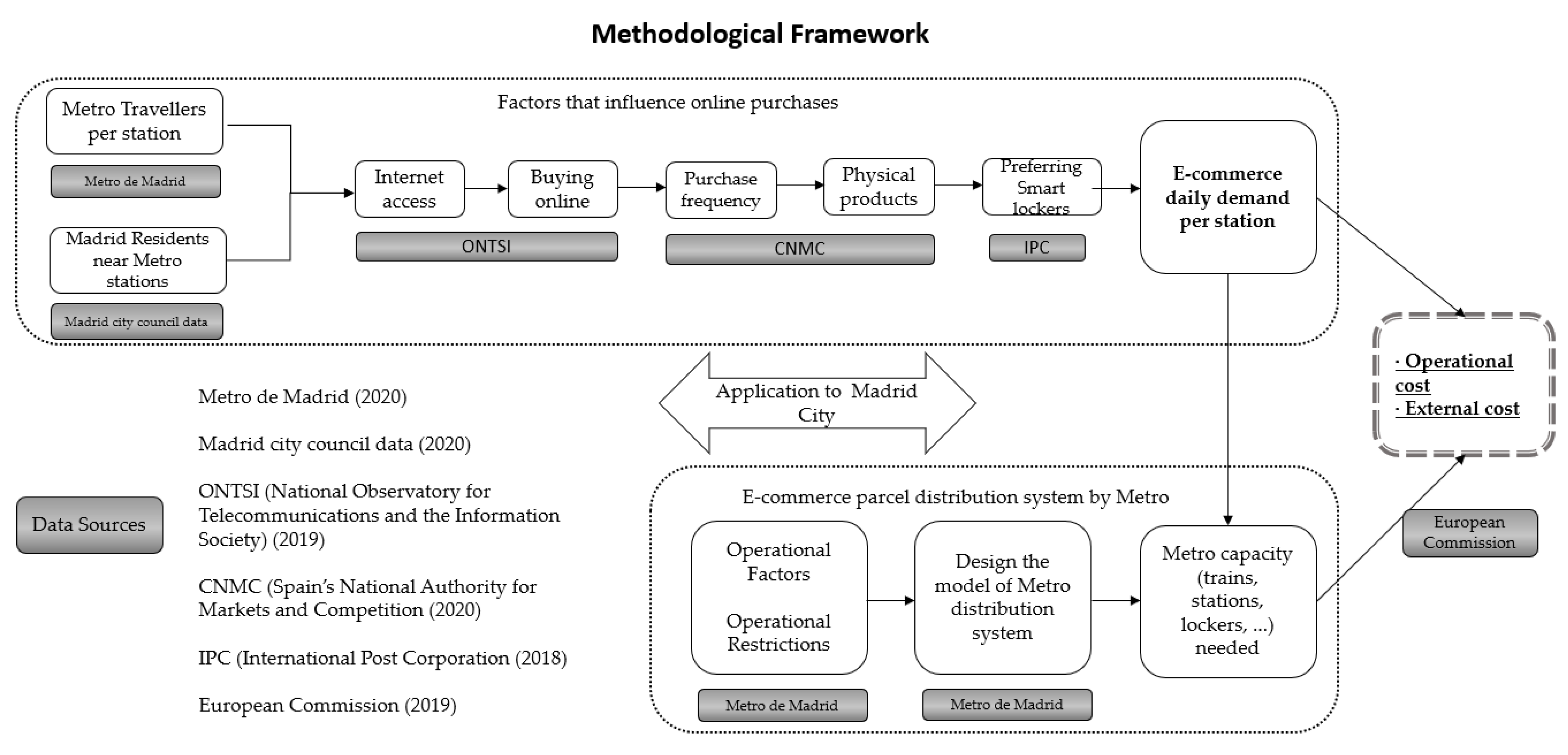
The method of e-commerce demand estimation, the design of the physical parcel distribution system linked to a Metro Transport Network, and the calculation of the operational and external costs are shown in Figure 1. It is important to note that the calculations of e-commerce demand are based on data from official government sources.
Figure 1.
Methodological framework.
3.1. Demand for Logistics Distribution by Metro
Online buyers have numerous options when deciding which products to buy, where to acquire them, and when to make their purchases. In the same way, when we talk about e-commerce parcel delivery, customers expect to be offered several alternatives. A company offering a high value service in e-commerce deliveries (or perceived thus by a customer), increases customer satisfaction during the purchase process in general and, in addition, gains a direct effect in loyalty and engagement, which will eventually generate more consumption and, by extension, will increase the company’s revenue [32]. Therefore, the way in which physical delivery is materialized will condition demand in e-commerce.
Daily demand of e-commerce orders has two components:
- Metro travelers
There is a potential synergy between urban railway transport of people and goods in large cities. A metro user can be a traveler and an e-commerce customer at the same time, so they may collect an order they placed online when entering or leaving a station. This combined demand is calculated by determining which share of the metro travelers could be potential e-commerce shoppers, and who may collect their orders at stations. We consider smart lockers as the most viable option, as they provide the best advantages within the various types of unattended delivery (see Table 1). The calculation of this potential daily demand of e-commerce orders by Metro travelers is built based on the chain-ratio method [33], which consists of multiplying a baseline figure by a series of percentages until the target demand is reached.
The formulation would be as follows:
Daily demand for e-commerce parcels by Metro traveler (Dtrav)
where: A = daily Metro trips by station; P1 = average% of different Metro travelers by station; P2 = average% of people who travel by Metro > x years per station; P3 = average% of people > x years using the Internet; P4 = average% of people > x years using the Internet and buying online; P5 = average% of people > x years using the Internet and buying online daily; P6 = average% of people > x years using the Internet and buying online daily, physical products that could fit into a locker; P7 = average% of people > x years using Internet and buying online daily, physical products that could fit into a locker, and preferring lockers as a method of delivery
(Dtrav) = A × P1 × P2 × P3 × P4 × P5 × P6 × P7
- 2.
- Residents living nearby metro stations
The privileged location of all metro stations in large cities (in terms of distance and accessibility) provides a competitive advantage when determining the possible points of delivery for e-commerce parcels. These are very convenient, clearly identified, and accessible locations for the residents of those neighbourhoods.
Similarly to the case of metro travelers, it is possible to calculate the potential daily demand for e-commerce deliveries by people living within the catchment area of a metro station (considering as such the neighborhood where a given resident lives) who may collect the delivery at a smart parcel locker.
In this case, the formulation would be:
Daily demand for e-commerce parcels by residents (Dres)
where: Y = residents > x years living in the area of influence of a metro station and do not use metro regularly.
(Dres) = Y × P3 × P4 × P5 × P6 × P7
The total demand for e-commerce deliveries by station would be the sum of both concepts:
Daily demand for e-commerce deliveries by station
(DT) = Dtrav + Dres
Being able to determine the level of demand for e-commerce deliveries is essential in order to adjust the supply of logistics services using metro transport infrastructures.
3.2. Capacity of Metro Network and Operational Factors
The calculation of the supply of e-commerce logistics services by metro stations (for residents and travelers) will be conditioned both by aspects linked to the demand for deliveries at each of those stations, and by operational logistics factors. As shown in Table 2, these operational factors (including capital expenditures and operating expenses) will determine the shipping cost per parcel through the metro system.
Table 2.
Operational factors in the proposed model.
3.3. External Costs
According to the European Commission [34]: “external costs, also known as externalities, arise when the social or economic activities of one (group of) person(s) have an impact on another (group of) person(s) and when that impact is not fully accounted, or compensated for, by the first (group of) person(s)”. Decision makers have the responsibility to “internalize” external cost when organizing access and pricing policies to use the transport network. By applying the methodology developed in the handbook of external costs of transport [34], it is possible to define and quantify the following external costs (see Table 3):
Table 3.
External costs: Variables affecting the type of cost and definition.
The monetary quantification of the externalities of the model for distribution of e-commerce parcels through the underground public transport system considers the following aggregate costs:
with:
where: TEC = Total External Cost, SC = Social Cost, EC = Environmental Cost.
TEC = SC + EC
SC = Cc + Ca
EC = Cn + Cap + Ccc
4. Case Study
The following section describes the application of the proposed mixed last-mile delivery system for e-commerce goods in the city of Madrid. This new form of urban distribution is carried out through the Madrid Metro underground public transport system.
4.1. Background
Urban distribution is essential for the activity and development of any city, and Madrid is no exception. Due to its terrain and the historical evolution of its urban structure, distribution within the city of Madrid is one of the most complicated among large European cities. The city, an essential driver of Spain’s economy that accounts for 12% of national GDP, is divided into 21 districts with a total population of 3.3 million [35] and has a total area of 60,436.7 hectares, with an average population density of 54 inhabitants per hectare.
At present, there are two main types of problems associated to urban distribution in the city of Madrid [36]:
- Urban infrastructure:
- ○
- There is no planning of distribution points at the urban level.
- ○
- Problems with the use of parking and loading/unloading areas.
- ○
- Significant growth of e-commerce deliveries at private homes.
- Management:
- ○
- There is no model for the management of distribution logistics that adequately identifies and organizes the numerous agents and operations for each urban distribution channel.
- ○
- Growth of e-commerce and new delivery models.
- ○
- Inefficient use of loading/unloading activities and reserved spaces.
According to Madrid City Council, urban road transport accounted for 22.6% of total GHG emissions [37]. During the period between January and June 2019, 13.000–16.000 LDV (Light Duty Vehicles) accessed the Central Madrid low-emission zone established in 2018 (472 hectares) during working days. Madrid’s car fleet stands out due to its high percentage of diesel vehicles, with an average age of 9.3 years, and the motorization rate is 383 [38].
On the other hand, the Madrid Metro system is the largest in Spain, with 12 lines totaling 294 kilometers inside the city, and additional branches connecting 12 municipalities in the suburbs. It has the highest share among public transport modes in the region of Madrid. During the winter season, over 2.3 million travelers use the underground each working day (pre-Covid-19). Commuting to work and educational institutions accounts for 70% of total weekday travel [39].
4.2. Description of the Mixed Delivery Model
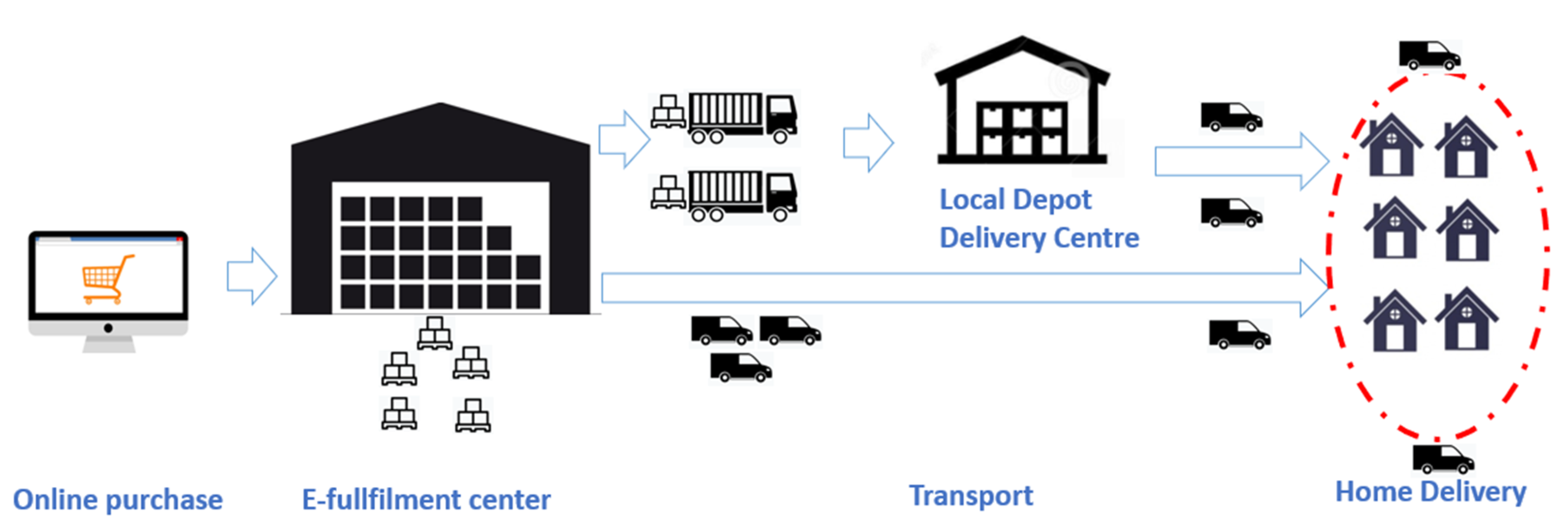
The activities carried out in the current e-commerce distribution model and in the proposed mixed model are detailed in Figure 2. The reference scenario, considering the current delivery model, includes the following sequential activities:
Figure 2.
Online order delivery model: Current practice.
- (1)
- A resident of a neighborhood in Madrid makes an online purchase and selects the option for home delivery.
- (2)
- The order is processed and prepared at the e-fulfilment center.
- (3)
- Several delivery options are offered to the customer:
- A Heavy-Duty Vehicle (HDV) from the fulfilment cener to a local depot or delivery center. The order is subsequently classified and delivered to the customer’s home by an LDV.
- The LDV starts at the fulfilment center and delivers directly to the customer’s home address. This is the option considered in the present study.
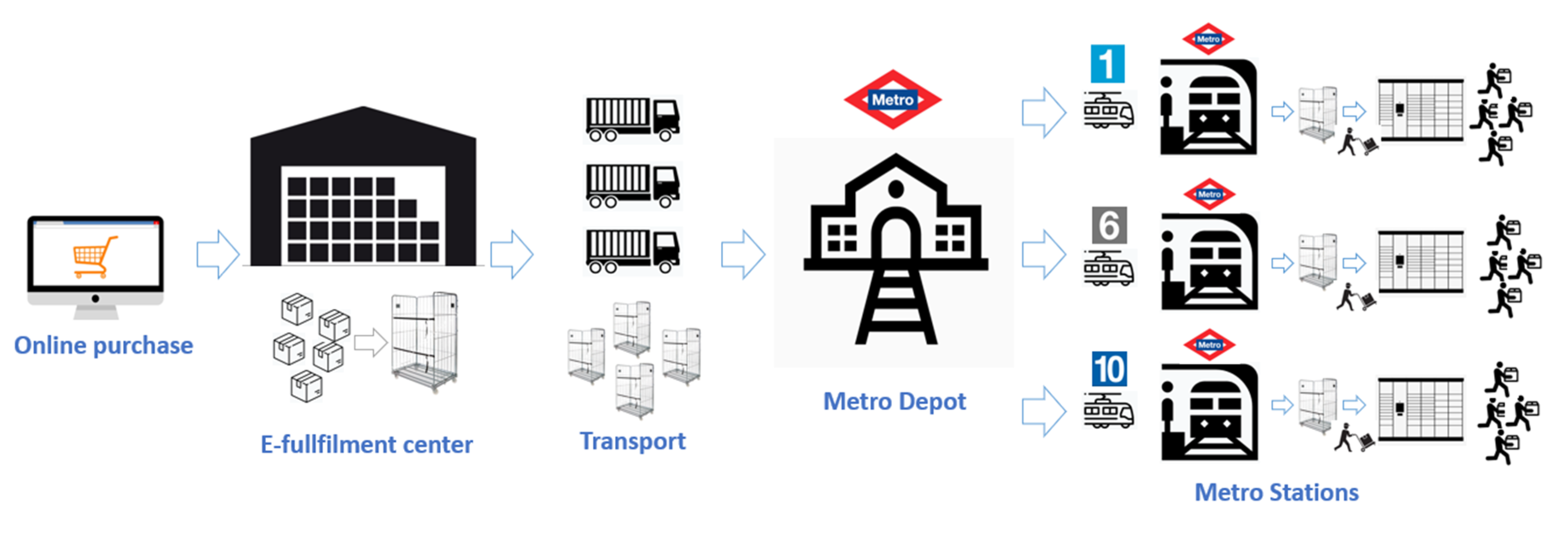
The existing delivery model is modified to incorporate metro services within the logistics distribution. Therefore, the proposed model using urban rail distribution, the activities would be as follows (see Figure 3):
Figure 3.
Online order and Metro-based urban delivery model.
- (1)
- A Madrid neighborhood resident or metro traveler makes an online purchase and selects the option for delivery to a smart locker in a station.
- (2)
- The order is processed and prepared at the e-fulfilment center. Roll containers are prepared by station.
- (3)
- Transport to the metro depot by an HDV from the e-fulfilment center to the selected Metro depot, in order to be loaded on the trains.
- (4)
- Transport from the metro depot to the smart locker: Trains are used to transport the orders to smart lockers located at the stations. The traveler or resident collects the order from the locker.
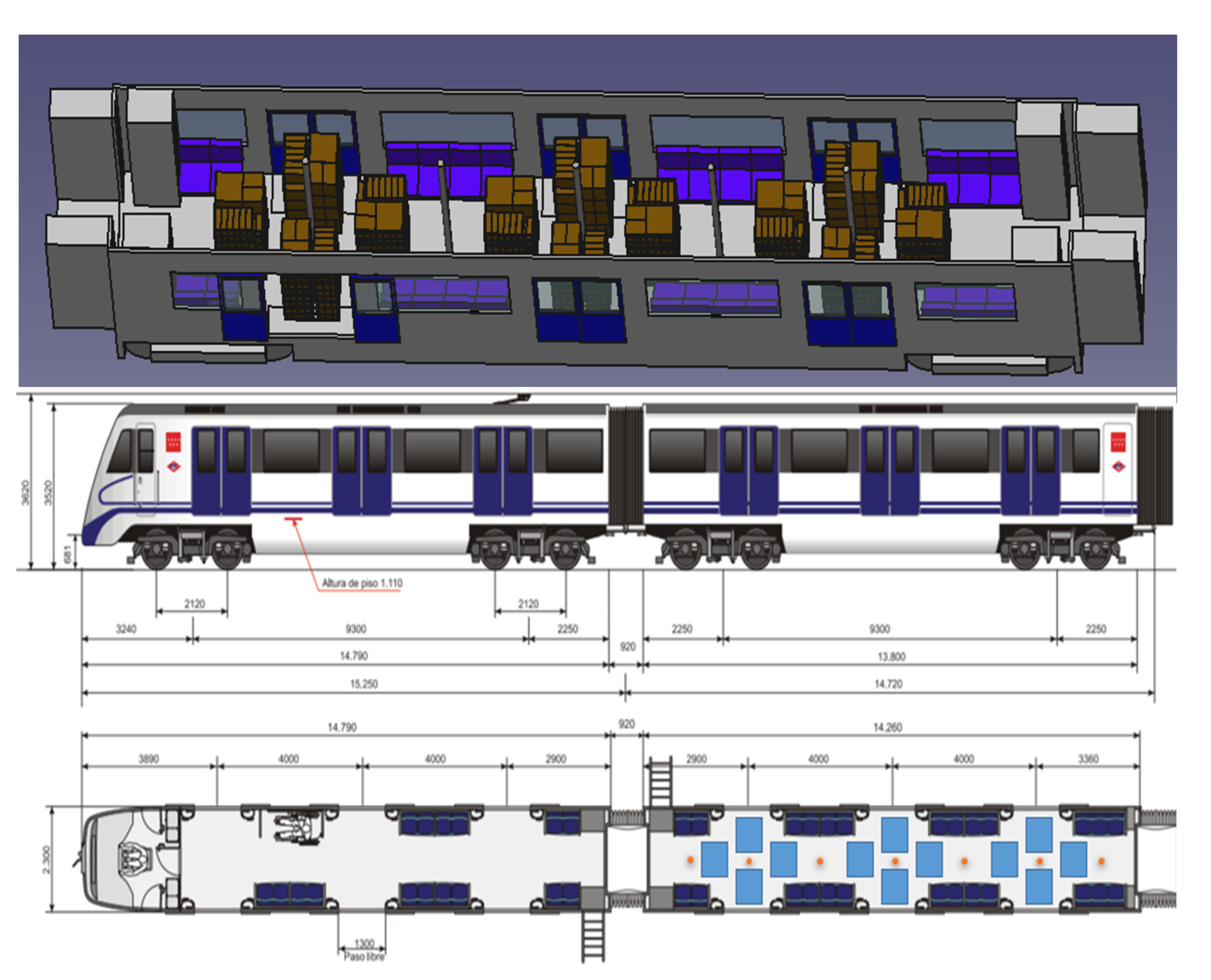
The modes of transport used are HDV from the fulfilment center to the Metro depot and trains (see an example in Figure 4) from the depot to the smart locker.
Figure 4.
Example of series 3000 trains loaded with roll containers.
The calculation of external costs in each e-commerce parcel delivery model depends on the mode of transport used for each stage (LDV, HDV, or train). These methods of transportation are conditioned by the demand for parcels (both from travelers and residents) for each selected station.
5. Results
5.1. Calculation of Parcel Demand by Metro Line
Table 4 shows the total potential daily demand for e-commerce parcels by metro line. It includes the demand from travelers and residents, calculated following the proposed methodology. The amount and distribution of parcels, considering operational factors, enables calculation of roll container requirements and the stations where smart lockers should be installed. Demand is differentiated based on whether stations have elevators or not, an aspect that determines the logistics operation at each station:
Table 4.
Number of parcels, roll containers, and parcel lockers per metro line.
DT1: total demand of e-commerce parcels/day requested by metro commuters and nearby residents on each line (all stations).
DT2: total demand of e-commerce parcels/day requested by metro commuters and nearby residents on each line (only stations with elevator).
The demand has been calculated only for stations located within the city of Madrid, excluding Metro stations in the suburbs. Likewise, lines 8 and 11 were also excluded due to their limited extension. It is worth noting that, in this model, each station may absorb a maximum daily demand of 80 packages, due to the size of the lockers considered. In case the number of daily parcels per station is low (<25), it may be reasonable not to deliver every day and wait for a minimum volume. Due to operational efficiency issues, only the three lines with highest demand have been selected (Total best 3). Since some stations are shared by several lines (e.g., Gran Via station is part of Lines 1 and 5), duplicates have been eliminated, in order to have single values (Net total b3).
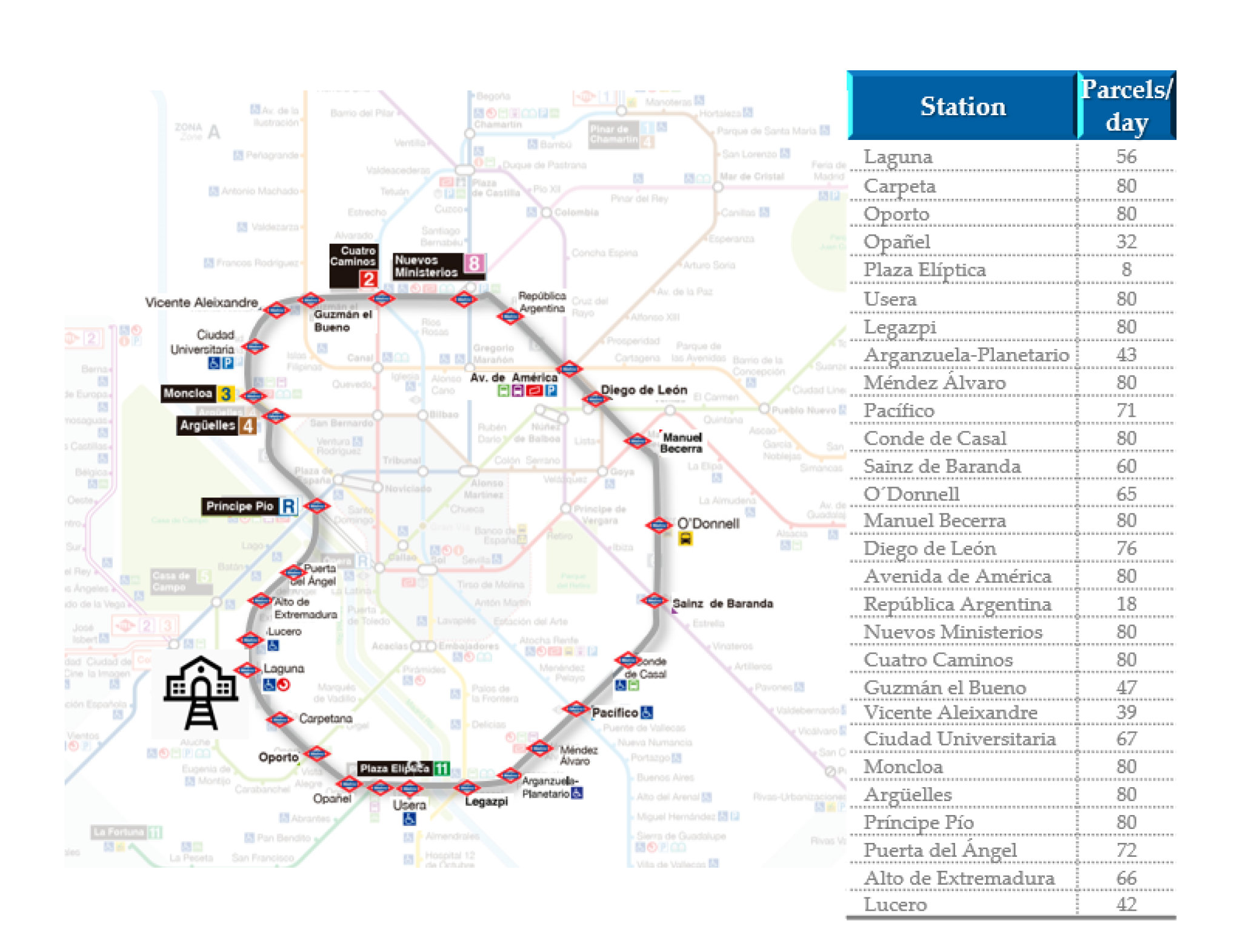
As an example, Figure 5 shows the number of parcels per station for Line 6 (1875 parcels) for DT1. Distribution to all stations is carried out from the depot located at Laguna station.
Figure 5.
Line 6 (number of e-commerce parcels per station).
5.2. Different Alternatives in the Mixed Distribution Model
As shown in Table 5, we can distinguish two different alternatives of mixed models, based on the mode of metro train usage to transport goods (shared or dedicated trains). Alternative 0 is home delivery, i.e., the current situation for a given demand of e-commerce parcels.
Table 5.
Alternatives of the model.
5.3. Coefficients Based on Interviews with Experts and Literature (Reference and New Scenarios)
The productivity of delivery varies considerably depending on the area where it is completed. An urban area is characterized by significant efficiency gains, the higher the population density in a specific area, the more parcels can be delivered in less kilomeers. Various studies have estimated the average number of kilometers and parcels that a courier can deliver during a 7.5–8 h working day:
- UK [40]: Estimated that a courier can deliver 120 parcels in an 80 km route.
- Poland [41]: Estimated that a courier can deliver 60 parcels in a 150 km route.
- Brussels [42]: A courier can deliver 85 parcels in a 70 km route.
It is also necessary to consider the first time hit rate (the percentage of how many first delivery attempts to a consignee are successful on average) [43], which stands at 18–30% [44,45,46].
Data validation of the current scenario: Personal interviews were conducted with four experts (the experts’ names have been omitted for confidentiality reasons) from the main e-commerce logistics operators working in Madrid (February 2020). The range was established at 60–90 packages transported by a standard courier. Regarding the weight transported, the group of experts consulted considered an average weight of between 1.5 and 3 kg per parcel. Thus, the model considers a value of 2 kg, following data from an International Post Corporation survey [47].
Based on the literature and expert opinions, the following coefficients are considered:
- T (working day) = 8 h.
- Dt (distance travelled) = 90 km.
- Pr (packages on route) = 75.
- FTHR (rate of returns) = 20%.
- Pd (packages delivered) = 60.
- Parcel weight = 2 kg.
- Distance from e-fulfilment center to depot = 25 km.
- Roll container weight = 15 kg.
- Truck load optimization from the e-fulfilment center to the Metro depot: >80% (≥ 22 large or ≥ 35 medium roll containers).
5.4. Calculation of the Main Indicators for the Alternatives of the Model
Table 6 summarizes the main indicators for all the alternatives:
Table 6.
Main indicators for the various alternatives.
5.5. Calculation of External Costs
This section details the daily external costs of the various alternatives analyzed (see Table 7. The calculation distinguishes two options, based on the number of stations to deliver e-commerce parcels, depending on whether or not the station has an elevator.
Table 7.
External cost for the different volumes of e-commerce demand.
6. Discussion
The total costs estimated for the two alternatives proposed indicate that the use of the metropolitan rail system to deliver e-commerce packages through smart lockers could be a promising alternative from a social and environmental standpoint.
This section analyzes the results from various perspectives:
(1) Total cost per package. The data for the operation cost of delivering a package to a home (B2C) by an external logistics provider vary based on the reference city, value of the parameters considered previously (distance travelled, parcels delivered per route, urban density, etc.), and the labor costs and material means employed for the delivery.
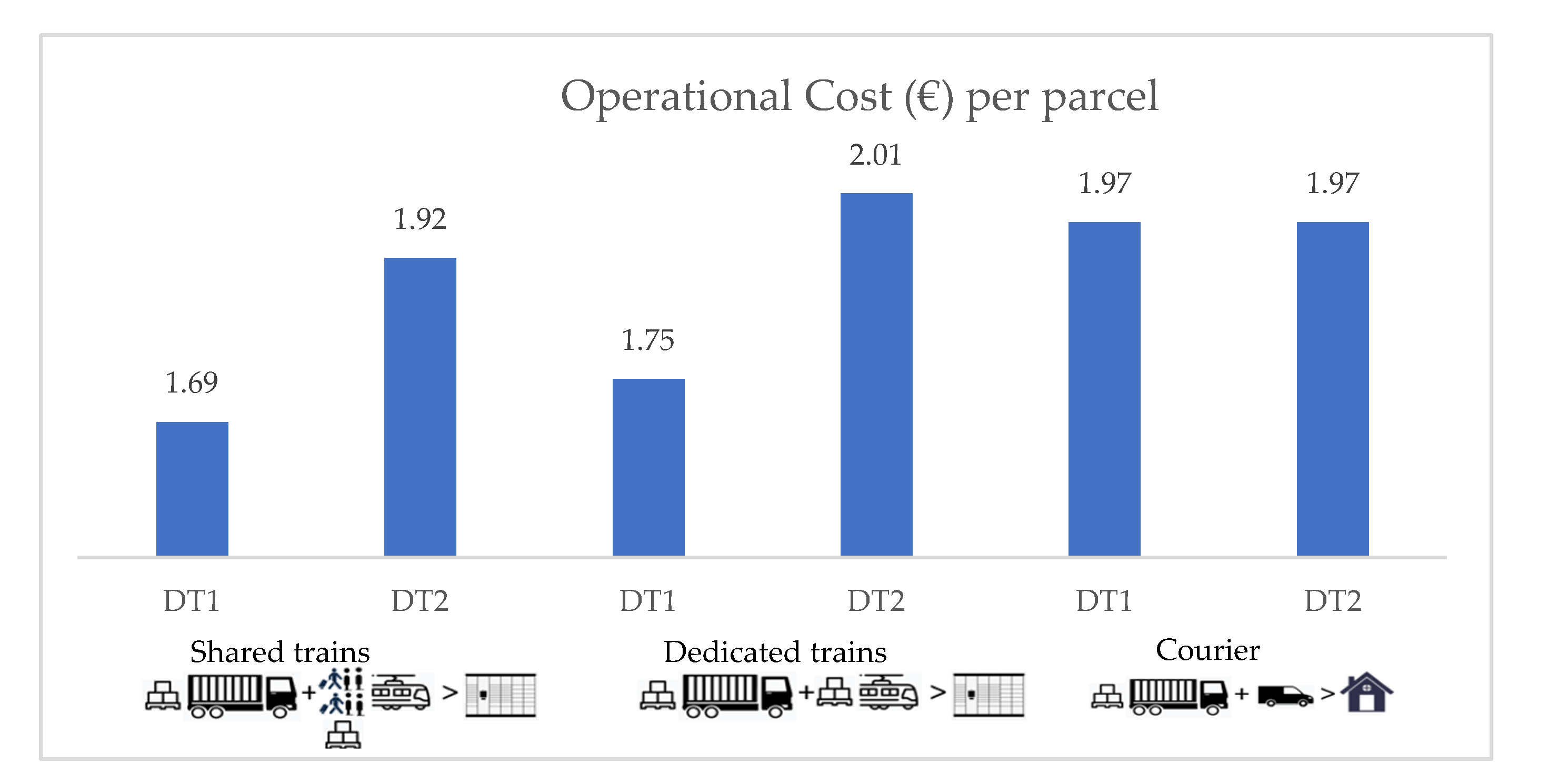
In the reference scenario, these values stand at around 2.02–3.87 €/parcel [41,42,43], for various European cities. In the case of Madrid (considering the areas with higher population density), based on expert opinions, the range would be around 1.85–2.30 €/parcel. The data collected in the study place the cost per package at €1.97, within the margins established by the experts.
It is worth noting that the operating costs for the mixed model presented vary between €1.69 and €2.01 per package (see Figure 6). In three of the scenarios, there is a reduction in operating costs between 14.72% and 3.04%, compared with urban distribution by LDV. Only for delivery to stations with elevator and dedicated trains scenario is the operating cost 1.52% higher than the reference scenario.
Figure 6.
Comparison of operational cost per parcel.
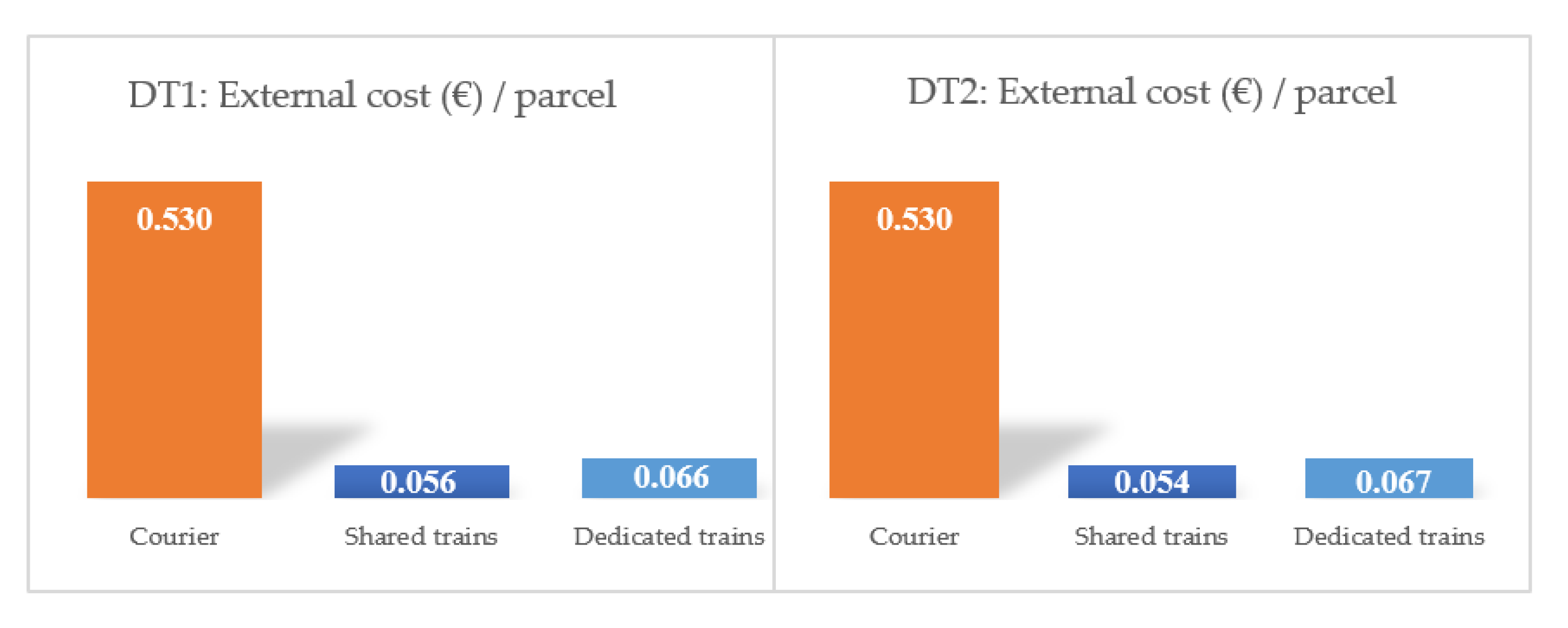
(2) External cost per package. In order to compare the environmental efficiency of each alternative, it is necessary to associate the total external cost to the number of packages delivered, as shown in Figure 7.
Figure 7.
Comparison of external costs per parcel. Demand = DT1 (left); DT2 (right).
The sums of all external costs for the reference scenario (current situation) are around 9.8 and 8.2 times higher than the proposed alternatives. Within the alternatives of the new model, the values are similar, and the externalities caused by dedicated trains are scarcely relevant. As can be seen from the values for the alternatives with the same demand for parcels, the external costs of heavy trucks traveling to Metro depots entail a significantly larger impact than the externalities of dedicated trains carrying packages. For the alternatives involving dedicated trains, the difference lies in optimizing the number of heavy trucks employed in the transport to depots and trains transporting roll containers.
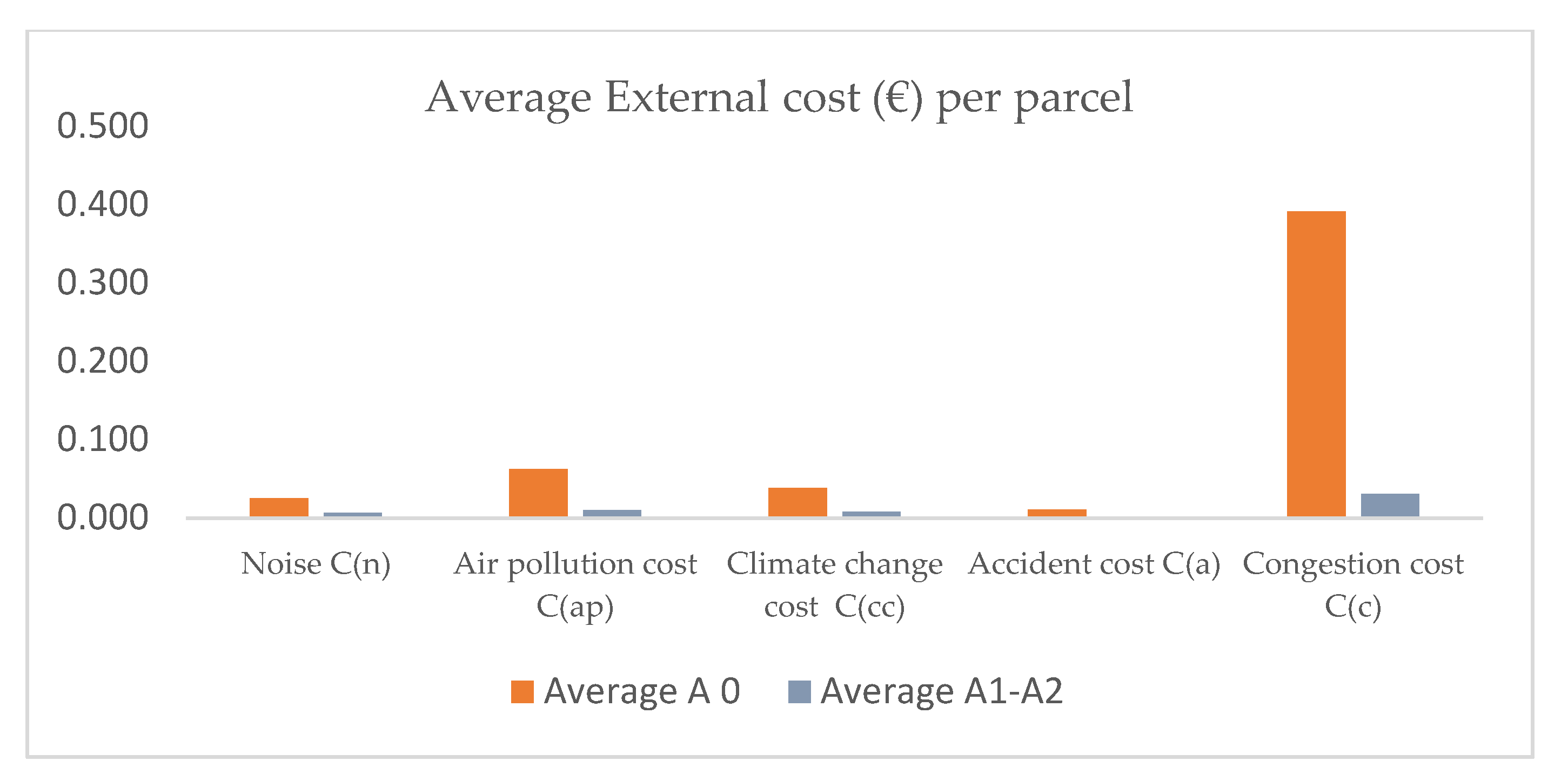
(3) Cost by type of externality. Considering each type of externality, Figure 8 shows the distribution of average costs per parcel associated to each model (current or proposed):
Figure 8.
Average external cost per parcel for different externalities.
For the current situation (Average A0), the cost of congestion represents 73.8% of the total externalities. In the case of the proposed alternatives (A1–A2), the distribution is considerably more balanced between the different types of external costs, while all the time remaining significantly lower than the external costs of the current model.
(4) Analysis of sensitivity of demand. Daily demand for e-commerce parcels can vary depending on two main parameters: The number of people who place orders online (Metro travelers or residents near a station) and the behavior or characteristics of e-commerce consumers (% of Internet users and online shoppers, frequency of online purchases, % of online purchases of physical goods delivered in parcels, and preference for a specific delivery method).
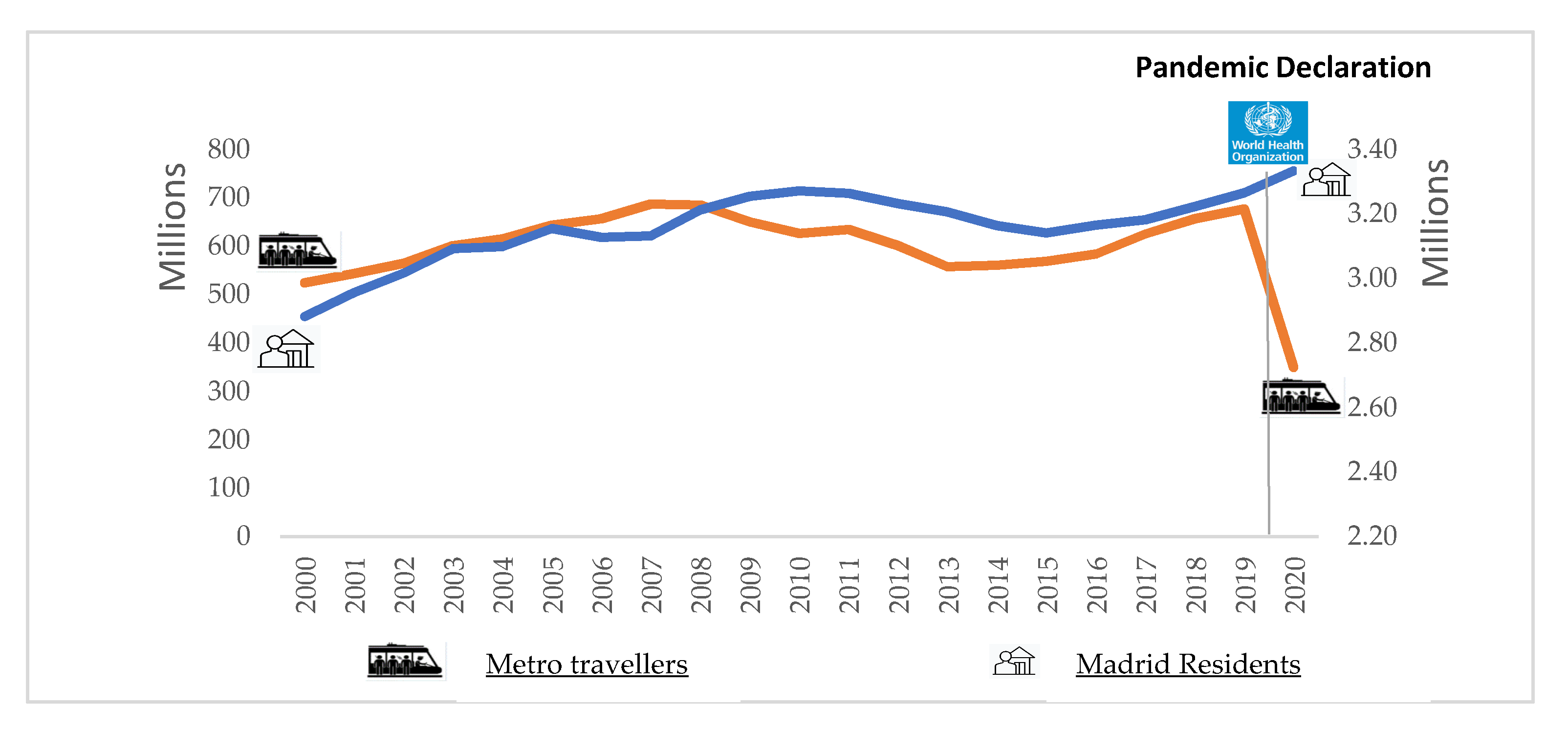
If we focus on the number of people who place orders online, a priori, we can consider values to be stable overall, with small increases and decreases over time. Even though the Covid-19 pandemic has not had a significant impact on the number of residents living in Madrid’s districts, it has led to a substantial change in the number of travelers who use the metro public transport system. Figure 9 shows the evolution of residents in the city of Madrid along with the evolution of Madrid Metro travelers during the period 2000–2020 [39,48].
Figure 9.
Number of Metro travelers and residents in Madrid 2000–2020.
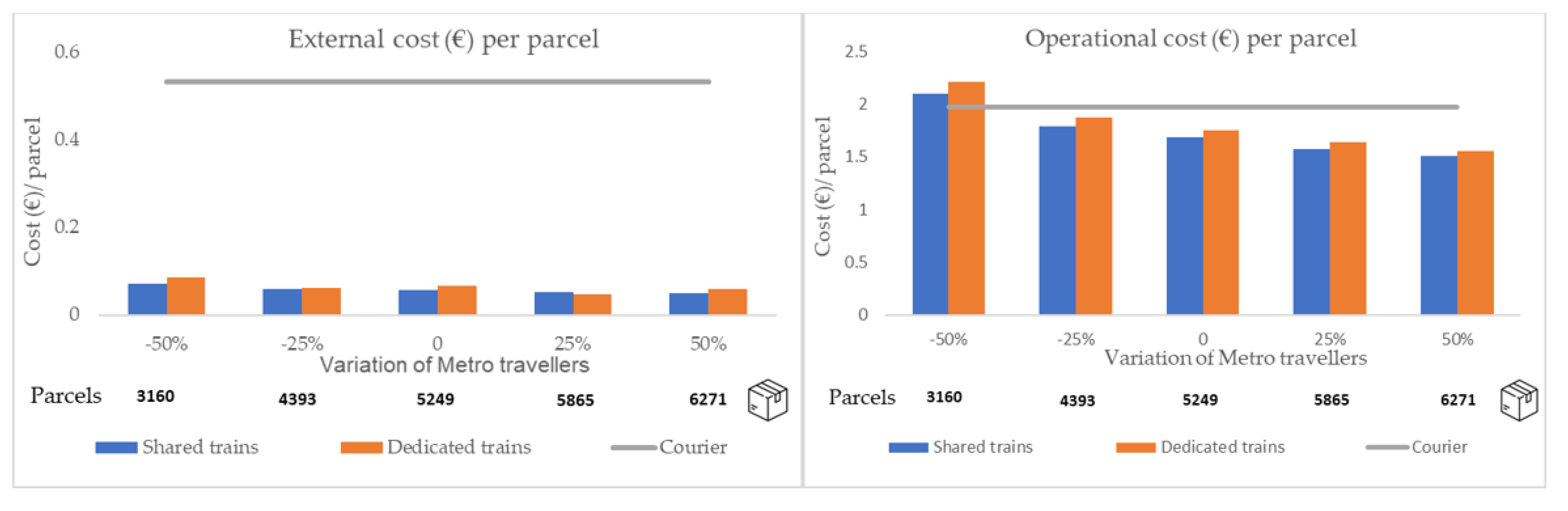
The two lines in Figure 9 show similar evolutions until 2020. In that year, while the number of Madrid residents continued to grow, the figure for Madrid Metro traveers fell dramatically. In 2019, from Monday to Friday, Madrid had an average of 2.3 million Metro travelers per day. During the pandemic, excluding the total lockdown period (March–June 2020), the number of travelers remained stable at 50% of the pre-Covid period. Regarding the variation in the volume of Metro travelers (maintaining the same structure of the origin-destination matrix and other variables unchanged), the variation in the daily demand for e-commerce parcels and the cost per parcel for DT1 is shown in Figure 10.
Figure 10.
Impact of demand levels on operation costs (left) and externalities (right).
With regard to operational cost, when shared trains are used, the mixed distribution model’s costs are lower than the reference scenario, given ±50% variations in passenger demand. In terms of specific trains, only a 50% reduction in Metro travel demand entails higher operating costs in the mixed distribution model. Nevertheless, if external costs are taken into account, the mixed model always incurs lower costs in both alternatives.
Finally, Table 8 shows a comparison of the total cost of sending an e-commerce package in the city of Madrid in the case of the current model (courier) and the mixed models (truck + metro).
Table 8.
Main annual indicators for the alternatives of the mixed model.
On the whole, results show that the implementation of metro for urban freight has significant potential benefits on urban transportation for the different stakeholders in city logistics. For both carriers and retailers, this entails lower operation cost (and hence higher profitability). For local authorities, this means lower external costs (social and environmental), and for customers, the solution can reduce the number of time deliveries required and the cost of shipping. It also decreases traffic for residents, by reducing the LDV traffic required. However, its contribution to alleviating traffic congestion is far less than that to improve logistics efficiency and reducing other externalities.
The data highlight the differences between the outcome variables analyzed in the reference scenarios and the proposed scenarios and show that the current scenario entails higher economic, social, and environmental costs for the city of Madrid. The likely increase of e-commerce market in the near future, due to its growth during the coronavirus outbreak, and the recent drop in commuters per train suggest the value of investigating this last-mile delivery system in large cities.
However, some limitations should be noted. The specific method used to determine the demand for e-commerce of travelers and residents is based on official statistics [39,48,49,50,51,52] but considers several static variables in a very dynamic reality. Other methods of calculating demand may offer different opportunities to improve the data obtained. Similarly, in a changing and highly globalized environment, certain variables such as consumer preference for collection at smart locker can change significantly from one survey to another. Furthermore, the particularity of the case study on both, the supply (metro) and demand sides (travelers and residents), means that the transferability of the proposed solution to other cities should be studied in greater detail.
7. Conclusions and Perspectives
This study lays out the quantification of economic, environmental, and social cost analysis of a new model for e-commerce parcel delivery using underground public transport network in a large city.
The findings of this study have a number of important implications for future practices and policies. First, the demand for e-commerce packages by travelers and residents living near stations reaches a sufficient volume to justify the use of trains for their delivery. In many cases, this demand exceeds the capacity of the lockers at stations, which may suggest adapting each parcel locker to the real demand of each station in the future.
Second, the economic, social, and environmental costs associated with the proposed delivery model are considerably lower than those of the current system based on LDV. At present, the use of shared trains offers greater operational advantages by using the existing capacity of the metro network. The operating costs of the mixed model are 14.72–11.16% lower than the current ones. On the social and environmental side, the average external cost per parcel in the proposed model is between 8.2 and 9.8 times lower than the current scenario.
Sharing trains between commuters and e-commerce parcels is the key to improving operational costs. In this case, the externalities are generated by heavy trucks travelling from the e-fulfilment center to the Metro depot. These external costs are very similar to those of dedicated trains. Considering the total cost per parcel, all the alternatives of the proposed mixed model are better than the current scenario.
Inevitably, several limitations arise in the study, which represent valuable directions for future research. On the one hand, it would be essential to calculate the new demand for metro commuters and the growth of e-commerce for city dwellers in a post Covid-19 scenario. In addition, it is necessary to delve deeper into various operational issues that may represent barriers to effective implementation: (i) Operational capacity of urban passenger rail transport systems to act as logistics operators, (ii) viability of placing smart lockers at all metro stations, and (iii) impact that sharing trains with e-commerce packages may have on commuters.
The results will be made available to Madrid Public Transportation Authority, which is interested in this topic and willing to explore/test alternative service configurations in a real-life pilot study.
It is vital to know the opinion of two main actors about the new model of delivery: Acceptance by metro travelers and satisfaction of online buyers. Both aspects would represent future lines of research. Lastly, this study could be extended by considering other forms of delivery (convenience stores, home delivery, etc.) and evaluating the economic, social, and environmental impacts of the main alternatives currently existing in e-commerce.
Author Contributions
R.V. and A.M. contributed equally to the data preparation and the analysis and to the interpretation of results. All authors made major contributions to writing the manuscript. All authors have read and agreed to the published version of the manuscript.
Funding
This research received no external funding.
Institutional Review Board Statement
Not applicable.
Informed Consent Statement
Not applicable.
Data Availability Statement
Data related to E-commerce transactions can be found in CNMC database at http://data.cnmc.es/datagraph/. Data related to Madrid residents can be found in Madrid city council data at https://datos.madrid.es/portal/site/egob. Data for the calculation of the variables in E-commerce parcels demand can be found in ONTSI at https://www.ontsi.red.es/es/ontsi-data. Data related to Metro travellers can be found at https://www.metromadrid.es/es/transparencia/proyectos-y-datos#panel1.
Conflicts of Interest
The authors declare no conflict of interest.
References
- Sanchez-Diaz, I.; Browne, M. Accommodating urban freight in city planning. Eur. Transp. Res. Rev. 2018, 10, 55. [Google Scholar] [CrossRef]
- Eurostat Digital Economy and Society Statistics—Households and Individuals—Statistics Explained. Available online: https://ec.europa.eu/eurostat/statistics-explained/index.php/Digital_economy_and_society_statistics_-_households_and_individuals (accessed on 10 June 2020).
- Rai, H.B.; Verlinde, S.; Merckx, J.; Macharis, C. Crowd logistics: An opportunity for more sustainable urban freight transport? Eur. Transp. Res. Rev. 2017, 9, 39. [Google Scholar] [CrossRef]
- Macharis, C.; Nocera, S. The future of freight transport. Eur. Transp. Res. Rev. 2019, 11, 21. [Google Scholar] [CrossRef]
- Greenhouse Gas Emissions from Transport in Europe—European Environment Agency. Available online: https://www.eea.europa.eu/data-and-maps/indicators/transport-emissions-of-greenhouse-gases/transport-emissions-of-greenhouse-gases-12 (accessed on 10 June 2020).
- Dablanc, L. Goods transport in large European cities: Difficult to organize, difficult to modernize. Transp. Res. Part A Policy Pract. 2007, 41, 280–285. [Google Scholar] [CrossRef]
- ERTRAC. Urban Freight. Research & Innovation Roadmap. 2015. Available online: https://www.ertrac.org/uploads/documentsearch/id36/ERTRAC_Alice_Urban_Freight.pdf (accessed on 10 June 2020).
- González-Feliu, J. Costs and Benefits of Railway Urban Logistics: A Prospective Social Cost Benefit Analysis. Available online: https://halshs.archives-ouvertes.fr/file/index/docid/1056135/filename/Costs_and_benefits_of_railway_urban_logistics.pdf (accessed on 10 June 2020).
- Browne, M.; Allen, J.; Woodburn, A.; Piotrowska, M. The Potential for Non-road Modes to Support Environmentally Friendly Urban Logistics. Procedia Soc. Behav. Sci. 2014, 151, 29–36. [Google Scholar] [CrossRef]
- Statista COVID-19 Impact on Global Retail e-Commerce Site Traffic 2019–2020. Available online: https://www.statista.com/statistics/1112595/covid-19-impact-retail-e-commerce-site-traffic-global/ (accessed on 16 January 2021).
- Crainic, T.G.; Ricciardi, N.; Storchi, G. Advanced freight transportation systems for congested urban areas. Transp. Res. Part C Emerg. Technol. 2004, 12, 119–137. [Google Scholar] [CrossRef]
- Cardenas, I.; Borbon-Galvez, Y.; Verlinden, T.; Van De Voorde, E.; Vanelslander, T.; Dewulf, W. City logistics, urban goods distribution and last mile delivery and collection. Compet. Regul. Netw. Ind. 2017, 18, 22–43. [Google Scholar] [CrossRef]
- Lebeau, P.; Macharis, C. Freight transport in Brussels and its impact on road traffic? Bruss. Stud. 2014. [Google Scholar] [CrossRef]
- Morganosky, M.A.; Cude, B.J. Consumer demand for online food retailing: Is it really a supply side issue? Int. J. Retail. Distrib. Manag. 2002, 30, 451–458. [Google Scholar] [CrossRef]
- Boston Consulting Group. Same-Day Delivery. Not Ready for Prime Time. 2013. Available online: https://image-src.bcg.com/Images/BCG_Same-Day_Delivery_Mar_2013_tcm9-97034.pdf (accessed on 16 January 2021).
- McKinsey & Company Parcel Delivery. The Future of Last Mile; Travel, Transport and Logistics; 2016. Available online: https://www.mckinsey.com/~/media/mckinsey/industries/travel%20transport%20and%20logistics/our%20insights/how%20customer%20demands%20are%20reshaping%20last%20mile%20delivery/parcel_delivery_the_future_of_last_mile.ashx (accessed on 18 January 2021).
- DELOITTE 2018 Holiday Survey. Ringing in the Retail; 2018. Available online: https://www2.deloitte.com/content/dam/insights/us/articles/4737_2018-holiday-survey/DI_2018-holiday-survey.pdf (accessed on 14 January 2021).
- Capgemini Research Institute. The Last-Mile Delivery Challenge. Giving Retail and Consumer Product Customers a Superior Delivery Experience without Impacting Profitability; 2019. Available online: https://www.capgemini.com/wp-content/uploads/2019/01/Report-Digital-%E2%80%93-Last-Mile-Delivery-Challenge1.pdf (accessed on 21 January 2021).
- Allen, J.; Thorne, G.; Browne, M. Good Practice Guide on Urban Freight Transport; BESTUFS; 2007. Available online: http://www.bestufs.net/download/BESTUFS_II/good_practice/English_BESTUFS_Guide.pdf (accessed on 16 January 2021).
- Lemmens, N.; Gijsbrechts, J.; Boute, R. Synchromodality in the Physical Internet—Dual sourcing and real-time switching between transport modes. Eur. Transp. Res. Rev. 2019, 11, 19. [Google Scholar] [CrossRef]
- Arvidsson, N.; Browne, M. A Review of the Success and Failure of Tram Systems to Carry Urban Freight: The Implications for a Low Emission Intermodal Solution Using Electric Vehicles on Trams. Eur. Transp. 2013, 54, 18. [Google Scholar]
- Marinov, M.; Giubilei, F.; Gerhardt, M.; Özkan, T.; Stergiou, E.; Papadopol, M.; Cabecinha, L. Urban freight movement by rail. J. Transp. Lit. 2013, 7, 87–116. [Google Scholar] [CrossRef]
- Strale, M. The Cargo Tram: Current Status and Perspectives, the Example of Brussels. In Transport and Sustainability; Macharis, C., Melo, S., Woxenius, J., Lier, T.V., Eds.; Emerald Group Publishing Limited: Bingley, UK, 2014; Volume 6, pp. 245–263. ISBN 9781784410629. [Google Scholar]
- Oishi, R.; Taniguchi, E. Effects and Profitability of Constructing the New Underground Freight Transport System. In Proceedings of the 1st International Conference on City Logistics, Cairns, Queensland, Australia, 12–14 July 1999. [Google Scholar]
- Robinson, A.M.; Mortimer, P.N. Logistics & Transport Focus; 2004. Available online: http://www.bestufs.net/download/NewsEvents/articles/What_Future_If_Any.pdf (accessed on 22 January 2021).
- Kikuta, J.; Ito, T.; Tomiyama, I.; Yamamoto, S.; Yamada, T. New Subway-Integrated City Logistics Szystem. Procedia Soc. Behav. Sci. 2012, 39, 476–489. [Google Scholar] [CrossRef]
- Dampier, A.; Marinov, M. A Study of the Feasibility and Potential Implementation of Metro-Based Freight Transportation in Newcastle upon Tyne. Urban Rail Transit 2015, 1, 164–182. [Google Scholar] [CrossRef]
- Behiri, W.; Belmokhtar-Berraf, S.; Chu, C. Urban freight transport using passenger rail network: Scientific issues and quantitative analysis. Transp. Res. Part E Logist. Transp. Rev. 2018, 115, 227–245. [Google Scholar] [CrossRef]
- Gatta, V.; Marcucci, E.; Nigro, M.; Serafini, S. Sustainable urban freight transport adopting public transport-based crowdshipping for B2C deliveries. Eur. Transp. Res. Rev. 2019, 11, 13. [Google Scholar] [CrossRef]
- Li, Q.; Lai, Y.; Wang, Q.; Lu, Z. Mechanical Structure Design of Underground Logistics System Based on Passenger and Freight Transportation. IOP Conf. Ser. Mater. Sci. Eng. 2019, 688, 044075. [Google Scholar] [CrossRef]
- Leung, L.; Cheung, W.; Van Hai, Y. A framework for a logistics e-commerce community network: The Hong Kong air cargo industry. IEEE Trans. Syst. Man Cybern. Part A Syst. Hum. 2000, 30, 446–455. [Google Scholar] [CrossRef]
- Okholm, H.B.; Thelle, M.H.; Möller, A.; Basalisco, B.; Rølmer, S.; European Commission; DG Internal Market and Services. Copenhagen Economics E-Commerce and Delivery: A Study of the State of Play of EU Parcel Markets with Particular Emphasis on e-Commerce; EUR-OP: Luxembourg, 2013; ISBN 9789279297342. [Google Scholar]
- Kotler, P.; Keller, K. Marketing Management, 14th ed.; Pearson: Upper Saddle River, NJ, USA, 2012. [Google Scholar]
- Essen, H.; van Wijngaarden, L.; van Schroten, A.; Sutter, D.; Bieler, C.; Maffii, S.; Brambilla, M.; Fiorello, D.; Fermi, F.; Parolin, R.; et al. Handbook on the External Costs of Transport; Publications Office of the European Union: Luxembourg, 2019; ISBN 9789279969171. [Google Scholar] [CrossRef]
- Padrón Municipal de Habitantes. Available online: http://portalestadistico.com/municipioencifras/?pn=madrid&pc=ZTV21 (accessed on 25 April 2020).
- Plan de Calidad de Aire de la Ciudad de Madrid y Cambio Climático (PLAN A)—Ayuntamiento de Madrid. Available online: https://www.madrid.es/portales/munimadrid/es/Inicio/Medio-ambiente/Publicaciones/Plan-de-Calidad-de-aire-de-la-ciudad-de-Madrid-y-Cambio-Climatico-PLAN-A-/?vgnextfmt=default&vgnextoid=2b809df12834b510VgnVCM1000001d4a900aRCRD&vgnextchannel=f6ff79ed268fe410VgnVCM1000000b205a0aRCRD (accessed on 25 April 2020).
- Cambio Climático—Inventario de emisiones—Ayuntamiento de Madrid. Available online: https://www.madrid.es/portales/munimadrid/es/Inicio/El-Ayuntamiento/Medio-ambiente/Cambio-Climatico/?vgnextfmt=de-fault&vgnextoid=0ca36936042fc310VgnVCM1000000b205a0aRCRD&vgnextchannel=4b3a171c30036010VgnVCM100000dc0ca8c0RCRD&idCapitulo=6877178 (accessed on 25 April 2020).
- Ayuntamiento de Madrid Traffic Density Indicators by District. Available online: http://www-2.munimadrid.es/CSE6/control/seleccionDatos?numSerie=15020101040 (accessed on 25 April 2020).
- Metro de Madrid Proyectos y Datos. Available online: http://www.metromadrid.es/es/transparencia/proyectos-y-datos (accessed on 25 April 2020).
- Edwards, J.; McKinnon, A.; Cherrett, T.; Song, L. The Impact of Failed Home Delivery on Carbon Emissions: Are Collection/Delivery Points Environmentally-Friendly Alternatives; Heriot Watt University: Cardiff, UK, 2009. [Google Scholar]
- Lemke, J.; Iwan, S.; Korczak, J. Usability of the Parcel Lockers from the Customer Perspective—The Research in Polish Cities. Transp. Res. Procedia 2016, 16, 272–287. [Google Scholar] [CrossRef]
- Bart, D.M. Ecological and Economic Impact of Automated Parcel Lockers vs. Home Delivery; Vrije Universiteit Brussel: Brussel, Belgium, 2017. [Google Scholar]
- Gevaers, R.; Van de Voorde, E.; Vanelslander, T. Cost Modelling and Simulation of Last-mile Characteristics in an Innovative B2C Supply Chain Environment with Implications on Urban Areas and Cities. Procedia Soc. Behav. Sci. 2014, 125, 398–411. [Google Scholar] [CrossRef]
- Van Duin, J.; De Goffau, W.; Wiegmans, B.; Tavasszy, L.; Saes, M. Improving Home Delivery Efficiency by Using Principles of Address Intelligence for B2C Deliveries. Transp. Res. Procedia 2016, 12, 14–25. [Google Scholar] [CrossRef]
- Van Duin, J.; Wiegmans, B.; van Arem, B.; van Amstel, Y. From home delivery to parcel lockers: A case study in Amsterdam. Transp. Res. Procedia 2020, 46, 37–44. [Google Scholar] [CrossRef]
- Edición del Estudio Sobre Logística del eCommerce y Marketplaces. Available online: https://pro.packlink.es/becommerce/3a-edicion-del-estudio-sobre-logistica-del-ecommerce-y-marketplaces-en-espana-de-packlink/ (accessed on 19 June 2020).
- International Post Corporation. IPC Cross-Border E-Commerce Shopper Survey; 2019. Available online: https://www.ipc.be/sector-data/e-commerce/cross-border-e-commerce-shopper-survey (accessed on 19 June 2020).
- Spanish Statistical Office. Available online: https://www.ine.es/en/ (accessed on 22 February 2021).
- El Comercio Electrónico B2C En España 2019 (Edición 2020)|Ontsi—Red.Es. Available online: https://www.ontsi.red.es/es/estudios-e-informes/Hogares-y-ciudadanos/El-Comercio-Electronico-B2C-en-Espana-2019-%28Edicion-2020%29 (accessed on 22 March 2021).
- CNMCData—Comision Nacional de Los Mercados y La Competencia. Available online: http://data.cnmc.es/datagraph/ (accessed on 22 March 2021).
- Union, P.O. of the E. Handbook on the External Costs of Transport: Version 2019-1.1. Available online: http://op.europa.eu/en/publication-detail/-/publication/9781f65f-8448-11ea-bf12-01aa75ed71a1 (accessed on 22 April 2020).
- Padrón Municipal—Portal de Datos Abiertos del Ayuntamiento de Madrid. Available online: https://datos.madrid.es/portal/site/egob/menuitem.c05c1f754a33a9fbe4b2e4b284f1a5a0/?vgnextoid=1d755cde99be2410VgnVCM1000000b205a0aRCRD&vgnextchannel=374512b9ace9f310VgnVCM100000171f5a0aRCRD (accessed on 22 April 2020).
Publisher’s Note: MDPI stays neutral with regard to jurisdictional claims in published maps and institutional affiliations. |
© 2021 by the authors. Licensee MDPI, Basel, Switzerland. This article is an open access article distributed under the terms and conditions of the Creative Commons Attribution (CC BY) license (https://creativecommons.org/licenses/by/4.0/).