
Abstract
The Meghna river estuary has had substantial importance in supporting the coastal community’s livelihood for decades, but the pressure on it is immense due to many anthropogenic drivers. The present study aimed to assess its ecosystem services (ES) according to the framework of the standard international classification of ecosystem services (CICES). This study also identified the drivers, pressure, state, impact, and responses (DPSIR), and the factors responsible for ES changes in the Meghna river estuarine ecosystems. By merging both quantitative and qualitative data, a total of 19 sub-categories of ES were found, among which eight are provisioning, seven are regulatory, and four are cultural services, according to the CICES framework. From the results, it can be concluded that food provisioning from the Hilsha fishery, the national fish as a part of cultural heritage, and nursery habitat functions were the top provisional, regulatory, and cultural services to the society in the study areas and beyond. However, several threats and stressors of both anthropogenic and natural origins were identified as drivers of ES changes, such as overexploitation, destructive and illegal fishing, heavy river bed siltation, and natural hazards such as extreme cyclonic events, floods, and sea levels rising. This study underlines the urgency of research and policy attention to address the challenges, and of transforming management regimes to an ecosystem-based approach, which is part of nature-based solutions according to the International Union for Conservation of Nature (IUCN), which refers to the present case, and particularly to fishery co-management. Creating alternative income sources and raising community awareness regarding the importance of maintaining the healthy condition of the river basins, and comprehensive compliance with the rules and regulations are proposed in order to ensure these estuarine ecosystems’ sustainability.
1. Introduction
Humans have attempted to rely on nature for the supply of goods and services [1]. Ecosystem services (ES) are aspects of ecosystems which are directly or indirectly used for human well-being [2]. The Millennium Ecosystem Assessment identified provisional services like food, timber, and fiber; cultural services like recreation and aesthetic beauty; and regulating services like flood control and climate regulation, which together make up ES [3]. While the ES concept provides a framework for organizing the evaluation of ecological processes, this anthropocentric framework plays a vital role in managing ecosystem processes by influencing human beneficiaries and explicitly linking ecosystem processes to human well-being [4]. Riverine and estuarine systems are well known for their food and nutritional security, livelihood, and income contributions to society through the provision of multiple ES. Despite the various benefits that river ecosystems provide to human societies, these are among the world’s most anthropogenic environments. Their importance to ecological, biological, and conservation perspectives is recognized at the local, regional, national and global level, thereby emphasizing the importance of better understanding and systematically scientifically monitoring them, and the fulfilling the requirements of sustainable management [5,6,7,8,9,10,11,12,13,14,15]. The cumulative and interconnected threats to coastal and marine ecosystems increase the reliance on these products and services, as well [16].
Among freshwater ecosystems, rivers provide various ES, including freshwater and fish supply, transport, waste assimilation, recreation and tourism services, and biodiversity conservation. In this regard, deltas and coastal rivers have attracted human settlements since their appearance. In Bangladesh, ES play an essential role in human well-being. For example, the delta wetlands of Bangladesh—some of the most productive ecosystems globally—support millions of people directly and indirectly by providing tangible and intangible services. There are about 20 estuaries along the coastal area of Bangladesh, and some of them are complex estuarine ecosystems in regions dominated by mangroves. However, the respective ES and their use is little investigated [17,18,19]. The Meghna River estuary is the largest river in Bangladesh [20]. The services provided by the river basin make a significant contribution to the livelihood support of the local people. A total of 289 freshwater fish species are abundant [21], out of which 62 are present in the estuary, along with many marine species such as hills, sardines, and shrimp which have moved from the Bay of Bengal to tidal rivers [22]. A total of 107 species under 13 orders and 36 families from the Meghna River ecological community are present in Bangladesh, out of which 21 have been declared threatened by the IUCN [23,24]. The species abundance found in the Meghna river estuary with small numbers of species have a high ES contribution, and other species’ contribution is negligible [24,25]. Therefore, the ES derived from the Meghna River estuary are diminishing day by day due to both natural and anthropogenic overexploitation. The present study aims to assess the ES, and to identify their drivers of change in the Meghna River estuary. It was conducted in the Chandpur district, where local communities—especially fishermen’s communities—utilize various ES.
Estuarine ES in Bangladesh have not yet been well studied. Still, some scattered studies have focused on various biological aspects of the coastal estuarine system in Bangladesh [26], and some of them examined the volume of resources, species diversity, and population dynamics of the fish species. There are few references to ES assessment in the Meghna River basin by the internationally recognized classification frameworks. A part of the study aims to evaluate existing ES, their usage patterns, their annual production, and their contributions to the national economy according to the Common International Classification of Ecosystem Services (CICES), and particularly the CICES resources’ status fishery services. Another part of the study aims to identify the interdisciplinary threats or stress factors altering these ES and demonstrating them according to the Driver-Pressure-State-Impact and Response [27] framework. With the continued degradation of ecosystems caused by various human-induced pressures, a better understanding of the degree of human ES dependence is essential to ensure sustainable development.
2. Materials and Methods
2.1. Selection of the Study Sites
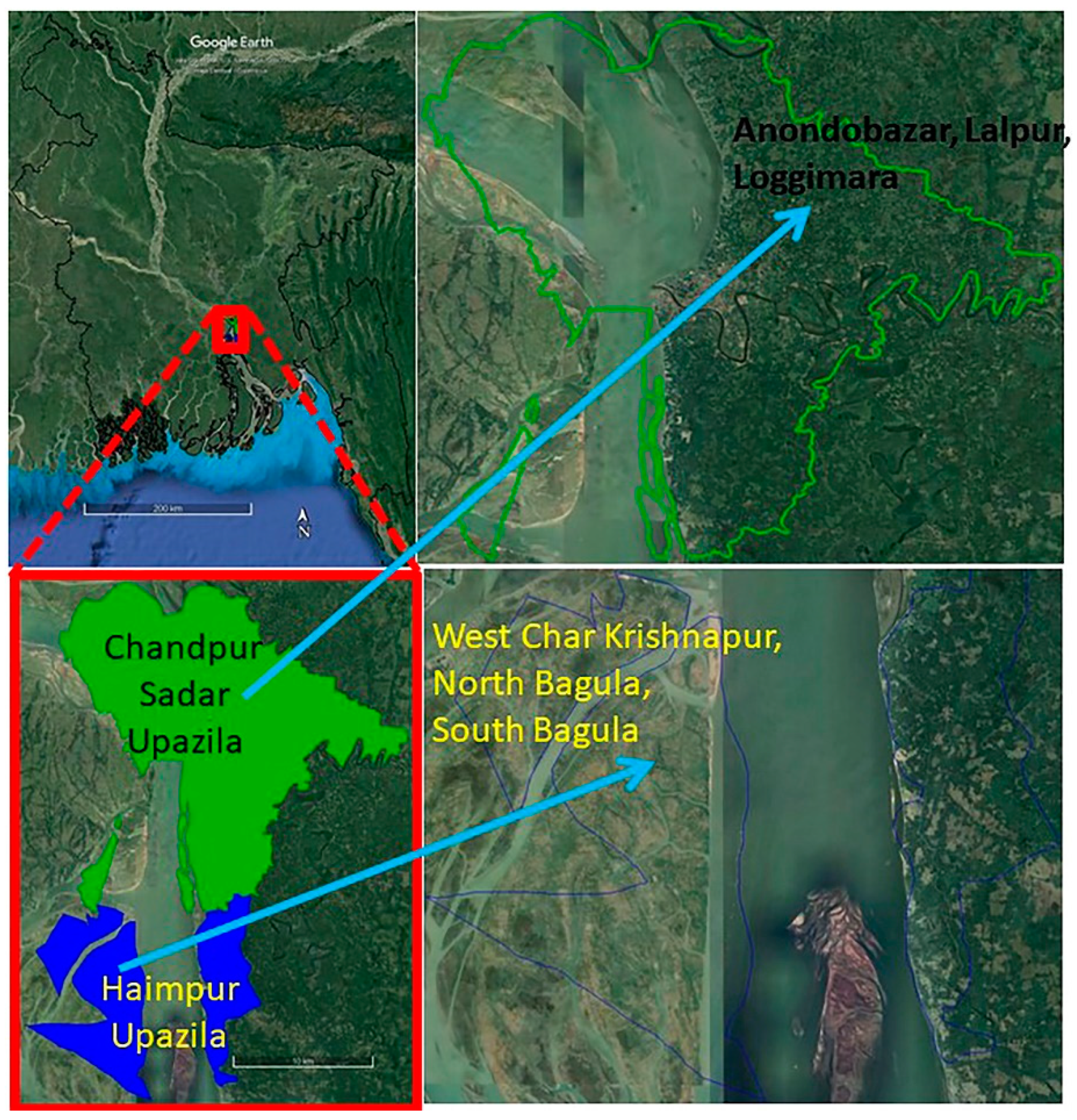
In order to obtain the empirical data base for this study, fieldwork was conducted (July–December 2018) in six fishing villages of the Chandpur district in Bangladesh: Anondobazar, Lalpur, and Loggimara (Chandpur Sadar Upazila); and West Char Krishnapur, North Bagula, and South Bagula (Haimchar Upazila) (Figure 1 and Table 1).
Figure 1.
Map showing the location for the study areas in the Chandpur district of Bangladesh [28,29].
Table 1.
Site features and spatial scenarios of the study areas [30].
Qualitative tools—including individual interviews with fishing communities, focus group discussions (FGD) involving stakeholders from different groups (fishers and other resource users, intermediaries), and key informants for cross-check interviews with varying government experts—were utilized. A total of 120 fishers were interviewed using a semi-structured questionnaire (Table 2). All of the respondents were directly or indirectly linked to estuarine resource systems such as fishery resources. The questionnaire covered four sections, focusing upon: (1) the socio-demographic and economic trends of the local fishers; (2) the natural resources or ecosystem services of the Meghna river estuary, along with their use pattern that people extract every day for a living; (3) the present status of the resources and their changing trends. In order to cross-check and validate the information gathered, ten focus group discussions (FGD) with 6–10 people within 30–90 min and 36 key informative interviews (KII) with knowledgeable people were held with various local stakeholders. The knowledgeable persons were the Upazila fisheries officer, scientists, and staff members of the water development board, environmental agency, governing authority, and local NGOs such as World Fish, the Center for Natural Resource Studies (CNRS), schoolteachers, local government representatives, and members of the fishery associations.
Table 2.
Primary data collection strategy, surveyed sites, tools used, and the number of Individual Interviews (II), Focus Group Discussion (FGD), and Key Informant Interviews (KI) conducted in the study areas.
In order to collect commercially important fishery species—e.g., fish and shrimp/prawn—eight fish landing centers, several retail markets, and two Chandpur Sadar and Haimchar Upazilla were surveyed (Table 3). According to the expert knowledge, the fishery species were identified based on morphometric characteristics and secondary scientific document consultation e.g., the fish database [31].
Table 3.
Surveyed fish landing centers in the Chandpur district, with their corresponding Global Positioning Systems(GPS) location.
2.2. Collecting Secondary Data
The secondary data of the fish production were collected from the Department of Fisheries (DoF), Chandpur. The meteorological data were collected from the Bangladesh Government Meteorology Department. Various datasets were collected from open-access internet and university libraries in order to validate the topics highlighted in the interview (Tables 3 and 5).
2.3. Data Analysis
Content analysis methods were applied for the analysis of the qualitative data, while the ecosystem services were classified according to the CICES framework. The identified drivers of nature’s services’ changes are highlighted in relation to the drivers, pressures, state, impacts, and response (DPSIR) framework, and their discussions [32]. For the quantitative data analysis, Microsoft Excel (MS Excel) and SPSS (Statistical Package for Analysis Social Science) programs were used.
3. Result and Discussion
3.1. Socio-Demographic Features of the Study Areas
Local communities, especially fishermen’s communities, have extracted a wide range of ecosystem services from the Meghna estuary for decades, as most of them lack alternative income sources. As a result, they had to rely on estuary resources in order to sustain their livelihood by extracting them daily. The primary occupation of the respondents was fishing, and most of them (43.08% in Chandpur Sadar and 50.91% in Heimchar Upazila) were at the age of 41 to 60 years (Table 4). The respondents’ literacy rate was meager; very few of them could sign, or had primary education. Due to the lack of education and knowledge, they did not even know their fishing rights, making the intermediaries rich and the fishers poor. Mainly men are involved in the fishing, and most did not have their own fishing boats and gear (Table 4), so they work on the boats of money lenders or intermediaries (known locally as Arotdar or Dadondar) with advanced money. Most of the fishermen live in their own houses made of tin shed walls and mud floor with asbestos roofs (Table 4). Some changes were also found among fishers moving their livelihoods through alternative income activities such as daily labor, pick-up and rickshaw hauling, tailoring, agriculture, pet breeding, and aquaculture (mostly cage farming). Most of the fishermen possess no land and mainly depend on estuarine resources, which is particularly challenging during the fishing ban season. Their share is high (60–80%) in Chandpur Sadar Upazila and very high (>80%) in Haimchar Upazila (Table 4). The results shows that 67.69% of fishers in Chandpur Sadar earned USD 58.95–117.89/month, 24.62% made USD 117.90–176.83/month, and only a few (7.69%) earned USD 0–58.94/month. At Haimchar Upazila, these percentages were 25.45%, 61.82%, and 12.73% (Table 4).
Table 4.
Socio-demographic facts of the respondent fishers in the study areas.
They are also trying to improve their life by practicing some alternative income activities, such as day laboring, van and rickshaw pulling, tailoring, agriculture, domestic animal rearing, and aquaculture (the cage culture of tilapia). The Government is helping them (Table 5) by offering rickshaws, vans, sewing machines, rations in the ban periods of fishing, domestic animals (goats, cows), and a fund for aquaculture (for constructing ponds, cages, and pans) in order to minimize the pressure of utilizing the fisheries’ resources.
Table 5.
Development and developmental activities of the fisheries sector in the Chandpur district implemented by the Department of Fisheries in order to minimize the resource utilization pressure in the last ten years [21].
3.2. Ecosystem Services in the Meghna River Estuarine Systems
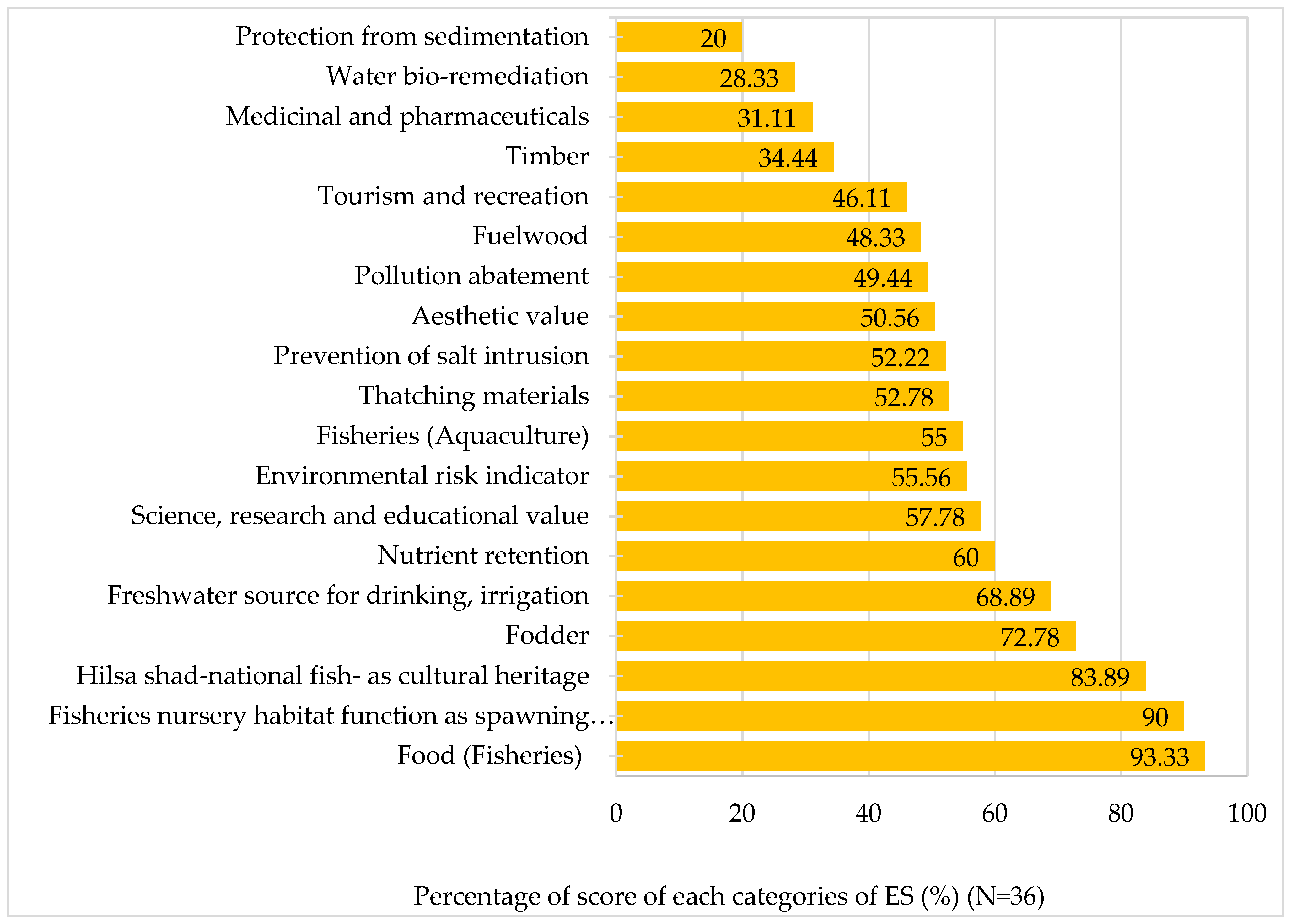
The Meghna River estuary forms the largest estuarine ecosystem in Bangladesh, and is considered to be a vast aquatic ecosystem which supports numerous plant species, fish, migratory birds, and other organisms [20]. Although there are several variations in the diversity and abundance of the ecosystem services in different parts of the Chandpur area, the locals benefit from the following ecosystem services. Due to the freshwater environment and the lack of the impact of salinity on the soil, various natural resources—including mainly banana, coconut, and betel nuts—are grown from natural sources, including vegetables and fruits. Figure 2 illustrates the ecosystem services derived from the Meghna River Estuary, which were recorded through varied expert group information sources, including individual interviews, focus group discussions, and key informant interviews.
Figure 2.
Expert-based ES ranking in the Meghna river estuarine system, Bangladesh.
This study recorded eight provisioning ecosystem services (Table 6), seven regulatory and maintenance (Table 7), and five cultural services (Table 8) in the Meghna river estuary, according to the CICES framework.
3.2.1. Provisioning Services
The critical provisioning services available from the Meghna River Estuary were food (fishing), freshwater for drinking, irrigation, aquaculture, feed, thatched roofs, firewood, and medicines (Table 4). Captured fish are significant sources of food, animal protein, and livelihoods for the fishermen’s communities in the study area. At the same time, fishing is the main focus of the local fishing community. A total of 84 commercially-important fish species (belonging to 10 orders and 28 families) and 19 crustaceans—shellfish-shrimp/prawn taxa (one order, three families)—recorded from the eight surveyed landing centers and retail markets in Chandpur Sadar and Haimchar Upazilla (Table 2) were collected.
Many fodder plants (both terrestrial and aquatic) grow naturally in large numbers in a moist estuary environment, and are easy to extract. They grow abundantly everywhere, and are essential for raising cattle. Therefore, local people rearing cattle do not need to purchase fodder (Table 6).
People living in the studied villages of Haimchar Upazila (Figure 1) use medicinal plants (Amaranthus spinosus, Azadirachta indica, Colocasia esculenta, Centella Asiatica, Terminalia arjuna) as first aid for external injuries, and to cure for diarrhea and dysentery (Table 6).
The Meghna River estuary serves as a nursery ground for Hilsha fishing. It is a primary freshwater source for the local fishing community for various purposes, such as drinking, cooking, laundry, other household activities, as well as irrigation (Table 5).
The wood that grows naturally on all of the islands, riverbanks, canals, waterways, or other moist environments is mainly used as fuel. Many respondents collect floating wood from river runoff and use it as fuelwood. The dried leaves and branches of bananas (Musa spp.), Supari (Areca catechu), and coconut (Cocos nucifera)—which are used as flammable fuels—grow exceedingly abundantly on the island (Table 6).
During the FGDs, the fishers said that 15 or 20 years ago, poor fishers and other local communities made their homes using different types of thatching materials, including Khor (rice straw), chon (wheat straw), ulobon (Saccharin spontaneum), Hogla (Typha elephantiana), Dhol kolmi (Ipomoea carnea), and jute sticks. These thatching materials still exist in nature, but people no longer use them to build their homes. People are building houses using cemented pillars and tin for roofs and walls in order to withstand heavy rains, storms, floods, hurricanes, and heavy land erosion. Although human houses are made of tin and concrete, some thatched materials are still used to construct domestic animals’ homes and hanging toilets.
Table 6.
Provisioning ecosystem services and their use pattern and commercial importance in the Meghna river estuary, Bangladesh.
Table 6.
Provisioning ecosystem services and their use pattern and commercial importance in the Meghna river estuary, Bangladesh.
| ES Categories | Qualitative Description of the Ecosystem Services |
|---|---|
| Food (Capture fisheries) [32] |
|
| Food (Aquaculture) [33,34] |
|
| Source of Freshwater [35] |
|
| Fuel wood [36] |
|
| Timber [37] |
|
| Thatching materials [38] |
|
| Medicine [39,40,41] |
|
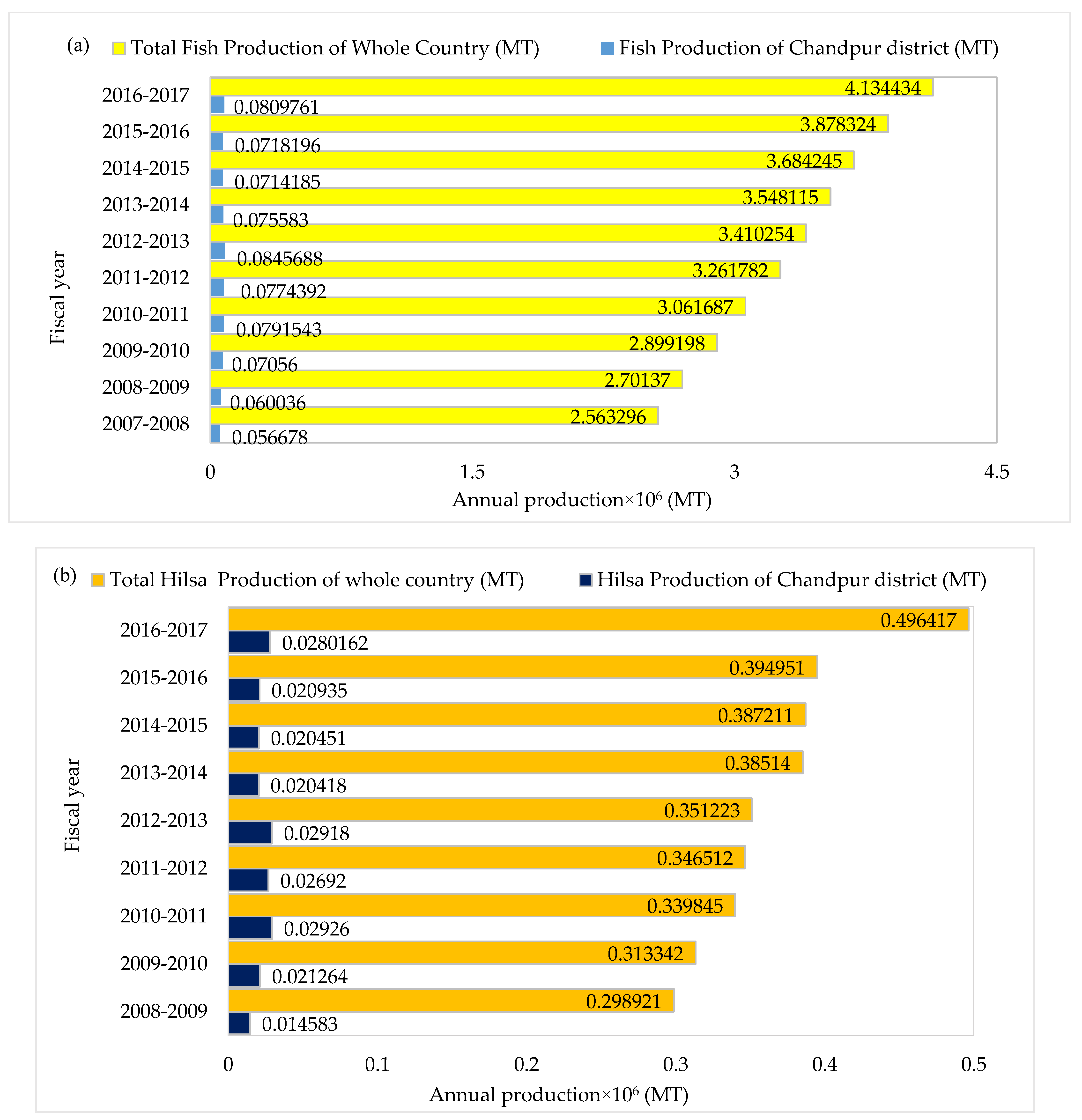
The national fish, Hilsha (Tenualosa ilisha), has been declared the Geographical Indicator (GI) for Bangladesh, while livelihoods of about 0.5 million traditional Hilsha fishers (38% of the total catch fisheries employment) are directly dependent on the Hilsha catch [42]. More than 0.45 million fishermen rely directly on the Hilsha fishery through shipping, marketing, and exports [43]. An increasing trend in production over the past decade in Chandpur is found from 2007 to 2012. With a decreasing trend from 2013 to 2016, in the fiscal year 2016–2017, the Hilsha production increased. The annual fish production of Chandpur was 80,976.1 MT, and the country’s total fish production was 4,384,221 MT in 2018–2019 (Figure 3) [44]; as a single species, about 12.15% of the country’s total fish production comes from Hilsha, with a growth rate of 3.02% [44]. In the Chandpur district (known as the Hilsha city of Bangladesh), the annual Hilsha production was 14,583 MT, and in 2018–2019, it was 30,684 MT [45]. Many fishers in the Chandpur district are involved in harvesting the Hilsha shad and other related ancillary activities, including icing, drying, salting, and marketing. Catching brood Hilsa and Jatka (young Hilsa less than 25 cm in size) has led to a downward trend in Bangladesh since 1991 [45].
Figure 3.
Like the whole country’s fishery production (MT), Chandpur district also showed an increasing trend during the past decade. (a) Production of all of the fishery items, and (b) the production of Hilsha shad (Tenualosa ilisha) over the last ten fiscal years, from 2008–2009 to 2016–2017 [44].
3.2.2. Regulatory and Maintenance Services
Of the Meghna River Estuary’s seven regulatory and maintenance services, fishery nursery and habitat functions were noted as the most prominent ES in the study area (Table 7).
The Meghna river estuary is quite well-known for its hilsha production, and serves as a nursery ground for hilsha. Hilsha swim up to 500 km for migration in Bangladeshi rivers (referred to as anadromous), showing a diadromous pattern as they frequently migrates between freshwater and the sea. The young hilsha (<25 cm sized) are reared in the river channels and estuaries before descending to the sea in order to further feed and grow. Many mysida (Neomysis integer) and some freshwater palaemonids (Macrobrachium spp.) require full larval development in either saltwater, brackish water, or near-coastal habitats [46]. Some palaemonids release larvae in freshwater, which drift to the estuary’s saline water habitat for nursing [46,47]. The recently-introduced sixth estuary was announced in the Meghna estuary of Barisal province by the Fisheries Department (DoF), the meeting place of the Lota (a place) from Hizla Upazilla Noya Vangani and the Mehendigonj Upazila district in the Barisal district of the Dhormogonj River [48].
Table 7.
Regulatory and maintenance services in the Meghna river estuarine systems, Bangladesh.
Table 7.
Regulatory and maintenance services in the Meghna river estuarine systems, Bangladesh.
| ES Category | Qualitative Description of the ES |
|---|---|
| Feeding, breeding, and spawning ground |
|
| Pollution abatement |
|
| Water bioremediation |
|
| Protection from sedimentation |
|
| Protection from salt intrusion |
|
| Maintenance of primary and secondary production |
|
| Nutrient retention |
|
The Bangladeshi government has declared five hilsha sanctuaries in the Ganges–Meghna delta. Three are in the Meghna River’s lower stretch, which supports riverine and estuarine species conservation [49]. The remaining circulation traps the river water to some extent at the Meghna River’s mouth, which is one reason for the relatively low salinity in the estuary, even in the dry season [50]. The Meghna River estuary is an essential habitat for many native and migratory birds, such as cormorants, gulls, egrets, heron, terns, waterfowl, plovers, sandpipers, and bitterns.
The Meghna River estuary is also used as a landscape for agriculture, and as space for fish processing (e.g., fish drying) and ancillary fishery activities. The environment of Chandpur is very different in many ways from other coastal districts due to its freshwater environment, with no soil and water salinity, heavy siltation, and intense land erosion, because of which the estuarine basin is considered a highly productive zone for agricultural production. According to a key informant of the Chandpur district, “each year during monsoon, a huge amount of silt and other organic matters are deposited in those lands make them very fertile”.
People can travel in every coastal district and port from these terminals, through internal riverine systems and the Bay of Bengal. Because of the Meghna estuary, the capital Dhaka City, the port cities of Chittagong to Mongla, and the 19 coastal districts are commercially interlinked. Moreover, historically speaking, many civilizations have developed at the Meghna river estuary bank based on its resources and navigational benefits. More than 20 launch and ferry terminals are in Chandpur. Of these, Chandpur water terminal, Poran Bazar ghat, Icholi ferry terminal, Dhali ghat, Matlab ferry terminal, Kanudi ghat, CHD-Chandpur terminal, Bangladesh Inland Water Transport Authority (BIWTA) terminal, Char Bhairabi launch ghat, Haimchar launch terminal, Horina ferry ghat, and Katakhali launch terminal are the busiest terminals.
3.2.3. Cultural Services
The Meghna River Estuarine Systems’ five essential cultural services are ecotourism and recreation, aesthetics, educational value, and cultural heritage (Table 8). During interviews, a respondent stated the cultural services as such. Every year during the tourist season (January, February, and March), thousands of students from different schools, colleges, and universities of the nearest districts come to Chandpur for study tours and other academic tours. Local people said, “Because of Meghna River scenic beauties, it is also popular for shooting dramas, cinemas, short-films, and documentary films.”
Chandpur is known as ‘The City of Ilish’, whereas people who visit Chandpur for tours, business trips, and other reasons cannot think of leaving without having a meal with Hilsha for its fantastic taste, odor, and nutritional value. Thus, the Hilsha has become part of the Chandpur region’s cultural heritage. The three-day Hilsha Festival is held each year, with various cultural programs exhibiting different aspects of Hilsha. There are three institutes, including the Fishery Diploma Institute, Fishery Training Institute, and Bangladesh Fisheries Research Institute (BFRI) riverine station, which are highly dependent on the Meghna river estuary to carry out their research.
Table 8.
Cultural ecosystem services in the Meghna river estuarine systems in Bangladesh.
Table 8.
Cultural ecosystem services in the Meghna river estuarine systems in Bangladesh.
| ES Category | Qualitative Description of the ES |
|---|---|
| Ecotourism |
|
| Recreational Place |
|
| Aesthetic value |
|
| Hilsha shad as a part of cultural heritage |
|
| Education, research, and knowledge |
|
3.3. Drivers of Ecosystem Service Change from Community Perceptions
3.3.1. High Dependency on Natural Resources Due to the Lack of Alternative Income Opportunities
Fishing communities are usually marginalized groups with poor economic status. According to the respondents, their household size is getting bigger and bigger, but the resources and their income are still the same or less, driving them to live under the poverty line.
3.3.2. Unsustainable Practices
Overexploitation
The unsustainable practice is exceptionally threatening for both the resource and resource users. In the case of Hilsha fishery, there are two fishing ban periods; one is for eight months from November to June every year on catching, carrying, and selling jatka. The other ban is against the catching of brood Hilsha for 22 days during the peak breeding season in October, before and after the full moon [36]. The respondents claimed that they did not collect fish for more than four months (March, April, May, and October), and had no alternative income sources during the prohibition period. This phenomenon causes the Meghna river estuary to be intensely overfished during the prohibition periods, which is a significant threat to biodiversity.
Illegal Fishing during the Breeding and Spawning Season
The Meghna river estuary is essential as breeding, spawning, and nursery grounds for various fish (Table 2) and crustacean (Table 3) species. There are ban periods only for Hilsha fish in Bangladesh, and no regulation for other fishes. This gap in the law facilitates poor fishers to harvest fish regularly, even during the breeding season. Therefore, illegal fishing is a serious threat to fish biodiversity, and many species have already undergone threatened conditions, and according to [23], this number is 21. Due to the provision of incentives during the government’s ban periods, the local fishing community started to change their attitudes towards ban periods and develop positive responses to conservation laws. However, some fishers do not follow the rules and go fishing at night, as was evident during the interviews with fishers and key informants.
Destructive Fishing
The introduction of modern fishing vessels with different fish detecting devices such as SONAR, RADAR, refrigerators for preservation, modern fishing gear, transportation, and marketing facilities made fishing more comfortable. Even the traditional boats in Chandpur are now installed with motor engines. Though no practices of poison and explosive fishing were found there, modern destructive fishing gear, especially gill nets, and ber jal were found to be heavily used, and do not allow the escape of fish ranging from fry to brood [51]. The gear used in the Meghna River estuary were categorized into three groups, such as nets (gill nets, seine nets, push catches, lift nets, fixed purse net, cast net), traps, and wounding gear [52]. During the key informant interview with the local fishery officer, it was said that almost all fishers use the illegal monofilament gill nets (current jal), which have been blamed for biodiversity loss in the Meghna river.
3.3.3. Lack of Administrative Workforce and Other Facilities to Enforce the Laws
Non-Compliance and Poor Law Enforcement
The lack of an administrative workforce, funds, and other facilities are significant barriers to effective hilsha fishery management. Fishers were particularly concerned about overfishing and illegal fishing in sanctuaries during the fish ban period. Some of the fishers are forced by intermediaries to continue illegal fishing in order to repay loan installments. The participating fishers complained of police harassment during the fishing ban. Some fishers claimed that the mighty aratdar fished illegally during prohibition times, bypassing law enforcement agencies. A magistrate can sentence a guilty individual on the spot under the Mobile Court Ordinance (2007). According to the key informants, the maximum illegal fishing activities occur at night. As such, the patrolling operations against those illegal fishing activities must be operated at night. However, the mobile court members, especially the police force and magistrates, are lacking in number. Furthermore, they are not available at night or show less interest in carrying out nighttime operations. As a result, many offenses go unpunished after they have successfully carried out illegal fishing.
3.3.4. Pollution
Pollution in the Meghna river estuary was noted due to many natural and anthropogenic causes. The participants noted direct waste dumping from many cement industries along the Meghna riverbank; domestic waste and sewage dumping by residents, public and cargo ships; and the immediate emission of runoff including herbicides, pesticides, inorganic fertilizers, untreated industrial waste, and river runoff. Aquatic pollution in combination with increasing global temperatures can increase disease prevalence in fish populations [53]. Government policies prohibits untreated industrial waste dumping into water bodies by law, but most industries lack effluent treatment plants or fail to run them due to high costs [54].
3.3.5. Heavy Siltation
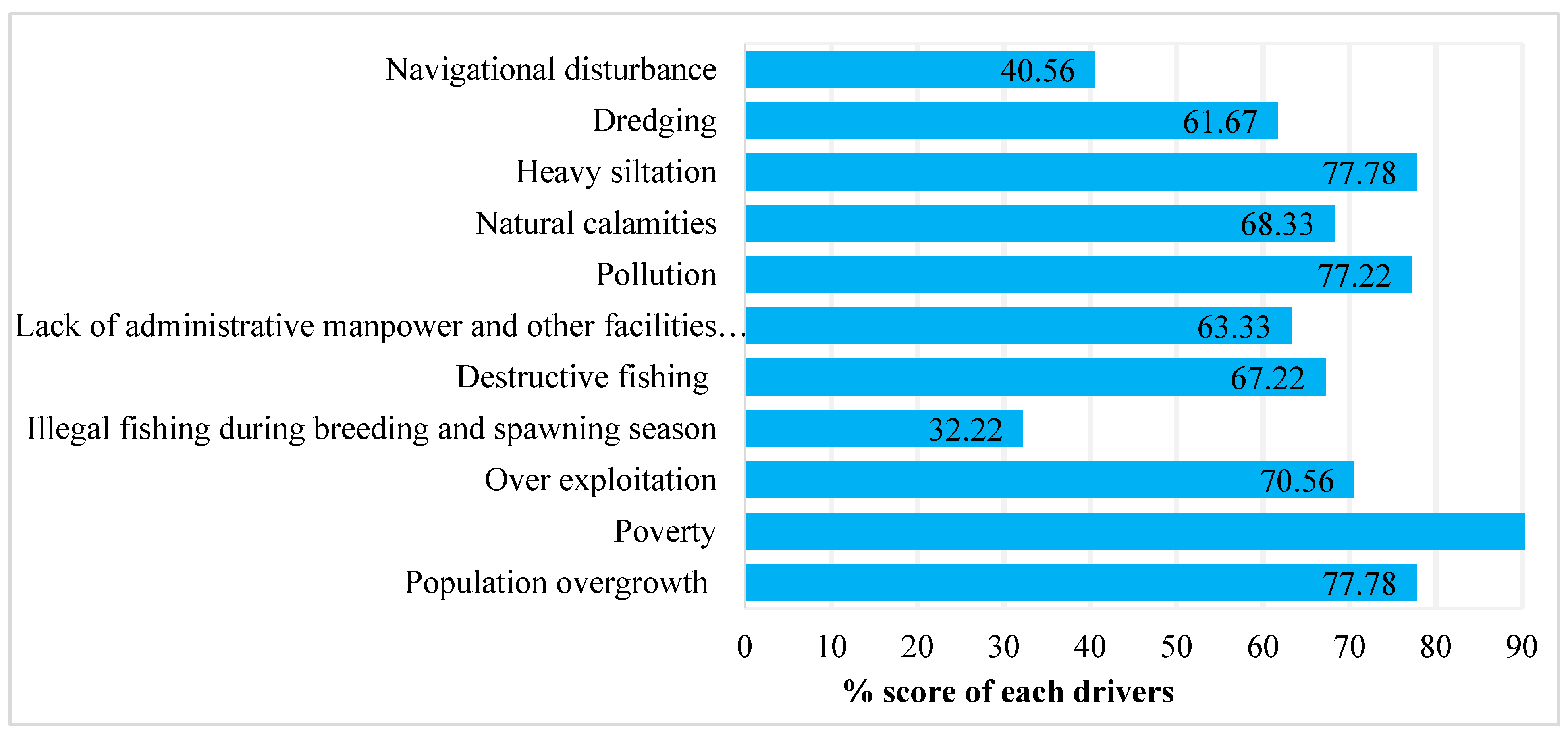
The Meghna estuary is heavily loaded with different suspended sediment particles all year round from this river system. This results in high turbid water that hampers filter-feeder organisms like fish, crustaceans, oysters, and bivalves. Siltation leads to sandbar formation and the rise of new islands, creating a barrier migration route, reducing the freshwater flow and navigability at many estuary regions (Figure 4).
Figure 4.
Drivers of ES changes and their expert-based (n = 36) ranking in the Meghna river estuary, Bangladesh.
3.3.6. Dredging
Unscrupulous silt and sand excavation in the Meghna river estuary has increased (Figure 6). Several commercial dredging companies (licensed and unlicensed) excavate silt and sand as a construction material from the Meghna river estuary. This dredging is negatively affecting the migration routes of fish, and the ecosystem. One of the key informants stated that “Dredging destroyed many important fish habitats, changed bottom topography and may lead more destruction in future.”
3.3.7. Navigational Disturbance
Although the Meghna estuary is vital for navigation, navigation is very high and restless, adversely affecting fish breeding and spawning, destroying essential fish habitats, and creating obstacles to the fish migratory routes. Furthermore, oil spills, bilge, and ballast water from those public and cargo vessels are a pronounced source of water pollution.
3.3.8. Natural Calamities
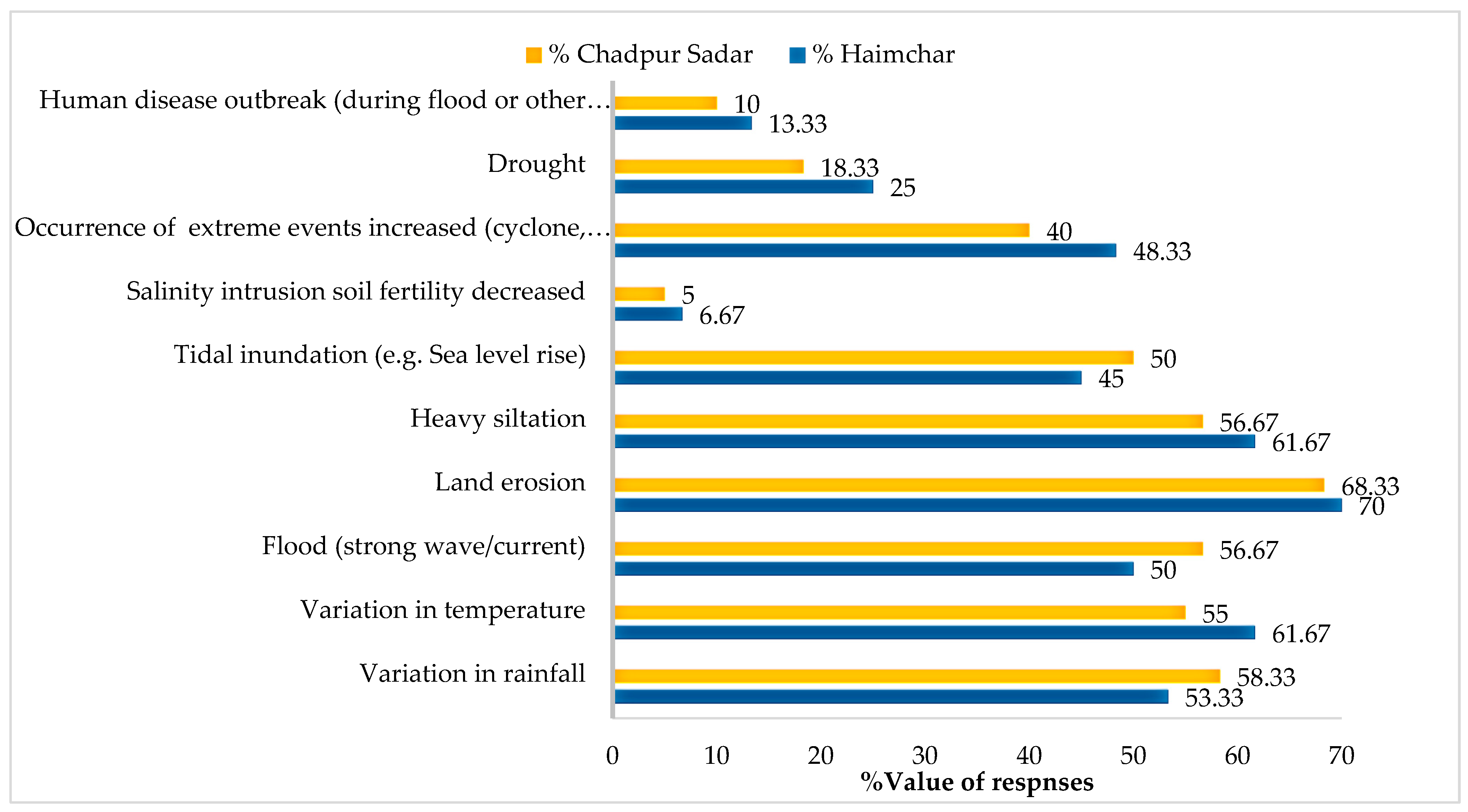
The estuarine environment of Chandpur has changed a lot, and has become more challenging than before in many ways. The respondents and key informants were asked the possible reason behind these natural disasters. More than half of the fishers reported that floods, land erosion, dense siltation, strong waves, and currents were the main drivers of natural disasters. Hence, severe monsoon rain, temperature changes, sea levels rising, strong waves, and the current cause severe soil erosion, and therefore make people homeless (Figure 5). A previous study showed that the conspicuous seasonal sea level variation is highest during the southwest monsoon within about 2.7 m at Chandpur, and lowest in the winter [55].
Figure 5.
Fisher’s perceptions of environmental changes in the Meghna river estuary of the Chandpur region in Bangladesh’s central coast (Source: field observation and respondents’ (n = 120) response).
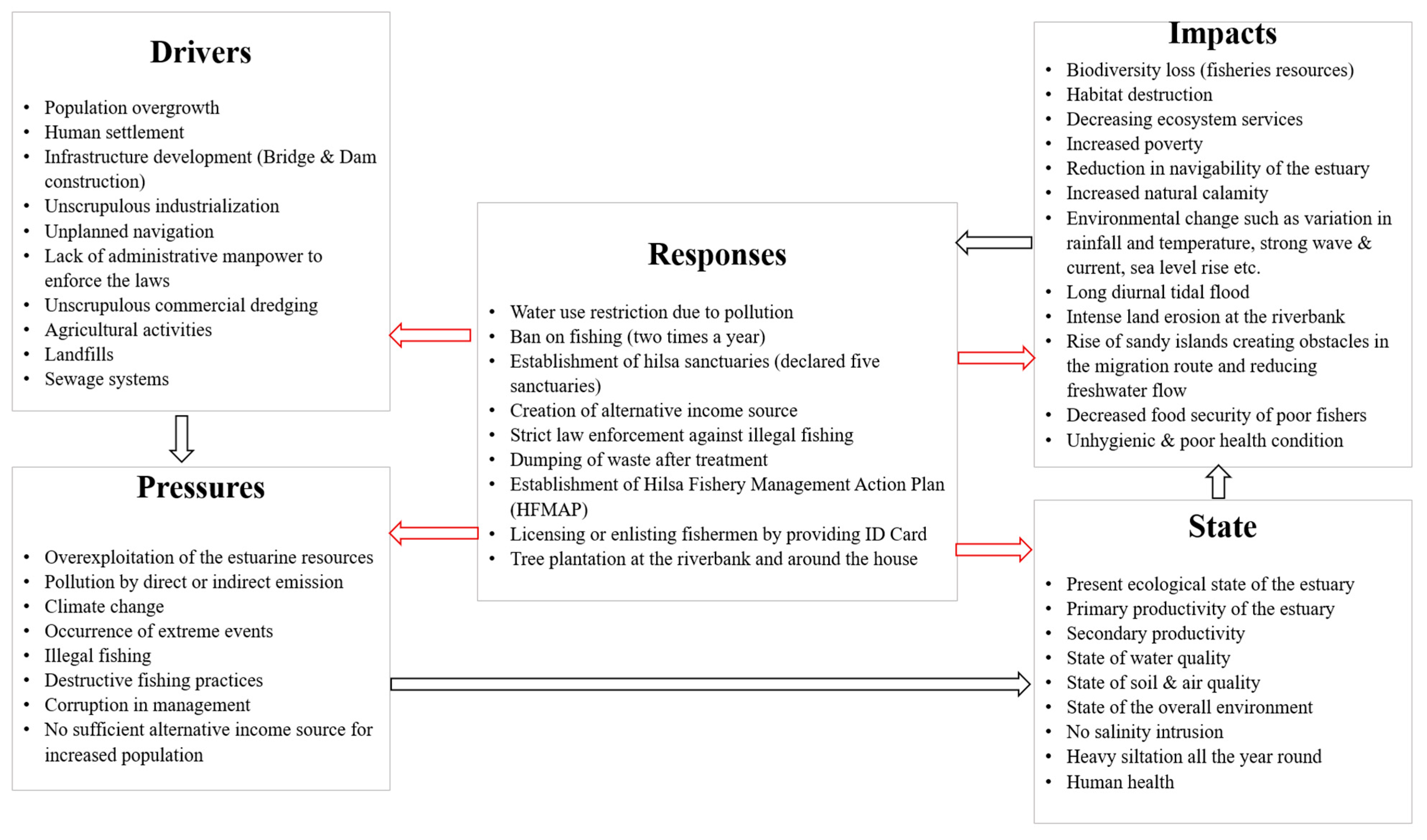
This study also identified the drivers, pressure, state, impact, and responses (DPSIR), and the factors responsible for ES changes (Figure 6) in the Meghna river estuarine ecosystems.
Figure 6.
Driver-Pressure-State-Impact and Response (DPSIR) framework of the Meghna river estuary ES.
The DPSIR framework is related to natural resource management. It is important for generating information that promotes the development of appropriate policies and regulations for the effective management and utilization of different aspects of ecosystems [56]. The DPSIR framework also provides a connection between the causes of environmental problems and the resulting pressures, related effects, and respective responses needed to resolve and manage specific environmental issues and challenges [57]. The Organization of Economic Cooperation and Development (OECD) and the European Environment Agency (EEA) developed the DPSIR framework as a tool for social-ecological system analysis [58]. In this study, according to the DPSIR terminology, social and economic developments in the estuary (driving forces, D) exert pressure (P) on the estuarine environment (the specific human activities which result from driving forces that impact the environment). Consequently, the state (S) or condition of the estuarine environment changes. This leads to impacts (I) on ecosystems, human health, and society (the ways in which changes in state influence human well-being), which may elicit a societal response (R) that feeds back on driving forces and states, or impacts via various mitigative, adaptative, or remedial actions (Figure 6). Several studies have been carried out through the DPSIR framework in order to study the ES of estuaries worldwide [59,60]. The analysis of those studies allowed the development of scenarios for the area contributing to implementing mitigation strategies meant to reduce estuarine deterioration and enhance estuarine ecosystem services.
4. Conclusions and Recommendations
The Meghna River’s mouth plays a vital role in providing livelihoods to coastal communities and sustaining socioeconomic development. The services provided by the ecosystem consist of multiple species of plants, fish, native and migratory birds, and other organisms. The available services perceived by the people living in the Chandpur district of the Meghna river estuary were coded and then categorized through the CICES framework. The investigation results found provisioning services, supporting services, regulating and maintenance services, and cultural services (aesthetic, Hilsha as a part of the heritage, recreational, scientific, and educational), and support for the coastal communities’ lives for several decades earlier. However, these ES have been found to have undergone notable changes due to the locals’ indiscriminate use of resources.
The local fishing communities’ perceptions and key respondents call for an ES assessment at the Meghna River estuary in order to see how changes are supported by a variety of natural and anthropogenic factors and stressors. Population growth, poverty, overfishing in legal fisheries, illegal fishing during bans, destructive fishing, pollution, natural disasters, excessive burial, dredging, and navigational obstacles are about to undergo substantial ES changes. However, the government’s response was concerned that it would face considerable challenges in addressing multiple threats and stressors due to a lack of administrative support, violations of the law, and weak enforcement measures. This study showed that motivating people to find alternative income, financial support to stakeholders, and strict regulations responding to illegal fishing, destructive gear, and other destructive activities need to be considered in order to cause positive impacts on the ES in the already-degraded Meghna river estuary. Raising community awareness about the importance of keeping water basins in a healthy condition and effective compliance with rules and regulations may ensure the future estuarine ecosystems’ sustainability.
There is an urgent need to address the Meghna River estuary’s challenges through research and policy attention, including the transformation of the existing management regimes to an ecosystem-based approach, particularly fishery co-management. Furthermore, other types of nature-based solutions according to the IUCN framework should also be taken into consideration in order to mitigate the existing threats and keep or restore the healthy condition of these estuarine ecosystems, such as ecosystem restoration and ecological engineering.
Author Contributions
M.Y.M.: Writing, Data analyzing. M.M.H.: Conceptualization and Reviewing. P.S.: Visualization, Editing and Funding Acquisition. M.M.H.M.: Data curation, Reviewing and Editing. S.J.M.: Original draft preparation and Writing. M.M.S.: Methodology, Visualization and Reviewing. All authors have read and agreed to the published version of the manuscript.
Funding
This research received no external funding.
Institutional Review Board Statement
Not applicable.
Informed Consent Statement
Not applicable.
Acknowledgments
Thanks to the staff of CNRS, World fish, BFRI, and all of the stakeholders.
Conflicts of Interest
The authors declare no conflict of interest.
References
- Mitra, A. Ecosystem Services of Mangroves: An Overview. In Mangrove Forests in India; Springer International Publishing: Cham, Switzerland, 2020; pp. 1–32. [Google Scholar]
- Fisher, B.; Turner, R.K.; Morling, P. Defining and classifying ecosystem services for decision making. Ecol. Econ. 2009, 68, 643–653. [Google Scholar] [CrossRef]
- Ecosystems and Human Well-Being: Synthesis; World Resources Institute: Washington, DC, USA, 2005.
- Brauman, K.A.; Van Der Meulen, S.; Brils, J. Ecosystem services and river basin management. In Risk-Informed Management of European River Basins; Springer: Berlin/Heidelberg, Germany, 2014; pp. 265–294. [Google Scholar]
- Barbier, E.B.; Hacker, S.D.; Kennedy, C.; Koch, E.W.; Stier, A.C.; Silliman, B.R. The value of estuarine and coastal ecosystem services. Ecol. Monogr. 2011, 81, 169–193. [Google Scholar] [CrossRef]
- Bangash, R.F.; Passuello, A.; Sanchez-Canales, M.; Terrado, M.; López, A.; Elorza, F.J.; Schuhmacher, M. Ecosystem services in Mediterranean river basin: Climate change impact on water provisioning and erosion control. Sci. Total Environ. 2013, 458, 246–255. [Google Scholar] [CrossRef] [PubMed]
- Comino, E.; Bottero, M.; Pomarico, S.; Rosso, M. Exploring the environmental value of ecosystem services for a river basin through a spatial multicriteria analysis. Land Use Policy 2014, 36, 381–395. [Google Scholar] [CrossRef]
- Huang, X.; Chen, Y.; Ma, J.; Chen, Y. Study on change in value of ecosystem service function of Tarim River. Acta Ecol. Sin. 2010, 30, 67–75. [Google Scholar] [CrossRef]
- Mueller, M.; Pander, J.; Geist, J. The ecological value of stream restoration measures: An evaluation on ecosystem and target species scales. Ecol. Eng. 2014, 62, 129–139. [Google Scholar] [CrossRef]
- Pinto, R.; De Jonge, V.N.; Neto, J.M.; Domingos, T.; Marques, J.C.; Patrício, J. Towards a DPSIR driven integration of ecological value, water uses and ecosystem services for estuarine systems. Ocean Coast. Manag. 2013, 72, 64–79. [Google Scholar] [CrossRef]
- Shao, X.; Fang, Y.; Jawitz, J.W.; Yan, J.; Cui, B. River network connectivity and fish diversity. Sci. Total Environ. 2019, 689, 21–30. [Google Scholar] [CrossRef]
- Tuvendal, M.; Elmqvist, T. Ecosystem services linking social and ecological systems: River brownification and the response of downstream stakeholders. Ecol. Soc. 2011, 16, 21. [Google Scholar] [CrossRef]
- Gilvear, D.J.; Spray, C.J.; Casas-Mulet, R. River rehabilitation for the delivery of multiple ecosystem services at the river network scale. J. Environ. Manag. 2013, 126, 30–43. [Google Scholar] [CrossRef]
- Thorp, J.H.; Flotemersch, J.E.; Delong, M.D.; Casper, A.F.; Thoms, M.C.; Ballantyne, F.; Haase, C.S. Linking ecosystem services, rehabilitation, and river hydrogeomorphology. BioScience 2010, 60, 67–74. [Google Scholar] [CrossRef]
- Zander, K.K.; Straton, A. An economic assessment of the value of tropical river ecosystem services: Heterogeneous preferences among Aboriginal and non-Aboriginal Australians. Ecol. Econ. 2010, 69, 2417–2426. [Google Scholar] [CrossRef]
- Islam, M.M.; Pal, S.; Hossain, M.M.; Mozumder, M.M.H.; Schneider, P. Coastal Ecosystem Services, Social Equity, and Blue Growth: A Case Study from South-Eastern Bangladesh. J. Mar. Sci. Eng. 2020, 8, 815. [Google Scholar] [CrossRef]
- Islam, M.M. Catch Composition of Set Bag Net Fishery with Emphasis on the Population Dynamics of Two Commercial Important Fish Species from Chittagong Coastal Waters in the Bay of Bengal. Master’s Thesis, Institute of Marine Sciences, University of Chittagong, Chattogram, Bangladesh, 2005. [Google Scholar]
- Islam, M.S. Study of Catch Composition of Behundi Net (Set Bag Net) in Relation to Some Ecological Parameters in the Naaf River Estuary; Marine Fisheries Survey, Management and Development Project: Cox’s Bazar, Bangladesh, 1987. [Google Scholar]
- Ahammad, F. Catch Composition of Estuarine Set Bag Net (ISBN) in the Moheshkhali Channel of the Bay of Bengal, Bangladesh. Master’s Thesis, Institute of Marine Sciences, University of Chittagong, Chattogram, Bangladesh, 2004. [Google Scholar]
- Hossain, M.A.R.; Wahab, M.A.; Belton, B. The Checklist of the Riverine Fishes of Bangladesh; The World Fish Center, Bangladesh and South. Asia Office: Dhaka, Bangladesh, 2012. [Google Scholar]
- DoF National Fish Week. Compendium Bangladesh: Department of Fisheries (DoF); Ministry of Fisheries and Livestock, Government of Bangladesh: Dhaka, Bangladesh, 2012.
- Rahman, A.K.A. Freshwater Fishes of Bangladesh, 2nd ed.; Zoological Society of Bangladesh, Department of Zoology, University of Dhaka: Dhaka, Bangladesh, 2005; p. 263. [Google Scholar]
- Pramanik, M.M.H.; Hasan, M.M.; Bisshas, S.; Hossain, A.A.; Biswas, T.K. Fish biodiversity and their present conservation status in the Meghna River of Bangladesh. Int. J. Fish Aquat.Stud. 2017, 5, 446–455. [Google Scholar]
- Gaughan, D.J.; Neira, F.J.; Beckey, L.E.; Potter, I.C. Composition, seasonality and distribution of the ichthyoplankton in the lower Swan Estuary, south-western Australia. Mar. Freshw. Res. 1990, 41, 529–543. [Google Scholar] [CrossRef]
- Whitfield, A.K. Ichthyofaunal assemblages in estuaries: A South African case study. Rev. Fish Biol. Fish. 1999, 9, 151–186. [Google Scholar] [CrossRef]
- Hossain, M.S.; Das, N.G.; Chowdhury, M. Fisheries Management of the Naaf River; Coastal and Ocean Research Group of Bangladesh: Chittagong, Bangladesh, 2007; p. 257. [Google Scholar]
- Smeets, E.; Weterings, R. Environmental Indicators: Typology and Overview; European Environment Agency: Copenhagen, Denmark, 1999; p. 19.
- Available online: https://www.google.com/maps/place/Haimchar+Upazila,+Bangladesh/@23.0740053,90.5504763,32066m/data=! (accessed on 2 April 2021).
- Available online: https://www.google.com/maps/place/Chandpur,+Bangladesh/@23.2260115,90.6432363,8007m/data= (accessed on 2 April 2021).
- Available online: http://en.banglapedia.org/index.php/Chandpur_District (accessed on 2 April 2021).
- Shafi, M.; Quddus, M.M.A. Fisheries Resources of Bay of Bengal (Bonggoposagarer Matshaya Sampad); Bangla Academy: Dhaka, Bangladesh, 1982. (In Bengali) [Google Scholar]
- Mozumder, M. Socio-Ecological Resilience of a Small-Scale Hilsa Shad (Tenualosa Ilisha) Fishery in the Gangetic River Systems of Bangladesh. Ph.D. Thesis, University of Helsinki, Helsinki, Finland, 2020. [Google Scholar]
- Pravakar, P.; Sarker, B.S.; Rahman, M.; Hossain, M.B. Present status of fish farming and livelihood of fish farmers in Shahrasti upazila of Chandpur district, Bangladesh. Am.-Eurasian J. Agric. Environ. Sci. 2013, 13, 391–397. [Google Scholar]
- Belton, B.; Karim, M.; Thilsted, S.; Collis, W.; Phillips, M. Review of Aquaculture and Fish Consumption in Bangladesh; The Worldfish Center: Peang, Malaysia, 2011. [Google Scholar]
- Hossain, M.L.; Islam, K.S. Assessment of Water Quality in Chandpur District of Bangladesh. J. Environ. Treat. Tech. 2013, 1, 91–100. [Google Scholar]
- Miah, M.D.; Al Rashid, H.; Shin, M.Y. Wood fuel use in the traditional cooking stoves in Bangladesh’s rural floodplain areas: A socio-environmental perspective. Biomass Bioenergy 2009, 33, 70–78. [Google Scholar] [CrossRef]
- Islam, S.A.; Miah, M.A.Q.; Habib, M.A. Diversity of fruit and timber tree species in the coastal homesteads of southern Bangladesh. Journal of the Asiatic Society of Bangladesh. Science 2013, 39, 83–94. [Google Scholar]
- Mehvar, S.; Filatova, T.; Sarker, M.H.; Dastgheib, A.; Ranasinghe, R. Climate change-driven losses in ecosystem services of coastal wetlands: A case study in the West coast of Bangladesh. Ocean Coast. Manag. 2019, 169, 273–283. [Google Scholar] [CrossRef]
- Dey, A.K.; Rashid, M.M.O.; Millat, M.S.; & Rashid, M.M. Ethnobotanical survey of medicinal plants used by traditional health practitioners and indigenous people in different districts of Chittagong division, Bangladesh. Int. J. Pharm. Sci. 2014, 3, 1–7. [Google Scholar]
- Chowdhury, M.S.H.; Koike, M.; Muhammed, N.; Halim, M.A.; Saha, N.; Kobayashi, H. Use of plants in healthcare: A traditional ethno-medicinal practice in rural areas of southeastern Bangladesh. Int. J. Biodivers. Sci. Manag. 2009, 5, 41–51. [Google Scholar] [CrossRef]
- Mollik, A.H.; Hassan, A.I.; Paul, T.K.; Sintaha, M.; Khaleque, H.N.; Noor, F.A.; Nahar, A.; Seraj, S.; Jahan, R.; Chowdhury, M.H.; et al. A survey of medicinal plant usage by folk medicinal practitioners in two villages by the Rupsha River in Bagerhat district, Bangladesh. Am. -Eurasian J. Sustain. Agric. 2010, 4, 349–357. [Google Scholar]
- DOF. National Fish Week Compendium; Ministry of Fisheries and Livestock, Government of Bangladesh: Dhaka, Bangladesh, 2017; p. 160. (In Bengali)
- Shamsuzzaman, M.M.; Mozumder, M.M.H.; Mitu, S.J.; Ahamad, A.F.; Bhyuian, M.S. The economic contribution of fish and fish trade in Bangladesh. Aquac. Fish. 2020, 5, 174–181. [Google Scholar] [CrossRef]
- DoF National Fish Week 2018 Compendium; Department of Fisheries, Ministry of Fisheries and Livestock: Dhaka, Bangladesh, 2018; p. 160.
- Mohammed, E.Y.; Wahab, M.A. Direct Economic Incentives for Sustainable Fisheries Management: The Case of Hilsa Conservation in Bangladesh; International Institute for Environment and Development: London, UK, 2013. [Google Scholar]
- Benstead, J.P.; March, J.G.; Pringle, C.M. Estuarine larval development and upstream post-larval migration of freshwater shrimps in two tropical rivers of Puerto Rico. Biotropica 2000, 32, 545–548. [Google Scholar] [CrossRef]
- Benstead, J.P.; March, J.G.; Pringle, C.M.; Scatena, F.N. Effects of a low-head dam and water abstraction on migratory tropical stream biota. Ecol. Appl. 1999, 9, 656–668. [Google Scholar] [CrossRef]
- Wahab, M.A. Goldar, M.I. 2016: Hilsa Fish Management Planning; Eco-fish Bangladesh Project, Financed by USAID; The World Fish Center, Bangladesh and South. Asia Office: Dhaka, Bangladesh, 2016. [Google Scholar]
- Islam, M.M.; Mohammed, E.Y.; Ali, L. Economic Incentives for Sustainable Hilsa Fish Management in Bangladesh: Institutional Framework, Gaps and Capacity-Strengthening Strategy and Action Plan; Bangladesh Centre for Advanced Studies: Dhaka, Bangladesh, 2016; pp. 80–86. [Google Scholar]
- Jakobsen, F.; Azam, M.H.; Mahboob-Ul-Kabir, M. Residual flow in the Meghna Estuary on the coastline of Bangladesh. Estuar. Coast. Shelf Sci. 2002, 55, 587–597. [Google Scholar] [CrossRef]
- Islam, M.M.; Chuenpagdee, R. Nomadic fishers in the hilsa sanctuary of Bangladesh: The importance of social and cultural values for well-being and sustainability. In Social Wellbeing and the Values of Small-Scale Fisheries; Springer: Cham, Swizerland, 2018; pp. 195–216. [Google Scholar]
- Mia, M.S.; Yeasmin, F.; Nesa, N.U.; Kafi, M.F.H.; Miah, M.I.; Haq, M.S. Assessment and monitoring fish biodiversity of Meghna river in Bangladesh. Int. J. Nat. Soc. Sci. 2015, 2, 13–20. [Google Scholar]
- Karvonen, A.; Rintamäki, P.; Jokela, J.; Valtonen, E.T. Increasing water temperature and disease risks in aquatic systems: Climate change increases the risk of some, but not all, diseases. Int. J. Parasitol. 2010, 40, 1483–1488. [Google Scholar] [CrossRef]
- Khan, M.S.; Ahmed, S.; Evans, A.E.; Chadwick, M. Methodology for performance analysis of textile effluent treatment plants in Bangladesh. Chem. Eng. Res. Bull. 2009, 13, 61–66. [Google Scholar] [CrossRef]
- Hossain, M.S.; Das, N.G.; Sarker, S.; Rahaman, M.Z. Fish diversity and habitat relationship with environmental variables at Meghna river estuary, Bangladesh. Egypt. J. Aquat. Res. 2012, 38, 213–226. [Google Scholar] [CrossRef]
- Dzoga, M.; Simatele, D.M.; Munga, C.; Yonge, S. Application of the DPSIR Framework to Coastal and Marine Fisheries Management in Kenya. Ocean Sci. J. 2020, 55, 193–201. [Google Scholar] [CrossRef]
- Carr, E.R.; Wingard, P.M.; Yorty, S.C.; Thompson, M.C.; Jensen, N.K.; Roberson, J. Applying DPSIR to sustainable development. Int. J. Sustain. Dev. World Ecol. 2007, 14, 543–555. [Google Scholar] [CrossRef]
- Lewison, R.L.; Rudd, M.A.; Al-Hayek, W.; Baldwin, C.; Beger, M.; Lieske, S.N.; Jones, C.; Satumanatpanh, S.; Junchompoo, C.; Hines, E. How the DPSIR framework can be used for structuring problems and facilitating empirical research in coastal systems. Environ. Sci. Policy 2016, 56, 110–119. [Google Scholar] [CrossRef]
- Malekmohammadi, B.; Jahanishakib, F. Vulnerability assessment of wetland landscape ecosystem services using driver-pressure-state-impact-response (DPSIR) model. Ecol. Indic. 2017, 82, 293–303. [Google Scholar] [CrossRef]
- Martin, D.M.; Piscopo, A.N.; Chintala, M.M.; Gleason, T.R.; Berry, W. Developing qualitative ecosystem service relationships with the Driver-Pressure-State-Impact-Response framework: A case study on Cape Cod, Massachusetts. Ecol. Indic. 2018, 84, 404–415. [Google Scholar] [CrossRef]
Publisher’s Note: MDPI stays neutral with regard to jurisdictional claims in published maps and institutional affiliations. |
© 2021 by the authors. Licensee MDPI, Basel, Switzerland. This article is an open access article distributed under the terms and conditions of the Creative Commons Attribution (CC BY) license (https://creativecommons.org/licenses/by/4.0/).