Skip to Content
SustainabilitySustainability
  • Review
  • Open Access

15 March 2021

Current Status and Potential of Tire Pyrolysis Oil Production as an Alternative Fuel in Developing Countries

,
,
,
,
,
,
and
1
School of Mechanical Engineering, Universiti Sains Malaysia, Engineering Campus, Nibong Tebal, Penang 14300, Malaysia
2
Department of Mechanical Engineering, Khwaja Fareed University of Engineering and Information Technology, Rahim Yar Khan 64200, Pakistan
3
School of Mechanical, Aerospace and Automotive Engineering, Faculty of Engineering, Environmental and Computing, Coventry University, Coventry CV1 5FB, UK
4
Institute for Future Transport and Cities, Coventry University, Priory Street, Coventry CV1 5FB, UK

Abstract

Energy is essential for the nature of life and the development of countries. The main demand for the 21st century is to fulfill growing energy needs. Pakistan, through the use of fossil fuels, meets energy demands. There is pressure on the economy of the country due to the massive reliance on fossil fuels, and this tendency is influenced by various environmental impacts. To overcome the burden on fossil fuels, more attention has been drawn to provide fossil fuel substitution. Tire pyrolysis is among the effective substitutes of the fuel technology that generates useful products of liquid oil, char, and pyro gas. This research focuses on the environmental, social, and economic viability of tire pyrolysis oil in Pakistan. This study estimates the production and potential of tire pyrolysis oil (TPO) in Pakistan. Based on the calculations, the potential of tire pyrolysis oil production in Pakistan from 2015–2019 is 468,081 to 548,406 tons. The potential production of TPO in 2018–2019 was ~8.30% of the total import (6.6 million tons) of crude oil. Therefore, tire pyrolysis oil is considered an alternative fuel representing an economic and environmentally viability solution for Pakistan.

1. Introduction

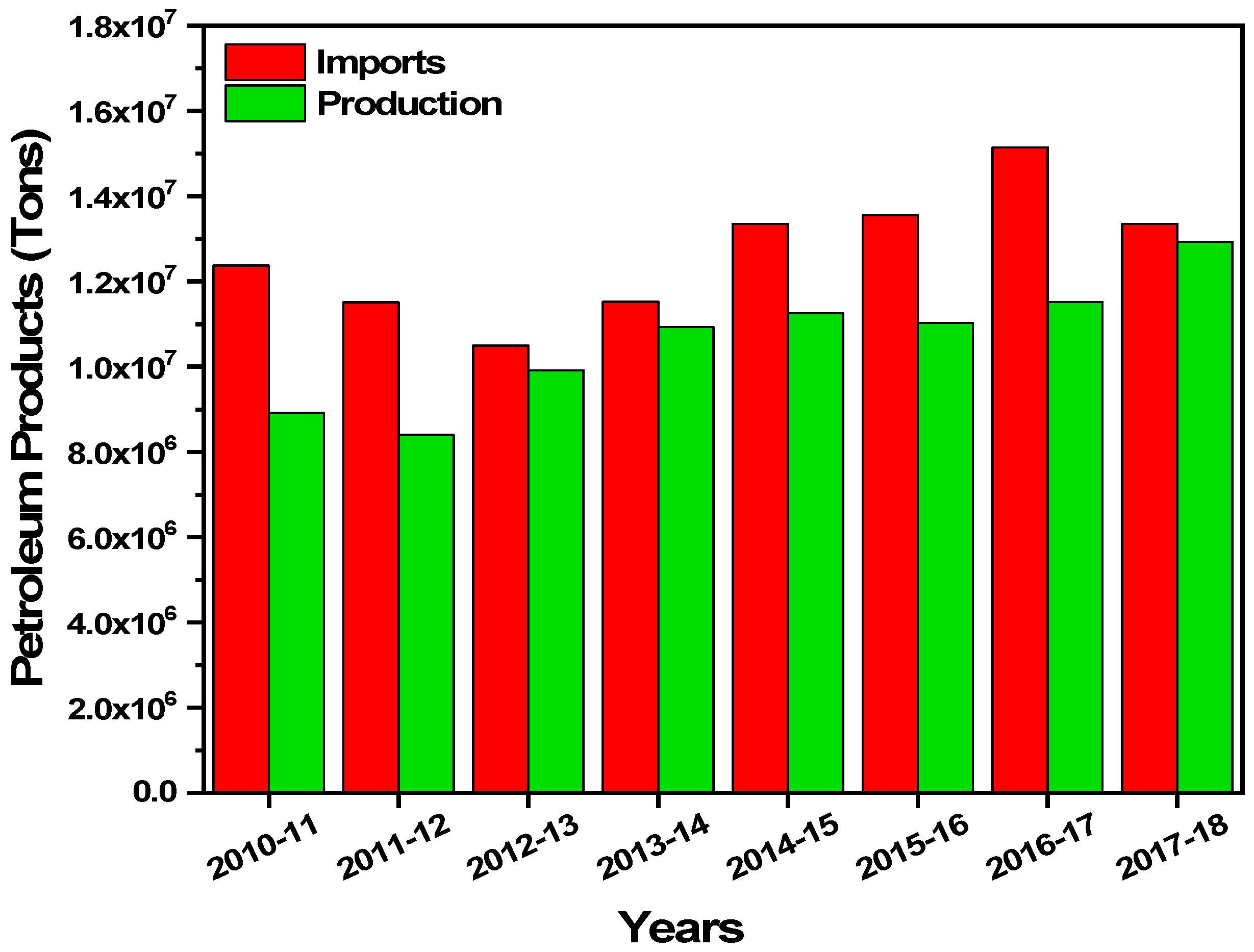
Economic development requires valuable input from all areas to expand. The key demand of the 21st century is to cope with the rising energy demands [1,2,3]. Pakistan is the world’s fifth most populated country, its energy demand and population are rising every day, too. Pakistan’s 2010 population was 179,424,641, which rose to 220,892,340 in 2020 and is expected to cross 24.22 million in 2025 [4]. Due to the growing population, Pakistan needs a massive supply of energy to maintain normal things, but this country is unable to meet its energy demand [5]. Conventional fuels, i.e., oil, natural gas, and coal, are currently 63% of Pakistan’s total energy supply, followed by hydroelectric power (26%), nuclear power (3%), and renewable energy (8%). The transport sector is the largest user of oil/petroleum products, hitting 76% in 2018–2019 [6]. Total petroleum products production in 2010–2011 was 8,911,000 tons, increasing to 12,929,000 tons in 2017–2018, and the total petroleum products imports in 2010–2011 were 12,371,000 tons, increasing to 13,344,000 tons in 2017–2018 as shown in Figure 1. The shortage of petroleum products is covered by the import of petroleum products [6].
Figure 1. Total production and imports of petroleum products in Pakistan from 2010 to 2018 [6].
Similarly, in 2010–2011, oil/petroleum consumption for transport was 8,892,268 tons, which increased to 16,047,392 tons in 2017–2018 but the use of gas (compressed natural gas, CNG) for transport in 2010–2011 was 113,055 mm cft, which decreased to 70,455 mm cft in 2017–2018 [6]. Problems with energy crises not only disturb the livings of people but also disrupt Pakistan’s economic development. The recent part of renewable energy to the overall contribution of the country’s energy is insufficient [7]. Pakistan is meeting energy demands through the use of fossil fuels [8]. With the high dependency on fossil fuels, there is pressure on the economy of the country, and this pattern is also affected by many environmental impacts [9,10]. Pakistan has faced energy shortages that have forced the closure of many factories. The amount of CO2 emissions from the industry has also decreased, however, due to the growing trend of cars, there is an increasing trend in the amount of CO2 emissions [11,12,13]. The CO2 emissions in Pakistan were 132,805 ktons in 2005, which rose to 174,843 ktons in 2015 [14].
To overcome these problems, sustainable, secure, and pollution-free energy sources must be used at the same time which could combine social and economic development with environmental protection [15,16,17]. Tire pyrolysis oil (TPO) is among the effective substitute fuel technologies, and it is used to produced useful products of tire pyrolysis oil, char, and pyro gas [18]. Tire pyrolysis oil, derived from waste automotive tires, was tested and compared with petroleum products and it could also be used in the compression-ignition engine [19]. Converting tire waste into fuel would not only minimize the issues of waste disposal, but it could also lower the burden on fossil fuels and could be an ideal substitute for renewable fuel [20]. The annual production of tires worldwide is 1.5 billion, which become end-of-life tires after a particular period of time [21]. It is currently estimated that approximately 4 billion waste tires are in stock and landfills, worldwide [22]. One billion waste tires can generate 5.26 million tons of tire pyrolysis oil [18].
This study includes a review of the current potential and scenario of waste tire pyrolysis oil for Pakistan. The study includes the energy scenario, consumption of oil in the transport sector, and the share of thermal and renewable energy sources as well as CO2 emissions in Pakistan. Subsequently, the tire pyrolysis oil (TPO), the historical background of the annual production of new and waste tires, some trending techniques to use waste tires, the contribution of waste tires for different countries, manufacturing components of tires, and the final product of pyrolysis of waste tires are discussed. The properties of TPO and the comparison between TPO oil and other fuels such as diesel and bio-oil have been mentioned. The legislative system for waste tire management and three models for the waste management tires adopted by several countries are presented in the study. The available feedstock for the production of TPO, the potential of TPO in Pakistan is calculated based on all collective data. Moreover, the comparison of the production of TPO in Pakistan with other countries and highlighting the proposed strategy that includes a brief case study of the current oil reservoir, a comparison of TPO with diesel, different applications of TPO, and different techniques and sources adopted by Pakistan to meet its energy demands have been discussed in detail. The policy implications and future directions that highlight the importance of TPO in economic growth as well as in the energy sector and the SWOT analysis that shows all the strengths, weaknesses, opportunities, and threats relating to the TPO have been discussed. Finally, the study includes the total production of TPO in Pakistan and its impacts on oil imports and TPO contribution to the fulfilment of energy demand. Furthermore, this study can be taken as a case study for developing countries.

2. Tire Pyrolysis Oil

The worldwide yearly production of tires is 1.5 billion which will become end-of-life tires after the specific time [21]. Around 3.3 million tons of used tires were treated in an environmentally sound way in 2010. This reflects a 2% rise relative to 2009. After setting out the data of the tires that are going to be reused, approximately 2.7 million tons of end-of-life tires (ELTs) were remaining for treating [21]. About 0.1 million tons of tires are used in power plants and co-incineration each year. The material recovery used 0.1 million tons of tires which include the rubberized flooring for sports, blocks for paving, as a roofing material, and to make a playground. A significant quantity of end-of-life tires is used in many civil engineering applications such as 0.24 million tons for embankments, roads, and rail foundations [21].
Energy is an important aspect of any society and is crucial to enhancing society’s social and economic quality of living [23,24,25]. Over time, human beings, via wood to nuclear energy, have used diverse kinds of energy sources [26]. The energy sector has been the major contributor to the emissions of greenhouse gases (GHG). The most vulnerable of these GHG emissions is the release of CO2 into the environment from the consumption of non-renewable energy (fossil fuels) [27,28,29]. Their replacement is required to tackle the challenges of energy demand and greenhouse gases. The end-of-life tires can be used for fuel production to meet the fuel demand [30]. An alternative liquid fuel obtained from tires named tire pyrolysis oil has similar physicochemical properties to diesel fuel. The large-scale production of TPOs will become sustainable because there is a huge amount of feedstock (waste tires) available in the world, which increases by ~2% per annum [31]. Tire pyrolysis oil derived from waste automotive tires was tested and compared with petroleum products and found that it can also be used as a compression-ignition engine [19].
Williams et al. [32] investigate that car tires were pyrolyzed into a pyrolysis unit of the one-ton batch to generate oil, char, and gas. Properties such as calorific value, elemental analysis, nitrogen, and sulfur were analyzed in the derived fuel. To burn the oil, an 18.3 kW ceramic-lined, oil-fired, spray burner furnace having an internal diameter of 0.5 m and 1.6 m in length was used. The oil contained sulfur and nitrogen by wt% of 1.4 and 0.45 respectively, and fuel properties close to diesel fuel. It is also reported that due to the higher sulfur and nitrogen content in the tire oil, the NOx and SO2 emissions were higher for tire pyrolysis oil while comparing to diesel fuel. According to M.F. Laresgoiti et al. [33], 2 to 3 cm wide cross-sections of complete car tires were pyrolyzed underneath nitrogen in a 3.5 dm3 autoclave at a temperature of 300, 400, 500, 600, and 700 °C approximately 38% liquid and 17% gases yield was obtained. It was also seen that there was no effect on liquids and gas yields at a temperature of over 500 °C.
Mustafa Karagöz et al. [34] performed a study in which various percentages (0, 10, 30, and 50%) of waste tire oil combine with clean diesel. Tests were performed on various engine loads of 3, 6, 9, and 12 Nm in a single-cylinder diesel engine at a constant engine speed of 2000 rpm. It was noted that the heating value of tire pyrolysis oil (TPO) is less as compared to diesel fuel (DF) and due to the lower cetane number of TPO higher ignition delay in TPO-DF blend. The oxygen and carbon wt.% of tire pyrolysis liquid is relatively close to the diesel fuel. On the behalf of general measurements, tire pyrolysis oil with diesel blends can be used as an alternative fuel in compression ignition engines. Moreover, for the future, the authors proposed that ternary blends of TPO-DF with other fuels will produce more feasible results. They also proposed that adding biodiesel and some nanoparticles in the TPO-DF blend would enhance oxygen wt.% in blends and could improve the combustion quality and reduce the emissions.
Murugan et al. [19] revealed that crude TPO has a higher sulfur and viscosity content. After the desulfurization and distillation of crude TPO, its properties become similar to petroleum fuels and can be used in compression-ignition engines as fuel. According to Ali Alsaleh and Melanie L. Sattler [35], the heating value of tire pyrolysis oil is about 40 MJ/kg and can be easily used in diesel engines and furnaces. Valuable chemicals such as aromatic and olefins for petrochemical industries can be obtained from pyrolysis oil. Moreover, gases produced from the pyrolysis of waste tires, such as hydrogen, can be used for the pyrolysis process as fuel. Currently, due to the rising populations and industries, energy decline and environmental catastrophes are the main issues [36]. The discovery of feasible alternative fuels is required to address fossil fuel depletion [37]. Waste tire disposal is a major problem around the world, with landfills and stockpiles posing a serious environmental risk [38].
With the large quantities of used tires produced annually and without a proper disposal strategy, converting the used tires into TPO is an attractive way of approaching the waste tire problem [39]. The reuse of waste tires by pyrolysis is a good option for eliminating waste from the atmosphere and securing high-energy items such as pyrolysis fuel, gas, and coal [40,41]. It is noted that tire pyrolysis is an effective and sustainable method, provides neat production that is economically feasible, and a possible solution regarding waste tire handling [42]. A combination of several compounds is used in the design of the tires which includes rubber 60–65 wt.%, carbon black 25–35 wt.%, filler 3 wt.%, and also accelerators [35]. A rise in the gross domestic product (GDP) of the country also stimulates the supply and demand of vehicle and tire substitutes for safety concerns. The end-of-life tire extension is not majorly considering this trend [43].
A tire pyrolysis plant is a profitable project and it depends on various factors, including product quality, production efficiency, and the overall cost of production, capital investment, and tipping fees. The decision for a waste management company to provide energy and materials for a tire depolymerization plant would depend on whether the cost of the pyrolysis process is less than that of incineration [44]. The 1.5 billion tires are generated globally and can be used to producing useful products of oil, char, and gas. Fixed-bed (batch), rotary kiln, vacuum, screw kiln, and fluidized bed are the most famous reactors that are used. The composition of gas and oil of TPO is mainly depending on which type of reactor is used, for which the heating rate and temperature are determined, as well as operating temperatures and residence time of feedstock in the reactor also affect the properties and composition of TPO. Tire pyrolysis oil is very complex chemically (aliphatic, aromatic, hetero-atomic, and polar fractions). Examples of commercial and semi-commercial tire pyrolysis systems demonstrate that small-batch reactors and continuous rotating kiln reactors have been commercially produced [45]. The advantages and disadvantages of the tire pyrolysis process are given in Table 1.
Table 1. Advantages and disadvantages of the tire pyrolysis process.
Recent statistical data on the production of tires in Europe reveals the difficulty of the market is recovering from the results of the financial crisis. More specifically, despite the sharp increase in tire production in 2010 (26% growth compared to 2009), the maximum production of all time has not been overcome (more than 5.1 million tons of tires were produced in 2007) [51]. Moreover, according to the report of European tire and rubber industry (ETRMA) statistics edition 2019, the production of tires in Europe from 2010 to 2018 was about 4.5 to 5.1 million metric tons [52]. Approximately 60% of worldwide production in Asia and Oceania [53]. Conversely, each year, Japan disposes of one million tons of tires, while in 2010, China produced 5.2 million tons of tires, making it one of the largest countries with used tires production [54,55]. With the rapid growth of the automotive sector and higher living standards in China, the number of automobiles is growing rapidly and China faces the environmental issue related to waste tire disposal.
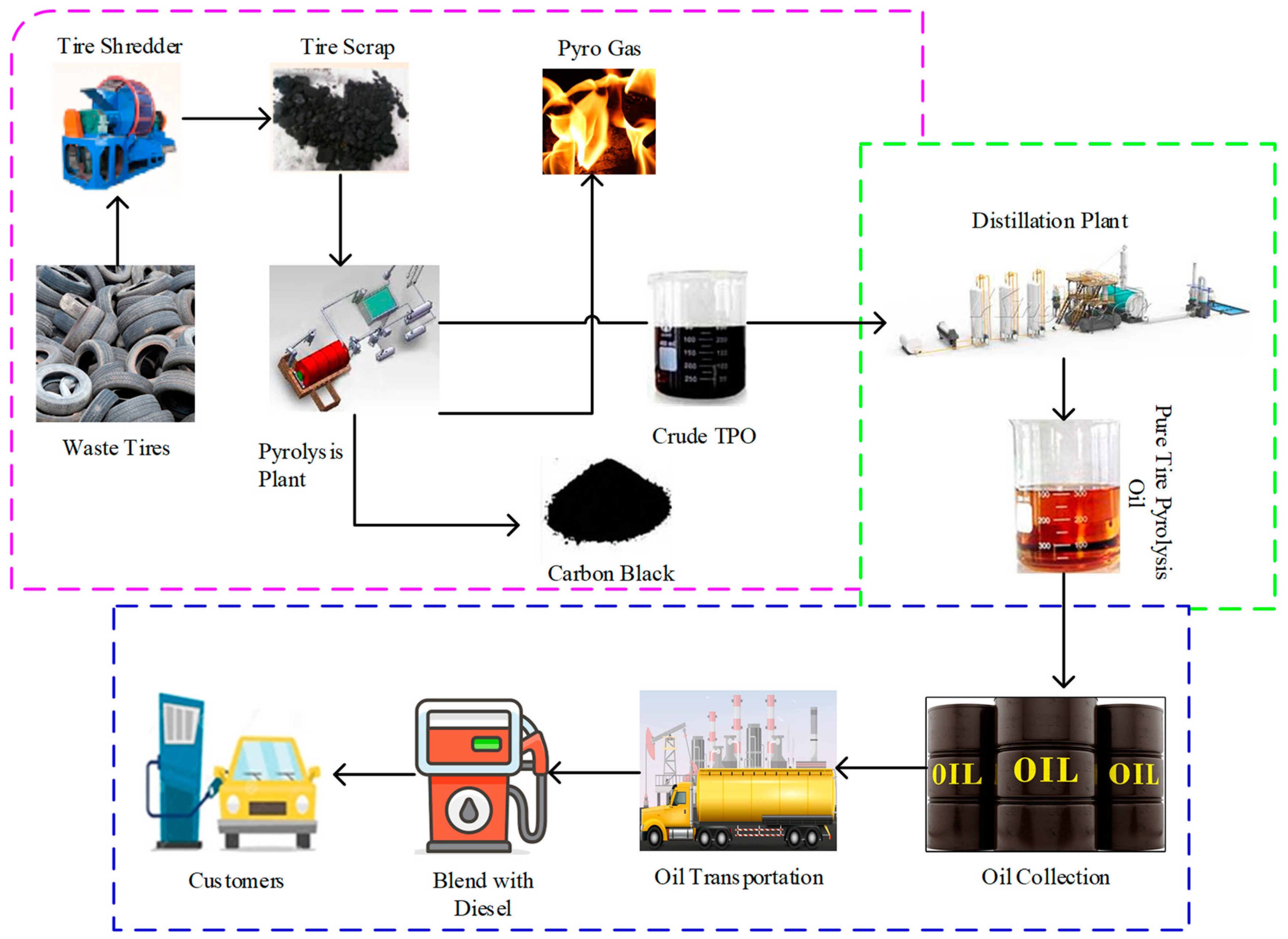
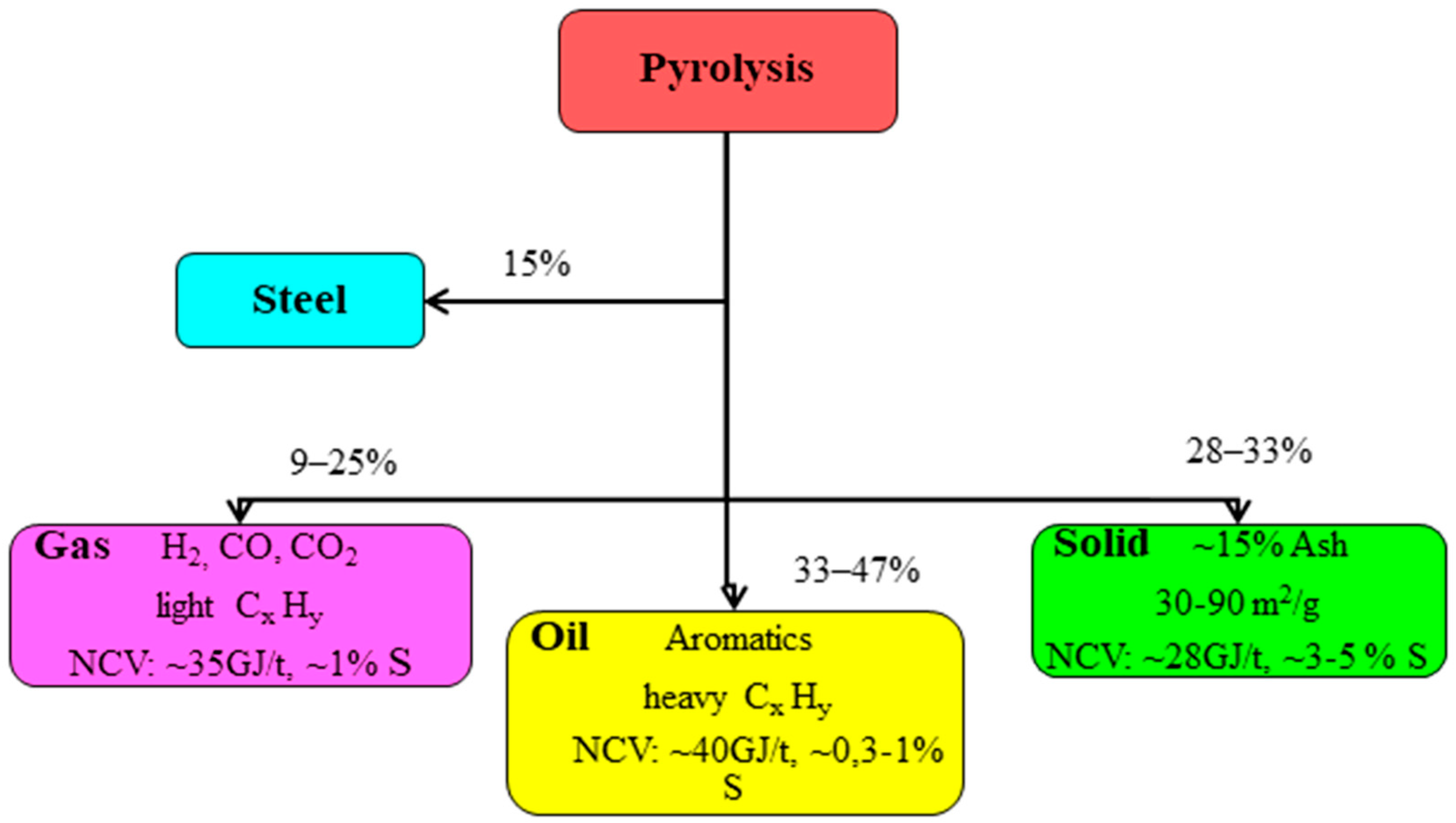
As per the World Health Organization (WHO) statistics, globally the amount of waste tires storage has reached 3 billion which is growing annually [56]. Countries like China, Japan, India, the European Union countries, and the United States of America accounted for a total of 88% of the production of waste tires [57]. This work compiles and summarizes the pneumatic recycling strategies widely accessible, paying particular attention to pyrolysis as a promising alternative to the need to accomplish a more sustainable energy scenario as fuel [58]. The step-wise diagram of waste tires to the final product is shown in Figure 2. Furthermore, the mass and energy balance of pyrolysis is illustrated in Figure 3 [59].
Figure 2. Step-wise diagram of waste tires to the final product.
Figure 3. Flow chart of mass and energy balance of pyrolysis [59].

3. Properties of Tire Pyrolysis Oil

The petroleum-based fuel (diesel) is comparable with tire pyrolysis oils. Fuels are identified with certain basic properties. Physical and chemical properties mainly define density, chemical composition, and thermal ability. Parameters such as flashpoint of fuel, the viscosity of fuel, the residue of carbon, and sulfur content are related to fuel ignition in engines as well as burners. When the density of the fuel is high, it affects the engine performance and emissions of gases such as carbon monoxide (CO) as well as carbon dioxide (CO2). Viscosity induces an ignition pause. Low viscosity fuel is ideal and contributes to improved pumps and also engine efficiency [60]. The properties of bio-oil can be somewhat similar to diesel that can be seen as an alternative energy source either fully loaded or diesel-mixed. However, these fuels also have some issues that may impact combustion, engine efficiency, and emission.
The properties of distilled TPO compared with diesel fuel and crude TPO are illustrated in Table 2 and it is measured using different ASTM (American Society for Testing and Materials) standards. While the wt% of carbon is 85.67% for crude TPO, after distillation it is about 87%, the same level as diesel fuel. The nitrogen level is 1.36%, comparatively greater than that of diesel fuel, leading to the unfavorable NOx output. Three steps are used to exclude the impurities from crude TPO and improve its quality. The first step removal of the moisture in which the raw TPO is heated for a certain time at 100 °C in a cylindrical vessel. In the second step, desulfurization to remove the carbon and sulfur content from the TPO, 8% of the hydro-sulfuric acid is mixed with crude TPO and stirred well. The mixture is kept up to 40 h approximately. After that, two layers named thin and thick layers are found in the mixture, the thick layer is discarded as sludge while the thin layer is collected for vacuum distillation. Around 61.6% of sulfur gets removed from this process [18]. Then, some remaining particles in the TPO get removed by the filtration method by using a fabric filter; the efficiency of the filtration method is about 99% [61].
Table 2. Comparison of physicochemical properties of tire pyrolysis oil (TPO) and diesel fuel [18].
Desulfurization, as well as hydrotreating methods, are used to improve pyrolytic oil owing to the higher content of sulfur and water [62]. The reactor is a predominant component of the pyrolysis process. A broad variety of reactors are used to examine the difference in pyrolysis products [60]. Each reactor has its unique properties, include temperature, heating rate, and residence time that influence the physicochemical properties and products of pyrolysis [35]. Fixed-bed (batch), rotary kiln, vacuum, screw kiln, and fluidized-bed have the most famous reactors that are used. The composition of gas and oil is mainly dependent on which type of reactor is used, by which the heating rate and temperature are determined [45]. The TPO yield is greater for truck tires compared to motorcycle tires and passenger car tires, since the mass percentage of volatiles for truck tires is between 65 and 66% [63,64], compared to 58.2% [64] and 57.5% [65] for passenger cars and motorcycle tires respectively.

4. Legislative Systems for Waste Tire Management

Proper and developed legislation is always a driving force for admissible waste tire management. Three legislations were proposed by the waste tire management of the European Union. The first legislation was made in 1999 as the Directives of Landfill of waste 1000/31/EC and it was about the prohibition of the land filing of stockpiles of whole tires and shredded tires from July 2003 and from July 2006, respectively. The second was named the Directive of End life of Vehicle 2000/57/EC, it was about the recycling of the waste tires instead of demolition of removed vehicle tires. The third legislation was about reducing the 90% emissions of dioxins from the energy recovery and material recycling of waste tires by 2005 [55,66]. There are three different models discussed in the literature on the waste management of tires and adopted by many countries. The main points of these models are discussed in Table 3 [67].
Table 3. Tires waste management models by different countries [67].
Greece utilized the producer responsibility for properly managing the end life tires (ELTs) to attractive and better handling of used tires. It is difficult to collect used tires, so the joint alternative management system (JAMS) places a special fee for different categories of tires to accommodate their waste management expense. For tires whose nominal rim diameter greater than 55.12 inches, no price has been fixed for them. The only financial source of the system depends on the fees collected by JAMS from importers and retailers after every 3 months. Additionally, the tires imported and produced are also considered [44].

5. Energy and Material Recovery from Waste Tires

The manufacturing of tires involving more than 100 various types of materials [68]. The composition of various types of tires differs from one another due to the desired properties. Tire rubber mainly contains a mixture of two or three rubbers including natural rubber (NR) and synthetic rubber (SR) [44]. The used tire composition of different types of tires can be seen in Table 4. In the chemical composition of the tire rubber, acetone (15.5%), ash content (6.0%), and hydrocarbon rubber (49.0%) are also included [69]. Tire pyrolysis is a complicated process due to the complex interaction of a single compound and a large proportion of chemicals reactions. Furthermore, ELTs are a high calorific waste and can therefore be used as feedstock in pyrolysis plants for the production of energy and carbon materials as well as used as an alternative fuel in cement kilns. A broad variety of materials such as fibres, steel, oils, carbon filler, and shredders may also be retrieved, apart from producing energy and carbon materials through pyrolysis [44].
Table 4. The composition of waste tires from different regions of the world [70,71].
No large-scale pyrolysis plants exist in Greece, although small research plants are available in laboratories to study energy and carbon production materials and their properties [72]. In Table 5, the substantially higher calorific values of some ordinary solid industrial fuels such as bituminous coal (32–36.3) and lignite coal (11.7–15.8) can be seen.
Table 5. Calorific values of ordinary solid fuels used in different industries [72,73].

6. Tires in Pakistan

6.1. Methodology

The work is finalized with the estimation of available feedstock and the potential of TPO production in Pakistan. First of all, various classifications of vehicle tires are cut into different pieces and the bead, steel wires, and fabrics are removed. The tire chips are washed, dried, and placed in a mild steel fixed bed reactor unit [18]. In the reactor, the feedstock is heated externally without oxygen by supplying some heat source. The cylindrical reactor is an insulated chamber with an inner diameter of 110 mm, an outer diameter of 115 mm, and a height of 300 mm. The reactor is supplied with 2 kW of power for external heating and the temperature controller is used to regulate the temperature. At 450–650 °C, the heating rate is kept at 5 K/min and reactor retention time is 120 min. During the process, vapour products moved in the water-cooled condenser and accumulated condensed liquid as fuel. Tire pyrolysis oil (TPO), pyro gas, and char products are obtained and 1.9 kg of feedstock is produced 1 kg TPO [18]. The heat energy needed per kg of TPO production is approximately 6 MJ/kg [74]. The outcome (%) of pyrolysis products are TPO (55%), char (34%), pyro gas (10%), and moisture (1%).
The waste tires disposed of in the country are used for the production of TPO as a feedstock. The detailed information was found in the annual report of the Pakistan economy survey year 2019–2020 [75]. As per the data in the Pakistan economy survey report, the number of tires was calculated by considering on-road vehicles [75]. Tires are discarded after 4 to 5 years [76] which will be considered as waste tires and these tires are used to produce pyrolysis oil.

6.2. Tires Produced and Imported in Pakistan

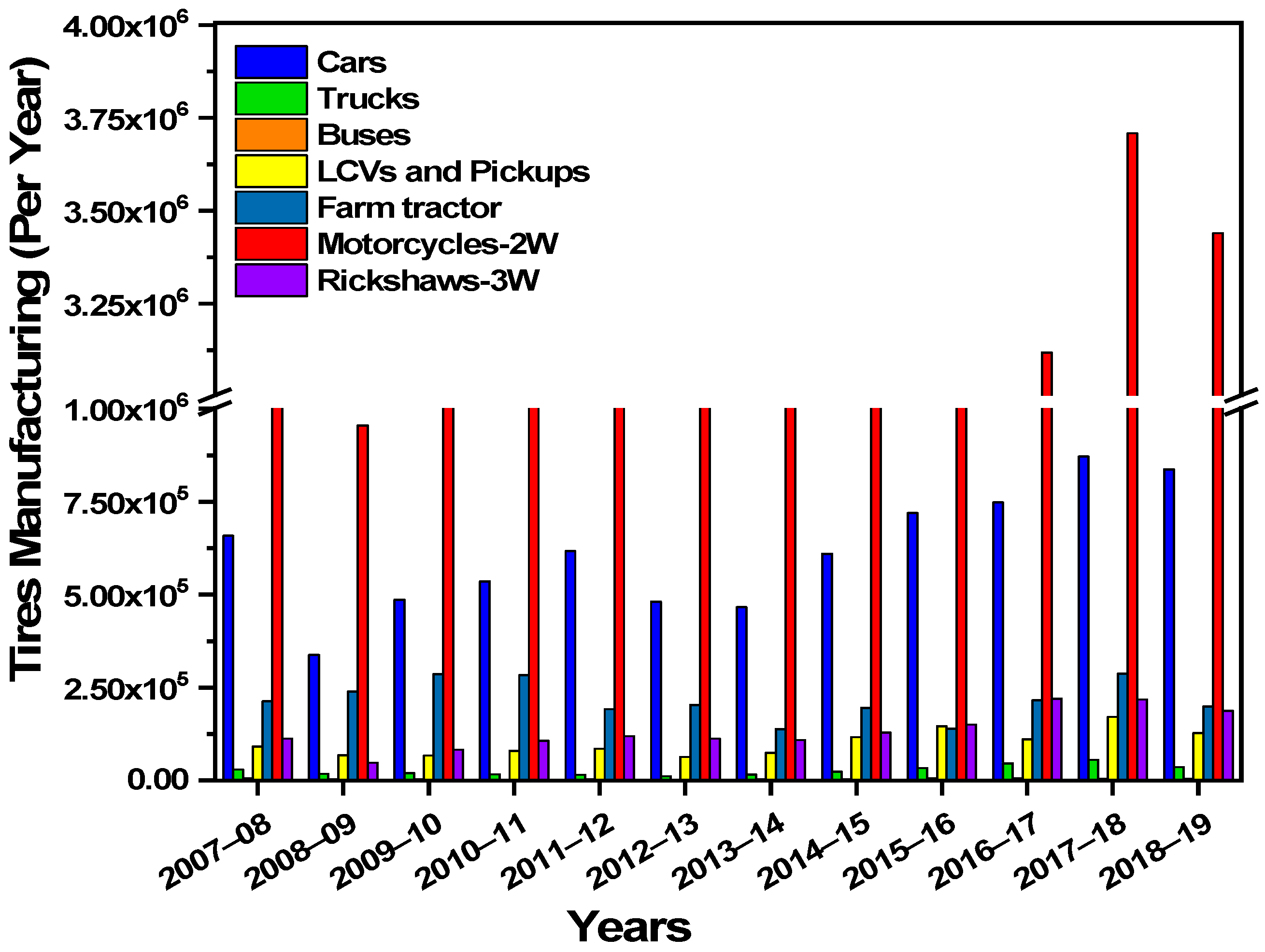
In Pakistan, a wide variety of tires are sold including, trucks, passenger cars, vans, agriculture, motorcycles, industrial machines, three-wheel tires, and tractors. Based on approximation, the domestic tire industry of Pakistan has valued PKR 120 billion (Pakistan Rupees). Domestic manufacturers account for 30% of the market while the remaining 70% is completed through imports. The major portion of imports is of European and Asian brands, imported through the Middle East, China, and East Asia. Smuggled tires have captured the majority of the market imported via Afghanistan and China [77]. The data of manufacturing of vehicles published by the Pakistan Automotive Manufacturing Association (PAMA) are used to estimate the manufactured tires. The number of annually manufactured tires from 2007 to 2018 is shown in Figure 4 [78].
Figure 4. The manufacturing of tires/year in Pakistan [78].
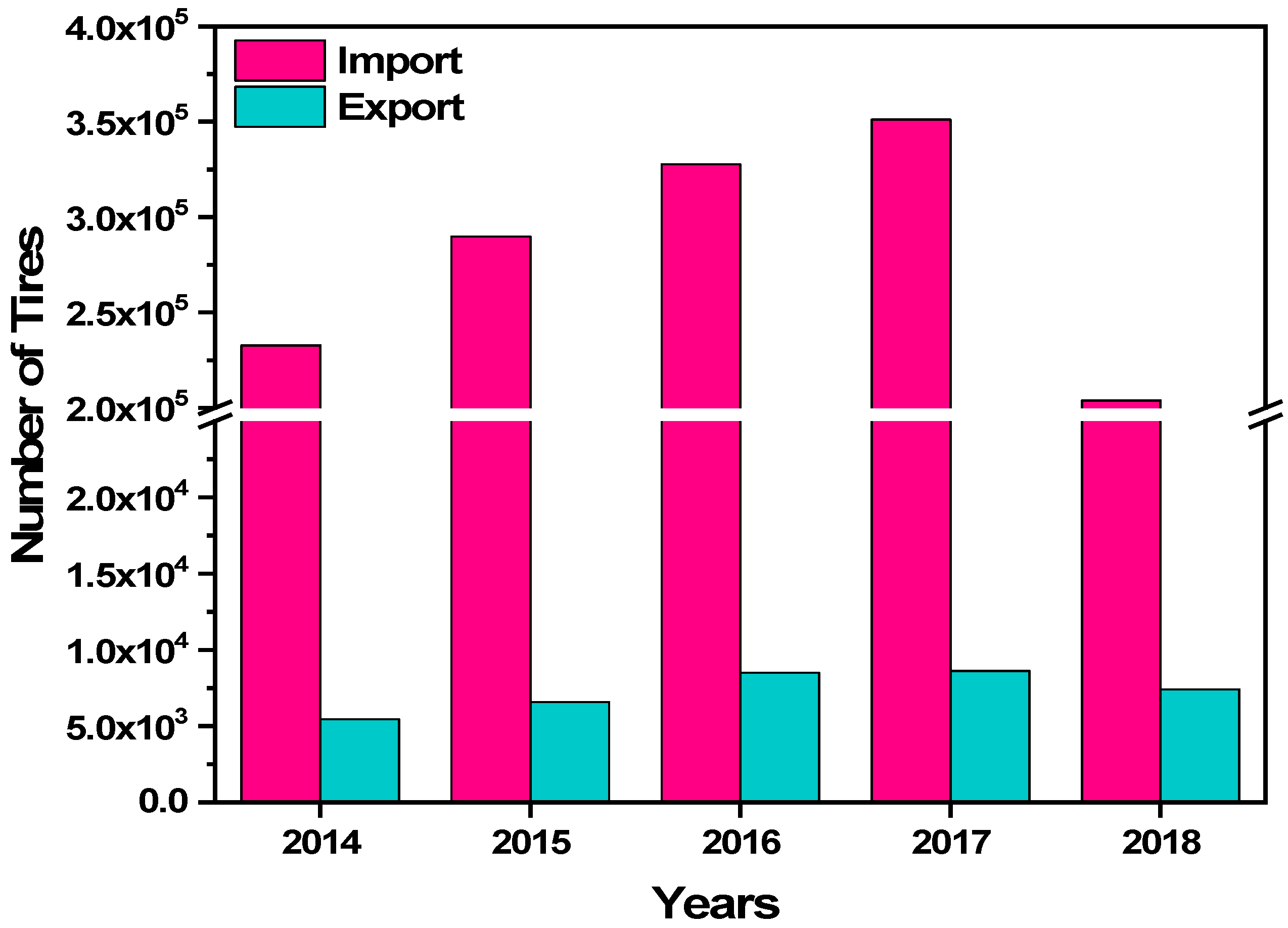
In Pakistan, for 2017–2018, 2-wheeler tires account for 69.743% of the total 5.317924 million tires produced and bus tires account for the lowest percentage of manufactured tires. In 2017–2018, bus tires account for 0.09059% of the total 5.317924 million tires manufactured in Pakistan [78]. Despite the different types of tires made in Pakistan, each kind of tire has the same chemical composition. Therefore, the liquid fuel produced by the chemical composition or pyrolysis of various kinds of tires does not show a noteworthy difference. Tire pyrolysis oil yield for a truck tire is much more than that of 2-wheeler tires and passenger car tires, therefore truck tires contain a greater number of volatiles compounds as compared to 2-wheeler tires and passenger car tires. Truck tires contain a mass percent of volatiles between 65% to 66% [63,64] while motorcycle and passenger car tires contain mass percent of volatiles 57.5% [65] and 58.2% [64], respectively. The tires imported in Pakistan are presented in Figure 5 from calendar year (CY) 14 to 18.
Figure 5. Pakistan’s import and export of tires from 2014 to 2018 (Pakistan Credit Rating Agency, PACRA) [79].

6.3. Tires Exported and the Assembled

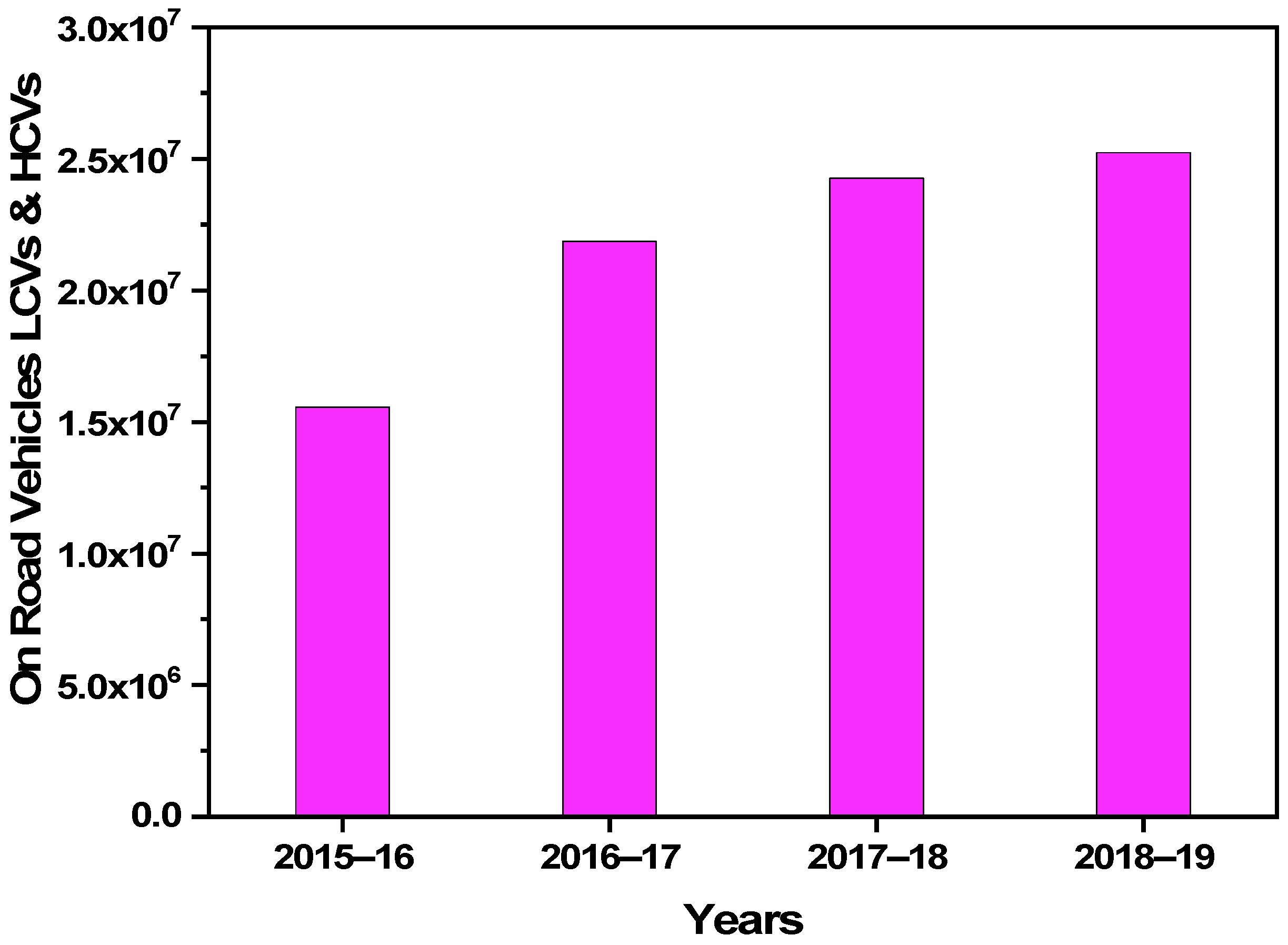
In Pakistan, the tires exported to the calendar year (CY) 14–18 are in the range of 5445 to 7417 thousand, as presented in Figure 5. The information was collected from the annual statistical report of the tires sector published by the Pakistan Credit Rating Agency (PACRA) on Oct 19. The decline in 2018 was due to a drop in the import and export of that year [79]. In 2018–2019, 7,470,800 motor cars and 291,200 trucks were recorded on the road as shown in Table 6. Similarly, the number of various categories of vehicles recorded on the road from 2015–2019 are listed in Table 6. This information was collected from the report of the Pakistan economy survey (PES) year 2019–2020. Figure 6 indicates that the number of on-road vehicles in 2015–2016 was 15,568,800 which is increased to 25,238,700 in 2018–2019. The number of tires was calculated based on these vehicles, shown in Table 7. Table 7 specify the number of various categories of tires that is growing per year, such as motor car tires and trucks tires in 2015–2016 which were 24,526,800 and 3,165,600, and increased to 29,883,200 and 3,494,400 in 2018–2019.
Table 6. On-road number of light commercial vehicles (LCVs) and heavy commercial vehicles (HCVs) [75].
Figure 6. The total number of on-road vehicles [75].
Table 7. On-road light commercial vehicle (LCVs) and heavy commercial vehicles (HCVs) tires [75].
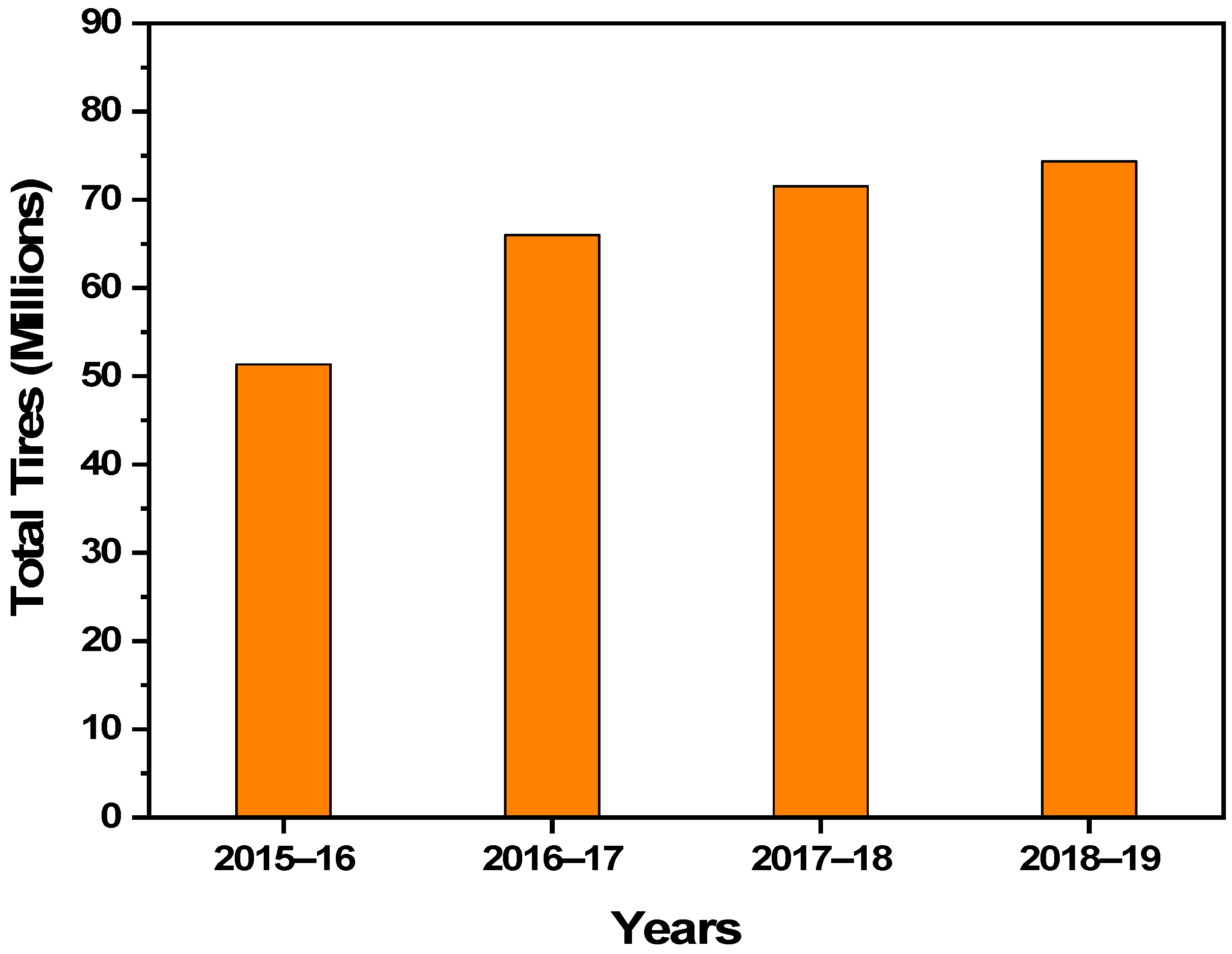
In terms of the exportation of tires, Pakistan is 68th of the world’s major exporting countries [79]. Figure 5 shows that from CY 14–17 the import and export of tires increased but in CY-18 it decreased by decreasing the exports and imports in that year. Figure 7 shows the total number of tires carried out through on-road vehicles from the year 2015–2019. In 2015–2016, these tires were 51 million which increased to 74 million in 2018–2019. These tires are rising every year, and the tendency to increase the tires depends on the increasing number of on-road vehicles. By increasing the on-road vehicles, the tires per annum also going to increase.
Figure 7. The total number of tires annually including light commercial vehicles (LCVs) and heavy commercial vehicles (HCVs) [75].
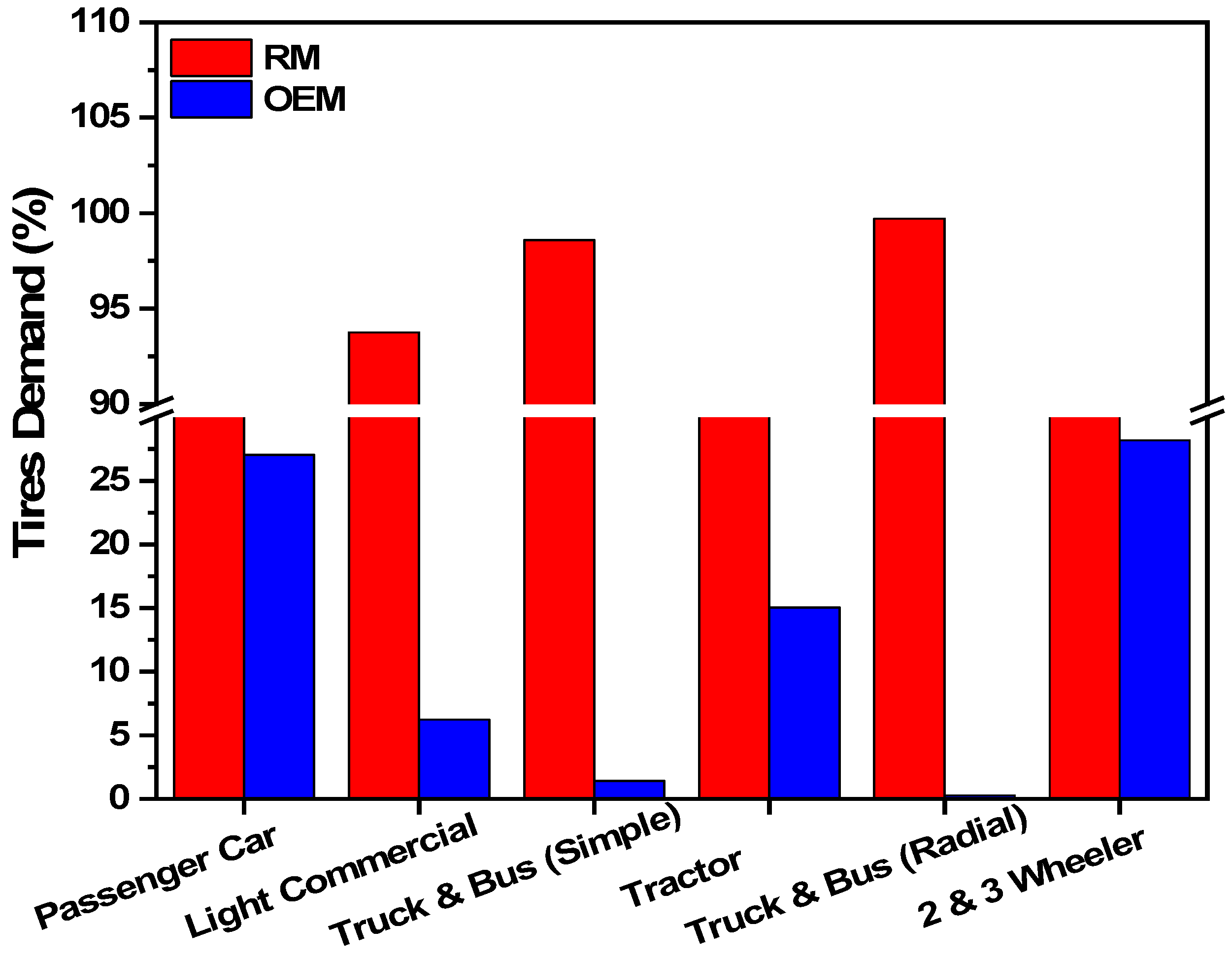
In Pakistan, the original equipment manufacturer (OEMs) and the replacement market (RM) are the local assemblers of bikes, cars, buses, trucks, and tractors. According to the report of the tire sector overview 2018, demand from OEMs constitutes about less than 30% of the overall demand for tires, while the remaining demand is determined by the replacement market [80]. The demand in fiscal year (FY) 19 from OEMs and RM based on different tires category is available in Figure 8 [79].
Figure 8. The demand for different categories of tires [79].

6.4. Waste Tires Available in Pakistan

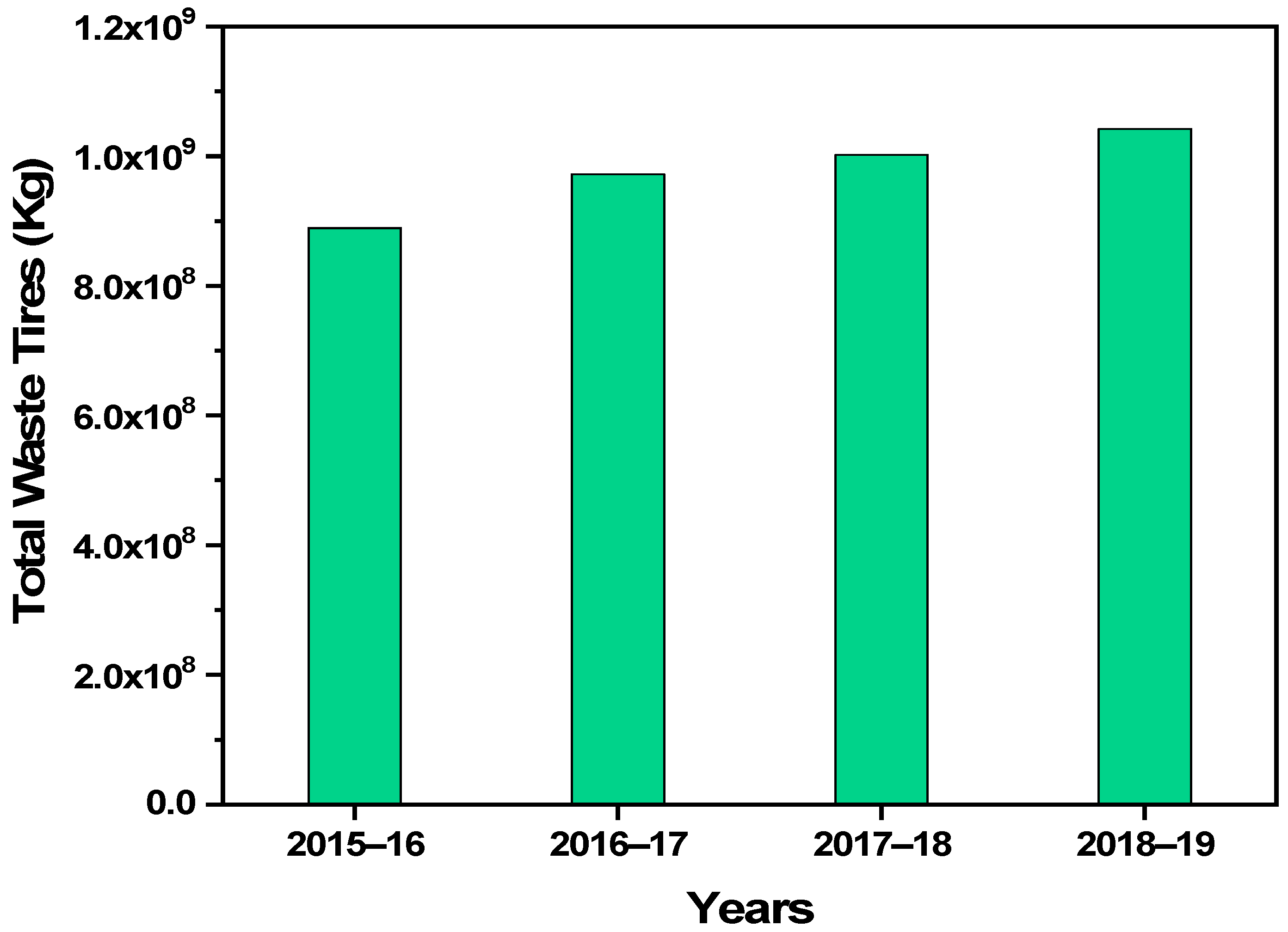
The estimated feedstock in Pakistan per annum for TPO production is acquired from 2015 to 2019 and is presented in Figure 9 with the range of 889 to 1042 million kg. The available feedstock in Pakistan depends on the number of road vehicles. As per the on-road vehicles per annum Table 6 the tires are calculated by multiplying the number of tires by their respective vehicles. The number of tires calculated shown in Table 7. Due to the running of these vehicles, their tires are to be discarded after 4 to 5 years [76]. Thus, the tires assembled in the on-road vehicles in 2015–2016 are discarded in the year 2019. The annual number of waste tires has been calculated, which is considered as an available feedstock and used for the production of TPO. The weight of different tires is available in Table 8. By considering the weight of tires and some conversion factors, the number of tires converted into kilograms is shown in Table 9. Furthermore, if the growth in on-road vehicles increases, the expected feedstock potential for the coming years would also increase.
Figure 9. Total tires in kilograms including LCVs and HCVs. These are considered as feedstock after four years [75].
Table 9. Light commercial vehicle tires (LCVs) and heavy commercial vehicle tires (HCVs) in kilograms [75].
Table 8. Weight of different categories of vehicle tires in (kg).
Types of Vehicles TiresWeight (kg)Reference
Passenger Car 7[81]
Motorcycle 2-Wheeler 2.035[82,83,84]
3-Wheeler 3.7[85]
Farm tractors 80.6[86]
LCVs and pickups 11[81]
Trucks 52.5[81]
Busses 52.5[81]

7. Potential Production of TPO in Pakistan

In Pakistan, the statistical data of waste tires are not directly available. The category-wise tires in kg/annum are shown in Table 9 and these tires could be considered as waste tires after four years. Approximately, all types of tires are reliable for 4 years from their date of manufacturing; after this date, the tires become expired [76], after expiry, the tires are discarded and replaced with the new ones. The estimated waste tire is 889 to 1042 million kg from 2015–2019 as shown in Figure 9. The effectiveness of this effort was made possible by the Pakistan economy survey [75]. The waste of tires increased per annum, due to an increase in on-road vehicles. In the future, the potential of TPO will increase if the increase in waste tires remains the same.
In this study, the potential of TPO was calculated through tires of on-road vehicles. Due to the National Environmental Council (CONAMA) resolution 416 [87], 30% depletion in the mass of an unused tire was observed when it has reached its end life.
The annual potential of TPO for Pakistan was obtained. The outcome of our data, acquired from 2015 to 2019 are presented in Table 10, this shows that there is no major difference in the TPO production for the year 2015–2019. The increase and decrease in the potential production of TPO depend on the available feedstock per year. By taking method of 1.9 kg of feedstock is used to produce 1 kg of tire pyrolysis oil, the estimated potential production of TPO was calculated. In the future, due to the growing population and massive dependency on vehicles, the waste of tires will increase, which increases the potential production of TPO. Unfortunately, the production of TPO and its utilization are less significant in Pakistan because the waste tires are disposed into landfills and in stockpiles. The government of Pakistan and other management institutions should pay attention to this and must adopt proper waste management systems, then huge production of TPO from waste tires could be possible. It is important to protect the environment and beneficial for the oil sector in the future as an alternative fuel.
Table 10. The estimated potential of TPO annually [18,75].
The detailed analysis of the year 2018–2019 is estimated as shown in Table 11; the number of tires in 2015–2016 was 51.34 million which increased to 74.36 million in 2018–2019, which is increasing at an average rate of ~11% annually. If the tire rise remains the same, in 2030 it will hit a level of ~0.1 billion. The estimated total potential of TPO is 0.548 million tons (MT). It is ~8.30% of the total import of crude oil. After the process of distillation, this potential reduces to 0.438 MT, which is called a purified TPO. Because 80% of the TPO is distilled through the distillation process, while the remaining 20% of the TPO was left, they consisted of 5% and 15% pyro gas and sludge, respectively. Moreover, the import of crude oil in Pakistan in the year 2018–2019 was 6.6 MT with a value of 3.4 billion US$ [88]. However, the estimated cost of purified TPO in this year was 0.85 billion USD$.
Table 11. The final estimation of TPO from waste tires in Pakistan in 2018–2019.
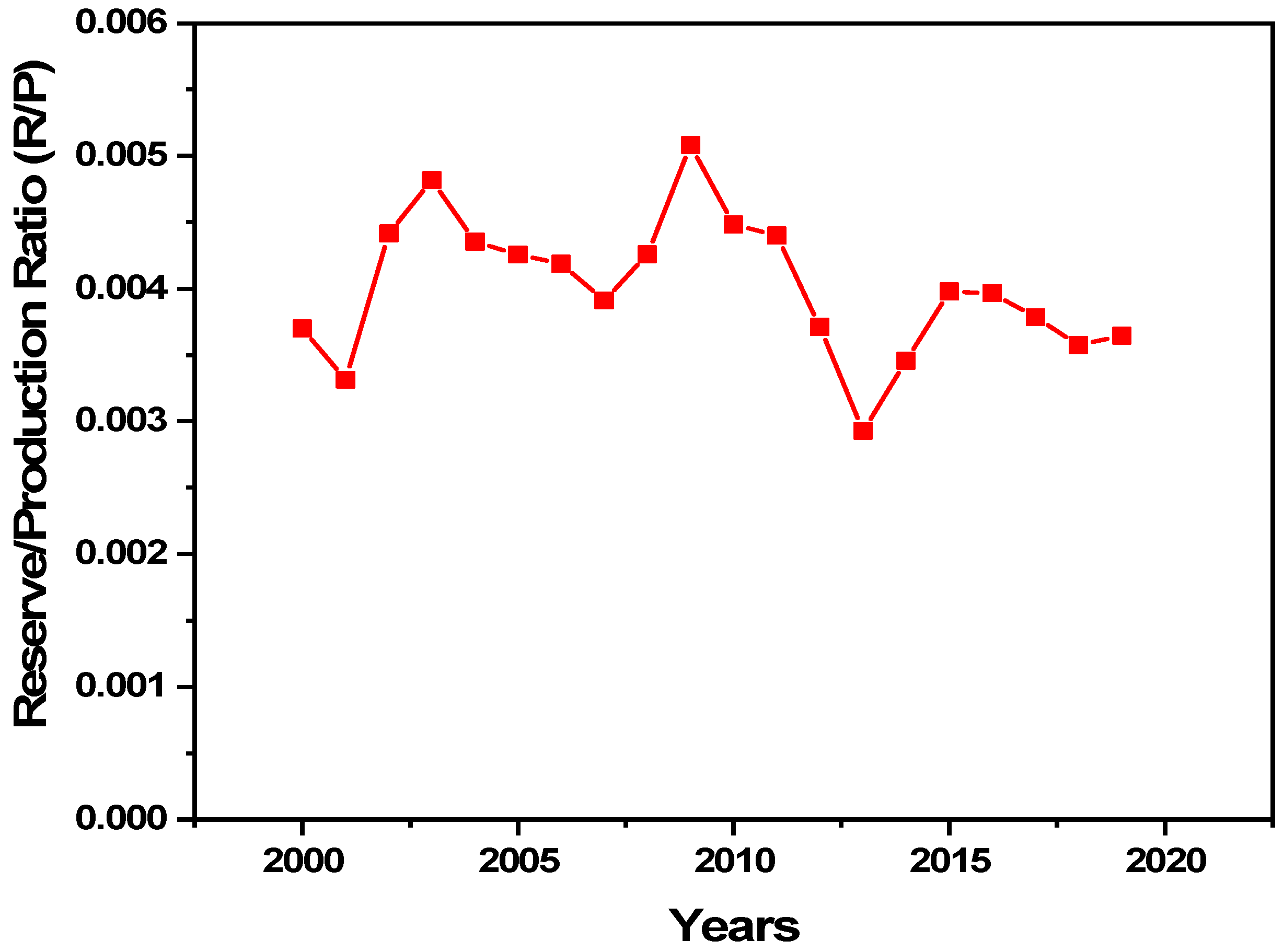
Oil is a non-renewable fuel, and as its consumption has grown quite far, as a result its supplies are decreasing rapidly. The reserves to production ratio (R/P) should be increased, which will increase the TPO production, and not only this could reduce the growing shortage of oil but it will also increase the R/P ratios. It indicates the time when the stock will run out. The R/P ratio of the last twenty years of Pakistan is shown in Figure 10 [89]. As can be seen in Figure 10, Pakistan has discovered oil reserves over time, but oil consumption is increasing day by day. The R/P ratio naturally decreases over time until new reserves are discovered. There is no huge difference in the R/P ratio from the year 2000 to 2019, and because of this, we should develop new alternative sources and TPO is one of them.
Figure 10. Reserve/production (R/P) ratio of Pakistan petroleum from the year (2000 to 2019) [89].

8. Pakistan and Other Countries

The countries that are famous for their large waste tires recovery collection points are highlighted by global ELT management in their annual report [90]. Due to the lower production of TPO in Pakistan, collection points are not available, which is the main reason for the smaller significance of our country worldwide. These waste tires are disposed into landfills and in stockpiles, instead of recycling. If the management organizations of Pakistan take responsibility and adopt proper waste recycling systems, then huge production of TPO from waste tires could be possible. It could be very useful for the oil sector as an alternative fuel, and could also fulfill the energy demand.
China is highlighted due to the large number of ELTs, the United States and India hold 65% of the total ELTs. Although the USA and Brazil are at the world’s 2nd rank among ten countries that generate a massive quantity of waste tires annually, China, the United States and other countries like Japan, India, and Brazil generate a massive quantity of squander tires annually and they have recuperation rates of above 85%. The extended producer responsibilities (EPR) and free-market system help in higher recuperation. Moreover, EPR (66%) and free-market systems (28%) are implemented by many countries in Europe. While some other countries including Slovakia, Croatia, and Denmark apply a tax system [90,91].
Likewise, India and the United States have attained a recuperation rate of 98% and 87% respectively, by applying the free-market system. On the other hand, Canada is a country that applies a hybrid system and has attained a recuperation rate of 111% based on the fundamentals demands at the federal level while nonprofit organizations play an important role in reusing policy and amounts charged to the purchase of new tires [90]. As per the Government of Pakistan (GOP), Pakistan produces solid waste of around 20 million tons per year and 71,000 tons per day, which has been growing at the rate of 2% yearly [92]. Further, the amount of waste rubber and tires generated by Pakistan is around 300 tons [93]. Regretfully, all this waste is being dumped on the surface of the Earth despite being recycled and used in the country [93]. In different cities, about 60–70% of solid waste is collected, in which the composition of plastic and rubber is 9% and 1%, respectively. The collection of waste is ensured by the Government of Pakistan and its subordinate institutions [92].
Most of the cement industries in Pakistan are facing a shortage of natural gas and rising coal prices [94], therefore substituted fuels are also being used [95] such as tire-derived fuel (TDF) from waste shredded tires and refuse-derived fuel (RDF). Moreover, these substituted fuels are attracting huge worldwide attention due to their reduced costs and carbon emission credits. In September 2011, the Environmental Protection Agency (EPA) of Pakistan allowed cement companies to use substituted fuels (specifically TDF) for the production of thermal energy [94]. Instead of landfilling and stockpile, transforming waste tires into TDF is the most feasible way to reduce greenhouse gas (GHG) emissions [96]. Recycling tires decreases GHG emissions in Australia by almost up to 100,000 per year [96].
With a large number of waste tires generated annually, the tendency of waste tires is not useful in Pakistan, therefore, it is inexpensive as compared to fossil fuels, i.e., coal or natural gas [94]. The composition of tires is 88% carbon and oxygen, causing its quick combustion in cement kilns and pre-calciners [97]. The current major recycling routes for squandering tires energy and material rehabilitation are 20% and 47%, respectively and around 47% of squander tires primarily for cement kilns in America are recovered as substituted fuels while for Brazil and Mexico the figure is 47% [98] and 52% [90], respectively, and waste tires are bound for cement kilns. Thus, just 19% is reserved by the United States. On the other hand, preference has been given to alternative recycling technologies by countries like Indonesia, Thailand, China, and Malaysia, including pyrolysis, allotting 35%, 30%, 11%, and 10% respectively [90].

9. Proposed Strategy

Alternative fuels have great importance because oil reserves are declining rapidly due to increasing energy consumption. This has led to an increase in the value of alternative fuels [37]. Fuels currently used in vehicles, such as petrol and diesel are essentially derived from crude oil. By using various available technologies, it is also conceivable to produce alternative fuels having similar chemical and physical properties like petroleum, gas, coal, and different carbonaceous fuels. Example of these fluids includes Fischer–Tropsch diesel, a blend of carbon monoxide and hydrogen mainly called alternative fuels; these fuels do not need a considerable change from the current design of automobile. Throughout the years, industry specialists have proposed various compounds including methanol, compressed natural gas (CNG), ethanol, liquefied petroleum gas (LPG), alleged biodiesel, and hydrogen as an alternative fuel to achieve the foregoing goals, less dependency on petroleum, reduction in air emissions related with ignition items and increment in the fuel usage efficiency.
Ethanol and biodiesel are produced by using corn or other renewable agricultural items, which reduces dependence on oil, but the cost of these fuels is higher than the petroleum-based fuels. The innovation exists today to work autos on CNG and LPG, which meet the target of diminishing air emanations related to ignition items. Transports and trucks in numerous urban zones of Asia and Europe run on CNG and LPG. The utilization of CNG, LPG, and hydrogen (clean-burning gaseous fuels) for private cars, in any case, has been moderate. Obstacles to overcome the low energy-storing density, low economy, and fundamental building difficulties in adjusting the present internal combustion engine to these alternative fuels. Shifting to the gaseous fuels will additionally require another framework for fuel stations, which will without a doubt experience more prominent examination in plan, development, and ecological wellbeing, as compared to the existing petrol and diesel filling stations [99].
As of 2016, the consumption of oil in Pakistan was 556,000 barrels of oil per year (B/d). Pakistan is 33rd in the world in terms of consumption of oil, representing approximately (0.6%) of the total world consumption of 97,103,871 (B/d). As of 2016, the production of oil in Pakistan was around 88,261.73 (B/d) and scored 53rd in the world in terms of production of oil. In 2016, Pakistan imported 135,201 barrels per day which is 24% of its oil consumption. As of 2016, proven oil reserves in Pakistan were 353,500,000 barrels and they rank 52nd in the world in terms of reserves of oil, representing approximately (0.0%), of the world’s oil reserves of 1,650,585,140,000 barrels. Pakistan has reserves equal to 1.7 times its yearly consumption. This implies, without imports, there would be around 2 years of oil left [100].
The possibility of tire pyrolysis oil (TPO) should be introduced in Pakistan. Moreover, the calculation will be focused on evaluating the amount of feedstock available (waste tires) and the annual volume of TPO generated in Pakistan. According to the Pakistan economy survey report 2019–2020, the average tire waste from 2015–2019 was about 976,246,114 kg. The approximate amount of feedstock available in Pakistan per year for the production of TPO is in the range of 889,354,201 to 1,041,971,591 kg. Different categories of vehicle tires will cut into various pieces and the bead, steel wires, and fabrics will be removed. The tire chips will be washed, dried, and put in a mild steel fixed bed reactor unit.
A mild steel fixed bed reactor will be used to produce the TPO. In the absence of oxygen, the feedstock will be heated externally in the reactor. The pyrolysis reactor will be a cylindrical chamber and 2 kW power will be provided for externally heating. The process will take place at 450 to 650 °C. The heating rate will be kept at 5 K/min and the habitation time in the reactor will be 120 min. Vapour products will be transferred in the water-cooled condenser and gathered the condensed liquid as fuel. Three products will be acquired: tire pyrolysis oil (TPO), pyro gas, and char. To prepare 1 kg tire pyrolysis oil, 1.9 kg feedstock will be used. The estimated potential amount of TPO would be between 468,081 to 548,406 tons, which can be seen in Table 10.
The production of tire pyrolysis oil is suitable in a developing country like Pakistan where there is a need for an alternative of diesel fuel with some low-cost oil as well. The oil products can be stored as long as needed and are easily moveable to the desired locations for their efficient usage. Waste tire usually has low ash content with high volatility and having a greater heating value than that of coal and biomass. Therefore, waste tires can be the best source of valuable chemical products and their thermal decomposition makes the recovery of useful compounds easy and possible. Pyrolysis oil is used in those industries where burning is required like steel industries, rolling mill industries, chemical industries, and also used for heating purposes in boilers. Different types of reactors are used to make tire pyrolysis oil, some of which are as follows: vacuum, rotary kiln, fixed bed fluidized bed, and screw kiln. Their outlets vary at different temperatures and other conditions [37]. Gas, fuel oil, carbon black, and scrap steel are very useful outputs of this technology. It does not cause pollution so this technology is environmentally friendly. This leads to complete recycling of all used tires and no residue left behind.
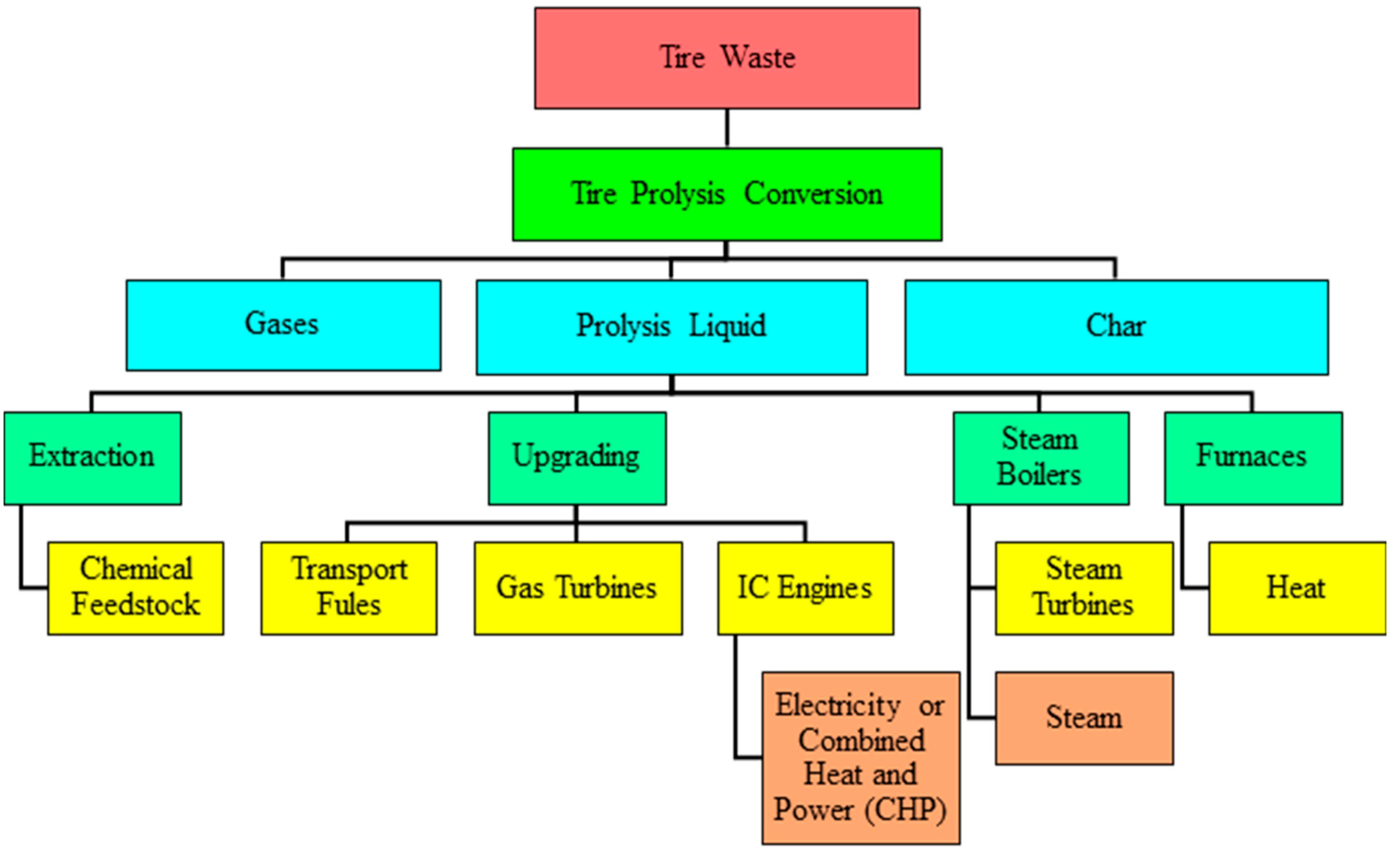
There is a need to change primary products into valuable products through the pyrolysis process. The success of this technology depends on the market of its products. Despite so much research and development, the technology has not been well received in some countries. The market is also not sound for one of its products like pyrolytic char. Some of its products are considered low grade because of the impurities in them. Waste tire oil contains a mixture of organic compounds and refining them can be expensive [101]. It is essential for the success and stability of pyrolysis oil that there must be a derived product market. Its primary products just like oil, gas, and char, etc., can be refined into valuable products through the pyrolysis process. The upgradation of the product will increase its market value and economics. The upgradation of the product will increase its market value and economics. This could significantly increase the commercial viability of used tire pyrolysis [101]. Figure 11 shows the tire pyrolysis oil conversion and product applications.

Figure 11. Tire pyrolysis conversion and product applications [102].

10. Policy Implications and Future Directions

This review spotlights the importance of tire pyrolysis oil. According to a recent study, due to the increase in industries and motorization, the demand for petroleum products has increased significantly. As these are non-renewable resources, it would be difficult to forecast the availability of these resources in the future, resulting in uncertainty in its supply and price. This is impacting the growing economies like Pakistan, which is importing 80% of the total demand for petroleum products. Therefore, the pyrolysis of scrap tires is being used effectively to produce oil, thereby solving the problem of waste tire disposal. Furthermore, tire oil replaces the use of coal or wood, or even tires as burning fuel in small industries. This oil is now being widely used by steel re-rolling mills and other industries. It is also a health conducive process as better and continuous disposal of tires in Punjab and Sindh has reduced breeding grounds of dengue mosquitoes [103]. The Punjab Environment Tribunal had already declared pyrolysis as “Green Technology” in pursuance of “Basel Convention 2011” in which the government of Pakistan was also a signatory [103].
Additionally, the Government of Pakistan has adopted the policy of sustainable development, use of natural resources scarcely and to use indigenous coal, biomass in power plants to reduce reliance upon imported oil and to get economic benefits for the country, according to which the environmental assessment provides a means for promoting environmentally sustainable economic development and the use of resources by present generations while protecting the interests of future generations, for example avoiding over-exploitation of renewable resources, minimizing waste, leading to cleaner production [103].
  • The Basel Convention also considers recycling of scrap tires as a better option than their use as tire-derived fuel [103].
  • The Alternative and Renewable Energy (ARE) Policy is a particular policy. It shows that the transport sector uses about 17% of the total energy of the country. A wide-ranging ARE policy should introduce the substitute section. Long-range vehicles, trucks, cars, marine, and aviation must use pyrolysis oil for their transport [104].
  • The government should provide loans for the startup of tire pyrolysis oil production from waste tires [105].
  • The Government of Pakistan (GOP) should present short-, mid-, and long-term policies with subsequent evaluation and alteration for tire pyrolysis oil [106].
  • The government should grant expenditure in waste tire industries by utilizing special strategies to initiate the tire pyrolysis oil technology in Pakistan [105].
  • The government should increase the use of tire pyrolysis oil in the country, which is a solution to the problem of high prices of imported fuel [107].
  • Documentation and quality control methods of TPO must be expanded for it conquers extension [108].
  • GOP is determined to pursue the stated policy objectives and strategies with the participation and collaboration of the private sector [109].
  • The Government of Pakistan provides security against “political” risk in a compatible way with GOP policies in the further frame and associated projects [109].
  • GOP assures to purchase several blends of tire pyrolysis oil by oil marketing companies [110].
  • Ministry of Petroleum and Natural Resources should guarantee the accessibility and reliability to provide tire pyrolysis oil for the advancement of Pakistan [110].
  • Pakistan has a significant ability to manufacture TPO. Therefore, several steps have been started by the GOP to expand TPO production. By the initiative of these TPOs, industries will help to decrease the requirements of importation to a great level [111].

11. SWOT Analysis

The SWOT analysis for pyrolysis is shown in Table 12 [44] and the SWOT analysis for combustion of end life tires is shown in Table 13 [44].
Table 12. Strengths, weaknesses, opportunities, and threats (SWOT) analysis for pyrolysis [44].
Table 13. SWOT analysis for combustion of end life tires [44].

12. Conclusions

In this research, the feedstock and potential production of TPO as well as the scope of tire pyrolysis oil in Pakistan were discussed. A mild steel fixed bed reactor is used for the pyrolysis of waste tires. Pakistan produces an average feedstock of approximately 976.25 million kg per year. It is calculated to 889 million kg in 2015–2016 and increase to 1042 million kg in 2018–2019. The potential production of TPO obtained in 2015–2016 was 0.465 million tons and increased to 0.548 million tons in 2018–2019. The production of TPO obtained in 2018–2019 after vacuum distillation decreased to 0.45 million tons, it was noticed that after vacuum distillation, tire oil becomes purer than crude TPO and its properties become similar to diesel fuel. Moreover, some modification steps (removal of moisture, desulfurization, vacuum distillation) were also tested on TPO and it was noticed that it is beneficial for the improvement of TPO properties. The density of distilled TPO (0.8355 kg/L) is similar to diesel fuel (0.8200–0.8600 kg/L) as compared to crude TPO (0.9563 kg/L). It is concluded that tire pyrolysis is an effective and sustainable method, provides neat production that is economically feasible, and the finest solutions regarding waste tire handling and as a replacement for petroleum products. Another significant remark is that it is proposed that adding biodiesel and some nanoparticles in the TPO-DF blend would enhance oxygen wt.% in blends and improve the combustion quality and reduce the emissions. Pakistan has not developed systems relating to the recycling of waste tires because instead of recycling, waste tires are disposed into landfills and in stockpiles. In terms of the future, the management institutions of Pakistan should devote particular attention regarding the recycling of waste tires and adopt an appropriate method to the collection of waste tires, resulting in massive production of TPO will be possible. The suggestion is that distilled TPO is superior comparable to crude TPO and similar to diesel fuel and it can be used as an alternative to diesel fuel.

Author Contributions

Conceptualization, H.Y. and Y.H.T.; methodology, H.Y.; formal analysis, H.Y., D.M., and M.U.H.; resources, F.S. and Y.H.T.; data curation, H.Y. and D.M., writing—original draft preparation, H.Y. and D.M.; Writing—review and editing, F.S., M.A.Q., M.A.M. and M.A.J.; validation, project administration, visualization, H.Y., M.A.M. and F.S.; supervision, Y.H.T., F.S., and M.A.Q. All authors have read and agreed to the published version of the manuscript.

Funding

This research was funded by the Ministry of Higher Education (MOHE) of Malaysia (Fundamental Research Grant Scheme (FRGS) -203.PMEKANIK.6071444).

Acknowledgments

The authors would like to acknowledge the Universiti Sains Malaysia for financial support toward this study.

Institutional Review Board Statement

Not applicable.

Data Availability Statement

Not applicable.

Conflicts of Interest

The authors declare no conflict of interest.

Abbreviations

AREAlternative and renewable energy
CYCalendar year
DFDiesel fuel
ELTs End life tires
EPAEnvironmental protection agency
FYFiscal year
GOPGovernment of Pakistan
HCVsHeavy commercial vehicles
HHVHigher heating value
JAMSJoint alternative management system
LCVsLight commercial vehicles
MLMillion litres
MTMillion tons
n.iNot informed
OEMOriginal equipment manufacturer
PACRAPakistan credit rating agency limited
PAMAPakistan automotive manufacturing association
POLPetroleum oil and lubricants
R/PReserves to production ratio
RDFRefuse derived fuel
RMReplacement market
TDFTire derived fuel
TPOTire pyrolysis oil
ULTsTotal used tires

References

  1. Silitonga, A.S.; Atabani, A.E.; Mahlia, T.M.I.; Masjuki, H.H.; Badruddin, I.A.; Mekhilef, S. A review on prospect of Jatropha curcas for biodiesel in Indonesia. Renew. Sustain. Energy Rev. 2011, 15, 3733–3756. [Google Scholar] [CrossRef]
  2. Yaqoob, H.; Teoh, Y.H.; Goraya, T.S.; Sher, F.; Jamil, M.A.; Rashid, T.; Yar, K.A. Energy evaluation and environmental impact assessment of transportation fuels in Pakistan. Case Stud. Chem. Environ. Eng. 2021, 3, 100081. [Google Scholar] [CrossRef]
  3. Yaqoob, H.; Teoh, Y.H.; Jamil, M.A.; Din, Z.U.; Ul Hassan, M.; Jamil, M.; How, H.G. Feasibility Study of a 50 MW wind farm project in Pakistan. J. Adv. Res. Fluid Mech. Therm. Sci. 2020, 74, 27–42. [Google Scholar] [CrossRef]
  4. World Population Review, Pakistan Population 2020. Worldometer. Available online: https://www.worldometers.info/world-population/pakistan-population/#:~:text=Pakistan%202020%20population%20is%20estimated,(and%20dependencies)%20by%20population (accessed on 7 March 2021).
  5. Irfan, M.; Zhao, Z.; Ahmad, M.; Mukeshimana, M.C. Solar Energy Development in Pakistan: Barriers and Policy Recommendations. Sustainability 2019, 11, 1206. [Google Scholar] [CrossRef]
  6. Ministry of Finance Division, Government of Pakistan, Pakistan Economic Survey 2019–2020; Government of Pakistan, Ministry of Finance: Islamabad, Pakistan, 2020.
  7. Wakeel, M.; Chen, B.; Jahangir, S. Overview of energy portfolio in Pakistan. Energy Procedia 2016, 88, 71–75. [Google Scholar] [CrossRef]
  8. Ahmed, S.; Mahmood, A.; Hasan, A.; Ahmad, G.; Sidhu, S.; Fasih, M.; Butt, U. A comparative review of China, India and Pakistan renewable energy sectors and sharing opportunities. Renew. Sustain. Energy Rev. 2016, 57, 216–225. [Google Scholar] [CrossRef]
  9. Sharma, A.; Srivastava, J.; Kumar, S.; Kumar, A. Wind energy status in India: A short review. Renew. Sustain. Energy Rev. 2012, 16, 1157–1164. [Google Scholar] [CrossRef]
  10. Fayaz, H.; Mujtaba, M.A.; Soudagar, M.E.M.; Razzaq, L.; Nawaz, S.; Nawaz, M.A.; Farooq, M.; Afzal, A.; Ahmed, W.; Khan, T.M.Y.; et al. Collective effect of ternary nano fuel blends on the diesel engine performance and emissions characteristics. Fuel 2021, 293, 120420. [Google Scholar] [CrossRef]
  11. Chen, L.; Lin, Y. Does Air Pollution Respond to Petroleum Price? Int. J. Appl. Econ. 2015, 12, 104–125. [Google Scholar]
  12. Ameen, M.; Zamri, N.M.; May, S.T.; Azizan, M.T.; Aqsha, A.; Sabzoi, N.; Sher, F. Effect of acid catalysts on hydrothermal carbonization of Malaysian oil palm residues (leaves, fronds, and shells) for hydrochar production. Biomass Convers. Biorefin. 2021, 1–12. [Google Scholar] [CrossRef]
  13. Sher, F.; Yaqoob, A.; Saeed, F.; Zhang, S.; Jahan, Z.; Klemeš, J.J. Torrefied biomass fuels as a renewable alternative to coal in co-firing for power generation. Energy 2020, 209, 118444. [Google Scholar] [CrossRef]
  14. European Comission. CO2 Time Series 1990–2015 per Region/Country. Joint Research Centre EDGAR- Emission Database for Global Atmospheric Research. Available online: https://edgar.jrc.ec.europa.eu/overview.php?v=CO2ts1990-2015 (accessed on 3 March 2021).
  15. Energy profile of Indonesia. In the Encyclopedia of Earth; Ministry of Energy and Mineral Resources: Jakarta, Indonesia, 2010.
  16. Pandey, A. Handbook of Plant-Based Biofuels, 1st ed.; Taylor & Francis Group: London, UK; New York, NY, USA, 2008. [Google Scholar]
  17. Rashid, T.; Ali, S.; Taqvi, A.; Sher, F.; Rubab, S.; Thanabalan, M.; Bilal, M. Enhanced lignin extraction and optimisation from oil palm biomass using neural network modelling. Fuel 2021, 293, 120485. [Google Scholar] [CrossRef]
  18. Islam, M.N.; Nahian, M.R. Improvement of Waste Tire Pyrolysis Oil and Performance Test with Diesel in CI Engine. J. Renew. Energy 2016, 2016, 1–8. [Google Scholar] [CrossRef]
  19. Murugan, S.; Ramaswamy, M.C.; Nagarajan, G. Performance, emission and combustion studies of a DI diesel engine using Distilled Tyre pyrolysis oil-diesel blends. Fuel Process. Technol. 2008, 89, 152–159. [Google Scholar] [CrossRef]
  20. Yaqoob, H.; Teoh, Y.H.; Jamil, M.A.; Rasheed, T.; Sher, F. An Experimental Investigation on Tribological Behaviour of Tire-Derived Pyrolysis Oil Blended with Biodiesel Fuel. Sustainability 2020, 12, 9975. [Google Scholar] [CrossRef]
  21. Etrma. End of Life Tyres; European Tyre and Rubber Manufactures Association: Brussels, Belgium, 2011. [Google Scholar]
  22. Mokhtar, N.M.; Omar, R.; Idris, A. Microwave pyrolysis for conversion of materials to energy: A brief review. Energy Sources Part A Recover. Util. Environ. Eff. 2012, 34, 2104–2122. [Google Scholar] [CrossRef]
  23. Zhang, Y.; Ran, Z.; Jin, B.; Zhang, Y.; Zhou, C.; Sher, F. Simulation of Particle Mixing and Separation in Multi-Component Fluidized Bed Using Eulerian-Eulerian Method: A Review. Int. J. Chem. React. Eng. 2019, 17. [Google Scholar] [CrossRef]
  24. Hu, X.; Xie, J.; Cai, W.; Wang, R.; Davarpanah, A. Thermodynamic effects of cycling carbon dioxide injectivity in shale reservoirs. J. Pet. Sci. Eng. 2020, 195, 107717. [Google Scholar] [CrossRef]
  25. Davarpanah, A. Parametric study of polymer-nanoparticles-assisted injectivity performance for axisymmetric two-phase flow in EOR processes. Nanomaterials 2020, 10, 1818. [Google Scholar] [CrossRef] [PubMed]
  26. Mirza, U.K.; Ahmad, N.; Majeed, T. An overview of biomass energy utilization in Pakistan. Renew. Sustain. Energy Rev. 2008, 12, 1988–1996. [Google Scholar] [CrossRef]
  27. Zaidi, S.A.H.; Danish; Hou, F.; Mirza, F.M. The role of renewable and non-renewable energy consumption in CO2 emissions: A disaggregate analysis of Pakistan. Environ. Sci. Pollut. Res. 2018, 25, 31616–31629. [Google Scholar] [CrossRef] [PubMed]
  28. Hu, X.; Li, M.; Peng, C.; Davarpanah, A. Hybrid thermal-chemical enhanced oil recovery methods; An experimental study for tight reservoirs. Symmetry 2020, 12, 947. [Google Scholar] [CrossRef]
  29. Pan, F.; Zhang, Z.; Zhang, X.; Davarpanah, A. Impact of anionic and cationic surfactants interfacial tension on the oil recovery enhancement. Powder Technol. 2020, 373, 93–98. [Google Scholar] [CrossRef]
  30. Machin, E.B.; Pedroso, D.T.; de Carvalho, J.A. Energetic valorization of waste tires. Renew. Sustain. Energy Rev. 2017, 68, 306–315. [Google Scholar] [CrossRef]
  31. Banar, M.; Akyildiz, V.; Özkan, A.; Çokaygil, Z.; Onay, Ö. Characterization of pyrolytic oil obtained from pyrolysis of TDF (Tire Derived Fuel). Energy Convers. Manag. 2012, 62, 22–30. [Google Scholar] [CrossRef]
  32. Williams, P.T.; Bottrill, R.P.; Cunliffe, A.M. Combustion of tyre pyrolysis oil. Process Saf. Environ. Prot. 1998, 76, 291–301. [Google Scholar] [CrossRef]
  33. Laresgoiti, M.F.; Caballero, B.M.; De Marco, I.; Torres, A.; Cabrero, M.A.; Chomón, M.J. Characterization of the liquid products obtained in tyre pyrolysis. J. Anal. Appl. Pyrolysis 2004, 71, 917–934. [Google Scholar] [CrossRef]
  34. Karagöz, M.; Ağbulut, Ü.; Sarıdemir, S. Waste to energy: Production of waste tire pyrolysis oil and comprehensive analysis of its usability in diesel engines. Fuel 2020, 275, 117844. [Google Scholar] [CrossRef]
  35. Alsaleh, A.; Sattler, M.L. Waste Tire Pyrolysis: Influential Parameters and Product Properties. Curr. Sustain. Energy Rep. 2014, 1, 129–135. [Google Scholar] [CrossRef]
  36. Wang, W.C.; Bai, C.J.; Lin, C.T.; Prakash, S. Alternative fuel produced from thermal pyrolysis of waste tires and its use in a DI diesel engine. Appl. Therm. Eng. 2015, 93, 330–338. [Google Scholar] [CrossRef]
  37. Kumaravel, S.T.; Murugesan, A.; Kumaravel, A. Tyre pyrolysis oil as an alternative fuel for diesel engines—A review. Renew. Sustain. Energy Rev. 2016, 60, 1678–1685. [Google Scholar] [CrossRef]
  38. Verma, P.; Zare, A.; Jafari, M.; Bodisco, T.A.; Rainey, T.; Ristovski, Z.D.; Brown, R.J. Diesel engine performance and emissions with fuels derived from waste tyres. Sci. Rep. 2018, 8, 1–13. [Google Scholar] [CrossRef] [PubMed]
  39. Obadiah, M.; Alfayo, A.; Leonard, M. Characterization and evaluation of distilled tire pyrolysis oil and its potential as a supplement to diesel fuel. Energy Sources Part A Recover. Util. Environ. Eff. 2017, 39, 51–57. [Google Scholar] [CrossRef]
  40. Martínez, J.D.; Puy, N.; Murillo, R.; García, T.; Navarro, M.V.; Mastral, A.M. Waste tyre pyrolysis—A review. Renew. Sustain. Energy Rev. 2013, 23, 179–213. [Google Scholar] [CrossRef]
  41. Antoniou, N.; Zabaniotou, A. Features of an efficient and environmentally attractive used tyres pyrolysis with energy and material recovery. Renew. Sustain. Energy Rev. 2013, 20, 539–558. [Google Scholar] [CrossRef]
  42. Oliveira Neto, G.; Chaves, L.; Pinto, L.; Santana, J.; Amorim, M.; Rodrigues, M. Economic, Environmental and Social Benefits of Adoption of Pyrolysis Process of Tires: A Feasible and Ecofriendly Mode to Reduce the Impacts of Scrap Tires in Brazil. Sustainability 2019, 11, 2076. [Google Scholar] [CrossRef]
  43. Sunthonpagasit, N.; Duffey, M.R. Scrap tires to crumb rubber: Feasibility analysis for processing facilities. Resour. Conserv. Recycl. 2004, 40, 281–299. [Google Scholar] [CrossRef]
  44. Samolada, M.C.; Zabaniotou, A.A. Potential application of pyrolysis for the effective valorisation of the end of life tires in Greece. Environ. Dev. 2012, 4, 73–87. [Google Scholar] [CrossRef]
  45. Williams, P.T. Pyrolysis of waste tyres: A review. Waste Manag. 2013, 33, 1714–1728. [Google Scholar] [CrossRef] [PubMed]
  46. Jang, J.W.; Yoo, T.S.; Oh, J.H.; Iwasaki, I. Discarded tire recycling practices in the United States, Japan and Korea. Resour. Conserv. Recycl. 1998, 22, 1–14. [Google Scholar] [CrossRef]
  47. Roy, C.; Labrecque, B.; de Caumia, B. Recycling of scrap tires to oil and carbon black by vacuum pyrolysis. Resour. Conserv. Recycl. 1990, 4, 203–213. [Google Scholar] [CrossRef]
  48. Ilkiliç, C.; Aydin, H. Fuel production from waste vehicle tires by catalytic pyrolysis and its application in a diesel engine. Fuel Process. Technol. 2011, 92, 1129–1135. [Google Scholar] [CrossRef]
  49. What Is the Advantage and Disadvantage of Using Pyrolysis Technology to Convert Plastic to Oil? Available online: https://www.wastetireoil.com/Pyrolysis_news/Industry_Trends/advantage_and_disadvantage_of_using_pyrolysis_technology_to_convert_plastic_to_oil1121.html (accessed on 7 March 2021).
  50. Dębek, C.; Walendziewski, J. Hydrorefining of oil from pyrolysis of whole tyres for passenger cars and vans. Fuel 2015, 159, 659–665. [Google Scholar] [CrossRef]
  51. Zabaniotou, A.; Antoniou, N.; Bruton, G. Analysis of good practices, barriers and drivers for ELTs pyrolysis industrial application. Waste Manag. 2014, 34, 2335–2346. [Google Scholar] [CrossRef] [PubMed]
  52. Etrma. The Etrma Statistics Report; European Tyre and Rubber Industry: Brussels, Belgium, 2019. [Google Scholar]
  53. Antoniou, N.; Stavropoulos, G.; Zabaniotou, A. Activation of end of life tyres pyrolytic char for enhancing viability of pyrolysis—Critical review, analysis and recommendations for a hybrid dual system. Renew. Sustain. Energy Rev. 2014, 39, 1053–1073. [Google Scholar] [CrossRef]
  54. Oyedun, A.; Lam, K.L.; Fittkau, M.; Hui, C.W. Optimisation of particle size in waste tyre pyrolysis. Fuel 2012, 95, 417–424. [Google Scholar] [CrossRef]
  55. Sienkiewicz, M.; Kucinska-Lipka, J.; Janik, H.; Balas, A. Progress in used tyres management in the European Union: A review. Waste Manag. 2012, 32, 1742–1751. [Google Scholar] [CrossRef] [PubMed]
  56. Wang, H.; Xu, H.; Xuan, X. Review of Waste Tire Reuse & Recycling in China. Adv. Nat. Sci. 2009, 2, 31–39. [Google Scholar]
  57. Kandasamy, J.; Gǒkalp, I. Pyrolysis, combustion, and steam gasification of various types of scrap tires for energy recovery. Energy and Fuels 2015, 29, 346–354. [Google Scholar] [CrossRef]
  58. Hita, I.; Arabiourrutia, M.; Olazar, M.; Bilbao, J.; Arandes, J.M.; Castaño Sánchez, P. Opportunities and barriers for producing high quality fuels from the pyrolysis of scrap tires. Renew. Sustain. Energy Rev. 2016, 56, 745–759. [Google Scholar] [CrossRef]
  59. Fontana, A. Alternative routes for char upgrading into Carbon Products. Presented in the 11th ETRA Conference, Brussels, Belgium, March 2004. [Google Scholar]
  60. Rowhani, A.; Rainey, T.J. Scrap tyre management pathways and their use as a fuel - A review. Energies 2016, 9, 888. [Google Scholar] [CrossRef]
  61. Murugan, S.; Ramaswamy, M.C.; Nagarajan, G. The use of tyre pyrolysis oil in diesel engines. Waste Manag. 2008, 28, 2743–2749. [Google Scholar] [CrossRef]
  62. Ramirez, J.A.; Brown, R.J.; Rainey, T.J. A review of hydrothermal liquefaction bio-crude properties and prospects for upgrading to transportation fuels. Energies 2015, 8, 6765–6794. [Google Scholar] [CrossRef]
  63. Alvarez, J.; Lopez, G.; Amutio, M.; Mkhize, N.M.; Danon, B.; van der Gryp, P.; Görgens, J.F.; Bilbao, J.; Olazar, M. Evaluation of the properties of tyre pyrolysis oils obtained in a conical spouted bed reactor. Energy 2017, 128, 463–474. [Google Scholar] [CrossRef]
  64. Ucar, S.; Karagoz, S.; Ozkan, A.R.; Yanik, J. Evaluation of two different scrap tires as hydrocarbon source by pyrolysis. Fuel 2005, 84, 1884–1892. [Google Scholar] [CrossRef]
  65. Rofiqul Islam, M.; Haniu, H.; Rafiqul Alam Beg, M. Liquid fuels and chemicals from pyrolysis of motorcycle tire waste: Product yields, compositions and related properties. Fuel 2008, 87, 3112–3122. [Google Scholar] [CrossRef]
  66. Shulman, V.L. Tyre Recycling. Waste 2011, 297–320. [Google Scholar] [CrossRef]
  67. ETRMA. End of life tyres A valuable resource with growing potential; European Tyre and Rubber Manufactures Association: Brussels, Belgium, 2010. [Google Scholar]
  68. Seidelt, S.; Müller-Hagedorn, M.; Bockhorn, H. Description of tire pyrolysis by thermal degradation behaviour of main components. J. Anal. Appl. Pyrolysis 2006, 75, 11–18. [Google Scholar] [CrossRef]
  69. Cao, W. Study on properties of recycled tire rubber modified asphalt mixtures using dry process. Constr. Build. Mater. 2007, 21, 1011–1015. [Google Scholar] [CrossRef]
  70. Kazantzidis, C. Tires Recycling for Energy and Materials in EU and Greece. Master’s Thesis, International Hellenic University, Thessaloniki, Greece, 2011. [Google Scholar]
  71. Etrma Report; European Tyre and Rubber Manufactures Association: Brussels, Belgium, 2012.
  72. Zabaniotou, A.; Lagoudakis, J.; Toumanidou, E.; Stavropoulos, G. Energetic utilization of used tires. Energy Sources 2002, 24, 843–854. [Google Scholar] [CrossRef]
  73. de Souza-Santos, M.L. Solid Fuels Combustion and Gasification; CRC Press: Boca Raton, FL, USA, 2004; ISBN 978-0-8247-0971-6. [Google Scholar]
  74. De, I.; Rodriguez, M.; Laresgoiti, M.F.; Cabrero, M.A.; Torres, A.; Chomon, M.J.; Caballeró, B. Pyrolysis of scrap tyres. Fuel Process. Technol. 2001, 72, 9–22. [Google Scholar]
  75. Pakistan Bureau of Statistics 2019–2020; Government of Pakistan, Pakistan Bureau of Statistics: Islamabad, Pakistan, 2020.
  76. Tyre Expiry and the Tyre Experts—Arrive Alive. Available online: https://www.arrivealive.mobi/tyre-expiry-and-the-tyre-experts (accessed on 30 April 2020).
  77. Tyre Sector Overview; Pakistan Credit Rating Agency (PACRA): Lahore, Pakistan, 2017.
  78. Association, P.A. Monthly Production & Sales of Vehicles. Available online: http://www.pama.org.pk/statistical-information/sales-production/monthly-sales-production (accessed on 30 April 2020).
  79. Rating, C.; Limited, A. Sector Study | Tyres; Pakistan Credit Rating Agency: Lahore, Pakistan, 2019. [Google Scholar]
  80. Tyre Sector Overview; Pakistan Credit Rating Agency: Lahore, Pakistan, 2018.
  81. Hylands, K.N.; Shulman, V. Civil Engineering Applications of Tyres; Viridis: Shanghai, China, 2003; p. 86. [Google Scholar]
  82. Hyper Sonic 125cc (R) | The General Tyre & Rubber Company of Pakistan Limited. Available online: https://www.gentipak.com/product/motorcycle-tyres/motorcycle-tyres-125cc/hyper-sonic-125cc-r/ (accessed on 3 December 2020).
  83. Hyper Sonic | The General Tyre & Rubber Company of Pakistan Limited. Available online: https://www.gentipak.com/product/motorcycle-tyres/motorcycle-tyres-70cc/hyper-sonic-2/ (accessed on 3 December 2020).
  84. Niagara XP | The GENERAL TYRE & Rubber Company of Pakistan Limited. Available online: https://www.gentipak.com/product/motorcycle-tyres/motorcycle-tyres-70cc/niagara-xp/ (accessed on 20 January 2021).
  85. Chief—Front | The General Tyre & Rubber Company of Pakistan Limited. Available online: https://www.gentipak.com/product/rickshaw-tyres/chief-front/ (accessed on 30 April 2020).
  86. Industrial Tractor Lug. Available online: https://www.titan-intl.com/tires/INDUSTRIAL-TRACTOR-LUG (accessed on 1 May 2020).
  87. Conama. Current Conama Resolutions Published between September 1984 and January 2012; Ministry of Environment: Brasilia, Brazil, 2012.
  88. Pakistan Economic Survey 2018–2019; Government of Pakistan, Ministry of Finance: Islamabad, Pakistan, 2019.
  89. International—U.S. Energy Information Administration (EIA). Available online: https://www.eia.gov/international/data/country/PAK/petroleum-and-other-liquids/more-petroleum-and-other-liquids-data?pd=5&p=000gfs0000000000000008000000000000vg00000000000000000000001g&u=0&f=A&v=column&a=-&i=none&vo=value&&t=C&g=none&l=249--181&s=25246080 (accessed on 2 May 2020).
  90. WBCSD. Global ELT Management-A Global State of Knowledge on Collection Rates, Recovery Routes Global ELT Management-A Global State of Knowledge on Collection Rates, Recovery Routes, and Management Methods; World Business Council for Sustainable Development: Geneva, Switzerland, 2018. [Google Scholar]
  91. Etrma. Annual Report 2017: Moving Innovation That Cares; European Tyre and Rubber Manufactures Association: Brussels, Belgium, 2017. [Google Scholar]
  92. Wasim, U.G. Waste to Energy Potential in Pakistan; Sustainable Application of Waste to Energy in Asian Region: Busan, Korea, 2018. [Google Scholar]
  93. Wahid, W. Change Waste to Wealth. Available online: https://nation.com.pk/30-Jul-2019/change-waste-to-wealth (accessed on 21 June 2020).
  94. Cheema, K.M.; Badshah, S. Cement Industry, Alternate Fuel and Environmental Benefits. Int. J. Eng. Res. Technol. 2013, 2, 1571–1581. [Google Scholar]
  95. Tsiliyannis, C.A. Alternative fuels in cement manufacturing: Modeling for process optimization under direct and compound operation. Fuel 2012, 99, 20–39. [Google Scholar] [CrossRef]
  96. Driving quality Tyre Derived Fuel (TDF) for the Cement Sector and Beyond. Available online: https://resourceco.com.au/driving-quality-tyre-derived-fuel-tdf-for-the-cement-sector-and-beyond/ (accessed on 24 January 2021).
  97. Giugliano, M.; Cernuschi, S.; Ghezzi, U.; Grosso, M. Experimental evaluation of waste tires utilization in cement kilns. J. Air Waste Manag. Assoc. 1999, 49, 1405–1414. [Google Scholar] [CrossRef] [PubMed]
  98. Gamboa, A.R.; Rocha, A.M.A.; dos Santos, L.R.; de Carvalho, J.A. Tire pyrolysis oil in Brazil: Potential production and quality of fuel. Renew. Sustain. Energy Rev. 2020, 120, 109614. [Google Scholar] [CrossRef]
  99. Gupta, R.P. What Types of Alternative Fuels are being Explored or used in Automobiles Today? How effective are they? Will We Soon Shift from the Petroleum Gas that We Know Use? Scientific American. Available online: https://www.scientificamerican.com/article/what-types-of-alternative/ (accessed on 3 March 2021).
  100. Pakistan Oil Reserves, Production and Consumption Statistics—Worldometer. Available online: https://www.worldometers.info/oil/pakistan-oil/ (accessed on 22 April 2020).
  101. Nkosi, N.; Muzenda, E. A review and discussion of waste tyre pyrolysis and derived products. Lect. Notes Eng. Comput. Sci. 2014, 2, 979–985. [Google Scholar]
  102. Islam, M.R.; Parveen, M.; Haniu, H.; Sarker, M.R.I. Innovation in Pyrolysis Technology for Management of Scrap Tire: A Solution of Energyand Environment. Int. J. Environ. Sci. Dev. 2010, 89–96. [Google Scholar] [CrossRef]
  103. Pyrolysis plant, a Green Technology. Available online: http://blogs.dunyanews.tv/17433/ (accessed on 27 September 2020).
  104. Alternative Energy Policy 2019 at a Glance; The Nation: Lahore, Pakistan, 2019; Volume 82.
  105. Qamar, M.A.; Liaquat, R.; Jamil, U.; Mansoor, R.; Azam, S. Techno-spatial assessment of waste cooking oil for biodiesel production in Pakistan. SN Appl. Sci. 2020, 2, 1–16. [Google Scholar] [CrossRef]
  106. Ali, S.; Fazal, T.; Javed, F.; Hafeez, A.; Akhtar, M.; Haider, B.; Saif ur Rehman, M.; Zimmerman, W.B.; Rehman, F. Investigating biodiesel production strategies as a sustainable energy resource for Pakistan. J. Clean. Prod. 2020, 259, 120729. [Google Scholar] [CrossRef]
  107. Khichi, A.H.K. Bioethanol and biodiesel from second generation feedstocks: A promising solution to energy shortages in Pakistan. Proc. Pakistan Acad. Sci. Part B 2017, 54, 79–88. [Google Scholar]
  108. Zaidi, A.A.; Malik, A.; Mushtaq, K.; Ruizhe, F.; Shi, Y. Progress of Microalgal Biodiesel Research in Pakistan. J. Plant Sci. Curr. Res. 2018, 2, 2–7. [Google Scholar]
  109. Mirjat, N.H.; Uqaili, M.A.; Harijan, K.; Valasai, G.D.; Shaikh, F.; Waris, M. A review of energy and power planning and policies of Pakistan. Renew. Sustain. Energy Rev. 2017, 79, 110–127. [Google Scholar] [CrossRef]
  110. Alternative and Renewable Energy; Government of Pakistan: Islamabad, Pakistan, 2019.
  111. Raheem, A.; Abbasi, S.A.; Memon, A.; Samo, S.R.; Taufiq-Yap, Y.H.; Danquah, M.K.; Harun, R. Renewable energy deployment to combat energy crisis in Pakistan. Energy Sustain. Soc. 2016, 6, 1–13. [Google Scholar] [CrossRef]
Publisher’s Note: MDPI stays neutral with regard to jurisdictional claims in published maps and institutional affiliations.

Article Metrics

Citations

Article Access Statistics

Multiple requests from the same IP address are counted as one view.