


Abstract
The crisis ignited by COVID-19 has transformed the volume and composition of waste generation and requires a dynamic response from policy makers. This study selected Bangkok as a case study to semi-quantitatively examine the impact of the COVID-19 outbreak on consumer-generated food and plastic waste by examining changes in lifestyles and consumption behaviour through a face-to-face questionnaire survey. Travel bans and diminished economic activity due to COVID-19 have led to a dramatic reduction in waste from the business sector and in the total amount of municipal waste generated. However, the results of the survey showed that both food and plastic waste generated by households in Bangkok increased during COVID-19. The shift from eating out to online food delivery services led to an increase in plastic bags, hot-and-cold food bags, plastic food containers, and food waste. Reasons for the increase in household food waste during COVID-19 varied, with respondents citing excessive amounts of food and unappetising taste, followed by exceeding the expiration date and rotting/foul odours. These reasons may be the result of the inability to predict quantity and quality when ordering online, and inadequate food planning and management by consumers. To achieve more effective food and plastic waste management, home delivery services, consumer food planning and management, and the formation of a circular economy based on localised supply chains may be considered as important intervention points.
1. Introduction
With shifts in lifestyles and consumption habits, supply chain interruptions, changes in material flows, waste sorting and recycling logistics, falling oil prices, and reduced demand for recycled waste, the COVID-19 outbreak has posed significant challenges for waste management, waste recycling, and the circular economy around the world [1,2,3]. This waste is not only medical, infectious, and healthcare waste but also general waste such as food waste (FW) and plastic waste (PW).
Within the past decade, food waste and plastic pollution have become key sustainability issues of international concern to policymakers, corporations, local communities, and researchers who are searching for solutions to the resulting environmental impacts across a range of academic disciplines [4,5,6]. There have been a number of literature review papers on FW and PW issues published in recent years. For example, Muriana [7] assessed the use of mathematical models in food waste and loss, and clarified food waste’s dependency on supply chain strategies, while Amicarelli and Bux [8] outlined global approaches, characteristics, limitations, opportunities, and results of food waste measurement methodologies through a systematic and configurative literature review. Bernstad Saraiva Schott et al. [9] reviewed existing life cycle assessment studies on food waste management to clarify the impacts of each treatment method on global warming and decisive factors in setting system boundaries. De Menna et al. [10] systematically reviewed different aspects and approaches for life cycle costing methodologies to evaluate FW management and valorisation routes.
The number of review studies on consumer-generated food waste in particular has risen since private households were first identified as key actors in food waste generation in developed economies [11]. For example, Reynolds et al. [12] reviewed literature on FW prevention at the consumption stage. Roodhuyzen et al. [13] developed a framework that conceptualised the generation of consumer food waste in relation to stages of the household supply chain and categorised 116 potential factors of consumer food waste into four groups (behavioural, personal, product, and societal factors). Schanes et al. [14] reviewed the rising number of empirical studies on consumer food waste practices and the factors that foster and impede the generation of food waste at the household level. These studies reveal food waste to be a complex and multi-faceted issue that cannot be attributed to a single variable. Given its complex nature, the growing body of literature sheds light on food-related practices and routines, ranging from planning and shopping, to storing, cooking, eating, and managing uneaten food within the context of food waste generation by adopting practical theories and other conceptual approaches.
With respect to PW studies, Heidbreder et al. [15] provided an overview of the existing social-scientific literature on plastic, ranging from awareness and consumer preference to political and psychological intervention strategies through a review of 187 studies. The review concludes that future studies should further investigate plastic-specific behaviour and implement behaviour-based solutions.
Meanwhile, many FW and PW reduction targets had been set before the onset of this global crisis, including Sustainable Development Goal 12.3 which aims to ‘halve per capita global food waste at the retail and consumer levels’ by 2030, as well as manage and control waste emissions and reduce marine pollution, with specific reference to targets 12.4, 12.5, and 14.1 [16]. In particular, several countries had issued bans on specific plastic products, optimistic in the hope of reducing serious environmental pollution [17]. For example, the Thai government released a ‘Plastic Waste Management Road Map’ to phase out the use of plastic by 2030 and issued a ban on single-use plastics in January 2020. However, the advent of the COVID-19 pandemic has enhanced the complexities of FW and PW management. Single-use plastic usage is expected to snap back due to growing concerns with hygiene (such as gloves, masks, packaging, etc.) and increased demand for online shopping during the pandemic. However, household food waste generation may abate along with the trends of more conscious food management during lockdowns due to fear and anxiety associated with logistic systems amidst concerns about food shortages [2,18,19].
Although there have been a number of studies conducted on the impacts of COVID-19 on household food waste, there has been no research on developing Asian countries or cities, and little is known about the conditions and determinants of consumer food waste during the pandemic. Lockdowns may affect consumer behaviour and attitudes towards FW and PW due to changes in lifestyle habits. It is especially urgent to view this as an opportunity to promote studies that examine the implications of food waste reduction policies in the cities of Asian developing countries where levels of FW and PW are spiking, but where both existing data and the capacity to tackle this issue are limited.
In an earlier study conducted by the authors in 2018 in Bangkok that investigated FW generation trends in Bangkok and the relationship between daily lifestyles and FW [20], it was found that FW issues in Bangkok have quite distinctive features when compared with existing studies (although most are case studies from developed countries). For example, although the proportion of organic waste and FW normally decreases in the context of growing urbanisation, this type of waste has increased in Bangkok since 2015 due to the growth of tourism and changes in food consumption lifestyles. Furthermore, it has been reported that the largest single contribution to FW in developed countries is at the consumption stage (mostly at the household level), while in developing countries, greater food losses occurred at the production and post-harvest stages [21]. However, FW generation in Bangkok is still high compared to developed cities. Moreover, consumers in Thailand eat out frequently and consume ready-made food, which has resulted in the broad distribution of FW throughout the entire supply chain. However, since the advent of the pandemic, people have isolated themselves at home and avoided eating out, giving rise to the research question: What impact, if any, does the pandemic have on behaviour in relation to FW and PW? For these reasons, Bangkok was selected as a case study to investigate the effects of COVID-19 lockdown conditions on household FW, PW, and correlating behaviour. To the authors’ best knowledge, this is the first paper to report changes in household FW and PW in Bangkok due to COVID-19 lockdowns and is the only face-to-face questionnaire survey conducted during the outbreak in 2020.
Specifically, the objectives of this study are: (1) to examine the impact of COVID-19 on food and food-related plastic waste generated by consumers, and (2) to evaluate options for preventing and reducing FW and PW even after the crisis to assist the Bangkok Metropolitan Administration (BMA) in implementing medium- to long-term improvements. For this purpose, a cross-sectional questionnaire survey was conducted to capture shifts in respondents’ lifestyles during the pandemic, including a focus on behavioural changes in working on-site versus remotely, eating styles, cooking and shopping practices, as well as waste generation before and during the COVID-19 pandemic. Survey results provided insights into policy implications for addressing issues.
Following this introduction, the paper first outlines the state of COVID-19 and FW and PW generation trends in the Bangkok metropolitan area based on existing data in Section 2. The methods employed in the study are presented in Section 2, and results are discussed in Section 3. Section 4 delves further into policy recommendations. Finally, Section 5 outlines the main conclusions and identifies both limitations to the study and recommendations for further research.
2. Review of the State of COVID-19 and Food Waste and Plastic Waste Generation
2.1. COVID-19 in Thailand
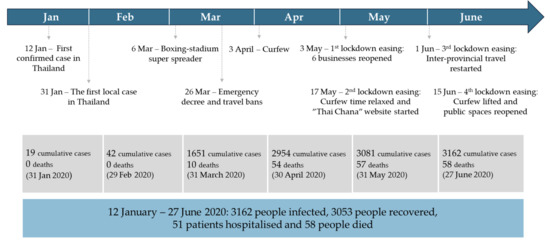
The national government published a notice declaring COVID-19 to be a dangerous infectious disease on 29 February, about six weeks after the first case of the virus was found in Thailand on 12 January 2020. An emergency decree and travel ban were issued on 26 March in response to the rising number of cases following a super-spreader event at a boxing stadium on 6 March and additional cases of local transmission. As the number of cases rose, a national curfew was imposed on 3 April, which was lifted in stages in May and June. Of the 3162 cases found between 12 January and 27 June 2020, a total of 3053 people recovered, 51 patients were hospitalised, and 58 deaths were recorded. This survey was conducted between 16 and 19 June, just after the first national curfew was lifted, which means the respondents of this survey had been under lockdown for more than two months. The main timeline of the COVID-19 outbreak in Thailand around this survey is shown in Figure 1.
Figure 1.
Timeline of COVID-19 outbreak in Thailand.
The Thai government instituted a number of preventive measures for COVID-19. The emergency decree on 26 March restricted domestic and international travel, banned entry into and closed high-risk areas, encouraged masks to be worn and promoted hand washing and social distancing. Restaurants and food stalls were allowed to remain open, but only for take-out. The first national curfew that started on 3 April restricted people to their homes between 10 p.m. and 4 a.m.
To curb the rise in infections, the government distributed masks, offered subsidies for healthcare services, provided free COVID-19 screenings, subsidised the costs of testing, and instituted programmes to assist persons with disabilities. The government also implemented a number of relevant measures to support individuals and companies, including deferrals and exemptions for personal income tax payments, extensions for filing tax returns, and lower taxes for small- and medium-sized enterprises (SMEs) and corporations, as well as subsidies for electricity charges to support people working from home. The subsidy period for compressed natural gas (CNG) was extended for entrepreneurs, and the withholding tax rate was reduced, while cash subsidies were offered for employees at SMEs and value-added tax (VAT) refunds were expedited.
2.2. Review of Food Waste and Plastic Waste Generation in Bangkok
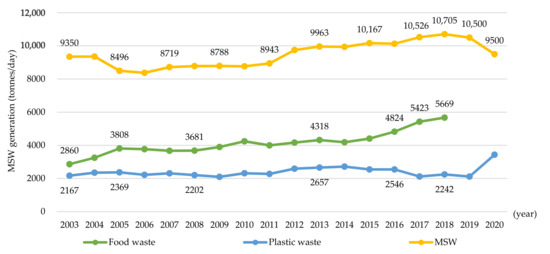
Based on the data collected in the authors’ previous study [20] and officially reported data by the BMA’s Department of Environment, time-series changes in FW, PW, and municipal solid waste (MSW) generation between 2003 and 2020 in Bangkok are shown in Figure 2. MSW is solid waste generated by municipal activities (including by residences, supermarkets, retail shops, businesses, service providers, marketplaces, and institutions) that is collected and treated by BMA. The amount of MSW generated fell by about 1000 tonnes per day in early 2020 after the COVID-19 outbreak due to the closure of hotels and restaurants, following a steady increase in the decade prior to the pandemic. Food waste accounts for 50–60% and plastic waste for 20–30% of the total MSW, but COVID-19 has prompted a reduction in food waste and an increase in plastic waste at the city level. Food waste contains unavoidable items such as peels, stems, and bones, as well as leftovers and other avoidable items, but excludes surplus food from the commercial sector and reused and recycled food such as animal feed, which increased rapidly in the late 2010s, mainly due to growing tourism and lifestyle changes. Since the COVID-19 outbreak and the resulting lockdowns, the total weight of MSW has fallen significantly due to a significant reduction in food waste from hotels and restaurants. On the other hand, the amount of plastic waste generated rose and fell along a gentle curve before the COVID-19 outbreak, averaging 2115 tonnes per day in 2019, but increased sharply by 62% in 2020, reaching an average of 3432 tonnes per day between January and April. In addition, contaminated plastic items from food delivery services, such as takeaway bags, containers, bottles, and cups, that are difficult to reuse and recycle comprised more than 80% of MSW in 2020.
Figure 2.
Food waste, plastic waste, and municipal solid waste generated in the Bangkok metropolitan area. Note: Data on PW and MSW generation in 2020 are the average between January and April 2020 as reported by the BMA’s Department of Environment to BBC Thai. No data on food waste generation are available in 2019 and 2020.
3. Materials and Methods
3.1. Sampling Size and Analytical Approach
An extensive face-to-face questionnaire survey of residents in the Bangkok metropolitan area conducted between 16 and 19 June 2020 (just after the first national curfew was lifted) presented a snapshot of changes in respondents’ lifestyles during the COVID-19 pandemic. This study applied the calculation formula developed by Yamane [22] to determine sample sizes. Considering the budget and labour required to conduct the survey, the confidence level was set at 93% (or at a precision level of ±7%); accordingly, the appropriate sample size was 222. In this survey, passers-by were randomly sampled on the streets [23] of the Bangkok metropolitan area. The questionnaire included queries about working days, eating habits, and purchasing routes for food both before and after the preliminary outbreak of COVID-19 in January 2020, and responses were expected to reflect the ways in which food and plastic waste has been generated by consumers. Statistical tests (t-test, Kruskal–Wallis test, and Dunn’s multiple comparisons test) were used to detect behavioural differences before and during the preliminary outbreak. Food delivery services were also evaluated as a potential key component in the COVID-19 success story. Related environmental impacts on food waste, plastic waste, and other problems caused by new food consumption paradigms were also discussed and statistically tested.
3.2. Content of Questionnaire
The questionnaire survey (see Supplementary Material) for consumers on food waste mainly consisted of four sections and covered a range of daily activities. The first section included questions designed to elicit basic information about the respondents, such as gender, age, occupation, educational level, and household income, as well as working days in the office prior to and during the pandemic. The second section posed questions about changes in respondents’ food-related habits in their daily routines, including purchasing, cooking, eating, and disposal. The third section highlighted trends in the food delivery service sector prior to and during the pandemic, including primary reasons cited by respondents for the use of food delivery services, main factors considered when selecting specific food delivery services from several alternatives, and frequency of ordering different types of food (Thai, Chinese/Japanese/Korean or western cuisine, fast food, street food, desserts, and beverages) using online food services prior to and during the pandemic. The fourth section focused on behavioural changes in relation to the generation of household waste, as well as the respondents’ attitudes towards and intentions in reducing food waste.
4. Results and Discussion
4.1. Respondent Attributes
The attributes of respondents are shown in Table 1. Primary data were collected from 238 individuals (50% male and 50% female). The sample showed a broad range of employment conditions, with the majority of respondents employed at companies (41%), followed by students (22%), the self-employed (16%), and government officials (12%), with the remainder comprising full-time homemakers (5%), the unemployed (3%), and others. The highest percentage of respondents (31%) take home a monthly income of THB 50,001–100,000, with 29% earning more than THB 100,000. The remainder earn between THB 15,001 and 50,000 (34%), while 6% earn less than THB 15,000. Fifty-one percent of respondents live with other adults, 17% with elderly family members, 15% live alone, 10% reside with children, and 7% live with both children and older family members.
Table 1.
Attributes of respondents.
4.2. Changes in Work–Life Balance
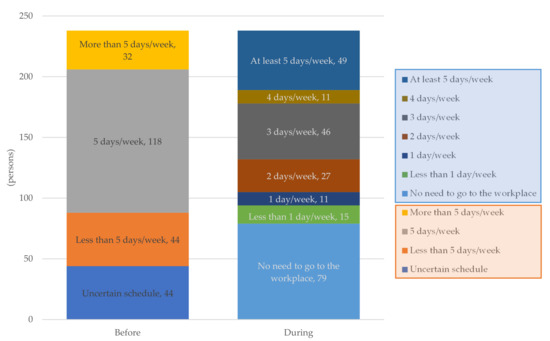
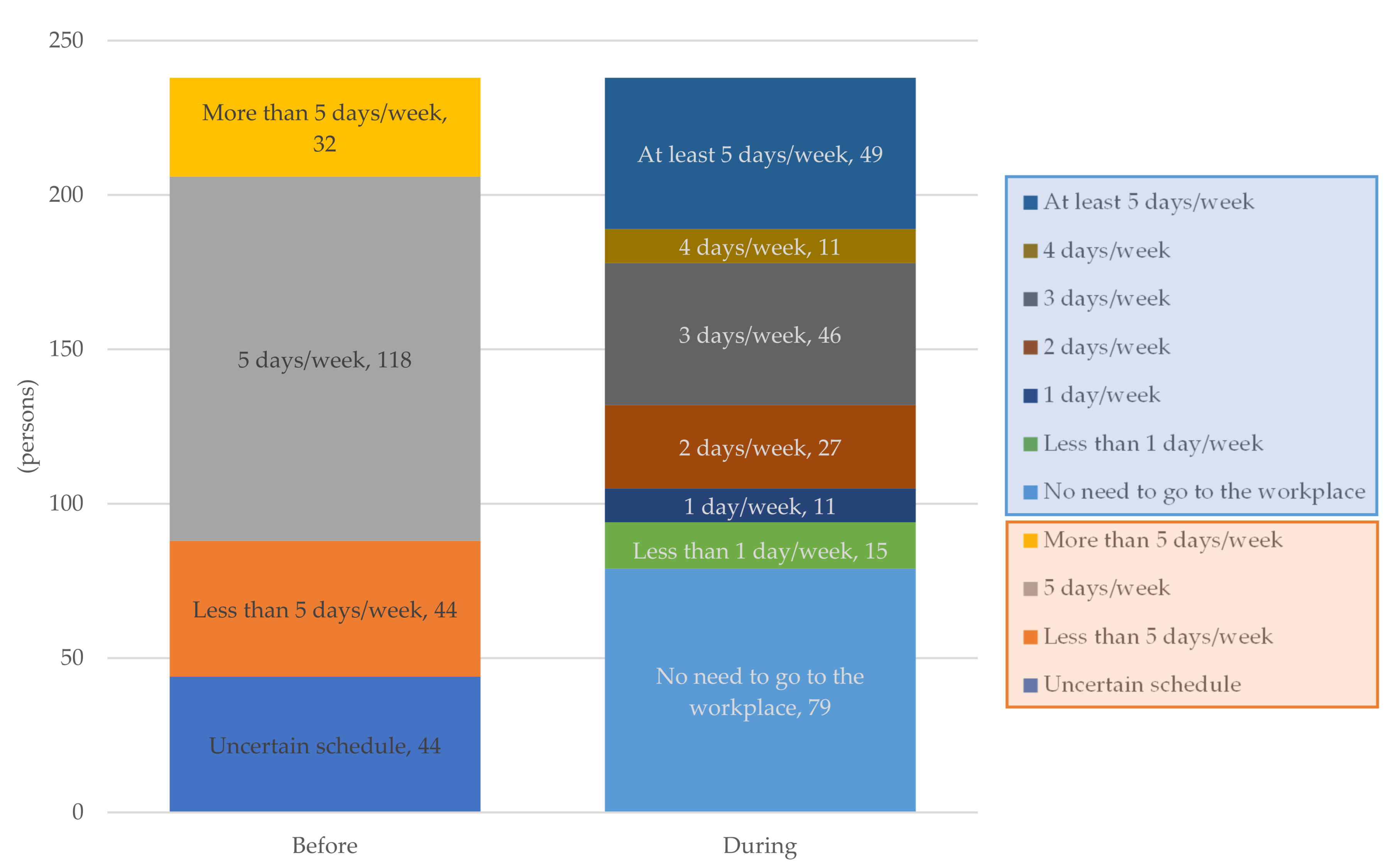
Changes in the number of days respondents worked or attended classes outside the home are shown in Figure 3. Before COVID-19, almost half of all respondents (49.58%) commuted to their workplace/school five days a week, with 13.5% of respondents working/studying outside the home more than 5 days a week, and 18.5% of respondents either working/studying on a flexible schedule or travelling to their workplace/school less than five days a week. After the start of the COVID-19 pandemic, respondents either switched over to teleworking full-time (33%), at least five days/week (21%), or three days/week (19%), respectively. These figures show a substantial shift in work–life balance due to the COVID-19 outbreak.
Figure 3.
Working days at offices before and during the COVID-19 pandemic.
4.3. Changes in Eating Styles and Food Consumption Behaviour
4.3.1. Eating Styles
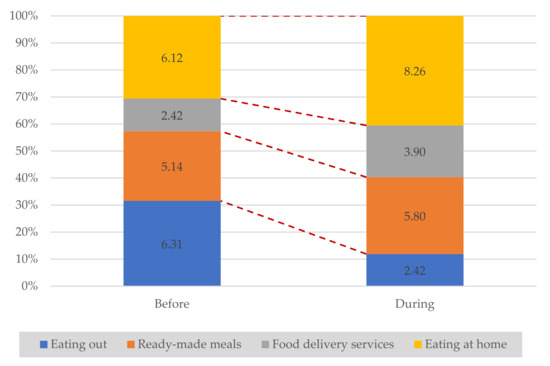
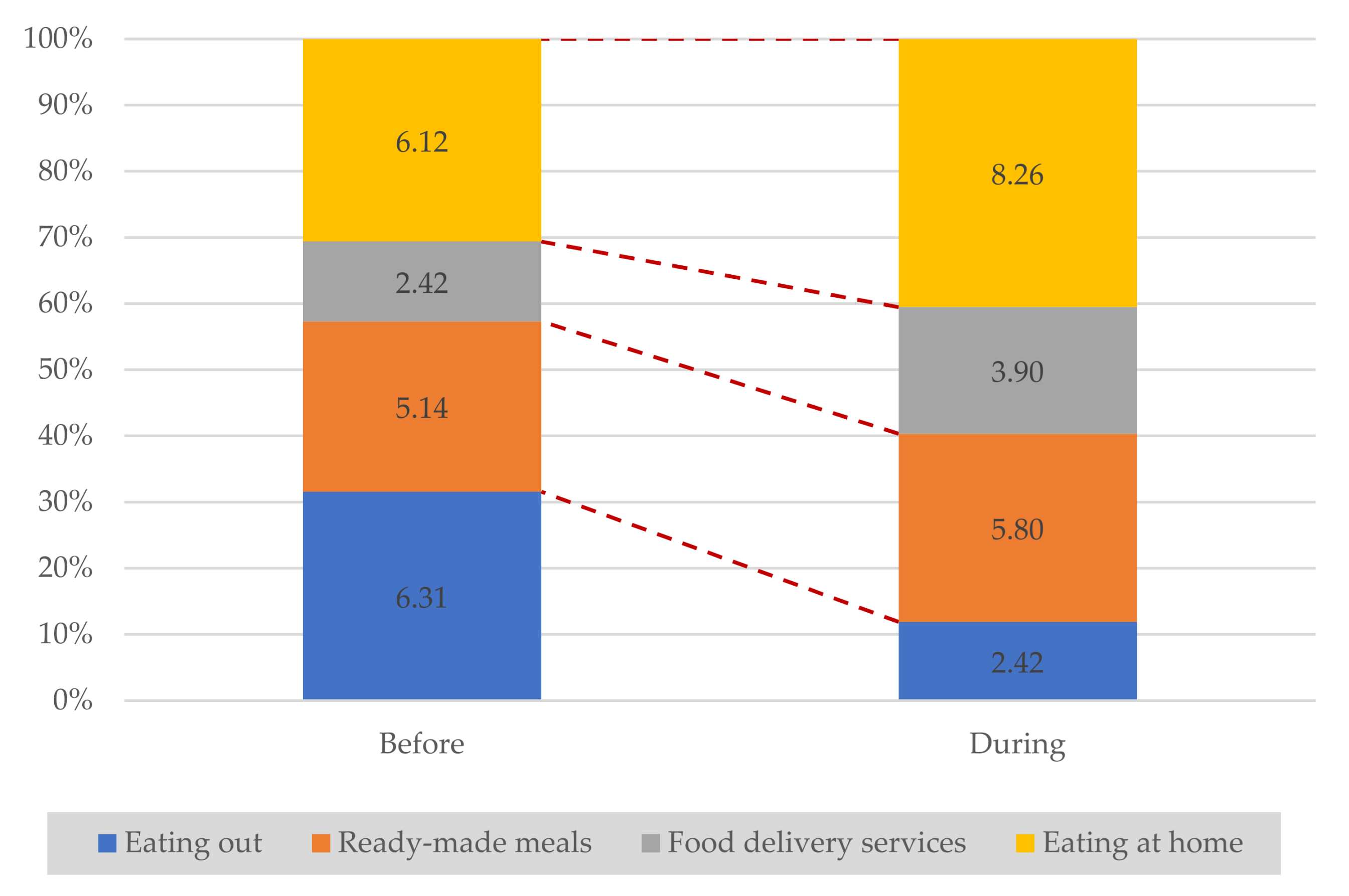
Changes in eating styles are shown in Figure 4, and the results of the t-test are shown in Table 2. Before COVID-19, respondents ate out on average 6.31 times a week. However, the number of times respondents dined out fell to an average of 2.42 meals a week after the outbreak began and were replaced by other styles, including the consumption of ready-made meals (an increase of 1.1 times from 5.14 to 5.80 meals/week), use of food delivery services (an increase of 1.6 times from 2.42 to 3.90 meals/week), and eating at home (an increase of 1.3 times from 6.12 to 8.26 meals/week). This may be attributed to the government’s social distancing and ‘stay-at-home’ policies to prevent the spread of the virus. The study also found a slight increase in the number of people cooking for themselves or with meals prepared by other family members.
Figure 4.
Eating styles before and during the COVID-19 pandemic (meals/week).
Table 2.
p-value of eating styles.
4.3.2. Food Consumption
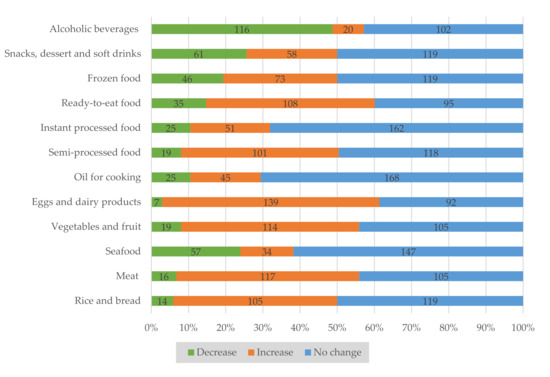
Changes in food consumption in each category are shown in Figure 5, and the results of the t-test are shown in Table 3. The amount of food consumed by people in Thailand changed as they complied with the government’s ‘stay-at-home’ orders. Because more food was consumed at home, they needed to purchase and stock up on greater amounts of rice and other ingredients than usual. The survey also found that respondents increased their consumption of meat, vegetables and fruit, eggs and dairy products, and ready-to-eat food. In contrast, there was a significant reduction in the amount of seafood and alcoholic beverages consumed (Table 3). The decreased consumption of seafood may indicate respondents’ strong health concerns during the COVID-19 pandemic, while the reduced consumption of alcoholic beverages may be due to temporary bans imposed by the government during lockdowns.
Figure 5.
Change in consumption (number of respondents).
Table 3.
p-value of change in consumption.
4.4. Changes in Shopping Behaviour
4.4.1. Purchasing Routes
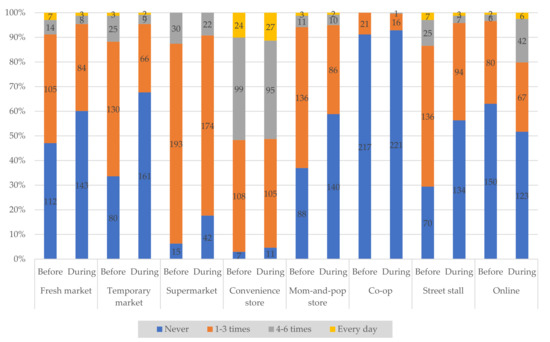
The types of routes used to purchase food and other ingredients and the frequency in which they were used before and during the COVID-19 pandemic are shown in Figure 6, and the results of the t-test are shown in Table 4. Responses demonstrated that since the outbreak, there has been a considerable rise in the frequency of online shopping. Respondents also indicated that they have significantly reduced the number of times they visit temporary markets, mom-and-pop stores, street stalls, fresh markets, and supermarkets, although there has not been much change in the frequency of shopping at convenience stores and co-ops.
Figure 6.
Purchasing routes and frequency before and during the COVID-19 pandemic (unit: number of respondents and percentages).
Table 4.
p-value of frequency of purchases at different types of markets.
4.4.2. Food Delivery Service Trends
Similar to people around the world who are apprehensive about COVID-19, residents in Thailand also refrained from leaving home to shop for food. According to the results of the survey, respondents used food delivery services because this option allowed them to stay at home or in the office. A second factor cited was that respondents did not want to wait in long queues, while the third factor driving the increased use of food delivery services was the prevalence of discount coupons or promotions. Furthermore, respondents cited discount coupons and promotions, reasonable delivery costs, and user friendliness as the primary reasons for choosing online applications (Grab Food, Foodpanda, and LINEman). Moreover, according to the t-test results, respondents increasingly used applications for food delivery services, official restaurant websites, and phone calls when ordering food after the outbreak started. In addition, data from the survey showed variations in the types of frequently ordered foods, including an increase in the consumption of Thai, Chinese, Japanese, and Korean food, as well as fast food. The frequency of orders for desserts and beverages also rose slightly, although the frequency of orders for street food stayed flat, while that for Western cuisine fell.
4.5. Changes in Food and Food-Related Plastic Waste by Household
4.5.1. Changes in Food Waste Generation
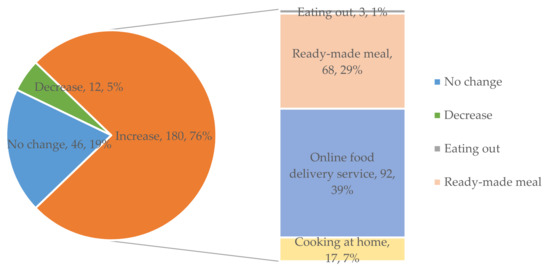
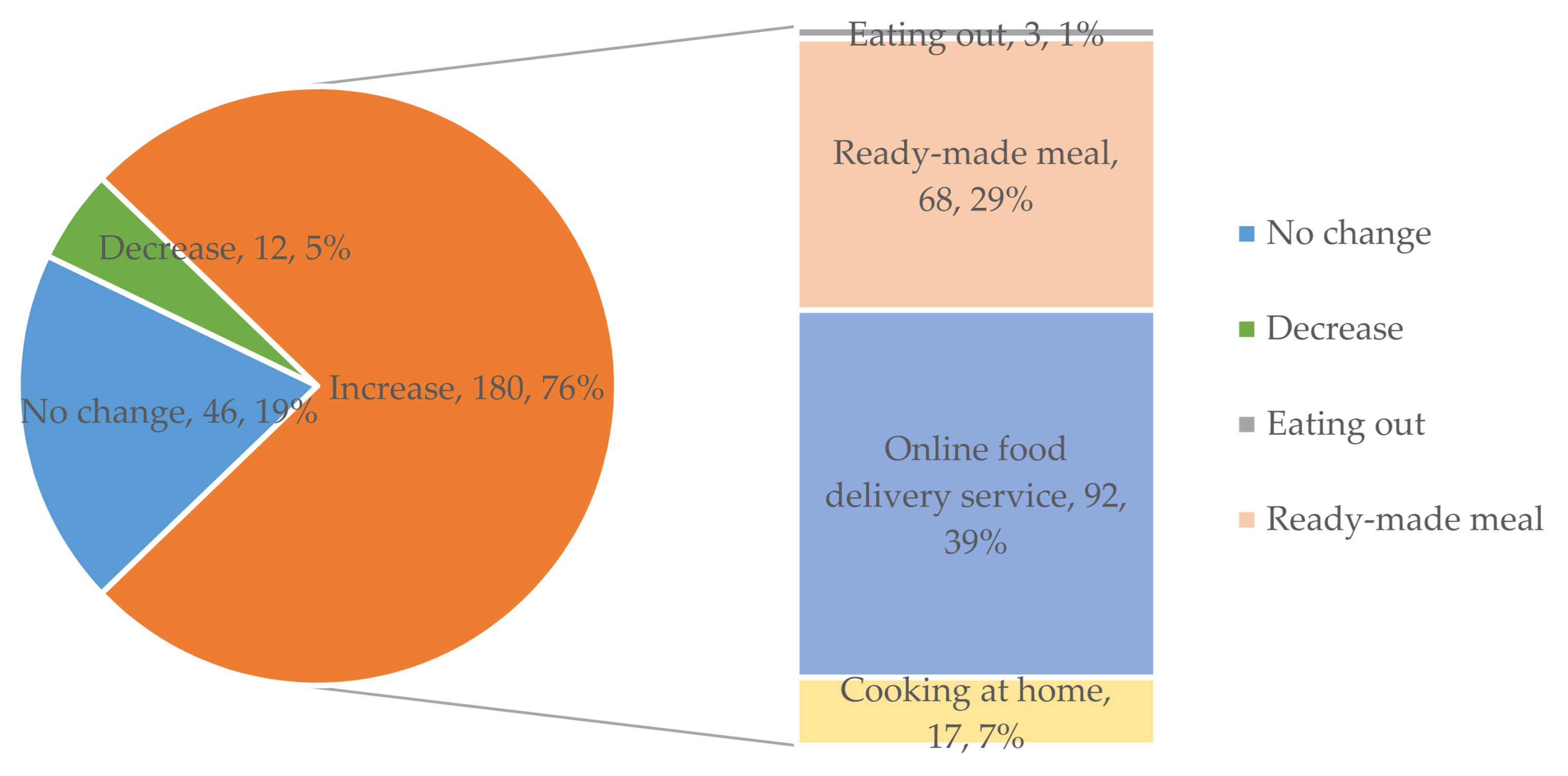
Changes in food waste generated in households are shown in Figure 7. Seventy-six percent of respondents indicated that they felt the amount of waste generated had increased and that most of this could be attributed to a rise in the use of online food delivery services and other ready-made meals.
Figure 7.
Change in food waste generation.
4.5.2. Changes in Causes of Increased Food Waste Generation
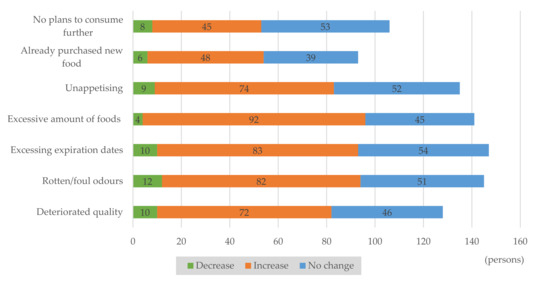
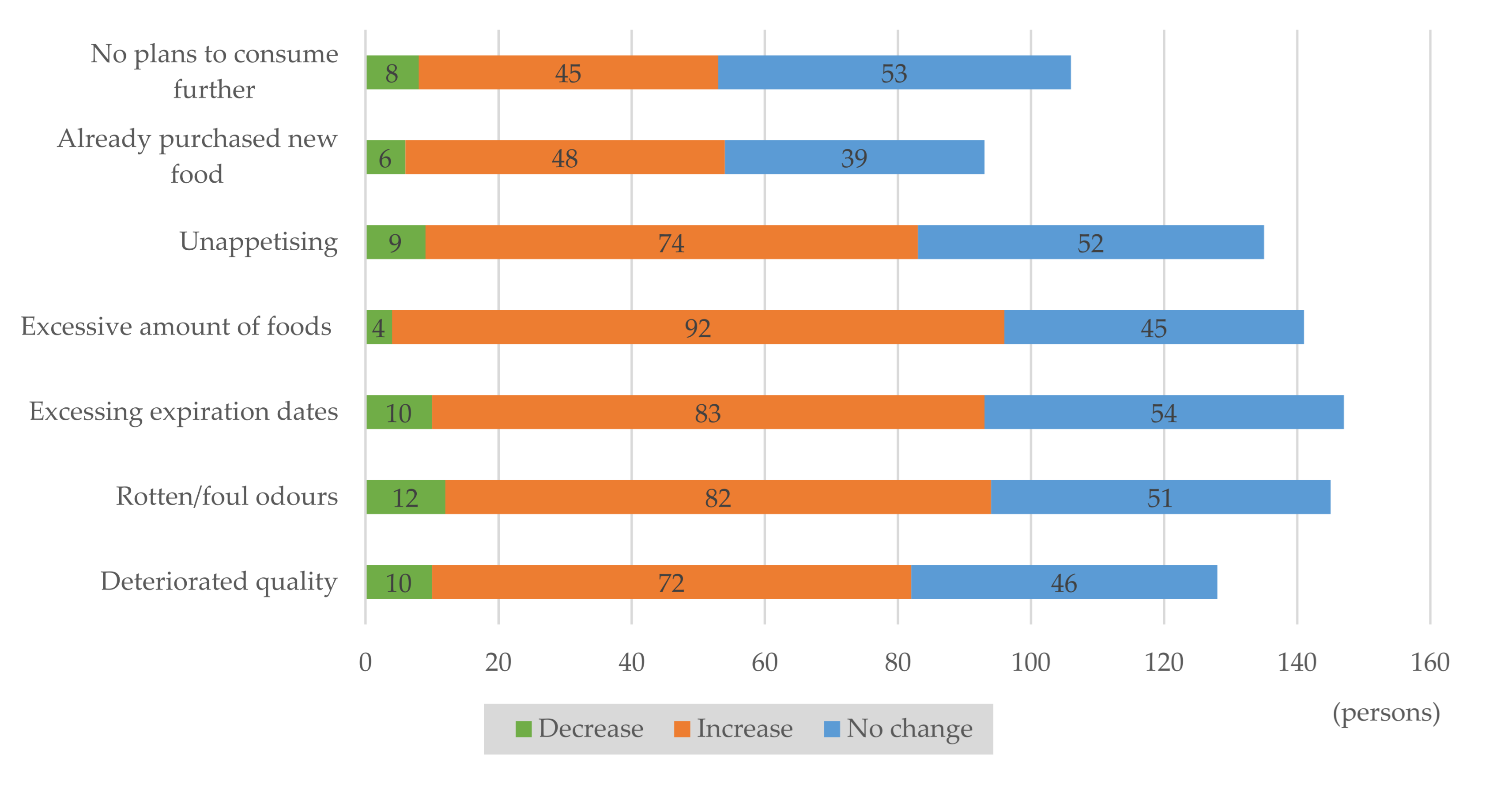
Respondents were queried about the primary reasons for increased food waste generated during the COVID-19 pandemic and changes before and during the COVID-19 pandemic. The top five reasons for food waste, as indicated by respondents, included products that had exceeded their expiration date, rotting/foul odours, excessive amounts of food, unappetising taste and deteriorated quality (Figure 8). Meanwhile, the results of the t-test indicated an increase in every cause of food waste since the outbreak (deteriorated quality, rotten/foul odours, exceeding expiration date, excessive amounts of food, taste, and no plans to consume further).
Figure 8.
Trend of changes in main reasons for food waste.
The same question was investigated in an earlier study by the authors in 2018 [20,24], which identified the two dominant reasons for increased FW at home as exceeding expiration dates and deteriorated quality, while other reasons, such as excessive amounts, were not cited as a primary cause for FW. In contrast, the reasons mentioned in this survey during the COVID-19 pandemic are more varied, with the top five listed as exceeding expiration dates, rotten food or foul odours, excessive amounts, unappetising taste, and deteriorated quality (Figure 7). Changes in the primary reasons for FW in households (decrease, increase, and no change) were also queried in this survey, with ‘increase’ higher than ’decrease’ for all reasons (Figure 7), which may be related to online food delivery. For example, reasons selected by respondents (exceeding expiration dates and rotten/foul odours) may be due to a shorter shelf life for prepared food, while other reasons (such as that the food is unappetising) may be related to the inability to predict taste when using online food delivery services. Furthermore, excessive amounts of food became one of the primary reasons for increased FW in households during the pandemic. The inability to predict quantities when ordering online may have caused respondents to over-order, which in turn led to food waste. On the other hand, the results also indicated inadequate food planning and management tendencies by consumers at home during the pandemic.
4.5.3. Waste Generated from the Use of Online Food Delivery Services
Respondents considered plastic bags (E), hot-and-cold food bags (B), plastic food containers (K), and food waste (A) to be the top four types of waste generated from the use of online food delivery services (Table 5). The results of Dunn’s multiple comparisons test also showed that the top three types of waste (E, B, A) have significant statistical differences (Table 6).
Table 5.
Average score for each type of waste.
Table 6.
Dunn’s multiple comparisons test for various waste types.
4.6. Environmental and Social Concerns and Efforts to Reduce Waste
4.6.1. Environmental and Social Problems Caused by Food Delivery Services
In terms of the environmental and social problems caused by food delivery services, most respondents expressed concern about the increased amount of both food and plastic waste. Air pollution caused by the increased volume of traffic from the use of food delivery services was cited as a secondary concern, followed by higher food prices.
4.6.2. Concerns about Food Due to COVID-19
The top three concerns about COVID-19 and food include an upward swing in food prices (A), uncertainty about the safety of food and ingredients (G), and government epidemic control measures that caused many restaurants to temporarily suspend or permanently shutter their businesses (H) (Table 7).
Table 7.
Average scores for concerns due to COVID-19.
4.6.3. Efforts to Reduce FW and PW
The survey showed that the top three actions taken by respondents to reduce food and plastic waste (Table 8) included advance meal planning, use of cloth bags or reuse of plastic bags when shopping, and regular checks of leftover food.
Table 8.
Average score for actions to reduce food waste, plastic waste, and other waste.
4.7. Practical Implications of this Study
There have been a few questionnaire-based academic studies on the impacts of COVID-19 on household FW, and Table 9 provides a summary of the survey sites, methods, and content, and the main outcomes that are relevant to this study. The resulting changes brought about by the pandemic have been confirmed by researchers at all stages, from purchasing, cooking and eating to disposal. Compared with the relevant outcomes of the existing literature, the results of this study mainly presented the following practical insights:
Table 9.
Relevant international studies and main outcomes on household food and plastic waste during the COVID-19 pandemic.
- (1)
- The pandemic has had an impact on people’s awareness towards health, as they have shown greater concern about nutritional balance. In looking at the categories of food that have been purchased and disposed, it is clear that people have consumed more fruits, fresh vegetables, and meat than usual [25,26,27]. The total amount of food purchased, especially canned goods and frozen foods, also increased, as people may have experienced fear or anxiety about logistical systems as a result of food shortages [19,25,28]. Similar trends have been confirmed in Bangkok as well (see Section 4.3.2).
- (2)
- Numerous studies have shown that the COVID-19 pandemic has streamlined people’s attitudes toward food waste reduction and more sustainable consumption models [18,29], and subsequent effects, such as stockpiling due to the fear of difficulty in finding food in the medium to long term and staying at home, have had a positive influence on reducing FW. In comparison with Thailand, bulk purchases have not caused significant food waste generation in Italy, Portugal, Spain, and many other countries (see Table 9). Pires et al. [30] revealed that people in Portugal reduced the frequency of food purchases and turned to local shops due to restrictions on outdoor movement, becoming more circumspect in their choices and purchases. However, according to this survey, respondents in Bangkok reported an increase in the amount of household food waste generated during the pandemic, with a significant amount generated from online food delivery or other ready-made meals.
- (3)
- Contrary to what has been reported in the literature, where it has been verified that people in the U.S., Portugal, and several other countries (see Table 9) started cooking at home after the outbreak, most respondents in Bangkok relied on food delivery services. With support from the government and local residents’ familiarity with food delivery services such as Grab Food, Foodpanda, and LINEman, the business practices of these services grew aggressively during the pandemic. While many studies indicated a reduction in the amount of food waste generated with more people cooking at home and trying to reduce leftovers, the use of online food delivery services in Bangkok actually resulted in an increase in the amount of food waste generated. This situation differs significantly from that in Brazil where nearly half of the respondents never purchased food online. The convenience of online food delivery services and excessive food supplies might overshadow the chance for people in Bangkok to improve their skills in food planning and management.
- (4)
- Several studies [28,31,32,33] have clarified that socio-economic and demographic factors such as age, household size and composition, income, attitudes, subjective norms, perceptions of behaviour control, and personal values might impact food management behaviours. Everitt et al. [26] directly measured the quantity and composition of household FW disposed during the first wave of the COVID-19 pandemic and examined how household demographics, socio-economic conditions and local food environment characteristics may influence household FW in the city of London, Ontario, Canada. Further studies may combine waste component analyses and quantitative surveys with socio-economic and demographic components to provide a more in-depth understanding of the food waste situation in Bangkok.
- (5)
- Due to social distancing and travel restrictions during the pandemic, almost all existing literature used online surveys. While it is possible to collect information from people who are interested in the research topic, it has proven difficult to obtain information from people with no access to social networks (e.g., low income, poorly educated, elderly, etc.). This may therefore affect how representative the sample of the population is. As this survey in Bangkok was conducted face-to-face, there is less sampling bias than may be found in an online survey.
5. Policy Implications and Potential Intervention Actions
The authors’ previous study on the FW situation in Bangkok before COVID-19 [20] found that the sources of FW are widely distributed throughout the supply chain due to the higher frequency of use of food services and ready-made products and diversification of diets and eating habits. However, due to inadequate management and insufficient detailed regulations and laws, the amount of FW generated is on the rise, with most mixed together with MSW and landfilled. In this study in Bangkok, we found that the COVID-19 pandemic shifted the main source of FW from businesses to households and that both food and plastic packaging waste from households rose due to the increased use of online food delivery services. Post-pandemic, FW and PW generated by households in Bangkok are expected to continue to rise due to hygiene concerns, infection prevention measures, and rebounds in economic activity. At the same time, online shopping is expected to grow even after the pandemic, as the Thai government is partnering with private financial institutions to develop a platform for online shopping to promote digitalisation and cashless shopping.
Food waste and plastic pollution are viewed as two key drivers for achieving the Paris Agreement and the SDGs, but the COVID-19 pandemic may intensify challenges for FW and PW. Therefore, we believe that the policy implications proposed in the previous study [20] must be further strengthened, aiming to: (1) develop comprehensive policies along the entire supply chain; (2) enhance concrete implementation plans with clear targets for reducing and recycling waste based on 3R strategies; (3) develop practical source separation and collection systems; (4) promote the application of appropriate waste management technologies together with ‘recycling loop’ business models; (5) promote platforms for stakeholder collaboration and community-based interventions; (6) create uniform standards and understanding of ‘date labels’; (7) encourage the provision and consumption of smaller portions; (8) utilise health as a driving force to motivate public concern; and (9) develop a policy mix targeting consumers’ daily lifestyles and social practices. In addition to these policies, more intense efforts will be needed to achieve the SDGs. Based on the results of this study, consumer food planning and management, online platforms/delivery services, and the formation of local circular economy frameworks could be considered as three important intervention points for reducing waste and achieving more effective food and plastic waste management practices. Further discussion on these three intervention points is as follows.
5.1. Improve Consumers’ Capabilities to Plan, Manage Food and Cook without Waste
The survey found that (1) the number of people cooking and eating at home rose during the pandemic (4.3.1); (2) the excessive amount of food was identified as one of the top reasons for food waste (4.5.2) as a result of poor food management; and (3) the top two actions that respondents would take to reduce food and plastic waste included meal preparation and regularly checking leftover food (4.6.3). These responses may present governments, the food industry, and businesses with an opportunity to support people’s abilities to plan, manage, and cook food to reduce the amount of food that is leftover or wasted at home. Not much effort is being implemented by the Thai national government and Bangkok local government on these issues, which needs to be addressed. Qian et al. [31] show evidence to support this result, as people who prepare their own food demonstrate more concern for food management and food waste than those who do not cook. Meanwhile, routines related to planning food purchases and their preparation are highly influenced by the skills or confidence that consumers have in their ability to perform such activities. Cooking classes, refrigerator cameras, shopping lists, and information campaigns on reducing food waste have been widely proven through case studies worldwide to have positive effects, though credibility needs to be further verified [12]. Additionally, Hebrok and Heidenstrøm [36] identified decisive moments and contexts for food waste prevention and discussed examples of measures that could be further explored by applying a practice-oriented approach to food waste drivers through food management practices. Furthermore, preparing and ordering excessive amounts of food might be the result of difficulties in estimating the amount of food, so an important measure to avoid this could be to provide hints on enhancing consumers’ food planning and management capabilities and cooking skills, thereby reducing the increased amount of food waste generated during COVID-19. For example, the food industry could indicate the number of servings on food packaging instead of weight, which may help consumers while purchasing. Similar suggestions will effectively help consumers manage food in households, such as by packaging smaller portions and showing consumers how to manage uneaten food and extend expiration dates. Social media platforms, including television programmes, recipe apps, and cooking videos will also play a role in improving the ability of people who may lack skills or have few ideas about what to cook. In a similar fashion, supermarkets may also be able to provide suggestions to consumers about food preparation by displaying the ingredients needed for certain meals.
5.2. Develop Eco-Friendly Online Platforms and Food Delivery Services
The rapid expansion of e-commerce and online food delivery services is a visible change that has occurred as a result of the COVID-19 pandemic. This study shows that during the pandemic, most food services shifted to online food delivery, resulting in an increase in both FW and PW. Although online food delivery services benefit society as a whole in terms of lowering the number of potential routes for infectious diseases, while simultaneously providing a certain level of comfort to consumers and stimulating economic activity, there is a risk that incentives may encourage a rise in the use of these services, leading to overconsumption and other adverse behaviours in terms of FW and PW. Therefore, the key to preventing and reducing both FW and PW is determining how to build eco-friendly online platforms/food delivery services and business models to encourage consumers to act in environmentally friendly ways.
The temporary relaxation of bans on the use of single-use plastics during the pandemic may indicate a breakdown in sustainable patterns of behaviour. To mitigate the problem of plastic waste, research and development in materials science to streamline plastic packaging should be emphasised for sustainable development [37]. Consideration should also be given to establishing more sustainable options, such as deposit refund schemes, or default options, such as delivering food in reusable containers. At the same time, governments must institute educational curriculums and communication campaigns to highlight and promote environmentally friendly behaviour.
Meanwhile, along with the expansion of green food delivery options and online shopping, access to food has become easier and more efficient, which could lead to lower GHG emissions and achieve low-carbon lifestyles. Besides changes in shopping habits, Galanakis [29] points out that digital technologies, including information and communication technologies (ICT), apps, the Internet of things (IoT) platforms, big data and artificial technology, will enable food to be delivered precisely when demand arises, potentially leading to a reduction in FW. Additionally, digital platforms such as food rescue apps can be used as a mechanism for mobilising the active participation of stakeholders along the entire supply chain. Therefore, the system should be designed in advance to maximise the numerous synergies between the promotion of online platforms and the prevention of FW and PW, as well as to minimise trade-offs.
In a positive development, the Ministry of Natural Resources and Environment has joined together with private entities, including six food delivery platforms such as Food Panda, Grab Food, Gojek, and LalaMove in a push to reduce the use of plastic under the concept of the ‘New Normal Food Delivery with Environmental Care’. Food delivery services involved in this initiative will add an opt-in button to their applications that will allow customers to decline single-use plastics as well as work with their restaurants to incorporate more environmentally friendly packaging (glass jars, metal straws, non-plastic bags, etc.).
5.3. Promote a Circular Economy via Localised Supply Chains to Improve Food Safety and Well-Being
A system-level approach to address issues surrounding FW, PW, and MSW is needed. Circular economy strategies have opened up new avenues for potential measures to reduce FW [38]. The concept of the ‘circular economy’ is central to European environmental thinking and policy-making, and the transition to a more circular economy is a major goal towards developing a sustainable, low-carbon, resource-efficient, and competitive economy in the EU [39]. Food waste and plastics are two of five priority sectors in the EU Circular Economy Action Plan, which helps contain all materials within infinite loops through sustainable consumption and production and sound waste management, including greater recycling and re-use, and also by creating a market for secondary raw materials. The concept of a circular economy also encompasses waste prevention in the first place, which is positioned at the top of the waste hierarchy.
As transportation and logistics have been highly restricted during the pandemic, the use of local food supply chains to improve food safety and revitalise the local economy has been an effective measure to counter COVID-19. Based on a systematic literature review study on COVID-19, food systems, and the circular economy by Giudice et al. [1], the ‘localisation’ of food systems might present more resilient and sustainable solutions: localised food systems reduce waste and stress nutrition; combining local and seasonal elements in short supply chains reduces storage and transportation needs, provides a better supply–demand balance, creates more transparency, improves tracking capability, and contributes to waste reduction; and consumers seem to place higher value on food purchased in local markets. The localisation of food systems will also help reduce the amount of plastic packaging waste and provide fiscal security to fight similar pandemics in the future.
6. Conclusions
In this paper, Bangkok was selected as a case study to examine the impact of the COVID-19 outbreak on the generation of food and plastic waste by consumers by examining shifts in consumer lifestyles and consumption behaviours through a face-to-face questionnaire survey. The potential of food delivery services in the starring role of a COVID-19 success story and the related environmental consequences of food waste, plastic waste, and other problems caused by a new food consumption paradigm were also examined. This paper also provides policy implications and innovative actions for tackling the issues raised to achieve more effective food and plastic waste management.
Although travel bans and diminished economic activity due to COVID-19 have led to a dramatic reduction in MSW, both FW and PW generated by households in Bangkok were observed to have increased during COVID-19. Furthermore, the total amount of FW and PW as well as MSW in Bangkok is expected to rise post-pandemic in the absence of appropriate institutional frameworks and a lack of policy-level directions and effective measurements to address FW and PW issues. This increase may also likely affect our mid- and long-term goals for transitioning towards sustainability.
Although the data presented in this study are relatively uncertain due to the limited number of samples, this is the first study to contribute to a better understanding of how COVID-19 affects consumer behaviour and can help constitute a basis to further promote behaviour that prevents and reduces FW and PW in households, even outlasting the COVID-19 crisis in Asian developing countries.
Of course, there are many research questions left unanswered. For example, there is still a poor understanding of the impacts made by socio-economic and demographic factors on food management behaviour, and on the amount of FW and PW generated by households, as well as throughout the supply chain. Furthermore, to achieve SDG 12, ensuring harmonised data collection on FW and PW remains a challenge in Asia, and practical policies, strategies and actions on household prevention and reduction is an area that can be considered for future study. In addition, the upheaval caused by the COVID-19 crisis has created not only a major challenge, but also an opportunity for reshaping existing policy frameworks and production-consumption style socio-economic systems, as well as a chance to identify the underlying drivers of food waste and their links with plastic packaging. It may also present an opportunity to engage with relevant stakeholders including consumers to tackle the dual challenge of food waste and plastic waste in a systemic way, which is also a topic for further work.
Supplementary Materials
The supplementary materials are available online at https://doi.org/10.6084/m9.figshare.15131100.v1.
Author Contributions
Conceptualization, methodology, data analysis, and writing (original draft) by C.L. and P.B.; investigation and data curation by P.B.; funding acquisition and project administration by C.L.; literature review and writing (revision) by C.L. and Q.Z. All authors have read and agreed to the published version of the manuscript.
Funding
This research was funded by the Institute for Global Environmental Strategies (IGES) under the Strategic Research Fund 2020–2021 and supported by the Environment Research and Technology Development Fund (S-16) of the Environmental Restoration and Conservation Agency of Japan, ‘Policy Design and Evaluation to Ensure Sustainable Consumption and Production Patterns in Asian Region’ (2016–2020).
Institutional Review Board Statement
Not applicable.
Informed Consent Statement
Not applicable.
Data Availability Statement
Supplementary Material associated with this article are openly available in FigShare at https://doi.org/10.6084/m9.figshare.15131100.v1 (accessed on 8 August 2021).
Acknowledgments
The authors would like to thank Emma Fushimi and Christine Pearson Ishii for proofreading this paper and would also like to express gratitude to the referees for their useful comments and suggestions.
Conflicts of Interest
The authors declare no conflict of interest.
References
- Giudice, F.; Caferra, R.; Morone, P. COVID-19, the food system and the circular economy: Challenges and opportunities. Sustainability 2020, 12, 7939. [Google Scholar] [CrossRef] [Scilit]
- Sharma, H.B.; Vanapalli, K.R.; Cheela, V.S.; Ranjan, V.P.; Jaglan, A.K.; Dubey, B.; Goel, S.; Bhattacharya, J. Challenges, opportunities, and innovations for effective solid waste management during and post COVID-19 pandemic. Resour. Conserv. Recycl. 2020, 162, 105052. [Google Scholar] [CrossRef] [Scilit]
- Vanapalli, K.R.; Sharma, H.B.; Ranjan, V.P.; Samal, B.; Bhattacharya, J.; Dubey, B.K.; Goel, S. Challenges and strategies for effective plastic waste management during and post COVID-19 pandemic. Sci. Total Environ. 2021, 750, 141514. [Google Scholar] [CrossRef] [Scilit] [PubMed]
- Lemaire, A.; Limbourg, S. How can food loss and waste management achieve sustainable development goals? J. Clean. Prod. 2019, 234, 1221–1234. [Google Scholar] [CrossRef] [Scilit]
- Löhr, A.; Savelli, H.; Beunen, R.; Kalz, M.; Ragas, A.; Van Belleghem, F. Solutions for global marine litter pollution. Curr. Opin. Environ. Sustain. 2017, 28, 90–99. [Google Scholar] [CrossRef] [Scilit]
- Wang, J.; Zheng, L.; Li, J. A critical review on the sources and instruments of marine microplastics and prospects on the relevant management in China. Waste Manag. Res. 2018, 36, 898–911. [Google Scholar] [CrossRef] [Scilit]
- Muriana, C. A focus on the state of the art of food waste/losses issue and suggestions for future researches. Waste Manag. 2017, 68, 557–570. [Google Scholar] [CrossRef] [Scilit]
- Amicarelli, V.; Bux, C. Food waste measurement toward a fair, healthy and environmental-friendly food system: A critical review. Br. Food J. 2020, 123, 2907. [Google Scholar] [CrossRef] [Scilit]
- Schott, A.B.S.; Wenzel, H.; La Cour Jansen, J. Identification of decisive factors for greenhouse gas emissions in comparative life cycle assessments of food waste management—An analytical review. J. Clean. Prod. 2016, 119, 13–24. [Google Scholar] [CrossRef] [Scilit]
- De Menna, F.; Dietershagen, J.; Loubiere, M.; Vittuari, M. Life cycle costing of food waste: A review of methodological approaches. Waste Manag. 2018, 73, 1–13. [Google Scholar] [CrossRef] [Scilit]
- Aschemann-Witzel, J.; de Hooge, I.; Amani, P.; Bech-Larsen, T.; Oostindjer, M. Consumer-related food waste: Causes and potential for action. Sustainability 2015, 7, 6457–6477. [Google Scholar] [CrossRef] [Scilit]
- Reynolds, C.; Goucher, L.; Quested, T.; Bromley, S.; Gillick, S.; Wells, V.K.; Evans, D.; Koh, L.; Kanyama, A.C.; Katzeff, C.; et al. Review: Consumption-stage food waste reduction interventions—What works and how to design better interventions. Food Policy 2019, 83, 7–27. [Google Scholar] [CrossRef] [Scilit]
- Roodhuyzen, D.M.A.; Luning, P.A.; Fogliano, V.; Steenbekkers, L.P.A. Putting together the puzzle of consumer food waste: Towards an integral perspective. Trends Food Sci. Technol. 2017, 68, 37–50. [Google Scholar] [CrossRef] [Scilit]
- Schanes, K.; Dobernig, K.; Gözet, B. Food waste matters—A systematic review of household food waste practices and their policy implications. J. Clean. Prod. 2018, 182, 978–991. [Google Scholar] [CrossRef] [Scilit]
- Heidbreder, L.M.; Bablok, I.; Drews, S.; Menzel, C. Tackling the plastic problem: A review on perceptions, behaviors, and interventions. Sci. Total Environ. 2019, 668, 1077–1093. [Google Scholar] [CrossRef] [Scilit] [PubMed]
- United Nations. Transforming Our World: The 2030 Agenda for Sustainable Development; Department of Economic and Social Affairs, United Nations: New York, NY, USA, 2015. [Google Scholar]
- Van Rensburg, M.L.; S’phumelele, L.N.; Dube, T. The ‘plastic waste era’; social perceptions towards single-use plastic consumption and impacts on the marine environment in Durban, South Africa. Appl. Geogr. 2020, 114, 102132. [Google Scholar] [CrossRef] [Scilit]
- Jribi, S.; Ismail, H.B.; Doggui, D.; Debbabi, H. COVID-19 virus outbreak lockdown: What impacts on household food wastage? Environ. Dev. Sustain. 2020, 22, 3939–3955. [Google Scholar] [CrossRef] [Scilit] [PubMed]
- Pappalardo, G.; Cerroni, S.; Nayga, R.M.; Yang, W. Impact of Covid-19 on Household Food Waste: The Case of Italy. Front. Nutr. 2020, 7, 585090. [Google Scholar] [CrossRef] [Scilit]
- Liu, C.; Mao, C.; Bunditsakulchai, P.; Sasaki, S.; Hotta, Y. Food waste in Bangkok: Current situation, trends and key challenges. Resour. Conserv. Recycl. 2020, 157, 104779. [Google Scholar] [CrossRef] [Scilit]
- Food and Agriculture Organization of the United Nations. Food Wastage Footprint: Full-Cost Accounting; FAO: Rome, Italy, 2014; Available online: http://www.fao.org/3/i3991e/i3991e.pdf (accessed on 8 August 2021).
- Yamane, T. Statistics, An Introductory Analysis; Harper and Row: New York, NY, USA, 1967. [Google Scholar]
- Richardson, A.J.; Ampt, E.S.; Meyburg, A.H. Survey Methods for Transport Planning; Eucalyptus Press: Melbourne, Australia, 1995. [Google Scholar]
- Bunditsakulchai, P.; Liu, C. Integrated Strategies for Household Food Waste Reduction in Bangkok. Sustainability 2021, 13, 7651. [Google Scholar] [CrossRef] [Scilit]
- Babbitt, C.W.; Babbitt, G.A.; Oehman, J.M. Behavioral impacts on residential food provisioning, use, and waste during the COVID-19 pandemic. Sustain. Prod. Consum. 2021, 28, 315–325. [Google Scholar] [CrossRef] [Scilit]
- Everitt, H.; van der Werf, P.; Seabrook, J.A.; Wray, A.; Gilliland, J.A. The quantity and composition of household food waste during the COVID-19 pandemic: A direct measurement study in Canada. Socio Econ. Plan. Sci. 2021, 101110. Available online: https://www.sciencedirect.com/science/article/pii/S0038012120307904 (accessed on 8 August 2021). [CrossRef] [Scilit]
- Schmitt, V.G.H.; Cequea, M.M.; Neyra, J.M.V.; Ferasso, M. Consumption Behavior and Residential Food Waste during the COVID-19 Pandemic Outbreak in Brazil. Sustainability 2021, 13, 3702. [Google Scholar] [CrossRef] [Scilit]
- Vidal-Mones, B.; Barco, H.; Diaz-Ruiz, R.; Fernandez-Zamudio, M.-A. Citizens’ Food Habit Behavior and Food Waste Consequences during the First COVID-19 Lockdown in Spain. Sustainability 2021, 13, 3381. [Google Scholar] [CrossRef] [Scilit]
- Galanakis, C.M. The Food Systems in the Era of the Coronavirus (COVID-19) Pandemic Crisis. Food 2020, 9, 523. [Google Scholar] [CrossRef] [Scilit] [PubMed]
- Pires, I.M.; Fernández-Zamudio, M.Á.; Vidal-Mones, B.; Martins, R.B. The impact of covid-19 lockdown on portuguese households’ food waste behaviors. Hum. Ecol. Rev. 2020, 26, 59–69. [Google Scholar] [CrossRef] [Scilit]
- Qian, K.; Javadi, F.; Hiramatsu, M. Influence of the COVID-19 pandemic on household food waste behavior in Japan. Sustainability 2020, 12, 9942. [Google Scholar] [CrossRef] [Scilit]
- Özbük, R.M.Y.; Coşkun, A.; Filimonau, V. The impact of COVID-19 on food management in households of an emerging economy. Socio Econ. Plan. Sci. 2021, 101094. [Google Scholar] [CrossRef] [Scilit]
- Principato, L.; Secondi, L.; Cicatiello, C.; Mattia, G. Caring more about food: The unexpected positive effect of the Covid-19 lockdown on household food management and waste. Socio Econ. Plan. Sci. 2020, 100953. [Google Scholar] [CrossRef] [Scilit]
- Cosgrove, K.; Vizcaino, M.; Wharton, C. COVID-19-related changes in perceived household food waste in the united states: A cross-sectional descriptive study. Int. J. Environ. Res. Public Health 2021, 18, 1104. [Google Scholar] [CrossRef] [Scilit]
- Amicarelli, V.; Tricase, C.; Spada, A.; Bux, C. Households’ Food Waste Behavior at Local Scale: A Cluster Analysis After the COVID-19 Lockdown. Sustainability 2021, 13, 3283. [Google Scholar] [CrossRef] [Scilit]
- Hebrok, M.; Heidenstrøm, N. Contextualising food waste prevention-decisive moments within everyday practices. J. Clean. Prod. 2018, 210, 1435–1448. [Google Scholar] [CrossRef] [Scilit]
- United Nations Environment program. Exploring the Potential for Adopting Alternative Materials to Reduce Marine Plastic Litter; UNEP: Nairobi, Kenya, 2018. [Google Scholar]
- Borrello, M.; Caracciolo, F.; Lombardi, A.; Pascucci, S.; Cembalo, L. Consumers’ perspective on circular economy strategy for reducing food waste. Sustainability 2017, 9, 141. [Google Scholar] [CrossRef] [Scilit]
- European Commission. Communication from the Commission to the European Parliament, the Council, the European Economic and Social Committee and the Committee of the Regions. Closing the loop—An EU Action Plan for the Circular Economy. 2015. Available online: https://eur-lex.europa.eu/legal-content/EN/TXT/?uri=CELEX:52015DC0614 (accessed on 8 August 2021).

Publisher’s Note: MDPI stays neutral with regard to jurisdictional claims in published maps and institutional affiliations. |
© 2021 by the authors. Licensee MDPI, Basel, Switzerland. This article is an open access article distributed under the terms and conditions of the Creative Commons Attribution (CC BY) license (https://creativecommons.org/licenses/by/4.0/).