Next Article in Journal
Public—Private Partnership Governance for Accessible Tourism in Marine Protected Areas (MPAs)
Next Article in Special Issue
Social Innovation for a Just Sustainable Development: Integrating the Wellbeing of Future People
Previous Article in Journal
Comparative Modelling Analysis of Air Pollutants, PM2.5 and Energy Efficiency Using Three Ventilation Strategies in a High-Rise Building: A Case Study in Suzhou, China
Previous Article in Special Issue
Society 5.0: A Japanese Concept for a Superintelligent Society
Article

Key Drivers of the Engagement of Farmers in Social Innovation for Marginalised Rural Areas
1
Department of Agriculture, Food, Natural Resource and Engineering (DAFNE), University of Foggia, 71122 Foggia, Italy
2
Department of Economics, University of Foggia, 71121 Foggia, Italy
3
Department of Economics, Management and Territory, University of Foggia, 71121 Foggia, Italy
*
Author to whom correspondence should be addressed.
Academic Editors: Pedro Verga Matos and Tania Pereira Christopoulos
Sustainability 2021, 13(15), 8454; https://doi.org/10.3390/su13158454
Received: 16 June 2021 / Revised: 24 July 2021 / Accepted: 26 July 2021 / Published: 28 July 2021
(This article belongs to the Special Issue Social Innovation and Sustainability)
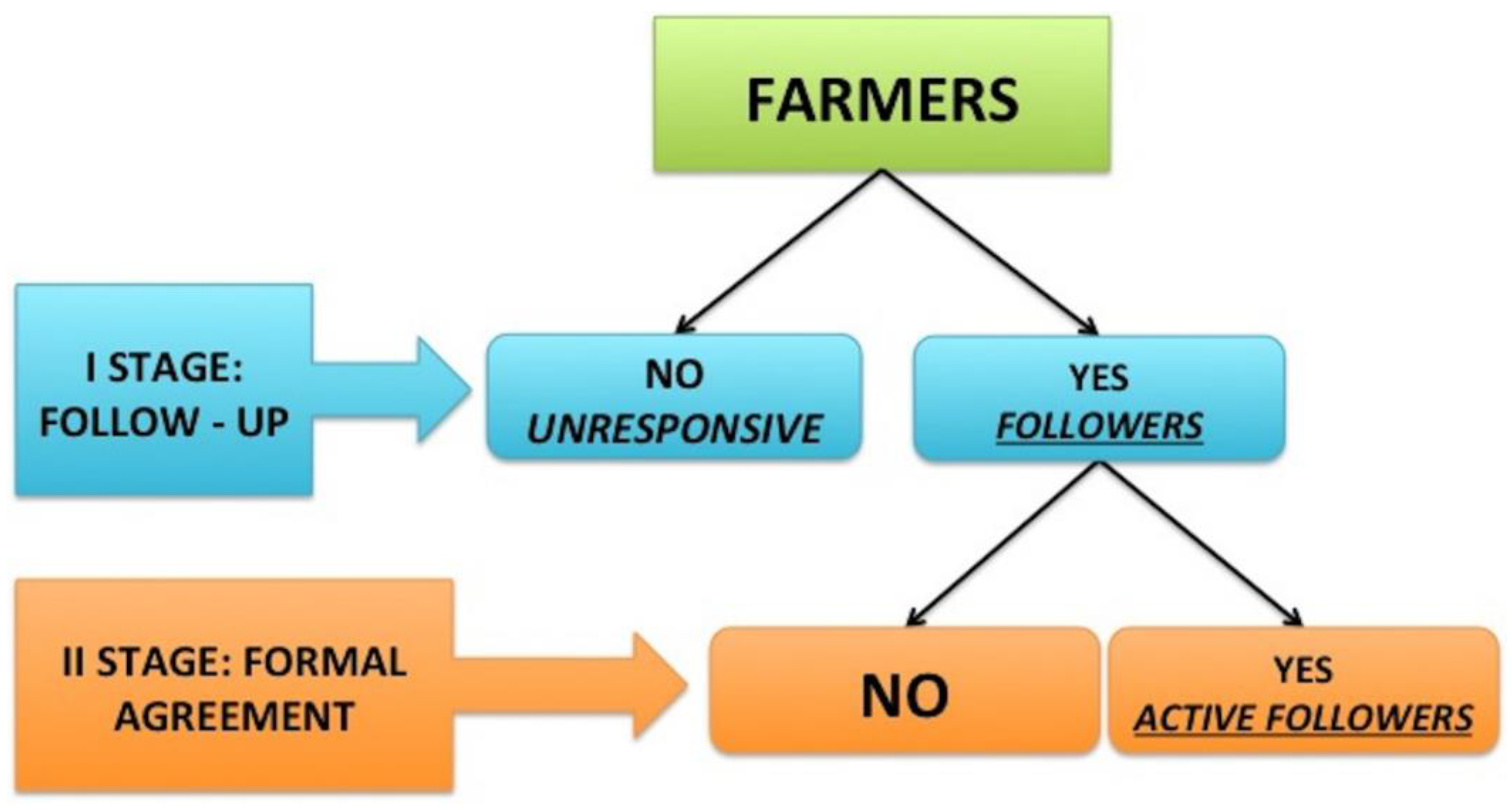
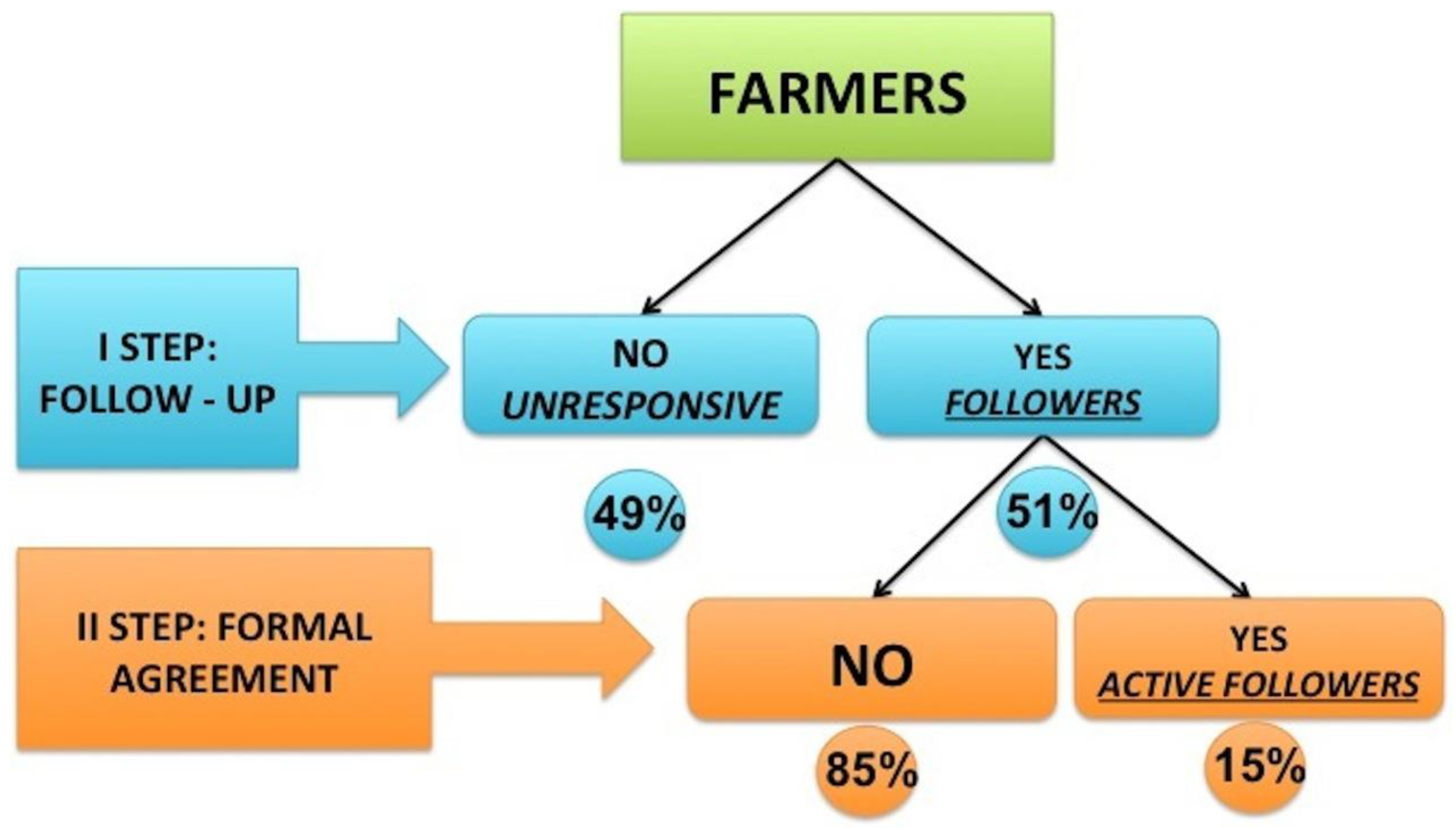
The European Union promotes social innovation (SI) initiatives for the support of marginalised rural areas through rural and sustainable development policies. These are based on the engagement of local actors and the strengthening of their mutual relationships to boost the fostering of professional collaborations. In this context, the Horizon 2020 Social Innovation in Marginalised Areas (SIMRA) project elaborated a conceptual framework for characterising the engagement in an SI initiative. Accordingly, this paper aims to demonstrate that engagement relies on specific key drivers, such as the existence of unmet social needs and the role of agency. To this end, a two-step Heckman model was applied to an SI initiative case study called Vàzapp’, a rural hub (agency) located in Southern Italy. It promotes relationships among farmers to valorise the marginalised rural areas. The results appear consistent with the theoretical framework, demonstrating that the farmers’ engagement was motivated by the existence of the aforementioned determinants. The implications are relevant for policymakers, consultants, and social innovators who may incorporate these elements in designing specific SI projects in different contexts. View Full-Text
Keywords: social innovation; relationships; marginalised rural areas; rural hub; farmers engagement; two-stage model; collaboration creation social innovation; relationships; marginalised rural areas; rural hub; farmers engagement; two-stage model; collaboration creation
Show Figures

Figure 1

MDPI and ACS Style

Baselice, A.; Lombardi, M.; Prosperi, M.; Stasi, A.; Lopolito, A. Key Drivers of the Engagement of Farmers in Social Innovation for Marginalised Rural Areas. Sustainability 2021, 13, 8454. https://doi.org/10.3390/su13158454

AMA Style

Baselice A, Lombardi M, Prosperi M, Stasi A, Lopolito A. Key Drivers of the Engagement of Farmers in Social Innovation for Marginalised Rural Areas. Sustainability. 2021; 13(15):8454. https://doi.org/10.3390/su13158454
Chicago/Turabian Style

Baselice, Antonio, Mariarosaria Lombardi, Maurizio Prosperi, Antonio Stasi, and Antonio Lopolito. 2021. "Key Drivers of the Engagement of Farmers in Social Innovation for Marginalised Rural Areas" Sustainability 13, no. 15: 8454. https://doi.org/10.3390/su13158454
Find Other Styles
Note that from the first issue of 2016, MDPI journals use article numbers instead of page numbers. See further details here.

Article Access Map by Country/Region

1
Back to TopTop