


Abstract
Planet Earth is under severe stress from several inter-linked factors mainly associated with rising global population, linear resource consumption, security of resources, unsurmountable waste generation, and social inequality, which unabated will lead to an unsustainable 21st Century. The traditional way products are designed promotes a linear economy that discards recoverable resources and creates negative environmental and social impacts. Here, we suggest multi-disciplinary approaches encompassing chemistry, process engineering and sustainability science, and sustainable solutions in “game changer” challenges in three intersecting arenas of food: Sustainable diet, valorisation of unavoidable food supply chain wastes, and circularity of food value chain systems aligning with the United Nations’ seventeen Sustainable Development Goals. In the arena of sustainable diet, comprehensive life cycle assessment using the global life cycle inventory datasets and recommended daily servings is conducted to rank food choices, covering all food groups from fresh fruits/vegetables, lentils/pulses and grains to livestock, with regard to health and the environment, to emphasise the essence of plant-based diet, especially plant-based sources of protein, for holistic systemic sustainability and stability of the earth system. In the arena of unavoidable food supply chain wastes, economically feasible and synergistically (energy and material) integrated innovative biorefinery systems are suggested to transform unavoidable food waste into functional and platform chemical productions alongside energy vectors: Fuel or combined heat and power generation. In the arena of circularity of food value chain systems, novel materials and methods for plant-based protein functionalisation for food/nutraceutical applications are investigated using regenerative bio-surfactants from unavoidable food waste. This circular economy or industrial symbiosis example thus combines the other two arenas, i.e., plant-based protein sourcing and unavoidable food waste valorisation. The multi-disciplinary analysis here will eventually impact on policies for dietary change, but also contribute knowledge needed by industry and policy makers and raise awareness amongst the population at large for making a better approach to the circular economy of food.
1. Introduction
Global megatrends such as increasing population, urbanisation and industrialisation in developing countries, and lack of political will to reduce consumption in developed countries will significantly impact resource security. Crude oil, a finite resource itself, should not be our ‘go to’ feedstock for chemicals, materials, and energy, which currently serve our daily lifestyles. It is imperative that we seek innovations in bioresources, biorefineries, and bio-based circular economies to reduce waste and primary resource consumption and retain resource within value chains [1,2,3]. For example, the Organisation for Economic Co-operation and Development (OECD) recognizes the need to focus on biological resources for sustainability, food security, and nutrition [4], which are high on the global political agenda [5].
We have been for far too long developing business and economic models built upon so called linear economy, following a “take-make-waste” strategy, which is now recognised as being resource intensive and wasteful. The Ellen MacArthur Foundation seeks to develop regenerative circular economies that thrive within finite resources of the Earth, generating zero waste [2]. Food supply chain systems need to be circular and resource efficient to reduce or eliminate avoidable waste [6]. Unavoidable waste from food manufacturing and processing systems can be valorised into high value functional products, through advanced synergistically integrated engineered optimised systems coined as biorefineries, alternative to petroleum-based systems, but more efficient, flexible, and adaptable than petroleum/petrochemical systems [7]. We need to adapt engineering design optimisation proficiency for sustainable development of biorefinery systems so as to embrace the principles of circular economy and industrial symbiosis. Industrial, municipal (household, office, and commercial settings), and public sector organisations can interact through waste/byproduct/low value stream exchange and sharing of infrastructure for better environmental performance [8]. Circular economy models can be built upon “trust, confidentiality, openness, equality and cooperation”, “connecting flows of energy, water and materials, at the same time promoting the symbiotic mindset to others, on all geographical scales, from local to global” to eliminate wastes from value chains, as well as for reliance towards climate change impact and finite resources [9]. In the present context of unsurmountable municipal solid waste generation, material recovery facilities that include automated physical or mechanical sorting to segregate waste to direct into various sectors and chemical transformation to turn waste into added-value resources offer a sustainable circular economy prospect leaving behind no waste [10,11]. This way a closed loop economy can adhere to the valorisation hierarchy, in the order of decreasing priority, prevent, reduce, reuse, recycle, and energy recovery. However, the industry is neither ready to take products back after use, for multiple reuse, when applicable, after repair, nor is there enough incentive for consumers to bring back products to the industrial provider at the end of life [12]. As such, business models to support product service systems or reuse to date are limited. Ironically, the waste to energy recovery at the bottom of the valorisation hierarchy often receives the various fiscal incentives such as Feed-in-Tariff, Renewable Heat Incentive, and Renewable Transport Fuel Obligation depending on the end product, electricity, heat, and fuel [13]. These evidences show the lack of clarity or ambiguity in existing waste disposal policy and the need for clear policy strategies that support the valorisation hierarchy for resource circularity and upcycling.
Here, we discuss effective strategies that embed circular economy principles to avoid the need for fiscal incentives to tackle three intersecting game changer challenges in the food system for a sustainable 21st Century. Focus is given on sustainable food choices, in particular the shift from livestock protein to plant-based protein, methods, and materials for protein functionalisation and valorisation of unavoidable food waste in biorefineries. These challenges are a game changer, because of their global environmental impact. For example, livestock is the main driver of climate change impact [14] and alternative plant-based diet is sought to mitigate climate change impact [15]. If, food waste was a mythical country, then it would be the third largest emitter of greenhouse gases. Waste across food supply chains needs to be reduced and eliminated [16,17,18]. Valorisation of unavoidable waste from food manufacturing processes through eco-innovative integrated biorefinery systems is imperative to align with or exceed the United Nations Sustainable Goals [1,7,10,11]. We advance the present state of knowledge [19,20,21,22] in three intersecting arenas of food in a synergistic manner by analysing environmental footprints of food choices using the holistic whole system life cycle assessment, illustrating protein isolation pathways from plant-based sources and design-conceptualising sustainable biorefinery systems to valorise unavoidable food waste for a circular economy.
2. The Arena of Sustainable Diet
This section investigates the savings in life cycle environmental impacts as a consequence of moving from livestock to plant-based diet using recommended daily serving as a basis. This life cycle assessment study is needed to justify why alternative routes of extracting plant-based protein is important for a sustainable 21st Century.
Life cycle assessment is a powerful scientifically robust approach for environmental analyses to compare between systems. Life cycle assessment of food has been conducted, however, not considering all food choices [6]. This is the first time global inventory datasets of all food choices are investigated for rigorous life cycle impact characterisations in 15 environmental impact categories. These highly granular results are normalised into four comprehensive environmental damage categories, i.e., resource depletion, climate change, ecosystem degradation, and human health. The analyses carry strong evidence that a diet shift towards plant-based is a necessity, not only to mitigate climate change impact, but also to mitigate impacts on human health, ecosystem, and finite primary resource available on earth. Thus, the analyses presented in this section justify the deep investigation of the plant-based protein extraction methodologies applying the circular economy and industrial symbiosis principles.
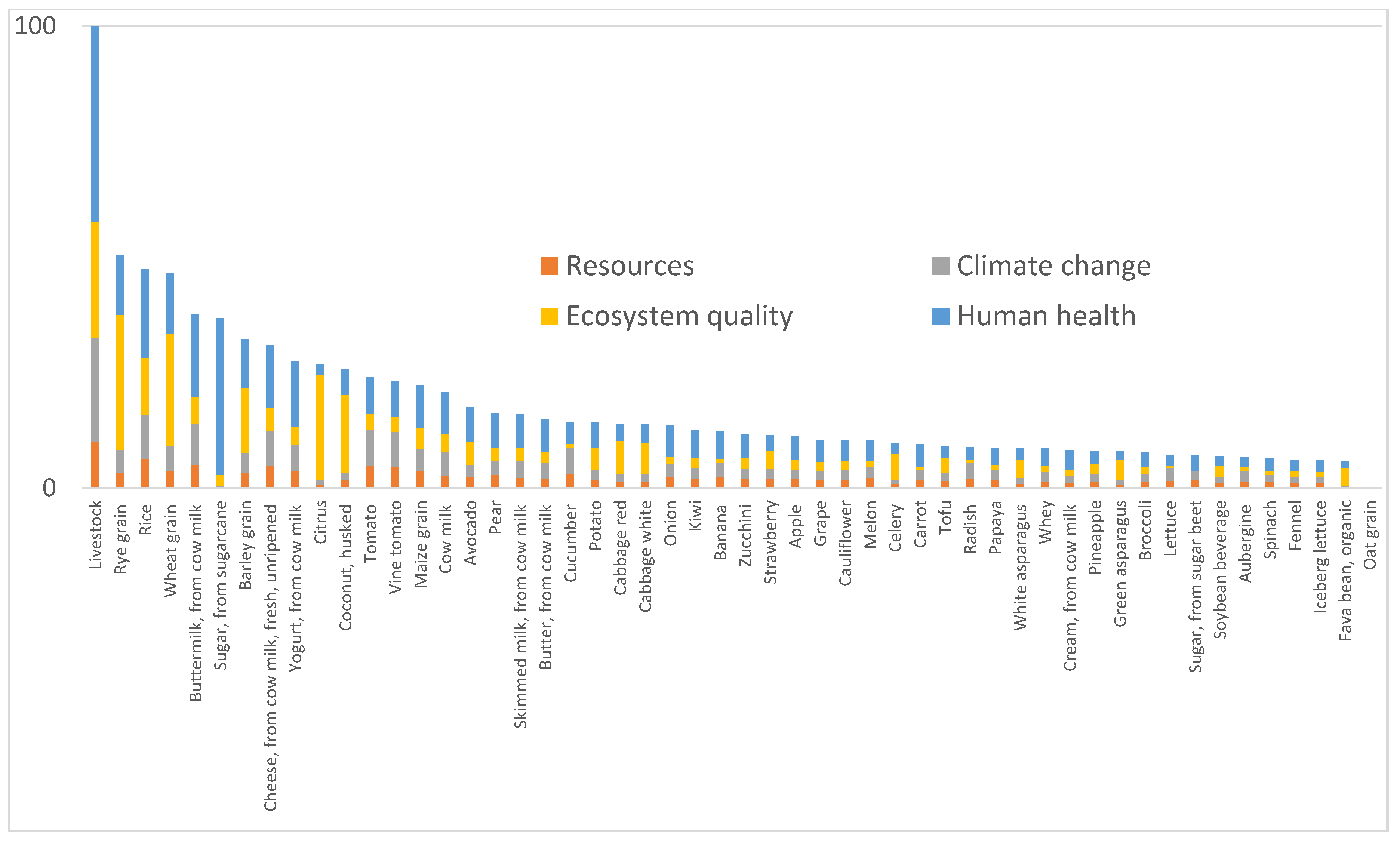
The life cycle assessment of livestock shows that the production stage contributes 67%–85% of the life cycle global warming potential impact of milk [23], poultry [24], and meat [25]. Many have argued that “landless” production of animals for human consumption is a fallacy, because their production itself remains the major cause of climate change impact, primarily due to methane produced by cattle. Methane generation by cattle is followed by field nitrous oxide emissions for the growing feed for animals. Based on 732 ml recommended daily serving of milk for adults in the USA [26], and a global warming potential of 0.4 kg CO2 eq. (carbon dioxide equivalent) per litre of industrially produced milk consumption [23], the global warming potential is estimated to be 0.3 kg CO2 eq. per day per adult. Based on 45–56 g protein per day, reference intake by woman and man and 37% of protein sources from meat and meat products in the diet of UK adults, by the British Nutrition Foundation [27], 26–27 g protein per 100 g lean beef or pork, and a global warming potential of 46.2 and 6.1 g CO2 eq. per g beef and pork [25], the resulting global warming potential is estimated to be 3–3.7 and 0.38–0.47 kg CO2 eq. from beef or pork consumptions per day per adult, respectively. Therefore, beef consumption can have ten times more global warming potential than milk or pork consumptions. This amount of beef consumption is equivalent to driving 11–13 miles per day a modern compact petrol car. Using a similar nutritional analysis and global warming potential of 5.4 g CO2 eq. per g poultry [25], the resulting global warming potential can be 0.3–0.4 kg CO2 eq. from poultry consumption per day per adult. Thus, by shifting from beef to poultry as the reference nutrition intake, the resulting global warming potential can be slashed by nine times. Furthermore, plant-based protein acquisition can halve the global warming potential resulting from poultry [28]. To rank the various food choices from environmental perspectives in a holistic manner, Figure 1 is illustrated for globally recognised food choices, from livestock to plant-based.
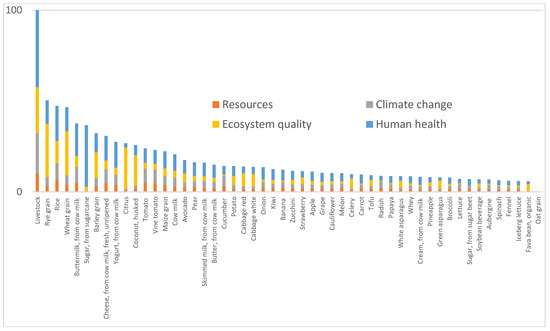
Figure 1.
Life cycle environmental impacts (normalised, weighted, and scaled; daily serving applied) of food choices in chronological order.
To produce Figure 1, the life cycle impact assessment (LCIA) methodology IMPACT 2002+ V2.12 [29] and Ecoinvent 3.0 database [30] are applied. There are numerous LCIA methodologies to analyse environmental aspects according to the International Organization for Standardization ISO14040-44 [7]. The IMPACT 2002+ V2.12 methodology developed by Swiss, Canada, and the US researchers account for fundamental environmental impacts, which can be effectively grouped into four main damage categories that are accessible to industry and policy makers. Climate change (kg carbon dioxide equivalent) includes the global warming potential. Resource depletion (MJ) includes fossil or nonrenewable energy and mineral extractions that are nonreplenishable. Human health (Disability-Adjusted Life Year or DALY, the metrics used by the World Health Organisation (WHO)) and ecosystem quality (PDF.m2.y, where PDF is the potentially disappeared fraction of species) have an overlap of primary impacts such as ozone layer depletion, photochemical oxidation and water turbined, withdrawal and consumption. Human health additionally includes aspects of human toxicity, respiratory effects, and ionisation radiation. A range of aquatic and terrestrial impacts in addition to the above determine the ecosystem quality. Thus, the damage factors effectively account for all plausible environmental aspects.
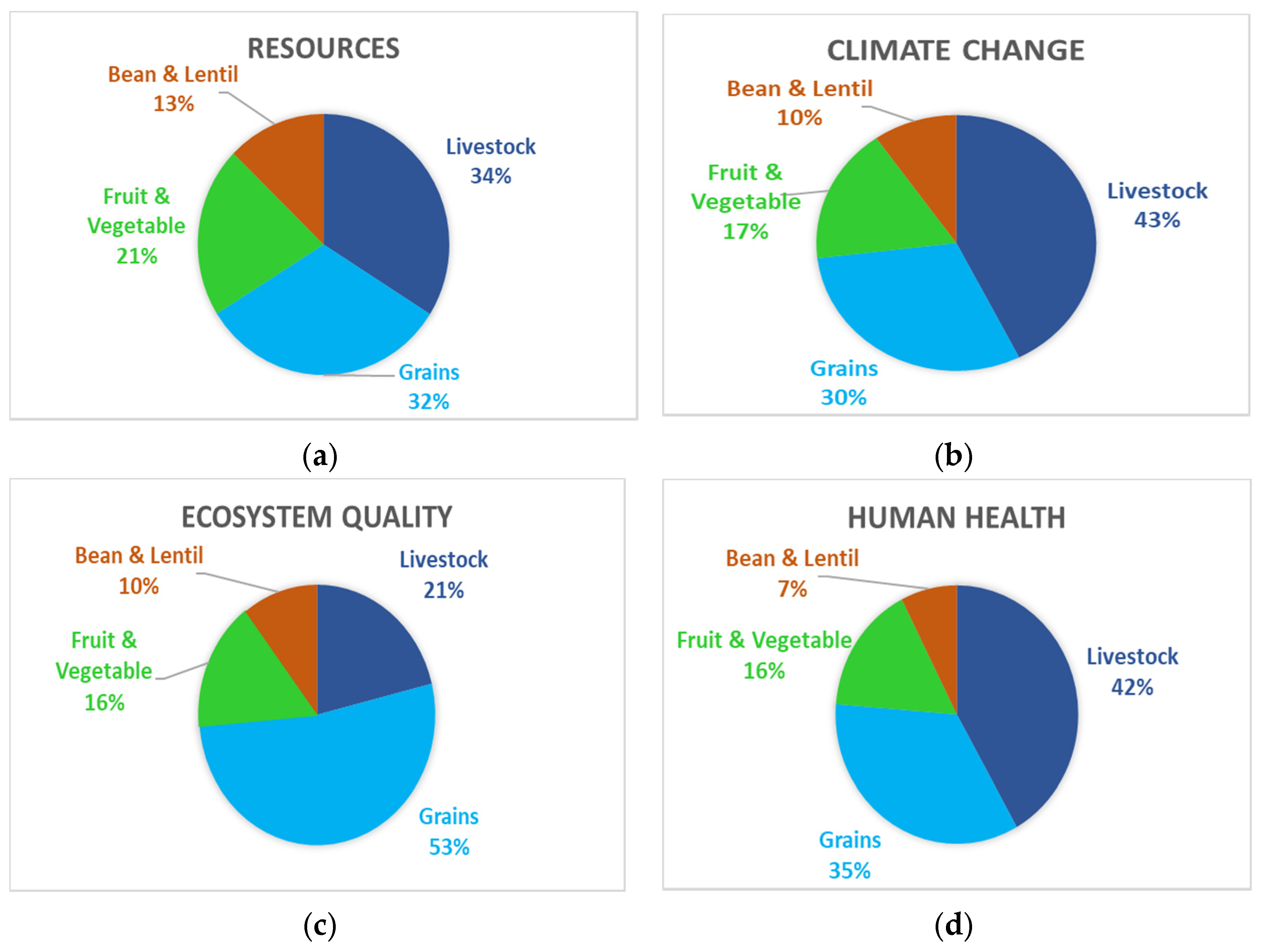
In generating Figure 1 and Figure 2, an attributional approach has been applied, in which burdens are attributed proportionally at the point of substitution [30]. Global inventory datasets are extracted for all food choices. Impact characterisation allows evaluations in 15 environmental impact categories, which are normalised into four environmental damage categories, i.e., resource depletion, climate change, ecosystem quality and human health, and weighted according to their relative importance in the context of global sustainability [29]. Recommended daily servings of individual food choices are applied to their weighted normalised estimations of environmental damages: Resource depletion, climate change, ecosystem quality, and human health. The weighted normalised environmental damages applied with the daily servings of individual food choices are then scaled in min–max or 0–100 shown in Figure 1. The weighted normalised life cycle environmental damage characterisations of food choices and daily servings (maximum global average per adult) are detailed in the Supplementary Information. Furthermore, Figure 2 illustrates the % attributes of food groups, livestock, grain, fruit and vegetable, and bean and lentil, to individual damage categories that account for their damage factors and daily servings. It is evident that livestock is environmentally the most damaging compared to any other food groups, in the three damage categories: Resource depletion, climate change, and human health. Grains being the highest consumer of water have the highest attribution to ecosystem quality. This observation is in good agreement with [6]. This identifies the need for agricultural efficiency enhancement, efficient use of soil nutrients, and efficacy of water use for enhancement in environmental performance of grains.
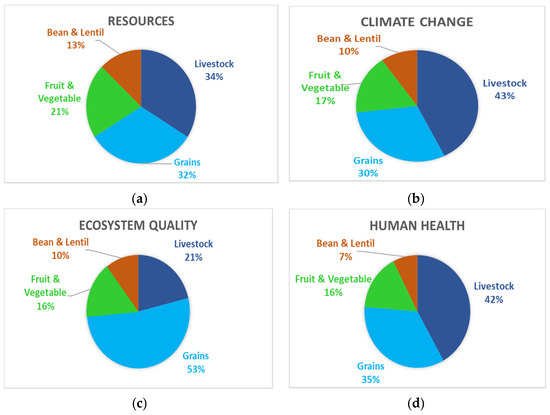
Figure 2.
Percentage attributes of food by groups, livestock, grain, fruit and vegetable, and bean and lentil to individual damage categories that account for their damage factors and daily servings. Recommended daily servings of individual food choices are applied to their weighted normalised estimations of environmental damages: Resource depletion (a), climate change (b), ecosystem quality (c), and human health (d).
The analysis clearly demonstrates that the highest environmental impact saving lies in the displacement of livestock by plant-based (beans and lentils) for protein sourcing. Thus, we focus our efforts in the protein component of human nutritional diet. In addition to environmental benefits, a considerable economic benefit from plant-based diet is also expected. Recently, quoted in Nature, plant-based options would require an additional investment of USD 15–25 billion by 2030, however, would create better future business opportunities of USD 240 billion by 2030 and a further hidden cost reduction by USD 240 billion by 2030 or USD 480 billion by 2050 [31].
Broadly, there are three types of scalable alternative protein sourcing routes:
- Plant-based substitute and algae protein.
- Insects and worms based.
- Laboratory grown.
Pulses or legumes, e.g., lentils, chickpeas, beans and peas, and other vegetable-based sources of protein such as tofu, bean curd, and mycoprotein are much evidence based on healthier and sustainable sources of protein, (as well as other minerals such as calcium). Protein can be isolated in an integrated biorefinery configuration that also produces other added value products from biomass [1]. This aspect is further discussed to set the background of the arena of protein isolation methods and materials.
3. The Arena of Plant-Based Protein Isolation: Materials and Methods
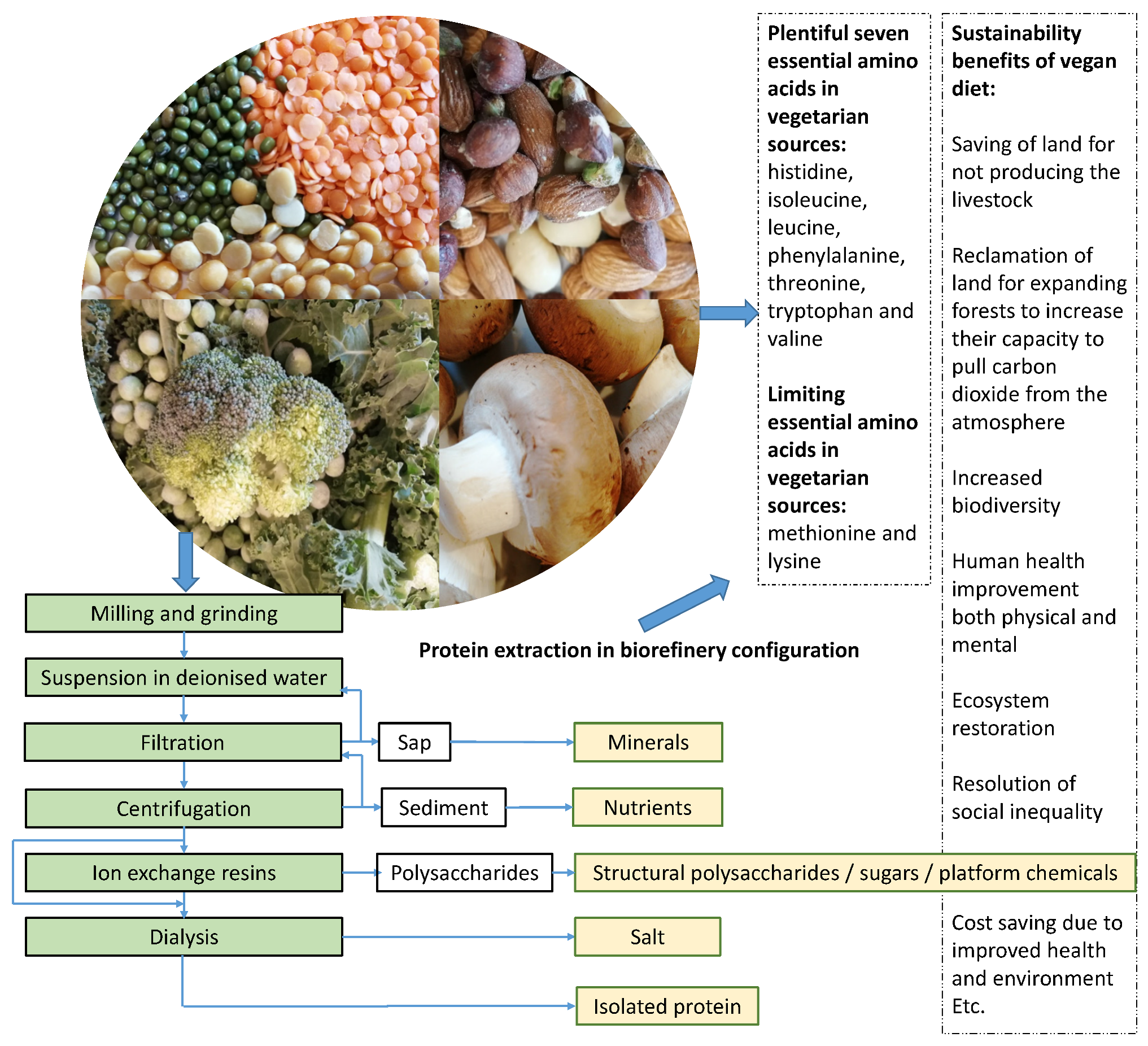
Figure 3 illustrates the processes to separate and purify protein (protein functionalisation) from biomass [1], as well as from plant and the sustainability benefits that alternative plant-based diet offers. Two amino acids, methionine (C5H11NO2S) and lysine (C6H14N2O2), may be lacking in certain vegan sources. However, proteins abundant with these amino acids can be effectively isolated from some other vegan sources such as temphe, seitan, lentils, black bean, quinoa, etc., and added to food (vegan burger) or nutraceutical products. Highly regulated food with targeted functions to enhance wellbeing and physiological responses to reduce risks of disease, in addition to fulfilling energy and nutritional needs, can offer many benefits including the United Nations Sustainable Development Goals (SDGs), in particular, SDG1: No Poverty and SDG2: Zero Hunger [32].
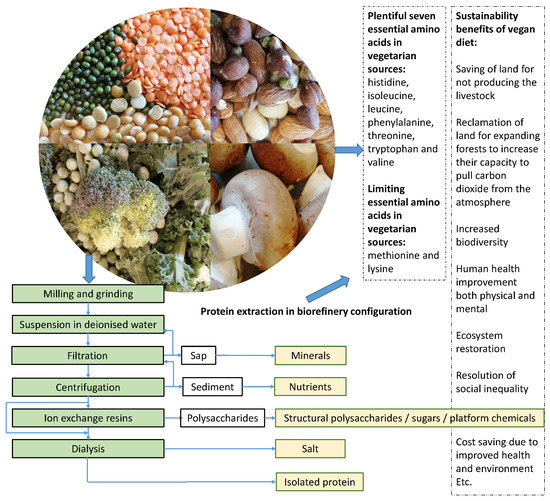
Figure 3.
Plant sources of protein, their constituent essential amino acids, protein extraction protocol, and sustainability benefits of plant-based diet.
Protein can be selectively isolated from biomass or plant for food or nutraceutical product [1]. The various ways materials can be employed for protein separation and isolation for food or nutraceutical applications are discussed as follows. This section investigates the process and chemistry of production of these materials.
Mesoporous silica materials: Ordered mesoporous (2–50 nm mesoscopic diameter) molecular sieves give the opportunities for protein isolation and adjustment for modulation of food product with target functionalities. The first effort in ordered mesoporous molecular sieves involved formation of layers of silica, a few nanometres thick, in between the surfaces of cylindrical supramolecular assemblies called micelles, a liquid-crystal structure reminiscent of a honeycomb [33]. Once silica layers form between the micelles, the resulting material is heated in air to remove the surfactant, leaving behind honeycomb crystalline nano-porous silica as product. The silica product can be transformed into ordered mesoporous molecular sieves using bio-surfactant, metal oxides, organic polymers, and transition metals. There are thousands of ordered mesoporous molecular sieves that exist to date, however, only a few are applied to protein isolation for food or nutraceutical applications [34].
Two decades ago, Santa Barbara amorphous type material or SBA-15 and mesocellular silicious foam or mesostructured cellular foam or MCF with (3-aminopropyl)-triethoxysilane as a functional group were designed to extract protein of different sizes and ionic strengths [35]. SBA-15 is a mesoporous silica sieve with uniform hexagonal pores of a narrow pore size distribution between 5 and 30 nm. MCF offers a wider pore size distribution, a tunable pore diameter three times more than SBA-15. Under low ionic strength, these materials can selectively adsorb or sequester protein and under high ionic strength, can release the adsorbed protein to come back to their original state [36].
Another class of mesoporous silica material, the family of M41S [37] such as “Mobil Composition of Matter” or “Mobile Crystalline Material” MCM-41 and MCM-48, also show tunable pore size and size distribution, stability, and regeneration property to lend themselves in novel applications of protein separation for food or nutraceutical applications [34]. In addition to their desired morphology, these materials offer selectivity and efficiency of protein separation. Thus, the important regeneration property, as well as selectivity characteristics of SBA-15, MCF, MCM-41, and MCM-48 make them distinctive and robust in the fields of protein isolation, with useful green synthesis applications such as biosensors, enzymes, and enzymatic catalysis.
The sol gel method is used to prepare mesoporous material with an integrated network of polymers from solution of monomers or integrated network of discrete particles from colloidal particles. The process involves hydrolysis and polycondensation between precursor and solution of monomers or colloidal particles. A liquid phase continuous network of polymers or particles called gel is then formed. The final integrated network of polymers or discrete particles is obtained by drying through evaporating the liquid. As discussed before, bio-surfactant, metal oxides, organic polymers, or transition metals can be used as precursor.
Silylated mesoporous silica materials: Silylated mesoporous silica materials offer a more effective way of separating protein. Three proteins of representative sizes: High conalbumin with high molar mass 77,000, ovalbumin with medium molar mass 44,000, and trypsin inhibitor with low molar mass 14,000 have been investigated for sequestration and release by SBA-15 and MCF, both silylated with (3-aminopropyl)-triethoxysilane as functional group [35]. Silylated MCF showed higher selectivity for all three sized proteins, while silylated SBA-15 could only separate the low molar mass protein and to a small extent the other two. This can be explained by the difference in pore diameter and size distribution between SBA-15 and MCF. The applications of silylated SBA-15 and silylated MCF are commonly for the synthesis of enzymes and enzymatic catalysis and biosensors [35]. Their essence in the context of plant-based food product is in the adjustment of the quantities of limiting essential amino acids. These sorbent materials can be designed to isolate proteins that have these amino acids in abundance, from plant-based sources. The isolated protein can be added to the final plant-based functional food product to provide all essential amino acids in correct proportions.
Silylation of mesoporous silica materials with a silylation agent such as (3-aminopropyl)-triethoxysilane as functional group gives silylated mesoporous silica materials. The silylation process involves derivatization or substitution of active hydrogen atom of ordered mesoporous molecular sieves by a silyl group R3Si in the presence of an organic solvent under Ar atmosphere. The process produces silylated ordered mesoporous molecular sieves, the characteristics of which are important for the success of protein sequestration and its subsequent release (isolation), as well as regeneration of the silylated ordered mesoporous molecular sieves. Recyclable green solvent and silylation agent should be selected allowing atom economy for protein isolation, as well as the unit operations incorporating the silylated ordered mesoporous molecular sieves should be robust and have a long life. Table 1 gives a list of representative recyclable green silylation solvents [38] and their synthesis routes [7].

Table 1.
Recyclable green solvents.
Bio-surfactant materials: Bio-surfactants or organic polymers are of interest from the renewability and circular economy perspectives as these can be manufactured from renewable organic materials. Bio-surfactant can be produced by fermentation of unavoidable food waste and recovered by centrifugation as one of the microbial fermentation products, illustrated later. Bio-surfactants can be a more benign way to partially or completely replace inorganic mesoporous materials for protein isolation and separation. Bio-surfactant production by microbial fermentation can be an effective way of extracting target amino acids in situ from the fermentation broth. The resultant product can be a newer type of bio-surfactant with application in food or pharmaceutical industry or drug delivery. Target proteins or amino acids attached to bio-surfactant can be recovered by calcination/ precipitation/extraction/chromatographic separation. The separation unit operations are at the heart of the design of the protein functionalisation methods that cost up to 70% of the total capital and operating costs [34]. Their optimisation (design configuration and operation, etc.) by systematic process system engineering methodologies is imperative for cost-effective production of functional protein [7]. Although these materials and methods hold a promise to deliver the UN SDGs by the optimisation and re-design engineering of food systems, their full potential is yet to be realized in the food processing industry [34].
Processes for protein isolation: Ion exchange columns and dialysis are employed for protein isolation [1] (Figure 3). The resin or chromatographic solvent and dialysis membrane materials can be (silylated) ordered mesoporous molecular sieves or bio-surfactant materials partially or fully replacing inorganic mesoporous materials. The membrane and ion exchange columns can be regenerated to bring back to their original state after each operation thus can offer a long lifetime. Using two units it is possible to continuously operate a unit operation, wherein when one unit is in operation, the other unit is regenerated. As well as the efficiency and selectivity of the processes, food safety must take the priority in the selection of all the materials and methods, so that in any part of the process producing the materials and the methods for protein functionalisation, there is no generation or consumption of toxic chemicals and no chemical should be sourced from fossil resources.
As a consequence of plant-based protein sourcing, farming land used for livestock can be substantially reclaimed for forestation to maximise carbon dioxide capture and restoration from the atmosphere, ecosystem conservation, and biodiversity [39]. By focusing on positive health benefits from mitigation of global warming potential from livestock displacement and from land reclamation for carbon dioxide sequestration from the atmosphere, a sustainable 21st Century can be attained.
4. The Arena of Biorefinery Systems Utilising Unavoidable Food Waste
In order to achieve a circular economy system, including bio-surfactant acquisition from biomass for plant-based protein functionalisation, biorefining of unavoidable food waste must be explored. This section first sheds light into a global challenge of food waste, a key differentiator between developed and developing economies. Then, process engineering approaches and novel sustainable biorefinery configurations utilising unavoidable food waste are suggested.
Global population is expected to increase 40% by 2050 reaching approximately 10 billion, yet today, around 1 billion are severely malnourished and more than 1.2 billion still have no access to clean drinking water [40]. Ironically, 1.3 billion tonnes of food are wasted every year corresponding to a carbon footprint of 3.3 billion tonnes of CO2 equivalents and 250 km3 in lost water [41,42]. Food waste represents a global economic loss of $750 billion (excluding fish and seafood). With an increasing population, global food production will have to increase by at least 60% whilst natural resources will become even scarce, unless mitigation strategies are adopted now [40].
Waste can generate from all stages of food supply chains. Although the contributions to food waste from developed and developing nations are very similar (630 and 670 million tonnes, respectively), their sources are very different. In developing countries food waste is mainly due to poor storage post-harvest. Moreover, economic and political issues and perfect environmental conditions (warm and humid) for food spoilage contributes to the loss of edible food [41,42,43]. In developed countries most of the wasted food comes from the post-consumer stage (considered avoidable and suitable for consumption), as a result of an overly restrictive food quality control and miscommunications between producers, retailers, and consumers. Where unavoidable food waste is present as a consequence of primary and secondary processing (from farm to fork), then it should be considered as a feedstock and enabler for other conversion processes.
In developed countries, Europe and North America, the easier access to cutting-edge green technologies and high volumes of food waste (280–300 kg per capita yearly) [44,45] opens new opportunities for food waste valorisation into added value products. In developing nations, Brazil, India, and South Africa, although the volume of unavoidable food waste is large, and its characteristics are diverse, low support from the public sector and industry does not allow opportunities for transformation of biomass into valuable products. It is estimated that 18% of anthropogenic CO2 emissions come from the burning of biomass in the agricultural fields in developing countries (which are the main suppliers of food for the global market). The value of this burned biomass is equivalent to $120 billion per year if a valorisation approach was applied instead of open-air burning [46].
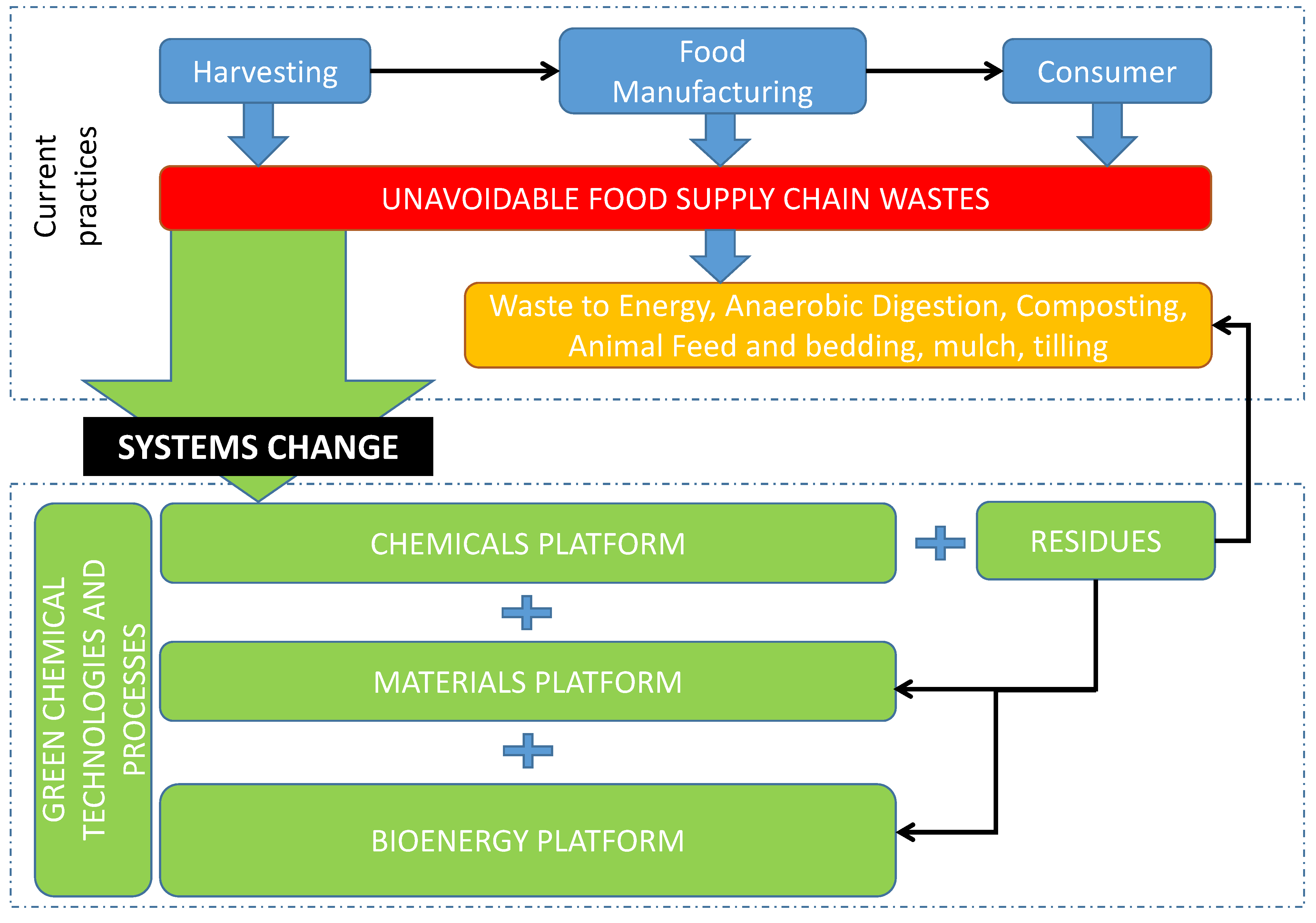
Biorefineries utilising unavoidable food supply chain wastes, as an all year-round feedstock, fractionating natural resource into a variety of products including chemicals, fuel, and energy can be envisaged for a sustainable 21st Century. Figure 4 shows a conceptually farm to fork food waste biorefinery approach distinctive from current practices.
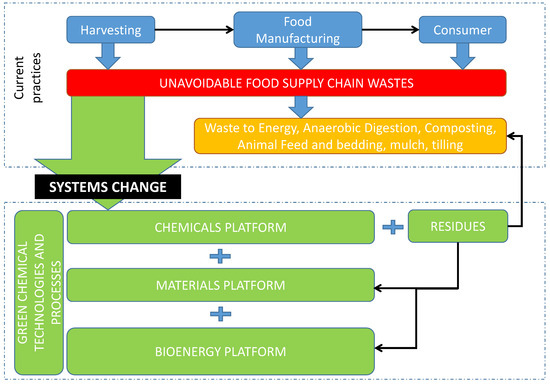
Figure 4.
Systems change in unavoidable food waste biorefinery approach.
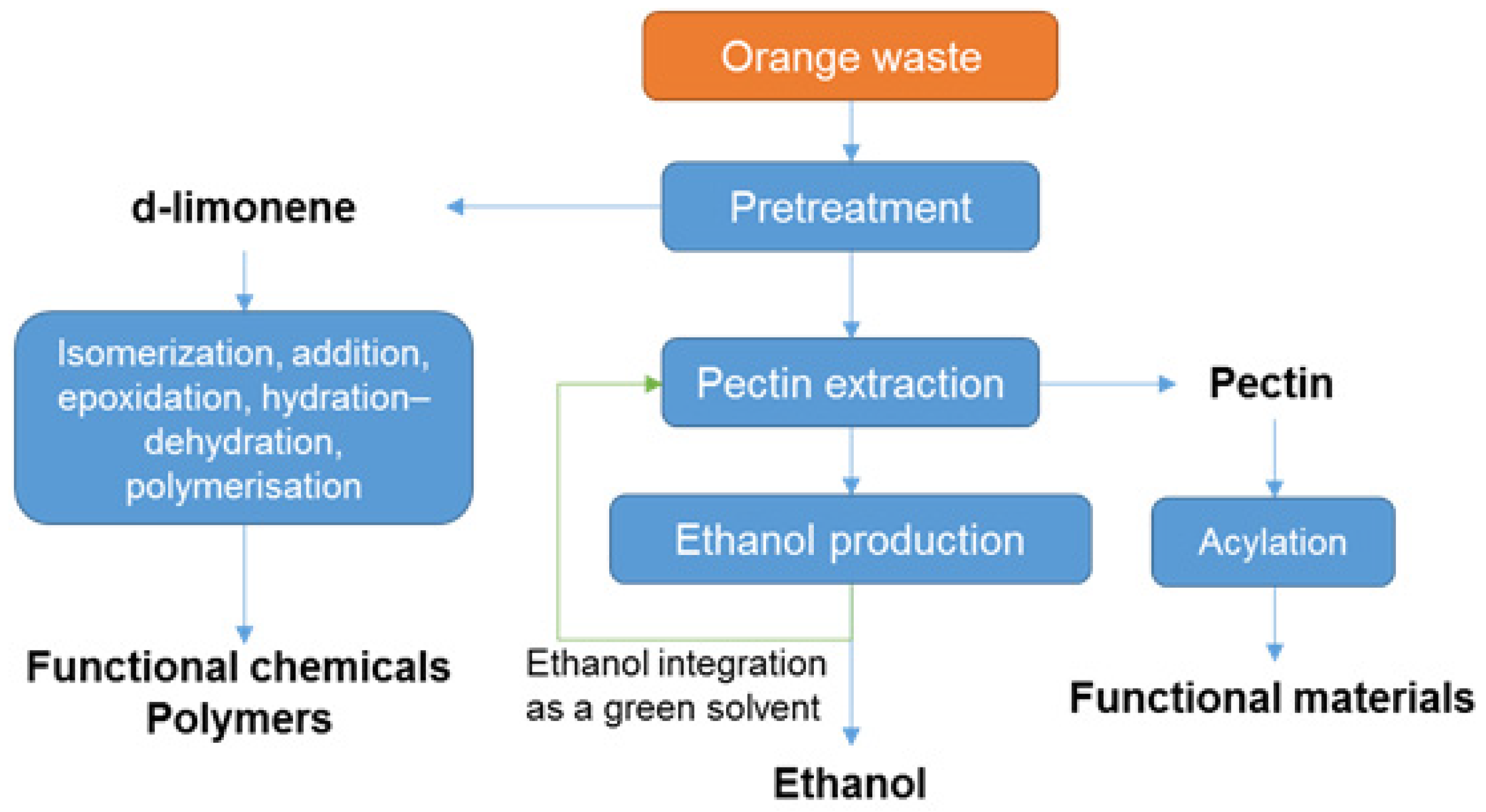
The application of efficient, green, and sustainable chemical technologies for the conversion of unavoidable food waste into high value molecules for (re)-nutrition (for example, flavours and fragrances, pectins, dietary cellulose, etc.) can maximise the inherent chemical potential, structure, and function provided by nature. Modern green technologies such as pressurized fluid extraction, supercritical fluid extraction, ultrasound assisted extraction, and microwave assisted extraction can be used to extract valuable chemicals from unavoidable food waste [47]. For example, orange peels from the citrus processing industry if disposed of to the environment can lead to environmental pollution and health impacts. However, orange peels are a source of essential oils (limonene) and pectin. Pectin is a well-known rheology modifier used in food additive and limonene is an anti-microbial agent, natural pesticide, and degreasant. The latter can replace toxic solvents such as toluene, n-hexane, and halogenated organics. Furthermore, limonene is a functional terpene, which can be chemically transformed via isomerisation, addition, epoxidation, or hydration–dehydration reactions into useful chemicals such as alpha-terpinolene, 3-methyl-cyclopentanone, and cos-linalool oxide [48]. Limonene can be converted into bio-based polymers such as polycarbonates through copolymerisation with CO2 via limonene oxide and polyesters via copolymerisation with CO2 or with succinic anhydride, and polyurethanen by copolymerisation of limonene dicarbonate with polyfunctional amines. Regarding pectin, this natural polymer can be chemically converted into new functional materials, for example by the solvent-free acylation of alcoholic functions of the polysaccharide with fatty acid anhydrides [49]. Figure 5 shows conceptually integrated biorefinery co-producing pectin and d-limonene and their derivatives together with bioethanol as solvent for in-process recycling and as product.
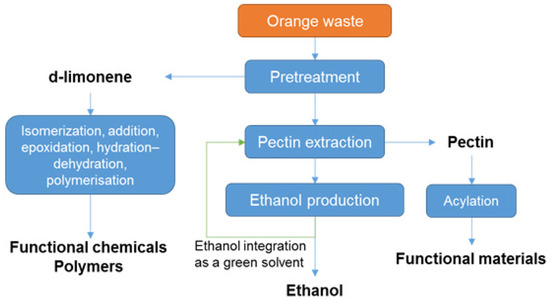
Figure 5.
Citrus food waste biorefinery co-producing pectin and d-limonene with bioethanol.
Platform chemicals from unavoidable food waste are desirable because they have the potential to displace primary petrochemicals. Two such biorefinery systems are suggested here because of prominent market positions of their products. Controlled acid hydrolysis and catalytic fast pyrolysis constitute effective ways to convert unavoidable food waste into valuable platform molecules such as levulinic acid (known as sleeping giant chemical) and aromatics, respectively, alongside nutrient and energy products [7,10,11]. Levulinic acid can be used as a synthetic intermediate for the production of pharmaceuticals (e.g., δ-aminolevulinic acid) > specialty chemicals (e.g., γ-valerolactone) > agrochemicals (e.g., diphenolic acid) > solvent and bulk chemicals (e.g., pyrrolidones, succinic acid as antifreeze agent) > fuels and additives (e.g., levulinate esters, 2-methyl tetrahydrofuran), in the chronological order from the highest to the lowest value products [10,11]. Thus, levulinic acid and its derivatives can displace similar functional petrochemicals and have a huge market potential.
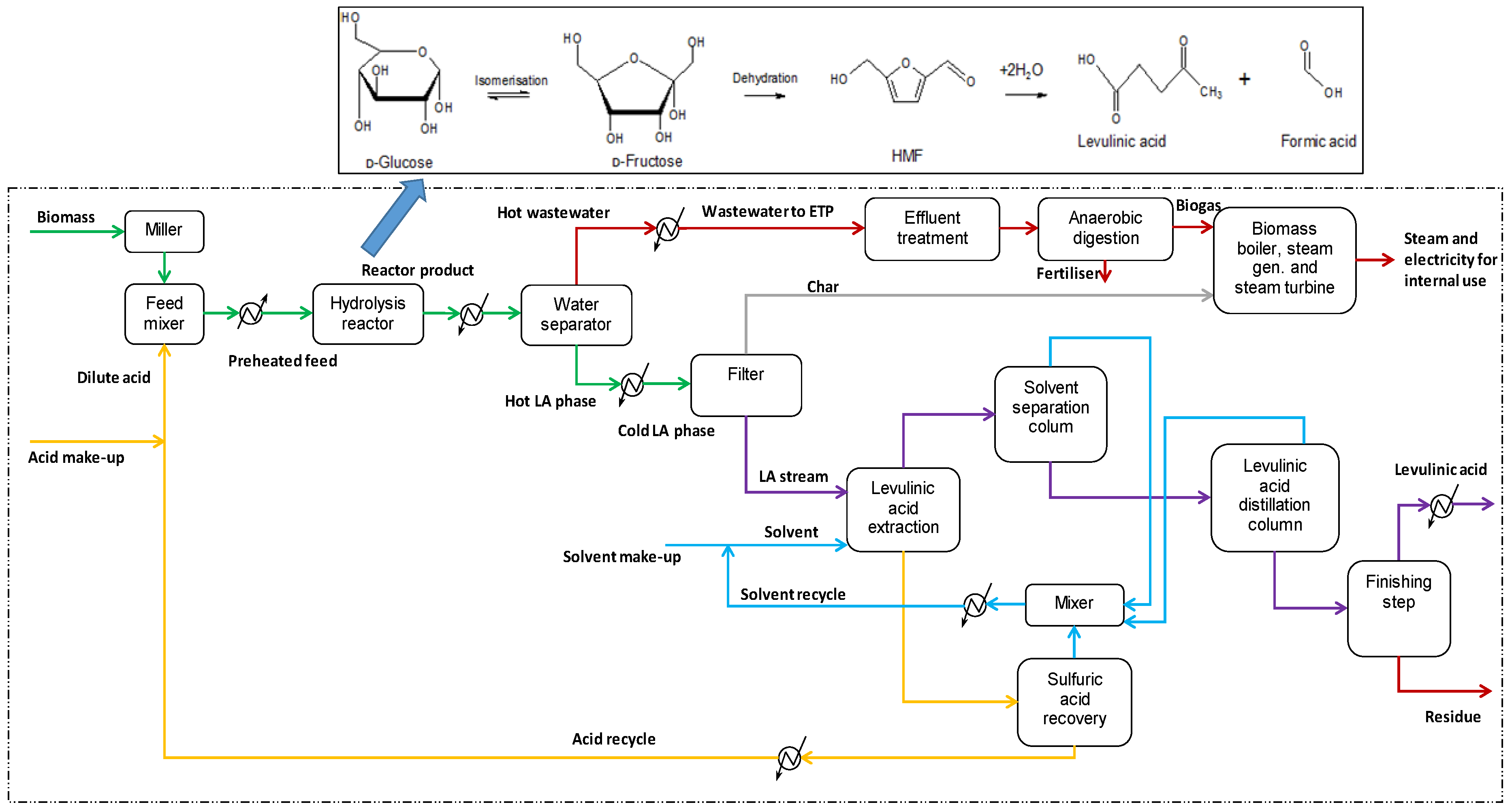
Figure 6 shows the mechanism and biorefinery process flow diagram for levulinic acid synthesis. The biorefinery configuration comprises C5/C6 sugar extraction, in plug flow (210−230 °C, 25 bar, 12 s) and continuous stirred tank (195−215 °C, 14 bar, 20 min) reactors; char separation and levulinic acid extraction and purification by renewable green solvent (Table 1); acid, solvent and by-product recovery; wastewater treatment and anaerobic digestion of organics into biogas and compost; and combined heat and power generation from char and biogas [10,11].
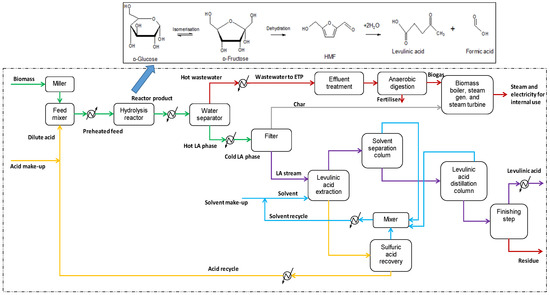
Figure 6.
Simplified mechanism (top) and biorefinery process flow diagram (bottom) for levulinic acid synthesis.
Catalytic fast pyrolysis of unavoidable food waste is a way to displace petroleum-derived aromatics such as benzene, toluene, and xylene (BTX) [7]. The reaction occurs at 550 °C temperature and 5 bar pressure. The catalytic fast pyrolysis reactor (fluidised bed) is connected to a regenerator where the ZSM-5 catalyst is regenerated and recycled into the fluidised bed reactor. The gaseous stream from catalytic fast pyrolysis reactor is passed to a cyclone for solids removal. The cleaned gas is cooled down in a heat exchanger to 50-60 °C, so that cooling water can be used. Further cooling is required to improve the separation between the aqueous and organic phases. Moderate refrigeration to 10 °C is considered in a second heat exchanger. This temperature can be adjusted to achieve desired purity and recovery of the aromatics, considering potential trade-offs. Water condenses and forms an aqueous phase and is separated from the organic and gas phases. Then, the multiphase stream enters a three-phase drum separator. Water, aromatics, and noncondensable gases are recovered. The aromatics can be sent to further refining in distillation columns to recover BTX. Part of the gaseous stream from the three-phase separator, which also contains the olefins produced, can be recycled back to the catalytic fast pyrolysis reactor for further conversion into aromatics. A purge is necessary to avoid accumulation of CO, CO2, and CH4 due to continuous operation. The coke along with the solids removed in the cyclone is used to provide process heat for the regeneration and the pyrolysis reactor. The gaseous reactor effluent is available at high temperature (550 °C). This stream can be used to generate a medium pressure steam in the first heat exchanger. Furthermore, the water recovered from the three-phase separator can be used for this medium pressure steam generation in the first heat exchanger. Depending on the hydrocarbon content of the purge, the gaseous purge stream can also be used as fuel. The catalytic fast pyrolysis is a promising thermochemical reactor technology for renewable petrochemical production. The main advantages of catalytic fast pyrolysis are that (i) the conversion occurs in one single reactor, (ii) no process water is required, (iii) simple biomass pre-processing (drying and grinding) is needed, (iv) fluidised bed reactor is a highly efficient reactor technology widely proven in petroleum refineries, and (v) the products are fully compatible with existing infrastructure and supply chains and thus can directly displace petroleum derived products.
The arena of circular economy: Valorising unavoidable food waste into bio-surfactant for protein functionalisation.
In this section, to close the loop, we give insights into the specific example of the food circular economy system, i.e., the sourcing of regenerative bio-surfactant materials from unavoidable food waste for plant-based protein functionalisation for food or nutraceutical applications. Bio-surfactants are of interest to this work, because it is an important precursor to prepare mesoporous material for protein separation. Surfactants to date are produced from fossil fuels. Organic food waste streams, rich in natural polymers, can serve as the basis for producing bio-surfactants replacing fossil-based surfactants [50,51]. Fermentation is the key process of making bio-surfactants using bacteria, yeast, and fungi that can use organic waste as a substrate to produce bio-surfactant molecule with hydrophobic and hydrophilic moieties. The predominant bacteria that use the unavoidable food waste as substrate include Acinetobacter, Arthrobacter, Pseudomonas, Halomonas, Bacillus, Myroides, Corynebacterium, and Alteromonas, can be sourced from terrestrial or aquatic environment [52]. Plant oils or plant-based oily wastes and residues are substrates to fermentation for producing bio-surfactants by enzymatic or microbial synthesis. An example of enzymatic modification is the extraction of chitosan from aquaculture and seafood wastes, into antioxidant edible films [53]. Water soluble and sourced from biomass, glucose, sucrose, glycerol (co-product of transesterification giving biodiesel), and bioethanol are also known substrates for bio-surfactant production. Streams of the food processing industry such as rice hull hydrolysate, starch waste liquors, domestic wastes, potato processing wastes, olive oil mill effluents are used for affordable and competitive bio-surfactant production [54]. Such substrate choices allow in situ microbial fermentation to achieve target function or product such as protein from fermentation broth, thus avoiding multiple steps involved in protein functionalisation. Enzymatic fermentation as opposed to microbial fermentation for the same purpose incurs a higher cost of production due to specific strain development, but lower cost of recovery because target product attains a higher purity. Bio-surfactant produced this way can be used for food manufacturing. Its widespread application is recognised in drug delivery, pharmaceutical industry, and the healthcare sector. Bio-surfactant can agglomerate with or replace inorganic mesoporous materials for eliminating any health risk, offering same functionalities needed for separation of proteins attained by specific properties such as difference in charge density, size, or affinity [55].
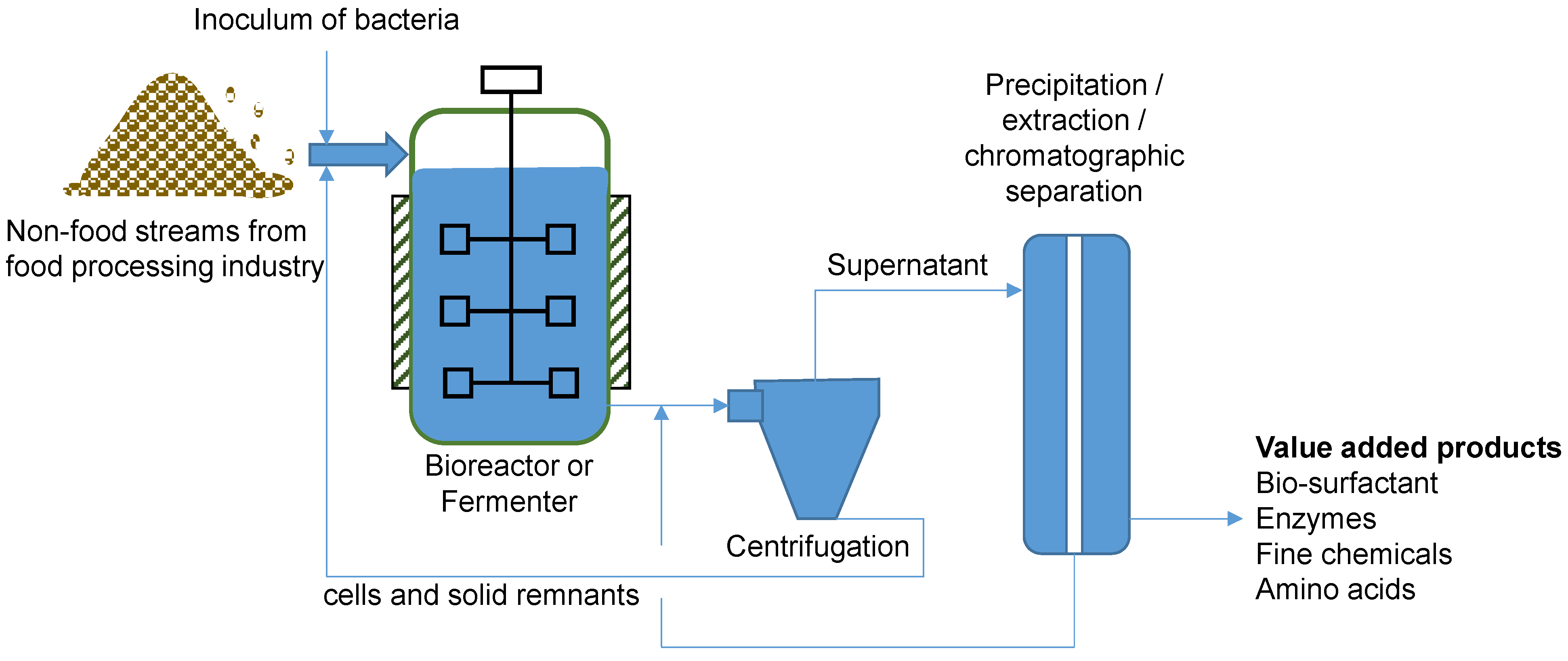
Figure 7 shows conceptually the reaction and separation unit operations for valorisation of food industries’ nonfood outlet streams into bio-surfactant. By an optimal combination and integration between separation unit operations, centrifugation, precipitation, extraction and chromatographic separation, and in-process recycling such as cells and solid remnants returned from centrifugation to fermentation and recycling of outlet streams other than value added products from downstream to upstream separation units, integrated biorefinery systems can be designed [1,7]. The integrated biorefinery system shown in Figure 7 produces numerous added value products such as bio-surfactants, enzymes, fine chemicals, and amino acids utilising unavoidable food processing waste as feedstock.
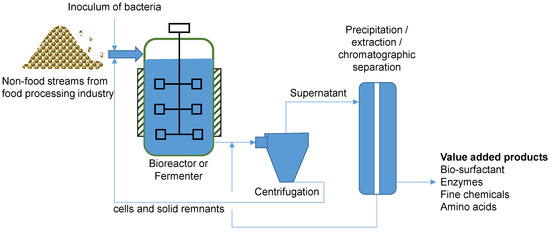
Figure 7.
Process for the synthesis of bio-surfactant from nonfood outputs from food processing industry.
5. Future Work for Food Circular Economy Systems
We discuss spear-heading sustainable biorefinery systems’ configurations utilising unavoidable food waste for a circular economy. However, there is a plethora of products and biorefinery configurations need to be considered and optimised using smart decision-making tools. The use of machine learning for the design of sustainable process and circular economy systems should not be undermined. Although this represents a huge challenge, an exhaustive human-curated list has been identified as one of plausible ways to tackle the challenge [56]. In this case, human-curation is needed on networks of unit operations and a threaded logical programme exploring what-if conditions for individual unit operations to enable synthesis of target product. Several computer software programmes are available on protein retrosynthesis, but none offers the capability of optimal selection of materials and methods for protein separation. In the light of climate change impact mitigation and delivering the UN SDGs, plant-based food and nutraceuticals will become very important and thus, is the extraction of ingredients such as protein with essential amino acids. It would be helpful to the research community to access feasible pathways for given food ingredient functionalisation via a computer software product. Synthesis as well as separation unit operations (centrifugation, precipitation, extraction, chromatographic separation, ion exchange resins, drying, and calcination, etc.) and their internals can be modelled to enable optimisation of their integration, design, and operation for overall sustainability. Their models must be supported by robust thermodynamic property packages and must include a database of separation materials. The models can be incorporated into a computer software product to allow plug and play of the models. Overall optimal design and operability for sustainability are dependent on how resources are consumed, waste and emissions are eliminated, minimum cost and maximum profitability, as well as maximum environmental and social benefits can be achieved. These call for sustainability assessment using an appropriate set of indicators [1,57]. Although it seems to be daunting, it is inevitable that machine learning-based unified computer software are needed to guide design and selection of appropriate materials and methods from exhaustive human curated databases for optimisation based on the whole system sustainability assessment.
6. Conclusions
The main challenges of the throwaway consumerism culture in developed countries that differentiate from the inadequate support structure of developing countries include diet and food waste disposal. Sustainable plant-based diet is necessary on a more regular basis to meet the climate target. This is proven by the first-ever comprehensive LCA of a whole range of food choices that clearly shows that the highest environmental impact savings lie in the displacement of livestock by plant as a source of protein. Protein with target amino acids for food and nutraceutical applications can be separated and purified using a range of materials including (silylated) mesoporous silica materials, as well as renewable organic bio-surfactant partially or completely replacing inorganic materials. There are bespoke processes or methods to make the materials for protein functionalisation. These aspects along with the processes to separate and purify protein are analysed from green chemistry and process engineering perspectives with a view to apply the isolated protein in food and nutraceutical productions for the first time. In order to close the loop, the renewable agents to separate target proteins, i.e., bio-surfactants, must be sourced from unavoidable food waste. This calls for novel integrated sustainable biorefinery systems utilising unavoidable food waste. A food circular economy system is demonstrated to extract regenerative green separation agents, bio-surfactants, from nonfood streams available in the food processing industry, via fermentation, to functionalise target proteins from plant-based sources for food and nutraceutical applications. Furthermore, depending on the constituents, unavoidable food waste arising from farm to fork can be valorised for food, flavouring, pharmaceutical, or chemical productions using an integrated biorefining concept. Of special interest is the production of platform chemicals such as levulinic acid via controlled acid hydrolysis or aromatics via catalytic fast pyrolysis of unavoidable food waste, due to the potential of these building block chemicals to displace functionally equivalent petrochemicals. It is envisaged that by advanced integrated engineered biorefinery systems, waste generation can be avoided, and a circular economy can be achieved in the food supply chains, for a sustainable 21st Century.
Supplementary Materials
The following are available online at https://www.mdpi.com/2071-1050/12/5/1976/s1.
Author Contributions
Conceptualization, J.S.; methodology, J.S., T.I.J.D., A.M., E.M.-H. and P.K.S.M.R.; software, J.S.; validation, J.S.; formal analysis, J.S.; investigation, J.S.; resources, J.S.; data curation, J.S.; writing, J.S., T.I.J.D., A.M., E.M.-H., J.A., P.K.S.M.R. and J.L. All authors have read and agreed to the published version of the manuscript.
Funding
This research received no external funding.
Acknowledgments
This paper, based on the findings from a series of Waste to Wealth workshops in March 2019 that brought together industry, policy makers, and academia, acknowledges support of NERC, DEFRA, and ESRC of the UK, https://rrfw.org.uk/results/events/waste-to-wealth-workshops/ (accessed 2 February 2020). Tom I. J. Dugmore and Avtar Matharu acknowledge support of EPSRC (Whole systems understanding of unavoidable food supply chain wastes for re-nutrition EP/P008771/1) and Pattanathu K.S.M. Rahman, the Research England (Expanding Excellence in England (E3) Scheme) for their contribution in the paper.
Conflicts of Interest
The authors declare no conflict of interest.
References
- Sadhukhan, J.; Gadkari, S.; Martinez-Hernandez, E.; Ng, K.S.; Shemfe, M.; Torres-Garcia, E.; Lynch, J. Novel macroalgae (seaweed) biorefinery systems for integrated chemical, protein, salt, nutrient and mineral extractions and environmental protection by green synthesis and life cycle sustainability assessments. Green Chem. 2019, 21, 2635–2655. [Google Scholar] [CrossRef]
- Ellen MacArthur Foundation. What is the Circular Economy? 2009. Available online: https://www.ellenmacarthurfoundation.org/circular-economy/what-is-the-circular-economy (accessed on 2 February 2020).
- Sijtsema, S.J.; Snoek, H.M.; van Haaster-de Winter, M.A.; Dagevos, H. Let’s Talk about Circular Economy: A Qualitative Exploration of Consumer Perceptions. Sustainability 2019, 12, 286. [Google Scholar] [CrossRef]
- Balazs, E.; Galante, E.; Lynch, J.M.; Schepers, J.S.; Toutant, J.P.; Werner, D.; Werry, P.A.T.J. Biological Resource Management. Connecting Science and Policy; Springer: Berlin, Germany, 2000. [Google Scholar]
- Roe, B.E.; Qi, D.; Bender, K.E.; Hilty, J. Industry versus Government Regulation of Food Date Labels: Observed Adherence to Industry-Endorsed Phrases. Sustainability 2019, 11, 7183. [Google Scholar] [CrossRef]
- Springmann, M.; Clark, M.; Mason-D’Croz, D.; Wiebe, K.; Bodirsky, B.L.; Lassaletta, L.; De Vries, W.; Vermeulen, S.J.; Herrero, M.; Carlson, K.M.; et al. Options for keeping the food system within environmental limits. Nature 2018, 562, 519–525. [Google Scholar] [CrossRef] [PubMed]
- Sadhukhan, J.; Ng, K.S.; Hernandez, E.M. Biorefineries and Chemical Processes: Design, Integration and Sustainability Analysis; Wiley: Chichester, UK, 2014. [Google Scholar]
- Neves, A.; Godina, R.; Azevedo, S.G.; Pimentel, C.; Matias, J.O. The Potential of Industrial Symbiosis: Case Analysis and Main Drivers and Barriers to Its Implementation. Sustainability 2019, 11, 7095. [Google Scholar] [CrossRef]
- Ellen MacArthur Foundation. Effective Industrial Symbiosis, 2009. Available online: https://www.ellenmacarthurfoundation.org/case-studies/effective-industrial-symbiosis (accessed on 2 February 2020).
- Sadhukhan, J.; Ng, K.S.; Martinez-Hernandez, E. Novel integrated mechanical biological chemical treatment (MBCT) systems for the production of levulinic acid from fraction of municipal solid waste: A comprehensive techno-economic analysis. Bioresour. Technol. 2016, 215, 131–143. [Google Scholar] [CrossRef]
- Sadhukhan, J.; Martinez-Hernandez, E. Material flow and sustainability analyses of biorefining of municipal solid waste. Bioresour. Technol. 2017, 243, 135–146. [Google Scholar] [CrossRef]
- Besch, K. Product-service systems for office furniture: Barriers and opportunities on the European market. J. Clean. Prod. 2005, 13, 1083–1094. [Google Scholar] [CrossRef]
- Available online: https://www.ofgem.gov.uk/system/files/docs/2018/06/sustainability_and_feedstock_guidance_version_2.pdf (accessed on 2 February 2020).
- Rojas-Downing, M.M.; Nejadhashemi, A.P.; Harrigan, T.; Woznicki, S.A. Climate change and livestock: Impacts, adaptation, and mitigation. Clim. Risk Manag. 2017, 16, 145–163. [Google Scholar] [CrossRef]
- Garnett, T. Livestock-related greenhouse gas emissions: Impacts and options for policy makers. Environ. Sci. Policy 2009, 12, 491–503. [Google Scholar] [CrossRef]
- Parfitt, J.; Barthel, M.; Macnaughton, S. Food waste within food supply chains: Quantification and potential for change to 2050. Philos. Trans. R. Soc. B Biol. Sci. 2010, 365, 3065–3081. [Google Scholar] [CrossRef] [PubMed]
- Manzouri, M.; Ab-Rahman, M.N.; Zain, C.R.C.M.; Jamsari, E.A. Increasing production and eliminating waste through lean tools and techniques for halal food companies. Sustainability 2014, 6, 9179–9204. [Google Scholar] [CrossRef]
- Vlachos, I. Applying lean thinking in the food supply chains: A case study. Prod. Plan. Control 2015, 26, 1351–1367. [Google Scholar] [CrossRef]
- Pojić, M.; Mišan, A.; Tiwari, B. Eco-innovative technologies for extraction of proteins for human consumption from renewable protein sources of plant origin. Trends Food Sci. Technol. 2018, 75, 93–104. [Google Scholar] [CrossRef]
- Mirabella, N.; Castellani, V.; Sala, S. Current options for the valorization of food manufacturing waste: A review. J. Clean. Prod. 2014, 65, 28–41. [Google Scholar] [CrossRef]
- Matharu, A.S.; de Melo, E.M.; Houghton, J.A. Opportunity for high value-added chemicals from food supply chain wastes. Bioresour. Technol. 2016, 215, 123–130. [Google Scholar] [CrossRef]
- Morone, P.; Koutinas, A.; Gathergood, N.; Arshadi, M.; Matharu, A. Food waste: Challenges and opportunities for enhancing the emerging bio-economy. J. Clean. Prod. 2019, 221, 10–16. [Google Scholar] [CrossRef]
- De Boer, I.J. Environmental impact assessment of conventional and organic milk production. Livest. Prod. Sci. 2003, 80, 69–77. [Google Scholar] [CrossRef]
- Pelletier, N. Environmental performance in the US broiler poultry sector: Life cycle energy use and greenhouse gas, ozone depleting, acidifying and eutrophying emissions. Agric. Syst. 2008, 98, 67–73. [Google Scholar] [CrossRef]
- Revell, B.J. One man’s meat… 2050? Ruminations on future meat demand in the context of global warming. J. Agric. Econ. 2015, 66, 573–614. [Google Scholar] [CrossRef]
- Mullie, P.; Pizot, C.; Autier, P. Daily milk consumption and all-cause mortality, coronary heart disease and stroke: A systematic review and meta-analysis of observational cohort studies. BMC Public Health 2016, 16, 1236. [Google Scholar] [CrossRef] [PubMed]
- Available online: https://www.nutrition.org.uk/nutritionscience/nutrients-food-and-ingredients/protein.html?start=2 (accessed on 2 February 2020).
- Castañé, S.; Antón, A. Assessment of the nutritional quality and environmental impact of two food diets: A Mediterranean and a vegan diet. J. Clean. Prod. 2017, 167, 929–937. [Google Scholar] [CrossRef]
- Available online: https://www.quantis-intl.com/pdf/IMPACT2002_UserGuide_for_vQ2.21.pdf (accessed on 2 February 2020).
- Available online: https://www.ecoinvent.org/database/database.html (accessed on 2 February 2020).
- Available online: https://www.nature.com/articles/d41586-019-03117-y (accessed on 2 February 2020).
- Available online: https://www.un.org/sustainabledevelopment/ (accessed on 2 February 2020).
- Ryoo, R. Birth of a class of nanomaterial. Nature 2019, 575, 40–41. [Google Scholar] [CrossRef] [PubMed]
- Brady, R.; Woonton, B.; Gee, M.L.; O’Connor, A.J. Hierarchical mesoporous silica materials for separation of functional food ingredients—A review. Innov. Food Sci. Emerg. Technol. 2008, 9, 243–248. [Google Scholar] [CrossRef]
- Han, Y.J.; Stucky, G.D.; Butler, A. Mesoporous silicate sequestration and release of proteins. J. ACS 1999, 121, 9897–9898. [Google Scholar] [CrossRef]
- Knežević, N.Ž.; Durand, J.O. Large pore mesoporous silica nanomaterials for application in delivery of biomolecules. Nanoscale 2015, 7, 2199–2209. [Google Scholar] [CrossRef]
- Beck, J.S.; Vartuli, J.C.; Roth, W.J.; Leonowicz, M.E.; Kresge, C.T.; Schmitt, K.D.; Chu, C.T.W.; Olson, D.H.; Sheppard, E.W.; McCullen, S.B.; et al. A new family of mesoporous molecular sieves prepared with liquid crystal templates. J. ACS 1992, 114, 10834–10843. [Google Scholar] [CrossRef]
- Pollet, P.; Davey, E.A.; Ureña-Benavides, E.E.; Eckert, C.A.; Liotta, C.L. Solvents for sustainable chemical processes. Green Chem. 2014, 16, 1034–1055. [Google Scholar] [CrossRef]
- Tollefson, J. IPCC says limiting global warming to 1.5 C will require drastic action. Nature 2018, 562, 172–173. [Google Scholar] [CrossRef]
- Matharu, A.; Melo, E.; Houghton, J.A. Chapter 31: Green Chemistry: Opportunities from food supply chain waste. In Routledge Handbook of the Resource Nexus, 1st ed.; Bleischwitz, R., Hoff, H., Spataru, C., van der Voet, E., VanDeveer, S.D., Eds.; Routledge: Abingdon, UK, 2017. [Google Scholar]
- FAO. Global Food Losses and Food Waste: Extent, Causes and Prevention; FAO: Rome, Italy, 2011. [Google Scholar]
- FAO. Food Wastage Footprint. Impacts on Natural Resources. Summary Report; FAO: Rome, Italy, 2013. [Google Scholar]
- Coma, M.; Martinez-Hernandez, E.; Abeln, F.; Raikova, S.; Donnelly, J.; Arnot, T.C.; Allen, M.J.; Hong, D.D.; Chuck, C.J. Organic waste as a sustainable feedstock for platform chemicals. Faraday Discuss. 2017, 202, 175–195. [Google Scholar] [CrossRef]
- Vandamme, E.; Anthonis, T.; Dobbelaere, S. Industrial Biomass: Source of Chemicals, Materials and Energy; Royal Belgian Acadamy Council of Apllied Science: Brussels, Belgium, 2011. [Google Scholar]
- Priestley, S. Food Waste Briefing Paper; House of Commons Library: London, UK, 2016. [Google Scholar]
- Available online: https://tatacenter.mit.edu/the-dirty-secret-of-biomass-waste/ (accessed on 2 February 2020).
- Garcia-Garcia, G.; Rahimifard, S.; Matharu, A.S.; Dugmore, T.I. Life-cycle assessment of microwave-assisted pectin extraction at pilot scale. ACS Sustain. Chem. Eng. 2019, 7, 5167–5175. [Google Scholar] [CrossRef]
- Aissou, M.; Chemat-Djenni, Z.; Yara-Varón, E.; Fabiano-Tixier, A.S.; Chemat, F. Limonene as an agro-chemical building block for the synthesis and extraction of bioactive compounds. C. R. Chim. 2017, 20, 346–358. [Google Scholar] [CrossRef]
- Monfregola, L.; Leone, M.; Vittoria, V.; Amodeo, P.; De Luca, S. Chemical modification of pectin: Environmental friendly process for new potential material development. Polym. Chem. 2011, 2, 800–804. [Google Scholar] [CrossRef]
- Sekhon Randhawa, K.K.; Rahman, P.K. Rhamnolipid biosurfactants—Past, present, and future scenario of global market. Front. Microbiol. 2014, 5, 454. [Google Scholar] [CrossRef]
- Cerón-Camacho, R.; Martínez-Palou, R.; Chávez-Gómez, B.; Cuéllar, F.; Bernal-Huicochea, C.; Aburto, J. Synergistic effect of alkyl-O-glucoside and-cellobioside biosurfactants as effective emulsifiers of crude oil in water. A proposal for the transport of heavy crude oil by pipeline. Fuel 2013, 110, 310–317. [Google Scholar] [CrossRef]
- Balan, S.S.; Kumar, C.G.; Jayalakshmi, S. Aneurinifactin, a new lipopeptide biosurfactant produced by a marine Aneurinibacillus aneurinilyticus SBP-11 isolated from Gulf of Mannar: Purification, characterization and its biological evaluation. Microbiol. Res. 2017, 194, 1–9. [Google Scholar] [CrossRef]
- Torres, E.; Marín, V.; Aburto, J.; Beltrán, H.I.; Shirai, K.; Villanueva, S.; Sandoval, G. Enzymatic modification of chitosan with quercetin and its application as antioxidant edible films. Appl. Biochem. Microbiol. 2012, 48, 151–158. [Google Scholar] [CrossRef]
- Available online: http://www.biotechnologynotes.com/industrial-biotechnology/biosurfactants/biosurfactants-definition-classification-production-and-applications-industrial-biotechnology/14024 (accessed on 2 February 2020).
- Firouzi, A.; Kumar, D.; Bull, L.M.; Besier, T.; Sieger, P.; Huo, Q.; Walker, S.A.; Zasadzinski, J.A.; Glinka, C.; Nicol, J. Cooperative organization of inorganic-surfactant and biomimetic assemblies. Science 1995, 267, 1138–1143. [Google Scholar] [CrossRef]
- Lowe, D. AI designs organic syntheses. Nature 2018, 555, 592–593. [Google Scholar] [CrossRef] [PubMed]
- Shemfe, M.B.; Gadkari, S.; Sadhukhan, J. Social hotspot analysis and trade policy implications of the use of bioelectrochemical systems for resource recovery from wastewater. Sustainability 2018, 10, 3193. [Google Scholar] [CrossRef]
© 2020 by the authors. Licensee MDPI, Basel, Switzerland. This article is an open access article distributed under the terms and conditions of the Creative Commons Attribution (CC BY) license (http://creativecommons.org/licenses/by/4.0/).