4.1. Agro-Food Consumption Habits and Preferences
As the economic crisis and the outbreak of the COVID-19 pandemic have affected the FSC and food availability, many have addressed this departure from normality by modifying the reactions and behaviour regarding their choice of food. Bree [
21] has reported that developing a new habit usually requires a time period of approximately 3 weeks. The COVID-19 crisis has clearly lasted much more than 3 weeks, and therefore that which started as a change in consumer behaviour has now morphed into a habit. Moreover, this change in behaviour will continue in proportion to the lasting benefit enjoyed by customers [
21].
According to the EY Future Consumer Index by Rogers and Cosgrove [
68], of the five consumer segments to assume importance when the COVID-19 crisis can be said to have passed, 28% of
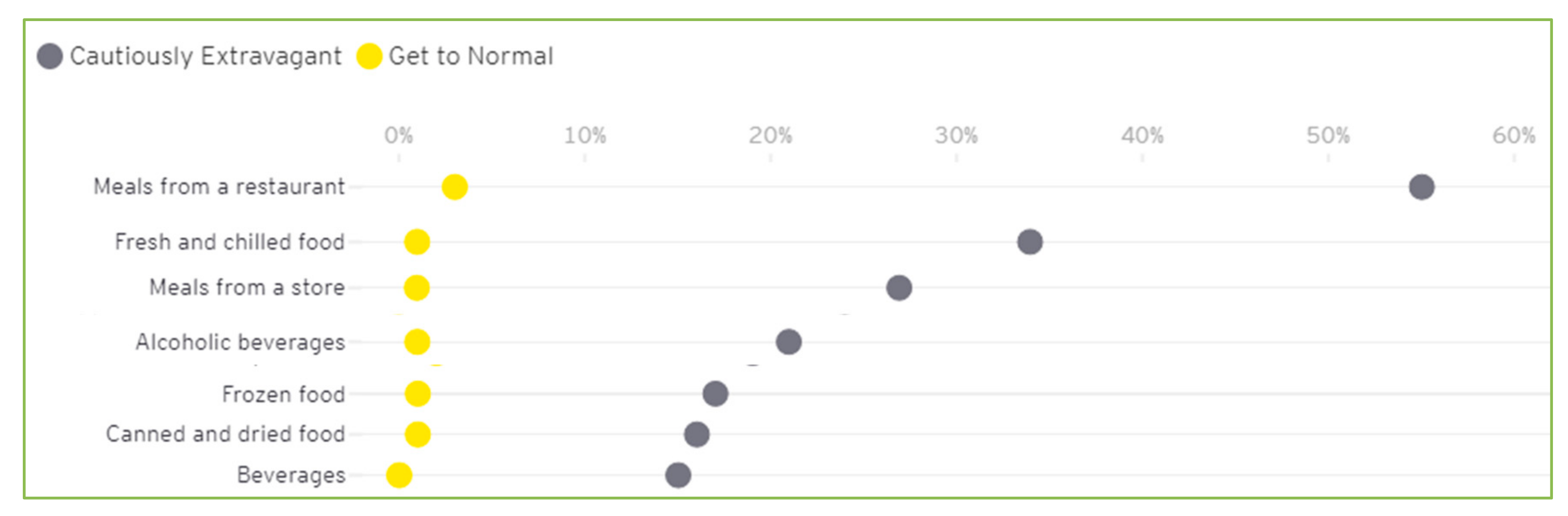
cautiously extravagant consumers (25% of the 4859 consumers surveyed in the USA, Canada, the United Kingdom, France, and Germany during the week starting 6 April 2020) will change their eating habits as a result of COVID-19 whilst only 14% of
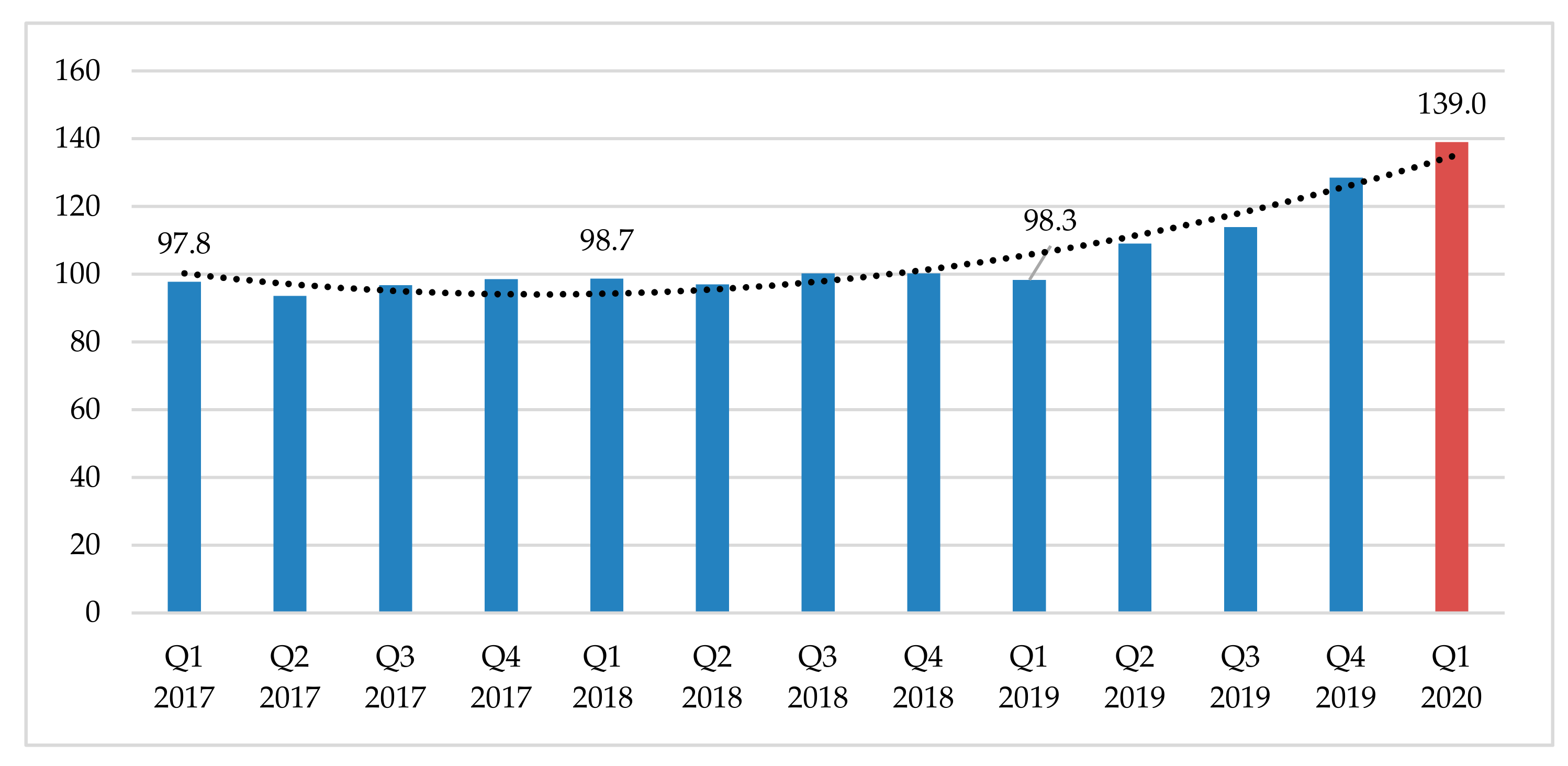
get to normal consumers (31%) envisage that their eating habits would change. Specifically, the former group envisaged increasing their expenditure (by between +15–55%), especially on restaurant food and to a lesser extent fresh food, ready meals, alcoholic beverages, frozen food, canned and dried food, and beverages (
Figure 1). By contrast, the latter group did not envisage increasing their expenditure of food shopping (between +1–3%).
Hubbub [
69] research has shown that approximately 90% of a representative sample of 2000 adults surveyed in the United Kingdom have changed their cooking and eating habits since the imposition of the national lockdown on 16 March 2020. These changes included spending more time cooking with family or neighbours (47%); enjoying cooking at home (44%); and “sharing” virtual meals over Zoom, Skype, Facetime, etc. (40%). Moreover, the people interviewed planned to continue with their new shopping and cooking habits after lockdown. These new-found eating habits include improved meal planning using up cupboard staples, freezing food/meals, and making greater use of leftovers (
Table 1). Hubbub [
69] research also confirmed that many people did not consume as much fresh fruit and vegetables as usual (31%), minimising their contact with shops, while some also reduced their dairy/egg intake during the lockdown period (15%). Shortages (
Table 2) and difficulties in locating staple food items compelled many to experiment with new recipes (22%). Finally, it is worth noting there are signs that these new behaviours will continue when the restrictions have been substantially lifted, albeit to a lesser extent.
A study by Datassential [
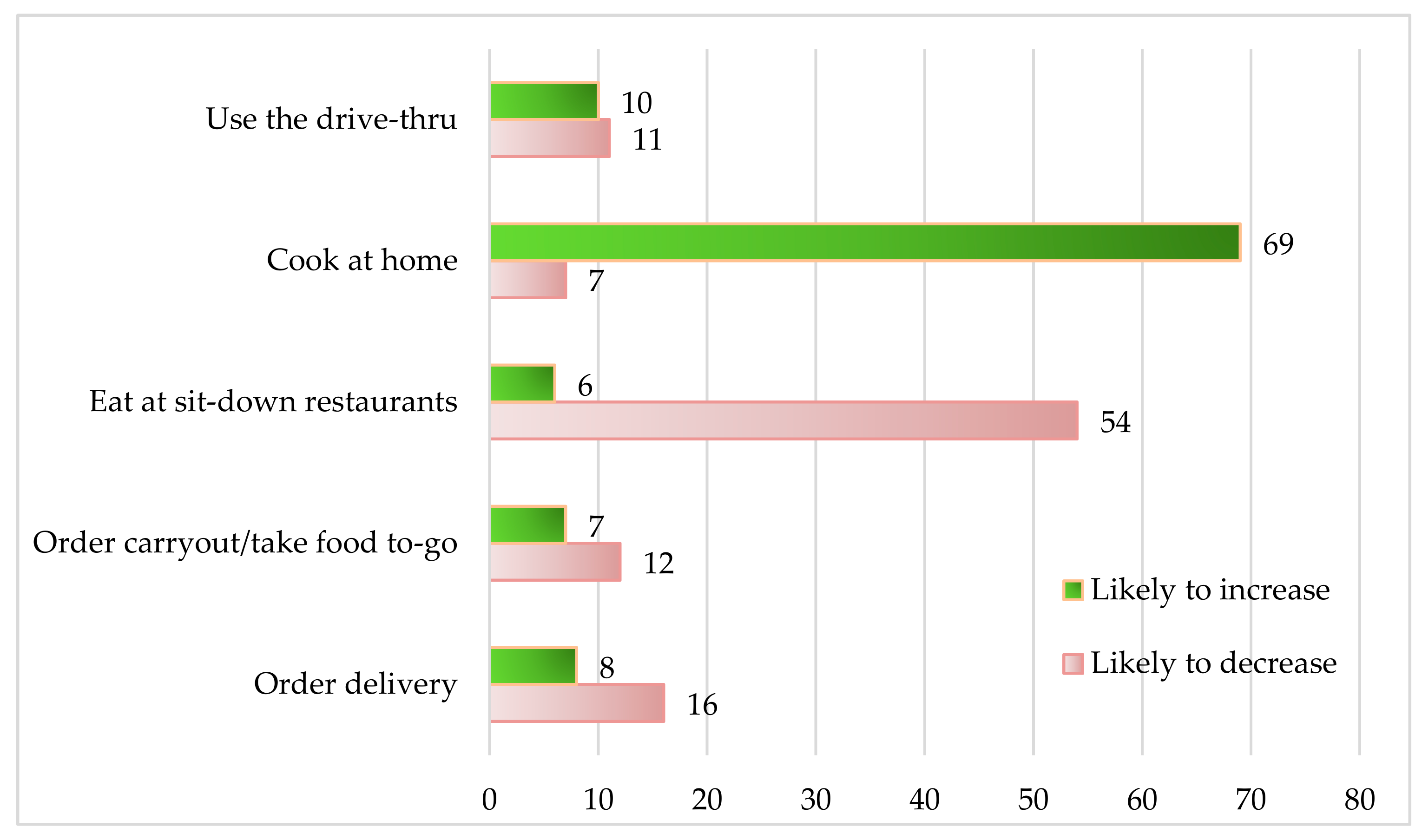
70] of 1000 consumers in the United States that was conducted on 10 March 2020 revealed that 69% of people preferred to cook at home and 54% did not prefer to eat at sit-down restaurants (
Figure 2). Moreover, according to a quantitative survey conducted online on 2 April 2020, many Americans spent much time engaging in household activities, such as cooking and baking [
71]. Greater confidence and families taking pleasure in cooking together, with higher expectations of cooking more after the pandemic to save money and enjoy a healthier diet, were also reported [
71].
Coffey et al. [
72] have investigated the effect of the pandemic on consumption in three scenarios: the new normal, maintaining social distancing and observing new cases of COVID-19; a second wave of infection, leading to a further lockdown; and the situation in which a vaccine is available. According to these scenarios, household consumption in Ireland has been estimated to be 13%, 20%, and 12%, respectively, which is lower than in 2019. This reduction was estimated to be at 1%, 4%, and 2%, respectively, regarding food consumption and 18%, 22%, and 14% for drinks and tobacco. In their study of Denmark and Sweden, Andersen et al. [
73] estimated a significant reduction in consumers’ spending during the Danish lockdown period commencing 11 March 2020, which was estimated to be approximately 25%. They also concluded that the shutdown in Denmark reduced spending by approximately 10% among young people, with increased spending by about 5% among the elderly.
Analysing the results by Mintel (
www.mintel.com) of their research in the USA, Piek [
74] highlighted that, between 6 and 12 March 2020, approximately 25% of adults stored food and other essentials, and this percentage increased as the quarantine spread over the USA. In addition to modifications in consumer behaviour, changes also occurred regarding their preferences. Consumers were looking for more durable products such as canned, dried, and frozen foods. Similarly, and according to Schmidt et al. [
75], consumer preferences have shifted to long-lasting products such as packet soups, canned vegetables, and Ultra-High Temperature processing (UHT) pasteurized milk. Notwithstanding criticalities due to processing procedures and their nutritional value (they are often high in salt, sugar, and saturated fats), these products have proved to be fundamental in satisfying global food requirements during the COVID-19 emergency [
21]. Moreover, many people are looking for snack foods, processed bread, and packaged meals to minimise contact with the pandemic and indulge in some comfort eating. This is in contrast to the recent behaviour and preferences of consumers who sought additive-free, fresh foods and beverages in the pre-pandemic era [
76]. Indeed, it can be stated that, in times of economic recession, consumers’ preferences have tended towards inexpensive shelf-stable and frozen foods. This change in behaviour during the spread of coronavirus has paralleled recessionary economic behaviour—many consumers’ preferences for budget-friendly foods have favoured long-life products and larger portions [
76].
Analysing Nielsen’s data (
www.nielsen.com), Devitt [
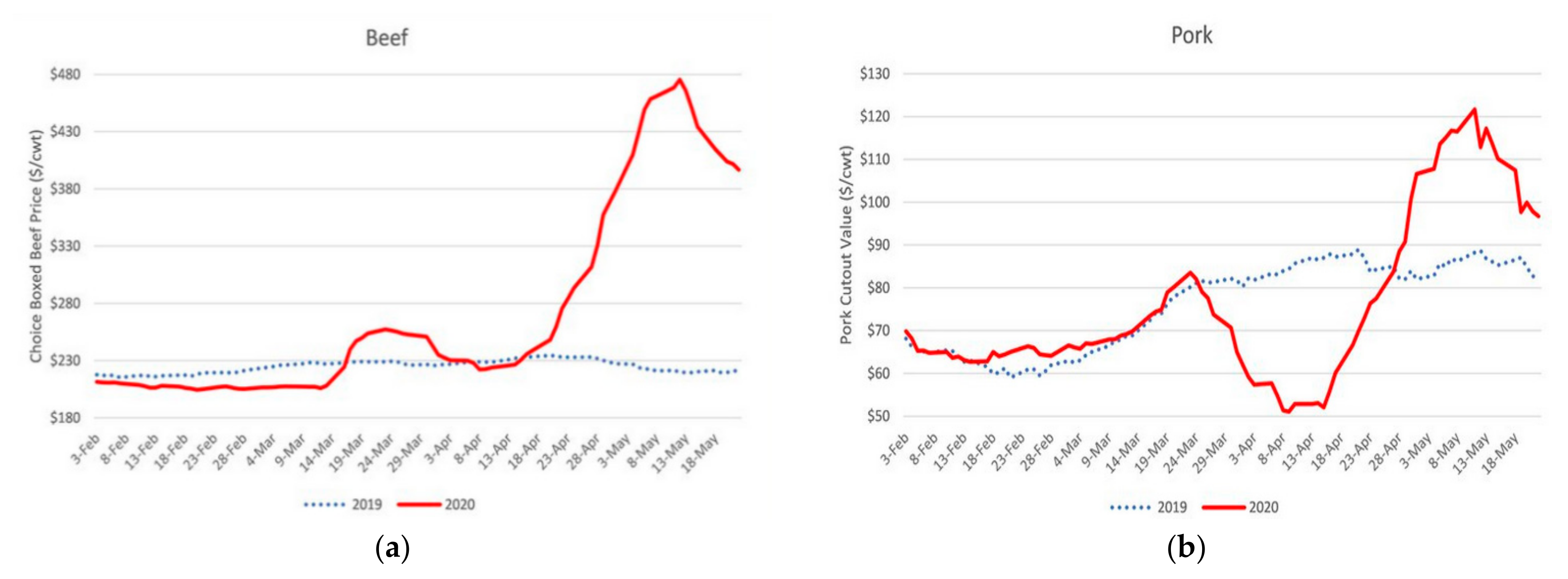
76] reported that, from the end of January to the end of March 2020, there were the following increases in the USA: pasta sales increased by 199%, macaroni and cheese by 176%, lasagne and pizza by 126%, and ramen (Japanese noodle soup) by 117%, while the meat category (i.e., non-plant-based) only grew by 31%. Due to the increase in home cooking, the sale of meat flourished in this period, especially poultry, and the sale of beef and pork was also above average in the same period. In particular, sales of hot dogs, sausages, and bacon grew by about 100% in the same period. Plant-based meat sales also grew by approximately 70%, especially frozen and fresh products. Demand for flour, sugar, and other ingredients (baking mixes, chocolate and flavoured chips, baking soda, frosting (icing), etc.) also increased due to an increase in bread-baking and making desserts at home.
Table 3 shows the top 10 food and beverage sales categories in the USA in the first quarter of 2020. As can be seen, sales of beef, chicken, cheese, cow’s milk, and alcoholic and non-alcoholic beverages increased; this may have been due to an increase in eating meals at home [
74].
Analysing the Kantar data (
www.kantar.com), Traldi [
77] commented that the pandemic has also affected the behaviour and preferences of Latin American consumers, who typically possess a preference for appetising and fresh foods such as natural extracts, sauces, and spices. For example, the demand for products such as processed bread rose by about 50% and approximately 15% for sausages in Brazil. The demand for ready-made juices, beer, and soft drinks also increased by 15%, 10%, and 6%, respectively, between January and February 2020. Despite these increases, demand for products such as fermented milk, yoghurt, and soy drinks decreased by 21%, 17%, and 7%, respectively, in the same period. Retail sales of beans, rice, and eggs in Mexico increased by about 400% in the first two weeks of March 2020, and demand for canned food (especially sardines, herring, and tuna) increased by more than 150%. Similarly, sales of beverages, such as orange juice and powdered beverages, increased significantly [
77] early on in the COVID-19 crisis in the central regions of Latin America.
According to Li et al. [
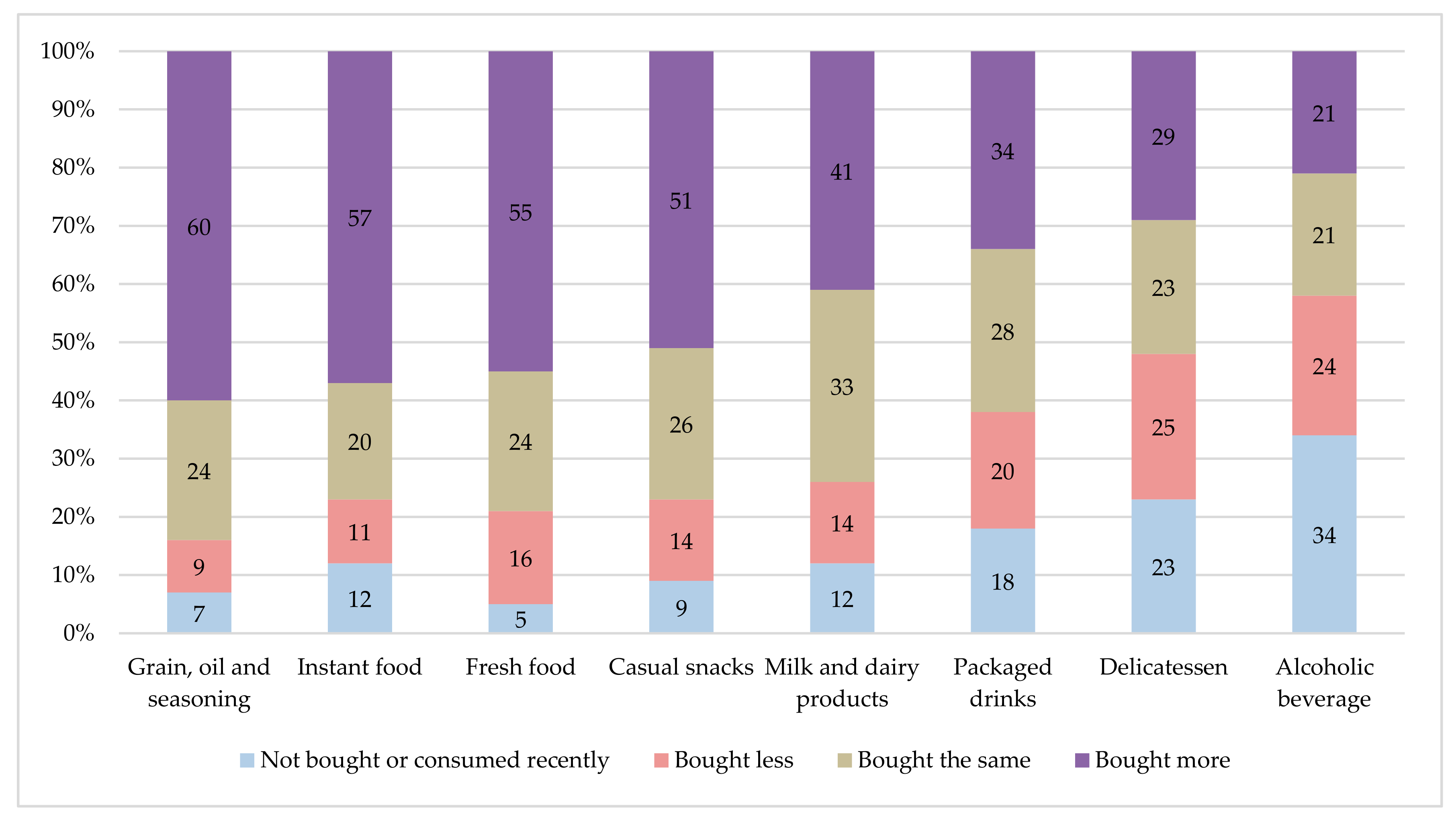
78], vegetables, rice, and meat in China were in greatest demand during the early stages of the pandemic; China imposed a mandatory, nationwide quarantine between 23 January and 9 February 2020. Moreover, the results of a survey conducted online on 14–16 February 2020 in China by Ipsos [
79] revealed that the purchase of foods such as grains, instant food, fresh food, snacks, and dairy products increased significantly during the pandemic; pre-packed beverages, fruit juices, and vitamin drinks increased slightly in the same period; while alcoholic beverages declined (
Figure 3).
Returning to Europe, according to the Organisation for Economic Co-operation and Development (OECD) [
80], the cost of some fruit and vegetables increased during the main period of lockdown compared to previously (e.g., potatoes, apples). Moreover, French consumers purchased less perishable fruit and vegetables, preferring long-lasting items such as apples and carrots. According to the Spanish Ministry of Agriculture, Fisheries and Food [
81], Spanish consumers increased their shopping for certain products, such as flour (+147%) and snacks/nuts (+15%), over a six-week period of lockdown restrictions, compared to the same week in the previous year.
Nearby, consumers’ habits in Italy also changed compared to the pre-lockdown period (commencing 9 March 2020). The following percentage changes in consumption were recorded in the period of 17 February to 15 March 2020, compared to the same period in 2019: flour (+79%), pasta (+44%), eggs (+26%), canned meats (+63%), rice, (+44%), and frozen pizza (+54.3%), with UHT milk being preferred to fresh milk (+29% and +4%, respectively) [
80]. Moreover, in Italy, from 11 to 17 May 2020, when a new phase of the pandemic can be said to have begun (the reopening of many offices and factories, an easing of restrictions relating to movement in cities, and the requirement of official permission to meet relatives in the same region), consumer attitudes towards different products changed. For example, purchases of wine grew (+15% compared to the 9 March to 4 May 2020 lockdown), especially sparkling wine (+20%) [
82]. Furthermore, forecasts of a panel of 790 experts interviewed online from 1–6 May 2020 concerning changes in the purchases of Italians in the post-quarantine era elicited the following responses:
Made in Italy food (+90% growth in purchasing), local and zero kilometre food (+81%), traditional and regional food (+66%), and organic and health food (66%), as compared to the pre-pandemic situation [
83].
4.2. Health Concerns
Pre-COVID-19 life changed significantly for many people around the world due to the spread of the pandemic. The requirement to consume nutritional food has emerged in this period in particular because many consumers have become increasingly aware of maintaining good health, and therefore and it has been prioritized. It is of note that consumer behaviour in the pre-pandemic era was already favouring food and dietary supplements as a means of strengthening one’s immune system. However, this phenomenon markedly increased in the first few weeks of the pandemic (March 2020) with increasing levels of fear regarding the emergency, with more consumers purchasing products perceived to reap immunological benefits [
74]. These concerns have continued to increase, with new behaviours and preferences manifesting themselves among consumers [
68,
84].
Due to the spread of the pandemic, principles of nutrition, including the timing of meals and the consumption of nutritious food for strengthening one’s immune system [
85], have increased in importance during the main quarantine period. Scientists have established that the elderly and those with diseases such as obesity and type 2 diabetes are more at risk to COVID-19. Butler and Barrientos [
86] have, therefore, recommended the acquisition of healthier eating habits. This includes consuming foodstuffs with lowered levels of saturated fats, sugars, and carbohydrates, and an increased consumption of fibre, whole grains, unsaturated fats, and antioxidants. Accordingly, many consumers are seeking food to boost their immune system by virtue of its importance to health. Piek [
74] has stated that about 40% of Americans prefer food supplements, a datum confirmed by statistical records. Evidence has also suggested that sleep patterns, stress management, and weight gain have benefited from more attention due to job insecurity, anxiety regarding finances, a lack of me-time and space, childcare, and the general fear created by the pandemic. Devitt [
76] has indicated that, due to the lockdown and the increasing willingness of people to cook at home, some preferences for less healthy foods may be reduced.
Data relating to Latin America has shown that there is a strong tendency to consume foods with reduced salt, calories, and sugar content because they boost the immune system [
77]. Moreover, the results of the study by Ben Hassen et al. [
87] in Qatar reported a shift in eating habits that were more inclined towards eating healthier foods due to concerns regarding food safety—approximately 32.4% of the respondents attempted to decrease their consumption of unhealthy fast foods, and 28.7% sought to decrease their consumption of candy/sweets, cookies/biscuits, and pastries. Similarly, 21.2% of an Italian sample, which was surveyed by Scarmozzino and Visioli [
88], boosted their consumption of fresh fruit and vegetables during the lockdown period, which officially started on 9 March 2020. This increased consumption should be viewed as positive due to the protective effects of fruit and vegetables as a result of the micronutrient, vitamin, and fibre content [
89,
90]. Di Renzo et al. [
91] recruited 3533 Italian consumers in a survey conducted between 5–24 of April 2020—37.4% of the study population stated that the consumption of healthier food had increased (fruit, vegetables, nuts, and pulses/legumes) and 29.8% had decreased their consumption of so-called junk food. A total of 15% of respondents purchased fruit and vegetables directly from farmers or through organic purchasing groups, while the 18–30-year-olds preferred a Mediterranean diet compared to those below 18 years of age or the elderly. Ruiz-Roso et al. [
92] surveyed 820 adolescents (aged 10 to 19 years) from Spain, Italy, Brazil, Colombia, and Chile between 17 April to 25 May 2020. The results highlight positive changes in the dietary patterns—legume, vegetable, and fruit intake significantly increased during COVID-19 confinement compared to the period before confinement, while fast food intake was dramatically reduced. By contrast, as a consequence of boredom and stress produced by COVID-19 confinement, surveyed people also reported a higher consumption of fried and sweet food.
Healthy eating habits are critical to maintaining health, particularly regarding vulnerable populations such as the elderly and those with comorbidities [
93]. The results of the evaluation of 124 diabetic diseases in Poland (July 2020) revealed that the highest increase in food consumption was related to fresh fruit (44%) and vegetables (40%), with the greatest decrease regarding fast food (32%) and (29%) salty snacks [
94].
Moving east from Europe, a study of 5000 consumers across seven Asian countries (Australia, China, India, Indonesia, Japan, South Korea, and Thailand) revealed that consumers paid more attention to their health during the pandemic—more than 75% of respondents to a survey stated their desire to strengthen their immune systems by doing more exercise and eating a healthier diet. Consequently, the consumption of eggs, dairy products, and bottled water increased, while alcohol and snack consumption declined in these Asian countries [
95]. Returning to Europe, food-related behaviours were investigated through an online national survey in the study by Romeo-Arroyo et al. [
96] involving 600 consumers in Spain during the COVID-19 epidemic. The results revealed that more than 20% of the participants were willing to maintain healthy habits after the national lockdown had been substantially lifted. These habits included engaging in sport and cooking. Approximately 15% of the respondents declared that they were willing to maintain healthier eating habits by increasing their consumption of fruit and vegetables and planning meals more carefully.