Abstract
Discussion around anthropogenic climate change has occurred for over 100 years. However, in recent decades, these discussions have intensified due to increased confidence in scientific research highlighting adverse effects, increased knowledge breadth in climate science, and heightened public and political awareness and engagement on the topic. Climate change is now acknowledged as one of the biggest challenges and threats to modern lifestyles. Nature-based solutions (NBS), as a mediator and mitigator to adverse climate change effects, is an emerging area of expanding research collateral and practitioner literacy. To highlight current NBS knowledge, existing knowledge gaps, and research trends, a Quantitative Systematic Literature Review (QSLR) was undertaken (n = 54). This QSLR reveals the short temporal span of articles relating to NBS as a response to climate change, with most articles being of a research style format. NBS research focus areas were found to be dominated by ecological and infrastructure approaches to climate change mitigation, and ecological and technical positions were found to be most topical across the current climate change literature. Multiple knowledge gaps were identified by the review, namely the lack of broader conceptual approaches and knowledge acquisition regarding climate change responses via NBS, as well as the psychological relationship humans share with NBS and climate change, adverse or otherwise. These knowledge gaps highlight where future research inquiry may be directed to increase the value and completion of this research area. It is hoped that this QSLR will assist in increasing the profile of NBS in the multidisciplinary and complex response to anthropogenic climate change, as well as contribute to the growth in investment and implementation of NBS assets for a rigid and resilient global future.
1. Introduction
The International Panel on Climate Change (IPCC) was formed 30 years ago by the United Nations Environment Programme (UN Environment). The IPCC has brought together a significant volume of global literature and research findings pertaining to climate change, anthropogenic or otherwise. Authoring some 100 documents, and providing critical data publicly available for further interrogation and interpretation by climate scientists and others, the IPCC is widely known as the peak body providing information on climate change and the resultant natural, political, economic, social, and ecological impacts [1].
Greenhouse gas emissions, accepted as the leading cause of anthropogenic climate change [2], have dramatically increased since the pre-industrial era (circa 1750) [1]. Additional compounding factors of anthropogenic climate change are observed as rapid population growth, changes in urbanization and urban densification, urban lifestyles choices, and individual consumer behaviors [3].
Nature-based solutions already exist and are increasing in implementation at varying degrees across the planet. Trees are planted at significant rates via programs, initiatives, and as strategically planned carbon offsets. Desecrated land is actively being revegetated and restored by volunteers, not-for-profit organizations, large private entities, and others. Ecosystems are being regenerated in support of providing ecosystem services and increasing biodiversity, and Green Infrastructure (GI) is increasing in research effort [4] and implementation. Vegetation within water catchment zones is increasingly being used to trap pollutants and purify water and is receiving additional protection via legislation and improved statutory rigor, with evidence of this occurring globally. The success of these assets and installations are relatively well-known and can be seen to transcend decades of research, however, it is conceded that current rates of nature-based solutions (NBS) are alone insufficient in achieving a net-zero carbon emission base in most current developed regions which would have a considerable impact upon the future climate change trajectories.
While ‘nature’-based solutions have always existed, the interest and applicability to mitigating and mediating the effects of climate change among other current urban challenges, have begun emerging in substantial numbers over the last decade. As the pressure and urgency of action against climate change increases, so too does the search for solutions. This being the case, the profile of NBS has suitably been confirmed as an area of academic and practitioner interest and expansion.
What remains to be seen, is a volume of practical, viable, and quantifiable research which underpins decision making processes and informs practitioners of implementation gains. This research gap is observed to hinder NBS from greater rates of investment and implementation. It is for this reason that the need was identified for a Qualitative Systematic Literature Review (QSLR) to inform research trends, research gaps and preliminary knowledge, and gather resources for practitioners to progress the concepts’ implementation, understanding, and status. The authors believe that such a review would highlight the relevance of NBS in the multi-faceted and cross-disciplinary response to climate change intervention, as well as inform future targeted research into NBS assets and detailed aspects for the purpose of climate change mediation and mitigation.
2. Theoretical Foundation from QSLR
2.1. Climate Change
A primary implication of anthropogenic climate change is rapid climate warming [5]. Climate warming has occurred at an unnatural and unsustainable rate since around 1950 [5]. The current rate of climate warming has surpassed what has been observable in prior decades [5]. A warming of the climate has primary, secondary, and passive adverse effects, including those summarized in Table 1.
Table 1.
Climate change effect examples with references.
Extreme Weather Events (EWE) are increasing in frequency [5,6]. EWE’s include large temperature fluctuations, sea level water surges, unseasonal and unprecedented rainfall events, durations of increased temperatures (heatwaves) and more [5,6]. As the climate warms, against the backdrop of pre-industrial carbon dioxide levels, the impacts of EWE’s become increasingly threatening to life and urban communities.
Global climate warming has caused sea levels to rise [5,7], occurring mainly through thermal expansion of sea water, as well as the rapid melting of sea ice and permafrost [5,7]. Latest projections, which have increased substantially in statistical confidence, indicate that between the years 2081 and 2100, a sea level rise of between 0.45 and 0.82 m is expected [5], while other researchers project levels even higher. Sea level rise will not be uniformly distributed across all regions and coastlines, it is anticipated that around 70% of global coastlines will experience the projected rise within 20% of the predicted rates [5]. Similarly, impacts will not be distributed uniformly, this will see some communities at far greater risk, likely to exacerbate global inequity, impact heavily upon development and prosperity for developing urban centers and cause widespread adverse health impacts [5].
The 2014 IPCC report titled Global Warming of 1.5° [5], demonstrates the severity of impacts between an increase of 1.5 degrees Celsius and 2 degrees Celsius, employing comparisons to the pre-industrial era. Analysis of available data indicates that globally we are at a junction whereby future action will determine the trajectory (emission pathway) of climate warming, and in turn the viability of humanity over the next century [5]. Beyond this junction (only a few short years), it is likely that intervention will be unachievable to limit the global warming to 1.5 degrees Celsius [5]. With significant and widespread innovation, as well as radical changes in human behavior, and industry approaches to production and consumption, there is some confidence that global climate warming can be curtailed to 1.5 degrees Celsius [5], noting that even a global climate warming of 1.5 degrees Celsius will have significant adverse effects. If a ‘Business as Usual’ approach is continued, this climate warming trajectory is expected to increase exponentially with catastrophic results in only a short duration of time. Table 1, below, summarizes the effects of climate change, and includes examples suitable for further investigation.
Climate change is acknowledged as one of the biggest challenges and threats to regions, communities, and the future success of humanity [1,2,3,4,5]. Climate change can, and is, mediated and mitigated by many techniques, some of which are summarized in Table 2.
Table 2.
Climate change mitigation and meditation techniques with references.
2.2. Hierarchical Representation of NBS
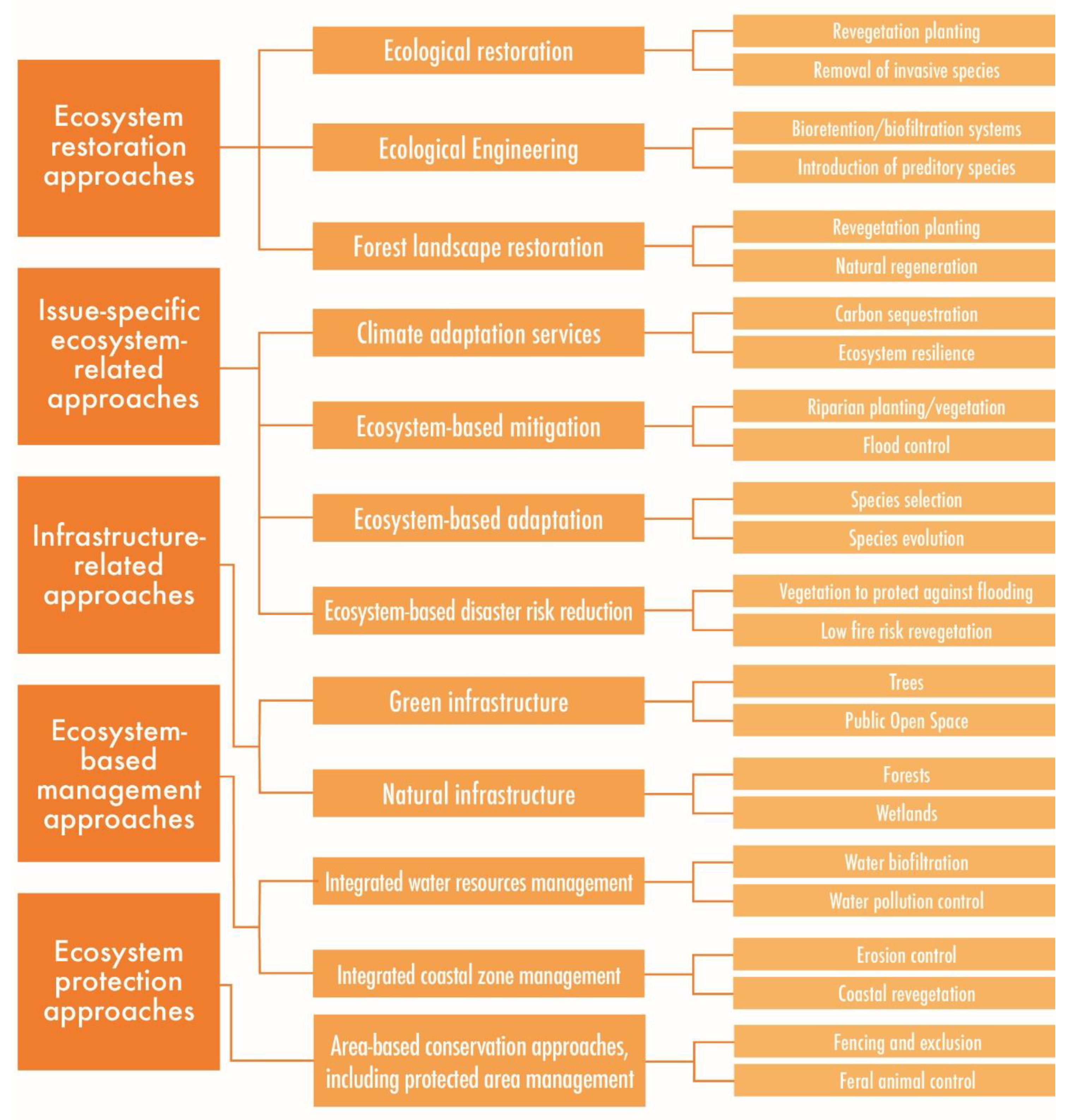
Traditional and foundational means of managing climate change are embedded in NBS. As described by the International Union for the Conservation of Nature (IUCN) [47], NBS are actions and assets that manage, restore, and/or protect natural (or modified) ecosystems which positively affect social, economic, ecological, environmental, and political impacts brought about by climate change (and other contemporary challenges). NBS is wide ranging and widely applicable (i.e., Figure 1).
Figure 1.
Hierarchy of nature-based solutions (NBS) expanded with practical examples.
The novel synthesis of Figure 1 presents a structured way of identifying NBS, with examples relevant in the context of mitigating and mediating climate change.
Figure 1 categorizes and summarizes NBS in a format that is accessible and informative for land managers, urban planners, and community stakeholders, as well as providing foundational information that will facilitate improved consistency in current and future NBS research, discussion and implementation.
3. Materials and Methods
3.1. Quantitative Systematic Literature Review
This QSLR follows the approach of a growing number of authors (e.g., Pickering and Byrne [48], Parker and Zingoni de Baro [4], Parker and Simpson [49]; Parker [50]) and the Preferred Reporting Items for Systematic Reviews and Meta-Analysis (PRISMA) guidelines [51] (supplementary information pertaining to this research approach can be accessed via http://prisma-statement.org/).
In October 2019, a search was performed utilizing the Proquest Summons database search tool via Murdoch University. The search criteria stipulated that the words nature-based solutions (also nature based solutions) as well as climate change, must appear in the article title, and that the articles were required to be peer-reviewed. No other search restrictions were applied.
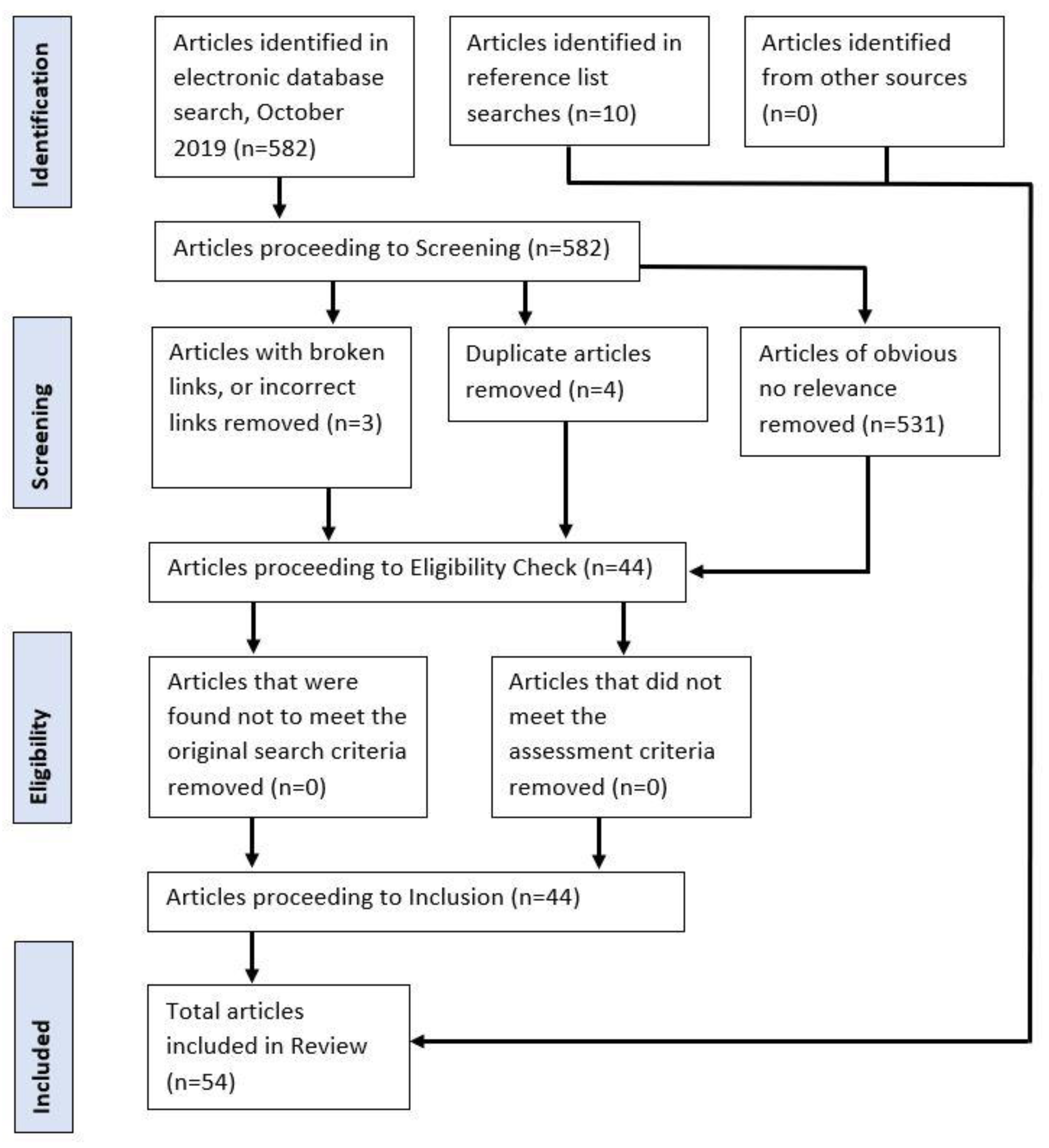
Initially, this produced 582 results. The articles were screened for incorrect or broken links, duplicates, those that were not produced/re-produced in English with the full text online, and articles with no obvious relevance to this review, after which 44 articles remained.
The abstracts of the 44 articles were carefully screened and it was determined that all were eligible for inclusion in the review. A further 10 articles were identified through a targeted reference list search. At the completion of this process, 54 articles were deemed suitable and therefore formed the content of this review. This process as described above is captured in graphical form shown below in Figure 2.
Figure 2.
Preferred Reporting Items for Systematic Reviews and Meta-Analysis (PRISMA) expression of the systematic literature review.
Information pertaining to the articles were recorded under all applicable categories reported in Section 3.2 Meta-data. These data were then statistically interrogated to identify trends and relationships among the data. Approaches of the statistical analysis are outlined in Section 3.3 Data Analysis.
3.2. Meta-Data
The meta-data for the information extracted from the 54 reviewed articles are reported as supplementary material (Tables S1–S5).
The articles were transcribed into a Microsoft Excel workbook, which is provided as a supplementary file (.xlsx) to this review article. The meta-data collected were separated into four data set areas; article descriptors (Table S1), geographical data (Table S2), paper type (Table S3), aspects of NBS covered (Table S4), and aspects of climate change covered (Table S5). The article abstracts were entered and assessed separately.
The article descriptors (Table S6) were extracted from the individual articles, and directly transposed into the Microsoft Excel workbook. The geographical data (Table S2) were dependent on the information being made available by the articles’ author/s. Where information was not specified, this was indicated using the code NS = Not Specified. With respect to the geographical data, countries and cities were entered as text, where they were made available. Article type (Table S3) was categorized into four main categories; review articles, research articles, technical articles, or case studies. Articles that crossed multiple categories were recorded against each true result. NBS aspects (Table S4) identified as present among the articles were recorded across five possible categories; ecosystem restoration approaches, issue-specific ecosystem-related approaches, infrastructure-related approaches, ecosystem-based management approaches, and ecosystem protection approaches. Climate change aspects (Table S5) identified as present among the articles were recorded across eight possible categories; economic, social, ecological, temperature, extreme weather, technical, health, and psychological. Articles that crossed multiple focus areas were recorded against each true result. Abstracts were recorded for each of the articles and used for further analysis however have not been reproduced within this review paper, due to copyright restrictions.
3.3. Data Analyses
The data sets were cleaned and made tidy, according to recognized data tidying frameworks [52]; further data analysis was conducted in line with best practice for statistical analysis [53].
A broad exploration and summarization activities were conducted to observe any anomalies or large discrepancies in the dataset. Counts of occurrences, size of variation, and changes over time were produced and analyzed.
The dual stages in data collection, as described in Section 3.3 and shown in Figure 2, yielded two data groups (Stage 1 n = 44, Stage 2 n = 10). This required a measure of differences between the groups to identify any statistical difference that may be required to be assessed. An appropriate test of proportion/means followed by computation of the 95% confidence intervals was undertaken. These tests measured the difference in aspects of NBS and climate change to ascertain whether it was appropriate to treat the data as two groups or as a merged dataset. This resulted in the case to merge the dataset.
The distribution of the geographical meta-data resulted in a graphical representation of publication spread and frequency of research effort present in figure format within this review.
Correlation analysis was undertaken to reveal relationships not readily observable between reported NBS and climate change aspects covered by the articles. Since there are numerous categories, a heat table representation of the correlation coefficients was utilized to assist in this process. As the sample size is relatively small, goodness of fit tests were used cautiously. That being mentioned, in conjunction with the awareness of easily emerging skewness, the Chi-Squared test (χ2), and various two-sample t-tests were employed. Further, to measure correlation, the Pearson Coefficient was used. Statistical analysis and graphics were produced utilizing the statistical computing and analysis program R.
4. Results of QSLR
4.1. Temporal Trends Across Research
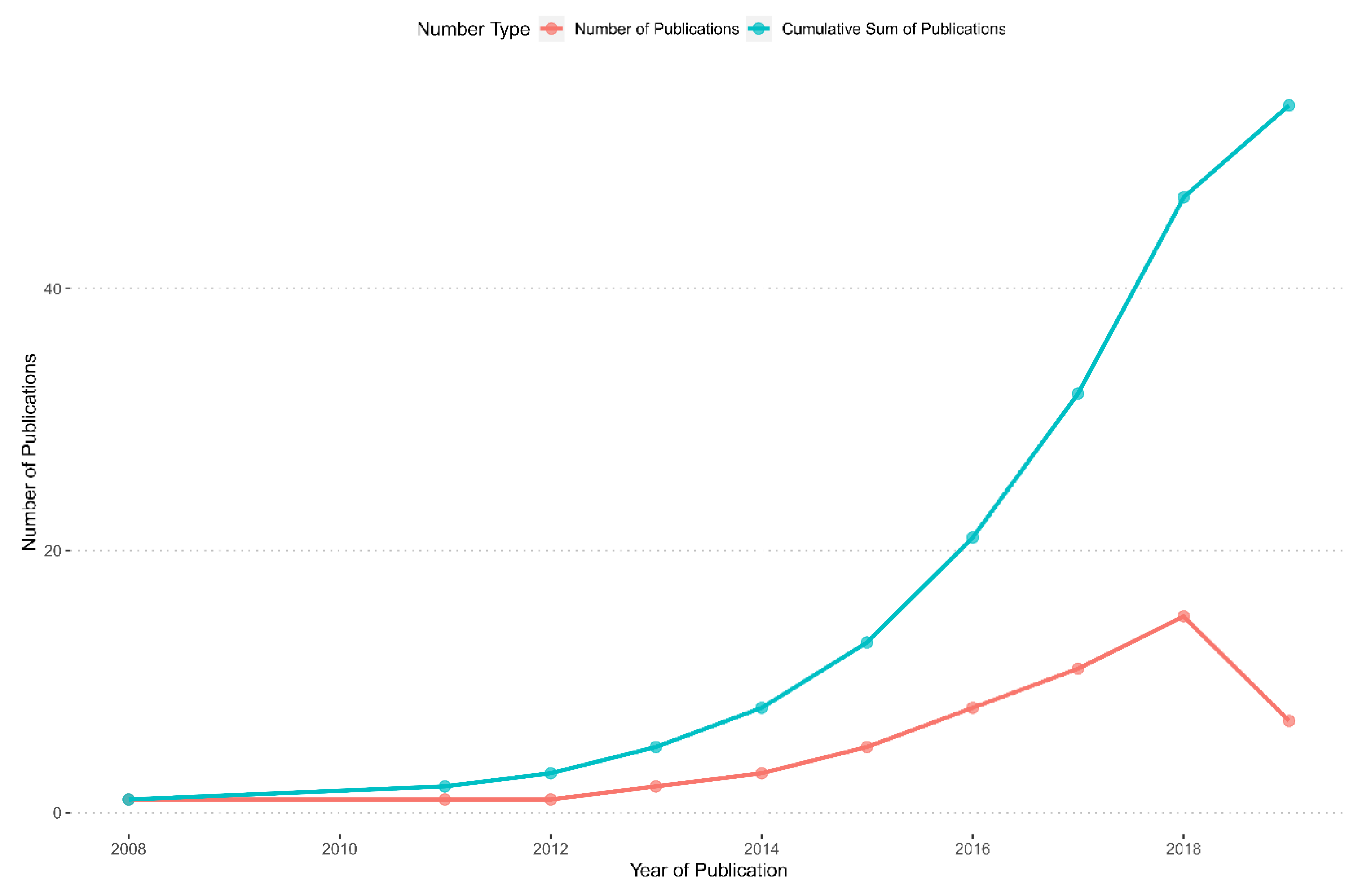
Of all articles (n = 54) collected within the QSLR, analysis was undertaken to understand the relationship between calendar year and the associated publication rates highlighting any emerging trends. It was found that the first article was published in 2012, with a subsequent strong trend showing a uniformed positively curved increase in research effort for each year thereafter. It is to be noted that the drop off between 2018 and 2019 is partially (at least) attributed to timing of the searching of articles and the expected delay in articles becoming discoverable via online database searches after publication. Figure 3 below, shows both the actual number of publications as well as the cumulative sum of publications of articles within the review.
Figure 3.
Temporal publication trends of reviewed articles.
4.2. Geographical Distribution of Research
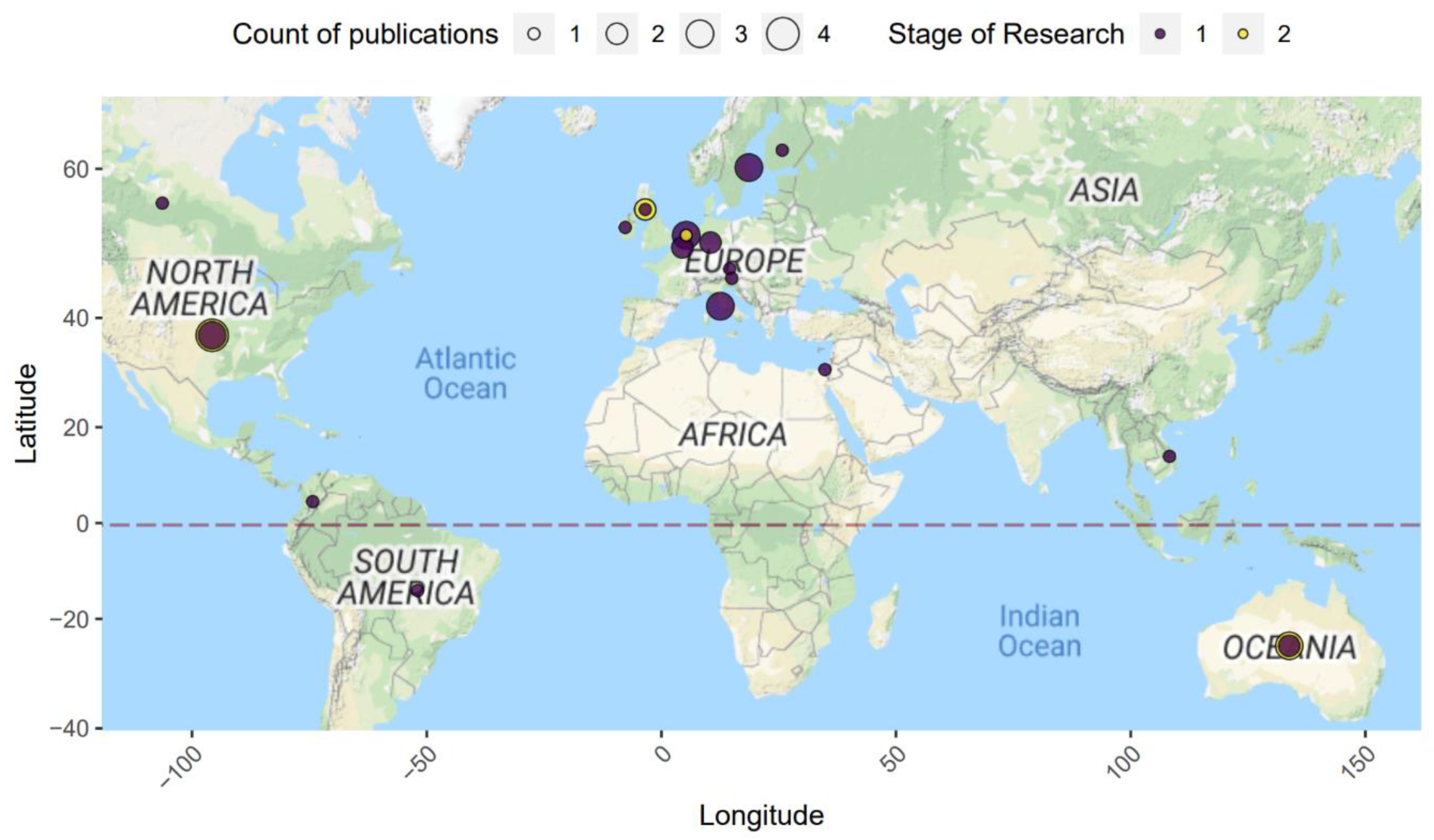
For the articles that indicated a geographical publishing location; country (n = 27, 50%) and city (n = 22, 40%), heat maps were produced to display the distribution of research effort. Of those articles that reported geographic location, 81% related to the implementation of NBS as a response to climate change in urban centers. As can be seen in Figure 4, most articles were published in The Netherlands (n = 4), Italy (n = 3), and Sweden (n = 3).
Figure 4.
Publication location of articles by country.
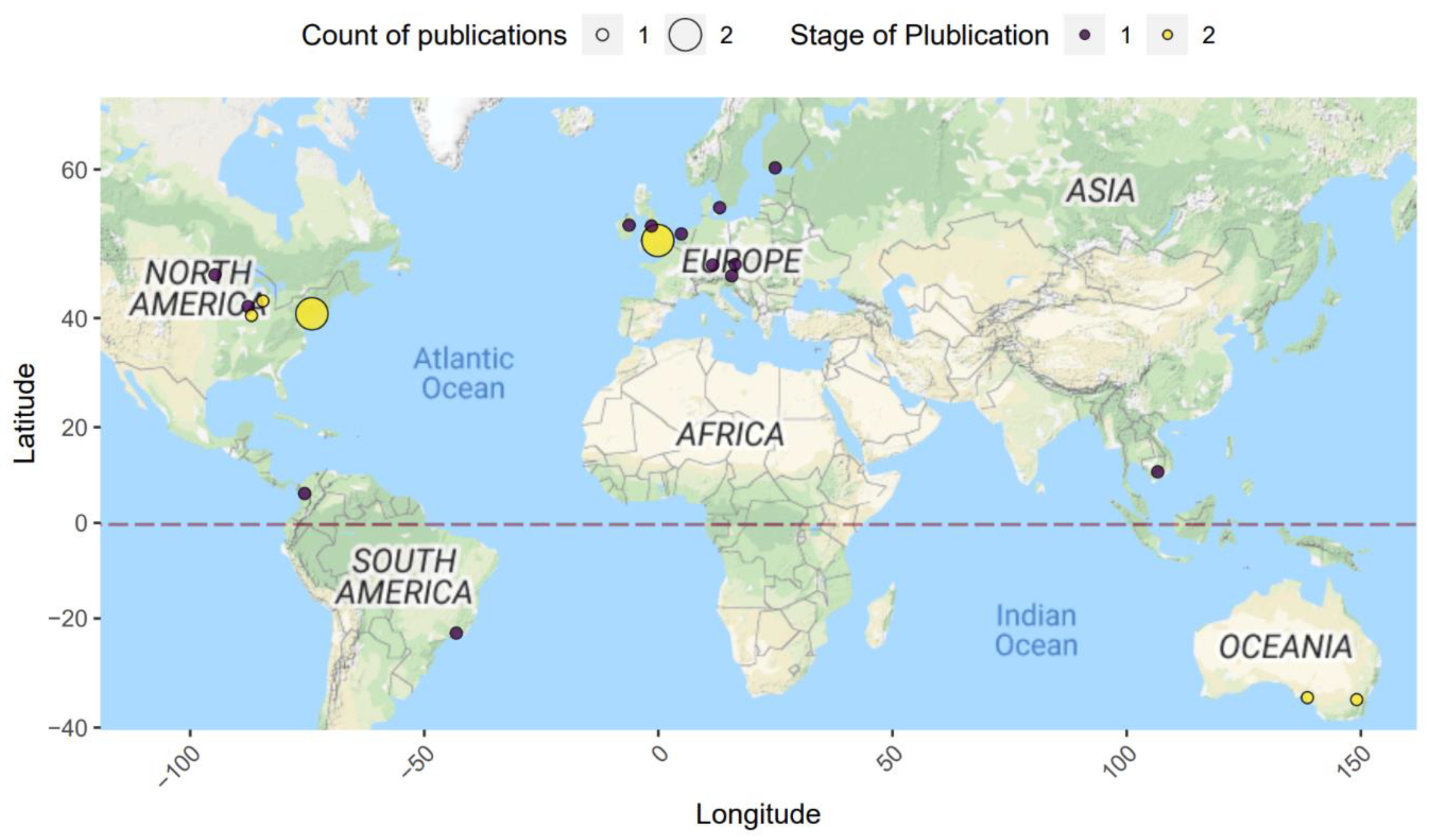
As can be seen in Figure 5, city publishing locations were relatively spread with no frequency greater than two which was true for London and New York City.
Figure 5.
Publication location of articles by city.
4.3. Data Verification
Following the PRISMA method, the data within this review were collected in two stages (Stage 1 n = 44, Stage 2 n = 10). Further information can be found in Section 3.1 as well as in Figure 2, with respect to the staged inclusion and eventual consolidation of articles.
Comparative analysis was undertaken to determine if there was a statistical difference between the data collected in Stage 1 when compared to the data collected in Stage 2.
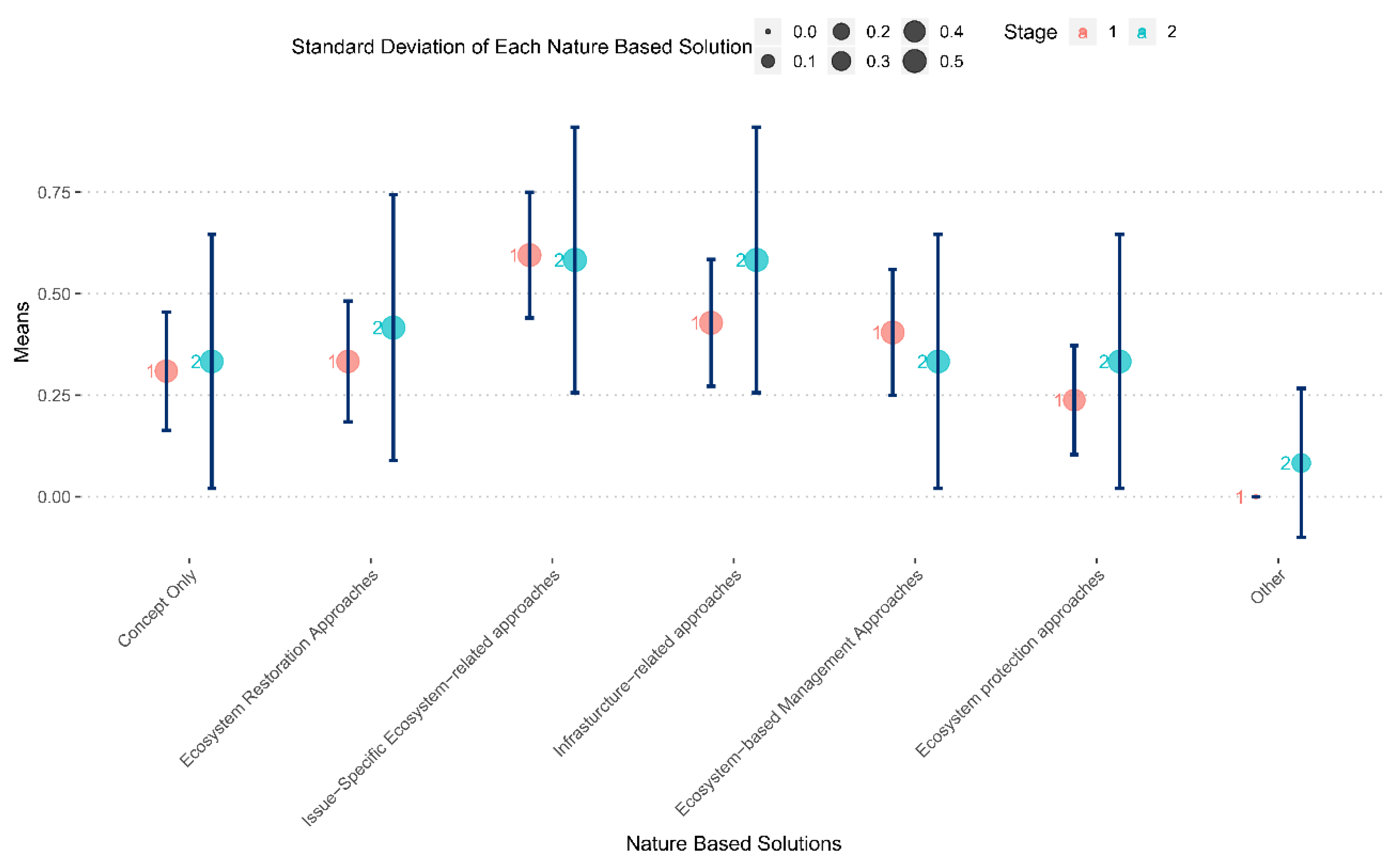
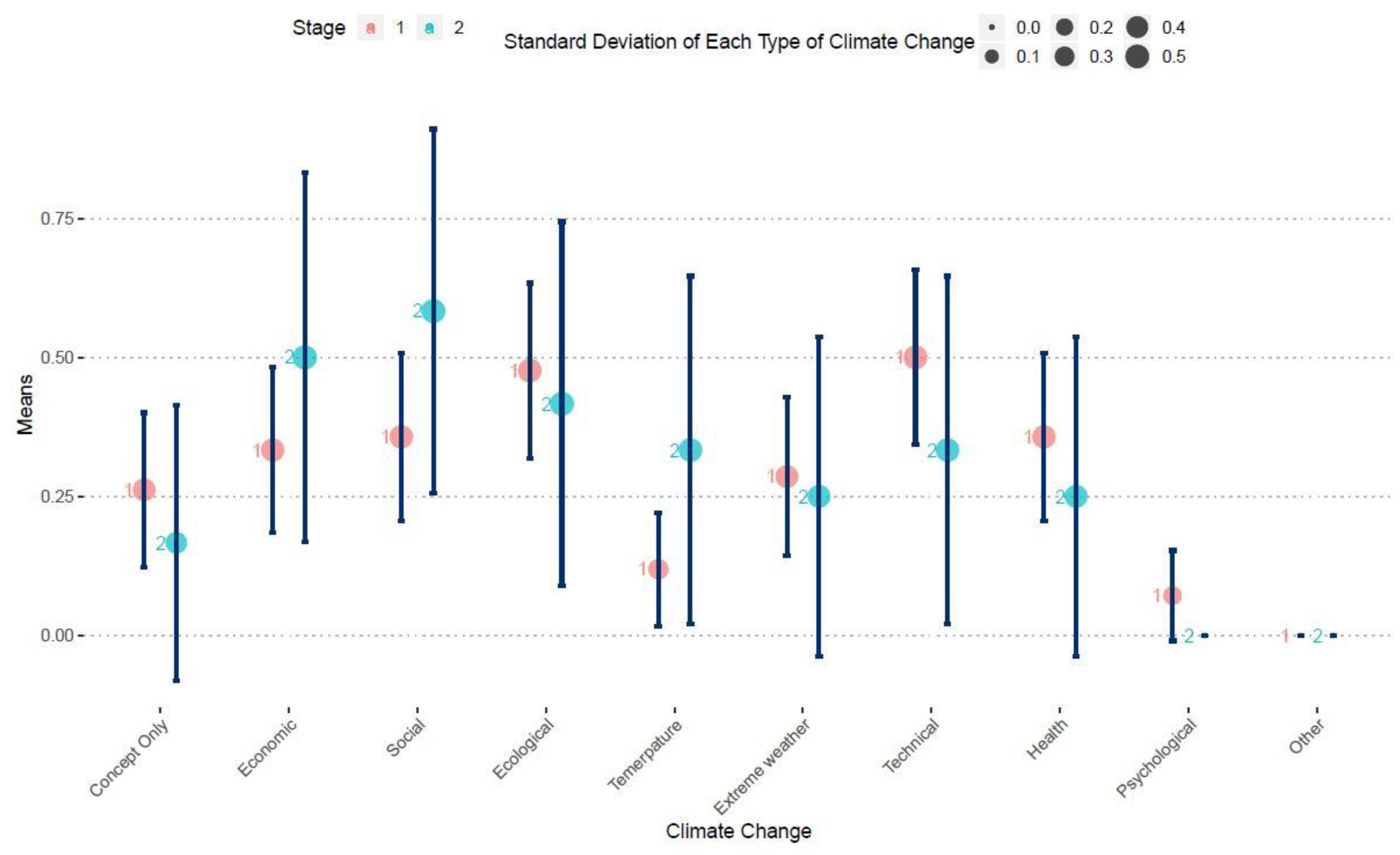
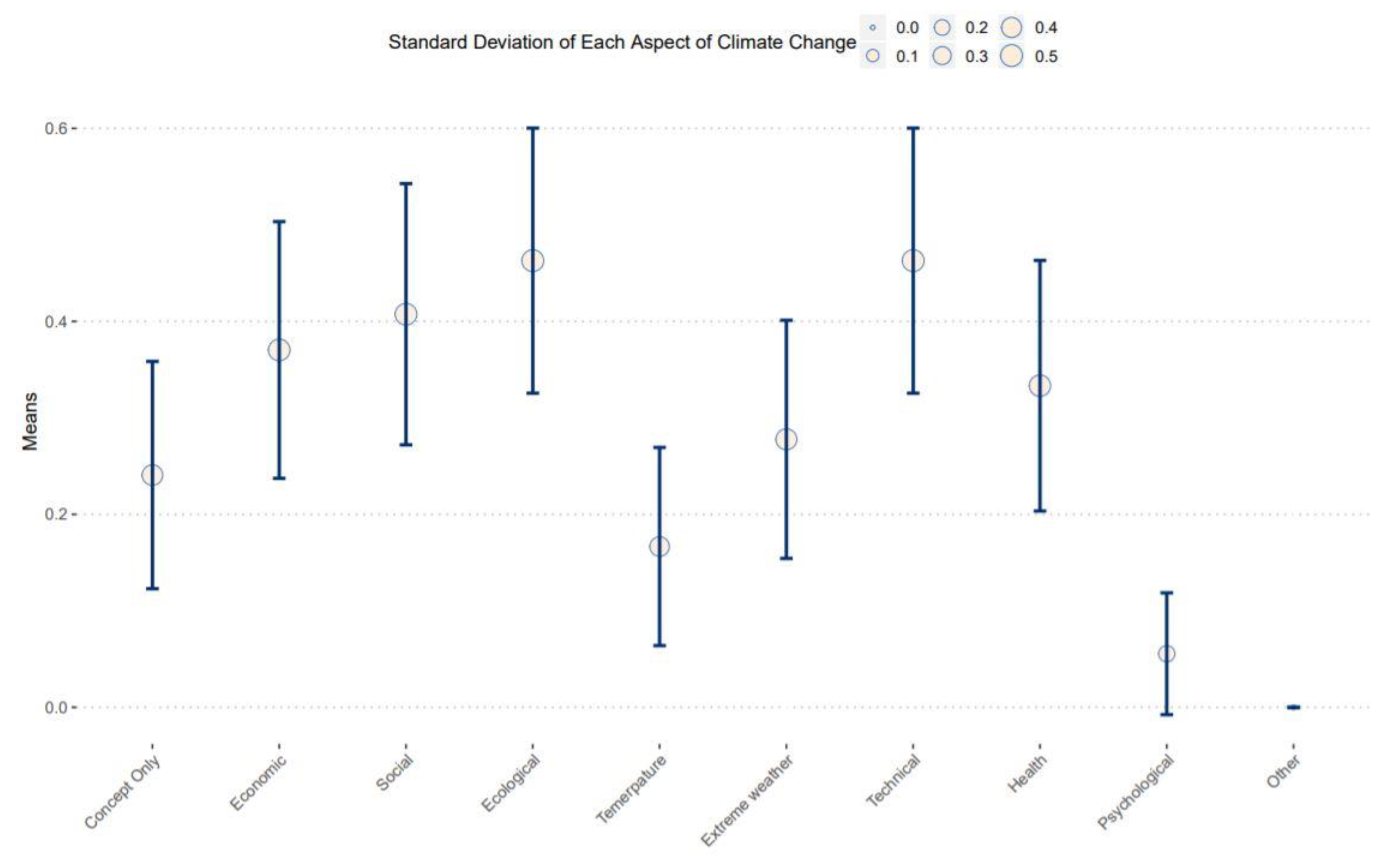
A mean value error plot showing each data stage was produced for the aspects recorded as being present for NBS and then reproduced for the aspects recorded as being present for climate change. These are provided below as Figure 6 and Figure 7.
Figure 6.
Aspects of nature-based solutions recorded as present within the included articles with the data collection stages separated.
Figure 7.
Aspects of climate change recorded as present within the included articles with the data collection stages separated.
As the error bars for each aspect overlap (in most cases substantially), in the figures of both NBS and climate change, this is evidence that there is no present statistical difference between Stage 1 and Stage 2 with regards to aspects reported on within the articles. On this basis, and the support in standard data analysis processing, from this point forward the data were treated as a single data set.
4.4. Article Type
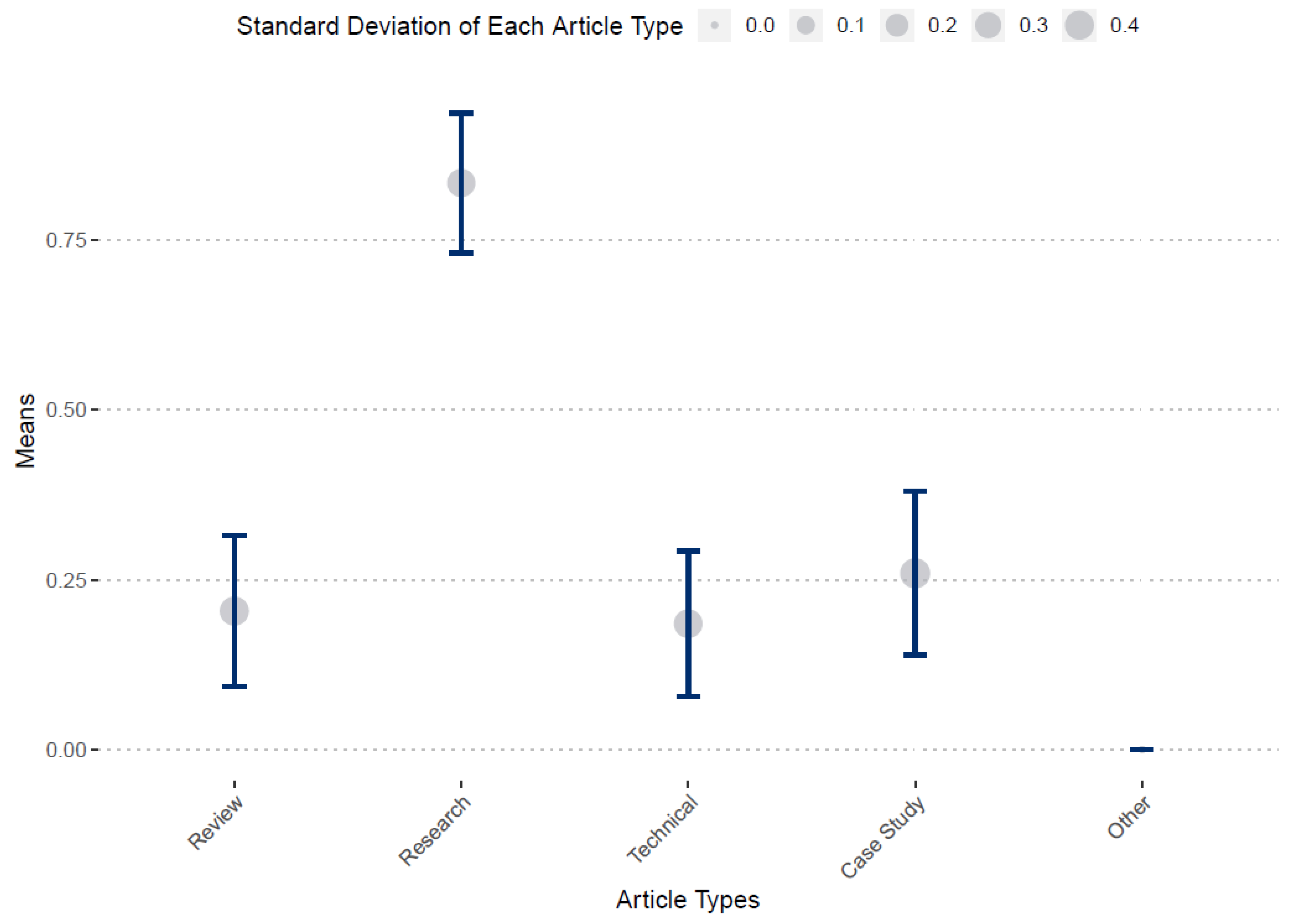
The format of each article was recorded across four possibilities; review style, research article, technical article, and case study with the dataset combined. The vast majority of articles were identified as a traditional research article style format (n = 45, 83%). The remaining options were recorded much less frequently, each less than 14 times (Figure 8).
Figure 8.
Article type recorded for the included articles with the data collection stages combined.
4.5. Article Coverage
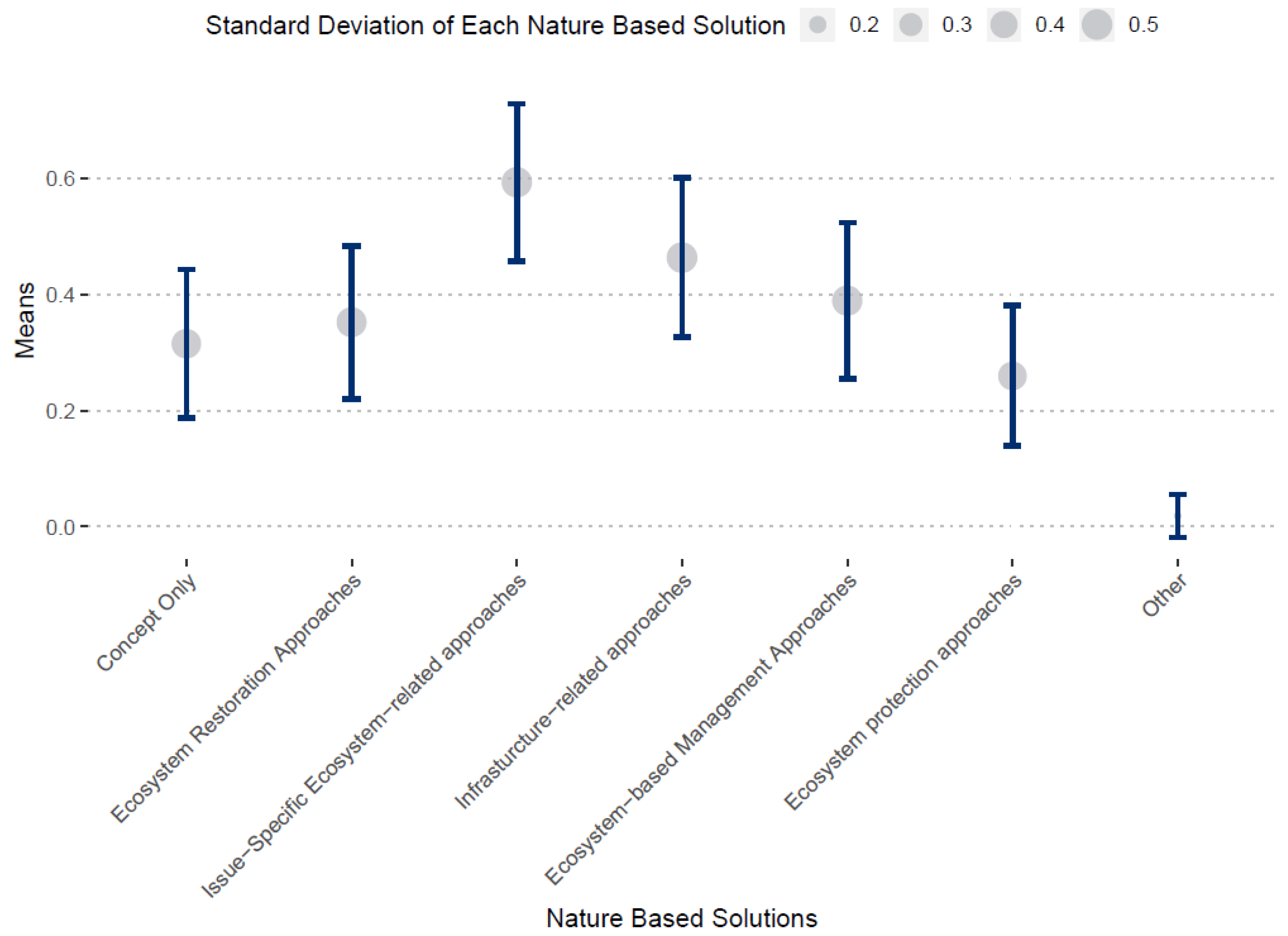
Aspects of NBS (Table S6) and aspects of climate change (Table S7) covered in the reviewed articles, show differences in the reporting for aspects of NBS and climate change. For NBS, issue-specific ecosystem-related approaches returned the highest frequency (n = 32, 59%), followed by infrastructure-related approaches (n = 25, 46%), ecosystem-based management approaches (n = 21, 38.9%). The remaining aspects were reported at lower frequencies (Figure 9).
Figure 9.
Aspects of nature-based solutions recorded as present within the included articles with the data collection stages combined.
Ecological and technical aspects returned the highest rate of occurrence among the climate change content (n = 25, 46%), followed by social (n = 22, 41%), economic (n = 20, 37%), and health (n = 18, 33%). The remaining aspects were lower in frequency, particularly evident for the psychological aspect (n = 3, 5.5%).
4.6. Correlation Analysis
In order to identify underlying relationships between the aspects reported on by the articles for NBS and climate change, a correlation analysis was undertaken and is shown in full in Table S7.
A strong positive correlation (0.71) between ecosystem restoration approaches and ecosystem protection approaches suggests that the two aspects of NBS overlap in research, that there is not clear delineation between these two NBS aspects among the literature, or that both NBS aspects are often researched in conjunction with a combination providing the correlation.
A very strong negative correlation (−0.82) between the concept (only) of NBS and issue-specific ecosystem-related approaches shows that as the value of the NBS concept increases, the value of issue-specific ecosystem-related approaches decreases. This suggests that articles relating to the NBS concept only (a more broader research approach) do not explore the more detailed aspects of NBS which indicates this is an area of opportunity for future research focus. This is not only true for issue-specific ecosystem-related approaches, but also for infrastructure-related approaches (−0.63), ecosystem-based management approaches (−0.54), and ecosystem protection approaches (−0.40). This provides support for the approach taken within this review to separate out the ‘concept only’ approach to NBS research. A similar outcome was true for the correlations detected for the ‘concept only’ approach to climate change research (Table S7 full correlation table).
5. Discussion
5.1. Temporal Trends and Confirmation of Concept
The first article identified by the search was published in 2012. Given climate change, and a concerted drive for action gained traction around the 1960, this can be observed as a very slow research uptake. Possible reasons for this slow uptake may be attributed to several things including a lack of consistency in the use of NBS terminology.
Follow-up reading of earlier literature revealed that a substantial amount of applicable research exists that does not conform to the concept articulated as NBS, nor uses this terminology. Not only has this appeared to limit potentially applicable research into true NBS and climate change, it is likely to have had a limiting effect on the ability of NBS to gain mainstream traction (following the claims of transition theory) in response to climate change sooner than may have been possible. It is understood by the authors of this article, that this lack of consistency continues to plague the NBS concept both in academic literature as well as practitioner literacy. To overcome this issue, it is suggested that a consensus of definition and concept intent is achieved and demonstrated across disciplines. As such, cause has been demonstrated for a concept confirmation/articulation article to be drafted.
Based on the upwards trajectory of the research effort of NBS in response to climate change, and the increasing pressure and threat climate change exerts upon urban communities, it is expected that this trend will continue for some time yet. While some research may suggest that NBS is not sufficient as a standalone measure against mediating and mitigating climate change, there is general consensus that it does, and will continue to, play a vital role [54].
5.2. Geographical Spread of Research
Given the small number of articles included in this review, and even smaller numbers reporting a single research location (country and/or city), the findings when undertaking the spread of research effort were largely unremarkable. The large proportion of articles with researchers from multiple locations is interesting to note. While this hindered the ability to map specific research locations, this may suggest that there is a tendency for research pertaining to NBS and climate change to be approached cross-institutionally or from a global standpoint. The reasoning for this may be that the topic is broad-ranging and may seek contributions from experts globally, rather than providing case-specific research from a single destination.
5.3. Article Format
As reported in Section 4.4, the vast majority of articles were identified as being of a traditional research article style (83%), with the other formats being only modestly represented (less than 14%). This may indicate that the research field is in an infant state with novel development and exploratory research being progressed in favor of reviewing existing research or undertaking more specific and refined research such as case studies, or technical articles [4]. Based on the first included article published in 2012, it would be expected that these proportions would soon begin to change and that greater balance between article types would emerge. Additional time would be required to determine if/when this becomes the case.
5.4. Article Coverage NBS and Climate Change
With respect to aspects covered in the NBS articles, this is expanded in a fine grade in Table S4. In summary, it was found that ecosystem-related approaches (59%), infrastructure-related approaches (46%), and ecosystem-based management approaches (39%) were the most frequently addressed. It is evident that ecosystem and infrastructure-based content is dominating the current research. It may be suggested that ecosystem management is the most researched NBS commodity among traditional research approaches, and only more recently has focus turned towards more specific interests across areas of NBS, the functions that can be provided, as well as NBS as a response mechanism to climate change. As the search parameters returned such a modest number of articles, this may indicate limited research breadth and depth. The focus area analysis showed that the areas least researched were ecosystem protection approaches (26%) as well as the NBS concept in relation to climate change on a conceptual level only (31%). Increasing research in these two areas may assist in reducing some of the knowledge gaps and increasing the breadth of research in the NBS area.
Aspects relating to climate change, as recorded across the articles with the highest frequency were equally of an ecological (46%) and technical nature (46%), followed by social, economic, and health focus areas (33%–41%). Similar to the NBS aspects, this shows an inclination towards ecological and technical aspects. What is interesting to note across the aspect areas of climate change among the articles, is the very low reporting of psychological health considerations as well as that of temperature regulation. Given the known implications that climate change is likely to have on an individuals’ psychological and emotional wellbeing, this is observed as a large and disconcerting research gap. Additionally, it is interesting and surprising to detect a low research presence relating to temperature, given the known current and future implications of a warming climate as well as the known mediating possibilities that NBS can provide. These two areas are seen to be two large research gaps, and are suggested to be considered as priorities for future research inquiry.
5.5. Correlation Analysis
The moderate positive correlations (0.53) between the climate change aspects labelled social and health, as well as social and economic, may in part suggest that there is crossover between different aspects of climate change-focused research. Interestingly there is no significant correlation to report for the ecological aspect given the focus of NBS and environmental means of responding to climate change. This may be observed as a research gap requiring further targeted inquiry.
The correlation analysis confirmed the surprisingly low research interest in psychological aspects reported in the NBS climate change literature. Given the known adverse psychological impact of climate change on individuals, as well as the known positive psychological impact of nature on human psychology and wellbeing, the consistently low-to-middle-range negative correlations are found to be notable omissions. Each item records a negative correlation ranging between −0.02 and −0.29. Given the significance of the impact of this finding, this reiterates the finding outlined in Figure 10, suggesting this to be a significant current research gap.
Figure 10.
Aspects of climate change recorded as present within the included articles with the data collection stages combined.
5.6. NBS as Urban Responses to Climate Change
Assets within the category of NBS are varied and plentiful. For those reasons there are many opportunities, however there is also potential for ineffectiveness and inefficiency. When looking at a single, although complex, challenge such as climate change assets of any type, blue infrastructure, green infrastructure, and grey infrastructure all need to be carefully considered. Of relevance to climate change, NBS asset examples are trees, public open spaces, green roofs and green walls. Each asset example shows mediation opportunities towards the impact faced by climate change. Trees show consistent reductions in local temperatures, reduce temperature fluctuations, slow down the impact of heavy rainfall, act as wind buffers, and more. Public open spaces create vast expanses of permeable surfaces, often featuring trees and other vegetation that also play a role in reducing atmospheric carbon and other pollutants which feed climate change patterns. Green roofs and green walls limit the volume of surfaces that can reflect and embed heat, which contributes to localized temperature increases and the Urban Heat Island Effect.
The above examples are those that are somewhat familiar in the literature repertoire, however this does not reflect all opportunities available through NBS. Preliminary research frequently emerges with technological advancements which can be applied to many complex challenges, such as intricate networks of algae formations used to treat water, strip pollutants and contaminants, and create biofuel options that significantly reduce the volume of emissions. While there is no shortage of ideas, there is a shortage in terms of how these ideas are verified, validated, and communicated to the masses in order to gain collective support and increase wide-spread understanding, which are all contributors to the creation of urgency and demand for action and change.
6. Conclusions
The success of NBS assets is highly dependent on geographical and contextual influence. Climate, culture, political structures, wealth, population density, industrial influence, and more, are all relevant when seeking the available options to address challenges. These same challenges may exist globally, however, the responses may be vastly different in both suitability and applicability. This is a relevant consideration when presenting research regarding mitigation and mediation opportunities made available from assets and intervention. It is essential that when researching assets in this space, and the impacts and implications they may have on certain challenges, the geographical banding and local context is brought to the forefront.
The breath and focus of research efforts to date, have both progressed and plagued the articulated understanding, collective confidence, implementation rates, and further targeted research efforts. The non-standard vocabulary of this research area has seen a loss in traction and progression, and in some cases may have had the unintended effect of undermining rather than advocating for implementation of NBS as a response to climate change.
Nonetheless, the research area is maturing, with many expressions of lessons learnt and proactive ways to move forward with research to fill identified gaps which will influence the value and rates of implementation.
Supplementary Materials
The following are available online at https://www.mdpi.com/2071-1050/12/18/7439/s1, Table S1: Article meta-data descriptors for articles included in the review. Table S2: Geographical data for articles included. Table S3: Article type for included articles. Table S4: Aspects of nature-based solutions for included articles. Table S5: Aspects of climate change for included articles. Table S6: Nature-based solution aspects covered listed by article in full. Table S7: Correlations table in full.
Author Contributions
Conceptualization, J.P.; methodology, J.P.; formal analysis, J.P.; J.E.M.; writing—original draft preparation, J.P.; writing—review and editing, J.P.; G.D.S. All authors have read and agreed to the published version of the manuscript.
Funding
This research received no external funding.
Conflicts of Interest
The authors declare no conflict of interest.
References
- International Panel for Climate Change. Available online: https://www.ipcc.ch (accessed on 12 October 2019).
- Azevedo, I.; Horta, I.; Leal, V.M.S. Analysis of the relationship between local climate change mitigation actions and greenhouse gas emissisons—Empirical insights. Energy Policy 2017, 111, 204–213. [Google Scholar] [CrossRef]
- Lutz, W.L. How population growth relates to climate change. Proc. Natl. Acad. Sci. USA 2017, 114, 12103–12105. [Google Scholar] [CrossRef] [PubMed]
- Parker, J.; de Baro, M.E.Z. Green Infrastructure in the Urban Environment: A Systematic Quantitative Review. Sustainability 2019, 11, 3182. [Google Scholar] [CrossRef]
- Pachauri, R.K.; Meyer, L.A. Climate Change 2014: Synthesis Report. Contribution of Working Groups I, II and III to the Fifth Assessment Report of the International Panel on Climate Change; IPCC: Geneca, Switzerland, 2014. [Google Scholar]
- Viguier, L.; Barreto, L.; Haurie, A.; Kypreos, S.; Rafaj, P. Modeling endogenous learning and imperfect competition effects in climate change economics. Clim. Chang. 2006, 79, 121–141. [Google Scholar] [CrossRef]
- Stott, P. How climate change affects extreme weather events. Science 2016, 352, 1517–1518. [Google Scholar] [CrossRef]
- Ciscar, J.; Iglesias, A.; Feyen, L.; Szabó, L.; Van Regemorter, D.; Amelung, B.; Nicholls, R.; Watkiss, P.; Christensen, O.B.; Dankers, R.; et al. Physical and economic consequences of climate change in Europe. Proc. Natl. Acad. Sci. USA 2011, 108, 2678–2683. [Google Scholar] [CrossRef]
- Arvesen, A.; Bright, R.M.; Hertwich, E.G. Considering only first-order effects? How simplifications lead to unrealistic technology optimism in climate change mitigation. Energy Policy 2011, 39, 7448–7454. [Google Scholar] [CrossRef]
- Lawrence, D.J.; Stewart-Koster, B.; Olden, J.D.; Ruesch, A.S.; Torgersen, C.E.; Lawler, J.J.; Butcher, D.P.; Crown, J.K. The interactive effects of climate change, riparian management, and a nonnative predator on stream-rearing salmon. Ecol. Appl. 2014, 24, 895–912. [Google Scholar] [CrossRef]
- Schindlbacher, A.; Wunderlich, S.; Borken, W.; Kitzler, B.; Zechmeister-Boltenstern, S.; Jandl, R. Soil respiration under climate change: Prolonged summer drought offsets soil warming effects. Glob. Chang. Biol. 2012, 18, 2270–2279. [Google Scholar] [CrossRef]
- Morrongiello, J.R.; Crook, D.A.; King, A.J.; Ramsey, D.S.L.; Brown, P. Impacts of drought and predicted effects of climate change on fish growth in temperate Australian lakes. Glob. Chang. Biol. 2011, 17, 745–755. [Google Scholar] [CrossRef]
- Martin, S.A.; Rautsaw, R.M.; Bolt, R.; Parkinson, C.L.; Seigel, R.A. Adapting coastal management to climate change: Mitigating our shrinking shorelines. J. Wildl. Manag. 2017, 81, 982–989. [Google Scholar] [CrossRef]
- Alley, R.B.; Fahnestock, M.; Joughin, I. Understanding Glacier Flow in Changing Times. Science 2008, 322, 1061–1062. [Google Scholar] [CrossRef] [PubMed]
- Schaub, M.; Matyssek, R.; Wieser, G. Preface to the special section of the IUFRO conference on air pollution and climate change effects on forest ecosystems. Environ. Pollut. 2010, 158, 1985–2085. [Google Scholar] [CrossRef] [PubMed]
- Rogora, M.; Frate, L.; Carranza, M.L.; Freppaz, M.; Stanisci, A.; Bertani, I.; Bottarin, R.; Brambilla, A.; Canullo, R.; Carbognani, M.; et al. Assessment of climate change effects on mountain ecosystems through a cross-site analysis in the Alps and Apennines. Sci. Total Environ. 2018, 624, 1429–1442. [Google Scholar] [CrossRef] [PubMed]
- Knight, K. Effects of climate and environmental change on ecosystems. J. Exp. Biol. 2010, 213, I–II. [Google Scholar]
- Beschta, R.L.; Donahue, D.L.; Dellasala, D.A.; Rhodes, J.J.; Karr, J.R.; O’Brien, M.H.; Fleischner, T.L.; Deacon Williams, C. Adapting to climate change on Western public lands: Addressing the ecological effects of domestic, wild, and feral ungulates. Environ. Manag. 2013, 51, 474–491. [Google Scholar] [CrossRef]
- Sommers, W.T.; Loehman, R.A.; Hardy, C. Wild land fire emissions, carbon, and climate: Science overview and knowledge needs. For. Ecol. Manag. 2014, 317, 1–8. [Google Scholar] [CrossRef]
- Barron, O.; Silberstein, R.; Ali, R.; Donohue, R.; Mcfarlane, D.J.; Davies, P.; Hodgson, G.; Smart, N.; Donn, M. Climate change effects on water-dependent ecosystems in south-western Australia. J. Hydrol. 2012, 434, 95–109. [Google Scholar] [CrossRef]
- Springmann, M.; Mason-D’Croz, D.; Robinson, S.; Garnett, T.; Godfray, C.J.; Gollin, D.; Rayner, M.; Ballon, P.; Scarborough, P. Global and regional health effects of future food production under climate change: A modelling study. Lancet 2016, 387, 1937–1946. [Google Scholar] [CrossRef]
- Van Der Spiegel, M.; van Der Fels-Klerx, H.J.; Marvin, H.J.P. Effects of climate change on food safety hazards in the dairy production chain. Food Res. Int. 2012, 46, 201–208. [Google Scholar] [CrossRef]
- Wheeler, T.; Von Braun, J.W. Climate Change Impacts on Global Food Security. Science 2013, 341, 508–513. [Google Scholar] [CrossRef]
- Hasegawa, T.; Fujimori, S.; Takahashi, K.; Yokohata, T.; Masui, T. Economic implications of climate change impacts on human health through undernourishment. Clim. Chang. 2016, 136, 189–202. [Google Scholar] [CrossRef]
- Newth, D. Climate change and the effects of dengue upon Australia: An analysis of health impacts and costs. In Proceedings of the IOP Conference Series Earth and Environmental Science, Canberra, Australia, 27–29 January 2010; Volume 11. [Google Scholar] [CrossRef]
- Huang, C.; Barnett, A.G.; Xu, Z.; Chu, C.; Wang, X.; Turner, L.R.; Tong, S.H. Managing the health effects of temperature in response to climate change: Challenges ahead. Environ. Health Perspect. 2013, 121, 415–419. [Google Scholar] [CrossRef] [PubMed]
- Carleton, T.A.; Hsiang, S.M. Social and economic impacts of climate. Science 2016, 353. [Google Scholar] [CrossRef] [PubMed]
- Anonymous. Climate change: Sea-level rise for centuries to come. Nature 2017, 541, 262. [Google Scholar] [CrossRef]
- Sharp, E.B.; Daley, D.M.; Lynch, M.S. Understanding Local Adoption and Implementation of Climate Change Mitigation Policy. Urban Aff. Rev. 2011, 47, 433–457. [Google Scholar] [CrossRef]
- Halsnæs, K.; Garg, A.; Christensen, J.; Føyn, H.; Karavai, M.; Rovere, E.; Bramley, M.; Zhu, X.; Mitchell, C.; Roy, J.; et al. Climate change mitigation policy paradigms—National objectives and alignments. Mitig. Adapt. Strateg. Glob. Chang. 2014, 19, 45–71. [Google Scholar] [CrossRef]
- Plugge, D.; Baldauf, T.; Köhl, M. The global climate change mitigation strategy REDD: Monitoring costs and uncertainties jeopardize economic benefits. Clim. Chang. 2013, 119, 247–259. [Google Scholar] [CrossRef]
- Sugiyama, M.; Akashi, O.; Wada, K.; Kanudia, A.; Li, J.; Weyant, J. Energy efficiency potentials for global climate change mitigation. Clim. Chang. 2014, 123, 397–411. [Google Scholar] [CrossRef]
- Nauges, C.; Wheeler, S.A. The Complex Relationship between Households’ Climate Change Concerns and Their Water and Energy Mitigation Behaviour. Ecol. Econ. 2017, 141, 87–94. [Google Scholar] [CrossRef]
- Semenza, J.C.; Hall, D.E.; Wilson, D.J.; Bontempo, B.D.; Sailor, D.J.; George, L. Public Perception of Climate Change: Voluntary Mitigation and Barriers to Behavior Change. Am. J. Prev. Med. 2008, 35, 479–487. [Google Scholar] [CrossRef] [PubMed]
- Obradovich, N.; Guenther, S. Collective responsibility amplifies mitigation behaviors. Clim. Chang. 2016, 137, 307–319. [Google Scholar] [CrossRef]
- Simpson, G.; Parker, J. Data on Peer Reviewed Papers about Green Infrastructure, Urban Nature, and City Liveability. Data 2018, 3, 51. [Google Scholar] [CrossRef]
- Brügger, A.; Morton, T.A.; Dessai, S.L.I. Hand in Hand: Public Endorsement of Climate Change Mitigation and Adaptation. PLoS ONE 2015, 10, e0124843. [Google Scholar] [CrossRef] [PubMed]
- Fujimori, S.; Kainuma, M.; Masui, T.; Hasegawa, T.; Dai, H. The effectiveness of energy service demand reduction: A scenario analysis of global climate change mitigation. Energy Policy 2014, 75, 379–391. [Google Scholar] [CrossRef]
- Abdullah, M.A.; Agalgaonkar, A.P.; Muttaqi, K.M. Climate change mitigation with integration of renewable energy resources in the electricity grid of New South Wales, Australia. Renew. Energy 2014, 66, 305–313. [Google Scholar] [CrossRef]
- Kesicki, F.; Anandarajah, G. The role of energy-service demand reduction in global climate change mitigation: Combining energy modelling and decomposition analysis. Energy Policy 2011, 39, 7224–7233. [Google Scholar] [CrossRef]
- Rottereng, J. The Comparative Politics of Climate Change Mitigation Measures: Who Promotes Carbon Sinks and Why? Glob. Environ. Politics 2018, 18, 52–75. [Google Scholar] [CrossRef]
- Carrión-Prieto, P.; Hernández-Navarro, S.; Martín-Ramos, P.; Sánchez-Sastre, L.F.; Garrido-Laurnaga, F.; Marcos-Robles, J.L.; Martín-Gil, J. Mediterranean shrublands as carbon sinks for climate change mitigation: New root-to-shoot ratios. Carbon Manag. 2017, 8, 67–77. [Google Scholar] [CrossRef]
- Szulczewski, M.; Macminn, C.W.; Herzog, H.; Juanes, R. Lifetime of carbon capture and storage as a climate-change mitigation technology. Proc. Natl. Acad. Sci. USA 2012, 109, 5185–5189. [Google Scholar] [CrossRef]
- De Coninck, H.; Puig, D. Assessing climate change mitigation technology interventions by international institutions. Clim. Chang. 2015, 131, 417–433. [Google Scholar] [CrossRef]
- Anderson, B.; Bernauer, T. How much carbon offsetting and where? Implications of efficiency, effectiveness, and ethicality considerations for public opinion formation. Energy Policy 2016, 94, 387–395. [Google Scholar] [CrossRef]
- Cadez, S.; Czerny, A. Climate change mitigation strategies in carbon-intensive firms. J. Clean. Prod. 2016, 112, 4132–4143. [Google Scholar] [CrossRef]
- Barron, R.; Mcjeon, H. The differential impact of low-carbon technologies on climate change mitigation cost under a range of socioeconomic and climate policy scenarios. Energy Policy 2015, 80, 264–274. [Google Scholar] [CrossRef]
- Pickering, C.M.; Byrne, J. The benefits of publishing systematic quantitative literature reviews for PhD. candidates and other early career researchers. High Educ. Res. Dev. 2013, 33, 534–548. [Google Scholar] [CrossRef]
- Parker, J.; Simpson, G.D. Visitor satisfaction with a public green infrastructure and urban nature space in Perth, Western Australia. Land 2018, 7, 159. [Google Scholar] [CrossRef]
- Parker, J. A Survey of Park User Perception in the Context of Green Space and City Liveability: Lake. Claremont, Western Australia. Master’s Thesis, Murdoch University, Perth, Australia, 2017. [Google Scholar]
- Moher, D.; Liberati, A.; Tetzlaff, J.; Altman, D.G. Preferred reporting items for systematic reviews and meta-analyses: The PRISMA statement. PLoS Med. 2009, 339, 1006–1012. [Google Scholar] [CrossRef]
- Wickham, H. Tidy Data. J. Stat. Softw. 2014, 59, 157912. [Google Scholar] [CrossRef]
- Wickham, H. Reshaping Data with the Reshape Package. J. Stat. Softw. 2007, 21, 1–20. [Google Scholar] [CrossRef]
- Parker, J.; Simpson, G.D. A Theoretical Framework for Bolstering Human-Nature Connections and Urban Resilience via Green Infrastructure. Land 2020, 9, 252. [Google Scholar] [CrossRef]
© 2020 by the authors. Licensee MDPI, Basel, Switzerland. This article is an open access article distributed under the terms and conditions of the Creative Commons Attribution (CC BY) license (http://creativecommons.org/licenses/by/4.0/).