

Alpha-Ketoglutaric Acid Production from a Mixture of Glycerol and Rapeseed Oil by Yarrowia lipolytica Using Different Substrate Feeding Strategies

 , , , and
Abstract
1. Introduction
2. Materials and Methods
2.1. Microorganism
2.2. Media and Culture Conditions
2.3. Analytical Methods
3. Results
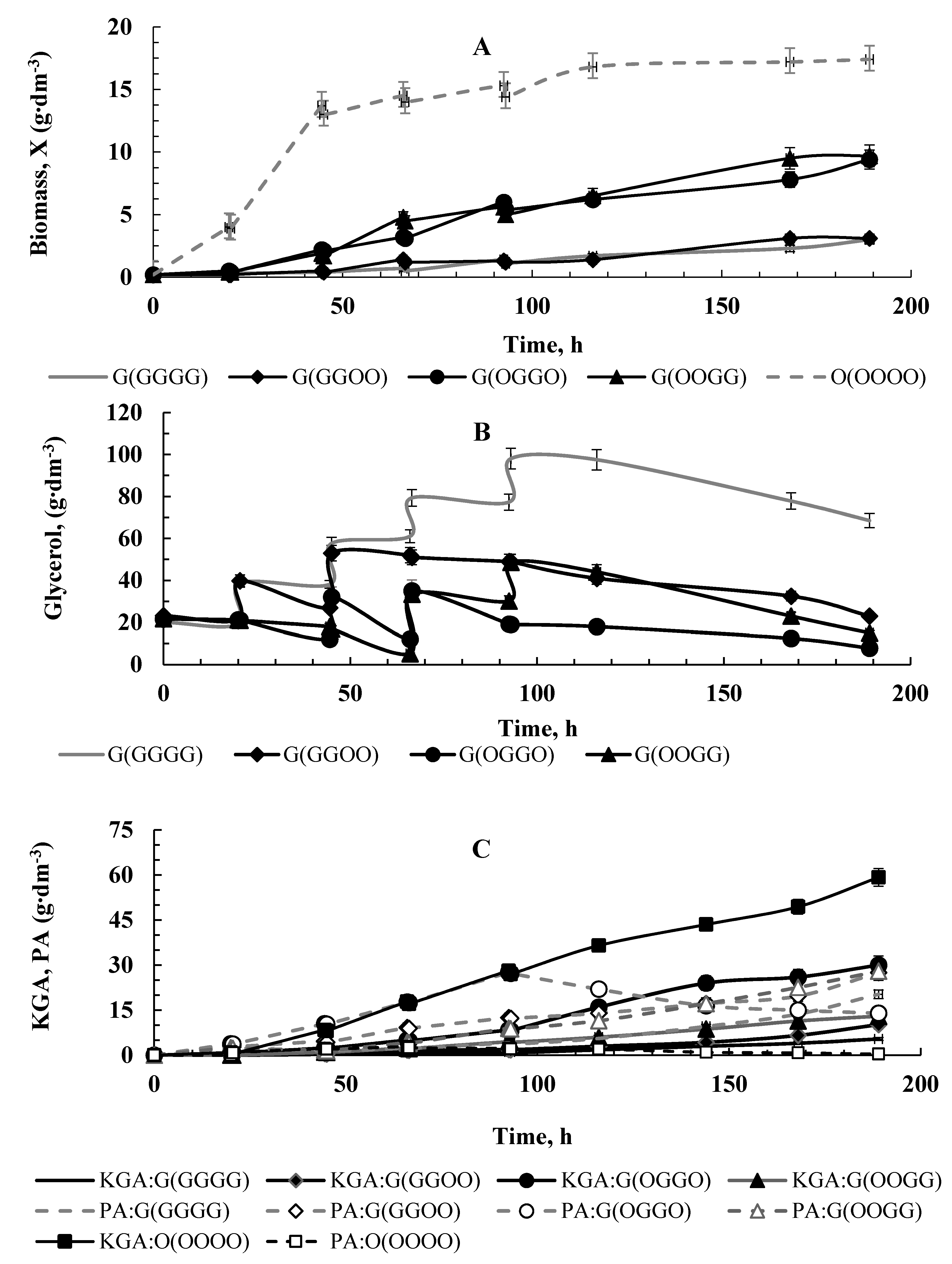
3.1. Fed-Batch Culture at a Thiamine Concentration of 0.6 µg·dm−3 and Individual Substrates as Carbon Sources in Batches
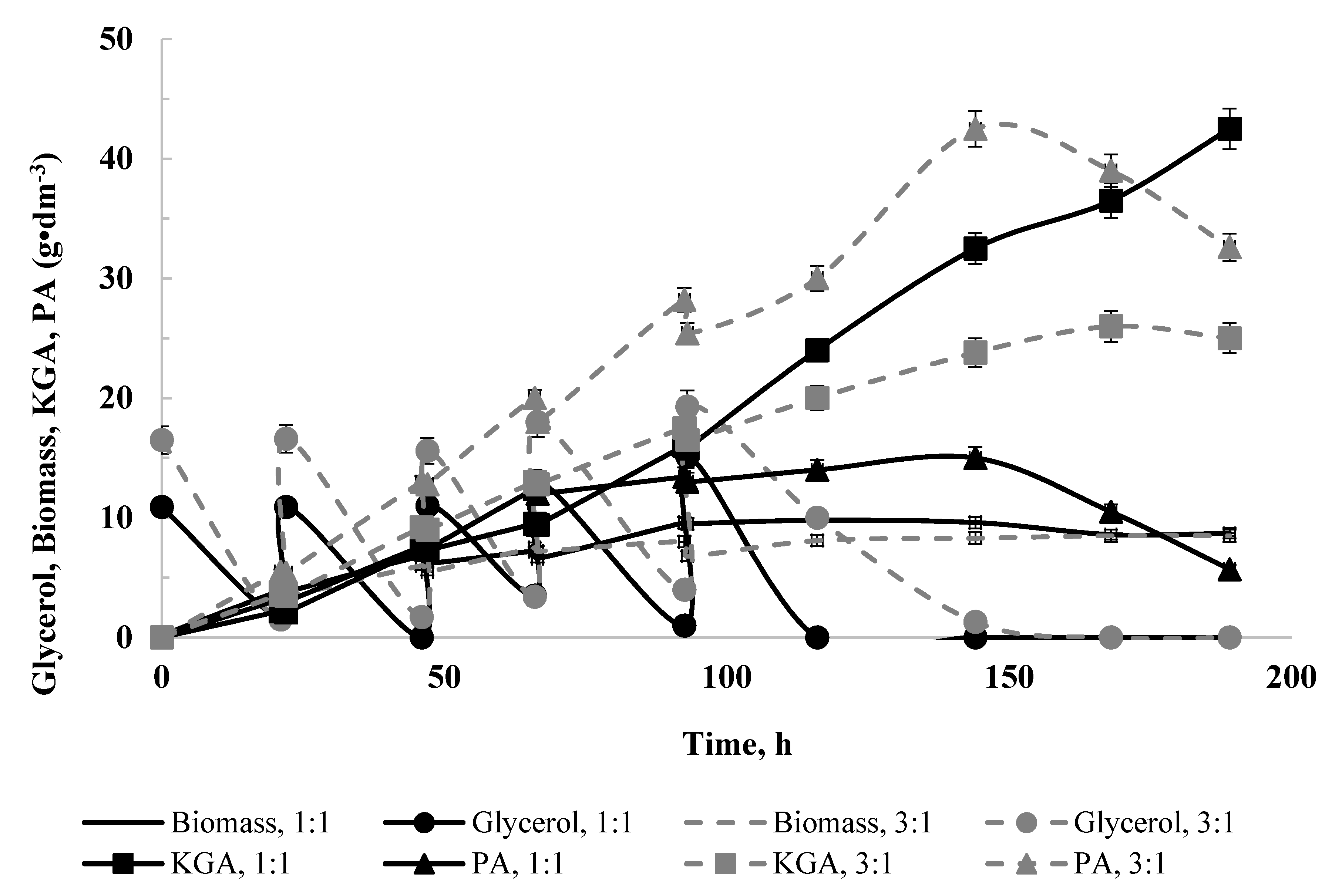
Fed-Batch Culture at a Thiamine Concentration 0.6 µg·dm−3 and with a Mixture of Substrates as a Carbon Source in Batches
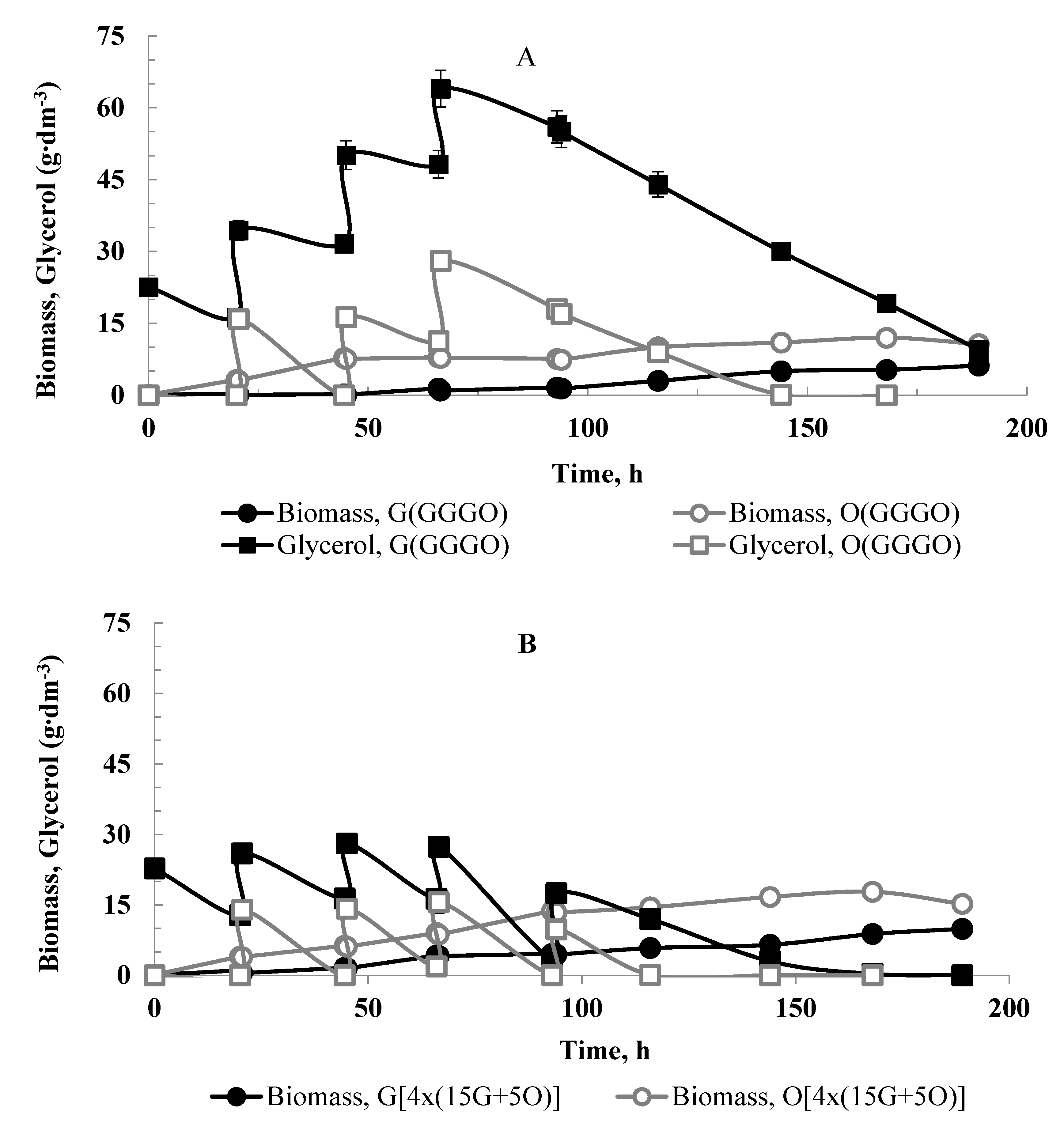
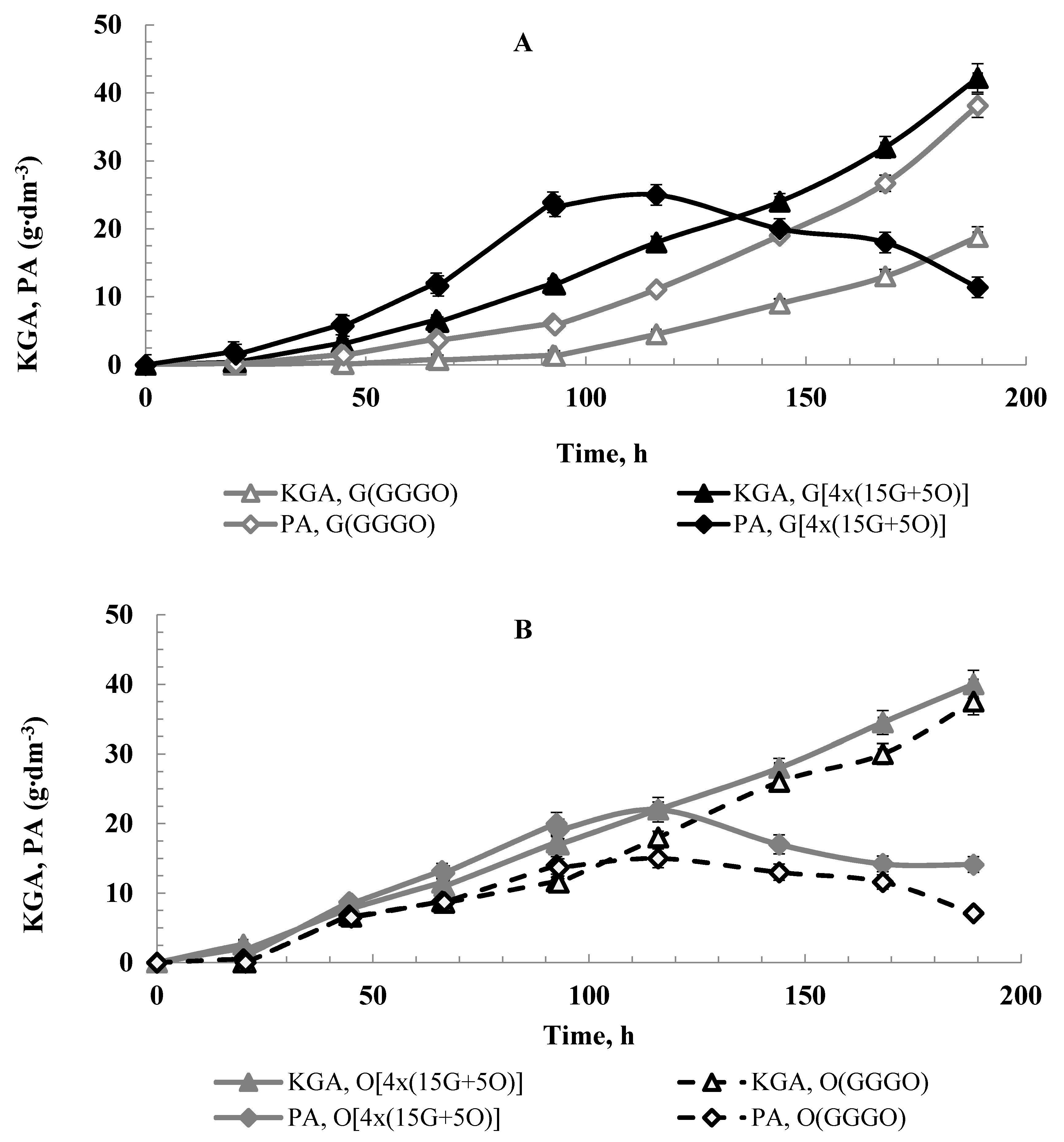
3.2. Fed-Batch Culture at a Thiamine Concentration of 3.0 µg·dm−3
3.3. Repeated-Batch Cultivation
4. Discussion
5. Conclusions
Supplementary Materials
Author Contributions
Funding
Conflicts of Interest
References
- Wernerman, J.; Hammarqvist, F. Glutamine: A necessary nutrient for the intensive care patient. Int. J. Colorectal. Dis. 1999, 14, 137–142. [Google Scholar] [CrossRef] [PubMed]
- Andersen, N.K.; Tatara, M.R.; Krupski, W.; Majcher, P.; Harrison, A.P. The long-term effect of alpha-ketoglutarate, given early in postnatal life, on both growth and various bone parameters in pigs. J. Anim. Physiol. Anim. Nutr. 2008, 92, 519–528. [Google Scholar] [CrossRef] [PubMed]
- Tatara, M.; Brodzki, A.; Krupski, W.; Silmanowicz, P.; Majcher, P.; Pierzynowski, S.; Studziński, T. Effects of alpha-ketoglutarate on bone homeostasis and plasma aminoacids in turkeys. Poult. Sci. 2005, 84, 1604–1609. [Google Scholar] [CrossRef] [PubMed]
- Radzki, R.; Bienko, M.; Puzio, I.; Filip, R.; Pierzynowski, S.; Studzinski, T. The effect of alpha-ketoglutarate(AKG) on mineralization of femur in ovariectomized rats. Acta Orthop. Scand. 2002, 73, 52. [Google Scholar]
- Pierzynowski, S.G.; Filip, R.; Harrison, A. Effect of feed supplementation with alpha-ketoglutarate, combined with vitamin B∼6 or C, on the performance and hemoglobin and aminoacid levels in growing rats. Bull. Vet. Ins. Pulawy 2007, 51, 289–296. [Google Scholar]
- Tatara, M.R.; Tygesen, M.P.; Sawa-Wojtanowicz, B.; Krupski, W.; Majcher, P.; Harrison, A.P. Bonedevelopment: The effect of short-term alpha-ketoglutarate administrationon long-termmechanical properties of ribs in ram lambs. Small Rum. Res. 2007, 67, 179–183. [Google Scholar] [CrossRef]
- Wu, N.; Yang, M.; Gaur, U.; Xu, H.; Yao, Y.; Li, D. Alpha-Ketoglutarate: Physiological function and applications. Biomol. Ther. 2016, 24, 1–8. [Google Scholar] [CrossRef]
- Filip, R.S.; Pierzynowski, S.G.; Lindegard, B.; Wernerman, J.; Heratym-Maj, A.; Podgurniak, M. Alpha-ketoglutarate decreases serum levels of C-terminal cross-linking telopeptide of type I collagen (CTX) in postmenopausal women with osteopenia: Six-month study. Int. J. Vitam. Nutr. Res. 2007, 77, 89–97. [Google Scholar] [CrossRef]
- Moser, P.M.; Greilberger, J.; Maier, A.; Juan, H.; Bücherl-Harrer, C.; Kager, E. Verwendung von Alpha-Ketoglutarsäure und 5-Hydroxy-Methylfurfural zur Reduktionvon Oxidativem Stress. CYLP GmbH Patent EP1842536A1, 10 October 2007. [Google Scholar]
- Tatara, M.R.; Krupski, W.; Tymczyna, B.; Studziński, T. Effects of combined maternal administration with alpha-ketoglutarate (AKG) and β-hydroxy-β-methylbutyrate (HMB) on prenatal program in gofskeletal properties in the off spring. Nutr. Metab. 2012, 9, 2–12. [Google Scholar] [CrossRef]
- Dąbek, M.; Kruszewska, D.; Filip, R.; Hotowy, A.; Pierzynowski, L.; Wojtasz-Pająk, A.; Szymanczyk, S.; Piedra, J.; Werpachowska, E.; Pierzynowski, S. α-Ketoglutarate (AKG) absorption from pig in testine and plasma pharmacokinetics. J. Anim. Physiol. Anim. Nutr. 2005, 89, 419–426. [Google Scholar] [CrossRef]
- Yu, Z.; Du, G.; Zhou, J.; Chen, J. Enhanced α-ketoglutaric acid productionin Yarrowia lipolytica WSH-Z06 by an improved integrated fed-batch strategy. Bioresour. Technol. 2012, 114, 597–602. [Google Scholar] [CrossRef] [PubMed]
- Chin, R.M.; Fu, X.; Pai, M.Y.; Vergnes, L.; Hwang, H.; Deng, G.; Diep, S.; Lomenick, B.; Meli, S.V.; Monsalve, G.C.; et al. The metabolite α-ketoglutarate extends lifespan by inhibiting ATP synthase and TOR. Nature 2014, 510, 397–401. [Google Scholar] [CrossRef] [PubMed]
- Kamzolova, S.V.; Chiglintseva, M.N.; Lunina, J.N.; Morgunov, I.G. Ketoglutaric acid production by Yarrowia lipolytica and its regulation. Appl. Biochem. Microbiol. 2012, 96, 783–791. [Google Scholar] [CrossRef] [PubMed]
- Förster, A.; Mauersberger, S.; Köllner, K.; Barth, G. Verbundvorhaben: Biotechnologische Gewinnung von Carbonsäuren, Teilvorhaben 3: Genetic Engineering Oxocarbonsäure Bildender Hefen. Endbericht; Projektder Fachagenturfürnach Wachsen de Rohstoffee. Gerold Barth Editor Biotechnological Applications No. FZ: 22002505, 30 November 2006. [Google Scholar]
- Barrett, D.G.; Yousaf, M.N. Poly(triolα-ketoglutarate) as biodegradable, chemoselective, and mechanically tunable elastomers. Macromolecules 2008, 41, 6347–6352. [Google Scholar] [CrossRef]
- Kamzolova, S.V.; Morgunov, I.G. α-ketoglutaric acid production from rapeseed oil by Yarrowia lipolytica yeast. Appl. Microbiol. Biotechnol. 2013, 97, 5517–5525. [Google Scholar] [CrossRef] [PubMed]
- Otto, C.; Yovkova, V.; Barth, G. Overproduction and secretion of α-ketoglutaric acid by microorganisms. Appl. Microbiol. Biotechnol. 2011, 92, 689–695. [Google Scholar] [CrossRef]
- Barth, G.; Gaillardin, C. Yarrowia Lipolytica Nonconventional Yeasts in Biotechnology; Wolf, K., Ed.; Springer: Berlin/Heidelberg, Germany, 1996; pp. 313–388. [Google Scholar]
- Cybulski, K.; Tomaszewska-Hetman, L.; Rakicka, M.; Juszczyk, P.; Rywińska, A. Production of pyruvic acid from glycerol by Yarrowia lipolytica. Folia Microbiol. 2019, 64, 809–820. [Google Scholar] [CrossRef] [PubMed]
- Tsugawa, R.; Okumura, S. Fermentation of n-paraffins by Yeast. Part II. a-ketoglutarate productivity of Candida lipolytica in various culture media. Agric. Biol. Chem. 1969, 33, 676–682. [Google Scholar]
- Chernyavskaya, O.G.; Shishkanova, N.V.; Il’chenko, A.P.; Finogenova, T.V. Synthesis of alpha ketoglutaric acid by Yarrowia lipolytica yeast grown on ethanol. Appl. Microbiol. Biotechnol. 2000, 53, 152–158. [Google Scholar] [CrossRef]
- Aurich, A.; Stottmeister, U. Verbundvorhaben: Biotechnologische Gewinnungvon Carbonsäuren, Teilvorhaben 1: Biotechnologische Gewinnungvon Oxocarbonsäurenals Synthesebausteine. Präambel, Endbericht; Projektder Fachagenturfürnach Wachsende Rohstoffee. V., BMVEL220010701. Available online: http://www.fnr-server.de/ftp/pdf/berichte/22010701.pdf (accessed on 31 August 2006).
- Zhou, J.; Zhou, H.; Du, G.; Liu, L.; Chen, J. Screeningofathiamine-auxotrophicyeastforα-ketoglutaricacidoverproduction. Lett. Appl. Microbiol. 2010, 51, 264–271. [Google Scholar] [CrossRef]
- Aggelis, G. Microbial Conversion of Raw Glycerol; Nova Science Publishers Inc.: New York, NY, USA, 2009. [Google Scholar]
- Rakicka, M.; Biegalska, A.; Rymowicz, W.; Dobrowolski, A.; Mirończuk, A.M. Polyol production from waste materials by genetically modified Yarrowia lipolytica. Bioresour. Technol. 2017, 243, 393–399. [Google Scholar] [CrossRef] [PubMed]
- Rywińska, A.; Rymowicz, W.; Żarowska, B.; Skrzypiński, A. Comparison of citric acid production from glycerol and glucose by different strains of Yarrowia lipolytica. World J. Microbiol. Biotechnol. 2010, 26, 1217–1224. [Google Scholar] [CrossRef] [PubMed]
- Yin, X.; Madzak, C.; Du, G.; Zhou, J.; Chen, J. Enhanced alpha-ketoglutaric acid production in Yarrowia lipolytica WSH-Z06 by regulation of the pyruvate carboxylation pathway. Appl. Microbiol. Biotechnol. 2012, 96, 1527–1537. [Google Scholar] [CrossRef] [PubMed]
- Finogenova, T.V.; Morgunov, I.G.; Kamzolova, S.V.; Chernyavskaya, O.G. Organic acid production by the yeast Yarrowia lipolytica: A review of prospects. Appl. Biochem. Microbiol. 2005, 41, 418–425. [Google Scholar] [CrossRef]
- Otto, C.; Yovkova, V.; Aurich, A.; Mauersberger, S.; Barth, G. Variation of the by-product spectrum during α-ketoglutaric acid production from raw glycerol by overexpression of fumarase and pyruvate carboxylase genes in Yarrowia lipolytica. Appl. Microbiol. Biotechnol. 2012, 95, 905–917. [Google Scholar] [CrossRef] [PubMed]
- Yovkova, V.; Otto, C.; Aurich, A.; Mauersberger, S.; Barth, G. Engineering the α-ketoglutarate over production from raw glycerol by overexpression of the genes encoding NADP+-dependent isocitrate dehydrogenase and pyruvate carboxylase in Yarrowia lipolytica. Appl. Microbiol. Biotechnol. 2014, 98, 2003–2013. [Google Scholar] [CrossRef]
- Holz, M.; Otto, C.; Kretzschmar, A.; Yovkova, V.; Aurich, A.; Pötter, M.; Marx, A.; Barth, G. Overexpression of alpha-ketoglutarate dehydrogenase in Yarrowia lipolytica and its effecton production of organic acids. Appl. Microbiol. Biotechnol. 2011, 89, 1519–1526. [Google Scholar] [CrossRef]
- Guo, H.; Madzak, C.; Du, G.; Zhou, J.; Chen, J. Effects of pyruvate dehydrogenase subunits over expressionon the α-ketoglutarate productionin Yarrowia lipolytica WSH-Z06. Appl. Microbiol. Biotechnol. 2014, 98, 7003–7012. [Google Scholar] [CrossRef]
- Li, T.; Chen, X.; Chen, J.; Wu, Q.; Chen, G. Open and continuous fermentation: Products, conditions, and bioprocess economy. Biotechnol. J. 2014, 9, 1503–1511. [Google Scholar] [CrossRef]
- Benvenuti, G.; Lamers, P.P.; Breuer, G.; Bosma, R.; Cerar, A.; Wijffels, R.H.; Barbosa, M.J. Microalgal TAG production strategies: Why batch beats repeated-batch. Biotechnol. Biofuels 2016, 9, 64. [Google Scholar] [CrossRef]
- Zhao, X.; Hu, C.; Wu, S.; Shen, H.; Zhao, Z.K. Lipid production by Rhodosporidium toruloides Y4 using different substrate feeding strategies. J. Ind. Microbiol. Biotechnol. 2011, 38, 627–632. [Google Scholar] [CrossRef] [PubMed]
- Rakicka, M.; Wolniak, J.; Lazar, Z.; Rymowicz, W. Production of high titer of citric acid from inulin. BMC Biotechnol. 2019, 19, 11. [Google Scholar] [CrossRef] [PubMed]
- Rywińska, A.; Rymowicz, W. High-yield production of citric acid by Yarrowia lipolytica on glycerol in repeated-batch bioreactors. J. Ind. Microbiol. Biotechnol. 2010, 37, 431–435. [Google Scholar] [CrossRef] [PubMed]
- Mirończuk, A.M.; Furgała, J.; Rakicka, M.; Rymowicz, W. Enhanced production of erythritol by Yarrowia lipolytica on glycerol in repeated batch cultures. J. Ind. Microbiol. Biotechnol. 2014, 41, 57–64. [Google Scholar] [CrossRef] [PubMed]
- Pawar, P.P.; Odaneth, A.A.; Vadgama, R.N.; Lali, A.M. Simultaneous lipid biosynthesis and recovery for oleaginous yeast Yarrowia lipolytica. Biotechnol. Biofuels 2019, 12, 237. [Google Scholar] [CrossRef] [PubMed]
- Zhou, J.; Yin, X.; Madzak, C.; Du, G.; Chen, J. Enhanced α-ketoglutarate productionin Yarrowia lipolytica WSH-Z06 by alteration of the acetyl-CoA metabolism. J. Biotechnol. 2012, 161, 257–264. [Google Scholar] [CrossRef] [PubMed]
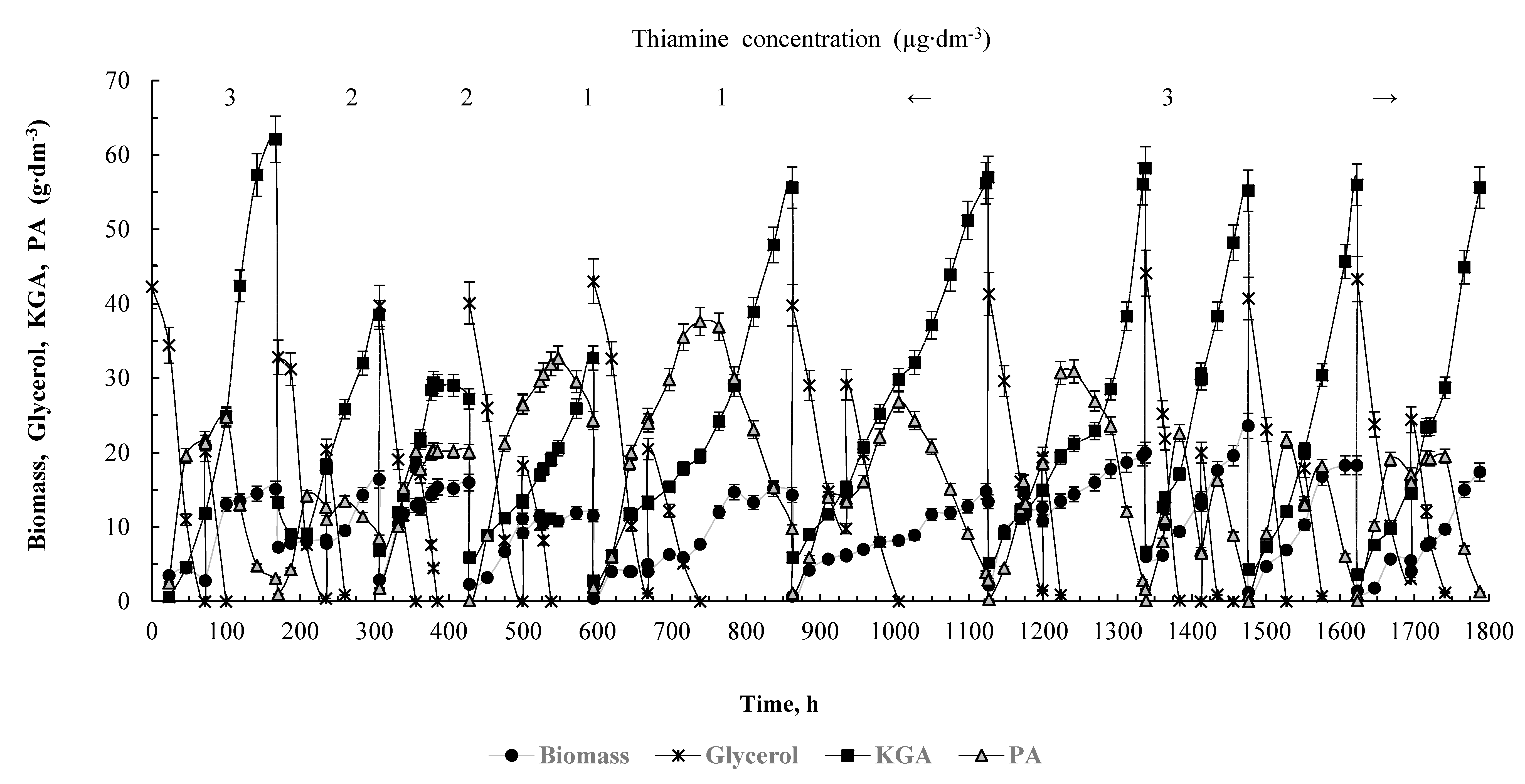
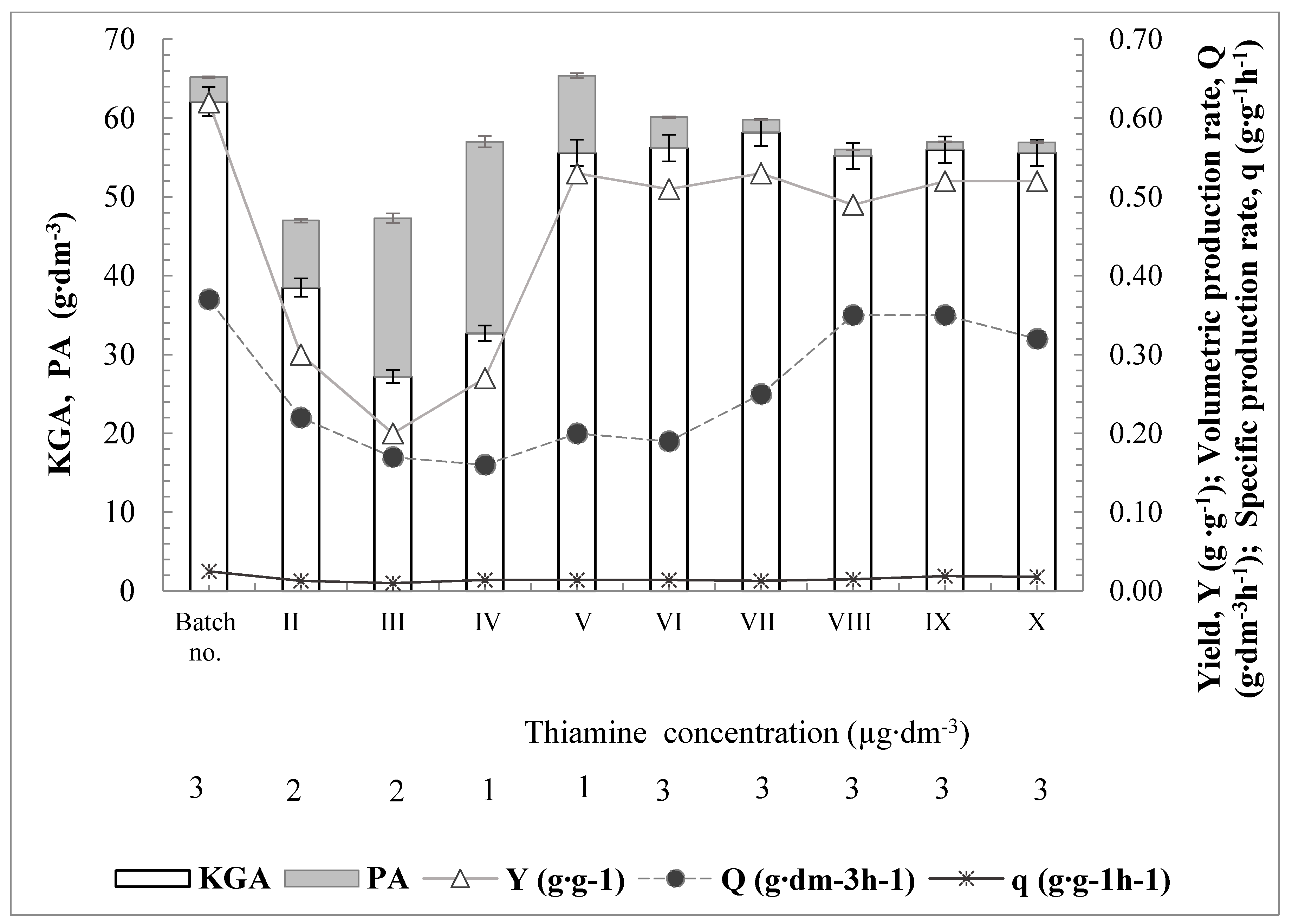

| Cultivation Regime | Thiamine (µg·dm−3) | Substrate Feeding Strategy | Y (g·g−1) | Q (g·dm−3·h−1) | q (g·g−1·h−1) | Selectivity (%) |
|---|---|---|---|---|---|---|
| Fed-batch | 0.6 | G(GGGG) | 0.05 | 0.029 | 0.0097 | 21 |
| Fed-batch | 0.6 | G(GGOO) | 0.1 | 0.054 | 0.0174 | 27 |
| Fed-batch | 0.6 | G(OGGO) | 0.3 | 0.16 | 0.017 | 68 |
| Fed-batch | 0.6 | G(OOGG) | 0.13 | 0.069 | 0.0071 | 32 |
| Fed-batch | 0.6 | O(OOOO) | 0.59 | 0.31 | 0.018 | 99 |
| Fed-batch | 0.6 | 10G + 10O(4 × (10G + 10O)) | 0.42 | 0.22 | 0.025 | 88 |
| Fed-batch | 0.6 | 15G + 5O(4 × (15G + 5O)) | 0.25 | 0.13 | 0.016 | 43 |
| Fed-batch | 3.0 | O(GGGO) | 0.38 | 0.2 | 0.019 | 84 |
| Fed-batch | 3.0 | G(GGGO) | 0.19 | 0.1 | 0.01 | 33 |
| Fed-batch | 3.0 | O(4 × (15G + 5O)) | 0.4 | 0.21 | 0.014 | 74 |
| Fed-batch | 3.0 | G(4 × (15G + 5O)) | 0.42 | 0.22 | 0.022 | 79 |
| Repeated fed-batch (no. I) | 3.0 | 2G(_OGO) | 0.62 | 0.37 | 0.025 | 95 |
| Repeated fed-batch (no. II–III) | 2.0 | 2G(_OGO) | 0.2–0.3 | 0.17–0.22 | 0.01–0.013 | 58–82 |
| Repeated fed-batch (no. IV–V) | 1.0 | 2G(_OGO) | 0.27–0.53 | 0.16–0.2 | 0.014 | 57–85 |
| Repeated fed-batch (no. VI–X) | 3.0 | 2G(_OGO) | 0.49–0.53 | 0.19–0.35 | 0.013–0.019 | 94–99 |
© 2020 by the authors. Licensee MDPI, Basel, Switzerland. This article is an open access article distributed under the terms and conditions of the Creative Commons Attribution (CC BY) license (http://creativecommons.org/licenses/by/4.0/).
Share and Cite
Rywińska, A.; Tomaszewska-Hetman, L.; Rakicka-Pustułka, M.; Juszczyk, P.; Rymowicz, W. Alpha-Ketoglutaric Acid Production from a Mixture of Glycerol and Rapeseed Oil by Yarrowia lipolytica Using Different Substrate Feeding Strategies. Sustainability 2020, 12, 6109. https://doi.org/10.3390/su12156109
Rywińska A, Tomaszewska-Hetman L, Rakicka-Pustułka M, Juszczyk P, Rymowicz W. Alpha-Ketoglutaric Acid Production from a Mixture of Glycerol and Rapeseed Oil by Yarrowia lipolytica Using Different Substrate Feeding Strategies. Sustainability. 2020; 12(15):6109. https://doi.org/10.3390/su12156109
Chicago/Turabian StyleRywińska, Anita, Ludwika Tomaszewska-Hetman, Magdalena Rakicka-Pustułka, Piotr Juszczyk, and Waldemar Rymowicz. 2020. "Alpha-Ketoglutaric Acid Production from a Mixture of Glycerol and Rapeseed Oil by Yarrowia lipolytica Using Different Substrate Feeding Strategies" Sustainability 12, no. 15: 6109. https://doi.org/10.3390/su12156109
APA StyleRywińska, A., Tomaszewska-Hetman, L., Rakicka-Pustułka, M., Juszczyk, P., & Rymowicz, W. (2020). Alpha-Ketoglutaric Acid Production from a Mixture of Glycerol and Rapeseed Oil by Yarrowia lipolytica Using Different Substrate Feeding Strategies. Sustainability, 12(15), 6109. https://doi.org/10.3390/su12156109

