Review

COVID-19 Could Leverage a Sustainable Built Environment


by
Manuel Duarte Pinheiro
* and
Nuno Cardoso Luís
Técnico, Universidade de Lisboa, CERIS, Av. Rovisco Pais, N° 1, 1049-001 Lisboa, Portugal
*
Author to whom correspondence should be addressed.
Sustainability 2020, 12(14), 5863; https://doi.org/10.3390/su12145863
Submission received: 24 June 2020 / Revised: 16 July 2020 / Accepted: 19 July 2020 / Published: 21 July 2020
(This article belongs to the Special Issue Sustainable Built Environment and Future Proof Innovations)

Abstract

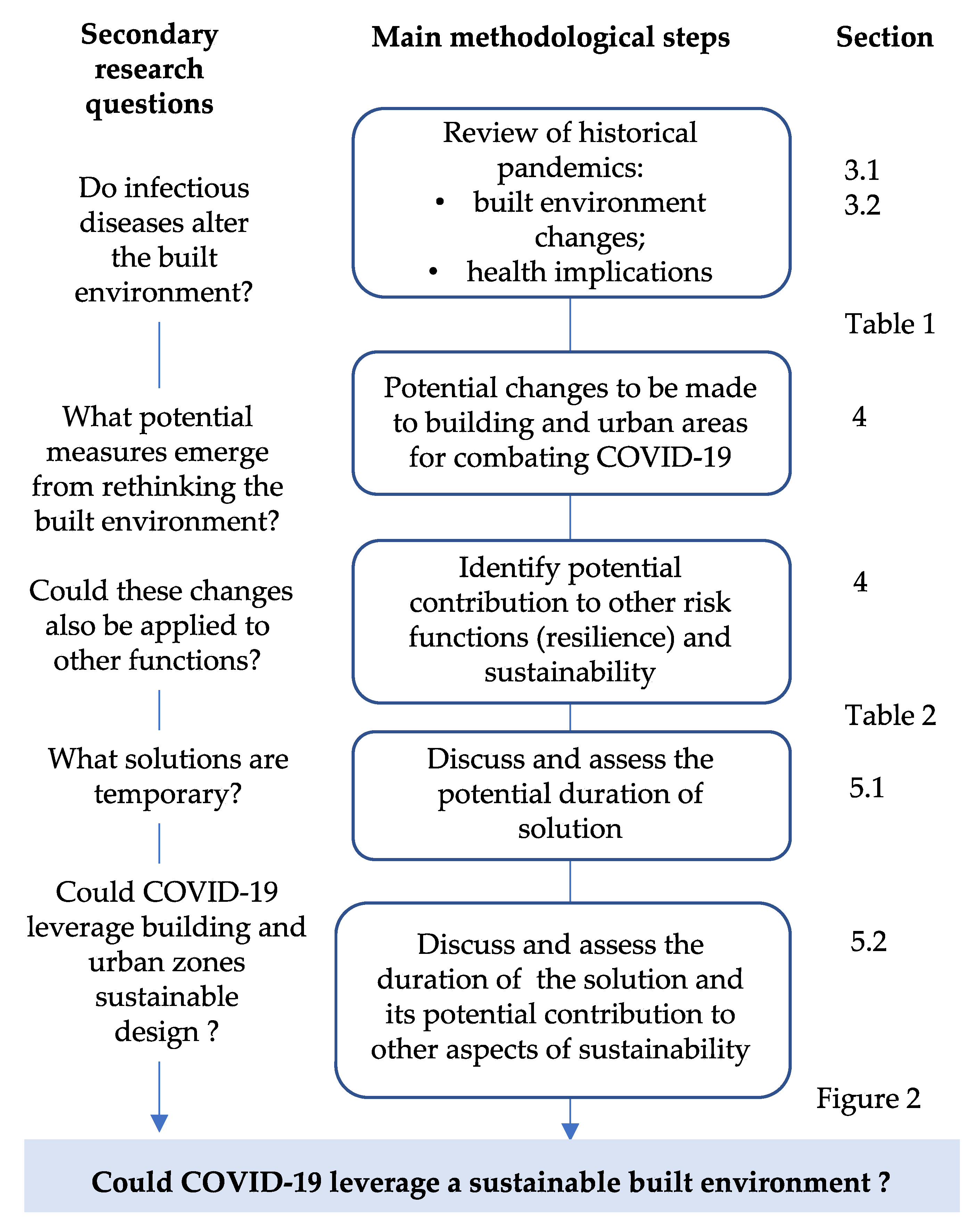
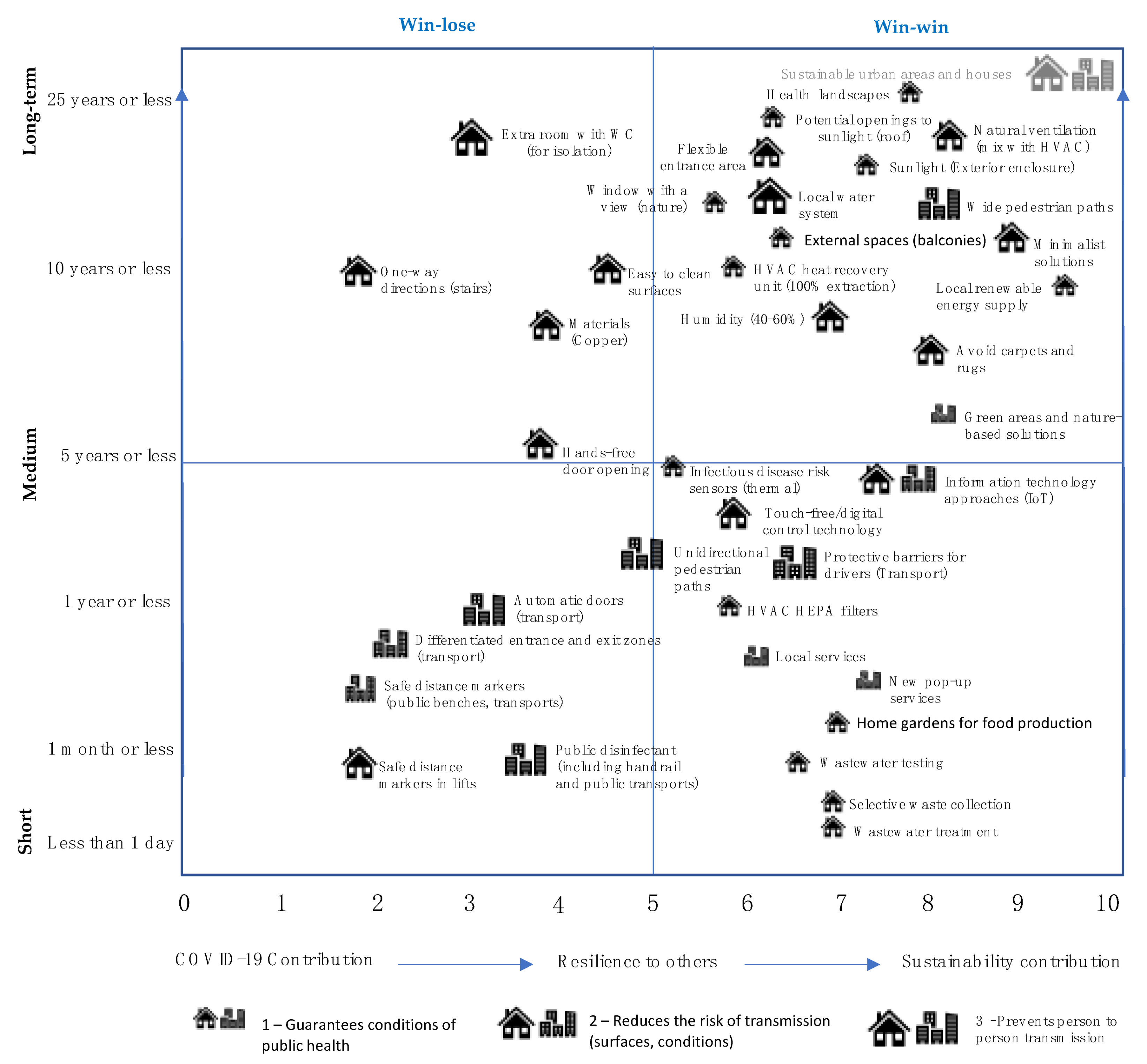
The health system’s response to the COVID-19 pandemic has involved research into diagnoses and vaccines, but primarily it has required specific treatments, facilities and equipment, together with the control of individual behaviour and a period of collective confinement. The aim of this particular research, therefore, is to discover whether COVID-19 is capable of changing the built environment (BE) and leveraging specific solutions for sustainable buildings or urban areas. Some historical reviews of infectious pandemics have highlighted the development of new solutions in the BE as an additional contribution towards preventing the spread of infection. The BE has an important role to play in supporting public health measures and reducing the risk of infections. The review of potential COVID-19 measures shows the existence of well-referenced solutions, ranging from incremental alterations (organisation of spaces, erection of physical barriers) to structural alterations (windows, balconies) with different timeframes and scales (ranging from changes in building materials to the design of urban areas). A critical exploratory assessment makes it possible to identify measures that may help not only to reduce the risk of COVID-19 transmission (or even prevent it), but also to increase resilience, improve air quality and lower energy requirements or the use of materials, and thus potentially increase the sustainability of the BE. COVID-19 measures challenge us to rethink buildings and urban areas and potentially leverage sustainable BE solutions with win-win outcomes (minimalist design and other solutions). The specific composition of this set of measures must, however, be further researched.
Keywords: COVID-19; infection risks; built environment; buildings; urban areas; resilience; sustainability COVID-19; infection risks; built environment; buildings; urban areas; resilience; sustainability