


Abstract
In the United States of America, 2.2 million people are incarcerated in public and private facilities and over 700,000 are released yearly back to their home communities. Almost half are rearrested within a year. These problems have been excluded from mainstream sustainability narratives, despite their serious implications for sustainability. This paper addresses how the criminal justice, prison-industrial complex and foster care systems negatively impact these communities and families. To comprehend the system links, a sustainability lens is used to examine and address interlinking system impacts obstructing achievement of sustainability and the necessary community characteristics for building sustainable communities. Communities characterized by environmental degradation, economic despair and social dysfunction are trapped in unsustainability. Therefore, a system-of-communities framework is proposed which examines the circumstances that bring about prison cycling which devastates family and community cohesion and social networking, also negatively affecting the ability of other communities to become truly sustainable. We contend that a fully integrated social, economic and environmental approach to a major, complex, persistent problem as it relates to poor, marginalized communities faced with mass incarceration and recidivism can begin creating sustainable conditions. Further, we articulate ways sustainability narratives could be changed to engage with core challenges impeding these communities.
1. Introduction
Incarceration is a common occurrence in the United States of America with 2.2 million people incarcerated in public and private facilities [1,2,3] which has resulted in 2.7 million children having a parent in prison [4,5]. Over 700,000 people are released yearly back to their home communities unprepared for the reality of life as a formerly incarcerated individual often labeled a felon [6]. Consequently, communities across the country are negatively affected socially, economically and environmentally with their ability to participate in sustainability efforts greatly diminished and a second generation at risk of a similar fate. Amidst the urgent need for sustainability participation, this circumstance deserves the attention of sustainability scholars, policymakers and U.S. citizens.
Incarceration in prisons, jails and detention centers creates barriers to several aspects of life, such as economic stability and environmental vitality, not only for those who were formerly incarcerated, but also for their families and communities. Therefore, the health and wellbeing of children, families, communities and society is at risk by the mass incarceration and high recidivism of family and community members [1,7]. Additionally, incarceration decreases an individual’s human and social capital, therefore increasing inequality by decreasing economic viability and community resilience [7,8]. Incarceration of poor, marginalized individuals increases social inequality and has a negative intergenerational effect on families and communities that is underestimated [9]. Moreover, inequality is a driver of environmental degradation which adds to the problem of climate change [10,11,12,13]. In essence, the ability to address climate change, ecological devastation and sustainability issues in poor, marginalized communities are tremendously hampered by mass incarceration. Hence, mass incarceration and prison cycling are an enormous barrier to sustainability now and in the future.
Understanding major external systems’ barriers to sustainability for the low- and no-income-level, marginalized communities helps to better understand the importance of integrating social sustainability with economic and environmental sustainability. This, consequently, is also a more straightforward and effective way to achieve intra- and intergenerational equity and sustainable communities. Sustainable communities in sustainability literature have been described as socially cohesive, inclusive, equitable, economically stable and vibrant and environmentally healthy [6]. The non-physical aspects are defined loosely. For example, socially cohesive is often described as social networks; socially inclusive is defined as acceptance in groups and community activities; and equitable means democracy, diversity, participation in community decision-making and access to resources [6,14]. Economically stable and vibrant refers to businesses, banks, restaurants, grocery stores, entertainment and employment in the community, and adequate public services.
There is a gap in sustainable communities literature when it comes to poor, marginalized communities [6]. Much of the literature related to circumstances in these communities is categorized as environmental (in) justice or criminal justice or social issues. We argue that these concepts and life experiences cannot be excluded from the purview of social sustainability and the sustainability challenge. When it comes to vulnerable communities, these issues intertwine with basic daily needs (e.g., housing, food, healthcare) and are considered their most urgent real-world problems. These differ from the “real world problems” defined by sustainability science which are mainly environmentally focused. Yet, they impact the residents’ ability to foster sustainable community environments and lifestyles. The process of prison cycling causes disorganization and dysfunction in families and poor marginalized communities [15,16]. They are forced to heavily interlink with external systems (U.S. justice system, prison-industrial complex and the foster care systems) that tear the fabric of their communities and families, decreasing social cohesion, social inclusion and equity. Nevertheless, these are imperative concepts to sustainability and sustainable communities. Decision-making and sustainable transformation of these communities, therefore, requires a different model and a shift in the paradigm from the present sustainable community building frameworks that do not take into consideration the lack of basic needs or the daily experiences of poor marginalized populations [12].
Many researchers and scholars conclude the concept of social sustainability is inclusive, equitable and just. Their interpretation of “meets the needs of the present and future generations” in the Brundtland report (1987), denotes intra-and intergenerational equity. Furthermore, the United Nations’ Sustainable Development Goals embrace the concepts of equity and justice, yet, there are some researchers and policymakers who still are not convinced that the social sustainability concept can be incorporated into sustainability without historical and present day wrongs being righted in some way to correct past and present day injustices and inequality [17]. Accordingly, if the goals of sustainability for inter- and intragenerational equity have not been attained at all, then this, too, is problematic because a large number of people will be ignored or excluded from participating in sustainability efforts and the benefits of these efforts [18]. Therefore, the earth’s sustainability for humanity cannot be achieved until social sustainability, social inclusion, cohesion and equity become a reality. Additionally, the synonymous use of social development for social sustainability has diverted the discussion of defining social sustainability toward planning. Social development has been taken to mean planning housing developments [6]. This, therefore, has made the discussion of “meeting the needs of present and future generations” a more difficult and complicated topic and a major challenge to overcome.
In this paper, first, we review the debate over integration of social sustainability with economic and environmental sustainability. We also examine the theoretical literature for environmental and sustainability issues from the environmentalist through “just sustainability” perspectives and find there are gaps in the literature that relate to poor, marginalized communities with high levels of prison cycling. Second, we discuss the dichotomy between the goals and principles of living sustainably and how creating sustainable communities helps us all. Third, we examine why the present sustainable community paradigms only work for some communities and not for disadvantaged, unsustainable communities with high rates of prison cycling. Fourth, we examine from a long-term, wide lens, sustainability systems-based perspective, interlinking systems, obstructions and unveiled connections that are not obvious through siloed and short-term perspectives. Fifth, we propose the use of an innovative system-of-communities conceptual framework to examine the external impacts on an individual community. Lastly, we use a sustainability wide lens systems-based approach to examine poor marginalized communities with high incarceration, reentry and recidivism rates and find that these communities’ ability to build the capacity necessary to become sustainable is tremendously hindered by the major interlinking systems of the U.S. criminal justice, foster care and the prison-industrial complex systems. Through a sustainability lens perspective and as part of a system-of-communities framework, stakeholders, concealed links and obstructions to improving quality of life and decreasing environmental problems in these communities are evident.
This paper presents sustainability academics, researchers, policymakers and communities with an alternative way to think about interlinking systems and their hidden barriers, a new way to think about achieving sustainability and sustainable communities. It is an exploratory conceptual study which integrates literature and discussion to map the descriptive landscape. It offers a new way of thinking about transitioning unsustainable communities into sustainable ones, a way to examine impediments to social sustainability and it offers a way to engage new stakeholders in the race toward sustainability.
2. Current Social Sustainability Debate
The integration of social sustainability with environmental and economic sustainability has been unsuccessful. Hence, many researchers and policymakers have come to the conclusion that sustainability and social sustainability, inclusive of social justice and equity, are incompatible concepts [19,20,21]. However, according to the Brundtland Report, the interlinking of society to the concept of sustainability comes through the ideas of intra- and intergenerational equity and the linking of society to nature is imperative. To date, there is no universal definition of social sustainability [6,13]. Quality of life and strength of community including individual and collective wellbeing have been used to define social sustainability [22,23]. Notably, the European Union instead of using social sustainability, uses the concept of social cohesion when referring to the third pillar [12,23]. Researchers have determined that increasing the level of sustainability required for present and future generations cannot be achieved without a much higher level of social participation [13].
Despite the message of urgency regarding the earth’s sustainability, the intensity for behavioral change has not reached a tipping point across the nations [13]. Policy-makers and planners, therefore, have moved forward without a definition, some using actions toward social cohesion in lieu of a definition [12,24]. The major concern for many people, especially those who are poor and marginalized, comes from the answer to the question “Sustain what and for whom?” If the answer is “for all,” or even “the greatest good for the greatest number”, then strategies for reaching sustainability and developing sustainable communities will not look like the ones we have presently [25]. Future frameworks put forth will differ by including concepts and strategies for helping poor, marginalized communities, so they can become more involved in the sustainability process. “Historically, powerful interest groups have used their status to become and remain the beneficiaries of such choices. In many cases this does not produce sustainable outcomes” [26]. Right now, the USA laws, policies, regulations and procedures in essence are to keep these populations uneducated, unhealthy, unemployed or incarcerated. It is important to consider a different answer to the questions regarding, “Sustain what and for whom?” If the answer is “maintain the status quo and sustain resources for the privileged and their descendants,” then we should continue on the path we are on, thereby continuing to allow those that have the least to suffer the most from environmental hazards, climate change and economic hardship [18,27]. “Selecting what to sustain, for whom, for how long and at what cost necessitates choice, creating winners and losers” [26]. Without a redistribution of decision-making power and equity, in time, the quality of life and life expectancy rate will continue to decrease in poor marginalized communities [13,18,28]. There has been sharp debate about whether increased technology and the creation and accumulation of wealth will override environmental degradation. Notably, the lack of policy changes and inaction toward inclusiveness, equity and justice for vulnerable communities speaks volumes concerning the lack of integration of social sustainability into the sustainability framework [28]. Social-ecological challenges of climate change and energy efficiency in poor marginalized communities cannot be adequately addressed when more urgent physical needs—food, heat, medicine and safety—must be met [13]. In the United States, these needs are categorized as public health and safety issues and not viewed as part of sustainability problems. Therefore, they are intentionally not addressed or are overlooked when sustainability solutions are being sought.
3. Theoretical Context
Present knowledge, the creation of new knowledge and insights, along with the sharing of knowledge and sustainability efforts benefits society and nature. The following concepts are a foundational basis for this work. They overlap in several areas; however, they have gaps that do not address the major issues of massive incarceration, high community reentry and recidivism in poor marginalized communities and their impact on the ability for these communities to become sustainable. While the concept of sustainability evolved from conservationist and environmentalists concerns about conservation and preservation of wildlife, waterways, forests and other natural resources [18], when it was introduced, sustainability was considered a conceptual framework to inform policy and development [23]. Moreover, historically, conservationist and environmentalist did not usually consider neighborhood/community topographies as part of environmental issues [29]. Environmental justice literature, on the other hand, considers neighborhood environmental problems as part of the environmental landscape.
Environmental justice, an interlinking environmental concept, considers “where we live, work, play and eat” as part of the environment. Its main focus is on air, land and water problems within neighborhoods of color because that is where the majority of landfills, toxic sites, industrial and manufacturing sites were placed by U.S. federal, state and local governments. These can be considered today “place-based sustainability” problems [30]. The toxic nature of these locations has caused major health problems for residents (e.g., asthma, cancer, mental health and other problems). The concept of environmental justice was developed in the United States in 1982 in response to a hazardous waste landfill in Warren County, NC and where other toxic waste sites were placed in communities of color [11,31]. The United Church of Christ Commission for Racial Justice Toxic Waste and Racial Justice Report (1987) found that African American neighborhoods disproportionately suffered the burdens of health problems and poor quality of life issues related to these substances (Commission for Racial Justice 1987) [25,27].
The Three Pillars of Sustainability (environment, society, economy) approach describing the foundational principles for sustainability, concurrently, developed. Presently, of the three pillars, the concepts of the environment and economy are more well-defined and much less contested than the societal pillar [12,21]. Consequently, social sustainability is interpreted by policymakers, researchers, activist, businesses, governments and NGOs from their own perspectives [18]. Additionally, there is a fundamental significance for social sustainability and justice to be included in the building of sustainable communities. The understanding of social sustainability has turned into equity which includes fair opportunities and distribution of goods; intra- and inter-generational equity; participation in decision-making processes; public awareness of sustainability issues and encouraging alternative sustainable consumption patterns; and social cohesion which is linked to happiness/wellbeing, interpersonal trust and reduced crime [12,21]. Intergenerational equity similarly is a core concept of sustainability concerned with preserving and conserving natural resources for future generations. Yet, it is the concept more often ignored or highly debated [17].
Just sustainability is a complementary concept to environmental justice that focuses on present environmental justice issues which ultimately have an impact on future generations [11,32]. The theoretical underpinnings of environmental justice and just sustainability share a focus on environmental issues in poor communities and daily life experiences of residents (e.g., toxic sites, health concerns and food deserts). Agyeman goes further including “justice” and “equity” in his definition of sustainability (2003) and links “human equality to environmental quality” [33,34]. He also identifies an “equity deficit in sustainability” discourse that leaves intergenerational justice at risk [11,35], but like the other concepts, it does not address the problem at hand.
Worldwide, there are several approaches, goals, practices, indicators and assessments for sustainability (e.g., Sustainability Development Goals, Local Agenda 21, International Council for Local Environmental Initiatives, STAR Communities). More recently, Circles of Sustainability (Circles of Social Life framework), a less mainstream approach to sustainability challenges the Triple Bottom Line approach (Three Pillars) [36]. There is some overlap in the approaches, but the Circles of Sustainability is modular and has four domains, the economy, ecology, politics and culture that define the “social whole” and uses these Circles of Social Life as a city, town, region and village assessment tool, as well as the Circles of Social Life questionnaire, another assessment tool to measure community sustainability [36]. Although the assessments are focused on the four domains, what is not included is how the differing domains and systems connect, interact and impact each other and the communities and residents. For example, the law and justice segment in the politics domain does not address the impact and connections between law enforcement, courts, prisons, businesses and government agencies associated with the courts and prisons on poor, marginalized communities and families. In the United States, these systems have a destructive impact on poor, marginalized communities’ economy, ecology, politics and culture. Circles of Sustainability offers a significant process for city, urban settlement and regional projects related to assessing and planning transportation (Johannesburg, South Africa), water supply (Milwaukee, WI) and relocation of individuals from dense urban and squatter settlements (i.e., slums). Although a less mainstream approach to sustainability at this juncture, it is a useful method and assessment tool [37].
All of the aforementioned concepts, theories and practices are beneficial to achieving the earth’s sustainability. In the case of the United States, the Environmental Protection Agency (EPA) has also helped shape the narrative related to sustainability and sustainable communities. Until 2017, the EPA was able to provide communities, businesses and local governments with sustainability regulations, protections and guidance more than they can do presently. The EPA, in 2013, released a report targeted at minority, low-income and tribal communities, Creating Equitable, Healthy and Sustainable Communities. There is no mention of the impact of forced mobility, incarceration or reentry. This is not to say that the EPA as well as other organizations and institutions large and small, have not made positive efforts toward addressing, transforming and changing behaviors to increase environmental sustainability on national, regional and local levels, but not enough has been accomplished especially in marginalized communities because of the narrow focus of what is defined, comprehended and acted upon as a sustainability issue.
Although the literature on sustainable communities offers the ideal sustainable community vision [6,23,38], it does not address the vision or “how to” of transforming the existing poor communities in the United States into socially cohesive, inclusive, equitable sustainable communities [26]. We found no sustainability literature that takes a systems-based approach to looking for solutions to urgent problems in poor, marginalized communities related to incarceration, community re-entry and reintegration of formerly incarcerated individuals and the transformation to sustainable communities. These issues must be addressed as a precursor to adequately seeking solutions to sustainability problems and should be redefined as part of the sustainability solution. Hence, focusing on many of the gaps in the interlinkages of these concepts to understand the transitioning of these poor, marginalized communities into sustainable communities is groundbreaking. Consequently, this body of work expands the sustainability and sustainable communities’ knowledge base.
3.1. Sustainability Discourse Has Focused on the Environmental and Economic Systems
There is a benefit to those who keep the discourse focused on the environment and the economy, although it does not allow for more expedient resolutions to some of the wicked global sustainability issues confronting the world. A privileged stance of reaching sustainability and sustainable communities is proposed in much of the literature [39]. There is a dearth of literature regarding achieving social sustainability in countries with extremely large populations of poor individuals and even less about the United States. In the United States, the poor, marginalized and historically disadvantaged in the country, African American, Latino and Indigenous communities, fill this position. These communities are characterized by economic despair, environmental degradation and social dysfunction [16,25,40]. They have high levels of contact with law enforcement and the United States justice system through the courts, incarceration and recidivism [2,16].
The U.S. justice system disproportionately affects communities of color and researchers have found that harsher and longer prison sentences have been given to individuals of color, especially African American males, for the same crimes committed by other races [16,40,41,42,43]. In communities of color, because of over policing, longer sentences, mandatory sentences and truth-in-sentencing laws, vulnerable families are under financial duress and many times children are placed in the foster care system and parental rights are severed adding to the dysfunction [43,44]. These circumstances bring about prison cycling exacerbate and wear away community cohesion, social inclusion and social networking [16,45,46].
3.2. Sustainability and the Social Justice Systems
Social justice requires a change in the process of individual human decision-making regarding diversity and inclusion and a shift in societal judgment to bring about equity and fairness, the equal rights to opportunities and access [25]. Correspondingly, social equity “within an urban context is related to social and environmental exclusion” [23]. Many of those who are considered privileged perceive others also having privilege as a threat to their lifestyles and their ability to control situations and meet their personal objectives [19,27]. The future depends on a more diverse group of actors and communities pulling together to forge a new, intra- and intergenerational, sustainable existence [17,19].
Furthermore, the question of who should be involved in sustainability efforts seemingly has an obvious answer, although most of the poor marginalized population are left out of decision-making, as well as sustainability efforts [18,25,28]. Moreover, the lack of effort to reach low income communities has gone relatively unnoticed. Accordingly, this population lives with the consequences of inaction on unaddressed sustainability issues and irresponsible, burdensome environmental policy decisions in their communities daily [25]. Hence, the challenge to include more individuals to live sustainability and consider sustainability problems as urgent has proven to be an arduous task. To our knowledge, there has been no discourse or literature that establishes those on the “bottom of the pyramid” are disposable [47]. Therefore, postponing or ignoring the urgent need of sustainable behavior by all will further thrust communities and nations into increasingly perilous situations with a possible outcome of war over natural resources such as water [48].
4. Sustainability Systems-Based Approach and Wicked, Persistent Problems
A sustainability systems-based approach to social issues is required today to address wicked, persistent problems and the ability to look beyond short-term events thinking (e.g., major floods, hurricanes, tidal waves, etc.) and being reactionary. This must shift into being “truly proactive” and aware of the slow, gradual processes because it is now essential to do more than predict and react to an event [49]. The ability to change our thinking and becoming more socially just requires that we pull back the veils that hide the interconnections and underlying problems and work to solve them. Jay Forrester in The Fifth Discipline (1990), a renowned business book on systems-based thinking, states that “the causes of many pressing issues, from urban decay to global ecological decay, lay in the well-intentioned policies designed to alleviate them. These problems were “actually systems” policymakers focused on obvious symptoms not underlying causes” [49]. Traditional ways of thinking must be questioned to allow for paradigm shifts to occur that better serve the complex and persistent problems of today.
Complex problems faced by communities should not be addressed as isolated individual communities because underlying problems are often missed in solving complex issues (Figure 1). Individuals must understand how by their actions or inaction they are contributing to and creating the conditions that result in instability. “The nature of structure in human systems is subtle because we are part of the structure. This means that we often have the power to alter structures within which we are operating. However, more often than not, we do not perceive that power. In fact, we usually don’t see the structures at play much at all” [49]. Hence, a paradigm shift that allows us to see the structures and interlinking systems more accurately would be beneficial and usher in innovative ideas, new insight, a new wave of individual responsibility and collective learning to address pressing sustainability issues.
Figure 1.
Unsustainable Economic and Community System for the Distribution of Resources and Labor.
Accordingly, it is time to reconsider the impact of the U.S. systems, laws, policies, restrictions and regulations and look through a sustainability systems lens, as has been done with environmental and economic problems, to see what obstacles are prohibiting those in the most danger of hazardous occurrences. This is a crucial step in the sustainability process. Similarly, to the problems in the carbon cycle in which shellfish on the east coast of the United States were affected by wild fires on the west coast, a wide, systems-based sustainability lens was used to look at connecting systems to discover the answers to why the shell fish were dying.
Going forward, there is a need to look at poor, marginalized communities in danger of the most catastrophic environmental hazards to see what external systems are obstructing their ability to become sustainable communities. Previously, these communities have been viewed from siloed perspectives [29,50]. However, with a sustainability lens interlinking systems can be examined for impacts and blockages. The most devastating systems linked to these communities and families (e.g., justice system, prison-industrial complex, foster care system) wear away at the fabric of social cohesion which is necessary to be resilient and allow for robust participation in sustainable behaviors. Thus, paths need to be created for new participants in the fight for sustainability including the multitudes suffering the burden of past, unprincipled decisions made by a relative few to improve the quality of life for a predetermined segment of society (Figure 1).
What occurs in one community affects others in several ways, some ways not obvious from a siloed viewpoint. Although from a systems-based approach, circumstances look very different. Hence, the difference is looking through a narrow lens at a community and seeing the results of impacts from external forces. Juxtapose this to looking through a sustainability wide lens and seeing dynamic interlinking systems. This is not new to traditional western science, indigenous knowledge, nor to sustainability science; nevertheless, it is a paradigm shift when it comes to social sustainability. Examination of connecting systems that have major negative impacts on a community gives a broader look at a problem and the discovery that there are obstructions to sustainability, a precursor to reaching and maintaining an acceptable level of sustainable living. Knowing a problem is larger than expected is important in finding the most efficient and effective approach(s) to the solution.
Sustainable Cities and Communities Facing Real Problems
Much of sustainability discourse revolves around urban areas, city waste, energy, recycling, greening, walking and bike paths. By 2030, most people are estimated to live in cities [23]. Within cities, there are communities with differing cultural and income levels, so there is a focus on developing future communities that are sustainable and able to absorb the influx of new residents while staying within the limits of the environment. There are varying definitions of a sustainable community. Dempsey et al. (2011) state the approach to future sustainable communities as being equitable and inclusive places where people in the present and in the future want to live and work because they are safe, have good services and offer a high quality life. These communities are economically, socially and environmentally sustainable. The authors acknowledge that in the future most people will be living in cities, so this definition is in an urban planning context. This idea of sustainable communities and cities being “where people want to live” is a recurring theme in the literature [6,23]. This definition and idea affect policy, decision-making, access to resources and planning of communities and cities—the built environment.
Burrowing deeper into the definition of sustainable communities and actually seeing what items or social dimensions are included in that vision of a safe community with good services and high quality of life, some factors mentioned are walkable and cyclable neighborhoods, clean with decent and affordable housing, access to employment and public transportation, local services and green spaces, residential stability, community involvement, cohesion and order, education and job training, participation and local democracy, health and wellbeing, a sense of community and belonging and positive social inclusion and social capital [12,23]. This socially sustainable community, “combines design of the physical environment with a focus on how the people who live in and use a space relate to each other and function as a community” [6]. This vision presents a thought-provoking interpretation of social equity for planning purposes and it offers metrics for a sustainable community. The question is, “Can this be achieved for all?”
Some researchers assert based on their findings that there is “a need to include everyday injustice in both the academic and applied field of environmental justice” to adequately incorporate environmental justice concerns into sustainability initiatives [51]. This means that on a local community level, not just citywide, “everyday experience of the built environment” is extremely important to reaching sustainability [23].
Sustainable cities use indicators that are governed by city policy and ordinances. Thereby, they are not inclusive of all the requirements essential for developing and maintaining sustainable communities. The city policies broadly address sustainability issues and more narrowly focus on government properties and facilities [52]. Some scholars have argued that it is important to move away from definitions and principles to having working definitions and indicators of sustainability [33]. The discussion of sustainable communities has focused most often on the built environments, “places where people want to live” [39]. Businesses have developed a triple bottom-line assessment to consider ecological, social and economic effects [53]. In the pursuit of sustainability, bottom-up sustainability assessments have emerged expressing public concerns which prioritize “livelihoods, safety and health, vibrant and attractive communities, new opportunities and influence on decisions. None of these is a purely social, economic or ecological matter” [53]. This ideal version of sustainability is from a privileged position [19,23,28].
5. Transforming Communities, Inclusiveness and Participation
Transforming communities into this conceptual vision in the United States and elsewhere is a difficult challenge without engaging a much larger portion of the population into being and living sustainably [18]. Engaging poor, marginalized unsustainable communities will require that their present and immediate circumstances be acknowledged and addressed in a constructive and meaningful manner which would increase their intra-and intergenerational equity [25,28]. Increasing participation in sustainability efforts “can enhance social inclusion, increases public engagement, social cohesion and social sustainability” [12]. In the past and presently, well-meaning communities seeking to be sustainable have shipped to waste sites and landfills in low-income and poor communities in the global north and south and this harmful action has resulted in environmental injustice and health issues in other communities and countries [27,28].
Moving forward, now that we understand systems and that everything is connected, we know sustainable communities presently offer a false sense of safety and protection from environmental hazards. Therefore, future research, planning and policies will need to take into account neighboring and distant vulnerable communities’ status and ability to become environmentally and economically healthy, resilient and sustainable. The new reality is that major environmental events happening hundreds of miles away or a much shorter distance of two blocks away can negatively affect even a newly developed sustainable community. Accordingly, and unfortunately, the amount of recycling, reducing, reusing and refusing, at this point in time, will not protect these communities identified as “sustainable communities” from environmental hazards that start in distant or near unsustainable communities.
Community, Social Mobility and Sustainability
A community is a system that is part of a larger interlinking system of communities and related systems that should serve the need of a community and its residents. It is difficult in certain circumstances to move from one community to another. An individual’s ability to gain social mobility depends a great deal on the person’s zip code, the community where she/he was born and raised [54]. Not all communities are alike: Individuals born in poor communities are often trapped in circumstances and systems beyond their control [16,46]. Poor marginalized communities often lack access to adequate public services (e.g., sanitation, clean water), transportation, affordable housing, fresh foods, quality education, healthcare, employment opportunities and adequate green spaces. Within their physical living environments, what is visible are signs of infrastructure degradation, vacant lots, lack of greenery, boarded-up buildings, fast food restaurants, corner and liquor stores and businesses not owned by residents of the community [16,34].
What is apparent is that important aspects of sustainable communities such as social inclusiveness (consistent community participation), social cohesiveness (participation in traditional/established networks) and social equity (participation in democratic processes) [6,23] are missing in these poor and marginalized communities into which formerly incarcerated individuals are making their re-entries and attempting to embed themselves again. Additionally, the present indexes on health, happiness and wellbeing do not offer the needed information, viewpoint or direction for helping unsustainable communities to become sustainable. Our research builds upon current sustainable community literature on development of tools and indicators of sustainability [23] rather than on more precise definitions for sustainable development and sustainable communities. These indicators (e.g., health, housing, safety, etc.) are being used to measure, inform and change sustainability goals into specific actions that need to be taken [6,14]. Sustainable communities’ literature also includes characteristics listed in Table 1. In vulnerable communities with high rates of forced mobility, many of these characteristics are inaccessible, unattainable or not a high priority. They are also not considered significant to institutional decision makers (policymakers, judges, prosecutors, wardens, parole boards, business executives and others) for the purpose of determining incarceration, community reentry or recidivism decisions. Thus, the ability to study their considerations of the sustainable communities’ characteristics listed (Table 1) in their decisions is not possible.
Table 1.
Sustainable Communities Characteristics.
The U.S. public school system is another system that impacts poor, marginalized communities in a major way. The policies of zero tolerance, strictly enforced codes of conduct, police involvement and juvenile detention have caused a school-to-prison pipeline which disproportionately affects the lives of disadvantaged children [55,56] and their families. It has been found that the introduction of the criminal justice system at an early age is detrimental to children’s future livelihoods by increasing their risk of poor academic outcomes and a greater chance of later interactions with the U.S. criminal justice system [55,56]. Although the school system is an important characteristic in Sustainable Communities (Table 1), this article does not delve deeply into this system, but it is worth noting, because it contributes to the flow of poor, marginalized individuals into the U.S. criminal justice system.
6. A System-of-Communities Framework
As individual communities participate in sustainable activities, it is important to recognize that a concerted effort from systems-of-communities is needed to make a huge difference in realizing sustainability. This participation can only happen if the individual communities have the capacity to become sustainable. If they do not, then building the capacity is the first step toward sustainability. Because social cohesion, inclusion and equity play a large part in building community capacity, it is important to find out what the circumstances are that are prohibiting these from happening. Community health and networking ability are the building blocks for a strong community economy and environment.
A breakdown in community’s health, economic opportunities and resiliency limits the capacity of residents living in the community [26] and also pulls the system-of-communities in a downward trajectory and limits the system-of-community’s ability to reach a sustainable level. Most examinations of a community are seen as snapshot version of the community. They do not consider the dynamic qualities taking place in and through the community. An examination using a wide lens sustainability perspective, therefore, is needed to observe external interlinkages of systems and their impacts on the system-of-communities (Figure 2).
Figure 2.
System-of-Communities Model.
The system-of-community framework can provide the leverage needed to increase overall participation, better understanding and a higher degree of effort in reaching sustainability levels. Sustainable communities need to be addressed as a part of an interlinking community system. They are not a separate or siloed community that can survive alone in a connected world. Environmental decision-making must be opened to more public participation especially from those who are disproportionately affected by environmental challenges in their communities [29]. Unsustainable communities weaken the whole system because the communities in the system are interdependent. Therefore, this system-of-communities model is a more holistic way of seeing and understanding the connections. The system-of-communities is more intricate and complex than many understand. Each community is interlinked with and effected by the other communities. A system-of-communities structure is one in which communities within a relatively close proximity, often sharing cross streets or borders, network, collaborate (not excluding any stakeholder in decision making) and act to achieve a greater degree of sustainability across a larger area. As a system, one community cannot achieve real sustainability without the others also being sustainable (Figure 3).
Figure 3.
System-of-Communities Model.
With this being the case, when a sustainability lens is used to look at poor, marginalized communities of color with high incarceration and recidivism rates, the impact of the United States justice system, the foster care and prison-industrial complex systems can be observed (Figure 4). Also, what is observed through a sustainability lens is the way in which these systems interlink with other communities creating an intricate web that traps poor marginalized communities and the individuals that live there, so the ability to build capacity and to become sustainable is restricted.
Figure 4.
Prison-Industrial Complex’s Effect on System-of-Communities.
7. U.S. Criminal Justice, Prison-Industrial Complex and Foster Care Systems
The United States is home to the world’s largest prison population, although it has less than 5% (2019) (actual 4.3%) percent of the world’s population. Mass incarceration in the United States has had a devastating effect on marginalized, communities of color [16,39]. Although African Americans are only 12% of the total population and Hispanics/Latinos are 16%, as of 2016, they are overrepresented in prison, 33% and 23% respectively, according to the Pews Research Center (2018). Due to the war on drugs, mandatory sentencing, truth-in-sentencing and three-strikes laws, the corrections population has, over the last 40 years, risen to more than 6 million people, a 500 percent increase with 2.2 million (2010) incarcerated [57,58]. Four out of five arrests were for drug possession. Trillions have been spent on the war on drugs, yet drug use has not decreased. While white Americans have been found to use most kinds of drugs more than African Americans, they are arrested, convicted and incarcerated less [16,42,43].
Indigenous peoples, according to the United States Census (2017), are 2.09% of the total population. Tribes have 334 federal- and state-recognized reservations in the United States [59,60,61]. Tribal members living on reservations have tribal courts and for more serious crimes are charged and convicted in federal courts. They serve sentences that are often longer than sentences served in state prisons. Native Americans and Alaska Natives together are 2.0% of the federal offenders population, according to the 2013 United States Sentencing Commission [59]. In 2014, a Center for Disease Control report concluded that data from 1999–2015 showed that although the relative number of the indigenous population is small, they have been killed by law enforcement at a higher percentage rate than other people of color [62]. Although indigenous communities (tribal lands) are not the main focus of this paper, this exemplifies the need for more research in this area.
The over policing in communities of color and the targeted profiling traffic stops of people of color across the United States has resulted in the disproportionate arresting, imprisoning, and therefore, the labeling of a huge numbers of individuals “felons” in these communities. Thousands of ex-offenders are returning home weekly. Most were convicted of non-violent crimes. There are city blocks known as “million dollar blocks” because there are so many people incarcerated, on probation or parole [7]. Consequently, poor marginalized communities are quite familiar with having neighbors, relatives and friends incarcerated. In some communities, they are so familiar with the process that it has become known as a “rite of passage” [16]. They know intimately the daily struggles that arise from consequences of this circumstance (Figure 5).
Figure 5.
Criminal Justice System Connections and Influencers.
Incarceration is a traumatic experience not only for those individuals sentenced to prison, but also for their families, communities and society [16,43]. As of 2014, 2.7 million children were estimated to have a parent incarcerated [4,5]. Over 60% of prisoners are held in prison towns over 100 miles from their homes are usually located hours away from airports and easy access [5]. Fifteen to twenty percent of children in the child welfare system have incarcerated parents [5]. The rate of women incarcerated is increasing; therefore, the rate of children held in this system is also rising. Young African American males, one in nine, aged 20–34 are especially vulnerable to imprisonment [16]. “One third of black men have felony convictions” according to Sarah Shannon’s estimate in the study “Growth in the U.S. Ex-felon and Ex-Prisoner Population, 1948 to 2010” [63]. The U.S. Sentencing Commission 2017 study found that “African American men serve prison sentences that are on average 20% longer than those served by white men for similar crimes” [42,43,64].
The experience of incarceration is life changing for most inmates, emotionally disruptive and can be physically upsetting [1]. This is a time when life skills, close relationships and building new families are developed. In prison, these interrelationships and skills remain underdeveloped which means when prisoners are released, it is problematic for them, their families and communities. Furthermore, this situation makes it difficult for networking to take place which is needed for developing and increasing a community’s social capital [16,64]. The ability to build human capital is limited by incarceration and in looking for and finding a mate this capital is important to the emotional and financial stability of future unions and families [16]. Most individuals (95%) return to their communities after being released from prison [65,66]. They have difficulty reintegrating back into their communities and society especially if they have been incarcerated for several years. The trauma of incarceration is immense for individuals. “The experience of being locked in a cage has a psychological effect upon everyone made to endure it. No one leaves unscarred” [65].
“I received my prison number and the process of institutionalization began. Getting my number was a memorable event. The number was how I would be identified from that day forward. It was my number that was shouted over PA systems when I was being summoned. If mail was sent to me but did not include my number, it was returned. I no longer existed. I no longer had a name worth remembering. I had become Inmate 79A2747. This numbering was part of the process to strip me of my humanity, my dignity and my self-respect. And it was hard getting used to being identified that way”.[65]
These quotes give a sense of the state of mind inmates experience, feelings of invisibility, frustration and hopelessness, but they are not the only victims of incarceration. The trauma of incarceration destabilizes and can break family relationships, community trust and networks [7,16,45,63,64,67]. The breakdown in relationships damages and destroys networks and safety nets that are most valuable in times when families and communities are in distress. The system-of-communities framework could be developed so it is in part a backup support system used to brace, even temporarily, those in need. Family, friends and community members often experience a social grief similar to experiencing a death when a family member is incarcerated [67,68]. Family members feel stigmatized and “are often treated as ‘guilty by association.’” The financial burden and economic hardship is great on poor families and many married couples divorce [16,45,67]. Additionally, physical and mental healthcare in prisons is limited with inmates having to pay co-pays to see a doctor and in some cases, receive a prescription. Some inmates, especially older adults, do not have the money to pay, so they bring untreated medical issues, illnesses and diseases back to their communities [64,65]. Emotional traumas and mental health issues like depression are often not diagnosed or addressed. Women’s healthcare experiences are more challenging than that of males and the prison medical system was set up for males and in many ways has not changed to accommodate women’s health issues [1]. Medical costs and other fees, for example toiletries or legal fees, are frequently charges that are not paid before an inmate leaves prison. If not paid, these fees may be why the formerly incarcerated individual is re-incarcerated. If they cannot find employment and pay the fees, they may be rearrested and sent back to jail [43].
Prisons, the majority of time, are intentionally situated outside of urban areas in rural towns. Many prisoners often serve their sentences in other states (e.g., Hawaiian inmates may serve their time in Arizona). Thus, their children, spouses/partners, other relatives and friends cannot visit them. The financial expense, time and stress of visiting is prohibitive which damages family relationships and community cohesiveness [2]. When they are able to visit, the corrections system and process is unwelcoming and an unfriendly situation for children [67]. Some prisons require strip searches of visitors. Due to the change in family dynamics, the parent left with the children may have to take on other jobs while the person is incarcerated, leaving the children unattended or unsupervised [16]. Single mothers incarcerated often have their parental rights removed and the children are placed in the foster care system [69,70]. Most children removed are 7 years old or older. Families with fathers that are incarcerated often end up homeless because the father is the main wage-earner [2]. Hence, the U.S. justice and the prison-industrial complex systems are systems that have a tremendous negative impact on poor, marginalized families and communities. Although the U.S. justice and the prison-industrial complex systems are lucrative for those corporations, cities, towns and individuals whom benefit directly or indirectly, poor, marginalized communities are often powerless, without political and financial clout, to successfully challenge these huge systems. A system-of-communities framework offers a more diverse, inclusive, influential and supportive structure to challenge the status quo, injustices and hardships created by the present criminal justice, prison-industrial complex and foster care systems.
7.1. Children with Incarcerated Parents
Children with an incarcerated parent(s) experience several emotions because of their loss and “disenfranchised grief,” grief that cannot be shared or acknowledged publicly [67,71]. These children are traumatized by being separated from an incarcerated parent, visiting a correctional facility, release and reintegration [68]. They often feel anxiety, fear, guilt, sadness, anger, loneliness and some exhibit withdrawal or disruptive behavior [16,71]. The fact that their parent(s) is in prison increases the risk of the child being imprisoned later in life by twenty-five percent [72]. Furthermore, during primary through high school, no-tolerance disciplinary policies and regulations, enforced in marginalized communities, has created the school-to-prison pipeline. In instances where children previously were sent to the principal’s office or to detention for bad behavior, they now are taken by the police to jail creating an early introduction to the criminal justice system. Researchers have found that contact with the criminal justice system at an young age increases a child’s likelihood of later being incarcerated [4,5]. Almost “half of the total population of U.S. children have at least one parent who has a criminal record” [42]. Consequently, the wellbeing of these children and the future wellbeing of society are inextricably bound [71].
7.2. Foster Care System
Children are legally separated from their parents because of parental incarceration depending on the state where they live and their age in as little 15 of 22 months [69,70]. With those convicted of crimes and receiving longer sentences due to tough on crime laws and the rise of women prisoners, more children are entering the foster care system. Foster parents receive at least three times the financial resources to take children into their homes than relatives of the children. Grandmothers most often are the relatives that take in and become the caregivers to the children when the mothers of the children are incarcerated. This is difficult for those on limited budgets and older in age. Caregivers are not obligated to take the children for visits with their incarcerated parents. Many children in the foster care system are moved from a home placement several times until they age out of the system, most at the age of 18 years [72]. Many are less likely to have completed high school and more likely than their peers to become homeless, pregnant and/or unemployed often resorting to criminal behavior to survive and ending up in the United States criminal justice system. These young adults are not prepared to live independently [72].
8. Prison-Industrial Complex Systems
8.1. Prison Towns
It is also important to understand the connection between the marginalized home communities of inmates, rural prison towns and big business during this period of mass incarceration. Over the last 30 years, during the prison construction boom, most prisons were built in rural areas [73]. Every 10 years, there is a U. S. Census bureau count, where every person in the United States is counted and, because of mass incarceration, there has been a shift in political power for communities due to prison gerrymandering [73]. This means that although prisoners cannot vote, they are counted in the districts where they sleep. The rural prison towns, predominantly white, increase their voting power and congressional representation, while the home communities of the 2.2 million prisoners, suffer the loss of government representation and federal funding for infrastructure, healthcare, job-training and education as a consequence of prison gerrymandering [73].
Upon release, formerly incarcerated individuals who have paid their debt to society, live with the ongoing consequences related to their convictions and incarceration [74]. Removal of parental rights are often a byproduct of incarceration. Some of these individuals have their pensions and property rights dissolved. There are 6.1 million people unable to vote in America due to felony convictions [42,69]. Marginalized communities with a large number of individuals that have had their right to vote revoked do not have the power to make changes or stop actions from happening within their own communities. The removal of voting and jury rights prohibits their representation in decision-making at the local, city, state or federal level which adds to social inequity.
The stigma of the felony label has lifelong consequences [63,74]. When formerly incarcerated citizens arrive home with a felony record, not only has their right to vote been permanently taken away (12 states), they are faced with legally mandated restrictions on housing, employment, healthcare and public benefits and services like food assistance and federal aid for education [43]. The risk is high that a person labeled a “felon” will not be able to get a job, find housing or be able to purchase healthy food on a regular basis. Without a decent job, they have difficulty paying for necessities like clothing and basic toiletries. Accordingly, because of the stigma of a felony record, a sketchy work record, low education and possibly a drug or mental health problem, it is extremely challenging for the formally incarcerated, therefore many are jobless, homeless, living on the street and hungry [2,63].
Reentry and social reintegration of this vulnerable population into already struggling families and overwhelmed poor marginalized communities is an extremely challenging and harrowing experience. Recidivism for the first year after release is 43%, the second year 59.5%, 67.8% the third year and over the next two years another 10% [63,75]. Prison cycling takes a tremendous toll on poor marginalized communities [46,64]. Consequently, marginalized communities effected by mass incarceration are fragile and unsustainable. Therefore, they do not have the capacity to become sustainable. Moreover, public health is put at risk when prisoners are released and return to their home communities with illnesses and diseases that spread to family and community members. Many of the prisoners have spent time in solitary confinement which researchers have discovered to have detrimental psychological effects [64,65].
8.2. System Links to Poor and Marginalized Communities
A system-of-communities could be designed to be a second line of defense, to act as a safety net, for a vulnerable community against incarceration, reentry and reintegration hardships. This way, the actions and progress toward a community’s sustainability are not jeopardized or stifled and stability within the larger system-of-communities remains intact. In the United States, for poor marginalized communities to become sustainable, there needs to be less focus on short-term profits and more focus on longer-term investments that are collaborative efforts, providing opportunities and empowerment across communities. The system-of-communities is not a top-down government approach nor a grassroots bottom-up individual community approach to sustainability. It is a middle-ground alliance, a system-of-communities approach that stands in the gap between top-down and bottom-up. Its foundation is based on the understanding of the interconnectedness between communities, building relationships and new networks, inclusive and collaborative decision-making, the power of collective responsibility (action) and the concern for the earth’s limitations.
The present systems in place in the lives of formerly incarcerated individuals, their families and communities weigh down hard on their ability to overcome their life’s challenges, stresses and realities [41,66,75,76]. These systems are not concerned with the ability of vulnerable populations to become sustainable communities. Most released prisoners succumb to the crushing reality of their circumstances. That is why the reentry process is pivotal to their successful transition to home and community. For this population to become sustainable, it will first take a thorough systems-based examination of the links attached to poor, marginalized communities. The following questions need to be asked at each intersection: Are the systems in line with sustainability principles? In what ways are these links detrimental to or encouraging sustainability and sustainable communities?
Currently, for example, because of overcrowding in the prisons there is a move to reduce incarcerated individuals by utilizing electronic monitoring devices for those serving probation, parole or supervised release. This device is worn on the leg of those released under these circumstances. This electronic prison impinges on the whole family [41,76,77]. It contributes to the social exclusion and isolation of community members. It submits families to unannounced visits and searches by corrections officers. The devices regulate where and when an individual can go to a location and what locations or areas are forbidden [78]. This situation creates financial (fines and fees) and logistical problems (e.g., finding employment) and increases family stress. Technical violations related to these devices and monitoring issues often ends in the individual being rearrested and incarcerated [76,77,78].
Through electronic monitoring, community surveillance and corrections, the U.S. justice system has increased social control in poor, marginalized communities resulting in the system itself being a large contributor to the problems of prison cycling and mass incarceration [40,77,78]. These communities have been made to take on some of the attributes of prisons [40,41]. The disruption caused by the constant surveillance and supervision has become alarming and the wellbeing of families and poor, marginalized communities has been put more at risk [41,76,77,78]. Here the question must be asked: Is the use of electronic monitoring, community surveillance and corrections in poor, marginalized communities detrimental to building sustainable communities? This would be an issue better addressed through a systems-based lens by a system-of-communities than an individual community.
The laws, policies, regulations and restrictions for the U.S. criminal justice system and the principles of business are not in sync with and in some respects conflict with, building sustainable communities. The U.S. justice system disproportionately affects historically disadvantaged populations and the impact of forced mobility in particular from these poor home communities and families is a tremendous burden and jeopardizes their ability to become sustainable [46]. Mass incarceration was deemed a policy failure in the National Research Council report [66] and once a person, an adult or juvenile, is caught in the U.S. criminal justice system, it is very difficult to get out (Figure 5). It is understandable from a systems-based approach.
From the very beginning, the system works against poor people of color in many ways (Figure 6) [43,77]. More officers are assigned to patrol these communities using questionable tactics (e.g., stop and frisk), therefore, more arrests are made in these neighborhoods. When taken into court, the bail system works against poor people who do not have money to pay cash bails assigned by a judge [79,80,81]. The bail is set and most often poor people do not have the money to pay it, so these “not guilty” individuals are placed in prison until their court dates which could be weeks and even months away [43,81,82]. In the meantime, they lose their jobs, cannot pay their bills or take care of their families. If they are able to pay bail, there is a 10% non-refundable fee required by the bail companies [43]. The criminal justice bail system, a part of the prison-industrial complex, makes millions of dollars from bail money paid by poor individuals from poor communities. The prison-industrial complex is comprised of over 3100 businesses and financial market investors making a profit of over $1.8 billion (not including private prisons) from high incarceration and recidivism [57,82,83,84,85].
Figure 6.
Systems’ Catastrophic Impact on Poor Marginalized Communities.
8.3. Cash Bail System
The for-profit bail bonds system is a $2 billion industry [84]. The U.S. justice system works with the bail bonds industry in the following way. Individuals in the U.S. court system are considered innocent until proven guilty. They are allowed to pay a cash bail. or they are remanded to jail until their court date. Those unable to afford 10% of the bail set by the court must wait in jail for a court date [81]. Unfortunately, innocent poor people can be forced to stay in jail waiting for weeks to months (Figure 6) [80,85,86]. Individuals charged with an offense who cannot retain a private lawyer are assigned a public defender to handle their case [43]. If the person is found guilty, they must pay a fee for having a public defender. If the offenders are not given prison time, but are fined, they can arrange installment payments to pay off the debt [43]. If they miss or are late on a payment, a warrant is put out for their arrest. A team of police officers are sent to their residence to re-arrest them. Sometimes, their driver’s licenses are suspended, so they are unable to get to work. This hampers those individuals who have to work 2–3 part-time jobs to try and make ends meet. Most poor people charged with a crime take a plea bargain presented by the public prosecutor [43]. Over 90% of cases do not go to trial. The prosecutor has a great deal of power in the court system because the prosecutor determines who will be charged and for what crime (e.g., a misdemeanor or felony) [43]. Most often, poor people who have been convicted of a crime had been assigned a public defender with an overloaded work schedule or a pro bono lawyer who had not defended a case like theirs previously. Forty-three states charge inmates a fee to have a public defender.
If convicted of a crime and given probation and/or community service, poor individuals have to make choices that those with money available to pay fees and fines do not have to make [87]. Being on probation and parole are considered under community supervision. As of 2014, 4.7 million people are under supervision and 82% of those are on probation [88]. Probation, an alternative to incarceration, requires monthly fees and court costs. If a person misses a court date or paying monthly fees, they are arrested and incarcerated. Poor individuals, therefore, often have to decide whether to pay the fees, rent, a utility bill or buy food for the family. They have to decide whether to do community service or lose their jobs. Many poor people have part-time jobs. Hence, losing their job(s) means taking care of their family is put at risk.
If convicted of a crime and sent to a prison, most prisoners are required to work sometimes without pay which is a law in some states [89]. Laws have changed over time to adjust to political changes and public attitudes of the period. For example, in the U.S., when the Emancipation Proclamation which ended slavery, was signed by President Lincoln, new laws, policies and regulations regarding freed slaves were put in place to keep the previous labor force and economy stable [85,89,90]. Therefore, although slaves had been freed, new laws were enforced in which the newly freed slaves were now arrested and sentenced to prison for loitering or not having a job. They often were sent back to their previous slave owners to work on the plantations they left to find a better life [85,90]. Today, the law requiring prisoners work remains intact, the Thirteenth Amendment to the U.S. Constitution [89]. Most prisoners must do work within prison grounds (e.g., maintenance, laundry, gardening) and can be leased to other entities for a variety of jobs. Different states have different rules. Hence, some do not pay workers and others pay them as little as $0.23 to $1.15 an hour [86,89]. Deductions for child support, victim restitution and general fees (e.g., healthcare deductible, room and board, telephone calls, legal, etc.), are made by the corrections system [86,87,89].
8.4. Prison-Industrial Complex
Today, the prison-industrial complex is a billion-dollar industry. It is a mixture of government and government businesses including the federal prison industries (FPI) and private businesses that make a profit on the incarceration and use cheap vulnerable prisoner labor to make a corporate profit. Corporations are in business to make a profit. Therefore, the principles of business relate most to employees, products, customers and investors. Keeping that in mind, prisoners with long sentences offer a low turnover rate. Training costs for inmates are also low due to having to serve longer sentences [85]. Businesses ask two questions: What products and services will be produced? For whom and how will the company make a profit? Prisoners are paid little for their labor, therefore companies gain a competitive advantage. The products produced are for local, national and global companies to sell to consumers and other businesses (Figure 4).
The prison system has a federal government corporation, federal prison industry (FPI), also known as UNICOR, which began originally “to provide education and work experience” [91]. It was setup to be self-sustaining and it has grown to offer manufacturing and services across state lines. It is marketed presently as “Factories with a Fence,” with an “Escape Proof Guarantee” on products and services and low personnel turnover rates [85,91,92,93,94,95]; all this while keeping society safer. The marketing pitch to businesses that manufacture overseas is to keep jobs in U.S.A. Surprisingly, one never sees labels that say, “made in U.S.A. prison.” More than 100 items are produced by prisoners.
Prisoners produce furniture, lingerie, packaging, uniforms, mattresses, software, eye glasses, body armor, helmets, road signs, car parts, lamps, dentures, blue jeans, military electronics, processed meat solar panels, to name a few. They also do recycling work [57,85,91]. There is agribusiness: Three farms where inmates work with dairy cows and beef cows. They make products for government entities and products for large brand-name stores like Ikea, Starbucks, Microsoft, Victoria Secret, McDonalds, Walmart, Boeing and more [57]. Prisons rent out prisoners to towns, cities and businesses to do construction and farm work, etc. There are call centers where inmates make outgoing sales calls for corporations. Prisoners are paid on average $0.40/h. Some prisoners have been trained as firemen. They risk their lives for $2.00 a day alongside firefighters who are being paid $74,000. Firefighting prisoners who have served their sentences cannot be firemen outside the prison system because they have criminal records. These examples merely illustrate the institutionalized nature of the prison-industrial complex system. UNICOR emphasizes that these jobs keep jobs in America and give work experience and skills to inmates and lowers recidivism, but in the majority of cases, these jobs do not translate into work outside of prison [85]. Many employers do not want to hire felons.
The private prison industry, with stocks and bonds traded on the global market, also have the privilege of leasing inmates to produce consumer goods [57,85]. The state-run prison system, like the private prisons, compete for contracts against other businesses [41]. The products made by prisoners in the 103 prison factories are used around the world by individuals in neighborhoods, homes and businesses [85]. In private prisons, researchers have discovered that inmates serve longer sentences, relative to serving time in a state-run prison. The bottom line is that incarceration is not designed only to make society safer [8]. When race, income and businesses are major components of incarceration and recidivism, there are other motivations at play that negate the principles of sustainability, sustainable communities and a sustainable world (Figure 6). Integrative assessments and indicators are needed to provide a baseline and measurements of progress toward sustainability for unsustainable, poor, marginalized communities faced with complex, persistent problems, underlying issues and barriers (e.g., prison cycling), that do not allow for them to build the capacity needed to become socially cohesive, stable and sustainable communities (Table 1).
9. Discussion and Conclusions
A clear understanding of complex problems relating to communities is necessary for developing effective and comprehensive sustainable solutions. As we look through a sustainability wide lens and from the system-of-communities perspective, we find the following circumstances: (1) There are unexpected connections between communities; (2) complex problems blocking sustainable practices must be addressed in order for marginalized communities to build capacity, social cohesion, social inclusion and social equity; (3) the economic sector and its practices, as they relate to prisons and prison populations, are deceptive and cloaked in secrecy, having a detrimental impact on poor marginalized communities; (4) government laws, policies, regulations, practices and enforcement have a disproportionate and negative impact on the ability of poor marginalized communities to be sustainable; and (5) a higher level of trust must be built to increase the stability within a system-of-communities, so the system can rise up to levels appropriate for sustainable living for all involved. Although sustainability and sustainable activities cannot provide protection for an individual community, they are necessary activities for reaching a more sustainable future. Sustainability as a system-of communities activity offers a more powerful opportunity for political influence and a more accurate example of a “sustainable community.”
A great deal of effort and money has been put forth to understand the urgency of complex environmental problems and move people to act in a more responsible way. Individuals in poor communities must have the ability to build capacity for sustainable activities and not have it impaired by systems with counterproductive motives that block or hinder efforts of communities to engage in sustainable activities. Sustainability and sustainable communities discourse needs to be inclusive of poor, marginalized communities and the sustainability problems they face. The present environmental and sustainability concepts do not examine social sustainability in a way that views individual communities as part of a system-of-communities. Additionally, they do not address the wicked and persistent “real world problem,” of prison cycling that is so detrimental to families and communities. They do not effectively connect the environment and economy to social sustainability.
The system-of-communities conceptual framework connects these three components through examining communities through a sustainability wide lens perspective and unveiling interlinking systems. The system-of-communities must be acknowledged for its power and scope of influence. Additionally, the system-of-communities framework can help establish the leverage needed to increase overall participation in sustainability efforts by increasing social inclusion and social cohesion. Also, by increasing the understanding of sustainability issues to more individuals and poor marginalized communities, a more robust effort can be made to reach sustainability levels. A shift in thinking is required, as well as understanding the part individuals and communities play in creating instability [49].
A system-of-communities can have major impacts on external interlinking systems causing changes that are substantial in creating more equitable, stable and sustainable communities. A system-of-communities would be more effective at addressing and working on solutions to complicated issues (e.g., whether electronic monitoring, community surveillance and corrections in poor, marginalized communities is detrimental to building sustainable communities) faced by poor, marginalized communities within their system. Future wide lens systems-based research needs to continue to be completed on the external (and embedded) systems and technology that affects the stability and sustainability efforts of poor marginalized communities.
It is naive and ill-advised for sustainability scientists, policymakers and others to ignore or neglect to recognize the interconnection and negative impact of the U.S. justice system, corrections system, foster care and prison-industrial complex systems on the system-of-communities and environment. These systems have exploited poor marginalized communities and, in turn, have created a web that creates barriers to sustainability and resulted in environmental degradation. Transformation to sustainable systems-of-communities will take time, but unveiling obstructions to sustainability in the interlinking systems is the first step. Damage to community social cohesion, social inclusion and social equity in poor, marginalized communities of color must be further examined so that ways to build capacity for sustainability, repair the harm and create flourishing environments and economic stability can come to fruition.
The U.S. justice system and corrections systems are effectively doing what they have been designed to do. They are effectively hindering the ability of poor, marginalized communities from becoming stable, developing fruitful economies and, therefore, hindering their ability to protect their environment. There are those who believe future technologies will save the world and that inclusion of poor communities is unnecessary to sustainability efforts. This may be true. However, if it is not, it would be negligent under such a pressing matter for all avenues of progress not to be explored and immediate actions, as a precaution taken. Immediate actions or change in actions has been the rallying call for sustainability to be achieved and climate change to be slowed.
History tells us that transformation will require strategic interventions and behavioral change. Levels of participation in eco-friendly behavior are low because people are resisting change and there is a need for “everyday individual and collective experiences (to) be shared in conversations, through stories and two-way dialogue” to increase awareness and participation in a future that is more equitable and sustainable [13]. Our research indicates a system-of-communities framework would promote this type of communication and collective learning, and increase the systems scope of influence. In determining a pathway forward toward becoming socially inclusive and cohesive, economically stable and environmentally sustainable, it would help to navigate system barriers.
As an exploratory conceptual study, the limitation is that explicit results cannot be given. Its contribution, nevertheless, acts to move social sustainability and sustainability discourse forward. It opens a new way to include poor, marginalized communities in collaborative conversations, in the decision-making process and in final decisions made regarding the earth’s sustainability and creating sustainable communities. It is an inappropriate and incorrect assumption to make that poor, marginalized individuals, families and communities do not care about the environment or living sustainably. They, too, want to live and work and raise their children in safe, clean, environmentally friendly, economically stable, sustainable communities with excellent schools. Their starting point and the massive daily challenges they face are barriers to achieving this goal. Therefore, these are barriers to true sustainability. The systems-of-communities framework can help bring about needed change, social equity and this helps keep vulnerable communities engaged in sustainable activities. Everyone needs to be a part of the sustainability effort.
Author Contributions
This paper was written by M.A. in collaboration with co-authors. All authors have read and agreed to the published version of the manuscript.
Funding
This research received no external funding.
Acknowledgments
A special thank you to Barbara Holt, Claudette Macklin, Shirley Macklin, Jayi Thompson, Mary Denise Thompson, Mary Lenox, Vanessa Lueck, Jeffrey Swofford and Sushil Rajagopalan for providing support and thoughtful feedback.
Conflicts of Interest
The authors declare no conflict of interest.
References
- Aday, R.; Farney, L. Malign Neglect: Assessing Older Women’s Health Care Experiences in Prison. J. Bioeth. Inq. 2014, 11, 359–372. [Google Scholar] [CrossRef] [Scilit] [PubMed]
- Executive Office of The President of the United States, Economic Perspectives on Incarceration and the Criminal Justice System. 2016. Available online: https://obamawhitehouse.archives.gov/sites/default/files/page/files/20160423_cea_incarceration_criminal_justice.pdf (accessed on 10 October 2019).
- Kaeble, D.; Cowhig, M. Correctional Population in United States, 2016; NCJ 251211; Bureau of Justice Statistics: Washington, DC, USA, 2018.
- Western, B.; Pettit, B. Collaterol Costs: Incarceration’s Effect on Economic Mobility; Pew Charitable Trust: Philadelphia, PA, USA, 2010; pp. 1–40. [Google Scholar]
- Children and Families of the Incarcerated Fact Sheet. Available online: https://nrccfi.camden.rutgers.edu/files/nrccfi-fact-sheet-2014.pdf (accessed on 10 October 2019).
- Woodcraft, S. Social Sustainability and New Communities: Moving from Concept to Practice in the UK. Procedia-Soc. Behav. Sci. 2012, 68, 29–42. [Google Scholar] [CrossRef] [Scilit]
- Harding, D.J.; Morenoff, J.D.; Herbert, C.W. Home is Hard to Find: Neighborhoods, Institutions, and the Residential Trajectories of Returning Prisoners. Ann. Am. Acad. Pol. Soc. Sci. 2013, 647, 214–236. [Google Scholar] [CrossRef] [Scilit] [PubMed]
- Morenoff, J.D.; Harding, D.J. Incarceration, Prisoner Reentry, and Communities. Annu. Rev. Sociol. 2014, 40, 411–429. [Google Scholar] [CrossRef] [Scilit] [PubMed]
- Western, B.W.; Pettit, B. Incarceration & Social Inequality. Daedalus Journal of American Arts and Sciences; MIT Press: Cambridge, MA, USA, 2010; Volume 139, pp. 8–19. [Google Scholar]
- Jorgenson, A.K.; Fiske, S.; Hubacek, K.; Li, J.; McGovern, T.; Rick, T.; Schor, J.B.; Solecki, W.; York, R.; Zycherman, A. Social science perspectives on drivers of and responses to global climate change. Wiley Interdiscip. Rev. Clim. Chang. 2019, 10, 1–17. [Google Scholar] [CrossRef] [Scilit]
- Agyeman, J.; Schlosberg, D.; Craven, L.; Matthews, C. Trends and Directions in Environmental Justice: From Inequity to Everyday Life, Community, and Just Sustainabilities. Annu. Rev. Environ. Resour. 2016, 41, 321–343. [Google Scholar] [CrossRef] [Scilit]
- Murphy, K. The Social Pillar of Sustainable Development: A Literature review and Framework for Policy Analysis. Sustain. Sci. Pract. Policy 2012, 8, 15–29. [Google Scholar] [CrossRef] [Scilit]
- Vallance, S.; Perkins, H.C.; Dixon, J.E. What is social sustainability? A clarification of concepts. Geoforum 2011, 42, 342–348. [Google Scholar] [CrossRef] [Scilit]
- Bacon, N.; Dixon, T.; Woodcraft, S. Creating Strong Communities: How to Measure the Social sustainability of New Housing Developments; Berkley Group: Cobham, UK, 2014. [Google Scholar]
- Clear, T.R.; Rose, D.R.; Waring, E.; Scully, K. Coercive mobility and crime: A preliminary examination of concentrated incarceration and social disorganization. Justice Q. 2003, 20, 33–64. [Google Scholar] [CrossRef] [Scilit]
- Clear, T.R. Imprisoning Communities: How Mass Incarceration Makes Disadvantaged Neighborhoods Worse; Oxford University Press: Oxford, UK, 2009; ISBN 0195387201. [Google Scholar]
- Golub, A.; Mahoney, M.; Harlow, J. Sustainability and intergenerational equity: Do past injustices matter? Sustain. Sci. 2013, 8, 269–277. [Google Scholar] [CrossRef] [Scilit]
- Robinson, J. Squaring the circle? Some thoughts on the idea of sustainable development. Ecol. Econ. 2004, 48, 369–384. [Google Scholar] [CrossRef] [Scilit]
- Campbell, S.D. Sustainable Development and Social Justice: Conflicting Urgencies and the Search for Common Ground in Urban and Regional Planning. Mich. J. Sustain. 2013, 1, 75–91. [Google Scholar] [CrossRef] [Scilit]
- Klinsky, S.; Golub, A. Justice and Sustainability. Sustain. Sci. 2013, 161–173. [Google Scholar]
- Dobson, A. Social justice and environmental sustainability: Ne’er the twain shall meet? In Just Sustainabilities Development in an Unequal World; Routledge: Thames, UK, 2003; pp. 82–95. ISBN 1853837296. [Google Scholar]
- Dixon, T.; Woodcraft, S. Creating Strong Communities-measuring social sustainability in new housing development. Town Ctry. Plan. 2013, 82, 473–480. [Google Scholar]
- Dempsey, N.; Bramley, G.; Power, S.; Brown, C. The Social Dimension of Sustainable Development: Defining Urban Social Sustainability. Sustain. Dev. 2009, 19, 289–300. [Google Scholar] [CrossRef] [Scilit]
- Schiefer, D.; van der Noll, J. The Essentials of Social Cohesion: A Literature Review. Soc. Indic. Res. 2017, 132, 579–603. [Google Scholar] [CrossRef] [Scilit]
- Summers, J.K.; Smith, L.M. The Role of Social and Intergenerational Equity in Making Changes in Human Well-Being Sustainable. Ambio 2014, 43, 718–728. [Google Scholar] [CrossRef] [Scilit]
- Wiek, A.; Harlow, J.; Melnick, R.; van der Leeuw, S.; Fukushi, K.; Takeuchi, K.; Farioli, F.; Yamba, F.; Blake, A.; Geiger, C.; et al. Sustainability science in action: A review of the state of the field through case studies on disaster recovery, bioenergy and precautionary purchasing. Sustain. Sci. 2015, 10, 17–31. [Google Scholar] [CrossRef] [Scilit]
- Pulido, L. Rethinking Environmental Racism: White Privilege and Urban Development in Southern California. Source Ann. Assoc. Am. Geogr. 2000, 90, 12–40. [Google Scholar] [CrossRef] [Scilit]
- Long, J. Constructing the narrative of the sustainability fix: Sustainability, social justice and representation in Austin, TX. Urban Stud. 2016, 53, 149–172. [Google Scholar] [CrossRef] [Scilit]
- Pearson, A.R.; Schuldt, J.P.; Romero-Canyas, R.; Ballew, M.T.; Larson-Konar, D. Diverse segments of the US public underestimate the environmental concerns of minority and low-income Americans. Proc. Natl. Acad. Sci. USA 2018, 115, 12429–12434. [Google Scholar] [CrossRef] [Scilit] [PubMed]
- Miller, T.R.; Wiek, A.; Sarewitz, D.; Robinson, J.; Olsson, L.; Kriebel, D.; Loorbach, D. The future of sustainability science: A solutions-oriented research agenda. Sustain. Sci. 2014, 9, 239–246. [Google Scholar] [CrossRef] [Scilit]
- Bullard, R.; Mohai, P.; Saha, R.; Wright, B. Toxic Wastes and Race at Twenty 1987–2007: A Report Prepared for the United Chrurch of Christ Justice & Witness Ministries; United Church of Christ: Cleveland, OH, USA, 2007; p. 176. [Google Scholar]
- Agyeman, J. Susatinable Communities and the Challenge of Environmental Justice; NYU Press: New York, NY, USA, 2005. [Google Scholar]
- Agyeman, J. Toward a “just” sustainability? Continuum (NY) 2008, 22, 751–756. [Google Scholar] [CrossRef] [Scilit]
- Agyeman, J.; Evans, B. “Just sustainability”: The emerging environmental justice in discourse. Geogr. J. 2004, 170, 155–164. [Google Scholar] [CrossRef] [Scilit]
- Agyeman, J. The Sustainability Discourse and Sustainable Communities. Sustain. Communities Chall. Environ. Justice 2005, 49, 39–78. [Google Scholar]
- James, P. Urban Sustainability in Theory and Practice; Routledge: Thames, UK, 2015. [Google Scholar]
- James, P.; Magee, L.; Mann, J.; Partoredjo, S.; Soldatic, K. Circles of Sustaiability, Liverpool Settling Strangers; Supporting Disability Needs; Western Sydney University: Sydney, Australia, 2018. [Google Scholar]
- Agyeman, J.; Bullard, R.D.; Evans, B. Conclusion: Towards Just Sustainabilities: Perspectives and Possibilities. In Just Sustainabilities: Development in an Unequal World; Routledge: Thames, UK, 2002; pp. 323–335. [Google Scholar]
- Eizenberg, E.; Jabareen, Y. Social sustainability: A new conceptual framework. Soc. Sustain. 2017, 9, 68. [Google Scholar] [CrossRef] [Scilit]
- Wacquant, L. Deadly Symbiosis: When Ghetto and Prison Meet and Mesh. Punishm. Soc. 2001, 3, 95–134. [Google Scholar] [CrossRef] [Scilit]
- The Justice Lab. Too Big to Succeed: The Impact of the Growth of Community Corrections and What Should Be Done About It; Justice Lab at Columbia University: New York, NY, USA, 2018. [Google Scholar]
- Alexander, M. The New Jim Crow: Mass Incarceration in the Age of Colorblindness; The New Press: New York, NY, USA, 2010; ISBN 1595586431. [Google Scholar]
- Bazelon, E. Charged: The New Movement to Transform American Prosecution and End Mass Incarceration; Random House: New York, NY, USA, 2019; ISBN 0399590013. [Google Scholar]
- La Vigne, N.G.; Gillian, V.; Thomson, L.; Visher, C.; Kachnowski, V.; Travis, J. A Portrait of Prisoner Reentry in Ohio; Justice Policy Center: Washington, DC, USA, 2003.
- Rose, D.R.; Clear, T.R.; Ryder, J.A. Addressing the unintended consequences of incarceration through community-oriented services at the neighborhood level. Correct. Manag. Q. 2001, 5, 62–71. [Google Scholar]
- Clear, T.R.; Frost, N.A.; Carr, M.; Dhondt, G.; Braga, A.; Garrett, A.R. Predicting Crime Through Incarceration: The Impact of Rates of Prison Cycling on Rates of Crime In Communities. Natl. Crim. Justice Ref. Serv. 2014, 1–133. [Google Scholar]
- Prahalad, C.; Hart, S. The Fortune at the Bottom of the Pyramid. In Strateg + Bus; Booz Allen Hamilton: McClean, VA, USA, 2004; pp. 2–14. [Google Scholar]
- Franco, J.; Mehta, L.; Veldwisch, G.J. The Global Politics of Water Grabbing. Third World Q. 2013, 34, 1651–1675. [Google Scholar] [CrossRef] [Scilit]
- Senge, P. The Fifth Discipline; Doubleday: New York, NY, USA, 1990; ISBN 0385260954. [Google Scholar]
- Davies, I.P.; Haugo, R.D.; Robertson, J.C.; Levin, P.S. The unequal vulnerability of communities of color to wildfire. PLoS ONE 2018, 13, e0205825. [Google Scholar] [CrossRef] [Scilit] [PubMed]
- Hornik, K.; Cutts, B.; Greenlee, A. Community theories of change: Linking environmental justice to sustainability through stakeholder perceptions in Milwaukee (WI, USA). Int. J. Environ. Res. Public Health 2016, 13, 979. [Google Scholar] [CrossRef] [Scilit] [PubMed]
- Johnston, S.A.; Nicholas, S.S.; Parzen, J. The Guide to Greening Cities; Island Press: Washington, DC, USA, 2013; ISBN 1610913795. [Google Scholar]
- Gibson, R.B. Sustainability assessment: Basic components of a practical approach. Impact Assess. Proj. Apprais. 2006, 24, 170–182. [Google Scholar] [CrossRef] [Scilit]
- Sanchez, D.; Ross, T.; Gordon, J.; Edelman, S.; Zonta, M.; Schwartz, A. An Opportunity Agenda for Renters: The Case for Simultaneous Investments in Residential Mobility and Low-Income Communities; Center for American Progress: Washington, DC, USA, 2015. [Google Scholar]
- Mallett, C.A. The School-to-Prison Pipeline: Disproportionate Impact on Vulnerable Children and Adolescents. Educ. Urban Soc. 2017, 49, 563–592. [Google Scholar] [CrossRef] [Scilit]
- Skiba, R.J.; Horner, R.H.; May, S.L.; Tobin, T. Race Is Not Neutral: A National Investigation of African American and Latino Disproportionality in School Discipline. School Psych. Rev. 2011, 40, 85–107. [Google Scholar]
- Cummings, A.D.P. “All Eyez on Me”: America’s War on Drugs and the Prison-Industrial Complex. J. Gender Race Justice 2012, 15, 417–448. [Google Scholar]
- Sentencing Project. Trends in US Corrections; Sentencing Project: Washington, DC, USA, 2018. [Google Scholar]
- Perry, S.W.; de Beus, K. Tribal Crime Data Collection Activities, 2017; Bureau of Justice Statistics: Washington, DC, USA, 2017; pp. 1–7.
- Tighe, S. “Of Course We are Crazy”: Discrimination of Native American Indians Through Criminal Justice. Justice Policy J. 2014, 1–38. [Google Scholar]
- Wodahl, E.J.; Freng, A. The challenges of prisoner reentry faced by Native American returning offenders. J. Ethn. Crim. Justice 2017, 15, 160–184. [Google Scholar] [CrossRef] [Scilit]
- International Human Rights Clinic. Lack of Accountability for Police Killings of Minorities and Other Vulnerable Populations in the United States; Santa Clara University: Santa Clara, CA, USA, 2017; pp. 1–9. [Google Scholar]
- Shannon, S.K.S.; Uggen, C.; Schnittker, J.; Thompson, M.; Wakefield, S.; Massoglia, M. The Growth, Scope and Spatial Distribution of People with Felony Records in the United States, 1948 to 2010. Demography 2016, 54, 1795–1818. [Google Scholar] [CrossRef] [Scilit]
- Williams, N.H. Prison Health and the Health of the Public: Ties That Bind. J. Correct. Heal. Care 2007, 13, 80–92. [Google Scholar] [CrossRef] [Scilit]
- DeVeaux, M. The Trauma of the Incarceration Experience. Harv. Civ. Rights-Civ. Lib. Law Rev. 2013, 48, 257–277. [Google Scholar]
- The National Academies The Growth of Incarcreation in the United States Exploring: Causes and Consequences; National Academy Press: Washington, DC, USA, 2014.
- Arditti, J.A. Locked doors and glass walls: Family visiting at a local jail. J. Loss Trauma 2003, 8, 115–138. [Google Scholar] [CrossRef] [Scilit]
- Travis, J.; Cincotta McBride, E.; Solomon, A.L. Families Left Behind: The Hidden Costs of Incarceration and Reentry; Justice Policy Center: Washington, DC, USA, 2005.
- Travis, J. Invisible Punishment: An Instrument of Social Exclusion; The New Press: New York, NY, USA, 2002; pp. 1–355. [Google Scholar]
- Arditti, J.A. Parental Incarceration and the Family: Psychological and Social Effects of Imprisonment on Children, Parents and Caregivers; New York University Press: New York, NY, USA, 2012; ISBN 9780814705124. [Google Scholar]
- Christian, S. Children of Incarcerated Parents; National Conference of State Legislatures: Washington, DC, USA, 2009; Volume 18. [Google Scholar]
- Osgood, D.W.; Foster, E.M.; Flanagan, C.; Ruth, G. On Your Own Without a Net: The Transition to Adulthood for Vulnerable Populations; Osgood, D.W., Foster, E.M., Flanagan, C., Eds.; University of Chicago Press: Chicago, IL, USA, 2005. [Google Scholar]
- Ebenstein, J.A. The Geography of Mass Incarceration: Prison Gerrymandering and the Dilution of Prisoners’ Political Representation. Fordham Urban Law J. 2019, 45, 323–373. [Google Scholar]
- Jonson, C.L.; Cullen, F.T. Prisoner Reentry Programs. Crime Justice 2015, 44, 517–575. [Google Scholar] [CrossRef] [Scilit]
- Nesmith, A.; Ruhland, E. Children of incarcerated parents: Challenges and resiliency, in their own words. Child. Youth Serv. Rev. 2008, 30, 1119–1130. [Google Scholar] [CrossRef] [Scilit]
- McGarry, P.; Shames, A.; Yaroni, A.; Tamis, K.; Subramanian, R.; Eisen, L.; Digard, L.; Delaney, L.; Sullivan, S. The Potential of Community Corrections to Improve Safety and Incarceration; Vera Institute of Justice: New York, NY, USA, 2013. [Google Scholar]
- Kilgore, J.; Sanders, E.; Hayes, M. No More Shackles: Why We Must End the Use of Electronic Monitors for People on Parole a Report for Challenging E-Carceration and the #NoDigitalPrisons Campaign; Center for Media Justice: Oakland, CA, USA, 2017. [Google Scholar]
- Harding, D.J.; Morenoff, J.D.; Nguyen, A.P.; Bushway, S.D. Short- and Long-term Effects of Imprisonment on Future Felony Convictions and Prison Admissions. Proc. Natl. Acad. Sci. USA 2017, 114, 11103–11108. [Google Scholar] [CrossRef] [Scilit]
- Bennett, L.; Robinson, P.P.; Cash, C.; System, B.; Rts, L.J.C.; Bennett, L. Punishing Poverty: Robinson & The Criminal Cash Bond System. Wash. Lee J. Civ. Rights Soc. Justice 2018, 1, 315–356. [Google Scholar]
- Billings, T. Private Interest, Public Sphere: Eliminating The Use of Commercial Bail Bondsmen in the Criminal Justice System. Bost. Coll. Law Rev. 2016, 54, 1337–1365. [Google Scholar]
- Brunt, A.V.A.N.; Bowman, L.E. Toward a Just Model of Pretrial Release: A History of Bail Reform and a Prescription for What’s Next. JCLC 2019, 108, 701–775. [Google Scholar]
- McArthur, L.; Peters, A. Understanding and Confronting the Prison-Industrial Complex An Overview for Philanthropists; Arabella Advisors: Washington, DC, USA, 2018. [Google Scholar]
- Thompson, H.A. The Prison Industrial Complex. New Labor Forum 2015, 21, 39–47. [Google Scholar] [CrossRef] [Scilit]
- Unger, K. Selling Off Our Freedom; Color of Change: Oakland, CA, USA, 2017. [Google Scholar]
- Chang, T.F.H.; Thompkins, D.E. Corporations Go to Prisons: The Expansion of Corporate Power in the Correctional Industry. In Labor Stud. J.; 2002; Volume 27, pp. 45–69. [Google Scholar]
- Allen, N.; Feierman, J.; Hall, H.; Harris, A.; Harvey, T.; Kornya, A.; Kruse, J.; Nagrecha, M.; Seligman, D.; Shafroth, A. Confronting Criminal Justice Debt: A Guide for Policy Reform; Criminal Justice Policy Program Harvard Law School: Cambridge, MA, USA, 2016. [Google Scholar]
- Reiman, J.H.; Leighton, P. The Rich Get Richer and the Poor Get Prison: Ideology, Class and Criminal Justice, 11th ed.; Taylor and Francis: Boston, MA, USA, 2016; ISBN 0205264875. [Google Scholar]
- Kaeble, D.; Maruschak, L.; Bonczar, T. Probation and Parole in the United States, 2014; NCJ 249057; Bureau of Justice Statistics: Washington, DC, USA, 2015; pp. 1–21.
- Halladay, J. Interrupting the Intergenerational Cycle of Subjugation. Seattle Univ. Law Rev. 2019, 1, 937–963. [Google Scholar]
- Anderson, C. White Rage: The Unspoken Truth of Our Racial Divide; Carol, E., Ed.; Bloombury: New York, NY, USA, 2016; ISBN 1632864134. [Google Scholar]
- Kane, T.; Simpson, G. Federal Prison Industries: Annual Management Report-UNICOR; UNICOR: Washington, DC, USA, 2016.
- Sawyer, K.; O’Connor, P. Federal Prison Industries: Annual Management Report-UNICOR; UNICOR: Washington, DC, USA, 2019.
- Federal Prison Industries. FY18_UNICOR_AnnualSalesReport. Available online: https://www.unicor.gov/publications/reports/FY2018_AnnualMgmtReport.pdf (accessed on 10 October 2019).
- UNICOR. Factories with Fences: The History of Federal Prison Industries 75 Years of Changing Lives; CATMC1101_C 2009; UNICOR: Washington, DC, USA, 2009.
- UNICOR Services Business Group. Overview Case Study#1 The Best Kept Secret in Contact Services; CATMS361; UNICOR: Washington, DC, USA, 2017.
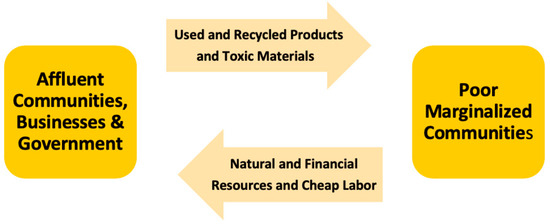
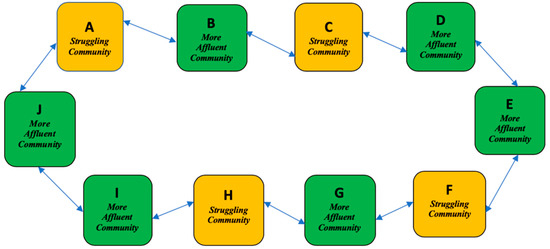
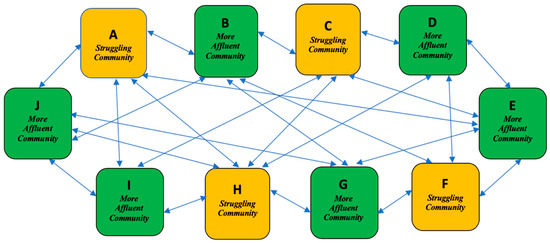
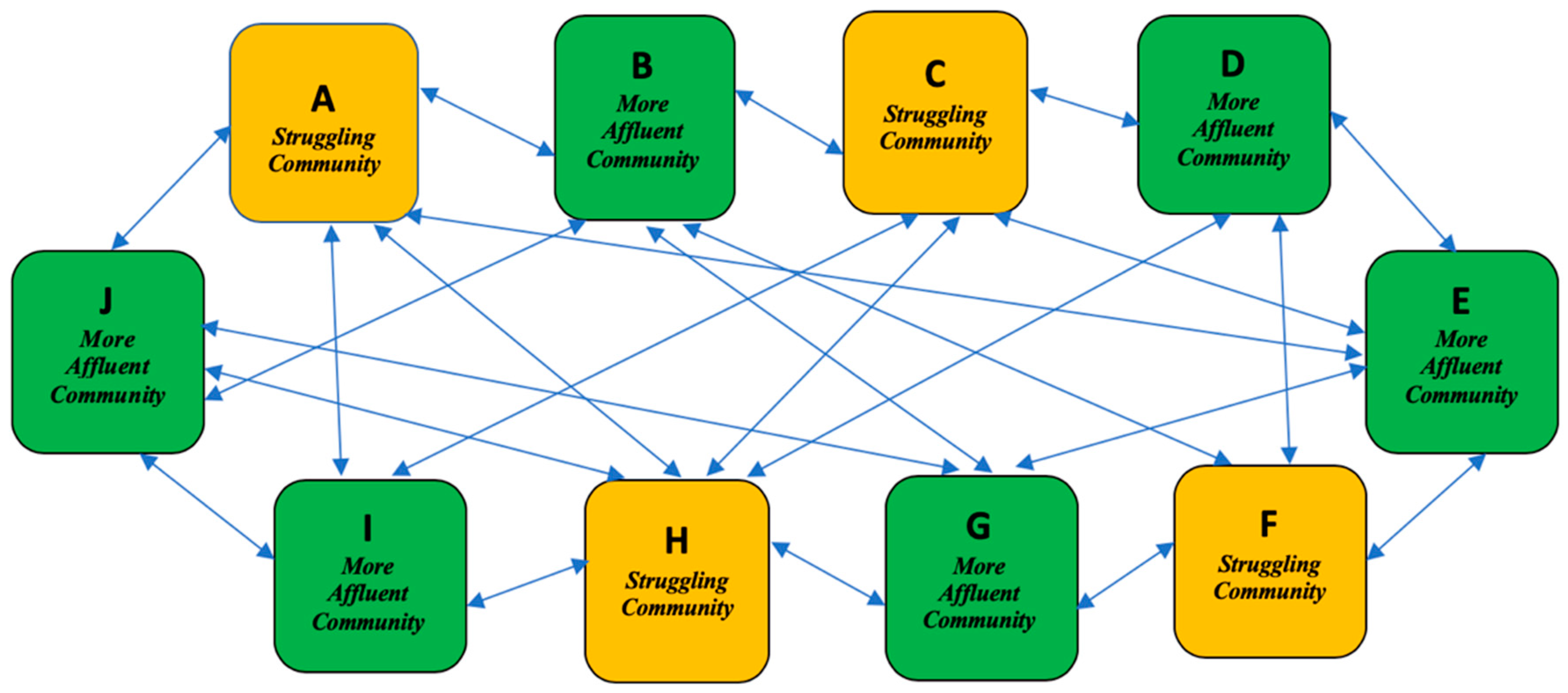
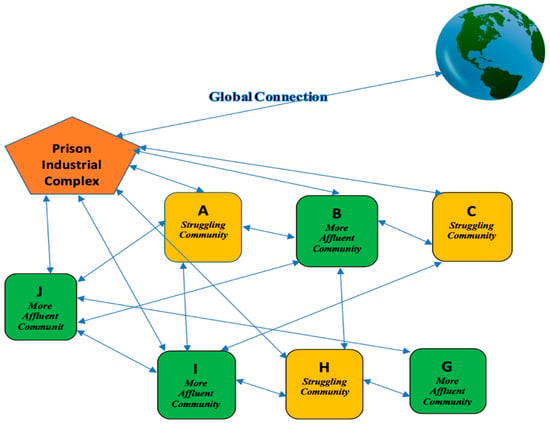
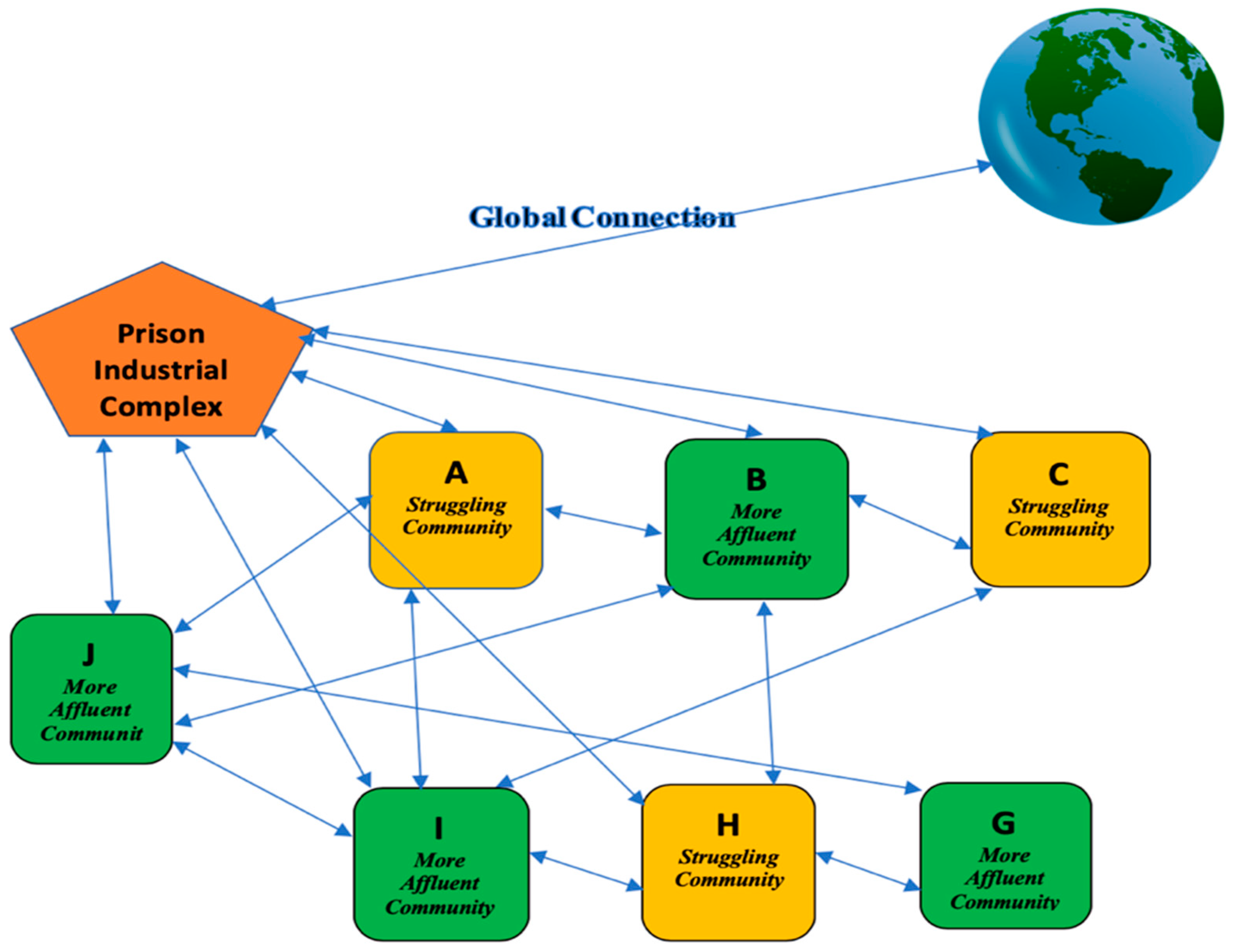
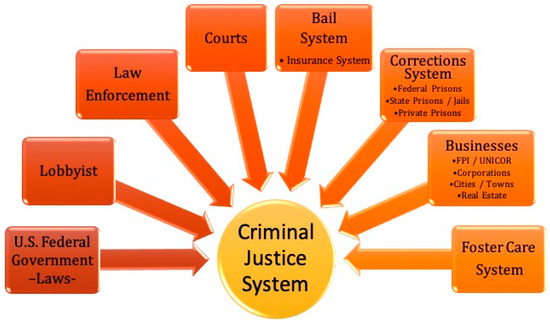
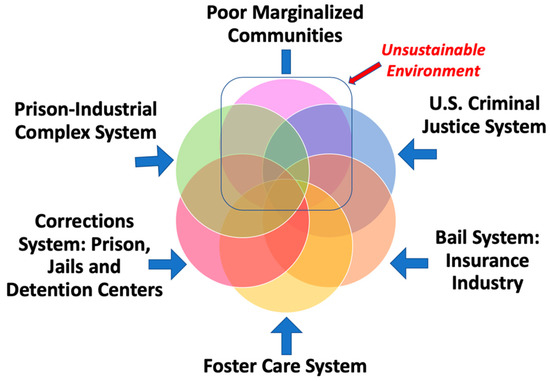

© 2019 by the authors. Licensee MDPI, Basel, Switzerland. This article is an open access article distributed under the terms and conditions of the Creative Commons Attribution (CC BY) license (http://creativecommons.org/licenses/by/4.0/).