

Assessment of Importance and Characteristics of Biophilic Design Patterns in a Children’s Library


Abstract
1. Introduction
2. Research Method and Scope
3. Literature Review
3.1. The Necessity of Applying Natural Elements in Children’s Libraries
3.2. The Concept and Patterns of Biophilic Design
4. A Case Study of the Biophilic Design of Children’s Libraries
5. Survey Results
5.1. General Information
5.2. Importance of Biophilic Design Patterns in Children’s Libraries
5.3. Factors and Characteristics of Children’s Libraries Based on Biophilic Design
5.4. Limitation and Contribution to Sustainability
6. Conclusions
Acknowledgments
Author Contributions
Conflicts of Interest
References
- Shin, D.J.; Kim, J.Y.; Lee, S.H. A Study on the Color Status of Interior Space in the Korean Professional Children Libraries. J. Korean Inst. Cult. Archit. 2013, 36, 35. [Google Scholar]
- Yeun, M.K. Research on Program Development of Infant Art on the basis of Multi-Intelligence Theory. J. Korea Child Art Assoc. 2013, 12, 70. [Google Scholar]
- Baek, J.E.; Yoon, J.E. Study on Nature Experiential Characteristics of Space Experience in Children’s National Folk Museum of Korea. J. Korea Inst. Spat. Des. 2016, 11, 92. [Google Scholar]
- Ha, M.K.; Lee, H.S. A Study on Space Design based on Biophilic Design of Refuge for Child Development. J. Korean Inst. Cult. Archit. 2017, 60, 66. [Google Scholar]
- Bronfenbrenner, U. The Ecology of Human Development; Harvard University Press: Cambridge, MA, USA, 1979. [Google Scholar]
- Choi, K.S. Child Developmental Psychology; Gyomoon Publishers: Seoul, Korea, 2006; p. 86. [Google Scholar]
- Kim, H.J. Consciousness and Awareness of Children’s Library Librarians; Library Science Society of Chung-Ang University: Seoul, Korea, 1973; pp. 220–222. [Google Scholar]
- Kim, KI. Library and children reading. Library 1991, 245, 57. [Google Scholar]
- Lee, Y.J.; Whang, H. A Study on the physical characteristics of children’s library supporting children’s development. J. Korean Inst. Cult. Archit. 2011, 36, 35. [Google Scholar]
- Han, H.R.; Park, Y. A Basic Study on the Demand of the Parents of Students in Eco-Environmental Space at Child Care Center. J. Korean Inst. Inter. Des. 2007, 16, 49. [Google Scholar]
- Kaplan, R.; Kaplan, S. The Experience of Nature: A Psychological Perspective; CUP Archive: New York, NY, USA, 1989. [Google Scholar]
- Ulrich, R.S.; Simons, R.F.; Losito, B.D.; Fiorito, E.; Miles, M.A.; Zelson, M. Stress recovery during exposure to natural and urban environments. J. Environ. Psychol. 1991, 11, 201–230. [Google Scholar] [CrossRef]
- Gillis, K.; Gatersleben, B. A review of psychological literature on the health and wellbeing benefits of biophilic design. Buildings 2015, 5, 948–963. [Google Scholar] [CrossRef]
- Browning, W.D.; Ryan, C.O.; Clancy, J.O. Patterns of Biophilic Design; Terrapin Bright Green LLC: New York, NY, USA, 2014; Volume 14, p. 12. [Google Scholar]

| Biophilic Design Patterns | Definition | |
|---|---|---|
| Nature in Space | Visual Connection with Nature | Provision of internal and external nature, ecosystem, and its change. |
| Non-Visual Connection with Nature | Provision of auditory, olfactory, tactile, and gustatory stimulation of nature, ecosystems, and their changes. | |
| Dynamic & Diffuse Light | Provision of a lively environment with nature through lights and shadows. | |
| Connection with Natural Systems | Provision of an environment where visitors can feel the changes of a healthy nature, such as the change of the seasons. | |
| Production of Nature | Biomorphic Forms & Patterns | Symbolism, such as shapes, patterns, materials, and ratios that can be observed in nature. |
| Material Connection with Nature | Minimizing processing, and providing natural materials that show the ecological characteristics of the area. | |
| Complexity & Order | Provision of an environment where visitors can sense various forms of sensory information from nature, centered on the hierarchy of natural elements. | |
| Characteristics of Space | Prospect | Provision of an open environment to observe, view, and monitor the surrounding environment. |
| Refuge | Provision of a place where visitors can feel safe and protected from environmental changes. | |
| Experience | Characteristics |
|---|---|
| A direct experience of nature | Natural light, water, plants, weather, natural scenery, ecosystem |
| Indirect experience of nature | The image of nature, natural materials, the geometry of nature |
| Experience of space and place | View and shelter, attachment to cultural and ecological sites |
| Children’s Library Name | Location | Bldg. Area (m2) | Year of Construction |
|---|---|---|---|
| Anacostia Library | USA | 22,000 | 2011 |
| Bendigo Library | Australia | 4010 | 2014 |
| Bishan Public Library | Singapore | 1400 | 2006 |
| CALS Children Library i | USA | 3576 | 2013 |
| City Library in Seinäjoki | Finland | 4430 | 2012 |
| Columbia Public Library | USA | 2497 | 2009 |
| Cooroy Library | Australia | 1650 | 2010 |
| Fernando Botero Park Library | USA | 23,039 | 2009 |
| Glen Oaks Branch Library | USA | 1672 | 2013 |
| Hercules Public Library | USA | 1873 | 2006 |
| Lawrence Public Library | USA | 2090 | 2014 |
| Los Gatos Public Library | USA | 29,240 | 2012 |
| McAllen Main Library | USA | 11,612 | 2011 |
| New Public Library Zoersel | Belgium | 1421 | 2014 |
| Public Library Amsterdam | Netherlands | 28,500 | 2007 |
| Schertz Public Library | Australia | 1913 | 2009 |
| Surry Hills Library | Australia | 2497 | 2009 |
| Valley-Hi North Laguna Library | USA | 1904 | 2011 |
| Vaughan Civic Centre Resource Library | Canada | 3306 | 2016 |
| Whitehall Library | USA | 1811 | 2015 |
| Biophilic Design Patterns | Applications of Characteristics of Biophilic Design Elements and Patterns in Children’s Libraries | ||||
|---|---|---|---|---|---|
| Nature Inside the Space | Visual Connection with Nature | 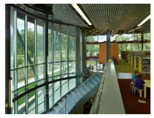 CALS Children Library |  New Public Library Zoersel |  Fernando Botero Park Library |  Hercules Public Library |
| Visual connection with nature by organizing upper and lower layers, such as library shelf/reading space, and a large-scale open space. | Visual connection with nature by organizing upper and lower layers, such as library shelf/reading, space and a large-scale open space. | Delivering a new image of nature through partial blocking of the external view. | Space design that can stably and comfortably allow for gazing at the nature outside, while seated indoors. | ||
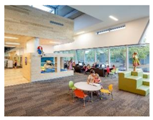 Lawrence Public Library |  Surry Hills Library | 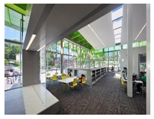 Anacostia Library | 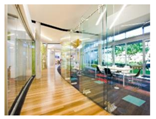 Cooroy Library | ||
| Space design that facilitates visual connection with nature in a learning space with a long stay time. | Space design that facilitates visual connection with nature in a learning space with a long stay time. | Using the light transmitted through a shade of green to create a space where the nature outside looks greener. | Space design that facilitates visibility of the nature outside in the interior space, through visual penetration of the overlapping spaces. | ||
| Non-Visual Connection with Nature |  Bendigo Library | 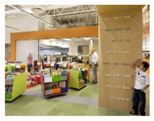 McAllen Main Library | 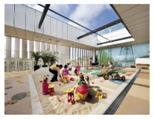 Surry Hills Library | 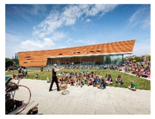 Lawrence Public Library | |
| The play/learning space that children often touch is enclosed with natural materials, such as wood, to provide tactile and olfactory stimulation. | Natural materials such as wood used on the space elements with various functions, such as key height measurements, to provide tactile and olfactory stimulation. | Sand playground in the outer space to provide tactile stimulation by natural elements. | Provision of natural tactile and olfactory stimulation through outside recording space that has functions such as gathering, play, and performance. | ||
| Provision of Dynamic Light in the Environment | 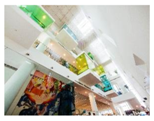 Bishan Public Library |  Bendigo Library |  Columbia Public Library |  Lawrence Public Library | |
| Provision of dynamic light in spaces, such as intensive learning spaces and lobbies, by allowing natural light to pass through the skylight. | Exposing the sky through the ceiling, providing a natural ecosystem view and dynamic light in the environment, on the shelves, and in the viewing and moving spaces. | Exposing the sky through the ceiling, providing a natural ecosystem view and dynamic light in the environment, on the shelves, and in the viewing, and moving spaces. | Exposing the sky through the ceiling, providing a natural ecosystem view and dynamic light in the environment, on the shelves, and in the viewing and moving space. | ||
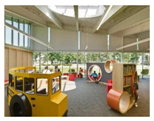 Whitehall Library |  Glen Oaks Branch Library |  Cooroy Library | 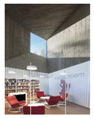 City Library in Seinäjoki | ||
| Providing natural lighting dynamically and an environment for the viewing, playing, and learning space with a long stay time. | Providing a moving space around the skylight to allow for natural light to be transmitted and form interesting patterns, such as shadows. | Providing a dynamic light in the environment that changes momentarily in the shelf, reading, and moving spaces, by allowing natural light to pass through the window. | Providing a dynamic light in the environment that changes momentarily in the shelf, reading, and moving spaces by allowing for natural light to pass through the window. | ||
| Nature in Space | Provision of Dynamic Light in the Environment |  Valley-Hi North Laguna Library |  Public Library Amsterdam | 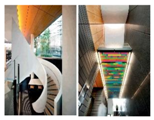 Surry Hills Library | 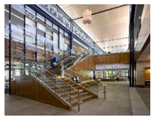 Los Gatos Public Library |
| Natural light passing through the windows provides a dynamic lighting environment that changes instantly in the reading and moving areas. | Provision of artificial lighting with specific functions, such as floor movement guidance and a dynamic emphasis on vertical movement space and sunken space. | Provision of artificial lighting with specific functions, such as floor movement guidance and a dynamic emphasis on vertical movement space and sunken space. | Provision of a dynamic light in the environment through a finishing material that provides various materials for reflectance, such as transmission, reflection, and color. | ||
| Connections with Ecosystems | 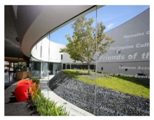 Hercules Public Library | 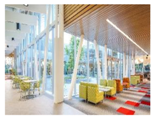 Vaughan Civic Centre Resource Library |  Schertz Public Library |  Surry Hills Library | |
| Through the courtyard, there is a space structure where visitors can feel the changes of nature, such as seasons and weather, in the shelf, reading, and moving spaces. | Through the courtyard, there is a space structure where visitors can feel the changes of nature, such as seasons and weather, in the shelf, reading, and moving spaces. | Through the courtyard, there is a space structure where visitors can feel the changes of nature, such as seasons and weather, in the shelf, reading, and moving spaces. | Creating an environment that can differentiate nature by changing the characteristics of landscaping by space. | ||
| The Production of Nature | Providing Natural Shapes and Patterns | 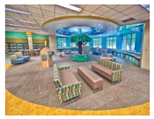 Bishan Public Library |  Cooroy Library |  Fernando Botero Park Library | 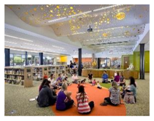 Los Gatos Public Library |
| It is composed of playgrounds and sculptures symbolizing the nature and shapes of nature, such as trees and forests. | It is composed of playgrounds and sculptures symbolizing the nature and shapes of nature, such as trees and forests. | Providing artificial lighting that uses natural lighting and graphics to symbolize the sky. | It creates space through ceiling sculptures and lights that symbolize natural patterns, such as waves. | ||
| Provision of Natural Materials |  Cooroy Library | 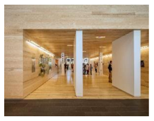 Lawrence Public Library | 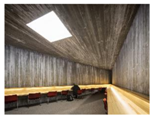 City Library in Seinäjoki |  CALS Childrenin Seinäjo | |
| Natural materials used maximize natural texture while minimizing the processing. | Floor, wall, and ceiling are finished with natural materials, creating a warm and friendly atmosphere. | Floor, wall, and ceiling are finished with natural materials, creating a warm and friendly atmosphere. | Floor, wall, and ceiling are finished with natural materials, creating a warm and friendly atmosphere. | ||
| Provision of a Complex and Systematic Environment |  Cooroy Library |  CALS Childrenymaterials |  Whitehall Library | 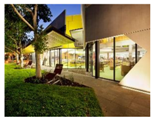 Bendigo Library | |
| The spatial composition allows for the reception of sensory information coming from nature, through both upper and lower layers of the roof recording space. | Provision of an environment where visitors can receive various sensory information from nature in natural center spaces, such as landscaping, green walkways, and water. | Provision of an environment where visitors can receive various sensory information from nature in natural center spaces, such as landscaping, green walkways, and water. | It provides an environment where visitors can receive various sensory information from nature, by the composition of the resting space in the natural center space. | ||
| Characteristics of Space | Provision of an Easy Viewing Environment |  Valley-Hi North Laguna Library |  Public Library Amsterdam | 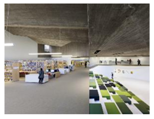 City Library in Seinäjoki | 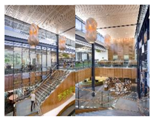 Los Gatos Public Library |
| Children’s reading room, education room, book shelf, etc. are all open spaces. | It is possible to observe, view, and monitor the children’s reading room through the large open space on the upper and lower floors. | A large open space structure allows for the observation and viewing of each room and the outer space of upper and lower layers. | A large open space structure allows the observation and viewing of each room and the outer space of upper and lower layers. | ||
| Provision of shelter |  Bishan Public Library | 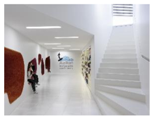 City Library in Seinäjoki |  Hercules Public Library | 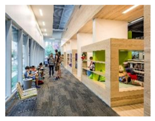 Lawrence Public Library | |
| Conveniently accessible hideout for intensive learning, in the moving space that provides views of open and external spaces. | Conveniently accessible hideout for intensive learning, in the moving space that provides the view of open and external spaces. | The composition of a hideout that allows for physical activity and intensive learning, reminiscent of a cave. | Utilizing the natural form of sculpture, it is possible to view the inside and outside space, and construct an inviting hideout. | ||
| Division | Item | f | % |
|---|---|---|---|
| Gender | Male | 46 | 17.6 |
| Female | 215 | 82.4 | |
| Total | 261 | 100 | |
| Age | 20 to 30 years old | 116 | 44.4 |
| 30 to 40 years old | 132 | 50.6 | |
| More than 40 years old | 13 | 5.0 | |
| Total | 261 | 100 | |
| Children’s Library Monthly Visits | 1–2 times | 152 | 58.2 |
| 3–4 times | 74 | 28.4 | |
| More than 5 times | 35 | 13.4 | |
| Total | 261 | 100 |
| Biophilic Design Patterns | Applications of Characteristics of Biophilic Design Elements and Patterns in Children’s Libraries | Importance Average | |
|---|---|---|---|
| Visual Connection with Nature | Visual connection with nature through the organization of upper and lower layers, such as library bookshelves/reading spaces as large-scale open spaces. | 4.19 | 3.88 |
| Delivering a new image of nature through the partial blocking of external viewing. | 3.27 | ||
| Space design that can stably and comfortably allow for gazing at the nature outside, while seated indoors. | 3.88 | ||
| Space design that facilitates a visual connection with nature in a learning space with a long stay time. | 4.42 | ||
| Using the light transmitted through a shade of green to create a space where the nature outside looks greener. | 3.72 | ||
| Space design that facilitates the visibility of the nature outside in the interior space through the visual penetration of the overlapping spaces. | 3.81 | ||
| Non-Visual Connection with Nature | The play/learning space that children often touch is enclosed with natural materials, such as wood, to provide tactile and olfactory stimulation. | 3.78 | 3.66 |
| Natural materials, such as wood, are used on the space elements with various functions, such as key height measurements, to provide tactile and olfactory stimulation. | 3.81 | ||
| Sand playground in an outer space to provide tactile stimulation by natural elements. | 3.18 | ||
| Provision of natural tactile and olfactory stimulation through an outside recording space that has functions such as gathering, play, and performance. | 3.87 | ||
| Provides a dynamic light environment | Natural lighting was reflected in the dynamic lighting of the environment, including the intensive learning space. | 4.15 | 3.80 |
| Exposing the sky from the ceiling, providing a natural ecosystem view and dynamic light in the environment, in the shelf, viewing, and moving spaces. | 3.84 | ||
| Natural light of the light well provides a dynamic light in the environment for viewing, playing and learning spaces with a long stay time. | 4.01 | ||
| Provision of a moving space around the skylight to provide the natural light to be transmitted and form interesting patterns, such as shadows. | 3.48 | ||
| Provision of dynamic light in the environment that changes momentarily in the shelf, reading, and moving spaces by the natural light passing through the window. | 3.95 | ||
| Provision of artificial lighting with specific functions, such as floor movement guidance, and a dynamic emphasis on vertical movement space and sunken space. | 3.97 | ||
| Provision of dynamic light in the environment through a finishing material that provides various materials and reflectance, such as transmission, reflection, and color. | 3.24 | ||
| Connections with Ecosystems | Through the courtyard, there is a space structure where visitors can feel the changes of nature, such as seasons and weather, in shelf, reading, and moving spaces. | 4.06 | 3.86 |
| Creating an environment that can make a difference in nature by changing the characteristics of landscaping by space. | 3.67 | ||
| Provision of Natural Shapes and Patterns | It is composed of playgrounds and sculptures symbolizing the nature and shapes of nature, such as trees and forests. | 3.49 | 3.54 |
| Provision of artificial lighting that uses natural lighting and graphics to symbolize the sky. | 3.61 | ||
| It creates space through ceiling sculptures and lights that symbolize natural patterns, such as waves. | 3.54 | ||
| Provision of Natural Materials | Natural materials used maximize natural texture while minimizing the processing. | 3.64 | 3.79 |
| Floor, wall, and ceilings are finished with natural materials, creating a warm and friendly atmosphere. | 3.94 | ||
| Provision of a Complex and Systematic Environment | The spatial composition allows for the reception of sensory information coming from nature through both the upper and lower layers of the roof recording space. | 3.16 | 3.62 |
| Provision of an environment where visitors can receive various forms of sensory information from nature, in natural center spaces, such as landscaping, green walkways, and water. | 3.44 | ||
| It provides an environment where visitors can receive various forms of sensory information from nature, by the composition of a resting space in the natural center space. | 4.26 | ||
| Provision of Easy Viewing Environments | Children’s reading room, education room, book shelf, etc. are all open spaces. | 4.33 | 4.25 |
| It is possible to observe, view, and monitor the children’s reading room through the large open space on the upper and lower floors. | 4.25 | ||
| A space structure that allows for the observation and viewing of each room and outer space of upper and lower layers through a large open space. | 4.17 | ||
| Provision of Shelter | Conveniently accessible hideout for intensive learning in the moving space that provides views of open and external spaces. | 4.01 | 3.84 |
| The composition of a hideout that allows for physical activity and intensive learning, reminiscent of a cave. | 3.85 | ||
| Utilizing the natural form of sculpture, it is possible to view the inside and outside space, and construct an inviting hideout. | 3.68 | ||
| Overall Average | 3.81 | ||
| Factor | Characteristics of Environmentally-Friendly Design Patterns of Children’s Libraries | Component Quantity | Importance Average | |
|---|---|---|---|---|
| Open Space Design that is Easy to Observe, View, and Monitor | Children’s reading room, education room, book shelf, etc. are all open spaces. | 0.899 | 4.33 | 4.06 |
| Large open spaces in the upper and lower floors provide space for observing, viewing, and monitoring children’s reading rooms. | 0.864 | 4.25 | ||
| The upper and lower floors of the library shelf/reading space are constructed as a large-scale open space. | 0.792 | 4.19 | ||
| Observation and viewing of each room and outer space of upper and lower layers through a large open space. | 0.754 | 4.17 | ||
| Provision of artificial lighting with specific functions, such as floor movement guidance and dynamic emphasis on vertical movement space and sunken space. | 0.701 | 3.97 | ||
| Space where visitors can feel the changes of nature, such as seasons and weather, in the shelf, reading, and moving spaces through the courtyard. | 0.658 | 4.06 | ||
| Provision of a dynamic light environment that changes momentarily in the shelf, reading, and moving spaces by the natural light passing through the window. | 0.612 | 3.95 | ||
| Exposing the sky from the ceiling, providing a natural ecosystem view and dynamic light in the environment, in the shelf, reading, and moving spaces. | 0.569 | 3.84 | ||
| Space design that facilitates viewing the nature outside while in the interior space through the visual penetration of the overlapping spaces. | 0.512 | 3.81 | ||
| Design a Learning Space that Can Experience Nature | Space design that facilitates a visual connection with nature in learning spaces with long stay times. | 0.825 | 4.42 | 4.09 |
| Provision of dynamic lighting in the environment, such as intensive study spaces and lobbies, by allowing for natural light to pass through the skylight. | 0.753 | 4.15 | ||
| Easy-access, sheltered area for intensive learning in open spaces to enable an open view of the inside and outside spaces. | 0.677 | 4.11 | ||
| Natural light from the light well provides a dynamic light in the environment for viewing, playing and learning spaces with long stay times. | 0.602 | 4.01 | ||
| Utilizing the natural form of sculpture, it is possible to view the inside and outside space, and construct an interesting hideout. | 0.557 | 3.97 | ||
| Space design that allows visitors to view the nature outside in a stable and comfortable manner, while seated indoors. | 0.501 | 3.88 | ||
| Space Design to Support Multiple Functions | It provides an environment where visitors can feel various forms of sensory information from nature by organizing reading and resting spaces in the natural center space. | 0.799 | 4.26 | 3.92 |
| Constructing a hideout that allows for physical activity and intensive learning, reminiscent of a cave. | 0.725 | 3.99 | ||
| Natural materials, such as wood, are used on space elements with various functions, such as key height measurements, and provide tactile and olfactory stimulation. | 0.654 | 3.81 | ||
| Provision of natural tactile and olfactory stimulation through the outside recording space with functions such as gathering, play, and performance. | 0.597 | 3.87 | ||
| Differentiation of characteristics of landscaping by space, creating an environment where visitors can feel various natural changes. | 0.481 | 3.67 | ||
| An Interesting Space Design, Using Natural Elements | Using the light transmitted through a shade of green, creating a space that looks greener than the nature outside. | 0.725 | 3.72 | 3.56 |
| Provision of artificial lighting that uses natural lighting and graphics to symbolize the sky. | 0.674 | 3.61 | ||
| It creates space through ceiling artworks and lighting that symbolize natural patterns, such as waves. | 0.598 | 3.54 | ||
| Organization of playgrounds through sculptures symbolizing the nature and shapes of nature, such as trees and forests. | 0.513 | 3.49 | ||
| Provision of a moving space around the skylight to allow for the natural light to be transmitted through, and form interesting shadow formations. | 0.461 | 3.48 | ||
| Space Design that Allows for the Experience of Various Forms of Sensory Information | Provision of an environment where visitors can feel various forms of sensory information of nature in the natural center space, such as landscaping, green walkways, and water. | 0.684 | 3.44 | 3.26 |
| Delivering a new image of nature through partial blocking of the external view. | 0.618 | 3.27 | ||
| Provision of dynamic light in the environment through a finishing material that provides reflectance, such as transmission, reflection, and color. | 0.557 | 3.24 | ||
| Provision of tactile stimulation by natural elements, by constructing a sand playground in the outer space. | 0.512 | 3.18 | ||
| Space in the upper and lower layers where visitors can feel various forms of sensory information of nature through the roofing green space. | 0.413 | 3.16 | ||
© 2018 by the authors. Licensee MDPI, Basel, Switzerland. This article is an open access article distributed under the terms and conditions of the Creative Commons Attribution (CC BY) license (http://creativecommons.org/licenses/by/4.0/).
Share and Cite
Lee, H.C.; Park, S.J. Assessment of Importance and Characteristics of Biophilic Design Patterns in a Children’s Library. Sustainability 2018, 10, 987. https://doi.org/10.3390/su10040987
Lee HC, Park SJ. Assessment of Importance and Characteristics of Biophilic Design Patterns in a Children’s Library. Sustainability. 2018; 10(4):987. https://doi.org/10.3390/su10040987
Chicago/Turabian StyleLee, Hyo Chang, and Sung Jun Park. 2018. "Assessment of Importance and Characteristics of Biophilic Design Patterns in a Children’s Library" Sustainability 10, no. 4: 987. https://doi.org/10.3390/su10040987
APA StyleLee, H. C., & Park, S. J. (2018). Assessment of Importance and Characteristics of Biophilic Design Patterns in a Children’s Library. Sustainability, 10(4), 987. https://doi.org/10.3390/su10040987