

Article

Comparative Hepatic Toxicity of Pesticides in Common Carp (Cyprinus carpio Linnaeus, 1758): An Integrated Histopathological, Histochemical, and Enzymatic Biomarker Approach


by
Vesela Yancheva
1,
Stela Stoyanova
2,
Elenka Georgieva
2,
Eleonora Kovacheva
3,4,
Bartosz Bojarski
5,
László Antal
6,7,
Ifeanyi Emmanuel Uzochukwu
6,8 and
Krisztián Nyeste
6,7,*
1
Department of Ecology and Environmental Conservation, Paisii Hilendarski University of Plovdiv, 4000 Plovdiv, Bulgaria
2
Department of Developmental Biology, Paisii Hilendarski University of Plovdiv, 4000 Plovdiv, Bulgaria
3
Department of Medical Biology, Medical University-Plovdiv, 4000 Plovdiv, Bulgaria
4
Research Institute, Medical University-Plovdiv, 4000 Plovdiv, Bulgaria
5
Department of Animal Biology and Environment, Faculty of Animal Breeding and Biology, Bydgoszcz University of Science and Technology, Mazowiecka 28, 85-084 Bydgoszcz, Poland
6
Department of Hydrobiology, University of Debrecen, 4032 Debrecen, Hungary
7
National Laboratory for Water Science and Water Safety, University of Debrecen, 4032 Debrecen, Hungary
8
Pál Juhász-Nagy Doctoral School of Biology and Environmental Sciences, University of Debrecen, 4032 Debrecen, Hungary
*
Author to whom correspondence should be addressed.
J. Xenobiot. 2026, 16(1), 19; https://doi.org/10.3390/jox16010019 (registering DOI)
Submission received: 16 December 2025 / Revised: 14 January 2026 / Accepted: 20 January 2026 / Published: 22 January 2026

Abstract

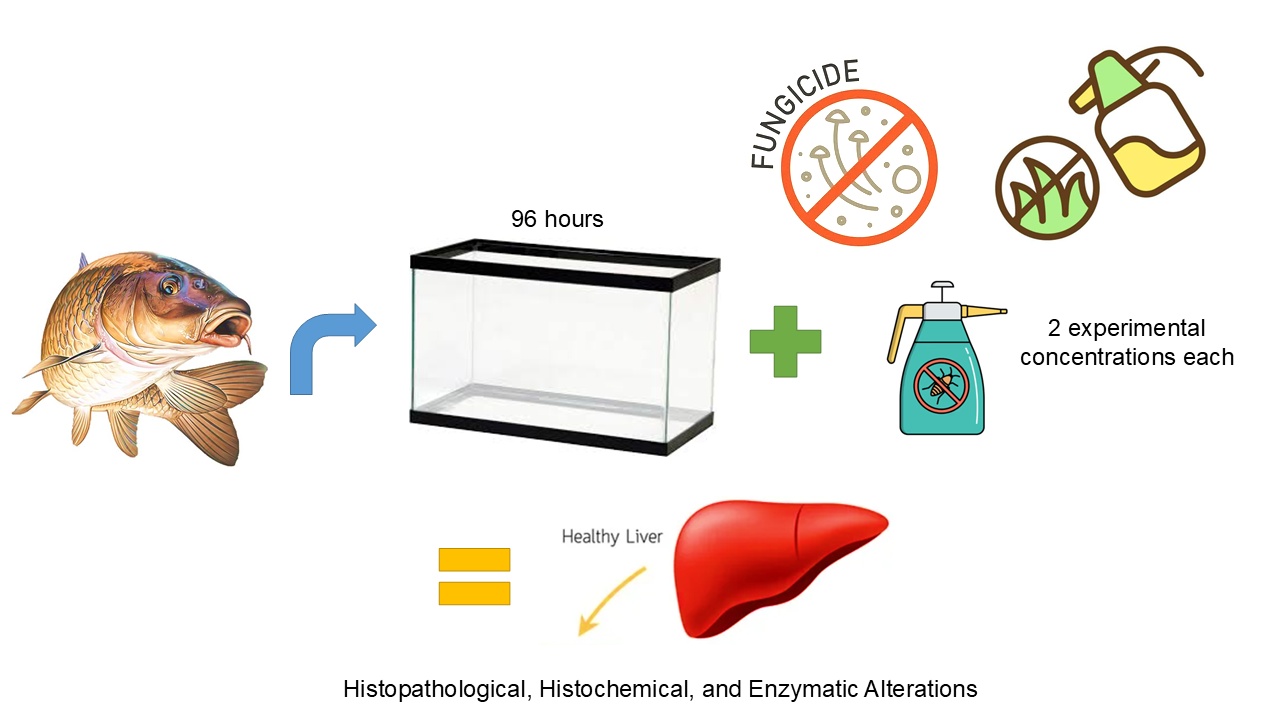
The intensive use of pesticides in agriculture poses serious risks to aquatic ecosystems and non-target organisms, yet toxicological data remain limited. This study evaluated the acute effects of three widely used pesticides—pirimiphos-methyl (10 and 60 μg/L), propamocarb hydrochloride (40 and 80 μg/L), and 2,4-D (50 and 100 μg/L)—on the liver of common carp (Cyprinus carpio Linnaeus, 1758), a sentinel species in aquaculture, but also a species equally important in risk assessment and environmental monitoring. Fish were exposed for 96 h under controlled conditions, and histopathological, histochemical, and biochemical biomarkers were analyzed. All tested pesticides induced significant histopathological alterations, predominantly circulatory and degenerative changes, with severity increasing at higher concentrations. Propamocarb hydrochloride and 2,4-D caused more pronounced and partly irreversible hepatotoxicity compared to pirimiphos-methyl. The histochemical assessment revealed altered glycogen metabolism, while the biochemical assays showed inhibition of key liver enzymes, including ALAT, ASAT, ChE, and LDH, indicating disrupted metabolic processes. These findings highlight the vulnerability of aquatic organisms to pesticide exposure and support the use of fish liver biomarkers as effective tools in ecotoxicology research. The study also emphasizes the need for stricter regulation and environmental monitoring of pesticide contamination in aquatic ecosystems.

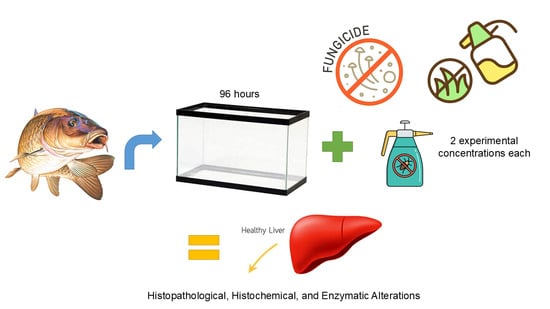
Graphical Abstract

1. Introduction

Global pesticide use has risen dramatically over the last decades, leading to increased exposure risks for living organisms and the environment. Contemporary agricultural practices rely extensively on pesticides to protect crops and enhance yields [1,2]. Their role in maintaining agricultural productivity is well established, as yields would decline substantially in their absence. However, one of the major pollutants is pesticides [3], and strong evidence indicates that the extensive application of these chemicals results in lasting harm to ecosystems and their biological communities, including humans. Their excessive and incorrect use is one of the reasons for the presence of pesticide residues in various food products, which also threatens human health. This is especially exacerbated by frequent or prolonged consumption of contaminated foods. In this regard, in recent decades, a worldwide increase in the incidence of several types of allergies, an increase in the number of various genetic defects, and last but not least, a sharp increase in cancer diseases has been observed. This worrying trend is mainly due to the highly polluted environment, primarily caused by human activity. Other factors that pose a potential risk to humans are treatment with unauthorized preparations, the use of unregulated imported products, and the presence of numerous warehouses with outdated pesticides, which are released into the environment under the influence of atmospheric conditions [2]. In addition, the spread of pesticides outside agricultural lands can affect crops growing near application sites where they are not permitted or desired [3] and protected natural areas [4,5], as well as high numbers of plants and aquatic organisms [6]. Furthermore, the irrational use of pesticides causes biodiversity loss and damage to ecosystem functions, including their significant impact on aquatic ecosystems [7,8]. Pesticides also cause negative impacts due to their accumulation in the environment, including aquatic ecosystems, leading to long-term effects on ecosystems and people. Once in the biosphere, they are part of the natural cycle of substances, with the main circulation routes being water, air, and soil. The intensity of these processes is determined by the external environmental conditions and the chemical nature of the pesticides, with their solubility and volatility being of greatest importance [9]. Water pollution can be defined as the alteration of its characteristics due to the addition of anthropogenic contaminants, including pesticides, to an extent that it cannot serve human drinking purposes or support the survival of biotic communities. This occurs when pesticides are discharged directly or indirectly without adequate treatment to remove harmful components [10].
Fish occupy high trophic levels; therefore, they provide an integrated picture of the ecosystem and can be used as bioindicators of environmental state [11]. In ecotoxicology, biomarkers serve as valuable tools for assessing the condition of aquatic ecosystems. Employing a range of biomarkers that span multiple levels of biological organization provides an effective means of identifying biological responses triggered by environmental contaminants. Therefore, it is necessary to apply them in monitoring studies of polluted ecosystems, providing an ecotoxicological assessment necessary for proper environmental management [12].
The liver is one of the organs frequently used for investigating complex biomarkers in aquatic organisms, including fish. According to Aniladevi et al. [13], assessing changes in this organ may indicate disturbances in the detoxification mechanisms for waste products, drugs, heavy metals, and organic pollutants, such as pesticides. Exposure to pesticides can cause histopathological, histochemical, and biochemical changes in the liver, which are important biomarkers for assessing the degree of pollution and its effects in aquatic ecosystems [14].
Experimental studies focused on morphological and biochemical alterations at the tissue or cellular level provide insight into the condition of organs exposed to environmental pollutants and their potential effects on whole-organism health [15,16,17,18].
Furthermore, according to Slaninova et al. [19], monitoring a single biomarker is insufficient to determine the impact of pesticides on fish. It is essential to prepare a comprehensive multi-biomarker assessment, including tissue changes and changes in enzymatic activity. Therefore, in the present study, we aimed to investigate pesticide-induced liver damage in experimental fish after exposure to three different pesticides, with two concentrations of each, using a histopathological, histochemical, and biochemical assessment.

2. Materials and Methods

2.1. Experimental Fish

Common carp, a prominent freshwater species domesticated for more than 8000 years, is one of the most widely farmed fish globally due to its adaptability, rapid growth, and high protein content, making it integral to both fisheries and aquaculture [20,21]. Therefore, the test species in this study was common carp, one of the most preferred species for industrial breeding among freshwater fish. Moreover, common carp is a species that not only has high commercial value worldwide but is also widely used as a bioindicator of toxicity in freshwater environments [22].

2.2. Experimental Pesticides

2.2.1. Pirimiphos-Methyl

Pirimiphos-methyl is an organophosphorus insecticide that is commonly used for the prevention and control of insects during the storage of agricultural produce. Residues in crops resulting from its excessive application pose a health risk to humans and animals [23]. Pirimiphos-methyl is also widely used against the malaria mosquito Anopheles spp., especially in Africa [24,25]. The mechanisms of resistance to pirimiphos-methyl are poorly understood, but organophosphates, such as carbamates, block the action of the AChE enzyme by competitive binding to its active site [26]. Pirimiphos-methyl is also responsible for the phosphorylation of AChE, which regulates the hydrolysis of acetylcholine in the synaptic cleft of the insect nervous system [27]. Like AChE, the circulating enzyme BchE, known as pseudocholinesterase, is also a target for phosphorylation and inhibition by the insecticide [28].

2.2.2. Propamocarb Hydrochloride

Propamocarb hydrochloride was first introduced into the European markets for the control of oomycete pathogens in ornamental crops and some vegetables in 1978 [29]. Propamocarb hydrochloride is relatively unstable, stable to photodegradation in water, photodegradable in soil with a half-life of 35 days, degraded fairly rapidly by microbially mediated metabolism, resistant to anaerobic metabolism, rapidly dissipates under field conditions, and has limited hydrolytic potential and bioconcentration in fish [30]. Propamocarb hydrochloride has systemic activity following absorption through leaves, stems, and roots, and transport through the vascular system in treated plants [31]. The fungicide has good protective and curative activity against downy mildew in fruits and vegetables, such as cucumbers, tomatoes, and potatoes [32,33,34]. It causes mild cytotoxicity to cortical neurons and has moderate effects on intracellular membrane potential, glucose consumption, ATP levels, and cytoskeleton [35].

2.2.3. 2,4-Dichlorophenoxyacetic Acid

2,4-D is a synthetic auxin herbicide commonly used to control dicotyledonous weeds in cereal crops. The herbicide was developed during World War II and introduced to the market in the 1940s [36] for the control of broadleaf weeds [37]. Due to its efficacy, selectivity, low cost, and broad-spectrum pest control, it has become a widely used herbicide in agricultural and urban areas around the world [38]. In 2025, 2,4-D was the most commonly used herbicide ingredient in residential settings in the U.S. [39]. In addition, 2,4-D is registered as an ingredient in approximately 1500 agricultural and domestic pesticides, either as the sole active ingredient or in combination with others. The compound mimics natural plant auxins and promotes division, differentiation, and elongation of plant cells, and therefore acts as a growth regulator [36,40]. However, even at low concentrations, 2,4-D has herbicidal effects on dicotyledons by inducing uncoordinated cell growth, damaging vascular tissues and roots, and malforming leaves and stems [41].

2.3. Experimental Exposure

Juvenile fish used in this study were obtained from the Institute of Fisheries and Aquaculture in Plovdiv, Bulgaria, where they are bred and reared under strictly controlled conditions. All experimental specimens belonged to the same age group and exhibited comparable body size (length: 10 cm ± 2.5 cm; weight: 22 g ± 1.5 g), without any external pathological changes. Twenty individuals were used for each experimental concentration (in 100 L glass tanks), as well as in the control and solvent control groups (total number of experimental fish = 160). They were left to acclimatize for 14 days before the experimental exposure began in two 100 L tanks, where they were fed a diet based on their weight. During the experiment, the fish were not fed, and the water was renewed on the second day (48 h). The experiment lasted 96 h. Dechlorinated tap water was prepared in advance and used as the exposure medium, with pesticides dissolved at defined concentrations. For each pesticide, two exposure levels were established: pirimiphos-methyl (10 μg/L and 60 μg/L), propamocarb hydrochloride (40 μg/L and 80 μg/L), and 2,4-D (50 μg/L and 100 μg/L). As described previously, these concentrations were selected based on LC50 values reported by the manufacturers—600,000 μg/L for pirimiphos-methyl (96 h, aquatic invertebrates), 80,000 μg/L for propamocarb hydrochloride, and 100,000 μg/L for 2,4-D—corresponding to 1/60,000 and 1/10,000 of the LC50 for pirimiphos-methyl and 1/2000 and 1/1000 for propamocarb hydrochloride and 2,4-D, respectively [17]. In addition, both a control group and a solvent control group were included for comparison. These groups were maintained in dechlorinated tap water or water containing low concentrations of the solvent (acetone), levels not expected to induce measurable histological or biochemical changes in the liver. All aquaria were fitted with aeration systems to ensure adequate oxygenation. Water quality parameters, including temperature (°C), pH, dissolved oxygen, and electrical conductivity, were monitored daily throughout the experimental period [42]. At the end of the exposure, the fish were dissected following the protocol described by Rosseland et al. [43], in accordance with the ethical standards for the humane use of experimental animals outlined in Directive 2010/63/EU [44].

2.4. Histopathological Assessment

The histopathological preparations followed the standard protocol outlined by Romeis [45]. The tissue samples underwent fixation in 10% neutral buffered formalin, followed by graded alcohol dehydration, xylene clearing, paraffin infiltration, embedding, and sectioning with a RM 2125 RTS microtome (Leica, Wetzlar, Germany). The sections were stained using hematoxylin and eosin (H&E) and examined under a DM 2000 light microscope (Leica, Wetzlar, Germany) with LAS V4.13 imaging software.
Liver histopathological changes were assessed using Bernet et al.’s criteria [46], grouping lesions into circulatory, proliferative, degenerative, and inflammatory categories that affect individual functional units or the entire organ. Severity was scored on a 5-point scale per Saraiva et al. [47]: 0 (no changes, ≤10% affected), 1 (very mild, 10–20%), 2 (mild, 20–30%), 3 (moderate, 30–50%), 4 (severe, 50–80%), or 5 (very severe, >80%).
Each lesion’s pathological importance was rated using the significance factor (W) from Bernet et al. [46]: 1 (minimal, reversible upon post-pesticide cessation), 2 (low, mostly reversible if the stressor is removed), or 3 (high, irreversible with partial/complete loss of organ function). The indices were computed by multiplying each alteration’s severity score by its W factor, summing per category—circulatory (IC), degenerative (IR), proliferative (IP), inflammatory (II)—to derive the total organ index (IO). IO values were classified per Zimmerli et al. [48], into five classes: I (≤10, normal with mild reversible changes), II (11–20, normal with moderate reversible changes), III (21–30, moderate reversible disruption), IV (31–40, severe irreversible damage), or V (>40, very severe irreversible alterations).
These scales support quantitative statistical evaluation of histopathological and histochemical data.

2.5. Histochemical Assessment

The liver samples were sectioned using a Leica CM 1520 cryostat (Leica Microsystems, Wetzlar, Germany), yielding cryosections 5 µm thick. Polysaccharide content, specifically hepatic glycogen, was assessed using the periodic acid–Schiff (PAS) reaction (Schiff–iodic acid; Carl Roth GmbH + Co., KG, Karlsruhe, Germany) following the method described by McManus [49]. The histochemical alterations in the livers of exposed fish were evaluated semi-quantitatively using a modified scoring system based on Mishra and Mohanty [50]: 0, no detectable staining; 1, very weak positive reaction; 2, weak positive reaction; 3, moderate positive staining; and 4, strong positive histochemical reaction in the hepatocytes.

2.6. Biochemical Assessment

Aspartate aminotransferase (ASAT, E.C. 2.6.1.1) is found in high concentrations in the liver of fish. Still, alanine aminotransferase (ALAT, E.C. 2.6.1.2) is considered more specific for this organ [51]. According to El-Shehawi et al. [52], aminotransferases are widely used to diagnose liver damage caused by toxins in fish, as well as in other organs such as gills and muscles.
Cholinesterases are a family of enzymes that catalyze the hydrolysis of acetylcholine (ACh) to choline and acetic acid, a fundamental process that allows the regeneration of cholinergic neurons. Cholinesterases are divided into two groups: acetylcholinesterases (AChE; EC 3.1.1.7) and butyrylcholinesterases (BuChE; EC 3.1.1.8). AChE is involved in cholinergic neurotransmission by hydrolyzing acetylcholine. It is expressed in nerve and blood cells. BuChE is known as plasma cholinesterase or pseudocholinesterase [53]. ChE is also present in the liver and participates in the detoxification process [54,55,56].
Lactate dehydrogenase (LDH, E.C. 1.1.1.27) is an important glycolytic enzyme found in the cytoplasm of cells and involved in maintaining carbohydrate metabolism balance. Any change in the metabolism of organisms as a result of toxic stress harms the activity of LDH [57].
A biochemical evaluation of hepatic ASAT, ALAT, ChE, and LDH activities was conducted. Liver samples were rapidly thawed on ice and homogenized in chilled phosphate buffer (50 mM, 300 mM NaCl, pH 7.4) using a Pyrex Potter–Elvehjem tissue grinder fitted with a PTFE pestle (Thermo Fisher Scientific, Waltham, MA, USA). The resulting homogenates were centrifuged at 9000 rpm for 15 min at 4 °C in a refrigerated centrifuge (MPW, Poland). Determination of the activity of the enzyme LDH (LDH FL DGKC, Chema Diagnostica, Via Campania 2/4, 60030 Monsano (AN)-ITALY-UE, assay kit) was carried out according to the method of Vassault [58]. Determination of the activity of the enzymes ASAT (GOT/AST FL IFCC, Chema Diagnostica, Via Campania 2/4, 60030 Monsano (AN)-ITALY-UE, assay kit) and ALAT (GPT/ALT FL IFCC, Chema Diagnostica, Via Campania 2/4, 60030 Monsano (AN)-ITALY-UE, assay kit) was carried out according to a method developed in parallel by Henley & Pollard [59] and Wroblewski & Ladue [60], which was modified and improved by Reitman & Frankel [61]. Determination of ChE activity (ChE DGKC FL, Chema Diagnostica, Via Campania 2/4, 60030 Monsano (AN)-ITALY-UE, assay kit) was performed according to Burtis & Ashwood [62].
All enzymatic activities were measured spectrophotometrically, using a Beckman Coulter Spectrophotometer DU 800 (Beckman Coulter, Inc., Brea, CA, USA) at 25 °C. The total protein content of the supernatant for each test was measured according to Bradford [51] with Coomassie Brilliant Blue G-250, using bovine serum albumin at an absorbance of 595 nm, and expressed as milligrams of protein per milliliter of homogenate. The specific enzyme activity is the number of enzyme units per ml divided by the protein concentration in mg/mL. Thus, the activity of the enzymes tested was expressed as specific enzyme activity (U/mg protein).

2.7. Statistical Analysis

All statistical analyses were performed using treatment groups as the independent factor. Before hypothesis testing, each dataset was evaluated for normality using the Shapiro–Wilk test and for homogeneity of variances using Levene’s test. When both assumptions of normality and homoscedasticity were met, the data were analyzed using a one-way analysis of variance (ANOVA). The significant ANOVA results were followed by Tukey’s Honestly Significant Difference (HSD) post hoc test to determine pairwise differences among treatments. If either assumption was violated, a non-parametric Kruskal–Wallis test was applied. When the Kruskal–Wallis test indicated significant differences, Mann–Whitney U tests were used for post hoc pairwise comparisons. The level of significance was set at 0.05 for all analyses. This decision-making framework (parametric vs. non-parametric) was consistently applied across all biochemical datasets, including LDH, ASAT, ALAT, and ChE activities. In addition, Pearson correlation analysis was applied to treatment-wise mean enzyme activities (LDH, ASAT, ALAT, and ChE) to explore biochemical relationships among the measured parameters. These correlations were used exclusively for descriptive interpretation in the Discussion and were not considered for hypothesis-driven statistical inference. All graphs were generated using Python 3.11 with the following scientific libraries: NumPy (v1.26) for numerical computation; Pandas (v2.1) for data handling and restructuring; Matplotlib (v3.8) for graph production; Statsmodels (v0.14) for ANOVA, Tukey HSD, and other statistical tests. Lastly, all visualizations (bar charts, SD error bars, and compact letter displays) were produced programmatically using these packages.

3. Results

3.1. Histopathological Assessment

Examination of hepatic cellular and tissue alterations induced by the studied pesticides demonstrated that even very low concentrations of pirimiphos-methyl, propamocarb hydrochloride, and 2,4-D exerted a pronounced toxic effect.

3.1.1. Control Group

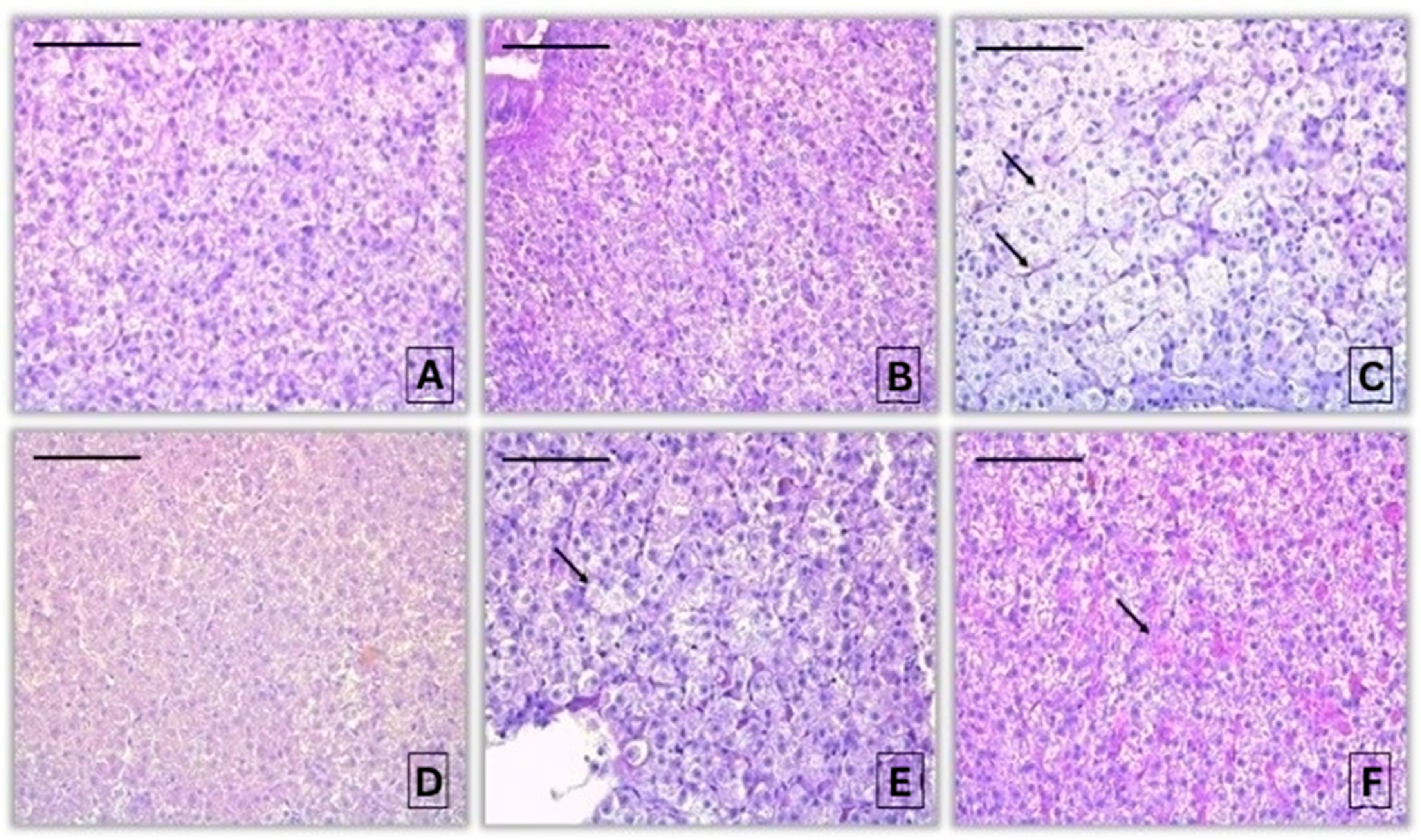
The results of the histopathological analysis showed a normal liver histological structure in the control group. According to the five-point (0–5) scale for the severity of changes, the control liver sections were assigned a value of 0 (Table 1 and Figure 1). The same was found for the solvent control, which will not be further discussed, as we did not observe any harm to fish liver histology.

3.1.2. Histopathological Alterations in the Liver of Common Carp After Acute Exposure to Pirimiphos-Methyl

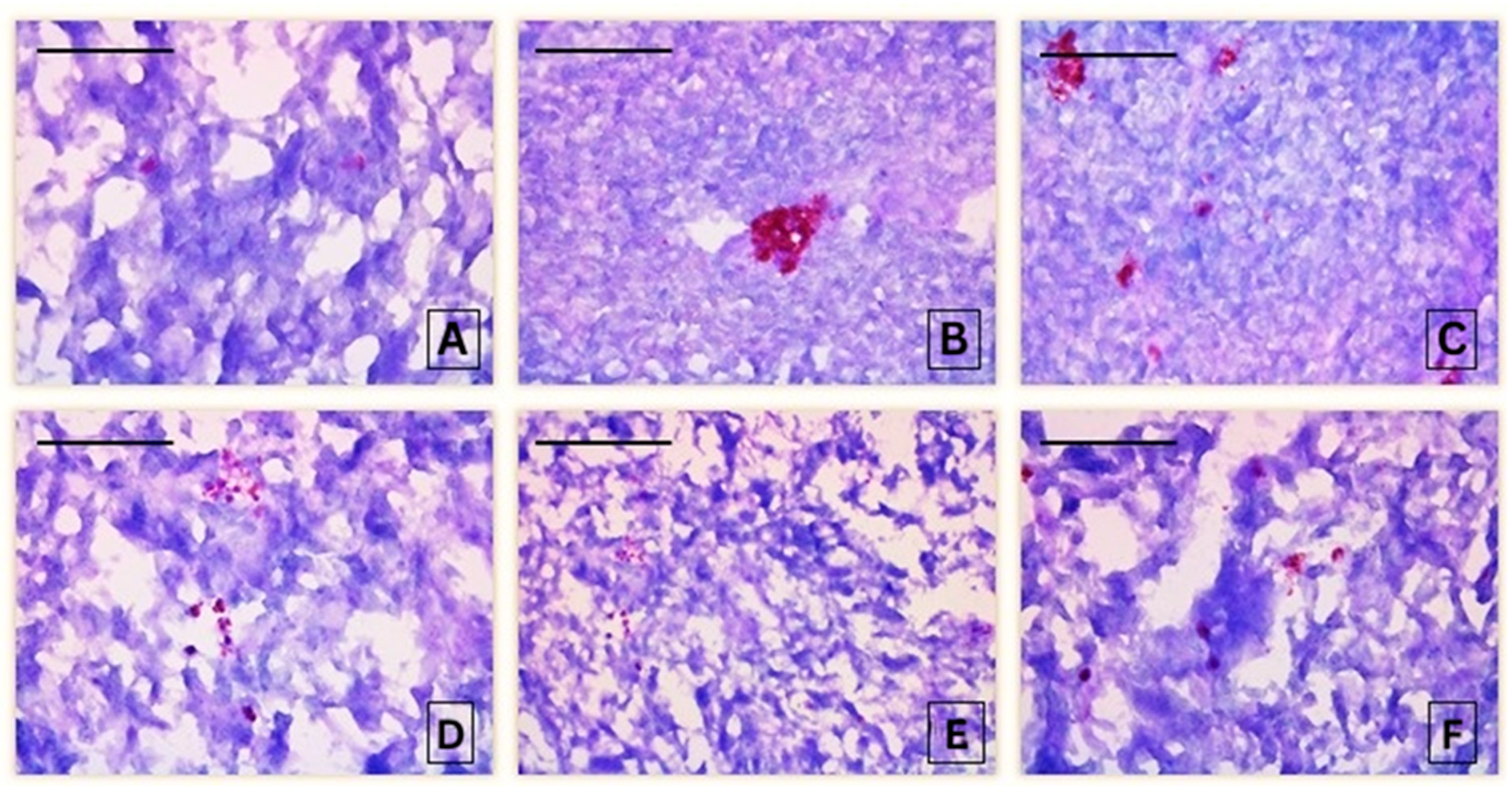
Upon exposure to pirimiphos-methyl in the liver of the tested fish, changes in the circulatory system were detected. They were mainly expressed as hyperemia of the organ’s blood vessels. The observed manifestation was similar across both experimental concentrations and was moderate (Table 1, Figure 2F). Intracellular edema was not detected at either experimental concentration. The indices of histopathological changes in the peripheral circulatory system (ILC) for both concentrations were 3.
Degenerative changes in the liver showed an increasing degree of manifestation proportional to increasing pesticide concentration (Figure 2A–E). Granular degeneration was found to be very severe at a concentration of 10 μg/L and severe at a concentration of 60 μg/L of pirimiphos-methyl. The higher degree of degenerative changes in liver cells was vacuolar degeneration, which was severe at both experimental concentrations. When analyzing the histopathological sections, fatty degeneration was also observed, described as mild at 10 μg/L and moderate at 60 μg/L pirimiphos-methyl (Table 1).
Changes in hepatocytes associated with necrobiotic processes were also found, and they were very mild in both applied pirimiphos-methyl concentrations. Necrosis, with typical areas of necrotic masses, was found only in single areas, encompassing about 1–4 cells. Therefore, the degree of necrosis in hepatocytes was very mild at the lower insecticide concentration and mild at the higher concentration. When comparing the indices of degenerative changes (ILR), at a lower pirimiphos-methyl concentration of 10 μg/L, the value was ILR − 20, whereas at a concentration of 60 μg/L, the value was 23. This clearly shows that the higher pesticide concentration was reflected in more severe degenerative changes in the liver histological structure and therefore had a more serious negative effect, which undeniably affects the organ’s functioning.
Proliferative changes were not detected, nor were disorders associated with lymphocytic infiltration and activation of the reticuloendothelial system (indicators of an inflammatory process). The indices of these changes were, respectively, ILP = 0 (Table 1).
Based on the identified histopathological lesions, the liver index (IL) of the treated fish was also calculated. At a concentration of 10 μg/L pirimiphos-methyl, the value was 23, and at 60 μg/L, it was 26.
Based on the scale proposed by Zimmerli et al. [48], the liver index (IL) falls within class III (index 21–30) for both applied concentrations of pirimiphos-methyl. This indicates that the observed liver alterations were moderate in degree and that the processes could be reversible.
Acute exposure to pirimiphos-methyl caused pronounced histopathological alterations in the liver of common carp compared to the control and solvent groups. The Kruskal–Wallis test revealed significant treatment effects for the majority of degenerative lesions (p < 0.05). Mann–Whitney U tests demonstrated that both pesticide concentrations differed significantly from the control, as indicated by the distinct letter groupings (A, B, C). Hyperaemia showed a clear elevation in both treatment groups, while granular degeneration displayed a dose-dependent response, with the highest score observed at 60 µg/L. Similarly, necrosis and fatty degeneration increased significantly with concentration, reaching their highest levels in the 60 µg/L group. In contrast, intracellular edema and proliferative changes remained absent in all treatments, indicating that these lesion types were not triggered by acute pirimiphos-methyl exposure.
Degenerative changes dominated the reaction pattern, with the index of degenerative lesions increasing from 0 in the control to 20 and 23 in the treated groups. The overall liver index (IL) showed a strong, concentration-dependent increase (0 → 23 → 26), confirming that pirimiphos-methyl induces substantial and escalating hepatic damage.

3.1.3. Histopathological Alterations in the Liver of Common Carp After Acute Exposure to Propamocarb Hydrochloride

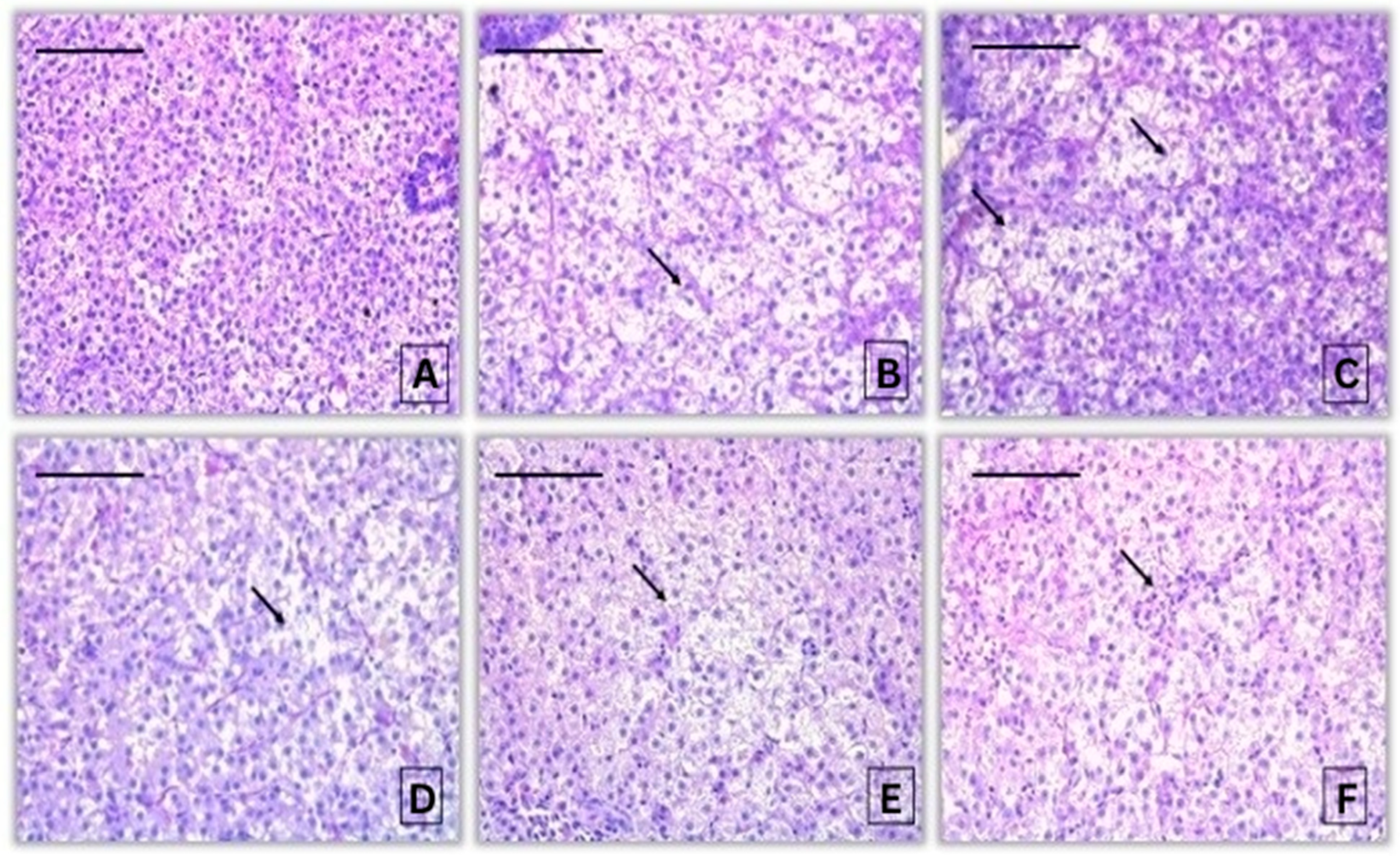
After exposure to propamocarb hydrochloride, the prepared histopathological sections from each treated individual were analyzed similarly to the acute exposure to pirimiphos-methyl. Changes in the blood vessels of the liver were observed. Hyperemia was noted in many areas of the organ parenchyma at both applied concentrations of the pesticide. According to the histopathological scale, this disorder was defined as severe at both propamocarb hydrochloride concentrations, 40 μg/L and 80 μg/L (Table 2, Figure 3F). When analyzing the samples, intracellular edema was not detected at either experimental concentration. The calculated index of changes in the circulatory system (ILC) was scored as 4 for both pesticide concentrations.
Along with lesions in the circulatory system, degenerative changes in the hepatocytes were also observed (Figure 3A–E). Granular degeneration was found to be very severe at both propamocarb hydrochloride concentrations. Vacuole degeneration was severe at the lower concentration and very severe at the higher concentration of the pesticide. Necrobiosis was detected and reported as very mild, while necrosis was mild at both tested concentrations. Fatty degeneration was observed, but it was mild at a concentration of 40 μg/L and severe at 80 μg/L of propamocarb hydrochloride. The calculated index of degenerative changes in the liver (ILR) was 23 for the concentration of 40 μg/L and 27 for the concentration of 80 μg/L propamocarb hydrochloride.
No proliferative changes were detected, and accordingly, the index for these changes (ILP) was 0.
Among the inflammatory processes, lymphocyte infiltration was very mild at both concentrations, while activation of the reticuloendothelial system was not detected. The inflammatory change index (ILI) was the same for both concentrations—2.
Exposure to propamocarb hydrochloride also resulted in statistically significant hepatic alterations. The Kruskal–Wallis test indicated significant differences among groups for most degenerative lesions (p < 0.05). Mann–Whitney U post hoc comparisons showed that both concentrations differed significantly from the control and solvent control groups. Still, in several cases, the two exposed groups did not differ from each other (shared letter “B”). Hyperaemia increased sharply in both treatment groups, and granular degeneration reached the maximum score at both experimental concentrations. Vacuolar degeneration and fatty degeneration demonstrated clear dose-dependent patterns, with the highest doses showing significantly greater alterations. Necrobiosis and necrosis were elevated, but reached similar values at both propamocarb hydrochloride concentrations.
The degenerative index (ILR) increased dramatically from 0 in the controls to 23 and 27 in the treated fish. Mild inflammatory responses also appeared at both concentrations (ILI = 2), unlike in Table 1. The overall liver index increased from 0 to 29 and 33, confirming that propamocarb hydrochloride causes extensive hepatic injury, particularly affecting degenerative pathways.
The organ index (IL) of fish treated with propamocarb hydrochloride was 29 at a concentration of 40 μg/L, and 33 at 80 μg/L (Table 2).
Based on the obtained results and the scale proposed by Zimmerli et al. [48], the liver index (IL) at a concentration of 40 μg/L falls into class III (index 21–30). Based on this, the observed changes in the organ were moderate in degree and involved a reversible alteration in histological structure. IL at a concentration of 80 μg/L falls into class IV (index 31–40). Therefore, the changes in the organ were severe in the histological structure, and the processes were classified as irreversible. The results clearly indicated that the higher concentration of propamocarb hydrochloride was associated with greater hepatotoxicity in the exposed fish.

3.1.4. Histopathological Alterations in the Liver of Common Carp After Acute Exposure to 2,4-Dichlorophenoxyacetic Acid

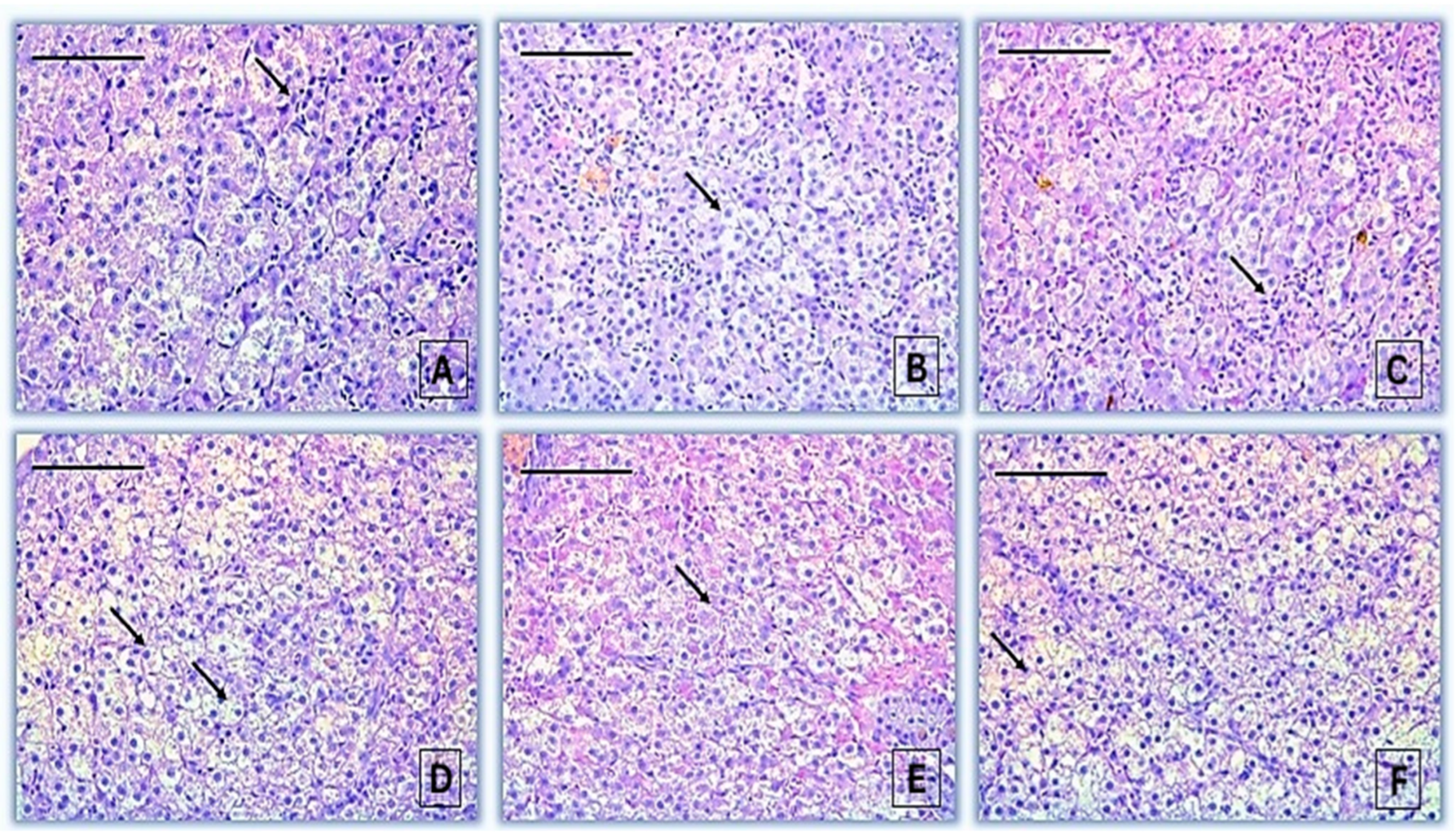
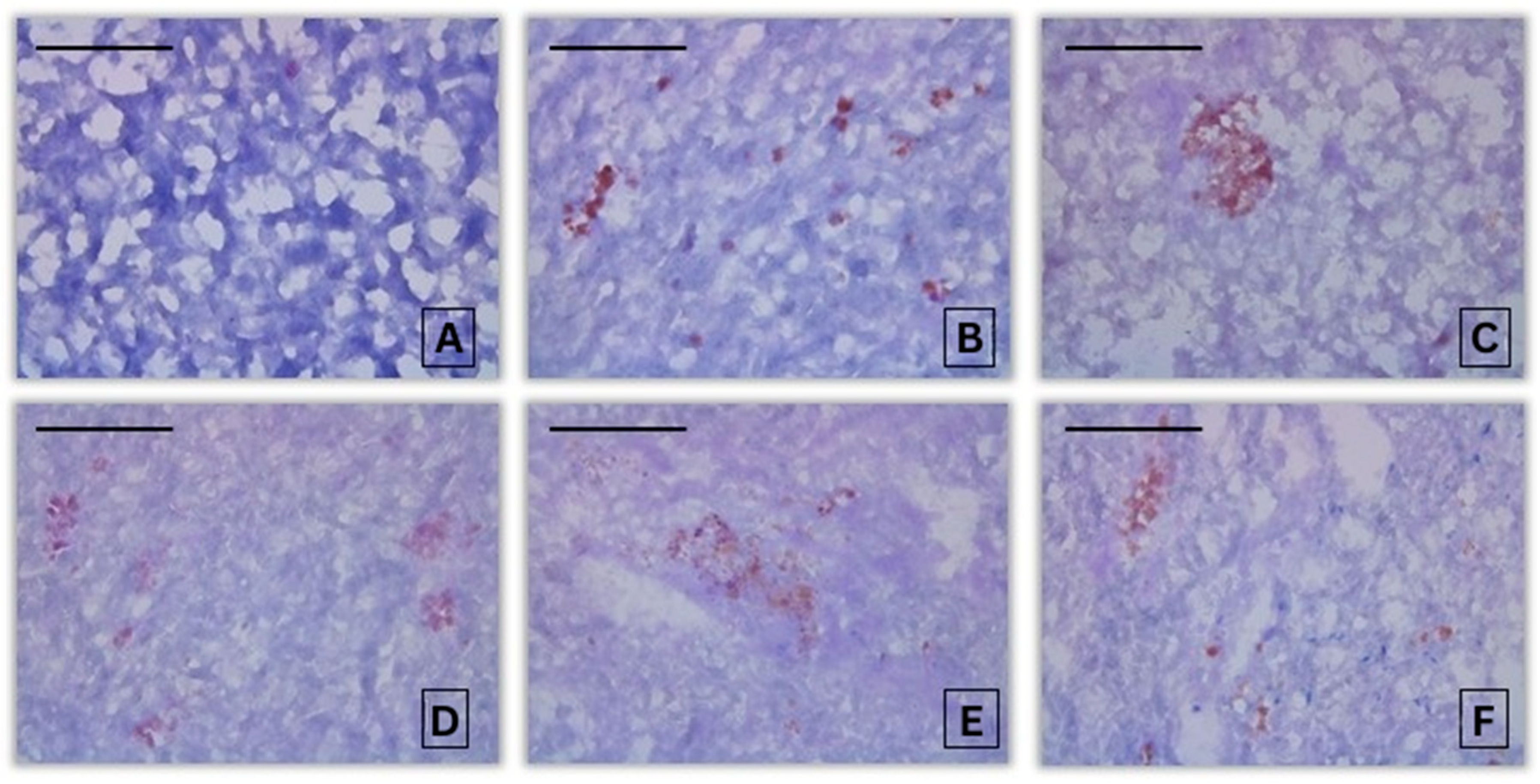
Similarly to the treatment with pirimiphos-methyl and propamocarb hydrochloride, lesions in the organ’s circulatory system were detected during the last herbicide exposure and expressed as severe hyperemia at both experimental concentrations, 50 μg/L and 100 μg/L (Table 3, Figure 4A,C,E). Intracellular edema was not detected at either experimental concentration. The index of circulatory changes was calculated for both concentrations, yielding a value of ILC = 4.
Degenerative changes in the liver parenchyma were registered (Figure 4B,D,F). The observed granular degeneration in the hepatocytes was reported to be severe at a concentration of 50 μg/L and very severe at a concentration of 100 μg/L of 2–4 D. Hepatocyte vacuolar degeneration was also found, which was determined to be severe and very severe, respectively, at concentrations of 50 μg/L and 100 μg/L. Furthermore, fatty degeneration was observed, and at the lower concentration, it was mild. At the higher herbicide concentration, this change was very severe. In addition, cells with morphological alterations were also found in the hepatocytes, which unquestionably indicated the development of necrobiotic processes associated with karyopyknosis, karyorrhexis, and karyolysis. These changes, however, were found in single cells from separate areas of the organ parenchyma. Therefore, the degree of manifestation of necrobiosis was described as very mild at both applied concentrations. In the histopathological sections, hepatocytes with necrosis were also observed, with destroyed cell membranes and necrotic masses. Given the disorder’s involvement in the organ parenchyma, the degree of manifestation (necrosis) was classified as mild. Based on the degenerative changes found, the index (ILR) was calculated to be 22 at a concentration of 50 μg/L and 28 at a concentration of 100 μg/L.
No proliferative changes (ILP) were detected, and accordingly, the index for these changes was 0.
Among the inflammatory processes, lymphocytic infiltration was found to be very mild at both 2,4-D concentrations, while activation of the reticuloendothelial system was not reported. The inflammatory change index (ILI) was 2 at both concentrations.
Based on the results, the index of the analyzed organ (IL) for fish treated with 2,4-D at a concentration of 50 μg/L was 28, and for those treated at 100 μg/L, 34 (Table 3).
The herbicide 2,4-D induced significant dose-dependent liver damage in common carp. The Kruskal–Wallis test detected significant differences among treatments for nearly all degenerative lesions (p < 0.05). Mann–Whitney U tests showed clear separation between the controls and both exposed groups (A vs. B/C), with the high-concentration group consistently exhibiting the most severe alterations (C). Hyperaemia was markedly elevated in both treatments. Granular and vacuolar degeneration reached high values in the 100 µg/L group (5C), indicating substantial hepatocellular impairment. Fatty degeneration showed a particularly strong dose-dependent pattern, increasing from 2B to 5C across concentrations. Necrobiosis and necrosis also increased significantly relative to controls, though differences between the two exposed groups were not evident for these lesions.
The degenerative index rose sharply from 0 in the control to 22 and 28 in the treated fish. Inflammatory changes were present in both treatments (ILI = 2). The overall liver index increased progressively (0 → 28 → 34), representing the strongest hepatic impact among the three experimental pesticides. These results indicate that 2,4-D exerted potent and concentration-dependent hepatotoxic effects.
According to the scale proposed by Zimmerli et al. [48], the liver index (IL) at a concentration of 50 μg/L falls within class III (index 21–30), indicating that the observed changes in the organ were of a moderate degree. The processes were still considered reversible. IL at a concentration of 100 μg/L falls into class IV (index 31–40), indicating that the organ had a severe degree of histopathological alterations, and that the processes were irreversible. The results clearly showed that the higher concentration of 2,4-D induced greater hepatotoxicity in common carp.
After summarizing the data based on the observed hepatic alterations according to the four categories, the degree of toxicity of the tested pesticides on fish can be summarized in the following descending order: for degenerative changes: propamocarb hydrochloride = 2,4-D > pirimiphos-methyl; for changes in the circulatory system: propamocarb hydrochloride = 2,4-D > pirimiphos-methyl; for inflammation: propamocarb hydrochloride = 2,4-D > pirimiphos-methyl. Since proliferative changes in the liver were not found, a comparison of the three pesticides based on this criterion was not possible. However, a general tendency toward equalization of the indices of change for propamocarb hydrochloride and 2,4-D was observed, whereas in pirimiphos-methyl, they were less pronounced.

3.2. Histochemical Assessment

Histochemical analysis showed a negative impact of the applied pesticides on the structure of the liver in experimental fish. The intensity of the PAS-reaction in the liver of common carp differed significantly among treatments (Kruskal–Wallis test, H = 32.25, p < 0.001; Table 4). The control groups showed the weakest histochemical reaction, with PAS scores significantly lower than those of all pesticide-exposed groups (Mann–Whitney U test, p < 0.05). Moderate increases in PAS-positivity were observed in fish exposed to pirimiphos-methyl (10 and 60 µg/L), propamocarb hydrochloride (40 and 80 µg/L), and 2,4-D (50 µg/L). The strongest PAS-reaction was recorded in fish exposed to 100 µg/L 2,4-D (3.80 ± 1.10), which differed significantly not only from the controls, but also from the 60 µg/L pirimiphos-methyl treatment (p < 0.05). Overall, the results indicated a concentration-dependent enhancement of PAS-reactivity in response to all three pesticides.

3.2.1. Histochemical Alterations in the Liver of Common Carp After Acute Exposure to Pirimiphos-Methyl

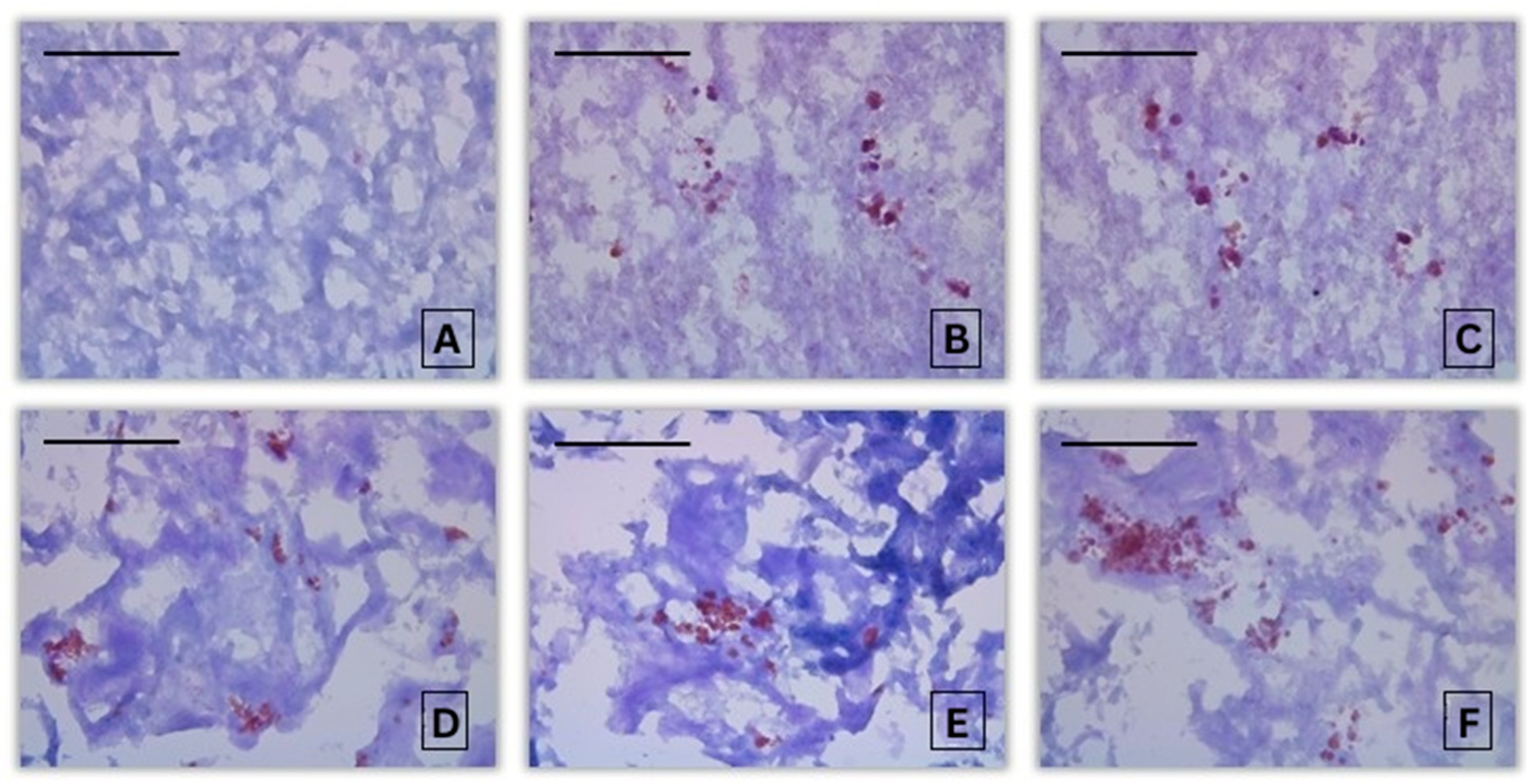
At a concentration of 10 μg/L pirimiphos-methyl, a moderate increase in glycogen levels was observed compared to the controls, indicating reduced glycogenolysis or increased glycogenogenesis. At a concentration of 60 μg/L pirimiphos-methyl, a slight increase in the glycogen levels compared to the controls was observed, but a decrease compared to the previous, lower concentration of the applied pesticide (Table 4, Figure 5).

3.2.2. Histochemical Alterations in the Liver of Common Carp After Acute Exposure to Propamocarb Hydrochloride

The fungicide propamocarb hydrochloride showed a moderate increase in glycogen content compared to the controls, with a similar effect at both experimental concentrations (Table 4, Figure 6).

3.2.3. Histochemical Alterations in the Liver of Common Carp After Exposure to 2,4-D

The herbicide 2,4-D also showed a moderate accumulation of glycogen compared to the control group, at both experimental exposures (Table 4, Figure 7).
The toxicity of the experimental pesticides can be summarized in the following descending order: propamocarb hydrochloride = 2,4-D > pirimiphos-methyl. Overall, the results on liver glycogen accumulation showed a similar degree of manifestation after exposure to propamocarb hydrochloride and 2,4-D. In contrast, after treatment with pirimiphos-methyl, the changes were expressed to a lesser extent.

3.3. Biochemical Assessment

Like the histopathological and histochemical lesions in the liver, we also observed changes at the cellular level. The biochemical alterations in the liver of common carp after acute exposure to the tested pesticides are presented below.

3.3.1. Lactate Dehydrogenase (LDH)

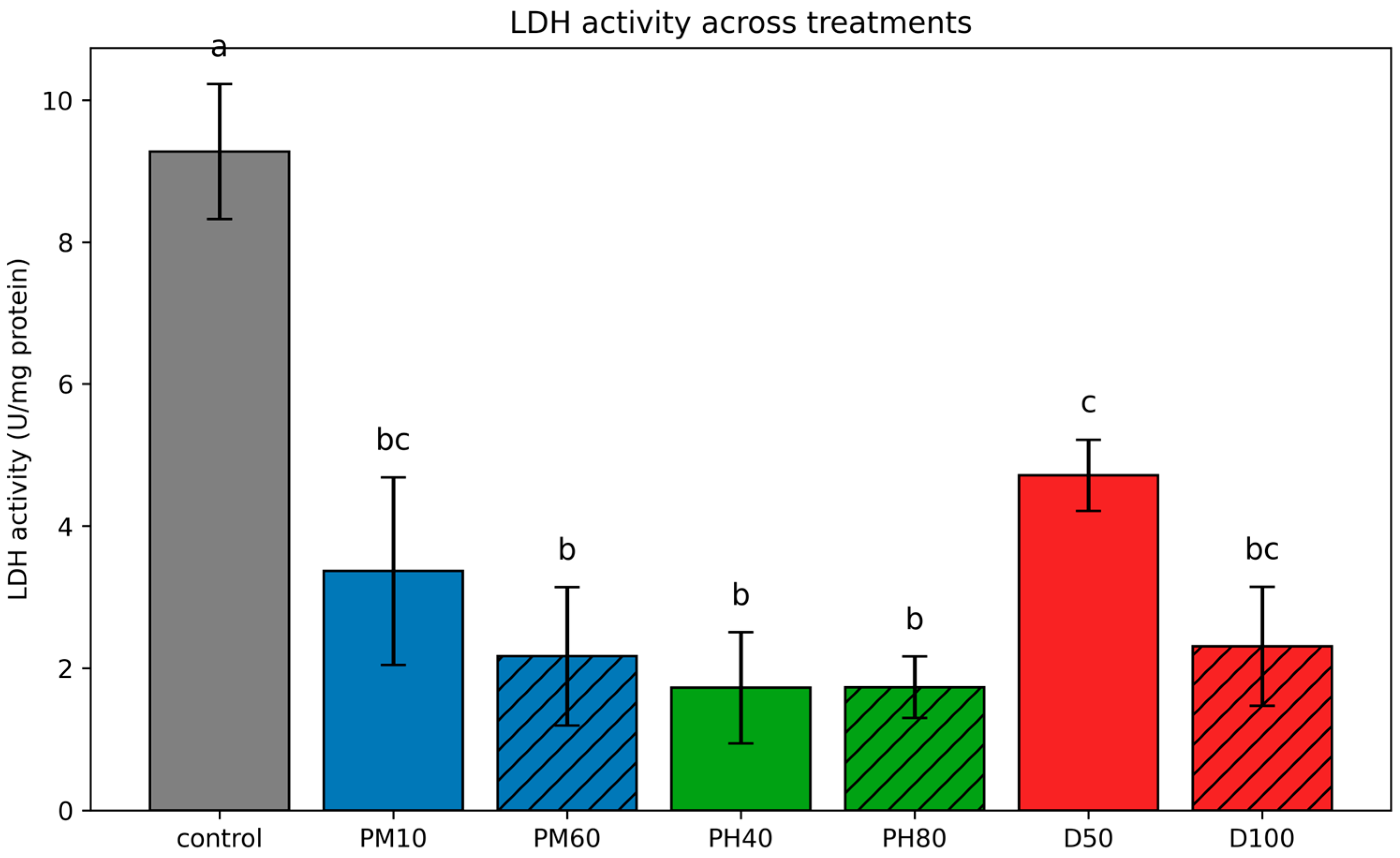
The LDH activity showed a significant overall treatment effect (one-way ANOVA: F6,14 = 28.98, p < 0.001). The control group exhibited the highest LDH activity, which was significantly greater than all pesticide-exposed groups (Tukey HSD, p < 0.05). Among the treatments, exposure to 50 µg/L 2,4-D resulted in a moderately elevated LDH activity compared with 60 µg/L pirimiphos-methyl, 40 µg/L propamocarb hydrochloride, and 80 µg/L propamocarb hydrochloride (p < 0.05). Still, it did not differ significantly from 10 µg/L pirimiphos-methyl or 100 µg/L 2,4-D. All pesticide treatments showed markedly reduced LDH activity relative to the controls, indicating a general suppression of LDH in response to pirimiphos-methyl, propamocarb hydrochloride, and 2,4-D exposures, with a partial increase at the 50 µg/L 2,4-D concentration (Figure 8).

3.3.2. Aspartate Aminotransferase (ASAT) and Alanine Aminotransferase (ALAT)

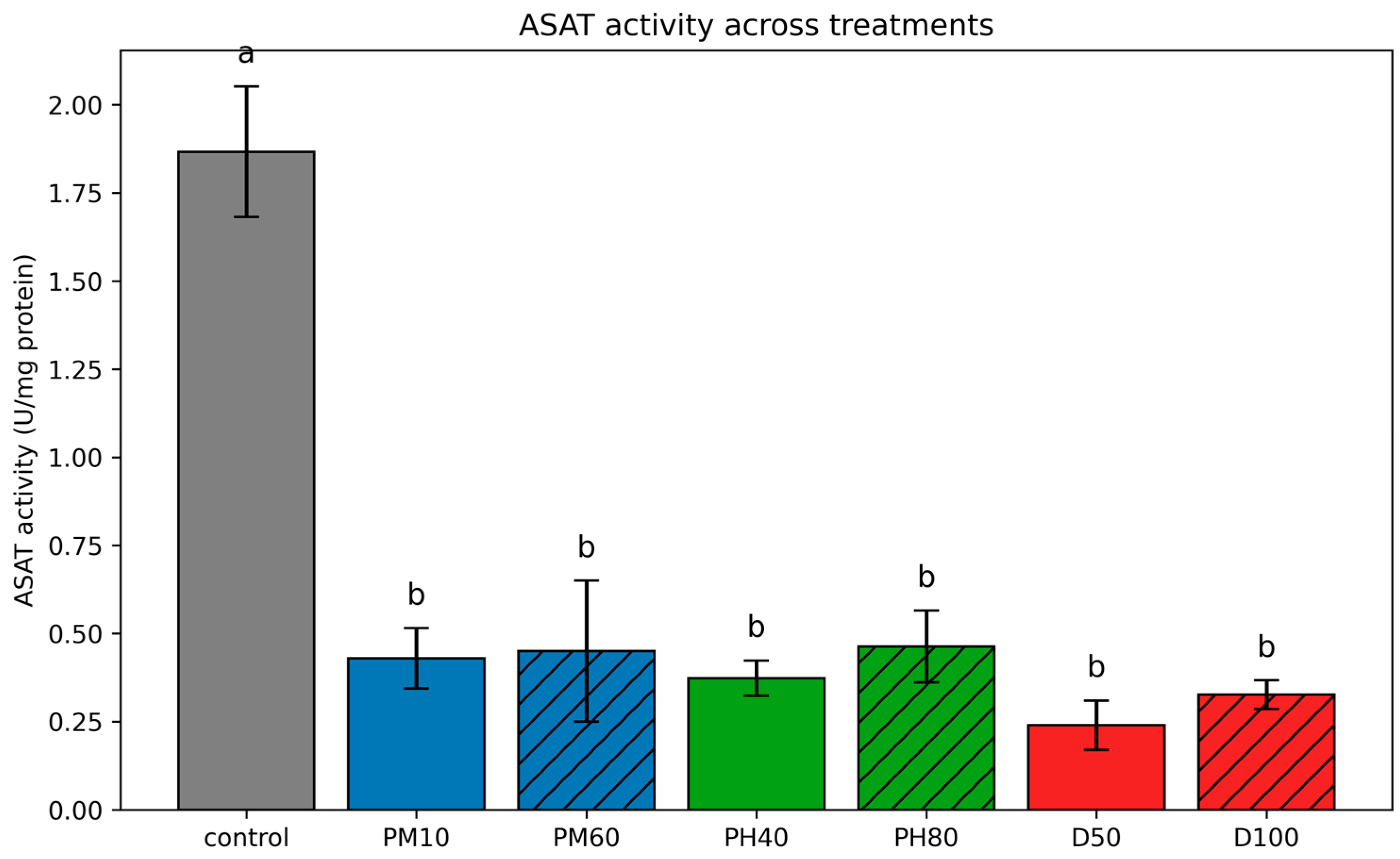
The aspartate aminotransferase (ASAT) activity showed a strong overall treatment effect (one-way ANOVA: F6,14 = 66.85, p < 0.001). The control groups exhibited markedly higher ASAT activity compared with all pesticide-exposed treatments (Tukey HSD, p < 0.05). In contrast, none of the pesticide concentrations—10 µg/L pirimiphos-methyl, 60 µg/L pirimiphos-methyl, 40 µg/L propamocarb hydrochloride, 80 µg/L propamocarb hydrochloride, 50 µg/L 2,4-D, or 100 µg/L 2,4-D—differed significantly from each other. All exposed groups displayed uniformly reduced ASAT activity relative to the control, indicating a consistent suppressive effect of pirimiphos-methyl, propamocarb hydrochloride, and 2,4-D on aminotransferase activity in the common carp hepatic tissue (Figure 9).
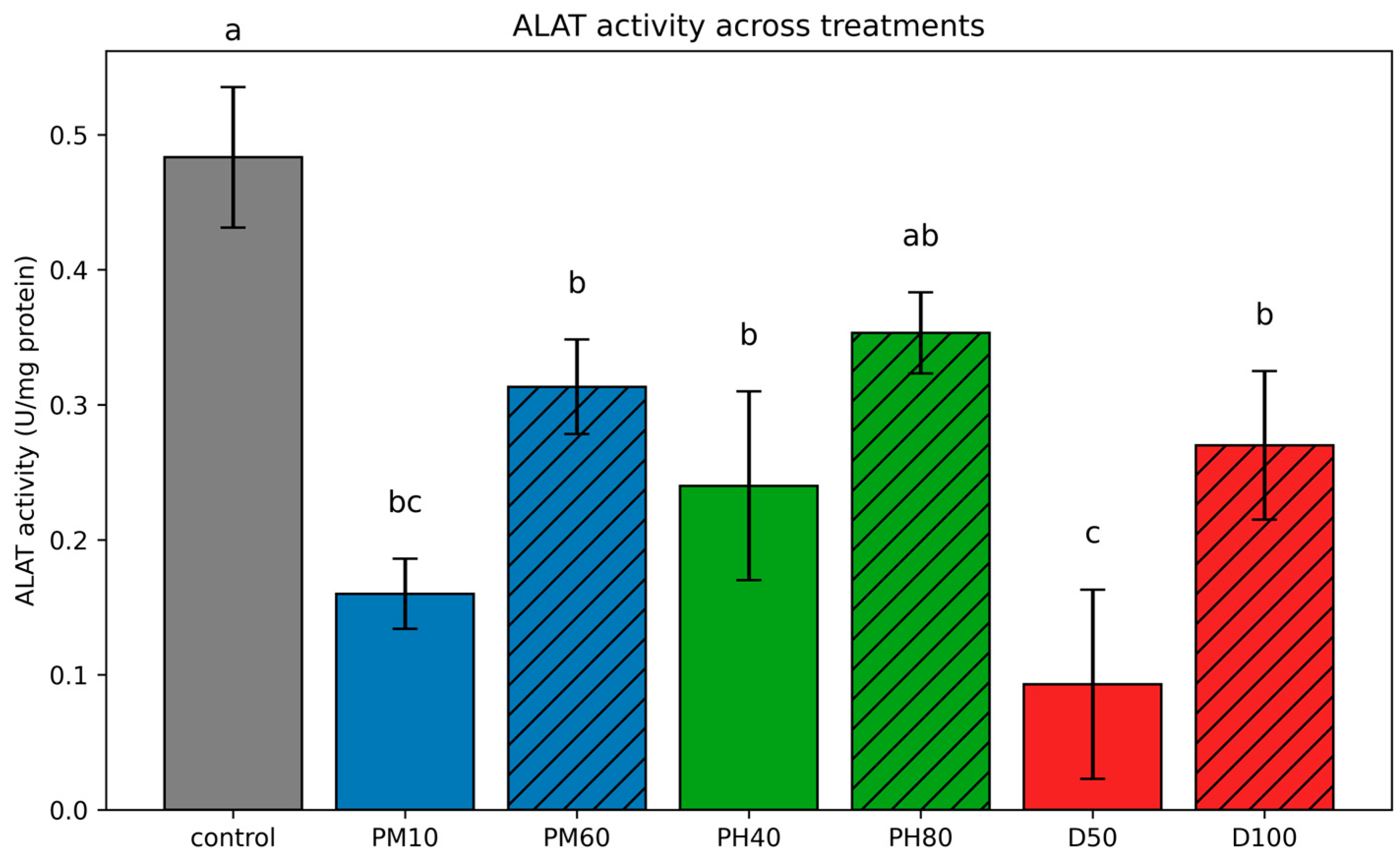
The alanine aminotransferase (ALAT) activity differed significantly among treatments (one-way ANOVA: F6,14 = 17.77, p < 0.001). The control groups showed the highest ALAT activity, which was significantly greater than the activity measured in fish exposed to 10 µg/L pirimiphos-methyl, 60 µg/L pirimiphos-methyl, 40 µg/L propamocarb hydrochloride, 50 µg/L 2,4-D, 100 µg/L 2,4-D, and 80 µg/L propamocarb hydrochloride (Tukey HSD, p < 0.05). Among the treatments, the lowest activity was observed in the 50 µg/L 2,4-D group, which differed significantly from the 40 µg/L propamocarb hydrochloride, 60 µg/L pirimiphos-methyl, 80 µg/L propamocarb hydrochloride, and 100 µg/L 2,4-D groups. Several treatments—including 60 µg/L pirimiphos-methyl, 40 µg/L propamocarb hydrochloride, and 100 µg/L 2,4-D—formed a homogeneous subset, indicating comparable ALAT suppression. Overall, pesticide exposure resulted in a marked reduction in ALAT activity relative to the control, with the strongest inhibition observed at 50 µg/L 2,4-D (Figure 10).

3.3.3. Cholinesterase (ChE)

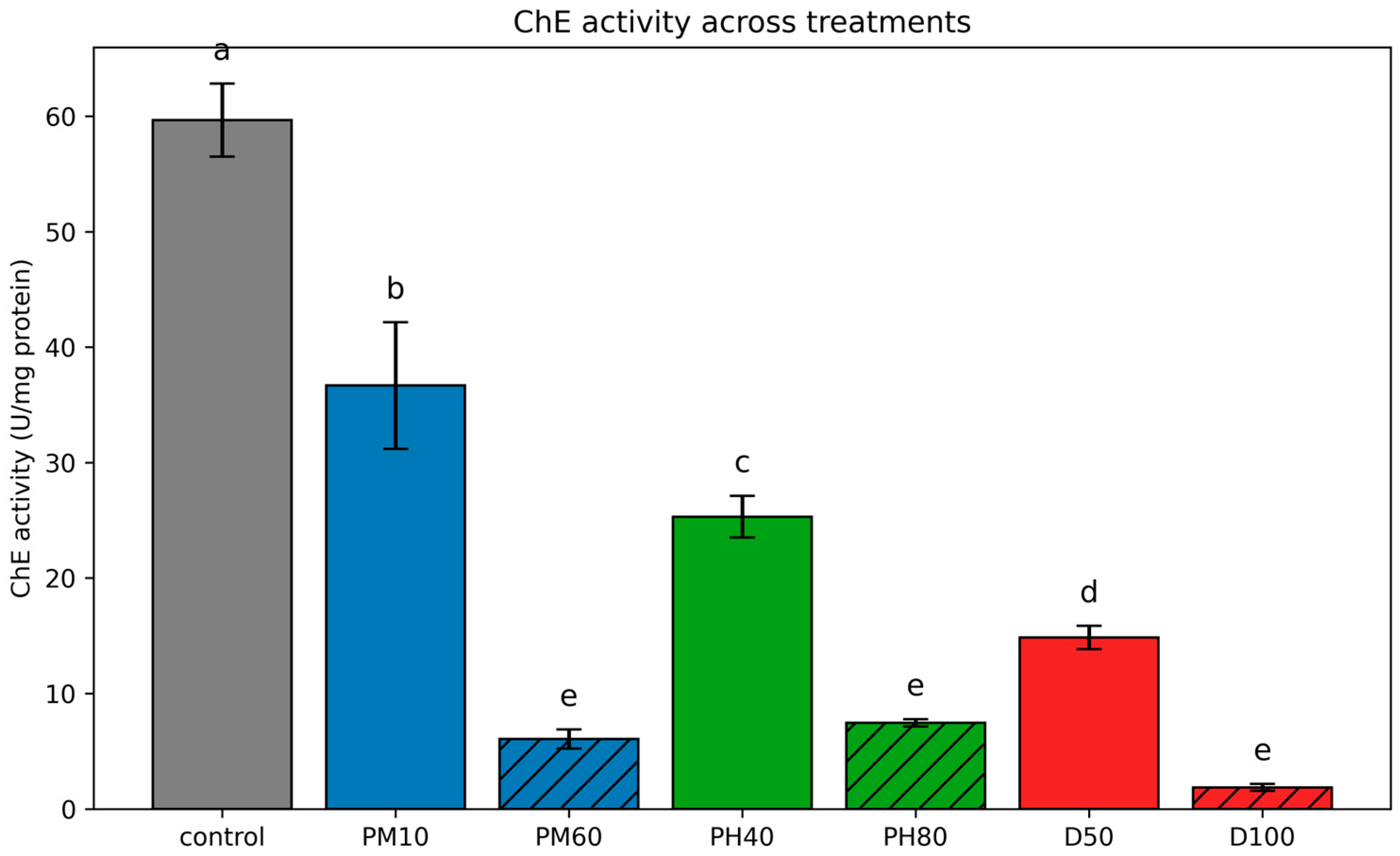
The cholinesterase (ChE) activity also differed markedly among treatments (one-way ANOVA: F6,14 = 198.26, p < 0.001). The highest activity was observed in the control groups, which was significantly greater than in all pesticide-exposed fish (Tukey HSD, p < 0.05). Among the exposed groups, тxe fish treated with 10 µg/L pirimiphos-methyl exhibited the second-highest ChE activity, followed by 40 µg/L propamocarb hydrochloride and 50 µg/L 2,4-D. In contrast, the lowest ChE activities were recorded in the 100 µg/L 2,4-D, 80 µg/L propamocarb hydrochloride, and 60 µg/L pirimiphos-methyl groups, which did not differ significantly from each other but were significantly lower than all other treatments. These results demonstrated a strong dose-dependent suppression of ChE activity across all three pesticides, with the greatest inhibition occurring at the higher concentrations of 2,4-D, propamocarb hydrochloride, and pirimiphos-methyl (Figure 11).

4. Discussion

4.1. Histopathological Alterations in the Liver of Common Carp After Acute Exposure to the Experimental Pesticides

The liver of fish and other vertebrates is the primary detoxifying organ, and its constant exposure to pollutants, including pesticides, can be evident at the cellular and tissue levels [63].
The results of the present study did not show proliferative changes in liver tissue after exposure to the tested concentrations of the three pesticides. This can be explained by the fact that proliferative changes are a compensatory-restorative response of the organism to the experimental toxicants. In general, they develop due to increased functional activity and can also contribute to organ damage. The high toxicity of pesticides, however, most likely did not provide the fish liver with the opportunity to respond in this way in our case. Moreover, pesticide toxicity was mainly expressed in a high degree of degenerative changes.
When comparing indices of degenerative changes in the liver, the highest degree of manifestation was observed upon exposure to the test fungicide propamocarb hydrochloride. The lowest degree of degenerative disorders in the liver was observed upon exposure to the insecticide pirimiphos-methyl. Unlike the changes in the gills and kidneys in our previous study with the same experimental concentrations and pesticides [17,18,64], in which proliferative changes were significantly more pronounced than degenerative changes, the changes in the liver tissue were absolutely opposite—a lack of proliferative changes and relatively high degrees of manifestation of degenerative changes. This can be explained by the fact that the toxic compounds that enter the fish’s body are directed to processes that neutralize their action in the liver, where significant regressive changes in the tissue are induced. It should be emphasized that the observed changes in hepatocytes result from the action of pesticides during a 96 h short-term exposure. With chronic exposure, we could assume that the degenerative changes would be even more severe and potentially lethal for the exposed fish.
Compared with the findings of Mohammod Mostakim et al. [65], who reported severe vascular rupture, hemorrhage, hypertrophy, and extensive necrosis in fish exposed to quinalphos, the pesticides in the present study primarily induced degenerative and circulatory changes without vessel rupture, hemorrhage, or hypertrophic responses, and necrosis remained mild and localized. Overall, the hepatic damage we reported here was less structurally destructive and largely reversible than the more advanced, progressive lesions described for quinalphos.
The observed circulatory changes in the liver with the three applied pesticides were of similar severity, mostly moderate and severe. Lesions related to inflammatory processes, characterized by lymphocyte infiltration, were observed with exposures to propamocarb hydrochloride and 2,4-D, whereas with pirimiphos-methyl, they were absent. We presume that the tested pesticide exposure causes severe disorders in the organ’s vascular system, an effusion of lymphocytes in response to deviations in ion exchange that have probably occurred. Oxidative stress has perhaps also developed. Similarly, severe circulatory disorders in the gills were observed under the action of the tested pesticides [17,18,64]. This indicates a pronounced toxic effect of pesticides on the condition of the vessels, not only in the gills but also in the liver, in the current study.
Similarly to our results, Nagaraju & Rathnamma [66] found cytoplasmic degeneration, atrophy, necrosis, vacuolation, blood vessel rupture, and loss of hepatocyte wall in hepatocytes exposed to novaluron. We support the idea of Babatunde et al. [67], who reported that increased vacuolization could be attributed to abnormal lipid accumulation in the liver, while liver cell necrosis could be due to the fish’s inability to regenerate liver cells as a result of continuous pesticide exposure.
In comparison with the hepatic alterations described for oxadiargyl and pendimethalin [68]—where the fish exhibited marked necrosis, fibrosis, hemorrhage, bile duct hyperplasia, melanomacrophage proliferation, and pronounced inflammatory and fibrotic encapsulation—the lesions observed in the present study were limited mainly to degenerative and circulatory disturbances, with no evidence of fibrosis, hemorrhage, or strong inflammatory activation. Thus, the liver damage caused by the experimental pesticides appeared less advanced and did not progress towards the structural remodeling reported for oxadiargyl and pendimethalin.
In contrast to the findings in Clarias gariepinus exposed to 2,4-D-amine, which showed advanced hepatitis accompanied by marked macrophage and lymphocyte infiltration, the present results revealed only very mild inflammatory involvement, with degenerative lesions predominating. Thus, the inflammatory response in our case was far less pronounced and did not progress to the hepatitic condition described in 2,4-D-amine-exposed individuals [69].
Relative to the strong inflammatory reactions documented in fish exposed to PCBs, PAHs, polluted effluents, and cadmium, in which liver tissue often shows apparent infiltration by granulocytes and other immune cells [70,71,72,73,74,75], our present results on pesticide effects indicate only a subtle inflammatory response. The hepatic alterations we observed here were mainly degenerative, suggesting that the pesticides can elicit a far milder immune response than that reported for some other contaminants [76].
In line with our previous findings, after exposure to glyphosate, the liver of common carp exhibited slightly vacuolated cells, indicating fatty degeneration [77]. Necrosis was observed in some parts of the liver tissue, likely due to the excessive work required by the fish to eliminate the toxic substance from their bodies during detoxification. The organ’s inability to regenerate new liver cells may also have led to necrosis [78]. Alterations, such as hepatocyte hypertrophy, necrosis, hemorrhage, and vacuolization, were found in the liver of Clarias gariepinus treated with diazinon. We agree with [79] that the presence of fatty vacuoles in the liver of the exposed fish is evidence of fatty degeneration. In our case, the necrosis observed in the fish liver may be related to the excessive workload of detoxifying pesticides from the body, similar to the findings reported by [80]. In addition, liver histomorphology in common carp after exposure to two sublethal concentrations of glyphosate showed hepatocytes with mild vacuolization, leukocyte infiltration, fatty degeneration, nuclear degeneration, and vasodilation. Similarly, the histopathological observations revealed that changes in liver structure were time- and concentration-dependent, i.e., the severity of the aberrations increased with both increasing concentrations and exposure time [81].
In comparison to the study on fipronil-treated common carp, which reported extensive bile duct disruption, hepatocyte necrosis, karyorrhexis, karyolysis, vascular abnormalities, and cytoplasmic shrinkage [82], the present study observed primarily degenerative and circulatory changes without bile duct damage or widespread necrosis. This indicates that the hepatic lesions caused by the pesticides that we tested were less severe and structurally disruptive than those induced by fipronil.
A direct comparison among the three tested pesticides revealed apparent inter-pesticide differences in the severity and pattern of liver damage in common carp. Although all compounds induced pronounced degenerative alterations, propamocarb hydrochloride and 2,4-D consistently resulted in more severe hepatic injury than pirimiphos-methyl at comparable exposure durations. This was reflected in higher degenerative indices (ILR) and overall IL, with pirimiphos-methyl reaching IL values of 23–26 (class III), while propamocarb hydrochloride and 2,4-D reached IL values up to 33 and 34, respectively (class IV), indicating irreversible damage at higher concentrations. Degenerative lesions such as granular and vacuolar degeneration were most intense in propamocarb hydrochloride and 2,4-D treatments, frequently reaching severe to very severe grades. In contrast, pirimiphos-methyl induced predominantly moderate-to-severe changes. Fatty degeneration showed the strongest inter-pesticide contrast, being mild to moderate in pirimiphos-methyl–exposed fish but severe to very severe under high concentrations of propamocarb hydrochloride and 2,4-D. Inflammatory responses were absent following pirimiphos-methyl exposure but were detectable, albeit mild, in fish treated with propamocarb hydrochloride and 2,4-D, further highlighting the higher hepatotoxic potential of these compounds. Overall, the results demonstrate a clear gradient of hepatic toxicity under acute exposure conditions, with propamocarb hydrochloride and 2,4-D exerting comparable and stronger adverse effects than pirimiphos-methyl, particularly through intensified degenerative pathways and higher probabilities of irreversible tissue damage.

4.2. Histochemical Alterations in the Liver of Common Carp After Acute Exposure to the Experimental Pesticides

Glycogen is the primary energy reserve in animals, and its levels in the liver can serve as an important indicator of fish health. Our opinion aligns with previous studies showing that the rate of glycogen synthesis is regulated by the relative activities of glycogen synthase (GSase) and glycogen phosphorylase (GPase), with GPase catalyzing the rate-limiting step of glycogenolysis and exerting control over glycogenesis [83]. Similarly to earlier observations, we also agree that carbohydrates are typically the first energy source mobilized to meet the demands of various metabolic processes, particularly under toxic stress or when tissue glycogen is depleted. On the other hand, stress triggers the release of adrenal hormones via activation of the sympathetic nervous system, which leads to increased secretion of catecholamines, glucagon, and growth hormone, further stimulating gluconeogenesis and glycogenolysis [84,85,86,87,88,89,90]. We believe that in the initial phases of toxicity, carbohydrates are preferentially used to cope with stress, whereas in later stages, lipids and proteins become the primary energy sources. In our opinion, pesticide-induced stress results from alterations in the hormones of the Hypothalamic–Pituitary–Adrenal (HPA) Axis, autonomic nervous system activation, cytokine signaling, and immune-neuroendocrine interactions, all of which favor hyperglycemia.
Furthermore, oxidative stress caused by pollutants, such as pesticides, can damage organs, including the liver, leading to disturbances in carbohydrate, lipid, and protein metabolism. Mitochondrial damage may further impair the activity of respiratory chains and Krebs cycle enzymes, deplete adenosine triphosphate (ATP), and promote anaerobic metabolism over aerobic pyruvate oxidation [91]. Similarly to the findings in other studies, we also agree that hyperglycemia is one of the most common metabolic signs of pesticide toxicity [92,93,94,95]. Chronic exposure to low levels of organophosphorus and organochlorine pesticides was reported to exert deleterious effects on carbohydrate metabolism [96]. That is why we also recommend that, in addition to metabolic liver enzymes, such experimental setups include analyses of antioxidant enzyme activities, reactive oxygen species, and lipid peroxidation.
Our observations are consistent with the notion that organs involved in carbohydrate, lipid, and protein metabolism, particularly the liver, can be affected by pesticides through alterations in glycolysis, gluconeogenesis, and glycogenolysis [97]. On the other hand, we think that pesticides may influence systemic metabolism by modulating neuronal stimulation and hormonal secretion, thereby affecting the energy balance of the entire organism. Interestingly, we also consider that reduction of glycogen or lipids may occur directly as a result of intoxication or secondarily due to compromised body condition from stress, exhaustion, or co-morbidity. Contrary to what might be expected, pesticide exposure can sometimes lead to paradoxical accumulation of fat or glycogen in the liver [98]. The significant increase in glycogen content in the liver may be due to the increased energy requirement, as suggested by Tendulkar and Kulkarni [99]. On the other hand, the decrease in glycogen in various tissues may be due to stress, leading to the breakdown of tissue glycogen [100] to meet the energy demand caused by toxic stress due to pesticide exposure. Furthermore, as explained by Tendulkar and Kulkarni [99], the decrease in glycogen content indicates its greater use for metabolic purposes and stress management. We assume that the higher toxicity is the reason for the lower glycogen accumulation at a concentration of 60 μg/L pirimiphos-methyl, compared to the other pesticide concentrations used. Our opinion is also in line with Ayoola [101], who considers that the changes associated with changes in the amount of glycogen (and lipids) in the liver of experimental individuals can generally be attributed to changes in glycolysis processes, which in turn depend on the applied concentrations of the toxicant, the duration of action, or its chemical nature. Moreover, our findings on glycogen accumulation in the liver of common carp are in line with previous reports showing pesticide-induced alterations in carbohydrate metabolism. Similarly to the study on Marcia opima, where acute and chronic exposure to cypermethrin led to a significant increase in glycogen content in the hepatopancreas [99], we also observed enhanced glycogen deposition following exposure to pirimiphos-methyl, propamocarb hydrochloride, and 2,4-D. However, contrary to studies with fenitrothion and carbofuran, where hepatic glycogen levels decreased through activation of glycogen phosphorylase [102], the pesticides in our study induced accumulation rather than depletion of glycogen. Our results also resonate with observations from acephate exposure, where increased glycogen content was accompanied by upregulation of gluconeogenic enzymes, including glucose-6-phosphatase and tyrosine aminotransferase [103], suggesting that enhanced glycogen deposition may reflect an adaptive metabolic response to detoxification stress.
A comparative evaluation of the PAS-reaction intensity revealed distinct inter-pesticide differences in hepatic glycogen accumulation following acute exposure. All three pesticides induced significantly greater PAS-positivity than the controls, indicating disrupted carbohydrate metabolism. However, the magnitude of this response varied among compounds. Propamocarb hydrochloride and 2,4-D led to the most pronounced and consistent increases in PAS-reactivity, with moderate to strong staining observed at both tested concentrations, and no marked attenuation at higher doses. In contrast, pirimiphos-methyl elicited a weaker and less consistent response, with PAS-intensity increasing at 10 µg/L but declining at 60 µg/L, suggesting a less stable effect on glycogen dynamics. The strongest histochemical response was recorded in fish exposed to 100 µg/L 2,4-D, which differed significantly not only from the controls but also from the higher pirimiphos-methyl concentration, underscoring its greater metabolic impact. Overall, the inter-pesticide comparison indicates that propamocarb hydrochloride and 2,4-D exert comparable and stronger effects on hepatic glycogen accumulation than pirimiphos-methyl, supporting their higher relative hepatotoxic potential under acute exposure conditions.

4.3. Biochemical Alterations in the Liver of Common Carp After Exposure to the Experimental Pesticides

Enzymes play an important role due to their specificity and rapid response to environmental changes. Their use as biomarkers of environmental status is based on a change in their catalytic activity induced by toxicants [104]. Studies on biochemical changes in fish allow the determination of the dose–response relationship, the threshold limit value, and the reversible and irreversible nature of the pollutant’s effect on the aquatic ecosystem. In addition, biochemical indicators of toxicity obtained after a relatively short exposure time can help predict the appropriate threshold concentration for the development of chronic effects [105]. Most pesticides exert their harmful effects by disrupting the redox system, which is directly related to cellular energy production [106].
ASAT is found in high concentrations in the liver of fish, whereas ALAT is considered more specific to this organ [51]. According to El-Shehawi et al. [52], aminotransferases are widely used to diagnose liver damage caused by toxins in fish, as well as in other organs such as gills and muscles. According to the authors [52], in ecotoxicological studies, changes in the levels of ALAT and ASAT in the blood and other tissues of fish can serve as a good indicator of water pollution. Several authors have monitored the activity of aminotransferases in different organs of Cyprinid fish under the influence of various toxic compounds. Our results are in agreement with those of Rao [107], who reported that a decrease in liver aminotransferase activity in Oreochromis mossambicus under the influence of organophosphorus pesticides may be due to liver damage, a conclusion supported by the high degree of degeneration observed in our study. In addition, Malarvizhi et al. [108] found a decrease in the activity of ASAT and ALAT in the liver of common carp upon exposure to carbamazepine. According to Tripathi and Shasmal [109], a decrease in the specific activity of metabolic enzymes upon exposure to organophosphorus and pyrethroid pesticides indicates a direct effect of these toxicants on enzyme activity. We also agree with Abhijith et al. [110] that the detoxification mechanism may not be sufficiently effective to prevent the toxicity and effects of the pollutant on the organism.
Cholinesterases (ChE) are a family of enzymes that catalyze the hydrolysis of acetylcholine (Ach) to choline and acetic acid, a fundamental process that allows the regeneration of cholinergic neurons. Cholinesterases are divided into two groups: acetylcholinesterase (AChE) and butyrylcholinesterase (BuChE). AChE is involved in cholinergic neurotransmission by hydrolyzing acetylcholine. It is expressed in nerve and blood cells. BuChE is known as plasma cholinesterase or pseudocholinesterase [53]. ChE is also present in the liver and participates in detoxification. According to Payne et al. [111], cholinesterase inhibition has been used as an ecological biomarker to demonstrate the contamination of aquatic ecosystems with organophosphorus compounds. ChE activity in fish is strongly influenced not only by organophosphorus and carbamate pesticides, but also by various other classes, as confirmed in our study. Although organochlorine, pyrethroid, and neonicotinoid insecticides have different target molecules [112], ChE inhibition by these compounds in fish has also been described [113,114,115,116]. BuChE is a less selective enzyme than AChE, i.e., it has a broader substrate specificity, hydrolyzing the synthetic substrate butyrylcholine as well as acetylcholine at a relatively low rate [117,118]. BuChE is thought to act on cell adhesion and as a xenobiotic scavenger, potentially protecting AChE from anticholinesterase agents [119]. Following exposure to chlorpyrifos, the increasing inhibition of ChE over time is due to the irreversible binding of organophosphorus pesticides to ChE [120]. Similar time-dependent actions were observed previously in fish [121]. This is confirmed in the results of the present study, with specific enzyme activity decreasing in direct proportion to increasing the concentration of the applied pesticide.
LDH is an important glycolytic enzyme found in the cytoplasm of cells and involved in maintaining carbohydrate metabolism balance. Any change in the metabolism of organisms as a result of toxic stress harms the activity of LDH [57]. LDH is involved in carbohydrate metabolism, but also serves as a significant indicator of environmental chemical pollution. The study of LDH activity can provide useful information about cellular metabolism in organisms exposed to stressors [122]. As Yousafzai and Shakoori [123] pointed out, changes in LDH activity signal changes in cellular energy metabolism due to water pollution. For example, altered LDH activity can serve as an enzymatic biomarker for diagnosing various disorders in tissues of many vertebrate organisms, often resulting from oxygen depletion. According to Tripathi and Shasmal [109], a decrease in LDH activity in the liver of Heteropneustes fossilis exposed to chlorpyrifos may be due to the binding of the pesticides or their metabolites to the enzyme molecule. In the present study, an overall decrease in LDH activity was found. We believe, like the authors, that this is the result of chemically induced stress and a likely increase in free radicals. Furthermore, this leads to intense gluconeogenesis and glycogen accumulation, as shown by histochemical analysis using the PAS reaction method. Along with gluconeogenesis, enhanced glycolysis probably also occurred, which in turn led to the accumulation of pyruvate, from which Acetyl CoA was derived, and, as a result, to hyperlipidemia. The stronger inhibition of the enzyme may also be associated with the higher degree of fatty degeneration established by the histopathological and histochemical analysis, which again shows intensive processes of glycolysis and hyperlipidemia. Similarly to us, Abhijith et al. [110] found a decrease in LDH activity in the liver, as they examined the activity of the enzyme in the gills of Catla catla under exposure to methylparathion. The results showed a higher degree of glycolysis under pesticide stress. According to the same authors, pesticides can inhibit aerobic and anaerobic metabolism of fish, which leads to a decrease in LDH activity. It is very likely that the pesticides used by us have similar mechanisms of action.
In recent study, researchers investigated the toxic effects of the widely used pyrethroid pesticide fenpropathrin on common carp. In line with our results, the authors found significant disruptions in key biochemical markers and clear signs of liver damage. The pesticide altered serum enzyme levels and induced oxidative stress responses, while molecular analyses suggested that changes in gene expression related to cell cycle and DNA replication may underlie the observed organ toxicity. These findings underscore the potential risks of pesticides and highlight the importance of evaluating such contaminants for ecological risk assessments [124]. In order to achieve more robust results and to further investigate the toxicokinetics of the pesticides, we recommend conducting such additional analyses.
The examined biochemical markers showed strong coordinated responses to pesticide exposure. The mean LDH activity exhibited a strong positive relationship with ASAT (r = 0.87) and ChE (r = 0.81), indicating that alterations in energy metabolism, aminotransferase activity, and cholinesterase function occurred simultaneously across treatments. Similarly, ASAT correlated strongly with ALAT (r = 0.78) and ChE (r = 0.81), suggesting that pesticide-induced hepatocellular damage affected both mitochondrial integrity and hepatic enzyme synthesis. In contrast, ALAT displayed only moderate associations with LDH and ChE, indicating a slightly different sensitivity pattern among transaminases. The concerted suppression of LDH, aminotransferases, and cholinesterase, particularly under propamocarb hydrochloride and 2,4-D exposure, reflects a multi-level impairment of hepatic energy metabolism, membrane stability, and detoxification capacity rather than isolated biochemical disturbances.
The comparative analysis of biochemical biomarkers revealed distinct inter-pesticide differences in the hepatic response of common carp following acute exposure. Although all three pesticides caused significant suppression of enzyme activities relative to the controls, the magnitude and patterns of inhibition varied among compounds and biomarkers. The LDH activity was consistently reduced across all treatments, indicating impaired cellular energy metabolism; however, fish exposed to 2,4-D—particularly at 50 µg/L—showed a partial recovery of LDH activity compared to several pirimiphos-methyl and propamocarb hydrochloride treatments, suggesting a differential metabolic response to this herbicide. In contrast, the ASAT activity was uniformly suppressed in all exposed groups, with no significant differences among pesticides or concentrations, indicating a generalized hepatocellular impairment rather than compound-specific effects. The ALAT activity showed clearer inter-pesticide variation, with the strongest inhibition observed in fish exposed to 50 µg/L 2,4-D, while pirimiphos-methyl and propamocarb hydrochloride produced comparable but less pronounced reductions. The most pronounced inter-pesticide contrast was observed for cholinesterase activity, which exhibited a strong, dose-dependent inhibition across all pesticides. The high concentrations of pirimiphos-methyl, propamocarb hydrochloride, and 2,4-D resulted in similarly low ChE activity, while lower concentrations revealed greater variability among compounds, with pirimiphos-methyl at 10 µg/L showing the weakest inhibition. Overall, the biochemical data indicate that propamocarb hydrochloride and 2,4-D generally exert stronger suppressive effects on key hepatic enzymes than pirimiphos-methyl, particularly at higher concentrations, supporting their higher relative biochemical toxicity and corroborating the patterns observed in histopathological and histochemical assessments.

4.4. Comparative Effects of Pirimiphos-Methyl, Propamocarb Hydrochloride, and 2,4-D

Although all three pesticides induced pronounced hepatic damage in common carp, their toxicological profiles showed clear compound-specific patterns. Pirimiphos-methyl caused moderate histopathological alterations, characterized mainly by vacuolar degeneration and mild inflammatory responses, and was generally associated with lower histopathological index values compared with the other two pesticides. In contrast, propamocarb hydrochloride and 2,4-D consistently produced more severe liver damage, reflected by higher lesion scores, more extensive fatty degeneration, and frequent structural disorganization of hepatocytes. These histological findings were in good agreement with the biochemical results, as propamocarb hydrochloride and 2,4-D caused stronger suppression of lactate dehydrogenase, aminotransferase activities, and cholinesterase than pirimiphos-methyl. The histochemical PAS-reaction further supported these differences, with the highest glycogen-related staining intensity detected in fish exposed to 100 µg/L 2,4-D, which differed significantly not only from the control but also from the 60 µg/L pirimiphos-methyl treatment. This indicates that carbohydrate metabolism and intracellular energy storage were more strongly affected by 2,4-D than by pirimiphos-methyl. Overall, the integrated histopathological, histochemical, and biochemical endpoints clearly demonstrate that, under identical exposure conditions, propamocarb hydrochloride and especially 2,4-D exert more pronounced hepatotoxic effects than pirimiphos-methyl, highlighting substantial inter-pesticide differences in the mode and severity of toxic action.

5. Conclusions

In summary, we can conclude that all three applied pesticides, the insecticide pirimiphos-methyl, the fungicide propamocarb hydrochloride, and the herbicide 2,4-D, each tested in two experimental concentrations, which were at times lower than the LC50, negatively affected the hepatic structure of common carp. Along with this, compensatory-adaptive mechanisms were activated in the body, which affected the functionality of the carp organs and inevitably led to a deterioration in the health of the whole organism. There was a tendency towards increased morphological lesions, and the degree of their expression was in direct proportion to the increasing concentrations of the applied pesticides. Moreover, the results of the histochemical study showed that all tested concentrations of different classes of pesticides caused a change in the carbohydrate profile of the exposed species. The results of the present study further showed that key metabolic hepatic enzymes exhibited reduced specific activity, providing further evidence of the toxic effects of the tested pesticides on the liver of common carp. The identification of histopathological, histochemical, and biochemical biomarkers in common carp could be used to determine maximum permissible concentrations of pesticides in biota, as well as for the Water Framework Directive and ecological biomonitoring, applying an assessment model based on correlation dependencies between the tested biomarkers.

Author Contributions

Conceptualization, V.Y., S.S. and E.K.; methodology, V.Y., S.S. and K.N.; software, K.N.; validation, V.Y., S.S. and L.A.; formal analysis, K.N.; investigation, V.Y., S.S., E.G., E.K. and I.E.U.; resources, V.Y. and S.S.; data curation, E.K., I.E.U. and K.N.; writing—original draft preparation, V.Y. and K.N.; writing—review and editing, S.S., B.B., L.A. and I.E.U.; visualization, V.Y., B.B. and K.N.; supervision, V.Y., E.G. and L.A.; project administration, V.Y.; funding acquisition, V.Y. All authors have read and agreed to the published version of the manuscript.

Funding

This work was supported by the European Union-NextGenerationEU, through the National Recovery and Resilience Plan of the Republic of Bulgaria, project № BG-RRP-2.004-0001-C01, DUECOS.

Institutional Review Board Statement

The animal study protocol was approved by the Research Ethics Committee at Paisii Hilendarski University of Plovdiv, Faculty of Biology (protocol code No. 13/14.05.2025; date of approval: 14 May 2025).

Informed Consent Statement

Not applicable.

Data Availability Statement

The original contributions presented in this study are included in the article. Further inquiries can be directed to the corresponding author.

Acknowledgments

Project no. TKP2021-NKTA-32 was implemented with the support provided by the National Research, Development and Innovation Fund of Hungary, financed under the TKP2021-NKTA funding scheme. The research presented in the article was carried out within the framework of the Széchenyi Plan Plus program with the support of the RRF 2.3.1-21-2022-00008 project. Krisztián Nyeste and László Antal were supported by the János Bolyai Research Scholarship of the Hungarian Academy of Sciences.

Conflicts of Interest

The authors declare no conflicts of interest.

References

  1. Sjerps, R.M.A.; Kooij, P.J.F.; van Loon, A.; Van Wezel, A.P. Occurrence of pesticides in Dutch drinking water sources. Chemosphere 2019, 235, 510–518. [Google Scholar] [CrossRef]
  2. Syafrudin, M.; Kristanti, R.A.; Yuniarto, A.; Hadibarata, T.; Rhee, J.; Al-Onazi, W.A.; Algarni, T.S.; Almarri, A.H.; Al-Mohaimeed, A.M. Pesticides in Drinking Water-A Review. Int. J. Environ. Res. Public Health 2021, 18, 468. [Google Scholar] [CrossRef]
  3. del Mar Gómez-Ramos, M.; Nannou, C.; Bueno, M.J.M.; Goday, A.; Murcia-Morales, M.; Ferrer, C.; Fernández-Alba, A.R. Pesticide residues evaluation of organic crops. A critical appraisal. Food Chem. X 2020, 5, 100079. [Google Scholar] [CrossRef]
  4. Bruhl, C.A.; Bakanov, N.; Köthe, S.; Eichler, L.; Sorg, M.; Hörren, T.; Mühlethaler, R.; Meinel, G.; Lehmann, G.U.C. Direct pesticide exposure of insects in nature conservation areas in Germany. Sci. Rep. 2021, 11, 24144. [Google Scholar] [CrossRef]
  5. Zaller, J.G.; Kruse-Plaß, M.; Schlechtriemen, U.; Gruber, E.; Peer, M.; Nadeem, I.; Formayer, H.; Hutter, H.-P.; Landler, L. Pesticides in ambient air, influenced by surrounding land use and weather, pose a potential threat to biodiversity and humans. Sci. Total Environ. 2022, 838, 156012. [Google Scholar] [CrossRef] [PubMed]
  6. Stehle, S.; Schulz, R. Agricultural insecticides threaten surface waters at the global scale. Proc. Natl. Acad. Sci. USA 2015, 112, 5750–5755. [Google Scholar] [CrossRef]
  7. Pérez-Parada, A.; Goyenola, G.; de Mello, F.T.; Heinzen, H. Recent advances and open questions around pesticide dynamics and effects on freshwater fishes. Curr. Opin. Environ. Sci. Health 2018, 4, 38–44. [Google Scholar] [CrossRef]
  8. Sharma, A.; Kumar, V.; Shahzad, B.; Tanveer, M.; Sidhu, G.P.S.; Handa, N.; Kohli, S.K.; Yadav, P.; Bali, A.S.; Parihar, R.D.; et al. Worldwide pesticide usage and its impacts on ecosystem. SN Appl. Sci. 2019, 1, 1446. [Google Scholar] [CrossRef]
  9. Rajan, S.; Parween, M.; Raju, N.J. Pesticides in the hydrogeo-environment: A review of contaminant prevalence, source and mobilisation in India. Environ. Geochem. Health 2023, 45, 5481–5513. [Google Scholar] [CrossRef]
  10. Babuji, P.; Thirumalaisamy, S.; Duraisamy, K.; Periyasamy, G. Human Health Risks due to Exposure to Water Pollution: A Review. Water 2023, 15, 2532. [Google Scholar] [CrossRef]
  11. Abdel-Moneim, A.M.; Al-Kahtani, M.A.; Elmenshawy, O.M. Histopathological biomarkers in gills and liver of Oreochromis niloticus from polluted wetland environments, Saudi Arabia. Chemosphere 2012, 88, 1028–1035. [Google Scholar] [CrossRef] [PubMed]
  12. Souza-Bastos, L.R.; Bastos, L.P.; Carneiro, P.C.F.; Guiloski, I.C.; de Assis, H.C.S.; Padial, A.A.; Freire, C.A. Evaluation of the water quality of the upper reaches of the main Southern Brazil river (Iguacu river) through in situ exposure of the native siluriform Rhamdia quelen in cages. Environ. Pollut. 2017, 231, 1245–1255. [Google Scholar] [CrossRef]
  13. Hossain, M.A.; Sutradhar, L.; Sarker, T.R.; Saha, S.; Iqbal, M.M. Toxic effects of chlorpyrifos on the growth, hematology, and different organs histopathology of Nile tilapia, Oreochromis niloticus. Saudi J. Biol. Sci. 2022, 29, 103316. [Google Scholar] [CrossRef]
  14. Rana, S.; Al Bari, A.; Shimul, S.A.; Al Mazed, M.; Nahid, S.A. Enhancement of body coloration of sword-tail fish (Xiphophorus helleri): Plant-derived bio-resources could be converted into a potential dietary carotenoid supplement. Heliyon 2023, 9, e15208. [Google Scholar] [CrossRef] [PubMed]
  15. Georgieva, E.; Kovacheva, E.; Yancheva, V.; Velcheva, I.; Hrischev, P.; Atanassova, P.; Tomov, S.; Stoyanova, S. Pesticides induce fatty degeneration in liver of Cyprinus carpio (Linnaeus 1758) after acute exposure. Ecol. Balk. 2023, 15, 77–82. [Google Scholar]
  16. Sachi, I.T.C.; Bonomo, M.M.; Sakuragui, M.M.; Modena, P.Z.; Paulino, M.G.; Carlos, R.M.; Fernandes, J.B.; Fernandes, M.N. Biochemical and morphological biomarker responses in the gills of a Neotropical fish exposed to a new flavonoid metal-insecticide. Ecotoxicol. Environ. Saf. 2021, 208, 111459. [Google Scholar] [CrossRef]
  17. Stoyanova, S.; Georgieva, E.; Kovacheva, E.; Antal, L.; Somogyi, D.; Uzochukwu, I.E.; Nagy, L.; Nyeste, K.; Yancheva, V. Kidneys Under Siege: Pesticides Impact Renal Health in the Freshwater Fish Common Carp (Cyprinus carpio Linnaeus, 1758). Toxics 2025, 13, 518. [Google Scholar] [CrossRef]
  18. Georgieva, E.; Yancheva, V.; Stoyanova, S.; Velcheva, I.; Iliev, I.; Vasileva, T.; Bivolarski, V.; Petkova, E.; László, B.; Nyeste, K.; et al. Which Is More Toxic? Evaluation of the Short-Term Toxic Effects of Chlorpyrifos and Cypermethrin on Selected Biomarkers in Common Carp (Cyprinus carpio, Linnaeus 1758). Toxics 2021, 9, 125. [Google Scholar] [CrossRef]
  19. Slaninova, A.; Smutna, M.; Modra, H.; Svobodova, Z. A review: Oxidative stress in fish induced by pesticides. Neuro. Endocrinol. Lett. 2009, 30, 2–12. [Google Scholar]
  20. Nakajima, T.; Hudson, M.J.; Uchiyama, J.; Makibayashi, K.; Zhang, J. Common carp aquaculture in Neolithic China dates back 8,000 years. Nat. Ecol. Evol. 2019, 3, 1415–1418. [Google Scholar] [CrossRef]
  21. Wang, L.; Liu, C.; Feng, D.; Huang, J.; Jin, Z.; Ma, F.; Xu, J.; Xu, Y.; Zhang, M.; Yu, M.; et al. Effect of exercise intensity on growth performance, serum biochemistry parameters, liver antioxidant capacity, and intestinal health of common carp (Cyprinus carpio) in recirculating aquaculture system. Aquaculture 2025, 595, 741631. [Google Scholar] [CrossRef]
  22. Ahmad, H.; Yousafzai, A.M.; Siraj, M.; Ahmad, R.; Ahmad, I.; Nadeem, M.S.; Ahmad, W.; Akbar, N.; Muhammad, K. Pollution Problem in River Kabul: Accumulation Estimates of Heavy Metals in Native Fish Species. Biomed. Res. Int. 2015, 2015, 537368. [Google Scholar] [CrossRef]
  23. Stepic, S.; Hackenberger, B.K.; Velki, M.; Lončarić, Ž.; Hackenberger, D.K. Effects of individual and binary-combined commercial insecticides endosulfan, temephos, malathion and pirimiphos-methyl on biomarker responses in earthworm Eisenia andrei. Environ. Toxicol. Pharmacol. 2013, 36, 715–723. [Google Scholar] [CrossRef] [PubMed]
  24. Oxborough, R.M. Trends in US President’s Malaria Initiative-funded indoor residual spray coverage and insecticide choice in sub-Saharan Africa (2008-2015): Urgent need for affordable, long-lasting insecticides. Malar. J. 2016, 15, 146. [Google Scholar] [CrossRef]
  25. Dengela, D.; Seyoum, A.; Lucas, B.; Johns, B.; George, K.; Belemvire, A.; Caranci, A.; Norris, L.C.; Fornadel, C.M. Multi-country assessment of residual bio-efficacy of insecticides used for indoor residual spraying in malaria control on different surface types: Results from program monitoring in 17 PMI/USAID-supported IRS countries. Parasit. Vectors 2018, 11, 71. [Google Scholar] [CrossRef] [PubMed]
  26. Oakeshott, J.G.; Devonshire, A.L.; Claudianos, C.; Sutherland, T.D.; Horne, I.; Campbell, P.M.; Ollis, D.L.; Russell, R.J. Comparing the organophosphorus and carbamate insecticide resistance mutations in cholin- and carboxyl-esterases. Chem. Biol. Interact. 2005, 157–158, 269–275. [Google Scholar] [CrossRef]
  27. Donarski, W.J.; Dumas, D.P.; Heitmeyer, D.P.; Lewis, V.E.; Raushel, F.M. Structure-activity relationships in the hydrolysis of substrates by the phosphotriesterase from Pseudomonas diminuta. Biochemistry 1989, 28, 4650–4655. [Google Scholar] [CrossRef]
  28. John, H.; Balszuweit, F.; Steinritz, D.; Kehe, K.; Worek, F.; Thiermann, H. Toxicokinetic Aspects of Nerve Agents and Vesicants. In Handbook of Toxicology of Chemical Warfare Agents, 2nd ed; Academic Press: Cambridge, MA, USA, 2015; pp. 817–856. [Google Scholar]
  29. Pieroh, E.A.; Krass, W.; Hemmen, C. Propamocarb, einneues Fungizid zur Abwehr von Oomyceten im Zierpflanzen- und Gemüsebau. Meded. Fac. Landbouw. Rijksuniv. Gent. 1978, 43, 933–942. [Google Scholar]
  30. USEPA (U.S. Environmental Protection Agency). Propamocarb Hydrochloride R.E.D. FACTS—Prevention, Pesticides and Toxic Substances (7508W). 1995. Available online: https://www.epa.gov/ (accessed on 15 May 2025).
  31. Elliott, M.; Shamoun, S.F.; Sumampong, G. Effects of systemic and contact fungicides on life stages and symptom expression of Phytophthora ramorum in vitro and in planta. Crop Prot. 2015, 67, 136–144. [Google Scholar] [CrossRef]
  32. Taylor, J.C.; Hird, S.J.; Sykes, M.D.; Startin, J.R. Determination of residues of propamocarb in wine by liquid chromatography-electrospray mass spectrometry with direct injection. Food Addit. Contam. 2004, 21, 572–577. [Google Scholar] [CrossRef]
  33. Hiemstra, M.; de Kok, A. Determination of propamocarb in vegetables using polymer-based high-performance liquid chromatography coupled with electrospray mass spectrometry. J. Chromatogr. A 2002, 972, 231–239. [Google Scholar] [CrossRef]
  34. Abd-Alrahman, S.H.; Almaz, M.M. Degradation of propamocarb-hydrochloride in tomatoes, potatoes and cucumber using HPLC-DAD and QuEChERS methodology. Bull. Environ. Contam. Toxicol. 2012, 89, 302–305. [Google Scholar] [CrossRef] [PubMed]
  35. Schmuck, G.; Mihail, F. Effects of the carbamates fenoxycarb, propamocarb and propoxur on energy supply, glucose utilization and SH-groups in neurons. Arch. Toxicol. 2004, 78, 330–337. [Google Scholar] [CrossRef]
  36. Islam, F.; Wang, J.; Farooq, M.A.; Khan, M.S.; Xu, L.; Zhu, J.; Zhao, M.; Muños, S.; Li, Q.X.; Zhou, W. Potential impact of the herbicide 2,4-dichlorophenoxyacetic acid on human and ecosystems. Environ. Int. 2018, 111, 332–351. [Google Scholar] [CrossRef]
  37. Aquino, A.J.A.; Tunega, D.; Haberhauer, G.; Gerzabek, M.H.; Lischka, H. Interaction of the 2.4-dichlorophenoxyacetic acid herbicide with soil organic matter moieties: A theoretical study. Eur. J. Soil Sci. 2007, 58, 889–899. [Google Scholar] [CrossRef]
  38. Dehnert, G.K.; Freitas, M.B.; DeQuattro, Z.A.; Barry, T.; Karasov, W.H. Effects of low, subchronic exposure of 2,4-Dichlorophenoxyacetic acid (2,4-D) and commercial 2,4-D formulations on early life stages of fathead minnows (Pimephales promelas). Environ. Toxicol. Chem. 2018, 37, 2550–2559. [Google Scholar] [CrossRef] [PubMed]
  39. Jazan, E.; Griffin, T.; Woodin, M. Mapping temporal trends of pesticide use and identifying potential non-occupation population exposure using a geospatial approach. Sci. Rep. 2025, 15, 23441. [Google Scholar] [CrossRef]
  40. Song, Y. Insight into the mode of action of 2,4-dichlorophenoxyacetic acid (2,4-D) as an herbicide. J. Integr. Plant Biol. 2014, 56, 106–113. [Google Scholar] [CrossRef]
  41. von Stackelberg, K. A Systematic Review of Carcinogenic Outcomes and Potential Mechanisms from Exposure to 2,4-D and MCPA in the Environment. J. Toxicol. 2013, 2013, 371610. [Google Scholar] [CrossRef]
  42. APHA. Standard Methods for Examination of Water and Wastewater, 21st ed.; American Public Health Association: Washington, DC, USA, 2005. [Google Scholar]
  43. Rosseland, B.O.; Rognerud, S.; Collen, P.; Grimalt, J.O.; Vives, I.; Massabuau, J.C.; Lackner, R.; Hofer, R.; Raddum, G.G.; Fjellheim, A.; et al. Brown Trout in Lochnagar: Population and Contamination by Metals and Organic Micropollutants. In Lochnagar: The Natural History of a Mountain Lake; Rose, N.L., Ed.; Springer: Dordrecht, The Netherlands, 2007; pp. 253–285. [Google Scholar]
  44. The European Parliament and the Council of the European Union. Directive 2010/63/EU of the European Parliament and of the Council of 22 September 2010 on the protection of animals used for scientific purposes. Off. J. Eur. Union. 2010, 276, 33–79. Available online: https://eur-lex.europa.eu/legal-content/EN/TXT/?uri=CELEX:32010L0063 (accessed on 18 June 2025).
  45. Romeis, B. Mikroskopische Technik; Walter de Gruyter: Berlin, Germany, 2015; Available online: https://books.google.co.uk/books?id=NDOnDwAAQBAJ (accessed on 19 January 2026).
  46. Bernet, D.; Schmidt, H.; Meier, W.; Burkhardt-Holm, P.; Wahli, T. Histopathology in fish: Proposal for a protocol to assess aquatic pollution. J. Fish Dis. 1999, 22, 25–34. [Google Scholar] [CrossRef]
  47. Saraiva, A.; Costa, J.; Serrão, J.; Cruz, C.; Eiras, J.C. A histology-based fish health assessment of farmed seabass (Dicentrarchus labrax L.). Aquaculture 2015, 448, 375–381. [Google Scholar] [CrossRef]
  48. Zimmerli, S.; Bernet, D.; Burkhardt-Holm, P.; Schmidt-Posthaus, H.; Vonlanthen, P.; Wahli, T.; Segner, H. Assessment of fish health status in four Swiss rivers showing a decline of brown trout catches. Aquat. Sci. 2007, 69, 11–25. [Google Scholar] [CrossRef]
  49. Mc, M.J. Histological and histochemical uses of periodic acid. Stain. Technol. 1948, 23, 99–108. [Google Scholar] [CrossRef] [PubMed]
  50. Mishra, A.K.; Mohanty, B. Acute toxicity impacts of hexavalent chromium on behavior and histopathology of gill, kidney and liver of the freshwater fish, Channa punctatus (Bloch). Environ. Toxicol. Pharmacol. 2008, 26, 136–141. [Google Scholar] [CrossRef]
  51. Samsonova, M.V.; Lapteva, T.I.; Filippovich, I.B. Aminotransferases in early development of salmonid fish. Ontogenez 2005, 36, 96–101. [Google Scholar] [CrossRef] [PubMed]
  52. El-Shehawi, A.M.; Ali, F.K.; Seehy, M.A. Estimation of water pollution by genetic biomarkers in tilapia and catfish species shows species-site interaction. Afr. J. Agric. 2013, 1, 1–7. [Google Scholar]
  53. Pohanka, M. Cholinesterases, a target of pharmacology and toxicology. Biomed. Pap. Med. Fac. Palacky Univ. Olomouc 2011, 155, 219–229. [Google Scholar] [CrossRef]
  54. Brimijoin, S.; Koenigsberger, C. Cholinesterases in neural development: New findings and toxicologic implications. Environ. Health Perspect. 1999, 107, 59–64. [Google Scholar][Green Version]
  55. Soreq, H.; Seidman, S. Acetylcholinesterase--new roles for an old actor. Nat. Rev. Neurosci. 2001, 2, 294–302. [Google Scholar]
  56. Koie, T.; Ohyama, C.; Mikami, J.; Iwamura, H.; Fujita, N.; Sato, T.; Kojima, Y.; Fukushi, K.; Yamamoto, H.; Imai, A.; et al. Preoperative butyrylcholinesterase level as an independent predictor of overall survival in clear cell renal cell carcinoma patients treated with nephrectomy. Sci. World J. 2014, 2014, 948305. [Google Scholar] [CrossRef] [PubMed]
  57. Mommsen, T.P. Glucagon-like Peptide-1 in Fishes: The Liver and Beyond1. Am. Zool. 2015, 40, 259–268. [Google Scholar] [CrossRef]
  58. Vassault, A. Lactate dehydrogenase. In Methods of Enzymatic Analysis, Enzymes: Oxireductases, Transferases; Bergmeyer, M.O., Ed.; Academic Press: New York, NY, USA, 1983. [Google Scholar]
  59. Henley, K.S.; Pollard, H.M. A new method for the determination of glutamic oxalacetic and glutamic pyruvic transaminase in plasma. J. Lab. Clin. Med. 1955, 46, 785–789. [Google Scholar]
  60. Wroblewski, F.; Ladue, J.S. Serum glutamic pyruvic transaminase in cardiac with hepatic disease. Proc. Soc. Exp. Biol. Med. 1956, 91, 569–571. [Google Scholar] [CrossRef] [PubMed]
  61. Reitman, S.; Frankel, S. A colorimetric method for the determination of serum glutamic oxalacetic and glutamic pyruvic transaminases. Am. J. Clin. Pathol. 1957, 28, 56–63. [Google Scholar] [CrossRef]
  62. Burtis, C.A.; Ashwood, E.R. Tietz Text-Book of Clinical Chemistry, 2nd ed.; W.B. Sunders Company: Philadelphia, PA, USA, 1994. [Google Scholar]
  63. Minarik, T.A.; Vick, J.A.; Schultz, M.M.; Bartell, S.E.; Martinovic-Weigelt, D.; Rearick, D.C.; Schoenfuss, H.L. On-Site Exposure to Treated Wastewater Effluent Has Subtle Effects on Male Fathead Minnows and Pronounced Effects on Carp. JAWRA J. Am. Water Resour. Assoc. 2014, 50, 358–375. [Google Scholar] [CrossRef]
  64. Kovacheva, E.; Georgieva, E.; Velcheva, I.; Nikolova, M.; Atanassova, P.; Todorova, B.; Todorova-Bambaldokova, D.; Yancheva, V.; Stoyanova, S.; Tomov, S. Acute Histopathological Changes in Common carp (Cyprinus carpio Linnaeus, 1785) Gills: Pirimiphos-methyl, 2, 4—Dichlorophenoxyacetic Acid and Propamocarb Hydrochloride Effects. Ecol. Balk. 2022, 14, 143–159. [Google Scholar]
  65. Mohammod Mostakim, G.; Zahangir, M.; Mishu, M.M.; Rahman, K.; Islam, M.S. Alteration of Blood Parameters and Histoarchitecture of Liver and Kidney of Silver Barb after Chronic Exposure to Quinalphos. J. Toxicol. 2015, 2015, 415984. [Google Scholar] [CrossRef]
  66. Nagaraju, B.; Vakita, V.R. Histopathological Changes In The Gill And Liver Of Freshwater Fish Labeo Rohita (Hamilton) Exposed To Novaluron. Innoriginal Int. J. Sci. 2014, 1, 16–18. [Google Scholar]
  67. Babatunde, M.; Oladimeji, A.A.; Rafindadi, A. Histopathological Changes in the Gills, Livers and Brains of O. niloticus (TREWAVAS) Exposed to Paraquat in Chronic Bioassay. Int. J. Sci. Technol. 2014, 4, 101–110. [Google Scholar]
  68. Emadi, H.; Shariatzadeh, S.; Jamili, S.; Mashinchian, A. Evaluation of toxicity and biochemical effects of the Oxadiargyl in Common carp (Cyprinus carpio L.). Int. J. Aquat. Biol. 2018, 6, 55–60. [Google Scholar]
  69. Ladipo, M.; Doherty, F.; Oyebadejo, S. Acute Toxicity, Behavioural Changes and Histopathological Effect of Paraquat Dichloride on Tissues of Catfish (Clarias gariepinus). Int. J. Biol. 2011, 3, 67. [Google Scholar] [CrossRef]
  70. Bucher, F.; Hofer, R. The effects of treated domestic sewage on three organs (gills, kidney, liver) of brown trout (Salmo trutta). Water Res. 1993, 27, 255–261. [Google Scholar] [CrossRef]
  71. Adams, S.M.; Ham, K.D.; Greely, M.S.; LeHew, R.F.; Hinton, D.E.; Saylor, C.F. Downstream gradients in bioindicator responses: Point source contaminant effects on fish health. Can. J. Fish Aquat. Sci. 1996, 53, 2177–2187. [Google Scholar] [CrossRef]
  72. Schwaiger, J.; Wanke, R.; Adam, S.; Pawert, M.; Honnen, W.; Triebskorn, R. The use of histopathological indicators to evaluate contaminant-related stress in fish. J. Aquat. Ecosyst. Stress Recovery 1997, 6, 75–86. [Google Scholar] [CrossRef]
  73. Bernet, D.; Schmidt-Posthaus, H.; Wahli, T.; Burkhardt-Holm, P. Evaluation of Two Monitoring Approaches to Assess Effects of Waste Water Disposal on Histological Alterations in Fish. Hydrobiologia 2004, 524, 53–66. [Google Scholar] [CrossRef]
  74. Agamy, E. Histopathological liver alterations in juvenile rabbit fish (Siganus canaliculatus) exposed to light Arabian crude oil, dispersed oil and dispersant. Ecotoxicol. Environ. Saf. 2012, 75, 171–179. [Google Scholar] [CrossRef]
  75. Fu, D.; Bridle, A.; Leef, M.; Gagnon, M.M.; Hassell, K.L.; Nowak, B.F. Using a multi-biomarker approach to assess the effects of pollution on sand flathead (Platycephalus bassensis) from Port Phillip Bay, Victoria, Australia. Mar. Pollut. Bull. 2017, 119, 211–219. [Google Scholar] [CrossRef] [PubMed]
  76. Guardiola, F.A.; Cuesta, A.; Meseguer, J.; Martínez, S.; Martínez-Sánchez, M.; Pérez-Sirvent, C.; Esteban, M. Accumulation, histopathology and immunotoxicological effects of waterborne cadmium on gilthead seabream (Sparus aurata). Fish Shellfish. Immunol. 2013, 35, 792–800. [Google Scholar] [CrossRef]
  77. Stoyanova, S.; Yancheva, V.; Iliev, I.; Vasileva, T.; Bivolarski, V.; Velcheva, I.; Georgieva, E. Glyphosate induces morphological and enzymatic changes in common carp (Cyprinus carpio L) liver. Bulg. J. Agric. Sci. 2015, 21, 409. [Google Scholar]
  78. Sigamani, D. Effect of herbicides on fish and histological evaluation. Int. J. Appl. Res. 2015, 1, 437–440. [Google Scholar]
  79. Lawrence Ikechukwu, E.; Ogbomida, E. Histopathological Effects of Gammalin 20 on African Catfish (Clarias gariepinus). Appl. Environ. Soil Sci. 2010, 2010, 138019. [Google Scholar] [CrossRef]
  80. Al-Otaibi, A.M.; Al-Balawi, H.F.A.; Ahmad, Z.; Suliman, E.M. Toxicity bioassay and sub-lethal effects of diazinon on blood profile and histology of liver, gills and kidney of catfish, Clarias gariepinus. Braz. J. Biol. 2019, 79, 326–336. [Google Scholar] [CrossRef]
  81. Bawa, V.; Kondal, J.K.; Hundal, S.S.; Kaur, H. Biochemical and Histological Effects of Glyphosate on the Liver of Cyprinus carpio (Linn.). Am. J. Life Sci. 2017, 5, 71–80. [Google Scholar]
  82. Ghaffar, A.; Hussain, R.; Abbas, G.; Kalim, M.; Khan, A.; Ferrando, S.; Gallus, L.; Ahmed, Z. Fipronil (Phenylpyrazole) induces hemato-biochemical, histological and genetic damage at low doses in common carp, Cyprinus carpio (Linnaeus, 1758). Ecotoxicology 2018, 27, 1261–1271. [Google Scholar] [CrossRef]
  83. Connett, R.; Sahlin, K. Control of Glycolysis and Glycogen Metabolism. Compr. Physiol. 2011, 4S29, 870–911. [Google Scholar]
  84. Hart, B.B.; Stanford, G.G.; Ziegler, M.G.; Lake, C.R.; Chernow, B.A.R.T. Catecholamines: Study of interspecies variation. Crit. Care Med. 1989, 17, 1203–1222. [Google Scholar] [CrossRef] [PubMed]
  85. Siegel, J.H.; Cerra, F.B.; Coleman, B.; Giovannini, I.; Shetye, M.; Border, J.R.; McMenamy, R.H. Physiological and metabolic correlations in human sepsis. Invited commentary. Surgery 1979, 86, 163–193. [Google Scholar] [PubMed]
  86. Chiasson, J.L.; Aylward, J.H.; Shikama, H.; Exton, J.H. Hormonal regulation of glycogen synthase phosphorylation in perfused rat skeletal muscle. FEBS Lett. 1981, 127, 97–100. [Google Scholar] [CrossRef] [PubMed]
  87. Frayn, K.N.; Little, R.; Maycock, P.; Stoner, H. The relationship of plasma catecholamines to acute metabolic and hormonal responses to injury in man. Circ. Shock. 1985, 16, 229–240. [Google Scholar]
  88. Little, R.A.; Frayn, K.N.; Randall, P.E.; Stoner, H.B.; Maycock, P.F. Plasma catecholamine concentrations in acute states of stress and trauma. Arch. Emerg. Med. 1985, 2, 46–47. [Google Scholar] [CrossRef][Green Version]
  89. Hunt, D.G.; Ivy, J.L. Epinephrine inhibits insulin-stimulated muscle glucose transport. J. Appl. Physiol. 2002, 93, 1638–1643. [Google Scholar] [CrossRef]
  90. Gustavson, S.M.; Chu, C.A.; Nishizawa, M.; Farmer, B.; Neal, D.; Yang, Y.; Vaughan, S.; Donahue, E.P.; Flakoll, P.; Cherrington, A.D. Glucagon’s actions are modified by the combination of epinephrine and gluconeogenic precursor infusion. Am. J. Physiol. Endocrinol. Metab. 2003, 285, E534–E544. [Google Scholar] [CrossRef]
  91. Karami-Mohajeri, S.; Abdollahi, M. Toxic influence of organophosphate, carbamate, and organochlorine pesticides on cellular metabolism of lipids, proteins, and carbohydrates: A systematic review. Hum. Exp. Toxicol. 2011, 30, 1119–1140. [Google Scholar] [CrossRef]
  92. Matschinsky, F.M.; Ellerman, J.; Krzanowski, J.; Kotler-Brajtburg, J.; Fertel, R. Quantitative histochemistry of glucose metabolism in the islets of Langerhans. Curr. Probl. Clin. Biochem. 1971, 3, 143–182. [Google Scholar] [PubMed]
  93. Koundinya, P.R.; Ramamurthi, R. Effect of organophosphate pesticide Sumithion (Fenitrothion) on some aspects of carbohydrate metabolism in a freshwater fish, Sarotherodon (Tilapia) mossambicus (Peters). Experientia 1979, 35, 1632–1633. [Google Scholar] [CrossRef] [PubMed]
  94. Clement, J.G.; Lee, M.J. Soman-induced convulsions: Significance of changes in levels of blood electrolytes, gases, glucose, and insulin. Toxicol. Appl. Pharmacol. 1980, 55, 203–204. [Google Scholar] [CrossRef] [PubMed]
  95. Deotare, S.T.; Chakrabarti, C.H. Effect of acephate (orthene) on tissue levels of thiamine, pyruvic acid, lactic acid, glycogen and blood sugar. Indian. J. Physiol. Pharmacol. 1981, 25, 259–264. [Google Scholar]
  96. Garg, U.K.; Pal, A.K.; Jha, G.J.; Jadhao, S.B. Pathophysiological effects of chronic toxicity with synthetic pyrethroid, organophosphate and chlorinated pesticides on bone health of broiler chicks. Toxicol. Pathol. 2004, 32, 364–369. [Google Scholar] [CrossRef]
  97. Rahimi, R.; Abdollahi, M. A review on mechanisms involved in hyperglycemia induced by organophosphorus insecticides. Pestic. Biochem. Physiol. 2007, 88, 115–121. [Google Scholar] [CrossRef]
  98. Wolf, J.C.; Wolfe, M.J. A brief overview of nonneoplastic hepatic toxicity in fish. Toxicol. Pathol. 2005, 33, 75–85. [Google Scholar] [CrossRef] [PubMed]
  99. Tendulkar, M.; Kulkarni, A. Cypermethrin-induced toxic effect on glycogen metabolism in estuarine clam, marcia opima (gmelin, 1791) of ratnagiri coast, maharashtra. J. Toxicol. 2012, 2012, 576804. [Google Scholar] [CrossRef] [PubMed][Green Version]
  100. McLeay, D.J.; Brown, D.A. Effects of Acute Exposure to Bleached Kraft Pulpmill Effluent on Carbohydrate Metabolism of Juvenile Coho Salmon (Oncorhynchus kisutch) During Rest and Exercise. J. Fish. Res. Board Can. 1975, 32, 753–760. [Google Scholar] [CrossRef]
  101. Ayoola, S.O. Histopathological Effects of Glyphosate on Juvenile African Catfish (Clarias gariepinus). Am.-Eurasian J. Agric. Environ. Sci. 2007, 4, 362–367. [Google Scholar]
  102. Bretaud, S.; Saglio, P.; Saligaut, C.; Auperin, B. Biochemical and behavioral effects of carbofuran in goldfish (Carassius auratus). Environ. Toxicol. Chem. 2002, 21, 175–181. [Google Scholar] [CrossRef]
  103. Joshi, A.K.; Rajini, P.S. Reversible hyperglycemia in rats following acute exposure to acephate, an organophosphorus insecticide: Role of gluconeogenesis. Toxicology 2009, 257, 40–45. [Google Scholar] [CrossRef]
  104. Stoyanova, S.; Georgieva, E.; Velcheva, I.; Iliev, I.; Vasileva, T.; Bivolarski, V.; Tomov, S.; Nyeste, K.; Antal, L.; Yancheva, V. Multi-Biomarker Assessment in Common Carp (Cyprinus carpio, Linnaeus 1758) Liver after Acute Chlorpyrifos Exposure. Water 2020, 12, 1837. [Google Scholar] [CrossRef]
  105. Gill, T.S.; Pant, J.C. Effect of organomercurial poisoning on the peripheral blood and metabolite levels of a freshwater fish. Ecotoxicol. Environ. Saf. 1985, 10, 150–158. [Google Scholar] [CrossRef]
  106. Rajak, P.; Roy, S.; Ganguly, A.; Mandi, M.; Dutta, A.; Das, K.; Nanda, S.; Sarkar, S.; Khatun, S.; Ghanty, S.; et al. Protective Potential of Vitamin C and E against Organophosphate Toxicity: Current Status and Perspective. J. Ecophysiol. Occup. Health 2022, 22, 141–154. [Google Scholar] [CrossRef]
  107. Rao, J.V. Sublethal effects of an organophosphorus insecticide (RPR-II) on biochemical parameters of tilapia, Oreochromis mossambicus. Comp. Biochem. Physiol. C Toxicol. Pharmacol. 2006, 143, 492–498. [Google Scholar]
  108. Malarvizhi, A.; Kavitha, C.; Saravanan, M.; Ramesh, M. Carbamazepine (CBZ) induced enzymatic stress in gill, liver and muscle of a common carp, Cyprinus carpio. J. King Saud Univ.-Sci. 2012, 24, 179–186. [Google Scholar] [CrossRef]
  109. Tripathi, G.; Shasmal, J. Concentration related responses of chlorpyriphos in antioxidant, anaerobic and protein synthesizing machinery of the freshwater fish, Heteropneustes fossilis. Pestic. Biochem. Physiol. 2011, 99, 215–220. [Google Scholar] [CrossRef]
  110. Abhijith, B.; Ramesh, M.; Rk, P. Responses of metabolic and antioxidant enzymatic activities in gill, liver and plasma of Catla catla during methyl parathion exposure. J. Basic Appl. Zool. 2016, 77, 31–40. [Google Scholar] [CrossRef]
  111. Payne, J.F.; Mathieu, A.; Melvin, W.; Fancey, L. Acetylcholinesterase, an old biomarker with a new future? Field trials in association with two urban rivers and a paper mill in Newfoundland. Mar. Pollut. Bull. 1996, 32, 225–231. [Google Scholar] [CrossRef]
  112. Casida, J.E.; Durkin, K.A. Anticholinesterase insecticide retrospective. Chem. Biol. Interact. 2013, 203, 221–225. [Google Scholar] [CrossRef]
  113. Bonansea, R.I.; Wunderlin, D.A.; Ame, M.V. Behavioral swimming effects and acetylcholinesterase activity changes in Jenynsia multidentata exposed to chlorpyrifos and cypermethrin individually and in mixtures. Ecotoxicol. Environ. Saf. 2016, 129, 311–319. [Google Scholar] [CrossRef]
  114. Da Cuna, R.H.; Vazquez, G.R.; Piol, M.N.; Guerrero, N.V.; Maggese, M.C.; Nostro, F.L.L. Assessment of the acute toxicity of the organochlorine pesticide endosulfan in Cichlasoma dimerus (Teleostei, Perciformes). Ecotoxicol. Environ. Saf. 2011, 74, 1065–1073. [Google Scholar] [CrossRef] [PubMed]
  115. Tian, X.; Yang, W.; Wang, D.; Zhao, Y.; Yao, R.; Ma, L.; Ge, C.; Li, X.; Huang, Z.; He, L.; et al. Chronic brain toxicity response of juvenile Chinese rare minnows (Gobiocypris rarus) to the neonicotinoid insecticides imidacloprid and nitenpyram. Chemosphere 2018, 210, 1006–1012. [Google Scholar] [CrossRef] [PubMed]
  116. Vieira, C.E.D.; Pérez, M.R.; Acayaba, R.D.; Raimundo, C.C.M.; Dos Reis Martinez, C.B. DNA damage and oxidative stress induced by imidacloprid exposure in different tissues of the Neotropical fish Prochilodus lineatus. Chemosphere 2018, 195, 125–134. [Google Scholar] [CrossRef] [PubMed]
  117. Massoulie, J.; Pezzementi, L.; Bon, S.; Krejci, E.; Vallette, F.-M. Molecular and cellular biology of cholinesterases. Prog. Neurobiol. 1993, 41, 31–91. [Google Scholar] [CrossRef]
  118. Pope, C.N.; Brimijoin, S. Cholinesterases and the fine line between poison and remedy. Biochem. Pharmacol. 2018, 153, 205–216. [Google Scholar] [CrossRef] [PubMed]
  119. Albendin, G.; Arellano, J.M.; Mánuel-Vez, M.P.; Sarasquete, C.; Arufe, M.I. Characterization and in vitro sensitivity of cholinesterases of gilthead seabream (Sparus aurata) to organophosphate pesticides. Fish Physiol. Biochem. 2017, 43, 455–464. [Google Scholar] [CrossRef]
  120. Fulton, M.H.; Key, P.B. Acetylcholinesterase inhibition in estuarine fish and invertebrates as an indicator of organophosphorus insecticide exposure and effects. Environ. Toxicol. Chem. 2001, 20, 37–45. [Google Scholar] [CrossRef] [PubMed]
  121. Boone, J.S.; Chambers, J.E. Time course of inhibition of cholinesterase and aliesterase activities, and nonprotein sulfhydryl levels following exposure to organophosphorus insecticides in mosquitofish (Gambusia affinis). Fundam. Appl. Toxicol. 1996, 29, 202–207. [Google Scholar] [CrossRef] [PubMed]
  122. Monteiro, D.A.; de Almeida, J.A.; Rantin, F.T.; Kalinin, A.L. Oxidative stress biomarkers in the freshwater characid fish, Brycon cephalus, exposed to organophosphorus insecticide Folisuper 600 (methyl parathion). Comp. Biochem. Physiol. C Toxicol. Pharmacol. 2006, 143, 141–149. [Google Scholar] [CrossRef]
  123. Yousafzai, A.; Shakoori, A. Hepatic Responses of A Freshwater Fish Against Aquatic Pollution. Pak. J. Zool. 2011, 43, 209–221. [Google Scholar]
  124. Zhu, G.; Liu, Z.; Wang, H.; Mou, S.; Li, Y.; Ma, J.; Li, X. Risk Assessment of Fenpropathrin: Cause Hepatotoxicity and Nephrotoxicity in Common Carp (Cyprinus carpio L.). Int. J. Mol. Sci. 2024, 25, 9822. [Google Scholar] [CrossRef]
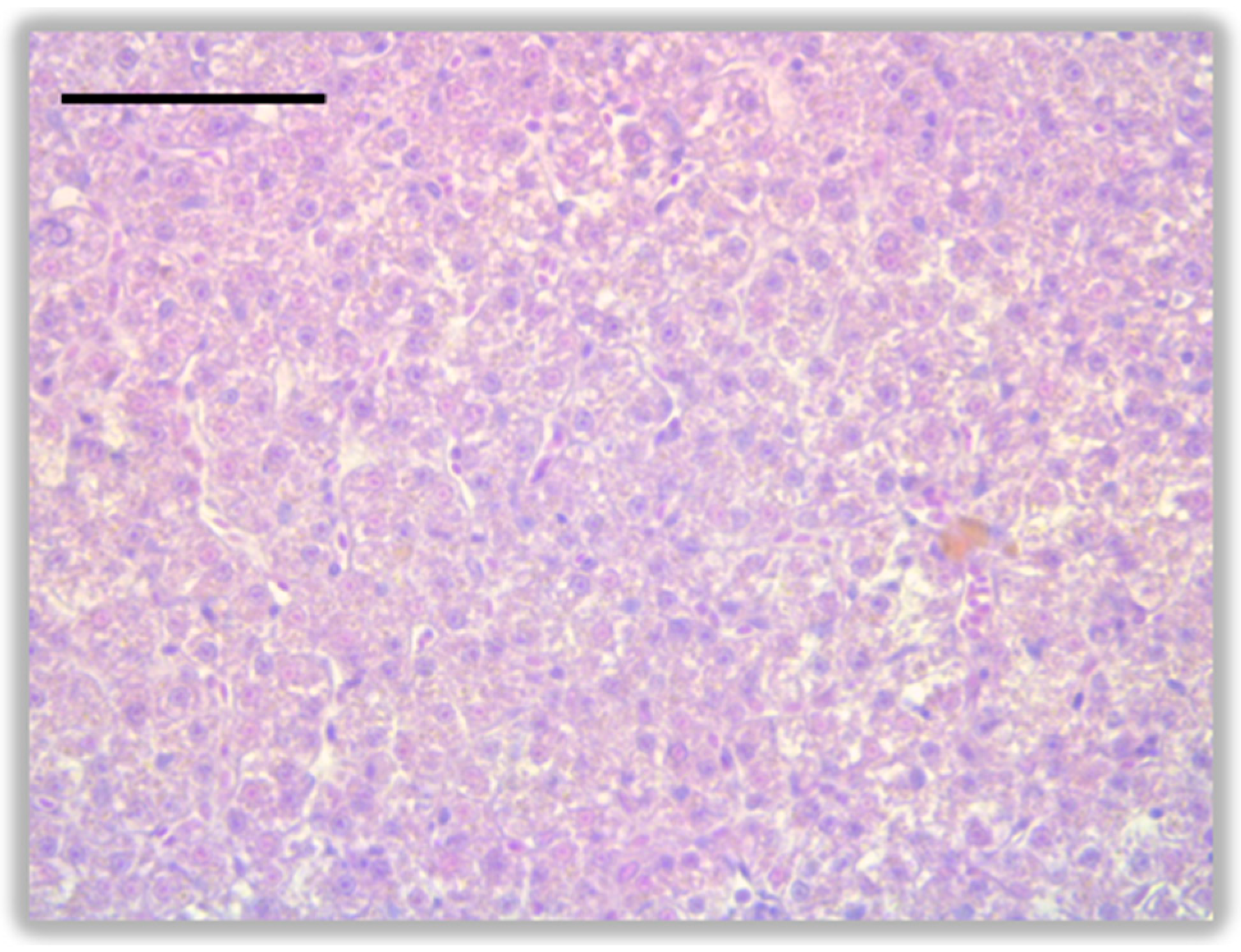
Figure 1. Normal morphology of the liver histological structure of common carp from the control group, ×400, H&E.
Jox 16 00019 g001
Figure 2. Histopathological alterations in the liver of common carp after acute (96 h) exposure to pirimiphos-methyl (H&E), ×400: (A,B)—granular degeneration (10 μg/L); (C)—vacuolar degeneration (10 μg/L); (D)—granular degeneration (60 μg/L); (E)—karyolysis (60 μg/L); (F)—hyperaemia (60 μg/L).
Jox 16 00019 g002
Figure 3. Histopathological alterations in the liver of common carp after acute (96 h) exposure with propamocarb hydrochloride (H&E), ×400: (A)—granular degeneration (40 μg/L); (B,C)—vacuolar degeneration (40 μg/L); (D)—karyolysis (80 μg/L); (E)—fatty degeneration (80 μg/L); (F)—hyperaemia (80 μg/L).
Jox 16 00019 g003
Figure 4. Histopathological alterations in liver of common carp after acute (96 h) exposure to 2,4-D (H&E), ×400: (A)—hyperaemia (50 μg/L); (B)—vacuolar degeneration (50 μg/L); (C)—hyperaemia (50 μg/L); (D)—fatty degeneration (100 μg/L); (E)—hyperaemia (100 μg/L); (F)—vacuolar degeneration (100 μg/L).
Jox 16 00019 g004
Figure 5. Intensity of the PAS-reaction in the liver of common carp after acute (96 h) exposure to pirimiphos-methyl: (A)—control, ×400; (B,C)—10 μg/L, ×400; (DF)—60 μg/L, ×400.
Jox 16 00019 g005
Figure 6. Intensity of the PAS-reaction in the liver of common carp after acute (96 h) exposure to propamocarb hydrochloride: (A)—control, ×400; (B,C)—40 μg/L, ×400; (DF)—80 μg/L, ×400.
Jox 16 00019 g006
Figure 7. Intensity of the PAS-reaction in the liver of common carp after acute (96 h) exposure to 2,4-D: (A)—control, ×400; (B,C)—50 μg/L, ×400; (DF)—100 μg/L, ×400.
Jox 16 00019 g007
Figure 8. LDH activity (U/mg protein) in the liver of common carp after acute (96 h) pesticide exposure. Treatments: control (no pesticide), PM10 = 10 µg/L pirimiphos-methyl, PM60 = 60 µg/L pirimiphos-methyl, PH40 = 40 µg/L propamocarb hydrochloride, PH80 = 80 µg/L propamocarb hydrochloride, D50 = 50 µg/L 2,4-D, D100 = 100 µg/L 2,4-D. Values are mean ± SD. Different letters above the bars indicate significant differences among treatments (Tukey HSD, p < 0.05).
Jox 16 00019 g008
Figure 9. ASAT activity (U/mg protein) in the liver of common carp after acute (96 h) pesticide exposure. Treatments: control (no pesticide), PM10 = 10 µg/L pirimiphos-methyl, PM60 = 60 µg/L pirimiphos-methyl, PH40 = 40 µg/L propamocarb hydrochloride, PH80 = 80 µg/L propamocarb hydrochloride, D50 = 50 µg/L 2,4-D, D100 = 100 µg/L 2,4-D. Values are mean ± SD. Different letters above the bars indicate significant differences among treatments (Tukey HSD, p < 0.05).
Jox 16 00019 g009
Figure 10. ALAT activity (U/mg protein) in the liver of common carp after acute (96 h) pesticide exposure. Treatments: control (no pesticide), PM10 = 10 µg/L pirimiphos-methyl, PM60 = 60 µg/L pirimiphos-methyl, PH40 = 40 µg/L propamocarb hydrochloride, PH80 = 80 µg/L propamocarb hydrochloride, D50 = 50 µg/L 2,4-D, D100 = 100 µg/L 2,4-D. Values are mean ± SD (n = 3). Different letters above bars indicate significant differences among treatments (Tukey HSD, p < 0.05).
Jox 16 00019 g010
Figure 11. Cholinesterase (ChE) activity (U/mg protein) in the liver of common carp after acute (96 h) pesticide exposure. Treatments: control (no pesticide), PM10 = 10 µg/L pirimiphos-methyl, PM60 = 60 µg/L pirimiphos-methyl, PH40 = 40 µg/L propamocarb hydrochloride, PH80 = 80 µg/L propamocarb hydrochloride, D50 = 50 µg/L 2,4-D, D100 = 100 µg/L 2,4-D. Values are mean ± SD. Different letters indicate significant differences among treatments (Tukey HSD, p < 0.05).
Jox 16 00019 g011
Table 1. Histopathological alterations in the liver of common carp after acute (96 h) exposure to pirimiphos-methyl.
Reaction
Pattern
OrganAlterationImportance FactorScore Value
ControlPirimiphos-Methyl
10 μg/L60 μg/L
Changes in the circulatory systemLiverHyperaemiaWLC1 = 10A3B3B
Intracellular edemaWLC2 = 10A0A0A
Index for the circulatory systemILC = 0ILC = 3ILC = 3
Degenerative changesLiverGranular degenerationWLR1 = 10A5B4C
Vacuolar degenerationWLR2 = 20A4B4B
NecrobiosisWLR3 = 20A1B1B
NecrosisWLR4 = 30A1B2C
Fatty
degeneration
WLR5 = 10A2B3C
Index for the degenerative changesILR = 0ILR = 20ILR = 23
Proliferative changesLiverHypertrophyWLP1 = 10A0A0A
Index for the proliferative changesILP = 0ILP = 0ILP = 0
InflammationLiverActivation of RESWLI1 = 10A0A0A
Lymphocyte
infiltration
WLI2 = 20A0A0A
Index for the inflammatory processesILI = 0ILI = 0ILI = 0
Index for the organIL = 0IL = 23IL = 26
0—no changes in the histological structure of the organ; (1)—very mild changes in the histological structure of the organ; (2)—mild changes in the histological structure of the organ; (3)—moderate changes in the histological structure of the organ; (4)—severe changes in the histological structure of the organ; (5)—very severe changes in the histological structure of the organ. Different uppercase letters within the same row indicate statistically significant differences between groups based on the Mann–Whitney U test (p < 0.05).
Table 2. Histopathological alterations in the liver of common carp after acute (96 h) exposure to propamocarb hydrochloride.
Reaction
Pattern
OrganAlterationImportance FactorScore Value
ControlPropamocarb Hydrochloride
40 μg/L80 μg/L
Changes in the circulatory systemLiverHyperaemiaWLC1 = 10A4B4B
Intracellular edemaWLC2 = 10A0A0A
Index for the circulatory systemILC = 0ILC = 4ILC = 4
Degenerative changesLiverGranular degenerationWLR1 = 10A5B5B
Vacuolar degenerationWLR2 = 20A4B5C
NecrobiosisWLR3 = 20A1B1B
NecrosisWLR4 = 30A2B2B
Fatty
degeneration
WLR5 = 10A2B4C
Index for the degenerative changesILR = 0ILR = 23ILR = 27
Proliferative changesLiverHypertrophyWLP1 = 10A0A0A
Index for the proliferative changesILP = 0ILP = 0ILP = 0
InflammationLiverActivation of RESWLI1 = 10A0A0A
Lymphocyte
infiltration
WLI2 = 20A1B1B
Index for the inflammatory processesILI = 0ILI = 2ILI = 2
Index for the organIL = 0IL = 29IL = 33
0—no changes in the histological structure of the organ; (1)—very mild changes in the histological structure of the organ; (2)—mild changes in the histological structure of the organ; (3)—moderate changes in the histological structure of the organ; (4)—severe changes in the histological structure of the organ; (5)—very severe changes in the histological structure of the organ. Different uppercase letters within the same row indicate statistically significant differences between groups based on the Mann–Whitney U test (p < 0.05).
Table 3. Histopathological alterations in the liver of common carp after acute (96 h) exposure to 2,4-D.
Reaction
Pattern
OrganAlterationImportance FactorScore Value
Control2,4-D
50 μg/L100 μg/L
Changes in the circulatory systemLiverHyperaemiaWLC1 = 10A4B4B
Intracellular edemaWLC2 = 10A0A0A
Index for the circulatory systemILC = 0ILC = 4ILC = 4
Degenerative changesLiverGranular degenerationWLR1 = 10A4B5C
Vacuolar degenerationWLR2 = 20A4B5C
NecrobiosisWLR3 = 20A1B1B
NecrosisWLR4 = 30A2B2B
Fatty
degeneration
WLR5 = 10A2B5C
Index for the degenerative changesILR = 0ILR = 22ILR = 28
Proliferative changesLiverHypertrophyWLP1 = 10A0A0A
Index for the proliferative changesILP = 0ILP = 0ILP = 0
InflammationLiverActivation of RESWLI1 = 10A0A0A
Lymphocyte
infiltration
WLI2 = 20A1B1B
Index for the inflammatory processesILI = 0ILI = 2ILI = 2
Index for the organIL = 0IL = 28IL = 34
0—no changes in the histological structure of the organ; (1)—very mild changes in the histological structure of the organ; (2)—mild changes in the histological structure of the organ; (3)—moderate changes in the histological structure of the organ; (4)—severe changes in the histological structure of the organ; (5)—very severe changes in the histological structure of the organ. Different uppercase letters within the same row indicate statistically significant differences between groups based on the Mann–Whitney U test (p < 0.05).
Table 4. Mean ± SD of PAS-reaction intensity in the liver of common carp after acute (96 h) exposure to pirimiphos-methyl, propamocarb hydrochloride, and 2,4-D.
Experimental PesticideControlsPirimiphos-MethylPropamocarb Hydrochloride2,4-D
Concentration
μg/L
10 μg/L 60 μg/L40 μg/L80 μg/L50 μg/L100 μg/L
Intensity of PAS-reaction in Common carp liver0.79 ± 0.43 A2.60 ± 0.55 B,C1.80 ± 0.84 B2.40 ± 0.89 B,C3.00 ± 0.71 B,C3.00 ± 0.71 B,C3.80 ± 1.10 B,C
Scheme 0 = very weak; 2 = weak; 3 = moderate; 4 = strong. A,B,C Different superscript letters indicate statistically significant differences among treatments (Mann–Whitney U test, p < 0.05).
Disclaimer/Publisher’s Note: The statements, opinions and data contained in all publications are solely those of the individual author(s) and contributor(s) and not of MDPI and/or the editor(s). MDPI and/or the editor(s) disclaim responsibility for any injury to people or property resulting from any ideas, methods, instructions or products referred to in the content.