Brief Report

Acceptability of Audiovestibular Assessment in the Home—A Patient Survey

1
SENSE Research Unit, Department of Clinical and Movement Neurosciences, Institute of Neurology, University College London, 33 Queen Square, London WC1N 3BG, UK
2
NHS Highly Specialised Service for Rare Mitochondrial Disorders, Queen Square Centre for Neuromuscular Diseases, The National Hospital for Neurology and Neurosurgery, London WC1N 3BG, UK
3
Department of Neuromuscular Diseases, UCL Queen Square Institute of Neurology, London WC1N 3BG, UK
*
Author to whom correspondence should be addressed.
Audiol. Res. 2024, 14(3), 545-553; https://doi.org/10.3390/audiolres14030045

Submission received: 19 April 2024 / Revised: 14 June 2024 / Accepted: 18 June 2024 / Published: 20 June 2024

Abstract

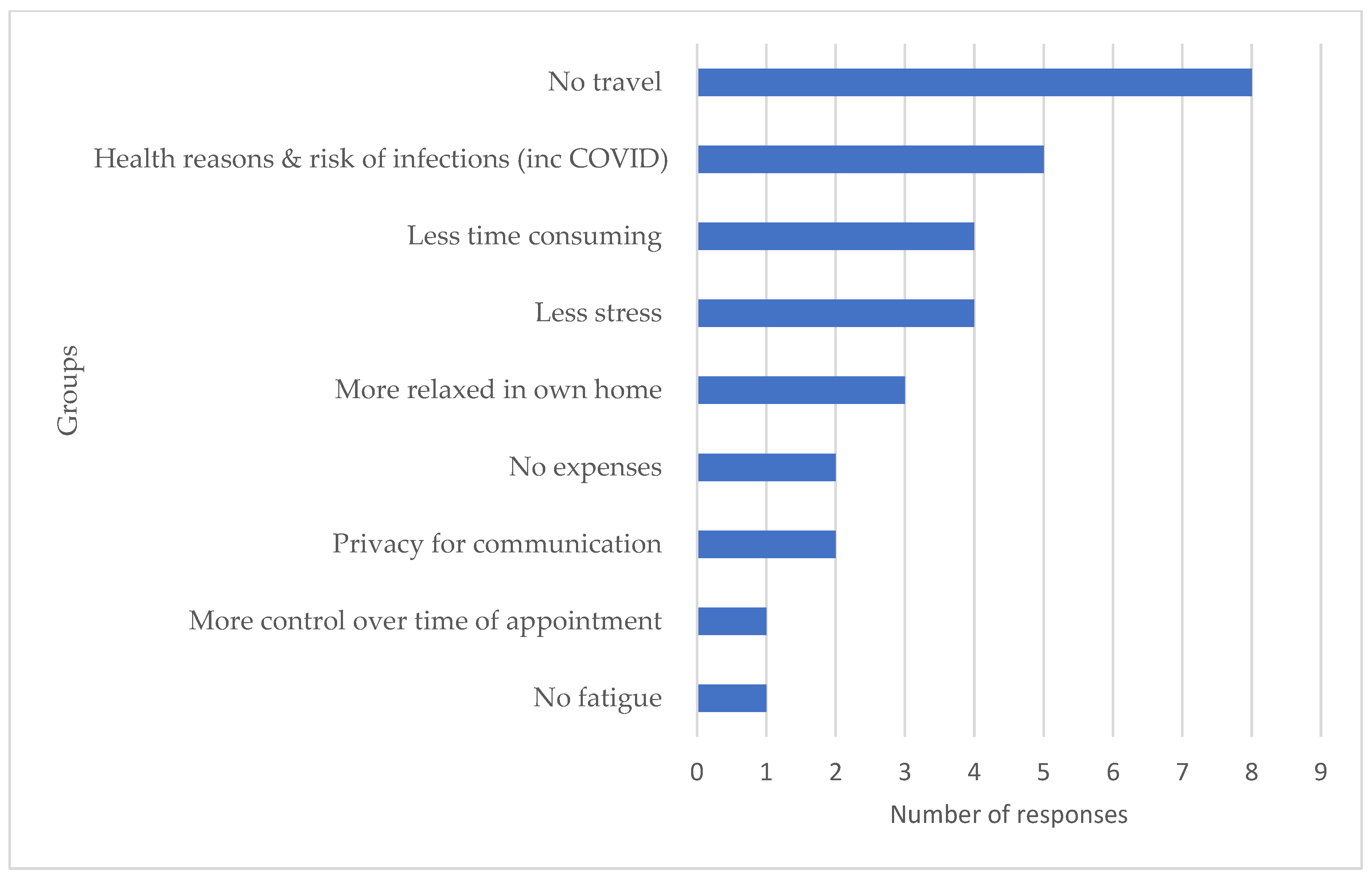
The COVID-19 pandemic dramatically changed health service delivery with vulnerable patients advised to isolate and appointments provided virtually. This change affected recruitment into an observational cohort study, undertaken at a single site, where participants with mitochondrial disorders were due to have specialist hospital-based audiovestibular tests. To ensure study viability, the study protocol was amended to allow home-based assessment for vulnerable participants. Here, we report outcomes of an online survey of participants who underwent home-based assessment, related to the experience, perceived benefits, and drawbacks of home audiovestibular assessments. Seventeen participants underwent home-based neuro-otological assessment, due to the need to isolate during COVID-19. Following the assessment, 16 out of 17 participants completed an anonymised online survey to share their experiences of the specialist home-based assessment. One hundred percent of participants rated the home-based assessment ‘very positively’ and would recommend it to others. Sixty-three percent rated it better than attending hospital outpatient testing settings. The benefits included no travel burden (27%) and reduced stress (13%). A majority reported no drawbacks in having the home visit. The patient-reported feedback suggests a person-centred approach where audiovestibular assessments are conducted in their homes is feasible for patients, acceptable and seen as beneficial to a vulnerable group of patients.
Keywords: COVID-19; home visit; audiological assessment; survey COVID-19; home visit; audiological assessment; survey