
Article

The Development of a Paediatric Phoneme Discrimination Test for Arabic Phonemic Contrasts
1
Department of Speech Hearing and Phonetic Sciences, Faculty of Brain Sciences, University College London, London WC1N 1PF, UK
2
Ear Institute, Faculty of Brain Sciences, University College London, London WC1X 8EE, UK
3
Sound Lab, Cambridge Hearing Group, Department of Clinical Neurosciences, Clinical School, University of Cambridge, Cambridge CB2 0SZ, UK
*
Author to whom correspondence should be addressed.
Audiol. Res. 2021, 11(2), 150-166; https://doi.org/10.3390/audiolres11020014

Submission received: 31 December 2020 / Revised: 12 February 2021 / Accepted: 30 March 2021 / Published: 7 April 2021

Abstract

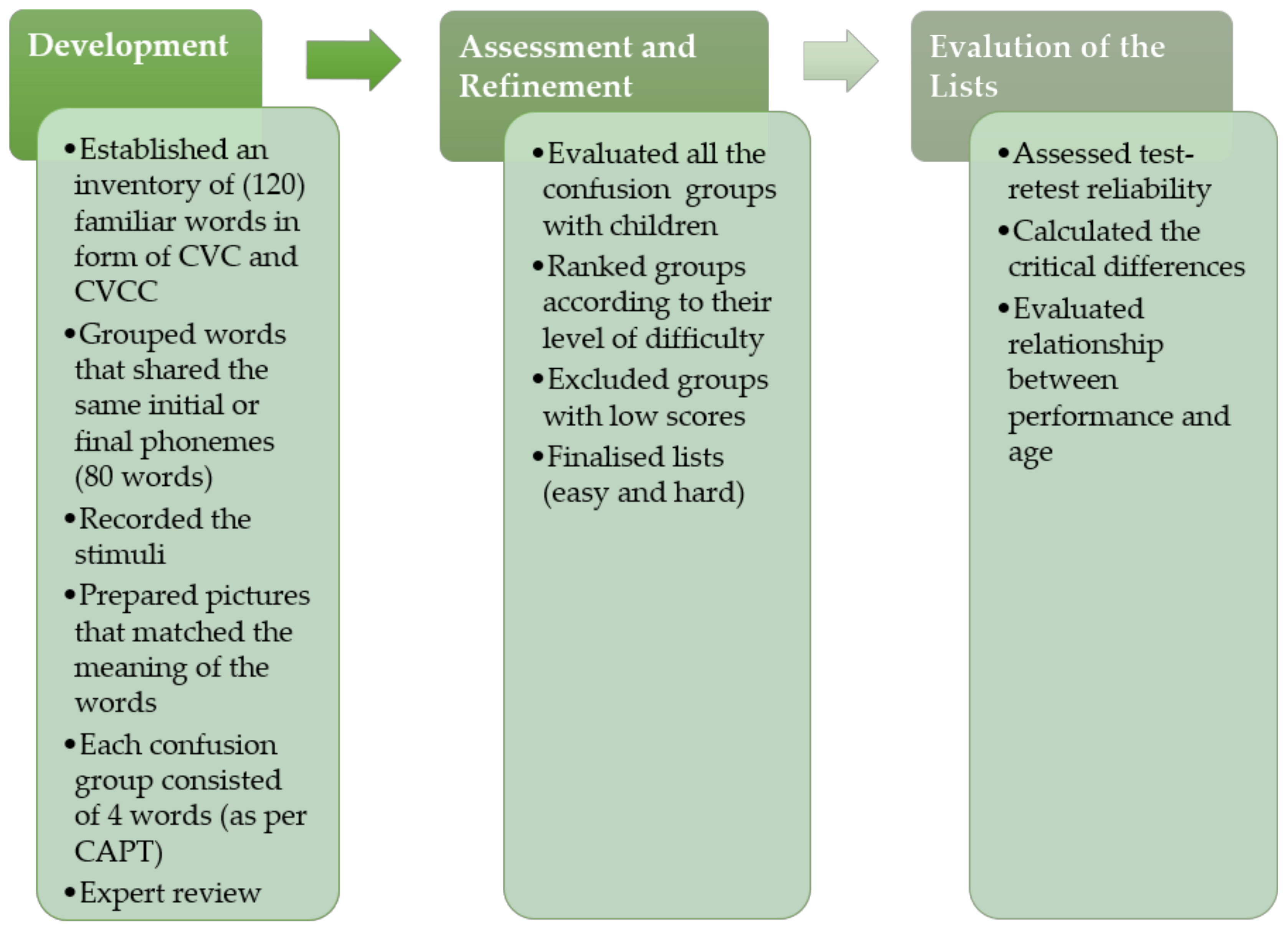
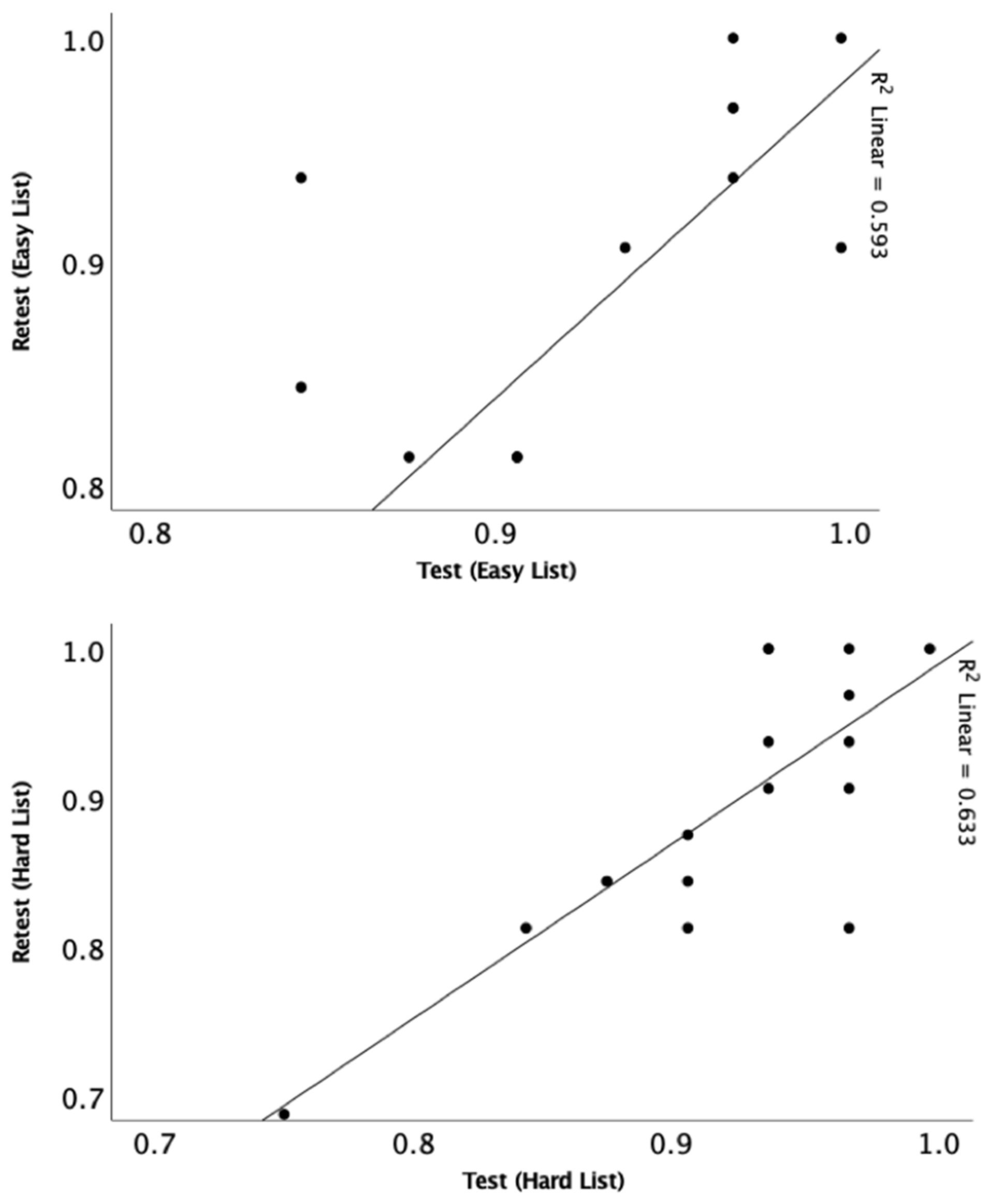
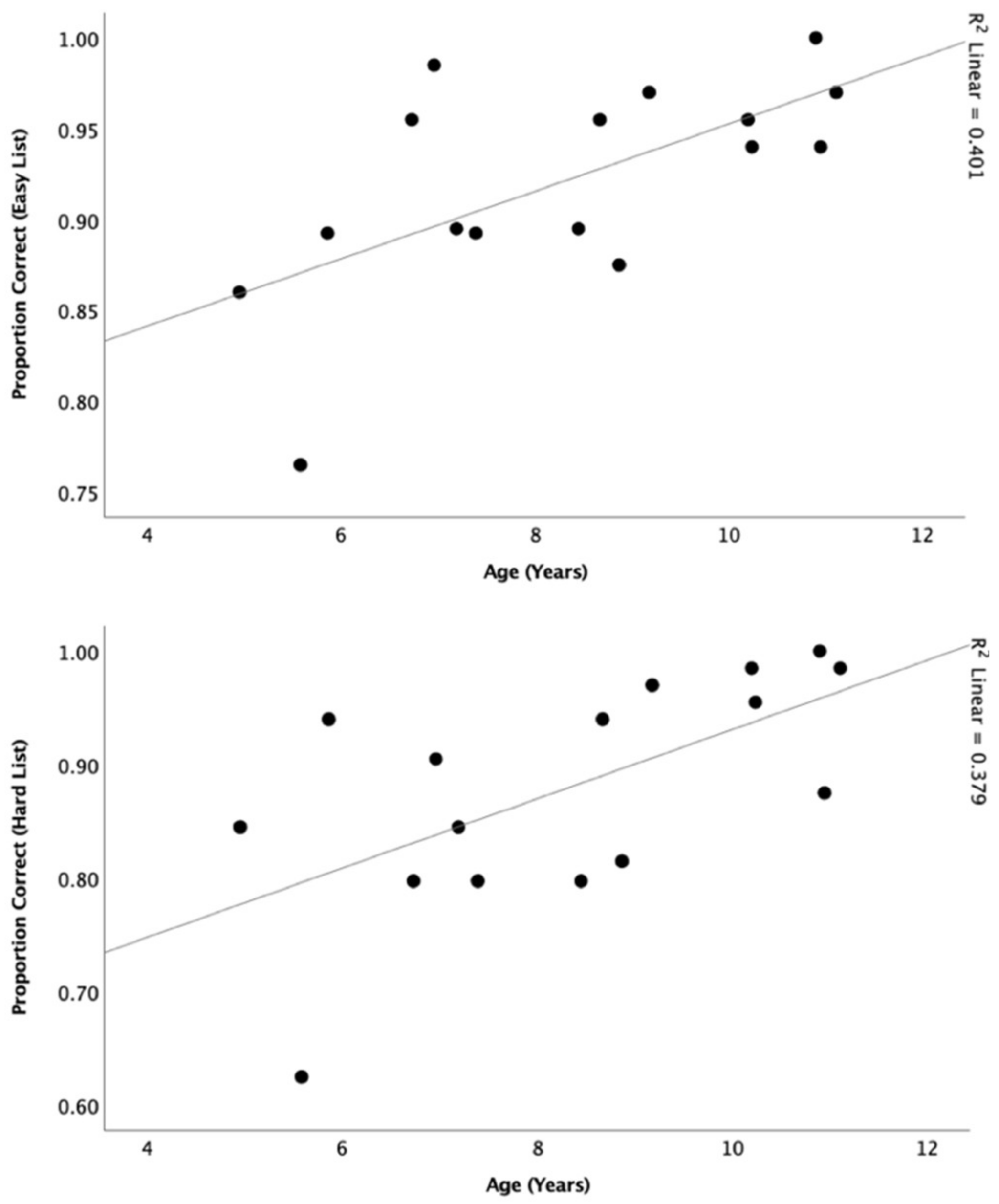
Objective: The aim of this project was to develop the Arabic CAPT (A-CAPT), a Standard Arabic version of the CHEAR auditory perception test (CAPT) that assesses consonant perception ability in children. Method: This closed-set test was evaluated with normal-hearing children aged 5 to 11 years. Development and validation of the speech materials were accomplished in two experimental phases. Twenty-six children participated in phase I, where the test materials were piloted to ensure that the selected words were age appropriate and that the form of Arabic used was familiar to the children. Sixteen children participated in phase II where test–retest reliability, age effects, and critical differences were measured. A computerized implementation was used to present stimuli and collect responses. Children selected one of four response options displayed on a screen for each trial. Results: Two lists of 32 words were developed with two levels of difficulty, easy and hard. Assessment of test–retest reliability for the final version of the lists showed a strong agreement. A within-subject ANOVA showed no significant difference between test and retest sessions. Performance improved with increasing age. Critical difference values were similar to the British English version of the CAPT. Conclusions: The A-CAPT is an appropriate speech perception test for assessing Arabic-speaking children as young as 5 years old. This test can reliably assess consonant perception ability and monitor changes over time or after an intervention.
Keywords: auditory perception; speech test; paediatric; phoneme discrimination auditory perception; speech test; paediatric; phoneme discrimination