
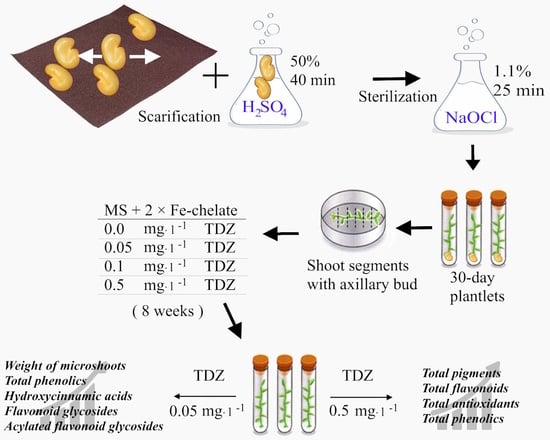
In Vitro Plantlet Regeneration and Accumulation of Phenolic Compounds in Microshoots of Astragalus glycyphyllos L.

Abstract
1. Introduction
2. Materials and Methods
2.1. Plant Material
2.2. Seed Germination
2.3. In Vitro Shoot Organogenesis
2.4. Extraction of Metabolites
2.5. Spectrophotometric Analyses
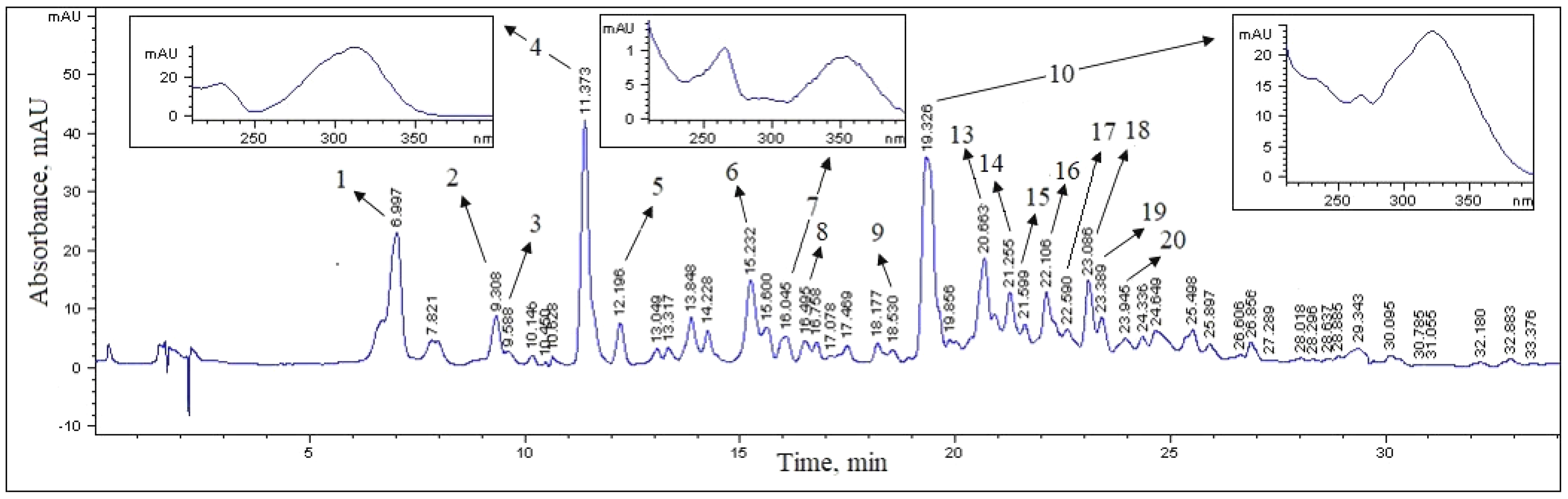
2.6. HPLC Analysis
2.7. Total Antioxidant Activity
2.8. Statistical Analysis
3. Results and Discussion
3.1. Seed Germination of A. glycyphyllos Depending on Scarification Method and Sterilizing Agent
3.2. Effects of PGRs and Nutrient Medium Composition on Axillary Microshoot Growth and Development, and Photosynthetic Pigment Content in A. glycyphyllos Microshoots
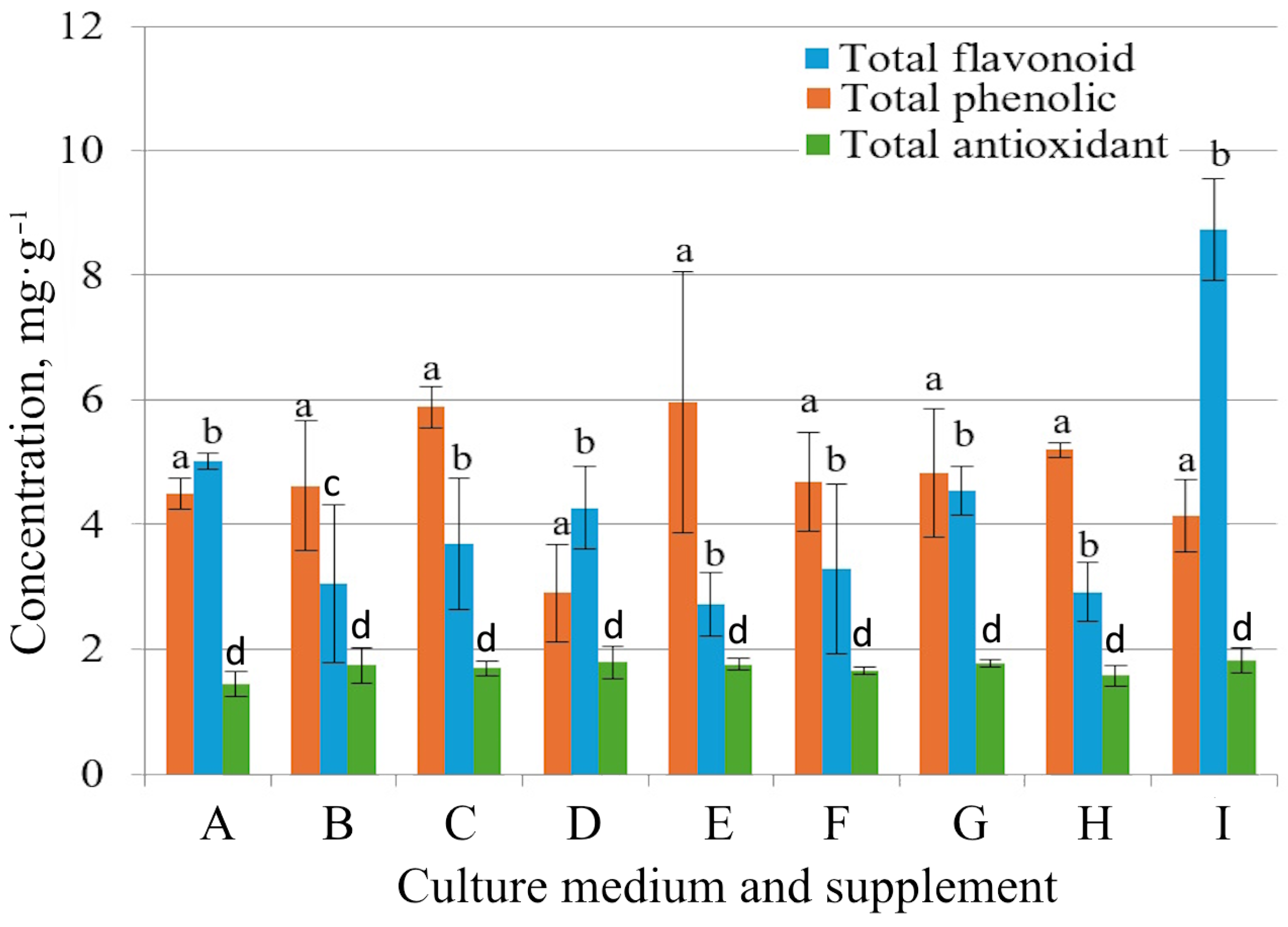
3.3. Concentrations of Phenolics and Flavonoids and Their Associated Antioxidant Activity in A. glycyphyllos Microshoots
4. Conclusions
Supplementary Materials
Author Contributions
Funding
Data Availability Statement
Acknowledgments
Conflicts of Interest
Abbreviations
| MS | Murashige and Skoog medium |
| MS with 2× Fe-chelate | modified Murashige and Skoog medium with a twofold concentration of iron chelate |
| 6-BAP | 6-benzylaminopurine |
| IAA | indole-3-acetic acid |
| 2-iP | 6-(2-isopentenyl)adenine |
| TDZ | thidiazuron |
| HPLC | high-performance liquid chromatography |
References
- Veeresham, C. Natural products derived from plants as a source of drugs. J. Adv. Pharm. Technol. Res. 2012, 3, 200–201. [Google Scholar] [CrossRef] [PubMed]
- Butler, M.S.; Capon, R.J.; Blaskovich, M.A.T.; Henderson, I.R. Natural product-derived compounds in clinical trials and drug approvals. Nat. Prod. Rep. 2025, 43, 20–88. [Google Scholar] [CrossRef]
- Chaachouay, N.; Zidane, L. Plant-Derived Natural Products: A Source for Drug Discovery and Development. Drugs Drug Candidates 2024, 3, 184–207. [Google Scholar] [CrossRef]
- Wyk, A.S.; Prinsloo, G. Medicinal plant harvesting, sustainability and cultivation in South Africa. Biol. Conserv. 2018, 227, 335–342. [Google Scholar] [CrossRef]
- Pathirana, R.; Carimi, F. Management and Utilization of Plant Genetic Resources for a Sustainable Agriculture. Plants 2022, 11, 2038. [Google Scholar] [CrossRef]
- Paramonov, S.; Kudryavtseva, D. Harvesting and Cultivation of Medicinal Plants as a Health-Preserving Practice and a Form of Responsible Nature Management. Pharm. Formulas 2025, 7, 70–75. [Google Scholar] [CrossRef]
- Nandagopal, K.; Halder, M.; Dash, B.; Nayak, S.; Jha, S. Biotechnological approaches for production of anti-cancerous compounds resveratrol, podophyllotoxin and zerumbone. Curr. Med. Chem. 2018, 25, 4693–4717. [Google Scholar] [CrossRef] [PubMed]
- Zahmanova, G.; Takova, K.; Tonova, V.; Minkov, I.; Barbolov, M.; Nedeva, N.; Vankova, D.; Ivanova, D.; Kiselova-Kaneva, Y.; Lukov, G.L. How can plant-derived natural products and plant biotechnology help against emerging viruses? Int. J. Mol. Sci. 2025, 26, 7046. [Google Scholar] [CrossRef]
- Zhou, L.G.; Wu, J.Y. Development and application of medicinal plant tissue cultures for production of drugs and herbal medicinals in China. Nat. Prod. Rep. 2006, 23, 789–810. [Google Scholar] [CrossRef]
- Kotsupiy, O.V.; Shemetova, T.A.; Petruk, A.A. Flavonolglycoside of some Siberian species of the section Xiphidium Bunge of the genus Astragalus L. Khimiya Rastit. Syr’ya 2019, 2, 67–72. (In Russian) [Google Scholar] [CrossRef]
- Kotsupiy, O.V.; Shemetova, T.A. Phenolic profile of the endemic species Astragalus palibinii Polozhij. BIO Web Conf. 2021, 38, 00063. [Google Scholar] [CrossRef]
- Ambros, E.V.; Kotsupy, O.V.; Novikova, T.I.; Vysochina, G.I. Clonal micropropagation of Astragalus sericeocanus Gontsch. and content of phenolic compounds in vitro. Turczaninowia 2018, 21, 87–99. (In Russian) [Google Scholar] [CrossRef]
- Novikova, T.; Ambros, E.; Kotsupiy, O.; Shaldaeva, T.; Protsenko, M.; Filippova, E.; Mazurkova, N. Astragalus penduliflorus Lam. hairy roots: A promising biotechnological platform for obtaining anti-influenza drugs. S. Afr. J. Bot. 2022, 147, 63–70. [Google Scholar] [CrossRef]
- Zheng, Y.; Ren, W.; Zhang, L.; Zhang, Y.; Liu, D.; Liu, Y. A Review of the Pharmacological Action of Astragalus Polysaccharide. Front. Pharmacol. 2020, 11, 349. [Google Scholar] [CrossRef]
- Li, S.; Hu, X.; Liu, F.; Hu, W. Bioactive components and clinical potential of Astragalus species. Front. Pharmacol. 2025, 16, 1585697. [Google Scholar] [CrossRef]
- Lobanova, I.E. Astragalus glycyphyllos (Fabaceae): Biologically active substances, pharmacotherapeutic activity and beneficial properties, use in pharmacy and medicine (review). Flora Veg. Asian Russ. 2025, 18, 210–227. [Google Scholar] [CrossRef]
- Guzhva, N.N. Technology of liquid extract of Astragalus falcatus. Pharmacia 2008, 6, 40–42. [Google Scholar]
- Khvorost, O.; Zudova, Y.; Budniak, L.; Slobodianiuk, L.; Kramar, H.; Palamarchuk, O.; Ocheretniuk, A. Analysis of carboxylic acids of Astragalus dasyanthus Pall. herb. Pharmacia 2023, 70, 1231–1238. [Google Scholar] [CrossRef]
- Shahrivari-Baviloliaei, S.; Konopacka, A.; Pascoalino, L.A.; Reis, F.; Kunkowski, D.; Petropoulos, S.A.; Konieczynski, P.; Orhan, I.E.; Plenis, A.; Viapiana, A. Nutritional, chemical, antioxidant and antibacterial screening of Astragalus cicer L. and Astragalus glycyphyllos L. different morphological parts. Foods 2025, 14, 250. [Google Scholar] [CrossRef] [PubMed]
- Ilieva, V.; Shkondrov, A.; Aluani, D.; Valkova, I.; Kondeva-Burdina, M.; Georgieva, T.; Tzankova, V.; Krasteva, I.; Georgiev, M. Early detection of toxic cyanobacteria in Bulgarian dam water and in vitro evaluation of the effect of saponins from Astragalus glycyphyllos and A. glycyphylloides in cyanotoxin (anatoxin-α)-induced neurotoxicity. Rev. Bras. Farmacogn. 2020, 30, 202–213. [Google Scholar] [CrossRef]
- Hinkov, A.; Tsvetkov, V.; Shkondrov, A.; Krasteva, I.; Shishkov, S.; Shishkova, K. Effect of a total extract and saponins from Astragalus glycyphyllos L. on human coronavirus replication in vitro. Int. J. Mol. Sci. 2023, 24, 16525. [Google Scholar] [CrossRef]
- Maylandt, C.; Kirschner, P.; Pirkebner, D.; Frajman, B.; Peñas de Giles, J.; Schönswetter, P.; Carnicero, P. Evolution, range formation and a revised taxonomy of the disjunctly distributed European members of Astragalus sect. Caprini, an intricate group including highly endangered species of dry grasslands. Mol. Phylogenet. Evol. 2025, 204, 108242. [Google Scholar] [CrossRef]
- Butkute, B.; Padarauskas, A.; Ceseviciene, J.; Taujenis, L.; Norkeviciene, E. Phytochemical composition of temperate perennial legumes. Crop Pasture Sci. 2018, 69, 1020–1030. [Google Scholar] [CrossRef]
- Nikolov, S.; Elenga, P.; Panova, D. Flavonoids of Astragalus glycyphyllos. Farmatsiya 1984, 34, 26–29. Available online: https://www.cabidigitallibrary.org/doi/full/10.5555/19850333027 (accessed on 22 March 2026).
- Linnek, J.; Mitaine-Offer, A.C.; Miyamoto, T.; Duchamp, O.; Mirjolet, J.F.; Lacaille-Dubois, M.A. Cycloartane-type glycosides from two species of Astragalus (Fabaceae). Nat. Prod. Commun. 2009, 4, 477–478. [Google Scholar] [CrossRef]
- Bratkov, V.M.; Shkondrov, A.M.; Zdraveva, P.K.; Krasteva, I.N. Flavonoids from the Genus Astragalus: Phytochemistry and Biological Activity. Pharmacogn. Rev. 2016, 10, 11–32. [Google Scholar] [CrossRef]
- Shkondrov, A.; Krasteva, I.; Bucar, F.; Kunert, O.; Kondeva-Burdina, M.; Ionkova, I. A new tetracyclic saponin from Astragalus glycyphyllos L. and its neuroprotective and hMAO-B inhibiting activity. Nat. Prod. Res. 2020, 34, 511–517. [Google Scholar] [CrossRef]
- Shkondrov, A.; Krasteva, I.; Kozuharova, E.; Zdraveva, P.; Savev, S. Bulgarian species of genus Astragalus as potential sources of mauritianin. Pharmacia 2020, 67, 229–232. [Google Scholar] [CrossRef]
- Butkute, B.; Dagilyte, A.; Benetis, R.; Padarauskas, A.; Olšauskaite, V.; Lemeziene, N. Mineral and phytochemical profiles and antioxidant activity of herbal material from two temperate Astragalus species. BioMed Res. Int. 2018, 2018, 6318630. [Google Scholar] [CrossRef] [PubMed]
- Wang, B.; Wu, B.; Ma, Y.; Liu, X.; Tao, L.; Jia, L.; Ding, X.; Zhou, X. Astragalus polysaccharides: Structure immunomodulation relationships, multitarget pharmacological activities, and cuttingedge applications in immune modulation. Front. Immunol. 2025, 16, 1714898. [Google Scholar] [CrossRef]
- Ionkova, I.; Shkondrov, A.; Krasteva, I.; Ionkov, T. Recent progress in phytochemistry, pharmacology and biotechnology of Astragalus saponins. Phytochem. Rev. 2014, 13, 343–374. [Google Scholar] [CrossRef]
- Shkondrov, A.; Krasteva, I. High resolution LC-MS/MS screening for secondary metabolites in Bulgarian species of genus Astragalus L. Quim. Nova 2021, 44, 683–688. [Google Scholar] [CrossRef]
- Butkute, B.; Padarauskas, A.; Ceseviciene, J.; Pavilonis, A.; Taujenis, L.; Lemeziene, N. Perennial legumes as a source of ingredients for healthy food: Proximate, mineral and phytoestrogen composition and antibacterial activity. J. Food Sci. Technol. 2017, 54, 2661–2669. [Google Scholar] [CrossRef] [PubMed]
- Lysiuk, R.; Kozachok, S.; Darmohray, R. HPLC-analysis of hydroxycinnamic acid from the aerial parts of Astragalus glycyphyllos L. In Agrobiodiversity for Improving Nutrition, Health and Life Quality; Slovak University of Agriculture: Nitra, Slovakia, 2016; pp. 250–254. [Google Scholar]
- Lysiuk, R.; Kozachok, S. HPLC-UV determination of catechins and gallic acid in aerial parts of Astragalus glycyphyllos L. Dhaka Univ. J. Pharm. Sci. 2019, 18, 241–247. [Google Scholar] [CrossRef][Green Version]
- Stambolov, I.; Shkondrov, A.; Krasteva, I. Astragalus glycyphyllos L.: Phytochemical constituents, pharmacology, and biotechnology. Pharmacia 2023, 70, 635–641. [Google Scholar] [CrossRef]
- Shkondrov, A.; Hinkov, A.; Cvetkov, V.; Shishkova, K.; Todorov, D.; Shishkov, S.; Stambolov, I.; Yoncheva, K.; Krasteva, I. Astragalus glycyphyllos L.: Antiviral activity and tablet dosage formulation of a standardized dry extract. Biotechnol. Biotechnol. Equip. 2023, 37, 2221752. [Google Scholar] [CrossRef]
- Popova, P.; Zarev, Y.; Shkondrov, A.; Krasteva, I.; Ionkova, I. Induction of flavonoid biosynthesis by in vitro cultivation of Astragalus glycyphyllos L. Pharmacia 2020, 67, 95–99. [Google Scholar] [CrossRef]
- Khamidullina, L.; Cherepanova, O.; Tobysheva, P.; Rybina, E.; Pestov, A. Activation effect of β-alanine and chitosan derivative on A. glycyphyllos and A. membranaceus seed germination and seedling growth and development. Agron. Res. 2021, 19, 484–495. [Google Scholar] [CrossRef]
- Stoyanov, S.; Stanilova, M.; Yankova-Tsvetkova, E.; Marinov, Y.; Traykova, B. In vitro micropropagation of Astragalus physocalyx (Fabaceae) and reintroduction of plants in its “Locus Classicus” on Mladezhki Hill in Plovdiv. Bulg. J. Agric. Sci. 2024, 30, 31–37. Available online: https://www.agrojournal.org/30/01-05s.pdf (accessed on 22 March 2026).
- Tran, T.N.A.; Xu, F.J.; Ko, J.H.; Yang, D.C.; Yang, D.U.K.; Jung, S.K. Establishing an efficient micropropagation method for Astragalus membranaceus (Huang Qi). Plant Cell Tiss. Organ Cult. 2024, 157, 34. [Google Scholar] [CrossRef]
- Ionkova, I.; Alfermann, A.W. Transformation of Astragalus species by Agrobacterium rhizogenes and their saponin production. Planta Med. 1990, 56, 634–635. [Google Scholar] [CrossRef]
- Ionkova, I. Optimization of flavonoid production in cell cultures of Astragalus missouriensis Nutt. (Fabaceae). Phcog. Mag. 2009, 5, 92–99. [Google Scholar]
- Yildirim, A.; Uyar, E.; Turker, A. In vitro culture of endemic Astragalus gymnolobus Fischer and comparison of its antibacterial, antioxidant, and phenolic profiles with field grown plants. J. Agric. Sci. Tech. 2020, 22, 815–828. [Google Scholar]
- Zayed, R.A.; El-Sayed, A.S.; Ismaeil, W.M. In vitro micropropagation, biological activities and phenolic profile of Astragalus fruticosus Forssk. Asian J. Plant Sci. 2022, 21, 192–202. [Google Scholar] [CrossRef]
- Vasilev, H.; Šmejkal, K.; Gronover, C.; Prüfer, D.; Jankovská, D.; Ionkova, I. Development of in vitro cultures from Astragalus thracicus Griseb and Astragalus aitosensis (Ivanisch.) and evaluation of their bioproduction potential. Res. Sq. 2025, 164, 82. [Google Scholar] [CrossRef]
- Li, J.; Yu, Q.; Liu, C.; Zhang, N.; Xu, W. Flavonoids as key players in cold tolerance: Molecular insights and applications in horticultural crops. Hortic. Res. 2025, 12, uhae366. [Google Scholar] [CrossRef]
- Kotsupiy, O.; Karpova, E.; Trofimova, E.; Novikova, T.; Ambros, E. Transformation of strawberry plants’ phenolic profile after treatment with a mechanocomposite based on silicon chelates in the course of development under in vitro, ex vitro, and in vivo conditions. Horticulturae 2023, 9, 157. [Google Scholar] [CrossRef]
- Kotsupiy, O.V.; Stepantsova, N.V.; Vysochina, G.I.; Petruk, A.A. Phenolic Compounds in Astragalus rytyensis Stepantsova and Other Species of the Astragalus L. Genus from Joint Growth Places on the North-Western Coast of Lake Baikal. Bull. Irkutsk. State Univ. Ser. Biol. Ecol. 2018, 24, 3–15. (In Russian) [Google Scholar] [CrossRef]
- Ionkova, I. Astragalus Species (Milk Vetch): In vitro culture and the production of saponins, astragaline, and other biologically active compounds. In Medicinal and Aromatic Plants VIII. Biotechnology in Agriculture and Forestry; Bajaj, Y.P.S., Ed.; Springer: Berlin/Heidelberg, Germany, 1995; Volume 33, pp. 97–138. [Google Scholar]
- Cakir, O.; Ari, S. Defensive and secondary metabolism in Astragalus chrysochlorus cell cultures, in response to yeast extract stressor. J. Environ. Biol. 2009, 30, 51–55. Available online: http://www.jeb.co.in./journal_issues/200901_jan09_spl/paper_09.pdf (accessed on 22 March 2026).
- Murashige, T.; Skoog, F. A revised medium for rapid growth and bioassays with tobacco tissue cultures. Physiol. Plant. 1962, 15, 473–497. [Google Scholar] [CrossRef]
- International Rules for Seed Testing (ISTA). International Rules for Seed Testing. Seed Sci. Technol. 1993, 21, 160–186. Available online: https://www.seedtest.org/en/publications/international-rules-seed-testing.html (accessed on 22 March 2026).
- Ranal, M.A.; Santana, D.G. How and why to measure the germination process. Braz. J. Bot. 2006, 29, 1–11. [Google Scholar] [CrossRef]
- Lichtenthaler, H.K. Chlorophylls and carotenoids: Pigments of photosynthetic biomembranes. Methods Enzymol. 1987, 148, 350–382. [Google Scholar] [CrossRef]
- Blainski, A.; Lopes, G.C.; de Mello, J.C. Application and analysis of the Folin Ciocalteu method for the determination of the total phenolic content from Limonium brasiliense L. Molecules 2013, 18, 6852–6865. [Google Scholar] [CrossRef] [PubMed]
- Zhishen, J.; Mengcheng, T.; Jianming, W. The determination of flavonoids contents in mulberry and their scavenging effects on superoxide radicals. Food Chem. 1999, 64, 555–559. [Google Scholar] [CrossRef]
- Sevket, A.L.P.; Sezai, E.; Tunde, J.; Ozlem, C.; Sadiye, G. Bioactive content of rose hips of different wildly grown Rosa dumalis genotypes. Not. Bot. Horti Agrobot. 2016, 44, 47–476. [Google Scholar] [CrossRef]
- Prieto, P.; Pineda, M.; Aguilar, M. Spectrophotometric quantitation of antioxidant capacity through the formation of a phosphomolybdenum complex: Specific application to the determination of vitamin E. Anal. Biochem. 1999, 269, 337–341. [Google Scholar] [CrossRef]
- Boestfleisch, C.; Wagenseil, N.B.; Buhmann, A.K.; Seal, C.E.; Wade, E.M.; Muscolo, A.; Papenbrock, J. Manipulating the antioxidant capacity of halophytes to increase their cultural and economic value through saline cultivation. AoB Plants 2014, 13, 6–12. [Google Scholar] [CrossRef]
- Watrous, K.M.; Cane, J.H. Breeding biology of the threadstalk milkvetch, Astragalus filipes (Fabaceae), with a review of the genus. Am. Midl. Nat. 2011, 165, 225–240. [Google Scholar] [CrossRef]
- Statwick, J.M. Germination pretreatments to break hard-seed dormancy in Astragalus cicer L. (Fabaceae). PeerJ 2016, 4, e2621. [Google Scholar] [CrossRef]
- Baskin, J.; Baskin, C. Some considerations for adoption of Nikolaeva’s formula system into seed dormancy classification. Seed Sci. Res. 2008, 18, 131–137. [Google Scholar] [CrossRef]
- Baskin, J.M.; Baskin, C.C. A classification system for seed dormancy. Seed Sci. Res. 2004, 14, 1–16. [Google Scholar] [CrossRef]
- Baskin, J.M.; Baskin, C.C. Classification, biogeography, and phylogenetic relationships of seed dormancy. In Seed Conservation: Turning Science into Practice; Smith, R.D., Dickie, J.B., Linington, S.H., Pritchard, H.W., Probert, R.J., Eds.; Cambridge University Press: London, UK, 2003; pp. 518–544. [Google Scholar]
- Wojtyla, Ł.; Lechowska, K.; Kubala, S.; Garnczarska, M. Different modes of hydrogen peroxide action during seed germination. Front. Plant Sci. 2016, 7, 66. [Google Scholar] [CrossRef]
- Barba-Espín, G.; Hernández, J.A.; Diaz-Vivancos, P. Role of H2O2 in pea seed germination. Plant Signal. Behav. 2012, 7, 193–195. [Google Scholar] [CrossRef]
- Basalma, D.; Uranbey, S.; Gurlek, D.; Ozcan, S. TDZ-induced plant regeneration in Astragalus cicer. Afr. J. Biotechnol. 2008, 7, 955–959. Available online: http://academicjournals.org/journal/AJB/article-abstract/C639FAD8286 (accessed on 22 March 2026).
- Erisen, S.; Atalay, E.; Yorgancilar, M. The effect of thidiazuron on the in vitro shoot development of endemic Astragalus cariensis in Turkey. Turkish J. Bot. 2011, 35, 521–526. [Google Scholar] [CrossRef]
- Yorgancilar, M.; Erisen, S. The effect of thidiazuron (TDZ) on shoot regeneration of Astragalus schizopterus. J. Anim. Plant Sci. 2011, 21, 519–524. Available online: https://www.researchgate.net/publication/263746945_The_effect_of_Thidiazuron_TDZ_on_shoot_regeneration_of_Astragalus_schizopterus (accessed on 22 March 2026).
- Lomin, S.N.; Krivosheev, D.M.; Steklov, M.Y.; Osolodkin, D.I.; Romanov, G.A. Receptor Properties and Features of Cytokinin Signaling. Acta Naturae 2012, 4, 31–45. [Google Scholar] [CrossRef]
- Rout, G.R.; Sahoo, S. Role of iron in plant growth and metabolism. Rev. Agric. Sci. 2015, 3, 1–24. [Google Scholar] [CrossRef]
- Ning, X.; Lin, M.; Huang, G.; Mao, J.; Gao, Z.; Wang, X. Research progress on iron absorption, transport, and molecular regulation strategy in plants. Front. Plant Sci. 2023, 14, 1190768. [Google Scholar] [CrossRef] [PubMed]
- Thomas, T.D.; Philip, B. Thidiazuron-induced high-frequency shoot organogenesis from leaf-derived callus of a medicinal climber, Tylophora indica (Burm. F.) Merrill. Vitr. Cell. Dev. Biol. Plant 2005, 41, 124–128. [Google Scholar] [CrossRef]
- Shirani, S.; Mahdavi, F.; Maziah, M. Morphological abnormality among regenerated shoots of banana and plantain (Musa spp.) after in vitro multiplication with TDZ and BAP from excised shoot-tips. Afr. J. Biotechnol. 2010, 8, 5755–5761. [Google Scholar] [CrossRef]
- Guo, B.; Abbasi, B.H.; Zeb, A.; Xu, L.L.; Wei, Y.H. Thidiazuron: A multi-dimensional plant growth regulator. Afr. J. Biotechnol. 2011, 10, 8984–9000. [Google Scholar] [CrossRef]
- Murthy, B.N.S.; Murch, S.J.; Saxena, P.K. Thidiazuron: A potent regulator of in vitro plant morphogenesis. Vitr. Cell. Dev. Biol. Plant 1998, 34, 267–275. [Google Scholar] [CrossRef]
- Murch, S.J.; Saxena, P.K. Modulation of mineral and fatty acidprofiles during thidiazuron mediated somatic embryogenesis inpeanuts (Arachis hypogaea L.). J. Plant Physiol. 1997, 151, 358–361. [Google Scholar] [CrossRef]
- Zhang, C.G.; Li, W.; Mao, Y.F.; Zhao, D.L.; Dong, W.; Guo, G.Q. Endogenous Hormonal levels in scutellaria baicalensis calli induced by thidiazuron. Russ. J. Plant Physiol. 2005, 52, 345–351. [Google Scholar] [CrossRef]
- Lobanova, I.E.; Kukushkina, T.A.; Shaldaeva, T.M.; Filippova, E.I.; Protsenko, M.A.; Makarevich, E.V.; Mazurkova, N.A.; Khramova, E.P. Phytochemical characterization and antiviral activity of Astragalus glycyphyllos (Fabaceae) extracts. Flora Veg. Asian Russ. 2024, 2, 120–130. Available online: https://www.sibran.ru/en/journals/issue.php?ID=188595&ARTICLE_ID=188598 (accessed on 22 March 2026).
- Cui, B.; Kinjo, J.; Nakamura, M.; Nohara, T. A novel acylated flavonoid glycoside from Astragalus complanatus. Tetrahedron Lett. 1991, 32, 6135–6138. [Google Scholar] [CrossRef]
- Semmar, N.; Jay, M.; Chemli, R. Chemical diversification trends in Astragalus caprinus (Leguminosae), based on the flavonoid pathway. Biochem. Syst. Ecol. 2001, 29, 727–738. [Google Scholar] [CrossRef] [PubMed]
- Essa, A.F.; Teleb, M.; El-Kersh, D.M.; El Gendy, A.E.G.; Elshamy, A.I.; Farag, M.A. Natural acylated flavonoids: Their chemistry and biological merits in context to molecular docking studies. Phytochem. Rev. 2023, 22, 1469–1508. [Google Scholar] [CrossRef]
- Khalil, A.; Sabry, O.; El-Askary, H.; El Zalabani, S.; Fayek, N. Acylated polyphenolics of family Fabaceae: Distribution, chemodiversity, and bioactivity, a comprehensive review. Int. J. Food Sci. Technol. 2023, 58, 1028–1036. [Google Scholar] [CrossRef]
- Dey, S.; Regon, P.; Kar, S.; Panda, S.K. Chelators of iron and their role in plant’s iron management. Physiol. Mol. Biol. Plants 2020, 26, 1541–1549. [Google Scholar] [CrossRef] [PubMed]
- Nurozi-Boldaji, Z.; Fallah, S.; Yusefi-Tanha, E.; Gollner, G.; Salehi, A. Seed- and foliar-applied iron chelate improves performance, physiological, and biochemical aspects of black cumin (Nigella sativa) under semi-arid conditions. Agronomy 2024, 14, 1788. [Google Scholar] [CrossRef]
- Dębski, H.; Wiczkowski, W.; Horbowicz, M. Effect of elicitation with iron chelate and sodium metasilicate on phenolic compounds in legume sprouts. Molecules 2021, 26, 1345. [Google Scholar] [CrossRef] [PubMed]



| Sterilizing Agent | ||||
|---|---|---|---|---|
| 1.1% Sodium Hypochlorite Solution | 37.7% Hydrogen Peroxide | |||
| Scarification Method | % of Total Seed Germination (GP) | Mean Seed Germination Time (Mdays) | % of Total Seed Germination (GP) | Mean Seed Germination Time (Mdays) |
| Control (without scarification) | 0 | 0 | 0 | 0 |
| Mechanical with sandpaper | 4.9 ± 2.43 | 8.4 ± 8.35 | 0 | 0 |
| Chemical with 50% sulfuric acid (40 min) | 0 | 0 | 0 | 0 |
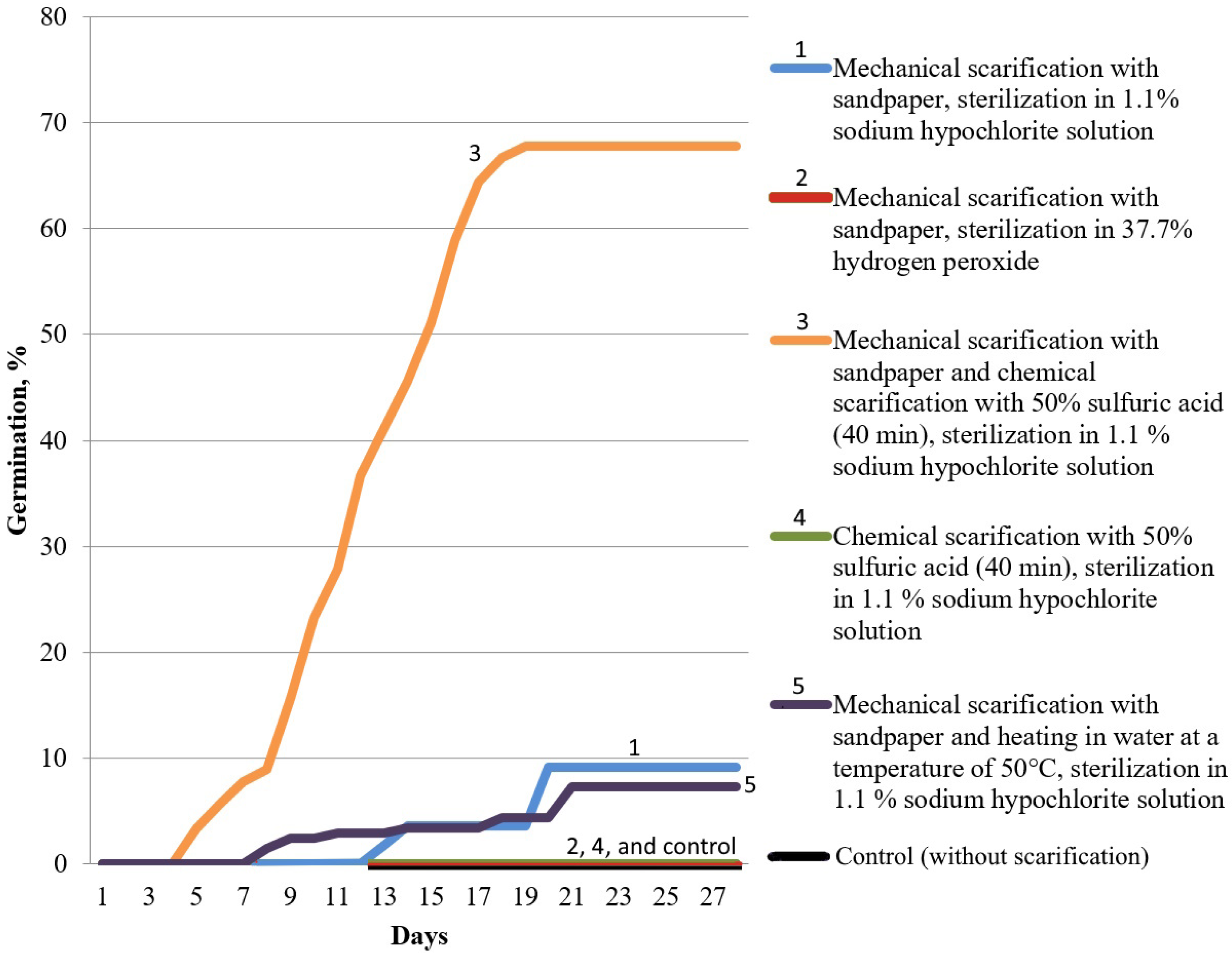
| Mechanical with sandpaper and chemical with 50% sulfuric acid (40 min) | 67.8 ± 0.0 | 16.2 ± 0.47 | 0 | 0 |
| Mechanical scarification with sandpaper and heating in water at a temperature of 50 °C | 7.3 ± 0.0 | 15.7 ± 0.24 | 0 | 0 |
| Scarification and Sterilizing Treatments | Mechanical Scarification with Sandpaper; Sterilization in 1.1% Sodium Hypochlorite Solution | Mechanical Scarification with Sandpaper; Sterilization in 37.7% Hydrogen Peroxide | Mechanical Scarification with Sandpaper and Chemical Scarification with 50% Sulfuric Acid (40 min); Sterilization in 1.1% Solution of Sodium Hypochlorite | Chemical with 50% Sulfuric Acid (40 min) Scarifications; Sterilization in 1.1% Solution of Sodium Hypochlorite | Mechanical Scarification with Sandpaper and Heating in Water at a Temperature of 50 °C; Sterilization in 1.1% Solution of Sodium Hypochlorite | |
|---|---|---|---|---|---|---|
| Plantlet development stages, days | Primary root emergence | 19–20 | 0 | 5–8 | 0 | 8–13 |
| Cotyledon growth and development | 23–27 | 0 | 10–15 | 0 | 15–20 | |
| True leaf formation | 28 | 0 | 17–20 | 0 | 22–26 | |
| Type of Medium | TDZ Concentration, mg·L−1 | % of Axillary Microshoot Proliferation | Weight of Microshoots, g | Number of Microshoots per Explant | Number of Internodes per Microshoot | Microshoot Length, cm | |
|---|---|---|---|---|---|---|---|
| Fresh | Dry | ||||||
| MS | 0.0 | 55.0 ± 0.50 b | 0.25 ± 0.05 c | 0.08 ± 0.04 bc | 0.75 ± 0.19 ab | 1.65 ± 0.60 a | 1.04 ± 0.40 ab |
| 0.05 | 70.0 ± 0.00 ab | 0.11 ± 0.02 abd | 0.06 ± 0.02 bc | 0.70 ± 0.10 ab | 0.55 ± 0.22 cd | 0.79 ± 0.18 b | |
| 0.1 | 60.0 ± 0.00 b | 0.08 ± 0.01 b | 0.04 ± 0.01 bc | 0.60 ± 0.10 a | 0.25 ± 0.10 d | 0.63 ± 0.16 b | |
| 0.5 | 95.0 ± 0.50 a | 0.06 ± 0.03 d | 0.04 ± 0.02 c | 1.05 ± 0.11 b | 0.05 ± 0.05 d | 0.68 ± 0.08 b | |
| MS with 2 × Fe-chelate | 0.0 | 55.0 ± 0.50 b | 0.05 ± 0.02 d | 0.03 ± 0.01 c | 0.75 ± 0.18 ab | 1.55 ± 0.40 ab | 0.64 ± 0.16 b |
| 0.05 | 70.0 ± 1.00 ab | 0.28 ± 0.06 c | 0.20 ± 0.06 a | 0.70 ± 0.11 ab | 1.20 ± 0.26 abc | 1.59 ± 0.29 a | |
| 0.1 | 80.0 ± 0.00 ab | 0.21 ± 0.04 a | 0.15 ± 0.03 ab | 0.85 ± 0.11 ab | 0.75 ± 0.19 bcd | 1.68 ± 0.27 a | |
| 0.5 | 85.0 ± 1.50 ab | 0.19 ± 0.06 abc | 0.13 ± 0.05 abc | 1.05 ± 0.14 b | 0.50 ± 0.14 cd | 1.15 ± 0.21 ab | |
| Significance of two-way ANOVA | |||||||
| TDZ concentration | * | ns | ns | * | * | ns | |
| Medium type | ns | * | ns | ns | ns | * | |
| TDZ concentration × Medium type | ns | * | * | ns | ns | * | |
| No | Compound | tR, Minutes | λmax, nm | Microshoots | In Situ Plants |
|---|---|---|---|---|---|
| Extract | |||||
| Hydroxycinnamic acids | |||||
| 1 | Hydroxycinnamic acid 1 | 6.9 | 220, 295sh., 314 | 0.46 ± 0.03 | 0.43 ± 0.02 |
| 2 | Hydroxycinnamic acid 2 | 9.3 | 200, 309 | 0.12 ± 0.01 | 0.08 ± 0.00 |
| 4 | p-Coumaric acid | 11.4 | 229, 313 | 0.56 ± 0.02 | 0.32 ± 0.01 |
| 5 | Hydroxycinnamic acid 5 | 12.2 | 219, 298sh., 325 | 0.08 ± 0.01 | 0.08 ± 0.00 |
| 19 | Hydroxycinnamic acid 19 | 23.4 | 238, 295sh., 329 | 0.11 ± 0.01 | 0.06 ± 0.00 |
| Total hydroxycinnamic acids * | 1.72 ± 0.14 | 1.71 ± 0.12 | |||
| Flavonoid glycosides | |||||
| 3 | Flavone glycoside 3 | 9.6 | 265, 350 | 0.25 ± 0.02 | ND |
| 7 | Flavonol glycoside 7 | 16.0 | 265, 295sh., 355 | 0.40 ± 0.03 | ND |
| 8 | Flavonol glycoside 8 | 16.5 | 268, 345 | 0.26 ± 0.01 | 0.24 ± 0.01 |
| 9 | Kaempferol glycoside | 18.5 | 266, 350 | 0.14 ± 0.01 | 0.14 ± 0.01 |
| 11 | Rutin | 18.9 | 256, 357 | ND | 0.04 ± 0.00 |
| 12 | Quercetin glycoside 12 | 20.4 | 252, 350 | ND | 0.36 ± 0.02 |
| 20 | Kaempferol glycoside 20 | 23.9 | 268, 348 | 0.46 ± 0.02 | 0.01 ± 0.00 |
| Total flavonoid glycosides | 1.51 ± 0.09 | 0.79 ± 0.03 | |||
| Acylated kaempferol glycosides | |||||
| 6 | Acylated kaempferol glycoside 6 | 15.2 | 218, 268, 318 | 0.25 ± 0.02 | 0.19 ± 0.01 |
| 10 | Acylated kaempferol glycoside 10 | 19.3 | 232sh., 269, 321 | 0.73 ± 0.05 | 0.11 ± 0.00 |
| 13 | Acylated kaempferol glycoside 13 | 20.7 | 231, 270, 318 | 0.30 ± 0.02 | 0.23 ± 0.01 |
| 14 | Acylated kaempferol glycoside 14 | 21.3 | 231, 271, 319 | 0.21 ± 0.01 | 0.06 ± 0.00 |
| 15 | Acylated kaempferol glycoside 15 | 21.6 | 266, 320 | 0.09 ± 0.01 | 0.08 ± 0.00 |
| 16 | Acylated kaempferol glycoside 16 | 22.1 | 231, 270, 319 | 0.27 ± 0.02 | 0.08 ± 0.00 |
| 17 | Acylated kaempferol glycoside 17 | 22.6 | 242, 265, 321 | 0.10 ± 0.01 | 0.03 ± 0.00 |
| 18 | Acylated kaempferol glycoside 18 | 23.0 | 225, 269, 315 | 0.21 ± 0.02 | 0.06 ± 0.00 |
| Total acylated kaempferol glycosides * | 2.76 ± 0.18 | 1.12 ± 0.05 | |||
| Total phenolic compounds | 5.99 ± 0.30 | 3.62 ± 0.15 | |||
| Hydrolyzed extract | |||||
| Kaempferol | 27.7 | 268, 368 | 0.98 ± 0.02 | 0.22 ± 0.01 | |
| Formononetin | 29.5 | 250, 302 sh. | 0.09 ± 0.00 | ND | |
Disclaimer/Publisher’s Note: The statements, opinions and data contained in all publications are solely those of the individual author(s) and contributor(s) and not of MDPI and/or the editor(s). MDPI and/or the editor(s) disclaim responsibility for any injury to people or property resulting from any ideas, methods, instructions or products referred to in the content. |
© 2026 by the authors. Licensee MDPI, Basel, Switzerland. This article is an open access article distributed under the terms and conditions of the Creative Commons Attribution (CC BY) license.
Share and Cite
Panova, U.; Kotsupiy, O.; Karpova, E.; Ambros, E. In Vitro Plantlet Regeneration and Accumulation of Phenolic Compounds in Microshoots of Astragalus glycyphyllos L. Int. J. Plant Biol. 2026, 17, 25. https://doi.org/10.3390/ijpb17040025
Panova U, Kotsupiy O, Karpova E, Ambros E. In Vitro Plantlet Regeneration and Accumulation of Phenolic Compounds in Microshoots of Astragalus glycyphyllos L. International Journal of Plant Biology. 2026; 17(4):25. https://doi.org/10.3390/ijpb17040025
Chicago/Turabian StylePanova, Ulyana, Olga Kotsupiy, Evgeniya Karpova, and Elena Ambros. 2026. "In Vitro Plantlet Regeneration and Accumulation of Phenolic Compounds in Microshoots of Astragalus glycyphyllos L." International Journal of Plant Biology 17, no. 4: 25. https://doi.org/10.3390/ijpb17040025
APA StylePanova, U., Kotsupiy, O., Karpova, E., & Ambros, E. (2026). In Vitro Plantlet Regeneration and Accumulation of Phenolic Compounds in Microshoots of Astragalus glycyphyllos L. International Journal of Plant Biology, 17(4), 25. https://doi.org/10.3390/ijpb17040025