Review

Fungal and Bacterial Dysbiosis in Attention-Deficit/Hyperactivity Disorder: Implications for Candida, Diet, Probiotics, and Quality of Life—A Narrative Review


by
Veroslava V. Stankovic
1,
Dragana P. Jovic
2 and
Natasa K. Rancic
3,4,*
1
The College of Health Science, Academy of Applied Studies, Cara Dusana 254, 11 080 Zemun, Serbia
2
Institute of Public Health of Serbia “Dr. Milan Jovanović Batut”, Dr. Subotića Starijeg 5, 11 000 Belgrade, Serbia
3
Faculty of Medicine, University of Nis, 81, 18 000 Nis, Serbia
4
Institute for Public Health, Bulevar Dr. Zorana Djindjica 48, 18 000 Nis, Serbia
*
Author to whom correspondence should be addressed.
Microbiol. Res. 2026, 17(7), 124; https://doi.org/10.3390/microbiolres17070124
Submission received: 13 May 2026 / Revised: 19 June 2026 / Accepted: 22 June 2026 / Published: 30 June 2026

Abstract

Attention-deficit/hyperactivity disorder (ADHD) is a complex neurodevelopmental disorder increasingly discussed within the microbiota-gut–brain axis. This narrative review synthesizes evidence on bacterial and fungal dysbiosis in ADHD, with emphasis on Candida spp., diet, probiotics, synbiotics, and health-related quality of life. A structured narrative search of PubMed/MEDLINE, Scopus, and KoBSON-accessible sources was performed for studies addressing ADHD, gut microbiota, mycobiome, Candida, nutrition, microbiome-targeted interventions, and quality of life. Evidence was synthesized thematically because of methodological heterogeneity. Available studies suggest that ADHD may be associated with altered gut microbial diversity, changes in taxa such as Faecalibacterium, Blautia, Odoribacter, and Enterococcus, and immune–metabolic alterations. However, findings are heterogeneous and do not support a single ADHD-specific microbial signature. The fungal component remains insufficiently investigated, although evidence indicates increased Candida, particularly Candida albicans, in children with ADHD and a possible link with intestinal permeability. Dietary quality, micronutrient status, probiotics, and synbiotics may modulate microbiota–gut–brain pathways, but should be considered complementary and individualized, particularly in patients with gastrointestinal, dietary, immune, or metabolic vulnerability. Bacterial and fungal dysbiosis may represent biologically plausible, primarily associative components of ADHD-related pathophysiology. Evidence remains preliminary, exploratory, non-causal, and requires cautious interpretation in future research and clinical settings.

1. Introduction

Attention-deficit/hyperactivity disorder (ADHD) is a complex neurodevelopmental disorder characterized by persistent patterns of inattention, hyperactivity, and/or impulsivity, with significant consequences for cognitive, emotional, academic, and psychosocial functioning [1]. Epidemiological studies have demonstrated notable sex differences in ADHD prevalence, with males being diagnosed more frequently than females [2,3]. The childhood prevalence is higher in males than in females but adult females with ADHD are reporting more severe impairment. Available evidence suggests that boys are affected at approximately twice the rate of girls [3], but this disparity becomes less pronounced with age [3]. In recent decades, the prevalence of mental health disorders among adolescents, including ADHD and internalizing conditions, has increased substantially across Western countries [4]. Current estimates indicate that ADHD affects a considerable proportion of the adult population, with a pooled prevalence of 3.10% [3].
Although ADHD has traditionally been explained through genetic, neurochemical, and neurodevelopmental mechanisms, recent evidence suggests that biological systems outside the central nervous system may also contribute to its pathophysiology. In this context, the microbiota–gut–brain axis has gained increasing attention as a potential pathway linking intestinal microbial composition, immune regulation, metabolic activity, and brain function in children and adolescents with ADHD [1].
The microbiota–gut–brain axis represents a bidirectional communication network between the gastrointestinal tract and the central nervous system, mediated through neural, endocrine, immune, and metabolic pathways and it is essential for preserving physiological equilibrium as well as shaping neurodevelopment [5] processes and behavior [6,7,8,9]. The gut microbiota may contribute to neurodevelopmental processes and behavioral regulation through multiple interconnected pathways, such as altering intestinal barrier function, generating short-chain fatty acids (SCFAs) and other bioactive microbial metabolites, modulating immune and inflammatory activity, communicating with the hypothalamic–pituitary–adrenal axis, and influencing pathways involved in neurotransmitter synthesis and signaling. Communication along this axis occurs through interconnected neural, immune, and endocrine pathways, in which the gut microbiota—a highly diverse microbial ecosystem inhabiting the gastrointestinal tract—plays a fundamental regulatory role [5,6,7,8]. Through the production of bioactive metabolites, including SCFAs and precursors of neurotransmitters, as well as through modulation of immune signaling and maintenance of blood–brain barrier integrity, the gut microbiota exerts a significant influence on central nervous system function [7]. Disruptions in microbial composition and function, commonly referred to as dysbiosis, have been increasingly associated with a range of neurodevelopmental and psychiatric conditions, such as autism spectrum disorder, anxiety disorders, depression, and attention-deficit/hyperactivity disorder [10]. Although there is evidence supporting the involvement of the microbiome–gut–brain axis in ADHD, the most common neurodevelopmental disorder of childhood, the available findings remain limited and heterogeneous [11,12].
Aarts et al. [13] hypothesized that the gut microbiome may be involved in dopaminergic signaling abnormalities associated with ADHD, but no causal relationship was demonstrated. Jiang et al. [14] demonstrated that the composition of the gut microbiota differs between children with ADHD and healthy controls, with specific bacterial taxa being associated with symptom severity. However, the study employed an observational, cross-sectional design; therefore, the findings indicate an association but do not support conclusions regarding a causal relationship between alterations in the gut microbiota and ADHD. Consequently, this study provides evidence of association rather than causality.
Gkougka et al. [15] concluded that there is evidence supporting an association between alterations in the gut microbiota and ADHD; however, the currently available data are insufficient to establish a causal relationship. Given the heterogeneity of the included studies and the limitations of the existing evidence, further longitudinal and experimental research is required to clarify the potential role of the gut microbiome in the pathophysiology of ADHD.
More recently Ghosh and Singh [16], in their systematic review and meta-analysis, demonstrated indications of alterations in the gut microbiota composition in ADHD, which may suggest dysbiosis; however, due to the heterogeneity of the conducted studies and often contradictory findings, causal conclusions cannot be drawn, and potential dietary interventions remain in the preliminary stages of investigation. The meta-analytic approach indicates the presence of certain consistent, albeit relatively modest, differences in the gut microbiota between individuals with ADHD and controls. A pattern of dysbiosis (microbial imbalance) is suggested; however, no single taxon has been identified that could serve as a reliable biomarker for ADHD. The results are affected by substantial heterogeneity across studies (including differences in methodology, age, diet, and geographic factors). The systematic review also discusses potential dietary and microbiome-based interventions, while emphasizing that evidence for therapeutic effects remains preliminary. No causal relationship between the microbiome and ADHD can be established.
Most available ADHD microbiome studies have focused primarily on bacterial communities, while fungal dysbiosis and the gut mycobiome remain substantially underrepresented in the literature. This is an important research gap because fungal dysbiosis, particularly involving Candida species, may interact with bacterial communities, intestinal permeability, immune activation, and inflammatory pathways. In addition, few reviews have attempted to integrate bacterial and fungal findings with intestinal permeability, immune-inflammatory signaling, dietary factors, microbiome-targeted interventions, and health-related quality of life within a unified microbiota–gut–brain framework. Therefore, the present review aims not only to summarize existing evidence but also to provide an integrative translational perspective on how microbial, nutritional, immune, and psychosocial factors may interact in ADHD.
This narrative review aims to synthesize current evidence on fungal and bacterial dysbiosis in ADHD, with particular emphasis on Candida, and to discuss potential implications for dietary strategies, probiotic interventions, and quality of life. By integrating available microbiome findings with nutritional and clinical perspectives, this review seeks to identify relevant mechanisms, current limitations, and future directions for research and clinical practice.

2. Materials and Methods

2.1. Study Design

This paper was designed as a structured narrative review of the current literature on fungal and bacterial dysbiosis in ADHD, with particular emphasis on Candida spp. and their potential implications for diet, probiotic and synbiotic interventions, and health-related quality of life. Since this review was narrative rather than systematic, the selection and interpretation of studies may have been influenced by methodological heterogeneity and publication availability. No quantitative synthesis or meta-analysis was performed.

2.2. Literature Search Strategy

Literature searches were performed using PubMed/MEDLINE, Scopus, and KoBSON-accessible databases. The search was focused on studies published up to April 2026. No strict lower date limit was applied; however, priority was given to studies published from 2015 onward because of the rapid development of microbiome research and sequencing-based methods.
The following keywords and combinations were used:
“Attention Deficit Disorder with Hyperactivity” OR ADHD OR “attention-deficit/hyperactivity disorder”; “gut microbiota”; “gut microbiome”; “intestinal microbiota”; dysbiosis; “microbiota-gut-brain axis”; Candida; mycobiome; fungi; “fungal dysbiosis”; Candida albicans; probiotics; synbiotics; Lactobacillus; Bifidobacterium; diet; nutrition; “dietary patterns”; “elimination diet”; omega-3; “quality of life”; HRQoL; and “health-related quality of life”.
Where available, Medical Subject Headings were also used, including “Attention Deficit Disorder with Hyperactivity”, “Gastrointestinal Microbiome”, “Dysbiosis”, “Probiotics”, “Diet”, and “Quality of Life”.

2.3. Eligibility Criteria

Studies were included if they addressed one or more of the following topics: gut microbiota composition in individuals with ADHD; bacterial dysbiosis and ADHD-related symptoms; gut mycobiome alterations or fungal dysbiosis in ADHD; Candida spp. in relation to intestinal permeability, inflammation, or neurodevelopmental mechanisms; dietary patterns and nutritional interventions in ADHD; probiotic or synbiotic supplementation; and health-related quality of life in children, adolescents, or adults with ADHD.
The review included original clinical studies, case–control studies, cross-sectional studies, interventional studies, randomized controlled trials, systematic reviews, meta-analyses, and relevant narrative reviews. Mechanistic and experimental studies were included when they provided biologically plausible explanations related to intestinal permeability, immune activation, microbial metabolites, or gut–brain communication.
Articles were excluded if they were not related to ADHD, did not address gut microbiota, dysbiosis, fungal microbiome, diet, probiotics, synbiotics, or quality of life, or if they were conference abstracts without sufficient methodological and result details. Non-scientific sources, opinion articles without references, duplicate records, and articles without accessible abstracts or bibliographic data were also excluded.

2.4. Study Selection and Data Extraction

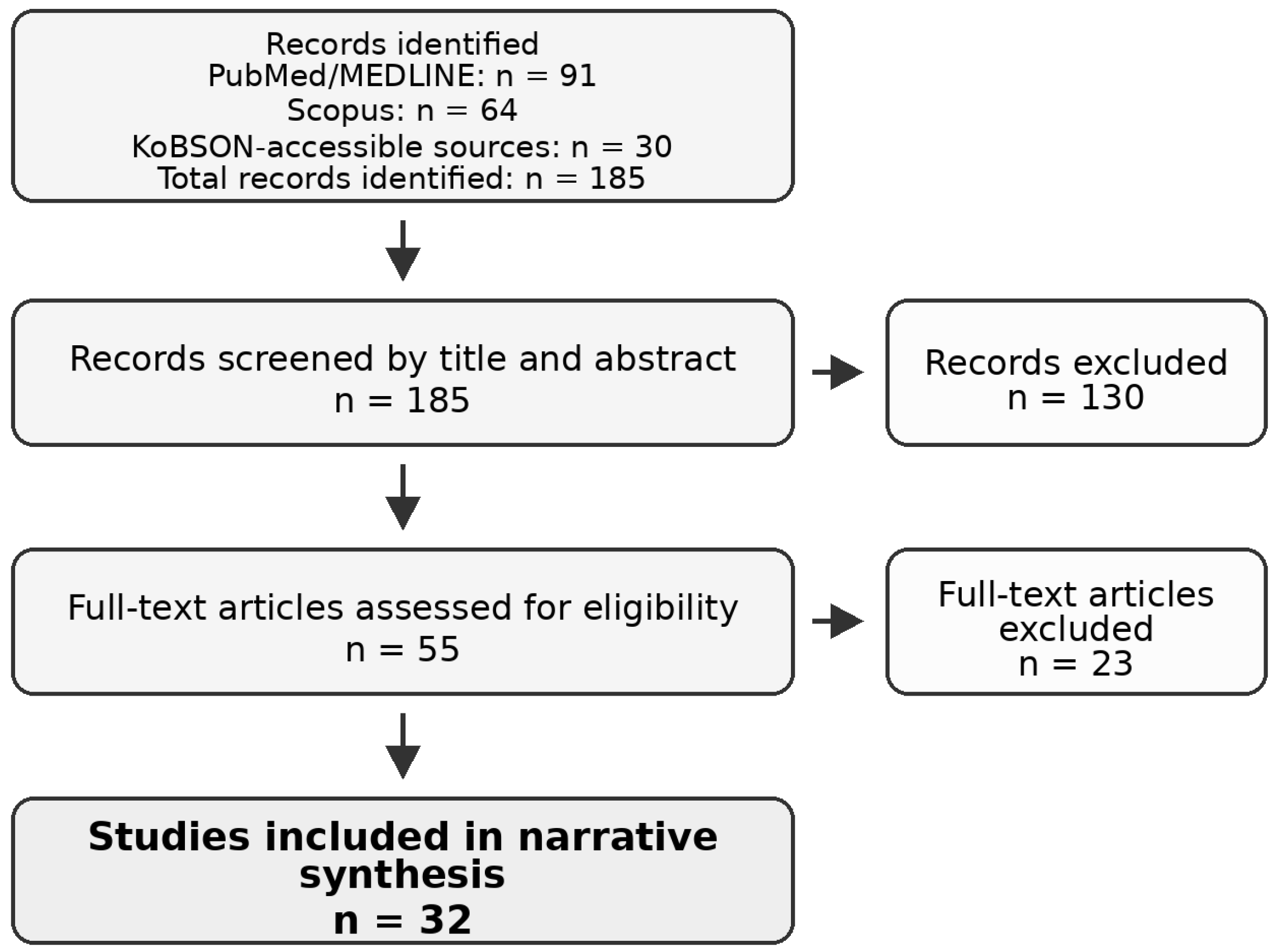
The selection process included title and abstract screening, full-text evaluation of potentially relevant publications, and thematic grouping according to the main focus of the review. A PRISMA-style flow diagram (Figure 1) was prepared to increase transparency of the literature selection process, including the number of records identified, screened, excluded, and included in the final narrative synthesis.
For each selected publication, relevant data were extracted when available, including author, year of publication, country, study design, study population, sample size, age group, diagnostic criteria for ADHD, microbiome assessment method, main bacterial or fungal taxa reported, dietary or probiotic intervention, clinical outcomes, quality-of-life outcomes, and key conclusions.
Greater interpretive emphasis was placed on randomized controlled trials, systematic reviews, meta-analyses, treatment-naïve cohorts, and studies integrating microbiome findings with mechanistic or clinical outcomes.

2.5. Narrative Synthesis

The extracted evidence was synthesized narratively and organized into thematic sections: ADHD and the microbiota–gut–brain axis; bacterial dysbiosis in ADHD; fungal dysbiosis and Candida spp. intestinal permeability, immune-inflammatory signaling, and microbial metabolites; dietary patterns and nutritional interventions; probiotics and synbiotics; health-related quality of life; discussion of microbiome heterogeneity and interpretive caution; translational and clinical implications; strengths of this review; and methodological limitations and future directions.
Because of heterogeneity in study design, study populations, sequencing methods, dietary assessment, medication status, and clinical outcomes, the findings were interpreted qualitatively, with emphasis on consistency of results, biological plausibility, methodological quality, and clinical relevance.
A knowledge gaps table (Table 1) was also prepared to summarize the main limitations of the existing literature and to identify priorities for future research.

2.6. Ethical Considerations

As this study was based exclusively on previously published literature and did not involve direct participation of human subjects, patient data collection, or experimental procedures, approval from an ethics committee was not required.

3. Bacterial and Fungal Dysbiosis in ADHD

3.1. Bacterial Dysbiosis

Gut dysbiosis has increasingly been considered a relevant biological factor in the multifactorial pathophysiology of ADHD. The term dysbiosis refers to qualitative and quantitative disturbances in the intestinal microbial ecosystem, including changes in microbial diversity, altered abundance of specific bacterial or fungal taxa, reduced production of beneficial metabolites, impaired intestinal barrier function, and dysregulated immune signaling. In ADHD, dysbiosis is of particular interest because the gut microbiota may influence neurodevelopmental and behavioral processes through the microbiota–gut–brain axis, including modulation of neurotransmitter metabolism, SHFAs production, systemic inflammation, intestinal permeability and immune-neuroendocrine communication [15,16].
Several investigations have demonstrated variations in the composition of the intestinal bacterial microbiota between individuals diagnosed with ADHD and healthy control populations. Jiang et al. [14] investigated treatment-naïve children with ADHD and found a reduced abundance of Faecalibacterium, which was negatively associated with ADHD symptom severity. This finding is relevant because Faecalibacterium is considered an important butyrate-producing genus with anti-inflammatory properties and a potential role in maintaining intestinal epithelial integrity. A reduction in butyrate-producing bacteria may therefore contribute to low-grade inflammation, impaired intestinal barrier function, and altered gut–brain signaling, although causal conclusions cannot be drawn from cross-sectional data.
Prehn-Kristensen et al. also observed reduced alpha diversity in young patients with ADHD compared with controls, suggesting a less diverse intestinal microbial ecosystem in affected individuals [17]. Reduced microbial diversity is commonly regarded as an indicator of diminished ecological stability within the gut ecosystem and has been linked to various inflammatory, metabolic, and neuropsychiatric disorders. However, findings regarding microbial diversity in ADHD are not entirely consistent across studies. Some investigations have shown reduced diversity, while others found no significant differences or even increased diversity indices, probably due to differences in sample size, age, diet, medication status, geographic background, sequencing methods, and bioinformatic pipelines [18,19].
At the taxonomic level, several bacterial genera have been repeatedly discussed in relation to ADHD, including Faecalibacterium, Bifidobacterium, Blautia, Odoribacter, Enterococcus, Agathobacter, and members of the families Lachnospiraceae and Ruminococcaceae. Wan et al. reported significant differences in gut microbiota composition in children with ADHD, including reduced Faecalibacterium and Veillonellaceae and increased Odoribacter and Enterococcus. Functional pathway analysis suggested that microbial alterations may be linked to neurotransmitter-related metabolic pathways, including dopamine and serotonin metabolism [20]. These findings are important because ADHD has traditionally been associated with altered dopaminergic and noradrenergic signaling, while gut microbiota may indirectly influence neurotransmitter availability through microbial metabolites, amino-acid metabolism, and immune modulation [21].
A systematic review and meta-analysis by Wang et al. [19] included eight studies with 316 patients with ADHD and 359 healthy controls. The authors found evidence of gut microbiome alterations in ADHD, although results were highly heterogeneous. Among specific taxa, Blautia was significantly increased in patients with ADHD compared with controls, while no stable differences were found at broader phylum or family levels [19]. These results suggest that ADHD is unlikely to be characterized by a single universal microbial signature. Instead, dysbiosis in ADHD may reflect a complex and individualized microbial pattern influenced by diet, medication exposure, gastrointestinal symptoms, immune status, lifestyle, and comorbidities [17,18]. This is clinically relevant because children with ADHD may have selective eating patterns, a higher preference for processed foods, irregular meals or altered appetite due to medication. These factors may influence the abundance of beneficial bacteria, production of SCFAs, and inflammatory tone. Therefore, nutritional assessment should be considered an important component of microbiome-oriented research and clinical evaluation in ADHD [21].
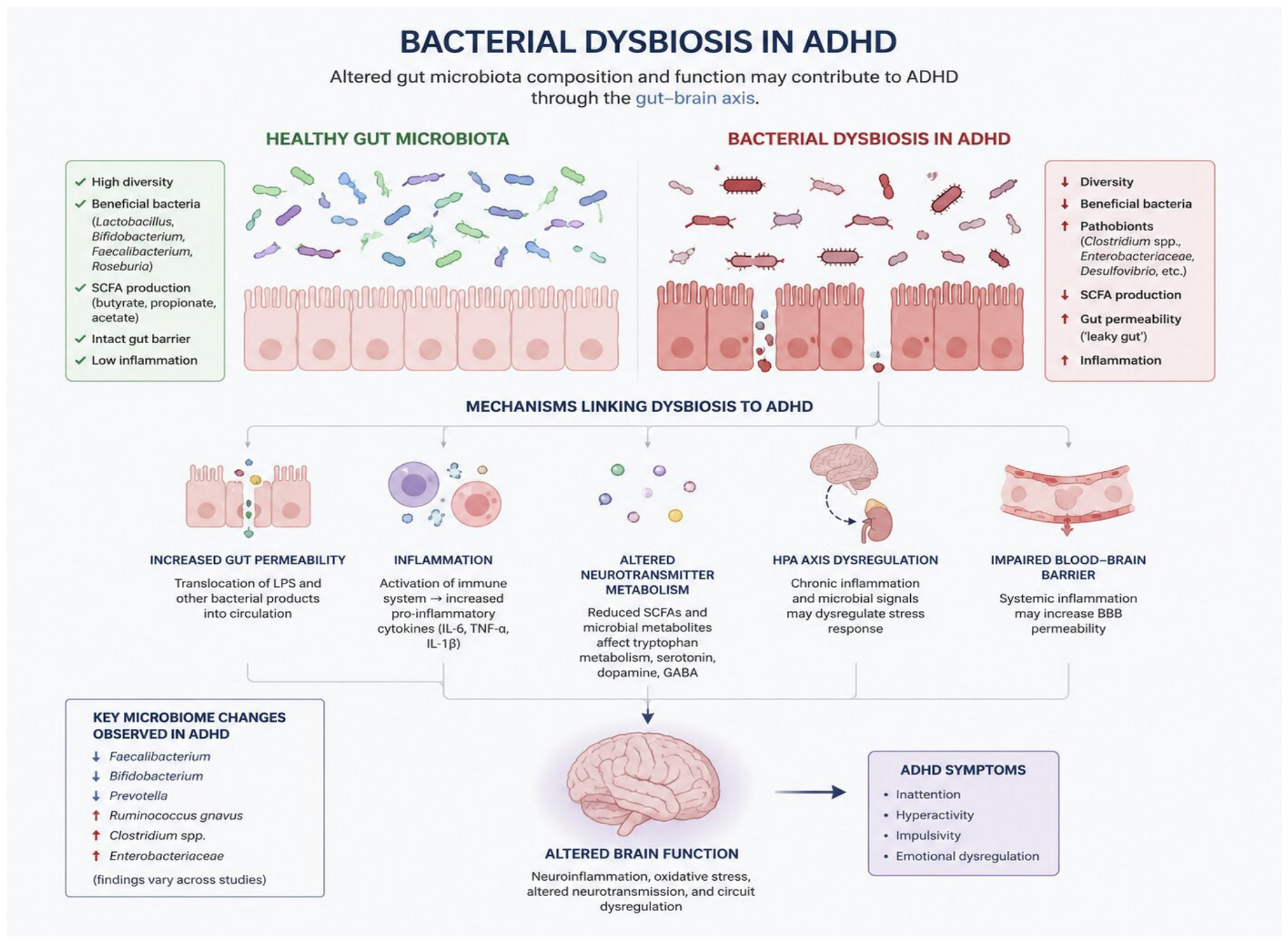
The immune-inflammatory dimension of dysbiosis is also relevant. Wang et al. [22] investigated gut microbiota and plasma cytokine levels in children with ADHD and found differentially abundant bacterial taxa, including Agathobacter, Anaerostipes, and Lachnospiraceae UCG-010. The authors also reported associations among gut microbiome diversity, ADHD symptoms, and TNF-alpha levels, suggesting that gut dysbiosis may be linked to immune dysregulation in ADHD [11]. These findings support the hypothesis that microbial imbalance may contribute to ADHD-related neurobiological processes not only through neurotransmitter metabolism but also through inflammatory signaling and immune-brain communication (Figure 2).
Additional treatment-naïve cohorts and broader systematic reviews also support the relevance of gut microbial patterns in ADHD, while emphasizing substantial methodological variability [14]. Taken together, current findings indicate that bacterial dysbiosis is a promising but still heterogeneous field of ADHD research, requiring larger cohorts, standardized sequencing approaches, detailed dietary assessment, and careful control for medication, gastrointestinal symptoms, and psychiatric comorbidities (Table 2).

3.2. Fungal Dysbiosis and Candida

In addition to bacterial dysbiosis, fungal dysbiosis has recently emerged as an important but underexplored component of ADHD-related gut microbiome research. The fungal microbiome, or mycobiome, represents a smaller but biologically active component of the intestinal ecosystem. Fungal microorganisms may interact with bacterial communities, regulate mucosal immune activity, affect intestinal barrier integrity, and participate in the development of inflammatory responses. Despite this relevance, most ADHD microbiome studies have focused almost exclusively on bacterial communities, while the role of fungi has remained insufficiently investigated [15,16].
The most directly relevant study on fungal dysbiosis in ADHD was conducted by Wan et al. [12]. In this case–control study, fecal samples from 35 children with ADHD and 35 healthy controls were analyzed using next-generation sequencing of internal transcribed spacer regions. The authors reported significant differences in gut fungal community composition between the ADHD and control groups. At the phylum level, children with ADHD showed a higher relative abundance of Ascomycota and a lower relative abundance of Basidiomycota. At the genus level, Candida was significantly more abundant in the ADHD group, with Candida albicans identified as the dominant species [10,22].
An important methodological strength of the study by Wan et al. was the additional use of an in vitro intestinal epithelial model. The authors demonstrated that secretions from Candida albicans increased the permeability of Caco-2 intestinal epithelial cells, suggesting a possible mechanistic association between fungal dysbiosis, impaired intestinal barrier function, and ADHD-related biological pathways [23]. These findings provide the strongest currently available direct evidence linking gut mycobiome alterations, particularly increased Candida albicans abundance, with ADHD. However, given the cross-sectional design and relatively small sample size, these results should be interpreted as associative rather than causal.
The finding of increased Candida albicans in children with ADHD is clinically and biologically relevant because Candida albicans is both a commensal organism and an opportunistic fungus. Richarte et al. (2021) [24] identified a distinct gut microbiota signature in treatment-naïve children and adolescents with ADHD. Several bacterial taxa differed significantly from healthy controls, and these microbial alterations were associated with ADHD symptom severity, supporting a potential role of the gut–brain axis in the disorder’s pathophysiology [24]. Under physiological conditions, Candida species may coexist within the intestinal ecosystem without causing pathological effects. However, under conditions of microbial imbalance, impaired mucosal immunity, frequent antibiotic exposure, high intake of refined carbohydrates or altered epithelial barrier function, Candida may become more metabolically active and contribute to disruption of the bacterial-fungal equilibrium. In this context, increased Candida abundance may be interpreted as one component of a broader dysbiotic state rather than as an isolated etiological factor in ADHD [25,26].
Hadrich et al. [27] provided a broader theoretical framework for understanding the role of the gut mycobiome in neuropsychiatric disorders [24]. Their review highlights the potential role of fungal communities in neuroinflammatory processes, immune imbalance, disruption of the intestinal barrier, and changes in pathways associated with neurotransmitter activity. In relation to ADHD, Hadrich et al. specifically discuss the findings of Wang et al. [26] highlighting the increased abundance of Candida, particularly Candida albicans, and its association with intestinal permeability. This broader perspective is relevant because it places ADHD within a wider neuropsychiatric context in which gut mycobiome alterations may influence host immunity, microbial metabolites, and gut–brain axis communication.
The possible role of Candida has also been discussed in the context of autism spectrum disorder by Herman and Herman [28]. Although autism spectrum disorder and ADHD are distinct neurodevelopmental conditions, they may share certain overlapping features, including gastrointestinal symptoms, immune dysregulation, altered microbial composition, and behavioral manifestations. Herman and Herman reviewed the hypothesis that intestinal Candida overgrowth could be involved in the pathophysiology of autism spectrum disorder through mechanisms related to gastrointestinal dysfunction, immune activation, and microbial imbalance [28]. While this evidence cannot be directly extrapolated to ADHD, it provides a useful comparative neurodevelopmental framework for discussing why Candida has become a topic of interest in microbiome-related research.
Current data (Table 3) do not support the conclusion that Candida is a causal factor in ADHD. Rather, increased Candida albicans abundance should be interpreted as a potential marker or component of gut fungal dysbiosis that may interact with intestinal permeability, immune activation, and signaling along the microbiota–gut–brain axis. Integrated analyses of bacterial microbiota, fungal mycobiome, metabolomics, inflammatory markers, dietary factors, medication exposure, and intestinal barrier function may help clarify the relevance of these associations. Among fungal organisms, Candida albicans has received the greatest attention because of its ability to influence intestinal permeability, immune activation, and microbial community structure. However, the gut mycobiome is considerably more diverse and includes other genera such as Candida, Saccharomyces, Malassezia, Cladosporium, Debaryomyces, Aspergillus, and Penicillium, several of which have been implicated in gastrointestinal, metabolic, inflammatory, and neurodevelopmental conditions. Although evidence linking these fungi specifically to ADHD remains limited, emerging studies suggest that alterations in fungal diversity and fungal–bacterial interactions may contribute to gut ecosystem instability and altered gut–brain communication. Consequently, future ADHD microbiome research should move beyond a sole focus on bacterial taxa or individual fungal species and instead adopt an integrated view of the microbiome and mycobiome as interacting components of a complex ecological network.

4. Mechanisms: Intestinal Permeability, Inflammation, Short-Chain Fatty Acids, and Neurotransmitter Pathways

The potential association between gut dysbiosis and ADHD is biologically plausible through several interconnected mechanisms involving intestinal permeability, immune-inflammatory signaling, microbial metabolites, and neurotransmitter-related pathways. These mechanisms should not be interpreted as independent processes, but rather as components of a complex microbiota–gut–brain axis in which intestinal microbial communities may influence neurodevelopmental and behavioral regulation through metabolic, immune, endocrine, and neural routes [6,7,10,23,25].

4.1. Impaired Intestinal Barrier Function

One of the central mechanisms linking dysbiosis with neurodevelopmental vulnerability is impaired intestinal barrier function. The intestinal epithelial barrier normally regulates the selective passage of nutrients, microbial metabolites and immune signals while preventing excessive translocation of microbial components. In the context of fungal dysbiosis, Wang et al. demonstrated that children with ADHD had increased abundance of Candida, particularly Candida albicans, and that secretions from Candida albicans increased the permeability of Caco-2 intestinal epithelial cells [26]. This finding suggests that fungal dysbiosis may contribute to disruption of epithelial barrier integrity and increased intestinal permeability may facilitate the passage of microbial antigens, fungal cell wall components, and inflammatory mediators, thereby promoting systemic immune activation and potentially influencing central nervous system signaling through the microbiota–gut–brain axis [25]. The increased abundance of Candida species observed in individuals with ADHD, together with age-related changes in early-life fungal colonization, may reflect a broader disruption of the gut microbial ecosystem extending beyond bacterial populations. Candida albicans can undergo excessive proliferation and transition from its yeast form to the pathogenic hyphal form. During this process, it expresses adhesion molecules and releases toxins, thereby damaging the intestinal mucosal barrier and increasing intestinal permeability [23]. Also, Candida species may contribute to impairment of the intestinal barrier by promoting mucosal inflammation and disrupting epithelial tight junction integrity, thereby acting synergistically with other dysbiotic processes [26,27].
Inflammatory signaling represents another important pathway through which gut dysbiosis may be related to ADHD. The role of inflammatory cytokines is particularly relevant because cytokines may influence neurodevelopment, synaptic plasticity, neurotransmitter metabolism, and blood–brain barrier function [22]. Low-grade systemic inflammation can affect brain function indirectly through humoral pathways, vagal signaling, endothelial activation, and immune-neural communication. In this framework, altered gut microbial composition may contribute to immune dysregulation, while immune mediators may, in turn, affect attentional control, emotional regulation and behavioral inhibition. However, current evidence remains associative, and it is not yet possible to determine whether inflammatory changes are a cause, consequence or parallel biological correlate of ADHD [18].
Wang et al. investigated the association between gut microbiota composition and plasma cytokine levels in children with ADHD and reported differences in both microbial taxa and immune markers [22]. Their findings indicated that gut microbiome diversity was associated with TNF-alfa tumor necrosis factor-alpha levels and ADHD symptom measures, suggesting a possible interaction between microbial ecology, immune regulation and clinical phenotype. Although the direction of this association remains uncertain, these data support the hypothesis that immune-inflammatory mechanisms may represent one of the biological links between intestinal dysbiosis and ADHD-related manifestations. SCFAs, particularly acetate, propionate, and butyrate, are important microbial metabolites that may mediate communication between the gut microbiota and the central nervous system. SCFAs are produced mainly through bacterial fermentation of dietary fibers and resistant starches. Among them, butyrate is especially important for maintaining intestinal epithelial integrity, regulating mucosal immunity, modulating inflammatory responses and supporting metabolic homeostasis. A reduction in butyrate-producing bacteria, such as Faecalibacterium, which has been reported in treatment-naïve children with ADHD, may therefore be relevant for understanding how bacterial dysbiosis could contribute to impaired barrier function and altered immune signaling [3,4,5,11]. Among the most consistently reported microbial alterations in ADHD is a decreased abundance of Faecalibacterium and Alistipes. Faecalibacterium is one of the principal butyrate-producing genera in the gut and plays a critical role in preserving intestinal barrier function, regulating neuroinflammatory responses, modulating microglial activity, and supporting neurotransmitter production [28]. As butyrate is a potent histone deacetylase (HDAC) inhibitor [29], reduced levels may influence the expression of neurotrophic factors, including brain-derived neurotrophic factor (BDNF), particularly within the prefrontal cortex, a region essential for attention regulation and executive functioning and strongly implicated in ADHD pathophysiology. Likewise, Alistipes contributes to host metabolism through the production of metabolites such as succinate and acetate and through its involvement in tryptophan metabolism [30]. Alterations in these metabolic pathways may affect both serotonin biosynthesis and kynurenine pathway activity, mechanisms that are closely linked to emotional regulation, stress responsiveness, and cognitive function [31].
Yang et al. [29] investigated the effects of a synbiotic intervention on plasma immune activity markers and SCFAs in children and adults with ADHD. These authors in a randomized controlled trial, demonstrated that synbiotic intervention may modulate immune biomarkers and SCFAs profiles in individuals with ADHD, indicating a biological effect on the gut–immune–metabolic axis [29,30,31,32]. However, the study does not provide sufficient evidence to support its clinical efficacy in the treatment of ADHD symptoms [30,31].

4.2. Neurotransmitter Dysregulation, Gut Dysbiosis, and ADHD

Neurotransmitter-related pathways are also central to mechanistic models linking dysbiosis and ADHD. Aarts et al. provided one of the first studies connecting the gut microbiome with neural reward processing in ADHD [13]. Their study reported increased predicted microbial function related to dopamine precursor synthesis in individuals with ADHD, and this functional microbial alteration was associated with reduced neural reward anticipation. This is particularly relevant because altered dopaminergic signaling and impaired reward processing are well-established components of ADHD pathophysiology. Although predicted microbial function does not directly prove altered dopamine production in the host, the study supports the concept that gut microbial activity may be associated with neurobiological systems involved in motivation, reward, and behavioral regulation. Catecholamines (epinephrine, norepinephrine, and dopamine), are also involved in the regulation of the intestinal immune system by suppressing mucosal immune responses while simultaneously enhancing the virulence and pathogenicity of certain bacterial species [33]. Alterations in neurotransmitter systems, particularly in the catecholaminergic pathways involving dopamine and norepinephrine, represent a central feature of ADHD neuropathology [32]. Both norepinephrine and dopamine contribute to the neuromodulation of brain regions and neural networks implicated in the development and manifestation of ADHD [33,34]. Serotonin deficiency has likewise been associated with pathological mechanisms underlying hyperactivity and impulsivity in individuals with ADHD [35,36,37]. In addition, the pathophysiology of ADHD involves gut microbiota dysbiosis, inflammation, and oxidative stress. Differences in gut microbial composition observed in individuals with ADHD may contribute to impaired intestinal barrier integrity, systemic inflammation, and neuroinflammation [38,39]. Prenatal, perinatal, and postnatal environmental factors may contribute to ADHD development and symptom severity. These include maternal stress, substance use, toxin exposure, preterm birth, low birth weight, cesarean delivery, environmental pollutants, allergies, gut microbiota disturbances, and limited breastfeeding [40].
Neuroimmune communication represents an integrative pathway connecting intestinal dysbiosis, inflammation, microbial metabolites, and brain function. Signals originating in the gut may reach the central nervous system through several routes, including circulating cytokines, microbial metabolites, vagal nerve pathways, hypothalamic–pituitary–adrenal axis modulation and changes in blood–brain barrier permeability. In ADHD, such mechanisms may contribute to altered regulation of attention, arousal, reward sensitivity, and emotional reactivity. Importantly, these pathways are likely to be bidirectional: ADHD-related dietary patterns, stress, sleep disturbances, medication use, and behavioral characteristics may also influence gut microbiota composition and immune–metabolic status. Taken together, current evidence suggests that intestinal permeability, inflammatory cytokines, SCFAs, and neurotransmitter-related pathways may represent interconnected mechanisms through which bacterial and fungal dysbiosis could be associated with ADHD. Evidence linking Candida albicans with epithelial permeability [26], gut microbiota with cytokine profiles [22], synbiotics with immune markers and SCFAs [18], and microbial functional pathways with neural reward anticipation [39] supports a biologically plausible framework.

4.3. Short-Chain Fatty Acids and Gut Microbiota in ADHD Pathophysiology

Short-chain fatty acids (SCFAs) exert a wide range of physiological effects, including the regulation of immune responses, appetite control, calcium absorption, and glucose metabolism [41]. Beyond their peripheral functions, SCFAs contribute to the maintenance of blood–brain barrier (BBB) integrity, thereby limiting the entry of potentially harmful substances into the central nervous system [42]. Because SCFAs can cross the BBB, they are also able to influence neurodevelopment by modulating the synthesis of key neurotransmitters, particularly serotonin and dopamine [42,43,44]. These effects are mediated, at least in part, through the activation of free fatty acid receptors 2 and 3 (FFA2 and FFA3), which are expressed in several brain regions [45]. Among SCFAs, propionic acid has attracted particular interest because of its ability to promote neuroregenerative processes through FFA receptor–dependent signaling pathways and inhibition of class I and II histone deacetylases (HDACs) [46]. Butyrate, in particular, plays a pivotal role in controlling inflammatory responses by regulating the expression of forkhead box protein P3 (Foxp3), a key transcription factor involved in maintaining immune tolerance and suppressing excessive inflammation [47]. Acetate has also emerged as an important mediator of gut–brain communication. Experimental studies have demonstrated that oral acetate supplementation can ameliorate social behavior deficits and modify gene expression patterns within the medial prefrontal cortex of mice carrying a deletion of exons 4–22 in the Shank3 gene [48]. In addition, acetate contributes to lipid metabolism and glucose homeostasis [48,49]. In murine models, dietary fructose can be converted by gut microorganisms into acetate, which subsequently serves as a precursor of acetyl-CoA for de novo lipid synthesis [48]. Furthermore, acetate exerts anti-inflammatory effects by inhibiting NF-κB signaling and reducing the production of pro-inflammatory mediators, including lipopolysaccharide-induced TNF-α [49]. However, these findings remain associative, and their causal and clinical significance is not yet established.
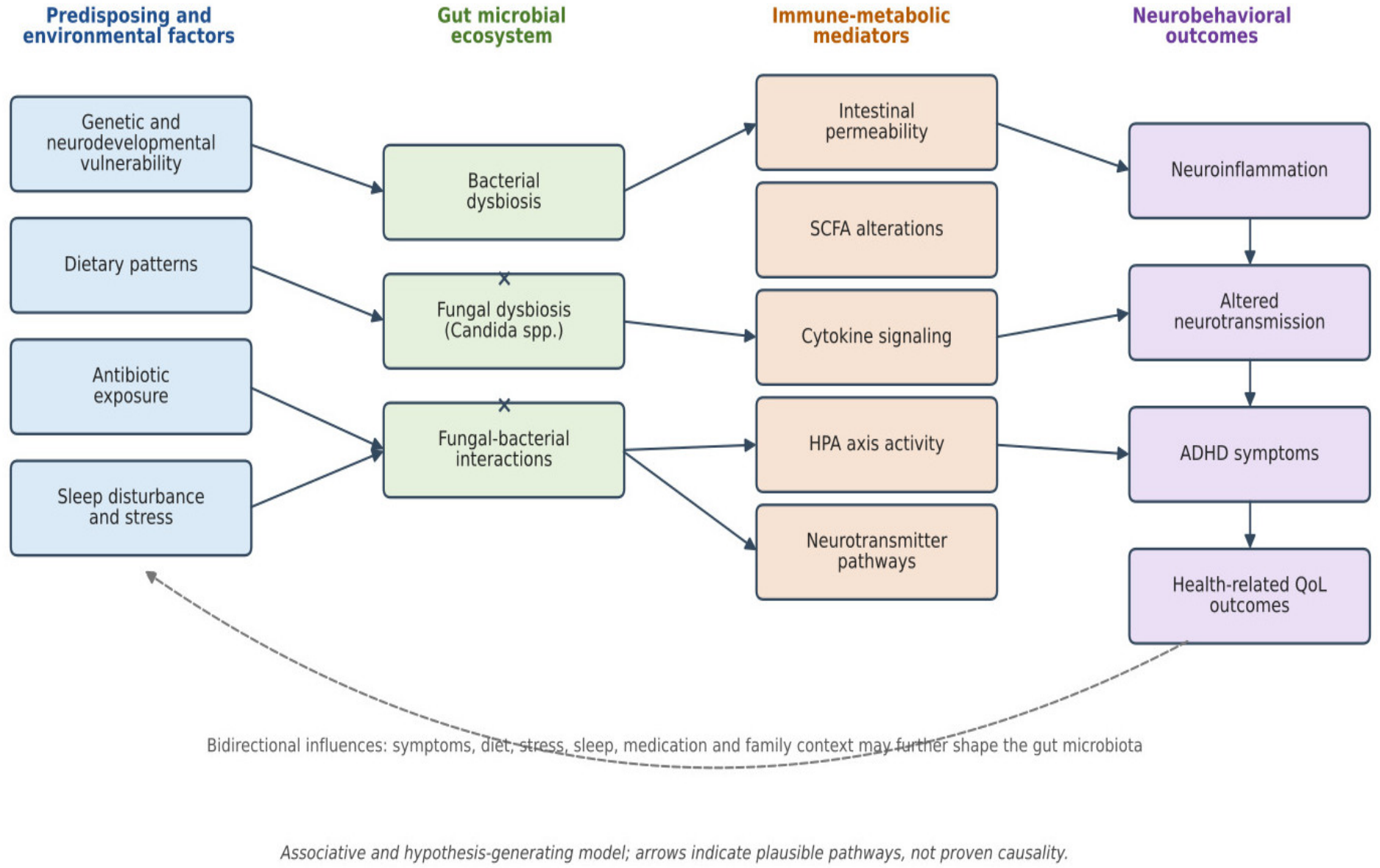
To integrate the mechanisms discussed above, a conceptual model of microbiota–gut–brain interactions in ADHD is proposed (Figure 3). This model does not imply causality, but illustrates how genetic and neurodevelopmental vulnerability may interact with environmental and lifestyle factors, including diet, antibiotic exposure, sleep disturbance, and stress, leading to bacterial and fungal dysbiosis, altered intestinal permeability, immune–metabolic signaling, and downstream neurobiological and quality-of-life outcomes [2,3,10,11,15,18,20,30,31,32].

5. Diet and Nutritional Interventions

Diet is one of the most important modifiable factors shaping gut microbiota composition and metabolic activity. In ADHD, dietary patterns may be relevant through effects on microbial diversity, short-chain fatty acid production, intestinal barrier integrity, immune-inflammatory activity, oxidative stress, and neurotransmitter-related metabolism. Nutrition should not be regarded as a primary or standalone ADHD treatment, but dietary assessment may contribute to an individualized microbiome gut–brain framework [10,19,20].
Poor diet quality is associated with ADHD [40]. A Western-type dietary pattern, characterized by high intake of refined carbohydrates, added sugars, saturated fats, ultra-processed foods, and low intake of fiber-rich plant foods, may contribute to microbial imbalance and low-grade inflammation [50]. In children with ADHD, selective eating, irregular meals, sweetened foods, and limited intake of vegetables, fruits, and whole grains may influence beneficial bacteria, SCFAs production, glycemic variability, and inflammatory tone. These factors should be interpreted as contributors to an unfavorable nutritional and microbial environment rather than as direct causes of ADHD [51,52,53].
Wang et al. investigated the relationship between gut microbiota and dietary patterns in children with ADHD and reported associations between microbial composition, dietary intake, nutritional markers, and ADHD susceptibility [19]. These findings support the view that diet may influence microbial ecology in ADHD, although the cross-sectional design limits causal interpretation.
The Mediterranean diet is a predominantly plant-based dietary pattern rich in fruits, vegetables, whole grains, legumes, nuts, seeds, and extra-virgin olive oil, with moderate intake of fish, seafood, and dairy, and limited consumption of red meat, processed foods, and ultra-processed products [54]. It is nutrient-dense and low in saturated fat, sugar, and salt, while providing high levels of vitamins, minerals, unsaturated fats, and bioactive compounds. The Mediterranean diet has been linked to numerous physical and mental health benefits, including reduced risk of cardiovascular disease, cancer, diabetes, neurodegenerative disorders, and depression, as well as improved cognitive function and quality of life [55,56]. However, despite these associations and inverse links with ADHD risk in observational studies, evidence supporting its effectiveness for ADHD symptom management remains limited [57].

5.1. Omega-3 Polyunsaturated Fatty Acids in Management of ADHD

Omega-3 polyunsaturated fatty acids and elimination diets are among the most frequently discussed dietary interventions in ADHD [58]. Omega-3 polyunsaturated fatty acids, particularly eicosapentaenoic acid (EPA) and docosahexaenoic acid (DHA), are essential for brain development and anti-inflammatory functions [50,51]. Children with ADHD often have lower dietary intake and reduced blood levels of omega-3 fatty acids compared with healthy peers [59]. Evidence from randomized controlled trials and meta-analyses suggests that omega-3 supplementation may provide modest improvements in ADHD symptoms, while lower omega-3 status has been associated with greater symptom severity and poorer quality of life [57,58]. However, findings remain inconsistent, as a recent systematic review reported no significant benefit of omega-3 supplementation on ADHD symptoms [59]. Evidence regarding omega-3 PUFA supplementation in ADHD remains mixed. While several recent randomized trials have reported improvements in ADHD symptoms, attention, and cognitive performance, other studies have found little or no benefit [60,61,62,63]. The greatest effects appear to occur in individuals with low baseline omega-3, particularly EPA, levels [63,64].
Rytter et al. reported that fish oil supplementation and elimination diets may be beneficial in selected children, but the evidence is limited by heterogeneity of protocols, short intervention periods, blinding difficulties, and potential nutritional inadequacy [65]. These approaches may therefore be considered only as adjunctive and professionally supervised strategies, particularly when dietary intake is inadequate or individual food sensitivities are suspected.

5.2. The Role of Micronutrients in ADHD

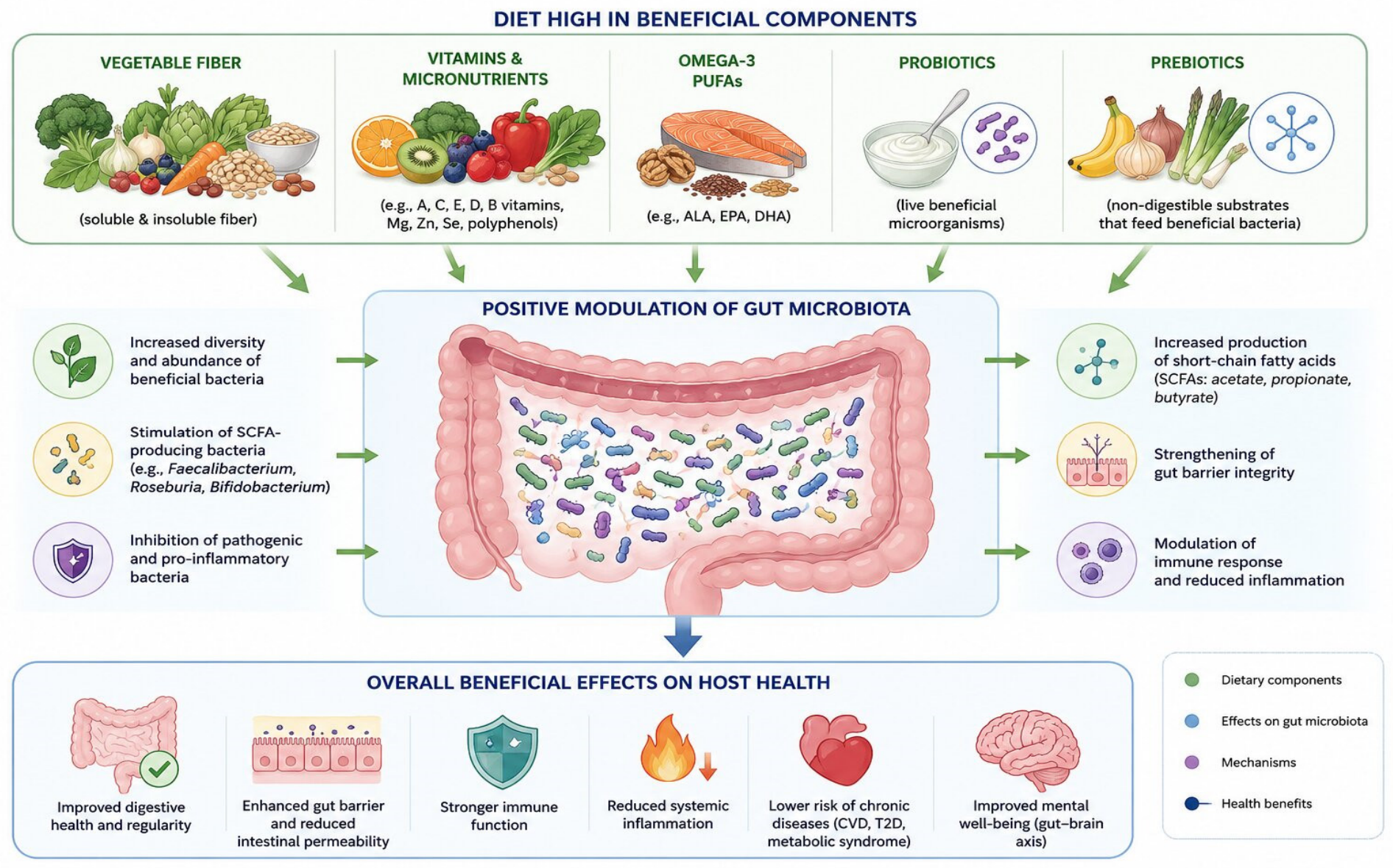
Micronutrients may be relevant through roles in neurotransmitter synthesis, mitochondrial function, methylation, oxidative stress regulation, and immune activity. Lange et al. concluded that evidence on minerals, vitamins, and probiotics remains insufficient for routine ADHD treatment recommendations [49]. Increasing evidence suggests that individuals with ADHD frequently exhibit deficiencies in several micronutrients, particularly zinc, magnesium, and iron, often reflecting poor dietary quality. Lower levels of these minerals have been associated with greater symptom severity, including inattention, hyperactivity, and impulsivity [65,66]. Studies have also reported reduced ferritin and brain iron levels [66,67], as well as lower serum and hair magnesium concentrations in children with ADHD, highlighting the potential relevance of micronutrient status in the disorder [68,69,70]. In a randomized trial, Stevens et al. reported selected microbiome changes after broad-spectrum micronutrient supplementation, although the clinical relevance of these microbial changes remains uncertain [71]. The main diet-related microbiota pathways discussed above are summarized in Figure 4.
Metabolic modulators such as myo-inositol may be discussed only within the broader context of glycoregulation, insulin sensitivity, and lipid metabolism. Evidence suggests that inositol supplementation may influence glucose homeostasis and lipid parameters in metabolic disorders [71,72,73,74]. In the present review, this topic is relevant only for children with ADHD who also present with metabolic disturbances, such as insulin resistance, impaired glycemic control, type 1 diabetes mellitus, obesity, or cardiometabolic risk factors, and should not be presented as an ADHD-specific therapy.
Overall, diet should be viewed as a modifiable factor that may support microbial diversity, intestinal barrier function, and immune–metabolic balance. A balanced pattern emphasizing minimally processed foods, adequate protein, omega-3 fatty acids, fiber, micronutrient sufficiency, and reduced intake of added sugars and ultra-processed foods may be useful as part of individualized care, but current evidence does not support standardized ADHD dietary protocols based solely on microbiome modulation.

5.3. The Association Between ADHD Medication, Gut Microbiota, and Fungal Communities

The relationship between ADHD medication, gut microbial composition, and fungal communities remains insufficiently understood but represents an important source of biological variability across studies. Psychostimulant medications, particularly methylphenidate and amphetamine-based treatments, are known to influence appetite, dietary intake, body weight, sleep patterns, and gastrointestinal function, factors that may indirectly affect both bacterial and fungal populations within the gut ecosystem [75,76]. Consequently, differences observed between medicated and treatment-naïve individuals may reflect not only ADHD-related biological characteristics but also medication-associated alterations in the intestinal environment. Several studies have reported associations between ADHD medication use and changes in bacterial taxa implicated in neurotransmitter metabolism, short-chain fatty acid production, and immune regulation. However, findings remain inconsistent, and it is often difficult to distinguish medication effects from the underlying characteristics of the disorder itself. Furthermore, treatment duration, dosage, age at treatment initiation, dietary habits, and comorbid conditions may all contribute to variability in microbiome findings [75,76,77,78,79]. The potential influence of ADHD medication on the gut mycobiome has received considerably less attention [27,79]. Alterations in diet, gastrointestinal physiology, and bacterial community structure induced by pharmacological treatment could theoretically affect fungal colonization and growth, including that of Candida species. Because bacterial communities play a critical role in regulating fungal populations through competitive and metabolic interactions, medication-related shifts in bacterial composition may indirectly modify fungal abundance and diversity. However, direct evidence linking ADHD medications to specific changes in Candida albicans or other fungal taxa remains scarce. These considerations highlight the importance of accounting for medication exposure when interpreting microbiome and mycobiome findings in ADHD. Future studies should systematically distinguish between treatment-naïve and medicated participants and evaluate the potential effects of medication type, duration, and dose on both bacterial and fungal communities. Such approaches may help clarify whether observed microbial alterations represent intrinsic features of ADHD, consequences of pharmacological treatment, or interactions between the two.

6. Probiotics and Synbiotics

Probiotics, prebiotics, and synbiotics have been investigated as microbiome-modulating interventions in ADHD because they may influence intestinal barrier function, immune regulation, SCFAs production, neurotransmitter-related metabolism, and microbiota–gut–brain signaling [18,25,26,27,28,29]. Their rationale is biologically plausible, but evidence remains preliminary and heterogeneous, particularly because studies differ in strains, doses, duration, age groups, medication status, and outcome measures.
Pärtty et al. [80] reported that early-life supplementation with Lactobacillus rhamnosus GG was associated with a lower later risk of neuropsychiatric disorders, including ADHD and Asperger syndrome. Although this was not an ADHD treatment trial, it supports the concept that gut microbiota may be relevant during early developmental windows.
More direct evidence comes from probiotic trials in children with ADHD. Wang et al. reported clinical and microbiota changes following Bifidobacterium bifidum Bf-688 supplementation, although the open-label design limits causal inference [81]. Elhossiny et al. provided randomized controlled evidence that Lactobacillus acidophilus LB may have adjunctive benefits when combined with atomoxetine, supporting probiotics as complementary rather than standalone interventions [82].
Synbiotic and probiotic studies also suggest potential immune–metabolic and diagnosis-specific effects. Yang et al. found that Synbiotic 2000 modified selected immune markers and SCFA levels, particularly in children with ADHD [18], while Novau-Ferré et al. reported diagnostic differences in gut microbiota and variable effects of probiotic supplementation in children with ADHD and autism spectrum disorder [83]. These findings highlight both the potential and the complexity of microbiota-targeted interventions.
Systematic review evidence similarly indicates possible benefits of prebiotics, probiotics, and synbiotics in ADHD, but also emphasizes small sample sizes, methodological heterogeneity, strain-specific effects, and variable intervention protocols [84]. Therefore, current data do not support routine or standardized use of these interventions without individualized clinical assessment.
Mechanistically, probiotics and synbiotics may influence ADHD-related pathways by supporting epithelial barrier integrity, reducing excessive intestinal permeability, modulating mucosal immune responses, increasing SCFAs production, and affecting tryptophan, serotonergic, gamma-aminobutyric acid, and stress-response pathways. These mechanisms are plausible, but their relative contribution to ADHD symptom expression remains insufficiently established [18,25,26,27,28,29].
Probiotic effects are strain-specific and cannot be generalized across preparations. Differences in strain, dose, viability, formulation, treatment duration, baseline microbiota, diet, age, medication use, and gastrointestinal symptoms may substantially influence outcomes.
Overall, probiotics and synbiotics may represent promising complementary approaches through modulation of microbial composition, immune activity, SCFAs production, and microbiota–gut–brain signaling. At present, however, they should be considered only within an individualized, clinically supervised, and nutritionally integrated approach, not as routine standalone ADHD therapy [18,25,26,27,28,29].

7. Quality of Life Implications

ADHD has substantial implications for health-related quality of life (HRQoL) in children and adolescents. Beyond inattention, hyperactivity, and impulsivity, it may affect emotional functioning, academic performance, peer relationships, family dynamics, and daily activities. In this review, HRQoL is relevant because gastrointestinal symptoms, dietary patterns, dysbiosis, and inflammatory mechanisms may contribute to the broader burden of ADHD.
Systematic reviews and meta-analyses show that children and adolescents with ADHD have significantly poorer HRQoL than peers without ADHD, particularly in psychosocial, emotional, social, and school domains [85,86]. These findings indicate that ADHD should be evaluated not only through symptom severity but also through functioning, subjective well-being, and daily participation.
Emotional, school, and social functioning are consistently affected in ADHD. Emotional dysregulation, low self-esteem, academic difficulties, executive dysfunction, peer conflict, and reduced participation may interact with sleep, nutrition, gastrointestinal discomfort, metabolic health, and family-school communication. From a microbiota–gut–brain perspective, inflammatory signaling, microbial metabolites, and neurotransmitter-related pathways may be relevant to these domains, although current evidence does not demonstrate a direct causal role of dysbiosis in HRQoL impairment.
Family functioning and parental stress represent additional dimensions of the ADHD burden. Theule et al. showed that parents of children with ADHD experience higher parenting stress, which is associated with symptom severity and co-occurring behavioral problems [87]. This may affect treatment adherence, dietary consistency, sleep routines, school collaboration, and implementation of behavioral strategies.
Gastrointestinal symptoms may further influence quality of life in some children with ADHD. Although evidence linking dysbiosis, digestive complaints, and HRQoL remains limited, abdominal discomfort, altered bowel habits, food selectivity, bloating, or diet-related symptoms may contribute to fatigue, irritability, sleep disturbance, and reduced participation in school and social activities [10,15,20].
Clinically, ADHD assessment may benefit from a multidisciplinary approach that includes psychiatric and psychological evaluation together with nutritional assessment, sleep and gastrointestinal evaluation, family functioning, and quality of life (Table 4). Diet, probiotics, synbiotics, and other microbiome-modulating strategies should therefore be individualized and integrated into broader care rather than presented as standalone treatments.
In summary, ADHD is associated with reduced HRQoL, especially in emotional, social, and school domains [85,86], while family stress further contributes to overall burden [87]. Within this framework, dysbiosis, gastrointestinal symptoms, dietary patterns, and microbiome-targeted interventions may be considered potential modifying factors, but current evidence does not establish a direct causal pathway between dysbiosis and HRQoL impairment.

8. Discussion: Microbiome Heterogeneity, Interpretive Caution, Impact of Candida albicans, ADHD

One of the most important insights emerging from the current literature is that microbiome heterogeneity in ADHD should not be interpreted solely as a consequence of methodological inconsistency. Rather, the variability observed across studies may reflect the biological complexity of ADHD itself. As a highly heterogeneous neurodevelopmental disorder, ADHD encompasses diverse clinical phenotypes, developmental trajectories, dietary habits, medication exposures, gastrointestinal manifestations, metabolic characteristics, and immune-inflammatory profiles. Consequently, microbial composition is likely influenced by multiple interacting host and environmental factors, which may explain why no single microbial signature has been consistently replicated across independent cohorts. This perspective suggests that dysbiosis in ADHD may be more appropriately conceptualized as a spectrum of context-dependent microbial, immune, and metabolic patterns rather than a uniform disease-specific alteration. Such an approach aligns with contemporary models of precision psychiatry, which recognize that biologically distinct subgroups may exist within the broader ADHD diagnosis. Future research may therefore benefit from stratifying patients according to symptom profiles, dietary characteristics, gastrointestinal symptoms, body mass index, developmental stage, medication exposure, and immune–metabolic status rather than treating ADHD as a biologically homogeneous condition. The relevance of this interpretation may be particularly pronounced in pediatric populations. During childhood and adolescence, the gut microbiome undergoes continuous maturation and remains highly responsive to environmental influences. Factors such as diet quality, food selectivity, growth and pubertal development, antibiotic and probiotic exposure, sleep disturbances, family environment, and treatment history may all contribute to microbiome variability. Consequently, treatment-naïve children, individuals with gastrointestinal symptoms, restrictive or highly processed dietary patterns, altered body mass index, or reduced health-related quality of life may represent clinically meaningful subgroups for future microbiome-oriented investigations. Integrating immune and metabolic biomarkers into study designs may further help clarify whether observed microbial alterations represent causal mechanisms, adaptive responses, vulnerability markers, or modifiers of symptom severity and treatment response [11].
Several mechanisms have been proposed to explain how gut microbiome alterations may influence ADHD-related neurobiology. Increased intestinal permeability (“leaky gut”) may facilitate the translocation of microbial components and contribute to systemic immune activation, promoting low-grade inflammation that may affect neurodevelopmental processes. Microbial metabolites, particularly SCFAs such as acetate, propionate, and butyrate, may modulate intestinal barrier function, immune responses, and neuronal signaling through effects on microglial activity, epigenetic regulation, and neurotransmitter metabolism. In addition, gut microorganisms may influence neurotransmitter-related pathways, including the metabolism and availability of dopamine, serotonin, and gamma-aminobutyric acid (GABA), which are relevant to ADHD pathophysiology. However, current evidence remains primarily associative, and further mechanistic studies are required to determine whether these pathways represent causal mechanisms or downstream consequences of broader microbiome alterations.
Within this broader framework, increasing attention has been directed toward the role of the gut mycobiome, particularly Candida albicans, as a potential contributor to microbiota–gut–brain interactions. Although bacterial communities remain the primary focus of ADHD microbiome research, fungal organisms may also influence host physiology through effects on intestinal barrier integrity, immune activation, microbial ecology, and metabolite production. Experimental studies have suggested that Candida albicans may contribute to low-grade inflammation and altered gut–brain signaling pathways, mechanisms that have also been implicated in ADHD pathophysiology. Nevertheless, current evidence remains insufficient to determine whether fungal alterations play a direct pathogenic role, represent secondary consequences of dietary and environmental factors, or simply reflect broader disturbances within the gut ecosystem. Therefore, findings related to Candida albicans should be interpreted cautiously and within the context of the entire microbial community. An additional consideration is the potential interaction between bacterial dysbiosis and the growth of Candida species within the intestinal ecosystem. Several bacterial taxa frequently reported as altered in ADHD, particularly members of the genera Bifidobacterium, Lactobacillus, Faecalibacterium, and other SCFAs-producing bacteria, play important roles in maintaining colonization resistance against opportunistic fungi [1,10,42]. Reductions in these beneficial microorganisms may facilitate fungal expansion by altering luminal pH, weakening epithelial barrier function, reducing production of antifungal metabolites, and modifying host immune responses. Conversely, Candida overgrowth may further disrupt bacterial community structure, creating a self-reinforcing cycle of microbial imbalance. From a mechanistic perspective, interactions between bacterial dysbiosis and Candida spp. may contribute to gut–brain axis dysfunction through increased intestinal permeability, immune activation, altered microbial metabolite production, and chronic low-grade inflammation [22,42]. These processes have been implicated in neurodevelopmental and neuropsychiatric disorders, including ADHD [23,27,28,40]. However, current evidence does not support a direct causal relationship between Candida colonization and ADHD symptoms. Rather, Candida expansion may represent one component of a broader microbial–immune–metabolic disturbance that characterizes specific patient subgroups. Future studies should therefore investigate bacterial and fungal communities simultaneously, as focusing exclusively on bacterial taxa may overlook important ecological interactions that influence host physiology and neurobehavioral outcomes.
Despite growing interest in the microbiota–gut–brain axis, many findings in ADHD microbiome research remain preliminary. Most available studies are observational, cross-sectional, and based on relatively small cohorts, limiting the ability to establish causality and contributing to challenges in replication. As a result, individual microbial taxa should not be over interpreted as disease-specific biomarkers, nor should microbiome modulation currently be regarded as a proven therapeutic strategy for ADHD. The existing literature supports associations between microbial alterations and ADHD-related characteristics, but the directionality and clinical significance of these relationships remain uncertain. Nevertheless, microbiome research may have important translational implications. Although current findings are not sufficiently robust for diagnostic application or standalone therapeutic targeting, microbial and fungal signatures may eventually contribute to patient stratification when interpreted alongside clinical, nutritional, gastrointestinal, immune-inflammatory, and psychosocial characteristics. Future biomarker development will likely require integrated approaches that combine bacterial and fungal taxa, intestinal permeability measures, inflammatory cytokines, microbial metabolites such as SCFAs, dietary assessments, and standardized clinical outcomes. Such multidimensional models are likely to be more informative than single-taxon analyses and may better capture the complex biological networks underlying ADHD. Among potential clinical applications, personalized nutritional interventions appear particularly promising. Rather than supporting a universal “ADHD diet,” current evidence favors individualized assessment of dietary quality, fiber intake, ultra-processed food consumption, omega-3 status, micronutrient sufficiency, metabolic health, and gastrointestinal symptoms [60,61,62,63,64,65]. Similarly, psychobiotics, including selected probiotics, prebiotics, synbiotics, and microbial-derived metabolites, have attracted increasing interest because of their potential to influence neurobehavioral outcomes through microbiota–gut–brain mechanisms. However, available findings remain heterogeneous, strain-specific, and strongly influenced by host and environmental factors, precluding definitive clinical recommendations. Overall, the current body of evidence suggests that both bacterial and fungal components of the gut ecosystem may contribute to the biological complexity of ADHD. However, the field remains in an exploratory phase, and caution is warranted when interpreting existing findings. Larger longitudinal studies, mechanistic investigations, and multi-omics approaches integrating microbiome, mycobiome, metabolomic, immune, nutritional, and clinical data will be essential for determining whether microbiome-related alterations represent causal pathways, biomarkers of disease heterogeneity, or targets for future personalized interventions. Until such evidence becomes available, microbiome-informed approaches should be regarded as complementary and investigational rather than replacements for established ADHD diagnostic and therapeutic strategies.
A central implication of the current literature is that microbiome heterogeneity in ADHD should not be interpreted only as methodological inconsistency. Rather, heterogeneity itself may represent a biologically meaningful feature of ADHD. ADHD includes clinically and developmentally diverse presentations, and microbial profiles may differ according to symptom subtype, dietary pattern, body mass index, gastrointestinal symptoms, medication exposure, developmental stage, sex-related differences, comorbid neurodevelopmental conditions, and immune-inflammatory phenotype [3,4,5,8,10,11,13,15,20]. Such heterogeneity may partly account for the absence of a single microbial pattern that can be reliably replicated across different cohorts. A more appropriate model may therefore be to consider dysbiosis as a set of context-dependent microbial immune–metabolic patterns that may characterize specific patient subgroups rather than ADHD as a uniform diagnostic category. The gut microbiome may play a role in the pathophysiology of ADHD through the gut–brain axis; however, the current evidence is largely associative rather than causal [1,18,30,52]. Larger, longitudinal, and methodologically rigorous studies are needed before microbiome-targeted interventions can be considered evidence-based therapeutic approaches for ADHD [1].
This interpretation has particular relevance for pediatric cohorts, in which gut microbial composition and activity may be influenced by multiple developmental and environmental factors, including diet, growth and pubertal status, antibiotic or probiotic exposure, sleep disturbances, family context, and treatment history. Children with prominent gastrointestinal symptoms, restrictive or highly processed dietary patterns, altered body mass index, treatment-naive status, or reduced health-related quality of life may represent biologically and clinically relevant subgroups for future microbiome-oriented analyses [10,13,15,20,82,83,84]. Incorporating immune profiling and metabolic markers may further help distinguish whether observed microbial changes reflect vulnerability, compensation, secondary consequences, or modifiers of symptom expression and treatment response.
Although interest in the microbiota–gut–brain axis is increasing, many findings in neuropsychiatric microbiome research should still be regarded as preliminary, often limited by small sample sizes and challenges in replication across independent cohorts. Therefore, the field should avoid overinterpreting single taxa or presenting microbiome modulation as a proven ADHD-specific therapeutic approach. A balanced discussion should recognize the promise of microbiome research while emphasizing that current findings are associative, preliminary, and highly dependent on methodological, developmental, nutritional, and clinical context [4,5,8,15,29].

9. Translational and Clinical Implications

The findings summarized in this review have translational implications, although they should be interpreted with caution. Microbiome-related findings in ADHD are not sufficiently consistent for diagnostic use or standalone therapeutic targeting. However, bacterial and fungal dysbiosis may contribute to patient stratification when interpreted alongside clinical phenotype, diet, gastrointestinal symptoms, immune-inflammatory status, medication exposure, and HRQoL [4,5,8,10,15].
From a biomarker perspective, future research should move beyond single-taxon comparisons toward integrated panels that combine bacterial taxa, fungal markers such as Candida albicans, intestinal permeability indicators, cytokine profiles, SCFAs, dietary assessment, and standardized ADHD outcomes [3,8,9,11,15,18]. Such markers are unlikely to function in isolation, but they may become useful within multidimensional clinical and biological models.
Personalized dietary intervention may be one of the most feasible near-term applications of microbiome research in ADHD. Nutritional strategies should be individualized according to age, dietary habits, gastrointestinal symptoms, food selectivity, micronutrient status, metabolic risk, and family context. A microbiome-informed approach does not imply a universal ADHD diet, but rather structured assessment of dietary quality, fiber intake, ultra-processed food consumption, omega-3 intake, micronutrient sufficiency, and metabolic vulnerability [10,18,19,20,21,22,23,24].
Psychobiotics also have translational relevance because selected probiotics, prebiotics, synbiotics, or microbial-derived compounds may influence neurobehavioral outcomes through microbiota–gut–brain mechanisms. Current findings indicate possible effects on symptoms, immune markers, SCFAs, or gut microbiota composition, but these effects remain preliminary, heterogeneous, strain-specific, and dependent on host and environmental factors [18,25,26,27,28,29].
Pediatric ADHD populations are clinically diverse in age, developmental stage, symptoms, medication exposure, diet, sleep, gastrointestinal manifestations, immune–metabolic features, comorbidities, and psychosocial burden. Treatment-naive children, those with gastrointestinal complaints, restrictive or highly processed diets, altered body mass index, or reduced HRQoL may represent relevant subgroups for future stratified research [3,10,13,15,20,30,31,32].
Within a precision psychiatry framework, microbiome data may eventually support more individualized decision-making by integrating microbial taxonomy, mycobiome findings, metabolites, intestinal permeability, cytokines, nutritional and metabolic status, ADHD scales, and HRQoL outcomes. Such applications remain investigational and should not be translated prematurely into routine pediatric ADHD care [5,8,11,15,18,29].
Clinically, current evidence should not replace established ADHD diagnostic or therapeutic approaches, but it may broaden assessment toward modifiable biological and psychosocial factors. Nutritional assessment, gastrointestinal symptoms, sleep, family burden, dietary quality, and metabolic risk may complement standard psychiatric and psychological care within a multidisciplinary model [19,20,65,82,83].

10. Strengths of This Review

This review has several strengths. First, it integrates evidence on bacterial microbiota alterations with the underexamined fungal component of gut dysbiosis, particularly Candida spp. and its possible link with intestinal permeability. This bacterial-fungal perspective is relevant because the gut mycobiome remains insufficiently represented in ADHD microbiome research [4,5,15,16].
Second, the review extends beyond microbial taxonomy by placing dysbiosis within a microbiota–gut–brain framework that includes intestinal permeability, immune-inflammatory signaling, microbial metabolites, diet, probiotics, synbiotics, translational implications, and HRQoL [10,15,18,19,20,25,26,27,28,29,30,31,32]. This integrative approach connects mechanistic, nutritional, clinical, and psychosocial perspectives while maintaining cautious interpretation of the evidence as associative, preliminary, and hypothesis-generating.

11. Methodological Limitations and Future Directions

Several methodological limitations should be considered when interpreting this review. Most available studies are cross-sectional, sample sizes are often small, and study populations differ in age, sex, diet, medication use, gastrointestinal symptoms, and psychiatric comorbidities. In addition, fungal dysbiosis and Candida remain less studied than bacterial microbiota, and differences in sequencing methods, bioinformatic pipelines, and taxonomic classification may contribute to inconsistent findings. Although diet, probiotics, and synbiotics are promising, current evidence does not support their use as standalone ADHD treatment.
Future research should move beyond cross-sectional taxonomic comparisons toward longitudinal, interventional, and multi-omics designs in carefully phenotyped ADHD cohorts. Standardized dietary and gastrointestinal assessment, documentation of antibiotic, probiotic, and medication exposure, and integration of bacterial microbiome profiling, gut mycobiome analysis, metabolomics, inflammatory cytokines, intestinal permeability markers, ADHD outcomes, and HRQoL instruments would help clarify whether dysbiosis is a cause, consequence, biomarker, modifier, or therapeutic target in ADHD.
Future-oriented ADHD microbiome research should reflect the direction of contemporary biomedical science by integrating metagenomics, metabolomics, transcriptomics, proteomics, immune profiling, and fungal–bacterial interaction mapping. This multi-layered approach may move the field beyond isolated taxonomic comparisons toward a functional understanding of microbial activity, host immune–metabolic responses, and microbiota–gut–brain communication. In this context, microbiome research may also support precision psychiatry by helping to identify biologically distinct ADHD subgroups characterized by specific immune, metabolic, dietary, bacterial, or fungal profiles [5,8,11,15,18,29].

12. Conclusions

Current evidence supports a biologically plausible but primarily associative relationship between ADHD and alterations in the gut microbial ecosystem, including both bacterial and fungal components. Bacterial dysbiosis has been linked to altered microbial diversity, changes in specific taxa, immune-inflammatory signaling, and possible neurotransmitter-related metabolic pathways. Because evidence varies considerably across studies, these findings should be viewed as exploratory rather than established conclusions. The fungal component remains less investigated, but preliminary evidence suggests that Candida albicans may be increased in some children with ADHD and may be associated with altered intestinal permeability.
Candida should not be framed as a proven cause of ADHD. Current data are associative rather than causal, suggesting that fungal dysbiosis, including increased Candida albicans abundance, may be best understood as one component of a broader dysbiotic, immune–metabolic, and microbiota–gut–brain axis-related profile. Similarly, diet, probiotics, and synbiotics may be relevant as complementary and individualized strategies, but existing evidence is not strong enough to justify these approaches as standardized standalone ADHD treatments.
The integration of microbiome science, nutritional assessment, immune–metabolic markers, gastrointestinal evaluation, and HRQoL outcomes may provide a broader framework for understanding biological heterogeneity in ADHD. Microbiome-related findings should currently be regarded as preliminary and hypothesis-generating, with potential translational relevance but limited immediate clinical applicability. Current evidence increasingly supports a role for microbiota-related immune–metabolic interactions in at least a subset of patients with ADHD.

Author Contributions

Conceptualization, V.V.S.; methodology, V.V.S.; literature search and analysis, V.V.S.; writing—original draft preparation, V.V.S.; writing—review and editing, D.P.J. and N.K.R.; critical revision of the manuscript, D.P.J. and N.K.R.; supervision and final manuscript correction, D.P.J. and N.K.R. All authors have read and agreed to the published version of the manuscript.

Funding

This research received no external funding.

Institutional Review Board Statement

Not applicable.

Informed Consent Statement

Not applicable.

Data Availability Statement

No new data were created or analyzed in this study. Data sharing does not apply to this article.

Conflicts of Interest

The authors declare no conflicts of interest.

References

  1. Checa-Ros, A.; Jerez-Calero, A.; Molina-Carballo, A.; Campoy, C.; Muñoz-Hoyos, A. Current evidence on the role of the gut microbiome in ADHD pathophysiology and therapeutic implications. Nutrients 2021, 13, 249. [Google Scholar] [CrossRef] [PubMed]
  2. Mestres, F.; Richarte, V.; Crespín, J.J.; Torrent, C.; Biel, S.; Ramos, C.; Ibáñez, P.; Oltra-Arañó, L.; Corrales, M.; Amoretti, S.; et al. Sex differences in adults with attention-deficit/hyperactivity disorder: A population-based study. Eur. Psychiatry 2025, 68, e90. [Google Scholar] [CrossRef] [PubMed]
  3. Solberg, S.B.; Posserud, M.B.; Høberg, A.; Instanes, J.T.; Kvalvik, L.V.; Austgulen, A.; Khan, A.; Lundervold, A.J.; Halmøy, A.; Gjestad, R.; et al. Sex differences in self-reported attention-deficit/hyperactivity disorder symptoms in clinical and population-based cohorts. JCPP Adv. 2025, 5, e70012. [Google Scholar] [CrossRef] [PubMed]
  4. Ramtekkar, U.P.; Reiersen, A.M.; Todorov, A.A.; Todd, R.D. Sex and age differences in attention-deficit/hyperactivity disorder symptoms and diagnoses: Implications for DSM-V and ICD-11. J. Am. Acad. Child Adolesc. Psychiatry 2010, 49, 217–228. [Google Scholar] [PubMed]
  5. Appleton, J. The Gut-Brain Axis: Influence of Microbiota on Mood and Mental Health. Integr. Med. 2018, 17, 28–32. [Google Scholar]
  6. Cryan, J.F.; O’Riordan, K.J.; Cowan, C.S.M.; Sandhu, K.V.; Bastiaanssen, T.F.S.; Boehme, M.; Codagnone, M.G.; Cussotto, S.; Fulling, C.; Golubeva, A.V.; et al. The Microbiota-Gut-Brain Axis. Physiol. Rev. 2019, 99, 1877–2013. [Google Scholar] [CrossRef] [PubMed]
  7. Socała, K.; Doboszewska, U.; Szopa, A.; Serefko, A.; Włodarczyk, M.; Zielińska, A.; Poleszak, E.; Fichna, J.; Wlaź, P. The role of microbiota-gut-brain axis in neuropsychiatric and neurological disorders. Pharmacol. Res. 2021, 172, 105840. [Google Scholar] [CrossRef] [PubMed]
  8. Belzer, C.; de Vos, W. Microbes inside—From diversity to function: The case of Akkermansia. ISME J. 2012, 6, 1449–1458. [Google Scholar] [CrossRef] [PubMed]
  9. Mhanna, A.; Martini, N.; Hmaydoosh, G.; Hamwi, G.; Jarjanazi, M.; Zaifah, G.; Kazzazo, R.; Mohamad, A.H.; Alshehabi, Z. The correlation between gut microbiota and both neurotransmitters and mental disorders: A narrative review. Medicine 2024, 103, e37114. [Google Scholar] [CrossRef] [PubMed]
  10. Hu, Y.; Yu, X.-L.; Zhang, X.-J.; Ma, L.-T. The role of the gut mycobiota in neurodevelopmental disorders: A multikingdom disruption of the gut-brain axis. Front. Microbiol. 2026, 17, 1798439. [Google Scholar] [CrossRef] [PubMed]
  11. Liu, L.; Wang, H.; Chen, X.; Zhang, Y.; Zhang, H.; Xie, P. Gut microbiota and its metabolites in depression: From pathogenesis to treatment. eBioMedicine 2023, 90, 104527. [Google Scholar] [CrossRef] [PubMed]
  12. Wan, L.; Ge, W.R.; Zhang, S.; Sun, Y.L.; Wang, B.; Yang, G. Case-control study of the effects of gut microbiota composition on neurotransmitter metabolic pathways in children with attention deficit hyperactivity disorder. Front. Neurosci. 2020, 14, 127. [Google Scholar] [CrossRef] [PubMed]
  13. Aarts, E.; Ederveen, T.H.A.; Naaijen, J.; Zwiers, M.P.; Boekhorst, J.; Timmerman, H.M.; Smeekens, S.P.; Netea, M.G.; Buitelaar, J.K.; Franke, B.; et al. Gut microbiome in ADHD and its relation to neural reward anticipation. PLoS ONE 2017, 12, e0183509. [Google Scholar] [CrossRef] [PubMed]
  14. Jiang, H.Y.; Zhou, Y.Y.; Zhou, G.L.; Li, Y.C.; Yuan, J.; Li, X.H.; Ruan, B. Gut microbiota profiles in treatment-naïve children with attention deficit hyperactivity disorder. Behav. Brain Res. 2018, 347, 408–413. [Google Scholar] [CrossRef] [PubMed]
  15. Gkougka, D.; Mitropoulos, K.; Tzanakaki, G.; Panagouli, E.; Psaltopoulou, T.; Thomaidis, L.; Tsolia, M.; Sergentanis, T.N.; Tsitsika, A. Gut microbiome and attention deficit/hyperactivity disorder: A systematic review. Pediatr. Res. 2022, 92, 1507–1519. [Google Scholar] [CrossRef] [PubMed]
  16. Ghosh, S.; Singh, S. Microbiome dynamics in attention-deficit hyperactivity disorder: A systematic review and meta-analysis decoding the role of gut dysbiosis and potential dietary interventions. Eur. Child Adolesc. Psychiatry 2026, 35, 31–46. [Google Scholar] [CrossRef] [PubMed]
  17. Prehn-Kristensen, A.; Zimmermann, A.; Tittmann, L.; Lieb, W.; Schreiber, S.; Baving, L.; Fischer, A. Reduced microbiome alpha diversity in young patients with ADHD. PLoS ONE 2018, 13, e0200728. [Google Scholar] [CrossRef] [PubMed]
  18. Sukmajaya, A.C.; Lusida, M.I.; Soetjipto Setiawati, Y. Systematic review of gut microbiota and attention-deficit hyperactivity disorder (ADHD). Ann. Gen. Psychiatry 2021, 20, 12. [Google Scholar] [CrossRef] [PubMed]
  19. Wang, N.; Gao, K.; Zhang, J.; Yang, L. Composition of the gut microbiota in attention deficit hyperactivity disorder: A systematic review and meta-analysis. Front. Endocrinol. 2022, 13, 838941. [Google Scholar] [CrossRef] [PubMed]
  20. Wang, L.J.; Yang, C.Y.; Chou, W.J.; Lee, M.J.; Chou, M.C.; Kuo, H.C.; Yeh, Y.-M.; Lee, S.-Y.; Huang, L.-H.; Li, S.-C. Gut microbiota and dietary patterns in children with attention-deficit/hyperactivity disorder. Eur. Child Adolesc. Psychiatry 2020, 29, 287–297. [Google Scholar] [CrossRef] [PubMed]
  21. Sălcudean, A.; Cîmpian, D.M.; Popovici, R.A.; Forna, N.; Corodan-Comiati, D.M.; Sasu, A.B.; Cozma, M.-M.; Bodo, C.-R.; Enache, E.-C.; Păcurar, M.; et al. Dietary Habits and Their Influence on the Microbiome and Mental Health in Adolescents. Nutrients 2025, 17, 1496. [Google Scholar] [CrossRef] [PubMed]
  22. Wang, L.J.; Li, S.C.; Li, S.W.; Kuo, H.C.; Lee, S.Y.; Huang, L.H.; Chin, C.-Y.; Yang, C.-Y. Gut microbiota and plasma cytokine levels in patients with attention-deficit/hyperactivity disorder. Transl. Psychiatry 2022, 12, 76. [Google Scholar] [CrossRef] [PubMed]
  23. Lee, M.J.; Lai, H.C.; Kuo, Y.L.; Chen, V.C.H. Association between gut microbiota and emotional-behavioral symptoms in children with attention-deficit/hyperactivity disorder. J. Pers. Med. 2022, 12, 1634. [Google Scholar] [CrossRef] [PubMed]
  24. Richarte, V.; Corrales, M.; Sánchez-Mora, C.; Fadeuilhe, C.; Vilar-Ribó, L.; Arribas, L.; Garcia, E.; Rosales-Ortiz, S.K.; Arias-Vasquez, A.; Soler-Artigas, M.; et al. Gut microbiota signature in treatment-naïve attention-deficit/hyperactivity disorder. Transl. Psychiatry 2021, 11, 382. [Google Scholar] [CrossRef] [PubMed]
  25. Shirvani-Rad, S.; Ejtahed, H.S.; Marvasti, F.E.; Taghavi, M.; Sharifi, F.; Arzaghi, S.M.; Larijani, B. The role of gut microbiota-brain axis in pathophysiology of ADHD: A systematic review. J. Atten. Disord. 2022, 26, 1698–1713. [Google Scholar] [CrossRef] [PubMed]
  26. Wang, L.J.; Li, S.C.; Yeh, Y.M.; Lee, S.Y.; Kuo, H.C.; Yang, C.Y. Gut mycobiome dysbiosis and its impact on intestinal permeability in attention-deficit/hyperactivity disorder. J. Child Psychol. Psychiatry 2023, 64, 1280–1291. [Google Scholar] [CrossRef] [PubMed]
  27. Hadrich, I.; Turki, M.; Chaari, I.; Abdelmoula, B.; Gargouri, R.; Khemakhem, N.; Elatoui, D.; Abid, F.; Kammoun, S.; Rekik, M.; et al. Gut mycobiome and neuropsychiatric disorders: Insights and therapeutic potential. Front. Cell. Neurosci. 2025, 18, 1495224. [Google Scholar] [CrossRef] [PubMed]
  28. Herman, A.; Herman, A.P. Could Candida overgrowth be involved in the pathophysiology of autism? J. Clin. Med. 2022, 11, 442. [Google Scholar] [CrossRef] [PubMed]
  29. Yang, L.L.; Stiernborg, M.; Skott, E.; Xu, J.; Wu, Y.; Landberg, R.; Arefin, S.; Kublickiene, K.; Millischer, V.; Nilsson, I.A.K.; et al. Effects of a synbiotic on plasma immune activity markers and short-chain fatty acids in children and adults with ADHD: A randomized controlled trial. Nutrients 2023, 15, 1293. [Google Scholar] [CrossRef] [PubMed]
  30. Rodrigues, B.; Miranda, M.I.; de Oliveira, S.C. Gut Microbiota Composition and Diversity in Attention-Deficit/Hyperactivity Disorder: A Systematic Review. Microorganisms 2026, 14, 1301. [Google Scholar] [CrossRef] [PubMed]
  31. Singh, V.; Lee, G.; Son, H.; Koh, H.; Kim, E.S.; Unno, T.; Shin, J.H. Butyrate producers, “The Sentinel of Gut”: Their intestinal significance with and beyond butyrate, and prospective use as microbial therapeutics. Front. Microbiol. 2023, 13, 1103836. [Google Scholar] [CrossRef] [PubMed]
  32. Davie, J.R. Inhibition of histone deacetylase activity by butyrate. J. Nutr. 2003, 133, 2485S–2493S. [Google Scholar] [CrossRef] [PubMed]
  33. del Campo, N.; Chamberlain, S.R.; Sahakian, B.J.; Robbins, T.W. The Roles of Dopamine and Noradrenaline in the Pathophysiology and Treatment of Attention-Deficit/Hyperactivity Disorder. Biol. Psychiatry 2011, 69, e145–e157. [Google Scholar] [PubMed]
  34. Gao, K.; Mu, C.L.; Farzi, A.; Zhu, W.Y. Tryptophan Metabolism: A Link Between the Gut Microbiota and Brain. Adv. Nutr. 2020, 11, 709–723. [Google Scholar] [CrossRef] [PubMed]
  35. Banerjee, E.; Nandagopal, K. Does serotonin deficit mediate susceptibility to ADHD? Neurochem. Int. 2015, 82, 52–68. [Google Scholar] [CrossRef] [PubMed]
  36. Quist, J.F.; Kennedy, J.L. Genetics of childhood disorders: XXIII. ADHD, Part 7: The serotonin system. J. Am. Acad. Child Adolesc. Psychiatry 2001, 40, 253–256. [Google Scholar] [CrossRef] [PubMed]
  37. Wang, L.J.; Yu, Y.H.; Fu, M.L.; Yeh, W.T.; Hsu, J.L.; Yang, Y.H.; Chen, W.J.; Chiang, B.L.; Pan, W.H. Attention deficit-hyperactivity disorder is associated with allergic symptoms and low levels of hemoglobin and serotonin. Sci. Rep. 2018, 8, 10229. [Google Scholar] [PubMed]
  38. Arnsten, A.F. Toward a new understanding of attention-deficit hyperactivity disorder pathophysiology. CNS Drugs 2009, 23, 33–41. [Google Scholar] [CrossRef] [PubMed]
  39. Bailey, M.T.; Lubach, G.R.; Coe, C.L. Prenatal stress alters bacterial colonization of the gut in infant monkeys. J. Pediatr. Gastroenterol. Nutr. 2004, 38, 414–421. [Google Scholar] [CrossRef] [PubMed]
  40. Młynarska, E.; Barszcz, E.; Budny, E.; Gajewska, A.; Kopeć, K.; Wasiak, J.; Rysz, J.; Franczyk, B. The Gut–Brain–Microbiota Connection and Its Role in Autism Spectrum Disorders. Nutrients 2025, 17, 1135. [Google Scholar] [CrossRef] [PubMed]
  41. Martin-Gallausiaux, C.; Marinelli, L.; Blottière, H.M.; Larraufie, P.; Lapaque, N. SCFA: Mechanisms and Functional Importance in the Gut. Proc. Nutr. Soc. 2021, 80, 37–49. [Google Scholar] [PubMed]
  42. Tan, J.K.; Macia, L.; Mackay, C.R. Dietary Fiber and SCFAs in the Regulation of Mucosal Immunity. J. Allergy Clin. Immunol. 2023, 151, 361–370. [Google Scholar] [PubMed]
  43. Huang, Y.; Wang, Y.F.; Miao, J.; Zheng, R.F.; Li, J.Y. Short-Chain Fatty Acids: Important Components of the Gut-Brain Axis against AD. Biomed. Pharmacother. 2024, 175, 116601. [Google Scholar] [PubMed]
  44. Duscha, A.; Gisevius, B.; Hirschberg, S.; Yissachar, N.; Stangl, G.I.; Dawin, E.; Bader, V.; Haase, S.; Kaisler, J.; David, C.; et al. Propionic Acid Shapes the Multiple Sclerosis Disease Course by an Immunomodulatory Mechanism. Cell 2020, 180, 1067–1080.e16. [Google Scholar] [CrossRef] [PubMed]
  45. Osman, A.; Mervosh, N.L.; Strat, A.N.; Euston, T.J.; Zipursky, G.; Pollak, R.M.; Meckel, K.R.; Tyler, S.R.; Chan, K.L.; Grice, A.B.; et al. Acetate Supplementation Rescues Social Deficits and Alters Transcriptional Regulation in Prefrontal Cortex of Shank3 Deficient Mice. Brain Behav. Immun. 2023, 114, 311–324. [Google Scholar] [CrossRef] [PubMed]
  46. González Hernández, M.A.; Canfora, E.E.; Jocken, J.W.E.; Blaak, E.E. The Short-Chain Fatty Acid Acetate in Body Weight Control and Insulin Sensitivity. Nutrients 2019, 11, 1943. [Google Scholar] [CrossRef]
  47. Hu, S.; Kuwabara, R.; de Haan, B.J.; Smink, A.M.; de Vos, P. Acetate and Butyrate Improve β-Cell Metabolism and Mitochondrial Respiration under Oxidative Stress. Int. J. Mol. Sci. 2020, 21, 1542. [Google Scholar] [CrossRef] [PubMed]
  48. Tedelind, S.; Westberg, F.; Kjerrulf, M.; Vidal, A. Anti-Inflammatory Properties of the Short-Chain Fatty Acids Acetate and Propionate: A Study with Relevance to Inflammatory Bowel Disease. World J. Gastroenterol. 2007, 13, 2826–2832. [Google Scholar] [PubMed]
  49. Lange, K.W.; Lange, K.M.; Nakamura, Y.; Reissmann, A. Nutrition in the management of ADHD: A reviewof recent research. Curr. Nutr. Rep. 2023, 12, 383–394. [Google Scholar] [CrossRef] [PubMed]
  50. Lewis, N.; Lagopoulos, J.; Villani, A. Gut–Brain Inflammatory Pathways inAttention-Deficit/Hyperactivity Disorder: The Roleand Therapeutic Potential of Diet. Metabolites 2025, 15, 335. [Google Scholar] [CrossRef] [PubMed]
  51. Abbasi, K.; Beigrezai, S.; Ghiasvand, R.; Pourmasoumi, M.; Mahaki, B. Dietary Patterns and Attention Deficit Hyperactivity Disorder Among Iranian Children: A Case-Control Study. J. Am. Coll. Nutr. 2019, 38, 76–83. [Google Scholar] [PubMed]
  52. Rojo-Marticella, M.; Arija, V.; Alda, J.Á.; Morales-Hidalgo, P.; Esteban-Figuerola, P.; Canals, J. Do Children with Attention Deficit/Hyperactivity Disorder Follow a Different Dietary Pattern than That of Their Control Peers? Nutrients 2022, 14, 1131. [Google Scholar] [PubMed]
  53. Akin, S.; Gultekin, F.; Ekinci, O.; Kanik, A.; Ustundag, B.; Tunali, B.D.; Al-Bayati, M.B.A.; Yasoz, C. Processed meat products and snacks consumption in ADHD: A case-control study. North. Clin. Istanb. 2022, 9, 266–274. [Google Scholar] [CrossRef] [PubMed]
  54. Darabi, Z.; Vasmehjani, A.A.; Darand, M.; Sangouni, A.A.; Hosseinzadeh, M. Adherence to Mediterranean diet and attention deficit/hyperactivity disorder in children: A case control study. Clin. Nutr. ESPEN 2022, 47, 346–350. [Google Scholar] [PubMed]
  55. Ríos-Hernández, A.; Alda, J.A.; Farran-Codina, A.; Ferreira-García, E.; Izquierdo-Pulido, M. The Mediterranean Diet and ADHD in Children and Adolescents. Pediatrics 2017, 139, e20162027. [Google Scholar] [CrossRef] [PubMed]
  56. Dinu, M.; Pagliai, G.; Casini, A.; Sofi, F. Mediterranean diet and multiple health outcomes: An umbrella review of meta-analyses of observational studies and randomised trials. Eur. J. Clin. Nutr. 2018, 72, 30–43. [Google Scholar] [PubMed]
  57. Jacka, F.N. Targeting the gut to achieve improved outcomes in mood disorders. Bipolar Disord. 2019, 21, 88–89. [Google Scholar] [PubMed]
  58. Willett, W.C.; Sacks, F.; Trichopoulou, A.; Drescher, G.; Ferro-Luzzi, A.; Helsing, E.; Trichopoulos, D. Mediterranean diet pyramid: A cultural model for healthy eating. Am. J. Clin. Nutr. 1995, 61, 1402S–1406S. [Google Scholar] [CrossRef] [PubMed]
  59. Das, U.N. Essential fatty acids: Biochemistry, physiology and pathology. Biotechnol. J. 2006, 1, 420–439. [Google Scholar] [CrossRef] [PubMed]
  60. Richardson, A.J. The importance of omega-3 fatty acids for behaviour, cognition and mood. Scand. J. Nutr. 2003, 47, 92–98. [Google Scholar] [CrossRef][Green Version]
  61. Fuentes-Albero, M.; Martínez-Martínez, M.I.; Cauli, O. Omega-3 Long-Chain Polyunsaturated Fatty Acids Intake in Children with Attention Deficit and Hyperactivity Disorder. Brain Sci. 2019, 9, 120. [Google Scholar] [CrossRef] [PubMed]
  62. Hawkey, E.; Nigg, J.T. Omega-3 fatty acid and ADHD: Blood level analysis and meta-analytic extension of supplementation trials. Clin. Psychol. Rev. 2014, 34, 496–505. [Google Scholar] [PubMed]
  63. Chang, J.P.C.; Su, K.-P.; Mondelli, V.; Pariante, C.M. Omega-3 Polyunsaturated Fatty Acids in Youths with Attention Deficit Hy peractivity Disorder: A Systematic Review and Meta-Analysis of Clinical Trials and Biological Studies. Neuropsychopharmacology 2018, 43, 534–545. [Google Scholar] [PubMed]
  64. Crippa, A.; Agostoni, C.; Mauri, M.; Molteni, M.; Nobile, M. Polyunsaturated Fatty Acids Are Associated with Behavior But Not with Cognition in Children With and Without ADHD: An Italian study. J. Atten. Disord. 2018, 22, 971–983. [Google Scholar] [PubMed]
  65. Rytter, M.J.H.; Andersen, L.B.B.; Houmann, T.; Bilenberg, N.; Hvolby, A.; Mølgaard, C.; Michaelsen, K.F.; Lauritzen, L. Diet in the treatment of ADHD in children: A systematic review of the literature. Nord. J. Psychiatry 2015, 69, 1–18. [Google Scholar] [CrossRef] [PubMed]
  66. Konofal, E.; Lecendreux, M.; Arnulf, I.; Mouren, M.C. Iron deficiency in children with attention-deficit/hyperactivity disorder. Arch. Pediatr. Adolesc. Med. 2004, 158, 1113–1115. [Google Scholar] [PubMed]
  67. Tang, S.; Zhang, G.; Ran, Q.; Nie, L.; Liu, X.; Pan, Z.; He, L. Quantitative susceptibility mapping shows lower brain iron content in children with attention-deficit hyperactivity disorder. Hum. Brain Mapp. 2022, 43, 2495–2502. [Google Scholar] [PubMed]
  68. Elbaz, F.; Zahra, S.; Hanafy, H. Magnesium, zinc and copper estimation in children with attention deficit hyperactivity disorder (ADHD). Egypt. J. Med. Hum. Genet. 2017, 18, 153–163. [Google Scholar] [CrossRef]
  69. Effatpanah, M.; Rezaei, M.; Effatpanah, H.; Effatpanah, Z.; Varkaneh, H.K.; Mousavi, S.M.; Fatahi, S.; Rinaldi, G.; Hashemi, R. Magnesium status and attention deficit hyperactivity disorder (ADHD): A meta-analysis. Psychiatry Res. 2019, 274, 228–234. [Google Scholar] [CrossRef] [PubMed]
  70. Smykiewicz, K.; Michalczewska, A.; Wierzejska, N.; Pach, M.; Nowak, A.; Fugas, A.; Chmielowiec, Z.; Partyka, A.; Dziedzic, M.; Dobrzańska, J. Magnesium as a potential complementary treatment for ADHD—A review of recent literature. J. Educ. Health Sport 2024, 68, 50663. [Google Scholar]
  71. Stevens, A.J.; Purcell, R.V.; Darling, K.A.; Eggleston, M.J.F.; Kennedy, M.A.; Rucklidge, J.J. Human gut microbiome changes during a 10 week randomised control trial for micronutrient supplementation in children with attention deficit hyperactivity disorder. Sci. Rep. 2019, 9, 10128. [Google Scholar] [CrossRef] [PubMed]
  72. Stanković, V.; Jović, D.; Mitić, S.; Mitić, S.; Zuber, A. The impact of myo-inositol on glycoregulation and lipid profile. Educ. Res. Health Sci. 2024, 3, 15–20. [Google Scholar] [CrossRef]
  73. Miñambres, I.; Cuixart, G.; Gonçalves, A.; Corcoy, R. Effects of inositol on glucose homeostasis: Systematic review and meta-analysis of randomized controlled trials. Clin. Nutr. 2019, 38, 1146–1152. [Google Scholar] [CrossRef] [PubMed]
  74. Tabrizi, R.; Ostadmohammadi, V.; Lankarani, K.B.; Peyman, P.; Akbari, M.; Kolahdooz, F.; Asemi, Z. The effects of inositol supplementation on lipid profiles among patients with metabolic diseases: A systematic review and meta-analysis of randomized controlled trials. Lipids Health Dis. 2018, 17, 123. [Google Scholar] [CrossRef] [PubMed]
  75. Holmskov, M.; Storebø, O.J.; Moreira-Maia, C.R.; Ramstad, E.; Magnusson, F.L.; Krogh, H.B.; Groth, C.; Gillies, D.; Zwi, M.; Skoog, M.; et al. Gastrointestinal microbiota in children and adolescents with attention deficit hyperactivity disorder: A systematic review. Basic Clin. Pharmacol. Toxicol. 2017, 121, S52–S53. [Google Scholar]
  76. Stiernborg, M.; Debelius, J.W.; Yang, L.L.; Skott, E.; Millischer, V.; Giacobini, M.B.; Melas, P.A.; Boulund, F.; Lavebratt, C. Bacterial gut microbiome differences in adults with ADHD and in children with ADHD on psychostimulant medication. Brain Behav. Immun. 2023, 110, 310–321. [Google Scholar] [CrossRef] [PubMed]
  77. Faraone, S.V.; Mick, E. Molecular Genetics of Attention Deficit Hyperactivity Disorder. Psychiatr. Clin. N. Am. 2010, 33, 159–180. [Google Scholar] [CrossRef] [PubMed]
  78. Cortese, S.; Tessari, L. Attention-Deficit/Hyperactivity Disorder (ADHD) and Obesity. Curr. Psychiatry Rep. 2017, 19, 4. [Google Scholar] [PubMed]
  79. Richard, M.L.; Sokol, H. The gut mycobiota: Insights into analysis, environmental interactions and role in gastrointestinal diseases. Nat. Rev. Gastroenterol. Hepatol. 2019, 16, 331–345. [Google Scholar] [CrossRef] [PubMed]
  80. Pärtty, A.; Kalliomäki, M.; Wacklin, P.; Salminen, S.; Isolauri, E. A possible link between early probiotic intervention and the risk of neuropsychiatric disorders later in childhood: A randomized trial. Pediatr. Res. 2015, 77, 823–828. [Google Scholar] [CrossRef] [PubMed]
  81. Wang, L.J.; Yang, C.Y.; Kuo, H.C.; Chou, W.J.; Tsai, C.S.; Lee, S.Y. Effect of Bifidobacterium bifidum on clinical characteristics and gut microbiota in attention-deficit/hyperactivity disorder. J. Pers. Med. 2022, 12, 227. [Google Scholar] [CrossRef] [PubMed]
  82. Elhossiny, R.M.; Elshahawy, H.H.; Mohamed, H.M.; Abdelmageed, R.I. Assessment of probiotic strain Lactobacillus acidophilus LB supplementation as adjunctive management of attention-deficit hyperactivity disorder in children and adolescents: A randomized controlled clinical trial. BMC Psychiatry 2023, 23, 823. [Google Scholar] [CrossRef] [PubMed]
  83. Novau-Ferré, N.; Papandreou, C.; Rojo-Marticella, M.; Canals-Sans, J.; Bulló, M. Gut microbiome differences in children with Attention Deficit Hyperactivity Disorder and Autism Spectrum Disorder and effects of probiotic supplementation: A randomized controlled trial. Res. Dev. Disabil. 2025, 161, 105003. [Google Scholar] [CrossRef] [PubMed]
  84. Allahyari, P.; Abbas Torki, S.; Aminnezhad Kavkani, B.; Mahmoudi, Z.; Mousavi Hoseini, M.S.; Moradi, M.; Alami, F.; Mohammadian, M.K.; Bani, S.B.S.; Mobarakeh, K.A.; et al. A systematic review of the beneficial effects of prebiotics, probiotics, and synbiotics on ADHD. Neuropsychopharmacol. Rep. 2024, 44, 300–307. [Google Scholar] [CrossRef] [PubMed]
  85. Wanni Arachchige, D.S.; Badloe, N.; Sciberras, E.; Gold, L.; Coghill, D.; Le, H.N.D. The impact of childhood attention-deficit/hyperactivity disorder on children’s health-related quality of life: A systematic review and meta-analysis. J. Atten. Disord. 2023, 27, 598–611. [Google Scholar] [CrossRef] [PubMed]
  86. Lee, Y.C.; Yang, H.J.; Chen, V.C.H.; Lee, W.T.; Teng, M.J.; Lin, C.H.; Gossop, M. Meta-analysis of quality of life in children and adolescents with ADHD: By both parent proxy-report and child self-report using PedsQL™. Res. Dev. Disabil. 2016, 51–52, 160–172. [Google Scholar] [CrossRef] [PubMed]
  87. Theule, J.; Wiener, J.; Tannock, R.; Jenkins, J.M. Parenting stress in families of children with ADHD: A meta-analysis. J. Emot. Behav. Disord. 2013, 21, 3–17. [Google Scholar] [CrossRef]
  88. Larsen, L.B.; Daley, D.; Lange, A.M.; Sonuga-Barke, E.; Thomsen, P.H.; Rask, C.U. Effect of Parent Training on Health-Related Quality of Life in Preschool Children with Attention-Deficit/Hyperactivity Disorder: A Secondary Analysis of Data From a Randomized Controlled Trial. J. Am. Acad. Child Adolesc. Psychiatry 2021, 60, 734–744.e3. [Google Scholar] [CrossRef] [PubMed]
Figure 1. PRISMA-style flow diagram of study selection. Note. Prepared to increase transparency of the literature selection process in a structured narrative review. It should be interpreted as a narrative-review selection overview rather than a formal PRISMA systematic-review protocol.
Microbiolres 17 00124 g001
Figure 2. Bacterial dysbiosis in ADHD. Schematic representation of potential mechanisms linking altered gut microbiota composition and function with attention-deficit/hyperactivity disorder (ADHD) through the microbiota–gut–brain axis. Bacterial dysbiosis may involve reduced microbial diversity, decreased beneficial bacteria, increased pathobionts, reduced short-chain fatty acid production, increased intestinal permeability, and enhanced inflammatory activity. These alterations may contribute to ADHD-related neurobiological changes through gut barrier dysfunction, immune activation, pro-inflammatory cytokine release, altered neurotransmitter-related metabolism, hypothalamic–pituitary–adrenal axis dysregulation, and impaired blood-brain barrier integrity. Together, these pathways may be associated with neuroinflammation, oxidative stress, altered neurotransmission, and neural circuit dysregulation, potentially contributing to inattention, hyperactivity, impulsivity, and emotional dysregulation. Reported microbial changes include alterations in Faecalibacterium, Bifidobacterium, Prevotella, Ruminococcus gnavus, Clostridium spp., and Enterobacteriaceae, although findings vary across studies. Created in BioRender. Stankovi rA V. (2026). https://BioRender.com/00mhtod.
Microbiolres 17 00124 g002
Figure 3. Integrated microbiota–gut–brain axis represents a bidirectional communication network between the gastrointestinal tract and the central nervous system, mediated through neural, endocrine, immune, and metabolic pathways and it is essential for preserving physiological equilibrium as well as shaping neurodevelopment microbiota–gut–brain model in ADHD. The proposed model illustrates the potential interaction between genetic susceptibility, dietary patterns, antibiotic exposure, sleep disturbance, stress, bacterial and fungal dysbiosis, fungal–bacterial interactions, intestinal permeability, short-chain fatty acid production, cytokine signaling, hypothalamic-pituitary–adrenal axis activity, neurotransmitter-related pathways, neuroinflammation, ADHD symptoms, and health-related quality-of-life outcomes. The model should be interpreted as associative and hypothesis-generating rather than causal. Note: Original conceptual model developed by the authors for this review.
Microbiolres 17 00124 g003
Figure 4. Beneficial effects of a diet rich in fiber, micronutrients, omega-3 polyunsaturated fatty acids, probiotics, and prebiotics on gut microbiota and host health. This schematic illustration shows how fiber-rich plant foods, vitamins and micronutrients, omega-3 polyunsaturated fatty acids, probiotics, and prebiotics may support microbial diversity, beneficial bacterial taxa, SCFA production, gut barrier integrity, immune regulation, and metabolic homeostasis. By influencing the microbiota–gut–brain axis represents a bidirectional communication network between the gastrointestinal tract and the central nervous system, mediated through neural, endocrine, immune, and metabolic pathways and it is essential for preserving physiological equilibrium as well as shaping neurodevelopment microbiota–gut–brain axis, such dietary patterns may have potential relevance for mental well-being and neurodevelopmental health. Note. Original schematic figure developed by the authors for this review. Created in BioRender. Stankovi rA V. (2026). https://BioRender.com/hwyhonj.
Microbiolres 17 00124 g004
Table 1. Main knowledge gaps identified in the literature on bacterial and fungal dysbiosis in ADHD.
AreaCurrent LimitationFuture Research Direction
Bacterial dysbiosisFindings are heterogeneous across studies, with no consistent microbial signature.Larger longitudinal studies using standardized sequencing and clinical assessment methods.
Gut mycobiomeFungal dysbiosis remains insufficiently investigated in ADHD.Studies specifically examining fungal communities, especially Candida spp.
Intestinal permeabilityLimited integration of microbiome findings with gut barrier markers.Combined microbiome, permeability, inflammatory, and metabolomic analyses.
Immune-inflammatory signalingMechanistic pathways remain incompletely understood.Multi-omics studies linking immune markers with microbial and clinical outcomes.
Diet and nutritionDietary interventions are heterogeneous and often not microbiome-guided.Personalized nutritional trials with microbiome-based endpoints.
Probiotics and synbioticsEvidence is promising but inconsistent and not sufficient for standalone treatment recommendations.Randomized controlled trials with clearly defined strains, doses, duration, and clinical outcomes.
Quality of lifeHRQoL is rarely integrated with microbiome and dietary data.Studies assessing psychosocial, school, family, and gastrointestinal outcomes together.
Table 2. Selected evidence on bacterial gut dysbiosis in ADHD.
StudyDesign/PopulationMain FindingRelevance for the Review
Aarts et al. [13]Exploratory study of ADHD and controlsPredicted microbial functional pathways related to dopamine precursor synthesis were associated with neural reward anticipation.Links microbial function with reward-processing mechanisms relevant to ADHD.
Jiang et al. [14]Treatment-naive children with ADHDReduced Faecalibacterium abundance was reported and was negatively associated with ADHD symptoms.Supports a possible relationship between butyrate-producing bacteria, inflammation and symptom severity.
Prehn-Kristensen et al. [17]Young patients with ADHDReduced alpha diversity was observed compared with controls.Suggests reduced microbial ecosystem diversity in some ADHD cohorts.
Wan et al. [12]Case–control study in childrenAltered taxa and predicted neurotransmitter-related metabolic pathways were reported.Connects dysbiosis with dopamine and serotonin-related metabolic pathways.
Wang et al. [19]Systematic review and meta-analysisGut microbiome alterations were reported, with increased Blautia in ADHD but substantial heterogeneity.Shows that a universal microbial signature has not yet been established.
Wang et al. [20]Children with ADHD; dietary assessmentGut microbiota was associated with dietary patterns and ADHD susceptibility.Supports the importance of nutrition in microbiome-oriented ADHD research.
Wang et al. [19]Children with ADHD; cytokine assessmentGut microbiota diversity was associated with TNF-alpha levels and ADHD symptoms.Supports an immune-inflammatory pathway linking dysbiosis and ADHD.
Table 3. Evidence on fungal dysbiosis, Candida and neurodevelopmental relevance.
StudyEvidence TypeKey FindingInterpretation
Wang et al. [20]Case–control study and in vitro epithelial modelChildren with ADHD showed increased Candida, particularly Candida albicans; C. albicans secretions increased Caco-2 permeability.Principal direct evidence linking gut mycobiome dysbiosis, Candida, and intestinal permeability in ADHD.
Hadrich et al. [27]Review of gut mycobiome and neuropsychiatric disordersFungal communities may contribute to neuroinflammation, immune dysregulation, and intestinal barrier dysfunction.Provides broader mechanistic context for interpreting ADHD mycobiome findings.
Herman and Herman [28]Narrative review in autism spectrum disorderCandida overgrowth has been discussed in relation to gastrointestinal dysfunction and neurodevelopmental mechanisms.Offers a comparative neurodevelopmental framework but should not be directly generalized to ADHD.
Table 4. Selected nutritional, probiotic/synbiotic and quality-of-life evidence.
StudyAreaMain ContributionRelevance
Lange et al. [49]Nutrition in ADHDReviewed recent research on dietary and nutritional approaches in ADHD.Supports a cautious, evidence-based interpretation of nutrition as adjunctive care.
Rytter et al. [65]Dietary interventionsSystematic review suggesting potential benefit of fish oil and elimination diets in selected children.Supports individualized, supervised dietary approaches.
Stevens et al. [71]Micronutrients and microbiomeMicronutrient supplementation was associated with selected microbiome changes.Links micronutrient status with microbial ecology.
Pärtty et al. [80]Early probiotic exposureEarly Lactobacillus rhamnosus GG exposure was associated with later neurodevelopmental outcomes.Suggests possible relevance of critical developmental windows.
Wang et al. [8]Bifidobacterium bifidumOpen-label supplementation was associated with clinical and microbiota changes.Preliminary direct probiotic evidence in ADHD.
Elhossiny et al. [82]Lactobacillus acidophilus LBRandomized trial as adjunctive treatment with atomoxetine.Supports probiotics as possible adjunctive interventions, not standalone therapy.
Yang et al. [29]Synbiotic interventionSynbiotic 2000 modified immune markers and SCFA levels.Supports an immune–metabolic mechanism.
Novau-Ferré et al. [83]Probiotic supplementationReported diagnosis-specific microbiome differences and probiotic effects in ADHD/ASD.Highlights heterogeneity and individualized response.
Allahyari et al. [84]Systematic reviewPrebiotics, probiotics and synbiotics may be beneficial, but evidence remains heterogeneous.Summarizes current limitations of intervention studies.
Wanni Arachchige et al. [85]; Lee et al. [86]; Theule et al. [87]; Larsen at al. [88]Quality of life and family burdenADHD is associated with poorer HRQoL and increased parental stress.Supports inclusion of HRQoL and family outcomes in future microbiome research.
Disclaimer/Publisher’s Note: The statements, opinions and data contained in all publications are solely those of the individual author(s) and contributor(s) and not of MDPI and/or the editor(s). MDPI and/or the editor(s) disclaim responsibility for any injury to people or property resulting from any ideas, methods, instructions or products referred to in the content.