
Inhibition of Staphylococcus epidermidis Biofilm Formation by a Synthetic Breitfussin Analogue
 , , ,
, , ,  ,
,  , and
, and
Abstract
1. Introduction
2. Materials and Methods
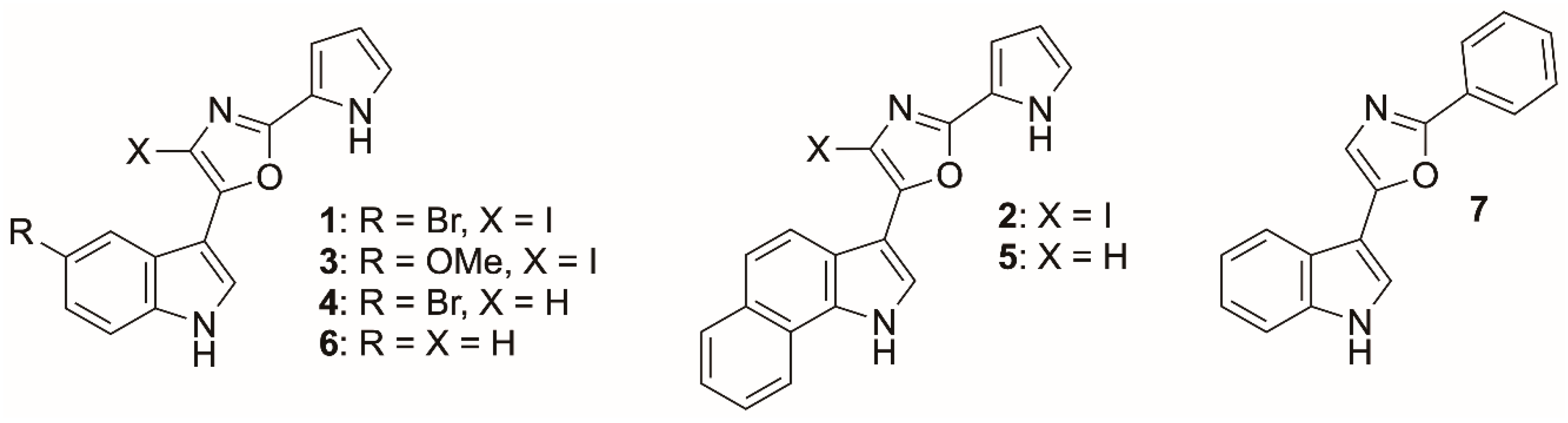
2.1. Synthesis of Breitfussin Analogues 1–7
2.2. Microorganism Strains and Growth Conditions
2.3. Bacterial Growth Inhibition
2.4. Fungal Growth Inhibition
2.5. Inhibition of Biofilm Formation
2.6. Eradication of Established Biofilms
2.7. Inhibition of Biofilm Formation in Additional Species
2.8. Cell Surface Hydrophobicity
2.9. Bacterial Adhesion to Polystyrene
2.10. ADME Testing
2.10.1. Kinetic Solubility Assay
2.10.2. Parallel Artificial Membrane Permeability Assay
2.10.3. Microsomal Stability Phase I Assay
2.10.4. Microsomal Stability Phase II Assay
2.10.5. Plasma Stability Assay
2.11. Antiproliferative Activity
2.12. Statistical Analysis
3. Results
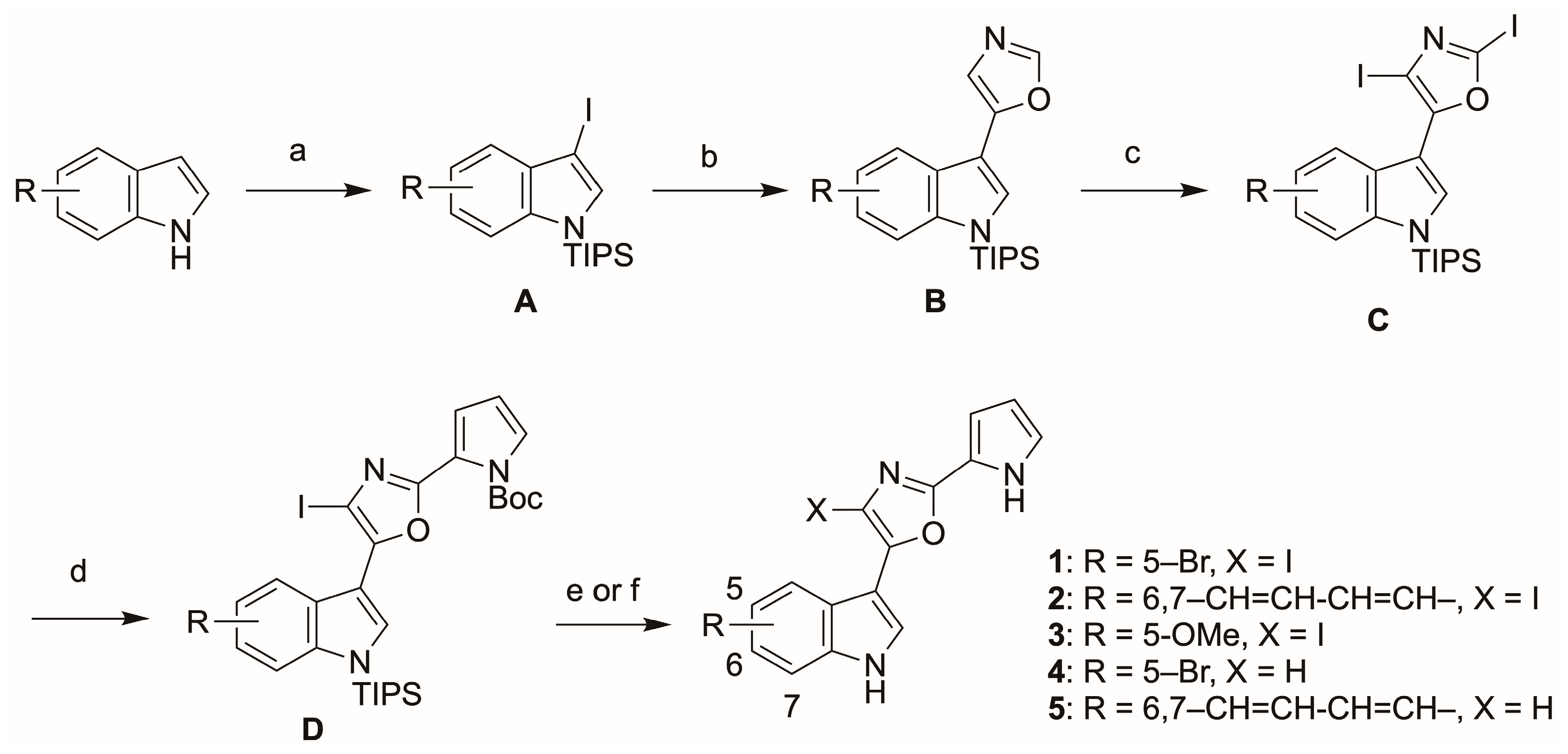
3.1. Synthesis of Breitfussin Analogues
3.2. Antimicrobial Screening
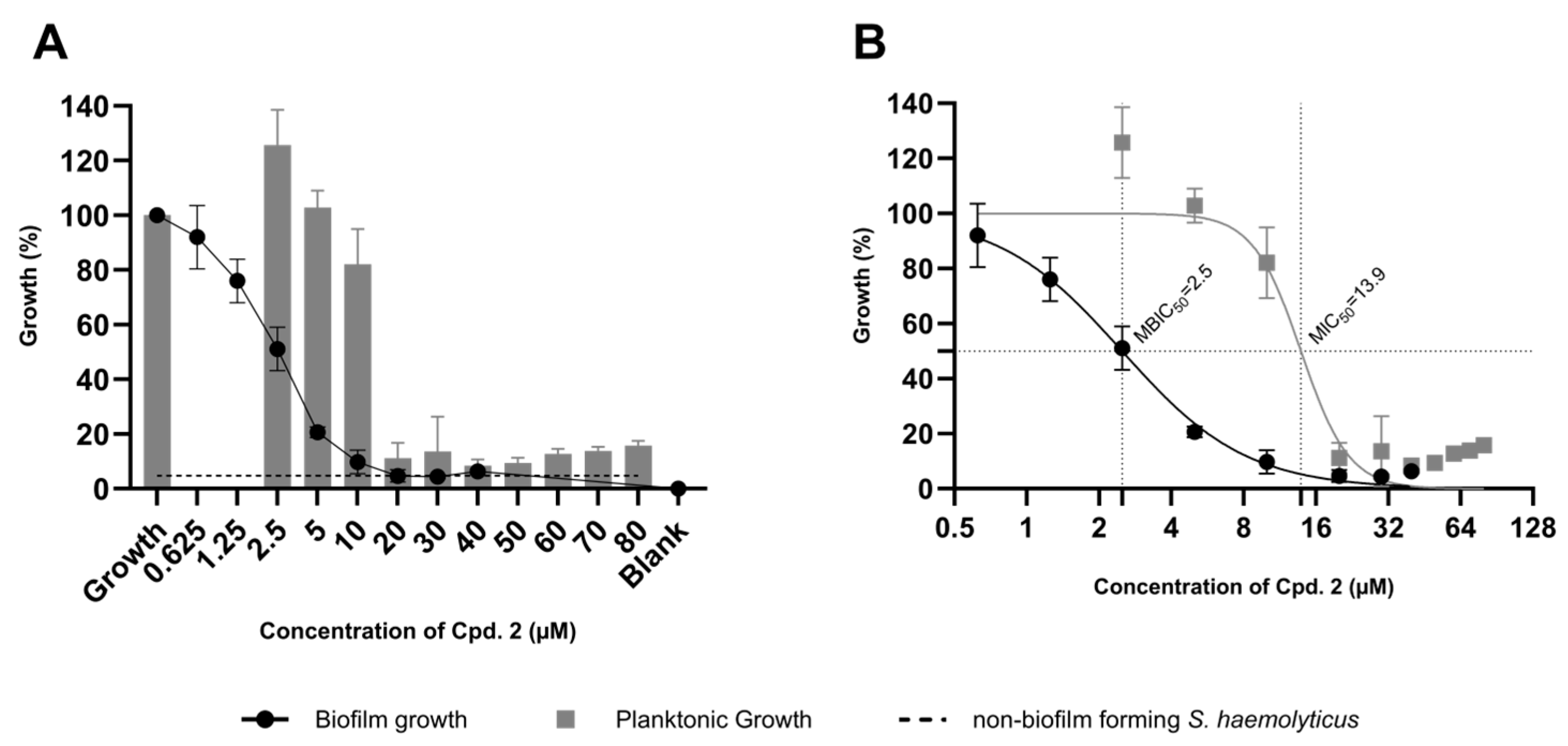
3.3. Antibiofilm Testing
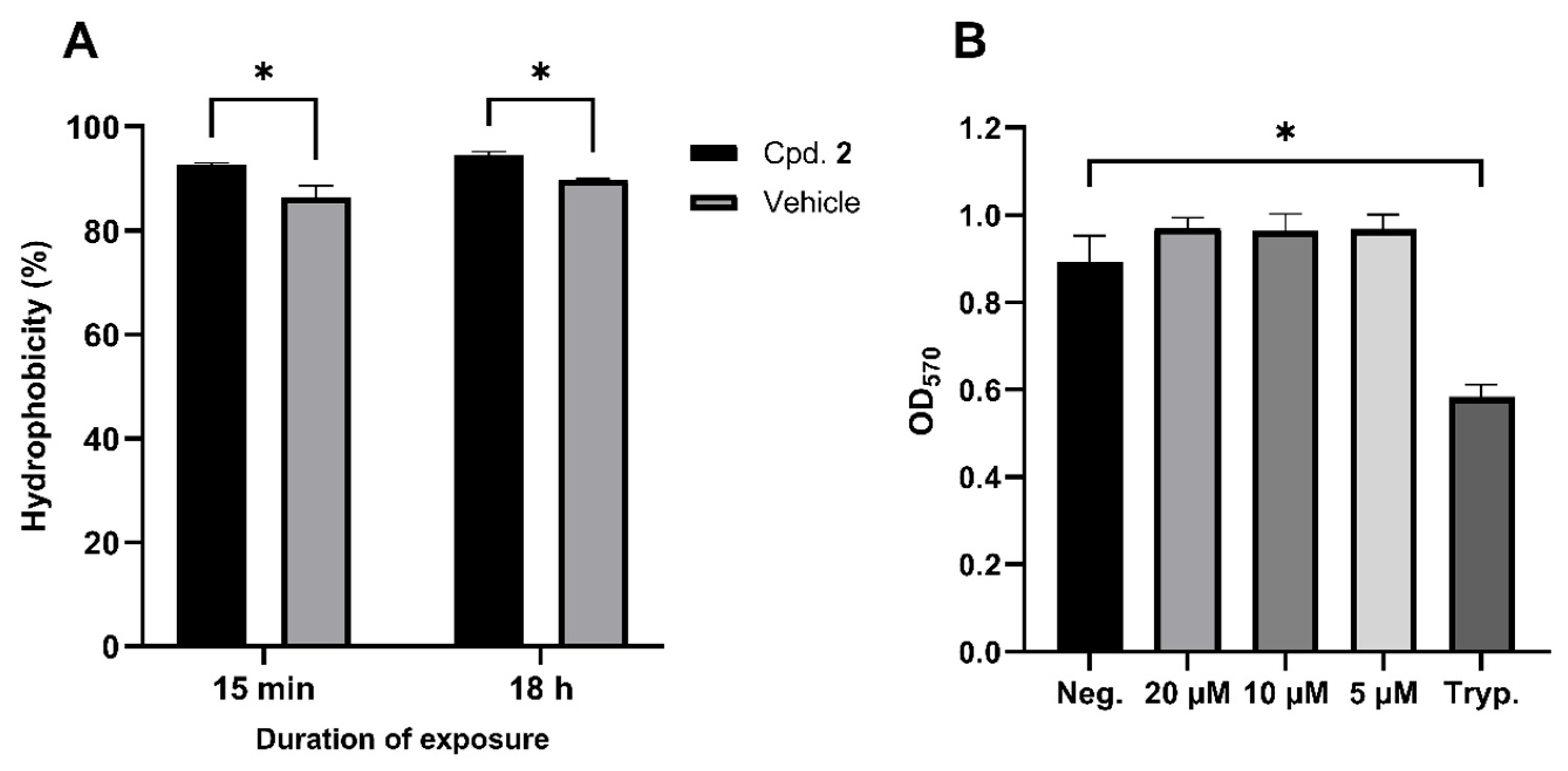
3.4. Cell Surface Hydrophobicity
3.5. Adhesion
3.6. ADMET
4. Discussion
5. Conclusions
Supplementary Materials
Author Contributions
Funding
Institutional Review Board Statement
Informed Consent Statement
Data Availability Statement
Acknowledgments
Conflicts of Interest
Abbreviations
| MoA | Mechanism of Action |
| ADMET | Absorption, Distribution, Metabolism, Excretion, Toxicity |
| eDNA | Extracellular DNA |
| PIA | Polysaccharide intercellular adhesin |
| c-di-GMP | Cyclic diguanylate monophosphate |
| mqH2O | MilliQTM water |
| Absλ | Absorbance at a specific wavelength of λ |
| CFU | Colony-forming units |
| BHI | Brain heart infusion broth |
| MH | Mueller Hinton broth |
| TSB | Tryptic soy broth |
| TSBg | TSB supplemented with 1% glucose |
| PBS | Phosphate-buffered saline |
| MRSA | Methicillin-resistant Staphylococcus aureus |
| DMSO | Dimethyl sulfoxide |
| ODλ | Optical density at a specific wavelength of λ |
| CSH | Cell surface hydrophobicity |
| PUM | Phosphate urea magnesium sulfate buffer |
| LC-MS | Liquid-chromatography-coupled mass spectrometry |
| UPLC | Ultra-performance liquid chromatography |
| PDA | Photodiode array |
| IMS | Ion mobility spectrometry |
| QToF | Quadrupole time of flight |
| PAMPA | Permeability through artificial membranes |
| Clint | Intrinsic clearance |
| IC50 | Half-maximal inhibitory concentration |
| MIC | Minimum inhibitory concentration |
| MIC50 | Half-maximal inhibitory concentration for bacterial growth |
| MBIC50 | Half-maximal inhibitory concentration for biofilm growth |
| ANOVA | Analysis of Variance |
Appendix A
Appendix A.1. General Information Regarding the Synthesis of Test Compounds
Appendix A.1.1. Synthesis of 1 and 4
- 5-Bromo-N-triisopropylsilyl-3-iodoindole (A-1)

- 5-(5-Bromo-N-(triisopropylsilyl)-indol-3-yl)oxazole (B-1)

- 5-(5-Bromoindol-3-yl)-2,4-diiodooxazole (C-1)

- tert-Butyl 2-(4-iodo-5-(1-(triisopropylsilyl)-indol-3-yl)oxazol-2-yl)-pyrrole-1-carboxylate (D-1)

- 5-(5-Bromo-indol-3-yl)-4-iodo-2-(1H-pyrrol-2-yl)oxazole (1)

- 5-(5-Bromo-indol-3-yl)-2-(1H-pyrrol-2-yl)oxazole (4)

Appendix A.1.2. Synthesis of 2 and 5
- 3-Iodo-1-(triisopropylsilyl)-1H-benzo[g]indole (A-2)

- 5-(1-(triisopropylsilyl)-benzo[g]indol-3-yl)oxazole (B-2)

- 2,4-diiodo-5-(1-(triisopropylsilyl)-benzo[g]indol-3-yl)oxazole (C-2)

- tert-Butyl 2-(4-iodo-5-(1-(triisopropylsilyl)-benzo[g]indol-3-yl)oxazol-2-yl)-pyrrole-1-carboxylate (D-2)

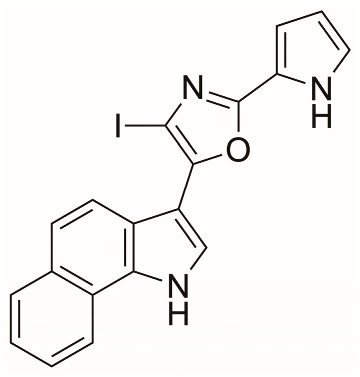
- 5-(1H-Benzo[g]indol-3-yl)-4-iodo-2-(1H-pyrrol-2-yl)oxazole (2)
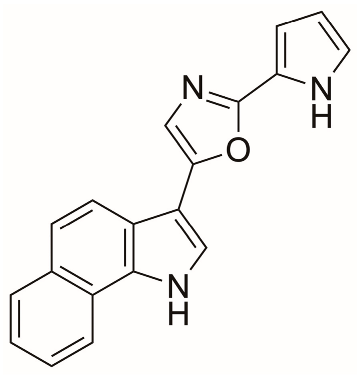
- 5-(1H-Benzo[g]indol-3-yl)-2-(1H-pyrrol-2-yl)oxazole (5)
Appendix A.1.3. Synthesis of 3
- 5-Methoxy-N-triisopropylsilyl-3-iodoindole (A-3)


- 5-(5-Methoxy-1-(triisopropylsilyl)-indol-3-yl)oxazole (B-3)

- 2,4-Diiodo-5-(5-methoxy-1-(triisopropylsilyl)-indol-3-yl)oxazole (C-3)

- tert-Butyl 2-(4-iodo-5-(5-methoxy-1-(triisopropylsilyl)-indol-3-yl)oxazol-2-yl)-pyrrole-1-carboxylate (D-3)

- 4-Iodo-5-(5-methoxy-indol-3-yl)-2-(pyrrol-2-yl)oxazole (3)

Appendix A.1.4. Synthesis of 6 and 7
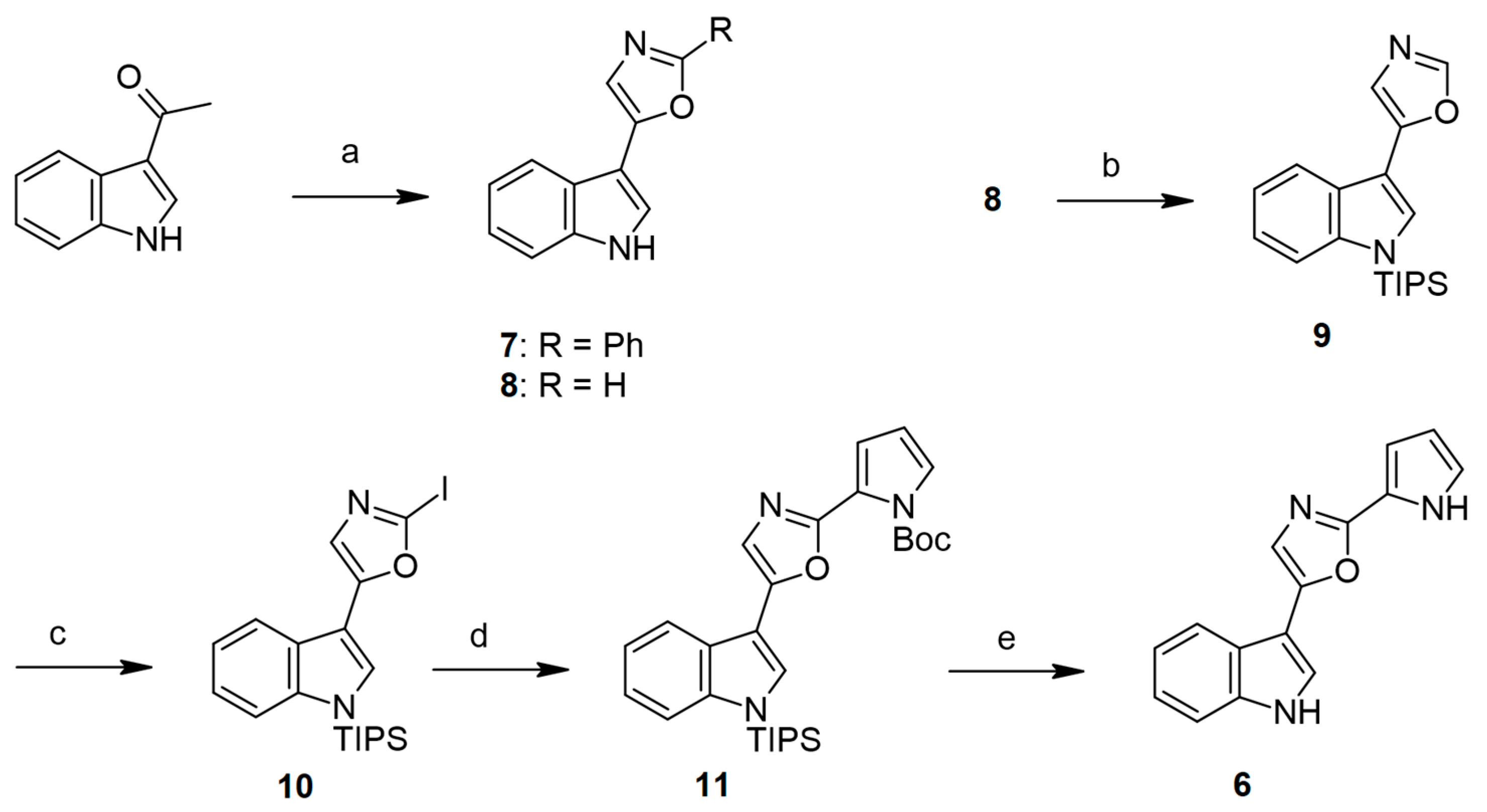
- 5-(1H-Indol-3-yl)oxazole (8)

- 5-(1-(Triisopropylsilyl)-1H-indol-3-yl)oxazole (9)
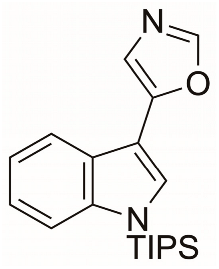
- 2-Iodo-5-(1-(triisopropylsilyl)-1H-indol-3-yl)oxazole (10)

- tert-Butyl-2-(5-(1-(triisopropylsilyl)-1H-indol-3-yl)oxazol-2-yl)-1H-pyrrole-1-carboxylate (11)

- 5-(1H-Indol-3-yl)-2-(1H-pyrrol-2-yl)oxazole (6)

- 5-(1H-Indol-3-yl)-2-phenyloxazole (7)

References
- Hall-Stoodley, L.; Stoodley, P.; Kathju, S.; Høiby, N.; Moser, C.; William Costerton, J.; Moter, A.; Bjarnsholt, T. Towards diagnostic guidelines for biofilm-associated infections. FEMS Immunol. Med. Microbiol. 2012, 65, 127–145. [Google Scholar] [CrossRef]
- Sauer, K.; Stoodley, P.; Goeres, D.M.; Hall-Stoodley, L.; Burmølle, M.; Stewart, P.S.; Bjarnsholt, T. The biofilm life cycle: Expanding the conceptual model of biofilm formation. Nat. Rev. Microbiol. 2022, 20, 608–620. [Google Scholar] [CrossRef] [PubMed]
- Bjarnsholt, T. The role of bacterial biofilms in chronic infections. APMIS 2013, 121, 1–58. [Google Scholar] [CrossRef] [PubMed]
- Khatoon, Z.; McTiernan, C.D.; Suuronen, E.J.; Mah, T.-F.; Alarcon, E.I. Bacterial biofilm formation on implantable devices and approaches to its treatment and prevention. Heliyon 2018, 4, e01067. [Google Scholar] [CrossRef]
- Mah, T.-F. Biofilm-specific antibiotic resistance. Future Microbiol. 2012, 7, 1061–1072. [Google Scholar] [CrossRef] [PubMed]
- Hengge, R.; Pruteanu, M.; Stülke, J.; Tschowri, N.; Turgay, K. Recent advances and perspectives in nucleotide second messenger signaling in bacteria. microLife 2023, 4, uqad015. [Google Scholar] [CrossRef]
- Vadakkan, K.; Sathishkumar, K.; Kuttiyachan Urumbil, S.; Ponnenkunnathu Govindankutty, S.; Kumar Ngangbam, A.; Devi Nongmaithem, B. A review of chemical signaling mechanisms underlying quorum sensing and its inhibition in Staphylococcus aureus. Bioorg. Chem. 2024, 148, 107465. [Google Scholar] [CrossRef]
- Newman, D.J.; Cragg, G.M. Natural Products as Sources of New Drugs over the Nearly Four Decades from 01/1981 to 09/2019. J. Nat. Prod. 2020, 83, 770–803. [Google Scholar] [CrossRef]
- Kannappan, A.; Sivaranjani, M.; Srinivasan, R.; Rathna, J.; Pandian, S.K.; Ravi, A.V. Inhibitory efficacy of geraniol on biofilm formation and development of adaptive resistance in Staphylococcus epidermidis RP62A. J. Med. Microbiol. 2017, 66, 1506–1515. [Google Scholar] [CrossRef]
- Sauermann, R.; Rothenburger, M.; Graninger, W.; Joukhadar, C. Daptomycin: A Review 4 Years after First Approval. Pharmacology 2007, 81, 79–91. [Google Scholar] [CrossRef]
- Ding, W.; Zhou, Y.; Qu, Q.; Cui, W.; God’spower, B.O.; Liu, Y.; Chen, X.; Chen, M.; Yang, Y.; Li, Y. Azithromycin Inhibits Biofilm Formation by Staphylococcus xylosus and Affects Histidine Biosynthesis Pathway. Front. Pharmacol. 2018, 9, 740. [Google Scholar] [CrossRef]
- Santamaria, M.; Petermann, K.D.; Vedovello, S.A.S.; Degan, V.; Lucato, A.; Franzini, C.M. Antimicrobial effect of Melaleuca alternifolia dental gel in orthodontic patients. Am. J. Orthod. Dentofac. Orthop. 2014, 145, 198–202. [Google Scholar] [CrossRef] [PubMed]
- Goes, P.; Dutra, C.S.; Lisboa, M.R.P.; Gondim, D.V.; Leitão, R.; Brito, G.A.C.; Rego, R.O. Clinical efficacy of a 1% Matricaria chamomile L. mouthwash and 0.12% chlorhexidine for gingivitis control in patients undergoing orthodontic treatment with fixed appliances. J. Oral Sci. 2016, 58, 569–574. [Google Scholar] [CrossRef] [PubMed]
- Singh, I.; Gautam, L.K.; Kaur, I.R. Effect of oral cranberry extract (standardized proanthocyanidin-A) in patients with recurrent UTI by pathogenic E. coli: A randomized placebo-controlled clinical research study. Int. Urol. Nephrol. 2016, 48, 1379–1386. [Google Scholar] [CrossRef]
- Kanagasabapathy, S.; Samuthirapandian, R.; Kumaresan, M. Preliminary studies for a new antibiotic from the marine mollusk Melo melo (Lightfoot, 1786). Asian Pac. J. Trop. Med. 2011, 4, 310–314. [Google Scholar] [CrossRef] [PubMed]
- Sigwart, J.D.; Blasiak, R.; Jaspars, M.; Jouffray, J.-B.; Tasdemir, D. Unlocking the potential of marine biodiscovery. Nat. Prod. Rep. 2021, 38, 1235–1242. [Google Scholar] [CrossRef]
- Geng, H.; Chen, F.; Zhao, Y.; Guo, B.; Tang, L.; Yang, Y.-Y. Protecting-Group-Free Synthesis of Meridianin A–G and Derivatives and Its Antibiofilm Evaluation. J. Org. Chem. 2023, 88, 3927–3934. [Google Scholar] [CrossRef]
- Peters, L.; König, G.M.; Wright, A.D.; Pukall, R.; Stackebrandt, E.; Eberl, L.; Riedel, K. Secondary Metabolites of Flustra foliace a and Their Influence on Bacteria. Appl. Environ. Microbiol. 2003, 69, 3469–3475. [Google Scholar] [CrossRef]
- Thaker, M.N.; Waglechner, N.; Wright, G.D. Antibiotic resistance–mediated isolation of scaffold-specific natural product producers. Nat. Protoc. 2014, 9, 1469–1479. [Google Scholar] [CrossRef]
- Klebe, G. From In Vitro to In Vivo: Optimization of ADME and Toxicology Properties. In Drug Design: From Structure and Mode-of-Action to Rational Design Concepts; Springer: Berlin/Heidelberg, Germany, 2024; pp. 291–308. [Google Scholar]
- Hanssen, K.Ø.; Schuler, B.; Williams, A.J.; Demissie, T.B.; Hansen, E.; Andersen, J.H.; Svenson, J.; Blinov, K.; Repisky, M.; Mohn, F.; et al. A Combined Atomic Force Microscopy and Computational Approach for the Structural Elucidation of Breitfussin A and B: Highly Modified Halogenated Dipeptides from Thuiaria breitfussi. Angew. Chem. Int. Ed. 2012, 51, 12238–12241. [Google Scholar] [CrossRef]
- Hansen, K.Ø.; Andersen, J.H.; Bayer, A.; Pandey, S.K.; Lorentzen, M.; Jørgensen, K.B.; Sydnes, M.O.; Guttormsen, Y.; Baumann, M.; Koch, U.; et al. Kinase Chemodiversity from the Arctic: The Breitfussins. J. Med. Chem. 2019, 62, 10167–10181. [Google Scholar] [CrossRef]
- Liu, K. Total Synthesis of CPI-2081, Breitfussin B and Synthetic Studies Towards Myriastramide C and Goadsporin. Doctoral Dissertation, University of East Anglia, Norwich, UK, 2015. [Google Scholar]
- Michael, P.; Hansen, K.; Isaksson, J.; Andersen, J.; Hansen, E. A Novel Brominated Alkaloid Securidine A, Isolated from the Marine Bryozoan Securiflustra securifrons. Molecules 2017, 22, 1236. [Google Scholar] [CrossRef]
- Jenssen, M.; Rainsford, P.; Juskewitz, E.; Andersen, J.H.; Hansen, E.H.; Isaksson, J.; Rämä, T.; Hansen, K.Ø. Lulworthinone, a New Dimeric Naphthopyrone from a Marine Fungus in the Family Lulworthiaceae with Antibacterial Activity Against Clinical Methicillin-Resistant Staphylococcus aureus Isolates. Front. Microbiol. 2021, 12, 730740. [Google Scholar] [CrossRef]
- Xie, T.T.; Zeng, H.; Ren, X.P.; Wang, N.; Chen, Z.J.; Zhang, Y.; Chen, W. Antibiofilm activity of three Actinomycete strains against Staphylococcus epidermidis. Lett. Appl. Microbiol. 2019, 68, 73–80. [Google Scholar] [CrossRef]
- Rosenberg, M.; Gutnick, D.; Rosenberg, E. Adherence of bacteria to hydrocarbons: A simple method for measuring cell-surface hydrophobicity. FEMS Microbiol. Lett. 1980, 9, 29–33. [Google Scholar] [CrossRef]
- Krishnamoorthy, M.; Nayak, B.K.; Nanda, A. In vivo and in vitro characterization of probiotic organisms for their microbial adhesion property isolated from Coconut toddy. Karbala Int. J. Mod. Sci. 2018, 4, 341–346. [Google Scholar] [CrossRef]
- Pandey, S.K.; Guttormsen, Y.; Haug, B.E.; Hedberg, C.; Bayer, A. A Concise Total Synthesis of Breitfussin A and B. Org. Lett. 2015, 17, 122–125. [Google Scholar] [CrossRef]
- Xiang, J.; Wang, J.; Wang, M.; Meng, X.; Wu, A. One-pot total synthesis: The first total synthesis of chiral alkaloid pimprinol A and the facile construction of its natural congeners from amino acids. Tetrahedron 2014, 70, 7470–7475. [Google Scholar] [CrossRef]
- Vacheethasanee, K.; Temenoff, J.S.; Higashi, J.M.; Gary, A.; Anderson, J.M.; Bayston, R.; Marchant, R.E. Bacterial surface properties of clinically isolated Staphylococcus epidermidis strains determine adhesion on polyethylene. J. Biomed. Mater. Res. 1998, 42, 425–432. [Google Scholar] [CrossRef]
- Fedtke, I.; Mader, D.; Kohler, T.; Moll, H.; Nicholson, G.; Biswas, R.; Henseler, K.; Götz, F.; Zähringer, U.; Peschel, A. A Staphylococcus aureus ypfP mutant with strongly reduced lipoteichoic acid (LTA) content: LTA governs bacterial surface properties and autolysin activity. Mol. Microbiol. 2007, 65, 1078–1091. [Google Scholar] [CrossRef]
- Otto, M. Staphylococcus epidermidis—The ‘accidental’ pathogen. Nat. Rev. Microbiol. 2009, 7, 555–567. [Google Scholar] [CrossRef]
- Gristina, A.G. Biomaterial-Centered Infection: Microbial Adhesion Versus Tissue Integration. Science 1987, 237, 1588–1595. [Google Scholar] [CrossRef]
- Heilmann, C.; Hussain, M.; Peters, G.; Götz, F. Evidence for autolysin-mediated primary attachment of Staphylococcus epidermidis to a polystyrene surface. Mol. Microbiol. 1997, 24, 1013–1024. [Google Scholar] [CrossRef]
- Arrecubieta, C.; Toba, F.A.; von Bayern, M.; Akashi, H.; Deng, M.C.; Naka, Y.; Lowy, F.D. SdrF, a Staphylococcus epidermidis Surface Protein, Contributes to the Initiation of Ventricular Assist Device Driveline–Related Infections. PLoS Path. 2009, 5, e1000411. [Google Scholar] [CrossRef]
- Conlon, B.P.; Geoghegan, J.A.; Waters, E.M.; McCarthy, H.; Rowe, S.E.; Davies, J.R.; Schaeffer, C.R.; Foster, T.J.; Fey, P.D.; O’Gara, J.P. Role for the A Domain of Unprocessed Accumulation-Associated Protein (Aap) in the Attachment Phase of the Staphylococcus epidermidis Biofilm Phenotype. J. Bacteriol. 2014, 196, 4268–4275. [Google Scholar] [CrossRef]
- Komatsuzawa, H.; Sugai, M.; Nakashima, S.; Yamada, S.; Matsumoto, A.; Oshida, T.; Suginaka, H. Subcellular Localization of the Major Autolysin, ATL and Its Processed Proteins in Staphylococcus aureus. Microbiol. Immunol. 1997, 41, 469–479. [Google Scholar] [CrossRef]
- Becker, K.; Heilmann, C.; Peters, G. Coagulase-Negative Staphylococci. Clin. Microbiol. Rev. 2014, 27, 870–926. [Google Scholar] [CrossRef]
- Agarwal, A.; Singh, K.P.; Jain, A. Medical significance and management of staphylococcal biofilm. FEMS Immunol. Med. Microbiol. 2010, 58, 147–160. [Google Scholar] [CrossRef]
- Dong, Y.; Speer, C.P.; Glaser, K. Beyond sepsis: Staphylococcus epidermidis is an underestimated but significant contributor to neonatal morbidity. Virulence 2018, 9, 621–633. [Google Scholar] [CrossRef]
- Allen, R.C.; Popat, R.; Diggle, S.P.; Brown, S.P. Targeting virulence: Can we make evolution-proof drugs? Nat. Rev. Microbiol. 2014, 12, 300–308. [Google Scholar] [CrossRef]
- Heras, B.; Scanlon, M.J.; Martin, J.L. Targeting virulence not viability in the search for future antibacterials. Br. J. Clin. Pharmacol. 2015, 79, 208–215. [Google Scholar] [CrossRef] [PubMed]
- Koo, H.; Allan, R.N.; Howlin, R.P.; Stoodley, P.; Hall-Stoodley, L. Targeting microbial biofilms: Current and prospective therapeutic strategies. Nat. Rev. Microbiol. 2017, 15, 740–755. [Google Scholar] [CrossRef]
- Yap, C.H.; Ramle, A.Q.; Lim, S.K.; Rames, A.; Tay, S.T.; Chin, S.P.; Kiew, L.V.; Tiekink, E.R.T.; Chee, C.F. Synthesis and Staphylococcus aureus biofilm inhibitory activity of indolenine-substituted pyrazole and pyrimido[1,2-b]indazole derivatives. Bioorg. Med. Chem. 2023, 95, 117485. [Google Scholar] [CrossRef] [PubMed]
- Pradeepa; Shetty, A.D.; Matthews, K.; Hegde, A.R.; Akshatha, B.; Mathias, A.B.; Mutalik, S.; Vidya, S.M. Multidrug resistant pathogenic bacterial biofilm inhibition by Lactobacillus plantarum exopolysaccharide. Bioact. Carbohydr. Diet. Fibre 2016, 8, 7–14. [Google Scholar] [CrossRef]
- Oliveira, F.; Lima, C.A.; Brás, S.; França, Â.; Cerca, N. Evidence for inter- and intraspecies biofilm formation variability among a small group of coagulase-negative staphylococci. FEMS Microbiol. Lett. 2015, 362, fnv175. [Google Scholar] [CrossRef]
- Cervantes-Huamán, B.R.H.; Ripolles-Avila, C.; Mazaheri, T.; Rodríguez-Jerez, J.J. Pathogenic mono-species biofilm formation on stainless steel surfaces: Quantitative, qualitative, and compositional study. LWT 2022, 159, 113211. [Google Scholar] [CrossRef]
- Stabile Gouveia, J.; Paula Castro, V.D.; Rossi, F.; Ambrósio, S.R.; Benard, G.; Pires, R.H. Quantifying biofilm matrix components: Effects of chlorhexidine and orthophthalaldehyde on Candida parapsilosis and Staphylococcus aureus. Biofouling 2025, 41, 551–560. [Google Scholar] [CrossRef]
- Cue, D.R.; Lei, M.G.; Lee, C. Genetic regulation of the intercellular adhesion locus in staphylococci. Front. Cell. Infect. Microbiol. 2012, 2, 38. [Google Scholar] [CrossRef]
- Büttner, H.; Mack, D.; Rohde, H. Structural basis of Staphylococcus epidermidis biofilm formation: Mechanisms and molecular interactions. Front. Cell. Infect. Microbiol. 2015, 5, 14. [Google Scholar] [CrossRef]
- Svensson Malchau, K.; Tillander, J.; Zaborowska, M.; Hoffman, M.; Lasa, I.; Thomsen, P.; Malchau, H.; Rolfson, O.; Trobos, M. Biofilm properties in relation to treatment outcome in patients with first-time periprosthetic hip or knee joint infection. J. Orthop. Transl. 2021, 30, 31–40. [Google Scholar] [CrossRef] [PubMed]
- Mataraci, E.; Dosler, S. In Vitro Activities of Antibiotics and Antimicrobial Cationic Peptides Alone and in Combination against Methicillin-Resistant Staphylococcus aureus Biofilms. Antimicrob. Agents Chemother. 2012, 56, 6366–6371. [Google Scholar] [CrossRef] [PubMed]
- Lipinski, C.A.; Lombardo, F.; Dominy, B.W.; Feeney, P.J. Experimental and computational approaches to estimate solubility and permeability in drug discovery and development settings. Adv. Drug Del. Rev. 1997, 23, 3–25. [Google Scholar] [CrossRef]





| Compound | ||
|---|---|---|
| 1 | 2 | |
| Gram-positive bacteria | ||
| S. aureus ATCC 25923 | 50 µM | 10 µM |
| S. aureus ATCC 29213 1 | >50 µM | |
| S. agalactiae | 10 µM | 10 µM |
| E. faecalis | 50 µM | >50 µM |
| S. epidermidis | 20 µM | |
| MRSA MB5393 1 | >50 µM | |
| Gram-negative bacteria | ||
| P. aeruginosa | >50 µM | >50 µM |
| E. coli | >50 µM | >50 µM |
| Fungal pathogen | ||
| C. albicans | >50 µM | >50 µM |
| Biofilm | ||
| S. epidermidis | 10 µM | |
| S. aureus ATCC29213 1 | >50 µM | |
| MRSA MB5393 1 | >50 µM | |
| L. monocytogenes EGD-e 1 | >50 µM | |
| Cpd. 2 | Target Value | Unit | |
|---|---|---|---|
| Kinetic Solubility 1 | 85 | >100 | µM |
| PAMPA | 17 | >25 | % flux |
| Mouse MS phase I Clint | 5 | <30 | µL/min/mg |
| Mouse MS phase II | 31 | >80 | % remaining after 1 h |
| Mouse plasma stability | 69 | >85 | % remaining after 1 h |
| MRC5 IC50 | 15 | >25 | µM |
| HepG2 IC50 | 30 | >25 | µM |
Disclaimer/Publisher’s Note: The statements, opinions and data contained in all publications are solely those of the individual author(s) and contributor(s) and not of MDPI and/or the editor(s). MDPI and/or the editor(s) disclaim responsibility for any injury to people or property resulting from any ideas, methods, instructions or products referred to in the content. |
© 2026 by the authors. Licensee MDPI, Basel, Switzerland. This article is an open access article distributed under the terms and conditions of the Creative Commons Attribution (CC BY) license.
Share and Cite
Heimböck, M.P.; Hansen, K.Ø.; Guttormsen, Y.; Pandey, S.K.; Johnsen, E.; Haug, B.E.; Bayer, A.; Sanchez, P.; Petit, G.A.; Hansen, E.H.; et al. Inhibition of Staphylococcus epidermidis Biofilm Formation by a Synthetic Breitfussin Analogue. Microbiol. Res. 2026, 17, 105. https://doi.org/10.3390/microbiolres17060105
Heimböck MP, Hansen KØ, Guttormsen Y, Pandey SK, Johnsen E, Haug BE, Bayer A, Sanchez P, Petit GA, Hansen EH, et al. Inhibition of Staphylococcus epidermidis Biofilm Formation by a Synthetic Breitfussin Analogue. Microbiology Research. 2026; 17(6):105. https://doi.org/10.3390/microbiolres17060105
Chicago/Turabian StyleHeimböck, Martin Paul, Kine Østnes Hansen, Yngve Guttormsen, Sunil Kumar Pandey, Endre Johnsen, Bengt Erik Haug, Annette Bayer, Pilar Sanchez, Guillaume Axel Petit, Espen Holst Hansen, and et al. 2026. "Inhibition of Staphylococcus epidermidis Biofilm Formation by a Synthetic Breitfussin Analogue" Microbiology Research 17, no. 6: 105. https://doi.org/10.3390/microbiolres17060105
APA StyleHeimböck, M. P., Hansen, K. Ø., Guttormsen, Y., Pandey, S. K., Johnsen, E., Haug, B. E., Bayer, A., Sanchez, P., Petit, G. A., Hansen, E. H., & Andersen, J. H. (2026). Inhibition of Staphylococcus epidermidis Biofilm Formation by a Synthetic Breitfussin Analogue. Microbiology Research, 17(6), 105. https://doi.org/10.3390/microbiolres17060105