Review

Post-Colonoscopy Gut Microbiota Dysbiosis: Mechanisms, Clinical Consequences, and the Role of Diet in Microbiota Recovery


Department of Gastroenterology and Nutrition Disorders, Collegium Medicum in Bydgoszcz, Nicolaus Copernicus University, 87-100 Bydgoszcz, Poland
*
Author to whom correspondence should be addressed.
Gastroenterol. Insights 2026, 17(2), 27; https://doi.org/10.3390/gastroent17020027
Submission received: 18 February 2026 / Revised: 31 March 2026 / Accepted: 2 April 2026 / Published: 15 April 2026
(This article belongs to the Section Gastrointestinal Disease)

Abstract

Colonoscopy is the gold standard for diagnosing and monitoring gastrointestinal diseases. However, bowel preparation, rather than the procedure itself, appears to be the main driver of transient gut microbiota disruption. Available evidence suggests that microbiota alterations after bowel preparation and colonoscopy may persist for days to weeks and may be associated with changes in barrier function, microbial metabolism, and symptom burden in susceptible individuals. This review summarizes current knowledge on the mechanisms underlying microbial disruption induced by bowel preparation, including loss of diversity, shifts in key taxa, impairment of metabolic pathways, and alterations in immunomodulatory metabolites. It also discusses potential clinical consequences and highlights nutritional strategies that may support microbiota recovery, including dietary fiber, polyphenols, and microbiota-targeted approaches. This review also highlights current research gaps and the need for well-designed clinical studies in this field.

1. Introduction

The intestinal microbiota is a complex ecosystem that consists of bacteria, archaea, viruses, and fungi, which influence digestion, the immune system, and metabolism. Disturbance of this ecosystem, known as dysbiosis, may be reflected in changes in the abundance of specific microbial taxa, alpha and beta diversity, and microbially derived metabolites. Dysbiosis is associated with numerous gastrointestinal (GI) and systemic conditions [1,2]. Despite extensive research on gut microbiota, the impact of routine procedures such as colonoscopy remains insufficiently explored, raising questions regarding the potential long-term health implications of colonoscopy-induced microbiota alterations.
Colonoscopy is a widely used screening procedure that requires pre-colonoscopy bowel preparation to clear colonic contents. Bowel preparation causes rapid evacuation of luminal contents and is hypothesized to transiently alter a significant fraction of the gastrointestinal microbiota composition [3]. Multiple studies indicate that bowel preparation is associated with alterations in gut microbiota composition and diversity [4,5,6]. Nevertheless, the dynamics and timeline of microbial recovery remain incompletely characterized. Evidence suggests that subsets of taxa may remain altered at later follow-up time points and that interindividual variability in recovery can be substantial [4,5].
The clinical significance of post-colonoscopy dysbiosis is unclear. Dysbiosis has been observed to coincide with common minor post-colonoscopy complications, including bloating, abdominal discomfort, diarrhea, and constipation [7,8]. These post-procedural outcomes are likely multifactorial, with potential contributions from bowel preparation, dietary restrictions, hydration status, insufflation, sedation, stress, and, potentially, microbiota alterations. It remains unclear how post-colonoscopy dysbiosis influences clinical outcomes beyond hypothesized transient symptoms.
Diet is one of the most important modulators of the gut microbiome, influencing both the composition and function of microorganisms [9,10]. Nutrition may influence the abundance of beneficial bacterial taxa and the production of metabolites, such as short-chain fatty acids (SCFAs), which support intestinal barrier function and immune regulation [9,10,11,12,13]. In the context of post-colonoscopy recovery, detailed dietary modulation studies remain sparse. To date, most interventional studies have focused on probiotics or synbiotics [14,15]. Consequently, there remains a need for additional research examining nutrient-focused approaches to dysbiosis. Three significant knowledge gaps remain: how specific dietary strategies may modulate microbiota restoration, which bacterial taxa are the most responsive to nutritional modulation, and how microbial changes may relate to clinical outcomes.
This narrative review aims to synthesize current evidence on post-colonoscopy alterations in gut microbiota, their underlying mechanisms and clinical implications, as well as nutritional modulation strategies that may enhance recovery. This review is guided by the following research question: how may diet and/or probiotic supplementation modulate post-colonoscopy dysbiosis?

Novelty of This Review

Previous reviews addressing colonoscopy or bowel preparation-associated dysbiosis have primarily focused on alterations in the gut microbiota composition and the potential role of probiotics in microbiota restoration. In contrast, this review integrates mechanistic drivers of dysbiosis, including increased osmotic stress, transient disruption of the mucus layer, nutrient deprivation, and increased oxygen availability.
A major distinguishing feature of this review is the inclusion of dietary interventions as a relevant tool for modulating the gut microbiota after colonoscopy. We discuss the role of nutritional strategies implemented both before and after colonoscopy as factors that may influence bowel preparation quality and gut microbiota recovery.
Moreover, this review conceptualizes post-colonoscopy dysbiosis as a potentially dynamic process, characterized by differential trajectories of recovery among microbial taxa and intestinal functions. The identification of periods of increased susceptibility of the gut ecosystem to modulation (“windows of intervention”) may help define the optimal timing for dietary and microbiota-targeted interventions.
Finally, this review identifies potential patient groups at increased risk of clinically relevant dysbiosis, supporting a shift away from a one-size-fits-all approach toward strategies tailored to individuals most vulnerable to prolonged disruptions of the gut microbiota.

2. Literature Search Strategy

As this study was designed as a narrative review, a formal systematic review protocol and PRISMA Statement-based study selection procedure were not applied. Nevertheless, efforts were made to ensure a structured and transparent literature search.
PubMed and Cochrane electronic databases were searched to identify studies addressing: (1) mechanisms of bowel preparation- and colonoscopy-associated gut microbiota alterations, (2) their potential clinical consequences, and (3) the potential role of diet in alleviating post-colonoscopy dysbiosis. The search was conducted between 20 December 2025 and 18 January 2026 and included articles published between 2015 and 2026. The search retrieved an estimated 600–800 records. After screening titles and abstracts and removing duplicates, approximately 120–150 studies were assessed in full text. Of these, around 69 were included in the final review. These numbers should be interpreted as approximate due to the narrative nature of the review and the iterative study selection process. A detailed list of search terms is provided in the Supplementary Material. References from relevant studies were also manually searched to identify additional eligible studies.
This narrative review considered randomized controlled trials (RCTs), interventional studies, observational studies, and relevant systematic, rapid, and narrative reviews investigating gut microbiota changes after bowel preparation or colonoscopy, as well as nutritional or probiotic strategies potentially supporting microbiota recovery. Non-English articles, conference abstracts without full text, editorials, and letters without substantial data were excluded.
The literature screening process was performed by five authors. Retrieved records were screened based on titles and abstracts, and potentially relevant articles were subsequently assessed in full text. The identified studies were then discussed among the authors to determine their relevance for inclusion in the review.
Duplicates were excluded by comparing study authors, titles, abstracts, and DOI numbers. Data from retrieved papers were organized into thematic sections covering mechanisms of post-colonoscopy dysbiosis, clinical consequences of colonoscopy, and the potential role of diet in alleviating post-colonoscopy dysbiosis.

3. Mechanisms of Post-Colonoscopy Dysbiosis

Before performing a colonoscopy, it is necessary to prepare the bowel, which determines the accuracy and duration of the procedure by cleansing the intestines of their contents. It also minimizes the risk of repeat colonoscopy within a short period of time [16]. The gut microbiota is exposed to various factors during bowel preparation and, to a lesser extent, during the colonoscopy itself. This may contribute to dysbiosis through reduced alpha diversity, altered abundance of specific bacterial taxa, and lower SCFA levels. A main element of bowel preparation is intestinal cleansing achieved through dietary modification and laxative use. For this purpose, various preparations are used, including different volumes of polyethylene glycol (PEG), magnesium salts, or sodium salts solutions. Despite the differences in chemical structure, effectiveness, and side effects, all of these preparations may affect the intestinal microbiota [17]. The cleansing effect is based on changing the osmolarity of the intestinal lumen, which results in an increase in the volume of fluids in the lumen. The process results in stimulation of motility and a reduction in stool density [18,19].

3.1. Osmotic Stress

Osmolarity, the concentration of dissolved particles in a solution, is one of the factors moderating bacterial growth. An increase in osmolarity in the intestinal lumen results in slower growth of microorganisms and reduces the volume of bacterial cells due to water diffusion [20]. Research on the humanized microbiota mouse showed that the use of 15% PEG solution may cause changes in the intestinal microbiota. An increase in environmental osmolarity may result in a reduction of numerous bacterial groups and the rapid expansion of individual, less abundant bacteria that are more resistant to osmotic stress. The altered microbiota exhibits greater resistance to osmolarity changes, but simultaneously reduced tolerance to acid and thermal stress. This may result in quantitative and structural changes in the microbiota relative to its baseline state [18].

3.2. Washout and Nutrient Deprivation

The use of laxatives, similarly to osmotic diarrhea caused by food intolerance, can significantly change the composition of the intestinal microbiota by limiting its diversity and unifying the individual intestinal microbiota [21]. The increase in bowel movements during bowel preparation results in rapid movement of fecal masses along with microorganisms that cannot attach to the intestinal mucosa and reduced access to nutrients such as fermentable carbohydrates and dietary fiber, necessary for bacteria inhabiting the intestines [22]. The limitation of nutrients also results from dietary modifications, introducing a low-fiber diet before colonoscopy with a limit of 10 g of fiber per person per day, which means consumption is 2.5–3.5 times lower than the recommended fiber intake for healthy adults [23].

3.3. Mucus Layer Disruption and SCFAs

A factor influencing the structure of the microbiota is mucus, which is a watery secretion of goblet cells composed primarily of mucins. Intestinal mucus is both a physical barrier between the intestinal epithelium and microorganisms, but also a source of nutrients for some microorganisms [24,25,26]. During osmotic diarrhea, there is a decrease in the number of Akkermansia, which feeds on intestinal mucus. This suggests a reduction in the amount of mucus [18]. Available evidence suggests that PEG-based bowel preparation results in a moderate to significant reduction in intestinal mucus [27]. Changes in the integrity of the mucous layer also contribute to a decrease in the number of other bacteria, including Bifidobacterium dentium, Clostridium butyricum and Roseburia intestinalis. These anaerobic bacteria produce butyrate, which is classified as a SCFAs. SCFAs are metabolites produced during fiber fermentation, supporting mucus integrity and secretion [28]. Reduced fiber intake and depletion of SCFA-producing bacteria following bowel preparation may result in reduced SCFA synthesis [29]. This may slow down mucus renewal and exacerbate intestinal microbiota changes.

3.4. Oxygen

After a colonoscopy, the number of Proteobacteria in the intestines increases, which, unlike other bacteria inhabiting the intestines, are not strict anaerobes. This suggests a change in the intestinal environment related to increased oxygen exposure. It is possible that changes are caused by air entering during the colonoscopy [22]. Another possibility is the diffusion of oxygen from the epithelial cells into the intestinal lumen. Anaerobic bacteria produce butyrate during fiber fermentation, which maintains the colonocytes’ increased oxygen demand. In homeostasis, colonocytes are in a constant state of oxygen deficiency, maintaining anaerobic conditions in the intestinal lumen. A reduced abundance of bacteria and lower fiber availability may contribute to decreased butyrate production, which may be associated with altered oxygen dynamics in the intestinal lumen, potentially contributing to changes in the intestinal environment [30].

3.5. Gut Microbiota Alterations

Studies examining microbiota variability after bowel preparation demonstrate changes in alpha diversity. An analysis of the effect of gut cleansing substances on microbiota changes in children showed a decrease in alpha diversity 2 days after bowel preparation, but this change returned to normal after 2 weeks [31]. Similar changes were described in a study of 11 adults given PEG solution. This study found a significant decrease in alpha diversity 3 days after bowel preparation, which returned to normal after 6 weeks [32]. Meanwhile, another study of the impact of bowel preparation on the microbiota found that there were no significant changes in alpha diversity after gut preparation. Changes included the species-level differences between the day after and the day before bowel preparation, but the microbiota recovered after 14 days [6].
The changes also include differences in the structure of the microbiota at the genus level. In a study in children, the number of bacteria of the genus Eubacterium increased 2 weeks after bowel preparation, the number of Escherichia and Veillonella increased after 2 days and gradually returned to the initial level within 2 weeks, Intestinibacter decreased 2 days after cleansing but returned to baseline levels within 4 weeks [31]. In the study in adults, however, unlike the study in children, genus-level analysis did not reveal significant changes in microbiota composition during this study [32]. Changes in the microbiota may be dependent on the particular person’s microbiota before the colon cleanse. In a study examining the microbiota of 20 adult obese men, the participants were stratified into two groups based on the ratio of Prevotella to the sum of Prevotella and Bacteroides in stool samples at the beginning of the study: group 1—with a predominance of Bacteroides—and group 2—with a predominance of Prevotella. A significant change by genus occurred only within group 2 and concerned Bacteroides, Prevotella, Oscillospira, and Holdemania, 7 days after colonoscopy compared to the day before bowel preparation. The microbiota of participants of group 2 in this study suggested a temporarily greater susceptibility to changes induced by bowel preparation [4].
These findings suggest that most microbiota alterations after colonoscopy are transient, but a 2024 study showed only partial microbiota recovery after 7 days. Bifidobacterium, Clostridium, Lachnospira and Rothia bacteria did not completely return to their initial state even after a period of 60 days after colonoscopy. In the same study, subjects had decreased levels of SCFAs after colonoscopy. There was a decrease in SCFA levels (butyric acid, propanoic acid, hexanoic acid, and heptanoic acid), which returned to baseline levels one month after colonoscopy [33]. Additionally, another study showed that bowel preparation with oral laxatives resulted in a decrease in Porphyromonas, an increase in Eubacterium coprostanoligenes, Eubacterium hallii and Collinsella bacteria, which did not return to baseline levels within 30 days [34]. This may mean that the recovery period after a colonoscopy is longer.
In summary, bowel preparation might affect the gut microbiota by flushing intestinal content, changing osmolarity, increasing intraluminal oxygen levels, and reducing intestinal mucus. Colonoscopy itself appears to have a lesser effect on the microbiota, limited to the hypothesis of altering anaerobic conditions during the procedure. The changes include decreased alpha diversity, changes in genus-level abundance, and reduced SCFA levels. However, current research does not clearly indicate the time it takes for a microbiota to regenerate. Collectively, these studies indicate substantial inter-individual variability in microbiota resilience and recovery kinetics following bowel preparation. Most studies were conducted in small cohorts, meaning the results may not reflect the general population.

4. Clinical Consequences of Colonoscopy

Colonoscopy is a key test for diagnosing and monitoring intestinal diseases such as inflammatory bowel disease (IBD), diverticulosis and colorectal cancer. It is also used to assess bleeding and chronic diarrhea [35]. Although it is generally safe, it can lead to complications such as intestinal perforation or bleeding [36,37]. Therefore, proper bowel preparation for colonoscopy is crucial for the effectiveness and safety of the test. Inadequate cleansing can significantly reduce the quality of the examination by making it difficult to obtain a clear image of the colon mucosa and detect any changes [38,39]. The European Society of Gastrointestinal Endoscopy (ESGE) guidelines recommend using a split dose of the cleansing preparation and a low-fiber diet, which is sometimes better tolerated by patients and improves the effectiveness of bowel preparation [40]. However, even with an optimal regimen, adverse effects such as vomiting, abdominal pain, dizziness and cardiovascular disorders may occur simultaneously with changes in the gut microbiota. These symptoms are multifactorial in nature [41].
Bowel preparation, using mainly PEG-based preparations, may be associated with temporary changes in the intestinal microbiota, similar to those described after antibiotic therapy. Typical changes include an increase in Proteobacteria and Enterobacteriaceae, a decrease in Lactobacilli, and alterations to the ratio of Gram-positive to Gram-negative bacteria. These changes may persist for several weeks, especially in patients with pre-existing intestinal diseases, such as irritable bowel syndrome (IBS) or IBD. Preliminary studies suggest that selected probiotic supplements may shorten the duration of these symptoms [3,22,31,42,43]. Research conducted by Meroni et al. reported that bowel preparation before colonoscopy significantly modifies the bacterial network of the fecal microbiota, leading to significant changes in the relationships between individual microorganisms. This procedure may reduce the role of beneficial species, such as Alistipes and Parabacteroides, which under physiological conditions participate in maintaining intestinal homeostasis, while promoting the emergence of potentially pathogenic bacteria, including Campylobacter and Paraprevotella. Reducing protective microorganisms may contribute to temporary microbial imbalances, suggesting that preparing the intestine for a colonoscopy could potentially affect the patient’s health [44].
Powles et al. showed that bowel preparation for colonoscopy can cause a temporary reduction in the diversity of the gut microbiota, which is observed several days after the procedure and resolves after approximately 6 weeks. Despite these short-term changes, no significant or permanent disturbances in the fecal and urinary metabolite profile were found, suggesting that, for individuals without intestinal diseases, this procedure has no long-term metabolic consequences [32]. Nagata et al. demonstrated in another study that bowel preparation for colonoscopy can cause significant but short-term disturbances to the gut microbiota and fecal metabolome. These changes were visible immediately after bowel preparation, but within 14 days, both the composition of the microbiota and all altered metabolites returned to baseline values, not differing from the control group [6]. Alpha diversity often undergoes a rapid, short-term decrease and returns to baseline values within 2–6 weeks. However, selected taxa or metabolites may show delayed or incomplete normalization [6,32].
Changes in the gut microbiota may be one of many factors associated with mild symptoms such as abdominal pain, bloating, diarrhea and constipation. A prospective multicenter study showed that 45.5% of patients experienced at least one new gastrointestinal symptom within seven days after a colonoscopy, most commonly bloating, abdominal pain and dyspeptic symptoms. These symptoms were significantly associated with female gender, poorer tolerance of bowel preparation, and the presence of somatic symptoms [7]. Another study of 24 healthy volunteers noted correlations between the microbiota composition and diversity and the occurrence of mild symptoms after colonoscopy; changes in the ratio of Firmicutes to Bacteroidetes were more pronounced in patients reporting these kinds of symptoms [45]. However, this does not imply direct causality, because the symptoms are multifactorial in nature.

4.1. Patients with IBS

IBS is a chronic disorder of brain–gut interaction characterized by recurrent abdominal pain and changes in bowel habits [46]. A colonoscopy is commonly performed on patients suspected of having IBS to rule out organic diseases of the large intestine that may mimic the IBS symptoms. Although current guidelines recommend this procedure only for patients with alarm symptoms or as part of colorectal cancer screening, in clinical practice it is sometimes also performed in patients without alarm symptoms [47,48]. A large study of over 400,000 patients assessed the effect of antibiotics administered around the time of the colonoscopy on IBS risk. The administration of antibiotics alone did not significantly increase the risk of IBS, but a combined analysis showed a small but statistically significant increase in risk among patients who received antibiotics around the time of the procedure. Both laxatives and antibiotics can temporarily alter the gut microbiota, which in some patients may be associated with IBS symptoms, which are multifactorial in nature [49]. The Micro-Scope trial assessed the impact of mechanical bowel preparations (MBP) and colonoscopy on depressive symptoms and gut microbiota in adult patients. One month after the procedure, depressive symptoms decreased in individuals without IBS but increased in patients with IBS, suggesting that they may be a high-risk group. Microbiota analyses revealed changes in bacterial composition, including an increase in Ruminococcaceae UCG-009, which was correlated with an improvement in depressive symptoms, but there is no evidence of direct causality [50].

4.2. Patients with IBD

Inflammatory bowel disease is a chronic, immune-mediated inflammation of the gastrointestinal tract [3,51], and colonoscopy is currently the gold standard for diagnosing IBD and monitoring patient condition, despite being an invasive method [52,53]. Patients with Crohn’s disease (CD) or ulcerative colitis (UC) may be more prone to complications after colonoscopy preparation due to the imbalance of the gut microbiota characteristic in IBD [3,36,51]. In a prospective study, Bacsur et al. evaluated the effect of sodium picosulfate on the gut microbiota in patients with CD, UC, and healthy individuals. In patients with CD, there was a more pronounced reduction in alpha diversity and a decrease in the abundance of bacteria from the Bifidobacteriaceae family was noted, while in patients with UC, the changes were less severe. These results suggest that bowel preparation may lead to significant, albeit temporary and variable, changes in microbiota composition in patients with IBD. However, the impact of these changes on the risk of disease exacerbation remains uncertain [54]. Shobar et al. conducted another study assessing the effect of bowel preparation for colonoscopy on the composition and diversity of the gut microbiota in healthy individuals and patients with IBD. It was shown that bowel preparation temporarily alters the microbiota in both feces and the intestinal mucosa, with the nature of these changes differing between groups. In patients with IBD, bowel preparation was associated with a reduction in the mucosal microbiota alpha diversity and increased similarity between fecal and mucosal microbiota. This may have masked natural differences between patients and healthy individuals. These results suggest that bowel preparation may temporarily disrupt the balance of the microbiota, which is particularly relevant in patients with IBD, as it may affect the assessment of bowel condition [55].
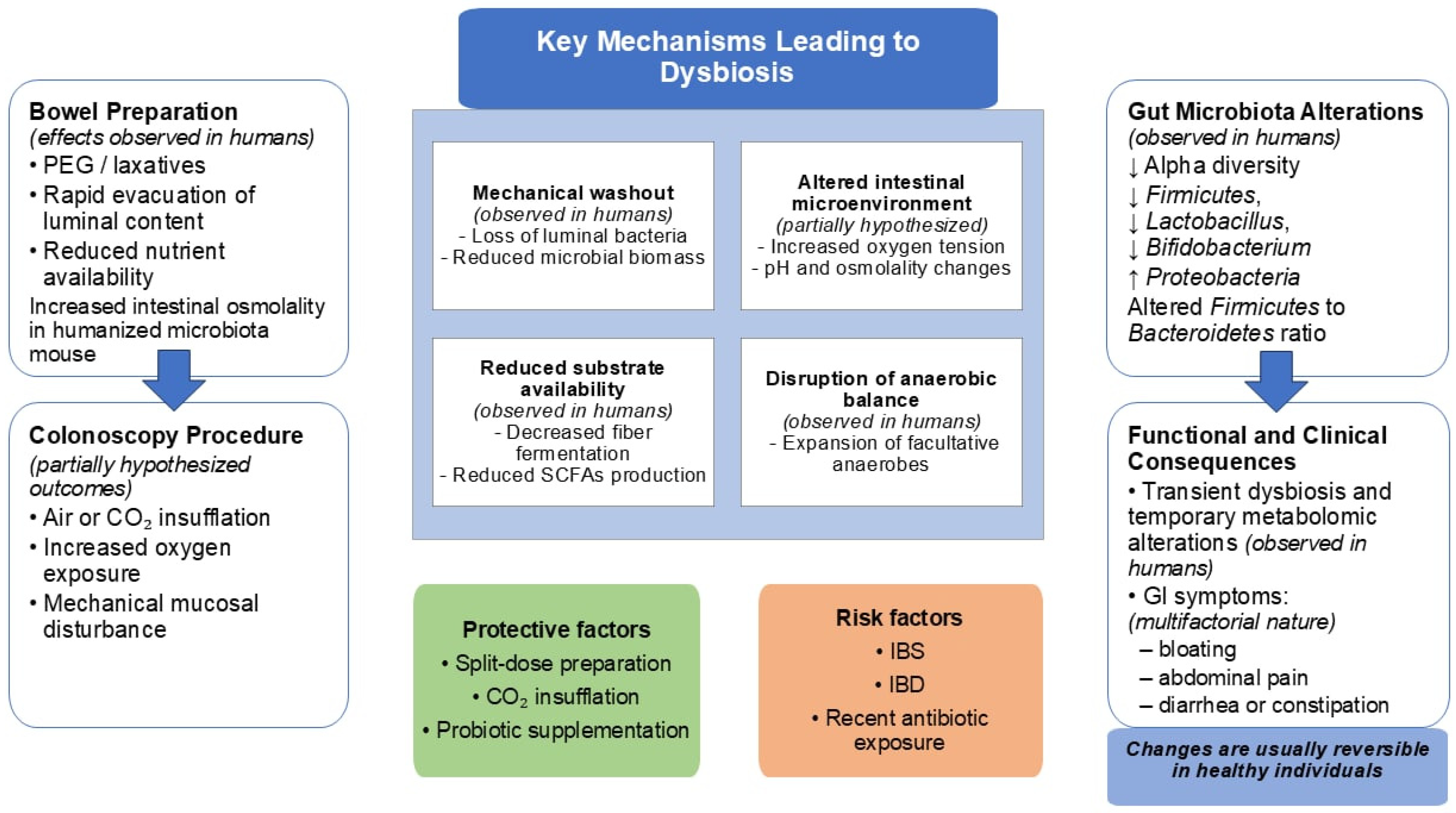
In summary, although colonoscopy is a quite safe and essential diagnostic procedure, it is associated with temporary clinical consequences, mainly resulting from bowel preparation. Bowel cleansing is associated with short-term changes in the gut microbiota. In some patients, these alterations may be one of many factors associated with mild gastrointestinal symptoms such as bloating, abdominal pain, or irregular bowel movements. Post-colonoscopy symptoms are multifactorial, and changes in the microbiota may play a role in selected susceptible patients (Figure 1). However, there is insufficient evidence to establish a direct causal relationship. In addition, symptoms may also result from procedural factors such as air or CO2 insufflation, sedation, stress, and a liquid diet. These changes are usually reversible, in most cases resolving within a few weeks, but they may be more severe in patients with IBS or IBD (Table 1). These findings suggest that transient microbiota alterations may contribute to post-colonoscopy symptoms in selected patients, although these symptoms are likely to be multifactorial and cannot be attributed solely to dysbiosis. An individualized approach to bowel preparation and awareness of possible post-procedural symptoms are important.

5. How Can Diet Modulate Post-Colonoscopy Dysbiosis?

Bowel preparation for colonoscopy, which typically involves dietary restrictions and the use of laxatives, has been associated with temporary changes in the composition and function of the gut microbiota. Studies have shown that this procedure may cause transient dysbiosis, characterized by a decrease in bacterial diversity, changes in the structure of dominant taxa, and disruption of the metabolic activity of intestinal microorganisms [4,56,57,58]. The process of microbiota reconstruction after colonoscopy is dynamic and depends on key factors such as diet and probiotic interventions [22,59].

5.1. Dietary Modulation

Given the acute depletion of fermentable substrates and SCFA-producing bacteria following bowel preparation, dietary components that rapidly restore microbial fermentation may be particularly relevant in the post-colonoscopy period.
Studies analyzing food intake in everyday life (free-living food intake) have reported that on the day of colonoscopy, there is a significant reduction in energy and dietary fiber intake compared to the baseline period [60]. In a study conducted by Ghouri et al., these changes correlated with disturbances in the composition of the microbiota observed immediately after the procedure. In the following days, after the return to normal eating patterns, there was a gradual repopulation of the microbiota, and its structure returned to the state prior to colonoscopy [61]. This finding suggests that the rate of intestinal microbiota recovery may be associated with the quantity and quality of dietary components consumed, in particular dietary fiber [62].
Dietary fiber, which is the main fermentation substrate for intestinal bacteria, is considered to be particularly important in modulating dysbiosis after bowel preparation. Chen et al. found that bacteria producing SCFAs are among the groups most susceptible to disorders caused by bowel preparation [63]. The decrease in SCFA concentration observed immediately after colonoscopy reflects a transient reduction in microbial fermentative activity, while the subsequent increase in SCFA levels correlates with a rise in the relative abundance of bacteria utilizing dietary components as energy substrates. Butyric acid plays a special role in this process, supporting the regeneration of the intestinal mucosa and providing the main source of energy for its cells [64].
Oat β-glucan can be fermented by the gut microbiota, leading to the formation of SCFAs. This process promotes the modulation of the gut microbiota composition, indicating its potential role as a prebiotic. In addition, β-glucan has a significant effect on metabolism and bile acid profile [65]. Future studies should focus on the effect of soluble and insoluble fiber on the microbiota after colonoscopy, as this topic has not yet been fully explored.
The Mediterranean diet may have a beneficial effect on the composition and functioning of the gut microbiota. It promotes the growth of beneficial gut bacteria, such as Bifidobacterium, Faecalibacterium prausnitzii, and Roseburia, which participate in the production of SCFAs. These compounds play an important role in maintaining the integrity of the intestinal barrier and reducing inflammatory processes. Although the Mediterranean diet is associated with increased microbiota diversity in general populations, its role in microbiota recovery after colonoscopy remains unclear [66]. An important part of this diet is foods rich in fiber, prebiotics, probiotics, and fermented foods, which support the growth of Bifidobacterium and Lactobacillus bacteria and contribute to improving the overall composition of the gut microbiota [63]. In addition, the Mediterranean diet is rich in polyphenols, which have strong antioxidant properties and potential anti-cancer effects. These compounds also have prebiotic activity and may potentially influence the modulation of the composition and function of the gut microbiota. In vitro studies, conducted under conditions similar to those in the colon, have shown that apigenin stimulates the growth of Enterococcus caccae bacteria, while epigallocatechin-3 gallate (EGCG) promotes the growth of bacteria of the genus Bacteroides, Bifidobacterium, and the Christensenellaceae family. A particular source of polyphenols in the Mediterranean diet is extra virgin olive oil, which plays an important role in shaping a beneficial gut microbiota profile [67]. However, most available evidence is indirect and derived from observational or non-colonoscopy-specific interventions, limiting causal inference regarding diet-driven microbiota recovery after colonoscopy.
Resistant starch (RS) is a specific fraction of dietary fiber that is not hydrolyzed by human digestive enzymes and reaches the large intestine unchanged. In this section of the digestive tract, it undergoes fermentation by the intestinal microbiota, leading to the formation of biologically active metabolites, including SCFAs. Previous studies have shown that increased consumption of resistant starch is associated with increased SCFA concentrations in feces, improved glycemic control, and lower serum cholesterol levels [68]. At the same time, the results of intervention studies indicate that the body’s response to different sources of fiber may vary. In some cases, products containing digestible starch caused a greater increase in SCFA concentrations than products rich in resistant starch. For this reason, further research is needed to assess whether individuals who do not show a metabolic response to resistant starch may respond more favorably to other dietary fiber fractions, including non-starch polysaccharides [63]. However, it should be emphasized that the study did not address the impact of the analyzed substances on post-colonoscopy dysbiosis, which limits the direct applicability of these findings to this setting and highlights the need for further research in this area.
With regard to dietary recommendations prior to colonoscopy, the available data suggest that following a diet without significant restrictions for one day prior to the procedure may be sufficient in terms of preparing the bowel for the procedure. In addition, there is insufficient evidence to justify the need to limit fiber intake during this period or to link it to the quality of bowel preparation [57]. However, it has been noted that consuming gelatin and animal protein the day before the procedure may improve bowel cleanliness during the colonoscopy, while consuming meat, poultry, and vegetables the day before colonoscopy may negatively affect the degree of bowel cleansing [60]. A low-residue diet followed for one day before colonoscopy is better tolerated by patients and is associated with a greater willingness to undergo the examination again with similar dietary recommendations [58] (Table 2).

5.2. Microbiota-Targeted Supplementation

Probiotic interventions are an important part of the strategy to alleviate microbiota disorders and clinical symptoms occurring after colonoscopy. Numerous studies suggest that the use of probiotics can significantly reduce symptoms such as vomiting, bloating, abdominal pain, constipation, bleeding, diarrhea, and general discomfort, as well as shorten the duration of these symptoms, especially in patients who have already experienced abdominal pain before the examination [22,43,59,60]. The beneficial effects of probiotic supplementation have also been observed in patients with symptoms of IBS, reducing the occurrence of diarrhea, abdominal pain and bloating after a colonoscopy [61].
Several studies have confirmed the greater efficacy of multi-strain probiotic formulations compared to single-strain formulations, especially when administered immediately after colonoscopy [22,43,59]. Son et al. emphasized that probiotic use before the procedure may support faster restoration of gut microbiota balance and shorten the duration of minor post-procedural symptoms [14]. Similar observations were reported by Tursi et al., who demonstrated that the use of a specific nutraceutical combination reduces gastrointestinal symptoms after colonoscopy [62] (Table 3). To improve the interpretability of evidence strength, primary clinical studies and secondary evidence sources (including literature and rapid reviews) are presented separately.
Among probiotics, Clostridium butyricum is of particular interest due to its ability to produce larger amounts of butyric acid and other SCFAs compared to other bacteria. Importantly, probiotic effects seem to be specific to a given strain. These properties suggest that this species may have therapeutic potential in supporting microbiota recovery and reducing complications after bowel preparation for colonoscopy. However, evidence supporting its use for microbiota recovery or symptom reduction after colonoscopy remains limited and requires further clinical investigation [33].
It is important to note that the effectiveness of probiotic interventions is closely dependent on the intestinal environment, including the availability of dietary substrates. Since diet potentially affects the colonization capacity and metabolic activity of probiotic bacteria, the lack of standardized nutritional recommendations surrounding colonoscopy may limit the interpretation of intervention studies’ results [61,63]. Particular beneficial effects were observed in situations where probiotic supplementation was considered in the context of the patients’ overall dietary pattern [14,22,60,64].
In addition, the topic of bile acids (BA), which have potential carcinogenic effects, should be explored further, as their elevated levels in the blood may be associated with an increased risk of adenoma recurrence. There is growing evidence of significant interactions between BA and the gut microbiota. However, there is still a lack of precise characterization of the relationship between microbiota composition, BA, and precancerous changes in the colon, as well as their role in increased colon cancer burden. A positive, albeit weaker, correlation has also been observed between bacteria associated with BA metabolism and the presence of adenomas [69]. Further studies are needed to elucidate the impact of BA on gut microbiota in the setting of colonoscopy.
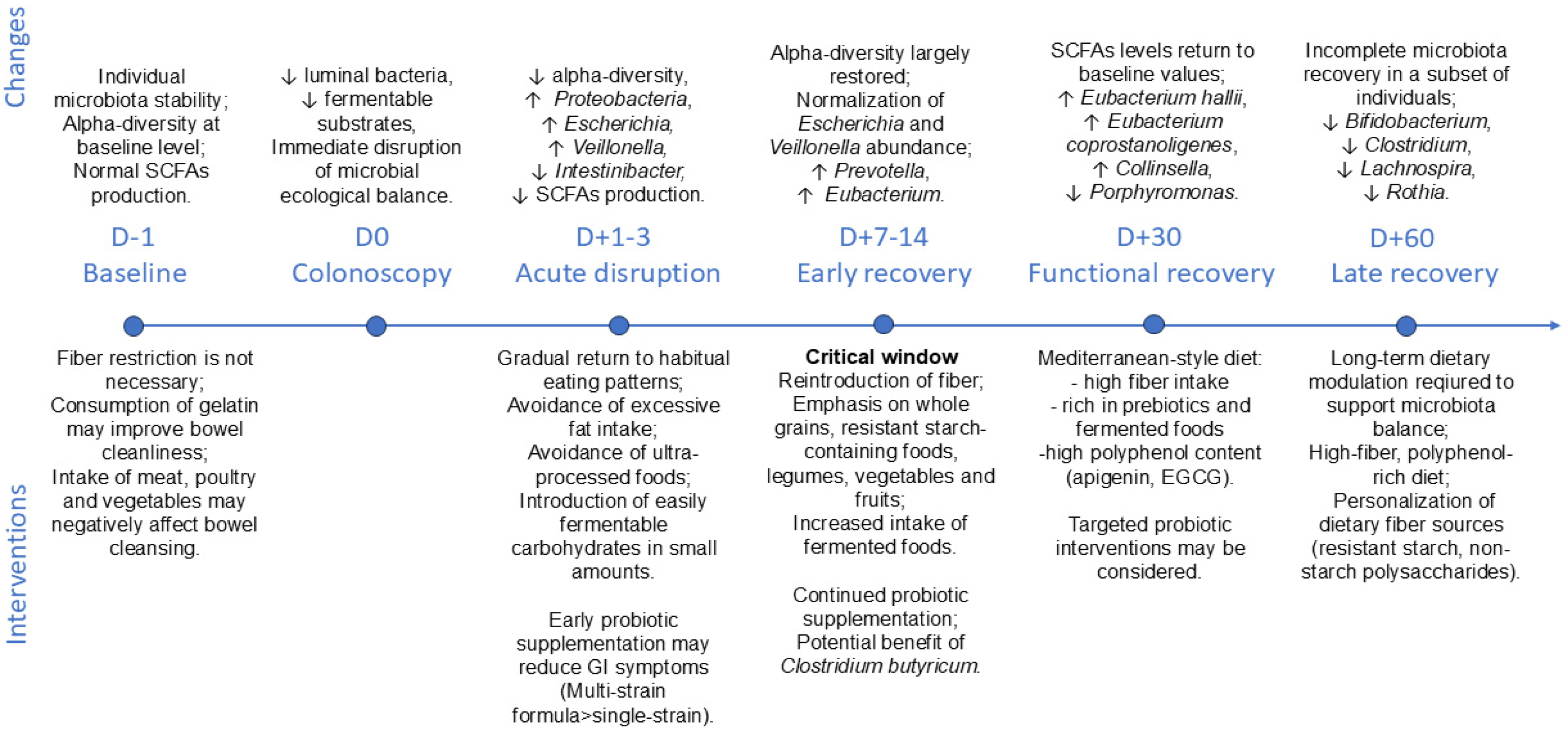
In summary, the available evidence suggests that selected probiotic and synbiotic interventions may support short-term microbiota restoration and reduce gastrointestinal symptom burden after bowel preparation and colonoscopy, although findings remain heterogeneous across studies. In contrast, many dietary strategies discussed in this review, including fiber, resistant starch, polyphenol foods, and Mediterranean-style dietary patterns, are supported primarily by broader microbiota literature and mechanistic plausibility rather than by direct post-colonoscopy clinical trials. Thus, while these approaches may represent promising strategies to support microbial recovery and metabolic activity, their role in the immediate post-colonoscopy setting remains to be established more clearly. Figure 2 summarizes the proposed temporal framework for microbiota disruption, recovery, and potential dietary or probiotic modulation after colonoscopy. These considerations should be interpreted cautiously and individualized according to the clinical context, symptom burden, and patient tolerance. Further well-designed clinical trials are needed to clarify the role of diet and microbiota-targeted interventions in supporting microbiota recovery after bowel preparation and colonoscopy.

6. Research Gaps

Despite growing evidence that bowel preparation and colonoscopy induce significant alterations in the gut microbiota, several critical knowledge gaps remain.
Multiple studies suggest that bowel preparation is associated with reductions in microbial diversity and shifts in taxonomic composition [4,5,6,12,16,31,33,39]. However, the time course and completeness of microbiota recovery remain insufficiently characterized. While some reports suggest near-complete restoration within weeks [6,12], others indicate persistent alterations, particularly involving SCFA-producing taxa [5,16,31]. Importantly, most available studies are limited by short follow-up periods, small sample sizes, and heterogeneous methodologies, underscoring the lack of long-term prospective data (>3–6 months) assessing sustained dysbiosis after colonoscopy.
Probiotic supplementation has been proposed as a strategy to mitigate bowel preparation-induced dysbiosis and post-procedural symptoms [13,14,32,43,47,48]. However, existing trials are characterized by substantial heterogeneity in probiotic strains, dosages, timing, and outcome measures, limiting comparability and clinical translation. Moreover, evidence regarding prebiotics, synbiotics, postbiotics, and nutraceuticals remains sparse [40,42,44]. As a result, it remains unclear whether microbiota-targeted interventions should be applied routinely or selectively in high-risk populations.
Although gastrointestinal symptoms such as bloating, abdominal pain, and changes in bowel habits are common after colonoscopy [7,8,26,30], their relationship with the gut microbiota is not well understood. Only a few studies have examined gut microbiota composition together with microbial metabolites (e.g., SCFAs) and patient-reported symptoms at the same time [6,23,24]. Most studies have focused on healthy adult populations, whereas data on children, older adults, and patients with IBS, IBD, or autoimmune diseases remain limited [22,33,37,38,39]. Despite frequent reports of post-colonoscopy gastrointestinal symptoms, inter-individual variability in microbiota responses to bowel preparation and colonoscopy, as well as differences between luminal and mucosal microbiota, remain poorly characterized [7,8,26,30,33]. Factors such as age, sex, and baseline gut microbiota composition are rarely analyzed in a systematic way, and microbiota or metabolome findings are often interpreted without integration with patient characteristics [6,23,24]. Consequently, neither the microbiota-related mechanisms driving post-colonoscopy symptoms nor the patient subgroups at highest risk have been clearly identified, and no validated microbiota-based stratification or prediction tools are currently available [34].
Diet is one of the major determinants of gut microbiota composition and function [9,10,11]. Nevertheless, its role in microbiota repopulation following bowel preparation has not been adequately investigated. Available data suggest that dietary intake may modulate recovery dynamics [41,45,46], yet studies integrating dietary patterns, microbiota changes, and clinical outcomes are notably lacking. This gap limits the development of evidence-based dietary recommendations surrounding colonoscopy.

7. Clinical Implications: Who Might Benefit from Targeted Support?

Available studies indicate that changes in the gut microbiota after colonoscopy are usually temporary, but their clinical significance may vary from person to person. Some patient groups may be more susceptible to more severe or prolonged microbiota disturbances after bowel preparation and the procedure itself. This mainly applies to patients with gastrointestinal diseases such as IBS or IBD, where initial microbiota instability and increased intestinal sensitivity may exacerbate the response to disturbances after colonoscopy. Patients who report severe or persistent gastrointestinal symptoms after using bowel preparations may also be particularly vulnerable, as this could indicate lower microbiota resistance or a slower recovery process. Older people may also be more susceptible, due to changes in the composition of the microbiota, the functioning of the immune system and the eating habits characteristic of this stage of life. In addition, low fiber intake is often associated with less diversity in the microbiota, which may reduce the ability of the intestinal ecosystem to regenerate after acute disturbances such as bowel preparation.
Therefore, various nutritional strategies are being explored, including post-colonoscopy dietary modification, fiber supplementation, and the use of probiotics or synbiotics to support microbiota restoration. Meanwhile, there is insufficient evidence to make specific recommendations in the immediate post colonoscopy-period. Currently, there is also insufficient evidence to recommend specific timing of dietary reintroduction (e.g., same-day vs. next-day feeding) after colonoscopy in most patient populations. Alternative bowel preparation regimens are also being analyzed to reduce microbiota disturbances. At the same time, there is still considerable uncertainty as to which individuals actually derive clinically significant benefits from such measures, what is the optimal timing, composition and duration of nutritional intervention, and what are the long-term effects of dysbiosis after colonoscopy. The diversity of research designs, study populations and endpoints further complicates the formulation of clear conclusions, highlighting the need for well-designed, long-term observational and interventional studies before targeted support strategies can become routine clinical practice.

8. Conclusions and Future Directions

Bowel preparation is associated with alterations in gut microbiota composition, diversity, and metabolic activity, although their clinical relevance may vary between individuals. Studies also suggest that the colonoscopy itself may influence alterations in the microbiota structure, but there is no clear evidence demonstrating significant changes occurring during the procedure. Although overall gut microbial diversity may recover within weeks, specific bacterial taxa, particularly SCFA-producing and mucosa-associated species, can exhibit delayed or incomplete restoration. These changes can be driven by luminal flushing, short-term dietary restriction, altered oxygen availability, and reduced fermentable substrate supply. Diet is likely to be an important modulator of post-colonoscopy microbiota recovery by influencing microbial repopulation and metabolic function. Reintroduction of dietary fiber appears biologically plausible as a strategy to support microbial fermentation and SCFA production, although direct post-colonoscopy clinical evidence remains limited. Post-colonoscopy microbiota alterations may contribute to gastrointestinal symptoms, including bloating, abdominal pain, and changes in bowel habits, although these symptoms are likely to be multifactorial. Selected probiotic interventions may attenuate symptom burden and support short-term microbiota stabilization, although findings remain heterogeneous across studies. However, probiotic efficacy is modulated by dietary context and baseline microbiota composition. Patients with IBS or IBD may be more susceptible to persistent microbiota alterations and post-procedural symptoms. Future research should prioritize integrative, long-term, diet-focused studies to better define evidence-based nutritional strategies surrounding colonoscopy.
Future studies should prioritize dietary interventions after colonoscopy, focusing on three key areas: diet-only RCTs to assess the effects of specific dietary components on microbiota recovery, extended follow-up to better characterize microbial restoration, and integration of dietary, metabolomic, and clinical symptom data to improve understanding of post-colonoscopy microbiota alterations and support more individualized nutritional strategies. Combining all three approaches within a single study would provide the most comprehensive insights.

Supplementary Materials

The following supporting information can be downloaded at: https://www.mdpi.com/article/10.3390/gastroent17020027/s1, Supplementary Table S1. Search terms used in the literature search.

Author Contributions

P.K.: conceptualization, literature review and analysis, final draft approval, supervision. A.L.: draft amendments, final approval. L.F.: literature review and analysis, final draft and table preparation. W.M.: literature review, draft amendments, Figure 1 and Figure 2 preparation and table preparation. M.H., A.Ż., W.D.: literature review, draft amendments and table preparation. M.K.: conceptualization, final approval, supervision. All authors have read and agreed to the published version of the manuscript.

Funding

This research received no external funding.

Data Availability Statement

Data sharing does not apply to this article as no new data were created or analyzed in this study.

Acknowledgments

The authors used ChatGPT (OpenAI; model: GPT-5.4) exclusively for language editing and improving readability. The tool did not generate or interpret scientific content. All output was reviewed and approved by the authors.

Conflicts of Interest

The authors declare no conflicts of interest.

References

  1. Krynicka, P.; Kaczmarczyk, M.; Skonieczna-Żydecka, K.; Cembrowska-Lech, D.; Podsiadło, K.; Dąbkowski, K.; Gaweł, K.; Botke, N.; Zawada, I.; Ławniczak, M.; et al. The Burden of Irritable Bowel Syndrome and Functional Dyspepsia in Poland: A Cross-Sectional Study from West Pomeranian Voivodship. BMC Gastroenterol. 2025, 25, 8. [Google Scholar] [CrossRef] [PubMed]
  2. van der Meulen, T.A.; Harmsen, H.; Bootsma, H.; Spijkervet, F.; Kroese, F.; Vissink, A. The Microbiome-Systemic Diseases Connection. Oral Dis. 2016, 22, 719–734. [Google Scholar] [CrossRef] [PubMed]
  3. Zheng, Z.-L.; Zheng, Q.-F.; Wang, L.-Q.; Liu, Y. Bowel Preparation before Colonoscopy: Consequences, Mechanisms, and Treatment of Intestinal Dysbiosis. World J. Gastroenterol. 2025, 31, 100589. [Google Scholar] [CrossRef] [PubMed]
  4. Chen, H.-M.; Chen, C.-C.; Chen, C.-C.; Wang, S.-C.; Wang, C.-L.; Huang, C.-H.; Liou, J.-S.; Liu, T.-W.; Peng, H.-L.; Lin, F.-M.; et al. Gut Microbiome Changes in Overweight Male Adults Following Bowel Preparation. BMC Genom. 2018, 19, 904. [Google Scholar] [CrossRef]
  5. Drago, L.; Toscano, M.; De Grandi, R.; Casini, V.; Pace, F. Persisting Changes of Intestinal Microbiota after Bowel Lavage and Colonoscopy. Eur. J. Gastroenterol. Hepatol. 2016, 28, 532–537. [Google Scholar] [CrossRef]
  6. Nagata, N.; Tohya, M.; Fukuda, S.; Suda, W.; Nishijima, S.; Takeuchi, F.; Ohsugi, M.; Tsujimoto, T.; Nakamura, T.; Shimomura, A.; et al. Effects of Bowel Preparation on the Human Gut Microbiome and Metabolome. Sci. Rep. 2019, 9, 4042. [Google Scholar] [CrossRef]
  7. Collatuzzo, G.; Boffetta, P.; Radaelli, F.; Cadoni, S.; Hassan, C.; Frazzoni, L.; Anderloni, A.; Laterza, L.; La Marca, M.; Rogai, F.; et al. Incidence, Risk and Protective Factors of Symptoms after Colonoscopy. Dig. Liver Dis. 2022, 54, 1698–1705. [Google Scholar] [CrossRef]
  8. Steffenssen, M.W.; Al-Najami, I.; Baatrup, G. Patient-Reported Minor Adverse Events after Colonoscopy: A Systematic Review. Acta Oncol. 2019, 58, S22–S28. [Google Scholar] [CrossRef]
  9. Aslam, H.; Trakman, G.; Dissanayake, T.; Todd, E.; Harrison, P.; Alby, C.; Jabeen, T.; Gamage, E.; Travica, N.; Marshall, S.; et al. Dietary Interventions and the Gut Microbiota: A Systematic Literature Review of 80 Controlled Clinical Trials. J. Transl. Med. 2026, 24, 39. [Google Scholar] [CrossRef]
  10. Geniselli da Silva, V.; Roy, N.C.; Smith, N.W.; Wall, C.; Mullaney, J.A.; McNabb, W.C. Dietary Patterns Influencing the Human Colonic Microbiota from Infancy to Centenarian Age: A Narrative Review. Front. Nutr. 2025, 12, 1591341. [Google Scholar] [CrossRef]
  11. Rajoka, M.S.R.; Shi, J.; Mehwish, H.M.; Zhu, J.; Li, Q.; Shao, D.; Huang, Q.; Yang, H. Interaction between Diet Composition and Gut Microbiota and Its Impact on Gastrointestinal Tract Health. Food Sci. Hum. Wellness 2017, 6, 121–130. [Google Scholar] [CrossRef]
  12. Beam, A.; Clinger, E.; Hao, L. Effect of Diet and Dietary Components on the Composition of the Gut Microbiota. Nutrients 2021, 13, 2795. [Google Scholar] [CrossRef] [PubMed]
  13. Dasriya, V.L.; Samtiya, M.; Ranveer, S.; Dhillon, H.S.; Devi, N.; Sharma, V.; Nikam, P.; Puniya, M.; Chaudhary, P.; Chaudhary, V.; et al. Modulation of Gut-Microbiota through Probiotics and Dietary Interventions to Improve Host Health. J. Sci. Food Agric. 2024, 104, 6359–6375. [Google Scholar] [CrossRef] [PubMed]
  14. Son, D.; Choi, Y.J.; Son, M.Y.; Moon, W.; Park, S.J.; Lim, S.; Kim, J.H. Benefits of Probiotic Pretreatment on the Gut Microbiota and Minor Complications after Bowel Preparation for Colonoscopy: A Randomized Double-Blind, Placebo-Controlled Pilot Trial. Nutrients 2023, 15, 1141. [Google Scholar] [CrossRef]
  15. D’Souza, B.; Slack, T.; Wong, S.W.; Lam, F.; Muhlmann, M.; Koestenbauer, J.; Dark, J.; Newstead, G. Randomized Controlled Trial of Probiotics after Colonoscopy. ANZ J. Surg. 2017, 87, E65–E69. [Google Scholar] [CrossRef]
  16. Kastenberg, D.; Bertiger, G.; Brogadir, S. Bowel Preparation Quality Scales for Colonoscopy. World J. Gastroenterol. 2018, 24, 2833–2843. [Google Scholar] [CrossRef]
  17. Hu, J.; Peng, X.; Cai, S.; Qiu, J.; Wang, S.; Zhu, P. The Effects and Adverse Reactions of Different Bowel Cleansers on Gut Microbiota After Colonoscopy. Turk. J. Gastroenterol. 2025, 36, 620–628. [Google Scholar] [CrossRef]
  18. Tropini, C.; Moss, E.L.; Merrill, B.D.; Ng, K.M.; Higginbottom, S.K.; Casavant, E.P.; Gonzalez, C.G.; Fremin, B.; Bouley, D.M.; Elias, J.E.; et al. Transient Osmotic Perturbation Causes Long-Term Alteration to the Gut Microbiota. Cell 2018, 173, 1742–1754.e17. [Google Scholar] [CrossRef]
  19. Izzy, M.; Malieckal, A.; Little, E.; Anand, S. Review of Efficacy and Safety of Laxatives Use in Geriatrics. World J. Gastrointest. Pharmacol. Ther. 2016, 7, 334–342. [Google Scholar] [CrossRef]
  20. Grauso, M.; Lan, A.; Andriamihaja, M.; Bouillaud, F.; Blachier, F. Hyperosmolar Environment and Intestinal Epithelial Cells: Impact on Mitochondrial Oxygen Consumption, Proliferation, and Barrier Function in Vitro. Sci. Rep. 2019, 9, 11360. [Google Scholar] [CrossRef]
  21. Meng, X.; Zhang, G.; Cao, H.; Yu, D.; Fang, X.; de Vos, W.M.; Wu, H. Gut Dysbacteriosis and Intestinal Disease: Mechanism and Treatment. J. Appl. Microbiol. 2020, 129, 787–805. [Google Scholar] [CrossRef] [PubMed]
  22. Jo, H.H.; Lee, M.Y.; Ha, S.E.; Yeom, D.H.; Kim, Y.S. Alteration in Gut Microbiota after Colonoscopy: Proposed Mechanisms and the Role of Probiotic Interventions. Clin. Endosc. 2025, 58, 25–39. [Google Scholar] [CrossRef] [PubMed]
  23. Di Leo, M.; Iannone, A.; Arena, M.; Losurdo, G.; Palamara, M.A.; Iabichino, G.; Consolo, P.; Rendina, M.; Luigiano, C.; Di Leo, A. Novel Frontiers of Agents for Bowel Cleansing for Colonoscopy. World J. Gastroenterol. 2021, 27, 7748–7770. [Google Scholar] [CrossRef] [PubMed]
  24. Weiss, G.A.; Hennet, T. Mechanisms and Consequences of Intestinal Dysbiosis. Cell. Mol. Life Sci. 2017, 74, 2959–2977. [Google Scholar] [CrossRef]
  25. Chelakkot, C.; Ghim, J.; Ryu, S.H. Mechanisms Regulating Intestinal Barrier Integrity and Its Pathological Implications. Exp. Mol. Med. 2018, 50, 1–9. [Google Scholar] [CrossRef]
  26. Nooredinvand, H.A.; Poullis, A. Emerging Role of Colorectal Mucus in Gastroenterology Diagnostics. World J. Gastroenterol. 2022, 28, 1220–1225. [Google Scholar] [CrossRef]
  27. Bachmann, R.; Leonard, D.; Delzenne, N.; Kartheuser, A.; Cani, P.D. Novel Insight into the Role of Microbiota in Colorectal Surgery. Gut 2017, 66, 738–749. [Google Scholar] [CrossRef]
  28. Lo Conte, M.; Cosorich, I.; Ferrarese, R.; Antonini Cencicchio, M.; Nobili, A.; Palmieri, V.; Massimino, L.; Lamparelli, L.A.; Liang, W.; Riba, M.; et al. Alterations of the Intestinal Mucus Layer Correlate with Dysbiosis and Immune Dysregulation in Human Type 1 Diabetes. EBioMedicine 2023, 91, 104567. [Google Scholar] [CrossRef]
  29. Shi, H.; Ge, X.; Ma, X.; Zheng, M.; Cui, X.; Pan, W.; Zheng, P.; Yang, X.; Zhang, P.; Hu, M.; et al. A Fiber-Deprived Diet Causes Cognitive Impairment and Hippocampal Microglia-Mediated Synaptic Loss through the Gut Microbiota and Metabolites. Microbiome 2021, 9, 223. [Google Scholar] [CrossRef]
  30. Litvak, Y.; Byndloss, M.X.; Bäumler, A.J. Colonocyte Metabolism Shapes the Gut Microbiota. Science 2018, 362, eaat9076. [Google Scholar] [CrossRef]
  31. Zou, Y.; Zeng, S.; Chen, M.; Li, S.; Fu, Q.; Zhou, S.; Zhou, J. Gut Microbiota in Children with Split-Dose Bowel Preparations Revealed by Metagenomics. Front. Cell Infect. Microbiol. 2023, 13, 1202007. [Google Scholar] [CrossRef]
  32. Powles, S.T.R.; Gallagher, K.I.; Chong, L.W.L.; Alexander, J.L.; Mullish, B.H.; Hicks, L.C.; McDonald, J.A.K.; Marchesi, J.R.; Williams, H.R.T.; Orchard, T.R. Effects of Bowel Preparation on Intestinal Bacterial Associated Urine and Faecal Metabolites and the Associated Faecal Microbiome. BMC Gastroenterol. 2022, 22, 240. [Google Scholar] [CrossRef]
  33. Chen, Z.; Yu, L.; Liu, J.; Kong, J.; Deng, X.; Guo, X.; Shan, J.; Zhou, D.; Li, W.; Lin, Y.; et al. Gut Microbiota Dynamics and Fecal SCFAs after Colonoscopy: Accelerating Microbiome Stabilization by Clostridium Butyricum. J. Transl. Med. 2024, 22, 22. [Google Scholar] [CrossRef] [PubMed]
  34. Žukauskaitė, K.; Horvath, A.; Gricius, Ž.; Kvietkauskas, M.; Baušys, B.; Dulskas, A.; Kuliavas, J.; Baušys, R.; Letautienė, S.R.; Vaicekauskaitė, I.; et al. Impact of Mechanical Bowel Preparation on the Gut Microbiome of Patients Undergoing Left-Sided Colorectal Cancer Surgery: Randomized Clinical Trial. Br. J. Surg. 2024, 111, znae213. [Google Scholar] [CrossRef] [PubMed]
  35. Nguyen, B.; Quon, S. Is Inflammatory Bowel Disease a Risk Factor for Perforation During Diagnostic Colonoscopy? A Systematic Review and Meta-Analysis. Dig. Dis. Sci. 2025, 71, 584–593. [Google Scholar] [CrossRef] [PubMed]
  36. Kim, S.Y.; Kim, H.-S.; Park, H.J. Adverse Events Related to Colonoscopy: Global Trends and Future Challenges. World J. Gastroenterol. 2019, 25, 190–204. [Google Scholar] [CrossRef]
  37. Rai, V.; Mishra, N. Colonoscopic Perforations. Clin. Colon Rectal Surg. 2018, 31, 41–46. [Google Scholar]
  38. Boyanov, N.; Milinich, N.; Balabanski, A.; Shtereva, K.; Madzharova, K.; Tishkov, I.; Katzarov, A.; Popadiyn, I.; Hinkova, G.; Tufkova, S. The Path to Successful Colonoscopy: A Multi-Center Study on Effective Preparation Regimens. Folia Medica 2025, 67, e159151. [Google Scholar] [CrossRef]
  39. Maida, M.; Marasco, G.; Fuccio, L.; Vitello, A.; Mocciaro, F.; Amata, M.; Fabbri, A.; Di Mitri, R.; Vassallo, R.; Ramai, D.; et al. Comparative Efficacy of Different Bowel Preparations for Colonoscopy: A Network Meta-Analysis. Dig. Liver Dis. 2025, 57, 688–696. [Google Scholar] [CrossRef]
  40. Hassan, C.; East, J.; Radaelli, F.; Spada, C.; Benamouzig, R.; Bisschops, R.; Bretthauer, M.; Dekker, E.; Dinis-Ribeiro, M.; Ferlitsch, M.; et al. Bowel Preparation for Colonoscopy: European Society of Gastrointestinal Endoscopy (ESGE) Guideline—Update 2019. Endoscopy 2019, 51, 775–794. [Google Scholar] [CrossRef]
  41. Latos, W.; Aebisher, D.; Latos, M.; Krupka-Olek, M.; Dynarowicz, K.; Chodurek, E.; Cieślar, G.; Kawczyk-Krupka, A. Colonoscopy: Preparation and Potential Complications. Diagnostics 2022, 12, 747. [Google Scholar] [CrossRef]
  42. Drago, L.; Valentina, C.; Fabio, P. Gut Microbiota, Dysbiosis and Colon Lavage. Dig. Liver Dis. 2019, 51, 1209–1213. [Google Scholar] [CrossRef] [PubMed]
  43. Labenz, J.; Borkenstein, D.-P.; Heil, F.J.; Madisch, A.; Tappe, U.; Schmidt, H.; Terjung, B.; Klymiuk, I.; Horvath, A.; Gross, M.; et al. Application of a Multispecies Probiotic Reduces Gastro-Intestinal Discomfort and Induces Microbial Changes after Colonoscopy. Front. Oncol. 2022, 12, 1078315. [Google Scholar]
  44. Meroni, G.; Pace, F.; Grossi, E.; Casini, V.; Drago, L. Bacterial Network Community in Fecal and Endoluminal Microbiota after Colonoscopy. New Microbiol. 2020, 43, 22–27. [Google Scholar] [PubMed]
  45. Kim, J.H.; Choi, Y.J.; Kwon, H.J.; Jung, K.; Kim, S.E.; Moon, W.; Park, M.I.; Park, S.J. Effect of Gut Microbiome on Minor Complications after a Colonoscopy. Intest. Res. 2021, 19, 341–348. [Google Scholar] [CrossRef]
  46. Mearin, F.; Lacy, B.E.; Chang, L.; Chey, W.D.; Lembo, A.J.; Simren, M.; Spiller, R. Bowel Disorders. Gastroenterology 2016, 150, 1393–1407.e5. [Google Scholar] [CrossRef]
  47. Krynicka, P.; Koulaouzidis, G.; Marlicz, W.; Koulaouzidis, A. Innovations in the Diagnosis, Treatment, and Management of Disorders of Gut-Brain Interaction (DGBI). Expert. Rev. Gastroenterol. Hepatol. 2025, 19, 657–670. [Google Scholar] [CrossRef]
  48. Di Nardo, G.; Barbara, G.; Borrelli, O.; Cremon, C.; Giorgio, V.; Greco, L.; La Pietra, M.; Marasco, G.; Pensabene, L.; Piccirillo, M.; et al. Italian Guidelines for the Management of Irritable Bowel Syndrome in Children and Adolescents: Joint Consensus from the Italian Societies of: Gastroenterology, Hepatology and Pediatric Nutrition (SIGENP), Pediatrics (SIP), Gastroenterology and Endoscopy (SIGE) and Neurogastroenterology and Motility (SINGEM). Ital. J. Pediatr. 2024, 50, 51. [Google Scholar]
  49. Vajravelu, R.K.; Shapiro, J.M.; Ni, J.; Thanawala, S.U.; Lewis, J.D.; El-Serag, H.B. Risk for Post-Colonoscopy Irritable Bowel Syndrome in Patients With and Without Antibiotic Exposure: A Retrospective Cohort Study. Clin. Gastroenterol. Hepatol. 2022, 20, e1305–e1322. [Google Scholar] [CrossRef]
  50. McGuinness, A.J.; O’Hely, M.; Stupart, D.; Watters, D.; Dawson, S.L.; Hair, C.; Berk, M.; Mohebbi, M.; Loughman, A.; Guest, G.; et al. Depressive Symptoms and Gut Microbiota after Bowel Preparation and Colonoscopy: A Pre-Post Intervention Study. Microorganisms 2024, 12, 1960. [Google Scholar] [CrossRef]
  51. Ni, J.; Wu, G.D.; Albenberg, L.; Tomov, V.T. Gut Microbiota and IBD: Causation or Correlation? Nat. Rev. Gastroenterol. Hepatol. 2017, 14, 573–584. [Google Scholar] [CrossRef] [PubMed]
  52. Khaki-Khatibi, F.; Qujeq, D.; Kashifard, M.; Moein, S.; Maniati, M.; Vaghari-Tabari, M. Calprotectin in Inflammatory Bowel Disease. Clin. Chim. Acta 2020, 510, 556–565. [Google Scholar] [CrossRef] [PubMed]
  53. Bharadwaj, S.; Narula, N.; Tandon, P.; Yaghoobi, M. Role of Endoscopy in Inflammatory Bowel Disease. Gastroenterol. Rep. 2018, 6, 75–82. [Google Scholar] [CrossRef] [PubMed]
  54. Krynicka, P.; Cortegoso Valdivia, P.; Morawski, M.; Marlicz, W.; Skonieczna-Żydecka, K.; Koulaouzidis, A. Microbiota-Driven Strategies for Managing IBD-Associated Risks: From Infections to Mental Health. Pharmaceuticals 2026, 19, 118. [Google Scholar] [CrossRef]
  55. Shobar, R.M.; Velineni, S.; Keshavarzian, A.; Swanson, G.; DeMeo, M.T.; Melson, J.E.; Losurdo, J.; Engen, P.A.; Sun, Y.; Koenig, L.; et al. The Effects of Bowel Preparation on Microbiota-Related Metrics Differ in Health and in Inflammatory Bowel Disease and for the Mucosal and Luminal Microbiota Compartments. Clin. Transl. Gastroenterol. 2016, 7, e143. [Google Scholar] [CrossRef]
  56. Ghouri, Y.A.; Ericsson, A.C.; Anderson, J.M.; George, J.G.; Parks, E.J.; Anguah, K.O.B. Repopulation of the Gut Microbiota after a Screening Colonoscopy. PLoS ONE 2025, 20, e0320712. [Google Scholar] [CrossRef]
  57. Leszczynski, A.M.; MacArthur, K.L.; Nelson, K.P.; Schueler, S.A.; Quatromoni, P.A.; Jacobson, B.C. The Association among Diet, Dietary Fiber, and Bowel Preparation at Colonoscopy. Gastrointest. Endosc. 2018, 88, 685–694. [Google Scholar] [CrossRef]
  58. Du, J.; He, X.; Li, P. Effect of Single-Day versus Multi-Day Low-Residue Diet on Colonoscopy Bowel Preparation: A Systematic Review and Meta-Analysis. BMC Gastroenterol. 2025, 25, 648. [Google Scholar] [CrossRef]
  59. Piciucchi, M.; Rossi, A.; Satriano, A.; Manta, R. Is It Advisable to Use Probiotics Routinely After a Colonoscopy? A Rapid Comprehensive Review of the Evidence. Med. Sci. 2025, 13, 76. [Google Scholar] [CrossRef]
  60. Deng, X.; Tian, H.; Yang, R.; Han, Y.; Wei, K.; Zheng, C.; Liu, Z.; Chen, T. Oral Probiotics Alleviate Intestinal Dysbacteriosis for People Receiving Bowel Preparation. Front. Med. 2020, 7, 73. [Google Scholar] [CrossRef]
  61. Khodadoostan, M.; Shavakhi, A.; Sherafat, Z.; Shavakhi, A. Effect of Probiotic Administration Immediately and 1 Month after Colonoscopy in Diarrhea-Predominant Irritable Bowel Syndrome Patients. Adv. Biomed. Res. 2018, 7, 94. [Google Scholar] [CrossRef]
  62. Tursi, A.; D’Avino, A.; Brandimarte, G.; Mocci, G.; Pellegrino, R.; Federico, A.; Savarino, E.V.; Gravina, A.G. The Hericium-Colon Study Group, null Management of Post-Colonoscopy Syndrome with a Nutraceutical Intervention Based on Hericium Erinaceus: A Retrospective Two-Arm Multicentre Analysis. Nutrients 2025, 17, 3152. [Google Scholar] [CrossRef] [PubMed]
  63. Smolinska, S.; Popescu, F.-D.; Zemelka-Wiacek, M. A Review of the Influence of Prebiotics, Probiotics, Synbiotics, and Postbiotics on the Human Gut Microbiome and Intestinal Integrity. J. Clin. Med. 2025, 14, 3673. [Google Scholar] [CrossRef] [PubMed]
  64. Hung, J.-S.; Liu, T.-T.; Yi, C.-H.; Wong, M.-W.; Lei, W.-Y.; Chen, C.-L. Influence of Probiotics on Gastrointestinal Symptoms in Patients Undergoing Colonoscopy. Adv. Dig. Med. 2021, 8, 27–32. [Google Scholar] [CrossRef]
  65. Jaeger, J.W.; Brandt, A.; Gui, W.; Yergaliyev, T.; Hernández-Arriaga, A.; Muthu, M.M.; Edlund, K.; Elashy, A.; Molinaro, A.; Möckel, D.; et al. Microbiota Modulation by Dietary Oat Beta-Glucan Prevents Steatotic Liver Disease Progression. JHEP Rep. 2024, 6, 100987. [Google Scholar] [CrossRef]
  66. Perrone, P.; D’Angelo, S. Gut Microbiota Modulation Through Mediterranean Diet Foods: Implications for Human Health. Nutrients 2025, 17, 948. [Google Scholar] [CrossRef]
  67. Yammine, A.; Namsi, A.; Vervandier-Fasseur, D.; Mackrill, J.J.; Lizard, G.; Latruffe, N. Polyphenols of the Mediterranean Diet and Their Metabolites in the Prevention of Colorectal Cancer. Molecules 2021, 26, 3483. [Google Scholar] [CrossRef]
  68. Devarakonda, S.L.S.; Superdock, D.K.; Ren, J.; Johnson, L.M.; Loinard-González, A.A.P.; Poole, A.C. Gut Microbial Features and Dietary Fiber Intake Predict Gut Microbiota Response to Resistant Starch Supplementation. Gut Microbes 2024, 16, 2367301. [Google Scholar] [CrossRef]
  69. Byrd, D.A.; Gomez, M.F.; Hogue, S.R.; Burns, J.R.; Smith, N.; Sampson, J.; Loftfield, E.; Wolf, P.G.; Wan, Y.; Warner, A.; et al. Associations of the Colon Tissue Microbiome and Circulating Bile Acids with Colorectal Adenoma Among Average-Risk Women. Cancer Med. 2025, 14, e71048. [Google Scholar] [CrossRef]
Figure 1. Schematic overview of bowel preparation–induced microbiota alterations, including osmotic stress, nutrient deprivation, mucus depletion, oxygenation shifts, and associated clinical consequences. Abbreviations: GI (Gastrointestinal), IBD (Inflammatory Bowel Disease), IBS (Irritable Bowel Syndrome), PEG (Polyethylene Glycol), SCFAs (Short-Chain Fatty Acids). Upward arrows indicated an increase, whereas downward arrows indicate a decrease.
Gastroent 17 00027 g001
Figure 2. Schematic overview of time-dependent gut microbiota alterations following bowel preparation and colonoscopy, including structural and functional dysbiosis, SCFA depletion, and intervention windows for diet and probiotics. Abbreviations: EGCG (Epigallocatechin-3 Gallate), GI (Gastrointestinal), SCFAs (Short-Chain Fatty Acids).
Gastroent 17 00027 g002
Table 1. Characteristics of changes in gut microbiota and post-colonoscopy gastrointestinal symptoms between different patient groups [3,6,7,31,32,44,45,50,54,55]. Abbreviations: IBS (irritable bowel syndrome), IBD (inflammatory bowel disease). Data on patients with IBS are based on observational studies; there is no conclusive evidence of a causal link between changes in the microbiota and symptoms. Recovery time refers primarily to alpha diversity and selected taxa, as available evidence for metabolomic and functional recovery remains limited.
Characteristics of ChangesHealthy IndividualsIBSIBD
Gut microbiota changes after bowel preparationMinor, transient changesMore pronounced and variableMore pronounced, particularly in mucosal microbiota
Alpha diversity changesShort-term decrease, rapid recoveryGreater decrease, slower normalizationGreater decrease, particularly in mucosal microbiota
Recovery time to baseline2–6 weeks (mainly for alpha diversity)May be prolonged (possible slower normalisation of selected taxa)Often delayed and dependent on disease activity
Post-colonoscopy gastrointestinal symptomsNone or mildMore frequent and pronouncedPossible exacerbation of disease symptoms
Table 2. Summary of studies on dietary strategies before and after colonoscopy. Abbreviations: RCTs (Randomized Controlled Trials), PEG (Polyethylene Glycol).
AuthorRefNDiet Before/After the ProcedurePatients’ Health StatusEffects and ConclusionsPreparation for ColonoscopyFollow-UpEndpoint
Ghouri et al.[56]15After colonoscopyHealthyThe study suggested a gradual restoration of the gut microbiota after reintroduction of nutrients, particularly dietary fiber.The day before the examination, a liquid diet + 3.8 L of PEG was administered, divided into two doses.Food diaries were collected on days: 0 (day of procedure), 1, 2, 4, 7, 10, and 13 after colonoscopy.
Stool samples were collected on days 3, 5, 8, 11, and 14 after colonoscopy.
Quantitative and qualitative restoration of the intestinal microbiota after colonoscopy in relation to participants’ diets.
Leszczynski et al.[57]168Before colonoscopyMixed populationThe study suggested that a less restrictive diet before colonoscopy may be sufficient in selected settings.PEG as a laxative + clear liquid diet the day before the procedure. Avoiding vegetables/beans 2 days before colonoscopy.Not applicable (periprocedural assessment)Assessment of bowel preparation quality prior to colonoscopy.
Du et al.[58]2248
(5 RCTs)
Before colonoscopyMixed populationA one-day low-residue diet was associated with better patient tolerance of bowel preparation.Low-residue diet the day before colonoscopy and low-residue diet 2–3 days before colonoscopy.Not applicable (periprocedural assessment)Quality of bowel preparation and patient’s tolerance and experience with the diet.
Table 3. Characteristics of probiotic interventions used after colonoscopy. Abbreviations: IBS (Irritable Bowel Syndrome), IBD (Inflammatory Bowel Disease). (a) Primary Clinical Studies (Interventional Evidence). (b) Indirect Evidence (Reviews and Indirect Data).
(a)
AuthorRefFormulation/StrainsTrial DesignPatients’ Health StatusDosageIntervention TimeEndpointsResults
Labenz et al.[43]Bifidobacterium bifidum, Bifidobacterium lactis, Enterococcus faecium, Lactobacillus acidophilus, Lactobacillus rhamnosus, Lactococcus lactis, multi-strain formulationsRandomized, double-blind, placebo-controlledHealthy adults after a colonoscopy3 × 109 cfu/g, twice a day30 daysGastrointestinal symptoms, changes in the gut microbiotaImprovement in gastrointestinal symptoms and microbiota-related outcomes
Deng et al.[60]Bifidobacterium infantis, Lactobacillus acidophilus, Enterococcus faecalis, Bacillus cereus, multi-strain formulationsRandomized, interventional Mixed population<109 cfu/g,5–7 daysGastrointestinal symptoms, changes in the gut microbiotaFaster short-term microbiota recovery
Khodadoostan et al.[61]Lactobacillus casei, Lactobacillus acidophilus, Lactobacillus rhamnosus, Lactobacillus bulgaricus, Bifidobacterium breve, Bifidobacterium longum and Streptococcus thermophilus with a prebiotic from the Fructooligosaccharides group, multi-strain formulationsRandomized, interventional, double-blindIBS1 × 109 cfu/g, twice a day1 month after colonoscopyIBS symptomsA significant improvement in IBS symptoms in the probiotic group
(b)
AuthorRefFormulation/StrainsTrial DesignPatients’ Health StatusDosageIntervention TimeEndpointsResults
Jo et al.[22]Various formulations:
Lactobacillus spp., Bifidobacterium spp., multi-strain formulations
Literature reviewHealthy, IBS, IBDVarious7–30 daysGastrointestinal symptoms, changes in the gut microbiotaImprovement in gastrointestinal symptoms and microbiota- related outcomes
Piciucchi et al.[59]Various probiotic products, both single-strain and multi-strainRapid reviewMainly healthy after a colonoscopyVarious3–30 daysGastrointestinal symptoms, changes in the gut microbiotaModerate evidence of symptom relief, insufficient data for routine use
Disclaimer/Publisher’s Note: The statements, opinions and data contained in all publications are solely those of the individual author(s) and contributor(s) and not of MDPI and/or the editor(s). MDPI and/or the editor(s) disclaim responsibility for any injury to people or property resulting from any ideas, methods, instructions or products referred to in the content.