


Abstract
Background/Objectives: Irritable Bowel Syndrome (IBS) is a widely prevalent chronic disorder of brain–gut interaction which represents a clinical challenge due to its complex underlying causes and the lack of a standardized treatment approach. This cross-sectional research collected real-world data (RWD) on the effectiveness, safety, and usage pattern of a natural substance-based medical device, Colilen IBS, indicated for the treatment of IBS. Methods: Surveys were conducted both in Italy and Germany with 6101 participants, including 4425 patients, 1014 pharmacists, and 662 physicians using a structured GxP web platform that allows voluntary participants to share their experiences with the device. The validated platform was designed to comply with post-market surveillance requirements of EU Regulation 2017/745. Statistical analyses included descriptive evaluations of responses to gauge overall effectiveness and safety of the device. Results: The effectiveness reported with the medical device was judged extreme or great by 79.2% of patients, with 89.2% of whom observed symptom improvement within one month. Both safety and tolerability were rated extreme or great by 90.7% of patients. Healthcare professionals reported a similar rate on the overall effectiveness, with 94.9% of pharmacists and 95.9% of physicians indicating it extreme or great. Similarly, the safety profile was corroborated by nearly all pharmacists (97.0%) and physicians (98.2%) reporting extreme or great satisfaction with both safety and tolerability of the medical device. Conclusions: This research provides RWD supporting the effectiveness and safety of the product for treating IBS. The strong coherence among patients, pharmacists, and physicians in positively rating the device’s performance suggests that this medical device represents a therapeutic option that effectively addresses patient needs while minimizing safety concerns. Continuous RWD collection is essential, as it offers insights into real-world practice and ensures ongoing confirmation of the product’s safety and effectiveness. Ultimately, this will advance IBS patient care by integrating real-world evidence into clinical management.
1. Introduction
Irritable Bowel Syndrome (IBS) is a chronic functional gastrointestinal disorder that falls under the category of Disorders of Gut–Brain Interaction (DGBI). It is characterized by the presence of recurring abdominal pain and altered bowel habits, such as constipation, diarrhea, or a combination of both [1,2,3]. With a prevalence of 6.1% in the United States, IBS is one of the most common chronic gastrointestinal disorders and exhibits a clear demographic pattern, with young adult women disproportionately affected [1,4].
Due to such a high prevalence, IBS represents a considerable burden on healthcare systems and society, leading to high direct costs for patients as well [5]. Additionally, this syndrome significantly affects both the work productivity and overall quality of life of IBS patients. Indeed, the chronic nature of IBS symptoms can severely limit daily activities, social interactions, and emotional well-being, causing considerable stress in individuals living with this disorder [6,7].
As a functional condition, IBS does not have an identifiable organic cause, meaning that structural abnormalities or diseases are not present to explain the symptoms. While its pathophysiology is not yet fully understood, a variety of multiple interconnected environmental and intestinal factors, such as gut permeability, intestinal infections, changes in gut microbiota, dietary habits, and lifestyle, contribute to visceral hypersensitivity and sensory–motor disturbances that underlie IBS symptoms [2,3,8,9,10,11,12].
In support of its crucial role, recent studies have shown that restoring barrier function can indeed correct visceral hypersensitivity and alleviate pain in IBS [13,14].
The treatment of IBS relies on a wide range of pharmacological and non-pharmacological therapies. Common symptom-based pharmacologic treatments include antispasmodic agents such as hyoscyamine for pain, loperamide for diarrhea or mixed bowel habit dysfunction, and fiber and osmotic laxatives for constipation [15,16,17,18,19]. Especially in patients with mood disorders or multiple somatic comorbidities, treatment can be based on neuromodulators [15,20]. Another approach involves the use of probiotics, which are live microorganisms designed to maintain or improve gut microbiota, and prebiotics, which are typically high-fiber foods that support human microbiota [21,22,23,24].
Unfortunately, the long-term efficacy and safety of pharmacologic treatments remain questionable [25,26,27], particularly in cases of IBS with diarrhea, prompting several international Gastroenterology societies to issue a recommendation from conditional to very weak for these treatments [16,20,28]. As a result, the majority of IBS patients express high levels of dissatisfaction with the available treatments [29,30,31], thereby establishing expanding therapeutic options in this syndrome.
Colilen IBS—a Substance-Based Medical Device (SBMD) composed of a complex of various natural, biodegradable substances—may address such a therapeutic gap in IBS management by exerting its action through a barrier effect and radical scavenging activity. Indeed, a preclinical study demonstrated that this SBMD can protect and promote the healing of the intestinal mucosa. Interestingly, it was found to significantly reduce visceral hypersensitivity and tissue damage scores in a chemically induced colitis rat model [32]. Building on these promising preclinical results, this large-scale survey aimed to collect data in a Real-World (RW) setting, mainly on the perceived effectiveness, safety and usage patterns of the product through online questionnaires using a continuously active electronic platform.
Each questionnaire is tailored for patients, physicians and pharmacists in accordance with the current EU Medical Devices Regulation (EU) 2017/745, that requests a continuous clinical evaluation throughout the entire lifecycle of medical devices, setting updated standards for their authorization, classification, and post-market surveillance [33]. The information collected by physicians and pharmacists was consistent with the data gathered directly from patients, as it reflected their clinical observations of patients’ experiences. This approach provided an indirect validation of the patient-reported data.
2. Materials and Methods
2.1. Product
Colilen IBS is a natural and biodegradable formulation, containing ActiMucin® a natural complex (patent IT n° 102012902020829, Aboca S.p.A.). The SBMD contains no synthetic, semi-synthetic, or genetically modified substances, and the manufacturing processes do not include solvents or other chemically synthesized substances. The formulation is based on polysaccharides, polyphenols, and resins from Aloe vera L., Matricaria chamomilla L., Melissa officinalis L., and Boswellia serrata. It also contains Cuminum cyminum; microcrystalline cellulose; fennel essential oil. The product is indicated for the treatment of Irritable Bowel Syndrome (IBS), characterized by pain, bloating, distension and abdominal discomfort, associated or not with changes in the consistency of the stool and to the intestinal irregularity (constipation, diarrhea or alternation of both) [34]. This product has undergone specific analysis according to the OECD 310 protocol confirming its ready biodegradability. Therefore, the product does not pose any environmental concerns.
Patients are advised to take 2 capsules three times a day and continue treatment for 2 to 6 weeks.
2.2. Research Design
Observational surveys involving patients, physicians and pharmacists were conducted to evaluate the effectiveness and safety profile of this SBMD. This evaluation is required by the new EU Medical Device Regulation (EU) 2017/745, which has established updated criteria for the authorization, classification, and ongoing post-market surveillance of medical devices, focusing on their safety and performance. Under this regulation, manufacturers are now obligated to continuously gather clinical data on devices already on the market. This data collection may occur through clinical investigations, the use of registries, or the collection of RWD, which is increasingly recognized as valuable evidence in assessing device effectiveness and safety [35].
Aiming to gather real-world evidence (RWE), clinical data were collected through a structured GxP web platform (version 2.3.1.2) that enables voluntary participants to share their own experiences regarding the use of the device [36]. The platform was designed to comply with the post-market surveillance requirements for the safety and performance of medical devices under EU Regulation 2017/745, while ensuring EU GDPR compliance as well as data integrity and reliability. Data collection was obtained both in Germany and Italy, from January 2021 to August 2025. Given the non-anonymous nature of the data, each participant confirmed having read and accepted the provided information, in accordance with both Italian and German regulations, as well as the EU GDPR. The digital questionnaires, developed in collaboration with the University of Milan, were specifically designed for the surveyed cohorts and encompassed various aspects, including effectiveness, dose adherence, quality of life, side effects, and misuse or off-label use. Answers regarding QoL and symptoms improvement, safety/tolerability and effectiveness were assessed using a single-item question with a 5-point Likert scale: ‘not at all’, ‘somewhat’, ‘moderately’, ‘greatly’, ‘extremely’. The survey collected qualitative data, summarized as percentage distributions of responses.
Patients were requested to provide feedback on their experiences with the device, while physicians and pharmacists were asked about their professional experience with device use. Device use was confirmed by entering the batch number and unique code from the device box at the start of the online questionnaire. Pharmacists and physicians were exempt from this step, as they did not need to verify product use. This method enabled the indirect verification of data reported by patients. A notice in the questionnaires informed participants that any potential undesirable effects should be reported via specific emails sent to a dedicated email address of Aboca’s Medical Surveillance Department.
As an indirect indicator of the questionnaire’s potential validity, a repeatability survey was conducted to assess the accuracy of the survey [37]. This survey involved the current product and others, demonstrating a high level of consistency in questionnaire responses across all products.
2.3. Sample Size and Statistical Analysis
The sample size calculation, based on questions about effectiveness, safety, tolerability, quality of life, and symptom improvement, resulted in a minimum population of 583 respondents. Assumptions included a margin of error of 4% for all cohorts, a confidence level of 95% and an estimated response rate of 50%. The data was analyzed using an online tool available at http://www.raosoft.com/samplesize.html, accessed on 1 April 2025.
A descriptive analysis was conducted for each question, and the findings were reported as percentages. For both single-answer and multiple-answer questions, percentages and absolute numbers indicate the proportion of respondents who chose each answer option, unless specified otherwise.
2.4. Institutional Review Board Statement
In accordance with the relevant regulations, ethical approval was not sought since the data were retrieved from voluntary online surveys. Nevertheless, ethical considerations were made in alignment with the principles for research on human subjects, as outlined in the Declaration of Helsinki.
3. Results
3.1. Patients
We analyzed a total of 4425 questionnaires collected through the platform from patients who had used Colilen within the past 12 months. The survey revealed a notable gender disparity among participants: 85.1% were women, while 14.9% were men. In terms of age distribution, 51.9% of respondents fell between 31 and 50 years old, 32.2% were aged 51 to 64, 8.4% were between 17 and 30 years old, and only 7.4% were 65 years old or older.
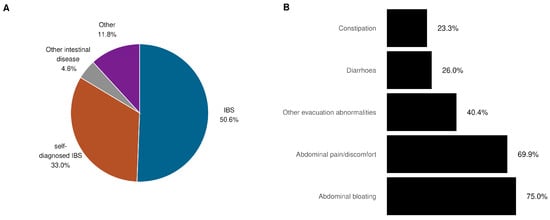
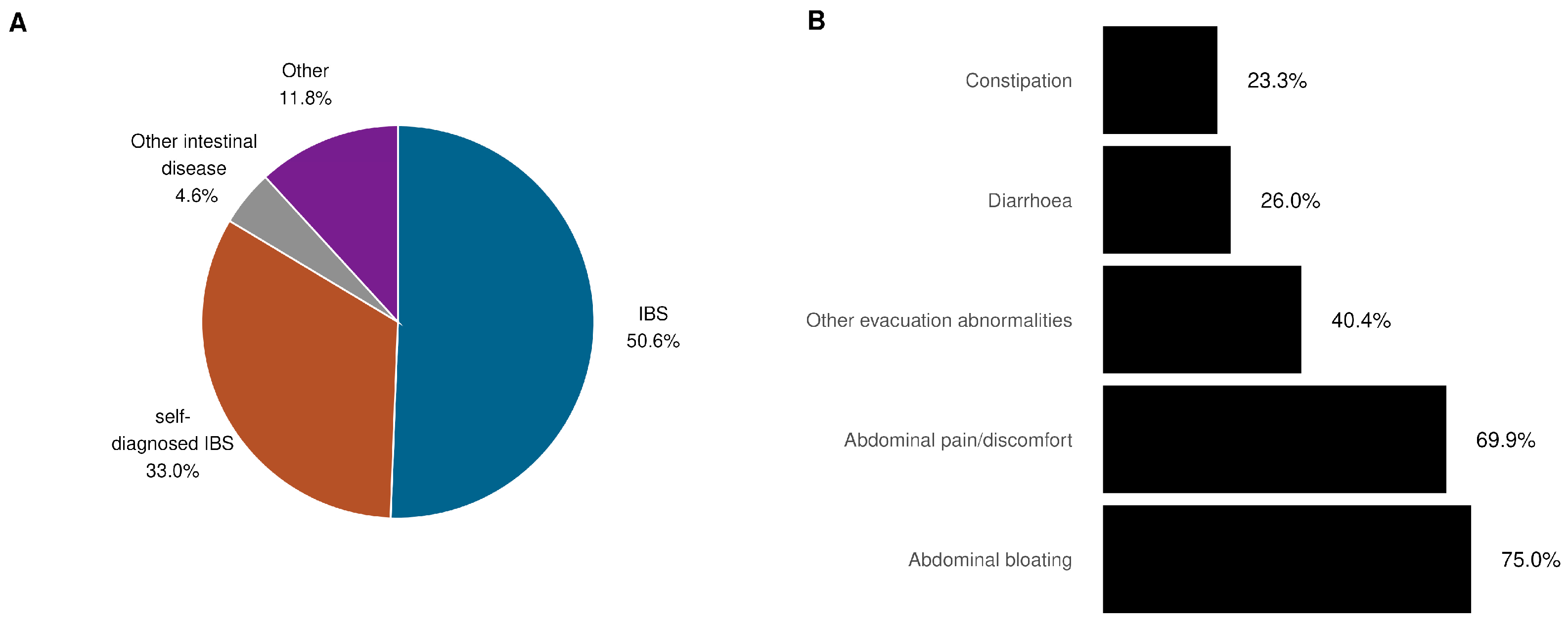
The 72.7% of respondents to the questionnaire showed a clear tendency towards self-medication and the 50.6% reported suffering from doctor-diagnosed IBS, 33.0% were self-diagnosed with IBS, and 11.8% had other conditions (Figure 1A). Among those with IBS, 56.6% had been dealing with the condition for over 3 years, 29.1% for 1 to 3 years, and 14.3% for less than a year. The symptoms most commonly treated with SBMD included bloating (75.0%), abdominal pain and discomfort (69.9%), constipation (23.3%), and frequent diarrhea (26.0%) (Figure 1B).
Figure 1.
(A) Descriptive analysis of the conditions suffered by 4425 patients (single-choice question). (B) Descriptive analysis of symptoms for which 3697 patients reported using the SBMD for IBS (multiple-choice question).
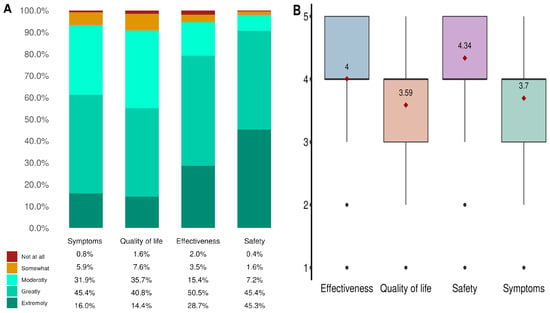
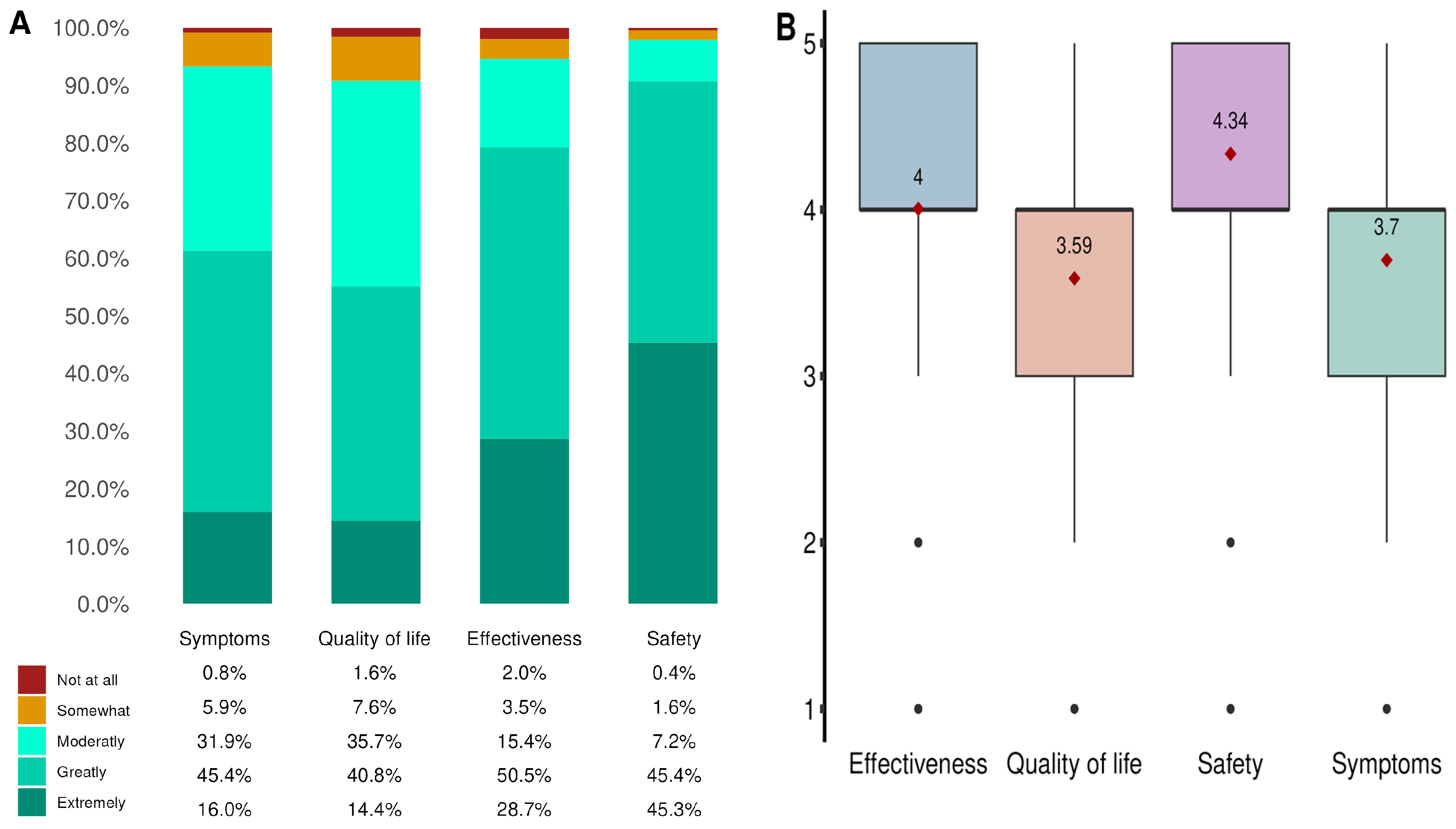
The use of the SBMD led to significant improvements in symptoms for the majority of patients: extremely (16.0%), greatly (45.4%), or moderately (31.9%) (Figure 2). This positive outcome aligns with high satisfaction levels regarding product’s effectiveness, with patients reporting being extremely (28.7%), well (50.5%), or moderately (15.4%) satisfied (Figure 2). Moreover, 45.8% of respondents noted that symptoms improved within one week, 43.4% within one month, and 91% reported a substantial enhancement in their quality of life: extremely (14.4%), greatly (40.8%), or moderately (35.7%) (Figure 2). Additionally, patients experienced improvements in other frequently occurring symptoms: 41.5% reported improvement in gastroesophageal reflux symptoms, while 45.4% noted better digestive functions.
Figure 2.
(A) Distribution of ratings related to improvements in symptoms and quality of life, satisfaction with effectiveness, and safety, as reported by patients (single-choice question). Data refer to responses given by IBS patients, i.e., the pool of 3697 patients with a confirmed diagnosis of IBS or who had self-diagnosed IBS, except for safety data, which refer to the total of 4425 participating patients. (B) For each item, responses were transformed into numerical values from 5 (most favourable) to 1 (least favourable). The boxplots show the distribution of the values calculated for each variable, with the mean value indicated by a red diamond.
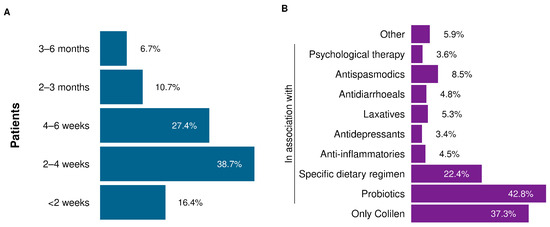
The majority of patients used the SBMD for 2–4 weeks (38.7%) or 4–6 weeks (27.4%) in each treatment cycle (Figure 3A). When addressing their health concerns, 37.3% of patients used the medical device alone, while 42.8% combined it with probiotics, and 22.4% followed a specialized diet (Figure 3B).
Figure 3.
(A) Descriptive analysis of duration of the SBMD treatment, as reported by 3697 patients (single-choice question). (B) Descriptive analysis of the pattern of use of the SBMD by 3697 patients who used the product for the management of IBS symptoms (multiple-choice question). The vertical line indicates concomitant therapies.
In terms of safety and tolerability, patients’ satisfaction with the SBMD was notably high, with 45.3% of responders that were extremely satisfied and 45.4% greatly satisfied (Figure 2). Additionally, only five patients reported non-serious undesirable effects assessed as at least possibly related to the use of the product.
3.2. Pharmacists
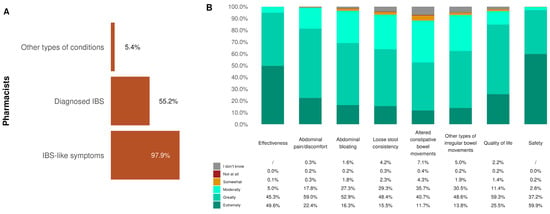
A total of 1014 pharmacists participated in the survey, providing insights into their customers’ experiences with the SBMD over the past year. In a multiple-choice question, a significant majority of pharmacists (97.9%) recommended the SBMD to individuals experiencing one or more symptoms of IBS without a formal diagnosis, while 55.2% recommended it to those already diagnosed with IBS (Figure 4A). In terms of customer demographics, pharmacists noted that the majority fell into the age group of 31 to 50 years (85.9%), followed by 51 to 64 years (56.3%). They also reported that the most frequent ranges of IBS symptom duration were 1 to 3 years (61.5%) and less than 1 year (49.0%).
Figure 4.
(A) Descriptive analysis of the condition for which 1014 pharmacists had recommended the SBMD (multiple-choice question). (B) Descriptive analysis of the satisfaction levels of 1014 pharmacists regarding the SBMD’s overall effectiveness, symptoms and quality of life improvement and safety (single-choice questions). The answer “I don’t know” was not an option for the questions regarding overall effectiveness and safety.
58.4% of pharmacists reported that the SBMD showed positive effects within the first month and 49.9% even within a week. When assessing the overall effectiveness of the SBMD in managing IBS, the satisfaction was rated excellent, good and fair in 49.6%, 45.3% and 5.0% of the cases, respectively (Figure 4B). Specifically, participants were extremely or greatly satisfied with the SBMD’s impact on various symptoms: abdominal discomfort and pain (81.4%), abdominal bloating (69.2%), consistency of loose stools (63.9%), and other irregular bowel movements (62.4%) (Figure 4B). In addition, the majority reported having excellent (25.5%) or good (59.3%) satisfaction with the improvement in customers’ quality of life (Figure 4B). Interestingly, a substantial proportion of pharmacists highlighted their satisfaction with the SBMD for its ability to restore intestinal sensitivity and physiological function (82.7%) and its role in reducing the need for other therapies such as antidiarrheals, antispasmodics, laxatives, and prokinetics (67.7%).
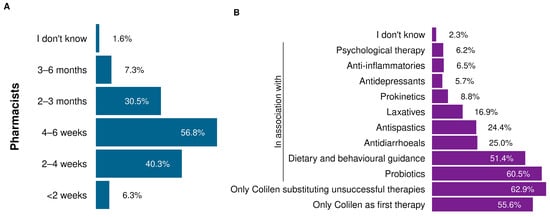
Concerning usage behavior, the majority of pharmacists primarily observed using the SBMD for 4–6 weeks (56.8%), followed by 2–4 weeks (40.3%), and up to 2–3 months (30.5%) (Figure 5A). A significant number of respondents noted that customers used the SBMD alone, either as a primary therapy (55.6%) or after unsuccessful treatments (62.9%). Additionally, 60.5% and 51.4% of pharmacists reported that individuals combined the SBMD with probiotics and a specialized diet, respectively (Figure 5B).
Figure 5.
(A) Descriptive analysis of duration of the SBMD treatment, as reported by 1014 pharmacists (multiple-choice question). (B) Descriptive analysis of the pattern of use of the SBMD by patients, as reported by 1014 pharmacists (multiple-choice question). The vertical line indicates concomitant therapies.
Notably, almost all pharmacists (97.1%) expressed excellent or good satisfaction with the safety and tolerability of the SBMD (Figure 4B).
3.3. Physicians
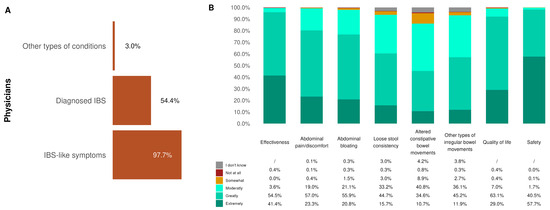
A total of 662 physicians participated in the survey, sharing their experiences with patients who had taken the SBMD in the past year. Almost all participants (97.7%) reported prescribing the SBMD to individuals presenting one or more symptoms of IBS, even without a formal diagnosis. Additionally, 54.4% of responders prescribed it to those with a confirmed IBS diagnosis (Figure 6A). According to physicians, the most commonly treated age groups were 31 to 50 years (76.3%), followed by 51 to 64 years (49.9%) and 18 to 30 years (42%). They also stated that the most frequent ranges of symptom duration were 1 to 3 years (60.1%) and less than 1 year (55.1%).
Figure 6.
(A) Descriptive analysis of the condition for which 662 physicians had recommended the SBMD (multiple-choice question). (B) Descriptive analysis of the satisfaction levels of 662 physicians regarding the SBMD ’s effectiveness, symptoms and quality of life improvement and safety (single-choice question). The answer “I don’t know” was not an option for the questions regarding overall effectiveness, quality of life, and safety.
Most physicians observed that their patients’ IBS symptoms improved quickly, with 64.5% reporting improvement within the first month and 48.5% noting progress even within a week. When it comes to the overall effectiveness of the SBMD in treating IBS, the majority reported being extremely (41.4%) or greatly (54.5%) satisfied (Figure 6B). Indeed, 80.3% of respondents were extremely or greatly satisfied with the effect of the SBMD on abdominal discomfort and pain, 76.7% on abdominal bloating and 60.4% on loose stool consistency (Figure 6B). Positive results were also observed in terms of patients’ quality of life, with physicians reporting extreme (29.0%) and great (63.1%) satisfaction with the improvements (Figure 6B).
Physicians identified two main reasons for their satisfaction with the SBMD: its ability to restore intestinal sensitivity and physiological function (87.4%), and its capacity to reduce the need for other treatments like antidiarrheals, antispasmodics, laxatives, and prokinetics (58.0%). 30.8% of physicians also reported that they were satisfied because it reduced the need for antidepressant treatments, typical of functional disorders.
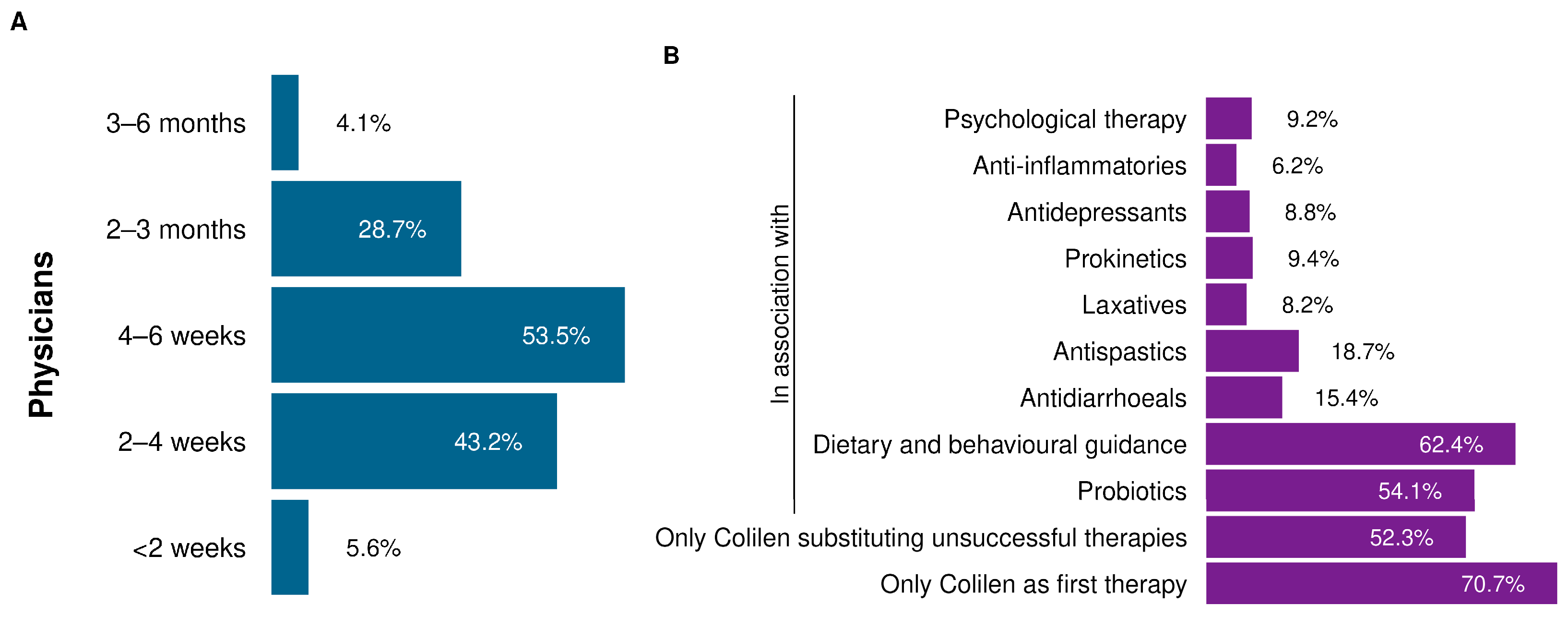
Regarding usage behavior, 43.2% of physicians recommended using the product for 2–4 weeks, 53.5% for 4–6 weeks and 28.7% of them up to 2–3 months (Figure 7A). Most participants prescribed the SBMD as the sole therapy for patients who had not previously used other treatments (70.7%) and for those who had unsuccessfully tried other therapies (52.3%) or also in conjunction with a nutritional and behavioral approach (62.4%), and with probiotics (54.1%) (Figure 7B).
Figure 7.
(A) Descriptive analysis of duration of the SBMD treatment, as reported by 662 physicians (multiple-choice question). (B) Descriptive analysis of pattern of use of the SBMD by patients, as reported by 662 physicians (multiple-choice question). The vertical line indicates concomitant therapies.
Finally, a remarkable 98.2% of physicians indicated that they were extremely or greatly satisfied with the safety and tolerability of the SBMD (Figure 6B), and all reported no potential interactions with other medications.
4. Discussion
Here, we performed a large survey on 6101 participants, including patients, physicians, and pharmacists. The primary objective of this survey was to gather real-world insights into the perceived effectiveness, safety, tolerability, and usage patterns of the SBMD, a medical device for treating IBS and commonly related symptoms. Questionnaires were specifically designed for patients to report their personal experience with the product use, while pharmacists and physicians evaluated its performance based on patient-reported outcomes or direct observations of symptom improvement.
In line with its intended use, all three survey cohorts revealed that the SBMD was frequently employed to treat established IBS or IBS-like symptoms, either as a monotherapy or in combination with other treatments. Reflecting the SBMD instructions of use, the most common treatment duration was 2–6 weeks and the speed of symptom resolution was notably consistent across all three cohorts, with most clinical manifestations reported to resolve within one week to one month. As a result, the overall assessment of the SBMD performance in terms of effectiveness and symptom improvement was highly positive among patients and similarly praised by healthcare professionals. Such benefits were further highlighted by the remarkable improvement in patients’ quality of life, consistently reported by all three cohorts.
Of note, all targets surveyed found that the SBMD was effective in relieving the main symptoms of IBS, such as abdominal pain and bloating. Indeed, over 90% of patients and almost all pharmacists and physicians coherently reported an improvement in the symptoms of IBS. These findings are particularly relevant, as many available treatments effectively address changes in bowel habits but often provide limited relief for pain [38,39,40,41]. Moreover, this observed clinical success is fully consistent with the results of a preclinical study in which the same mixture of naturally occurring molecules was shown to significantly reduce visceral hypersensitivity and pain following DNBS-induced colitis in an animal model of IBS, alongside promoting the healing of mucosal lesions [32]. These preclinical results are consistent with the concept that the SBMD acts through a barrier effect and radical scavenging activity, collectively provided by its complex of natural substances.
The SBMD was also considered to be a remarkably safe and well-tolerated product, with almost 98% of patients giving a favorable rating, echoed by nearly all pharmacists and physicians. The fact that only five patients participating in the questionnaire reported non-serious undesirable effects, coupled with physicians noting no potential drug interactions, further underscores the SBMD role as a safe option for managing IBS. The possibility of relying on a safe and effective therapeutic option is highly valuable, as pharmacological treatments specifically targeting IBS symptoms can sometimes exacerbate other common manifestations of the disease. For instance, bloating, abdominal pain, constipation and/or diarrhea have been observed in patients treated with antidiarrheals and laxatives (e.g., loperamide and polyethylene glycol, respectively). Furthermore, events such as dry mouth, dizziness, blurred vision, and urinary retention have been associated with the use of antispasmodics (e.g., hyoscyamine) [2,42,43,44].
Significantly, in addition to its safety profile, the introduction of this SBMD could potentially reduce the use of pharmacological treatments, as both pharmacists and physicians identified the potential of decreasing concomitant medications such as antidiarrheals, antispasmodics, laxatives and prokinetics, as well as the need for antidepressants. The opportunity of reducing concurrent pharmacological therapies and avoiding potential drug interactions is particularly important, as the risk of interactions rises with the number of medications taken and IBS patients commonly experience concurrent disorders, which are not limited to the gastrointestinal system [45]. It is also important to note that using natural products like the SBMD, which safely degrade in the environment, promotes sustainability. This aligns with the One Health principle of reducing the environmental impact of human interventions while preserving health benefits.
A primary limitation is the digital format of the survey that may introduce age-selection bias, as older patients are underrepresented, potentially due to limited digital literacy. Quality of life was assessed using a limited set of specific survey items, which may lead to partially inaccurate information. Furthermore, reliance on patient-reported outcome (PRO) measures introduces the potential for recall and reporting bias. Approximately one-third of patients did not receive an established diagnosis of IBS and may therefore have a clinical condition that does not meet the Rome criteria for the diagnosis of IBS, for which abdominal pain is a cardinal, necessary symptom. This may represent a potential cause of misclassification bias. However, the PRO is fundamentally appropriate, as the diagnosis, severity, and subtyping of IBS are clinically and symptom based. Accordingly, PRO measures that comprehensively address pain, associated abdominal symptoms, and bowel habit alterations are precisely the tools recommended by the European Medicines Agency guidelines for clinical investigations of IBS as the primary outcome measures in IBS clinical trials [46]. Among the strengths of the survey, particular note has to be made of the large population and the high level of coherence among patients, pharmacists, and physicians in their assessments.
5. Conclusions
In summary, the RWD presented herein indicates a strong coherence among patients, pharmacists, and physicians regarding the effectiveness, safety, and tolerability of the SBMD in treating IBS and related symptoms. Given that concerns may arise regarding the effectiveness and safety of available pharmacological treatments for IBS, and that such treatments often address only specific symptoms, there is a clear need for broader therapeutic options with a solid safety profile. Real-world surveys like this one are essential, as they provide insights into patients’ actual responses to treatment, especially when data are continuously collected through a dedicated platform, as in this case. This ongoing monitoring supports the confirmation of the product’s clinical performance and contributes to improving patient outcomes.
Author Contributions
Conceptualization, E.G.; formal analysis, P.M. and M.R.; data curation, P.M. and M.R.; writing—original draft preparation, P.M. and M.R.; writing—review and editing, R.C., V.I., M.C.M., R.L.S., P.P. and E.G.; supervision, E.G.; project administration, R.C., V.I. and R.L.S. All authors have read and agreed to the published version of the manuscript.
Funding
This research was funded by Aboca S.p.A., the manufacturer of the medical device.
Institutional Review Board Statement
In accordance with the relevant regulations, ethical approval was not sought since the data were retrieved from voluntary online surveys. Nevertheless, ethical considerations were made in alignment with the principles for research on human subjects, as outlined in the Declaration of Helsinki.
Informed Consent Statement
The participants voluntarily decided to adhere to the survey. Moreover, participants received a data protection notice clearly stating that the legal basis for data processing is established under applicable regulations (Art. 6(1)(c) and Art. 9(2)(i) of the GDPR; Art. 2-sexies, letter z of Legislative Decree 196/2003; and Art. 83 of EU Regulation 745/2017). They had to confirm having read a specific privacy notice and authorize the data processing despite the fact that processing was based on a legal obligation and no explicit informed consent was required under the GDPR.
Data Availability Statement
The data presented in this study are available on request from the corresponding author. The data are not publicly available due to privacy and ethical restrictions.
Conflicts of Interest
R.C., V.I., R.L.S. and E.G., are employees of the research promoter and worked on this project as part of their employment. The remaining authors declare that the research was conducted in the absence of any commercial or financial relationships that could be construed as potential conflicts of interest.
Abbreviations
The following abbreviations are used in this manuscript:
| IBS | Irritable Bowel Syndrome |
| RWD | Real-world data |
| DGBI | Disorders of Gut-Brain Interaction |
| SBMD | Substance-Based Medical Device |
| RW | Real-World |
| PRO | Patient-reported outcome |
References
- Anand, K.; Khatib, M.N. Causative Factors, Clinical Manifestations, and Therapeutic Strategies for Irritable Bowel Syndrome. Cureus 2024, 16, e58728. [Google Scholar] [CrossRef] [Scilit]
- Lacy, B.E.; Mearin, F.; Chang, L.; Chey, W.D.; Lembo, A.J.; Simren, M.; Spiller, R. Bowel Disorders. Gastroenterology 2016, 150, 1393–1407.e5. [Google Scholar] [CrossRef] [Scilit]
- Ford, A.C.; Sperber, A.D.; Corsetti, M.; Camilleri, M. Irritable Bowel Syndrome. Lancet 2020, 396, 1675–1688. [Google Scholar] [CrossRef] [Scilit] [PubMed]
- Almario, C.V.; Sharabi, E.; Chey, W.D.; Lauzon, M.; Higgins, C.S.; Spiegel, B.M.R. Prevalence and Burden of Illness of Rome IV Irritable Bowel Syndrome in the United States: Results from a Nationwide Cross-Sectional Study. Gastroenterology 2023, 165, 1475–1487. [Google Scholar] [CrossRef] [Scilit] [PubMed]
- Bosman, M.H.M.A.; Weerts, Z.Z.R.M.; Snijkers, J.T.W.; Vork, L.; Mujagic, Z.; Masclee, A.A.M.; Jonkers, D.M.A.E.; Keszthelyi, D. The Socioeconomic Impact of Irritable Bowel Syndrome: An Analysis of Direct and Indirect Health Care Costs. Clin. Gastroenterol. Hepatol. 2023, 21, 2660–2669. [Google Scholar] [CrossRef] [Scilit] [PubMed]
- Kopczyńska, M.; Mokros, Ł.; Pietras, T.; Małecka-Panas, E. Quality of Life and Depression in Patients with Irritable Bowel Syndrome. Gastroenterol. Rev./Przegląd Gastroenterol. 2018, 13, 102–108. [Google Scholar] [CrossRef] [Scilit]
- DiBonaventura, M.; Sun, S.X.; Bolge, S.C.; Wagner, J.-S.; Mody, R. Health-Related Quality of Life, Work Productivity and Health Care Resource Use Associated with Constipation Predominant Irritable Bowel Syndrome. Curr. Med. Res. Opin. 2011, 27, 2213–2222. [Google Scholar] [CrossRef] [Scilit]
- Holtmann, G.J.; Ford, A.C.; Talley, N.J. Pathophysiology of Irritable Bowel Syndrome. Lancet Gastroenterol. Hepatol. 2016, 1, 133–146. [Google Scholar] [CrossRef] [Scilit]
- Hanning, N.; Edwinson, A.L.; Ceuleers, H.; Peters, S.A.; De Man, J.G.; Hassett, L.C.; De Winter, B.Y.; Grover, M. Intestinal Barrier Dysfunction in Irritable Bowel Syndrome: A Systematic Review. Ther. Adv. Gastroenterol. 2021, 14, 175628482199358. [Google Scholar] [CrossRef] [Scilit]
- Fortea, M.; Albert-Bayo, M.; Abril-Gil, M.; Ganda Mall, J.-P.; Serra-Ruiz, X.; Henao-Paez, A.; Expósito, E.; González-Castro, A.M.; Guagnozzi, D.; Lobo, B.; et al. Present and Future Therapeutic Approaches to Barrier Dysfunction. Front. Nutr. 2021, 8, 718093. [Google Scholar] [CrossRef] [Scilit]
- Bischoff, S.C.; Barbara, G.; Buurman, W.; Ockhuizen, T.; Schulzke, J.-D.; Serino, M.; Tilg, H.; Watson, A.; Wells, J.M. Intestinal Permeability—A New Target for Disease Prevention and Therapy. BMC Gastroenterol. 2014, 14, 189. [Google Scholar] [CrossRef] [Scilit]
- Vanuytsel, T.; Tack, J.; Farre, R. The Role of Intestinal Permeability in Gastrointestinal Disorders and Current Methods of Evaluation. Front. Nutr. 2021, 8, 717925. [Google Scholar] [CrossRef] [Scilit]
- Aggeletopoulou, I.; Papantoniou, K.; Pastras, P.; Triantos, C. Unraveling the Pathophysiology of Irritable Bowel Syndrome: Mechanisms and Insights. Int. J. Mol. Sci. 2025, 26, 10598. [Google Scholar] [CrossRef] [Scilit] [PubMed]
- Rettura, F.; Lambiase, C.; Tedeschi, R.; Grosso, A.; Cancelli, L.; Ricchiuti, A.; Bottari, A.; Giacomelli, L.; De Bortoli, N.; Bellini, M. Mucoprotectants and Gut Barrier: Mechanisms of Action and Clinical Applications in IBS. Is There a Possible Role? Front. Pharmacol. 2025, 16, 1538791. [Google Scholar] [CrossRef] [Scilit] [PubMed]
- Camilleri, M. Diagnosis and Treatment of Irritable Bowel Syndrome: A Review. JAMA 2021, 325, 865–877. [Google Scholar] [CrossRef] [Scilit] [PubMed]
- Savarino, E.; Zingone, F.; Barberio, B.; Marasco, G.; Akyuz, F.; Akpinar, H.; Barboi, O.; Bodini, G.; Bor, S.; Chiarioni, G.; et al. Functional Bowel Disorders with Diarrhoea: Clinical Guidelines of the United European Gastroenterology and European Society for Neurogastroenterology and Motility. United Eur. Gastroenterol. J. 2022, 10, 556–584. [Google Scholar] [CrossRef] [Scilit]
- Ihara, E.; Manabe, N.; Ohkubo, H.; Ogasawara, N.; Ogino, H.; Kakimoto, K.; Kanazawa, M.; Kawahara, H.; Kusano, C.; Kuribayashi, S.; et al. Evidence-Based Clinical Guidelines for Chronic Constipation 2023. Digestion 2024, 106, 62–89. [Google Scholar] [CrossRef] [Scilit]
- Ihara, E.; Manabe, N.; Ohkubo, H.; Ogasawara, N.; Ogino, H.; Kakimoto, K.; Kanazawa, M.; Kawahara, H.; Kusano, C.; Kuribayashi, S.; et al. Evidence-Based Clinical Guidelines for Chronic Diarrhea 2023. Digestion 2024, 105, 480–497. [Google Scholar] [CrossRef] [Scilit]
- Chuy, D.S.; Wi, R.S.; Tadros, M. Irritable Bowel Syndrome: Current Landscape of Diagnostic Guidelines and Therapeutic Strategies. Gastroenterol. Insights 2024, 15, 786–809. [Google Scholar] [CrossRef] [Scilit]
- Ford, A.C.; Moayyedi, P.; Chey, W.D.; Harris, L.A.; Lacy, B.E.; Saito, Y.A.; Quigley, E.M.M. American College of Gastroenterology Monograph on Management of Irritable Bowel Syndrome. Am. J. Gastroenterol. 2018, 113, 1–18. [Google Scholar] [CrossRef] [Scilit]
- Bonfrate, L.; Di Palo, D.M.; Celano, G.; Albert, A.; Vitellio, P.; De Angelis, M.; Gobbetti, M.; Portincasa, P. Effects of Bifidobacterium longum BB536 and Lactobacillus rhamnosus HN001 in IBS Patients. Eur. J. Clin. Investig. 2020, 50, e13201. [Google Scholar] [CrossRef] [Scilit]
- Chlebicz-Wójcik, A.; Śliżewska, K. Probiotics, Prebiotics, and Synbiotics in the Irritable Bowel Syndrome Treatment: A Review. Biomolecules 2021, 11, 1154. [Google Scholar] [CrossRef] [Scilit]
- Gibson, G.R.; Hutkins, R.; Sanders, M.E.; Prescott, S.L.; Reimer, R.A.; Salminen, S.J.; Scott, K.; Stanton, C.; Swanson, K.S.; Cani, P.D.; et al. Expert Consensus Document: The International Scientific Association for Probiotics and Prebiotics (ISAPP) Consensus Statement on the Definition and Scope of Prebiotics. Nat. Rev. Gastroenterol. Hepatol. 2017, 14, 491–502. [Google Scholar] [CrossRef] [Scilit] [PubMed]
- Herndon, C.C.; Wang, Y.; Lu, C. Targeting the Gut Microbiota for the Treatment of Irritable Bowel Syndrome. Kaohsiung J. Med Sci. 2019, 36, 160–170. [Google Scholar] [CrossRef] [Scilit]
- Joshi, D.C.; Raina, N.; Joshi, N.; Gurow, K.; Gwasakoti, J.; Sood, A.; Mehrotra, A.; Tuli, H.S.; Paudel, K.R.; Gupta, M. Current Landscape of Novel Therapeutic Agents and Drug Targets in Irritable Bowel Syndrome. Arch. Der Pharm. 2025, 358, e70133. [Google Scholar] [CrossRef] [Scilit] [PubMed]
- Fukudo, S.; Okumura, T.; Inamori, M.; Okuyama, Y.; Kanazawa, M.; Kamiya, T.; Sato, K.; Shiotani, A.; Naito, Y.; Fujikawa, Y.; et al. Evidence-Based Clinical Practice Guidelines for Irritable Bowel Syndrome 2020. J. Gastroenterol. 2021, 56, 193–217. [Google Scholar] [CrossRef] [Scilit] [PubMed]
- Bokic, T.; Storr, M.; Schicho, R. Potential Causes and Present Pharmacotherapy of Irritable Bowel Syndrome: An Overview. Pharmacology 2015, 96, 76–85. [Google Scholar] [CrossRef] [Scilit]
- Simon, E.; Călinoiu, L.F.; Mitrea, L.; Vodnar, D.C. Probiotics, Prebiotics, and Synbiotics: Implications and Beneficial Effects against Irritable Bowel Syndrome. Nutrients 2021, 13, 2112. [Google Scholar] [CrossRef] [Scilit]
- Quigley, E.M.M.; Horn, J.; Kissous-Hunt, M.; Crozier, R.A.; Harris, L.A. Better Understanding and Recognition of the Disconnects, Experiences, and Needs of Patients with Irritable Bowel Syndrome with Constipation (BURDEN IBS-C) Study: Results of an Online Questionnaire. Adv. Ther. 2018, 35, 967–980. [Google Scholar] [CrossRef] [Scilit]
- Rangan, V.; Ballou, S.; Shin, A.; Camilleri, M.; Lembo, A.; Nee, J.; Iturrino, J.; Singh, P.; Patel, R. Use of Treatments for Irritable Bowel Syndrome and Patient Satisfaction Based on the IBS in America Survey. Gastroenterology 2020, 158, 786–788.e1. [Google Scholar] [CrossRef] [Scilit]
- Törnblom, H.; Goosey, R.; Wiseman, G.; Baker, S.; Emmanuel, A. Understanding Symptom Burden and Attitudes to Irritable Bowel Syndrome with Diarrhoea: Results from Patient and Healthcare Professional Surveys. United Eur. Gastroenterol. J. 2018, 6, 1417–1427. [Google Scholar] [CrossRef] [Scilit]
- Parisio, C.; Lucarini, E.; Micheli, L.; Toti, A.; Di Cesare Mannelli, L.; Antonini, G.; Panizzi, E.; Maidecchi, A.; Giovagnoni, E.; Lucci, J.; et al. Researching New Therapeutic Approaches for Abdominal Visceral Pain Treatment: Preclinical Effects of an Assembled System of Molecules of Vegetal Origin. Nutrients 2019, 12, 22. [Google Scholar] [CrossRef] [Scilit]
- European Union. Regulation (EU) 2017/745 of the European Parliament and of the Council of 5 April 2017 on Medical Devices, Amending Directive 2001/83/EC, Regulation (EC) No 178/2002 and Regulation (EC) No 1223/2009 and Repealing Council Directives 90/385/EEC and 93/42/EEC (Text with EEA Relevance); European Union: Brussels, Belgium, 2017. [Google Scholar]
- Colilen Leaflet. Available online: https://doc.gruppoaboca.com/media/5099/leacolidm-a-web.pdf (accessed on 12 November 2025).
- Dang, A. Real-World Evidence: A Primer. Pharm. Med. 2023, 37, 25–36. [Google Scholar] [CrossRef] [Scilit]
- Cioeta, R.; Cossu, A.; Giovagnoni, E.; Rigoni, M.; Muti, P. A New Platform for Post-Marketing Surveillance and Real-World Evidence Data Collection for Substance-Based Medical Devices. Front. Drug Saf. Regul. 2022, 2, 992359. [Google Scholar] [CrossRef] [Scilit]
- Lundell, S.; Toots, A.; Sönnerfors, P.; Halvarsson, A.; Wadell, K. Participatory Methods in a Digital Setting: Experiences from the Co-Creation of an eHealth Tool for People with Chronic Obstructive Pulmonary Disease. BMC Med. Inform. Decis. Mak. 2022, 22, 68. [Google Scholar] [CrossRef] [Scilit] [PubMed]
- Saha, L. Irritable Bowel Syndrome: Pathogenesis, Diagnosis, Treatment, and Evidence-Based Medicine. World J. Gastroenterol. 2014, 20, 6759–6773. [Google Scholar] [CrossRef] [Scilit] [PubMed]
- Cashman, M.D.; Martin, D.K.; Dhillon, S.; Puli, S.R. Irritable Bowel Syndrome: A Clinical Review. Curr. Rheumatol. Rev. 2016, 12, 13–26. [Google Scholar] [CrossRef] [Scilit]
- Chey, W.D.; Kurlander, J.; Eswaran, S. Irritable Bowel Syndrome: A Clinical Review. JAMA 2015, 313, 949. [Google Scholar] [CrossRef] [Scilit]
- Dai, Y.-K.; Wu, Y.-B.; Li, R.-L.; Chen, W.-J.; Tang, C.-Z.; Lu, L.-M.; Hu, L. Efficacy and Safety of Non-Pharmacological Interventions for Irritable Bowel Syndrome in Adults. World J. Gastroenterol. 2020, 26, 6488–6509. [Google Scholar] [CrossRef] [Scilit]
- Black, C.J.; Ford, A.C. Best Management of Irritable Bowel Syndrome. Frontline Gastroenterol. 2021, 12, 303–315. [Google Scholar] [CrossRef] [Scilit]
- NICE Guideline Irritable Bowel Syndrome in Adults: Diagnosis and Management. Available online: https://www.nice.org.uk/guidance/cg61/resources/irritable-bowel-syndrome-in-adults-diagnosis-and-management-pdf-975562917829 (accessed on 2 September 2024).
- Ford, A.C.; Moayyedi, P.; Lacy, B.E.; Lembo, A.J.; Saito, Y.A.; Schiller, L.R.; Soffer, E.E.; Spiegel, B.M.R.; Quigley, E.M.M. American College of Gastroenterology Monograph on the Management of Irritable Bowel Syndrome and Chronic Idiopathic Constipation. Am. J. Gastroenterol. 2014, 109, S2–S26. [Google Scholar] [CrossRef] [Scilit]
- Huang, K.-Y.; Wang, F.-Y.; Lv, M.; Ma, X.-X.; Tang, X.-D.; Lv, L. Irritable Bowel Syndrome: Epidemiology, Overlap Disorders, Pathophysiology and Treatment. World J. Gastroenterol. 2023, 29, 4120–4135. [Google Scholar] [CrossRef] [Scilit]
- European Medicines Agency (EMA) Guideline on the Evaluation of Medicinal Products for the Treatment of Irritable Bowel Syndrome. Available online: https://www.ema.europa.eu/en/documents/scientific-guideline/guideline-evaluation-medicinal-products-treatment-irritable-bowel-syndrome-revision-1_en.pdf (accessed on 7 October 2024).
Disclaimer/Publisher’s Note: The statements, opinions and data contained in all publications are solely those of the individual author(s) and contributor(s) and not of MDPI and/or the editor(s). MDPI and/or the editor(s) disclaim responsibility for any injury to people or property resulting from any ideas, methods, instructions or products referred to in the content. |
© 2026 by the authors. Licensee MDPI, Basel, Switzerland. This article is an open access article distributed under the terms and conditions of the Creative Commons Attribution (CC BY) license.