Article

How Do Immigration Status and Cultural Factors Influence Rates of H. pylori Among Self-Identified Hispanics Living in the United States?


1
CUNY School of Medicine, City University of New York, 160 Convent Avenue, New York, NY 10031, USA
2
Westside GI Medical Center, 619 West 54th Street, New York, NY 10019, USA
3
Division of Digestive and Liver Diseases, Columbia University, 630 West 168th Street, New York, NY 1003, USA
*
Author to whom correspondence should be addressed.
Gastroenterol. Insights 2026, 17(1), 10; https://doi.org/10.3390/gastroent17010010
Submission received: 14 January 2026 / Revised: 26 January 2026 / Accepted: 29 January 2026 / Published: 3 February 2026
(This article belongs to the Section Gastrointestinal Disease)

Abstract

Background/Objectives: Prior studies suggest that rates of Helicobacter pylori colonization are higher among Hispanic immigrants compared to U.S.-born Hispanics. It is unknown whether differences in H. pylori colonization rates among Hispanics are related to immigration status or to cultural factors such as diet. Methods: This was a survey study, conducted among self-identified Hispanics who had an endoscopy for symptoms of gastroesophageal reflux disease (GERD). Qualifying patients completed a telephone survey which included questions about immigration status and the 12-item Short Acculturation Scale for Hispanics (SASH), a validated instrument which measures cultural factors such as language preference and diet. We examined the relationship between SASH factors and H. pylori status, classified based on endoscopic biopsy results. Results: We called 400 patients and 186 completed the survey. Median age was 65 (interquartile range 21 to 82) and 81% were female. Thirty of 186 (16%) respondents were born in the U.S. while 156/186 (84%) were immigrants, primarily from the Dominican Republic. Among immigrants, 69% had immigrated before 1990. Rates of H. pylori were 8/30 (27%) among U.S. born Hispanics compared to 51/156 (33%) among Hispanic immigrants (p = 0.67). Rates of H. pylori were 51/147 (35%) among those with a mostly Latino diet vs. 8/39 (21%) among those with a U.S or mixed diet (p = 0.05). In a multivariable model predicting H. pylori status, a mostly Latino diet was the only cultural predictor which approached statistical significance (p = 0.05) (aOR 2.61, 95% CI 0.94–7.20). Conclusions: Rates of H. pylori colonization were modestly higher among Hispanic immigrants compared to U.S.-born Hispanics. A novel preliminary finding was that higher rates of H. pylori colonization were observed among those who ate a predominantly Latino diet.

1. Introduction

Helicobacter pylori (H. pylori) is the strongest modifiable risk factor for peptic ulcer disease and for gastric cancer, conditions that disproportionately affect Hispanic and other immigrant populations in the United States. Understanding which social, cultural, or immigration-related factors influence H. pylori colonization is important for targeting ulcer prevention, improving gastric cancer screening, and reducing gastrointestinal health disparities in these vulnerable communities [1,2,3,4].
Prior epidemiologic studies have shown that H. pylori prevalence is higher among Hispanic populations compared to non-Hispanic White populations, with particularly elevated rates of H. pylori colonization among first-generation immigrants. First-generation immigrants from high-prevalence regions (e.g., Central America, Mexico) have substantially higher H. pylori seroprevalence compared to U.S.-born Hispanics, as shown in large population-based studies [3,4,5]. Some studies suggest that duration of residence in the U.S., age at immigration, and ongoing ties to the country of origin may influence colonization risk [6]. Cultural factors such as dietary patterns and language preference, which reflect the degree of acculturation, may also explain differences in H. pylori rates among U.S.-dwelling Hispanics. However, after adjusting for socioeconomic factors, the effect of acculturation is attenuated and does not fully account for the disparity between immigrant and U.S.-born Hispanics [5,7,8].
We conducted a prospective telephone survey study to examine immigration status, cultural factors, and rates of H. pylori colonization among U.S.-dwelling Hispanics. In addition, we explored whether other upper gastrointestinal conditions, including Barrett’s esophagus, might vary by immigration status. Cultural factors were assessed using the validated 12-item Short Acculturation Scale for Hispanics (SASH), which measures domains such as language use, social networks, and diet. We hypothesized that acculturation factors, particularly a predominantly Latino diet, would modify the association between immigration status and H. pylori colonization.

2. Materials and Methods

2.1. Population and Enrollment

This was a prospective telephone survey study that utilized results from previously performed upper endoscopies. Patients were eligible if they had a first documented upper endoscopy at our center between January 2010 and July 2025 for symptoms of gastroesophageal reflux disease (GERD), including heartburn, reflux, dyspepsia, or upper abdominal pain. These indications were selected to generate a cohort that was homogeneous with respect to the clinical indication for endoscopy. We further required that endoscopic biopsies had been obtained from the gastric antrum and/or body and that patients self-identified as Hispanic at the time of endoscopy intake. Ethnicity is classified as Hispanic vs. non-Hispanic within the electronic medical record (Epic) and is recorded or confirmed during endoscopy intake. Clinical and demographic data were obtained retrospectively from Epic, which captures structured patient information and clinical documentation as part of routine care. Data extracted from Epic included demographics, indications for endoscopy, endoscopic findings, and histopathologic results from gastric biopsy reports. Patients with unrecorded ethnicity were excluded. Eligible participants were subsequently contacted by telephone to complete the SASH survey. All participants provided verbal informed consent prior to participation, with written consent waived by the Columbia University Institutional Review Board (Columbia IRB #AAAU5506).

2.2. H. pylori Colonization Status

H. pylori status was classified categorically as present or absent based on histopathology results from previously performed endoscopies. At the institution, gastric biopsy specimens are routinely evaluated for H. pylori using standard hematoxylin and eosin staining. At the discretion of the pathologist, including cases with gastric inflammation but no organisms visualized on routine staining, additional immunohistochemical staining for H. pylori may be performed. Endoscopic biopsies were typically obtained from the gastric antrum and the gastric body; however, biopsy location was not standardized as part of a formal protocol. Participants were included if biopsies were obtained from the antrum only, the body only, or both sites.

2.3. Additional Outcomes

Additional endoscopic findings of interest included Barrett’s esophagus, hiatal hernia, and esophagitis. These outcomes were classified as present or absent based on the endoscopist’s visual impression as documented in the endoscopy report. Pathology reports were used exclusively to determine H. pylori status and were not used to classify Barrett’s esophagus or esophagitis, as these findings were not the primary focus of the study.

2.4. Immigration Status

Immigration status was determined by self-report based on responses obtained during the telephone survey. Participants were classified as U.S.-born Hispanics if they reported being born in the United States and as immigrant Hispanics if they reported being born outside the United States or in Puerto Rico. Among immigrant participants, additional information was collected regarding country of origin, year of immigration, and frequency of return visits to their country of birth.

2.5. Survey

Cultural factors were assessed using the Short Acculturation Scale for Hispanics (SASH). The SASH includes items that evaluate the primary language used in various contexts (such as at home, with friends, and for media consumption), the composition of social networks (proportion of Latino vs. non-Latino friends and social contacts), and the frequency of consumption of traditional Latino foods versus mainstream American foods. Each item is scored on a Likert scale, with higher scores indicating greater acculturation to U.S. mainstream culture and lower scores reflecting retention of Latino cultural practices and preferences [9,10,11]. The survey was administered by telephone in English or Spanish according to participant preference by a fluently bilingual interviewer. Responses were scored and categorized in accordance with published scoring guidelines.

2.6. Statistical Approach

Continuous measures such as age were reduced to discrete categories to facilitate comparisons. Chi-square tests were used to compare demographic and cultural characteristics between U.S.-born Hispanics and Hispanic immigrants. A full multivariable logistic regression model was constructed to evaluate predictors of H. pylori colonization and included age, sex, and immigration status as a priori variables. Additional predictors were added to the model if they demonstrated an association with H. pylori status at a threshold of p < 0.10 in univariable analyses. A reduced model was subsequently generated by removing demographic variables. All statistical analyses were performed using STATA version 19, with a two-sided alpha level of 0.05.

3. Results

3.1. Population and H. pylori Status

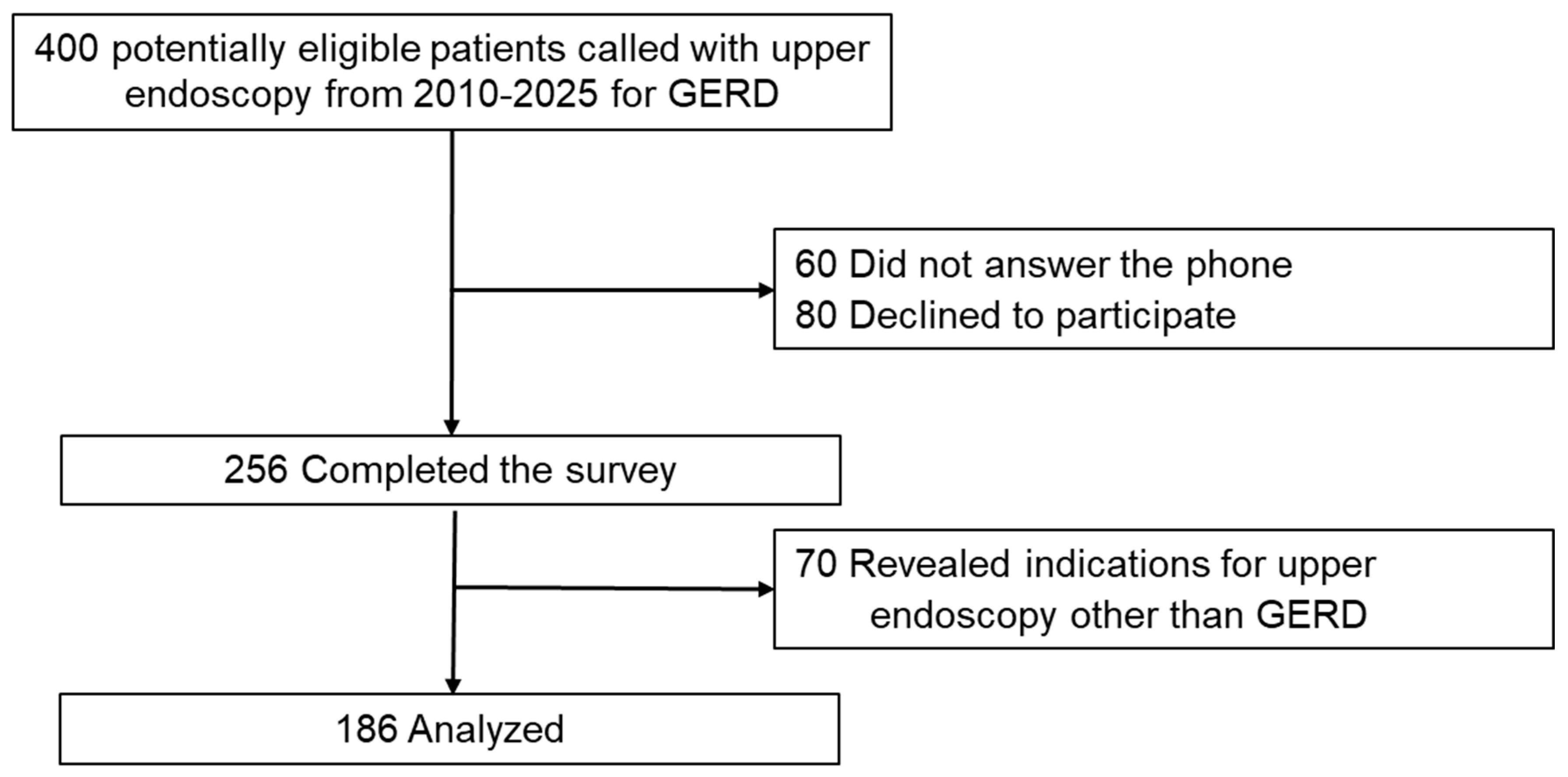
Of 557 individuals contacted, 186 self-identified Hispanic participants who had undergone upper endoscopy with gastric biopsies for H. pylori and who completed the telephone survey were enrolled (Figure 1). Among these participants, 30 of 186 (16.1%) were U.S.-born, while 156 of 186 (83.9%) were immigrants. The immigrant cohort was composed predominantly of individuals born in the Dominican Republic. Overall, H. pylori was detected in 59 participants (31.7%) and was absent in 127 participants (68.3%). The prevalence of H. pylori was 27% (8 of 30) among U.S.-born Hispanics and 33% (51 of 156) among Hispanic immigrants, a difference that was not statistically significant (p = 0.52).

3.2. Demographic and Medical Factors and H. pylori Status

Most respondents were female (81%), with a median age of 65 years (interquartile range, 55–75) (Table 1). Most participants reported use of antacids or acid-suppressive medications within 30 days of the index upper endoscopy (69%), including 49.5% who had used proton pump inhibitors within that time frame. Demographic characteristics and use of antacids or acid-suppressive medications did not differ between participants with and without H. pylori.

3.3. SASH Factors and H. pylori Status

All participants completed the 12-item Short Acculturation Scale for Hispanics (SASH) to assess acculturation-related factors, including language use and dietary preferences (Table 2). Most respondents preferred to read and speak in Spanish (72%), reported using mostly Spanish during childhood (89%), thought primarily in Spanish (74%), and spoke mostly Spanish with friends (73%). Diet was self-characterized as predominantly Latino by 80% of respondents, predominantly U.S. by 5%, and a mix of Latino and U.S. by 15%. Most SASH factors did not differ by H. pylori status. However, participants who reported thinking predominantly in English were less likely to have H. pylori compared with those who did not (p = 0.05). Similarly, those who reported consuming a predominantly U.S. or mixed diet were less likely to have H. pylori compared with those who consumed a mostly Latino diet (p = 0.05).

3.4. Findings on Upper Endoscopy

In addition to H. pylori status, we evaluated whether other endoscopic findings differed by immigration status. The presence or absence of hiatal hernia, Barrett’s esophagus, and esophagitis was recorded based on endoscopy reports (Table 3). There was no evidence that the prevalence of these endoscopic findings differed between U.S.-born and immigrant participants.

3.5. Visits to Birth Country

We next examined whether H. pylori status varied according to immigration-related travel patterns. Specifically, we assessed time since immigration and time since last visit to the participant’s country of birth among the 156 immigrant participants. Neither the recency of immigration nor the timing of return visits to the birth country was associated with H. pylori status (Table 4).

3.6. Multivariable Model for H. pylori Status

A multivariable logistic regression model was constructed to evaluate predictors of H. pylori colonization (Table 5). Age, sex, and immigration status (U.S.-born vs. immigrant) were included a priori. In addition, the two SASH factors that demonstrated crude associations with H. pylori status—preferred language for thoughts and dietary preference—were included in the model. No variables were independently associated with H. pylori colonization. However, there was a strong trend toward an association between preference for a predominantly Latino diet and H. pylori presence (adjusted odds ratio [aOR] 2.61, 95% CI 0.94–7.20). Similar results were observed in a reduced model excluding age and sex (aOR 2.63, 95% CI 0.96–7.18). There was no evidence that immigration status modified the relationship between diet and H. pylori.

4. Discussion

In this study of self-identified Hispanics undergoing upper endoscopy, we found that there was no significant difference in the rates of H. pylori colonization comparing immigrants vs. U.S.-born Hispanics. Among immigrants, the recency of immigration was also not associated with H. pylori status. H. pylori colonization was common in both U.S.-born and immigrant Hispanics and immigration status, and travel patterns did not appear to be primary drivers of colonization risk. Notably, we found a strong trend towards an association between preference of a Hispanic diet and the presence of H. pylori, a novel finding which has not been highlighted by prior studies [3,12].
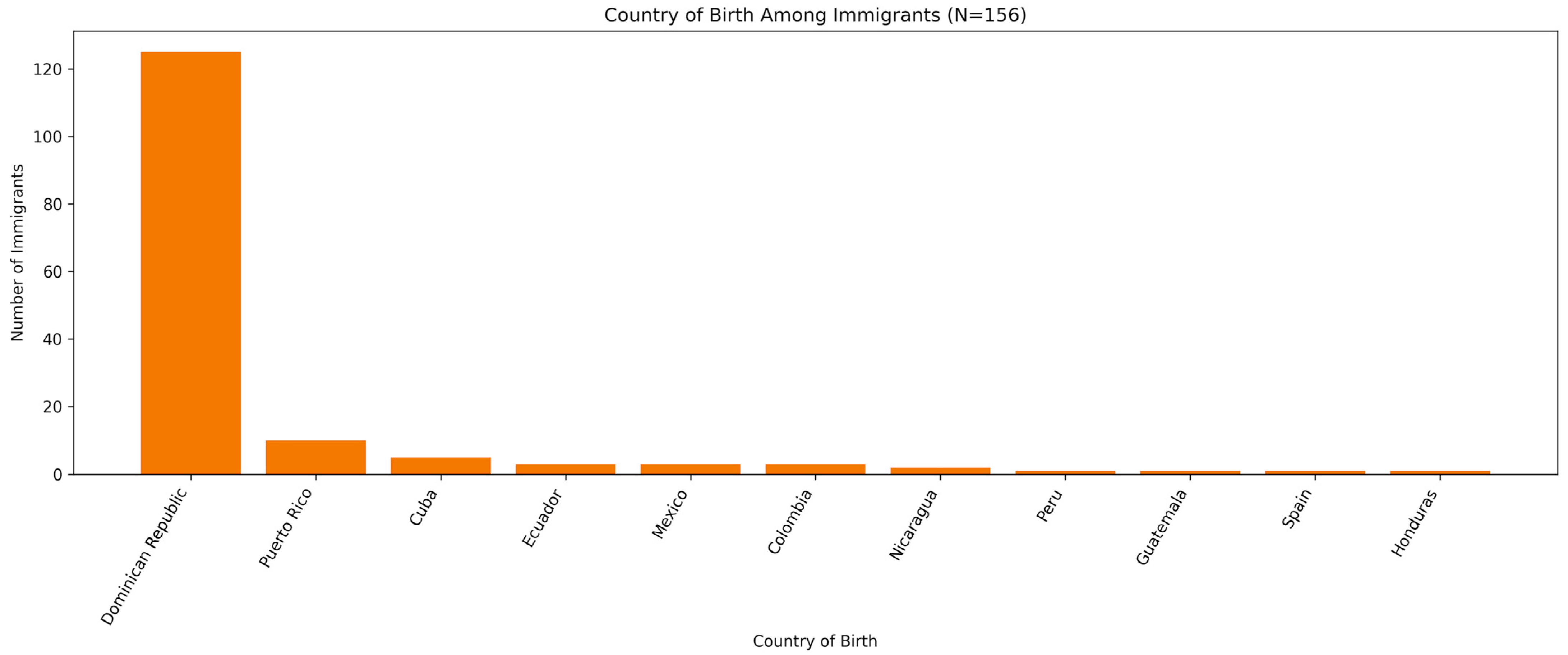
Our findings differ from prior epidemiologic studies that reported substantially higher H. pylori prevalence among Hispanic immigrants compared to U.S.-born Hispanics. Data from the National Health and Nutrition Examination Survey (NHANES) have shown that H. pylori infection is more common among Hispanics than among non-Hispanic Whites and is particularly elevated among foreign-born Hispanics [13]. In the San Francisco Bay Area, the H. pylori colonization rate exceeded 30% among first-generation Hispanic immigrants compared with only 3% among second-generation U.S.-born Hispanics [5]. Similarly, the Hispanic Community Health Study/Study of Latinos reported markedly higher seroprevalence among non–U.S.-born Hispanics compared with U.S.-born Hispanics (62% vs. 38%, respectively) [3]. By contrast, in our cohort, the prevalence of H. pylori among immigrants (33%) was only modestly higher than among U.S.-born Hispanics (27%), and this difference was not statistically significant. Hispanic ethnicity is not monolithic, and it is notable that these prior studies primarily included immigrants from Mexico, whereas our cohort consisted predominantly of immigrants from the Dominican Republic (Figure 2). H. pylori status may vary by country of birth, which may also influence the timing of immigration [14]. Taken together, our findings contrast with earlier studies and suggest that the historically large disparity in infection risk between U.S.-born and immigrant Hispanics may be narrowing, potentially reflecting improvements in sanitation, antibiotic exposure, and living conditions in both the United States and Latin America.
Our most novel finding was a strong trend toward an association between dietary preference and H. pylori status, whereby participants who reported a preference for a predominantly Latino diet were more likely to have H. pylori present compared with those who preferred a predominantly U.S. or mixed diet. This association was not modified by immigration status, suggesting that it may reflect factors related to dietary exposure while residing in the United States rather than immigration alone. Because the majority of participants were from the Dominican Republic, our ability to compare dietary patterns across distinct Hispanic subgroups was limited. This study cannot determine the specific mechanisms through which diet may influence H. pylori risk, highlighting an important area for future investigation.
In addition to examining H. pylori, we evaluated whether other upper gastrointestinal findings varied by immigration status. The prevalence of Barrett’s esophagus was low overall (4%), limiting statistical power to compare rates by immigration status. This prevalence was similar to that reported in prior studies of Hispanic populations [15,16,17,18]. The prevalence of esophagitis and hiatal hernia also did not differ meaningfully between U.S.-born and immigrant Hispanics. Together, these findings suggest that, within this cohort, immigration status was not a strong determinant of structural or reflux-related pathology identified on upper endoscopy.
This study has several strengths. We leveraged biopsy-confirmed H. pylori status from a relatively large cohort of self-identified Hispanics undergoing upper endoscopy for similar clinical indications, reducing misclassification compared with serologic-based studies [8,19,20]. In addition, we incorporated a validated acculturation instrument (SASH) to assess cultural factors, allowing for a more nuanced evaluation of social and behavioral influences beyond immigration status alone. There were also limitations. The relatively small number of U.S.-born Hispanics limited power to detect modest differences by nativity, especially for secondary outcomes such as Barrett’s esophagus [4,21]. Information on medications, such as antibiotics or proton pump inhibitors, was collected by survey and may be subject to recall bias [1]. Recent antibiotic exposure prior to endoscopy was not systematically captured for all participants, which may have suppressed H. pylori detection on biopsy and led to an underestimation of true infection prevalence in this cohort. H. pylori was diagnosed by histopathology, which has diagnostic accuracy exceeding 95% [22]. Although combining histopathology with rapid urease testing would have improved sensitivity, our single-method approach identifies active infection at the time of biopsy [23]. Participants were recruited from individuals referred for endoscopy due to reflux-related symptoms, and gastroesophageal reflux disease has been inversely associated with H. pylori colonization; as a result, the prevalence of H. pylori observed in this study may underestimate true prevalence in the broader Hispanic population [3]. In addition, gastric biopsy location was not standardized, with samples obtained from the antrum, body, or both at the discretion of the endoscopist, which may have influenced H. pylori detection rates. Finally, the immigrant population in this study consisted predominantly of individuals from the Dominican Republic, reflecting local demographics in upper Manhattan and potentially limiting generalizability to other Hispanic subgroups.
Overall, unlike several prior studies, we found that immigration status was not significantly associated with H. pylori colonization among self-identified Hispanics residing in the United States. A novel and preliminary observation was that H. pylori colonization was more common among individuals who reported a predominantly Latino diet compared with those who reported a predominantly U.S. or mixed U.S.–Latino diet. Although this difference did not reach statistical significance, it suggests that cultural or dietary practices may play a more important role than nativity alone in influencing colonization risk [12]. From a clinical and public health perspective, identifying modifiable cultural and behavioral risk factors for H. pylori may help refine screening strategies and inform prevention efforts aimed at reducing H. pylori–associated disease in Hispanic communities.

Author Contributions

Conceptualization, A.D., D.E.F., and P.D.; methodology, A.B.; investigation, A.B.; formal analysis, A.B. and D.E.F.; data curation, A.B. and D.E.F.; writing—original draft preparation, A.B. and D.E.F.; writing—review and editing, A.D. and P.D.; visualization, J.A.A.; resources, J.A.A. and P.D.; supervision, P.D.; project administration, D.E.F.; funding acquisition, D.E.F. and J.A.A. All authors have read and agreed to the published version of the manuscript.

Funding

D.E.F. receives funding from CARB-X, Kyowa Kirin, Nestle, the National Institutes of Health (NIH), Otsuka, and Seres Therapeutics. J.A.A. receives funding from the NIH, Department of Defense, Cyted Health, and Pentax Medical.

Institutional Review Board Statement

The study was conducted in accordance with the Declaration of Helsinki, and approved by the Columbia University Institutional Review Board (approval code AAAU5506, approval date: 9 March 23.

Informed Consent Statement

As per Columbia IRB policy, written consent was waived because the study was deemed to be minimal risk and the consent form would have been the only document containing personal identifiable information. Verbal informed consent was obtained from all participants prior to survey administration. The verbal consent procedure, including the consent script, was reviewed and approved by the IRB. All participants were provided with information regarding the purpose of the study, the voluntary nature of participation, confidentiality protections, and the option to decline or withdraw at any time.

Data Availability Statement

The original contributions presented in this study are included in the article. Further inquiries can be directed to the corresponding author.

Acknowledgments

The authors would like to acknowledge administrative and technical support provided during the preparation of this study. During the preparation of this manuscript, the authors used the ChatGPT platform (OpenAI, GPT-5.2) for assistance in the generation of Figure 2. Country of birth, among 156 immigrants to the U.S. The authors reviewed, edited, and validated the output and take full responsibility for the content of this publication.

Conflicts of Interest

The authors declare no relevant conflicts of interest.

Abbreviations

The following abbreviations are used in this manuscript:
CIConfidence interval
GERDGastroesophageal reflux disease
H. pyloriHelicobacter pylori
OROdds ratio
SASHShort Acculturation Scale for Hispanics
USUnited States

References

  1. Chey, W.D.; Howden, C.W.; Moss, S.F.; Morgan, D.R.; Greer, K.B.; Grover, S.; Shah, S.C. ACG Clinical Guideline: Treatment of Helicobacter pylori Infection. Off. J. Am. Coll. Gastroenterol.|ACG 2024, 119, 1730–1753. [Google Scholar] [CrossRef]
  2. Shah, S.C.; Wang, A.Y.; Wallace, M.B.; Hwang, J.H. AGA Clinical Practice Update on Screening and Surveillance in Individuals at Increased Risk for Gastric Cancer in the United States: Expert Review. Gastroenterology 2025, 168, 405–416.e1. [Google Scholar] [CrossRef] [PubMed]
  3. Tsang, S.H.; Avilés-Santa, M.L.; Abnet, C.C.; Brito, M.O.; Daviglus, M.L.; Wassertheil-Smoller, S.; Castañeda, S.F.; Minnerath, S.; Talavera, G.A.; Graubard, B.I.; et al. Seroprevalence and Determinants of Helicobacter pylori Infection in the Hispanic Community Health Study/Study of Latinos. Clin. Gastroenterol. Hepatol. 2022, 20, e438–e451. [Google Scholar] [CrossRef]
  4. Thrift, A.P.; Dinarvand, P.; Juarez, L.; Brown, J.; Avila, D.; Zafiro Garcia-Villanueva, J.M.; Danek, L.C.; Mahmood, H.; Porter, T.; Gotschall, A.; et al. Seroprevalence of Helicobacter pylori Infection Among Asymptomatic Patients Served by a Safety-Net Healthcare System. Clin. Gastroenterol. Hepatol. 2025, in press. [Google Scholar] [CrossRef]
  5. Tsai, C.J.; Perry, S.; Sanchez, L.; Parsonnet, J. Helicobacter pylori Infection in Different Generations of Hispanics in the San Francisco Bay Area. Am. J. Epidemiol. 2005, 162, 351–357. [Google Scholar] [CrossRef]
  6. Morais, S.; Costa, A.R.; Ferro, A.; Lunet, N.; Peleteiro, B. Contemporary migration patterns in the prevalence of Helicobacter pylori infection: A systematic review. Helicobacter 2017, 22, e12372. [Google Scholar] [CrossRef] [PubMed]
  7. Staat, M.A.; Kruszon-Moran, D.; McQuillan, G.M.; Kaslow, R.A. A population-based serologic survey of Helicobacter pylori infection in children and adolescents in the United States. J. Infect. Dis. 1996, 174, 1120–1123. [Google Scholar] [CrossRef]
  8. Genta, R.M.; Turner, K.O.; Sonnenberg, A. Demographic and socioeconomic influences on Helicobacter pylori gastritis and its pre-neoplastic lesions amongst US residents. Aliment. Pharmacol. Ther. 2017, 46, 322–330. [Google Scholar] [CrossRef] [PubMed]
  9. Anders, R.L.; Olson, T.; Robinson, K.; Wiebe, J.; DiGregorio, R.; Guillermina, M.; Albrechtsen, J.; Bean, N.H.; Ortiz, M. A health survey of a colonia located on the west Texas, US/Mexico border. J. Immigr. Minor. Health 2010, 12, 361–369. [Google Scholar] [CrossRef]
  10. Pérez-Stable, E.J.; Panigrahi, A.; Coreas, S.I.; Rodriquez, E.J.; Afable, A.; Elfassy, T.; Isasi, C.R.; Gonzalez, J.S.; Daviglus, M.L.; Hinerman, A.; et al. Diabetes and Hypertension Risk Across Acculturation and Education Levels in Hispanic/Latino Adults: The Hispanic Community Health Study/Study of Latinos. JAMA Health Forum 2025, 6, e250273. [Google Scholar] [CrossRef]
  11. Thomson, M.D.; Hoffman-Goetz, L. Defining and measuring acculturation: A systematic review of public health studies with Hispanic populations in the United States. Soc. Sci. Med. 2009, 69, 983–991. [Google Scholar] [CrossRef] [PubMed]
  12. Kotilea, K.; Bontems, P.; Touati, E. Epidemiology, Diagnosis and Risk Factors of Helicobacter pylori Infection. Adv. Exp. Med. Biol. 2019, 1149, 17–33. [Google Scholar]
  13. Cokkinides, V.E.; Bandi, P.; Siegel, R.L.; Jemal, A. Cancer-related risk factors and preventive measures in US Hispanics/Latinos. CA Cancer J. Clin. 2012, 62, 353–363. [Google Scholar] [CrossRef]
  14. Eusebi, L.H.; Zagari, R.M.; Bazzoli, F. Epidemiology of Helicobacter pylori infection. Helicobacter 2014, 19, 1–5. [Google Scholar] [CrossRef] [PubMed]
  15. Keyashian, K.; Hua, V.; Narsinh, K.; Kline, M.; Chandrasoma, P.T.; Kim, J.J. Barrett’s esophagus in Latinos undergoing endoscopy for gastroesophageal reflux disease symptoms. Dis. Esophagus 2013, 26, 44–49. [Google Scholar] [CrossRef] [PubMed]
  16. Wang, A.; Mattek, N.C.; Holub, J.L.; Lieberman, D.A.; Eisen, G.M. Prevalence of complicated gastroesophageal reflux disease and Barrett’s esophagus among racial groups in a multi-center consortium. Dig. Dis. Sci. 2009, 54, 964–971. [Google Scholar] [CrossRef]
  17. Abrams, J.A.; Fields, S.; Lightdale, C.J.; Neugut, A.I. Racial and ethnic disparities in the prevalence of Barrett’s esophagus among patients who undergo upper endoscopy. Clin. Gastroenterol. Hepatol. 2008, 6, 30–34. [Google Scholar] [CrossRef]
  18. Sharma, P. Barrett Esophagus: A Review. JAMA 2022, 328, 663–671. [Google Scholar] [CrossRef]
  19. Dehesa, M.; Dooley, C.P.; Cohen, H.; Fitzgibbons, P.L.; Perez-Perez, G.I.; Blaser, M.J. High prevalence of Helicobacter pylori infection and histologic gastritis in asymptomatic Hispanics. J. Clin. Microbiol. 1991, 29, 1128–1131. [Google Scholar] [CrossRef]
  20. Nguyen, T.; Ramsey, D.; Graham, D.; Shaib, Y.; Shiota, S.; Velez, M.; Cole, R.; Anand, B.; Vela, M.; El-Serag, H.B. The Prevalence of Helicobacter pylori Remains High in African American and Hispanic Veterans. Helicobacter 2015, 20, 305–315. [Google Scholar] [CrossRef]
  21. Sonnenberg, A.; Turner, K.O.; Genta, R.M. Low Prevalence of Helicobacter pylori-Positive Peptic Ulcers in Private Outpatient Endoscopy Centers in the United States. Am. J. Gastroenterol. 2020, 115, 244–250. [Google Scholar] [CrossRef] [PubMed]
  22. Crowe Sheila, E. Helicobacter pylori Infection. N. Engl. J. Med. 2019, 380, 1158–1165. [Google Scholar] [CrossRef] [PubMed]
  23. Miller, J.M.; Binnicker, M.J.; Campbell, S.; Carroll, K.C.; Chapin, K.C.; Gonzalez, M.D.; Harrington, A.; Jerris, R.C.; Kehl, S.C.; Leal, S.M., Jr.; et al. Guide to Utilization of the Microbiology Laboratory for Diagnosis of Infectious Diseases: 2024 Update by the Infectious Diseases Society of America (IDSA) and the American Society for Microbiology (ASM) ∗. Clin. Infect. Dis. 2024. Online ahead of print. [Google Scholar] [CrossRef] [PubMed]
Figure 1. Flow of patients into the study.
Gastroent 17 00010 g001
Figure 2. Country of birth, among 156 immigrants to the U.S.
Gastroent 17 00010 g002
Table 1. Demographic and medical factors, stratified by H. pylori status.
Demographic and Medical FactorsH. pylori Present
(n = 59)
H. pylori Absent
(n = 127)
p-Value
Sex 0.71
   Male10 (29%)25 (20%)
   Female49 (71%)101 (79%)
   Non-Binary01 (1%)
Age 0.39
   18–4912 (20%)16 (13%)
   50–6520 (34%)46 (36%)
   >6527 (46%)65 (51%)
Anti-acids before endoscopy * 0.64
   Yes39 (66%)90 (71%)
   No20 (34%)34 (27%)
   Not sure0 (0%)3 (2%)
Acid suppression before endoscopy
   PPIs31 (42%)(61%)0.34
   H2RAs6 (10%)9 (7%)0.56
Diabetes mellitus 0.67
   Yes12 (20%)21 (17%)
   No47 (80%)106 (83%)
Use of insulin 1.0
   Yes4 (7%)9 (7%)
   No55 (93%)118 (93%)
Chi-squared p-values are shown. * Refers to use of antacids such as Calcium carbonate and/or acid suppression medications within the 30 days before upper endoscopy.
Table 2. Short Acculturation Scale for Hispanics (SASH) factors, stratified by H. pylori status.
SASH FactorsH. pylori Present
(n = 59)
H. pylori Absent
(n = 127)
p-Value
In general, what language do you read and speak? 0.75
   Prefer Spanish44 (75%)88 (69%)
   Prefer English5 (8%)14 (11%)
   Both10 (17%)25 (20%)
What was the language you used as a child? 0.37
   Mostly Spanish55 (94%)110 (86%)
   Mostly English2 (3%)11 (9%)
   Both2 (3%)6 (5%)
What language do you speak at home? 0.67
   Mostly Spanish45 (76%)92 (72%)
   Mostly English6 (10%)19 (15%)
   Both8 (14%)16 (13%)
In what language do you usually think? 0.05
   Mostly Spanish44 (75%)93 (73%)
   Mostly English6 (10%)26 (21%)
   Both9 (15%)8 (6%)
In what language do you usually speak with your friends? 0.21
   Mostly Spanish44 (75%)91 (72%)
   Mostly English6 (10%)24 (19%)
   Both9 (15%)12 (9%)
In what language are the TV Programs you watch? 0.49
   Mostly Spanish40 (68%)90 (71%)
   Mostly English10 (17%)25 (20%)
   Both9 (15%)12 (9%)
In what language are the radio channels you listen to? 0.85
   Mostly Spanish41 (70%)89 (70%)
   Mostly English8 (14%)20 (16%)
   Both10 (17%)18 (14%)
Your closest friends are? 0.54
   Mostly Latino50 (85%)101 (80%)
   Mostly American1 (1%)6 (4%)
   Both8 (14%)20 (16%)
You prefer social events/parties at which people are: 0.77
   Mostly Latino46 (78%)94 (74%)
   Mostly English2 (3%)7 (6%)
   Both11 (19%)26 (21%)
The people you visit or who visit you are: 0.60
   Mostly Latino48 (81%)95 (75%)
   Mostly English2 (3%)7 (6%)
   Both9 (16%)25 (20%)
If you get information from the internet/social media, is it: 0.82
   Mostly Latino36 (61%)81 (64%)
   Mostly English11 (19%)25 (20%)
   Both12 (20%)21 (17%)
Your diet is: 0.05
   Mostly Latino51 (86%)96 (75%)
   Mostly English011 (9%)
   Both8 (14%)20 (16%)
Table 3. Findings on upper endoscopy, stratified by immigration status.
Findings on Upper EndoscopyU.S. Born (n = 30)Immigrant (n = 156)p-Value
H. pylori status 0.67
   Present8 (27%)51 (33%)
   Absent22 (73%)105 (67%)
Hiatal hernia 0.82
   Present7 (23%)42 (27%)
   Absent23 (77%)114 (73%)
Barrett’s esophagus 0.36
   Present0 (0%)8 (5%)
   Absent30 (100%)148 (95%)
Esophagitis 0.61
   Present6 (20%)26 (17%)
   Absent24 (80%)130 (83%)
Table 4. Among immigrants, H. pylori status based on continuing visits to birth country.
Immigration and Birth Country VisitsH. pylori Present (n = 51)H. pylori Absent (n = 105)p-Value
Year of immigration 0.27
   1990 or before32 (63%)76 (72%)
   1991 or after19 (37%)29 (28%)
Time elapsed since last visit to birth country 0.57
   More than 5 years since last visit01 (1%)
   1–5 years since last visit23 (45%)40 (38%)
   <1 year since last visit28 (55%)64 (61%)
Table 5. Multivariable logistic regression model for the presence of H. pylori.
Odds Ratio (95% Confidence Interval)
Risk FactorsFull ModelCultural Factors Only Model
Sex
   MaleReference---
   Female1.05 (0.46–2.38)
Age
   18–49Reference---
   50–650.59 (0.21–1.66)
   >650.43 (0.15–1.27)
Immigration status
   U.S.-BornReferenceReference
   Immigrant0.72 (0.21–2.53)0.83 (0.25–2.77)
In what language do you usually think?
   Mostly English or BothReferenceReference
   Mostly Spanish0.97 (0.35–2.65)0.73 (0.29–1.86)
Your diet is:
   Mostly English or BothReferenceReference
   Mostly Spanish2.61 (0.94–7.20)2.63 (0.96–7.18)
Language and diet categories were collapsed into binary variables to avoid cells with no observations and to minimize the degrees of freedom in the model.
Disclaimer/Publisher’s Note: The statements, opinions and data contained in all publications are solely those of the individual author(s) and contributor(s) and not of MDPI and/or the editor(s). MDPI and/or the editor(s) disclaim responsibility for any injury to people or property resulting from any ideas, methods, instructions or products referred to in the content.