


Interaction Between DRD2 rs1076560 Genotype and Stimulant Dependence on Impulsivity and Self-Reported ADHD Traits in Men

 ,
,  , , , ,
Abstract
1. Introduction
2. Materials and Methods
2.1. Materials
2.2. Measures
2.3. Genotyping
2.4. Statistical Analysis
3. Results
4. Discussion
4.1. Clinical Contexts—Addictions
4.2. Non-Clinical Contexts (Sport and Personality Traits)
4.3. Translational Implications and Future Directions
4.4. Limitations
5. Conclusions
Supplementary Materials
Author Contributions
Funding
Institutional Review Board Statement
Informed Consent Statement
Data Availability Statement
Conflicts of Interest
References
- Plaisance, C.J.; Ledet, L.F., III; Slusher, N.J.; Daniel, C.P.; Lee, Z.; Dorius, B.; Barrie, S.; Parker-Actlis, T.Q.; Ahmadzadeh, S.; Shekoohi, S.; et al. The Role of Dopamine in Impulsivity and Substance Abuse: A Narrative Review. Health Psychol. Res. 2024, 12, 125273. [Google Scholar] [CrossRef]
- Volkow, N.D.; Wang, G.-J.; Fowler, J.S.; Telang, F. Overlapping neuronal circuits in addiction and obesity: Evidence of systems pathology. Philos. Trans. R. Soc. B Biol. Sci. 2008, 363, 3191–3200. [Google Scholar] [CrossRef]
- Nutt, D.J.; Lingford-Hughes, A.; Erritzoe, D.; Stokes, P.R. The dopamine theory of addiction: 40 years of highs and lows. Nat. Rev. Neurosci. 2015, 16, 305–312. [Google Scholar] [CrossRef]
- Blum, K.; Thanos, P.K.; Gold, M.S. Dopamine and glucose, obesity, and reward deficiency syndrome. Front. Psychol. 2014, 5, 919. [Google Scholar] [CrossRef] [PubMed]
- Moyer, R.A.; Wang, D.; Papp, A.C.; Smith, R.M.; Duque, L.; Mash, D.C.; Sadee, W. Intronic polymorphisms affecting alternative splicing of human dopamine D2 receptor are associated with cocaine abuse. Neuropsychopharmacology 2011, 36, 753–762. [Google Scholar] [CrossRef] [PubMed]
- Suchanecka, A.; Chmielowiec, J.; Chmielowiec, K.; Masiak, J.; Sipak-Szmigiel, O.; Sznabowicz, M.; Czarny, W.; Michałowska-Sawczyn, M.; Trybek, G.; Grzywacz, A. Dopamine Receptor DRD2 Gene rs1076560, Personality Traits and Anxiety in the Polysubstance Use Disorder. Brain Sci. 2020, 10, 262. [Google Scholar] [CrossRef] [PubMed]
- Luykx, J.J.; Broersen, J.L.; de Leeuw, M. The DRD2 rs1076560 polymorphism and schizophrenia-related intermediate phenotypes: A systematic review and meta-analysis. Neurosci. Biobehav. Rev. 2017, 74, 214–224. [Google Scholar] [CrossRef]
- Cohen, O.; Weickert, T.; Hess, J.L.; Paish, L.; McCoy, S.Y.; Rothmond, D.A.; Galletly, C.; Liu, D.; Weinberg, D.; Huang, X.-F.; et al. A splicing-regulatory polymorphism in DRD2 disrupts ZRANB2 binding, impairs cognitive functioning and increases risk for schizophrenia in six Han Chinese samples. Mol. Psychiatry 2016, 21, 975–982. [Google Scholar] [CrossRef]
- Clarke, T.-K.; Weiss, A.R.; Ferraro, T.N.; Kampman, K.; Dackis, C.; Pettinati, H.; O’Brien, C.P.; Oslin, D.W.; Lohoff, F.W.; Berrettini, W.H. The Dopamine Receptor D2 (DRD2) SNP rs1076560 is Associated with Opioid Addiction. Ann. Hum. Genet. 2014, 78, 33–39. [Google Scholar] [CrossRef]
- Sasabe, T.; Furukawa, A.; Matsusita, S.; Higuchi, S.; Ishiura, S. Association analysis of the dopamine receptor D2 (DRD2) SNP rs1076560 in alcoholic patients. Neurosci. Lett. 2007, 412, 139–142. [Google Scholar] [CrossRef]
- Diekhof, E.K.; Richter, A.; Brodmann, K.; Gruber, O. Dopamine multilocus genetic profiles predict sex differences in reactivity of the human reward system. Brain Struct. Funct. 2019, 226, 1099–1114. [Google Scholar] [CrossRef] [PubMed]
- Sharma, L.; Markon, K.E.; Clark, L.A. Toward a theory of distinct types of “impulsive” behaviors: A meta-analysis of self-report and behavioral measures. Psychol. Bull. 2014, 140, 374–408. [Google Scholar] [CrossRef] [PubMed]
- Stautz, K.; Cooper, A. Impulsivity-related personality traits and adolescent alcohol use: A meta-analytic review. Clin. Psychol. Rev. 2013, 33, 574–592. [Google Scholar] [CrossRef] [PubMed]
- Mallien, A.S.; Löffler, A.; Kroczek, L.O.H.; Kroemer, N.B. Delay discounting and impulsivity traits linked to stimulant use and brain reward networks. Int. J. Mol. Sci. 2022, 23, 12201. [Google Scholar] [CrossRef]
- Pauli, P.; Montoya, A.K.; Martz, M.E.; Rüther, T.; Wiltfang, J.; Schlaepfer, T.E. Substance use disorders: Inhibitory control deficits and reward processing abnormalities. Brain Sci. 2023, 13, 815. [Google Scholar] [CrossRef]
- Ellouze, F.; Ghaffari, O.; Zouari, O.; Zouari, B.; M’rad, M. Validation of the Dialectal Arabic Version of Barratt’s Impulsivity Scale, the BIS-11. L’Encéphale 2013, 39, 13–18. [Google Scholar] [CrossRef]
- Kulacaoglu, F.; Solmaz, M.; Belli, H.; Ardic, F.C.; Akin, E.; Kose, S. The Relationship between Impulsivity and Attention-Deficit/Hyperactivity Symptoms in Female Patients with Borderline Personality Disorder. Psychiatry Clin. Psychopharmacol. 2017, 27, 249–255. [Google Scholar] [CrossRef]
- Meule, A.; Mayerhofer, M.; Gründel, T.; Berker, J.; Teran, C.B.; Platte, P. Half-Year Retest-Reliability of the Barratt Impulsiveness Scale–Short Form (BIS-15). SAGE Open 2015, 5, 2158244015576548. [Google Scholar] [CrossRef]
- Tsatali, M.; Moraitou, D.; Papantoniou, G.; Foutsitzi, E.; Bonti, E.; Kougioumtzis, G.; Ntritsos, G.; Sofologi, M.; Tsolaki, M. Measuring Impulsivity in Greek Adults: Psychometric Properties of the Barratt Impulsiveness Scale (BIS-11) and Impulsive Behavior Scale (Short Version of UPPS-P). Brain Sci. 2021, 11, 1007. [Google Scholar] [CrossRef]
- Taylor, J.B.; Cummins, T.D.R.; Fox, A.M.; Johnson, B.P.; Tong, J.; Visser, T.A.W.; Hawi, Z.; Bellgrove, M.A. Allelic Variation in Dopamine D2 Receptor Gene Is Associated with Attentional Impulsiveness on the Barratt Impulsiveness Scale (BIS-11). World J. Biol. Psychiatry 2018, 19, S75–S83. [Google Scholar] [CrossRef]
- Klaus, K.; Vaht, M.; Pennington, K.; Harro, J. Interactive effects of DRD2 rs6277 polymorphism, environment and sex on impulsivity. Behav. Brain Res. 2021, 403, 113131. [Google Scholar] [CrossRef] [PubMed]
- Stolf, A.R.; Cupertino, R.B.; Rombaldi Bernardi, J.; Vitola, E.S.; Kappel, D.B.; Müller, D.; Pechansky, F.; von Diemen, L. Effects of DRD2 splicing-regulatory polymorphism and DRD4 48 bp VNTR on crack cocaine addiction: Sex differences in genetic vulnerability. J. Neural Transm. 2019, 126, 193–199. [Google Scholar] [CrossRef] [PubMed]
- Colizzi, M.; Iyegbe, C.; Powell, J.; Blasi, G.; Bertolino, A.; Murray, R.M.; Di Forti, M. Interaction Between Functional Genetic Variation of DRD2 and Cannabis Use on Risk of Psychosis. Schizophr. Bull. 2015, 41, 1171–1182. [Google Scholar] [CrossRef]
- Bertolino, A.; Fazio, L.; Caforio, G.; Blasi, G.; Rampino, A.; Romano, R.; Di Giorgio, A.; Taurisano, P.; Papp, A.; Ursini, G.; et al. Functional variants of the dopamine receptor D2 gene modulate prefronto-striatal phenotypes in schizophrenia. Brain 2009, 132, 417–425. [Google Scholar] [CrossRef] [PubMed]
- Dalley, J.; Fryer, T.; Brichard, L.; Robinson, E.; Theobald, D.; Lääne, K.; Pena, Y.; Murphy, E.; Shah, Y.; Probst, K.; et al. Nucleus Accumbens D2/3 Receptors Predict Trait Impulsivity and Cocaine Reinforcement. Science 2007, 315, 1267–1270. [Google Scholar] [CrossRef]
- Lee, B.; London, E.D.; Poldrack, R.A.; Farahi, J.; Nacca, A.; Monterosso, J.R.; Mumford, J.A.; Bokarius, A.; Dahlbom, M.; Mukherjee, J.; et al. Striatal Dopamine D2/D3 Receptor Availability Is Reduced in Methamphetamine Dependence and Is Linked to Impulsivity. J. Neurosci. 2009, 29, 14734–14740. [Google Scholar] [CrossRef]
- Kohno, M.; Okita, K.; Morales, A.M.; Robertson, C.L.; Dean, A.C.; Ghahremani, D.G.; Sabb, F.W.; Mandelkern, M.A.; Bilder, R.M.; London, E.D. Midbrain Functional Connectivity and Ventral Striatal Dopamine D2-Type Receptors: Link to Impulsivity in Methamphetamine Users. Mol. Psychiatry 2015, 21, 1554–1560. [Google Scholar] [CrossRef]
- Kim, J.-H.; Son, Y.-D.; Kim, H.K.; Lee, S.-Y.; Kim, Y.-B.; Cho, Z.-H. Dopamine D2/3 Receptor Availability and Human Cognitive Impulsivity: A High-Resolution PET Imaging Study with [11C] Raclopride. Acta Neuropsychiatr. 2013, 26, 35–42. [Google Scholar] [CrossRef]
- London, E.D. Impulsivity, Stimulant Abuse, and Dopamine Receptor Signaling. Adv. Pharmacol. 2016, 76, 67–84. [Google Scholar] [CrossRef]
- Panday, S.K.; Shankar, V.; Lyman, R.A.; Alexov, E. Genetic Variants Linked to Opioid Addiction: A Genome-Wide Association Study. Int. J. Mol. Sci. 2024, 25, 12516. [Google Scholar] [CrossRef]
- Blasi, G.; Lo Bianco, L.; Taurisano, P.; Romano, R.; Fazio, L.; Di Giorgio, A.; Caforio, G.; De Candia, M.; Ribba, C.; Gelao, B.; et al. Functional Variation of the Dopamine D2 Receptor Gene Is Associated with Emotional Control as well as Brain Activity and Connectivity During Emotion Processing in Humans. J. Neurosci. 2009, 29, 14812–14819. [Google Scholar] [CrossRef]
- Franken, I.H.A.; Rassin, E.; Muris, P. The Assessment of Anhedonia in Clinical and Non-Clinical Populations: Further Validation of the Snaith–Hamilton Pleasure Scale (SHAPS). J. Affect. Disord. 2007, 99, 83–89. [Google Scholar] [CrossRef] [PubMed]
- Pizzagalli, D.A. Depression, Stress, and Anhedonia: Toward a Synthesis and Integrated Model. Annu. Rev. Clin. Psychol. 2014, 10, 393–423. [Google Scholar] [CrossRef] [PubMed]
- Pizzagalli, D.A. Toward a Better Understanding of the Mechanisms and Pathophysiology of Anhedonia: Are We Ready for Translation? Am. J. Psychiatry 2022, 179, 458–469. [Google Scholar] [CrossRef]
- Bekhbat, M.; Li, Z.; Mehta, N.D.; Dunlop, B.W.; Mayberg, H.S.; Zald, D.H.; Felger, J.C.; Widge, A.S.; Lally, N. Functional connectivity in reward circuitry and symptoms of anhedonia as therapeutic targets in depression with high inflammation: Evidence from a dopamine challenge study. Mol. Psychiatry 2022, 27, 4113–4121. [Google Scholar] [CrossRef] [PubMed]
- Treadway, M.T.; Buckholtz, J.W.; Schwartzman, A.N.; Lambert, W.E.; Zald, D.H. Worth the ‘EEfRT’? The Effort Expenditure for Rewards Task as an Objective Measure of Motivation and Anhedonia. PLoS ONE 2009, 4, e6598. [Google Scholar] [CrossRef]
- Der-Avakian, A.; Markou, A. The Neurobiology of Anhedonia and Other Reward-Related Deficits. Trends Neurosci. 2013, 35, 68–77. [Google Scholar] [CrossRef]
- Ludwig, M.; Richter, M.; Goltermann, J.; Redlich, R.; Repple, J.; Flint, C.; Grotegerd, D.; Koch, K.; Leehr, E.; Meinert, S.; et al. Novelty Seeking Is Associated with Increased Body Weight and Orbitofrontal Grey Matter Volume Reduction. Psychoneuroendocrinology 2021, 126, 105148. [Google Scholar] [CrossRef]
- Michałowska-Sawczyn, M.; Humińska-Lisowska, K.; Chmielowiec, K.; Chmielowiec, J.; Strońska-Pluta, A.; Suchanecka, A.; Zadroga, Ł.; Massidda, M.; Calò, C.; Recław, R.; et al. Association analysis of the dopaminergic receptor 2 gene Tag1B rs1079597 and personality traits among a cohort of professional athletes. Biol. Sport 2025, 42, 35–43. [Google Scholar] [CrossRef]
- Ursini, G.; Taurisano, P.; Calcagnini, G.; Lozupone, M.; Romano, R.; Fazio, L.; Gelao, B.; Di Giorgio, A.; Popolizio, T.; Porcelli, A.; et al. Convergent Gene Expression Profiles in Individuals Carrying the DRD2 rs1076560 Risk Allele Associated with Schizophrenia. Mol. Psychiatry 2011, 16, 792–805. [Google Scholar] [CrossRef]
- Humińska-Lisowska, K.; Strońska-Pluta, A.; Suchanecka, A.; Massidda, M.; Trybek, G.; Calò, C.M.; Rzeszutko-Bełzowska, A.; Recław, R.; Grzywacz, A. Association study of the Taq1D rs1800498 polymorphism of the DRD2 gene with personality traits in a group of athletes. Balt. J. Health Phys. Act. 2024, 16, 1–11. [Google Scholar] [CrossRef]
- Świtała, K.; Bojarczuk, A.; Hajto, J.; Piechota, M.; Buryta, M.; Leońska-Duniec, A. Impact of the DRD2 Polymorphisms on the Effectiveness of the Training Program. Int. J. Environ. Res. Public Health 2022, 19, 4942. [Google Scholar] [CrossRef] [PubMed]
- Michałowska-Sawczyn, M.; Chmielowiec, K.; Chmielowiec, J.; Trybek, G.; Masiak, J.; Niewczas, M.; Cięszczyk, P.; Bajorek, W.; Król, P.; Grzywacz, A. Analysis of Selected Variants of DRD2 and ANKK1 Genes in Combat Athletes. Genes 2021, 12, 1239. [Google Scholar] [CrossRef] [PubMed]
- Gerring, Z.F.; Thorp, J.G.; Treur, J.L.; Verweij, K.J.H.; Derks, E.M. The genetic landscape of substance use disorders. Mol. Psychiatry 2024, 29, 3694–3705. [Google Scholar] [CrossRef]
- Guerrin, C.G.J.; Tesselaar, D.R.M.; Booij, J.; Schellekens, A.F.A.; Homberg, J.R. Precision medicine in substance use disorders: Integrating behavioral, environmental, and biological insights. Neurosci. Biobehav. Rev. 2025, 176, 106311. [Google Scholar] [CrossRef]
- Kember, R.L.; Davis, C.N.; Feuer, K.L.; Kranzler, H.R. Considerations for the application of polygenic scores to clinical care of individuals with substance use disorders. J. Clin. Investig. 2024, 134, e172882. [Google Scholar] [CrossRef]
- Williams, O.O.F.; Coppolino, M.; George, S.R.; Perreault, M.L. Sex Differences in Dopamine Receptors and Relevance to Neuropsychiatric Disorders. Brain Sci. 2021, 11, 1199. [Google Scholar] [CrossRef]
- Petersen, N.; London, E. Addiction and dopamine: Sex differences and insights from studies of smoking. Curr. Opin. Behav. Sci. 2018, 23, 150–159. [Google Scholar] [CrossRef]
- Ellingson, J.; Potenza, M.; Pearlson, G. Methodological factors as a potential source of discordance between self-report and behavioral measures of impulsivity and related constructs. Addict. Behav. 2018, 84, 126–130. [Google Scholar] [CrossRef]
- Peterson, R.; Edwards, A.; Bacanu, S.; Dick, D.; Kendler, K.; Webb, B. The Utility of Empirically Assigning Ancestry Groups in Cross-Population Genetic Studies of Addiction. Am. J. Addict. 2017, 26, 494–501. [Google Scholar] [CrossRef]
- Gravel, S.; Henn, B.; Gutenkunst, R.; Indap, A.; Marth, G.; Clark, A.; Yu, F.; Gibbs, R.; Bustamante, C. Demographic history and rare allele sharing among human populations. Proc. Natl. Acad. Sci. USA 2011, 108, 11983–11988. [Google Scholar] [CrossRef]
- Śmiarowska, M.; Brzuchalski, B.; Grzywacz, E.; Malinowski, D.; Machoy-Mokrzyńska, A.; Pierzchlińska, A.; Białecka, M. Influence of COMT (rs4680) and DRD2 (rs1076560, rs1800497) Gene Polymorphisms on Safety and Efficacy of Methylphenidate Treatment in Children with Fetal Alcohol Spectrum Disorders. Int. J. Environ. Res. Public Health 2022, 19, 4479. [Google Scholar] [CrossRef]
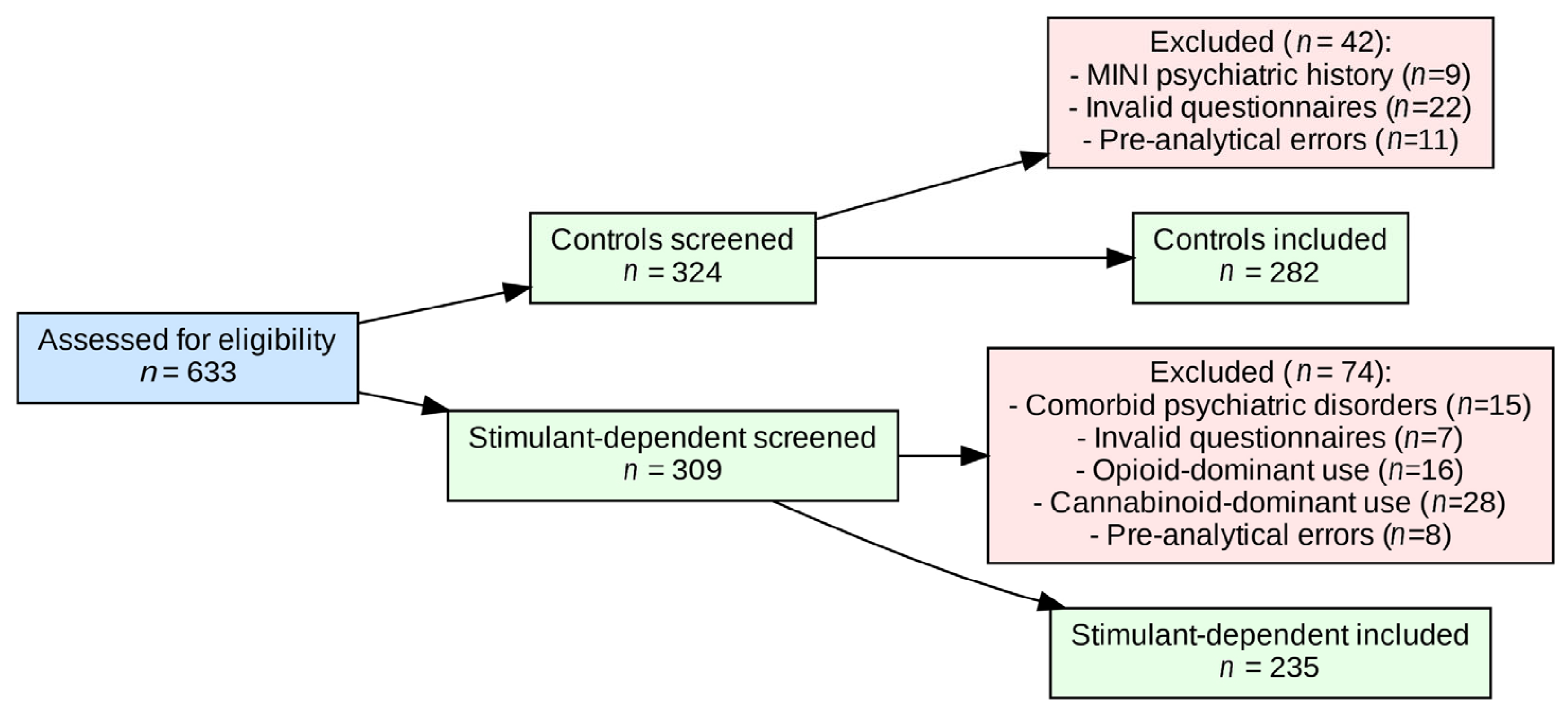

| AGE, BIS-11, ADHD, SHAPS | SD (n= 235) M ± SD | Control (n = 282) M ± SD | Z | (p-Value) |
|---|---|---|---|---|
| AGE (years) | 27.43 ± 5.72 | 22.08 ± 4.14 | ||
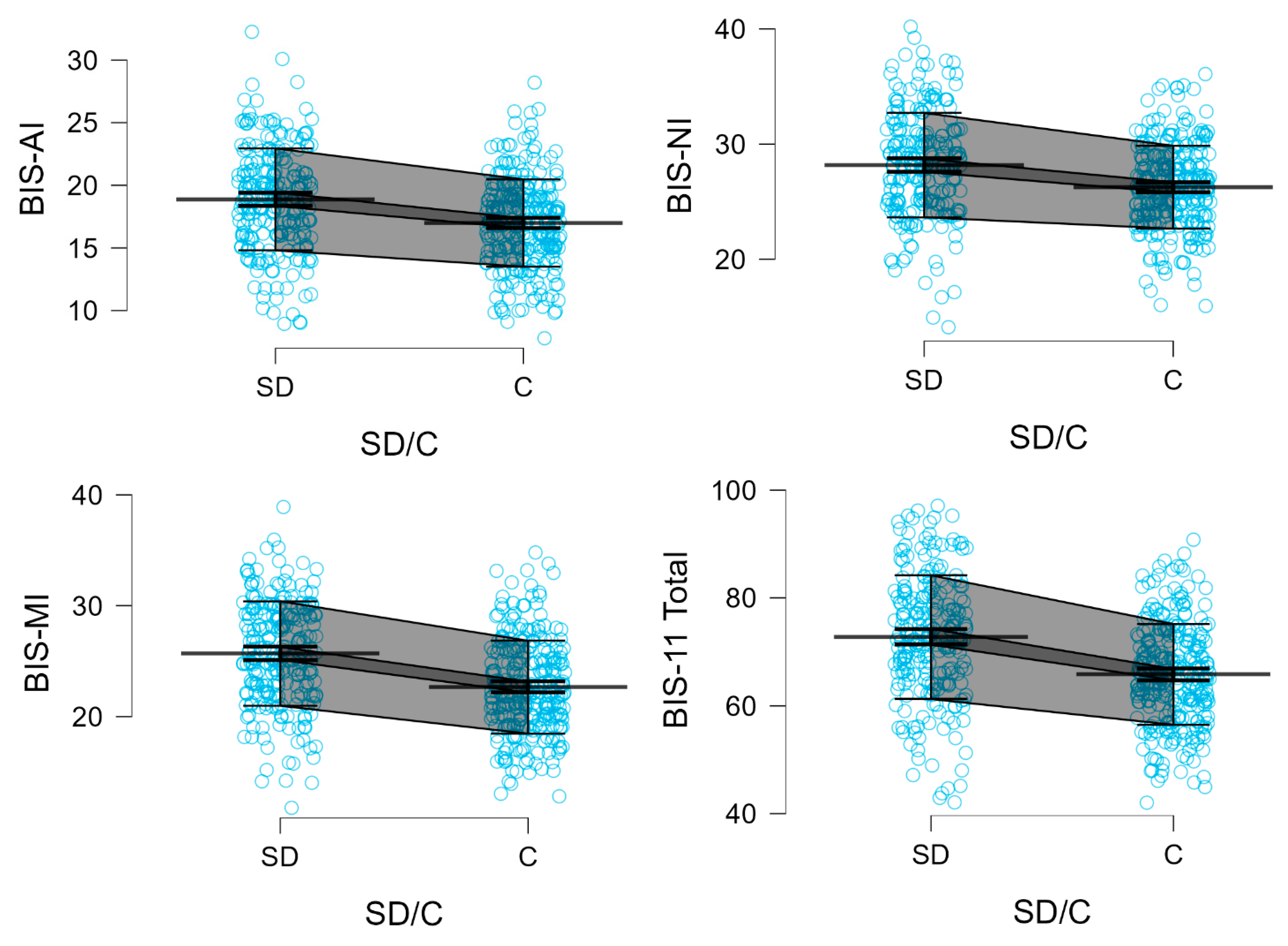
| BIS-AI | 18.88 ± 4.07 | 16.99 ± 3.49 | 5.469 | <0.0001 * |
| BIS-MI | 25.69 ± 4.70 | 22.65 ± 4.18 | 7.480 | <0.0001 * |
| BIS-NI | 28.17 ± 4.54 | 26.25 ± 3.60 | 5.166 | <0.0001 * |
| BIS-11 Total | 72.73 ± 11.46 | 65.82 ± 9.32 | 7.259 | <0.0001 * |
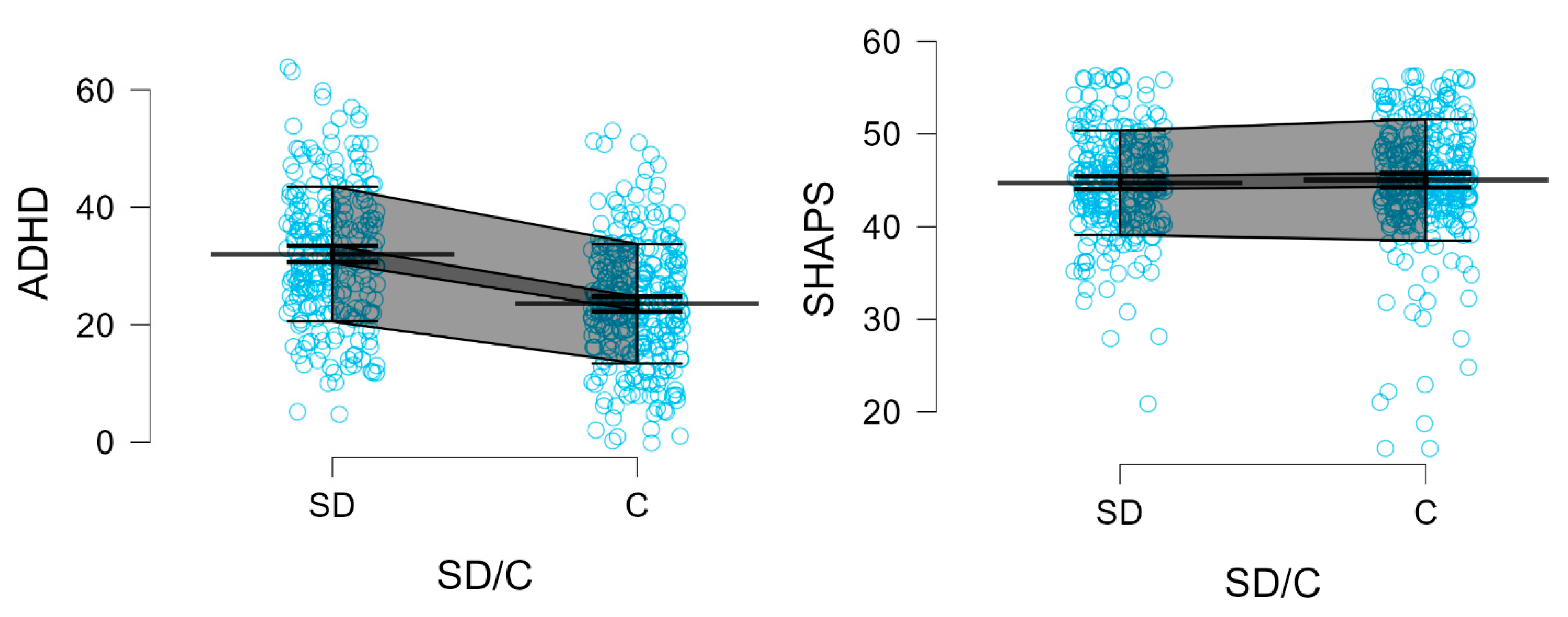
| ADHD | 32.01 ± 11.51 | 23.58 ± 10.19 | 8.088 | <0.0001 * |
| SHAPS | 44.73 ± 5.65 | 45.04 ± 6.56 | −1.255 | 0.2093 |
| Genotypes | Observed (Expected) | Allele Freq | χ2 (p Value) | |
|---|---|---|---|---|
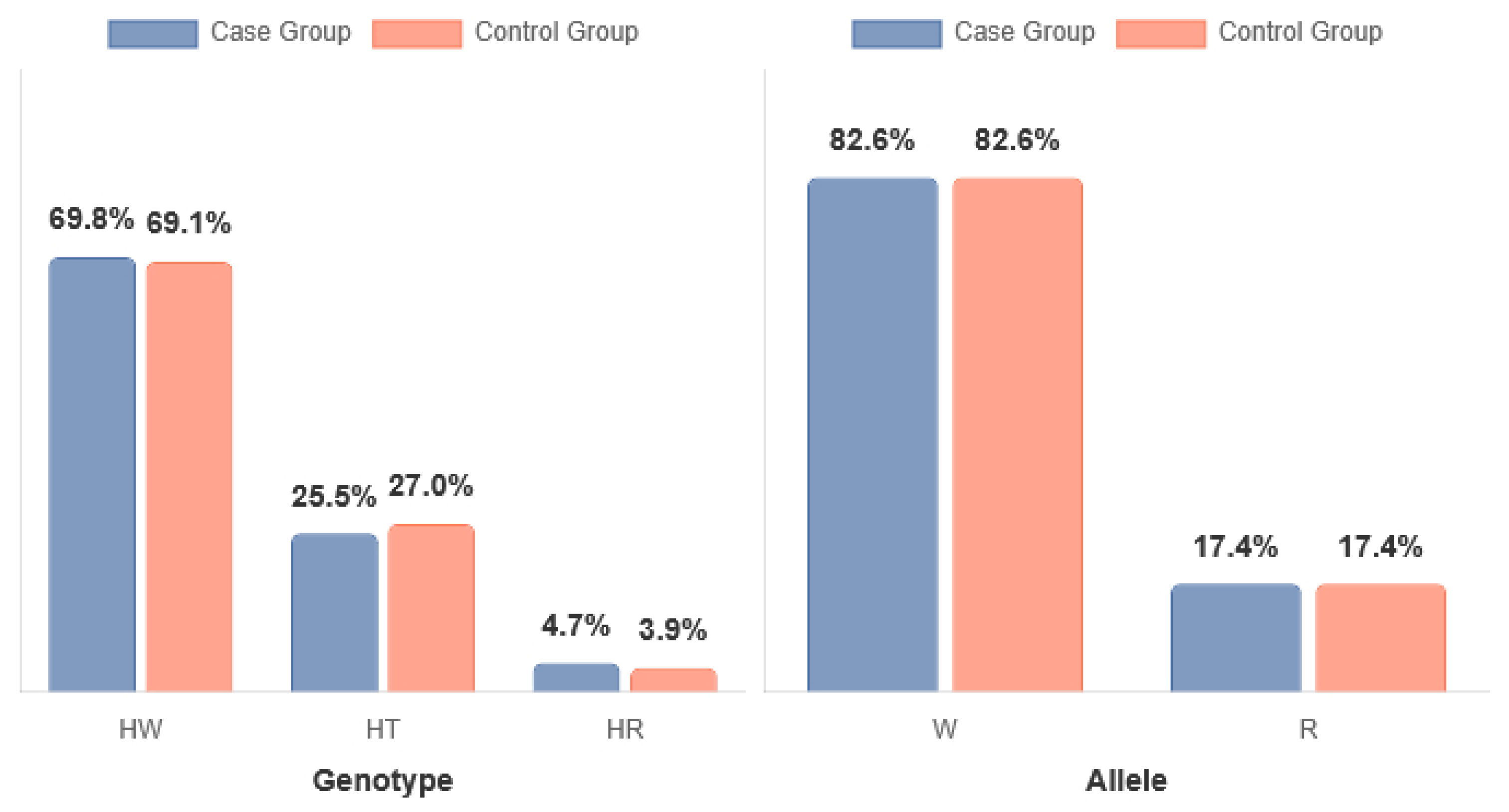
| SD n = 235 | C/C | 164/69.8% (160.2) | W (Wild Allele): 82.6 R (Recessive Allele): 17.4 | 3.036 (0.0815) |
| A/C | 60/25.5% (67.6) | |||
| A/A | 11/4.7% (7.2) | |||
| Control n = 282 | C/C | 195/69.1% (192.5) | W (Wild Allele): 82.6 R (Recessive Allele): 17.4 | 1.063 (0.3025) |
| A/C | 76/27.0% (81.0) | |||
| A/A | 11/3.9% (8.5) |
| Genetic Model | Comparison | Odds Ratio (95% CI) | Z-Score | p-Value | Adj. Significance |
|---|---|---|---|---|---|
| Recessive | HR vs. (HT + HW) | 1.21 (0.51–2.84) | 0.4370 | 0.6621 1.0000 | N S |
| Dominant | (HR + HT) vs. HW | 0.97 (0.67–1.41) | −0.1569 | 0.8753 1.0000 | N S |
| Overdominant | HT vs. (HR + HW) | 0.93 (0.63–1.38) | −0.3647 | 0.7153 1.0000 | N S |
| Allelic | R vs. W alleles | 1.00 (0.73–1.39) | 0.0299 | 0.9761 1.0000 | N S |
| Codominant (HR vs. HW) | HR vs. HW | 1.19 (0.50–2.81) | 0.3941 | 0.6935 1.0000 | N S |
| Codominant (HR vs. HT) | HR vs. HT | 1.27 (0.51–3.12) | 0.5138 | 0.6074 1.0000 | N S |
| Codominant (HT vs. HW) | HT vs. HW | 0.94 (0.63–1.40) | −0.3122 | 0.7549 1.0000 | N S |
| DRD2 rs1076560 | |||||
|---|---|---|---|---|---|
| Genotypes | Alleles | ||||
| C/C | A/C | A/A | C | A | |
| n (%) | n (%) | n (%) | n (%) | n (%) | |
| SD | 164 | 60 | 11 | 388 | 82 |
| n = 235 | (69.79%) | (25.53%) | (4.68%) | (82.55%) | (17.44%) |
| Control | 195 | 76 | 11 | 466 | 98 |
| n = 282 | (69.15%) | (26.95%) | (3.90%) | (82.62%) | (17.38%) |
| χ2 (p value) | 0.2890 | 0.0009 | |||
| (0.8655) | (0.9761) | ||||
| n | % | ||
|---|---|---|---|
| Marital status | single | 207 | 88.09 |
| married | 12 | 5.11 | |
| divorced | 15 | 6.38 | |
| cohabiting | 1 | 0.43 | |
| Education | none | 3 | 1.28 |
| primary | 39 | 16.60 | |
| lower secondary | 94 | 40.00 | |
| secondary | 94 | 40.00 | |
| higher | 5 | 2.13 | |
| Relapse | relapse | 107 | 45.53 |
| first time | 128 | 54.47 | |
| BIS, ADHD SHAPS, PCA | Group | DRD2 rs1076560 | ANOVA | |||||
|---|---|---|---|---|---|---|---|---|
| C/C n = 359 M ± SD | A/C n = 136 M ± SD | A/A n = 22 M ± SD | Factor | F (p Value) | ɳ2 | Power (alfa = 0.05) | ||
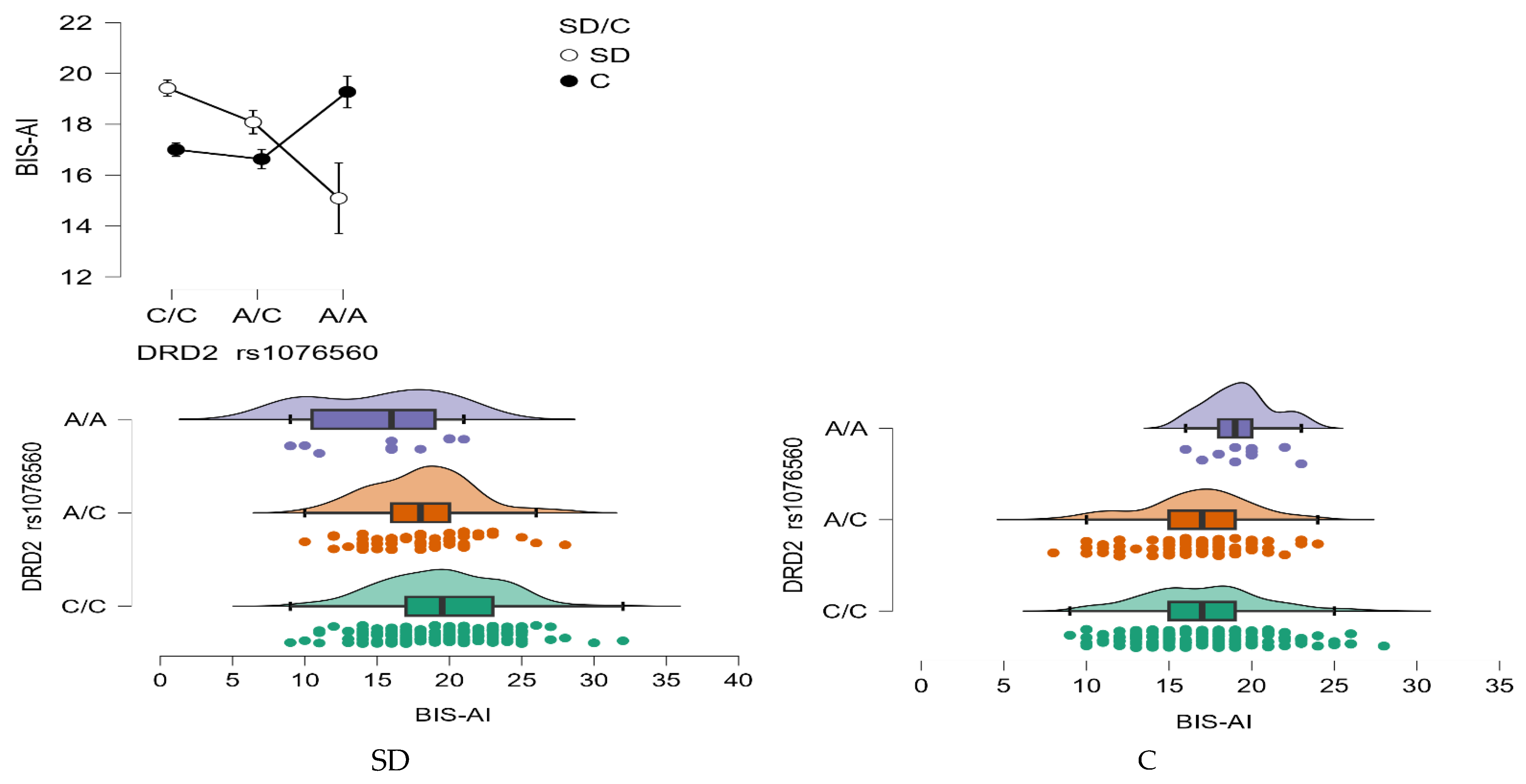
| BIS-AI | SD; n = 235 | 19.42 ± 4.05 | 18.08 ± 3.54 | 15.09 ± 4.59 | intercept SD/control DRD2 SD/control × DRD2 | F1,509 = 3654.87 (p < 0.0001) * F1,509 = 0.03 (p = 0.8593) F2,509 = 3.08 (p = 0.0469) * F2,509 = 8.57 (p = 0.0002) | 0.878 0.0001 0.012 0.033 | 1.000 0.054 0.593 0.967 |
| Control; n = 282 | 17.00 ± 3.59 | 16.63 ± 3.27 | 19.27 ± 2.05 | |||||
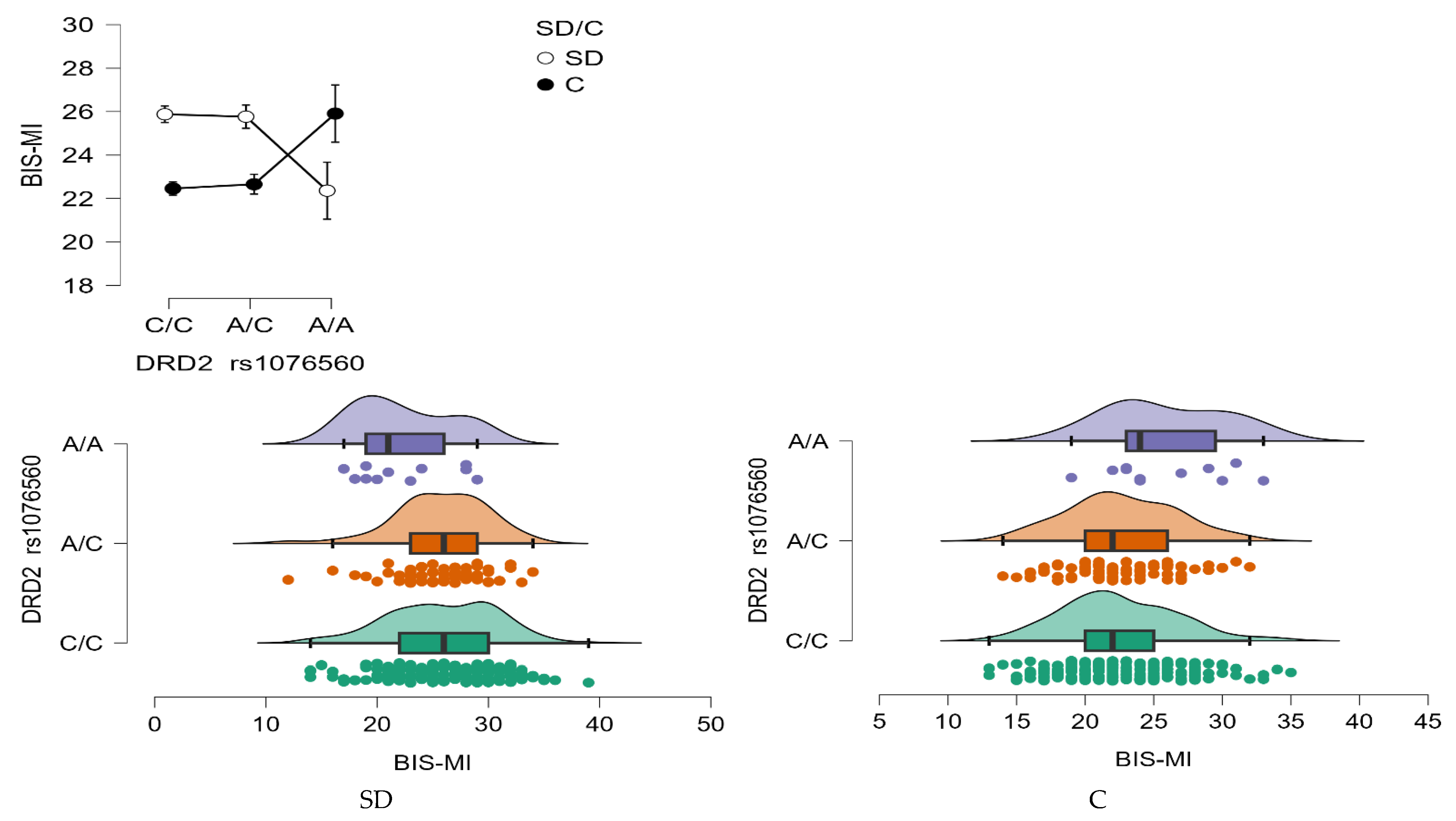
| BIS-MI | SD; n = 235 | 25.88 ± 4.85 | 25.77 ± 4.14 | 22.36 ± 4.34 | intercept SD/control DRD2 SD/control × DRD2 | F1,509 = 4897.70 (p < 0.0001) * F1,509 = 2.07 (p = 0.1510) F2,509 = 0.01 (p = 0.9943) F2,509 = 6.52 (p = 0.0016) * | 0.906 0.004 0.00002 0.025 | 1.000 0.300 0.051 0.907 |
| Control; n = 282 | 22.46 ± 4.20 | 22.66 ± 3.96 | 25.91 ± 4.37 | |||||
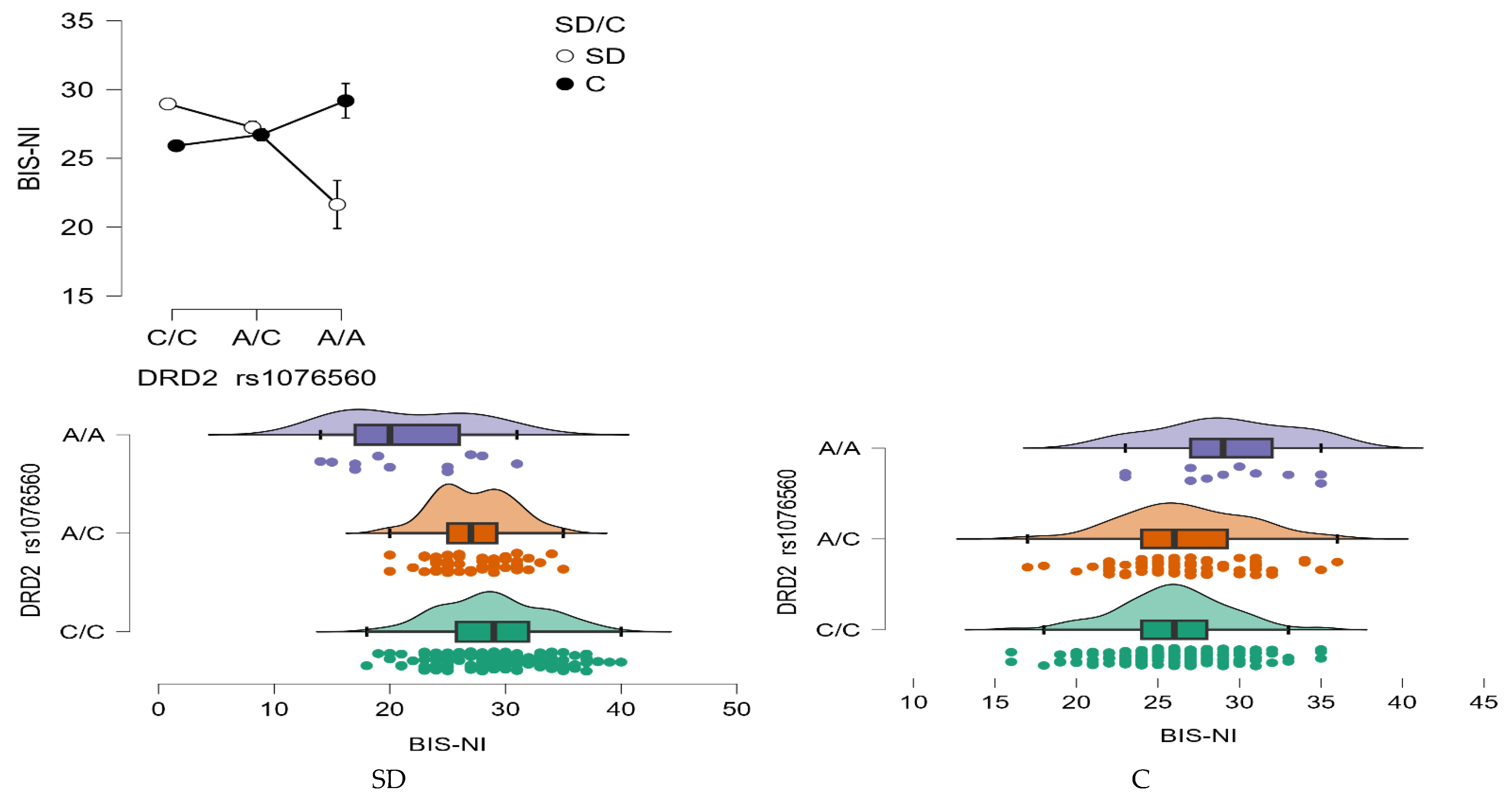
| BIS-NI | SD; n = 235 | 28.95 ± 4.44 | 27.25 ± 3.29 | 21.64 ± 5.78 | intercept SD/control DRD2 SD/control × DRD2 | F1,509 = 7580.78 (p < 0.0001) * F1,509 = 4.68 (p = 0.031) * F2,509 = 3.17 (p = 0.0427) * F2,509 = 22.14 (p < 0.0001) * | 0.937 0.009 0.012 0.080 | 1.000 0.579 0.607 0.999 |
| Control; n = 282 | 25.91 ± 3.40 | 26.71 ± 3.82 | 29.18 ± 4.17 | |||||
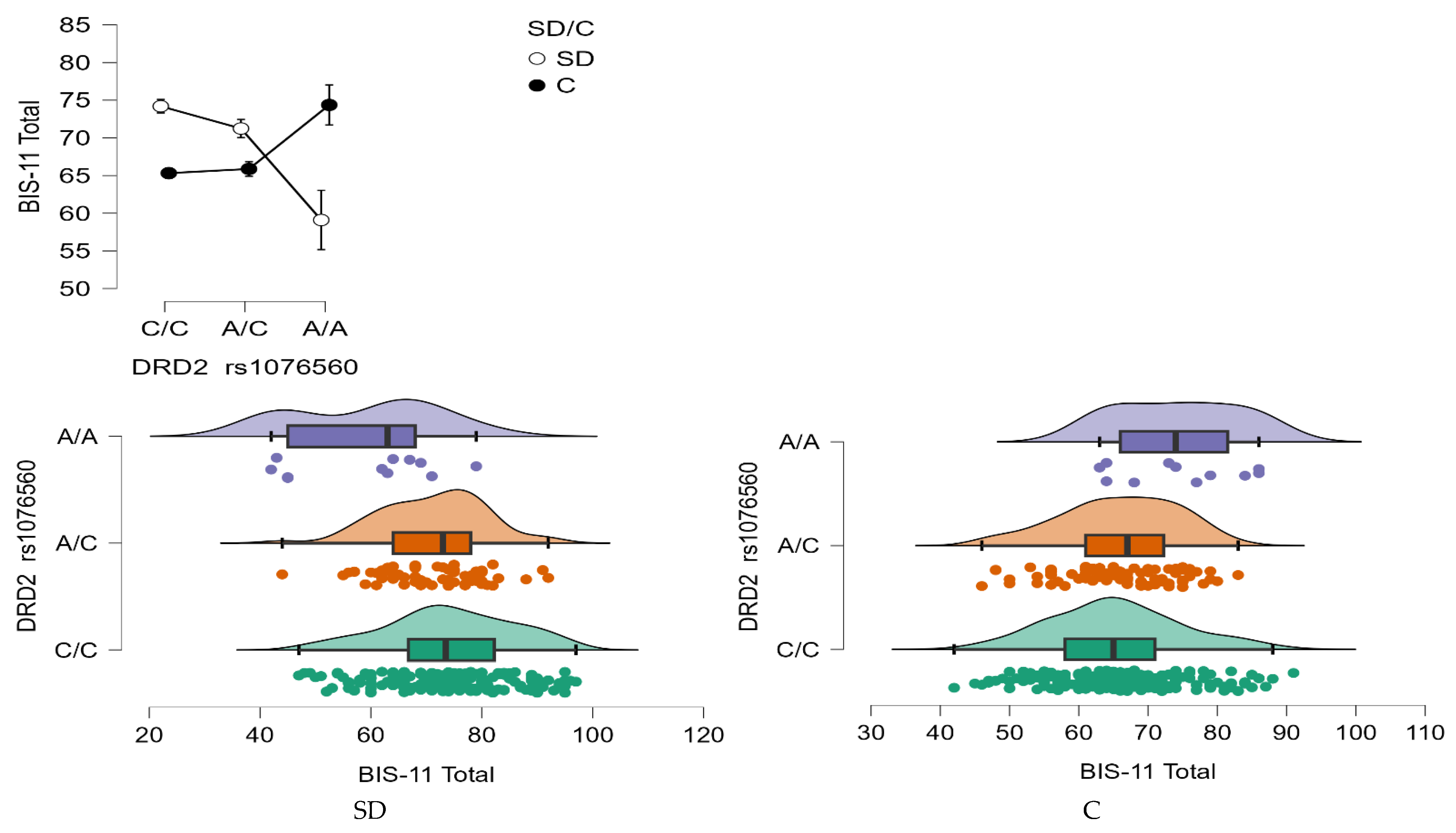
| BIS-11 Total | SD; n = 235 | 74.19 ± 11.46 | 71.23 ± 9.31 | 59.09 ± 13.02 | intercept SD/control DRD2 SD/control × DRD2 | F1,509 = 7441.47 (p < 0.0001) * F1,509 = 0.07 (p = 0.8285) F2,509 = 1.44 (p = 0.2370) F2,509 = 15.44 (p < 0.0001) * | 0.936 0.0001 0.006 0.057 | 1.000 0.055 0.309 0.999 |
| Control; n = 282 | 65.31 ± 9.48 | 65.87 ± 8.46 | 74.36 ± 8.82 | |||||
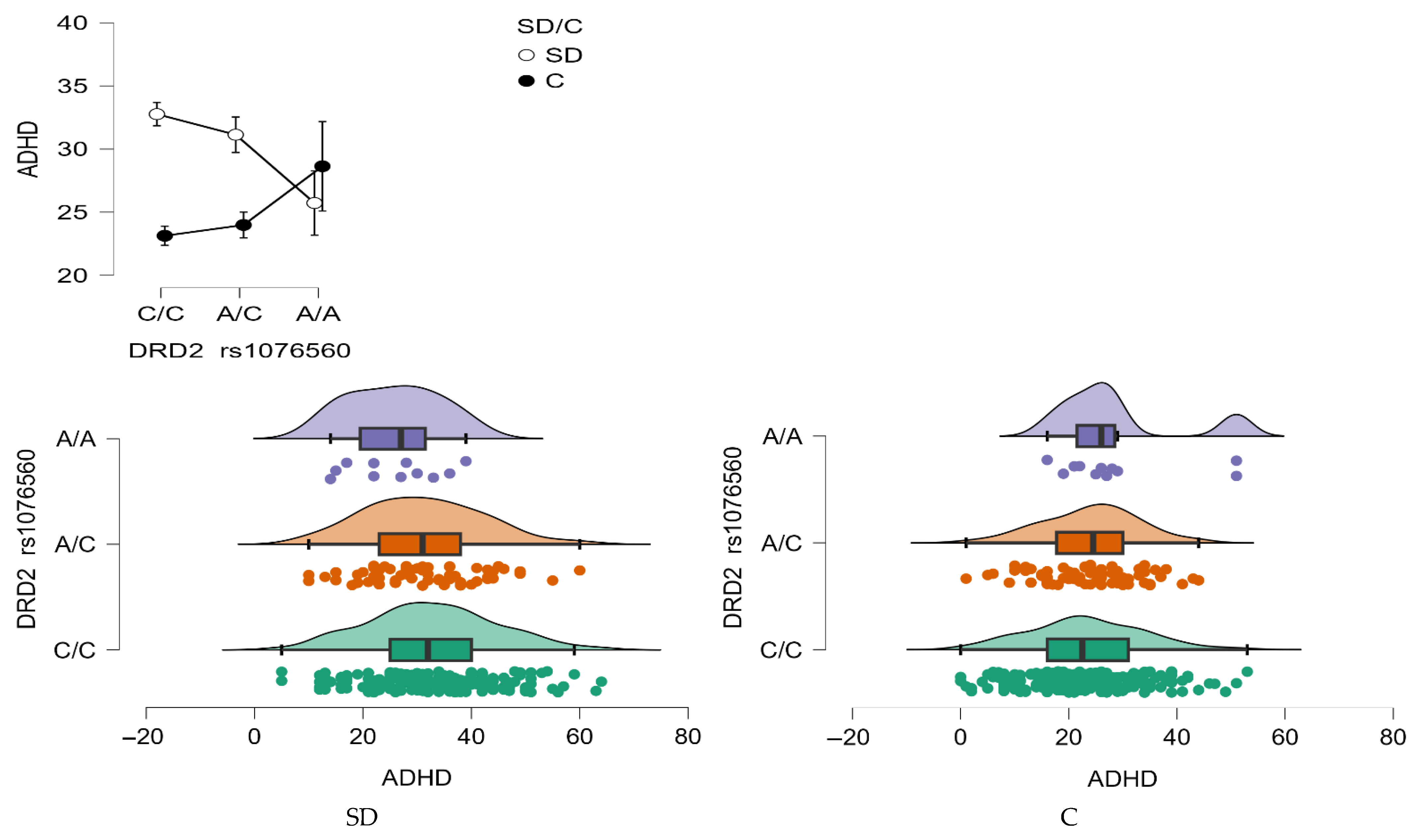
| ADHD | SD; n = 235 | 32.76 ± 11.80 | 31.13 ± 10.91 | 25.73 ± 8.46 | intercept SD/control DRD2 SD/control × DRD2 | F1,509 = 1057.37 (p < 0.0001) * F1,509 = 7.43 (p = 0.0066) * F2,509 = 0.10 (p = 0.9024) F2,509 = 3.83 (p = 0.0222) * | 0.675 0.014 0.0004 0.015 | 1.000 0.777 0.066 0.695 |
| Control; n = 282 | 23.13 ± 10.54 | 23.99 ± 8.92 | 28.63 ± 11.74 | |||||
| SHAPS | SD; n = 235 | 44.31 ± 5.66 | 45.07 ± 5.53 | 49.09 ± 4.59 | intercept SD/control DRD2 SD/control × DRD2 | F1,509 = 8893.56 (p < 0.0001) * F1,509 = 1.12 (p < 0.2904) F2,509 = 1.84 (p = 0.1604) F2,509 = 1.46 (p = 0.2328) | 0.947 0.002 0.002 0.006 | 1.000 0.184 0.383 0.312 |
| Control; n = 282 | 45.04 ± 6.56 | 44.99 ± 6.75 | 45.36 ± 5.57 | |||||
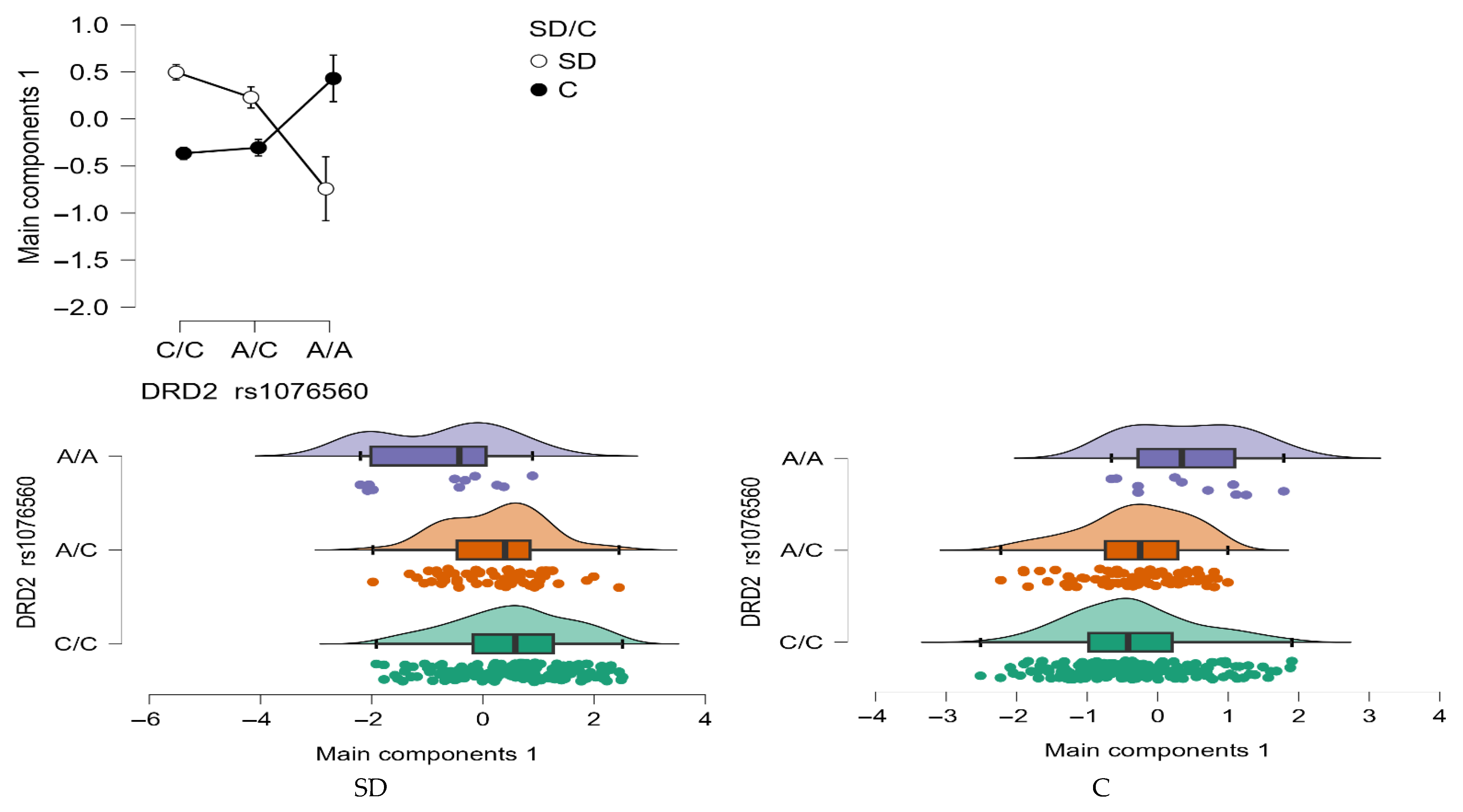
| PCA Main components 1 | SD; n = 235 | 0.50 ± 1.03 | 0.23 ± 0.87 | −0.74 ± 1.13 | intercept SD/control DRD2 SD/control × DRD2 | F1,509 = 0.36 (p = 0.5513) F1,509 = 0.26 (p = 0.6077) F2,509 = 1.07 (p = 0.3432) F2,509 = 13.30 (p < 0.0001) * | 0.0007 0.0005 0.004 0.051 | 0.091 0.081 0.238 0.998 |
| Control; n = 282 | −0.37 ± 0.88 | −0.31 ± 0.75 | 0.43 ± 0.82 | |||||
| PCA Main components 2 | SD; n = 235 | −0.09 ± 0.94 | 0.09 ± 0.88 | 0.83 ± 0.86 | intercept SD/control DRD2 SD/control × DRD2 | F1,509 = 3.15 (p = 0.0766) F1,509 = 3.03 (p = 0.0825) F2,509 = 2.34 (p = 0.0973) F2,509 = 2.51 (p = 0.0826) | 0.006 0.006 0.009 0.010 | 0.425 0.412 0.474 0.502 |
| Control; n = 282 | 0.02 ± 1.03 | −0.05 ± 1.01 | 0.04 ± 102 | |||||
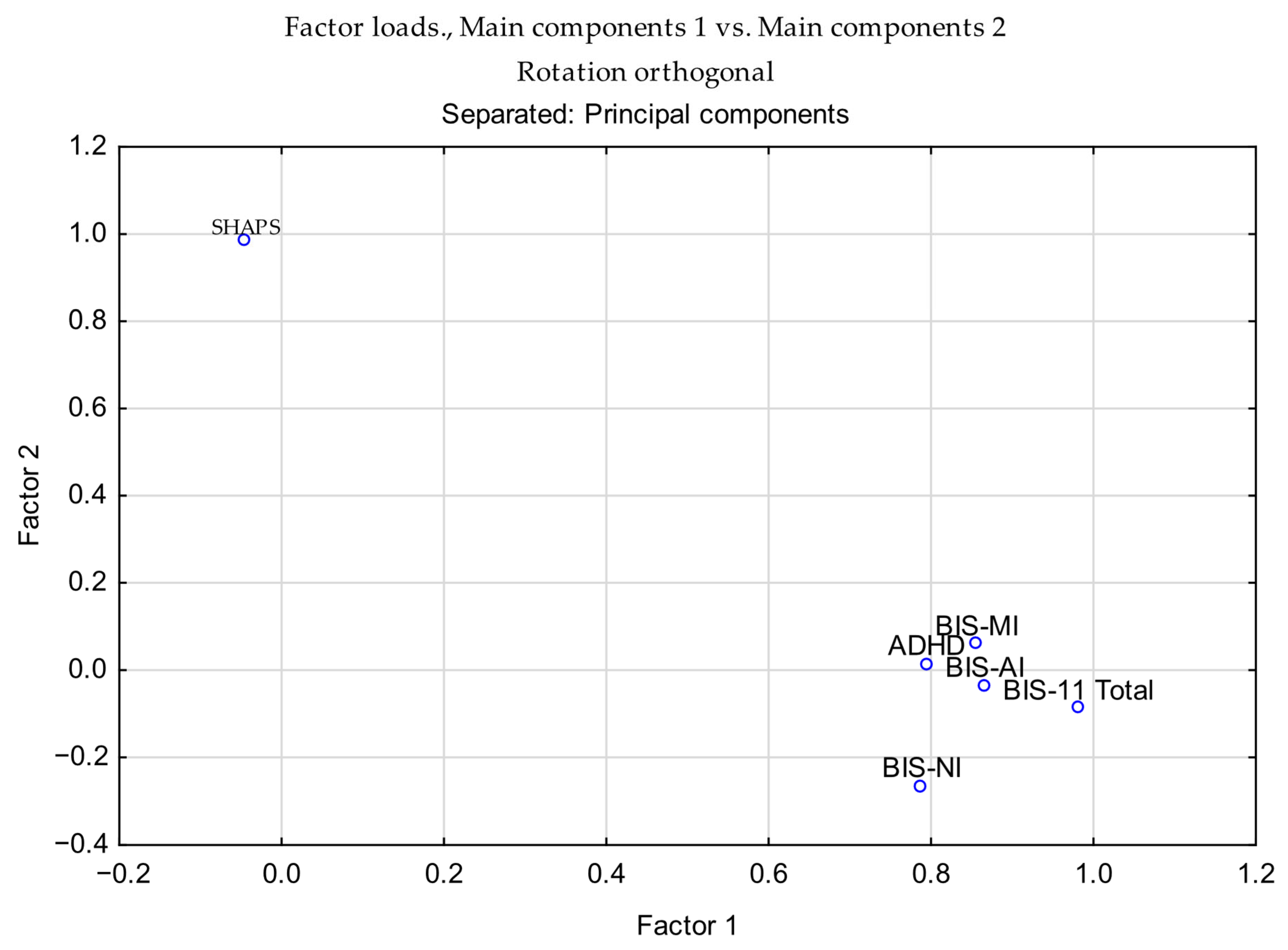
| PCA Main Components 1 | PCA Main Components 2 | |
|---|---|---|
| BIS-AI | 0.87 | −0.04 |
| BIS-MI | 0.86 | 0.06 |
| BIS-NI | 0.79 | −0.27 |
| BIS-11 Total | 0.98 | −0.09 |
| ADHD | 0.79 | 0.01 |
| SHAPS | −0.04 | 0.99 |
| Output condition | 3.70 | 1.05 |
| Participation | 0.62 | 0.18 |
| DRD2 rs1076560 and BIS-AI | ||||||
|---|---|---|---|---|---|---|
| {1} M = 19.42 | {2} M = 18.08 | {3} M = 15.09 | {4} M = 17.00 | {5} M = 16.63 | {6} M = 19.27 | |
| SD C/C {1} | 0.0168 * | 0.0002 * | <0.0001 * | <0.0001 * | 0.8977 | |
| SD A/C {2} | 0.0139 * | 0.0479 * | 0.0234 * | 0.3270 | ||
| SD A/A {3} | 0.0963 | 0.1969 | 0.0082 * | |||
| Control C/C {4} | 0.4620 | 0.0478 * | ||||
| Control A/C {5} | 0.0272 * | |||||
| Control A/A {6} | ||||||
| DRD2 rs1076560 and BIS-MI | ||||||
| {1} M = 25.88 | {2} M = 25.77 | {3} M = 22.36 | {4} M = 22.46 | {5} M = 22.66 | {6} M = 25.91 | |
| SD C/C {1} | 0.8665 | 0.0104 * | <0.0001 * | <0.0001 * | 0.9819 | |
| SD A/C {2} | 0.0185 * | <0.0001 * | <0.0001 * | 0.9212 | ||
| SD A/A {3} | 0.9429 | 0.8355 | 0.0588 | |||
| Control C/C {4} | 0.7408 | 0.0116 * | ||||
| Control A/C {5} | 0.0221 * | |||||
| Control A/A {6} | ||||||
| DRD2 rs1076560 and BIS-NI | ||||||
| {1} M = 28.95 | {2} M = 27.25 | {3} M = 21.64 | {4} M = 25.91 | {5} M = 26.71 | {6} M = 29.18 | |
| SD C/C {1} | 0.0039 * | <0.0001 * | <0.0001 * | <0.0001 * | 0.8489 * | |
| SD A/C {2} | <0.0001 * | 0.0201 * | 0.4215 * | 0.1300 * | ||
| SD A/A {3} | 0.0004 * | <0.0001 * | <0.0001 * | |||
| Control C/C {4} | 0.1295 * | 0.0068 * | ||||
| Control A/C {5} | 0.0491 * | |||||
| Control A/A {6} | ||||||
| DRD2 rs1076560 and BIS-11 Total | ||||||
| {1} M = 74.19 | {2} M = 71.23 | {3} M = 59.09 | {4} M = 65.31 | {5} M = 65.87 | {6} M = 74.36 | |
| SD C/C {1} | 0.0522 | <0.0001 * | <0.0001 * | <0.0001 * | 0.9556 | |
| SD A/C {2} | 0.0003 * | <0.0001 * | 0.0021 * | 0.3436 | ||
| SD A/A {3} | 0.0468 * | 0.0374 * | 0.0004 * | |||
| Control C/C {4} | 0.6828 | 0.0039 * | ||||
| Control A/C {5} | 0.0092 | |||||
| Control A/A {6} | ||||||
| DRD2 rs1076560 and ADHD | ||||||
| {1} M = 32.76 | {2} M = 31.13 | {3} M = 25.73 | {4} M = 23.13 | {5} M = 23.99 | {6} M = 28.64 | |
| SD C/C {1} | 0.3167 | 0.0365 * | <0.0001 * | <0.0001 * | 0.2194 | |
| SD A/C {2} | 0.1266 | <0.0001 * | <0.0001 * | 0.4801 | ||
| SD A/A {3} | 0.4377 | 0.6167 | 0.5268 | |||
| Control C/C {4} | 0.5588 | 0.0999 | ||||
| Control A/C {5} | 0.1815 | |||||
| Control A/A {6} | ||||||
Disclaimer/Publisher’s Note: The statements, opinions and data contained in all publications are solely those of the individual author(s) and contributor(s) and not of MDPI and/or the editor(s). MDPI and/or the editor(s) disclaim responsibility for any injury to people or property resulting from any ideas, methods, instructions or products referred to in the content. |
© 2025 by the authors. Licensee MDPI, Basel, Switzerland. This article is an open access article distributed under the terms and conditions of the Creative Commons Attribution (CC BY) license (https://creativecommons.org/licenses/by/4.0/).
Share and Cite
Lachowicz, M.; Recław, R.; Chmielowiec, J.; Chmielowiec, K.; Łosińska, K.; Larysz, D.; Grzywacz, A. Interaction Between DRD2 rs1076560 Genotype and Stimulant Dependence on Impulsivity and Self-Reported ADHD Traits in Men. Neurol. Int. 2025, 17, 182. https://doi.org/10.3390/neurolint17110182
Lachowicz M, Recław R, Chmielowiec J, Chmielowiec K, Łosińska K, Larysz D, Grzywacz A. Interaction Between DRD2 rs1076560 Genotype and Stimulant Dependence on Impulsivity and Self-Reported ADHD Traits in Men. Neurology International. 2025; 17(11):182. https://doi.org/10.3390/neurolint17110182
Chicago/Turabian StyleLachowicz, Milena, Remigiusz Recław, Jolanta Chmielowiec, Krzysztof Chmielowiec, Kinga Łosińska, Dariusz Larysz, and Anna Grzywacz. 2025. "Interaction Between DRD2 rs1076560 Genotype and Stimulant Dependence on Impulsivity and Self-Reported ADHD Traits in Men" Neurology International 17, no. 11: 182. https://doi.org/10.3390/neurolint17110182
APA StyleLachowicz, M., Recław, R., Chmielowiec, J., Chmielowiec, K., Łosińska, K., Larysz, D., & Grzywacz, A. (2025). Interaction Between DRD2 rs1076560 Genotype and Stimulant Dependence on Impulsivity and Self-Reported ADHD Traits in Men. Neurology International, 17(11), 182. https://doi.org/10.3390/neurolint17110182