
Design and Implementation of Active Brake Pedal Simulator Integrating Force Feedback and Energy Optimization

Abstract
1. Introduction
2. Design Scheme of Brake Pedal Simulator
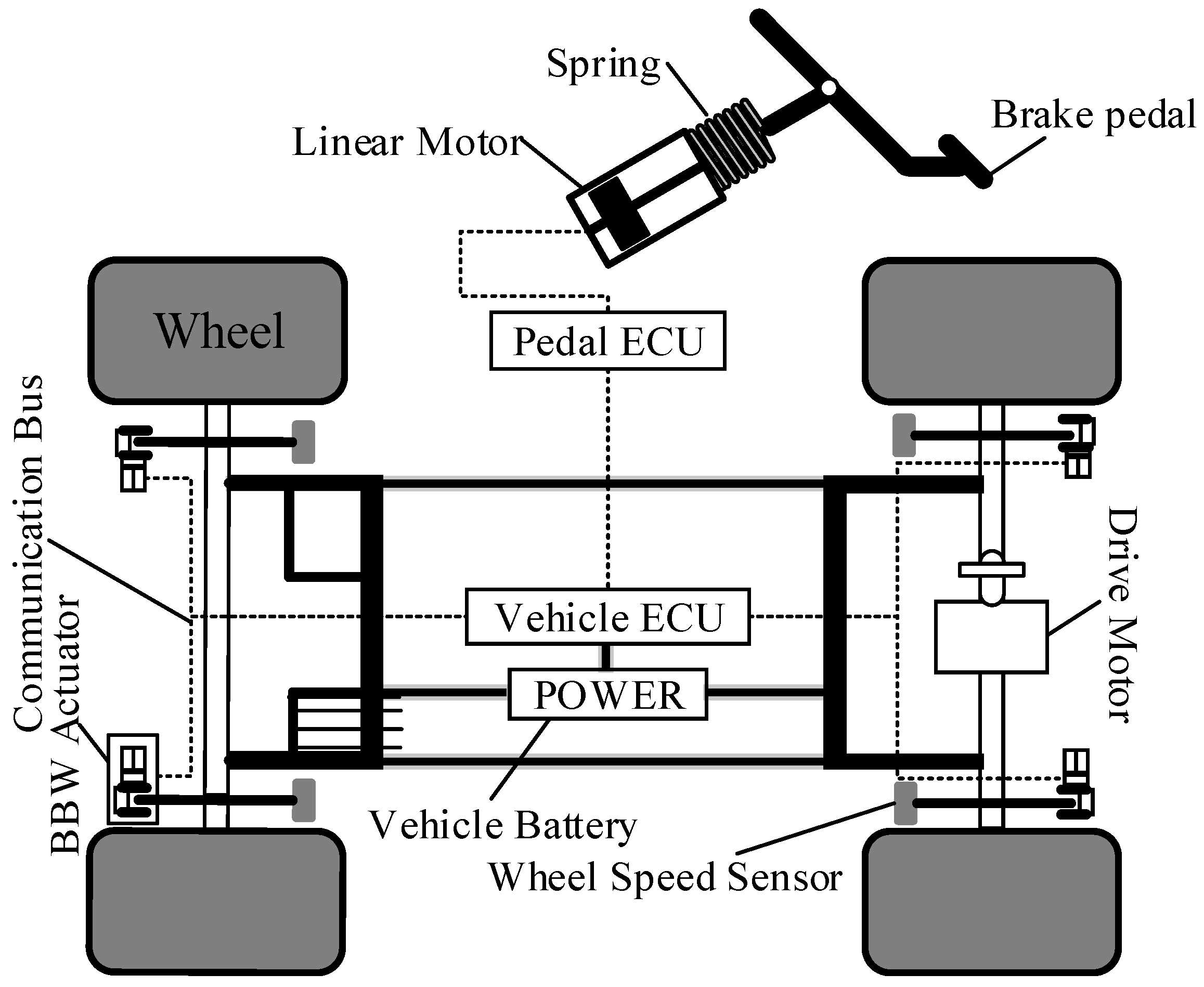
2.1. Overall Scheme of Brake-by-Wire System
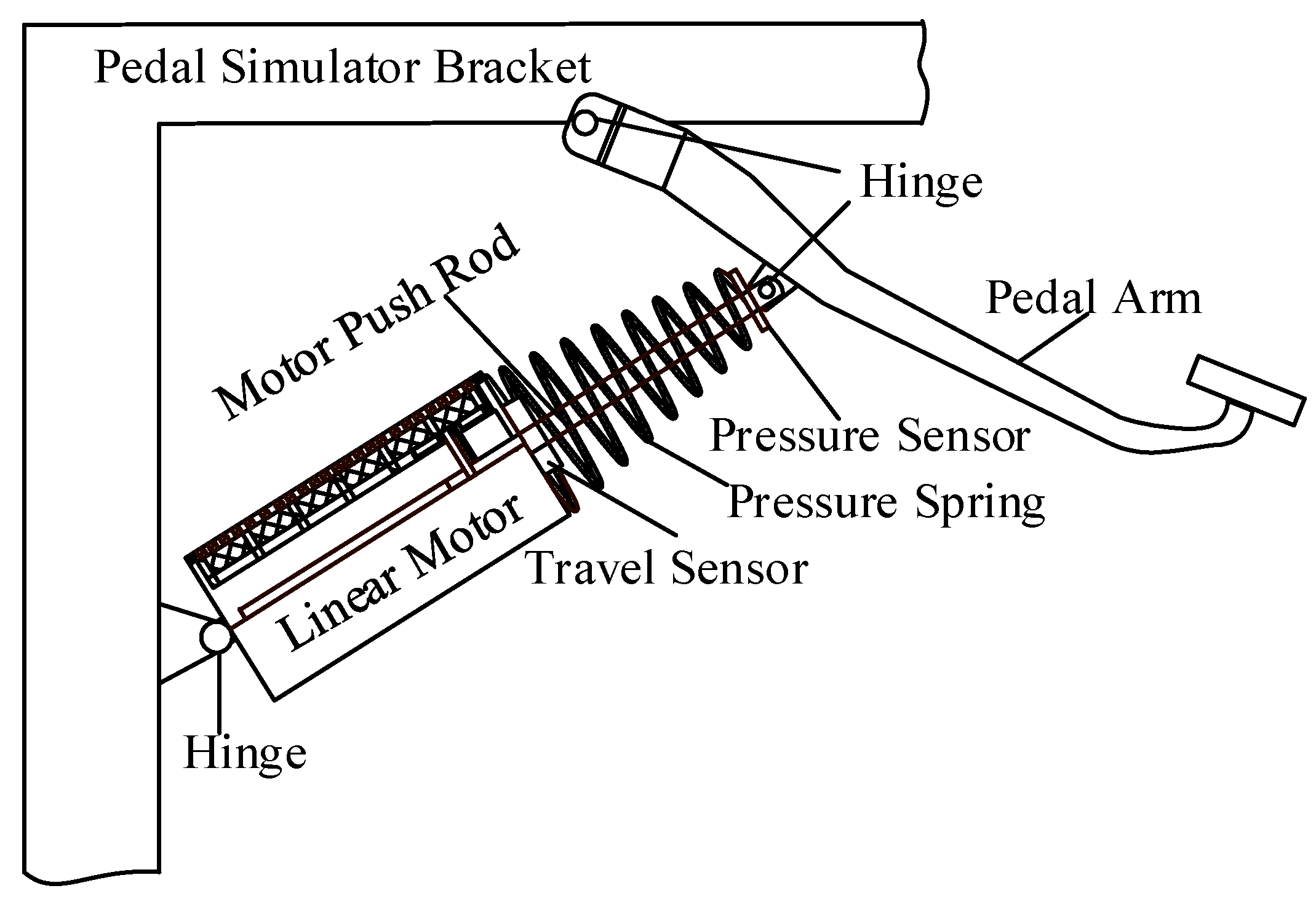
2.2. Brake Pedal Simulator Solution
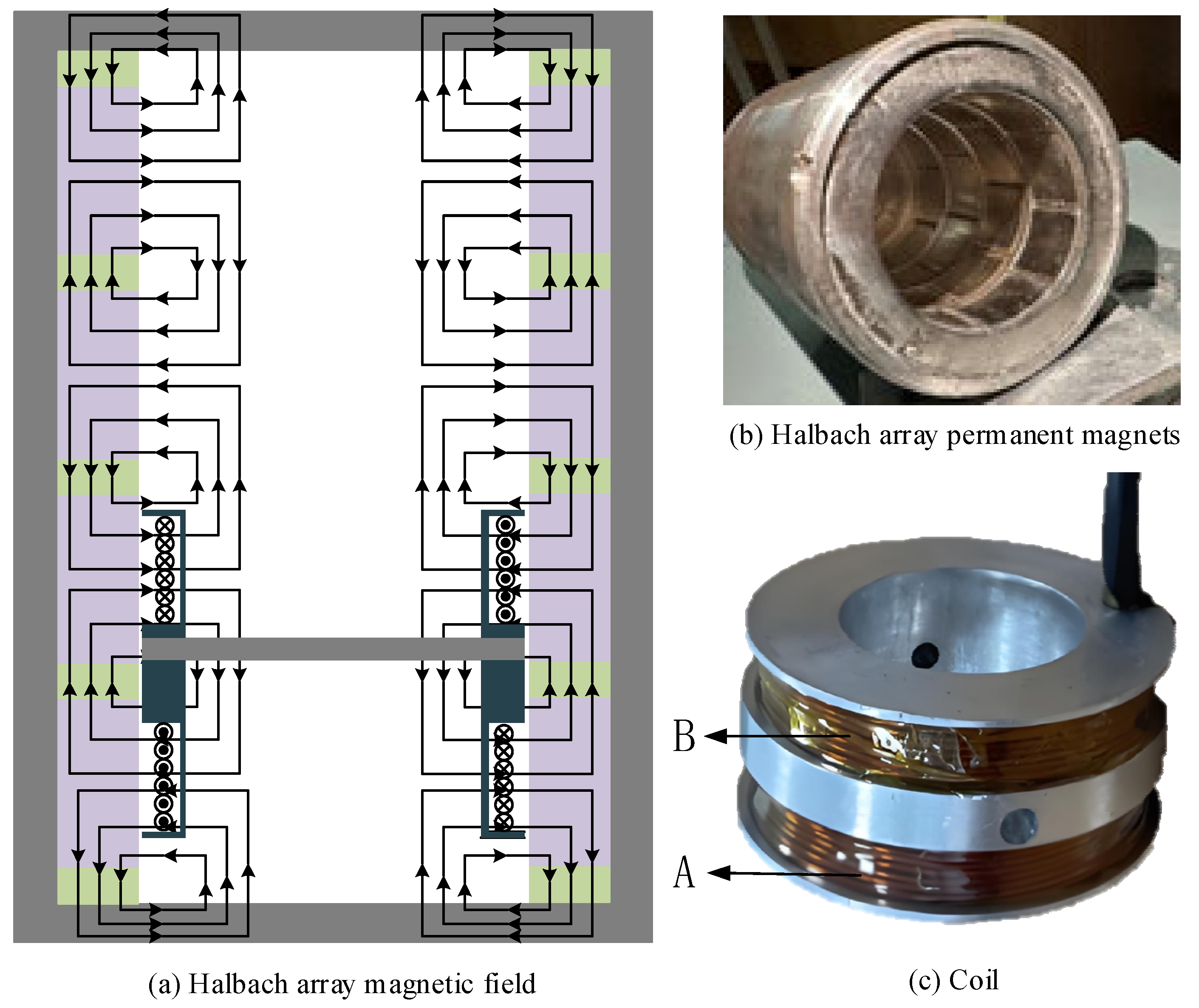
2.3. Linear Motor Scheme
2.4. Spring Replenishment Scheme
3. Power Consumption Optimization of the Pedal Simulator
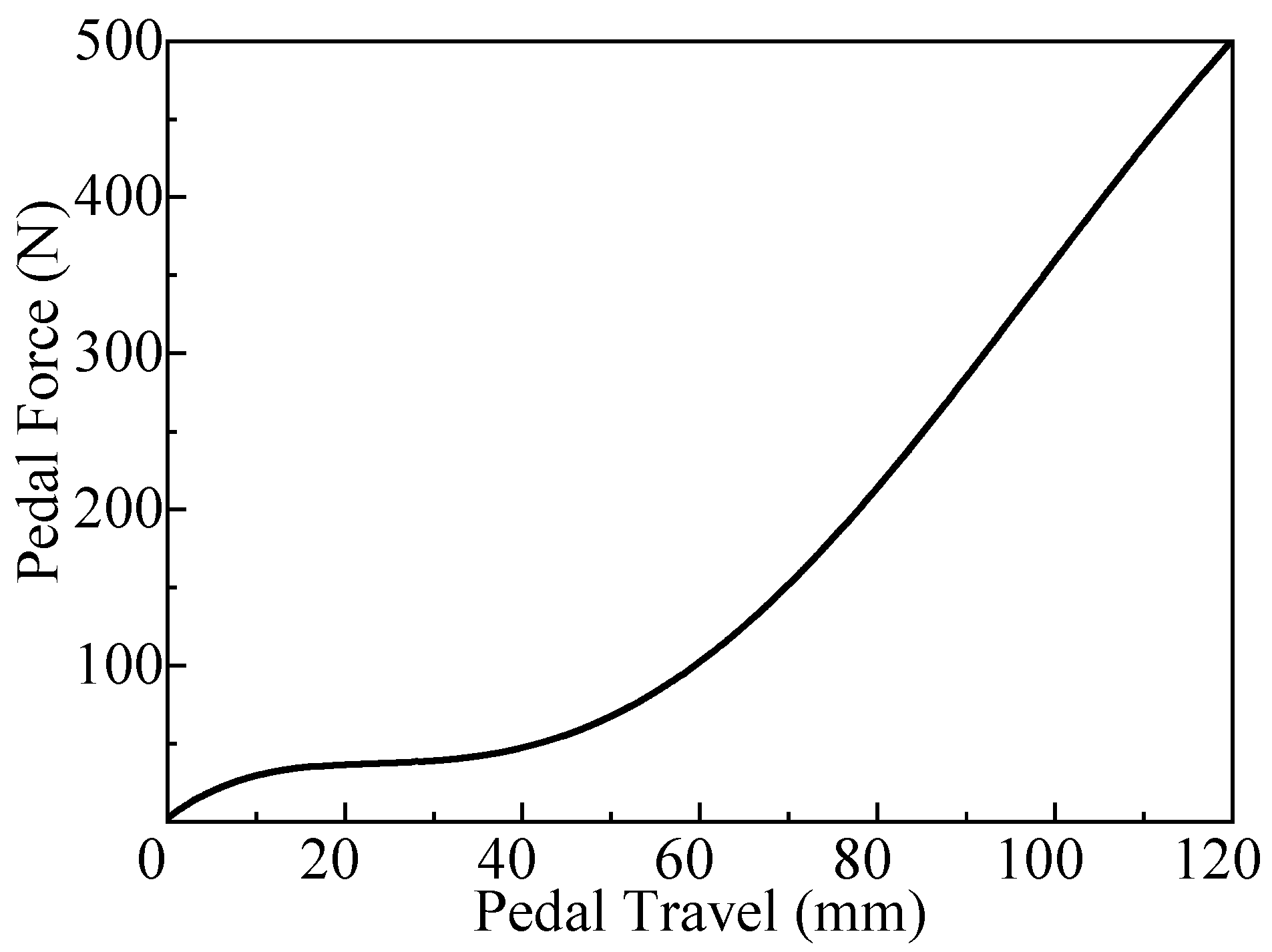
3.1. Ideal Brake Pedal Characteristic Curve
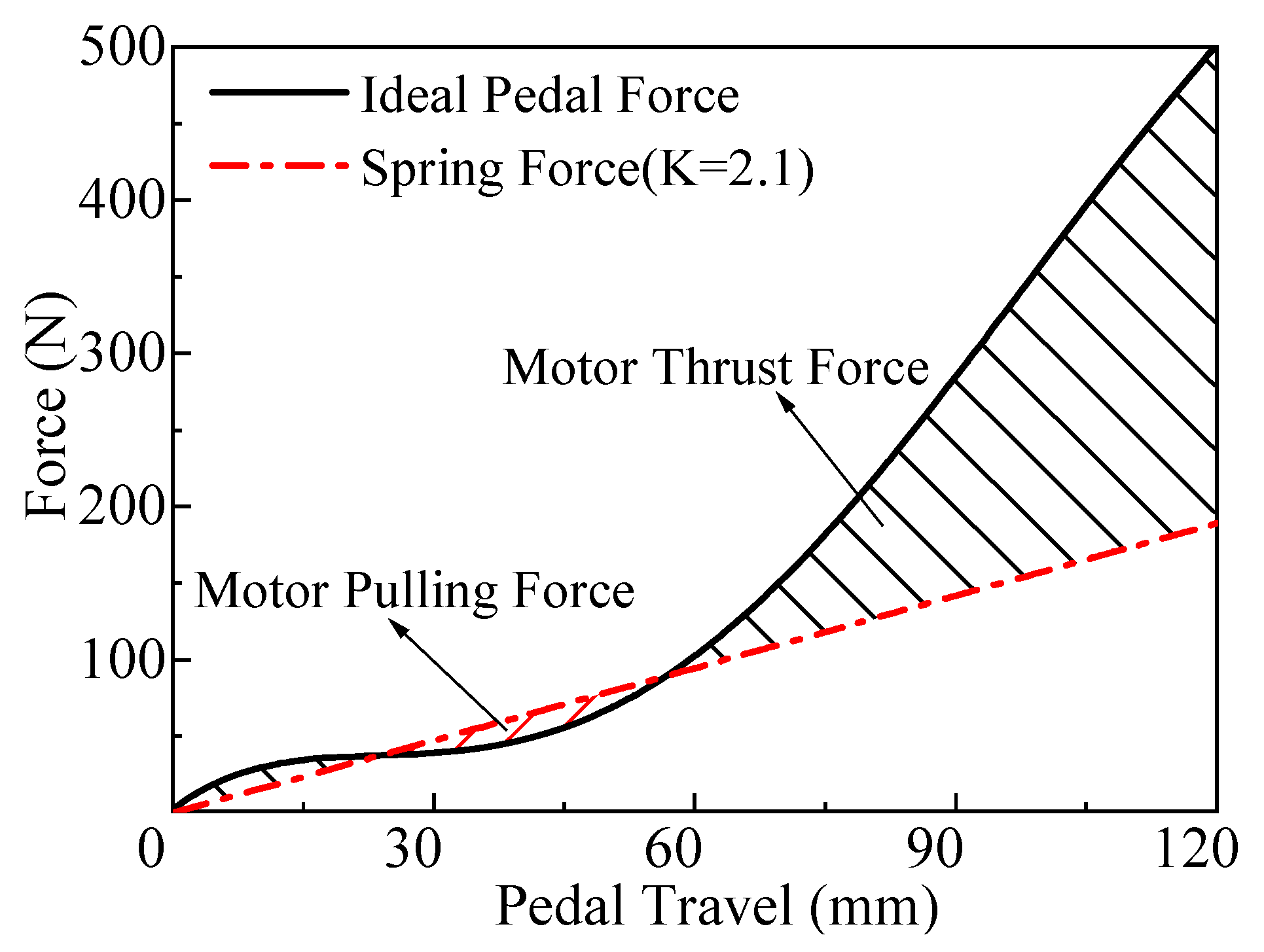
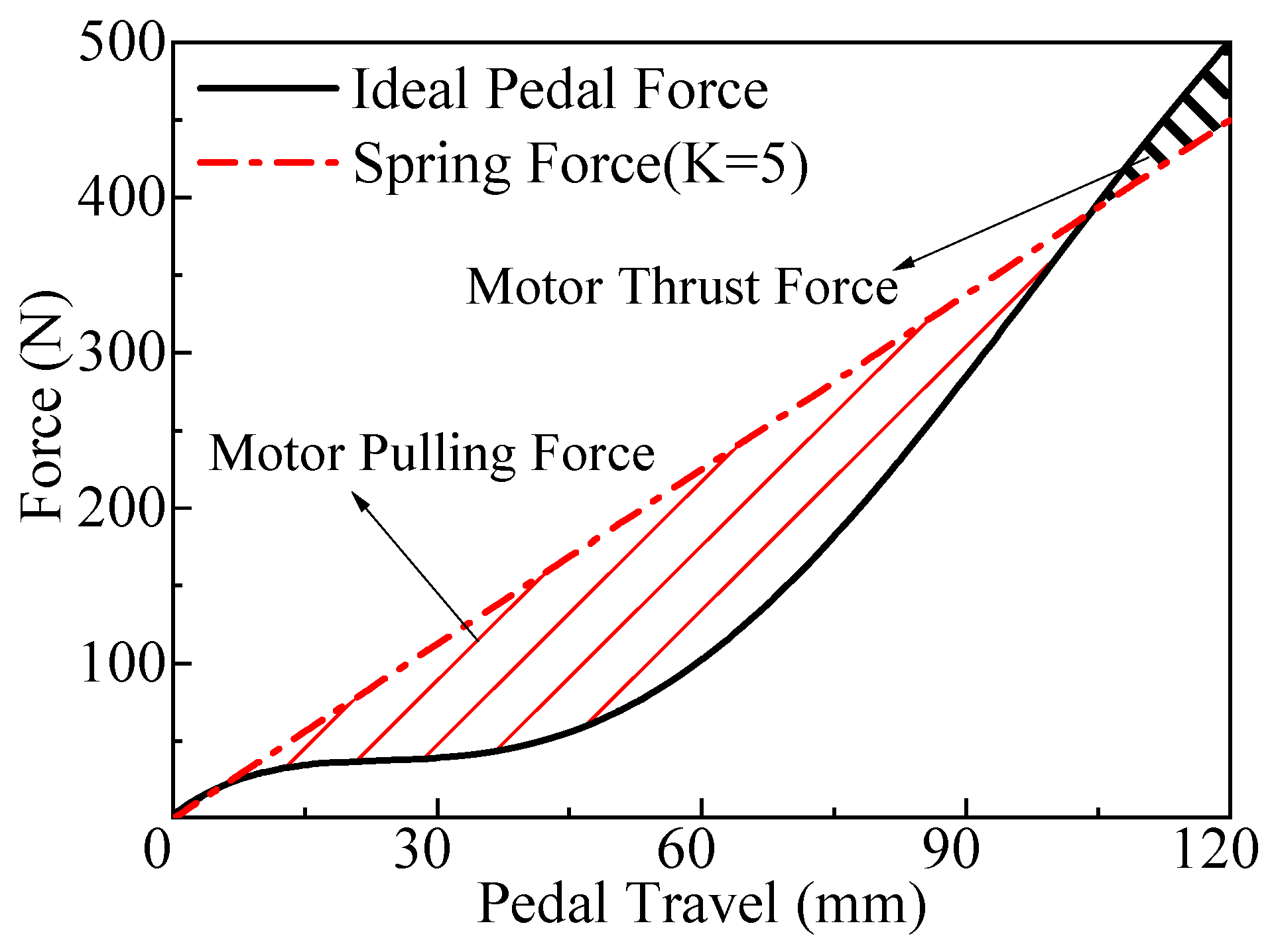
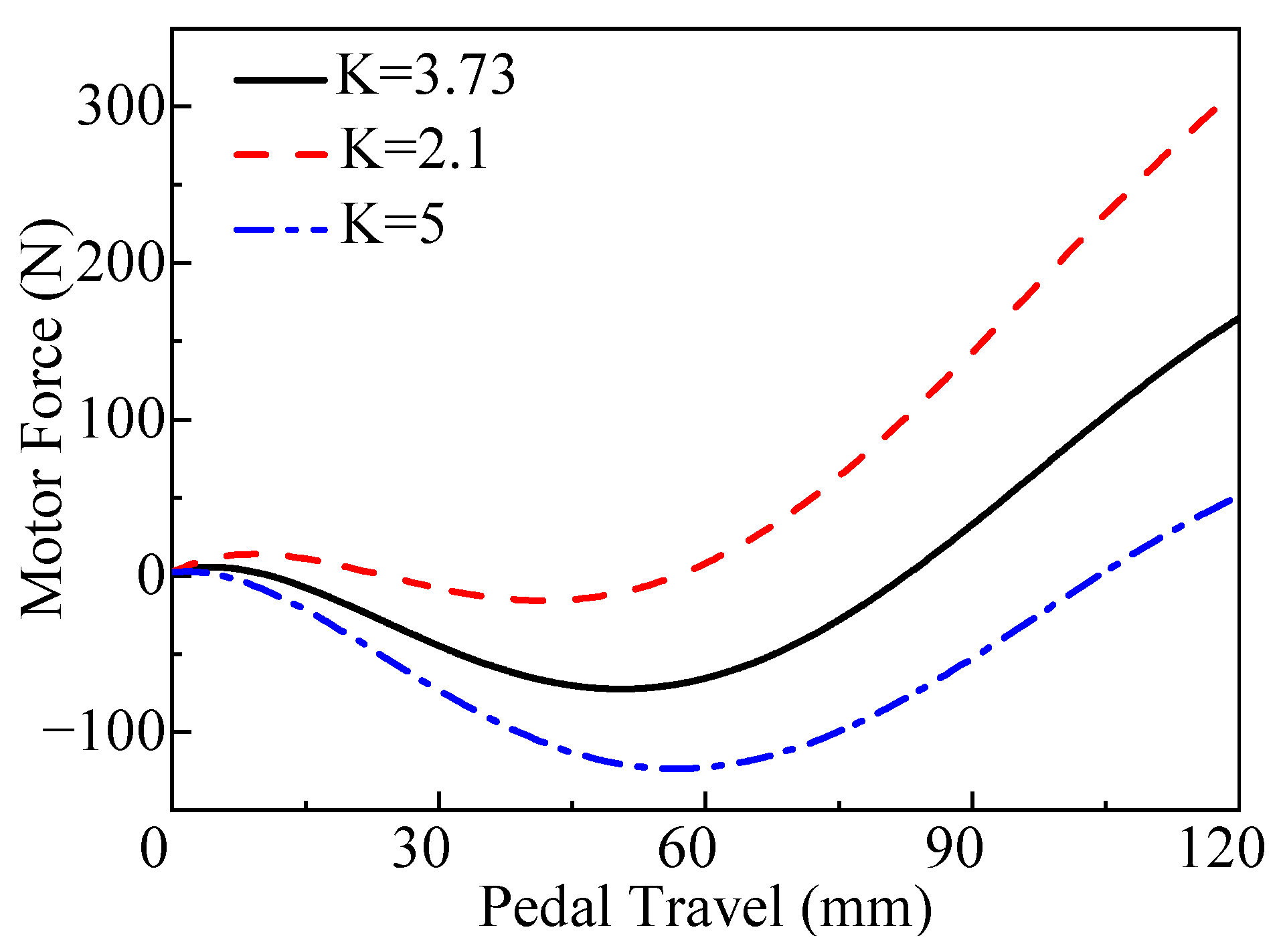
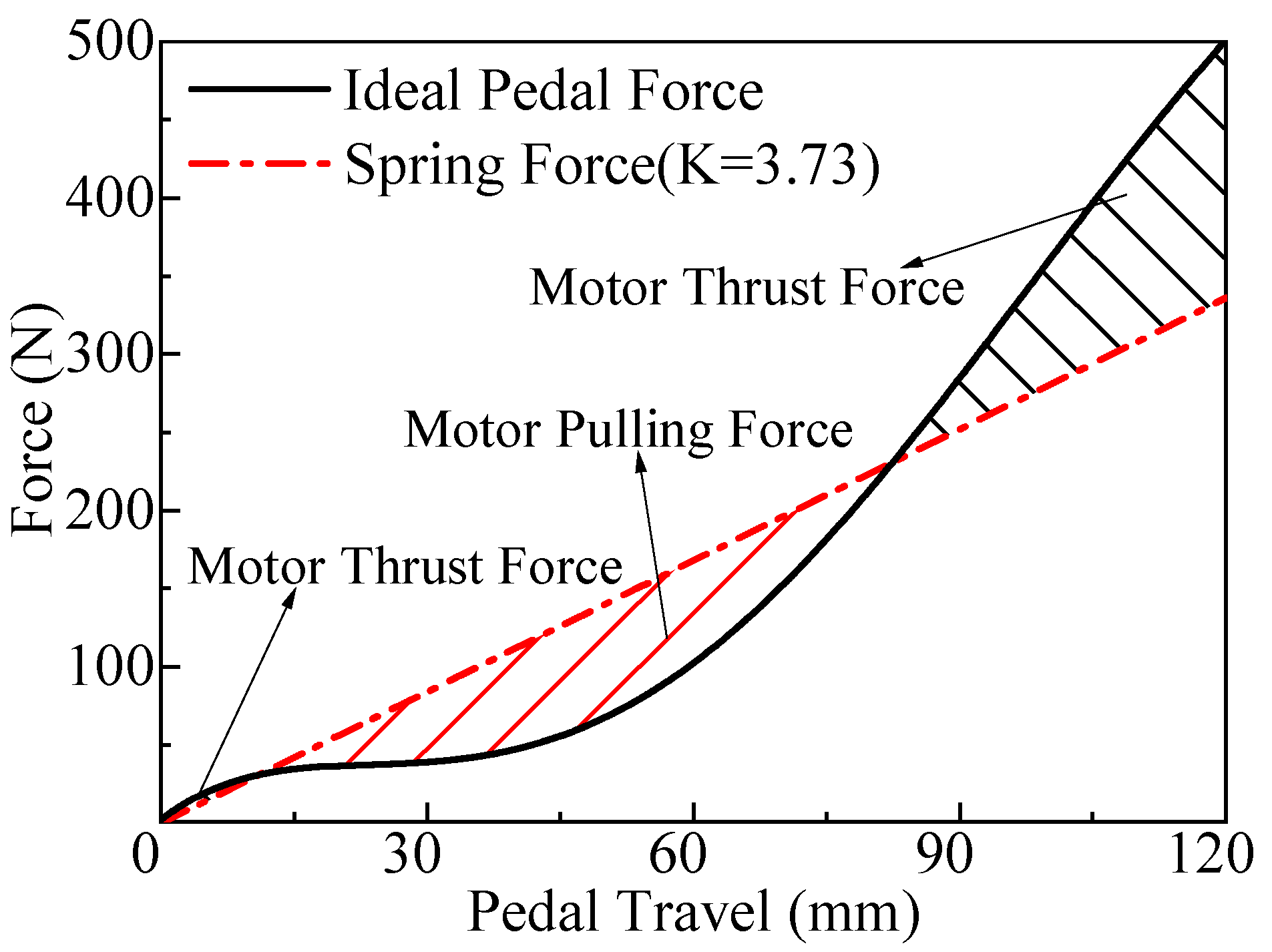
3.2. Spring Stiffness Optimization
4. Brake Pedal Simulator Test
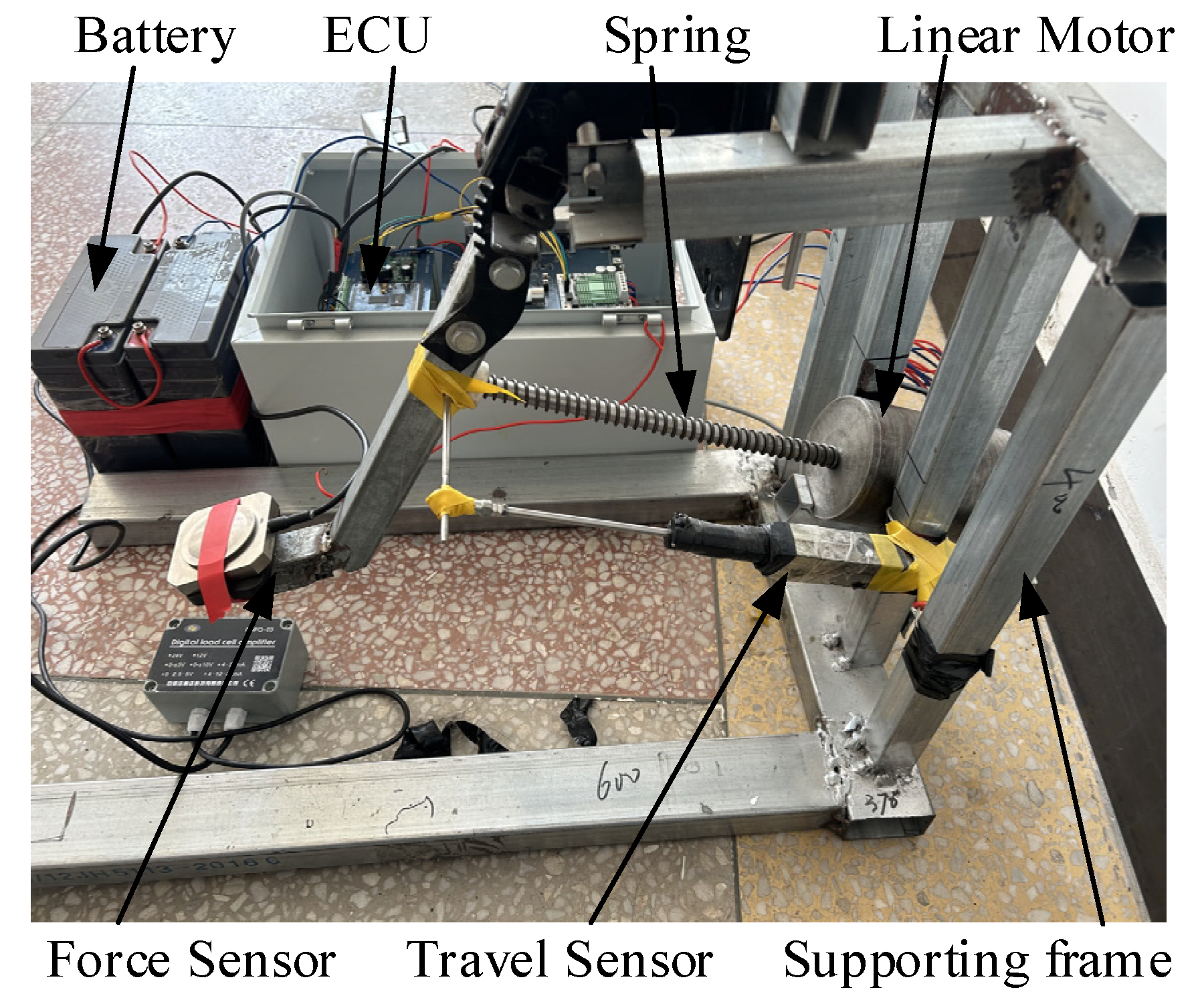
4.1. Introduction to the Brake Pedal Simulator Test Platform
4.2. Brake Pedal Simulator Test Under Different Braking Conditions
4.2.1. Low-Intensity Braking
4.2.2. Medium-Intensity Braking
4.2.3. High-Intensity Braking
4.2.4. ABS Intervention Braking
5. Conclusions
Author Contributions
Funding
Data Availability Statement
Conflicts of Interest
References
- Alanazi, F.K.R. Electric vehicles: Benefits, challenges, and potential solutions for widespread adaptation. Appl. Sci. 2023, 13, 6016. [Google Scholar] [CrossRef]
- Chen, L.; Ma, R. Clean energy synergy with electric vehicles: Insights into carbon footprint. Energy Strategy Rev. 2024, 53, 101394. [Google Scholar] [CrossRef]
- Ji, Q.; Zheng, L.; Bi, Y.; Pang, H. Review of brake-by-wire technology for low-speed and autonomous vehicles. World Electr. Veh. J. 2024, 15, 581. [Google Scholar] [CrossRef]
- Hua, X.; Zeng, J.; Li, H.; Huang, J.; Luo, M.; Feng, X.; Xiong, H.; Wu, W. A review of automobile brake-by-wire control technology. Processes 2023, 11, 994. [Google Scholar] [CrossRef]
- Zhang, L.; Wang, Q.; Chen, J.; Wang, Z.; Shao, L. Brake-by-wire system for passenger cars: A review of structure, control, key technologies, and application in X-by-wire chassis. Etransportation 2023, 18, 100292. [Google Scholar] [CrossRef]
- Abeysiriwardhana, W.A.S.P.; Abeykoon, A.M.H.S. Brake-by-wire control with pedal feedback and brake boost. Bull. Electr. Eng. Inform. 2021, 10, 3042–3051. [Google Scholar] [CrossRef]
- Caliskan, U.; Patoglu, V. Efficacy of haptic pedal feel compensation on driving with regenerative braking. IEEE Trans. Haptics 2020, 13, 175–182. [Google Scholar] [CrossRef]
- Bolognesi Prado, W.A.S.; Iombriller, S.; Silva, M.A.R.; Oliveira, L.R. Brake pedal feeling comfort analysis for trucks with pneumatic brake system. SAE Technical Paper 2019, 2019-01-2140. [Google Scholar] [CrossRef]
- Spadoni, A. Adaptive Brake by Wire: From Human Factors to Adaptive Implementation. Ph.D. Dissertation, University of Trento, Trento, Italy, 2013. [Google Scholar]
- Zehnder, J.W.; Kanetkar, S.S.; Osterday, C.A. Variable Rate Pedal Feel Emulator Designs for a Brake-by-Wire System; SAE International: Warrendale, PA, USA, 1999; pp. 881–884. [Google Scholar]
- Yin, F.; Wang, M.; Jiang, Y.; Kang, Y. A passenger car brake pedal feel analysis model based on integrated brake-by-wire system. SAE Tech. Pap. 2021, 2021-01-0975. [Google Scholar] [CrossRef]
- Lee, S.D.; Kim, S.L. Characterization and development of the ideal pedal force, pedal travel, and response time in the brake system for the translation of the voice of the customer to engineering specifications. Proc. Inst. Mech. Eng. Part D J. Automob. Eng. 2010, 224, 1433–1450. [Google Scholar] [CrossRef]
- Shi, Z.; Yan, Y.; Zhang, S. Variable boost characteristic control strategy of hydraulic systems for brake-by-wire based on driving style. Sci. Rep. 2024, 14, 29412. [Google Scholar] [CrossRef] [PubMed]
- Miao, J.; Yao, M.; Wen, P.; Li, S.; Xiong, H.; Huang, Z. Optimization for springs of electronic brake pedal simulator. In IOP Conference Series: Materials Science and Engineering; IOP Publishing: Bristol, UK, 2019; Volume 612, p. 032064. [Google Scholar] [CrossRef]
- Wang, D.; Wang, B.; Zi, B.; Zhou, Q.; Zheng, X.; Shen, J. Development and control of a magnetorheological damper-based brake pedal simulator for vehicle brake-by-wire systems. Chin. J. Mech. Eng. 2022, 35, 136. [Google Scholar] [CrossRef]
- Farshizadeh, E.; Steinmann, D.; Briese, H.; Henrichfreise, H. A concept for an electrohydraulic brake system with adaptive brake pedal feedback. Proc. Inst. Mech. Eng. Part D J. Automob. Eng. 2015, 229, 708–718. [Google Scholar] [CrossRef]
- Gumiel, J.Á.; Mabe, J.; Burguera, F.; Jiménez, J.; Barruetabeña, J. Next-generation pedal: Integration of sensors in a braking pedal for a full brake-by-wire system. Sensors 2023, 23, 6345. [Google Scholar] [CrossRef]
- Kikuchi, T.; Noma, J.; Akaiwa, S.; Ueshima, Y. Response time of magnetorheological fluid–based haptic device. J. Intell. Mater. Syst. Struct. 2015, 27, 859–865. [Google Scholar] [CrossRef]
- Kang, P.; Liu, S.; Zeng, T. Magnetorheological fluid-based haptic feedback damper. Appl. Sci. 2024, 14, 3697. [Google Scholar] [CrossRef]
- Hofmann, T.; Huepfel, M.; de Haas, O.; Jocher, A. Design, scalable construction, and test of optimal linear Halbach arrays for mobile applications. J. Magn. Magn. Mater. 2024, 596, 171967. [Google Scholar] [CrossRef]
- Liu, J.; Shang, M.; Gong, C. Analytical modeling and analysis of Halbach array permanent magnet synchronous motor. World Electr. Veh. J. 2025, 16, 413. [Google Scholar] [CrossRef]
- Xiao, F.; Gong, X.; Lu, Z.; Qian, L.; Zhang, Y.; Wang, L. Design and control of a new brake-by-wire actuator for vehicle based on linear motor and lever mechanism. IEEE Access 2021, 9, 95832–95842. [Google Scholar] [CrossRef]
- Bogaychuk, A.; Ivshin, E. Improving the homogeneity of Halbach arrays by optimizing magnet combinations using a genetic algorithm. Rev. Sci. Instrum. 2024, 95, 055107. [Google Scholar] [CrossRef]
- Prado, W.B.; Iombriller, S.F.; da Silva, M.A.R.; Oliveira, L.R. Commercial vehicle pedal feeling comfort ranges definition. SAE Tech. Pap. 2020, 2019-36-0016. [Google Scholar] [CrossRef]
- Zhang, H.; Qiao, J.; Zhang, X. Nonlinear dynamics analysis of disc brake frictional vibration. Appl. Sci. 2022, 12, 12104. [Google Scholar] [CrossRef]








| Working Condition | Coil A | Coil B | Description (Based on Magnetic Field Direction) |
|---|---|---|---|
| 1 | + | + | Both coils energized in the same polarity, generating greater thrust. |
| 2 | + | − | Coils energized with opposite polarities, generating greater thrust. |
| 3 | + | 0 | Coil B is located at the boundary of the magnetic field and is not energized, generating smaller thrust. |
| 4 | − | + | Coils energized with opposite polarities, generating greater thrust. |
| 5 | − | − | Both coils energized in the same polarity, generating greater thrust. |
| 6 | − | 0 | Coil B is located at the boundary of the magnetic field and is not energized, generating smaller thrust. |
| 7 | 0 | + | Coil A is located at the boundary of the magnetic field and is not energized, generating smaller thrust. |
| 8 | 0 | − | Coil A is located at the boundary of the magnetic field and is not energized, generating smaller thrust. |
| 9 | 0 | 0 | Neither of the two coils are energized, so the linear motor does not operate. |
| Parameter | Value |
|---|---|
| Type | Cylindrical permanent magnet moving coil |
| The number of closed magnetic field circuits | 5 |
| Power voltage | DC 24 V |
| Mover travel | 90 mm |
| Coil number | 2 |
| Peak thrust | 350 N |
| Peak current | 35 A |
| Full-travel response time | 380 ms |
| The time to reach maximum thrust | 166 ms |
| 2.1 | 3.33 | 3.47 | 3.6 | 3.73 | 3.87 | 4 | 5 | |
|---|---|---|---|---|---|---|---|---|
| Equivalent spring stiffness | 1.575 | 2.5 | 2.6 | 2.7 | 2.8 | 2.9 | 3 | 3.75 |
| The first point -coordinate | 24 | 13.4 | 12 | 12.2 | 11 | 9.6 | 10 | 5.1 |
| The second point -coordinate | 56.82 | 76.5 | 78.5 | 80.7 | 82.5 | 84.8 | 86.7 | 104.5 |
| Work done by the linear motor | 9.50 | 6.72 | 6.58 | 6.48 | 5.92 | 6.38 | 6.39 | 7.70 |
| Spring Stiffness (N/mm) | 2.1 | 3.73 | 5 |
|---|---|---|---|
| Thrust range (N) | −15~311 | −71~169 | −123~48 |
| Maximum thrust (N) | 311 | 169 | −123 |
Disclaimer/Publisher’s Note: The statements, opinions and data contained in all publications are solely those of the individual author(s) and contributor(s) and not of MDPI and/or the editor(s). MDPI and/or the editor(s) disclaim responsibility for any injury to people or property resulting from any ideas, methods, instructions or products referred to in the content. |
© 2026 by the authors. Published by MDPI on behalf of the World Electric Vehicle Association. Licensee MDPI, Basel, Switzerland. This article is an open access article distributed under the terms and conditions of the Creative Commons Attribution (CC BY) license.
Share and Cite
He, C.; Gong, X.; Zhang, H.; Zhang, H.; Liu, Y.; Ye, H. Design and Implementation of Active Brake Pedal Simulator Integrating Force Feedback and Energy Optimization. World Electr. Veh. J. 2026, 17, 109. https://doi.org/10.3390/wevj17020109
He C, Gong X, Zhang H, Zhang H, Liu Y, Ye H. Design and Implementation of Active Brake Pedal Simulator Integrating Force Feedback and Energy Optimization. World Electric Vehicle Journal. 2026; 17(2):109. https://doi.org/10.3390/wevj17020109
Chicago/Turabian StyleHe, Chunrong, Xiaoxiang Gong, Hong Zhang, Huaiyue Zhang, Yu Liu, and Haiquan Ye. 2026. "Design and Implementation of Active Brake Pedal Simulator Integrating Force Feedback and Energy Optimization" World Electric Vehicle Journal 17, no. 2: 109. https://doi.org/10.3390/wevj17020109
APA StyleHe, C., Gong, X., Zhang, H., Zhang, H., Liu, Y., & Ye, H. (2026). Design and Implementation of Active Brake Pedal Simulator Integrating Force Feedback and Energy Optimization. World Electric Vehicle Journal, 17(2), 109. https://doi.org/10.3390/wevj17020109