1. Introduction
In recent years, with the development of science and technology and the growing awareness of cultural protection, more museums have realized the importance of protecting and promoting cultural relics through digital technologies. Virtual museums (VMs) are developing from cultural heritage to more fields, and the use of VMs in education is emerging. In the field of education, VMs are gaining prominence as tools to enhance teaching, offering a means to better understand the knowledge of cultural heritage and avoiding the destruction of cultural heritage caused by actual human activities. VMs can break down spatial constraints, making it feasible to apply knowledge from the museum to the classroom. More and more researchers believe that the use of VMs to assist teaching is an effective method [
1,
2], even in technical subjects [
3]. VMs have the advantage of facilitating the learning process by helping learners better understand abstract concepts and by presenting the learning content clearly and truthfully [
4].
In the teaching and learning process, virtual reality technology is able to show the structure of space and objects well, which increases the learners’ excitement and motivation for the learning process [
5]. In the process of using VMs, learners often experience heightened interest [
6], especially in subjects like history, art, science and other aspects of knowledge. Learners can experience interactive learning environment, through virtual reality technology, participants are able to experience a sense of “being there” [
7]. For learners, having their own exhibition on the surface provides a more satisfying experience. Parker and Saker’s study [
8] has further revealed that after visiting VMs, learners’ happiness was enhanced, and multiple well-being indexes were improved [
9]. Additionally, this study also theoretically verified the mediating role of situational interest in the spatial presence and learning outcomes in VMs. It responds to the research framework proposed by Makransky and Petersen [
10] to explore the mediating effects of affective factors.
VMs are able to provide participants with different forms of experience to increase learner engagement [
11]. In terms of the presentation of artworks, VMs meet the needs of a variety of learners in the form of panoramas, dioramas, etc. At the same time, VMs provide complex interactions that deliver additional educational value through hands-on activities and rich stimulation. Understanding works of art through experiential learning and visual stimulation [
12]. A wide range of technological products are also used in virtual museums, and according to Fallows et al. [
13], the use of tactile gloves in VM allows participants to freely interact with ceramics, offering museum visitors an alternative approach to accessibility. This method facilitates new interactions with the object itself and the surrounding vision, which would be challenging to replicate in a real museum. A “user is the creator” VM tour application is developed [
14], in which the learner is no longer a passive recipient of knowledge, but rather appears as the designer of the museum, i.e., the builder of knowledge, who is not only required to present their existing body of knowledge, but also to generate new experiences through communication with other participants within the space they have constructed. Through this exchange, participants deepen their comprehension and expand their knowledge system by engaging with diverse perspectives and collaborative learning processes. A program for distance learning through collecting one’s own art collection and real-time chatting on Google Talk was studied [
15], where participants can communicate with each other to achieve the purpose of knowledge dissemination and learning, and increase interest in learning through interaction.
As a new type of educational resource, VMs have a wide range of applications in education and teaching [
16]. VMs enhance learning experience while increasing opportunities for learners to learn permanently [
17]. Learners can use different types of VMs to complete the acquisition of history, art, cultural heritage and other knowledge. They can revisit and reinforce the knowledge they have not mastered, obtaining their unique insights during their learning process. The knowledge in VMs will not be limited by time, space and other factors that cannot be accessed, which is difficult to achieve in traditional teaching.
Recent research has increasingly recognized the importance of demographic factors in shaping user experiences and learning outcomes in virtual environments. Thakur et al. [
18] conducted a comprehensive study examining gender differences in university students’ perceptions of virtual museums, finding that female students reported higher levels of satisfaction with interactive features, while male students demonstrated greater preference for autonomous navigation capabilities. Their findings suggest that gender may moderate the relationship between virtual museum design features and user engagement, highlighting the need for inclusive design approaches that accommodate diverse user preferences.
Similarly, Ikae et al. [
19] investigated cultural differences in user experience and learning outcomes within virtual heritage environments, comparing participants from Eastern and Western cultural backgrounds. Their research revealed that cultural background significantly influenced both navigation strategies and knowledge retention, with Eastern participants demonstrating greater preference for structured, curator-guided experiences, while Western participants favored exploratory, self-directed navigation. These findings underscore the importance of considering cultural context when designing and evaluating virtual museum interventions.
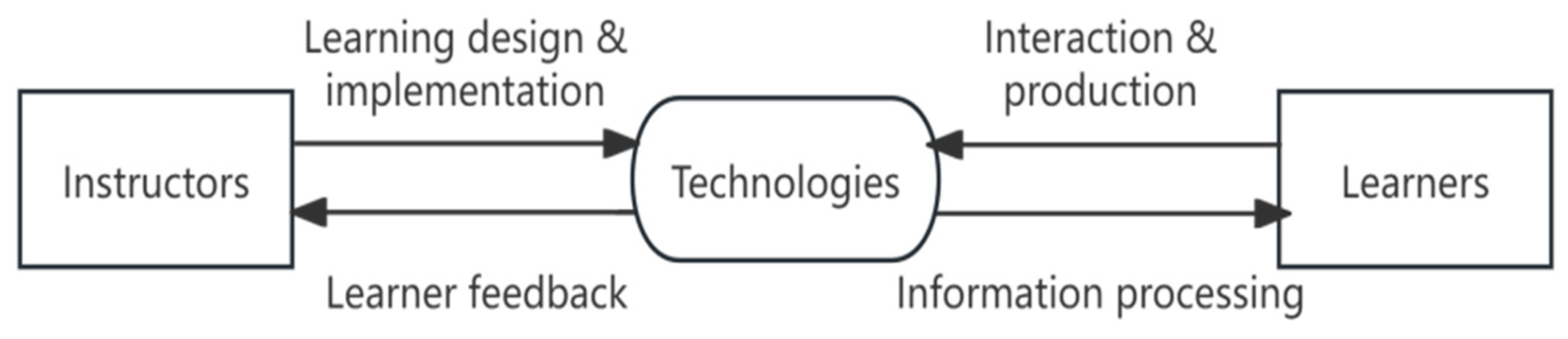
Technology-mediated learning theory was proposed by Alavi and Leidner [
20], which is mainly used to study the effects and causes of information technology on learners’ learning outcomes in the implementation of education (see
Figure 1). This framework covers the design and methods of implementing instructional activities, and Wang et al. [
21] argued that its core issue is how to organically combine information technology with instructional strategies to stimulate and drive the learners’ mental learning process, thus improving learning outcomes.
The concept of VMs was introduced in the 1990s and is still in the process of being built, and the use of virtual museums as a new type of educational technology in higher education is still in its infancy. Increasingly, educational applications are being developed across disciplines to gain ready-made experiences to introduce, reinforce, or master content. As with other teaching practices, teachers should use best practices to ensure maximum benefit from the use of this and other emerging technologies [
22,
23]. In summary, we understand that virtual museums can facilitate learning, but for the teaching of art history courses, we expect to obtain a quantitative result to clearly understand the effect of virtual museum intervention.
From the teacher’s point of view, students’ feedback on virtual museums is important, as it will help the teaching staff to better evaluate teaching and learning in order to improve the quality of educational process. The purpose of this study is to understand the effectiveness of using virtual museums in art history courses, the characteristics that learners are concerned about in the process of using them, and the strategies that learners use when using virtual museums, with the ultimate goal of providing a reference for researchers in the field to promote the use and development of virtual museums in a way that is more in line with the laws of education.
This study raises the following research questions (RQ):
RQ1: Is the use of VMs for teaching in art history courses effective in enhancing learning outcomes?
RQ2: Regarding the attributes of VMs, what aspects do learners prioritize during their engagement?
RQ3: What strategies do learners employ to improve their learning efficiency while interacting with VMs?
In order to address these questions, this study used the experimental method to obtain learners’ academic performance and analyzed pre-test and post-test scores to derive a picture of learners’ learning outcomes. The questionnaire method and structured interviews were also used to obtain data on the learners’ use of VMs. The purpose of the experiment was to validate the hypotheses of this study and to provide effective suggestions for the design of teaching and learning using VMs to help construct learner-friendly VMs.
2. Research Methods
2.1. Participants
A total of 75 undergraduate students majoring in Digital Media Art from a single Chinese university participated in the study. The sample included 48 female and 27 male students, reflecting the typical gender distribution of the digital media arts program. This disciplinary background ensured that all participants possessed foundational understanding of art theory and were presumed to have above-average familiarity with digital media technologies, which may facilitate their adoption of VMs. To ensure baseline equivalence between groups, students were assigned to either the control group (Class 2401) or the experimental group (Class 2402) based on their entrance examination scores using a matched-pair design, ensuring comparable academic baselines across the two conditions.
2.2. Research Design
This study adopted a hybrid research methodology, combining qualitative and quantitative analysis. An experimental approach was used to divide 75 students majoring in digital media art into two classes (Class 2401 and Class 2402), based on their entrance examination results. To ensure baseline equivalence, students were assigned to either the control or experimental group based on their entrance examination scores using a matched-pair design. A pre-test (Test 0) was administered before the first session to assess students’ baseline knowledge of Renaissance art history. No statistically significant difference was found between the two groups (Mann–Whitney U = 695.500, p = 0.936), confirming the comparability of the groups at the outset. Between the groups both classes were taught by the same teacher on four consecutive dates: 31 October, 7 November, 14 November, and 21 November. The topic for all sessions was the history of Renaissance art. The duration of each session was 90 min and each session was structured into three teaching phases: pre-lecture, mid-lecture, and post-lecture.
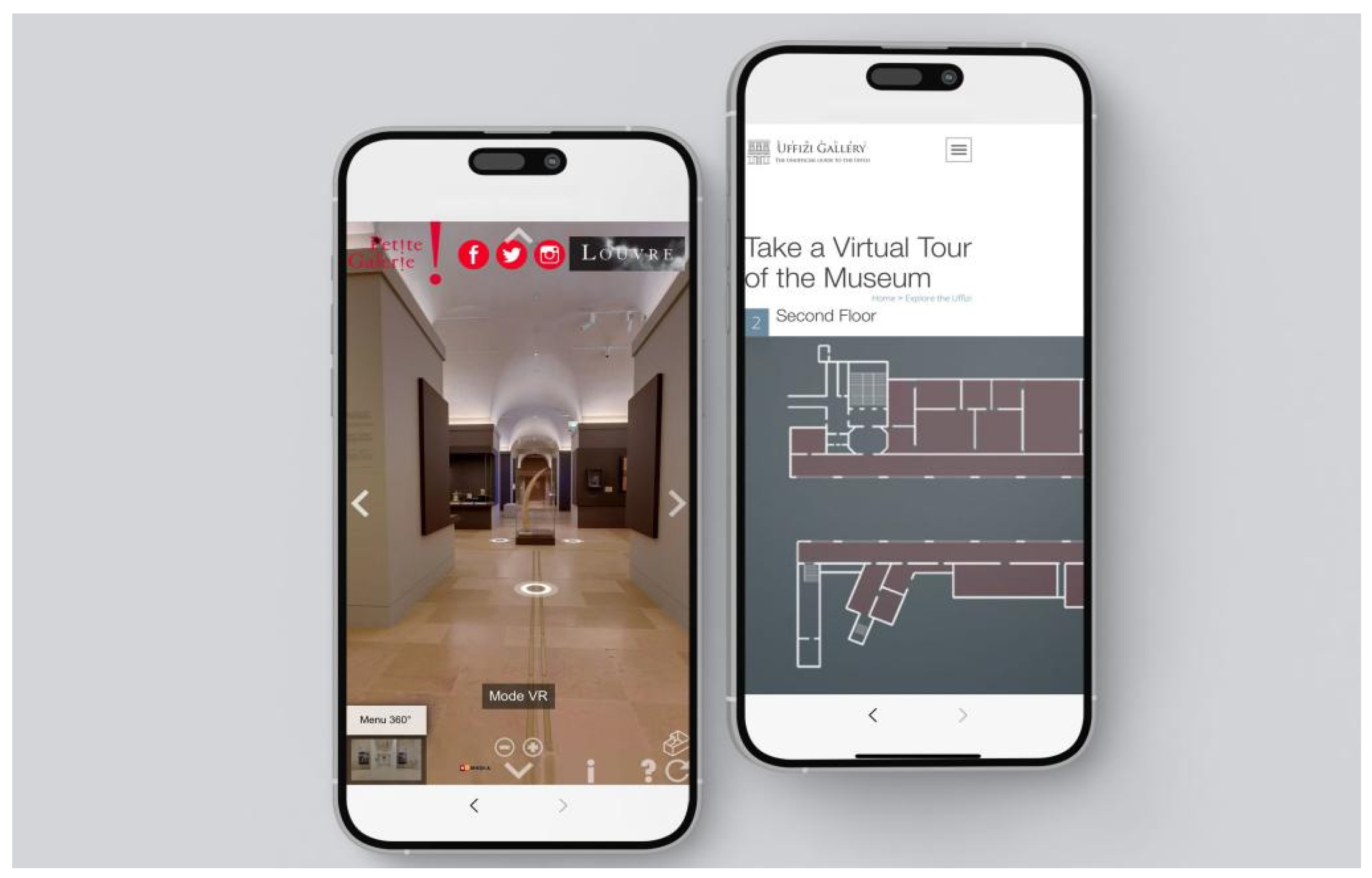
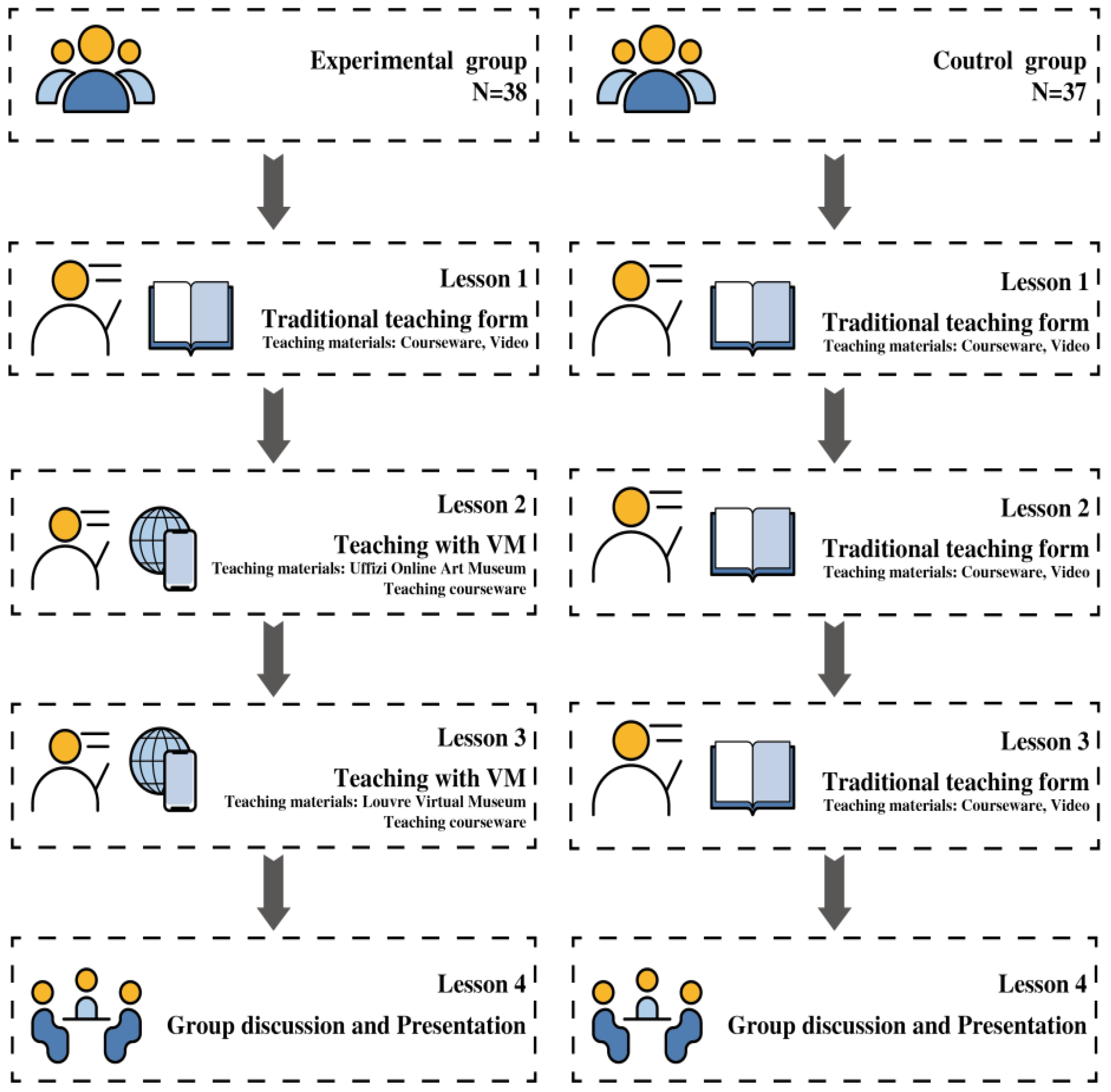
The control group (Class 2401) was taught using traditional teaching methods, while the experimental group (Class 2402) adopted an instructional approach incorporating VMs (see
Figure 2). A test was administered before the first session and after each subsequent session, for a total of five tests. Each test comprised 25 multiple-choice questions, and students’ test scores were recorded. Additionally, a questionnaire which covered four dimensions was used to evaluate students’ concern about the functionality of VMs. We interviewed 38 students from experimental group (Class 2402). Each student who participated in the VM learning was asked for their experience with VMs, as well as their opinions and suggestions regarding the use of VMs in the course.
2.3. Virtual Museum Platforms: Detailed Description
Two virtual museum platforms were selected based on three criteria: (a) free and unrestricted online access; (b) relevance to Renaissance art history content; and (c) representativeness of contrasting technological approaches.
Table 1 provides a comparative overview.
2.3.1. The Uffizi Online Art Museum
The Uffizi Online Art Museum serves as the digital extension of the Uffizi Gallery, Florence. Its selection was predicated on its accessibility, educational content, and suitability as an introductory platform.
The platform is entirely web-based, requiring no software installation, plugin activation, or user registration. It is compatible with all major browsers (Chrome, Safari, Edge) on desktop and mobile devices, with stable performance on standard bandwidth connections.
Navigation and User Interface. Navigation follows a curatorial browsing model, providing access through four primary pathways: (1) artist-based browsing; (2) period-based browsing; (3) thematic exhibitions; and (4) collection search.
The platform offers high-resolution images with zoom functionality enabling detailed examination of brushwork, craquelure, inscriptions, and other fine details. Images can be viewed in full-screen mode, with masterworks typically available at highest resolutions.
The interface does not support spatial navigation or environmental immersion; artworks are presented in isolation; search functionality is basic; and some lesser-known works are available only at lower resolutions.
2.3.2. Louvre Virtual Museum
The Louvre Virtual Museum offers a technologically advanced immersive experience, selected to introduce spatial navigation and contextual learning after students had developed basic VM competencies.
The platform requires WebGL-compatible browsers, broadband connection, and desktop or laptop computers for optimal performance. No registration or account creation is required.
The platform employs a spatial navigation model simulating physical museum visitation, featuring: 3D room-by-room movement using on-screen directional controls; freedom of approach and viewing angle; orientation aids; and teleportation options between major galleries.
The platform integrates environmental and object-level visualization through: 360° panoramic views of gallery spaces; contextual artwork placement showing actual spatial relationships; zoom functionality for detailed examination; and lighting simulation approximating actual gallery illumination.
Performance varies with connection speed; some students require initial assistance mastering 3D navigation; not all galleries or artworks are included; and occasional browser compatibility issues may arise.
2.3.3. Comparative Analysis and Selection Rationale
The deliberate selection of contrasting platforms was theoretically grounded in cognitive load theory [
24] and scaffolding principles [
25]. Uffizi represents a curatorial approach prioritizing organized content discovery, reducing extraneous cognitive load. The Louvre represents a spatial approach prioritizing immersive navigation, introducing higher cognitive demands but offering enhanced contextual learning affordances. Sequential use—Uffizi in Session 2, Louvre in Session 3—was designed to scaffold student learning, introducing spatial complexity only after foundational skills were established.
2.4. Procedure
Prior to the start of the course, the instructor conducted a survey of art history learning in both classes, which revealed that learners in both classes had a poor grasp of art history knowledge, with only a few learners having a clearer understanding of art history. In light of this situation, the instructor developed a syllabus for the four lessons in the program. Students were required to acquire knowledge of Renaissance art history.
Both groups were taught by the same instructor following identical lesson plans and time allocations for each session. The only difference between conditions was the instructional medium: the experimental group engaged with virtual museum platforms, while the control group received traditional lecture-based instruction with image analysis. This design ensured that any observed differences in learning outcomes could be attributed to the instructional approach rather than instructor variability or content coverage.
Both the experimental and control groups of the first session were taught using a traditional teaching format, with the instructor teaching from the perspective of the historical background of the Renaissance, the characteristics of medieval art, and the origins of the Renaissance through courseware and instructional videos. In the second session, the experimental group used the Uffizi Online Art Museum, while the control group used the traditional teaching format to analyze and compare the differences and commonalities of the artistic styles of the three Renaissance masters through appreciation of the works of Leonardo da Vinci, Michelangelo, Raphael and other artists. In the third session, the experimental group used the Louvre Virtual Museum and the control group used a traditional teaching format to compare the differences and similarities between Northern and Southern Renaissance art in terms of techniques, aesthetics and themes through understanding the artworks and achievements of Yang Fan Ek, Dürer and Holbein. Both the experimental and control groups in the fourth lesson used group discussion and debriefing to summarize the learning of Renaissance art history through the four weeks (see
Figure 3). At the end of each session, learners participated in a 10 min test consisting of 25 multiple-choice questions based on the material from that session.
At the end of all four sessions, a questionnaire was administered to 38 learners in the experimental group (class 2402). It consisted of 15 questions that focused on the dimensions of VM use, authenticity, interactivity, learning and navigation. After completing the questionnaire, the learners in the experimental group participated in interviews to share their experiences and perspectives on the use of VMs in the course.
3. Data Collection and Analysis
Data sources were utilized for this study: pre-tests, post-tests, questionnaires, and brief interviews. The pre-test and post-test assessed students’ knowledge of Renaissance art history, ensuring that the same baseline learning level was maintained. Students were required to complete 25 multiple-choice questions which evaluated the learning effect of students under different teaching methods through their scores. A questionnaire survey was conducted to understand the functional concerns of students in using VMs and their learning experience.
3.1. Assessment of Learning Effectiveness
Students were assessed on their knowledge of Renaissance art history before and after the course. Each test consisted of 25 multiple-choice questions, with students earning up to 4 points per questions, using a percentage-based scoring system.
Test Development and Content Validation. All test items were developed by the research team in collaboration with two art history instructors who were not involved in the intervention delivery. For each session, a test blueprint was constructed specifying the proportion of items targeting three cognitive levels: factual recall, comprehension, and synthesis. Items were written to reflect session-specific learning objectives. Content validity was established through expert review: the two art history instructors independently rated each item for relevance to session content and clarity of wording.
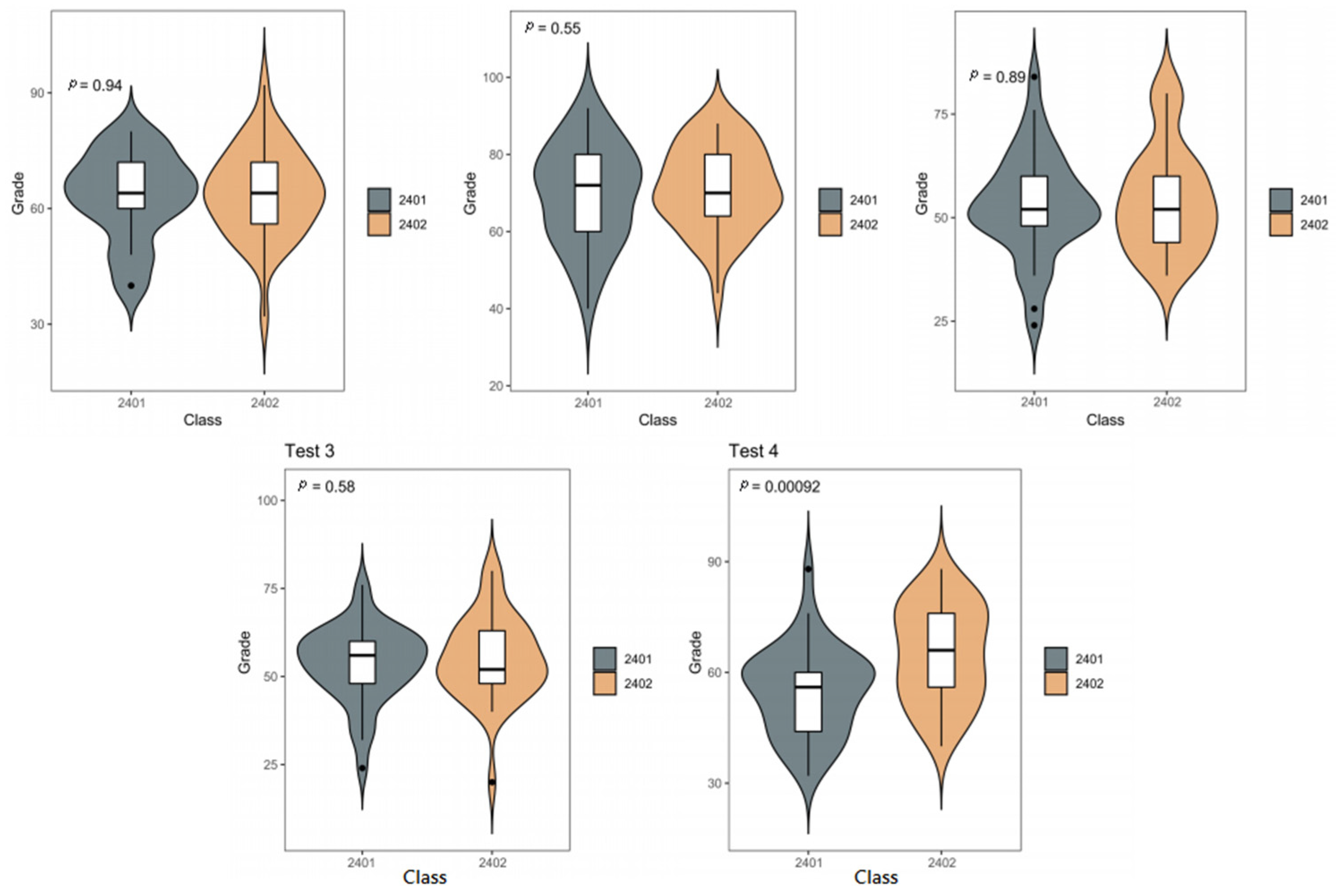
Items with less than 80% agreement on relevance were revised or replaced. This process resulted in a final set of 25 items per test, with items distributed across content areas proportional to instructional time allocation. These grades were used to evaluate the learning effect of students under different teaching methods (see
Table 2 and
Figure 4).
To assess internal consistency, post hoc reliability analyses were conducted using Kuder-Richardson Formula 20 (KR-20), the appropriate coefficient for dichotomously scored items. The KR-20 coefficients for the five tests were: Test 0 = 0.79, Test 1 = 0.83, Test 2 = 0.71, Test 3 = 0.74, and Test 4 = 0.81. These coefficients indicate acceptable to good internal consistency across all assessments [
26], suggesting that items within each test reliably measured a coherent knowledge construct. The lower coefficient for Test 2 (0.71) reflects the increased cognitive complexity of comparative analysis items, which introduced greater response variability.
The observed drop in mean scores from Test 1 to Test 2 in both groups (from approximately 70 to 53) warrants explanation. This decline likely reflects an increase in cognitive demand between sessions, as Test 1 assessed factual recall of historical background content, while Test 2 introduced comparative analysis of multiple artists’ styles—a more complex cognitive task requiring synthesis and evaluation. This interpretation is supported by student interviews, in which several participants noted the challenge of synthesizing stylistic differences across artists. The parallel decline in both groups suggests that the drop was attributable to increased task complexity rather than differences in instructional approach.
3.2. Evaluation of Learning Priorities on VM Features
To investigate students’ concerns about VM functionality, we used the virtual museum visit evaluation scale adapted from Li et al. [
27], which is based on previous studies [
28,
29]. The questionnaire comprised 15 items, each rated on a 5-point Likert scale (1 = strongly disagree, 5 = strongly agree). These items were grouped into four theoretically grounded dimensions: Authenticity (6 items), Interactivity (2 items), Navigation (3 items), and Learning (4 items). The 15 items were distributed as follows: Dimension A (Authenticity) included items A1–A5; Dimension B (Interactivity) included B1–B2; Dimension C (Navigation) included C1–C3; and Dimension D (Learning) included D1–D3. The closed questions emphasized authenticity, interactivity, navigation, and learning to determine the functional priorities that students prioritized during VM use. In Dimensions A and D, a reverse question has been set up respectively to verify the quality of the questionnaire filling.
The original questionnaire was developed in English. Following best practices for cross-cultural instrument adaptation [
30], the following procedures were implemented:
The questionnaire was independently translated into Chinese by two bilingual researchers with expertise in educational technology. The two translations were compared, and discrepancies were resolved through discussion to produce a preliminary Chinese version.
The Chinese version was pilot-tested with 10 students from the same program who were not part of the main study. Participants were asked to complete the questionnaire and then provide feedback on item clarity, wording appropriateness, and cultural relevance. Based on this feedback, minor wording adjustments were made to enhance clarity and ensure that items were culturally appropriate for the Chinese educational context.
The finalized Chinese version was used for the main study. All analyses were conducted using the Chinese version data, with items referenced by their original English labels for consistency with the theoretical framework.
3.3. Analysis of Learners’ Strategies in VM Environments
A brief interview was conducted with each student who participated in the VM based teaching. Participants were asked to compare the similarities and differences in the use of two different forms of virtual museums, Participants were asked to share their own experience in the use of virtual museums, and finally put forward suggestions for improving the integration of VMs in the course. The questionnaires were collected within one day and all 38 questionnaires were valid.
3.4. RQ1 Analysis
To evaluate the effectiveness of using VMs in teaching art history courses, we perform statistical tests to examine significant differences in the group mean scores. To assess the normality of the data, we begin by applying the Shapiro–Wilk test to the scores of each group for each test. As shown in
Table 3, the
p-values for the experimental group in the pre-test and the control group in Test 2 are 0.032 and 0.010, respectively, indicating that the scores in these two groups deviate from a normal distribution. Consequently, we employ the Mann–Whitney U test to determine whether there is a significant difference in scores between the two groups.
3.5. RQ2 Analysis
A questionnaire was administered to 38 learners who had received VM instruction using the VM Evaluation Scale. The four dimensions of Authenticity (A), Interactivity (B), Navigation (C), and Learning (D) were evaluated. A total of 38 questionnaires were returned. From the responses to the question “Whether they used VMs in the course”, it can be seen that all 38 learners used VMs in the classroom for learning. However, the responses to the question “Do you use VMs for your own learning after the class” showed that 28 learners still used VMs for their own learning after the class, which was retained for the final discussion in view of the accuracy of the test.
Among these 28 continued users, the distribution of usage frequency was: 10 students (35.7%) reported 1–2 additional sessions; 12 students (42.9%) reported 3–5 additional sessions; and six students (21.4%) reported more than five additional sessions during the four-week intervention period.
Regarding duration per voluntary session: five students (17.9%) reported less than 15 min; eight students (28.6%) reported 15–30 min; 11 students (39.3%) reported 30–60 min; and four students (14.3%) reported more than 60 min.
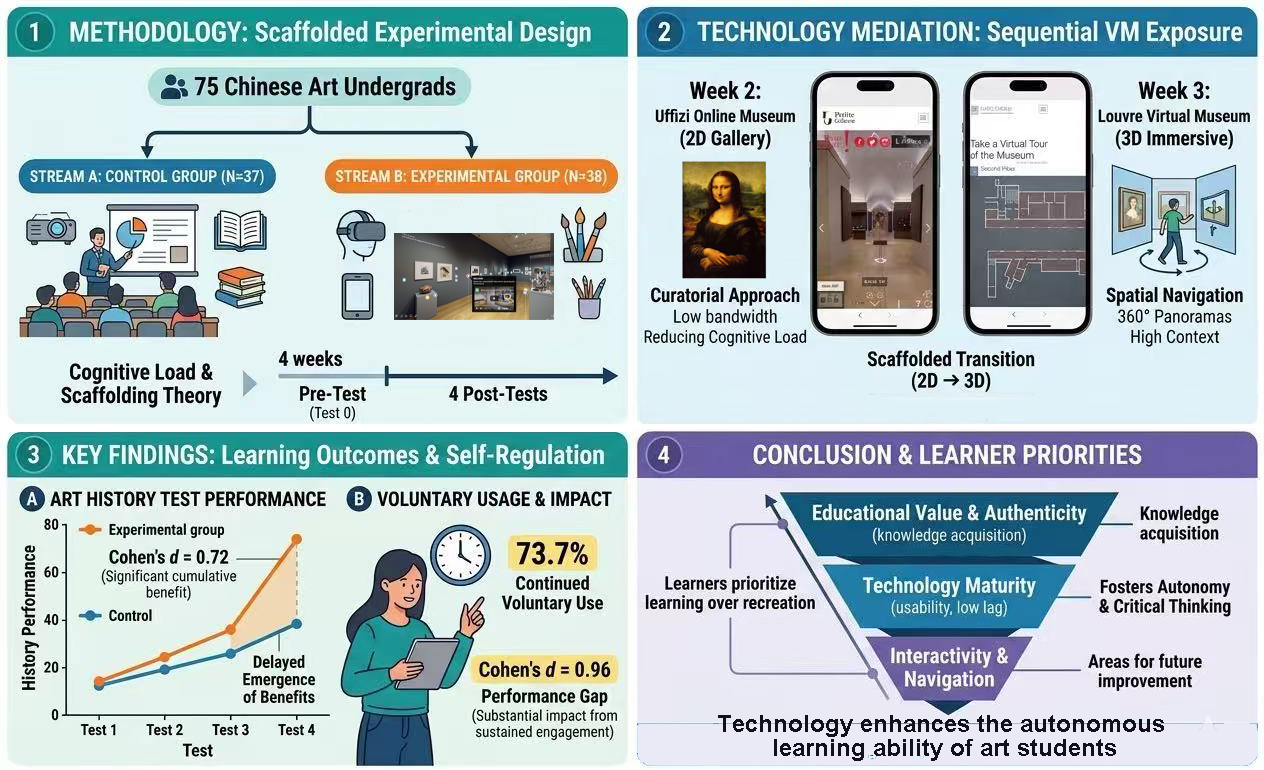
To directly examine whether continued use was associated with learning outcomes, we compared the Test 4 scores of continued users (n = 28) with those who did not continue use (n = 10) within the experimental group. An independent-samples t-test revealed that continued users scored significantly higher (M = 68.93, SD = 11.24) than non-users (M = 57.20, SD = 12.67), t = 2.54, p = 0.016, Cohen’s d = 0.96. This large effect size (d = 0.96) indicates that the performance gap between continued users and non-users was substantial and educationally meaningful.
The overall data and the reliability of the dimensions were analyzed through the online questionnaire and SPSS. The Cronbach’s Alpha coefficient for the overall data reached 0.943. The Cronbach’s Alpha coefficients for all dimensions were greater than 0.7, indicating good reliability of the data. The validity analysis showed that the overall validity was 0.612, indicating good overall validity. In addition, the validity of each question showed that the validity of all questions was higher than 0.6, confirming the reasonableness of the questionnaire topic setting.
To address RQ2, a Friedman test was conducted on the questionnaire data to examine whether there were significant differences in the scores of the four dimensions, which yielded a p-value of less than 0.01, thus suggesting that there were significant differences in the scores of the four dimensions of Authenticity, Interactivity, Navigation, and Learning. Pairwise comparison of the data for the four dimensions was conducted to determine which two dimensions had significant differences in their scores.
3.6. RQ3 Analysis
This study employed an open-ended essay-style interview question to explore learners’ experiences with VMs, following the qualitative research principles outlined by Braun and Clarke [
31] for phenomenological investigation. The research utilized a single comprehensive question which addressed multiple aspects of VMs usage. This approach aligned with Braun and Clarke [
32] work on crafting effective interview questions that encourage detailed narrative responses.
The interview question was carefully structured based on Creswell and Poth [
33] guidelines for designing open-ended questions that elicit rich, detailed responses while minimizing researcher bias.
Responses were collected in written form, with participants required to provide detailed answers with a minimum length of 300 words. This format is supported by the research of Guest et al. [
34] on qualitative data collection, which suggested that written responses can provide participants with time for reflection and careful articulation of their experiences. The written format also aligns with Kvale [
35] recommendations for gathering rich descriptive data suitable for thematic analysis.
The collected responses were analyzed using thematic analysis, following the systematic approach described by Merriam and Tisdell [
36]. This process began with a thorough reading of all responses to understand overall patterns and trends in the data, consistent with Miles et al. [
37] guidelines for qualitative data analysis. The analysis then proceeded through iterative coding phases to identify key themes, following Patton [
38] applied thematic analysis framework.
4. Findings
4.1. RQ1 Finding
The value of U statistic and the corresponding
p-value are presented in
Table 4. No significant differences were found in the scores for Test 1, Test 2, and Test 3, as the
p-value is greater than 0.05. The Mann–Whitney U test revealed a statistically significant difference only in Test 4 (U = 414.000,
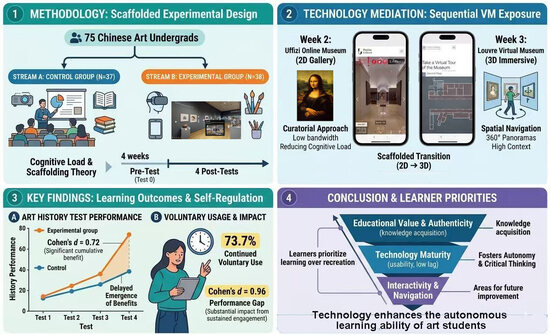
p = 0.002). To quantify the magnitude of this difference, Cohen’s d was calculated, yielding an effect size of d = 0.72, which is considered a medium-to-large effect in educational research. This effect size indicates that the VM intervention not only produced statistically significant results but also educationally meaningful improvements in learning outcomes. To contextualize this finding, prior meta-analyses of educational technology interventions have reported average effect sizes ranging from d = 0.20 to d = 0.50, suggesting that the observed effect (d = 0.72) represents a substantively impactful intervention. This provides a clearer indication of the practical significance of the VM intervention beyond mere statistical significance.
While no significant differences were found in Tests 1–3, the medium-to-large effect size (d = 0.72) observed in Test 4 indicates that the integration of VMs had a substantively meaningful positive impact on final learning outcomes. This delayed emergence of significant effects suggests that the benefits of VM-based learning may be cumulative and contingent upon learners’ adaptation to the new medium, rather than immediate. Alternative explanations for this pattern, such as increasing familiarity with the test format or content consolidation over time, were considered. However, the convergent evidence from questionnaires and interviews—specifically, reports of continued self-directed VM use outside class—strongly suggests that prolonged engagement and strategic use of VMs were key drivers of the performance gap observed in the final assessment.
In the first three tests of the session, there were no significant differences between the control and experimental groups, either collectively or at an individual level. This suggests that, in accordance with established educational principles, the use of VMs for teaching and learning did not rapidly improve the learners’ performance in a short period of time. However, after continued independent use of VMs—particularly among the 28 learners who voluntarily engaged with them beyond the classroom setting and through peer discussions, a positive impact was observed on learners’ knowledge construction of Renaissance art history.
The absence of significant differences in Tests 1–3 may reflect an adaptation period during which students familiarized themselves with the VM environment before realizing cumulative learning benefits. This interpretation is consistent with prior research on technology-mediated learning, which suggests that learners require time to develop proficiency with new digital tools before pedagogical benefits can be fully realized [
18,
19]. The delayed emergence of significant effects also aligns with the cumulative nature of knowledge construction in art history education, where comparative analysis and synthesis skills develop over time rather than immediately upon exposure to new content.
To examine whether continued VM use was associated with higher performance, we compared the Test 4 scores of students who reported continued use (n = 28) with those who did not (n = 10) within the experimental group. An independent-samples t-test revealed that students who continued using VMs outside class scored significantly higher (M = 68.93, SD = 11.24) than those who did not (M = 57.20, SD = 12.67), t = 2.54, p = 0.016, Cohen’s d = 0.96. This large effect size (d = 0.96) provides strong evidence that sustained, self-directed engagement with VMs was associated with substantially improved learning outcomes. The 28 students who reported continued VM use did so voluntarily, without teacher assignment or course credit, reflecting genuine self-directed learning behavior.
Importantly, continued use was entirely voluntary. Students were not assigned additional VM activities, nor were they provided with course credit or incentives for continued engagement. The 28 students who continued using VMs did so of their own initiative, reflecting genuine self-directed learning behavior. This distinction between teacher-directed and voluntary use is critical for interpreting the observed performance differences, as it suggests that the benefits of VM exposure were amplified through autonomous engagement beyond formal instruction.
4.2. RQ2 Finding
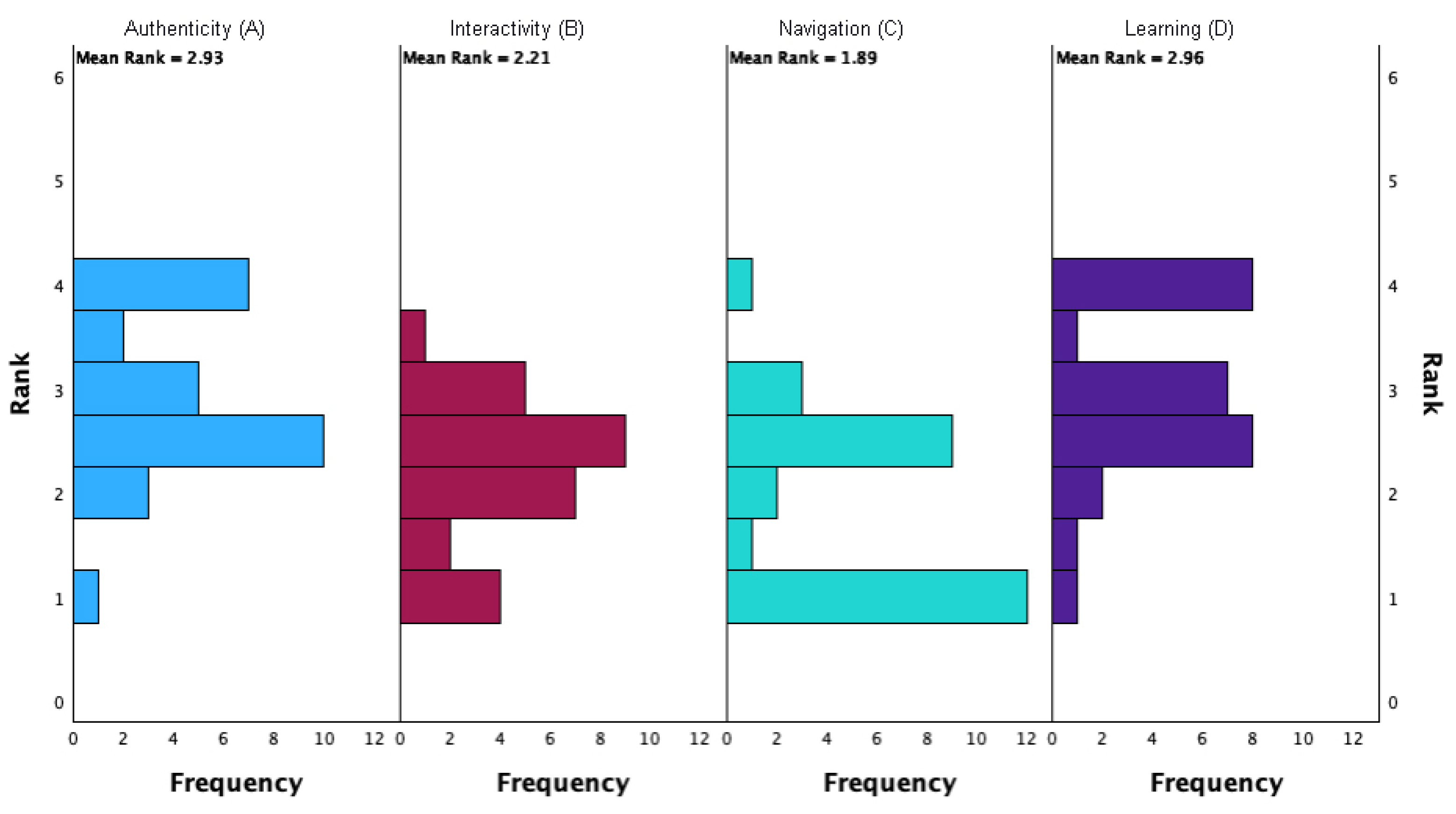
Based on the results from
Figure 5 and
Table 5, the navigation dimension shows significant differences in comparison with the authenticity and learning dimensions. This suggests that users find the navigation experience in virtual museums less satisfactory.
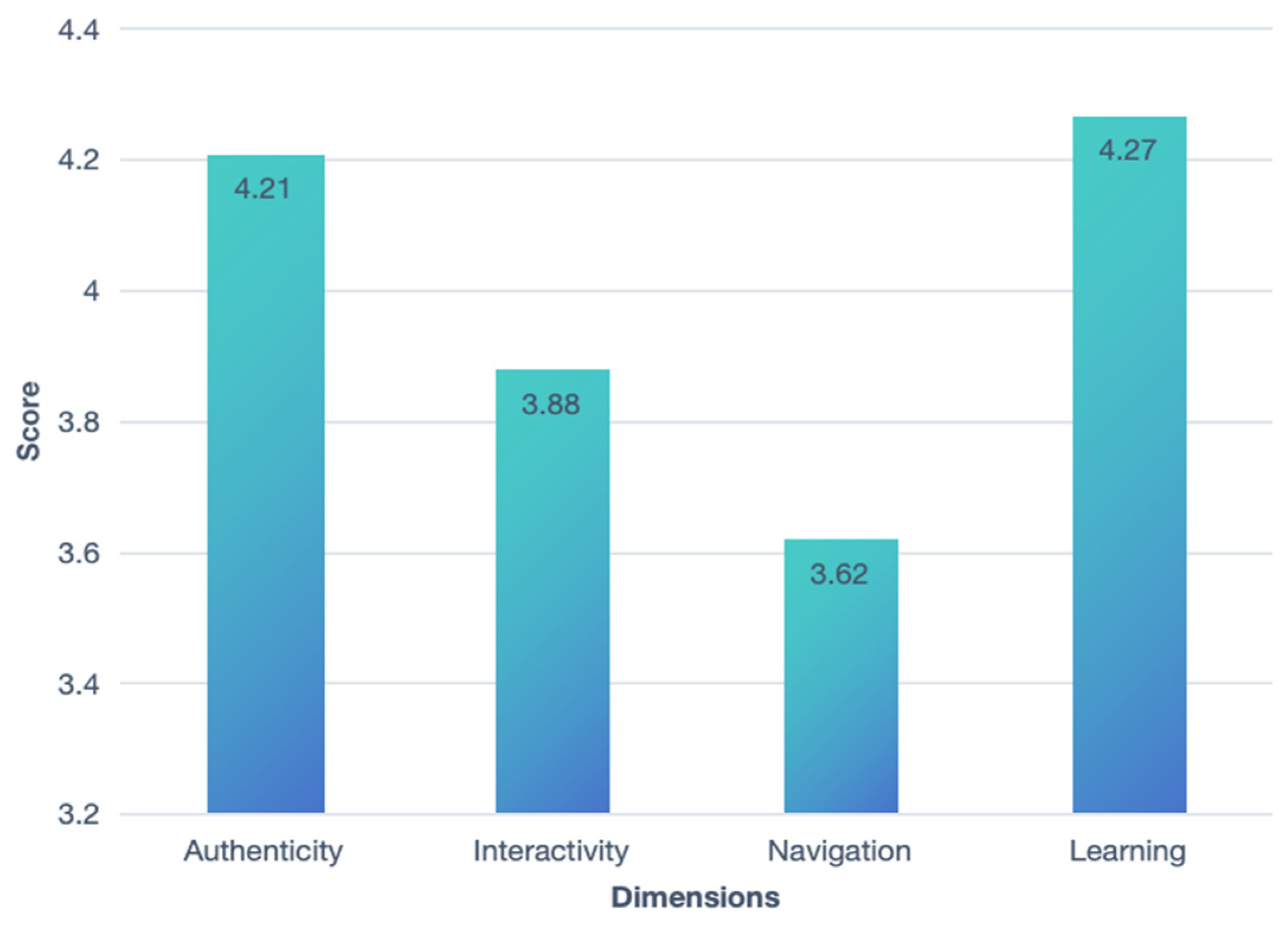
To better understand learners’ perception of these four dimensions, we calculated the average scores of the questions in each category. Among all four dimensions, “Learning” received the highest score (see
Figure 3), “Authenticity” ranked second, while “Interactivity” and “Navigation” scored relatively lower.
These results indicate that the Learning dimension, representing the knowledge gained through engagement with VMs has the most substantial positive impact. Learners effectively seek out and acquire information during their interaction with VMs, indicating the importance of well-designed learning opportunities with these environments. Authenticity emerged as another critical factor influencing the learning experiences, as a sufficiently authentic environment increases the reproduction of the cultural artifacts and enhances the learner’s interest in learning. However, there remains room for improvement in enhancing the authenticity of VMs. Interaction and Navigation are two dimensions with lower scores, highlighting key areas for refinement. Effective interactivity within VMs can greatly increase both engagement and learning efficiency, while intuitive navigation supports learners in locating relevant content.
Overall, these results suggest that learners prioritize the Learning dimension in their experience with VMs, particularly in terms of efficiently locating desired content and fulfilling their knowledge acquisition needs (see
Figure 6).
4.3. RQ3 Finding
Analysis of the interview data revealed five distinct categories of learning strategies that learners employed to maximize their educational experience in VM environments. Each category demonstrates sophisticated approaches that learners have developed to enhance their VM learning experience.
4.3.1. Navigation-Based Learning Strategies
Learners developed specific approaches to optimize their learning paths through virtual spaces. Interview data showed that learners actively planned their virtual visits based on specific themes or time periods rather than engaging in random exploration. As one participant noted: “I focus more on whether there’s an actual guidance line leading me through either categories or timelines”.
The challenge of orientation in virtual spaces emerged as a significant concern. Multiple participants reported developing specific techniques for maintaining their bearings. One participant explained: “Without following the routes, it’s easy to return to the starting point”. Another participant noted difficulties with spatial orientation: “In the Uffizi Gallery, it’s easy to get confused about direction, and movement is accompanied by lag”. These experiences led learners to develop more structured approaches to virtual navigation.
4.3.2. Technical Enhancement Strategies
Connection quality emerged as a crucial factor, with one participant stating: “Use a faster network connection, otherwise switching between galleries or moving within the museum becomes frustratingly laggy”. Another participant highlighted the importance of image quality: “The artwork’s nameplates are blurry and unclear, we hope they can be made clearer so visitors can directly understand information about the works and authors as well as creative backgrounds during their visit”.
4.3.3. Cross-Reference Learning Strategies
Learners actively integrated multiple information sources to enhance their understanding. This strategy was particularly evidenced in how participants combined physical and digital resources. One participant described their approach: “Purchase a guide to the Uffizi Gallery domestically and refer to it while browsing”. Another participant emphasized the value of integrating different learning resources: “Through virtual technology, students can be as if they’re in the museum galleries, moving freely between exhibits, and even simulating the tactile experience of artworks”.
4.3.4. Interactive Engagement Strategies
Learners developed sophisticated approaches to interacting with virtual exhibits. Several participants emphasized the importance of detailed observation capabilities. One noted: “Through models and virtual reality technology, you can observe artifact details from all angles, reducing the risk of damage to artifacts while enhancing the viewing experience”.
The social aspect of learning was also prominent in the data. Participants valued opportunities for interaction and discussion: “Enhance VM interactive features, allowing students to interact and exchange ideas with classmates and teachers during VM visits”. Another participant suggested: “Can add some sound effects, ambient sounds. Can refer to the virtual Nanjing Massacre Memorial Hall’s feeling, letting people have an immersive feeling when entering this web page”.
4.3.5. Pedagogical Integration Strategies
The integration of VM into formal education emerged as a sophisticated strategy. Participants described specific approaches to combining virtual visits with traditional learning. The teacher noted: “VM should be organically integrated with field teaching; teachers can have students use VM to gain preliminary understanding of collections before physical visits”.
The educational value of VM was emphasized by multiple participants. One noted: “VM can break through geographical limitations, allowing students to explore world- class art treasures without leaving home, serving as an excellent teaching aid”. Another participant highlighted the broader educational impact: “It allows us to see places we wouldn’t go to, providing a completely new experience”.
These findings have significant implications for VM design and implementation. The identified strategies suggest the need for robust technical infrastructure that supports high-quality image viewing and stable platform performance. Educational support features should include detailed artwork metadata and customizable learning paths. The findings also emphasize the importance of intuitive interface design and clear way finding systems that support Learners’ navigation strategies.
6. Conclusions and Limitations
6.1. Original Contributions of This Study
This study provides empirical validation of a pedagogical framework for integrating virtual museums into humanities curricula through a four-week experimental design. While previous research has explored VMs as cultural heritage tools [
17,
23], few studies have systematically investigated their integration into formal course structures with longitudinal assessment of learning outcomes.
Results demonstrate that sustained VM use significantly enhances learning outcomes (d = 0.72), with continued voluntary engagement associated with particularly strong performance gains (d = 0.96). These effect sizes compare favorably with benchmarks from educational technology meta-analyses [
52] and suggest that VM-based instruction not only produces statistically significant effects but also educationally meaningful improvements that translate into practical advantages for learners. The magnitude of these effects is particularly noteworthy given the relatively short duration of the intervention, suggesting that longer-term implementation could yield even more substantial benefits.
We identify and quantify learner priorities in VM engagement across four theoretically grounded dimensions: Authenticity, Interactivity, Navigation, and Learning. The finding that educational value and authenticity outweigh other features provides empirically based design principles for VM developers and educators selecting platforms for instructional use.
We offer rich qualitative insights into learner strategies within VM environments. The identification of five distinct learning strategy categories—navigation-based, technical enhancement, cross-reference, interactive engagement, and formal integration—extends our understanding of how students actively construct knowledge in 3D interactive spaces. These findings move beyond usability studies to illuminate the cognitive and metacognitive processes underlying effective VM-based learning.
We contribute a theoretical reconceptualization of technical challenges as pedagogical opportunities. By framing navigation difficulties as potential catalysts for spatial literacy and metacognitive skill development, we challenge the prevailing deficit-oriented discourse in VR usability research and open new avenues for instructional design.
We extend the applicability of Technology-Mediated Learning Theory to humanities education, demonstrating its relevance beyond traditionally technology-focused disciplines. This cross-disciplinary validation strengthens the theory’s generalizability and offers a framework for future research on VR integration across the curriculum.
6.2. Practical Implications
For educators, this study provides a replicable instructional model for integrating VMs into art history courses, including detailed procedures for session structure, assessment, and student engagement. The finding that VM benefits emerge cumulatively suggests that instructors should design for sustained engagement rather than expecting immediate gains.
For VM developers, our findings highlight the critical importance of educational value and authenticity as design priorities. While technical sophistication matters, learners’ primary motivation is knowledge acquisition. Features that support learning—such as rich metadata, customizable learning paths, and integration with external resources—should take precedence over purely aesthetic or immersive elements.
For institutions, this research underscores the strategic value of investing in VR technologies as part of broader digital transformation initiatives. The demonstrated potential of VMs to foster self-directed learning, critical thinking, and cross-cultural engagement aligns with contemporary educational priorities and workforce development goals.
6.3. Limitations and Future Research
The conclusions of this study must be interpreted within its limitations. First, the homogeneous sample of digital media arts students from one Chinese institution limits generalizability. Future research should include participants from diverse disciplines, academic levels, and cultural contexts to establish broader validity. Cross-cultural comparisons would be particularly valuable given the global reach of virtual museums.
Second, our four-week intervention, while longer than many VM studies, may not capture long-term retention effects. Extended longitudinal research tracking students over semesters or years would illuminate whether VM-enhanced learning gains persist and transfer to other domains.
Third, while our exploratory gender analysis revealed no significant differences in this specific sample, the broader literature suggests that demographic factors warrant systematic investigation. Future studies should employ large, diverse samples stratified by gender, cultural background, academic discipline, and prior technology experience to enable robust subgroup analyses. Such research would contribute to developing evidence-based guidelines for designing inclusive virtual museum experiences that effectively serve diverse learner populations.
Last, the study’s focus on art history limits applicability to other disciplines. Comparative research examining VM integration across humanities, sciences, and professional programs would reveal domain-specific affordances and challenges.