Characterization of Commercially Available Vaginal Lubricants: A Safety Perspective



Abstract
1. Introduction
2. Experimental Section
2.1. Materials
2.2. Tested Products
2.3. pH and Buffering Capacity Measurements
2.4. Osmolality Assessment
2.5. Cytotoxicity Studies
2.6. Statistical Analysis
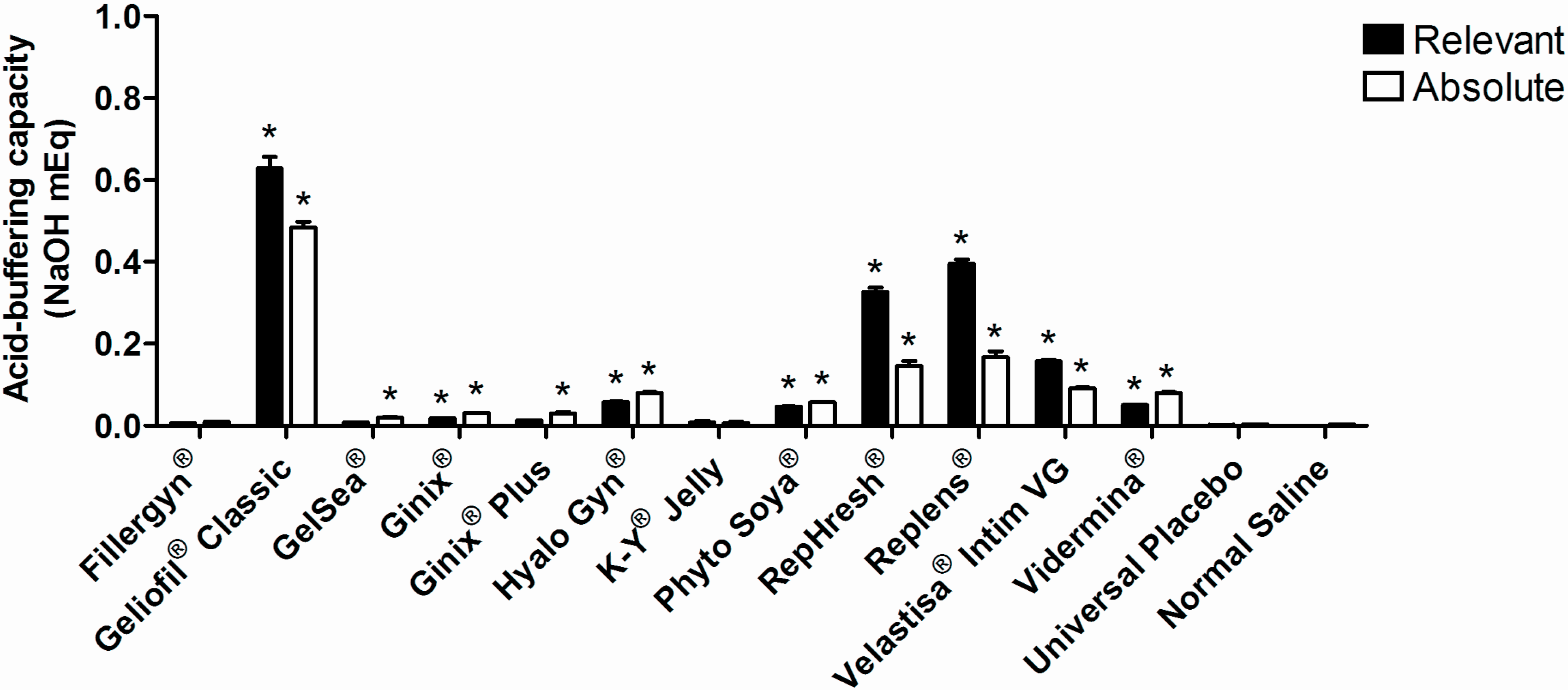
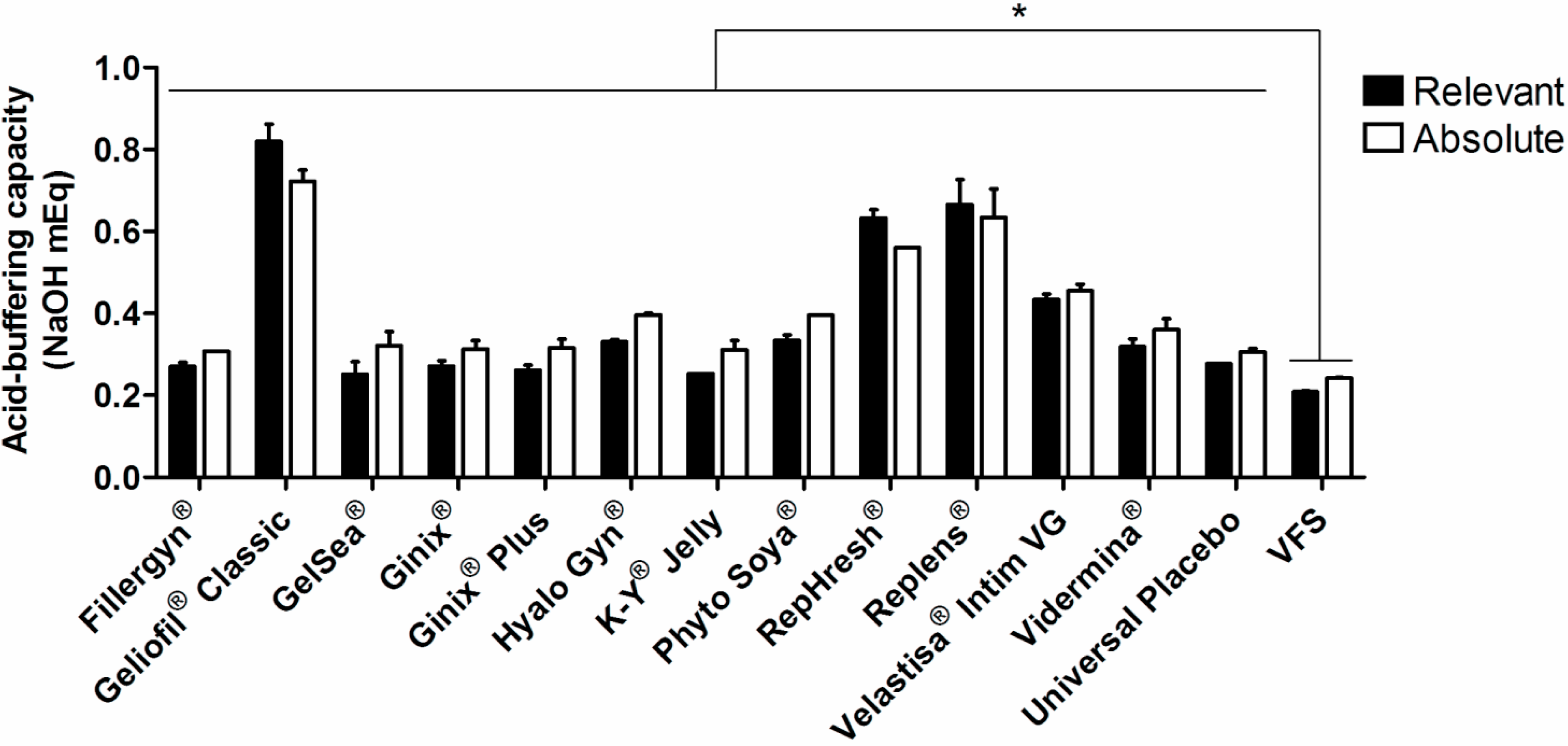
3. Results and Discussion

| Product | pH a | Osmolality (mOsm/kg) b |
|---|---|---|
| Fillergyn® | 4.5 ± 0.1 | 991 ± 6 |
| Geliofil® Classic | 3.8 ± 0.1 | 3,582 ± 11 |
| GelSea® | 5.7 ± 0.1 | 3,797 ± 16 |
| Ginix® | 5.0 ± 0.1 | 989 ± 9 |
| Ginix® Plus | 5.0 ± 0.1 | 977 ± 8 |
| Hyalo Gyn® | 4.8 ± 0.1 | 1,336 ± 7 |
| K-Y® Jelly | 3.5 ± 0.2 | 3,631 ± 13 |
| Phyto Soya® | 4.6 ± 0.1 | 1,226 ± 6 |
| RepHresh® | 3.4 ± 0.1 | 1,439 ± 6 |
| Replens® | 3.0 ± 0.1 | 1,177 ± 5 |
| Velastisa® Intim VG | 3.7 ± 0.1 | 1,151 ± 7 |
| Vidermina® | 4.9 ± 0.1 | 3,707 ± 16 |
| Universal Placebo | 4.4 ± 0.1 | 298 ± 2 |
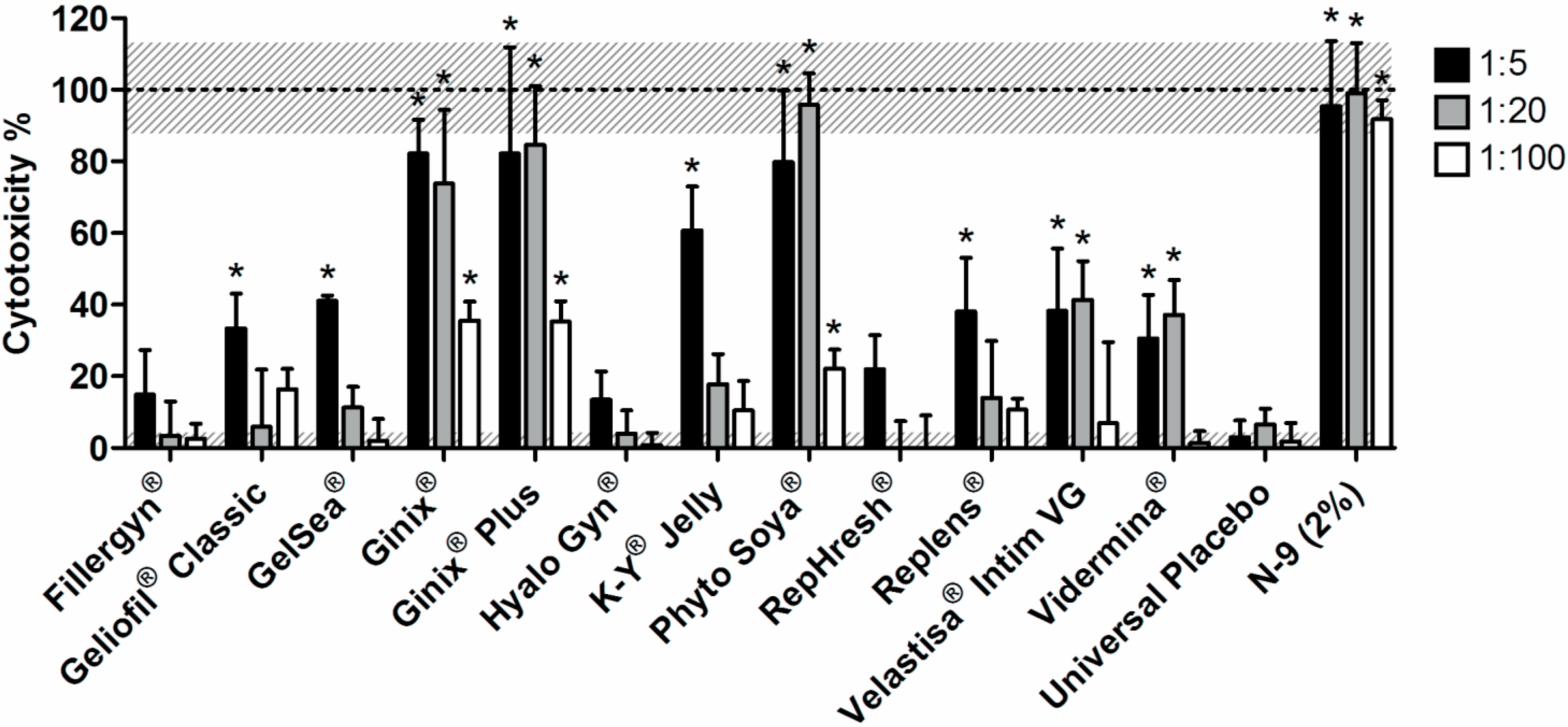
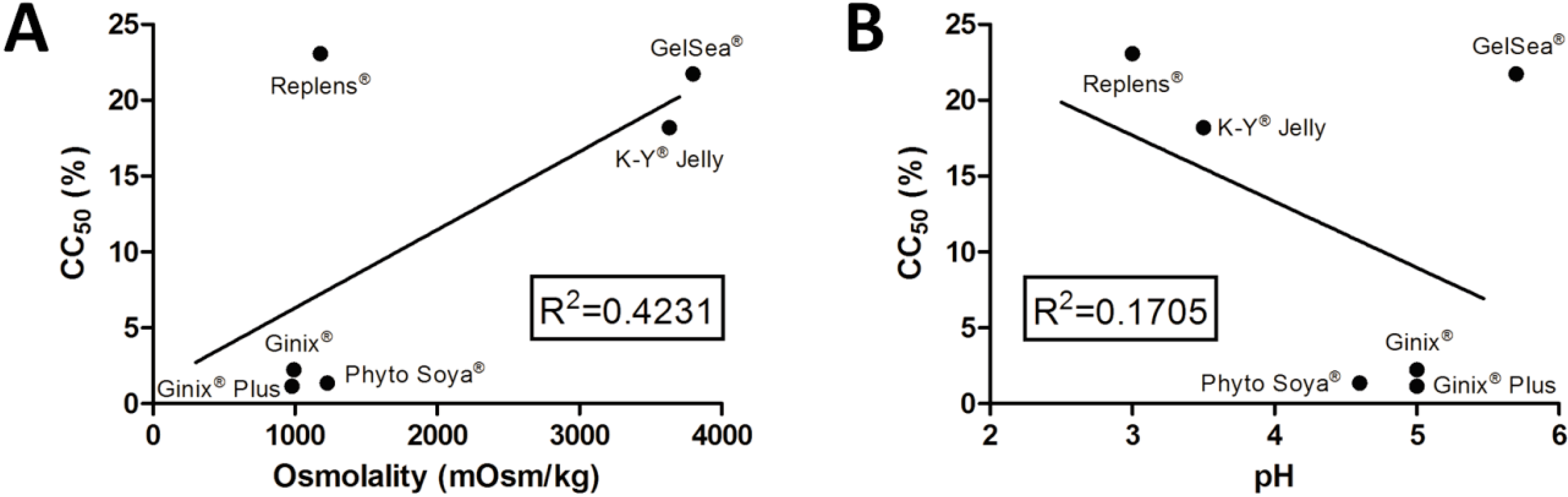
4. Conclusions
Supplementary Files
Supplementary File 1Acknowledgments
Author Contributions
Conflicts of Interest
References
- das Neves, J.; Amaral, M.H.; Bahia, M.F. Vaginal drug delivery. In Pharmaceutical Manufacturing Handbook: Production and Processes; Gad, S.C., Ed.; Wiley: Hoboken, NJ, USA, 2008; pp. 809–878. [Google Scholar]
- das Neves, J.; Palmeira-de-Oliveira, R.; Palmeira-de-Oliveira, A.; Rodrigues, F.; Sarmento, B. Vaginal mucosa and drug delivery. In Mucoadhesive Materials and Drug Delivery Systems; Khutoryanskiy, V.V., Ed.; Wiley: Chichester, UK, 2014; pp. 99–131. [Google Scholar]
- Braunstein, S.; van de Wijgert, J. Preferences and practices related to vaginal lubrication: Implications for microbicide acceptability and clinical testing. J. Womens Health 2005, 14, 424–433. [Google Scholar] [CrossRef]
- Pavelić, Ž.; Škalko-Basnet, N.; Jalšenjak, I. Characterisation and in vitro evaluation of bioadhesive liposome gels for local therapy of vaginitis. Int. J. Pharm. 2005, 301, 140–148. [Google Scholar]
- das Neves, J.; Bahia, M.F. Gels as vaginal drug delivery systems. Int. J. Pharm. 2006, 318, 1–14. [Google Scholar]
- das Neves, J.; Amaral, M.H.; Bahia, M.F. Performance of an in vitro mucoadhesion testing method for vaginal semisolids: Influence of different testing conditions and instrumental parameters. Eur. J. Pharm. Biopharm. 2008, 69, 622–632. [Google Scholar]
- das Neves, J.; da Silva, M.V.; Gonçalves, M.P.; Amaral, M.H.; Bahia, M.F. Rheological properties of vaginal hydrophilic polymer gels. Curr. Drug Deliv. 2009, 6, 83–92. [Google Scholar]
- Geibel, S. Condoms and condiments: Compatibility and safety of personal lubricants and their use in Africa. J. Int. AIDS Soc. 2013, 16, 18531. [Google Scholar] [CrossRef] [PubMed]
- Voeller, B.; Coulson, A.H.; Bernstein, G.S.; Nakamura, R.M. Mineral oil lubricants cause rapid deterioration of latex condoms. Contraception 1989, 39, 95–102. [Google Scholar] [CrossRef] [PubMed]
- Fevola, M.J.; Gentner, L.; Ahmad, N.; Librizzi, J.J. Getting intimate with polymers: Personal lubricants. Cosmet. Toilet. 2008, 123, 59–68. [Google Scholar]
- Nicole, W. A question for women’s health: Chemicals in feminine hygiene products and personal lubricants. Environ. Health Perspect. 2014, 122, A70–A75. [Google Scholar] [CrossRef] [PubMed]
- Maguire, R.A.; Bergman, N.; Phillips, D.M. Comparison of microbicides for efficacy in protecting mice against vaginal challenge with herpes simplex virus type 2, cytotoxicity, antibacterial properties, and sperm immobilization. Sex. Transm. Dis. 2001, 28, 259–265. [Google Scholar] [CrossRef] [PubMed]
- Adriaens, E.; Remon, J.P. Mucosal irritation potential of personal lubricants relates to product osmolality as detected by the slug mucosal irritation assay. Sex. Transm. Dis. 2008, 35, 512–516. [Google Scholar] [CrossRef] [PubMed]
- Moench, T.R.; Mumper, R.J.; Hoen, T.E.; Sun, M.; Cone, R.A. Microbicide excipients can greatly increase susceptibility to genital herpes transmission in the mouse. BMC Infect. Dis. 2010, 10, 331. [Google Scholar] [CrossRef] [PubMed]
- Begay, O.; Jean-Pierre, N.; Abraham, C.J.; Chudolij, A.; Seidor, S.; Rodriguez, A.; Ford, B.E.; Henderson, M.; Katz, D.; Zydowsky, T.; et al. Identification of personal lubricants that can cause rectal epithelial cell damage and enhance HIV type 1 replication in vitro. AIDS Res. Hum. Retrovir. 2011, 27, 1019–1024. [Google Scholar] [CrossRef] [PubMed]
- Dezzutti, C.S.; Brown, E.R.; Moncla, B.; Russo, J.; Cost, M.; Wang, L.; Uranker, K.; Kunjara Na Ayudhya, R.P.; Pryke, K.; Pickett, J.; et al. Is wetter better? An evaluation of over-the-counter personal lubricants for safety and anti-HIV-1 activity. PLoS One 2012, 7, e48328. [Google Scholar] [CrossRef] [PubMed]
- WHO/UNFPA/FHI. Use and Procurement of Additional Lubricants for Male and Female Condoms: WHO/UNFPA/FHI; WHO: Geneva, Switzerland, 2012. [Google Scholar]
- Tien, D.; Schnaare, R.L.; Kang, F.; Cohl, G.; McCormick, T.J.; Moench, T.R.; Doncel, G.; Watson, K.; Buckheit, R.W.; Lewis, M.G.; et al. In vitro and in vivo characterization of a potential universal placebo designed for use in vaginal microbicide clinical trials. AIDS Res. Hum. Retrovir. 2005, 21, 845–853. [Google Scholar] [CrossRef]
- Schwartz, J.L.; Ballagh, S.A.; Kwok, C.; Mauck, C.K.; Weiner, D.H.; Rencher, W.F.; Callahan, M.M. Fourteen-day safety and acceptability study of the universal placebo gel. Contraception 2007, 75, 136–141. [Google Scholar] [CrossRef] [PubMed]
- Garg, S.; Anderson, R.A.; Chany, C.J., II; Waller, D.P.; Diao, X.H.; Vermani, K.; Zaneveld, L.J. Properties of a new acid-buffering bioadhesive vaginal formulation (ACIDFORM). Contraception 2001, 64, 67–75. [Google Scholar]
- CurveExpert Basic 1.4. Available online: http://www.curveexpert.net/curveexpert-basic/ (accessed on 30 June 2014).
- Owen, D.H.; Katz, D.F. A vaginal fluid simulant. Contraception 1999, 59, 91–95. [Google Scholar] [CrossRef] [PubMed]
- das Neves, J.; Michiels, J.; Ariën, K.K.; Vanham, G.; Amiji, M.; Bahia, M.F.; Sarmento, B. Polymeric nanoparticles affect the intracellular delivery, antiretroviral activity and cytotoxicity of the microbicide drug candidate dapivirine. Pharm. Res. 2012, 29, 1468–1484. [Google Scholar] [CrossRef] [PubMed]
- Grimes, D.A.; Lopez, L.M.; Raymond, E.G.; Halpern, V.; Nanda, K.; Schulz, K.F. Spermicide used alone for contraception. Cochrane Database Syst. Rev. 2013, 12, CD005218. [Google Scholar] [PubMed]
- Wu, J.P.; Fielding, S.L.; Fiscella, K. The effect of polycarbophil gel (Replens™) on bacterial vaginosis: A pilot study. Eur. J. Obstet. Gynecol. Reprod. Biol. 2007, 130, 132–136. [Google Scholar] [CrossRef] [PubMed]
- Fiorilli, A.; Molteni, B.; Milani, M. Successful treatment of bacterial vaginosis with a policarbophil-carbopol acidic vaginal gel: Results from a randomised double-blind, placebo-controlled trial. Eur. J. Obstet. Gynecol. Reprod. Biol. 2005, 120, 202–205. [Google Scholar] [CrossRef] [PubMed]
- Sobel, J.D. Vaginitis. N. Engl. J. Med. 1997, 337, 1896–1903. [Google Scholar] [CrossRef] [PubMed]
- Kaminsky, M.; Willigan, D.A. pH and the potential irritancy of douche formulations to the vaginal mucosa of the albino rabbit and rat. Food Chem. Toxicol. 1982, 20, 193–196. [Google Scholar] [CrossRef] [PubMed]
- Simões, J.A.; Bahamondes, L.G.; Camargo, R.P.; Alves, V.M.; Zaneveld, L.J.; Waller, D.P.; Schwartz, J.; Callahan, M.M.; Mauck, C.K. A pilot clinical trial comparing an acid-buffering formulation (ACIDFORM gel) with metronidazole gel for the treatment of symptomatic bacterial vaginosis. Br. J. Clin. Pharmacol. 2006, 61, 211–217. [Google Scholar] [CrossRef] [PubMed]
- Sinha, A.; Ewies, A.A. Non-hormonal topical treatment of vulvovaginal atrophy: An up-to-date overview. Climacteric 2013, 16, 305–312. [Google Scholar] [CrossRef]
- Boskey, E.R.; Cone, R.A.; Whaley, K.J.; Moench, T.R. Origins of vaginal acidity: High D/L lactate ratio is consistent with bacteria being the primary source. Hum. Reprod. 2001, 16, 1809–1813. [Google Scholar] [CrossRef] [PubMed]
- Bonferoni, M.C.; Giunchedi, P.; Scalia, S.; Rossi, S.; Sandri, G.; Caramella, C. Chitosan gels for the vaginal delivery of lactic acid: Relevance of formulation parameters to mucoadhesion and release mechanisms. AAPS PharmSciTech 2006, 7, 104. [Google Scholar] [CrossRef] [PubMed]
- Lacey, C.J.; Woodhall, S.; Qi, Z.; Sawant, S.; Cowen, M.; McCormack, S.; Jiang, S. Unacceptable side-effects associated with a hyperosmolar vaginal microbicide in a phase 1 trial. Int. J. STD AIDS 2010, 21, 714–717. [Google Scholar] [CrossRef] [PubMed]
- Kutteh, W.H.; Chao, C.H.; Ritter, J.O.; Byrd, W. Vaginal lubricants for the infertile couple: Effect on sperm activity. Int. J. Fertil. Menopausal. Stud. 1996, 41, 400–404. [Google Scholar] [PubMed]
- Agarwal, A.; Deepinder, F.; Cocuzza, M.; Short, R.A.; Evenson, D.P. Effect of vaginal lubricants on sperm motility and chromatin integrity: A prospective comparative study. Fertil. Steril. 2008, 89, 375–379. [Google Scholar] [CrossRef] [PubMed]
- Mahalingam, A.; Simmons, A.P.; Ugaonkar, S.R.; Watson, K.M.; Dezzutti, C.S.; Rohan, L.C.; Buckheit, R.W., Jr.; Kiser, P.F. Vaginal microbicide gel for delivery of IQP-0528, a pyrimidinedione analog with a dual mechanism of action against HIV-1. Antimicrob. Agents Chemother. 2011, 55, 1650–1660. [Google Scholar] [CrossRef] [PubMed]
- Rohan, L.C.; Moncla, B.J.; Kunjara Na Ayudhya, R.P.; Cost, M.; Huang, Y.; Gai, F.; Billitto, N.; Lynam, J.D.; Pryke, K.; Graebing, P.; et al. In vitro and ex vivo testing of tenofovir shows it is effective as an HIV-1 microbicide. PLoS One 2010, 5, e9310. [Google Scholar] [CrossRef] [PubMed]
- Dezzutti, C.S.; Rohan, L.C.; Wang, L.; Uranker, K.; Shetler, C.; Cost, M.; Lynam, J.D.; Friend, D. Reformulated tenofovir gel for use as a dual compartment microbicide. J. Antimicrob. Chemother. 2012, 67, 2139–2142. [Google Scholar] [CrossRef] [PubMed]
- Grammen, C.; Arien, K.K.; Venkatraj, M.; Joossens, J.; van der Veken, P.; Heeres, J.; Lewi, P.J.; Haenen, S.; Augustyns, K.; Vanham, G.; et al. Development and in vitro evaluation of a vaginal microbicide gel formulation for UAMC01398, a novel diaryltriazine NNRTI against HIV-1. Antivir. Res. 2014, 101, 113–121. [Google Scholar] [CrossRef] [PubMed]
- Decker, T.; Lohmann-Matthes, M.L. A quick and simple method for the quantitation of lactate dehydrogenase release in measurements of cellular cytotoxicity and tumor necrosis factor (TNF) activity. J. Immunol. Methods 1988, 115, 61–69. [Google Scholar] [CrossRef] [PubMed]
- Chen, J.; Geng, L.; Song, X.; Li, H.; Giordan, N.; Liao, Q. Evaluation of the efficacy and safety of hyaluronic acid vaginal gel to ease vaginal dryness: A multicenter, randomized, controlled, open-label, parallel-group, clinical trial. J. Sex. Med. 2013, 10, 1575–1584. [Google Scholar] [CrossRef] [PubMed]
- Van Damme, L.; Ramjee, G.; Alary, M.; Vuylsteke, B.; Chandeying, V.; Rees, H.; Sirivongrangson, P.; Mukenge-Tshibaka, L.; Ettiegne-Traore, V.; Uaheowitchai, C.; et al. Effectiveness of COL-1492, a nonoxynol-9 vaginal gel, on HIV-1 transmission in female sex workers: A randomised controlled trial. Lancet 2002, 360, 971–977. [Google Scholar] [CrossRef] [PubMed]
- Hillier, S.L.; Moench, T.; Shattock, R.; Black, R.; Reichelderfer, P.; Veronese, F. In vitro and in vivo: The story of nonoxynol 9. J. Acquir. Immune Defic. Syndr. 2005, 39, 1–8. [Google Scholar] [CrossRef] [PubMed]
- Gali, Y.; Delezay, O.; Brouwers, J.; Addad, N.; Augustijns, P.; Bourlet, T.; Hamzeh-Cognasse, H.; Ariën, K.K.; Pozzetto, B.; Vanham, G. In vitro evaluation of viability, integrity and inflammation in genital epithelia upon exposure to pharmaceutical excipients and candidate microbicides. Antimicrob. Agents Chemother. 2010, 54, 5105–5114. [Google Scholar] [CrossRef] [PubMed]
- Poudrier, J.K. Final report on the safety assessment of phenoxyethanol. J. Am. Coll. Toxicol. 1990, 9, 259–277. [Google Scholar] [CrossRef]
© 2014 by the authors; licensee MDPI, Basel, Switzerland. This article is an open access article distributed under the terms and conditions of the Creative Commons Attribution license (http://creativecommons.org/licenses/by/3.0/).
Share and Cite
Cunha, A.R.; Machado, R.M.; Palmeira-de-Oliveira, A.; Martinez-de-Oliveira, J.; Das Neves, J.; Palmeira-de-Oliveira, R. Characterization of Commercially Available Vaginal Lubricants: A Safety Perspective. Pharmaceutics 2014, 6, 530-542. https://doi.org/10.3390/pharmaceutics6030530
Cunha AR, Machado RM, Palmeira-de-Oliveira A, Martinez-de-Oliveira J, Das Neves J, Palmeira-de-Oliveira R. Characterization of Commercially Available Vaginal Lubricants: A Safety Perspective. Pharmaceutics. 2014; 6(3):530-542. https://doi.org/10.3390/pharmaceutics6030530
Chicago/Turabian StyleCunha, Ana Raquel, Rita M. Machado, Ana Palmeira-de-Oliveira, José Martinez-de-Oliveira, José Das Neves, and Rita Palmeira-de-Oliveira. 2014. "Characterization of Commercially Available Vaginal Lubricants: A Safety Perspective" Pharmaceutics 6, no. 3: 530-542. https://doi.org/10.3390/pharmaceutics6030530
APA StyleCunha, A. R., Machado, R. M., Palmeira-de-Oliveira, A., Martinez-de-Oliveira, J., Das Neves, J., & Palmeira-de-Oliveira, R. (2014). Characterization of Commercially Available Vaginal Lubricants: A Safety Perspective. Pharmaceutics, 6(3), 530-542. https://doi.org/10.3390/pharmaceutics6030530