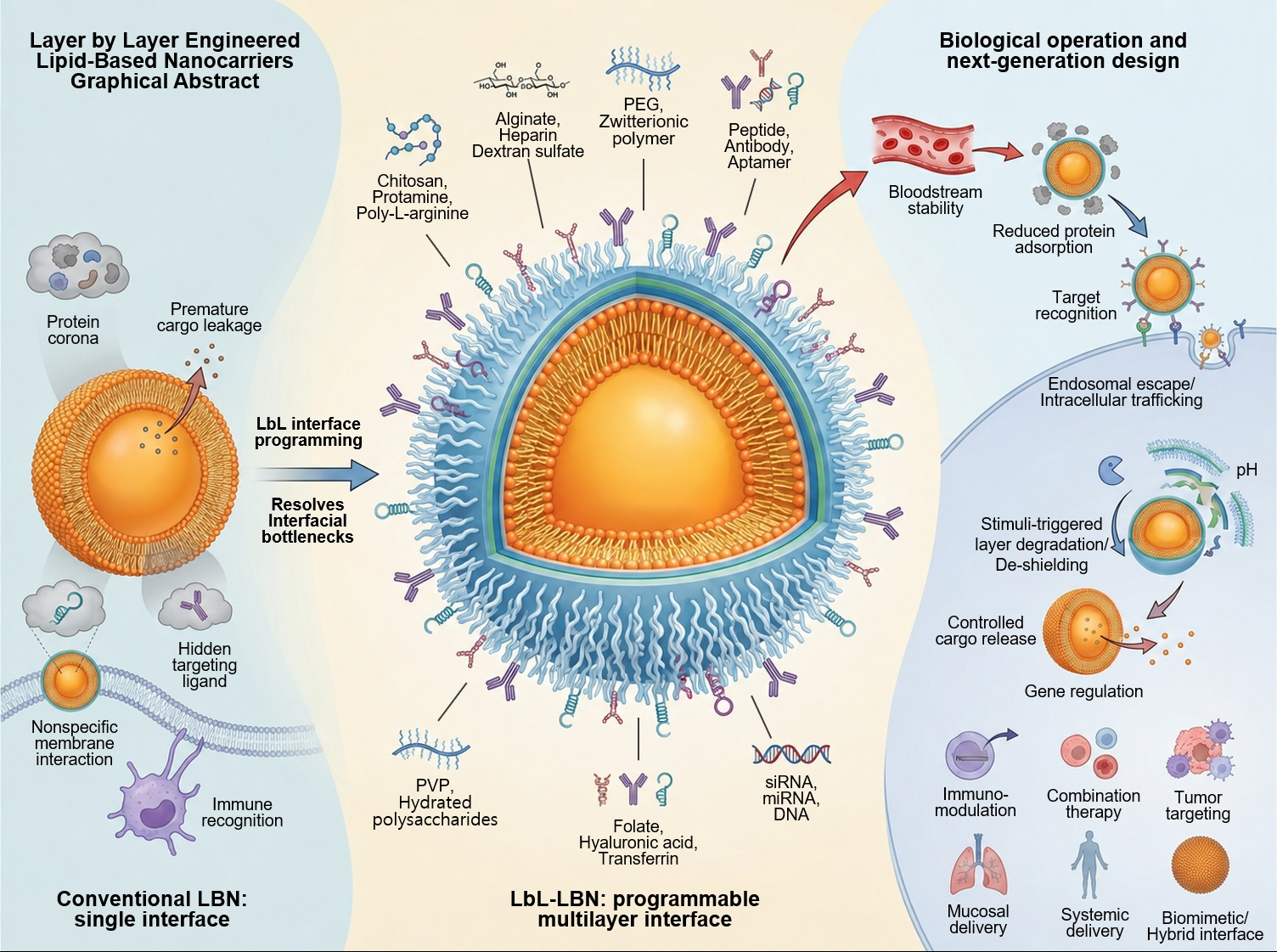
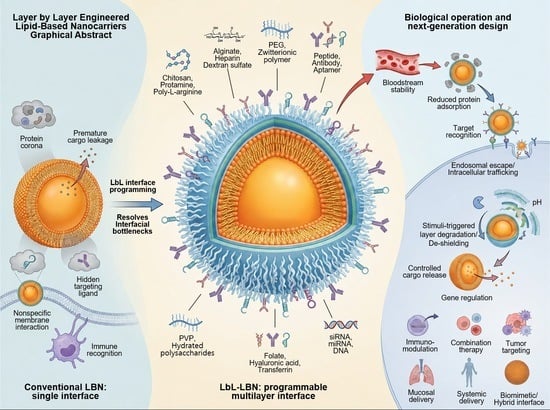
Layer by Layer Engineered Lipid-Based Nanocarriers for Therapeutic Delivery and Next-Generation Design
 , , , ,
  and
and 
Abstract
1. Introduction
2. Structural Limitations of Lipid-Based Nanocarriers and the Need for Hierarchical LbL Design
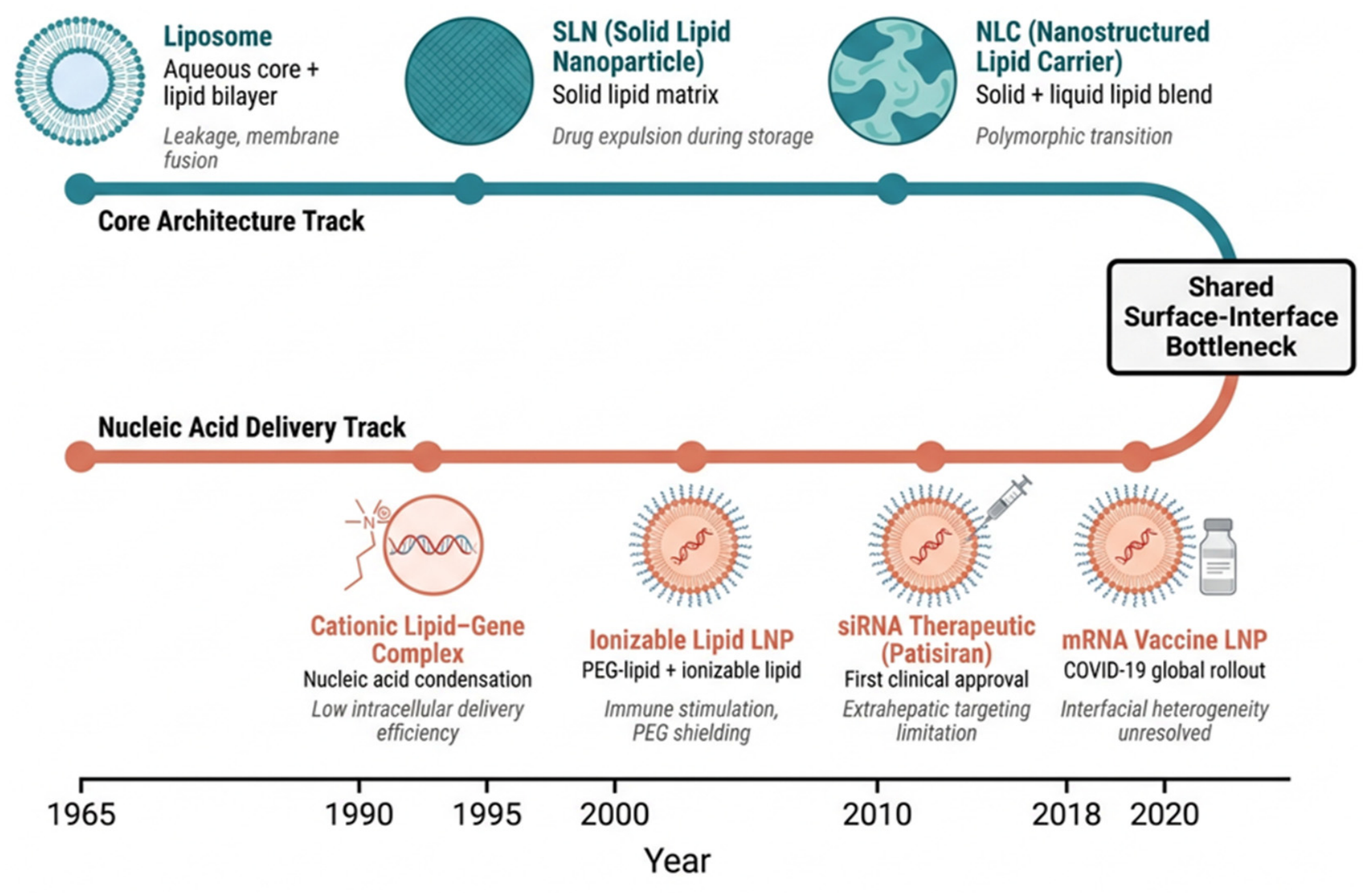
2.1. Structural Evolution of LBNs as Drug Delivery Platforms
2.2. Surface-Modification Strategies for Self-Assembled LBNs
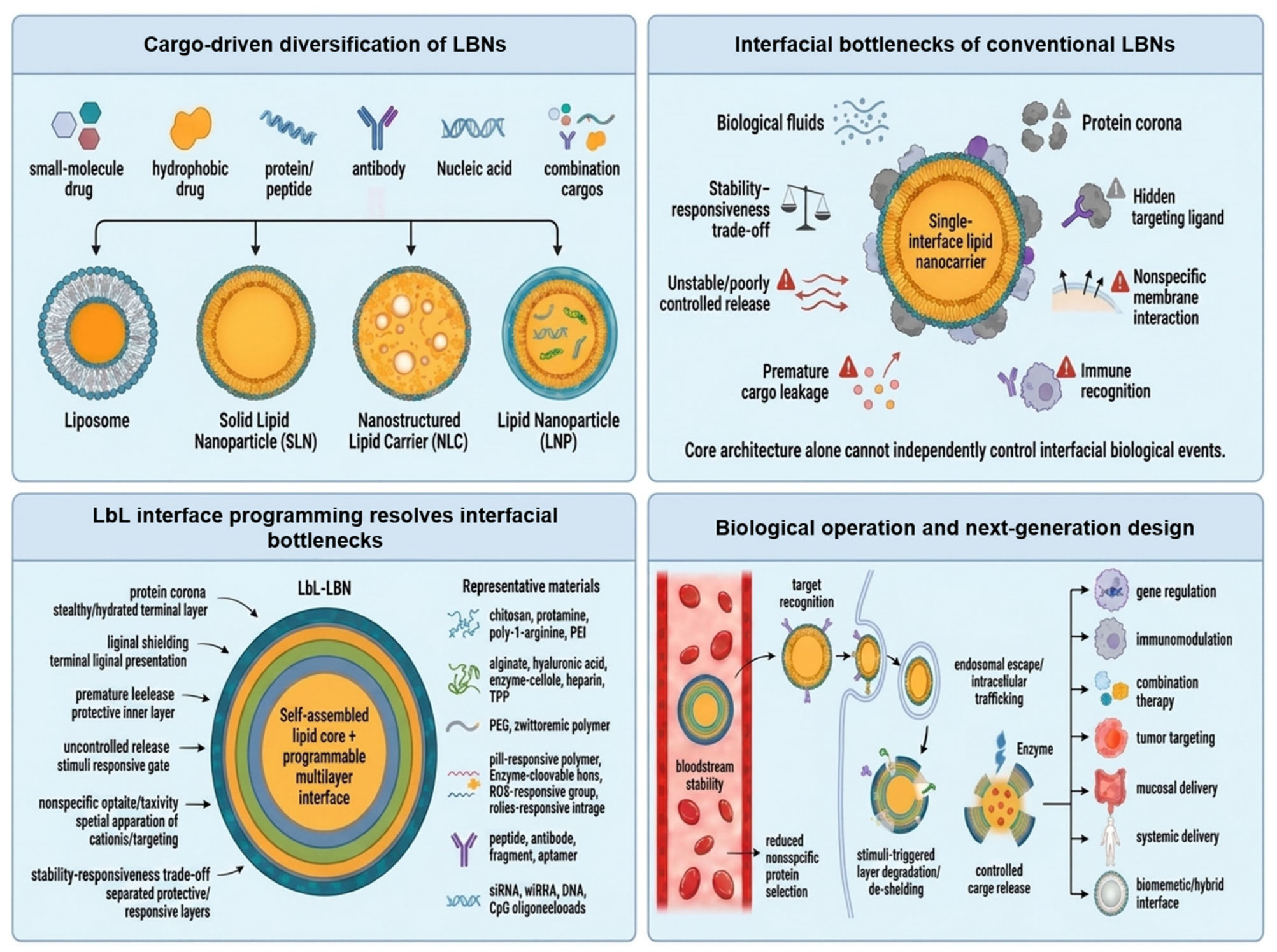
2.3. Limitations of Conventional Surface Modification and Application of LbL Interface Design
3. Structural Characteristics of LbL-LBNs and Cellular-Level Mechanisms of Action
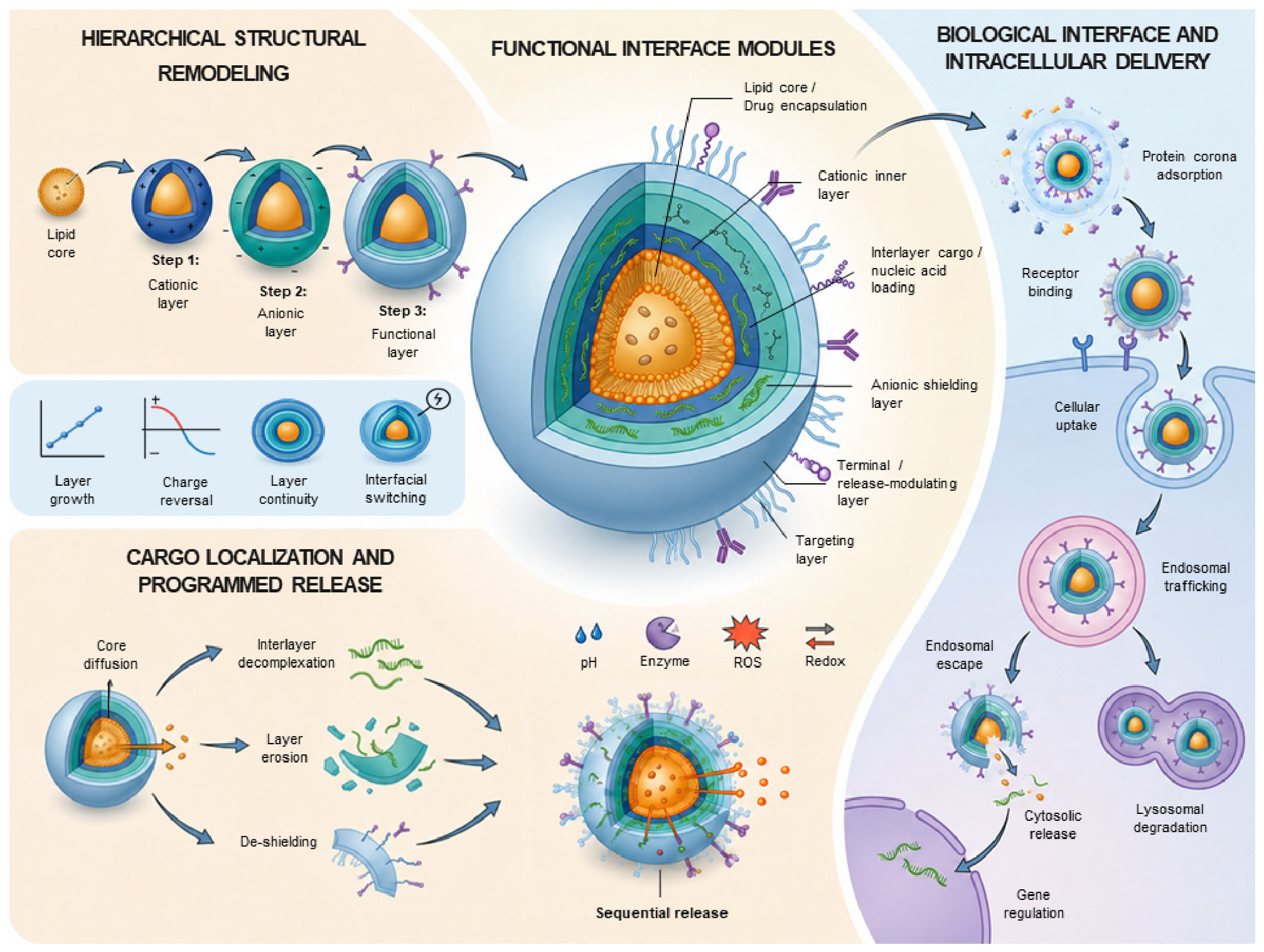
3.1. Physicochemical and Structural Remodeling Induced by LbL
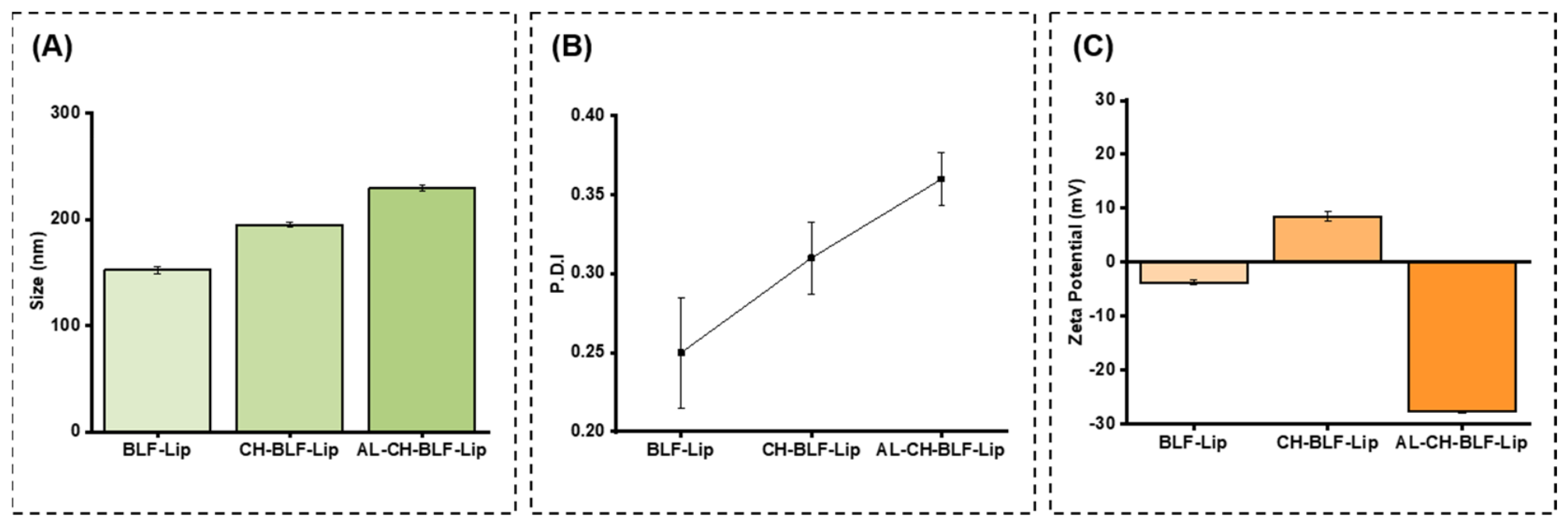
3.1.1. Layer Growth and Colloidal Uniformity: Size/PDI-Based Interpretation
3.1.2. Surface Charge Transition and Terminal Layer Identity: Zeta Potential and Charge Reversal
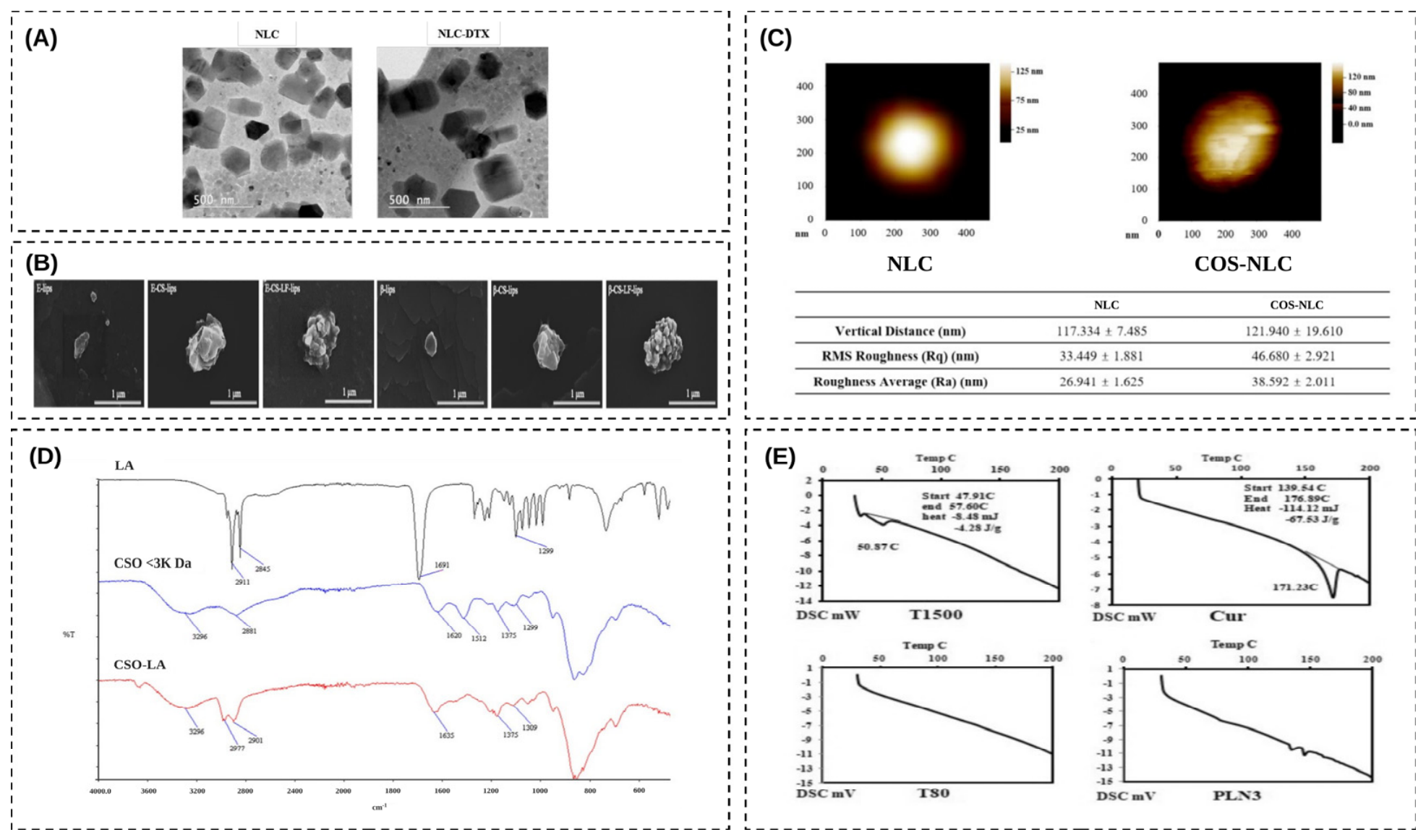
3.1.3. Core–Shell Morphology and Layer Continuity: Microscopy-Based Structural Validation
3.1.4. Surface Composition and Lipid Matrix Organization: FT-IR/XPS-Based Compositional and Phase-State Analysis
3.1.5. Structural Stability and Dynamic Interfacial Switching

3.2. LbL Layering Materials and Functional Interface Modules
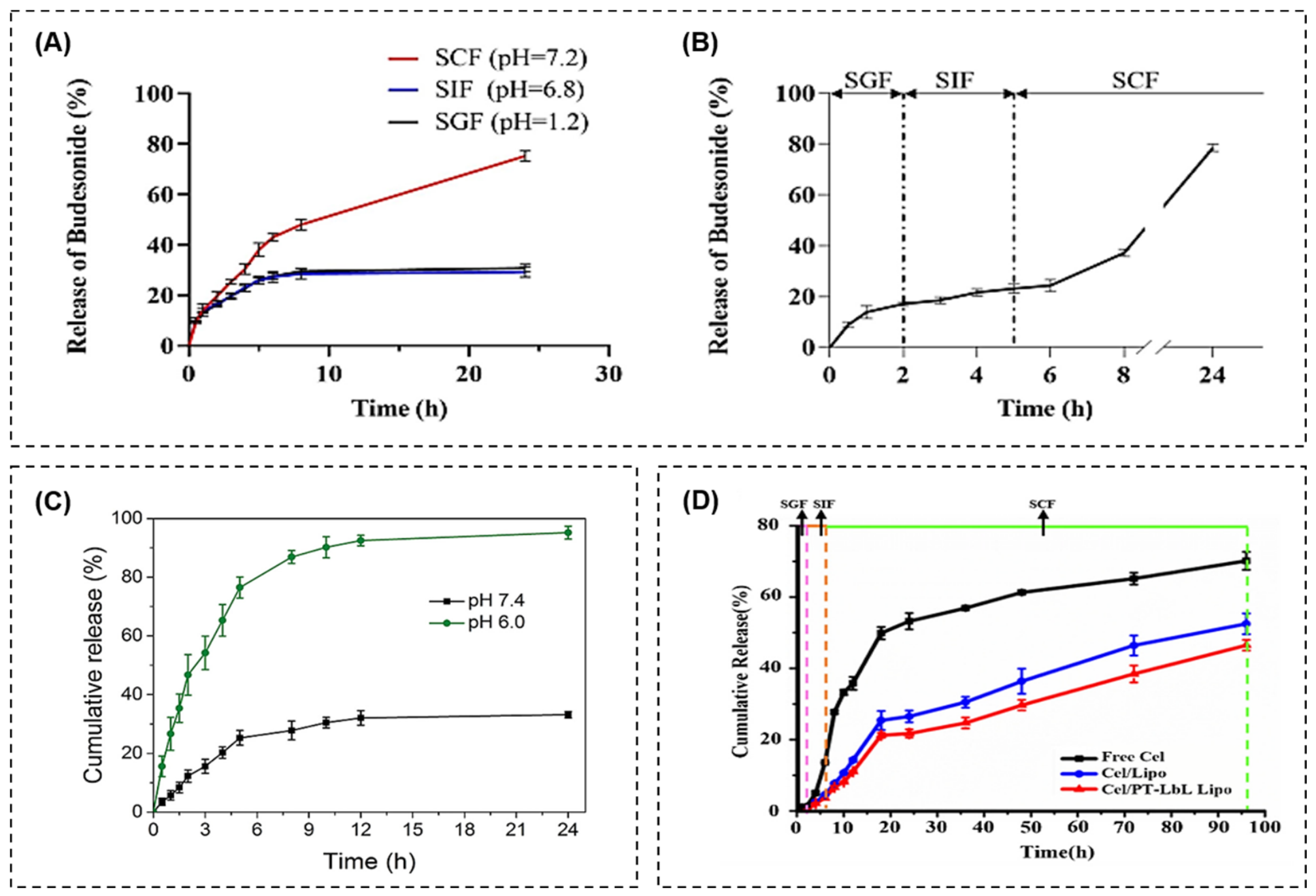
3.3. Analysis of Cargo Loading and Release Behavior According to LbL Structuring

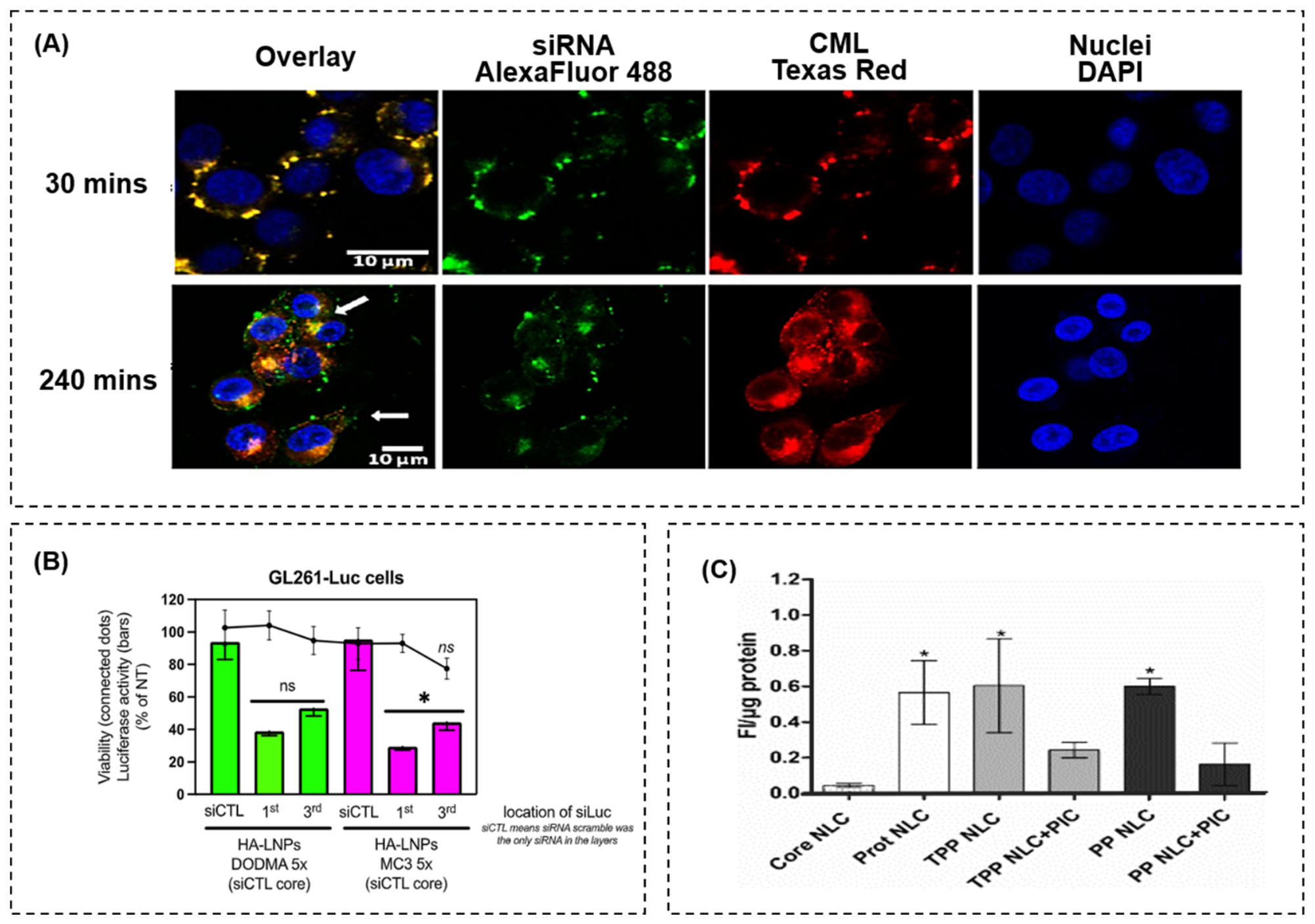
3.4. Biological Interface Formation and Intracellular Delivery Routes
3.5. Design Trade-Offs and Translational Challenges of LbL-LBNs
4. Applications and Development of LbL-LBN Systems Toward Biomimetic Hybrid Interfaces
4.1. Evaluation of Cellular Drug Responses and Combination-Therapy Effects

| Evaluation Category | Representative Methods | Measured Parameters/Readouts | Evaluation Purpose/Interpretation | Ref. |
|---|---|---|---|---|
| Cell viability /cytotoxicity | MTT, WST-8, CCK-8 assay | Metabolic activity-based cell viability | Comparison of differences in first-line treatment response among free cargo, single-cargo LBN, dual-cargo LBN, and LbL-coated LBN | [162,163,164] |
| LDH release assay | Membrane damage, cytotoxicity | Distinguish whether the reduction in viability is due to metabolic suppression or cytotoxicity resulting from membrane disruption | [162,165] | |
| Cell death | Annexin V/PI staining | Early apoptosis, late apoptosis, necrosis | Determine whether the decrease in cell viability is linked to apoptosis or necrosis | [166] |
| Caspase-3/7 or caspase-9 assay | Caspase activation | Determine whether the apoptotic signaling pathway is activated | [167] | |
| TUNEL assay | DNA fragmentation, apoptotic nuclei | Detection of apoptosis-associated DNA damage at the tissue or cellular level | [175] | |
| Cell cycle /proliferation | PI staining-based cell cycle analysis | G0/G1, S, G2/M phase distribution | Determine whether cell cycle arrest or proliferation suppression has occurred | [176] |
| Ki-67 staining, EdU/BrdU incorporation assay | Proliferation marker, DNA synthesis | Check for inhibition of cell proliferation | [177,178] | |
| Western blot | Cell-cycle-related proteins such as cyclin, CDK, p21, p27, p53, etc. | Supplementing the molecular basis for cell-cycle arrest | [179] | |
| Oxidative stress/mitochondrial damage | DCFH-DA assay | Intracellular ROS | Assessment of increased oxidative stress or antioxidant effects | [180] |
| MitoSOX staining | Mitochondrial ROS | Determination of mitochondria-associated oxidative stress | [181] | |
| JC-1 assay | Mitochondrial membrane potential | Determine the link between mitochondrial dysfunction and apoptosis | [182] | |
| GSH assay | Intracellular glutathione level | Assessment of redox balance or recovery from oxidative damage | [183] | |
| Inflammatory response | Griess assay | Nitrite/NO production | Assessment of the inhibition of inflammatory NO production; the Griess assay results are interpreted solely based on the NO/nitrite readout | [184] |
| ELISA | Secreted cytokines, e.g., TNF-α, IL-6, IL-1β, IL-10 | Assessment of changes in the secretion of pro-inflammatory or anti-inflammatory cytokines in the culture medium | [185] | |
| qPCR/RT-qPCR | mRNA levels of inflammatory genes, e.g., iNOS, COX-2, TNF-α, IL-6 | Determine whether the expression of inflammation-related genes is regulated | [186,187] | |
| Western blot | iNOS, COX-2, NF-κB p65, p-p65, IκBα, MAPK-related proteins | Assessment of changes in protein levels within inflammatory signaling pathways | [179] | |
| Nucleic acid cargo function | qPCR/RT-qPCR | Target mRNA level, miRNA level | Verify whether the siRNA/miRNA/mRNA cargo functioned effectively within the cells | [186,187] |
| Western blot | Target protein expression | Verify whether the changes in mRNA led to actual protein regulation | [179] | |
| Reporter assay | Luciferase or fluorescence reporter activity | Verification of functional readouts for nucleic acid cargo, such as gene silencing, miRNA replacement, and immune activation | [188] | |
| Biomimetic/biointerface response | Flow cytometry, confocal microscopy | Target vs. non-target cell uptake, macrophage uptake, homotypic binding | To determine whether the biomimetic interface or terminal ligand layer modulates cell selectivity, immune cell evasion, and cell membrane interactions | [160,189] |
| Western blot, immunostaining | Membrane marker retention, e.g., CD47, CD44, integrin, tetraspanins | Verification of the maintenance of biological identity in cell membrane-derived or exosome-like interfaces | [160,189] | |
| ELISA/cytokine assay | Cytokine response after immune cell exposure | Evaluation of whether biomimetic interfaces induce or mitigate immune responses | [185,189] | |
| Combination effect | Dose–response curve | IC50, effective concentration, dose reduction | To determine whether co-delivery improves therapeutic response compared to single treatment | [168,169] |
| Combination index analysis | CI value, dose reduction index | Distinguishing between additive and synergistic effects using methods such as the Chou-Talalay method | [168] | |
| Bliss/Loewe/HSA model | Expected vs. observed response, synergy score | Quantitatively evaluate whether the combination effect arises from a simple increase in concentration or from complementary mechanisms | [169] |
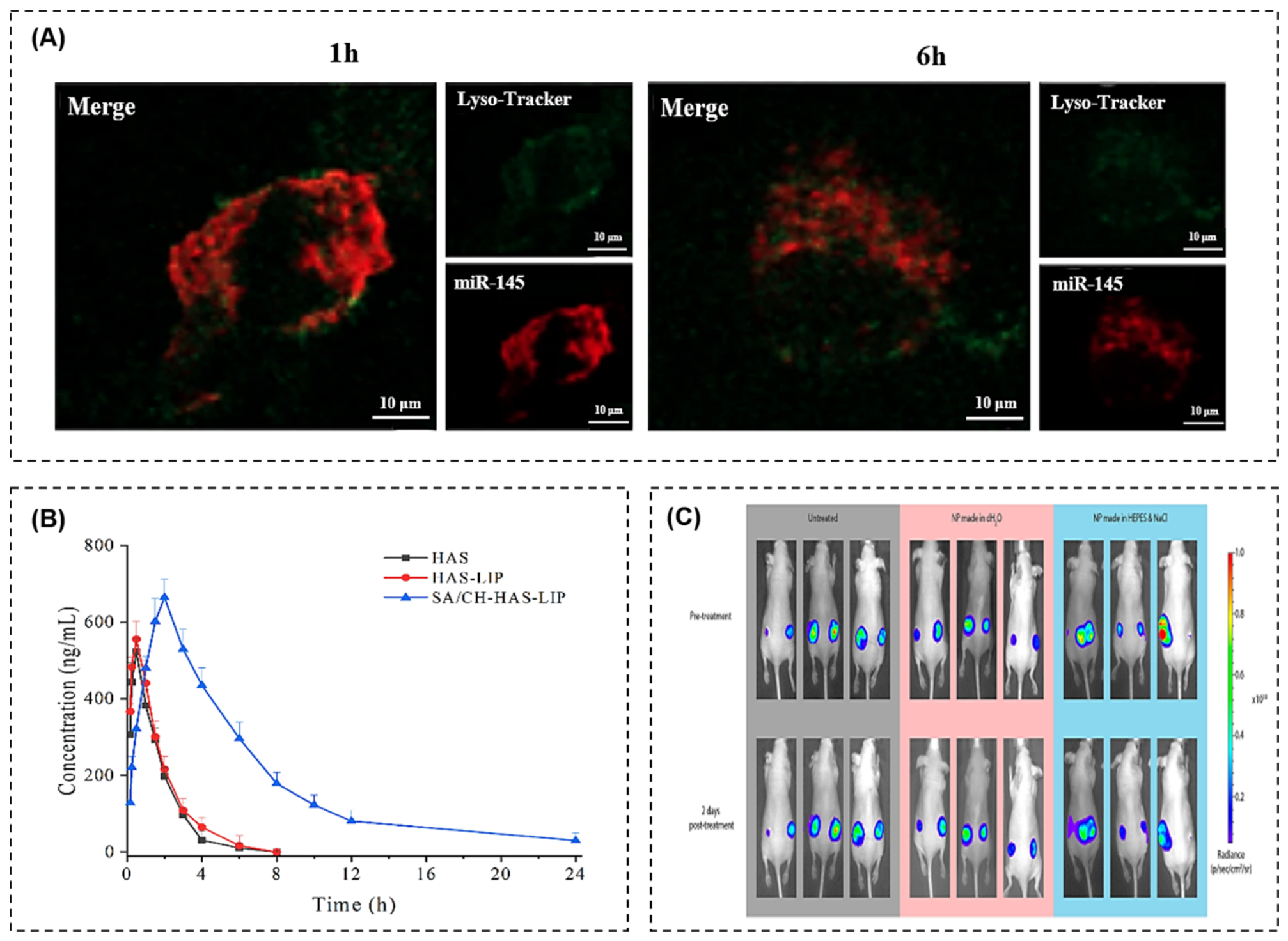
4.2. In Vivo Biodistribution, Stability, and Therapeutic Efficacy in Animal Models

4.3. Programmable Combination Platforms Extended to Biomimetic Hybrid Interfaces
5. Engineering Hurdles and Regulatory Bottlenecks for Clinical Translation
5.1. Translational Gap Between Clinically Validated LBN Platforms and LbL-LBNs
5.2. Manufacturing Reproducibility, Scale-Up Challenges, and Long-Term Stability of LbL Formulations
5.3. Critical Quality Attributes, Analytical Standardization, Stability Evaluation, and Regulatory Considerations
6. Conclusion and Future Perspectives
Author Contributions
Funding
Institutional Review Board Statement
Informed Consent Statement
Data Availability Statement
Acknowledgments
Conflicts of Interest
References
- Mitchell, M.J.; Billingsley, M.M.; Haley, R.M.; Wechsler, M.E.; Peppas, N.A.; Langer, R. Engineering Precision Nanoparticles for Drug Delivery. Nat. Rev. Drug Discov. 2021, 20, 101–124. [Google Scholar] [CrossRef] [Scilit] [PubMed]
- Waheed, S.; Li, Z.; Zhang, F.; Chiarini, A.; Armato, U.; Wu, J. Engineering Nano-Drug Biointerface to Overcome Biological Barriers toward Precision Drug Delivery. J. Nanobiotechnol. 2022, 20, 395. [Google Scholar] [CrossRef] [Scilit]
- Woo, Y.; Yoon, J.; Seo, Y.; Han, Y.; Yoo, H.Y.; Sohn, H.; Lee, M.-H.; Lee, T. Structure-Centered Design of Lipid-Based Nanocarriers to Overcome Biological Barriers. Mater. Today Bio 2025, 35, 102425. [Google Scholar] [CrossRef] [Scilit]
- Tenchov, R.; Bird, R.; Curtze, A.E.; Zhou, Q. Lipid Nanoparticles—From Liposomes to mRNA Vaccine Delivery, a Landscape of Research Diversity and Advancement. ACS Nano 2021, 15, 16982–17015. [Google Scholar] [CrossRef] [Scilit]
- Viegas, C.; Patrício, A.B.; Prata, J.M.; Nadhman, A.; Chintamaneni, P.K.; Fonte, P. Solid Lipid Nanoparticles vs. Nanostructured Lipid Carriers: A Comparative Review. Pharmaceutics 2023, 15, 1593. [Google Scholar] [CrossRef] [Scilit]
- Abourehab, M.A.S.; Ansari, M.J.; Singh, A.; Hassan, A.; Abdelgawad, M.A.; Shrivastav, P.; Abualsoud, B.M.; Amaral, L.S.; Pramanik, S. Cubosomes as an Emerging Platform for Drug Delivery: A Review of the State of the Art. J. Mater. Chem. B 2022, 10, 2781–2819. [Google Scholar] [CrossRef] [Scilit]
- Seo, Y.; Lim, H.; Park, H.; Yu, J.; An, J.; Yoo, H.Y.; Lee, T. Recent Progress of Lipid Nanoparticles-Based Lipophilic Drug Delivery: Focus on Surface Modifications. Pharmaceutics 2023, 15, 772. [Google Scholar] [CrossRef] [Scilit]
- Hou, X.; Zaks, T.; Langer, R.; Dong, Y. Lipid Nanoparticles for mRNA Delivery. Nat. Rev. Mater. 2021, 6, 1078–1094. [Google Scholar] [CrossRef] [Scilit]
- Eygeris, Y.; Gupta, M.; Kim, J.; Sahay, G. Chemistry of Lipid Nanoparticles for RNA Delivery. Acc. Chem. Res. 2022, 55, 2–12. [Google Scholar] [CrossRef] [Scilit]
- Chatterjee, S.; Kon, E.; Sharma, P.; Peer, D. Endosomal Escape: A Bottleneck for LNP-Mediated Therapeutics. Proc. Natl. Acad. Sci. USA 2024, 121, e2307800120. [Google Scholar] [CrossRef] [Scilit]
- Mahmoudi, M.; Landry, M.P.; Moore, A.; Coreas, R. The Protein Corona from Nanomedicine to Environmental Science. Nat. Rev. Mater. 2023, 8, 422–438. [Google Scholar] [CrossRef] [Scilit]
- Kim, W.; Ly, N.K.; He, Y.; Li, Y.; Yuan, Z.; Yeo, Y. Protein Corona: Friend or Foe? Co-Opting Serum Proteins for Nanoparticle Delivery. Adv. Drug Deliv. Rev. 2023, 192, 114635. [Google Scholar] [CrossRef] [Scilit]
- Zhang, Z.; Zeng, J.; Groll, J.; Matsusaki, M. Layer-by-Layer Assembly Methods and Their Biomedical Applications. Biomater. Sci. 2022, 10, 4077–4094. [Google Scholar] [CrossRef] [Scilit]
- Borges, J.; Zeng, J.; Liu, X.Q.; Chang, H.; Monge, C.; Garot, C.; Ren, K.; Machillot, P.; Vrana, N.E.; Lavalle, P.; et al. Recent Developments in Layer-by-Layer Assembly for Drug Delivery and Tissue Engineering Applications. Adv. Healthc. Mater. 2024, 13, 2302713. [Google Scholar] [CrossRef] [Scilit]
- Rowland, S.; Aghakhani, A.; Whalley, R.D.; Ferreira, A.M.; Kotov, N.; Gentile, P. Layer-by-Layer Nanoparticle Assembly for Biomedicine: Mechanisms, Technologies, and Advancement via Acoustofluidics. ACS Appl. Nano Mater. 2024, 7, 15874–15902. [Google Scholar] [CrossRef] [Scilit]
- Zhang, X.; Liang, T.; Ma, Q. Layer-by-Layer Assembled Nano-Drug Delivery Systems for Cancer Treatment. Drug Deliv. 2021, 28, 655–669. [Google Scholar] [CrossRef] [Scilit]
- Passos Gibson, V.; Tahiri, H.; Gilbert, C.; Yang, C.; Phan, Q.T.; Banquy, X.; Hardy, P. Modulating the Nature of Ionizable Lipids and Number of Layers in Hyaluronan-Decorated Lipid Nanoparticles for In Vitro Delivery of RNAi. Pharmaceutics 2024, 16, 563. [Google Scholar] [CrossRef] [Scilit]
- Passos Gibson, V.; Tahiri, H.; Yang, C.; Phan, Q.T.; Banquy, X.; Hardy, P. Hyaluronan Decorated Layer-by-Layer Assembled Lipid Nanoparticles for miR-181a Delivery in Glioblastoma Treatment. Biomaterials 2023, 302, 122341. [Google Scholar] [CrossRef] [Scilit]
- Ramasamy, T.; Haidar, Z.S.; Tran, T.H.; Choi, J.Y.; Jeong, J.-H.; Shin, B.S.; Choi, H.-G.; Yong, C.S.; Kim, J.O. Layer-by-Layer Assembly of Liposomal Nanoparticles with PEGylated Polyelectrolytes Enhances Systemic Delivery of Multiple Anticancer Drugs. Acta Biomater. 2014, 10, 5116–5127. [Google Scholar] [CrossRef] [Scilit]
- Patel, D.; Solanki, J.; Kher, M.M.; Azagury, A. A Review: Surface Engineering of Lipid-Based Drug Delivery Systems. Small 2024, 20, 2401990. [Google Scholar] [CrossRef] [Scilit]
- Sarode, A.; Annapragada, A.; Guo, J.; Mitragotri, S. Layered Self-Assemblies for Controlled Drug Delivery: A Translational Overview. Biomaterials 2020, 242, 119929. [Google Scholar] [CrossRef] [Scilit]
- Yuan, W.; Weng, G.-M.; Lipton, J.; Li, C.M.; Van Tassel, P.R.; Taylor, A.D. Weak Polyelectrolyte-Based Multilayers via Layer-by-Layer Assembly: Approaches, Properties, and Applications. Adv. Colloid. Interface Sci. 2020, 282, 102200. [Google Scholar] [CrossRef] [Scilit]
- Deirram, N.; Zhang, C.; Kermaniyan, S.S.; Johnston, A.P.R.; Such, G.K. pH-Responsive Polymer Nanoparticles for Drug Delivery. Macromol. Rapid Commun. 2019, 40, 1800917. [Google Scholar] [CrossRef] [Scilit]
- Gupta, A.; Eral, H.B.; Hatton, T.A.; Doyle, P.S. Nanoemulsions: Formation, Properties and Applications. Soft Matter 2016, 12, 2826–2841. [Google Scholar] [CrossRef] [Scilit]
- Bangham, A.D.; Standish, M.M.; Watkins, J.C. Diffusion of Univalent Ions across the Lamellae of Swollen Phospholipids. J. Mol. Biol. 1965, 13, 238–252, IN26–IN27. [Google Scholar] [CrossRef] [Scilit]
- Sercombe, L.; Veerati, T.; Moheimani, F.; Wu, S.Y.; Sood, A.K.; Hua, S. Advances and Challenges of Liposome Assisted Drug Delivery. Front. Pharmacol. 2015, 6, 286. [Google Scholar] [CrossRef] [Scilit]
- Gordillo-Galeano, A.; Mora-Huertas, C.E. Solid Lipid Nanoparticles and Nanostructured Lipid Carriers: A Review Emphasizing on Particle Structure and Drug Release. Eur. J. Pharm. Biopharm. 2018, 133, 285–308. [Google Scholar] [CrossRef] [Scilit]
- Haider, M.; Abdin, S.M.; Kamal, L.; Orive, G. Nanostructured Lipid Carriers for Delivery of Chemotherapeutics: A Review. Pharmaceutics 2020, 12, 288. [Google Scholar] [CrossRef] [Scilit]
- Cullis, P.R.; Hope, M.J. Lipid Nanoparticle Systems for Enabling Gene Therapies. Mol. Ther. 2017, 25, 1467–1475. [Google Scholar] [CrossRef] [Scilit] [PubMed]
- Schoenmaker, L.; Witzigmann, D.; Kulkarni, J.A.; Verbeke, R.; Kersten, G.; Jiskoot, W.; Crommelin, D.J.A. mRNA-Lipid Nanoparticle COVID-19 Vaccines: Structure and Stability. Int. J. Pharm. 2021, 601, 120586. [Google Scholar] [CrossRef] [Scilit] [PubMed]
- Kulkarni, J.A.; Witzigmann, D.; Chen, S.; Cullis, P.R.; van der Meel, R. Lipid Nanoparticle Technology for Clinical Translation of siRNA Therapeutics. Acc. Chem. Res. 2019, 52, 2435–2444. [Google Scholar] [CrossRef] [Scilit]
- Chaudhary, N.; Weissman, D.; Whitehead, K.A. mRNA Vaccines for Infectious Diseases: Principles, Delivery and Clinical Translation. Nat. Rev. Drug Discov. 2021, 20, 817–838. [Google Scholar] [CrossRef] [Scilit] [PubMed]
- Li, Z.; Shan, X.; Chen, Z.; Gao, N.; Zeng, W.; Zeng, X.; Mei, L. Applications of Surface Modification Technologies in Nanomedicine for Deep Tumor Penetration. Adv. Sci. 2021, 8, 2002589. [Google Scholar] [CrossRef] [Scilit]
- Fam, S.Y.; Chee, C.F.; Yong, C.Y.; Ho, K.L.; Mariatulqabtiah, A.R.; Tan, W.S. Stealth Coating of Nanoparticles in Drug-Delivery Systems. Nanomaterials 2020, 10, 787. [Google Scholar] [CrossRef] [Scilit]
- Suk, J.S.; Xu, Q.; Kim, N.; Hanes, J.; Ensign, L.M. PEGylation as a Strategy for Improving Nanoparticle-Based Drug and Gene Delivery. Adv. Drug Deliv. Rev. 2016, 99, 28–51. [Google Scholar] [CrossRef] [Scilit]
- Rosenblum, D.; Joshi, N.; Tao, W.; Karp, J.M.; Peer, D. Progress and Challenges towards Targeted Delivery of Cancer Therapeutics. Nat. Commun. 2018, 9, 1410. [Google Scholar] [CrossRef] [Scilit]
- Luo, Y.; Teng, Z.; Li, Y.; Wang, Q. Solid Lipid Nanoparticles for Oral Drug Delivery: Chitosan Coating Improves Stability, Controlled Delivery, Mucoadhesion and Cellular Uptake. Carbohydr. Polym. 2015, 122, 221–229. [Google Scholar] [CrossRef] [Scilit]
- Yostawonkul, J.; Surassmo, S.; Iempridee, T.; Pimtong, W.; Suktham, K.; Sajomsang, W.; Gonil, P.; Ruktanonchai, U.R. Surface Modification of Nanostructure Lipid Carrier (NLC) by Oleoyl-Quaternized-Chitosan as a Mucoadhesive Nanocarrier. Colloids Surf. B Biointerfaces 2017, 149, 301–311. [Google Scholar] [CrossRef] [Scilit]
- Dreaden, E.C.; Morton, S.W.; Shopsowitz, K.E.; Choi, J.-H.; Deng, Z.J.; Cho, N.-J.; Hammond, P.T. Bimodal Tumor-Targeting from Microenvironment Responsive Hyaluronan Layer-by-Layer (LbL) Nanoparticles. ACS Nano 2014, 8, 8374–8382. [Google Scholar] [CrossRef] [Scilit]
- Sodhi, H.; Panitch, A. A Tunable Glycosaminoglycan–Peptide Nanoparticle Platform for the Protection of Therapeutic Peptides. Pharmaceutics 2024, 16, 173. [Google Scholar] [CrossRef] [Scilit]
- Dai, Y.; Xu, C.; Sun, X.; Chen, X. Nanoparticle Design Strategies for Enhanced Anticancer Therapy by Exploiting the Tumour Microenvironment. Chem. Soc. Rev. 2017, 46, 3830–3852. [Google Scholar] [CrossRef] [Scilit]
- Lee, Y.; Thompson, D.H. Stimuli-Responsive Liposomes for Drug Delivery. WIREs Nanomed. Nanobiotechnol. 2017, 9, e1450. [Google Scholar] [CrossRef] [Scilit]
- Zhang, P.; Sun, F.; Liu, S.; Jiang, S. Anti-PEG Antibodies in the Clinic: Current Issues and beyond PEGylation. J. Control. Release 2016, 244, 184–193. [Google Scholar] [CrossRef] [Scilit]
- Fröhlich, E. The Role of Surface Charge in Cellular Uptake and Cytotoxicity of Medical Nanoparticles. Int. J. Nanomed. 2012, 7, 5577–5591. [Google Scholar] [CrossRef] [Scilit]
- Behzadi, S.; Serpooshan, V.; Tao, W.; Hamaly, M.A.; Alkawareek, M.Y.; Dreaden, E.C.; Brown, D.; Alkilany, A.M.; Farokhzad, O.C.; Mahmoudi, M. Cellular Uptake of Nanoparticles: Journey inside the Cell. Chem. Soc. Rev. 2017, 46, 4218–4244. [Google Scholar] [CrossRef] [Scilit]
- Correa, S.; Choi, K.Y.; Dreaden, E.C.; Renggli, K.; Shi, A.; Gu, L.; Shopsowitz, K.E.; Quadir, M.A.; Ben-Akiva, E.; Hammond, P.T. Highly Scalable, Closed-Loop Synthesis of Drug-Loaded, Layer-by-Layer Nanoparticles. Adv. Funct. Mater. 2016, 26, 991–1003. [Google Scholar] [CrossRef] [Scilit]
- Yi, G.; Son, J.; Yoo, J.; Park, C.; Koo, H. Application of Click Chemistry in Nanoparticle Modification and Its Targeted Delivery. Biomater. Res. 2018, 22, 13. [Google Scholar] [CrossRef] [Scilit]
- Pizzetti, F.; Rossetti, A.; Sacchetti, A.; Rossi, F. Click Chemistry as an Efficient Strategy to Improve Nanoparticle Performances in Drug Delivery. Curr. Org. Chem. 2023, 27, 1111–1113. [Google Scholar] [CrossRef] [Scilit]
- Moreira, J.N.; Ishida, T.; Gaspar, R.; Allen, T.M. Use of the Post-Insertion Technique to Insert Peptide Ligands into Pre-Formed Stealth Liposomes with Retention of Binding Activity and Cytotoxicity. Pharm. Res. 2002, 19, 265–269. [Google Scholar] [CrossRef] [Scilit]
- Palakurthi, S.S.; Shah, B.; Kapre, S.; Charbe, N.; Immanuel, S.; Pasham, S.; Thalla, M.; Jain, A.; Palakurthi, S. A Comprehensive Review of Challenges and Advances in Exosome-Based Drug Delivery Systems. Nanoscale Adv. 2024, 6, 5803–5826. [Google Scholar] [CrossRef] [Scilit]
- Hadinoto, K.; Sundaresan, A.; Cheow, W.S. Lipid–Polymer Hybrid Nanoparticles as a New Generation Therapeutic Delivery Platform: A Review. Eur. J. Pharm. Biopharm. 2013, 85, 427–443. [Google Scholar] [CrossRef] [Scilit]
- Zhang, M.; Du, Y.; Wang, S.; Chen, B. A Review of Biomimetic Nanoparticle Drug Delivery Systems Based on Cell Membranes. Drug Des. Dev. Ther. 2020, 14, 5495–5503. [Google Scholar] [CrossRef] [Scilit]
- Liu, L.; Bai, X.; Martikainen, M.-V.; Kårlund, A.; Roponen, M.; Xu, W.; Hu, G.; Tasciotti, E.; Lehto, V.-P. Cell Membrane Coating Integrity Affects the Internalization Mechanism of Biomimetic Nanoparticles. Nat. Commun. 2021, 12, 5726. [Google Scholar] [CrossRef]
- Jiang, Q.; Shang, Y.; Xie, Y.; Ding, B. DNA Origami: From Molecular Folding Art to Drug Delivery Technology. Adv. Mater. 2024, 36, 2301035. [Google Scholar] [CrossRef] [Scilit]
- Li, F.; Zhao, X.; Wang, H.; Zhao, R.; Ji, T.; Ren, H.; Anderson, G.J.; Nie, G.; Hao, J. Multiple Layer-by-Layer Lipid-Polymer Hybrid Nanoparticles for Improved FOLFIRINOX Chemotherapy in Pancreatic Tumor Models. Adv. Funct. Mater. 2015, 25, 788–798. [Google Scholar] [CrossRef] [Scilit]
- Hashemi, M.; Omidi, M.; Muralidharan, B.; Tayebi, L.; Herpin, M.J.; Mohagheghi, M.A.; Mohammadi, J.; Smyth, H.D.C.; Milner, T.E. Layer-by-Layer Assembly of Graphene Oxide on Thermosensitive Liposomes for Photo-Chemotherapy. Acta Biomater. 2018, 65, 376–392. [Google Scholar] [CrossRef] [Scilit]
- Zhao, S.; Caruso, F.; Dähne, L.; Decher, G.; De Geest, B.G.; Fan, J.; Feliu, N.; Gogotsi, Y.; Hammond, P.T.; Hersam, M.C.; et al. The Future of Layer-by-Layer Assembly: A Tribute to ACS Nano Associate Editor Helmuth Möhwald. ACS Nano 2019, 13, 6151–6169. [Google Scholar] [CrossRef] [Scilit]
- Park, S.; Han, U.; Choi, D.; Hong, J. Layer-by-Layer Assembled Polymeric Thin Films as Prospective Drug Delivery Carriers: Design and Applications. Biomater. Res. 2018, 22, 29. [Google Scholar] [CrossRef] [Scilit]
- Han, U.; Seo, Y.; Hong, J. Effect of pH on the Structure and Drug Release Profiles of Layer-by-Layer Assembled Films Containing Polyelectrolyte, Micelles, and Graphene Oxide. Sci. Rep. 2016, 6, 24158. [Google Scholar] [CrossRef] [Scilit]
- Bruneau, M.; Bennici, S.; Brendle, J.; Dutournie, P.; Limousy, L.; Pluchon, S. Systems for Stimuli-Controlled Release: Materials and Applications. J. Control. Release 2019, 294, 355–371. [Google Scholar] [CrossRef] [Scilit]
- Zhou, J.; Pishko, M.V.; Lutkenhaus, J.L. Thermoresponsive Layer-by-Layer Assemblies for Nanoparticle-Based Drug Delivery. Langmuir 2014, 30, 5903–5910. [Google Scholar] [CrossRef] [Scilit]
- Noble, G.T.; Stefanick, J.F.; Ashley, J.D.; Kiziltepe, T.; Bilgicer, B. Ligand-Targeted Liposome Design: Challenges and Fundamental Considerations. Trends Biotechnol. 2014, 32, 32–45. [Google Scholar] [CrossRef] [Scilit]
- Danaei, M.; Dehghankhold, M.; Ataei, S.; Hasanzadeh Davarani, F.; Javanmard, R.; Dokhani, A.; Khorasani, S.; Mozafari, M.R. Impact of Particle Size and Polydispersity Index on the Clinical Applications of Lipidic Nanocarrier Systems. Pharmaceutics 2018, 10, 57. [Google Scholar] [CrossRef] [Scilit] [PubMed]
- Bhattacharjee, S. DLS and Zeta Potential—What They Are and What They Are Not? J. Control. Release 2016, 235, 337–351. [Google Scholar] [CrossRef] [Scilit]
- Mourdikoudis, S.; Pallares, R.M.; Thanh, N.T.K. Characterization Techniques for Nanoparticles: Comparison and Complementarity upon Studying Nanoparticle Properties. Nanoscale 2018, 10, 12871–12934. [Google Scholar] [CrossRef] [Scilit] [PubMed]
- Kuntsche, J.; Horst, J.C.; Bunjes, H. Cryogenic Transmission Electron Microscopy (Cryo-TEM) for Studying the Morphology of Colloidal Drug Delivery Systems. Int. J. Pharm. 2011, 417, 120–137. [Google Scholar] [CrossRef] [Scilit]
- Greczynski, G.; Hultman, L. X-Ray Photoelectron Spectroscopy: Towards Reliable Binding Energy Referencing. Prog. Mater. Sci. 2020, 107, 100591. [Google Scholar] [CrossRef] [Scilit]
- Freitas, C.; Müller, R.H. Correlation between Long-Term Stability of Solid Lipid Nanoparticles (SLNTM) and Crystallinity of the Lipid Phase. Eur. J. Pharm. Biopharm. 1999, 47, 125–132. [Google Scholar] [CrossRef] [Scilit]
- Fan, Y.; Marioli, M.; Zhang, K. Analytical Characterization of Liposomes and Other Lipid Nanoparticles for Drug Delivery. J. Pharm. Biomed. Anal. 2021, 192, 113642. [Google Scholar] [CrossRef] [Scilit]
- Chantaburanan, T.; Teeranachaideekul, V.; Chantasart, D.; Jintapattanakit, A.; Junyaprasert, V.B. Effect of Binary Solid Lipid Matrix of Wax and Triglyceride on Lipid Crystallinity, Drug-Lipid Interaction and Drug Release of Ibuprofen-Loaded Solid Lipid Nanoparticles (SLN) for Dermal Delivery. J. Colloid Interface Sci. 2017, 504, 247–256. [Google Scholar] [CrossRef] [Scilit]
- Gu, Y.; Zhao, Z.; Xue, F.; Zhang, Y. Alginate-Chitosan Coated Nanoliposomes as Effective Delivery Systems for Bamboo Leaf Flavonoids: Characterization, In Vitro Release, Skin Permeation and Anti-Senescence Activity. Antioxidants 2022, 11, 1024. [Google Scholar] [CrossRef] [Scilit]
- Stetefeld, J.; McKenna, S.A.; Patel, T.R. Dynamic Light Scattering: A Practical Guide and Applications in Biomedical Sciences. Biophys. Rev. 2016, 8, 409–427. [Google Scholar] [CrossRef] [Scilit] [PubMed]
- Clogston, J.D.; Patri, A.K. Zeta Potential Measurement. In Characterization of Nanoparticles Intended for Drug Delivery; McNeil, S.E., Ed.; Humana Press: Totowa, NJ, USA, 2011; pp. 63–70. [Google Scholar]
- Akkuş-Dağdeviren, Z.B.; Fürst, A.; David Friedl, J.; Tribus, M.; Bernkop-Schnürch, A. Nanoarchitectonics of Layer-by-Layer (LbL) Coated Nanostructured Lipid Carriers (NLCs) for Enzyme-Triggered Charge Reversal. J. Colloid Interface Sci. 2023, 629, 541–553. [Google Scholar] [CrossRef] [Scilit]
- Rauwel, P.; Küünal, S.; Ferdov, S.; Rauwel, E. A Review on the Green Synthesis of Silver Nanoparticles and Their Morphologies Studied via TEM. Adv. Mater. Sci. Eng. 2015, 2015, 682749. [Google Scholar] [CrossRef] [Scilit]
- Cocoș, F.-I.; Anuța, V.; Popa, L.; Ghica, M.V.; Nica, M.-A.; Mihăilă, M.; Fierăscu, R.C.; Trică, B.; Nicolae, C.A.; Dinu-Pîrvu, C.-E. Development and Evaluation of Docetaxel-Loaded Nanostructured Lipid Carriers for Skin Cancer Therapy. Pharmaceutics 2024, 16, 960. [Google Scholar] [CrossRef] [Scilit]
- Stewart, P.L. Cryo-Electron Microscopy and Cryo-Electron Tomography of Nanoparticles. WIREs Nanomed. Nanobiotechnol. 2017, 9, e1417. [Google Scholar] [CrossRef] [Scilit]
- Al-Gethami, W.; Alhashmialameer, D.; Al-Qasmi, N.; Ismail, S.H.; Sadek, A.H. Design of a Novel Nanosensors Based on Green Synthesized CoFe2O4/Ca-Alginate Nanocomposite-Coated QCM for Rapid Detection of Pb(II) Ions. Nanomaterials 2022, 12, 3620. [Google Scholar] [CrossRef] [Scilit]
- Klang, V.; Valenta, C.; Matsko, N.B. Electron Microscopy of Pharmaceutical Systems. Micron 2013, 44, 45–74. [Google Scholar] [CrossRef] [Scilit]
- Michen, B.; Geers, C.; Vanhecke, D.; Endes, C.; Rothen-Rutishauser, B.; Balog, S.; Petri-Fink, A. Avoiding Drying-Artifacts in Transmission Electron Microscopy: Characterizing the Size and Colloidal State of Nanoparticles. Sci. Rep. 2015, 5, 9793. [Google Scholar] [CrossRef] [Scilit]
- Gao, S.; Yi, X.; Gao, X.; Long, Z.; Guo, J.; Xia, G.; Shen, X. Stabilization of β-Carotene Liposomes with Chitosan–Lactoferrin Coating System: Vesicle Properties and Anti-Inflammatory In Vitro Studies. Foods 2025, 14, 968. [Google Scholar] [CrossRef] [Scilit]
- Lim, H.; Seo, Y.; Min, S.J.; Yoo, D.; Heo, D.N.; Kwon, I.K.; Lee, T. Construction of Chitosan Oligosaccharide-Coated Nanostructured Lipid Carriers for the Sustained Release of Strontium Ranelate. Tissue Eng. Regen. Med. 2025, 22, 425–440. [Google Scholar] [CrossRef] [Scilit]
- Baker, M.J.; Trevisan, J.; Bassan, P.; Bhargava, R.; Butler, H.J.; Dorling, K.M.; Fielden, P.R.; Fogarty, S.W.; Fullwood, N.J.; Heys, K.A.; et al. Using Fourier Transform IR Spectroscopy to Analyze Biological Materials. Nat. Protoc. 2014, 9, 1771–1791. [Google Scholar] [CrossRef] [Scilit]
- Lewis, R.N.A.H.; McElhaney, R.N. Fourier Transform Infrared Spectroscopy in the Study of Lipid Phase Transitions in Model and Biological Membranes. In Methods in Membrane Lipids; Dopico, A.M., Ed.; Humana Press: Totowa, NJ, USA, 2007; pp. 207–226. [Google Scholar]
- Noor, N.M.; Abdul-Aziz, A.; Sheikh, K.; Somavarapu, S.; Taylor, K.M.G. In Vitro Performance of Dutasteride-Nanostructured Lipid Carriers Coated with Lauric Acid-Chitosan Oligomer for Dermal Delivery. Pharmaceutics 2020, 12, 994. [Google Scholar] [CrossRef] [Scilit]
- Baer, D.R.; Engelhard, M.H.; Johnson, G.E.; Laskin, J.; Lai, J.; Mueller, K.; Munusamy, P.; Thevuthasan, S.; Wang, H.; Washton, N.; et al. Surface Characterization of Nanomaterials and Nanoparticles: Important Needs and Challenging Opportunities. J. Vac. Sci. Technol. A 2013, 31, 050820. [Google Scholar] [CrossRef] [Scilit]
- Ray, S.; Shard, A.G. Quantitative Analysis of Adsorbed Proteins by X-Ray Photoelectron Spectroscopy. Anal. Chem. 2011, 83, 8659–8666. [Google Scholar] [CrossRef] [Scilit]
- Baek, J.-S.; Cho, C.-W. A Multifunctional Lipid Nanoparticle for Co-Delivery of Paclitaxel and Curcumin for Targeted Delivery and Enhanced Cytotoxicity in Multidrug Resistant Breast Cancer Cells. Oncotarget 2017, 8, 30369–30382. [Google Scholar] [CrossRef] [Scilit]
- Jenning, V.; Thünemann, A.F.; Gohla, S.H. Characterisation of a Novel Solid Lipid Nanoparticle Carrier System Based on Binary Mixtures of Liquid and Solid Lipids. Int. J. Pharm. 2000, 199, 167–177. [Google Scholar] [CrossRef] [Scilit]
- Abdel Fadeel, D.A.; Kamel, R.; Fadel, M. PEGylated Lipid Nanocarrier for Enhancing Photodynamic Therapy of Skin Carcinoma Using Curcumin: In-Vitro/in-Vivo Studies and Histopathological Examination. Sci. Rep. 2020, 10, 10435. [Google Scholar] [CrossRef] [Scilit]
- Peng, T.-X.; Liang, D.-S.; Guo, F.; Peng, H.; Xu, Y.-C.; Luo, N.-P.; Zhang, X.-Y.; Zhong, H.-J. Enhanced Storage Stability of Solid Lipid Nanoparticles by Surface Modification of Comb-Shaped Amphiphilic Inulin Derivatives. Colloids Surf. B Biointerfaces 2019, 181, 369–378. [Google Scholar] [CrossRef] [Scilit]
- Rabelo, R.S.; Oliveira, I.F.; da Silva, V.M.; Prata, A.S.; Hubinger, M.D. Chitosan Coated Nanostructured Lipid Carriers (NLCs) for Loading Vitamin D: A Physical Stability Study. Int. J. Biol. Macromol. 2018, 119, 902–912. [Google Scholar] [CrossRef] [Scilit]
- Kim, C.H.; Sa, C.-K.; Goh, M.S.; Lee, E.S.; Kang, T.H.; Yoon, H.Y.; Battogtokh, G.; Ko, Y.T.; Choi, Y.W. pH-Sensitive PEGylation of RIPL Peptide-Conjugated Nanostructured Lipid Carriers: Design and in Vitro Evaluation. Int. J. Nanomed. 2018, 13, 6661–6675. [Google Scholar] [CrossRef] [Scilit]
- Cui, W.; Li, J.; Decher, G. Self-Assembled Smart Nanocarriers for Targeted Drug Delivery. Adv. Mater. 2016, 28, 1302–1311. [Google Scholar] [CrossRef] [Scilit]
- Yao, Y.; Su, Z.; Liang, Y.; Zhang, N. pH-Sensitive Carboxymethyl Chitosan-Modified Cationic Liposomes for Sorafenib and siRNA Co-Delivery. Int. J. Nanomed. 2015, 10, 6185–6198. [Google Scholar] [CrossRef] [Scilit]
- Yang, B.; Jiang, J.; Jiang, L.; Zheng, P.; Wang, F.; Zhou, Y.; Chen, Z.; Li, M.; Lian, M.; Tang, S.; et al. Chitosan Mediated Solid Lipid Nanoparticles for Enhanced Liver Delivery of Zedoary Turmeric Oil in Vivo. Int. J. Biol. Macromol. 2020, 149, 108–115. [Google Scholar] [CrossRef] [Scilit]
- Yilmaz, M.D. Layer-by-Layer Hyaluronic Acid/Chitosan Polyelectrolyte Coated Mesoporous Silica Nanoparticles as pH-Responsive Nanocontainers for Optical Bleaching of Cellulose Fabrics. Carbohydr. Polym. 2016, 146, 174–180. [Google Scholar] [CrossRef] [Scilit]
- Sabino, R.M.; Kauk, K.; Madruga, L.Y.C.; Kipper, M.J.; Martins, A.F.; Popat, K.C. Enhanced Hemocompatibility and Antibacterial Activity on Titania Nanotubes with Tanfloc/Heparin Polyelectrolyte Multilayers. J. Biomed. Mater. Res. Part A 2020, 108, 992–1005. [Google Scholar] [CrossRef] [Scilit]
- Szczepanowicz, K.; Bzowska, M.; Kruk, T.; Karabasz, A.; Bereta, J.; Warszynski, P. Pegylated Polyelectrolyte Nanoparticles Containing Paclitaxel as a Promising Candidate for Drug Carriers for Passive Targeting. Colloids Surf. B Biointerfaces 2016, 143, 463–471. [Google Scholar] [CrossRef] [Scilit]
- Xie, L.; Tong, W.; Yu, D.; Xu, J.; Li, J.; Gao, C. Bovine Serum Albumin Nanoparticles Modified with Multilayers and Aptamers for pH-Responsive and Targeted Anti-Cancer Drug Delivery. J. Mater. Chem. 2012, 22, 6053–6060. [Google Scholar] [CrossRef] [Scilit]
- Chu, S.; Shi, X.; Tian, Y.; Gao, F. pH-Responsive Polymer Nanomaterials for Tumor Therapy. Front. Oncol. 2022, 12, 855019. [Google Scholar] [CrossRef] [Scilit] [PubMed]
- Bishop, C.J.; Tzeng, S.Y.; Green, J.J. Degradable Polymer-Coated Gold Nanoparticles for Co-Delivery of DNA and siRNA. Acta Biomater. 2015, 11, 393–403. [Google Scholar] [CrossRef] [Scilit]
- Deng, Z.J.; Morton, S.W.; Ben-Akiva, E.; Dreaden, E.C.; Shopsowitz, K.E.; Hammond, P.T. Layer-by-Layer Nanoparticles for Systemic Codelivery of an Anticancer Drug and siRNA for Potential Triple-Negative Breast Cancer Treatment. ACS Nano 2013, 7, 9571–9584. [Google Scholar] [CrossRef] [Scilit]
- Sydow, S.; Aniol, A.; Hadler, C.; Menzel, H. Chitosan–Azide Nanoparticle Coating as a Degradation Barrier in Multilayered Polyelectrolyte Drug Delivery Systems. Biomolecules 2019, 9, 573. [Google Scholar] [CrossRef] [Scilit]
- AlSawaftah, N.M.; Awad, N.S.; Pitt, W.G.; Husseini, G.A. pH-Responsive Nanocarriers in Cancer Therapy. Polymers 2022, 14, 936. [Google Scholar] [CrossRef] [Scilit]
- Wajs, E.; Nielsen, T.T.; Larsen, K.L.; Fragoso, A. Preparation of Stimuli-Responsive Nano-Sized Capsules Based on Cyclodextrin Polymers with Redox or Light Switching Properties. Nano Res. 2016, 9, 2070–2078. [Google Scholar] [CrossRef] [Scilit]
- Nsairat, H.; Khater, D.; Sayed, U.; Odeh, F.; Bawab, A.A.; Alshaer, W. Liposomes: Structure, Composition, Types, and Clinical Applications. Heliyon 2022, 8, e09394. [Google Scholar] [CrossRef] [Scilit] [PubMed]
- Kang, S.; Yoo, D.; Seo, Y.; Kwon, D.; Woo, Y.; Kwon, H.K.; Kim, J.; Park, J.; Lee, W.; Yun, S.M.; et al. Development of a Sustained Anticancer Drug Delivery System Based on Hybridization between Diatomite and Nanostructured Lipid Carriers. J. Mater. Chem. B 2026, 14, 3442–3453. [Google Scholar] [CrossRef] [Scilit]
- Seo, Y.; Woo, Y.; Oh, B.; Yoo, D.; Kwon, H.K.; Park, C.; Cho, H.-Y.; Kim, H.S.; Lee, T. Microfluidic Fabrication of Oleosin-Coated Liposomes as Anticancer Drug Carriers with Enhanced Sustained Drug Release. Materials 2024, 17, 5550. [Google Scholar] [CrossRef] [Scilit]
- Liu, X.Q.; Picart, C. Layer-by-Layer Assemblies for Cancer Treatment and Diagnosis. Adv. Mater. 2016, 28, 1295–1301. [Google Scholar] [CrossRef] [Scilit]
- Tsouris, V.; Joo, M.K.; Kim, S.H.; Kwon, I.C.; Won, Y.-Y. Nano Carriers That Enable Co-Delivery of Chemotherapy and RNAi Agents for Treatment of Drug-Resistant Cancers. Biotechnol. Adv. 2014, 32, 1037–1050. [Google Scholar] [CrossRef] [Scilit]
- Siepmann, J.; Siepmann, F. Modeling of Diffusion Controlled Drug Delivery. J. Control. Release 2012, 161, 351–362. [Google Scholar] [CrossRef] [Scilit]
- Guo, S.-J.; Ma, C.-G.; Hu, Y.-Y.; Bai, G.; Song, Z.-J.; Cao, X.-Q. Solid Lipid Nanoparticles for Phytosterols Delivery: The Acyl Chain Number of the Glyceride Matrix Affects the Arrangement, Stability, and Release. Food Chem. 2022, 394, 133412. [Google Scholar] [CrossRef] [Scilit]
- Kamaly, N.; Yameen, B.; Wu, J.; Farokhzad, O.C. Degradable Controlled-Release Polymers and Polymeric Nanoparticles: Mechanisms of Controlling Drug Release. Chem. Rev. 2016, 116, 2602–2663. [Google Scholar] [CrossRef] [Scilit]
- Mura, S.; Nicolas, J.; Couvreur, P. Stimuli-Responsive Nanocarriers for Drug Delivery. Nat. Mater. 2013, 12, 991–1003. [Google Scholar] [CrossRef] [Scilit]
- Huo, M.; Yuan, J.; Tao, L.; Wei, Y. Redox-Responsive Polymers for Drug Delivery: From Molecular Design to Applications. Polym. Chem. 2014, 5, 1519–1528. [Google Scholar] [CrossRef] [Scilit]
- Zhang, Y.; Wang, L.; Wang, Z.-D.; Zhou, Q.; Zhou, X.; Zhou, T.; Guan, Y.-X.; Liu, X. Surface-Anchored Microbial Enzyme-Responsive Solid Lipid Nanoparticles Enabling Colonic Budesonide Release for Ulcerative Colitis Treatment. J. Nanobiotechnol. 2023, 21, 145. [Google Scholar] [CrossRef] [Scilit]
- Huang, F.; Liao, W.-C.; Sohn, Y.S.; Nechushtai, R.; Lu, C.-H.; Willner, I. Light-Responsive and pH-Responsive DNA Microcapsules for Controlled Release of Loads. J. Am. Chem. Soc. 2016, 138, 8936–8945. [Google Scholar] [CrossRef] [Scilit]
- Luo, J.; Li, X.; Dong, S.; Zhu, P.; Liu, W.; Zhang, S.; Du, J. Layer-by-Layer Coated Hybrid Nanoparticles with pH-Sensitivity for Drug Delivery to Treat Acute Lung Infection. Drug Deliv. 2021, 28, 2460–2468. [Google Scholar] [CrossRef] [Scilit]
- Xian, J.; Zhong, X.; Gu, H.; Wang, X.; Li, J.; Li, J.; Wu, Y.; Zhang, C.; Zhang, J. Colonic Delivery of Celastrol-Loaded Layer-by-Layer Liposomes with Pectin/Trimethylated Chitosan Coating to Enhance Its Anti-Ulcerative Colitis Effects. Pharmaceutics 2021, 13, 2005. [Google Scholar] [CrossRef] [Scilit]
- Barberio, A.E.; Smith, S.G.; Correa, S.; Nguyen, C.; Nhan, B.; Melo, M.; Tokatlian, T.; Suh, H.; Irvine, D.J.; Hammond, P.T. Cancer Cell Coating Nanoparticles for Optimal Tumor-Specific Cytokine Delivery. ACS Nano 2020, 14, 11238–11253. [Google Scholar] [CrossRef] [Scilit]
- Bishop, C.J.; Liu, A.L.; Lee, D.S.; Murdock, R.J.; Green, J.J. Layer-by-Layer Inorganic/Polymeric Nanoparticles for Kinetically Controlled Multigene Delivery. J. Biomed. Mater. Res. Part A 2016, 104, 707–713. [Google Scholar] [CrossRef] [Scilit]
- Kabary, D.M.; Helmy, M.W.; Elkhodairy, K.A.; Fang, J.-Y.; Elzoghby, A.O. Hyaluronate/Lactoferrin Layer-by-Layer-Coated Lipid Nanocarriers for Targeted Co-Delivery of Rapamycin and Berberine to Lung Carcinoma. Colloids Surf. B Biointerfaces 2018, 169, 183–194. [Google Scholar] [CrossRef] [Scilit]
- An, Q.; Huang, T.; Shi, F. Covalent Layer-by-Layer Films: Chemistry, Design, and Multidisciplinary Applications. Chem. Soc. Rev. 2018, 47, 5061–5098. [Google Scholar] [CrossRef] [Scilit]
- Francia, V.; Schiffelers, R.M.; Cullis, P.R.; Witzigmann, D. The Biomolecular Corona of Lipid Nanoparticles for Gene Therapy. Bioconjugate Chem. 2020, 31, 2046–2059. [Google Scholar] [CrossRef] [Scilit]
- Corbo, C.; Molinaro, R.; Parodi, A.; Toledano Furman, N.E.; Salvatore, F.; Tasciotti, E. The Impact of Nanoparticle Protein Corona on Cytotoxicity, Immunotoxicity and Target Drug Delivery. Nanomedicine 2016, 11, 81–100. [Google Scholar] [CrossRef] [Scilit]
- Salvati, A.; Pitek, A.S.; Monopoli, M.P.; Prapainop, K.; Bombelli, F.B.; Hristov, D.R.; Kelly, P.M.; Åberg, C.; Mahon, E.; Dawson, K.A. Transferrin-Functionalized Nanoparticles Lose Their Targeting Capabilities When a Biomolecule Corona Adsorbs on the Surface. Nat. Nanotechnol. 2013, 8, 137–143. [Google Scholar] [CrossRef] [Scilit]
- Yue, Z.-G.; Wei, W.; Lv, P.-P.; Yue, H.; Wang, L.-Y.; Su, Z.-G.; Ma, G.-H. Surface Charge Affects Cellular Uptake and Intracellular Trafficking of Chitosan-Based Nanoparticles. Biomacromolecules 2011, 12, 2440–2446. [Google Scholar] [CrossRef] [Scilit]
- Vu, V.P.; Gifford, G.B.; Chen, F.; Benasutti, H.; Wang, G.; Groman, E.V.; Scheinman, R.; Saba, L.; Moghimi, S.M.; Simberg, D. Immunoglobulin Deposition on Biomolecule Corona Determines Complement Opsonization Efficiency of Preclinical and Clinical Nanoparticles. Nat. Nanotechnol. 2019, 14, 260–268. [Google Scholar] [CrossRef] [Scilit]
- Kelf, T.A.; Sreenivasan, V.K.A.; Sun, J.; Kim, E.J.; Goldys, E.M.; Zvyagin, A.V. Non-Specific Cellular Uptake of Surface-Functionalized Quantum Dots. Nanotechnology 2010, 21, 285105. [Google Scholar] [CrossRef] [Scilit]
- Manzari, M.T.; Shamay, Y.; Kiguchi, H.; Rosen, N.; Scaltriti, M.; Heller, D.A. Targeted Drug Delivery Strategies for Precision Medicines. Nat. Rev. Mater. 2021, 6, 351–370. [Google Scholar] [CrossRef] [Scilit]
- Attia, M.F.; Anton, N.; Wallyn, J.; Omran, Z.; Vandamme, T.F. An Overview of Active and Passive Targeting Strategies to Improve the Nanocarriers Efficiency to Tumour Sites. J. Pharm. Pharmacol. 2019, 71, 1185–1198. [Google Scholar] [CrossRef] [Scilit]
- Stefanick, J.F.; Ashley, J.D.; Kiziltepe, T.; Bilgicer, B. A Systematic Analysis of Peptide Linker Length and Liposomal Polyethylene Glycol Coating on Cellular Uptake of Peptide-Targeted Liposomes. ACS Nano 2013, 7, 2935–2947. [Google Scholar] [CrossRef] [Scilit]
- Xiao, W.; Wang, Y.; Zhang, H.; Liu, Y.; Xie, R.; He, X.; Zhou, Y.; Liang, L.; Gao, H. The Protein Corona Hampers the Transcytosis of Transferrin-Modified Nanoparticles through Blood–Brain Barrier and Attenuates Their Targeting Ability to Brain Tumor. Biomaterials 2021, 274, 120888. [Google Scholar] [CrossRef] [Scilit]
- Zhang, S.; Gao, H.; Bao, G. Physical Principles of Nanoparticle Cellular Endocytosis. ACS Nano 2015, 9, 8655–8671. [Google Scholar] [CrossRef] [Scilit]
- Foroozandeh, P.; Aziz, A.A. Insight into Cellular Uptake and Intracellular Trafficking of Nanoparticles. Nanoscale Res. Lett. 2018, 13, 339. [Google Scholar] [CrossRef] [Scilit]
- Gilleron, J.; Querbes, W.; Zeigerer, A.; Borodovsky, A.; Marsico, G.; Schubert, U.; Manygoats, K.; Seifert, S.; Andree, C.; Stöter, M.; et al. Image-Based Analysis of Lipid Nanoparticle–Mediated siRNA Delivery, Intracellular Trafficking and Endosomal Escape. Nat. Biotechnol. 2013, 31, 638–646. [Google Scholar] [CrossRef] [Scilit]
- Smith, S.A.; Selby, L.I.; Johnston, A.P.R.; Such, G.K. The Endosomal Escape of Nanoparticles: Toward More Efficient Cellular Delivery. Bioconjugate Chem. 2019, 30, 263–272. [Google Scholar] [CrossRef] [Scilit]
- Pei, D.; Buyanova, M. Overcoming Endosomal Entrapment in Drug Delivery. Bioconjugate Chem. 2019, 30, 273–283. [Google Scholar] [CrossRef] [Scilit]
- Wittrup, A.; Ai, A.; Liu, X.; Hamar, P.; Trifonova, R.; Charisse, K.; Manoharan, M.; Kirchhausen, T.; Lieberman, J. Visualizing Lipid-Formulated siRNA Release from Endosomes and Target Gene Knockdown. Nat. Biotechnol. 2015, 33, 870–876. [Google Scholar] [CrossRef] [Scilit]
- Pires, I.S.; Covarrubias, G.; Gomerdinger, V.F.; Backlund, C.; Nombera Bueno, E.; Billingsley, M.M.; Pryor, M.; Shanker, A.; Gordon, E.; Wu, S.; et al. IL-12-Releasing Nanoparticles for Effective Immunotherapy of Metastatic Ovarian Cancer. Nat. Mater. 2026, 25, 322–334. [Google Scholar] [CrossRef] [Scilit]
- Kashcooli, Y.; Park, K.; Bose, A.; Greenfield, M.; Bothun, G.D. Patchy Layersomes Formed by Layer-by-Layer Coating of Liposomes with Strong Biopolyelectrolytes. Biomacromolecules 2016, 17, 3838–3844. [Google Scholar] [CrossRef] [Scilit]
- Mateos-Maroto, A.; Rubio, J.E.F.; Prévost, S.; Maestro, A.; Rubio, R.G.; Ortega, F.; Guzmán, E. Probing the Effect of the Capping Polyelectrolyte on the Internal Structure of Layer-by-Layer Decorated Nanoliposomes. J. Colloid Interface Sci. 2023, 640, 220–229. [Google Scholar] [CrossRef] [Scilit]
- Correa, S.; Boehnke, N.; Deiss-Yehiely, E.; Hammond, P.T. Solution Conditions Tune and Optimize Loading of Therapeutic Polyelectrolytes into Layer-by-Layer Functionalized Liposomes. ACS Nano 2019, 13, 5623–5634. [Google Scholar] [CrossRef] [Scilit]
- Hadjidemetriou, M.; Al-Ahmady, Z.; Kostarelos, K. Time-Evolution of in Vivo Protein Corona onto Blood-Circulating PEGylated Liposomal Doxorubicin (DOXIL) Nanoparticles. Nanoscale 2016, 8, 6948–6957. [Google Scholar] [CrossRef] [Scilit]
- Poon, W.; Kingston, B.R.; Ouyang, B.; Ngo, W.; Chan, W.C.W. A Framework for Designing Delivery Systems. Nat. Nanotechnol. 2020, 15, 819–829. [Google Scholar] [CrossRef] [Scilit]
- Blanco, E.; Shen, H.; Ferrari, M. Principles of Nanoparticle Design for Overcoming Biological Barriers to Drug Delivery. Nat. Biotechnol. 2015, 33, 941–951. [Google Scholar] [CrossRef] [Scilit]
- Kalluri, R.; LeBleu, V.S. The Biology, Function, and Biomedical Applications of Exosomes. Science 2020, 367, eaau6977. [Google Scholar] [CrossRef] [Scilit]
- Herrmann, I.K.; Wood, M.J.A.; Fuhrmann, G. Extracellular Vesicles as a Next-Generation Drug Delivery Platform. Nat. Nanotechnol. 2021, 16, 748–759. [Google Scholar] [CrossRef] [Scilit]
- Fang, R.H.; Kroll, A.V.; Gao, W.; Zhang, L. Cell Membrane Coating Nanotechnology. Adv. Mater. 2018, 30, 1706759. [Google Scholar] [CrossRef] [Scilit]
- Sato, Y.T.; Umezaki, K.; Sawada, S.; Mukai, S.; Sasaki, Y.; Harada, N.; Shiku, H.; Akiyoshi, K. Engineering Hybrid Exosomes by Membrane Fusion with Liposomes. Sci. Rep. 2016, 6, 21933. [Google Scholar] [CrossRef] [Scilit]
- Yoo, D.; Lee, M.; Seo, Y.; Yoon, J.; Jang, E.; Lee, G.; Kwon, D.; Lee, S.D.; Min, J.; Lee, T. Diatom Biosilica: A Useful Natural Material for Biomedical Engineering. Water 2025, 17, 2373. [Google Scholar] [CrossRef] [Scilit]
- Baghban, R.; Roshangar, L.; Jahanban-Esfahlan, R.; Seidi, K.; Ebrahimi-Kalan, A.; Jaymand, M.; Kolahian, S.; Javaheri, T.; Zare, P. Tumor Microenvironment Complexity and Therapeutic Implications at a Glance. Cell Commun. Signal. 2020, 18, 59. [Google Scholar] [CrossRef] [Scilit]
- Yao, Y.; Zhou, Y.; Liu, L.; Xu, Y.; Chen, Q.; Wang, Y.; Wu, S.; Deng, Y.; Zhang, J.; Shao, A. Nanoparticle-Based Drug Delivery in Cancer Therapy and Its Role in Overcoming Drug Resistance. Front. Mol. Biosci. 2020, 7, 193. [Google Scholar] [CrossRef] [Scilit]
- Zhao, Z.; Ukidve, A.; Kim, J.; Mitragotri, S. Targeting Strategies for Tissue-Specific Drug Delivery. Cell 2020, 181, 151–167. [Google Scholar] [CrossRef] [Scilit]
- Riley, R.S.; June, C.H.; Langer, R.; Mitchell, M.J. Delivery Technologies for Cancer Immunotherapy. Nat. Rev. Drug Discov. 2019, 18, 175–196. [Google Scholar] [CrossRef] [Scilit]
- Vasan, N.; Baselga, J.; Hyman, D.M. A View on Drug Resistance in Cancer. Nature 2019, 575, 299–309. [Google Scholar] [CrossRef] [Scilit] [PubMed]
- Hanahan, D. Hallmarks of Cancer: New Dimensions. Cancer Discov. 2022, 12, 31–46. [Google Scholar] [CrossRef] [Scilit]
- Kydd, J.; Jadia, R.; Velpurisiva, P.; Gad, A.; Paliwal, S.; Rai, P. Targeting Strategies for the Combination Treatment of Cancer Using Drug Delivery Systems. Pharmaceutics 2017, 9, 46. [Google Scholar] [CrossRef] [Scilit]
- Luk, B.T.; Zhang, L. Cell Membrane-Camouflaged Nanoparticles for Drug Delivery. J. Control. Release 2015, 220, 600–607. [Google Scholar] [CrossRef] [Scilit]
- Rao, L.; Wu, L.; Liu, Z.; Tian, R.; Yu, G.; Zhou, Z.; Yang, K.; Xiong, H.-G.; Zhang, A.; Yu, G.-T.; et al. Hybrid Cellular Membrane Nanovesicles Amplify Macrophage Immune Responses against Cancer Recurrence and Metastasis. Nat. Commun. 2020, 11, 4909. [Google Scholar] [CrossRef] [Scilit]
- Riss, T.L.; Moravec, R.A.; Niles, A.L.; Duellman, S.; Benink, H.A.; Worzella, T.J.; Minor, L. Cell Viability Assays. In Assay Guidance Manual [Internet]; Eli Lilly & Company and the National Center for Advancing Translational Sciences: Bethesda, MD, USA, 2016. [Google Scholar]
- Park, G.; Kang, S.; Kwon, Y.; An, J.; Park, H.; Lee, M.-H.; Lee, T. Electrical Capacitance-Based Cancer Cell Viability Monitoring Device for Accelerated Drug Development. Sens. Actuators B Chem. 2024, 409, 135566. [Google Scholar] [CrossRef] [Scilit]
- Kwon, H.K.; Kim, B.K.; Seo, Y.; Lee, J.; Jang, S.; Sung, Y.J.; Yoo, H.Y.; Lee, T.; Park, C. Low-Toxicity Biocatalytic Platform for Efficient Synthesis of Cytoselective Vanillyl Ricinoleate with Anticancer Potential. New Biotechnol. 2026, 94, 148–156. [Google Scholar] [CrossRef] [Scilit]
- Kaja, S.; Payne, A.J.; Naumchuk, Y.; Koulen, P. Quantification of Lactate Dehydrogenase for Cell Viability Testing Using Cell Lines and Primary Cultured Astrocytes. Curr. Protoc. Toxicol. 2017, 72, 2.26.1–2.26.10. [Google Scholar] [CrossRef] [Scilit]
- Crowley, L.C.; Marfell, B.J.; Scott, A.P.; Waterhouse, N.J. Quantitation of Apoptosis and Necrosis by Annexin V Binding, Propidium Iodide Uptake, and Flow Cytometry. Cold Spring Harb. Protoc. 2016, 2016, pdb.prot087288. [Google Scholar] [CrossRef] [Scilit]
- Galluzzi, L.; Vitale, I.; Aaronson, S.A.; Abrams, J.M.; Adam, D.; Agostinis, P.; Alnemri, E.S.; Altucci, L.; Amelio, I.; Andrews, D.W.; et al. Molecular Mechanisms of Cell Death: Recommendations of the Nomenclature Committee on Cell Death 2018. Cell Death Differ. 2018, 25, 486–541. [Google Scholar] [CrossRef] [Scilit] [PubMed]
- Chou, T.-C. Drug Combination Studies and Their Synergy Quantification Using the Chou-Talalay Method. Cancer Res. 2010, 70, 440–446. [Google Scholar] [CrossRef] [Scilit]
- Ianevski, A.; Giri, A.K.; Aittokallio, T. SynergyFinder 2.0: Visual Analytics of Multi-Drug Combination Synergies. Nucleic Acids Res. 2020, 48, W488–W493. [Google Scholar] [CrossRef] [Scilit]
- Ianevski, A.; Giri, A.K.; Aittokallio, T. SynergyFinder 3.0: An Interactive Analysis and Consensus Interpretation of Multi-Drug Synergies across Multiple Samples. Nucleic Acids Res. 2022, 50, W739–W743. [Google Scholar] [CrossRef] [Scilit]
- Bliss, C.I. The Toxicity of Poisons Applied Jointly. Ann. Appl. Biol. 1939, 26, 585–615. [Google Scholar] [CrossRef] [Scilit]
- Juang, V.; Chang, C.-H.; Wang, C.-S.; Wang, H.-E.; Lo, Y.-L. pH-Responsive PEG-Shedding and Targeting Peptide-Modified Nanoparticles for Dual-Delivery of Irinotecan and microRNA to Enhance Tumor-Specific Therapy. Small 2019, 15, 1903296. [Google Scholar] [CrossRef] [Scilit]
- Yadav, B.; Wennerberg, K.; Aittokallio, T.; Tang, J. Searching for Drug Synergy in Complex Dose–Response Landscapes Using an Interaction Potency Model. Comput. Struct. Biotechnol. J. 2015, 13, 504–513. [Google Scholar] [CrossRef] [Scilit]
- Rong, J.; Liu, T.; Yin, X.; Shao, M.; Zhu, K.; Li, B.; Wang, S.; Zhu, Y.; Zhang, S.; Yin, L.; et al. Co-Delivery of Camptothecin and MiR-145 by Lipid Nanoparticles for MRI-Visible Targeted Therapy of Hepatocellular Carcinoma. J. Exp. Clin. Cancer Res. 2024, 43, 247. [Google Scholar] [CrossRef] [Scilit]
- Kyrylkova, K.; Kyryachenko, S.; Leid, M.; Kioussi, C. Detection of Apoptosis by TUNEL Assay. In Odontogenesis: Methods and Protocols; Kioussi, C., Ed.; Humana Press: Totowa, NJ, USA, 2012; pp. 41–47. [Google Scholar]
- Crowley, L.C.; Chojnowski, G.; Waterhouse, N.J. Measuring the DNA Content of Cells in Apoptosis and at Different Cell-Cycle Stages by Propidium Iodide Staining and Flow Cytometry. Cold Spring Harb. Protoc. 2016, 2016, pdb.prot087247. [Google Scholar] [CrossRef] [Scilit]
- Salic, A.; Mitchison, T.J. A Chemical Method for Fast and Sensitive Detection of DNA Synthesis in Vivo. Proc. Natl. Acad. Sci. USA 2008, 105, 2415–2420. [Google Scholar] [CrossRef] [Scilit]
- Miller, I.; Min, M.; Yang, C.; Tian, C.; Gookin, S.; Carter, D.; Spencer, S.L. Ki67 Is a Graded Rather than a Binary Marker of Proliferation versus Quiescence. Cell Rep. 2018, 24, 1105–1112.e5. [Google Scholar] [CrossRef] [Scilit]
- Mahmood, T.; Yang, P.-C. Western Blot: Technique, Theory, and Trouble Shooting. N. Am. J. Med. Sci. 2012, 4, 429–434. [Google Scholar] [CrossRef] [Scilit]
- Kalyanaraman, B.; Darley-Usmar, V.; Davies, K.J.A.; Dennery, P.A.; Forman, H.J.; Grisham, M.B.; Mann, G.E.; Moore, K.; Roberts, L.J.; Ischiropoulos, H. Measuring Reactive Oxygen and Nitrogen Species with Fluorescent Probes: Challenges and Limitations. Free Radic. Biol. Med. 2012, 52, 1–6. [Google Scholar] [CrossRef] [Scilit] [PubMed]
- Robinson, K.M.; Janes, M.S.; Pehar, M.; Monette, J.S.; Ross, M.F.; Hagen, T.M.; Murphy, M.P.; Beckman, J.S. Selective Fluorescent Imaging of Superoxide in Vivo Using Ethidium-Based Probes. Proc. Natl. Acad. Sci. USA 2006, 103, 15038–15043. [Google Scholar] [CrossRef] [Scilit]
- Sivandzade, F.; Bhalerao, A.; Cucullo, L. Analysis of the Mitochondrial Membrane Potential Using the Cationic JC-1 Dye as a Sensitive Fluorescent Probe. Bio-Protocol 2019, 9, e3128. [Google Scholar] [CrossRef] [Scilit]
- Giustarini, D.; Tsikas, D.; Colombo, G.; Milzani, A.; Dalle-Donne, I.; Fanti, P.; Rossi, R. Pitfalls in the Analysis of the Physiological Antioxidant Glutathione (GSH) and Its Disulfide (GSSG) in Biological Samples: An Elephant in the Room. J. Chromatogr. B 2016, 1019, 21–28. [Google Scholar] [CrossRef] [Scilit]
- Bryan, N.S.; Grisham, M.B. Methods to Detect Nitric Oxide and Its Metabolites in Biological Samples. Free Radic. Biol. Med. 2007, 43, 645–657. [Google Scholar] [CrossRef] [Scilit]
- Leng, S.X.; McElhaney, J.E.; Walston, J.D.; Xie, D.; Fedarko, N.S.; Kuchel, G.A. ELISA and Multiplex Technologies for Cytokine Measurement in Inflammation and Aging Research. J. Gerontol. A Biol. Sci. Med. Sci. 2008, 63, 879–884. [Google Scholar] [CrossRef] [Scilit]
- Bustin, S.A.; Benes, V.; Garson, J.A.; Hellemans, J.; Huggett, J.; Kubista, M.; Mueller, R.; Nolan, T.; Pfaffl, M.W.; Shipley, G.L.; et al. The MIQE Guidelines: Minimum Information for Publication of Quantitative Real-Time PCR Experiments. Clin. Chem. 2009, 55, 611–622. [Google Scholar] [CrossRef] [Scilit] [PubMed]
- Schmittgen, T.D.; Livak, K.J. Analyzing Real-Time PCR Data by the Comparative CT Method. Nat. Protoc. 2008, 3, 1101–1108. [Google Scholar] [CrossRef] [Scilit]
- Schenborn, E.; Groskreutz, D. Reporter Gene Vectors and Assays. Mol. Biotechnol. 1999, 13, 29–44. [Google Scholar] [CrossRef] [Scilit]
- Rao, L.; Bu, L.-L.; Xu, J.-H.; Cai, B.; Yu, G.-T.; Yu, X.; He, Z.; Huang, Q.; Li, A.; Guo, S.-S.; et al. Red Blood Cell Membrane as a Biomimetic Nanocoating for Prolonged Circulation Time and Reduced Accelerated Blood Clearance. Small 2015, 11, 6225–6236. [Google Scholar] [CrossRef] [Scilit]
- Jain, P.; Pawar, R.S.; Pandey, R.S.; Madan, J.; Pawar, S.; Lakshmi, P.K.; Sudheesh, M.S. In-Vitro in-Vivo Correlation (IVIVC) in Nanomedicine: Is Protein Corona the Missing Link? Biotechnol. Adv. 2017, 35, 889–904. [Google Scholar] [CrossRef] [Scilit]
- Faria, M.; Björnmalm, M.; Thurecht, K.J.; Kent, S.J.; Parton, R.G.; Kavallaris, M.; Johnston, A.P.R.; Gooding, J.J.; Corrie, S.R.; Boyd, B.J.; et al. Minimum Information Reporting in Bio–Nano Experimental Literature. Nat. Nanotechnol. 2018, 13, 777–785. [Google Scholar] [CrossRef] [Scilit] [PubMed]
- Goel, S.; England, C.G.; Chen, F.; Cai, W. Positron Emission Tomography and Nanotechnology: A Dynamic Duo for Cancer Theranostics. Adv. Drug Deliv. Rev. 2017, 113, 157–176. [Google Scholar] [CrossRef] [Scilit]
- Lee, D.-E.; Koo, H.; Sun, I.-C.; Ryu, J.H.; Kim, K.; Kwon, I.C. Multifunctional Nanoparticles for Multimodal Imaging and Theragnosis. Chem. Soc. Rev. 2012, 41, 2656–2672. [Google Scholar] [CrossRef] [Scilit]
- Witzigmann, D.; Kulkarni, J.A.; Leung, J.; Chen, S.; Cullis, P.R.; van der Meel, R. Lipid Nanoparticle Technology for Therapeutic Gene Regulation in the Liver. Adv. Drug Deliv. Rev. 2020, 159, 344–363. [Google Scholar] [CrossRef] [Scilit]
- Palanikumar, L.; Choi, E.S.; Oh, J.Y.; Park, S.A.; Choi, H.; Kim, K.; Kim, C.; Ryu, J.-H. Importance of Encapsulation Stability of Nanocarriers with High Drug Loading Capacity for Increasing in Vivo Therapeutic Efficacy. Biomacromolecules 2018, 19, 3030–3039. [Google Scholar] [CrossRef] [Scilit]
- Lim, H.; Seo, Y.; Kwon, D.; Kang, S.; Yu, J.; Park, H.; Lee, S.D.; Lee, T. Recent Progress in Diatom Biosilica: A Natural Nanoporous Silica Material as Sustained Release Carrier. Pharmaceutics 2023, 15, 2434. [Google Scholar] [CrossRef] [Scilit]
- Tan, F.; Li, H.; Zhang, K.; Xu, L.; Zhang, D.; Han, Y.; Han, J. Sodium Alginate/Chitosan-Coated Liposomes for Oral Delivery of Hydroxy-α-Sanshool: In Vitro and In Vivo Evaluation. Pharmaceutics 2023, 15, 2010. [Google Scholar] [CrossRef] [Scilit]
- Hua, S.; de Matos, M.B.C.; Metselaar, J.M.; Storm, G. Current Trends and Challenges in the Clinical Translation of Nanoparticulate Nanomedicines: Pathways for Translational Development and Commercialization. Front. Pharmacol. 2018, 9, 790. [Google Scholar] [CrossRef] [Scilit] [PubMed]
- Dobrovolskaia, M.A.; McNeil, S.E. Immunological Properties of Engineered Nanomaterials. Nat. Nanotechnol. 2007, 2, 469–478. [Google Scholar] [CrossRef] [Scilit]
- Ilinskaya, A.N.; Dobrovolskaia, M.A. Understanding the Immunogenicity and Antigenicity of Nanomaterials: Past, Present and Future. Toxicol. Appl. Pharmacol. 2016, 299, 70–77. [Google Scholar] [CrossRef] [Scilit]
- Kang, S.; Woo, Y.; Seo, Y.; Yoo, D.; Kwon, D.; Park, H.; Lee, S.D.; Yoo, H.Y.; Lee, T. A Descriptive Review on the Potential Use of Diatom Biosilica as a Powerful Functional Biomaterial: A Natural Drug Delivery System. Pharmaceutics 2024, 16, 1171. [Google Scholar] [CrossRef] [Scilit]
- OECD. Test No. 407: Repeated Dose 28-day Oral Toxicity Study in Rodents. In OECD Guidelines for the Testing of Chemicals, Section 4; The Organisation for Economic Cooperation and Development: Paris, France, 2025. [Google Scholar] [CrossRef] [Scilit]
- Wolford, S.T.; Schroer, R.A.; Gohs, F.X.; Gallo, P.P.; Brodeck, M.; Falk, H.B.; Ruhren, R. Reference Range Data Base for Serum Chemistry and Hematology Values in Laboratory Animals. J. Toxicol. Environ. Health 1986, 18, 161–188. [Google Scholar] [CrossRef] [Scilit]
- Catenacci, L.; Rossi, R.; Sechi, F.; Buonocore, D.; Sorrenti, M.; Perteghella, S.; Peviani, M.; Bonferoni, M.C. Effect of Lipid Nanoparticle Physico-Chemical Properties and Composition on Their Interaction with the Immune System. Pharmaceutics 2024, 16, 1521. [Google Scholar] [CrossRef] [Scilit]
- Yong, T.; Zhang, X.; Bie, N.; Zhang, H.; Zhang, X.; Li, F.; Hakeem, A.; Hu, J.; Gan, L.; Santos, H.A.; et al. Tumor Exosome-Based Nanoparticles Are Efficient Drug Carriers for Chemotherapy. Nat. Commun. 2019, 10, 3838. [Google Scholar] [CrossRef] [Scilit]
- Kroll, A.V.; Fang, R.H.; Zhang, L. Biointerfacing and Applications of Cell Membrane-Coated Nanoparticles. Bioconjugate Chem. 2017, 28, 23–32. [Google Scholar] [CrossRef] [Scilit]
- Xie, X.; Zhou, X.; Chen, W.; Deng, X.; Jiang, J.; Wen, Z.; Chen, C.; Chen, X.; Chen, C. Hybrid Exosome–Liposome Nanoparticles for Dual Modulation of Neuroinflammation and Lipid Metabolism in Ischemic Stroke. ACS Nano 2025, 19, 33567–33586. [Google Scholar] [CrossRef] [Scilit]
- Abdel-Bar, H.M.; Tandiono, S.; Liam-Or, R.; Cheung, C.C.L.; Hassuneh, O.W.M.; Lyu, Q.; Qin, Y.; Han, S.; Rouatbi, N.; Wang, J.T.-W.; et al. Optimizing Exosome Lipid Hybrid Nanoparticles for Enhanced siRNA Delivery and Improved Therapeutic Anticancer Efficacy In Vivo. ACS Nano 2025, 19, 42658–42674. [Google Scholar] [CrossRef] [Scilit]
- Zhao, J.; Yin, T.; Deng, Y.; Liu, H.; Wei, M.; Chu, C.; Liang, X.; Bi, X.; He, H.; Gou, J.; et al. Harnessing Semen-Derived Exosomes for Noninvasive Fundus Drug Delivery: A Paradigm for Exosome-Based Ocular Fundus Therapeutics. Sci. Adv. 2026, 12, eadw7275. [Google Scholar] [CrossRef] [Scilit]
- Hu, C.-M.J.; Zhang, L.; Aryal, S.; Cheung, C.; Fang, R.H.; Zhang, L. Erythrocyte Membrane-Camouflaged Polymeric Nanoparticles as a Biomimetic Delivery Platform. Proc. Natl. Acad. Sci. USA 2011, 108, 10980–10985. [Google Scholar] [CrossRef] [Scilit]
- Hu, C.-M.J.; Fang, R.H.; Wang, K.-C.; Luk, B.T.; Thamphiwatana, S.; Dehaini, D.; Nguyen, P.; Angsantikul, P.; Wen, C.H.; Kroll, A.V.; et al. Nanoparticle Biointerfacing by Platelet Membrane Cloaking. Nature 2015, 526, 118–121. [Google Scholar] [CrossRef] [Scilit]
- Fang, R.H.; Hu, C.-M.J.; Luk, B.T.; Gao, W.; Copp, J.A.; Tai, Y.; O’Connor, D.E.; Zhang, L. Cancer Cell Membrane-Coated Nanoparticles for Anticancer Vaccination and Drug Delivery. Nano Lett. 2014, 14, 2181–2188. [Google Scholar] [CrossRef] [Scilit]
- Parodi, A.; Quattrocchi, N.; van de Ven, A.L.; Chiappini, C.; Evangelopoulos, M.; Martinez, J.O.; Brown, B.S.; Khaled, S.Z.; Yazdi, I.K.; Enzo, M.V.; et al. Synthetic Nanoparticles Functionalized with Biomimetic Leukocyte Membranes Possess Cell-like Functions. Nat. Nanotechnol. 2013, 8, 61–68. [Google Scholar] [CrossRef] [Scilit]
- Molinaro, R.; Corbo, C.; Martinez, J.O.; Taraballi, F.; Evangelopoulos, M.; Minardi, S.; Yazdi, I.K.; Zhao, P.; De Rosa, E.; Sherman, M.B.; et al. Biomimetic Proteolipid Vesicles for Targeting Inflamed Tissues. Nat. Mater. 2016, 15, 1037–1046. [Google Scholar] [CrossRef] [Scilit]
- Molinaro, R.; Martinez, J.O.; Zinger, A.; De Vita, A.; Storci, G.; Arrighetti, N.; De Rosa, E.; Hartman, K.A.; Basu, N.; Taghipour, N.; et al. Leukocyte-Mimicking Nanovesicles for Effective Doxorubicin Delivery to Treat Breast Cancer and Melanoma. Biomater. Sci. 2020, 8, 333–341. [Google Scholar] [CrossRef] [Scilit]
- Zewail, M.B.; Yang, G.; Fan, Y.; Hui, Y.; Zhao, C.-X.; Liu, Y. Cell Membrane-Coated Lipid Nanoparticles for Drug Delivery. Aggregate 2025, 6, e70054. [Google Scholar] [CrossRef] [Scilit]
- Welsh, J.A.; Goberdhan, D.C.I.; O’Driscoll, L.; Buzas, E.I.; Blenkiron, C.; Bussolati, B.; Cai, H.; Di Vizio, D.; Driedonks, T.A.P.; Erdbrügger, U.; et al. Minimal Information for Studies of Extracellular Vesicles (MISEV2023): From Basic to Advanced Approaches. J. Extracell. Vesicles 2024, 13, e12404. [Google Scholar] [CrossRef] [Scilit]
- Lener, T.; Gimona, M.; Aigner, L.; Börger, V.; Buzas, E.; Camussi, G.; Chaput, N.; Chatterjee, D.; Court, F.A.; del Portillo, H.A.; et al. Applying Extracellular Vesicles Based Therapeutics in Clinical Trials—An ISEV Position Paper. J. Extracell. Vesicles 2015, 4, 30087. [Google Scholar] [CrossRef] [Scilit]
- Lee, M.; Han, Y.; Park, H.; Yoo, D.; Yoo, H.Y.; Lee, J.-H.; Lee, T. Fabrication of Electrochemical Biosensor with a CD36 Aptamer and AuMoS2 Heterolayer for Tumor-Derived Exosome Detection. Bioelectrochemistry 2026, 170, 109247. [Google Scholar] [CrossRef] [Scilit]
- Jeong, E.; Choi, J.H.; Lee, M.; Lim, J.H.; Jung, S.; Woo, Y.; Kim, J.; Ok, J.; Kim, L.; Jeong, W.; et al. Aptamer-Engineered Ellipsometry for Clinical Detection of BALF-Derived Exosomes: Multi-Level Engineering for Prognostic Evaluation of Immunotherapy Responses. Adv. Sci. 2026, 13, e15247. [Google Scholar] [CrossRef] [Scilit]
- Center for Drug Evaluation and Research. Liposome Drug Products: Chemistry, Manufacturing, and Controls; Human Pharmacokinetics and Bioavailability; and Labeling Documentation. Available online: https://www.fda.gov/regulatory-information/search-fda-guidance-documents/liposome-drug-products-chemistry-manufacturing-and-controls-human-pharmacokinetics-and (accessed on 9 July 2026).
- Center for Drug Evaluation and Research. Drug Products, Including Biological Products, That Contain Nanomaterials—Guidance for Industry. Available online: https://www.fda.gov/regulatory-information/search-fda-guidance-documents/drug-products-including-biological-products-contain-nanomaterials-guidance-industry (accessed on 9 July 2026).
- Bobo, D.; Robinson, K.J.; Islam, J.; Thurecht, K.J.; Corrie, S.R. Nanoparticle-Based Medicines: A Review of FDA-Approved Materials and Clinical Trials to Date. Pharm. Res. 2016, 33, 2373–2387. [Google Scholar] [CrossRef] [Scilit]
- Anselmo, A.C.; Mitragotri, S. Nanoparticles in the Clinic: An Update. Bioeng. Transl. Med. 2019, 4, e10143. [Google Scholar] [CrossRef] [Scilit]
- Akinc, A.; Maier, M.A.; Manoharan, M.; Fitzgerald, K.; Jayaraman, M.; Barros, S.; Ansell, S.; Du, X.; Hope, M.J.; Madden, T.D.; et al. The Onpattro Story and the Clinical Translation of Nanomedicines Containing Nucleic Acid-Based Drugs. Nat. Nanotechnol. 2019, 14, 1084–1087. [Google Scholar] [CrossRef] [Scilit]
- U.S. Food and Drug Administration. FDA Approves First COVID-19 Vaccine. Available online: https://www.fda.gov/news-events/press-announcements/fda-approves-first-covid-19-vaccine (accessed on 9 July 2026).
- Mahmoudi, M. The Need for Robust Characterization of Nanomaterials for Nanomedicine Applications. Nat. Commun. 2021, 12, 5246. [Google Scholar] [CrossRef] [Scilit] [PubMed]
- Hirsjärvi, S.; Qiao, Y.; Royere, A.; Bibette, J.; Benoit, J.-P. Layer-by-Layer Surface Modification of Lipid Nanocapsules. Eur. J. Pharm. Biopharm. 2010, 76, 200–207. [Google Scholar] [CrossRef] [Scilit]
- Pires, I.S.; Gordon, E.; Suh, H.; Irvine, D.J.; Hammond, P.T. High-Throughput Microfluidic-Mediated Assembly of Layer-By-Layer Nanoparticles. Adv. Funct. Mater. 2025, 35, 2503965. [Google Scholar] [CrossRef] [Scilit]
- Hermal, F.; Frisch, B.; Specht, A.; Bourel-Bonnet, L.; Heurtault, B. Development and Characterization of Layer-by-Layer Coated Liposomes with Poly(L-Lysine) and Poly(L-Glutamic Acid) to Increase Their Resistance in Biological Media. Int. J. Pharm. 2020, 586, 119568. [Google Scholar] [CrossRef] [Scilit]
- Deiss-Yehiely, E.; Brucks, S.D.; Boehnke, N.; Pickering, A.J.; Kiessling, L.L.; Hammond, P.T. Surface Presentation of Hyaluronic Acid Modulates Nanoparticle-Cell Association. Bioconjug. Chem. 2022, 33, 2065–2075. [Google Scholar] [CrossRef] [Scilit]
- Boehnke, N.; Correa, S.; Hao, L.; Wang, W.; Straehla, J.P.; Bhatia, S.N.; Hammond, P.T. Theranostic Layer-by-Layer Nanoparticles for Simultaneous Tumor Detection and Gene Silencing. Angew. Chem. Int. Ed. 2020, 59, 2776–2783. [Google Scholar] [CrossRef] [Scilit]
- U.S. Food and Drug Administration. Step 3: Clinical Research; FDA: Silver Spring, MD, USA, 2025. [Google Scholar]
- Center for Drug Evaluation and Research. Investigational New Drug (IND) Application. Available online: https://www.fda.gov/drugs/types-applications/investigational-new-drug-ind-application (accessed on 19 August 2026).
- U.S. Food and Drug Administration. Step 4: FDA Drug Review; FDA: Silver Spring, MD, USA, 2019. [Google Scholar]
- Center for Biologics Evaluation and Research. Biologics License Applications (BLAs) for CBER-Regulated Products. Available online: https://www.fda.gov/vaccines-blood-biologics/development-approval-process-cber/biologics-license-applications-blas-cber-regulated-products (accessed on 19 August 2026).
- Abraham, J. International Conference on Harmonisation of Technical Requirements for Registration of Pharmaceuticals for Human Use. In Handbook of Transnational Economic Governance Regimes; Tietje, C., Brouder, A., Eds.; Brill|Nijhoff: Leiden, The Netherlands, 2010; pp. 1041–1053. [Google Scholar]
- Evangelopoulos, M.; Parodi, A.; Martinez, J.O.; Yazdi, I.K.; Cevenini, A.; van de Ven, A.L.; Quattrocchi, N.; Boada, C.; Taghipour, N.; Corbo, C.; et al. Cell Source Determines the Immunological Impact of Biomimetic Nanoparticles. Biomaterials 2016, 82, 168–177. [Google Scholar] [CrossRef] [Scilit]
- Tekie, F.S.M.; Hajiramezanali, M.; Geramifar, P.; Raoufi, M.; Dinarvand, R.; Soleimani, M.; Atyabi, F. Controlling Evolution of Protein Corona: A Prosperous Approach to Improve Chitosan-Based Nanoparticle Biodistribution and Half-Life. Sci. Rep. 2020, 10, 9664. [Google Scholar] [CrossRef] [Scilit]
- Poon, Z.; Lee, J.B.; Morton, S.W.; Hammond, P.T. Controlling in Vivo Stability and Biodistribution in Electrostatically Assembled Nanoparticles for Systemic Delivery. Nano Lett. 2011, 11, 2096–2103. [Google Scholar] [CrossRef] [Scilit]
- Kong, S.M.; Costa, D.F.; Jagielska, A.; Van Vliet, K.J.; Hammond, P.T. Stiffness of Targeted Layer-by-Layer Nanoparticles Impacts Elimination Half-Life, Tumor Accumulation, and Tumor Penetration. Proc. Natl. Acad. Sci. USA 2021, 118, e2104826118. [Google Scholar] [CrossRef] [Scilit]


| Platform | Core Architecture | Main Cargo | Remaining Limitation | Ref. |
|---|---|---|---|---|
| Lipid emulsion | Liquid lipid droplets stabilized by phospholipids, surfactants, or co-surfactants | Hydrophobic drugs, lipophilic nutrients, anesthetics, poorly water-soluble small molecules | Physical instability, coalescence/Ostwald ripening, rapid drug release, limited cargo compartmentalization, weak surface programmability | [24] |
| Cubosome | Bicontinuous lyotropic cubic phase formed by amphiphilic lipids, with internal aqueous nanochannels | Hydrophobic, amphiphilic, and some hydrophilic drugs; peptides and bioactives | Phase transition, high viscosity, stabilizer dependence, manufacturing complexity, limited clinical translation, difficult surface/interface control | [6] |
| Liposome | Phospholipid bilayer with aqueous core | Hydrophilic drugs, hydrophobic drugs, peptides, proteins | Drug leakage, vesicle fusion, limited hydrophobic drug loading, serum protein-induced destabilization | [25,26] |
| SLN | Solid lipid matrix | Hydrophobic drugs, chemically labile small molecules | Drug expulsion caused by lipid crystallization, limited loading capacity | [27] |
| NLC | Solid lipid and liquid lipids | Hydrophobic drugs, multi-drug combinations | Possible lipid polymorphic transition, surfactant-related toxicity, uncontrolled surface identity | [27,28] |
| LNP | Ionizable lipid-based nucleic acid with helper lipids and PEG-lipid | siRNA, mRNA, miRNA, gene-editing cargo | Immune stimulation, PEG-related shielding, extrahepatic targeting limitation | [29,30] |
| Conventional Modification | Interface Function | Interfacial Bottleneck | LbL Design Rationale | Ref. |
|---|---|---|---|---|
| Hydrophilic shielding | Hydration/steric stabilization, reduced protein adsorption, prolonged circulation | Ligand shielding, reduced cellular accessibility | Separate shielding layer from targeting layer | [34,35] |
| Charge modulation | Electrostatic stabilization, membrane interaction, nucleic acid binding | Cytotoxicity, protein adsorption, nonspecific uptake | Decouple charge layer from terminal biointerface | [44,45] |
| Ligand conjugation | Receptor recognition and active targeting | Ligand orientation, density, accessibility, corona masking | Present ligand as terminal layer | [36] |
| Polymer/biopolymer coating | Core protection, leakage suppression, mucoadhesion, release delay | Coupled thickness, charge, permeability, degradation | Use independent protective or release-control layer | [37,38] |
| Stimuli-responsive modification | Triggered release, de-shielding, environmental activation | Stability responsiveness trade-off | Place responsive layer as intermediate functional layer | [41,42] |
| Strategy | Core Mechanism | Advantages | Structural Relationship to LbL | Ref. |
|---|---|---|---|---|
| Limitations | ||||
| Click chemistry-based conjugation | Bioorthogonal covalent coupling of ligands onto a pre-formed nanoparticle surface | High chemoselectivity under mild aqueous conditions | Can be adopted as the conjugation chemistry within an LbL terminal layer, rather than as a substitute for layer-level functional separation | [47,48] |
| requires pre-installed chemical handles and remains confined to a single surface layer | ||||
| Post-insertion ligand attachment | Insertion of pre-formed lipid–PEG–ligand micelles into a preassembled lipid bilayer | Avoids ligand exposure to harsh formulation conditions | Structurally analogous to terminal-layer deposition in LbL, but lacks sequential separation of shielding and targeting into distinct layers | [49] |
| Offers limited control over ligand density/orientation and keeps shielding and targeting coupled in one leaflet | ||||
| Membrane fusion strategies | Direct fusion of liposomal, exosomal, or viral-derived membranes with target cell or carrier membranes | Enables direct cytoplasmic delivery bypassing endosomal entrapment | Fusogenic lipids/peptides can be incorporated as one discrete intermediate layer within an LbL architecture rather than as a standalone mechanism | [50] |
| Fusion efficiency is highly cell-type dependent and difficult to control in vivo | ||||
| Polymer–lipid hybrid nanoparticles | Single-step co-assembly of polymer and lipid components into one blended core–shell structure | Combines polymeric stability with lipid biocompatibility in one simplified step | LbL differs by depositing each function as a discrete, sequential layer rather than pre-blending components into one hybrid shell | [51] |
| Functions remain blended within a single shell rather than spatially partitioned | ||||
| Biomimetic cell membrane coating | Extrusion- or sonication-based coating of natural cell-derived membranes onto a synthetic nanoparticle core | Confers innate immune evasion and homologous targeting | Membrane fragments could conceptually serve as one terminal LbL layer, but coating alone lacks layer-level control over composition and thickness | [52,53] |
| Shows batch-to-batch variability and frequently incomplete coating coverage | ||||
| DNA origami-based surface engineering | Programmable self-assembly of DNA strands into addressable nanoscale scaffolds | Sub-nanometer spatial precision in ligand placement | Offers superior single-ligand precision but lacks LbL’s capacity for bulk multilayer functional stacking | [54] |
| High cost, nuclease sensitivity, and limited scalability |
| Interface Module | Typical Layer Position | Representative Materials | Main Role in LbL-LBN | Ref. |
|---|---|---|---|---|
| Cationic anchoring/cargo-binding layer | Inner layer | Chitosan, protamine, poly-L-arginine, poly-L-lysine, Polyetherimide | Electrostatic anchoring, charge reversal, cationic priming of lipid surface | [95,96] |
| Intermediate layer | Chitosan, protamine, poly-L-arginine, poly-L-lysine, Polyetherimide | Nucleic acid binding, interfacial cargo layer formation, bridge to anionic layer | [95,103] | |
| Terminal layer | Chitosan, protamine, poly-L-arginine, poly-L-lysine, | Membrane interaction, mucoadhesion, uptake enhancement | [44,96] | |
| Anionic shielding/release-modulating layer | Intermediate layer | Alginate, HA, dextran sulfate, heparin, TPP, PP, polyphosphates | Charge compensation, shielding, release delay, de-shielding gate | [39,97,98] |
| Terminal layer | HA, alginate, dextran sulfate, heparin, polyphosphates | Hydrated anionic surface, biocompatibility, surface charge masking, receptor-accessible HA presentation | [39,97,98] | |
| Protective/stealth layer | Terminal layer | PEG, zwitterionic polymer, neutral hydrophilic polymer, hydrated polysaccharide, HA | Terminal hydration layer, anti-fouling surface, biological identity modulation | [34,35,99] |
| Outer shielding layer | PEG, zwitterionic polymer, neutral hydrophilic polymer, hydrated polysaccharide | Protein adsorption reduction, colloidal stability, prolonged circulation, nonspecific interaction suppression | [99,104] | |
| Targeting/biointerface layer | Terminal layer | HA, folate, peptide, antibody fragment, aptamer, transferrin | Receptor recognition, biological identity control, cell-selective binding | [36,39,100] |
| Stimuli-responsive layer | Intermediate layer | pH-, redox-, enzyme-, ROS-responsive polymers or linkages; TPP, PP, polyphosphates | Triggered exposure, charge transition, de-shielding, release gating | [41,42,101] |
| Terminal or outer-responsive layer | pH-sensitive PEG, enzyme-cleavable polysaccharide, redox-cleavable polymer, ROS-responsive polymer | Conditional shielding, environment-dependent activation, terminal layer removal or loosening | [60,105,106] | |
| Nucleic acid-based functional layer | Interfacial layer | siRNA, miRNA, DNA, CpG oligonucleotide | Gene regulation, immunostimulation, surface-associated cargo layer formation | [17,18,102] |
| Intermediate layer | siRNA, miRNA, DNA, CpG oligonucleotide | Interlayer cargo depot, electrostatic complexation with cationic layer, decomplexation-mediated release | [102,103] |
| Metric | System | Quantitative Outcome | Ref. |
|---|---|---|---|
| Particle size shift | Chitosan/alginate layer-by-layer system | 152.1 nm → 194.6 nm → 228.9nm | [71] |
| Polydispersity index (PDI) | 0.25 → 0.31 → 0.36 | ||
| Zeta potential/charge reversal | −3.8 mV → +8.4 mV → −27.8 mV | ||
| Intracellular cargo dissociation timing | Doxorubicin loaded liposome coated with poly-L-arginine (PLA), siRNA, PLA, and hyaluronic acid for triple-negative breast cancer | siRNA–liposomal core co-localization at 30 min → dissociation by 240 min | [103] |
| Layer-position-independent gene silencing | Five-layered hyaluronic acid–lipid nanoparticle, with luciferase-targeting siRNA positioned in the 1st vs. 3rd layer | Comparable gene-silencing efficiency regardless of layer position | [17] |
| Enzyme-responsive cellular uptake | Alkaline phosphatase (ALP)-responsive protamine-coated nanostructured lipid carrier, shielded with sodium tripolyphosphate or sodium polyphosphate | Increased uptake upon ALP-mediated de-shielding; reduced uptake under phosphatase inhibitor cocktail treatment | [74] |
| Enzyme-triggered colonic release (in vitro) | Budesonide-loaded solid lipid nanoparticle with two-layer polyelectrolyte coating | Minimal release in simulated gastric fluid and simulated intestinal fluid vs. markedly increased release in simulated colonic fluid | [117] |
| pH-triggered release (in vitro) | Spectinomycin-loaded layer-by-layer hybrid nanoparticles | Higher cumulative release at pH 6.0 vs. pH 7.4 | [119] |
| Sustained release comparison (in vitro) | Celastrol-loaded layer-by-layer liposome coated with pectin/trimethylated chitosan vs. free Cel and Cel-loaded liposome | Slowest release profile among the three formulations, evaluated over simulated gastric fluid (2 h), simulated intestinal fluid (4 h), and simulated colonic fluid (90 h) | [120] |
Disclaimer/Publisher’s Note: The statements, opinions and data contained in all publications are solely those of the individual author(s) and contributor(s) and not of MDPI and/or the editor(s). MDPI and/or the editor(s) disclaim responsibility for any injury to people or property resulting from any ideas, methods, instructions or products referred to in the content. |
© 2026 by the authors. Licensee MDPI, Basel, Switzerland. This article is an open access article distributed under the terms and conditions of the Creative Commons Attribution (CC BY) license.
Share and Cite
Jang, E.; Lee, G.; Seo, Y.; Park, H.; Yun, S.M.; Lee, S.D.; Lee, G.; Park, C.; Lee, T. Layer by Layer Engineered Lipid-Based Nanocarriers for Therapeutic Delivery and Next-Generation Design. Pharmaceutics 2026, 18, 1062. https://doi.org/10.3390/pharmaceutics18091062
Jang E, Lee G, Seo Y, Park H, Yun SM, Lee SD, Lee G, Park C, Lee T. Layer by Layer Engineered Lipid-Based Nanocarriers for Therapeutic Delivery and Next-Generation Design. Pharmaceutics. 2026; 18(9):1062. https://doi.org/10.3390/pharmaceutics18091062
Chicago/Turabian StyleJang, Eunseok, Gaeun Lee, Yoseph Seo, Hyunjun Park, Suk Min Yun, Sang Deuk Lee, Giwon Lee, Chulhwan Park, and Taek Lee. 2026. "Layer by Layer Engineered Lipid-Based Nanocarriers for Therapeutic Delivery and Next-Generation Design" Pharmaceutics 18, no. 9: 1062. https://doi.org/10.3390/pharmaceutics18091062
APA StyleJang, E., Lee, G., Seo, Y., Park, H., Yun, S. M., Lee, S. D., Lee, G., Park, C., & Lee, T. (2026). Layer by Layer Engineered Lipid-Based Nanocarriers for Therapeutic Delivery and Next-Generation Design. Pharmaceutics, 18(9), 1062. https://doi.org/10.3390/pharmaceutics18091062