Promising Natural Polymer-Based Dressings for Diabetic Foot Ulcers: Mechanisms, Preclinical Studies, and Clinical Applications

Abstract
1. Introduction
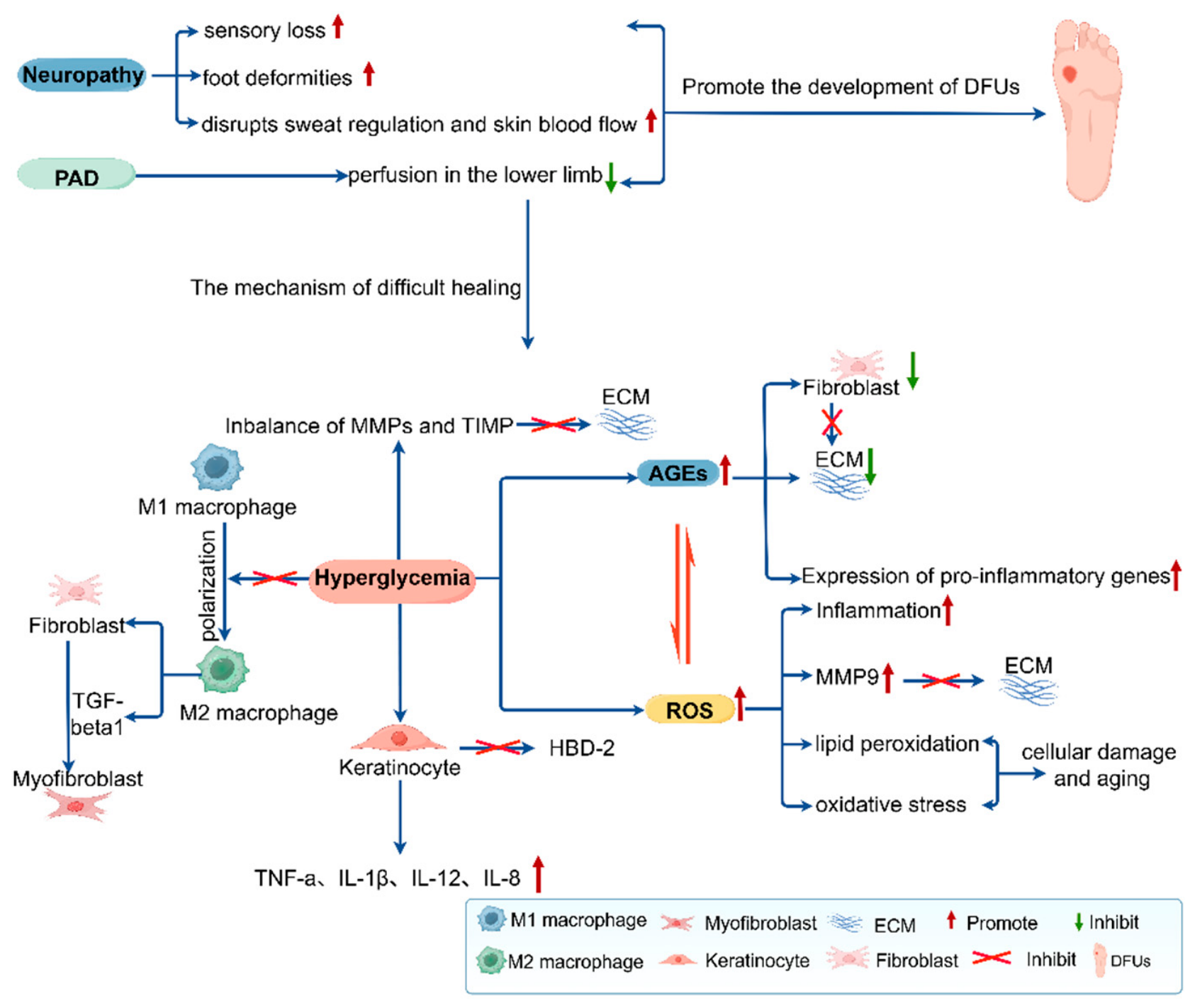
2. The Pathogenesis of DFUs
2.1. Neuropathy and Peripheral Arterial Disease
2.2. The Impact of Hyperglycemia on Keratinocytes and Fibroblasts
2.3. The Molecular Mechanism Underlying DFUs
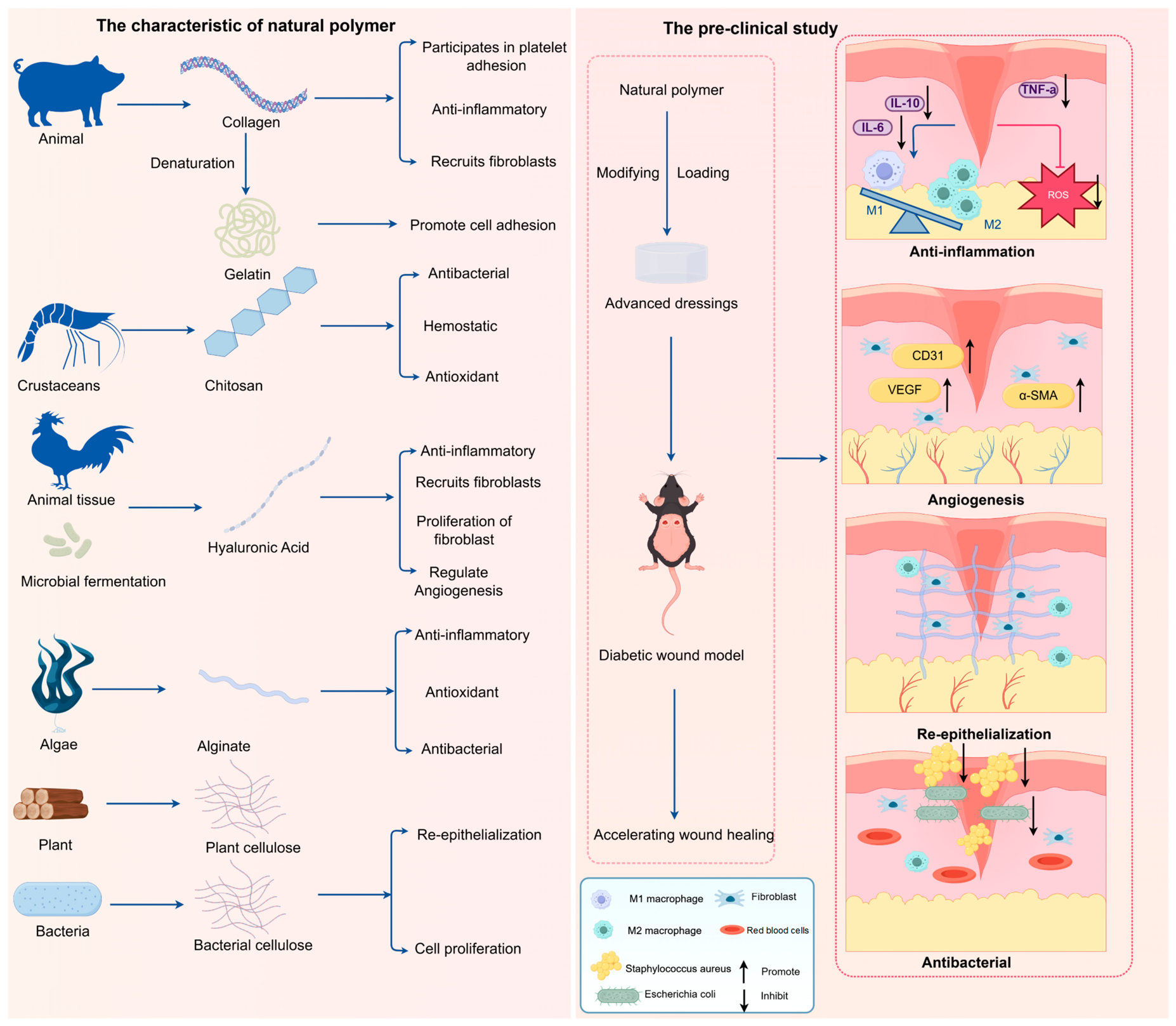
3. Characteristics and Preclinical Studies of Natural Polymer-Based Dressings
3.1. Collagen and Gelatin
3.2. Chitosan
3.3. Hyaluronic Acid
3.4. Alginate
3.5. Cellulose
3.6. Characteristics of Natural Polymers

| Natural Polymer | Structural Characteristics | Biological Properties | Application | References |
|---|---|---|---|---|
| Collagen | Polypeptide chains containing Gly–Pro–Hyp form a triple helix capable of self-assembling into fibrils and macroscopic fibers | Low immunogenicity, high biodegradability, high water absorption capacity | Wound dressings, artificial dermis skin replacement, never regeneration, drug delivery, tissue regeneration | [43,57] |
| Gelatin | Randomly coiled polypeptide chains | Biocompatibility, biodegradability, low immunogenicity | Wound dressing, artificial skin, drug carrier | [57,127] |
| Chitosan | Cationic amino groups containing a large number of active functional groups | Biocompatibility, antibacterial properties, hemostatic capabilities, promotes cell adhesion, antioxidant, anti-inflammatory, antitumor | Wound dressing, tissue engineering, bio-adhesives | [128,129] |
| Hyaluronic acid | Repeated disaccharide units; a substantial quantity of hydrophilic groups | High water absorption, high water solubility, low immunogenicity, improves the viability of fibroblasts and keratinocytes, facilitates angiogenesis | Drug delivery, cell adhesion, joint lubrication, tissue engineering, wound dressing | [85,89,130] |
| Alginate | β-D-mannuronic acid and α-L-guluronic acid are linked either homogenously or heterogeneously through 1–4 glycosidic bonds; a substantial quantity of hydrophilic groups | Biocompatibility, biodegradability, low immunogenicity, water absorption capacity, high water solubility, hemostasis, antioxidant, angiogenesis, antibacterial, anti-inflammatory | Drug delivery, tissue engineering, wound dressing, immobilized cells | [131] |
| Bacterial cellulose | A fibrous structure composed of repeated glucose units; three-dimensional nanofiber network; a substantial quantity of hydroxyl groups | Biocompatibility, non-toxicity, low immunogenicity, high hydrophilicity, provides mechanical protection for wounds | Artificial skin, blood vessels, wound dressing, drug delivery | [132,133] |
| Plant cellulose | Composed of extended β-D-glucose chains with aligned chains forming microfibrils stabilized by hydrogen bonds | Biocompatibility, non-toxicity, low immunogenicity, moderate hydrophilicity, a low cost and abundant source | Drug delivery, wound dressings, tissue engineering | [108,134] |
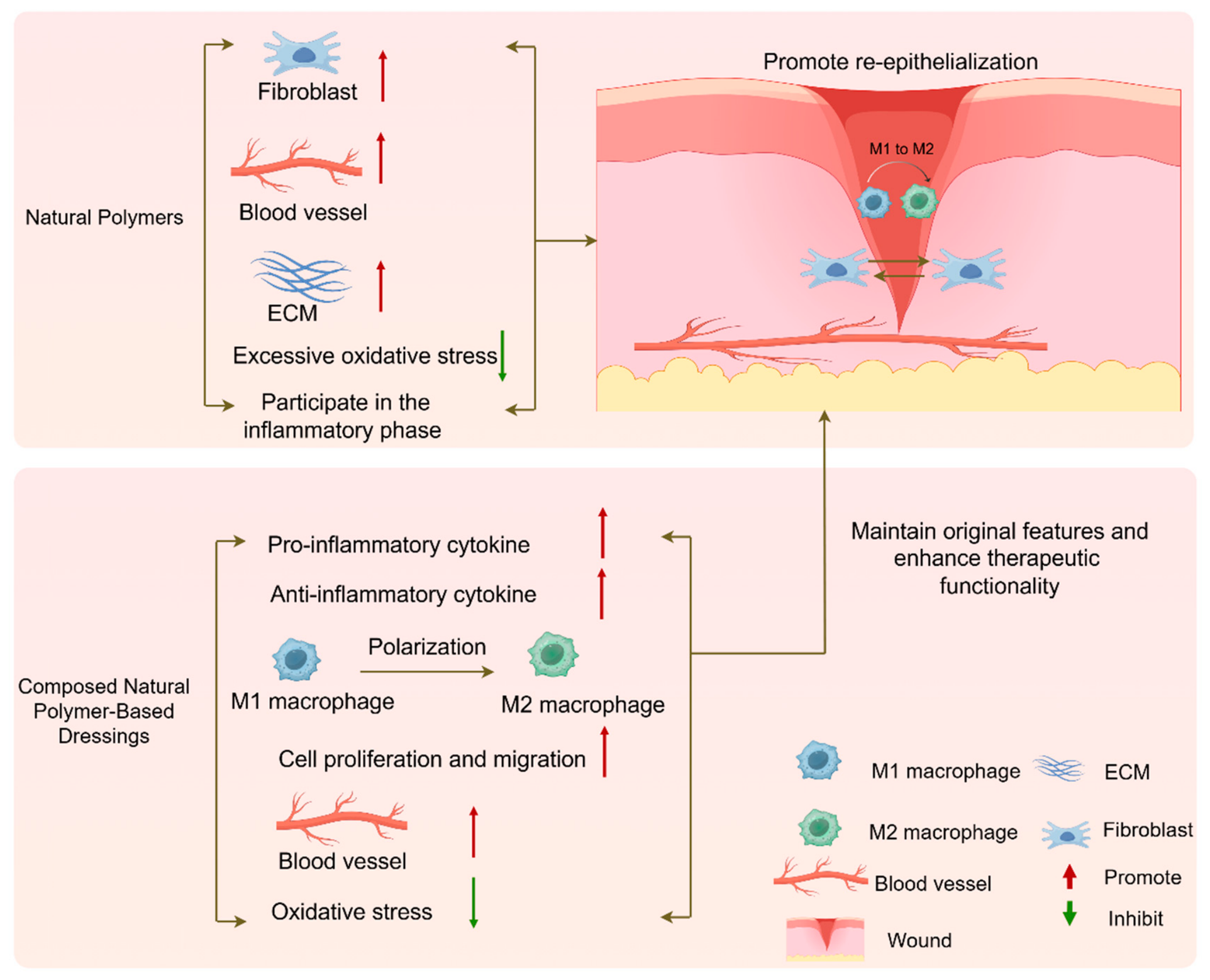
4. The Advantages of Dressings Based on Natural Polymers in the Treatment of DFUs
4.1. Multifunctional Carriers Designed for Drugs or Molecular Substances
4.2. Similarity Between the Extracellular Matrix and Regenerative Potential
5. Clinical Applications and Clinical Scenarios of Dressings Based on Natural Polymers
5.1. Registered Clinical Trials of Dressings Formulated with Natural Polymers
5.2. Selection of Dressings
6. Challenges and Future Prospects
Author Contributions
Funding
Data Availability Statement
Acknowledgments
Conflicts of Interest
References
- Zhang, P.; Lu, J.; Jing, Y.; Tang, S.; Zhu, D.; Bi, Y. Global epidemiology of diabetic foot ulceration: A systematic review and meta-analysis. Ann. Med. 2017, 49, 106–116. [Google Scholar] [CrossRef] [PubMed]
- van Netten, J.J.; Bus, S.A.; Apelqvist, J.; Chen, P.; Chuter, V.; Fitridge, R.; Game, F.; Hinchliffe, R.J.; Lazzarini, P.A.; Mills, J.; et al. Definitions and criteria for diabetes-related foot disease (IWGDF 2023 update). Diabetes/Metab. Res. Rev. 2024, 40, e3654. [Google Scholar] [CrossRef] [PubMed]
- Li, Y.; Ju, S.; Li, X.; Li, W.; Zhou, S.; Wang, G.; Cai, Y.; Dong, Z. Characterization of the microenvironment of diabetic foot ulcers and potential drug identification based on scRNA-seq. Front. Endocrinol. 2022, 13, 997880. [Google Scholar] [CrossRef] [PubMed]
- Zhang, Y.; Lazzarini, P.A.; McPhail, S.M.; van Netten, J.J.; Armstrong, D.G.; Pacella, R.E. Global Disability Burdens of Diabetes-Related Lower-Extremity Complications in 1990 and 2016. Diabetes Care 2020, 43, 964–974. [Google Scholar] [CrossRef] [PubMed]
- Ndosi, M.; Wright-Hughes, A.; Brown, S.; Backhouse, M.; Lipsky, B.A.; Bhogal, M.; Reynolds, C.; Vowden, P.; Jude, E.B.; Nixon, J.; et al. Prognosis of the infected diabetic foot ulcer: A 12-month prospective observational study. Diabet. Med. 2018, 35, 78–88. [Google Scholar] [CrossRef] [PubMed]
- Chen, L.; Sun, S.; Gao, Y.; Ran, X. Global mortality of diabetic foot ulcer: A systematic review and meta-analysis of observational studies. Diabetes Obes. Metab. 2023, 25, 36–45. [Google Scholar] [CrossRef] [PubMed]
- Mcdermott, K.; Fang, M.; Boulton, A.J.M.; Selvin, E.; Hicks, C.W. Etiology, Epidemiology, and Disparities in the Burden of Diabetic Foot Ulcers. Diabetes Care 2023, 46, 209–221. [Google Scholar] [CrossRef] [PubMed]
- Rice, J.B.; Desai, U.; Cummings, A.K.; Birnbaum, H.G.; Skornicki, M.; Parsons, N.B. Burden of diabetic foot ulcers for medicare and private insurers. Diabetes Care 2014, 37, 651–658. [Google Scholar] [CrossRef] [PubMed]
- Schaper, N.C.; van Netten, J.J.; Apelqvist, J.; Bus, S.A.; Hinchliffe, R.J.; Lipsky, B.A. Practical Guidelines on the prevention and management of diabetic foot disease (IWGDF 2019 update). Diabetes/Metab. Res. Rev. 2020, 36, e3266. [Google Scholar] [CrossRef] [PubMed]
- Farahani, M.; Shafiee, A. Wound Healing: From Passive to Smart Dressings. Adv. Healthc. Mater. 2021, 10, e2100477. [Google Scholar] [CrossRef] [PubMed]
- Peng, W.; Li, D.; Dai, K.; Wang, Y.; Song, P.; Li, H.; Tang, P.; Zhang, Z.; Li, Z.; Zhou, Y.; et al. Recent progress of collagen, chitosan, alginate and other hydrogels in skin repair and wound dressing applications. Int. J. Biol. Macromol. 2022, 208, 400–408. [Google Scholar] [CrossRef] [PubMed]
- Jiang, P.; Li, Q.; Luo, Y.; Luo, F.; Che, Q.; Lu, Z.; Yang, S.; Yang, Y.; Chen, X.; Cai, Y. Current status and progress in research on dressing management for diabetic foot ulcer. Front. Endocrinol. 2023, 14, 1221705. [Google Scholar] [CrossRef] [PubMed]
- Xu, Y.; Hu, Q.; Wei, Z.; Ou, Y.; Cao, Y.; Zhou, H.; Wang, M.; Yu, K.; Liang, B. Advanced polymer hydrogels that promote diabetic ulcer healing: Mechanisms, classifications, and medical applications. Biomater. Res. 2023, 27, 36. [Google Scholar] [CrossRef] [PubMed]
- Falanga, V. Wound healing and its impairment in the diabetic foot. Lancet 2005, 366, 1736–1743. [Google Scholar] [CrossRef] [PubMed]
- Hicks, C.W.; Selvin, E. Epidemiology of Peripheral Neuropathy and Lower Extremity Disease in Diabetes. Curr. Diabetes Rep. 2019, 19, 86. [Google Scholar] [CrossRef] [PubMed]
- Armstrong, D.G.; Tan, T.W.; Boulton, A.J.M.; Bus, S.A. Diabetic Foot Ulcers: A Review. JAMA 2023, 330, 62–75. [Google Scholar] [CrossRef] [PubMed]
- Wang, X.; Yuan, C.X.; Xu, B.; Yu, Z. Diabetic foot ulcers: Classification, risk factors and management. World J. Diabetes 2022, 13, 1049–1065. [Google Scholar] [CrossRef] [PubMed]
- Barnes, J.A.; Eid, M.A.; Creager, M.A.; Goodney, P.P. Epidemiology and Risk of Amputation in Patients With Diabetes Mellitus and Peripheral Artery Disease. Arterioscler. Thromb. Vasc. Biol. 2020, 40, 1808–1817. [Google Scholar] [CrossRef] [PubMed]
- Soyoye, D.O.; Abiodun, O.O.; Ikem, R.T.; Kolawole, B.A.; Akintomide, A.O. Diabetes and peripheral artery disease: A review. World J. Diabetes 2021, 12, 827–838. [Google Scholar] [CrossRef] [PubMed]
- Lan, C.C.; Liu, I.H.; Fang, A.H.; Wen, C.H.; Wu, C.S. Hyperglycaemic conditions decrease cultured keratinocyte mobility: Implications for impaired wound healing in patients with diabetes. Br. J. Dermatol. 2008, 159, 1103–1115. [Google Scholar] [CrossRef] [PubMed]
- Rizwan, H.; Pal, S.; Sabnam, S.; Pal, A. High glucose augments ROS generation regulates mitochondrial dysfunction and apoptosis via stress signalling cascades in keratinocytes. Life Sci. 2020, 241, 117148. [Google Scholar] [CrossRef] [PubMed]
- Lan, C.C.; Wu, C.S.; Huang, S.M.; Kuo, H.Y.; Wu, I.H.; Liang, C.W.; Chen, G.S. High-glucose environment reduces human β-defensin-2 expression in human keratinocytes: Implications for poor diabetic wound healing. Br. J. Dermatol. 2012, 166, 1221–1229. [Google Scholar] [CrossRef] [PubMed]
- Peters, T.; Sindrilaru, A.; Hinz, B.; Hinrichs, R.; Menke, A.; Al-Azzeh, E.A.; Holzwarth, K.; Oreshkova, T.; Wang, H.; Kess, D.; et al. Wound-healing defect of CD18(-/-) mice due to a decrease in TGF-beta1 and myofibroblast differentiation. EMBO J. 2005, 24, 3400–3410. [Google Scholar] [CrossRef] [PubMed]
- Shapouri-Moghaddam, A.; Mohammadian, S.; Vazini, H.; Taghadosi, M.; Esmaeili, S.A.; Mardani, F.; Seifi, B.; Mohammadi, A.; Afshari, J.T.; Sahebkar, A. Macrophage plasticity, polarization, and function in health and disease. J. Cell. Physiol. 2018, 233, 6425–6440. [Google Scholar] [CrossRef] [PubMed]
- Li, S.; Ding, X.; Zhang, H.; Ding, Y.; Tan, Q. IL-25 improves diabetic wound healing through stimulating M2 macrophage polarization and fibroblast activation. Int. Immunopharmacol. 2022, 106, 108605. [Google Scholar] [CrossRef] [PubMed]
- Hesketh, M.; Sahin, K.B.; West, Z.E.; Murray, R.Z. Macrophage Phenotypes Regulate Scar Formation and Chronic Wound Healing. Int. J. Mol. Sci. 2017, 18, 1545. [Google Scholar] [CrossRef] [PubMed]
- Zeng, C.; Li, Y.; Ma, J.; Niu, L.; Tay, F.R. Clinical/Translational Aspects of Advanced Glycation End-Products. Trends Endocrinol. Metab. 2019, 30, 959–973. [Google Scholar] [CrossRef] [PubMed]
- Goldin, A.; Beckman, J.A.; Schmidt, A.M.; Creager, M.A. Advanced glycation end products: Sparking the development of diabetic vascular injury. Circulation 2006, 114, 597–605. [Google Scholar] [CrossRef] [PubMed]
- Peppa, M.; Stavroulakis, P.; Raptis, S.A. Advanced glycoxidation products and impaired diabetic wound healing. Wound Repair Regen. 2009, 17, 461–472. [Google Scholar] [CrossRef] [PubMed]
- Yang, T.; Qi, F.; Guo, F.; Shao, M.; Song, Y.; Ren, G.; Linlin, Z.; Qin, G.; Zhao, Y. An update on chronic complications of diabetes mellitus: From molecular mechanisms to therapeutic strategies with a focus on metabolic memory. Mol. Med. 2024, 30, 71. [Google Scholar] [CrossRef] [PubMed]
- Lopez, T.; Wendremaire, M.; Lagarde, J.; Duquet, O.; Alibert, L.; Paquette, B.; Garrido, C.; Lirussi, F. Wound Healing versus Metastasis: Role of Oxidative Stress. Biomedicines 2022, 10, 2784. [Google Scholar] [CrossRef] [PubMed]
- Cano Sanchez, M.; Lancel, S.; Boulanger, E.; Neviere, R. Targeting Oxidative Stress and Mitochondrial Dysfunction in the Treatment of Impaired Wound Healing: A Systematic Review. Antioxidants 2018, 7, 98. [Google Scholar] [CrossRef] [PubMed]
- Evans, J.L.; Goldfine, I.D.; Maddux, B.A.; Grodsky, G.M. Oxidative stress and stress-activated signaling pathways: A unifying hypothesis of type 2 diabetes. Endocr. Rev. 2002, 23, 599–622. [Google Scholar] [CrossRef] [PubMed]
- Schäfer, M.; Werner, S. Oxidative stress in normal and impaired wound repair. Pharmacol. Res. 2008, 58, 165–171. [Google Scholar] [CrossRef] [PubMed]
- Zhang, W.Q.; Tang, W.; Hu, S.Q.; Fu, X.L.; Wu, H.; Shen, W.Q.; Chen, H.L. Effect of matrix metalloproteinases on the healing of diabetic foot ulcer: A systematic review. J. Tissue Viability 2023, 32, 51–58. [Google Scholar] [CrossRef] [PubMed]
- Zhou, P.; Yang, C.; Zhang, S.; Ke, Z.X.; Chen, D.X.; Li, Y.Q.; Li, Q. The Imbalance of MMP-2/TIMP-2 and MMP-9/TIMP-1 Contributes to Collagen Deposition Disorder in Diabetic Non-Injured Skin. Front. Endocrinol. 2021, 12, 734485. [Google Scholar] [CrossRef] [PubMed]
- Lobmann, R.; Ambrosch, A.; Schultz, G.; Waldmann, K.; Schiweck, S.; Lehnert, H. Expression of matrix-metalloproteinases and their inhibitors in the wounds of diabetic and non-diabetic patients. Diabetologia 2002, 45, 1011–1016. [Google Scholar] [CrossRef] [PubMed]
- Nguyen, T.T.; Ding, D.; Wolter, W.R.; Pérez, R.L.; Champion, M.M.; Mahasenan, K.V.; Hesek, D.; Lee, M.; Schroeder, V.A.; Jones, J.I.; et al. Validation of Matrix Metalloproteinase-9 (MMP-9) as a Novel Target for Treatment of Diabetic Foot Ulcers in Humans and Discovery of a Potent and Selective Small-Molecule MMP-9 Inhibitor That Accelerates Healing. J. Med. Chem. 2018, 61, 8825–8837. [Google Scholar] [CrossRef] [PubMed]
- Liu, Y.; Min, D.; Bolton, T.; Nubé, V.; Twigg, S.M.; Yue, D.K.; McLennan, S.V. Increased matrix metalloproteinase-9 predicts poor wound healing in diabetic foot ulcers. Diabetes Care 2009, 32, 117–119. [Google Scholar] [CrossRef] [PubMed]
- David, J.A.; Rifkin, W.J.; Rabbani, P.S.; Ceradini, D.J. The Nrf2/Keap1/ARE Pathway and Oxidative Stress as a Therapeutic Target in Type II Diabetes Mellitus. J. Diabetes Res. 2017, 2017, 4826724. [Google Scholar] [CrossRef] [PubMed]
- Uemura, S.; Matsushita, H.; Li, W.; Glassford, A.J.; Asagami, T.; Lee, K.H.; Harrison, D.G.; Tsao, P.S. Diabetes mellitus enhances vascular matrix metalloproteinase activity: Role of oxidative stress. Circ. Res. 2001, 88, 1291–1298. [Google Scholar] [CrossRef] [PubMed]
- Shoulders, M.D.; Raines, R.T. Collagen structure and stability. Annu. Rev. Biochem. 2009, 78, 929–958. [Google Scholar] [CrossRef] [PubMed]
- Chattopadhyay, S.; Raines, R.T. Review collagen-based biomaterials for wound healing. Biopolymers 2014, 101, 821–833. [Google Scholar] [CrossRef] [PubMed]
- Rezvani Ghomi, E.; Nourbakhsh, N.; Akbari Kenari, M.; Zare, M.; Ramakrishna, S. Collagen-based biomaterials for biomedical applications. J. Biomed. Mater. Res. Part B Appl. Biomater. 2021, 109, 1986–1999. [Google Scholar] [CrossRef] [PubMed]
- Davison-Kotler, E.; Marshall, W.S.; García-Gareta, E. Sources of Collagen for Biomaterials in Skin Wound Healing. Bioengineering 2019, 6, 56. [Google Scholar] [CrossRef] [PubMed]
- An, B.; Kaplan, D.L.; Brodsky, B. Engineered recombinant bacterial collagen as an alternative collagen-based biomaterial for tissue engineering. Front. Chem. 2014, 2, 40. [Google Scholar] [CrossRef] [PubMed]
- Xu, J.; Wang, L.N.; Zhu, C.H.; Fan, D.D.; Ma, X.X.; Mi, Y.; Xing, J.Y. Co-expression of recombinant human prolyl with human collagen α1 (III) chains in two yeast systems. Lett. Appl. Microbiol. 2015, 61, 259–266. [Google Scholar] [CrossRef] [PubMed]
- Guo, X.; Ma, Y.; Wang, H.; Yin, H.; Shi, X.; Chen, Y.; Gao, G.; Sun, L.; Wang, J.; Wang, Y.; et al. Status and developmental trends in recombinant collagen preparation technology. Regen. Biomater. 2024, 11, rbad106. [Google Scholar] [CrossRef] [PubMed]
- Michalska-Sionkowska, M.; Warżyńska, O.; Kaczmarek-Szczepańska, B.; Łukowicz, K.; Osyczka, A.M.; Walczak, M. Preparation and Characterization of Fish Skin Collagen Material Modified with β-Glucan as Potential Wound Dressing. Materials 2021, 14, 1322. [Google Scholar] [CrossRef] [PubMed]
- Farndale, R.W.; Sixma, J.J.; Barnes, M.J.; de Groot, P.G. The role of collagen in thrombosis and hemostasis. J. Thromb. Haemost. 2004, 2, 561–573. [Google Scholar] [CrossRef] [PubMed]
- Li, Y.; Lu, Y.; Zhao, Y.; Zhang, N.; Zhang, Y.; Fu, Y. Deciphering the Wound-Healing Potential of Collagen Peptides and the Molecular Mechanisms: A Review. J. Agric. Food Chem. 2024, 72, 26007–26026. [Google Scholar] [CrossRef] [PubMed]
- Kisling, A.; Lust, R.M.; Katwa, L.C. What is the role of peptide fragments of collagen I and IV in health and disease? Life Sci. 2019, 228, 30–34. [Google Scholar] [CrossRef] [PubMed]
- Poomrattanangoon, S.; Pissuwan, D. Gold nanoparticles coated with collagen-I and their wound healing activity in human skin fibroblast cells. Heliyon 2024, 10, e33302. [Google Scholar] [CrossRef] [PubMed]
- Tracy, L.E.; Minasian, R.A.; Caterson, E.J. Extracellular Matrix and Dermal Fibroblast Function in the Healing Wound. Adv. Wound Care 2016, 5, 119–136. [Google Scholar] [CrossRef] [PubMed]
- Metzmacher, I.; Ruth, P.; Abel, M.; Friess, W. In vitro binding of matrix metalloproteinase-2 (MMP-2), MMP-9, and bacterial collagenase on collagenous wound dressings. Wound Repair Regen. 2007, 15, 549–555. [Google Scholar] [CrossRef] [PubMed]
- Yang, W.; Xing, Z.; Wang, X.; Xu, Z.; Jiang, X.; Xia, J.; Qiu, L.; Xu, J.; Wang, J. Microenvironment-responsive collagen hydrogel with Houttuynia Cordata Thunb vesicles for diabetic wound repair. Int. J. Biol. Macromol. 2025, 320, 145840. [Google Scholar] [CrossRef] [PubMed]
- Ahmad, M.I.; Li, Y.; Pan, J.; Liu, F.; Dai, H.; Fu, Y.; Huang, T.; Farooq, S.; Zhang, H. Collagen and gelatin: Structure, properties, and applications in food industry. Int. J. Biol. Macromol. 2024, 254, 128037. [Google Scholar] [CrossRef] [PubMed]
- Yue, K.; Trujillo-de Santiago, G.; Alvarez, M.M.; Tamayol, A.; Annabi, N.; Khademhosseini, A. Synthesis, properties, and biomedical applications of gelatin methacryloyl (GelMA) hydrogels. Biomaterials 2015, 73, 254–271. [Google Scholar] [CrossRef] [PubMed]
- Yang, Y.; Chen, Q.; Wang, Q.; Zhang, S.; Liu, J.; Yang, L.; Ma, W.; Li, W.; Tan, P.; Yang, G. Gelatin-based adaptive injectable nanocomposite hydrogel for closure of irregular wounds and immunoregulation in diabetic wound healing. Int. J. Biol. Macromol. 2025, 315, 144313. [Google Scholar] [CrossRef] [PubMed]
- Newman, M.I.; Baratta, L.G.; Swartz, K. Activated, type I collagen (CellerateRx) and its effectiveness in healing recalcitrant diabetic wounds: A case presentation. Adv. Ski. Wound Care 2008, 21, 370–374. [Google Scholar] [CrossRef] [PubMed]
- Elangwe, C.N.; Morozkina, S.N.; Olekhnovich, R.O.; Krasichkov, A.; Polyakova, V.O.; Uspenskaya, M.V. A Review on Chitosan and Cellulose Hydrogels for Wound Dressings. Polymers 2022, 14, 5163. [Google Scholar] [CrossRef] [PubMed]
- Wang, Y.; Wang, Z.; Lu, W.; Hu, Y. Review on chitosan-based antibacterial hydrogels: Preparation, mechanisms, and applications. Int. J. Biol. Macromol. 2024, 255, 128080. [Google Scholar] [CrossRef] [PubMed]
- Egorov, A.R.; Kirichuk, A.A.; Rubanik, V.V.; Rubanik, V.V., Jr.; Tskhovrebov, A.G.; Kritchenkov, A.S. Chitosan and Its Derivatives: Preparation and Antibacterial Properties. Materials 2023, 16, 6076. [Google Scholar] [CrossRef] [PubMed]
- Vilar Junior, J.C.; Ribeaux, D.R.; Alves da Silva, C.A.; De Campos-Takaki, G.M. Physicochemical and Antibacterial Properties of Chitosan Extracted from Waste Shrimp Shells. Int. J. Microbiol. 2016, 2016, 5127515. [Google Scholar] [CrossRef] [PubMed]
- Sabab, A.; Vreugde, S.; Jukes, A.; Wormald, P.J. The potential of chitosan-based haemostats for use in neurosurgical setting-Literature review. J. Clin. Neurosci. 2021, 94, 128–134. [Google Scholar] [CrossRef] [PubMed]
- Loo, H.L.; Goh, B.H.; Lee, L.H.; Chuah, L.H. Application of chitosan-based nanoparticles in skin wound healing. Asian J. Pharm. Sci. 2022, 17, 299–332. [Google Scholar] [CrossRef] [PubMed]
- Muxika, A.; Etxabide, A.; Uranga, J.; Guerrero, P.; de la Caba, K. Chitosan as a bioactive polymer: Processing, properties and applications. Int. J. Biol. Macromol. 2017, 105, 1358–1368. [Google Scholar] [CrossRef] [PubMed]
- Yuan, J.; Hou, Q.; He, X.; Zhong, L.; Li, M.; Fu, X.; Liu, H. Chitosan-taurine nanoparticles cross-linked carboxymethyl chitosan hydrogels facilitate both acute and chronic diabetic wound healing. Int. J. Biol. Macromol. 2024, 273, 132762. [Google Scholar] [CrossRef] [PubMed]
- Kazemi Shariat Panahi, H.; Dehhaghi, M.; Amiri, H.; Guillemin, G.J.; Gupta, V.K.; Rajaei, A.; Yang, Y.; Peng, W.; Pan, J.; Aghbashlo, M.; et al. Current and emerging applications of saccharide-modified chitosan: A critical review. Biotechnol. Adv. 2023, 66, 108172. [Google Scholar] [CrossRef] [PubMed]
- Kantak, M.N.; Bharate, S.S. Analysis of clinical trials on biomaterial and therapeutic applications of chitosan: A review. Carbohydr. Polym. 2022, 278, 118999. [Google Scholar] [CrossRef] [PubMed]
- Xu, J.; Chang, L.; Xiong, Y.; Peng, Q. Chitosan-Based Hydrogels as Antibacterial/Antioxidant/Anti-Inflammation Multifunctional Dressings for Chronic Wound Healing. Adv. Healthc. Mater. 2024, 13, e2401490. [Google Scholar] [CrossRef] [PubMed]
- Wang, X.; Shan, C.; Huang, R.; Penkova, A.; Su, R. Chitosan and chitosan nanofibers in wound dressings, from material preparation to functional design: A review. Int. J. Biol. Macromol. 2025, 333, 148937. [Google Scholar] [CrossRef] [PubMed]
- Sharma, G.; Dutta, J. Exploring design formulations and properties of chitosan-functionalized metal oxide nanoparticles for wound dressing applications-A review. Int. J. Biol. Macromol. 2025, 320, 146002. [Google Scholar] [CrossRef] [PubMed]
- Liu, W.; Zhai, X.; Zhao, X.; Cai, Y.; Zhang, X.; Xu, K.; Weng, J.; Li, J.; Chen, X. Multifunctional Double-Layer and Dual Drug-Loaded Microneedle Patch Promotes Diabetic Wound Healing. Adv. Healthc. Mater. 2023, 12, e2300297. [Google Scholar] [CrossRef] [PubMed]
- Zhou, P.; Zhang, C.; Rao, Z.; Ma, X.; Hu, Y.; Chen, Y.; Wang, H.; Chen, J.; He, Y.; Tao, G.; et al. Bioinspired Adhesive Hydrogel Platform with Photothermal Antimicrobial, Antioxidant, and Angiogenic Properties for Whole-Process Management of Diabetic Wounds. ACS Appl. Mater. Interfaces 2025, 17, 5841–5865. [Google Scholar] [CrossRef] [PubMed]
- Zhang, J.; Zhao, S.; Zhou, Y.; Liang, H.; Zhao, L.; Tan, H. Carboxymethyl Chitosan-Based Antioxidant Hydrogel Accelerates Diabetic Wound Healing. Adv. Healthc. Mater. 2025, 14, e2403198. [Google Scholar] [CrossRef] [PubMed]
- Xing, C.; Hou, L.; Sun, C.; Chen, H.; Li, Y.; Li, L.; Wu, Y.; Li, L.; An, H.; Wen, Y.; et al. Injectable polypeptide/chitosan hydrogel with loaded stem cells and rapid gelation promoting angiogenesis for diabetic wound healing. Int. J. Biol. Macromol. 2025, 306, 141578. [Google Scholar] [CrossRef] [PubMed]
- Juncan, A.M.; Moisă, D.G.; Santini, A.; Morgovan, C.; Rus, L.L.; Vonica-Țincu, A.L.; Loghin, F. Advantages of Hyaluronic Acid and Its Combination with Other Bioactive Ingredients in Cosmeceuticals. Molecules 2021, 26, 4429. [Google Scholar] [CrossRef] [PubMed]
- Wu, Y.; Zhao, S.; Wang, J.; Chen, Y.; Li, H.; Li, J.P.; Kan, Y.; Zhang, T. Methods for determining the structure and physicochemical properties of hyaluronic acid and its derivatives: A review. Int. J. Biol. Macromol. 2024, 282, 137603. [Google Scholar] [CrossRef] [PubMed]
- Huang, G.; Chen, J. Preparation and applications of hyaluronic acid and its derivatives. Int. J. Biol. Macromol. 2019, 125, 478–484. [Google Scholar] [CrossRef] [PubMed]
- Tavianatou, A.G.; Piperigkou, Z.; Barbera, C.; Beninatto, R.; Masola, V.; Caon, I.; Onisto, M.; Franchi, M.; Galesso, D.; Karamanos, N.K. Molecular size-dependent specificity of hyaluronan on functional properties, morphology and matrix composition of mammary cancer cells. Matrix Biol. Plus 2019, 3, 100008. [Google Scholar] [CrossRef] [PubMed]
- Ni, C.; Zhang, Z.; Wang, Y.; Zhang, Z.; Guo, X.; Lv, H. Hyaluronic acid and HA-modified cationic liposomes for promoting skin penetration and retention. J. Control. Release 2023, 357, 432–443. [Google Scholar] [CrossRef] [PubMed]
- Jabbari, F.; Babaeipour, V.; Saharkhiz, S. Comprehensive review on biosynthesis of hyaluronic acid with different molecular weights and its biomedical applications. Int. J. Biol. Macromol. 2023, 240, 124484. [Google Scholar] [CrossRef] [PubMed]
- Saravanakumar, K.; Park, S.; Santosh, S.S.; Ganeshalingam, A.; Thiripuranathar, G.; Sathiyaseelan, A.; Vijayasarathy, S.; Swaminathan, A.; Priya, V.V.; Wang, M.H. Application of hyaluronic acid in tissue engineering, regenerative medicine, and nanomedicine: A review. Int. J. Biol. Macromol. 2022, 222, 2744–2760. [Google Scholar] [CrossRef] [PubMed]
- Chang, W.; Chen, L.; Chen, K. The bioengineering application of hyaluronic acid in tissue regeneration and repair. Int. J. Biol. Macromol. 2024, 270, 132454. [Google Scholar] [CrossRef] [PubMed]
- Bhattacharya, D.; Svechkarev, D.; Souchek, J.J.; Hill, T.K.; Taylor, M.A.; Natarajan, A.; Mohs, A.M. Impact of structurally modifying hyaluronic acid on CD44 interaction. J. Mater. Chem. B 2017, 5, 8183–8192. [Google Scholar] [CrossRef] [PubMed]
- Feng, Y.; Xiao, K.; Chen, J.; Lin, J.; He, Y.; He, X.; Cheng, F.; Li, Z.; Li, J.; Luo, F.; et al. Immune-microenvironment modulatory polyurethane-hyaluronic acid hybrid hydrogel scaffolds for diabetic wound treatment. Carbohydr. Polym. 2023, 320, 121238. [Google Scholar] [CrossRef] [PubMed]
- Grabowski, M.; Gmyrek, D.; Żurawska, M.; Trusek, A. Hyaluronic Acid: Production Strategies, Gel-Forming Properties, and Advances in Drug Delivery Systems. Gels 2025, 11, 424. [Google Scholar] [CrossRef] [PubMed]
- Kim, H.; Jeong, H.; Han, S.; Beack, S.; Hwang, B.W.; Shin, M.; Oh, S.S.; Hahn, S.K. Hyaluronate and its derivatives for customized biomedical applications. Biomaterials 2017, 123, 155–171. [Google Scholar] [CrossRef] [PubMed]
- Zhang, W.; Yao, W.; Ma, X.; Cheng, H.; Li, X.; Bai, Y.; Yang, T.; Zhao, B.; Xu, Y.; Li, Z.; et al. Injectable adhesive self-healing hyaluronic acid-based hydrogel with microenvironment-responsive metformin delivery and photothermal antibacterial activity for diabetic infected wound healing. Int. J. Biol. Macromol. 2026, 337, 149560. [Google Scholar] [CrossRef] [PubMed]
- Yu, H.; Wang, B.; Li, Z.; Liu, K.; Chen, W.; Zhao, S.; Zhou, Y.; Wang, G.; Zhou, Y.; Chen, Y.; et al. Tβ4-exosome-loaded hemostatic and antibacterial hydrogel to improve vascular regeneration and modulate macrophage polarization for diabetic wound treatment. Mater. Today Bio 2025, 31, 101585. [Google Scholar] [CrossRef] [PubMed]
- Ahmad Raus, R.; Wan Nawawi, W.M.F.; Nasaruddin, R.R. Alginate and alginate composites for biomedical applications. Asian J. Pharm. Sci. 2021, 16, 280–306. [Google Scholar] [CrossRef] [PubMed]
- Cheng, D.; Jiang, C.; Xu, J.; Liu, Z.; Mao, X. Characteristics and applications of alginate lyases: A review. Int. J. Biol. Macromol. 2020, 164, 1304–1320. [Google Scholar] [CrossRef] [PubMed]
- Li, Q.Q.; Xu, D.; Dong, Q.W.; Song, X.J.; Chen, Y.B.; Cui, Y.L. Biomedical potentials of alginate via physical, chemical, and biological modifications. Int. J. Biol. Macromol. 2024, 277, 134409. [Google Scholar] [CrossRef] [PubMed]
- Adamiak, K.; Sionkowska, A. State of Innovation in Alginate-Based Materials. Mar. Drugs 2023, 21, 353. [Google Scholar] [CrossRef] [PubMed]
- Mazurek, Ł.; Kuś, M.; Jurak, J.; Rybka, M.; Kuczeriszka, M.; Stradczuk-Mazurek, M.; Konop, M. Biomedical potential of alginate wound dressings-From preclinical studies to clinical applications: A review. Int. J. Biol. Macromol. 2025, 309, 142908. [Google Scholar] [CrossRef] [PubMed]
- Sarithakumari, C.H.; Kurup, G.M. Alginic acid isolated from Sargassum wightii exhibits anti-inflammatory potential on type II collagen induced arthritis in experimental animals. Int. Immunopharmacol. 2013, 17, 1108–1115. [Google Scholar] [CrossRef] [PubMed]
- Karbassi, E.; Asadinezhad, A.; Lehocký, M.; Humpolíček, P.; Vesel, A.; Novák, I.; Sáha, P. Antibacterial performance of alginic acid coating on polyethylene film. Int. J. Mol. Sci. 2014, 15, 14684–14696. [Google Scholar] [CrossRef] [PubMed]
- Rocha de Souza, M.C.; Marques, C.T.; Guerra Dore, C.M.; Ferreira da Silva, F.R.; Oliveira Rocha, H.A.; Leite, E.L. Antioxidant activities of sulfated polysaccharides from brown and red seaweeds. J. Appl. Phycol. 2007, 19, 153–160. [Google Scholar] [CrossRef] [PubMed]
- Schmidt, J.; Lee, M.K.; Ko, E.; Jeong, J.H.; DiPietro, L.A.; Kong, H. Alginate Sulfates Mitigate Binding Kinetics of Proangiogenic Growth Factors with Receptors toward Revascularization. Mol. Pharm. 2016, 13, 2148–2154. [Google Scholar] [CrossRef] [PubMed]
- Tan, J.; Luo, Y.; Guo, Y.; Zhou, Y.; Liao, X.; Li, D.; Lai, X.; Liu, Y. Development of alginate-based hydrogels: Crosslinking strategies and biomedical applications. Int. J. Biol. Macromol. 2023, 239, 124275. [Google Scholar] [CrossRef] [PubMed]
- Lu, X.; Qin, L.; Guo, M.; Geng, J.; Dong, S.; Wang, K.; Xu, H.; Qu, C.; Miao, J.; Liu, M. A novel alginate from Sargassum seaweed promotes diabetic wound healing by regulating oxidative stress and angiogenesis. Carbohydr. Polym. 2022, 289, 119437. [Google Scholar] [CrossRef] [PubMed]
- Salsabil, L.I.; Rahman, A.; Hoque, A.; Wong, S.Y.; Li, X.; Arafat, M.T. Platelet Lysate-Incorporated Sodium Alginate Polymannuronate Nanogel with Mussel-Inspired Chemistry for Scar-Minimized Diabetic Wound Healing. Mol. Pharm. 2025, 22, 6887–6906. [Google Scholar] [CrossRef] [PubMed]
- Chen, J.; Wang, X.; Yuan, X.; Zou, H.; Li, J.; Chen, G.; Tan, Q. Bioinspired Multifunctional Hydrogel Loaded with Netrin-1 for Diabetic Wound Healing. ACS Appl. Mater. Interfaces 2025, 17, 54525–54536. [Google Scholar] [CrossRef] [PubMed]
- Lin, L.; Liang, X.; Xu, Z.; Li, Y.; Guo, Z.; Liu, L.; Liu, H.; Cai, Q.; Chen, Y.; Yu, Z.; et al. Multifunctional hydrogel delivery of mesenchymal stem cell secretome suppresses neutrophil extracellular trap formation and promotes diabetic wound healing via PGE2/BMAL1 pathway. Biomaterials 2026, 327, 123764. [Google Scholar] [CrossRef] [PubMed]
- He, C.; Bi, S.; Zhang, L.; Gu, J.; Yan, B. An antioxidative sodium alginate hybrid hydrogel with NIR-controlled NO releasing for diabetic wound healing via reduced inflammation and enhanced angiogenesis. Carbohydr. Polym. 2025, 366, 123913. [Google Scholar] [CrossRef] [PubMed]
- Portela, R.; Leal, C.R.; Almeida, P.L.; Sobral, R.G. Bacterial cellulose: A versatile biopolymer for wound dressing applications. Microb. Biotechnol. 2019, 12, 586–610. [Google Scholar] [CrossRef] [PubMed]
- Klemm, D.; Heublein, B.; Fink, H.P.; Bohn, A. Cellulose: Fascinating biopolymer and sustainable raw material. Angew. Chem. (Int. Ed. Engl.) 2005, 44, 3358–3393. [Google Scholar] [CrossRef] [PubMed]
- Naomi, R.; Fauzi, M.B. Cellulose/Collagen Dressings for Diabetic Foot Ulcer: A Review. Pharmaceutics 2020, 12, 881. [Google Scholar] [CrossRef] [PubMed]
- Zennifer, A.; Senthilvelan, P.; Sethuraman, S.; Sundaramurthi, D. Key advances of carboxymethyl cellulose in tissue engineering & 3D bioprinting applications. Carbohydr. Polym. 2021, 256, 117561. [Google Scholar] [CrossRef] [PubMed]
- Tudoroiu, E.E.; Dinu-Pîrvu, C.E.; Albu Kaya, M.G.; Popa, L.; Anuța, V.; Prisada, R.M.; Ghica, M.V. An Overview of Cellulose Derivatives-Based Dressings for Wound-Healing Management. Pharmaceuticals 2021, 14, 1215. [Google Scholar] [CrossRef] [PubMed]
- Oprita, E.I.; Iosageanu, A.; Craciunescu, O. Natural Polymeric Hydrogels Encapsulating Small Molecules for Diabetic Wound Healing. Gels 2023, 9, 867. [Google Scholar] [CrossRef] [PubMed]
- Ren, M.; Wang, N.; Pu, L.; Ouyang, X.K.; Mao, J. Metal-polyphenol nanoparticles-loaded carboxymethyl cellulose-based microneedle for promoting the healing of diabetic wounds. Int. J. Biol. Macromol. 2025, 316, 144716. [Google Scholar] [CrossRef] [PubMed]
- Moniri, M.; Boroumand Moghaddam, A.; Azizi, S.; Abdul Rahim, R.; Bin Ariff, A.; Zuhainis Saad, W.; Navaderi, M.; Mohamad, R. Production and Status of Bacterial Cellulose in Biomedical Engineering. Nanomaterials 2017, 7, 257. [Google Scholar] [CrossRef] [PubMed]
- Ul-Islam, M.; Khan, S.; Ullah, M.W.; Park, J.K. Comparative study of plant and bacterial cellulose pellicles regenerated from dissolved states. Int. J. Biol. Macromol. 2019, 137, 247–252. [Google Scholar] [CrossRef] [PubMed]
- Dutta, S.D.; Patel, D.K.; Lim, K.T. Functional cellulose-based hydrogels as extracellular matrices for tissue engineering. J. Biol. Eng. 2019, 13, 55. [Google Scholar] [CrossRef] [PubMed]
- He, W.; Wu, J.; Xu, J.; Mosselhy, D.A.; Zheng, Y.; Yang, S. Bacterial Cellulose: Functional Modification and Wound Healing Applications. Adv. Wound Care 2021, 10, 623–640. [Google Scholar] [CrossRef] [PubMed]
- Silva, I.; Pantoja, B.; Almeida, G.; Carreira, A.C.O.; Miglino, M.A. Bacterial Cellulose and ECM Hydrogels: An Innovative Approach for Cardiovascular Regenerative Medicine. Int. J. Mol. Sci. 2022, 23, 3955. [Google Scholar] [CrossRef] [PubMed]
- Hsu, C.Y.; Lin, S.C.; Wu, Y.H.; Hu, C.Y.; Chen, Y.T.; Chen, Y.C. The Antimicrobial Effects of Bacterial Cellulose Produced by Komagataeibacter intermedius in Promoting Wound Healing in Diabetic Mice. Int. J. Mol. Sci. 2022, 23, 5456. [Google Scholar] [CrossRef] [PubMed]
- Yu, G.; Wu, W.; Shi, J.; Jiang, L.; Wang, H. Conductive and Antibacterial Hydrogel Based on Bacterial Cellulose@Cu NPs for Accelerated Diabetic Wound Healing and Health Monitoring. ACS Appl. Mater. Interfaces 2025, 17, 61905–61918. [Google Scholar] [CrossRef] [PubMed]
- Rong, K.; Fang, Y.; Shan, R.; Zhao, R.; Qi, D.; Yin, X.; Nan, J.; Wang, Y.; Chang, S.; Dong, S. Cysteamine/Amberlyst-15-Mediated Cellulose Dissolution for Engineering Antioxidative Nanodrug in Diabetic Wound Therapy. ACS Appl. Mater. Interfaces 2025, 17, 67040–67052. [Google Scholar] [CrossRef] [PubMed]
- Chen, L.; Xiao, Z.; Zhang, H.; Huang, C.; Liu, B.; Chen, Y.; Li, X.; Liu, X.; Wen, Q.; Shi, P.; et al. Tailored design of photoelectric-coupled Mxene-cellulose sponge dressing for programmed diabetic wound healing. Int. J. Biol. Macromol. 2025, 331, 148519. [Google Scholar] [CrossRef] [PubMed]
- Zhang, L.; Wang, D.; Jiao, S.; Wang, X.; Li, Y.; Song, H.; Liang, W.; Sun, J. Production and characterization of bacterial cellulose produced by Komagataeibacter oboediens and its application in facial masks. Int. J. Biol. Macromol. 2025, 329, 147860. [Google Scholar] [CrossRef] [PubMed]
- Wang, J.; Tavakoli, J.; Tang, Y. Bacterial cellulose production, properties and applications with different culture methods—A review. Carbohydr. Polym. 2019, 219, 63–76. [Google Scholar] [CrossRef] [PubMed]
- Wang, F.; Zhang, W.; Li, H.; Chen, X.; Feng, S.; Mei, Z. How Effective are Nano-Based Dressings in Diabetic Wound Healing? A Comprehensive Review of Literature. Int. J. Nanomed. 2022, 17, 2097–2119. [Google Scholar] [CrossRef] [PubMed]
- Yan, J.; Zhao, Y.; Cui, C.; Zhou, L.; Xu, Y.; Bai, Z.; Zhang, K.; Tong, J.; Liu, Y.; Sun, L.; et al. Dynamic multistage nanozyme hydrogel reprograms diabetic wound microenvironment: Synergistic oxidative stress alleviation and mitochondrial restoration. Mater. Today Bio 2025, 32, 101780. [Google Scholar] [CrossRef] [PubMed]
- Mikhailov, O.V. Gelatin as It Is: History and Modernity. Int. J. Mol. Sci. 2023, 24, 3583. [Google Scholar] [CrossRef] [PubMed]
- Wang, W.; Xue, C.; Mao, X. Chitosan: Structural modification, biological activity and application. Int. J. Biol. Macromol. 2020, 164, 4532–4546. [Google Scholar] [CrossRef] [PubMed]
- Kou, S.G.; Peters, L.; Mucalo, M. Chitosan: A review of molecular structure, bioactivities and interactions with the human body and micro-organisms. Carbohydr. Polym. 2022, 282, 119132. [Google Scholar] [CrossRef] [PubMed]
- Valachová, K.; Hassan, M.E.; Šoltés, L. Hyaluronan: Sources, Structure, Features and Applications. Molecules 2024, 29, 739. [Google Scholar] [CrossRef] [PubMed]
- Guo, X.; Wang, Y.; Qin, Y.; Shen, P.; Peng, Q. Structures, properties and application of alginic acid: A review. Int. J. Biol. Macromol. 2020, 162, 618–628. [Google Scholar] [CrossRef] [PubMed]
- Mishra, S.; Singh, P.K.; Pattnaik, R.; Kumar, S.; Ojha, S.K.; Srichandan, H.; Parhi, P.K.; Jyothi, R.K.; Sarangi, P.K. Biochemistry, Synthesis, and Applications of Bacterial Cellulose: A Review. Front. Bioeng. Biotechnol. 2022, 10, 780409. [Google Scholar] [CrossRef] [PubMed]
- Meng, S.; Wu, H.; Xiao, D.; Lan, S.; Dong, A. Recent advances in bacterial cellulose-based antibacterial composites for infected wound therapy. Carbohydr. Polym. 2023, 316, 121082. [Google Scholar] [CrossRef] [PubMed]
- Antony Jose, S.; Cowan, N.; Davidson, M.; Godina, G.; Smith, I.; Xin, J.; Menezes, P.L. A Comprehensive Review on Cellulose Nanofibers, Nanomaterials, and Composites: Manufacturing, Properties, and Applications. Nanomaterials 2025, 15, 356. [Google Scholar] [CrossRef] [PubMed]
- Kong, W.; Bao, Y.; Li, W.; Guan, D.; Yin, Y.; Xiao, Y.; Zhu, S.; Sun, Y.; Xia, Z. Collaborative Enhancement of Diabetic Wound Healing and Skin Regeneration by Recombinant Human Collagen Hydrogel and hADSCs. Adv. Healthc. Mater. 2024, 13, e2401012. [Google Scholar] [CrossRef] [PubMed]
- Ways, T.M.M.; Lau, W.M.; Khutoryanskiy, V.V. Chitosan and Its Derivatives for Application in Mucoadhesive Drug Delivery Systems. Polymers 2018, 10, 267. [Google Scholar] [CrossRef] [PubMed]
- Wu, J.; Chen, L.H.; Sun, S.Y.; Li, Y.; Ran, X.W. Mesenchymal stem cell-derived exosomes: The dawn of diabetic wound healing. World J. Diabetes 2022, 13, 1066–1095. [Google Scholar] [CrossRef] [PubMed]
- Yu, H.; Zhang, J.; Yang, L.; Tian, Y.; Milne, C.; Jin, P.; Li, Q.; Song, R.; Wang, W. MSC-derived exosomes injectable hyaluronic acid hydrogel for enhanced chronic wound healing. J. Control. Release 2025, 385, 113985. [Google Scholar] [CrossRef] [PubMed]
- Sen, P.; Demirdal, T.; Emir, B. Meta-analysis of risk factors for amputation in diabetic foot infections. Diabetes/Metab. Res. Rev. 2019, 35, e3165. [Google Scholar] [CrossRef] [PubMed]
- Wang, Y.; Chen, C.; He, C.; Dong, W.; Yang, X.; Kong, Q.; Yan, B.; He, J. Quaternized chitosan-based biomimetic nanozyme hydrogels with ROS scavenging, oxygen generating, and antibacterial capabilities for diabetic wound repair. Carbohydr. Polym. 2025, 348, 122865. [Google Scholar] [CrossRef] [PubMed]
- Li, J.; Deng, Z.; Liang, X.; Zhong, S.; Ke, H.; Wen, Z.; Wu, D.; Jiang, Y.; Huang, Z.; Shao, Y.; et al. A smart ROS-responsive hydrogel for on-demand antibacterial and platelet-rich plasma (PRP) activation in diabetic wound healing. J. Control. Release 2025, 388, 114392. [Google Scholar] [CrossRef] [PubMed]
- Hu, C.; Liu, W.; Long, L.; Wang, Z.; Yuan, Y.; Zhang, W.; He, S.; Wang, J.; Yang, L.; Lu, L.; et al. Microenvironment-responsive multifunctional hydrogels with spatiotemporal sequential release of tailored recombinant human collagen type III for the rapid repair of infected chronic diabetic wounds. J. Mater. Chem. B 2021, 9, 9684–9699. [Google Scholar] [CrossRef] [PubMed]
- Zhou, Y.; Dai, F.; Zhao, S.; Li, Z.; Liang, H.; Wang, X.; Zhao, L.; Tan, H. pH and Glucose Dual-Responsive Hydrogels Promoted Diabetic Wound Healing by Remodeling the Wound Microenvironment. Adv. Healthc. Mater. 2025, 14, e2500810. [Google Scholar] [CrossRef] [PubMed]
- Hao, J.; Liu, C.; Zhou, L.; Wu, N.; Sun, M.; Kuang, J.; Pan, H.; Lian, Y.; Li, J.; Dong, Y.; et al. Enhancing diabetic wound healing with a pH/glucose dual-responsive hydrogel for ROS clearance and antibacterial activity. Int. J. Biol. Macromol. 2024, 272, 132935. [Google Scholar] [CrossRef] [PubMed]
- Hu, T.; Fang, J.; Shen, Y.; Li, M.; Wang, B.; Xu, Z.; Hu, W. Advances of naturally derived biomedical polymers in tissue engineering. Front. Chem. 2024, 12, 1469183. [Google Scholar] [CrossRef] [PubMed]
- Chen, L.; Jiang, Z.; Zhou, H.; Zhang, H.; Huang, C.; Wen, Q.; Liu, X.; He, Y.; Shi, P.; Liu, K.; et al. Effect of hyaluronic acid on the formation of acellular dermal matrix-based interpenetrating network sponge scaffolds for accelerating diabetic wound healing through photothermal warm bath. Int. J. Biol. Macromol. 2024, 283, 137268. [Google Scholar] [CrossRef] [PubMed]
- Huang, F.; Gao, T.; Feng, Y.; Xie, Y.; Tai, C.; Huang, Y.; Ling, L.; Wang, B. Bioinspired Collagen Scaffold Loaded with bFGF-Overexpressing Human Mesenchymal Stromal Cells Accelerating Diabetic Skin Wound Healing via HIF-1 Signal Pathway Regulated Neovascularization. ACS Appl. Mater. Interfaces 2024, 16, 45989–46004. [Google Scholar] [CrossRef] [PubMed]
- Asadi, N.; Mehdipour, A.; Ghorbani, M.; Mesgari-Abbasi, M.; Akbarzadeh, A.; Davaran, S. A novel multifunctional bilayer scaffold based on chitosan nanofiber/alginate-gelatin methacrylate hydrogel for full-thickness wound healing. Int. J. Biol. Macromol. 2021, 193, 734–747. [Google Scholar] [CrossRef] [PubMed]
- Shen, F.; Chen, Y.; Li, H.; Zhang, Q.; Ji, Q.; Zou, L.; Wang, Z.; Wu, Z.; Yu, S.; Zhang, H.; et al. Bilayer Biomimetic Scaffolds Loaded with Mesenchymal Stem Cell Secretomes Promote Diabetic Wound Healing. Gels 2025, 11, 845. [Google Scholar] [CrossRef] [PubMed]
- Uçkay, I.; Kressmann, B.; Malacarne, S.; Toumanova, A.; Jaafar, J.; Lew, D.; Lipsky, B.A. A randomized, controlled study to investigate the efficacy and safety of a topical gentamicin-collagen sponge in combination with systemic antibiotic therapy in diabetic patients with a moderate or severe foot ulcer infection. BMC Infect. Dis. 2018, 18, 361. [Google Scholar] [CrossRef] [PubMed]
- Wang, M.; Li, H.; Luo, Y.; Chen, J.; Tang, Z.; Wei, Y.; Yang, Q.; Xiao, W.; You, W.; Feng, M.; et al. Biomimetic nano dressing in wound healing: Design strategies and application. Burn. Trauma 2025, 13, tkaf038. [Google Scholar] [CrossRef] [PubMed]
- Everett, E.; Mathioudakis, N. Update on management of diabetic foot ulcers. Ann. N. Y. Acad. Sci. 2018, 1411, 153–165. [Google Scholar] [CrossRef] [PubMed]
- Kamoun, E.A.; Kenawy, E.S.; Chen, X. A review on polymeric hydrogel membranes for wound dressing applications: PVA-based hydrogel dressings. J. Adv. Res. 2017, 8, 217–233. [Google Scholar] [CrossRef] [PubMed]
- Graz, H.; D’Souza, V.K.; Alderson, D.E.C.; Graz, M. Diabetes-related amputations create considerable public health burden in the UK. Diabetes Res. Clin. Pract. 2018, 135, 158–165. [Google Scholar] [CrossRef] [PubMed]
- Dorsett-Martin, W.A. Rat models of skin wound healing: A review. Wound Repair Regen. 2004, 12, 591–599. [Google Scholar] [CrossRef] [PubMed]
- Sullivan, T.P.; Eaglstein, W.H.; Davis, S.C.; Mertz, P. The pig as a model for human wound healing. Wound Repair Regen. 2001, 9, 66–76. [Google Scholar] [CrossRef] [PubMed]
- Desai, N.; Rana, D.; Salave, S.; Gupta, R.; Patel, P.; Karunakaran, B.; Sharma, A.; Giri, J.; Benival, D.; Kommineni, N. Chitosan: A Potential Biopolymer in Drug Delivery and Biomedical Applications. Pharmaceutics 2023, 15, 1313. [Google Scholar] [CrossRef] [PubMed]
- Zomer, H.D.; Trentin, A.G. Skin wound healing in humans and mice: Challenges in translational research. J. Dermatol. Sci. 2018, 90, 3–12. [Google Scholar] [CrossRef] [PubMed]
- Li, J.; Mooney, D.J. Designing hydrogels for controlled drug delivery. Nat. Rev. Mater. 2016, 1, 16071. [Google Scholar] [CrossRef] [PubMed]
- Sharma, A.; Puri, V.; Dheer, D.; Kaur, M.; Huanbutta, K.; Sangnim, T. Cutting-Edge Smart Hydrogel Platforms for Improved Wound Healing. Pharmaceutics 2026, 18, 406. [Google Scholar] [CrossRef] [PubMed]


| The Type of Natural Polymer | Recruitment Status | NCT Number | Experimental Group | Control Group | Status of Study | Study Start (Actual) | Study Completion (Actual) | Participant (Actual/Estimated) |
|---|---|---|---|---|---|---|---|---|
| Collagen | Completed | NCT02427802 | Gentamicin–collagen sponge | Placebo collagen sponge/no sponge group | Phase 3 | May 2015 | October 2016 | 612 |
| NCT00593567 | Gentamicin–collagen sponge | Levofloxacin | Phase 2 | December 2007 | May 2009 | 69 | ||
| NCT05324930 | Piscean collagen dressing | Saline-infused dressing | Not applicable | December 2021 | September 2022 | 180 | ||
| NCT00235196 | Collagen ORC antimicrobial matrix | Not applicable | Phase 4 | July 2004 | December 2005 | 48 | ||
| NCT01951768 | Garamycin–collagen sponge | Systemic antibiotic | Phase 4 | September 2013 | June 2016 | 88 | ||
| NCT00659646 | Gentamicin–collagen sponge + levofloxacin | Levofloxacin | Phase 2 | April 2008 | February 2010 | 56 | ||
| NCT05417425 | Omeza collagen matrix, Omeza lidocaine lavage, Omeza skin protectant | Not applicable | Phase 1 | September 2022 | December 2023 | 25 | ||
| NCT06470087 | SOC and type I collagen-based skin substitute | SOC and human amnion/chorion membrane | Not applicable | June 2024 | September 2024 | 28 | ||
| NCT00493051 | GAM501 | Collagen gel/SOC | Phase 2 | November 2007 | December 2009 | 124 | ||
| NCT00065663 | GAM501 | Not applicable | Phase 1 | August 2002 | December 2004 | 21 | ||
| NCT07046403 | High-purity type I collagen-based skin substitute and SOC | Human amnion/chorion membrane and SOC | Not applicable | July 2025 | October 2025 | 120 | ||
| Recruiting | NCT07161830 | Omeza® Complete Matrix (collagen derived from whitefish skin) and SOC | SOC | Not applicable | December 2025 | Not applicable | 130 | |
| NCT06618612 | PuraPly AM/PuraPly XT + SOC | SOC | Not applicable | August 2024 | Not applicable | 170 | ||
| Terminated | NCT01108263 (sponsor terminated) | INTEGRATM flowable on wound bed | INTEGRATM flowable on wound and injected subcutaneously | Phase 4 | June 2010 | August 2011 | 5 | |
| NCT03509870 (lack of recruitment) | Mesenchymal stromal cells in a collagen scaffold | Not applicable | Phase 1 | June 2018 | April 2020 | 2 | ||
| NCT00958711 (lack of budget) | Collagen-based, decellularized equine pericardial dressing for skin surface wounds | Gauze moistened with sterile saline | Not applicable | January 2009 | May 2012 | 90 | ||
| Withdrawn | NCT01228500 | PriMatrix + negative pressure wound therapy | PriMatrix | Not applicable | January 2008 | January 2013 | 0 | |
| Unknown | NCT03037970 | ABSOLVE | Collagen wound dressing wetted with buffer | Phase 2 | Not applicable | Not applicable | 40 | |
| NCT01537016 | PROMOGRAN® | Tielle | Not applicable | July 2013 | Not applicable | 250 | ||
| CS | Completed | NCT02789033 | Isosorbide dinitrate spray + chitosan | Chitosan/isosorbide dinitrate spray | Phase 3 | June 2015 | August 2015 | 68 |
| Terminated | NCT04178525 (COVID-19 restrictions) | ChitoCare® Gel | Placebo gel | Not applicable | August 2018 | September 2020 | 46 | |
| NCT00434538 (sponsor’s financial reasons) | BST-DermOn | SOC | Phase 3 | February 2007 | November 2008 | 40 | ||
| Unknow | NCT02413086 | External herb chitosan | Traditional gauze | Not applicable | April 2015 | Not applicable | 320 | |
| HA | Completed | NCT06680856 | HA gel + PRP gel | HA gel | Phase 2 | February 2021 | October 2024 | 72 |
| Recruiting | NCT07131410 | Hyaluronic acid cream | 10% urea cream | Not applicable | November 2024 | Not applicable | 83 | |
| Unknown | NCT05198544 | Hēlaquis matrix (hyaluronic acid matrix) | Not applicable | Not applicable | Not applicable | Not applicable | Not applicable | |
| Alginate | Not yet recruiting | NCT06873646 | Kelulut honey-infused alginate | Manuka honey dressing/ standard dressing product | Phase 1 | Not applicable | Not applicable | 110 |
| Completed | NCT02577900 | Nanocrystalline silver alginate | Honey gel sheet/conventional dressing (Jelonet) | Not applicable | February 2013 | August 2015 | 31 | |
| Cellulose | Terminated | NCT02667327 (sponsor terminated) | 100 μM aCT1 peptide plus hydroxyethyl cellulose | Hydroxyethyl cellulose without drug/SOC | Phase 3 | November 2018 | May 2020 | 124 |
| NCT01849965 (not applicable) | DSC127 0.03% in hydroxyethyl cellulose (HEC) with parabens | Vehicle gel comprising HEC with parabens | Phase 3 | April 2013 | December 2015 | 396 |
| Dressing | Advantage | Disadvantage |
|---|---|---|
| Traditional dressing |
|
|
| Novel natural polymer-based dressing |
|
|
| Forms of Dressings | Advantage | Disadvantages | Applicable Clinical Scenario |
|---|---|---|---|
| Films | Transparent, easily observable, and effectively prevents bacterial contamination | Poor exudate absorption capacity and prone to infection | Dry wounds, superficial wounds |
| Foam | Good breathability, high plasticity, strong exudate absorption capacity | Low transparency, difficult to observe, and low biocompatibility | Deeper wounds, exudative wounds |
| Hydrogels | Autolytic debridement is easy to replace, has high water content, hydrates, and alleviates pain and inflammatory response | Low adhesion, requires frequent changing, and has low mechanical properties | Exudative wounds |
| Hydrocolloids | High density, adhesive, and excellent water absorption | Used for high-exudate wounds that cause excessive moisture and maceration | Exudative wounds |
Disclaimer/Publisher’s Note: The statements, opinions and data contained in all publications are solely those of the individual author(s) and contributor(s) and not of MDPI and/or the editor(s). MDPI and/or the editor(s) disclaim responsibility for any injury to people or property resulting from any ideas, methods, instructions or products referred to in the content. |
© 2026 by the authors. Licensee MDPI, Basel, Switzerland. This article is an open access article distributed under the terms and conditions of the Creative Commons Attribution (CC BY) license.
Share and Cite
Fang, Y.; Wu, J.; Sun, S.; Li, Y.; Ran, X. Promising Natural Polymer-Based Dressings for Diabetic Foot Ulcers: Mechanisms, Preclinical Studies, and Clinical Applications. Pharmaceutics 2026, 18, 776. https://doi.org/10.3390/pharmaceutics18070776
Fang Y, Wu J, Sun S, Li Y, Ran X. Promising Natural Polymer-Based Dressings for Diabetic Foot Ulcers: Mechanisms, Preclinical Studies, and Clinical Applications. Pharmaceutics. 2026; 18(7):776. https://doi.org/10.3390/pharmaceutics18070776
Chicago/Turabian StyleFang, Yixuan, Jing Wu, Shiyi Sun, Yan Li, and Xingwu Ran. 2026. "Promising Natural Polymer-Based Dressings for Diabetic Foot Ulcers: Mechanisms, Preclinical Studies, and Clinical Applications" Pharmaceutics 18, no. 7: 776. https://doi.org/10.3390/pharmaceutics18070776
APA StyleFang, Y., Wu, J., Sun, S., Li, Y., & Ran, X. (2026). Promising Natural Polymer-Based Dressings for Diabetic Foot Ulcers: Mechanisms, Preclinical Studies, and Clinical Applications. Pharmaceutics, 18(7), 776. https://doi.org/10.3390/pharmaceutics18070776