Article

A Systemically Administered Humanized Anti-Nav1.7 Antibody with Long-Lasting Analgesic Activity and Preserved Physiological Nociception

1
Laboratory for Drug Discovery and Disease Research, Shionogi & Co., Ltd., Osaka 561-0825, Japan
2
Department of Applied Pharmacology, Faculty of Pharmaceutical Sciences, University of Toyama, Toyama 930-0194, Japan
3
R&D Supervisory Unit Office, Shionogi & Co., Ltd., Osaka 561-0825, Japan
4
Laboratory for Medicinal Chemistry Research, Shionogi & Co., Ltd., Osaka 561-0825, Japan
5
New Business Promotion Department, Shionogi & Co., Ltd., Osaka 530-0011, Japan
6
Supply Supervisory Unit, Shionogi & Co., Ltd., Osaka 561-0825, Japan
*
Authors to whom correspondence should be addressed.
These authors contributed equally to this work.
Pharmaceutics 2026, 18(6), 757; https://doi.org/10.3390/pharmaceutics18060757 (registering DOI)
Submission received: 30 April 2026 / Revised: 6 June 2026 / Accepted: 19 June 2026 / Published: 21 June 2026
(This article belongs to the Section Pharmacokinetics and Pharmacodynamics)

Abstract

Background: Neuropathic pain remains difficult to treat because current analgesics often provide insufficient efficacy or dose-limiting adverse effects. Nav1.7 is genetically validated as a key regulator of human pain sensation, but the development of selective small-molecule Nav1.7 inhibitors has been limited by the high similarity among voltage-gated sodium channel subtypes. Methods: We generated monoclonal antibodies selectively targeting Nav1.7, humanized them for therapeutic development, and evaluated their binding, selectivity, functional channel inhibition, systemic analgesic efficacy, and effects on neuronal activity in a rat model of partial sciatic nerve ligation-induced neuropathic pain. Results: The humanized antibodies showed high-affinity and selective binding to Nav1.7 and functionally inhibited the channel in cellular assays. After systemic administration to neuropathic pain model rats, the lead antibody produced robust analgesia lasting at least 96 h. Electrophysiological analyses demonstrated reduced mechanically evoked and spontaneous neuronal activity, and immunohistochemistry showed decreased mechanical stimulus-induced phosphorylation of extracellular signal-regulated kinase in dorsal root ganglion neurons. The antibodies did not impair physiological nociception or motor function under the tested conditions. Conclusions: These findings provide preclinical proof of concept that humanized anti-Nav1.7 antibodies can act as systemically administered, long-acting biologic analgesics for neuropathic pain while preserving normal nociceptive and motor functions. The clinical advancement of S-151128 further supports the translational potential of this modality.

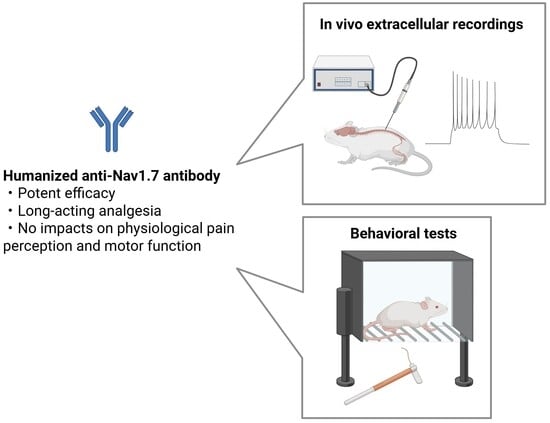
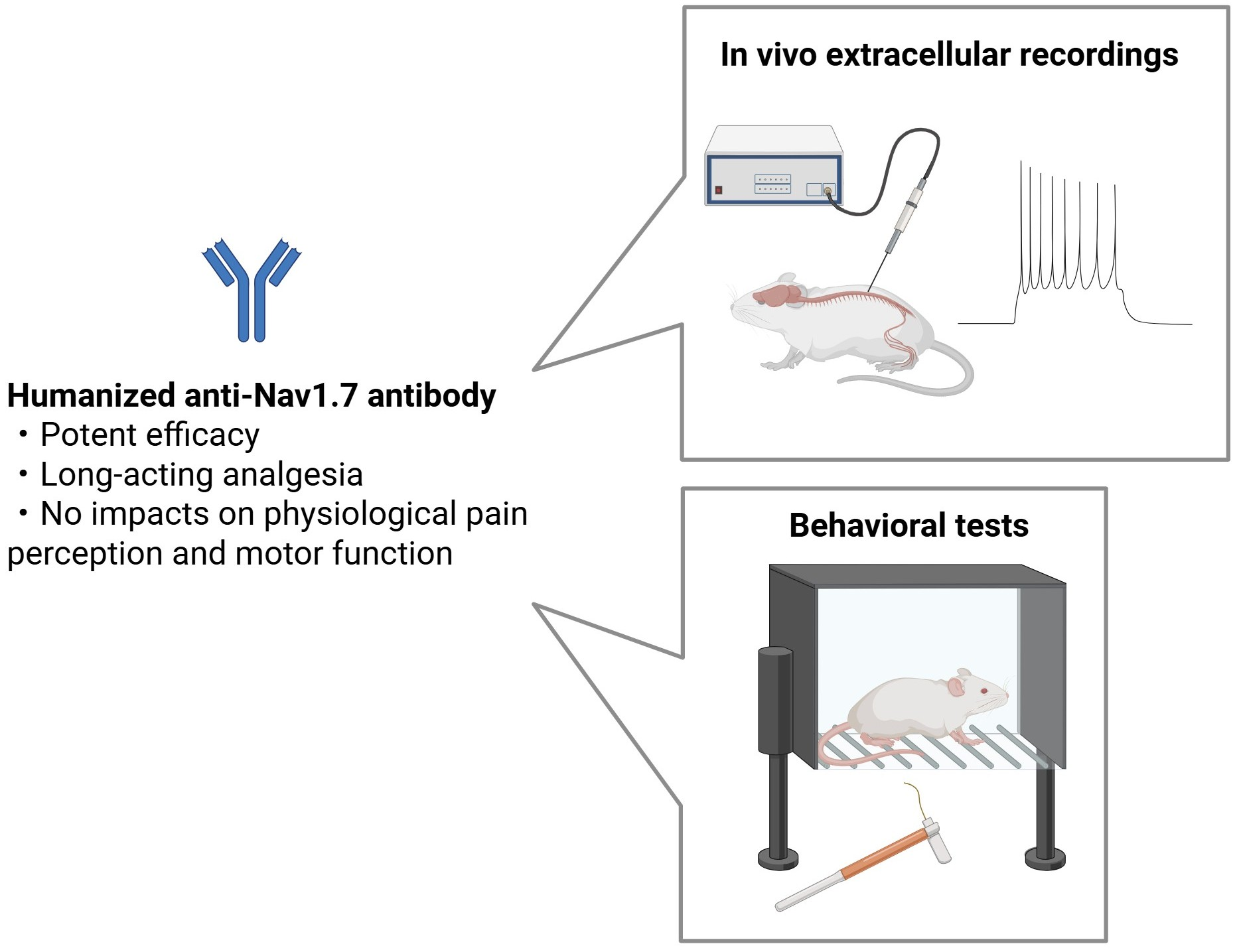
Graphical Abstract

1. Introduction

Pain, as defined by the International Association for the Study of Pain, is an unpleasant sensory and emotional experience associated with, or resembling that associated with, actual or potential tissue damage [1]. Chronic pain is a major global health problem, affecting 10–55% of adults [2,3,4]. Among its subtypes, neuropathic pain—caused by lesions or dysfunction in the peripheral or central nervous system—is particularly debilitating [5], leading to greater impairment and reduced quality of life compared with other pain conditions [6,7]. Patients often experience spontaneous pain, allodynia, and hyperalgesia, accompanied by anxiety and depression [8]. Current treatments include antidepressants, gabapentinoids, topical agents, and opioids [9], yet their efficacy is limited and accompanied by safety concerns such as side effects and risk of addiction [10,11,12]. These limitations highlight the need for more effective, mechanism-based therapies.
Nav1.7 is a voltage-gated sodium channel subtype that plays a crucial role in nerve conduction and transmission. It is predominantly expressed in nociceptive sensory neurons, which are responsible for detecting painful stimuli [13,14]. Mutations in Nav1.7 (encoded by SCN9A) have been linked to various inherited pain syndromes, highlighting the relevance of this channel to pain sensation in humans [15,16]. Gain-of-function mutations in SCN9A can lead to primary erythromelalgia and paroxysmal extreme pain disorder; these mutations result in lower thresholds for action potential firing, thereby causing heightened pain sensitivity and abnormal pain responses [15,16]. Conversely, loss-of-function mutations can lead to congenital insensitivity to pain, where individuals are unable to perceive painful stimuli because of dysfunctional Nav1.7 channels [17,18]. On the basis of these observations, the Nav1.7 channel is considered an attractive target for the treatment of chronic pain, including neuropathic pain.
The development of selective small-molecule inhibitors has been challenging because of the high structural similarity among the Nav subtypes [19,20]. It is difficult to achieve high selectivity for Nav1.7 over other subtypes of voltage-gated sodium channels, leading to off-target effects that can cause unwanted side effects [21,22,23]. For example, Nav1.5 is expressed in cardiac muscle and loss-of-function mutations in SCN5A are associated with several cardiac disorders, often resulting in life-threatening arrhythmias [24]. Furthermore, Nav1.1 and Nav1.2 are predominantly expressed in the central nervous system, and mutations of these genes are associated with neurological disorders such as seizures [25]. High selectivity to the Nav1.7 subtype is therefore required for the development of safe drugs. Additionally, small molecules often face issues with metabolic stability and pharmacokinetics. Thus, ensuring that the inhibitors have a suitable pharmacokinetic profile for effective dosing without rapid degradation or clearance is essential for drug development [26]. Some highly selective inhibitors, including peptide toxins targeting Nav1.7, have been reported [27,28]. Nonetheless, many candidate compounds exhibit poor pharmacokinetic properties, such as high plasma protein binding and rapid clearance, which hinder their effectiveness in vivo [29,30,31].
Numerous small-molecule drugs targeting Nav1.7 for chronic pain have failed because of side effects caused by insufficient subtype selectivity or limited pharmacokinetic profiles after systemic administration [32]. We therefore took an alternative approach by producing neutralizing antibodies against the Nav1.7 channel. As therapeutic agents, monoclonal antibodies offer several potential advantages, including high binding affinity, high target selectivity, low toxicity, and an extended half-life [25]. Despite these advantages, no ion channel-targeting antibody has yet progressed to clinical use [33]. The objective of this study was to establish preclinical proof of concept for humanized anti-Nav1.7 antibodies as systemically administered, long-acting biologic analgesics for neuropathic pain. To this end, we evaluated their Nav1.7-binding selectivity, functional channel inhibition, analgesic efficacy after systemic administration, effects on nociceptive neuronal activity, and potential impacts on physiological pain perception and motor function.

2. Materials and Methods

2.1. Study Design

The aim of the present study was to analyze the pharmacological effects of the newly developed anti-Nav1.7 antibodies, with the goal of conducting clinical trials in the future. To achieve this, we first humanized the antibodies to make them suitable for human administration. We hypothesized that the antibodies would have high selectivity to Nav1.7 and exhibit strong therapeutic effects, and conducted non-clinical in vitro/in vivo efficacy evaluations. Additionally, we conducted evaluations of the long-term pharmacological effects of administration because we expected the antibodies to demonstrate prolonged efficacy. Furthermore, we confirmed the therapeutic effects of the antibodies from multiple perspectives, including behavioral evaluations, the inhibition of neuronal activity using electrophysiological methods, and the histological evaluation of neuronal activity markers. Sprague Dawley rats and cultured DRG cells from rats were used. Sample sizes and experimental designs were determined on the basis of previously published data from our laboratories or similar experiments in the field. The exact numbers (n) used in each study are indicated in the respective figure legends. Experiments were completed over multiple time periods to ensure that replication was observed. All animals were randomly assigned to the experimental and control groups (randomization software, EPS Corporation), and the experimenters were blinded for the behavioral testing. Researchers who analyze the data. All investigators were blinded to the group allocation, except for the researcher responsible for data analysis.

2.2. Generation of Anti-Nav1.7 Antibodies

We selected a peptide corresponding to the domain III, E3 extracellular loop C-terminus region of human Nav1.7 (UniProtKB/Swiss-Prot: Q15858) as an antigen. The peptide (1424-QPKYEYSL-1431) was synthesized by introducing a Cys residue at the N-terminus (manufactured by Toray Industries, Otsu, Japan), conjugated to keyhole limpet hemocyanin (KLH) as an immunogen. Next, 4- to 6-week-old female A/J Jms Slc mice were injected intraperitoneally with 0.1 mg of KLH-conjugated peptide (KLH-CQPKYEYSL) emulsified in complete Freund’s adjuvant (Difco/Becton Dickinson, Franklin Lakes, NJ, USA). Four additional injections of 0.1 mg of KLH-conjugated peptide emulsified in incomplete Freund’s adjuvant were administered at 3-week intervals. Eight days after the fifth immunization, mice were injected with 0.1 mg of adjuvant-free antigen. Three days after the final injection, splenocytes from the immunized mice were collected aseptically and fused to murine myeloma cells using 50% (weight/volume) polyethylene glycol 4000. Human Nav1.7 binding antibodies were then identified by performing ELISA using hybridoma culture supernatants against the immunogenic peptide.

2.3. Competitive ELISA

First, 96-well MaxiSorp plates were coated with 10 µg/mL of anti-human IgG Fc antibody in 50 mM Tris-HCl (pH = 7.5) by overnight incubation at room temperature. Next, plates were washed with wash buffer (Nacalai Tesque, Kyoto, Japan) before being blocked with blocking buffer containing 4% Block ACE and 10% sucrose for 2 h at room temperature. After a washing step, 50 μL of antibodies, 50 µL of biotinylated peptide (0.7 ng/well, each peptide sequence is shown in Table 1), 50 µL of competitor (non-labeled) peptide, and streptavidin–horseradish peroxidase (45 ng/well) were added and incubated overnight at 4 °C. After another wash, the plates were incubated with 100 µL of the substrate solution tetramethylbenzidine. After adequate enzymatic reaction, the reaction was stopped with 100 µL of 0.5 M sulfuric acid. Absorbance values were measured at 450 nm using a SpectraMax Paradigm (Molecular Devices, San Jose, CA, USA). The IC50 value indicates the antigen concentration when the inhibition rate reaches 50%. All experiments were performed in triplicate.

2.4. Antibody Humanization

A humanized antibody with activity equivalent to the mouse antibody, selected through hybridoma screening, was generated by complementarity-determining region grafting and the introduction of multiple back-mutations.

2.5. Cells

HEK cells expressing human Nav1.7 sodium channels were obtained from Charles River Laboratories (Wilmington, MA, USA). For rat Nav1.7-expressing cells, HEK cells were transfected with the gene corresponding to the NCBI database accession number NP_579823, and the sequence was confirmed prior to use. All recombinant DNA experiments were conducted following approval by our institutional review committee. Subsequently, a single clone was selected and maintained for all further experiments (immunocytochemistry and electrophysiology). The accession number for the human Nav1.7 gene is NM_002977.1.

2.6. Immunocytochemistry

HEK cells expressing human/rat Nav1.7 were fixed in 4% paraformaldehyde for 10 min before being blocked with 3% bovine serum albumin for 60 min at room temperature. The cells were then incubated in our antibodies (100 µg/mL) overnight at 4 °C. After washing with phosphate-buffered saline (PBS), secondary antibodies (mouse anti-human IgG, 31137, Thermo Fisher Scientific, San Jose, CA, USA) were added at 10 µg/mL and incubated overnight at 4 °C. After washing with PBS, tertiary antibodies (donkey anti-mouse IgG Alexa 488, A21202, Thermo Fisher Scientific) were added at 2 µg/mL and incubated for 60 min at room temperature. Coverslips were then mounted using VECTASHIELD with 4′,6-diamidino-2-phenylindole (Vector Laboratories, Burlingame, CA, USA), and the immunostaining was visualized using a BZ-X710 microscope (KEYENCE, Osaka, Japan). Immunofluorescence images were analyzed using ImageJ/Fiji software (Ver. 1.52i). DAPI-stained nuclei were used to determine the total number of cells in each image. Cells showing a positive signal for Nav1.7 were counted as positive cells using the same thresholding criteria across each experiment. The percentage of Nav1.7-positive cells was calculated as follows: target-positive cells/total DAPI-positive cells × 100.

2.7. Whole-Cell Voltage-Clamp Recording in HEK Cells

Whole-cell voltage-clamp recordings were performed at room temperature using a Double Integrated Patch Amplifier (Sutter Instrument, Novato, CA, USA) controlled with an Igor Pro (WaveMetrics, Lake Oswego, OR, USA). The external solution contained 145 mM NaCl, 2.5 mM KCl, 2 mM CaCl2, 1 mM MgCl2, 10 mM N-2-hydroxyethylpiperazine-N’-2-ethanesulfonic acid (HEPES), and 11 mM glucose, adjusted to pH 7.4 with NaOH. Cells cultured on poly-L-lysine-coated glass coverslips were visually identified using an inverted microscope. Patch electrodes had tip resistances of 2–5 MΩ when filled with the internal solution (130 mM CsCl, 10 mM NaCl, 10 mM HEPES, 5 mM egtazic acid [EGTA], 4 mM MgATP, and 0.3 mM Li-GTP, adjusted to pH 7.25 with CsOH). The holding potential was set to −80 mV. After the whole-cell configuration was established, series resistance was compensated. Sodium currents were elicited using square test pulses. The voltage of the test pulse in each cell was determined by the peak of current/voltage plots that were obtained using a step voltage protocol with increments of 10 mV, from −80 to +40 mV. After a stable baseline current was obtained, anti-Nav1.7 antibody or negative control antibody solution (CP147, Bio X Cell, Inc., West Lebanon, NH, USA) was added for 10 min, and the effects on sodium currents were evaluated. The percentage inhibition of anti-Nav1.7 antibody or negative control antibody on Nav1.7 sodium currents was then calculated.

2.8. Isolation of DRG Cells

Rats were decapitated under deep anesthesia with isoflurane, and a dorsal laminectomy was performed in the lumbar region. Both L4 and L5 DRG were isolated, and their connective tissues were removed in oxygenated, iced, low-sodium Ringer’s solution (212.5 mM sucrose, 3 mM KCl, 1 mM NaH2PO4, 25 mM NaHCO3, 11 mM D-glucose, and 5 mM MgCl2). The isolated DRG cells were then incubated in low-sodium Ringer’s solution containing 1–2 mg/mL collagenase for 1–2 h at 37 °C. Next, trituration was gently applied to dissociate the DRG cells in culture medium (Dulbecco’s Modified Eagle Medium with 10% fetal bovine serum, 20 mM HEPES, 1% penicillin–streptomycin solution, and 4 mM L-glutamine). After centrifugation at 1000 rpm for 5 min, the supernatant was removed, and the pellet containing the DRG cells and surrounding tissue were resuspended in 10 mL of culture medium. After removing the surrounding tissue using a cell strainer and a second centrifugation at 1000 rpm for 5 min, the DRG cells were resuspended in 2 mL of culture medium. Next, the DRG cells were placed onto poly-L-lysine-coated glass coverslips and incubated for at least 2 h.

2.9. Membrane Potential Recording

Whole-cell patch-clamp recording was performed on visually identified DRG neurons using a Patch Clamp Amplifier (HEKA, Lambrecht, Germany). The external solution for the recording contained 145 mM NaCl, 2.5 mM KCl, 2 mM CaCl2, 1 mM MgCl2, 10 mM HEPES, and 11 mM D-glucose, adjusted to pH 7.4 with NaOH. Patch electrodes had tip resistances of 2–8 MΩ when filled with the internal solution (135 mM K gluconate, 5 mM KCl, 10 mM HEPES, 1.1 mM EGTA, 2 mM MgCl2, 3 mM MgATP, and 0.3 mM Li-GTP, adjusted to pH 7.2 with KOH). In the whole-cell configuration, resting membrane potentials or current-induced action potentials were measured in the current clamp mode and digitized for computer analysis using Chart software (Ver. 7, ADInstruments, Colorado Springs, CO, USA). Only neurons that had stable resting membrane potentials of at least −40 mV and multiple current-induced action potentials that overshot 0 mV were used for further analysis. Cells were treated with anti-Nav1.7 antibody or negative control antibody solution for 10 min, and the effects on the frequency of current-induced action potentials (post-treatment action potentials) were evaluated. All recordings were performed at room temperature. When resting membrane potentials during the recording period were unstable, no further measurements were conducted and the experiment was excluded from the study. The frequency of post-treatment action potentials at each stimulus was calculated.

2.10. Animals

Five-week-old male Sprague Dawley rats were obtained from CLEA Japan (Tokyo, Japan). The animals were allowed free access to chow and tap water and were housed in a temperature-controlled room maintained on a 12 h light/dark cycle. Rats were housed in groups per cage (2–3 rats per cage). All experiments other than the in vivo extracellular recordings were conducted in compliance with the Act on Welfare and Management of Animals in Japan and the Guide for the Care and Use of Laboratory Animals, and in accordance with the protocol approved by the Institutional Animal Care and Use Committee of Shionogi & Co., Ltd., which is accredited by AAALAC International (accredited unit number: 001500, Approval Code: S21002D-0000, S21014D-0011, and S12021B-0802 Approval Date: 6 January 2021, 19 November 2021, and 19 November 2021, respectively). The in vivo extracellular recordings were conducted according to the Regulations for the Care and Use of Laboratory Animals at the University of Toyama (Approval No. A2023PHA-13 and A2020PHA-12, Approval Date: 5 March 2020 and 23 December 2024, respectively), the Fundamental Guidelines for Proper Conduct of Animal Experiments and Related Activities in Academic Research Institutions in Japan, and the Ethical Guidelines of the International Association for the Study of Pain.

2.11. PSNL Model

The establishment of the PSNL model was as previously described [34]. Briefly, rats were anesthetized under 4% isoflurane, and the skin of the left thigh was shaved and incised. After dissecting the muscle, the sciatic nerve was exposed, and the dorsal half of the nerve was ligated with a tight 4–0 nylon thread suture. The contralateral right sciatic nerve was exposed but not sutured as the sham side. As postoperative pain management has been reported to influence the development of chronic pain, postoperative analgesic treatment was not performed in this study. No remarkable adverse events were observed during model establishment or after drug administration. Humane endpoints were predefined as follows: after surgery, the general condition of the animals was monitored at least once per week. Animals exhibiting rapid body weight loss of 20% or more, relative to the mean body weight of the disease model group, or marked deterioration in general condition, including prone posture, crouching, or lateral recumbency, were euthanized.

2.12. Behavioral Tests

The mechanical threshold was determined by the up–down method [35] using vFF ranging from 0.07–26 g (North Coast Medical, Morgan Hill, CA, USA). Rats were placed on a mesh floor covered with an inverted transparent plastic box. A vFF was applied to the central region of the plantar surface of the hindpaw, and the withdrawal response was observed. The weakest stimulation that caused a withdrawal response was taken as the PWT. The percentage reversal of the PWT was calculated as follows:
%   r e v e r s a l = 100 × L o g 10 ( P o s t d o s e   P W T × 10000 ) L o g 10 ( P r e d o s e   P W T × 10000 ) L o g 10 ( S h a m   P W T × 10000 ) L o g 10 ( P r e d o s e   P W T × 10000 )
In the second week after nerve ligation, the mechanical threshold to the von Frey filament was measured. Only rats that met the criteria described as follows were used.
  • Mechanical threshold in the nerve-ligated side (left thigh): 0.6 to 1.4 g
  • Mechanical threshold in the sham-operated side (right thigh): 8 to 15 g

2.13. Assessment of Antibody Concentrations in Blood

The concentrations of antibodies in plasma/serum were measured using a Gyrolab xP workstation (Gyros Protein Technologies AB, Uppsala, Sweden). Our antibody-specific biotinylated capture peptide was added onto a Gyrolab Bioaffy 200 compact disc, which contained affinity columns preloaded with streptavidin-coated beads. Captured human IgG was then detected using an Alexa 647-anti-human IgG Fc diluted in Rexxip F buffer. The resultant fluorescent signal was recorded using the Gyrolab xP workstation.

2.14. In Vivo Extracellular Recordings from the Spinal Dorsal Horn

In vivo extracellular recordings were performed as described previously [36]. Rats were anesthetized with urethane (1.2–1.5 g/kg, intraperitoneal) to achieve a stable anesthetic level without the need for additional dosing. Thoracolumbar laminectomy was then performed from L4 to L5. The rats were placed in a stereotaxic apparatus, and the dura mater was removed. The arachnoid membrane was then cut to create a large window on the spinal cord for the insertion of a tungsten microelectrode. The spinal cord was continuously irrigated with Krebs solution equilibrated with 95% O2 and 5% CO2 (10–15 mL/min) containing 117 mM NaCl, 3.6 mM KCl, 2.5 mM CaCl2, 1.2 mM MgCl2, 1.2 mM NaH2PO4, 11 mM glucose, and 25 mM NaHCO3 at 37 °C ± 1 °C. Extracellular single-unit recordings of neurons in the superficial dorsal horn (laminae I and II) were conducted at a depth ranging from 20–150 µm from the surface. Unit signals were amplified using an EX1 amplifier (Dagan Corporation, Minneapolis, MN, USA). The recorded data were digitized using a Digidata 1400A analog-to-digital converter (Molecular Devices), stored on a personal computer using Clampex software (version 10.2; Molecular Devices), and analyzed using Clampfit software (version 10.2; Molecular Devices). To determine the specific area on the hindpaw at which a mechanical stimulus elicited a neural response, a vFF was used. A series of vFF (1.4, 4.0, 8.0, 26.0, and 60.0 g, North Coast Medical) was applied to examine the firing rates of neurons in the superficial spinal dorsal horn. Mechanical stimulation was applied for 10 s at the point of maximum response within each receptive field on the hindlimb. The percentage reversal was calculated by setting the mean value of the vehicle-treated sham group as 100% and that of the vehicle-treated PSNL group as 0%.

2.15. Motor Function Assessment (Rotarod Test)

Sedation and motor function were tested using an accelerating rotating rod (Stoelting, Inc., Wood Dale, IL, USA) as described previously [37,38]. Seven-week-old male Sprague Dawley rats were trained to stay on the rotarod at a speed of 8 rpm. On the experimental day, the rats were tested before drug administration (pre-dose) for 300 s on an accelerating rotarod at a speed that gradually increased from 4 rpm to 44 rpm. The time at which the rats fell off the rotarod was noted. The rats were then divided into four treatment groups: intravenous vehicle, intravenous anti-Nav1.7 antibody, oral vehicle, and oral pregabalin. The pregabalin (30 mg/kg) was used as a positive control as previously reported [37,38]. After drug administration (post-dose), the rats were again tested for 300 s on an accelerating rotarod that gradually increased from 4 rpm to 44 rpm. Anti-Nav1.7 antibody or vehicle was injected intravenously at a dose of 15 mg/kg (clone1) or 10 mg/kg (S-151128), and the rotarod test was performed 5–8 h after administration. Pregabalin or vehicle was administered orally at doses of 30 mg/kg, and the rotarod test was performed 3 h after administration.

2.16. Immunohistochemistry

PSNL model rats under anesthesia with isoflurane were perfused transcardially with cold PBS and then formalin. Next, L4–L5 DRG were removed, post-fixed in formalin, and cryoprotected with 30% sucrose at 4 °C. The DRG were then frozen in Tissue-Tek optimal cutting temperature compound (Sakura Finetech, Tokyo, Japan) and sections (10 µm) were cut using a cryostat (CM1850; Leica, Nussloch, Germany) and placed onto glass slides. For immunohistochemistry, the sections were incubated with anti-pERK antibody (1:200, #4370S, Cell Signaling Technologies, Danvers, MA, USA) diluted in blocking solution (10% normal goat serum and 2% bovine serum albumin in PBS with Tween 20) overnight at room temperature. After being washed with PBS, the sections were incubated with anti-rabbit Alexa 488-conjugated fluorescent secondary antibody (1:500, Thermo Fisher Scientific) for 1 h at room temperature. Sections were then mounted with VECTASHIELD (Vector Laboratories) and coverslipped. Immunostaining was visualized using a BZ-X710 microscope (KEYENCE), and pERK-positive cells in the DRG were counted using ImageJ software (Ver. 1.52i, National Institutes of Health, Bethesda, MD, USA). Data were obtained for at least two sections per rat.

2.17. Statistical Analysis

All data are presented as the mean ± standard error of the mean (SEM). Significance was determined using Student’s t-test for non-paired samples or the Mann–Whitney U test. For multiple comparisons, analysis of variance (ANOVA) was performed, followed by post hoc Dunnett’s test or Holm–Šidák test. GraphPad Prism (Ver. 6.07, GraphPad, Boston, MA, USA) was used to perform statistical analyses. A value of p < 0.05 was considered significant.

3. Results

3.1. High Binding Affinity to Nav1.7 and Subtype-Selectivity Evaluated by Competitive Enzyme-Linked Immunosorbent Assay (ELISA)

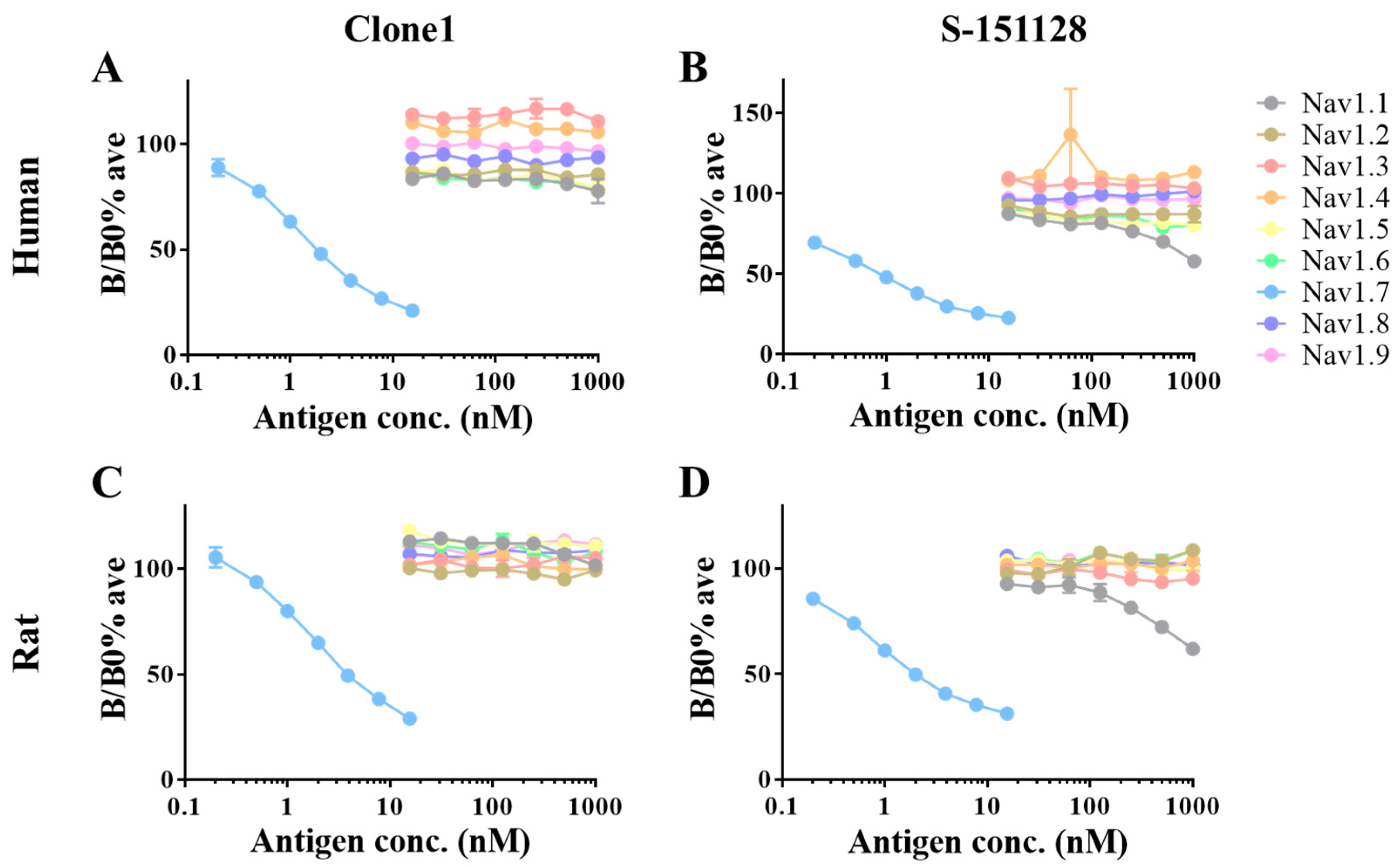
The affinity and specificity of the produced novel antibodies (Clone1 and S-151128, affinity-matured variant of clone1) were confirmed using competitive ELISA. The antibodies displayed strong affinity for a Nav1.7 epitope peptide, with half-maximal inhibitory concentration (IC50) values of 1.52 nM (Clone1) and 0.73 nM (S-151128) in human Nav1.7 (Figure 1A,B, and Table 2). In rat Nav1.7, the IC50 values were 2.98 nM (Clone1) and 1.51 nM (S-151128) (Figure 1C,D, and Table 2). Competitive ELISA using peptides corresponding to other Nav channel subtypes revealed that the novel antibodies did not bind to any other Nav subtype (Figure 1A–D and Table 2). Although the IC50 values for the other Nav subtypes were unable to be determined (>1000 nM), Clone1 and S-151128 exhibited selectivity for Nav1.7 of at least 650- and 1300-fold, respectively.

3.2. Binding of Antibodies to Nav1.7 Expressed in Human Embryonic Kidney 293 (HEK) Cells

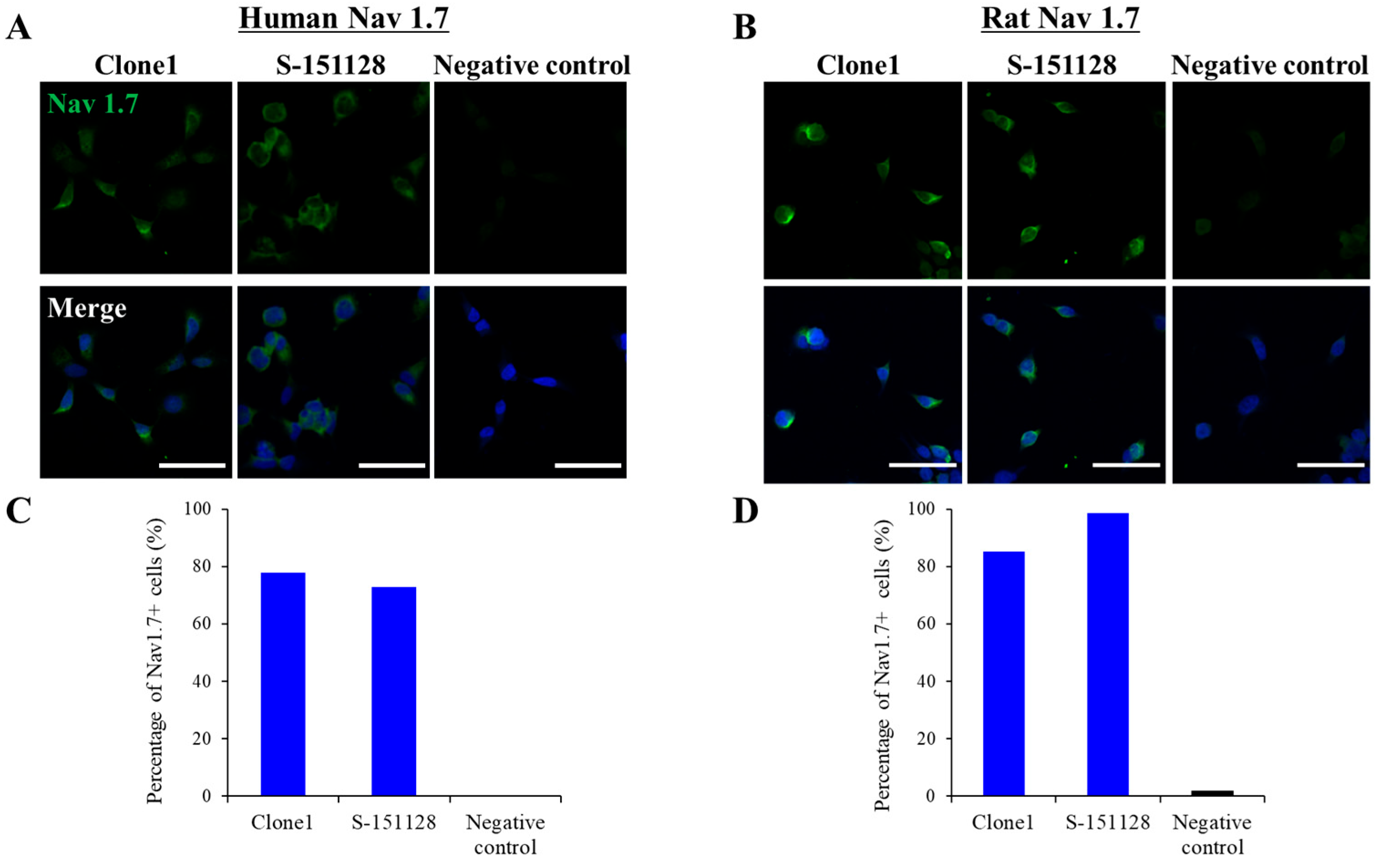
To confirm the binding of the antibodies to Nav1.7 on the cell membrane, immunocytochemistry was performed using HEK cells stably expressing human or rat Nav1.7. The antibodies were used as primary antibodies, and their binding to Nav1.7 was visualized with a fluorescence-conjugated secondary antibody. As shown in Figure 2A,B, fluorescence signals were detected in cells incubated with each primary antibody, whereas the negative control condition, in which the primary antibody was omitted, showed minimal fluorescence. To quantitatively support these observations, antibody-positive cells were counted in each image, and the results are shown in Figure 2C,D. These findings indicate that the novel antibodies bind to Nav1.7 expressed on the cell membrane.

3.3. Functional Inhibition of Nav1.7 Expressed in HEK Cells and Rat Dorsal Root Ganglion (DRG) Neurons

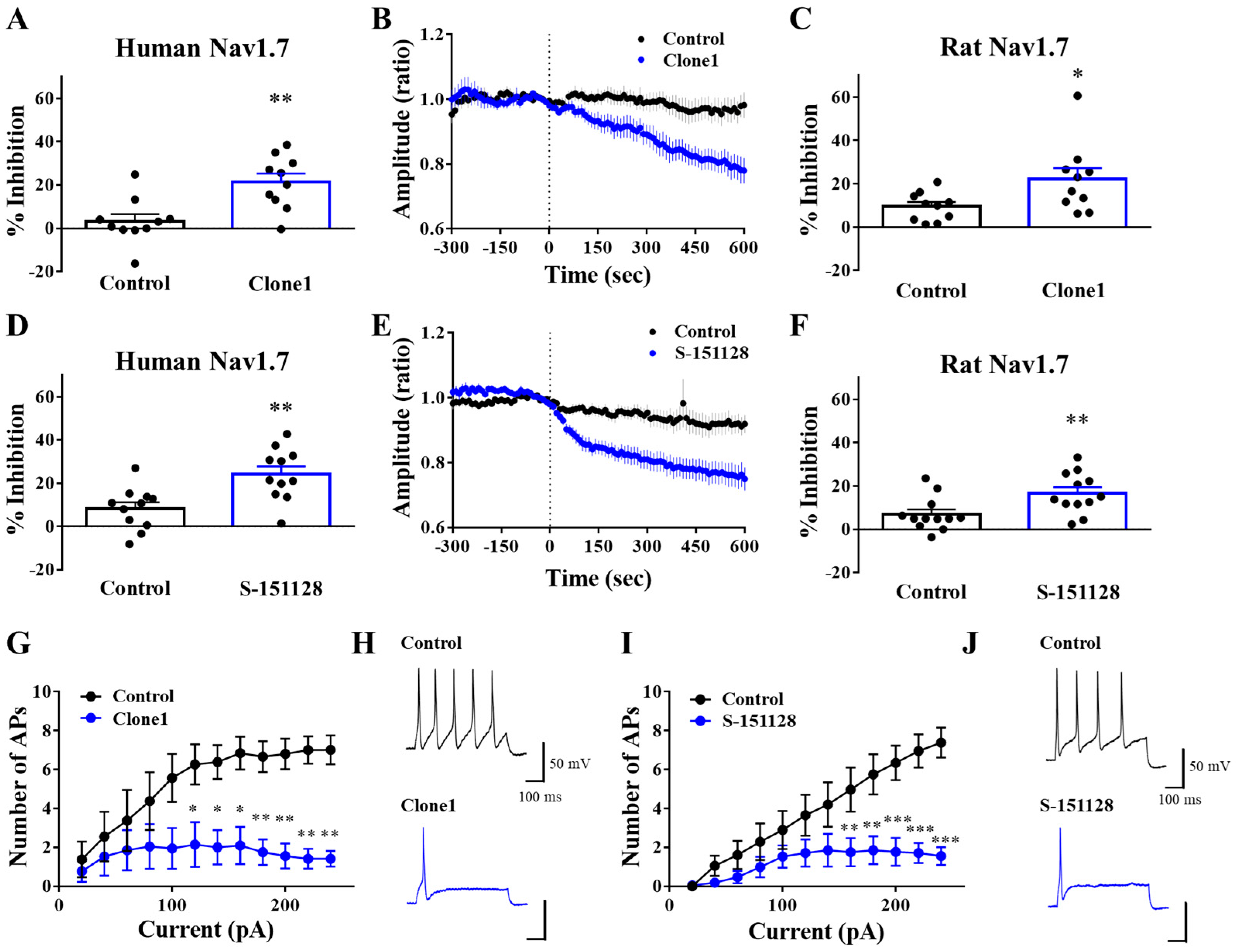
To evaluate the functional inhibition of our humanized antibodies on Nav1.7 channels, patch-clamp recordings were conducted with a whole-cell voltage-clamp configuration using HEK cells stably expressing human/rat Nav1.7 channels. The perfusion of each antibody (100 µg/mL) for 10 min resulted in significantly lower peak sodium currents compared with the negative control antibody (Figure 3A–F and Figures S1–S3). The percentage inhibitions of sodium currents by clone1 and S-151128 were 21.4/22.2% (human/rat Nav1.7) and 24.2/16.7% (human/rat Nav1.7), respectively. Although the inhibitory effect on sodium currents was partial, previous reports have demonstrated that even the partial inhibition of sodium currents significantly inhibits neuronal action potentials [39]. Given that neuronal activity plays a critical role in transmitting pain signals from the periphery to the central nervous system [40,41], we investigated the effects of our humanized antibodies on neuronal action potentials in rat DRG neurons. Exposure to each antibody at 100 µg/mL significantly reduced neuronal action potentials (Figure 3G–J and Figure S4), suggesting that these antibodies may attenuate pain signals in vivo.

3.4. Antibodies Increase the Paw Withdrawal Threshold (PWT) in a Partial Sciatic Nerve Ligation (PSNL) Model

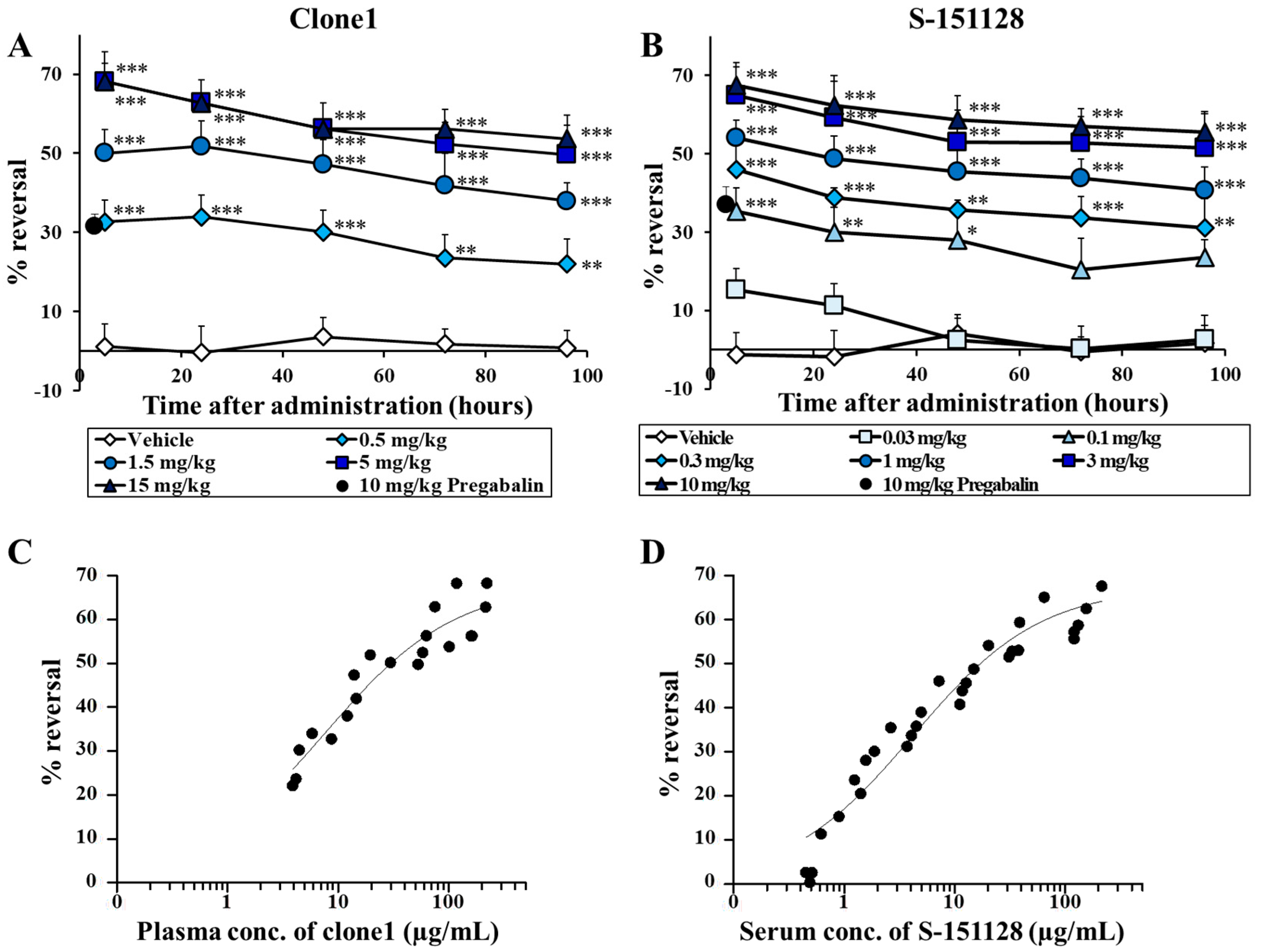
We next investigated the efficacy of intravenous Nav1.7 antibody administration as a potential therapeutic drug for pain relief. Previous studies have reported the analgesic effects of anti-Nav1.7 antibodies when administered intrathecally or into the DRG [42,43]. However, in terms of practicality and ease of clinical use, intravenous antibody administration would be more convenient. We therefore aimed to evaluate the efficacy of intravenous antibody administration. To assess the effects of our antibodies on pain behavior in vivo, we used a rat model of PSNL and von Frey filaments (vFF). Systemic antibody administration via an intravenous route at various doses (Clone1: 0.5, 1.5, 5, or 15 mg/kg; S-151128: 0.03, 0.1, 0.3, 1, 3, or 10 mg/kg) resulted in dose-dependent increases in the PWT, indicating reduced pain sensitivity (Figure 4A,B). The 0.5 mg/kg dose of clone1 exhibited efficacy similar to that of pregabalin (10 mg/kg), with the peak efficacy observed at 5 mg/kg. Similarly, the 0.1 mg/kg dose of S-151128 displayed an efficacy similar to that of pregabalin, reaching its maximum efficacy at 3 mg/kg. Importantly, even 96 h after administration, the efficacies of both antibodies remained superior to that of pregabalin. Plasma/serum concentrations of the antibodies were measured at all timepoints, and the doses were evaluated using behavioral testing. The effects of the antibodies on the PWT were highly correlated with their plasma/serum concentrations (adjusted r2 = 0.880 in clone1 and 0.939 in S-151128) (Figure 4C,D). We next evaluated whether the negative control antibody affected nociceptive behavior in PSNL model rats. PSNL rats were treated with vehicle, negative control antibody, or pregabalin at 10 mg/kg as a positive control, and paw withdrawal threshold (PWT) was assessed. The negative control antibody did not change PWT compared with the vehicle-treated group. These results demonstrate that the negative control antibody did not exert a detectable analgesic effect in PSNL model rats (Figure S5).

3.5. Suppression of Neural Activity in In Vivo Extracellular Recordings

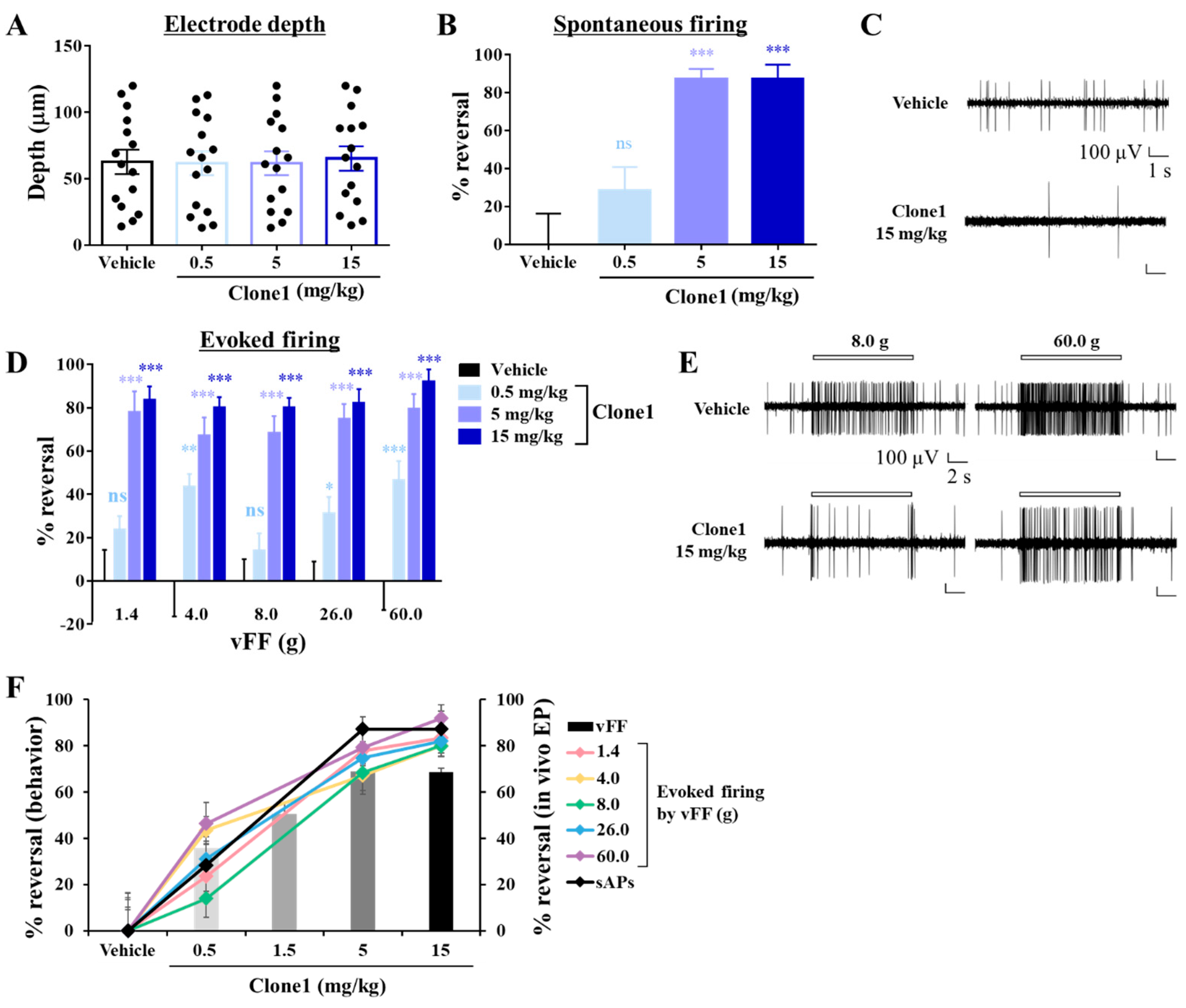
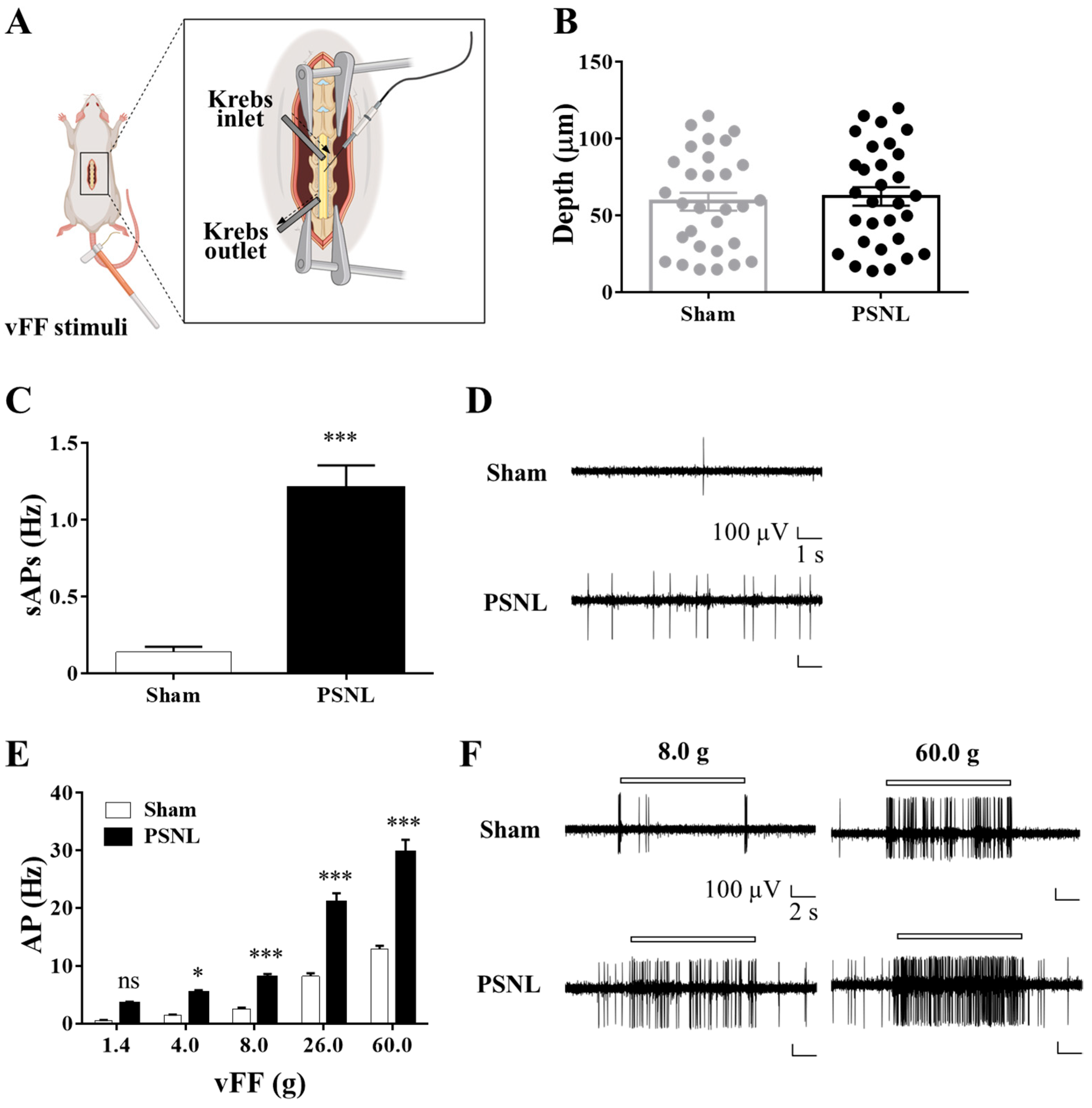
To further assess the pharmacological effects of our antibodies, we conducted electrophysiological studies. Extracellular recordings of action potentials from spinal dorsal horn neurons were performed 2 weeks after PSNL induction to examine both mechanically evoked and spontaneous excitatory input from peripheral afferents to the spinal cord (Figure 5A). The electrode was implanted at a depth of 20–150 µm from the surface; this depth did not differ between the sham and PSNL groups (Figure 5B). The spontaneous firing rate (without stimulation) was significantly higher in the PSNL model (Figure 5C,D). Similarly, the PSNL model exhibited significantly higher neural activity in response to mechanical stimulation by vFF compared with the sham group (Figure 5E,F). These results are consistent with previous reports of neuropathic pain models [44,45]. We then evaluated the inhibitory effects of clone1 on neural activity in the PSNL model. Both vFF-induced and spontaneous neural activity were evaluated 5–8 h after the intravenous injection of clone1 at doses at which the antibody showed maximal efficacy in the behavioral test (0.5, 5, or 15 mg/kg,). The electrode depth did not differ between the vehicle and clone1-treated groups (Figure 6A). Clone1 led to significant dose-dependent decreases in both spontaneous and vFF-evoked firing (Figure 6B–E). The increased PWT and the inhibition rate of neural firing at each dose of clone1 are summarized in Figure 6F. Both the behavioral and electrophysiological evaluations demonstrated consistent efficacy, thus supporting the effectiveness of this antibody.

3.6. Inhibition of Phosphorylation of Extracellular Signal-Regulated Kinase (ERK) in Rat DRG Neurons

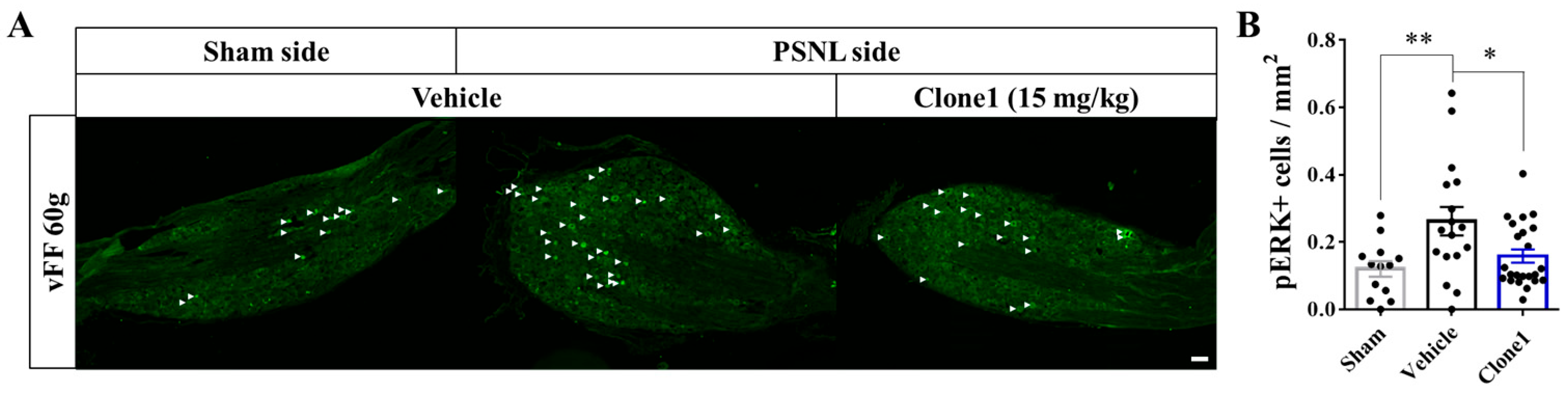
The phosphorylation of ERK in DRG neurons is reportedly augmented in neuropathic pain models [46,47]. Furthermore, ERK in DRG neurons undergoes phosphorylation in response to painful stimuli, and this phosphorylation is considered to reflect pain signals [48]. In the present study, we therefore aimed to confirm the inhibitory effect of clone1 on pain signals by immunohistochemically assessing phosphorylated (p)ERK in the DRG after vFF stimulation in the PSNL model. vFF (60 g) prompted ERK phosphorylation in DRG neurons, with notably higher levels observed in the PSNL model than in sham rats. Importantly, clone1 administration significantly reduced the number of pERK-positive cells (Figure 7A,B).

3.7. Effects of the Antibody on Physiological Pain and Motor Function

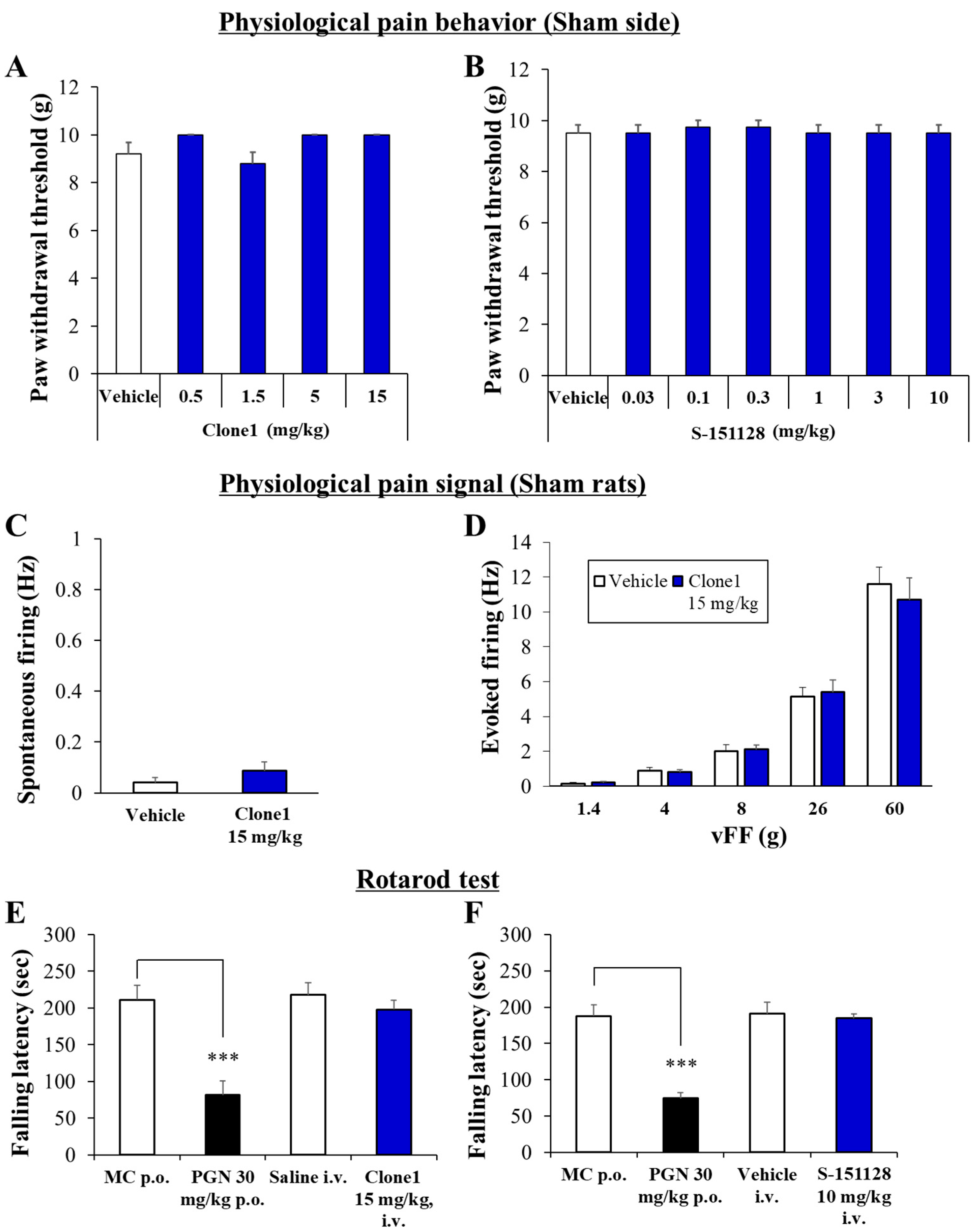
Given that loss-of-function mutations in Nav1.7 result in congenital insensitivity to pain [17,18], we explored the effects of the antibody on pain behaviors and signals under physiological conditions. To evaluate the effects of the antibody on physiological pain behavior, the PWT of sham-side hindlimbs was assessed 5 h after the administration of each antibody. In contrast to their effects in hindlimbs on the nerve-ligated side, the antibodies had no effects on the PWT in hindlimbs on the sham side (Figure 8A,B). We next assessed neuronal activity in sham rats following clone1 administration. Notably, clone1 had no effects on spontaneous neuronal action potentials or vFF-evoked neuronal activity in sham rats (Figure 8C,D).
Commonly used analgesics, such as opioids and pregabalin, have side effects such as sedation and dizziness, which can impair motor function. These adverse effects often restrict their use in specific clinical situations [49,50]. To evaluate the effects of anti-Nav1.7 antibody on motor function, we conducted the rotarod test after intravenous antibody administration. As previously reported [51,52], the positive control (pregabalin, 30 mg/kg) significantly reduced the time spent on the rotarod, indicating impaired motor function. By contrast, antibody administration had no effect on the time spent on the rod, suggesting that our antibodies do not impair motor function (Figure 8E,F).

4. Discussion

We have developed novel humanized monoclonal antibodies against the Nav1.7 sodium channel. These antibodies were able to specifically bind Nav1.7 and inhibit its function in vitro. Notably, the antibodies demonstrated significant and long-lasting analgesic effects in a rat model of neuropathic pain but had no effects on physiological pain and caused no motor function impairment. The analgesic effects were evaluated not only by behavioral assessments but also by electrophysiological and immunohistochemical evaluations.
In the current study, we demonstrated the efficacy of our antibodies via systemic intravenous administration in a rat neuropathic pain model. Although previous reports have demonstrated the analgesic effects of antibodies against Nav1.7, they have only evaluated the efficacy of intrathecal administration or local administration into the DRG rather than systemic administration [42,43,51]. In clinical practice, the local administration of anesthetics (e.g., lidocaine) is performed for nerve block or spinal block therapy; however, this method has various disadvantages. For example, it has a short duration of efficacy, is time-consuming, causes temporary motor weakness and numbness, and there is a risk of infection at the injection site [52,53,54]. Hence, there is a pressing need for more convenient analgesic therapies. In the present study, we provided evidence for the potent efficacy of Nav1.7 antibodies even when administered systemically. Notably, this analgesic effect persisted for up to 96 h, surpassing the efficacy of pregabalin (used as a control drug). To the best of our knowledge, no previous reports have documented such sustained and pronounced efficacy through the systemic administration of Nav1.7 antibodies. The reported half-life of humanized antibodies in rodents ranges from several to approximately 10 days [55,56,57], suggesting that prolonged exposure may have contributed to the observed long-term efficacy. Furthermore, given that the half-life of humanized antibodies is generally longer in humans than in rodents (primarily because of disparities in the binding affinity of the neonatal Fc receptor between species [58]), it is reasonable to expect even greater long-term efficacy in humans.
Our novel antibodies inhibited vFF-induced paw withdrawal and neuronal firing as well as spontaneous neuronal firing. Increased responses to vFF-induced innocuous stimuli in terms of both behavior and neuronal firing are believed to reflect mechanical allodynia [59,60]. It has also been reported that neuronal firing in C fibers is associated with spontaneous pain [61,62]. In the current study, we evaluated neural activity in a superficial region of the spinal cord (20–150 µm from the spinal cord surface, lamina II), which is an area of C fiber input [63], suggesting that our findings reflect C fiber activity. As shown in Figure 6, the inhibitory effects were similar for all doses in each evaluation, indicating that our antibody can suppress both mechanical allodynia and spontaneous pain at the same dose. Allodynia and spontaneous pain are considered to be the main symptoms of neuropathic pain [8]. These findings therefore suggest that our antibodies may effectively inhibit both spontaneous pain and allodynia in patients with neuropathic pain.
Our antibodies demonstrated partial inhibition in the in vitro evaluation of sodium currents (shown in Figure 3). The antibodies bind to the E3 loop in domain III of the Nav1.7 structure. It has been reported that many ion channel antibodies target this E3 region and can significantly, but not completely, inhibit currents [64,65,66]. Although the exact mechanism underlying this effect remains unclear, various possibilities have been proposed, including partial occlusion of the ion channel pore, allosteric modulation via the E3 region, and channel internalization [64]. Sodium channel blockers such as flufenamic acid can partially inhibit voltage-gated sodium currents in hippocampal neurons; however, this partial inhibition reduces neuronal firing, indicating that the partial inhibition of sodium currents can effectively suppress neural excitability [39]. In the present study, even with the antibody-induced partial inhibition of sodium currents, neuronal firing in the rat DRG was significantly suppressed (Figure 3). This observed inhibitory effect was similar to that observed in neurons derived from induced pluripotent stem cells obtained from patients with congenital insensitivity to pain, as well as in neurons with Nav1.7 knockout [14]. Additionally, our antibody demonstrated adequate efficacy in in vivo behavioral and electrophysiological evaluations (Figure 4 and Figure 6). Together, these results suggest that even with the partial inhibition of sodium currents, our antibody exhibits marked functional effects.
Antibodies typically have limited penetration into peripheral nerve tissue, primarily because of biological barriers such as the blood–nerve barrier (BNB) [67,68]. In sham rats, our antibody did not exhibit any effects on neuronal firing and motor function (Figure 8). However, BNB disruption in neuropathic pain models may lead to the enhanced tissue penetration—and therefore therapeutic effects—of antibodies [69]. In rodent models of neuropathic pain, such as PSNL and chronic constriction injury, there is clear evidence that the BNB becomes impaired [70,71,72]. Similarly, in a diabetic neuropathy model, both the BNB and blood–brain barrier are reportedly disrupted [73,74,75]. The BNB is also impaired in patients with diabetic neuropathy, allowing for the increased penetration of immunoglobulin G (IgG) into nerve tissue [76]. Collectively, these findings suggest that systemically administered antibodies may be able to reach nerve tissue and exert therapeutic effects in patients with neuropathic pain, such as diabetic neuropathy.
Our study has some limitations. For example, the tissue concentrations of the antibodies were not measured. Although we attempted to quantify the antibody concentration in the sciatic nerve, the levels were unable to be accurately assessed. Consequently, it remains unknown whether the antibody directly interacts with the sciatic nerve and contributes to the observed effectiveness. Furthermore, efficacy data were only presented for the PSNL model in the present study. Although previous reports suggest that Nav1.7 inhibition demonstrates efficacy against neuropathic pain, further investigations using our antibodies are warranted to validate this assumption. In addition, our electrophysiological experiments evaluated the effects of the antibodies approximately 5 h post-administration, with peak analgesic effects at this timepoint. However, the extension of neural activity suppression beyond this timeframe remains uncertain. Finally, the absence of a comparison between pre- and post-treatment conditions introduces uncertainty regarding the inhibition of recorded neurons by the antibody. Nevertheless, a clear distinction between the vehicle and treatment group was evident, suggesting efficacy.
Monoclonal antibodies are a rapidly growing field for analgesia. Tumor necrosis factor alpha antibodies, also known as tumor necrosis factor inhibitors, are used as standard care for various autoimmune diseases and can provide pain relief in certain conditions, particularly those involving chronic inflammation [77]. Calcitonin gene-related peptide antibodies are also increasingly recognized for their role in pain relief, particularly in the context of migraines and cluster headaches [78]. Although Nav1.7 is a promising drug target, there are currently no therapeutic antibodies against this ion channel. Our work demonstrates the feasibility of therapeutic antibody development for the treatment of ion channel-related diseases. Our antibodies selectively bound to Nav1.7 and inhibited Nav1.7 channel function in vitro; they also had long-term in vivo analgesic effects in an animal neuropathic pain model without affecting physiological pain or motor function. Furthermore, these antibodies were humanized from mouse antibodies. Antibody humanization is a critical process in the development of therapeutic antibodies. This process offers several important advantages that are primarily aimed at enhancing the safety and efficacy of these treatments [79,80]. Thus, these humanized monoclonal antibodies may confer many therapeutic advantages, including selectivity, duration, and safety. These antibodies have the potential to be used for the development of new therapeutics against pain, and one such antibody, S-151128, is currently in clinical trial.

5. Patents

E.K., D.N., T.T., and M.Y. are inventors on patent WO2023/074888, which covers antibodies in this paper.

Supplementary Materials

The following supporting information can be downloaded at: https://www.mdpi.com/article/10.3390/pharmaceutics18060757/s1. Figure S1. Representative traces of pre-post of sodium currents in HEK cells expressing human/rat Nav1.7. Figure S2. Time course of functional inhibition in rat Nav1.7. Figure S3. Pre-post changes of sodium currents in HEK cells expressing human/rat Nav1.7. Figure S4. Representative membrane potential traces and pre–post changes in action potential firing in rat DRG neurons. Figure S5. Evaluation of analgesic effect of negative control antibody.

Author Contributions

Conceptualization: S.Y. (Sosuke Yoneda)., K.Y., and E.K.; Methodology: D.U., T.Y., and S.Y. (Saho Yoshioka); validation: T.Y., S.Y. (Saho Yoshioka), K.T., T.I., D.N., and S.K.; formal analysis: T.Y., S.Y. (Saho Yoshioka), K.T., T.I., S.F., D.N., and S.K.; Investigation: D.U., T.Y., S.Y. (Saho Yoshioka), K.T., T.I., S.F., D.N., and S.K.; Resources: T.T., M.Y., K.O., and E.K.; Data curation: S.Y. (Sosuke Yoneda) and D.U.; Writing—original draft: S.Y. (Sosuke Yoneda) and D.U.; Writing—review and editing: All authors.; Visualization: S.Y. (Sosuke Yoneda) and D.U.; Supervision: E.K.; Project administration: S.Y. (Sosuke Yoneda). and E.K.; Funding acquisition: T.T., M.Y., K.O., and E.K. All authors have read and agreed to the published version of the manuscript.

Funding

All funding was provided by Shionogi & Co., Ltd.

Institutional Review Board Statement

All experiments other than the in vivo extracellular recordings were conducted in compliance with the Act on Welfare and Management of Animals in Japan and the Guide for the Care and Use of Laboratory Animals, and in accordance with the protocol approved by the Institutional Animal Care and Use Committee of Shionogi & Co., Ltd., which is accredited by AAALAC International (accredited unit number: 001500). The in vivo extracellular recordings were conducted according to the Regulations for the Care and Use of Laboratory Animals at the University of Toyama (Approval No. A2023PHA-13 and A2020PHA-12), the Fundamental Guidelines for Proper Conduct of Animal Experiments and Related Activities in Academic Research Institutions in Japan, and the Ethical Guidelines of the International Association for the Study of Pain.

Data Availability Statement

The original contributions presented in this study are included in the article/Supplementary Material. Further inquiries can be directed to the corresponding authors.

Acknowledgments

We thank Bronwen Gardner, from Edanz (https://jp.edanz.com/ac), for editing a draft of this manuscript. The Graphical Abstract, Ando, A. (2026) https://BioRender.com/ray2h3j and Figure 5A were created with BioRender.com. We would like to thank Azusa Ando for creating the figures.

Conflicts of Interest

E.K., D.N., T.T., and M.Y. are listed as inventors on patent WO2023/074888, which covers some of the material described in this paper. D.U. received research funding from Shionogi & Co., Ltd. All authors, except D.U., are employees of Shionogi & Co., Ltd. K.Y., T.Y., S.Y., K.T., and T.I. T.T., T.N., M.Y., K.O. and E.K. hold shares in Shionogi & Co., Ltd. The funders/companies had no role in the design of the study; in the collection, analyses, or interpretation of data; in the writing of the manuscript, or in the decision to publish the results.

References

  1. Raja, S.N.; Carr, D.B.; Cohen, M.; Finnerup, N.B.; Flor, H.; Gibson, S.; Keefe, F.J.; Mogil, J.S.; Ringkamp, M.; Sluka, K.A.; et al. The revised International Association for the Study of Pain definition of pain: Concepts, challenges, and compromises. Pain 2020, 161, 1976–1982. [Google Scholar] [CrossRef] [PubMed]
  2. Cohen, S.P.; Vase, L.; Hooten, W.M. Chronic pain: An update on burden, best practices, and new advances. Lancet 2021, 397, 2082–2097. [Google Scholar] [CrossRef] [PubMed]
  3. Vellucci, R. Heterogeneity of Chronic Pain. Clin. Drug Investig. 2012, 32, 3–10. [Google Scholar] [CrossRef] [PubMed]
  4. De Leon-Casasola, O.A. Opioids for chronic pain: New evidence, new strategies, safe prescribing. Am. J. Med. 2013, 126, S3–S11. [Google Scholar] [CrossRef] [PubMed]
  5. Colloca, L.; Ludman, T.; Bouhassira, D.; Baron, R.; Dickenson, A.H.; Yarnitsky, D.; Freeman, R.; Truini, A.; Attal, N.; Finnerup, N.B.; et al. Neuropathic pain. Nat. Rev. Dis. Prim. 2017, 3, 17002. [Google Scholar] [CrossRef] [PubMed]
  6. Grubb, T. Chronic Neuropathic Pain in Veterinary Patients. Top. Companion Anim. Med. 2010, 25, 45–52. [Google Scholar] [CrossRef] [PubMed]
  7. Henwood, P.; Ellis, J.A. Chronic neuropathic pain in spinal cord injury: The patient’s perspective. Pain Res. Manag. 2004, 9, 39–45. [Google Scholar] [CrossRef] [PubMed]
  8. Finnerup, N.B.; Kuner, R.; Jensen, T.S. Neuropathic pain: From mechanisms to treatment. Physiol. Rev. 2021, 101, 259–301. [Google Scholar] [CrossRef] [PubMed]
  9. van Velzen, M.; Dahan, A.; Niesters, M. Neuropathic Pain: Challenges and Opportunities. Front. Pain Res. 2020, 1, 1. [Google Scholar] [CrossRef] [PubMed]
  10. Fornasari, D. Pharmacotherapy for Neuropathic Pain: A Review. Pain Ther. 2017, 6, 25–33. [Google Scholar] [CrossRef] [PubMed]
  11. Murnion, B.P. Neuropathic pain: Current definition and review of drug treatment. Aust. Prescr. 2018, 41, 60–63. [Google Scholar] [CrossRef] [PubMed]
  12. Afonso, A.S.; Carnaval, T.; Cés, S.V. Combination therapy for neuropathic pain: A review of recent evidence. J. Clin. Med. 2021, 10, 3533. [Google Scholar] [CrossRef] [PubMed]
  13. Dib-Hajj, S.D.; Yang, Y.; Black, J.A.; Waxman, S.G. The Na v 1.7 sodium channel: From molecule to man. Nat. Rev. Neurosci. 2013, 14, 49–62. [Google Scholar] [CrossRef] [PubMed]
  14. McDermott, L.A.; Weir, G.A.; Themistocleous, A.C.; Segerdahl, A.R.; Blesneac, I.; Baskozos, G.; Clark, A.J.; Millar, V.; Peck, L.J.; Ebner, D.; et al. Defining the Functional Role of Na V 1.7 in Human Nociception. Neuron 2019, 101, 905–919.e8. [Google Scholar] [CrossRef] [PubMed]
  15. Hameed, S. Nav1.7 and Nav1.8: Role in the pathophysiology of pain. Mol. Pain 2019, 15, 1744806919858801. [Google Scholar] [CrossRef] [PubMed]
  16. Huang, J.; Mis, M.A.; Tanaka, B.; Adi, T.; Estacion, M.; Liu, S.; Walker, S.; Dib-Hajj, S.D.; Waxman, S.G. Atypical changes in DRG neuron excitability and complex pain phenotype associated with a Nav1.7 mutation that massively hyperpolarizes activation. Sci. Rep. 2018, 8, 1811. [Google Scholar] [CrossRef] [PubMed]
  17. Cox, J.J.; Reimann, F.; Nicholas, A.K.; Thornton, G.; Roberts, E.; Springell, K.; Karbani, G.; Jafri, H.; Mannan, J.; Raashid, Y.; et al. An SCN9A channelopathy causes congenital inability to experience pain. Nature 2006, 444, 894–898. [Google Scholar] [CrossRef] [PubMed]
  18. Bennett, D.L.H.; Woods, C.G. Painful and painless channelopathies. Lancet Neurol. 2014, 13, 587–599. [Google Scholar] [CrossRef] [PubMed]
  19. Sun, S.; Cohen, C.J.; Dehnhardt, C.M. Inhibitors of voltage-gated sodium channel Nav1.7: Patent applications since 2010. Pharm. Pat. Anal. 2014, 3, 509–521. [Google Scholar] [CrossRef] [PubMed]
  20. Payandeh, J.; Hackos, D.H. Selective ligands and drug discovery targeting the voltage-gated sodium channel nav1.7. In Handbook of Experimental Pharmacology; Springer New York LLC: New York, NY, USA, 2018; pp. 271–306. [Google Scholar] [CrossRef] [PubMed]
  21. Hinckley, C.A.; Kuryshev, Y.; Sers, A.; Barre, A.; Buisson, B.; Naik, H.; Hajos, M. Characterization of vixotrigine, a broad-spectrum voltage-gated sodium channel blocker. Mol. Pharmacol. 2021, 99, 49–59. [Google Scholar] [CrossRef] [PubMed]
  22. Mulcahy, J.V.; Pajouhesh, H.; Beckley, J.T.; Delwig, A.; Du Bois, J.; Hunter, J.C. Challenges and Opportunities for Therapeutics Targeting the Voltage-Gated Sodium Channel Isoform NaV1.7. J. Med. Chem. 2019, 62, 8695–8710. [Google Scholar] [CrossRef] [PubMed]
  23. Naik, H.; Steiner, D.J.; Versavel, M.; Palmer, J.; Fong, R. Safety, Tolerability and Pharmacokinetics of Single and Repeat Doses of Vixotrigine in Healthy Volunteers. Clin. Transl. Sci. 2021, 14, 1272–1279. [Google Scholar] [CrossRef] [PubMed]
  24. Zimmer, T.; Surber, R. SCN5A channelopathies—An update on mutations and mechanisms. Prog. Biophys. Mol. Biol. 2008, 98, 120–136. [Google Scholar] [CrossRef] [PubMed]
  25. Eijkelkamp, N.; Linley, J.E.; Baker, M.D.; Minett, M.S.; Cregg, R.; Werdehausen, R.; Rugiero, F.; Wood, J.N. Neurological perspectives on voltage-gated sodium channels. Brain 2012, 135, 2585–2612. [Google Scholar] [CrossRef] [PubMed]
  26. Safina, B.S.; McKerrall, S.J.; Sun, S.; Chen, C.A.; Chowdhury, S.; Jia, Q.; Li, J.; Zenova, A.Y.; Andrez, J.C.; Bankar, C.; et al. Discovery of Acyl-sulfonamide Nav1.7 Inhibitors GDC-0276 and GDC-0310. J. Med. Chem. 2021, 64, 2953–2966. [Google Scholar] [CrossRef] [PubMed]
  27. Murray, J.K.; Wu, B.; Tegley, C.M.; Nixey, T.E.; Falsey, J.R.; Herberich, B.; Yin, L.; Sham, K.; Long, J.; Aral, J.; et al. Engineering Na V 1.7 Inhibitory JzTx-V Peptides with a Potency and Basicity Profile Suitable for Antibody Conjugation To Enhance Pharmacokinetics. ACS Chem. Biol. 2019, 14, 806–818. [Google Scholar] [CrossRef] [PubMed]
  28. Nguyen, P.T.; Yarov-Yarovoy, V. Towards Structure-Guided Development of Pain Therapeutics Targeting Voltage-Gated Sodium Channels. Front. Pharmacol. 2022, 13, 842032. [Google Scholar] [CrossRef] [PubMed]
  29. Pajouhesh, H.; Beckley, J.T.; Delwig, A.; Hajare, H.S.; Luu, G.; Monteleone, D.; Zhou, X.; Ligutti, J.; Amagasu, S.; Moyer, B.D.; et al. Discovery of a selective, state-independent inhibitor of NaV1.7 by modification of guanidinium toxins. Sci. Rep. 2020, 10, 14791. [Google Scholar] [CrossRef] [PubMed]
  30. Nguyen, P.T.; Nguyen, H.M.; Wagner, K.M.; Stewart, R.G.; Singh, V.; Thapa, P.; Chen, Y.J.; Lillya, M.W.; Ton, A.T.; Kondo, R.; et al. Computational design of peptides to target Na V 1.7 channel with high potency and selectivity for the treatment of pain. Biophys. J. 2022, 11, e81727. [Google Scholar] [CrossRef] [PubMed]
  31. Neff, R.A.; Wickenden, A.D. Selective Targeting of Nav1.7 with Engineered Spider Venom-Based Peptides. Channels 2021, 15, 193–207. [Google Scholar] [CrossRef] [PubMed]
  32. Kingwell, K. Nav1.7 withholds its pain potential. Nat. Rev. Drug Discov. 2019, 18, 321–323. [Google Scholar] [CrossRef] [PubMed]
  33. Eagles, D.A.; Chow, C.Y.; King, G.F. Fifteen years of Na V 1.7 channels as an analgesic target: Why has excellent in vitro pharmacology not translated into in vivo analgesic efficacy? Br. J. Pharmacol. 2022, 179, 3592–3611. [Google Scholar] [CrossRef] [PubMed]
  34. Fujita, M.; Tamano, R.; Yoneda, S.; Omachi, S.; Yogo, E.; Rokushima, M.; Shionohara, S.; Sakaguchi, G.; Hasegawa, M.; Asaki, T. Ibudilast produces anti-allodynic effects at the persistent phase of peripheral or central neuropathic pain in rats: Different inhibitory mechanism on spinal microglia from minocycline and propentofylline. Eur. J. Pharmacol. 2018, 833, 263–274. [Google Scholar] [CrossRef] [PubMed]
  35. Chaplan, S.R.; Bach, F.W.; Pogrel, J.W.; Chung, J.M.; Yaksh, T.L. Quantitative assessment of tactile allodynia in the rat paw. J. Neurosci. Methods 1994, 53, 55–63. [Google Scholar] [CrossRef] [PubMed]
  36. Uta, D.; Ishibashi, N.; Kawase, Y.; Tao, S.; Sawahata, M.; Kume, T. Relationship between Laser Intensity at the Peripheral Nerve and Inhibitory Effect of Percutaneous Photobiomodulation on Neuronal Firing in a Rat Spinal Dorsal Horn. J. Clin. Med. 2023, 12, 5126. [Google Scholar] [CrossRef] [PubMed]
  37. Khan, J.; Noboru, N.; Imamura, Y.; Eliav, E. Effect of Pregabalin and Diclofenac on tactile allodynia, mechanical hyperalgesia and pro inflammatory cytokine levels (IL-6, IL-1β) induced by chronic constriction injury of the infraorbital nerve in rats. Cytokine 2018, 104, 124–129. [Google Scholar] [CrossRef] [PubMed]
  38. Yokoyama, T.; Maeda, Y.; Audette, K.M.; Sluka, K.A. Pregabalin Reduces Muscle and Cutaneous Hyperalgesia in Two Models of Chronic Muscle Pain in Rats. J. Pain 2007, 8, 422–429. [Google Scholar] [CrossRef] [PubMed]
  39. Yau, H.J.; Baranauskas, G.; Martina, M. Flufenamic acid decreases neuronal excitability through modulation of voltage-gated sodium channel gating. J. Physiol. 2010, 588, 3869–3882. [Google Scholar] [CrossRef] [PubMed]
  40. Goodwin, G.; McMahon, S.B. The physiological function of different voltage-gated sodium channels in pain. Nat. Rev. Neurosci. 2021, 22, 263–274. [Google Scholar] [CrossRef] [PubMed]
  41. Bennett, D.L.; Clark, A.J.; Huang, J.; Waxman, S.G.; Dib-Hajj, S.D. The Role of Voltage-Gated Sodium Channels in Pain Signaling. Physiol. Rev. 2019, 99, 1079–1151. [Google Scholar] [CrossRef] [PubMed]
  42. Bang, S.; Yoo, J.; Gong, X.; Liu, D.; Han, Q.; Luo, X.; Chang, W.; Chen, G.; Im, S.; Kim, Y.H.; et al. Differential Inhibition of Nav1.7 and Neuropathic Pain by Hybridoma-Produced and Recombinant Monoclonal Antibodies that Target Nav1.7: Differential activities of Nav1.7-targeting monoclonal antibodies. Neurosci. Bull. 2018, 34, 22–41. [Google Scholar] [CrossRef] [PubMed]
  43. Xia, Z.; Xiao, Y.; Wu, Y.; Zhao, B. Sodium channel Nav1.7 expression is upregulated in the dorsal root ganglia in a rat model of paclitaxel-induced peripheral neuropathy. Springerplus 2016, 5, 1738. [Google Scholar] [CrossRef] [PubMed]
  44. Gong, N.; Hagopian, G.; Holmes, T.C.; Luo, Z.D.; Xu, X. Functional reorganization of local circuit connectivity in superficial spinal dorsal horn with neuropathic pain states. eNeuro 2019, 6, 5. [Google Scholar] [CrossRef] [PubMed]
  45. Uta, D.; Kato, G.; Doi, A.; Andoh, T.; Kume, T.; Yoshimura, M.; Koga, K. Animal models of chronic pain increase spontaneous glutamatergic transmission in adult rat spinal dorsal horn in vitro and in vivo. Biochem. Biophys. Res. Commun. 2019, 512, 352–359. [Google Scholar] [CrossRef] [PubMed]
  46. Obata, K.; Yamanaka, H.; Dai, Y.; Mizushima, T.; Fukuoka, T.; Tokunaga, A.; Noguchi, K. Differential activation of MAPK in injured and uninjured DRG neurons following chronic constriction injury of the sciatic nerve in rats. Eur. J. Neurosci. 2004, 20, 2881–2895. [Google Scholar] [CrossRef] [PubMed]
  47. Ma, W.; Quirion, R. The ERK/MAPK pathway, as a target for the treatment of neuropathic pain. Expert Opin. Ther. Targets 2005, 9, 699–713. [Google Scholar] [CrossRef] [PubMed]
  48. Gao, Y.J.; Ji, R.R. c-Fos or pERK, Which is a Better Marker for Neuronal Activation and Central Sensitization After Noxious Stimulation and Tissue Injury? Open Pain J. 2009, 2, 11–17. [Google Scholar] [CrossRef] [PubMed]
  49. Spahn, V.; Del Vecchio, G.; Rodriguez-Gaztelumendi, A.; Temp, J.; Labuz, D.; Kloner, M.; Reidelbach, M.; Machelska, H.; Weber, M.; Stein, C. Opioid receptor signaling, analgesic and side effects induced by a computationally designed pH-dependent agonist. Sci. Rep. 2018, 8, 8965. [Google Scholar] [CrossRef] [PubMed]
  50. Rissardo, J.; Caprara, A.F. Pregabalin-associated movement disorders: A literature review. Brain Circ. 2020, 6, 96. [Google Scholar] [CrossRef] [PubMed]
  51. Martina, M.; Banderali, U.; Yogi, A.; Arbabi Ghahroudi, M.; Liu, H.; Sulea, T.; Durocher, Y.; Hussack, G.; van Faassen, H.; Chakravarty, B.; et al. A Novel Antigen Design Strategy to Isolate Single-Domain Antibodies that Target Human Nav1.7 and Reduce Pain in Animal Models. Adv. Sci. 2024, 11, e2405432. [Google Scholar] [CrossRef] [PubMed]
  52. Kent, C.D.; Bollag, L. Neurological adverse events following regional anesthesia administration. Local Reg. Anesth. 2010, 3, 115–123. [Google Scholar] [CrossRef] [PubMed]
  53. Varitimidis, S.E.; Venouziou, A.I.; Dailiana, Z.H.; Christou, D.; Dimitroulias, A.; Malizos, K.N. Triple nerve block at the knee for foot and ankle surgery performed by the surgeon: Difficulties and efficiency. Foot Ankle Int. 2009, 30, 854–859. [Google Scholar] [CrossRef] [PubMed]
  54. Wiegel, M.; Gottschaldt, U.; Hennebach, R.; Hirschberg, T.; Reske, A. Complications and adverse effects associated with continuous peripheral nerve blocks in orthopedic patients. Anesth. Analg. 2007, 104, 1578–1582. [Google Scholar] [CrossRef] [PubMed]
  55. Martin, P.L.; Sachs, C.; Hoberman, A.; Jiao, Q.; Bugelski, P.J. Effects of CNTO 530, an erythropoietin mimetic-IgG4 fusion protein, on embryofetal development in rats and rabbits. Birth Defects Res. B Dev. Reprod. Toxicol. 2010, 89, 87–96. [Google Scholar] [CrossRef] [PubMed]
  56. Espinoza, Y.; Wong, D.; Ahene, A.; Der, K.; Martinez, Z.; Pham, J.; Cobb, R.R.; Farr-Jones, S.; Marks, J.D.; Tomic, M.T. Pharmacokinetics of human recombinant anti-botulinum toxin antibodies in rats. Toxins 2019, 11, 345. [Google Scholar] [CrossRef] [PubMed]
  57. Webster, R.P.; Marckel, J.A.; Norman, A.B. Toxicokinetics of a humanized anti-cocaine monoclonal antibody in male and female rats and lack of cross-reactivity. Hum. Vaccines Immunother. 2023, 19, 2274222. [Google Scholar] [CrossRef] [PubMed]
  58. Proetzel, G.; Roopenian, D.C. Humanized FcRn mouse models for evaluating pharmacokinetics of human IgG antibodies. Methods 2014, 65, 148–153. [Google Scholar] [CrossRef] [PubMed]
  59. Barrot, M. Tests and models of nociception and pain in rodents. Neuroscience 2012, 211, 39–50. [Google Scholar] [CrossRef] [PubMed]
  60. Pitcher, G.M.; Henry, J.L. Nociceptive response to innocuous mechanical stimulation is mediated via myelinated afferents and NK-1 receptor activation in a rat model of neuropathic pain. Exp. Neurol. 2004, 186, 173–197. [Google Scholar] [CrossRef] [PubMed]
  61. Djouhri, L.; Koutsikou, S.; Fang, X.; McMullan, S.; Lawson, S.N. Spontaneous pain, both neuropathic and inflammatory, is related to frequency of spontaneous firing in intact C-fiber nociceptors. J. Neurosci. 2006, 26, 1281–1292. [Google Scholar] [CrossRef] [PubMed]
  62. Kleggetveit, I.P.; Namer, B.; Schmidt, R.; Helås, T.; Rückel, M.; Orstavik, K.; Schmelz, M.; Jørum, E. High spontaneous activity of C-nociceptors in painful polyneuropathy. Pain 2012, 153, 2040–2047. [Google Scholar] [CrossRef] [PubMed]
  63. D’Mello, R.; Dickenson, A.H. Spinal cord mechanisms of pain. Br. J. Anaesth. 2008, 101, 8–16. [Google Scholar] [CrossRef] [PubMed]
  64. Naylor, J.; Beech, D.J. Extracellular Ion Channel Inhibitor Antibodies. Open Drug Discov. J. 2009, 1, 36–42. [Google Scholar] [CrossRef][Green Version]
  65. Xu, S.Z.; Zeng, F.; Lei, M.; Li, J.; Gao, B.; Xiong, C.; Sivaprasadarao, A.; Beech, D.J. Generation of functional ion-channel tools by E3 targeting. Nat. Biotechnol. 2005, 23, 1289–1293. [Google Scholar] [CrossRef] [PubMed]
  66. Gómez-Varela, D.; Zwick-Wallasch, E.; Knötgen, H.; Sánchez, A.; Hettmann, T.; Ossipov, D.; Weseloh, R.; Contreras-Jurado, C.; Rothe, M.; Stühmer, W.; et al. Monoclonal antibody blockade of the human Eag1 potassium channel function exerts antitumor activity. Cancer Res. 2007, 67, 7343–7349. [Google Scholar] [CrossRef] [PubMed]
  67. Weerasuriya, A.; Mizisin, A.P. The Blood-Nerve Barrier: Structure and Functional Significance. In Methods in Molecular Biology; Humana Press Inc.: New York, NY, USA, 2011; pp. 149–173. [Google Scholar] [CrossRef] [PubMed]
  68. Liu, H.; Chen, Y.; Huang, L.; Sun, X.; Fu, T.; Wu, S.; Zhu, X.; Zhen, W.; Liu, J.; Lu, G.; et al. Drug distribution into peripheral nerve. J. Pharmacol. Exp. Ther. 2018, 365, 336–345. [Google Scholar] [CrossRef] [PubMed]
  69. Richner, M.; Ferreira, N.; Dudele, A.; Jensen, T.S.; Vaegter, C.B.; Gonçalves, N.P. Functional and structural changes of the blood-nerve-barrier in diabetic neuropathy. Front. Neurosci. 2019, 12, 1038. [Google Scholar] [CrossRef] [PubMed]
  70. Lim, T.K.Y.; Shi, X.Q.; Martin, H.C.; Huang, H.; Luheshi, G.; Rivest, S.; Zhang, J. Blood-nerve barrier dysfunction contributes to the generation of neuropathic pain and allows targeting of injured nerves for pain relief. Pain 2014, 155, 954–967. [Google Scholar] [CrossRef] [PubMed]
  71. Moreau, N.; Mauborgne, A.; Bourgoin, S.; Couraud, P.O.; Romero, I.A.; Weksler, B.B.; Villanueva, L.; Pohl, M.; Boucher, Y. Early alterations of Hedgehog signaling pathway in vascular endothelial cells after peripheral nerve injury elicit blood-nerve barrier disruption, nerve inflammation, and neuropathic pain development. Pain 2016, 157, 827–839. [Google Scholar] [CrossRef] [PubMed]
  72. Reinhold, A.K.; Schwabe, J.; Lux, T.J.; Salvador, E.; Rittner, H.L. Quantitative and Microstructural Changes of the Blood-Nerve Barrier in Peripheral Neuropathy. Front. Neurosci. 2018, 12, 936. [Google Scholar] [CrossRef] [PubMed]
  73. Ben-Kraiem, A.; Sauer, R.S.; Norwig, C.; Popp, M.; Bettenhausen, A.L.; Sobhy Atalla, M.; Brack, A.; Blum, R.; Doppler, K.; Lydia Rittner, H. Selective blood-nerve barrier leakiness with claudin-1 and vessel-associated macrophage loss in diabetic polyneuropathy. J. Mol. Med. 2021, 99, 1237–1250. [Google Scholar] [CrossRef] [PubMed]
  74. Salameh, T.S.; Shah, G.N.; Price, T.O.; Hayden, M.R.; Banks, W.A. Blood-brain barrier disruption and neurovascular unit dysfunction in diabetic mice: Protection with the mitochondrial carbonic anhydrase inhibitor topiramate. J. Pharmacol. Exp. Ther. 2016, 359, 452–459. [Google Scholar] [CrossRef] [PubMed]
  75. Huber, J.D.; VanGilder, R.L.; Houser, K.A. Streptozotocin-induced diabetes progressively increases blood-brain barrier permeability in specific brain regions in rats. Am. J. Physiol. Heart Circ. Physiol. 2006, 291, 2660–2668. [Google Scholar] [CrossRef] [PubMed]
  76. Poduslo, J.F.; Curran, G.L.; Dyck, P.J. Increase in albumin, IgG, and IgM blood-nerve barrier indices in human diabetic neuropathy. Proc. Natl. Acad. Sci. USA 1988, 85, 4879–4883. [Google Scholar] [CrossRef] [PubMed]
  77. Monaco, C.; Nanchahal, J.; Taylor, P.; Feldmann, M. Anti-TNF therapy: Past, present and future. Int. Immunol. 2015, 27, 55–62. [Google Scholar] [CrossRef] [PubMed]
  78. Cohen, F.; Yuan, H.; DePoy, E.M.G.; Silberstein, S.D. The Arrival of Anti-CGRP Monoclonal Antibodies in Migraine. Neurotherapeutics 2022, 19, 922–930. [Google Scholar] [CrossRef] [PubMed]
  79. Kuramochi, T.; Igawa, T.; Tsunoda, H.; Hattori, K. Humanization and simultaneous optimization of monoclonal antibody. In Methods in Molecular Biology; Humana Press Inc.: New York, NY, USA, 2019; pp. 213–230. [Google Scholar] [CrossRef] [PubMed]
  80. Ling, W.L.; Lua, W.H.; Ken-En Gan, S. Sagacity in antibody humanization for therapeutics, diagnostics and research purposes: Considerations of antibody elements and their roles. Antib. Ther. 2021, 3, 71–79. [Google Scholar] [CrossRef][Green Version]
Figure 1. Binding affinities of clone1 and S-151128 for each Nav subtype in humans and rats. Competitive ELISA was used to evaluate the binding affinities of clone1 and S-151128 for the peptides of each Nav subtype. The inhibition ability of the antigens at varying concentrations against a constant antibody concentration of 0.7 ng/well is depicted. The binding affinities of clone1 for human (A) and rat (C) Nav subtypes are displayed. Similarly, the binding affinities of S-151128 for human (B) and rat (D) Nav subtypes are shown. Data represent the mean ± SEM from three wells; mean IC50 values were determined from three independent experiments.
Pharmaceutics 18 00757 g001
Figure 2. Immunofluorescent staining of HEK cells expressing Nav subtypes using the antibodies. Representative immunofluorescence images of HEK cells stained with the novel antibodies as primary antibodies (green) and a nuclear stain (blue) are shown. HEK cells stably expressing human Nav1.7 are shown in (A), and HEK cells stably expressing rat Nav1.7 are shown in (B). Negative control images, obtained without the primary antibody, showed little specific staining. Quantitative analyses of the immunofluorescence images are shown in (C,D), where Nav1.7-positive cells were counted in each image. The experiments were independently repeated three times, all of which produced similar results. The figure presents quantitative data from one representative experiment (cell counts: C, Clone1: 124; S151128: 159; NC: 171; D, Clone1: 73; S-151128: 80; NC: 121). NC: Negative control. Scale bar = 100 µm.
Pharmaceutics 18 00757 g002
Figure 3. Functional inhibition of the antibodies with in vitro electrophysiology. Whole-cell patch-clamp recordings were conducted on HEK cells expressing human Nav1.7 to assess the inhibitory effects of the antibodies at concentrations of 100 µg/mL on the sodium current (AF). Data are presented as the mean ± SEM. Significance was determined using a Mann–Whitney U test; * p < 0.05, ** p < 0.01 compared with the control group; n = 10–12. The time courses of peak currents during the experiments are shown in (B,E); the dotted lines indicate the start of antibody perfusion. To evaluate the number of APs, membrane potential recording was performed on visually identified rat DRG neurons (G,H). Data are presented as the mean AP ± SEM for each current injection. Representative traces of APs induced by 140 pA current injection are shown in (I,J). Significance was determined using two-way ANOVA followed by the Holm–Šidák test; * p < 0.05, ** p < 0.01, *** p < 0.01 compared with the control group; n = 7–8. The negative control antibody was used as the control in all experiments. AP: action potential.
Pharmaceutics 18 00757 g003
Figure 4. Effects of the antibodies on the PWT in PSNL model rats. The analgesic effects of clone1 (A) and S-151128 (B) were evaluated over time. The PWT was measured before treatment and at 5, 24, 48, 72, and 96 h after the single administration of each antibody. Data are presented as the mean ± SEM, with a sample size of 10 in clone1 study and 10 in the S-151128 study, and a total of 116 rats were used. Significance was determined using a two-way ANOVA followed by Dunnett’s post hoc test; * p < 0.05, ** p < 0.01, and *** p < 0.001 compared with the vehicle-treated group at the respective timepoints after treatment. The relationship between the efficacy and plasma/serum concentration of each antibody is shown (C,D). Each closed circle represents the efficacy and plasma/serum concentration at all doses and timepoints for testing pain behavior.
Pharmaceutics 18 00757 g004
Figure 5. Increased activity of superficial dorsal horn neurons in PSNL model rats. The experimental setup is presented in (A). Figure 5A was created with BioRender.com. Ando, A. (2026) https://BioRender.com/7jo1tsf. Rats were fixed with stereotaxic instruments under urethane anesthesia, and an electrode was inserted into the superficial dorsal horn. Mechanical stimuli were administered to the identified RF with vFF. The depth of electrode placement from the surface of the spinal cord is shown in (B). Data were collected from five neurons each from six rats. A t-test indicated no significant difference between the groups. The spontaneous discharge rates in both the sham and PSNL rats are illustrated in (C). Significance was determined using a t-test; *** p < 0.001 compared with the sham group (n = 30 from six rats). The analysis of vFF-evoked AP frequency is shown in (E). vFF at 1.4, 4, 8, 26, and 60 g were used for the analysis, with a sample size of 30 (from six rats in each group, a total of 12 rats). Significance was determined using the Holm–Šidák test; * p < 0.05, and *** p < 0.001 compared with the sham group. Representative traces of APs recorded from sham and PSNL rats with/without vFF are shown in (D,F). All data are presented as the mean ± SEM. AP: action potential, ns: not significant, RF: receptive field, sAP: spontaneous action potential.
Pharmaceutics 18 00757 g005
Figure 6. Effects of clone1 on the activity of dorsal horn neurons. The depth of electrode placement from the surface of the spinal cord is shown in (A). Data were collected from five neurons each from three rats. Data are presented as the mean ± SEM. Dunnett’s test indicated no significant difference between the groups. Two weeks after the PSNL operation, the PSNL rats received intravenous injections of clone1 (0.5, 5, or 15 mg/kg) or vehicle. Neuronal activity was recorded 5–8 h after clone1 injection. Data showing spontaneous activity (B,C) and evoked firing (D,E) are presented as the mean ± SEM, n = 15 (from three rats in each group, total 18 rats). Statistical analysis was performed using the Holm–Šidák test; * p < 0.05, ** p < 0.01, and *** p < 0.001 compared with the vehicle group. Representative traces of APs are shown in (C,E). All pharmacological data from the behavioral testing and electrophysiological experiments are summarized in (F). EP: electrophysiological test, ns: not significant, sAP: spontaneous action potential.
Pharmaceutics 18 00757 g006
Figure 7. Effects of clone1 on vFF-evoked ERK phosphorylation in DRG neurons. Representative images of the rat DRG stained with anti-pERK antibody (green) are shown in (A). Scale bar = 100 µm. Arrowhead indicates pERK-positive cells. The number of pERK-positive cells was counted in the sham, vehicle-treated PSNL, and clone1-treated PSNL model rats (B). Data are presented as the mean ± SEM (sham: n = 15, vehicle: n = 16, clone1: n = 23, n = slice, 2–4 slices per rat). Statistical analysis was performed using one-way ANOVA with Dunnett’s test; * p < 0.05 and ** p < 0.01 compared with the vehicle group.
Pharmaceutics 18 00757 g007
Figure 8. Effects of the antibodies on physiological pain signals and motor function. Rats received intravenous injections of clone1, S-151128, or vehicle for the assessment of physiological functions. The PWT of the sham side was evaluated 5 h after the administration of clone1 (0.5, 1.5, 5, or 15 mg/kg), S-151128 (0.03, 0.1, 0.3, 1, 3, or 10 mg/kg), or vehicle. n = 5 for clone1 (total 30 rats) and n = 8 for S-151128 (total 56 rats) (A,B). Dunnett’s test indicated no significant difference between the treatment and vehicle groups. Neuronal activity was recorded 5–8 h after clone1 injection (C,D). n = 15 (from three rats). The t-test and Holm–Šidák test indicated that there were no significant differences between the groups in terms of spontaneous firing and evoked firing, respectively. Normal rats received intravenous injections of clone1 (15 mg/kg) or vehicle for the rotarod test (E,F). Falling latency was measured 5 h after clone1 injection. PGN was used as a positive control, and MC was used as the control for PGN (n = 8–9 in the clone1 study, total 42 rats; n = 9 in the S-151128 study in each group, total 36 rats). No significant difference was observed between clone1 and vehicle (intravenous). All data are presented as the mean ± SEM. Statistical analysis using the t-test revealed a significant reduction by PGN compared with oral MC; *** p < 0.001. PGN: pregabalin, MC: 0.5% methyl cellulose.
Pharmaceutics 18 00757 g008
Table 1. Sequence of biotinylated peptides.
SubtypeBiotinylated Peptides
Human Nav1.1Cys(Biotinyl-PEG2-maleimide)-SRNVELQPKYEESL-NH2
Human Nav1.2Cys(Biotinyl-PEG2-maleimide)-SRNVELQPKYEDNL-NH2
Human Nav1.3Cys(Biotinyl-PEG2-maleimide)-SRDVKLQPVYEENL-NH2
Human Nav1.4Cys(Biotinyl-PEG2-maleimide)-SREKEEQPQYEVNL-NH2
Human Nav1.5Cys(Biotinyl-PEG2-maleimide)-SRGYEEQPQWEYNL-NH2
Human Nav1.6Cys(Biotinyl-PEG2-maleimide)-SRKPDEQPKYEDNI-NH2
Human Nav1.7Cys(Biotinyl-PEG2-maleimide)-SVNVDKQPKYEYSL-NH2
Human Nav1.8Cys(Biotinyl-PEG2-maleimide)-SREVNMQPKWEDNV-NH2
Human Nav1.9Cys(Biotinyl-PEG2-maleimide)-STEKEQQPEFESNS-NH2
Rat Nav1.1Cys(Biotinyl-PEG2-maleimide)-SRNVELQPKYEESL-NH2
Rat Nav1.2Cys(Biotinyl-PEG2-maleimide)-SRNVELQPKYEDNL-NH2
Rat Nav1.3Cys(Biotinyl-PEG2-maleimide)-SRDVKLQPIYEENL-NH2
Rat Nav1.4Cys(Biotinyl-PEG2-maleimide)-SREKEEQPHYEVNL-NH2
Rat Nav1.5Cys(Biotinyl-PEG2-maleimide)-SRGYEEQPQWEDNL-NH2
Rat Nav1.6Cys(Biotinyl-PEG2-maleimide)-SRKPDEQPDYEGNI-NH2
Rat Nav1.7Cys(Biotinyl-PEG2-maleimide)-SVNVNEQPKYEYSL-NH2
Rat Nav1.8Cys(Biotinyl-PEG2-maleimide)-SGEINSQPNWENNL-NH2
Rat Nav1.9Cys(Biotinyl-PEG2-maleimide)-SREKDEQPDFEANL-NH2
Table 2. Summary of IC50 values of clone1 and S-151128 in competitive ELISA.
SubtypeAffinity (IC50, nM)SubtypeAffinity (IC50, nM)
(Human)Clone1S-151128(Rat)Clone1S-151128
hNav1.71.520.73rNav1.72.981.51
hNav1.1>1000>1000rNav1.1>1000>1000
hNav1.2>1000>1000rNav1.2>1000>1000
hNav1.3>1000>1000rNav1.3>1000>1000
hNav1.4>1000>1000rNav1.4>1000>1000
hNav1.5>1000>1000rNav1.5>1000>1000
hNav1.6>1000>1000rNav1.6>1000>1000
hNav1.8>1000>1000rNav1.8>1000>1000
hNav1.9>1000>1000rNav1.9>1000>1000
Disclaimer/Publisher’s Note: The statements, opinions and data contained in all publications are solely those of the individual author(s) and contributor(s) and not of MDPI and/or the editor(s). MDPI and/or the editor(s) disclaim responsibility for any injury to people or property resulting from any ideas, methods, instructions or products referred to in the content.