Putatively Identified Sarmentoside-B Removes Oligomerized Amyloid Peptide from Neurons by Inhibiting mTOR and Restoring Lysosomal Function, in In Vitro Alzheimer’s Disease Model

 , , ,
, , ,  and
and
Abstract
1. Introduction
2. Materials and Methods
2.1. Samples
2.2. Neuronal Culture
- −
- Cells without any treatment;
- −
- Cells exposed to oAβ42;
- −
- Cells exposed to oAβ42 and subsequently treated with the molecule.
2.3. Cell Viability
2.4. Lysosome Evaluation
2.5. Protein Expression Evaluation
2.6. Molecular Docking
2.7. Assessment of Amyloid-β42 Clearance
2.8. Calcium Dynamics
2.9. In Silico Toxicity
2.10. Statistical Analysis
3. Results
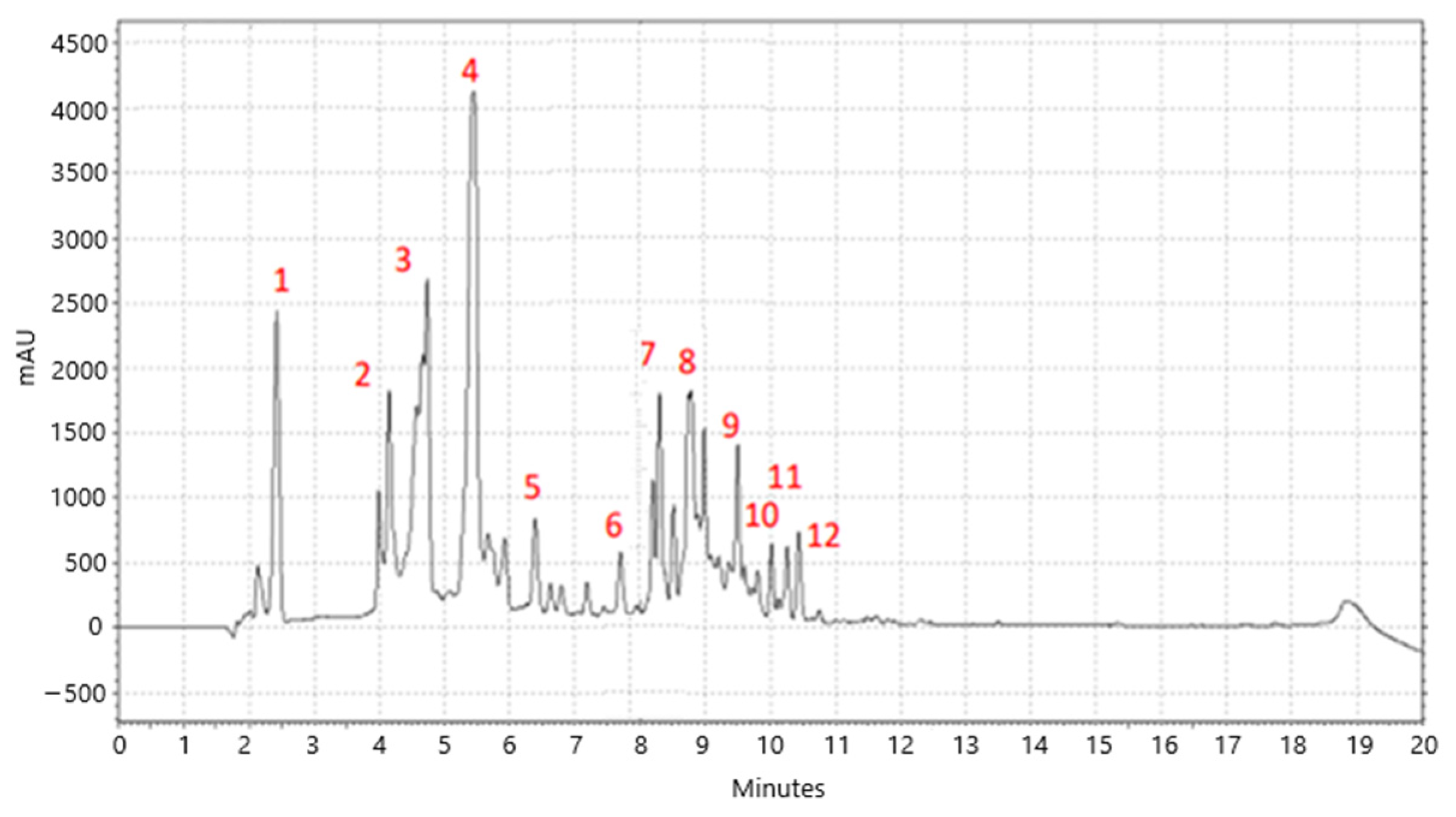
3.1. Fractionation of the E. carneum Extract
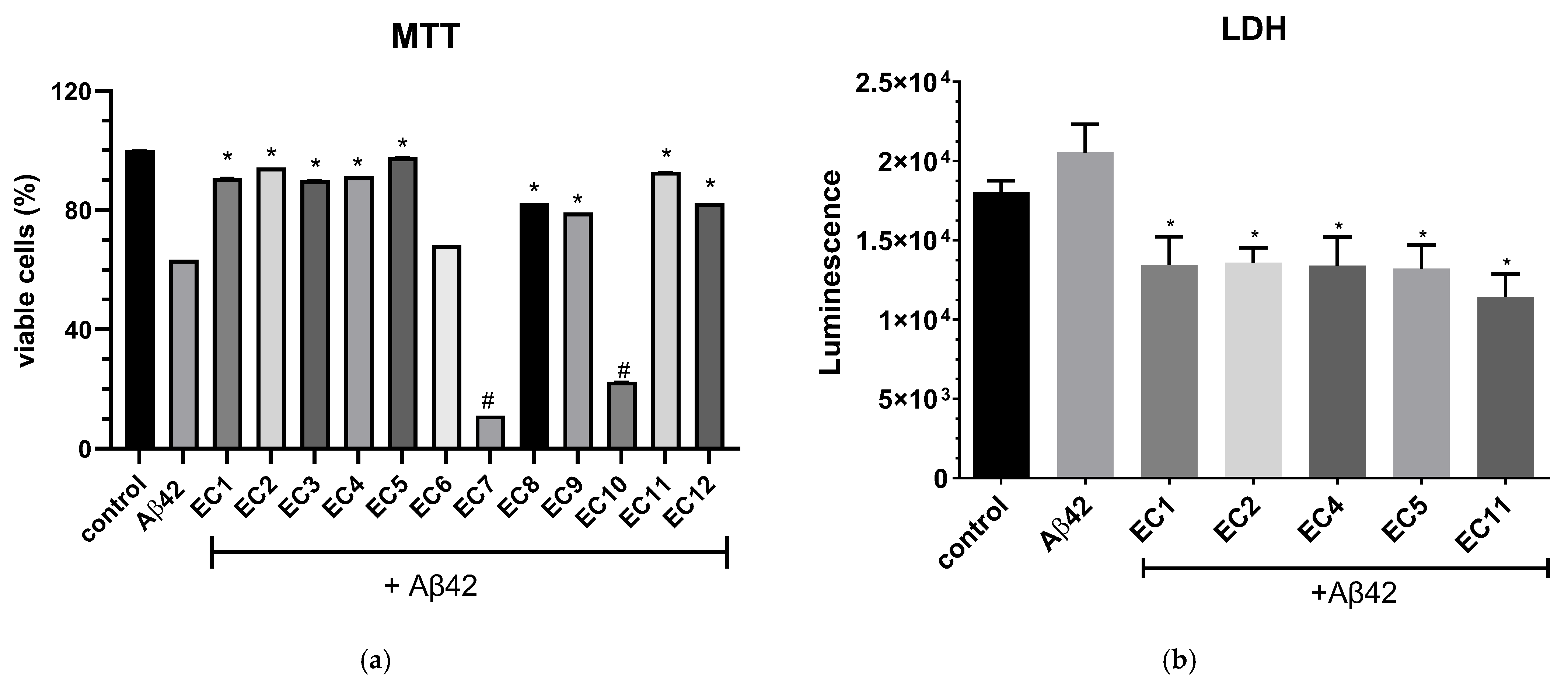
3.2. Cell Viability After EC5 Treatment
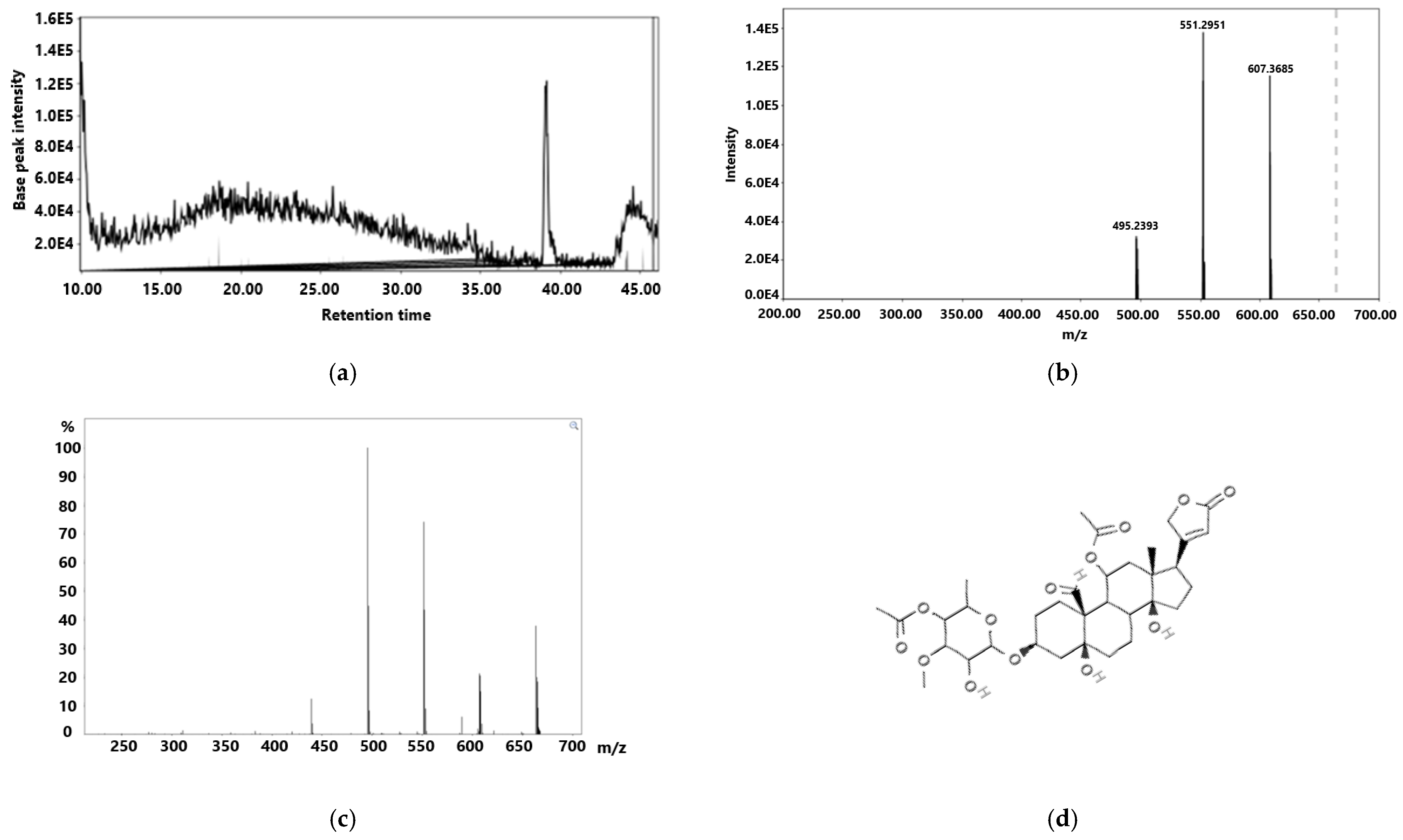
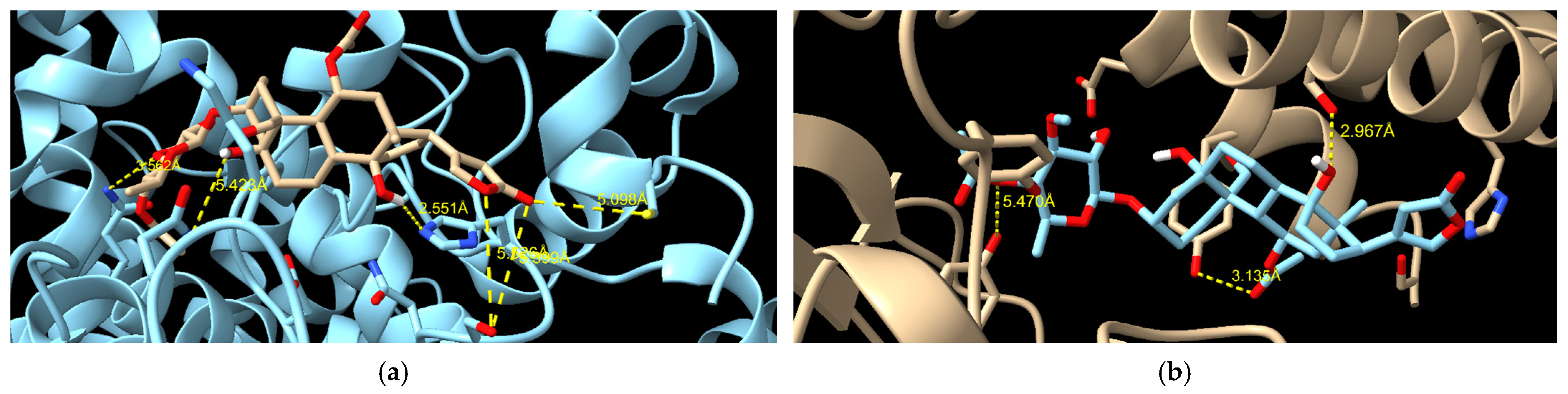
3.3. Molecular Structure Analysis
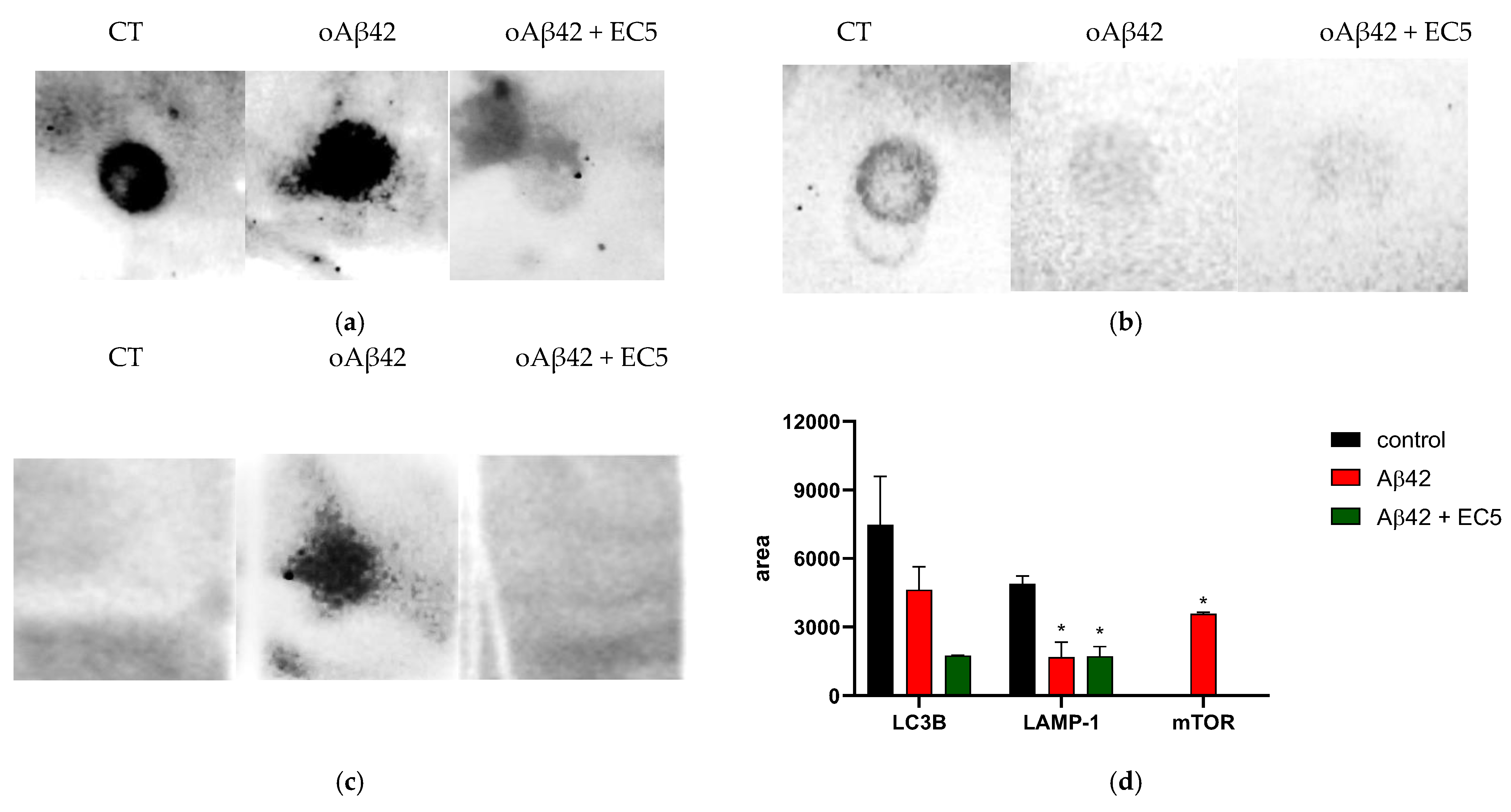
3.4. Lysosome Evaluation and Autophagy-Related Proteins
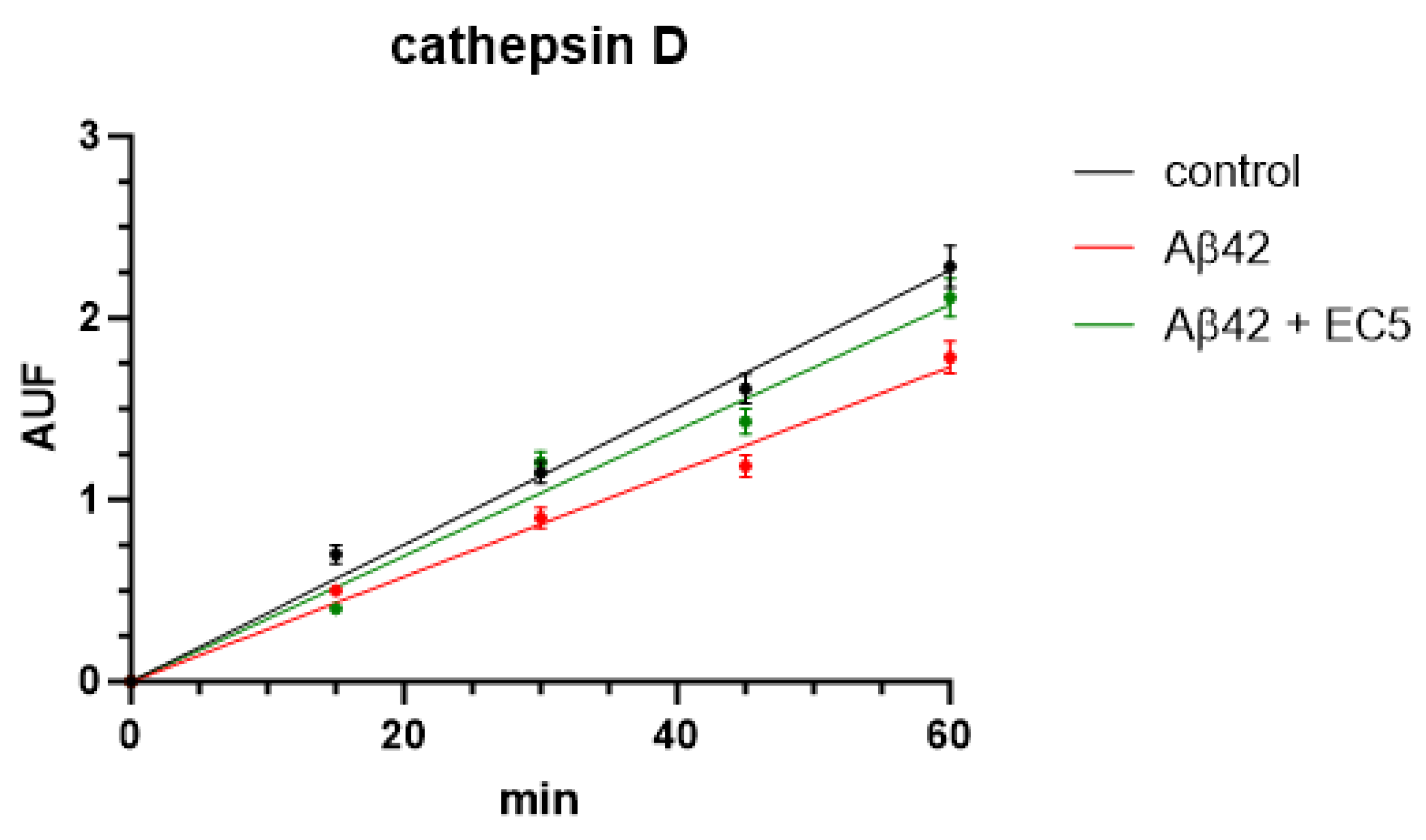
3.5. Cathepsin D Activity
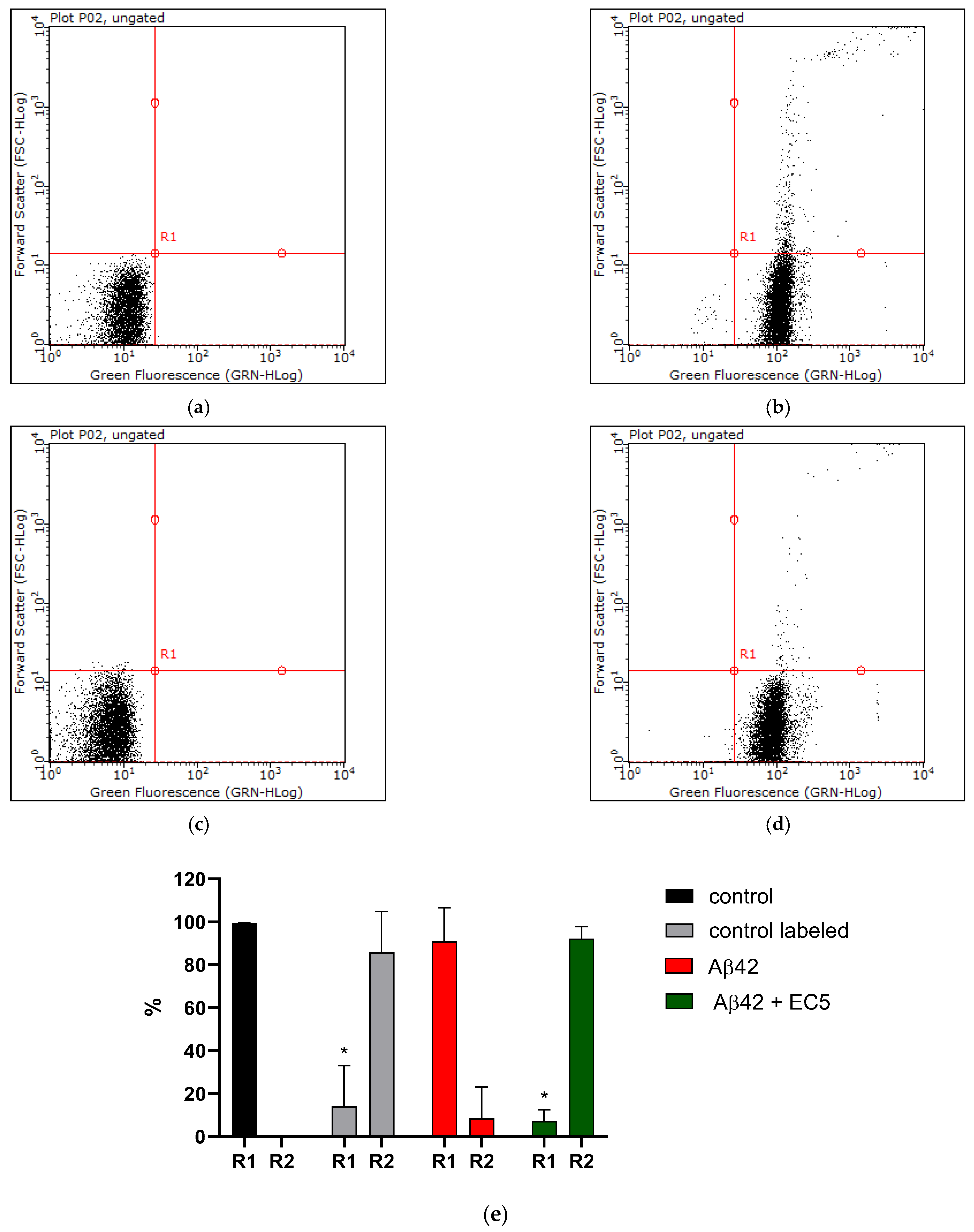
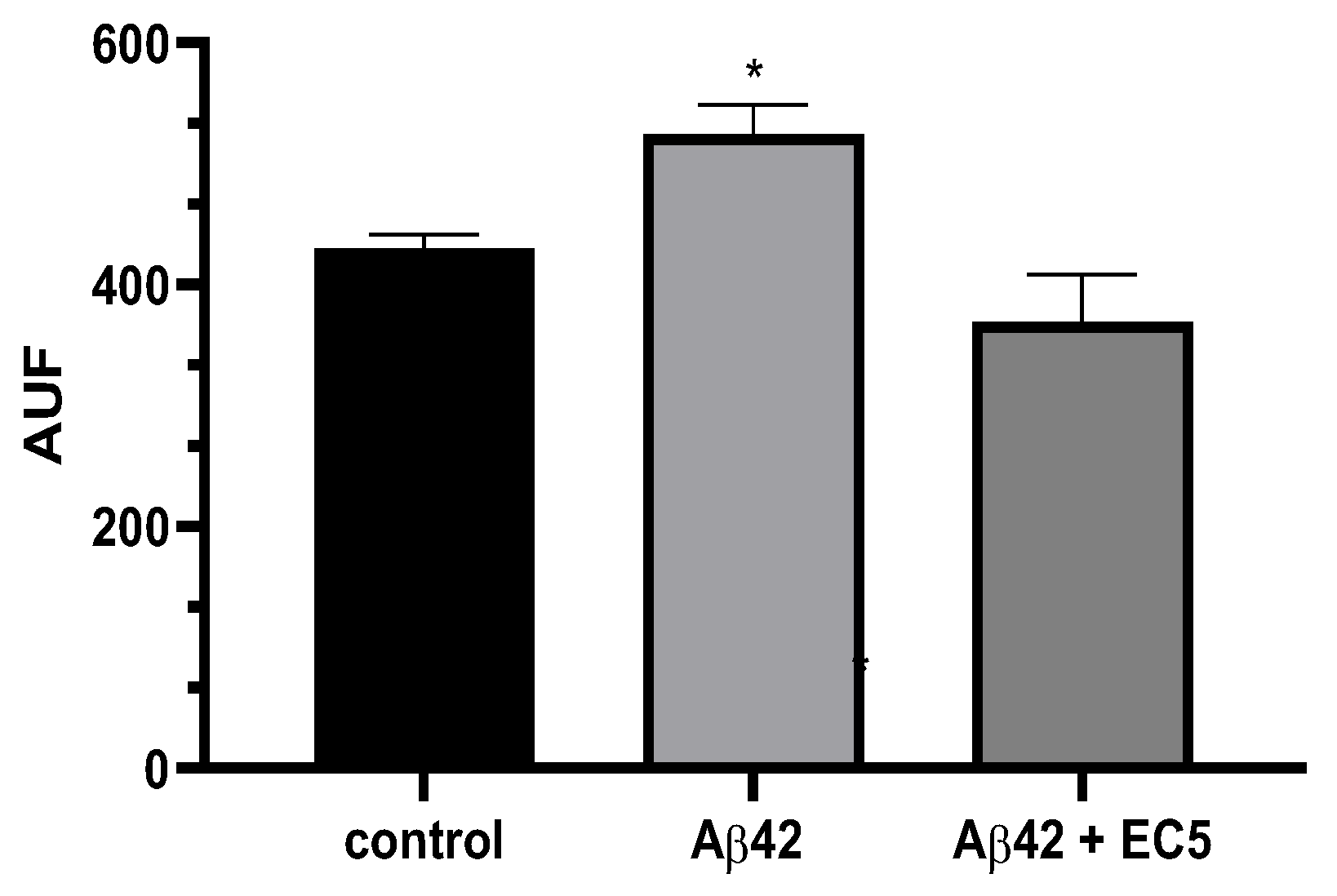
3.6. Assessment of Protein Aggregate Removal
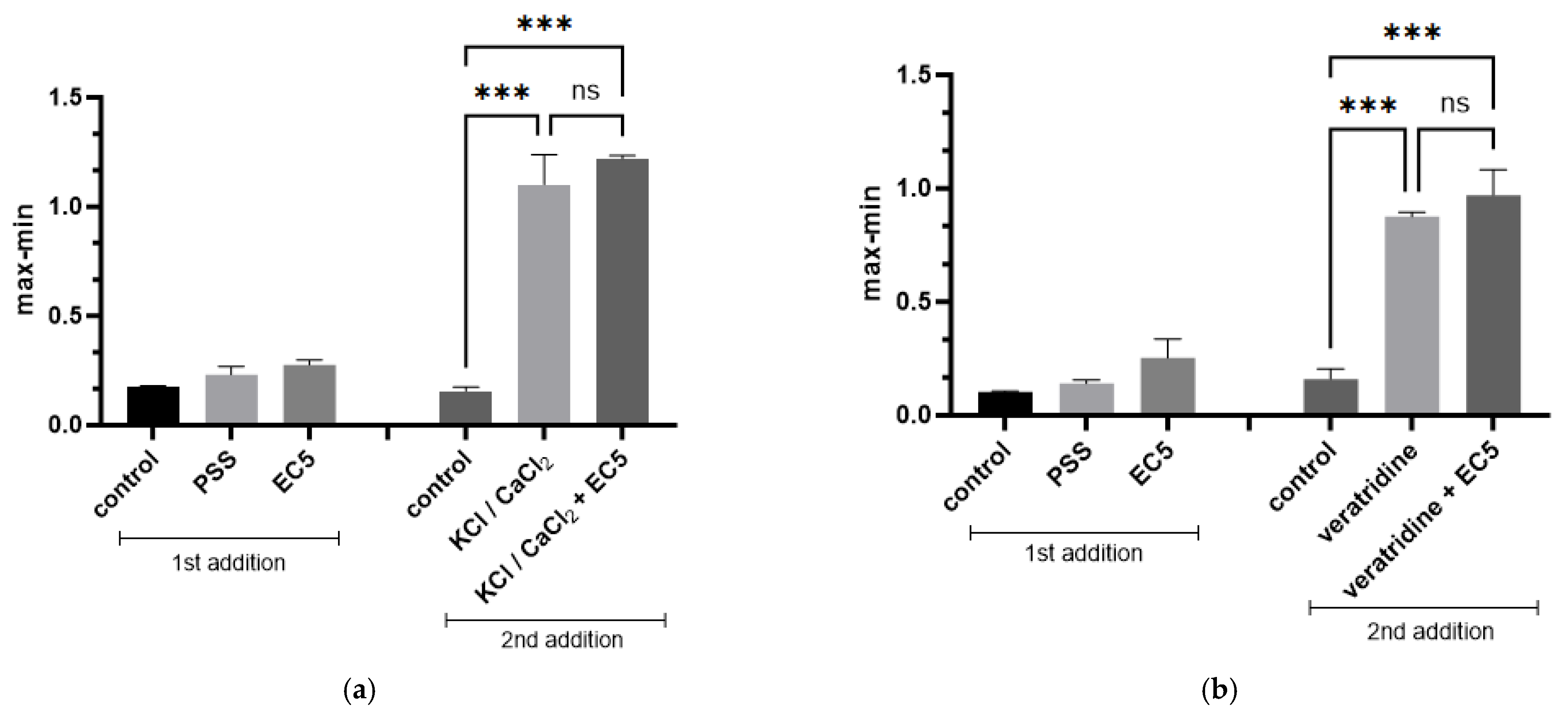
3.7. Calcium Homeostasis
3.8. Predicted Toxicity
4. Discussion
5. Conclusions
Supplementary Materials
Author Contributions
Funding
Institutional Review Board Statement
Informed Consent Statement
Data Availability Statement
Conflicts of Interest
Abbreviations
| Aβ | Amyloid beta-peptide |
| AD | Alzheimer’s Disease |
| APP | Amyloid precursor protein |
| EC | Eudendrium carneum |
References
- Haut, F.; Argyrousi, E.K.; Arancio, O. Re-Arranging the Puzzle between the Amyloid-Beta and Tau Pathology: An APP-Centric Approach. Int. J. Mol. Sci. 2023, 25, 259. [Google Scholar] [CrossRef]
- Giri, M.; Lü, Y.; Zhang, M. Genes associated with Alzheimer’s disease: An overview and current status. Clin. Interv. Aging 2016, 2016, 665–681. [Google Scholar] [CrossRef]
- Shinohara, M.; Sato, N.; Shimamura, M.; Kurinami, H.; Hamasaki, T.; Chatterjee, A.; Rakugi, H.; Morishita, R. Possible modification of Alzheimer’s disease by statins in midlife: Interactions with genetic and non-genetic risk factors. Front. Aging Neurosci. 2014, 6, 71. [Google Scholar] [CrossRef] [PubMed]
- Gulisano, W.; Maugeri, D.; Baltrons, M.A.; Fà, M.; Amato, A.; Palmeri, A.; D’Adamio, L.; Grassi, C.; Devanand, D.P.; Honig, L.S.; et al. Role of Amyloid-β and Tau Proteins in Alzheimer’s Disease: Confuting the Amyloid Cascade. J. Alzheimer’s Dis. 2018, 64, S611–S631. [Google Scholar] [CrossRef]
- Nixon, R.A. The role of autophagy in neurodegenerative disease. Nat. Med. 2013, 19, 983–997. [Google Scholar] [CrossRef]
- Mançano, A.S.F.; Pina, J.G.; Froes, B.R.; Sciani, J.M. Autophagy-lysosomal pathway impairment and cathepsin dysregulation in Alzheimer’s disease. Front. Mol. Biosci. 2024, 11, 1490275. [Google Scholar] [CrossRef]
- Lior, N.; Chen, D.; Dan, F. The connection between autophagy and Alzheimer’s disease. Inflamm. Res. 2025, 74, 148. [Google Scholar] [CrossRef]
- Karthikeyan, A.; Joseph, A.; Nair, B.G. Promising bioactive compounds from the marine environment and their potential effects on various diseases. J. Genet. Eng. Biotechnol. 2022, 20, 14. [Google Scholar] [CrossRef]
- Moreno, R.I.; Zambelli, V.O.; Picolo, G.; Cury, Y.; Morandini, A.C.; Marques, A.C.; Sciani, J.M. Caspase-1 and Cathepsin B Inhibitors from Marine Invertebrates, Aiming at a Reduction in Neuroinflammation. Mar. Drugs 2022, 20, 614. [Google Scholar] [CrossRef] [PubMed]
- Silva, A.G.; Rostirola, J.V.C.; Speri, F.D.; Pina, J.G.; Kitahara, M.V.; Longato, G.B.; Sciani, J.M. Tubastrine, an antioxidant molecule from Tubastraea tagusensis sun coral, in the reversion of oxidative stress and neuron’s death induced by Aβ42. J. Cell. Mol. Med. 2024, 28, e70165. [Google Scholar] [CrossRef] [PubMed]
- da Silva, D.L.; Valladão, R.; Beraldo-Neto, E.; Coelho, G.R.; Neto, O.B.d.S.; Vigerelli, H.; Lopes, A.R.; Hamilton, B.R.; Undheim, E.A.B.; Sciani, J.M.; et al. Spatial Distribution and Biochemical Characterization of Serine Peptidase Inhibitors in the Venom of the Brazilian Sea Anemone Anthopleura cascaia Using Mass Spectrometry Imaging. Mar. Drugs 2023, 21, 481. [Google Scholar] [CrossRef]
- Silva, A.G.; Alves, M.M.; Cunha, A.A.; Caires, G.A.; Kerkis, I.; Vigerelli, H.; Sciani, J.M. Echinometra lucunter molecules reduce Aβ42-induced neurotoxicity in SH-SY5Y neuron-like cells: Effects on disaggregation and oxidative stress. J. Venom. Anim. Toxins Incl. Trop. Dis. 2023, 29, e20230031. [Google Scholar] [CrossRef] [PubMed]
- Boldin, R.; Zychar, B.C.; Gonçalves, L.R.C.; Sciani, J.M. Design, in silico and pharmacological evaluation of a peptide inhibitor of BACE-1. Front. Pharmacol. 2023, 14, 1184006. [Google Scholar] [CrossRef]
- Banagouro, K.C.Q.; Viana, J.; de Lima, L.P.; Coelho, G.R.; Rocha, T.; Girardello, R.; Russi, K.L.; Kitahara, M.V.; Sciani, J.M. Biochemical and Toxinological Characterization of Venom from Macrorhynchia philippina (Cnidaria, Hydrozoa). BioMed Res. Int. 2022, 1, 8170252. [Google Scholar] [CrossRef]
- Kramer, S.; Kotapati, C.; Cao, Y.; Fry, B.G.; Palpant, N.J.; King, G.F.; Cardoso, F.C. High-content fluorescence bioassay investigates pore formation, ion channel modulation and cell membrane lysis induced by venoms. Toxicon X 2024, 21, 100184. [Google Scholar] [CrossRef]
- Barmaki, H.; Nourazarian, A.; Khaki-Khatibi, F. Proteostasis and neurodegeneration: A closer look at autophagy in Alzheimer’s disease. Front. Aging Neurosci. 2023, 15, 1281338. [Google Scholar] [CrossRef]
- Ghasemi, M.; Turnbull, T.; Sebastian, S.; Kempson, I. The MTT Assay: Utility, Limitations, Pitfalls, and Interpretation in Bulk and Single-Cell Analysis. Int. J. Mol. Sci. 2021, 22, 12827. [Google Scholar] [CrossRef]
- Kumar, P.; Nagarajan, A.; Uchil, P.D. Analysis of Cell Viability by the Lactate Dehydrogenase Assay. Cold Spring Harb. Protoc. 2018, 6, 465. [Google Scholar] [CrossRef] [PubMed]
- Callow, R.K.; Taylor, D.A.H. The cardio-active glycosides of Strophanthus sarmentosus P.DC. “sarmentoside B” and its relation to an original sarmentobioside. J. Chem. Soc. 1952, 2299–2304. [Google Scholar] [CrossRef]
- Salac, E.L.O.; Alvarez, M.R.; Gaurana, R.S.; Grijaldo, S.J.B.; Serrano, L.M.; Juan, F.d.; Abogado, R.; Padolina, I., Jr.; Deniega, F.M.; Delica, K.; et al. Biological Assay-Guided Fractionation and Mass Spectrometry-Based Metabolite Profiling of Annona muricata L. Cytotoxic Compounds against Lung Cancer A549 Cell Line. Plants 2022, 11, 2380. [Google Scholar] [CrossRef]
- Wibowo, J.T.; Kellermann, M.Y.; Versluis, D.; Putra, M.Y.; Murniasih, T.; Mohr, K.I.; Wink, J.; Engelmann, M.; Praditya, D.F.; Steinmann, E.; et al. Biotechnological Potential of Bacteria Isolated from the Sea Cucumber Holothuria leucospilota and Stichopus vastus from Lampung, Indonesia. Mar. Drugs 2019, 17, 635. [Google Scholar] [CrossRef] [PubMed]
- Okiye, M.E.K.; Velez, M.; Sugai, J.V.; Kinney, J.; Giannobile, W.V.; Tripathi, A.; Sherman, D.H. Investigating Metabolic Trends in the Oral Cavity to Identify Novel Metabolites. bioRxiv 2023. [Google Scholar] [CrossRef]
- Susanto, F.; Riyanti; Syakuri, H.; Nursid, M.; Schäberle, T.F.; Mettal, U.; Choi, J.S.; Meinita, M.D.N. Untargeted LC-HRMS-Based Metabolomic and Antibacterial Potential of Sargassum duplicatum Against Multidrug-Resistant Bacteria. Medicina 2026, 62, 218. [Google Scholar] [CrossRef]
- He, Y.L.; Yang, H.Y.; Zhang, L.; Gong, Z.; Li, G.L.; Gao, K. Research Progress on Plant-Derived Cardenolides (2010–2023). Chem. Biodivers. 2024, 21, e202401460. [Google Scholar] [CrossRef]
- Chen, X.; Zhou, H.; Liu, Y.B.; Wang, J.F.; Li, H.; Ung, C.Y.; Han, L.Y.; Cao, Z.W.; Chen, Y.Z. Database of traditional Chinese medicine and its application to studies of mechanism and to prescription validation. Br. J. Pharmacol. 2006, 149, 1092–1103, Erratum in Br. J. Pharmacol. 2020, 177, 5434. https://doi.org/10.1111/bph.15297. [Google Scholar] [CrossRef]
- Fechtig, B.; Schindler, O.; Reichstein, T. Die Glykoside von Strophanthus sarmentosus P. DC. 10. Mitt. Untersuchung der stark polaren Cardenolide aus der var. senegambiae (A. DC. (MONACHINO)). Glykoside und Aglykone, 215. Mitteilung. Helv. Chim. Acta 1960, 43, 727–754. [Google Scholar] [CrossRef]
- El-Seedi, H.R.; Khalifa, S.A.M.; Taher, E.A.; Farag, M.A.; Saeed, A.; Gamal, M.; Hegazy, M.-E.F.; Youssef, D.; Musharraf, S.G.; Alajlani, M.M.; et al. Cardenolides: Insights from chemical structure and pharmacological utility. Pharmacol. Res. 2019, 141, 123–175. [Google Scholar] [CrossRef]
- Karkare, S.; Adou, E.; Cao, S.; Brodie, P.; Miller, J.S.; Andrianjafy, N.M.; Razafitsalama, J.; Andriantsiferana, R.; Rasamison, V.E.; Kingston, D.G.I. Cytotoxic Cardenolide Glycosides of Roupellina (Strophanthus) boivinii from the Madagascar Rainforest. J. Nat. Prod. 2007, 70, 1766–1770. [Google Scholar] [CrossRef] [PubMed][Green Version]
- Richter, R.; Mohr, K.; Reichstein, T. Sarmutosid und Musarosid. Glykoside der Samen von Strophanthus sarmentosus A.P.DC. 4. Mitteilung. Glykoside und Aglykone. 113. Mitteilung. Helv. Chim. Acta 1953, 36, 1073–1088. [Google Scholar] [CrossRef]
- Kinoshita, P.F.; Yshii, L.M.; Vasconcelos, A.R.; Orellana, A.M.; Lima, L.d.S.; Davel, A.P.; Rossoni, L.V.; Kawamoto, E.M.; Scavone, C. Signaling function of Na,K-ATPase induced by ouabain against LPS as an inflammation model in hippocampus. J. Neuroinflamm. 2014, 11, 218. [Google Scholar] [CrossRef]
- Ponce, A.; Flores-Maldonado, C.; Contreras, R.G. Cardiac Glycosides: From Natural Defense Molecules to Emerging Therapeutic Agents. Biomolecules 2025, 15, 885. [Google Scholar] [CrossRef] [PubMed]
- Škubník, J.; Svobodová Pavlíčková, V.; Psotová, J.; Rimpelová, S. Cardiac Glycosides as Autophagy Modulators. Cells 2021, 10, 3341. [Google Scholar] [CrossRef]
- Ebrahimi, M.S.; Hosseini, Z.; Khatami, A.; Abbasi-Kolli, M.; Nahand, J.S.; Kouchaki, E.; Mirzaei, H. Neuroprotective effects of glycosides. In Phytonutrients and Neurological Disorders—Therapeutic and Toxicological Aspects; Khan, H., Aschner, M., Mirzaei, H., Eds.; Academic Press: Cambridge, MA, USA, 2023; pp. 201–226. [Google Scholar]
- Thakur, A.; Moyo, P.; van der Westhuizen, C.J.; Yang, H.O.; Maharaj, V. A Novel Cardenolide Glycoside Isolated from Xysmalobium undulatum Reduces Levels of the Alzheimer’s Disease-Associated β-Amyloid Peptides Aβ42 In Vitro. Pharmaceuticals 2021, 14, 743. [Google Scholar] [CrossRef]
- Erdogan, M.A.; Kirazlar, M.; Yigitturk, G.; Erbas, O. Digoxin exhibits neuroprotective properties in a rat model of dementia. Neurochem. Res. 2022, 47, 1290–1298. [Google Scholar] [CrossRef]
- Wang, D.; Liu, J.; Zhu, Q.; Wei, X.; Zhang, X.; Chen, Q.; Zhao, Y.; Tang, H.; Xu, W. Ouabain Ameliorates Alzheimer’s Disease-Associated Neuropathology and Cognitive Impairment in FAD4T Mice. Nutrients 2024, 16, 3558. [Google Scholar] [CrossRef]
- Song, H.L.; Demirev, A.V.; Kim, N.Y.; Kim, D.H.; Yoon, S.Y. Ouabain activates transcription factor EB and exerts neuroprotection in models of Alzheimer’s disease. Mol. Cell. Neurosci. 2019, 95, 13–24. [Google Scholar] [CrossRef]
- Taylor, M.S.; Chen, M.; Hancock, M.; Wranik, M.; Miller, B.D.; O’meara, T.R.; Palanski, B.A.; Ficarro, S.B.; Groendyke, B.J. Structural basis for the recruitment and selective phosphorylation of Akt by mTORC2. Science 2026, 391, eadv7111. [Google Scholar] [CrossRef] [PubMed]
- Rubinsztein, D.C.; Nixon, R.A. Rapamycin induces autophagic flux in neurons. Proc. Natl. Acad. Sci. USA 2010, 107, E181. [Google Scholar] [CrossRef]
- Tramutola, A.; Triplett, J.C.; Di Domenico, F.; Niedowicz, D.M.; Murphy, M.P.; Coccia, R.; Perluigi, M.; Butterfield, D.A. Alteration of mTOR signaling occurs early in the progression of Alzheimer disease (AD): Analysis of brain from subjects with pre-clinical AD, amnestic mild cognitive impairment and late-stage AD. J. Neurochem. 2015, 133, 739–749. [Google Scholar] [CrossRef] [PubMed]
- Perluigi, M.; Di Domenico, F.; Barone, E.; Butterfield, D.A. mTOR in Alzheimer disease and its earlier stages: Links to oxidative damage in the progression of this dementing disorder. Free Radic. Biol. Med. 2021, 169, 382–396. [Google Scholar] [CrossRef] [PubMed] [PubMed Central]
- Luchsinger, J.A.; Perez, T.; Chang, H.; Mehta, P.; Steffener, J.; Pradabhan, G.; Ichise, M.; Manly, J.; Devanand, D.P.; Bagiella, E. Metformin in Amnestic Mild Cognitive Impairment: Results of a Pilot Randomized Placebo Controlled Clinical Trial. J. Alzheimers Dis. 2016, 51, 501–514. [Google Scholar] [CrossRef] [PubMed]
- Gonzales, M.M.; Garbarino, V.R.; Kautz, T.F. Rapamycin treatment for Alzheimer’s disease and related dementias: A pilot phase 1 clinical trial. Commun. Med. 2025, 5, 189. [Google Scholar] [CrossRef]
- Heneka, M.T.; Carson, M.J.; Khoury, J.; Landreth, G.E.; Brosseron, F.; Feinstein, D.L.; Jacobs, A.H.; Wyss-Coray, T.; Vitorica, J.; Ransohoff, R.M.; et al. Neuroinflammation in Alzheimer’s disease. Lancet Neurol. 2015, 14, 388–405. [Google Scholar] [CrossRef]
- Chazotte, B. Labeling Lysosomes in Live Cells with LysoTracker. Cold Spring Harb. Protoc. 2011, 2, pdb.prot5571. [Google Scholar] [CrossRef]
- Suire, C.N.; Leissring, M.A. Cathepsin D: A Candidate Link between Amyloid β-protein and Tauopathy in Alzheimer Disease. J. Exp. Neurol. 2021, 2, 10–15. [Google Scholar] [PubMed]
- Biancalana, M.; Koide, S. Molecular mechanism of Thioflavin-T binding to amyloid fibrils. Biochim. Biophys. Acta-Proteins Proteom. 2010, 1804, 1405–1412. [Google Scholar] [CrossRef]



| Protein | Binding Energy (kcal·mol−1) | Amino Acid Binding | Distance (Å) |
|---|---|---|---|
| 3JBZ | −6.67 | GLN 2167 | 5.423 |
| GLN 2194 | 3.562 | ||
| SER 2342 | 5.526 and 5.399 | ||
| CYS 2546 | 5.098 | ||
| HIS 2340 | 2.551 | ||
| 2FAP | −9.832 | TYR 26 | 5.470 |
| SERFTa 2035 | 2.967 | ||
| TYR 2105 | 3.135 |
| Target | Prediction | Probability |
|---|---|---|
| Hepatotoxicity | Inactive | 0.94 |
| Neurotoxicity | Inactive | 0.92 |
| Nephrotoxicity | Active | 0.60 |
| Respiratory toxicity | Active | 0.78 |
| Cardiotoxicity | Inactive | 0.61 |
| Carcinogenicity | Inactive | 0.62 |
| Immunotoxicity | Active | 0.99 |
| Mutagenicity | Inactive | 0.89 |
| Cytotoxicity | Inactive | 0.96 |
| BBB-barrier | Inactive | 0.60 |
| Ecotoxicity | Inactive | 0.72 |
| Clinical toxicity | Inactive | 0.63 |
| Nutritional toxicity | Active | 0.98 |
| Aryl hydrocarbon receptor | Inactive | 1 |
| Androgen receptor | Inactive | 0.77 |
| Androgen receptor ligand binding domain | Active | 0.63 |
| Aromatase | Active | 0.83 |
| Estrogen receptor alpha | Active | 0.60 |
| Estrogen receptor ligand binding domain | Inactive | 0.99 |
| Peroxisome proliferator activated receptor gamma | Inactive | 0.62 |
| Nuclear factor like 2/antioxidant responsive element | Inactive | 0.93 |
| Heat shock factor response element | Inactive | 0.93 |
| Mitochondrial membrane potential | Active | 0.9 |
| Phosphoprotein (tumor suppressor) p53 | Active | 0.59 |
| ATPase family AAA domain-containing protein 5 | Inactive | 0.92 |
| Thyroid hormone receptor alpha | Inactive | 0.83 |
| Thyroid hormone receptor beta | Inactive | 0.95 |
| Transtyretrin | Inactive | 0.62 |
| Ryanodine receptor | Inactive | 0.74 |
| GABA receptor | Inactive | 0.56 |
| Glutamate N-methyl-D-aspartate receptor | Inactive | 0.99 |
| alpha-amino-3-hydroxy-5-methyl-4-isoxazolepropionate receptor | Inactive | 1 |
| Kainate receptor | Inactive | 1 |
| Achetylcholinesterase | Active | 0.50 |
| Constitutive androstane receptor | Inactive | 0.99 |
| Pregnane X receptor | Active | 0.68 |
| NADH-quinone oxidoreductase | Active | 0.57 |
| Voltage gated sodium channel | Inactive | 0.94 |
| Na+/I- symporter | Inactive | 0.60 |
| Cytochrome CYP1A2 | Inactive | 0.99 |
| Cytochrome CYP2C19 | Inactive | 0.96 |
| Cytochrome CYP2C9 | Inactive | 0.84 |
| Cytochrome CYP2D6 | Inactive | 0.90 |
| Cytochrome CYP3A4 | Inactive | 0.98 |
| Cytochrome CYP2E1 | Inactive | 0.99 |
Disclaimer/Publisher’s Note: The statements, opinions and data contained in all publications are solely those of the individual author(s) and contributor(s) and not of MDPI and/or the editor(s). MDPI and/or the editor(s) disclaim responsibility for any injury to people or property resulting from any ideas, methods, instructions or products referred to in the content. |
© 2026 by the authors. Licensee MDPI, Basel, Switzerland. This article is an open access article distributed under the terms and conditions of the Creative Commons Attribution (CC BY) license.
Share and Cite
Fróes, B.R.; Pina, J.G.; Alves, M.d.M.; Mançano, A.S.F.; Cardoso, F.C.; Sciani, J.M. Putatively Identified Sarmentoside-B Removes Oligomerized Amyloid Peptide from Neurons by Inhibiting mTOR and Restoring Lysosomal Function, in In Vitro Alzheimer’s Disease Model. Pharmaceutics 2026, 18, 696. https://doi.org/10.3390/pharmaceutics18060696
Fróes BR, Pina JG, Alves MdM, Mançano ASF, Cardoso FC, Sciani JM. Putatively Identified Sarmentoside-B Removes Oligomerized Amyloid Peptide from Neurons by Inhibiting mTOR and Restoring Lysosomal Function, in In Vitro Alzheimer’s Disease Model. Pharmaceutics. 2026; 18(6):696. https://doi.org/10.3390/pharmaceutics18060696
Chicago/Turabian StyleFróes, Bruna Rojas, Juliana Guanaes Pina, Mariana da Mata Alves, Alquiandra S. F. Mançano, Fernanda C. Cardoso, and Juliana Mozer Sciani. 2026. "Putatively Identified Sarmentoside-B Removes Oligomerized Amyloid Peptide from Neurons by Inhibiting mTOR and Restoring Lysosomal Function, in In Vitro Alzheimer’s Disease Model" Pharmaceutics 18, no. 6: 696. https://doi.org/10.3390/pharmaceutics18060696
APA StyleFróes, B. R., Pina, J. G., Alves, M. d. M., Mançano, A. S. F., Cardoso, F. C., & Sciani, J. M. (2026). Putatively Identified Sarmentoside-B Removes Oligomerized Amyloid Peptide from Neurons by Inhibiting mTOR and Restoring Lysosomal Function, in In Vitro Alzheimer’s Disease Model. Pharmaceutics, 18(6), 696. https://doi.org/10.3390/pharmaceutics18060696