Hydrophobic NADES-Derived Pumpkin Carotenoid Extract Attenuates Oxidative Stress and Mitochondrial Dysfunction in a Rat Model of Doxorubicin-Induced Cardiotoxicity

 , , , ,
  and
and
Abstract
1. Introduction
2. Materials and Methods
2.1. NADES-Based Extraction and Analysis of Carotenoids from Cucurbita moschata
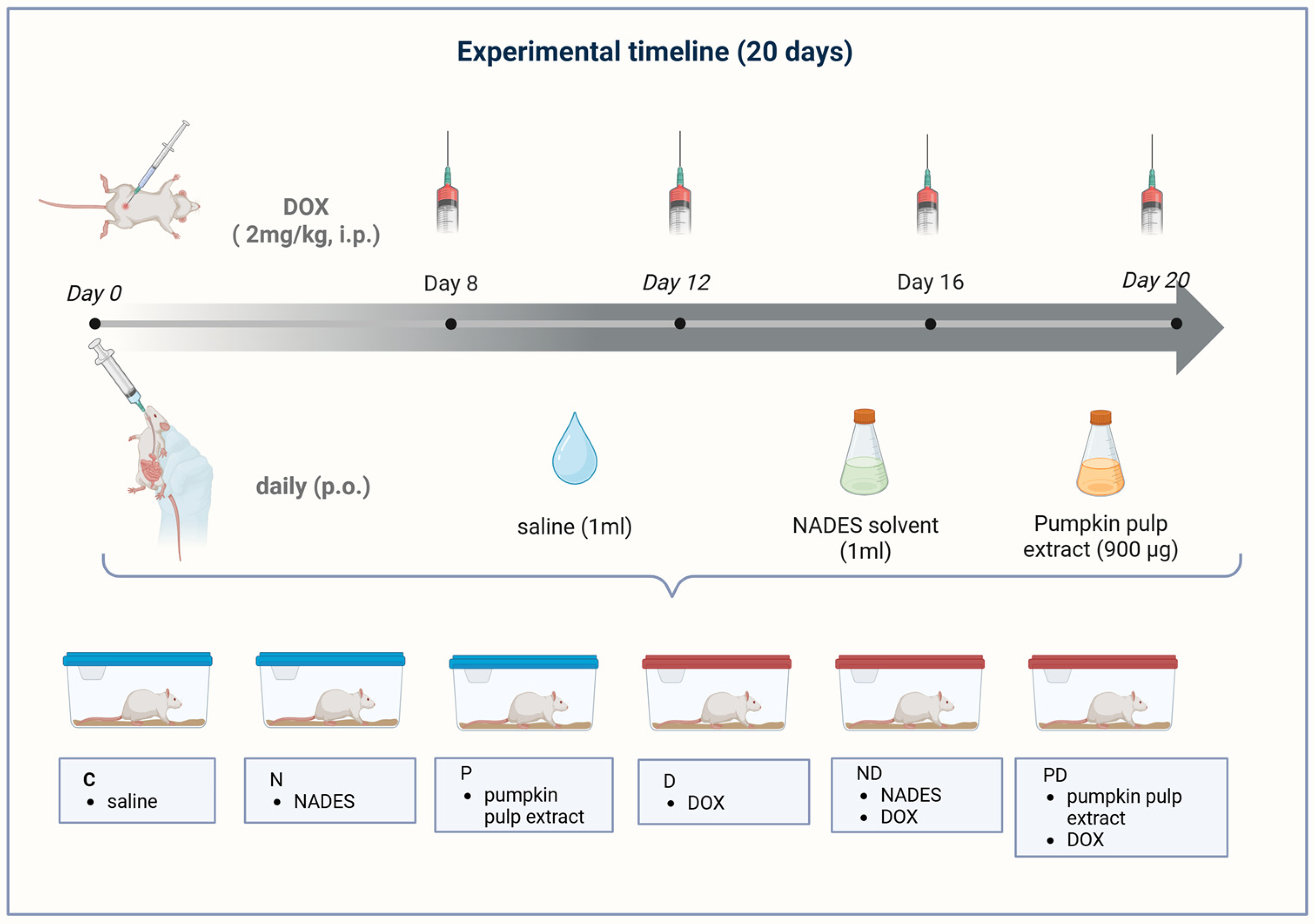
2.2. Design of the Experiment
- Negative control group (C) (n = 5)—1 mL saline, per os, for 20 days;
- NADES solvent C8:C10 (N) (n = 5)—1 mL NADES solvent, per os, for 20 days;
- Pumpkin pulp carotenoid extract (P) (n = 5)—900 µg/kg body weight/day of total carotenoids, expressed as β-carotene equivalents, per os for 20 days;
- Positive control group–doxorubicin (D) (n = 5)—2 mg/kg of doxorubicin, intraperitoneally, on 8th, 12th, 16th and 20th day;
- NADES solvent C8:C10 and doxorubicin (ND) (n = 5)—1 mL NADES solvent, per os, for 20 days and 2 mg/kg of doxorubicin, intraperitoneally, on 8th, 12th, 16th and 20th day;
- Pumpkin pulp carotenoid extract and doxorubicin (PD) (n = 5)—900 µg/kg body weight/day of total carotenoids, expressed as β-carotene equivalents, per os for 20 days and 2 mg/kg of doxorubicin, intraperitoneally, on 8th, 12th, 16th and 20th day.
2.3. Sacrifice of Animals
2.4. Superoxide Dismutase, Glutathione Peroxidase, Glutathione Reductase and Glutathione S-Transferase Assays
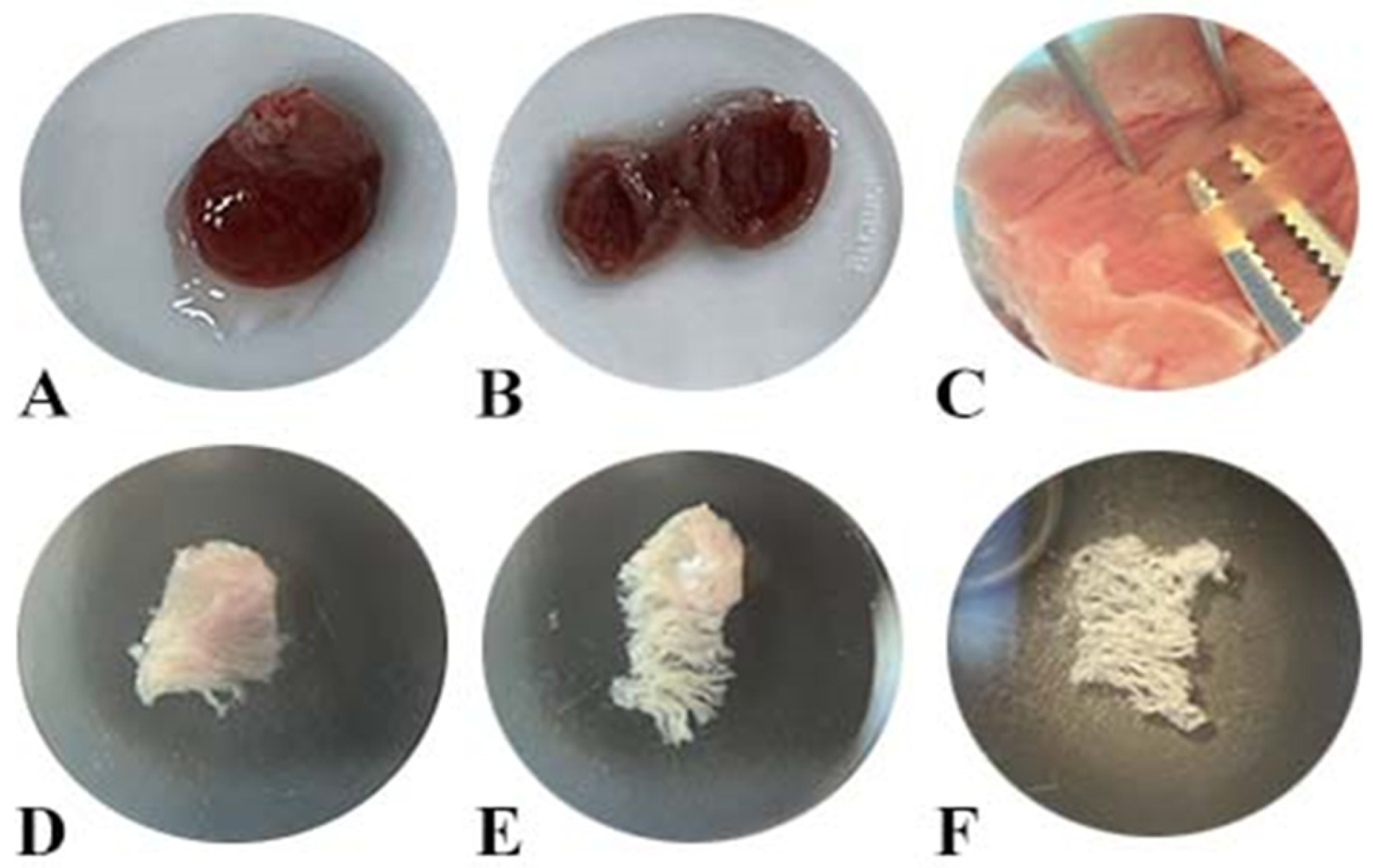
2.5. Heart Isolation and Muscle Bundle Preparation
2.6. Preparation of Saponin-Skinned Muscle Fibers
2.7. Measurement of Respiration
2.8. Statistical Analysis
3. Results
3.1. Analysis of Carotenoids from Cucurbita moschata
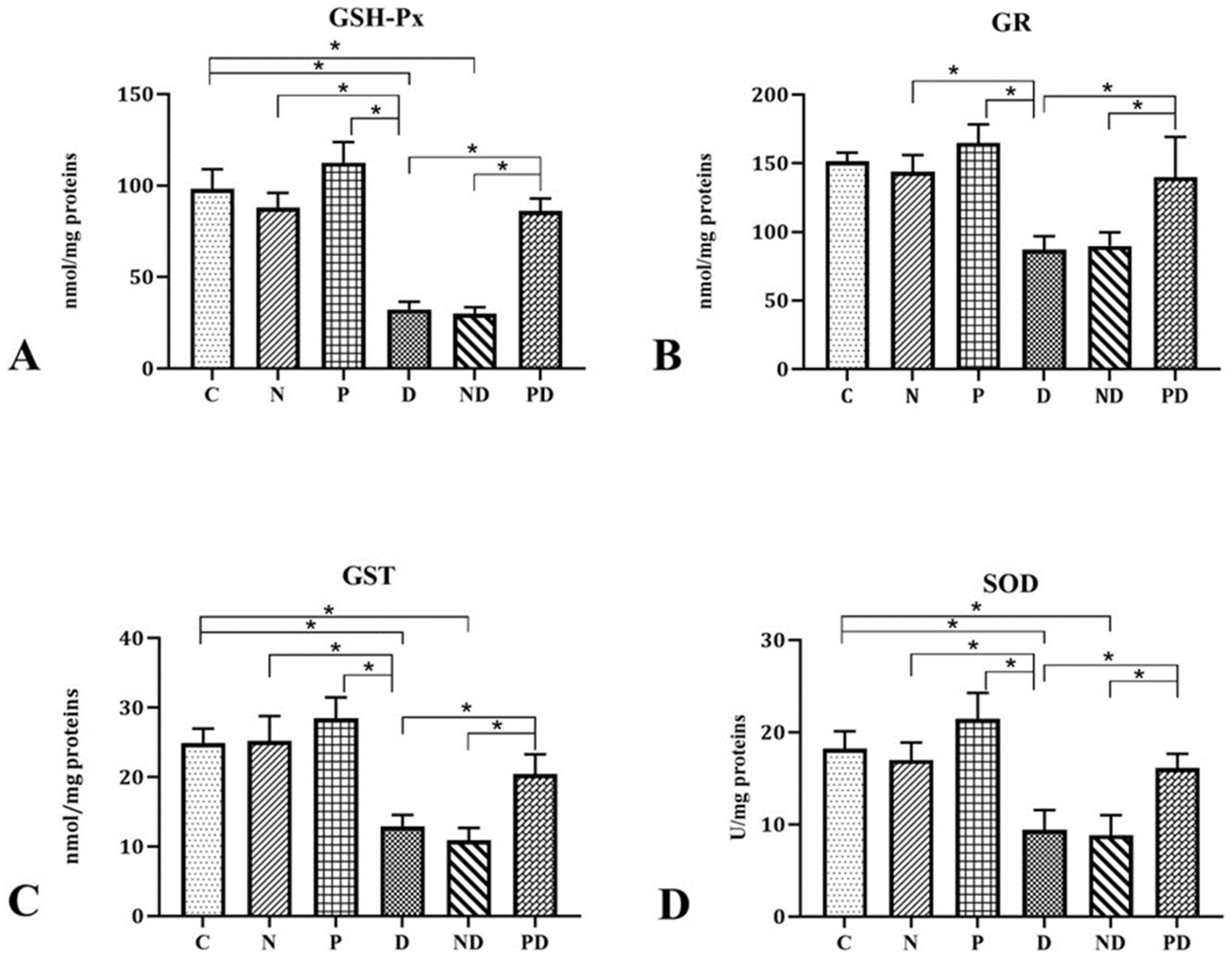
3.2. Dox Administration Altered Antioxidant Enzyme Activity
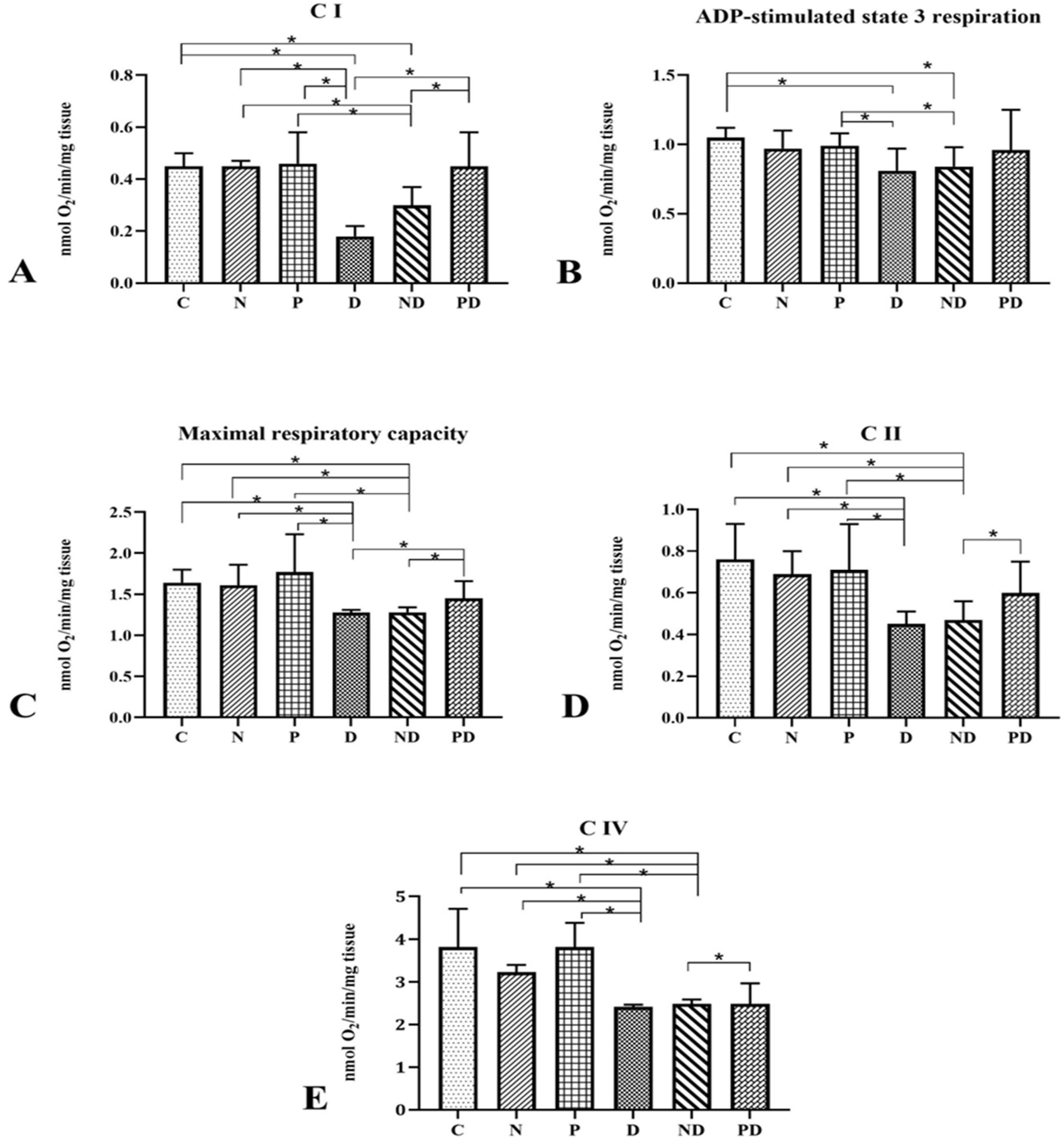
3.3. Effect of Dox Administration on OXPHOS Capacity
4. Discussion
5. Limitations of the Study
6. Conclusions
Author Contributions
Funding
Institutional Review Board Statement
Informed Consent Statement
Data Availability Statement
Acknowledgments
Conflicts of Interest
References
- Radić, J.P.; Kolarov, B.I.N.; Stefanović, M.Z.; Bosanac, M.M.; Cvetković, B.R.; Janičić, S.D.; Dolamić, B.E.; Ćuk, D.R.; Andrejić-Višnjić, B.M. Cardiotoxicity of Doxorubicin: Causes, Diagnosis, Consequences and Possibilities of Prevention. Hosp. Pharmacol. 2022, 9, 1143–1151. [Google Scholar] [CrossRef]
- Hammo, A.A.; Althanoon, Z.A.; Ahmad, A.A. The Protective Effect of Coenzyme Q10 against Doxorubicin-induced Nephrotoxicity in Albino Rats. Rev. Electron. Vet. 2022, 23, 314–325. [Google Scholar]
- Sharma, S.; Parashar, M.; Lal, K.; Naik, M.; Tanwar, S.S. Doxorubicin-Induced Cardiotoxicity: Comprehensive Pathway Insights and Advanced Preclinical Therapeutics. J. Appl. Toxicol. 2026, 46, 1801–1837. [Google Scholar] [CrossRef]
- Wallace, K.B.; Sardão, V.A.; Oliveira, P.J. Mitochondrial Determinants of Doxorubicin-Induced Cardiomyopathy. Circ. Res. 2020, 126, 926–941. [Google Scholar] [CrossRef]
- Christidi, E.; Brunham, L.R. Regulated cell death pathways in doxorubicin-induced cardiotoxicity. Cell Death Dis. 2021, 12, 339. [Google Scholar] [CrossRef]
- DeBalsi, K.L.; Hoff, K.E.; Copeland, W.C. Role of the mitochondrial DNA replication machinery in mitochondrial DNA mutagenesis, aging and age-related diseases. Ageing Res. Rev. 2017, 33, 89–104. [Google Scholar] [CrossRef]
- Wu, B.B.; Leung, K.T.; Poon, E.N. Mitochondrial-Targeted Therapy for Doxorubicin-Induced Cardiotoxicity. Int. J. Mol. Sci. 2022, 23, 1912. [Google Scholar] [CrossRef]
- Chaudhary, P.; Janmeda, P.; Docea, A.O.; Yeskaliyeva, B.; Abdull Razis, A.F.; Modu, B.; Calina, D.; Sharifi-Rad, J. Oxidative stress, free radicals and antioxidants: Potential crosstalk in the pathophysiology of human diseases. Front. Chem. 2023, 11, 11581. [Google Scholar] [CrossRef]
- Zhu, R.; Wang, Y.; Zhang, L.; Guo, Q. Oxidative stress and liver disease. Hepatol. Res. 2012, 42, 741–749. [Google Scholar] [CrossRef] [PubMed]
- Sumalla-Cano, S.; Eguren-García, I.; Lasarte-García, Á.; Prola, T.A.; Martínez-Díaz, R.; Elío, I. Carotenoids Intake and Cardiovascular Prevention: A Systematic Review. Nutrients 2024, 16, 3859. [Google Scholar] [CrossRef] [PubMed]
- Matić, M.; Stupar, A.; Pezo, L.; Đerić Ilić, N.; Mišan, A.; Teslić, N.; Pojić, M.; Mandić, A. Eco-Friendly Extraction: A green approach to maximizing bioactive extraction from pumpkin (Curcubita moschata L.). Food Chem. X 2024, 22, 101290. [Google Scholar] [CrossRef]
- Ye, Y.; Yang, L.; Leng, M.; Wang, Q.; Wu, J.; Wan, W.; Wang, H.; Li, L.; Peng, Y.; Chai, S.; et al. Luteolin inhibits GPVI-mediated platelet activation, oxidative stress, and thrombosis. Front. Pharmacol. 2023, 14, 1255069. [Google Scholar] [CrossRef]
- Mišan, A.; Nađpal, J.; Stupar, A.; Pojić, M.; Mandić, A.; Verpoorte, R.; Choi, Y.H. The perspectives of natural deep eutectic solvents in agri-food sector. Crit. Rev. Food Sci. Nutr. 2020, 60, 2564–2592. [Google Scholar] [CrossRef] [PubMed]
- Stupar, A.; Šeregelj, V.; Ribeiro, B.D.; Pezo, L.; Cvetanović, A.; Mišan, A.; Marrucho, I. Recovery of β-carotene from pumpkin using switchable natural deep eutectic solvents. Ultrason. Sonochem. 2021, 76, 105638. [Google Scholar] [CrossRef]
- Cannavacciuolo, C.; Pagliari, S.; Frigerio, J.; Giustra, C.; Labra, M.; Campone, L. Natural Deep Eutectic Solvents (NADESs) Combined with Sustainable Extraction Techniques: A Review of the Green Chemistry Approach in Food Analysis. Foods 2023, 12, 56. [Google Scholar] [CrossRef] [PubMed]
- Halder, A.K.; Cordeiro, N. Probing the Environmental Toxicity of Deep Eutectic Solvents and Their Components: An In Silico Modeling Approach. ACS Sustain. Chem. Eng. 2019, 7, 10649–10660. [Google Scholar] [CrossRef]
- Chevé-Kools, E.; Choi, Y.H.; Roullier, C.; Ruprich-Robert, G.; Grougnet, R.; Chapeland-Leclerc, F.; Hollmann, F. Natural deep eutectic solvents (NaDES): Green solvents for pharmaceutical applications and beyond. Green. Chem. 2025, 27, 8360–8385. [Google Scholar] [CrossRef]
- Florindo, C.; Branco, L.C.; Marrucho, I.M. Quest for Green-Solvent Design: From Hydrophilic to Hydrophobic (Deep) Eutectic Solvents. ChemSusChem 2019, 12, 1549–1559. [Google Scholar] [CrossRef]
- Ilić, N.Đ.; Stupar, A.; Matić, M.; Đerić, M.; Mišan, A.; Pojić, M.; Teslić, N.; Brunet, J.Č.; Mandić, A. Enhancing bioactive compound extraction from hemp sprouts: Synergistic effects of NADES and ultrasound. Ind. Crops Prod. 2025, 233, 121420. [Google Scholar] [CrossRef]
- Al Fuhaid, L.; Wellman, G.B.; Kharbatia, N.; Farinha, A.S.; Vrouwenvelder, J.S.; Verpoorte, R.; Choi, Y.H.; Witkamp, G.-J.; Lauersen, K.J.; Fortunato, L. Green extraction of pigment from astaxanthin-producing algae using natural deep eutectic solvents. Algal Res. 2024, 82, 103668. [Google Scholar] [CrossRef]
- Badea, G.I.; Gatea, F.; Litescu-Filipescu, S.C.; Alecu, A.; Chira, A.; Damian, C.M.; Radu, G.L. Optimization of Green Ultrasound-Assisted Extraction of Carotenoids and Tocopherol from Tomato Waste Using NADESs. Molecules 2025, 30, 591. [Google Scholar] [CrossRef]
- Bosanac, M.; Stupar, A.; Cvetković, B.; Miljković, D.; Čanković, M.; Andrejić Višnjić, B. Potential of Pumpkin Pulp Carotenoid Extract in the Prevention of Doxorubicin-Induced Cardiotoxicity. Pharmaceutics 2025, 17, 977. [Google Scholar] [CrossRef]
- Teofilović, B.; Tomas, A.; Martić, N.; Stilinović, N.; Popović, M.; Čapo, I. Antioxidant and hepatoprotective potential of sweet basil (Ocimum basilicum L.) extract in acetaminophen-induced hepatotoxicity in rats. J. Funct. Foods 2021, 87, 104783. [Google Scholar] [CrossRef]
- Stilinović, N.; Čapo, I.; Vukmirović, S.; Rašković, A.; Tomas, A.; Popović, M.; Sabo, A. Chemical composition, nutritional profile and in vivo antioxidant properties of the cultivated mushroom Coprinus comatus. R. Soc. Open Sci. 2020, 7, 200900. [Google Scholar] [CrossRef]
- McCord, J.M.; Fridovich, I. Superoxide dismutase: An enzymic function for erythrocuprein (hemocuprein). J. Biol. Chem. 1969, 244, 6049–6055. [Google Scholar] [CrossRef]
- Pesta, D.; Gnaiger, E. High-resolution respirometry: OXPHOS protocols for human cells and permeabilized fibers from small biopsies of human muscle. Methods Mol. Biol. 2012, 810, 25–58. [Google Scholar]
- Kuznetsov, A.V.; Mayboroda, O.; Kunz, D.; Winkler, K.; Schubert, W.; Kunz, W.S. Functional im-aging of mitochondria in saponin-permeabilized mice muscle fibers. J. Cell Biol. 1998, 140, 1091–1099. [Google Scholar] [CrossRef]
- Kuznetsov, A.V.; Veksler, V.; Gellerich, F.N.; Saks, V.; Margreiter, R.; Kunz, W.S. Analysis of mitochondrial function in situ in permeabilized muscle fibers, tissues and cells. Nat. Protoc. 2008, 3, 965–976. [Google Scholar] [CrossRef] [PubMed]
- Popovic, A.; Drljaca, J.; Popovic, M.; Miljkovic, D.; Marinovic, J.; Ljubkovic, M.; Kladar, N.; Capo, I. Mitochondrial Energy Metabolism in Baby Hamster Kidney (BHK-21/C13) Cells Treated with Karnozin EXTRA®. Int. J. Morphol. 2022, 40, 91–97. [Google Scholar] [CrossRef]
- Abraham, K.; Dorward, A.M.; Hurst, Q.; Pitt, S.J. 6 Does mitsugumin 23 play a role in doxorubicin-induced cardiotoxicity? Heart 2023, 109, A2. [Google Scholar] [CrossRef]
- Augustynska, D.; Jemioła-Rzemińska, M.; Burda, K.; Strzałka, K. Influence of polar and nonpolar carotenoids on structural and adhesive properties of model membranes. Chem. Biol. Interact. 2015, 239, 19–25. [Google Scholar] [CrossRef]
- Rošul, M.; Đerić, N.; Mišan, A.; Pojić, M.; Šimurina, O.; Halimi, C.; Nowicki, M.; Cvetković, B.; Mandić, A.; Reboul, E. Bioaccessibility and uptake by Caco-2 cells of carotenoids from cereal-based products enriched with butternut squash (Cucurbita moschata L.). Food Chem. 2022, 385, 132595. [Google Scholar] [CrossRef]
- Seo, J.S.; Burri, B.J.; Quan, Z.; Neidlinger, T.R. Extraction and chromatography of carotenoids from pumpkin. J. Chromatogr. A 2005, 1073, 371–375. [Google Scholar] [CrossRef]
- Moulin, M.; Piquereau, J.; Mateo, P.; Fortin, D.; Rucker-Martin, C.; Gressette, M.; Lefebvre, F.; Gresikova, M.; Solgadi, A.; Veksler, V.; et al. Sexual dimorphism of doxorubicin-mediated cardiotoxicity: Potential role of energy metabolism remodeling. Circ. Heart Fail. 2015, 8, 98–108. [Google Scholar] [CrossRef]
- Sobhy, M.H.; Ismail, A.; Abdel-Hamid, M.S.; Wagih, M.; Kamel, M. 2-Methoxyestradiol ameliorates doxorubicin-induced cardiotoxicity by regulating the expression of GLUT4 and CPT-1B in female rats. Naunyn Schmiedebergs Arch. Pharmacol. 2024, 397, 7129–7139. [Google Scholar] [CrossRef]
- Oh, Y.; Kim, J.; Park, Y.J.; Kim, Y. Male-Specific Effects of β-Carotene Supplementation on Lipid Metabolism in the Liver and Gonadal Adipose Tissue of Healthy Mice. Molecules 2025, 30, 909. [Google Scholar] [CrossRef] [PubMed]
- Widjaja-Adhi, M.A.K.; Golczak, M. The molecular aspects of absorption and metabolism of carotenoids and retinoids in vertebrates. Biochim. Biophys. Acta Mol. Cell Biol. Lipids 2020, 1865, 158571. [Google Scholar] [CrossRef]
- Raghuvanshi, S.; Reed, V.; Blaner, W.S.; Harrison, E.H. Cellular localization of β-carotene 15,15′ oxygenase-1 (BCO1) and β-carotene 9′,10′ oxygenase-2 (BCO2) in rat liver and intestine. Arch. Biochem. Biophys. 2015, 572, 19–27. [Google Scholar] [CrossRef] [PubMed]
- Takitani, K.; Zhu, C.L.; Inoue, A.; Tamai, H. Molecular cloning of the rat beta-carotene 15,15′-monooxygenase gene and its regulation by retinoic acid. Eur. J. Nutr. 2006, 45, 320–326. [Google Scholar] [CrossRef] [PubMed]
- Martínez, A.; Cantero, J.; Meléndez-Martínez, A.J.; Paulino, M. A Computer Simulation Insight into the Formation of Apocarotenoids: Study of the Carotenoid Oxygenases BCO1 and BCO2 and Their Interaction with Putative Substrates. Molecules 2022, 27, 7813. [Google Scholar] [CrossRef]
- Bairaktari, M.; Konstantopoulou, S.M.; Malisova, O.; Gioxari, A.; Stratakos, A.C.; Panoutsopoulos, G.I.; Argyri, K. Natural Deep Eutectic Solvents for Agro-Industrial By-Product Valorization: Emerging Strategies for the Development of Functional Foods Targeting Diabetes. Appl. Sci. 2025, 15, 11596. [Google Scholar] [CrossRef]
- Tanrıver, K.; Bilgin, M.; Şahin Sevgili, S.; Toprakçı Yüksel, İ.; Kurtulbaş Şahin, E. Extraction of Carotenoids from Pumpkin (Cucurbita moschata) and Spinach (Spinacia oleracea) Using Environmentally Friendly Deep Eutectic Solvents (DESs). AppliedChem 2025, 5, 2. [Google Scholar] [CrossRef]
- Sportiello, L.; Marchesi, E.; Tolve, R.; Favati, F. Green Extraction of Carotenoids from Pumpkin By-Products Using Natural Hydrophobic Deep Eutectic Solvents: Preliminary Insights. Molecules 2025, 30, 548. [Google Scholar] [CrossRef] [PubMed]
- Shikova, V.A.; Pozharitskaya, O.N.; Flisyuk, E.V.; Ivkin, D.Y.; Borovikov, D.N.; Balabanova, O.L.; Shikov, A.N. Safety of NADES Extract of Glycyrrhiza Roots After Topical Application and Peroral Administration to Mice. Molecules 2025, 30, 4704. [Google Scholar] [CrossRef] [PubMed]
- Wang, A.J.; Zhang, J.; Xiao, M.; Wang, S.; Wang, B.J.; Guo, Y.; Tang, Y.; Gu, J. Molecular mechanisms of doxorubicin-induced cardiotoxicity: Novel roles of sirtuin 1-mediated signaling pathways. Cell. Mol. Life Sci. 2021, 78, 3105–3125. [Google Scholar] [CrossRef]
- Zhang, Y.Y.; Yi, M.; Huang, Y.P. Oxymatrine Ameliorates Doxorubicin-Induced Cardiotoxicity in Rats. Cell Physiol. Biochem. 2017, 43, 626–635. [Google Scholar] [CrossRef]
- Al-Amir, H.; Janabi, A.; Hadi, N.R. Ameliorative effect of nebivolol in doxorubicin-induced cardiotoxicity. J. Med. Life 2023, 16, 1357–1363. [Google Scholar] [CrossRef]
- Kuzu, M.; Yıldırım, S.; Kandemir, F.M.; Küçükler, S.; Çağlayan, C.; Türk, E.; Dörtbudak, M.B. Protective effect of morin on doxorubicin-induced hepatorenal toxicity in rats. Chem. Biol. Interact. 2019, 308, 89–100. [Google Scholar] [CrossRef]
- Sheibani, M.; Nezamoleslami, S.; Faghir-Ghanesefat, H.; Emami, A.H.; Dehpour, A.R. Cardioprotective effects of dapsone against doxorubicin-induced cardiotoxicity in rats. Cancer Chemother. Pharmacol. 2020, 85, 563–571. [Google Scholar] [CrossRef]
- Shosha, M.I.; El-Ablack, F.Z.; Saad, E.A. Glycine protects against doxorubicin-induced heart toxicity in mice. Amino Acids 2023, 55, 679–693. [Google Scholar] [CrossRef]
- Nagy, A.; Börzsei, D.; Hoffmann, A.; Török, S.; Veszelka, M.; Almási, N.; Varga, C.; Szabó, R. A Comprehensive Overview on Chemotherapy-Induced Cardiotoxicity: Insights into the Underlying Inflammatory and Oxidative Mechanisms. Cardiovasc. Drugs Ther. 2024, 39, 1185–1199. [Google Scholar] [CrossRef] [PubMed]
- Ahmed, O.M.; Galaly, S.R.; Raslan, M.; Mostafa, M.A.M. Thyme oil and thymol counteract doxorubicin-induced nephrotoxicity and cardiotoxicity in Wistar rats by repressing oxidative stress and boosting antioxidant defenses. Biocell 2020, 44, 41. [Google Scholar] [CrossRef]
- Li, H.; Xia, B.; Chen, W.; Zhang, Y.; Gao, X.; Chinnathambi, A.; Alharbi, S.A.; Zhao, Y. Nimbolide prevents myocardial damage by regulating cardiac biomarkers, antioxidant level, and apoptosis signaling against doxorubicin-induced cardiotoxicity in rats. J. Biochem. Mol. Toxicol. 2020, 34, e22543. [Google Scholar] [CrossRef]
- Li, Z.; Chinnathambi, A.; Alharbi, S.A.; Yin, F. Plumbagin protects against myocardial damage by modulating cardiac biomarkers, antioxidants, and apoptosis signaling in doxorubicin-induced cardiotoxicity in rats. Environ. Toxicol. 2020, 35, 1374–1385. [Google Scholar] [CrossRef]
- Li, D.; Liu, X.; Pi, W.; Zhang, Y.; Yu, L.; Xu, C.; Sun, Z.; Jiang, J. Fisetin reduces doxorubicin-induced cardiomyopathy both in vivo and in vitro by inhibiting ferroptosis through activation of the SIRT1/Nrf2 signaling pathway. Front. Pharmacol. 2022, 12, 808480. [Google Scholar] [CrossRef]
- Saleh Ahmed, A.S. Potential protective effect of catechin on doxorubicin-induced cardiotoxicity in adult male albino rats. Toxicol. Mech. Methods 2022, 32, 97–105. [Google Scholar] [CrossRef]
- Hazaveh, M.A.; Abedi, B.; Ahmadabad, S.R. Effects of aerobic training and pumpkin seed extract consumption on the heart and aorta oxidative stress biomarkers: A case of rats exposed to arsenic. J. Cardio-Thorac. Med. 2021, 9, 747–754. [Google Scholar]
- Varela-López, A.; Battino, M.; Navarro-Hortal, M.D.; Giampieri, F.; Forbes-Hernández, T.Y.; Romero-Márquez, J.M.; Collado, R.; Quiles, J.L. An update on the mechanisms related to cell death and toxicity of doxorubicin and the protective role of nutrients. Food Chem. Toxicol. 2019, 134, 110834. [Google Scholar] [CrossRef]
- Zhuang, C.; Yuan, J.; Du, Y.; Zeng, J.; Sun, Y.; Wu, Y.; Gao, X.-H.; Chen, H.-D. Effects of Oral Carotenoids on Oxidative Stress: A Systematic Review and Meta-Analysis of Studies in the Recent 20 Years. Front. Nutr. 2022, 9, 754707. [Google Scholar] [CrossRef] [PubMed]
- El Amrousy, D.; El-Afify, D.; Khedr, R.; Ibrahim, A.M. Omega 3 fatty acids can reduce early doxorubicin-induced cardiotoxicity in children with acute lymphoblastic leukemia. Pediatr. Blood Cancer 2022, 69, e29496. [Google Scholar] [CrossRef] [PubMed]
- Zhao, X.; Tian, Z.; Sun, M.; Dong, D. Nrf2: A dark horse in doxorubicin-induced cardiotoxicity. Cell Death Discov. 2023, 9, 261. [Google Scholar] [CrossRef]
- Jeong, S.H.; Kim, H.K.; Song, I.-S.; Lee, S.J.; Ko, K.S.; Rhee, B.D.; Kim, N.; Mishchenko, N.P.; Fedoryev, S.A.; Stonik, V.A.; et al. Echinochrome A protects mitochondrial function in cardiomyocytes against cardiotoxic drugs. Mar. Drugs 2014, 12, 2922–2936. [Google Scholar] [CrossRef] [PubMed]
- Rawat, P.S.; Jaiswal, A.; Khurana, A.; Bhatti, J.S.; Navik, U. Doxorubicin-induced cardiotoxicity: An update on the molecular mechanism and novel therapeutic strategies for effective management. Biomed. Pharmacother. 2021, 139, 111708. [Google Scholar] [CrossRef]
- Mei, S.; Hong, L.; Cai, X.; Xiao, B.; Zhang, P.; Shao, L. Oxidative stress injury in doxorubicin-induced cardiotoxicity. Toxicol. Lett. 2019, 307, 41–48. [Google Scholar] [CrossRef] [PubMed]
- Davies, K.J.; Doroshow, J.H. Redox cycling of anthracyclines by cardiac mitochondria. I. Anthracycline radical formation by NADH dehydrogenase. J. Biol. Chem. 1986, 261, 3060–3067. [Google Scholar] [CrossRef]
- Frangiamone, M.; Cimbalo, A.; Font, G.; Alonso-Garrido, M.; Manyes, L. In vitro exposure to pumpkin extract induces a protective transcriptomic profile in blood brain barrier electron transport chain. Rev. Toxicol. 2021, 38, 1–7. [Google Scholar]
- Peiran, L.; Siau, Y.W.; Lei, W.; Dingbo, L. Carotenoid metabolism in mitochondrial function. Food Qual. Saf. 2020, 4, 115–122. [Google Scholar] [CrossRef]
- Zhao, D.; Jiang, X.; Meng, X.; Liu, D.; Du, Y.; Zhao, L.; Jiang, H. Low-Dose Radiation Reduces Doxorubicin-Induced Myocardial Injury Through Mitochondrial Pathways. Dose Response 2023, 21, 15593258231155789. [Google Scholar] [CrossRef]


Disclaimer/Publisher’s Note: The statements, opinions and data contained in all publications are solely those of the individual author(s) and contributor(s) and not of MDPI and/or the editor(s). MDPI and/or the editor(s) disclaim responsibility for any injury to people or property resulting from any ideas, methods, instructions or products referred to in the content. |
© 2026 by the authors. Licensee MDPI, Basel, Switzerland. This article is an open access article distributed under the terms and conditions of the Creative Commons Attribution (CC BY) license.
Share and Cite
Bosanac, M.; Andrejić Višnjić, B.; Popović, A.; Ljubković, M.; Martić, N.; Miljković, D.; Stupar, A.; Cvetković, B. Hydrophobic NADES-Derived Pumpkin Carotenoid Extract Attenuates Oxidative Stress and Mitochondrial Dysfunction in a Rat Model of Doxorubicin-Induced Cardiotoxicity. Pharmaceutics 2026, 18, 662. https://doi.org/10.3390/pharmaceutics18060662
Bosanac M, Andrejić Višnjić B, Popović A, Ljubković M, Martić N, Miljković D, Stupar A, Cvetković B. Hydrophobic NADES-Derived Pumpkin Carotenoid Extract Attenuates Oxidative Stress and Mitochondrial Dysfunction in a Rat Model of Doxorubicin-Induced Cardiotoxicity. Pharmaceutics. 2026; 18(6):662. https://doi.org/10.3390/pharmaceutics18060662
Chicago/Turabian StyleBosanac, Milana, Bojana Andrejić Višnjić, Aleksandra Popović, Marko Ljubković, Nikola Martić, Dejan Miljković, Alena Stupar, and Biljana Cvetković. 2026. "Hydrophobic NADES-Derived Pumpkin Carotenoid Extract Attenuates Oxidative Stress and Mitochondrial Dysfunction in a Rat Model of Doxorubicin-Induced Cardiotoxicity" Pharmaceutics 18, no. 6: 662. https://doi.org/10.3390/pharmaceutics18060662
APA StyleBosanac, M., Andrejić Višnjić, B., Popović, A., Ljubković, M., Martić, N., Miljković, D., Stupar, A., & Cvetković, B. (2026). Hydrophobic NADES-Derived Pumpkin Carotenoid Extract Attenuates Oxidative Stress and Mitochondrial Dysfunction in a Rat Model of Doxorubicin-Induced Cardiotoxicity. Pharmaceutics, 18(6), 662. https://doi.org/10.3390/pharmaceutics18060662