Olanzapine for Extended-Release Injectable Suspension for Subcutaneous Use (TV-44749) Designed to Avoid the Risk of PDSS: In Vitro Release Studies in Human Plasma and In Vivo Impact of Extrinsic Factors on Pharmacokinetics
 , , , , and
Abstract
1. Introduction
2. Materials and Methods
2.1. In Vitro Studies of TV-44749 Following Exposure to Human Plasma: Stability, Solubility, IVR and Depot Characterization
2.2. In Vivo Exploratory Study in Rats to Compare the Pharmacokinetic Profile of Olanzapine Following Different Olanzapine Formulations with Different Administration Routes
2.3. Pilot Study on the Effect of Manipulation of the Injection Site on the PK Profile of Olanzapine Following TV-44749 SC Injection
2.4. Pivotal Study on the Effect of Manipulation of the Injection Site at Different Time-Points on the Olanzapine PK Profile Following TV-44749 SC Injection
2.5. Pharmacokinetic Analyses
3. Results
3.1. In Vitro Studies in Human Plasma
3.1.1. Stability and Solubility of Olanzapine in Human Plasma
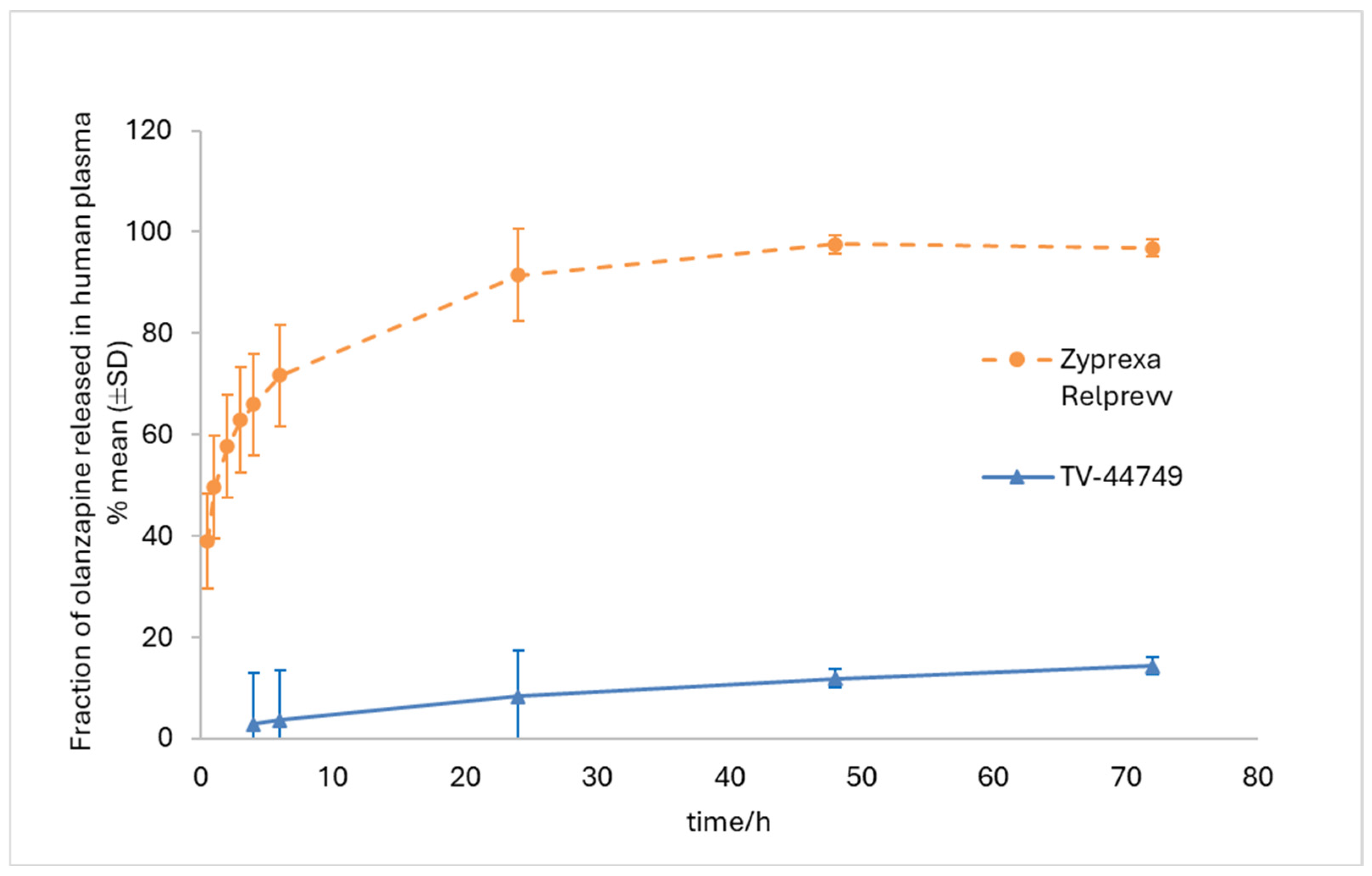
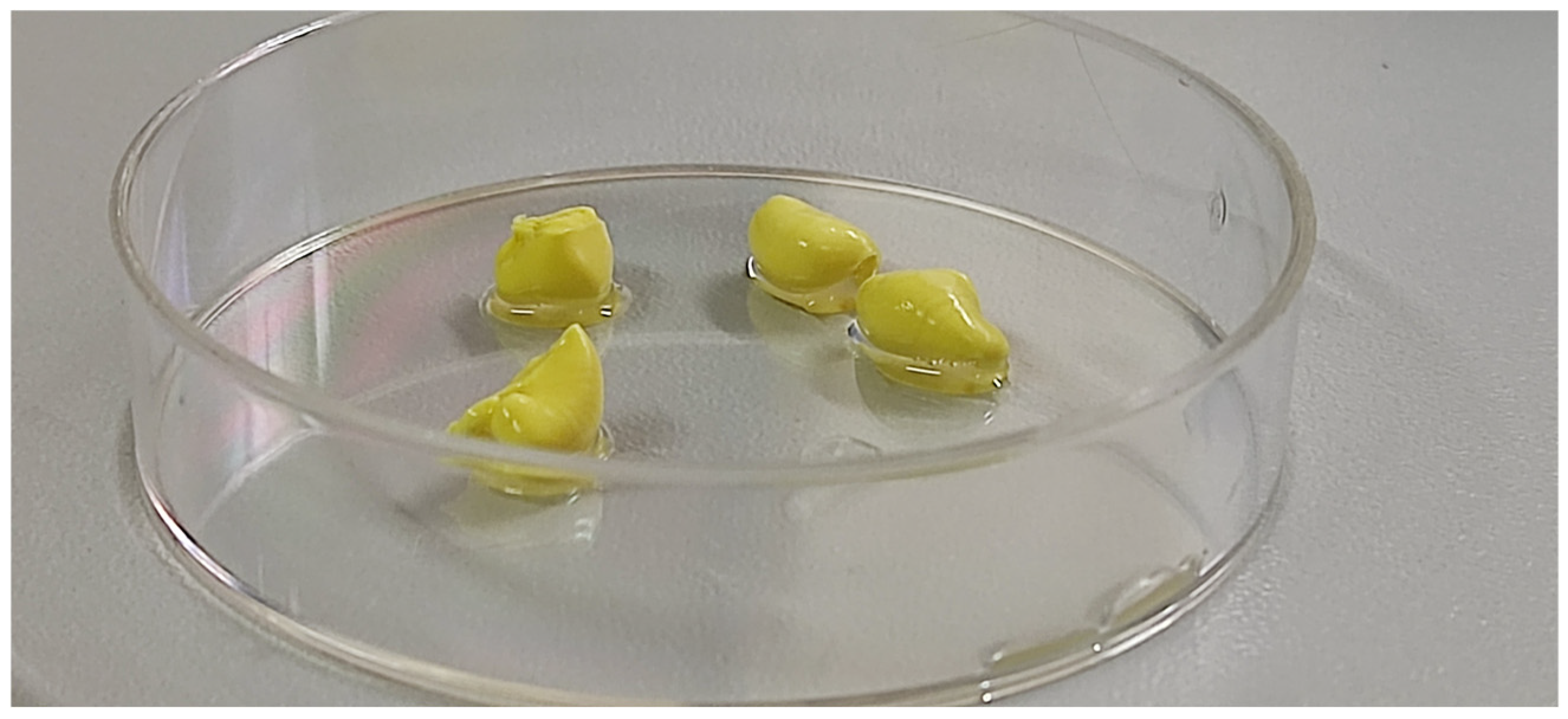
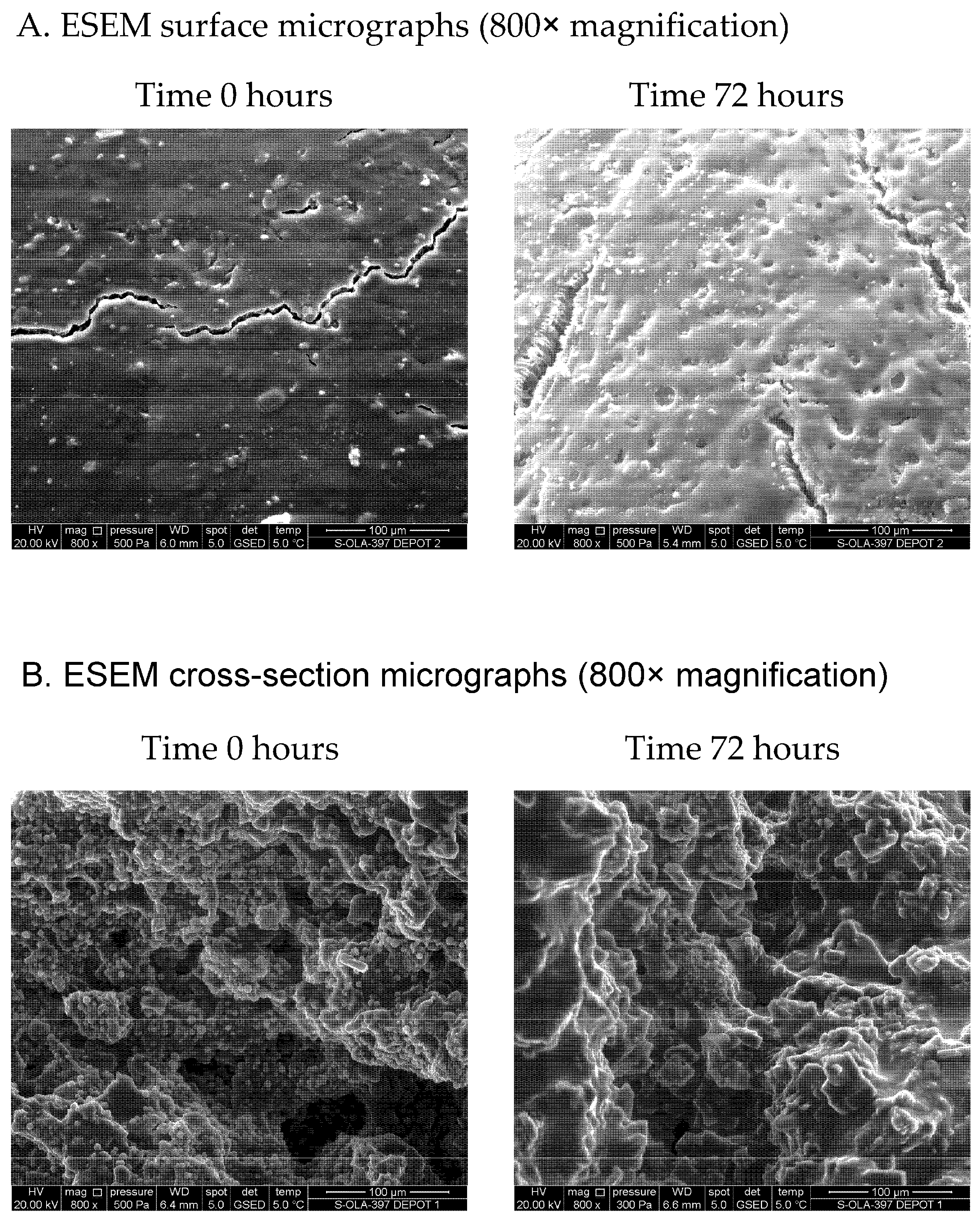
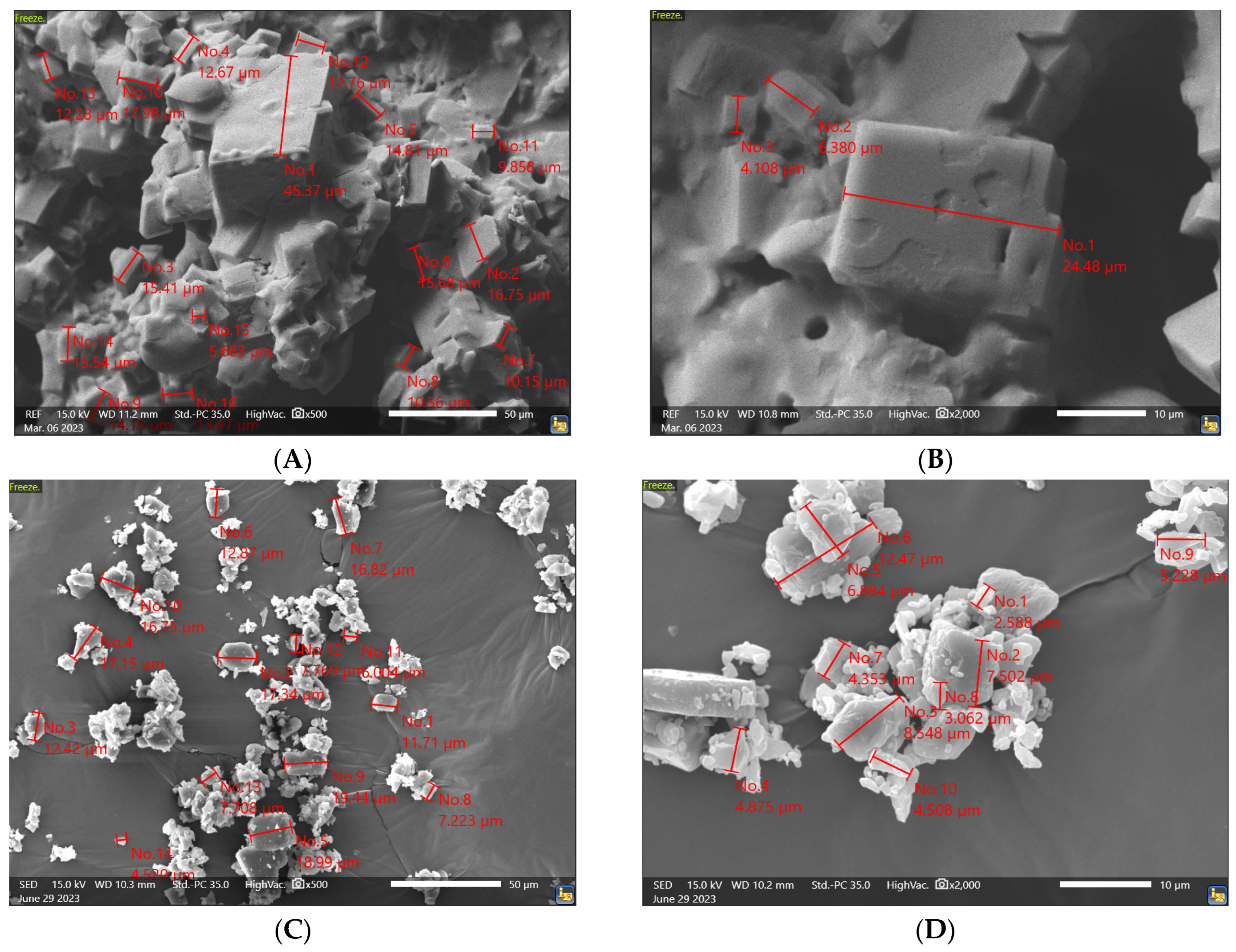
3.1.2. In Vitro Release and Depot Characterization Study in Human Plasma
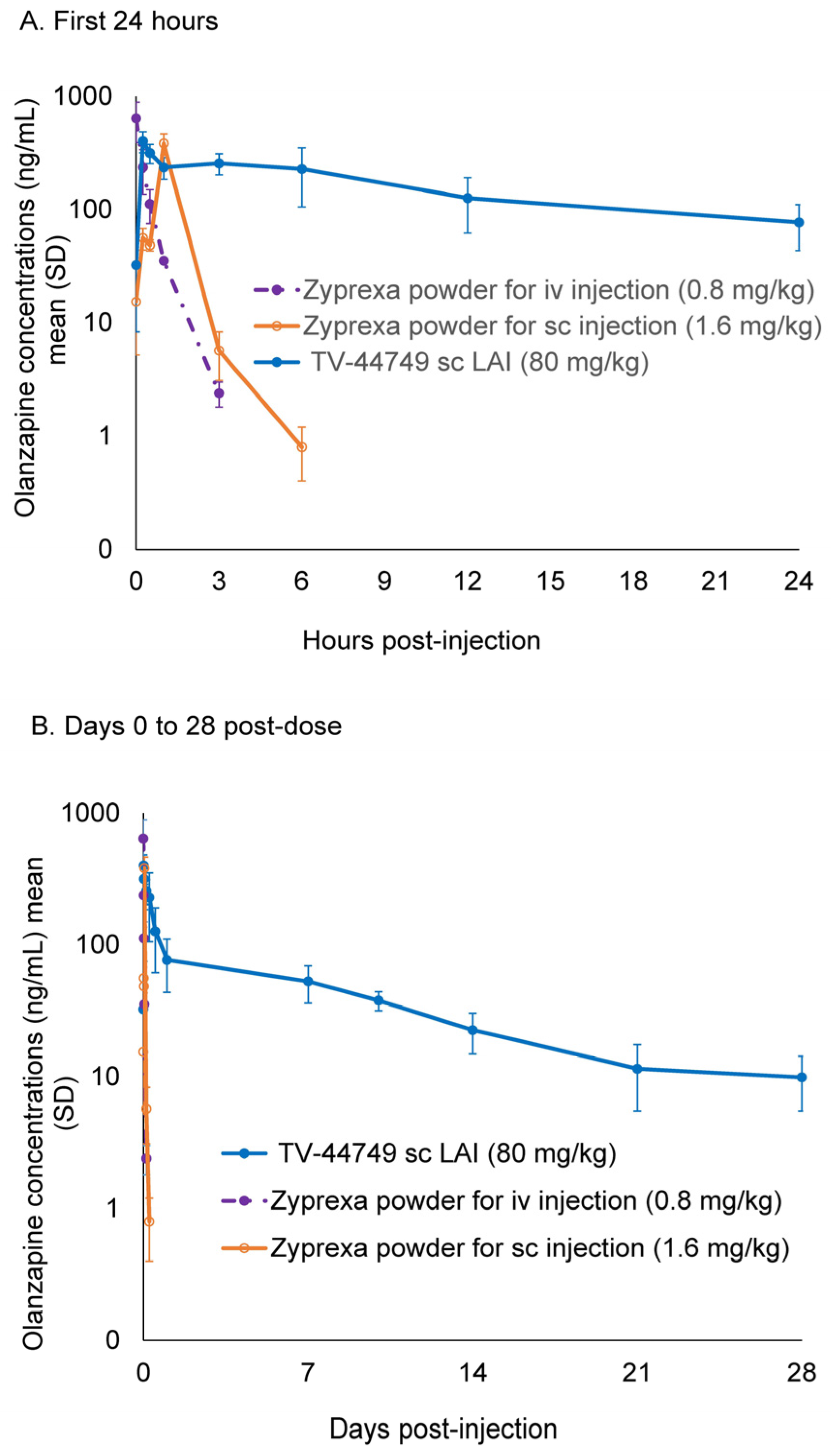
3.2. Exploratory Comparison of Olanzapine PK Profiles Following TV-44749 SC Injection and Olanzapine Powder for Solution Administered as IV and SC Injections
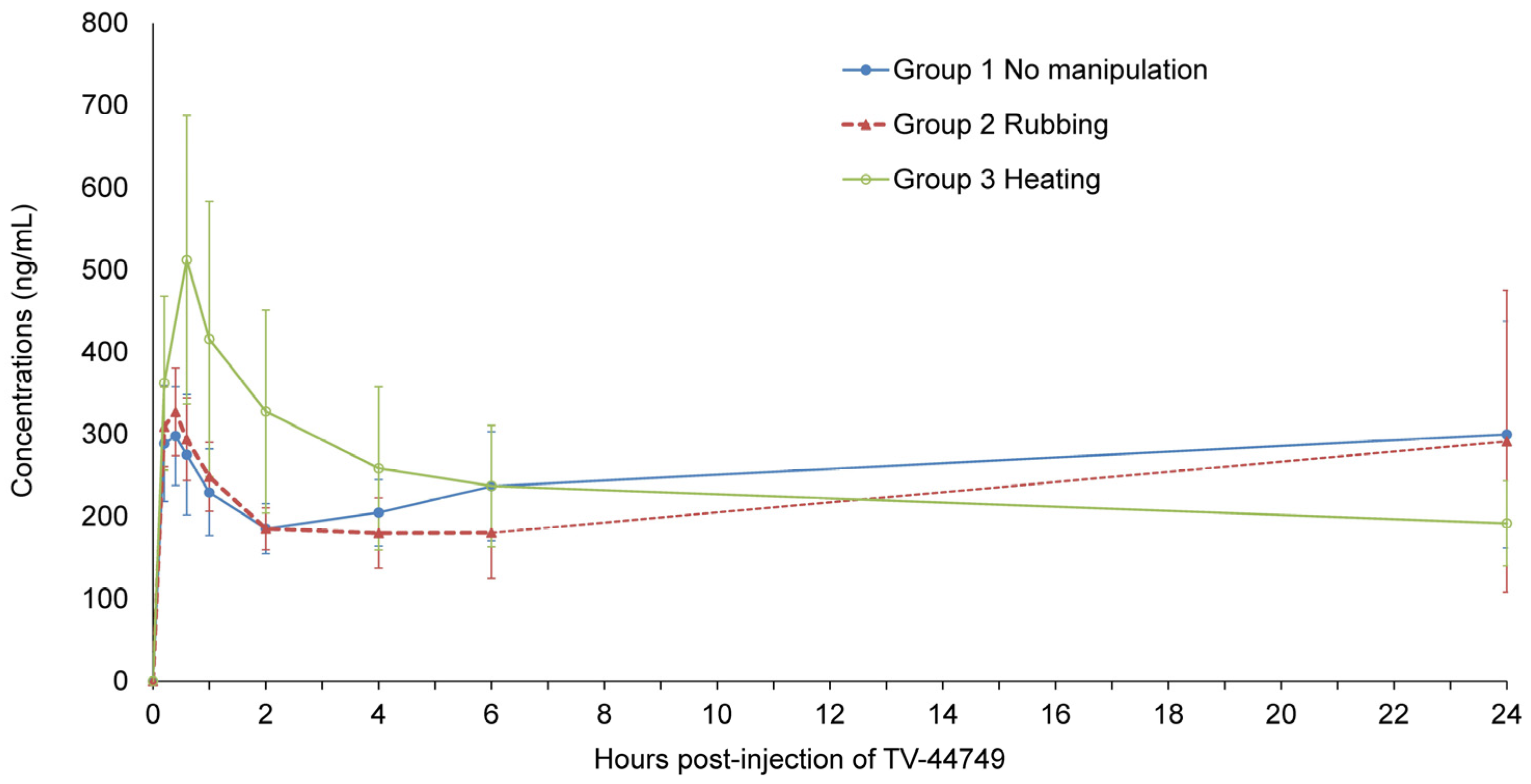
3.3. Effect of Extrinsic Factors on Olanzapine PK Profile Following TV-44749 SC Injection in the Pilot Study
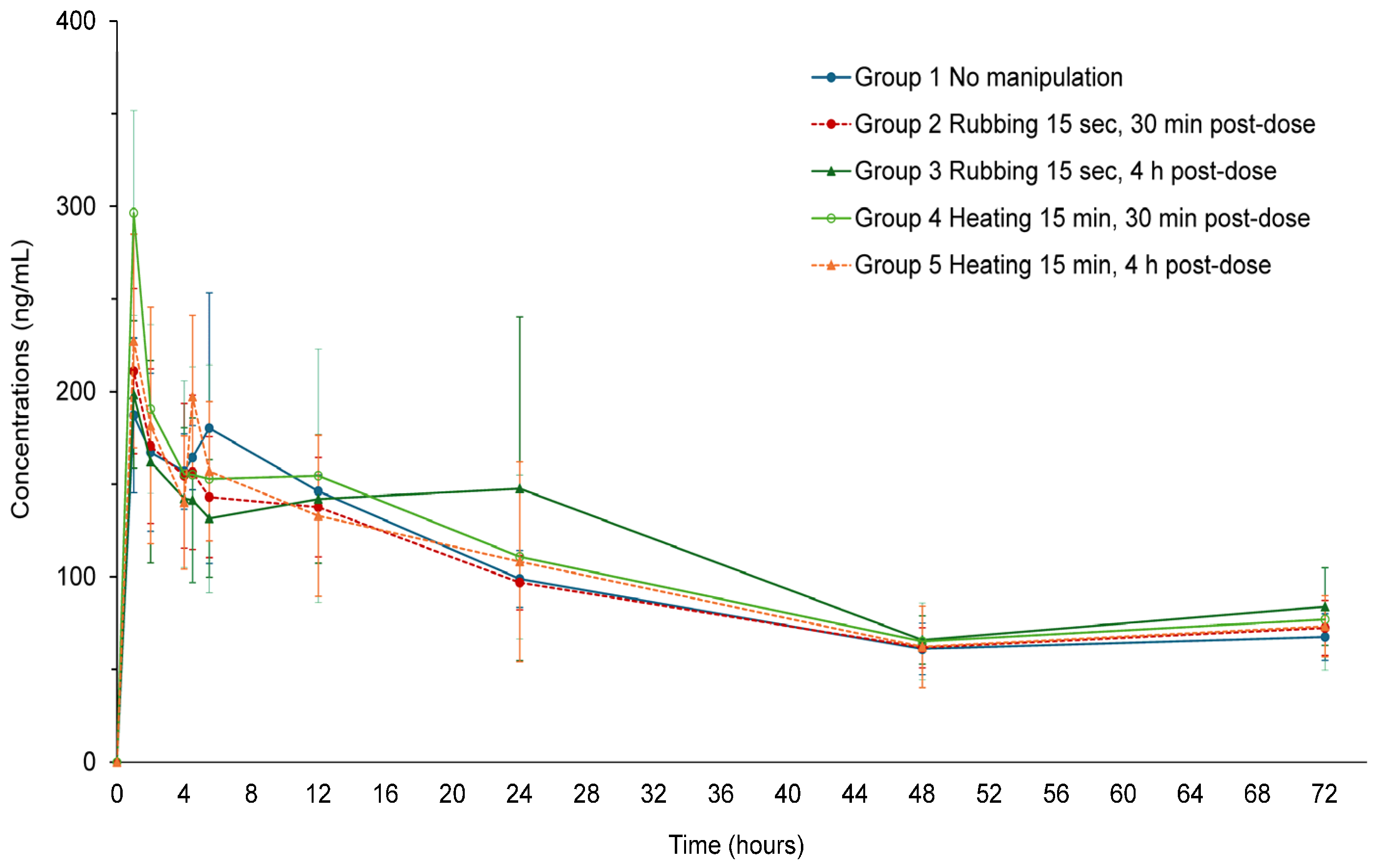
3.4. Effect of Heating and Rubbing the Site of Injection 30 Min and 4 H Following the TV-44749 SC Injection on the Olanzapine PK Profile in the Pivotal Study
4. Discussion
Author Contributions
Funding
Institutional Review Board Statement
Informed Consent Statement
Data Availability Statement
Conflicts of Interest
References
- National Institute of Mental Health (NIMH). Schizophrenia; National Institute of Mental Health: Bethesda, MD, USA, Updated 2026. Available online: https://www.nimh.nih.gov/health/statistics/schizophrenia (accessed on 7 April 2026).
- Velligan, D.I.; Rao, S. The epidemiology and global burden of schizophrenia. J. Clin. Psychiatry 2023, 84, MS21078COM5. [Google Scholar] [CrossRef]
- Solmi, M.; Seitidis, G.; Mavridis, D.; Correll, C.U.; Dragioti, E.; Guimond, S.; Tuominen, L.; Dargél, A.; Carvalho, A.F.; Fornaro, M.; et al. Incidence, prevalence, and global burden of schizophrenia: Data, with critical appraisal, from the Global Burden of Disease 2019. Mol. Psychiatry 2023, 28, 5319–5327. [Google Scholar] [CrossRef]
- Zhang, S.; Chen, Y.; Zhang, L.; Yang, X.; Dong, J.; Lu, M.; Zhou, N.; Feng, Y.; Zhang, Y.; Zhou, Y. Global lifetime prevalence of schizophrenia: A systematic review and meta-analysis. Mol. Psychiatry 2026, 31. [Google Scholar] [CrossRef]
- Correll, C.U.; Rubio, J.M.; Kane, J.M. What is the risk–benefit ratio of long-term antipsychotic treatment in people with schizophrenia? World Psychiatry 2018, 17, 149–160. [Google Scholar] [CrossRef]
- Greene, M.; Yan, T.; Chang, E.; Hartry, A.; Touya, M.; Broder, M.S. Medication adherence and discontinuation of long-acting injectable versus oral antipsychotics in patients with schizophrenia or bipolar disorder. J. Med. Econ. 2018, 21, 127–134. [Google Scholar] [CrossRef]
- Hu, A. A practical review of long-acting injectable antipsychotics. US Pharm. 2024, 49, HS1–HS6. [Google Scholar]
- Kane, J.M.; Agid, O.; Castle, D.J.; Citrome, L.; Fagiolini, A.; Kishimoto, T.; Larrauri, C.A.; Leucht, S.; Rubio, J.M.; Sajatovic, M.; et al. The use of long-acting injectables for people with schizophrenia: Consensus panel recommendations for overcoming barriers and implementing treatment. Neurol. Ther. 2025, 14, 2551–2581. [Google Scholar] [CrossRef] [PubMed]
- Krishna, A.; Goicochea, S.; Shah, R.; Stamper, B.; Harrell, G.; Turner, A. A comprehensive guide to long-acting injectable antipsychotics for primary care clinicians. J. Am. Board. Fam. Med. 2024, 37, 773–783. [Google Scholar] [CrossRef] [PubMed]
- Markowicz-Plasecka, M.; Kubisiak, M.; Asendrych-Wicik, K.; Kolodziejczyk, M.; Grzelinska, J.; Fabijanska, M.; Pietrzak, T. Long-acting injectable antipsychotics-a review on formulation and in vitro dissolution. Pharmaceutics 2023, 16, 28. [Google Scholar] [CrossRef]
- Bymaster, F.; Calligaro, D.O.; Falcone, J.F.; Marsh, R.D.; Moore, N.A.; Tye, N.C.; Seeman, P.; Wong, D.T. Radioreceptor binding profile of the atypical antipsychotic olanzapine. Neuropsychopharmacology 1996, 14, 87–96. [Google Scholar] [CrossRef] [PubMed]
- Tollefson, G.D.; Beasley, C.M., Jr.; Tran, P.V.; Street, J.S.; Krueger, J.A.; Tamura, R.N.; Graffeo, K.A.; Thieme, M.E. Olanzapine versus haloperidol in the treatment of schizophrenia and schizoaffective and schizophreniform disorders: Results of an international collaborative trial. Am. J. Psychiatry 1997, 154, 457–465. [Google Scholar] [CrossRef]
- Tran, P.V.; Dellva, M.A.; Tollefson, G.D.; Wentley, A.L.; Beasley, C.M., Jr. Oral olanzapine versus oral haloperidol in the maintenance treatment of schizophrenia and related psychoses. Br. J. Psychiatry 1998, 172, 499–505. [Google Scholar] [CrossRef]
- Kahn, R.S.; Fleischhacker, W.W.; Boter, H.; Davidson, M.; Vergouwe, Y.; Keet, I.P.; Gheorghe, M.D.; Rybakowski, J.K.; Galderisi, S.; Libiger, J.; et al. Effectiveness of antipsychotic drugs in first-episode schizophrenia and schizophreniform disorder: A randomized clinical trial. Lancet 2008, 371, 1085–1097. [Google Scholar] [CrossRef]
- Beasley, C.M., Jr.; Tollefson, G.; Tran, P.; Satterlee, W.; Sanger, T.; Hamilton, S. Olanzapine versus placebo and haloperidol: Acute phase results of the North American double-blind olanzapine trial. Neuropsychopharmacology 1996, 14, 111–123. [Google Scholar] [CrossRef] [PubMed]
- Conley, R.R.; Tamminga, C.A.; Bartko, J.J.; Richardson, C.; Peszke, M. Olanzapine compared with chlorpromazine in treatment-resistant schizophrenia. Am. J. Psychiatry 1998, 155, 914–920. [Google Scholar] [CrossRef] [PubMed]
- Haro, J.M.; Edgell, E.T.; Novick, D.; Alonso, J.; Kennedy, L.; Jones, P.B.; Ratcliffe, M.; Breier, A.; SOHO Advisory Board. Effectiveness of antipsychotic treatment for schizophrenia: 6-month results of the Pan-European Schizophrenia Outpatient Health Outcomes (SOHO) study. Acta Psychiatr. Scand. 2005, 111, 220–231. [Google Scholar] [CrossRef]
- Lieberman, J.A.; Stroup, T.S.; McEvoy, J.P.; Swartz, M.S.; Rosenheck, R.A.; Perkins, D.O.; Keefe, R.S.E.; Davis, S.M.; Davis, C.E.; Lebowitz, B.D.; et al. Effectiveness of antipsychotic drugs in patients with chronic schizophrenia. N. Engl. J. Med. 2005, 353, 1209–1223. [Google Scholar] [CrossRef] [PubMed]
- Leucht, S.; Cipriani, A.; Spineli, L.; Mavridis, D.; Orey, D.; Richter, F.; Samara, M.; Barbui, C.; Engel, R.R.; Geddes, J.R.; et al. Comparative efficacy and tolerability of 15 antipsychotic drugs in schizophrenia: A multiple-treatments meta-analysis. Lancet 2013, 382, 951–962. [Google Scholar] [CrossRef]
- Csernansky, J.G.; Schuchart, E.K. Relapse and rehospitalisation rates in patients with schizophrenia: Effects of second generation antipsychotics. CNS Drugs 2002, 16, 473–484. [Google Scholar] [CrossRef]
- Samara, M.T.; Dold, M.; Gianatsi, M.; Nikolakopoulou, A.; Helfer, B.; Salanti, G.; Leucht, S. Efficacy, Acceptability, and Tolerability of Antipsychotics in Treatment-Resistant Schizophrenia: A Network Meta-Analysis. JAMA Psychiatry 2016, 73, 199–210. [Google Scholar] [CrossRef]
- Takahashi, M.; Naohiro, N.; Shinji, F.; Masaomi, I. Remission, response, and relapse rates in patients with acute schizophrenia treated with olanzapine monotherapy or other atypical antipsychotic monotherapy: 12-month prospective observational study. Pragmat. Obs. Res. 2015, 6, 39–46. [Google Scholar] [CrossRef][Green Version]
- CHEPLAPHARM. Zyprexa Relprevv. Registration GmbH 2023. Greifswald, Germany. Available online: https://www.zyprexarelprevvprogram.com/public/Default.aspx (accessed on 1 January 2026).
- McDonnell, D.P.; Detke, H.C.; Bergstrom, R.F.; Kothare, P.; Johnson, J.; Stickelmeyer, M.; Sanchez-Felix, M.V.; Sorsaburu, S.; I Mitchell, M. Post-injection delirium/sedation syndrome in patients with schizophrenia treated with olanzapine long-acting injection, II: Investigations of mechanism. BMC Psychiatry 2010, 10, 45. [Google Scholar] [CrossRef]
- Kim, H.; Park, H.; Joon Lee, S. Effective method for drug injection into subcutaneous tissue. Sci. Rep. 2017, 7, 9613. [Google Scholar] [CrossRef] [PubMed]
- Shepherd, E. Injection technique 2: Administering drugs via the subcutaneous route. Nurs. Times 2018, 114, 55–57. [Google Scholar]
- Roberge, C.; Cros, J.M.; Serindoux, J.; Cagnon, M.-E.; Samuel, R.; Vrlinic, T.; Berto, P.; Rech, A.; Richard, J.; Lopez-Noriega, A. BEPO®: Bioresorbable diblock mPEG-PDLLA and triblock PDLLA-PEG-PDLLA based in situ forming depots with flexible drug delivery kinetics modulation. J. Control Release 2020, 319, 416–427. [Google Scholar] [CrossRef] [PubMed]
- Krasenbaum, L. Long-Term Effectiveness With Subcutaneous Long-Acting Injectable Olanzapine (TV-44749) in Adults With Schizophrenia: Results From up to 48 Weeks Open Label Treatment in the Phase 3 SOLARIS Trial US Psych Congress 2025. Poster #96. Available online: https://www.hmpgloballearningnetwork.com/node/347624 (accessed on 1 January 2026).
- Cherniakov, I.; Merenlender Wagner, A.; Eshet, R.; Tiver, R.; Bibi, D.; Perlstein, I.; Kalmanczhelyi, A.; Sharon, N.; Cohen, G.; Ferderber, K.; et al. Safety, Tolerability, and Pharmacokinetics of Subcutaneous Extended Release Injectable Olanzapine in Patients with Schizophrenia and Schizoaffective Disorder. Clin. Drug Investig. 2026, 46, 307–320. [Google Scholar] [CrossRef]
- Meyers, K.J.; Upadhyaya, H.P.; Landry, J.L.; Chhabra-Khanna, R.; Falk, D.M.; Seetharama Rao, B.; Jones, M.E. Postinjection delirium/sedation syndrome in patients with schizophrenia receiving olanzapine long-acting injection: Results from a large observational study. BJPsych Open 2017, 3, 186–192. [Google Scholar] [CrossRef]
- Vandenhende, F.; Burton, I.; Ahrweiler, S.; Buchheit, V. Analyses and Displays Associated to Non-Compartmental Pharmacokinetics—With a Focus on Clinical Trials; A White Paper by the PhUSE CSS Development of Standard Scripts for Analysis and Programming Working Group; Version 1.0—Final; PhUSE CSS: Silver Spring, MD, USA, 2014. [Google Scholar]
- Correll, C.U.; Shulman, K.; Bar-Nur, T.; Gidron-Budovsky, R.; Sharon, N.; Jehassi, A.; Franzenburg, K.R.; Suett, M.; Pelleg, O.; Knebel, H.; et al. Long-Term Safety of Subcutaneous Long-Acting Injectable Olanzapine (TV-44749) in Schizophrenia: Results From the Phase 3 SOLARIS Trial. Presentation at US Psych Congress 2025. Available online: https://www.hmpgloballearningnetwork.com/node/371691 (accessed on 1 January 2026).



| Mean (SD) CV% | Group 1 Zyprexa Powder iv injection 0.8 mg/kg (n = 5) | Group 2 Zyprexa Powder sc injection 1.6 mg/kg (n = 4) c | Group 3 TV-44749 sc injection 80 mg/kg (n = 5) |
|---|---|---|---|
| Cmax (ng/mL) | 1119.7 (1115.4) 99.6% b | 382.8 (80.7) 21.1% | 400.2 (83.1) 20.8% |
| AUC0–t (ng × h/mL) | 216.9 (179.8) 68.0% | 516.9 (102.1) 19.5% | 29,472.6 (9076.1) 29.7% |
| AUC0–∞ (ng × h/mL) | 218.3 (179.5) 67.6% | 523.1 (116.1) 22.1% | 31,420.6 (8834.6) 20.8% |
| T1/2 (h) | 0.3 (0.2) 44.9% | 0.6 (0.05) 9.9% | 127.7 (34.4) 25.2% |
| tmax (h) a | - | 1.0 (1.0–1.0) | 0.5 (0.5–0.5) |
| Mean (SD) CV% | Group 1 No manipulation of injection site (n = 6) | Group 2 Rubbing injection site for 15 s, starting 10 min post-dose (n = 6) | Group 3 Heating injection site for 15 min, starting 10 min post-dose (n = 6) |
|---|---|---|---|
| tmax (h) a | 0.3 (0.2–24.0) | 0.4 (0.2–24.0) | 0.5 (0.5–1.0) |
| Cmax (ng/mL) | 320.8 (119.6) 35.1% | 379.4 (125.8) 29.3% | 492.1 (173.8) 33.2% |
| Cmax_D (ng/mL) | 5.9 (2.3) 39.0% | 7.0 (2.5) 35.7% | 9.6 (3.5) 36.5% |
| AUC0–24h (ng × h/mL) | 5842.5 (2040.7) 34.5% | 5148.2 (2063.9) 38.3% | 5527.6 (1599.4) 30.4% |
| AUC0–24h_D (ng × h/mL) | 106.7 (39.4) 36.9% | 95.4 (39.6) 41.5% | 107.5 (34.8) 32.4% |
| Mean (SD) CV% | Group 1 No manipulation of injection site (n = 6) | Group 2 Rubbing injection site for 15 s, starting 30 min post-dose (n = 6) | Group 3 Rubbing injection site for 15 s, starting 4 h post-dose (n = 6) | Group 4 Heating injection site for 15 min, starting 30 min post-dose (n = 6) | Group 5 Heating injection site for 15 min, starting 4 h post-dose (n = 6) |
|---|---|---|---|---|---|
| tmax (h) a | 0.2 (0.2–5.5) | 0.2 (0.2–0.5) | 0.2 (0.2–24) | 0.2 (0.2–1.0) | 0.2 (0.2–0.2) |
| Cmax (ng/mL) | 232.8 (57.5) 24.1% | 283.7 (64.7) 21.8% | 290.0 (84.1) 31.0% | 324.0 (44.6) 13.7% | 310.1 (64.5) 21.1% |
| AUC0–72h (ng × h/mL) | 6878.5 (1000.7) 13.6% | 6718.4 (1210.4) 18.0% | 7637.1 (2257.8) 30.0% | 7151.4 (2644.3) 34.4% | 6695.9 (2022.1) 33.6% |
Disclaimer/Publisher’s Note: The statements, opinions and data contained in all publications are solely those of the individual author(s) and contributor(s) and not of MDPI and/or the editor(s). MDPI and/or the editor(s) disclaim responsibility for any injury to people or property resulting from any ideas, methods, instructions or products referred to in the content. |
© 2026 by the authors. Licensee MDPI, Basel, Switzerland. This article is an open access article distributed under the terms and conditions of the Creative Commons Attribution (CC BY) license.
Share and Cite
Bibi, D.; Steiner, L.; Krtalic, I.; Juretic, M.; Cetina-Cizmek, B.; Komlosi, A.; Loupe, P.; Ferderber, K.; Hallak, H. Olanzapine for Extended-Release Injectable Suspension for Subcutaneous Use (TV-44749) Designed to Avoid the Risk of PDSS: In Vitro Release Studies in Human Plasma and In Vivo Impact of Extrinsic Factors on Pharmacokinetics. Pharmaceutics 2026, 18, 601. https://doi.org/10.3390/pharmaceutics18050601
Bibi D, Steiner L, Krtalic I, Juretic M, Cetina-Cizmek B, Komlosi A, Loupe P, Ferderber K, Hallak H. Olanzapine for Extended-Release Injectable Suspension for Subcutaneous Use (TV-44749) Designed to Avoid the Risk of PDSS: In Vitro Release Studies in Human Plasma and In Vivo Impact of Extrinsic Factors on Pharmacokinetics. Pharmaceutics. 2026; 18(5):601. https://doi.org/10.3390/pharmaceutics18050601
Chicago/Turabian StyleBibi, David, Lilach Steiner, Iva Krtalic, Marina Juretic, Biserka Cetina-Cizmek, Andrea Komlosi, Pippa Loupe, Kristina Ferderber, and Hussein Hallak. 2026. "Olanzapine for Extended-Release Injectable Suspension for Subcutaneous Use (TV-44749) Designed to Avoid the Risk of PDSS: In Vitro Release Studies in Human Plasma and In Vivo Impact of Extrinsic Factors on Pharmacokinetics" Pharmaceutics 18, no. 5: 601. https://doi.org/10.3390/pharmaceutics18050601
APA StyleBibi, D., Steiner, L., Krtalic, I., Juretic, M., Cetina-Cizmek, B., Komlosi, A., Loupe, P., Ferderber, K., & Hallak, H. (2026). Olanzapine for Extended-Release Injectable Suspension for Subcutaneous Use (TV-44749) Designed to Avoid the Risk of PDSS: In Vitro Release Studies in Human Plasma and In Vivo Impact of Extrinsic Factors on Pharmacokinetics. Pharmaceutics, 18(5), 601. https://doi.org/10.3390/pharmaceutics18050601